Peggy and I are wrapping up our visit to Yellowstone today from our journey around the US last fall with pictures of a few of the many scenic views found in the park. All photos are taken by either Peggy or me unless otherwise noted.
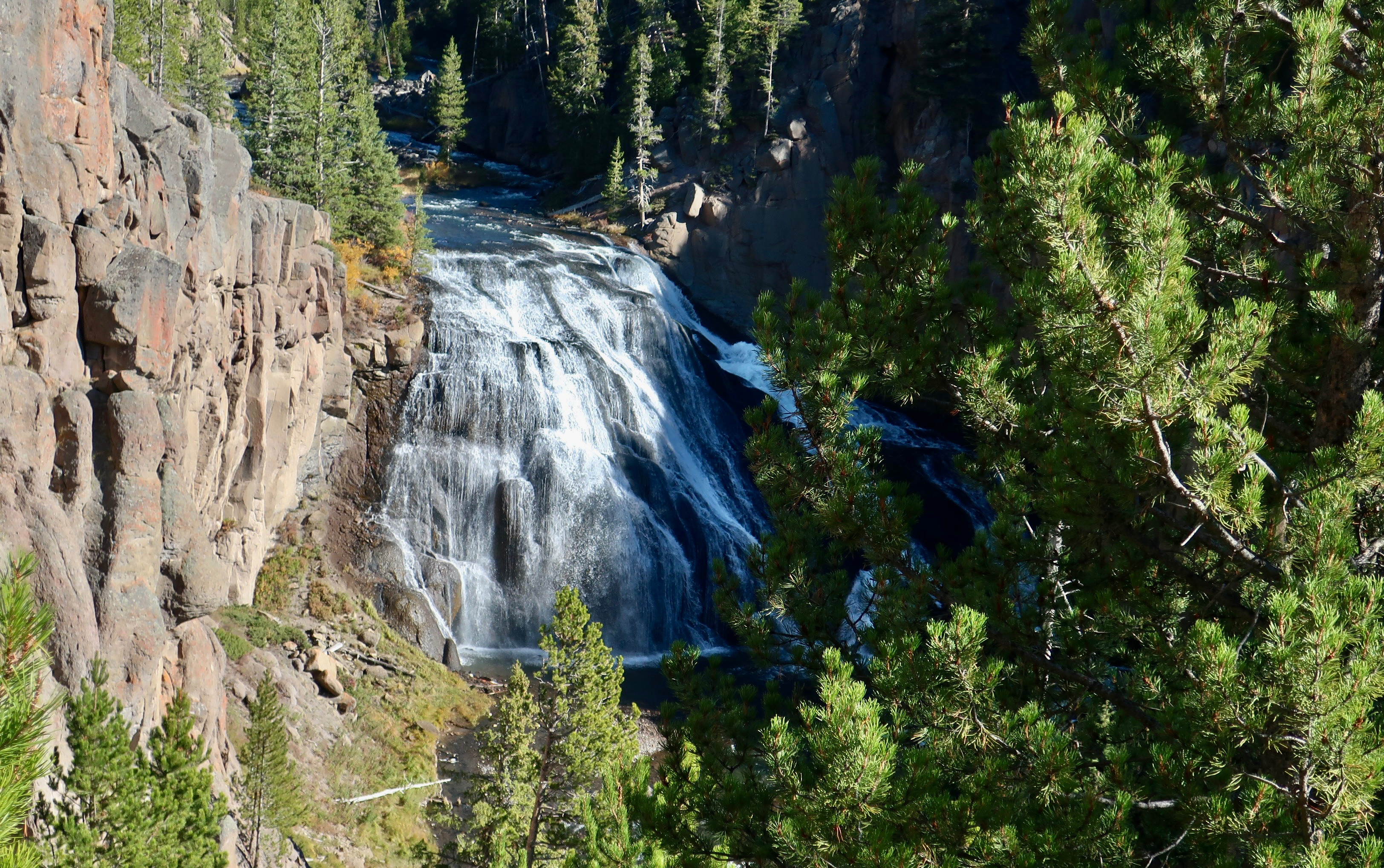


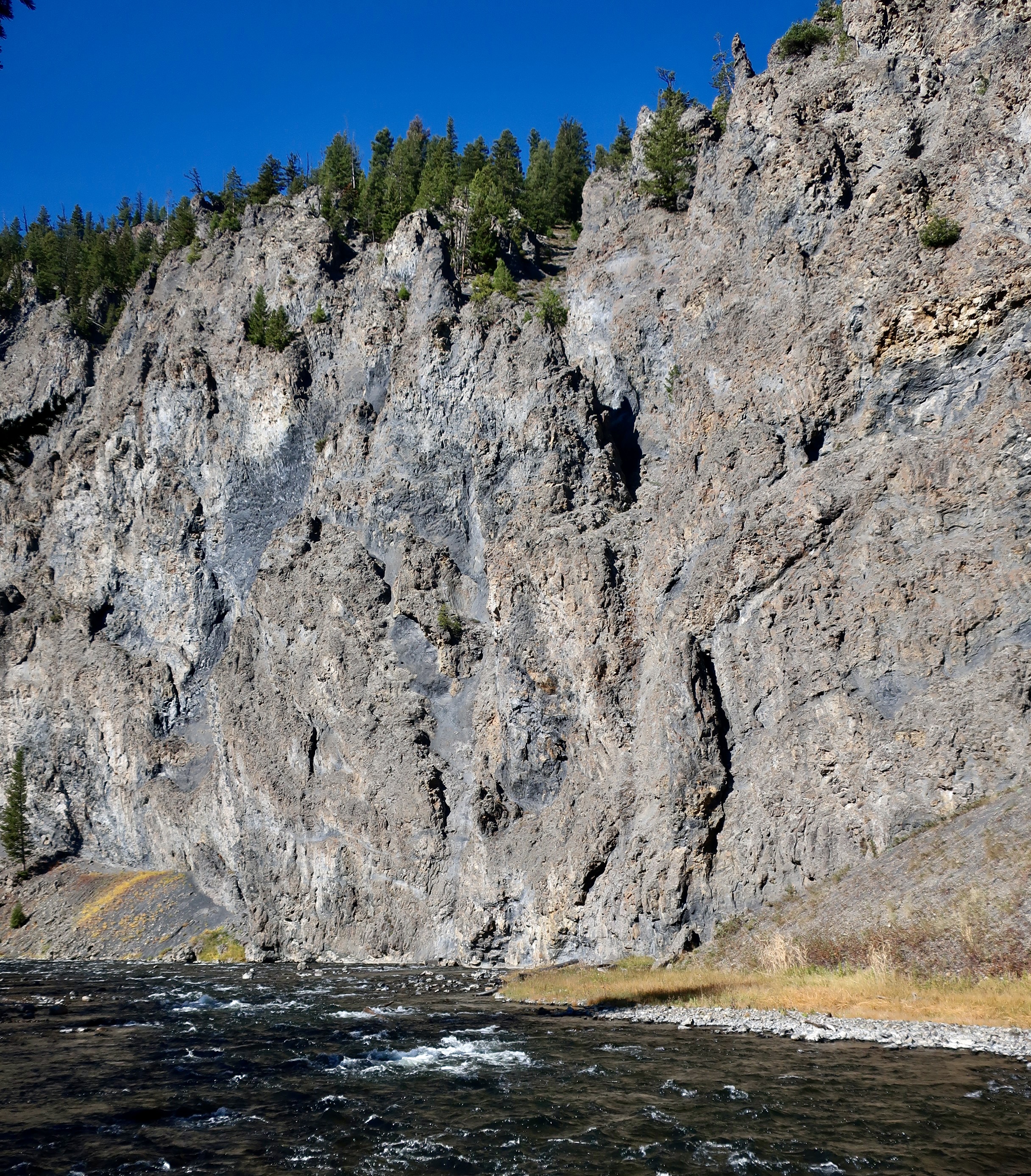


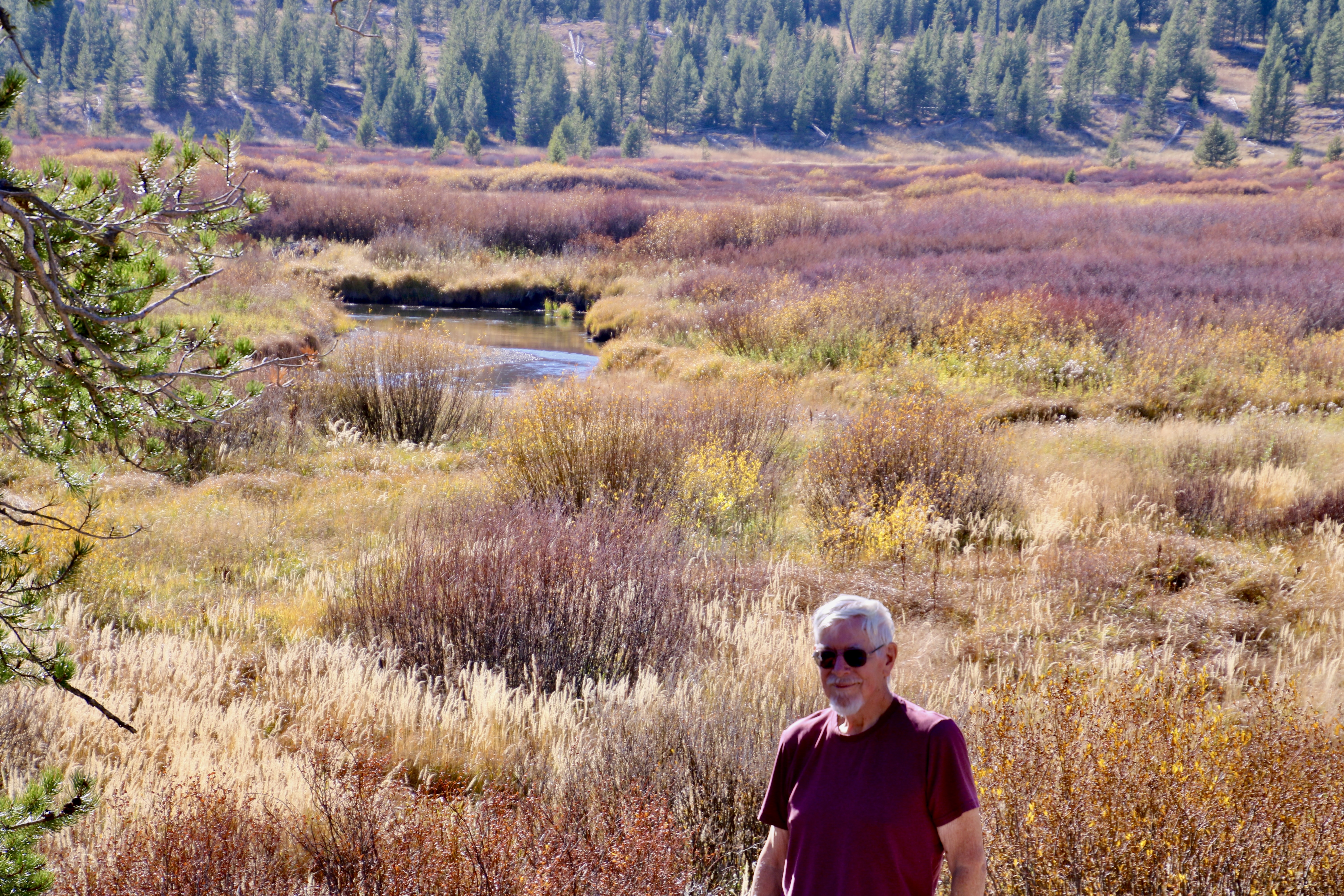

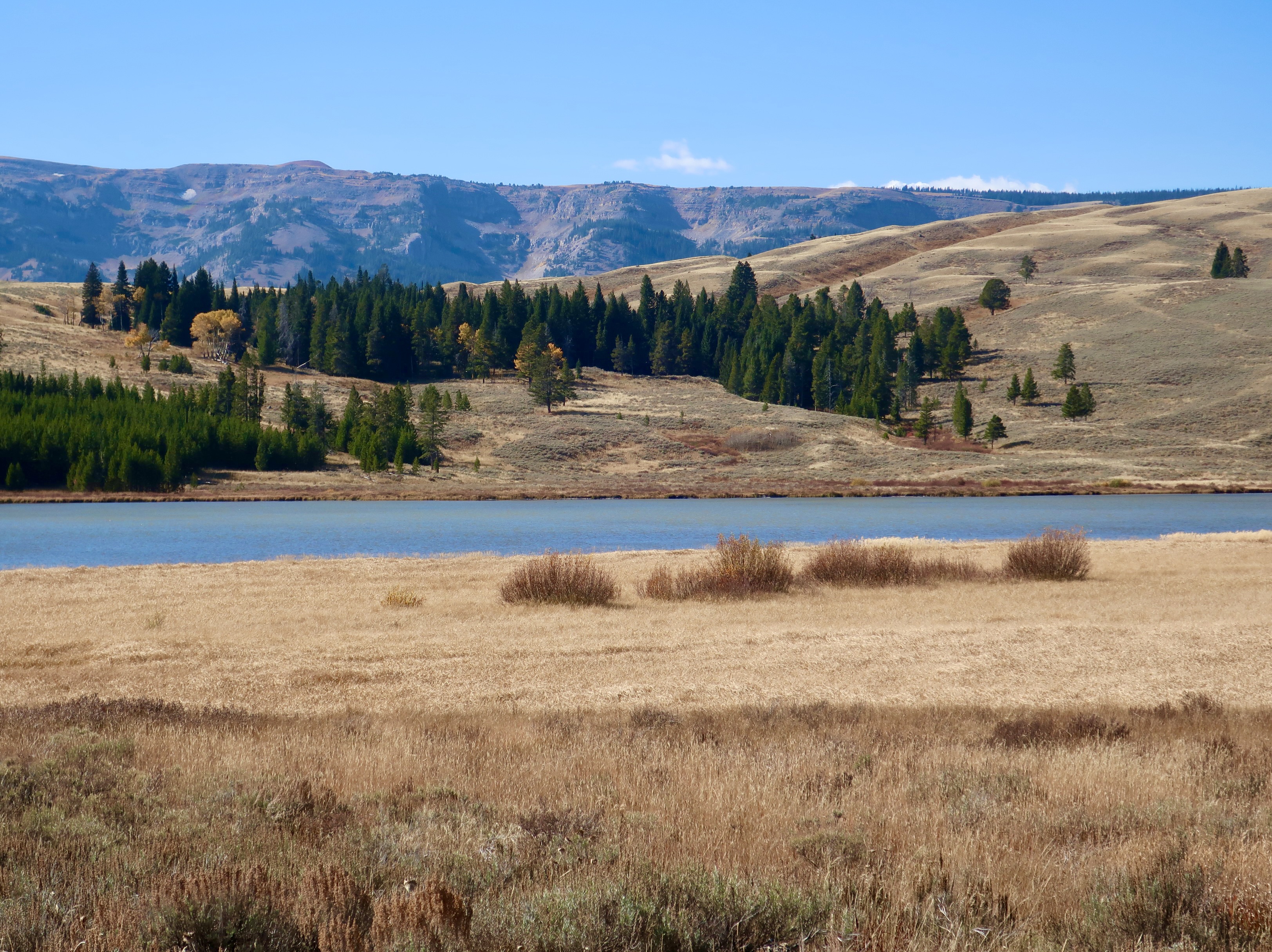


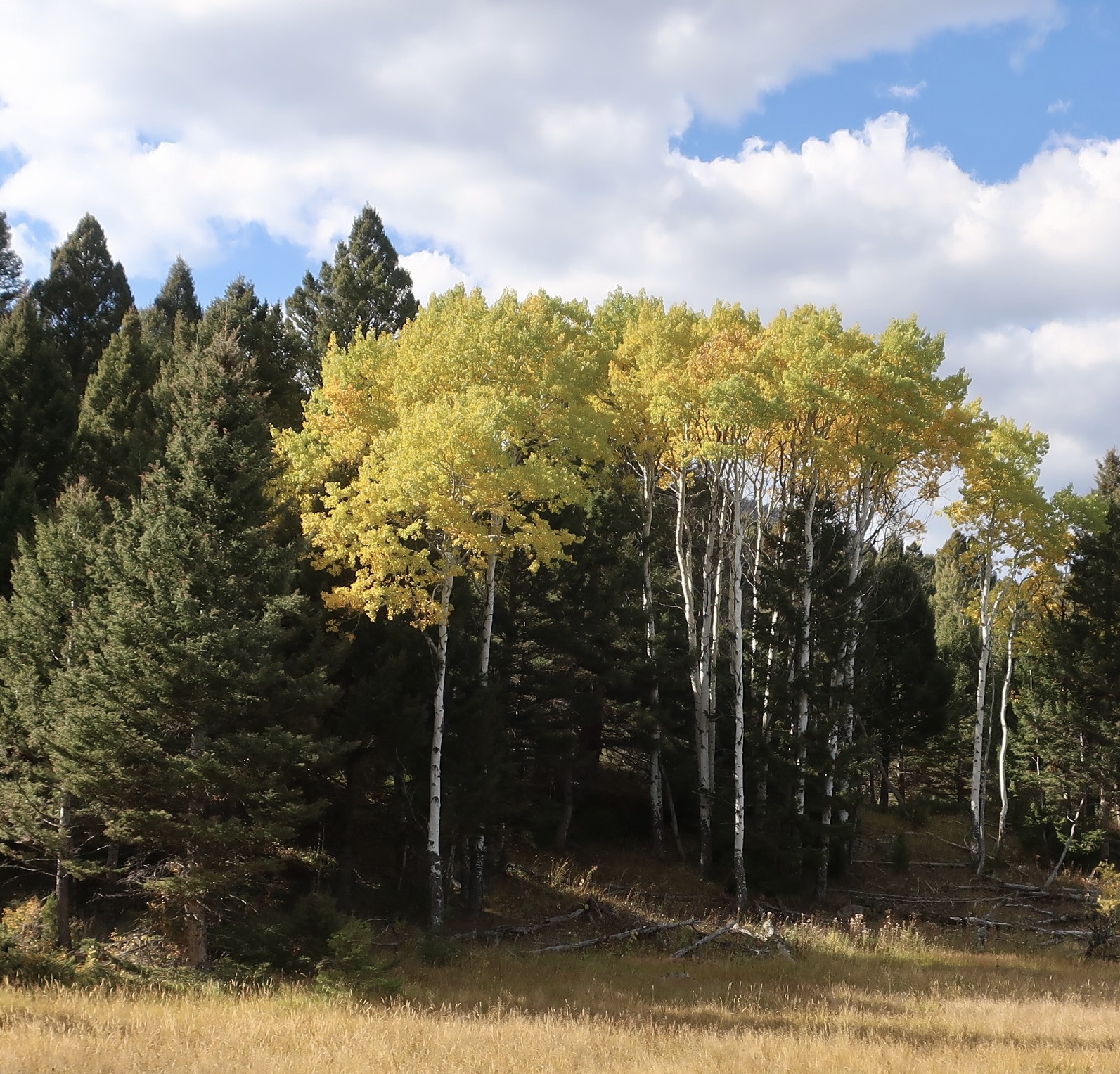
Peggy and I are wrapping up our visit to Yellowstone today from our journey around the US last fall with pictures of a few of the many scenic views found in the park. All photos are taken by either Peggy or me unless otherwise noted.
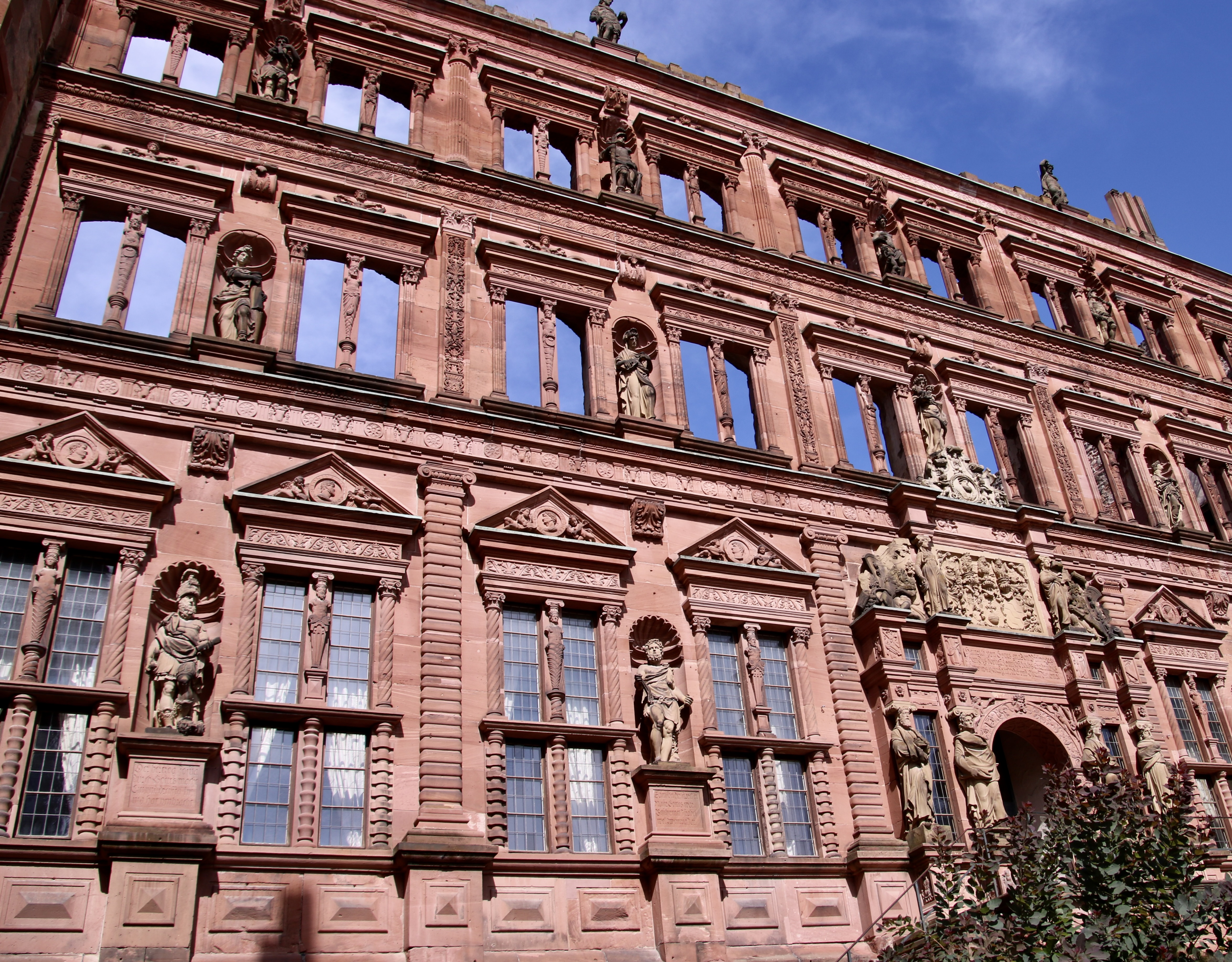
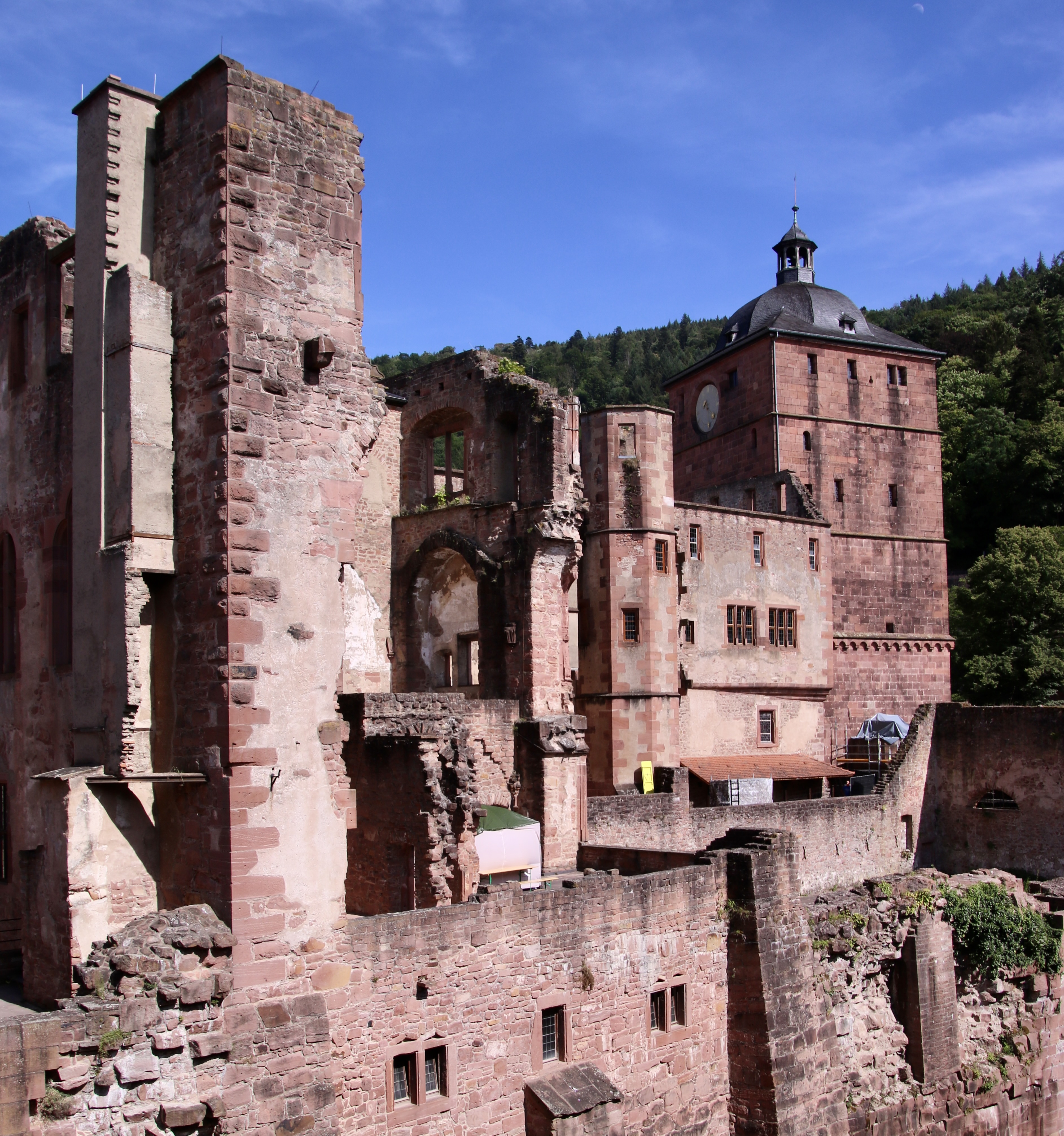
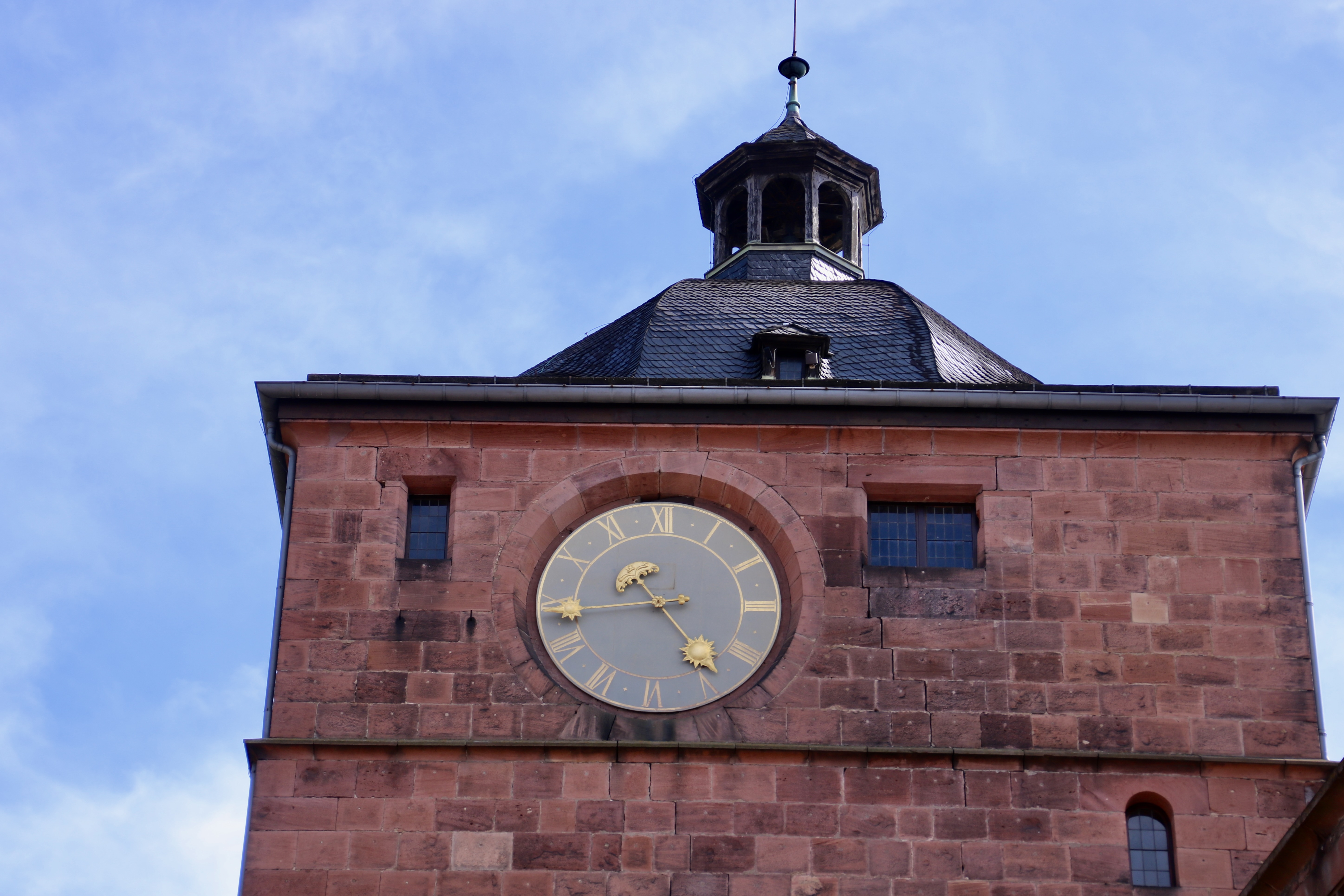
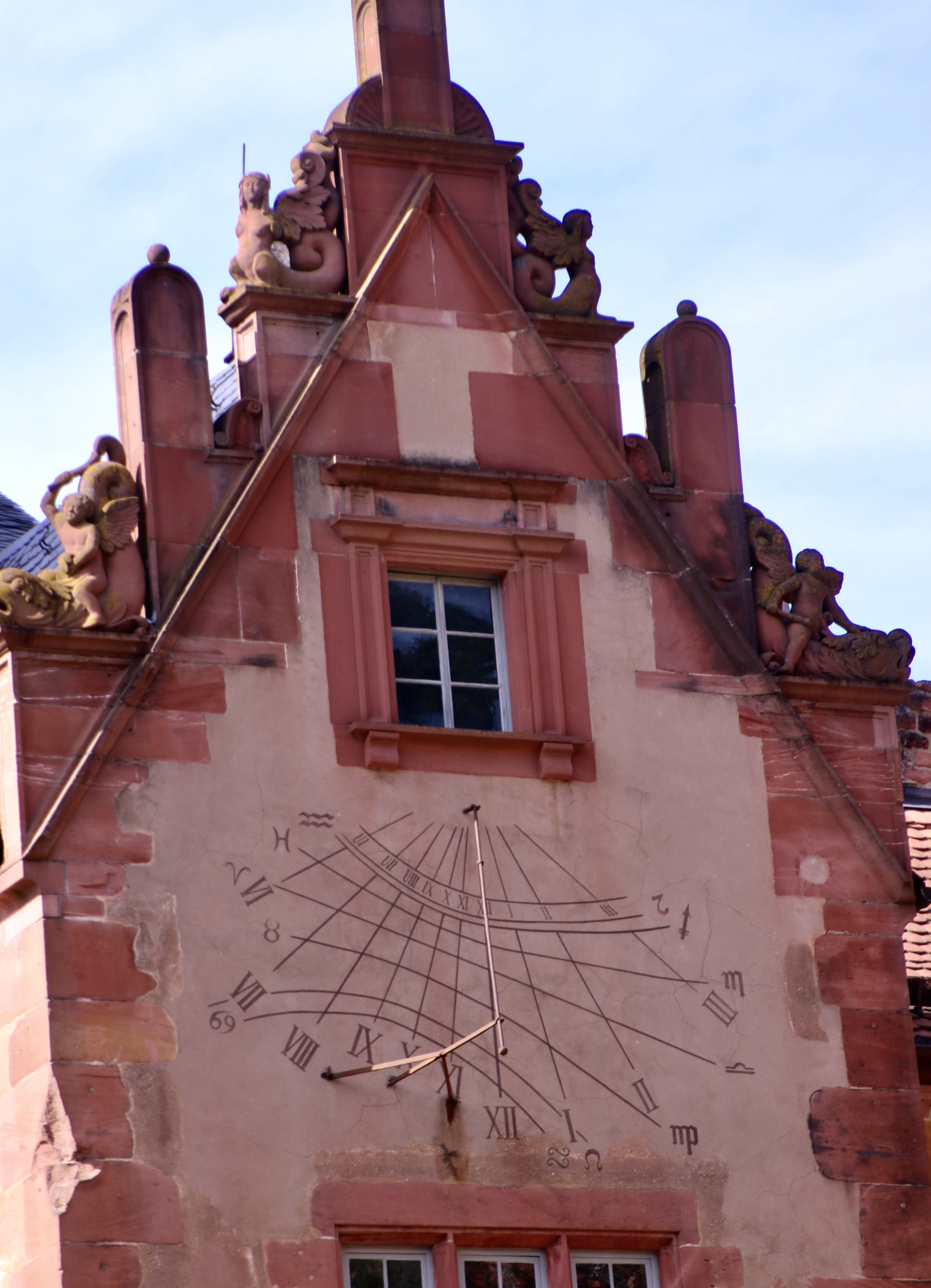
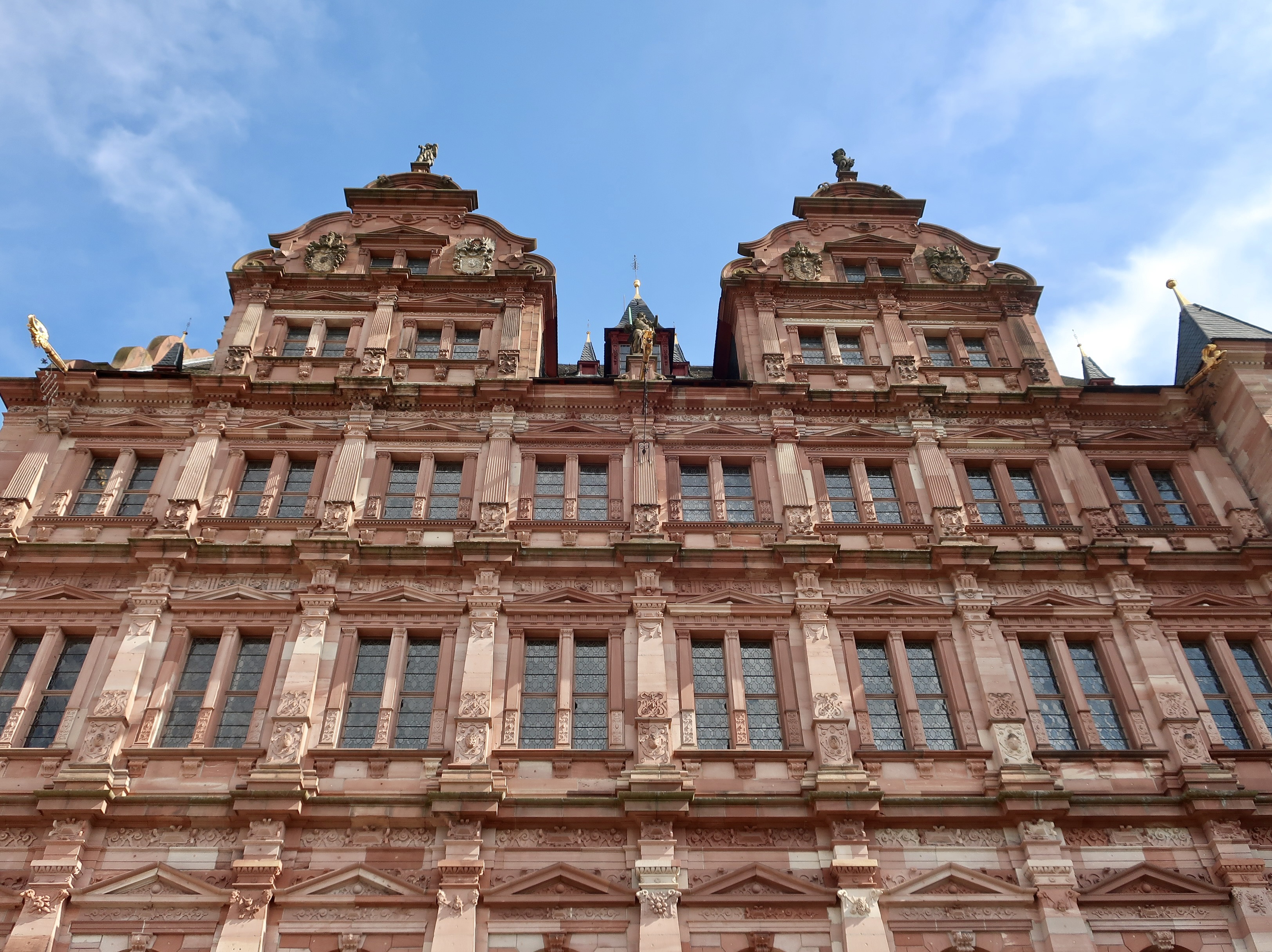
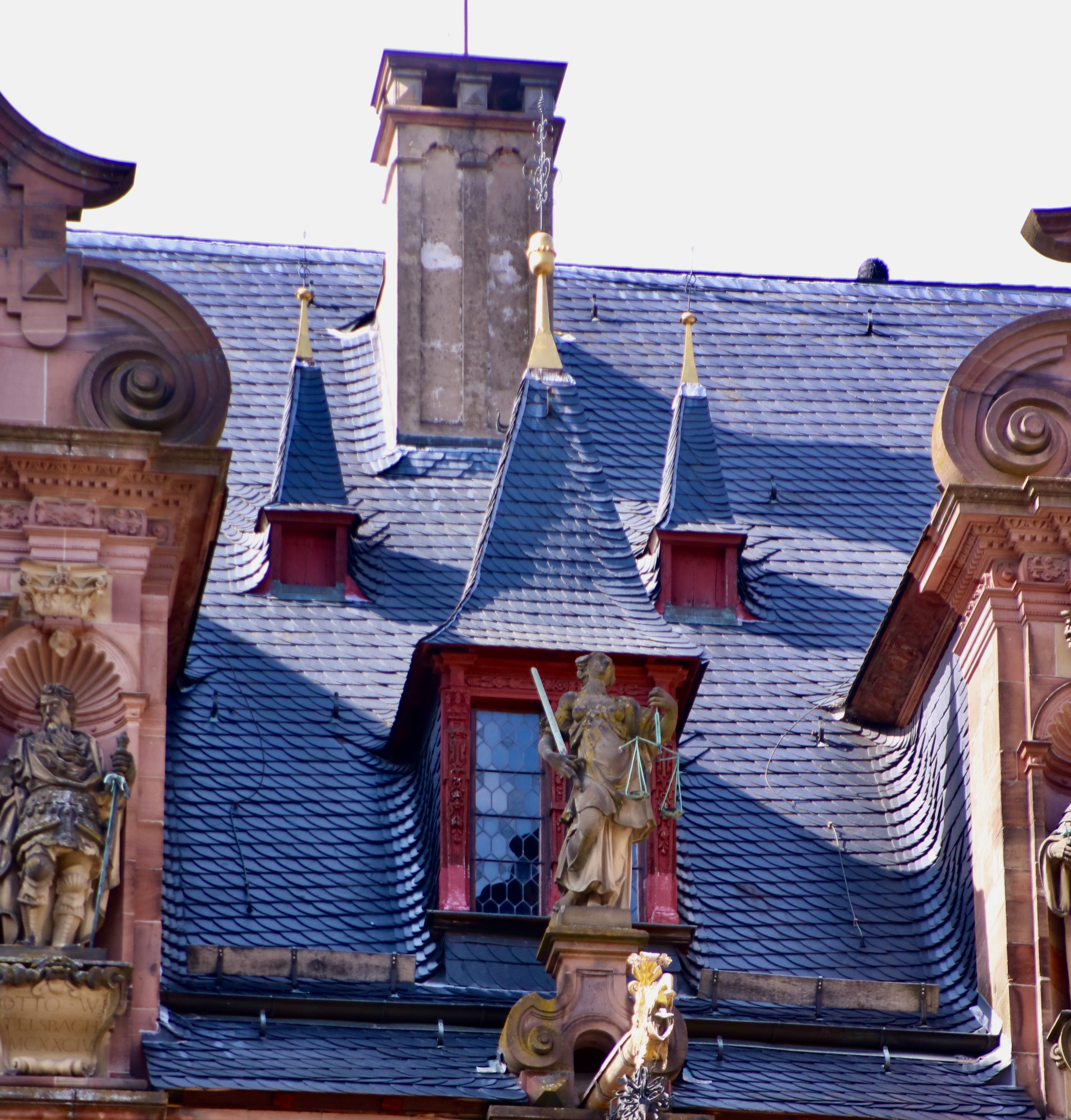
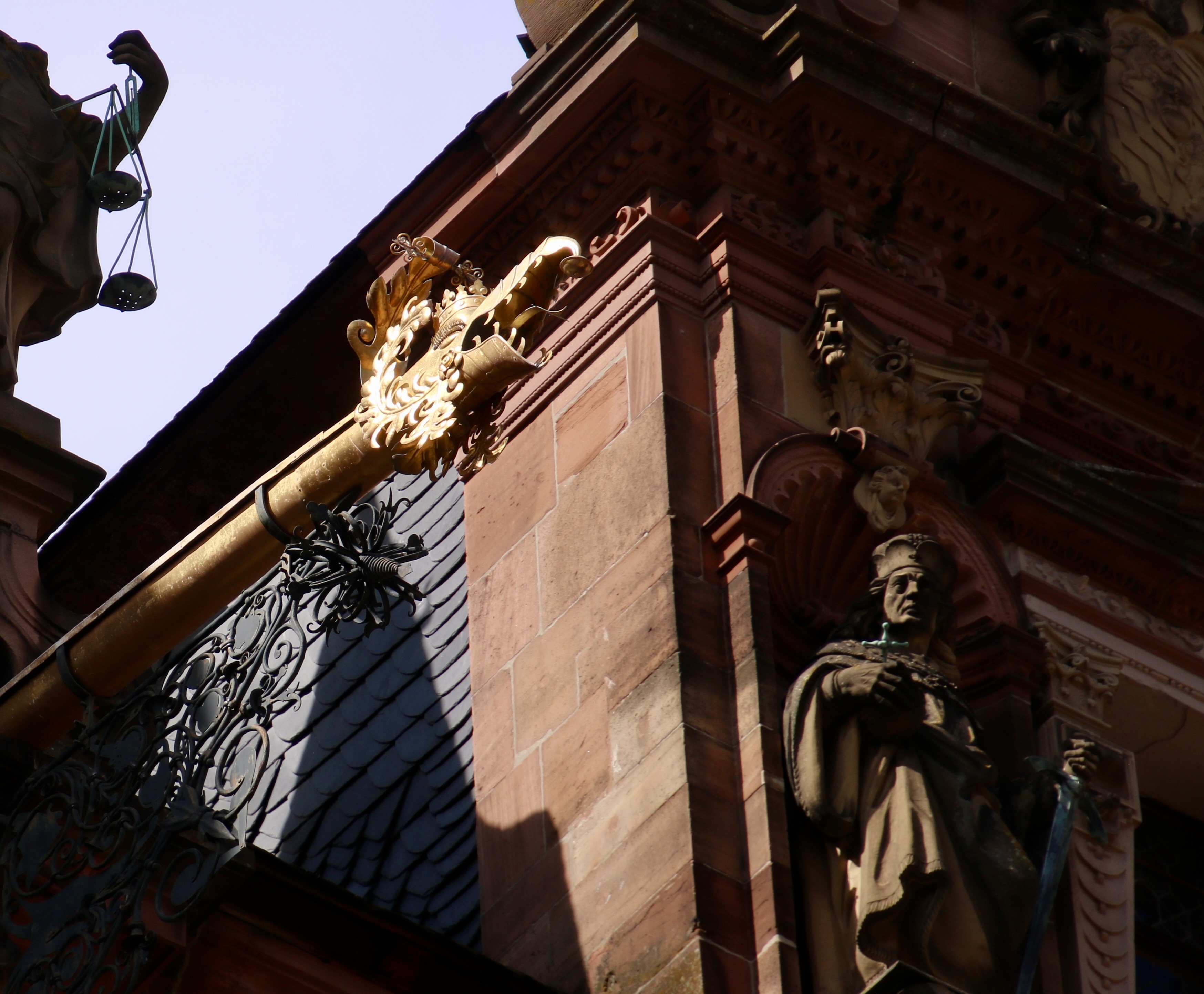
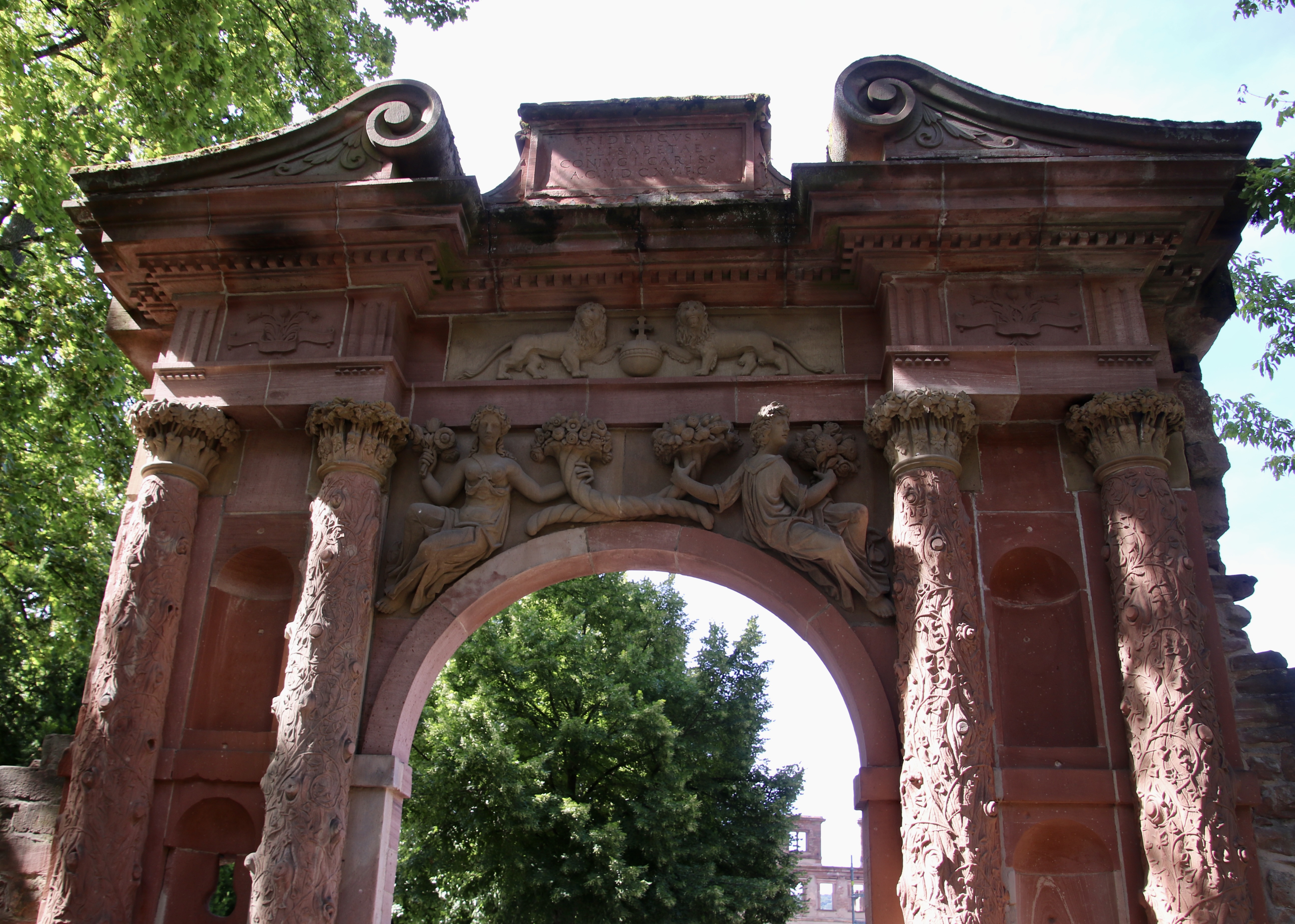
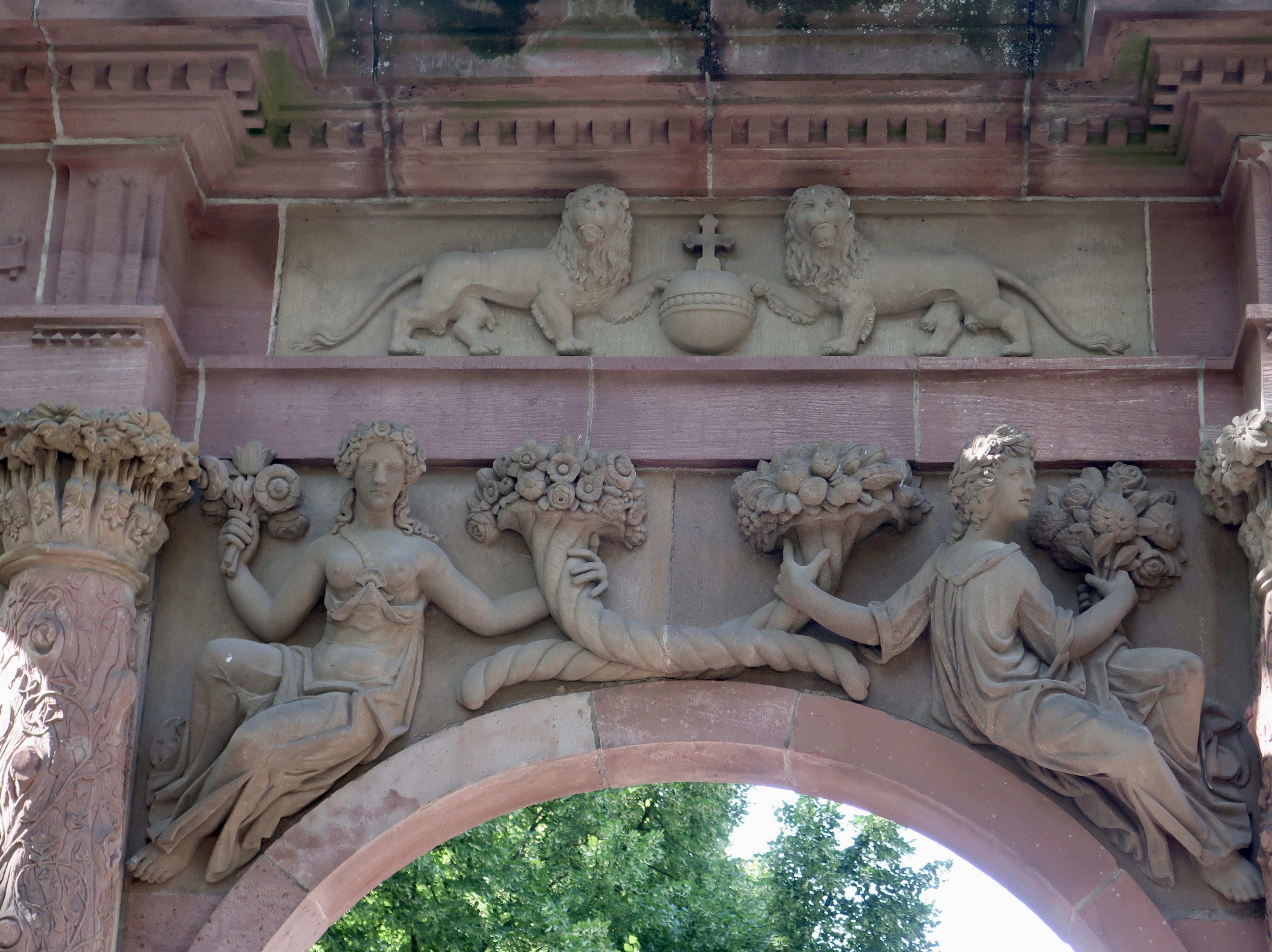
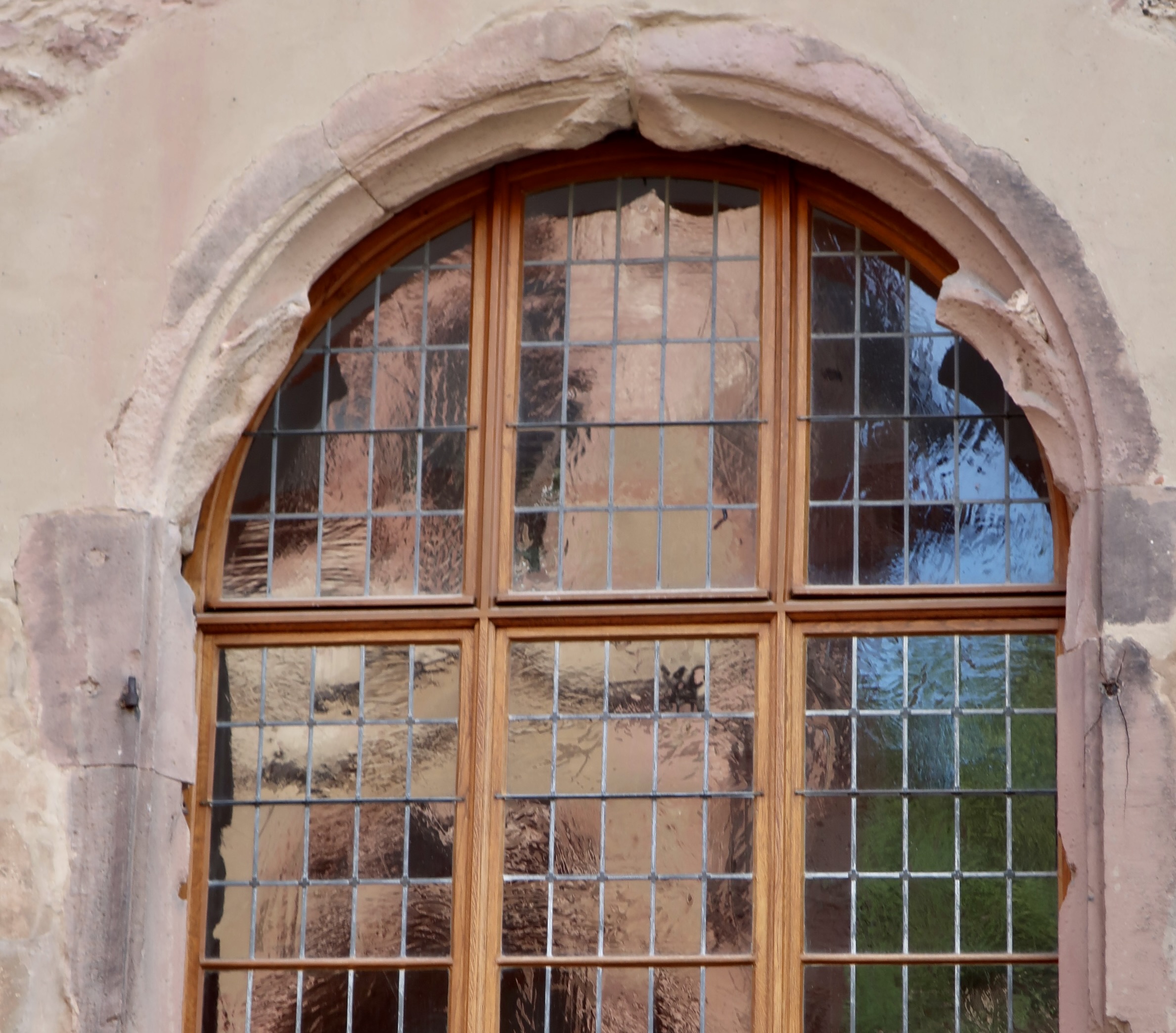
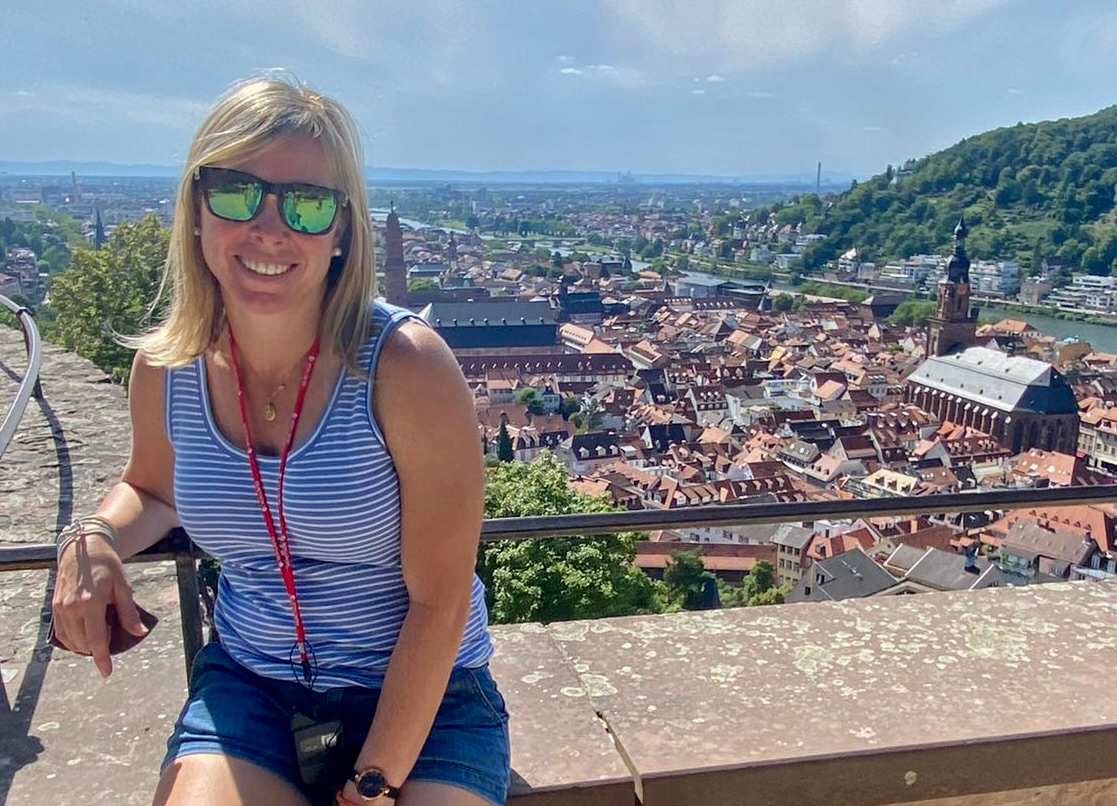
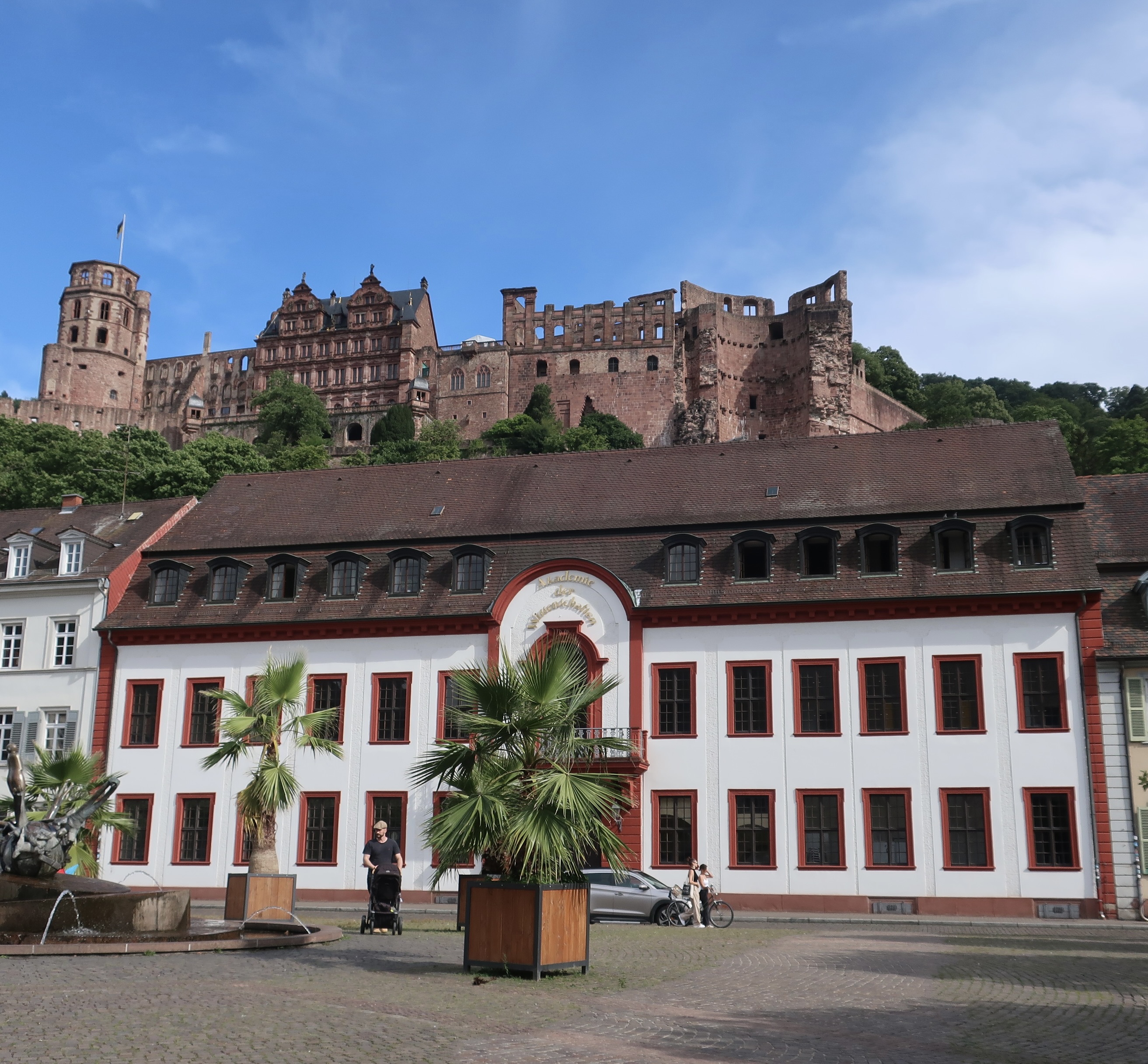
Continuing our exploration of sites we visited on our family Rhine River trip last summer, we will explore Heidelberg Castle today. All photos are taken by either Peggy or me unless otherwise noted.
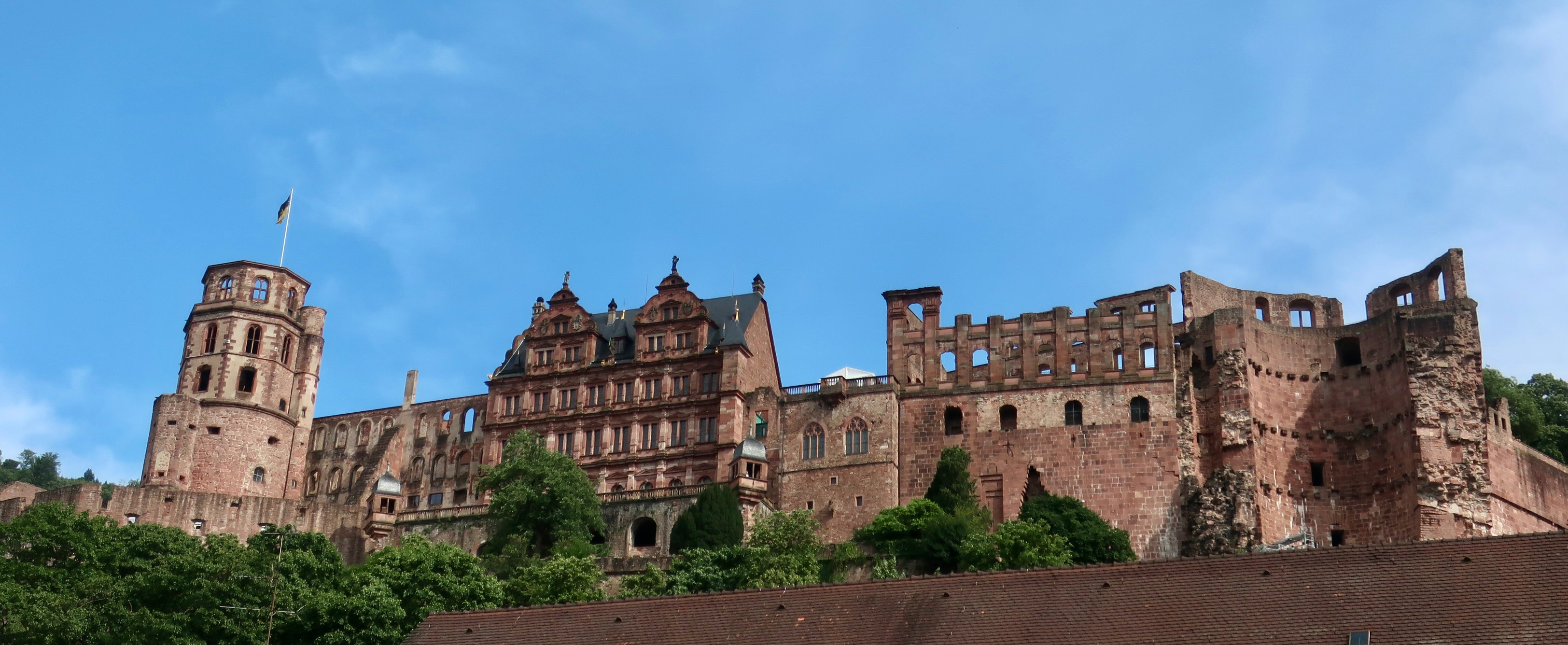
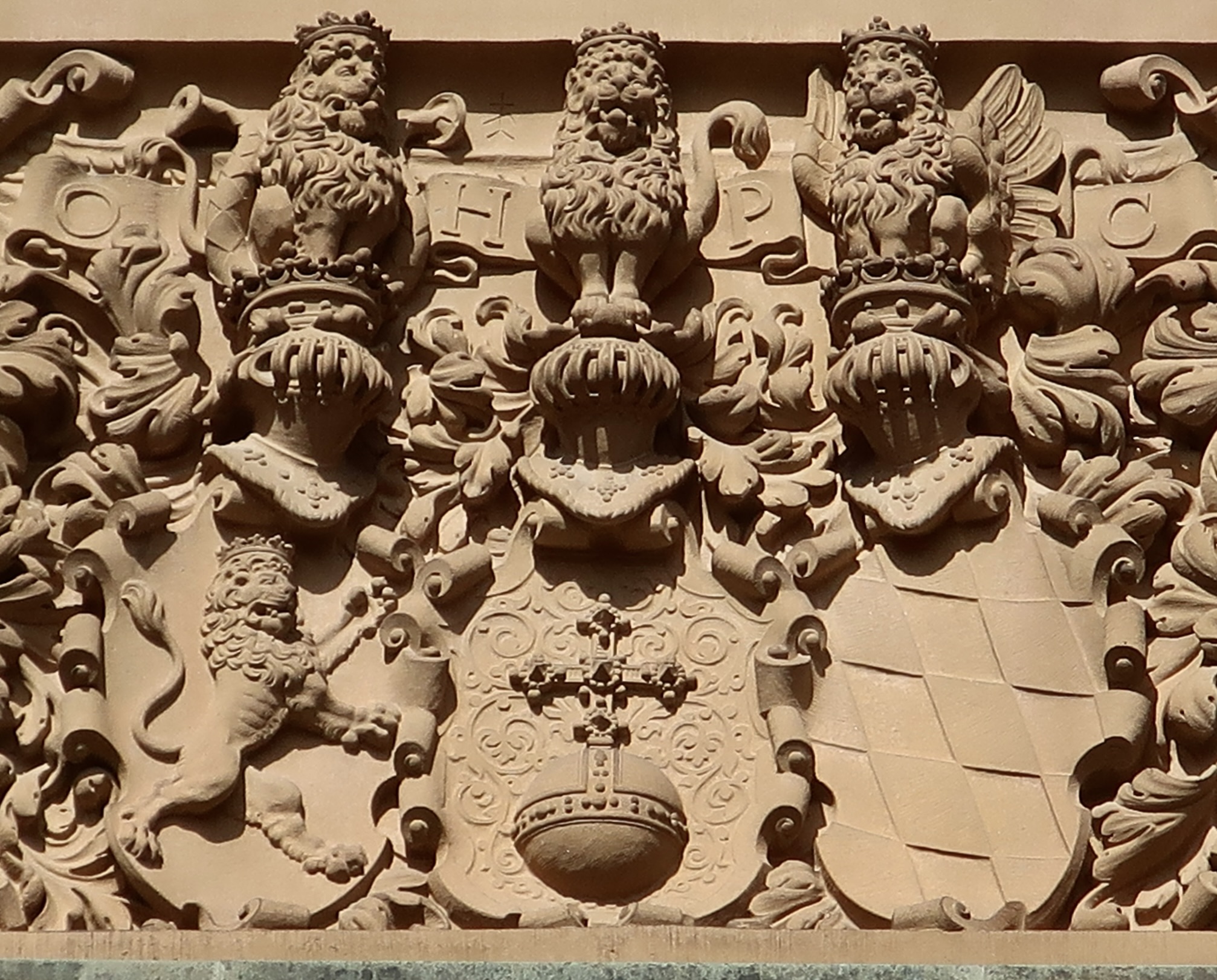
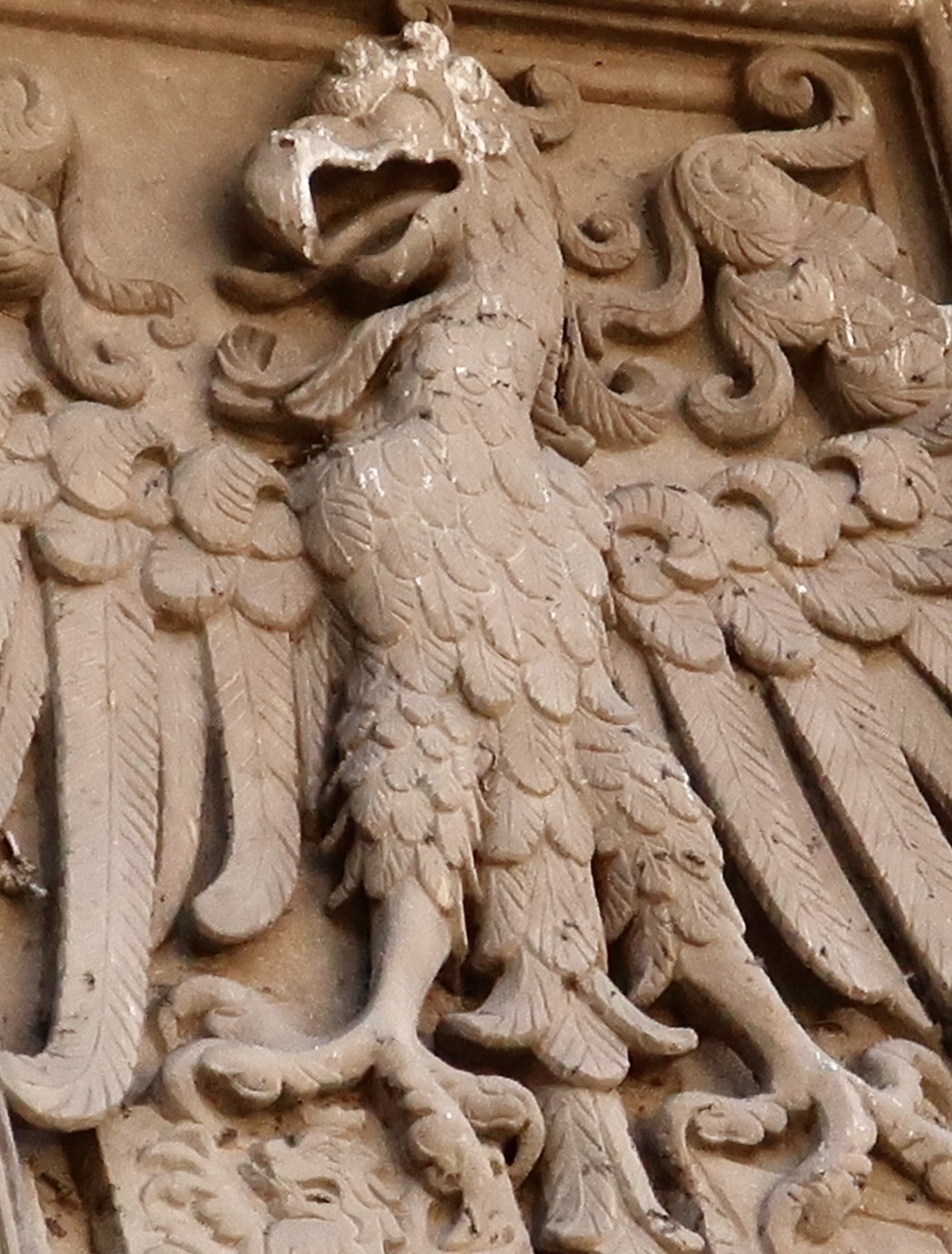
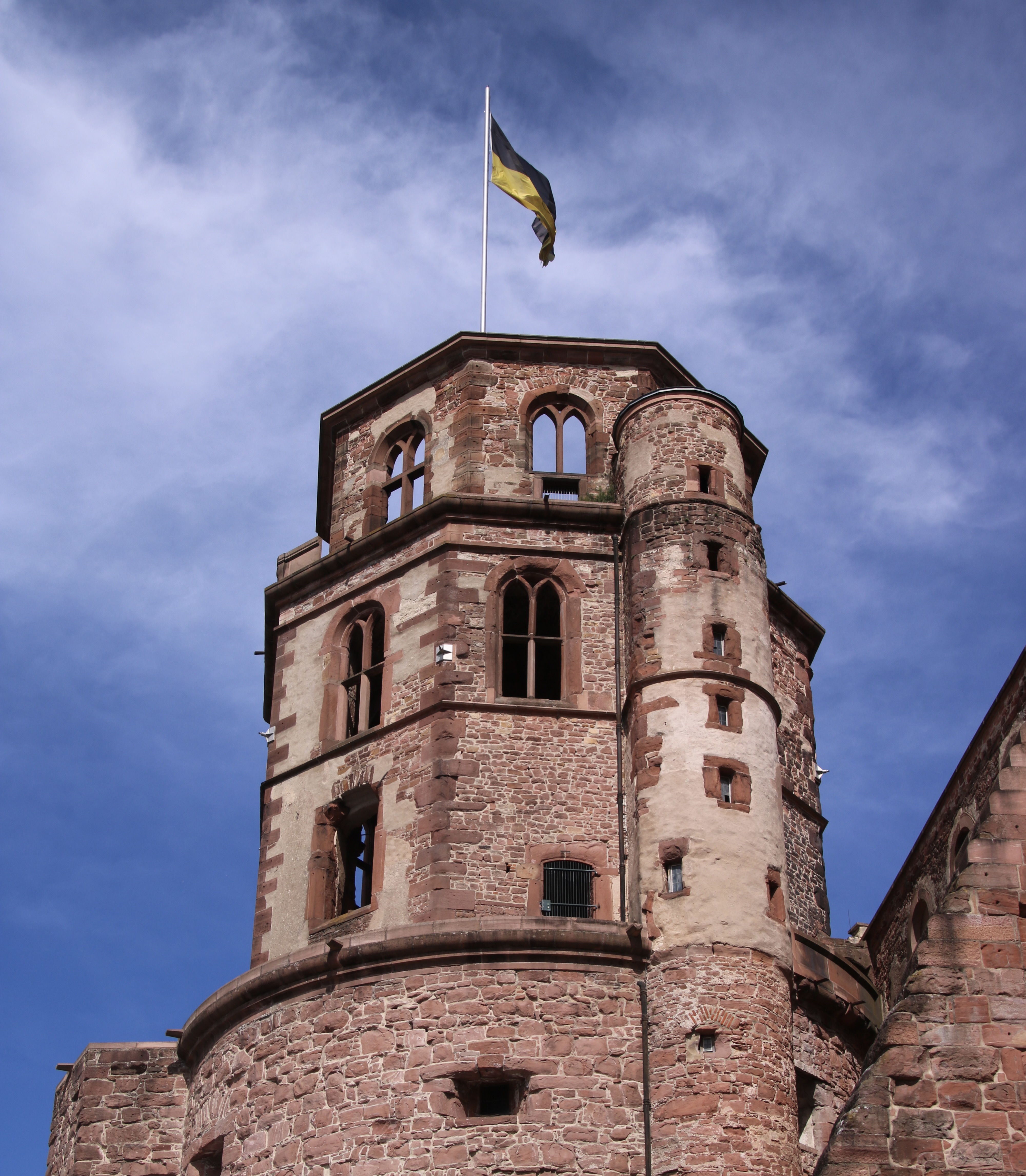
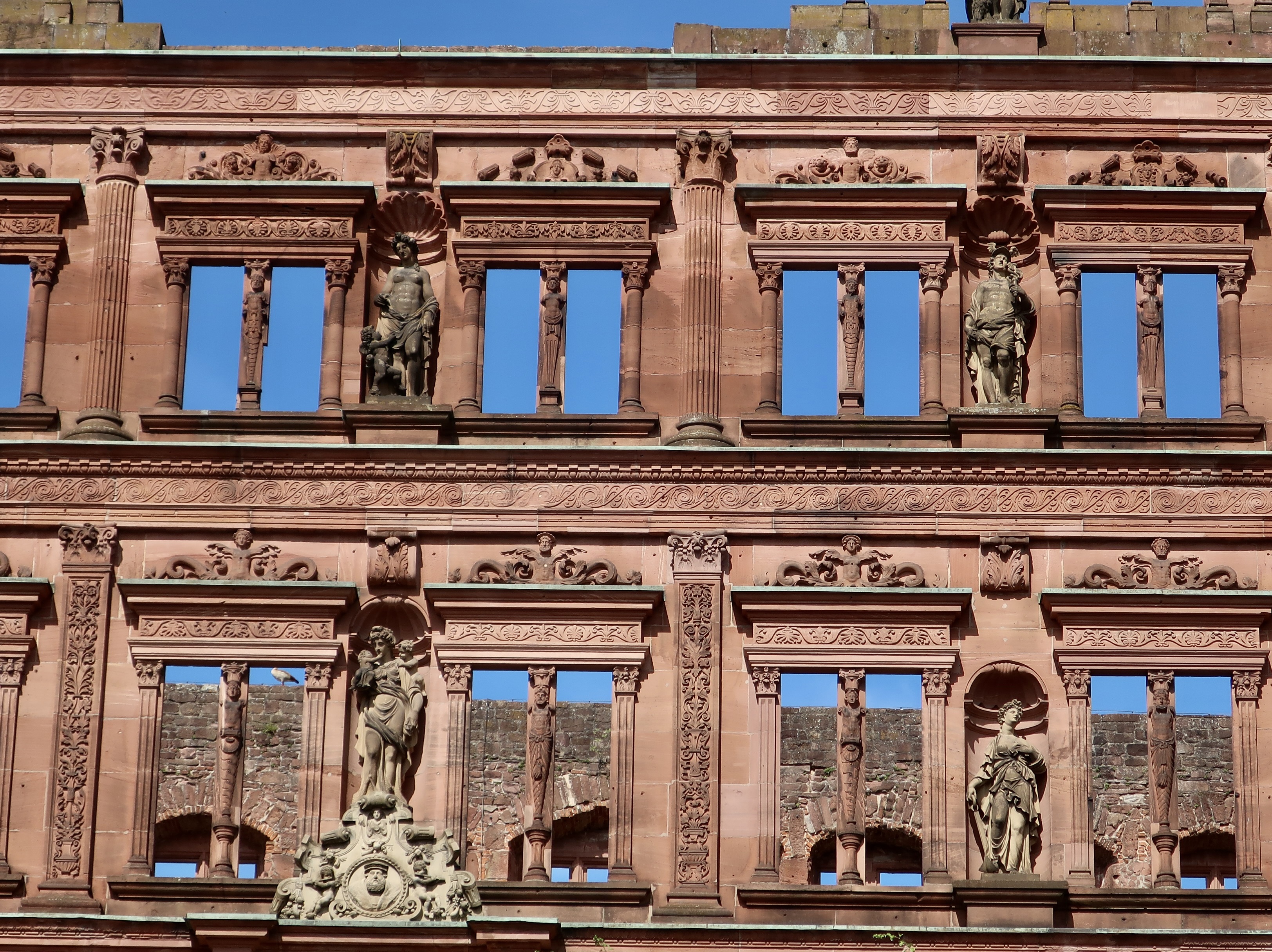
Visiting Heidelberg Castle can make you feel like one in a million. That’s the number of people who tour the castle each year. We dutifully waited our turn on the funicular railway that would take us the 260 feet (80 meters) up to the castle and the beginning of our tour.
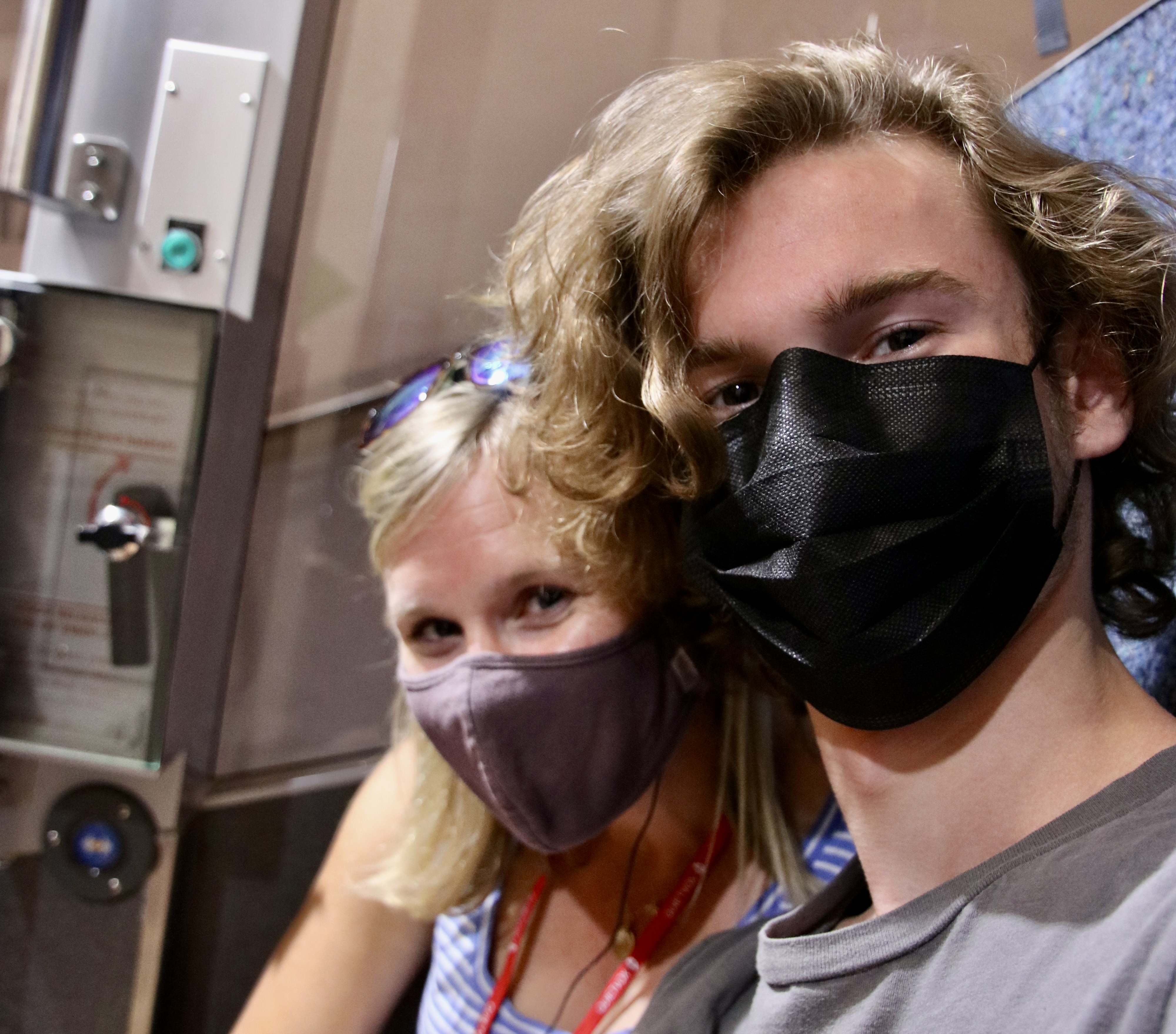
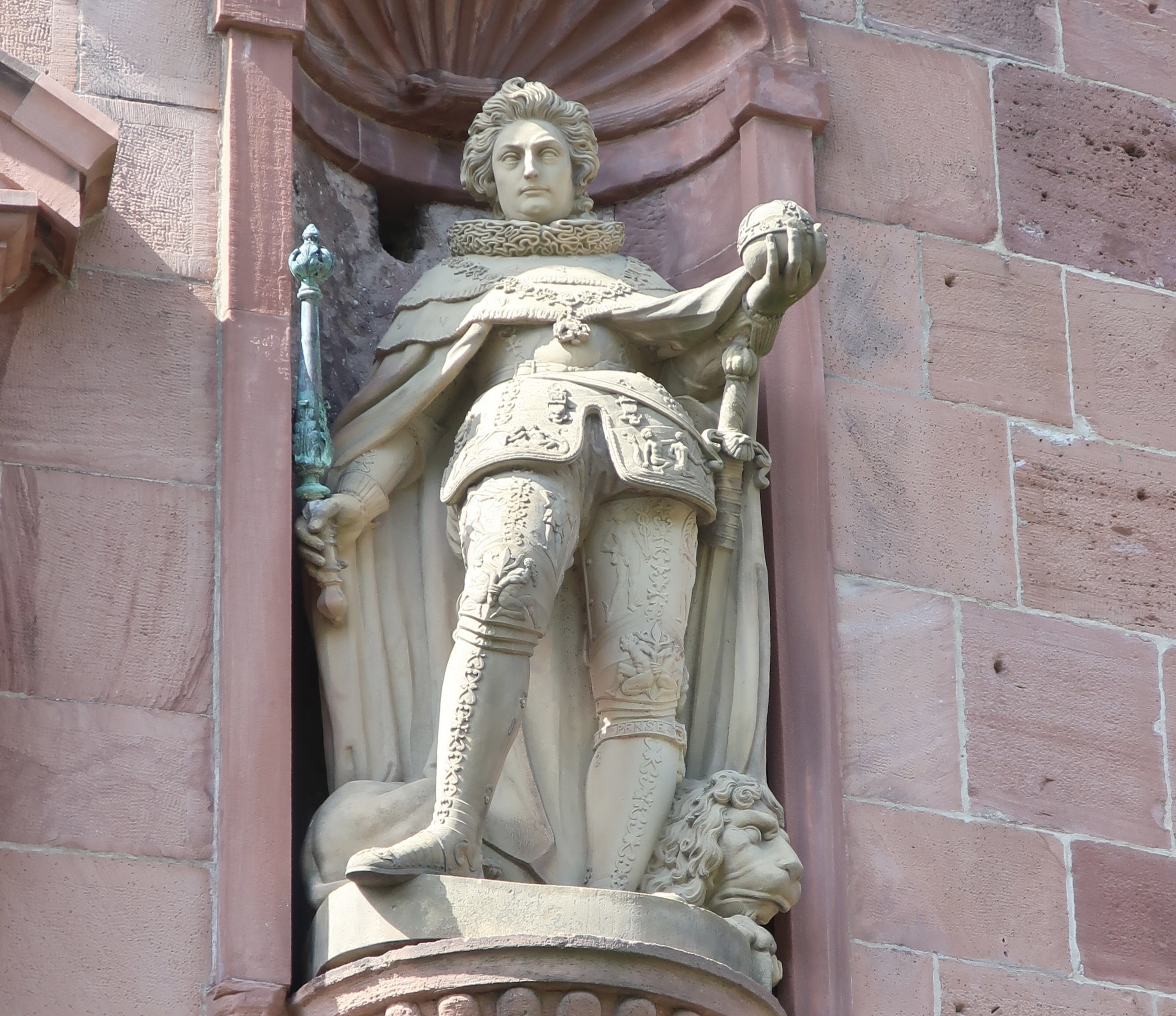
Heidelberg Castle was built in the 13th and 14th centuries. There were originally two castles, an upper and lower, but lightning and fire destroyed the upper one in 1537. The lower castle has since seen its share of wars requiring frequent renovations. It, too, finally succumbed to a lightning strike and fire in 1764— making it fair game for people to use its stones in building their homes, a custom of repurposing that has existed since time immemorial. A serious effort began in 1800 to preserve what was left. Sections have also been renovated. Regardless of its past history, the present structure is very impressive.
Today, Peggy and I are continuing our exploration of Yellowstone National Park, which we visited as part of our four month, 12,000 mile exploration of the US between September and December this past year. All photos in this post were taken by either Peggy or me unless otherwise noted.
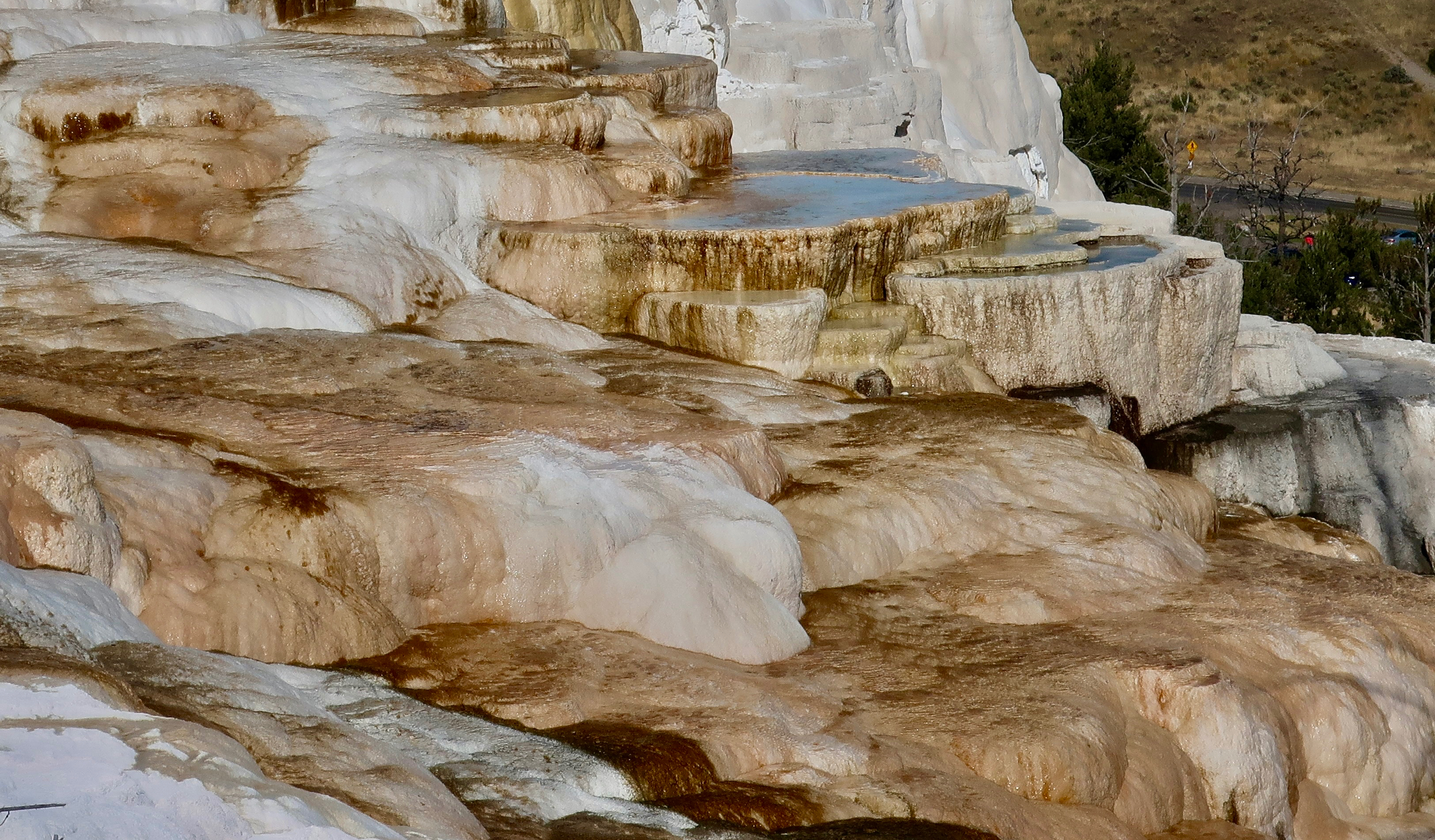
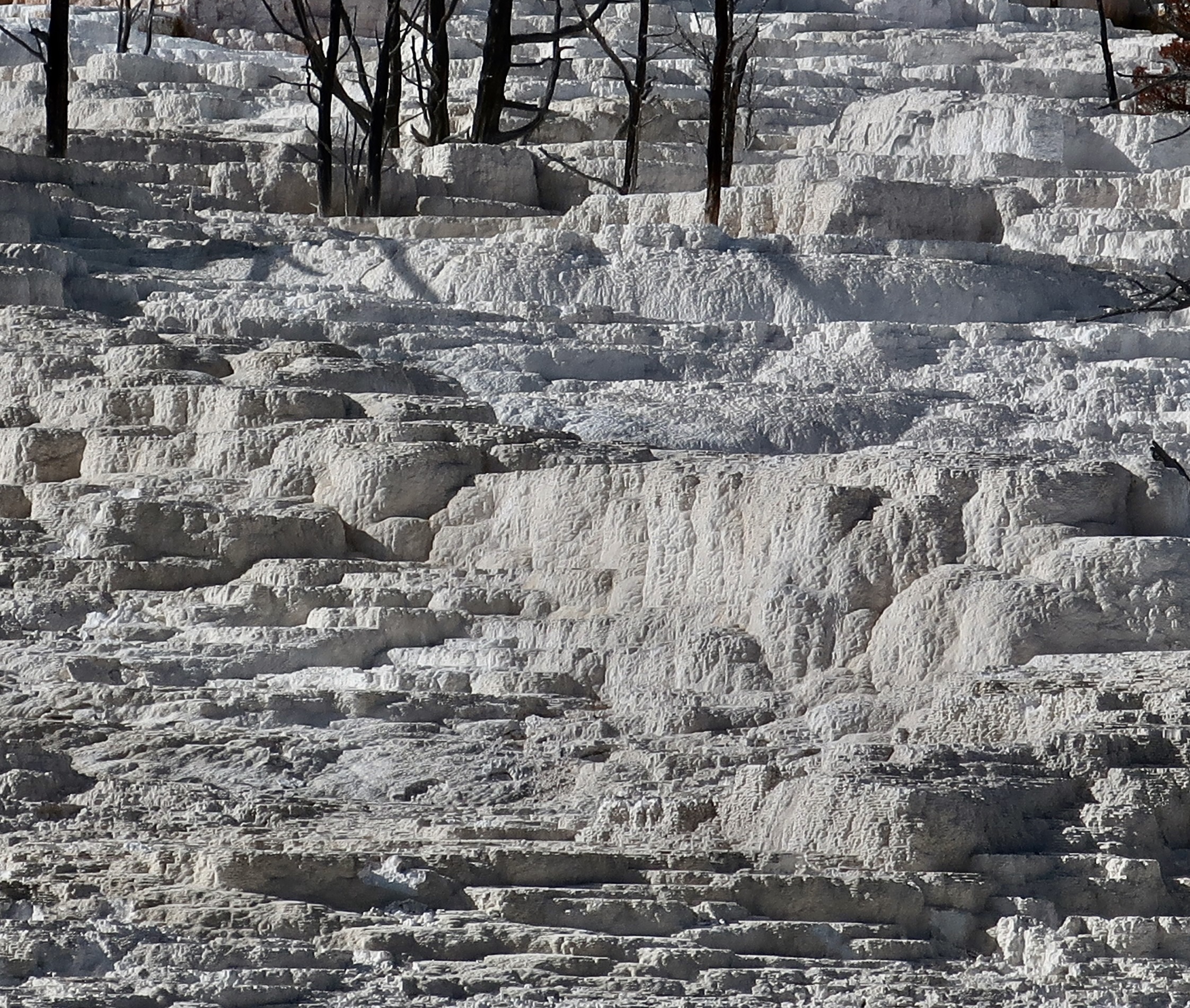
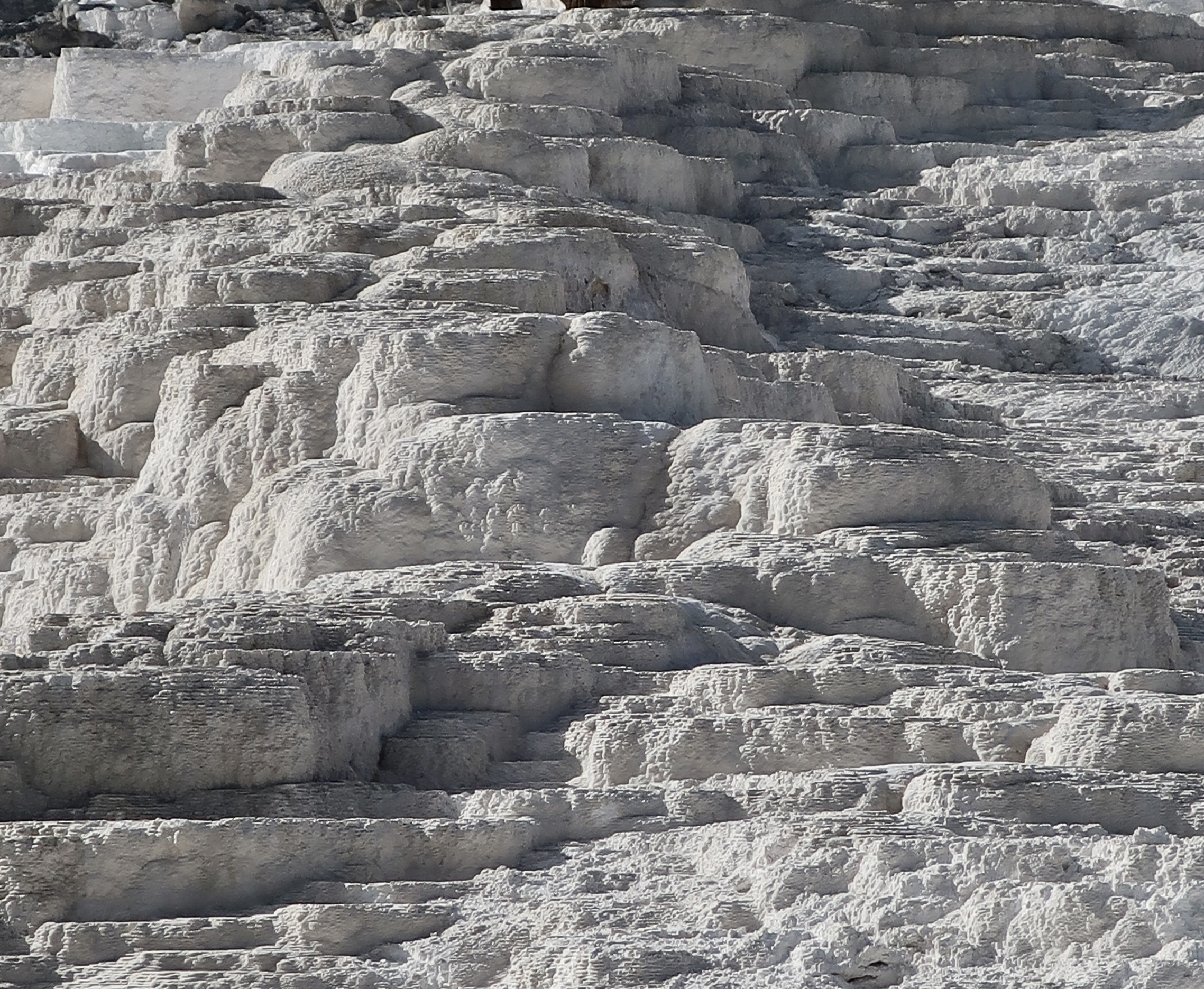
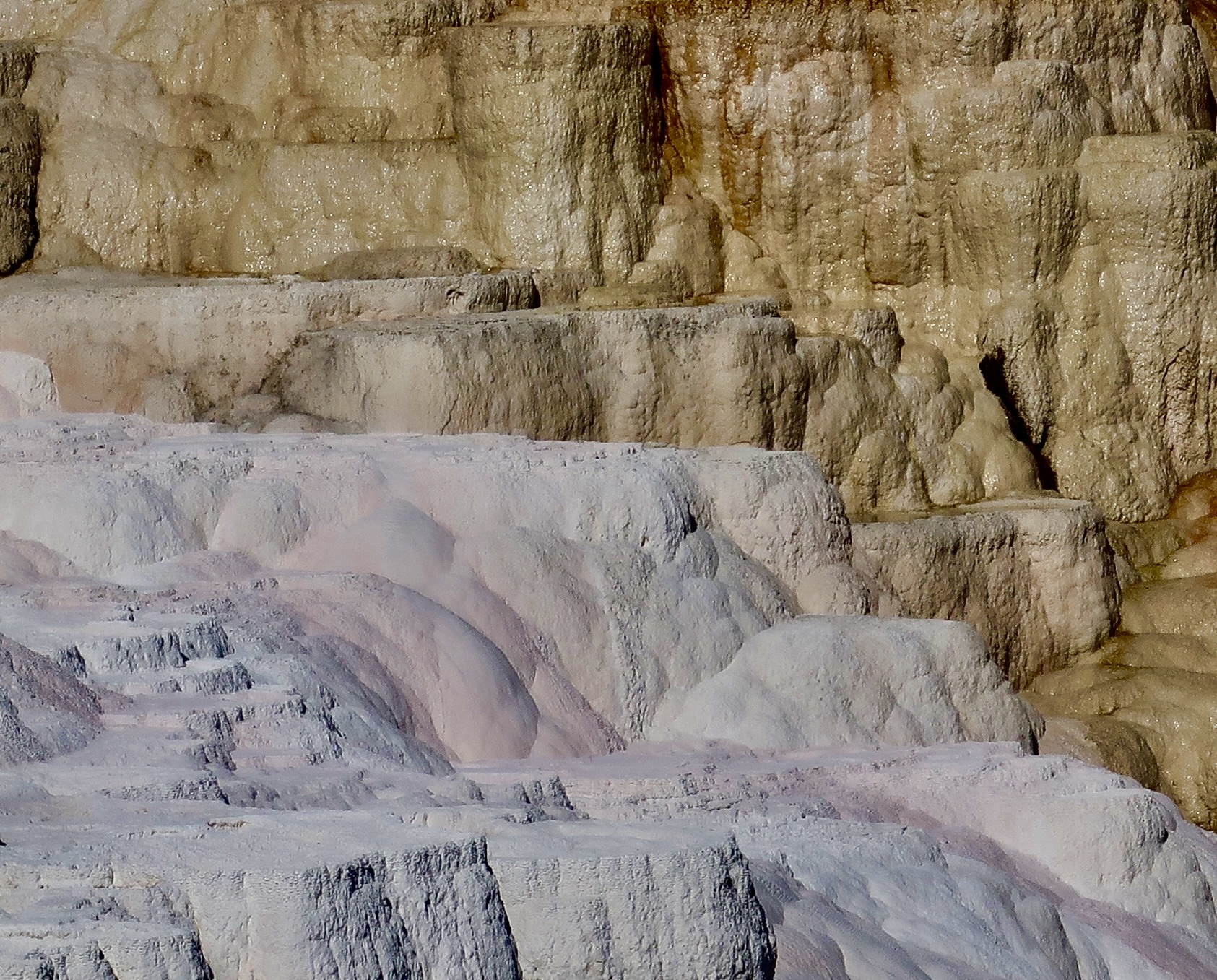
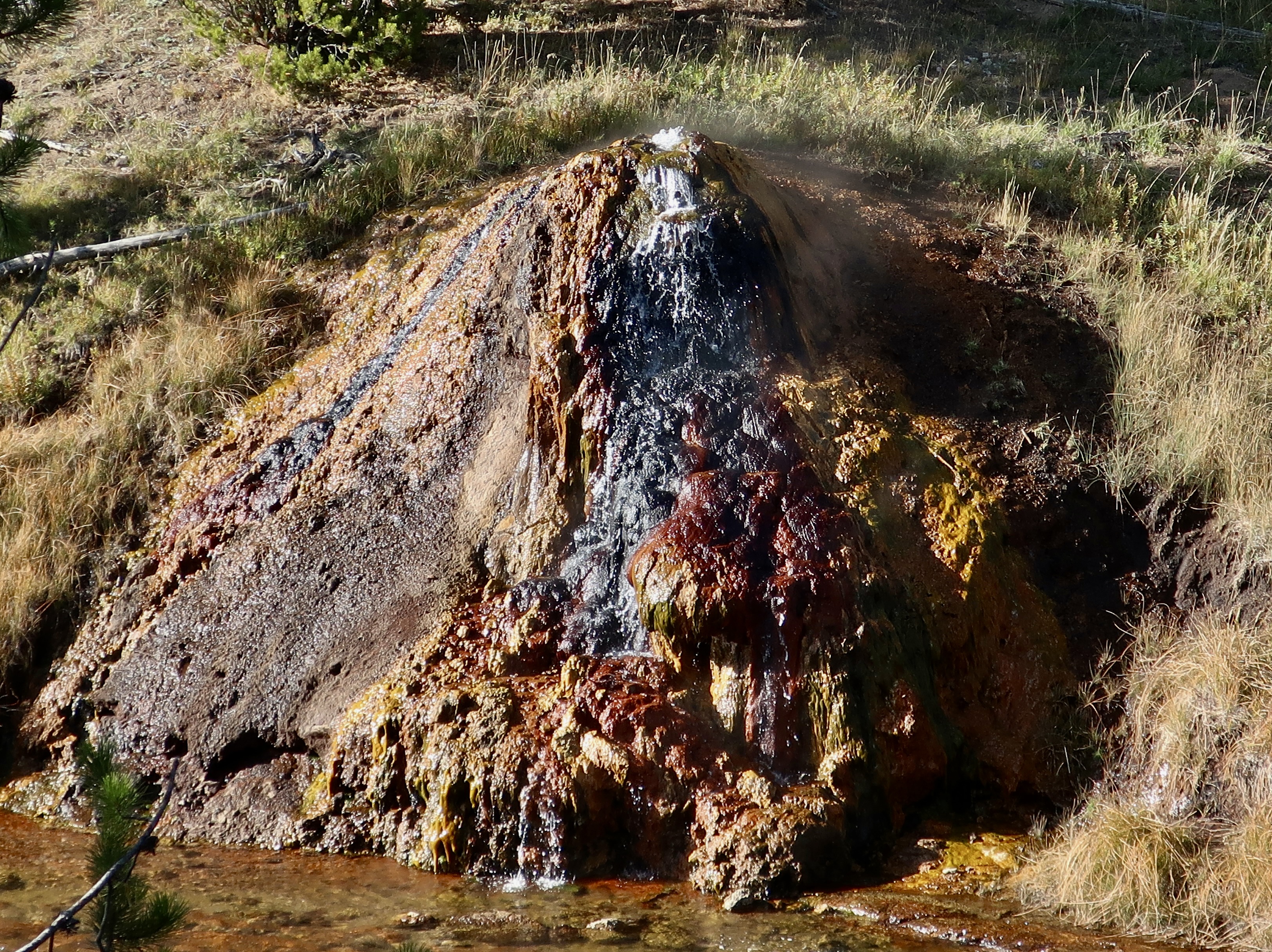
Located 50 miles north of Old Faithful, the travertine terraces of Mammoth Hot Springs are one of the most unique and beautiful of Yellowstone’s hydrothermal created landscapes. The terracing is a result of underlying limestone. Hot water dissolves the limestone and deposits it on the surface. The bright colors, like the colors of the hot springs in the Yellowstone Caldera to the south, are created by thermophiles, tiny microorganisms that thrive in the hot springs. Different types of thermophiles have different tolerance for the heat and come in different colors based upon their exposure to sunlight. Those that can tolerate the most heat live deep in the pools and tend toward blue and green. The ones living on the cooler outer edges are more in the brown and yellow range.
Peggy and I took a day to drive up from where we were camped in the town of West Yellowstone to visit Mammoth Hot Springs. On the way up we saw a lot of great scenery that I will feature in another post and two hydrothermal features I haven’t covered in this series yet: mud pots and fumaroles.

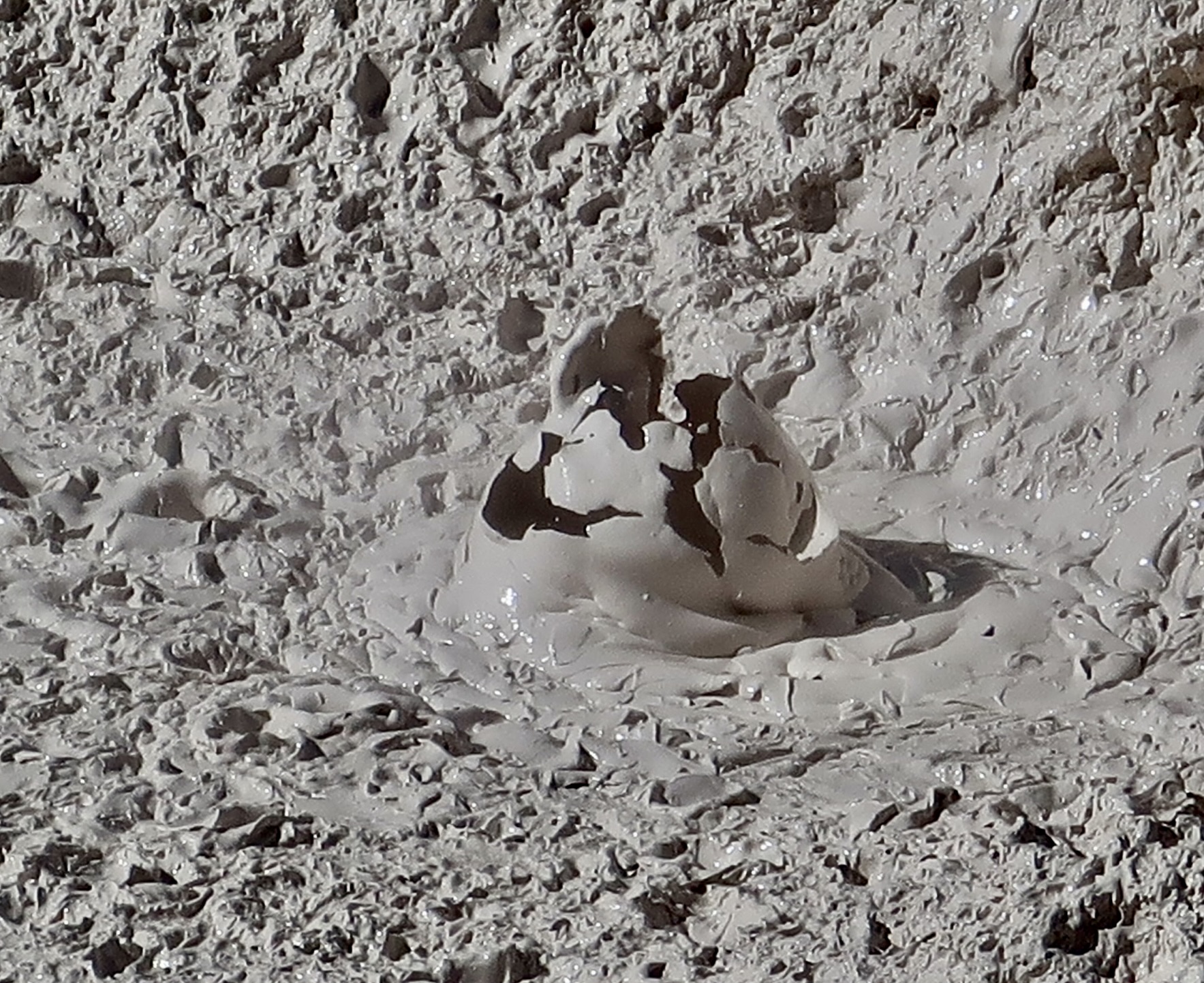

And now it’s time to visit the terraces of Mammoth Hot Springs. A convenient road takes you around the terraces. Walkways off the road take you to the lower terraces. The following photos were taken from the walkways.

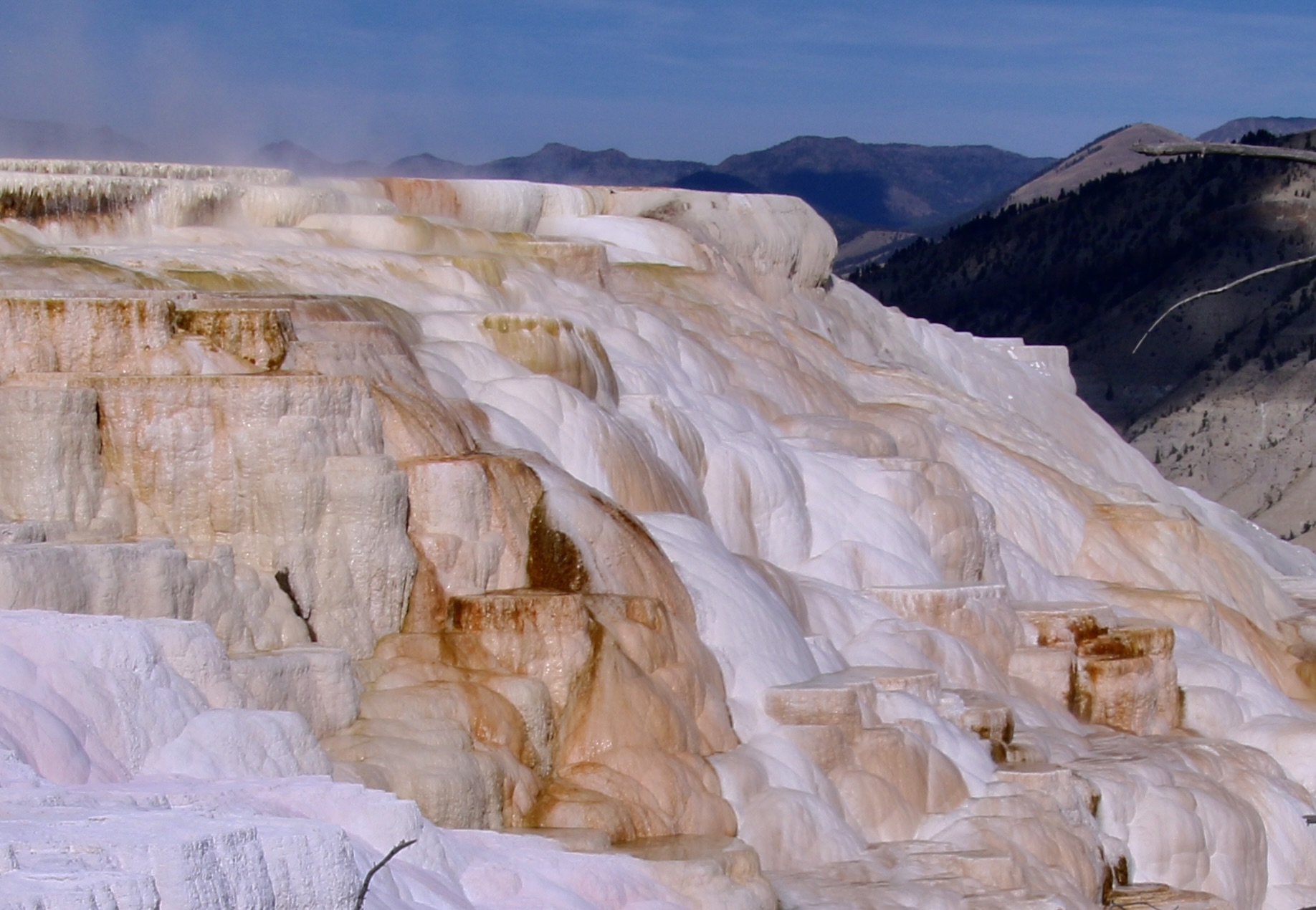


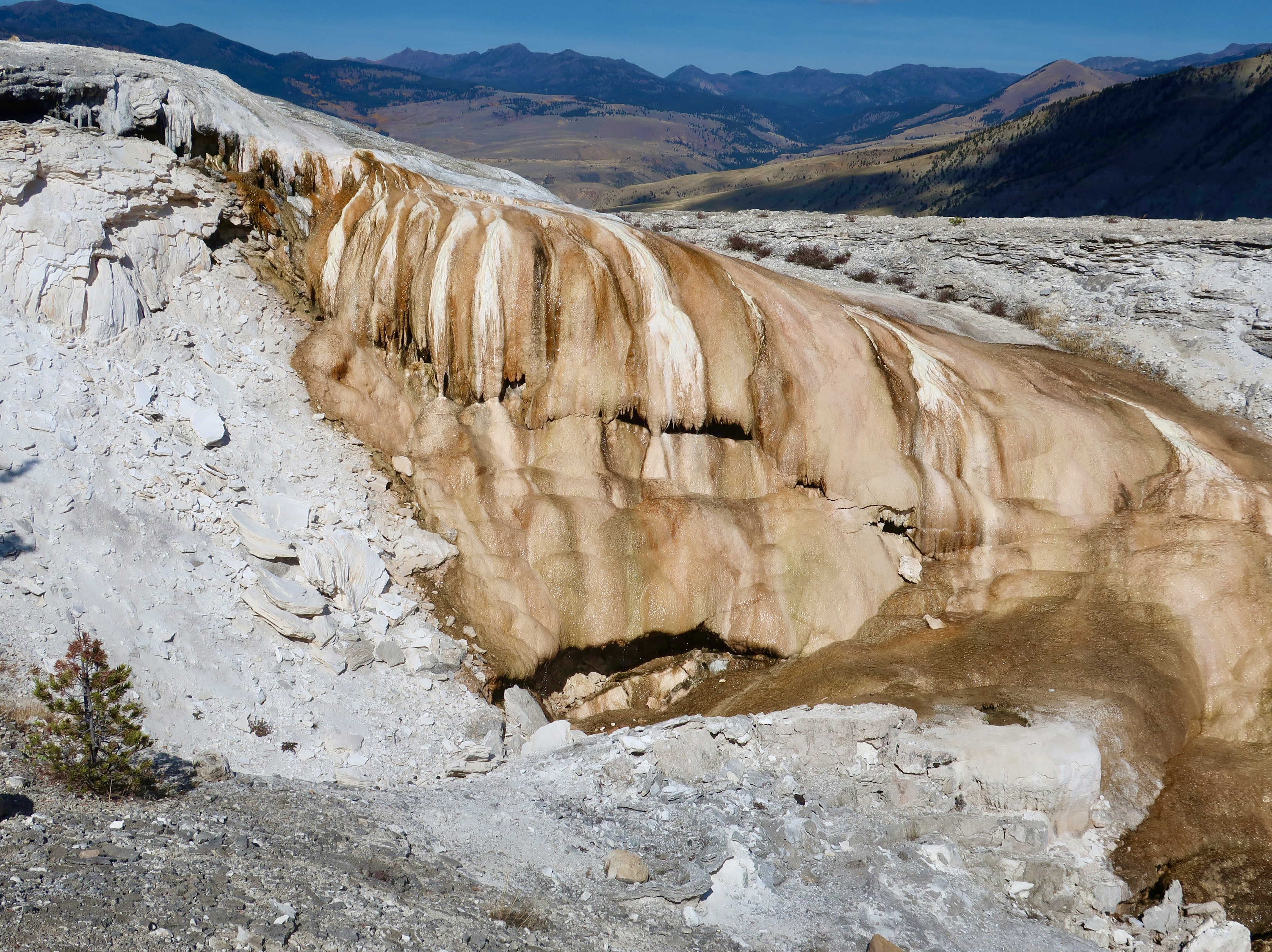

The road snakes around the upper terrace. There are several pullouts that allow close up views of the various formations.


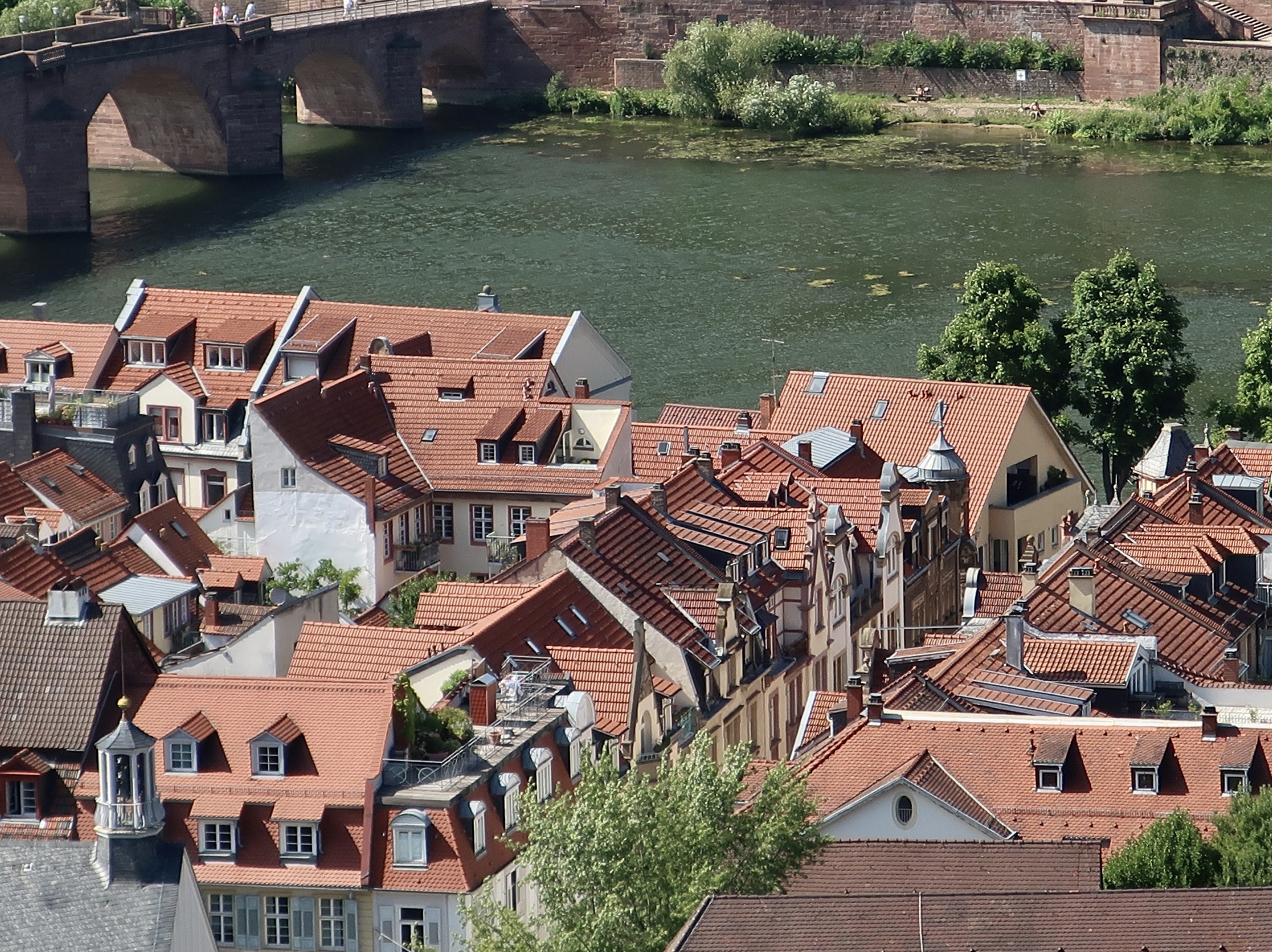
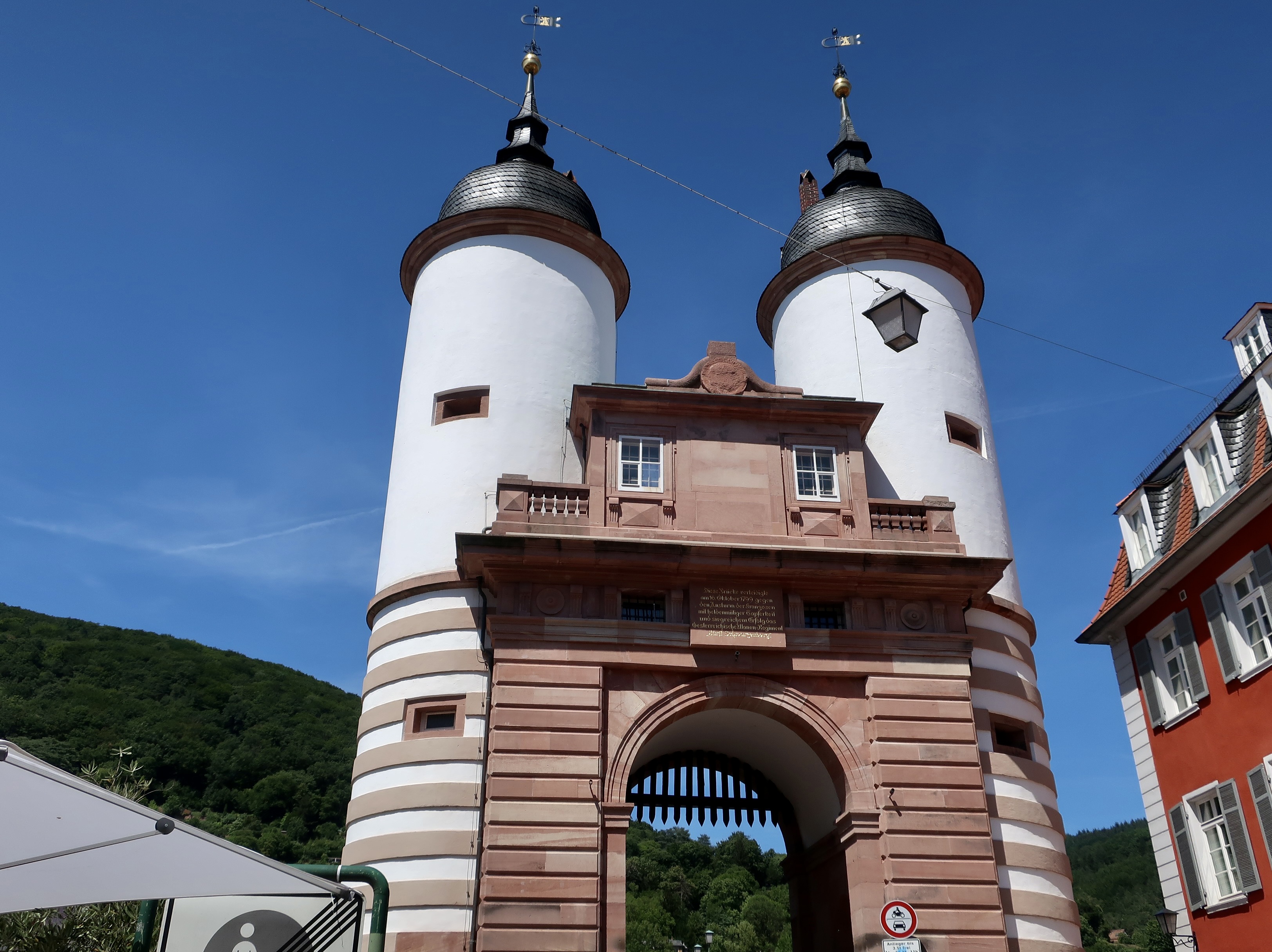
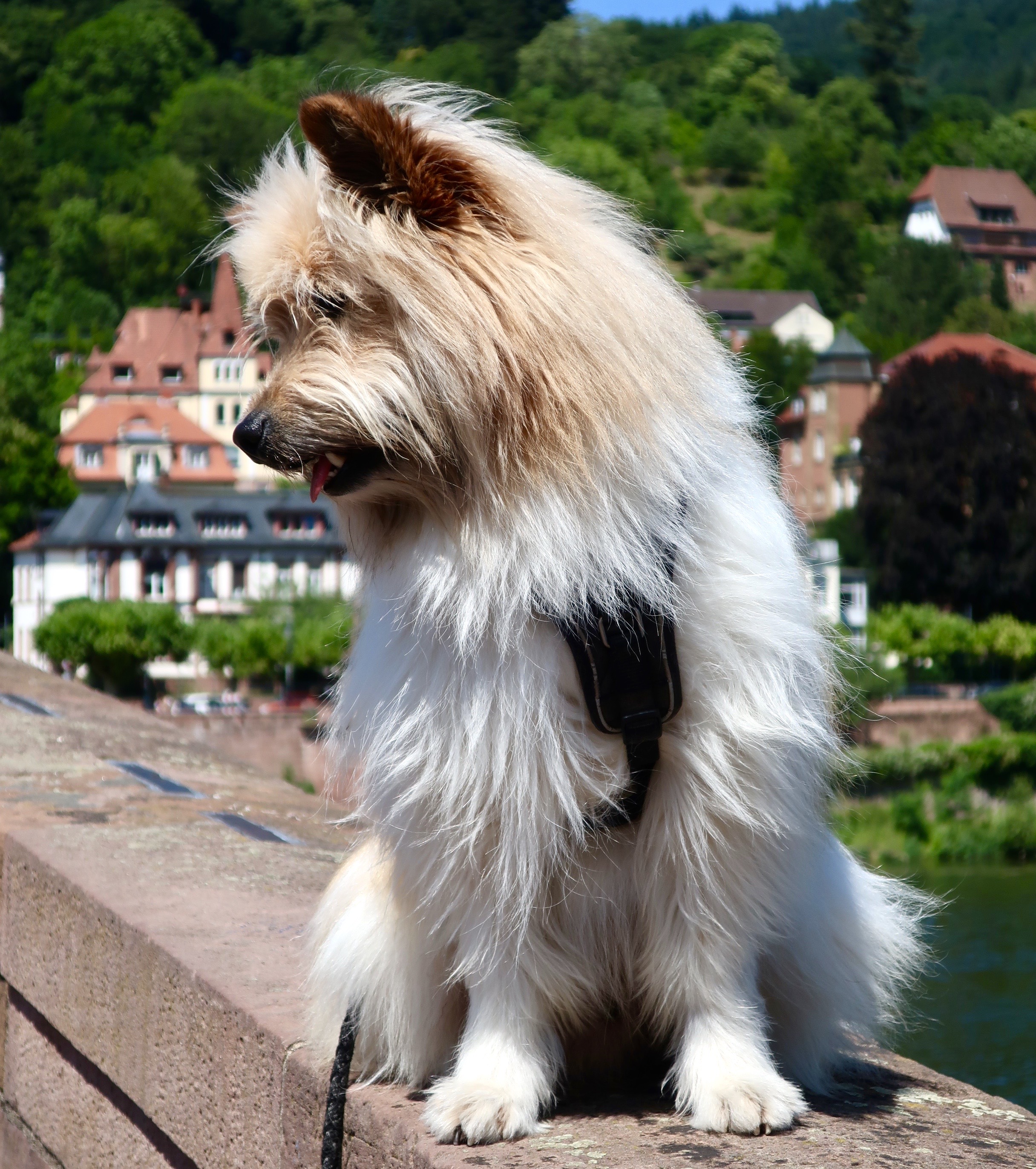
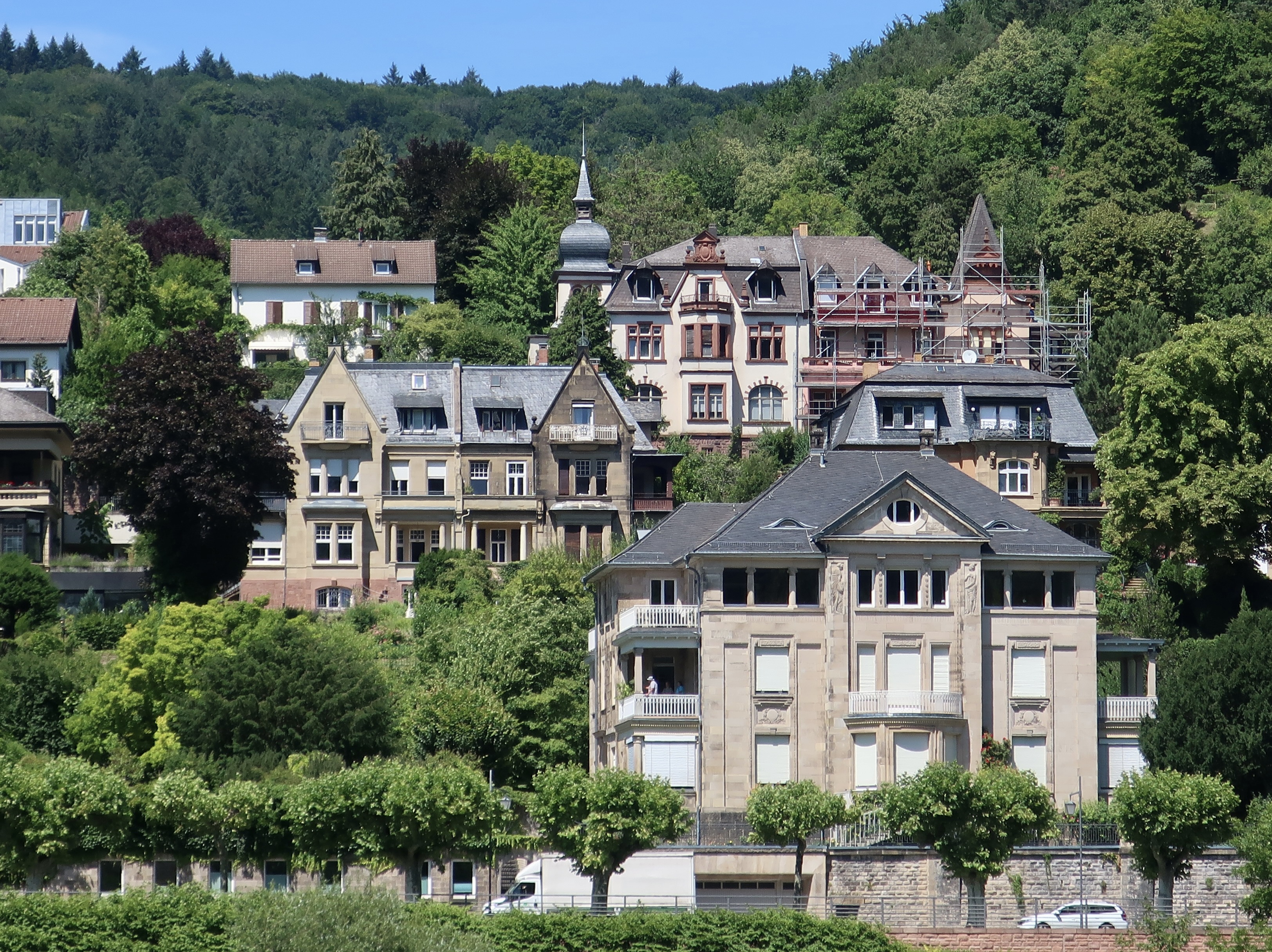
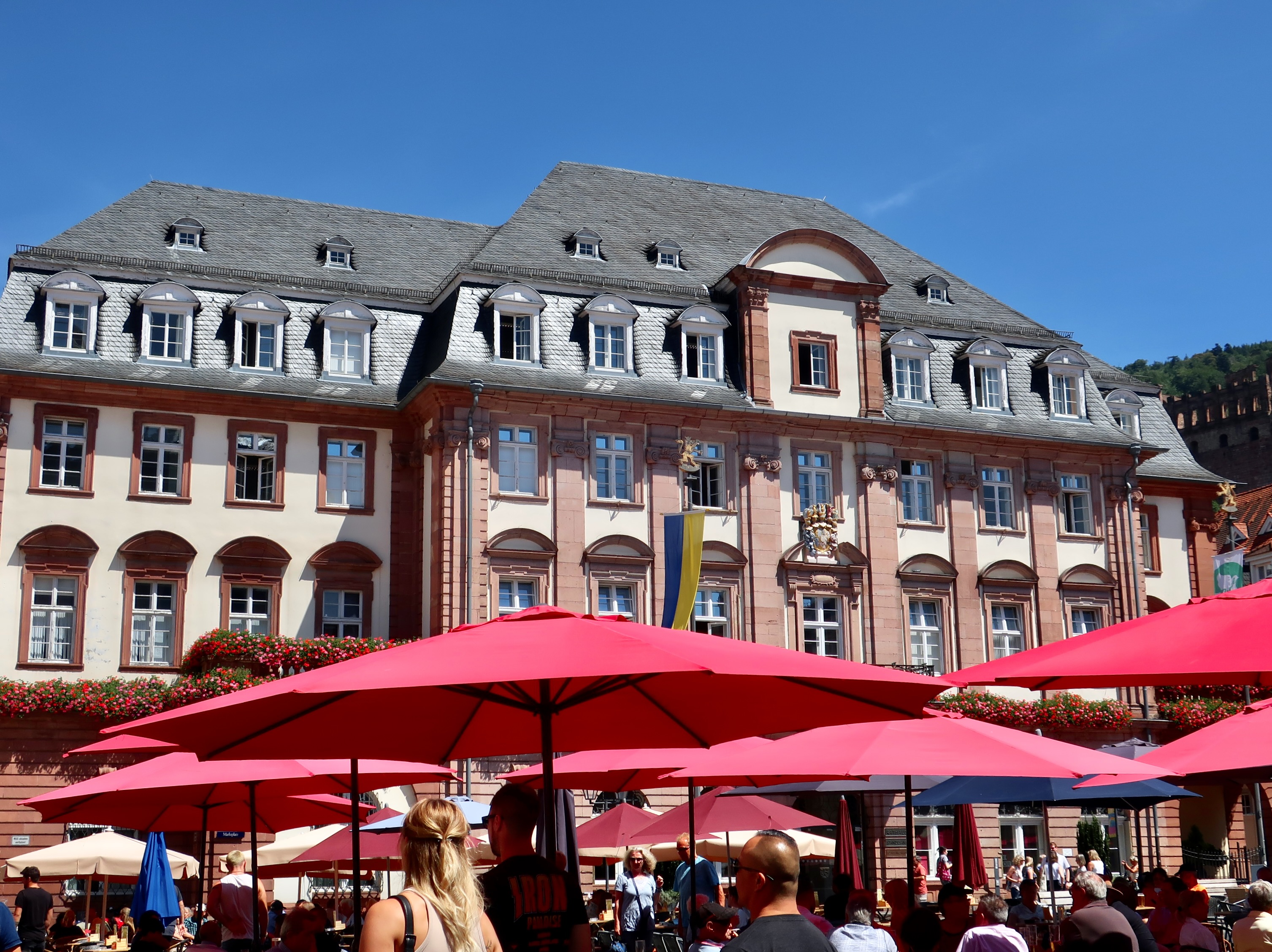
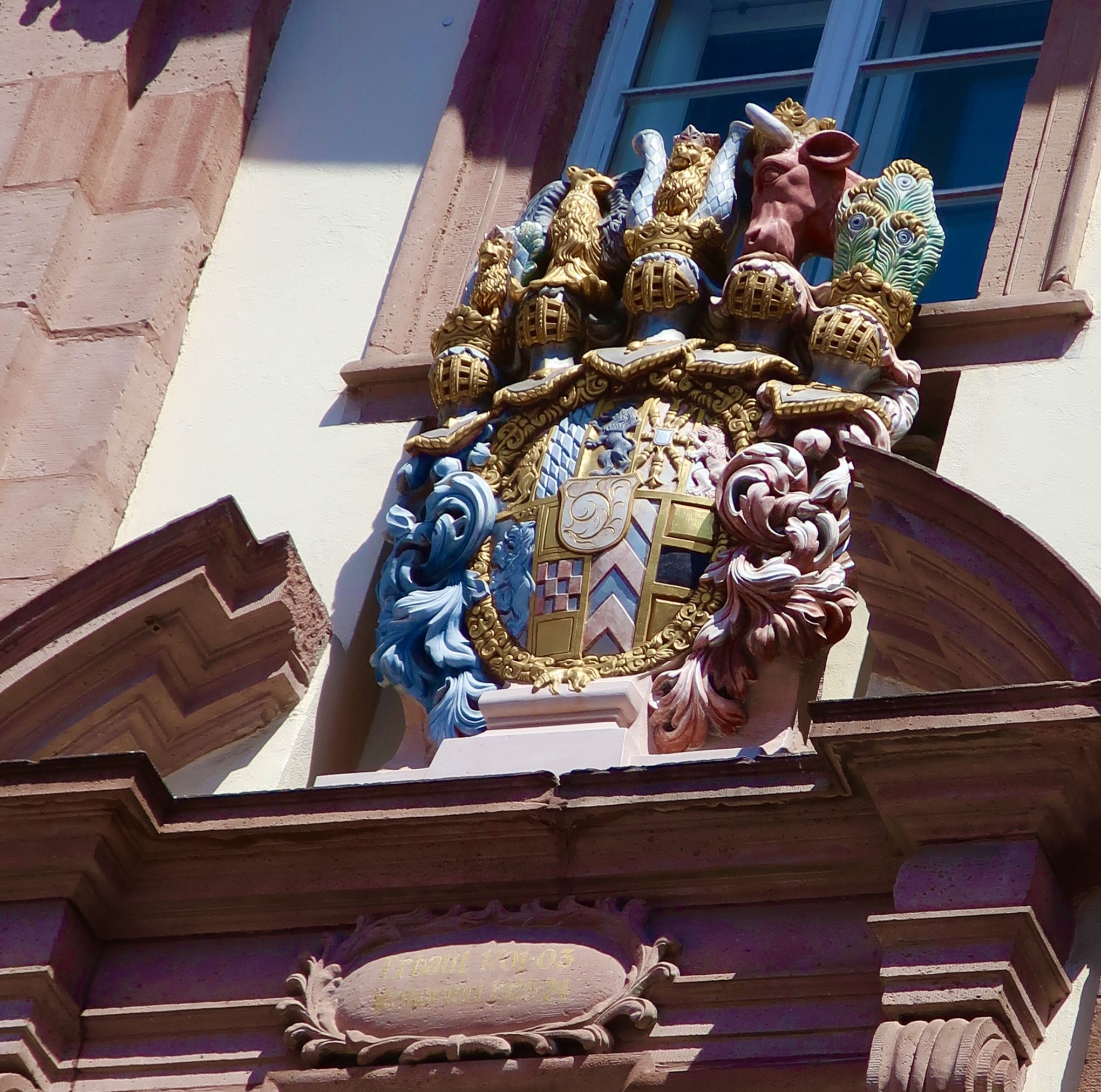
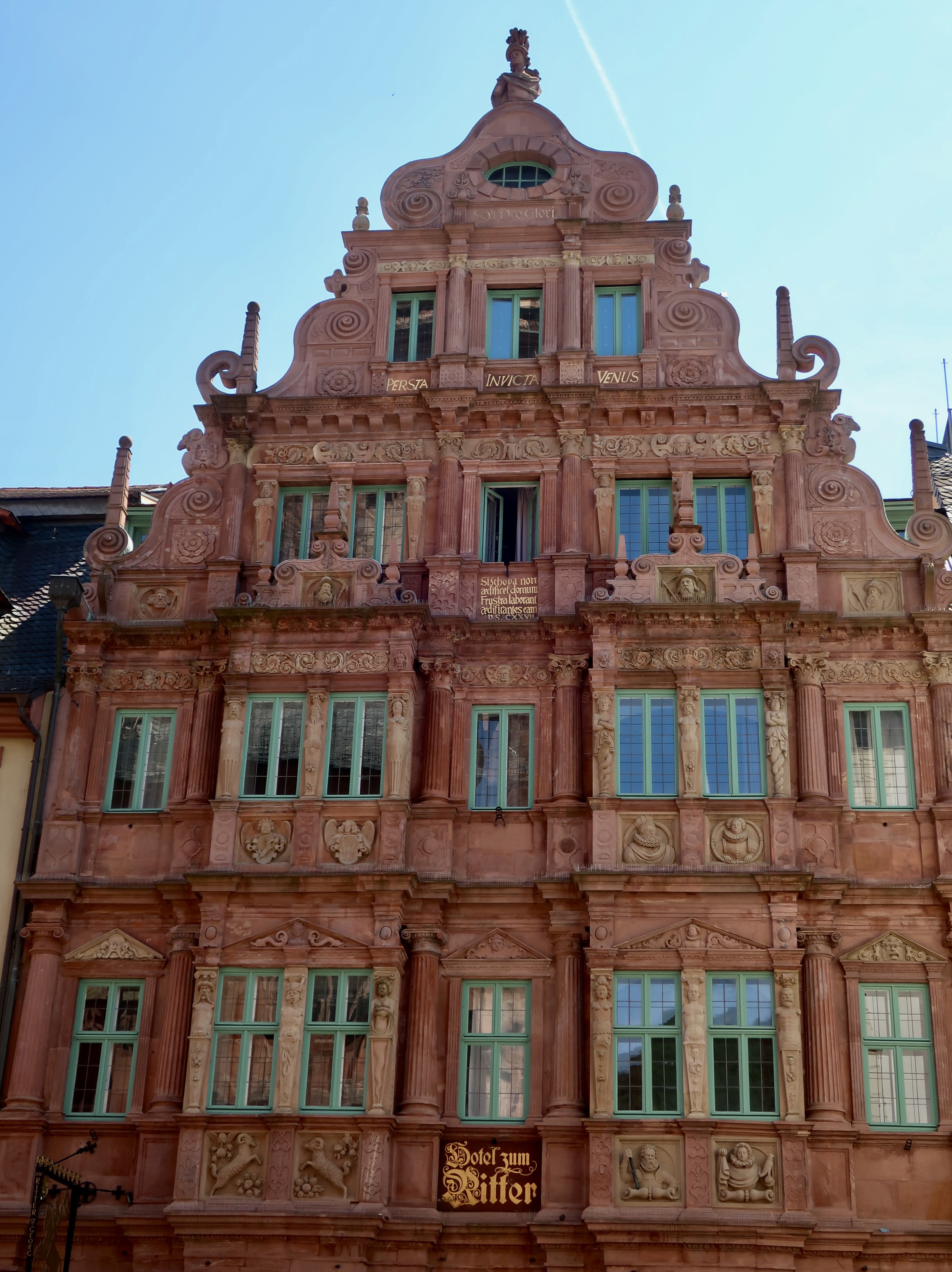
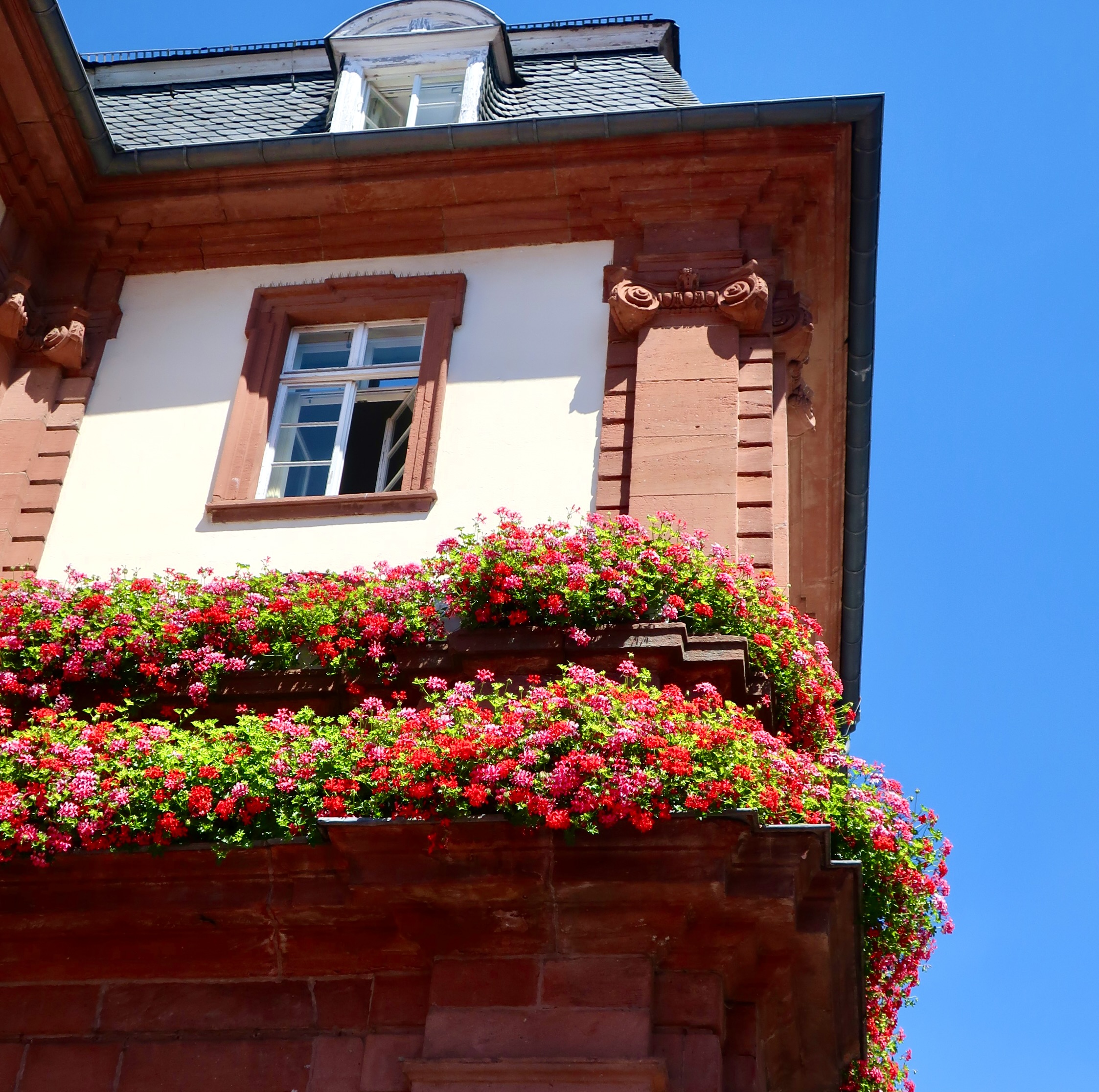
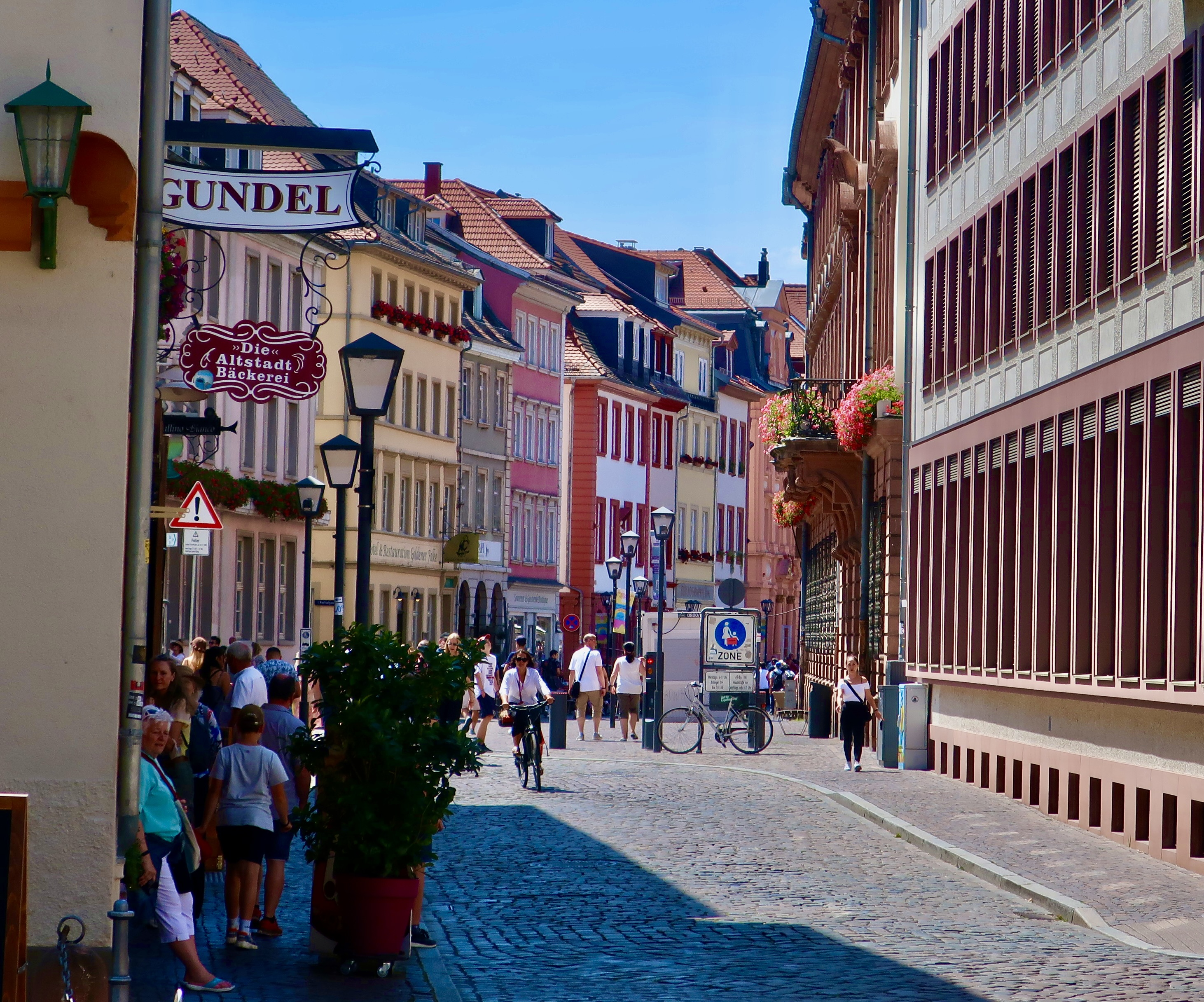
Today’s photo blog features Heidelberg, which we visited on our family trip up the Rhine River last summer. All photos are taken by either Peggy or me unless otherwise noted.

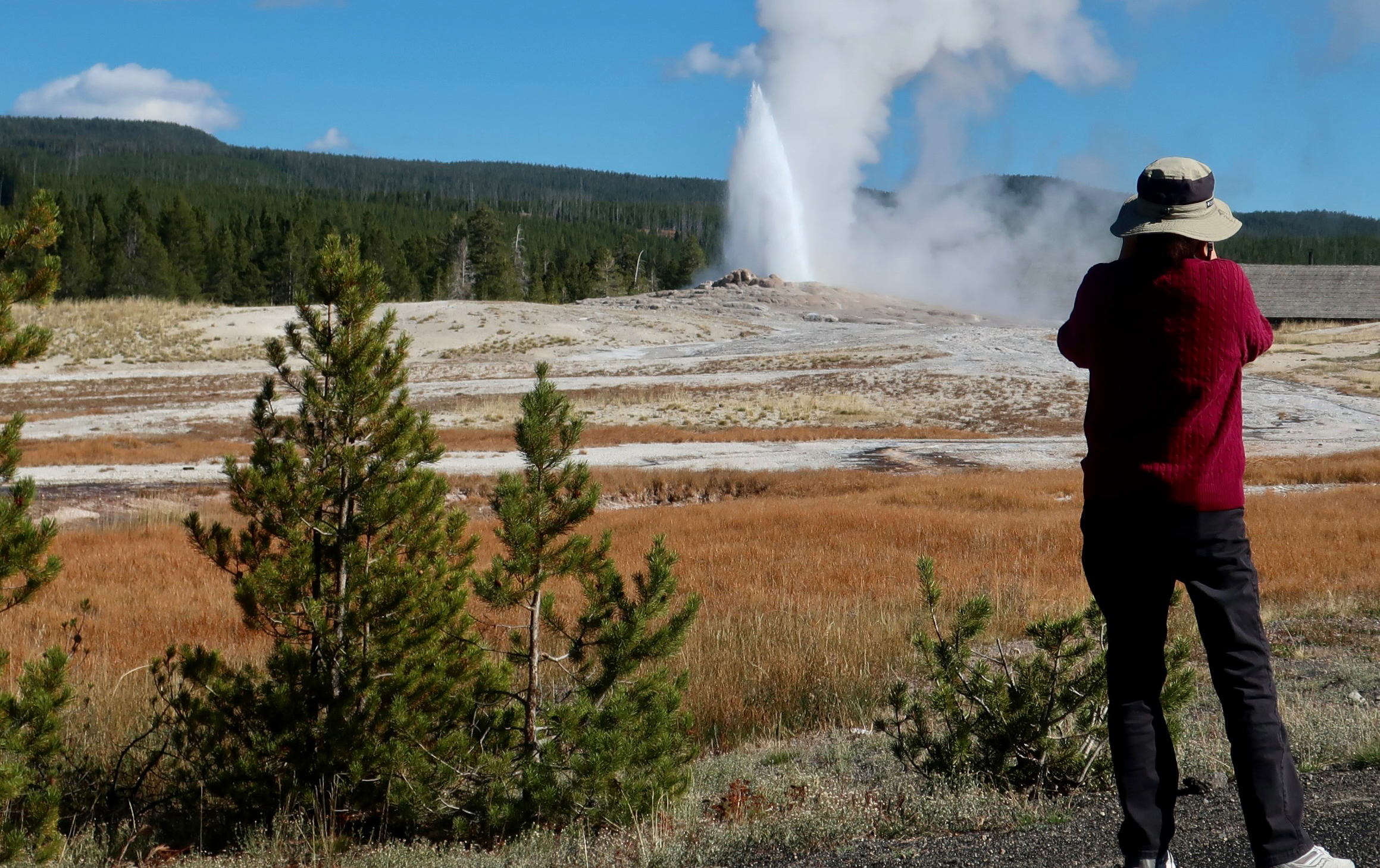
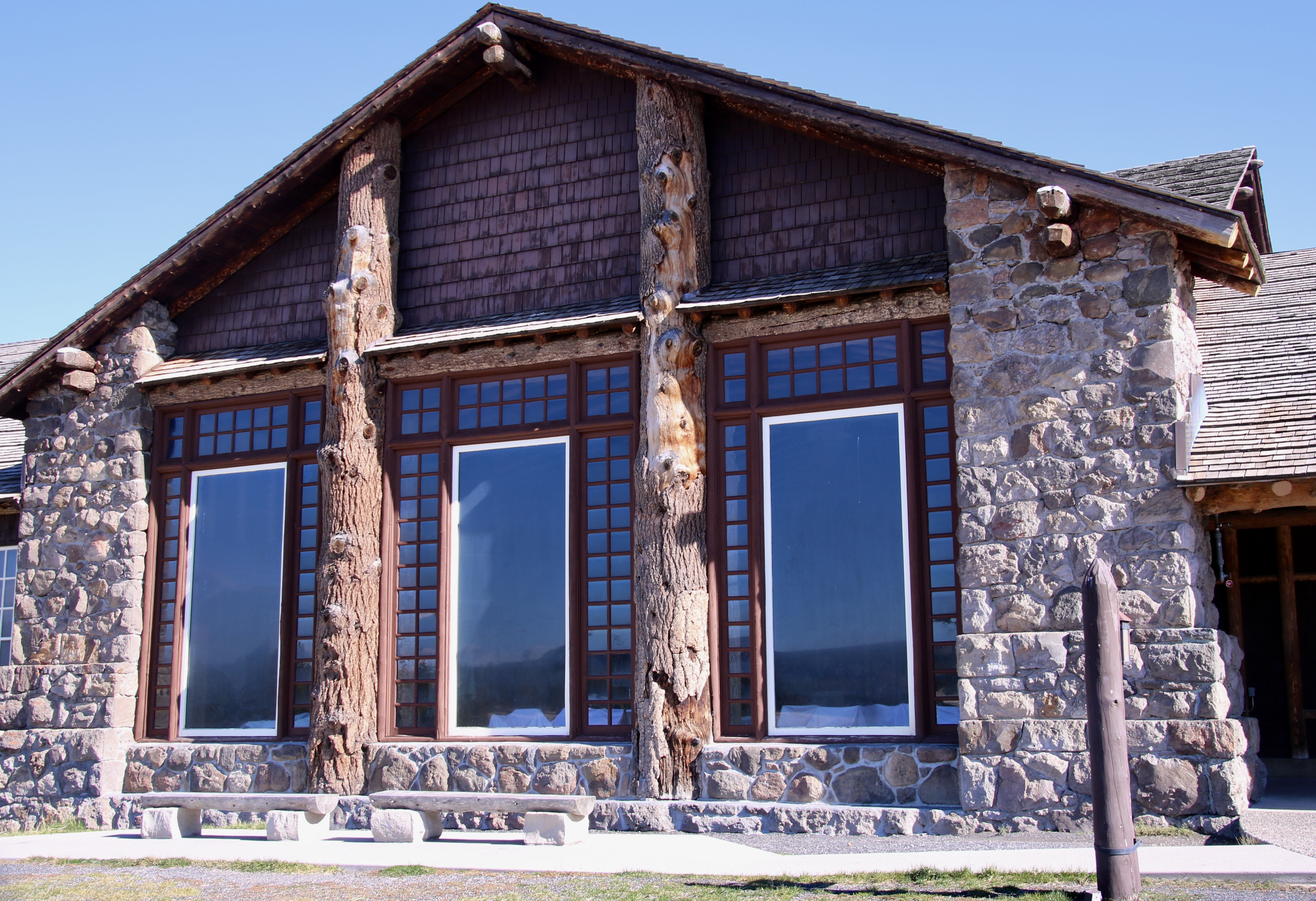
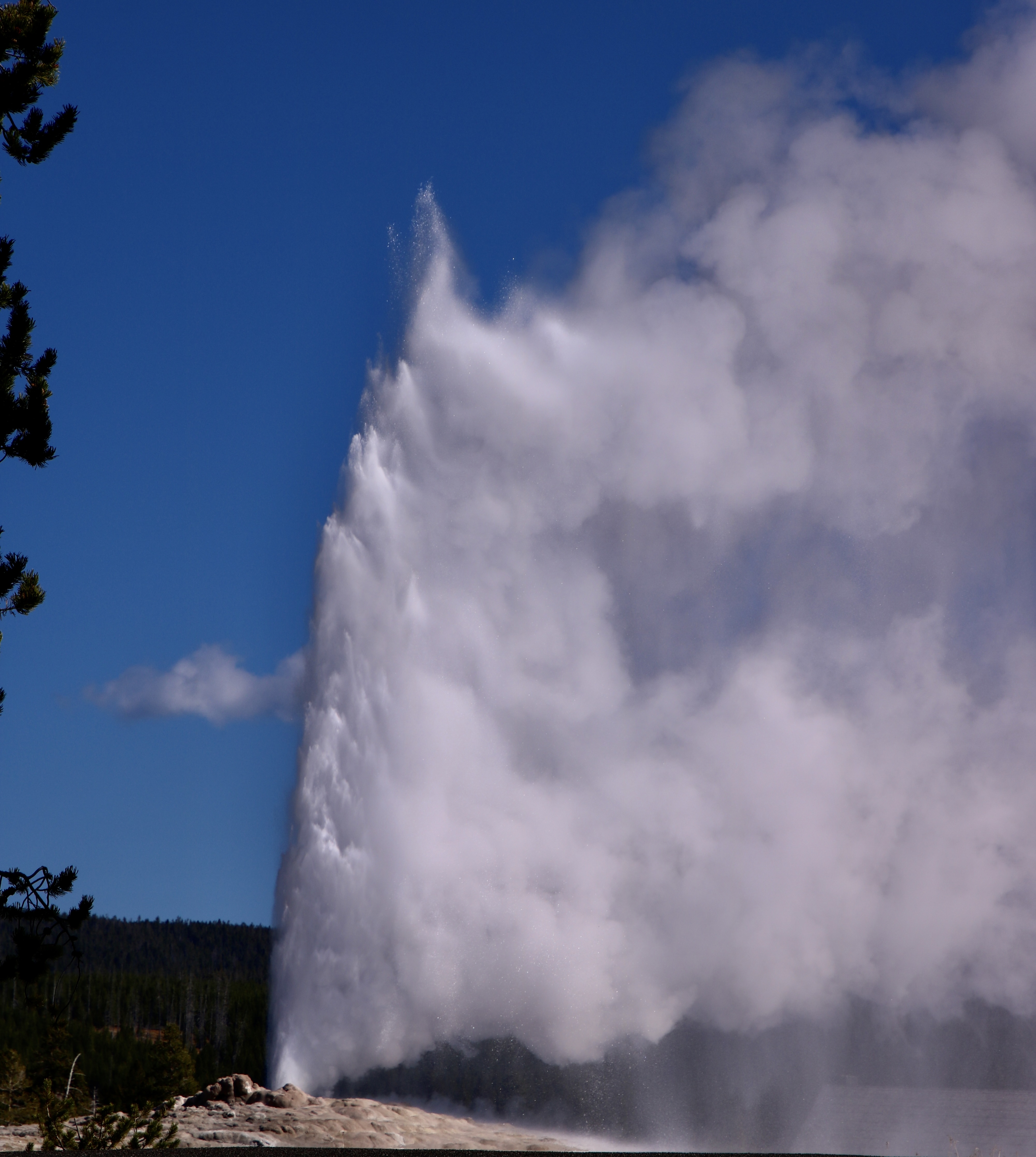
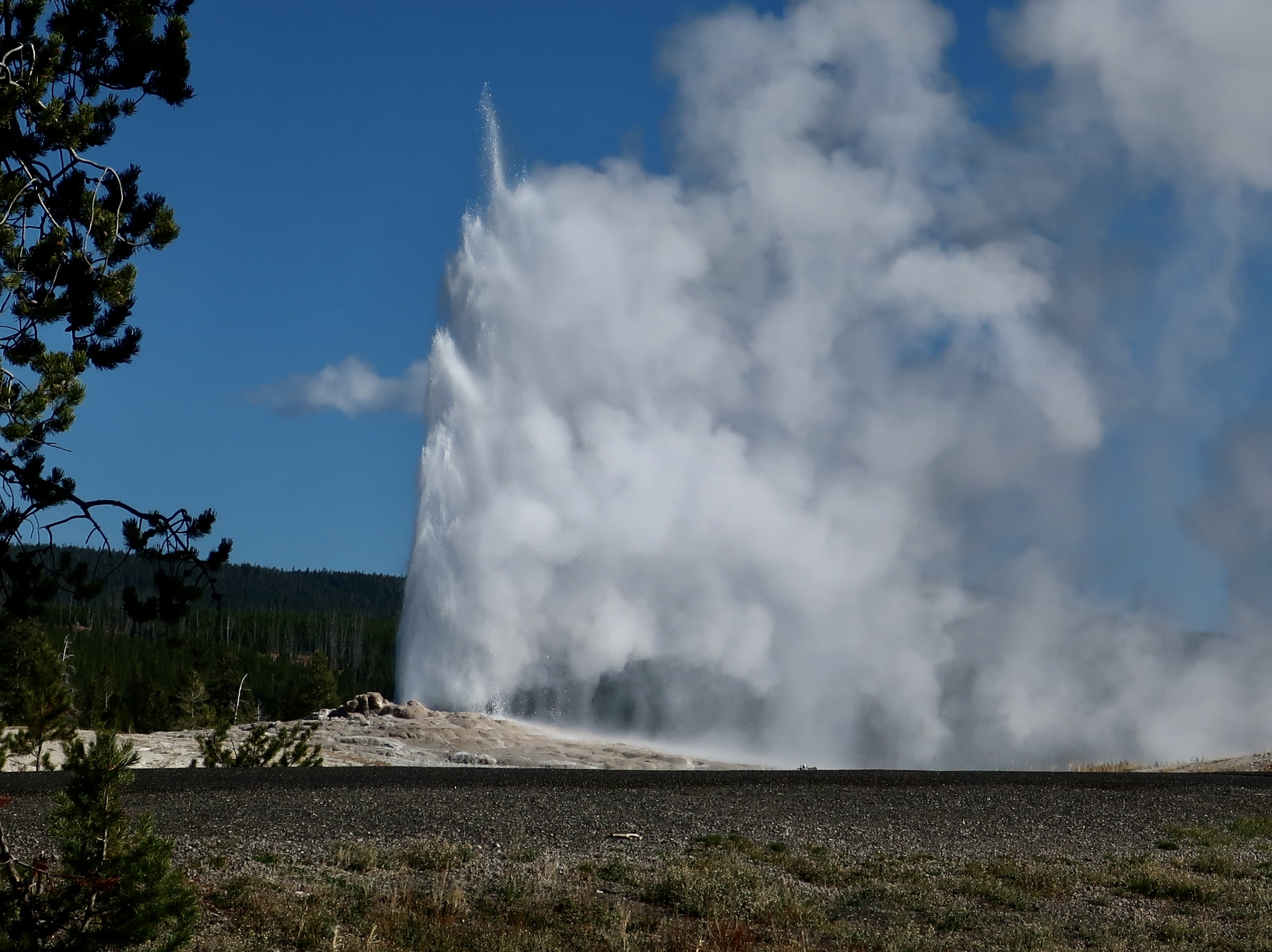
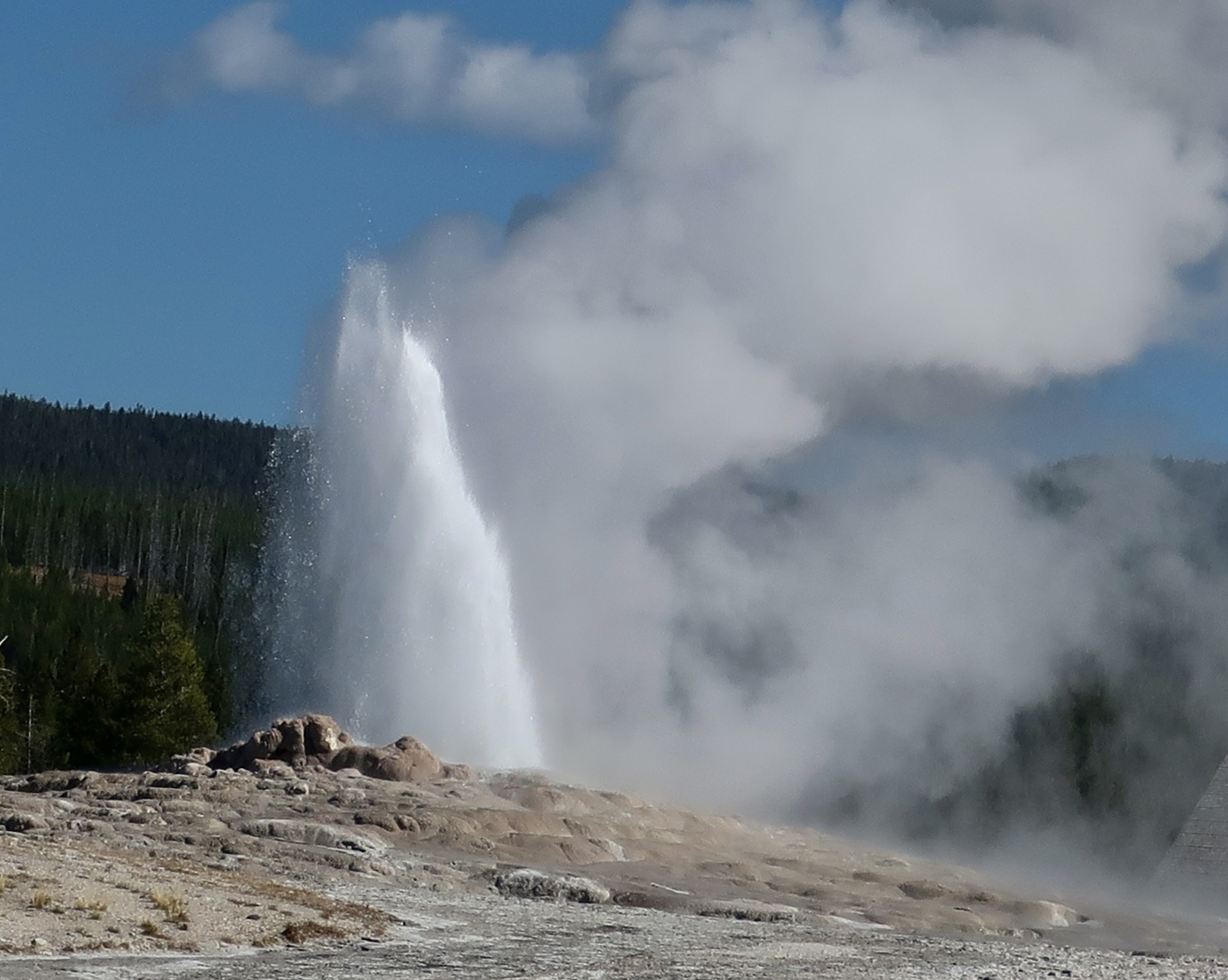
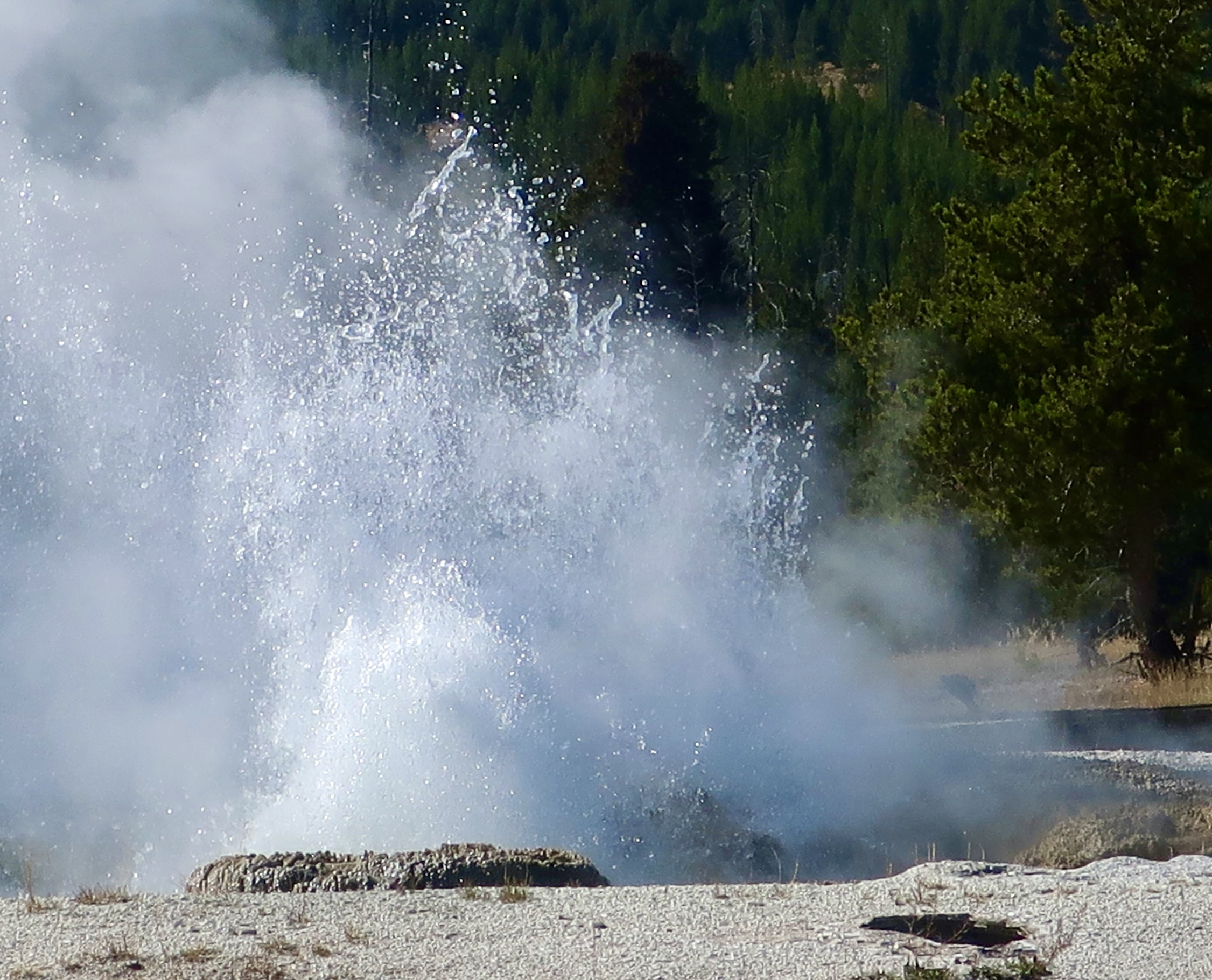
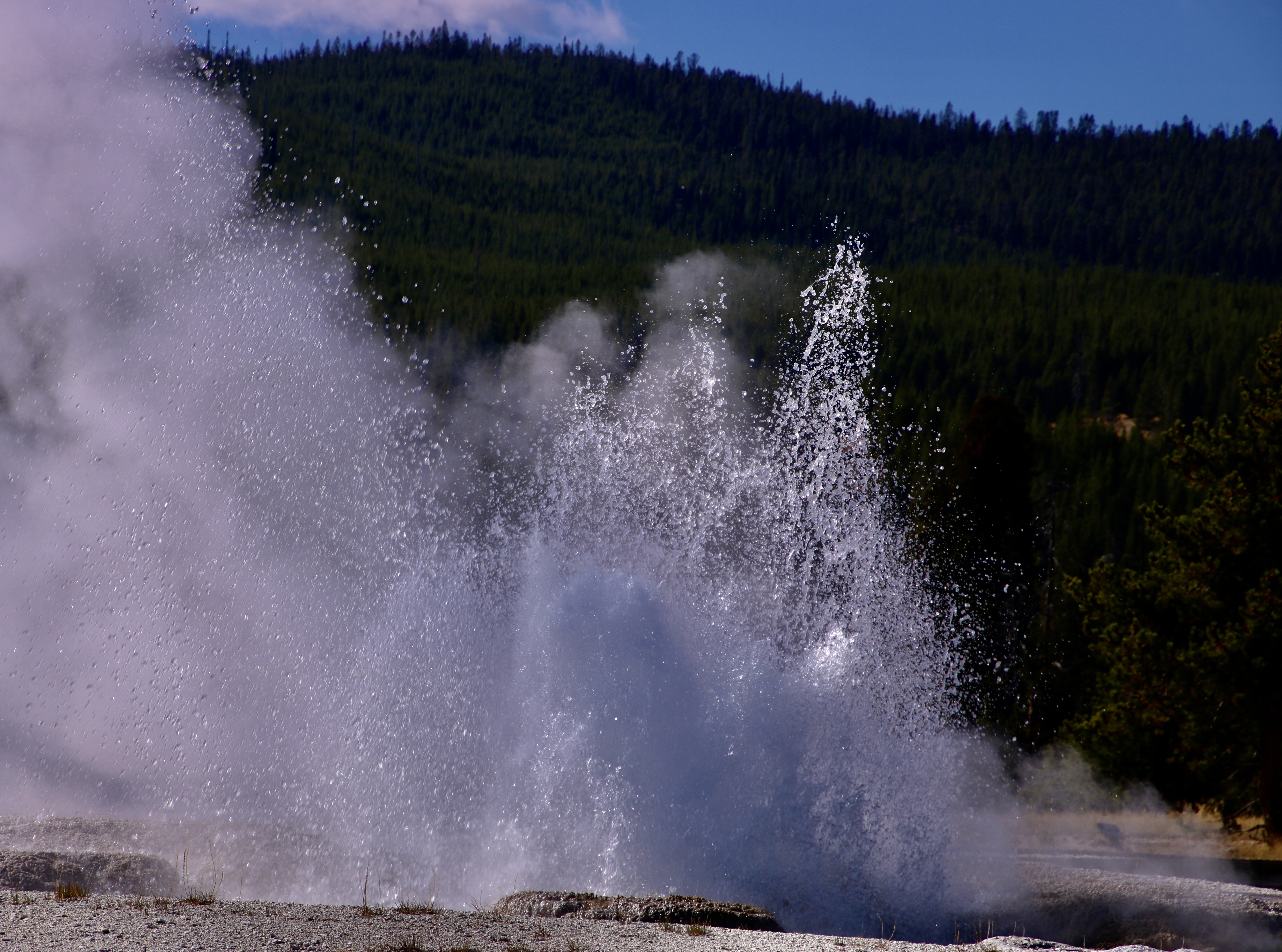
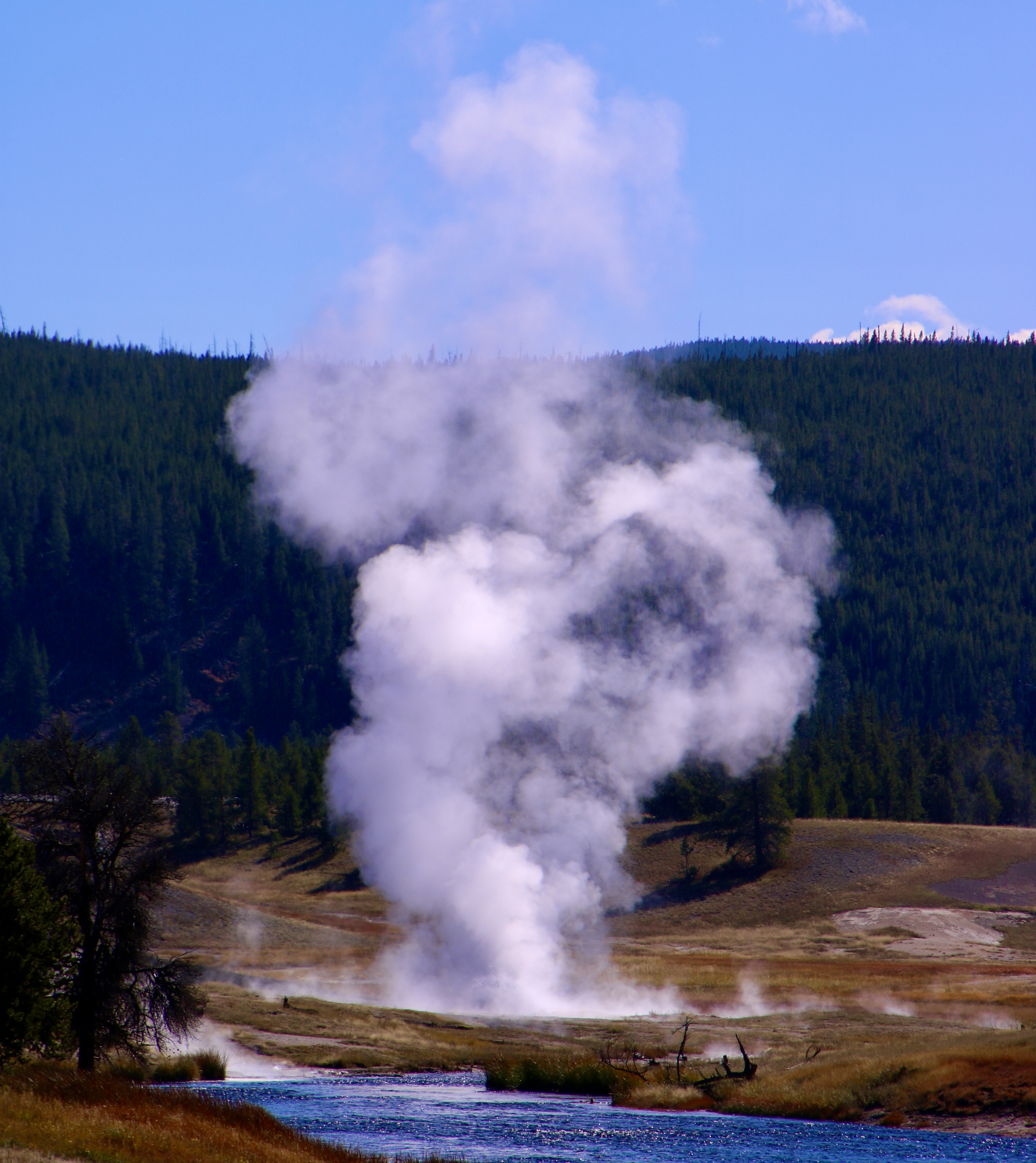
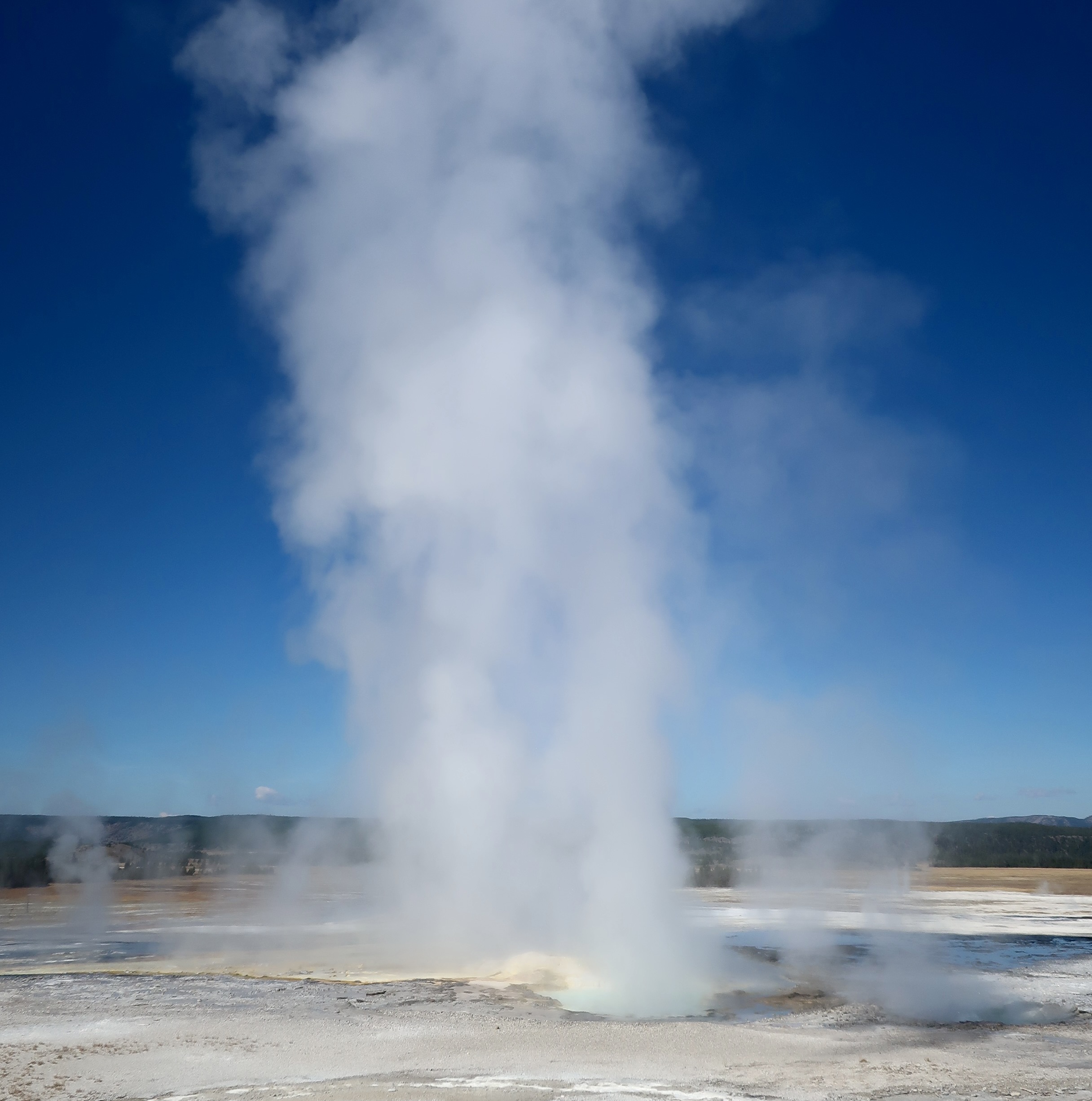
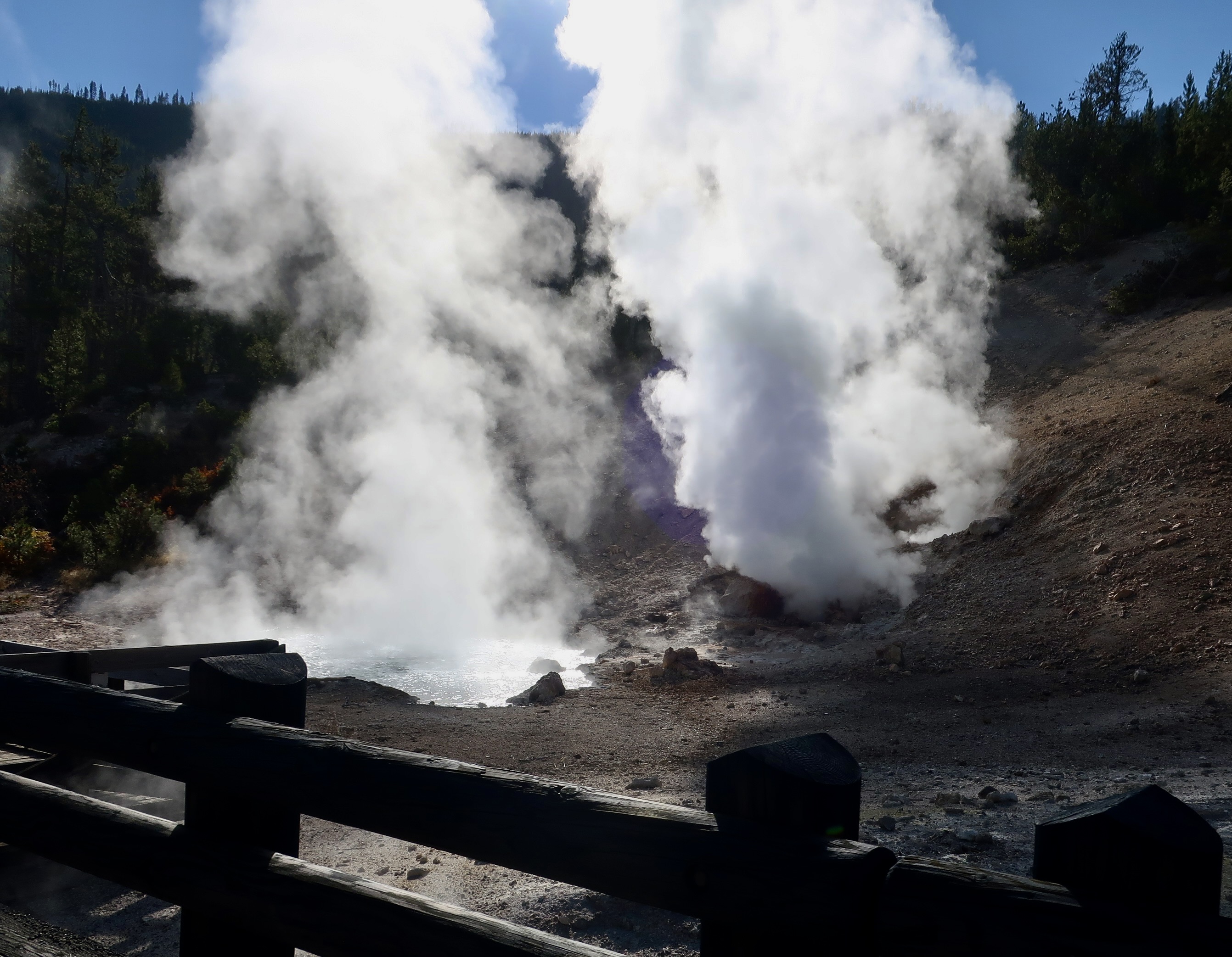
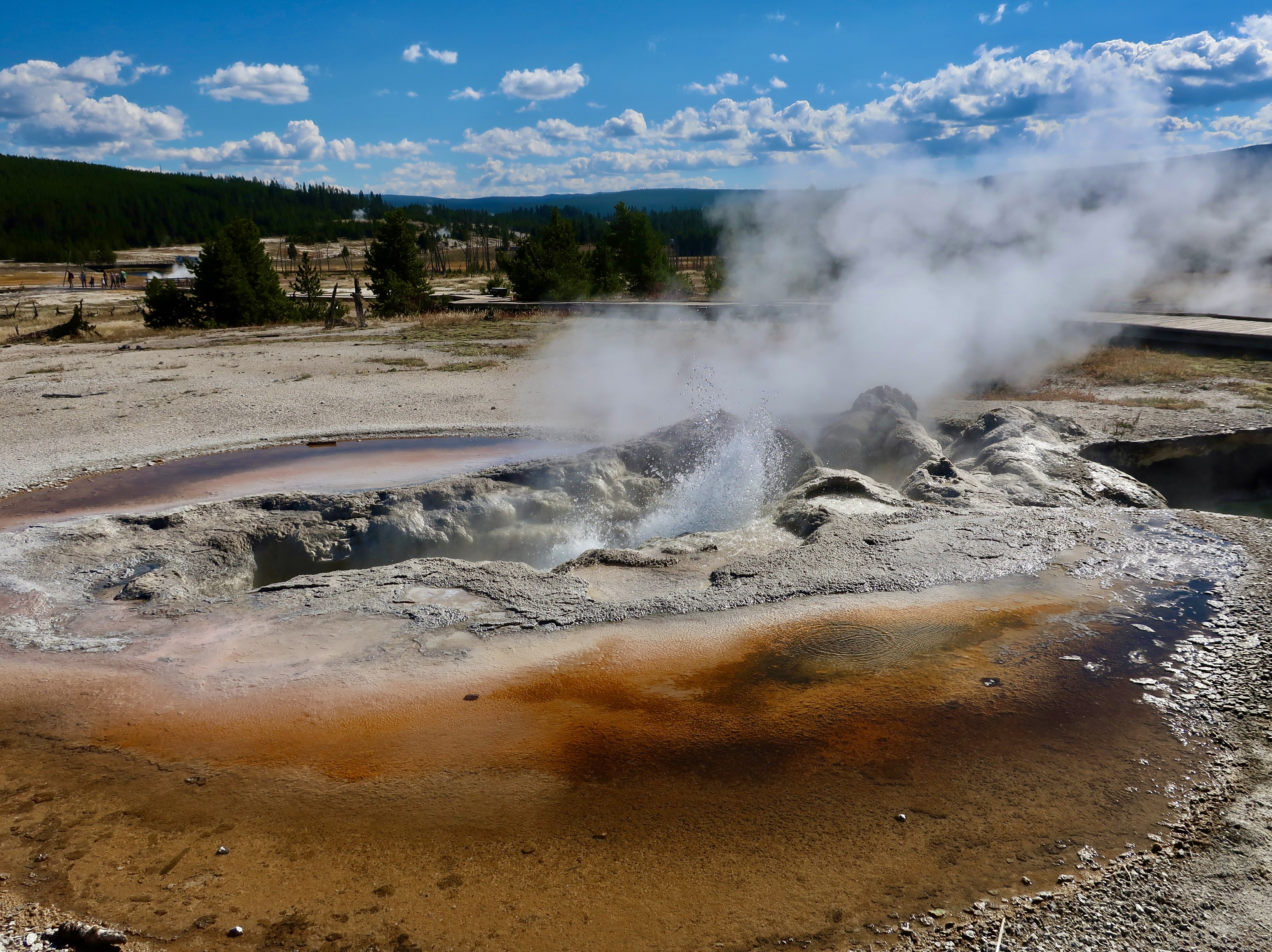
Erupting geysers are one of Yellowstones best known features. In fact, half of the world’s active geysers are located in the National Park. Peggy and I photographed lots of them when we visited last fall on our four month trip around the US.
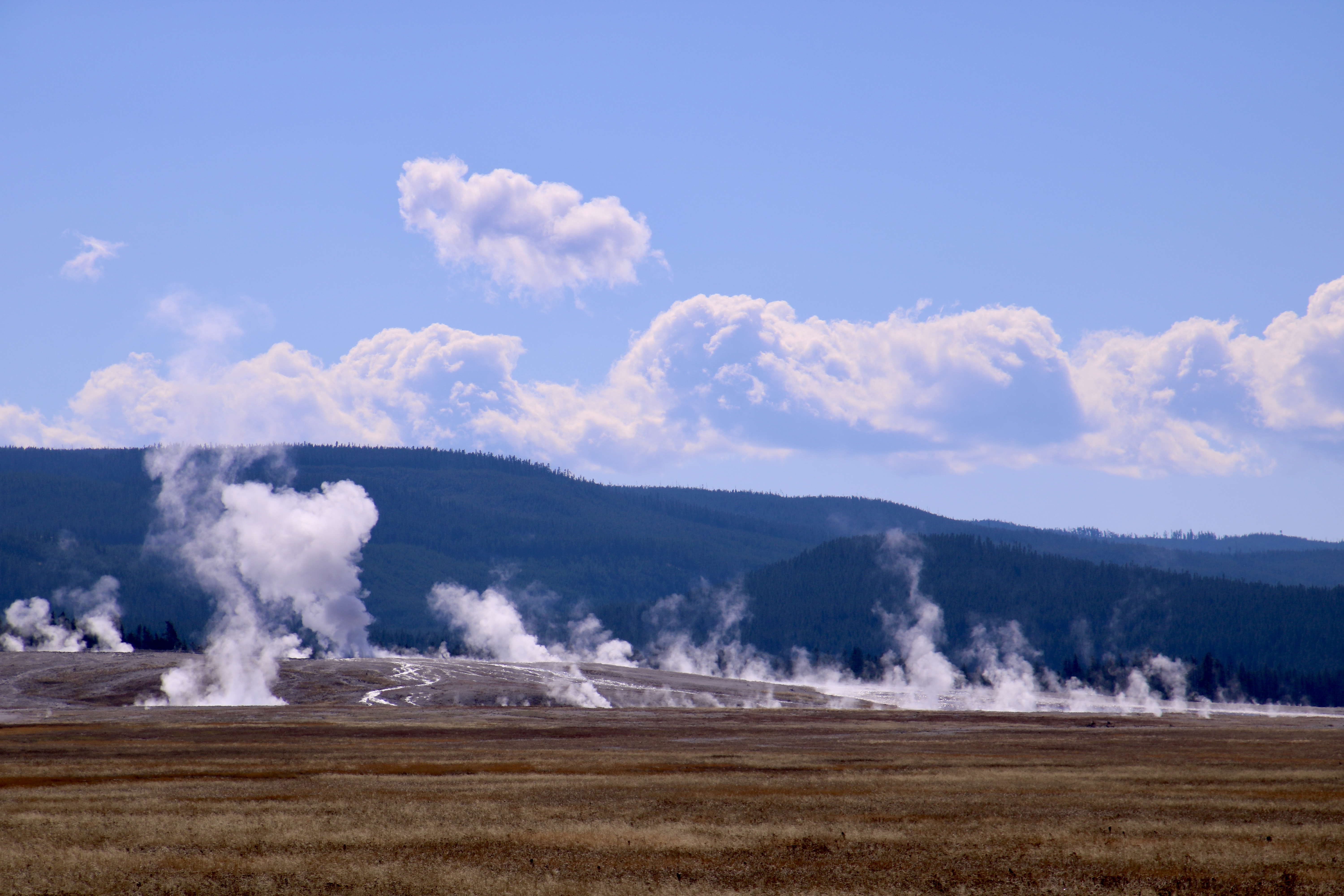
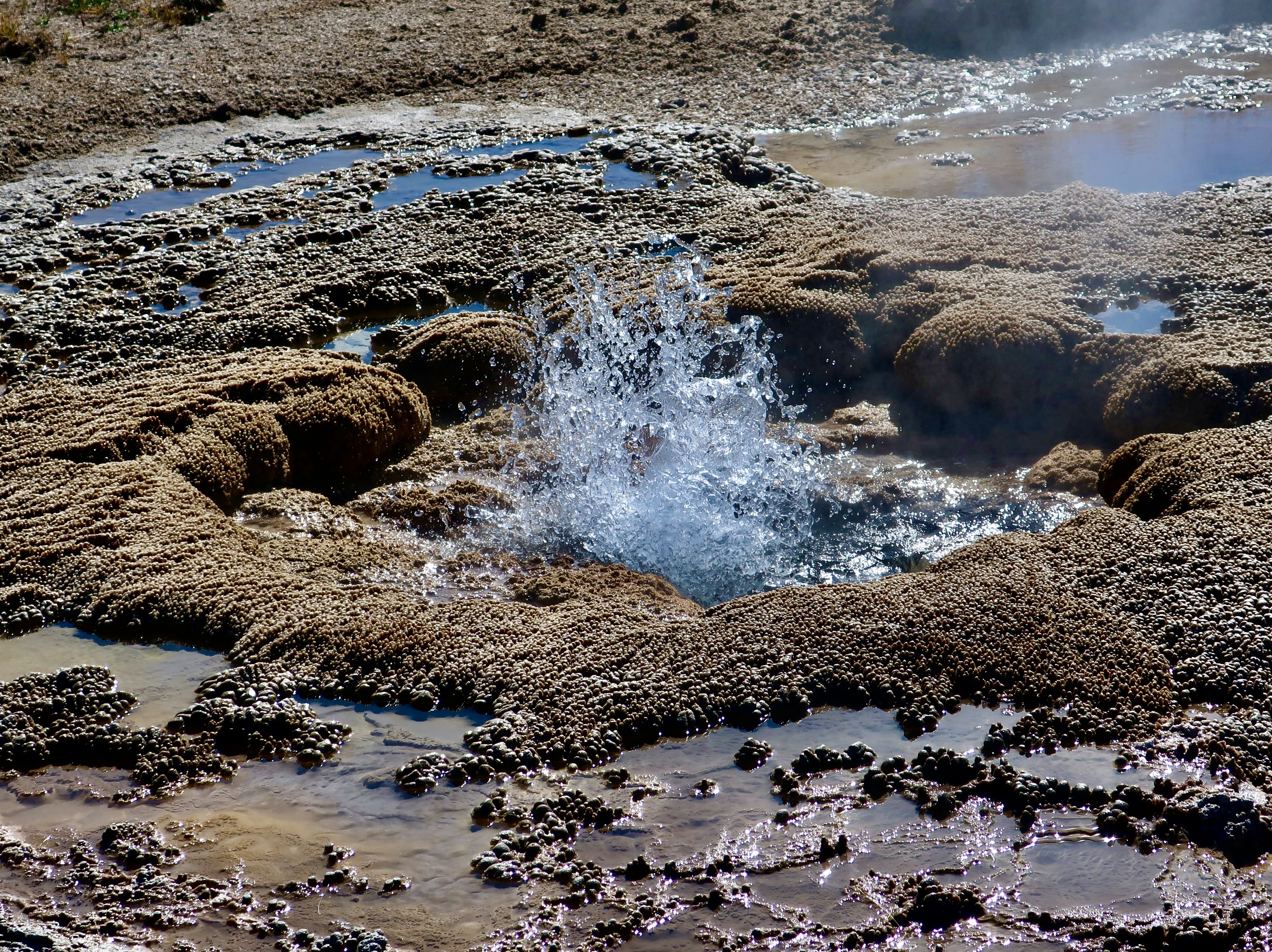
The reason behind Yellowstones record breaking number of geysers is that much of the park is located in a giant caldera, a collapsed volcano. Semi-molten rock exists in some areas as close as 2-5 miles below the surface. This extremely hot rock heats ground water flowing near it and creates Yellowstone’s hydro-thermal features including geysers, hot springs, fumaroles and mud pots. We featured hot springs two weeks ago. Today is the geysers’ turn. They erupt when the super hot boiling water creates pressure in channels leading to the surface that erupts as steam out of a vent. As the pressure is released the geyser subsides until the process is repeated. They come in all sizes. The most famous is Old Faithful, given its name due to the regularity of its eruptions.
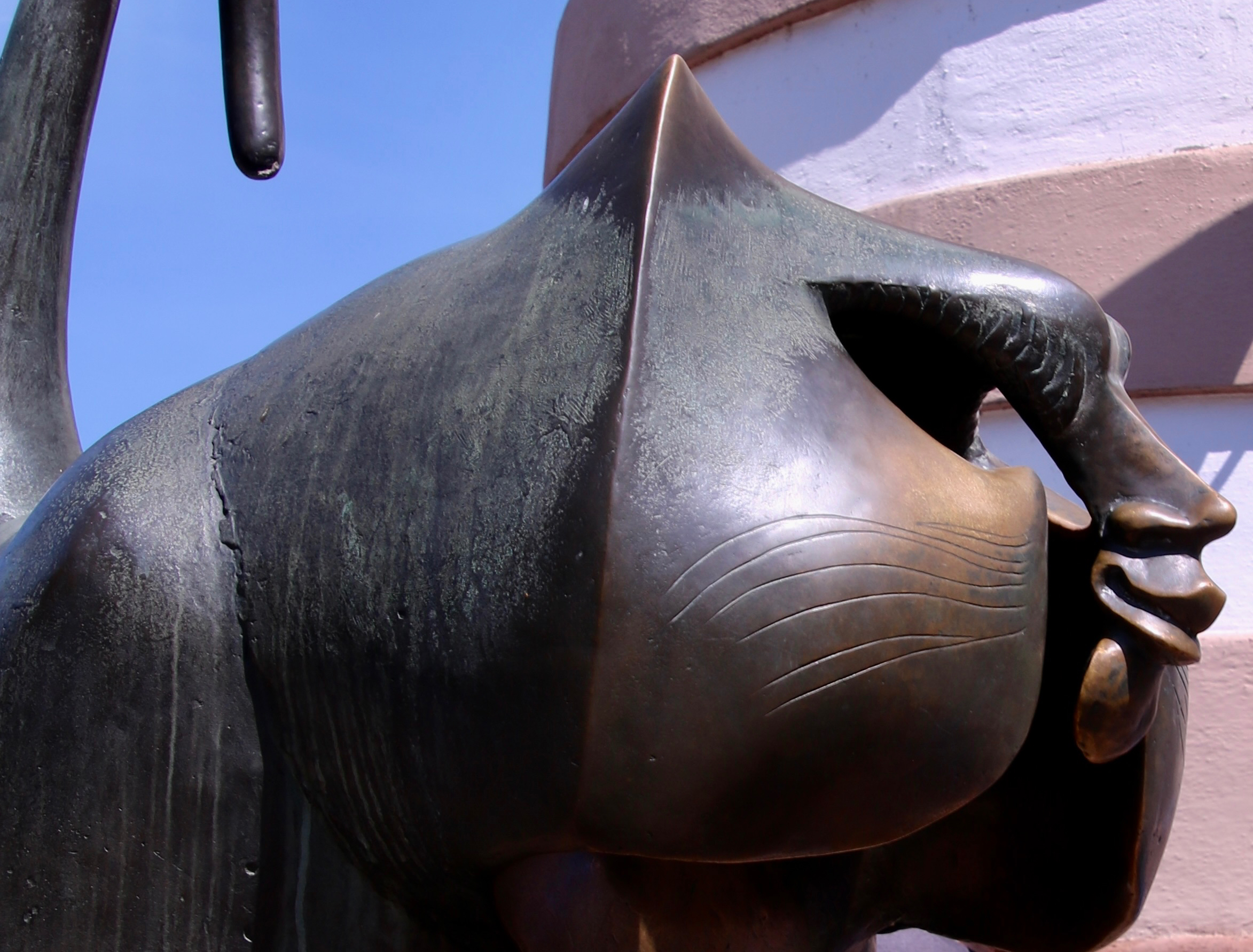
When Peggy and I, along with our two kids and their families, did our Rhine River trip this past summer, one of our favorite stops was Heidelberg, Germany. It seemed to have it all: An ancient castle looking down on the city, a river running beside it, one of the top universities in the world, a fun, lively, historic downtown, impressive churches, and plenty of weird, like the brass monkey who hung out next to the Old Bridge across the Neckar River. The photos are all taken by Peggy and me unless otherwise noted. Today, we will be focus on weird.

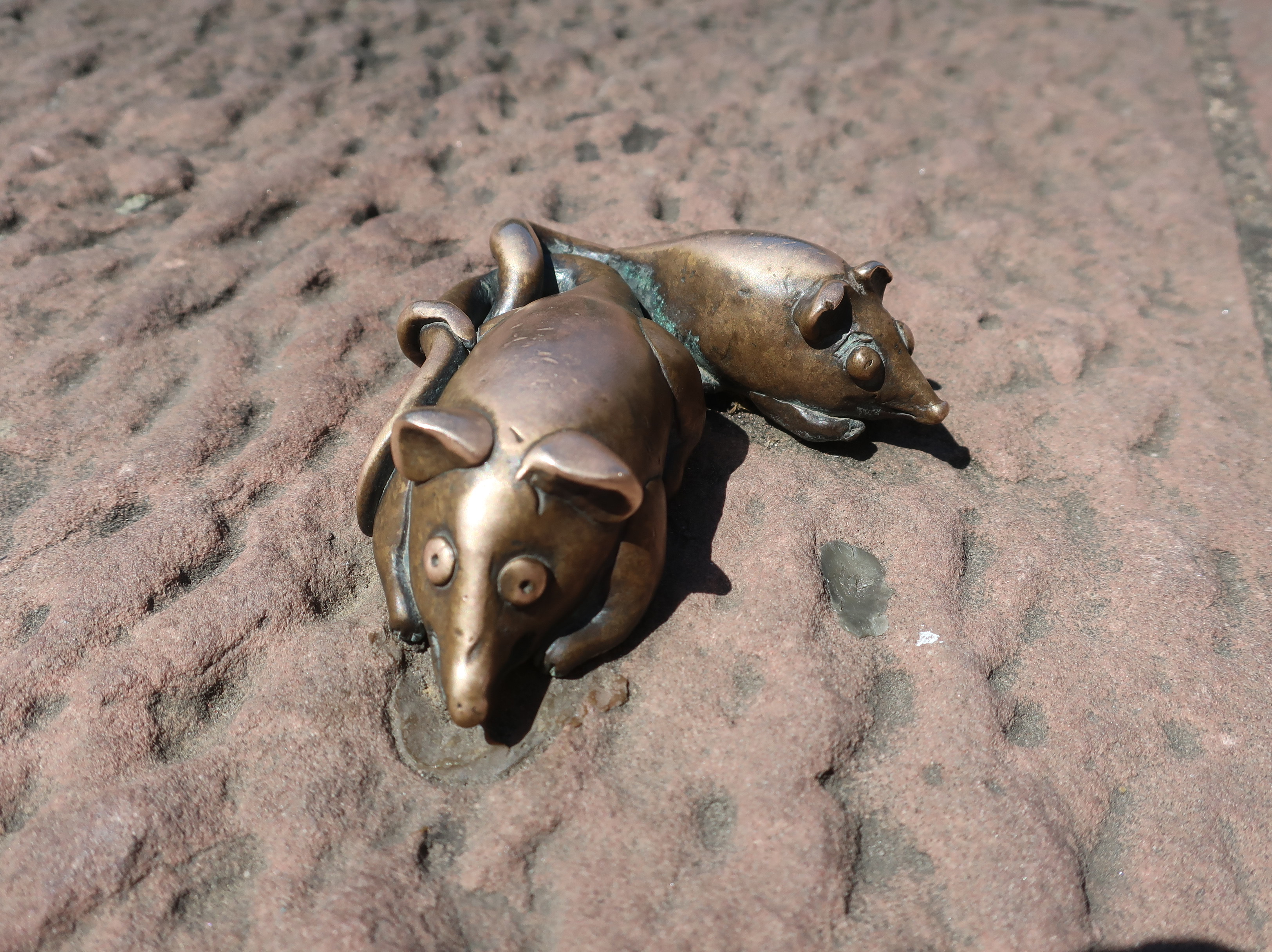
I found plenty of other weird stuff around Heidelberg to keep the monkey and his mice companions company.


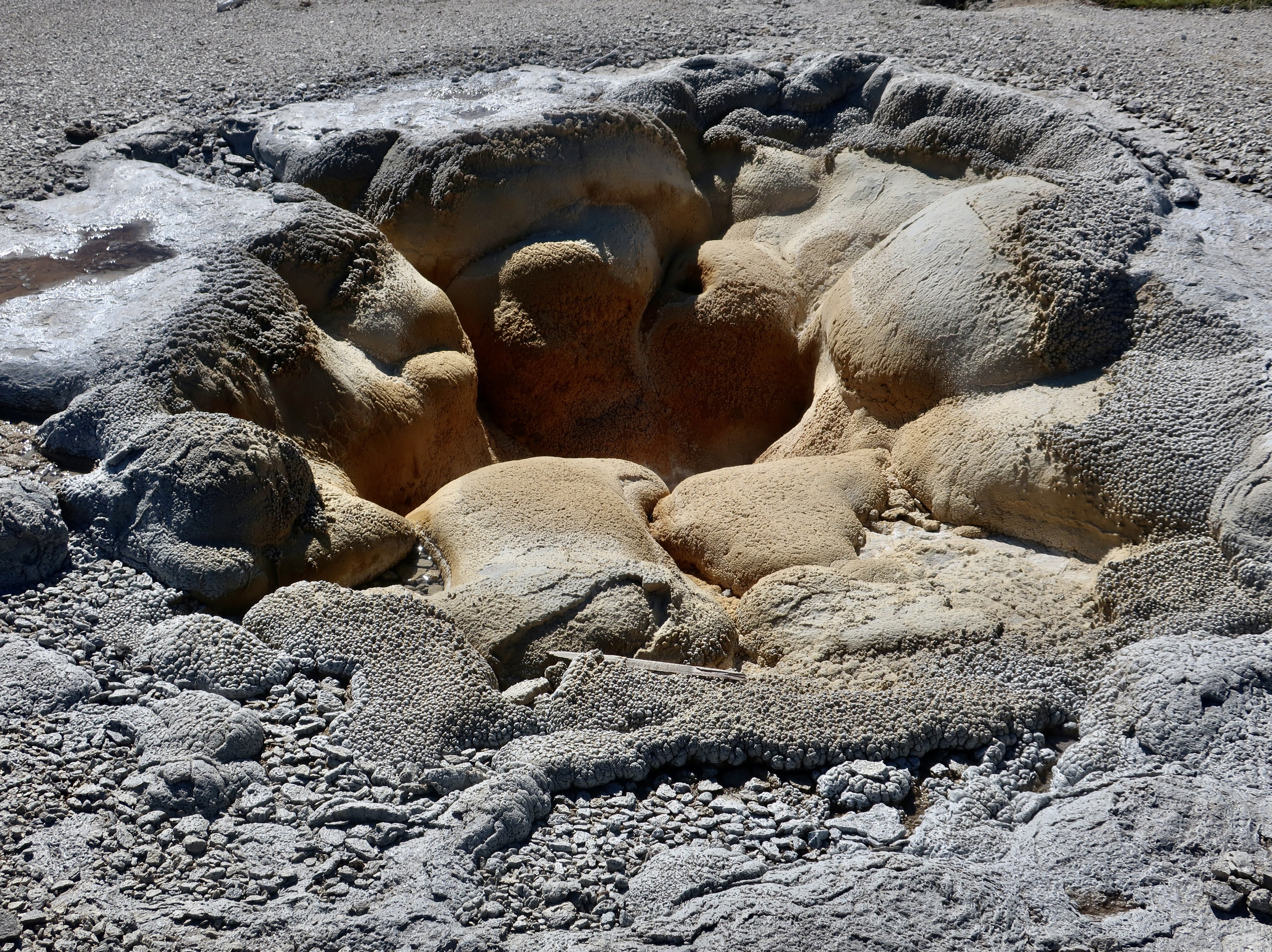
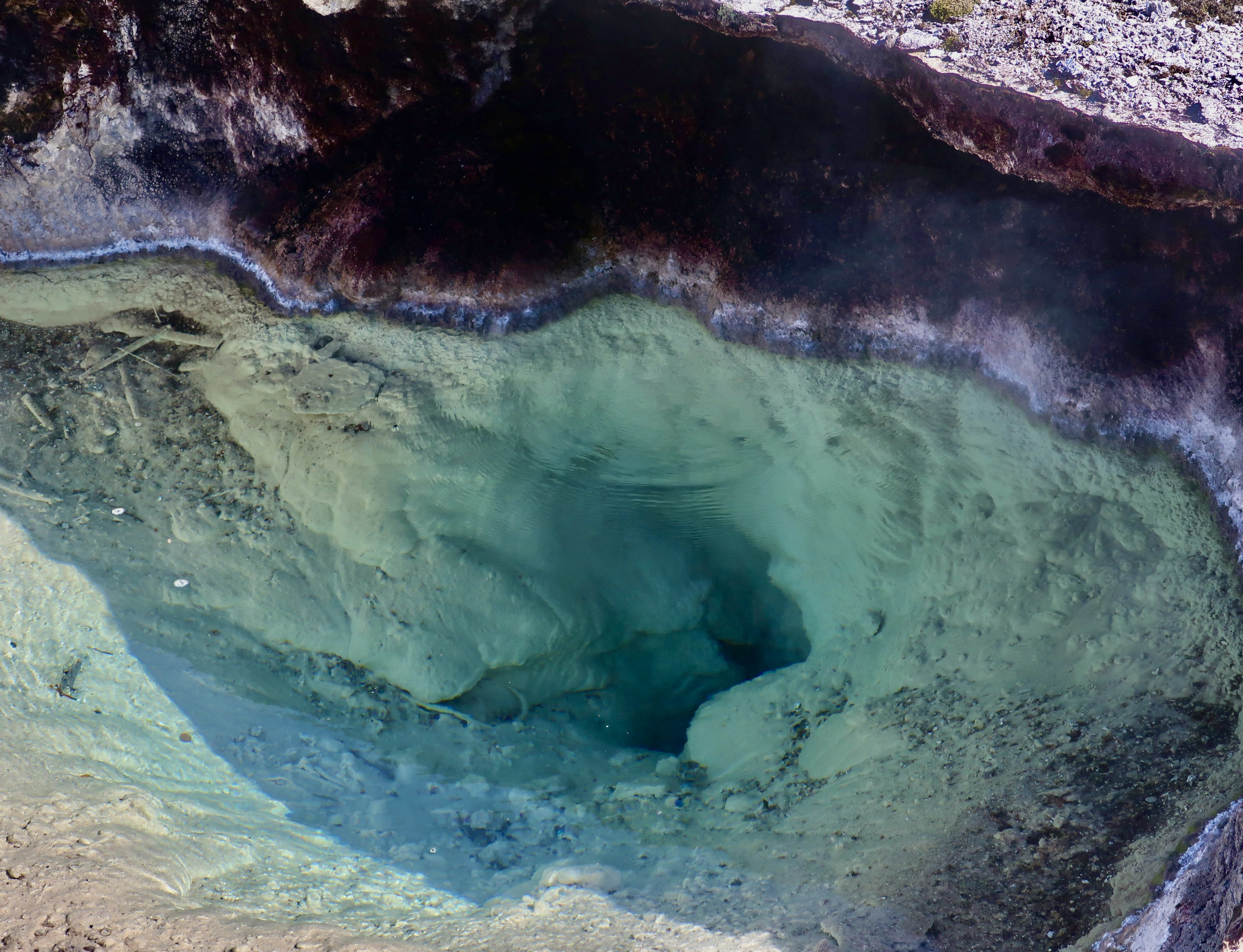
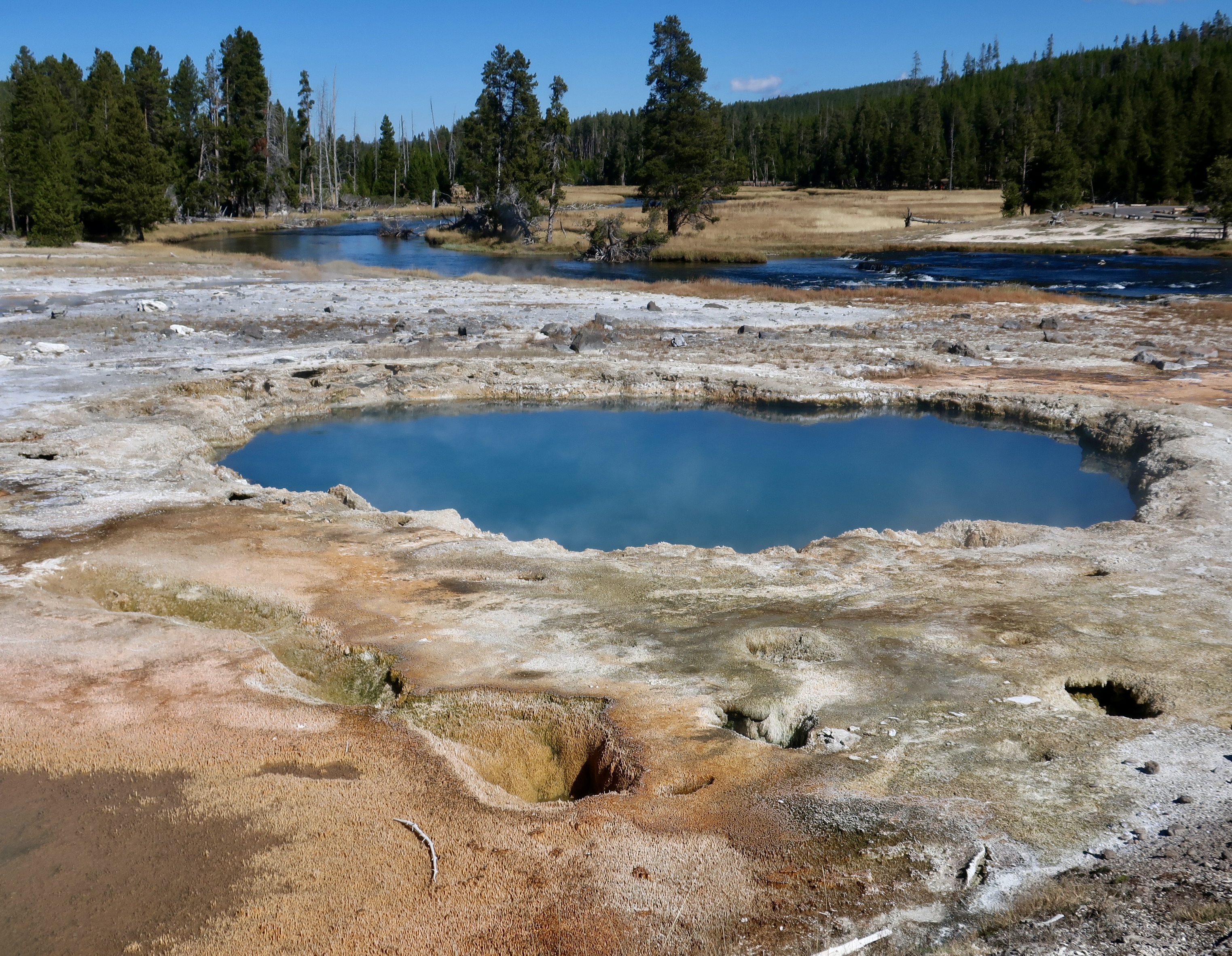
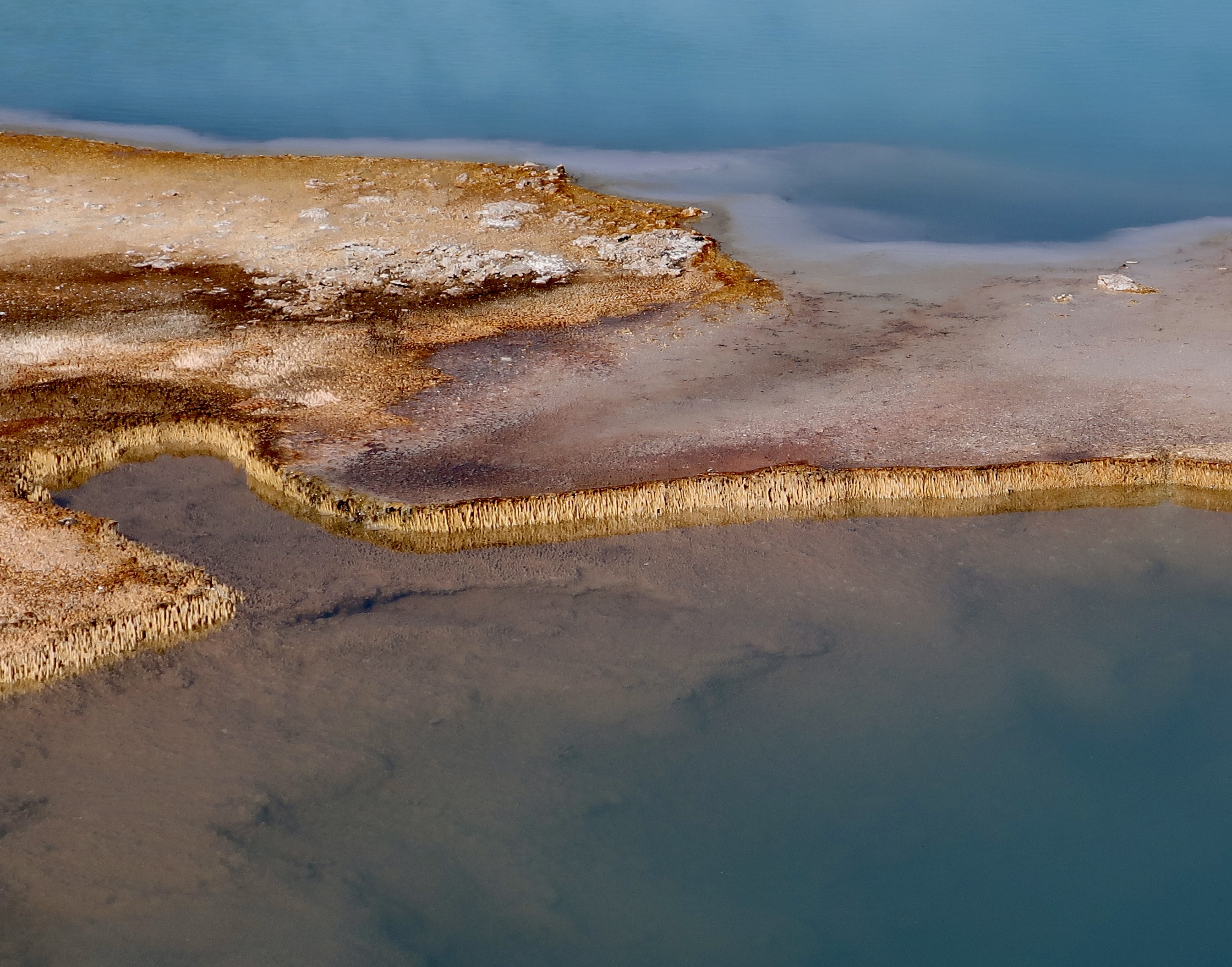
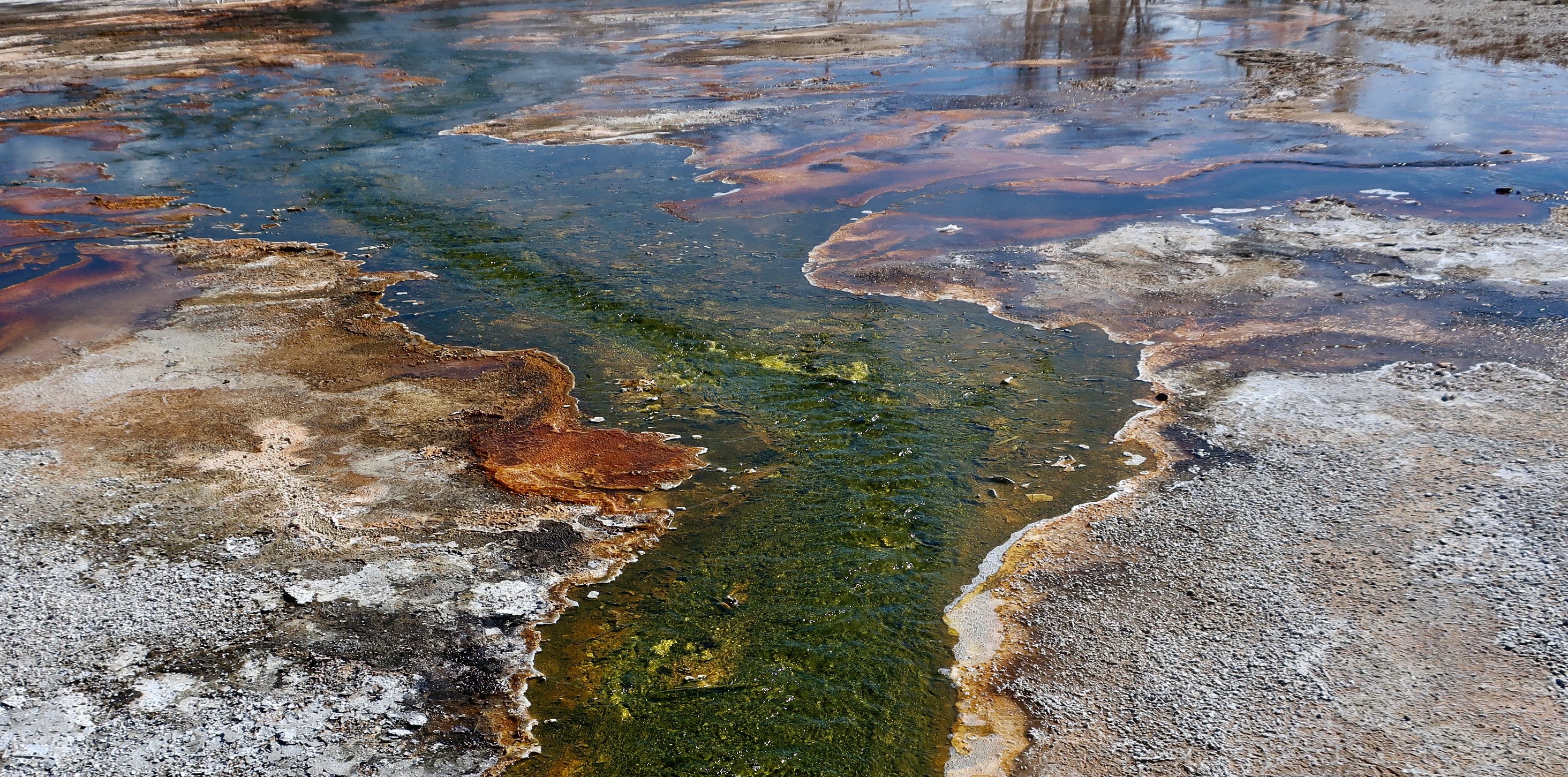
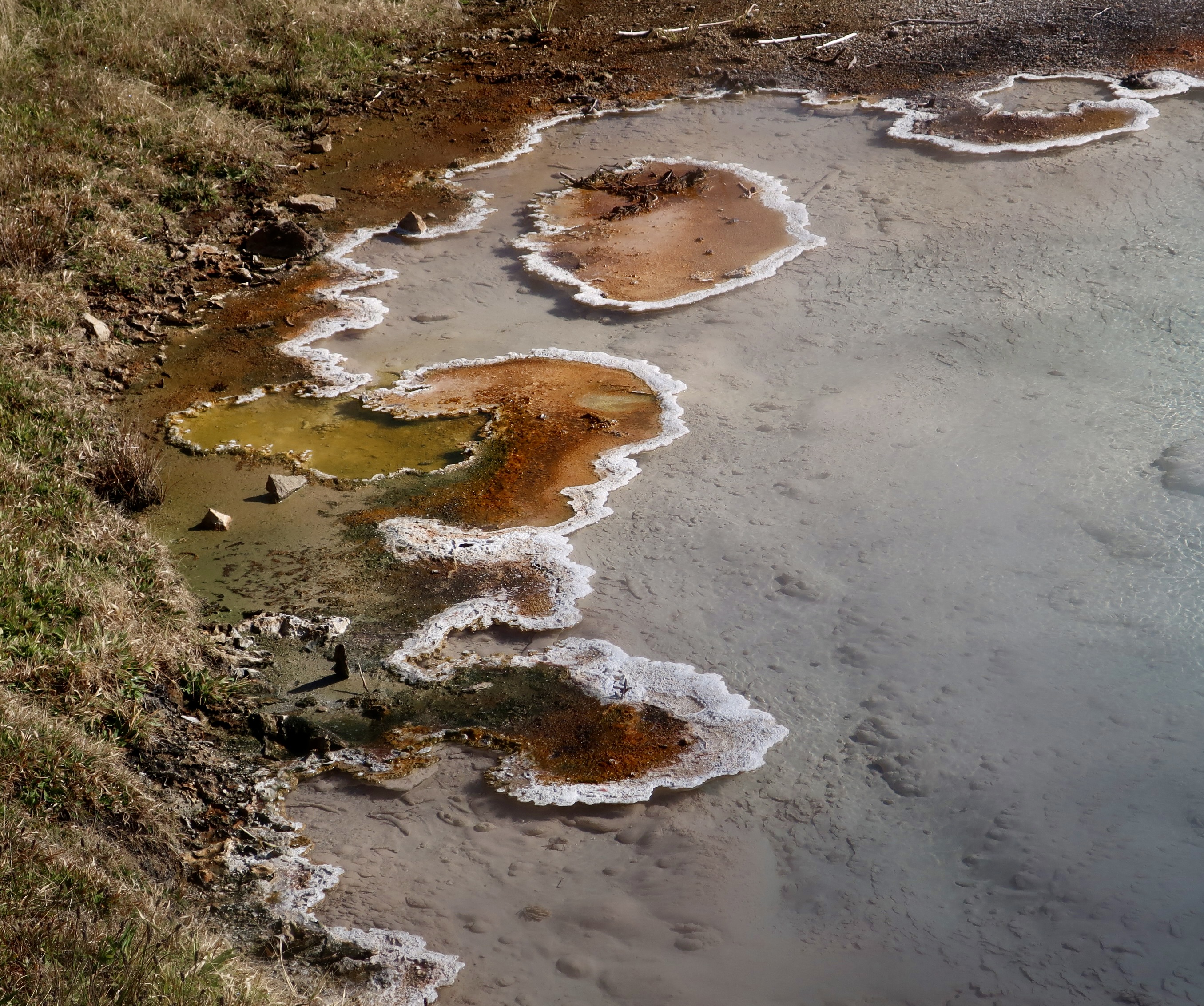
Beautiful scenery, abundant wildlife, and incredible geology. Yellowstone has it all. There is a reason why it became America’s first National Park in 1872. I’ll be focusing on the geology today. Yellowstone sits on top of one of the world’s largest volcanoes. Believe me, when I say, we wouldn’t want to see it blow. The proximity of the lava to the surface is the reason behind all of its hydrothermal features. For one, Yellowstone has more active geysers than the rest of the world combined according to information in the Visitor Center. The geysers are slated for another post; today it is all about hot springs. Peggy and I were captured by their vibrant colors and unique structures. The photos in this post were taken by both of us. We visited this past fall when we were in the middle of our 12,000 mile tour. It was my third visit. Peggy once spent an idyllic summer working there when she was going to college.







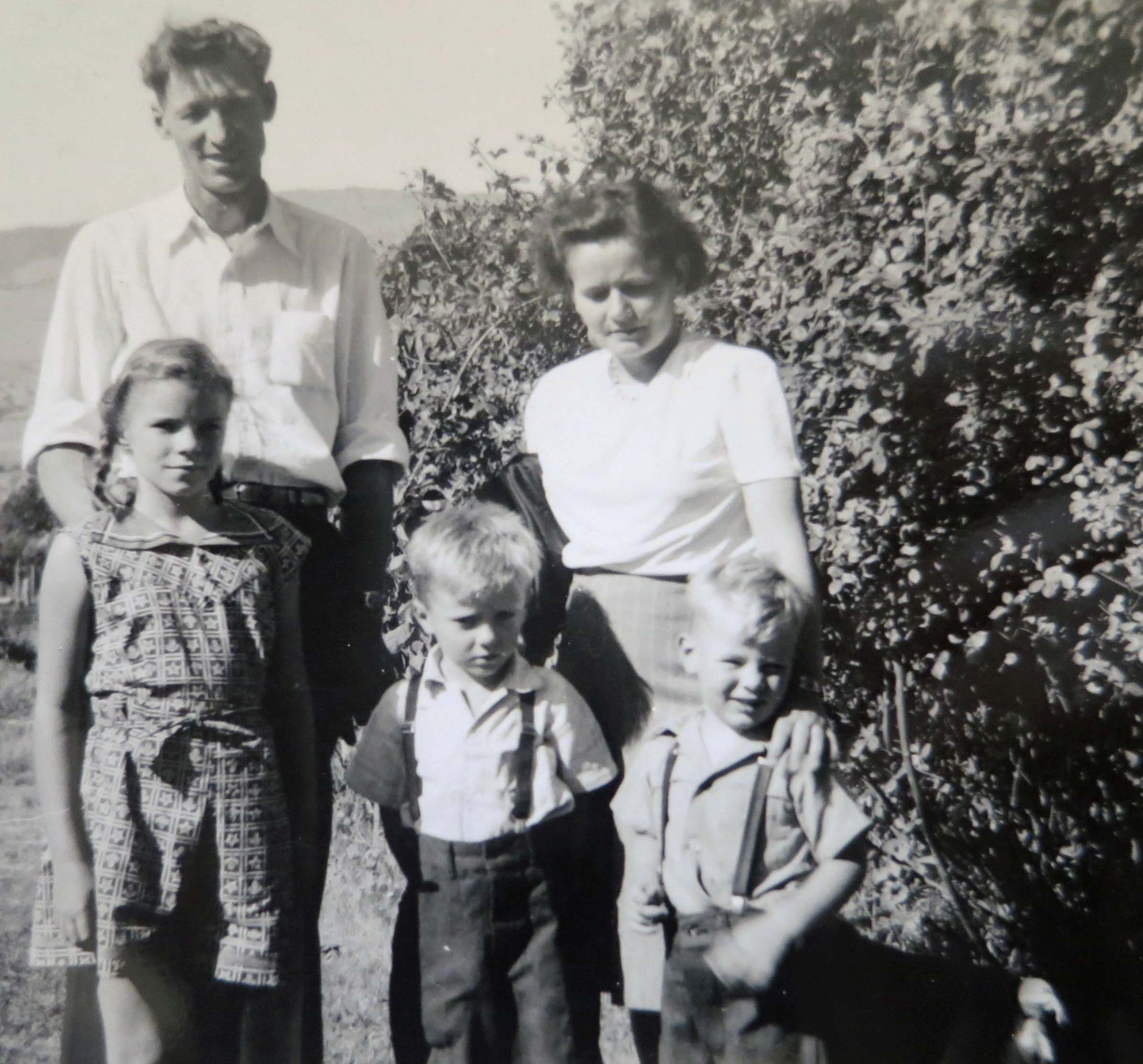
Ever since that fateful day in 1943 when chickens were being sacrificed for the cause, I’ve been doing what comes naturally: Aging. Mainly, I have refused to let that slow me down. None-the-less, there are certain aspects of the process that are impossible to avoid. Some of them, I have captured in the cards I create. Any hares I have misrepresented, I have totally done so on purpose.
You know you are growing older when:


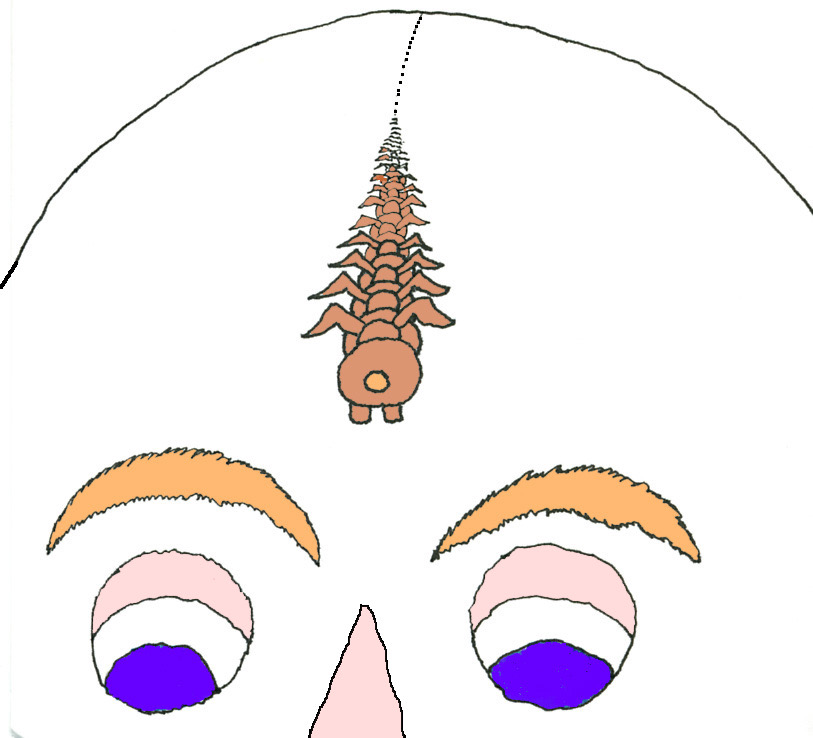
Other aspects of aging are more personal.



“What?” is heard around here a lot. Flexibility, strength, and balance are also on the line. As the world renown Sci-Fi Fantasy author, Ursula K. Le Guin, noted in her book, No Time to Spare, “If I’m ninety and believe I am forty five, I’m headed for a very bad time getting out of the bathtub.” No doubt about it. I’d like to counter that, however. If you are forty five and behave like you are ninety, you are in much worse trouble. Admittedly, Peggy and I tend to push the envelope when it comes to ‘age-related’ activities. I didn’t encounter any other 75-year-olds on my 750 mile backpack trip down the Pacific Crest Trail. Peggy, who was 68 at the time, backpacked 300 of the miles with me. Our adventures continue. The two of us just completed a 12,000 mile trip around the US pulling a trailer and dodging things like buffalo and tornados. We tried to keep our speed at 65 or under. Iorek, our powerful F-150, would speed up to 70 if we didn’t pay attention. Once, when we were having a serious discussion about the sex lives of prairie dogs, I looked down and he was going 80.
I realize we are lucky health-wise. Part of the reason is we live an active life style and practice moderation in eating and other lifestyle choices. More importantly, from my perspective, is maintaining a ‘can do’ attitude and filling our time with things we have fun doing, look forward to, and contribute something back to the community, even if it’s nothing more than giving people a laugh when they are reading our blogs, or inspiring them to try something new.
I just spent the last week working on my plans for the year, as I do every New Year. To bring Le Guin back into the equation, there is no time to spare. This is certainly true for a soon-to-be 80 year old. But it is also true for anyone. Life’s short. Once again, we are planning lots of travel. We will be celebrating my birthday on a riverboat chugging up the Nile River in Egypt. It’s been on my bucket list forever. Trips to Mexico, the eastern Canadian Provinces, Hawaii and the big game parks in Africa are also on our agenda. Thinking of big game parks, I just thought of another card. A lion is staring out across the Serengeti Plains which is filled with really evil looking gnus. His comment: “Bad gnus, bad gnus— everywhere I look, bad gnus.” A sign of the times.
Writing, card development, and photography will continue to be central to what I do. As in the past, I will share much of it on our blog. It is my intention to get back to revising and writing my books: The Bush Devil Ate Sam, and Bear Tales. Both came to a halt with our move this past year. Peggy is helping with the blog, working on a quilt for her niece, and a word search book that will feature petroglyphs. Family and friends will also be a focus. G’ma and G’pa will be kept busy. With a little luck, I will also get into mischief. I usually do. Check with my lawyer. Our daughter Tasha, gave this to me for Christmas.


We were down in Big Bend National Park in Texas when it came time to write our annual Christmas letter. The park features beautiful scenery, interesting culture, cacti, and lots of geology. It also features fossils from the Age of Dinosaurs, including a monster crocodile. The crocodile reminded me of one of the characters I created for Christmas Cards, Old Croc. He made it into my Christmas letter and today’s post.

There was also a large leg bone from a duck billed dinosaur. Bone couldn’t resist having his photo taken with it.

Peggy and I celebrated Christmas in 1999 at Big Bend. Not having a Christmas Tree, we used a hanging macrame. Our visit to Big Bend was before Christmas this year, but Peggy was still fired up with her passion for decorating. We found some hand-crafted Mexican Christmas ornaments for sale next to the Rio Grande. Bone, of course, insisted on joining the party. As did Bone’s traveling companion, Eeyore. We visited Peggy’s brother John and his wife Frances after Big Bend. Frances, knitted a Christmas scarf for Bone and donated a ribbon for the donkey.
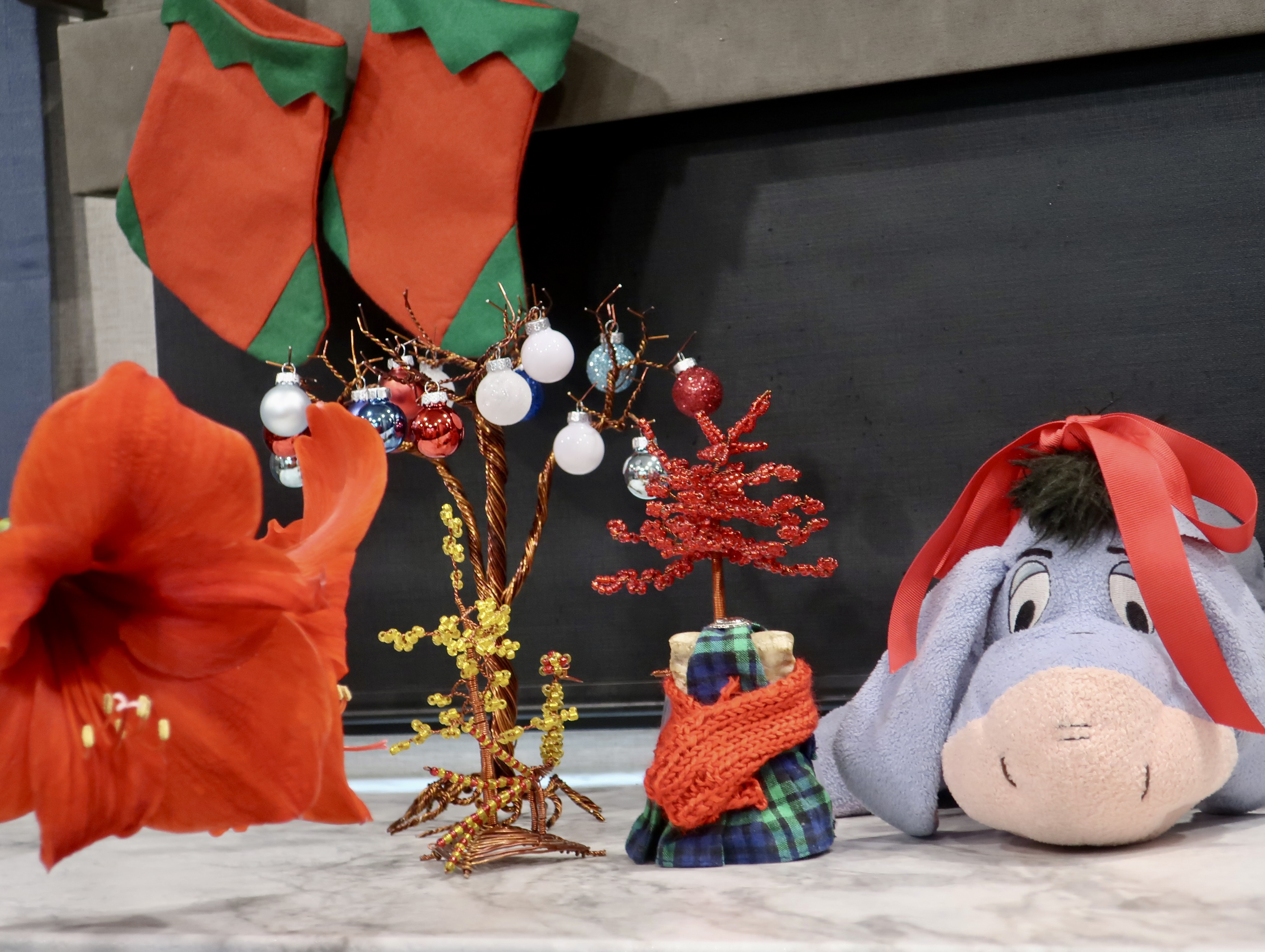
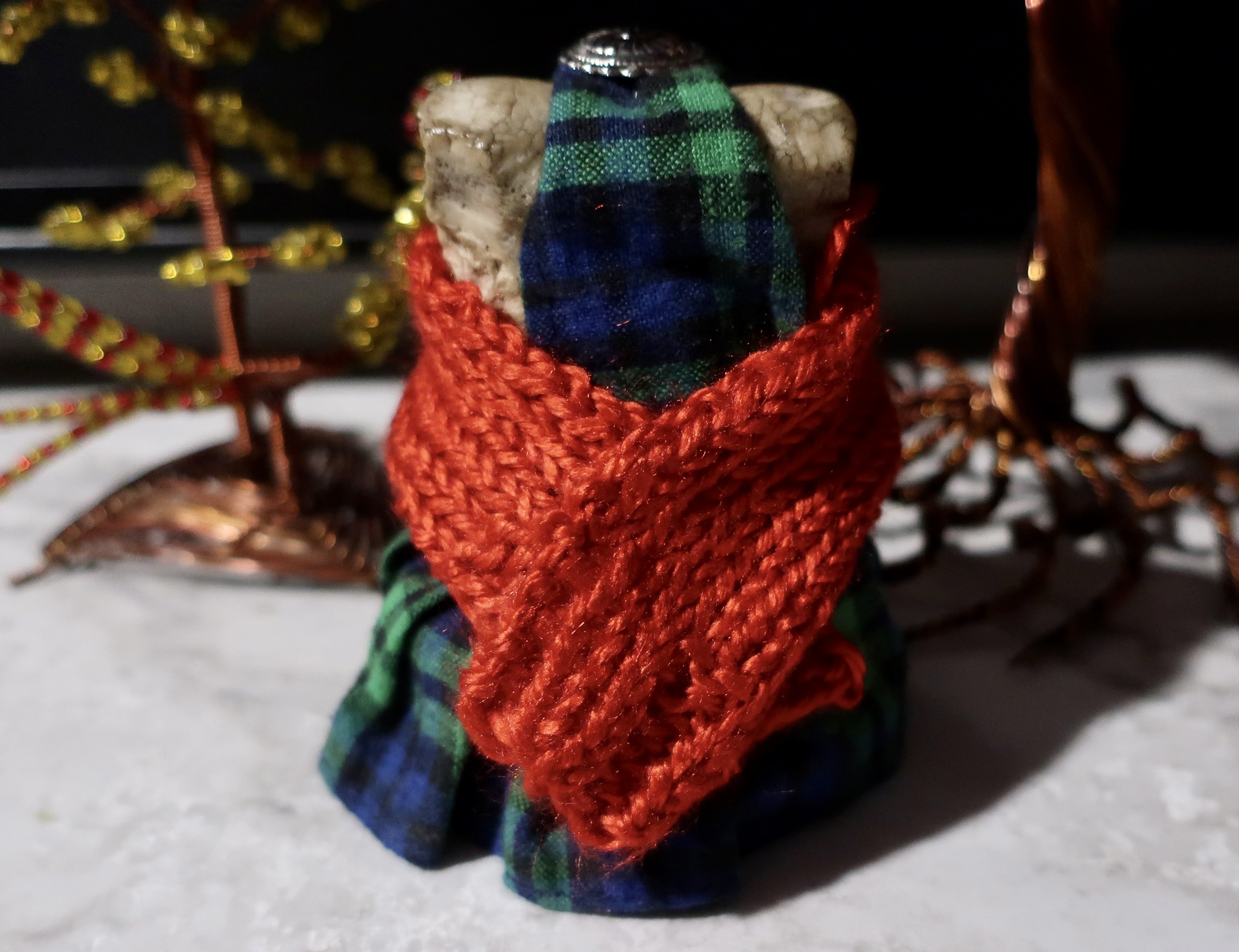
Just in case you are new to this blog and have never met Bone, a friend of mine, Tom Lovering and I found him in a field of corn lilies when we were backpacking along the Tahoe-Yosemite Trail in 1977. He has been traveling with us ever since. In addition to Tom and me, a number of other people have carried him over the past 45 years on numerous adventures. He has visited over 50 countries. Among his many adventures are a 10,000 mile bicycle trip, a journey in the back of a truck the length of Africa, climbing mountains, and deep sea diving. He has travelled on the Amazon, attended a Presidential Press Conference, and been blessed by the Pope in St. Peter’s square. Four years ago he backpacked with me 750 miles down the PCT in celebration of my 75th Birthday, meeting numerous through-hikers along the way.
Peggy, I, Bone, and Eeyore want to wish you and your family a joyful Christmas and a great 2023.

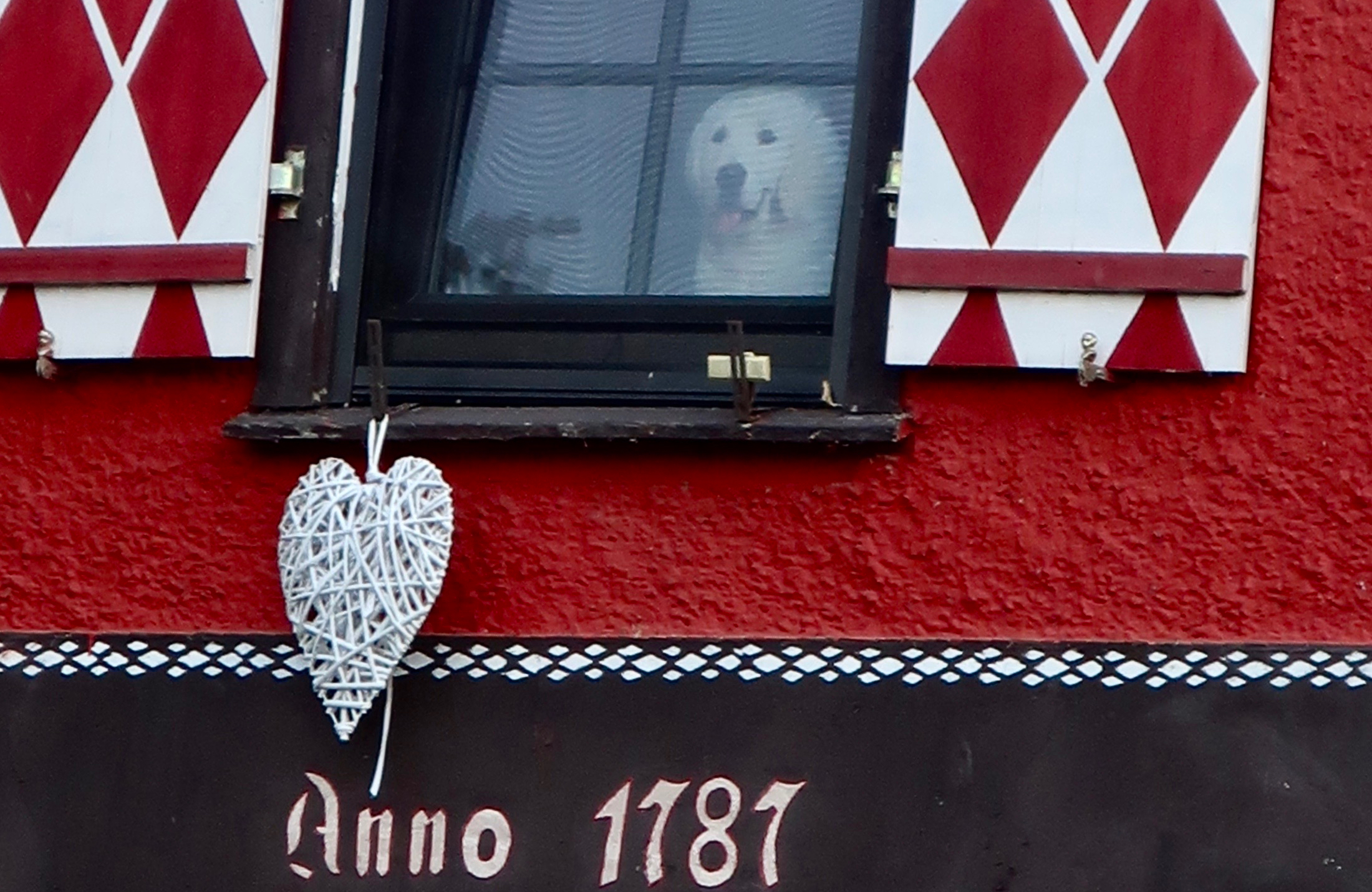
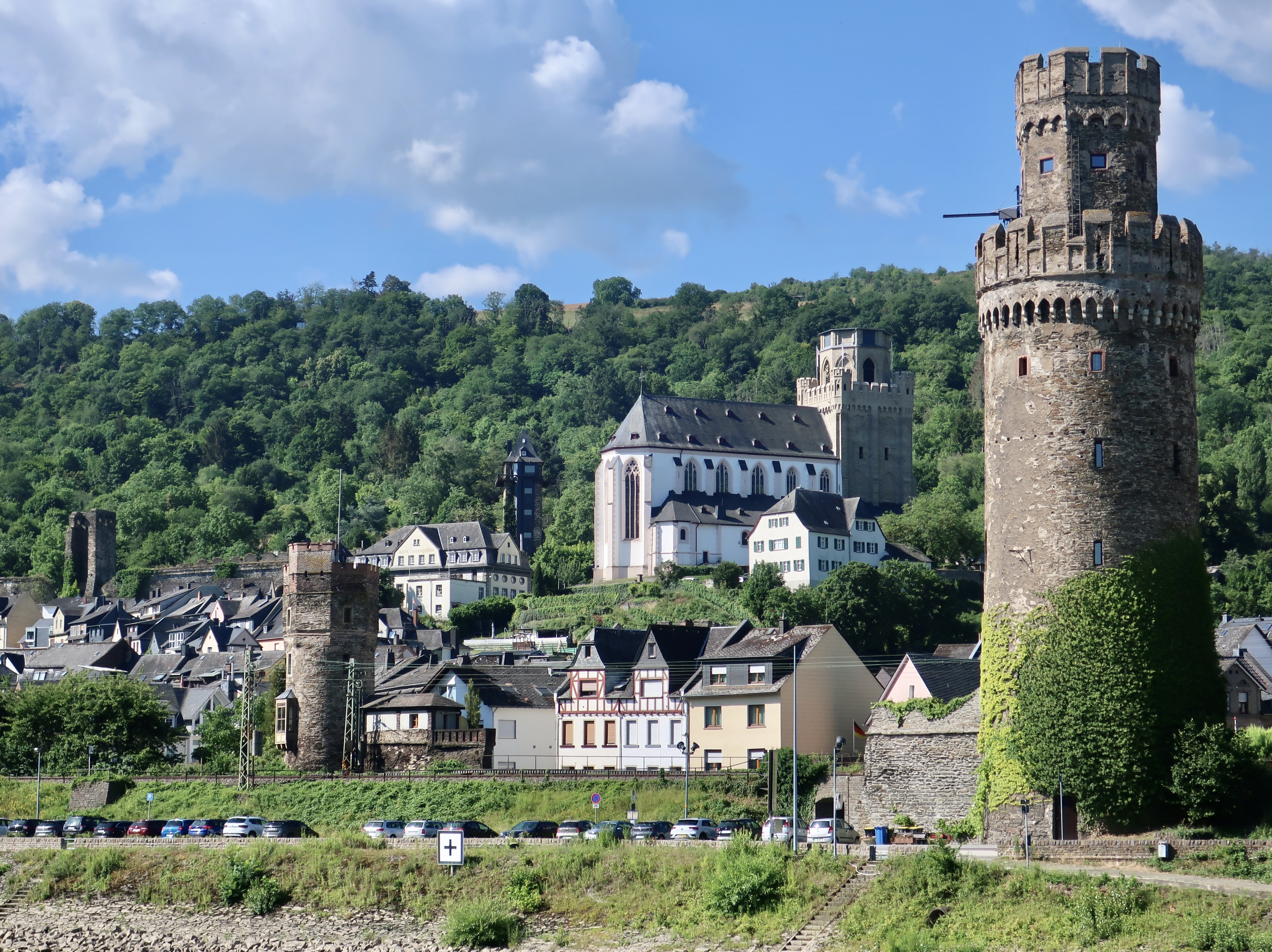
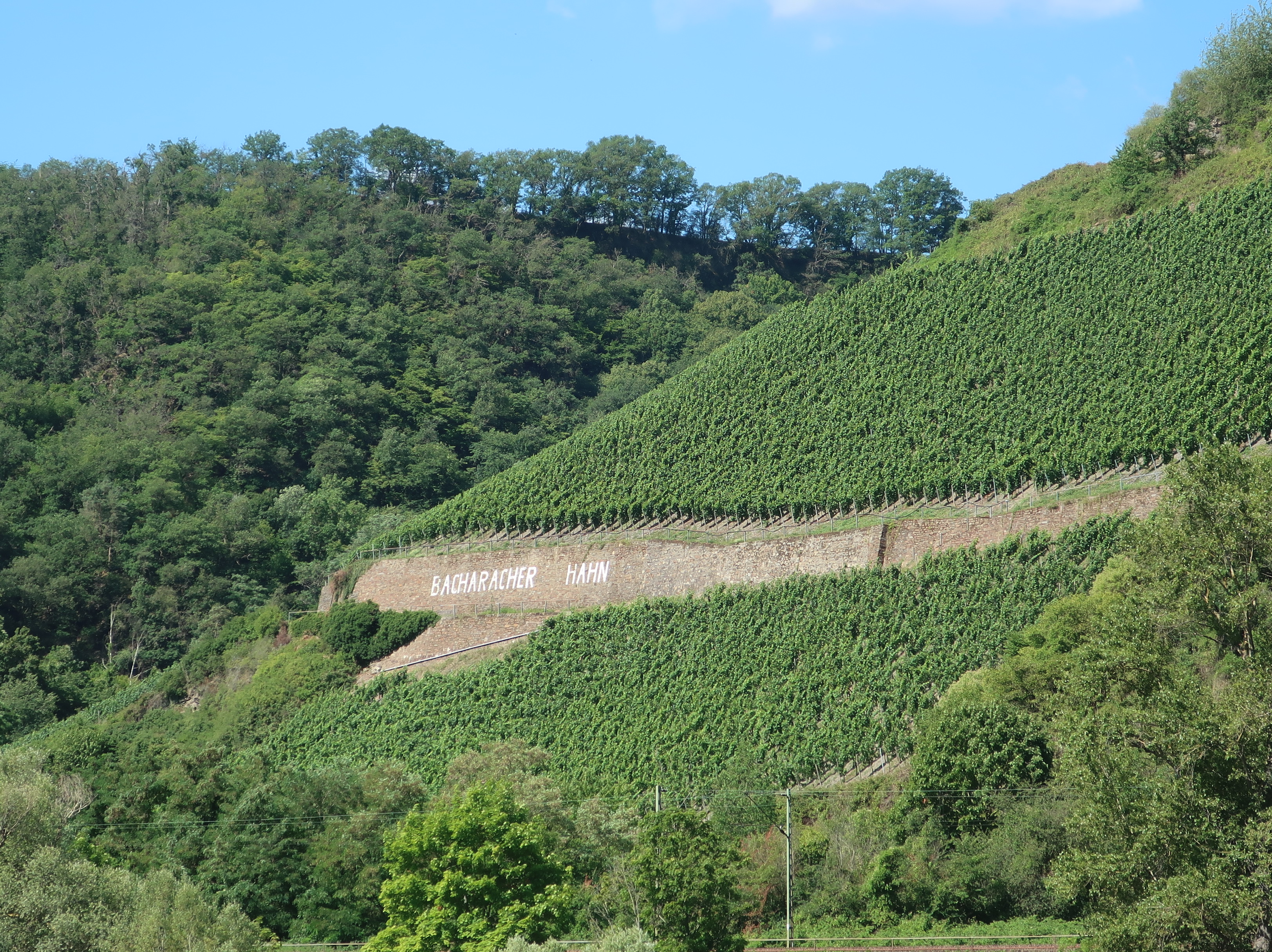
I hesitate to use the word “quaint” when I describe the buildings and towns along the Romantic Rhine since it implies “old fashioned.” Picturesque, colorful and historic strike me as better. But whatever word one chooses, Peggy and I were awed by the unique look and beauty of the various buildings. All of today’s photos were taken by Peggy and me unless otherwise noted.





 Wandering through Time and Place