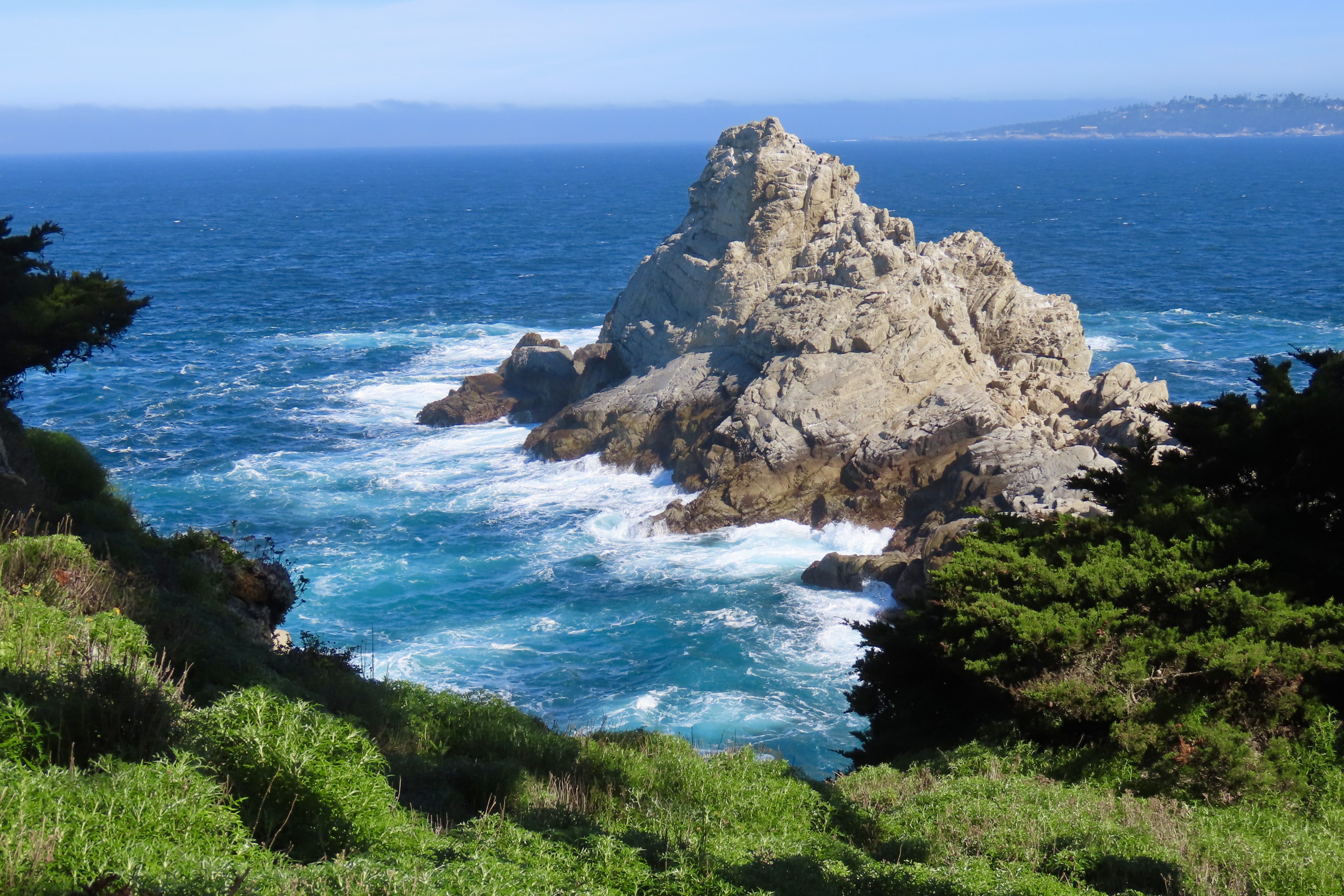


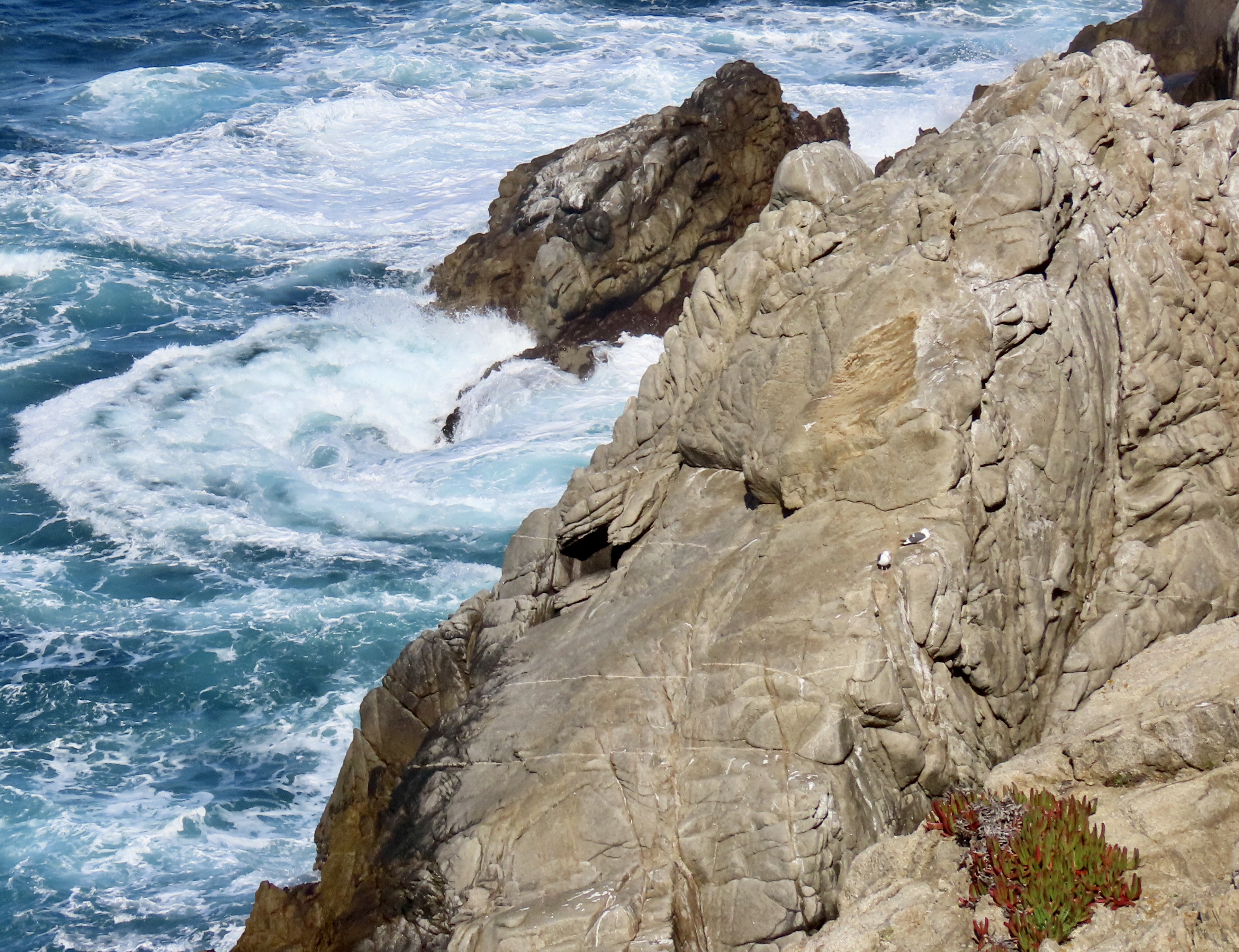







It was a rainy and cold last week when we visited the Monterey Bay Aquarium with high hopes that a combination of visiting mid-week during nasty weather might tamp down the crowds. Label that wishful thinking. The weather meant that people would be looking for an inside location. Duh. And, with the Big Sur highway washed out, there were a lot more people in town than usual. We joined a long line that snaked its way up the hill and around the side of the building before winding through a crowd control maze and back down the hill. Thankfully, the weather gods put the rain on hold for the 30 minutes it took to reach the entrance.
What had to be tamped down was my normal claustrophobia brought about by large crowds wanting to see the same thing I did. Fortunately, the jellyfish, sea otters, sharks and countless other forms of sea life were guaranteed to put a smile on my face and cure my grumpiness.


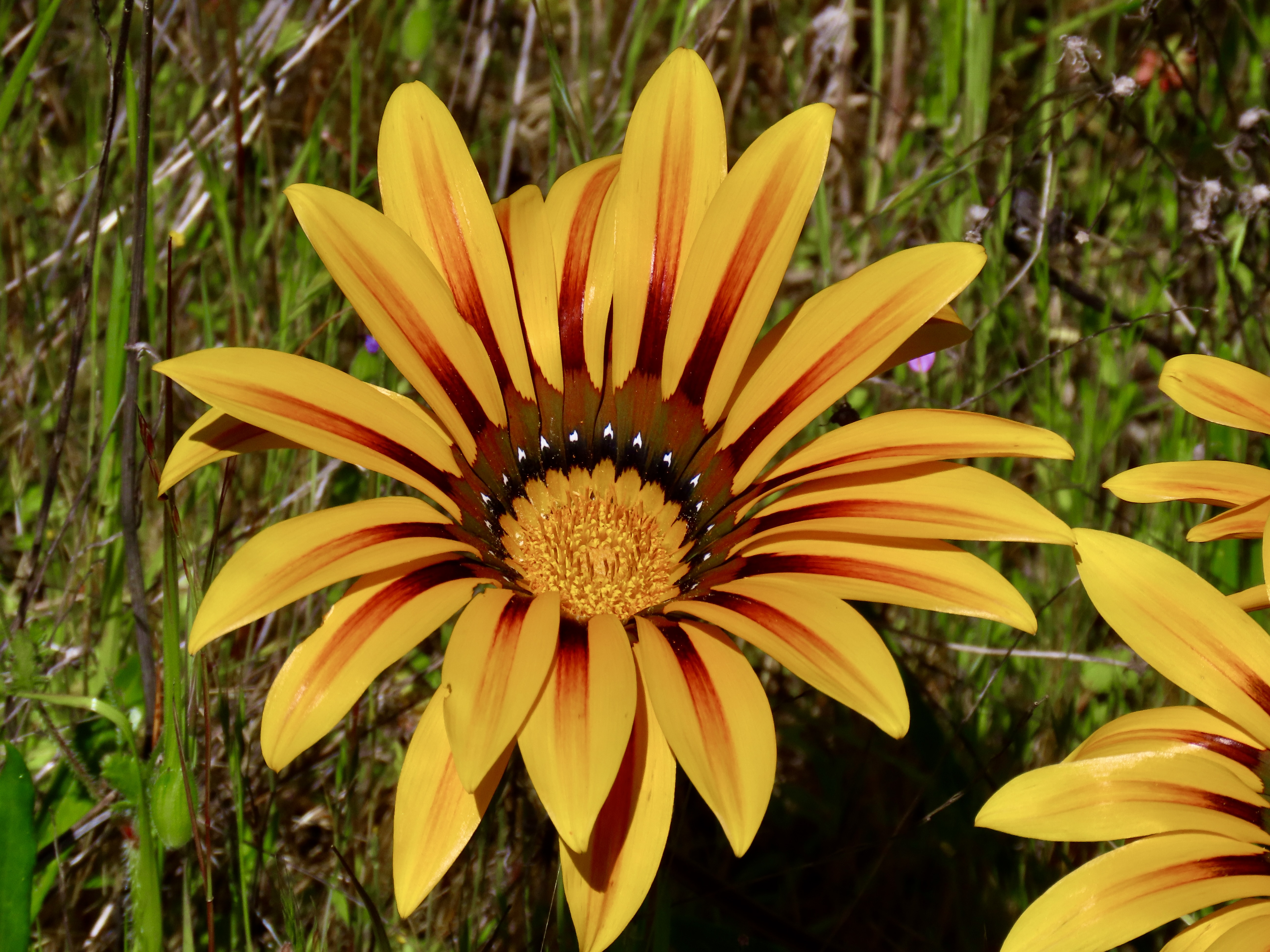
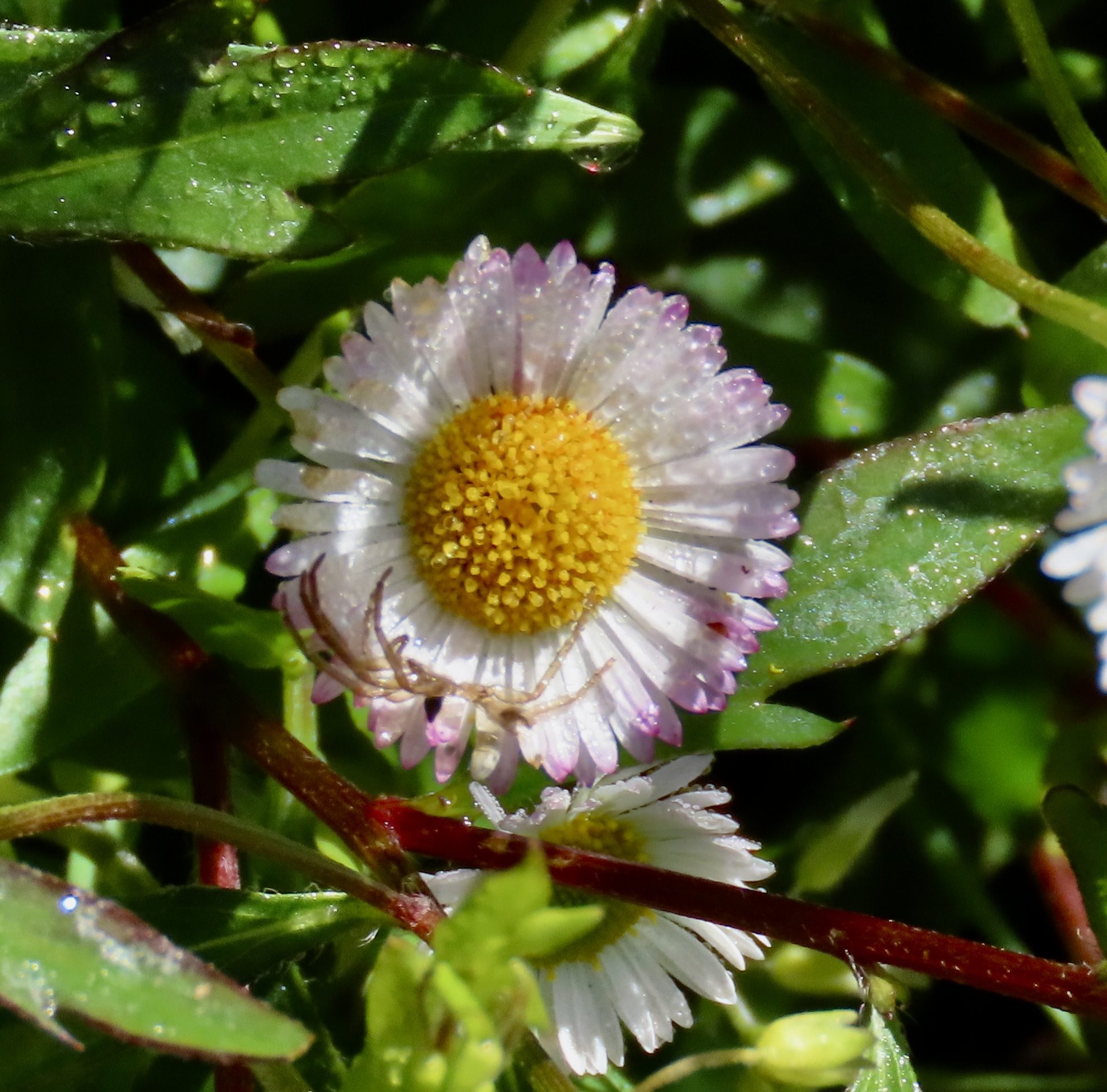
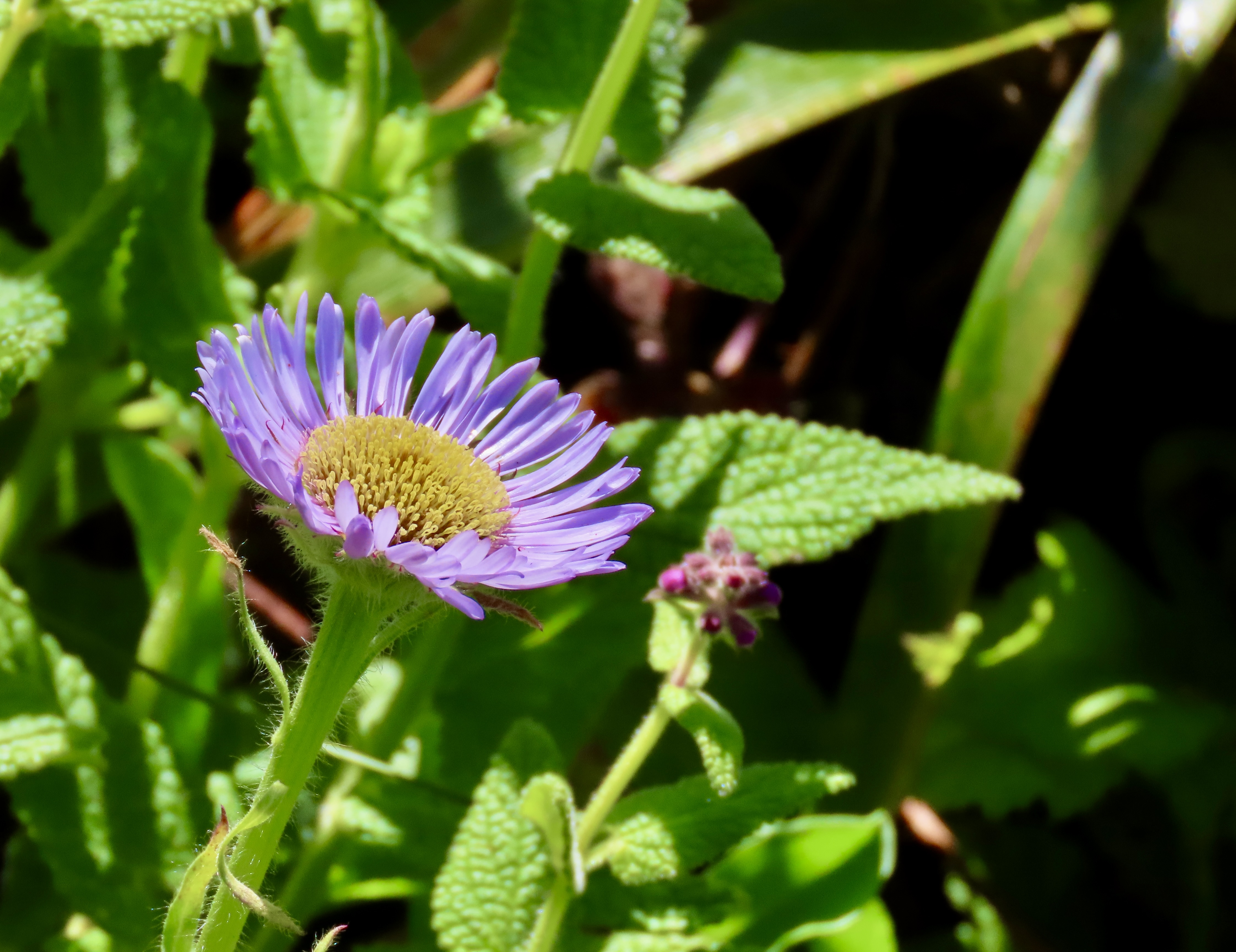
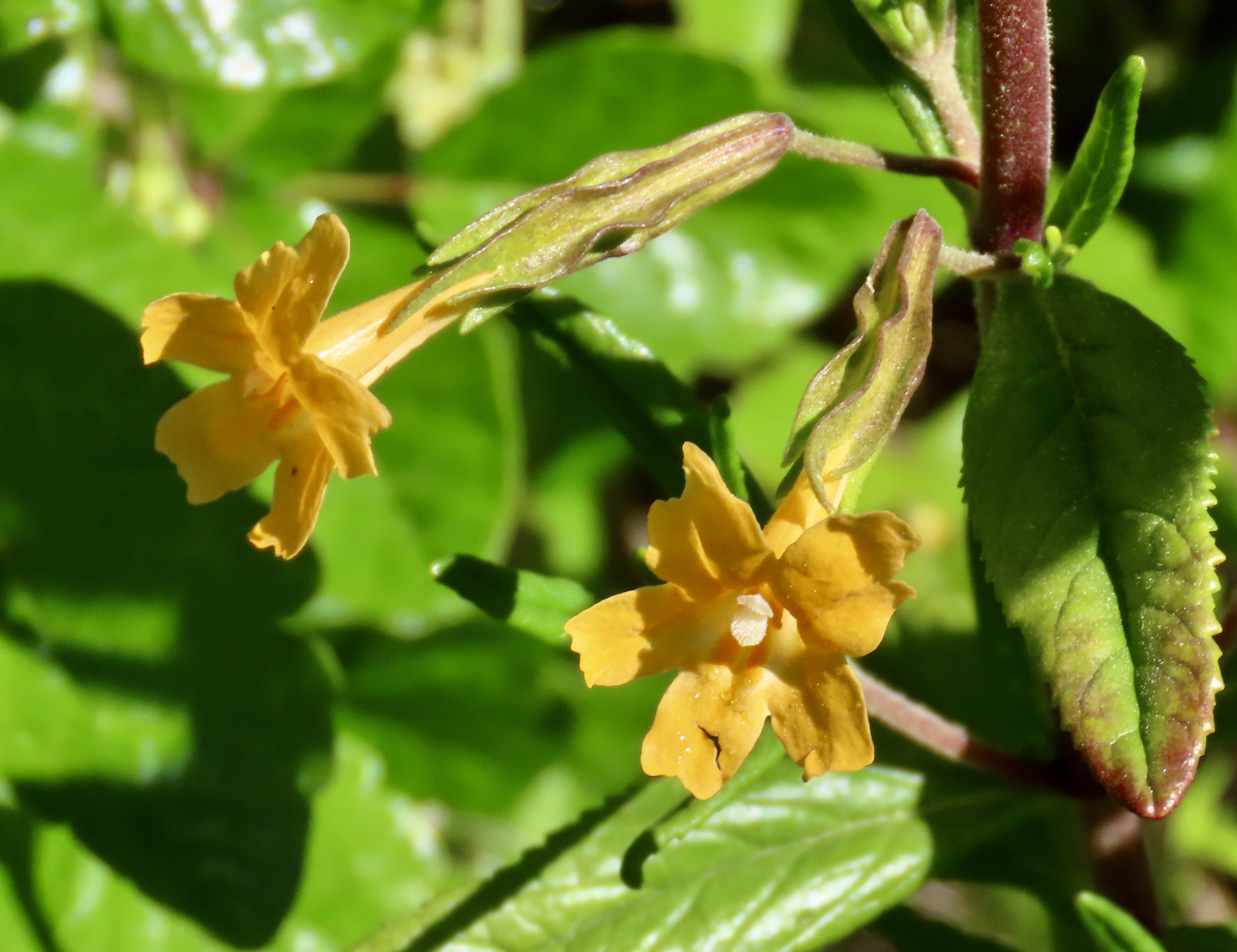
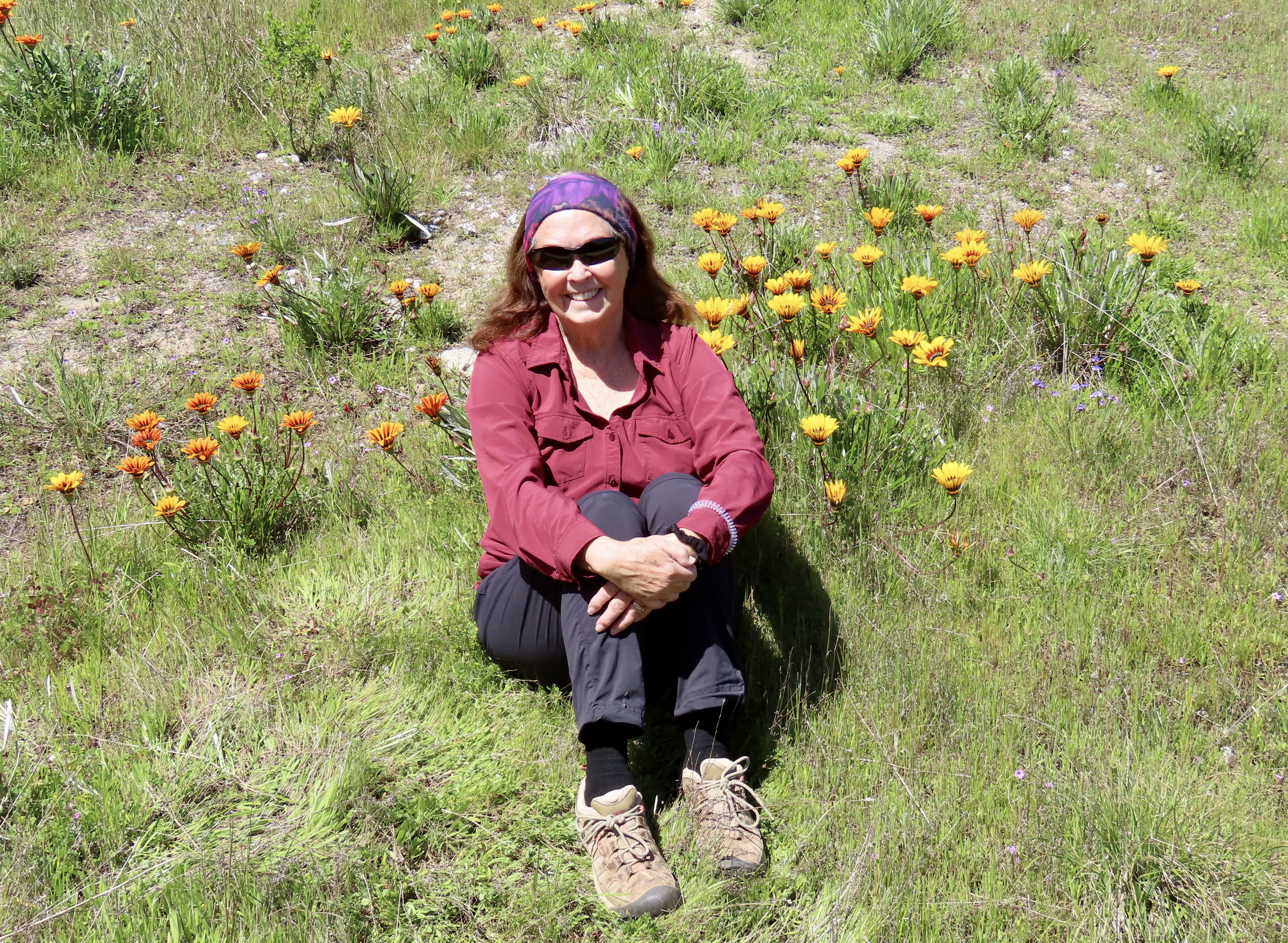
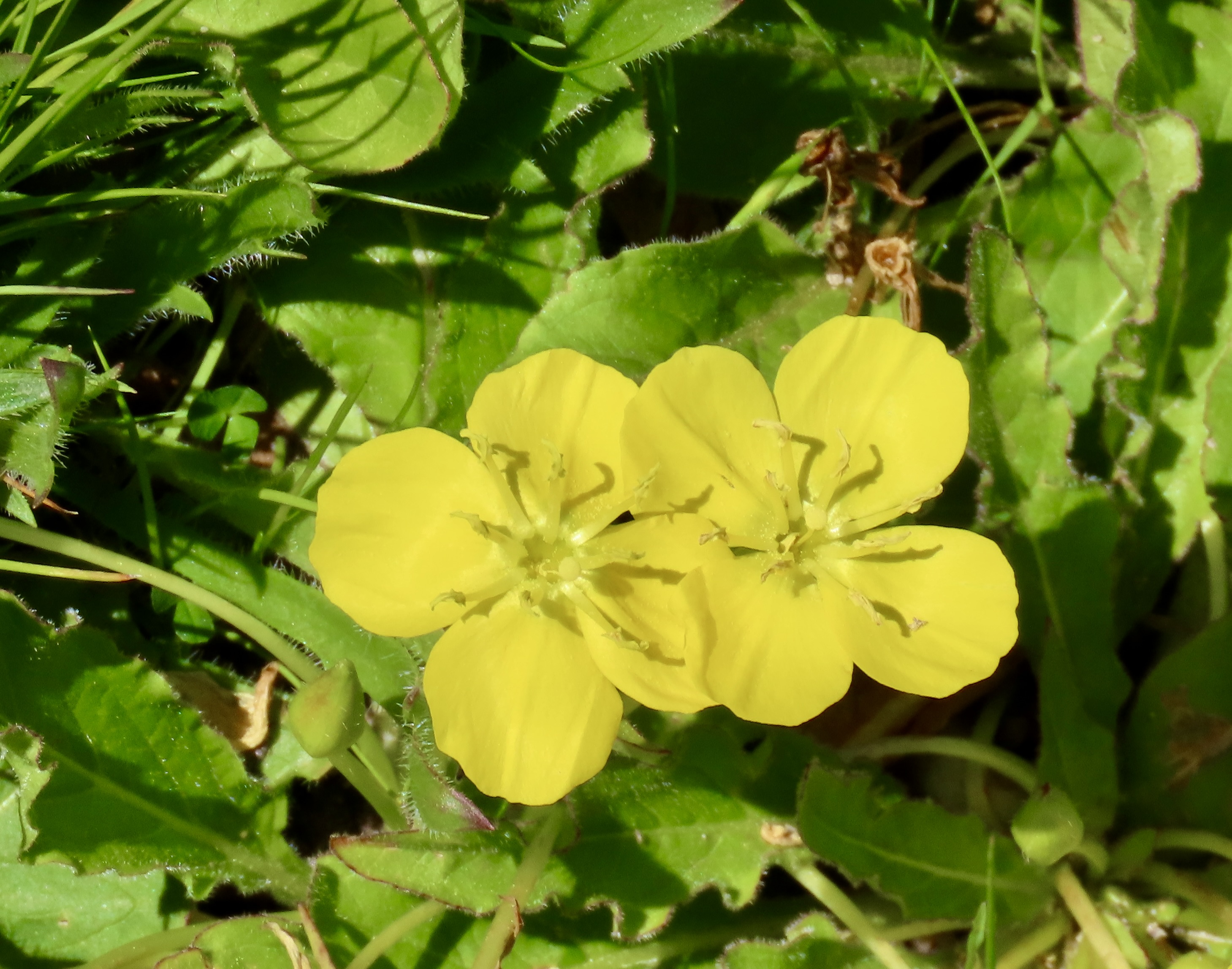
The next day found us climbing the hill again with my camera. Peggy’s camera, and our cell phone. Just in case. We entered the National Monument and I dutifully went to work, capturing wildflowers as I walked along the trail. Peggy took off like a greyhound. That woman can move when she has a mind to! I think she was afraid that the flowers we had so admired the day before would be past their prime, expired, and that somehow ten minutes was going to make all the difference. When I arrived a half hour later, the flowers were still in their prime, new ones had joined the crowd, and over a gazillion buds were waiting for their turn. Peggy quickly announced that she had taken over 20 photos of the flowers. She never takes 20 photos of any one thing. That’s what I do. Naturally, I had to add to her collection.
One challenge we faced was we didn’t recognize the flower. I knew it was a composite, a member of the vast family of sunflowers, daisies, asters, etc. Not a problem, we thought. Ha. That evening, I checked my National Audubon Field Guide to North American Wildflowers with its 666 entries. No luck. Okay, time to jump online. I typed in flowers of Fort Ord National Monument. Nope. How about flowers of Monterey County. Nothing. Flowers of the central Pacific Coast of California? Nada.
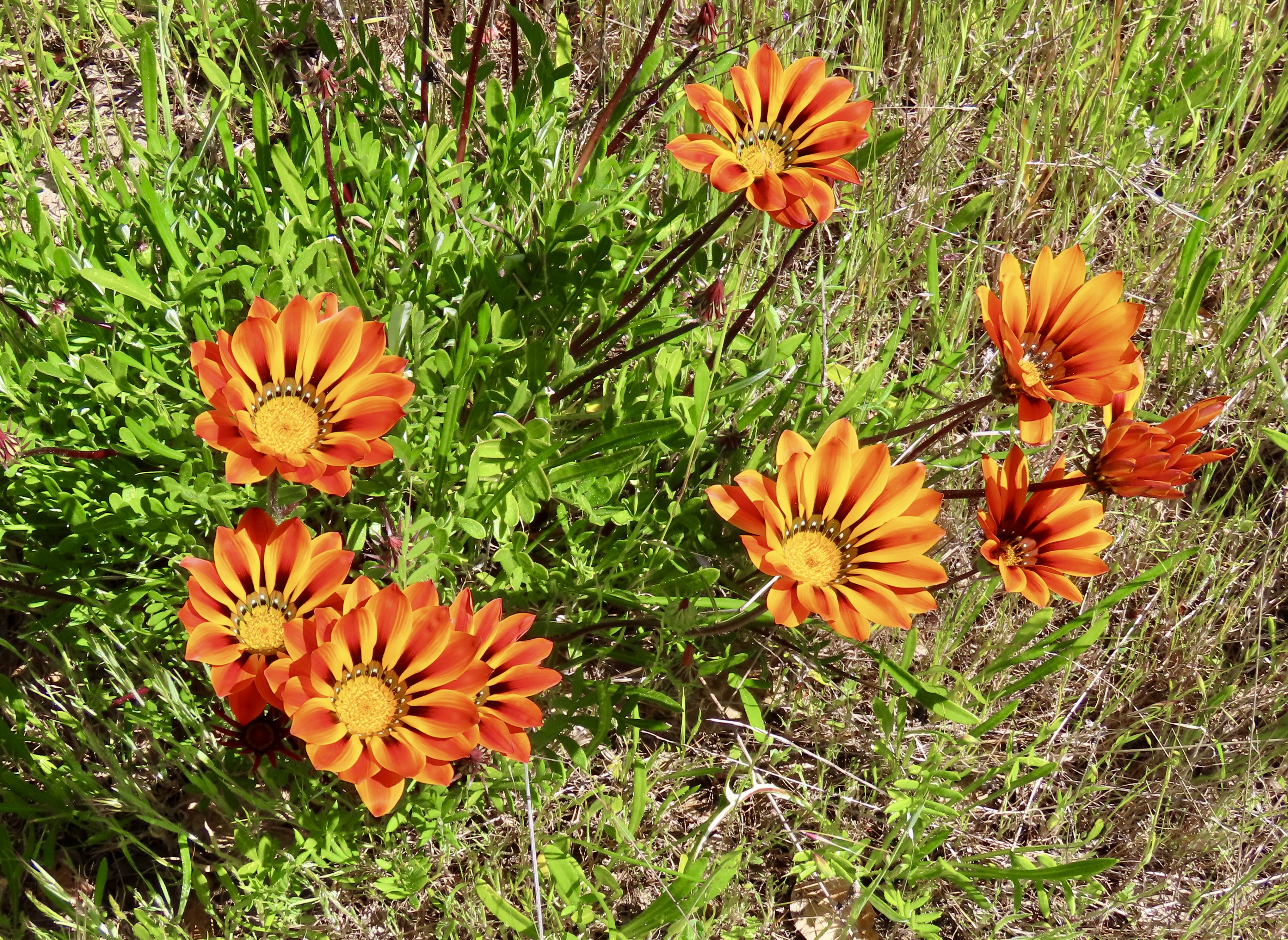
Then I remembered that we had added a flower ID app to our i-phone a few years back. Would it still be there? Peggy went searching and found it. She took a photo of my screen showing one of the flowers. And there was the answer: Gazania. What? We had never heard of it. Turns out it is a native of South Africa. I had taken photos of a number of flowers in South Africa on our safari trip there. But not Gazania.
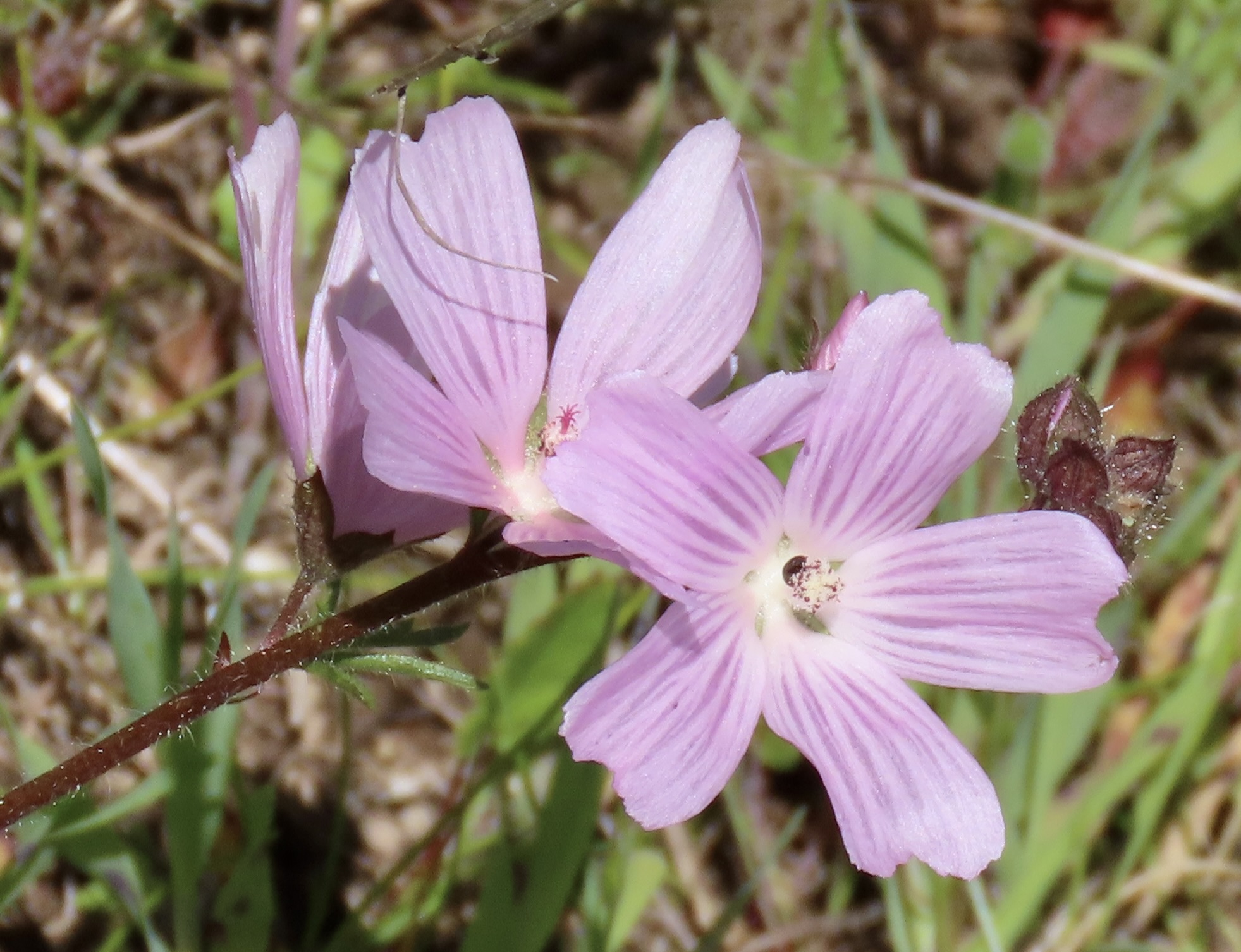
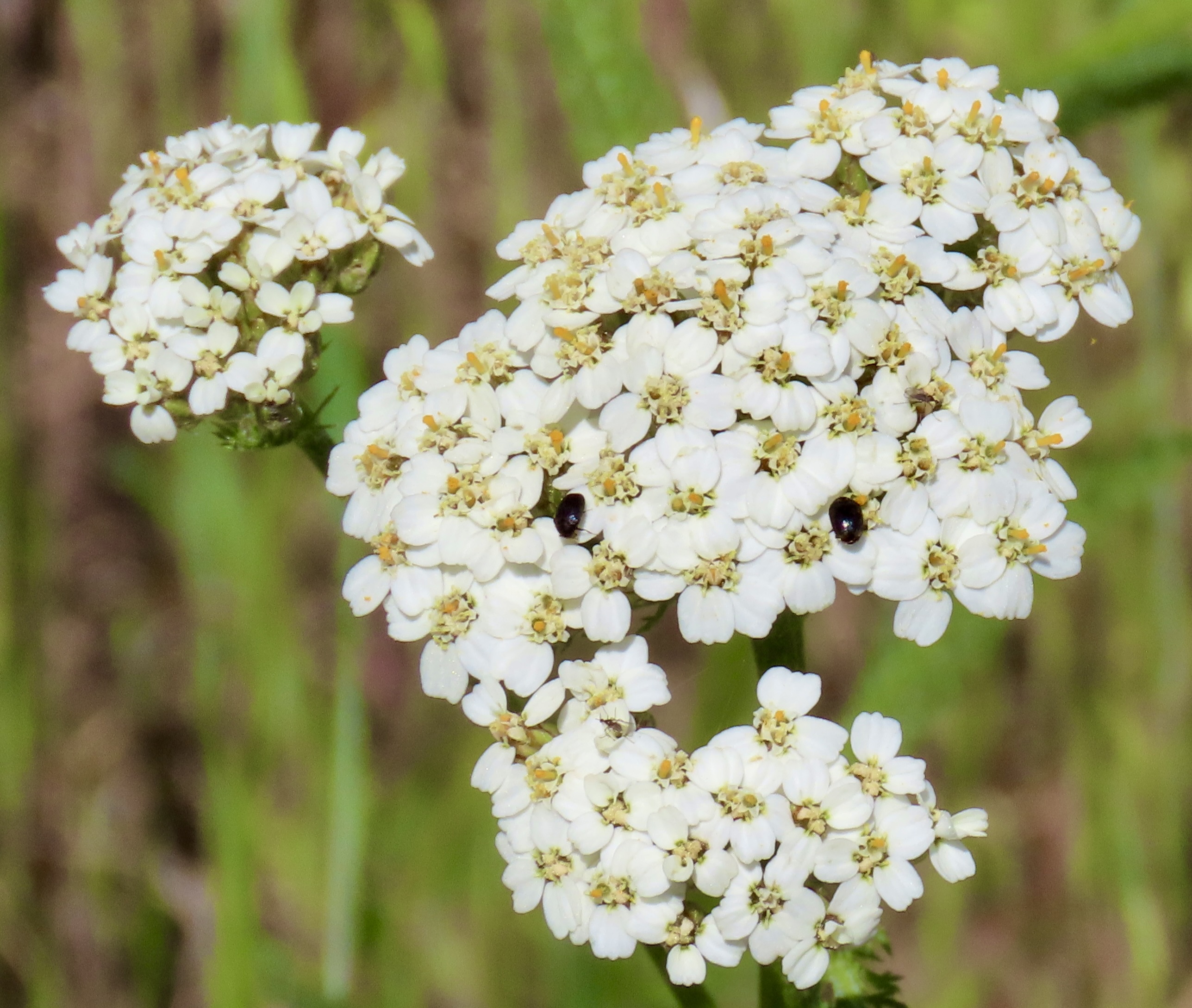
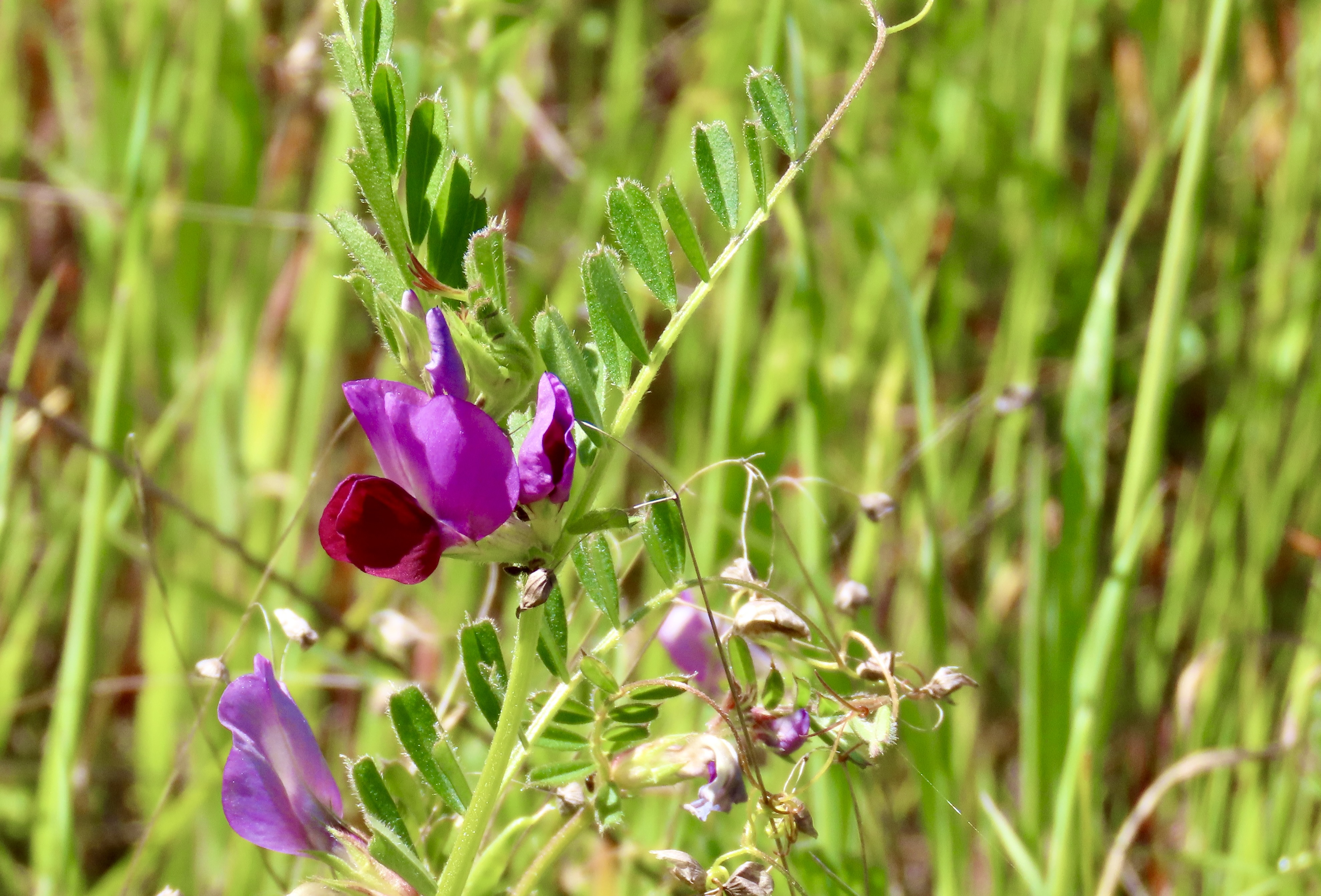
Its beauty meant that it had been imported to the US and numerous other countries to adorn flower gardens. Not surprisingly, it had escaped. Monterey was listed as one of the counties where it happened. Following are a number of photos that Peggy and I took of the Gazania and other flowers we found along our walk both wild and wild-domesticated.











There is an ancient Chinese proverb from the Tao Te Ching that states “A journey of a thousand miles begins with a single step.” Although the distance and mode of travel may vary, it’s how all great adventures begin. I started my 750 mile backpack trek down the Pacific Coast trail to celebrate my 75th birthday with a single step and my 6-month, 10,000 mile solo bike trek around North America at 46 with the crank of a pedal. That was an adventure! An even greater one was waiting for me at the end… I met Peggy when I stepped off my bike in Sacramento. She gave me a dazzling smile and said, “You must be Curtis.” I was smitten and svelte at the same time. I’m still smitten…
I lucked out. Peggy loves adventures as much as I do and we have been on many over the past 30 years. In the past two years alone, we have traveled up the Rhine and Nile Rivers by boat, gone on an African safari, and explored 30,000 miles of North America in our pick-up, Iorek, and small trailer, Serafina. I’ve already blogged about these adventures, although I still have some catching to do.
As I write this we are camped in a scenic site perched above the famous Laguna Seca (now Weather Tech) Raceway located between Salinas and Monterrey, California. An organization called Hooked On Driving— made up of a collection of passionate and dedicated high-performance driving enthusiasts and coaches— has rented the raceway for a weekend of fun and training. That’s not the big news here, however. The Sea Otter Classic starts in two weeks. Billed as the premier cycling event in the world, it will involve over 9,000 athletes, 77,000 fans and 1000 vendors! Mountain bike racing and road racing will be included with racers from beginner to pro participating.
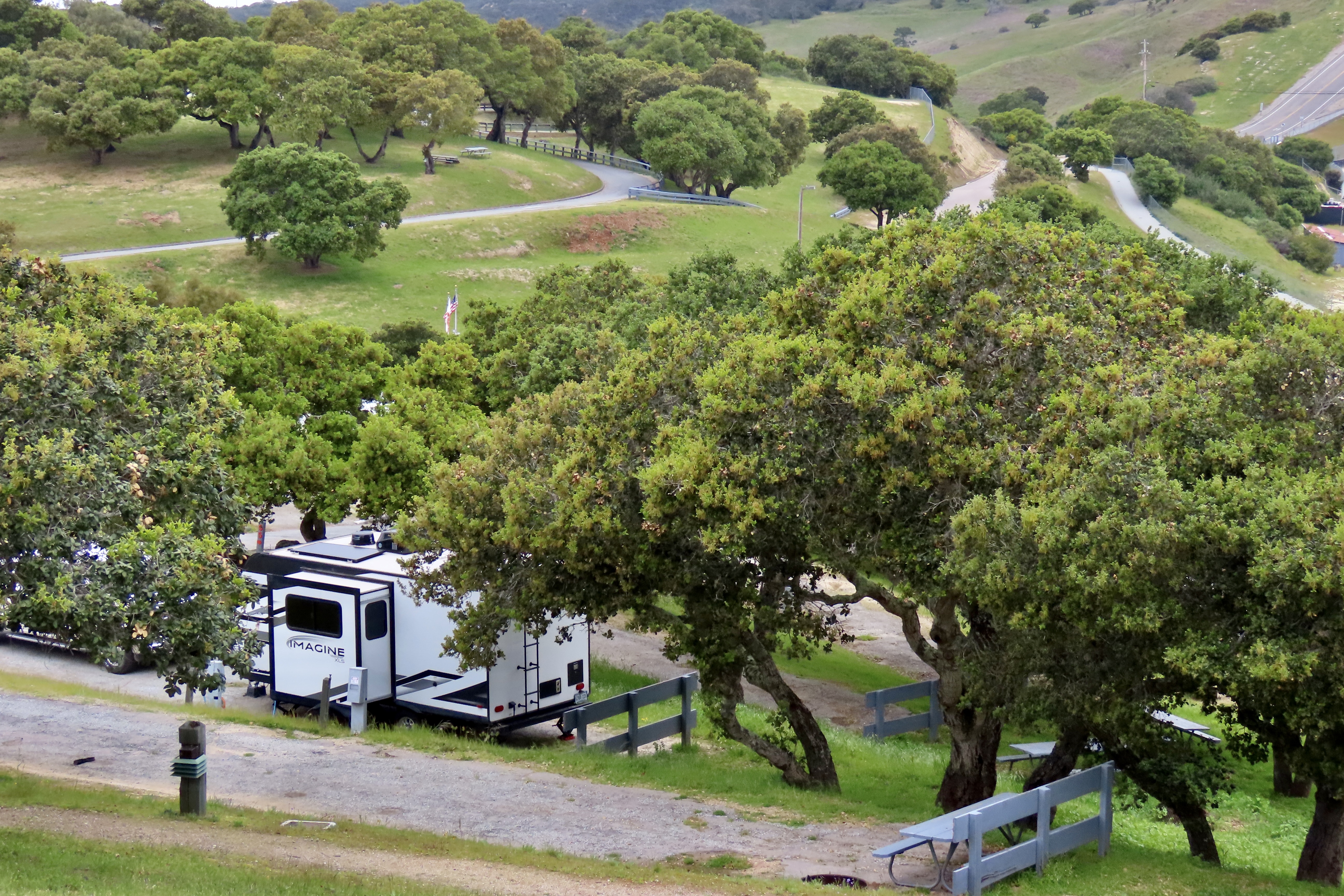
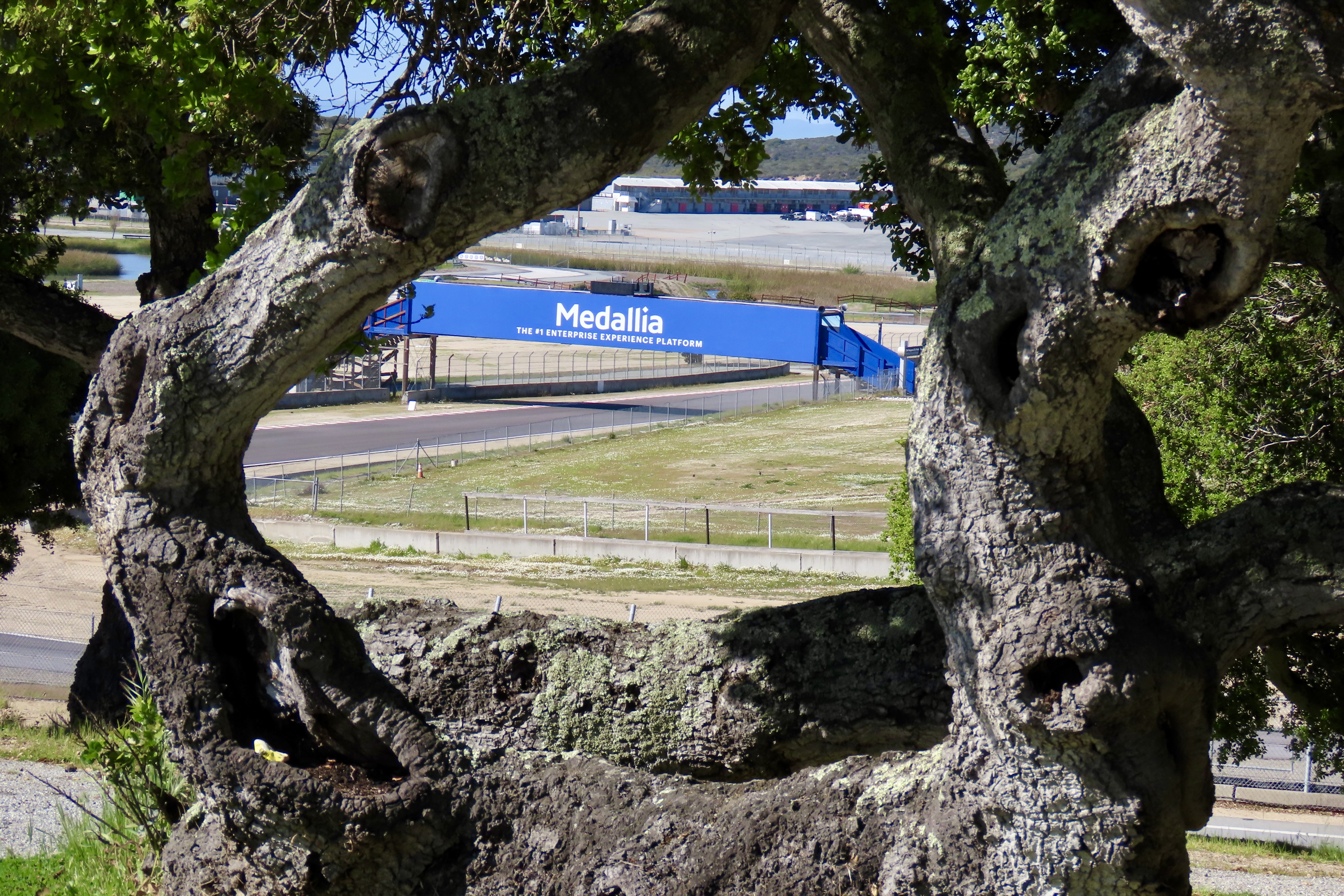

I suspect the participants down on the track roaring around its two mile course are having a blast. Assuming you are a fan of driving fast in a high performance automobile, imagine driving on one of the world’s top raceways. As camping spots go, however, it’s a bit noisy. Grin. Make that a lot noisy. I have my headphones on and am listening to Chopin. Peggy has hers on and is listening to songs from America’s Got Talent. Fortunately, the HOD folks will be out of here tomorrow and we will be gone before the cycling event starts. Linda, a volunteer who works at the entrance station, told us, however, that a TV crew is coming in to film a show in the next few days. I’m assuming it will involve noise. Will there be explosions?
When the race track isn’t busy, this campground is quiet as well as beautiful. It’s also inexpensive and ideally located for exploring Monterey, Carmel and Big Sur. If you follow the news, you know that Big Sur is off our itinerary this time. Part of the road a few miles below Carmel decided to go to sea a couple of days before we arrived. We were busy avoiding the storm as it made its way across Nevada. In fact much of our 3000 mile drive to get to this campground was spent avoiding storms, which we did except for one night we spent in Missouri where severe weather warnings were up on a thunder and lightning storm, high winds, hail stones that could be as large as soft balls, and a tornados. That was a fun night to spend in a trailer.
We hung out in Carson City, Nevada as the storm that closed the Big Sur Highway turned into a blizzard over the Sierra Nevada Mountains.
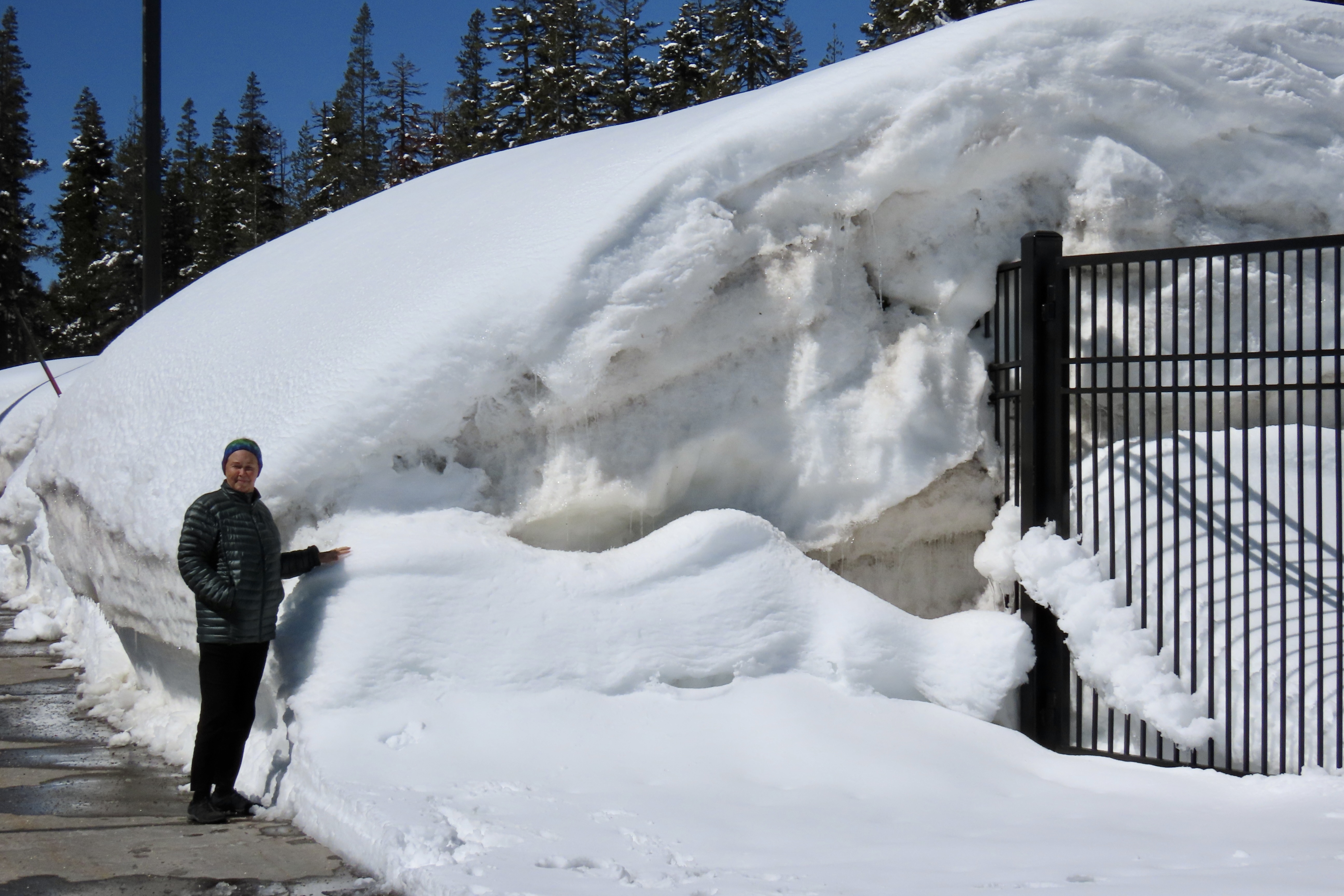
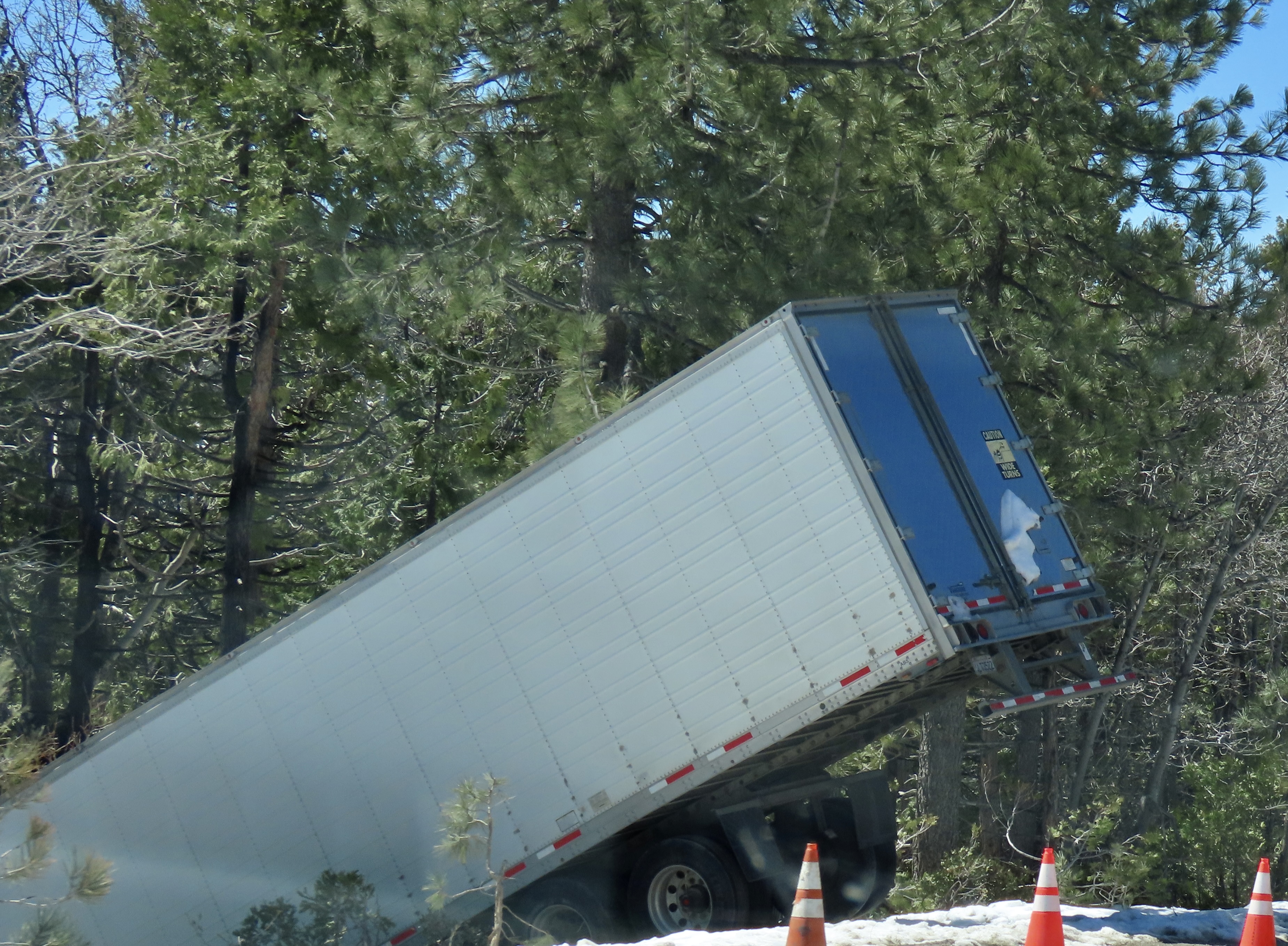
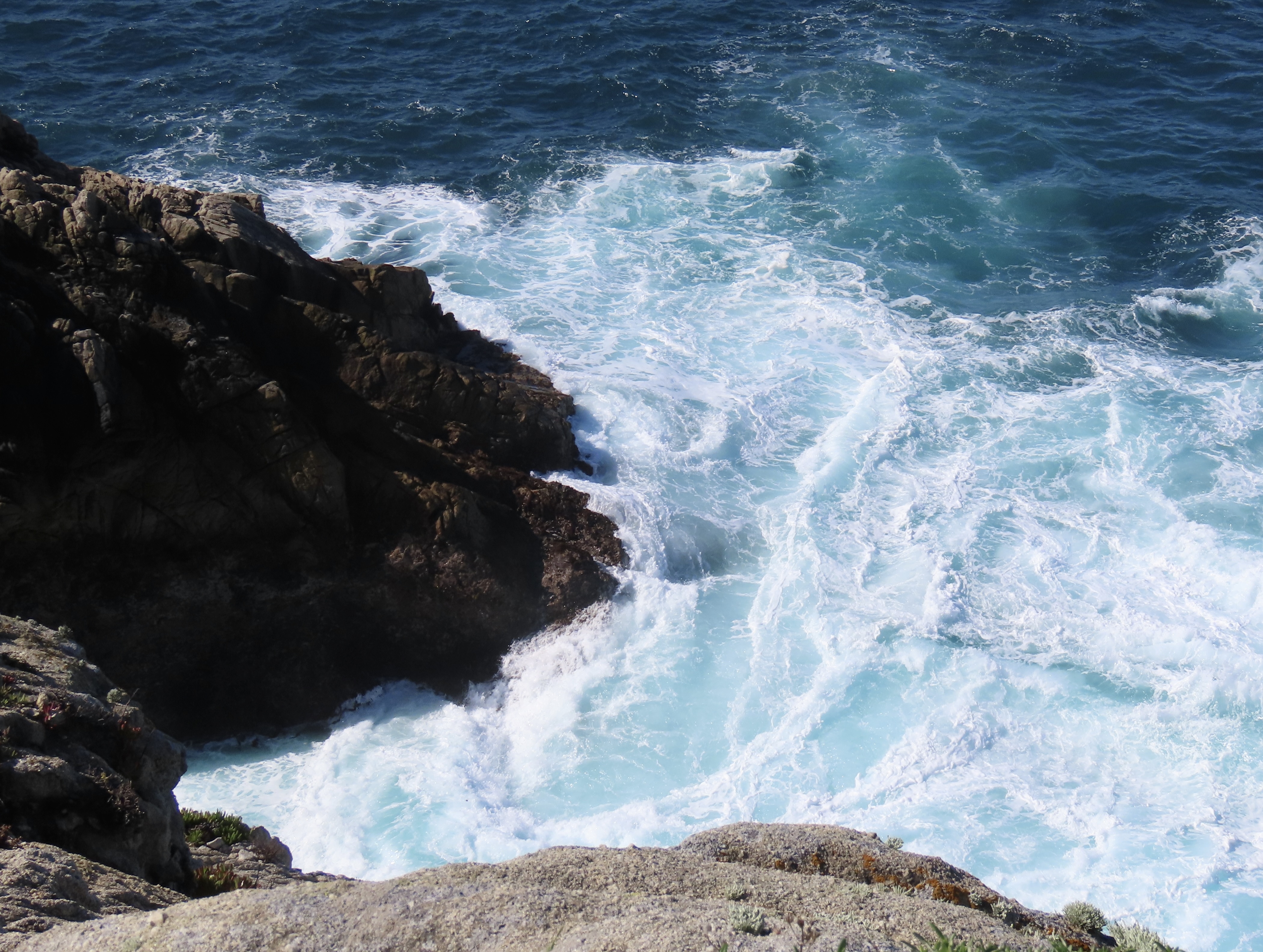
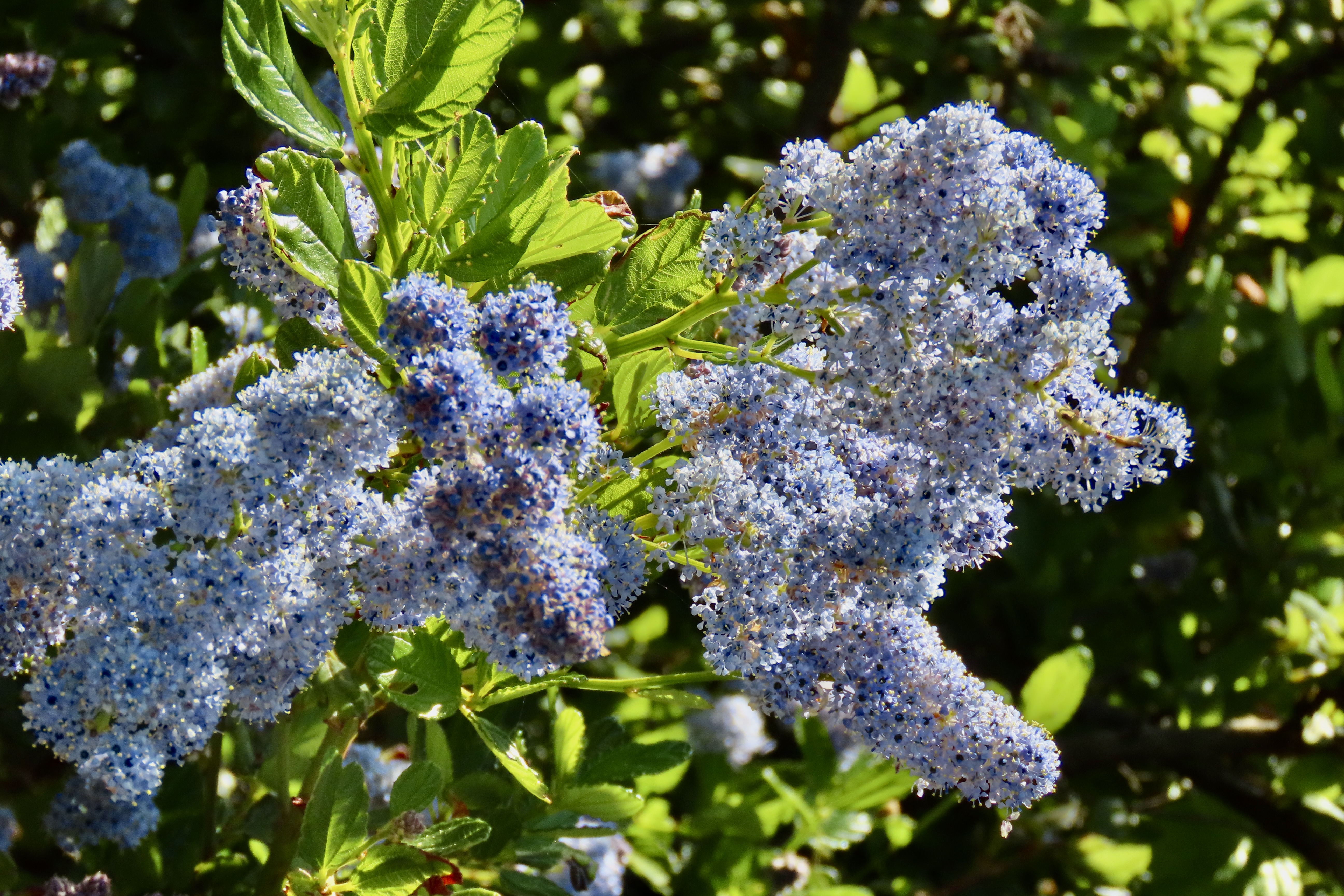
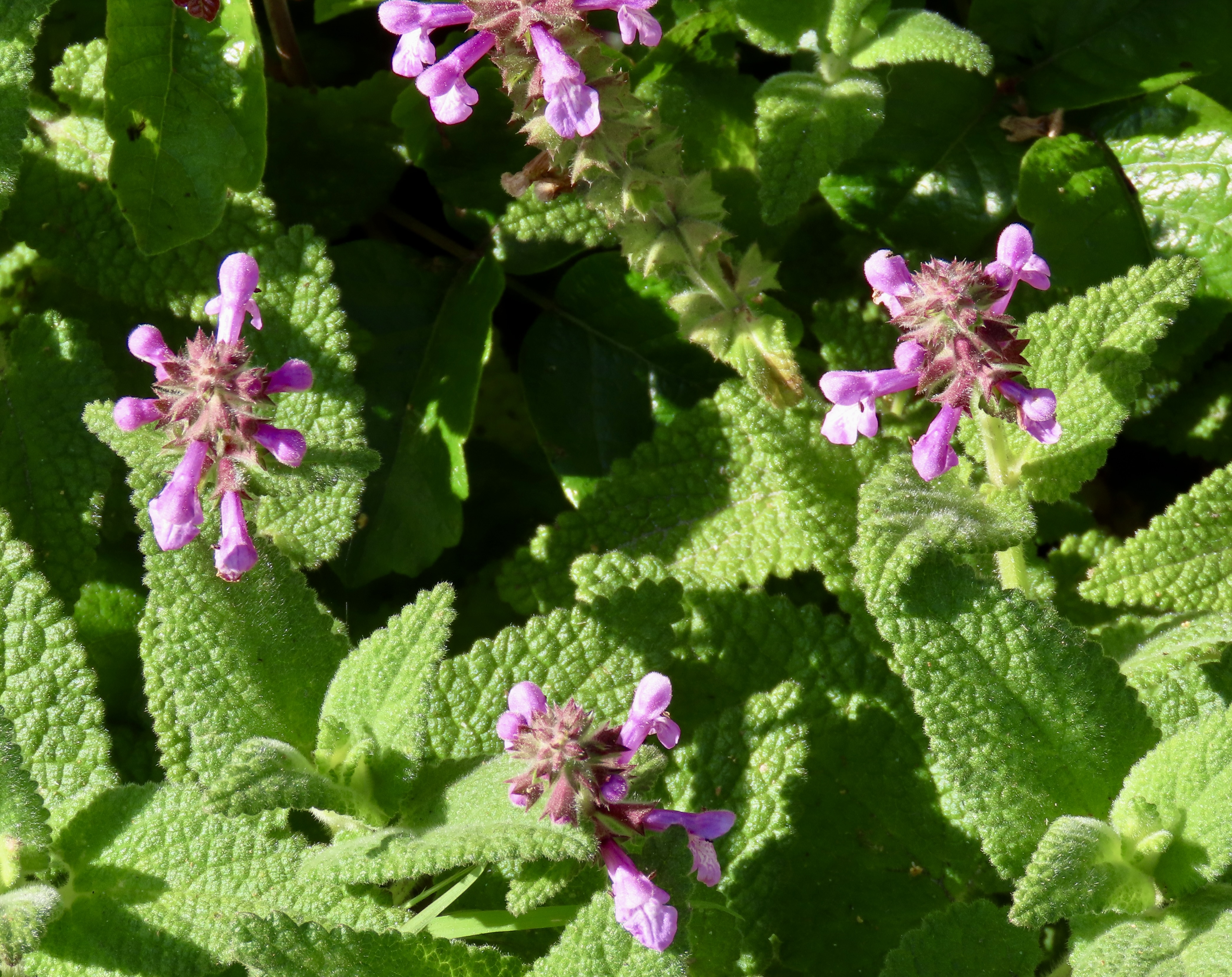
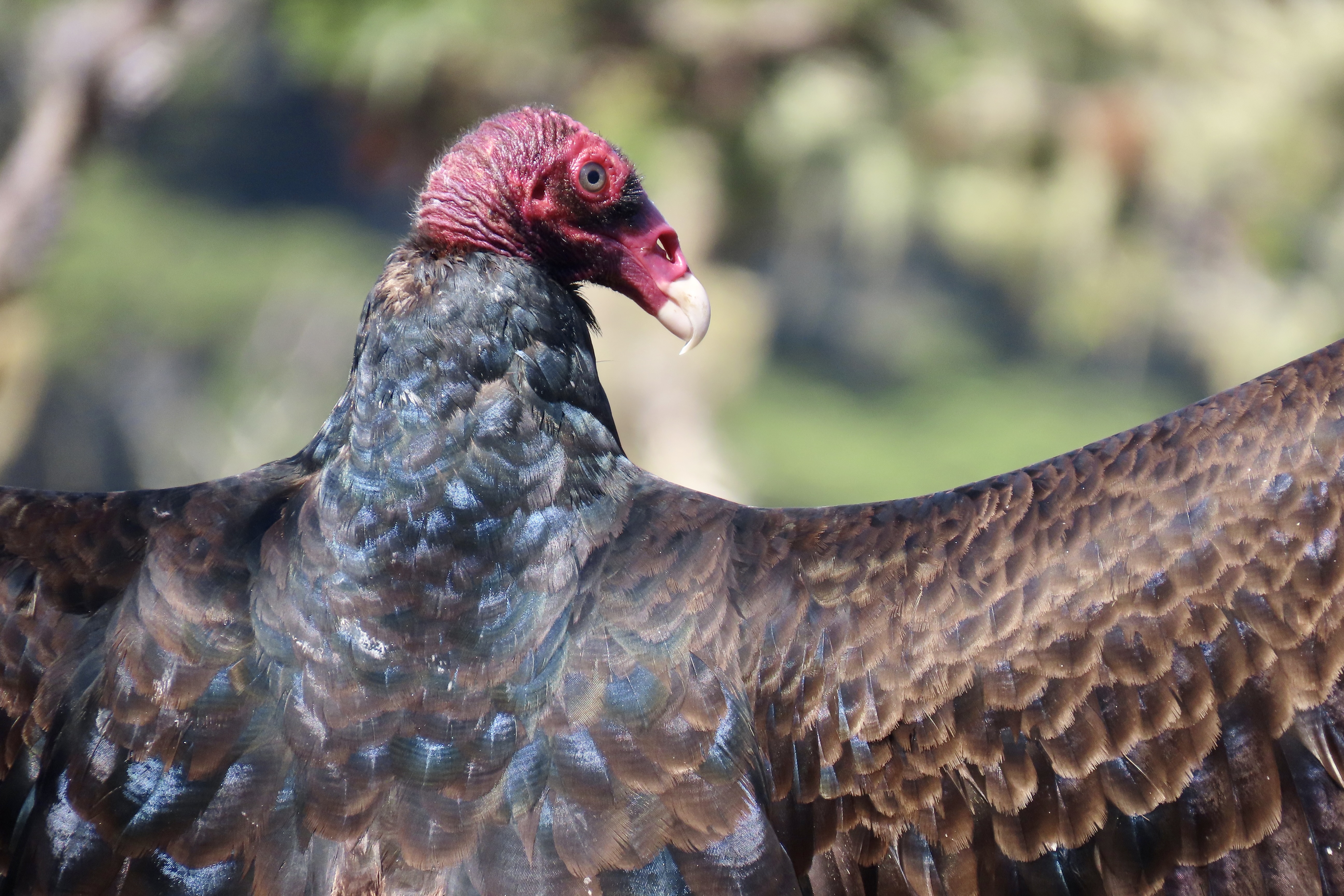
Now, here are a few photos to show you what to expect over the next three months on Wandering Through Time and Place.
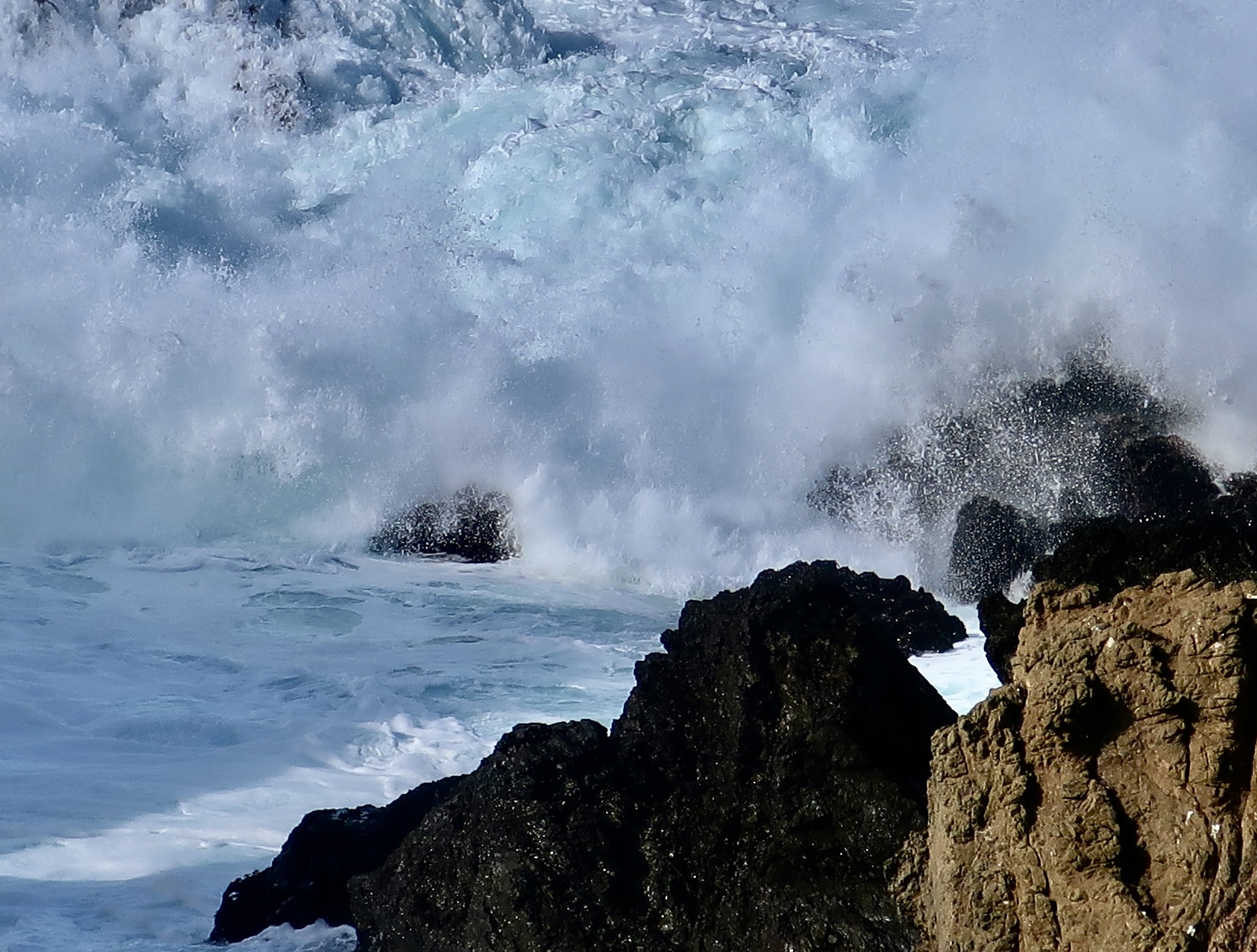
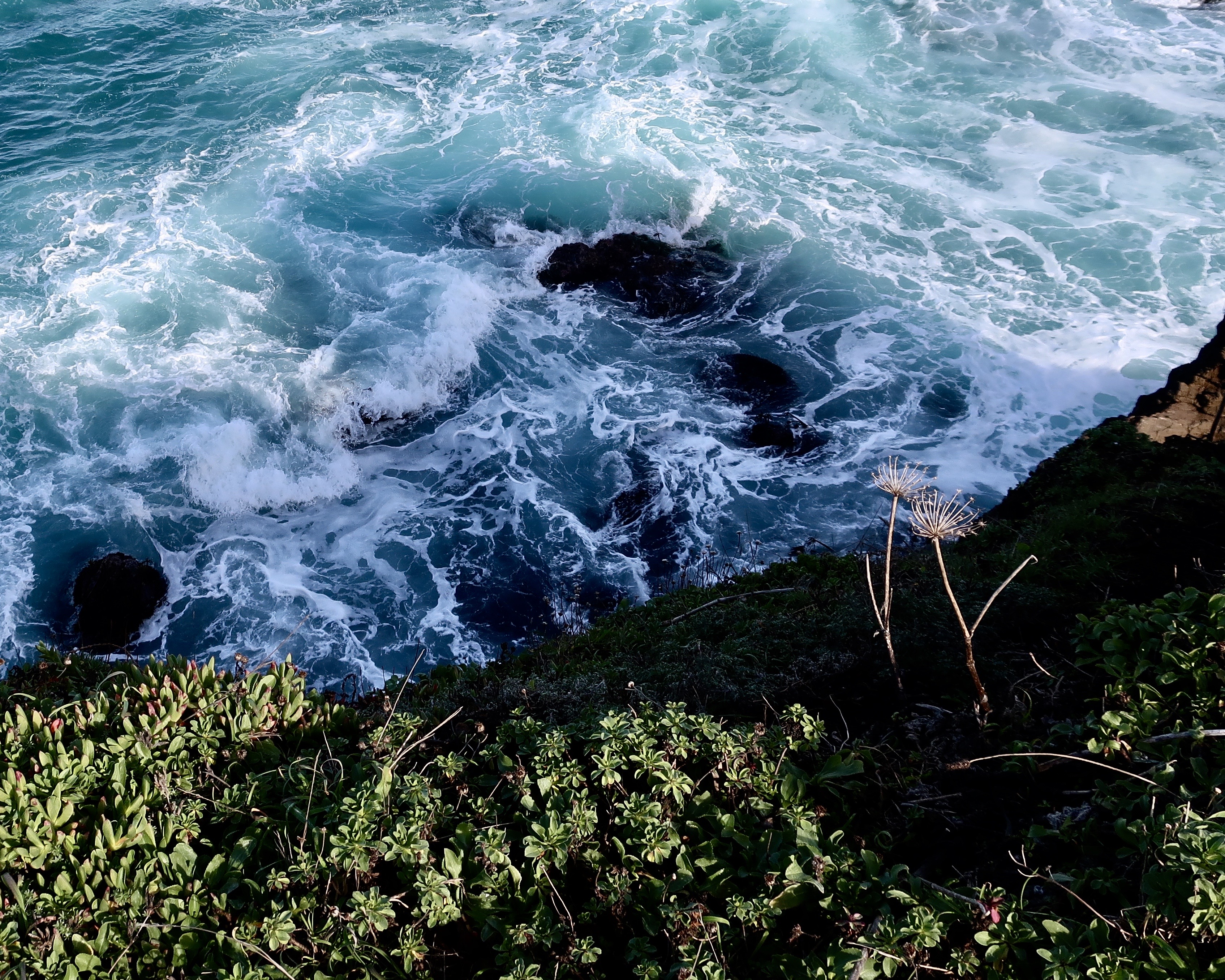
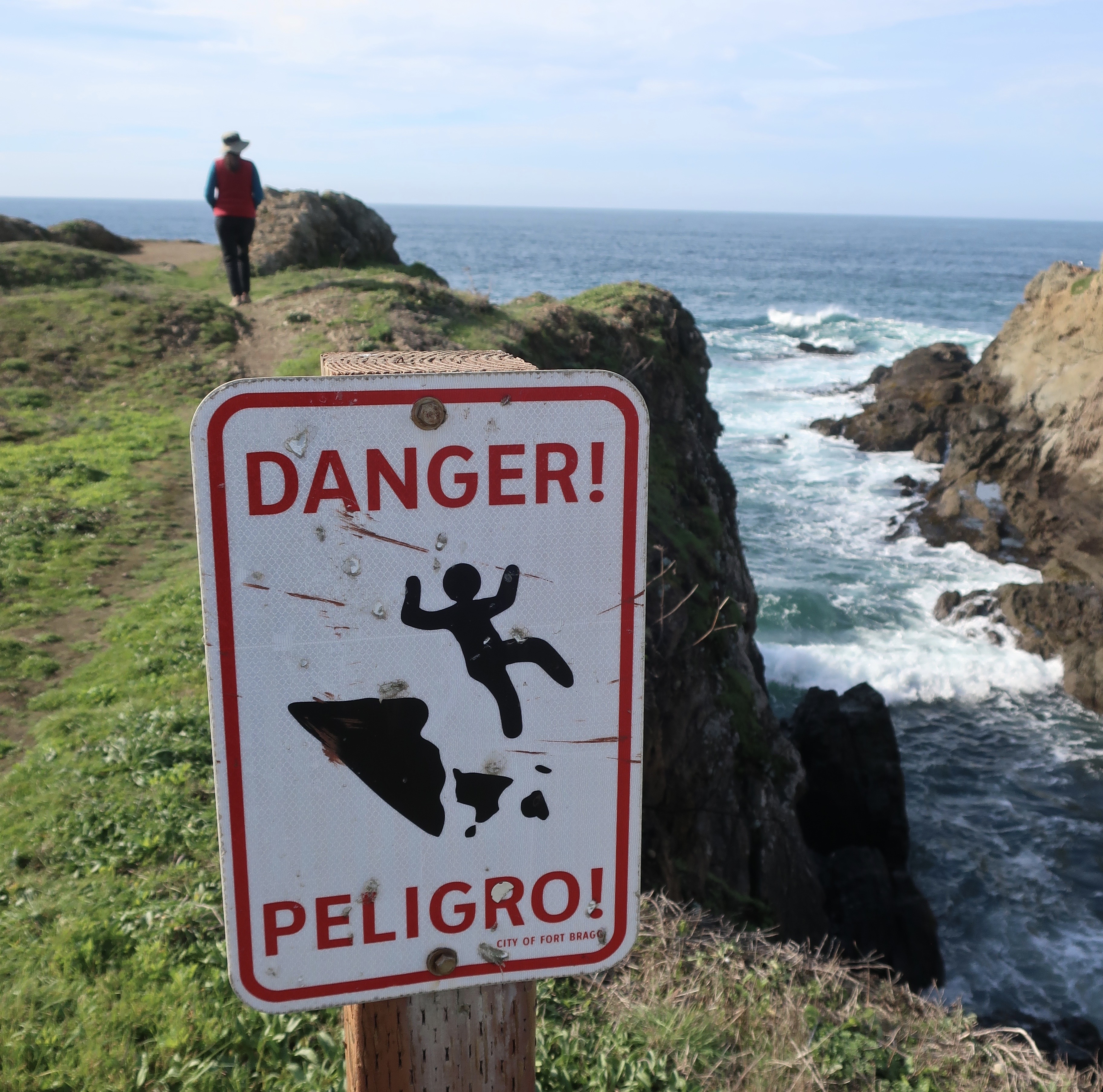
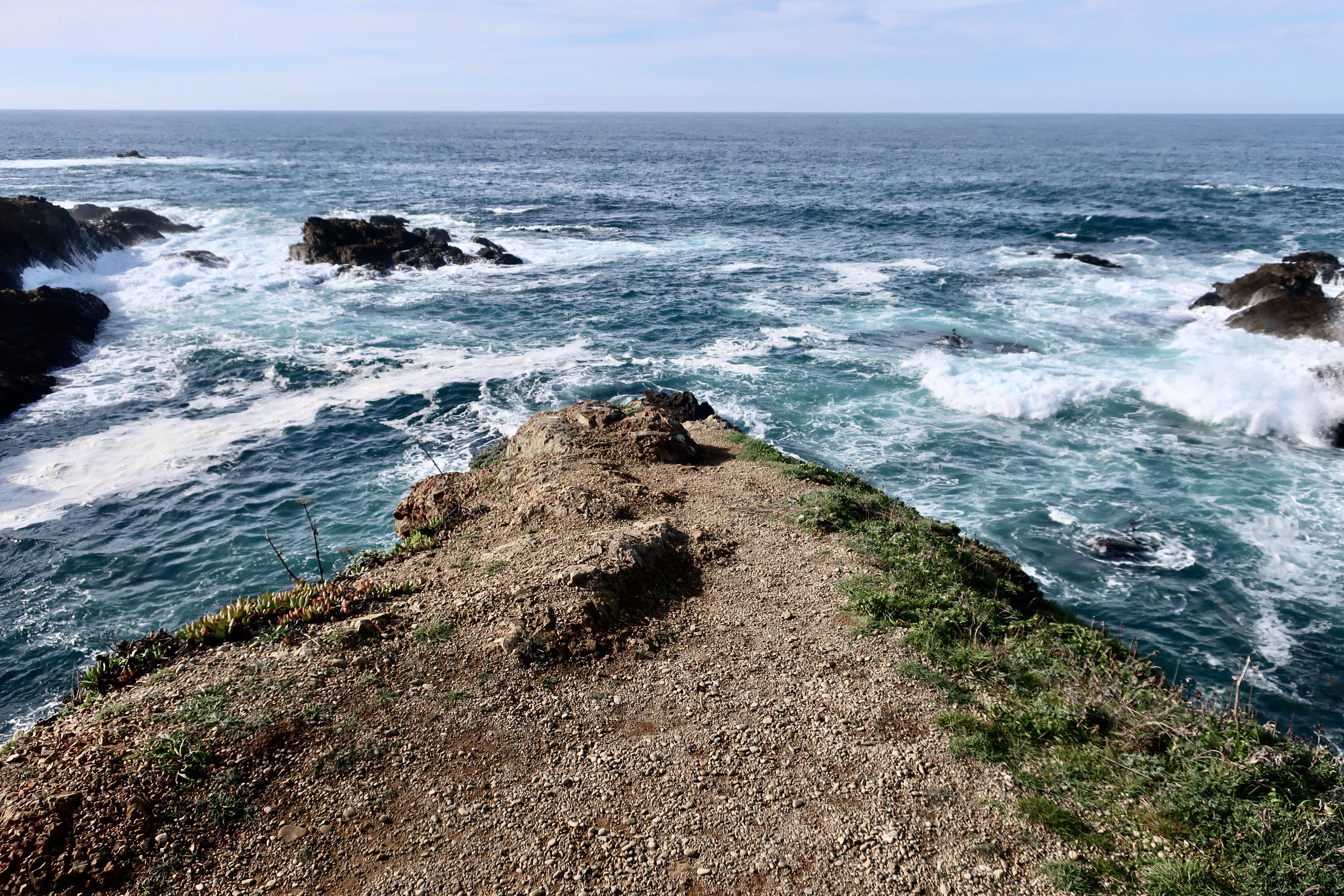
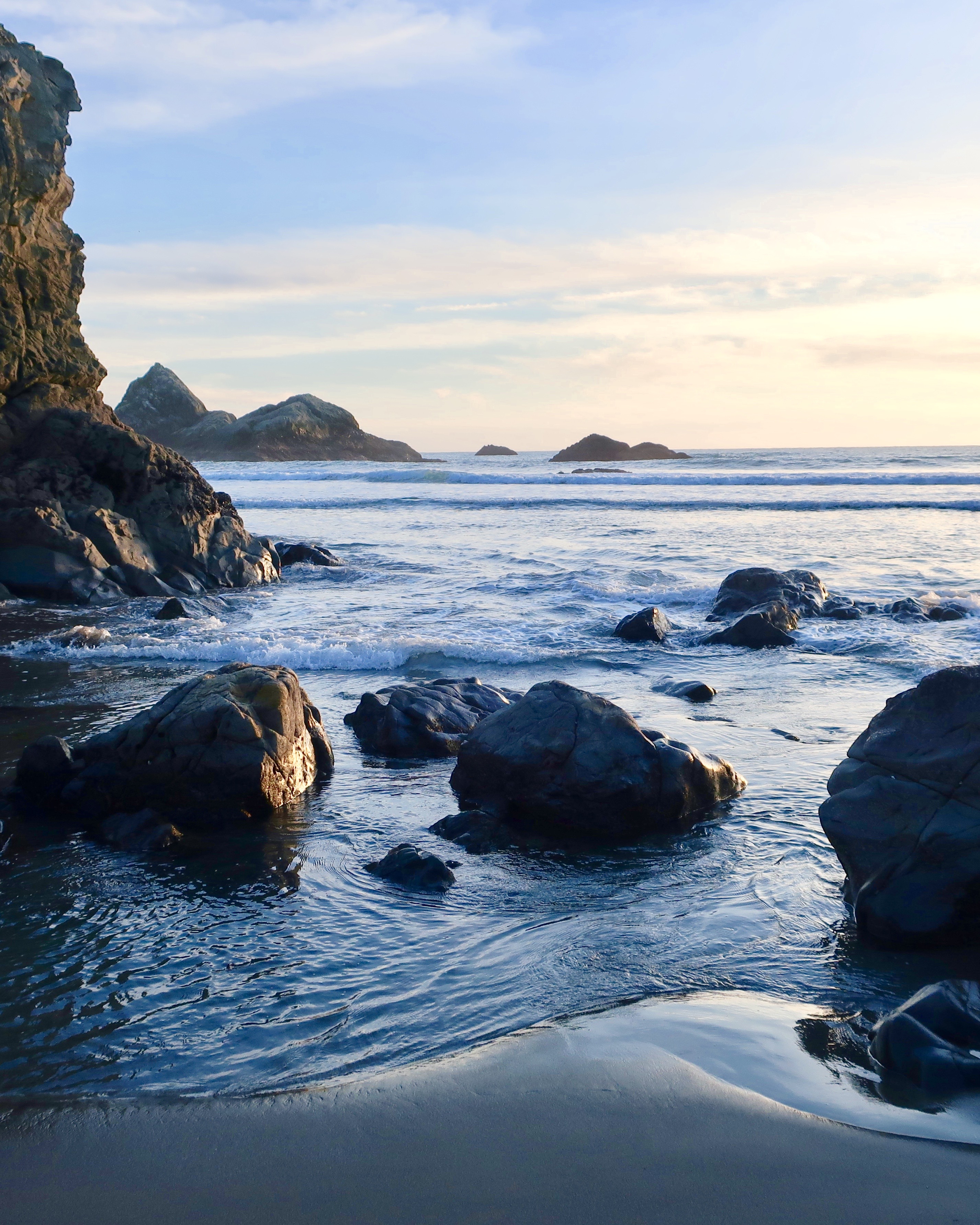
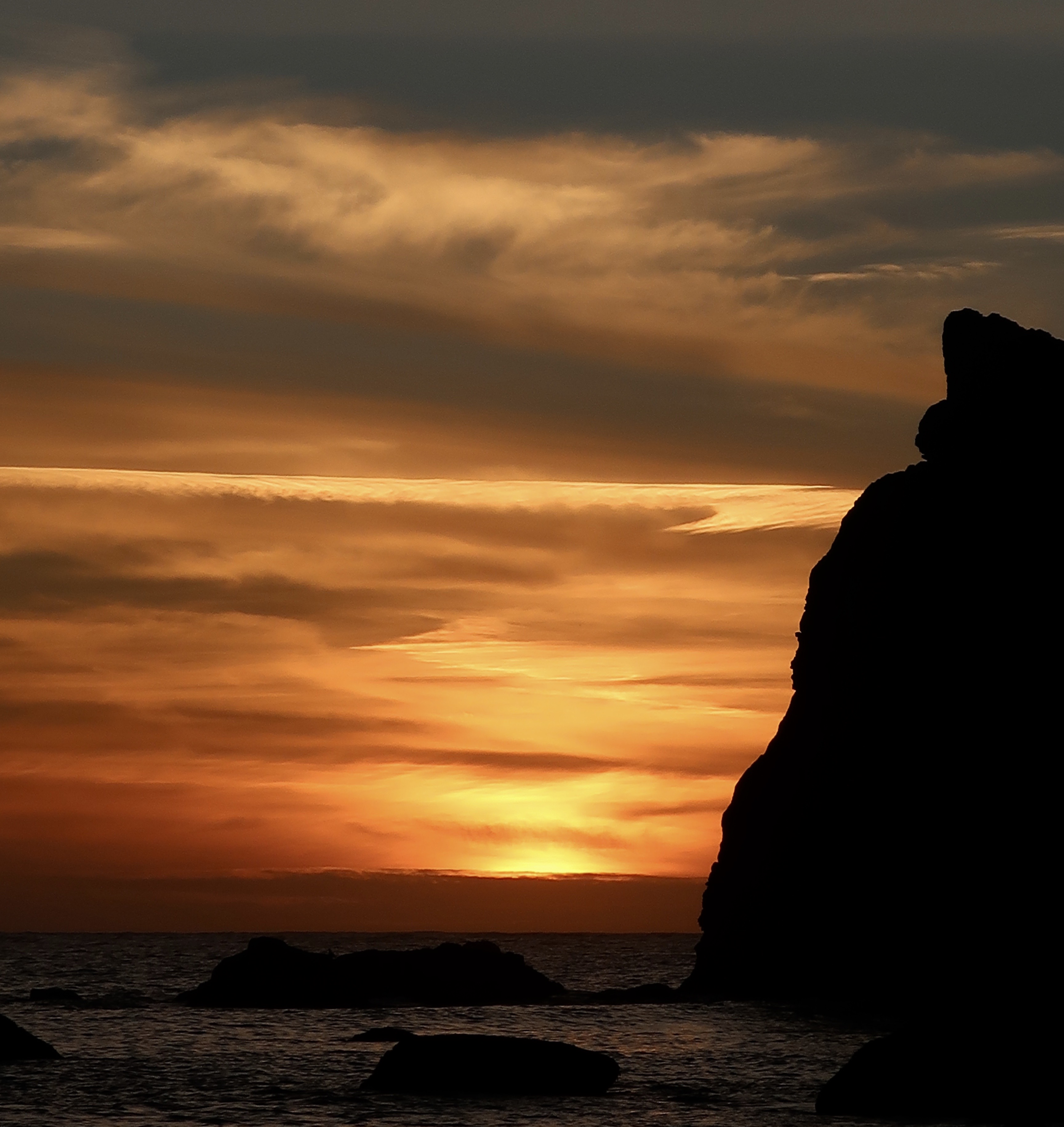

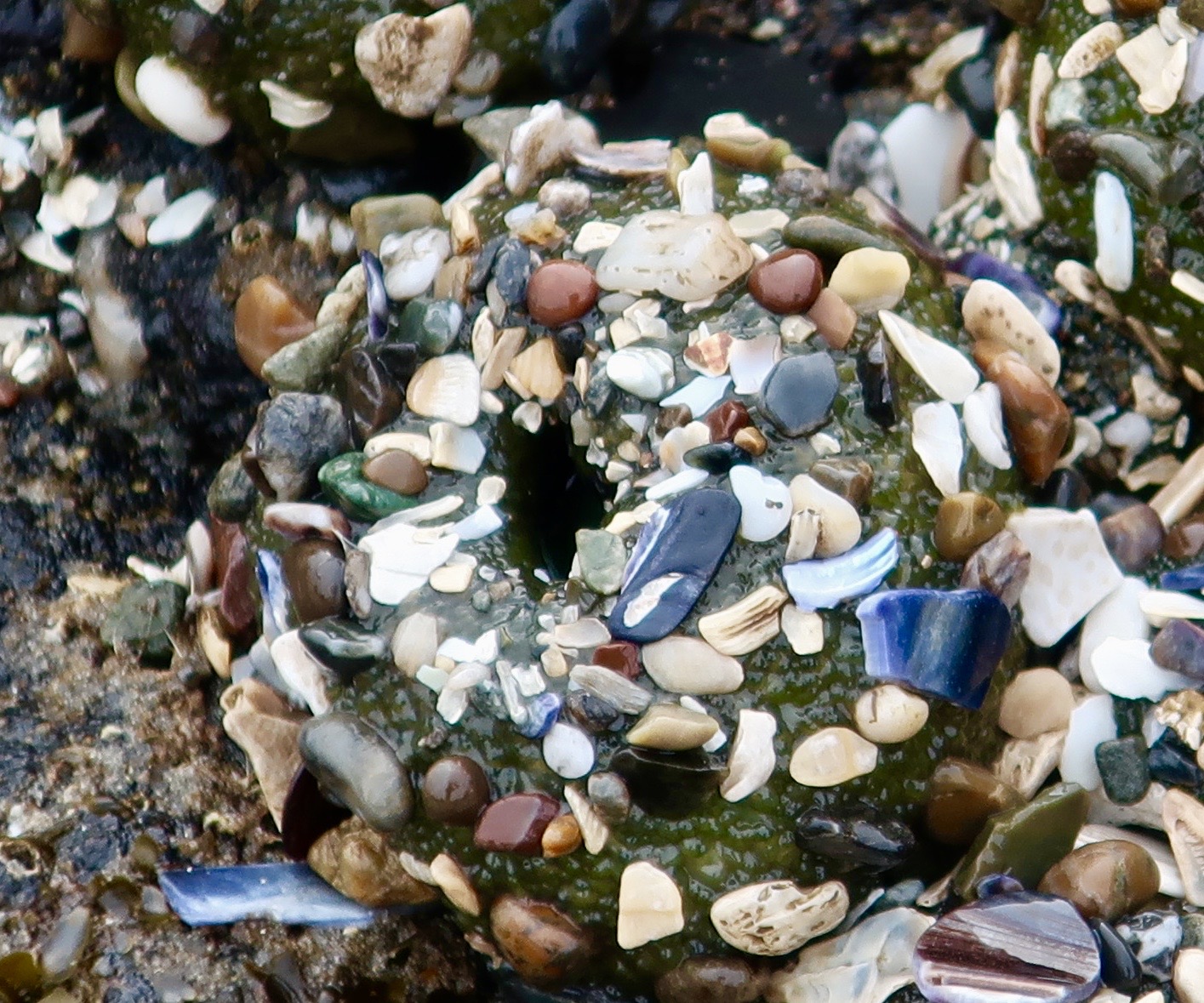

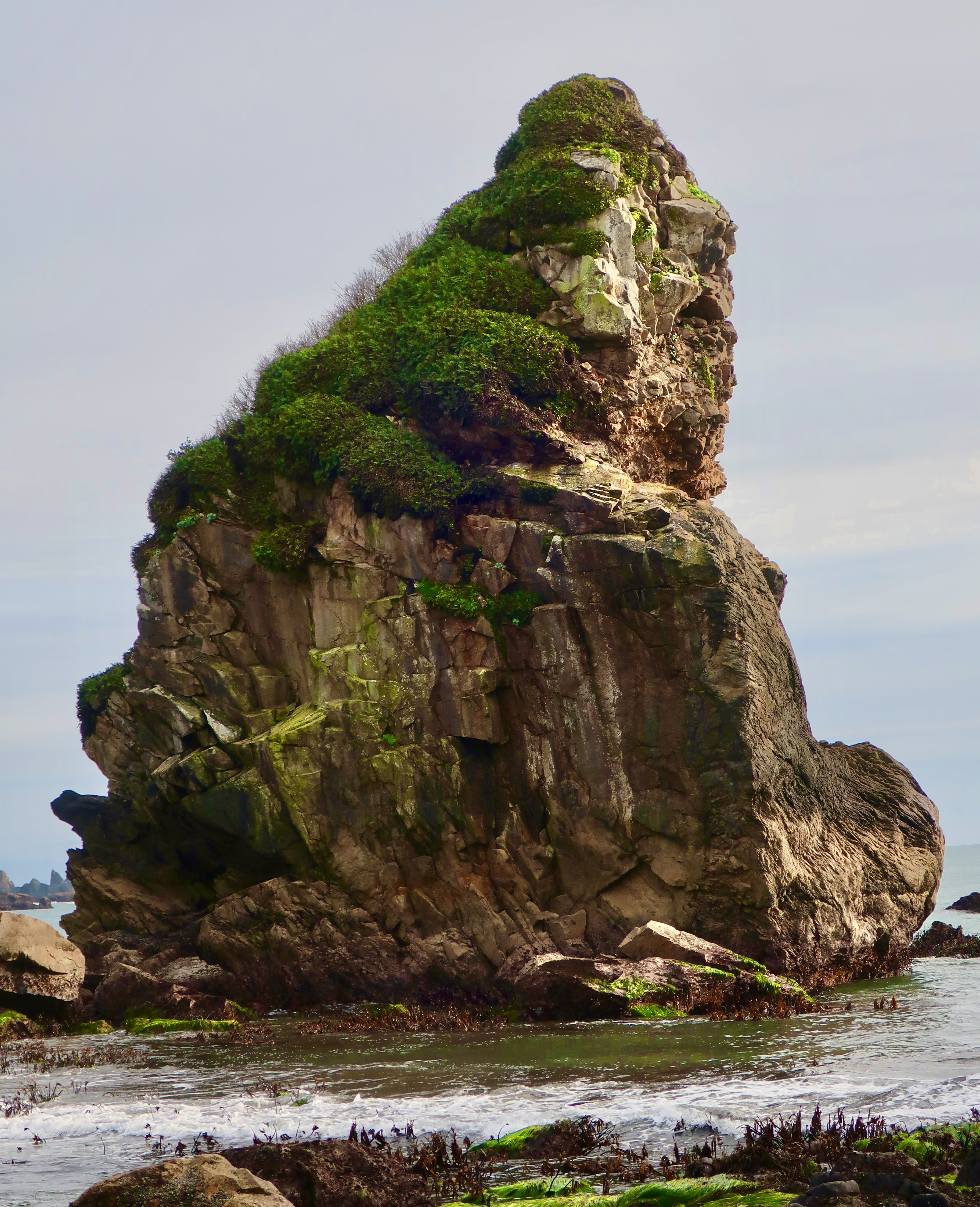
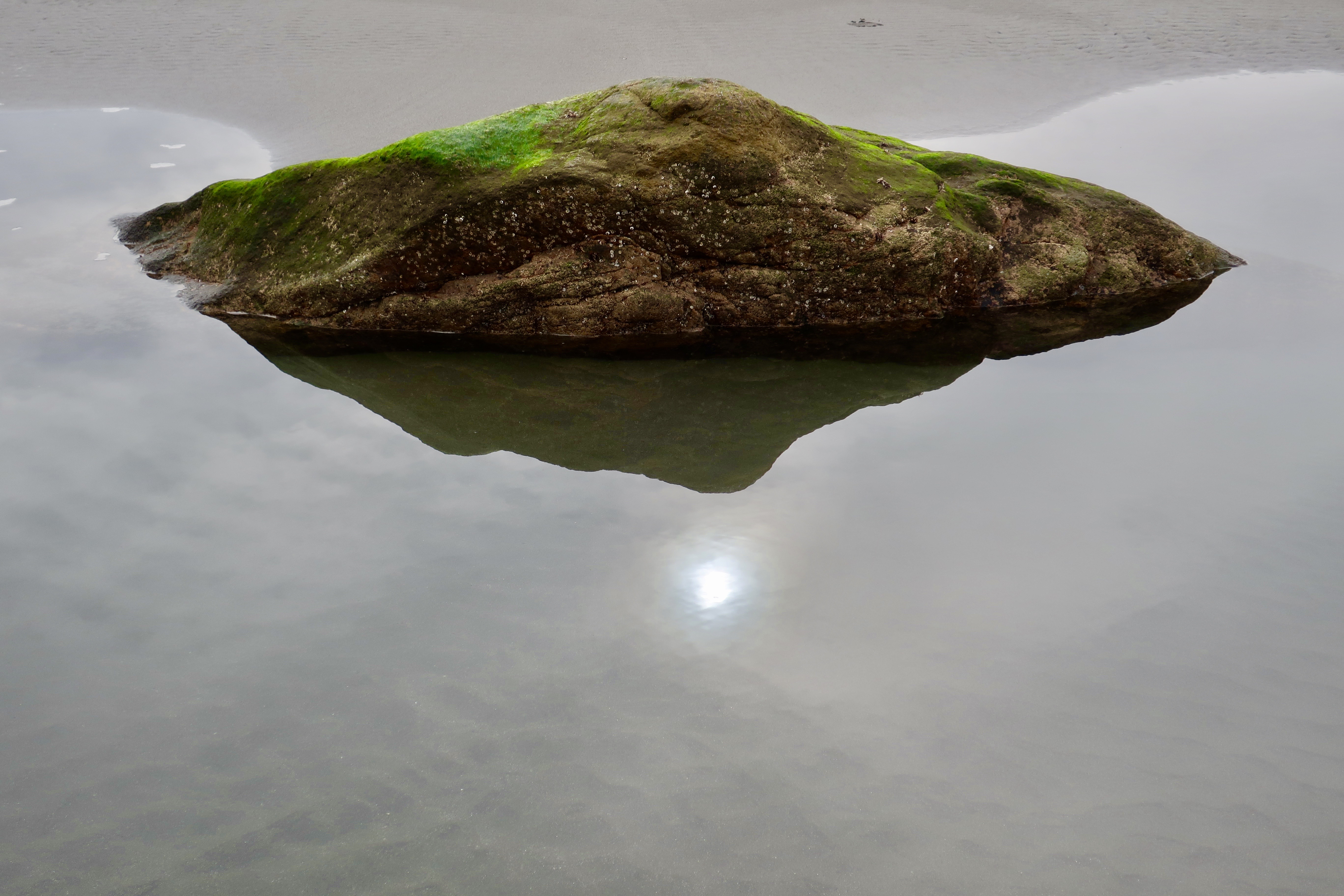
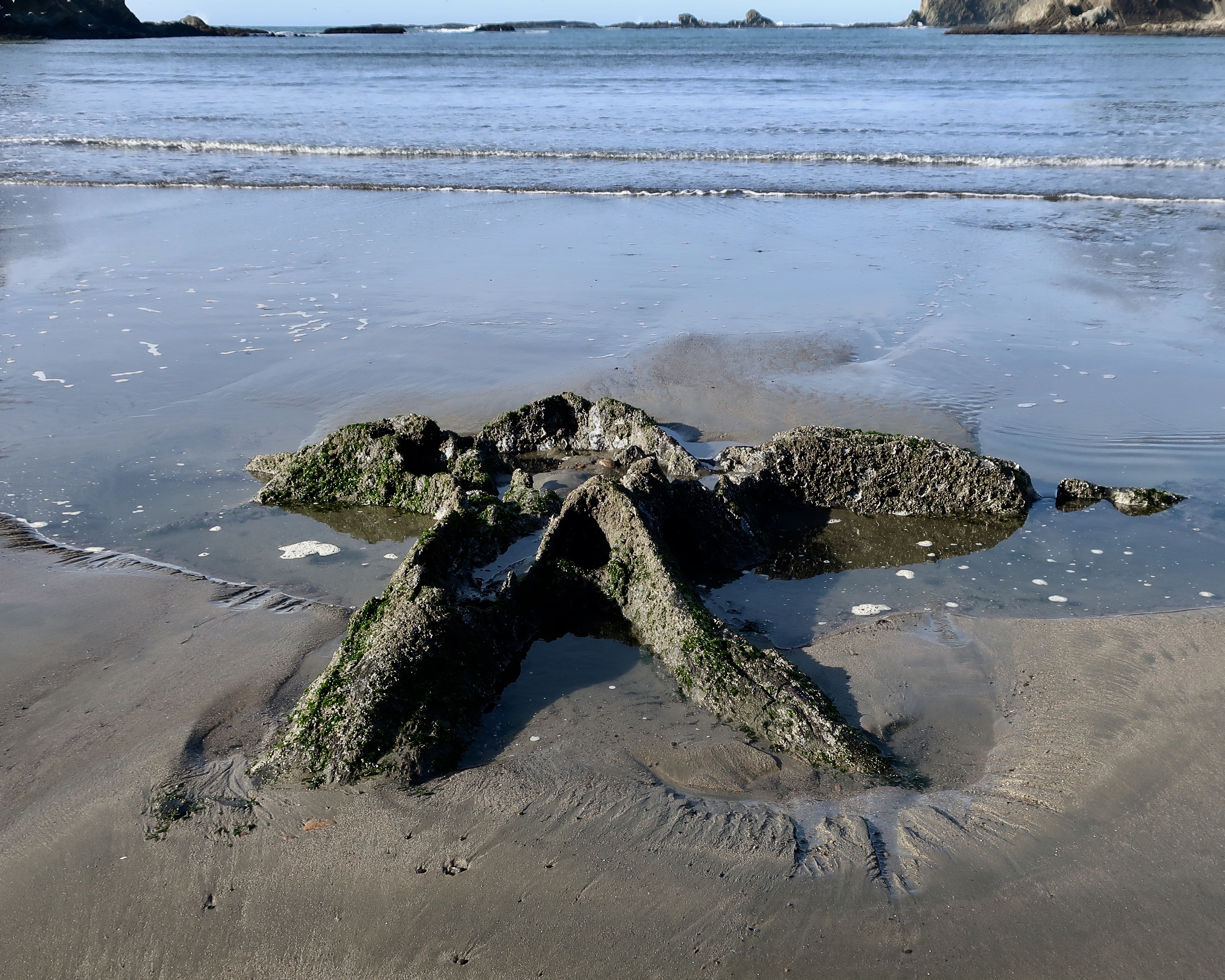
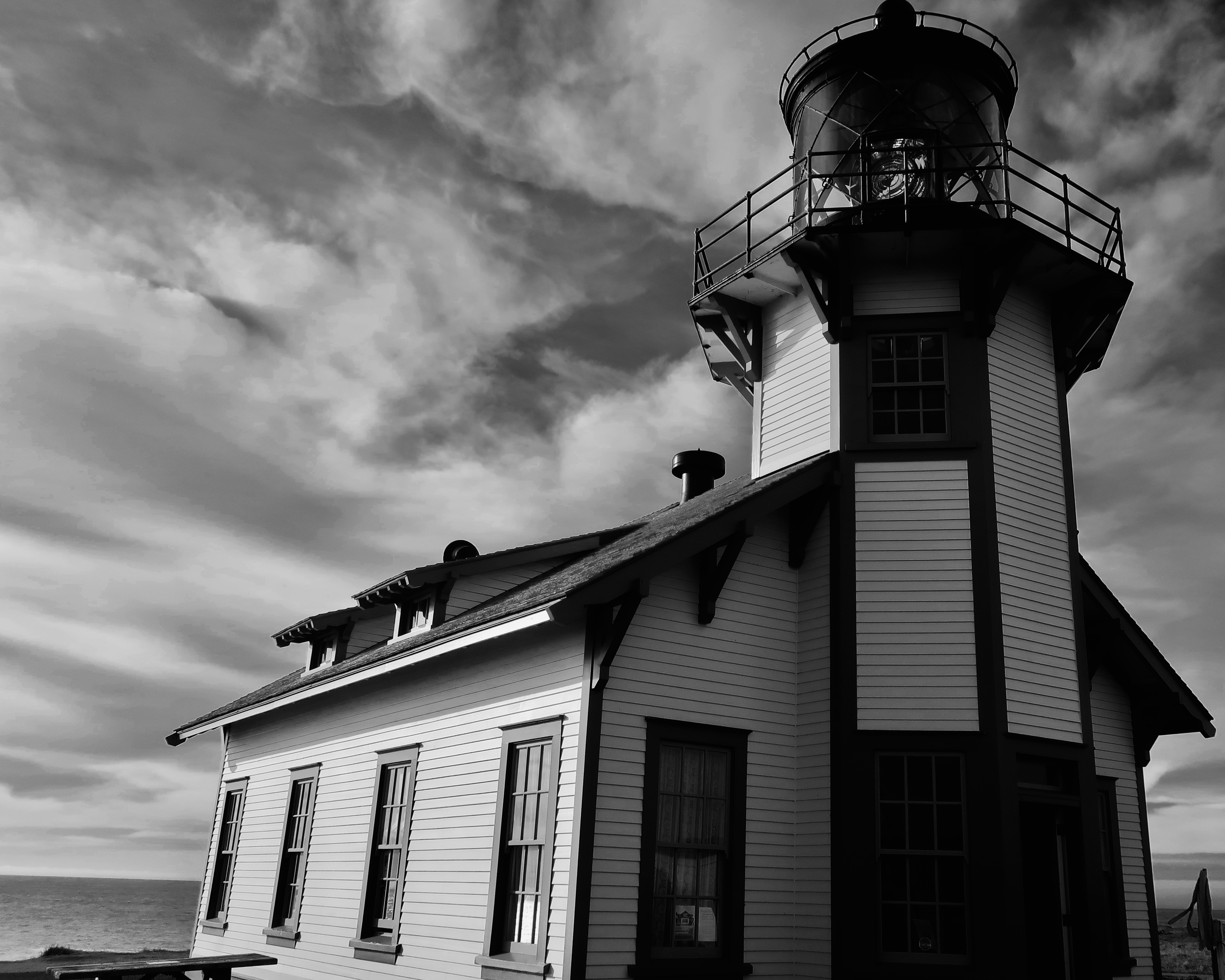
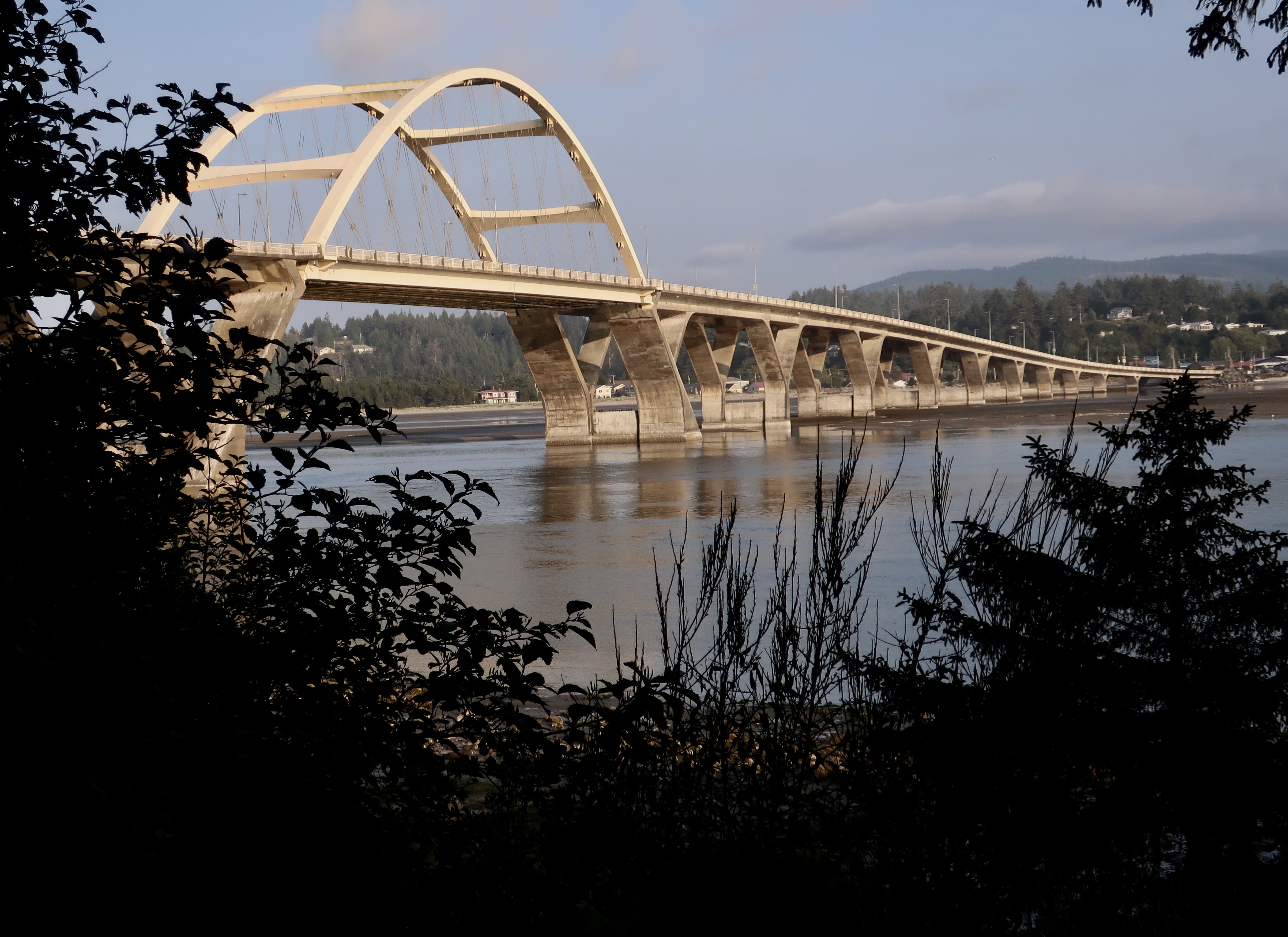
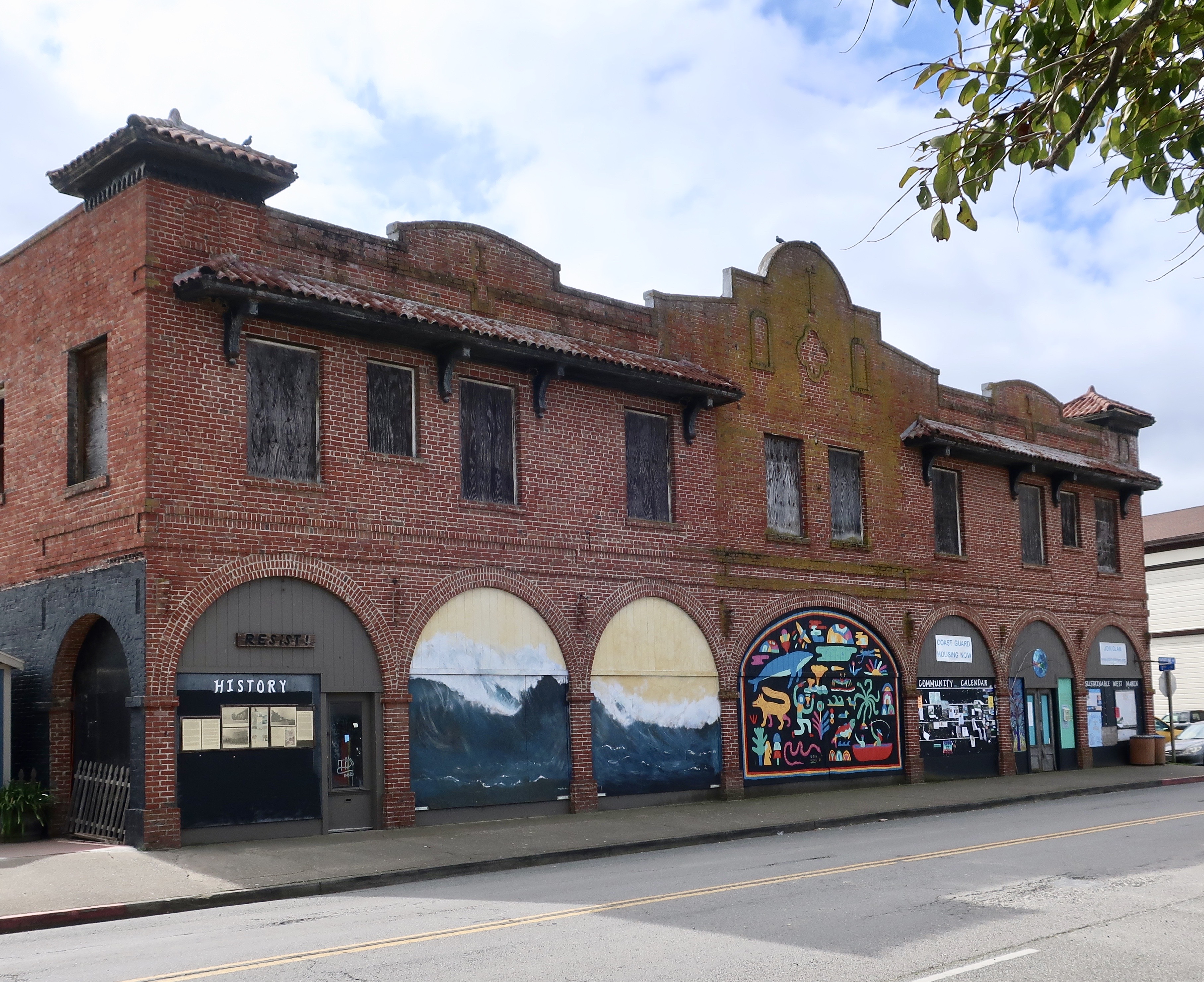
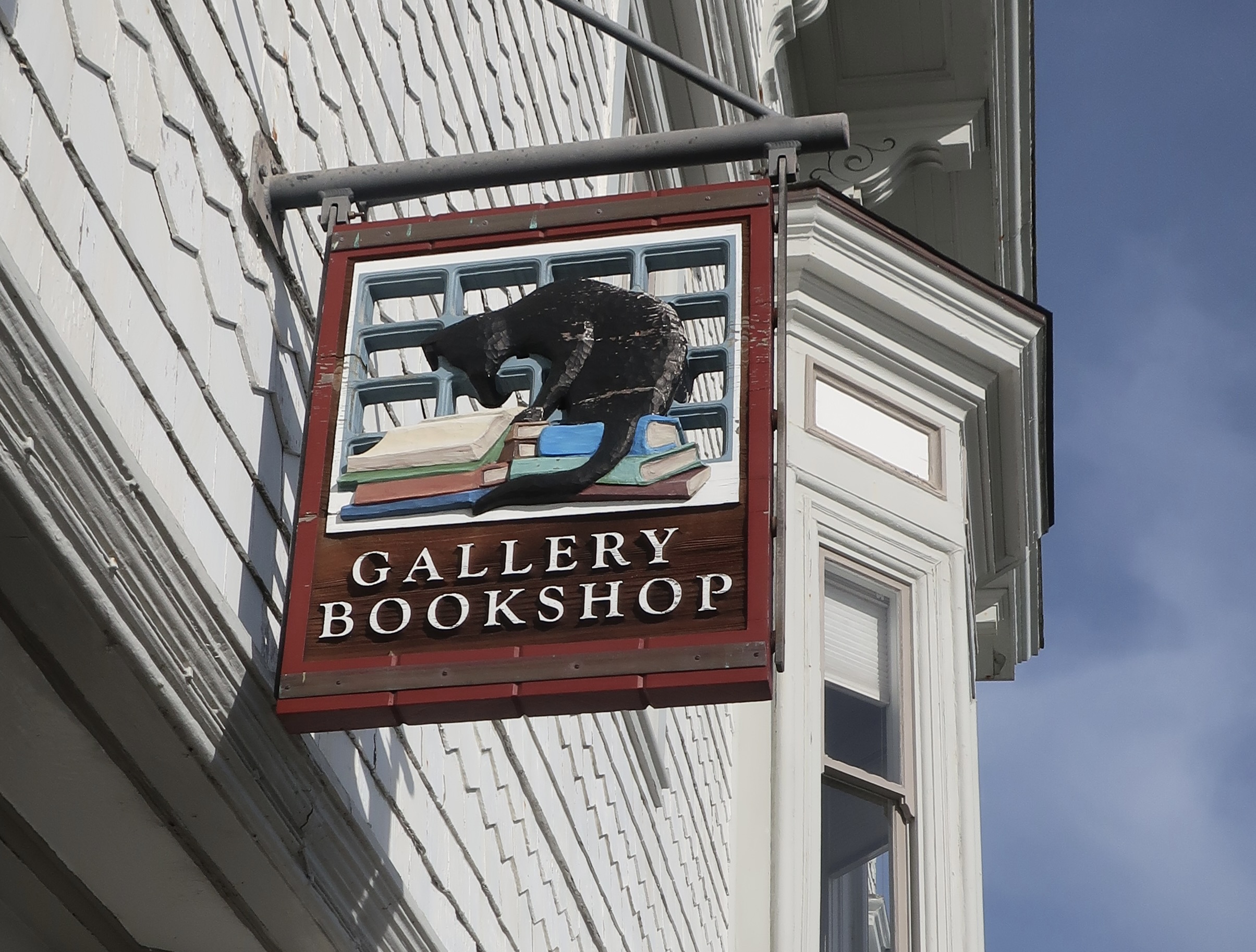
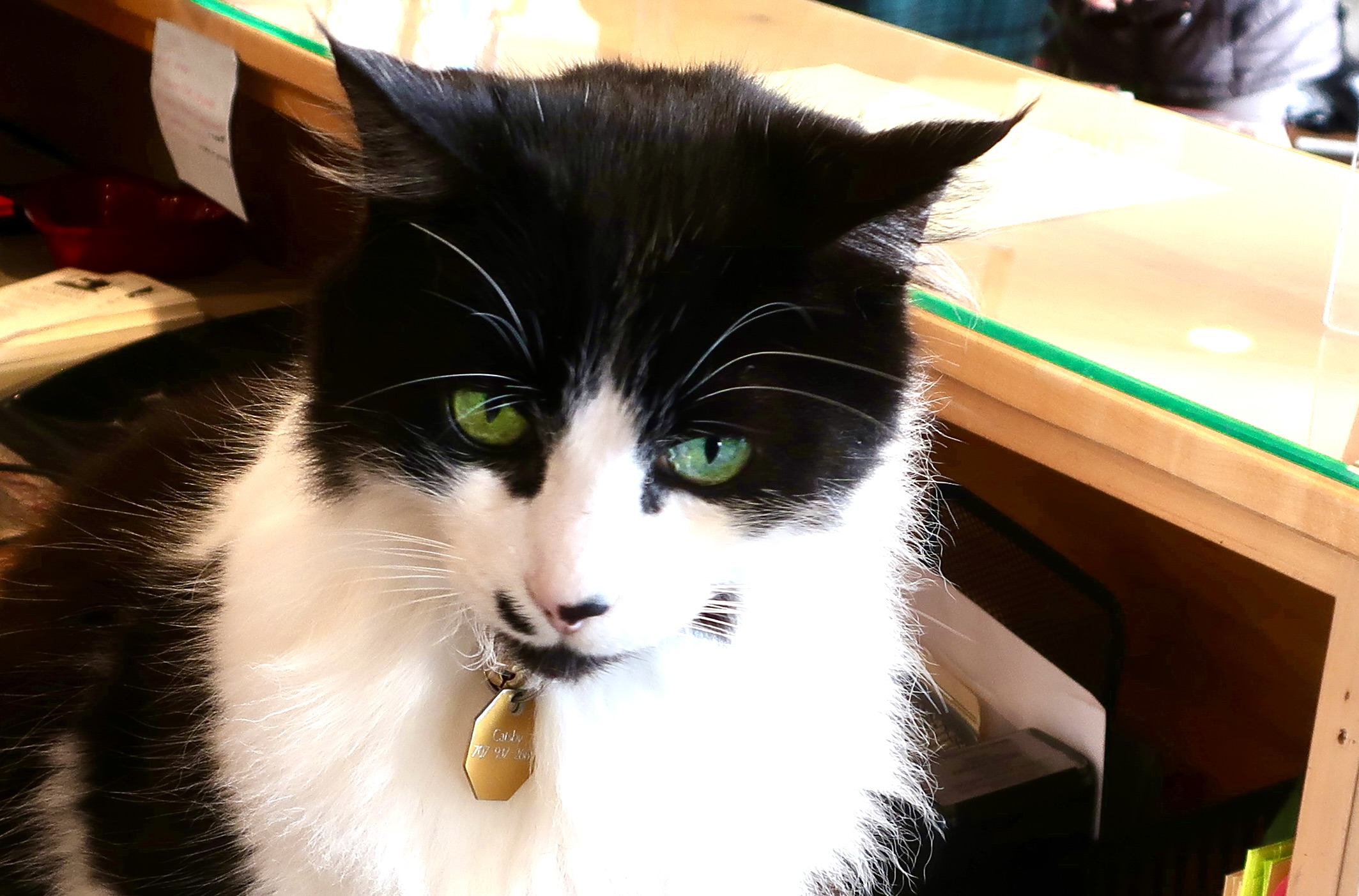

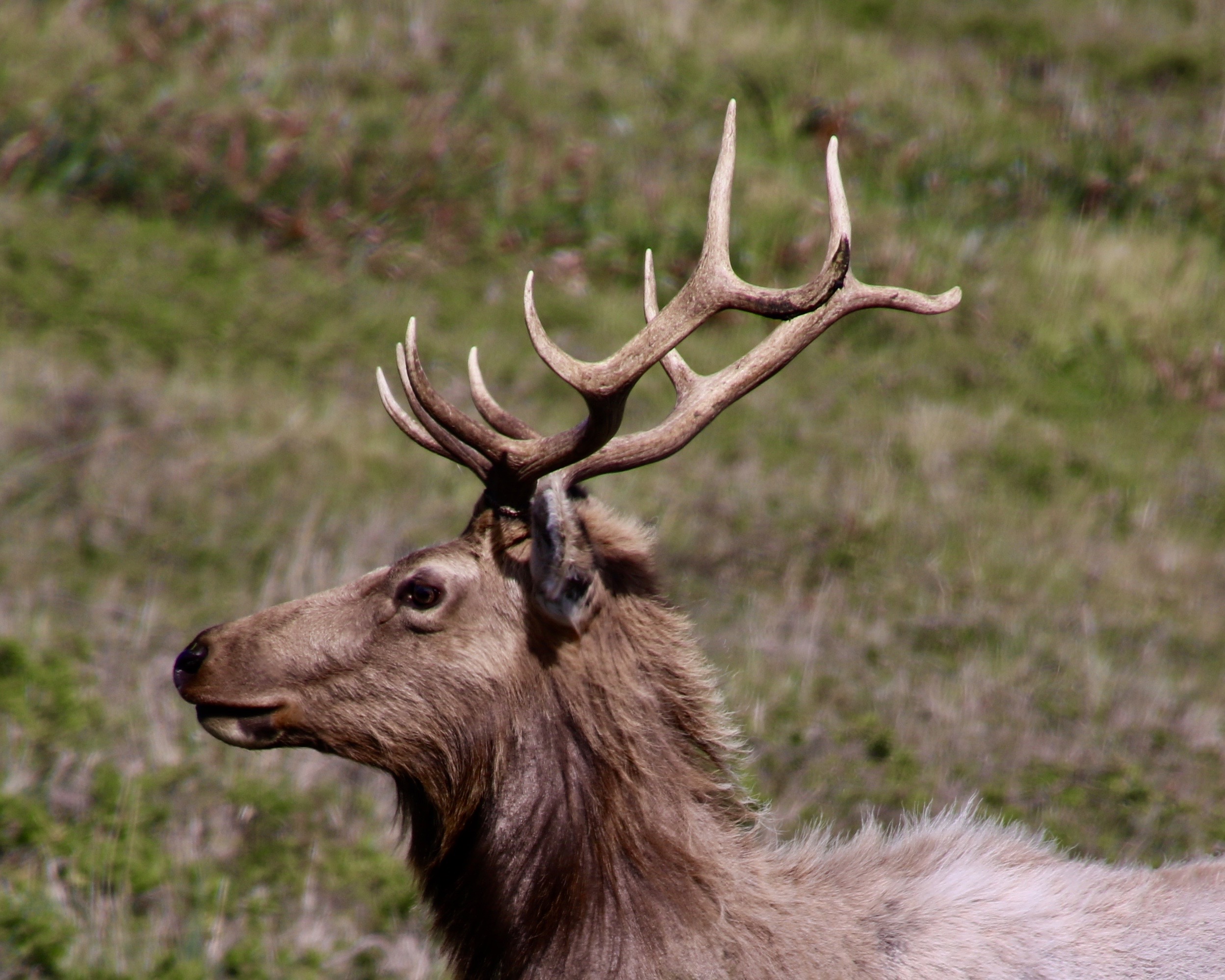

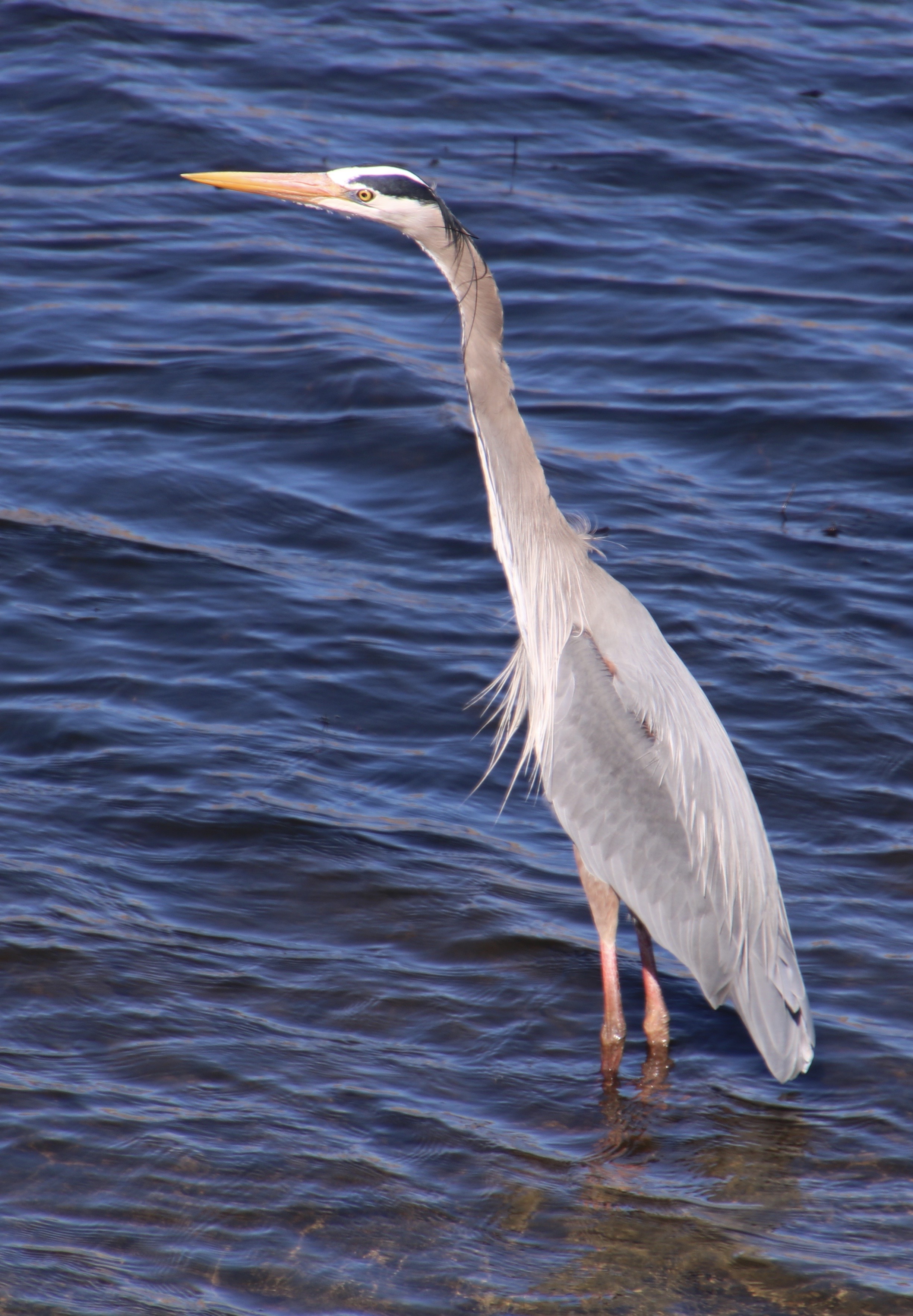
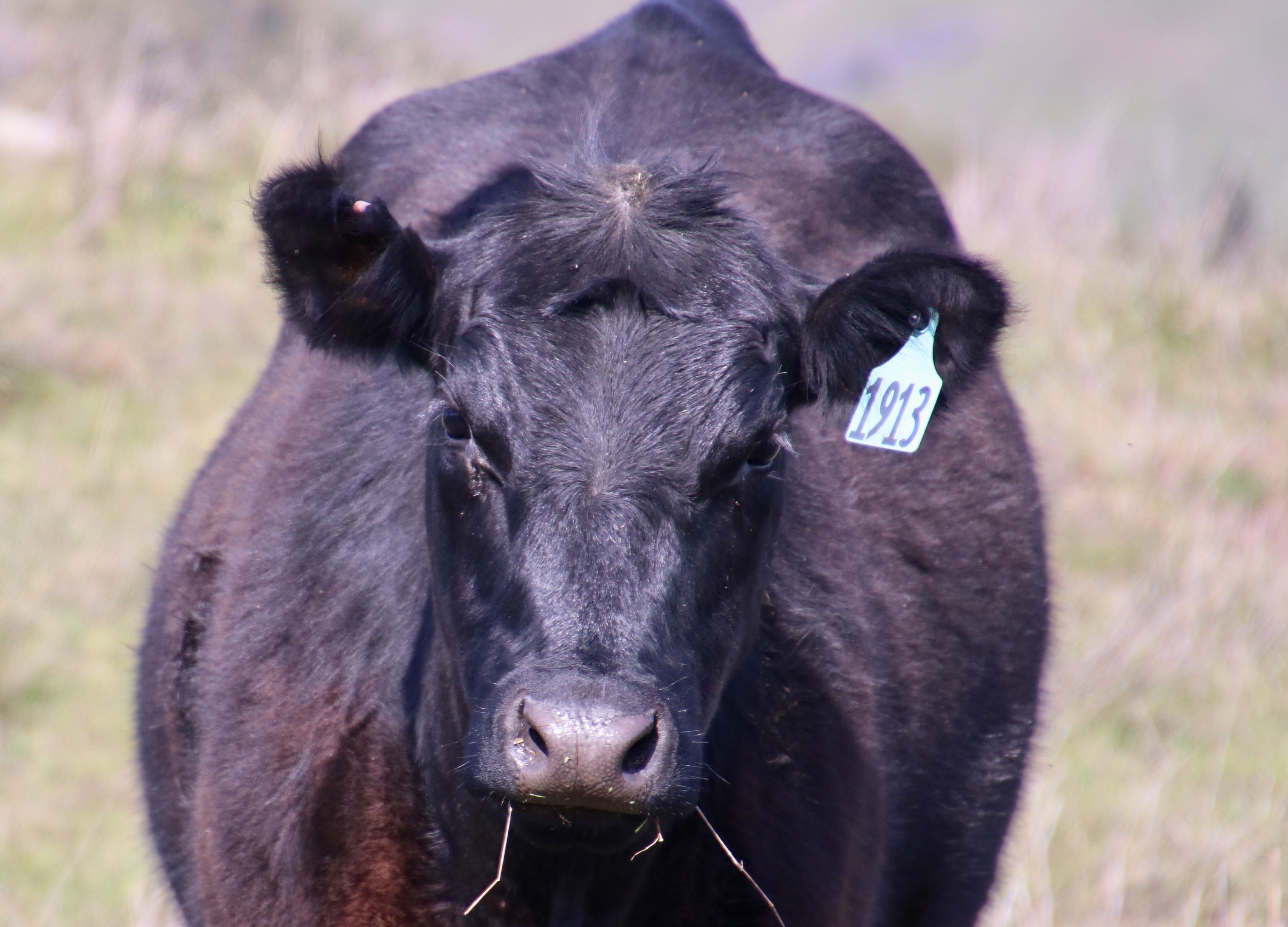

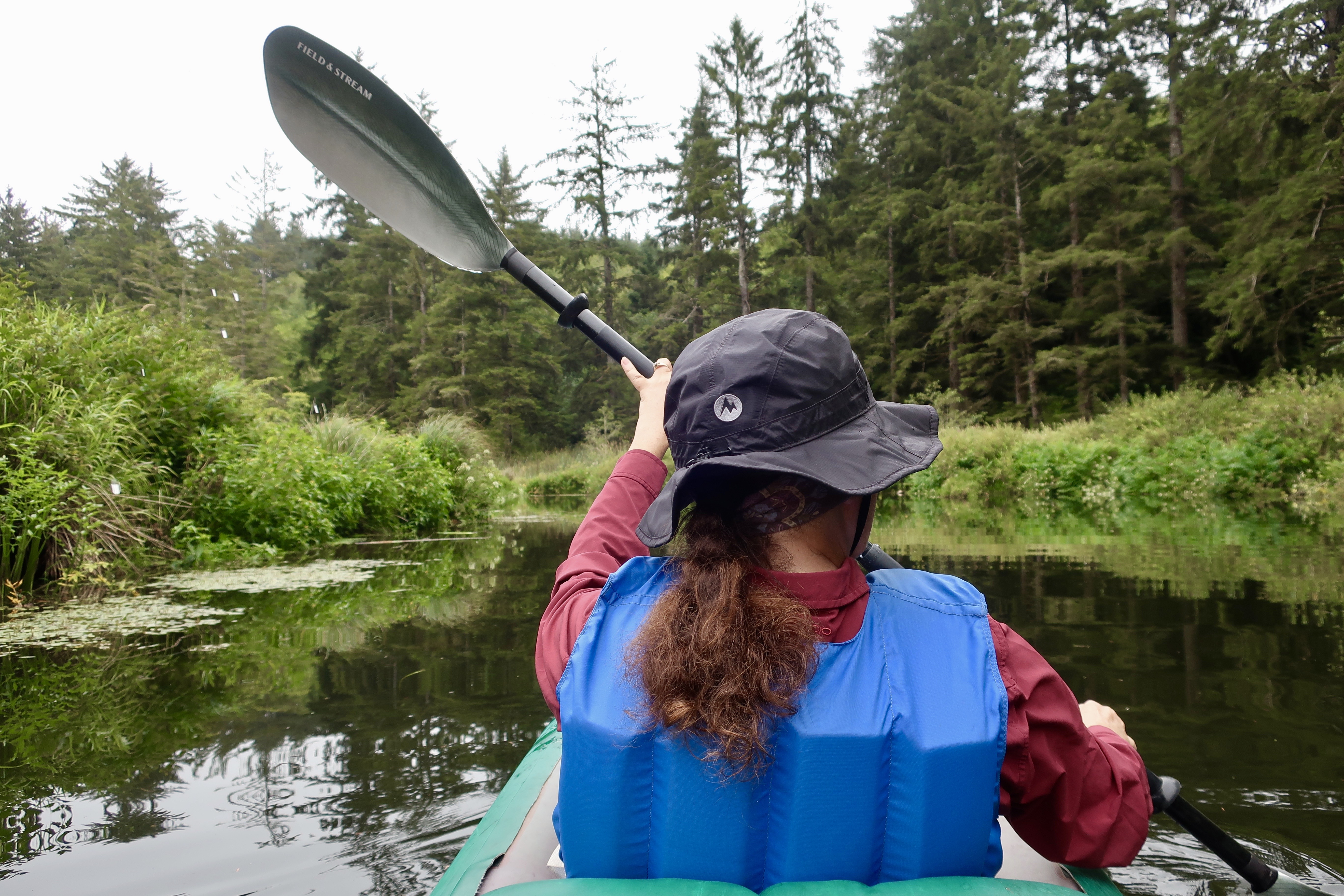
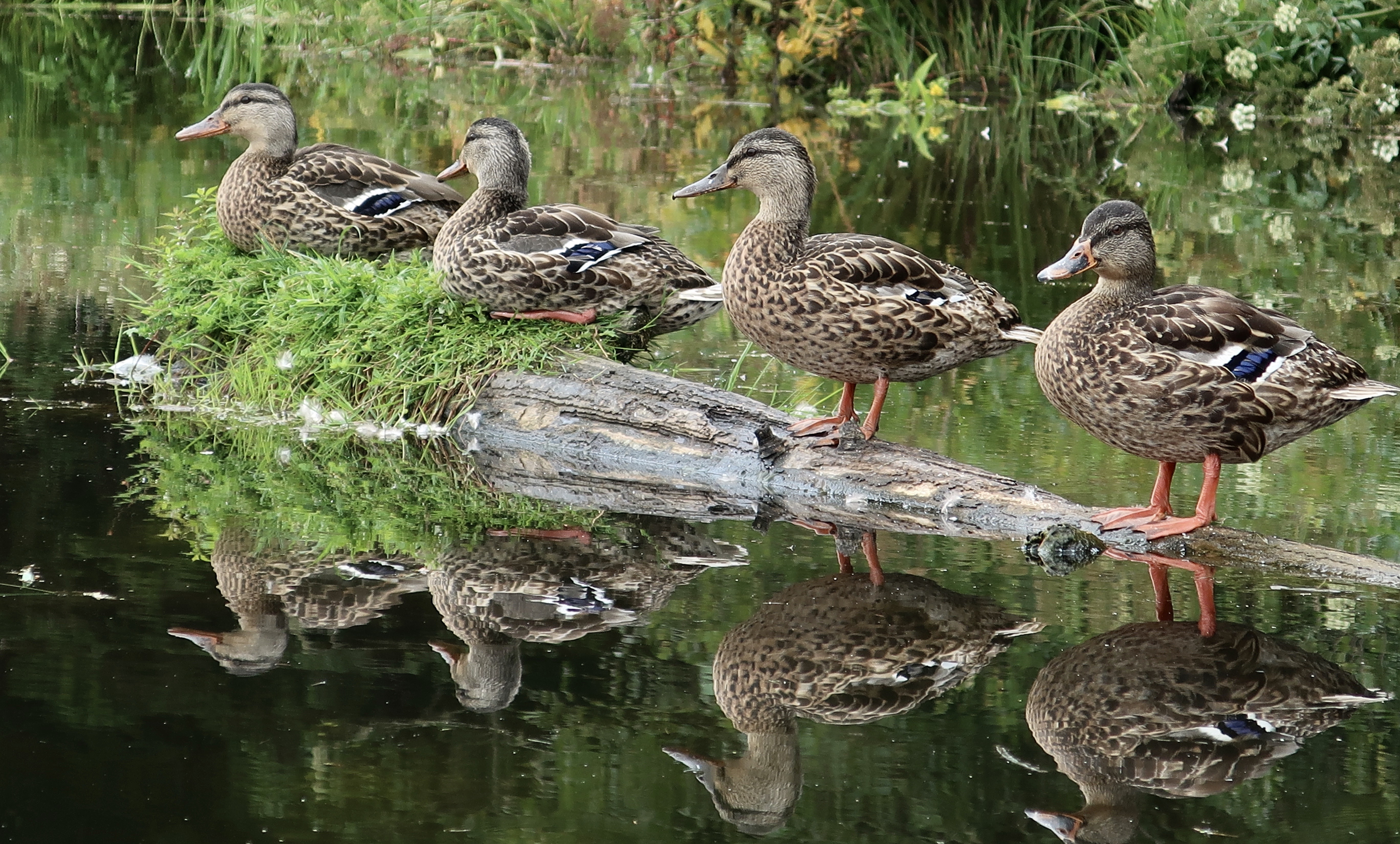


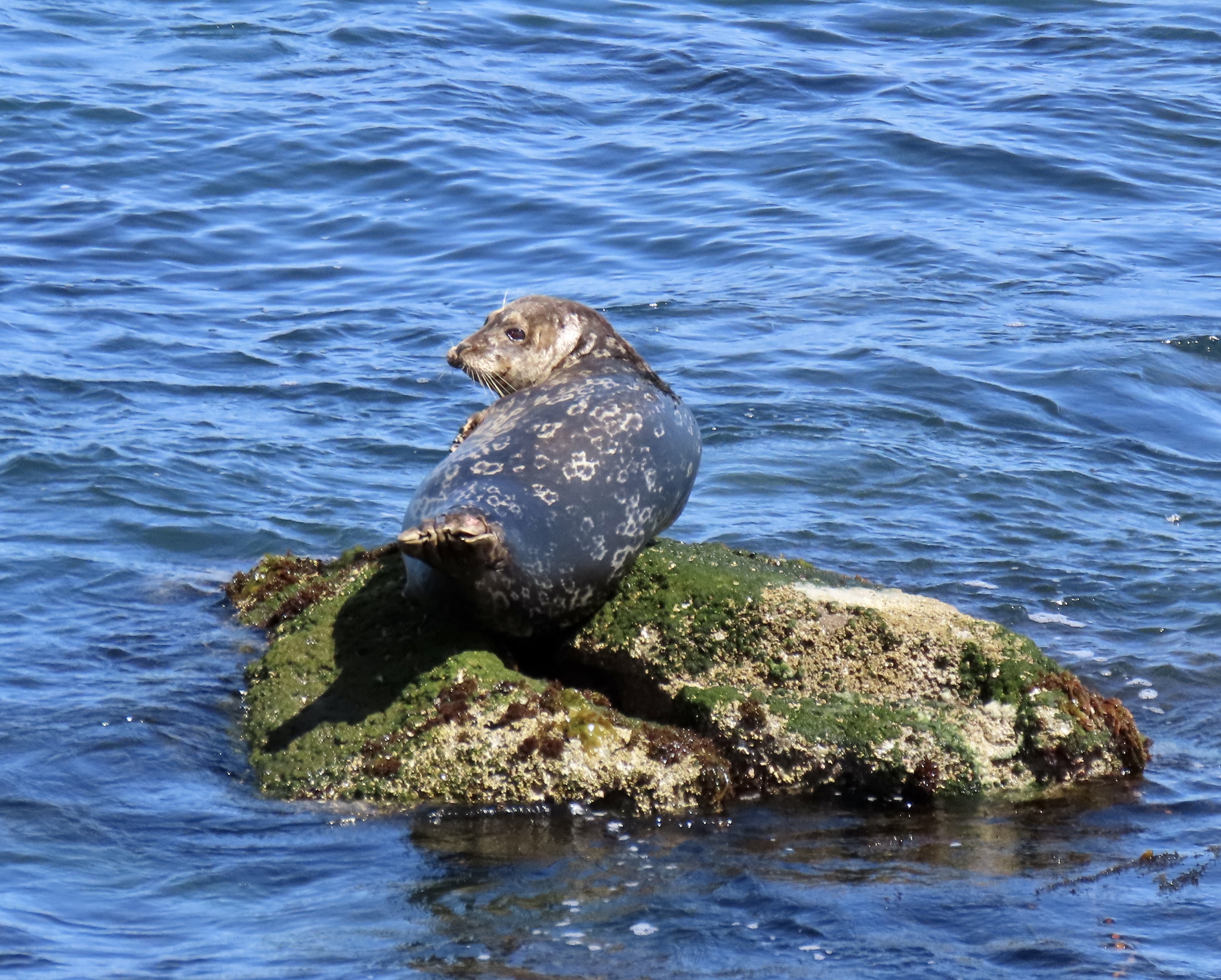

Today marks my 25th and final post on our African Safari. As you read this, Peggy and I are driving between Carson City, Nevada and the Central Coast of California where we will spend the next two weeks exploring Big Sur, Carmel, Monterey, Pinnacles National Park and the surrounding area. The visit will kick off our next series: A three month, thousand mile journey following the Pacific Coast through Northern California, Oregon and Washington— one of the world’s most beautiful coastlines.
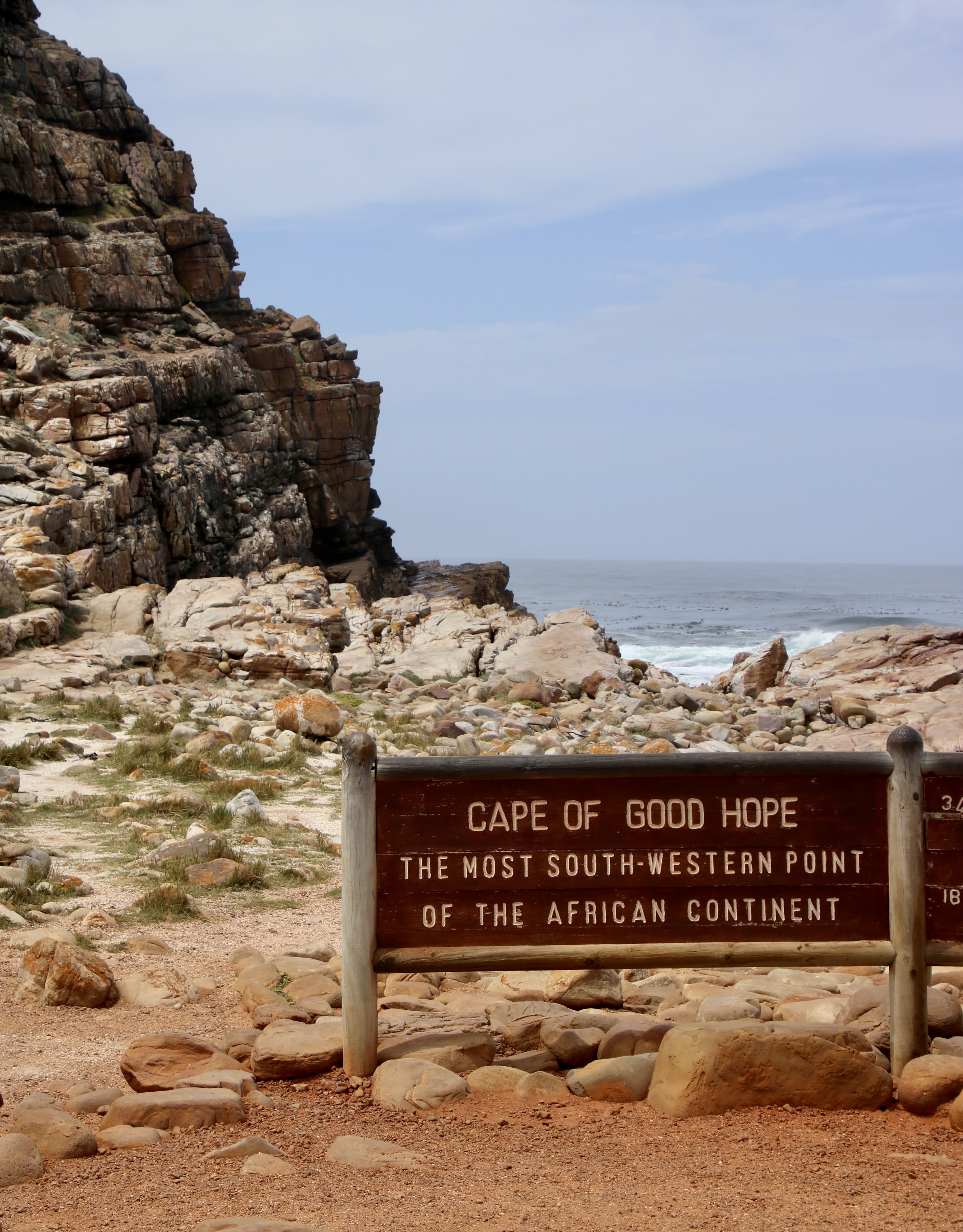
But first, a wrap up on South Africa where we will visit the Cape of Good Hope, Cape Town and Table Mountain.
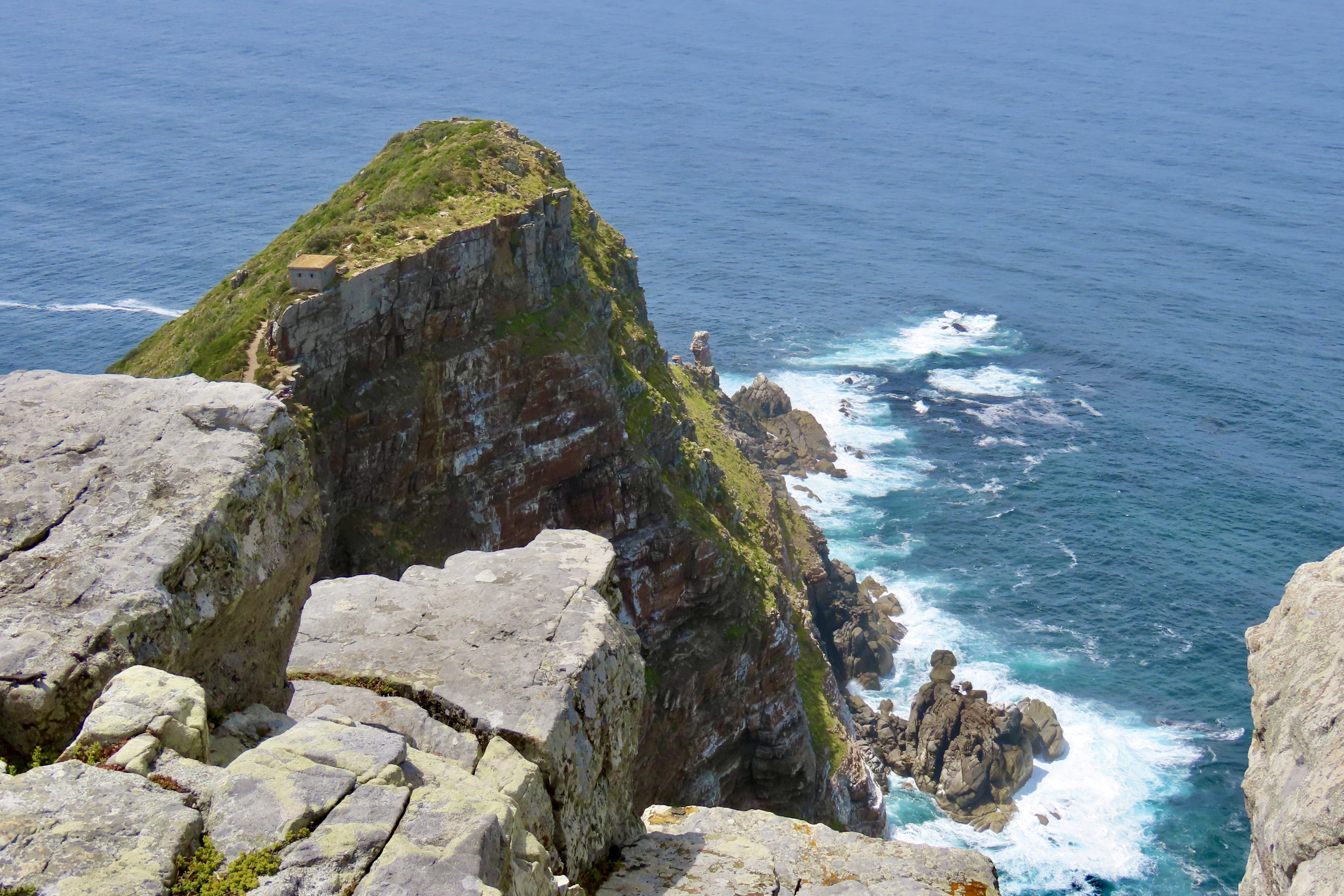
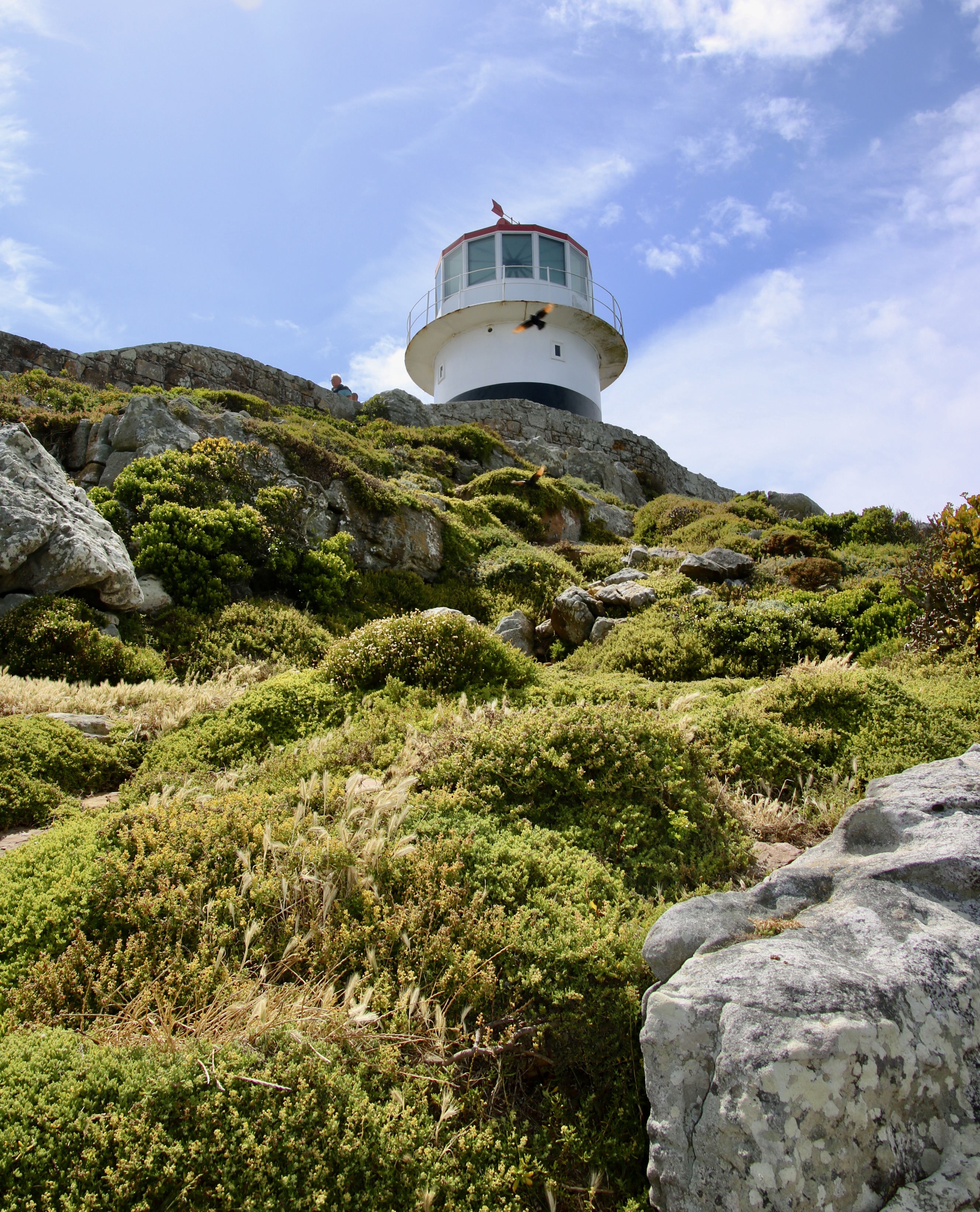
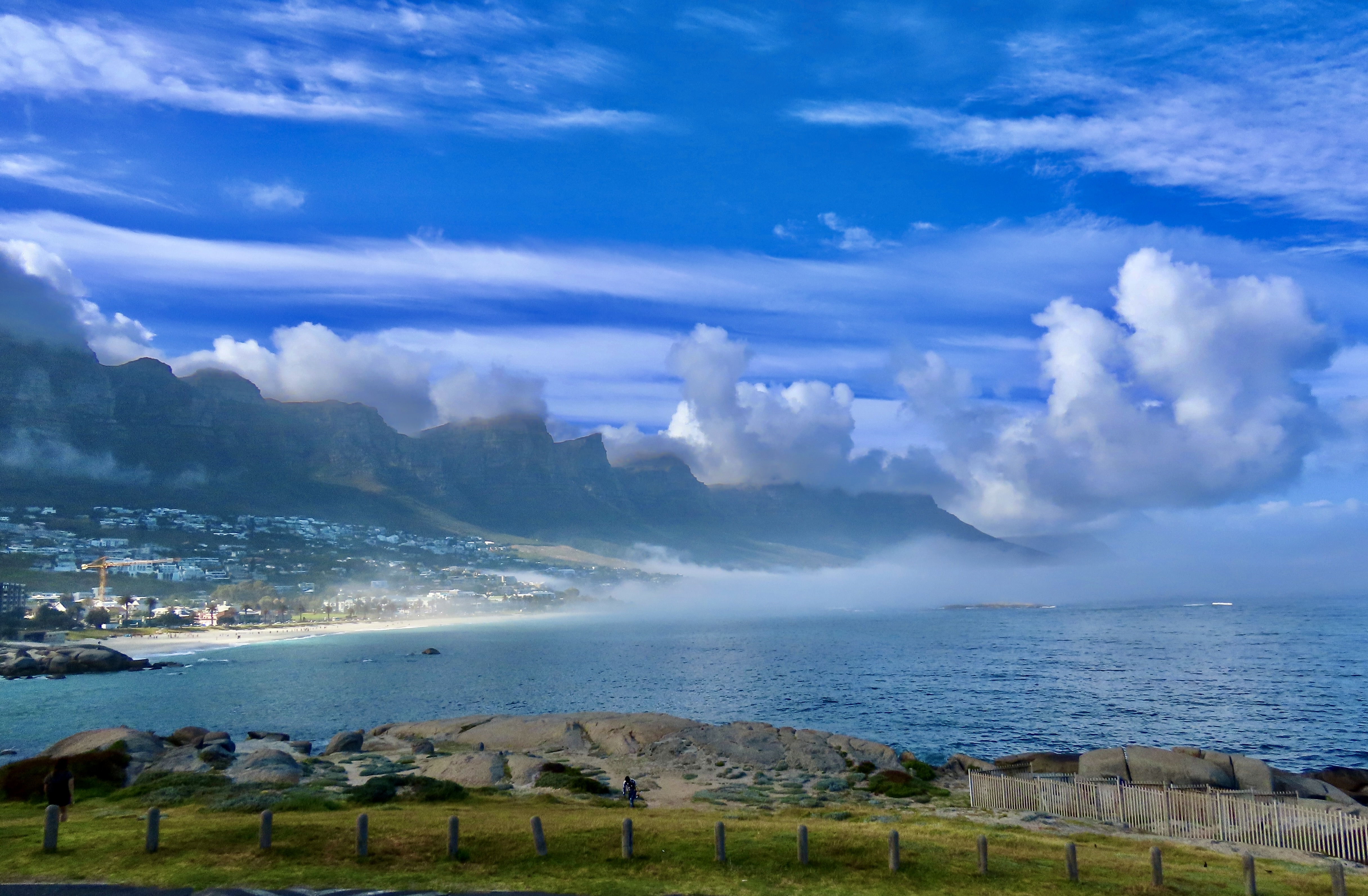

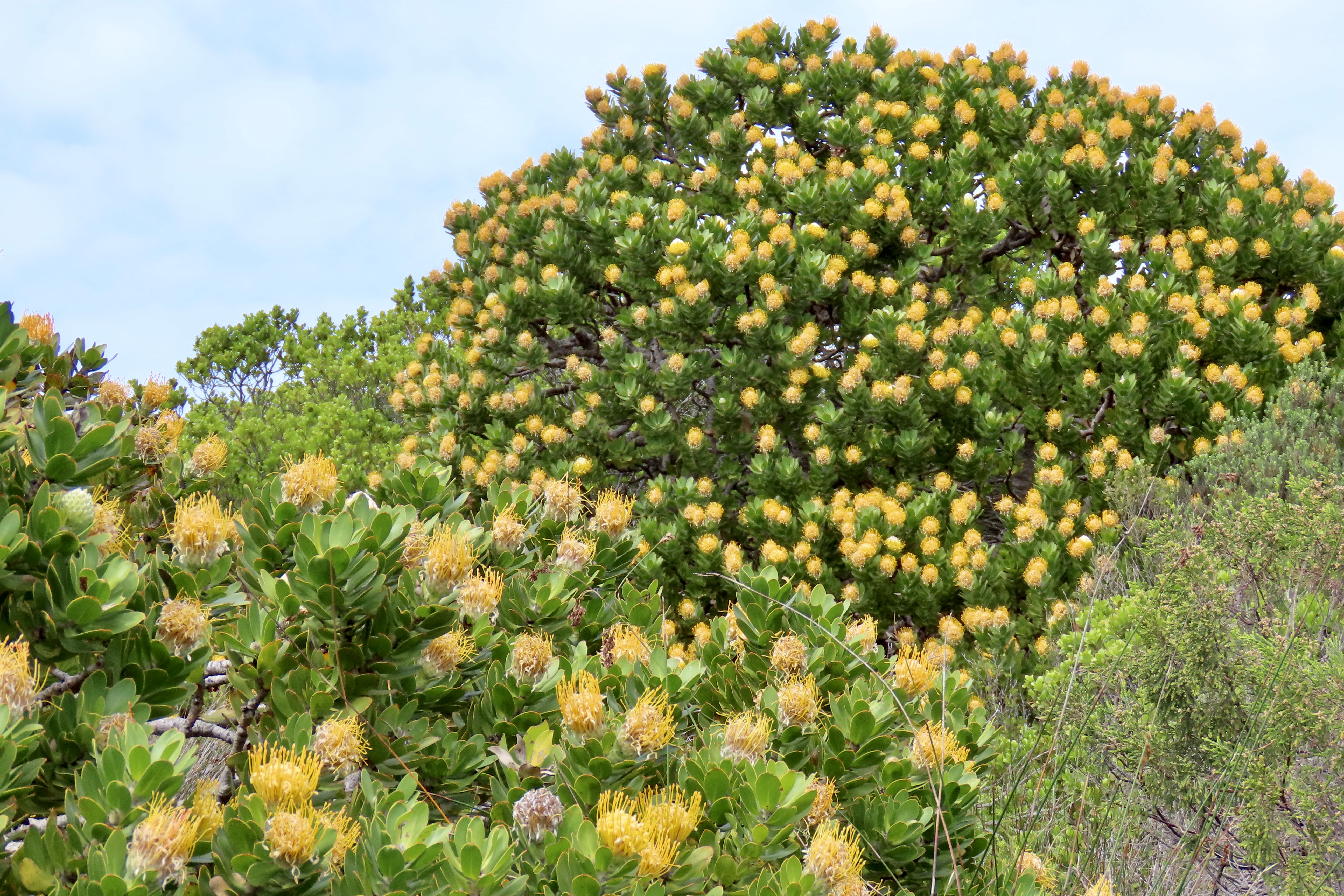
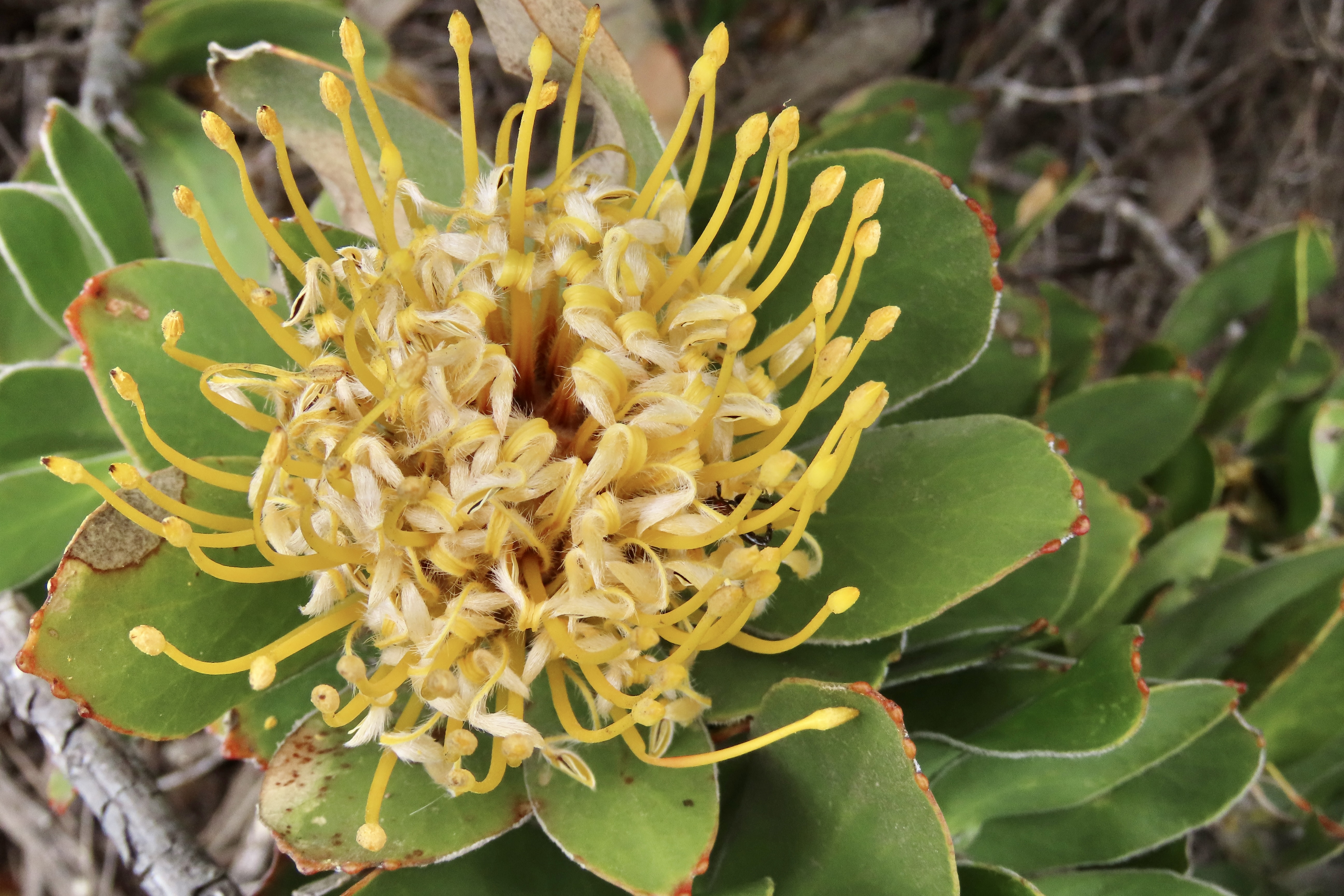
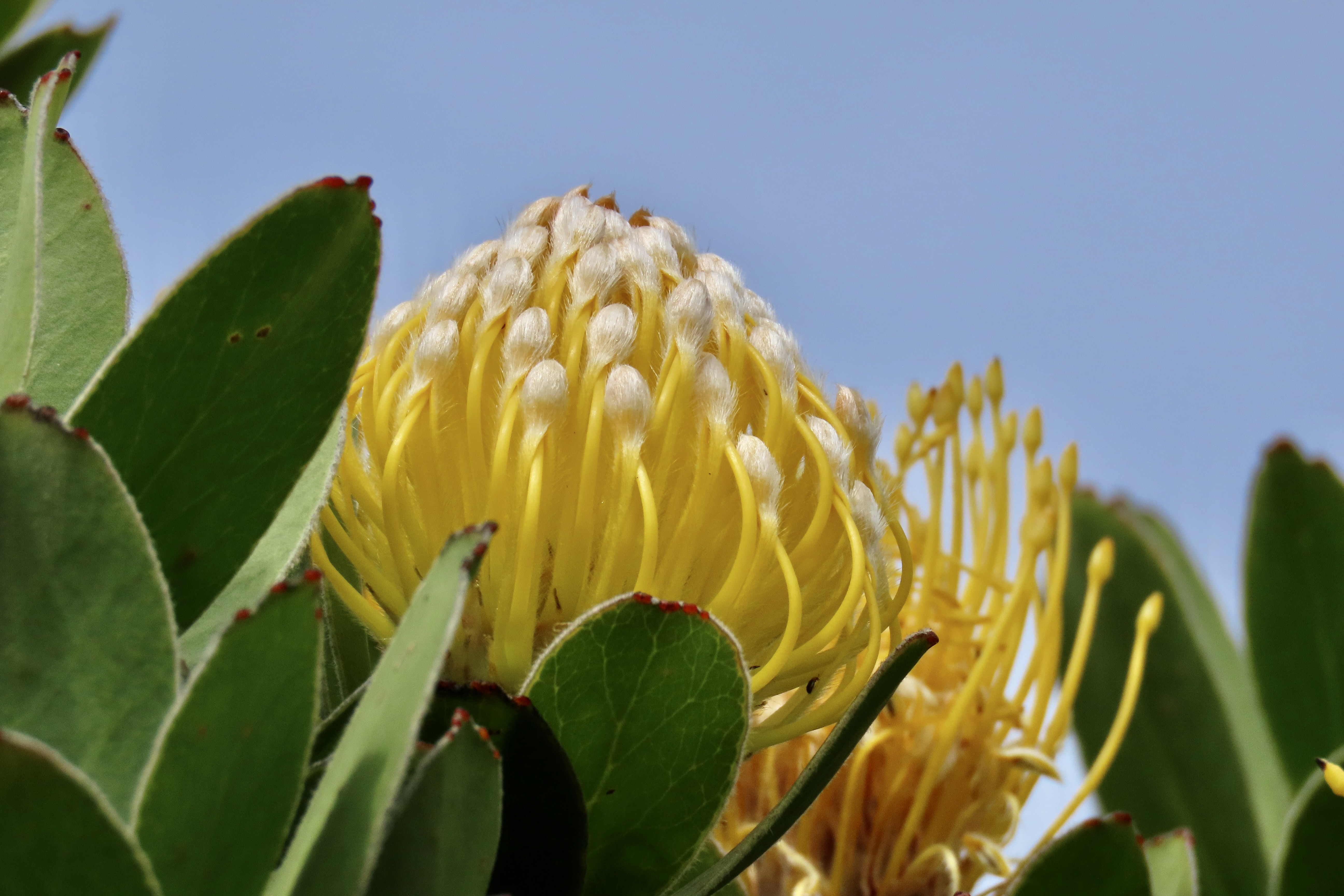

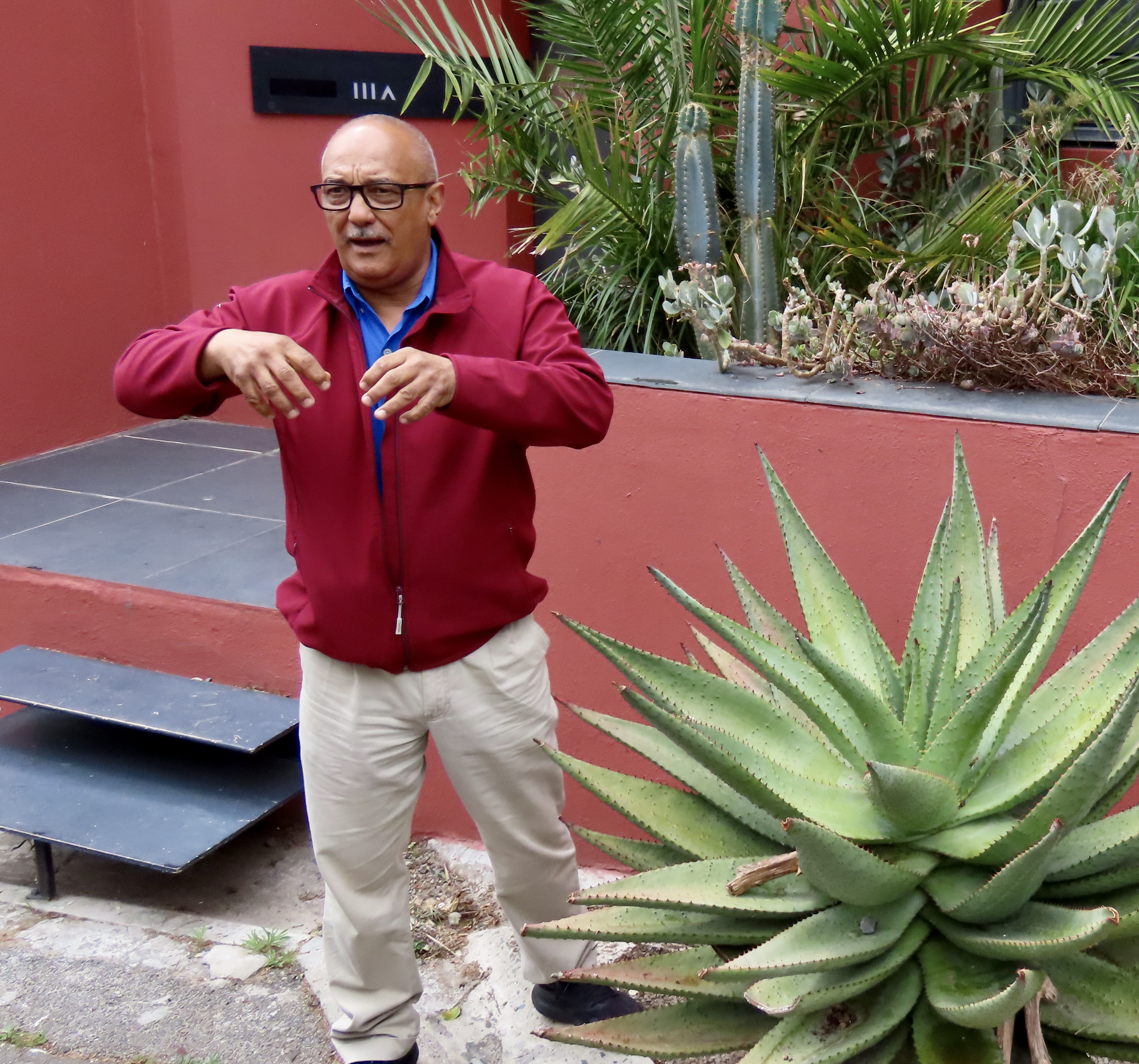
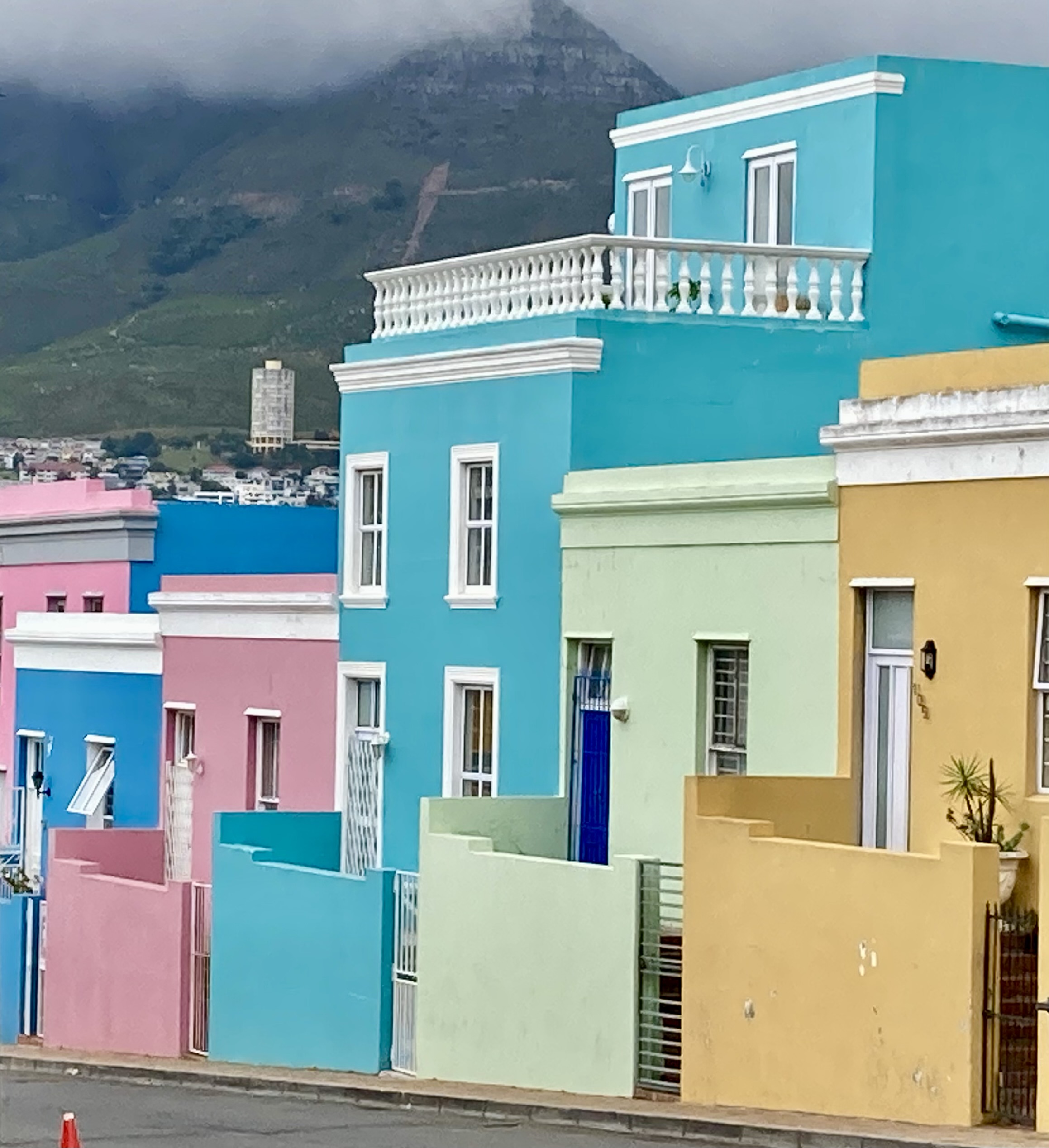
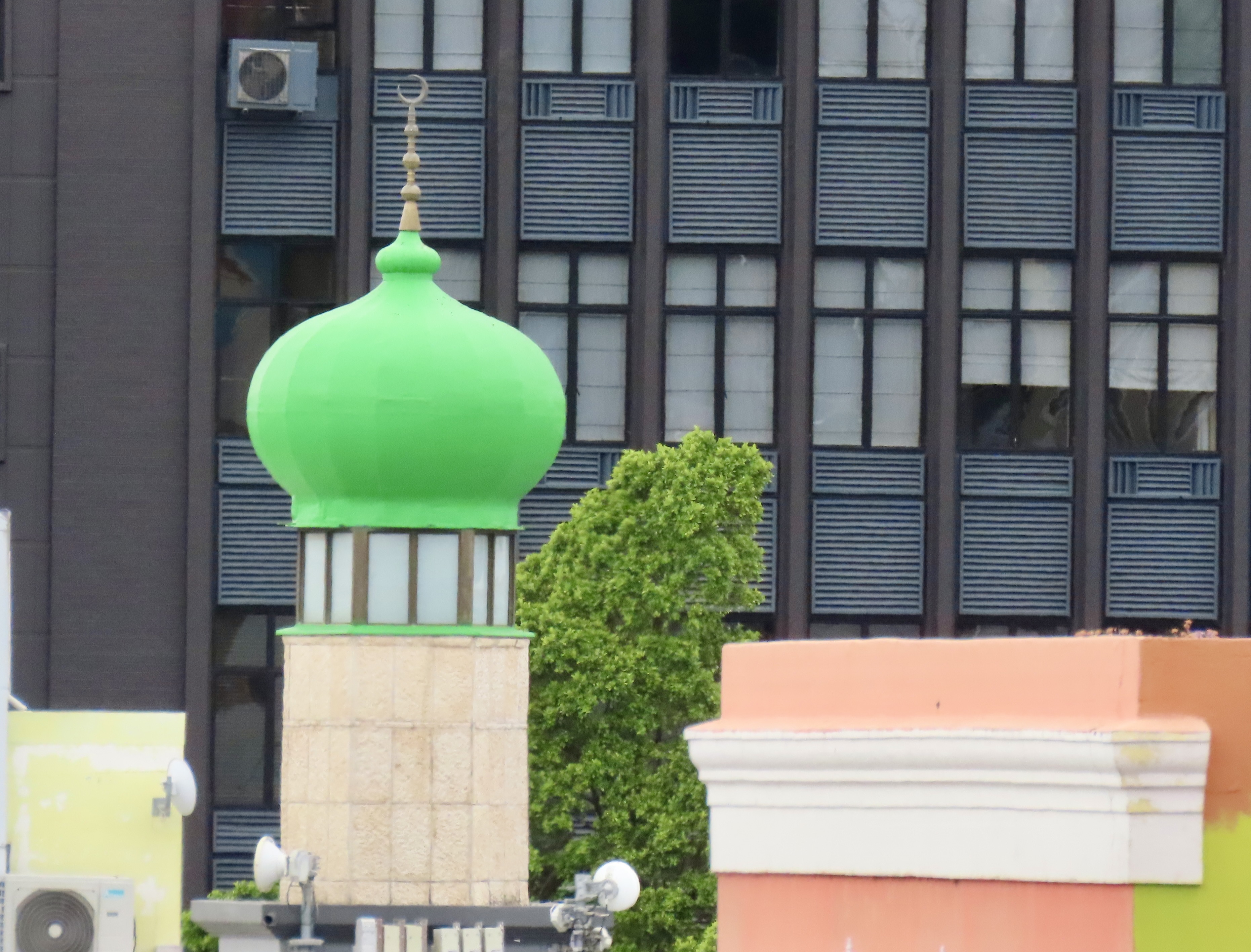
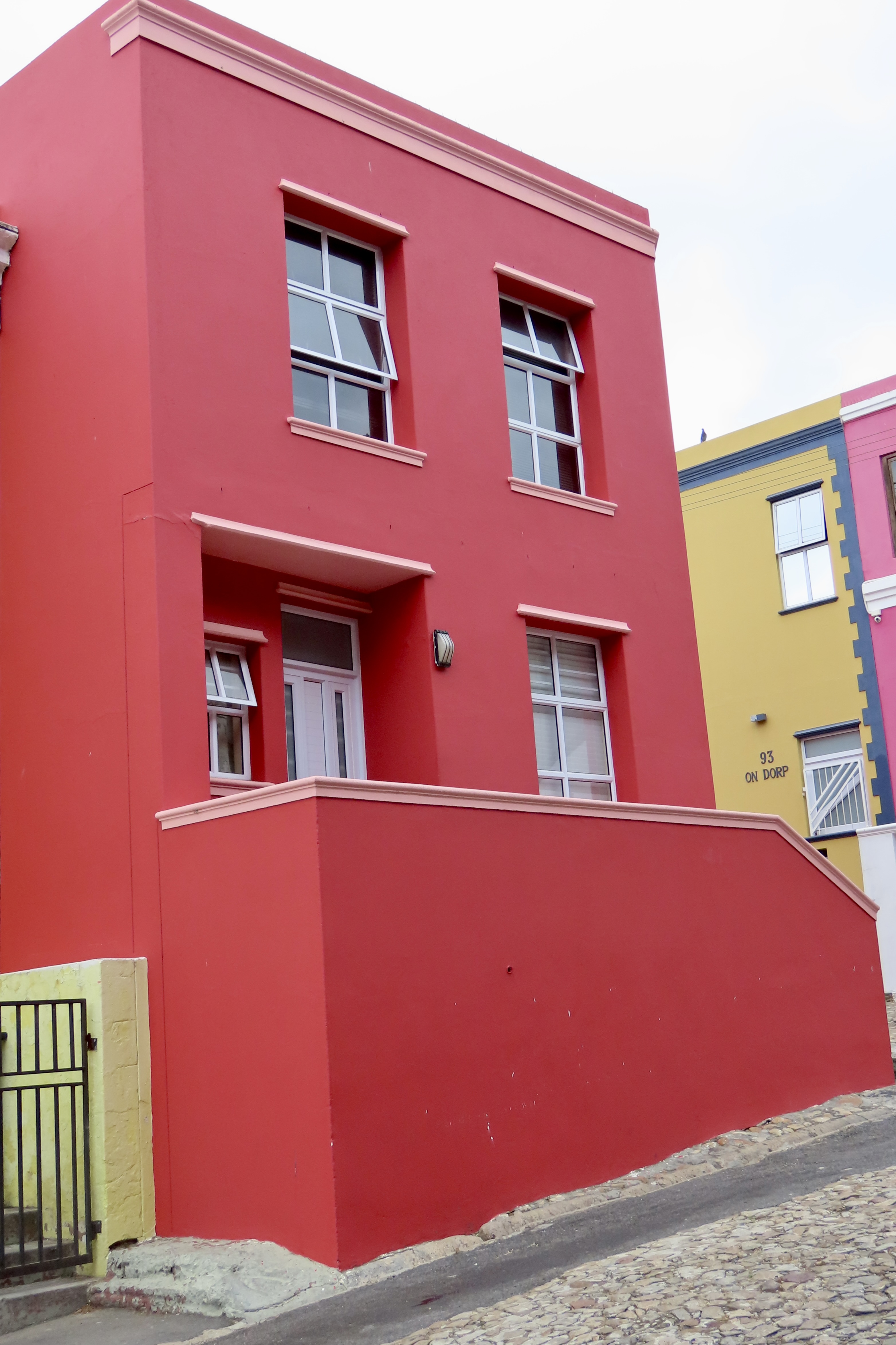
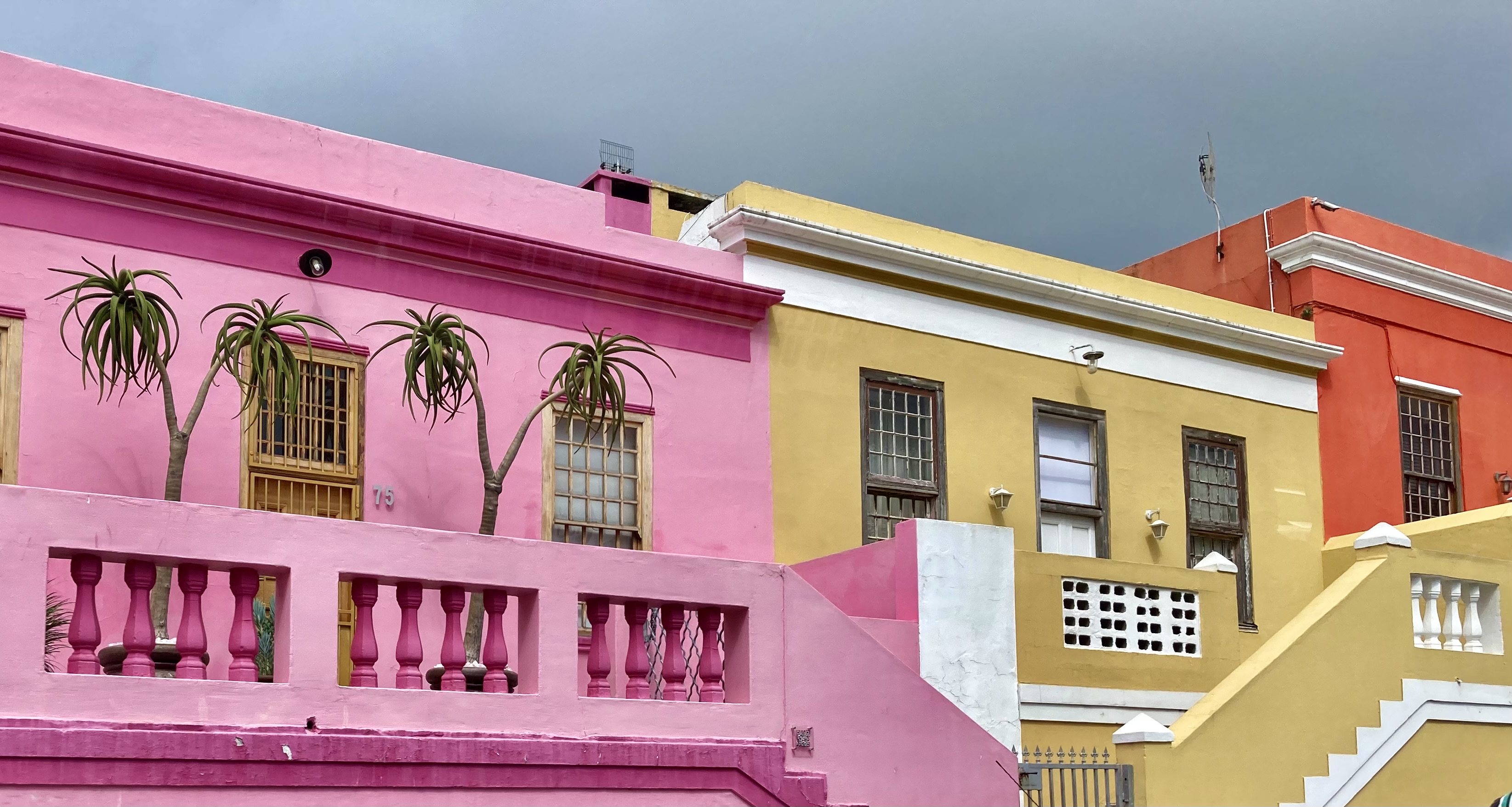
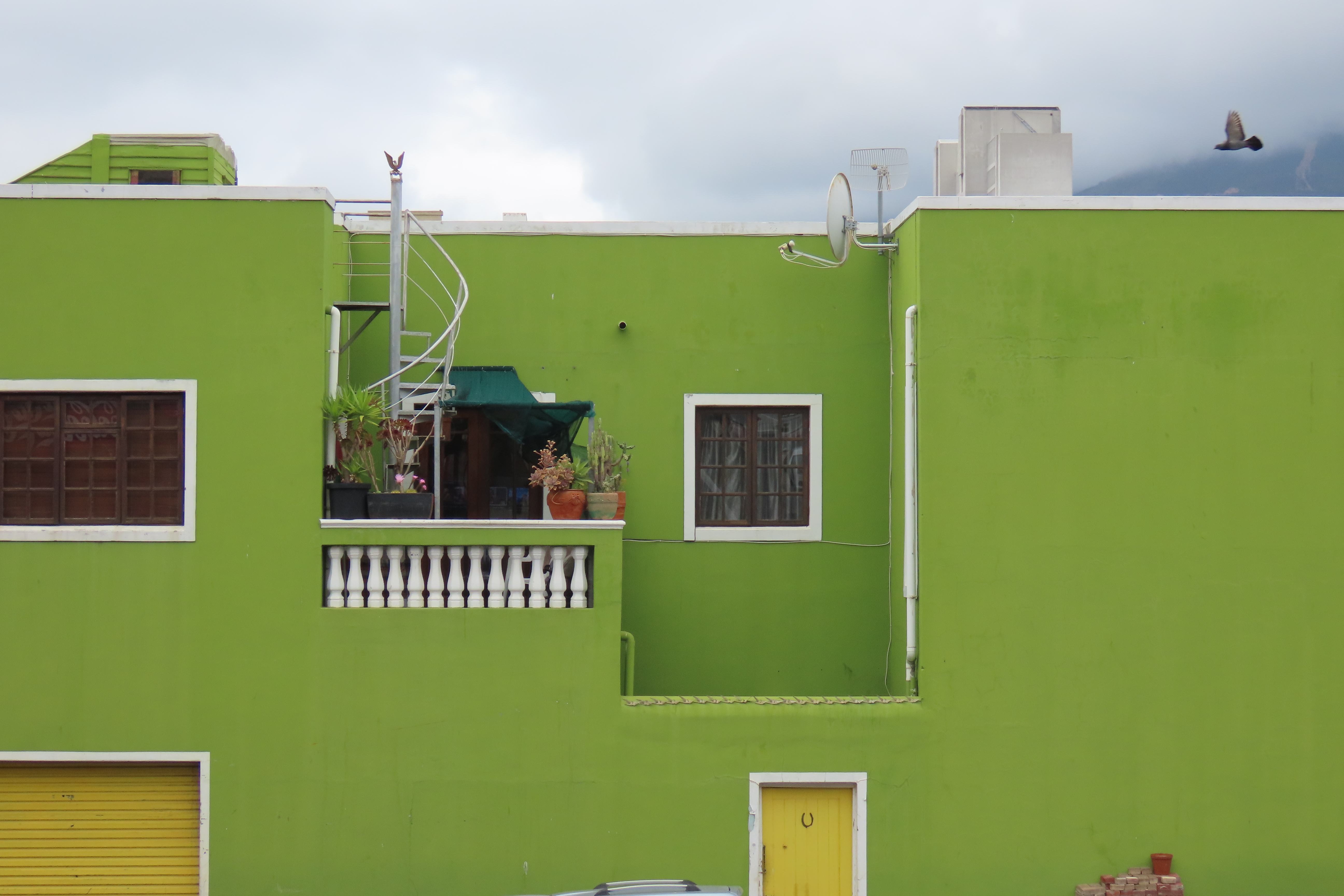
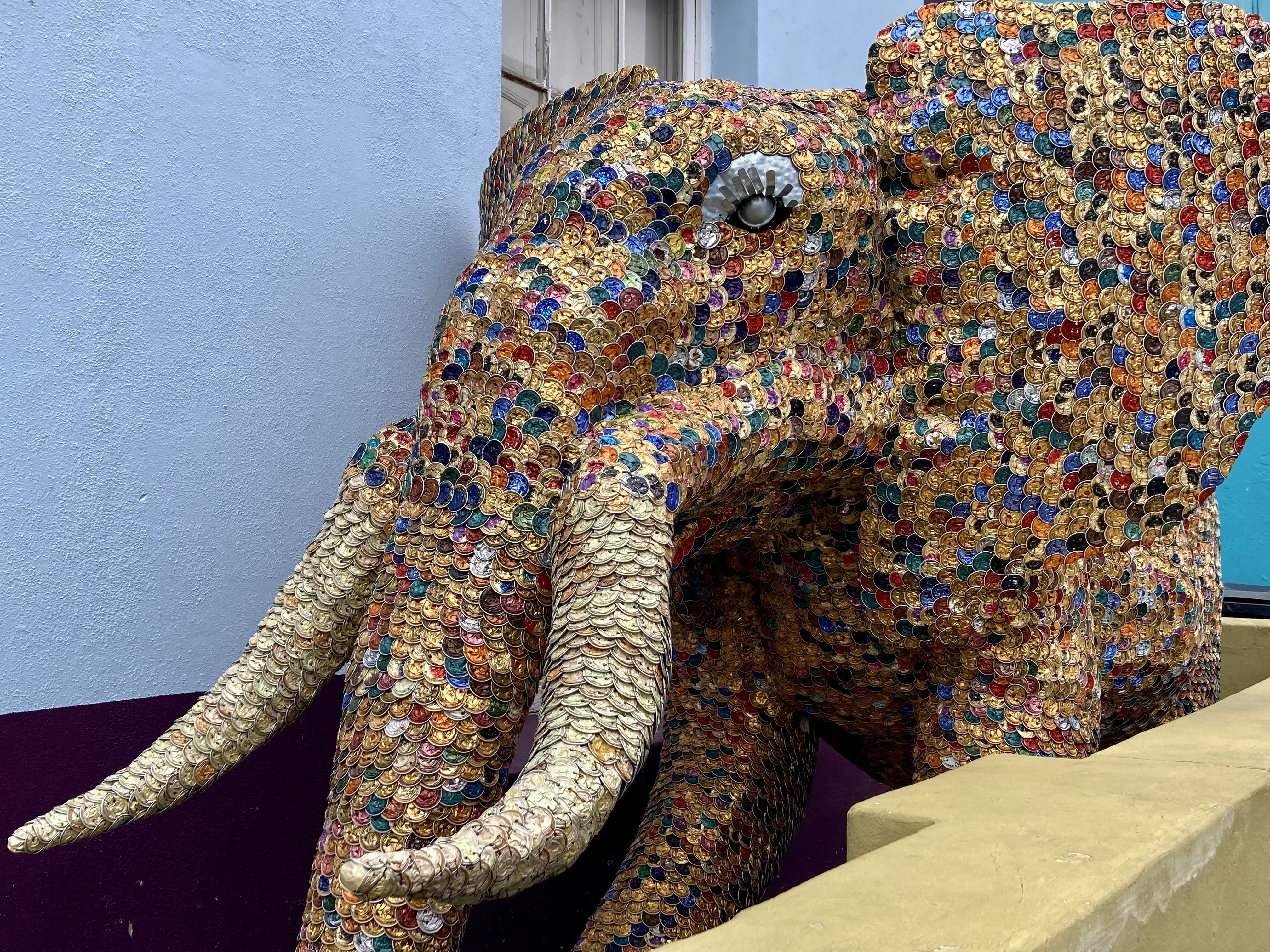
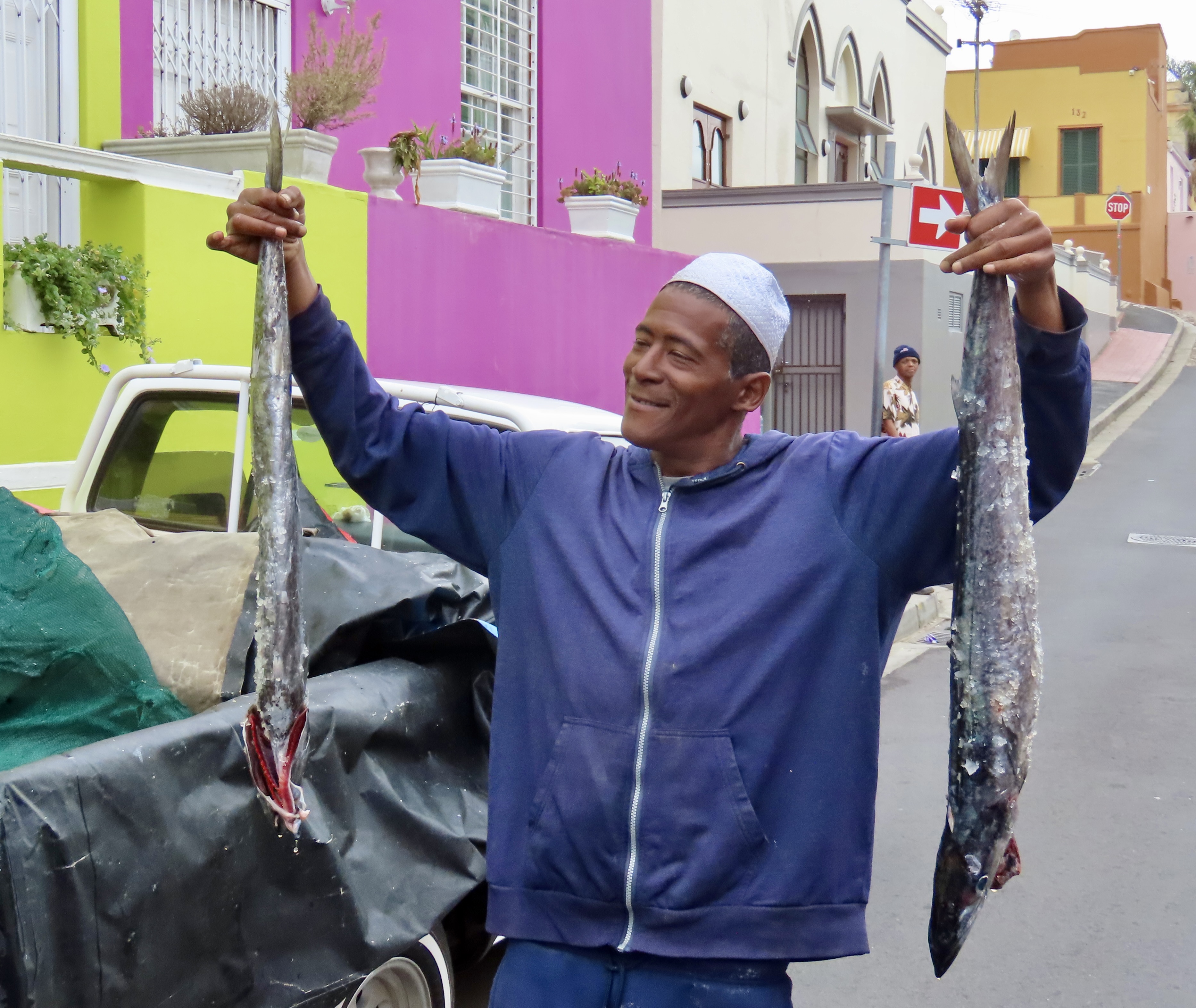
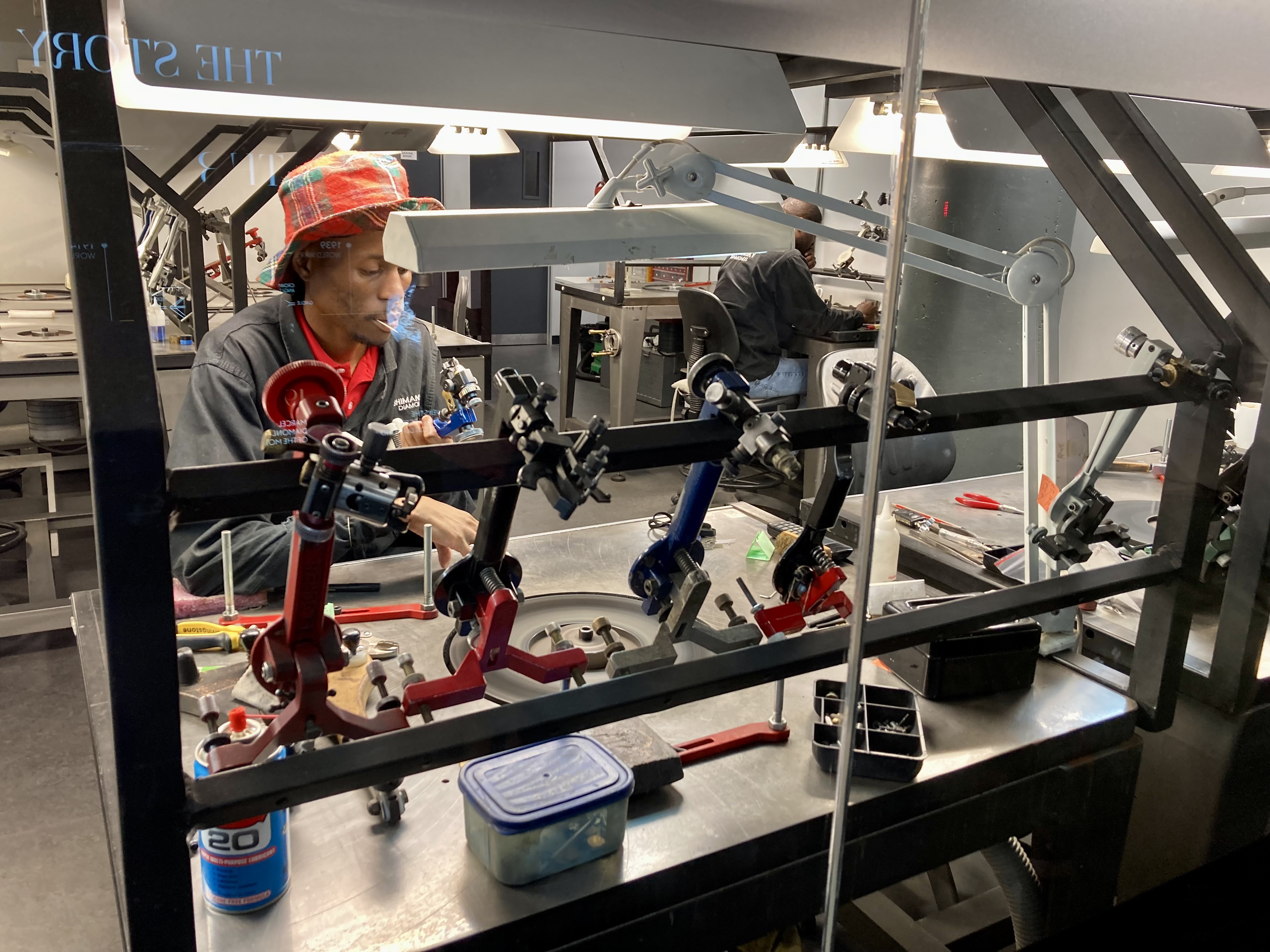
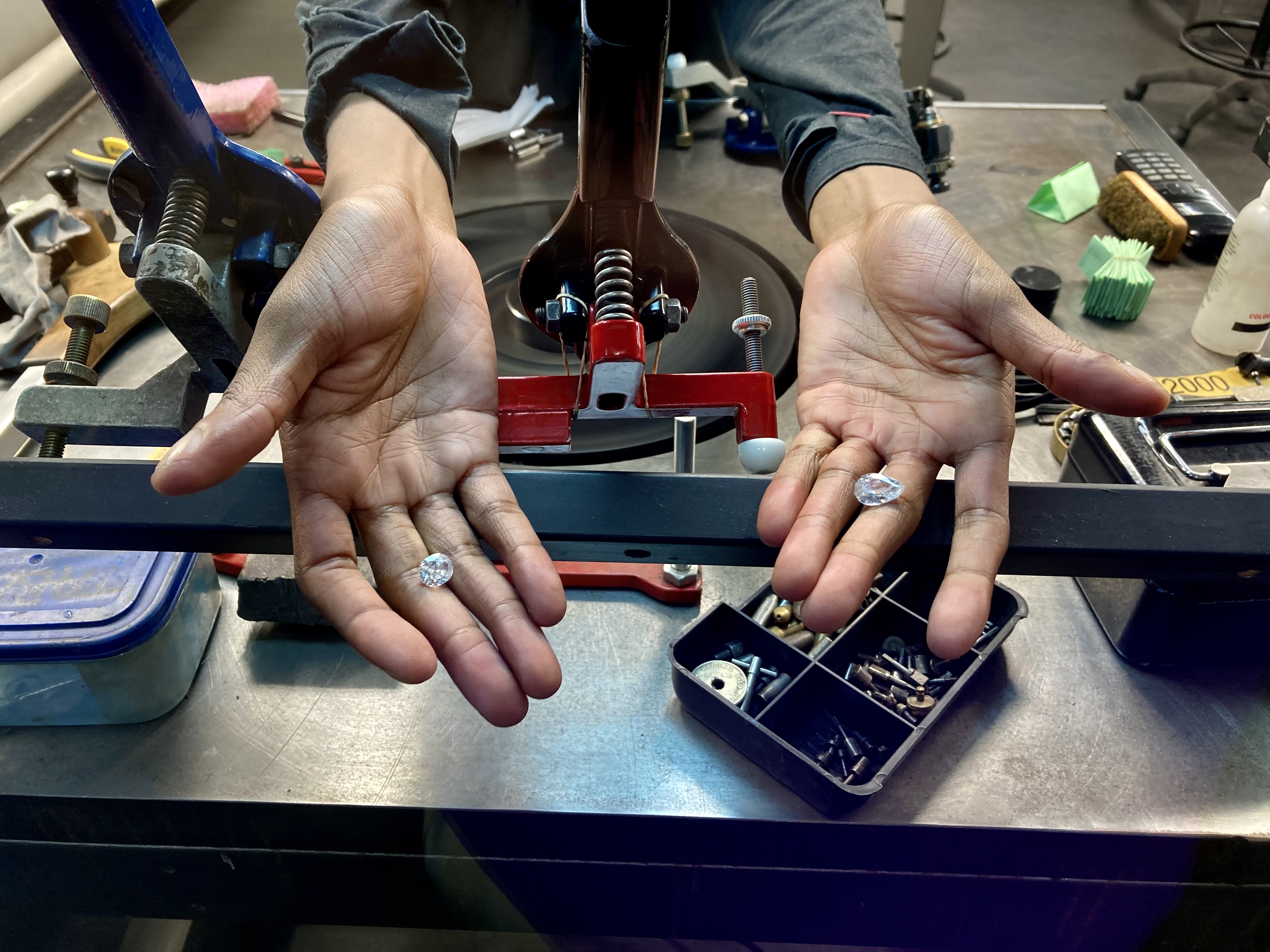
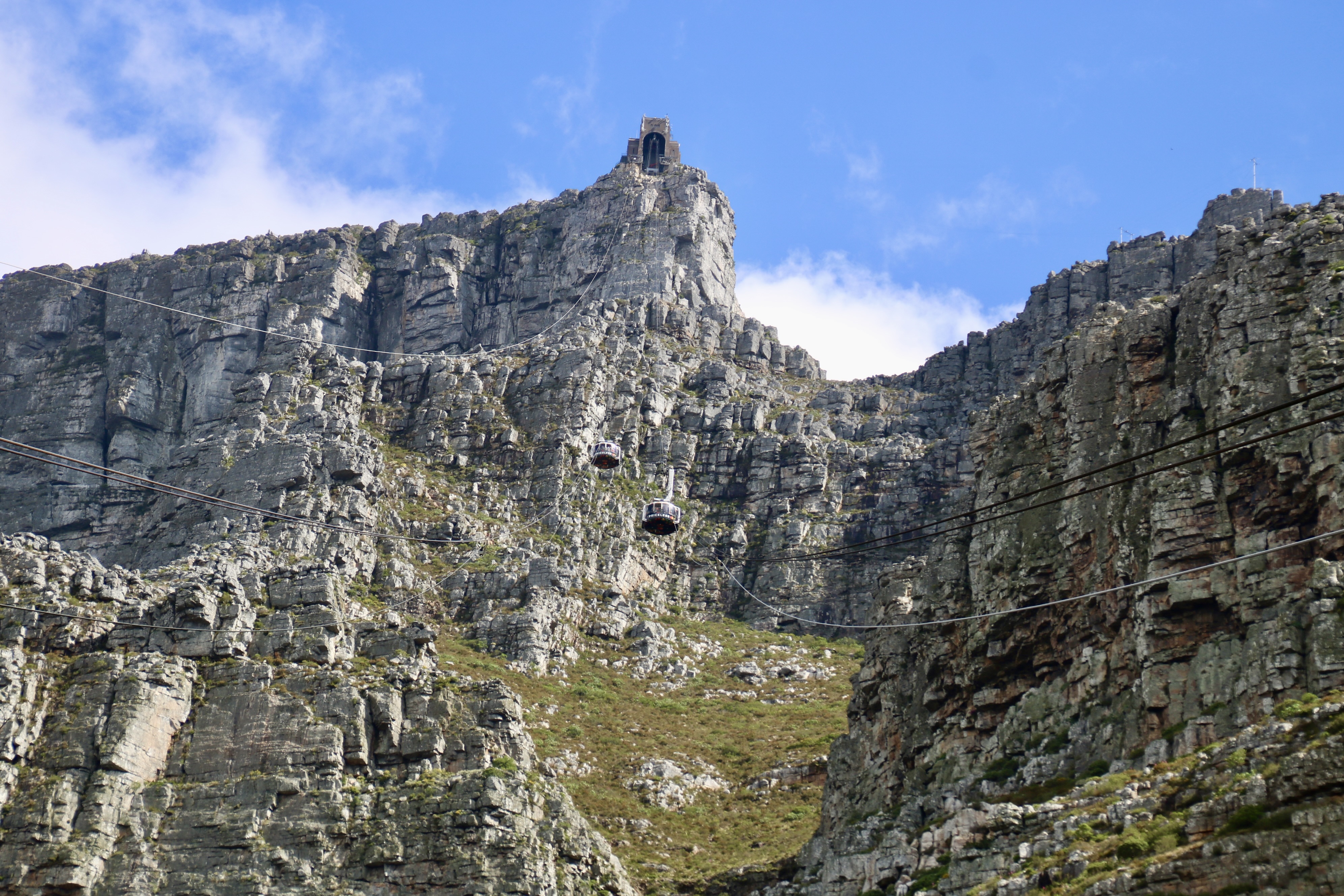
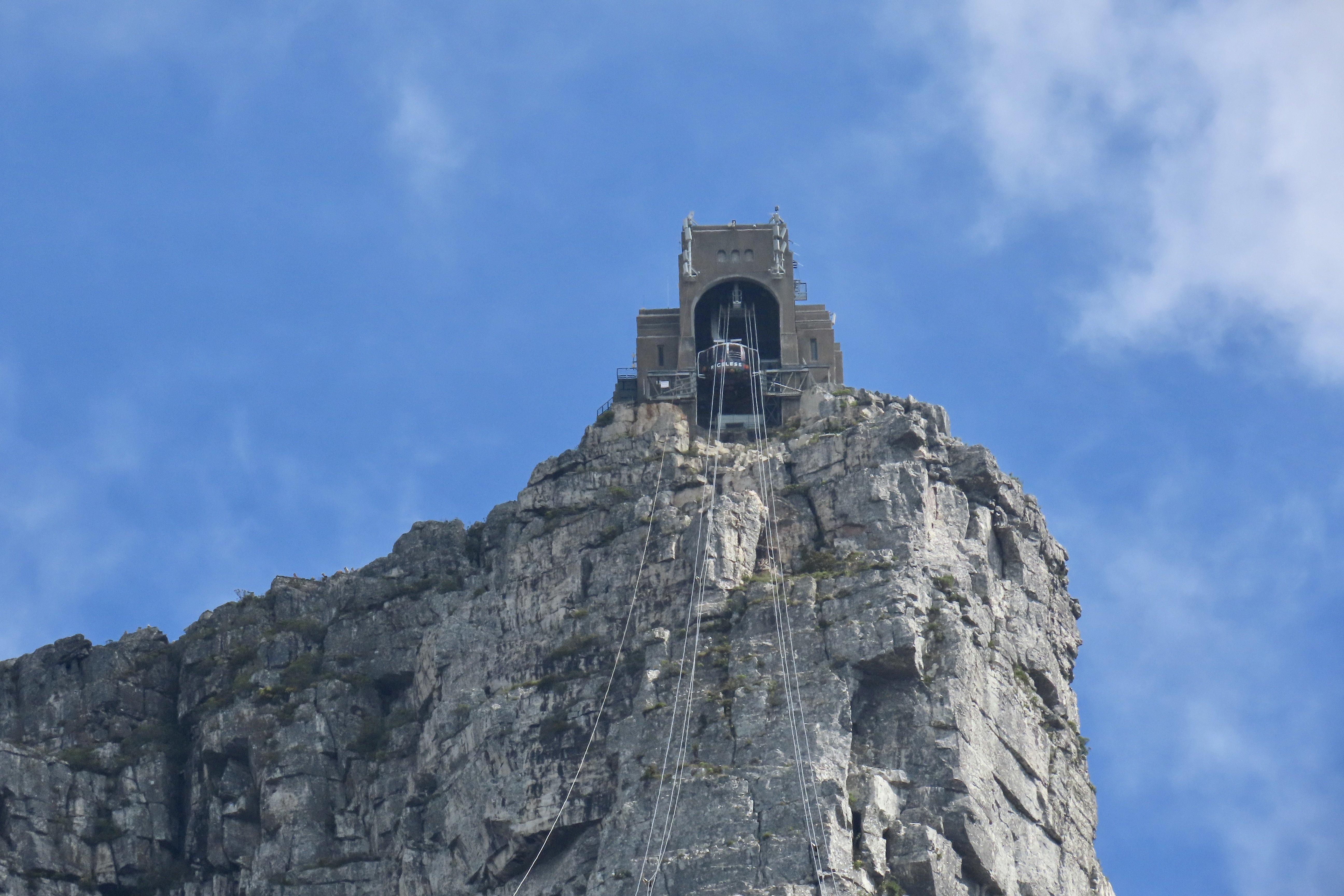
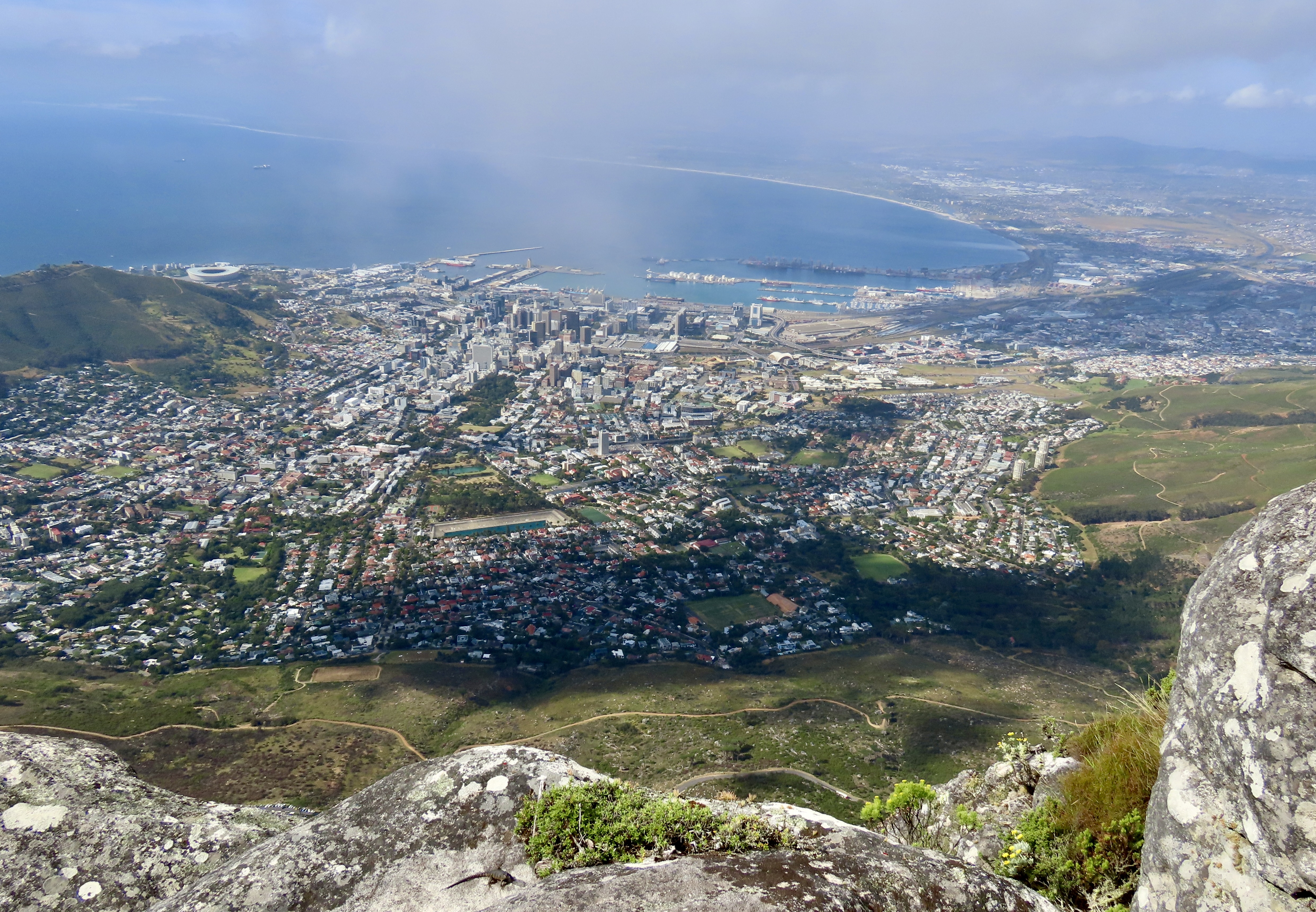

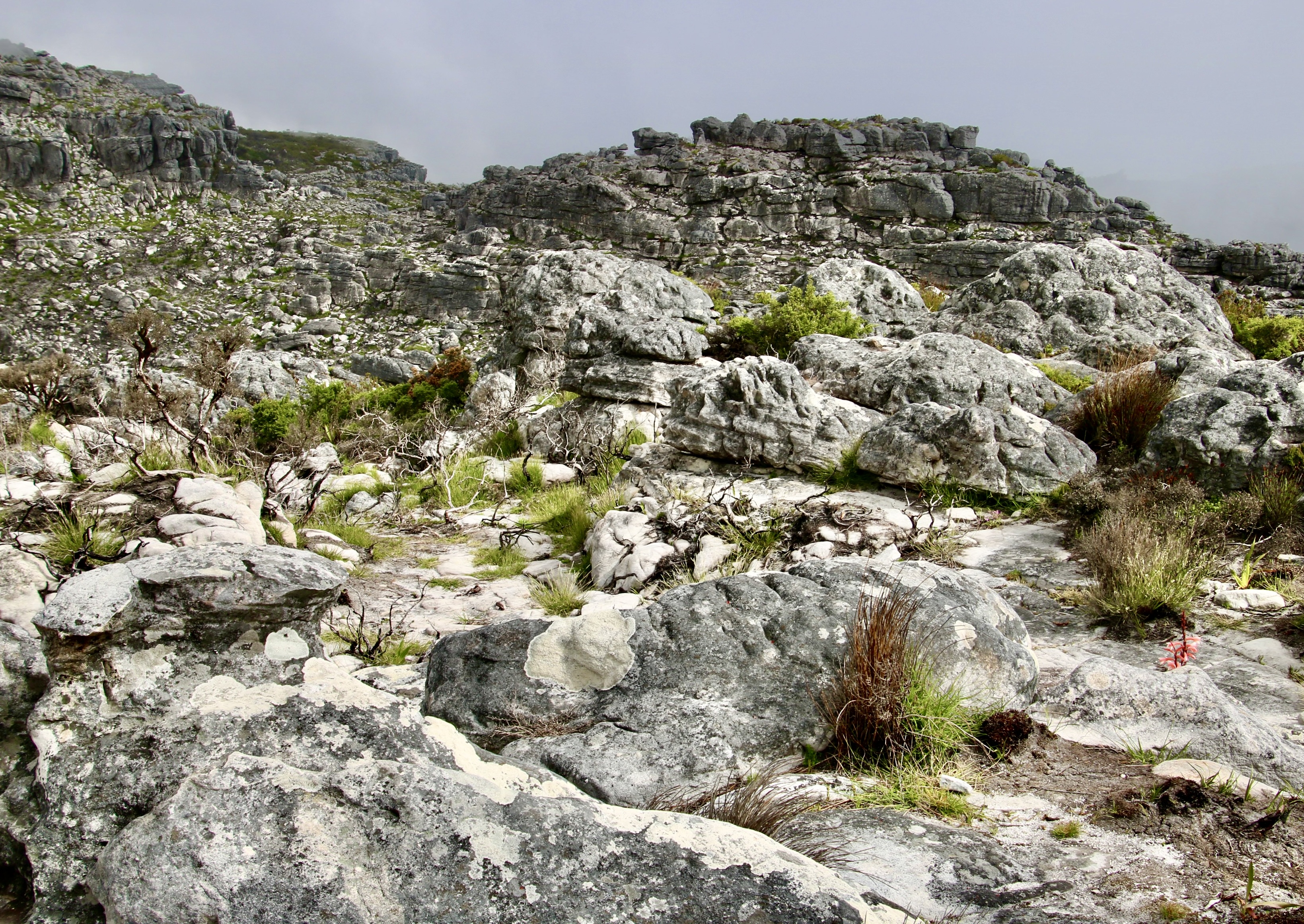
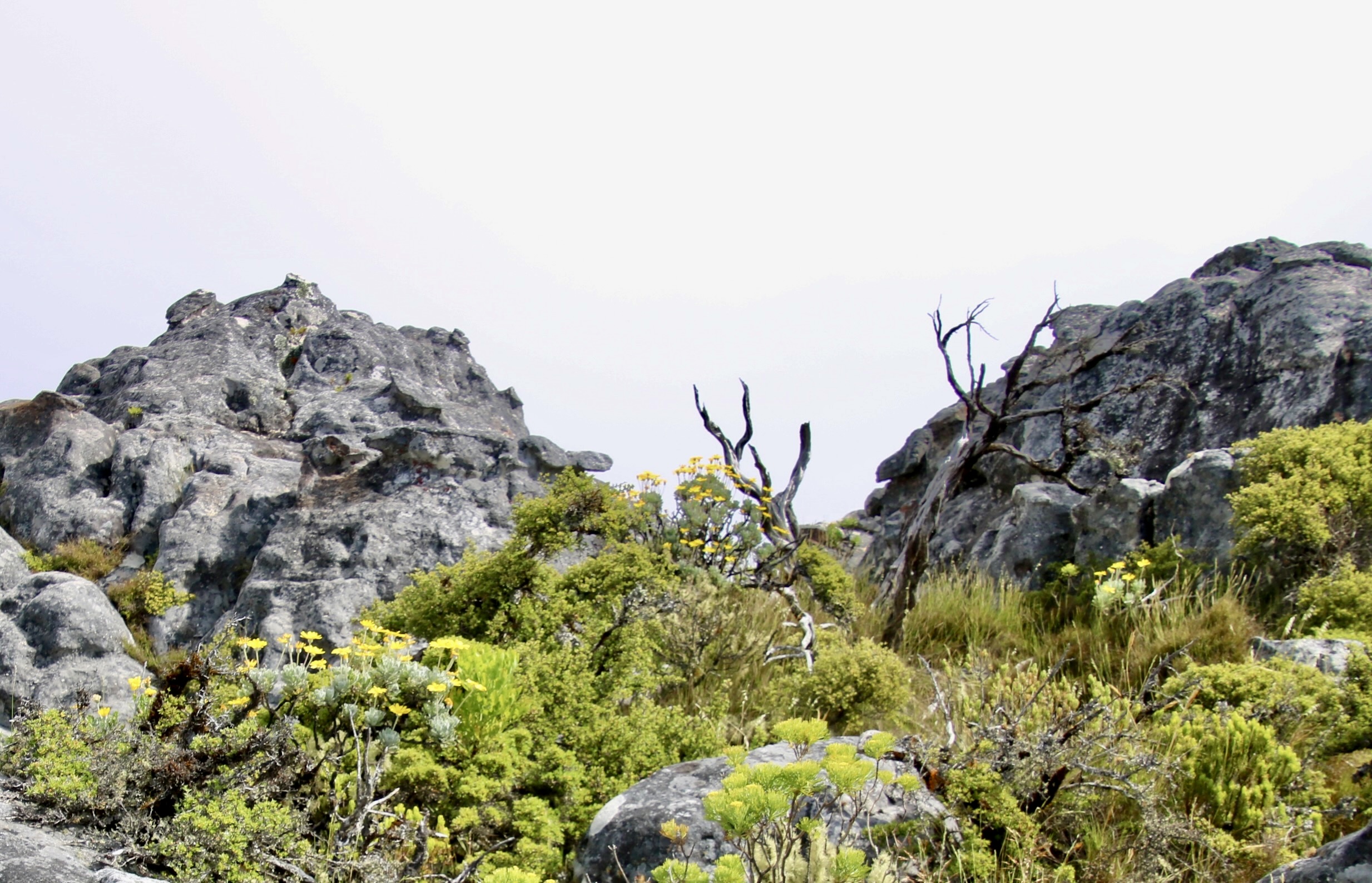
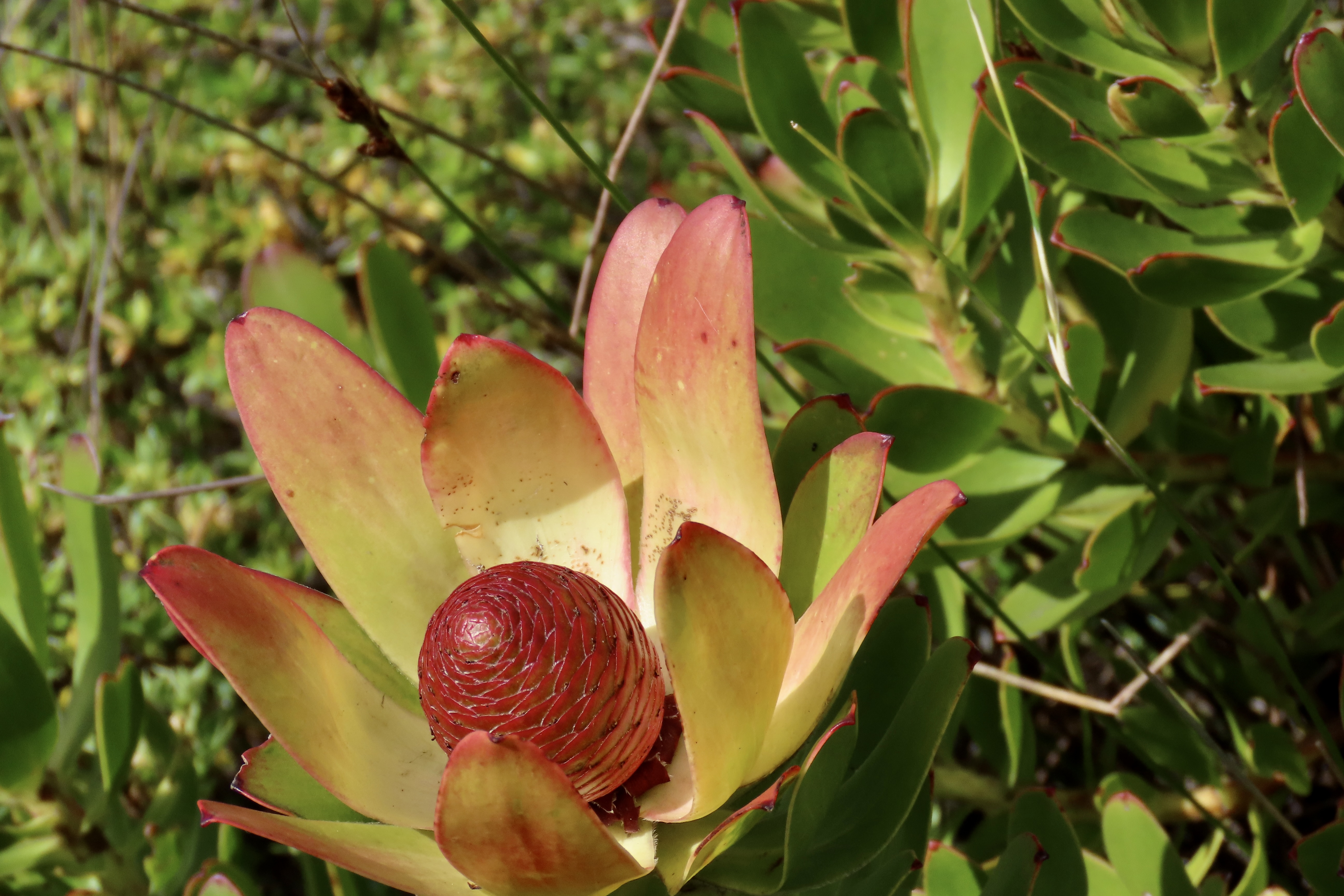
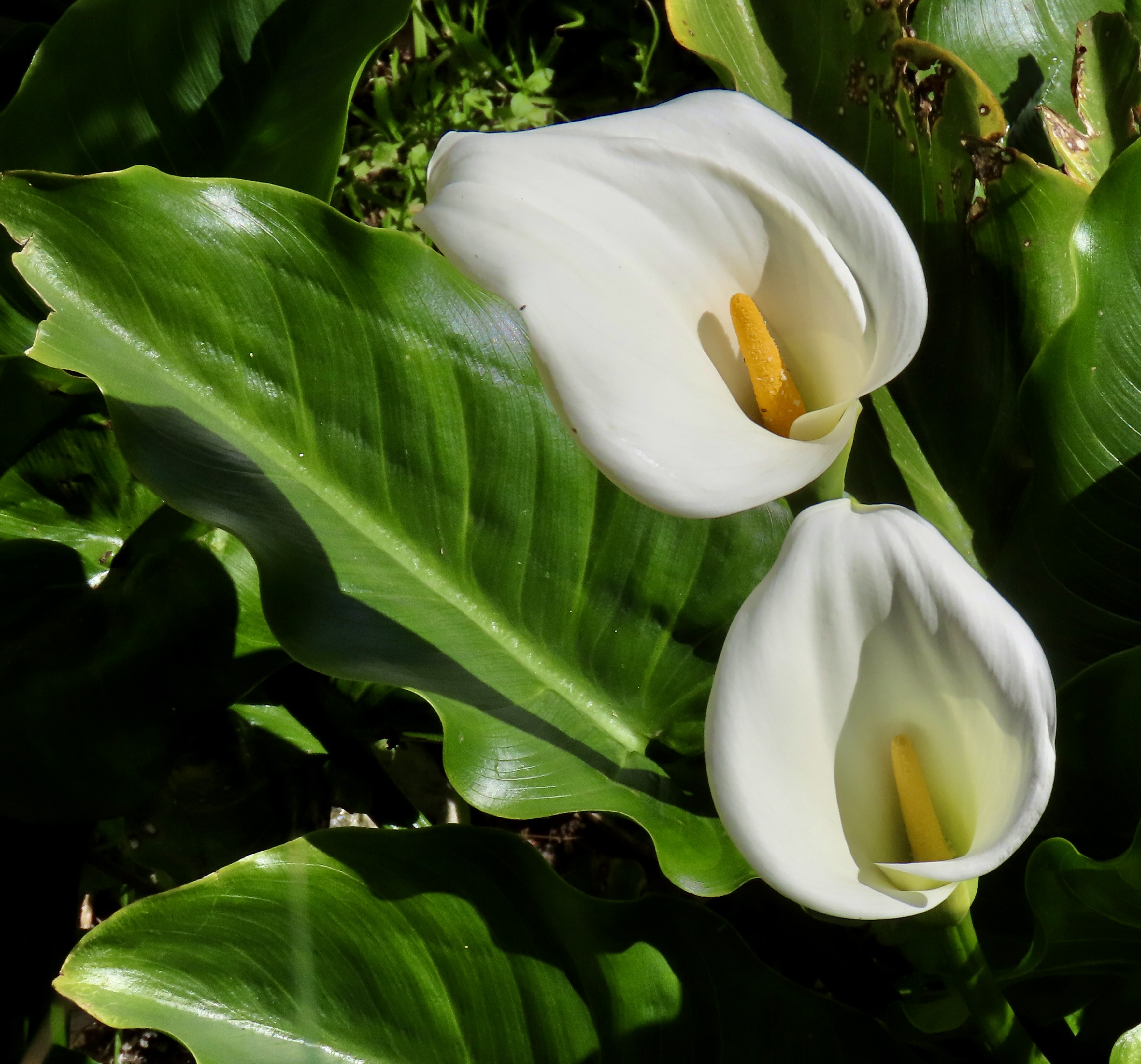
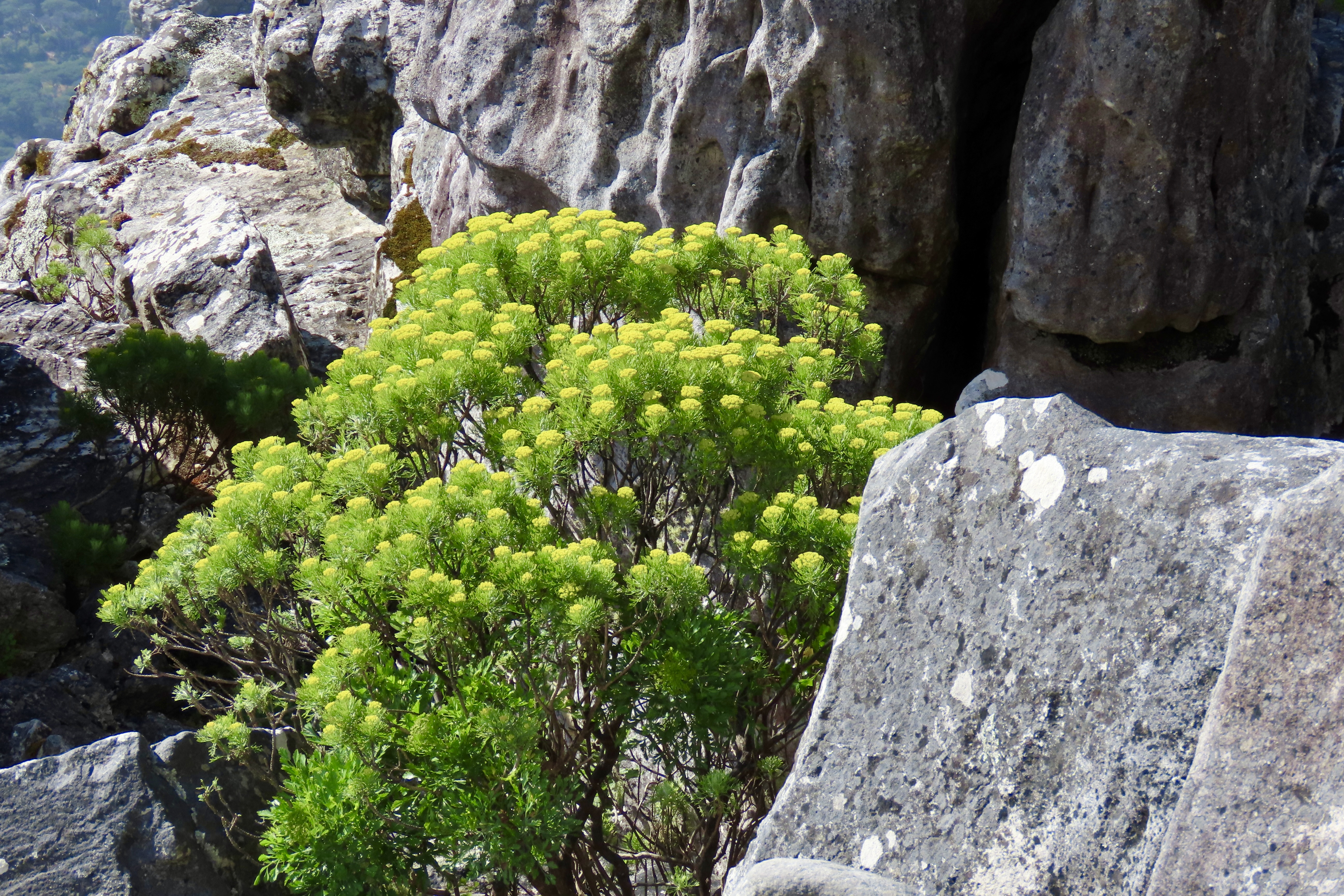
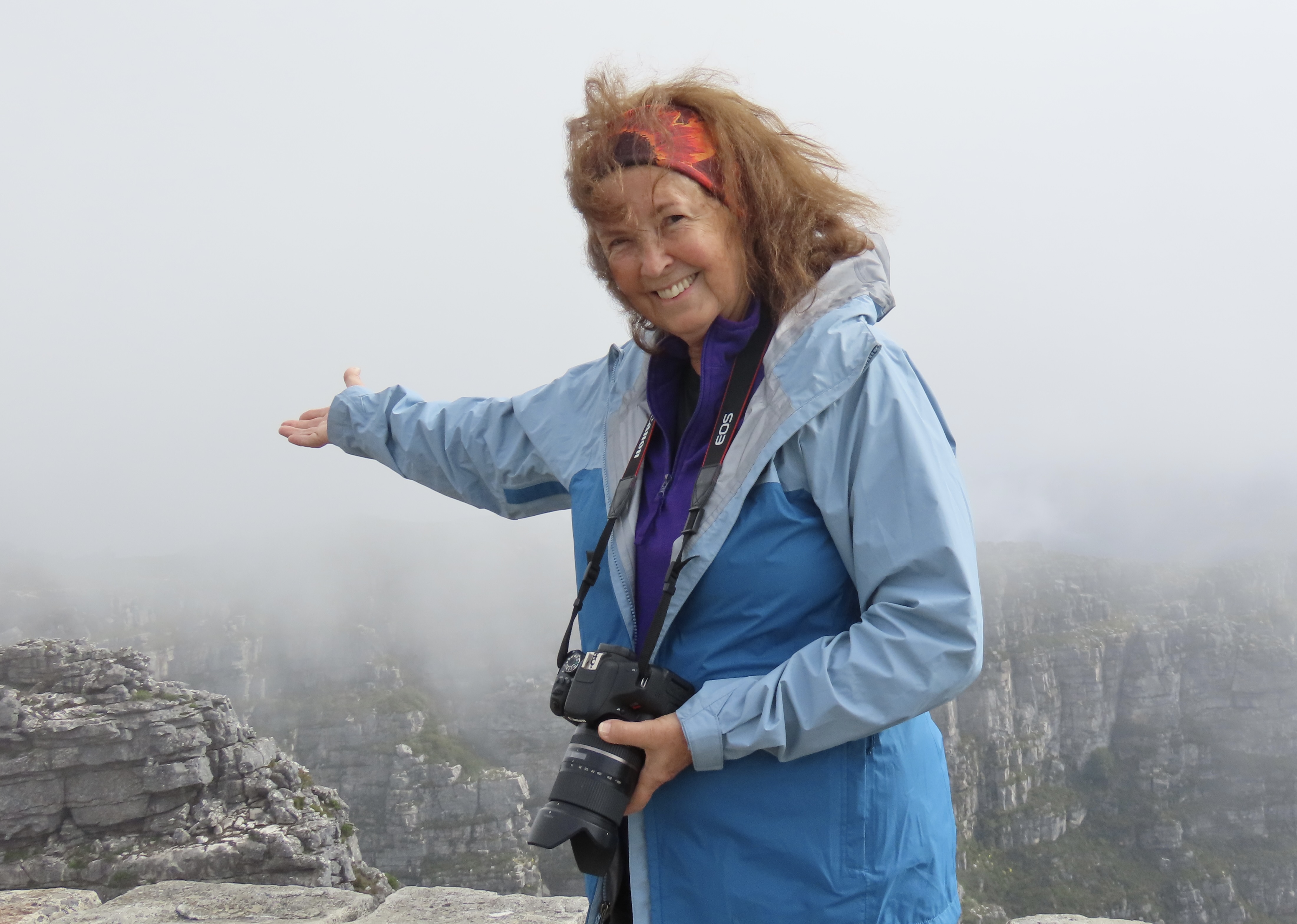
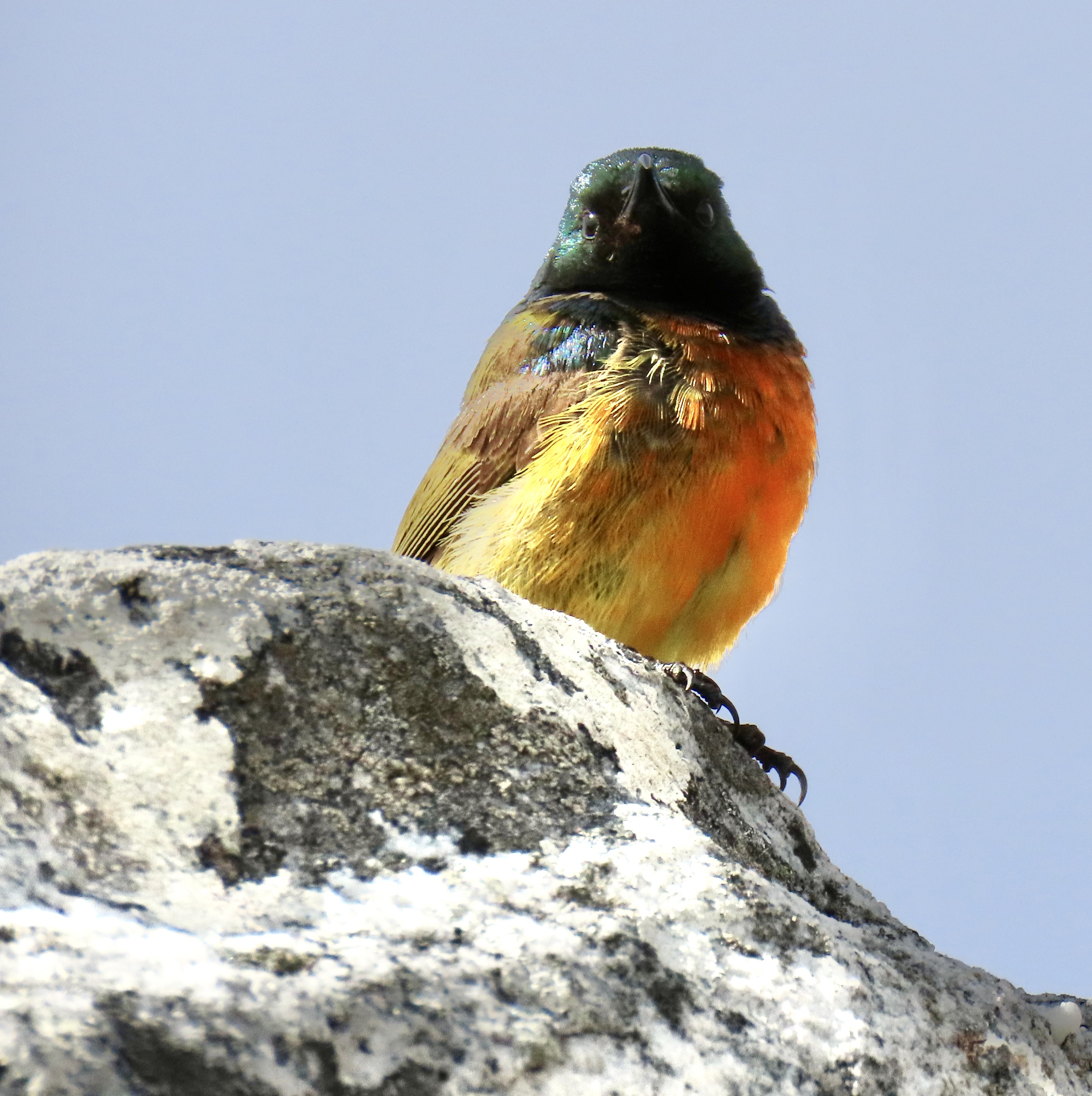
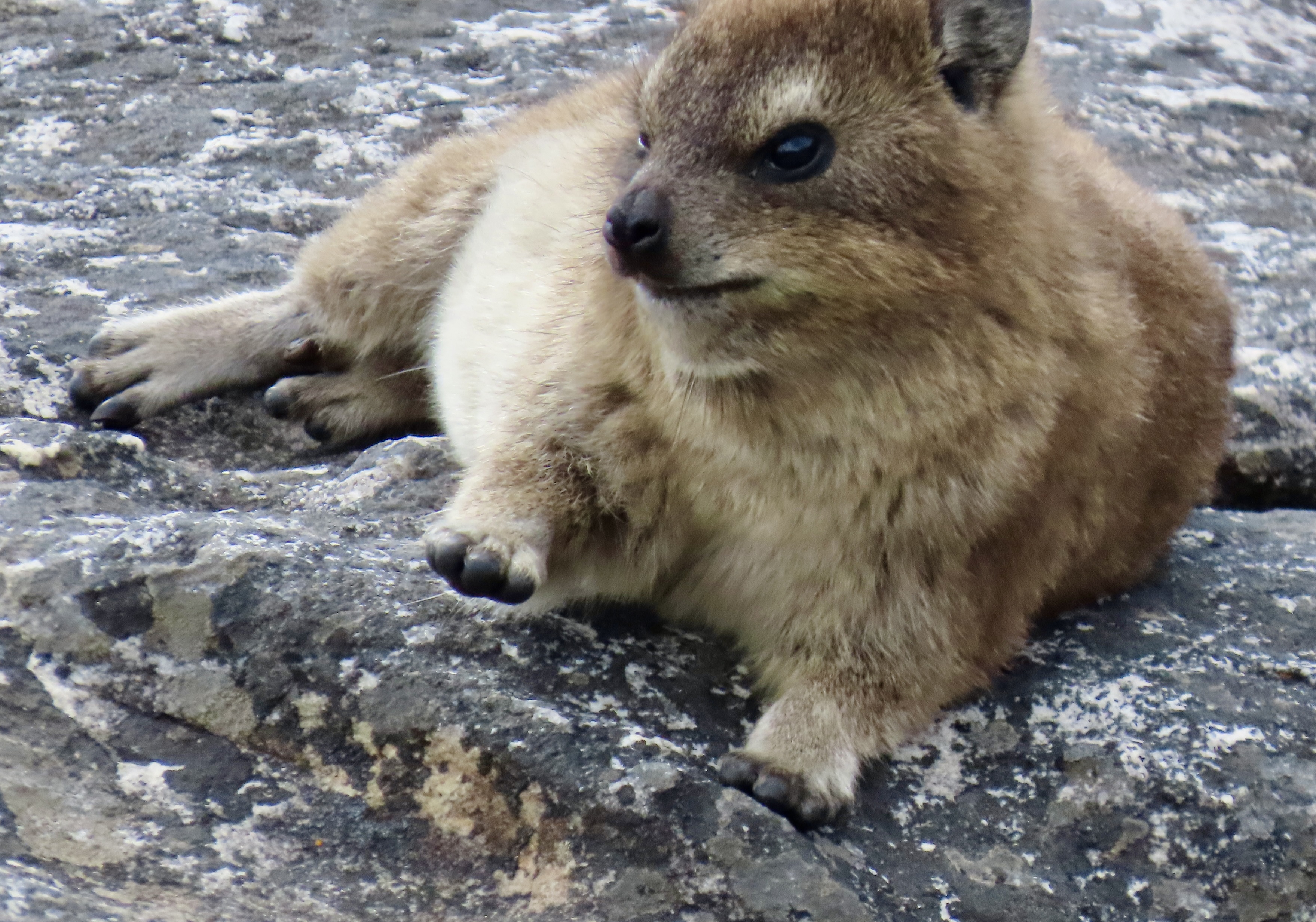
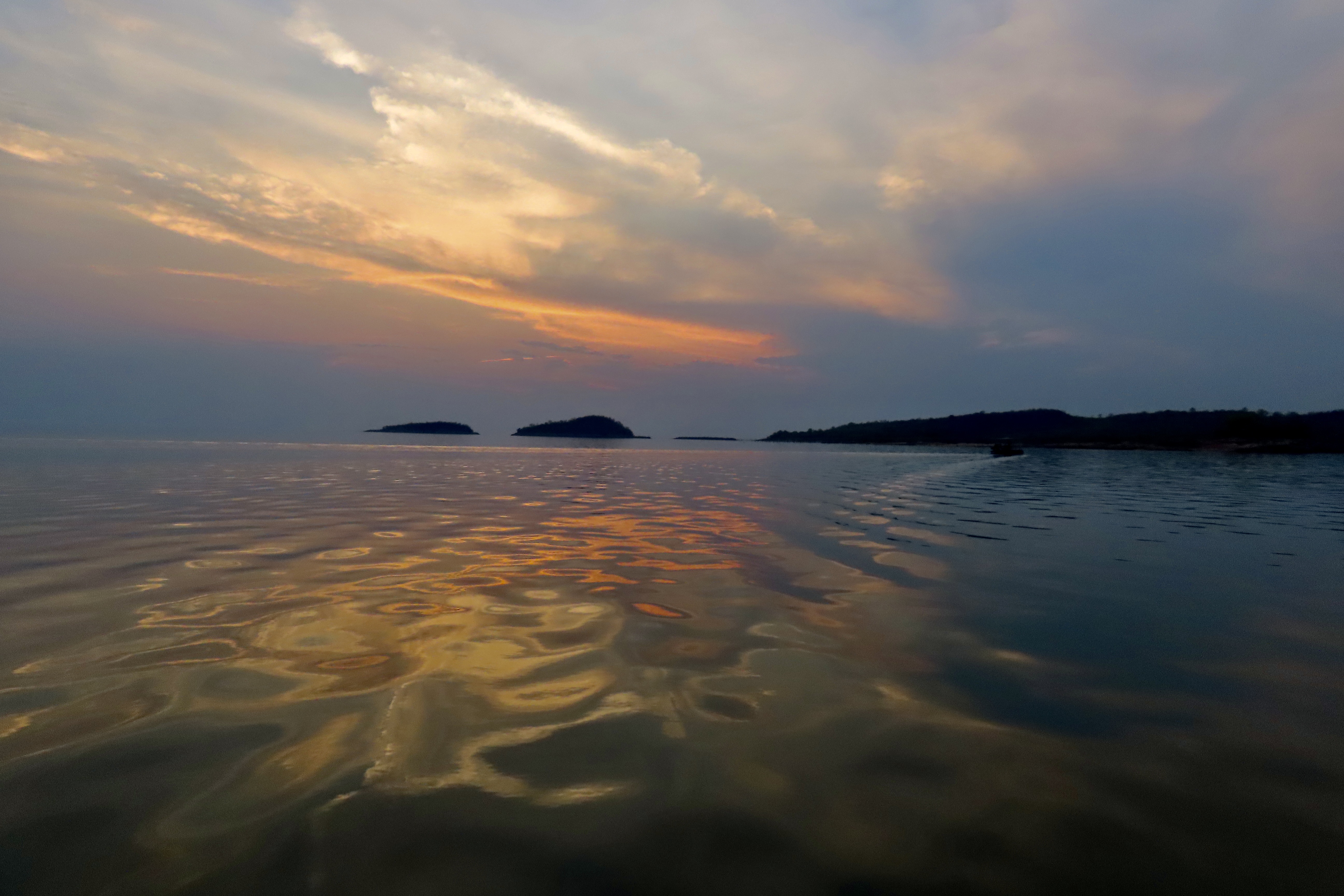


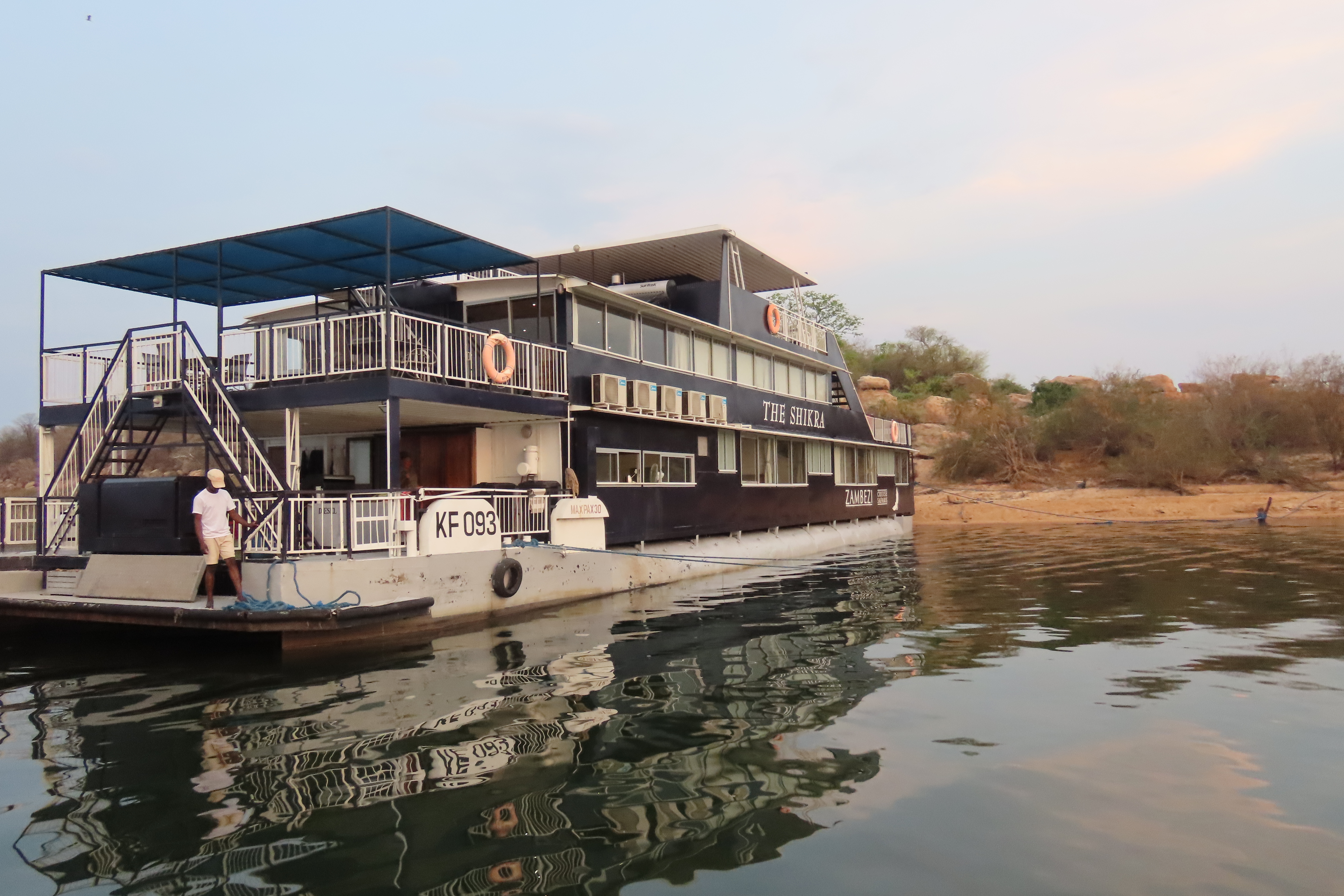


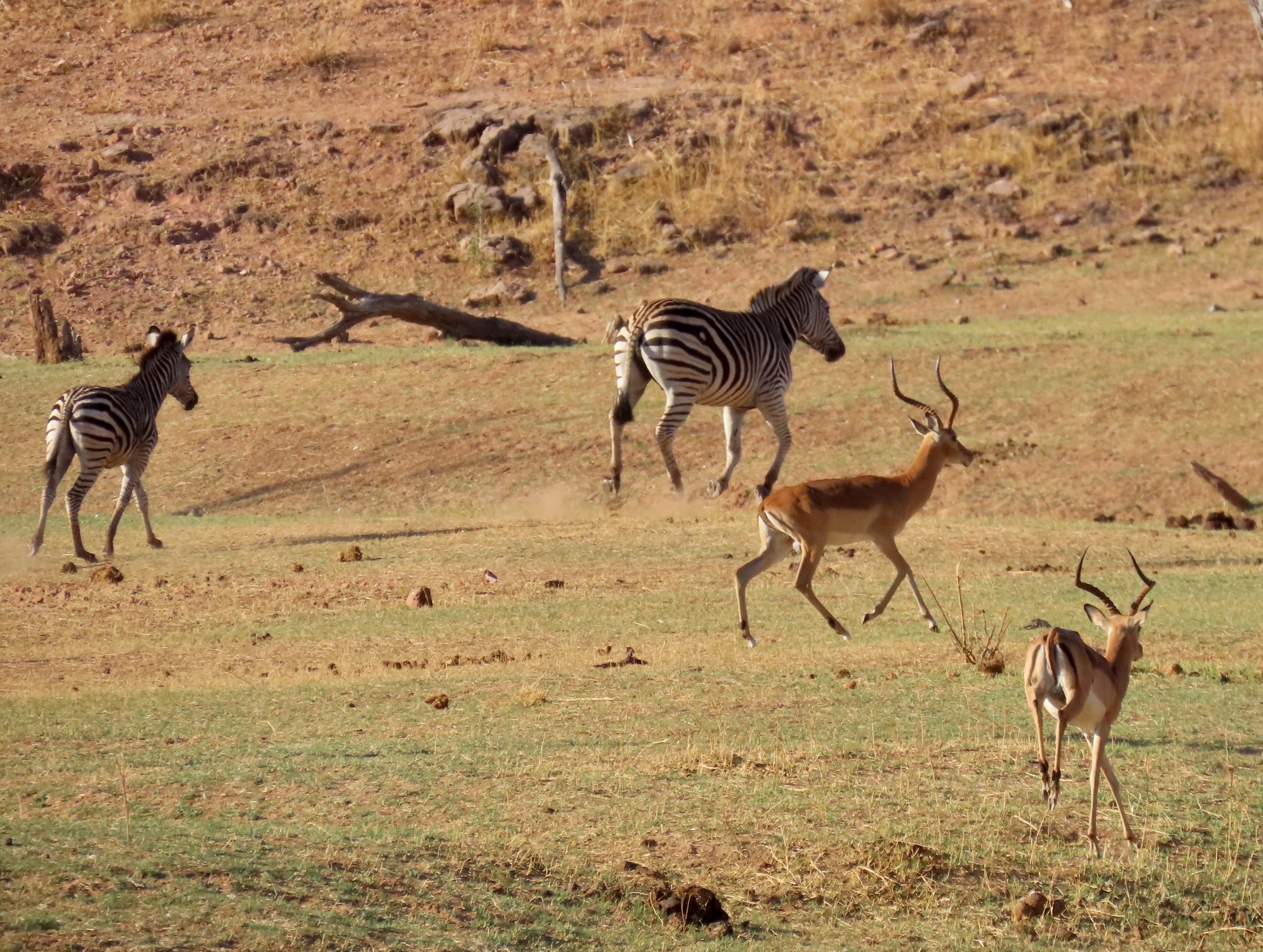


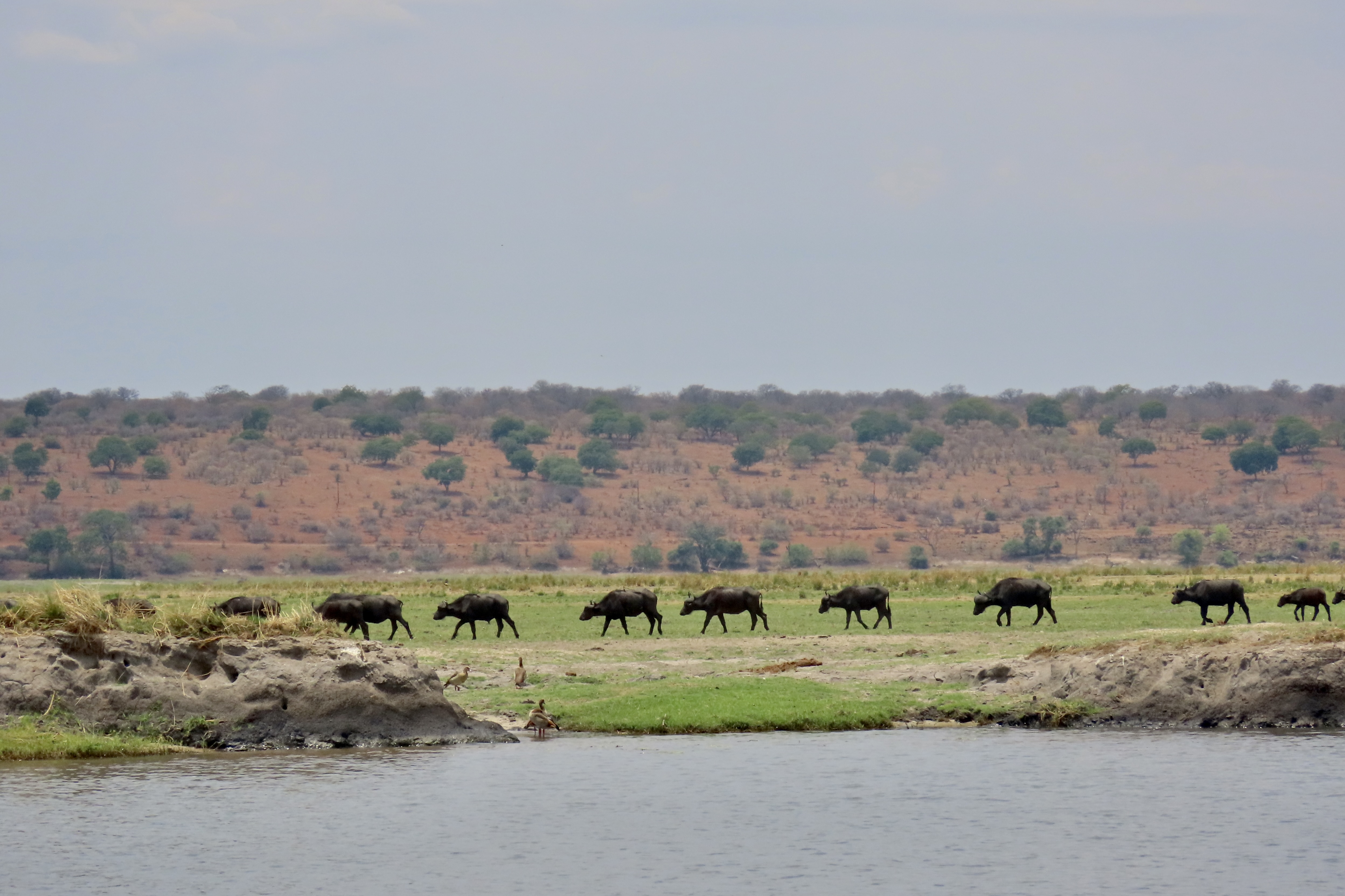
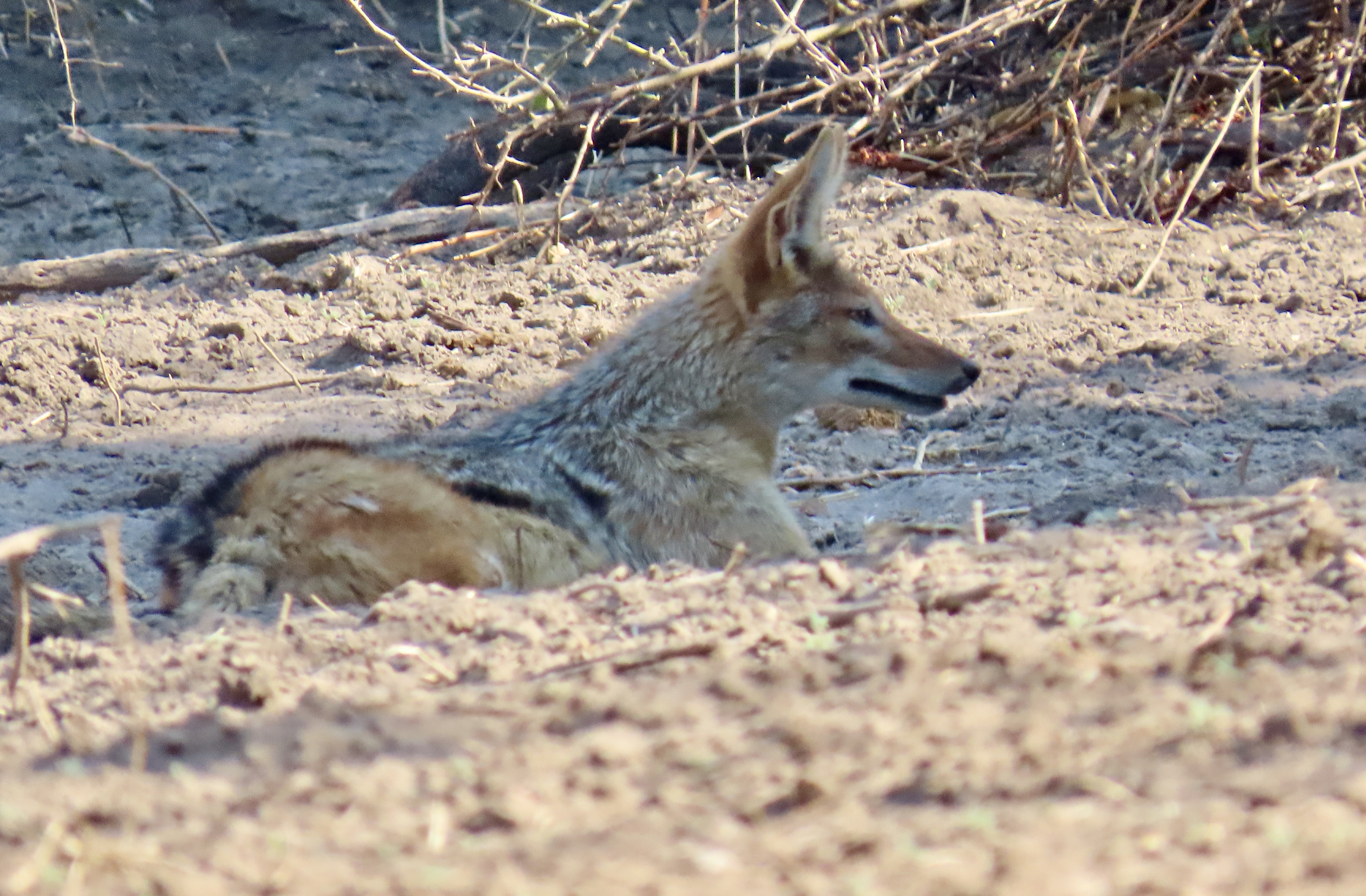
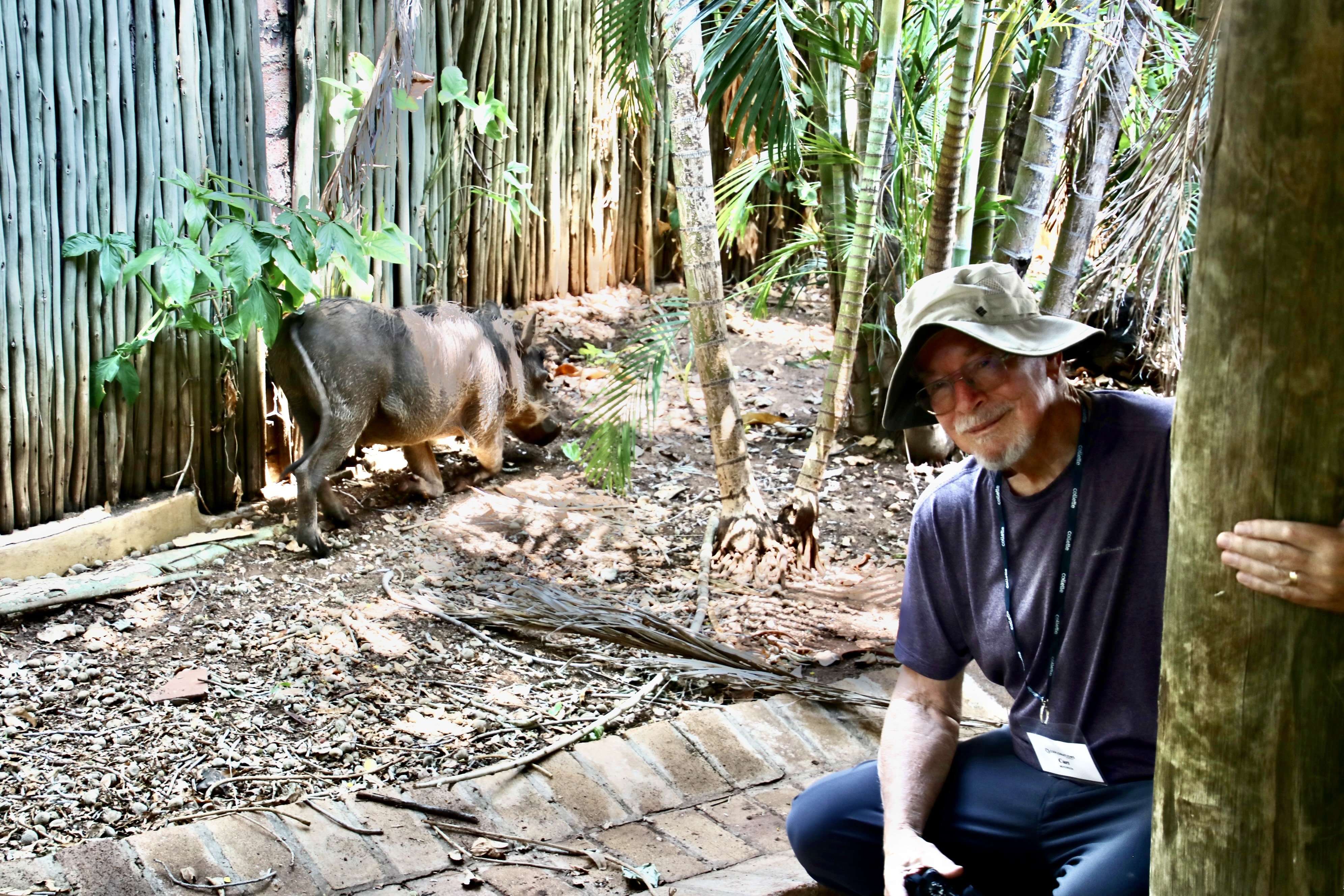
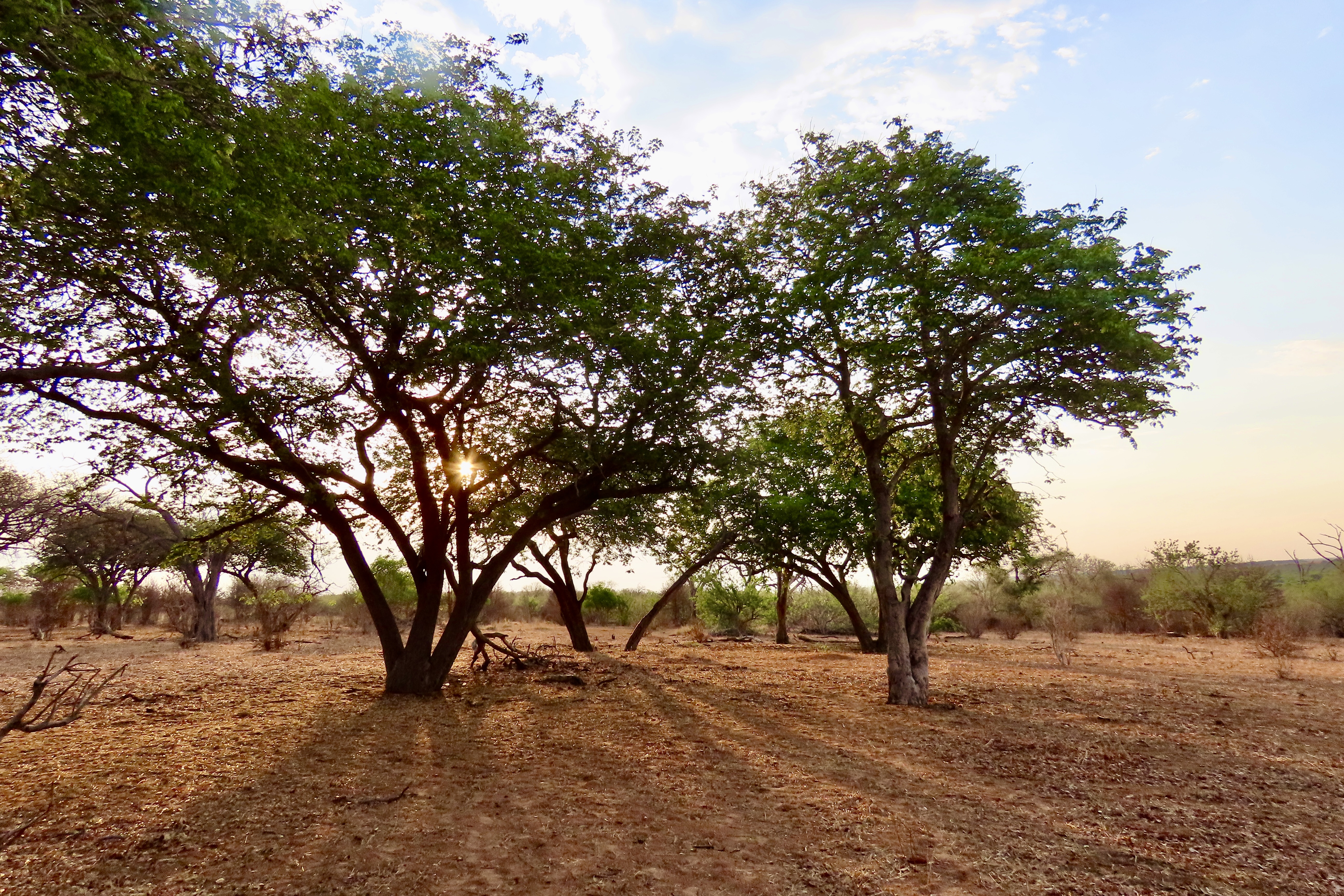
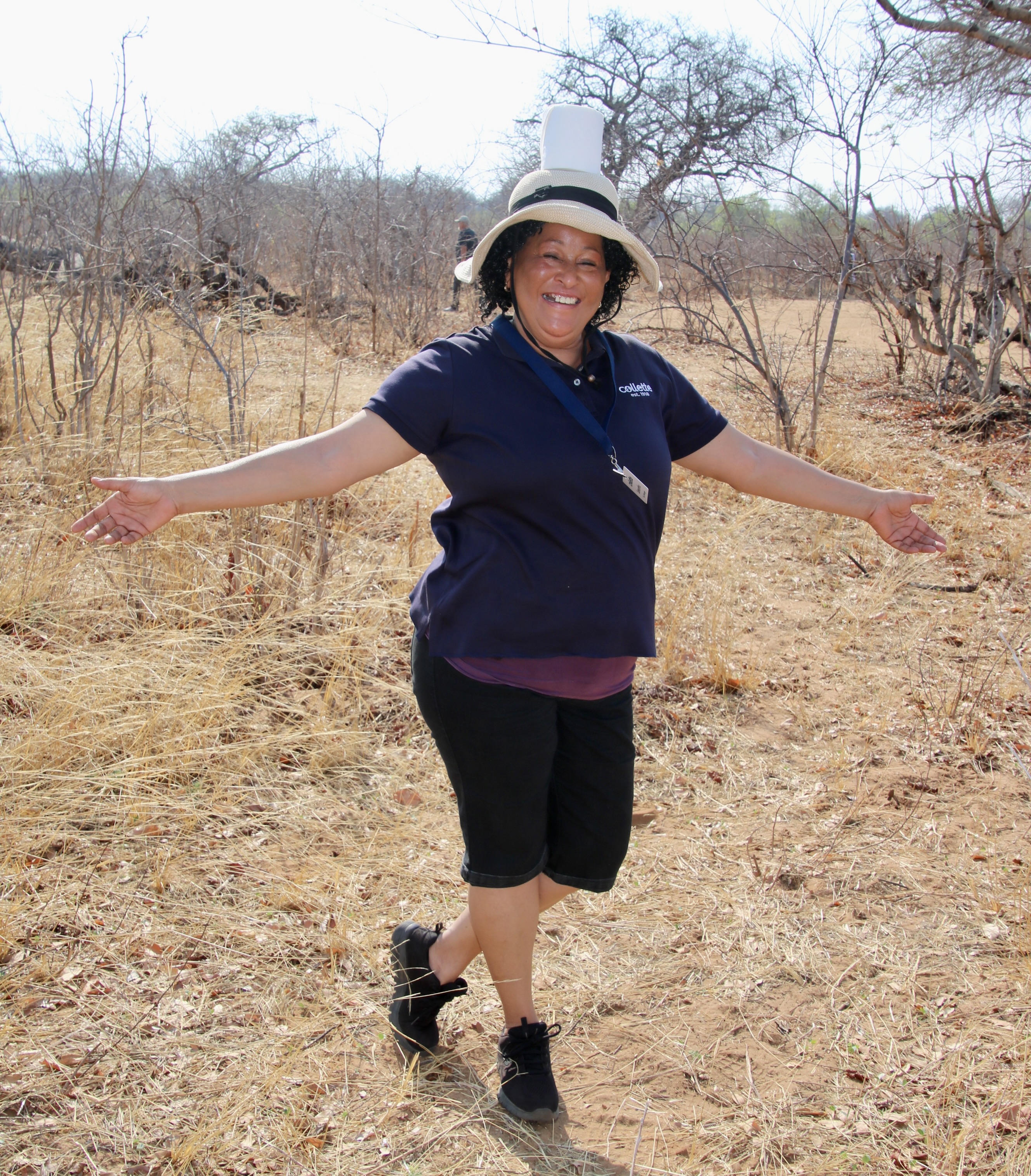

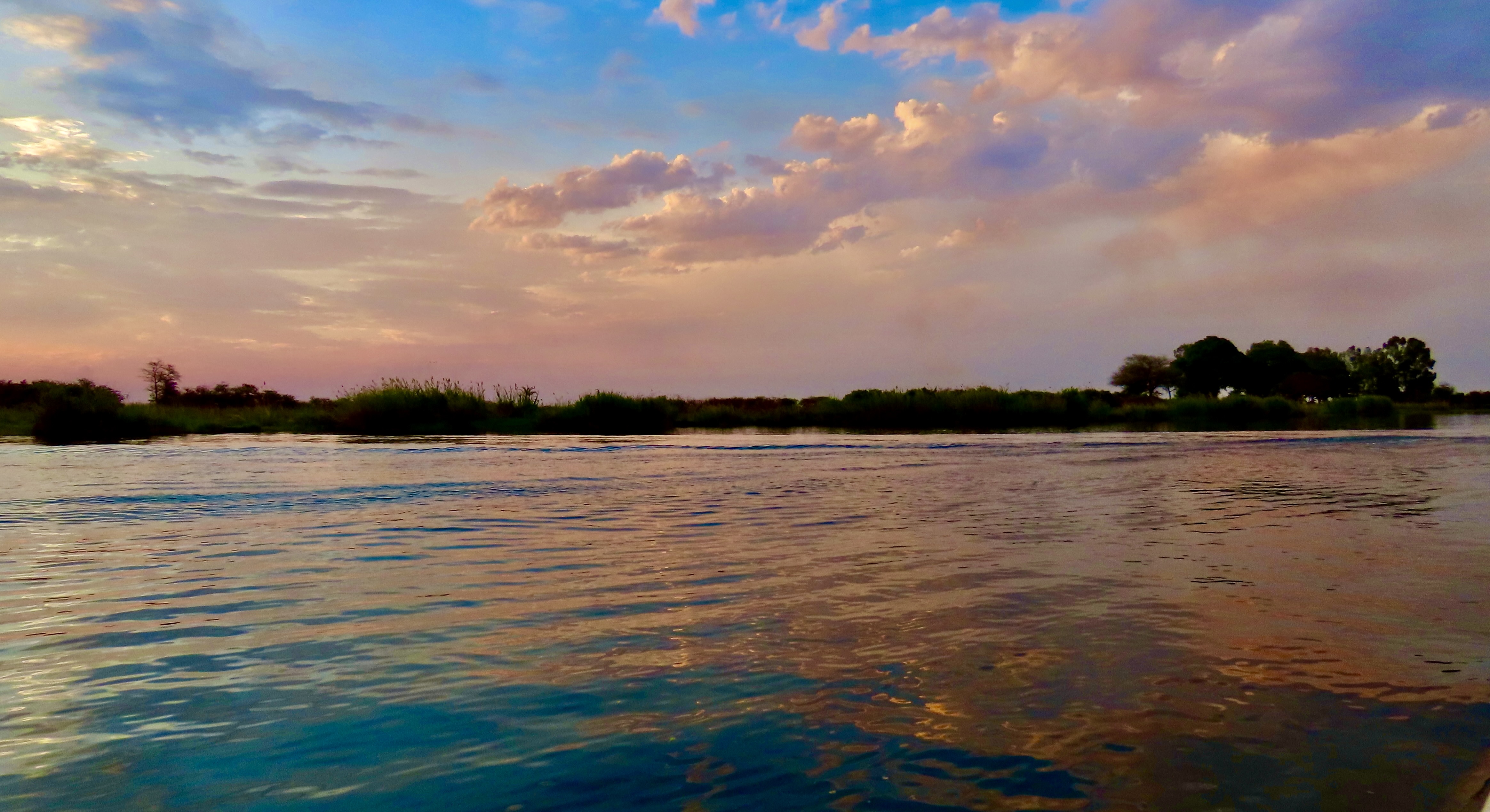
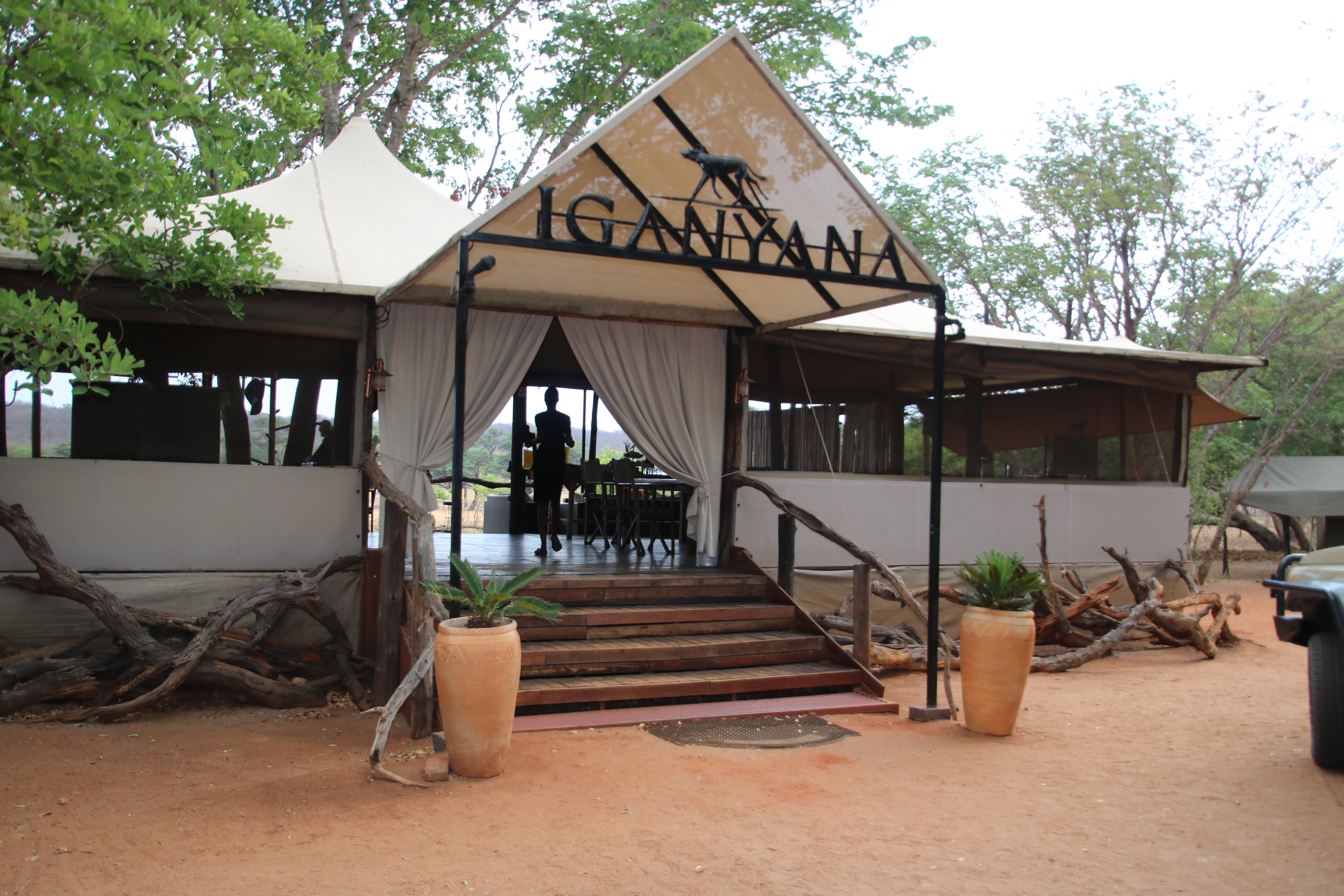
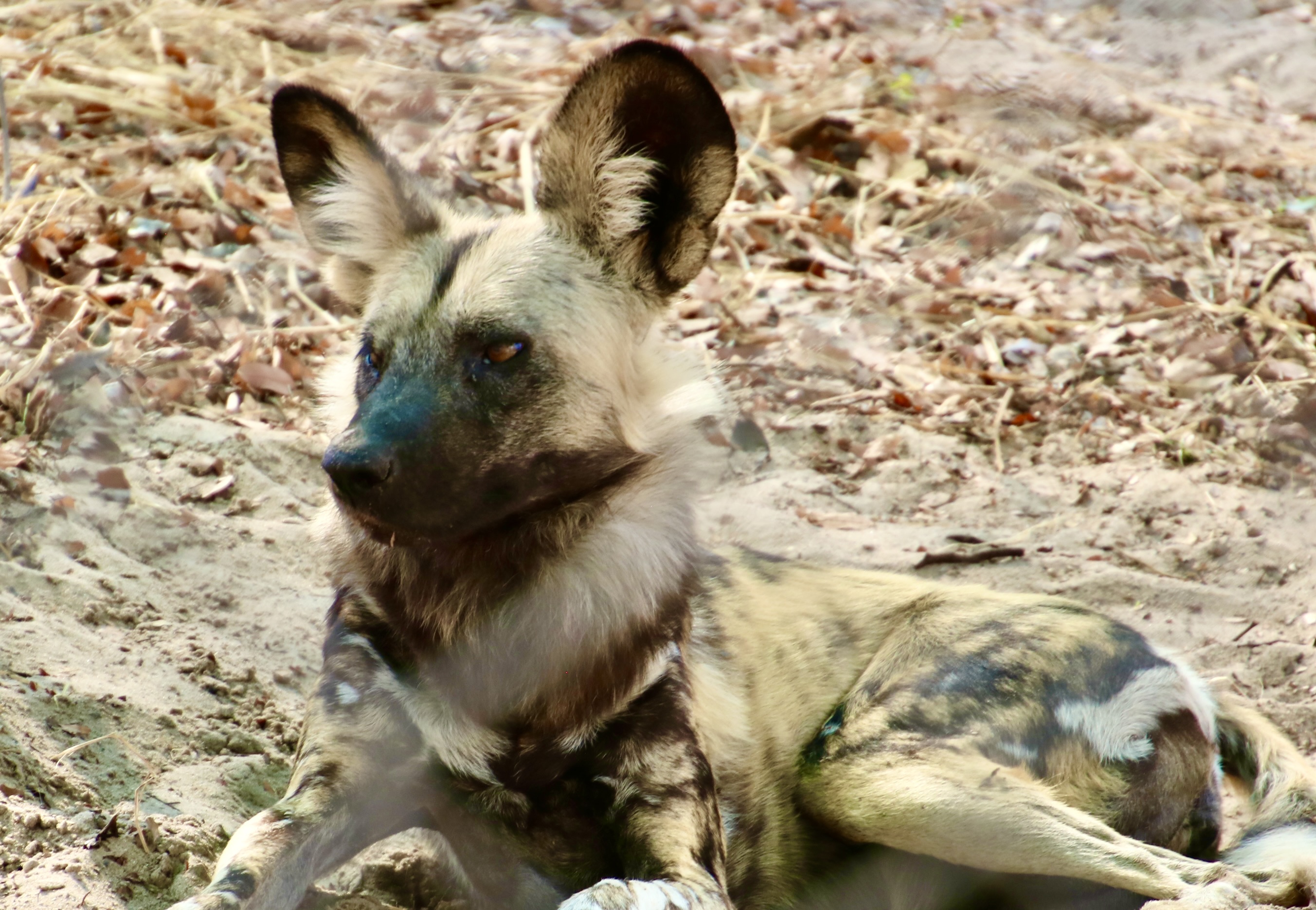
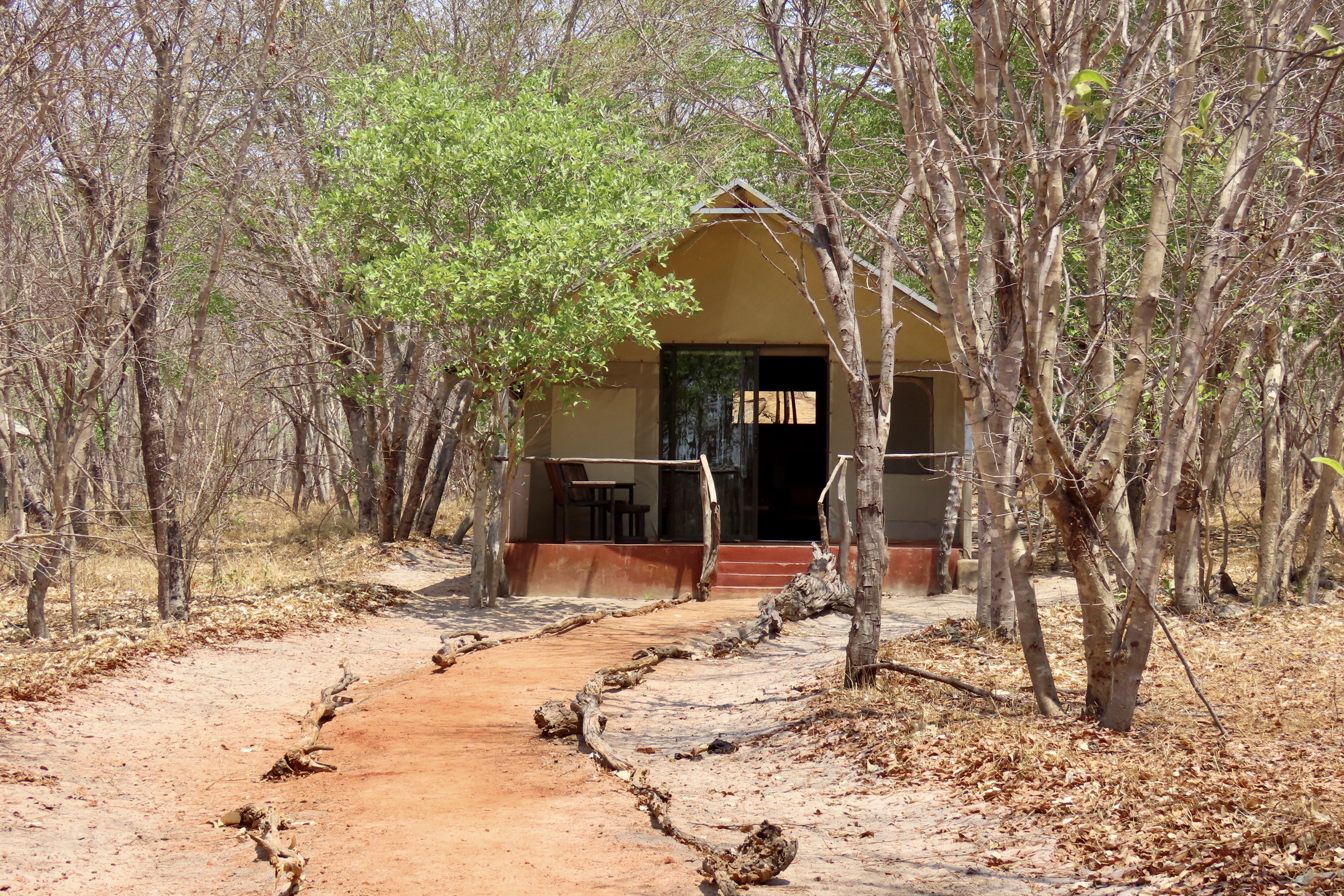
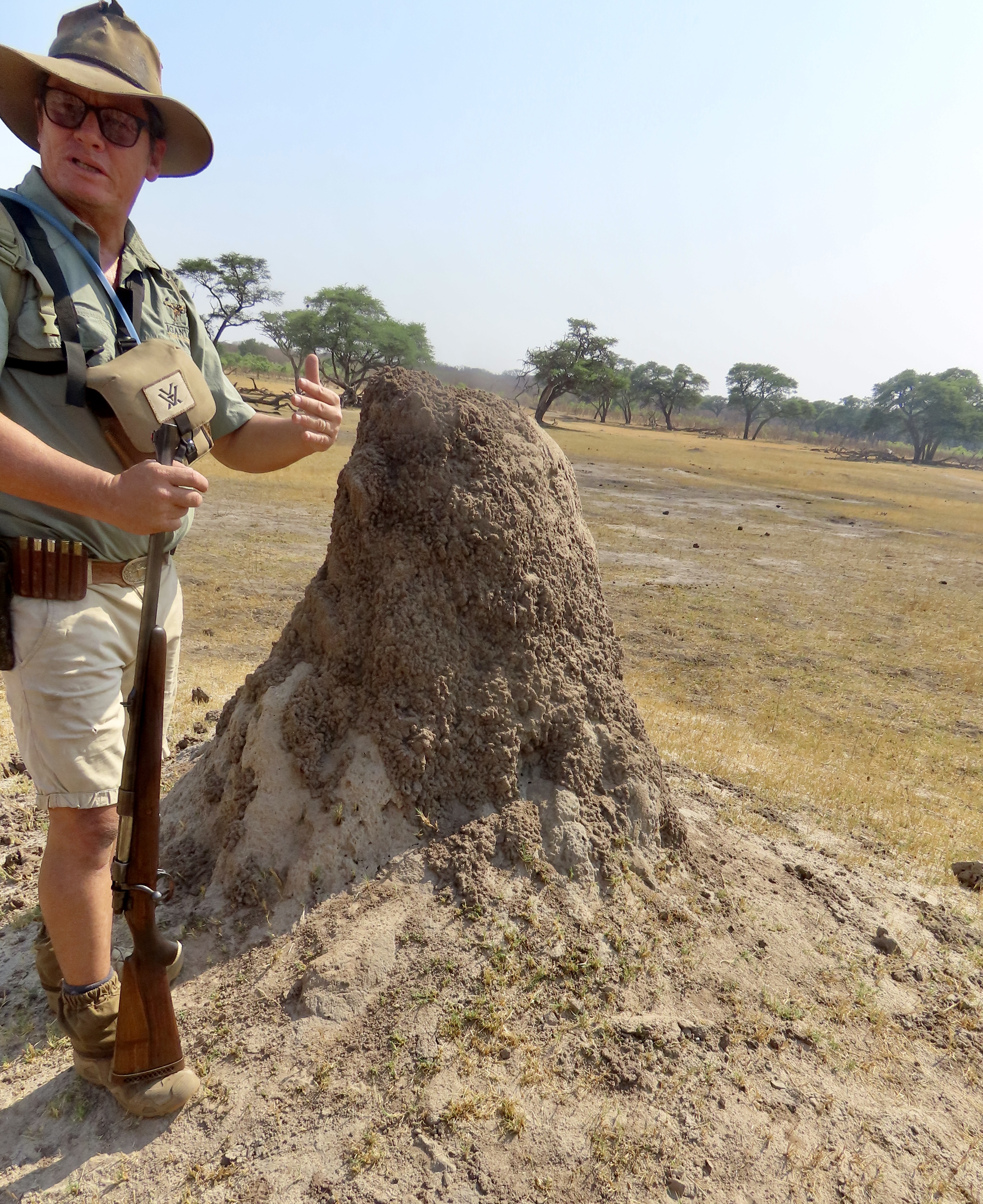

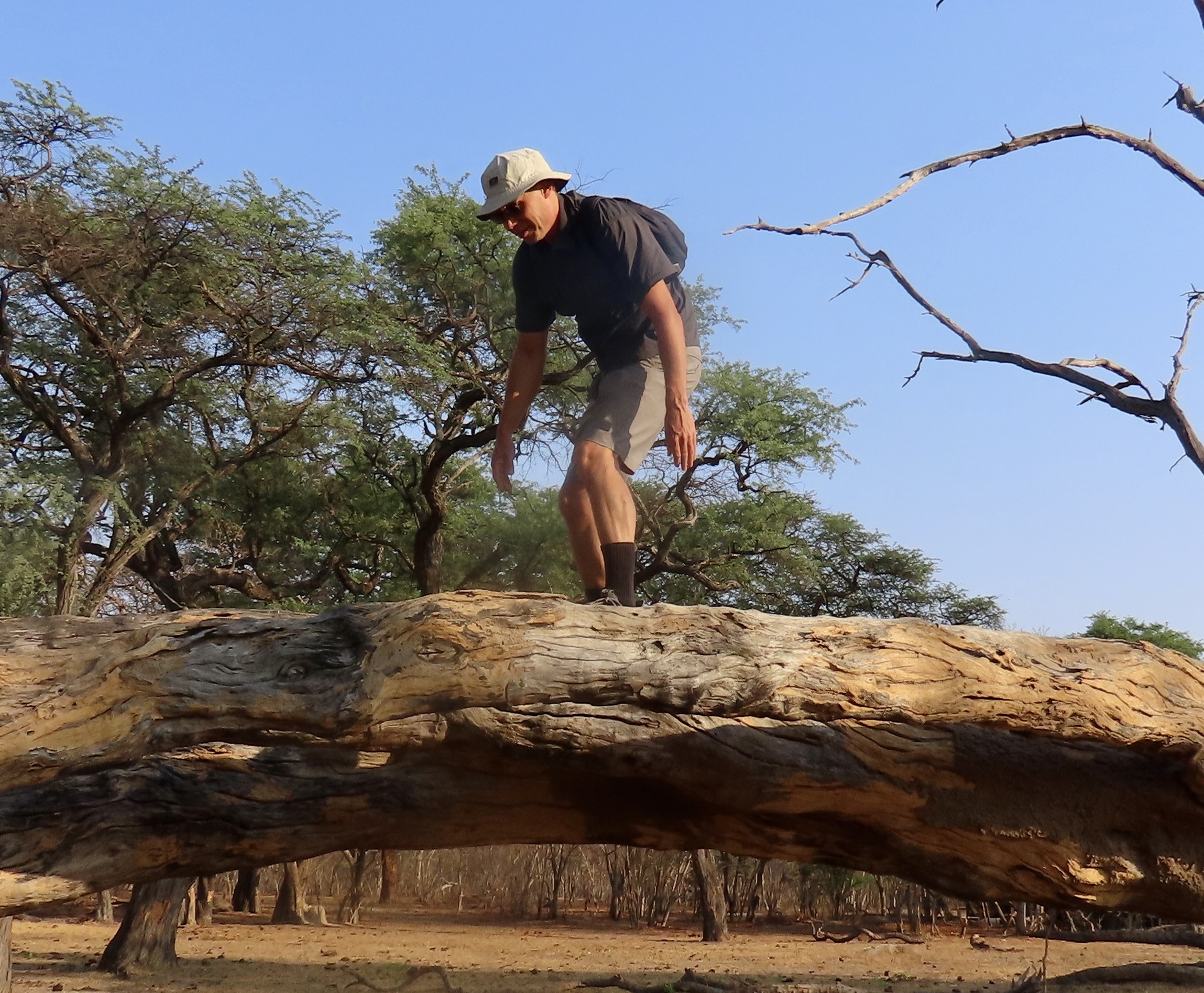
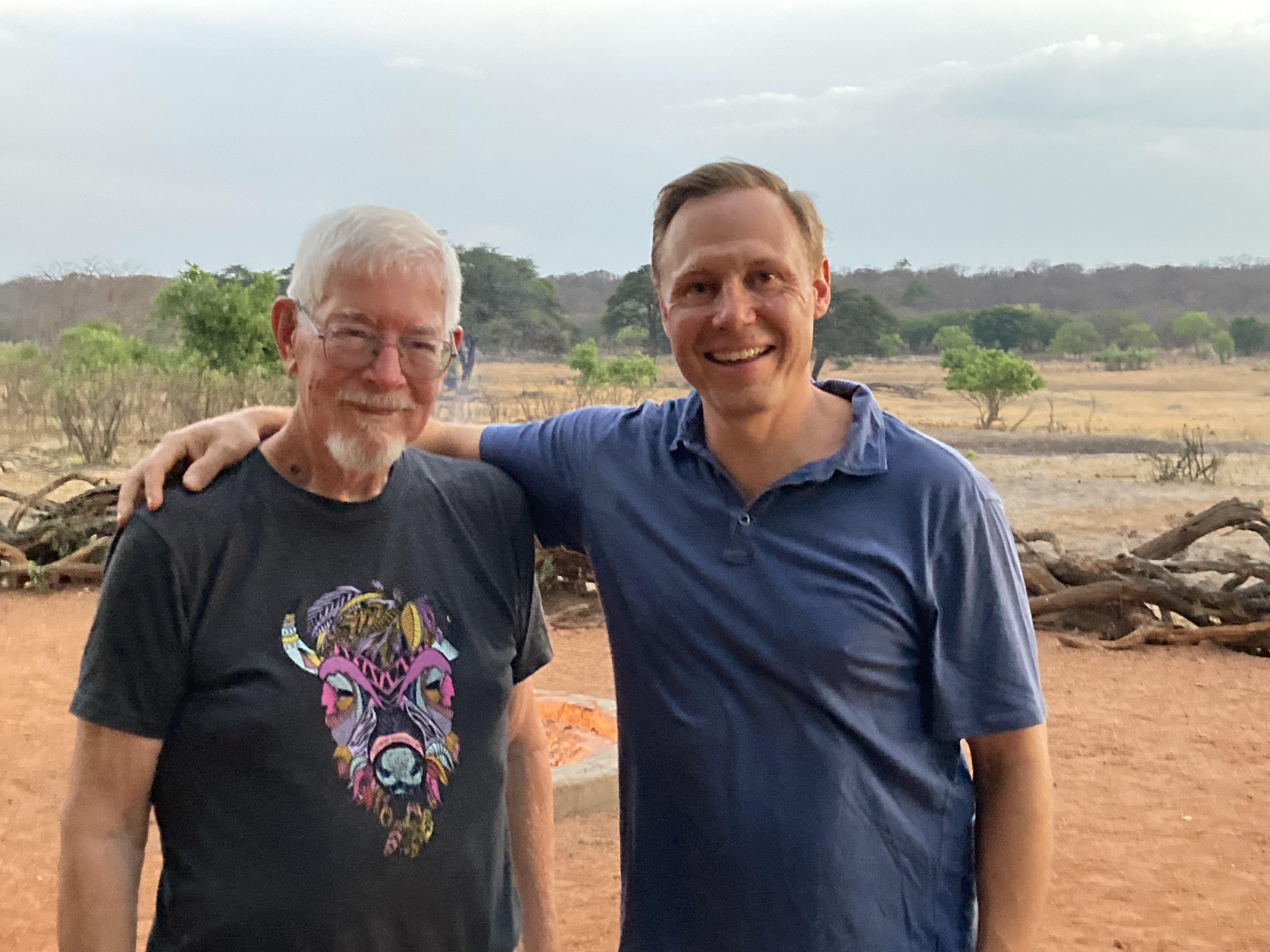
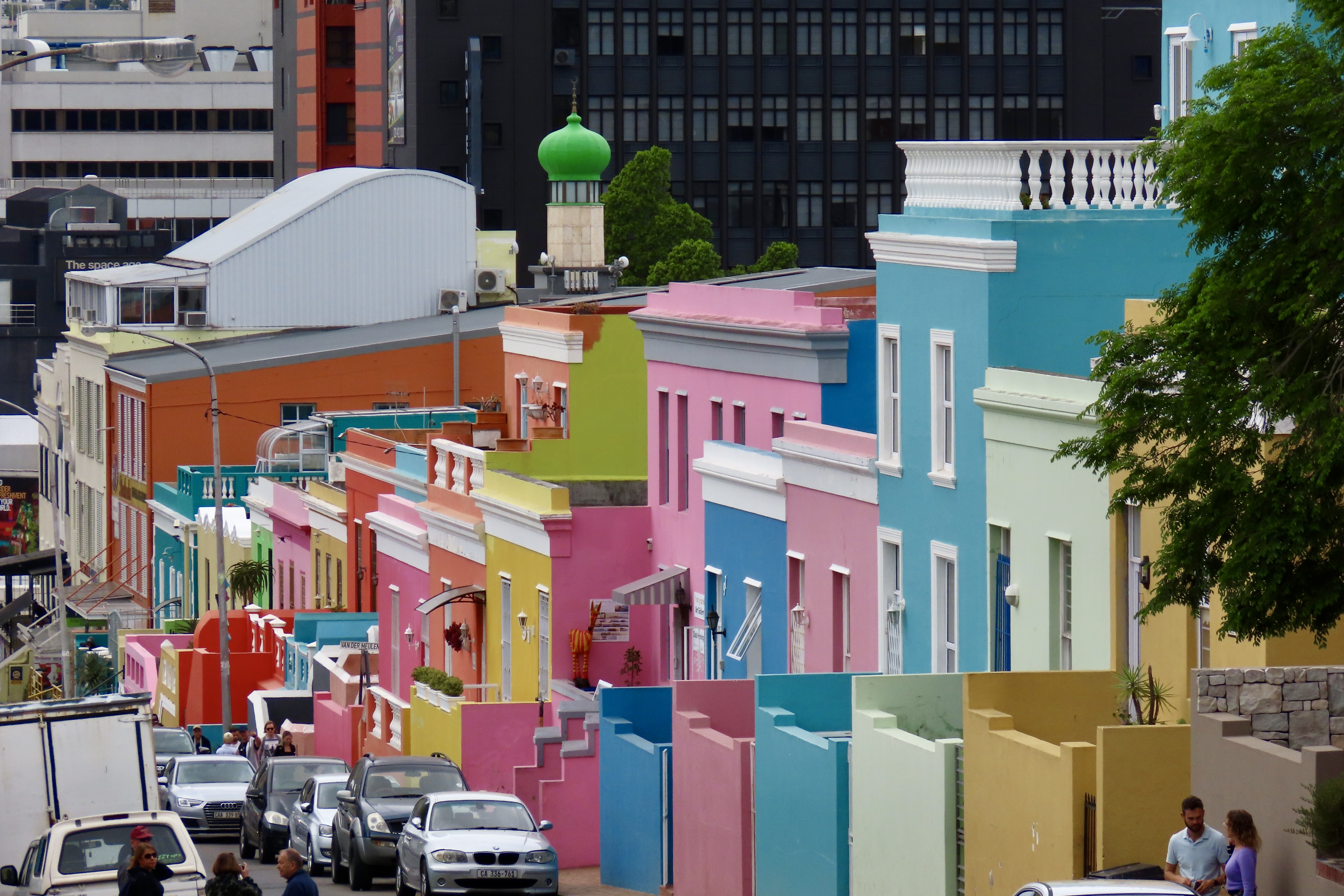
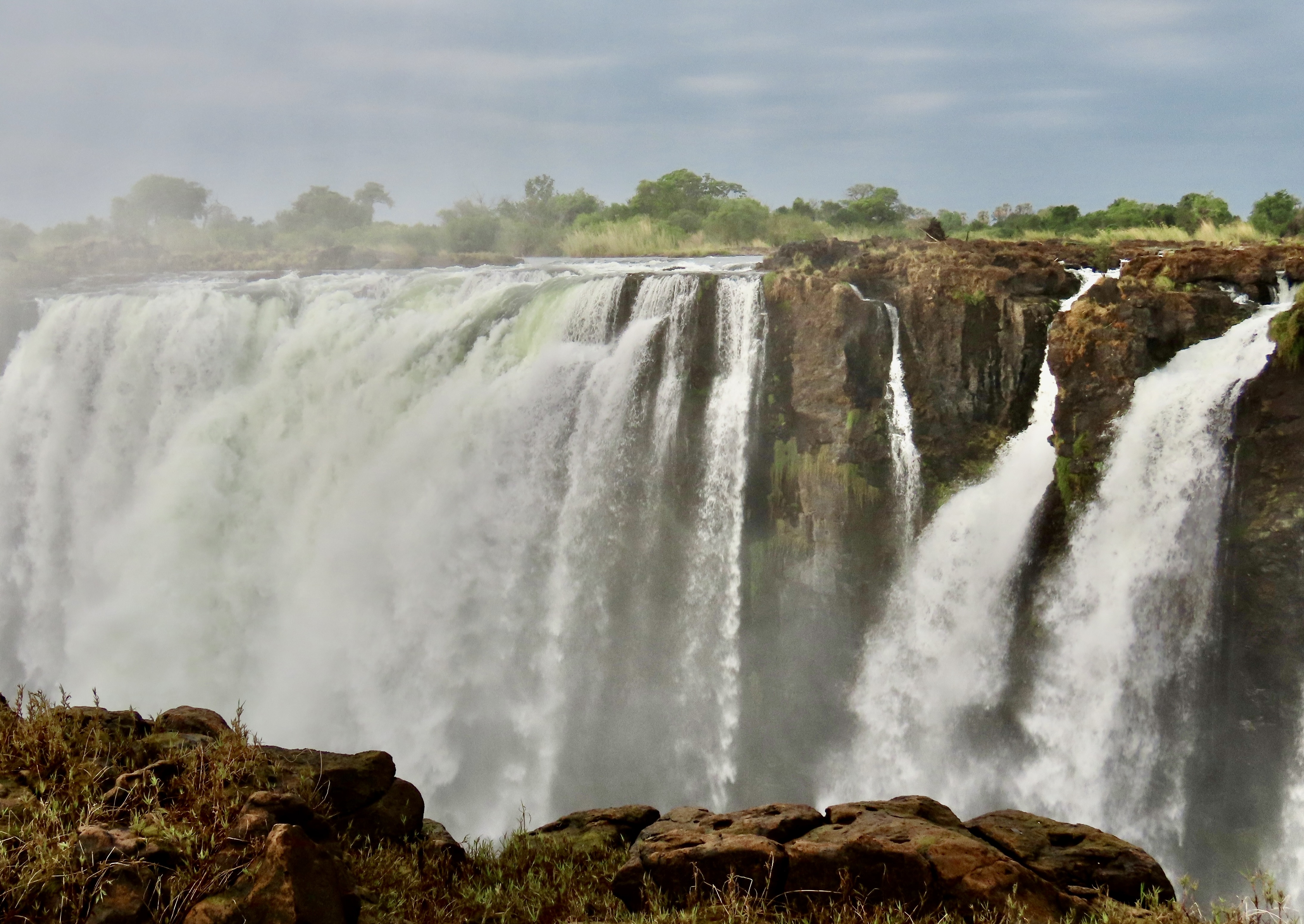
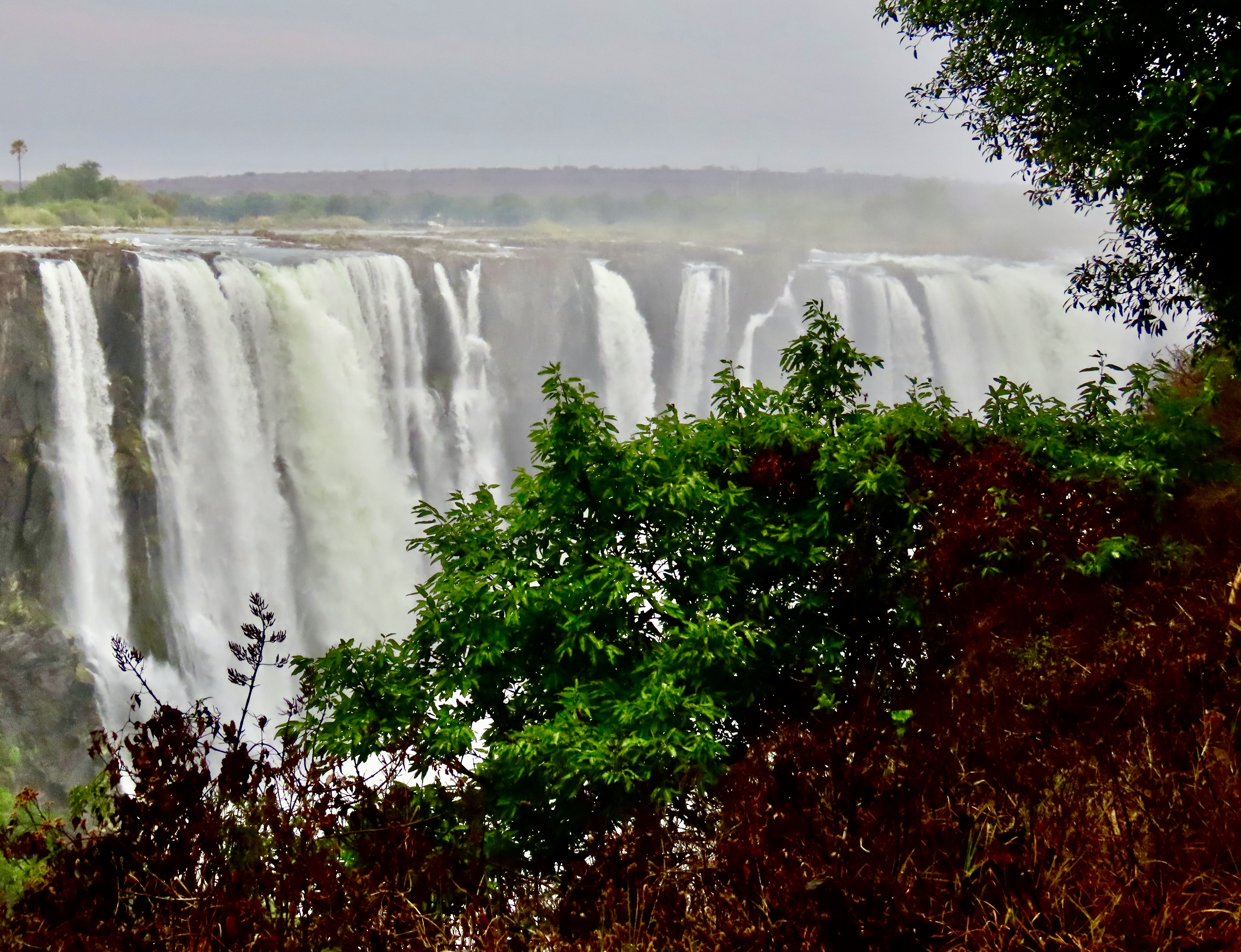
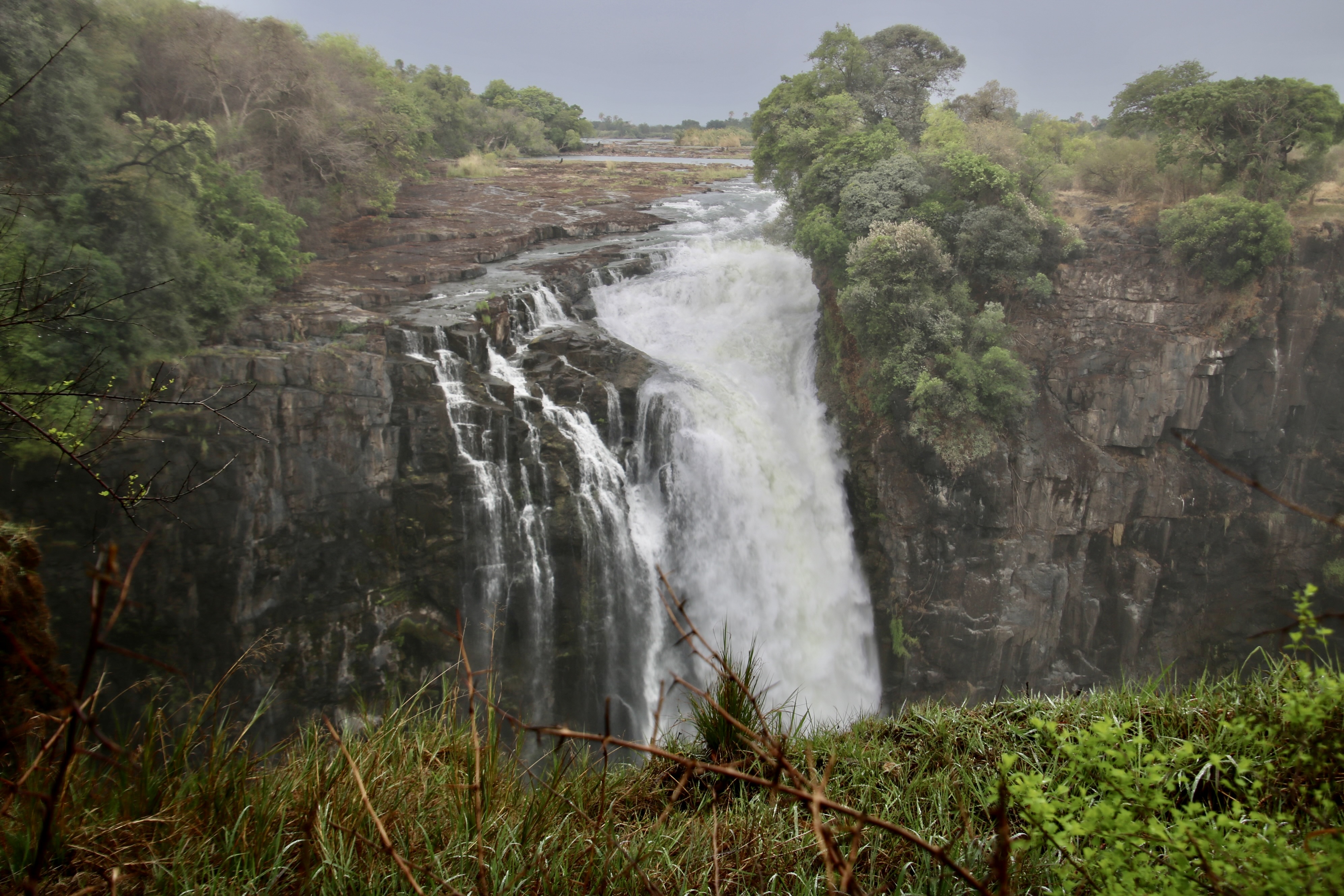
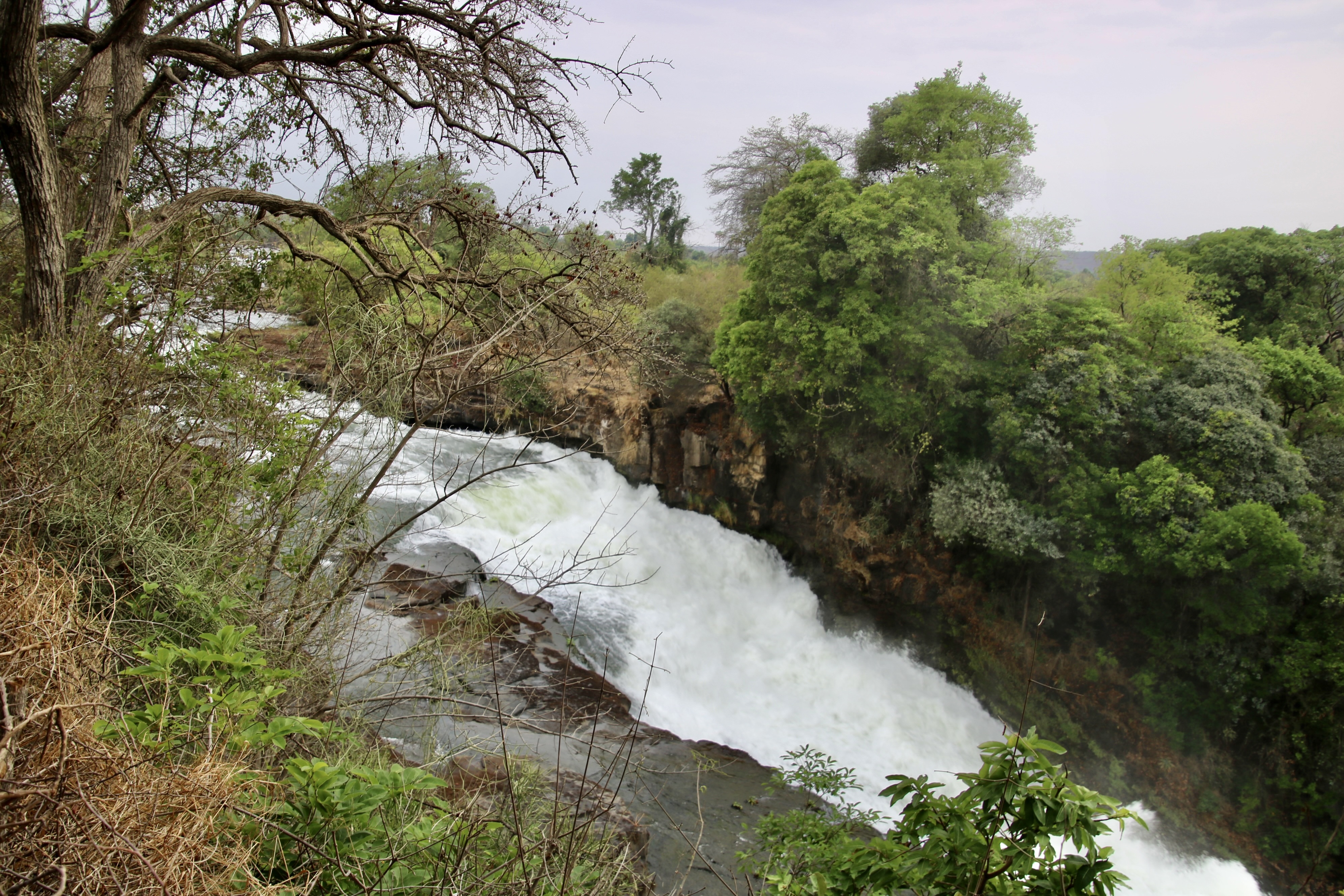
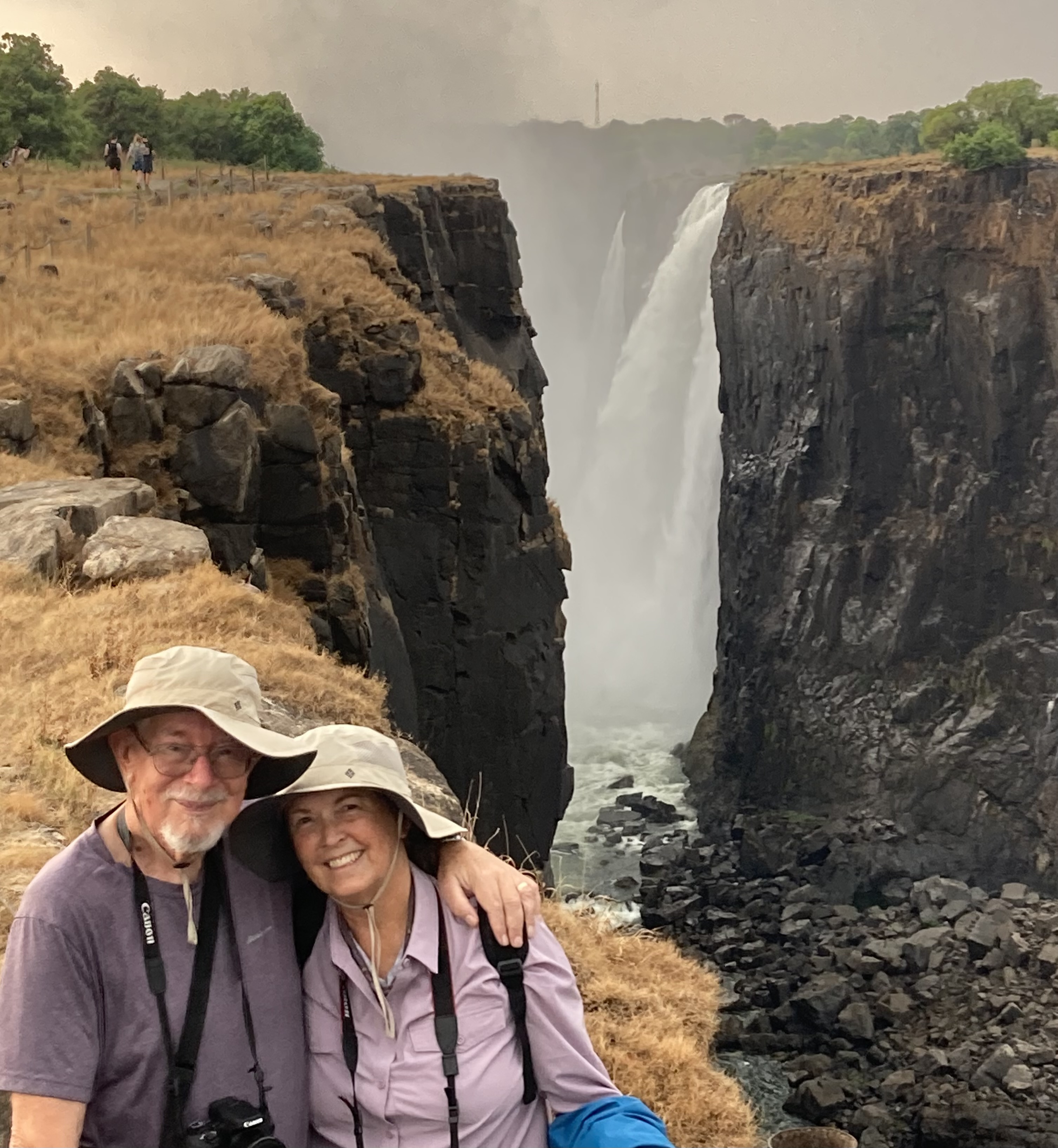
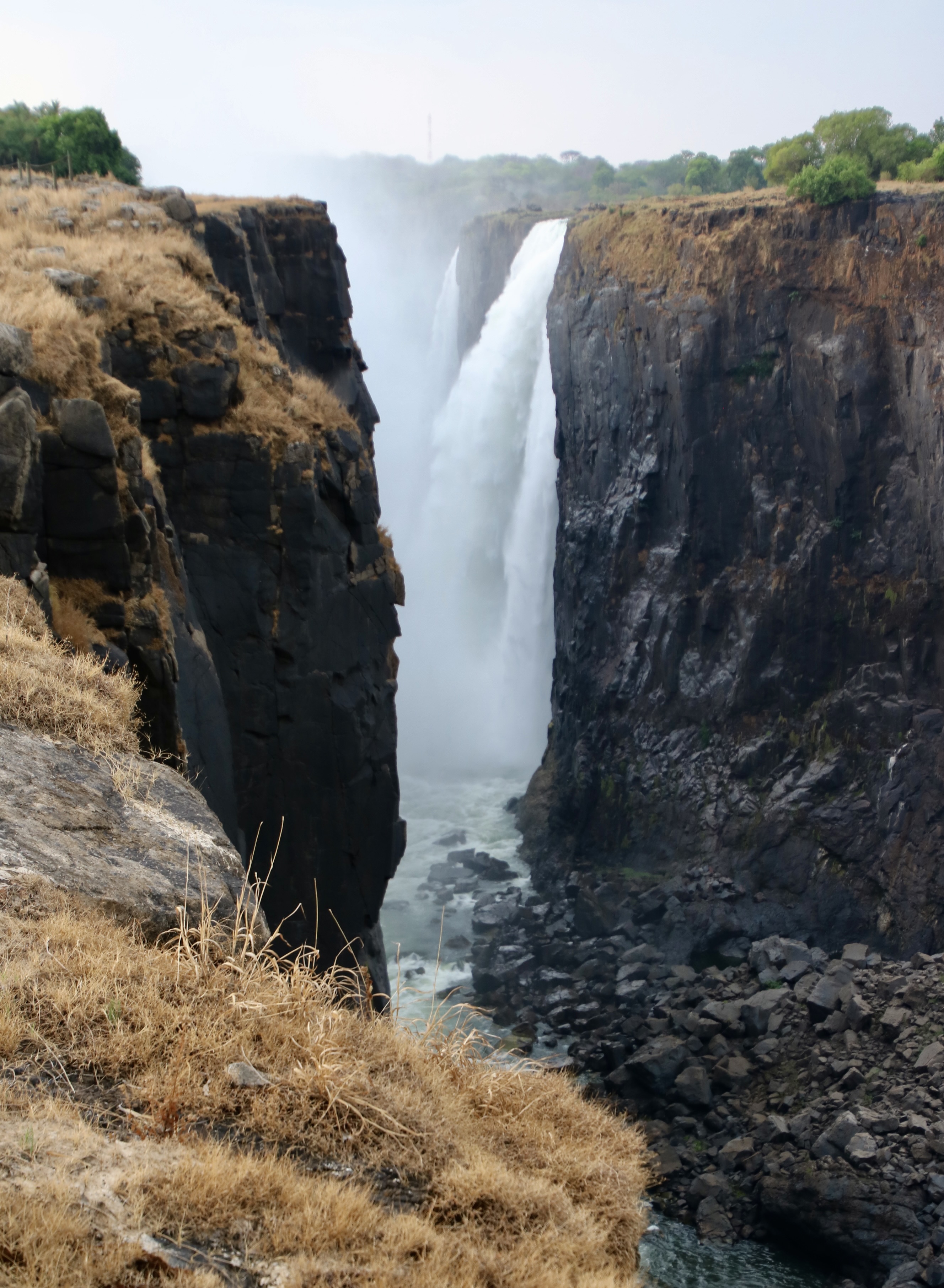
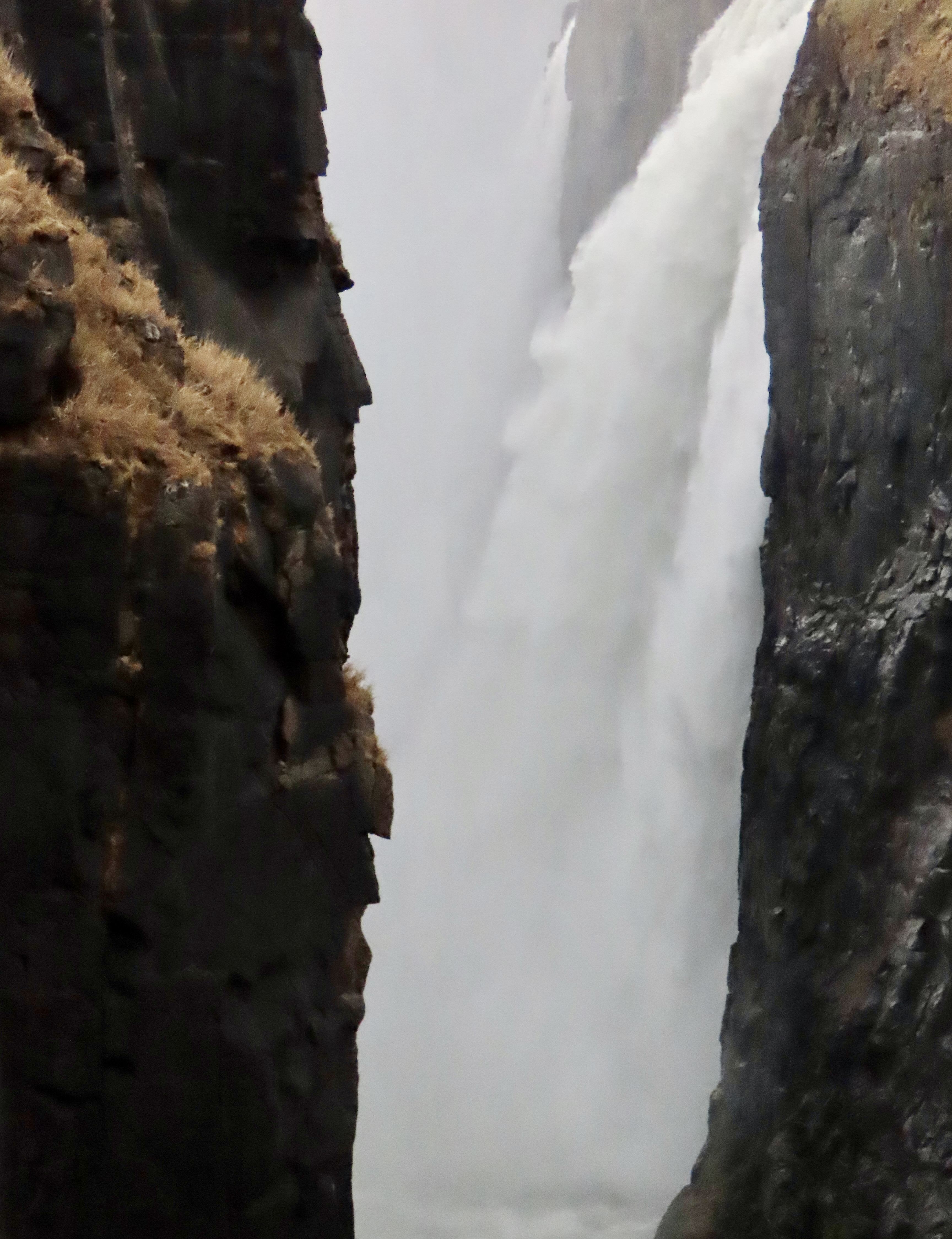
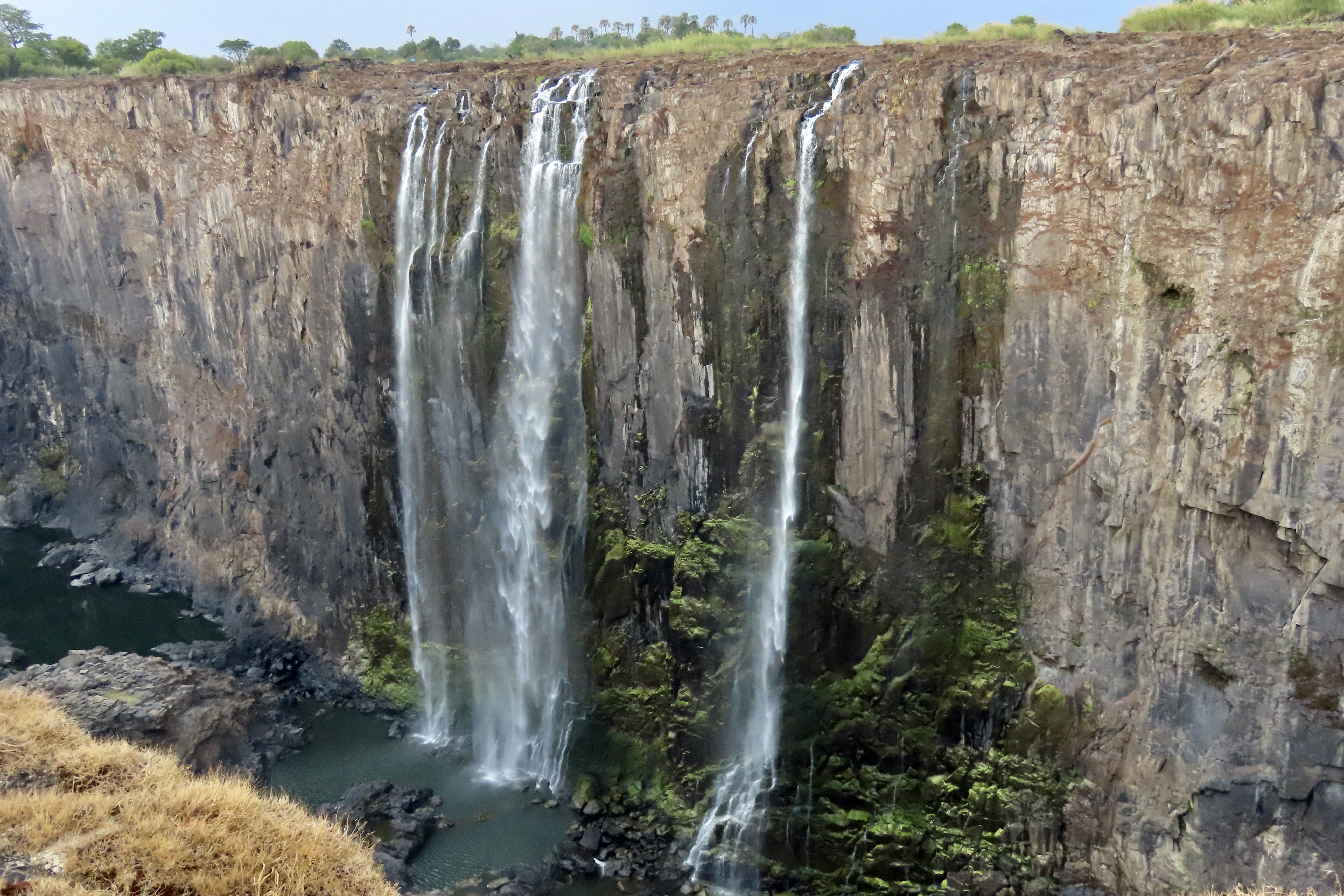
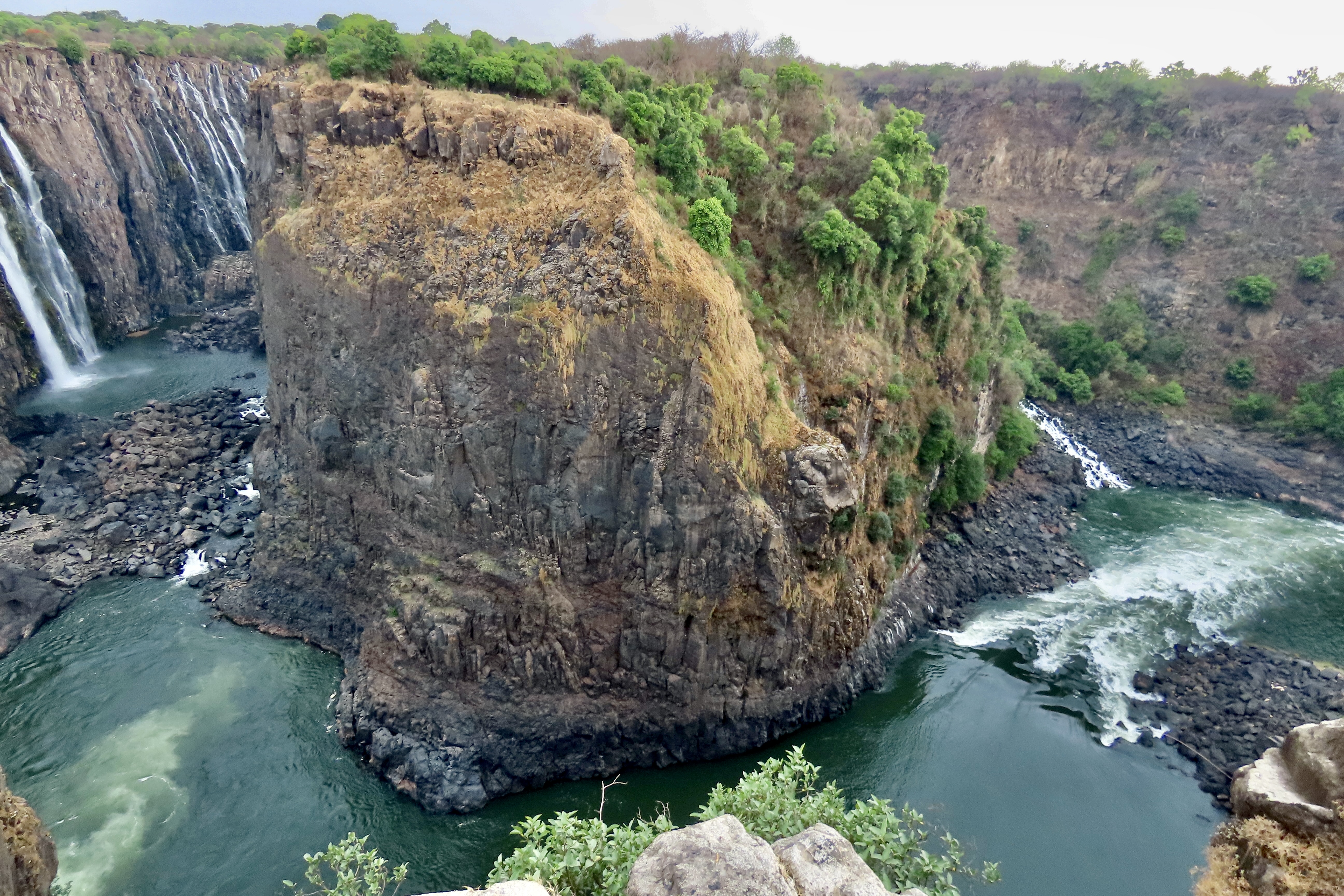
I tried, I really did. This was supposed to be my last post on our African Safari. But when I looked through the last thousand photos of scenery, people, and a catch-all-miscellaneous that I considered blog worthy, I just couldn’t do it. Eventually, I got the thousand down to 82. I’ve divided them into three posts. Today I will focus on Victoria Falls and the surrounding area. The second post will wrap-up Chobe National Park, Hwange National Park and Lake Kariba. The last post will feature South Africa.













Peggy and I traveled to Everglades National Park a few weeks ago, came back to our basecamp in Virginia, spent two weeks rushing to prepare for our five-month road trip, and are now in Terre Haute, Indiana sitting on the border of Missouri. We were supposed to be continuing west today, but the National Weather Service had a severe thunder and lightning storm warning up for Missouri. It’s not the type of weather to be out on the road, especially when pulling a small, light trailer.
The storm introduced itself last night. We could hear it approaching from miles away, at first a distant constant rumble, it became an earth-shaking roar. We hunkered down and wondered if Armageddon had arrived. I worried about hail. Baseball size chunks were crashing down on Kansas City. Serafina, our trailer, would not have been happy. But the storm passed us by without any damage.
On top of that, we had a propane leak, which can be more dangerous than softball-size hail. My solution, other than a few chosen words, was to shut the tanks off and wait until we could find an RV service facility to fix it, which often takes days or even weeks to schedule. Fortunately, we have options that allow us to function without propane.
Peggy and I have learned in our recent travels that mobile techs can solve most RV problems, however, often on a same-day basis and at a fair cost. Since we were here for the day, I called a local business in Terre Haute: At Your Service— Mobile RV Repair. And boy did we luck out. I reached the owner, Allen Grota, and he told me he would be over as soon as the storm stopped. He went through everything, tanks, connections and regulator. Finally he found the problem. The hose to the trailer had been left hanging next to one of our levelers and the lowering and rising of the leveler had cut it. As soon as this had happened, the regulator had shut down the tank. We weren’t in danger, but neither would we have propane. Allen then ran downtown to get what he needed to fix the problem. The cost was incredibly reasonable. And it turns out, Allen is a heck off a nice guy.
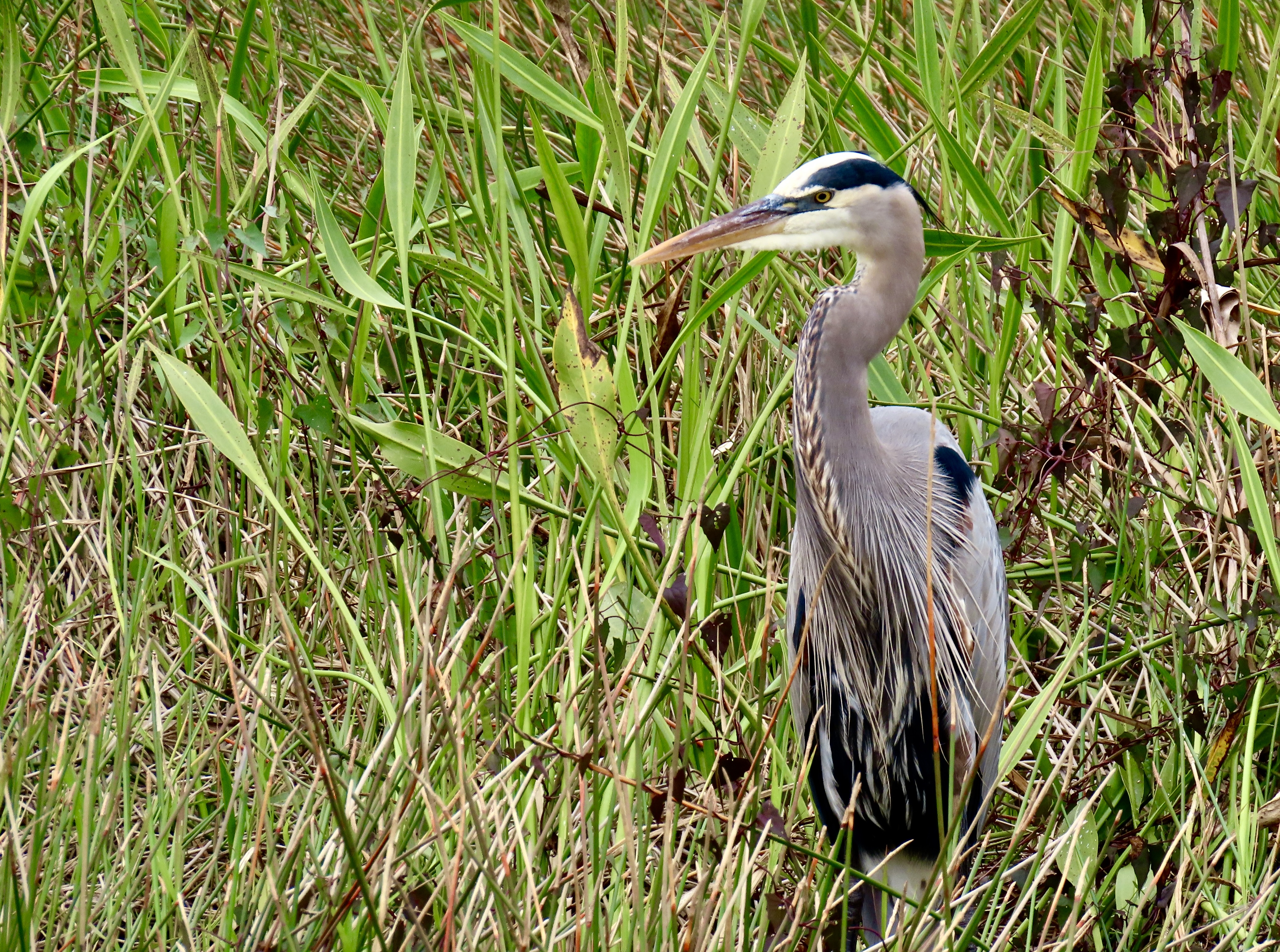
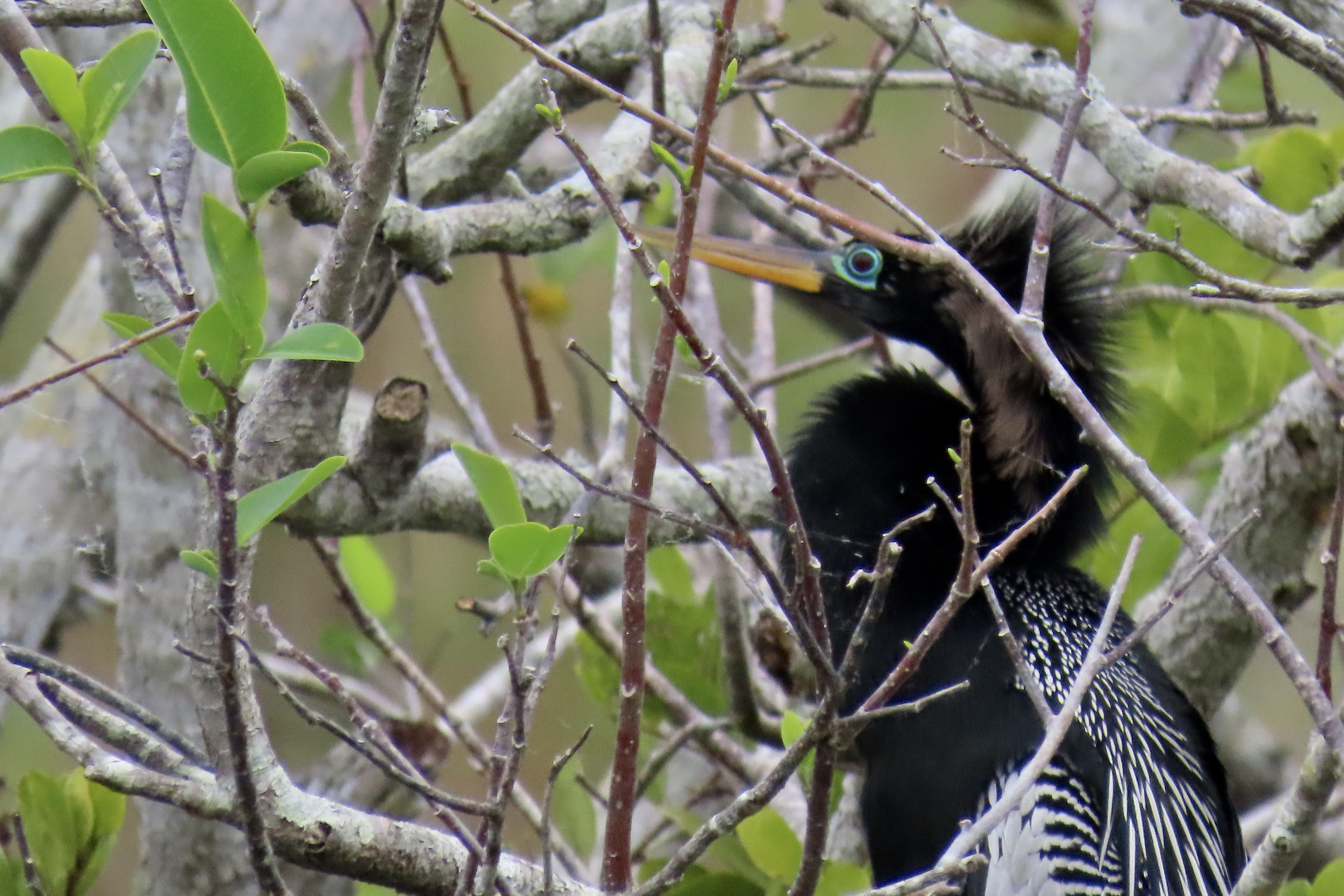
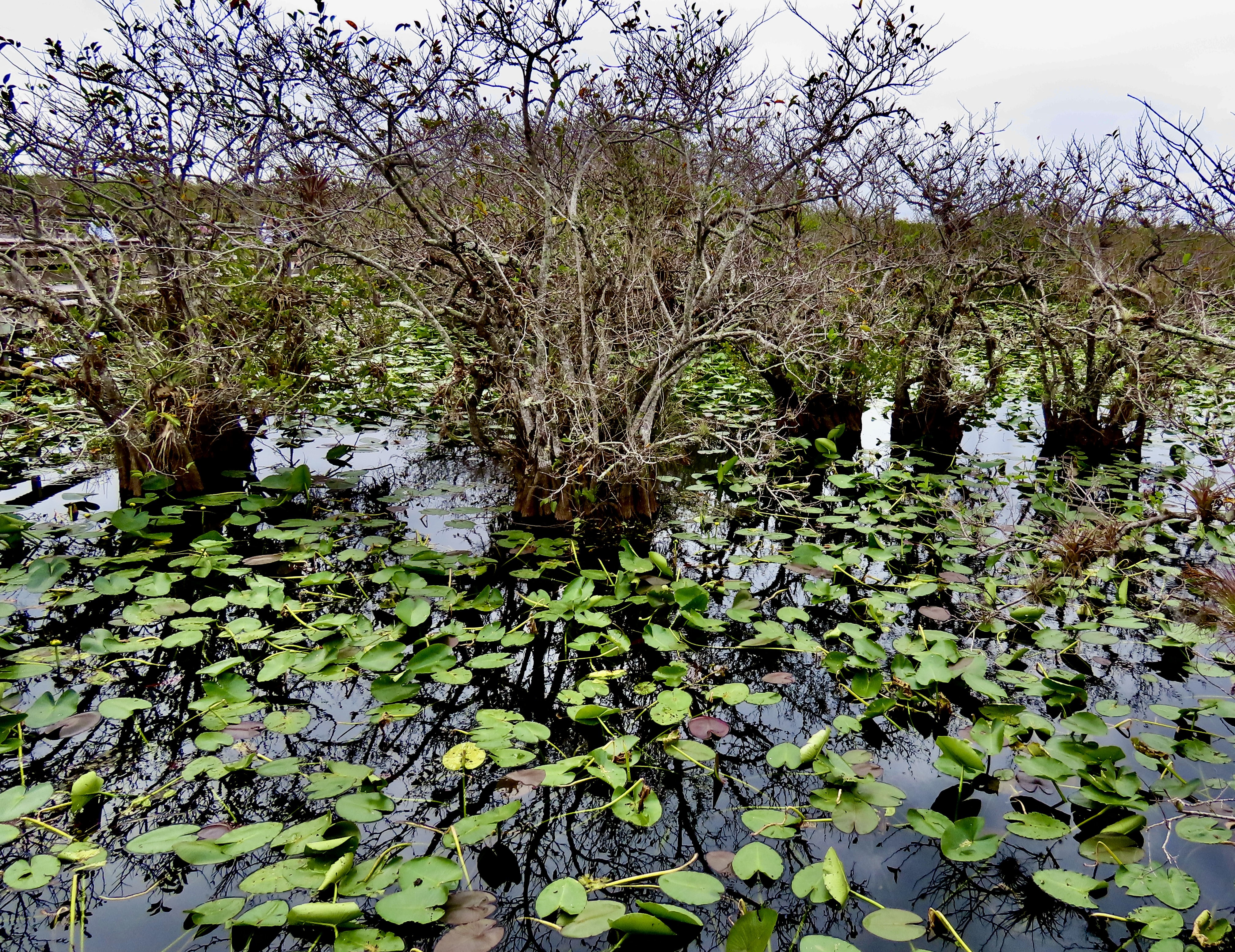
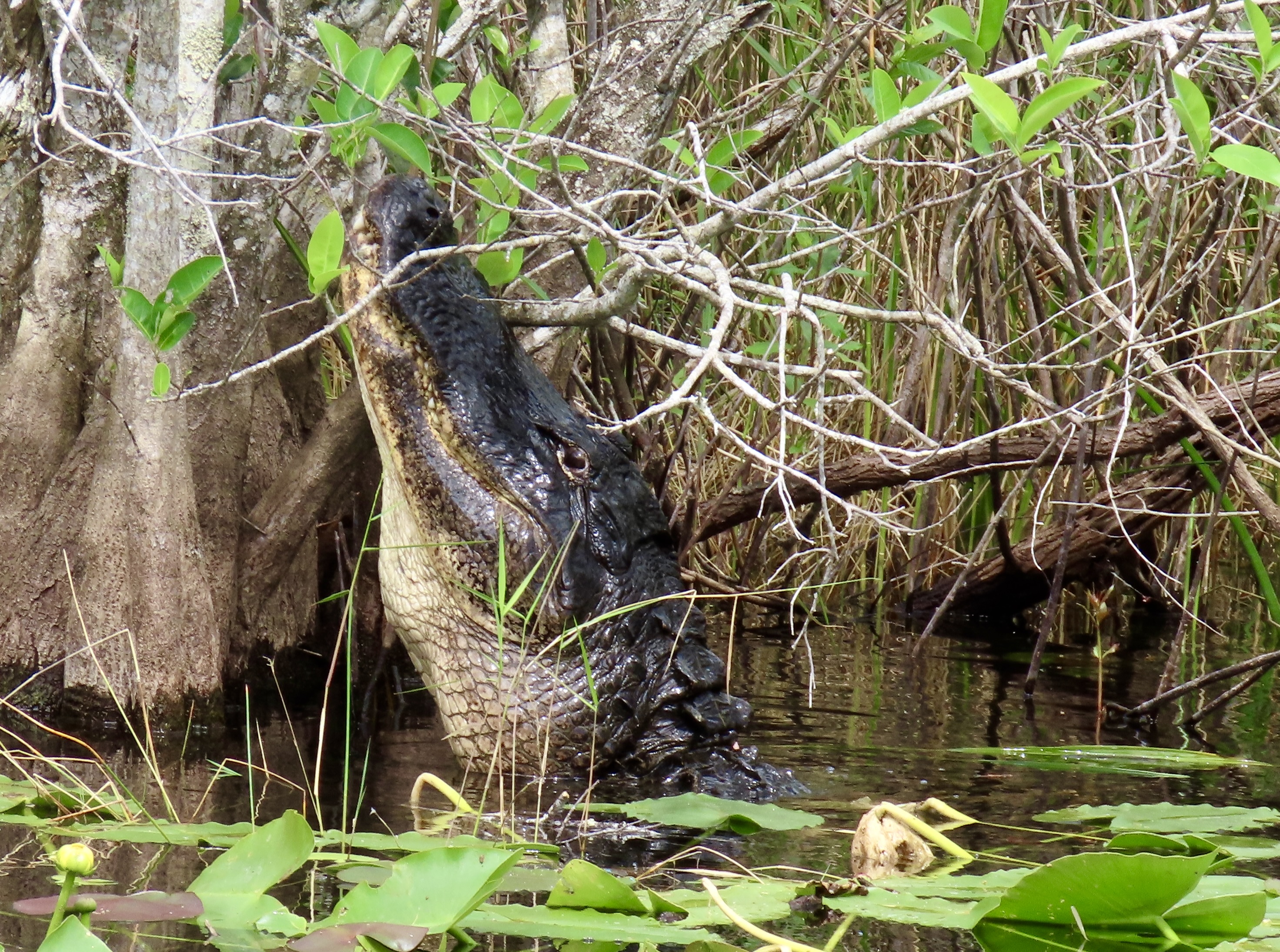
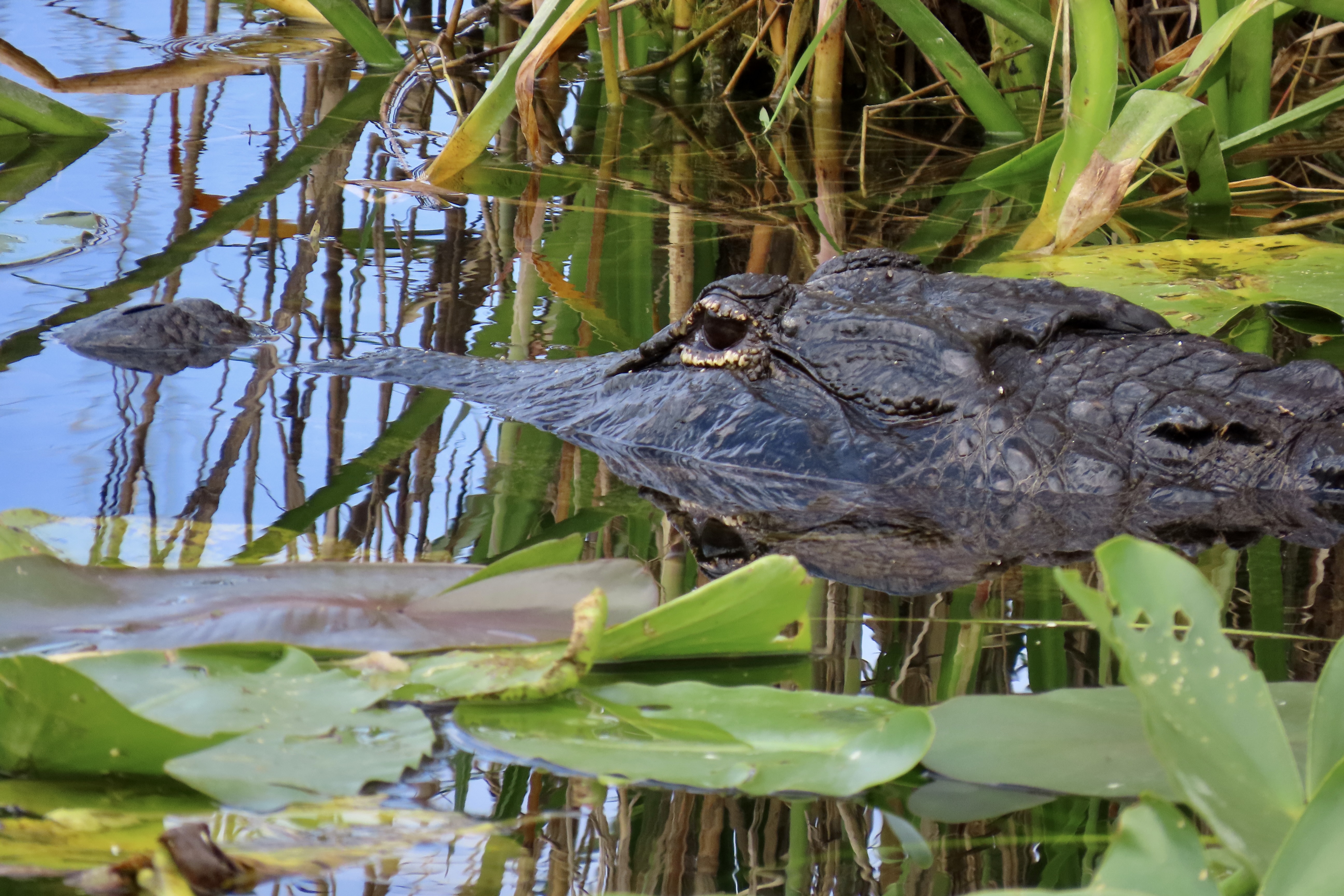
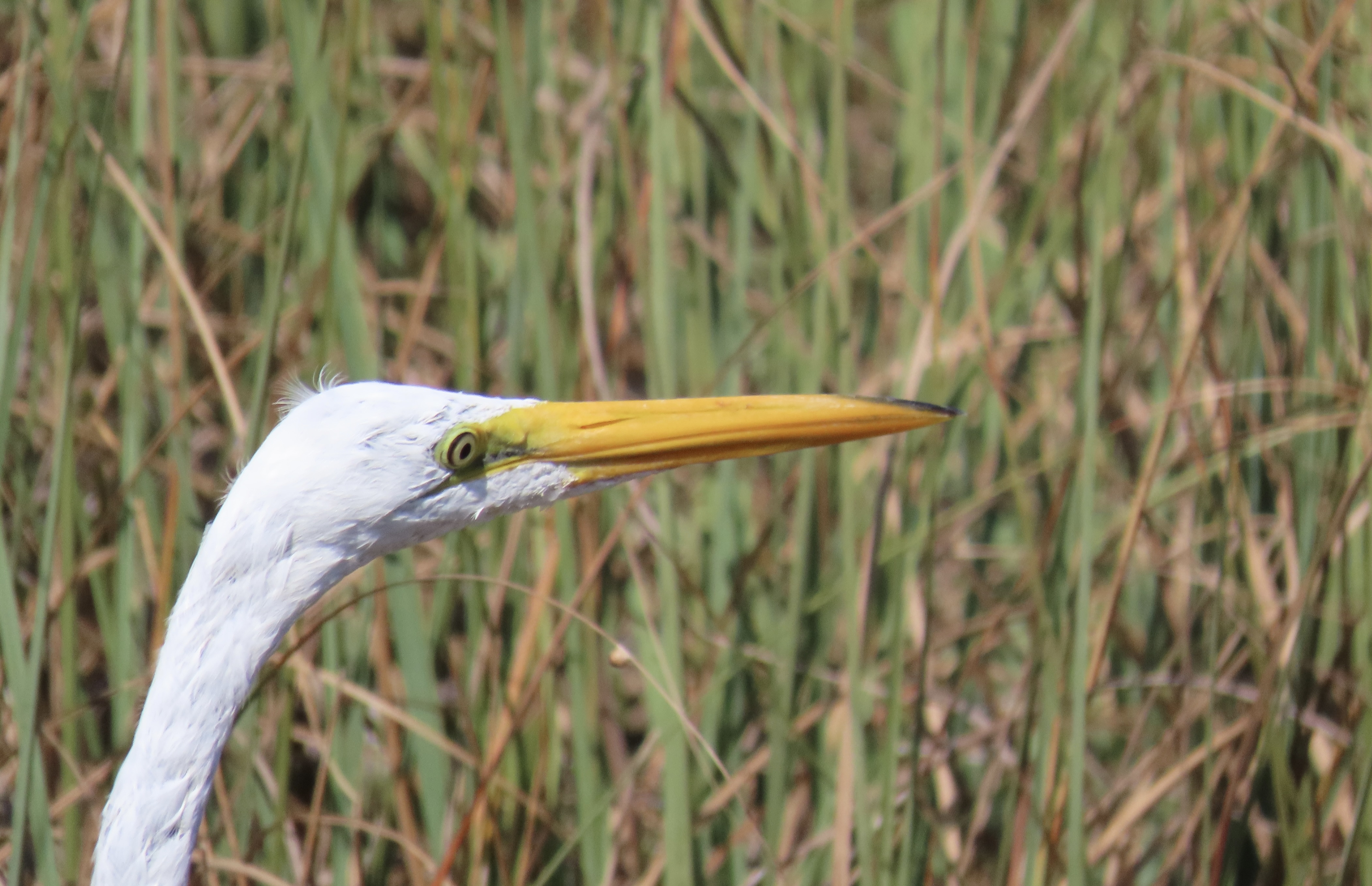
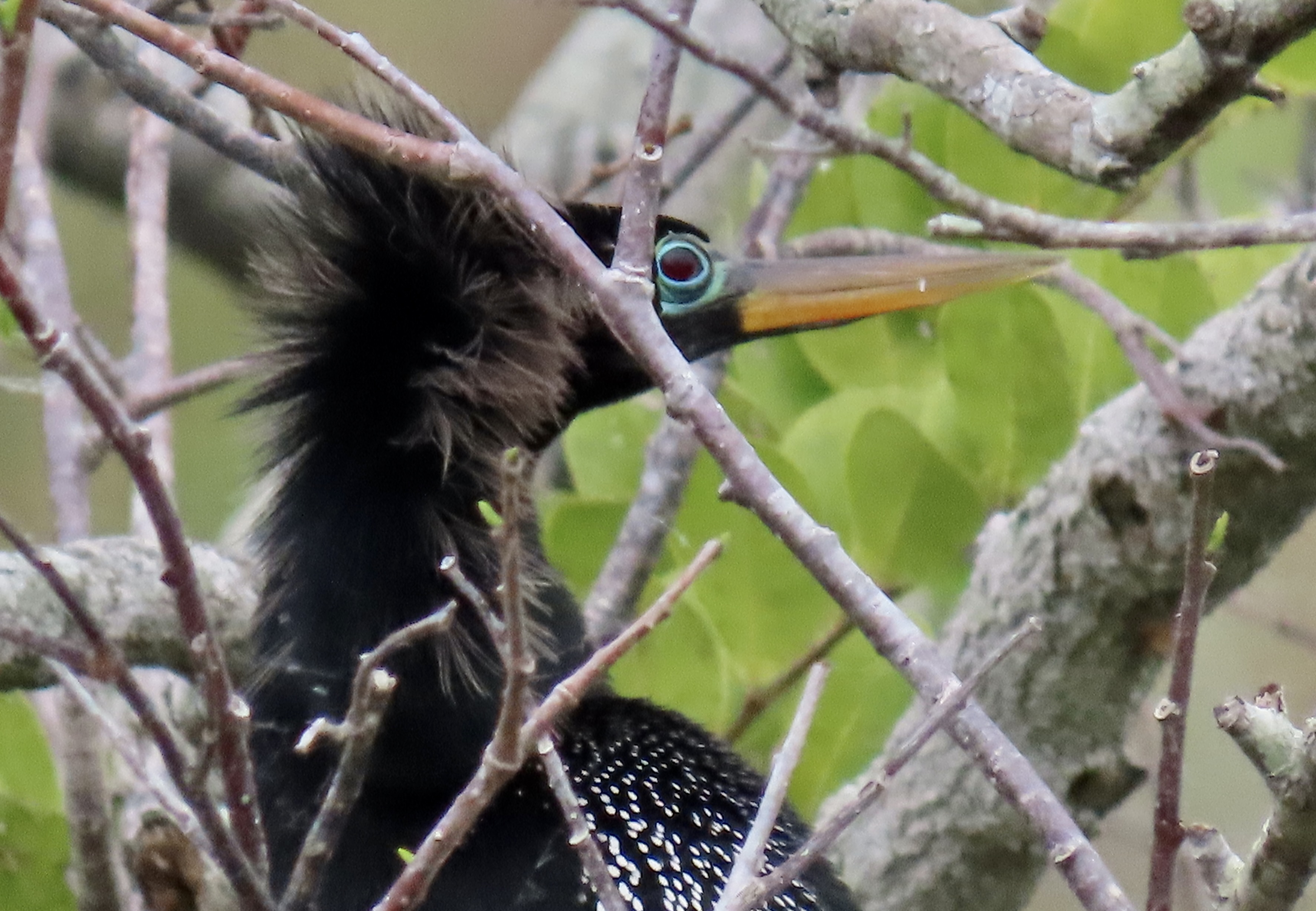
I’ve already done three posts on our Everglades trip: One on white pelicans, one on osprey, and one on the area around Everglade City on the Gulf Coast. I’ll conclude today featuring more of the Atlantic Coast side where we found the osprey and white pelicans. We entered the park at the Ernest F. Coe entrance. After stopping off at the Visitor Center, we made a beeline for the Anhinga Trail, just inside the park. Peggy and I had been there before and were quite impressed with the alligators and birdlife.
From there, we drove down through the park to Flamingo, where we would be glamping. We stopped along the way at various pulloffs to check out features of the Everglades emphasized by the National Park. First up, the Anhinga Trail.