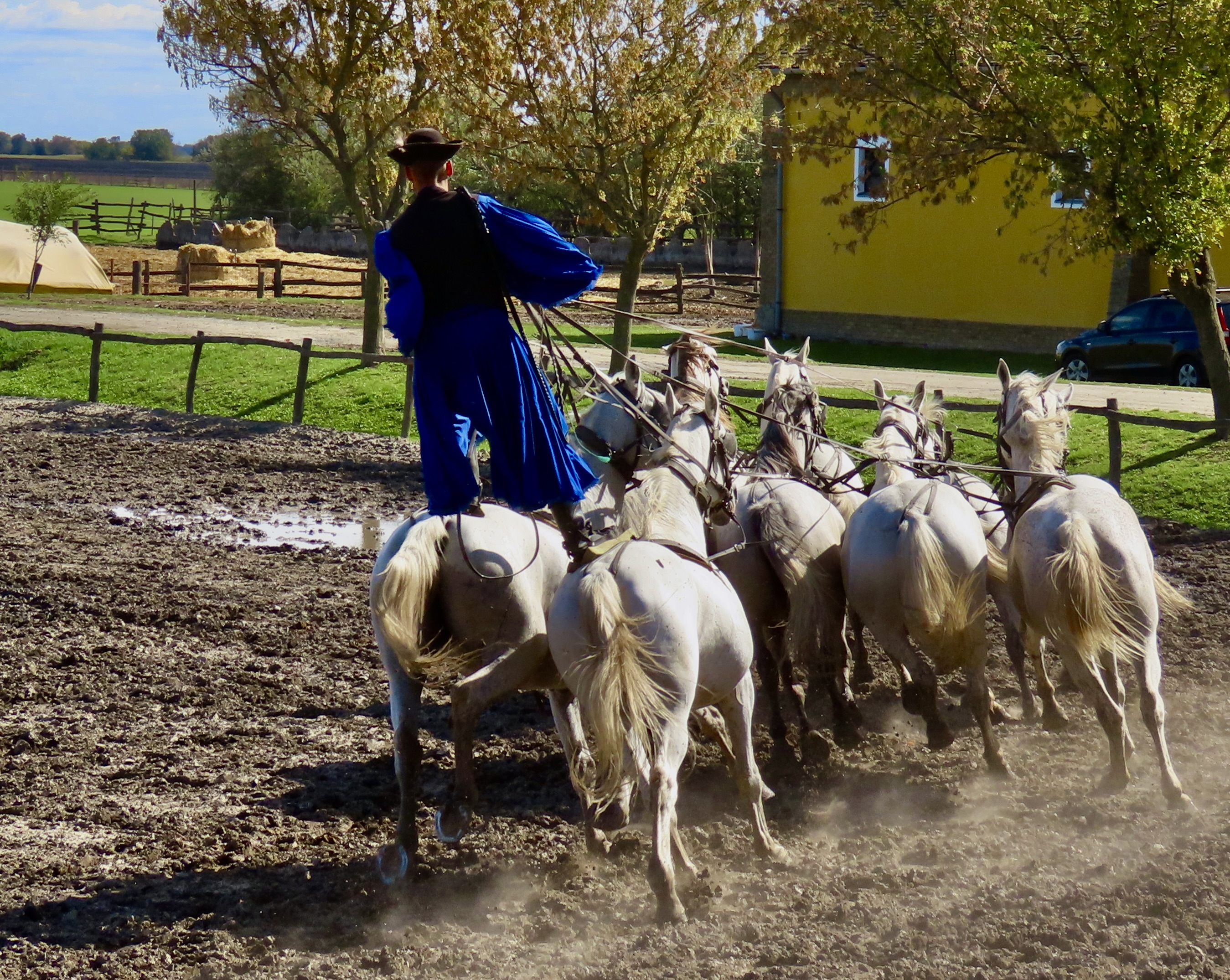
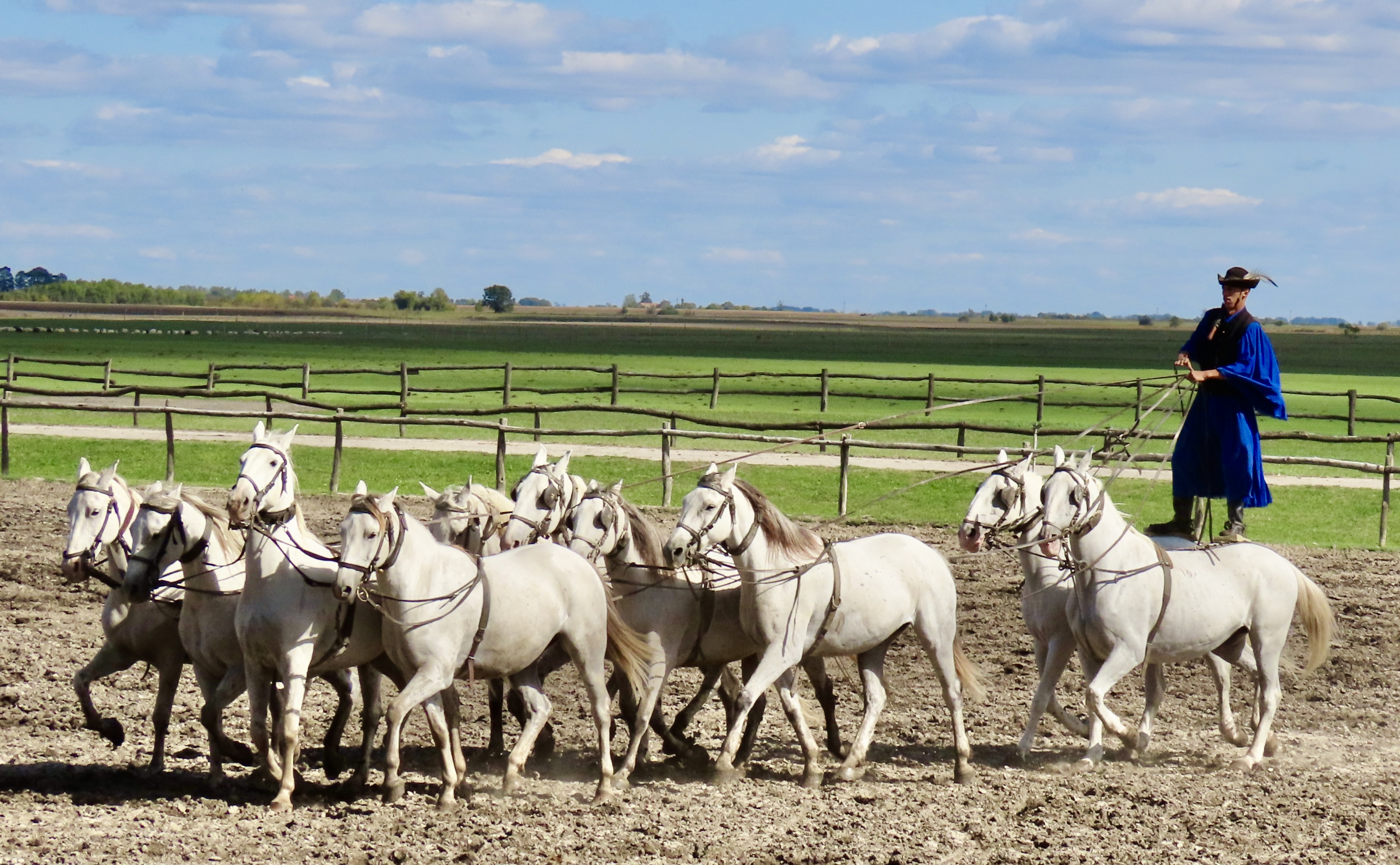
88 miles south of Budapest, we came to the Hungarian town of Kolaska. We’ll have a post relating to the town but, first, I’m going to feature the Bakod Horse Farm located near the town and its incredible horsemen, the Csikos, along with their handsome and well-trained horses. This particular display of horsemanship is called a Hungarian post.
We left Budapest feeling as we always do when we leave a new area: There was so much more that we could have done. Still, we had an introduction to the city’s beauty, culture and history, which was 100% more than we had before. No regrets. Plus, new adventures awaited us. Our next day down the Danube River would bring us to the historic town of Kolaska where we would explore the town and visit a farm that featured folk dancing, paprika, and horses. While I am not a horse fan per-se and the last time I had did folk/square dancing was in 1966, I do use paprika. Peggy who loves horses and dancing, and— on occasion— wishes I loved them more, was excited. Okay, I thought, I can do this.
I have a confession: I found the paprika interesting, enjoyed the folk dancing, and was blown away by the horse show. It’s up first.
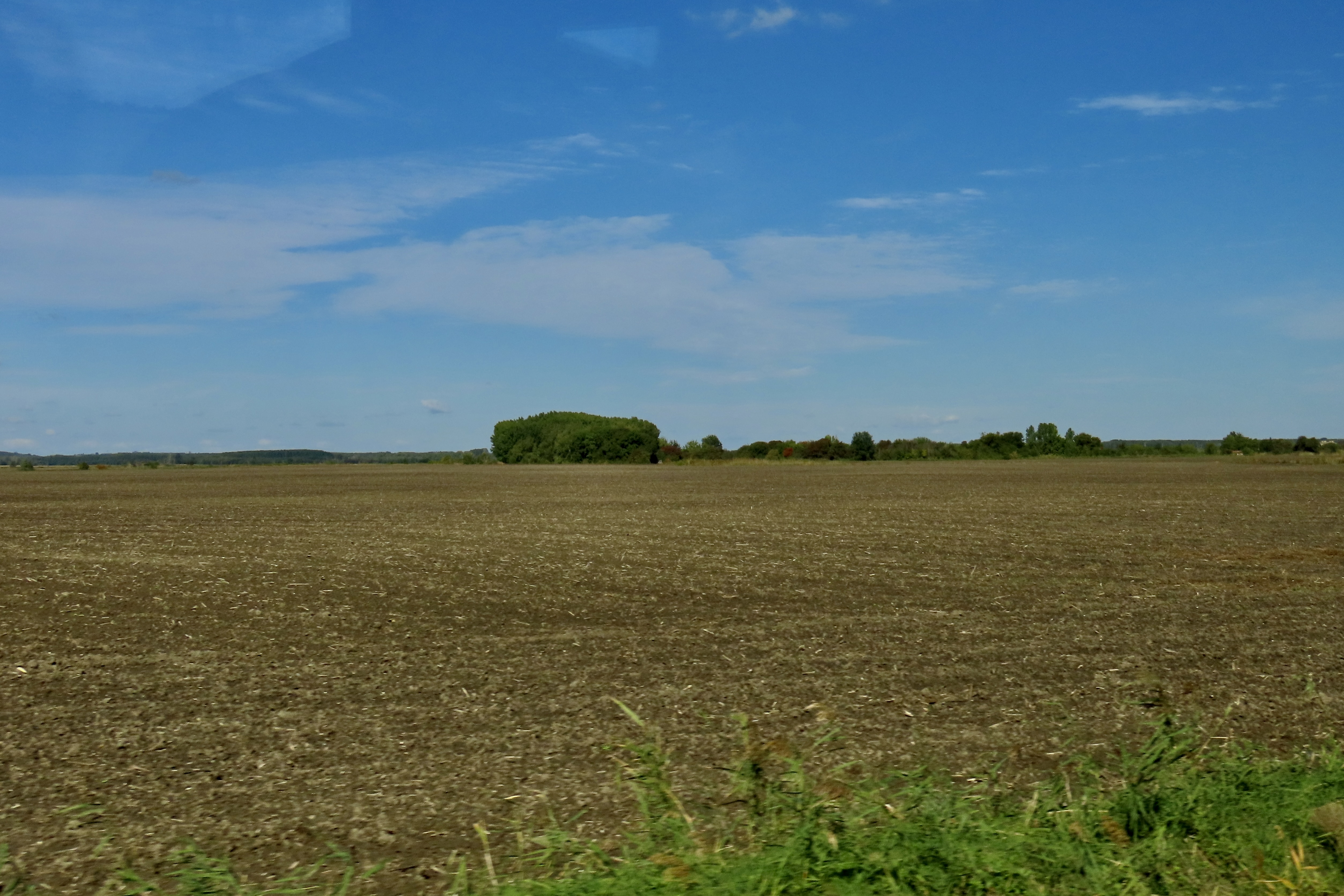
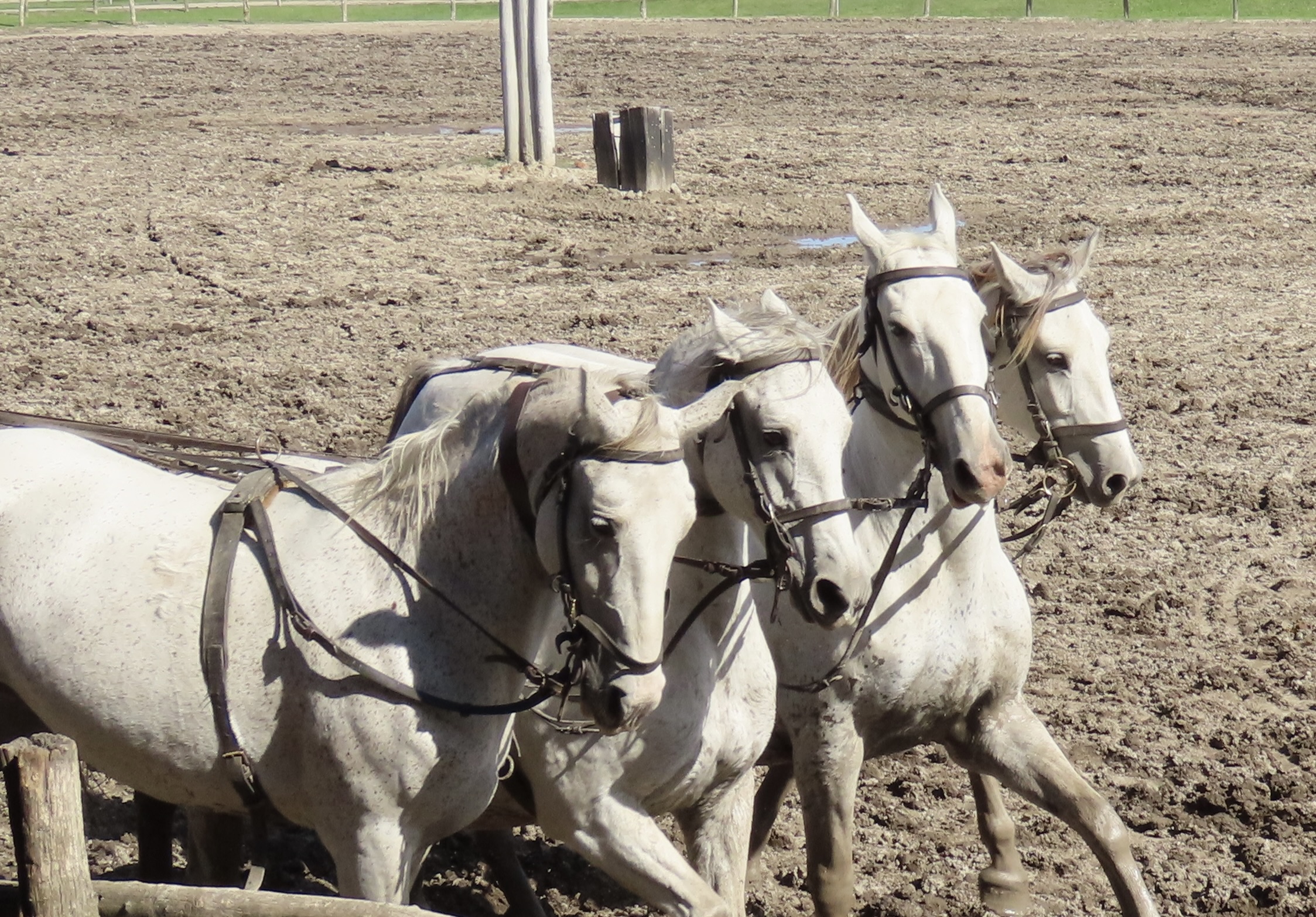
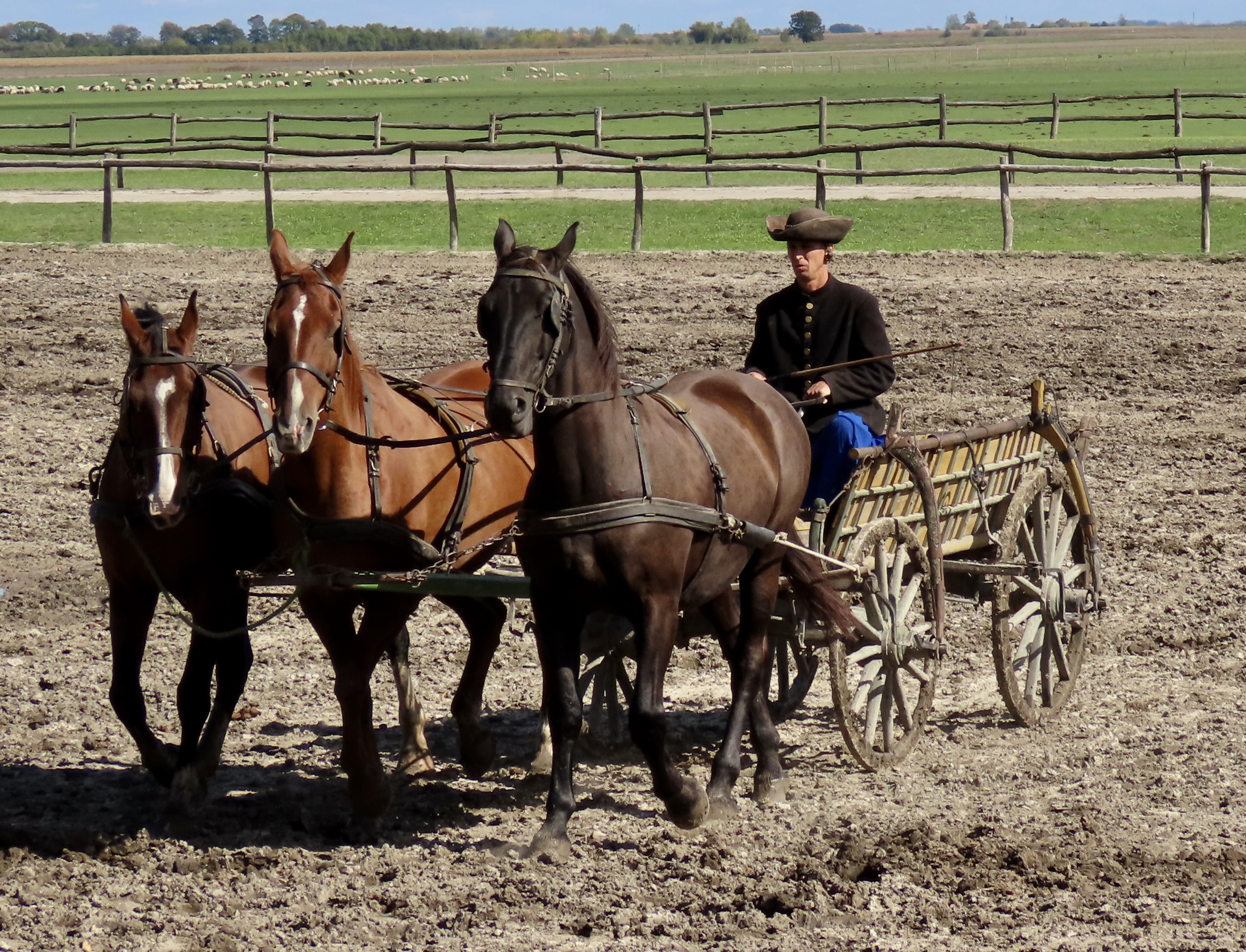
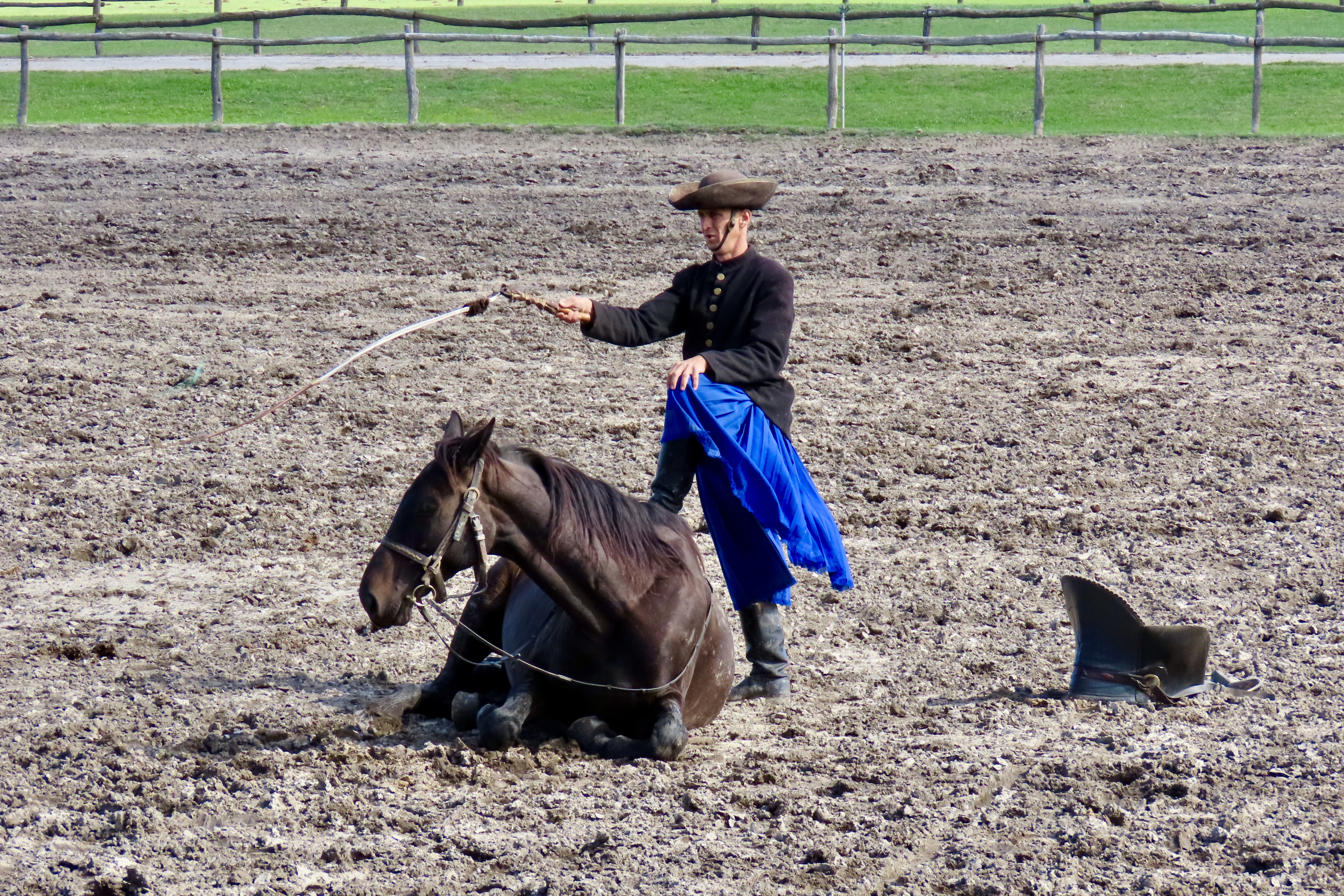
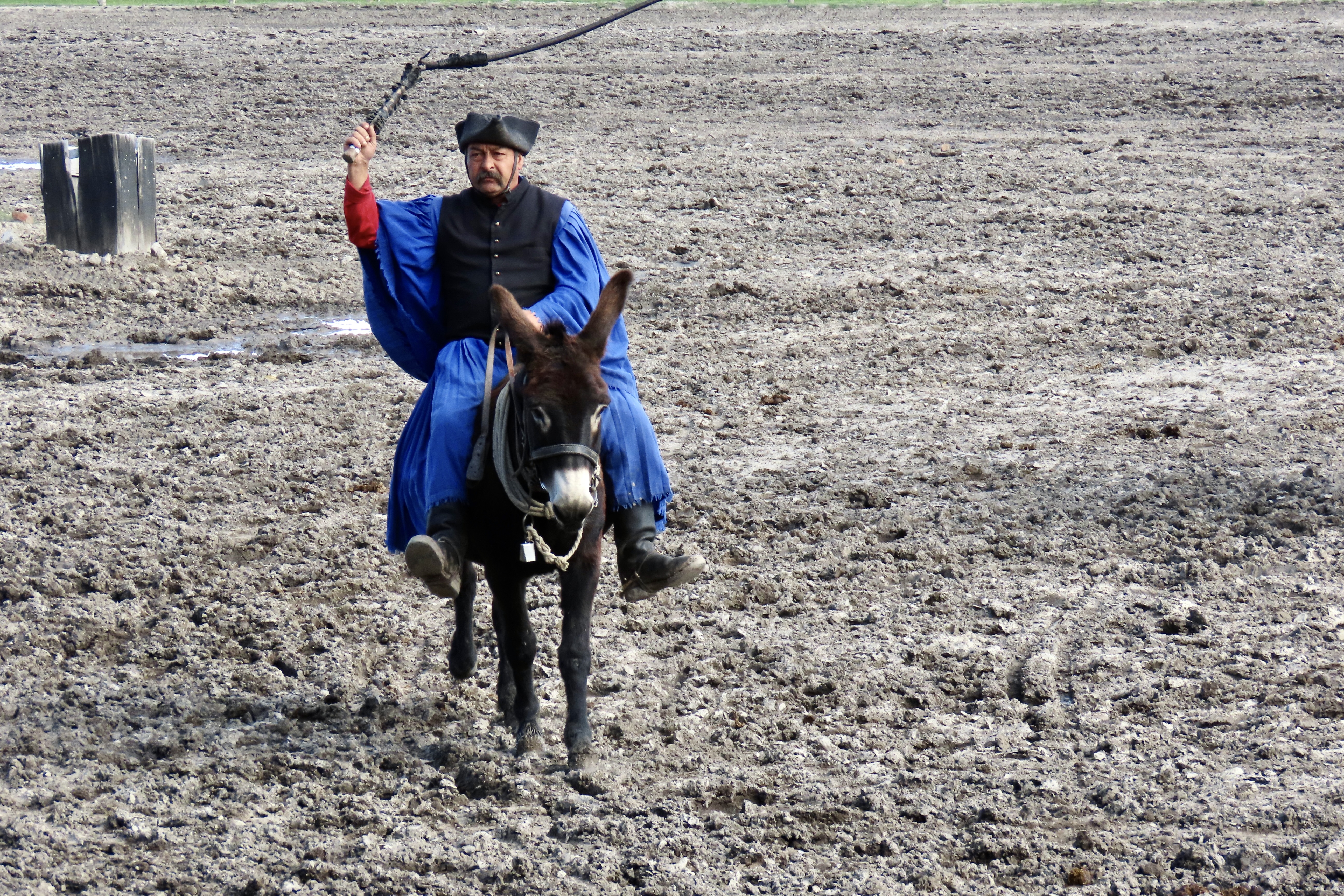
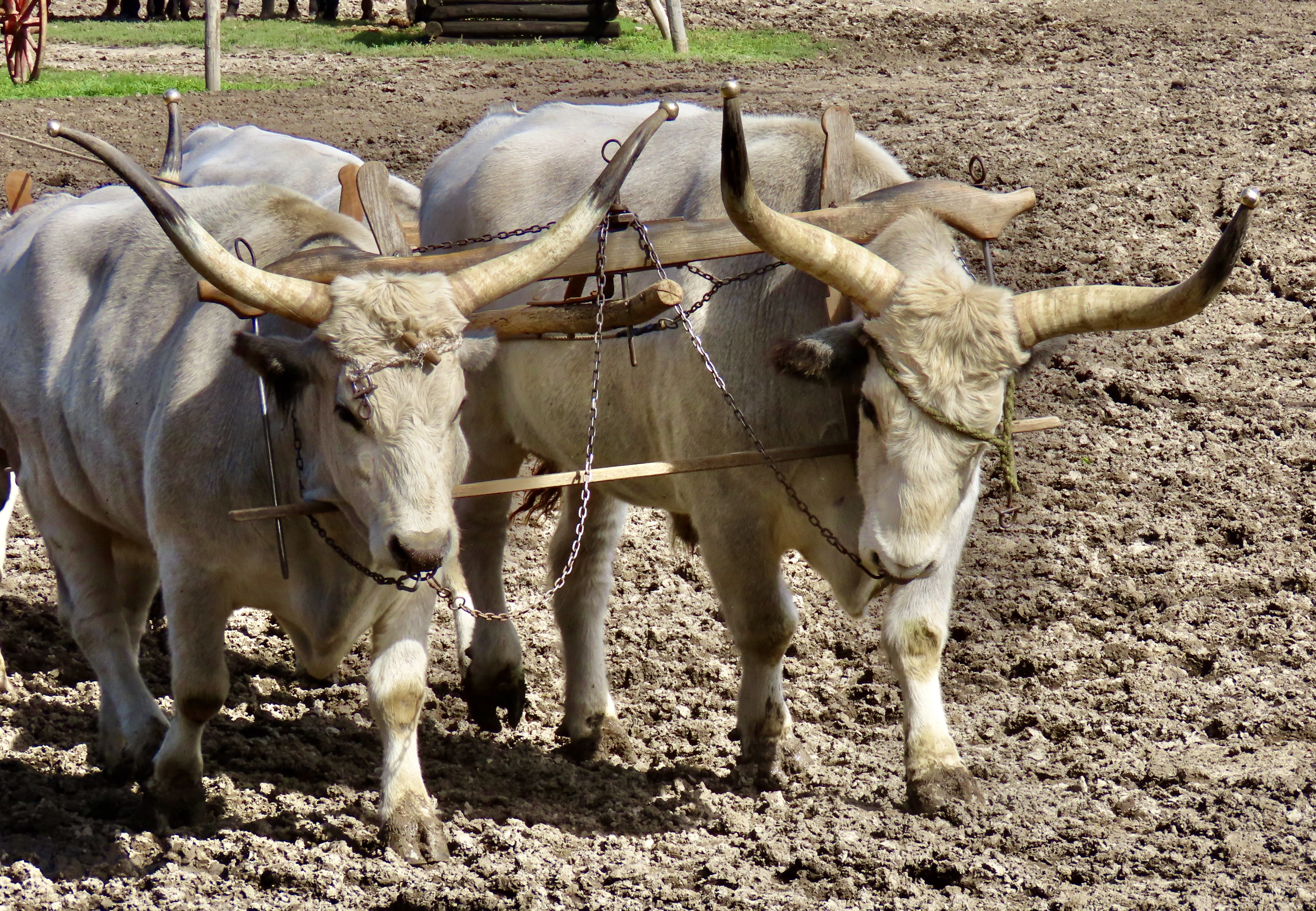
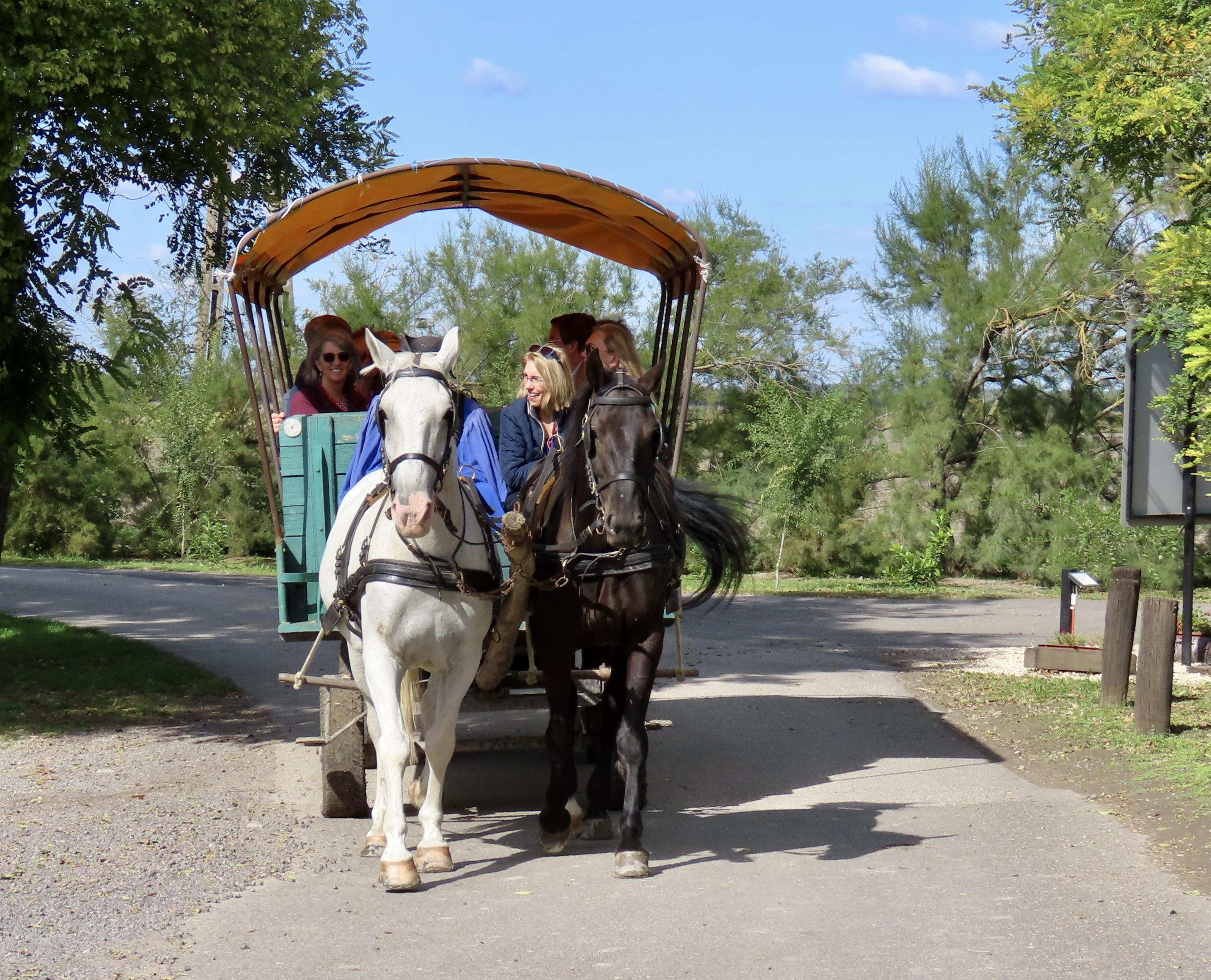
Any discussion of the Csikós and their horses needs to start with Hungary’s Puszta, a vast open plain which is a section of the Great Hungarian Plain. It covers some 19,000 square miles and is made up of saline steppes, low, wet forests, and freshwater marshes. The region has a pastoral history that goes back thousands of years and is associated with several breeds of Hungary’s domestic animals which includes the Nonius horses and Hungarian Grey cattle that are featured today. I’m not sure what the breed of the white horses used in the Hungarian post is.But they were handsome, if a bit muddy.A head on view of the Hungarian post at the Bakod Horse Farm. The Csikos rider is balanced on two horses controlling eight horses in front of him.This provides a good side view of the Hungarian post.Here’s how the Csikos rider places his feet on the two horses he rides.The Csikos horsemen had their beginning on the Puszta with its large horse and cattle herds. Unlike the famed cowboys of the Old West, however, their job was to work with the horse herds while shepherds handled the cattle and other domestic animals. That’s a whip over his shoulder.The go-to horse for the Csikos is the Nonius breed, which dates back to 1813 when Napoleon was defeated and the Hungarians helped themselves to one of his stud horses, Nonius, and rode him back to Hungary. Nonius was then introduced to the Hungarian State Stud Farm where he provided his services (happily, I assume) up to 1832— making numerous babies with cooperative mares and giving the breed its name.The Nonius horse has a strong, large-framed body which makes it excellent for pulling carts. Good natured and easily trainable, they also make great riding horses.The hat and blue riding clothes are traditionally clothing for the Csikos horsemen. I’m not sure about the feather in his cap. This is not a Nonius horse. The rider is sitting on his ass. You might say he is backasswards. Leading up to World War I, the last time warhorses were used in fighting, Csikos were hired to train them. The whip isn’t being used on the horse. It sounds like someone firing a rifle and was used to acclimate the horse to the sound and not panic when in battle. The object on the right is the horse’s saddle.The horses were also taught to lie down so they could hide when necessary.Here, the rider stands on his horse while cracking his whip. The highlight of the show, at least for me, was the horse sitting. I suspect that image will be sharp in my head long after the others have faded. The Csikos rider continued to crack his whip. Actually, they are quite skilled with their whips and put on demonstrations using it. Here, donkey-man cracks his whip while riding. The other riders were cracking their whips in unison. A bit like syncronized swimming, eh. (Peggy used to do that….without the whip!)The Csikos also demonstrated the use of Hungarian Grey cattle to haul a cart. These cattle with their massive pointed horns are native to the Puszta. Note that the horn tips are covered. For good reason.A closer look at the Hungarian Grays, complete with their nose rings.The Csikos finished off the horse show by giving us a ride out onto the Puszta. Next up, Peggy and I will do a post on the folk dancing and paprika. But first…
Aloha! Peggy and I had to fly out to Sacramento to a Celebration of Life for a very close friend. Since we were over half way to Hawaii, we decided why not go there as well. It makes perfect sense, right. What’s another 2300 miles. Anyway, here we are on the Big Island for a month about a mile away from the ocean and 30 miles away from Volcanoes National Park where the Hawaiian Goddess Pele is putting on quite a show in the Kilauea Caldera. We drove up to see it on Friday. Incredible!
We will try to slip in a couple of posts on the Big Island in between our Danube River posts over the next few weeks.
16 thoughts on “The Csikos and the Puszta: The Horsemen of the Hungarian Plains ( and Aloha)… Danube #9”
Wonderful pictures from the Bakod Horse Farm. It’s almost like I was there with you and Peggy. Oh. Wait.
I’m about ready to give up my travel blog on the condition that the two of you accompany us on all our future trips. India and Nepal in March??? And how did you arrange the volcano eruptions for your trip to Hawaii?
Thanks John. It was both fun and impressive.
I’d enjoy India and Nepal, John, but Peggy has never been too excited, especially because of the terrible poverty. Also in March we will be heading for one of our all-time, most loved areas, the Southwest for five or six months. Clever how we worked out the volcano, eh. Grin.
I’m not much for horses, but I enjoyed this. The blue and black combination is striking, especially that blue. And I’d never thought of the possibility that horses, too, had to be trained for battle. I’ve seen rodeo stunt riders standing on horses, and it was common at the Courir (Cajun Mardi Gras) in Louisiana. I do have a couple of friends who are huge horse fans (and owners) and I’ve passed this post on to them. I know that they’ll enjoy it. One has participated in dressage, which seems to me to have some similarities.
I remember seeing people standing on horses at one or two circuses when I was kid, Linda. I read that it was a valuable skill for the Csikos out on the plains because it enabled them to spot danger at a greater distance. And you are right on dressage. That was big in Bucharest.
“The rider is sitting on his ass. You might say he is backasswards.” Hehe. You always leave those little gems in there, Curt. I love the vibrant blue of the horsemen’s traditional dress. That’s fascinating that these horses were originally trained for war, including lying down. The rise of the machine gun ended the use of cavalries almost overnight. I’m glad now that the horses aren’t in danger.
Always have to have fun, D.
It saddens me to think of the slaughter of horses that took place from the machine guns. But then again, who benefits from war except the arms manufacturers and their cohorts.
I was researching cavalries for one of my older books and the statistics were terrible (estimates of 8 million horses killed in WWI).
And their only fault was associating with man.
That is extremely dangerous.
As we are learning…
I’m glad the visit to the horses won you over in the end. That’s how I feel with our recent trip to New Zealand, where it has been my dream vacation for 20 years and Pedro came along just because he’s a nice guy and supports me. Then he ended up loving it! Your photos of this demonstration are excellent. I was curious about whether there was any pain involved with the man standing on horses, so I appreciated the close-ups of his feet, tied to big sponges, which must make it easier to jostle around and keep your balance, without worrying that you’ll accidentally whack a spine bone with your boot. Most impressive to me in this post are those magnificent cattle though. Wow.
I was concerned about possible cruelty as well, but a statement on the farms website by an international PETA-type group was somewhat assuring, Crystal.
Glad you loved New Zealand! It’s drop-dead gorgeous and friendly. Did you get to see a sheepdog demonstration. Or visit the Maori area. Given your Cherokee background and interest in Native American culture, I would think you would find their culture quite interesting.
Yes, the cattle were magnificent. And almost extinct for a while.
We did see a tiny bit of Maori culture in Rotorua. Since we were on a guided tour the entire time, we did not have a ton of flexibility with what to do. Still, the tour did try to add a bunch of New Zealand culture, even though it was a Lord of the Rings tour.
Time is always the frustration with tours, Crystal. Still, a good guide can do a lot of educating along the way. We’ve had some excellent ones.









 Wandering through Time and Place
Wonderful pictures from the Bakod Horse Farm. It’s almost like I was there with you and Peggy. Oh. Wait.
I’m about ready to give up my travel blog on the condition that the two of you accompany us on all our future trips. India and Nepal in March??? And how did you arrange the volcano eruptions for your trip to Hawaii?
Thanks John. It was both fun and impressive.
I’d enjoy India and Nepal, John, but Peggy has never been too excited, especially because of the terrible poverty. Also in March we will be heading for one of our all-time, most loved areas, the Southwest for five or six months. Clever how we worked out the volcano, eh. Grin.
I’m not much for horses, but I enjoyed this. The blue and black combination is striking, especially that blue. And I’d never thought of the possibility that horses, too, had to be trained for battle. I’ve seen rodeo stunt riders standing on horses, and it was common at the Courir (Cajun Mardi Gras) in Louisiana. I do have a couple of friends who are huge horse fans (and owners) and I’ve passed this post on to them. I know that they’ll enjoy it. One has participated in dressage, which seems to me to have some similarities.
I remember seeing people standing on horses at one or two circuses when I was kid, Linda. I read that it was a valuable skill for the Csikos out on the plains because it enabled them to spot danger at a greater distance. And you are right on dressage. That was big in Bucharest.
“The rider is sitting on his ass. You might say he is backasswards.” Hehe. You always leave those little gems in there, Curt. I love the vibrant blue of the horsemen’s traditional dress. That’s fascinating that these horses were originally trained for war, including lying down. The rise of the machine gun ended the use of cavalries almost overnight. I’m glad now that the horses aren’t in danger.
And awesome tease for the volcano! What a shot!
Always have to have fun, D.
It saddens me to think of the slaughter of horses that took place from the machine guns. But then again, who benefits from war except the arms manufacturers and their cohorts.
I was researching cavalries for one of my older books and the statistics were terrible (estimates of 8 million horses killed in WWI).
And their only fault was associating with man.
That is extremely dangerous.
As we are learning…
I’m glad the visit to the horses won you over in the end. That’s how I feel with our recent trip to New Zealand, where it has been my dream vacation for 20 years and Pedro came along just because he’s a nice guy and supports me. Then he ended up loving it! Your photos of this demonstration are excellent. I was curious about whether there was any pain involved with the man standing on horses, so I appreciated the close-ups of his feet, tied to big sponges, which must make it easier to jostle around and keep your balance, without worrying that you’ll accidentally whack a spine bone with your boot. Most impressive to me in this post are those magnificent cattle though. Wow.
I was concerned about possible cruelty as well, but a statement on the farms website by an international PETA-type group was somewhat assuring, Crystal.
Glad you loved New Zealand! It’s drop-dead gorgeous and friendly. Did you get to see a sheepdog demonstration. Or visit the Maori area. Given your Cherokee background and interest in Native American culture, I would think you would find their culture quite interesting.
Yes, the cattle were magnificent. And almost extinct for a while.
We did see a tiny bit of Maori culture in Rotorua. Since we were on a guided tour the entire time, we did not have a ton of flexibility with what to do. Still, the tour did try to add a bunch of New Zealand culture, even though it was a Lord of the Rings tour.
Time is always the frustration with tours, Crystal. Still, a good guide can do a lot of educating along the way. We’ve had some excellent ones.
Pingback: The Best Day Trips from Budapest - Extravelgance
Thanks for the link.