The Crazy Horse Memorial in South Dakota is a huge sculpture carved out of granite that is about 1/3 finished after 75 years of work. We visited it last fall on our three month trip around the US. All photos in this post are taken by either Peggy or me unless otherwise noted.

If you are visiting Mt. Rushmore, a trip over to the Crazy Horse Memorial is also worth doing. It’s not far— a distance of 17 miles that shouldn’t take more than 30 minutes to drive. In ways, the memorial was built as an answer to the presidential monuments. As the Lakota Chief Henry Standing Bear noted when he contacted the sculpture, Korczak Ziolkowski, “My fellow chiefs and I would like the white man to know that the red man has great heroes, too.”
Standing Bear also believed that the Black Hills were an appropriate place to build the memorial because they are a sacred area to American Indians. I first became aware of this perspective several years ago when I read the book, Black Elk Speaks. Written by the poet and writer John G. Neihardt, as told to him by the Ogalala Lakota medicine man Nicholas Black, the book captures Black Elk’s vision of the unity of humankind and the earth. The book takes the reader back in time to the vanishing culture of American Indians, but also contains a powerful message for people today. It has sold over one million copies. As Black Elk completed his story to Neihardt, he pointed to Harney Peak and identified it as where his vision took place. Harney Peak, located between Mt. Rushmore and the Crazy Horse Memorial, has now been renamed Black Elk Peak.
As for Crazy Horse, he definitely fits the definition of being one of the great heroes of American Indians and is recognized alongside other well-known leaders such as Geronimo, Red Cloud, Tecumseh, Sitting Bull and Cochise. Born in 1842 near present day Rapid City, his father was also an Oglala Lakota medicine man. His mother was a Brule Lakota and the sister of Spotted Tail, a noted war chief who later became a statesman traveling to Washington several times on behalf of the Lakota.
Crazy Horse was raised at a time when white treasure hunters had discovered gold in the Black Hills and were invading the area, breaking treaties that had ceded the land to the Lakota/Sioux. It was also a time when the once abundant buffalo herds were being methodically wiped out and the various tribes being forced on to reservations, threatening both their freedom and way of life. Not surprisingly, the Indians fought back, and Crazy Horse played a key role in this resistance, eventually leading up to and including the Battle of Little Bighorn.
As a young man, he went on a vision quest where he had a dream of a rider in a storm with long flowing hair who instructed him that he was not to wear a war bonnet or take scalps in battle. As the storm faded, a red backed hawk flew over the head of the rider. His father interpreted the dream to mean that Crazy Horse would be a great leader in battle, which turned out to be true. He died in a scuffle when he was being led to a stockade and a soldier bayoneted him on September 5th, 1877.


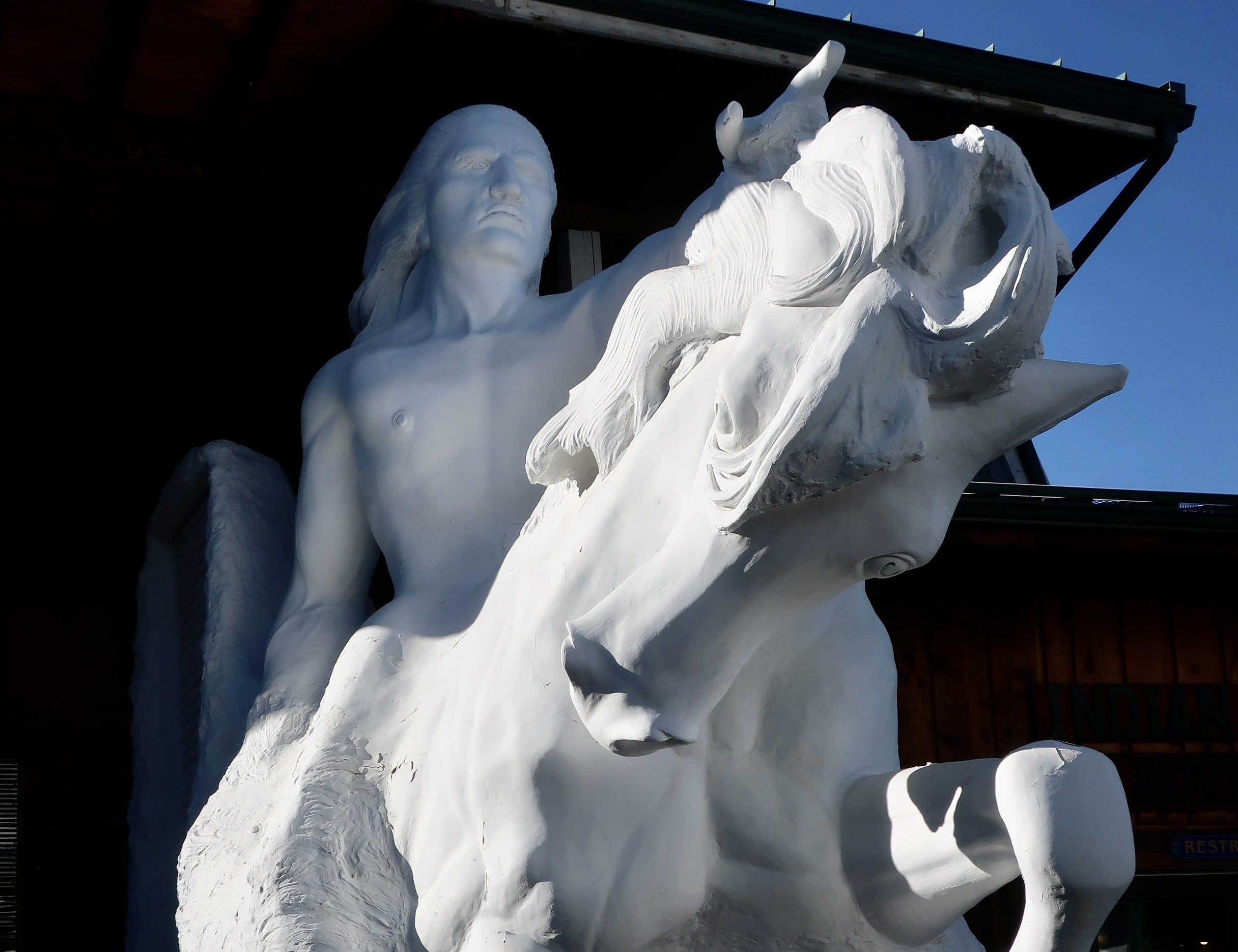
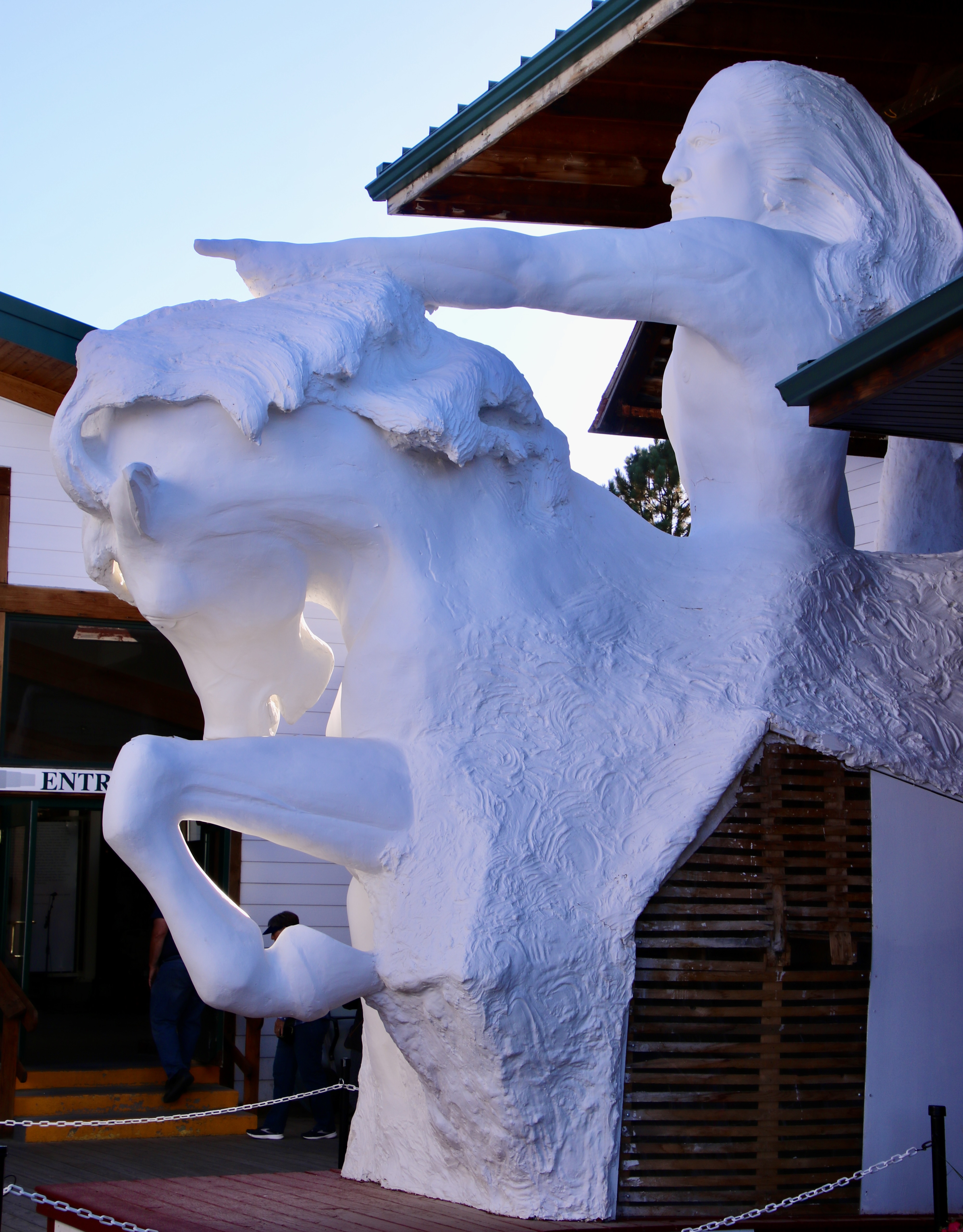
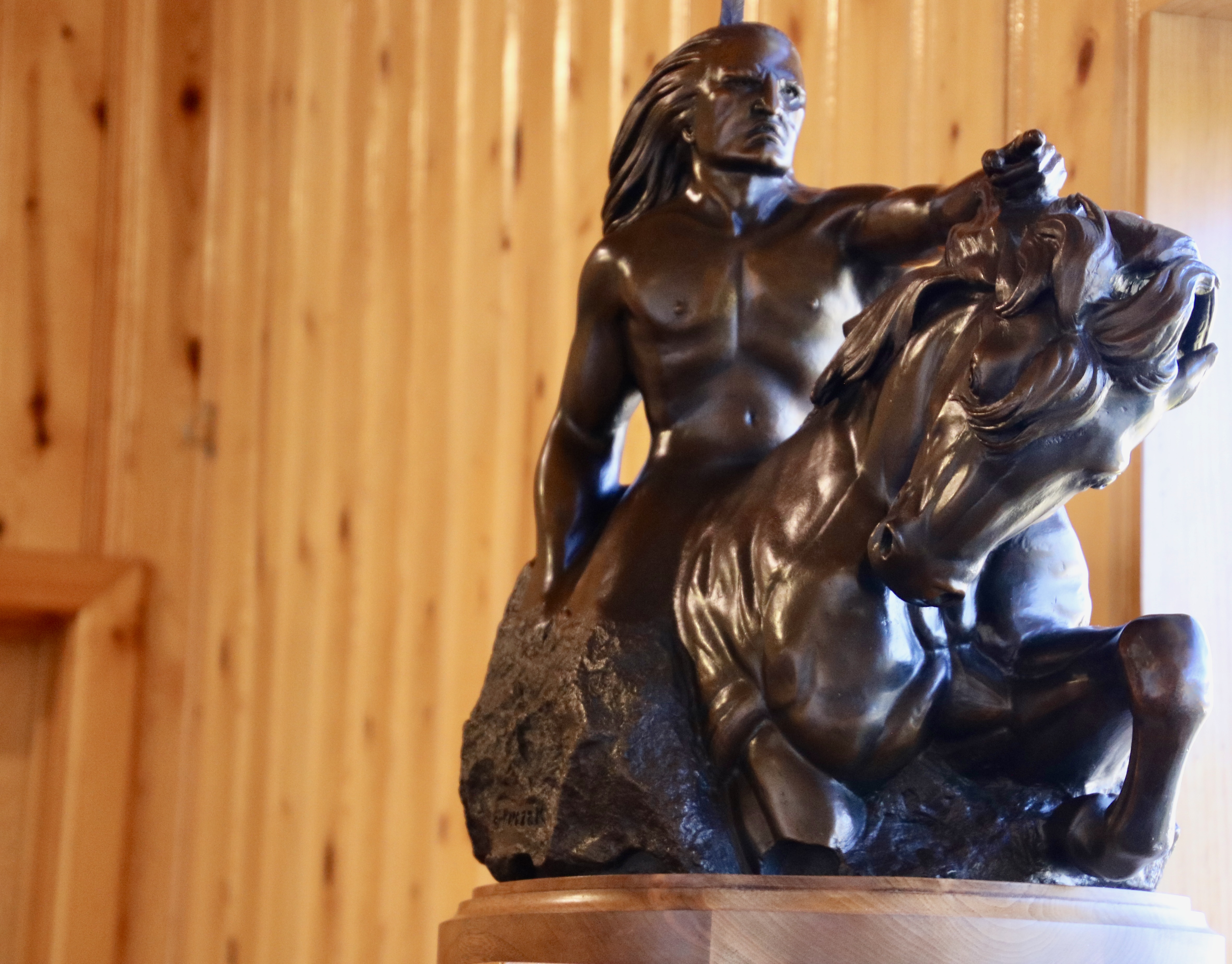
When Chief Standing Bear contacted the sculptor Korczak Ziolkowski in the early 1940s on behalf of the Lakota chiefs, Ziolkowski agreed to take on the project. He moved to the Black Hills in 1947 to locate an appropriate place for the monument and kicked off the carving in 1948. It is still on-going today, 75 years later. Ziolkowski continued the work until he died in 1982 when the project was taken over by his wife, Ruth. When she passed on, her children and grandchildren continued building the monument. Today the effort is overseen by the Crazy Horse Memorial Foundation. As of now, only the face has been completed and stands at 87 feet tall. His outstretched arm, which is presently being worked on, is 263 feet long. His finger will be 29 feet long. The horse will stand 219 feet high, the mane 62 feet high, and the ears 54 feet long.
Feelings among the Lakota are mixed. Many see it as the memorial it was meant to be, celebrating Crazy Horse and American Indians. Some, however, believe it does not recognize Crazy Horse’s humility and is as much, or more, a memorial to Ziolkowski and his family. Whatever the conclusion, it has kept the Ziolkowski family gainfully employed down through the decades and generations.




Next Monday it’s back to Egypt and the pyramids, sphinx and camels of Giza.
 Wandering through Time and Place
Thank you for this post! I love your ghost of Crazy Horse photo. We first visited the monument in 2006 and returned in 2011. We could see a little progress had been made.
Imagine what it might look like in another 50, or 100. Grin. Thanks. –Curt
Curt, you have asp always given us a wonderful post mixed with history, art and human emotions. The pictures Peggy and you have taken are both beautiful and arresting. Thanks.
I have the book ‘ Black Elk speaks ‘ and have read it several times.
It touches the spirit deeply.
🤗
Miriam
Sorry it took so long to get back to you, Miriam. Peggy and I have been super busy with family stuff and getting ready for another major road trip, which we are now on!
So glad to hear that you have read Black Elk Speaks! Several times. 😄 It touches the spirit, for sure. Thanks for your comments. Appreciated. –Curt
Great history/stories) which are the real history we need to remember)
I kinda like the stature rough, unfinished, and merging with the mountain.
(Don’t forget Chief Quannah Parker, leader of Quahada Comanche Indians, So many stories everywhere. https://www.tshaonline.org/handbook/entries/parker-quanah)
Enjoyed the pictures, too!
I checked out your link to Parker, Karen, and yes, he needs to be included. Thanks. When I was growing up there was almost no history being taught in elementary and secondary schools relating to indigenous people, even though where I was growing up was and important location for the Miwok Indians.
You and Linda both voted for the rough, unfinished look. I wonder what Crazy Horse would think. My thought is that he would agree with you.
Quannah (He never took to his mother’s people -There is a town named after him. His elderly daughter once to old to live on the reservation according to her family, lived down the block – along with his granddaughter’s family.)
See, now that’s the weirdness. Every area is different, but we had a lot of descendants of various tribes – and were taught about the tribes – even the early ones who were supposed to be cannibals according to the Spanish explorers who encountered them along the Gulf Coastal plains (Yes and no as far as truth to that tradition).
Everyone knew someone with/or had Indian blood in the family – it was considered cool. (But if you don’t live on the reservation and get oil money , it was considered rude to claim tribal blood/heritage. Like stealing their identify when you have no right to it. Oh, the simple – somehow more pure – thoughts of kids?)
Our streets and schools were named after some of famous ones ( renamed in the past 5 years…some people’s “history” is now thought more important/relevant than others…snort)
We’re pretty much a mixed bunch of mutts here – as it turned out that turned out to be a good thing. Diversity was just normal and no big deal here. People can get along if they want to – and no one demands to be more special than others?
I do want to see that stature/ mountain carving.
(Enjoyed the pyramid “:tourist shot” you had up recently. Travel is the most fun way to discover, learn, and understand it all)
There was much more emphasis and awareness beginning in the 70s, it seemed to me Karen, but our area in Northern California never had the prominent Native American tribes or populations like the Lakota or Cherokee, or Apache, etc. Loving the outdoors as I do, I developed an early interest in Native America lore and woodcraft. I also have always been fascinated with mythology.
Good for you in having a neighborhood where who you are as an individual is more important than any of the labels. That it would be that way worldwide. 90% of our problems might disappear. 🙂
I’m an advocate of each state/region focusing on prehistoric history/human history – every place has evidence/sites in their areas. There were early populations/ communities/ civilizations/major impt. migrations along the Northern western coast.
To me the blame lies with the education system ( as well as parents/society) Locally, prehistoric history/peoples was taught the first of 4th grade(state history year), as well as at the beginning of 5th grade (US history focus year – states, capitals, natural resources, geography, state products) and starting of 6th grade World History (countries, location, capitals, products, major geography features, and culture how they were related to other counties, etc). Then repeat sequence starting with 7th grade at a deeper level. But it always started with the prehistoric beginnings
And this was waaaayy before the ’70’s….and even the 60’s..(.we just seem destined to reinvent/”discover” over and over? Sigh)
Every kid knew about the Toltecs, Aztecs, Inca cultures as these groups influenced, trade, and traveled so much of this hemisphere. The same with the major migratory tribes that came later. And the cannibal tribes along the Gulf Coast (they really weren’t – it was a cultural /warrior thing) All these people were important to understand how the land/countries/society in grew and transformed to the US/current world. (Where did that concept go and why did it disappear?)
Everything is connected – and it matters – like understanding the earth (and its’ living inhabitants) is constantly changing over time – which is evidence by the ocean fossils scattered all the way past Dallas to the Panhandle.
You are one who knows this by instinct and early interest/natural curiosity. No better way to learn about a group of people than reading their mythology and seeing their crafts/artifacts. Hope that is happening these day, but have my doubts despite all the “diversity” push. So little curiosity encouraged.
Those who are now adults and stunned/”shocked”/ amazed when encountering facts about earlier times really need to place the blame for their “ignorance”/lack of knowledge/understanding where it belongs: on their local/state childhood education system and the adults in their early lives.
As some say, nothing wrong with being ignorant – what is wrong is choosing to stay that way.
You are an exceptions and explored beyond the classroom. Your last 2 sentences is so true.
Hope to be back on line soon. Always enjoy your visits. Take care out there in this “record breaking heat”….as far as the official records of HAHA – some going back into 1800’s here for review – but it seems like this heat event occurs every decade of so…we can only hope it is a recurrent pattern and will stop sometime soon!!!!! (What is normal anyway…less and less sure what that is HAHA! Travel on and adapt!)
So many memories. Thanks for sharing, Curt
You’re welcome, Paul. Glad to have you along on the trip with us as well.
So many memories! Thanks for sharing, Curt.
Duplicate…grrrr!
Another spectacular post Curt. The carving and etchings are amazing. You both captured this post on Crazy Horse and others incredibly. That one picture is like a voo doo doll shot … love it!
💗
Thanks, Cindy. The whole area of western South Dakota is special, almost a photographer’s paradise. As for the voodoo doll, possibly not so very far off. It certainly involved power to it’s creators.
I can conceive of the working model processes, but the amount of engineering and such needed to transform the models into what’s emerging from the mountain is amazing. I rather like the sense of it emerging from the rock; I hope in the end that aspect of the sculpture is maintained. (It also would be cool to see it finished, but somehow I doubt I’ll be able to do that!)
Speaking of adventures, here’s one I didn’t expect: the Canadian ship Polar Prince is south of Newfoundland, headed for — the Titanic. It’s going to be interesting to see if any of the ships headed that way, including the USCG, will be able to locate the ‘tourist submarine.’
I can’t imagine a much scarier scenario than being stuck deep under the surface of the ocean in a tiny submarine with the clock ticking, Linda.
You and me both when it comes to seeing that statue to fruition, Linda! I suspect it will be emerging from the rock for a long, long time! And still will be when someone decides to declare it done! I’m sure that modern engineering tools make it much easier when it comes to transferring the model.
Great article…
Always look forward to your stories and adventures!
Thanks for commenting Carol! Appreciated. –Curt
Thanks for so much more information on Crazy Horse. The photos are wonderful.
Appreciated, Peggy. 🙂 Thanks.
Thanks for this history and such great photos.
It’s an amazing place, Gerard. Thanks.
Thanks for the memory nudge, I visited the memorial in 1996. I remember thinking how on earth would you start a project like that?
It had to be daunting, that’s for sure, Andrew. I think that part of the answer is that both the carvers of Mt. Rushmore and Crazy Horse had egos to match their monuments.
What a huge undertaking., Curt. I hope it continues and eventually is completed. My grandfather was born when America’s First Peoples were still being massacred, their land stolen, and their families herded onto reservations. The genocide of Native Americans wasn’t that long ago really, and it’s a source of national shame that we’ve yet to deal with, in my opinion. Thanks for sharing this. It seems well worth the visit.
No, it wasn’t all that long ago, D. My grandparents and even more so, great grandparents were, part of that particular era. I’d like to think ‘never again’ if it wasn’t still happening all over the world. Thanks for your comment.
Too many humans don’t seem to learn from their mistakes or their atrocities.
A little enlightened self-interest would go a long way! It’s just our survival at stake.
I kind of get the feeling they’ve bitten off more than they can chew, and would have been better served building a smaller sculpture. I saw it back in 1977. At that time the face wasn’t finished, there was no hole under the arm, and maybe no excavation at the fingertip. It’s been a long time since I’ve looked at those pictures (a hazard of shooting slides all those years.)
On the other hand, some of those European cathedrals to hundreds of years to build…
They are certainly going to have to ‘chew’ up a lot more rock, Dave. That’s for sure. And your comment on the cathedrals is right on.
I’ve digitized some of my slides, Dave, like the ones from my Peace Corps experience back in the 60s. That way I’ve been able to use them more readily.
Another post full of interesting history and incredible photos, Curt. That last one from Alaska is something else. 🙂 The perspective shown in the photo is amazing. I can’t imagine the skill and hard labor involved to work on such a monumental project. It reminds me of the men who worked on the Golden Gate Bridge. I think of this each time I cross it. Wonderful post!
The Alaskan piece captured my attention, Lauren, and reminded me of the three years I lived there in the 80s and my more recent visits. I’m a fan of indigenous art. There is a great museum in Anchorage that is filled with it if you ever go that way. And you are right about monumental art. It tends to fire the imagination whether it’s the Great Pyramid, the Statue of Crazy Horse or the Golden Gate Bridge. Thanks. –Curt
Great post, Curt. I can understand that there would be mixed emotions. The thing I wondered is, if these lands are sacred, then maybe not everyone approves of the mountain being all cut up? It’s all fascinating though, and if I’m ever there, I’ll head over and take a look. Dave makes a good point that cathedrals took hundreds of years to complete.
Nature cuts up mountains far more than does man and his puny tools. Where would archaeology and history be if Egyptians hadn’t cut up mountains?
I do enjoy archaeology (my masters degree is in anthropology) and I also appreciate learning about history. In this particular case, I am speaking from the perspective of an indigenous person. I find it preferable to see how Nature chooses to cut up mountains, and guessed that there are tribespeople in the Dakotas who feel more personally than I do about the sculptures out there. Not trying to pick a fight, just adding a viewpoint.
The sacred argument certainly applies, Crystal. On the other side is the question of whether it creates a greater awareness of indigenous people and their culture. I’d like to see less emphasis on Korczak Ziolkowski .
This is very true, and valid, that near Mt. Rushmore is the Crazy Horse monument. No matter what other arguments one can make (and I agree with you about Ziolkowski), it does make an unavoidable counter-point and raises awareness.
That was certainly in the mind of the Dakota chiefs who invited Ziolkowski to create the sculpture.
Thanks for this post Curt. I really enjoyed visiting this site and watching the movie about the family although I agree with you, less emphasis would be best. It’s so stunningly beautiful in that part of the country, leaves me in awe.
We had been through South Dakota before, Sylvia, but this time we really explored it. We are in awe as well. Thanks. –Curt.