Yosemite… A Photographic Journey through America’s National Parks

Yosemite's Half Dome captured on a hazy day. Photo by Curtis Mekemson.

Half Dome captured on a hazy day.

One of our goals over the past several years has been to visit all of America’s National Parks. We’ve been to all 50 states in pursuit of this objective. There are a couple in Alaska still on our “to do list.” Since Peggy and I are presently wandering in Mexico, I’ve recruited some of our favorite National Park photos to fill in while we are gone. Enjoy.

 My feet know a lot about Yosemite. For years I led backpack trips that included sections of the National Park as I wandered from Lake Tahoe in the north to Mt. Whitney in the south on journeys ranging from 70-360 miles. The latter I did to celebrate my 60th birthday.  This is the land of John Muir and Ansel Adams: towering granite mountains, sparkling lakes, snow-fed streams, forested slopes and vistas that go on forever.

Forest giant on northern edge of Yosemite National Park. Photo by Curtis Mekemson.

I captured this forest giant on the Pacific Crest Trail, which along with the John Muir Trail, provided my major routes through Yosemite.

Pacific Crest Trial sign in Yosemite National Park. Photo by Curtis Mekemson.

Trail signs are always welcome reminders that you are on the right route. This Pacific Crest Trial sign has been up long enough to be buried in the tree.

Pacific Crest trail downed tree displays beautiful grains of wood in its roots. Photo by Curtis Mekemson.

Downed tree along Pacific Crest Trail displaying beautiful grains of wood.

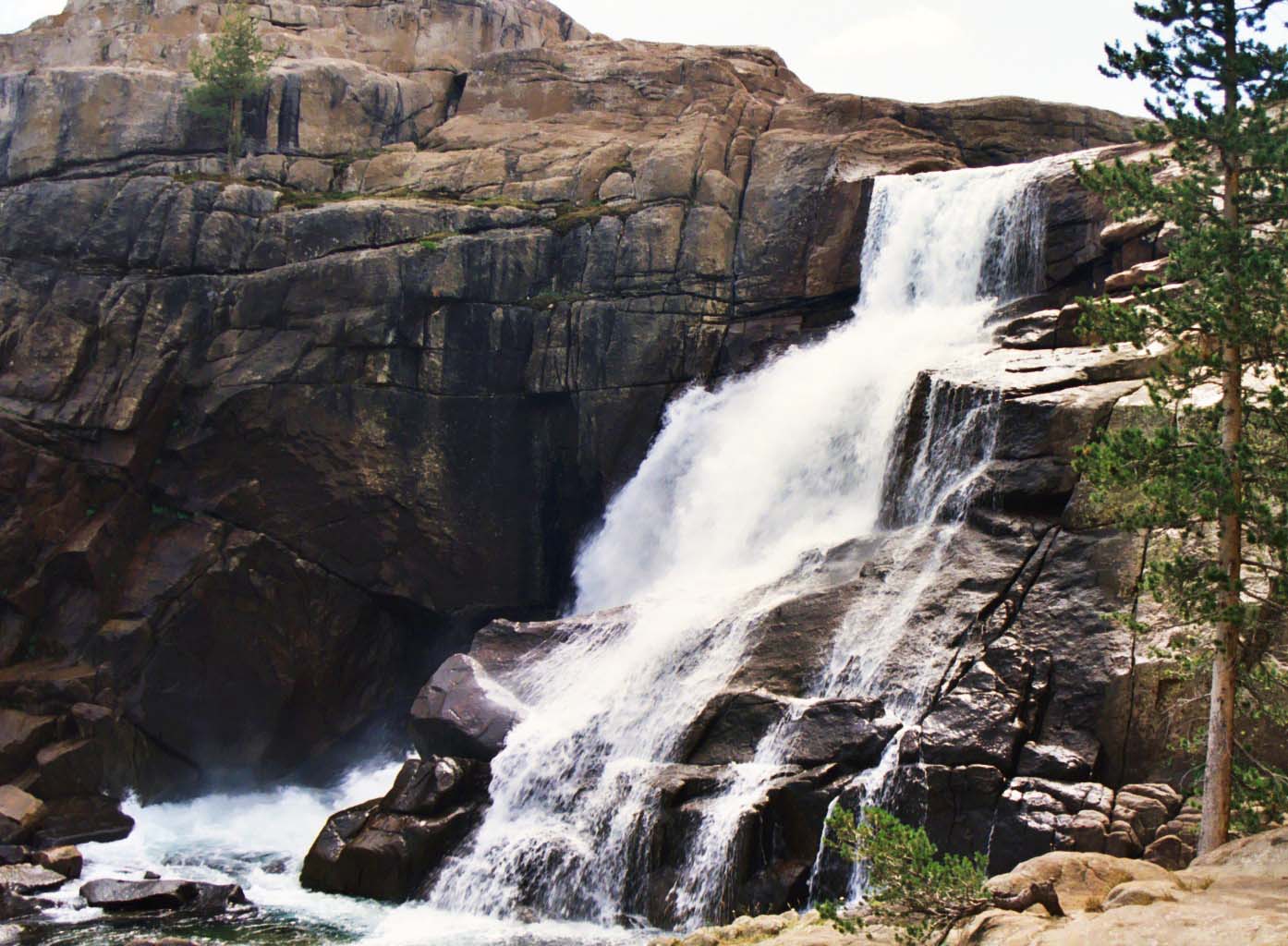
Falls on Tuolumne River in Yosemite National Park. Photo by Curtis Mekemson.

Falls along the Tuolumne River. Peggy, our daughter Tasha, and I had spent the night before below the falls chasing a mother bear and her two cubs out of our camp.

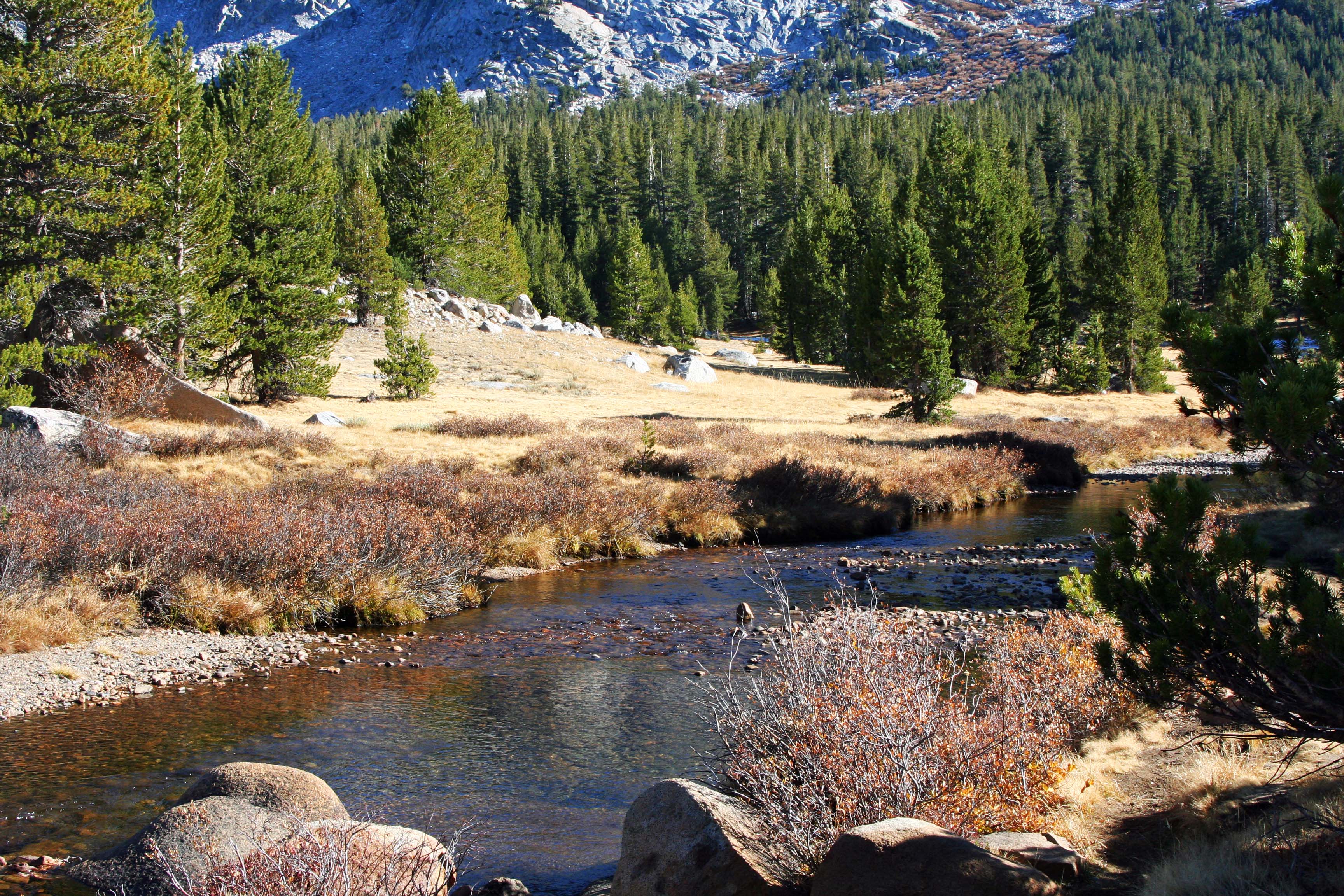
Tuolumne River flows through Tuolumne Meadows in Yosemite National Park. Photo by Curtis Mekemson.

Fall photo of Tuolumne River flowing though Tuolumne Meadows.

Tuolumne Meadows in Yosemite National Park. Photo by Curtis Mekemson.

Another fall photo of Tuolumne Meadows.

Granite in Yosemite National Park. Photo by Curtis Mekemson.

Granite rules in Yosemite!

A Yosemite meadow at a lower elevation. (Photo by Peggy Mekemson.)

Black and white photo of Yosemite Valley. Photo by Curtis Mekemson.

A final view looking down into Yosemite Valley. I utilized black and white here to honor the great Yosemite photographer Ansel Adams.

NEXT BLOG: A trip into Death Valley.


Living in 120 Square Feet… North to Alaska in Quivera the Van

Quivera at Great Basin National Park in Nevada.

Quivera, and her older sister, Xanadu, have travelled two hundred thousand miles exploring North America. This photo was taken  at Great Basin National Park.

As I write this blog, Peggy and I are preparing for a trip to Alaska. (Actually, when you read this we will be on our way.) Our itinerary includes driving north through Oregon, Washington, British Columbia and the Yukon Territory to Anchorage and back, a road trip of some 7600 miles that includes the Alaska Highway and travels through some of the world’s more remote and beautiful wilderness settings.

A key part of our preparation is making sure our van, Quivera, is ready to hit the road. She has already been to the doctor and had her check up followed by on a shake down cruise to the Redwoods. (When you return from a trip to the hospital, it’s important to make sure all of your organs are still working.) Next up she gets stuffed– oh, I mean packed. We have lists. Peggy handles the majority of this task. Each and everything has its place and she likes to know where each and everything is. Being the ever forgetful husband, I like her to know where each and everything is.
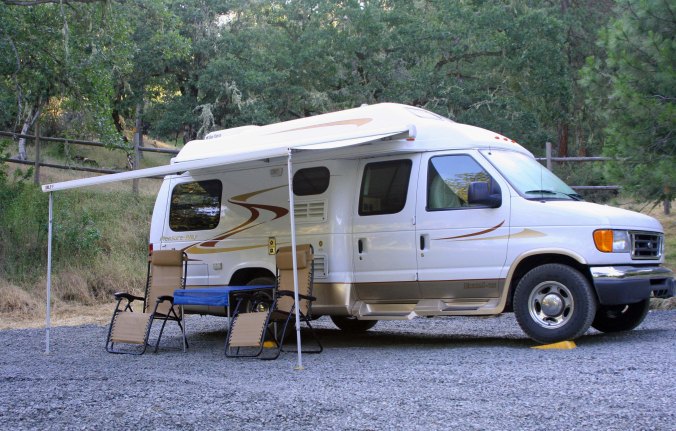
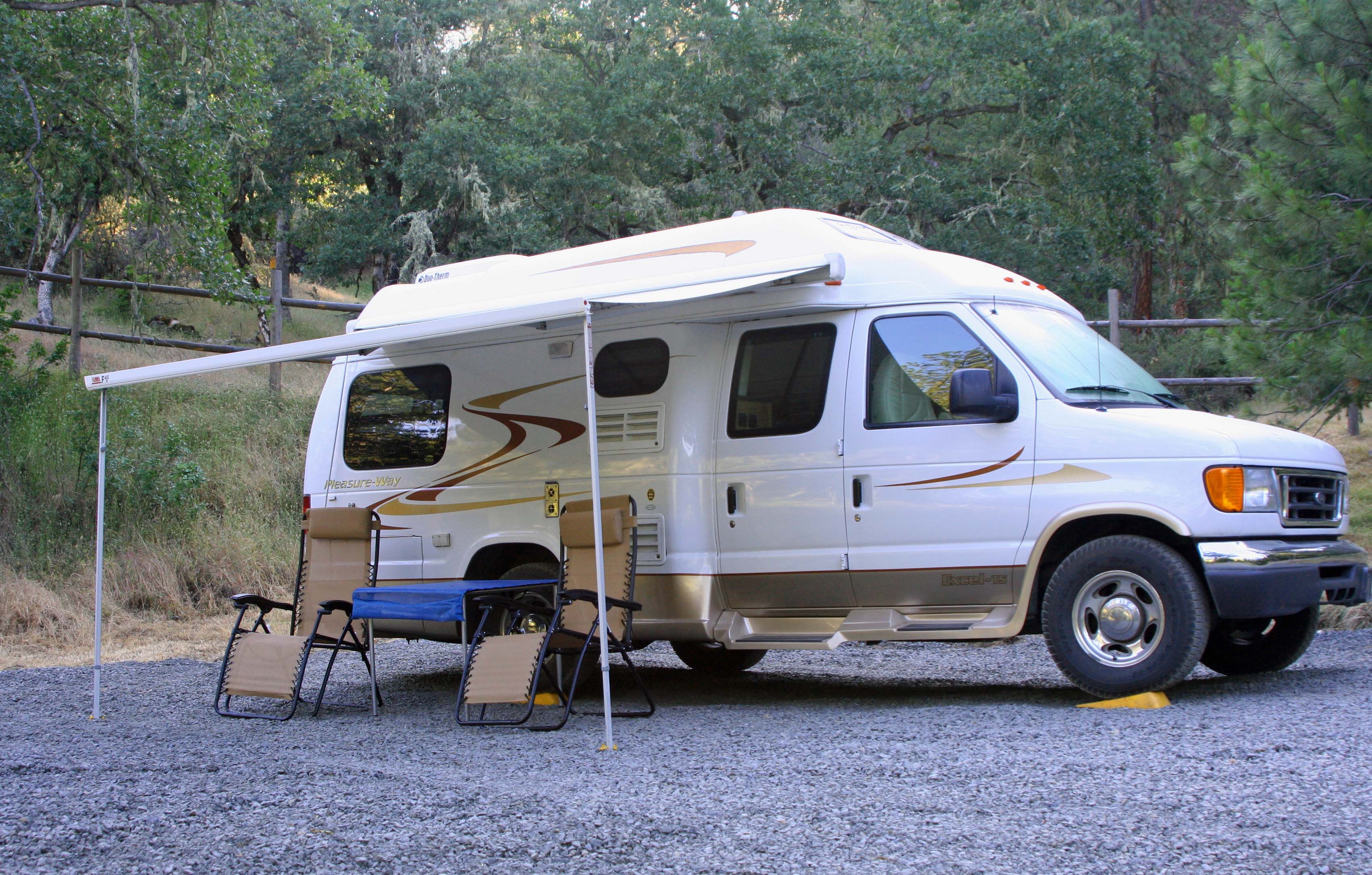
Our van, Quivera, has her own pad on the upper part of our property in Oregon.

At home in Oregon, Quivera has her own pad on the upper portion of our five acres. The ‘porch’ provides a great place to write. (The yellow lift helps level the van.)

White oaks in southern Oregon.

The view from the porch looking down toward our home through the white oaks. I often see the neighborhood fox that lives on our property working the hillside for gophers and other rodents. 

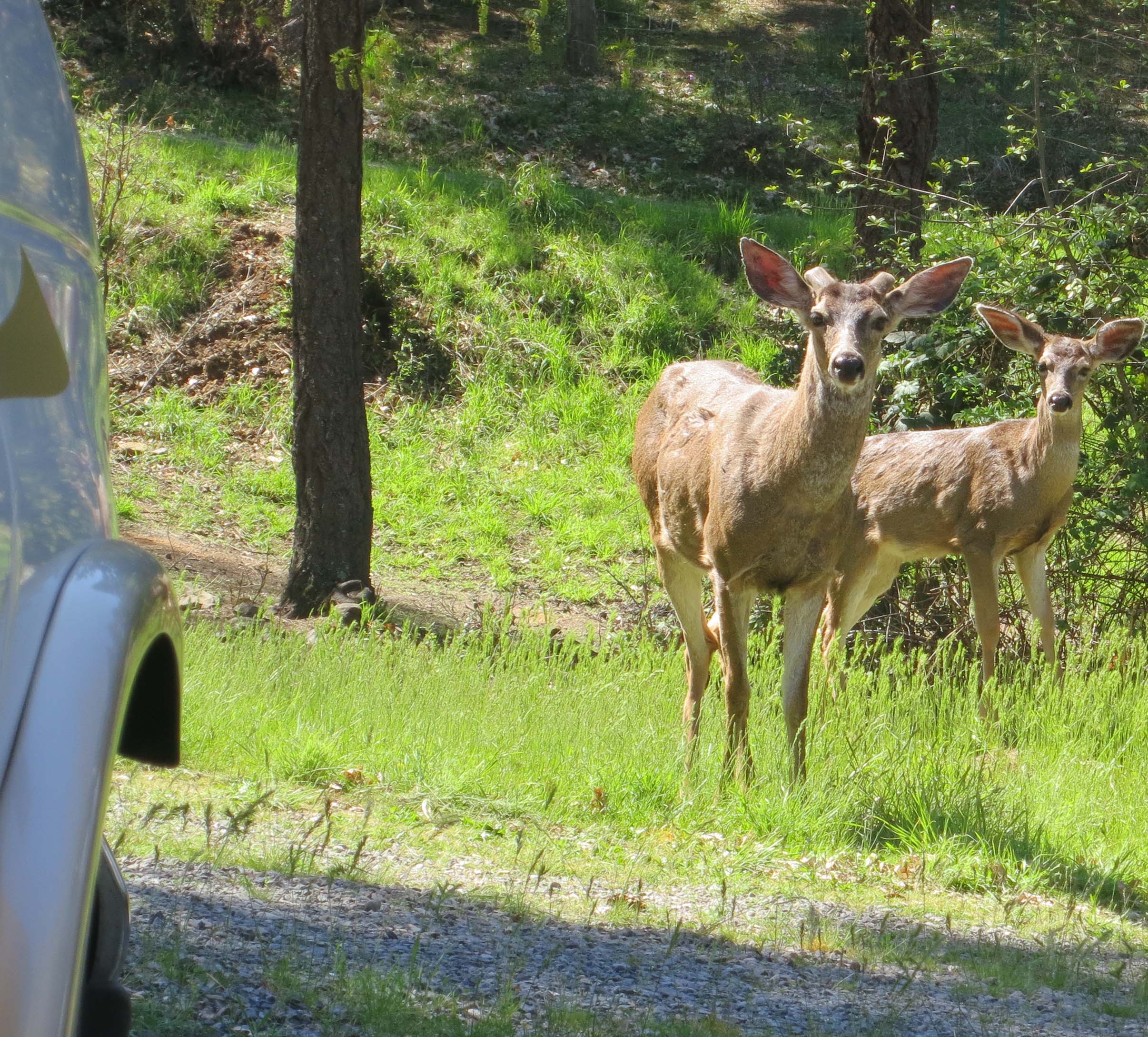
Black Tail buck in Southern Oregon just starting to regrow his antlers.

There are other distractions. Black Tail deer stop by frequently to make sure I am working. The buck in front was just starting to regrow his antlers when I took this photo in April.

Peggy loves the van– and that’s a good thing. Having a happy Peggy is very important, especially when you live in a 120 square foot house. I can stand in my office and do dishes. The bathroom and stove are two steps away. The living room, dining room, and bedroom are a distant four steps. (Speaking of Peggy, today, July 5th is her birthday. A proper celebration is required. She is required to make animal noises, which happens to be a family tradition from her side of the family. But more on that later…)

The view from my office toward Peggy's domain, four steps away.

The view from my office toward Peggy’s domain, four steps away. There is plenty of room to work on projects or lie back and read. The area also serves as our dining room and, at night, morphs into a king size bed. The kitchen is on the left, the bathroom on the right.
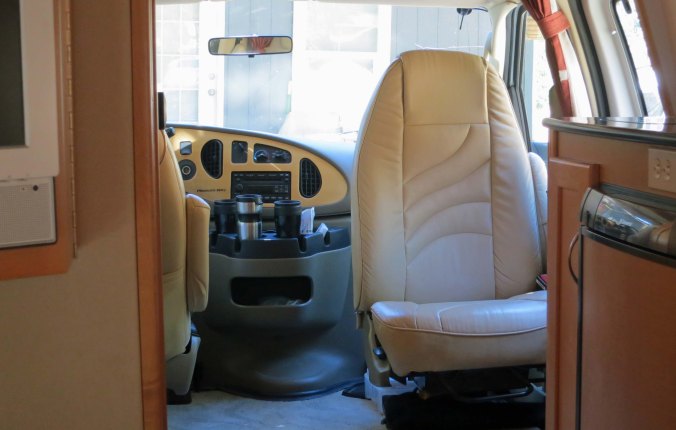
Looking toward my office from Peggy's perspective.

Looking toward my office from Peggy’s perspective. The passenger chair swivels around and is quite comfortable. Our TV/entertainment center is on the far right.

The kitchen: a two burner stove, the sink, and a refrigerator. What more do you need?  (grin)

The kitchen: a two burner stove, the sink, and a refrigerator. What more do you need? (grin)

Our grandsons call our home on wheels a Transformer. They are experts on the subject. For proof, they point out the button that turns the couch into a bed. It’s an innovation Peggy insisted on having and the kids insist on using. Up and down, up and down, up and down. Grandma has placed limits.

Pleasure Way, out of Saskatoon Canada, is the manufacturer of our 22 foot long RV. Twelve years ago we visited the plant and were given a tour by Mrs. Pleasure Way. She also gave us a jar of her homemade jam. The folks in Saskatoon are friendly; they also create a quality product. This is the second RV we have bought from the company.

We called the first van Xanadu and the second one Quivera. Both names reflect our wandering ways. Between the two RVs, we have explored 200,000 miles of North America’s highways and byways. Our total road time includes four years of dedicated travel and nine years of shorter trips.

“How do you live in such small space?” people often ask in wonder.

“You have to like each other, a lot,” I respond with a grin. And it’s true.

But there is much more. For one, wandering around North America is a grand adventure… a glorious road trip that most people only dream about. Our travels have taken us from Fairbanks,Alaska to Key West, Florida and almost everywhere in between. The journey has also enabled us to visit our far-flung kids and grandkids on a regular basis. For a while, before the Coast Guard transferred our son Tony from San Diego to Alaska, we had developed a 2000-mile commute route between southern California and Hendersonville, Tennessee.
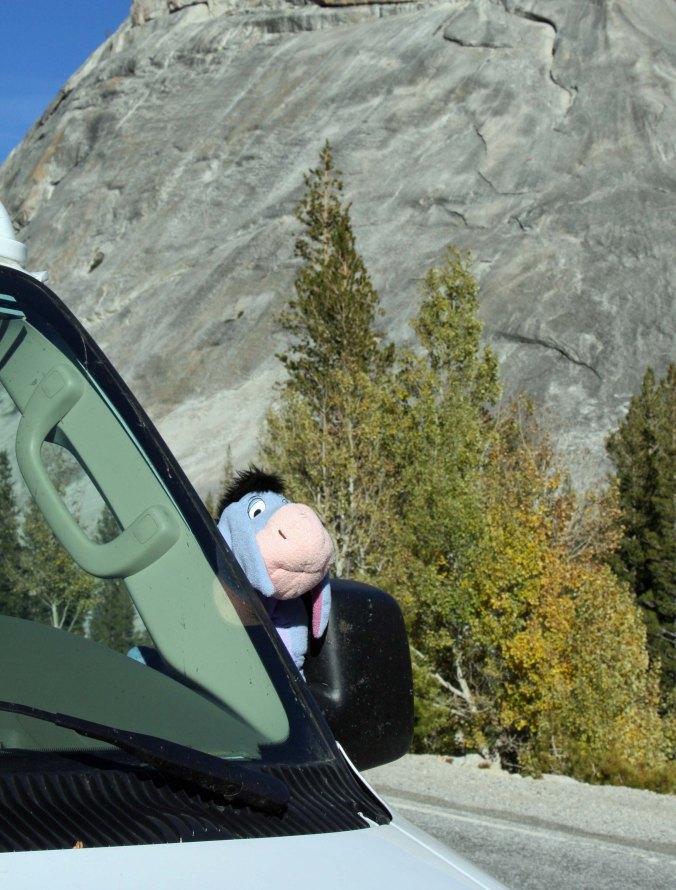
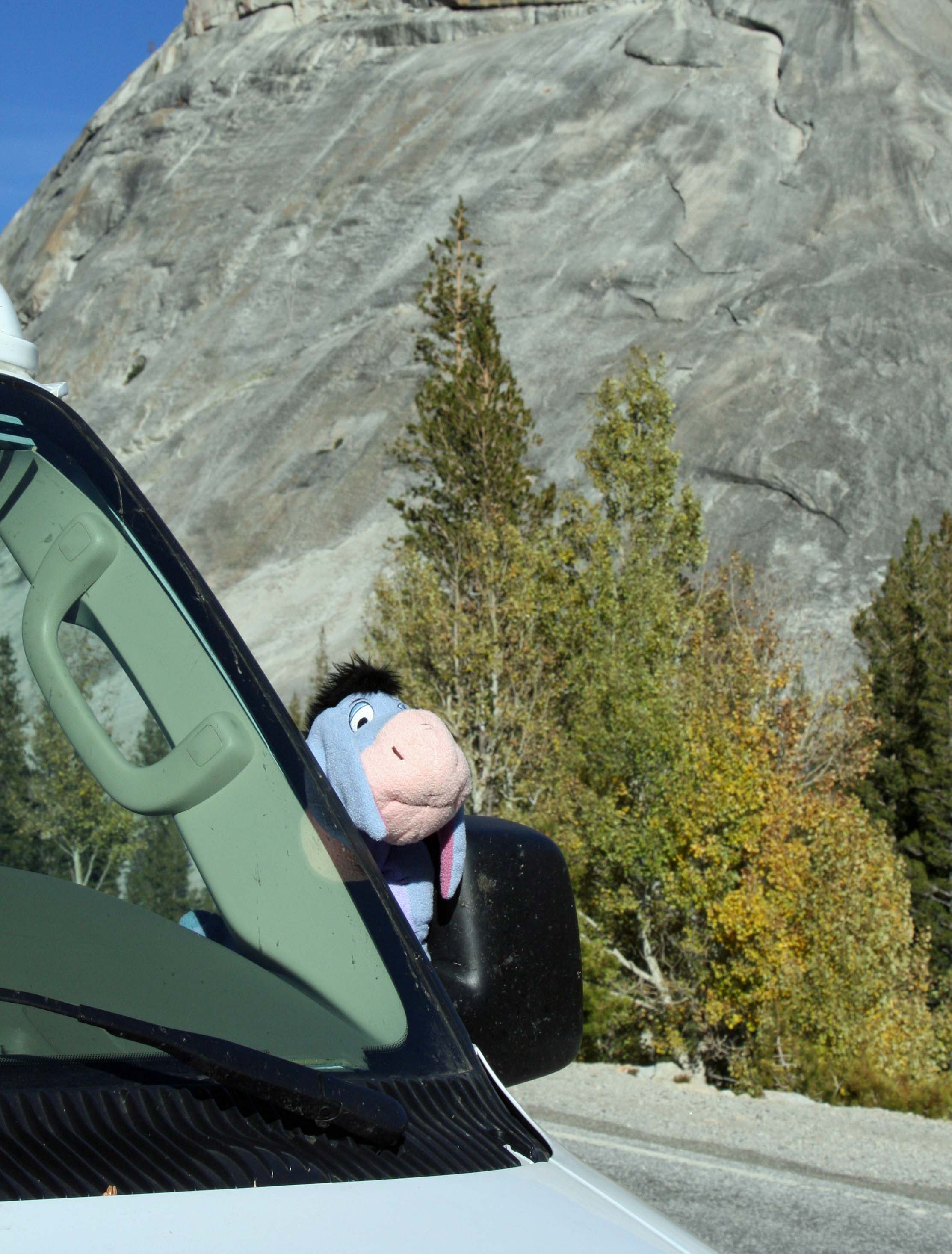
Quivera and Eeyore  share a moment at Yosemite National Park.
Quivera and Eeyore  share a moment at Yosemite National Park.

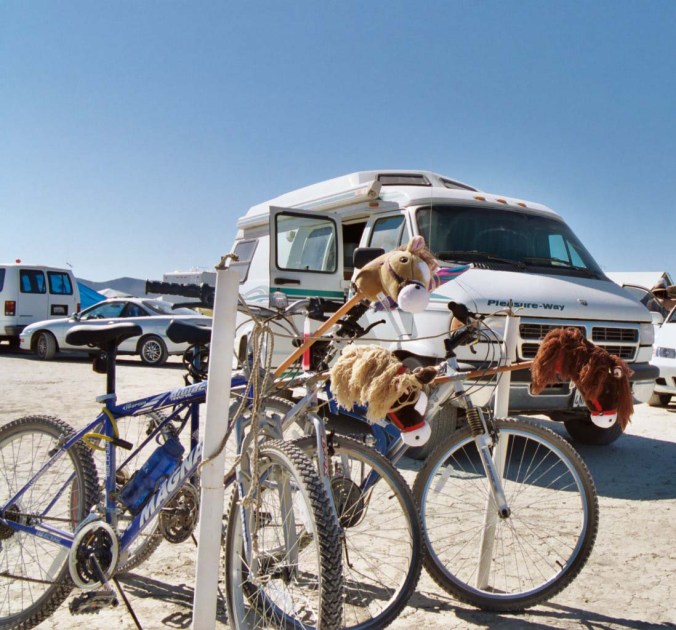
Camping at Burning Man

Quivera and  horses hang out at Burning Man in the Nevada desert. The challenge at Burning Man is that white Playa dust gets in everything. Months later we are still cleaning it out of the van. Note: The horses have a hitching post. They also share the look that most of us have after seven days..

If things get too tight inside, we have the outdoors. Warm days mean we can spend as much time outside as we do in the van. Even on stormy days, we can amuse ourselves on the porch. Plus there are always bookstores, museums and restaurants to visit.

And it isn’t like we suffer. Quivera comes equipped with a microwave/confection oven, two burner stove, heater, air conditioner, TV and DVD, refrigerator, bathroom, two sinks, two tables, nine storage cabinets, a closet, five drawers, couch, recliner chair and a king size bed. There is even a shower if you are willing to sit on the toilet while you bathe. Peggy and I opt out for campground showers. The van operates off of electricity, battery, generator and propane. Two laptops, a Verizon phone and an Internet connection keep us in touch with the world.

Not all is rosy. Space is at a premium. Stopping to camp means shifting boxes from the back to the front. And there simply isn’t room for everything we want to take. Sacrifices have to be made. Some toys have to be left behind. At least with the advent of Kindles, we no longer have to carry a 100-book library.

NEXT BLOG: A tall tale where we do a shake down cruise to the beautiful Redwood National Forest of Northern California.

When Bears Come to Visit

A local bear has been cruising our area on the Upper Applegate River in Oregon. A neighbor caught this photo of him three weeks ago. He's a big fellow. This week he came to visit us.

A large black bear has been cruising our neighborhood. Monday night he stopped by for a visit and had a wresting match with our garbage can.

The garbage can lost.

I could tell by the garbage strewn around the yard and the claw marks on the side of the can. The can now lives in our shed. I’m hoping the move will solve the problem. So does the can.

Hiding inside doesn’t always work. Kori Titus, a friend out of Sacramento, noted on my Facebook page that a black bear broke down the door of an acquaintance living at Lake Tahoe and entered his kitchen.

The thought of a bear breaking and entering our house makes me think of a thick bear rug to keep my toes warm on cold winter nights.

“Do you have a weapon?” my neighbor Tom asked worriedly. I should warn the bear. This is rural Oregon. The folks around here have guns, lots of guns, lots of big guns.

Have you ever come across a large pile of fresh bear scat. It's enough to make you wish you were elsewhere. Our friend left this behind. Bone provides perspective.

I’ve had numerous encounters with bears. Leading backpack treks in and out of Yosemite National Park for years guaranteed contact. Once I woke up at 4 AM with a bear standing on top of me. His snout was about six inches away from mine. I screamed and vacated the premises. Fortunately, he did too.

The big fellows in Alaska worry me more. A grizzly stalked me when I was leading a backpack trip across the Kenai Peninsula.  I had checked with a friend in the forest service before going. He warned me that a large grizzly was working the area and had treed one of his rangers two weeks earlier. The fall before a black bear had bitten through the sleeping bag of a woman ranger and wounded her leg.

Our group made lots of noise when hiking through the region. A forest service cabin provided shelter that night. There would be no biting through sleeping bags. I figured we were out of the woods, so to speak. But one of my Trekkers wanted to go for a hike the next morning. I offered to keep her company.

We were on our way back when I heard something big moving though the brush on the side of the trail. “What’s that?” my companion gasped. We looked down and saw the distinctive hump on the back of a grizzly. He was moving parallel through the brush, stalking us.

“What do we do now? Run!?”

She was a marathon runner and fast. I wasn’t. I suggested we turn around, walk over a bridge we had just crossed and find a tall tree. If the bear appeared we would climb the tree. Quickly.

An hour later there was still no sign of the bear. We hiked back to camp holding hands. She had an iron grip. A mouse in the brush would have sent us fleeing.

I also had an encounter with an Alaskan Brown Bear. These are the monsters of the bear world that National Geographic likes to feature. I’d flown into Katmai National Park located at the beginning of the Aleutian Peninsula. The area is known for its remoteness, unusual volcanic features, trophy size trout, and Alaskan Brown Bears. The last two go together.

The bears have competition. Fishermen come from all over the world to try their luck. Human-bear encounters are inevitable. A park ranger greeted us upon arrival and explained proper bear etiquette. If you have a trout on your line and a bear shows up, cut your line. If you meet one on the trail, talk to it and slowly back away. “Talk to it???”

I managed to meet my first bear on my first evening. It wasn’t large by Brown Bear standards… only about one and one half times the size of a grizzly. But the trail was narrow. I still remember our conversation.

“Um, good evening Mr. Bear,” I stuttered respectfully. “I am an American, just like you. If you are hungry, I understand there is some great Japanese food on the menu. Or you might want to try the German.”

The bear stared at me for a long two minutes, barked a growl of annoyance and wandered off in the opposite direction. I didn’t hear any Japanese or German fishermen screaming that night. All’s well that ends well.

So I have a fair amount of experience in dealing with bears. Will this help me with our nighttime visitor? Probably not but I’ll keep you posted.

Mm, mm good. Our neighbors with the night camera have a compost box that the bear finds particularly fascinating. Note the metal around the box. He couldn't get in through the sides so he went in through the top.