The Travertine Terraces of Mammoth Hot Springs: Yellowstone

Today, Peggy and I are continuing our exploration of Yellowstone National Park, which we visited as part of our four month, 12,000 mile exploration of the US between September and December this past year. All photos in this post were taken by either Peggy or me unless otherwise noted.

Photos of Yellowstone National Park taken by photographers Curt and Peggy Mekemson.
If you are visiting Yellowstone National Park, be sure to visit the colorful travertine terraces of Mammoth Hot Springs.

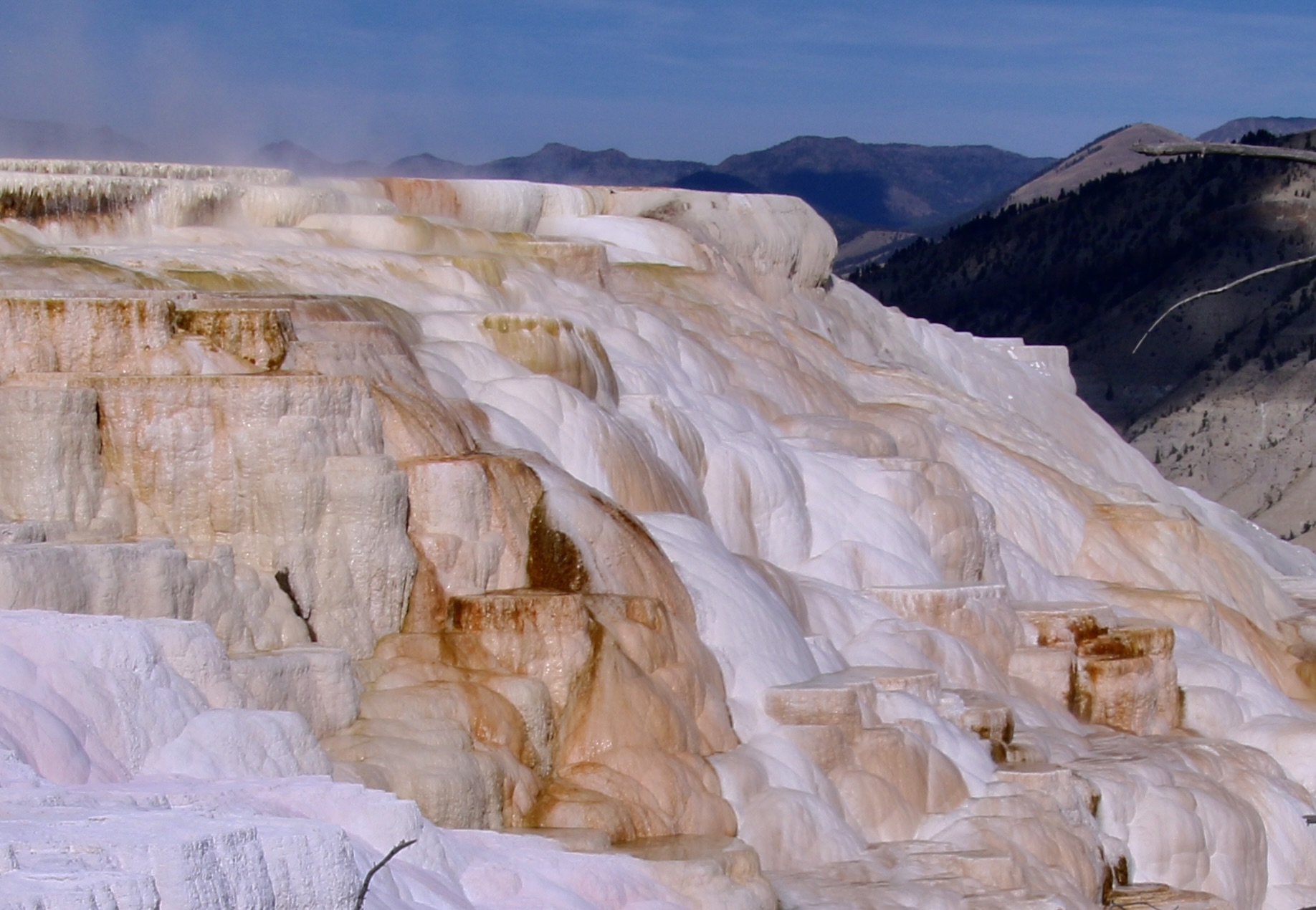
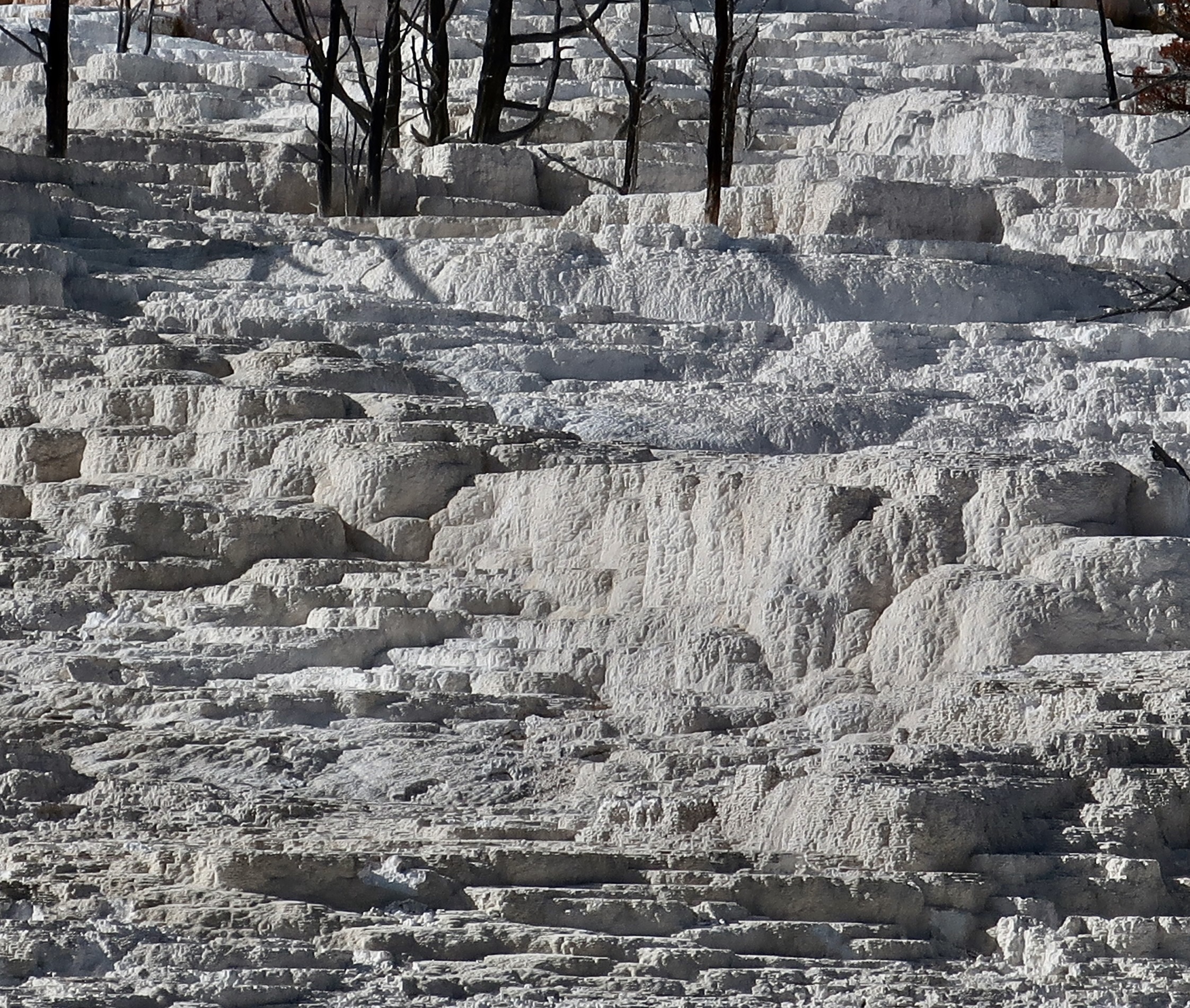
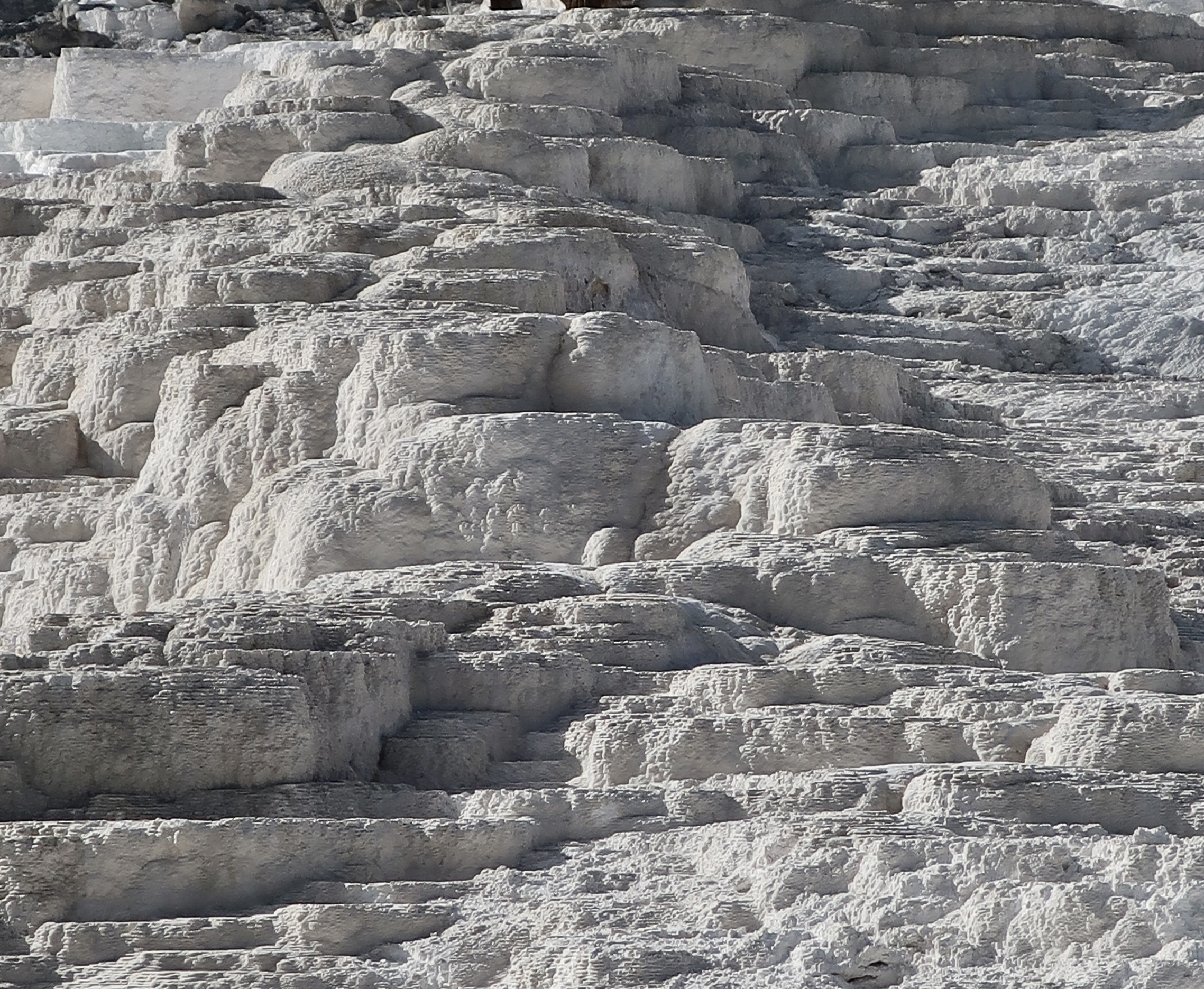
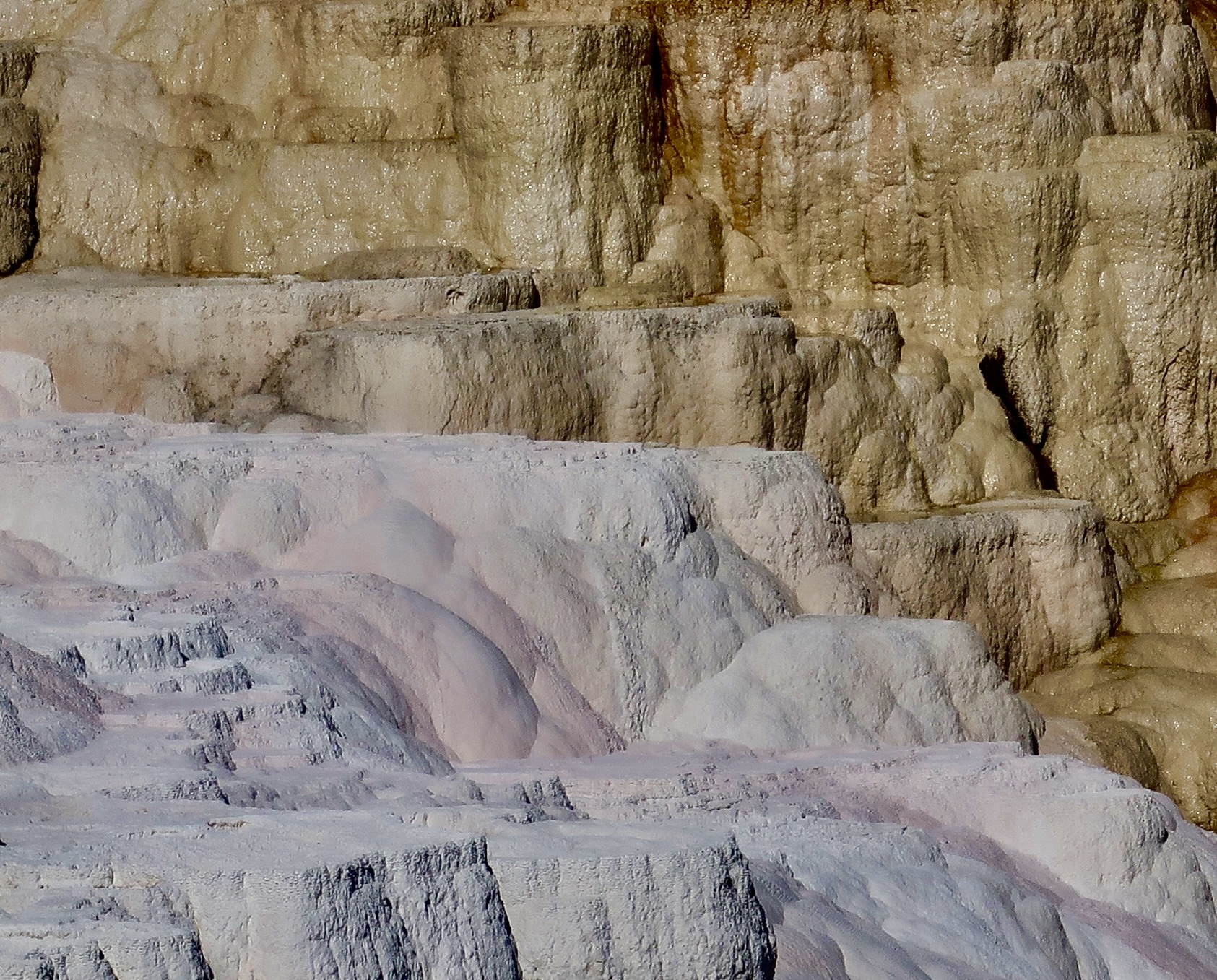
Located 50 miles north of Old Faithful, the travertine terraces of Mammoth Hot Springs are one of the most unique and beautiful of Yellowstone’s hydrothermal created landscapes. The terracing is a result of underlying limestone. Hot water dissolves the limestone and deposits it on the surface. The bright colors, like the colors of the hot springs in the Yellowstone Caldera to the south, are created by thermophiles, tiny microorganisms that thrive in the hot springs. Different types of thermophiles have different tolerance for the heat and come in different colors based upon their exposure to sunlight. Those that can tolerate the most heat live deep in the pools and tend toward blue and green. The ones living on the cooler outer edges are more in the brown and yellow range.

Peggy and I took a day to drive up from where we were camped in the town of West Yellowstone to visit Mammoth Hot Springs. On the way up we saw a lot of great scenery that I will feature in another post and two hydrothermal features I haven’t covered in this series yet: mud pots and fumaroles.

Photos of Yellowstone National Park taken by Curt and Peggy Mekemson.
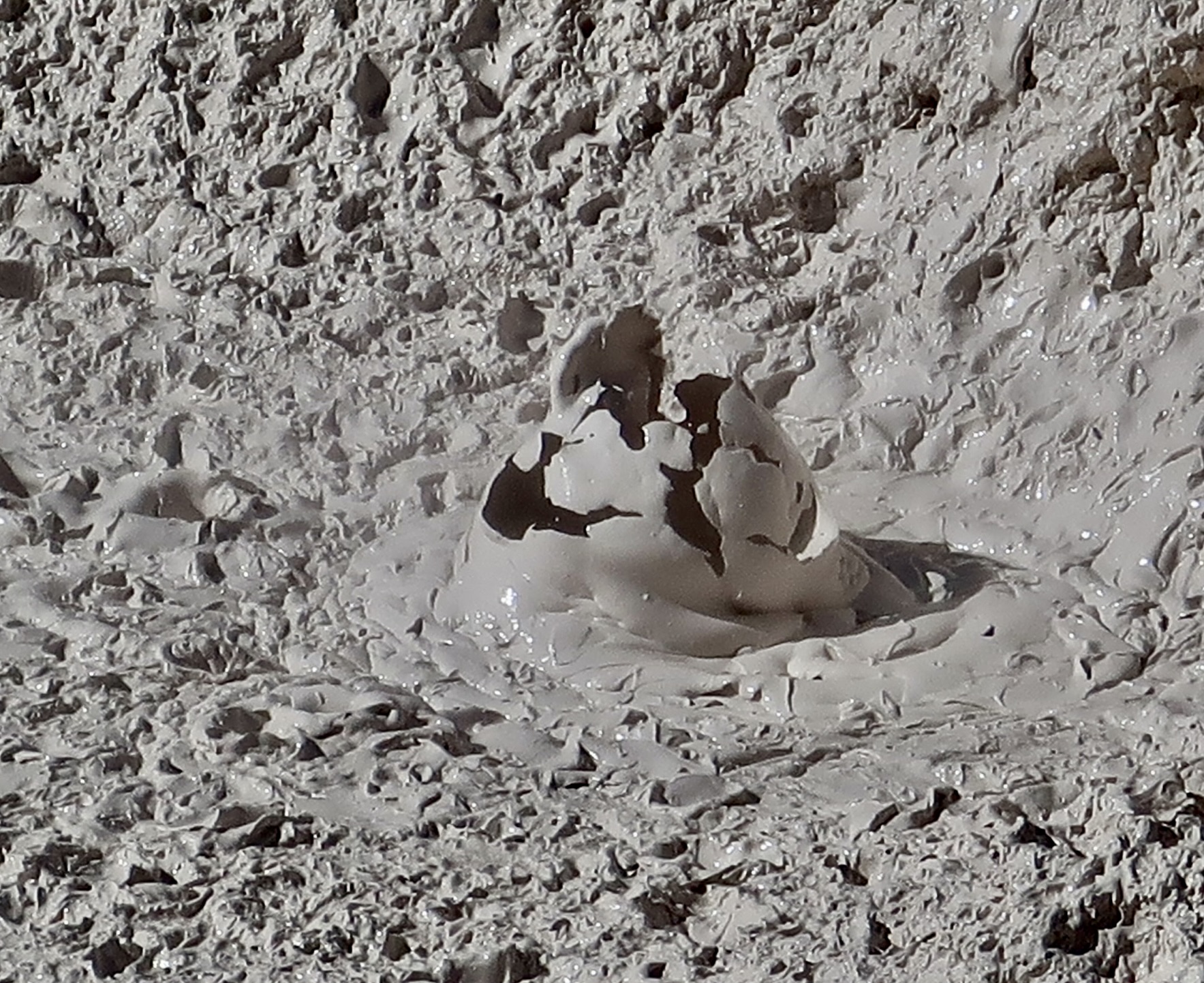
Mud pots occur when hot thermal water is flowing under a layer of clay that blocks the water from escaping to the surface. Steam from the water, however, is able to make its way through the clay. Certain microorganisms convert the sulfur dioxide in the steam to sulfuric acid which turns the clay into a gooey, sticky consistency. Bubbles are created as a result of the steam bubbling up through the goo. It sound like plop, plop, plop.
Photo of an exploding bubble in a Yellowstone mud pot by Curt Mekemson.
I included this exploding bubble in an earlier post. I liked it so much you get to see it again.
Photos of Yellowstone taken by photographers Curt and Peggy Mekemson.
A fumarole is similar to a geyser but lacks the water to create eruptions. Instead, the heat from the volcanic rocks turns what water is available into incredibly hot steam that escapes from vents and ranges in temperatures up to 280°F (138°C). It can be noisy. This is a shot of Roaring Mountain that received its name from the noise created by the escaping steam. It could be heard from miles away in the 90s. It’s quieter today.

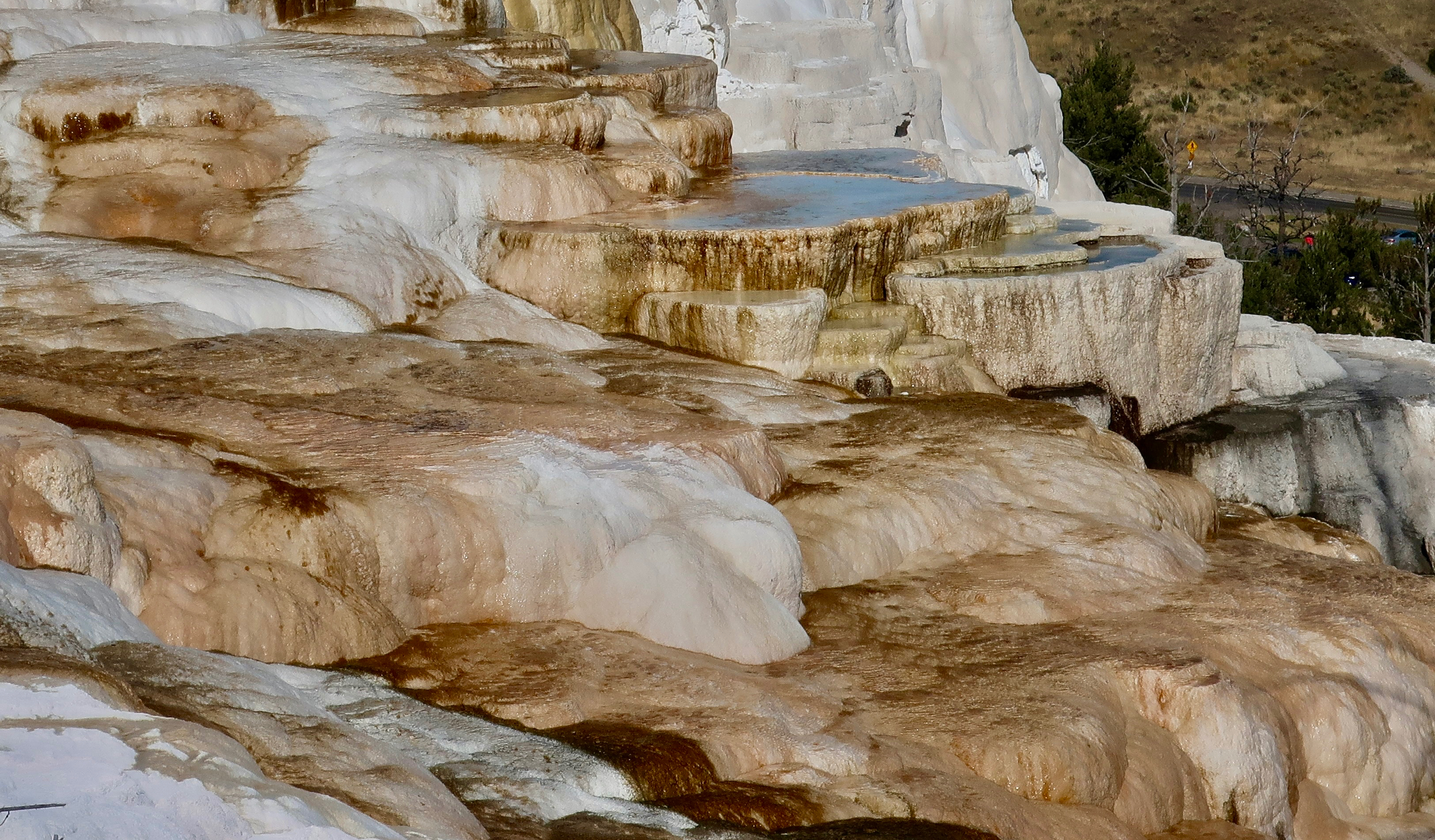
And now it’s time to visit the terraces of Mammoth Hot Springs. A convenient road takes you around the terraces. Walkways off the road take you to the lower terraces. The following photos were taken from the walkways.

Photos of Mammoth Hot Springs by Curt and Peggy Mekemson.
Canary Springs is one of the most popular sites along the lower terrace trail at Mammoth Hot Springs.
Photos of Mammoth Hot Springs taken by photographers Curt and Peggy Mekemson.
A broader, softer perspective of Canary Springs.
A view of the travertine terrace just above Canary Springs.
Photos of Mammoth Hot Springs taken by photographers Curt and Peggy Mekemson.
Another perspective of the terrace just before the water flows over the edge.
Cupid Springs. I don’t have a clue on how it got its name.
Umpteen shades of grey.

The road snakes around the upper terrace. There are several pullouts that allow close up views of the various formations.

Photos of Mammoth Hot Springs taken by photographers Curt and Peggy Mekemson.
This section is known as Angel’s Terrace. I’m assuming it’s because of the white travertine, which is how the dissolved lime comes out of the ground.
Photos of Mammoth Hot Springs taken by photographers Curt and Peggy Mekemson.
Another perspective. Like stair steps.
Photos of Mammoth Hot Springs taken by photographers Curt and Peggy Mekemson.
We really liked the contrast of colors here.
Photos of Mammoth Hot Springs taken by photographers Curt and Peggy Mekemson.
It was the colors, shape and tree that caught our attention that had us pull out our cameras.
Photos of Mammoth Hot Springs taken by photographers Curt and Peggy Mekemson.
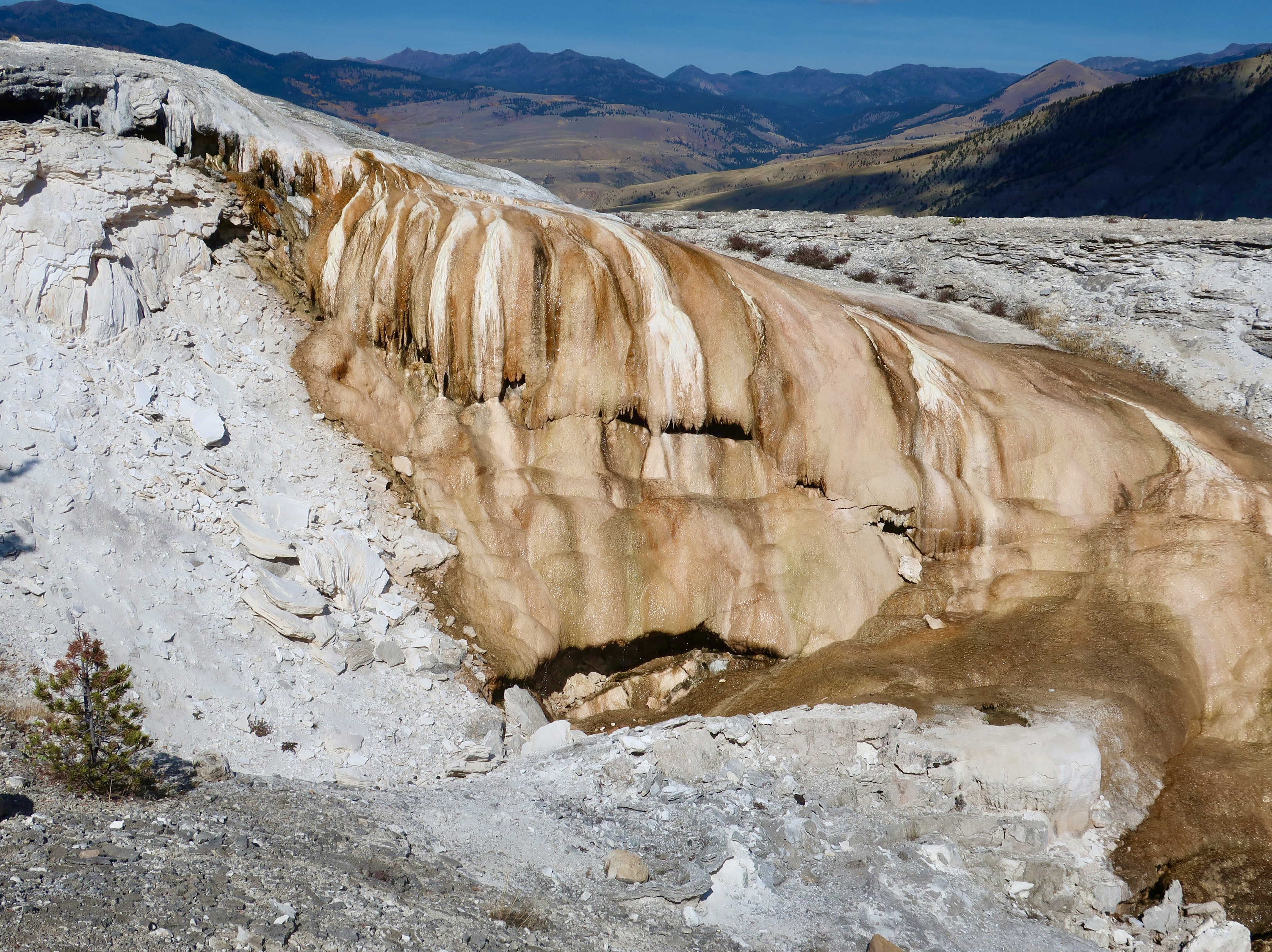
This unique dome is known as Elephants Back.
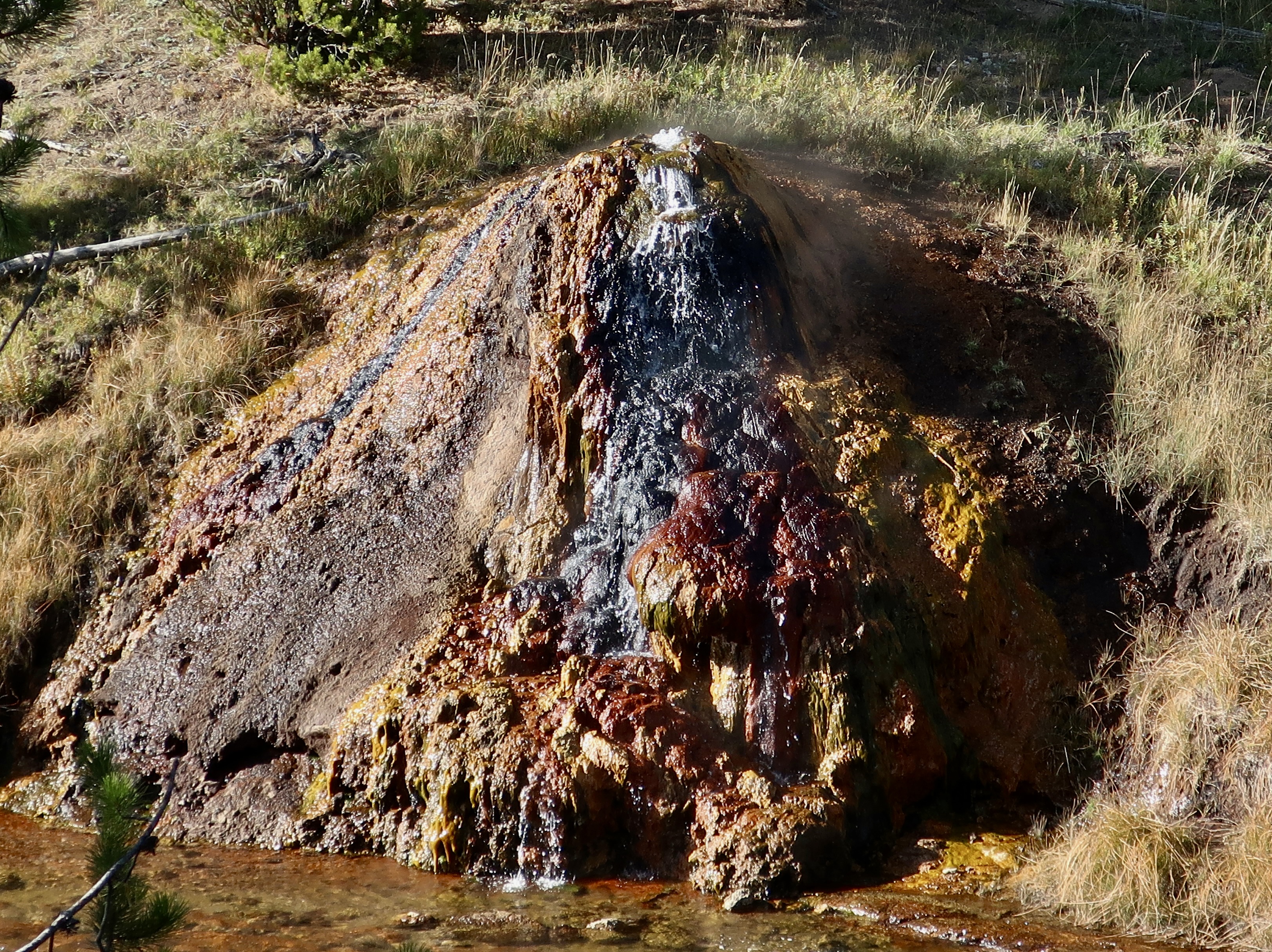
Photo of hydrothermal mound in Yellowstone NP taken by Curt Mekemson
We were driving back to West Yellowstone when we came across this very colorful small dome. The steam coming from the back suggests a fumarole. We simply had to stop and photograph it. That does it for today. Our next post will be on Heidelberg Castle. After that, it will be back to Yellowstone and its scenic beauty.

The Incredible Colors and Structures of Yellowstone’s Hot Springs… It’s Another World

The Irish would be jealous of the beautiful green hot spring found in Yellowstone National Park— and, the clarity of the water. It almost wants to make you shed your clothes and jump in. Bad idea. The water emerges from its volcano based heater at 198° F (92° C).

Beautiful scenery, abundant wildlife, and incredible geology. Yellowstone has it all. There is a reason why it became America’s first National Park in 1872. I’ll be focusing on the geology today. Yellowstone sits on top of one of the world’s largest volcanoes. Believe me, when I say, we wouldn’t want to see it blow. The proximity of the lava to the surface is the reason behind all of its hydrothermal features. For one, Yellowstone has more active geysers than the rest of the world combined according to information in the Visitor Center. The geysers are slated for another post; today it is all about hot springs. Peggy and I were captured by their vibrant colors and unique structures. The photos in this post were taken by both of us. We visited this past fall when we were in the middle of our 12,000 mile tour. It was my third visit. Peggy once spent an idyllic summer working there when she was going to college.

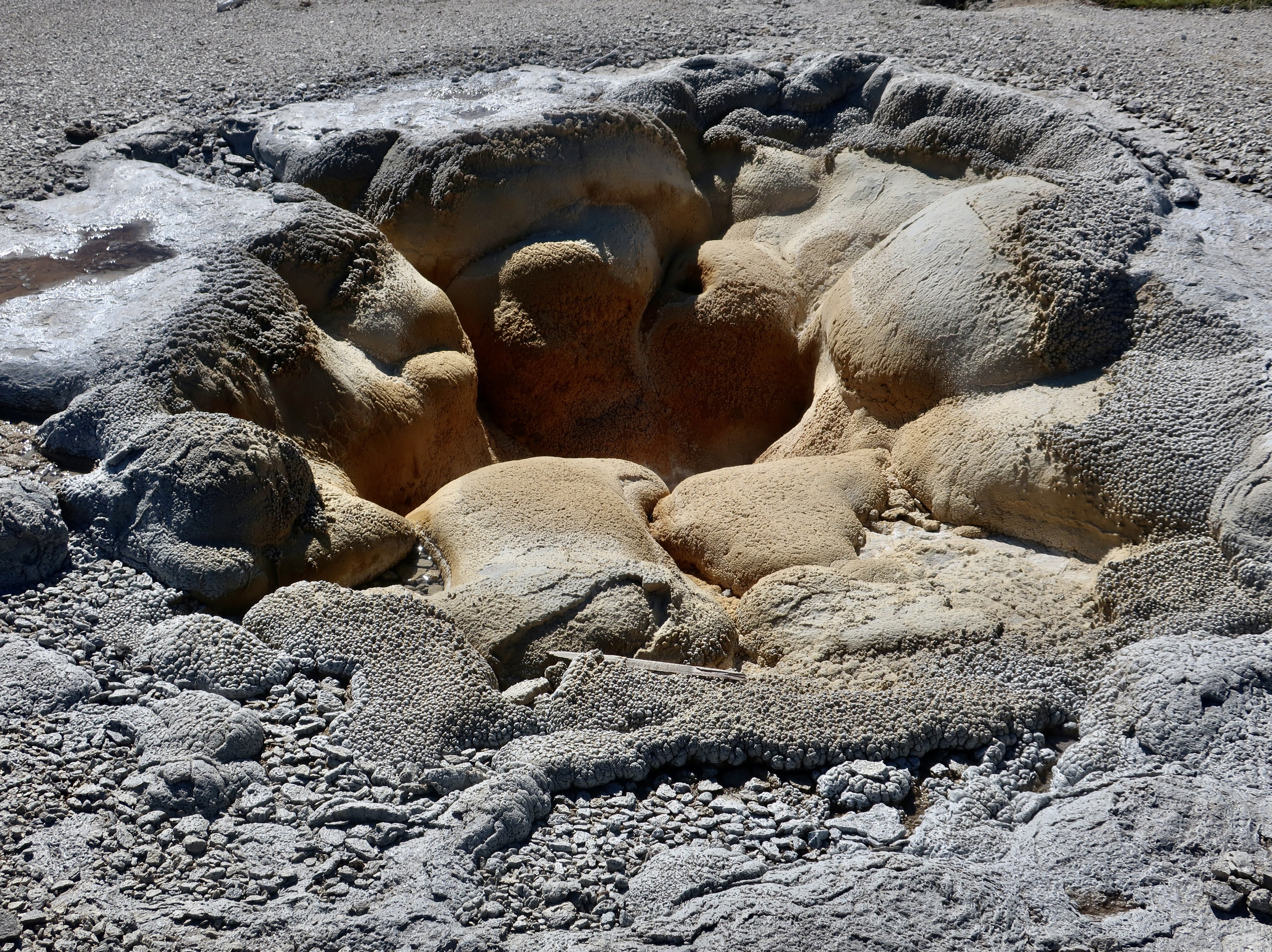
Picture of hot spring/geyser structure in Yellowstone National Park by photographers Curt and Peggy Mekemson.
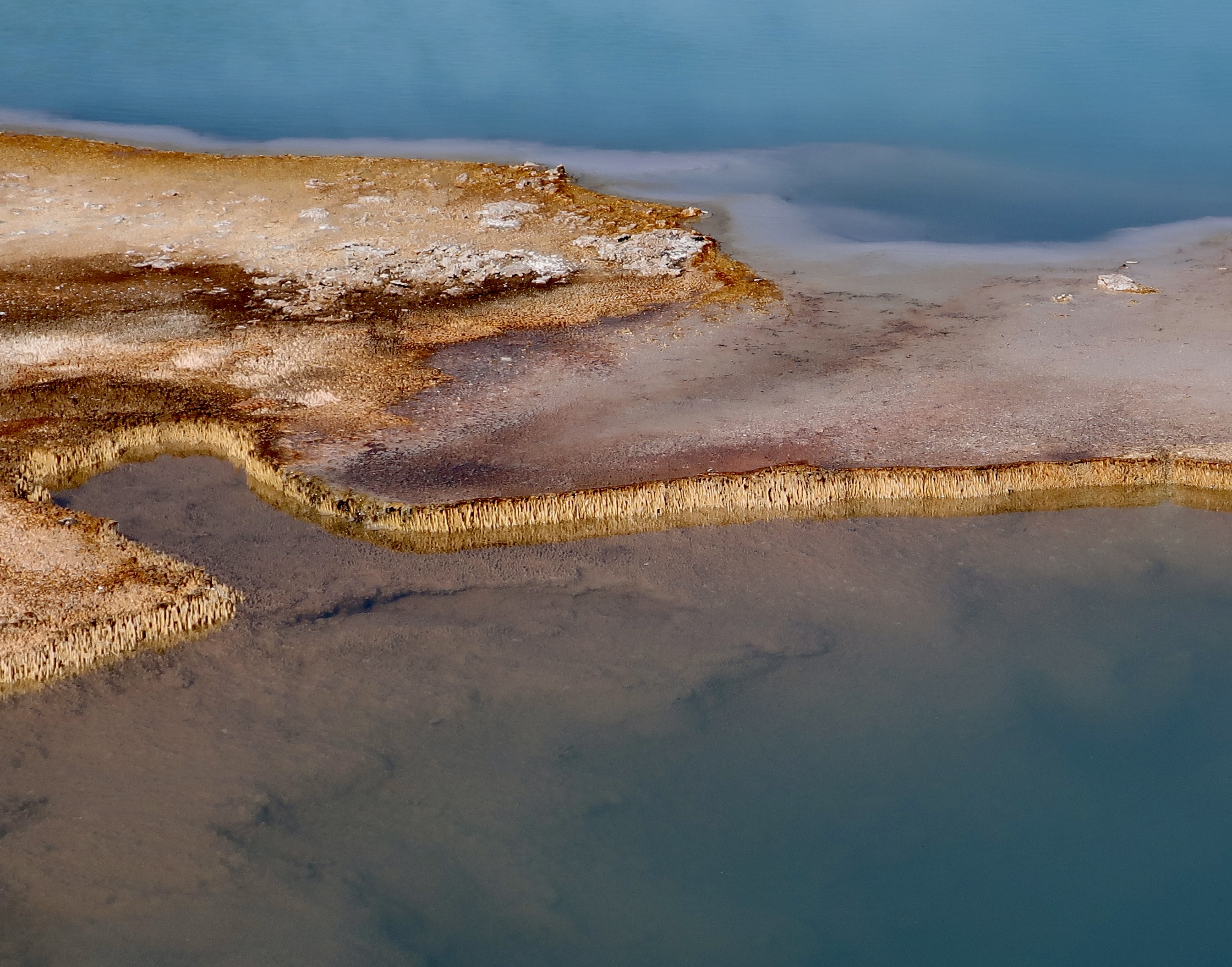
This is one of the hot spring structures that we found both intriguing and fun.
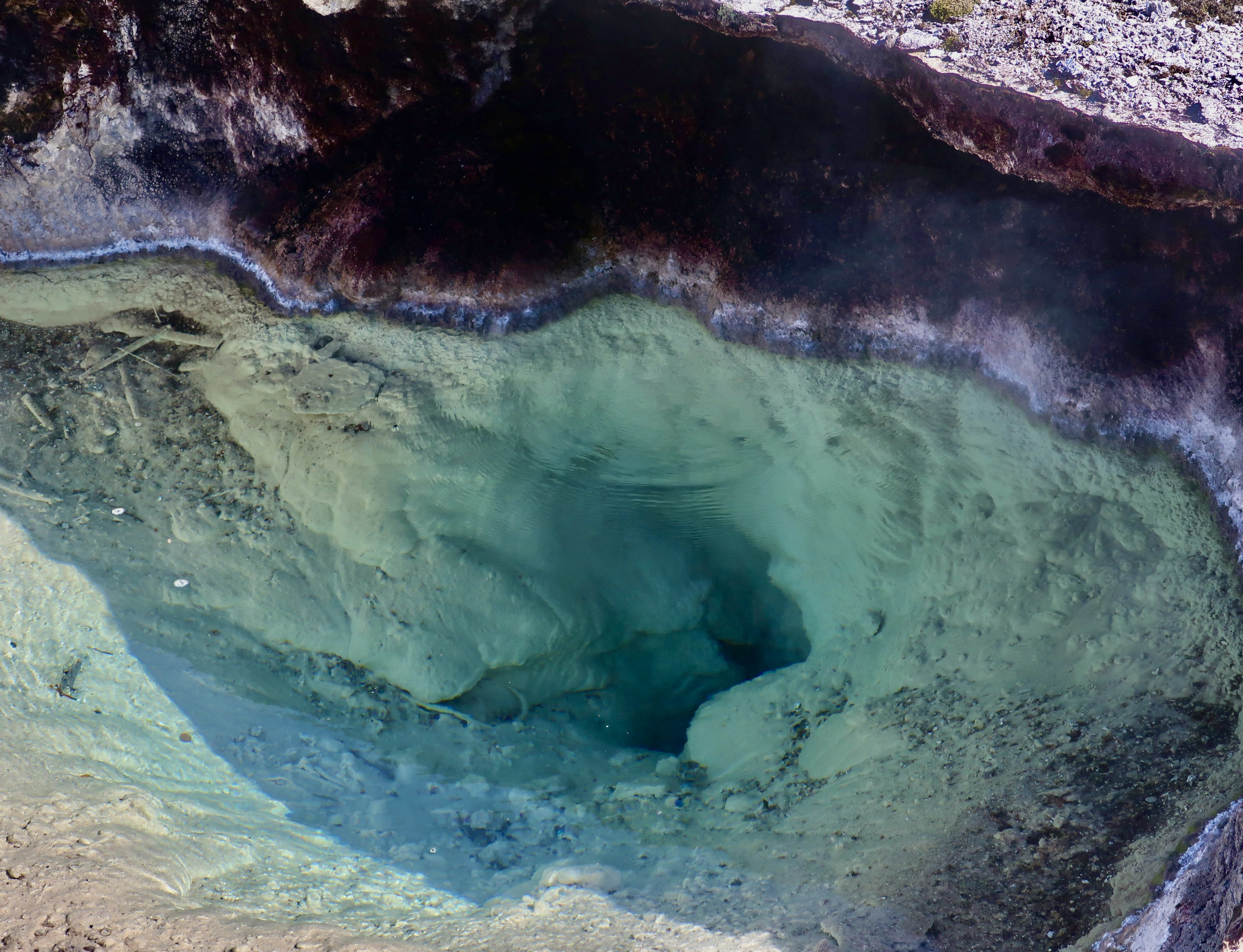
Picture looking into the depths of a hot spring at Yellowstone National Park by photographers Curt and Peggy Mekemson.
This hot spring provided a view into the depths from which the hot water emerges. BTW, the hydrothermal features of Yellowstone provide home for trillions of microbes, some of which may date back to the very beginning of life on earth. Scientist have identified approximately two percent of the different kinds.
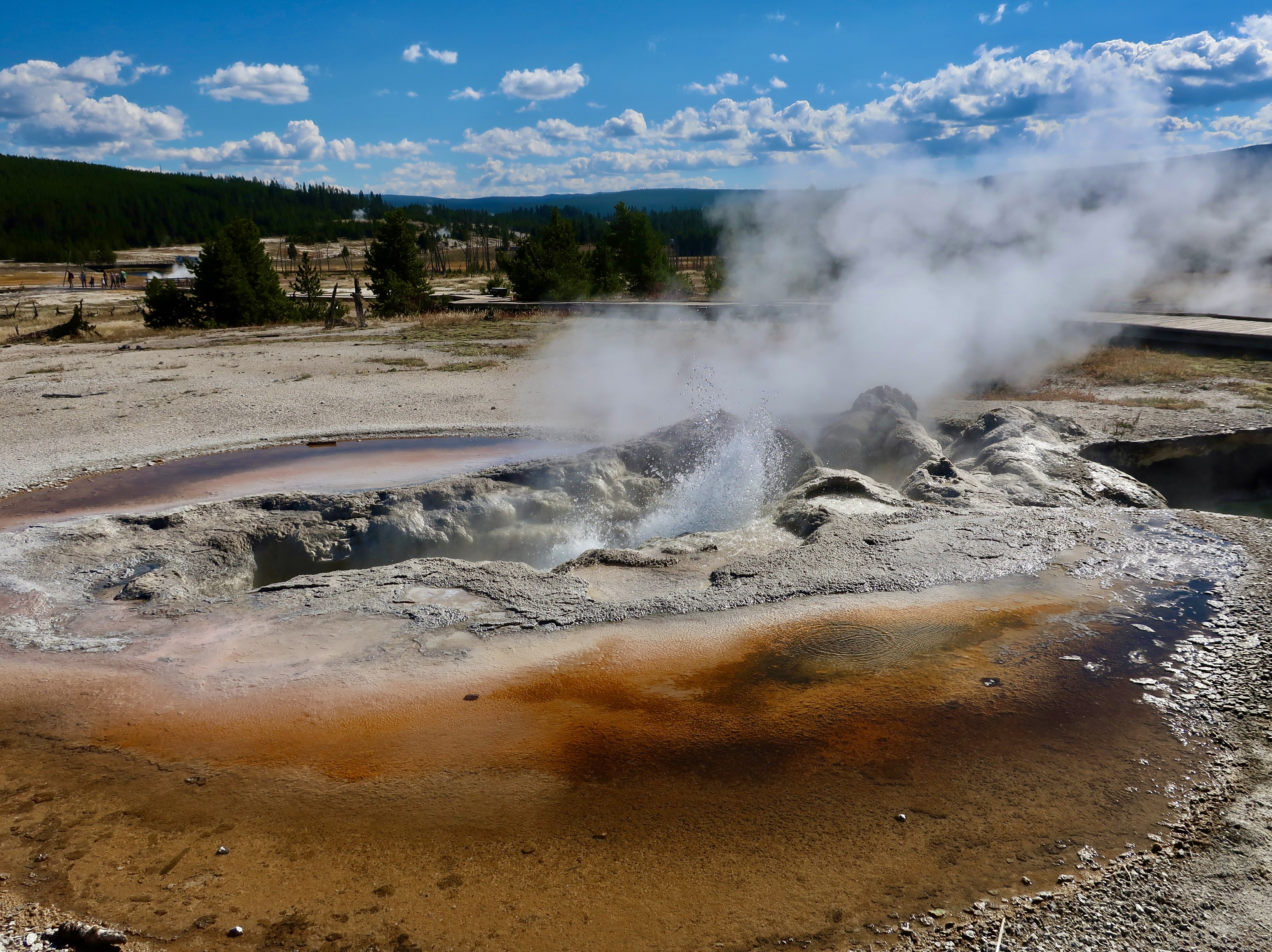
Picture of small geysers in a colorful hot spring by photographers Curt and Peggy Mekemson.
A small geyser added action to the color and structure of this hot spring.
Photo of small 'boiling' hot spring at Yellowstone by photographers Curt and Peggy Mekemson.
This small, golden brown geyser looked like it was boiling. The steam had the tell-tale smell of sulphur which is typical of the hot springs and geysers.
Photo of large hot spring at Yellowstone by Curt and Peggy Mekemson.
This hot spring was empty for the moment. It would soon change as its geyser erupted. The stream is part of the appropriately named Fire Hole River that water from the hot springs and geysers flows into.
Pictures of Yellowstone taken by photographers Curt and Peggy Mekemson.
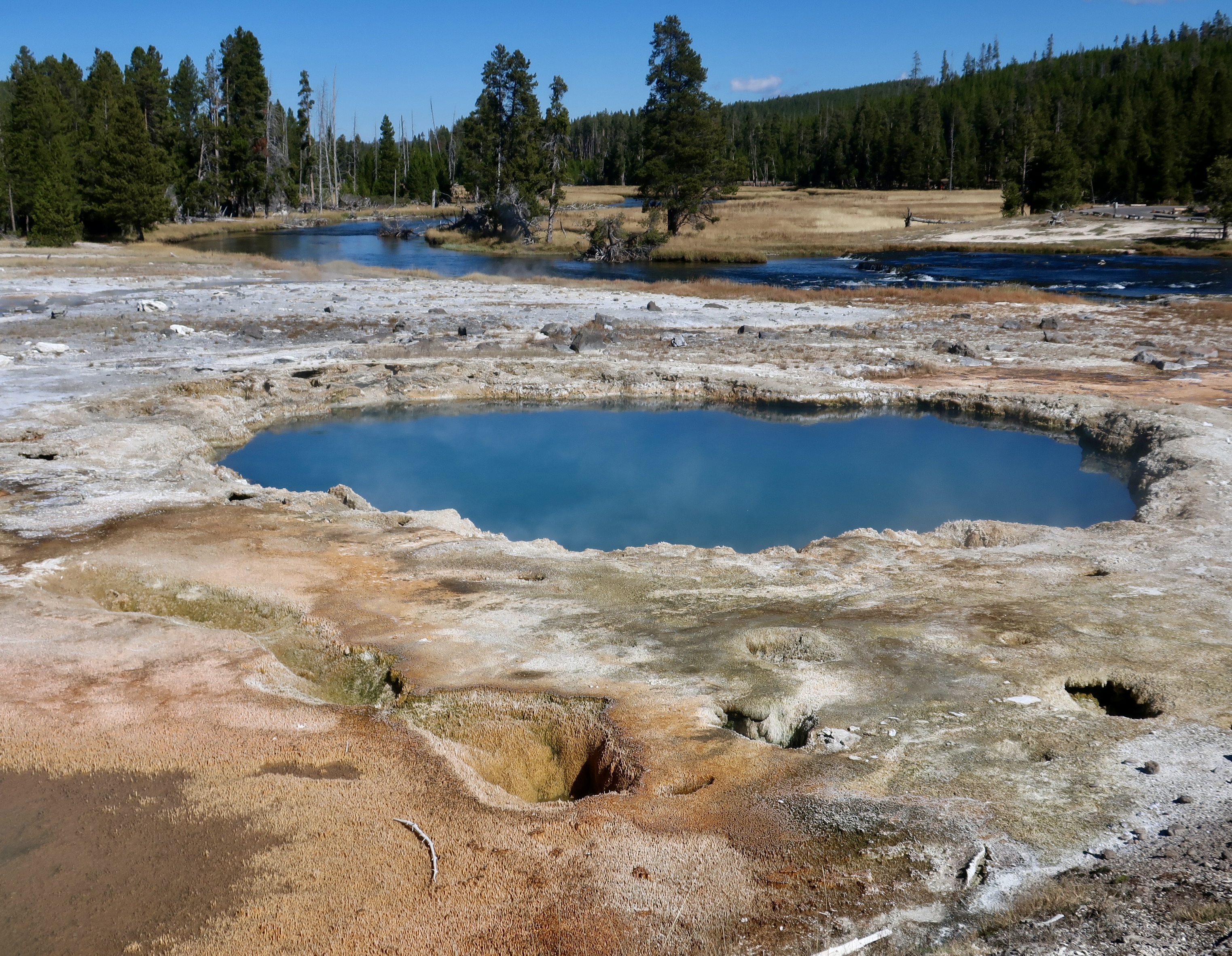
The Fire Hole River provides the backdrop for this hot spring. Also, note the indentation in the foreground.
It was a wee bit weird.
This hot spring showed a similar type of structure along its edges. Note the murky depth.
The depths of this large hot spring were much clearer.
As the water flows out from the hot springs into the Fire Hole River, it creates its own unique colors and structures.
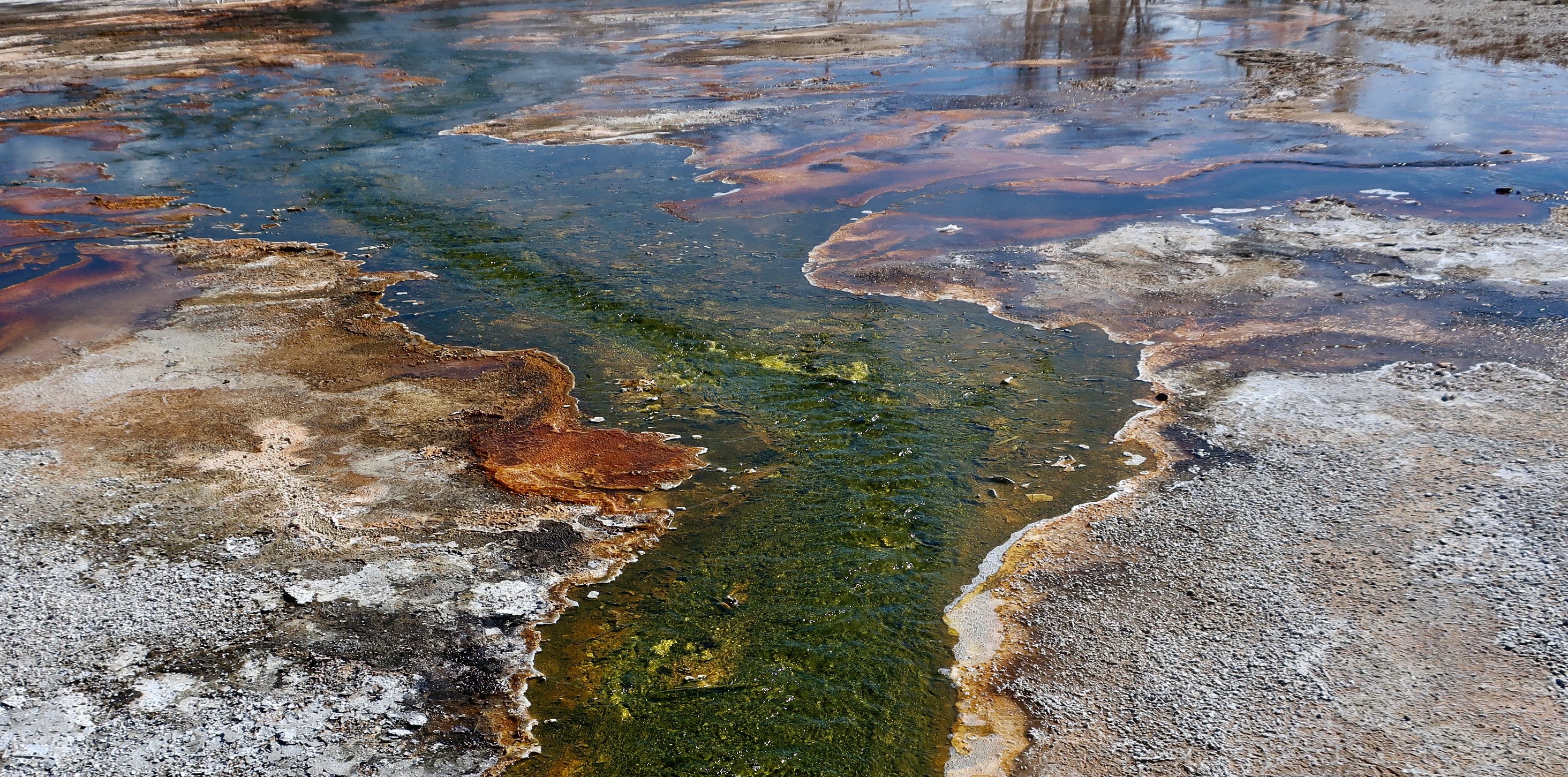
The green stream flowing along. Not surprising, green was only one of the colors flowing out from the hot springs.
For example, this golden/yellow/orange stream.
A different perspective as the golden trickle empties into a larger stream.
Here, the color of the hot springs stream had a rich brownish tinge to it.
A brown, braided stream. I admit, my fascination here was with the dead stump.
The mineral laden water from the hot springs created this rock waterfall.
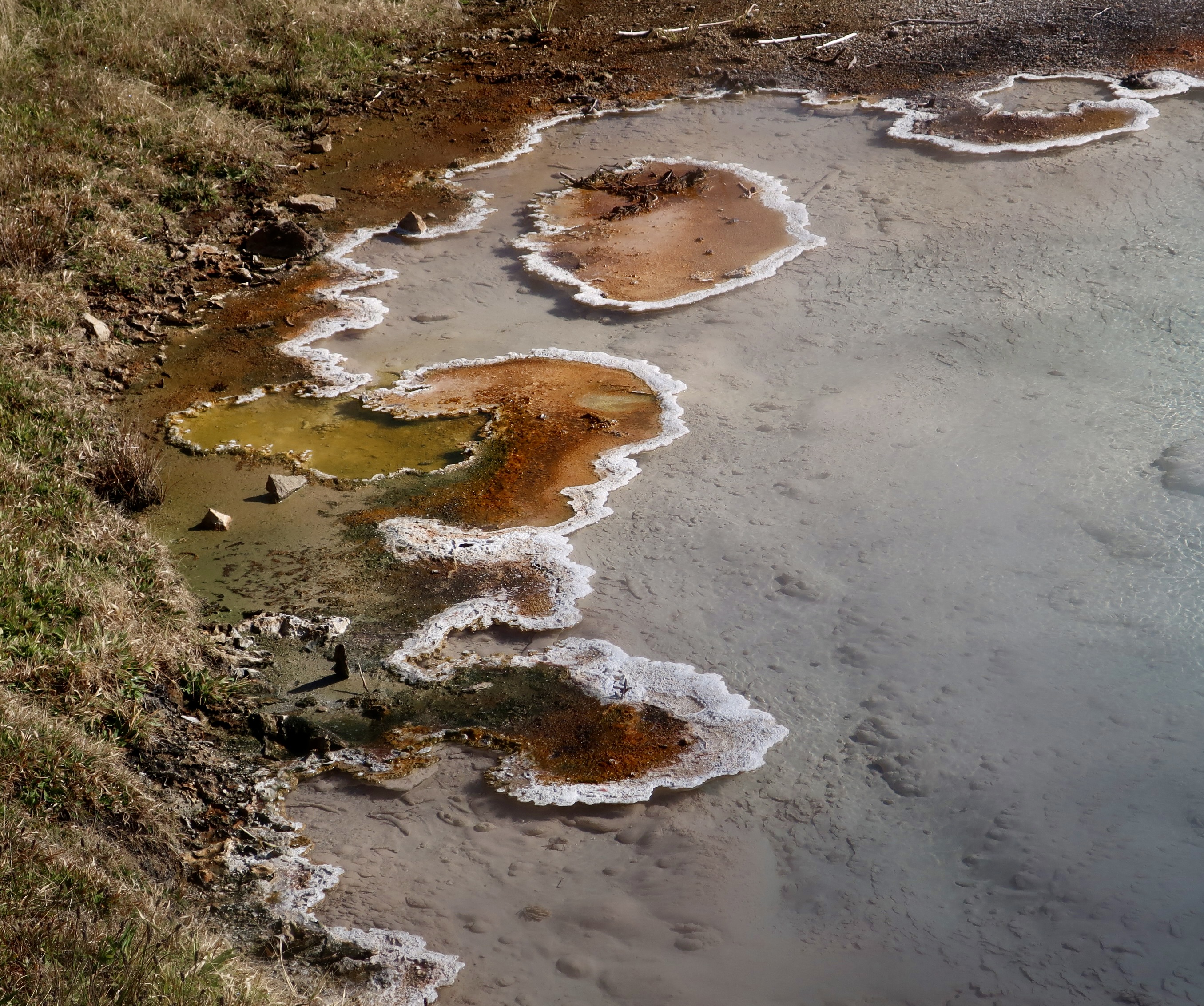
And these ‘islands’ on the edge of the Fire Hole River.
I’ll conclude today with this colorful display created by Yellowstone’s hot spring/geyser magic.

Jumping into and across the Snake River Canyon of Idaho… The 10,000-Mile Bike Trek

When Peggy and I arrived at the bridge across the Snake River, a man was hanging by his fingers on the edge of the bridge, 500 feet above the water.

When Peggy and I arrived at the Perrine Bridge across the Snake River, a man was hanging by his fingers on the edge, 500 feet above the water.

I biked out of Bozeman, Montana facing another climb across the Rockies. It turned out to be surprisingly easy. And beautiful. Highway 191 follows the scenic Gallatin River with its rushing waters up into the northwestern corner of Yellowstone National Park in Wyoming. Snowmelt during June turns this branch of the Missouri River into a seething whitewater-fantasy trip for rafters. Beyond its beauty and rapids, the river is also known for its world-class fly-fishing.

Snow melt turns the Gallatin River of Montana into a river runner's dream.

Snow melt turns the Gallatin River of Montana into a river runner’s dream.
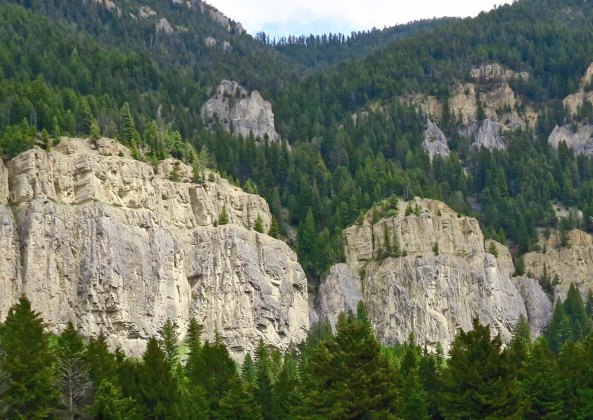
Cliffs along the Gallatin River on Montana's Highway 191 add to the areas scenic beauty.

Cliffs along the Gallatin River on Montana’s Highway 191 add to the area’s scenic beauty.

Trees along the Gallatin River on Montana's Highway 191.

As does the forest.

Fly fisherman try their luck in the upper waters of the Gallatin River in Wyoming's Yellowstone Park.

Fly fishermen try their luck in the upper waters of the Gallatin River in Wyoming’s Yellowstone Park.

By the time I had biked the route in August of 1989, the river had ceased its mighty roar but held onto its scenic beauty. Things were still roaring when Peggy and I drove up it in June as we re-traced my route. We stopped to admire the rapids and watch rafters. In the town of West Yellowstone, Peggy relived her youth by trying to find a bar she had once visited with a fake driver’s license in the early 70s.

She had obtained a summer job as a waitress in Yellowstone Park between her freshman and sophomore year at Mary Baldwin College in Virginia. (Mary Baldwin, once a finishing college for Southern Belles, was trying to make its way into the 20th Century. Peggy, a Northerner from Ohio, was much more interested in obtaining an education than becoming a ‘lady,’ and had only lasted for two years before transferring to the University of Tennessee in Knoxville. UT included certification for working with the hearing impaired as part of its curricula, which was where she wanted to focus.)

In the meantime, Yellowstone had provided a welcome reprieve from Mary Baldwin— plus first love. Between waitressing at the park’s lodge and watching Old Faithful shoot towering plumes of water skyward, Peggy had discovered Bill, who definitely wanted to show her a good time. Part of this had included the trip into West Yellowstone and barhopping with a fake driver’s license.

My bike route followed Highway 20 out of West Yellowstone up and over the Continental Divide at the 7072-foot Targhee Pass, which also served as the border of Idaho. From here on, rivers would be flowing into the Pacific Ocean. I continued on Highway 20 down to Rexburg following Henry’s Fork of the Snake River and then made my way west on Highways 33 and 93 to the Craters of the Moon National Monument.
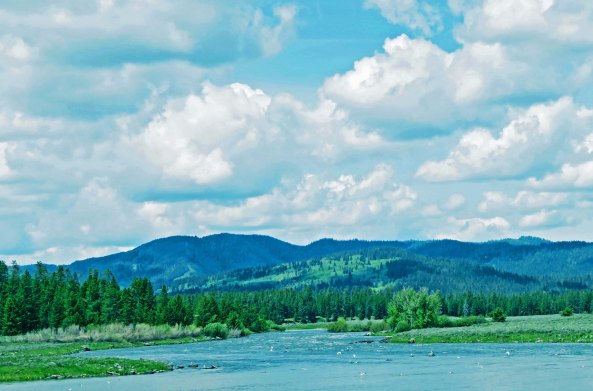
Henry's Fork flows into the Snake River, which flows into the Colombia River and then into the Pacific Ocean. I had left the great Mississippi-Missouri River drainage system behind.

Henry’s Fork flows into the Snake River, which flows into the Colombia River and then into the Pacific Ocean. I had left the great Mississippi-Missouri River drainage system behind.

The mountains of central Idaho loomed in the distance above what was probably a potato farm near Rexburg.

The mountains of central Idaho loomed in the distance above what was probably a potato farm near Rexburg.

Idaho's Highway 33 seemingly stretches on forever as so many roads did during my 10,000 mile bike trek around North America.

Idaho’s Highway 33 seemingly stretches on forever as so many roads did during my 10,000 mile bike trek around North America.

Pickle's Place is one of many delightfully unique restaurants I found along the road. Located in Arco, Idaho (once known as Root Hog) it features the Atomic Burger in honor of the fact that Arco was the first place in the world to be lit with atomic power.
Pickle’s Place is one of many delightfully unique restaurants I found along the road. Located in Arco, Idaho (once known as Root Hog), it features the Atomic Burger in honor of the fact that Arco was the first place in the world to be lit with atomic power.

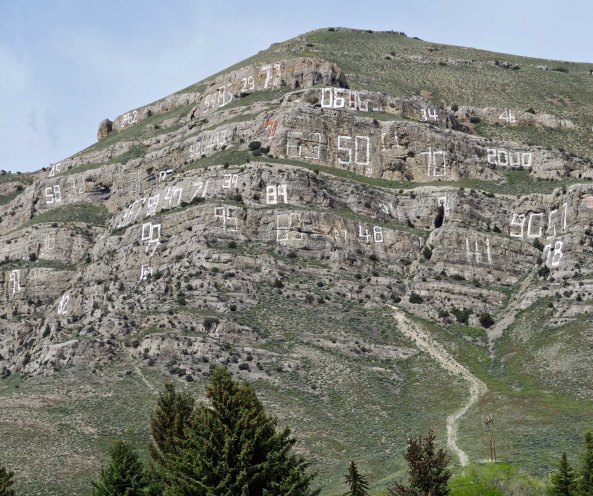
This mountain next to Arco features the local high school's graduating classes going back to the early 1900s.

This mountain next to Arco features the local high school’s graduating classes going back to the early 1900s.

The Craters of the Moon National Monument encompasses a wonderfully weird lava flow on the Snake River Plain that covers 618 square miles and was formed between 15,000 and 2,000 years ago. Early astronauts, including Alan Shepard and Edgar Mitchell, had arrived here on August 29, 1969 to practice future landings on the moon— one month after Neil Armstrong had already taken his “one small step for man; one giant leap for mankind.”

Idaho's Highway 93 winding its way through the northern part of Craters of the Moon National Monument, seemingly disappears here.
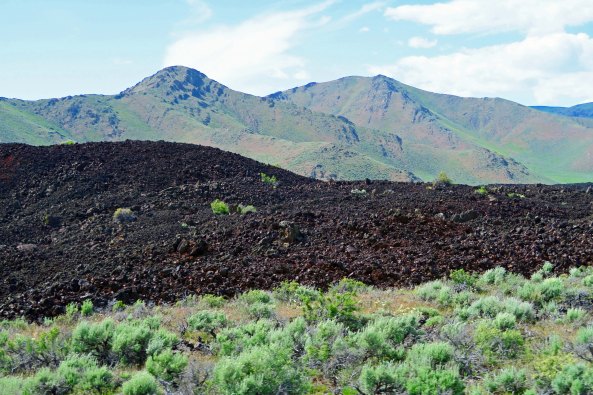
Idaho’s Highway 93, winding its way through the northern part of Craters of the Moon National Monument, seemingly disappears here.

Nature, in her marvelous way, is gradually reclaiming the volcanic landscape.

Nature, in her marvelous way, is gradually reclaiming the volcanic landscape. Sagebrush is the most obvious plant in the area.
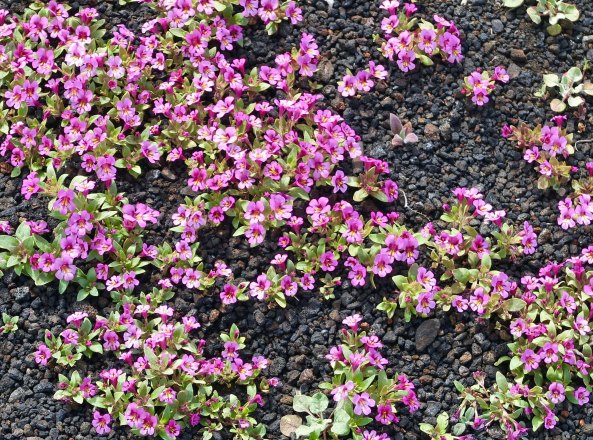
Flowers at Craters of the Moon National Monument in Idaho.

But Peggy and I also found these flowers.
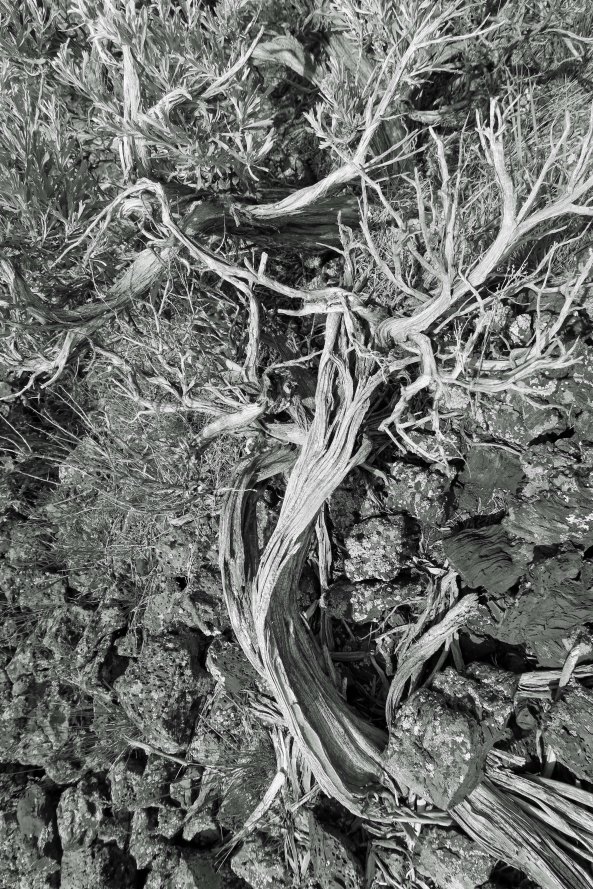
Dead sagebrush at Craters of the Moon National Monument in Idaho.

As well as this stark but beautiful reminder of how difficult it is to reclaim lava.

Art in the Park sculpture in Craters of the moon National Monument in Idaho.

This sculpture added a colorful touch to the monument.

Sculpture in Craters of the Moon National Monument in Idaho.

I also liked this perspective, which seemed to capture the strangeness of the monument. A small-explorer’s foot can be seen on the right.

From Craters of the Moon, it was a short 80-mile ride to the Snake River and Twin Falls over relatively flat country. The river features a dramatic 500 feet deep canyon, which was created by cascading water from melting glaciers. When Peggy and I arrived, a man was dangling on the edge of the Perrine Bridge by his fingers, ready to leap into the canyon (featured at top of this post). Fortunately he had a parachute on. Still, he plummeted for 200 feet or so before engaging it. Scary stuff.

Perrine Bridge across the Snake River near Twin Falls, Idaho.

See the shadow on the river. It’s made by the parachute, the small triangle located center-left above the shadow.

Snake River looking west from the Perrine Bridge overlook.

This view of the Snake River is looking west from the overlook next to the Perrine Bridge. Boats have created the wakes.

When I crossed the bridge on my bike in 1989, I was thinking of another leap across/into the canyon— that of Evel Knievel in 1974. Evel, at the time, was synonymous with the word daredevil. During his life he made some 275 motorcycle jumps over cars, busses, and trucks. Fifteen of the jumps involved spectacular accidents. He suffered numerous concussions and shattered his pelvis three times. Overall, he broke 35 bones. Maybe he should have pursued a much tamer sport, such as playing NFL football.

Knievel was always on the lookout for new ways to upgrade his act, obtain more publicity, and increase his income. Mainly this involved adding more vehicles to leap (for a number of years, he held the world record of 19 cars), but he also had a dream of jumping the Grand Canyon. Concerns with National Park regulations, however, eventually led him to the Snake River. The 1700-foot jump was a bit long for his Harley, though, and this is where Robert Truax came into the picture.

Truax was one of America’s premier, pioneer rocket engineers, beginning his career prior to World War II when a childhood interest in Robert Goddard led him to build rockets at his home in Alameda, California. He then went on to work with the Navy on rocket development during World War II and later helped build both the Thor and Polaris missiles. By the late 50s/early 60s, he had left the military and was heading up Aerojet-General’s advanced rocket development division in Sacramento, California. I met the man when I promised him I would have his daughter home by midnight.

Kathleen (Kathy) Truax was a dark-haired beauty with brains to match. She had transferred into El Dorado Unified High School in Placerville during my senior year. After graduation, I had worked up the nerve to ask her out on a date to the California State Fair in Sacramento. Her immediate “yes” had me kicking myself for not asking sooner.

The weekend turned into a marathon. I had worked ten hours on Friday hauling 50-pound boxes of pears out of an orchard and then gone to a party at a friend’s. My mother called at midnight to tell me that the forest service had just phoned wanting me to help fight a raging forest fire that was threatening to engulf the small foothill community of Foresthill. So away I had gone and spent from 2 a.m. until 10 a.m. chopping a fire trail across a steep American River canyon with a heavy pickaxe. The looming inferno encouraged fast work.

After a two-hour nap break and lunch, our crew chief had told us that the fire was burning back on itself and that we could leave if necessary. I’d buzzed home to Diamond Springs, showered, and taken off for Cameron Park where I picked up Kathy in my 54 Chevy, met her dad, and gone on to the State Fair. I returned her home promptly at midnight as promised. We’d had fun and I had won Kathy a large stuffed bear that hardly fit in the back seat.

Later that summer, we had gone on a date up into the Sierra foothills near Pleasant Valley where her grandmother lived. Kathy had told me that her dad shot off rockets in the area that he had built in his garage. His visionary dream was to build inexpensive rockets that would make space travel affordable for everyone. Eventually, 13 years after the summer I had dated Kathy, that dream would lead him to build the Volksrocket (Skycycle X3) designed to carry Evel Knievel across the Snake River Canyon. The rocket had worked fine, but the parachute had malfunctioned, deploying when the rocket took off, which allowed the wind to pull it back into the canyon. Evel had landed on the river’s edge with minimal injuries (for him), and Truax had taken responsibility for the accident.

While Knievel died in 2007 and Truax in 2010, their dream was finally realized on September 16th of this year. Professional Hollywood stuntman Eddie Braun working with Truax’s son Scott used an exact replica of the Skycycle X3 with a well-tested parachute to successfully jump the canyon. Children of both Knievel and Truax were there to witness the event. Had Peggy and I been a couple of months later in our route review, we would have been there as well.
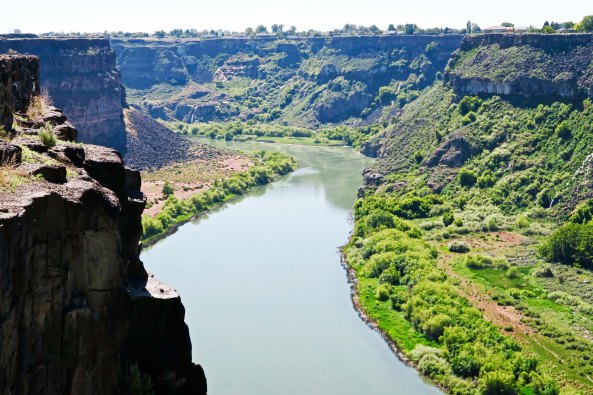
Looking east up the Snake River from the Perrine Bridge toward where Evel Knievel tried his 1974 leap across the river.

Looking east up the Snake River from the Perrine Bridge toward where Evel Knievel tried his 1974 leap across the river.

NEXT BLOG: I bicycle across Nevada and hear voices. Seriously. Were the desert gods trying to tell me it was time to end my journey?