
First Grade was not the highlight of my school years, thankfully. Things had to get better. And did. My second and third grade teacher turned out to be my Godmother. There is a commandment issued on a mountain somewhere and written in granite: She had to like me. My attitude toward education made a dramatic leap. I actually became something of a teacher’s pet, which surprised everybody. Me, most of all. But back to the wilderness, er, Graveyard.
Between the third and fourth grade, I discovered a new way to enjoy nature. I moved my bedroom outdoors in the summer. It was partially to avoid sharing a room with Marshall and partially to escape my father’s house shaking snores. But the real reason was that I loved being outdoors. I would move out as soon as school was over and stay until it started, or later if parents and weather permitted.
At first I slept on the ground in a cheap cotton sleeping bag. The ground was hard, the nights cool, and the mosquitoes persistent, but these were minor drawbacks. I was free. If I had to pee, I’d climb out of the sleeping bag and find the nearest bush. If I woke up thirsty, a convenient garden hose was nearby. I would go to sleep watching the stars and listening to a giant bullfrog that lived in the ditch in front of our house. I would wake up to the cool morning air and chirping robins. Life was good.
Then it got better. My grandparents bought me a real bed— a wood framed, steel spring army cot, complete with mattress. Looking back, I think they may have been embarrassed that their grandson was sleeping on the ground.
My paradise was marred by one thing, the Graveyard. It was always there on the edge of my sight. White tombstones glared at me.
As hard as I pretended, the cemetery and its frightful inhabitants would not go away. So I developed a set of defenses. The first was to sleep facing the opposite direction, or hide under the covers, ostrich like. A more sophisticated approach was to locate the bed where I couldn’t see the Graveyard. Our well-seasoned cars worked in a pinch, but they weren’t quite large enough. Bits and pieces of the Graveyard would creep around their sides, peak over their tops and slink under their bottoms. A trellis built by my father, Pop, was much better. Its luxurious growth of honeysuckle created the perfect screen. I set up a permanent residence behind it.
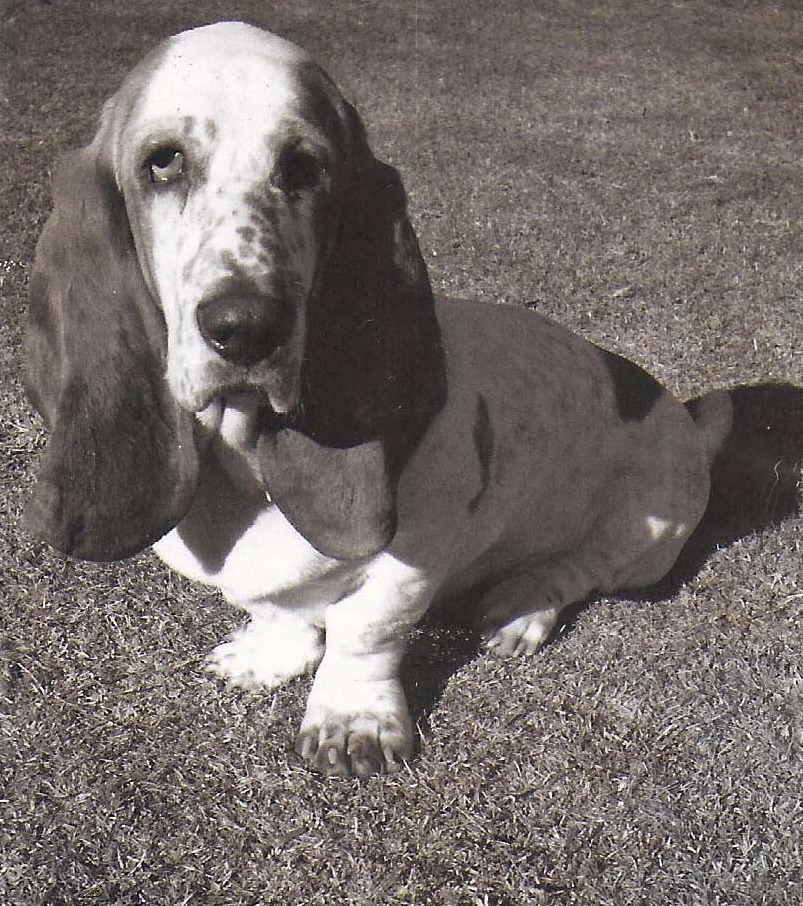
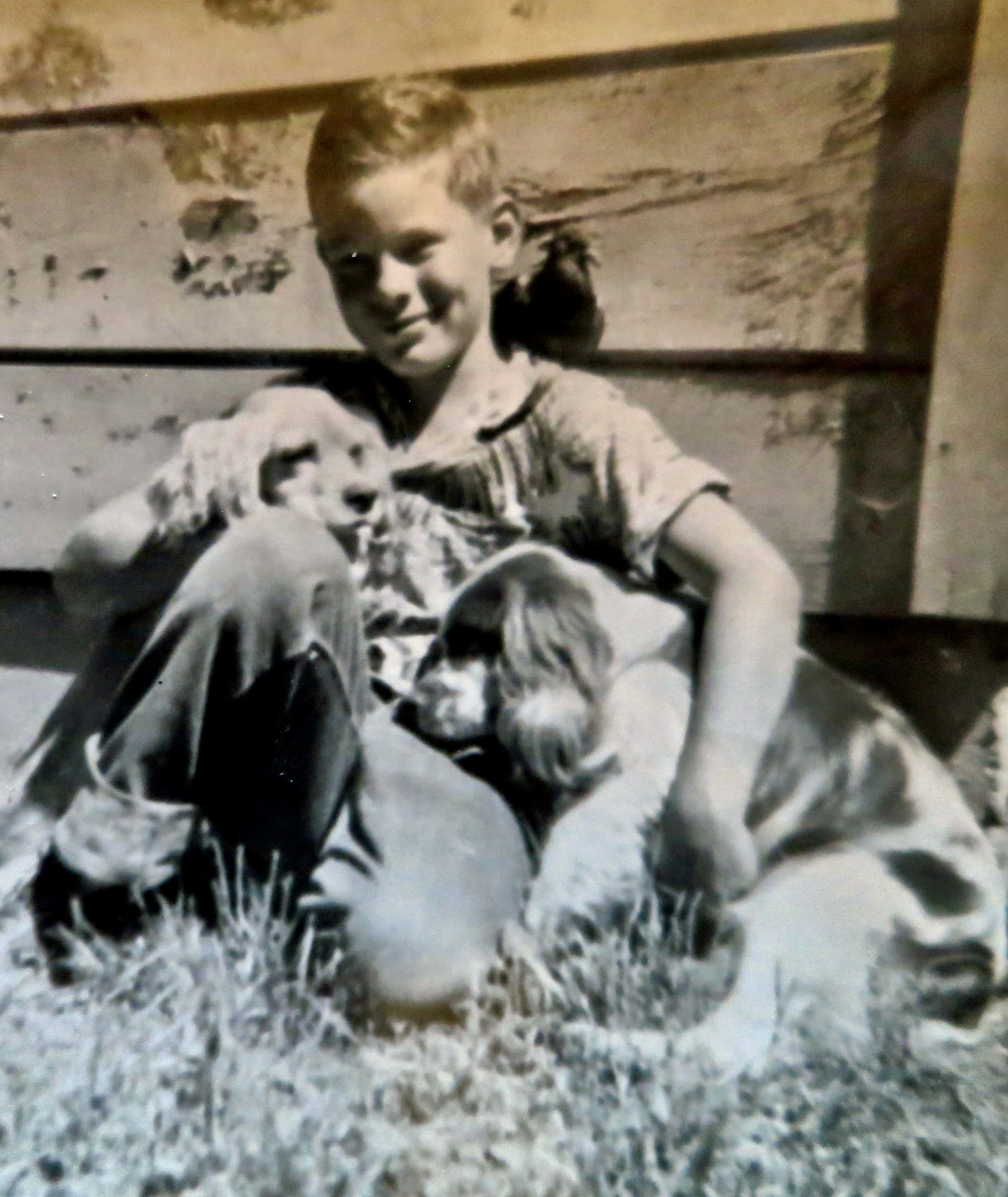
But even the trellis wasn’t enough to calm my imagination. More drastic action was called for. I hired protection. It came in the form of various family pets. Their job was to chase the ghosts away. Payment was made by allowing them to sleep on my bed. Apparently, the scheme worked. The evidence is irrefutable: No ghosts attacked me in the years I slept outside.
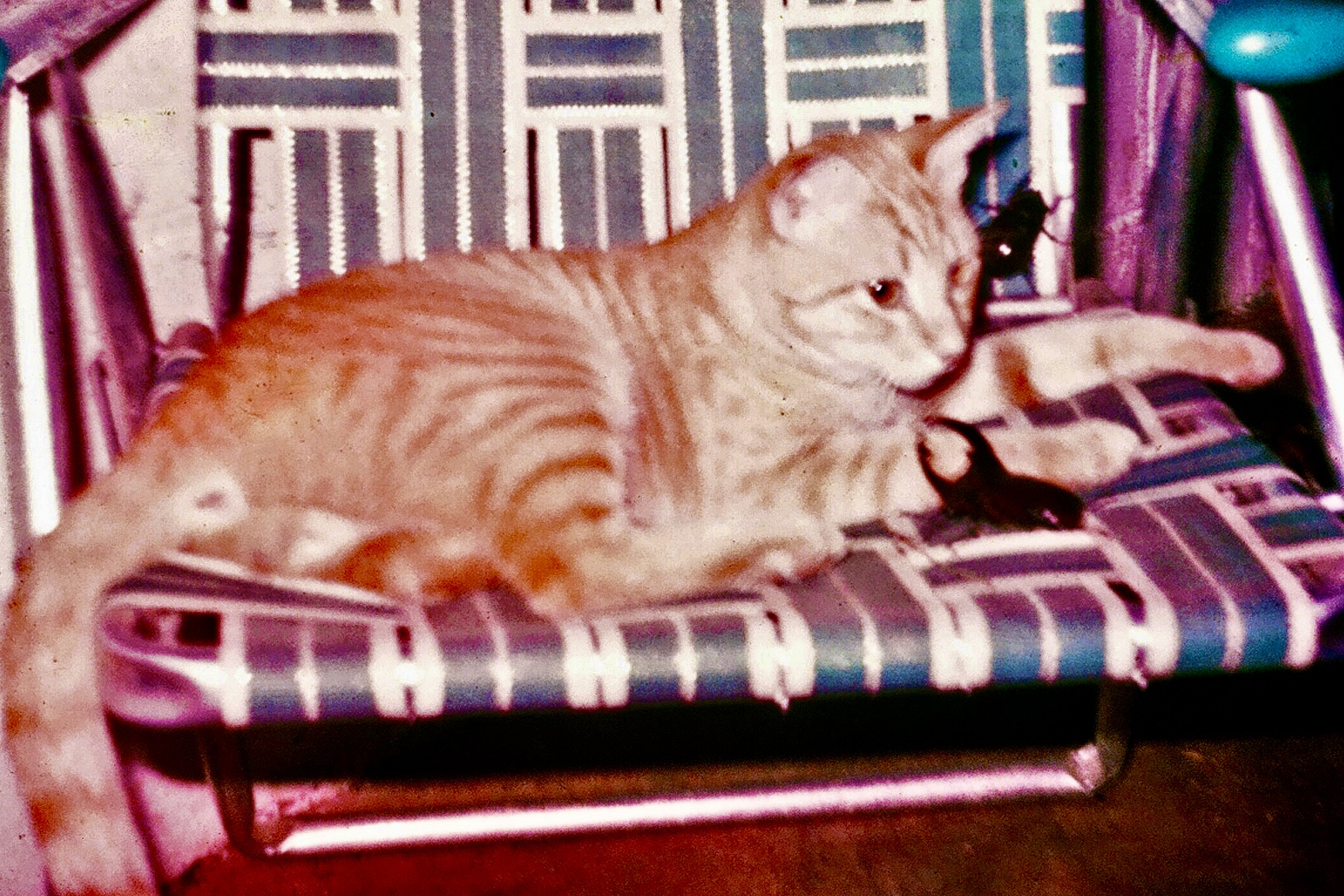
The downside was that I didn’t have much room. Two dogs, a cat, and me on a one person army cot constituted a menagerie, or a zoo, if you counted the fleas. It was difficult to move. At first, I was very careful not to disturb my sleeping companions. I became a circus contortionist frozen in place with body parts pointed in every direction. If this meant a sleepless night, so be it. It was a small price to pay for keeping the ghosts at bay.
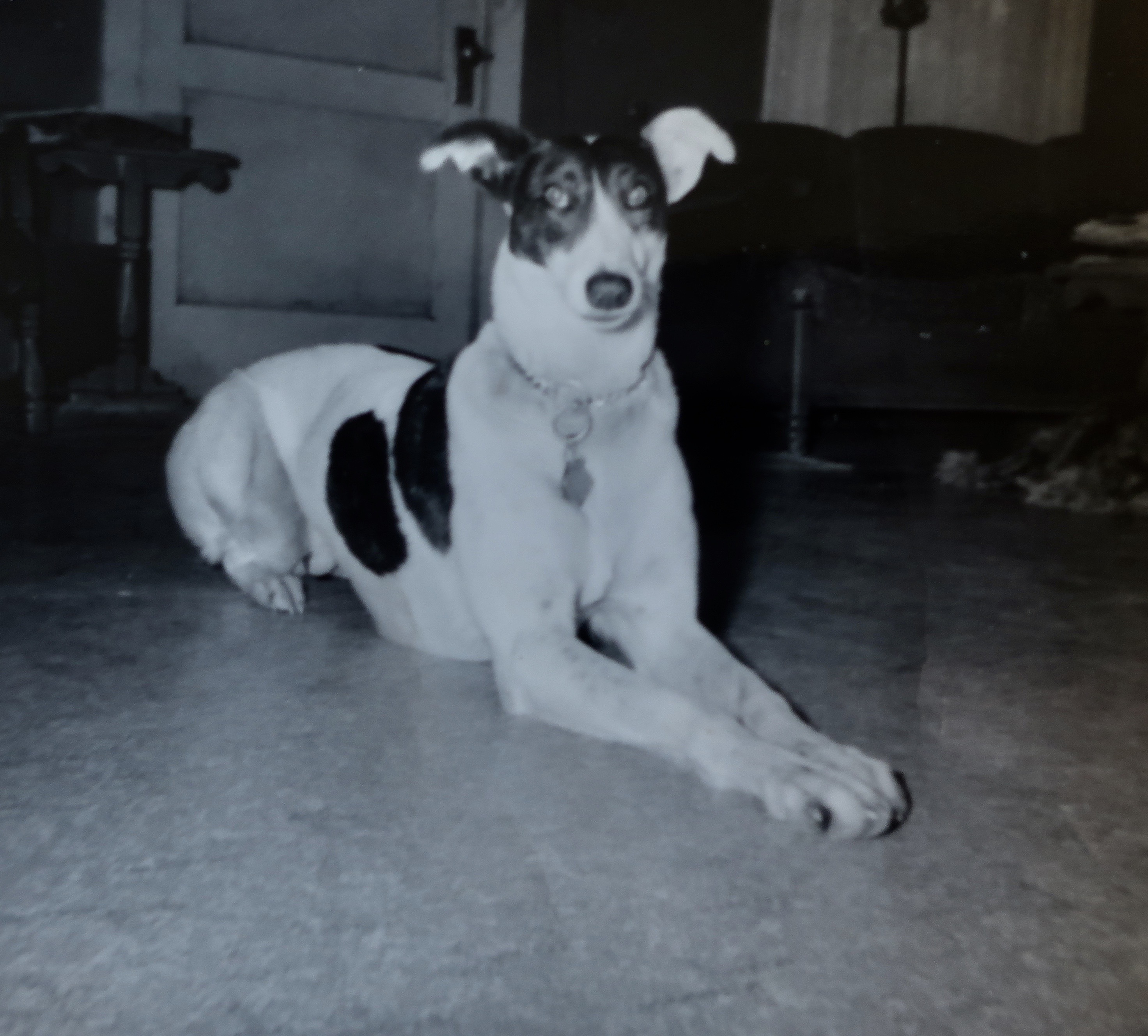
Gradually, my attitude changes. I grew larger, the bed space shrank, and the animals started sleeping on top of me. Meanwhile the ghosts, who tend to hassle little people more than they do big people, became less of a threat. Therefore, I needed less protection. Neither of these factors led to the final banning of the animal kingdom, however, it was the shameless shenanigans of Demon the Cat and Pat the Greyhound.
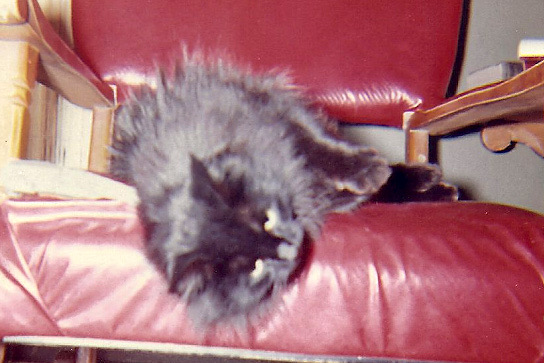
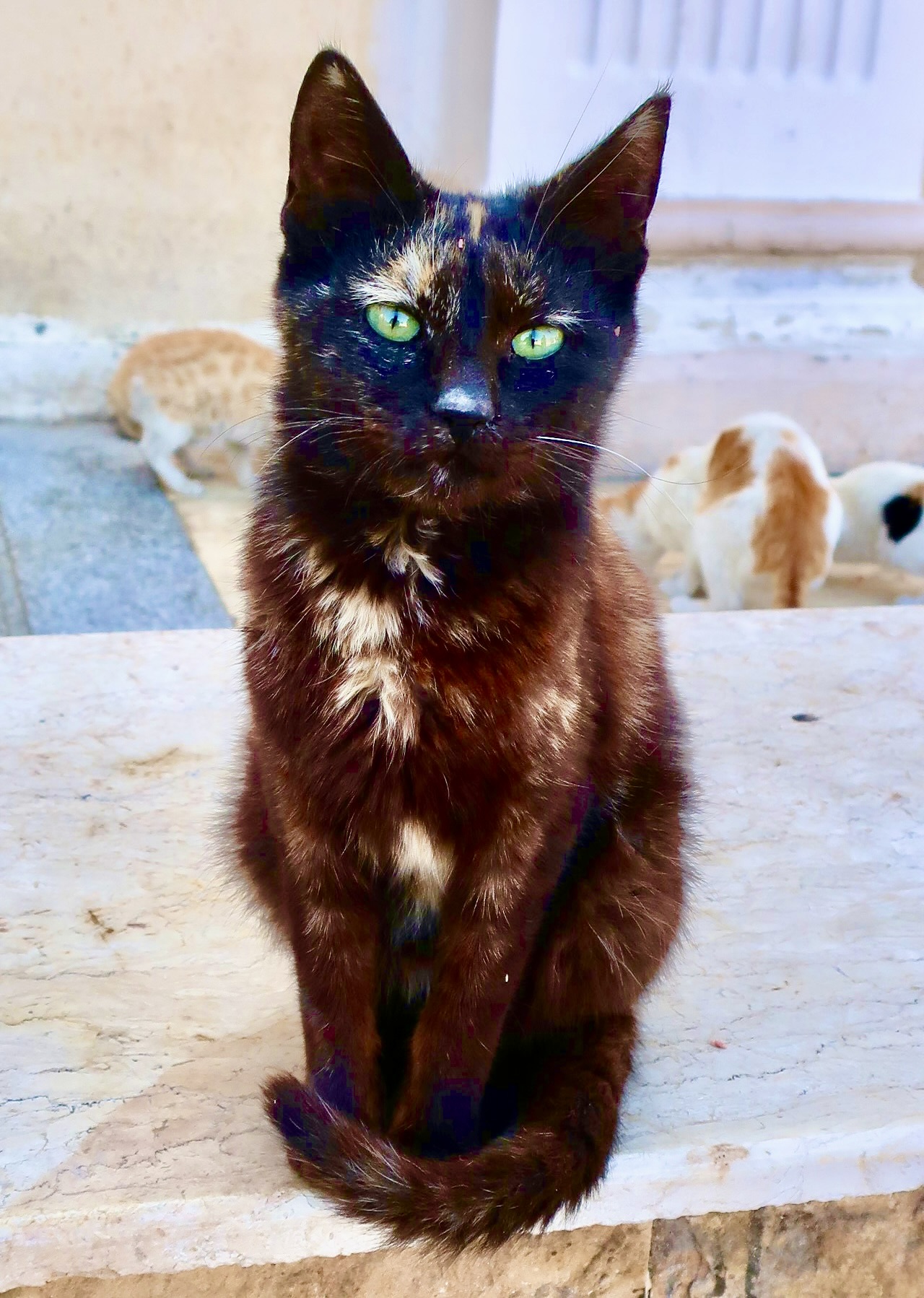
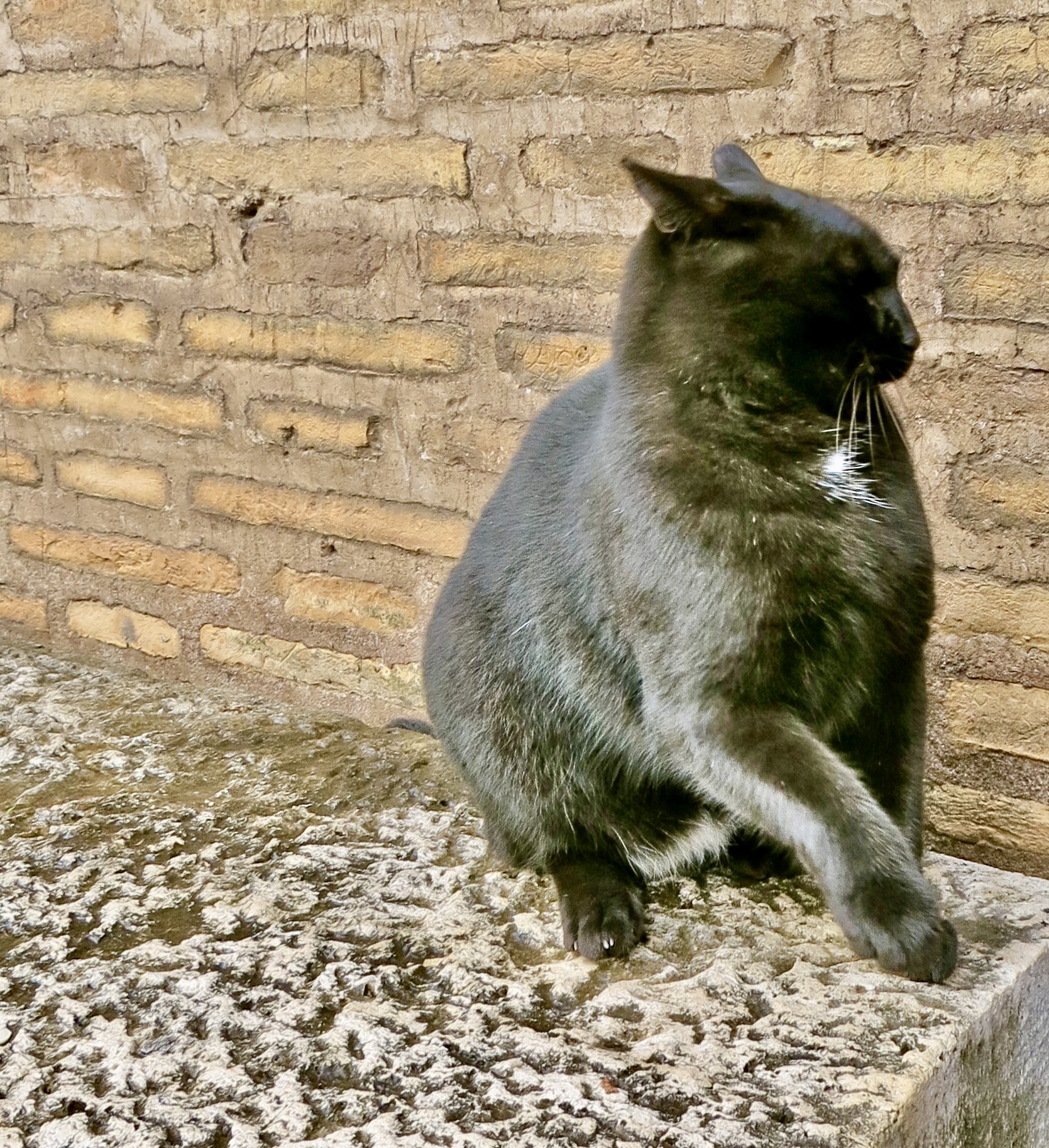
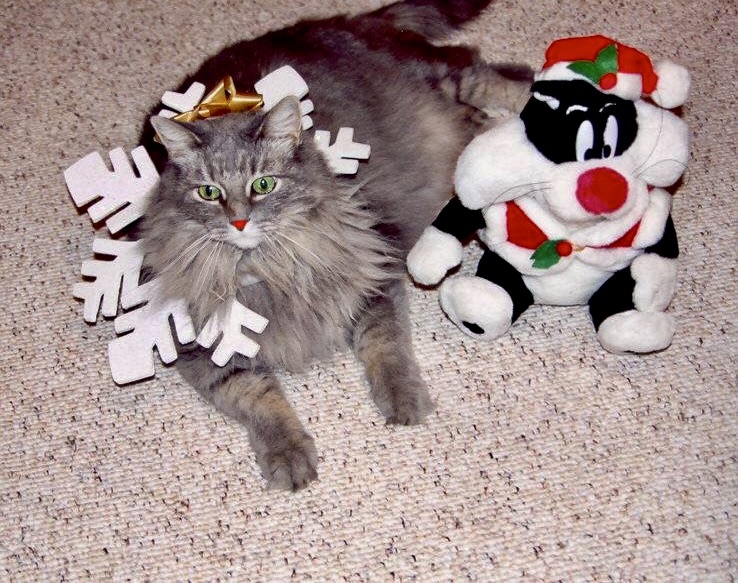
Demon, the alpha family cat, was as black as the darkest night. As such, she was appropriately named and attired for Graveyard duty. In fact, she spent a good deal of her life there, stalking mice, lizards, birds and anything else she could get her claws into with impunity. Captured prey would then be brought home for approval, or as gifts. My job was to dispose of the half devoured carcasses, preferably before Mother saw them. I would sometimes tie a string around the unsolicited gifts and run around the yard with Demon in mad pursuit. (Okay, this was admittedly weird, but I did receive high marks from the cat.)
Depopulating the Graveyard was not Demon’s claim to fame, however. Motherhood was. She had kittens often and everywhere. I suspect that half of the cats living in Diamond Springs and El Dorado County CA, today, can trace their lineage back to her.
Two instances of kitten production bring back vivid memories. The first took place on the living room floor. Demon was a young cat at the time, and a neophyte at motherhood. Her impending delivery was quite apparent from her large belly and ceaseless exploration of clothes hampers, closets and other dark places. With high hopes of avoiding a misplaced litter, Mother had arranged her bedroom closet as a maternity ward.
It was my duty to show Demon her new home several times a day. I would carefully pick up the very pregnant cat, carry her to the closet, and deposit her in a box with well-used clothes. Demon didn’t buy the program. It seems that my bedside manner was faulty. She would climb out of the box, glare at me, and stalk out of the room.
When the joyous day finally arrived, I was home alone. Demon was practicing her would-be mother waddle walk across the floor when she suddenly stopped, squawked and squatted.
Neither she nor I was ready for what followed. After all, how prepared can a young kid and a first-time mother be prepared for birth? In a massive surprise to both of us, a tiny, black bundle of fir emerged from Demon’s undercarriage. Surging emotions paralyzed my seven-year-old mind.
One thought stood out: The closet! If Demon hadn’t memorized her delivery lessons, I had. I jumped across the room, grabbed her by the nape of the neck, and dashed for Mother’s bedroom. As fast as I ran, it wasn’t fast enough. In the middle of the kitchen, the new arrival completed her journey and was heading for a crash landing. Somehow, somewhere between Demon and the floor, I caught the warm, wet ball of fur in my free hand. After that, my memory fades but I know that the three of us made it to the closet. I left Demon busy licking her new baby. Demon accepted her new home and four more kittens followed the first, although in a less dramatic way. Diamond’s cat population explosion was underway.
Part 2 of Hiring the Family Pets to Keep the Graveyard Ghosts Away will be posted next week on Thursday’s blog-a-book day. Tune in to learn about my second vivid memory of Demon’s kitten production, how Pat the Greyhound became a member of our family, and how Pat and Demon’s bad behavior led to the banning of animals from my bed. Sort of.

















 Wandering through Time and Place