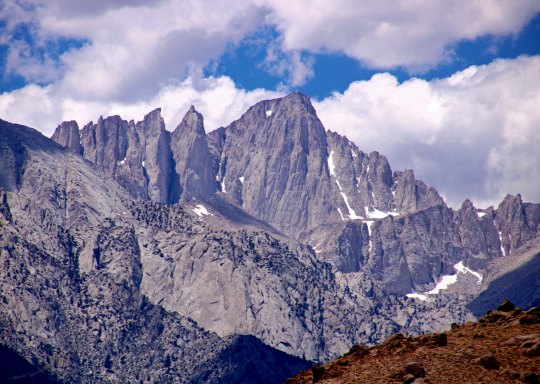
What better place to start a drive up Highway 395 with its stunning views of the Sierra Nevada Mountain Range than Mt. Whitney. I’ve already included some photos of this beauty in on my Alabama Hills’ post. Maybe even this one.
There is a lot to see along California’s Highway 395, and I am bringing much of it to you in this series. We’ve already visited the Alabama Hills with its fascinating relationship with Hollywood. In my last post, I took you to the World War II Japanese internment camp of Manzanar with its tragic history and relevance for our modern world. You have patiently made your way through lots of words! Thank you. It’s time for another photo blog, heavy on pictures and light on verbiage. (grin) What better opportunity than admiring the views of John Muir’s Range of Light: the Sierra Nevada Mountains. It’s one of my major reasons for visiting the area. These are some of my favorite photos from the trip.
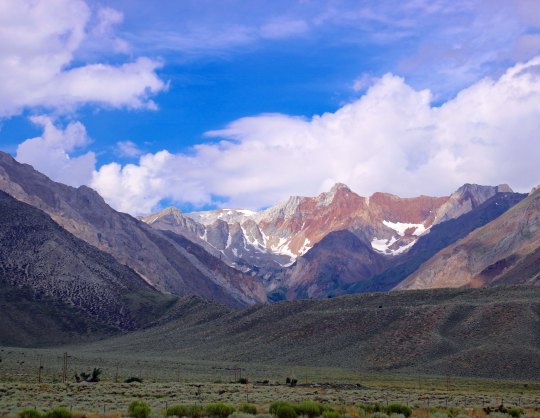
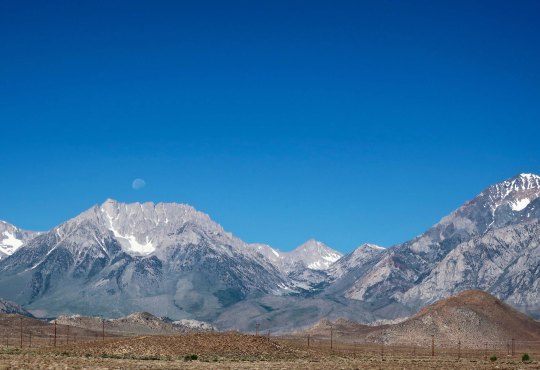
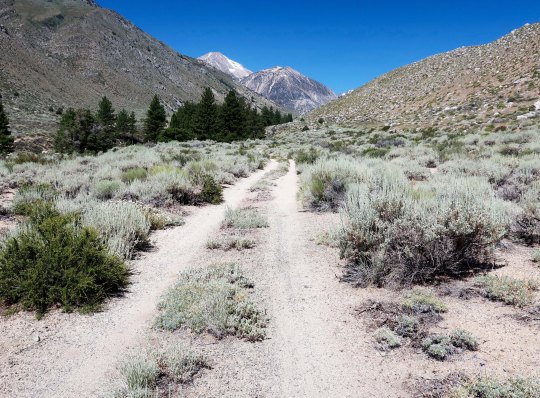
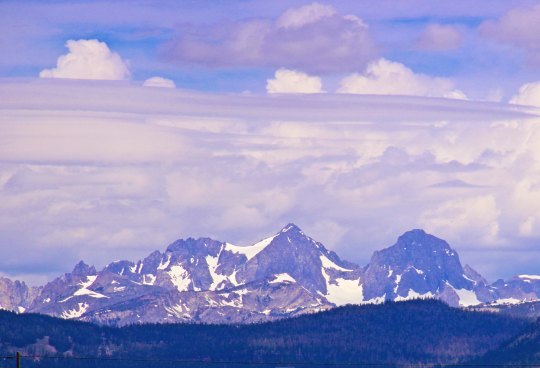
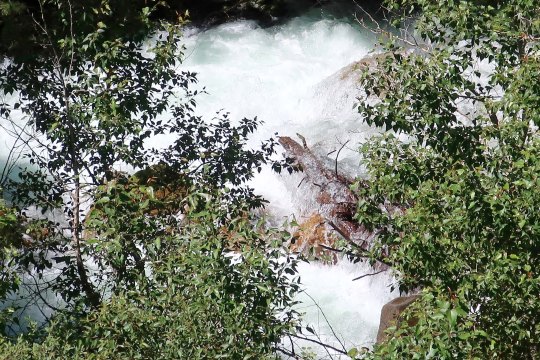
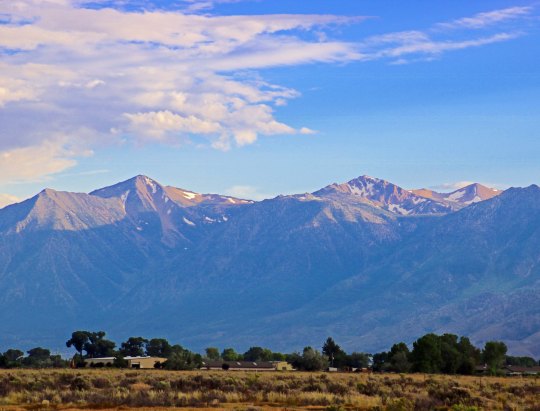
Ansel Adams added to the fame of the Sierra’s with his magnificent black and white photos. Ansel Adams I am not, but I still can’t resist rendering some of my Sierra photos in black and white, taking a step back in time. I thought that the power poles caught in the sunlight added a nice touch.This illustration provides a perspective on how the Sierras were created. The Sierras are a fault block range with the mountain rising along a fault while the valley sinks. It’s a process that continues today. Think of all the earthquakes in the area. This process also means that the mountains are steeper on the east side than they are on the west— a fact I know well having started many a backpack trip from the east! “Okay, legs, we are going to start this morning with a 3,000 foot climb.”Views like this seriously detract from paying attention to the traffic on Highway 395! Fortunately, a number of pullouts allow you to stop and enjoy the scenes.Sometimes the view is more like a glimpse. The clouds provided drama.The view called for another black and white rendition. Which photo do you prefer?The moon caught my attention here.Out came the telephoto for a closer look. Much of the Sierras’ rugged beauty is due to glaciers carving out the granite.Thunderstorms and showers are common to the High Sierras of the southern part of range. The Sierras increase in altitude as you go south, peaking out at Mt. Whitney.Here they turn dark. The thunder and lightning shows can be quite impressive when up in the center of the storms, and sometimes downright scary. I’ve hurried off more than one high pass. For the more adventuresome, a number of inviting roads lead off into the mountains. Most cars could easily travel over this road, assuming you don’t mind a few bumps and dust along the way.Other roads require a little more thought: Quivera, our small RV, said no on this one. Note how dry it is here. The western slopes of the Sierra Nevada Mountains pull most of the rain out of the clouds, so the eastern slopes are desert like.The snows were heavy in the Sierras last winter and were slow to melt off this summer. This is a lot for August. One result is that the creeks and rivers can look like this with snow melt. It isn’t something a backpacker could or would cross. Often there are downed logs across these torrents. As you can imagine, it’s a nervous crossing. The narrower the log, the more nervous!If you are a skier, especially from Southern California, this mountain might look familiar. It’s Mammoth Mountain. You can see the ski runs on the lower slopes.I close today with this final view of the Sierras from Carson Valley. At this time last year, I was backpacking down the PCT through these mountains.






 Wandering through Time and Place