UT-OH! Chapter 17: A Pear Picker’s Guide to Happiness

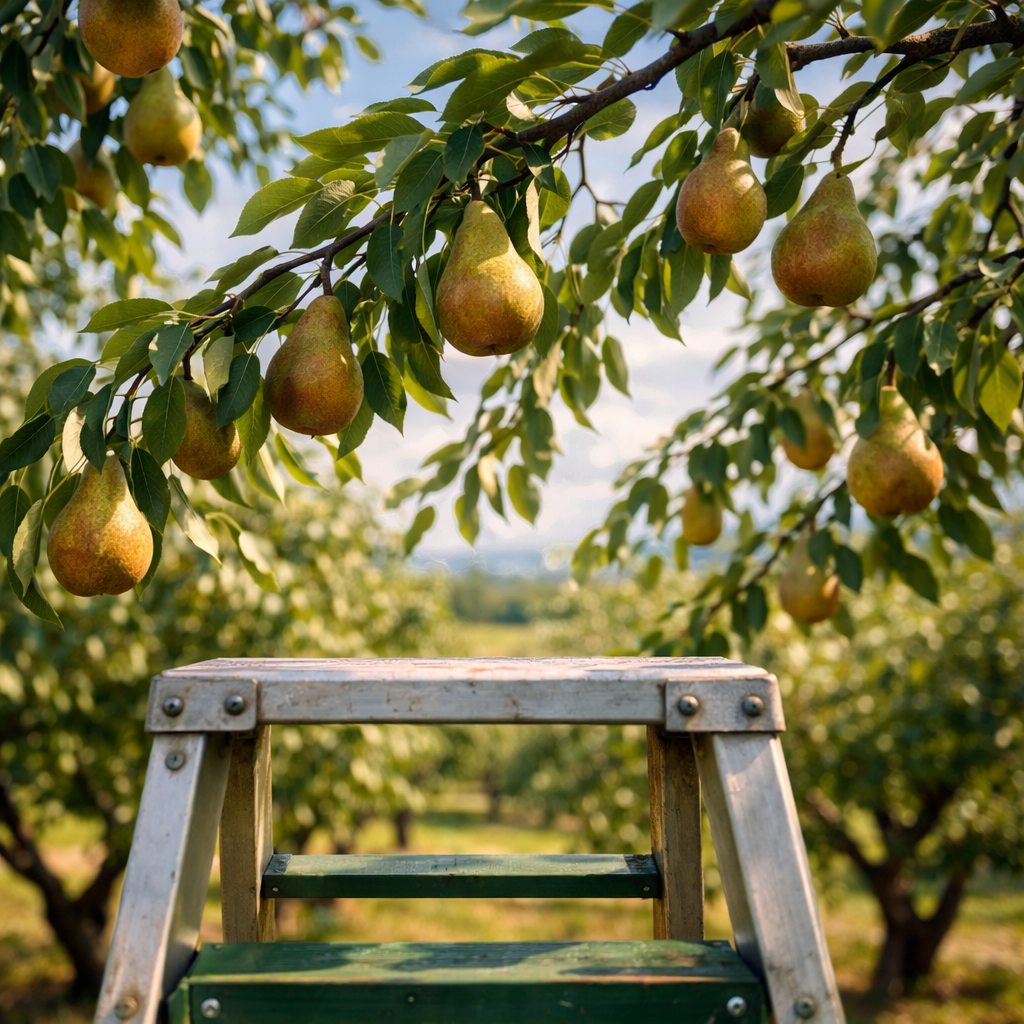
Ladder beneath ripe pears hanging from branches in a pear orchard
This is what you see when you are 5-6 steps down on a 12 or 14 foot pear ladder. Now, imagine climbing up and balancing one step from the top to reach pears in the top of the tree. UT-OH! (I’ve gone over to the dark side here. This is an AI generated picture. My challenge, as always when writing about my youth, is that the photos were few and far between. That’s hard to fathom in the digital age, when I can easily take more photos in one day that I have from the first 20 years of my life. When I pushed the key that asked WP to produce an AI photo for this post, it read my blog and came up with three good suggestions. That may be scarier than standing on the second step! It didn’t catch, however, that the ladder only had three legs. Maybe there is hope.

A number of things combined to pull me out of the puberty blues. For one, I ceased being a freshman. Hormones slowed down, my voice abandoned octave leaps, and I bought a pair of contact lenses. Academics were a plus, even during my freshman year. Lacking a social life, I studied full-time and managed to pull straight A’s. If I couldn’t be ‘ruler of everything,’ ‘sex symbol’ or ‘sports hero,’ maybe I could at least be ‘the brain.’ Was I driven or what?

I also believe that having a job helped. I began working in the pear orchards around Placerville starting the summer of my eighth-grade graduation and continuing through high school. It was a nine hour a day job of hard physical work, one more fit for an adult than a 14-year-old. Dealing with the 90-105° F summer heat of the Sierra foothills didn’t help. But I actually enjoyed the work. And the money. The general rule in our cash poor family was that the basics were covered. We were responsible for the extras, such as dates.

In addition to being hard, there was also an element of danger. Pear picking consisted of hazardous duty without hazardous pay. We were each given a 12-foot ladder, a sizing ring, and as many boxes as we could fill. The pears we plucked from the trees were placed in a canvas bag that fit around our front like a pregnant belly and carried up to 50 pounds. We had the option of working by the hour at $.90 per hour or by the box at $.20 per box. I opted for the per box under the assumption I could earn more.

The ladder was a suicidal three-legged device with two legs playing standard ladder while the third served as the balancing arm we threw out to provide ‘stability.’ I use the quote marks here because the stability was questionable. There was always a chance that you, your bag of pears, and the ladder would come crashing down. The first few rungs were solid; it was on the top four that life became interesting. Even here it was tolerably safe, assuming you focused on easily reachable pears.

The problem was that the best pears had a way of hiding away in the highest, most unreachable part of the tree.  Such premium fruit couldn’t be left hanging, even if it meant taking risks. At least that’s how my ut-oh mind functioned. It was nothing that the boss required. Success meant performing a one-legged-ballet-balancing act. I became quite proficient at the move. Only once did I reach beyond the imagination of my ladder and follow a rapid descent path straight to the ground. Fortunately, the only limbs broken belonged to the tree. I wrote the experience off as a lesson in Newtonian physics.

A greater challenge was entertaining myself for nine hours a day. Reaching out and picking a pear requires a minimum number of brain cells and very few of those are located in the frontal lobes. My favorite ploy was singing at the top of my voice. Harry Bellefonte’s tune about picking bananas was a natural. I adapted it to picking pears. But I also belted out many other popular tunes of the day.  “Does Your Chewing Gum Lose Its Flavor on the Bedpost Overnight” was a mistake. I couldn’t get it out of my mind; I would wake up in the middle of the night humming it. To this day I have to be careful in bringing it up or it is right back there on the tip of my tongue, waiting to escape. Like now:

“Does your chewing gum lose its flavor
On the bedpost overnight?
If your mother says don’t chew it,
Do you swallow it in spite?
Can you catch it on your tonsils,
Can you heave it left & right?
Does your chewing gum lose its flavor
On the bedpost overnight?”

A more productive form of amusement was challenging myself to pear picking contests. The more I picked the more money I made. When the fruit was plentiful and well sized, I could pick 60-80 boxes a day and earn big money, $12-$16. By the way, that seemingly measly sum is the equivalent of $130 to $180 today. Once I even reached a magical 100 boxes. My goal was to try to match the professional pickers, the folks who made a living helping harvest crops. On really good days, I could. 

Over my five-year career in the pear orchards I worked with Filipino crews, Braceros, and the usual contingent of semi-nomadic types who followed the various crops as they ripened from state to state. Most were good, even excellent workers. Of course, there was also the occasional guy who worked just long enough to buy a gallon of Red Mountain Wine and then disappear.

After my first year of working in the fruit orchards, I graduated to swamper status, which meant I delivered empty boxes to the pear pickers and took out their full boxes. I also learned such fine skills as tractor driving, tree trimming, sprinkler changing, post hole digging and crew bossing. And, I might add, enjoyed most of it. There is a certain satisfaction that comes from doing hard work, challenging your body, and being dead-tired at night. 

I also gained a farmer’s satisfaction that comes from seeing a crop evolve from spring bloom to fall harvest. And finally, as my pear orchard responsibilities increased, the work helped me overcome the puberty blues and regain my confidence. Becoming buff and tanned didn’t hurt either. Working in the orchard with my shirt off, picking pears and stacking 50-pound boxes above my head on a truck guaranteed a tan to die for and muscles from my big toes to my hair follicles. 

Almost on cue, girls reappeared in my life, with Paula being an example. Admittedly it was a slow process, in fact far too slow for my hormone driven fantasies. But there the girls were, tentatively giving me the eye and practicing a wiggle or two to see if anyone was home. There was. Down boy.

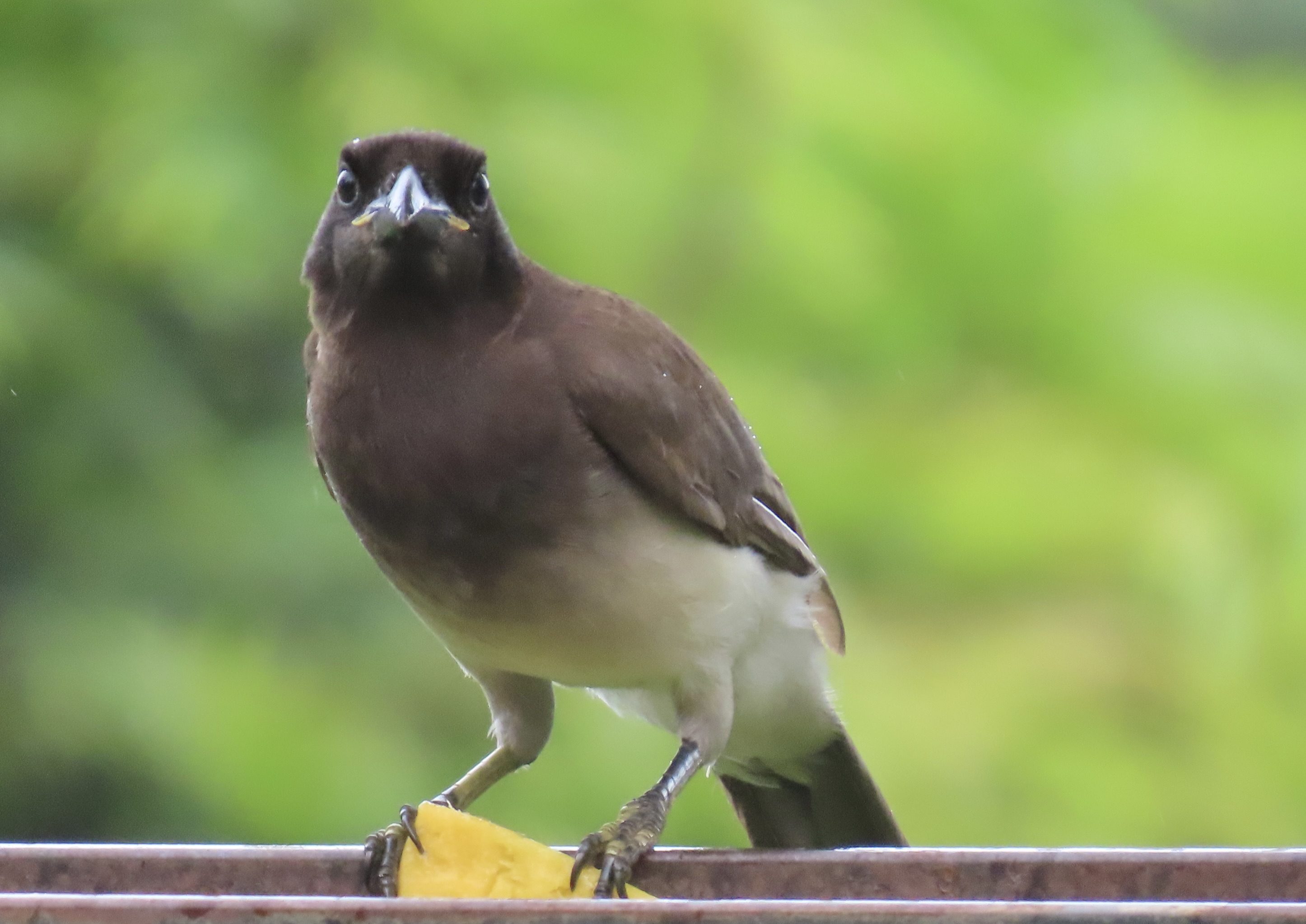
Next Monday’s Post: A jay by any other name is still a jay, plus 7 other interesting and fun birds of Costa Rica. This is Costa Rica’s Grey Headed Jay suggesting I don’t interfere with its breakfast.
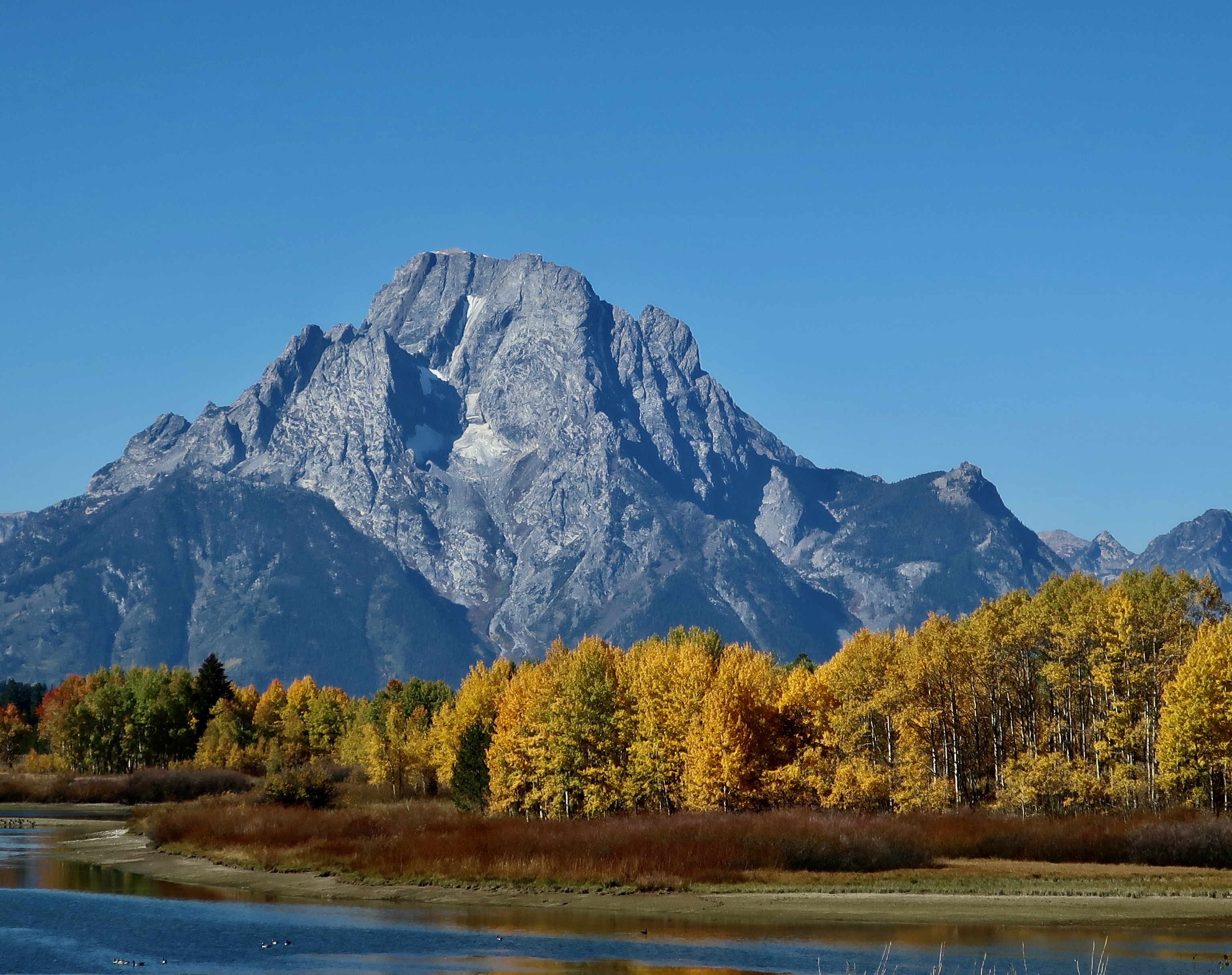
Grand Tetons National Park: Next Wednesday, April 22 is special. It’s Earth Day 56. Please join me as I take you back to April 22, 1970 where I participated in Earth Day 1 on the Davis Campus of the University of California. Earth Day 1 changed my life and helped to change the world. Its message today is as relevant as ever, and possibly even more so, as so many of the gains we have made are now under threat.

UT-OH! Chapter 14: Surviving Baseball Bats and Dynamite Caps

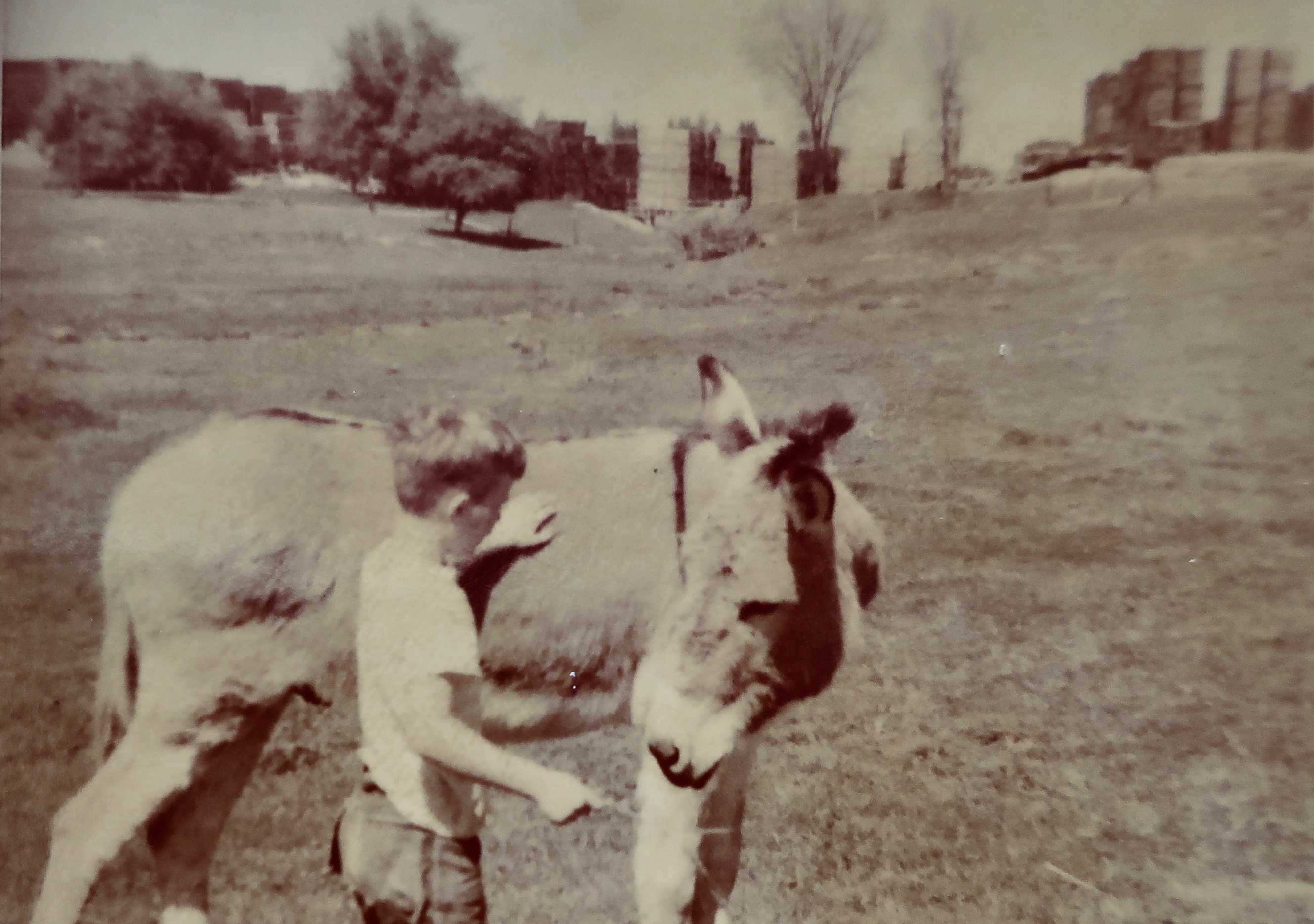
This donkey was hardly dangerous. I was offering it a carrot. The stacks of lumber in the background, at Caldor Lumber Company’s drying yard, had potential, however. One of our sports was climbing to the top of the stacks and leaping between them.

That we survived childhood wasn’t necessarily a given. Racing up and down a 75-foot-tall tree, leaping between 20 foot high lumber stacks, joyriding on railroad push carts, avoiding being shot, playing on a 50 foot high trestle and other similar activities aren’t particularly conducive to a healthy childhood. On a scale of 1-10, I would have placed Marshall’s chances of harm at 9.9 while mine were more like 4.4. I took my share of risks, but rarely without considering consequences. Marshall rarely did. Pop provided some perspective years later.

“If Marshall screamed, I ran. When you screamed, I walked.”

Except for the dog bite and stepping on a rusty nail once, my serious injuries were more in the nature of stubbed toes. Not that I am minimizing the pain of a stubbed toe, mind you. They hurt like hell. There is a reason why flaying skin was a form of torture in ancient times. I’d have certainly been willing to confess things I had done, and lots of things I hadn’t. 

I did have a baseball bat used on me once, however. My parents were semi-serious Republicans, semi in the sense that they didn’t devote their lives to the cause but they did vote the party line. The family tradition went back to Abe Lincoln and the founding of the Party. A quote in a book written by my Great Grandfather stated, “We have always been Republicans, and we always will be.”

My indoctrination started young with the 1952 campaign of Dwight Eisenhower against Adlai Stevenson. According to Mother, Franklin Roosevelt and Harry Truman were responsible for most of the bad things that existed in the Country, and Ike was going to right the wrongs of the previous two decades. I, of course, accepted this view whole-heartedly, and had all the makings of a fine Young Republican. Naturally I was eager to share my correct or ‘right’ perspective with fellow students and proudly wore an I Like Ike button to school.

They weren’t particularly interested. 

After all, what do nine year olds know or care about politics? One student, whose parents were avid Democrats, was ready to take me on, however. He wore a button that declared Adlai was Our Next President. Our debate started in the boys’ bathroom when we were lined up at the urinals, and continued on to the playground. Things began well. Even then I was a high verbal, and the points I didn’t win on logic, I was taking with volume. But the situation deteriorated rapidly. My fellow debater did what most politicians do when they appear to be losing ground— he started slinging mud.

“Eisenhower is a blankety, blank,” he declared with a smirk to underline his cleverness. It was his mistake; now we were talking my language.

“In that case,” I argued with glee, “Stevenson is a blankety-blank, blank, blank.” I had more blanks. Marshall, and Allen had taught me every swear word in the English language and a few in Spanish. I could go on for minutes without repeating myself. In fact Allen and I had challenged each other to a contest once to see who could swear the longest and the loudest. 

There was a vacant lot filled with tall grass down on the corner where Missouri Flat Road ran into Highway 49. We got down on our hands and knees and chased each other through the grass while shouting obscenities at the top of our lungs.  We were so engrossed in our efforts that we didn’t note that Marsh had time to run the block home and retrieve Pop to listen in on the exchange. He was not impressed with our command of the language or our volume. My thought about Marshall for telling was that he was a blankety-blank, blank, blank, blank, blank. A real asshole.

Anyway, I was not to be outdone in the mudslinging department; I had a bright future as a campaign manager. I demolished my opponent. Regrettably, I was about to learn an important Hobbesian lesson in power politics: Never start political arguments with a person carrying a baseball bat, which he was. When I continued to hassle him out on the playground, he wound up and swung the bat like he was going for a home run, whacking me across my right leg. Down I went onto the playground and off I went to the hospital as my leg muscle knotted up to the size of a softball. Fortunately, he didn’t break a bone— and my man Ike won the election.

Marshall’s scariest accident happened at Caldor’s logging camp. One summer, Pop arranged for the family to use a house at the camp for a week’s vacation. It was a great opportunity. We were surrounded by El Dorado National Forest, and we could wander to our heart’s content. 

The first day out, we discovered an old miner’s shack that had long since given up any pretense of being useful. It was leaning precariously. Naturally, we had to explore it. There might be a treasure. Dark and musty comes to mind as my first impression. Floors creaked in objection on our entrance. A pack rat had set up home in one corner. A treasure for Tickle the dog, perhaps, but not for us. 

A table in the opposite corner held more promise. We found an old Phillies Cigar box on top, which was a treasure in itself. Inside there was more: Dynamite caps! Think Big Bang.  Caps contain a small amount of an explosive material that when lit by a connected electric current, cause a blast that sets off the dynamite. BOOM. My immediate reaction was to get out of the shack. Marshall’s was to take the box with us. I assumed he was going to give it to Pop so he could dispose of the caps. It was never wise to make assumptions about what my brother might do.

Mother was putting dinner on the table and Marshall was still outside when we heard a loud bang followed by a louder scream. Pop ran. Marshall had held a match down to the dynamite cap to see what would happen. He found out. The whole front of his body from his groin to his head was covered in blood. The only thing that saved his eye sight was that he was wearing shatter-proof glasses. A neighbor, who had come out at the sound of the blast and scream, immediately volunteered to take Nancy and me for the night. My parents jumped in our car and rushed off to the hospital in Placerville, 20 miles away.

 Marshall spent a couple of days in the hospital as the doctor removed brass splinters from his body. We returned home. So much for our idyllic vacation. The important thing was that Marshall survived the experience— possibly a bit wiser. Occasional splinters of brass were still making their way out of his skin when he was in his 20s.

UT-OH Chapter 13: Your Mother Chases Fire Trucks

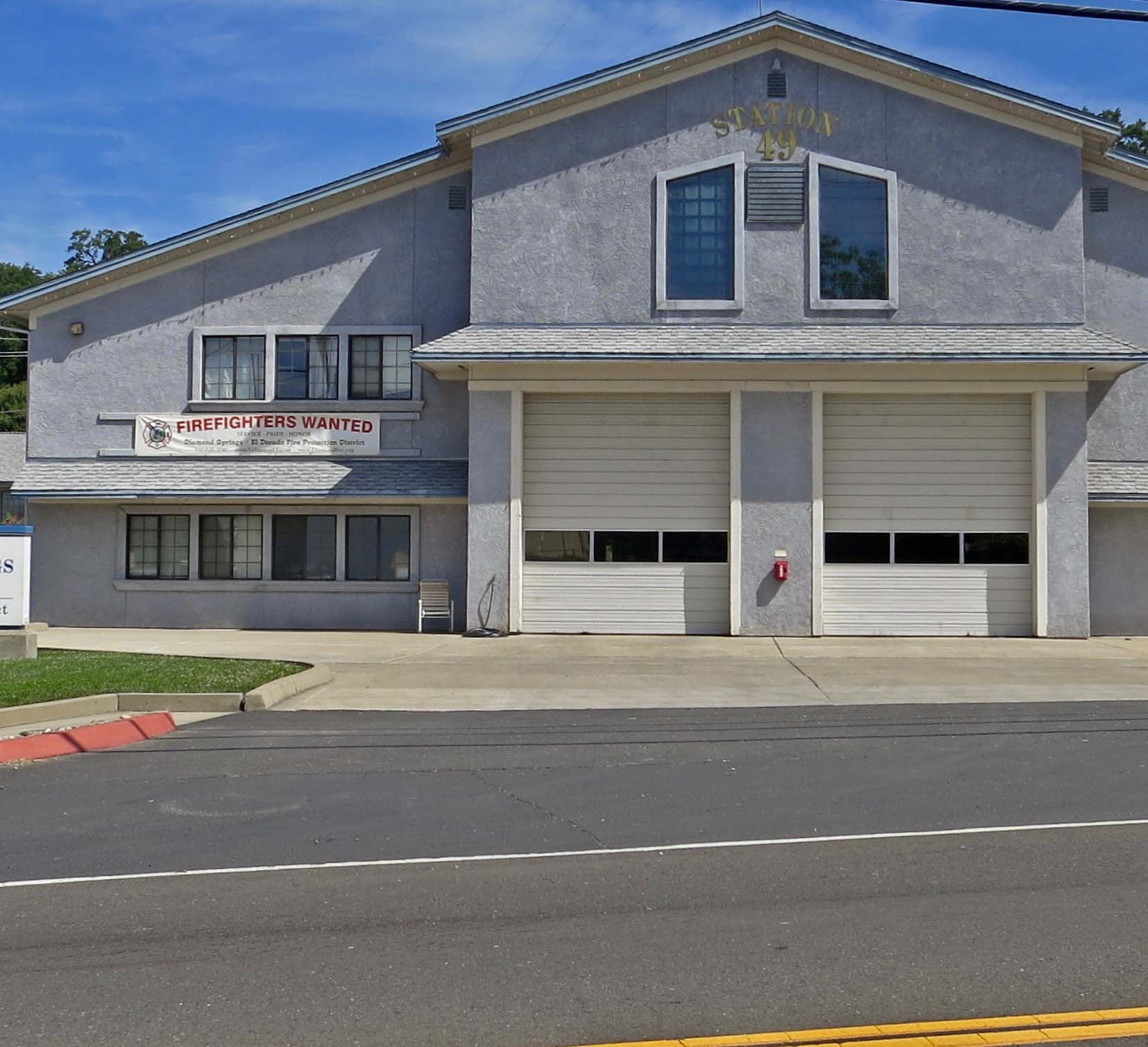
While the Diamond Spring’s Firehouse has been rebuilt from when we were children, it still stands in the same location. It was about a block away from where we lived. The siren was loud. The sign at the top says Station 49. It’s appropriate. Diamond’s first firehouse was built in 1849 along what is now Highway 49.
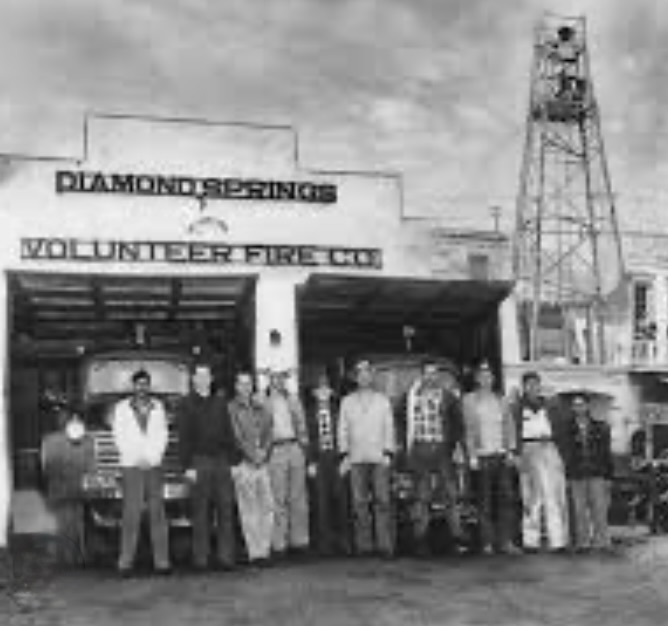
In comparison, this is the firehouse not all that different from what it looked like when I was a child, which I featured in my last post. As I recall, they did rebuild it once when I was a child. Pop wired it.

If it sounds like parental supervision of our bad behavior was somewhat lax in my growing up years, that’s because it was. There were times when our parents, or at least Mother, provided tacit approval of our misdeeds. Returning the cherries we confiscated from Pagonni’s orchard or the frogs from Pavy’s Pond was never an issue. They were quietly added to the pantry and happily consumed by all, including Pop. No questions asked. 

Once we were even encouraged to break the law. 

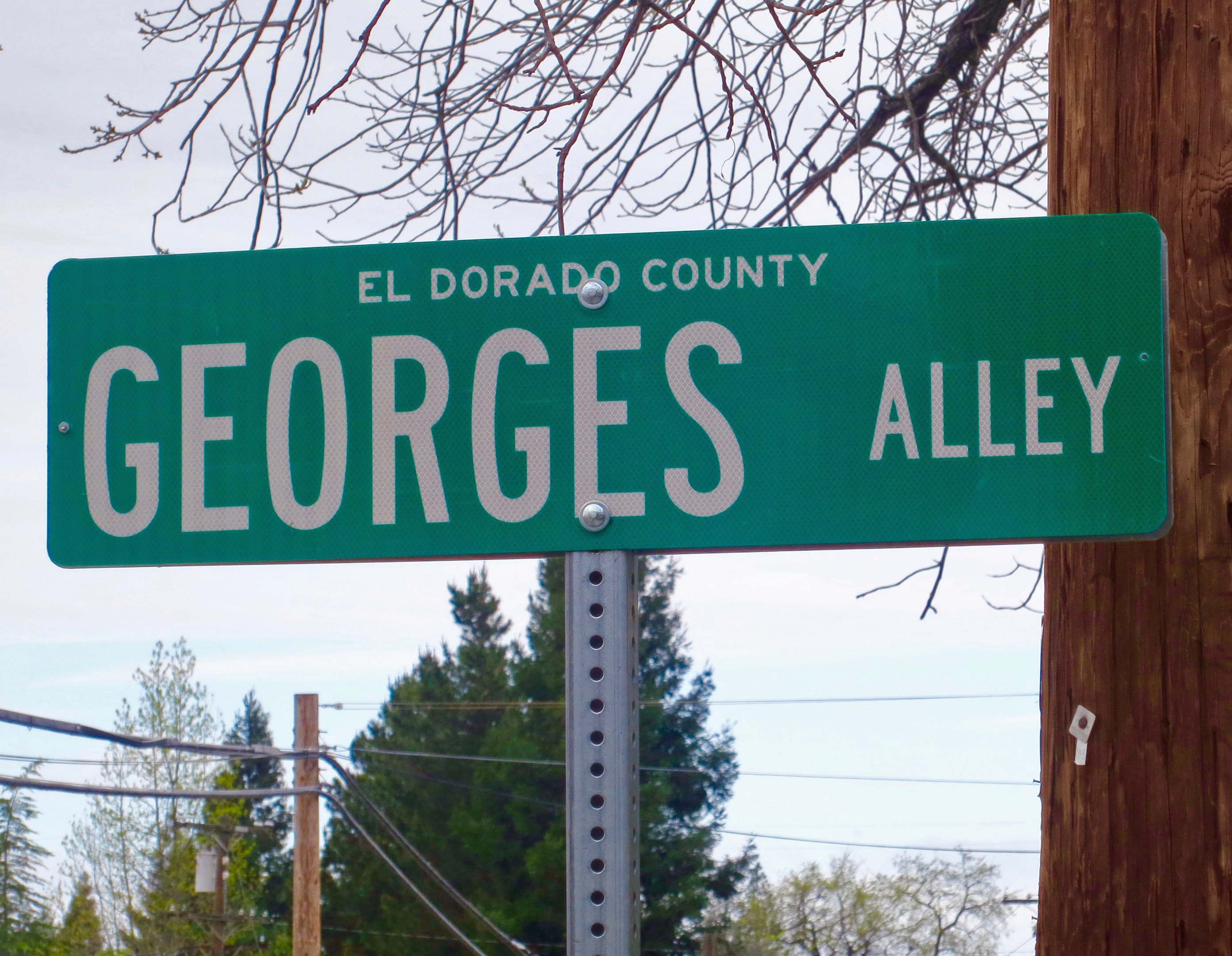
Because the dirt road we lived on circled the graveyard, the County decided it should be named Graveyard Alley. No one living on the road was asked for an opinion or informed of the decision. The signs simply appeared one day. Mother was infuriated and fired off a letter to the County Board of Supervisors. She was not going to live on Graveyard Alley! Nothing happened, there wasn’t even a response. 

Marsh and I were given marching orders: Sometime around midnight go out and remove the signs. We carried out the charge with enthusiasm. No neighbors complained about this obvious act of vandalism since they weren’t particularly happy about living on Graveyard Alley either.

The County replaced the signs. We made another raid and this time the County got the point. They changed the name in honor of an old fellow, George Croft, who was an original resident. We all liked George. It became George’s Alley, which it still is today. 

I’m convinced we inherited our trouble making potential from our mother. Pop was a good man who had avoided marriage until he was 38. He was the type of guy who served on the Vestry of the Church, was a Boy Scout leader, and was always available to help out a neighbor. I am sure there were times he wished he had avoided marriage for another 38 years. A lesser man might have said bye-bye and been on his way. But he took his role seriously and pushed on, through thick and thin. 

Mother could be something of a ‘wild child,’ wilder than her wild children. Going to fires in Diamond Springs was an excellent example.

Pop was a volunteer fireman for Diamond. As an electrician, it was his job was to show up at burning houses and shut off electricity. When the siren wailed, he was off and running, as were all the other volunteer firemen in town. It was serious business. 

For Mother and for us, it was high entertainment. We also took off at the sound of the siren, jumped in whatever old car we had, and sped along behind the fire truck. The time of day and activity of the moment didn’t matter. If it were three in the morning, we would jump out of bed and throw on our clothes; if we were eating, the meal would be abandoned; if we were playing, the toys would be dropped. Nothing could compete with a good fire. Our devotion to disaster was right up there in the same league as it is with today’s news media. 

The star performer was someone’s house. There was excitement, danger and pathos. Firemen blasted away with their hoses in a desperate attempt to save the home while the unfortunate family looked on in dismay. But the climax, the Fourth of July finale, was when the roof and walls would crash down and shoot sparks and fire high into the sky. I did keep my oohs and ahhs to myself. Somewhere in the back of my mind a small voice whispered that our family outing was not totally appropriate.

“Your mother chases fire trucks,” one of my little buddies jeered at me in an argument. 

My response at the time had been, “So…,” but later in life I would ponder what the towns-people must have thought about Mother, two or three kids, and a dog always showing up. Pop must have been terribly embarrassed. I remember him telling Mother once to stay far behind the fire engine and far away from the fire. He did it under the guise of being concerned for our safety. I now suspect he hoped we wouldn’t be recognized. But he never did have much success in telling Mother what to do. The siren’s call was not to be denied— for either one of them.

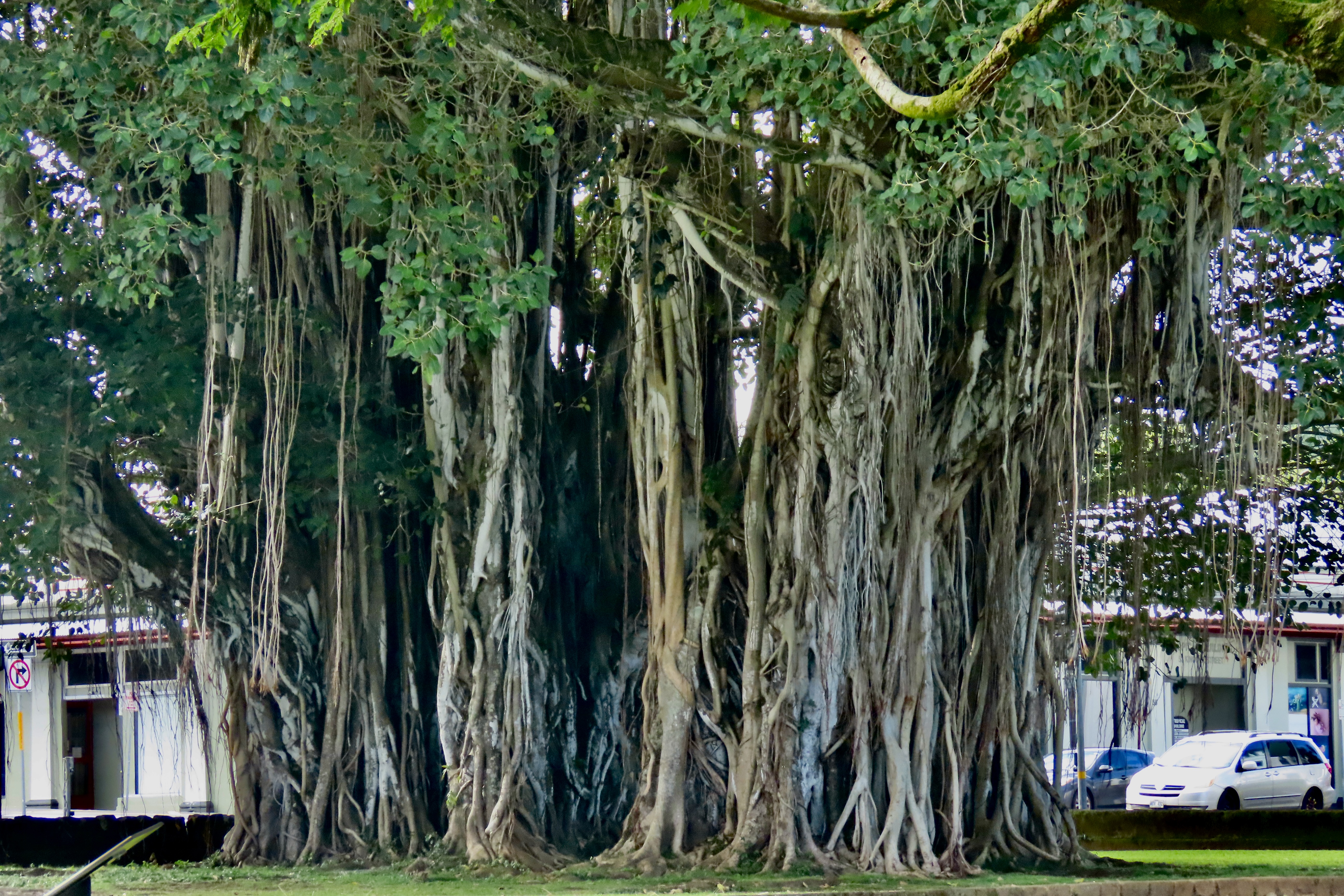
Monday’s Post: It’s back to Costa Rica where Peggy and I will show you a ficus, which I would bet is unlike any ficus/banyan/fig tree you have ever seen before unless you have been in Monteverde. No photos this time, I’m keeping it as a surprise. Here is a banyan tree we visited on the Big Island of Hawaii last year, however…