Sedona, Arizona… New Age Mecca


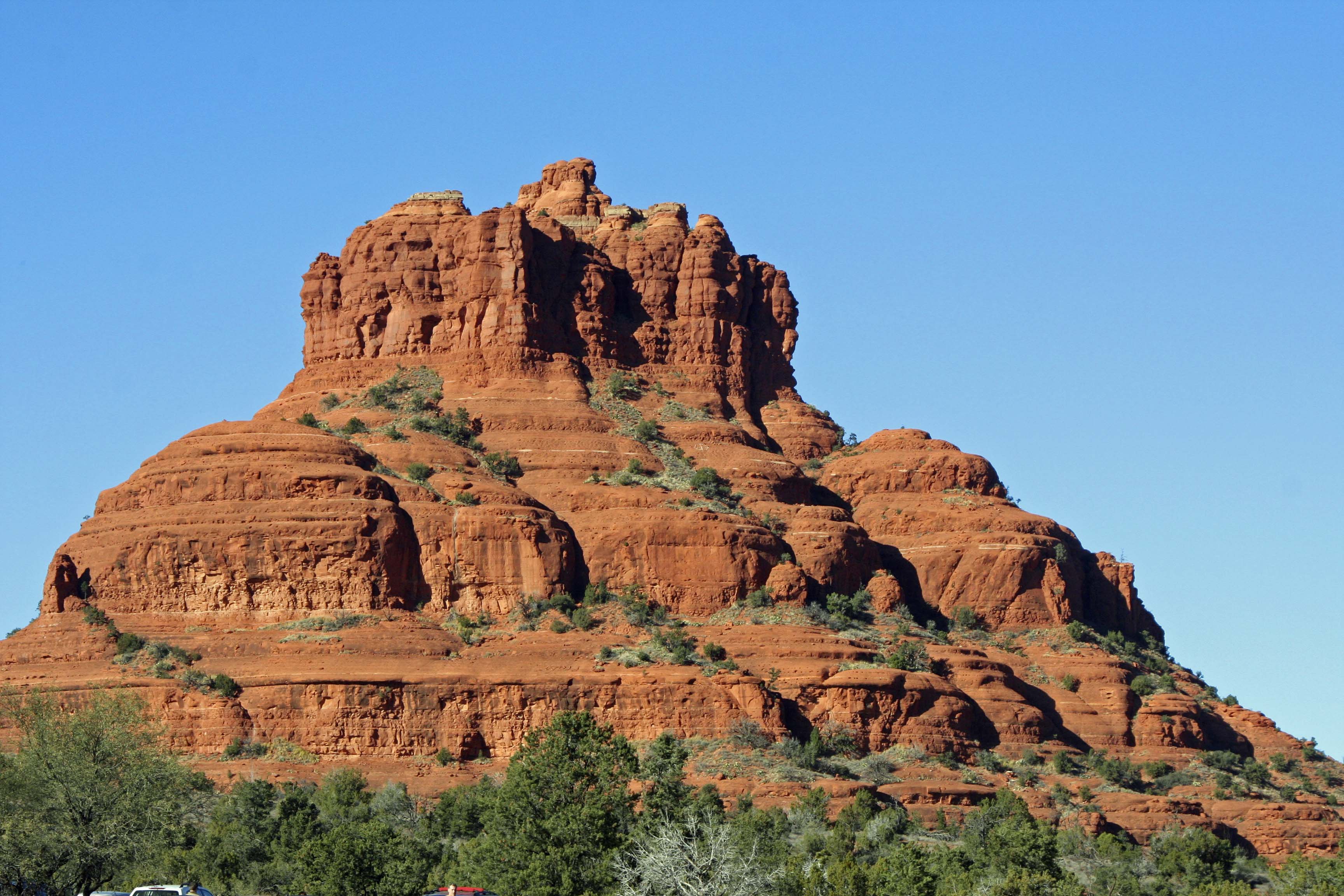
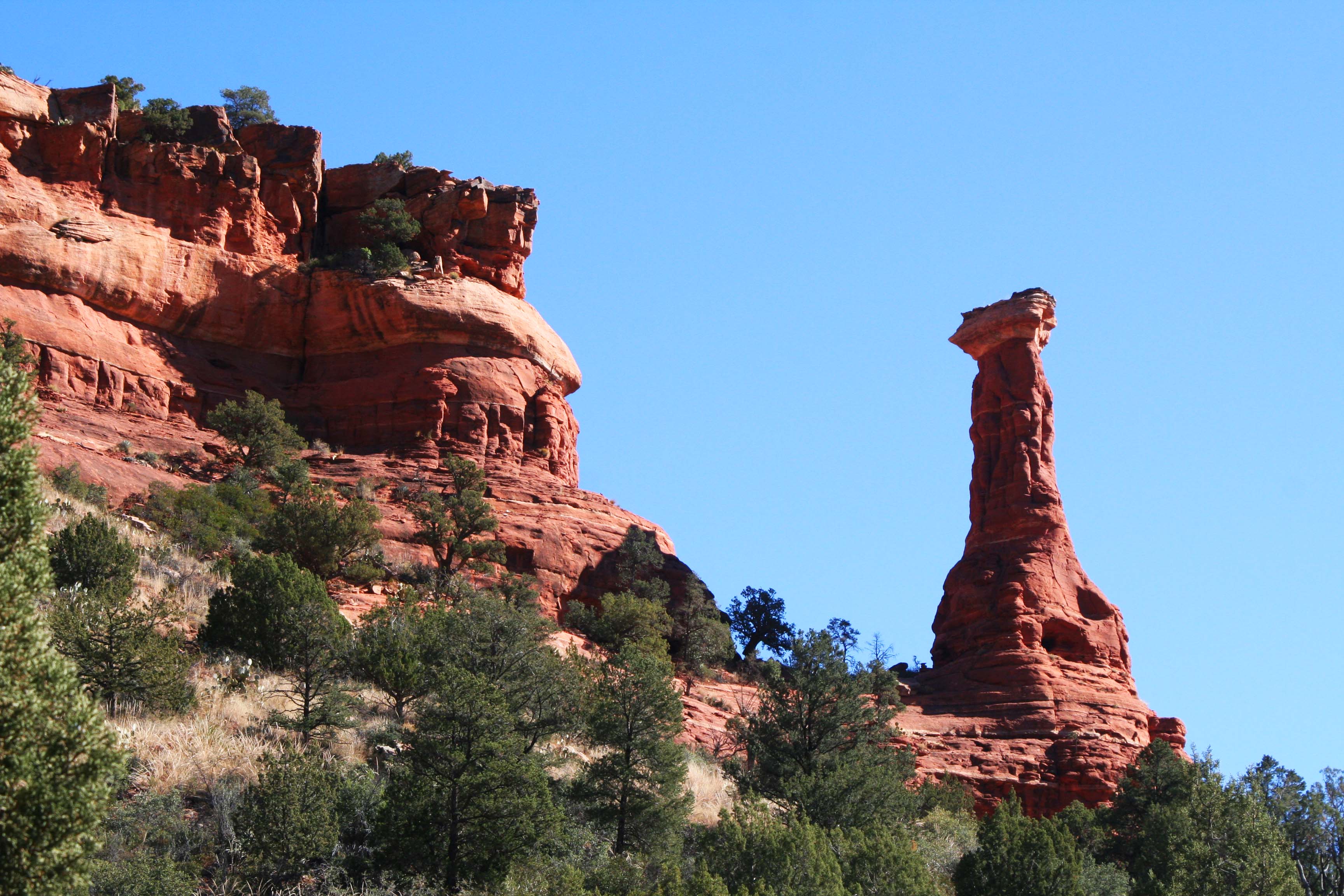
Photo of Bell Tower in Sedona, Arizona.

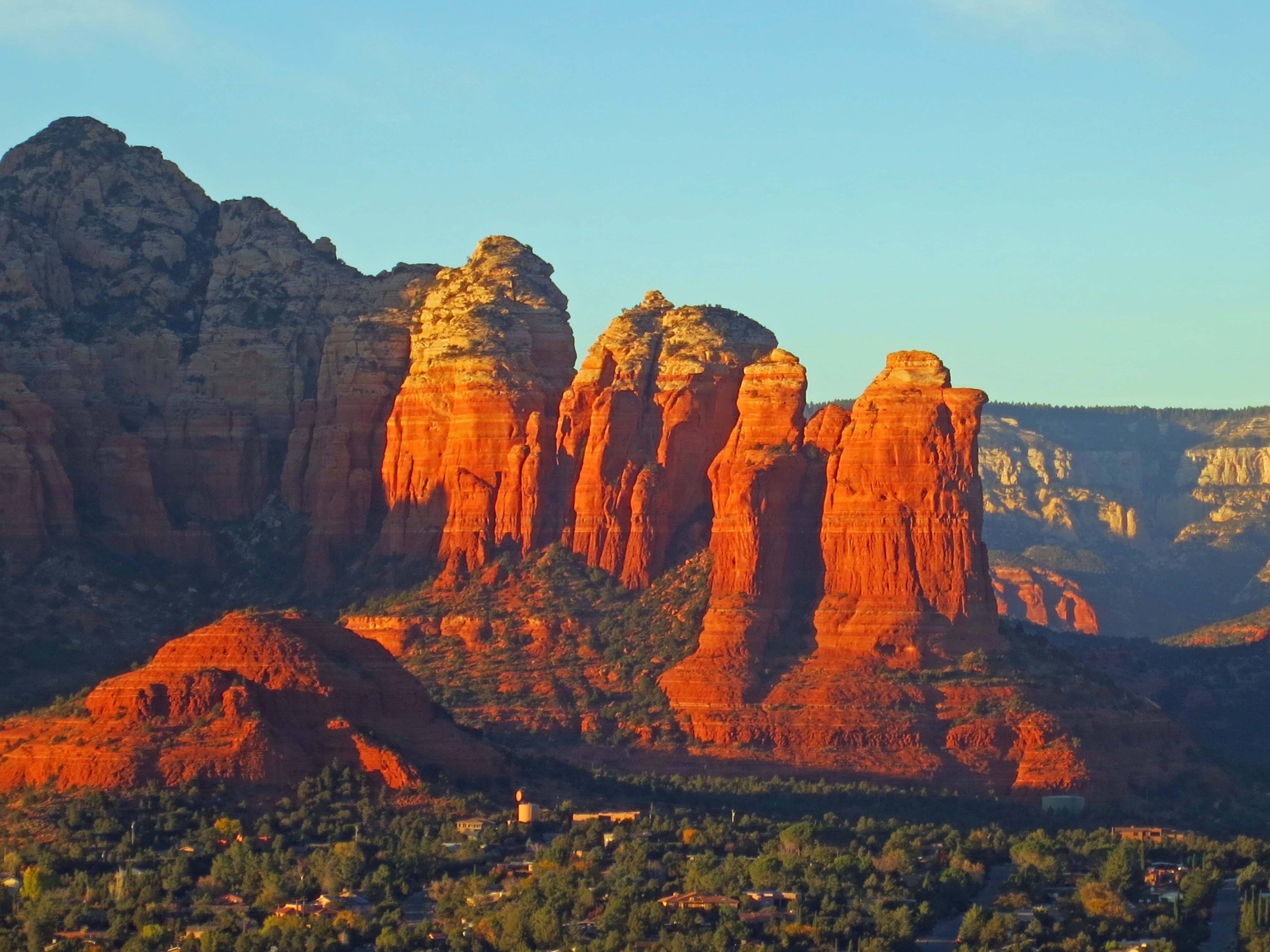
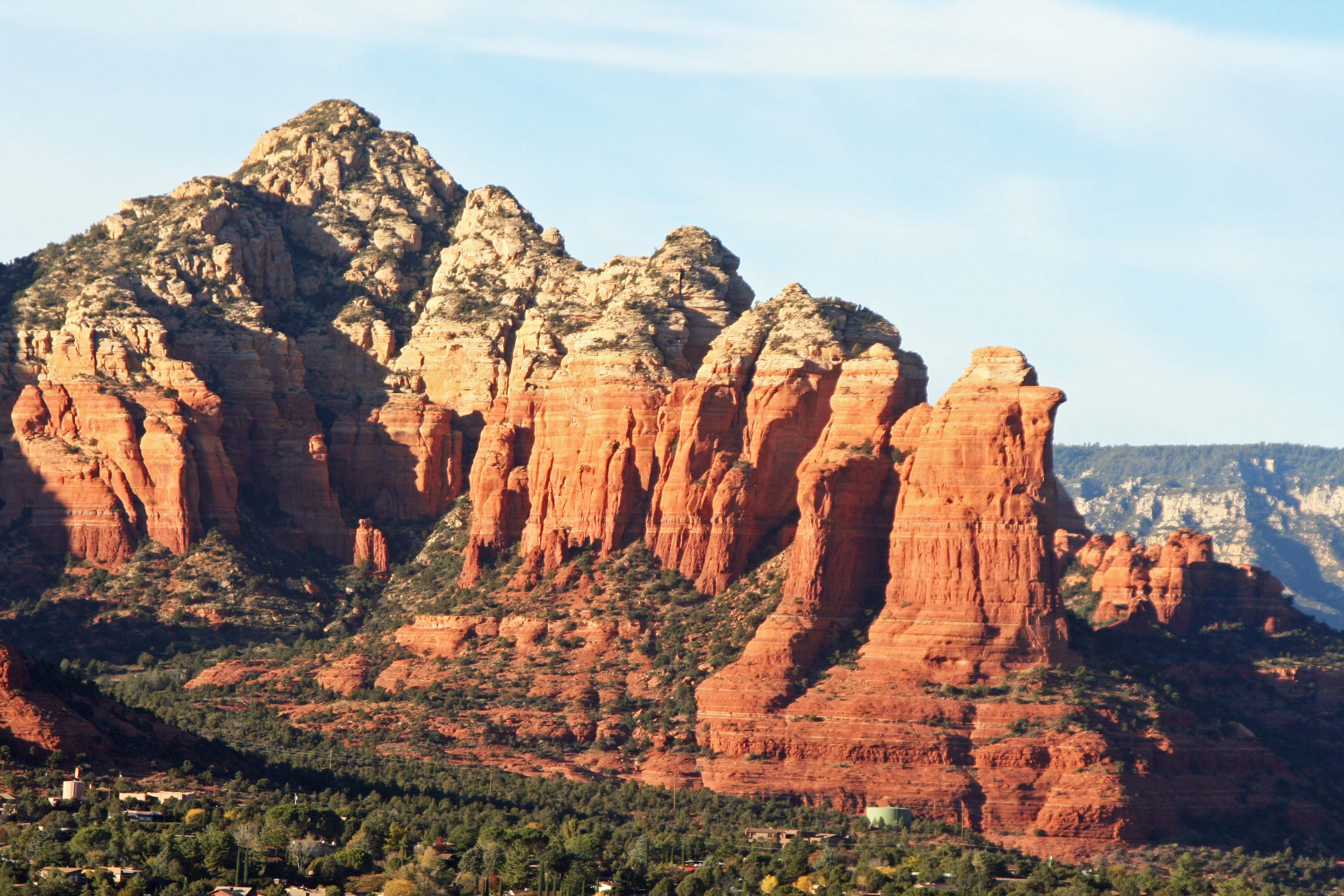
Sedona, Arizona is known for its beautiful red rock monuments and its New Age appeal. The Bell Rock incorporates both. A vortex, said to radiate positive energy, is located on its left flank. (Photo by Peggy Mekemson.)

Sedona, Arizona  bills itself as the capital of the New Age Movement, and maybe it is. Certainly everything we have come to identify with New Age thinking can be found here— from alternative medicine to goddess worship. You can buy dream catchers, crystals, wands, and statues of deities such as Ganesha, the Hindu elephant god. There are fortune tellers, psychics, and tarot card readers. I am sure you can discover your future in your palm, have an astrological chart prepared, and confirm whatever messages you’ve received by throwing the runes. Or possibly you need to sit down with a shaman. Certainly you can find a quiet and beautiful spot to meditate.

Vortexes are central to the New Age belief system in Sedona. Four major ones are found in and around the town. These sites are said to radiate subtle energy that flows up from the earth in a spiral path and helps people along on whatever spiritual journey they have chosen for themselves. Locals describe the vortexes as masculine, feminine or some combination of both in the energy they release.

Tens of thousands of tourists visit these sites annually. The vortexes are even said to attract aliens, who do UFO flyovers. An army of tour group operators is prepared to take visitors to the vortexes, or you can go on your own. That’s what Peggy and I decided to do when we visited Sedona in November. We visited three, one next to the airport, one in Boynton Canyon, and the Bell Tower, shown above.

Did we feel the power vibrating through our bodies? Did we experience spiritual enlightenment? Well, no… sigh. I expect a little more work is required to reach Nirvana. But the beauty of the sites was definitely inspirational. What more could we ask for? A UFO or two, perhaps…

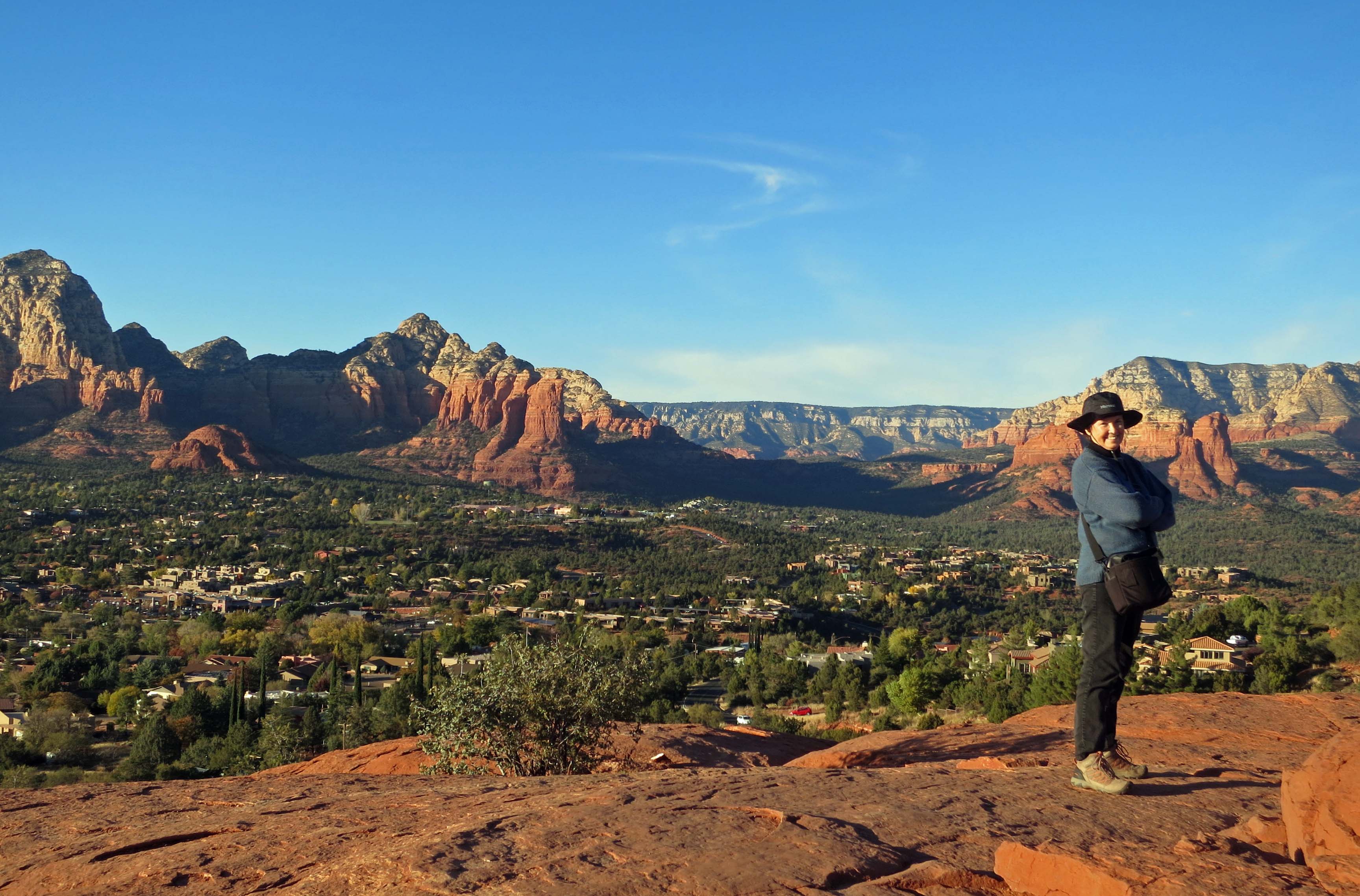
Tens of thousands of people visit the vortexes of Sedona annually. The Chamber of Commerce gives out maps of where to find them. This one is next to the airport.

Tens of thousands of people visit the vortexes of Sedona annually. The Chamber of Commerce gives out maps of where to find them. This one is next to the airport.

Peggy stands on top of the vortex located near the Sedona Airport. Sedona lies below, hemmed in by Red Rocks.

Peggy stands on top of the vortex. Sedona lies below, hemmed in by Red Rocks.

Peggy catches a photo of me in my one minute quest while sitting on the vortex rock. (Photo by Peggy Mekemson.)

Peggy catches a photo of me in my one minute quest to feel the  energy while sitting on the vortex rock. (Photo by Peggy Mekemson.)

Boynton Canyon vortex site. Photo by Curtis Mekemson.

The vortex in Boynton Canyon is located near this rock.

Boynton Canyon, Sedona Arizona vortex site.  Photo by Curtis Mekemson.

I could almost feel the vortex’s energy given this impressive rock.

Another perspective. (Photo by Peggy Mekemson.)

Another perspective. (Photo by Peggy Mekemson.)

When Peggy and I were hiking into Boynton Canyon with our friends Ken and Leslie Lake, a man stopped Leslie and Peggy and gave them each a heart carved out of stone. It was a very New Age kind of thing.

When Peggy and I were hiking into Boynton Canyon with our friends Ken and Leslie Lake, a man stopped Leslie and Peggy and gave them each a heart carved out of stone. It was a very New Age kind of thing.

NEXT BLOG: A sunset over Sedona.

A Pot, a Potter, and a Cat… The Pottery of Marian Heintz


Teapot by Marian Heintz from her studio in Chattanooga, Tennessee. Photo by Curtis Mekemson.

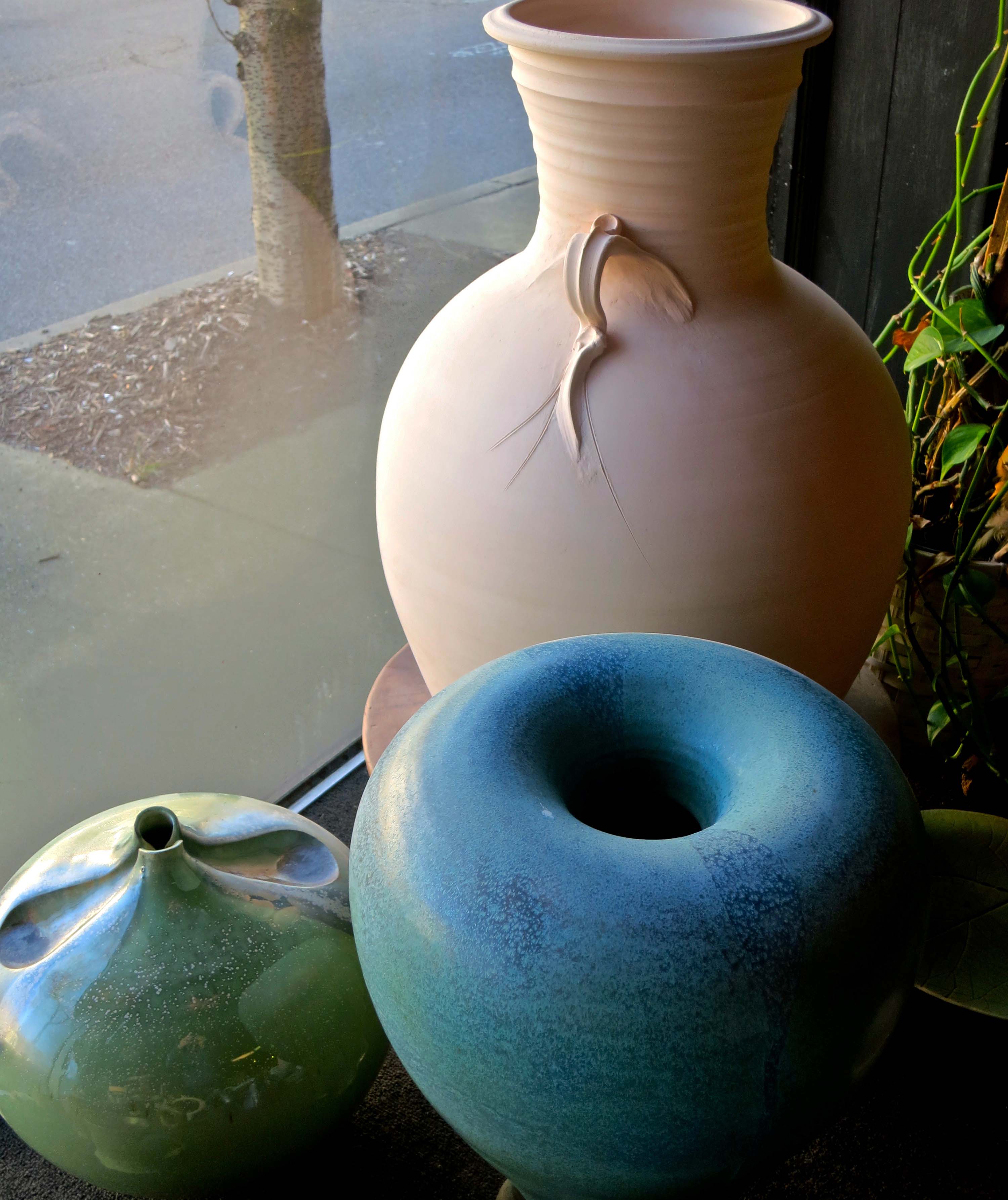
Form, glaze and function make for stunning pottery. My brother Marshall picked out this teapot for Peggy and me from the work his daughter Marian does in Chattanooga, Tennessee.


As my body of work grows, my hope is that it will reflect a life filled with wonder and yearning, as well as serious play. —Marian Heintz

Marian was making hearts— and not 100% happy about it. Valentine’s Day is coming, however, and people like to buy hearts. People buying hearts puts money in the bank. So, for the day at least, Marian had put aside her inner artist to be pragmatic and was whipping out product.

It wasn’t quite mass production, though. “Each piece needs to be carefully finished,” she insisted. Marian is a dedicated craftsperson as well as an artist. No part-finished work would escape out her door, even if it meant less profit.

One of the hearts that Marian was producing for Valentines Day.

One of the hearts that Marian was producing for Valentine’s Day.

Peggy and I had driven down from the Nashville area after Christmas to visit with Marian in Chattanooga, and to check out her studio and work. Marian is my niece (my brother Marshall’s daughter), and I have known her since she was a toddler. It had been far too long since we had seen her.

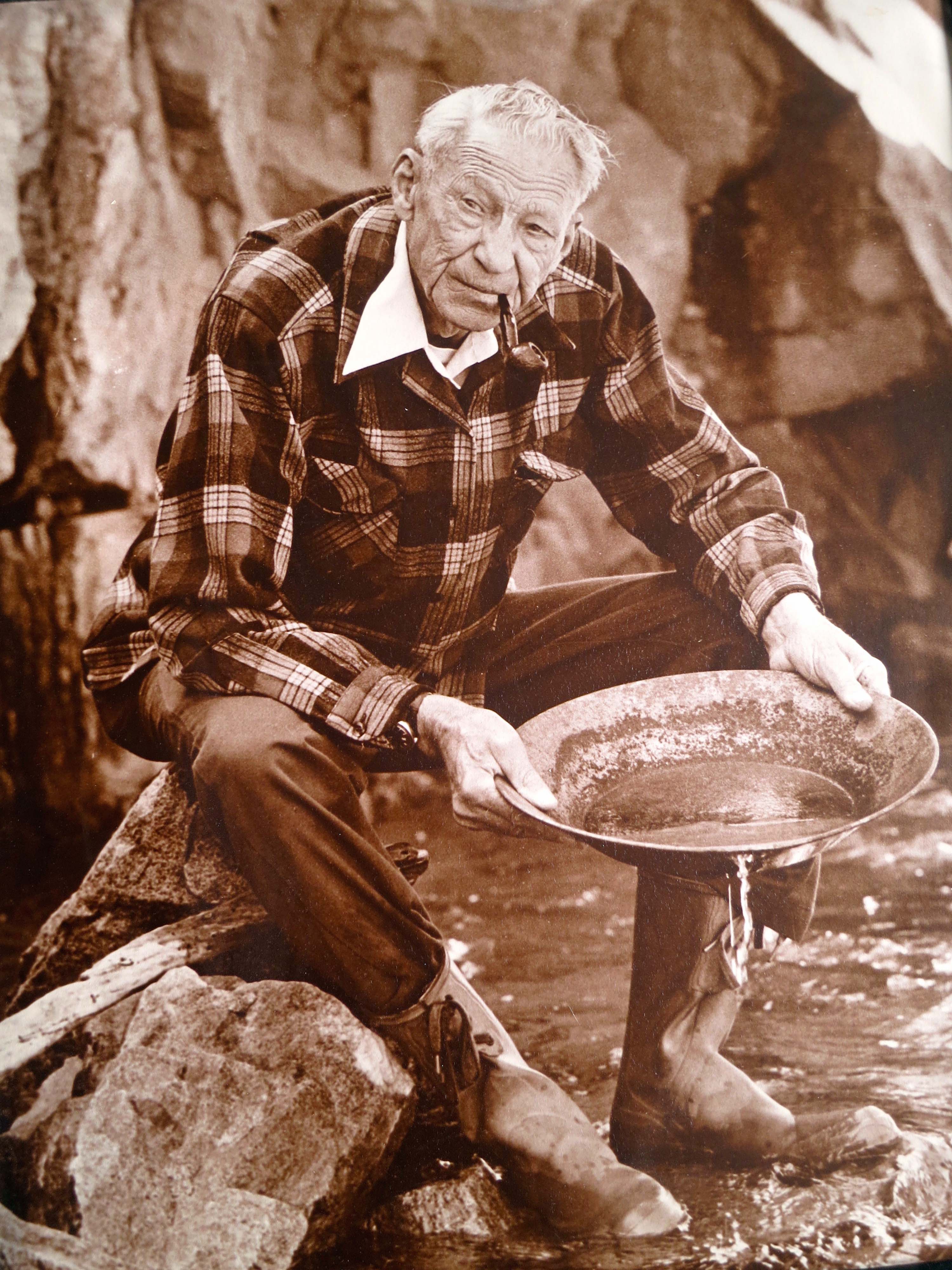
Marian has always had a creative bent, and it has carried her in several different directions. I first became aware of her passion for art when she was attending the Glen Fishback School of photography in Sacramento. She has a fine eye for photography, as does her brother, Wayne. She even managed to talk my dad into posing as a time-worn gold miner for her final portfolio at the school.

Photo of Herb Mekemson taken by Marian Heintz.

I have the photo that Marian took of my dad posing as a gold miner in his late 70s. Our daughter, Tasha, has put her name on the back of it to make sure she gets it in the future. (grin)

From photography, Marian branched out to the folk art of wheat weaving where straw is turned into decorative items and jewelry. From there, it was a natural step into making jewelry with copper and silver. Partially, as a result, she ended up teaching women in Haiti how to make jewelry out of rubble after the devastating 2009 earthquake.

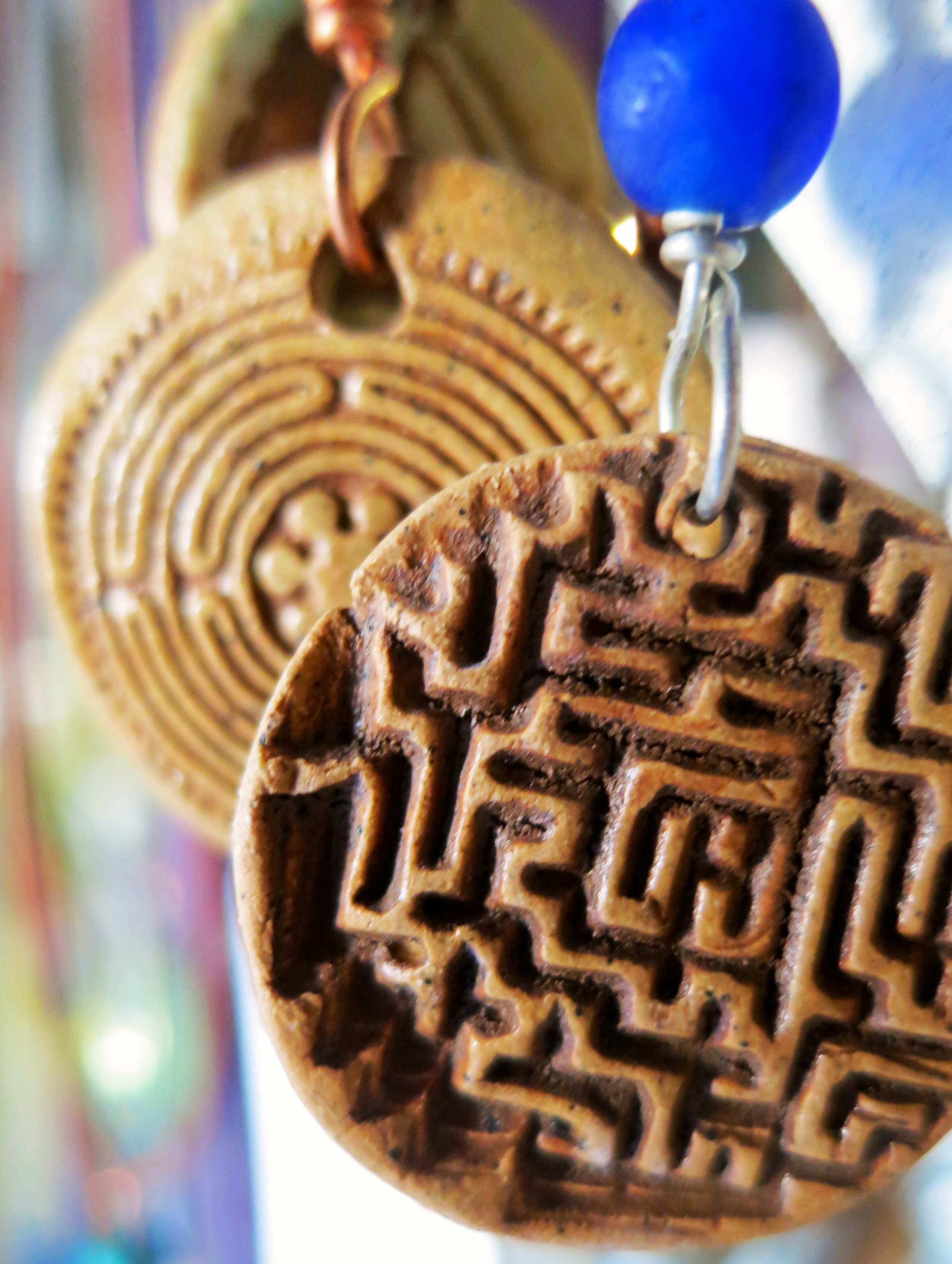
Jewelry made by Marian Heintz at her studio in Chattanooga, Tennessee.

Marian still makes jewelry using her skills as a potter. Peggy had to have one. Marian explained that making the labyrinth and maze serve as meditation for her.

Her introduction to pottery came when she was working on her undergraduate degree at the University of Tennessee, Chattanooga. “I first began working with ceramics sixteen years ago, and fell in love with clay the first time I touched it,” she wrote in a bio sketch.

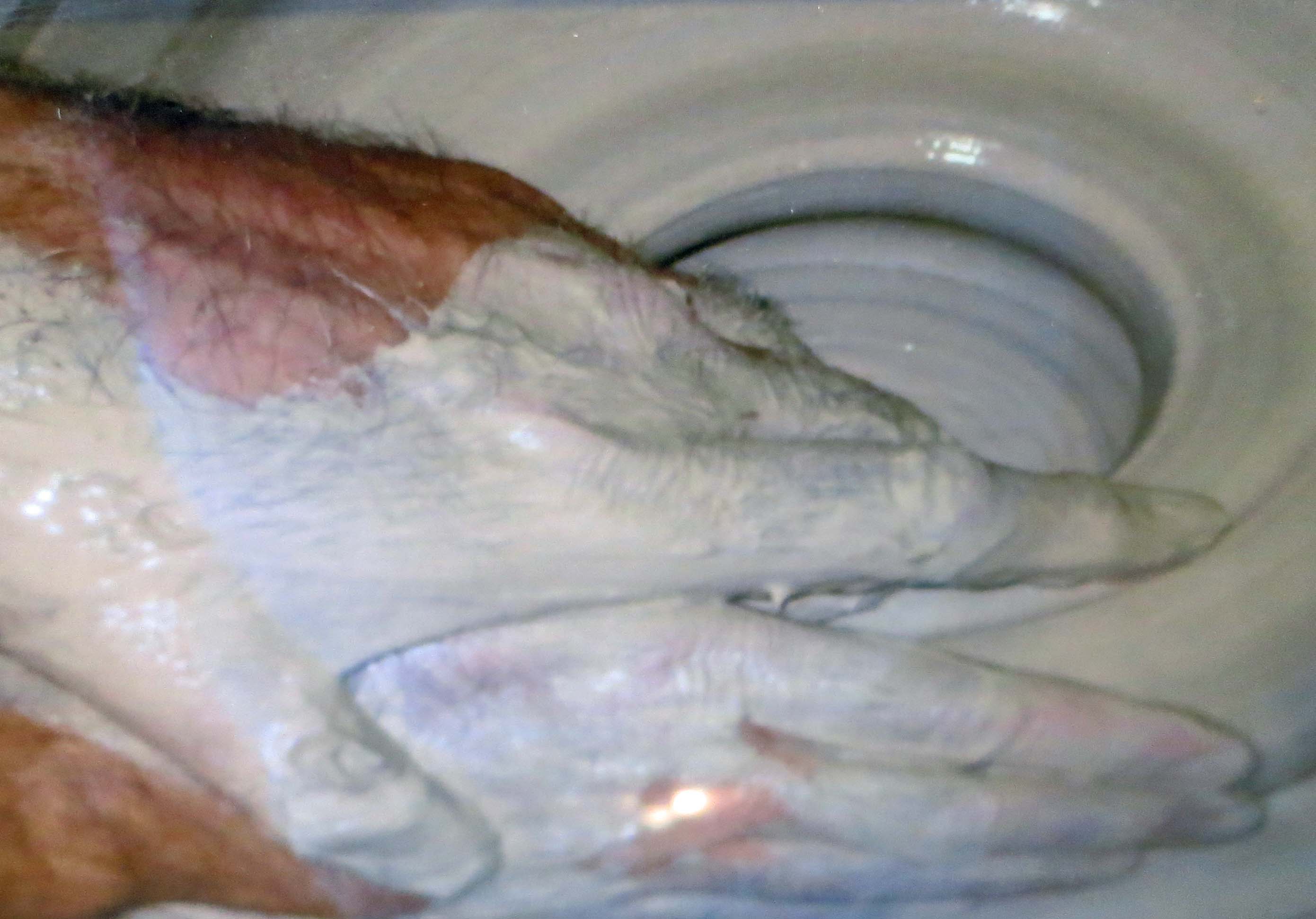
The hands of Marian's friend and mentor Talle Johnson as he throws a pot.

The hands of Marian’s friend and mentor Talle Johnson as he works clay and throws a pot.

Talle Johnson pottery at the studio of Marian Heintx in Chattanooga, Tennessee. Photo by Curtis Mekemson.

A sample of Talle Johnson’s pottery that Marian keeps in her studio.

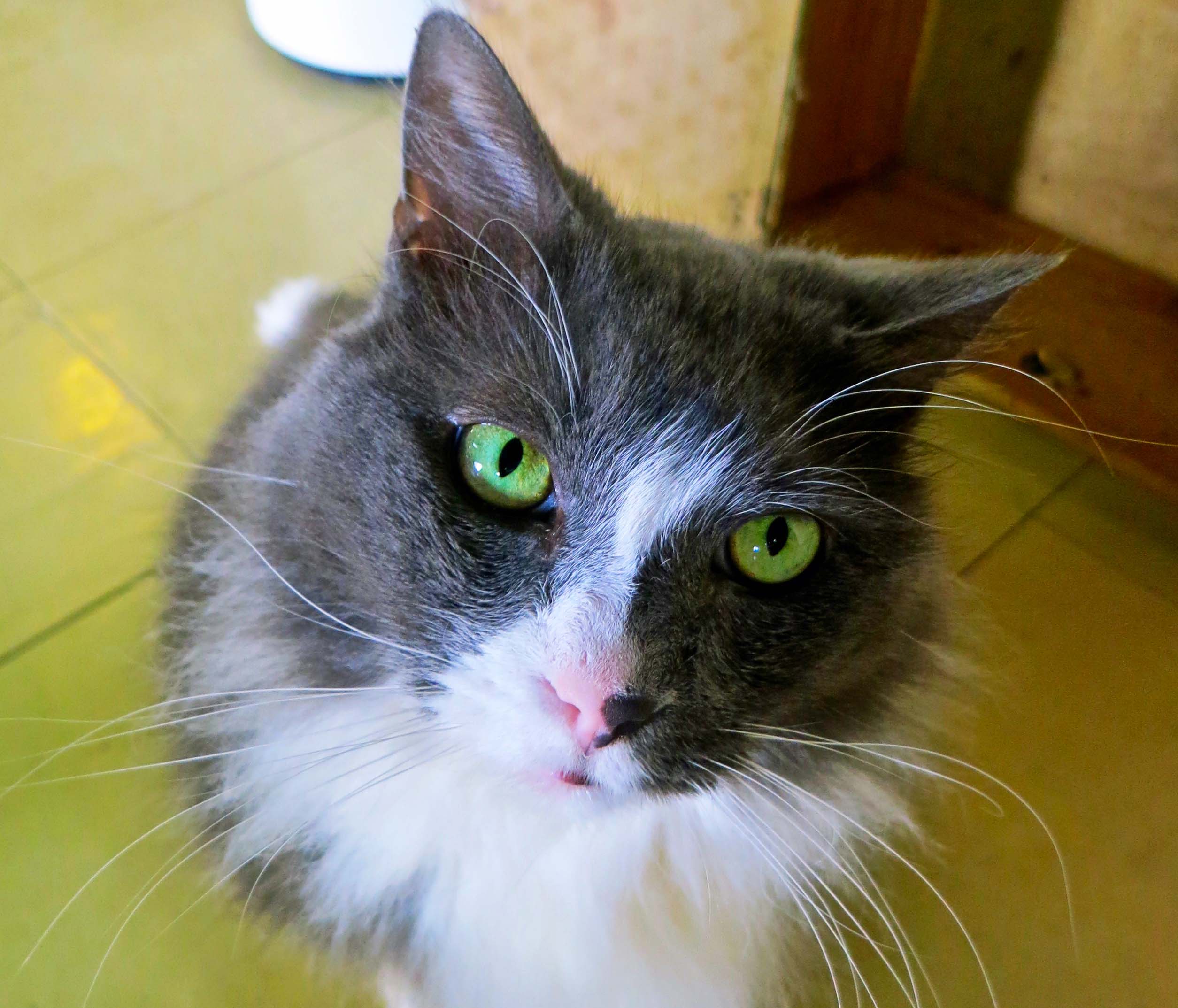
From 2007 up until he passed away in 2010, Marian worked as an apprentice to the highly talented and well-known potter, Talle Johnson. She credits much of her artistry, and in particular her emphasis on form, to his mentorship. As we entered through the backdoor of her studio, the first thing that greeted us was a memorial wall of photos featuring Talle and his work. The second thing to greet us was Wren, the studio cat.

Wren, the studio cat at the Marian Heintz Pottery studio. Photo by Curtis Mekemson.

Wren, the studio cat.

Marian greeted us with the same enthusiasm that she puts into her work. Within minutes she had us settled into her comfortable ‘transition lounge.’ (Adult students are invited to relax with a bite to eat or a glass of wine to “transition between work and throwing clay.”) Three hours later, we had almost caught up on our lives— and almost provided Wren with the amount of rubbing he was sure he deserved.

Marian's 'transition studio, was warm, colorful and comfortable. I felt it reflected her.

The transition lounge was warm, colorful and comfortable— much like Marian.

Marian Heintz at her pottery studio in Chattanooga, Tennessee. Photo by  Curtis Mekemson.

Marion chatted for three hours, filling us in on her journey into pottery and how it has reflected her own journey in life.

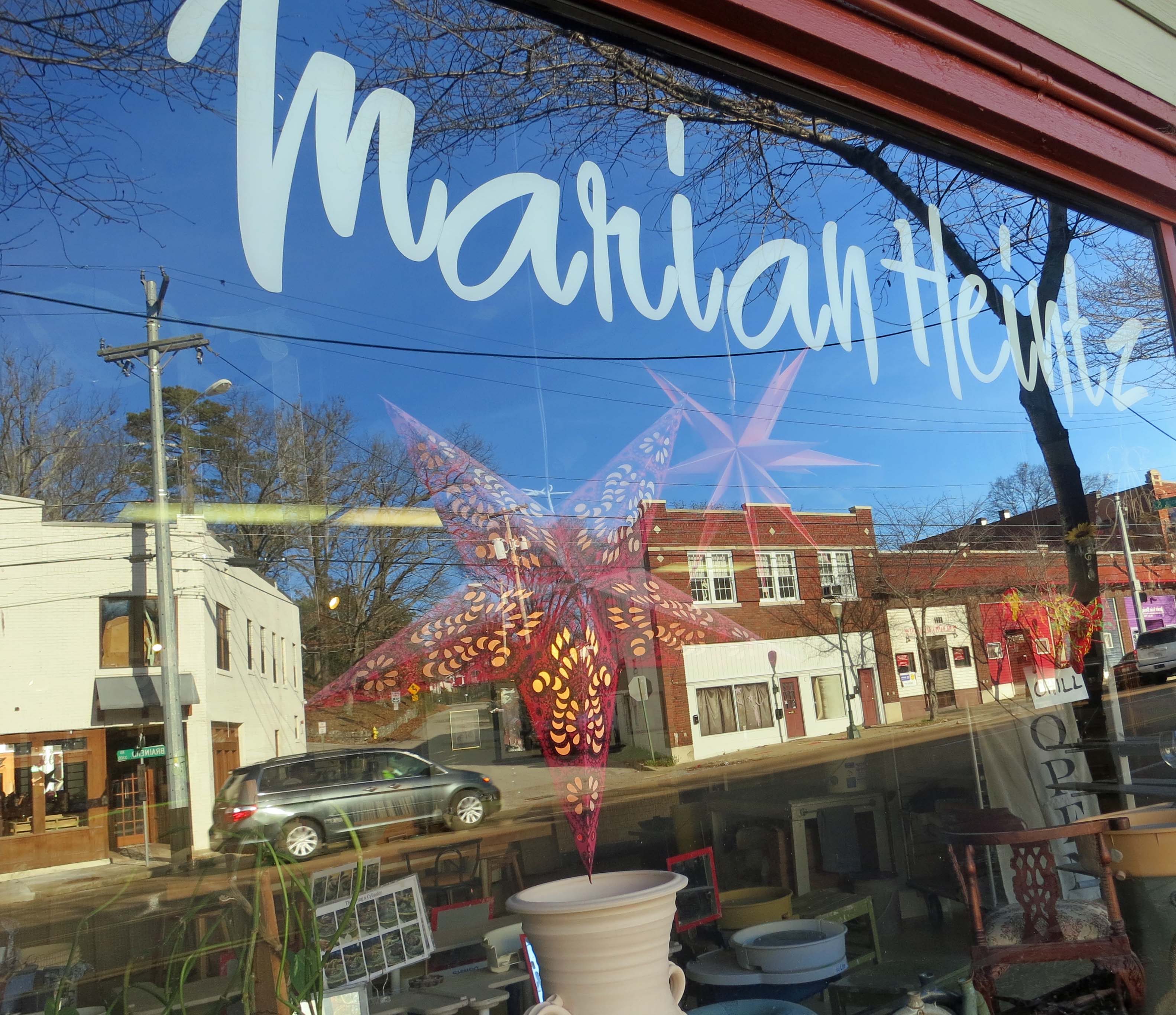
Marian’s studio is located on Brainerd Road in Chattanooga. The street is reflected in the window of her shop below. In addition to serving as her studio and as a retail outlet for her work, the space also includes potters’ wheels for classes she offers. She sees her studio as a place where students can “come in and leave everything else behind,” providing, if you will, a community— a place of peace where one can get lost in the rhythm of the potter’s wheel and the earthy feel of clay.

Chattanooga's Brainerd Road is reflected in the window of Marian's studio.

Chattanooga’s Brainerd Road is reflected in the window of Marian’s studio.

My work is both utilitarian and decorative, so that I try to find a balance between aesthetics and function. Using stoneware clay, I throw forms on the wheel as well as hand build. Some of these forms are altered on or off the wheel and many have paddled or textured surfaces. I would describe my forms as organic, sophisticated, yet simple and playful. There is a sense of movement and energy that radiates out of them. —Marian Heintz

Gravy bowl at Marian Heintz Pottery Studio in Chattanooga, Tennessee.

Gravy bowl.

Simple flower vase.

Simple flower vase.

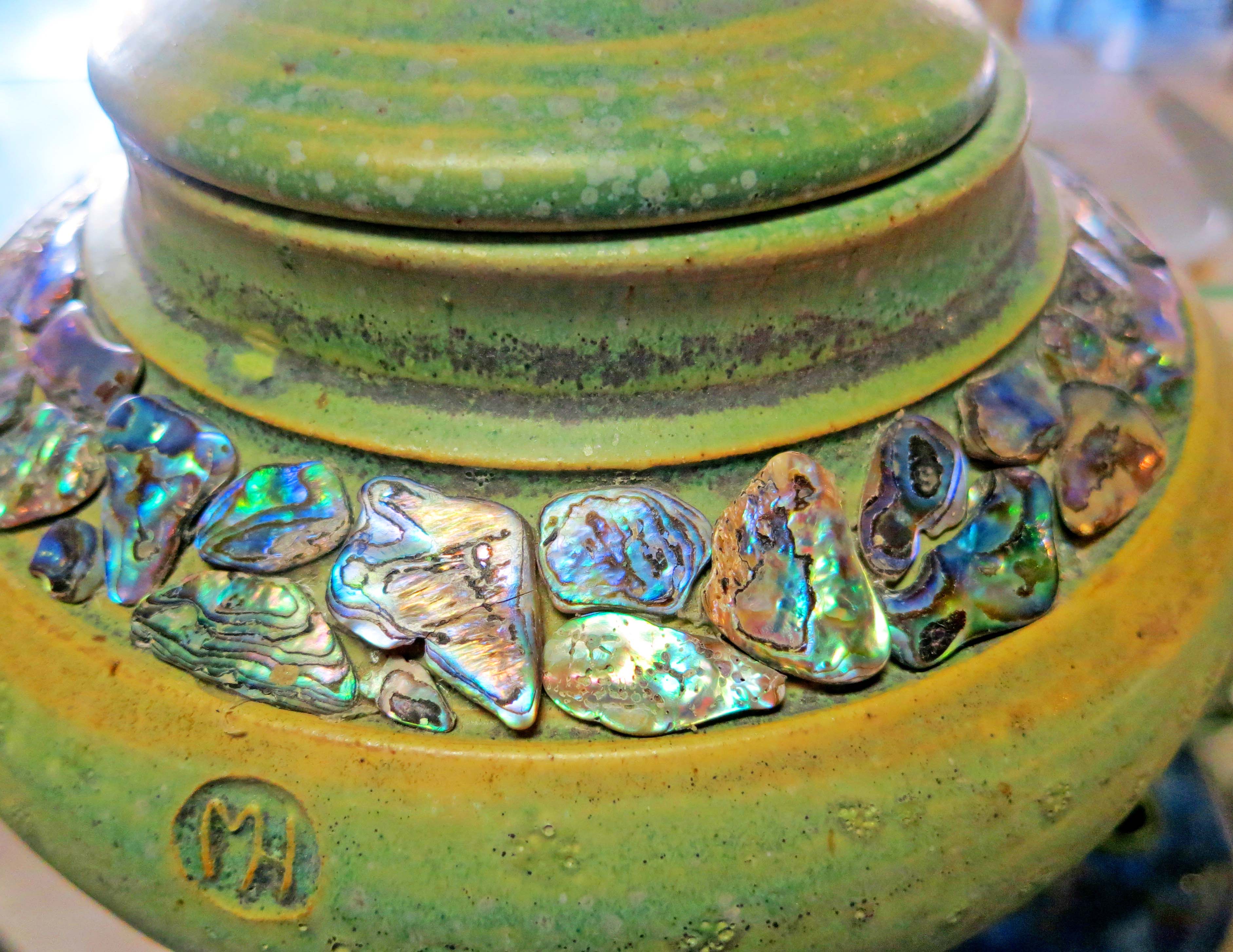
Pot incorporating abelone shells.

Pot incorporating abalone shells.

This coffee cup came home with me. The MH serves as Marian's signature.

This coffee cup came home with me. The MH serves as Marian’s signature.

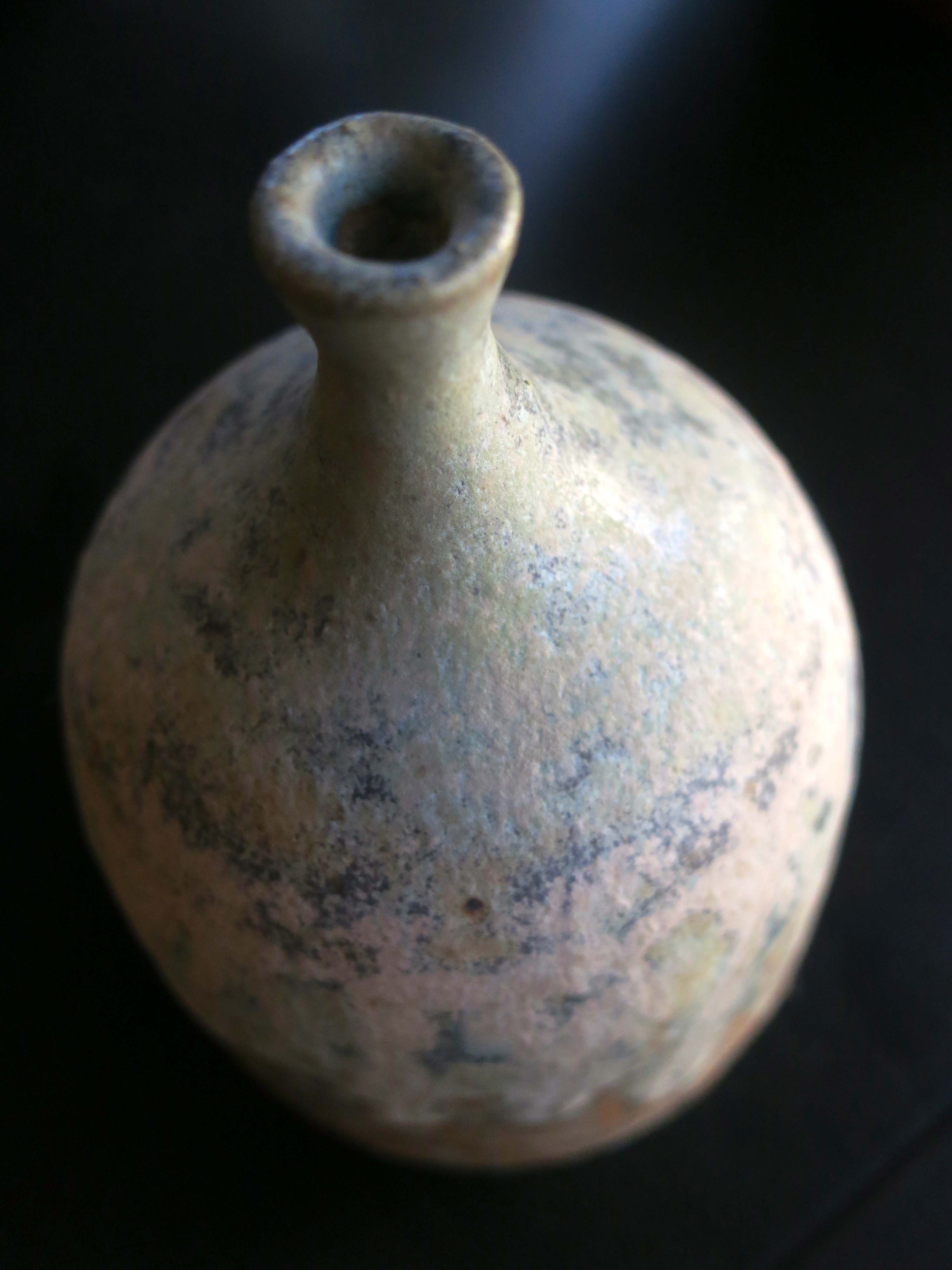
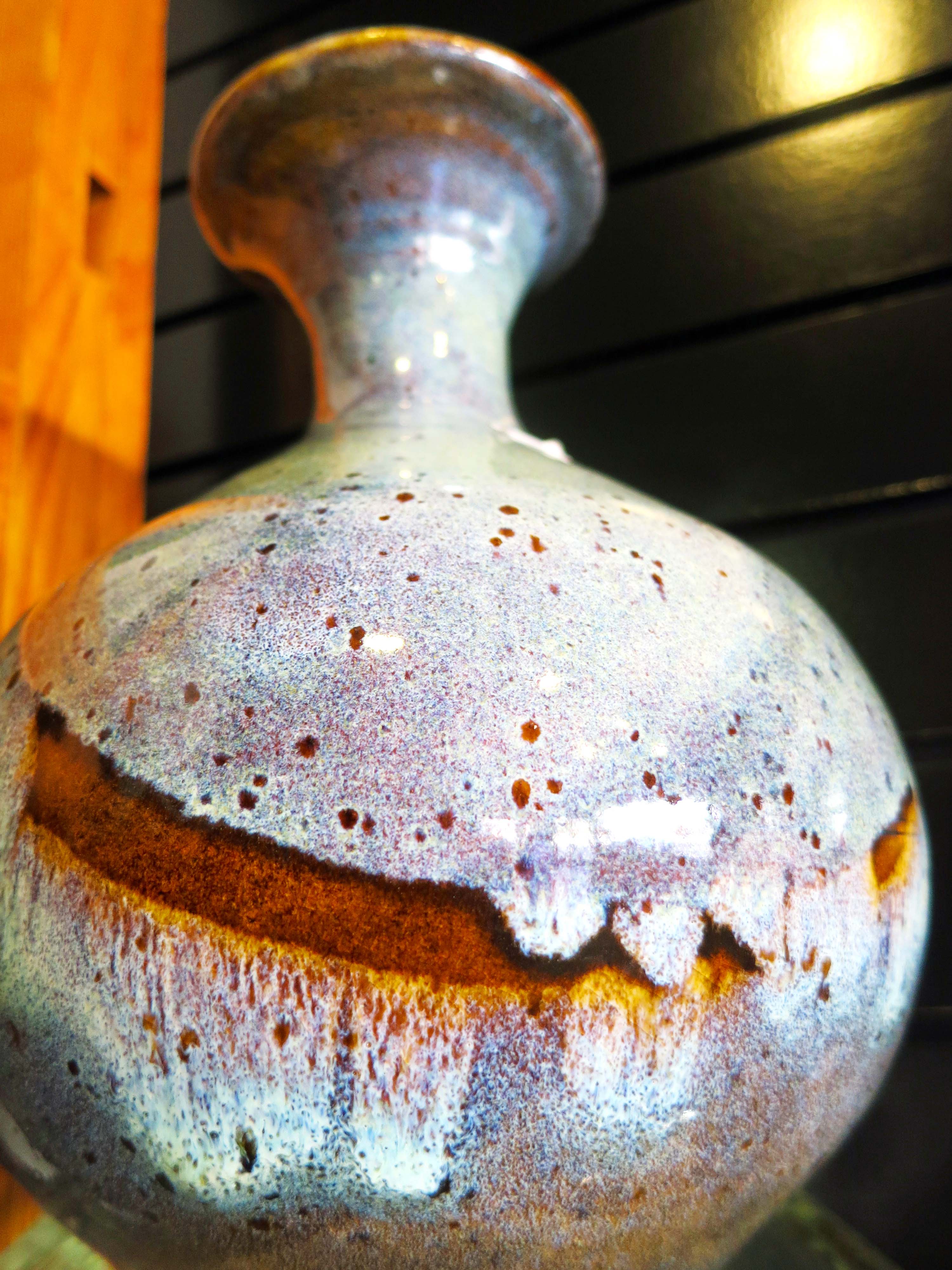
I enjoyed the top down perspective on this vase.

I enjoyed the top down perspective on this vase.

Marian has also branched out into porcelain.

Marian has also branched out into porcelain.

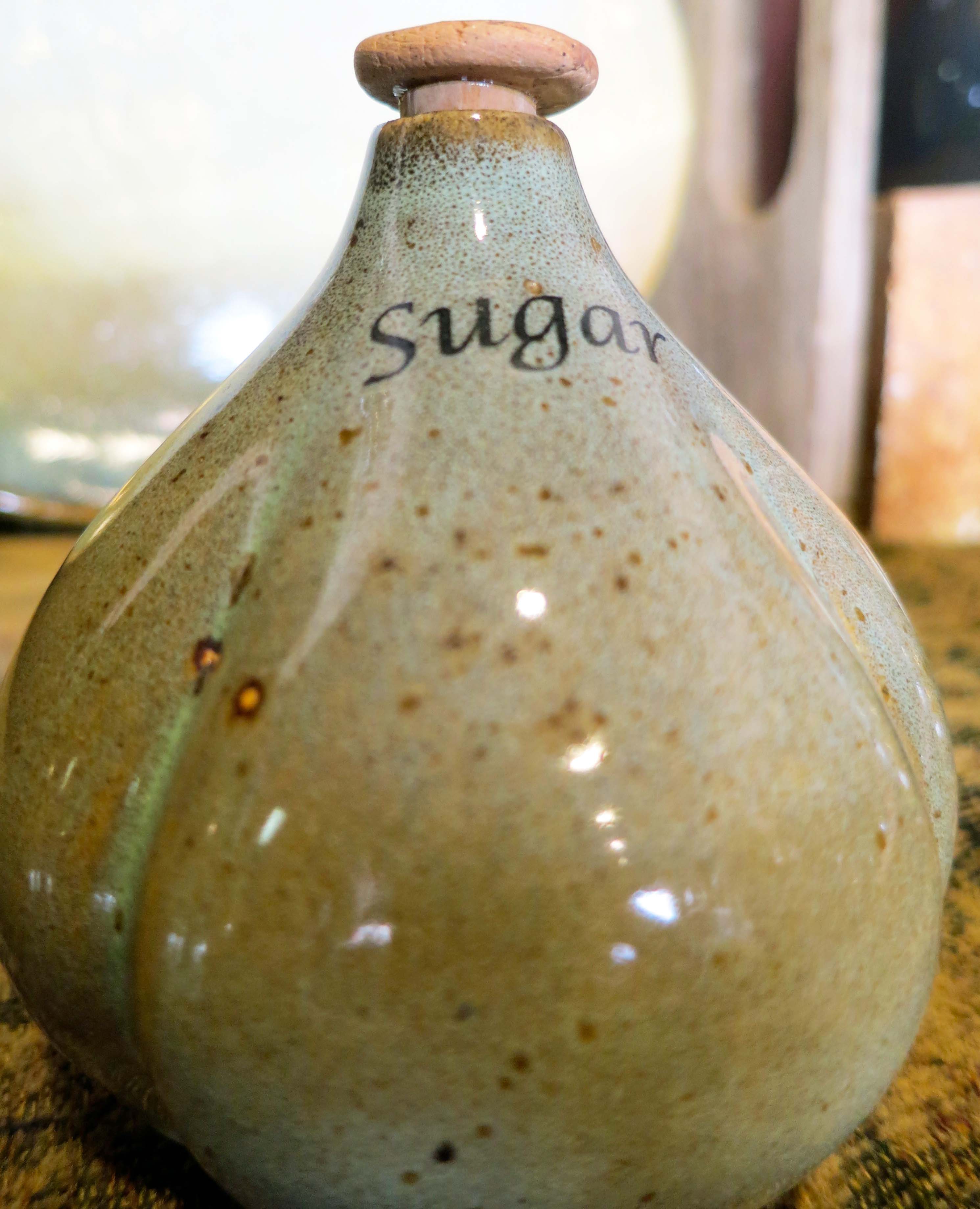
I found the small containers she made for sugar, salt, pepper and other spices quite unique.

I found the small containers she made for sugar, salt, pepper and other spices quite unique.

This vase made me think of Where the Wild Things Are.

This vase made me think of Where the Wild Things Are.

Marian’s work has been shown at the Tennessee Arts Commission gallery in Nashville and a piece has been purchased by Commission to add to its permanent collection. You can learn more about Marian by checking out her website.

While we were talking, Marian had mentioned how she felt her work in pottery had reflected her struggles in life. “I am good at struggling,” she had noted with a grin. “I have a knack for it.” Her dad had once commented to her how she was always able to take lemons and make lemonade. Her response had been, “I don’t want to make lemonade. I want to make something more beautiful and permanent.”

I think she has succeeded.

NEXT BLOG: It’s off to the beautiful red rock country of Sedona, Arizona.


I Bit the Chicken and the Chicken Bit Back… Nashville’s HOT Chicken Restaurants

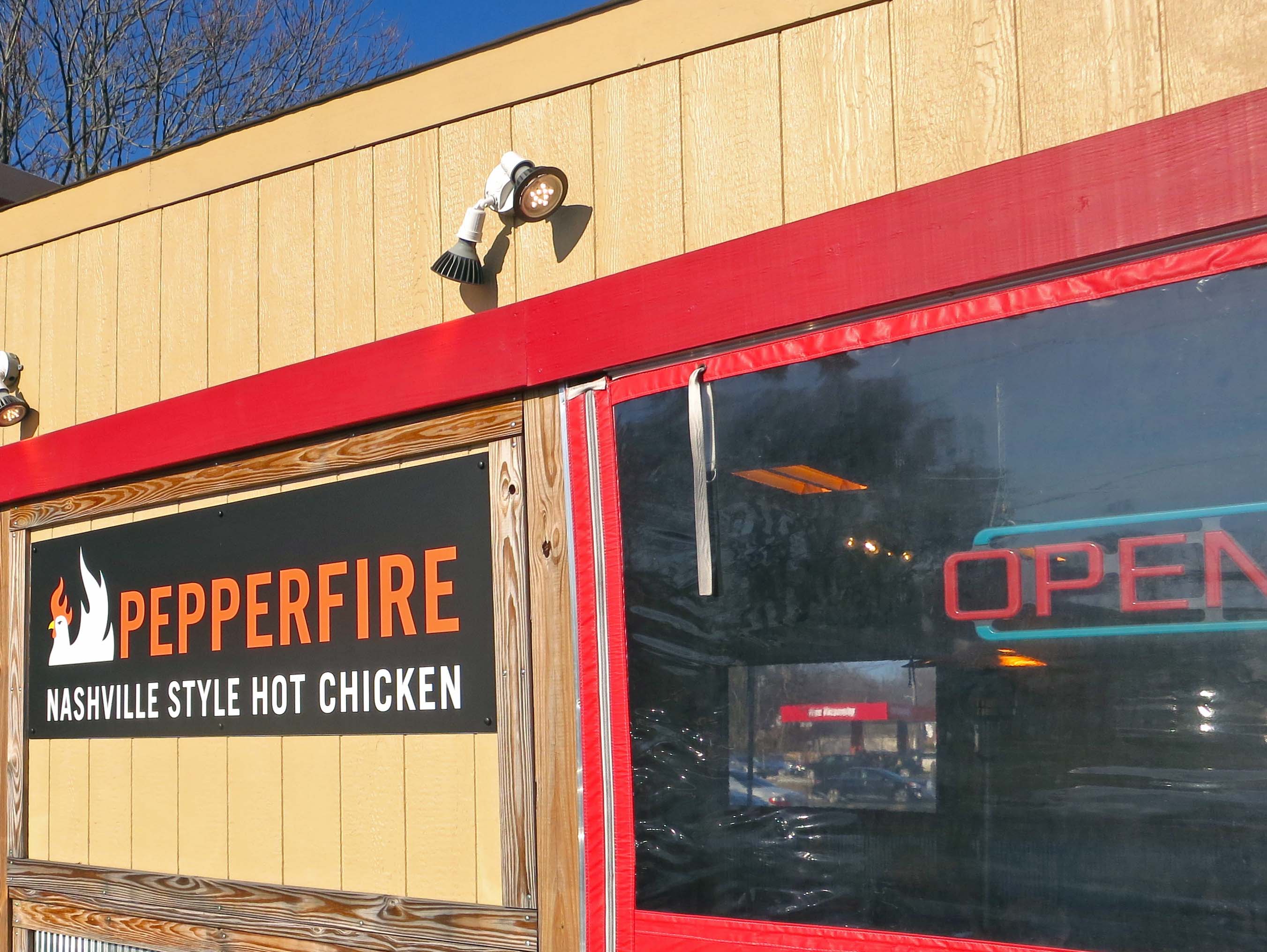
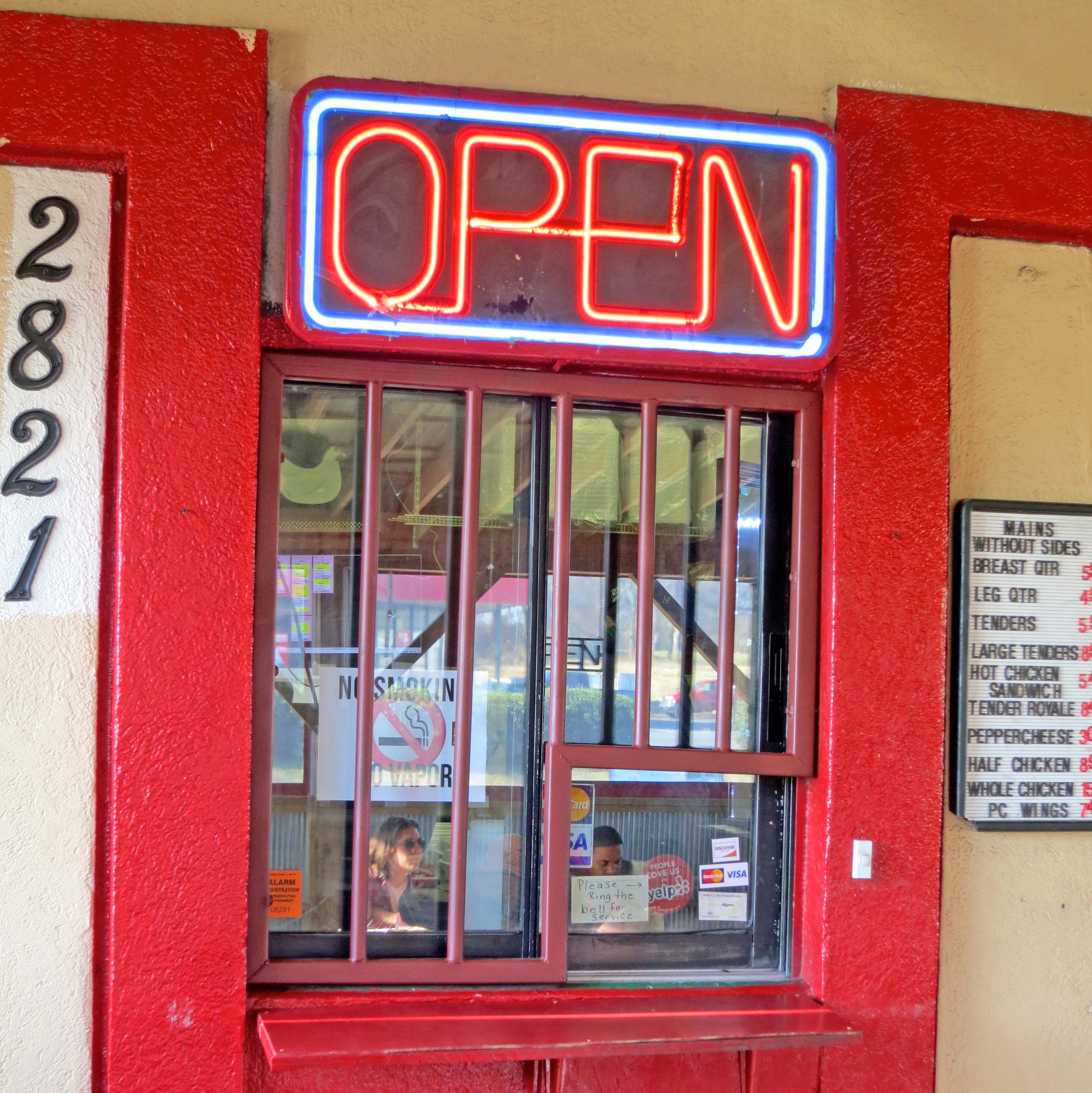
Pepperfire Restaurant in Nashville, TN. Photo by Curtis Mekemson

Hot chicken is all the rage in Nashville today. But just how hot is it?

My son-in-law Clay and I have been hassling each other over hot food ever since he first started dating our daughter. Clay, Tasha, Peggy and I had gone out to a steak house in Sacramento, California and ordered prime rib. Normally, the restaurant served a mild horseradish cream sauce along side. This time, for whatever the reason, it didn’t.

“Can we have a side order of horseradish cream sauce?” I had asked our waiter.

He had brought it out, straight up, no cream. I slathered it on my prime rib. Clay, watching me, had done the same thing. I took one bite and thought ‘Holy Ghost Pepper!’ as it burned all the way down to my toes. I quickly scraped it off. I didn’t mean to hide my action from Clay, but he didn’t see me do it. He just kept nonchalantly chewing away and all I could think was, ‘He is one tough dude.’

This went on for a while as perspiration broke out on Clay’s forehead and his eyes began to water. Suddenly he threw down his fork.

“You’re the man,” he declared. “How can you eat that stuff?”

We all had a good laugh when I confessed, but it established a tradition. Whenever Clay comes to visit, I take him out for the hottest food I can find. (The girls stay as far way from this activity as possible.) Last time we went to the India Palace, my favorite Indian restaurant in southern Oregon. Clay insisted on ordering the food one notch hotter than I did.

Of course what goes around comes around, right? So whenever Peggy and I visit Clay and Tasha in Tennessee, Clay introduces me to his latest mouth-burning find. He outdid himself this time. “Google Nashville hot chicken and pick out a restaurant,” he suggested to me as he scooted off to his job as a regional manager for Verizon. I was soon up to my ears in hot sauce.

The legend is that Thornton Prince was having girlfriend problems back in the 1930s. He had too many. Girlfriend number #1 decided on revenge. She secretly dumped several extra tablespoons of cayenne pepper on Thornton’s chicken when he came in late one night. The effort backfired. Prince loved it. In fact he loved the hot chicken so much he opened a restaurant featuring it.

The restaurant quickly became a gathering place for the local African American community. When white musicians playing at the Grand Ole Opry heard about the chicken, they started visiting as well. This was still the era of segregation, however. The whites had to come through the back door and eat in the kitchen. Seventy years later the restaurant is still serving up its signature dish. Everyone goes through the front door now.

Today, Nashville is renowned for its hot chicken. There are several restaurants present, and my sense is that they vie with one another over who can produce the hottest food. I should note here that I like hot food. I developed the taste when I was a Peace Corps Volunteer in Liberia, West Africa where I started out as a one-pepper person. By the time I left, I had worked my way up to three. Since then I have continued to increase my tolerance for hot.

But in the world of hot peppers, there is hot and there is HOT. Two blogs ago I wrote about how my father-in-law, John Dallen, was concerned about the Naga headhunters of Nagaland when he had to bail out of his airplane in World War II. Well, as it turns out, I just learned the Naga are also renowned for raising Bhut Joloki peppers (ghost peppers), which happen to be among the hottest peppers in the world. John was wise not to eat what the local natives offered.

To provide a perspective on how hot these peppers are, consider the following. Pepper heat is measured in Scoville heat units (SHU). Your typical jalapeno pepper checks in at around 4000 SHU. Habanero peppers are measured at 80,000 to 600,000 SHU. The Bhut Joloki pepper normally tests out between 500,000 and 1,500,000!

I doubted I would be eating any fried chicken infused with Bhut Joloki peppers on my Nashville excursion, but I still entered the Pepperfire restaurant with a touch of trepidation. I’d read the reviews and seen the menu. My choices ranged from mild to XX hot. The Internet description had said that either the X or XX will “jump on you and grab you.” I wasn’t sure what that meant. But how could it be good?

The menu listed the various levels of hot.

The menu listed the various levels of hot. The Pepperfire website had informed me that “hot” was painful for most.

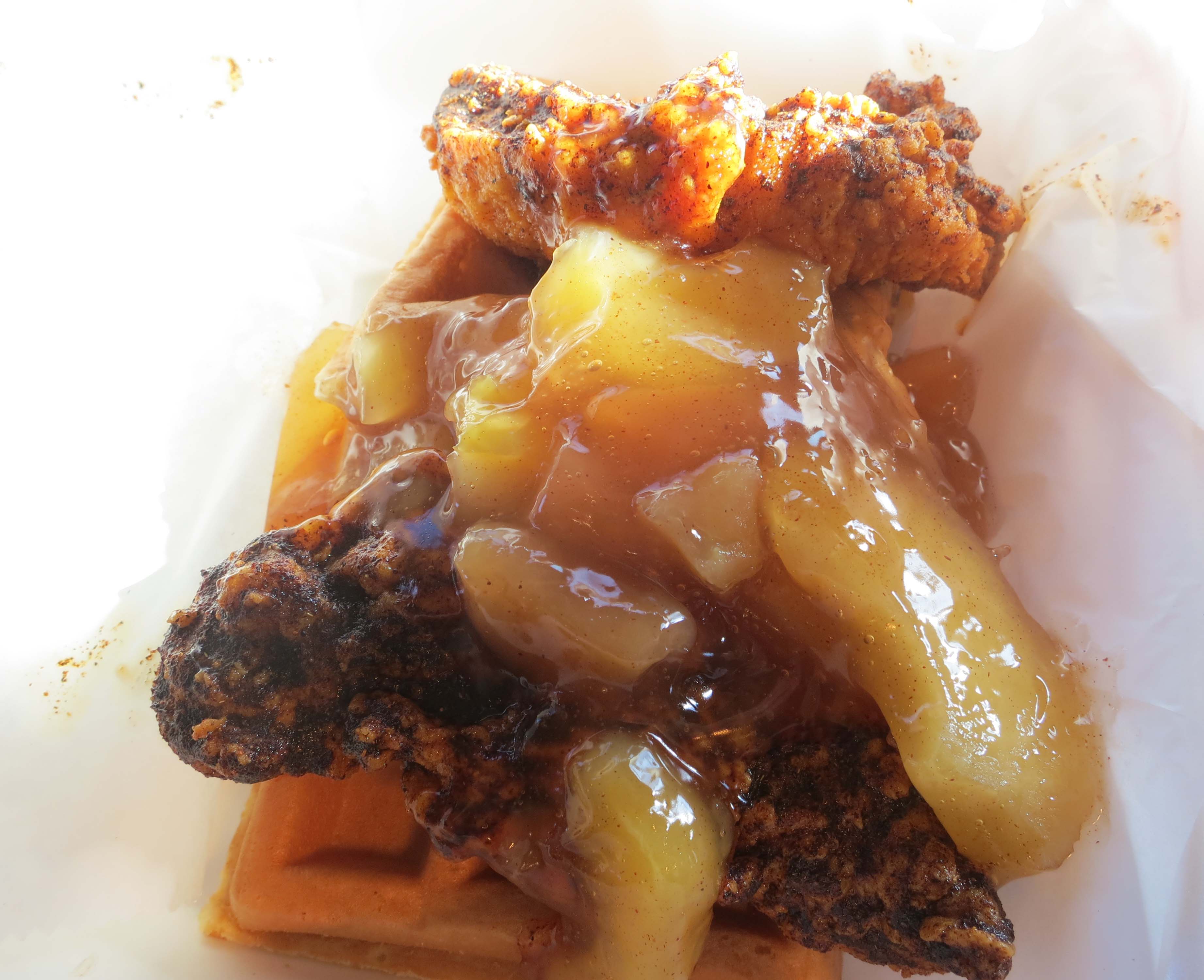
I was out with Clay, however, so I had to man-up. I went for chicken leg/thigh combo on the X level. Since I was in the south, I also ordered fried okra. Clay ordered XX chicken wings with French fries. For dessert we ordered a waffle that was topped off with hot chicken tenders and fried apples.

Chicken quarter at Pepperfire Restaurant in Nashville, Tennessee. Photo by Curtis Mekemson.

Just looking at this chicken quarter says hot. It reeks hot. You can see the flames. It was served on top of white bread, whose purpose is to soak up the grease.

Fried okra served at the Pepperfire restaurant in Nashville, Tennessee.

A close up of the okra. Eating it gave me that ‘old boy’ feeling. Just call me Bubba.

XX hot chicken wings served at the Pepperfire Restaurant in Nashville, Tennessee.

Clay’s hot chicken wings. It was the third one over from the left that bit me.

Dessert at Pepperfire Restaurant in Nashville Restaurant.

Dessert: a waffle topped by chicken tenders topped by fried apples. It was definitely unique— make that a tad weird.

When the food arrived, I picked up one of Clay’s chicken wings. Maybe it would make my food seem cool in comparison. I bit down. The damn chicken bit back. I smiled at Clay. “This really tastes good,” I managed to get out as my tongue turned into a pretzel, my throat screamed “water!” and my stomach proclaimed, “you idiot.” Only its words weren’t quite that polite. I will say that the chicken was tender and juicy, and that there were spices other than hot that were quite tasteful.

Did it make my chicken seem cooler? No way. Once you get beyond hot, you are beyond hot. Those are my words of wisdom for the day. Within two hours, Henny Penny was waging the mother of all wars in my stomach. It was a triple burn day. The chicken burned on the way in. It burned inside. And it burned on the way out. Enough said. Now I have to start planning for the next time Clay comes to Oregon.

All joking aside, if you are in Nashville and want to try the city's famous (infamous) hot chicken, I recommend checking out the Pepperfire restaurant.

All joking aside, if you are in Nashville and want to try the city’s famous (infamous) hot chicken, I recommend checking out the Pepperfire restaurant.

Wandering the Far West in 2014… Interim 2

The cover: A tufa tower in Mono Lake with Sierra Nevada Mountains in Background. Eastern California.

The cover of our 2015 calendar: A tufa tower at Mono Lake with Sierra Nevada Mountains in background. Eastern California.

I am still working on my blog about Peg’s dad and his experience as a Hump pilot in World War II. In fact, Peggy’s brother, John Dallen Jr., is now helping. I’ve been learning a lot. For example, yesterday, I discovered the approximate location where the plane John Sr. was flying crashed in the Indian jungle. I find the new information fascinating, but the research is slowing down the post.

In the meantime, I decided to put up another interim post or two. Today is calendar day. Each year, Peggy and I create a calendar for our families using photos we have taken during the year. Family birthdays and anniversaries are included. This year we are mailing out 28 calendars, which include 80 birthdays and anniversaries.   It’s quite the production.

Since the photos we use on the calendar reflect this past year’s adventures and are among some of our favorites, I thought they would be fun to share on the blog. If you are a regular follower of Wandering through Time and Place, I am sure you will recognize several of them. All photos were taken by either Peggy or me. Enjoy.

January: Burney Falls. Northern California

January: Burney Falls. Northern California

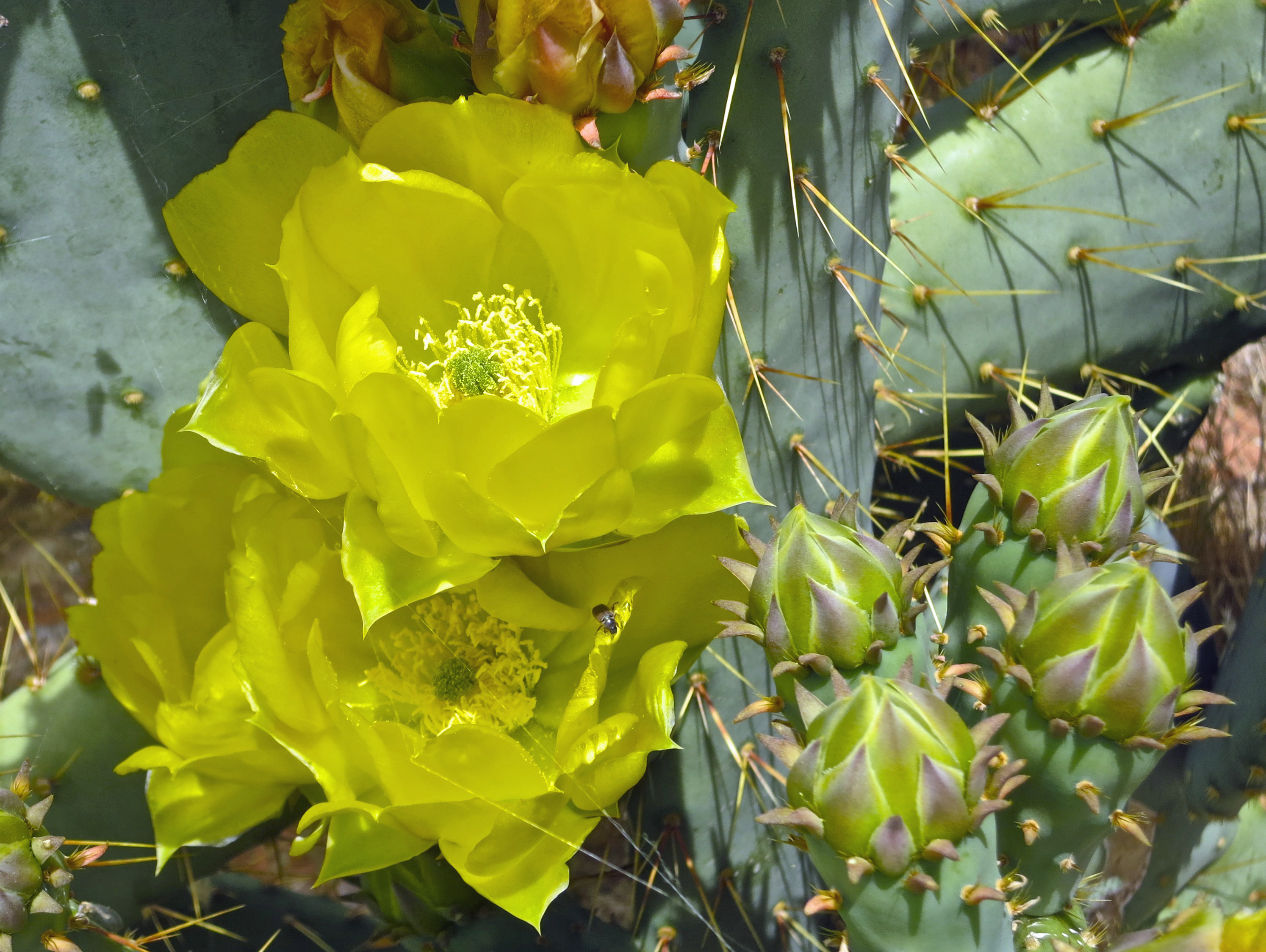
February: Cactus flowers. Valley of Fire State Park, Southern Nevada.

February: Cactus flowers. Valley of Fire State Park, Southern Nevada.

March: Red Rock Canyon National Conservation Area in southern Nevada.

March: Red Rock Canyon National Conservation Area in southern Nevada.

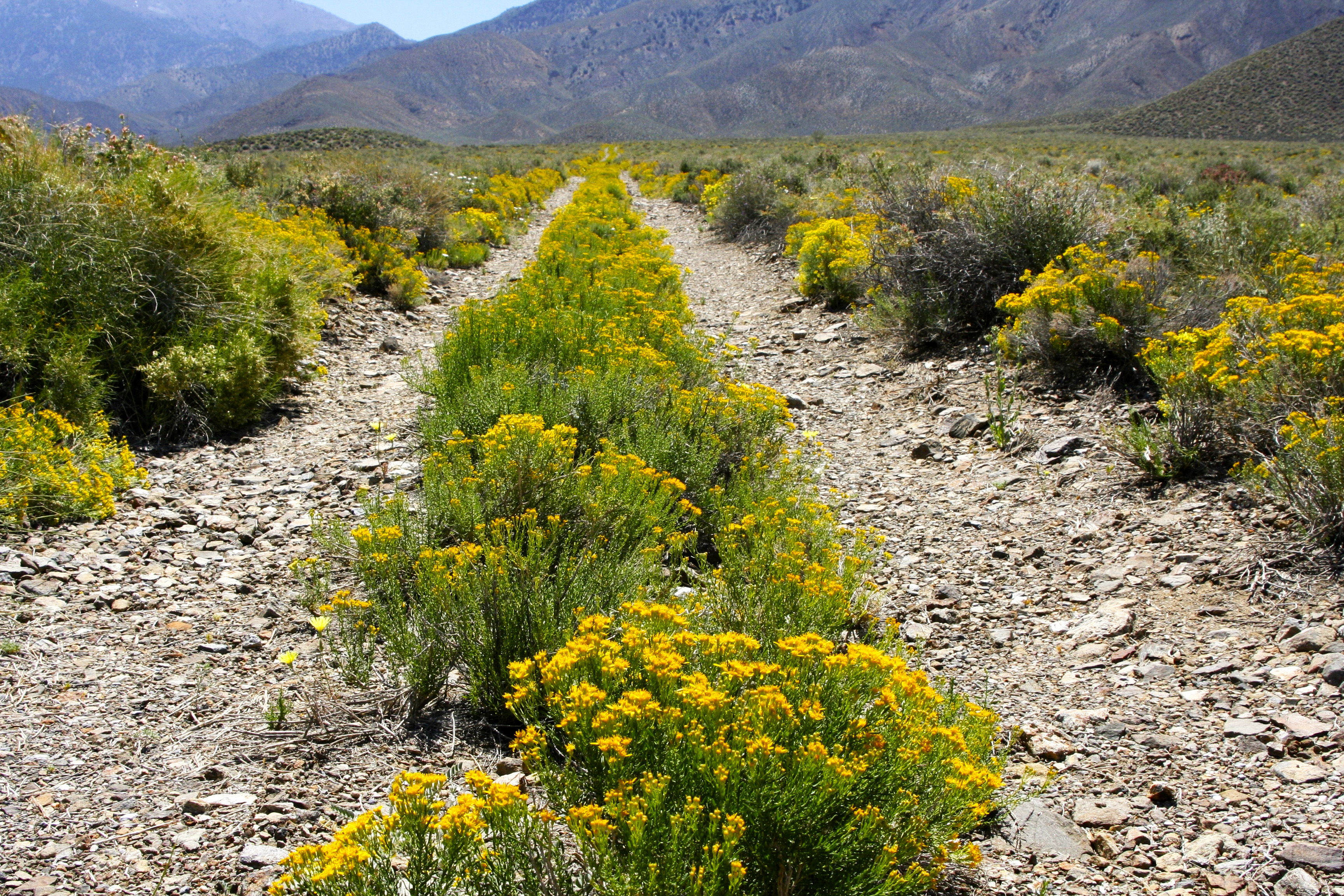
April: Old road with April flowers in Death Valley National Park. Eastern California.

April: Old road with April flowers in Death Valley National Park. Eastern California.

May: Weathered buildings at Bodie State Historical Park, a ghost town in Eastern California.

May: Weathered buildings at Bodie State Historical Park, a ghost town in Eastern California.

June: Sierra Nevada Mountains form the East. Peggy and I have backpacked through these mountains numerous times.

June: Sierra Nevada Mountains from the East. Peggy and I have backpacked through these mountains numerous times.

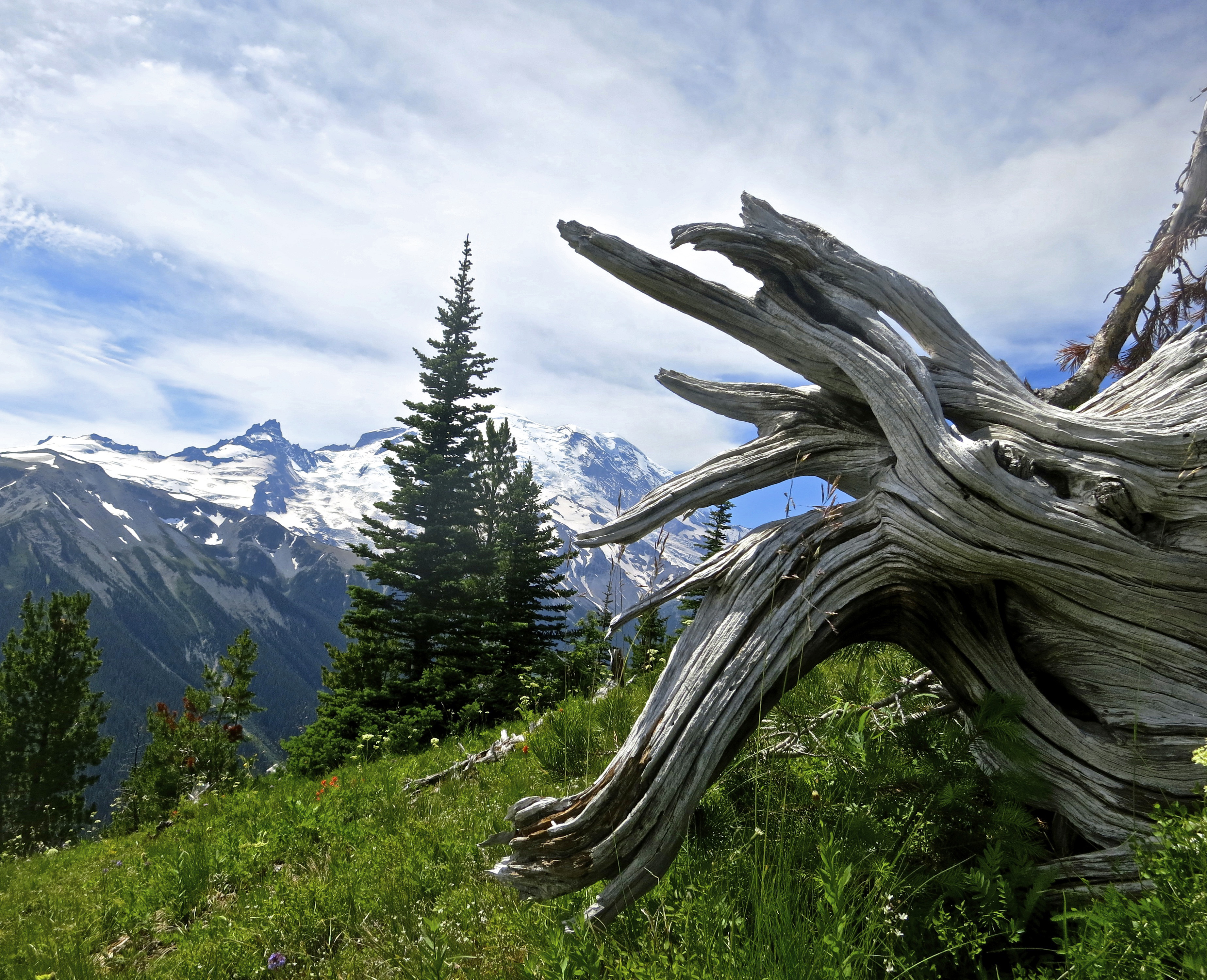
July:: Mt. Rainier National Park. Washington State.

July:: Mt. Rainier National Park. Washington State.

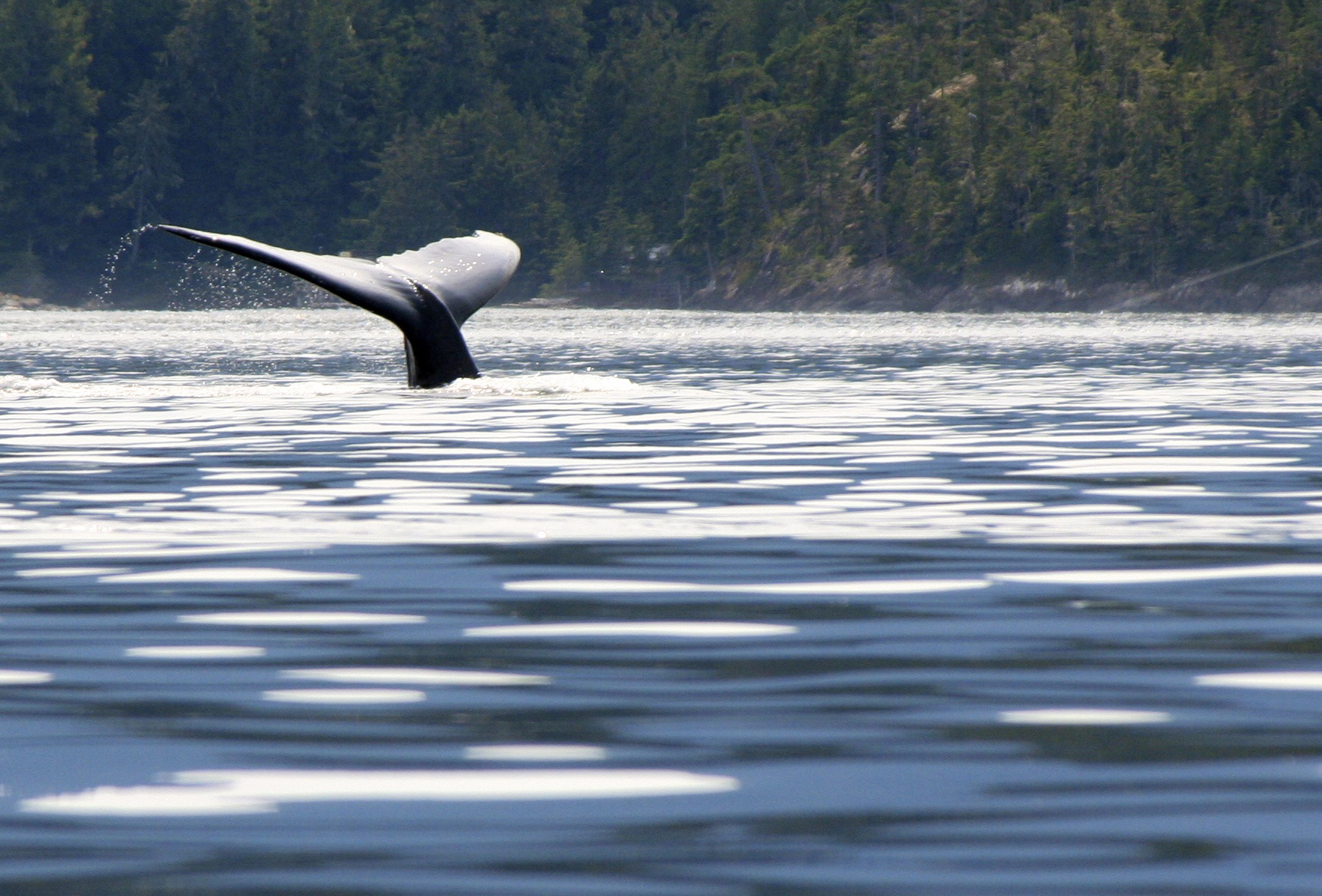
August: Humpback whale dives when Peggy and I are on kayaking trip off Vancouver Island.

August: Humpback whale dives when Peggy and I are on kayaking trip off Vancouver Island.

September: Burning Man in remote northern Nevada desert.

September: Burning Man in remote northern Nevada desert.

October: Rainbow caught in waves on Oregon Coast.

October: Rainbow caught in waves on Oregon Coast.

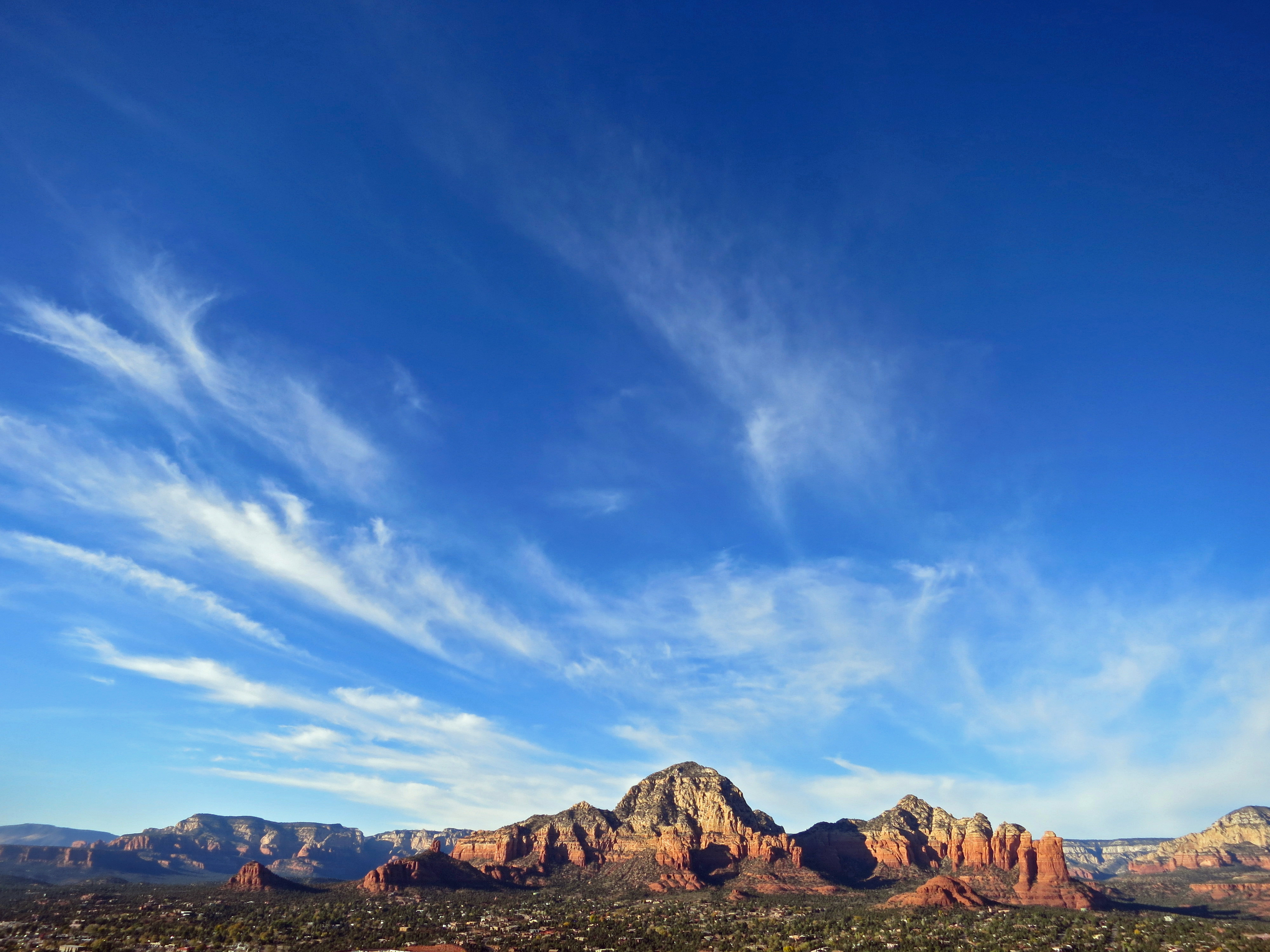
November: Sunset in Sedona, Arizona.

November: Sunset in Sedona, Arizona.

December: Bell Rock in Sedona, Arizona.

December: Bell Rock in Sedona, Arizona.


A World War II Blimp Hangar, a Guppy, and a Cow Escape Route… The Oregon Coast

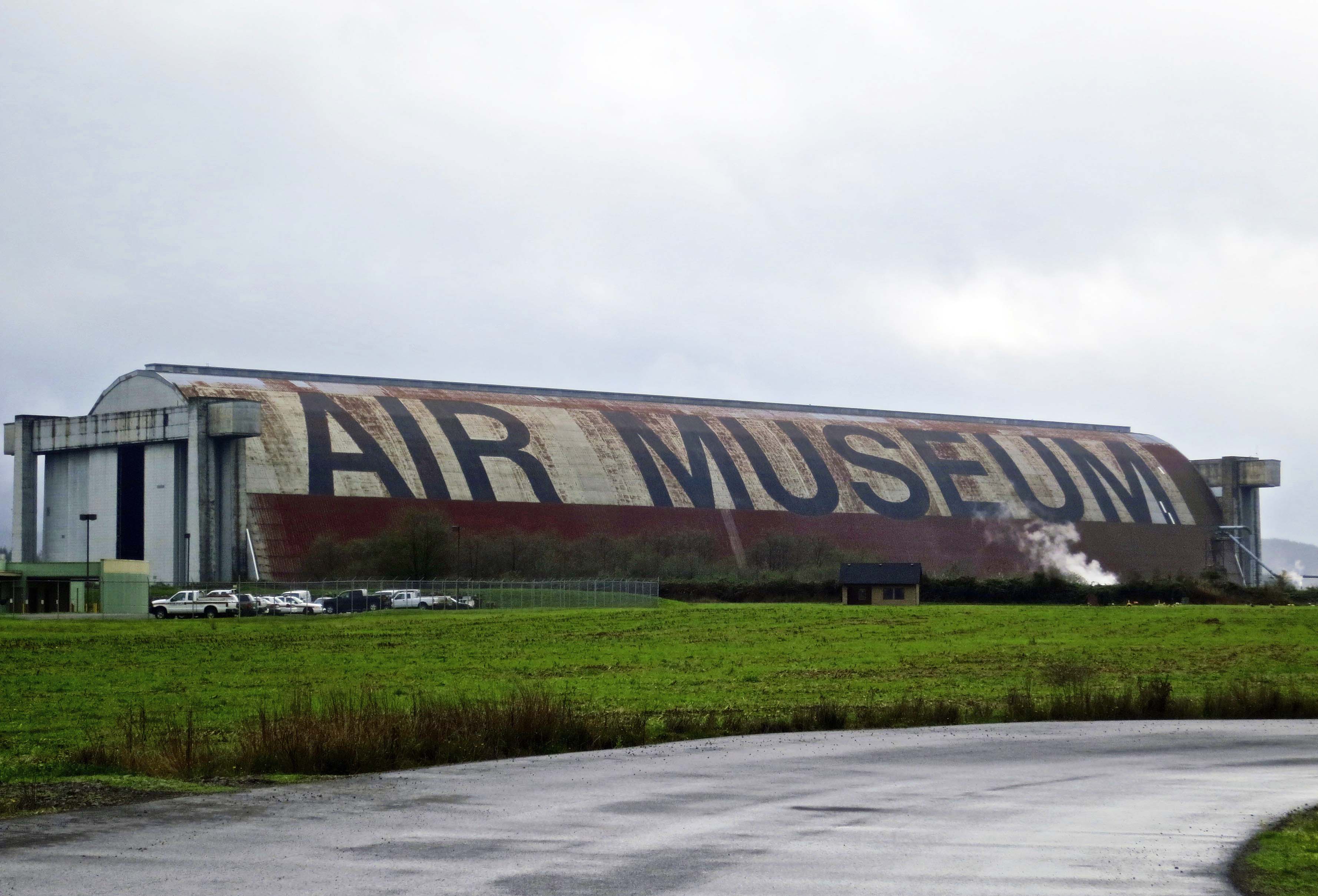
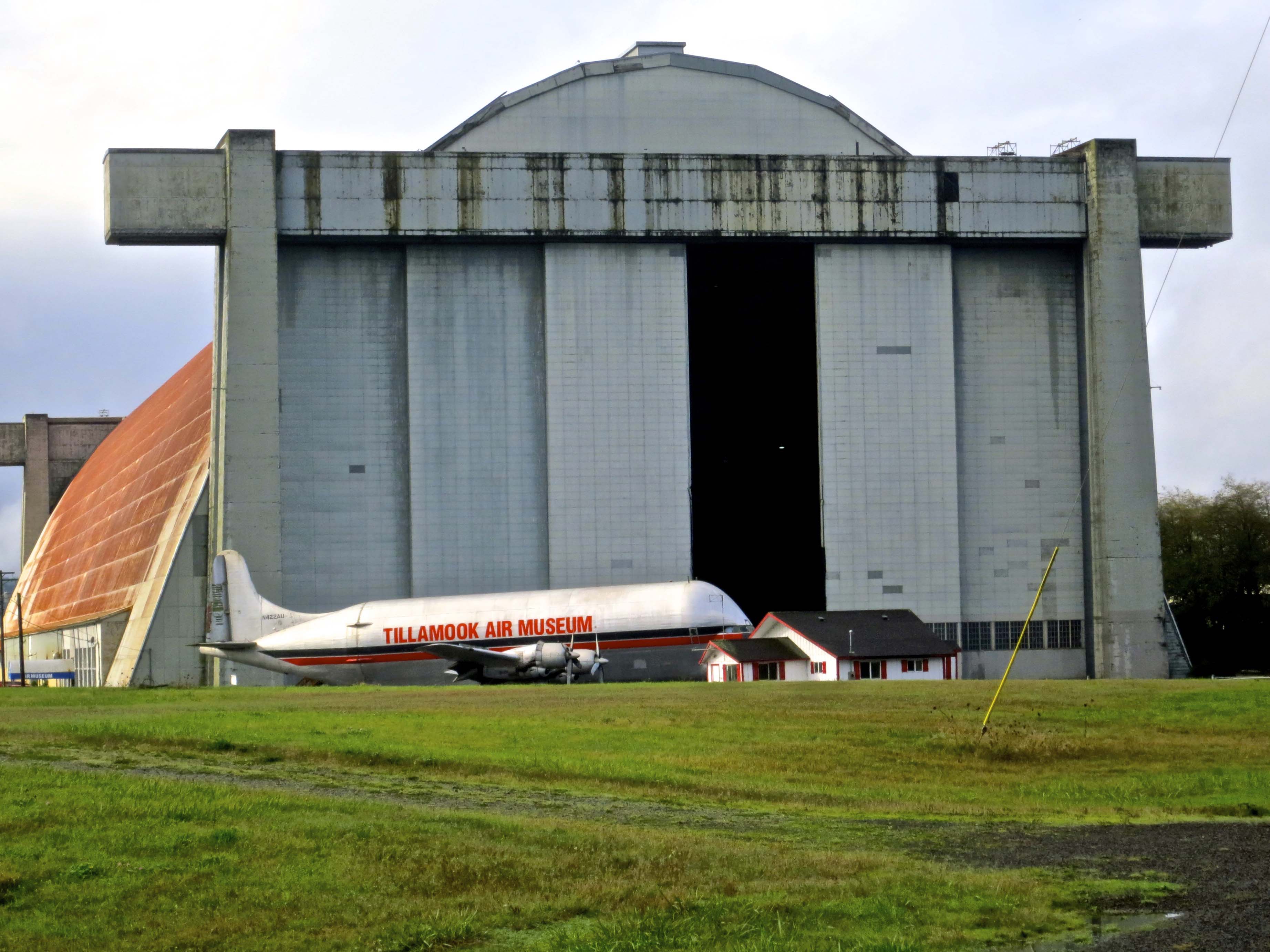
Eight blimps called this hangar in Tillamook, Oregon home during World War II. (Photo at Tillamook Air Museum.)

Eight blimps called this Tillamook, Oregon hangar home during World War II. (Photo at Tillamook Air Museum.)

I’d been through Tillamook, Oregon several times and never spotted the huge blimp hangar that was built there during World War II. It is plainly visible from the Highway 101. Who knows what I was thinking about when I made my way up and down the road? It must have been a heck of a daydream. I saw the hangar this time, however, and it was like, “Wow!” I immediately changed plans and decided to stay in the area for another day. The hangar was something I had to visit.

How I missed seeing this building is a mystery to me.

How I missed seeing this building is a mystery to me.

Today it serves as a partially abandoned air museum. (Most of its airplanes have been shipped off to Madras in eastern Oregon, where it’s hoped the vintage aircraft will survive better in a drier climate.) The facility is definitely worth a visit, however. The 170-foot high, 1000-foot long building was built to accommodate eight, 252 f00t K class blimps. One hundred and twenty-foot tall doors open up to a cavernous interior.

The Tillamook Air Museum shown here, served as a blimp hangar during World War II.

Here are the massive doors. The airplane in front is known as a Guppy. I’ll show you why below.

A view inside the Tillamook Air Museum that served as a blimp hangar during World War II.

This view inside the hangar gives an idea of its massive size.

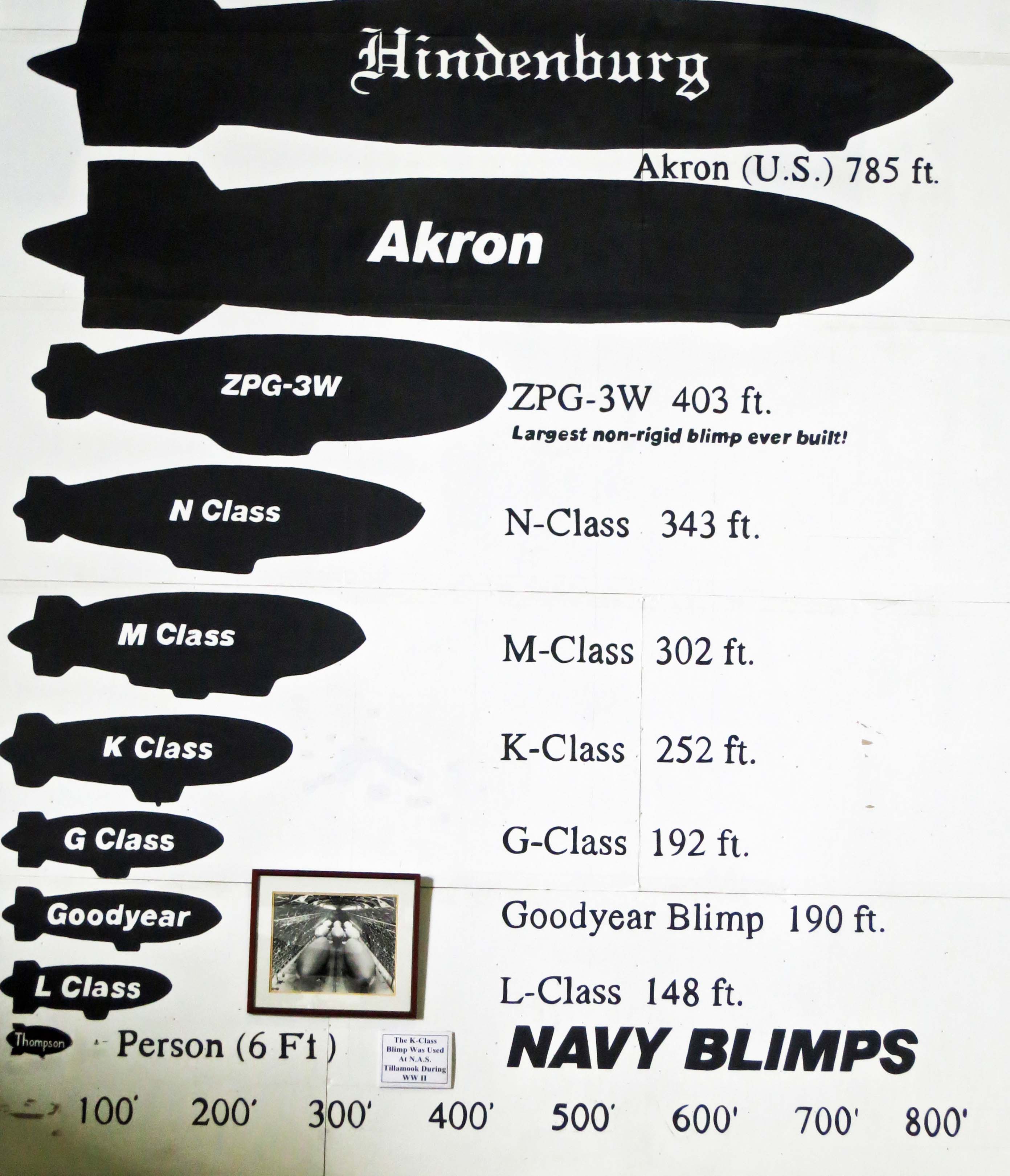
This illustration inside the Air Museum provides a perspective on the various sizes of blimps. The blimps housed at the Tillamook Naval Air Station were K-Class.

This illustration inside the Air Museum provides a perspective on the various sizes of blimps. The blimps housed at the Tillamook Naval Air Station were K-Class.

Blimps played an important role in World War II: They protected convoys and shipping lanes by spotting German and Japanese submarines. The blimps’ ability to fly in almost any type of weather, hover, and provide unobstructed views of the ocean made them an excellent choice for submarine patrol. The Tillamook facility was responsible for the coastline between British Columbia and northern California. Nine other naval air stations covered the rest of the west and east coasts of the US.

This illustration at the museum shows where blimp naval air stations were located during World War II.

Another illustration at the museum showed where blimp naval air stations were located during World War II. Sorry about the quality, but I found the illustration interesting. The dark symbols represent blimp hangars still in existence.

An introductory film and numerous World War II era photos at the museum provide an overview of the hangar’s history. I also found other interesting information on the war including posters, balloon bombs and a cow escape route.

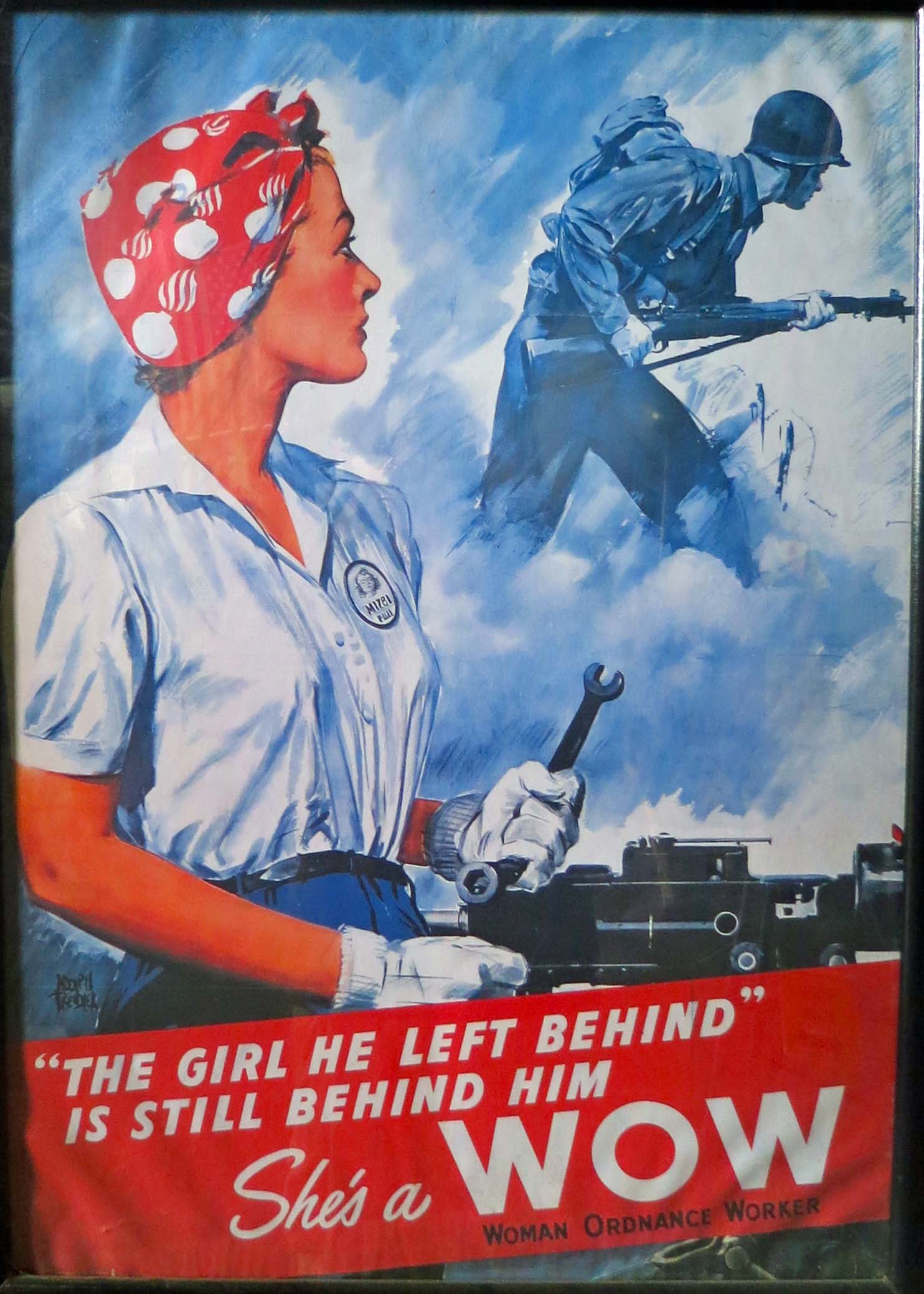
World War II Woman Ordinance Worker poster found at the Tillamook Air Museum.

Among the other World War II items found at the museum were a number of WW II posters including this one for WOW, a Women Ordinance Worker.

The first ICBM? As the Japanese war effort was reversed and the US began its air raids on the country, Japan initiated a desperate ploy:  the use of  the jet stream to carry explosive-loaded balloons 6200 miles to the Pacific Coast.

Speaking of ordinance, this fading photo of a balloon has a story to tell; it may have been the first ICBM. As Japan faced defeat in 1944, it initiated a desperate ploy: the use of the jet stream to carry explosive-laden balloons 6200 miles to the Pacific Coast of the US and Canada. Some 6000 were launched but only 300 reached their destination, and they fell on rain-soaked forests, causing little damage.

I was amused when I came across a report on the cow escape route. Tillamook takes its cows seriously. Some of the best dairy stock in the US is located in the area. So it isn’t surprising that the local farmers decided their cows needed an escape route in case the Japanese invaded. Woodsmen were called upon to plan out paths through the forest. Using old logging roads, deer trails, and hunters’ routes, a cow getaway plan was soon organized.

No one asked the cows what they thought. Given that their idea of exercise was to leisurely travel from well-stocked barns to grass filled pastures, they may have preferred to hang around and provide the Japanese with milk, butter and cheese rather than hightail it through the rugged wilderness with udders bouncing.

The guppy airplane at the Tillamook Air Museum.

It isn’t too much of a jump to move from cows to a guppy is it?  One look at the front of this cargo plane explains its name. The Guppy is part of the Air Museums collection.

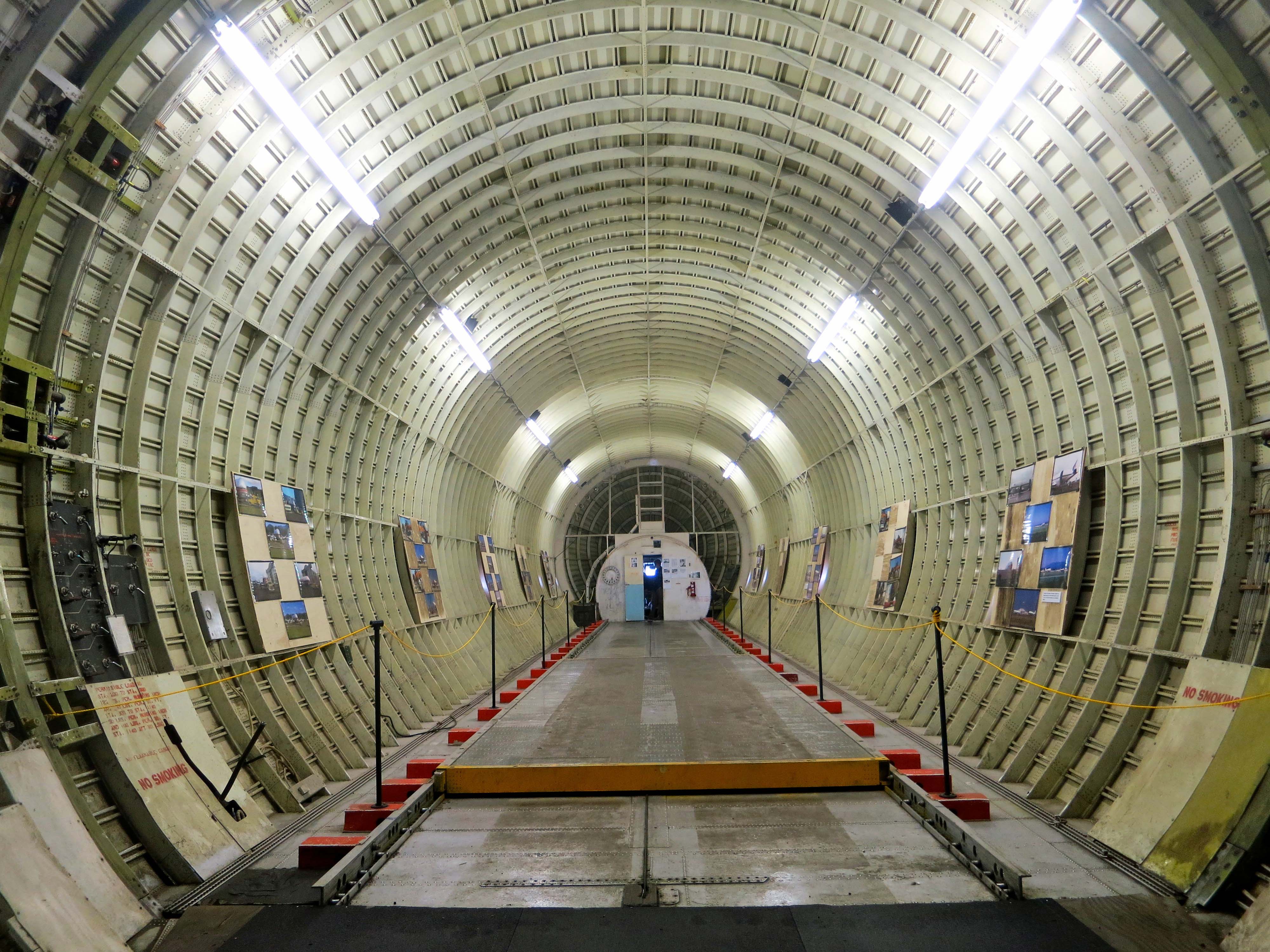
Inside the guppy.

Inside the Guppy.

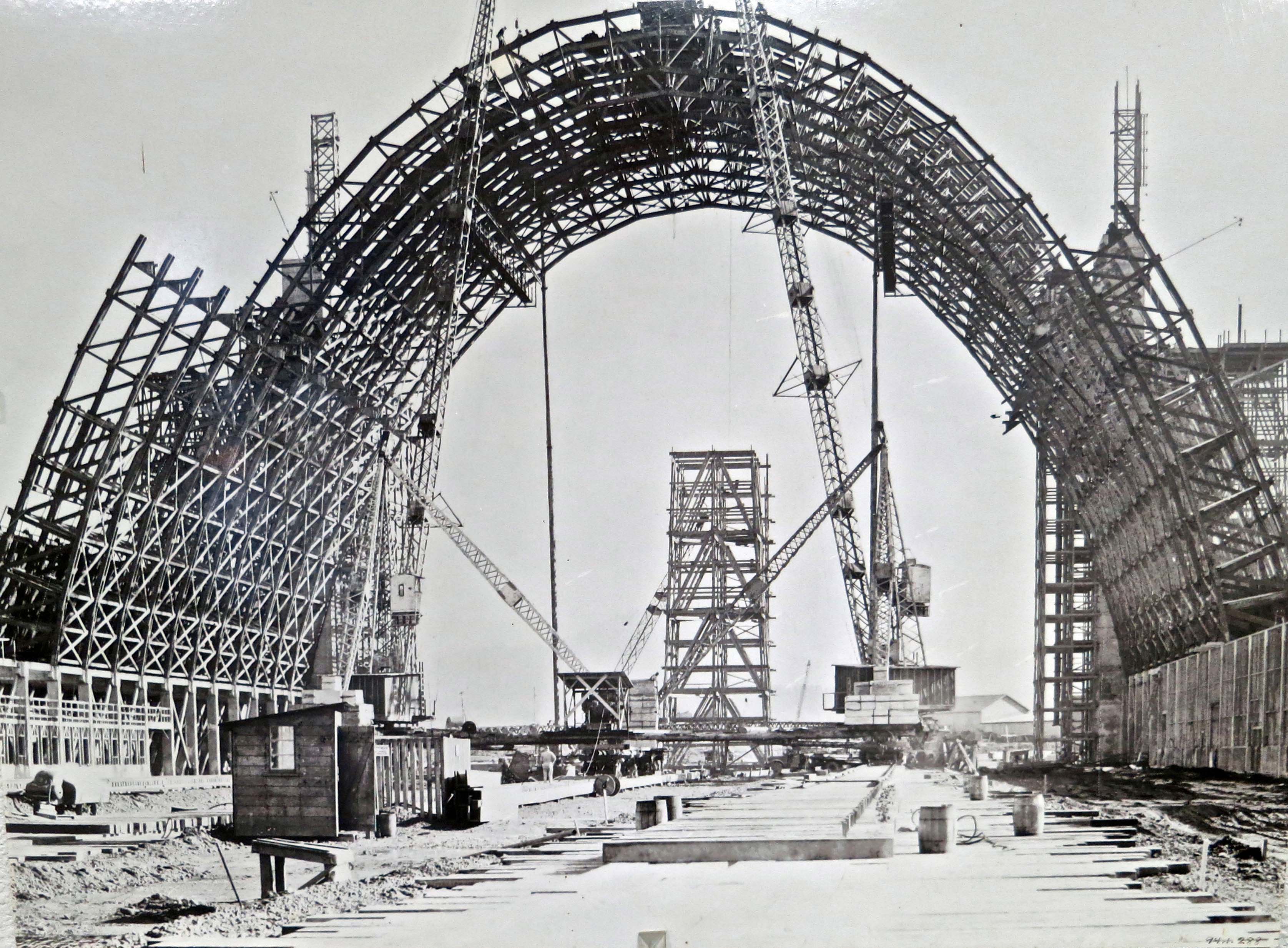
Building the two hangars at Tillamook was a massive undertaking. Unstable ground, a ferocious winter, and the use all provided challenges.

Building the two hangars at Tillamook was a massive undertaking. Unstable ground, a ferocious winter, and the use of wood instead of steel for the structure all provided challenges. Steel was being used at the time for other war purposes. (Photo from Tillamook Air Museum.)

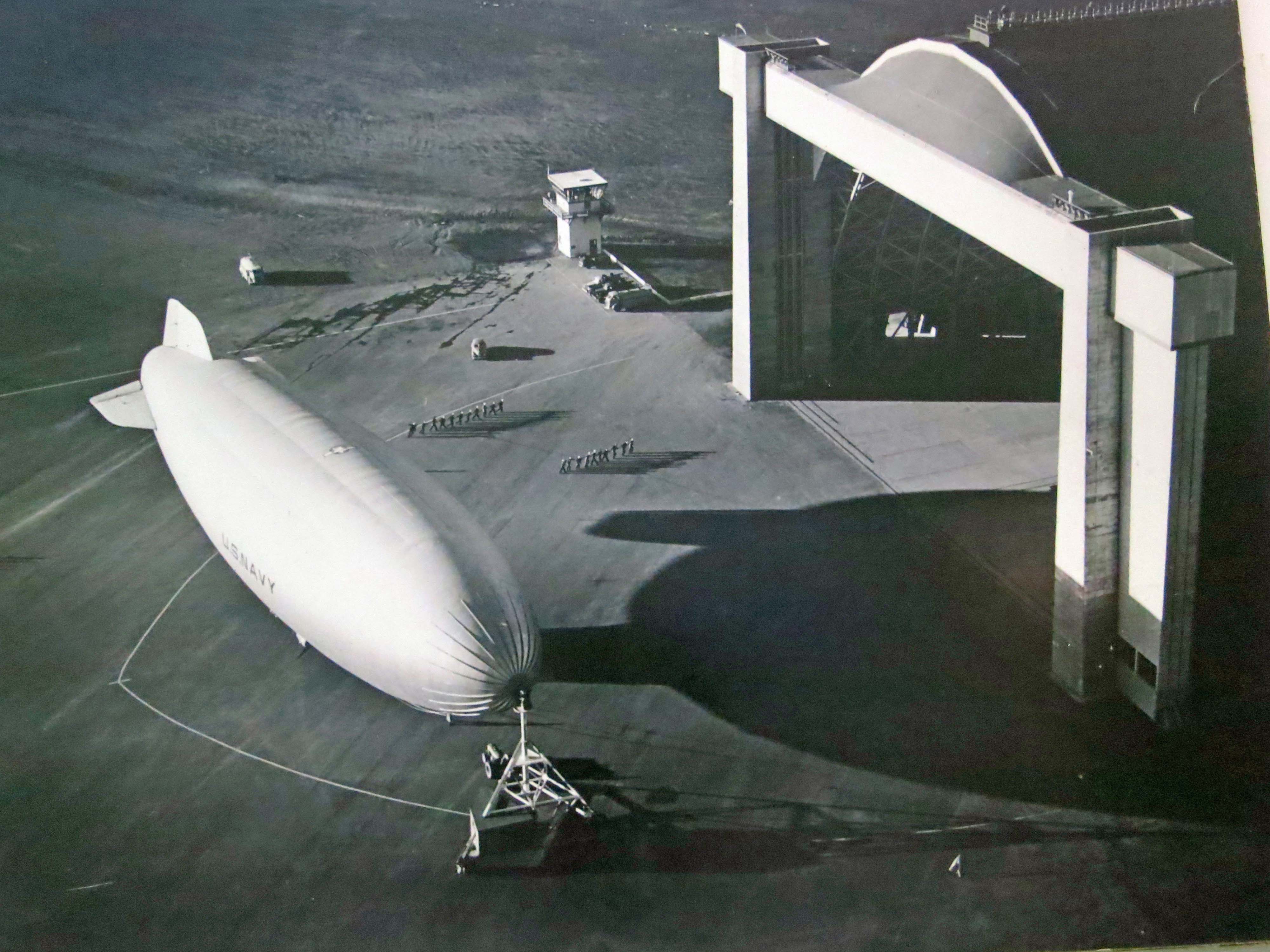
A blimp is launched from the Tillamook Air Station during World War II.

A blimp is launched from the Tillamook Air Station during World War II. Note the men holding ropes for a size perspective. Missions could last as long as 15 to 20 hours and some blimps were equipped to stay out as long as 59 hours and travel over 1400 miles. (Photo from Tillamook Air Museum.)

A final view of blimps arrayed outside of the Tillamook hangar during World War II.

A final view of blimps arrayed outside of the Tillamook hangar during World War II. Next blog: I find a surprise in the museum that takes me back to World War II and my wife’s father. (Photo from Tillamook Air Museum.)


A Wild Ocean and Crashing Waves… The Oregon Coast

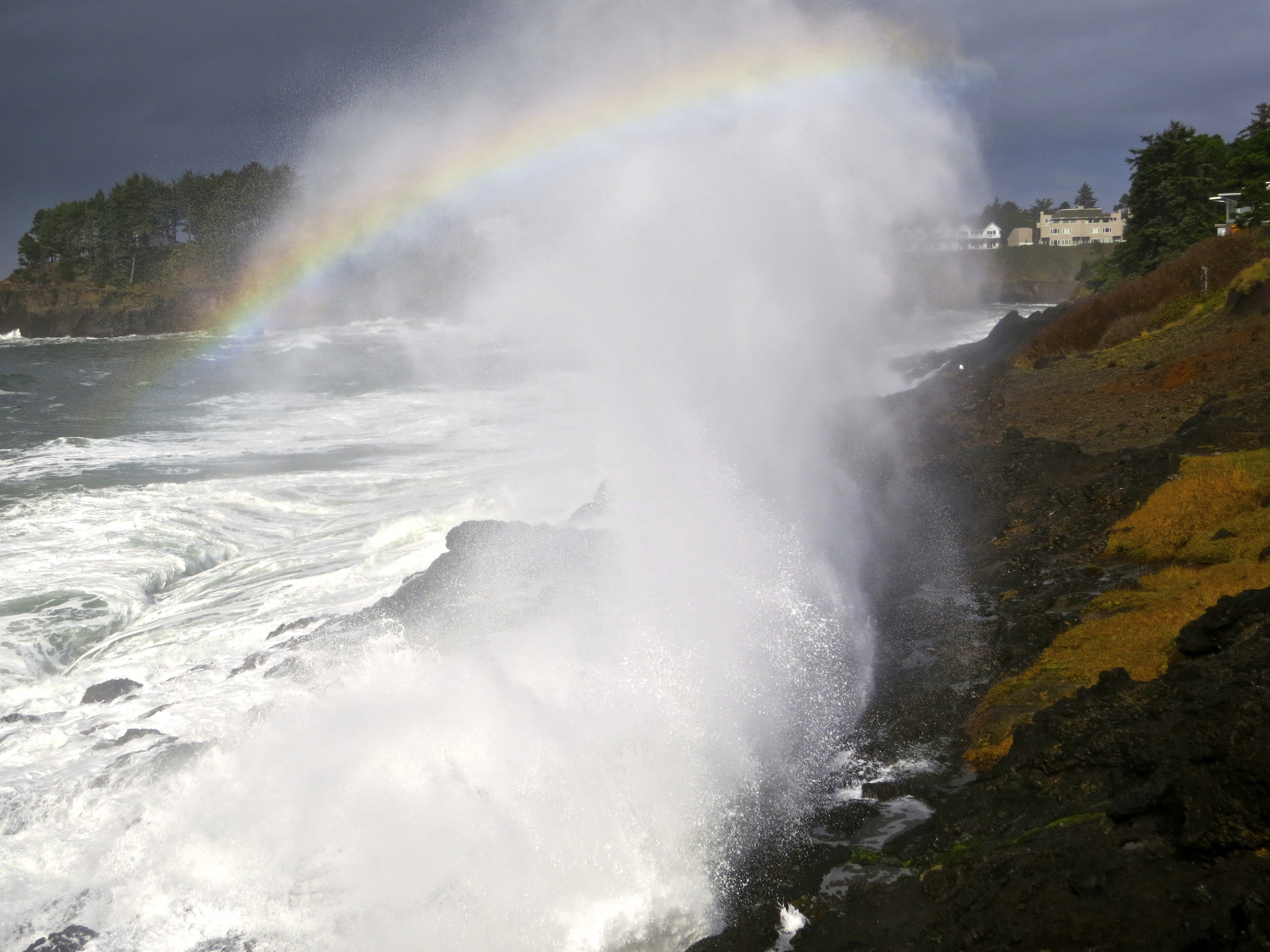
Rainbow created in waves crashing along the Oregon Coast at Depoe Bay. Photo by Curtis Mekemson.

A moment of sun creates a rainbow in waves crashing along the Oregon Coast.

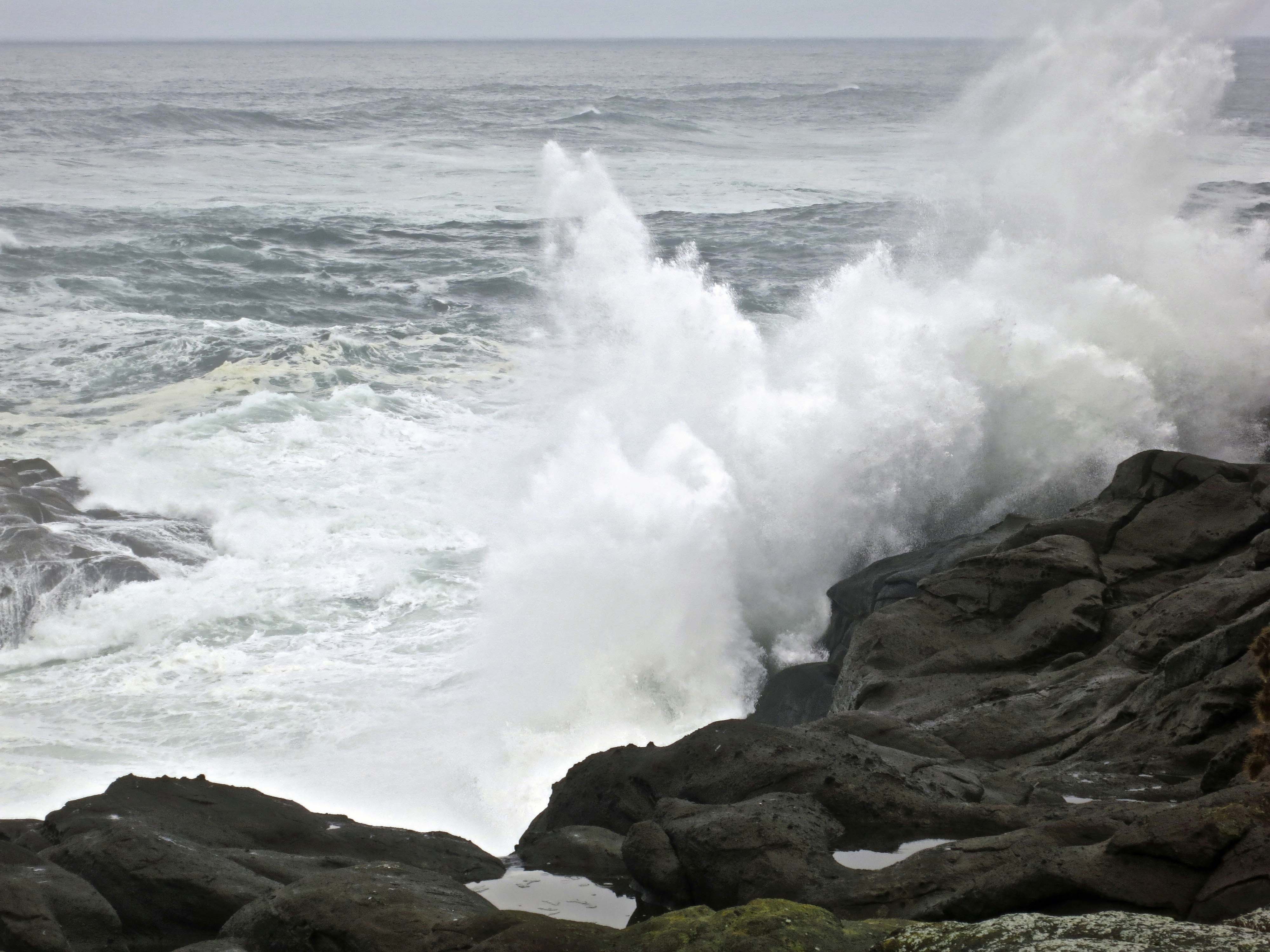
A winter storm on the Oregon Coast is a sight to see. In fact, motels along the coast promote storm watching. Here’s one such pitch: “Sit back and relax in your cozy room by the fireplace and watch through your huge picture window as furious waves pound the rocks below.” And furious they are.

A storm was raging when I drove down the coast a few weeks ago. In between torrential rainfall, the sun would peek out, and I would stop to admire the crashing waves. I didn’t have a huge picture window, so I admired the waves as they were meant to be admired, up close and personal. Following are several photos I took.

Dramatic waves crash ashore on the Oregon coast. Photo by Curtis Mekemson.

Very few shows are as dramatic as ocean waves during a storm.

Powerful waves crash ashore on the Oregon coast. Photo by Curtis Mekemson.

Rules numbers 1 and 2 when enjoying waves like these: Keep a distance, and never, never turn your back.

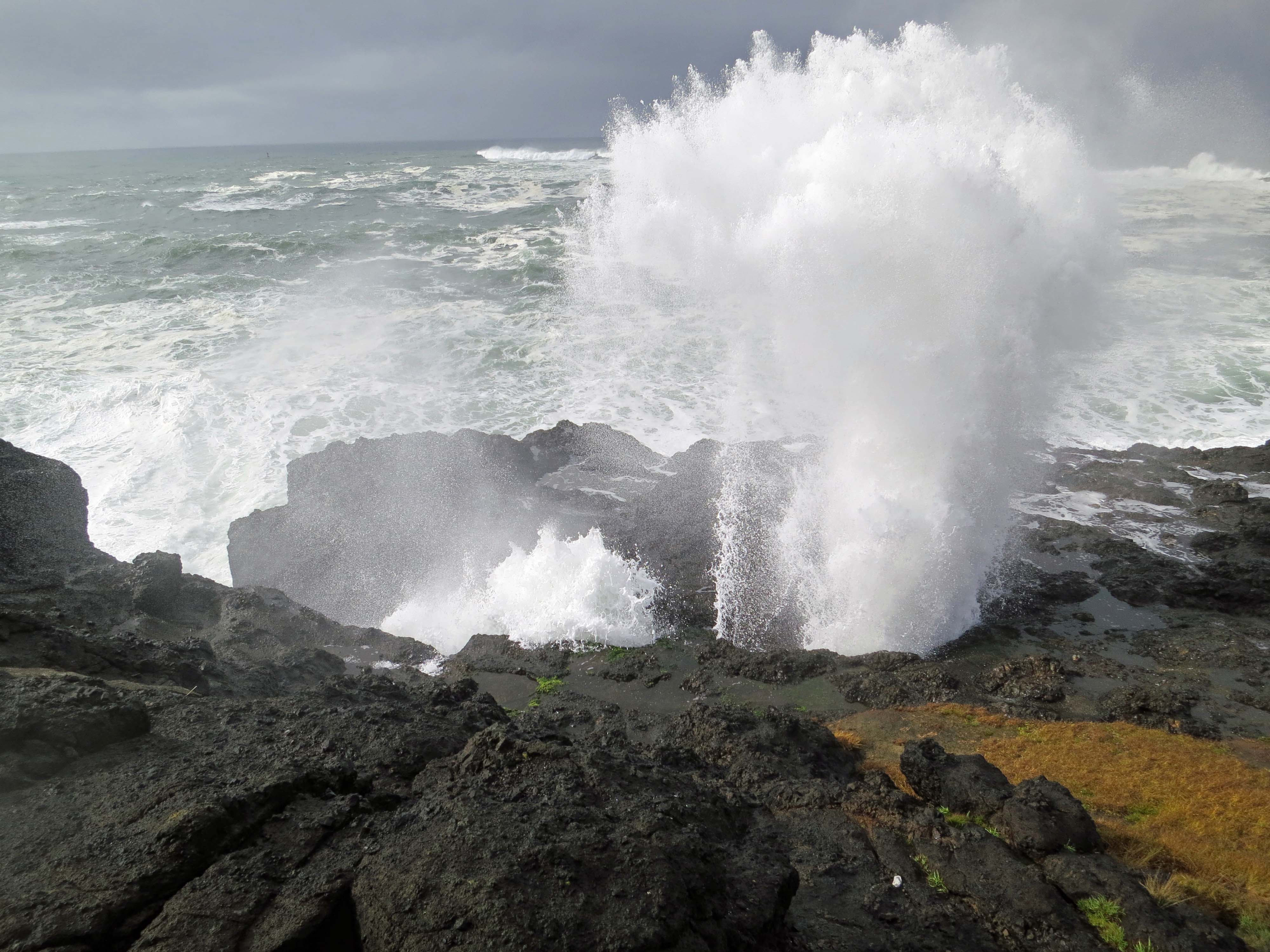
Spouting Horns at Depoe Bay shoot waves into the air. Photo by Curtis Mekemson.

One of the best know spots for watching waves on the Oregon Coast is in the community of Depoe Bay where the ocean shoots through lava tubes and is thrown high into the sky through what is known as the Spouting Horns.

View of Spouting Horns at Depoe Bay on the Oregon Coast. Photo by Curtis Mekemson.

Another view of the Spouting Horns. I could almost see a ghostly face staring back at me.

View of waves thrown into the air at Spouting Horns, Depoe Bay, Oregon. Photo by Curtis Mekemson.

And a third view.

Wave retreats at Depoe Bay, Oregon. Photo by Curtis Mekemson.

The wave’s energy expended by crashing against the rocks, the water flows back into the ocean.

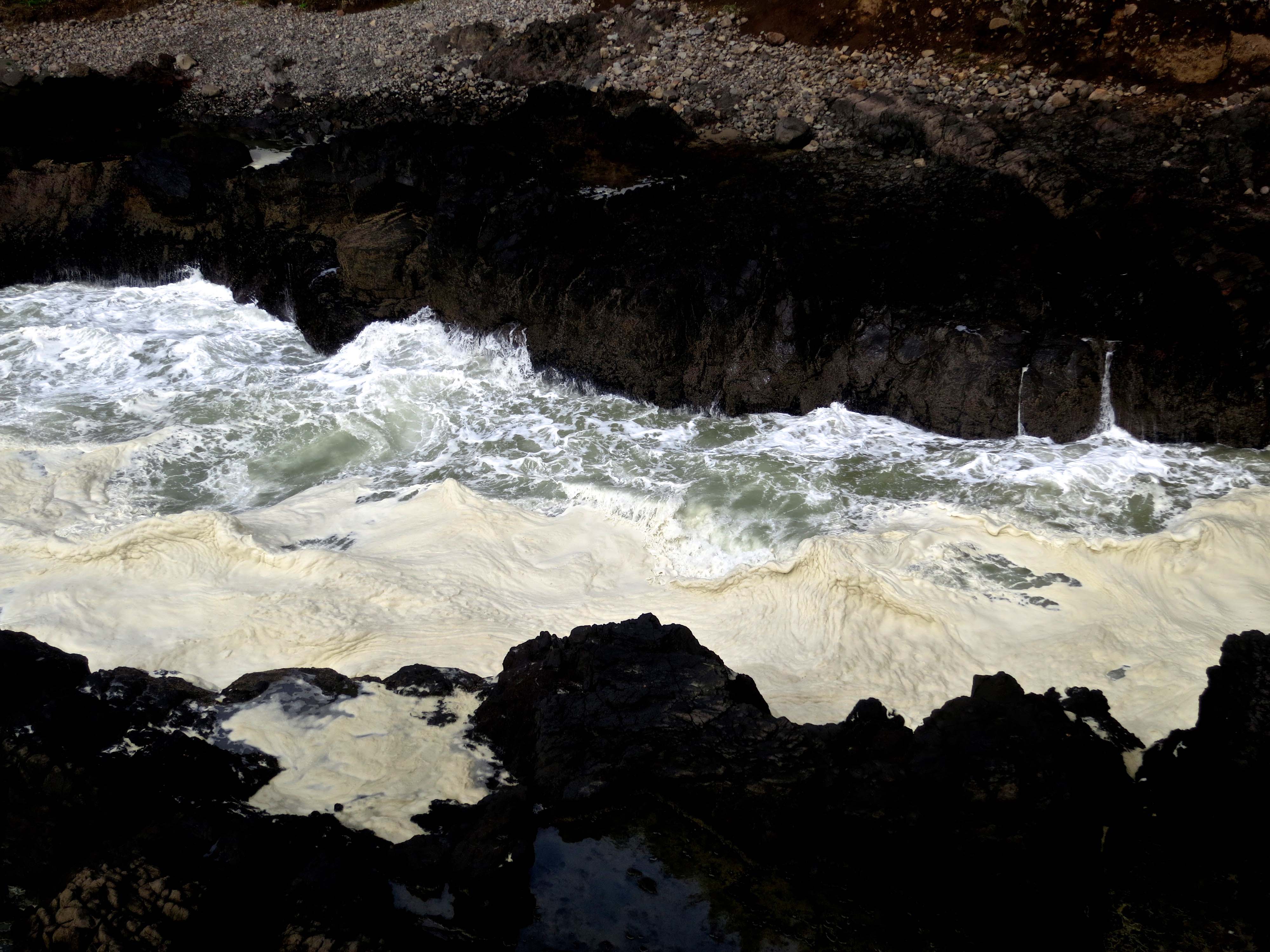
The Devi's Churn on the coast of Oregon. Photo by Curtis Mekemson.

It’s known as the Devil’s Churn. Waves come driving in from the ocean and are forced up a narrow channel, turning the water into a frothy, whipped cream like texture.

Devil's Churn on Central oregon coast showing whip cream like texture of waves. Photo by Curtis Mekemson.

A close up of Devil’s Churn showing the whip cream like texture of the waves.

Devil's Churn on Oregon coast whips waves into a froth. Photo by Curtis Mekemson.

The Churn at work.

A final view of the Devil's Churn.

A final view of the Devil’s Churn. Next blog: A hangar large enough to accommodate eight blimps in Tillamook, Oregon.


Albion Manor: One of Canada’s Top Ten B&Bs… A Delightful Interlude

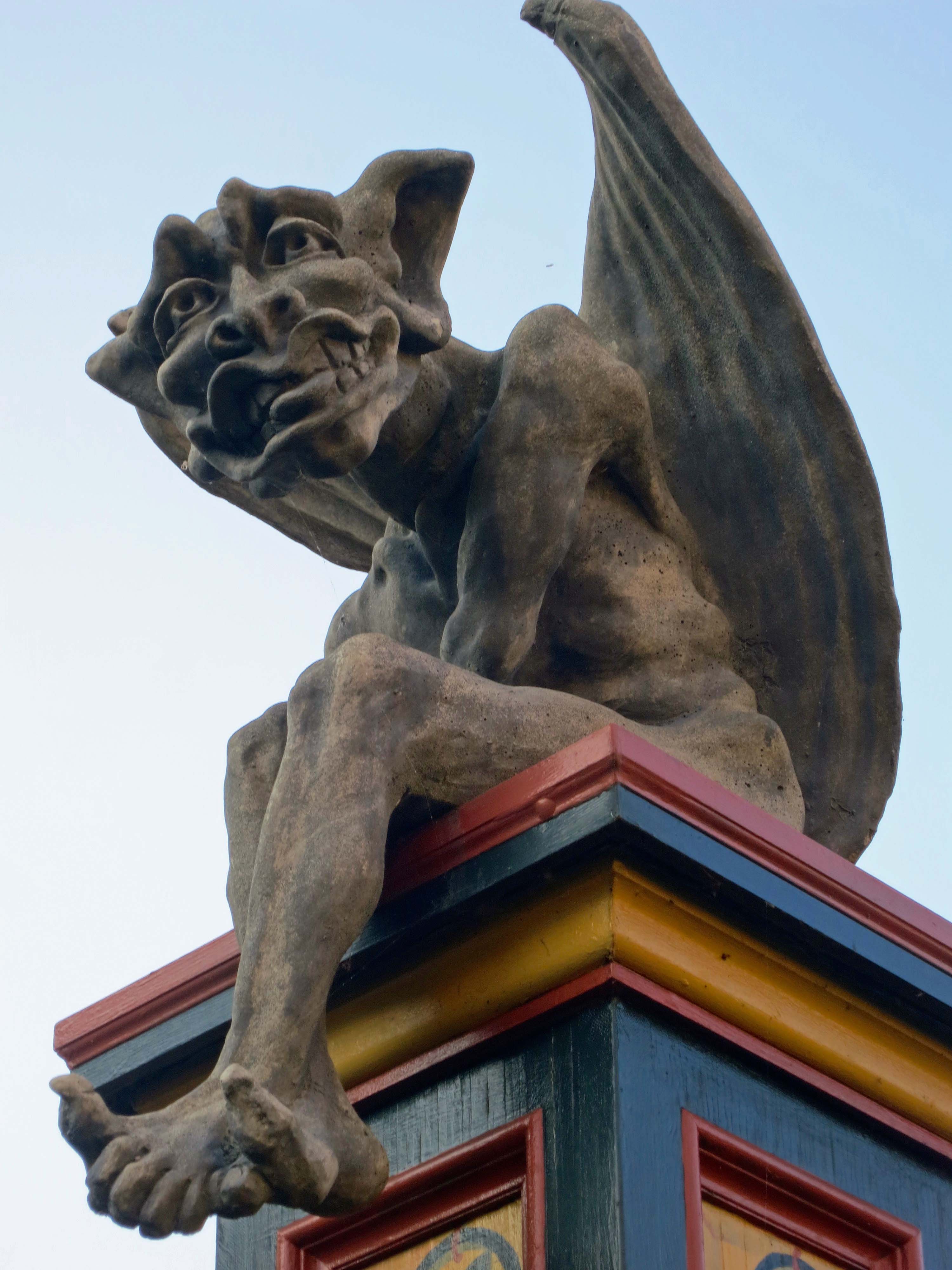
Gargoyle at Albion Inn in British Columbia. Photo by Curtis Mekemson.

We stayed at the Albion Manor in Victoria, British Columbia following our kayak adventure. This character was perched on top of our cabin, the Gargoyle Cottage. I felt he was representative of the unique nature of the B&B.

I was saving this blog for the end of our kayak adventure, which is where it fits. But Peggy and I are heading for the Bay Area this weekend for our book club. And that would mean no new blog until Tuesday or even Wednesday. Can’t have that, right? (The BSBC, or Bigger Sacramento Book Club, by the way, has been meeting for a quarter of a century and has read over 250 books. It consists of the same five couples who have been members since 1989.)

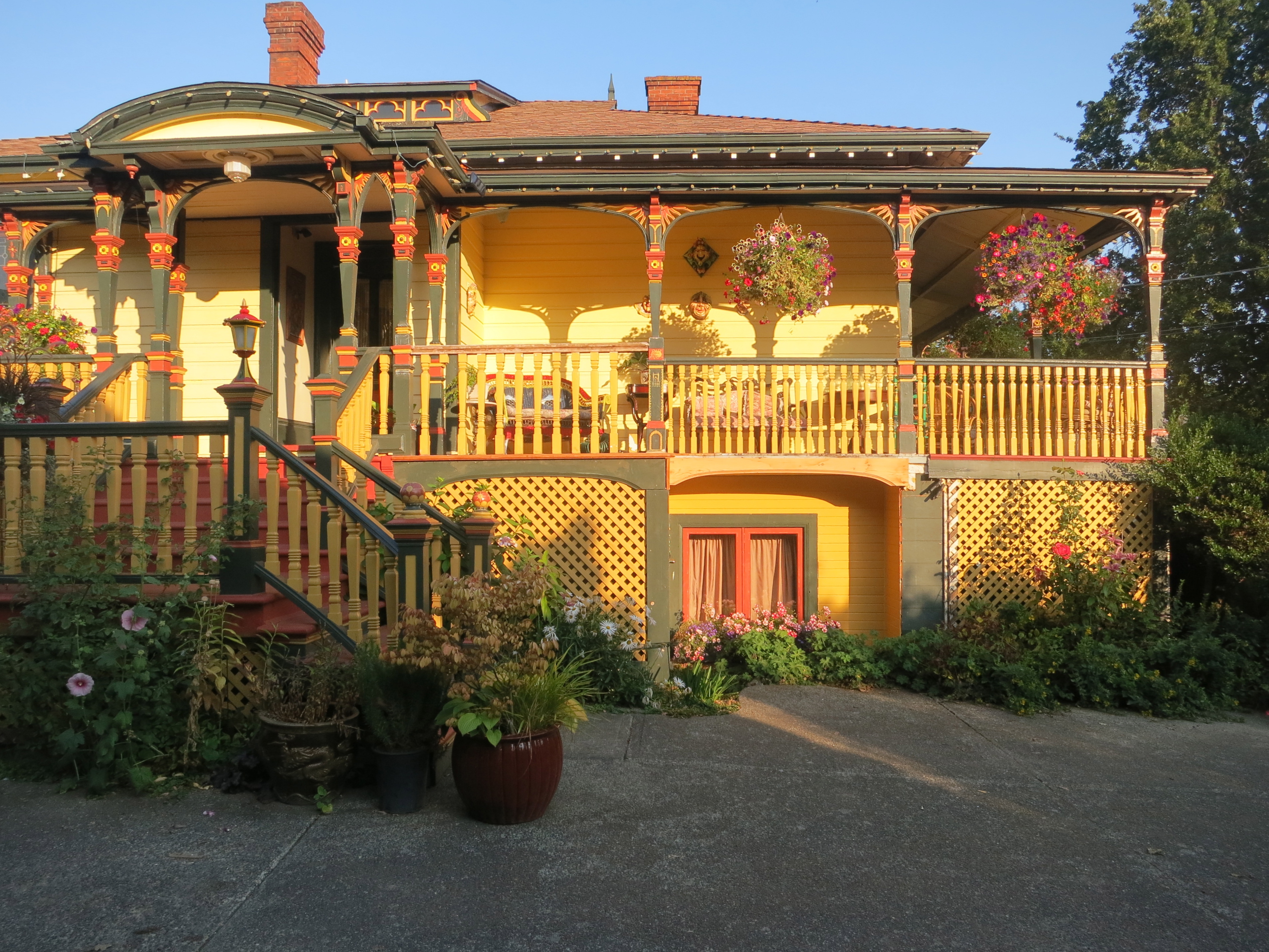
Welcome to the Albion Manor in Victoria, British Columbia. It is considered one of the top ten B&Bs in Canada. Our fellow kayakers and friends, David and Edie from Alaska, had made the arrangements for the four of us to stay at the Manor to celebrate the end of our adventure. We quickly discovered why it is so highly recommended. To start with, the inn is a beautiful Victorian, and it is located within easy walking distance of Victoria’s beautiful downtown. We found a colorful collection of house boats nearby. What really captured us, however, were the flowers and artwork. The story is best told in photos, enjoy.

An outside shot of the Albion Manor.

An outside shot of the Albion Manor.

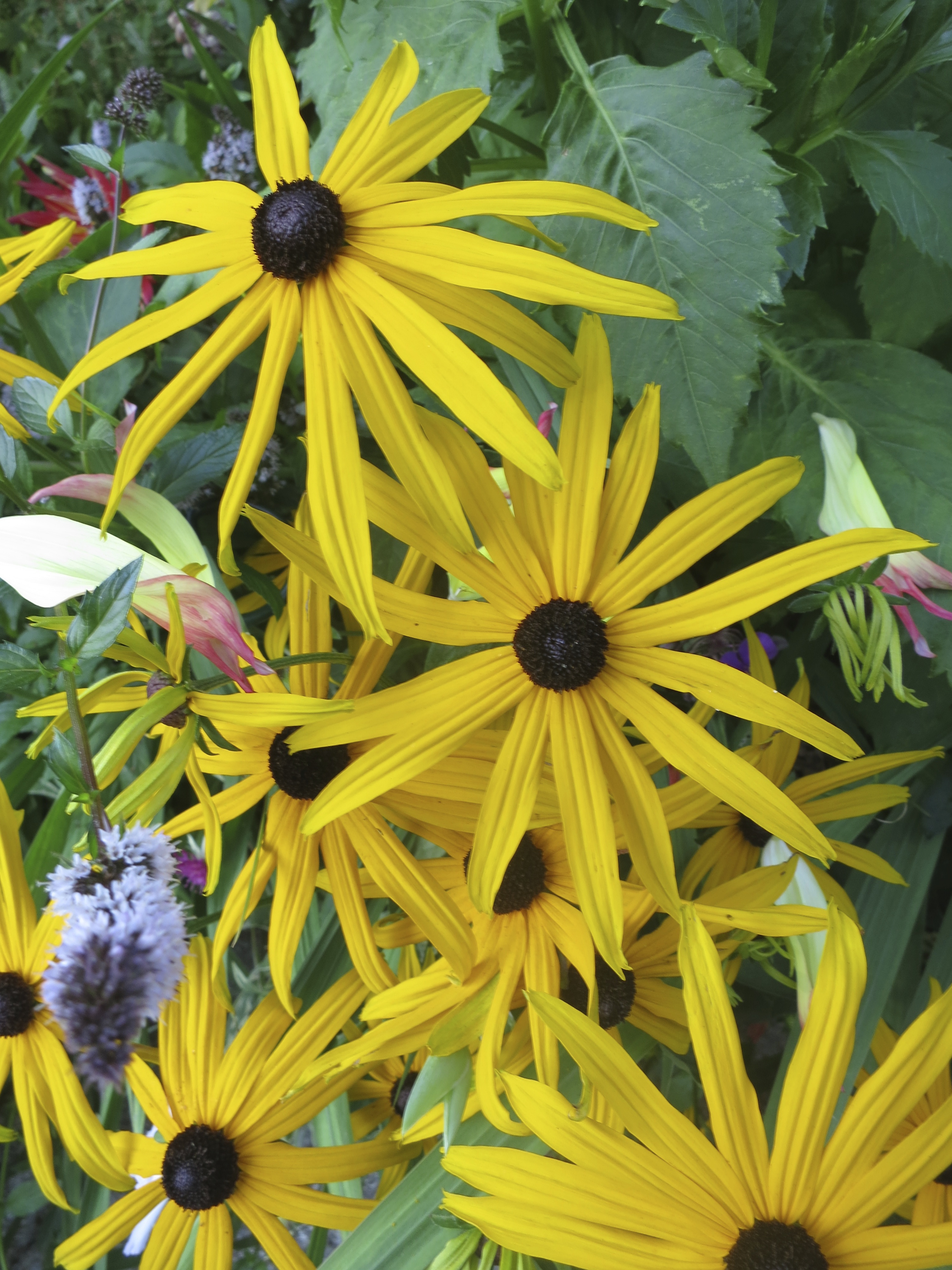
Here are some of my favorite flowers I photographed at the B&B.

Flowers at Albion Manor in Victoria British Columbia.. Photo by Curtis Mekemson.

Flower at Albion Manor in Victoria, British Columbia. Photo by Curtis Mekemson.


Flower at Albion Manor in Victoria, British Columbia. Photo by Curtis Mekemson.

Flowers at Albion Manor in Victoria, British Columbia. Photo by Curtis Mekemson.

Flowers at Albion Manor in Victoria, British Columbia. Photo by Curtis Mekemson.

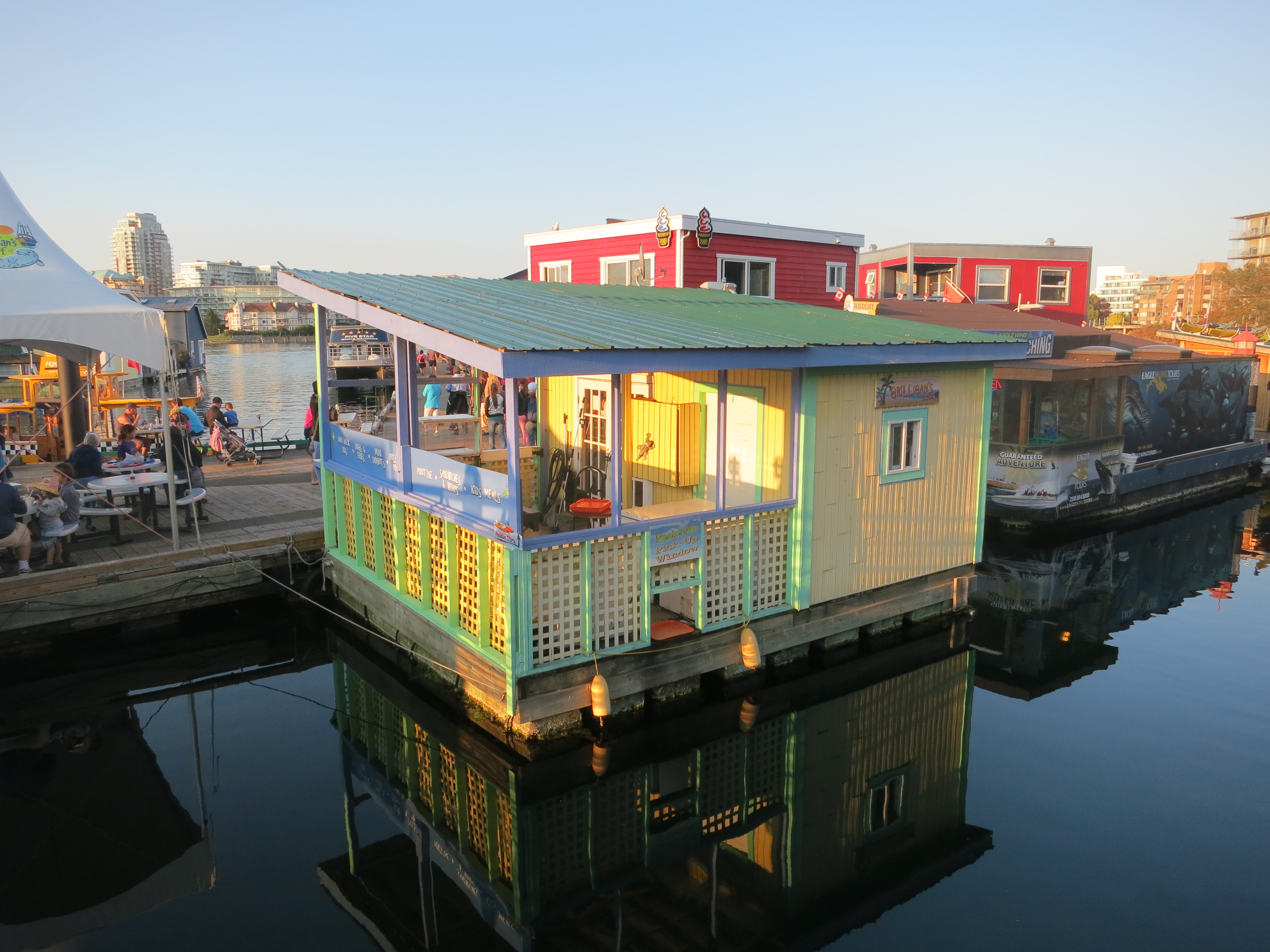
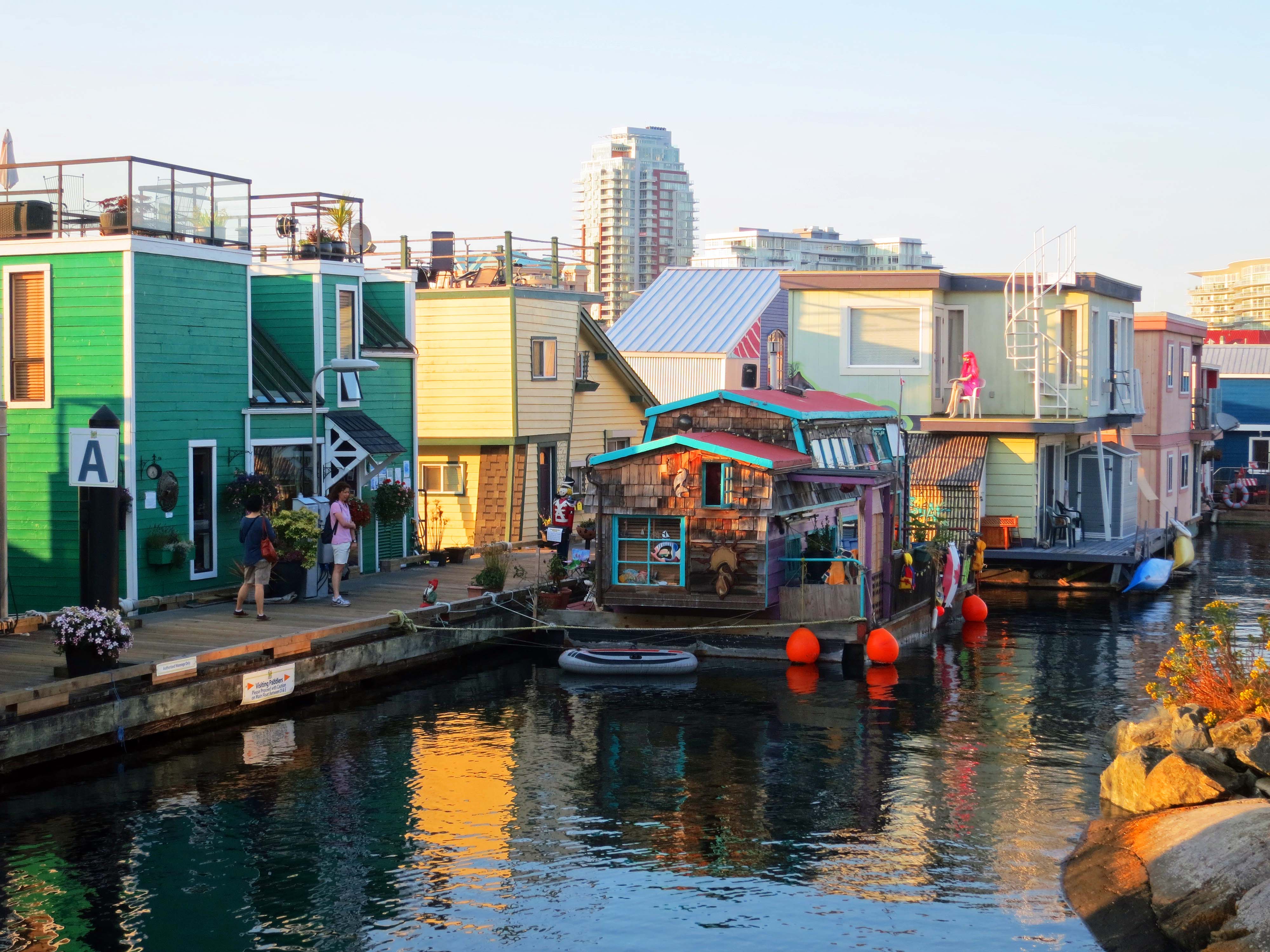
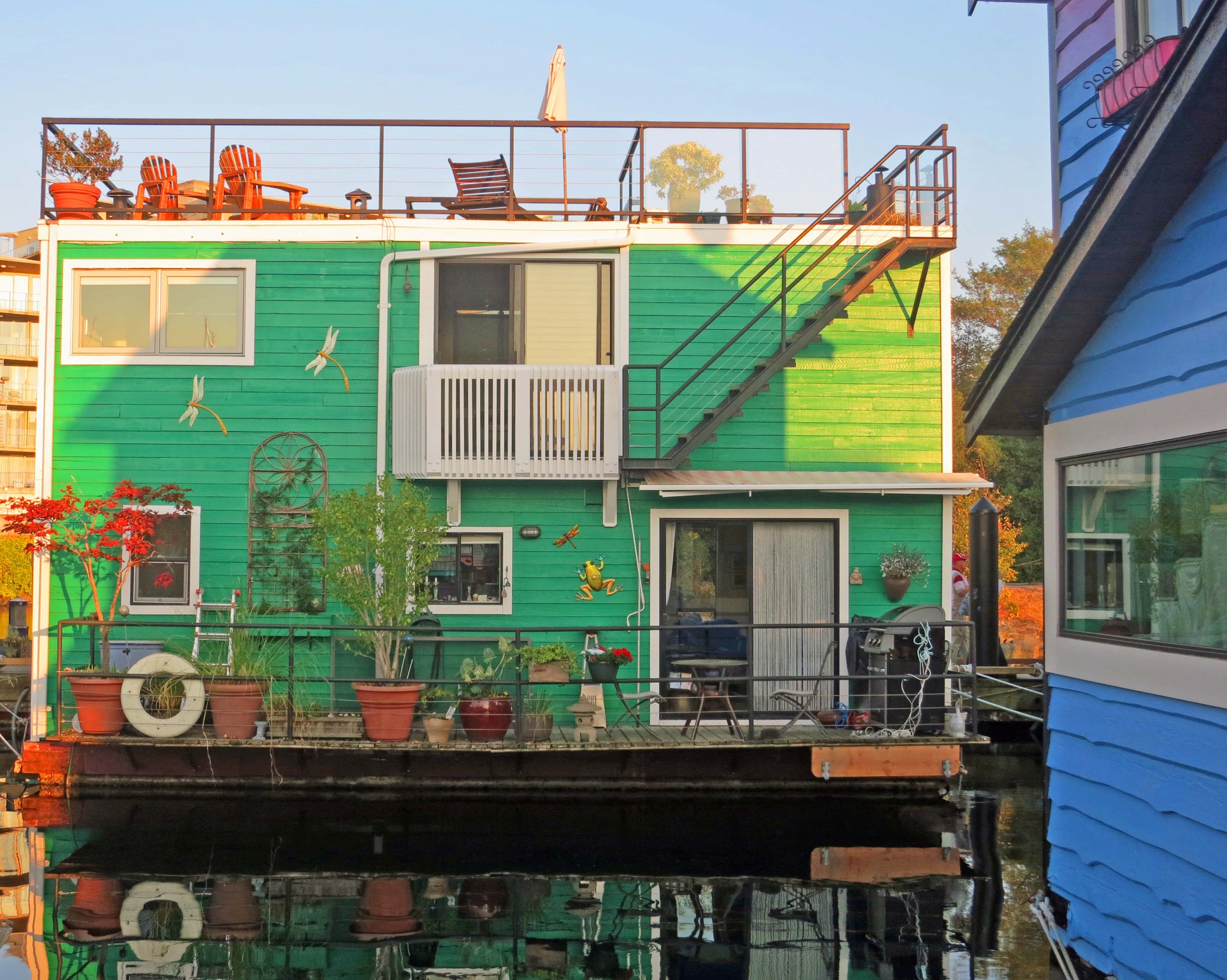
Searching for dinner, a ten minute walk from the Albion Manor brought us to a village of house boats at Victoria’s Fisherman’s Wharf. Peggy took these photos.

Houseboat at Fisherman's Wharf, BC. Photo by Peggy Mekemson.

Houseboats at Fisherman's Wharf in Victoria, BC. Photo by Peggy Mekemson.

Houseboats at Fisherman's Wharf in Victoria, BC. Photo by Peggy Mekemson.

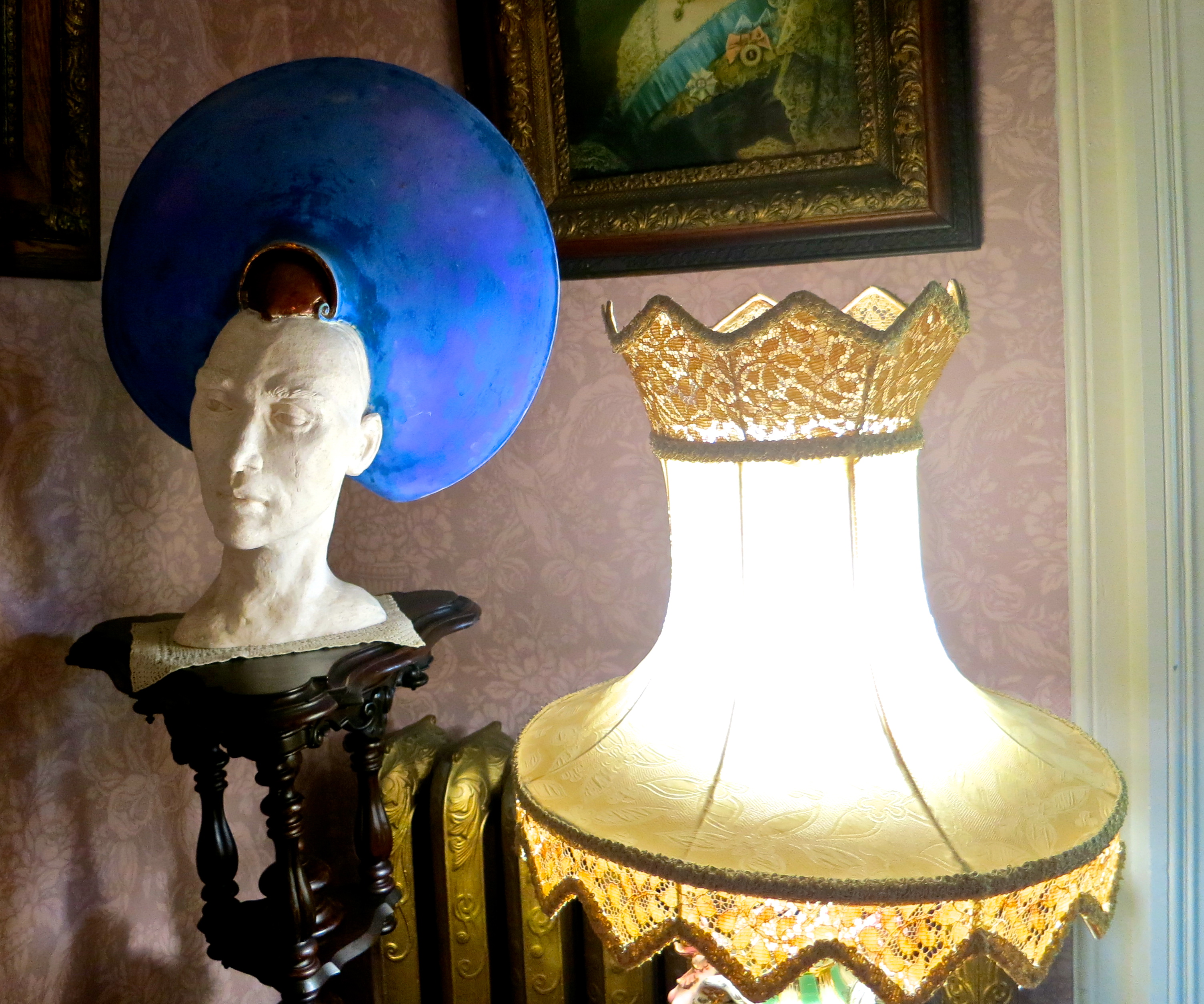
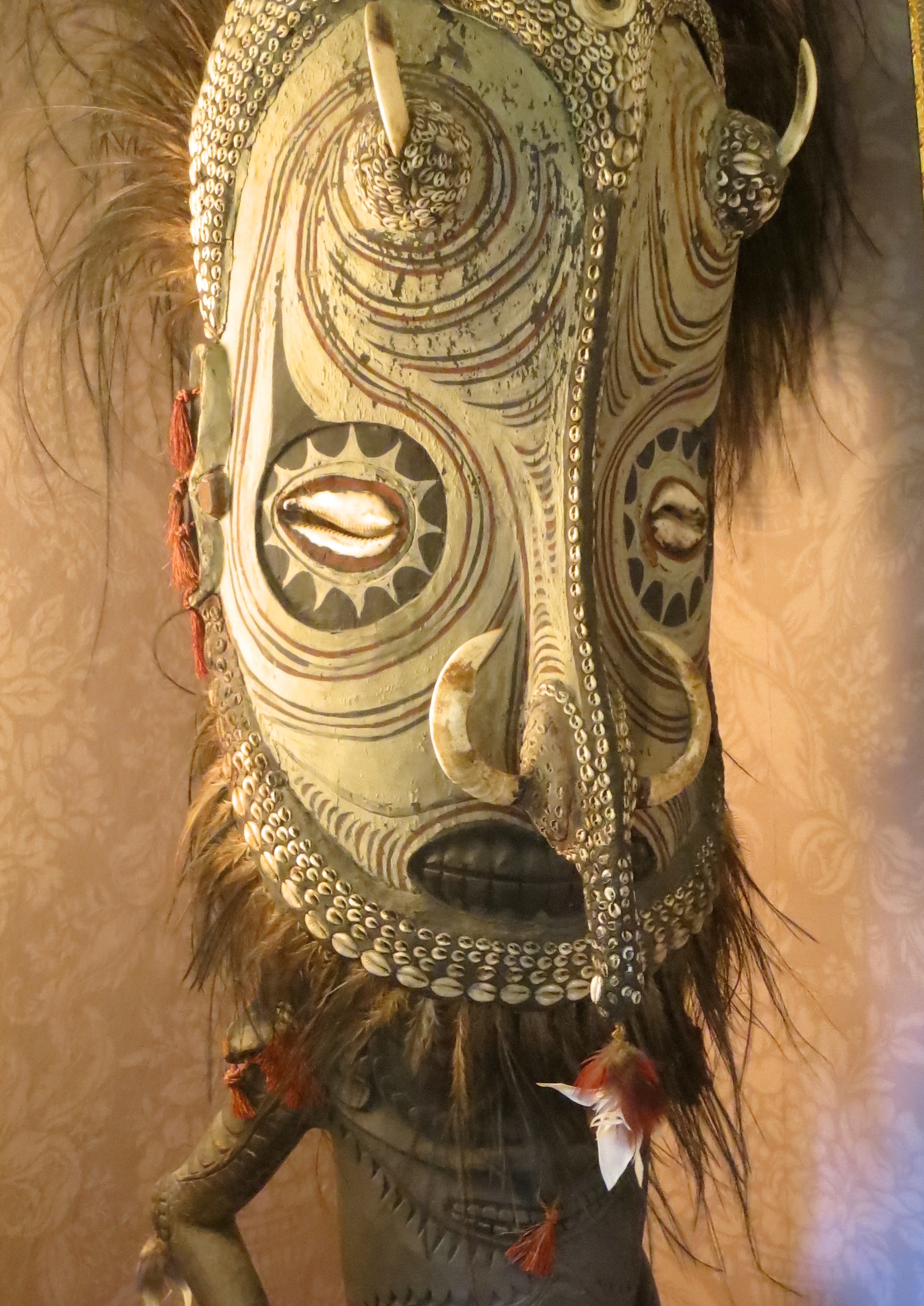
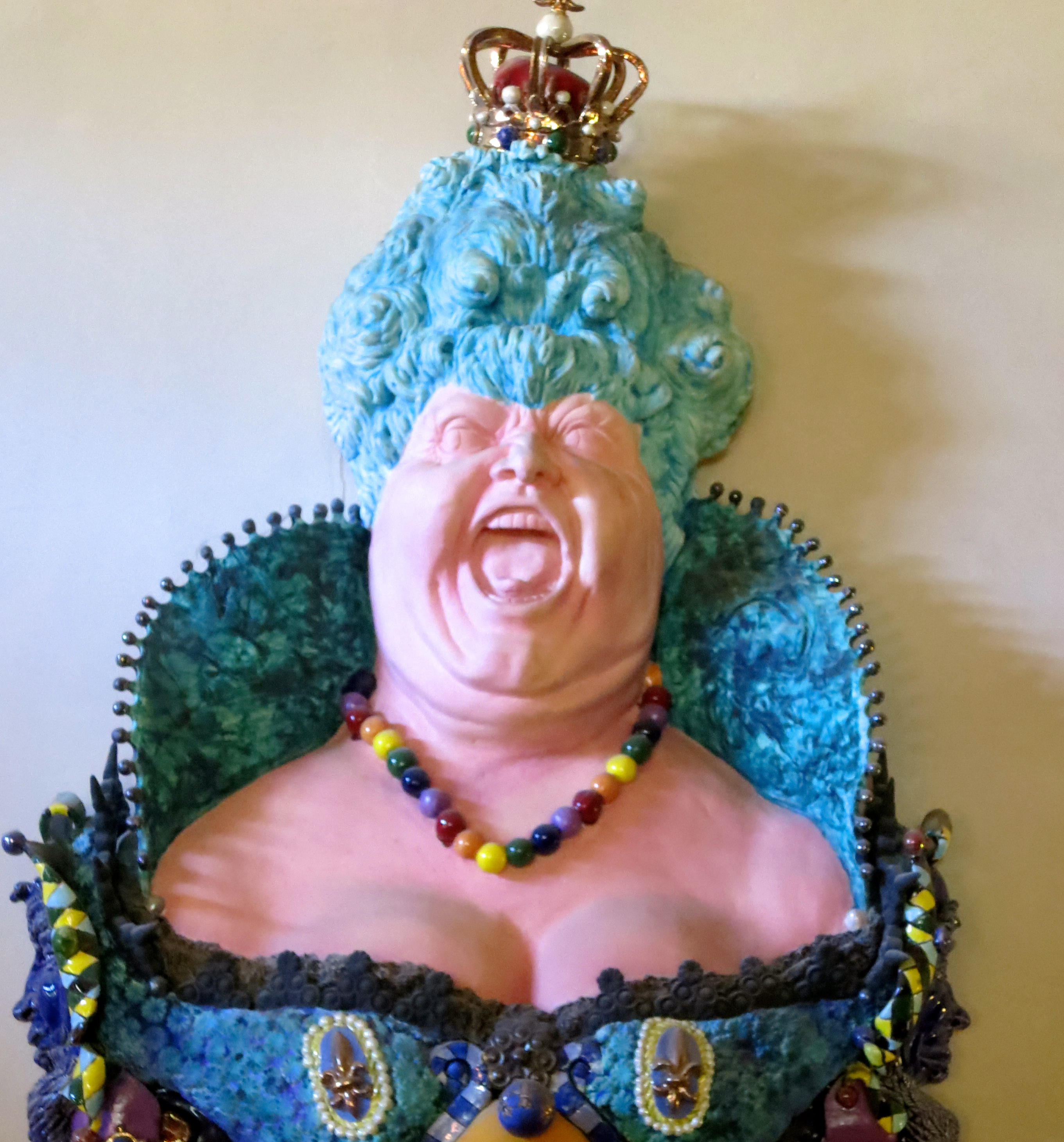
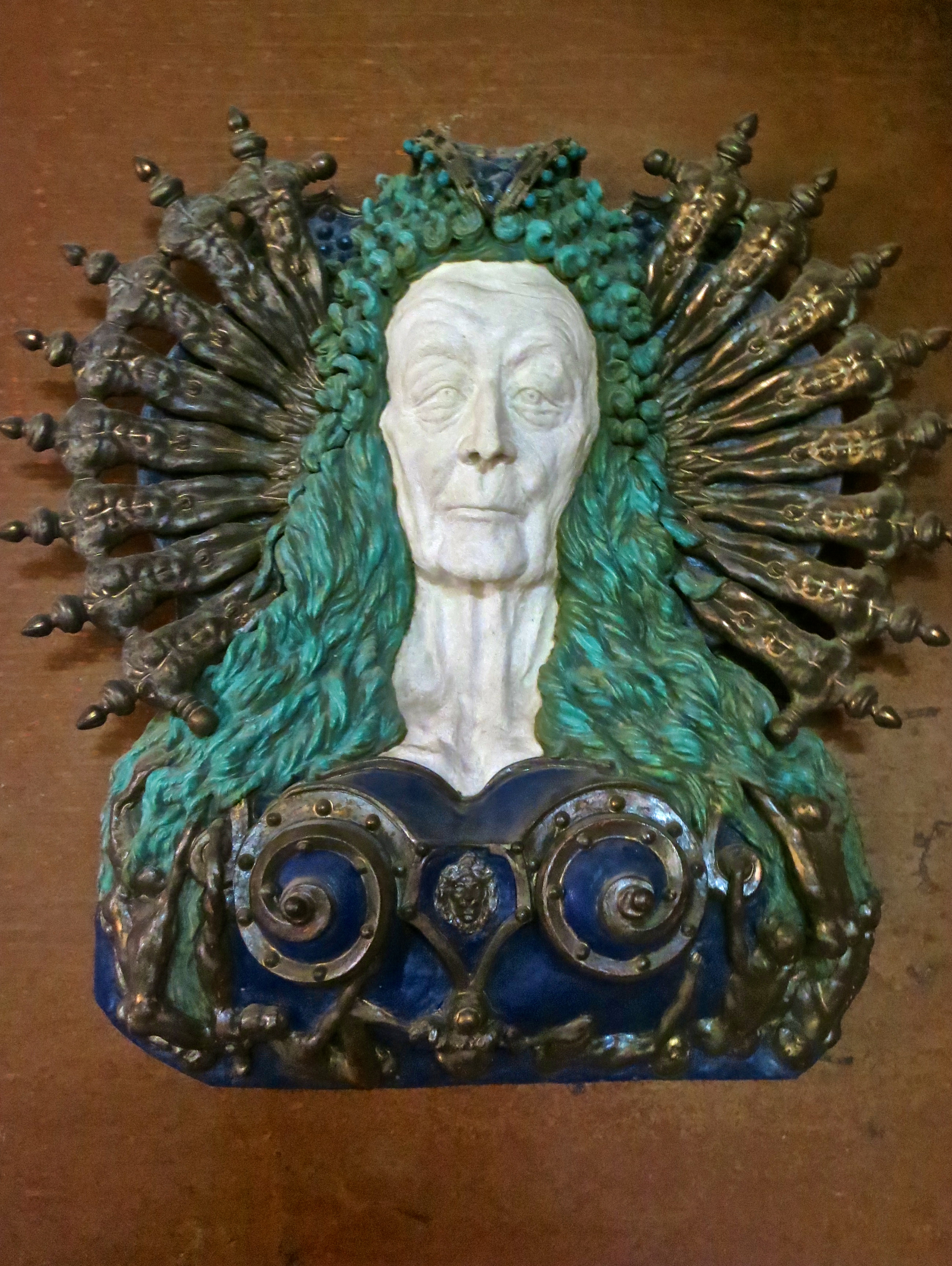
Art is located everywhere at Albion Manor, both inside and out. It’s humorous, offbeat nature, captured me immediately. Much of the work is done by Fernando Garcia, one of the two co-owners of the Manor.

The unique art of Albion Manor in Victoria, British Columbia. Photo by Curtis Mekemson.

African mask at Albion Manor in Victoria, BC. Photo by Curtis Mekemson.

The fat lady sings. Art at Albion Manor in Victoria, BC. Photo by Curtis Mekemson.

Art at Albion Manor in Victoria, BC. Photo by Curtis Mekemson.

I'll conclude with a photo of  Peggy snuggling up to one of the flowers at the Albion Manor. Next Blog; I will return to our kayak adventure off of the northeast coast of Vancouver Island.

I’ll conclude with a photo of Peggy snuggling up to one of the flowers at the Albion Manor. Next Blog; I will return to our kayak adventure off of the northeast coast of Vancouver Island.


The Day of the Dead… A Brief Interlude

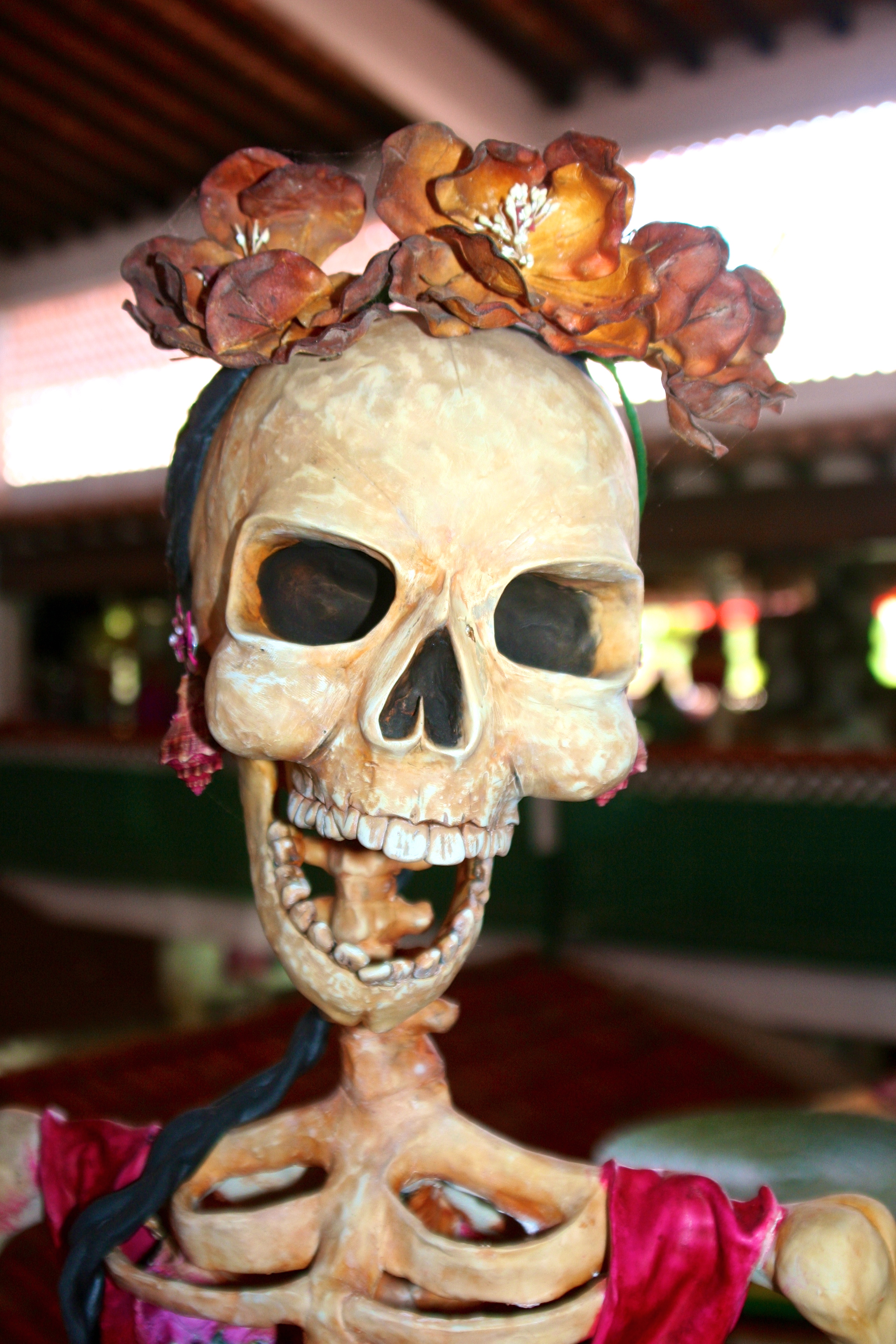
Day of the Dead skeleton in Puerto Vallarta, Mexico.

This girl was all decked out for the Day of the Dead

It’s the Day of the Dead, or Día de Muertos in Spanish. My blogging friend, James at Gallivance, and Google inspired me to post my favorite Day of the Dead skeleton as a quick break from my kayak series. (I’ll get back to kayaking in my next blog.)

Peggy and I found this beauty at the public market in Puerto Vallarta, Mexico. The purpose of the day is to remember friends and family who have passed on. It’s big in Mexico. And Mexicans have made a fortune in selling representative statues to tourists.

Today, Día de Muertos is a Catholic festival, but it owes its beginning to the Aztecs. People often take the favorite foods of the deceased out to the gravesite so the dead person can feast. Got to keep those ghosts happy. Trick or treat comes to mind.

May all your ghosts be happy ghosts. –Curt

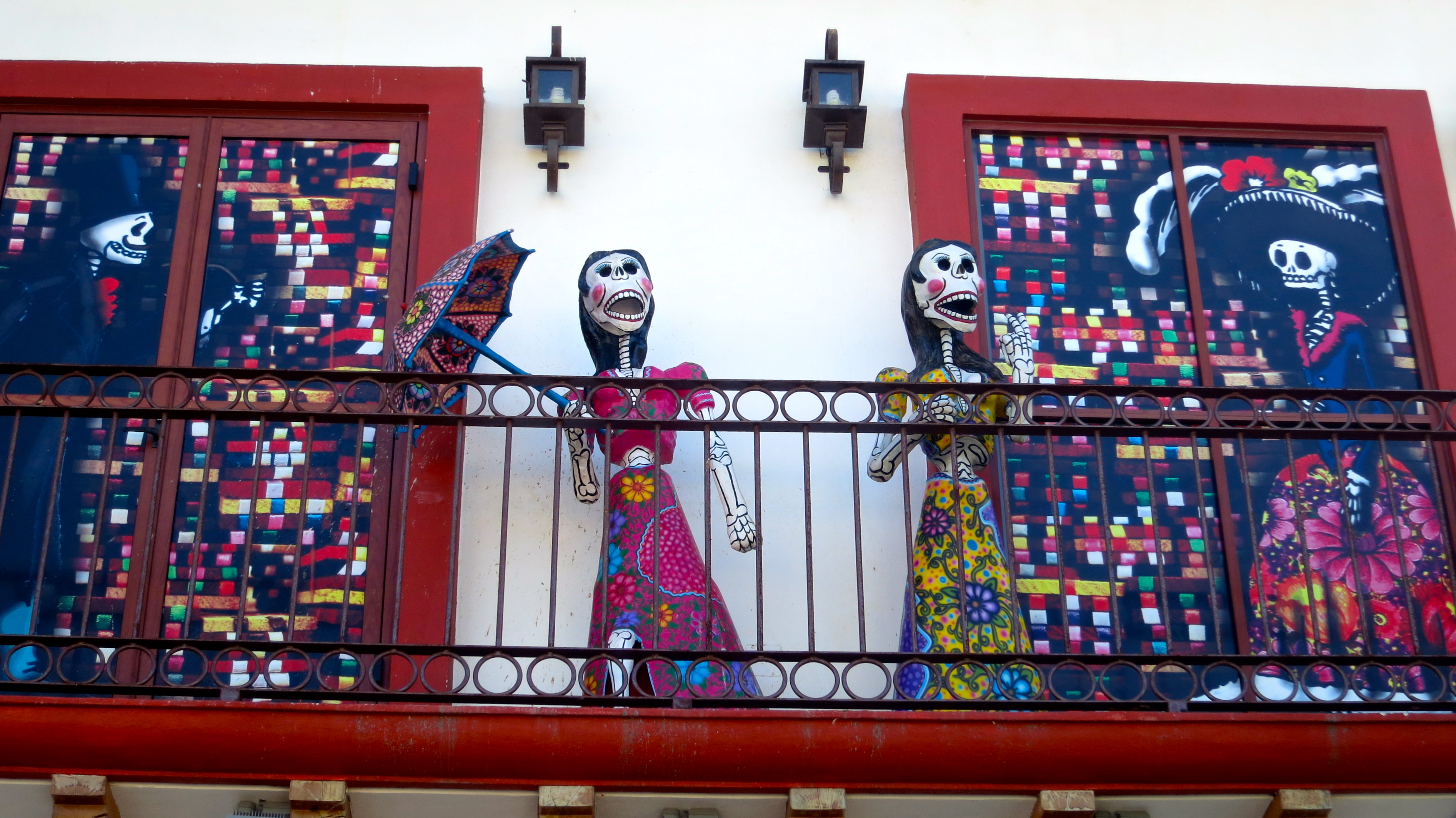
A popular restaurant in Puerto Vallarta features these to singing cuties on its balcony.

A popular restaurant in Puerto Vallarta features these two singing cuties on its balcony.

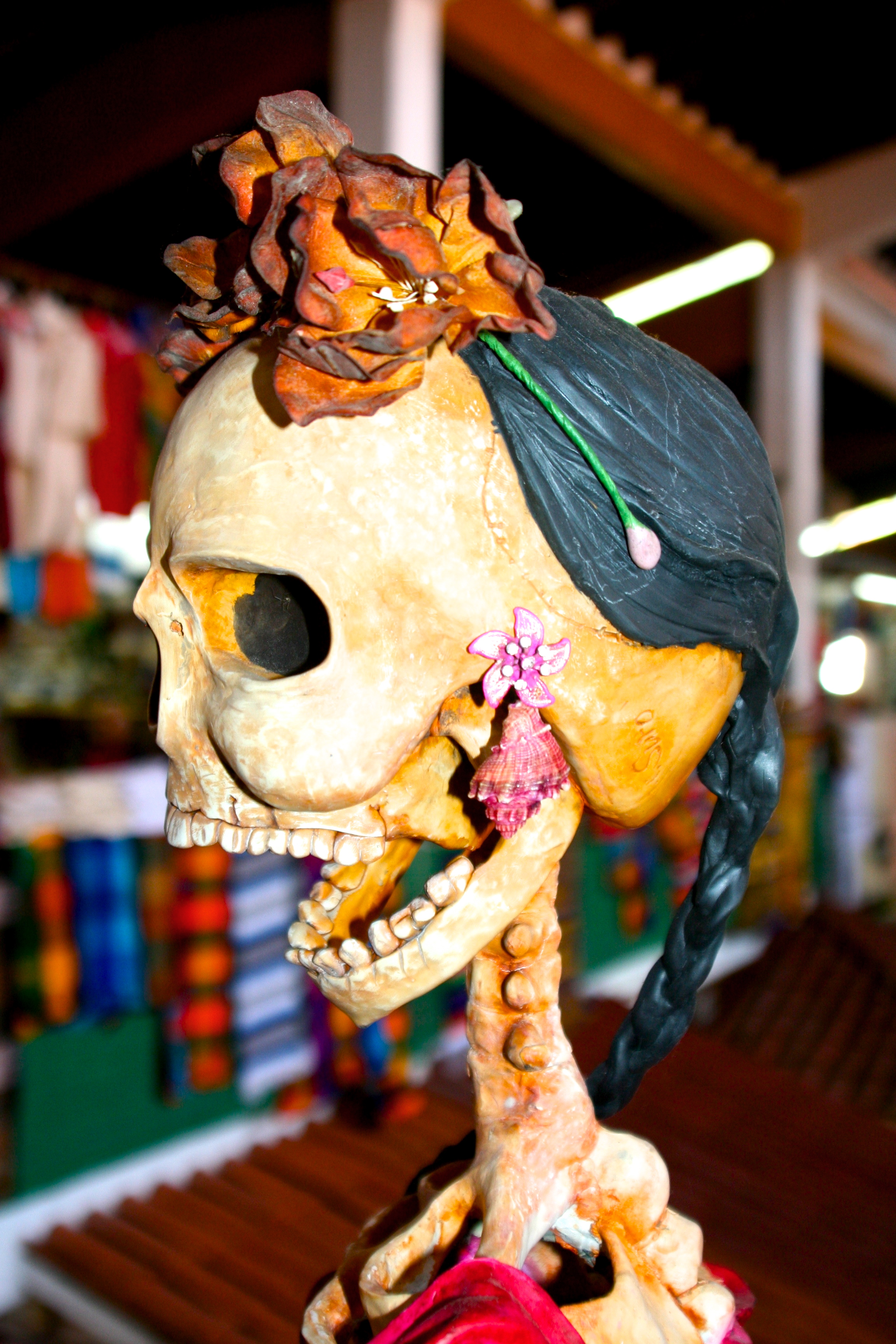
A side view of my favorite. Check out the earrings!

A side view of my favorite. Check out the earrings!

A Gorgeous Sunset and a Breaching Killer Whale… British Columbia Sea Kayak Adventure: Part 2

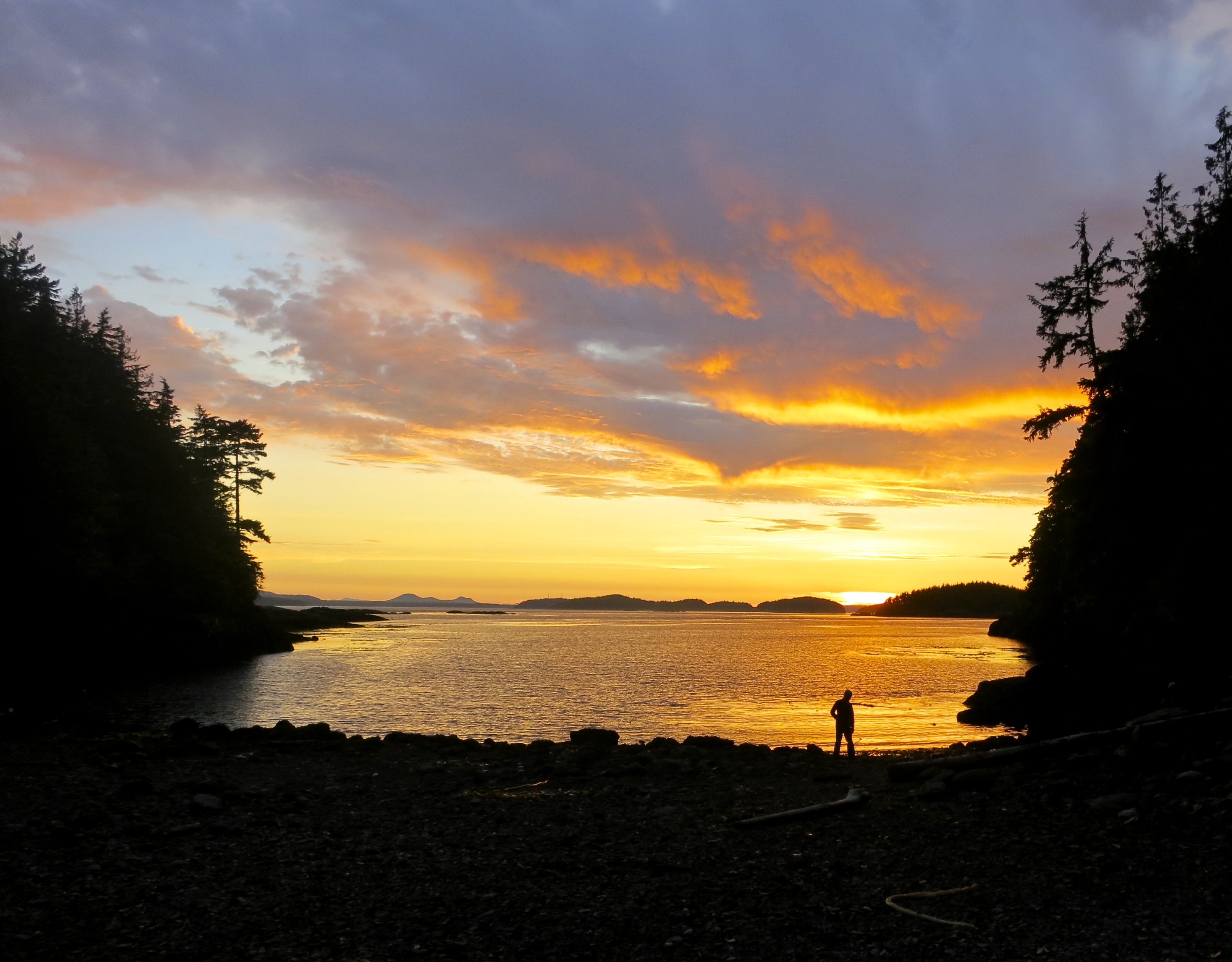
Sunset at Sea Kayak Adventure's campsite on Hanson Island in Johnstone Strait. Photo by Curtis Mekemson.

As the day ends, one of our kayakers takes a moment to enjoy the sunset from our campsite on Hanson Island.

A post-card-glorious sunset marked the end of Monday, our first day of kayaking on Johnstone Strait off the northeast coast of Vancouver Island. Morning seemed long ago and far away— and my body spoke to just how long ago and far away that was. It had passed 71 earlier in the year and was wondering when the fabled golden years were going to start. “They are here,” I told it with a grin. It grumped. My mind and body aren’t always in agreement.

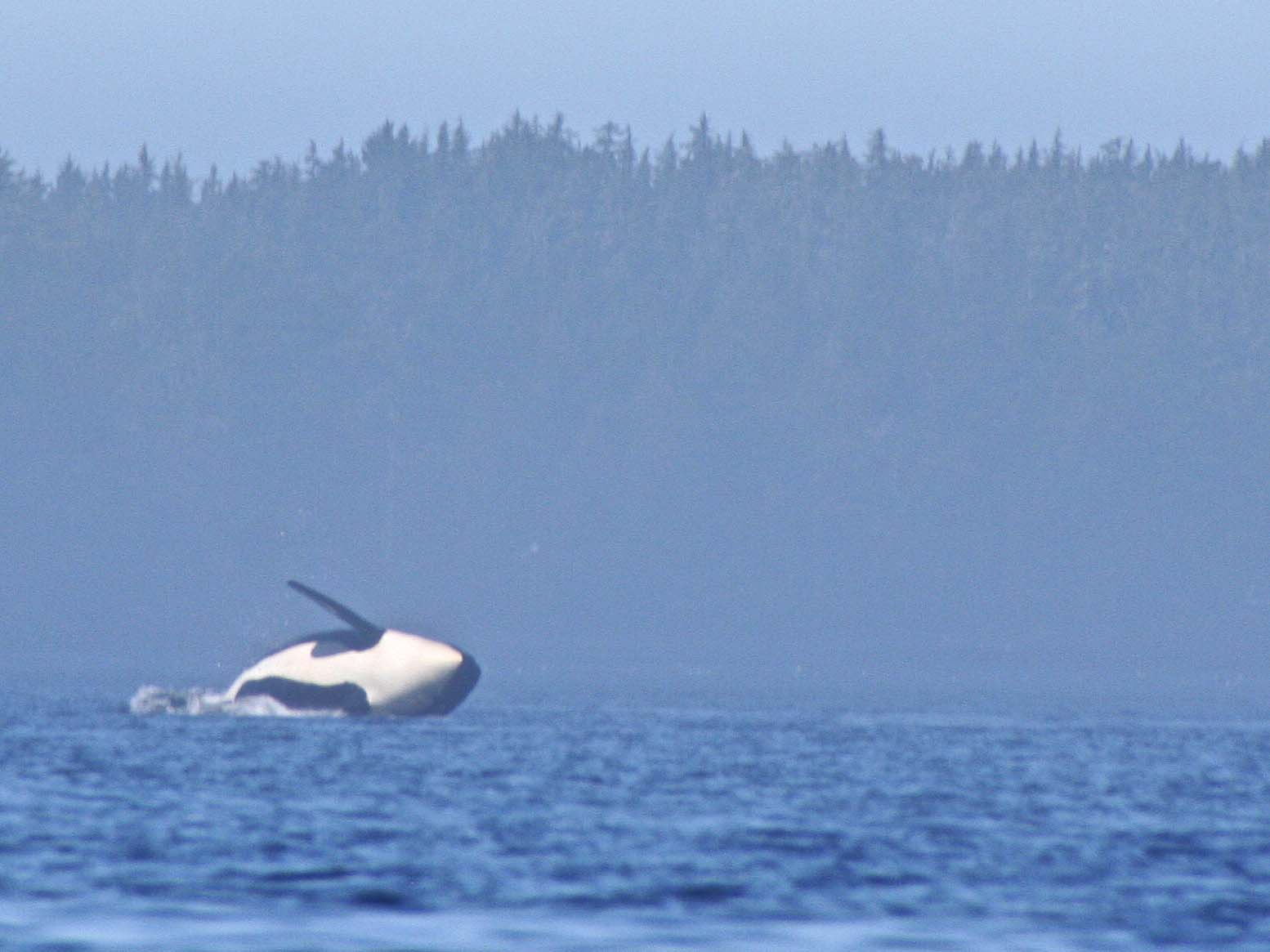
The guides and group, including Peggy and I, were in high spirits. We had successfully completed our first day of kayaking, seen stunning scenery, and watched an orca breach. We were in a beautiful setting. Our guides had just fed us a gourmet meal, and our tents were set up, promising a good night’s sleep. What was there to complain about?

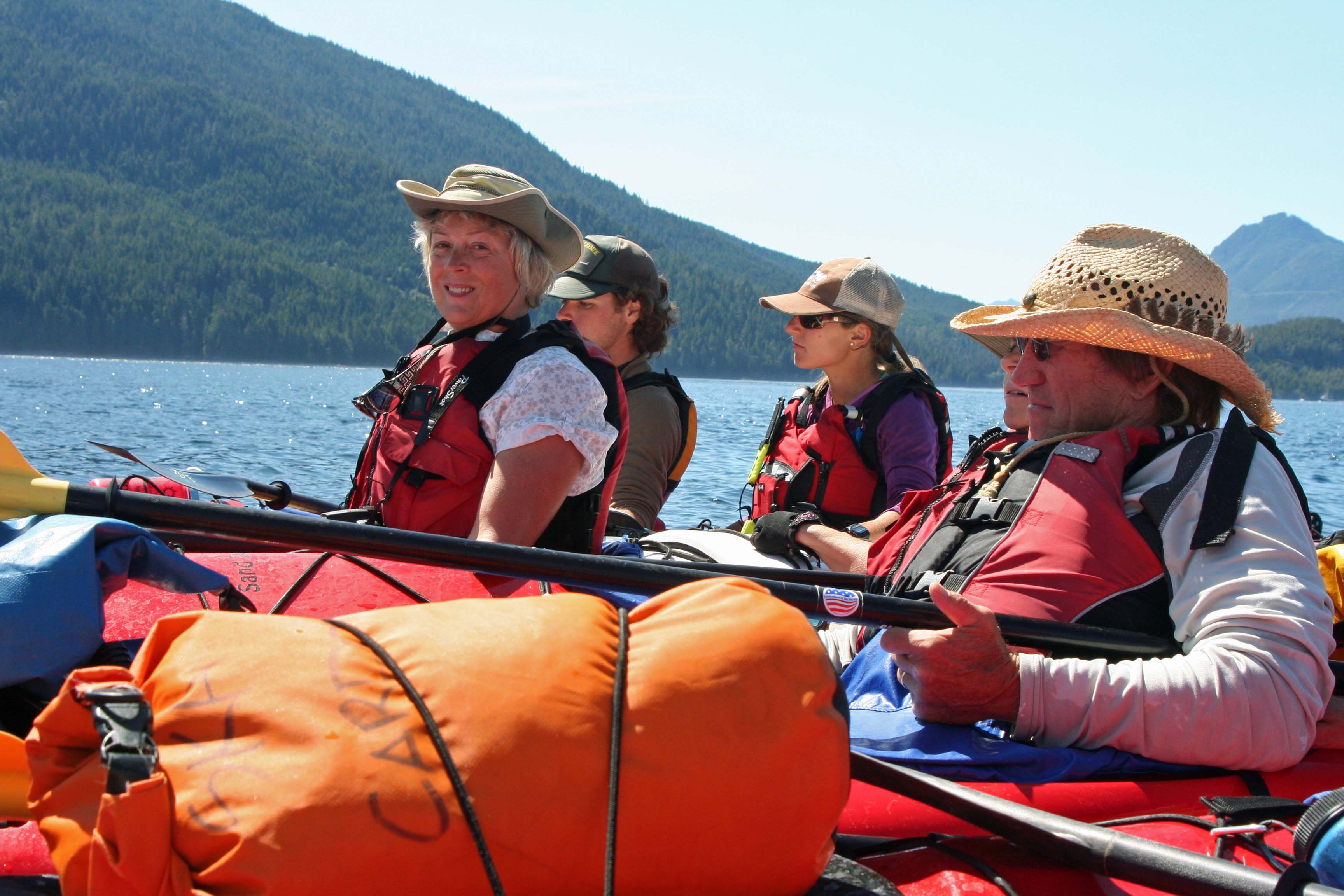
We had all met for the first time on Sunday night. The session had started with the usual meet and greet. “Tell us something about yourselves.” We half listened as we composed whatever we were going to say. There were the Canadian guides, a contingent from Idaho, three mid-westerners, one Californian, and our friends David and Edie from Alaska. Peggy and I are from Oregon. We also had a family of Asians until they figured out they had come to the wrong meeting. Everyone had at least some kayak experience. David and I, along with our child brides, were the elders.

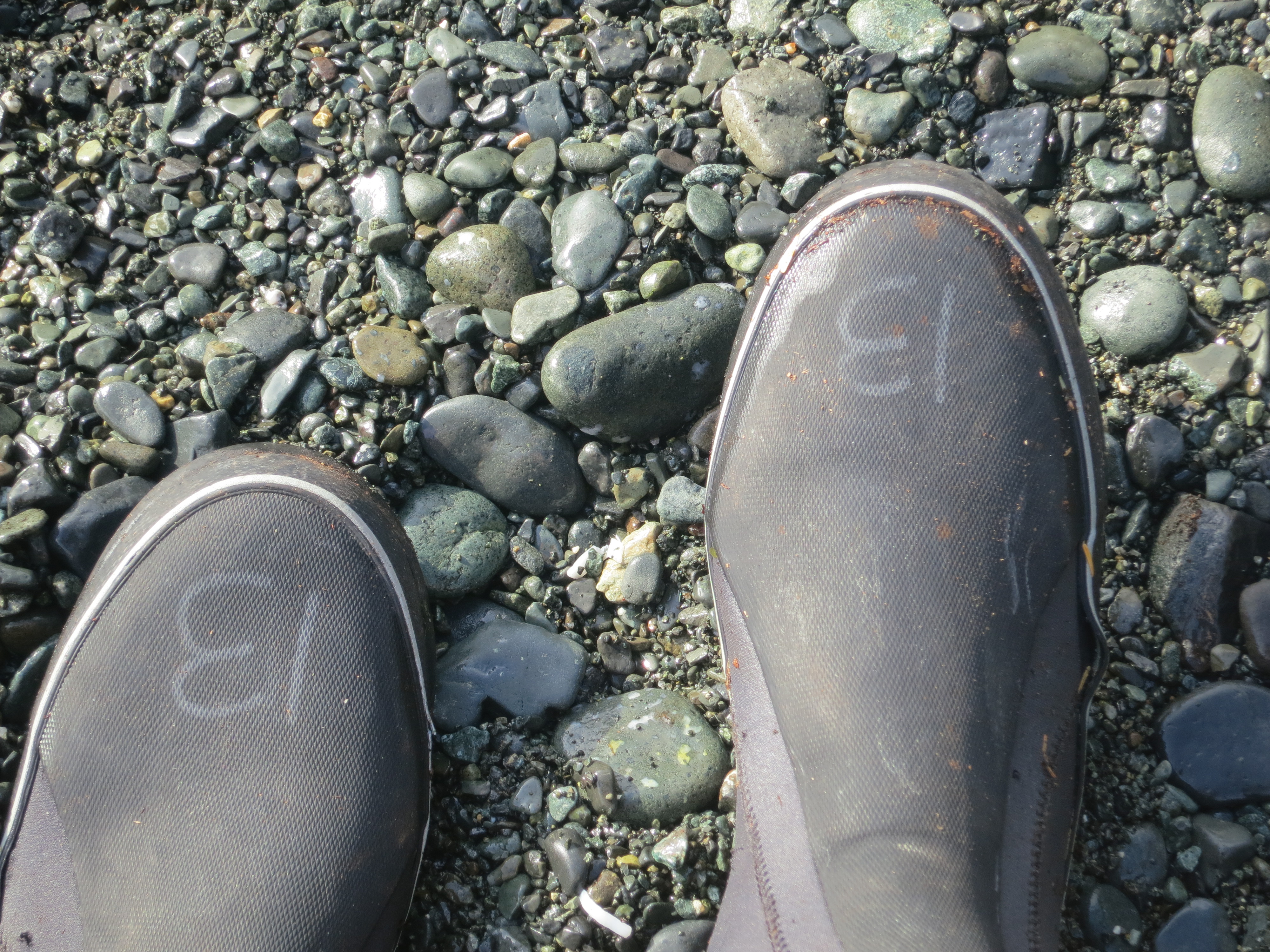
Our guides gave us an overview of the journey and then distributed dry bags and rubber boots. I debated between size 13 and 14. The 14s were a little loose, the 13s a little snug. I went with snug and wondered how my large feet would work in the tight confines of the kayak. Carefully, I presumed. Peggy and I retired to our rooms and begin the packing process— what to take and what to leave. Sea Kayak Adventures had recommended a lot and our guides had suggested less. Everything had to fit in the boats. There were important decisions to make.
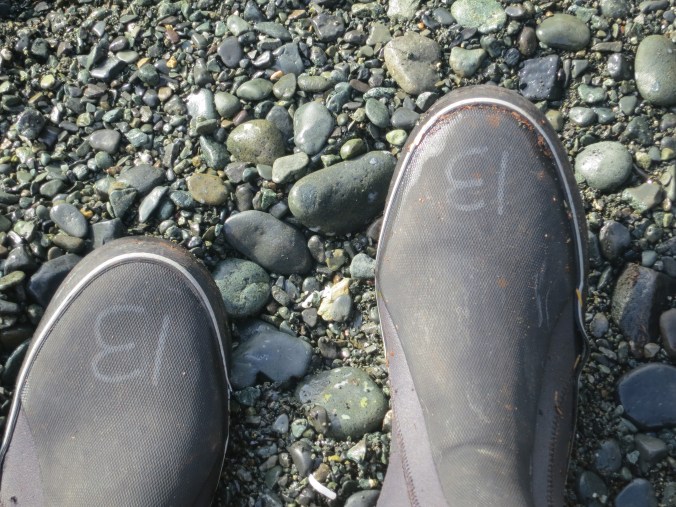
Rubber boots issued by Sea Kayak Adventures.

My size 13 boots, clearly marked for all to see. I wondered how they would relate to the small rudder pedals in the Kayak.

The next morning we were up early, went through our gear for the umpteenth time, had a quick bite, and caught the taxi hired to take us to Telegraph Cove. It was time to break out the cameras.

Telegraph Cove started life as a lumber mill. Nowadays it is an eco tourism center. A couple of hundred thousand people visit in the summer for whale watching, kayaking, fishing and checking out grizzlies. In the winter, its population drops to 20. The town has done a great job of preserving historical buildings from its past.
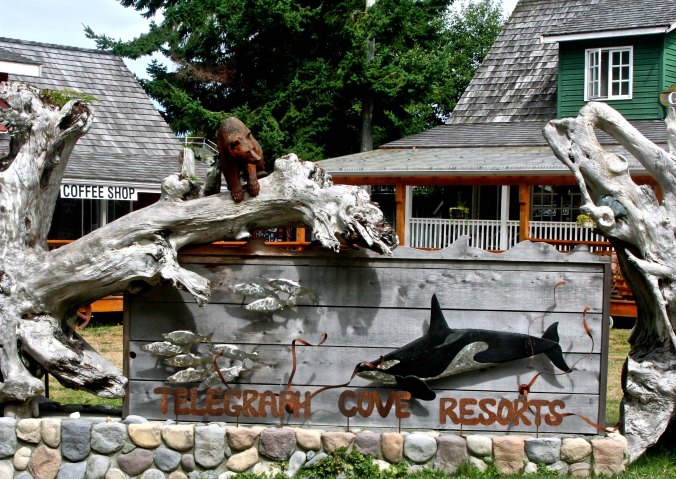
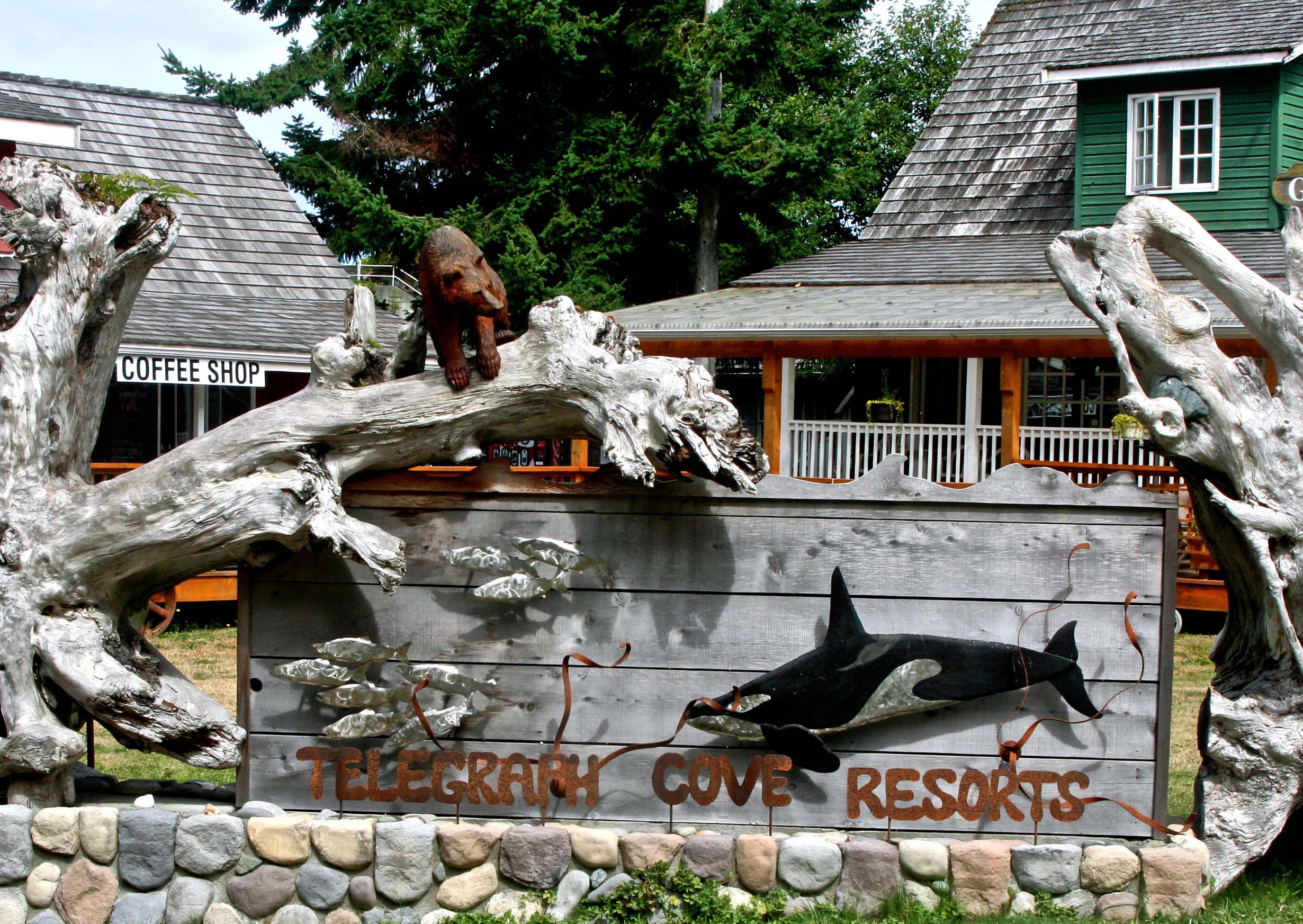
This sign, featuring an Orca, grizzly and salmon welcomes visitors to Telegraph Cove.

This sign, featuring an orca, grizzly and salmon, welcomes visitors to Telegraph Cove. Also note the impressive drift wood. We were to find some on our trip. (Photo by Peggy Mekemson.)
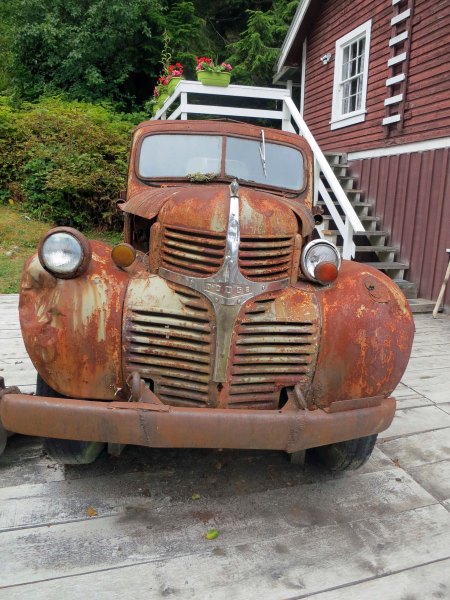
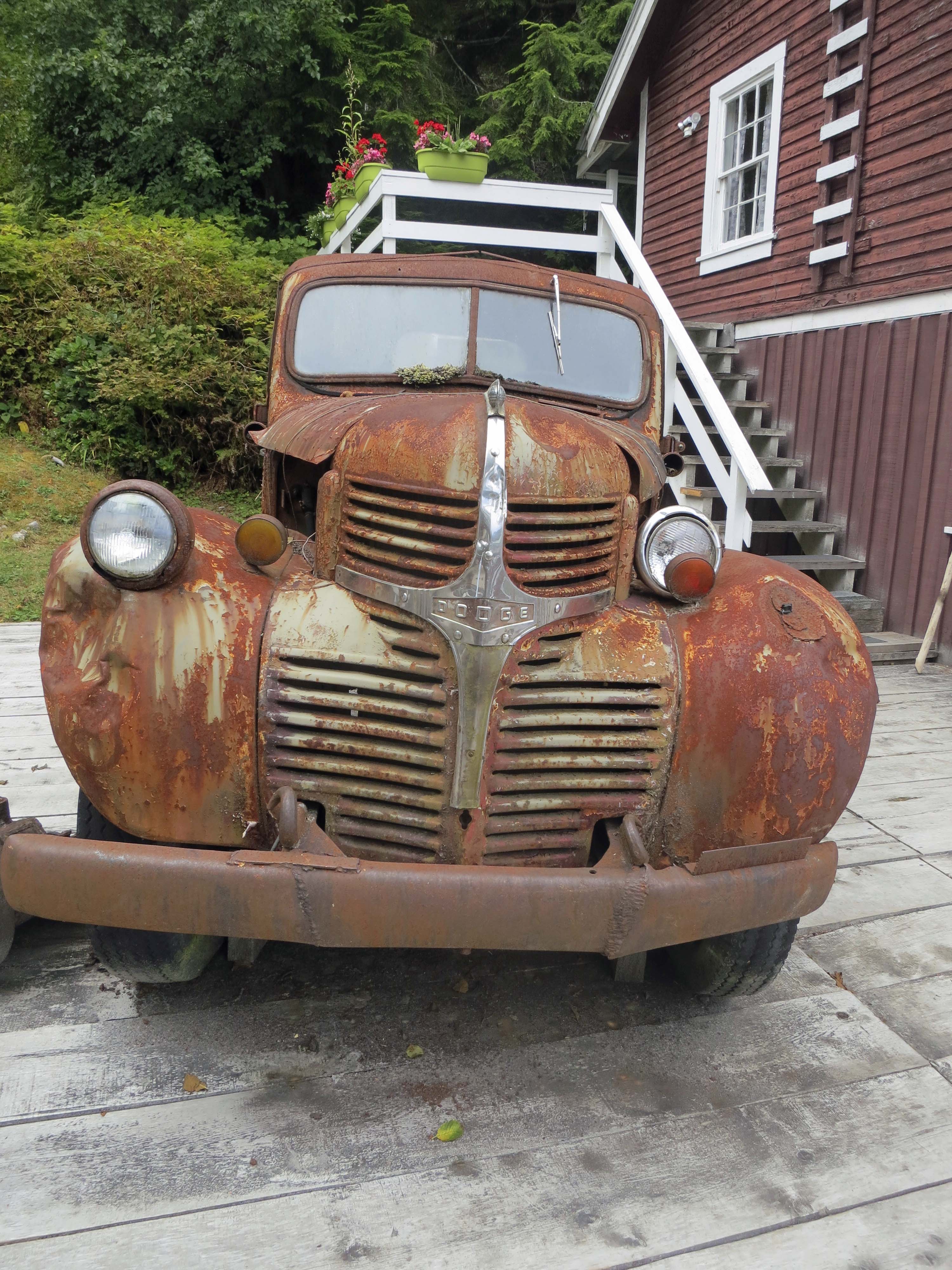
Old Dodge Truck at Telegraph Cove on Vancouver Island. Photo by Curtis Mekemson.

Part of the appeal of Telegraph Cove is its preservation of the past, as with this old Dodge truck. I think the truck was confused about where its lights should be. Or maybe it was so old it needed bifocals.
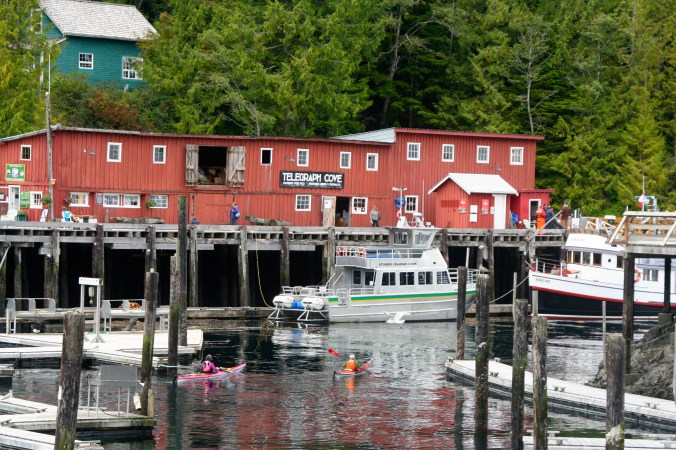
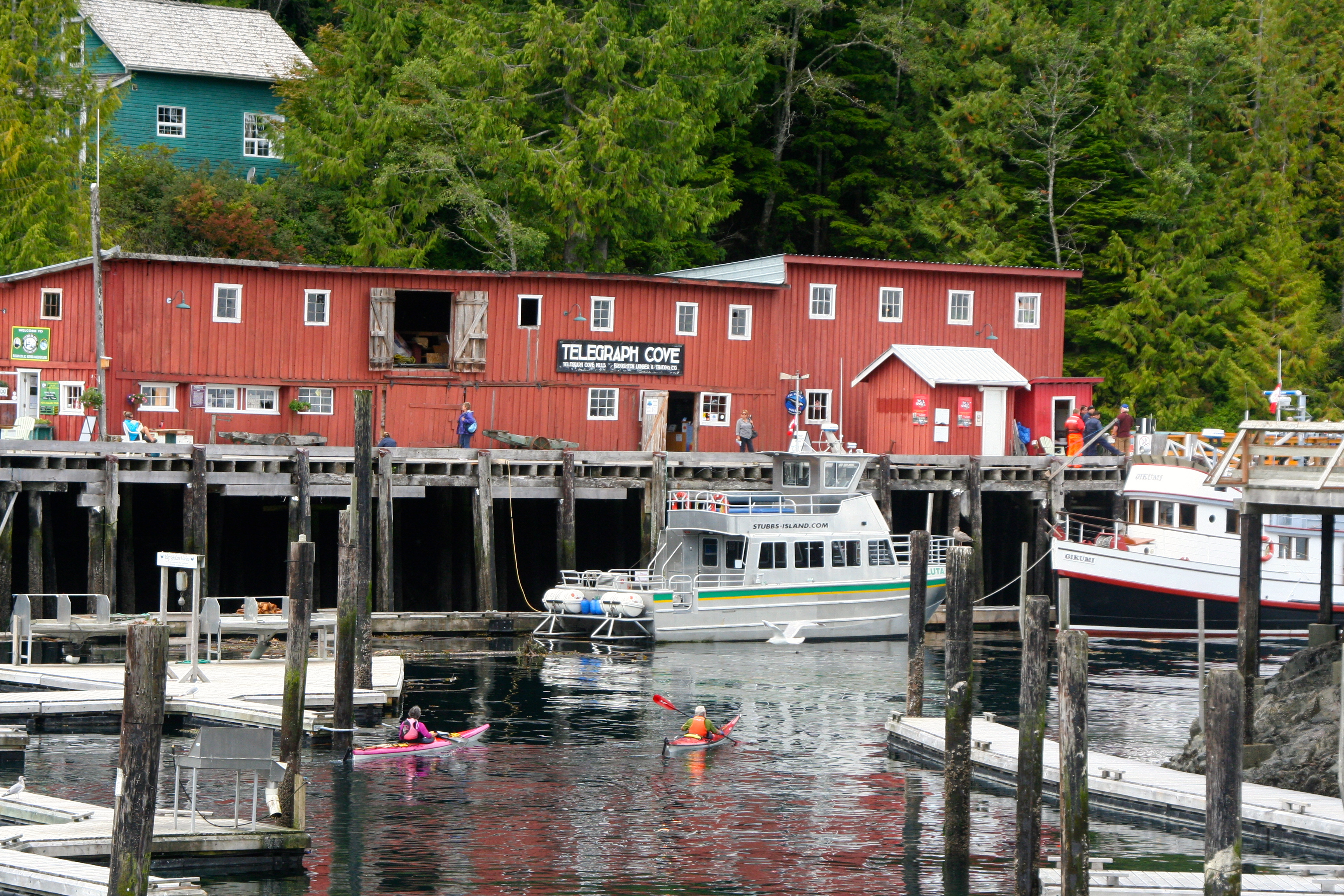
Telegraph Cove is all about water as this photo suggests. Here we see the Whale Interpretive Center, a fishing boat, and kayakers. (Photo by Peggy Mekemson.)

Telegraph Cove is all about water as this photo suggests. Here we see the Whale Interpretive Center, a fishing/tour boat, and kayakers. (Photo by Peggy Mekemson.)
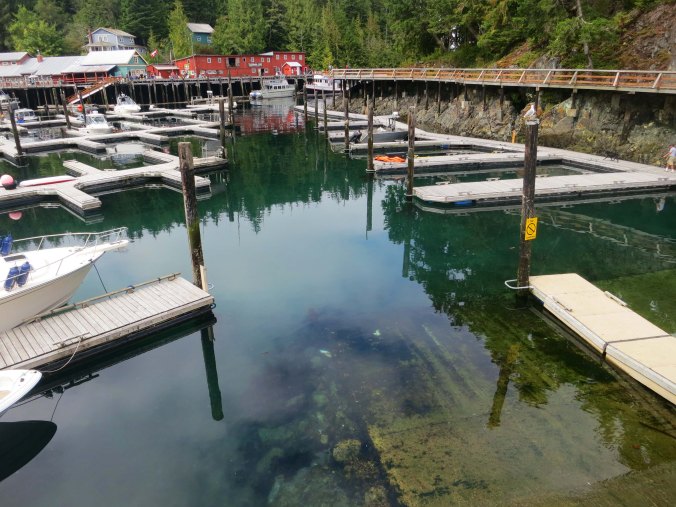
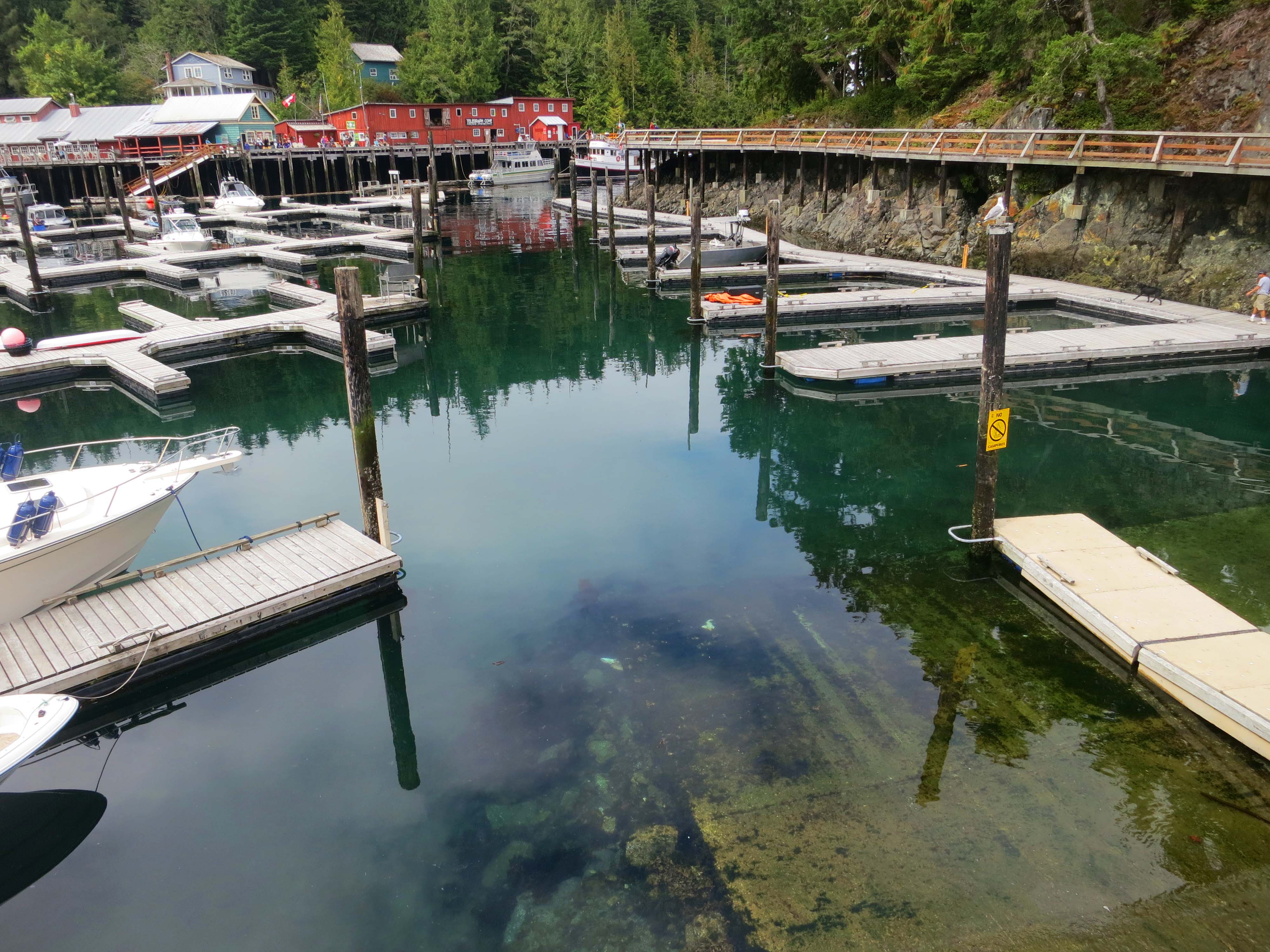
Empty docks at Telegraph Cove suggests all of the tours and fishing expeditions are already out on Johnstone Strait. Photo by Curtis Mekemson.

The empty boat docks tell a tale. We would not be the first to leave Telegraph Cove that morning for the Johnstone Strait. Our route took us right down the row and made a right at the Whale Interpretive Center.

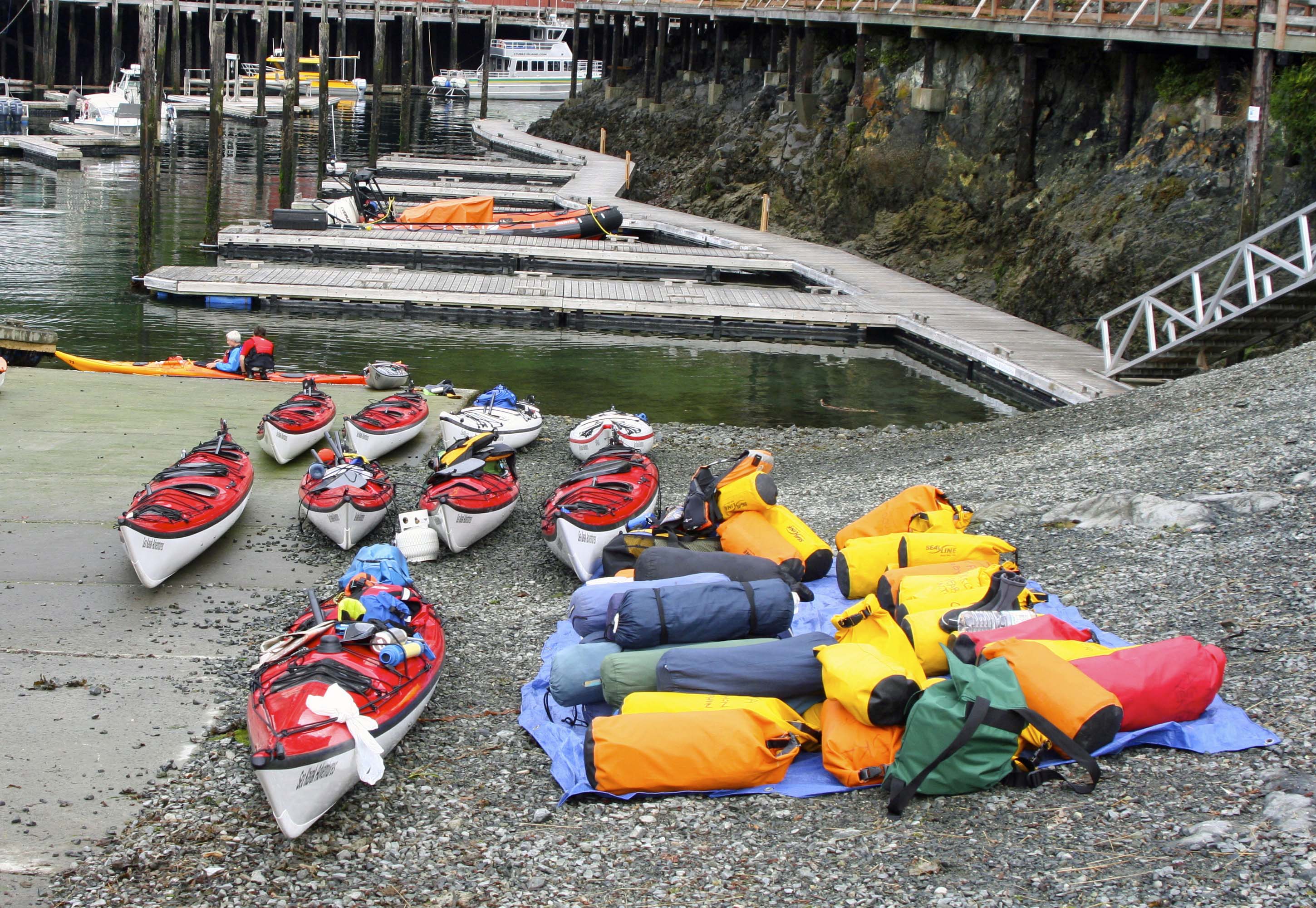
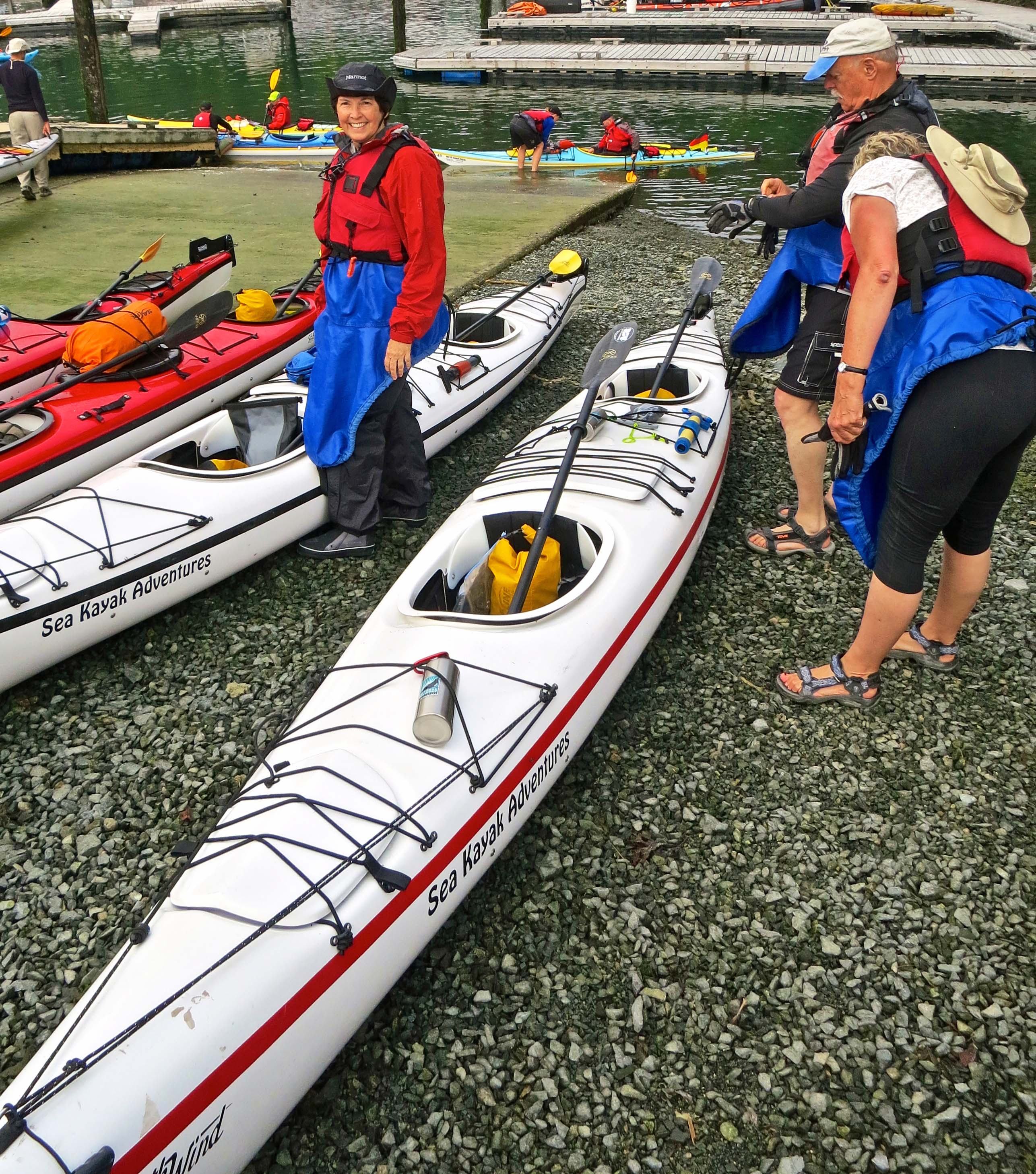
Once our taxis dropped us off at Telegraph Cove, it was time to get busy. There were kayaks to pick, gear to load, life vests to fit, and last-minute instructions, such as which side of our paddle was up.
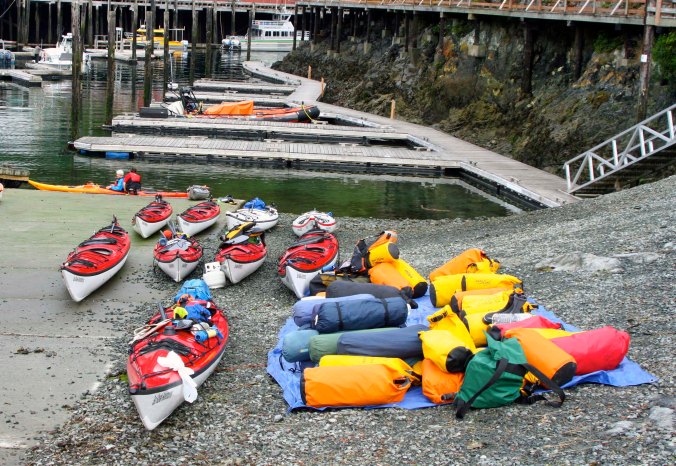
Sea kayaks wait for the next Sea Kayak Adventure tour group in Telegraph Cove.

Our guides, Julia, Nick and Quy, had been up  before dawn getting ready for us. Kayaks, life vests, and sleeping pads were waiting. Group gear had already been packed. Our first chore was to pick out our kayaks. (Photo by Peggy Mekemson.)

The white boats are more stable, the guides told us. Being the oldest, David, Edie, Peggy and I decided we could use the most stability. What the guides failed to mention in the fine print was that the white kayaks were also the largest, the heaviest, and could carry more of the group gear.Translation: they would be slower and harder to move.

The white boats are more stable, the guides told us. Being the oldest, David, Edie, Peggy and I decided we could use the most stability. What we failed to think through was that the white kayaks were also the largest, the heaviest, and carried more of the group gear.Translation: they would be slower and harder to row.
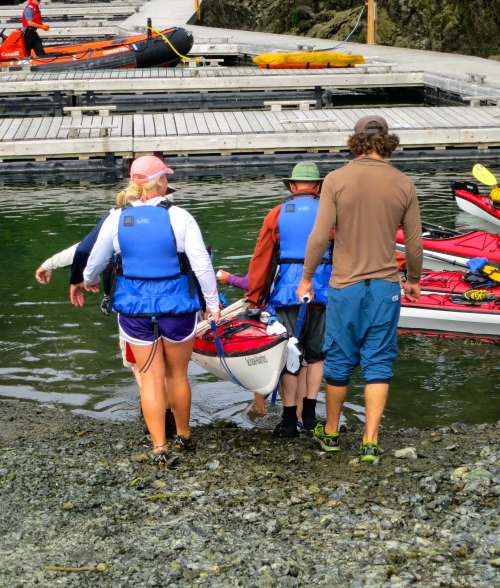
Kayaks are placed in the water at Telegraph Cove. Photo by Curtis Mekemson.

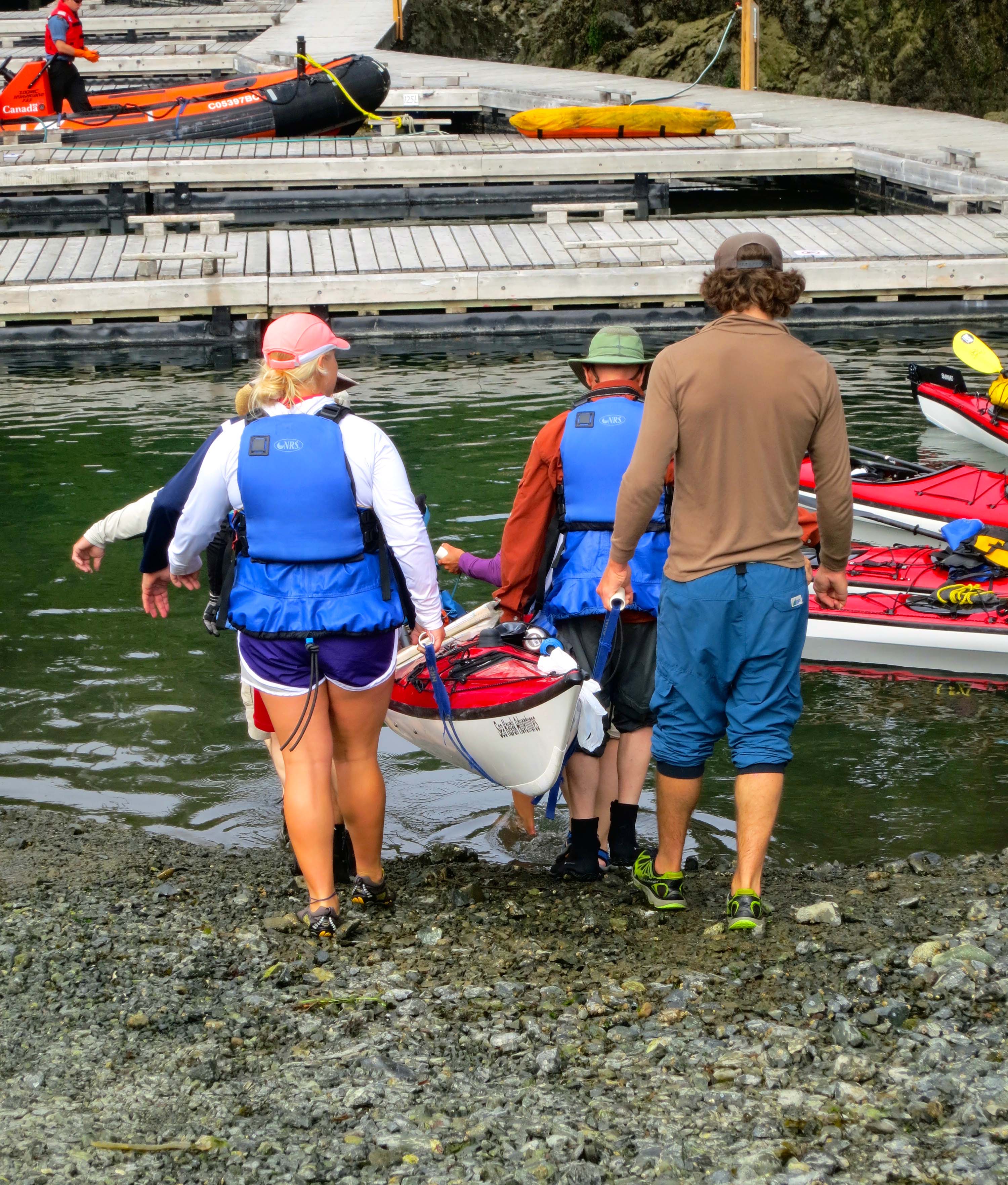
And then the moment arrived. It was time to put our kayaks in the water and start paddling. Put in and take out were always a group effort.

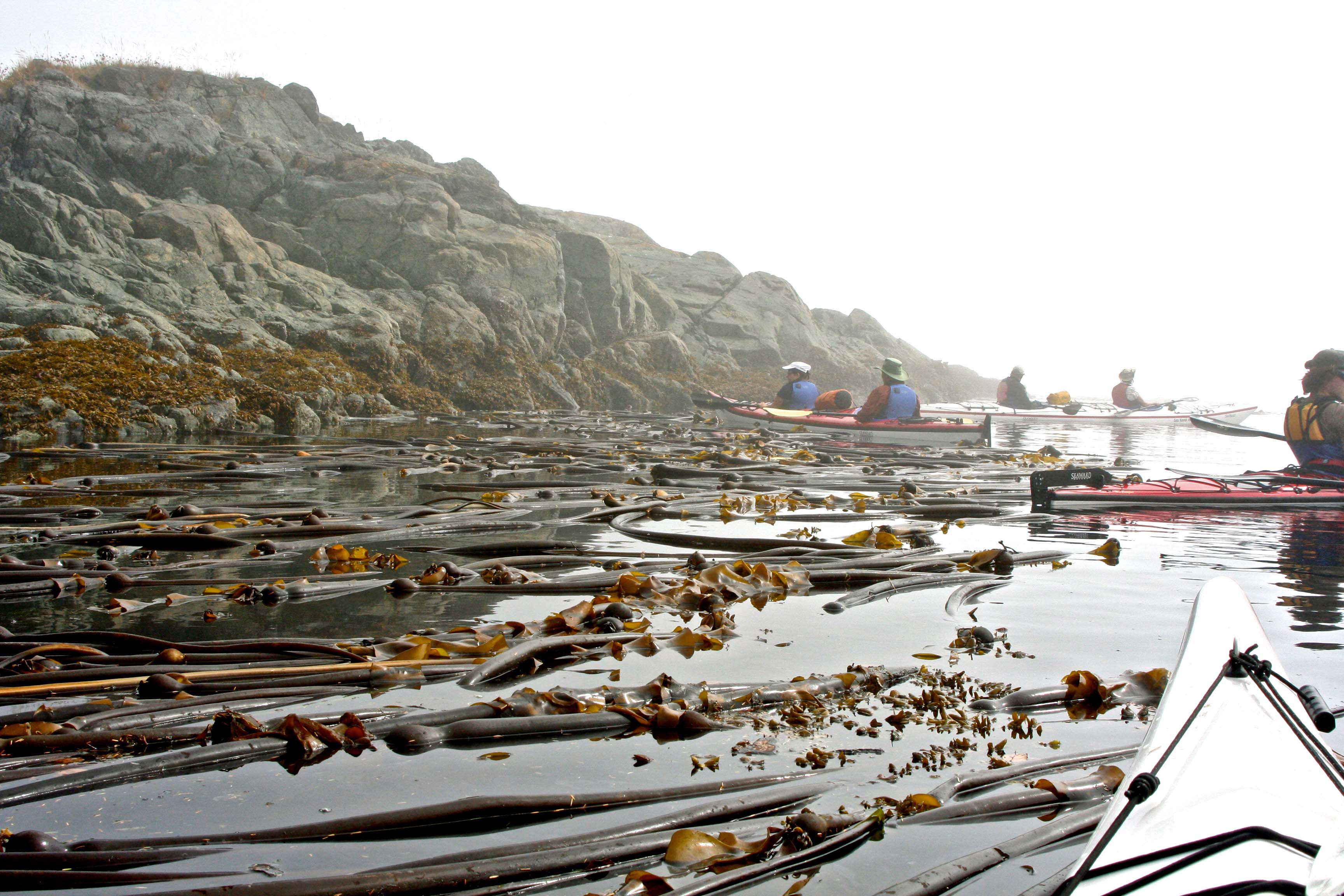
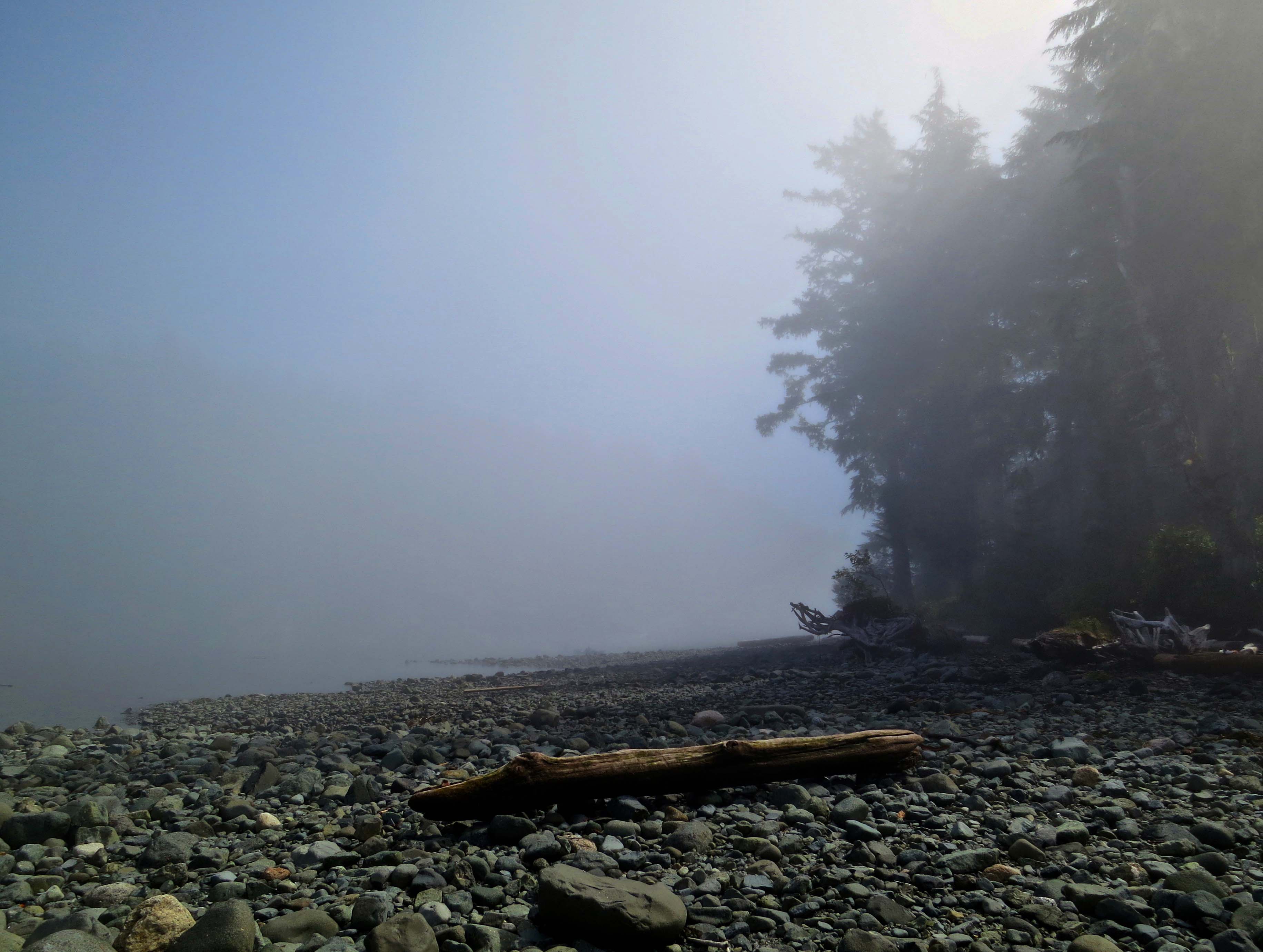
Heavy fog hung over Johnstone Strait and along the shore. We moved slowly, keeping each other in sight and waiting for the fog to clear. Large boats, including cruise ships, use the Strait. You want to be damn sure you can see them— and that they can see you. At one point, Nick, who was on rear guard duty, decided my seat needed adjusting. I was too laid back. By the time the adjustments were made, the other kayakers had disappeared into the fog. They waited patiently. We stopped and had a leisurely lunch. Then the sky turned a bright blue and we were off across the Strait. Orcas were waiting.
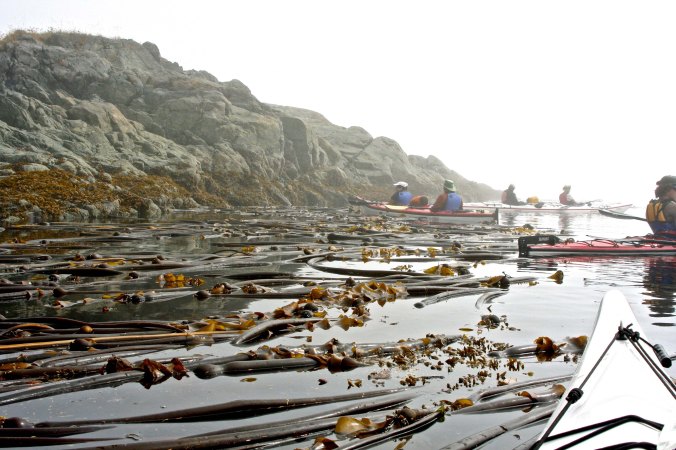
Kayakers work their way through kelp beds and fog in the Johnstone Strait of British Columbia.

Kelp beds and fog slowed us down. Here, we maneuvered our way through the kelp. Some of our group had almost disappeared into the mist— and they weren’t that far away. (Photo by Peggy Mekemson.)
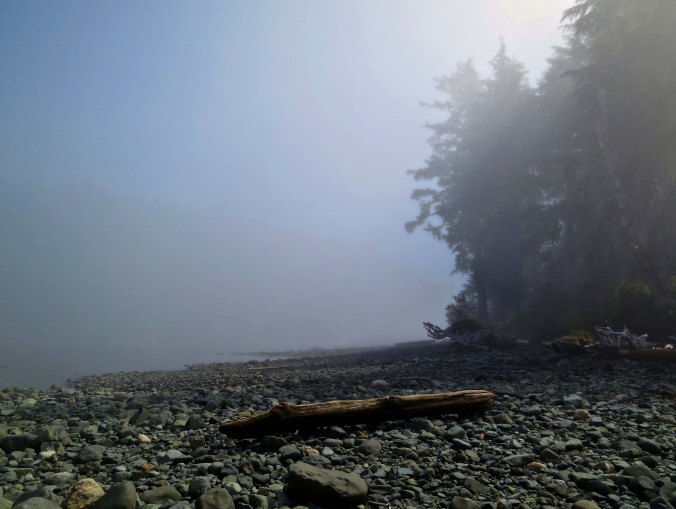
Vancouver Island cast on Johnstone Strait near Telegraph Cove. Photo by Curtis Mekemson.

Working our way along Vancouver Island, Julia decided to stop for lunch and wait the fog out. The bright sun was already creating a patch of blue.
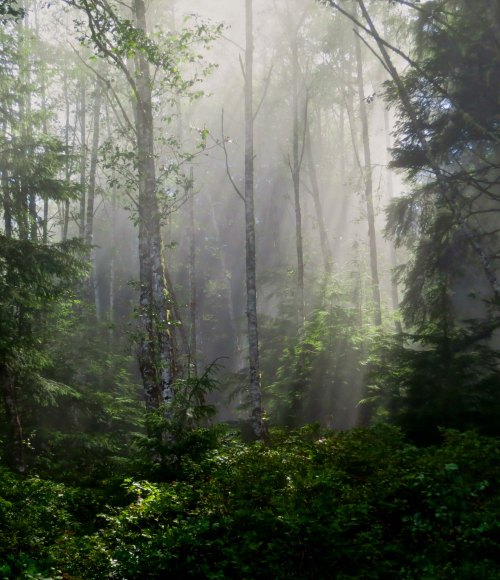
Sun illuminates forest during kayak trip on Johnstone Strait, BC. Photo by Curtis Mekemson.

Everywhere we went, the beauty of the forests matched the beauty of the waterways.
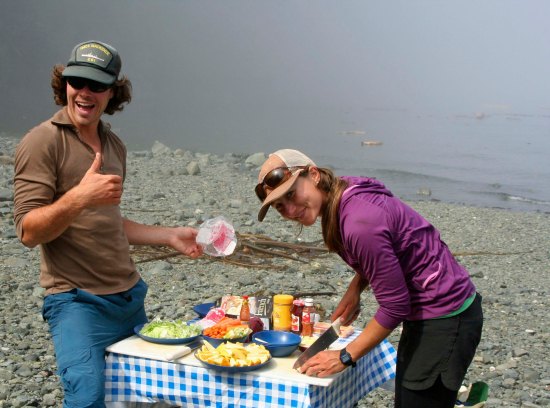
Lunch on Sea Kayak Adventures tour on the Johnstone Strait in British Columbia.

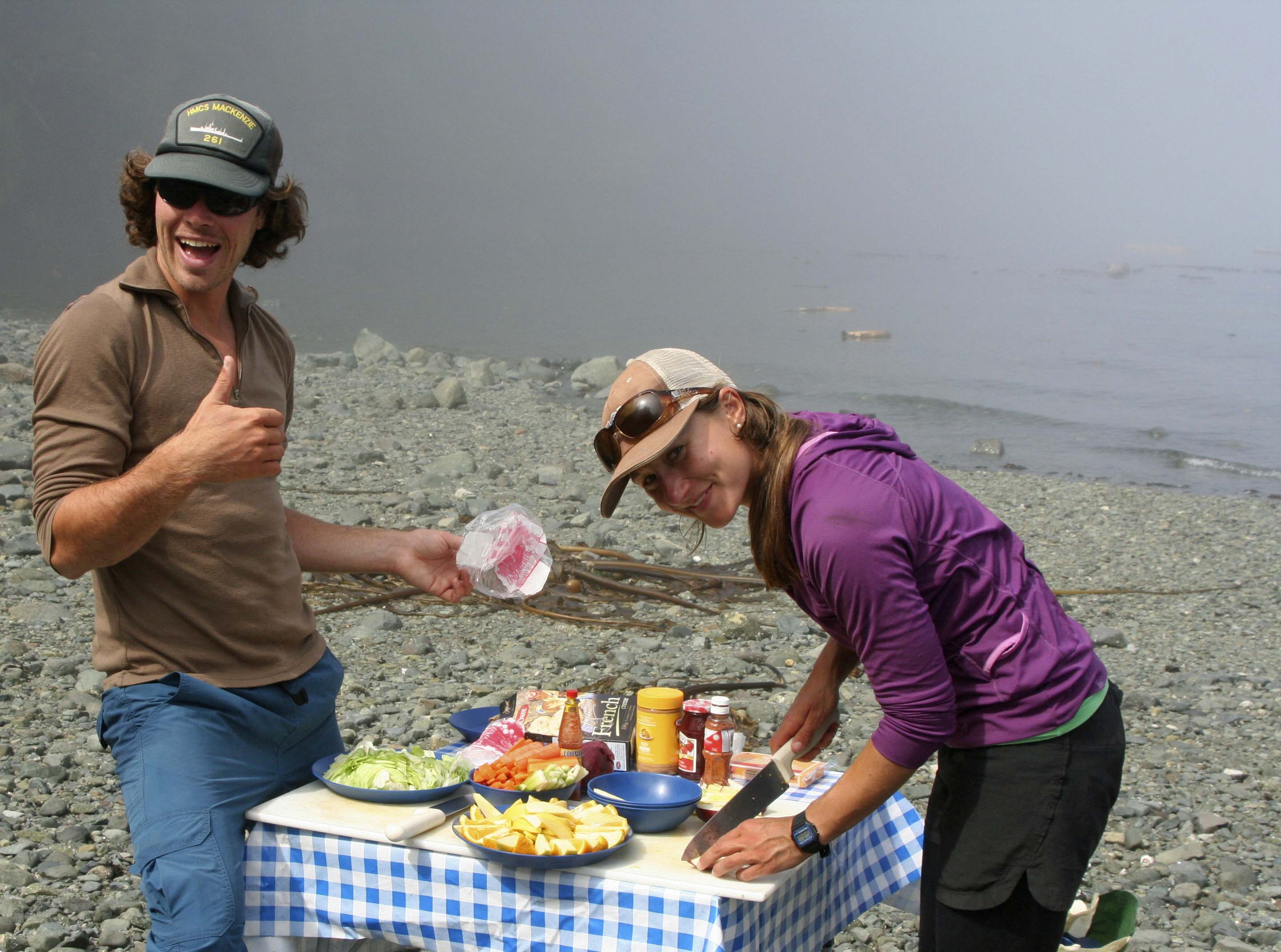
“Come and get it.” Julia and Nick announced that lunch was ready. (Photo by Peggy Mekemson.)
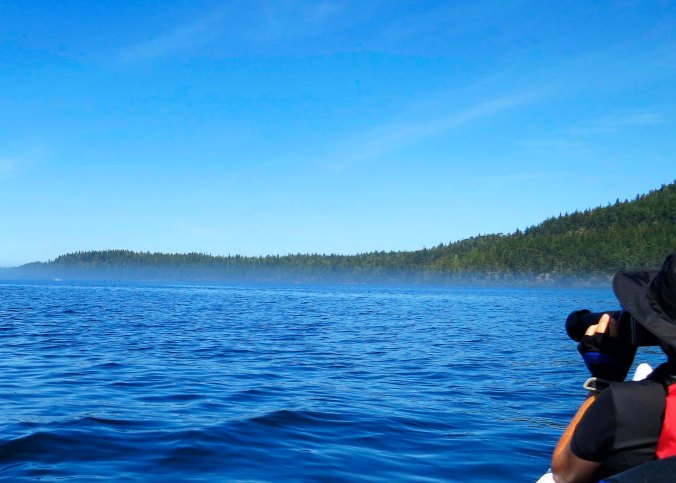
Peggy Mekemson searches for Killer Whales while kayaking across Johnstone Strait off of Vancouver Island. Photo by Curtis Mekemson.

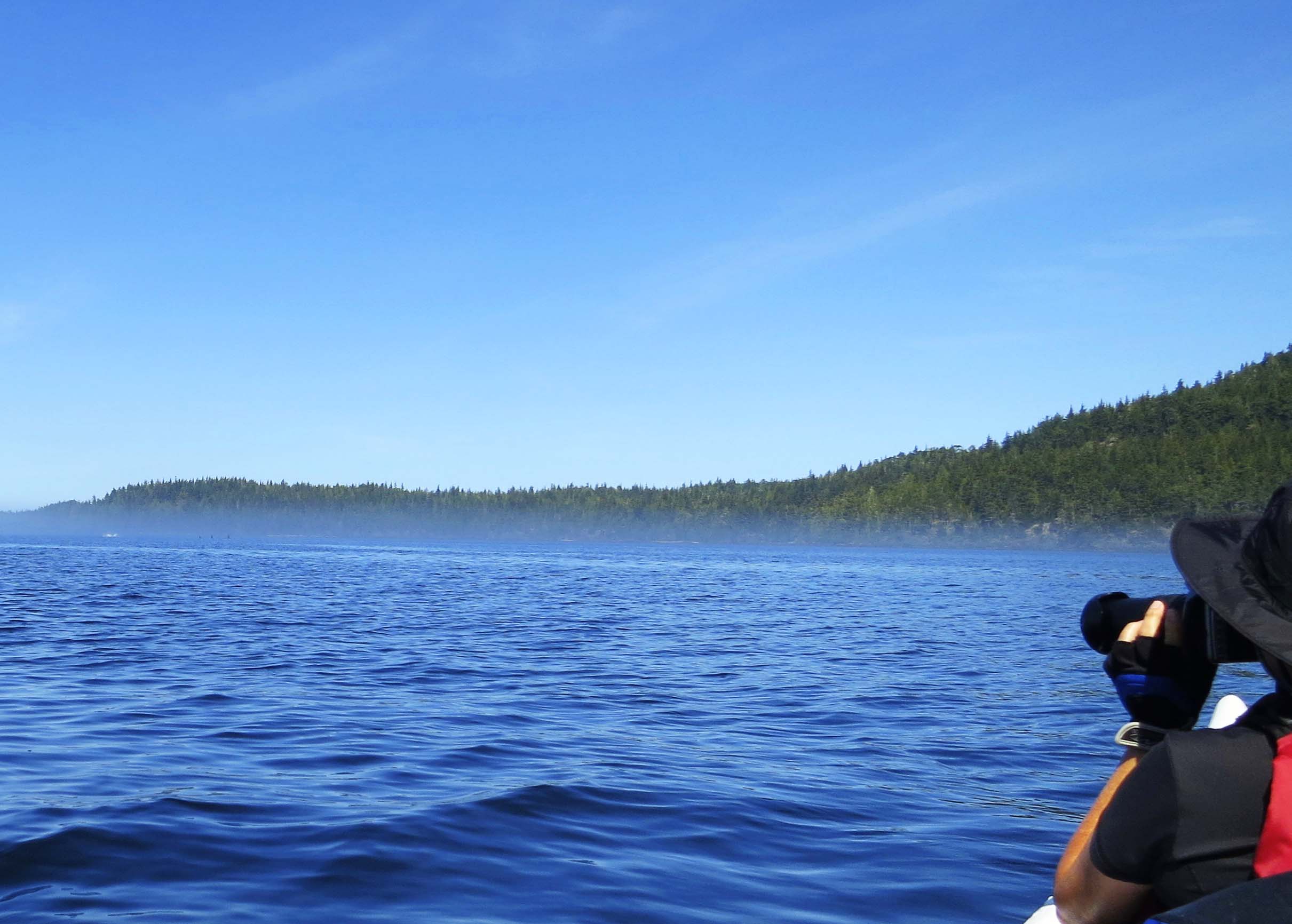
With lunch over and the fog lifted, we made our way across Johnstone Strait. Peggy searched the water for orcas/killer whales.
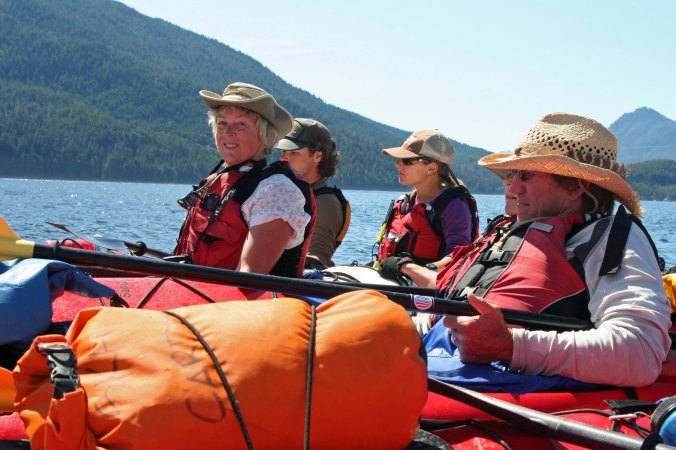
Kayakers with Kayak Adventure Tours raft up on Johnstone Strait in British Columbia when seeing a Killer Whale.

The distinctive whoosh made by a whale when it surfaced and blew caused our group to raft up, where we held on to each other’s kayaks. Edie gave us a smile while we waited, hoping to catch sight of the whale. (Photo by Peggy Mekemson.)
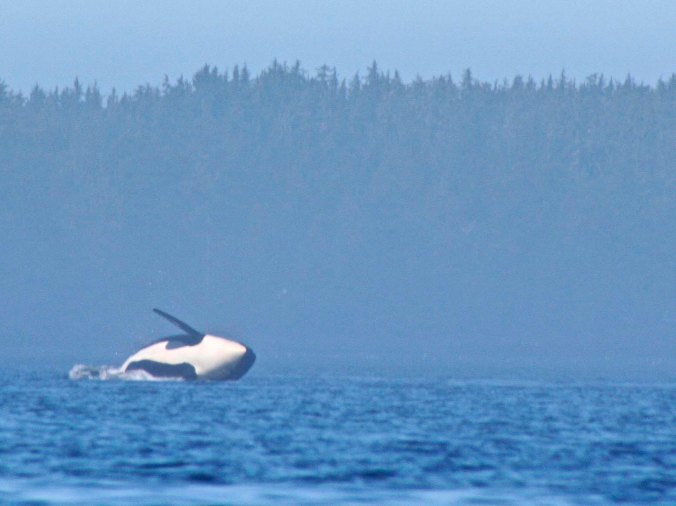
Orca breaches in the Johnstone Strait.

And were rewarded by one breaching in the distance. (Photo by Peggy Mekemson.)
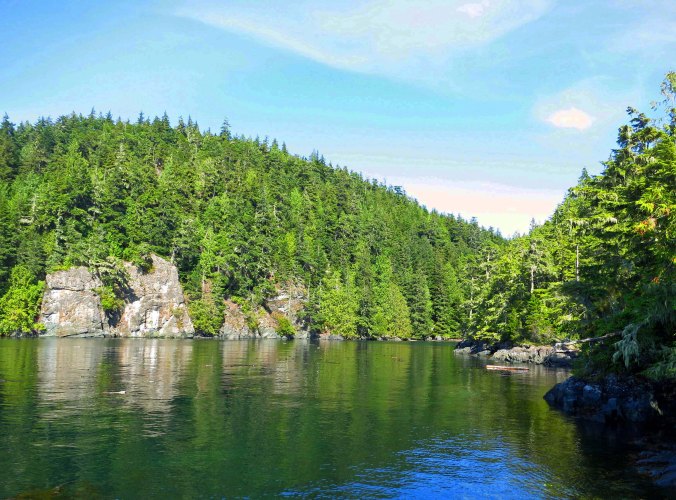
Sea Kayak Adventures campsite on Hanson Island in the Johnstone Strait, British Columbia.

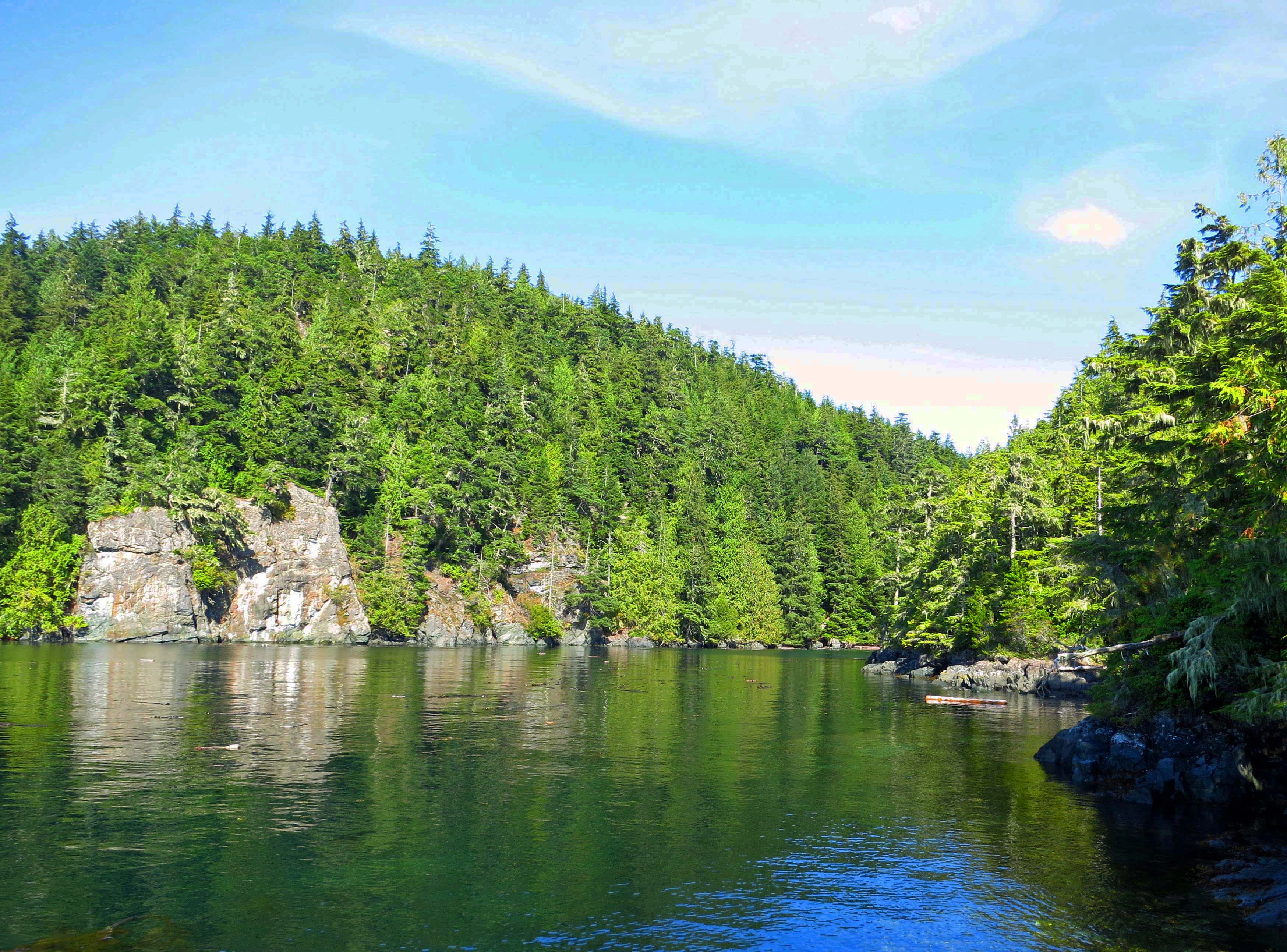
Having also been slowed down by a pod of dolphins, we finally made it to our first night’s campsite on Hanson Island. The camp is to the right of the rocks, back in the cove.

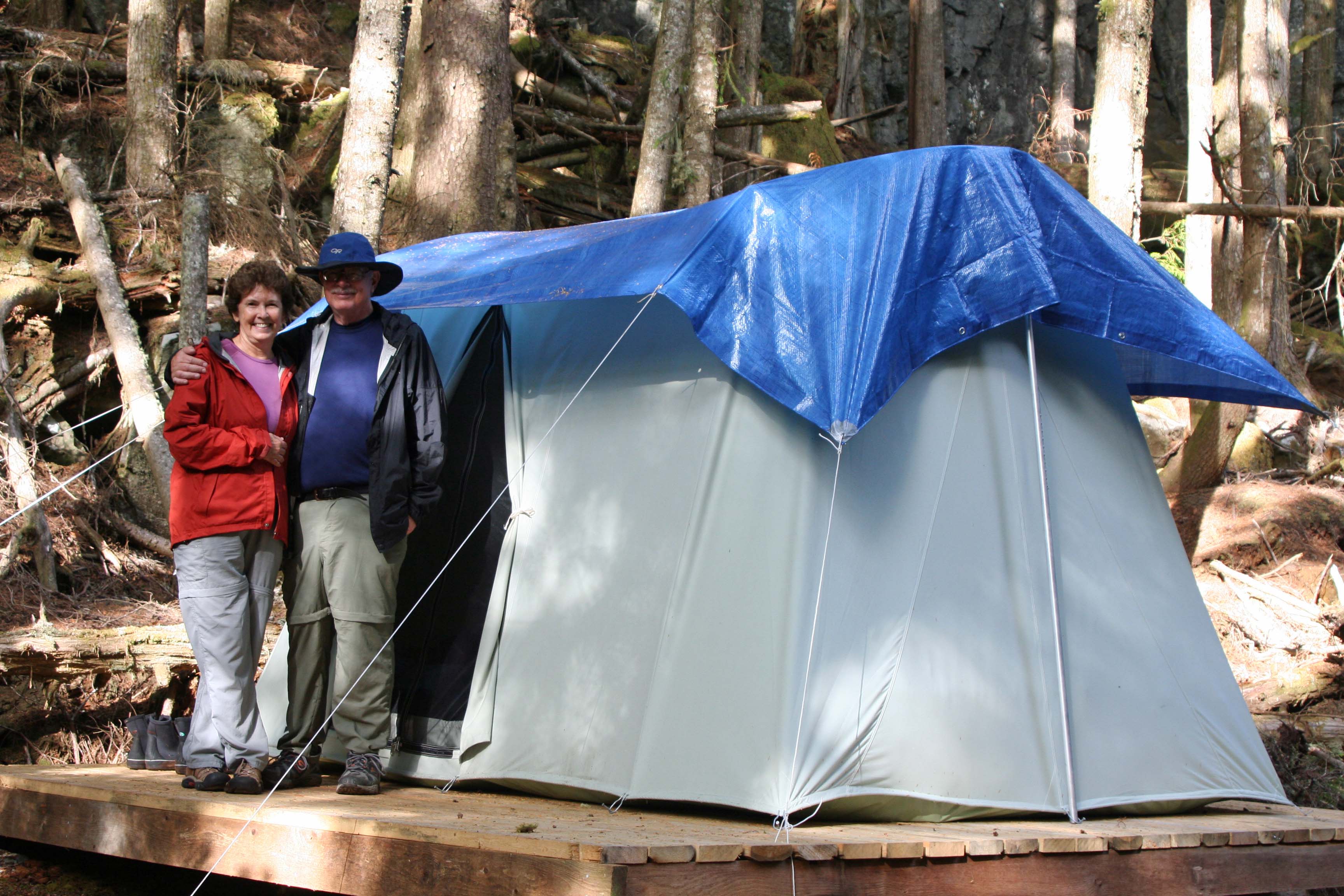
Sea Kayak Adventures leases its sites from a First Nation tribe. Each site is chosen for its beauty and its natural setting.  Camps are pre-set up with tents, a cooking area, and a primitive but comfortable and private open-air restroom. We carried our kayaks up into the camping area, selected tents, packed away gear, and then went for a hike. Afterwards it was time for cocktail hour and dinner. We finished off our evening watching the sunset— and a gorgeous sunset it was.
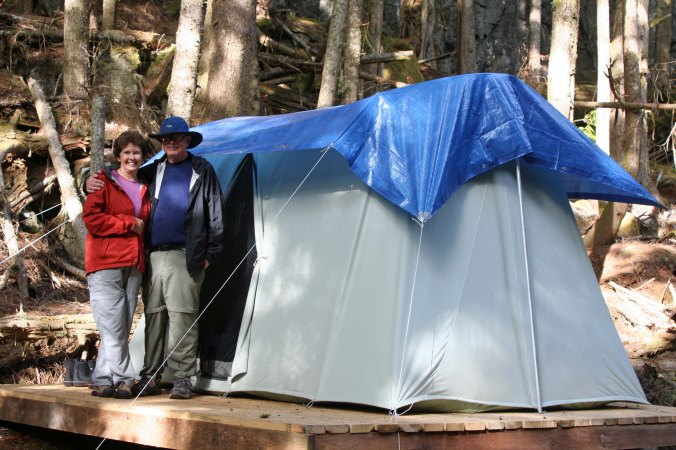
Sea Kayak Tours sets up comfortable tents for  guests to use while on their tours.

Peggy and I stand next to our home in the woods for the night.
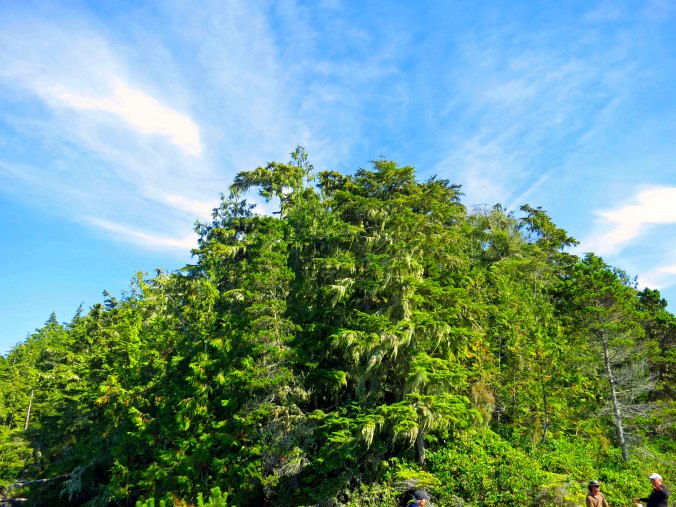
Sky and clouds meet forest on Hanson Island in the Johnstone Strait of British Columbia. Photo by Curtis Mekemson.

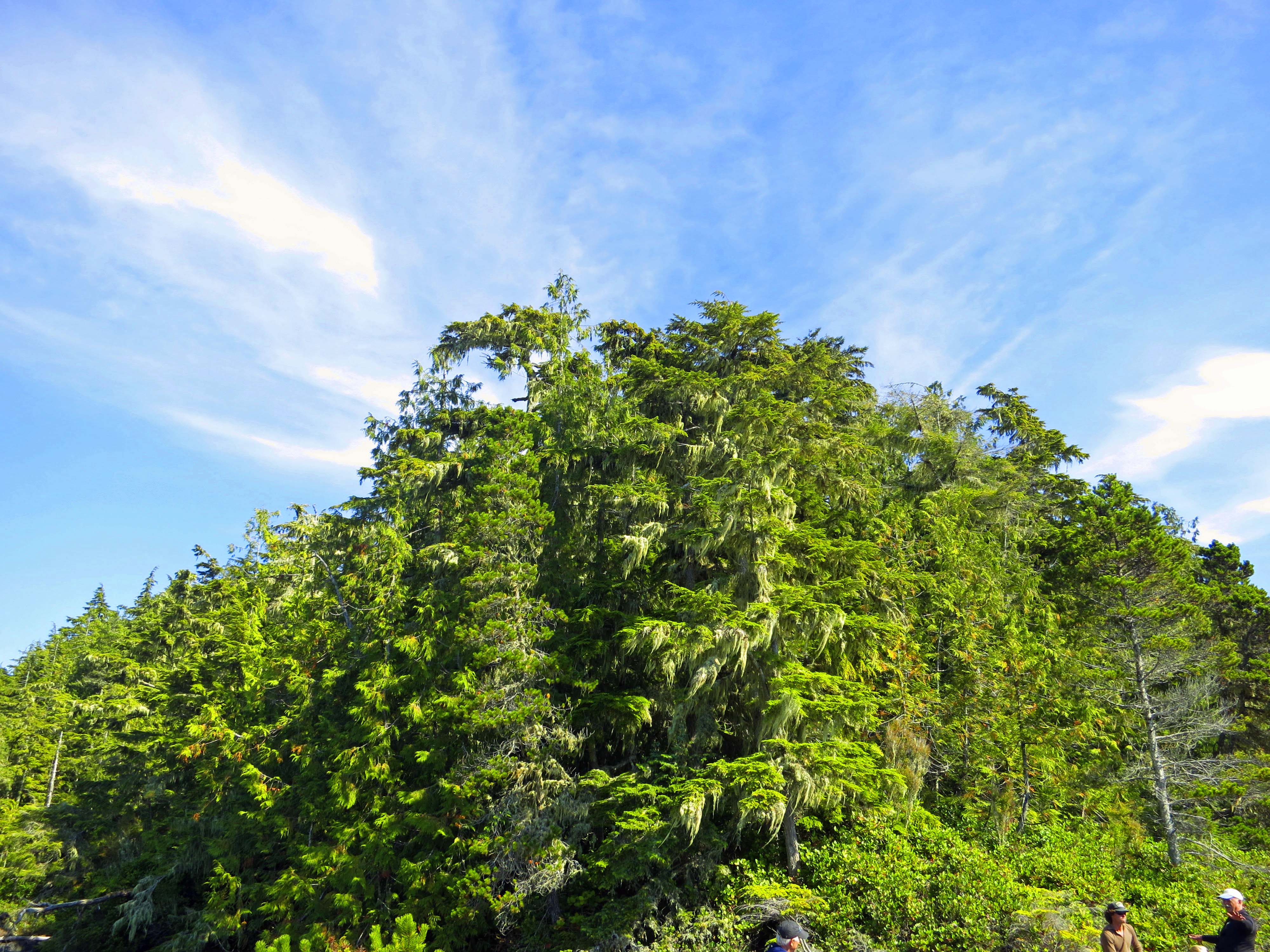
Our walk provided this fun photo where the sky and clouds met the forest…
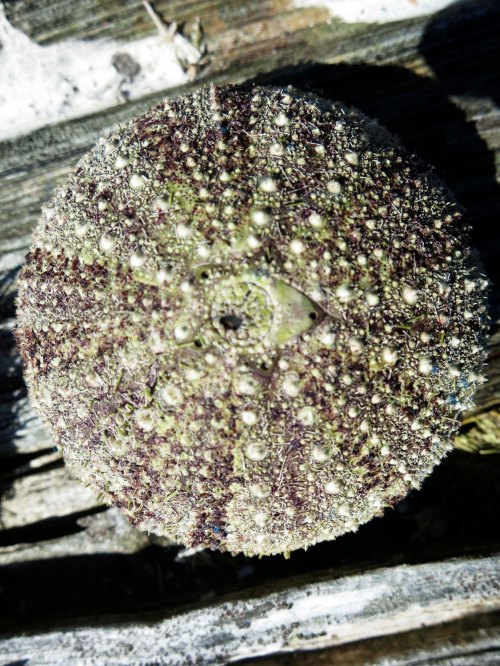
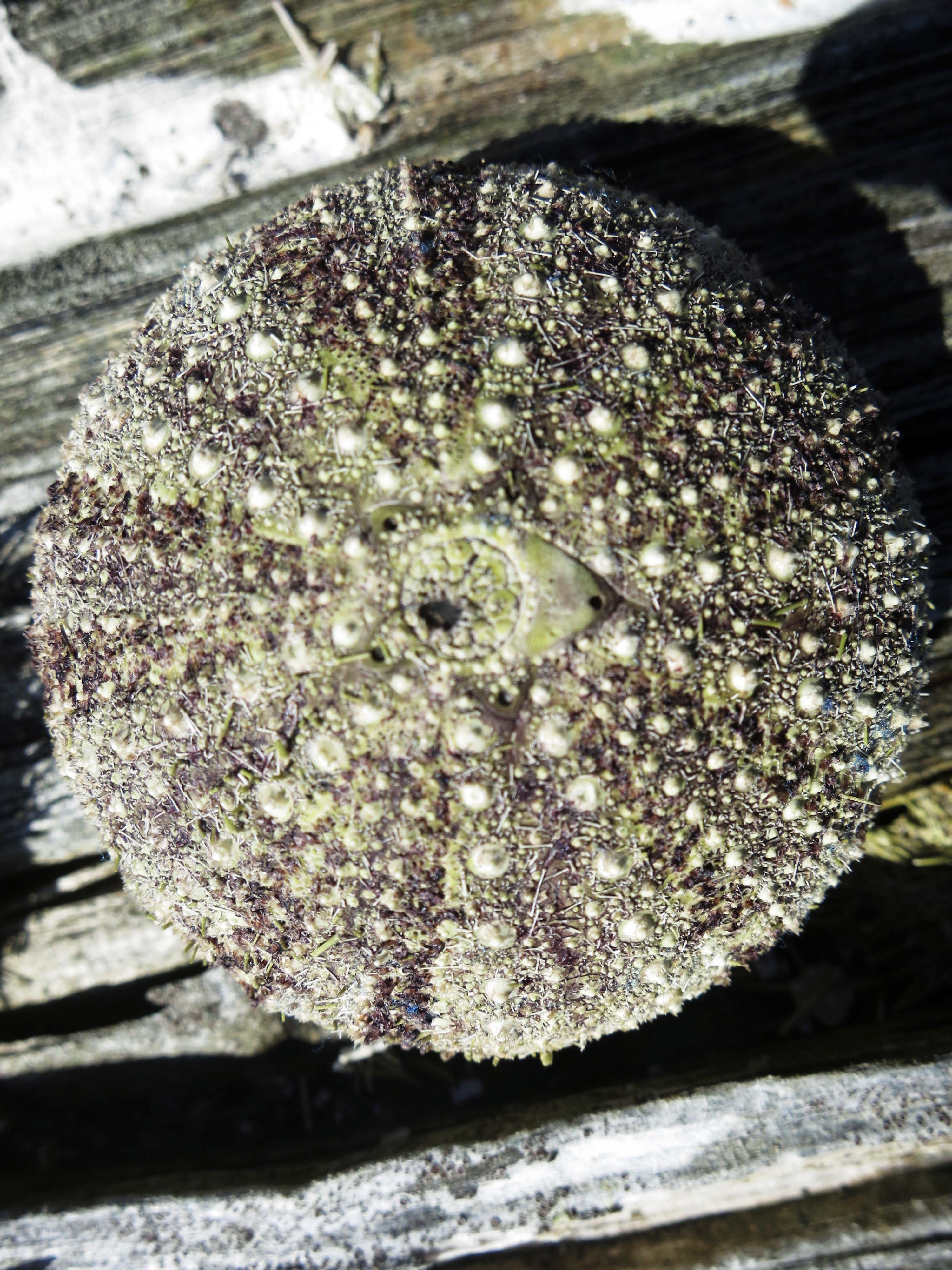
Urchin shell found on Hanson Island in Johnson Strait. Photo by Curtis Mekemson.

We found this jewel of an urchin shell…
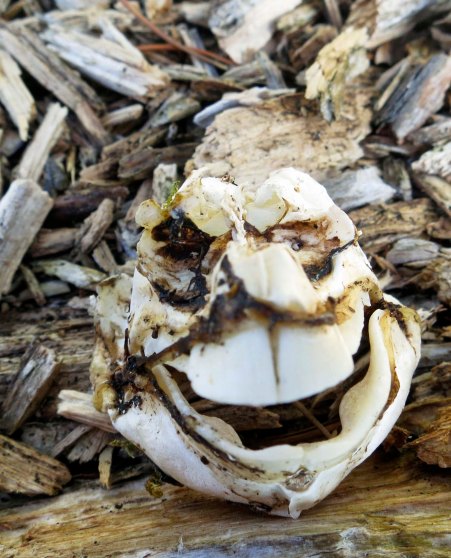
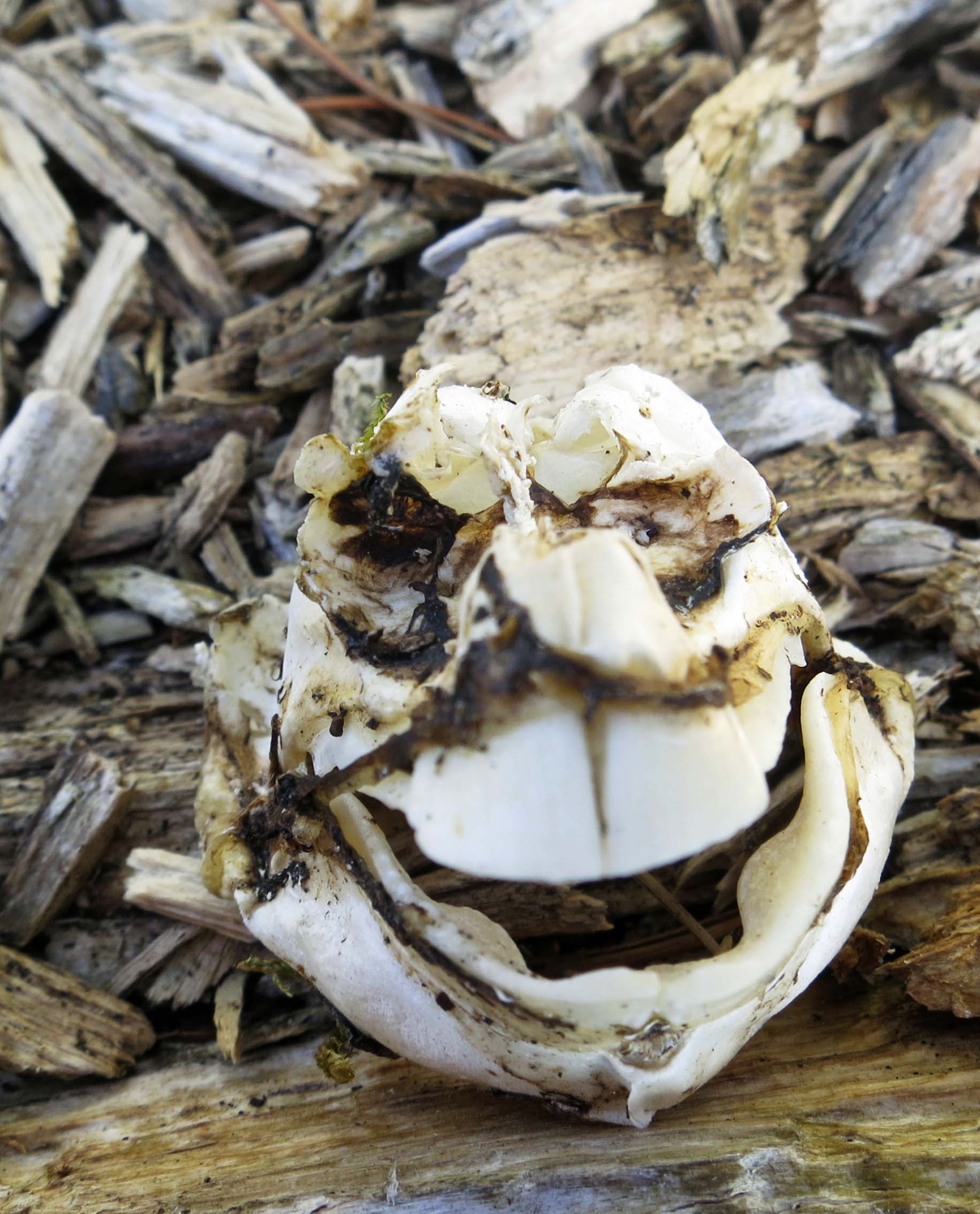
And this rather odd shell/skeleton that our experts debated over. Considering this post is going up on October 30th, I am going with Happy Halloween.

And this rather odd shell/skeleton that our experts debated over. Check out the buck teeth. This guy would put a beaver to shame. Considering this post is going up on October 30th, Peggy, the creature, and I would like to wish all of you a Happy Halloween.
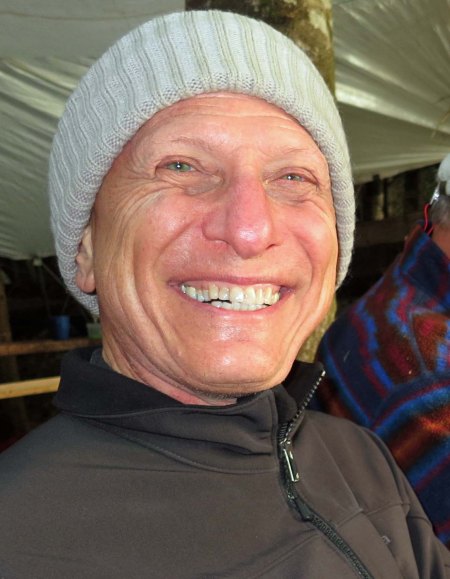
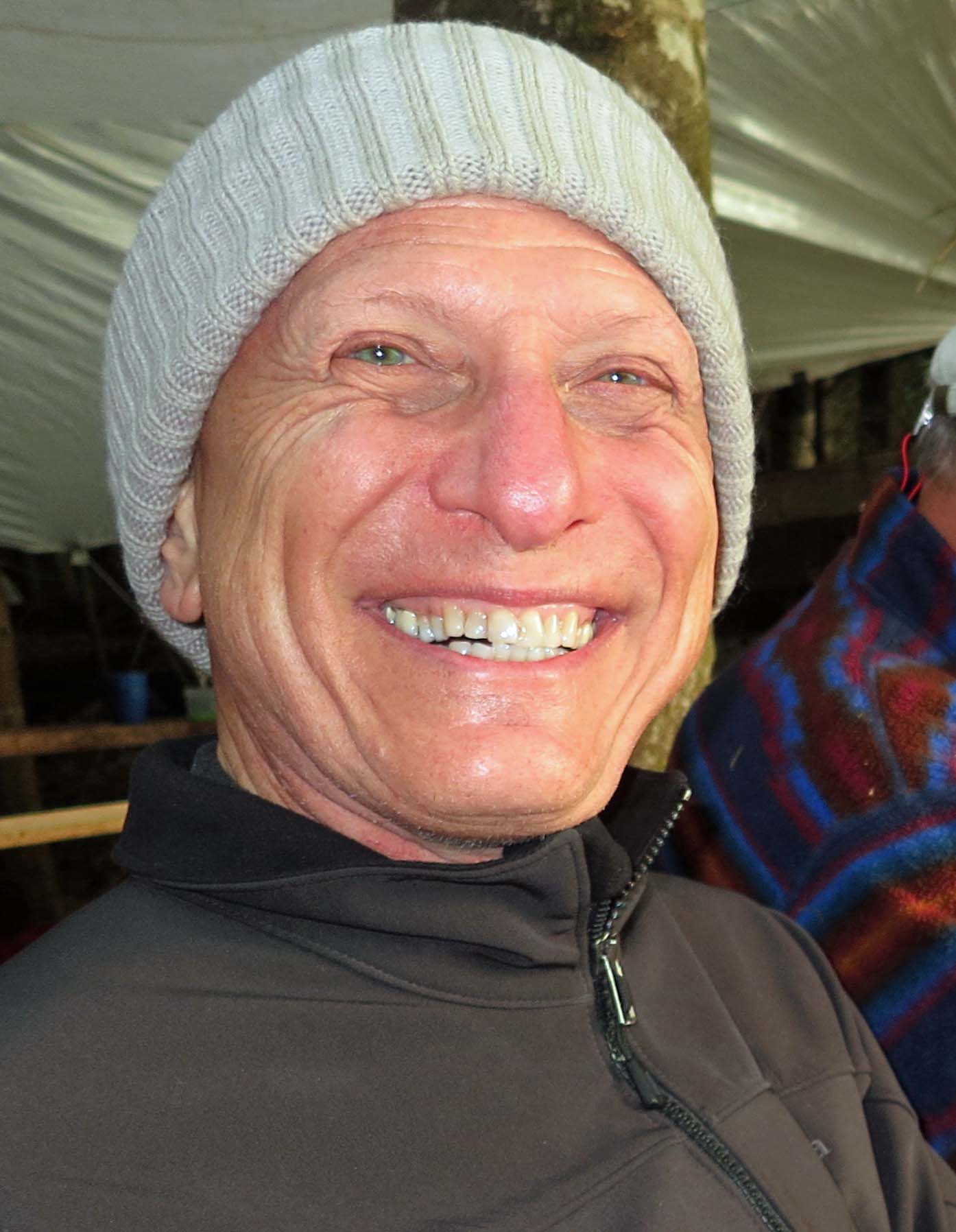
Back in camp, I got a happy, toothy grin from Dennis...

Back in camp, I got a happy, toothy grin from David…
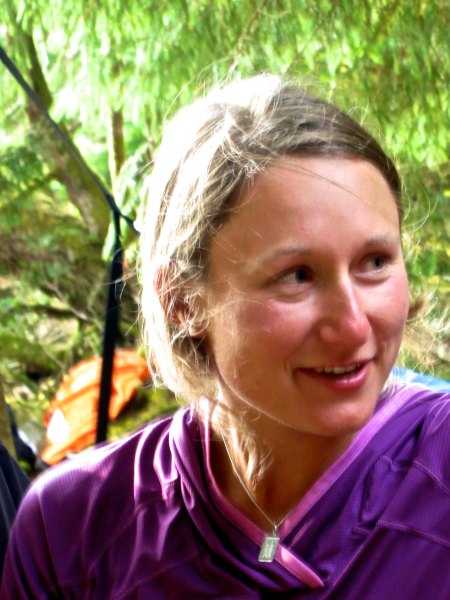
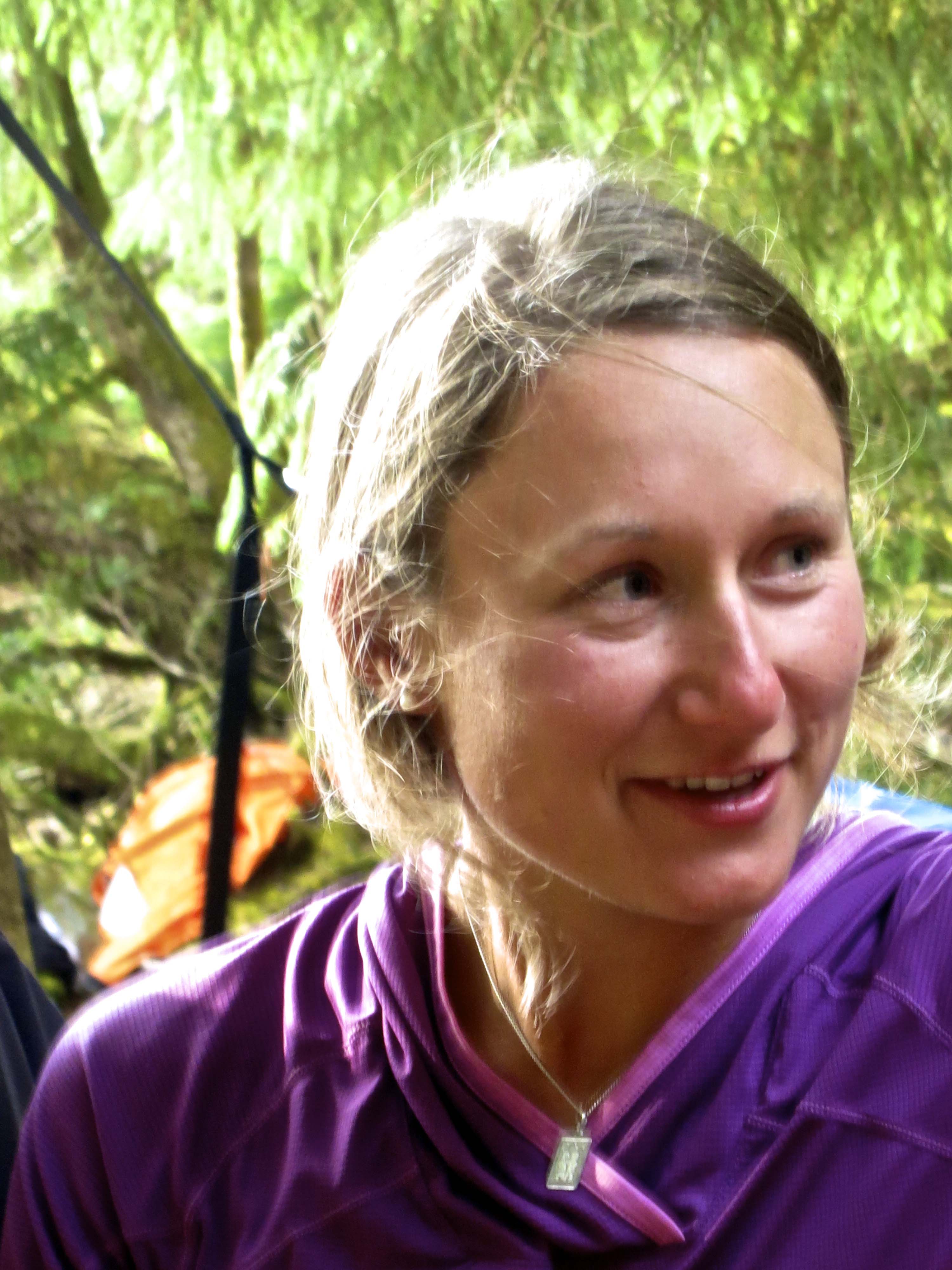
And a shy smile from Julia.
And a shy smile from Julia.

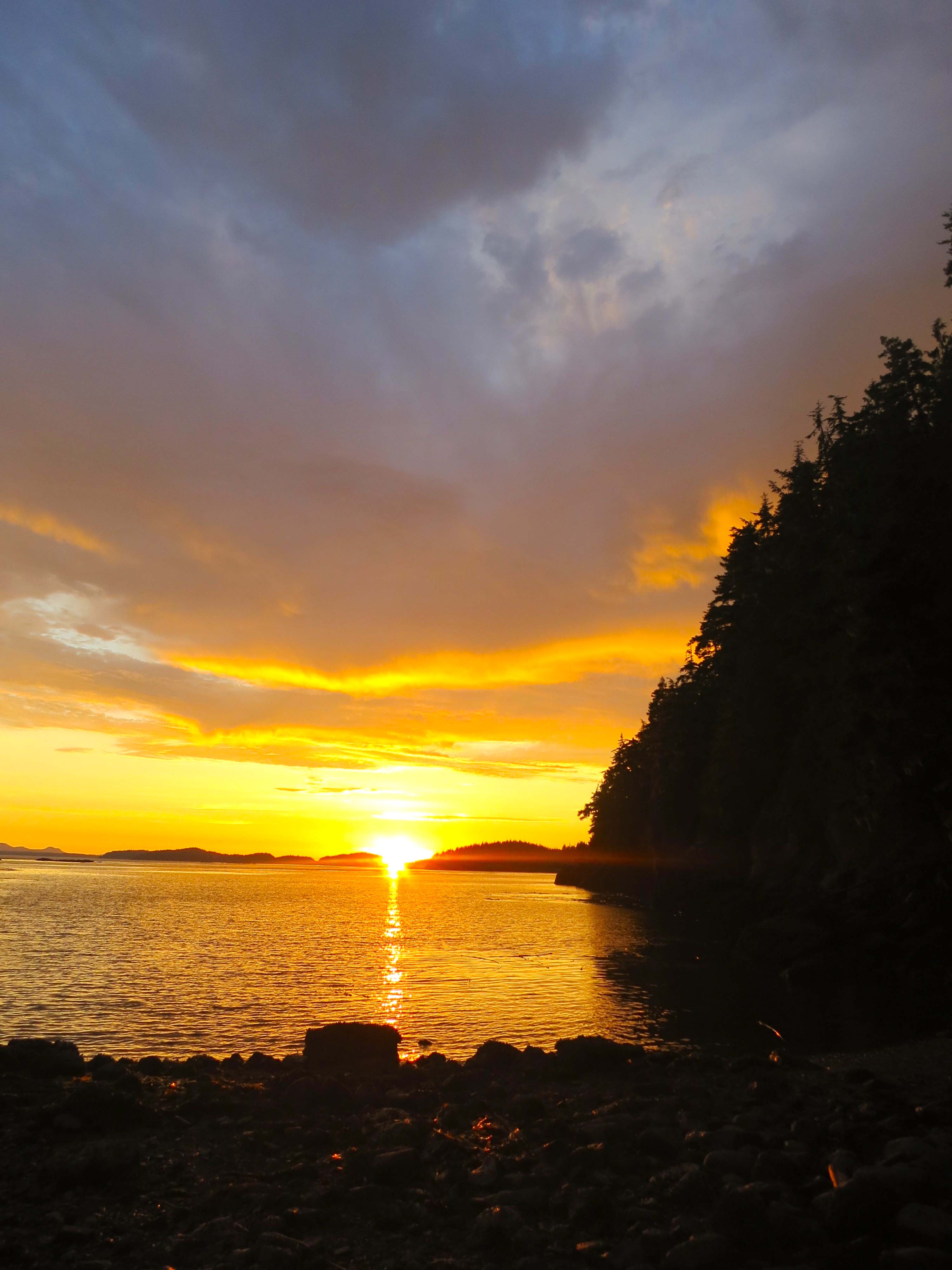
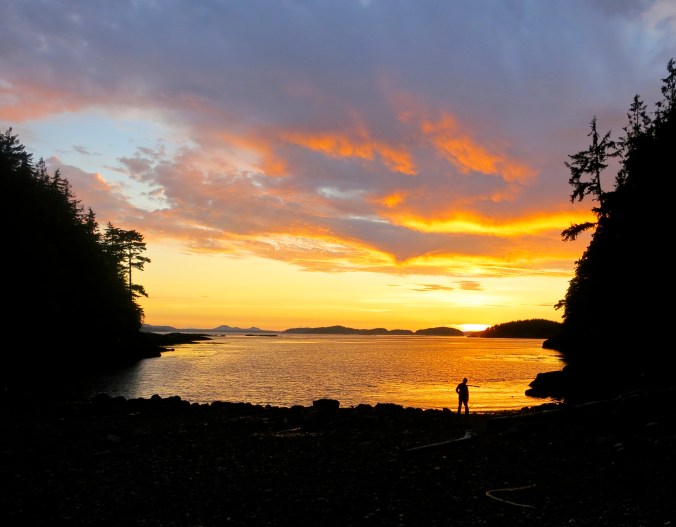
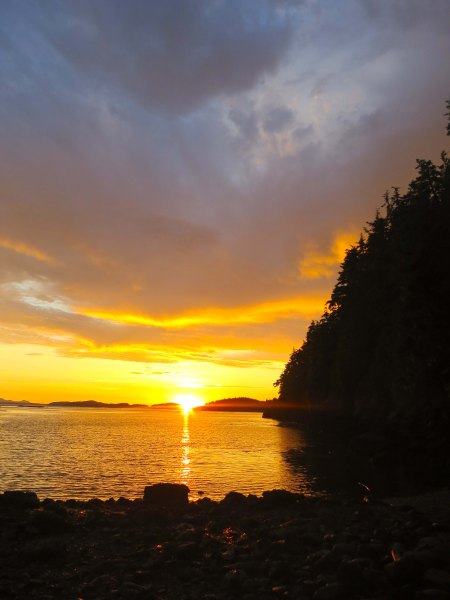
Sunset over Johnstone Striait off of Hanson Island. Photo by Curtis Mekemson.

We finished off the day by watching the sunset over Johnstone Strait. Next blog: We kayak onward to our next island.

There Is Much More to Mt. Rainier National Park than a Mountain

A waterfall in Mt. Rainier National Park. Photo by Curtis Mekemson.

Mt. Rainier National Park has much more that its majestic mountain to offer visitors. Ancient forests, glacial rivers and tumbling waterfalls are found throughout the Park.

At 14, 410 feet (4,392 meters), Mt. Rainier is the tallest volcano in the Cascade Mountains, a range that starts in northern California and works its way through Oregon and Washington before ending in southern British Columbia. The range is part of the famous, or perhaps I should say infamous, Ring of Fire that surrounds the Pacific Ocean and represents the epic crashing of oceanic and continental tectonic plates. Volcanic eruptions, earthquakes and tsunamis are its legacy.

Mt. Shasta in northern California. Photo by Curtis Mekemson.

Starting at Mt. Shasta (shown here) and Mt. Lassen in northern California, the Cascade Mountain Range of volcanoes works its way northward into southern British Columbia.

Rainier is an active volcano, which means it is capable of blowing its top at any time. Every volcanic eruption in the last 200 years that has taken place in the contiguous United States (outside of Hawaii and Alaska) has happened in the Cascade Range. The most recent was Mt. St. Helens in southern Washington, which exploded in 1980. I flew over the mountain a few weeks after the eruption. The destruction was unimaginable.

Mt. St. Helens in Washington. Photo by Curtis Mekemson.

Mt. St. Helens today, its once majestic peak now a crater. The river has carved a canyon through the mudflow the volcano left behind. I took this photo two years ago.

Jet stream driven storms coming off the Pacific Ocean bring the rain that the North West is justifiably famous for. During the winter, this rain turns to snow as the storms are forced up and over Mt. Rainier— lots of snow. During the winter of 1971/72, 1,122 inches of snow fell. This translates into 93.5 feet or 28.5 meters. It set a world record at the time. The snow is responsible for the 14 named glaciers that slowly work their way down from the top, grinding up rocks as they go, and creating several rivers.

Photo of Mt. Rainier Glacier taken by Curtis Mekemson.

Fourteen named glaciers make their way down Mt. Rainier.

Fed by the Emmons, Frying Pan and Winthrop Glaciers, the White River is given its color by ground glacial rock dust.

Fed by the Emmons, Frying Pan and Winthrop Glaciers, the White River is given its color by ground glacial rock dust. BTW: Ancestors of my mother barely missed being massacred by indians on the White River around the time Seattle was founded.

Peggy and I, along with our son Tony, worked our way clockwise around the mountain from the Sunrise Visitor Center to the Henry (Scoop) Jackson Memorial Visitor Center, covering about a third of the mountain. The road has enough twists and turns to hassle a snake and has more picturesque scenes than a National Geographic photographer could capture in a month. Misty waterfalls and an ancient forest competed with the snow-topped mountain for our attention. We finished off our exploration of Mt. Rainier with a breath-stealing hike that climbed up 1400 feet behind the Jackson Memorial Visitor Center.

Roots of a downed giant in the Grove Of Patriarchs, Mt. Rainier National Park. Photo by Curtis Mekemson.

You would expect to find large trees in an area called the Grove of Patriarchs. We weren’t expecting this. Peggy is perched inside the roots of a downed patriarch. Or maybe it was a matriarch.

Creek reflects green of surrounding forest in Mt. Rainier National Park. Photo by Curtis Mekemson.

This creek flowing through the Grove of Patriarchs immediately made me think of a Claude Monet Impressionist painting.

Since we are in the Grove of Patriarchs, a photo of big trees is required.
Since we were in the Grove of Patriarchs, a photo of big trees is required.
Wood grains on a downed tree in Patriarch Grove, Mt. Rainier National Park. Photo by Curtis Mekemson.

Whirls of wood grain appeared on a downed tree in the Grove. I was reminded of a 3-D topographic map.

Saffron robed monk throws snowball on trail above Jackson Memorial Center at Mt. Rainier National Park. Photo by Curtis Mekemson.

We came across a saffron robed monk throwing snowballs as we hiked on the trail above the Jackson Memorial Visitor Center. “Throw one at me,” I urged with camera poised.

View from Mt. Rainier above the Jackson Memorial Center. Photo by Curtis Mekemson.

One of many views we had climbing up the trail. As I recall, Peggy broke out singing Climb Every Mountain. It was a Julie Andrews’ moment.

Looking around we saw several waterfalls tumbling off the mountain.

Looking around we saw several waterfalls tumbling off the mountain.

Peggy captures Tony at our turn around point on the trail. He definitely wanted to keep on going. (Photo by Peggy Mekemson.)

Peggy captured Tony at our turn around point on the trail. He wanted to keep going to the top of the green hill but was outvoted by Mom and Dad. (Photo by Peggy Mekemson.)

Phlox flowers at Mt. Rainer National Park. Photo by Curtis Mekemson.

I took time to photograph these cheerful Phlox flowers on the way down.

Corn lily growing on the side of Mt. Rainier. Photo by Curtis Mekemson.

And this wonderfully wild corn lily.

A goodbye view of Mt. Rainier.

A final goodbye view of Mt. Rainier. Next Blog: We begin our kayak adventure and search for Orca Whales off the north coast of Vancouver Island.