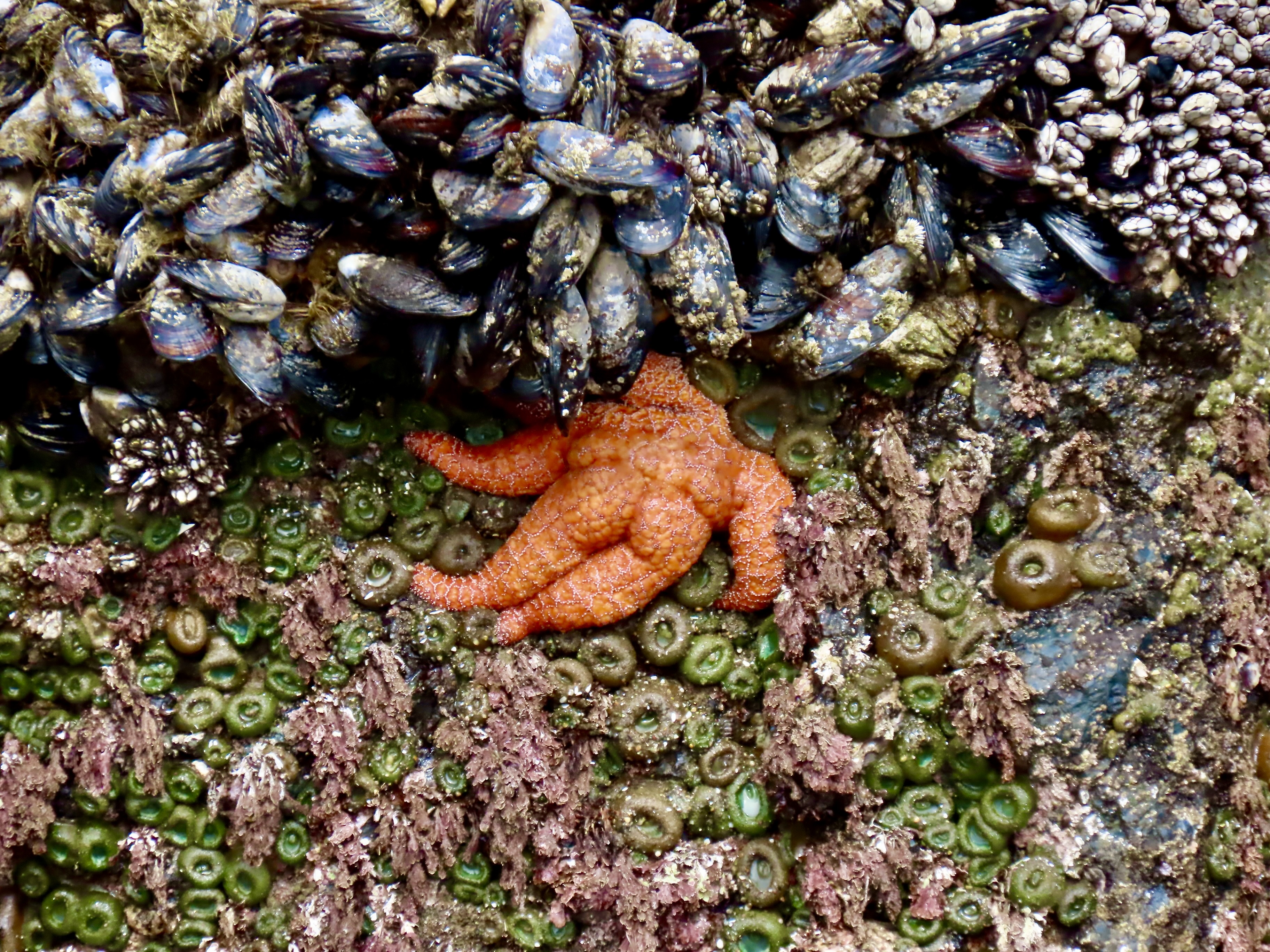
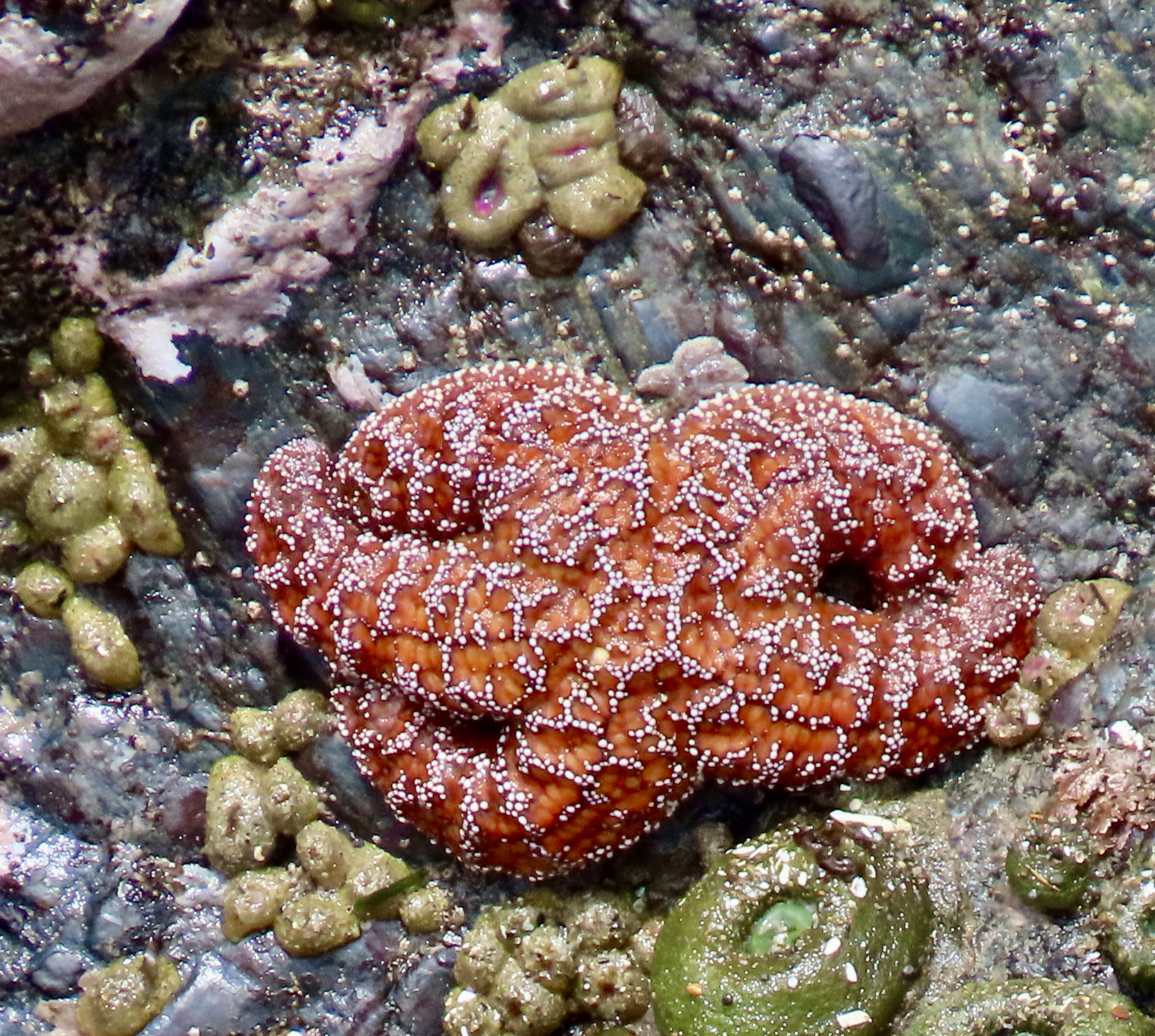
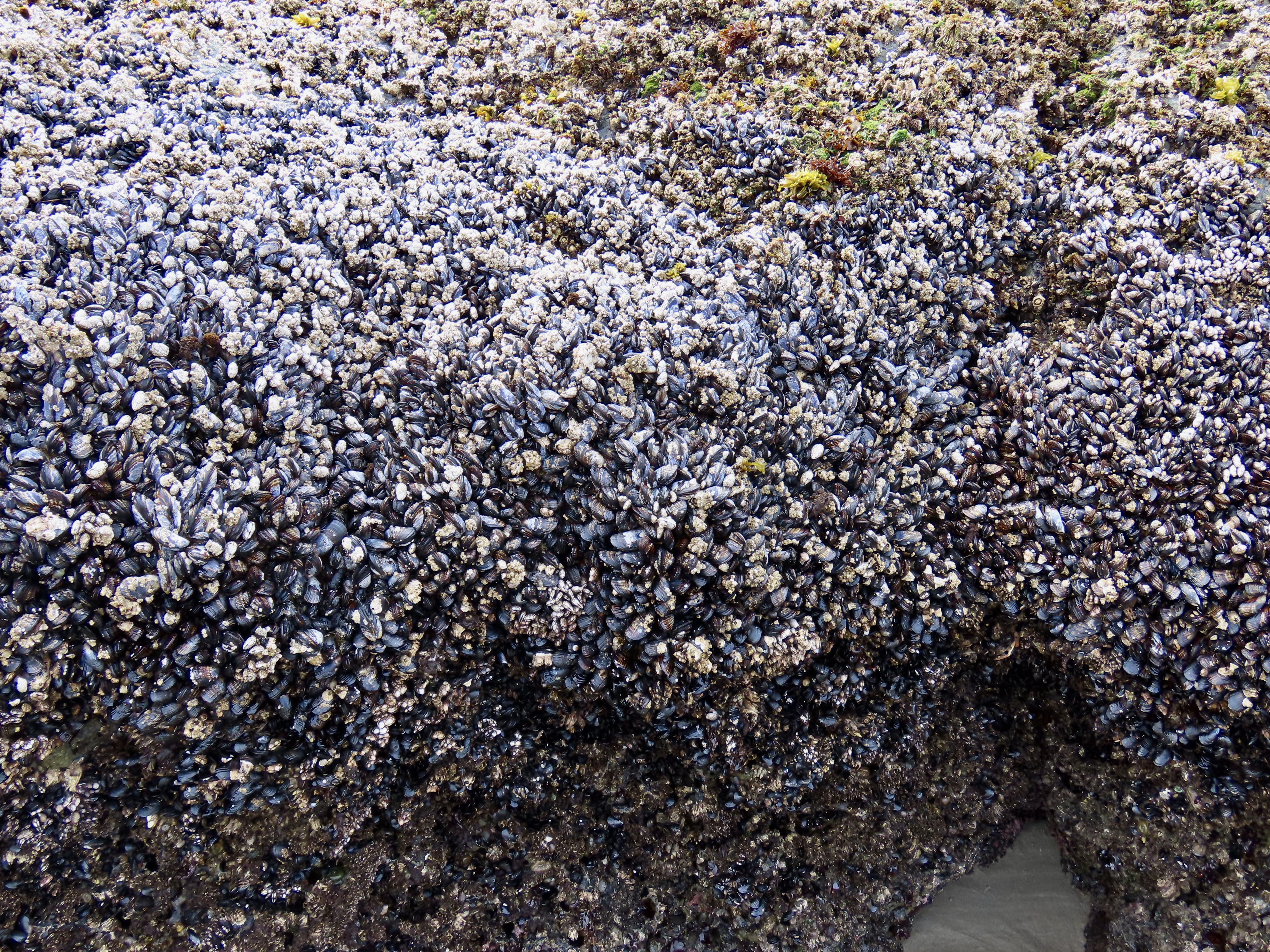
“Curt, you have to see this,” Peggy called, tearing me away from taking a photo of 3452 mussels. It was a human shaped sea star nestled in among anemones, mussels, and goose neck barnacles. There was no doubt about it. She had found the Star of Devil’s Kitchen!
Peggy and I love to futz around in tide pools. There are always amazing things to see and unending drama. It’s a who eats who world. So far on our trip up the coast we had missed the opportunity. We were feeling deprived. Low tides had either been too early or too late. Bandon’s was perfect. We headed out to Devil’s Kitchen, a spot we had visited before. I had forgotten how the area got its name and did a search. Lo and behold, Google sent me straight to an earlier blog of mine. So I am going to quote the ‘expert,’ me: “It has to do with the cold waters of the ocean bringing a rich brew of nutrients to the surface that are eaten by plankton, that are eaten by small fish, that are eaten by bigger fish, that are eaten by still bigger fish, that are eaten by seals, sea lions, otters, and a whole host of seabirds, not to mention people and anything else that can sink their teeth into them.” Welcome to the feast.
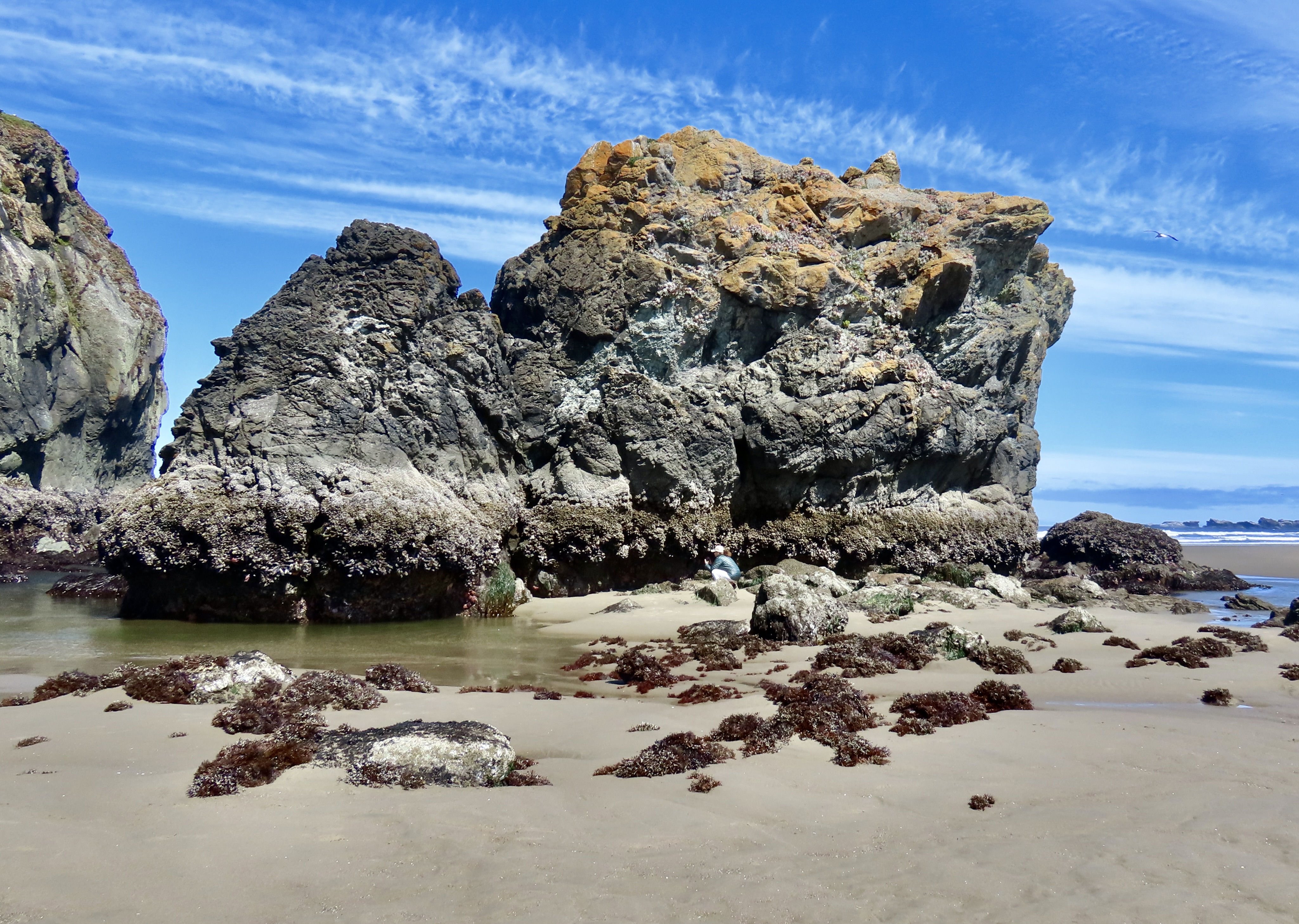
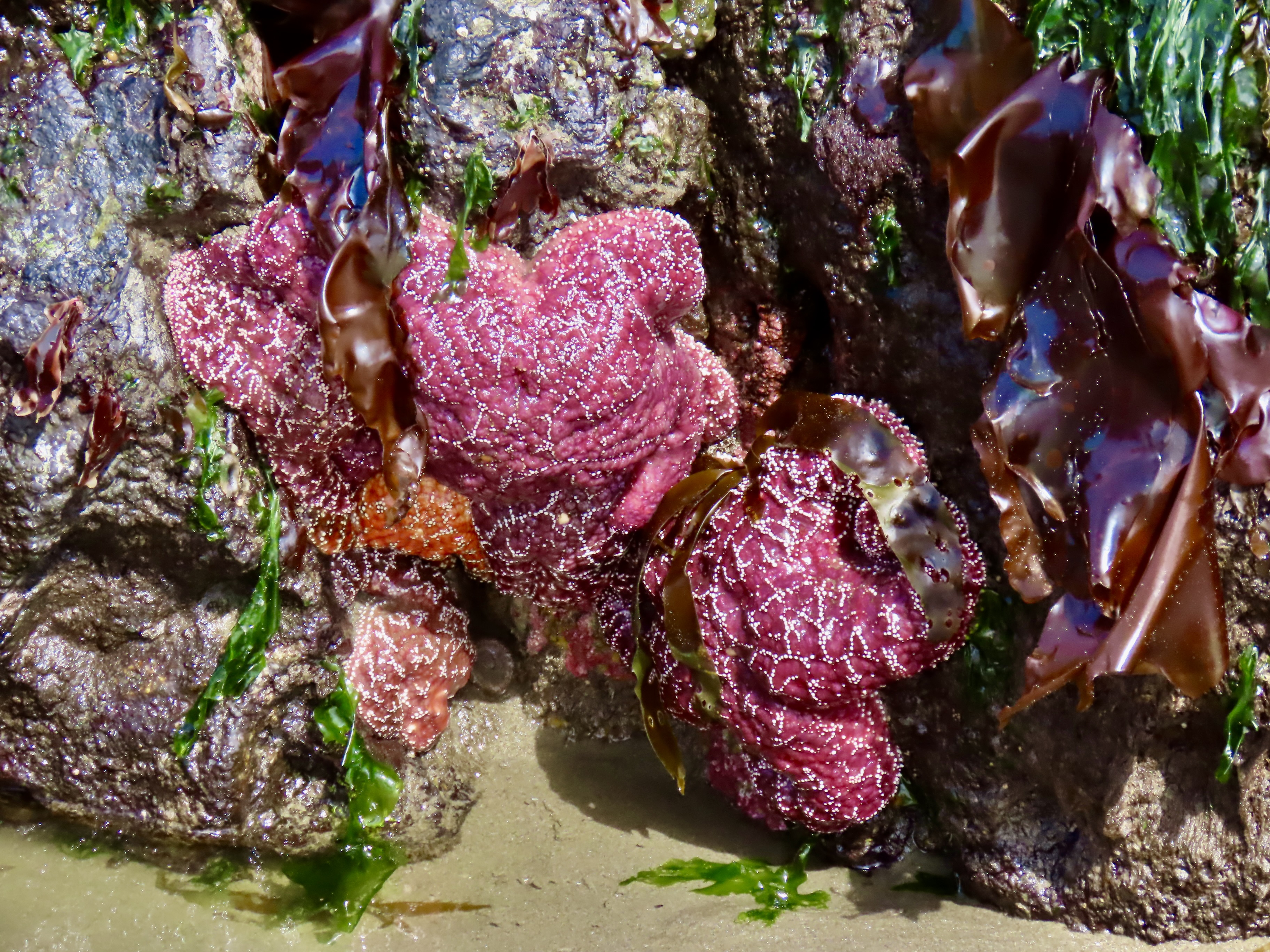
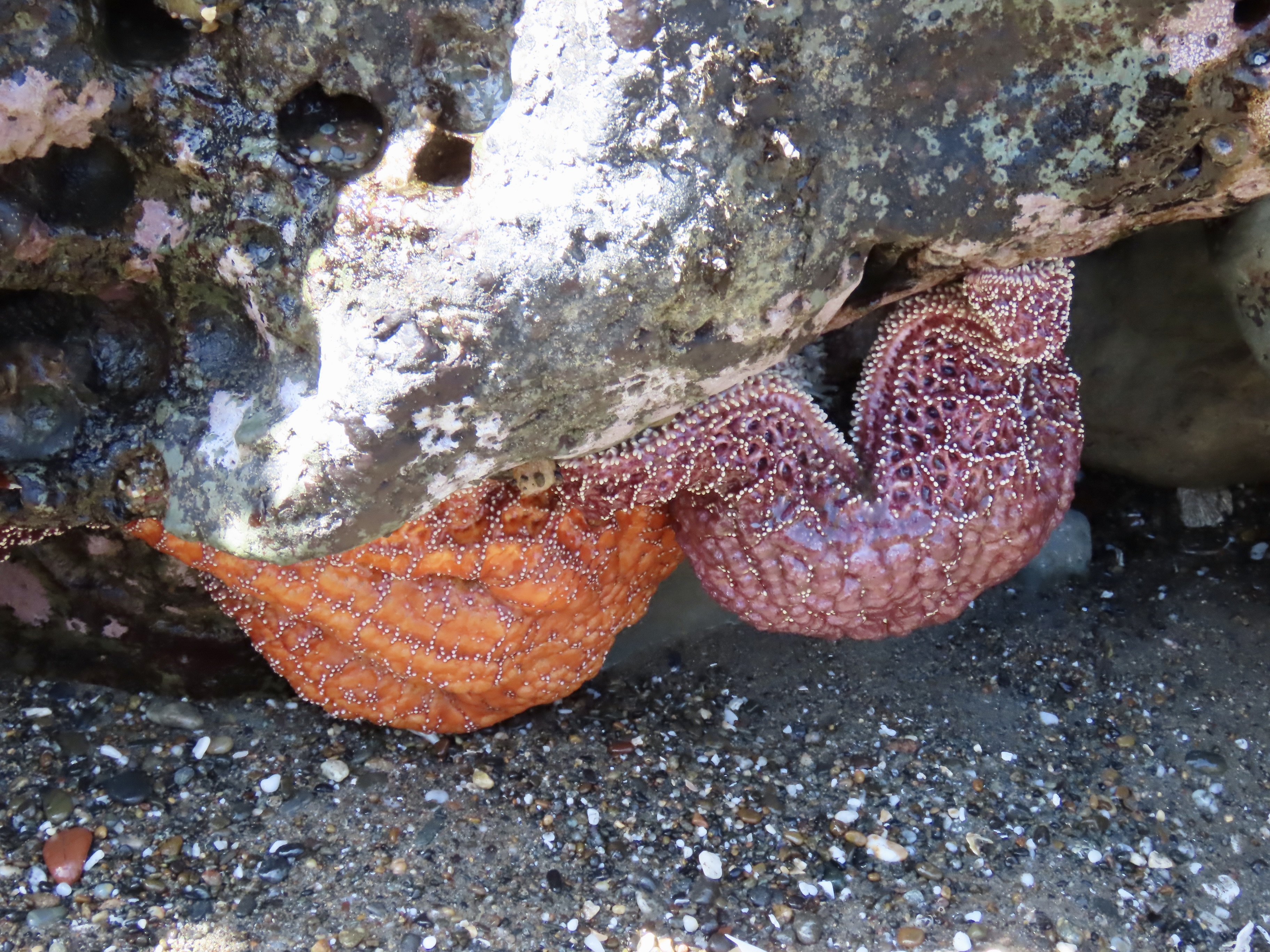
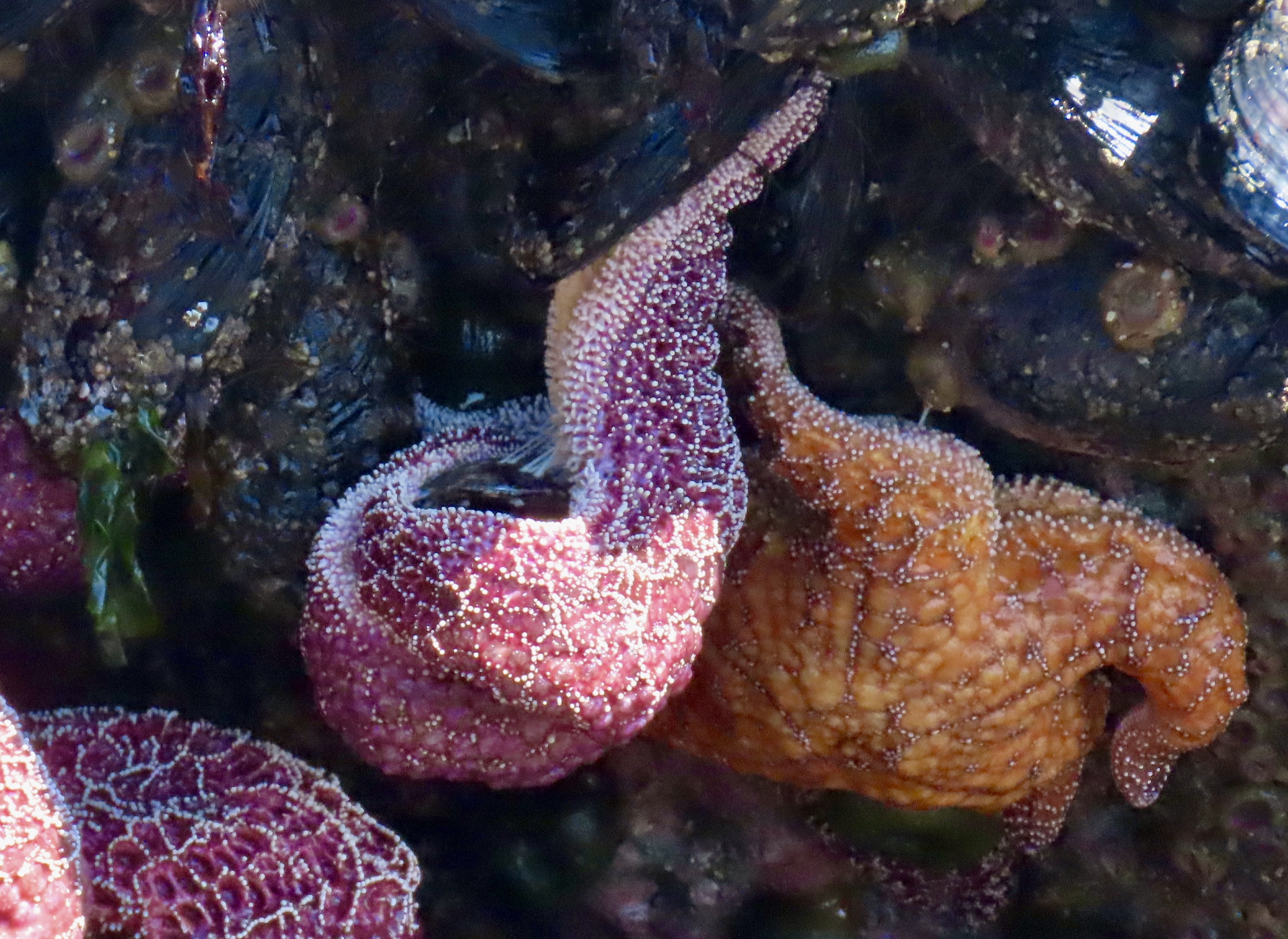
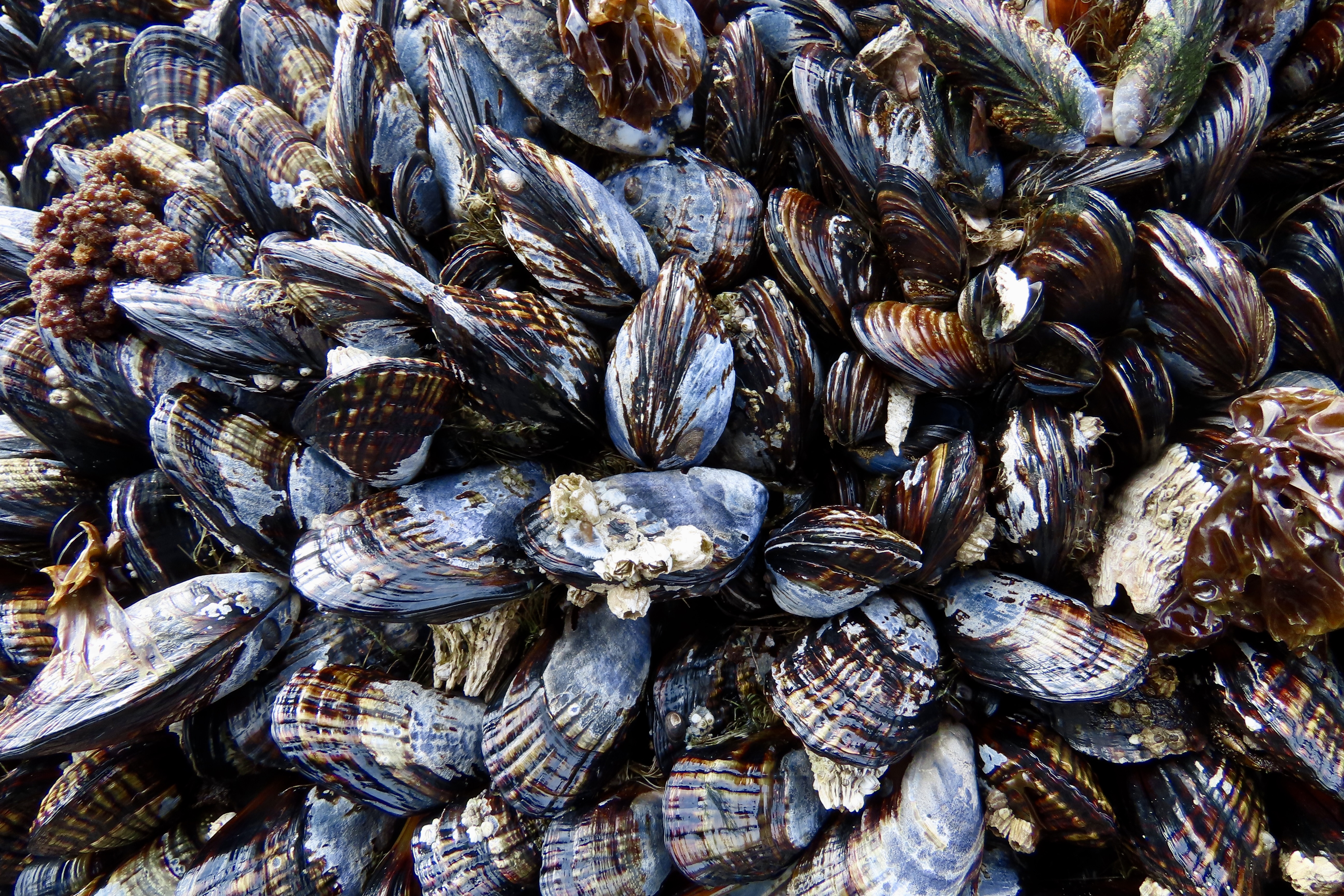
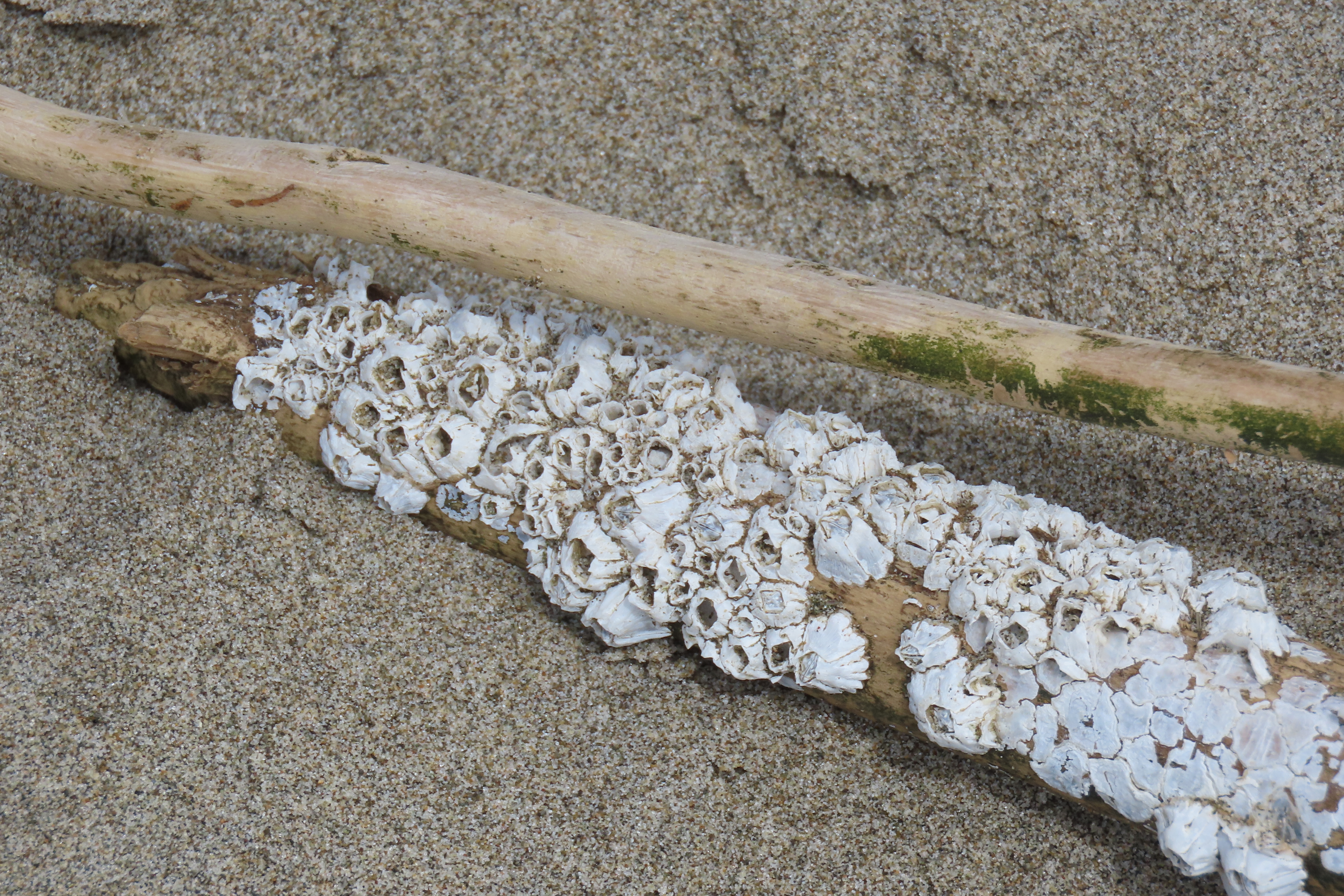
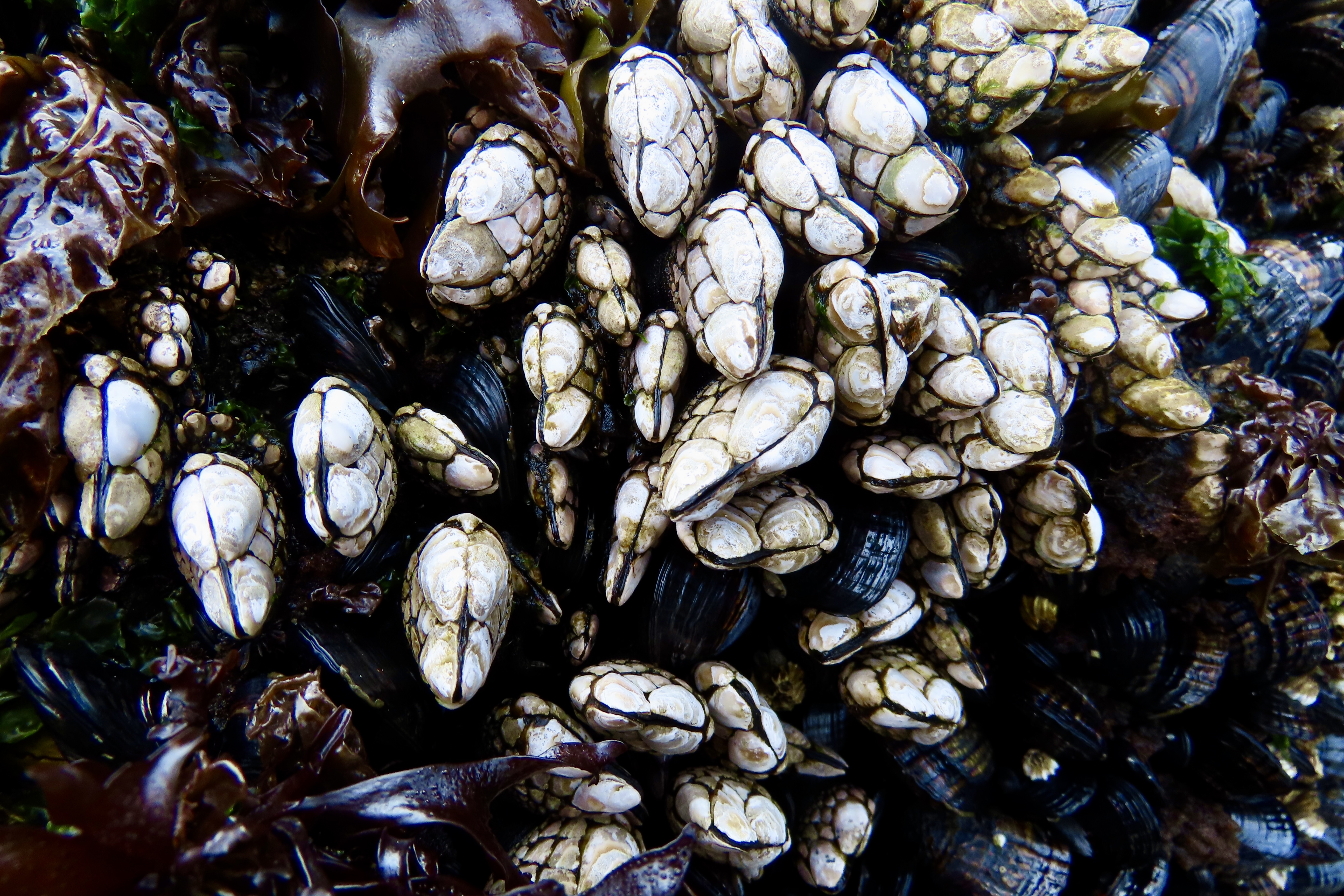
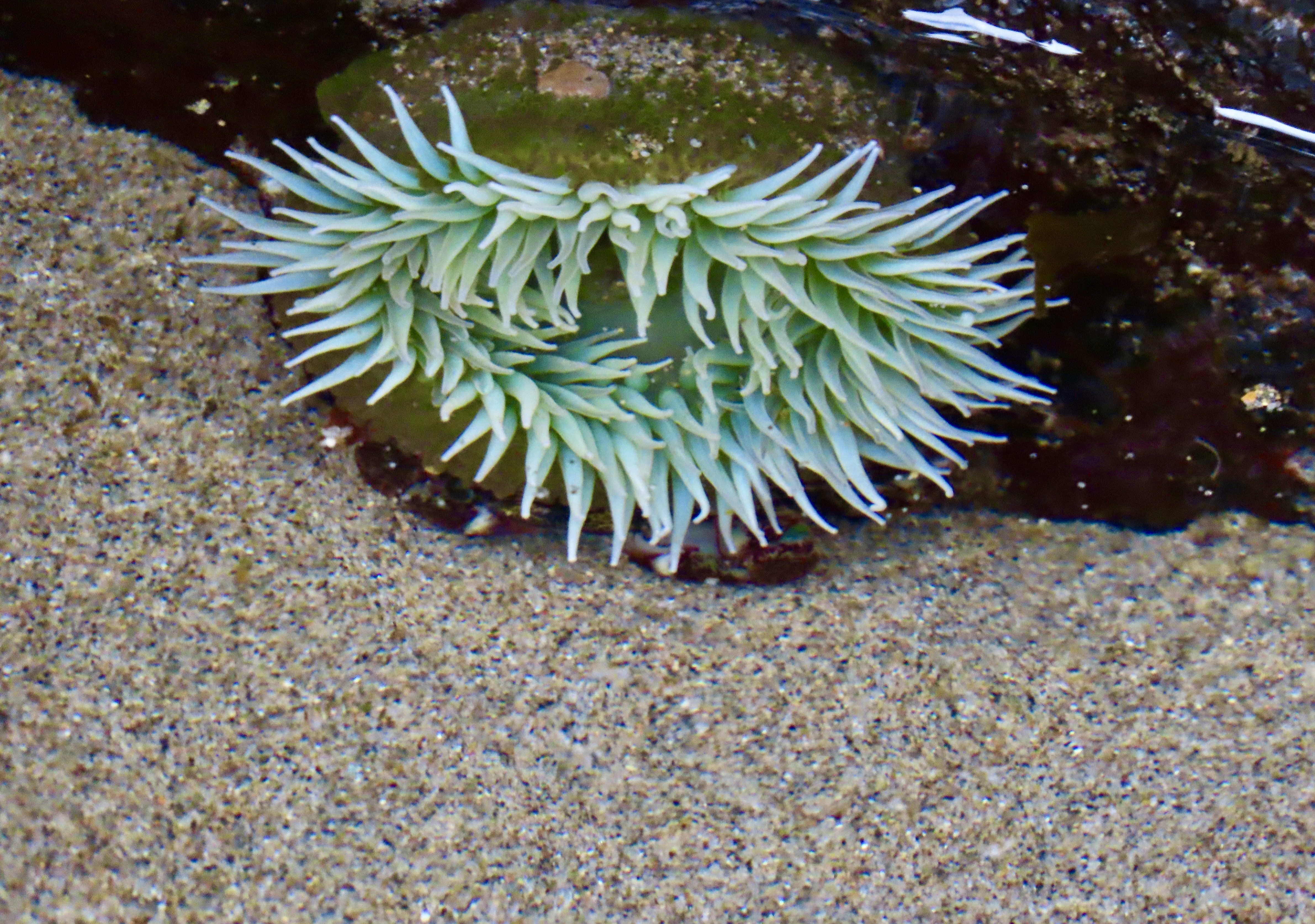
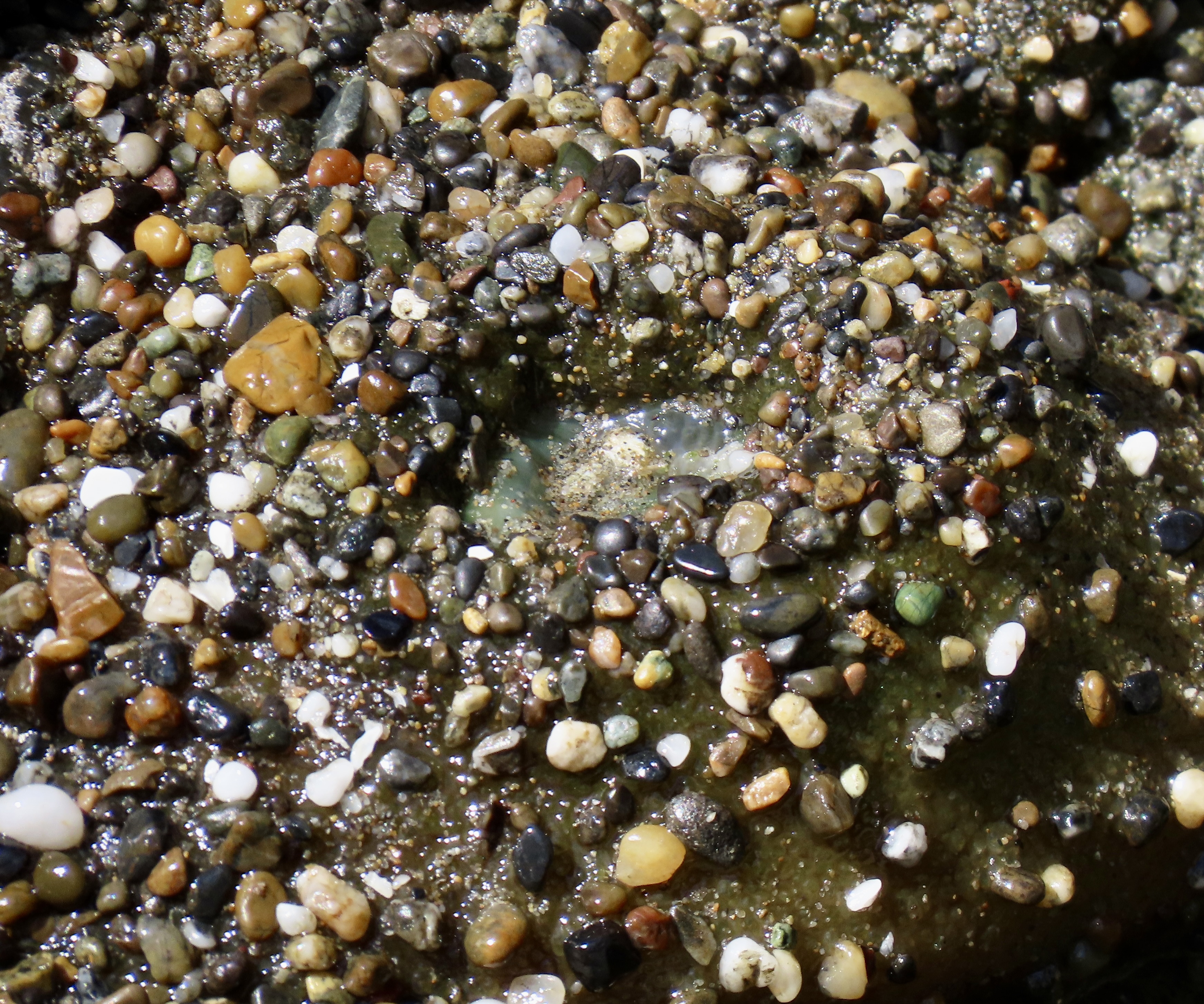
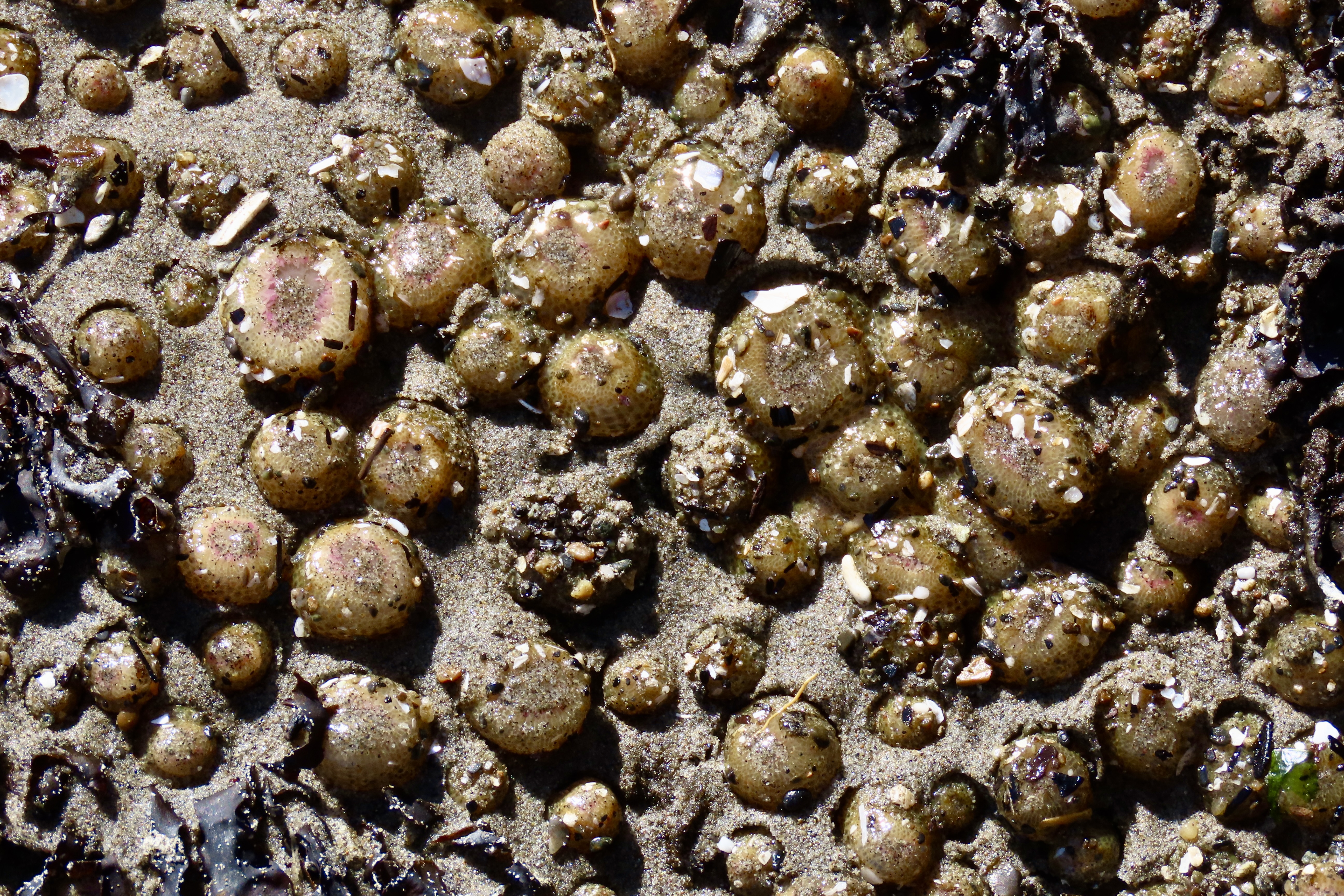
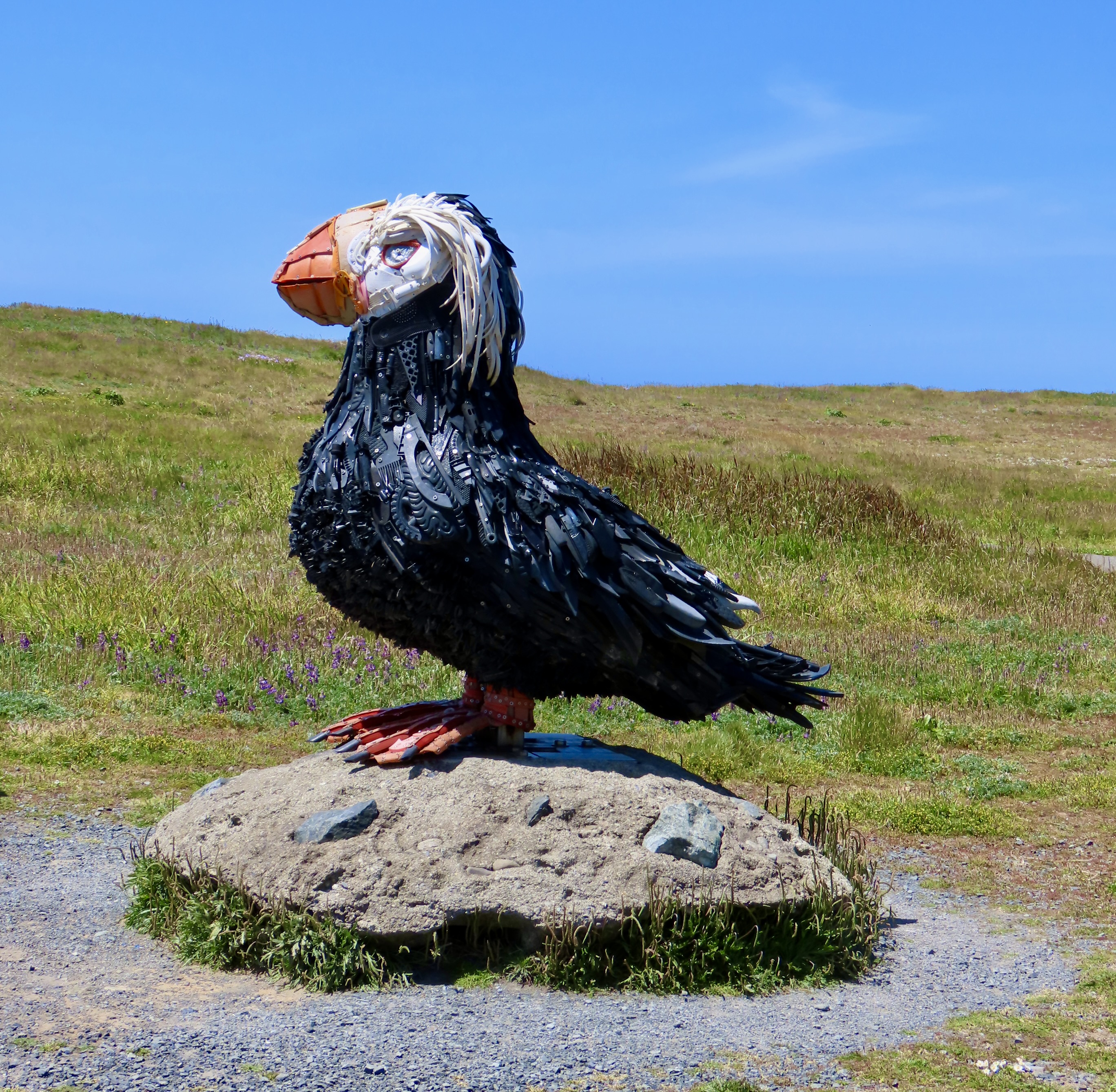
This large sea stack was our goal. Look close and you can see Peggy checking out sea stars. People usually call them star fish, but, as my guide to Pacific Coast Tide Pools notes: They are not fish. They are echinoderms. Others include sea urchins and sand dollars.She was was taking a photo to show the abundance of sea life that lives between low and high tides when she spotted the Star.There were no lack of sea stars to be found at the base of the sea stack!While there are several types of sea stars, the most common are ochre sea stars that come in colors ranging from purplish to orange. Living up to their ‘most common’ designation, they are what we found at Devil’s Kitchen.Sea stars come with five arms. Its eyes, which sense light and dark, are located on the tips of its arms. The light colored spot close to the very top is where the star pulls in water to operate its vascular system that pretty much runs everything.One of which is its hundreds to thousands of little tube ‘feet.’ Here it has attached them to a mussel, its favorite food, in hopes of prying the two half shells apart with its arms. It isn’t easy, given that mussels don’t like to be eaten and can close their shells really tight. It may take hours. When the sea star succeeds, it extends its stomach inside out through its mouth into the opening where it digests the mussel and then pulls its stomach back in through its mouth. Dinner.Another example. You can see the tube feet extended here, pulling on the shell. Once the feet are stuck to the surface of the shell, they remain stuck. A sea star will eat around 40 mussels a year.They are not an endangered species…Whatever the creature is down on the left hand corner, it seems to be sliming a mussel. The mussel in the middle is hosting several barnacles. Home sweet home.A large acorn barnacle dominates this photo. The tide is out and its door is closed to seal water in to protect it from drying out until the tide comes back in. Then it throws open its door and six pairs of feathery appendages pop out and start waving around to gather food. Barnacles attach to almost any convenient surface including rocks, mussels, wharves, and ships. And it seems, sticks. The strong cement they use will still be holding the barnacle in place long after it has died.These are goose neck barnacles so named because early Europeans thought they looked like geese. Modern day Europeans regard them as a delicacy, a plate full can cost upward to 100 Euros, over 100 hundred dollars in the US. They were generously found throughout the mussels. I couldn’t help but wonder how many thousands of dollars worth. It was illegal to gather them at the park, however.This is a giant green sea anemone. It is a cnidarian, meaning it has stinging tentacles, like jelly fish and corals. Small creatures beware! Paralyzed by the stingers, the prey is swept into the anemones mouth which is located in the middle of the tentacles. The mouth comes with a two-for-one. it also serves as the anus. Hmmm. Peggy noted another interesting thing about the anemone. A crab was hiding under it! Note the distinctive colorful legs that are tucked in. When Peggy first spotted the legs sticking out, she thought “big spider” and aimed the camera. Of course, they disappeared!Some sea anemones had covered themselves in small rocks…A close up. Note how tight it has shut down its opening to protect it from drying out.These little fellows are aggregating anemones. Basically, they are exact copies of each other. They stretch out until they split in half creating two anemones which then also split forming large colonies. The colony continues to grow until it runs out of food or space. Or until it runs into another colony. Then they go to war with specialized tentacles full of nematocysts (stingers). To avoid conflict, they sometimes declare a neutral zone! That’s it for today. Next post: We will focus in on some of Brandon’s unique art.This puffin was created from trash gathered off of the local beaches.




 Wandering through Time and Place