Wild and Weird Nevada… On the Road

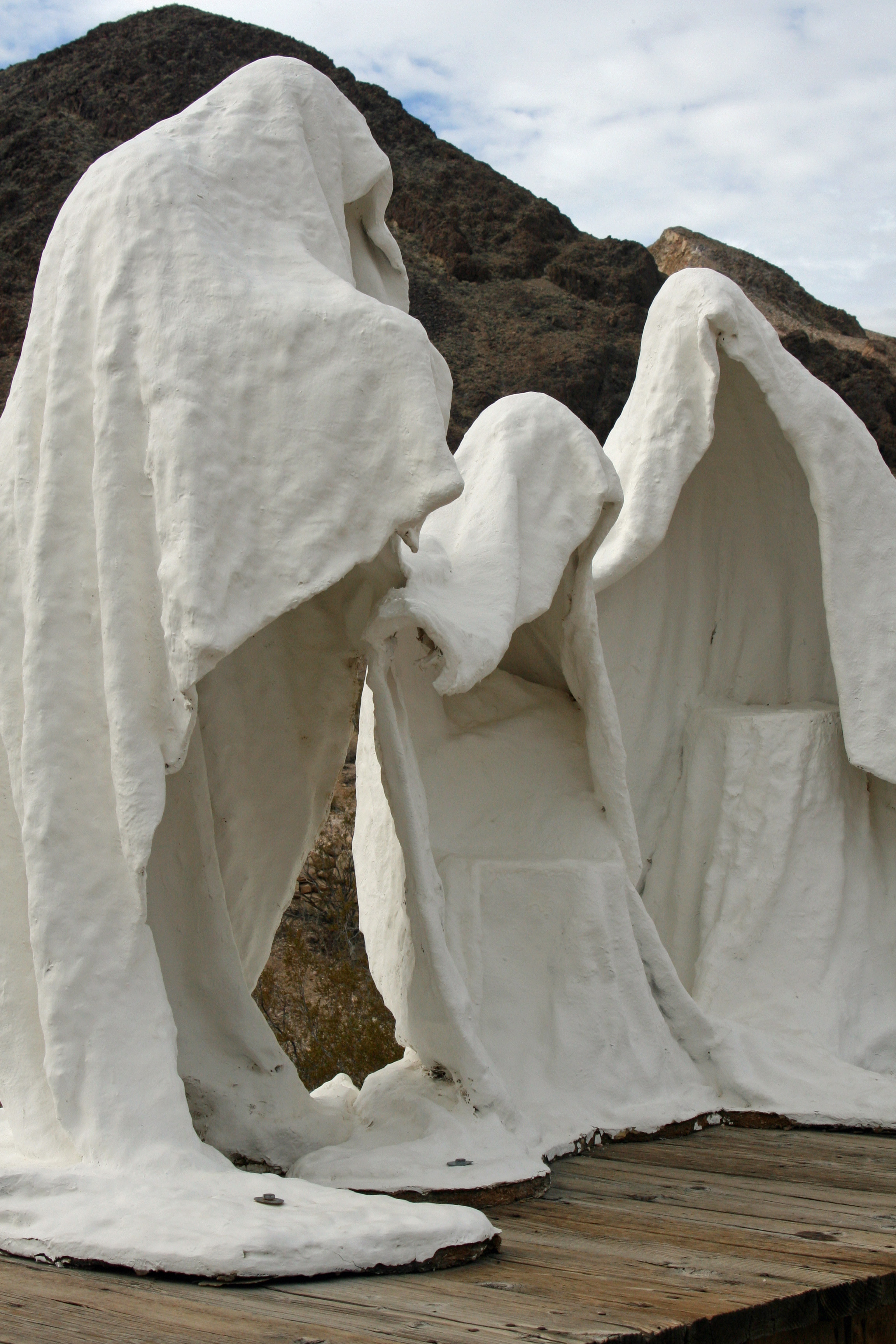
Three of the ghostly figures in Albert Szukalski’s Last Supper at the Goldwell Open Air Museum near the ghost town of Rhyolite Nevada.

Peggy and I are wandering through Nevada celebrating my birthday so I decided to re-blog an earlier story I did.  We had stopped off to check out the ghost town of Rhyolite on our way into Death Valley from the small Nevada town of Beatty.

I was looking around at abandoned mines and contemplating the lonely life of prospectors when I spotted a 30-foot tall naked blond. She caught my attention. Totally by chance, we had stumbled on the Goldwell Open Air Museum.
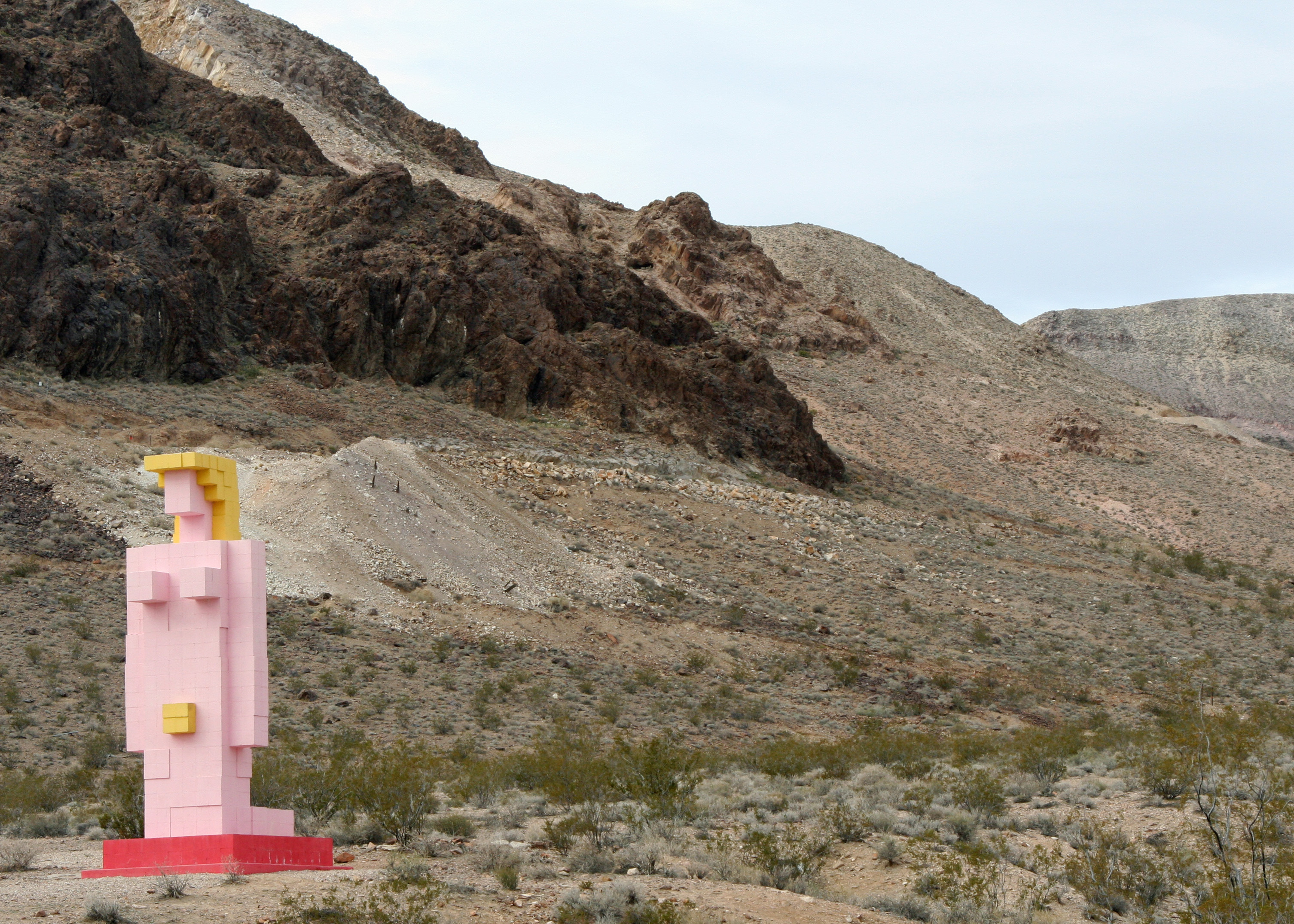
A 30 foot tall naked blond created by Dr. Hugo Heyrman was my introduction to the Goldwell Open Air Museum on the border of Death Valley National Park.
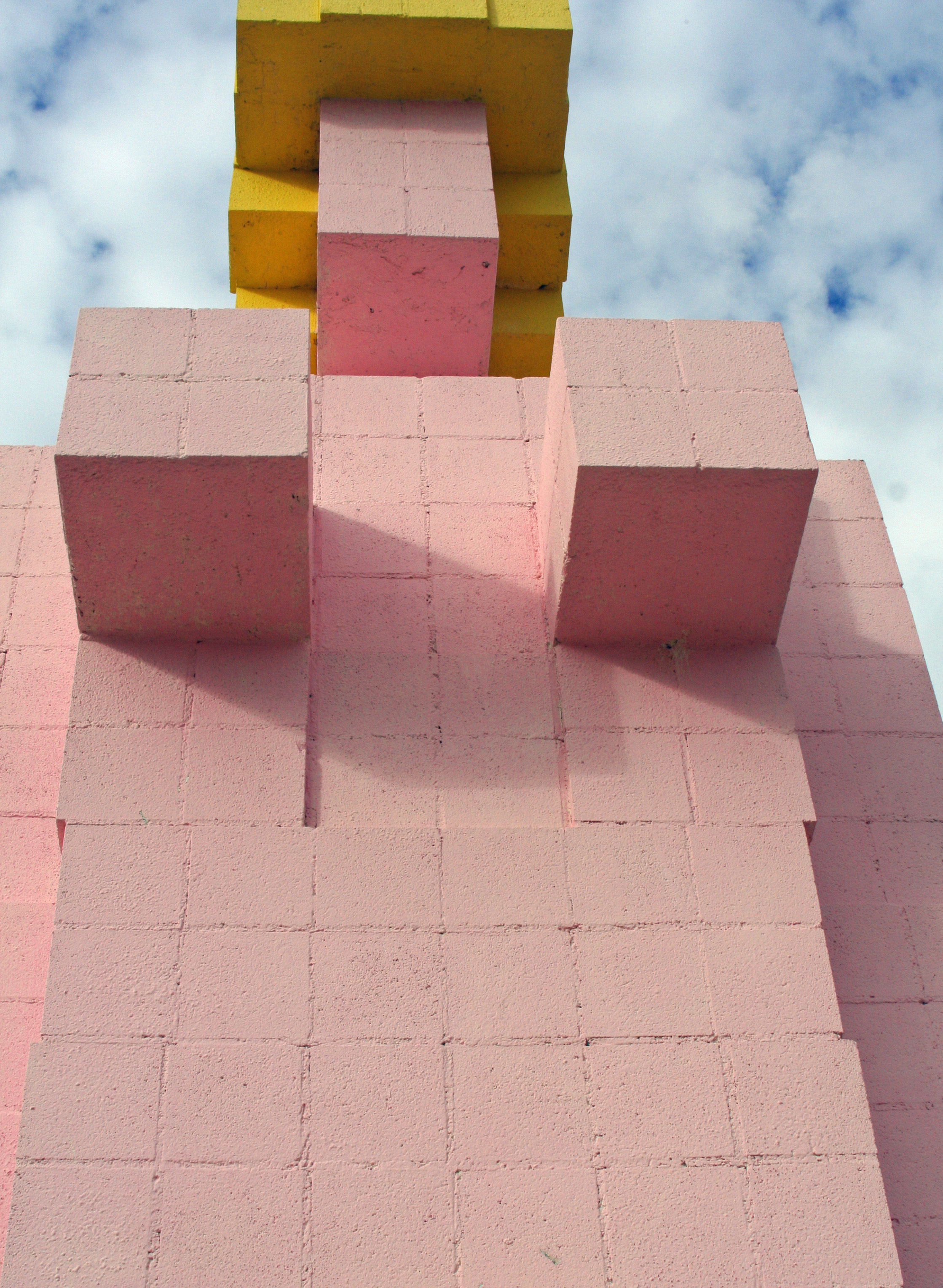
I couldn’t resist a close up of Blondie. Dr. Heyrman calls his pixellated woman “Lady Desert: The Venus of Nevada.”
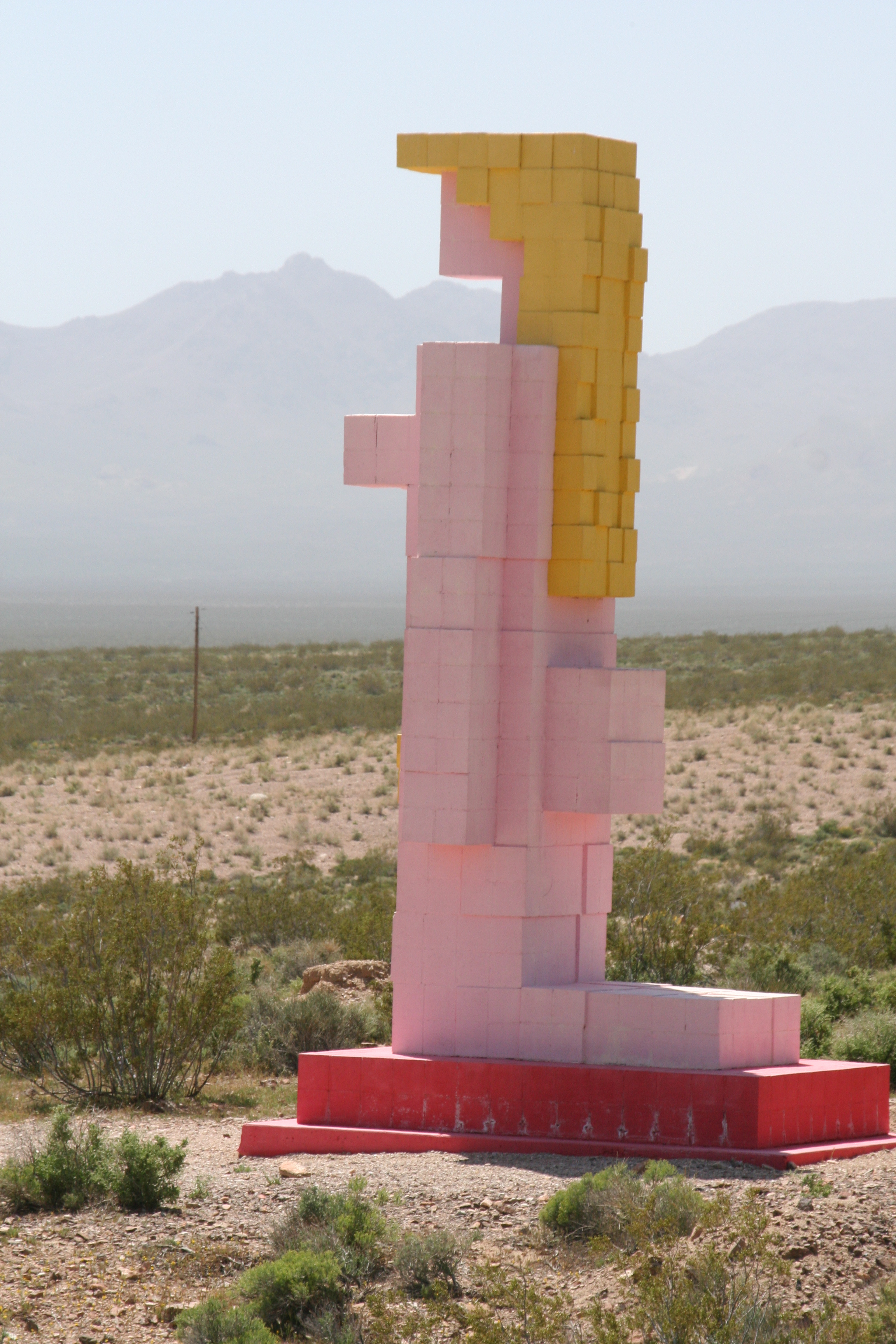
Another view of the lady displaying her bubble butt.

Another view of the lady displaying her bubble butt.

The museum had its inception in 1984 when the Belgian artist Albert Szukalski wrapped a number of Beatty residents in wet plaster as models for a ghostly rendition of the Last Supper.

Another view of the Last Supper by Albert Szukalski at the Goldwell Open Air Museum. The dark, cloudy skies add drama.
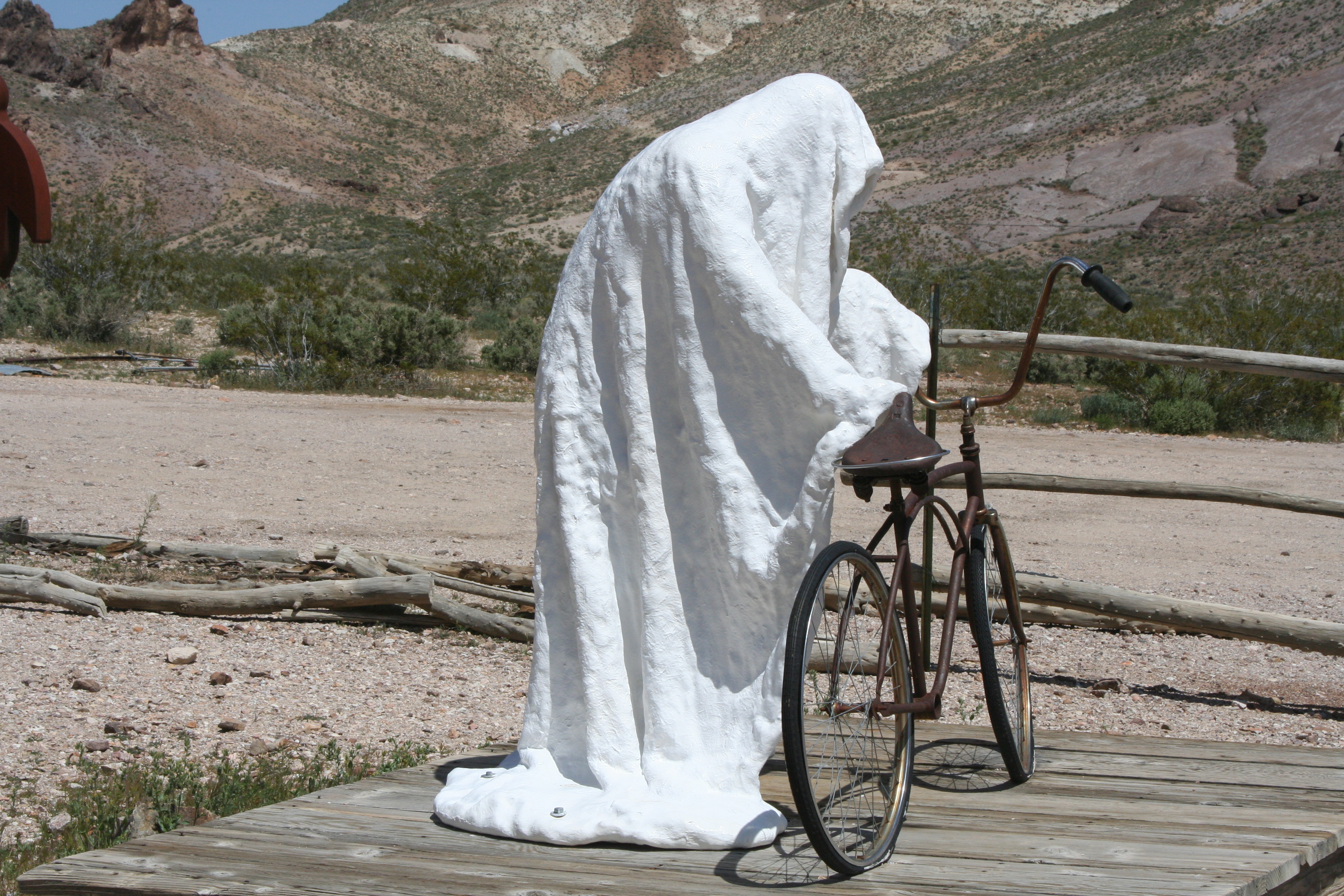
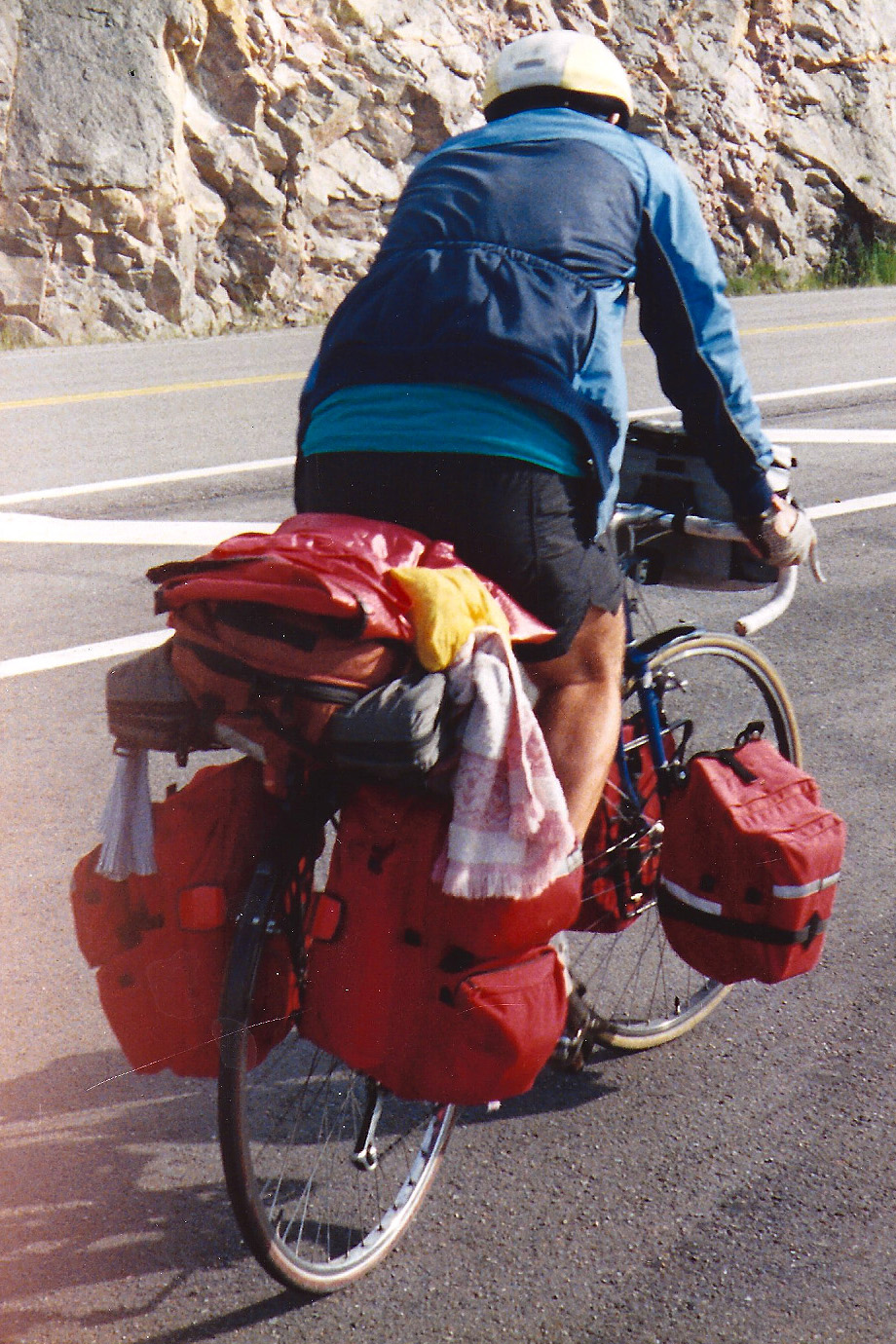
I once bicycled through Death Valley as part of a 10,000 mile solo bike trip I made around North America. I can empathize with this guy.

I once bicycled through Death Valley as part of a 10,000 mile solo bike trip I made around North America. I can empathize with this guy.

Szukalski’s work inspired other well-known Belgian artists. Dr. Hugo Heyrman added the giant naked blond. Dre Peeter carved a female version of the Greek Icarus who flew too close to the sun with wax wings. Fred Bervoets created a metallic sculpture of a gold miner and threw in a penguin for good measure.
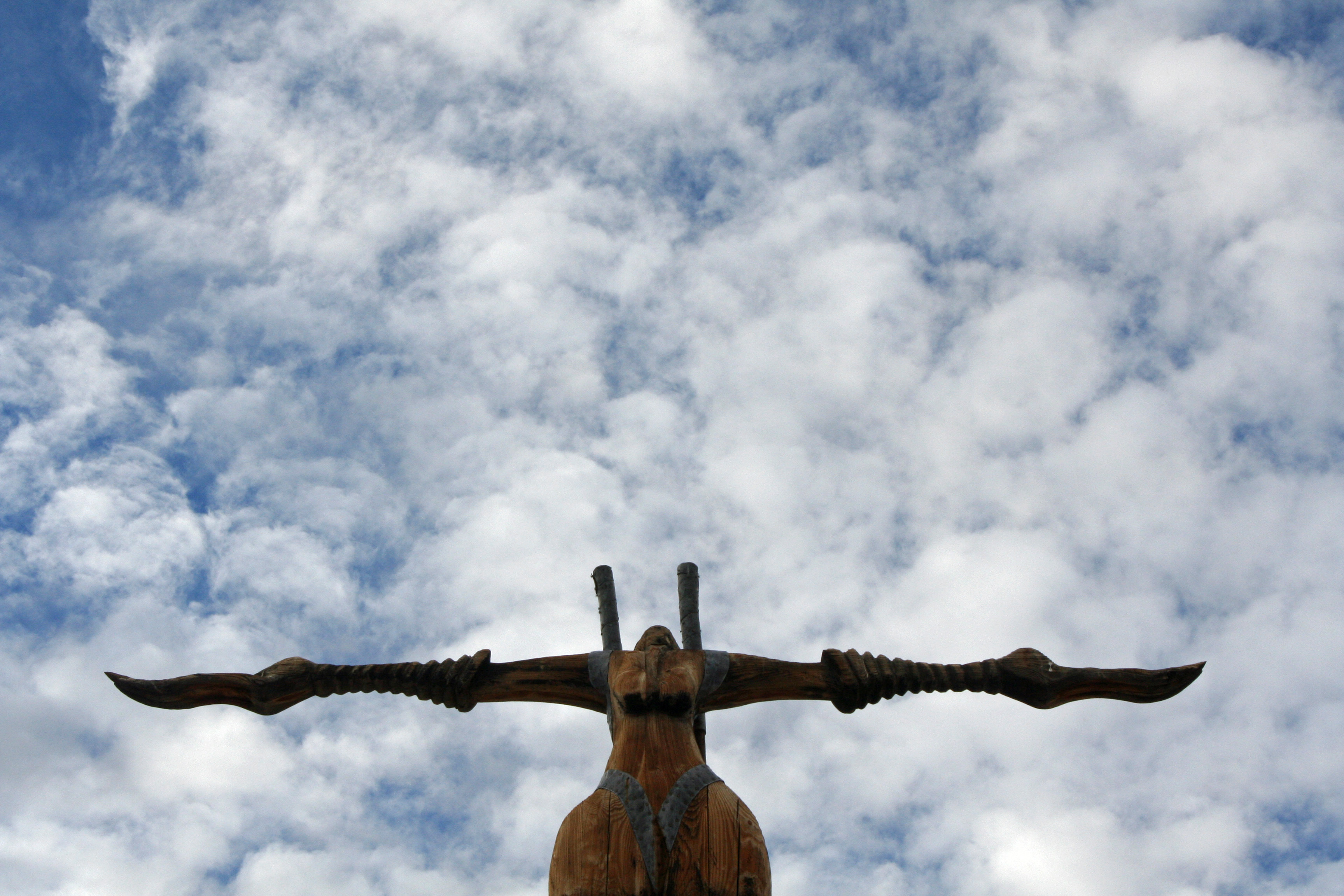
Dre Peeter’s carved wood female Icarus flies through the sky on the edge of Death Valley.
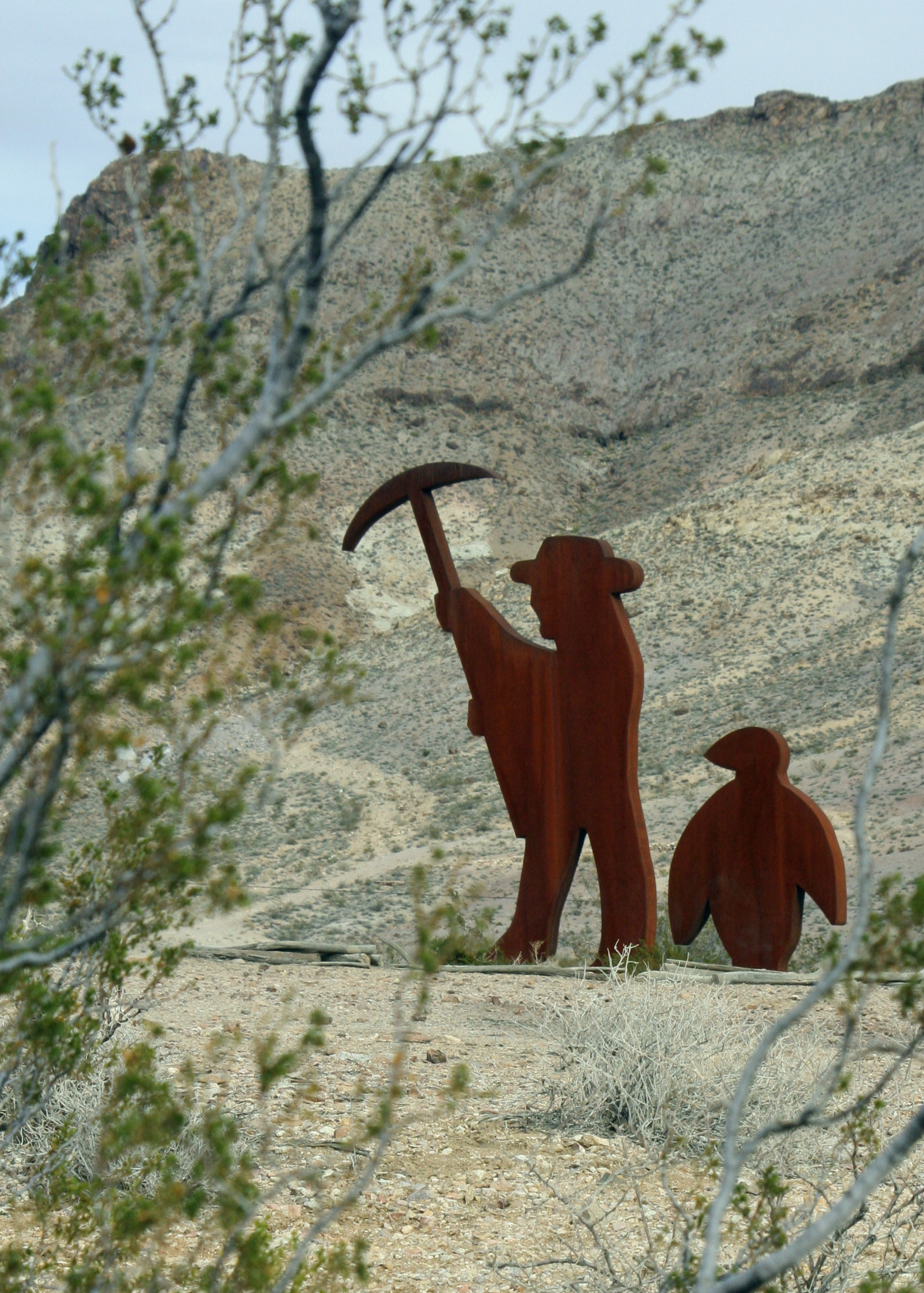
It’s understandable that Belgian artist Fred Verboets would create a sculpture of a prospector but what’s with his penguin companion? Verboets explains that’s what he felt like in the desert.

The Swiss/California artist Sofie Siegmann added a sumptuous ceramic couch and titled it “Sit Here.”
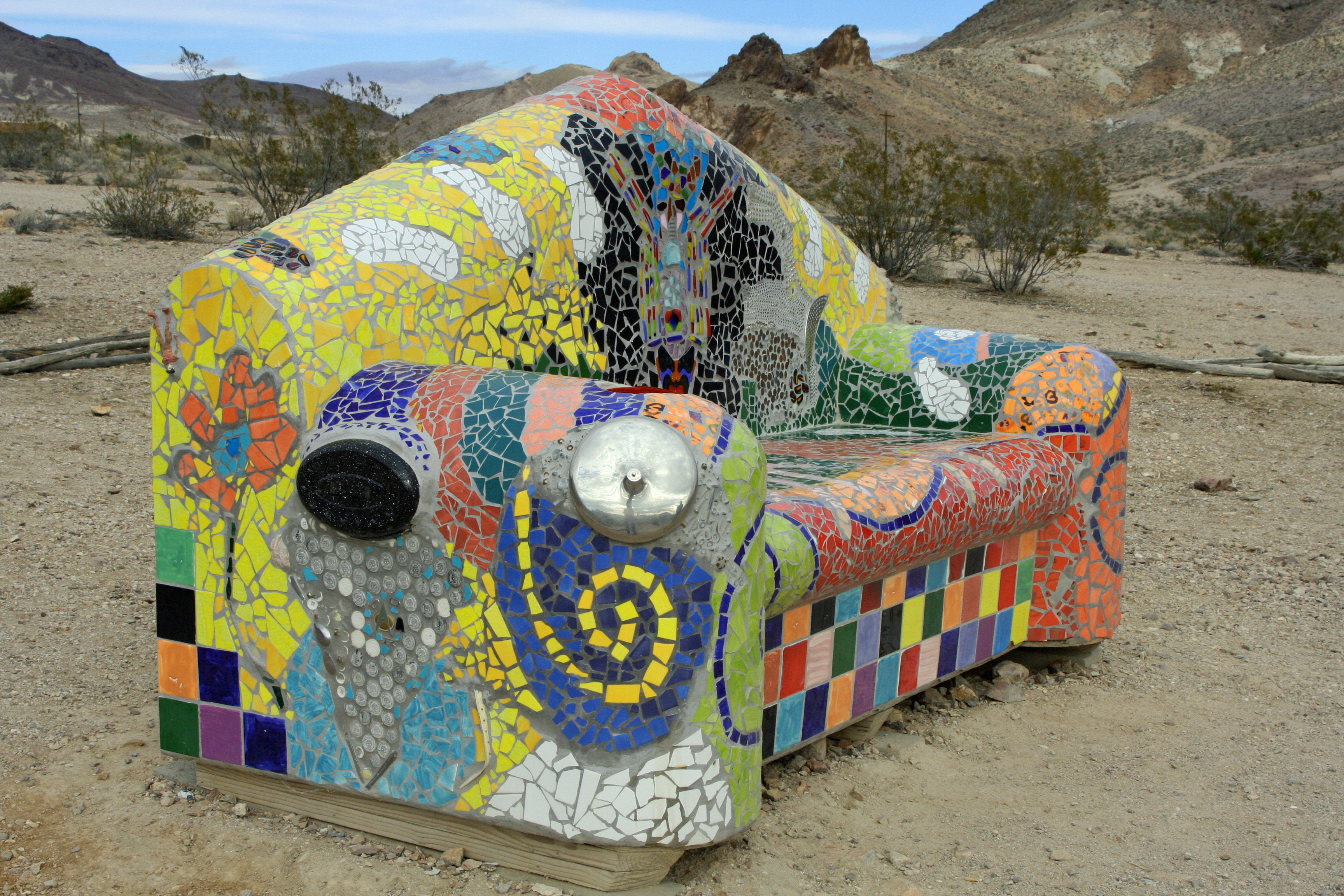
Sofie Siegmann’s brightly colored ceramic couch.
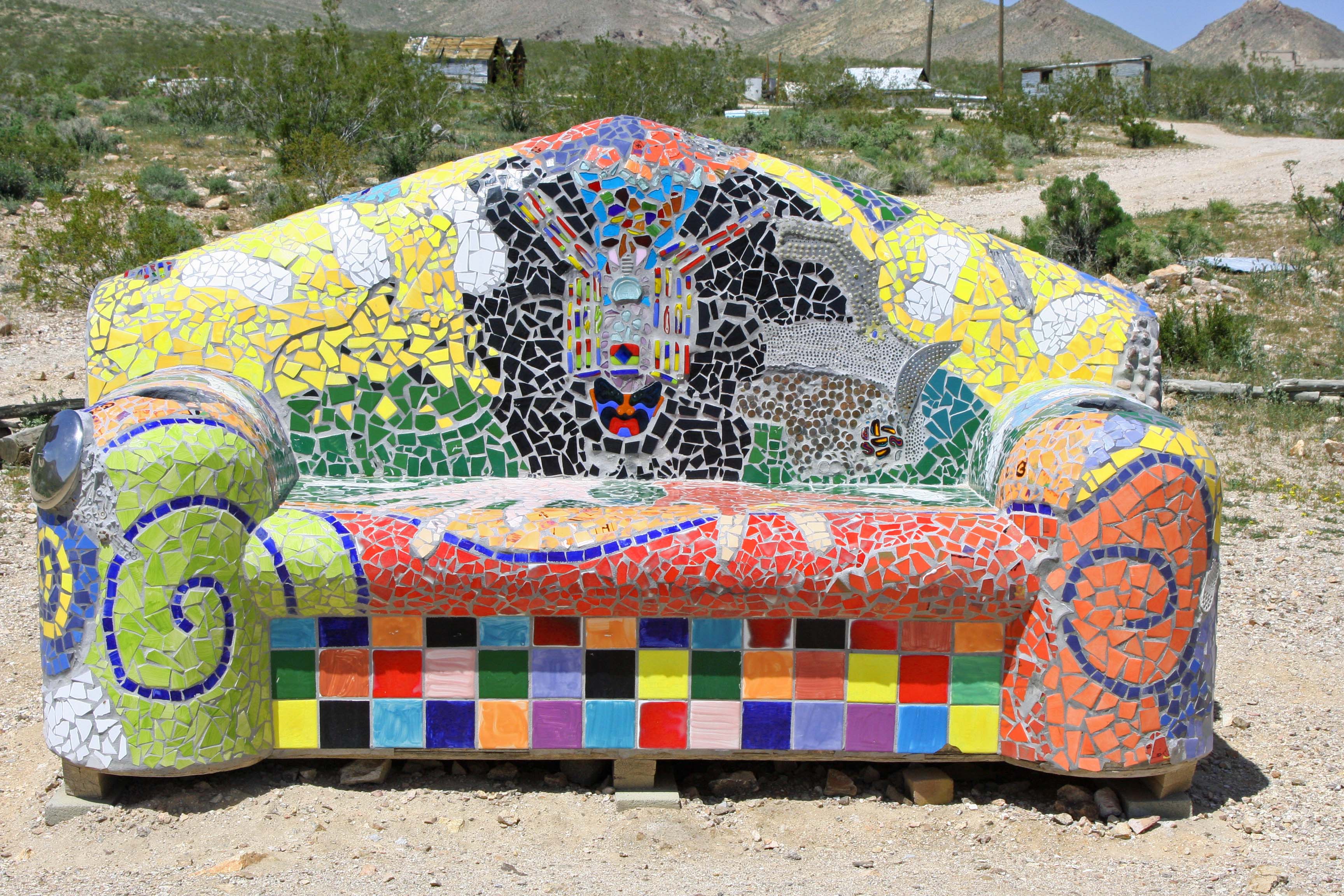
Another view of the couch.

Another view of the couch. Long abandoned miners’ shacks in Rhyolite are in the distance.

The Goldwell Museum is open 24 hours a day, seven days a week. Admittance is free. A large, red barn-like building provides a studio for resident artists.
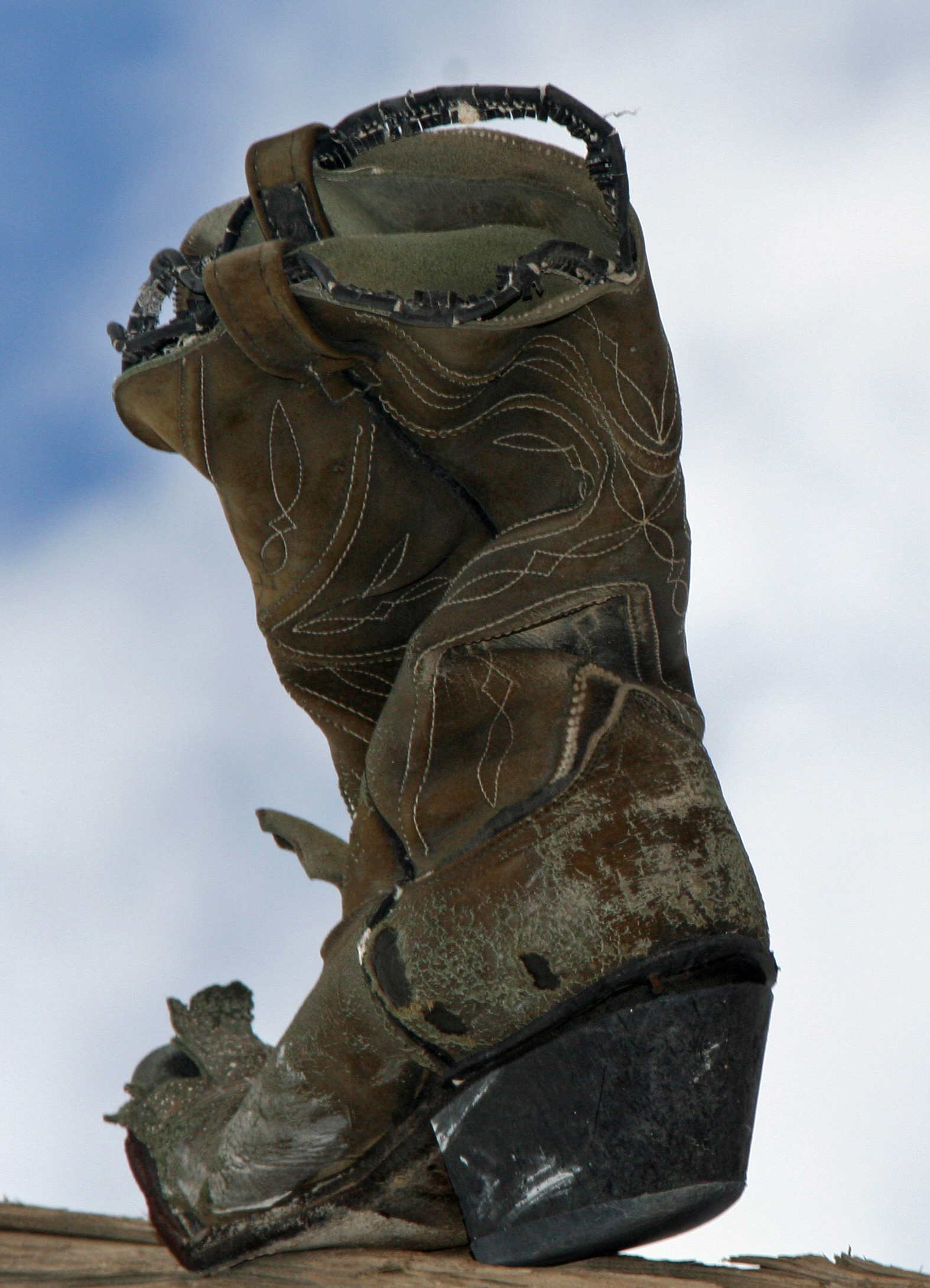
What’s the wild west without an old cowboy boot. This one was affixed to a telephone pole sculpture that served as a desert lost and found. I flipped it around right side up. You can almost sense it walking.
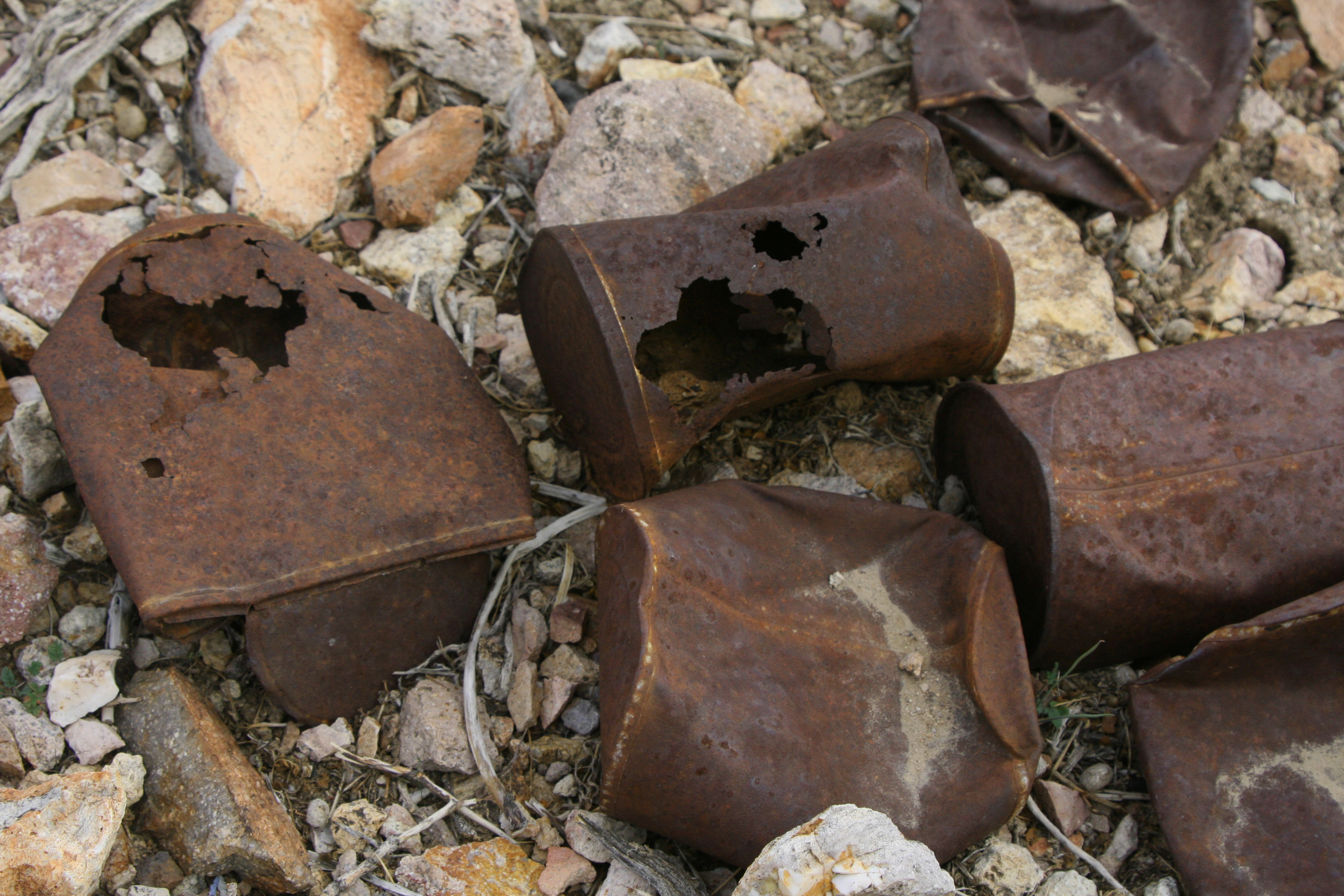
I even found my own little work of art in an old Rhyolite dump near the Goldwell Open Air Museum. To avoid being sacrilegious I call it the Last Dinner.
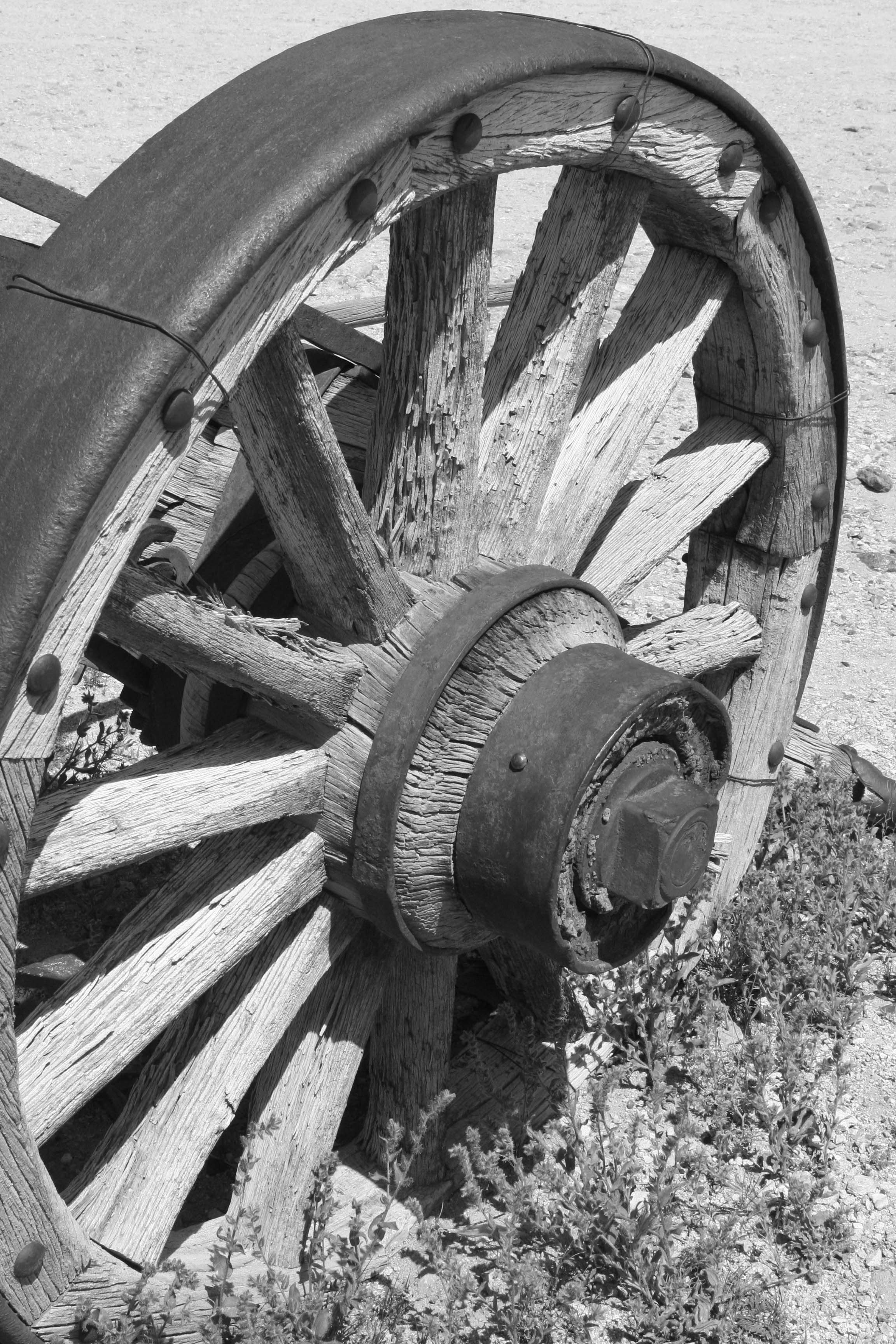
Any Old West museum... art or otherwise, has to have a wagon wheel.... and indeed we found one at the Goldwell Open Air Museum.

Any Old West museum… art or otherwise, has to have a wagon wheel…. and indeed we found one at the Goldwell Open Air Museum.

NEXT BLOG: More on Nevada including ferocious bears, UFOs and ladies of the evening.

The Sand Dunes of Death Valley… The National Park Series

The sand dunes of Death Valley National Park provide a striking contrast to the surrounding mountains.

I was in my lowest gear, out of the saddle, and moving at three miles an hour. It would have been easier to get off the bicycle and push, but I am stubborn.

Three days before I had climbed over Greenhorn Pass in the Southern Sierra Nevada Mountains during a blinding snowstorm. I wasn’t going to let the Panamint Range of Death Valley National Park defeat me

There was ample time as I struggled up the mountain to question the sanity of doing a six-month, 10,000-mile solo bike tour around North America. I’d prepared for the journey by increasing my beer ration. Of course I paid for my folly. I usually do.

I started my 10,000 mile solo trip around North America out of Sacramento California. Every thing I would need to survive for six months on the road was packed on my bike, some 60 pounds of gear. It wasn't totally solo. The Peripatetic Bone was riding in my handle bar bag.

By the time I reached Death Valley, however, I was two weeks into the trip and my body was toughening up. I succeeded in making the nine-mile climb out of Panamint Valley to the top of the 4956 Towne Pass even though it took me three hours and burned half of my carefully acquired beer calories.

Euphoria was the result. Looking back, I count the climb as one of the top ten challenges of my 10,000-mile trek. It almost competes with dodging a tornado in Mississippi.

I rewarded myself by declaring it lunchtime. I also allowed myself to contemplate the 17 mile downhill ride into Stove Pipe Wells and what I would find at the bottom: the Sand Dunes of Death Valley.

I’ve been in and out of the Valley numerous times over the years. It’s all beautiful or at least wonderfully strange. But for me, the Sand Dunes are in a class by themselves. I am fascinated with their sinuous curves and how they contrast with the surrounding mountains. I love climbing up and down their slippery slopes in the early morning and wandering along their peaked ridges on a moonlit night.

The sinuous, flowing slopes of the sand dunes in Death Valley National Park are a thing of beauty.

The dunes are a product of wind, sand and topography, all of which Death Valley has an abundant share.  Mesquite Flat Dunes, located at Stove Pipe Wells and featured in this blog, are the easiest to reach and the most commonly visited. Being relatively close to Hollywood, they have starred in many movies, including Star Wars.

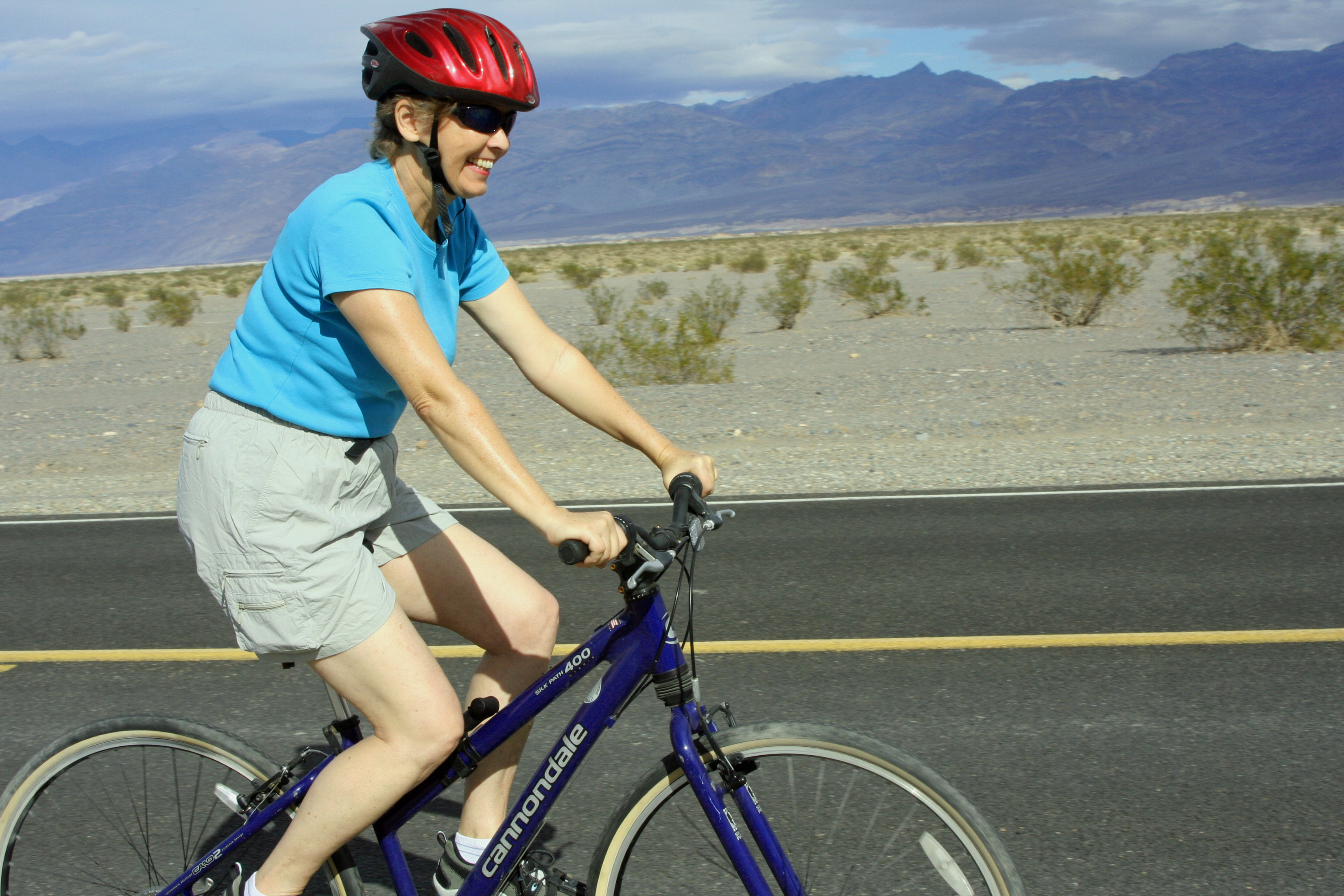
The last time Peggy and I were in Death Valley, we brought along our bikes for a more relaxed tour of the Valley floor and dune area.

How you look when you aren't loaded down with 60 pounds of gear and climbing a mountain. Note Peggy's smile.

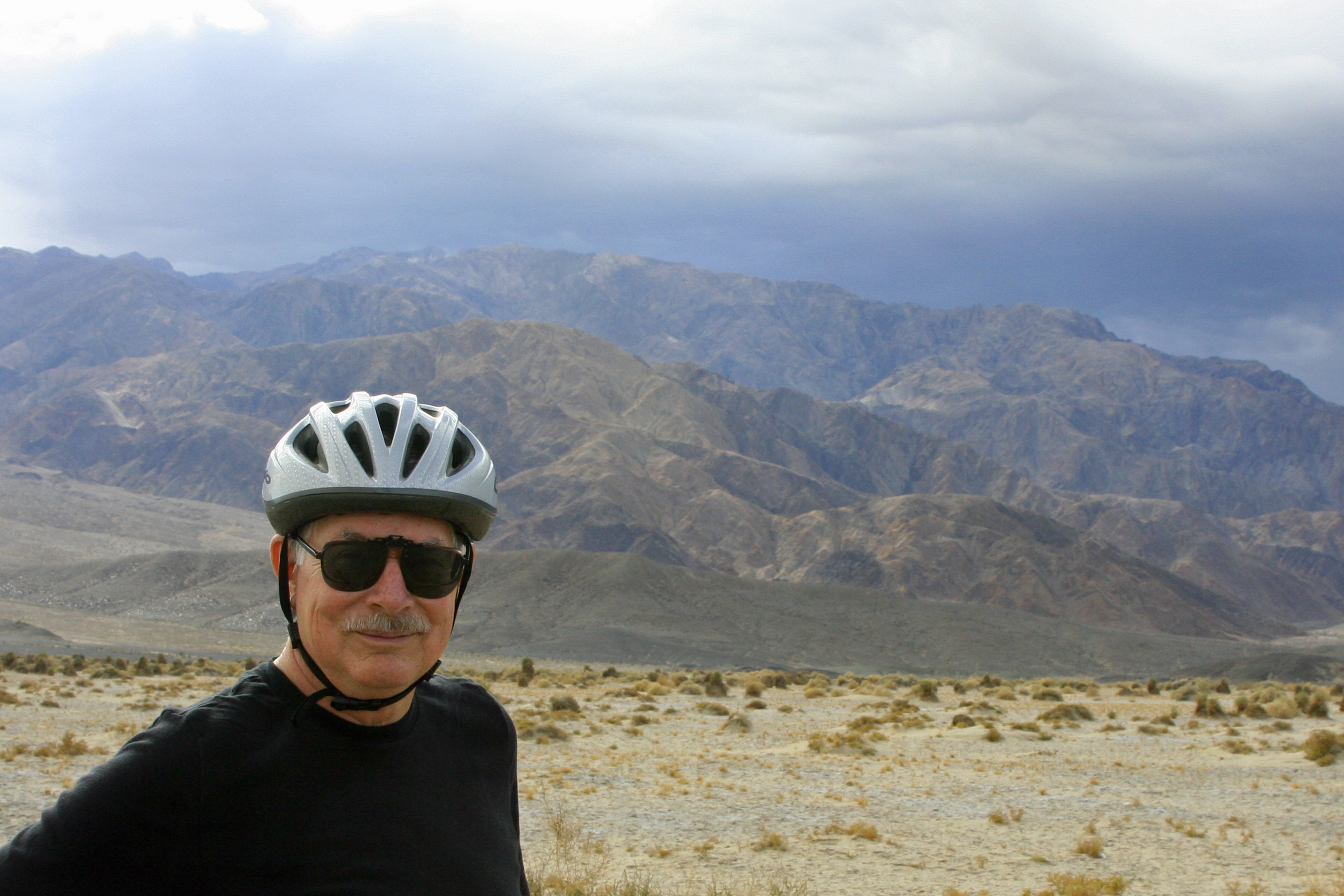
I am looking rather relaxed myself. Peggy took this photo looking across what is known as the Devil's Cornfield. The Panamint Range looms in the background.

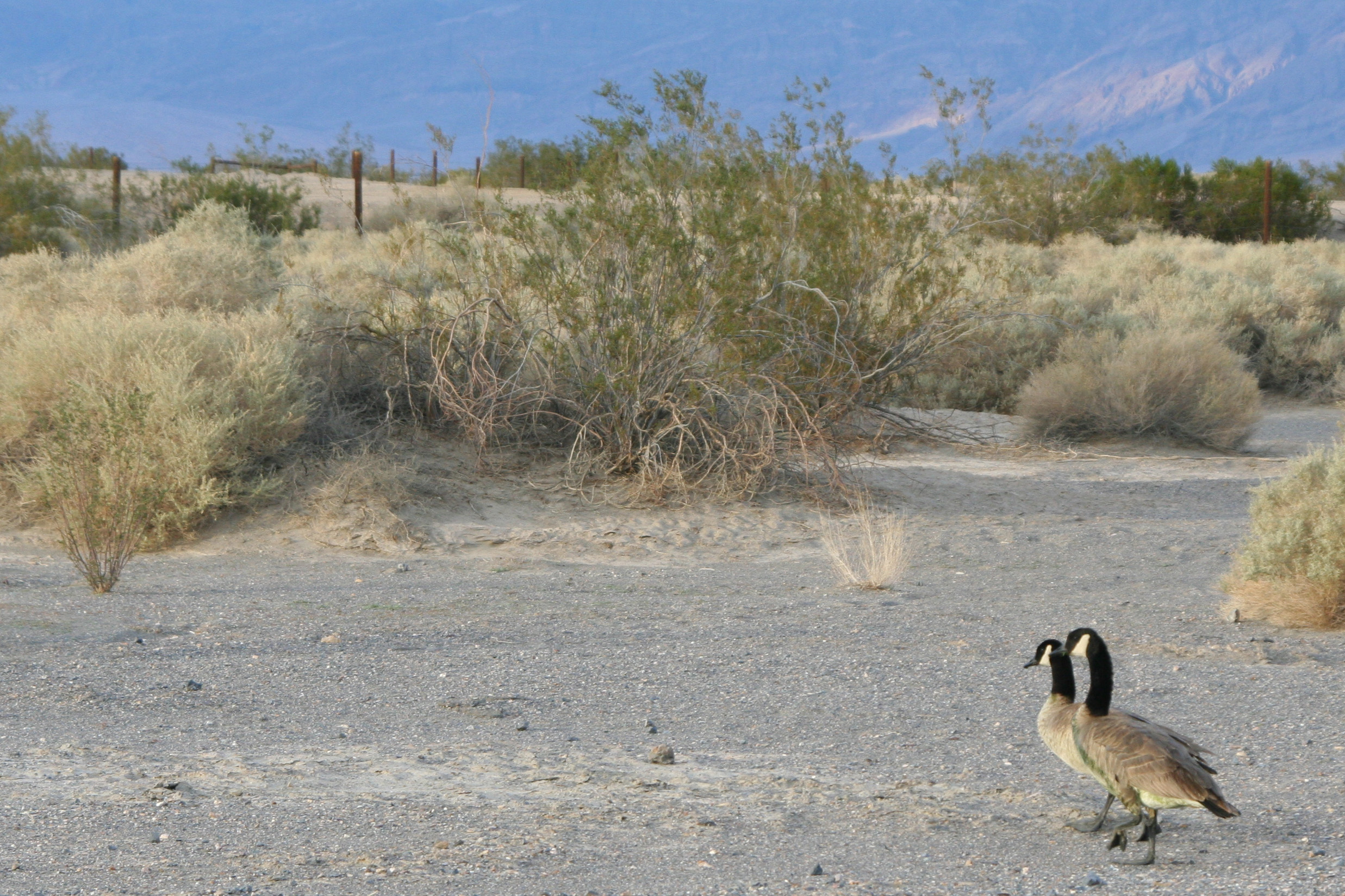
Peggy and I were on an evening stroll out to the dunes when we came across a pair of Canadian Geese. I assumed they were lost but they didn't ask for directions.

A final view of the dunes set off by a cloud filled sky.

Rhyolite, Death Valley: A Ghostly Town… The National Park Series

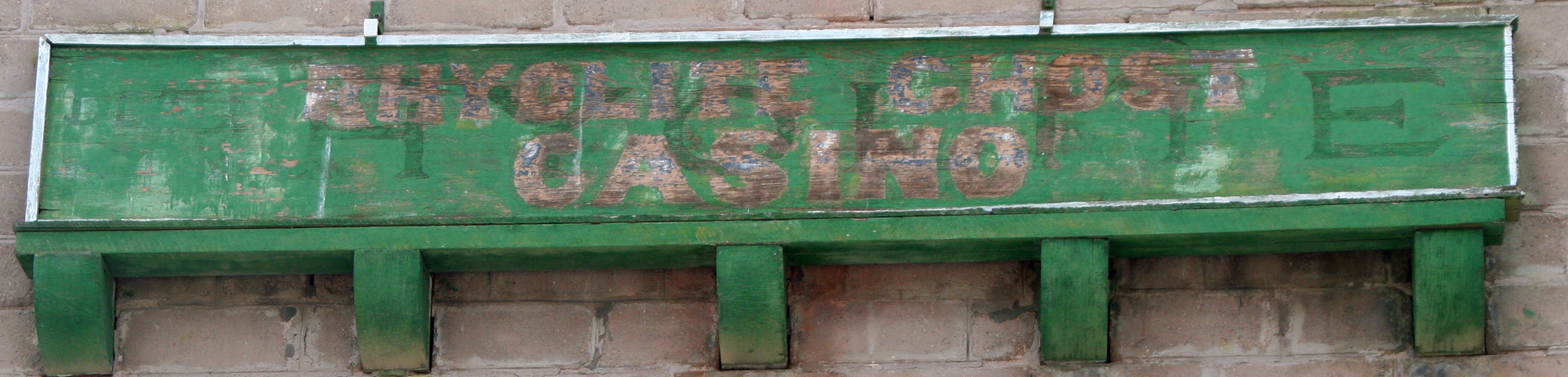
A ghost sign for Rhyolite, Nevada. Look closely and you will see ghostly letters of the town's name imposed over the name of a long forgotten casino.

The wind was cold with the whispers of forgotten ghosts. We put on our Jackets to fight the chill; Bone found a horseshoe for good luck. We had made a detour to visit the old Ghost Town of Rhyolite on the way into Death Valley National Park from the small town of Beatty in Nevada.

The Peripatetic Bone, who was originally part of a horse just above the hoof, tries on a horseshoe for good luck.

Gold was discovered in the area in 1904. A boomtown sprang out of the desolate desert. Soon there was a school, a bank and even an opera house. The sound of “batter up” could be heard on weekend days and arias on weekend nights. Women flowed in from San Francisco to accommodate the town’s red light district.

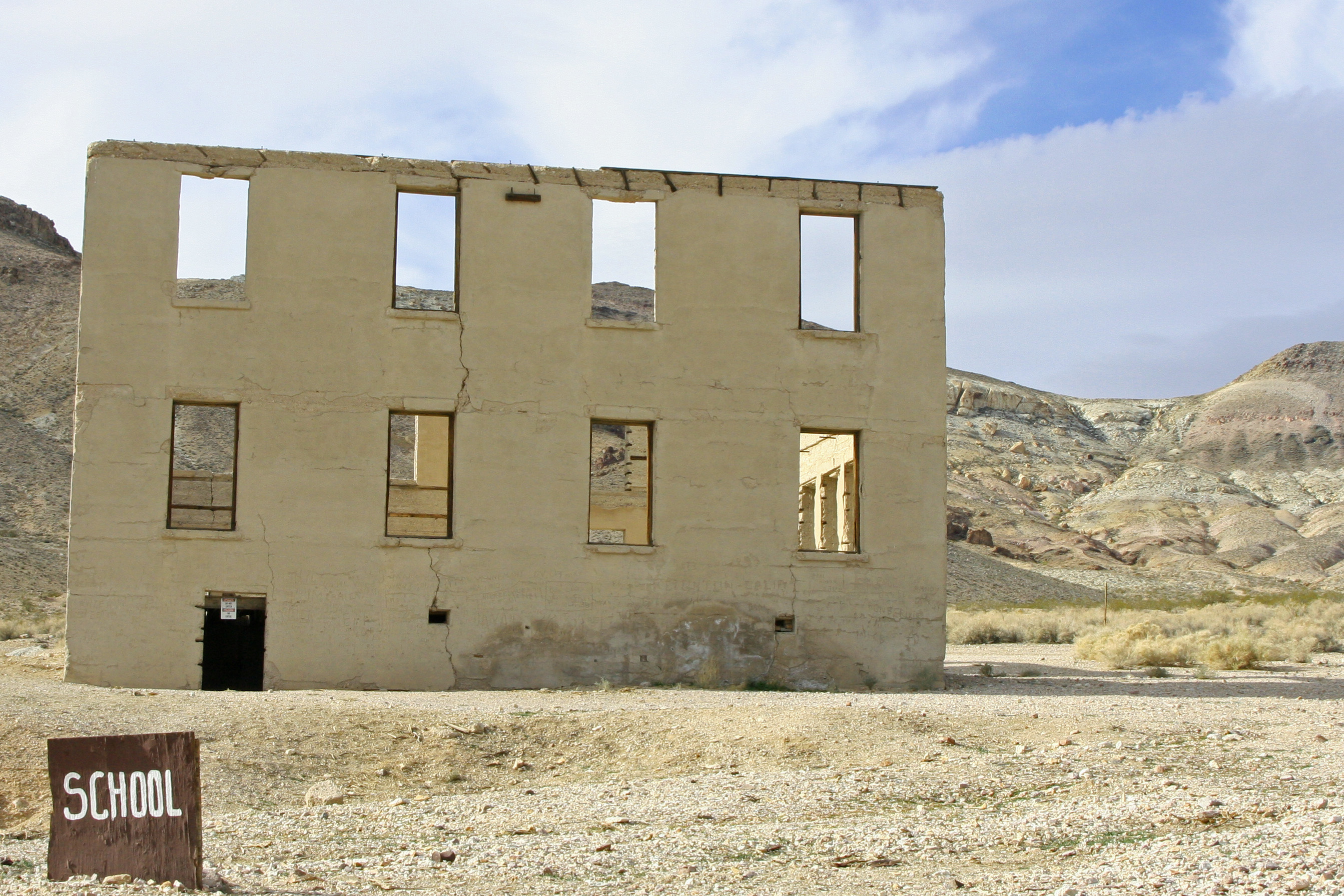
Can you hear the children playing?

The town bank.

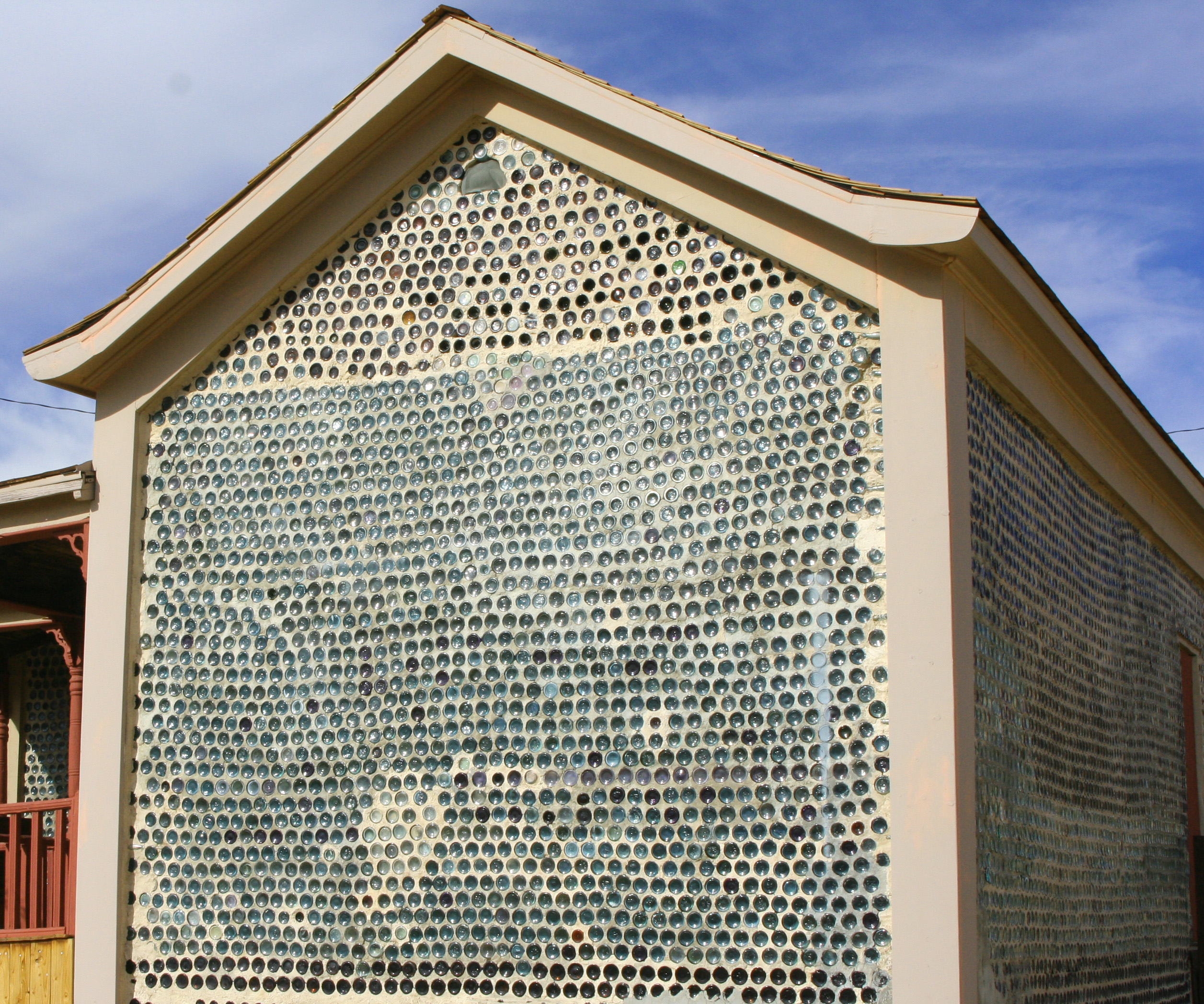
There was even an ice cream parlor and a house made from 50,000 beer and liquor bottles, which says something about the quantity of liquor consumed in town.

A house built with 50,000 bottles of beer and booze: light, insulation and a doozy of a hangover.

In 1907, electricity came to Rhyolite. It was the same year a financial crisis announced the beginning of the end for the town. Mines started to close, banks failed, and the newspaper went out of business. The lights were shut off in 1916. The boom was over.

A few skeletons of buildings and the bottle house are all that remain today. If you are in the neighborhood be sure to stop by. The ghosts will appreciate your visit. There is also a fascinating sculpture garden located next to Rhyolite that I will blog about next in my National Park/Death Valley series.

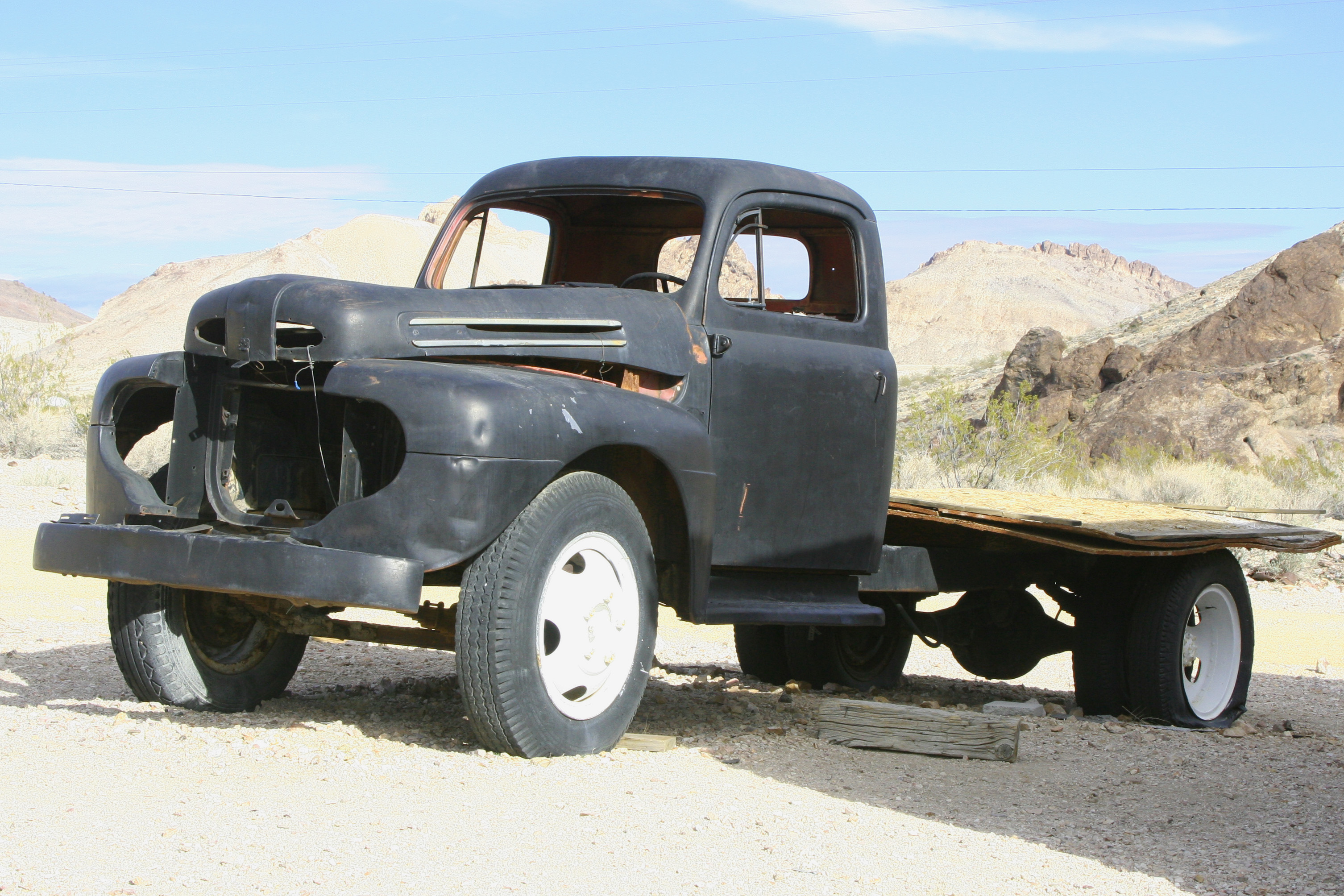
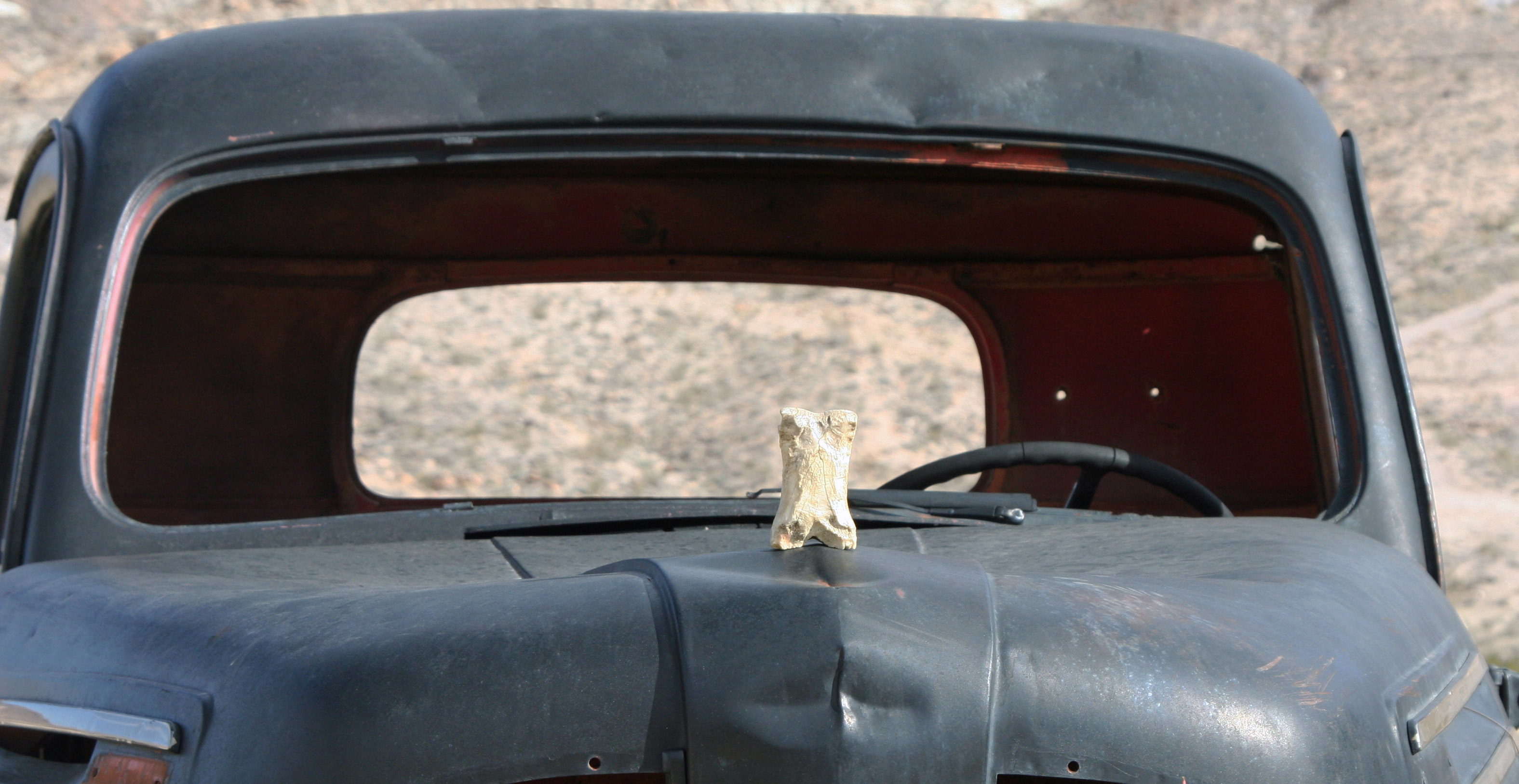
Long abandoned vehicles provide great photo opportunities but this one was missing something critical. And no, I don't mean engine...

A hood ornament.