In my last post, I whined a bit (or more?) about how our trip through the heart of Vermont following Highway 100 had been lacking in color because of drought and an early leaf fall. Following a recommendation, we headed over to Lake Champlain and its islands in hopes of having more luck. We took it a step further by finding a great cabin in Northeast New York near the Vermont and Canadian borders and driving into the Adirondacks.
Today, Peggy and I are going to feature our trip into the Adirondacks of New York. We have now explored northern Vermont, traveled across New Hampshire, and made our way to coastal Maine, which included a trip into Acadia National Park. We’ve found so much color that our cameras have become picky about what they will photograph. New England definitely has its fall mojo back. We’ve turned to other things, like stuffing ourselves on lobster rolls. It’s a quintessential Maine experience. Did you know that the state provides over 90% of America’s lobsters?
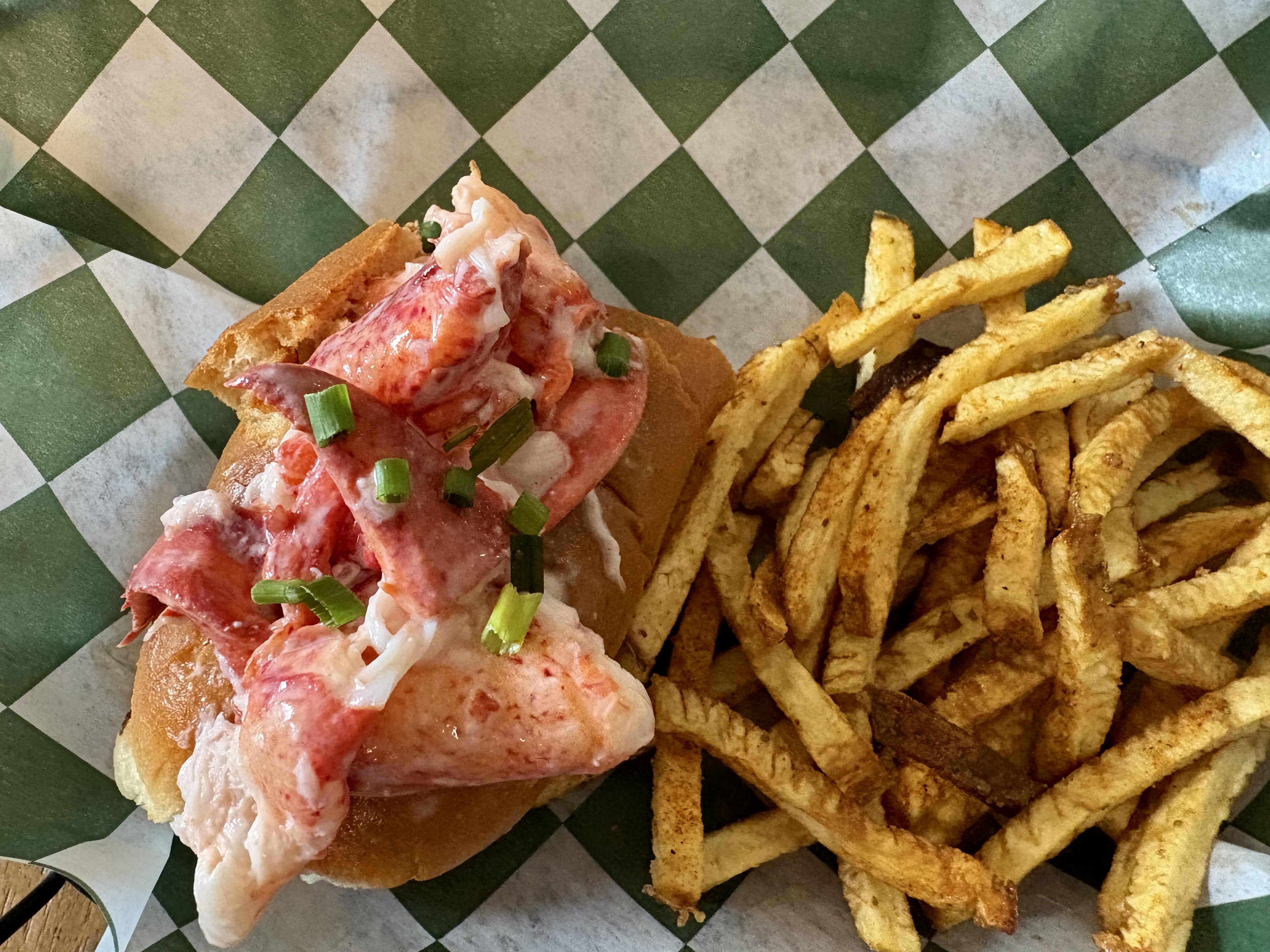
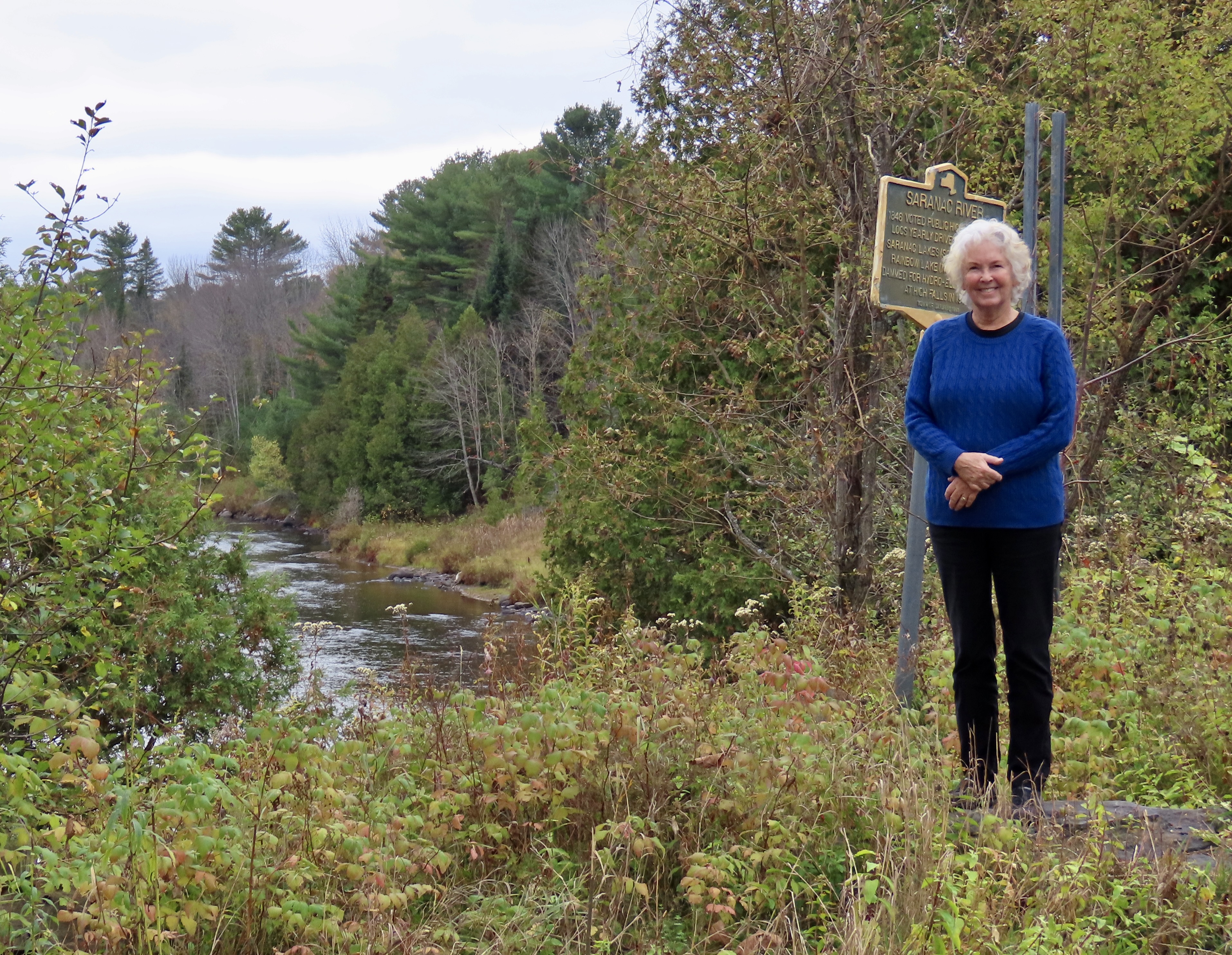
Would it be possible to pile more lobster on a lobster roll? And we bought the mini-sized ones! This is from the Must Be Nice Lobster restaurant in Belfast, Maine.Shortly after we settled into our New York cabin, Peggy and I decided to venture into the Adirondack Mountains. We were looking for fall colors. Our journey would take us along the Saranac River to the town of Saranac Lake. (Not many fall colors here— but Peggy’s smile lights up the photo. And the colors are coming.)
First considered wild and inaccessible by the early European settlers, the Adirondacks later became a major logging area. The sign behind Peggy noted that some 200,000 logs were sent down the Saranac River behind her in 1846. By the early 1900s the Adirondacks had become a playground for the wealthy including the likes of the Vanderbilts, J.P. Morgan, Andrew Carnegie, and the Rockefellers.
Today, the Adirondacks Park is known for its size and who owns it. Not only is it larger than any national park in the contingent 48 states in the US, it is made up of a blending of public and private ownership. Another unique fact about the area is that its ancient mountains are actually rising, something that was considered long over among eastern US mountains. Like two hundred million years long over. Apparently, there is a bulging volcanic hot spot under the Adirondacks.
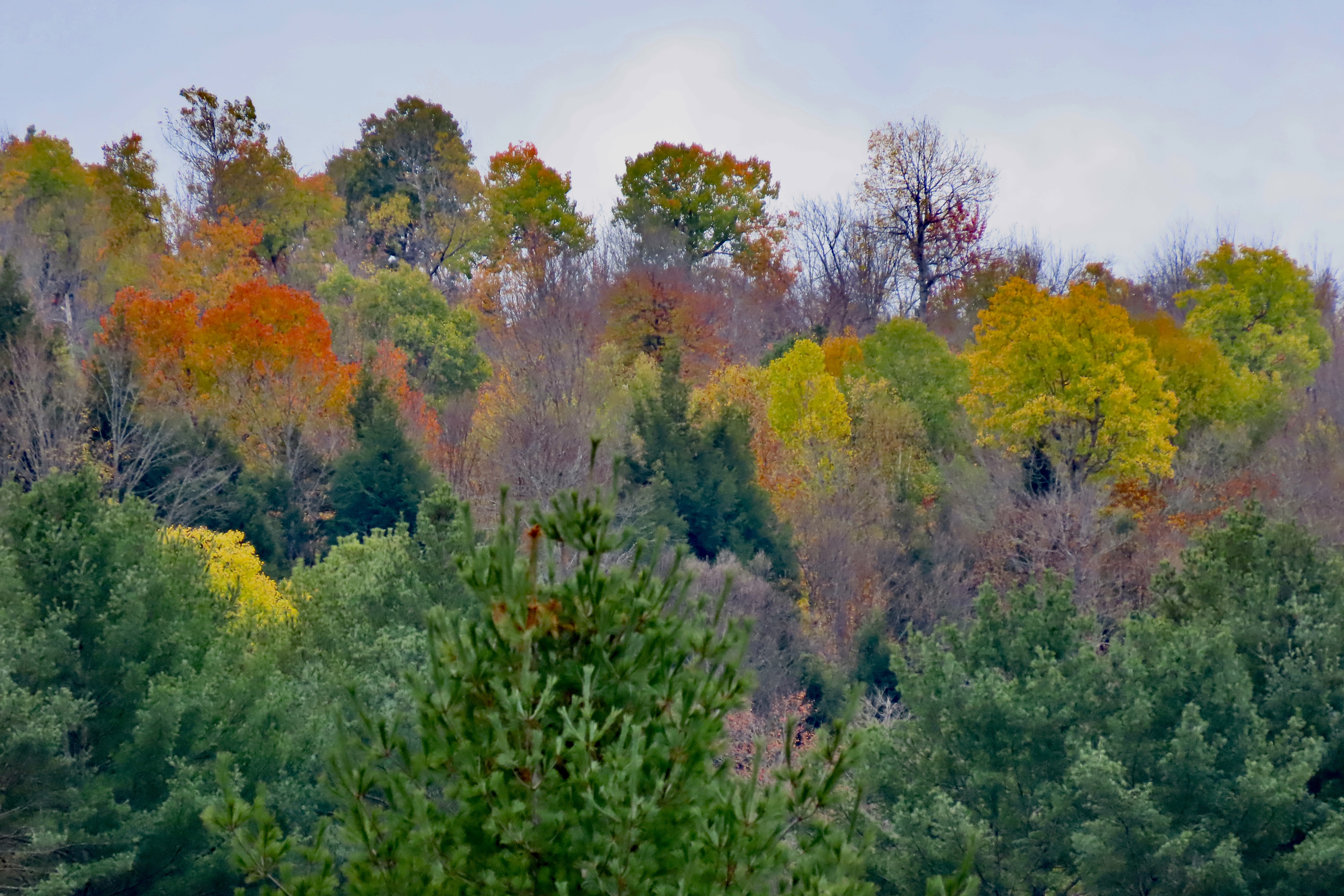
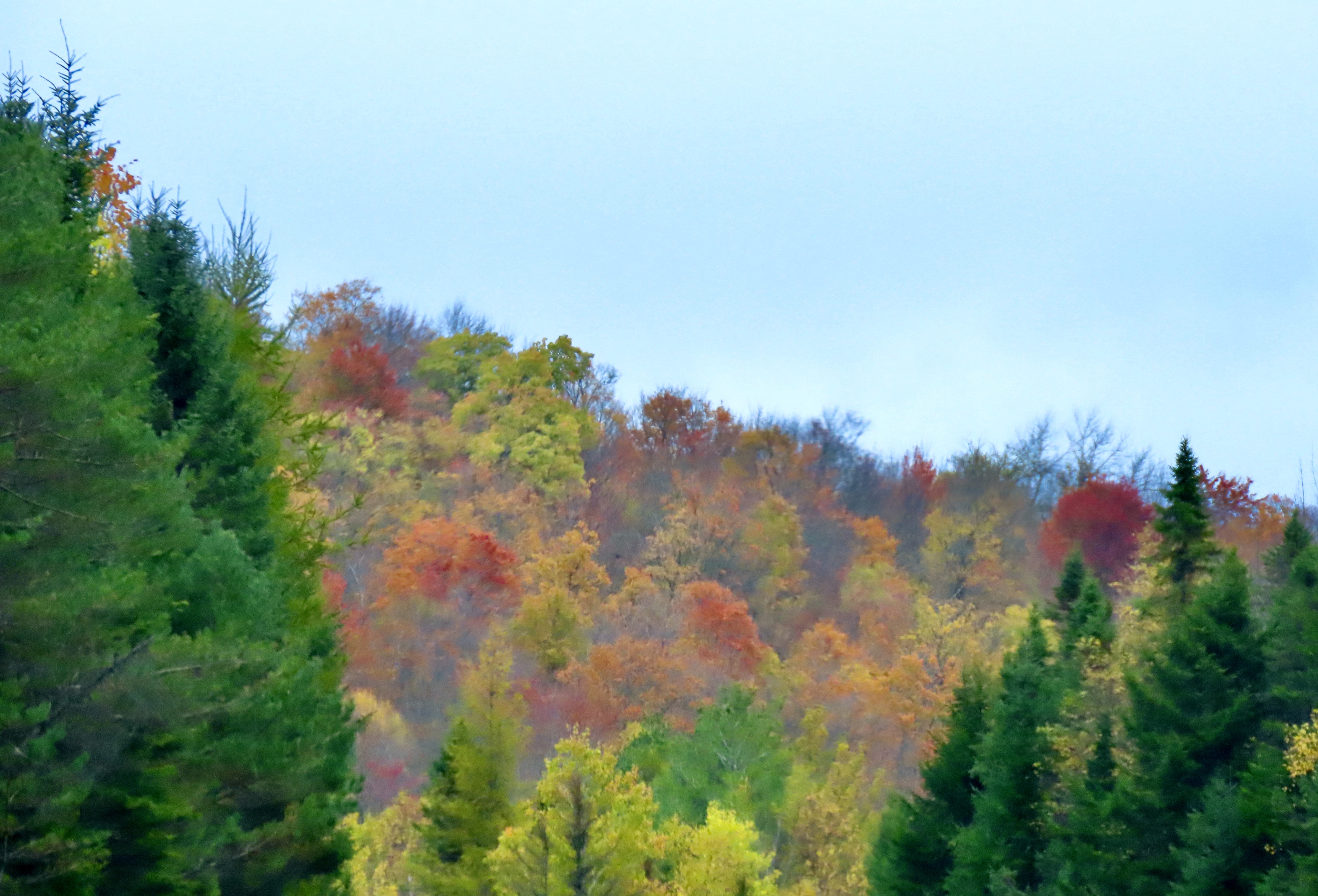
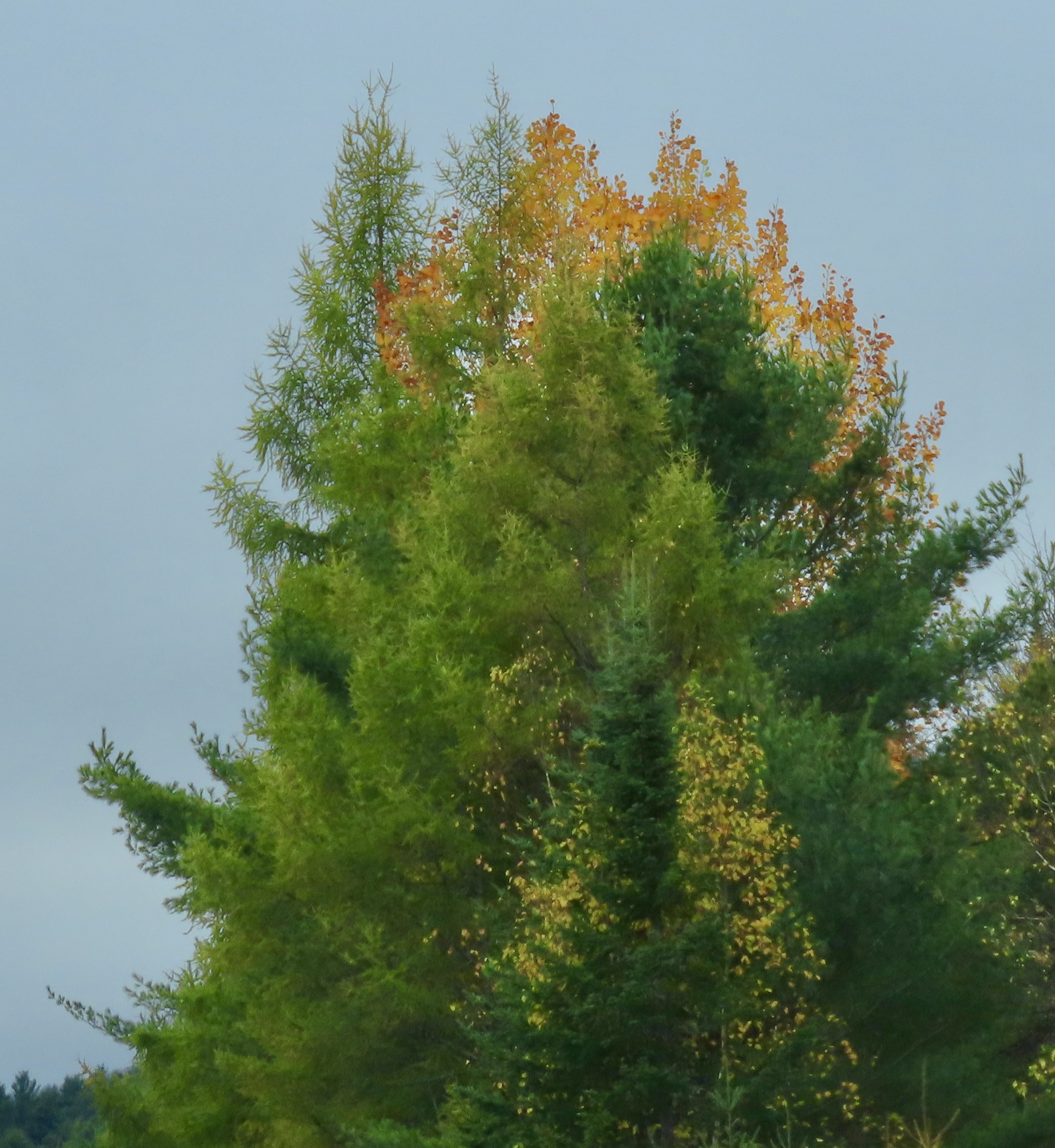
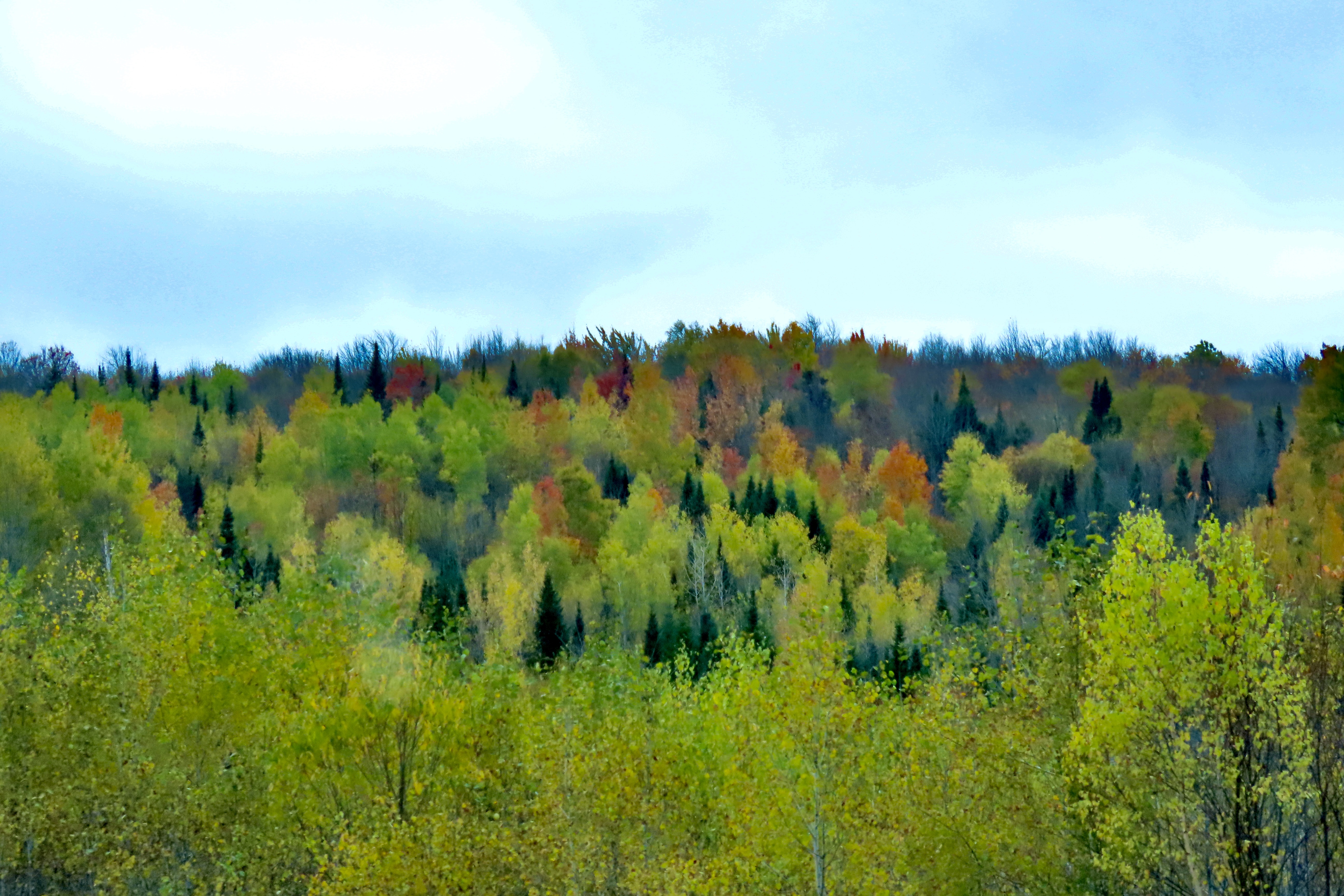
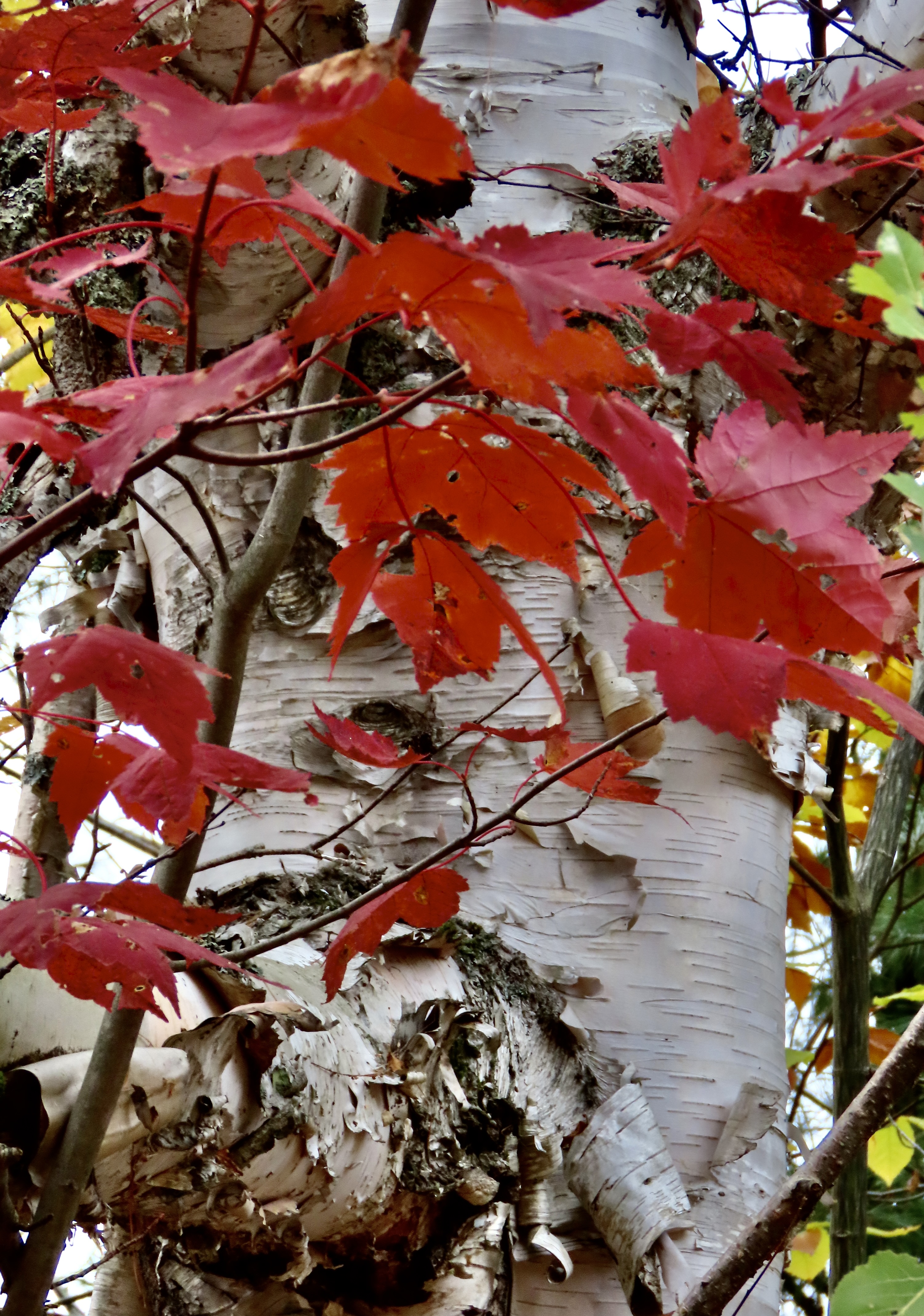
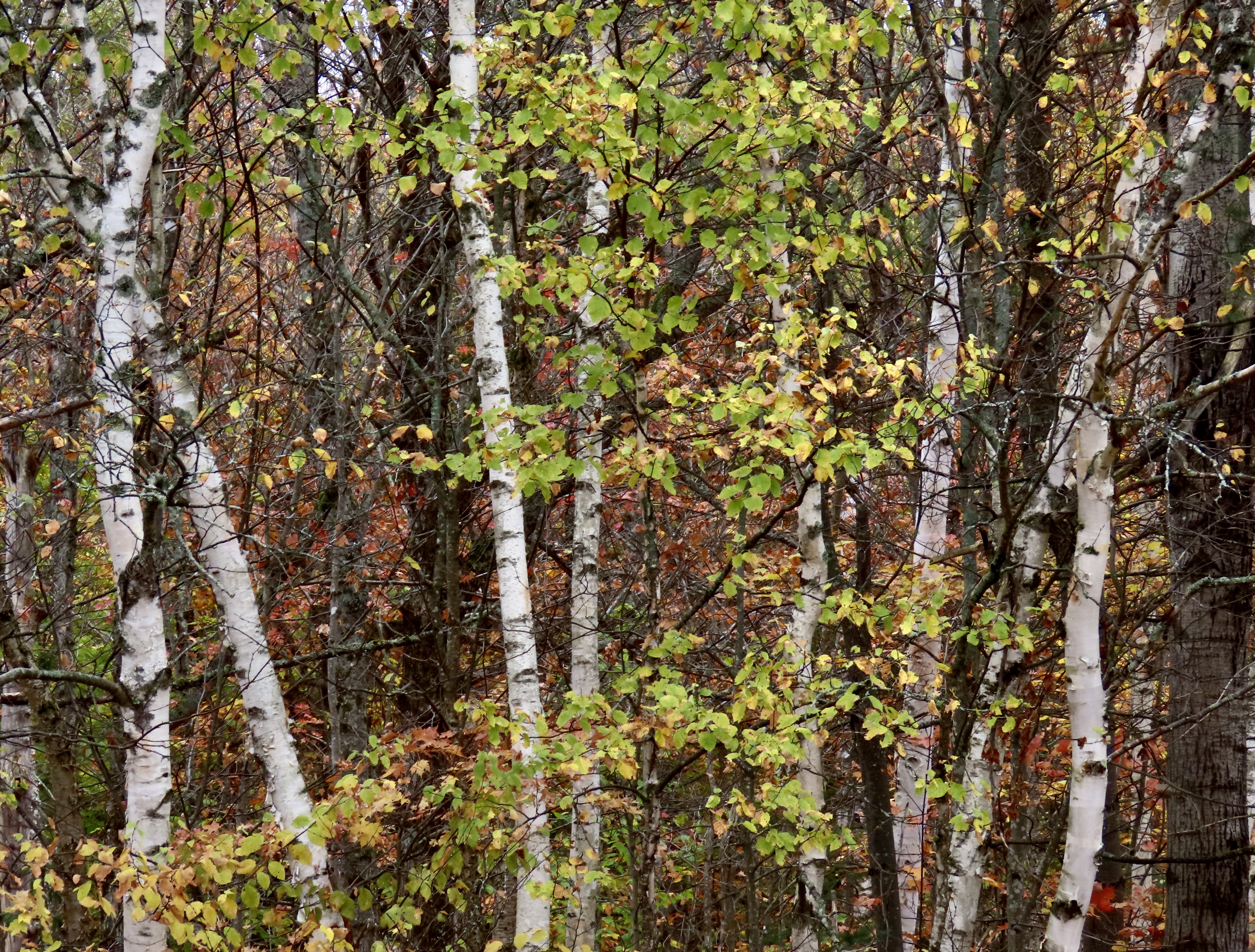
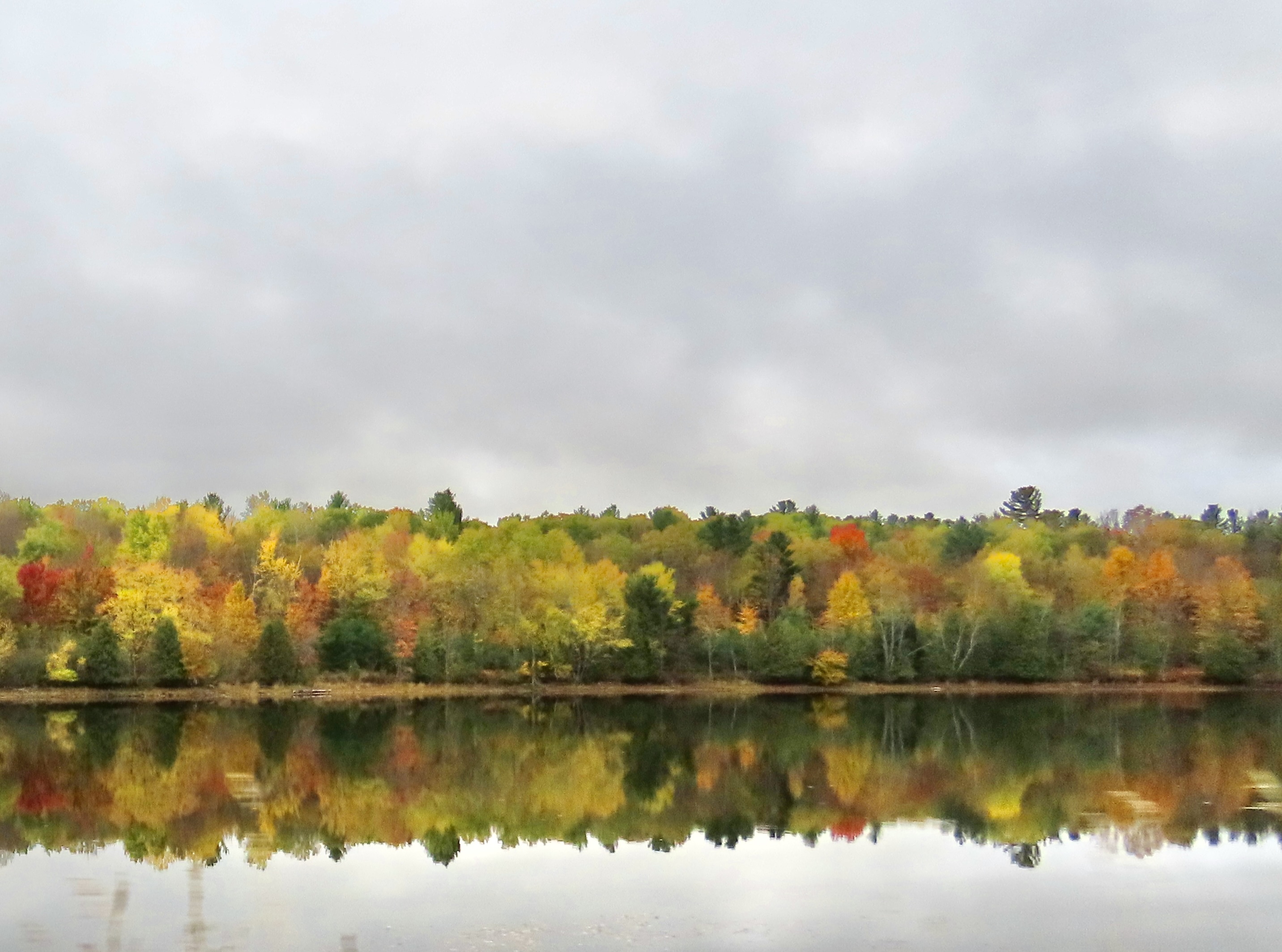
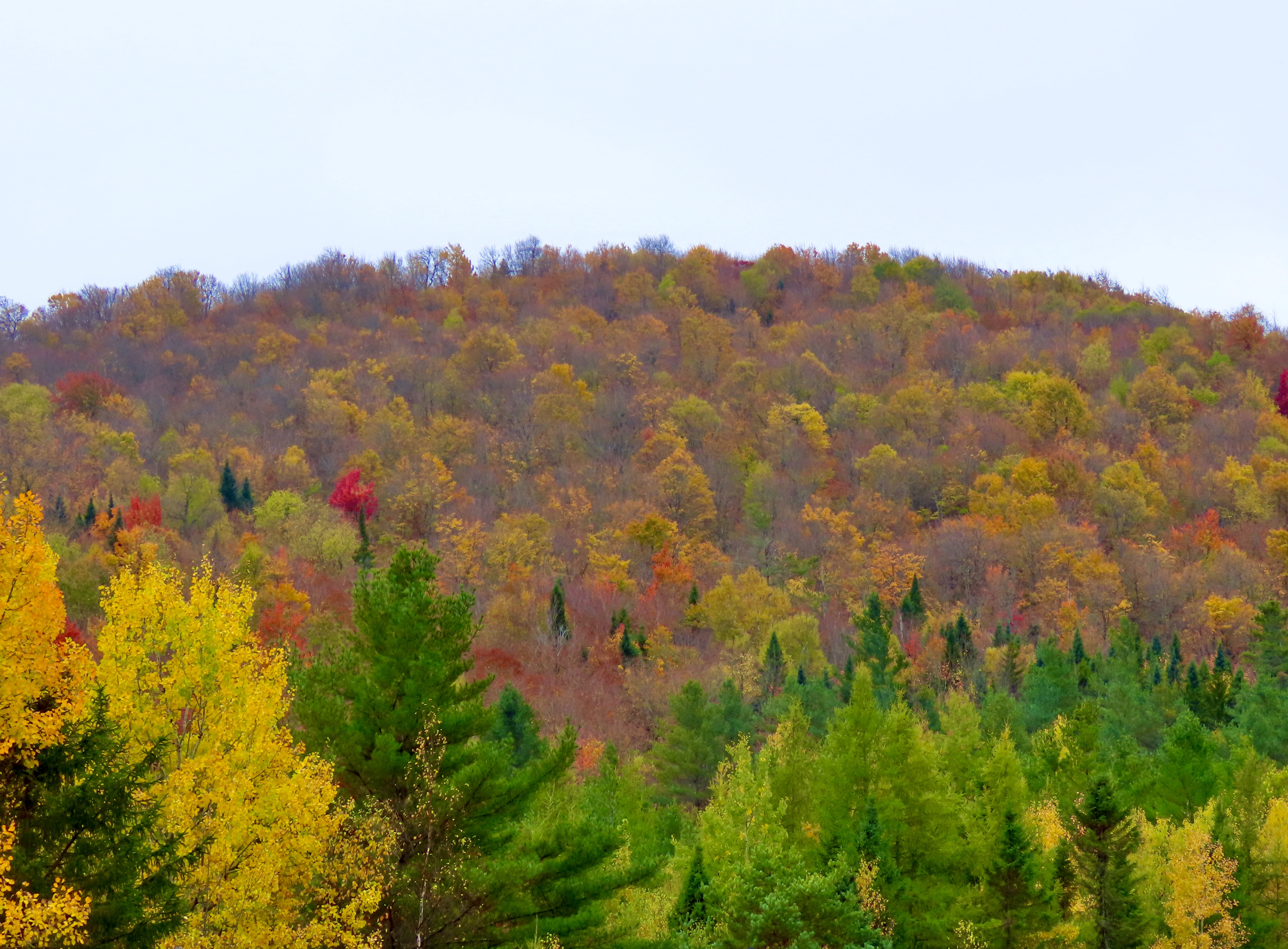
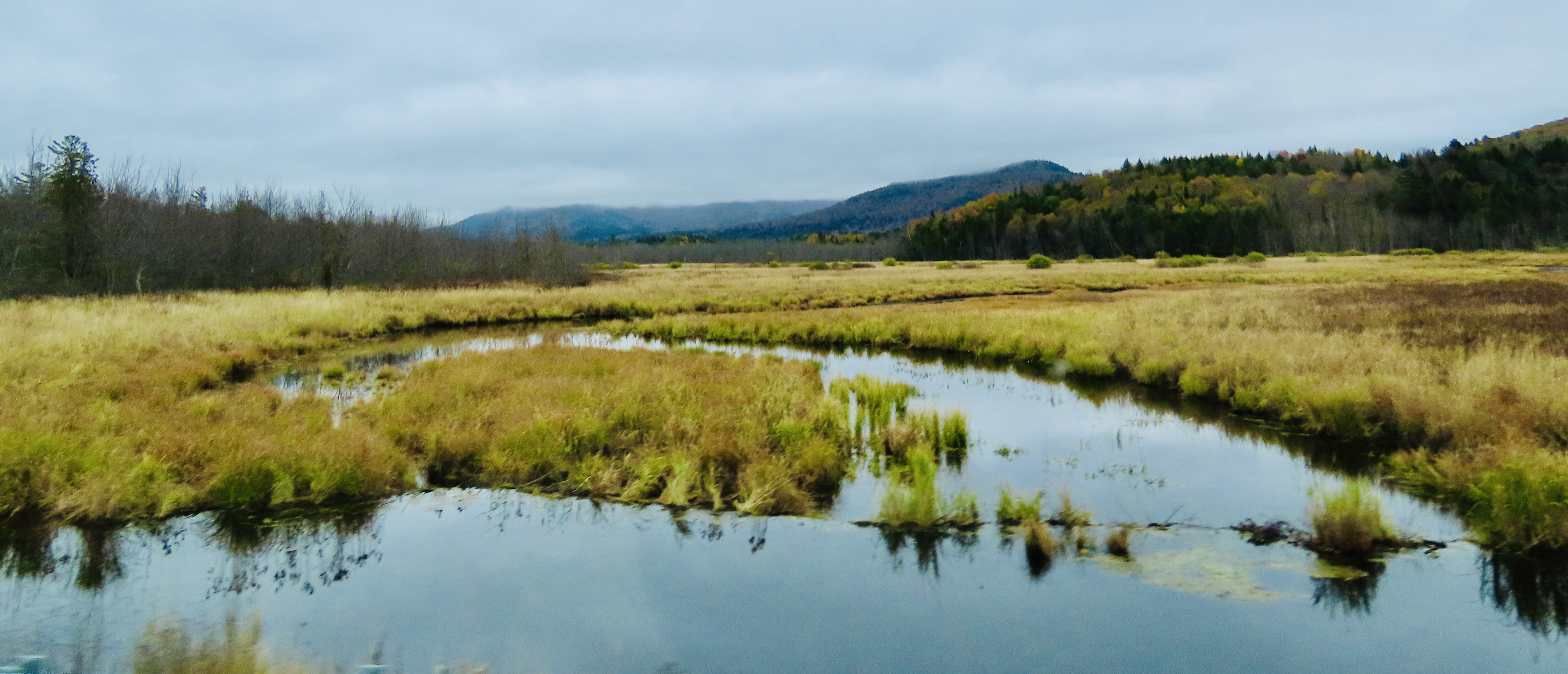
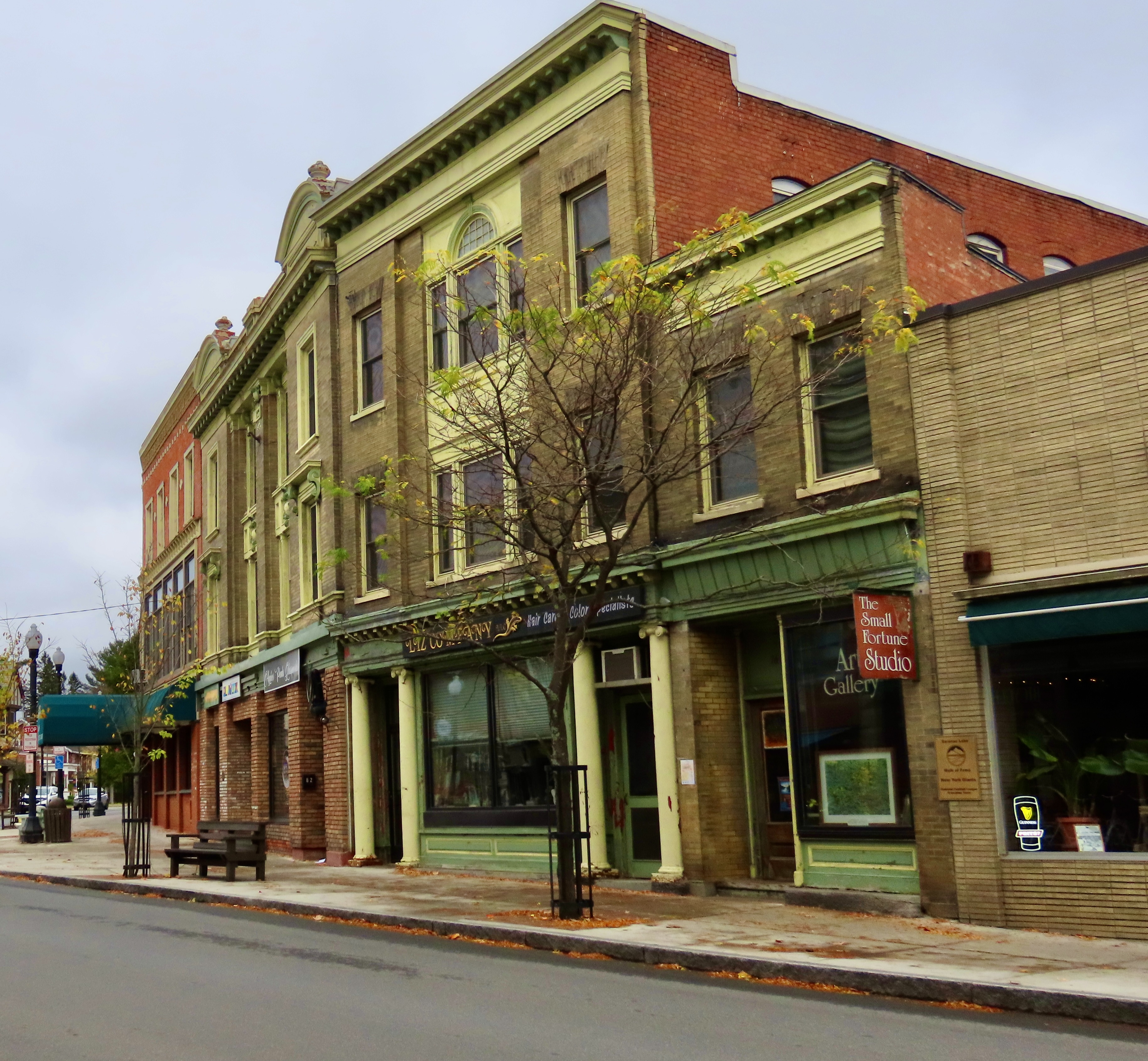
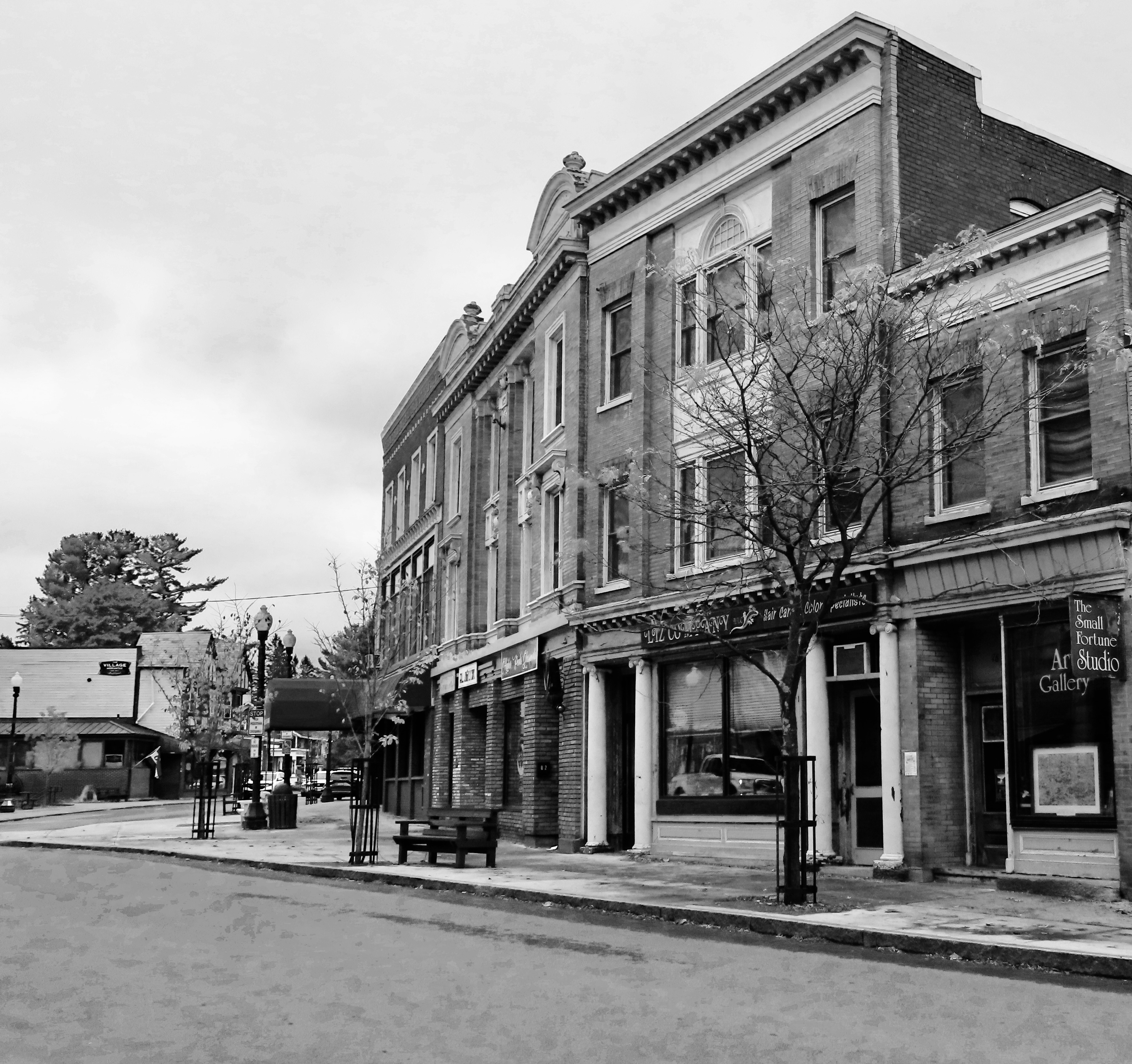
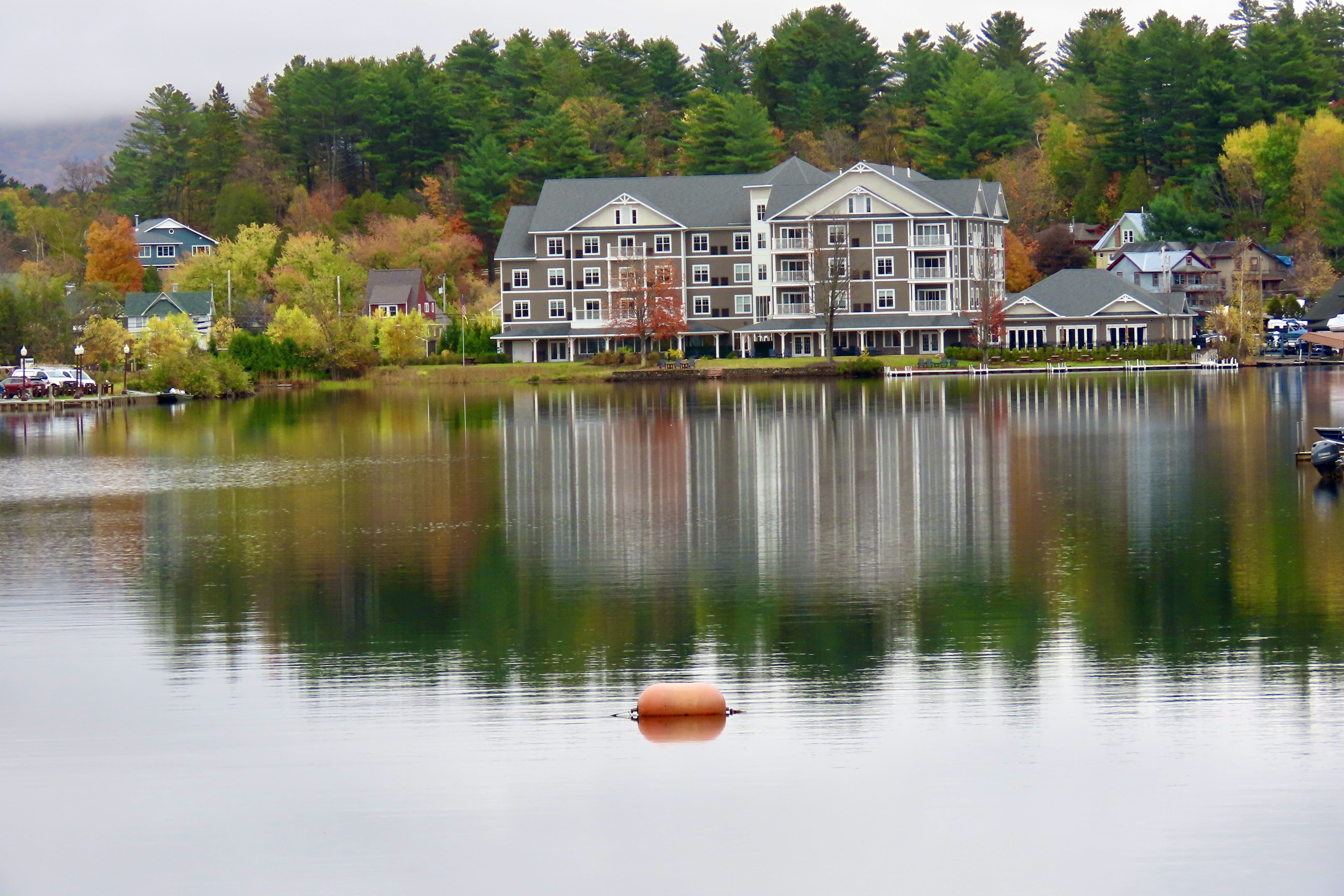
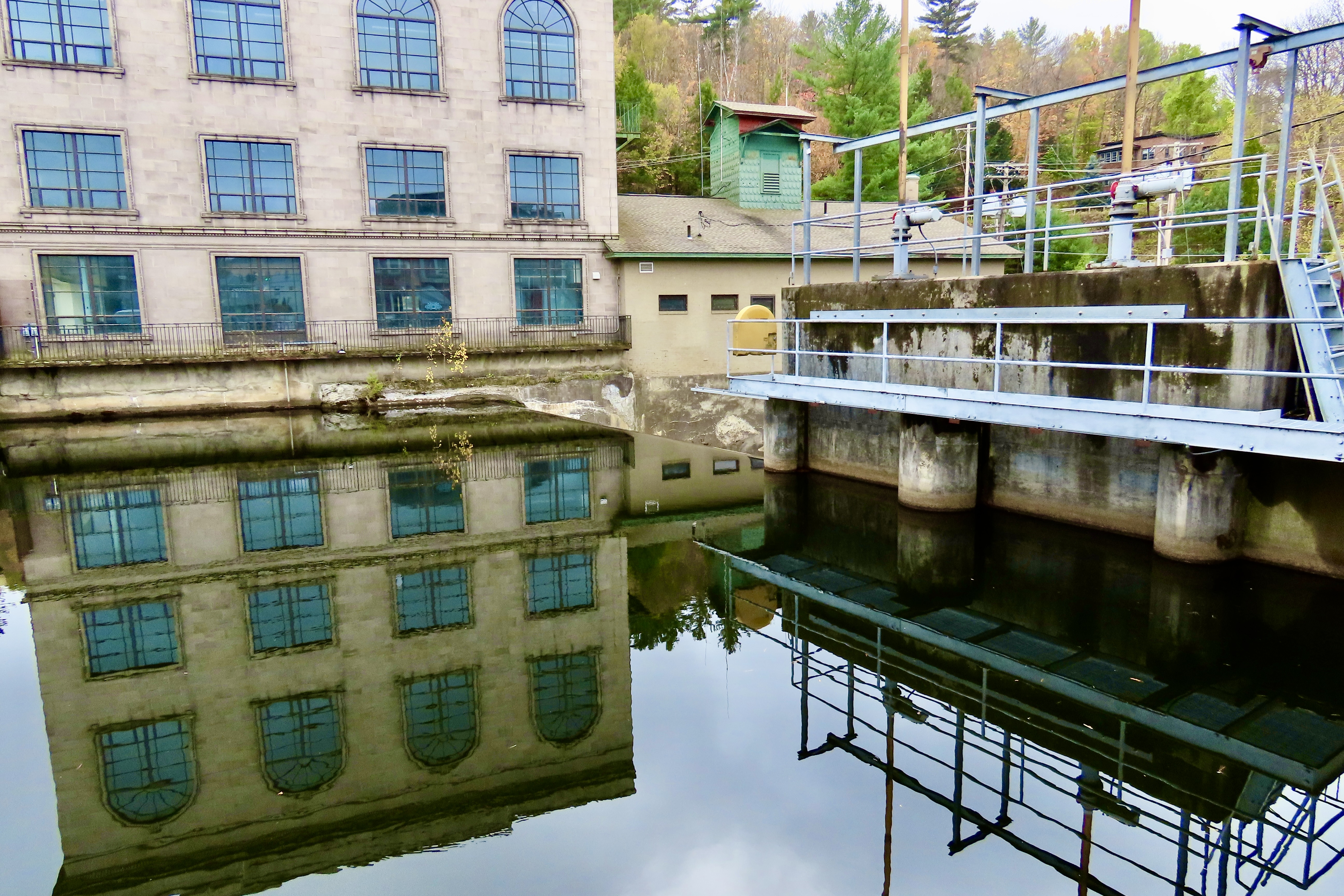
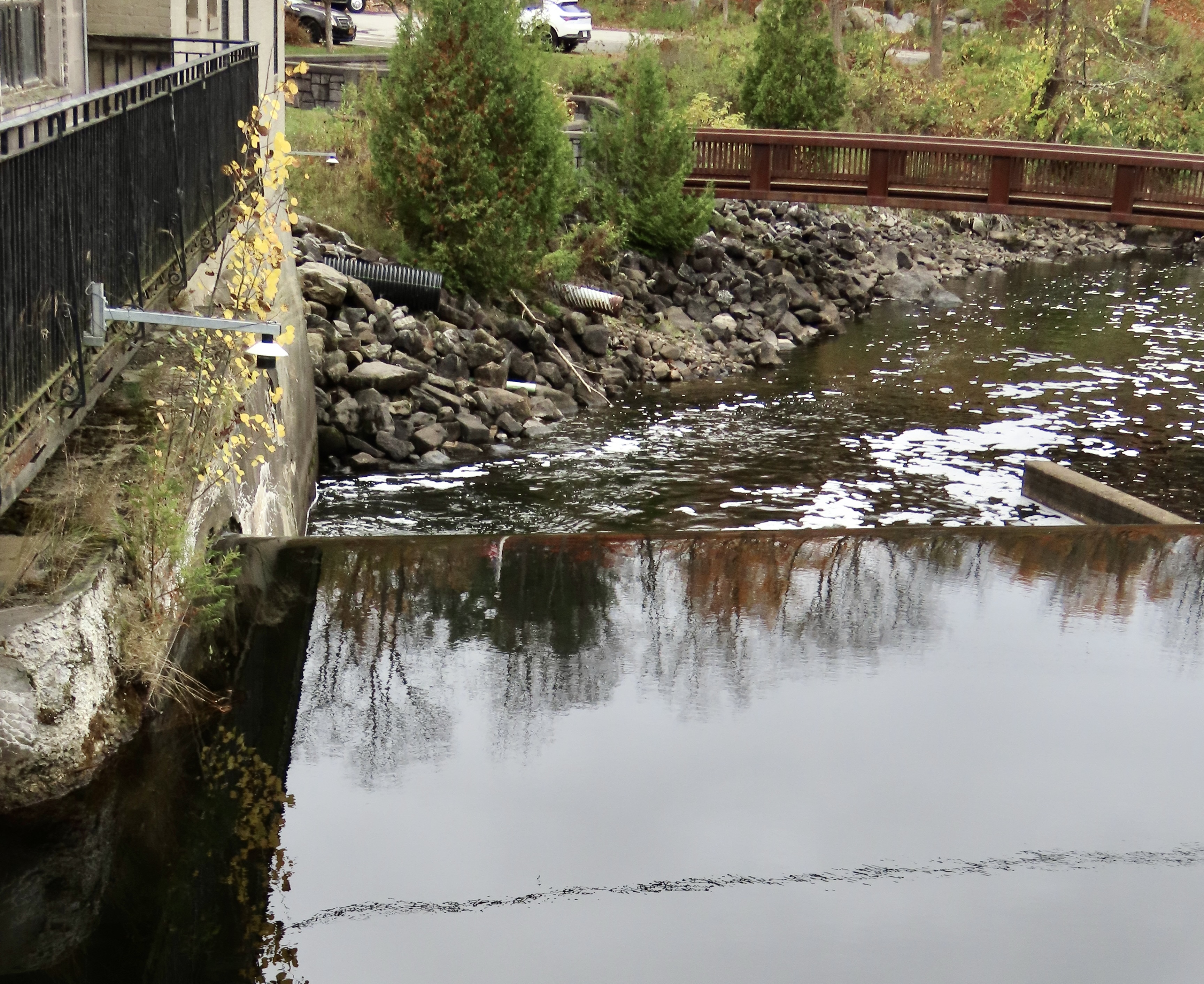
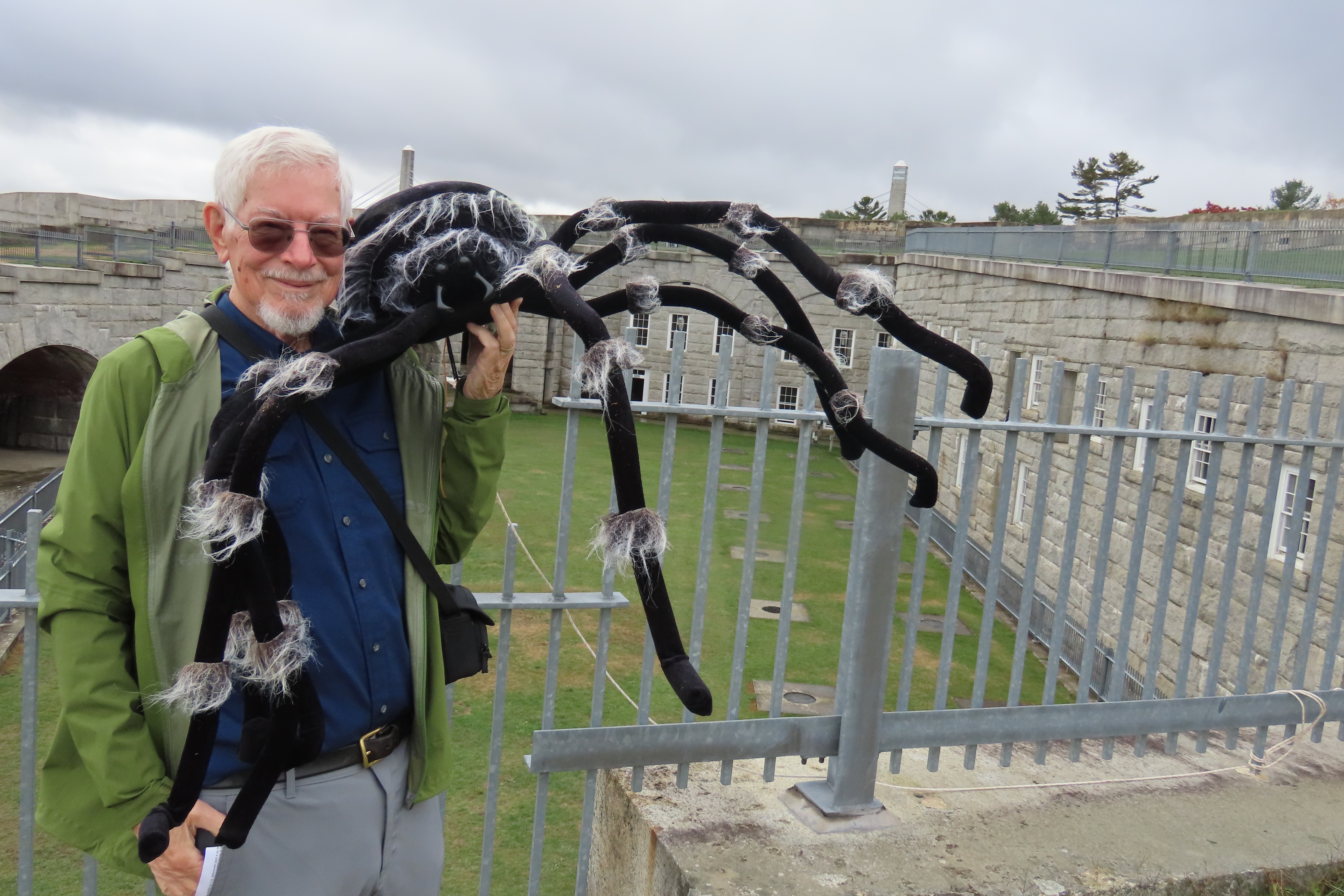
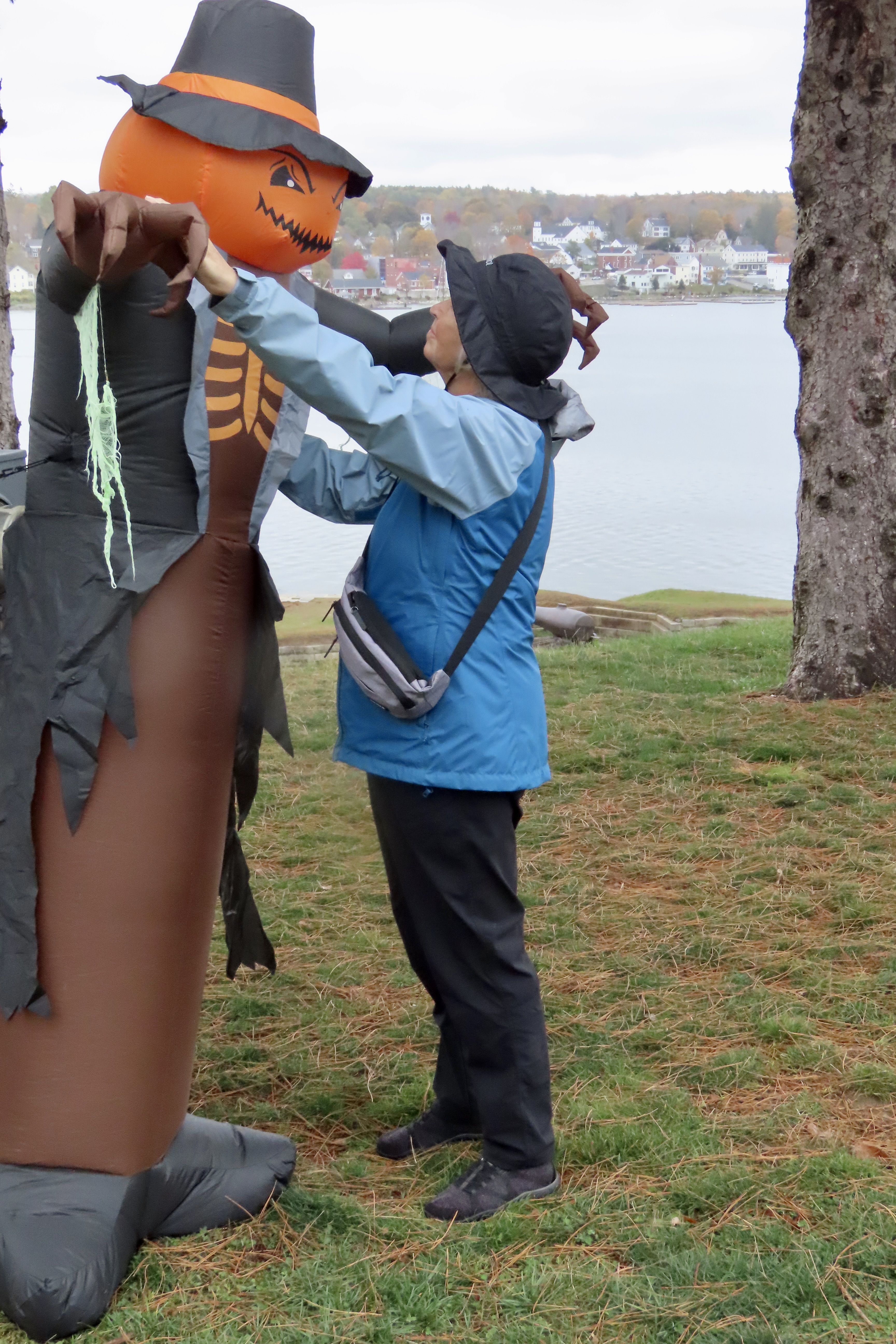
We soon discovered that fall color was alive and well in the park. The cloudy day and trees without leaves gave a water color painting look to the scene. There is another factor as well. I shoot lots of photos from our truck as it zooms along the road. It requires a different skillset than normal photography where you get to leisurely think about and compose your photos. I have about five seconds if the photo is out the the front window, or less if the photo is on the side. My camera sits in my lap with the lens cover off. I see an interesting photo, turn on the camera, and shoot. Due to the speed of modern cameras, my photos are normally clear, but they can be slightly fuzzy, adding to the water color effect. Peggy doesn’t like to take photos from a moving vehicle. She insists on thinking about and composing her photos. By the time she gets ready, the photo is a few hundred yards down the road. “I’ll drive. You take the photos, Curt,” she insists. Grin.Another “water color” road shot. I really liked the color contrast here between the yellow, green and orange plus the ‘towering feel’ provided by the tall trees. Peggy likes the way the limbs on the conifers reach out. “Fingers,” she calls them.It was the shape and dark color of the conifers in comparison to the deciduous trees (ones that lose their leaves) that caught our attention here.A few pull offs did allow us to get out and take clear photos. This one shows bright red maple leaves set off by white birch bark. The birch’s leaves turn bright yellow in fall.These are young birch trees. We took this photo at the same stop we took the photo above.A reflection shot on the Saranac River, managed to catch the full range of fall colors including the brilliant yellow of the beech trees. In addition to having a water color feel, I thought this photo was like an Impressionistic painting. We like this shot because of the reds and oranges. The yellows and the greens provided emphasis.We took this photo not far from the town of Saranac Lake. it shows that fall colors are about more than just trees!In addition to its modern reputation as a tourist magnet, Saranac Lake once served as an early research center for TB and as a TB Sanatorium. For a brief period it also provided a home for Robert Louis Stevenson, the author of such classics as Treasure Island, one of the books I devoured as a child.I rendered the above photo in black and white to create an ‘old time’ feel.A pretty little lake sits on the edge of town. Peggy and I first assumed it was also Saranac Lake. Actually it is Flowers Lake named after a governor of New York. Before that it was named Mill Pond because the river had been dammed up to run a saw mill. We felt the small buoy made a nice addition.I thought this made an interesting photo and reflection shot. Can you spot the overflow for the Flower Lake Dam? Check out the left end of the reflection.The backup behind the overflow outlet was perfectly calm. The different perspective here provided an interesting reflection of its own. That’s it for today. Next up will by our annual Halloween Post. New England takes its decorating seriously.As do I. My newest BFF… Best Friend Forever.And Peggy. She decided to do a turn on the dance floor with Mr. Pumpkin Head.
 Wandering through Time and Place