UT-OH Chapter 21: A Raging Forest Fire, Evel Knievel, a Rocket Scientist, and a Big Dog Date… Part 2

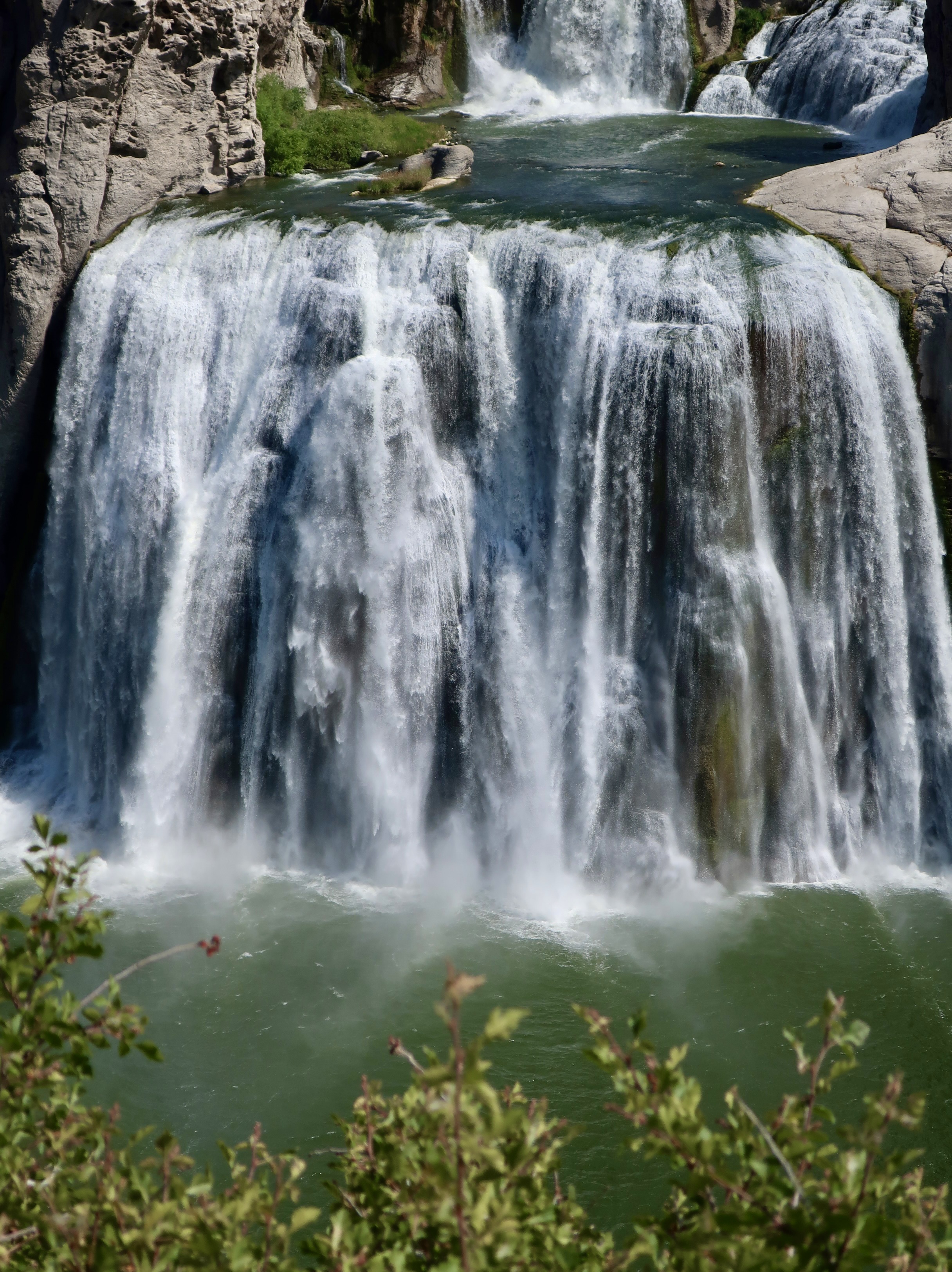
Idaho Falls on the Snake River is known for its beautiful falls. There are several. Thus the city’s name.
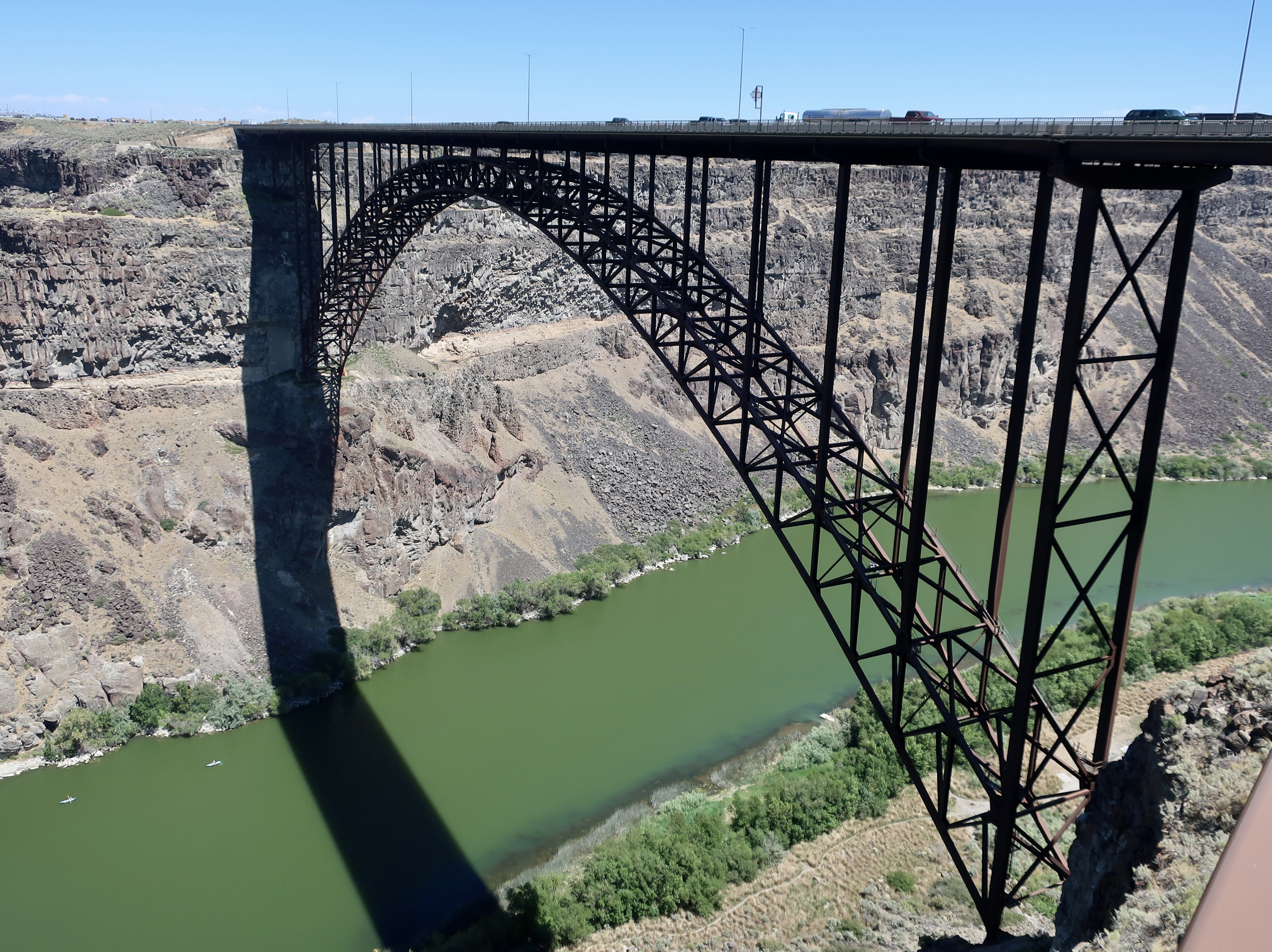
The easiest way to get across the Snake River is on this bridge.
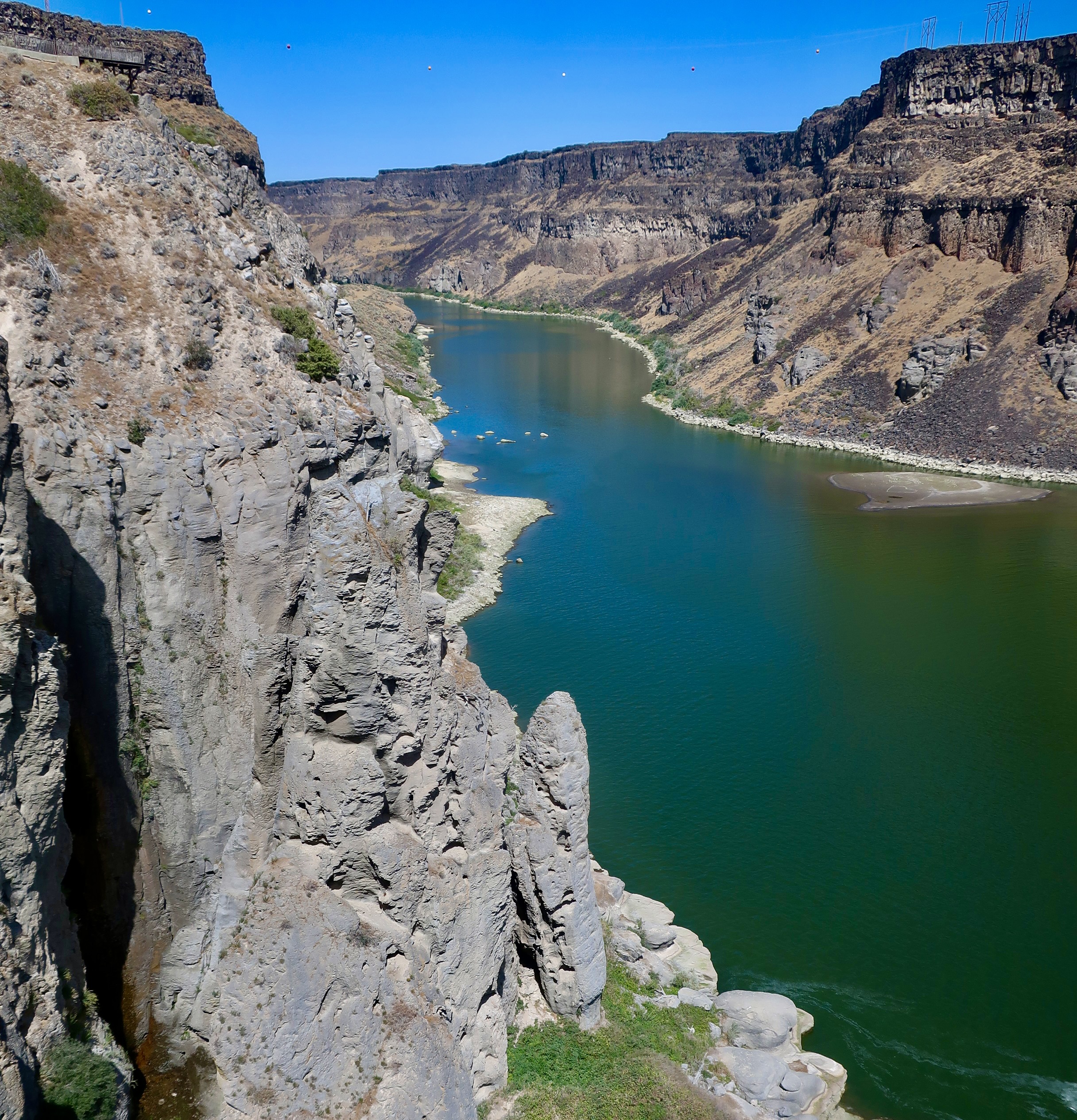
Daredevil Evel Knievel opted to jump across it in a modified motor/rocket cycle built by rocket scientist Robert Truax.
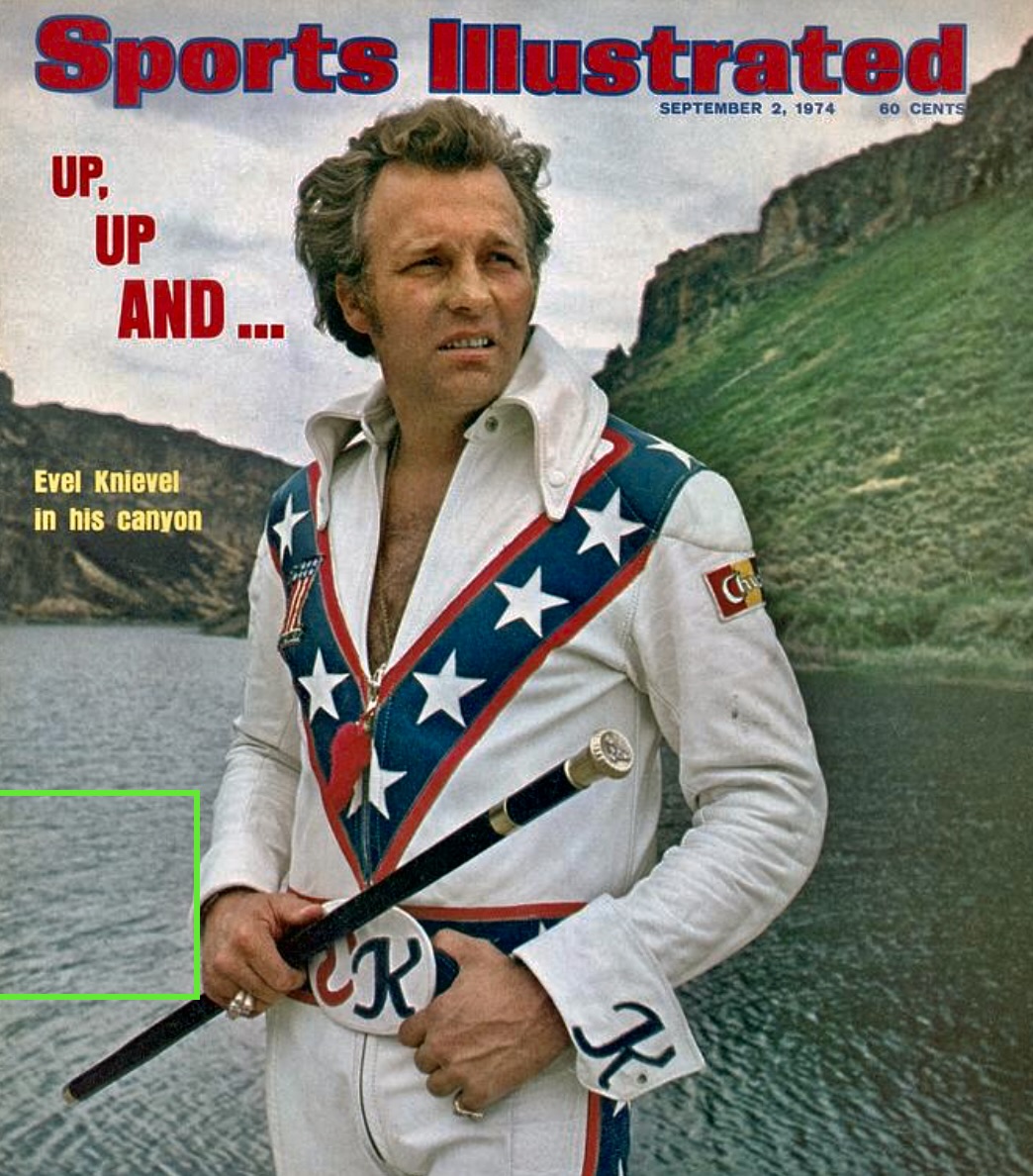
A Sports Illustrated cover that featured Knievel in the Snake River canyon.

Summer 1961: In my last post, I got up the nerve to ask a rocket scientist’s daughter for a Saturday night date to the California State Fair, spent a long week waiting, worked in a pear orchard for 9 hours on Friday, joined friends for a night of chugging beer that evening, and then left the party at midnight to fight a raging forest fire— all before the date. I am continuing the story today as I tell the tale of the longest weekend in my life...

One hour later I was in a mustering hall in Placerville filled with men being divided up into fire-fighting teams. By 2 a.m. I was clinging to the side of a steep canyon with one hand desperately holding onto a manzanita bush while my free hand wielded the short, heavy mattock. Our team had been assigned the responsibility of clearing a firebreak along the canyon rim. The whole sky was lit up in front of us by an inferno that was relentlessly marching toward our location. It encouraged fast chopping. Full speed ahead and damn the blisters.

It was not our night to play toast, however. The wind switched direction and we completed our firebreak. Somewhere around five a.m., a very welcome soul had shown up with water to refill our empty canteens. At seven we were told to take a break for breakfast. We returned to the staging area where men and machines competed for space, and the earlier night’s chaos had been whipped into a semblance of order. More importantly, a highly efficient cooking crew was turning out mountains of mouth-watering food. Starvation would not be a problem. 

After breakfast, our next assignment was dealing with small spot fires left behind by the main conflagration that was now trying to burn itself out. We marched through the mini-Armageddon with back pumps spraying anything that smoked. A change in wind direction might fan these dying embers into flames and a new outbreak. It was hot, dirty work, but lacked the intensity of the night before. 

A late lunch came and went. Afterwards our crew chief made us an offer I couldn’t refuse. The worst danger appeared to be over. Only mop-up work remained to be done. While our services were still needed, we could be relieved if we had other pressing responsibilities. I decided that Kathy was a ‘pressing responsibility.’ It was 2 p.m. and I had been fighting fire for 12 hours. There was just time to get home, beautify, and make it to Kathy’s home in Cameron Park by 5.

I won’t say the date was anticlimactic, because it wasn’t. Kathy was as charming as I expected and going to fairs has always been one of my favorite activities. Among the things that attract me are pigs and goats. I’m fascinated by pig behavior, especially at feeding time. I love to watch them squeal, snort, shove, and snap their way to the food pan. I particularly enjoy the ones that place both front feet solidly in the middle of the common food dish and glare defiantly around at fellow pigs. It’s so human. As for goats, I like their friendly curiosity and the way they come over to be scratched and nibble at your shirt.
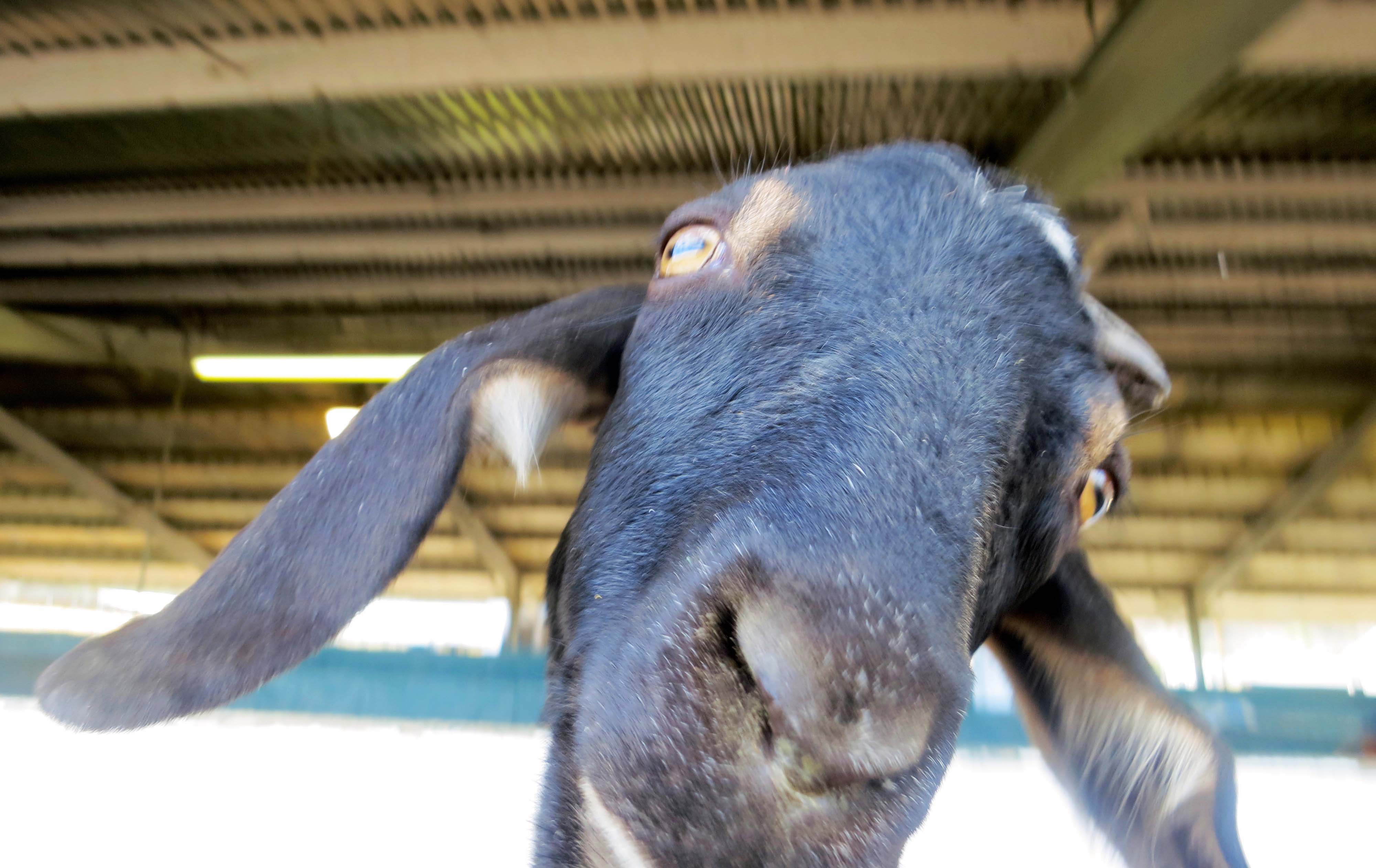
Goats have always been one of my top reasons for visiting fairs. This fellow was very curious about my camera. Shortly afterwards, he tried to nibble on my shirt.

I took Kathy to the animal barn. It’s a must-do on fair dates. Wiser heads might counsel this is not the way to impress a new woman friend, but I’ve always figured if my friend didn’t have a sense of humor about the animals, it was unlikely she would have a sense of humor about me.

A highlight of the evening was winning Kathy a car-filling stuffed dog. As a ten-year old kid, I once spent a couple weeks before the El Dorado County Fair practicing the game of toss a dime in a dish and win a prize. Each night I would religiously get out my plates and two dollars’ worth of dimes and toss away. I learned a little back flip trick that actually allowed the dime to stay in the dish. When the Fair came, I was loaded for bear, or at least stuffed bear. I picked out the booth that featured the animals I liked and bought a dollar’s worth of dimes. My very first dime managed to stick. 

“Even little kids win here,” the carnie shouted as he tossed me a bear. He wasn’t nearly as excited when I won the second bear. On the third, he banned me from the booth. It was one of my prouder moments. I sold the bears to the older brother of one of my friends for $10. He wanted to give one to his girlfriend but couldn’t win one. I had all the makings of becoming a great capitalist.

Unfortunately, I had lost the knack of dime toss by the time of my date with Kathy and the dishes had shrunk considerably. A tiny plate in the middle, slightly larger than a dime, was reserved for the bigger animals you were required to win to impress a girl. 

I decided I would have better luck at a ball toss where all the prizes were large. This is the game where you have to fit large softballs into small, numbered squares. You win if the numbers add up to more or less than specified high and low numbers. Naturally, it is almost impossible to do on skill given the size of the squares and the bounciness of the balls. It is also close to impossible to win on luck. So I did the next best thing, I cheated. I helped the ball behave by leaning over the barrier when the carnie was otherwise occupied. The crowd, seeing what I was up to, participated by distracting him.

“We have a winner,” the carnie shouted as he paraded around his booth with the large stuffed animal. “Everyone’s a winner at my booth.”  Sure. I’d bet a hundred bucks no one else had won one that day. We walked away laughing. 

Eventually the evening came to an end. I loaded Kathy and her large stuffed dog into my 56 Chevy and headed back up Highway 50. I delivered her home ten minutes early. We chatted away happily until midnight. Then the lights started blinking. 

“What?” I asked Kathy. 

“Oh, it’s just Mother,” Kathy explained somewhat embarrassed. “She always starts blinking the lights after I return from a date.” That was a first for me. I reluctantly said goodnight to Kathy as she and her large stuffed dog went inside, and I started my drive back to Diamond.

It was a successful conclusion to a day that had started 42 hours earlier and included 9 hours of working in the orchard, 5 hours of partying, 12 hours of firefighting, 7 hours of mundane activities, and the 7 hour date with Kathy. I was one tired puppy and just managed to make it home without passing out. 

We had one more date that summer, a day trip into the foothills above Diamond. It was my territory, so to speak, the boonies, far away from the world of rockets. Or so I thought. It turned out that her grandmother lived up near Pleasant Valley, on the edge of the same canyon where Caldor had once run its logging trains. Her father occasionally used the property for his hobby, shooting off rockets he had built. His dream was to create inexpensive rockets that would make space more affordable and could be retrieved for use again. And it was this dream that would eventually team him up with Evel Knievel, a man whose name was synonymous with daredevil.

During his life, Knievel made some 275 motorcycle jumps over cars, busses, and trucks. Fifteen of the jumps involved spectacular accidents. He suffered numerous concussions and shattered his pelvis three times. Overall, he broke 35 bones. Maybe he should have pursued a much tamer sport, such as playing NFL football.

But regardless of the injuries, he was always on the lookout for new ways to upgrade his act, obtain more publicity, and increase his income. Mainly this involved adding more vehicles to leap (for a number of years, he held the world record of 19 cars), but he also had a dream of jumping the Grand Canyon. The National Park Service wasn’t enthusiastic about the idea, however, which eventually led him to Idaho’s Snake River in 1974— and to Robert Truax. Knievel’s Harley wasn’t up for 1700-foot jump across the river. Truax offered to build him a rocket-cycle he could sit on that would. The jump failed after the parachute deployed prematurely, but Knievel survived with minor injuries.

That, however, was far into the future. Kathy and I enjoyed the date, returned home, and began to prepare for heading off to college.
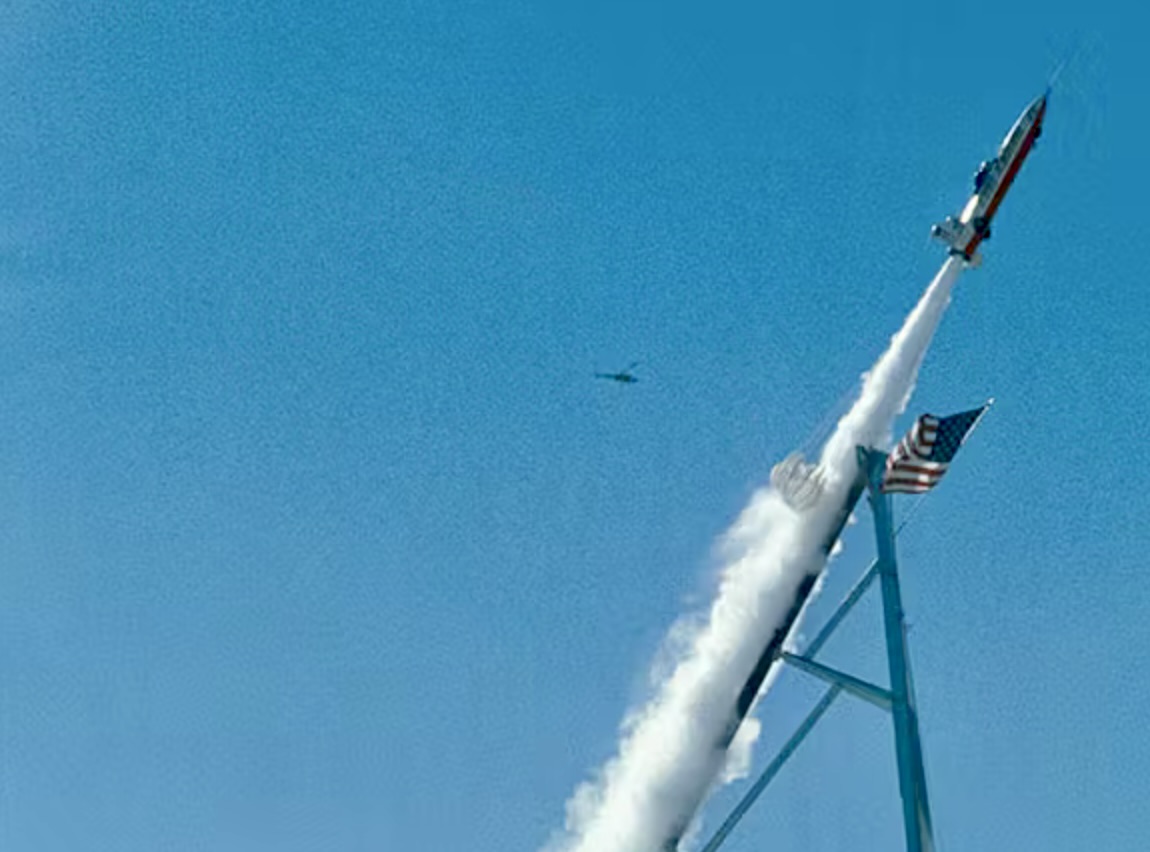
The blast off of Evel’s attempted jump across the Snake River. It may be the only rocket ship ever that came with wheels.

Friday’s Post: The revenge of the EX.
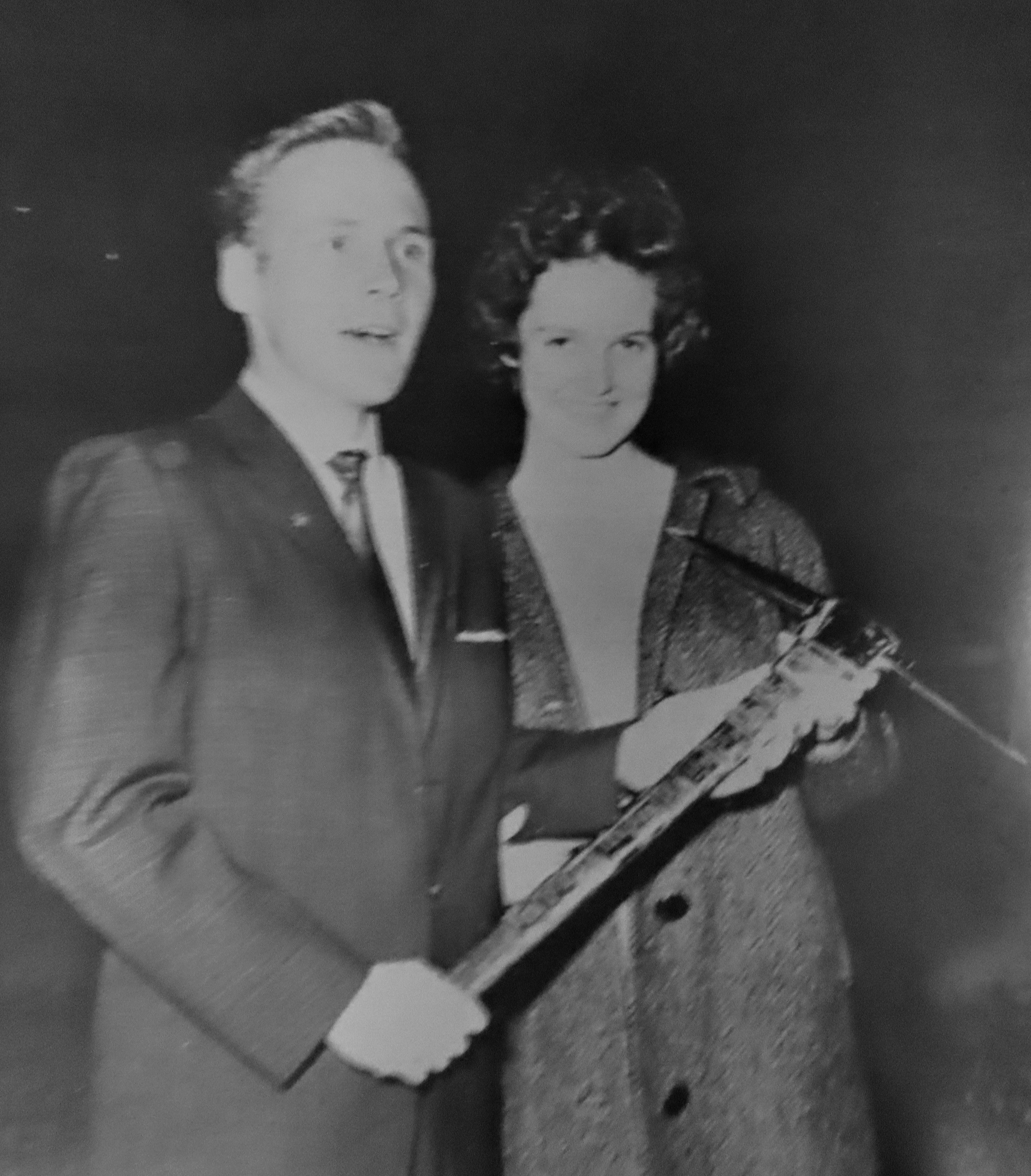
In this aging photo from my 1962 Sierra College Annual, Student Body President Ray Hjertager and his date, Mary Carol Nelson, hold the coveted Pick-ax, symbol of Sierra’s football victory over crosstown rival, American River College. Ray has to keep a tight hold on it. There is a long-standing tradition that whoever loses the Pick-ax at the year’s Big Game will try to steal it back. Keeping it was my responsibility the following year when I was Student Body President. A fiendish plot by my ex-girlfriend from high school was hatched to steal it from me…

Chapter 19: Graduate or Go to Jail. I Was Given a Choice.

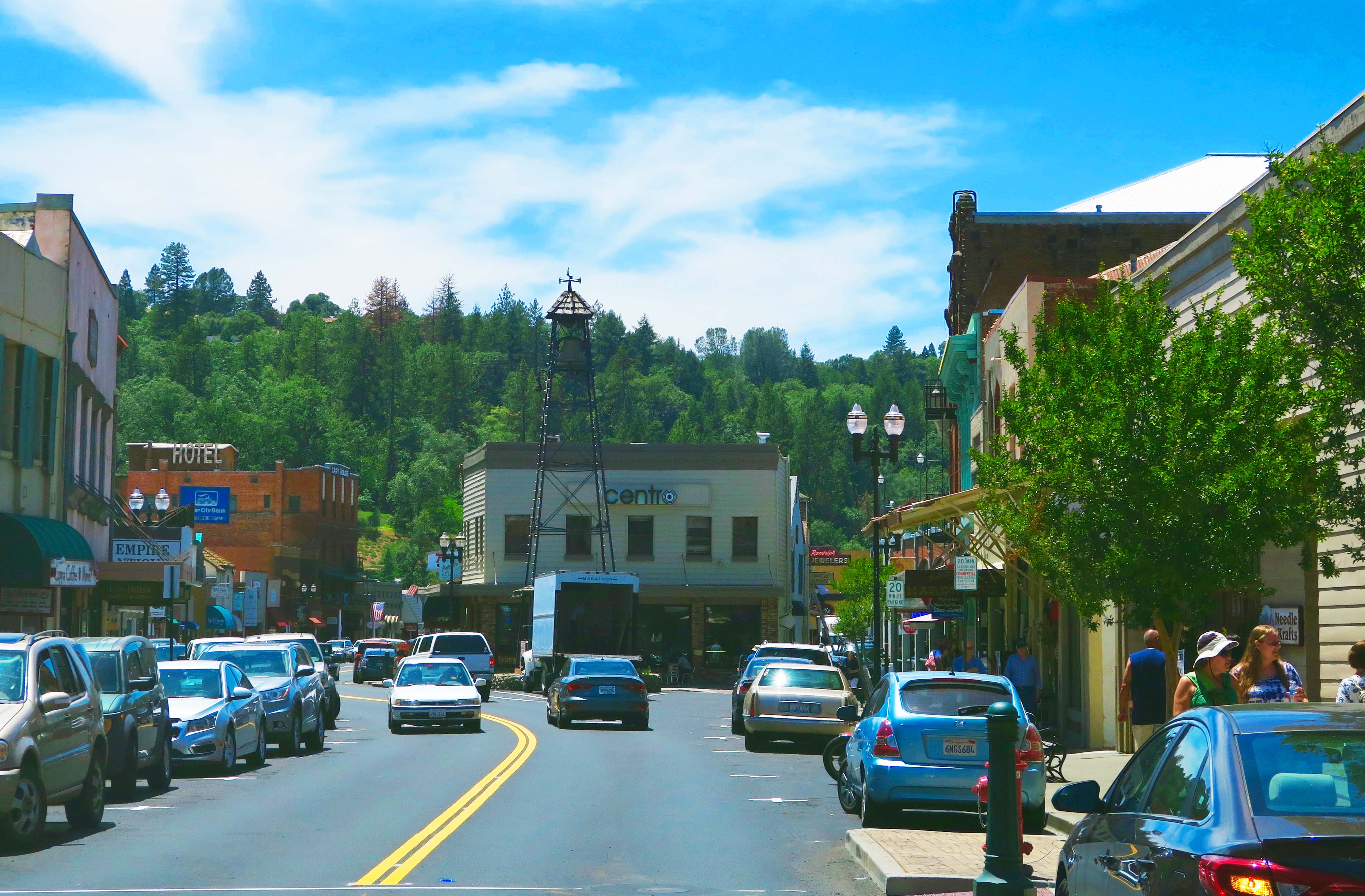
The Main Street of Placerville looks pretty much the same today as it did in 1961. The Chief of Police pulled our car over on the right hand side of the street here. The incident took place near the red hotel building, a block or so down the road.

If I was going to base my future on my organizational skills, I had to practice, right? So, I organized a protest my senior year. As a 60’s issue, it wasn’t a biggie. The Administration had axed our Senior Ditch Day and we wanted it back. 

I drew up a petition and Patti Foley, who had great calligraphy, made it fancy. Almost all of the seniors signed.  (I still have it.)  A student strike was organized. I’m sure it was the first time El Dorado Union High School students had even considered such an action, Mabe even the last. Some of our rowdier students even lit trash cans on fire. 

It wasn’t the issue that got me threatened with jail, however. The school administration called me in and asked if we couldn’t work out some type of compromise on Senior Ditch Day, which I readily agreed to. The strike was called off, the rowdies stopped lighting trash cans on fire, and we switched our Ditch Day to one more agreeable to the Administration. Everyone won. My civics teacher was impressed. 

My problem with the law took place on Graduation Day when I inadvertently (or is that idiotically) crossed paths with Mike De Natly, the Placerville Chief of Police. Few of my UT-OH! moments can hold a candle to this one. As one might expect, our last day of high school was a goof off day. All the tests were over, yearbooks signed, and caps and gowns fitted. There really wasn’t much to do except revel in the fact that we were through and to say goodbye to friends. Lunchtime meant a final cruise of Placerville’s Main Street to check out girls, to see and be seen.

What happened was out of character for me. I normally keep my comments on other peoples’ driving habits to myself and car-mates. The horn is for really bad infractions, and, on very rare occasions, a single digit comment is appropriate. I would never stick my head out the window and yell at someone. That can get you shot.

But we were hot stuff on graduation day. When a blue car decided to stop in the middle of Placerville’s crowded, narrow downtown street right in front of us and forced us to hit our brakes, it irritated me. And then, the driver nonchalantly got out to have a conversation with the driver of the car in front of him. It pushed me over the edge. Out went my head as we edged around the two cars and I had an attack of uncontrollable Y chromosome aggression.

“You SOB,” I yelled, “get your F-ing car out of the way!”

So what if I didn’t recognize the Chief of Police out of uniform in an unmarked car. So what if he had stopped to offer help to a guy who had managed to stall his car on Placerville’s busy Main Street. So what if I had suggested he had canine parentage in a voice that half of Placerville heard. It was an innocent mistake.

“That was Mike De Natly you just cussed out,” our driver managed to stutter with mixed parts of fear and awe.

As a teenager, I had pulled some fairly dumb stunts. Teenagers have a responsibility to push the envelope. It’s the rather awkward method evolution has provided for growing up and developing unique personalities. Mistakes are bound to happen and that’s okay. But I was carrying my responsibility too far; I had gone beyond dumb and plunged into really stupid.

“Keep driving,” I uttered with all the hope of the irrevocably damned, “maybe he is too busy and will ignore us.”

Sure, like maybe the sun won’t rise tomorrow. The poor stalled guy could still be sitting in the middle of Placerville for all of the attention the police chief paid to him after my little admonition. De Natly jumped in his car, slapped his flashing light on his roof, hit his siren and sped after us. Not that he needed to speed fast or far. We were creeping up Main Street in sheer terror about one block away. I am sure my car-mates were wishing fervently that Curt Mekemson hadn’t gotten out of bed that morning, had never made their acquaintance, and was, at that very moment, facing a group of starving cannibals in some far-off jungle.

We pulled over with De Natly literally parked on our rear bumper and resigned ourselves to the firing squad. Luckily, for my friends, the Chief had no interest in them. He appeared at my window red-faced and shouting about five inches away. Under the best of circumstances, he was known for having a temper and these were not the best of circumstances.

“Get out of the car,” he yelled. “Get out right now!”

I moved fast. This was not the time for bravery and stubbornness. It was a time to be humble— it was groveling time. And I groveled with the best. I blathered out apologies and managed to work “sir” into every sentence, several times. I trotted out my friendship with his stepson, I threw in the City Treasurer who was a mentor, and I even brought in Father Baskin, the Episcopal minister, as a character reference.

“Get in my car,” he ordered. My groveling seemed to be having minimal impact. At least he hadn’t handcuffed me.

We drove up to City Hall, and I had visions of being booked and thrown into a cell with some big hulking giant who either didn’t like young men or liked them too much. I thought of having to call my parents and explain how their son had become a common criminal. But De Natly had an even more diabolical plan in mind. We slowly made a turn through the jail parking lot to give me a sense of my future fate and then, to my surprise, hopped on Highway 50 to Canal Street and drove up to the high school. 

I was going to have to explain my actions to the principal. My chances of graduating that night slipped down a notch. I doubted that he would have much of a sense of humor about one of his students cussing out the Chief of Police. But explaining my inexplicable actions to him would have been mercy in comparison to what happened.

It was a beautiful late spring day, this last day of school, and it seemed like half of the student body and a significant portion of teachers were enjoying their lunches on the expansive lawn in front of the school. De Natly pulled up to the sidewalk beside the lawn and ordered me out. The Chief of Police arriving with me in tow was enough to capture the attention of several students sitting close by. Then he made sure that everyone was aware of our presence.

“Do you want to spend the night in jail or graduate, Curtis?” he asked in a voice that was easily equivalent in volume to the one that I had used in suggesting he move his car. Conversation on the lawn came to a dead halt. Every ear in the place homed in on us with the intensity that a cat reserves for a potential mouse dinner. And I was the mouse. This was a Kodak moment, not to be missed. 

My answer was easy: Of course, I wanted to graduate, SIR. And so it went, De Natly barking questions with the voice of an army sergeant and me responding as the lowest of recruits. Finally, after a few minutes that felt like eternity, the Chief got in his car and drove away. 

I was left to deal with the not so gentle humor of the students and faculty plus a principal who wasn’t quite sure whether he should take over where De Natly left off or laugh at my predicament. At least he had the grace to wait until I left his office before he chose the latter. I could hear his laughter echoing down the empty hallways. And yes, I was allowed to graduate that night.

UT-OH Chapter 9: The Pond and the Woods… On Becoming Nature Boy Part 2— Plus More Photos from Costa Rica

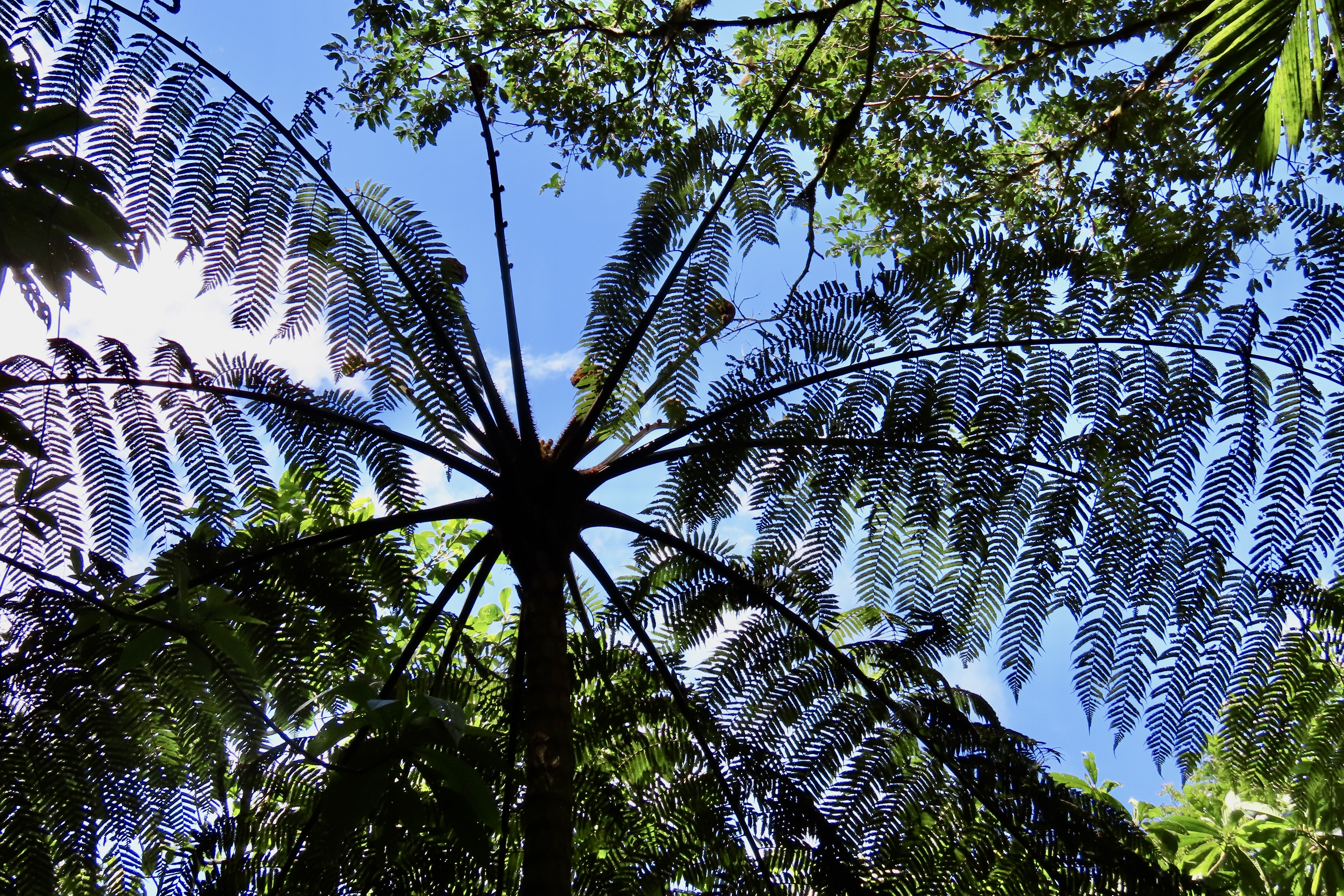
I mentioned in my last post that there were no photos of the Pond or the Woods. They were victims of the endless march of ‘civilization.’ Fortunately, and I should add, so far, there are still wild places on earth. Costa Rica has many. Some, such as Monteverde, are attracting hordes of tourists. There’s good and bad news here. Among the good is that the tourists provide Costa Rica with a welcome source of income and the opportunity for the tourists to enjoy the beauty and wildlife of Costa Rica. The bad news is the incredible commercialization that goes along with it and the impact. It’s similar to when the large cruise ships drop thousands of people onto the small Greek Island of Santorini, or our most popular National Parks in America turn into traffic jams in the summer. But enough on that. The tree above was a new one to me, a fern tree. There are more photos below after my UT-OH chapter on the Woods.

Part 2: The Woods

The Woods, like the Pond, earned a capital letter. To get there I walked out the back door, down the alley past the Graveyard, and through a pasture Jimmy Pagonni rented for his cattle. Tackling the pasture involved crawling through a rusty barbed wire fence, avoiding fresh cow pies, climbing a hill, and jumping an irrigation ditch. The journey was fraught with danger. Hungry barbed wire consumed several of my shirts and occasionally went for my back. 

Torn clothing and bleeding scratches were a minor irritation in comparison to stepping in fresh cow poop, though. A thousand-pound, grass-eating machine produces acres of the stuff. Deep piles sneak up your foot and slosh over into your shoes. Toes hate this. Even more treacherous are the little piles that hide out in the grass. A well-placed patty can send you sliding faster than black ice. The real danger here is ending up with your butt in the pile. I did that, once. Happily, no one was around to witness my misfortune, or hear my language, except Tickle the Dog. I swore him to secrecy. He knew many of my secrets. It’s a damned good thing he couldn’t talk.

For all of its hazards, the total hike to the Woods took about 15 minutes. Digger pines with drunken windmill limbs guarded the borders while gnarly manzanita and spiked chaparral dared the casual visitor to venture off the trail. Poison oak proved more subtle but effective in discouraging exploration.

I could count on raucous California jays to announce my presence, especially if I was stalking a band of notorious outlaws. Ground squirrels were also quick to whistle their displeasure. Less talkative jackrabbits merely ambled off upon spotting me, put on a little speed for a hyper Cocker, and became bounding blurs in the presence of a hungry greyhound. Flickers, California quail and acorn woodpeckers held discussions in distinctive voices I soon learned to recognize.

From the beginning, I felt at home in the Woods, like I belonged. I quickly learned that its hidden recesses contained a multitude of secrets. I was eager to learn what they had to teach me, but the process seemed glacial. It required patience and I hardly knew how to spell the word. I did know how to sit quietly, however. This was a skill I had picked up from the hours I spent with my nose buried in books. The woodland creatures prefer their people noisy. A Curt stomping down the trail, snapping dead twigs, and talking to himself was easy to avoid, while a Curt being quiet might surprise them. 

One gray squirrel was particularly loud in his objections. He lived in the top branches of a digger pine beside the trail and maintained an observation post on an overhanging limb. When he heard me coming, he would adopt his ‘you can’t see me gray squirrel playing statue pose.’ But I knew where to look. I would find a comfortable seat and stare at him. It drove him crazy. Soon he would start to thump the limb madly with his foot and chirr loudly. He had pine nuts to gather, a stick home to remodel, and a bright-eyed, bushy-tailed lady to woo. I was blocking progress. Eventually, if I didn’t move, his irritation would bring him scrambling down the trunk for an up-close and personal scolding.

After about 10 minutes of continuous haranguing, he’d decide I was a harmless, if obnoxious aberration and go about his business. That’s when I begin to learn valuable secrets, like where he hid his pine nuts. It was also a sign for the rest of the wildlife to come out of hiding. A western fence lizard might work its way to the top of the dead log next to me and start doing push-ups. Why, I couldn’t imagine. Or perhaps a thrush would begin to scratch up the leaves under the manzanita in search of creepy tidbits. The first time I heard one, it sounded like a very large animal interested in little boy flesh. 

Occasionally there were special treats: A band of teenage gray squirrels playing tag and demonstrating their incredible acrobatics; a doe leading its shy, speckled fawn out to drink in the small stream that graced the Wood’s meadow; a coyote sneaking up on a ground squirrel hole with an intensity I could almost feel.

I also began to play at stalking animals. At some point in time between childhood and becoming a teenager, I read James Fennimore Cooper and began to think I was a reincarnation of Natty Bumppo. Looking back, I can’t say I was particularly skilled, but no one could have told me so at the time. At least I learned to avoid dry twigs, walk slowly, and stop frequently. 

Occasionally, I even managed to sneak up on some unsuspecting woodland creature. 

If the birds and the animals weren’t present, they left signs for me. There was always the helter-skelter pack rat nest to explore. Tickle liked to tear them apart, quickly sending twigs flying in all directions. There were also numerous tracks to figure out. Was it a dog or coyote that had stopped for a drink out of the stream the night before? Tickle knew instantly, but I had to piece it together. A sinuous trail left by a slithery serpent was guaranteed to catch my attention. This was rattlesnake country. Who’d been eating whom or what was another question? The dismantled pinecone was easy to figure out, but who considered the bark on a young white fir a delicacy? And what about the quail feathers scattered haphazardly beside the trail?

Scat, I learned, was the tracker’s word for shit. It offered a multitude of clues for what animals had been ambling down the trail and what they had been eating. There were deer droppings and rabbit droppings and mouse droppings descending in size. Coyotes left their distinctive dog-like scat but the presence of fur suggested that something other than dog food had been on the menu. Some scat was particularly fascinating, at least to me. Burped up owl pellets provided a treasure chest of bones— little feet, little legs and little skulls that grinned back with the vacant stare of slow mice.

While Tarzan hung out in the Graveyard and pirates infested the Pond, mountain men, cowboys, Indians, Robin Hood and various bad guys roamed the Woods. Each bush hid a potential enemy that I would indubitably vanquish. I had the fastest two fingers in the West and I could split a pine nut with an imaginary arrow at 50 yards.  I never lost. How could I? It was my fantasy. 

Daydreams were only a part of the picture. I fell in love with wandering in the Woods and playing on the Pond. There was an encyclopedia of knowledge available and a multitude of lessons about life. Learning wasn’t a conscious effort, however; it was more like absorption. The world shifted for me when I entered the Woods and time slowed down. A spider with an egg sack was worth five minutes, a gopher pushing dirt out of its hole, 20, and a deer with a fawn, a lifetime.

It isn’t surprising that I became known as Nature Boy by my classmates, given all the time I spent in the woods. I considered it a compliment. 

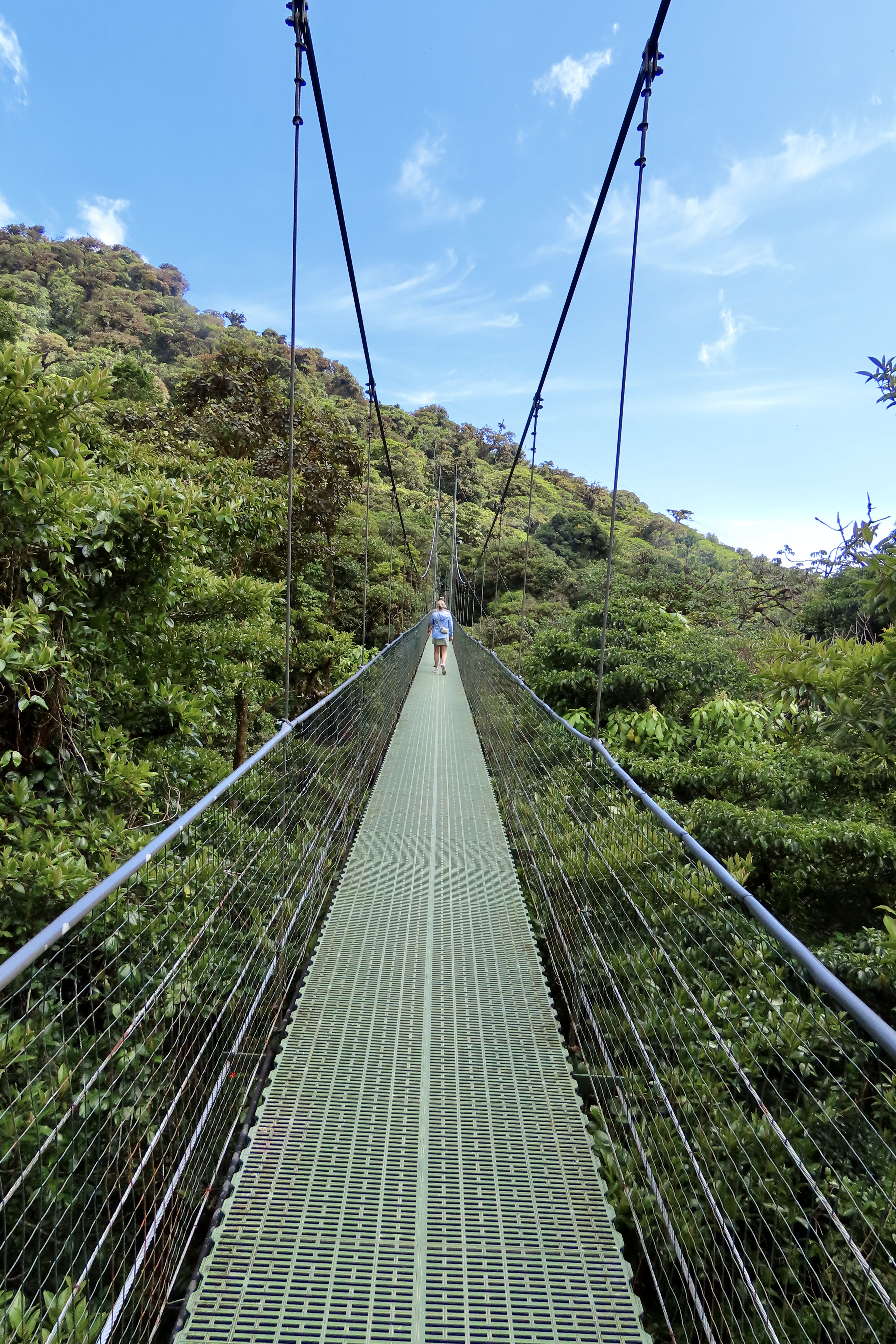
The hanging bridges of Monteverde gave us a unique opportunity to study both the canopy and the forest beneath. There were six bridges at Treetopia Park. At 774 feet, this was the longest. It was also more open. The canopy towered over most of the bridges.
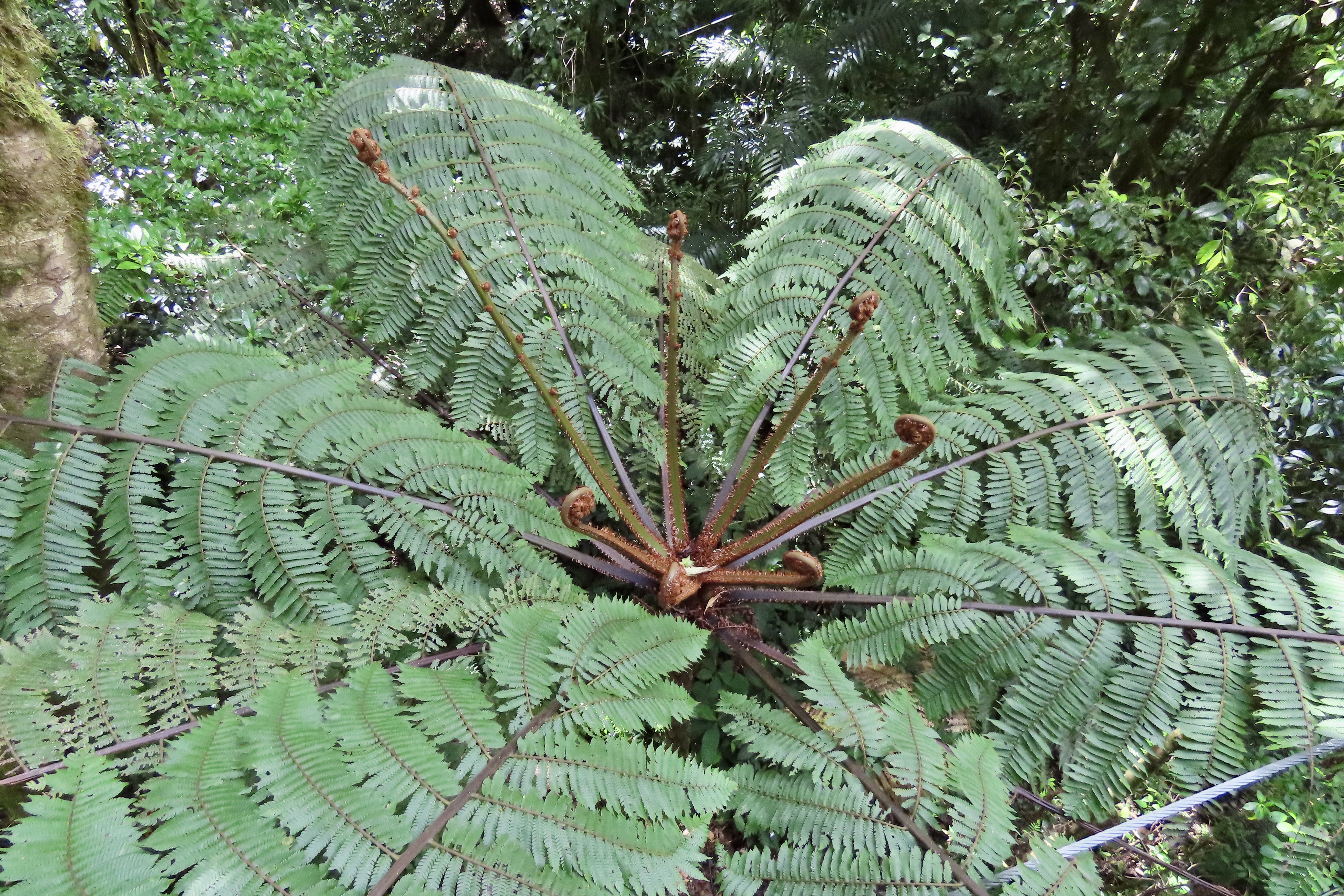
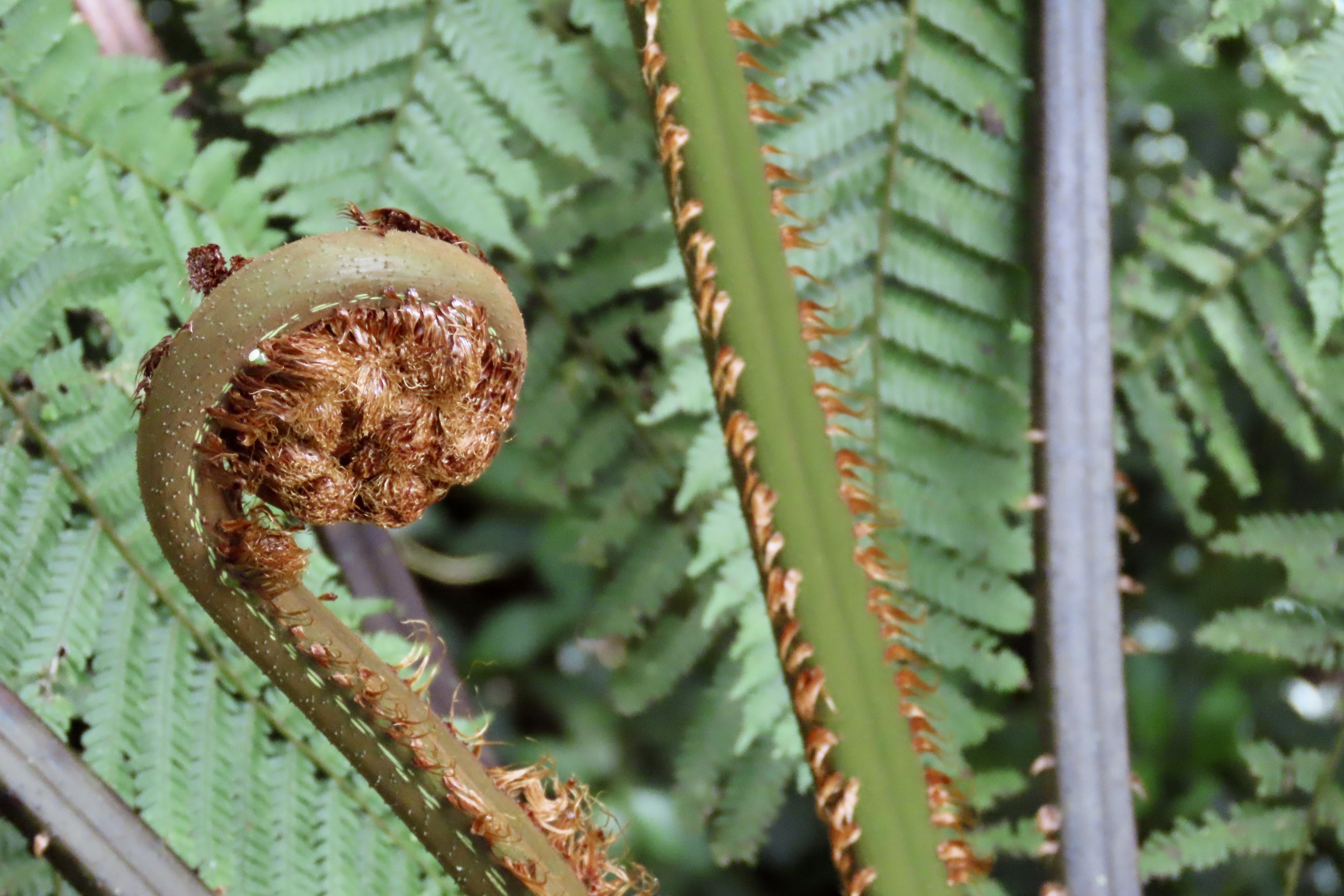
One bridge provided us with an opportunity look down on a fern tree. The leaves were a definite clue that we were looking at a fern.
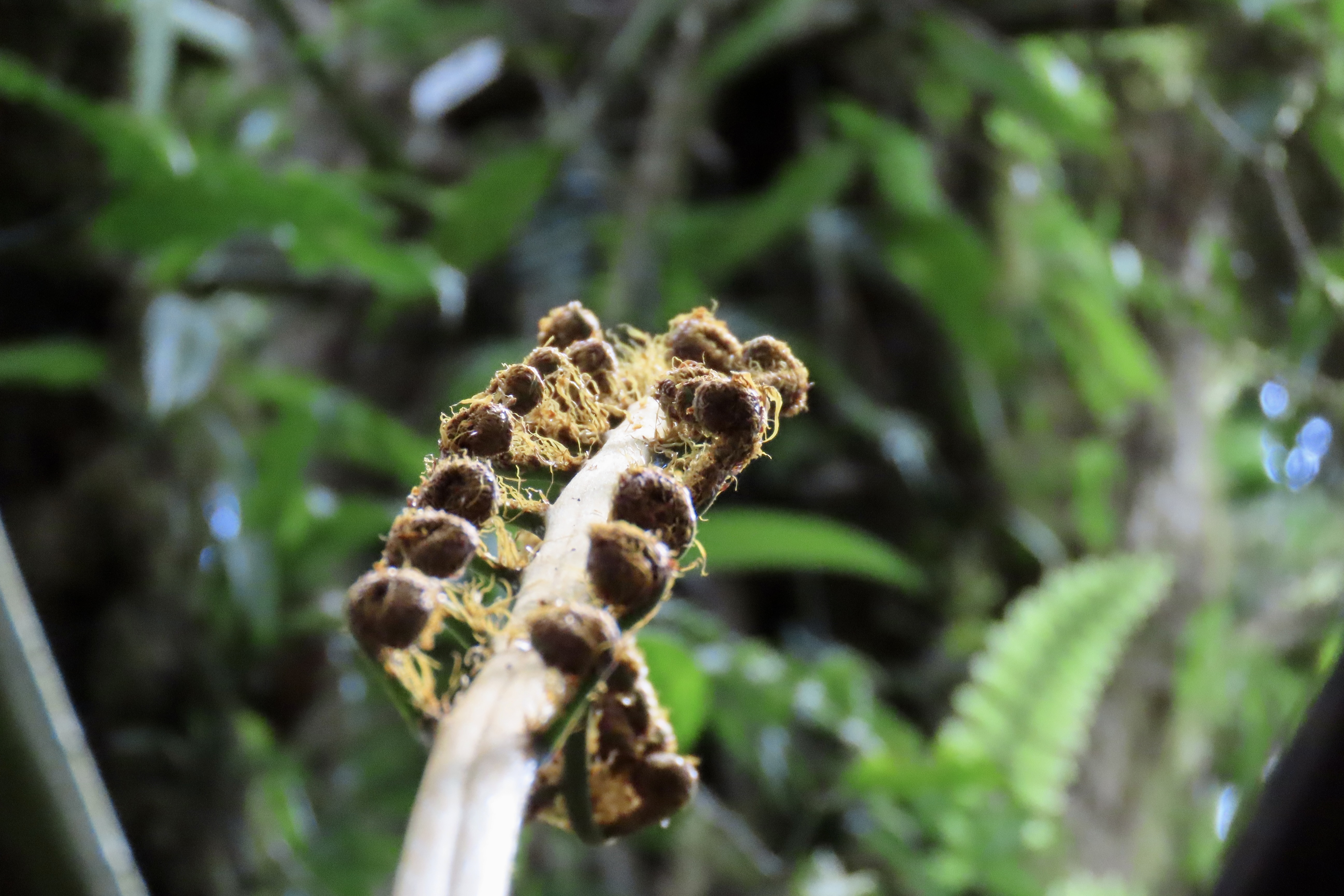
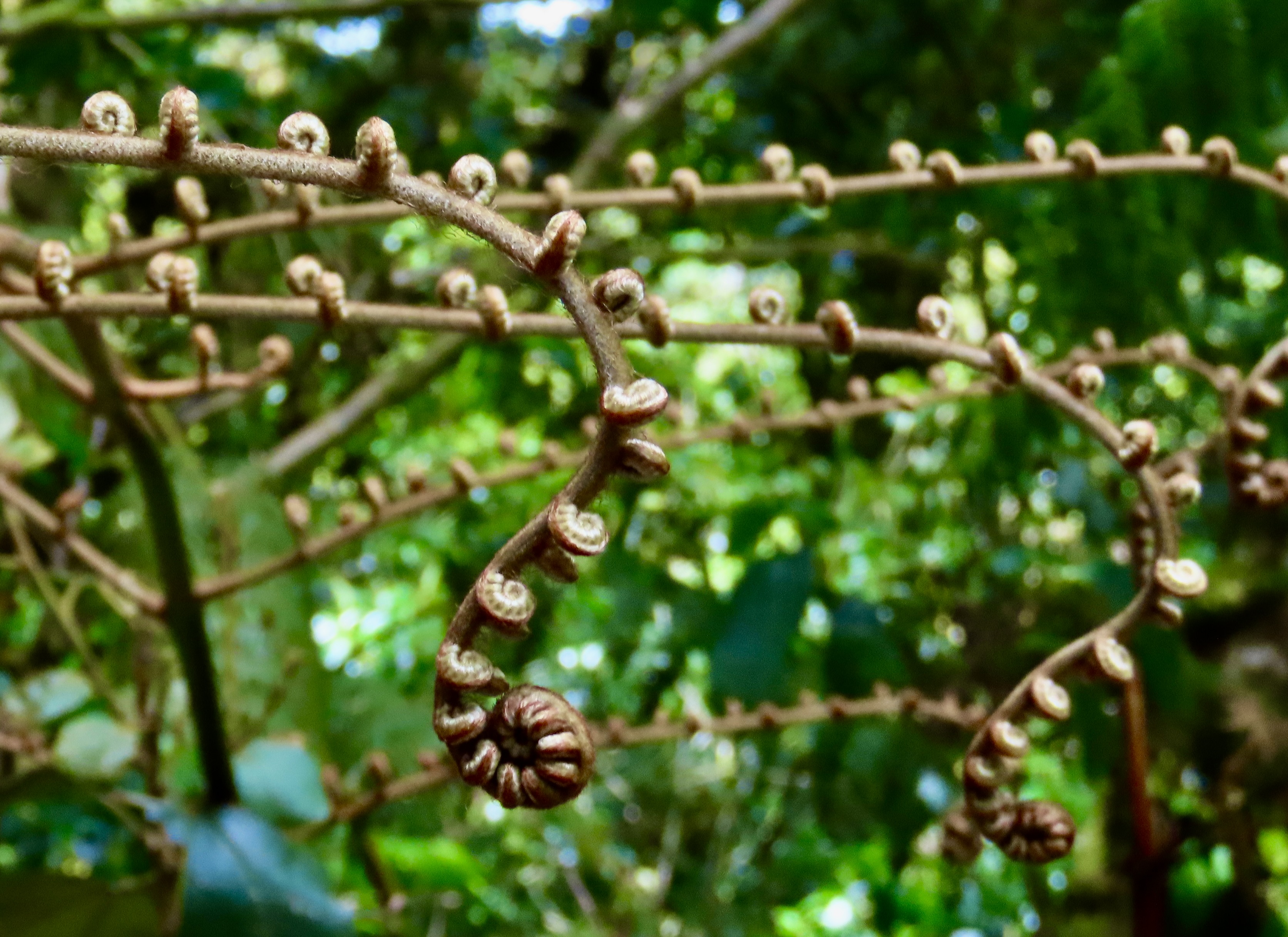
As did how the leaves unfold or unfurl known as Circinate vernation. This has always fascinated me about ferns. I have many photos of different species. But given that there are 10-12000 or more know species, I have a few to go…
Here’s a different species at Treetopia.
And another. Both tropical and temperate rainforests provide ideal conditions for ferns to grow.
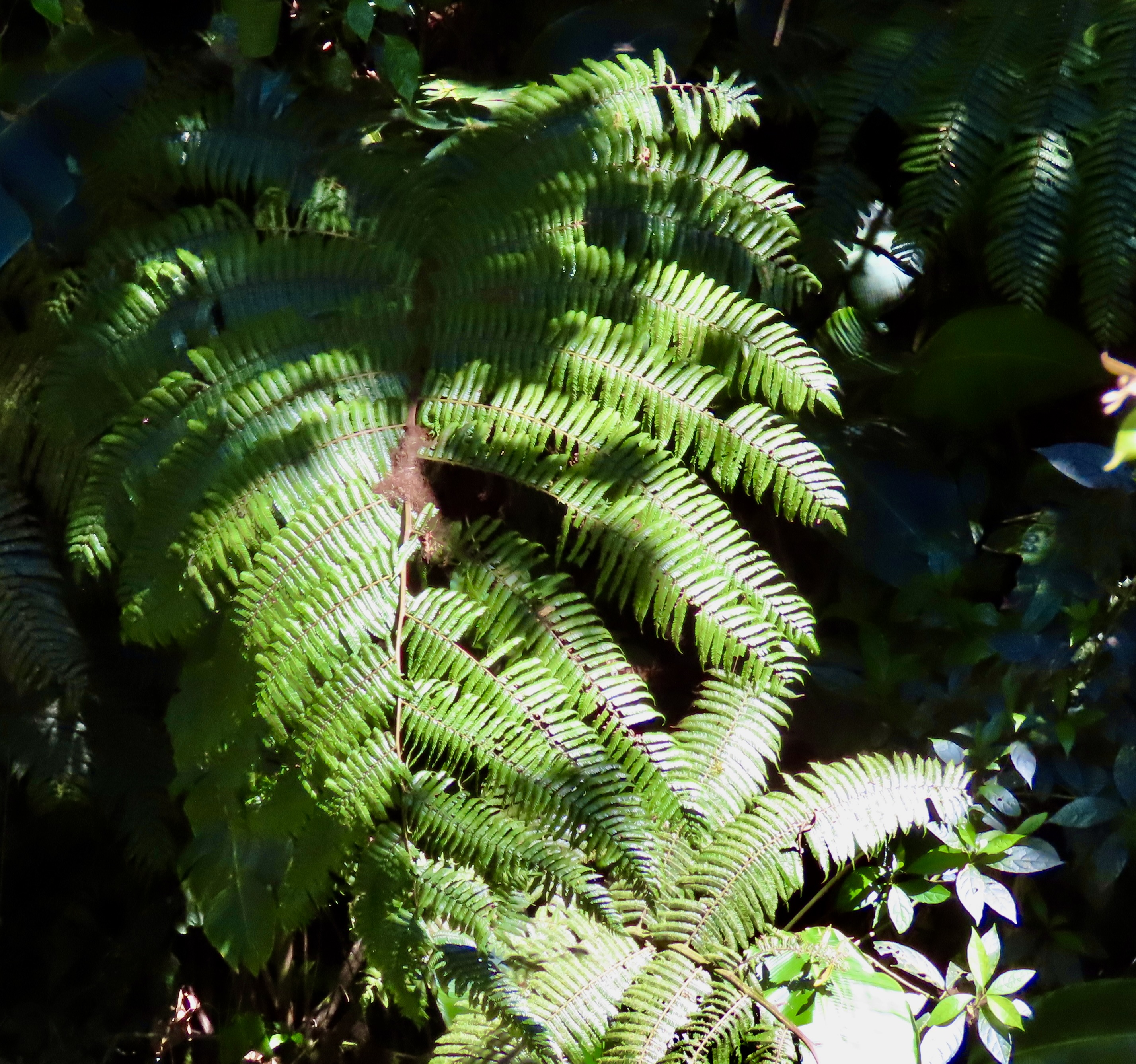
Some can be giants. We spotted these down on the ground from the hanging bridge. I wish I had a person down on the ground to provide perspective. They would have made my 5 feet 11 inches appear small.

On Friday: Our total focus will be on Costa Rica.