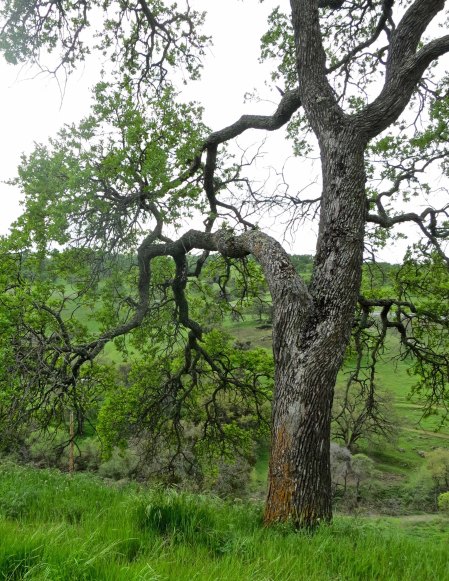
Gold, Screaming Fat Cells, and a Great White Whale… The 10,000 Mile Bike Ride

My plans were to start my trip by cycling down Highway 49 through the foothills of California, which are beautiful in the spring.

My plans were to start my trip by cycling down Highway 49 through the foothills of California, which are beautiful in the spring.

It had rained much of the night, big buckets full, with a smattering of thunder and lighting thrown in for good measure— all of which made me thankful for my lumpy but cozy bed in the Old Well Motel. I rallied at 6:30. The clouds were breaking up and the sun was peeking through. It was good day for biking. More importantly, I knew a cup of hot, steaming coffee was waiting next door at the Old Well Café.

Ten people would constitute a crowd in the Old Well Cafe, but several Hollywood stars of yore had stopped there to eat.

Ten people would constitute a crowd in the Old Well Cafe, but several Hollywood stars of yore had stopped here to eat.

“Did you find the treasure?” the waitress inquired with a wink in her voice. She had told me the story the night before. According to legend, a handful of bandits had buried close to $80,000 on the property before being hunted down and killed in a shoot out. “No,” I had laughed, “but I did find a good night’s sleep.”

Tales of lost treasure are abundant in gold country. Some of them may even been true. Growing up in Diamond Springs, 13 miles from where gold was discovered at Coloma, I had often heard such stories. Millions had been taken out of the ground, initially with gold pans and sluice boxes, then with powerful water canons, and finally from deep, hard rock mines. The Kennedy Mine, located a few miles away, measures some 5912 feet in depth, making it one of the deepest mines in the world. It is hardly surprising that some of the gold would have gone astray.

There were plenty of outlaws to help. The most famous was Black Bart, the gentleman bandit. Always well-dressed, he robbed stages on foot since he was afraid of horses. Targeting Wells Fargo coaches, he would politely request that strong boxes be handed over. Since his requests were backed up by a shotgun, stage drivers were quick to comply. On occasion, Bart would even leave a poem behind. Here’s a sample:

I’ve labored long and hard for bread, For honor, and for riches,

But on my corns too long you’ve tread, You fine-haired sons of bitches.

Maybe not great poetry, but it managed to get Wells Fargo and the media excited.

I made my way through a second cup of coffee, putting off the inevitable moment when I would climb on my bike and start up the steep hill that was lurking just outside the door. Other travelers had lingered here as well. Notes of appreciation from Bob Hope and Phyllis Diller were on the wall. I procrastinated for a bit longer by reading them. Finally, out of excuses, I stepped outside and strapped on my helmet. The day had begun.

My goal was another short day. As you may recall, I had done nothing physically to prepare for my journey. I was conditioning on the road, whipping my fat cells into shape. The first day had been 18 miles, my second was supposed to be around 30, the third 40 and so forth. By the end of the first week I was hoping to be riding somewhere between 60 and 70 miles each day.

“The best laid plans of mice and men often go astray…” –Robert Burns

My problem, I quickly learned as I pedaled out of Drytown, wasn’t that I was bicycling 30 miles my second day out (what kind of a big deal is that?); it was that I was biking down historic Highway 49. The foothills of California don’t understand flat. They go up, and they go down… period. Make that steep up and down. My fat cells were screaming after 100 yards. By 200 yards they were so loud I was convinced that people driving by could hear them. I dropped down in gears until I didn’t have any more to drop into. I climbed out of the saddle. I was travelling so slowly that if I traveled any more slowly I was going to fall over.

The foothills of California may be beautiful in spring, but they also make for steep cycling— any time of the year.
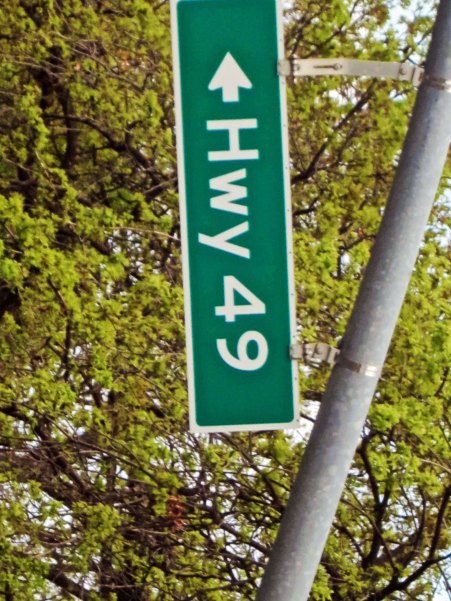
The foothills of California may be beautiful in spring, but they also make for steep cycling— any time of the year.

This sign really wasn't pointed this way, but it is how I imagined it.

This sign really wasn’t pointed this way, but it is how I imagined it.

But enough on that. I made it over the hill and coasted down to Amador City. I made it over the next hill and coasted down to Sutter Creek, one of my favorite towns along Highway 49. I had travelled all of five miles. It was time to celebrate. It was time for breakfast. “Yahoo!” the fat cells shouted in unison. You may have heard them.
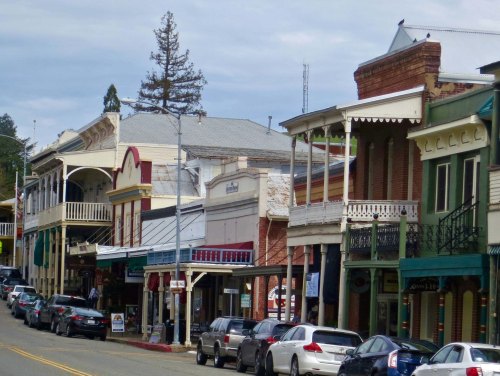
Many of the old gold rush town along Highway 49 have done a great job of maintaining their early buildings. Sutter Creek is a good example.

Many of the old gold rush town along Highway 49 have done a great job of maintaining their early buildings. Sutter Creek is a good example.

The cells did little more than grumble as I cycled out of Sutter Creek and up another hill. They were too busy scarfing down bacon, and eggs, and buttered toast. But then my right knee started to whine. Screaming fat cells are one thing; a whining knee another. It can be serious. By the time I reached Martel, at the top of the hill, I had a decision to make. Highway 49 promised more hills, lots of them, and I had 9,974 miles to go. I didn’t want to mess up my knees. So I turned right. At 26 miles into my trip, I changed my well-planned itinerary. I was headed for the Central Valley of California, which was as flat as the foothills were hilly.
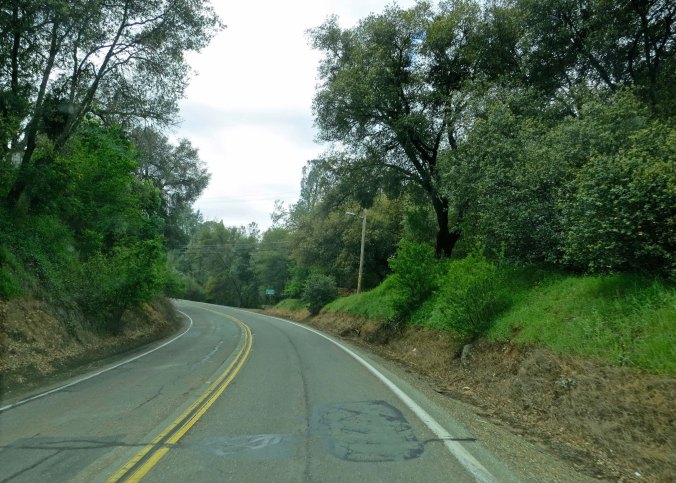
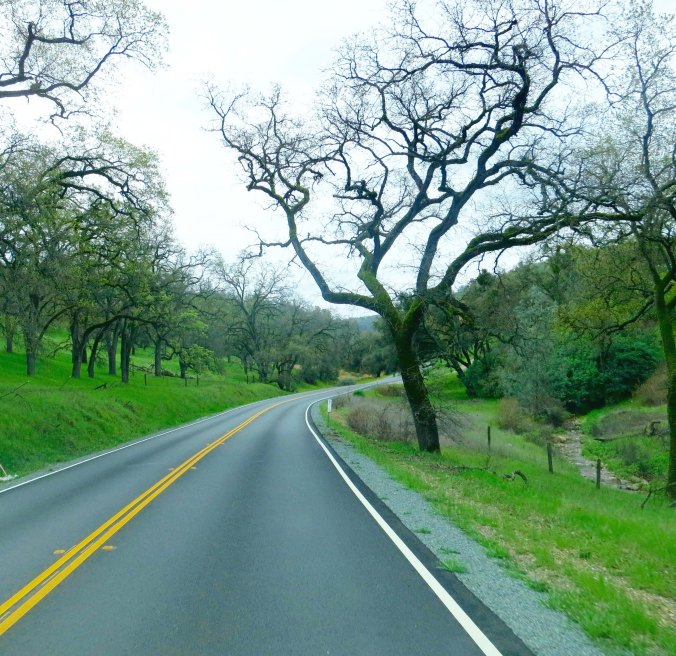
The road out of Sutter Creek. There will be lots of street shots in this series, since this was my world for the six months I bicycled.

The road out of Sutter Creek. There will be lots of street shots in this series, since this was my world for the six months I bicycled. Here’s a bicyclist’s perspective: steep hill, narrow/nonexistent shoulder with no where to ride or escape, rough road, and curve coming up. There is danger if someone tries to pass you (you may want to ride out in the road to force motorists to ride behind you until you get beyond the danger).

Decision time. Do I ride on down Highway 49 to Jackson and beyond? Or do I cut right and ride toward Stockton and the Central Valley?
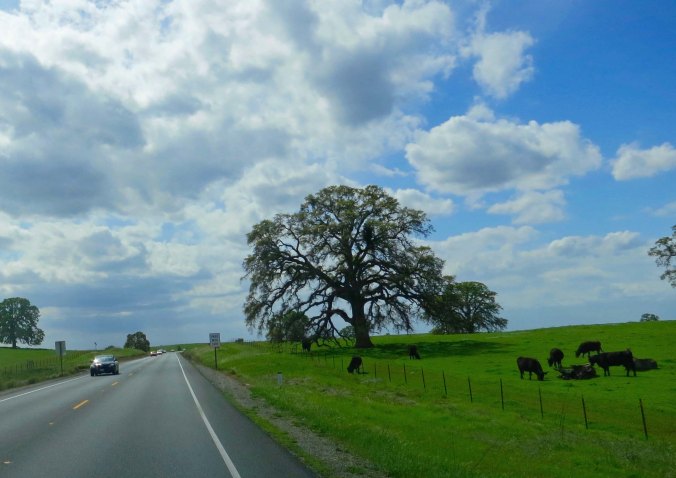
Decision time. Do I ride on down Highway 49 to Jackson and beyond? Or do I cut right and ride toward Stockton and the Central Valley?

The decision, heading for the flat lands.

The decision, heading for the flat lands.

Getting there was 90% of the fun. It was mainly downhill. About 35 miles from Drytown, I reached the small community of Clements, a perfect distance for the day— except the grocery store where I had planned to shop was closed. Boy did that create a dilemma for the fat cells. They could go hungry or cycle on. I decided that the Calaveras River, another ten miles, would make a great camping spot— except the Calaveras turned out to be little more than a mosquito-infested ditch. Are you beginning to see a trend here? I went off route for several miles looking for a motel— except I couldn’t find one.
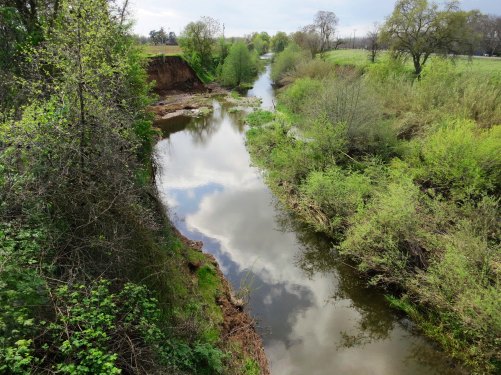
I could have stopped on the Mokelumne River near Clements that still had water, bit I cycled on the the Calaveras.

I could have stopped on the Mokelumne River near Clements, which still had water, but I cycled on to the Calaveras, which didn’t.

My fat cells and my legs were not happy. But they were having a picnic in comparison to my butt. Any bicyclist will concur: few things can match the pain of an out-of-shape abused tail at the beginning of a long bike ride. You don’t get off your bicycle seat, you peel yourself off. And you don’t sit down on your seat. You gently lower yourself and then shoot a foot up in the air from the agony. So there we were: me, my butt, my legs, and my fat cells, unhappily faced with another 20 miles of cycling into the town of Escalon, hoping beyond hope there would be a motel.
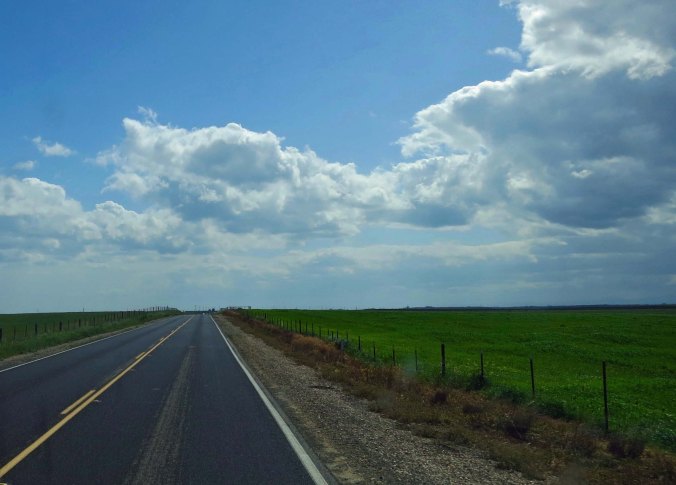
The long road to Escalon...

The long road to Escalon, with a headwind.

I made it. What more can I say. I turned a 30-mile day into a 67-mile day my second day out. And there was a motel, a beat up old motel, a barely standing old motel, the most beautiful motel I have ever seen. I cycled across the highway to the office… and couldn’t get off my bike. My right leg refused to function. It had gone on strike. I couldn’t get it over the bike. There was nothing left to do but laugh. I finally managed the trick by lowering the bike.

The room made my room at the Old Well Motel look like the Taj Mahal. It didn’t matter. Nothing did. I stripped and headed for the shower, hardly stopping. And made a mistake. I glanced in the mirror. Moby Dick, the great white whale, was staring back at me. Ahab would have taken one look and grabbed his harpoon. What in the world was I doing?

It was a three-beer night. I declared the next day a layover.
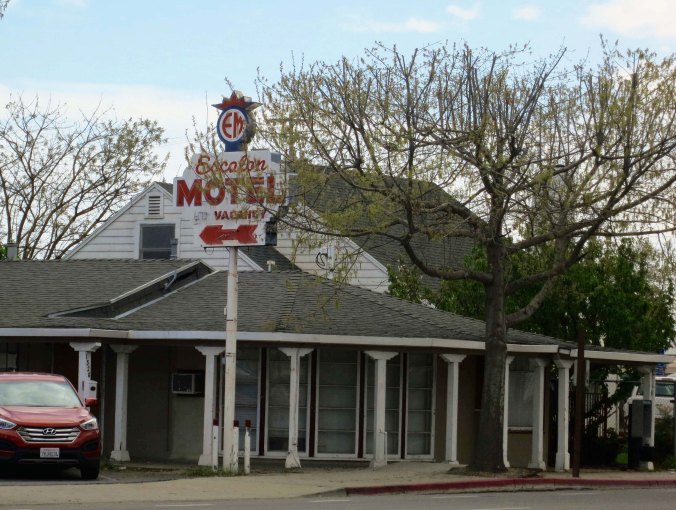
The Escalon Motel as It looks today. Peggy and I stopped for a photo. Several restaurants and a Starbucks are now located nearby and the motel looked like it had received a recent paint job.

The Escalon Motel as it looks today. Peggy and I stopped for a photo. Several restaurants and a Starbucks are now located nearby and the motel looked like it had received a recent paint job. My ‘driver’ was rewarded with a Grande Caffe Latte.

NEXT BLOG: Four days of cycling through the Central Valley. I discover a great air museum, find Bone hidden in my panniers, meet far too many dogs that want to eat me, learn something about the loneliness of the long distance bicyclist, and ride by a prison that tells me I can’t pick up any hitchhikers. Since mass murderer Juan Corona and Charles Manson are housed there, I decide it is a good idea.
A 10,000 Mile Bike Trek Begins with the First Pedal… Maybe

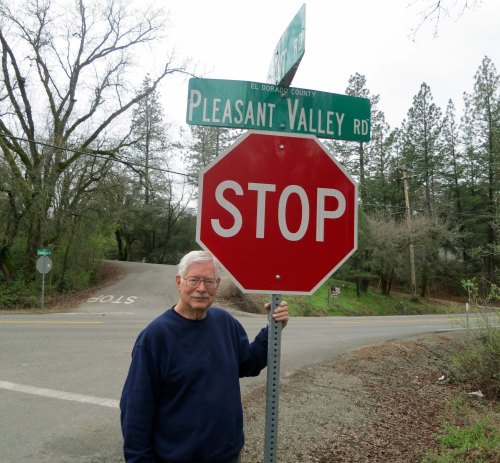
This would have been my first official stop sign on my bike trek. My first grade teacher, Mrs. Young, had lived across the road. She kicked me out for a year when she learned my mother had forged my birth certificate to get me out of the house.

The  first official stop sign on my bike trek. My first grade teacher, Mrs. Young, had lived across the road. She kicked me out for the year when she figured out my mother had forged my birth certificate. The cut off for first grade had been March 1st. I was born on the 3rd. It was a poor forgery. I was happy to return home. My mother, not so much.

“So, you are going out beyond the clouds this morning.” –Pop

I had planned to leave on my birthday, March 3. I liked the symbolism. But it was raining, and I had a few things left to do— like buy my bike. It wasn’t a big thing; I had owned several over the years. My first had been a one speed bike with coaster brakes and handle bars that would have made a laidback Hell’s Angel jealous. It was well-used. Some kid would have been proud to call it new back before World War II. My parents paid five bucks for it. The bike provided me with the freedom to zip around my home town and the surrounding countryside for several years until impending teenagehood suggested it wasn’t cool.

My Trek 520 cost a lot more. It was designed for touring. According to the company: “If you’re a committed touring cyclist looking for the utmost in comfort and durability to carry you to familiar destinations and unexplored vistas, 520 is your ride.” The ad went on to claim that the bike was “ultra-stable even when fully loaded.” Well, I was definitely headed for ‘unexplored vistas’ and ‘fully loaded’ for my trip meant close to 60 pounds of bike gear, camping equipment and books— plus Curt. It was a lot to ask of a bike.

A funny aside on Trek Bikes. The company once threatened to sue the American Lung Association for using the name “Bike Treks,” which was silly, to say the least. When I pointed out that I had trademarked the name two years before the company was created as The Sierra Trek, it became a question of who should be suing whom. The issue was quickly and quietly dropped.

I decided to begin and end my trip in Diamond Springs where I was raised, a small community 30 miles east of Sacramento on Highway 49. Here’s the opening paragraph in my bike journal:

3/10/89

The journey starts today, where so much of who I am started. That’s why I am here. That, and because my father is here and I wanted to spend some time with him.

As I wrote, Pop was out in the kitchen of his trailer meticulously preparing eggs and grumping because he hadn’t prepared everything the night before. At 84, he liked to have things just right. In fact, he had always wanted things to be done just right, maddenly so. Maybe it had come from his training as an electrician where he had once done something wrong and come in contact with a live, 11,000-volt high power line. Those type of lessons stick with you.

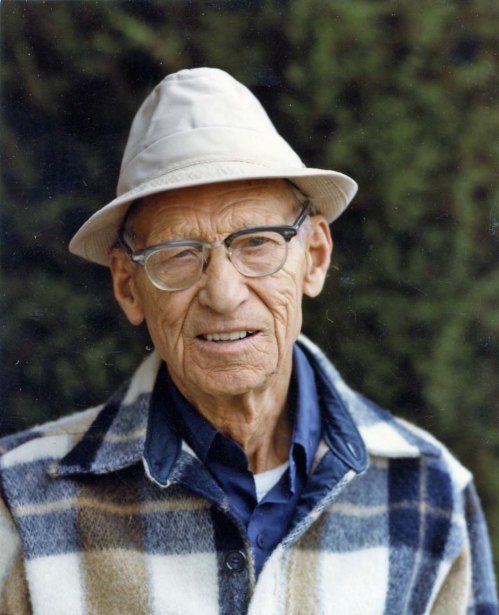
Pop in his 80s

Pop in his 80s

I’d been visiting and sleeping on his couch for the past three days. It had been a good visit, as we relived his youth, and mine. He’d been born back at the end of the horse and buggy age and the beginning of the horseless carriage era. He’d seen a lot, but his favorite times were still when he was growing up in Iowa. I had heard the story many, many times. It was a well warn groove in his brain, to be remembered when everything else was forgotten. He was functioning well for his age, however, even though he had suffered a minor stroke. I treasured our time together.

Finally, after breakfast, I loaded my four panniers and a day pack I would be carrying. Pop came out to wish me a safe journey and take photos. He always carried a camera and was quite disgusted I didn’t. It was one of three complaints I heard regularly. The other two were that I wasn’t happily married and making little Mekemsons (lots of them), and that I had strayed from my Christian upbringing. Of the three, I am still convinced that he believed not taking photos was my greatest sin.

A solid hug sent me coasting down the hill from his trailer in the Diamond Manor Mobile Home Park, a bit teary eyed. I couldn’t be sure he would be around when I returned. My first pedal rotation at the bottom of the hill stopped halfway. “Damn,” I thought, climbing off my bike and almost falling over. I was ever so glad that no one had been present to watch. The problem was immediately apparent. I’d put my panniers on backwards, not a great start. I righted the wrong and began again— the first pedal of 10,000 miles.

Thomas Wolfe said, “You can’t go home again.” He was right, of course. The 46-year old Curtis of 1989 was a world apart from the 6-year old Curtis of 1949. And both were different from the Curtis of today.  And yet you never totally escape from the home of your youth, and in ways, it always remains your ‘home.’ My first short day of bicycling was packed with memories. I’ll let photos tell the story. Pop would be tickled that Peggy and I are redriving the route— and even more pleased that we are carrying cameras.

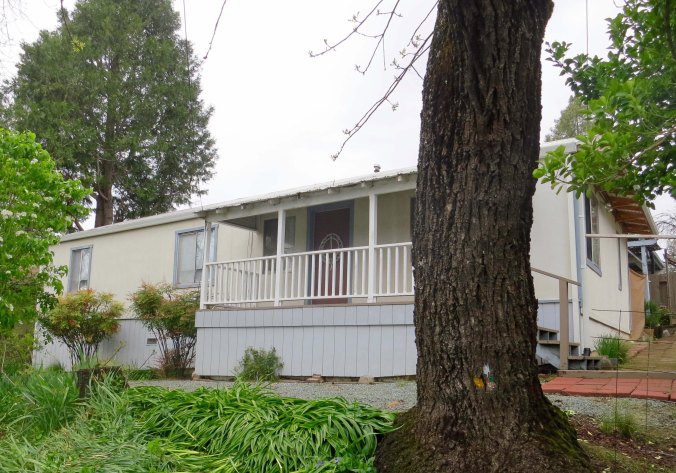
I am rather amazed that the house I was raised in still stands, given that it's parts had been prebuilt foe a World War II army barracks. My room was on the far left.

I am rather amazed that the house I was raised in still stands, given that it was an early version of a manufactured home, prebuilt for a World War II army barracks. My room was on the far left.

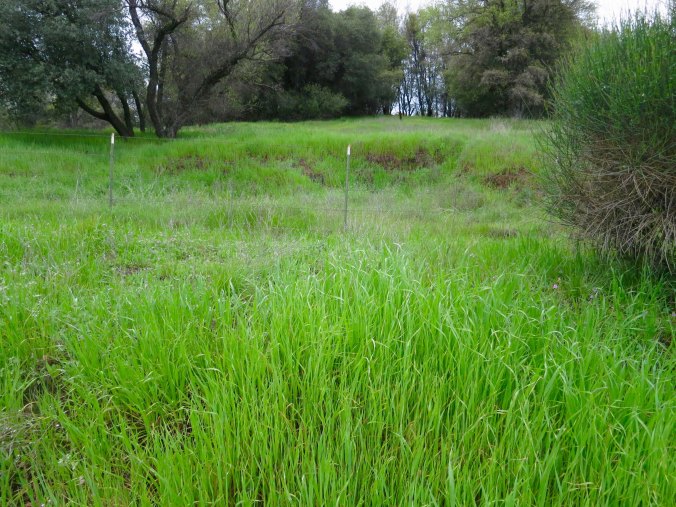
Every few feet of bicycling brought back a memory. This sunken ground was once a cave that included the crystal clear springs that gave Diamond its name.

Every few feet of bicycling brought back a memory. This sunken ground off of Main Street was a cave when I grew up. It  included the crystal clear spring that gave Diamond its name. It had once provided water for Native Americans and later was a watering hole for 49ers passing through town. When a group of miners found a 25 pound gold nugget nearby, they decided to hang around and the town was founded.

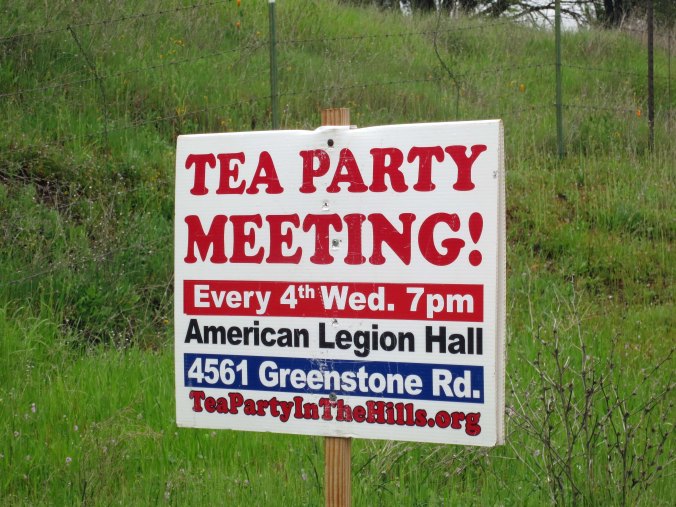
Now it hosted a Tea Party sign. Thinking Tea party led me to think of Alice in Wonderland and I wondered if that was where the name had come from. The Mad Hatter tea party seemed to fit a lot of politics.

Now it hosted a Tea Party sign. Thinking tea party led me to wonder if the Boston Tea Party or the Mad Hatters Tea Party in Alice and Wonderland provided the inspiration for the name. A crazy hatter who had inhaled too many mercury fumes and a March Hare who ineffectively threw tea cups willy-nilly at anyone and everyone seems to be a great model for much of today’s politics.

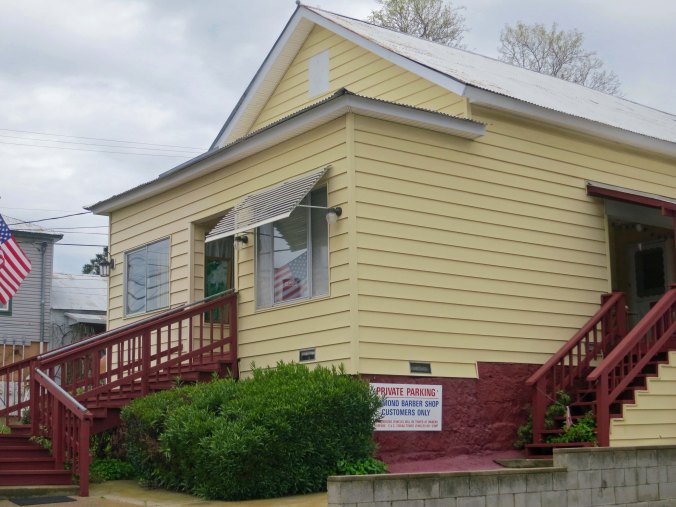
As I made my way down main street, I came to this barber shop. I'd had my hair cut there in the 40s and 50s! Even further back in time, it had served as a one room school house.

As I made my way down main street, I came to this barber shop. I’d had my hair cut there in the 40s and 50s! Even further back in time, it had served as a one room school house.

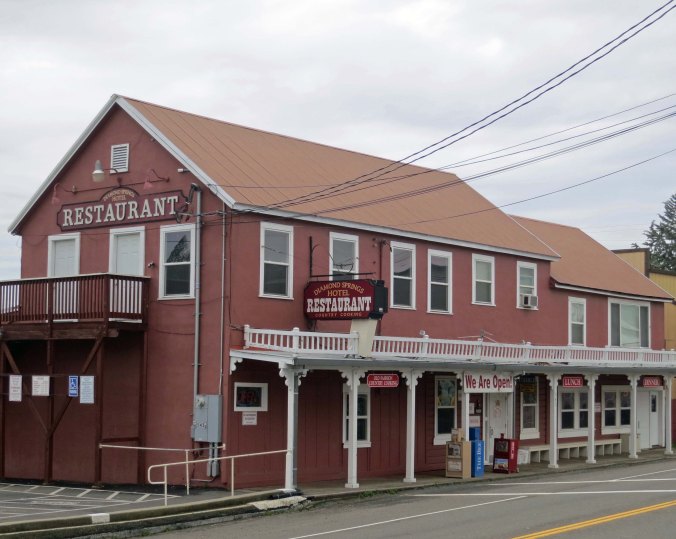
The old Diamond Hotel is just across the road from the barber shop. It still serves good food. Now days, like many old establishments along historic Highway 49, it claims to be haunted. Ghosts are good for business.

The old Diamond Hotel is just across the road from the barber shop. It had served good food when I was growing up and still does. Now days, like many old establishments along historic Highway 49, it claims to be haunted. Ghosts are good for business.

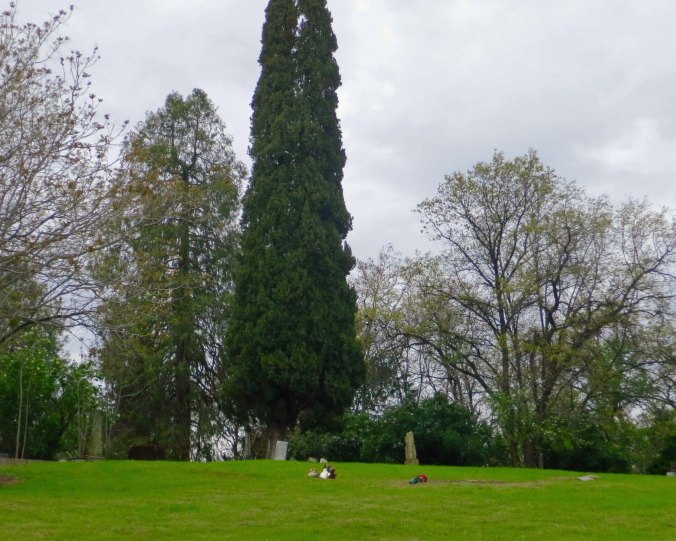
The Graveyard: I could write a book about it. It was just across the alley outside our back yard and dominated many of my early memories. In the day time it was an elaborate play pen. At night it became the dreaded home of dead people and ghosts.

The Graveyard: I could write a book about it. It was just across the alley outside our back yard and dominated many of my early memories. In the day time it was an elaborate play pen. At night it became the dreaded home of dead people and ghosts.

Heavenly trees on the edge of a graveyard in Diamond Springs, CA

It was a wild place covered with Heavenly Trees like these that served to hide the tombstones when we were young. They still lurk on the edge of the Graveyard, waiting to reclaim it. I prefer the wild look to the manicured look.

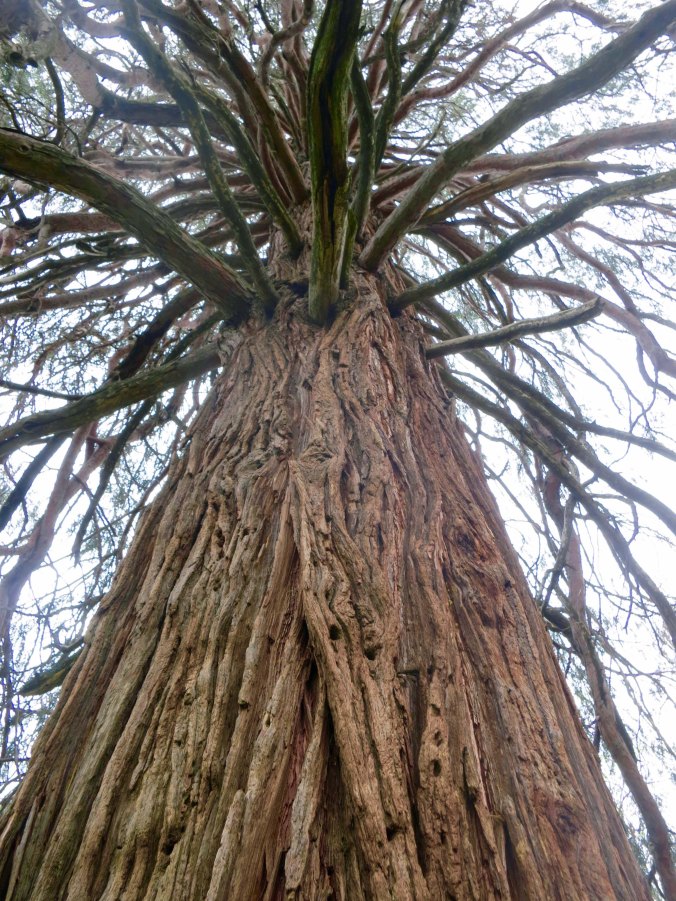
This old Incense Cedar dominated the Graveyard. It was probably planted in the 1850s. it's lower limbs held a tree fort that Pop had built for my brother and me.

This old Incense Cedar dominated the Graveyard. It was probably planted in the 1850s. it’s lower limbs held a tree fort that Pop had built for my brother and me. He built it when he caught us trying to build a fort 60 feet up in the tree. Our big sport was racing each other to the top.

Flowers burst out all over the graveyard in spring, and provided many a bouquet for Mother, picked dutifully by me. This lilac bush was still blooming away.

Flowers burst out all over the graveyard in spring, and provided many a bouquet for Mother, picked dutifully by yours truly. This lilac bush is still blooming away.

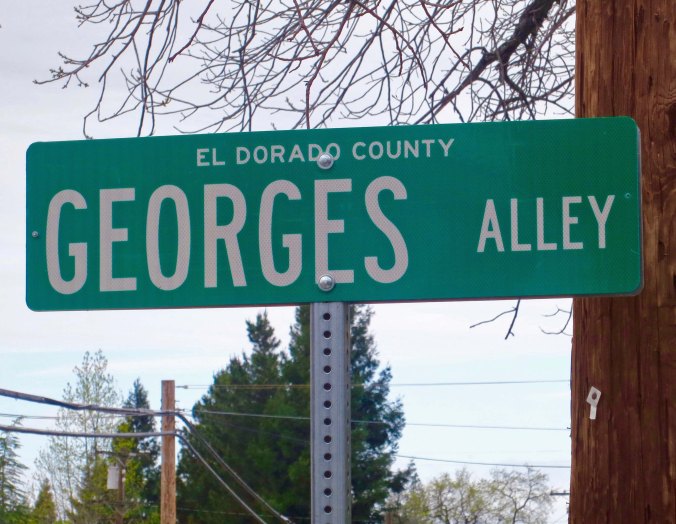
Our alley didn't have a name at first. Then the County decided to name it Graveyard Alley. Mother gave Marshall and me our orders. "Make the sign disappear. Don't tell your father." We did. The County put up another sign. It disappeared. Finally, the County decided to namer it Georges Alley after the first man who lived on the alley. We liked him. The sign stayed.

Our alley didn’t have a name at first. Then the County decided to name it Graveyard Alley. Mother gave Marshall and me our orders. “I won’t live on Graveyard Alley. Make the sign disappear. Don’t tell your father.” We did. The County put up another sign. It disappeared. Finally, the County decided to name it Georges Alley after the man who built it. We liked George. The sign stayed.

This beautiful old gold rush era building is about a 100 yards away from our house.

This beautiful old gold rush era building is about a 100 yards away from our house. The school was a block beyond it.

Tony Pavy lived just outside of Diamond on the road to El Dorado. As I cycled past it, I was reminded of the time he threatened to shoot me with a shotgun.

Tony Pavy lived just outside of Diamond on the road to El Dorado. As I cycled past it, I was reminded of the time he threatened to shoot me with a shotgun. We’d been hunting squirrels near his property when a bullet ricocheted and took out his pig. “Get my gun, Mama. They shot my pig!” he had screamed. We figured he wasn’t in much of a mood for an explanation and hightailed it. When the sheriff caught up with us later we had a good alibi.

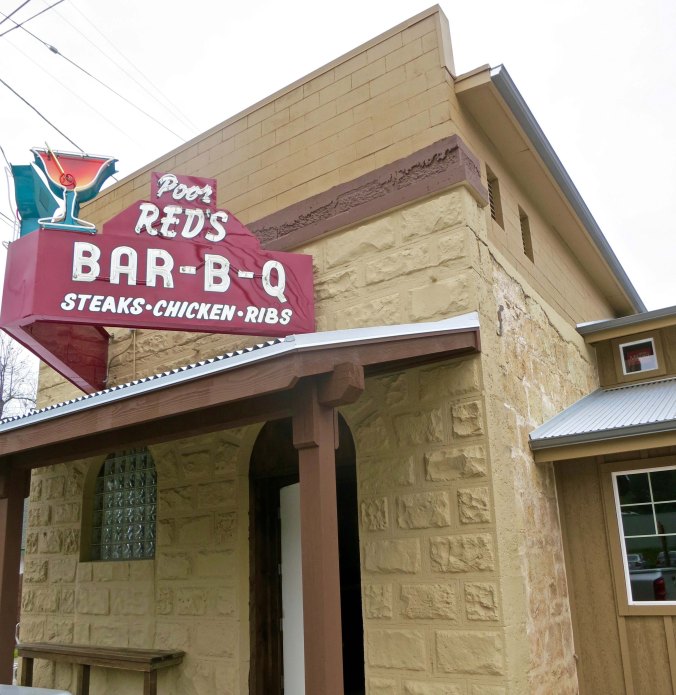
Poor Red is long since dead but his Bar-B-Q restaurant lives on in Eldorado, an historic eatery from the 1940s well-known throughout Northern California.

Poor Red is long since dead but his Bar-B-Q restaurant lives on, an historic eatery from the 1940s well-known throughout Northern California. I consumed many a rib and Golden Cadillac there. I forget the ingredients of Golden Cadillacs but I do remember they tasted wonderful and after two, you didn’t care what was in them. Reds is in the small town of El Dorado, two miles outside of Diamond. I had turned left on my bike there and began making my way south.

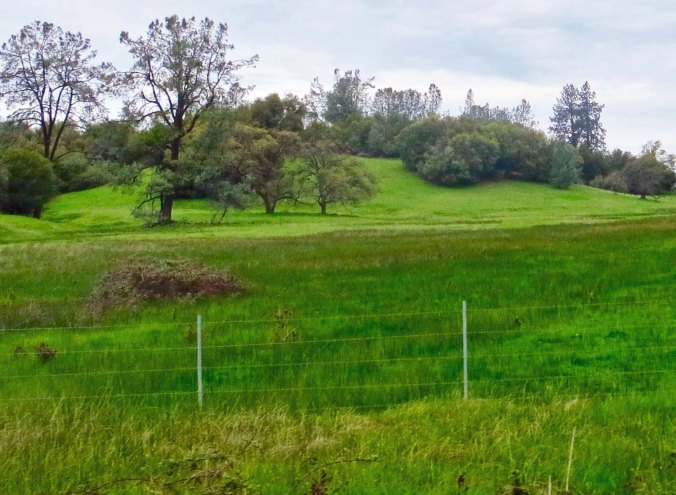
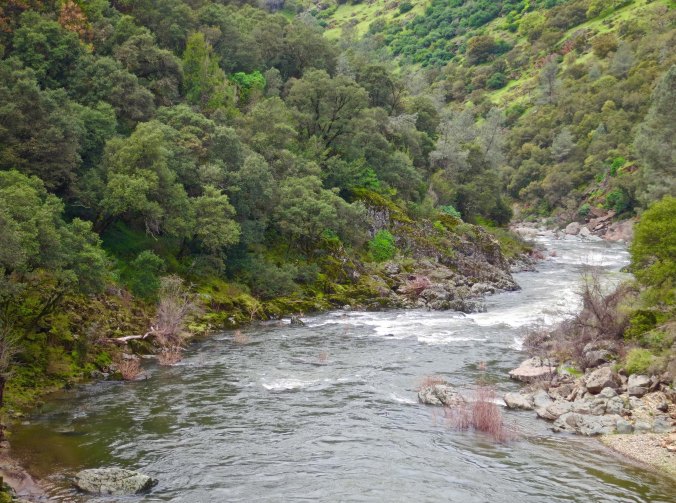
The foothills of California are beautiful in the springtime. Shortly after this Highway 49 began its steep, curvy descent to the Consumes.

The foothills of California are beautiful in the springtime. Shortly after this, Highway 49 begins its steep, curvy descent to the Consumes River. It was my first downhill.

I once organized a student strike so we could have a ditch day as seniors. I wasn't expelled and we got the day. We held our party on the Consumnes River a couple of miles upstream from this photo. I had stopped for lunch at a small greasy spoon restaurant along the river on my bike and was kept company by a cat and a drunk. "You are fucking crazy," he had told me when he learned of my journey.

I once organized a student strike so we could have a ditch day as seniors. I wasn’t expelled and we got the day. We held our party on the Consumnes River a couple of miles upstream from this photo. I had stopped for lunch at a small greasy spoon restaurant along the river on my bike trip and was kept company by a cat and a drunk. “You are fucking crazy,” the drunk had told me when he learned of my journey. Maybe.

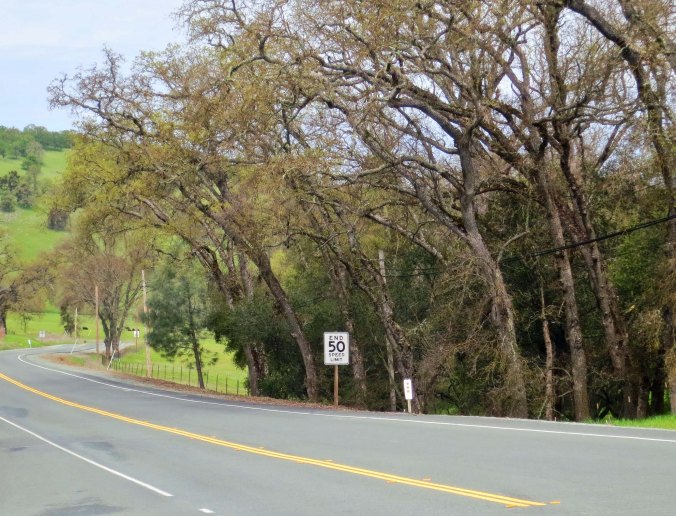
This is an historic spot. I was on my first ever official date. Mom, boyfriend, and Paula had taken me with them to dinner in Sutter Creek. On the way back, boyfriend and Mom had climbed in the back and insisted I drive home. "But I just got my learner's permit last week," I pointed out. I was just beginning to gain confidence when I ran over the skunk here.

This is an historic spot dead skunk spot. I was on my first ever official date. Mom, boyfriend, and Paula had taken me with them to dinner in Sutter Creek. On the way back, boyfriend and Mom had climbed in the back and insisted I drive home. “But I just got my learner’s permit last week,” I pointed out. Didn’t matter. I was just beginning to gain confidence when I ran over the skunk.

I made it 18.3 days on day one and stopped at Old Dry Well Motel and Cafe in Dry Creek. My plan for the next day was to make it 30 miles! The world had other plans for me.

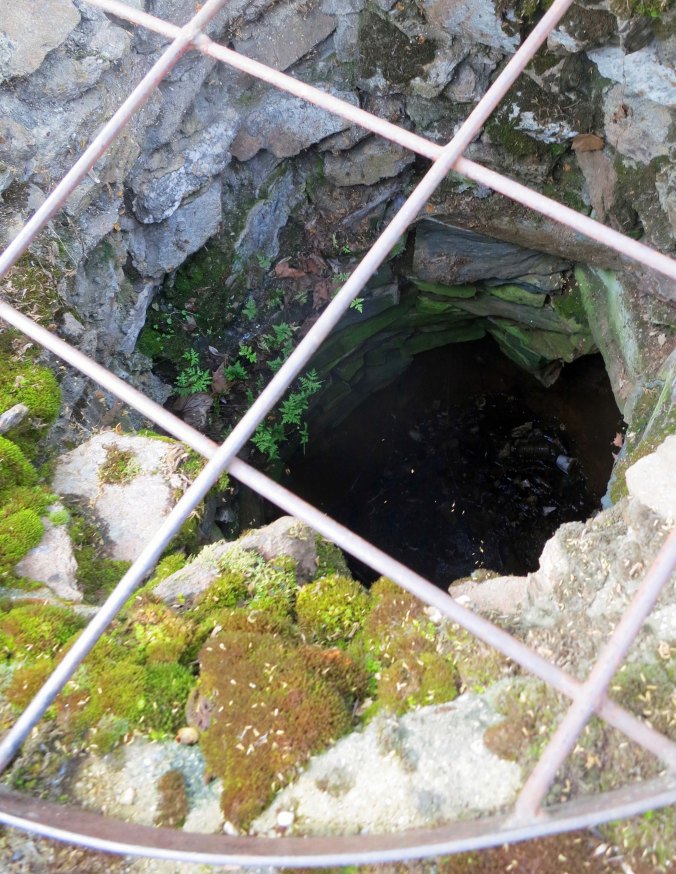
I made it 18.3 miles on day one and stopped at Old Well Motel and Cafe in Dry Creek. Old stories report that outlaws once buried thousands of dollars here. My plan for the next day was to make it 30 miles! The world had other plans…

A photo of the well.

A photo of the well. Another relic from the Gold Rush.

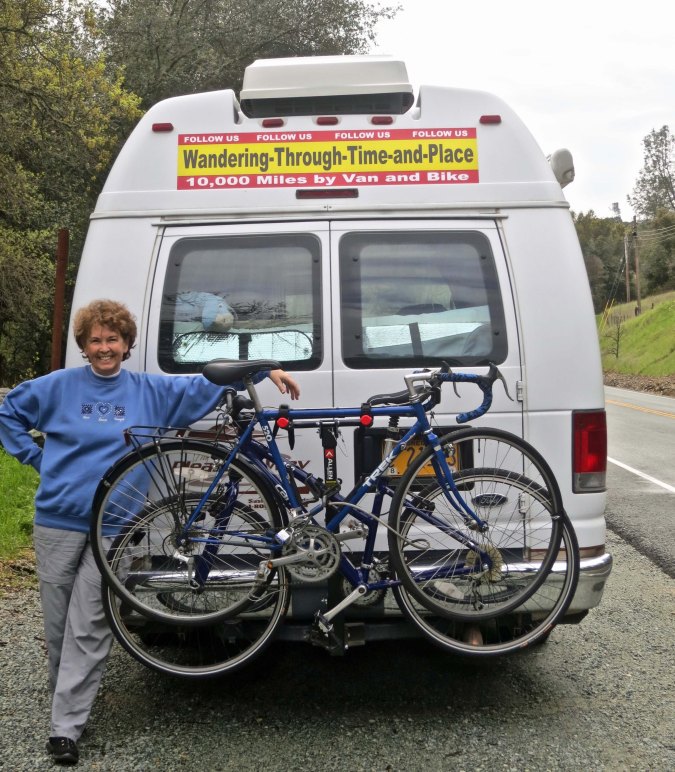
Peggy has volunteered to drive the whole trip so I can take photos and write notes. What a woman! Eeyore, another of our travel companions peers out the back window.

Peggy has volunteered to drive the whole trip so I can take photos and write notes. What a woman! Eeyore, another of our travel companions, peers out the back window. The world famous traveling Bone is seated up front.

NEXT BLOG: I will introduce Bone. You probably already know Eeyore.