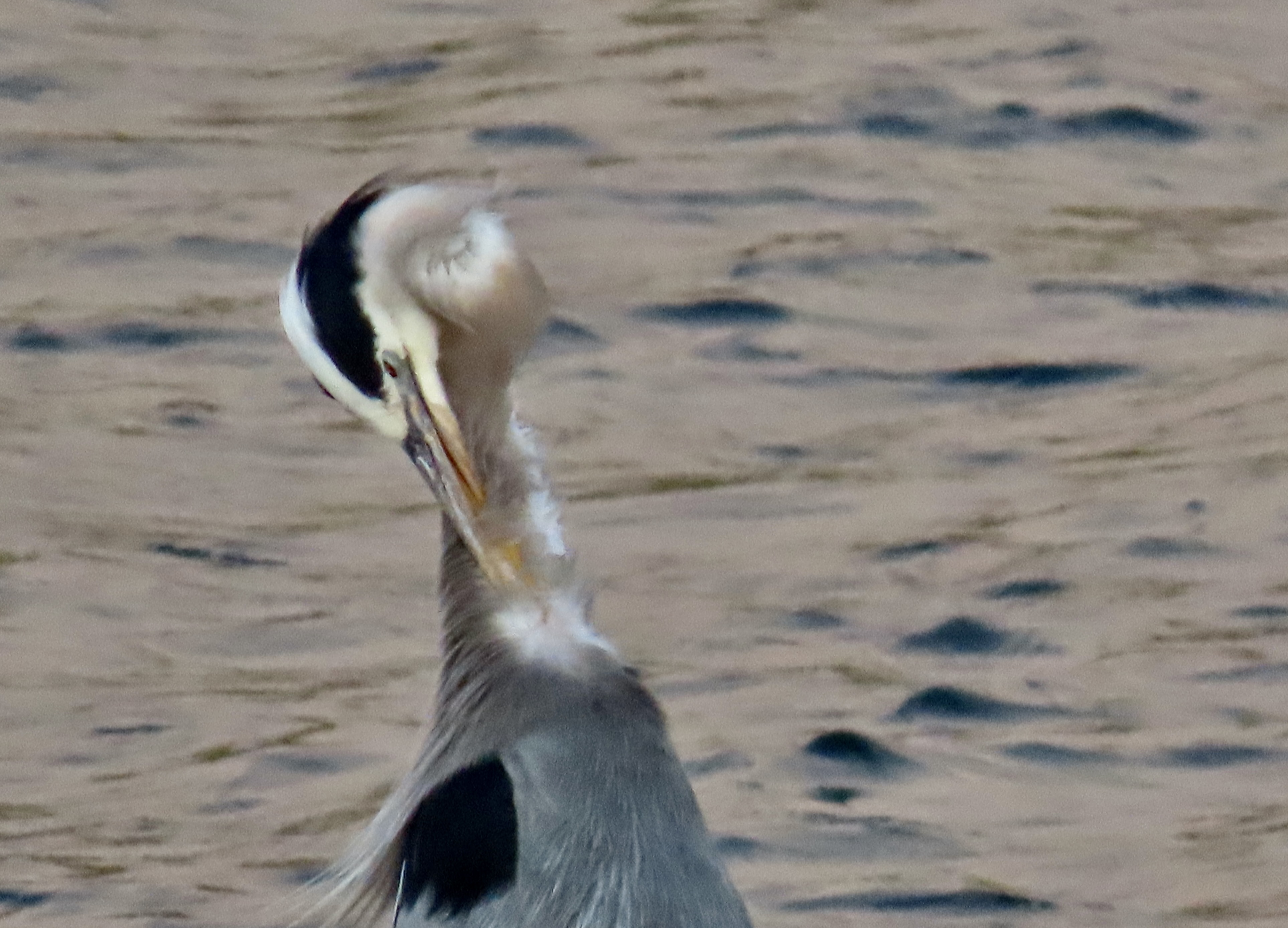
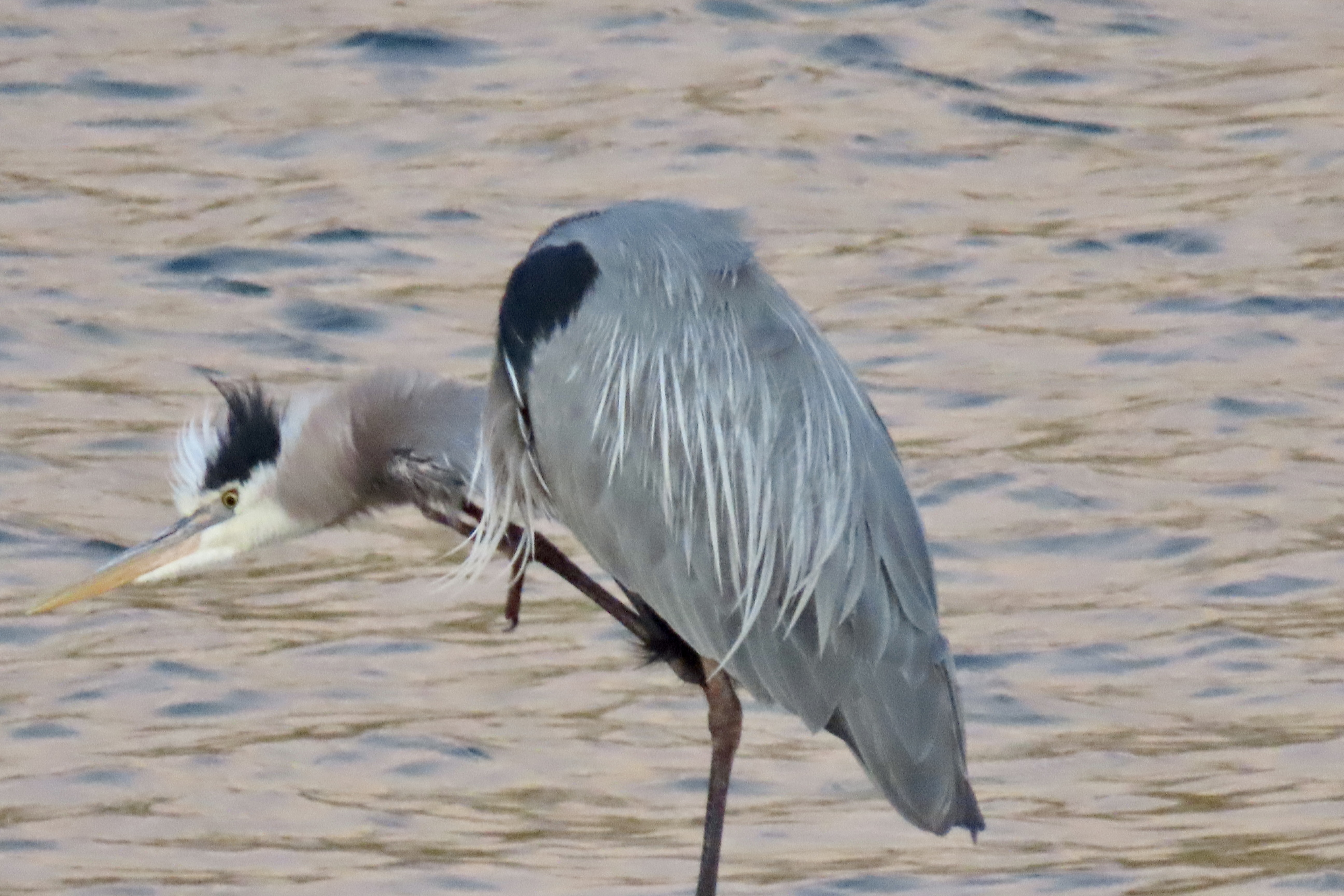
A great blue heron perched behind our camp in Florence, Oregon appeared to have lost its neck. Had it stuck it out too far?
Peggy and I have visited Florence, Oregon a number of times over the years. It was a short 2 1/2 hour drive from our home above the Upper Applegate River in Southern Oregon. We spent the majority of our visits camped at the Siuslaw Marina. The prices are reasonable, the people friendly, and Old Town, with its good restaurants and fun shops, is within easy walking distance. But there’s more…
The Oregon Dunes are just south of the town. The Devil’s Churn, Thor’s Well, the Sea Lion Caves, and the Heceta Head Lighthouse are just a few miles north. There are even some good kayaking opportunities nearby. In other words, there was alway plenty to keep us amused doing things we love to do.
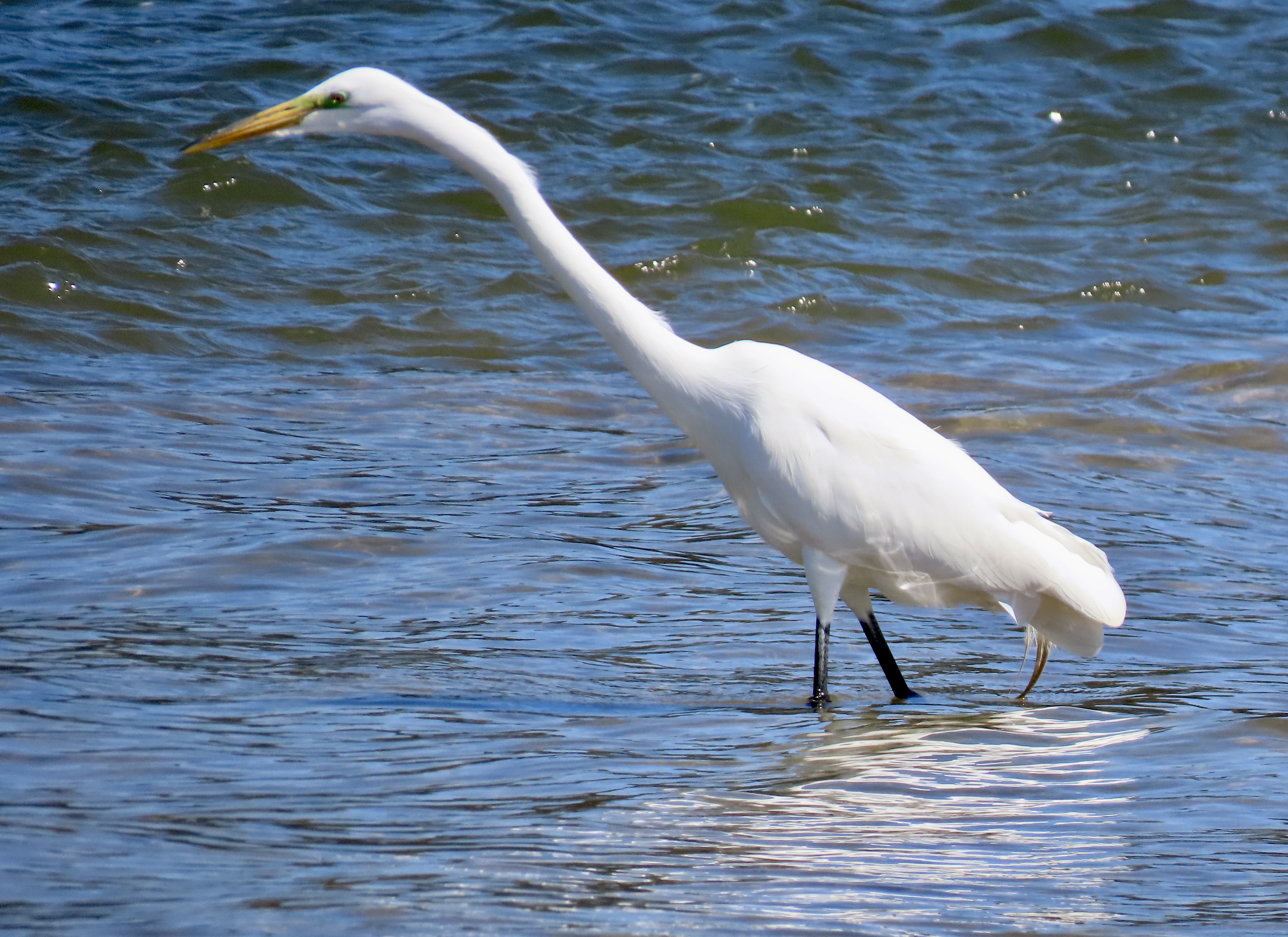
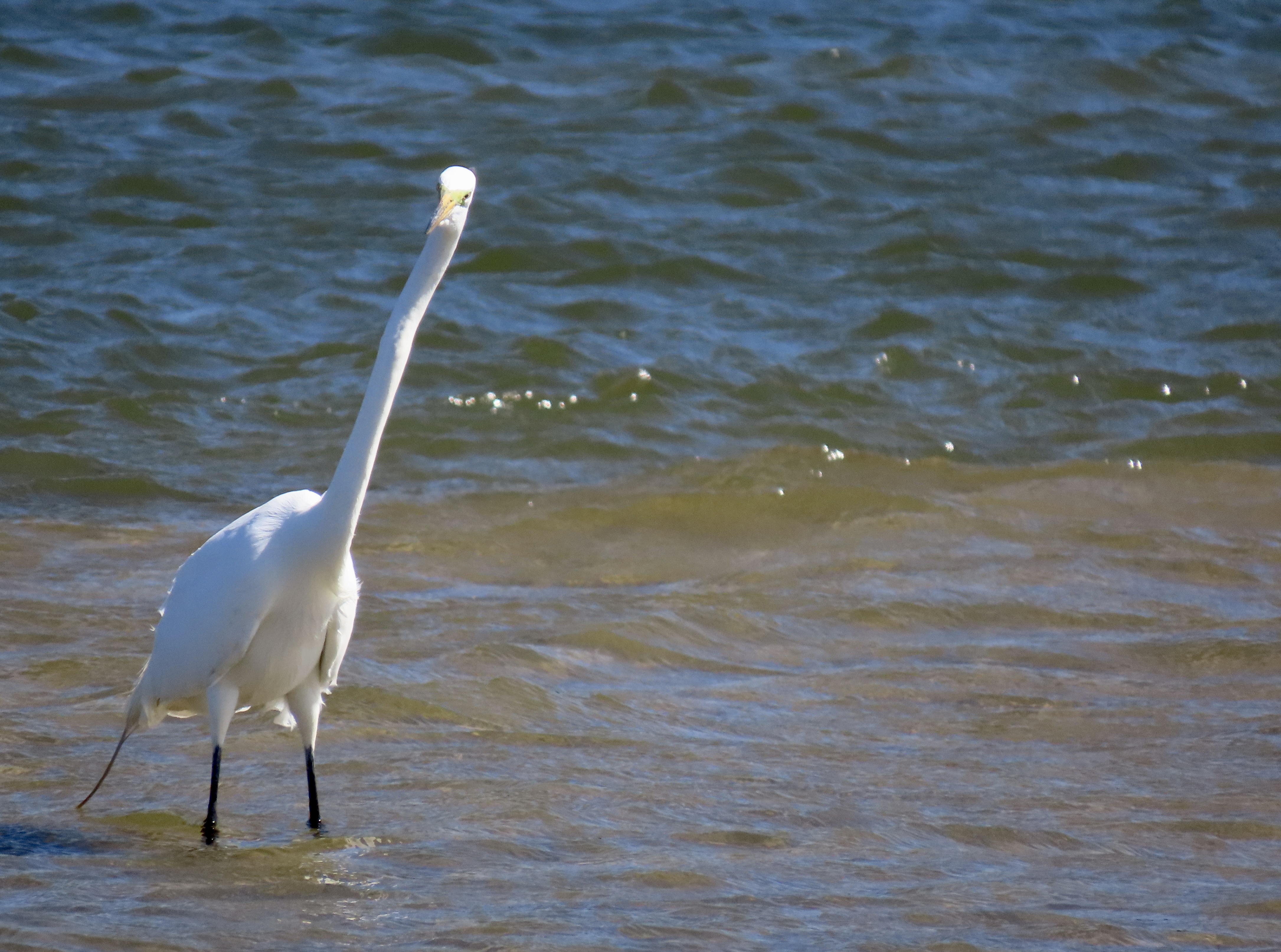
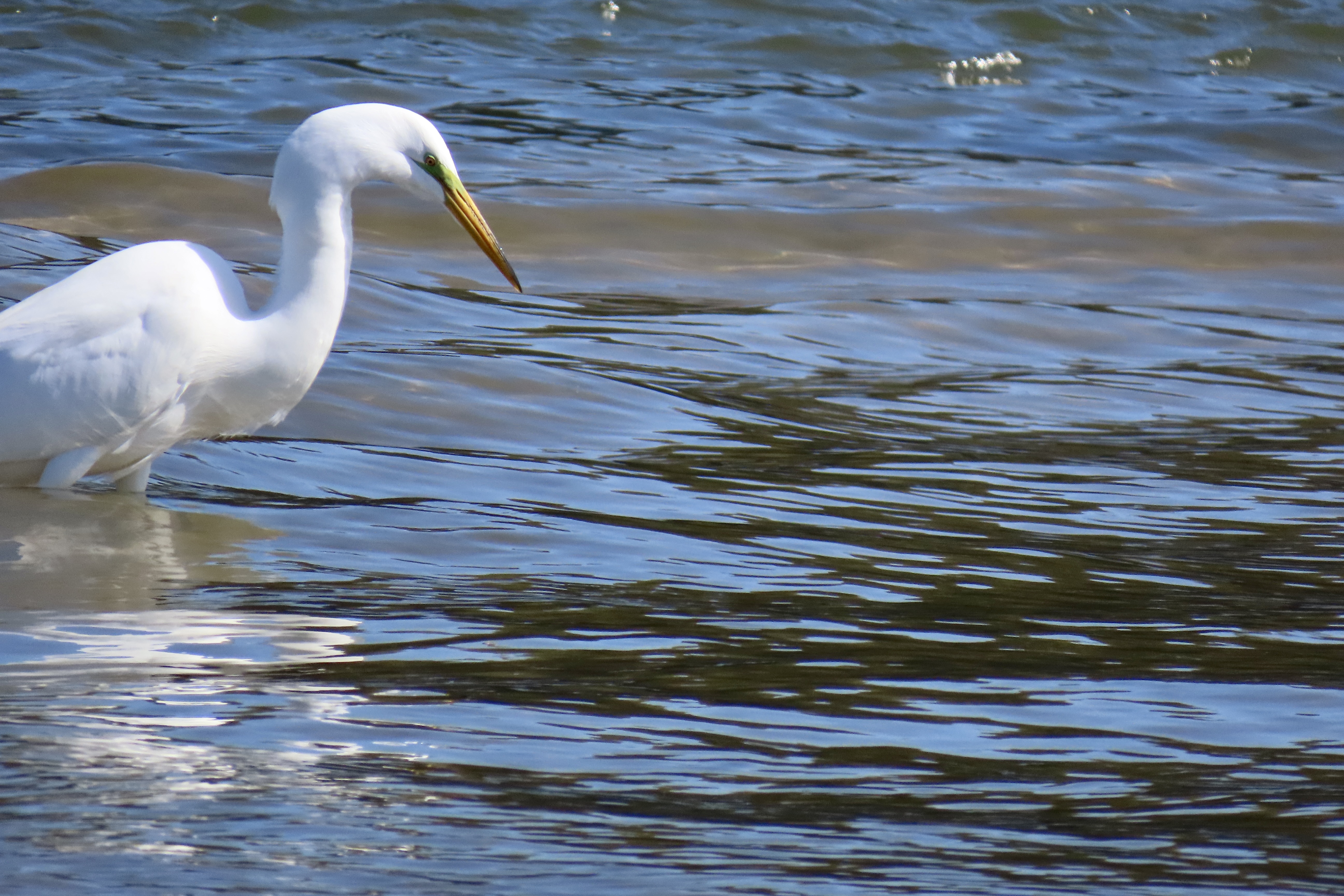
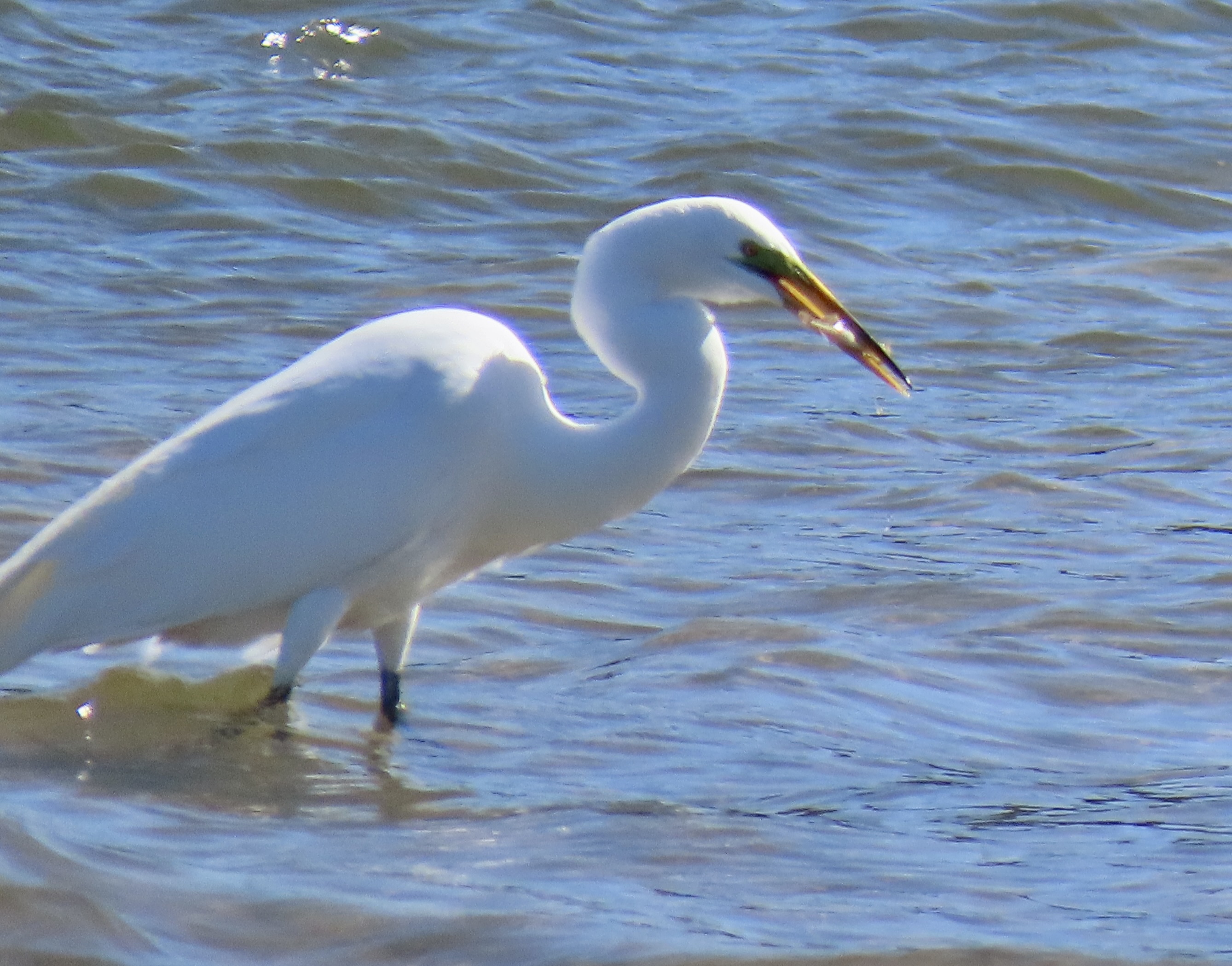
One thing about our stays at the Marina— we had never been able to obtain a site on the Siuslaw River. They fill up fast. People sign up for them months in advance. This time, because Peggy and I were staying for two weeks, I made our reservations early and we scored a spot on the river. Most of the photos today are taken from our ‘backyard.’ We will be featuring five birds: Great blue herons will provide lessons on preening, a great white egret will share its secrets on fishing, a not so impeccable seagull will teach how to get down and dirty, Canada geese will demonstrate the best way to keep track of kids, and, finally, cormorants will hold a large meeting doing who knows what.
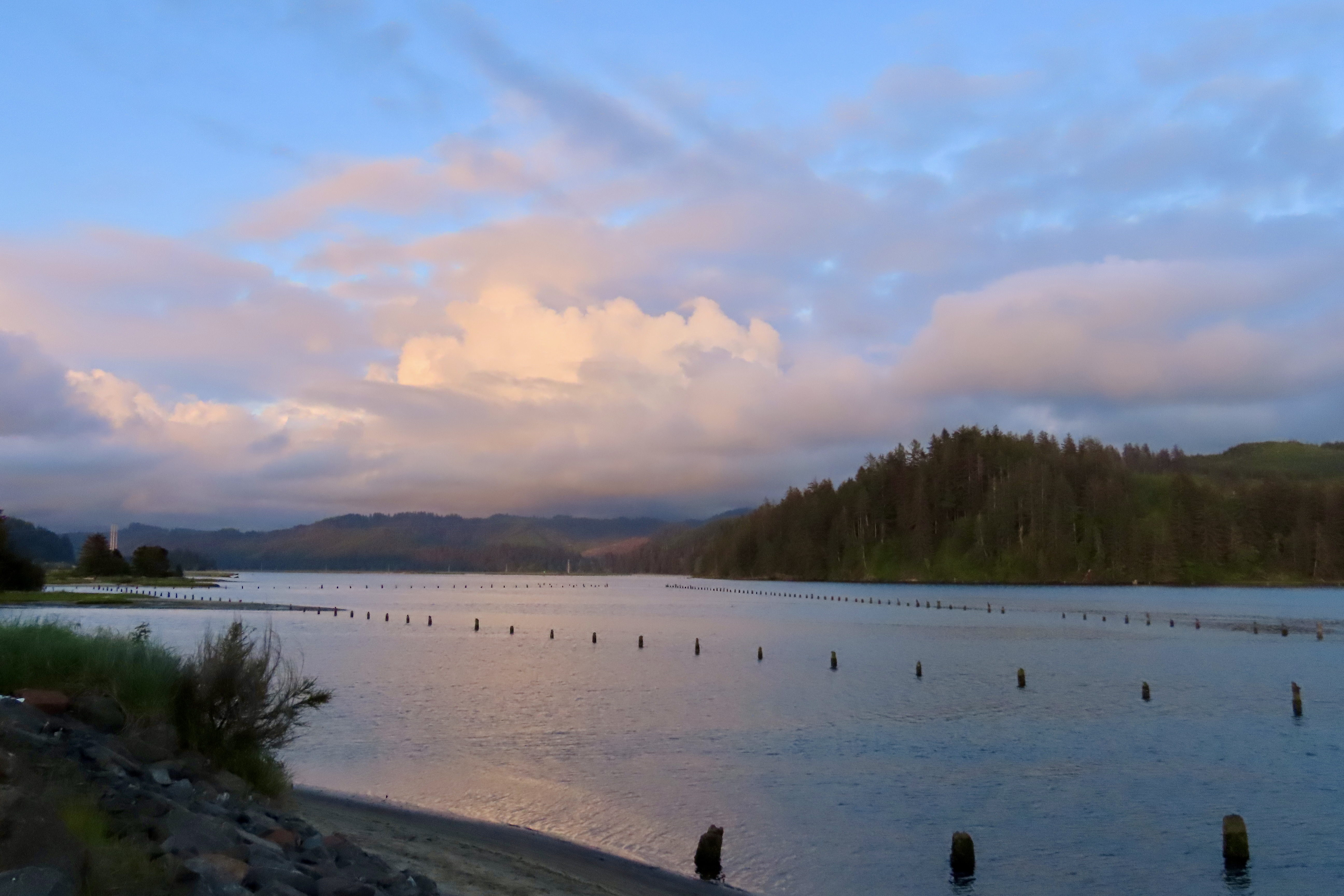
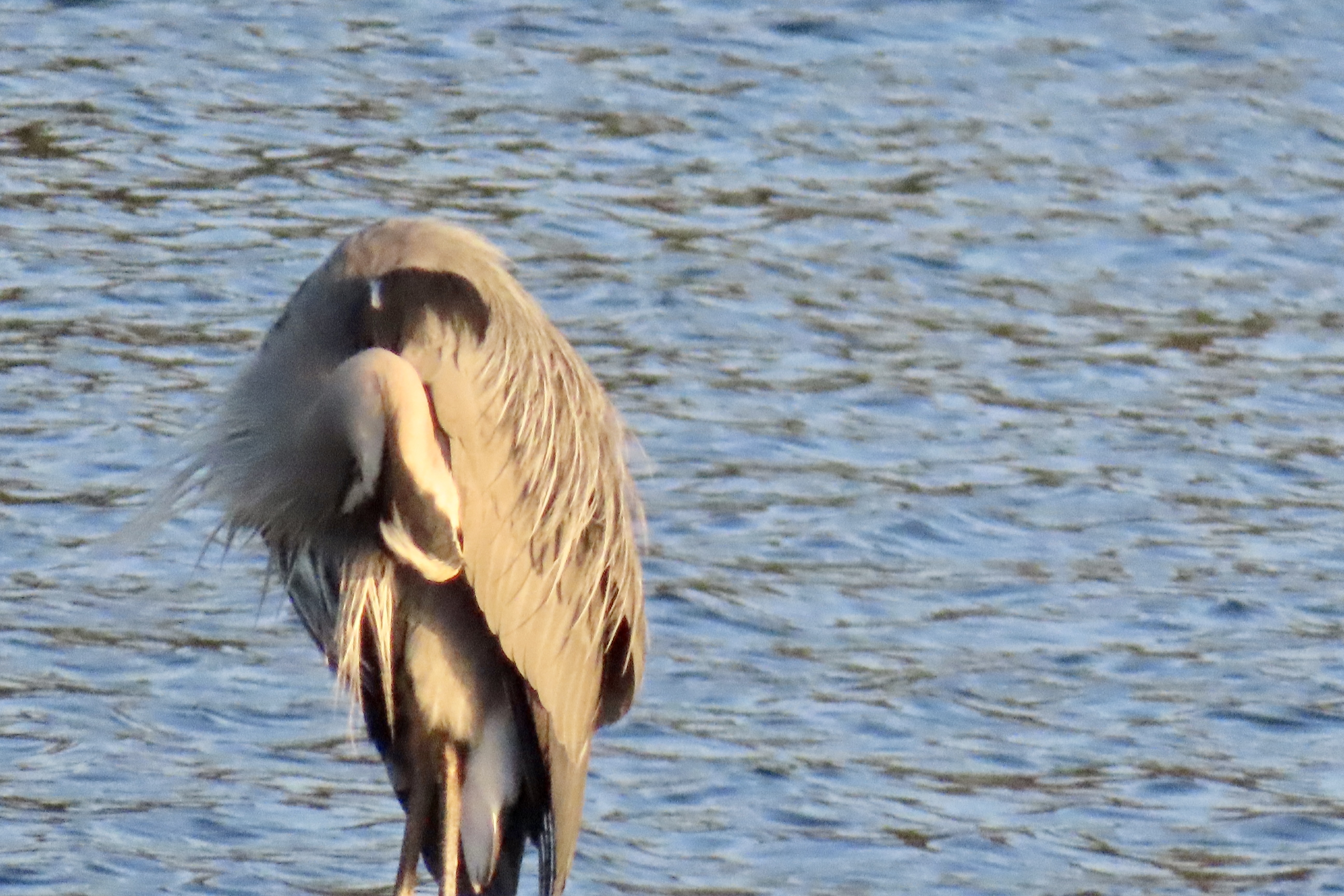
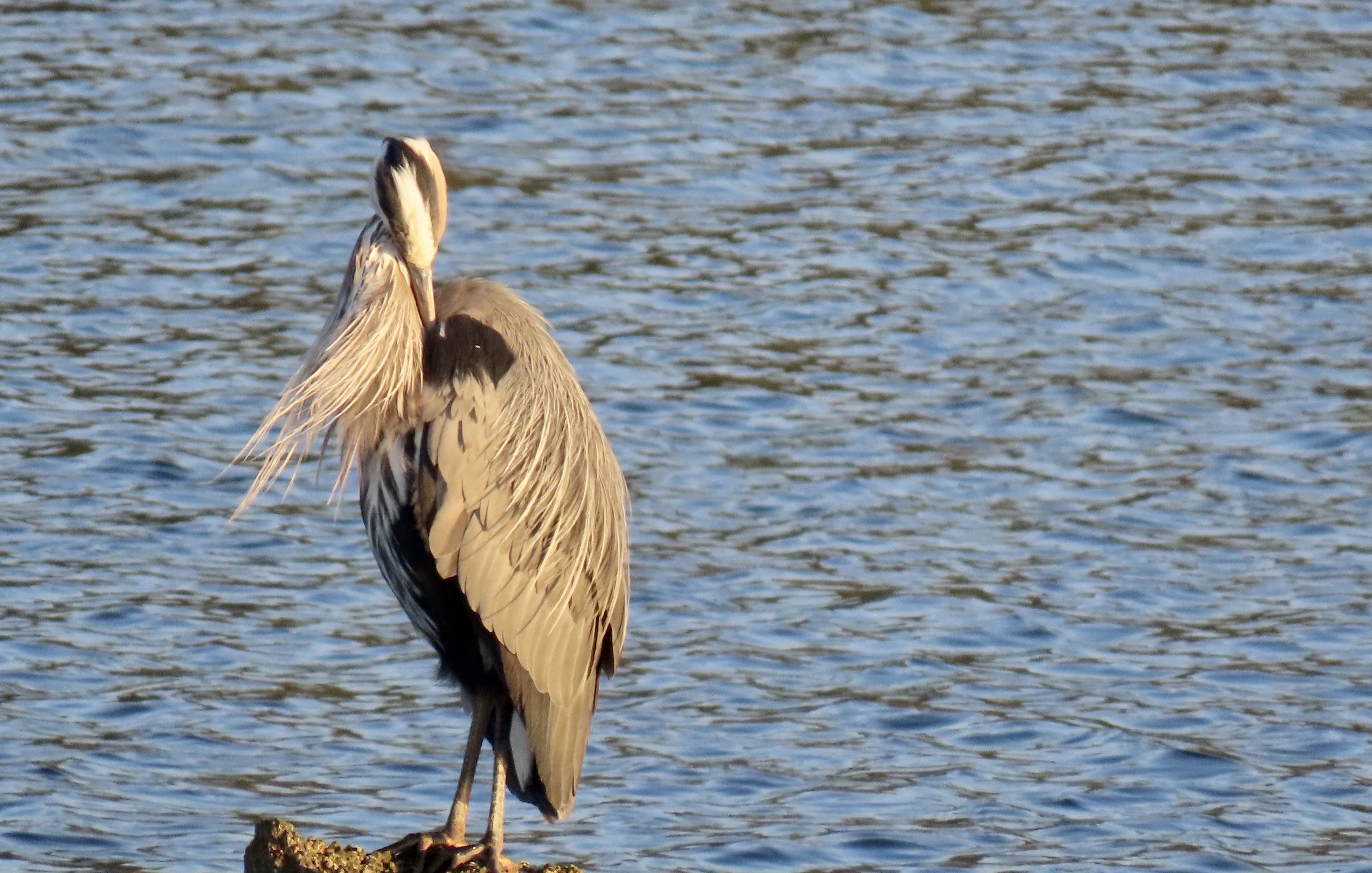
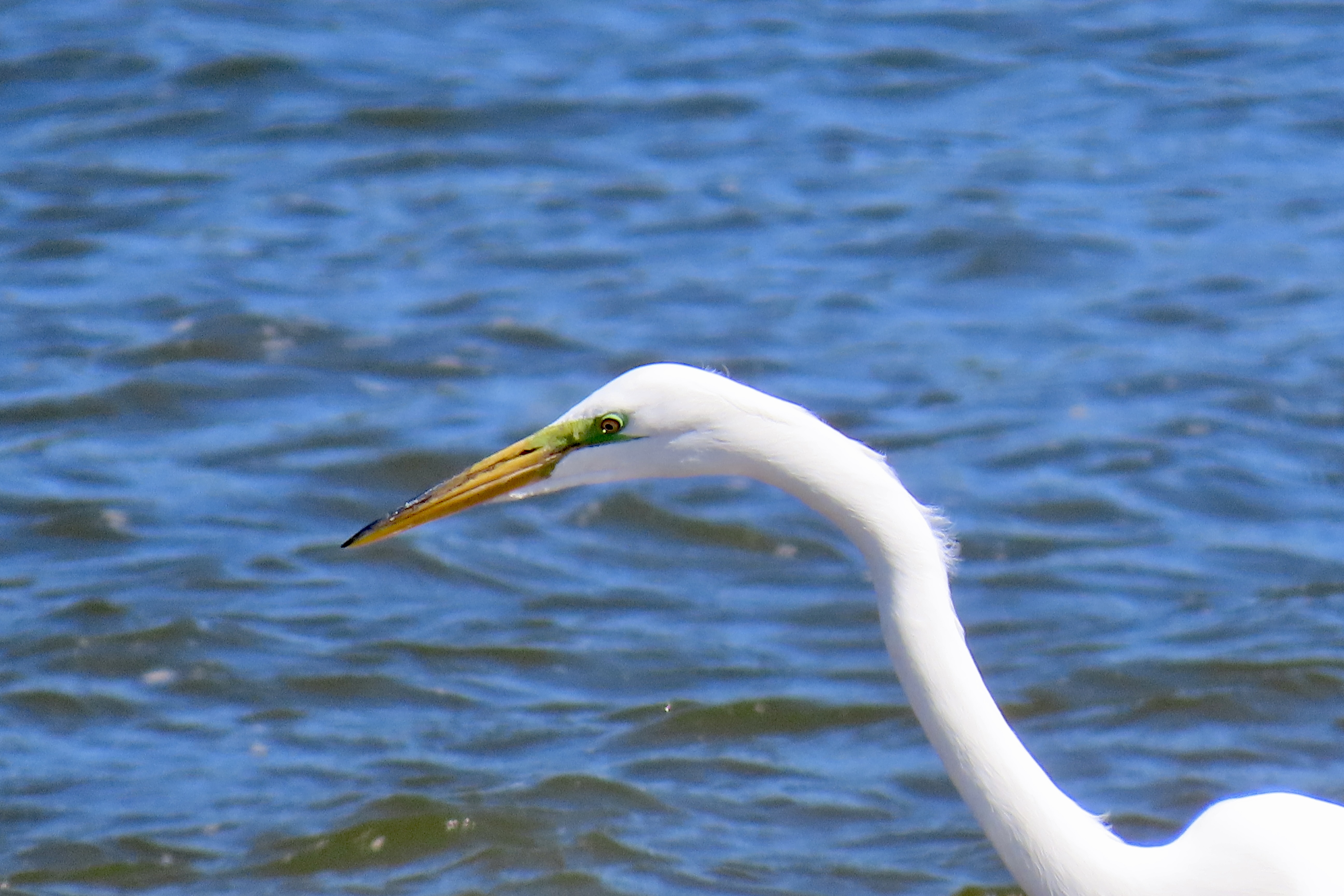
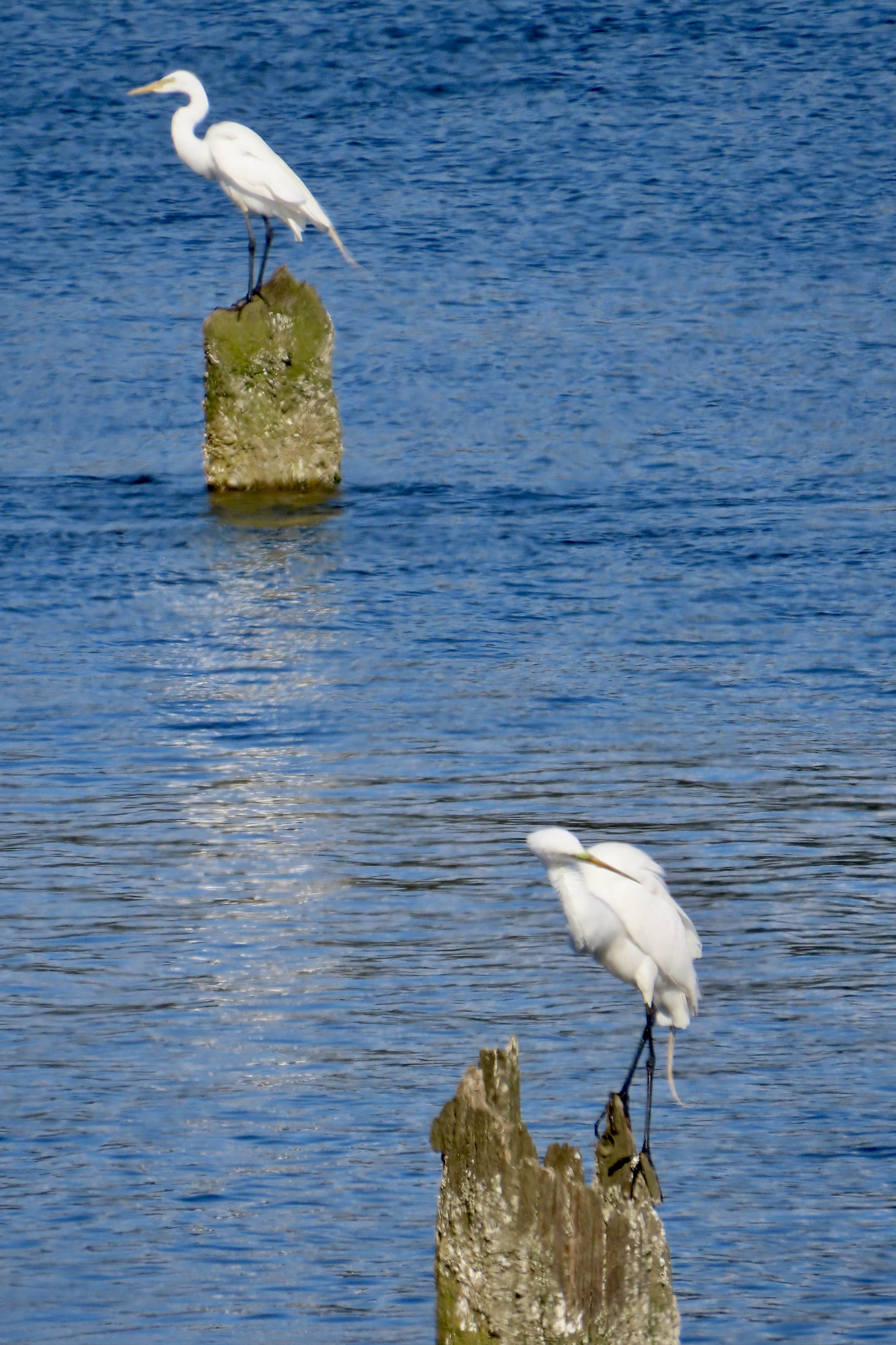
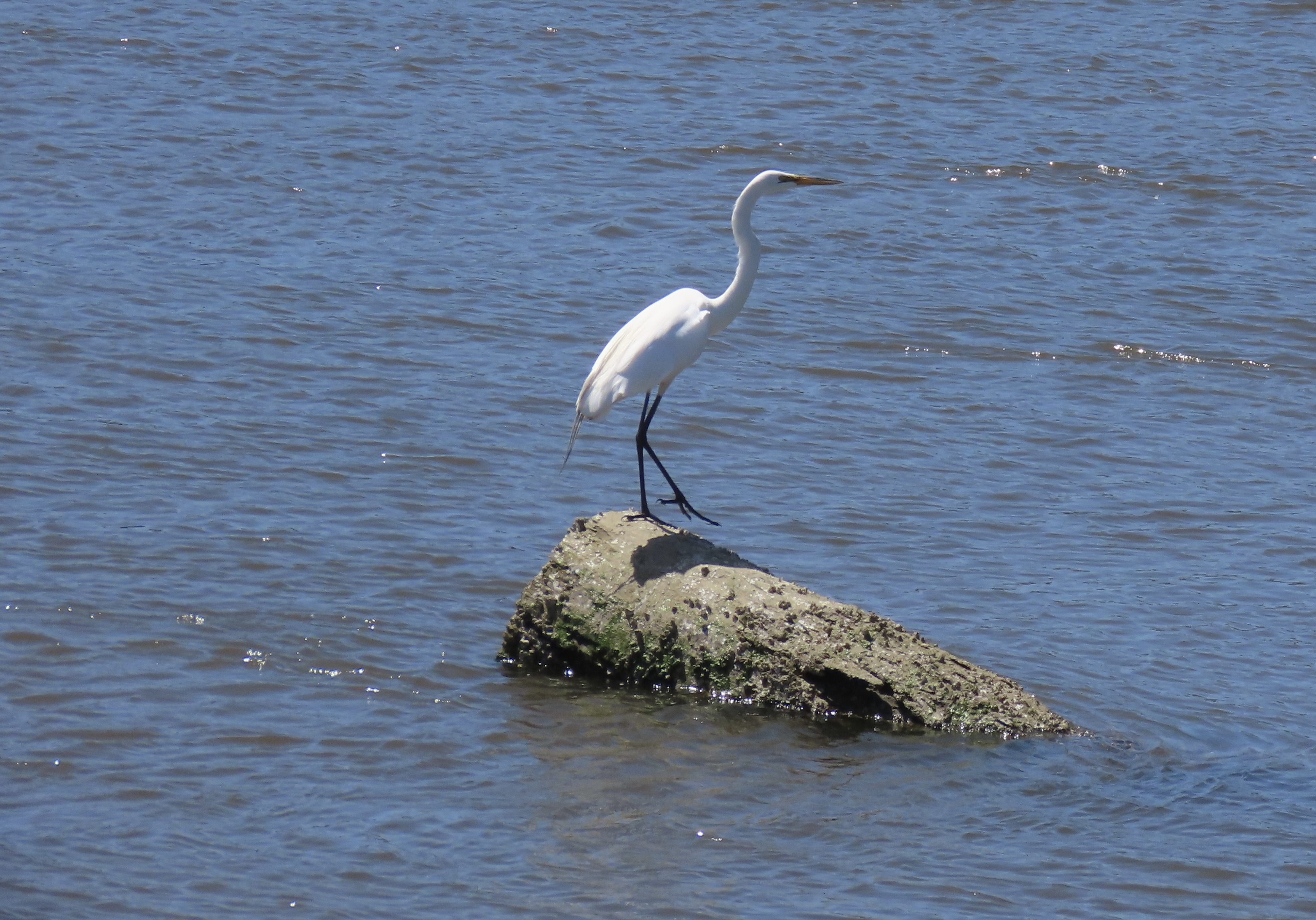
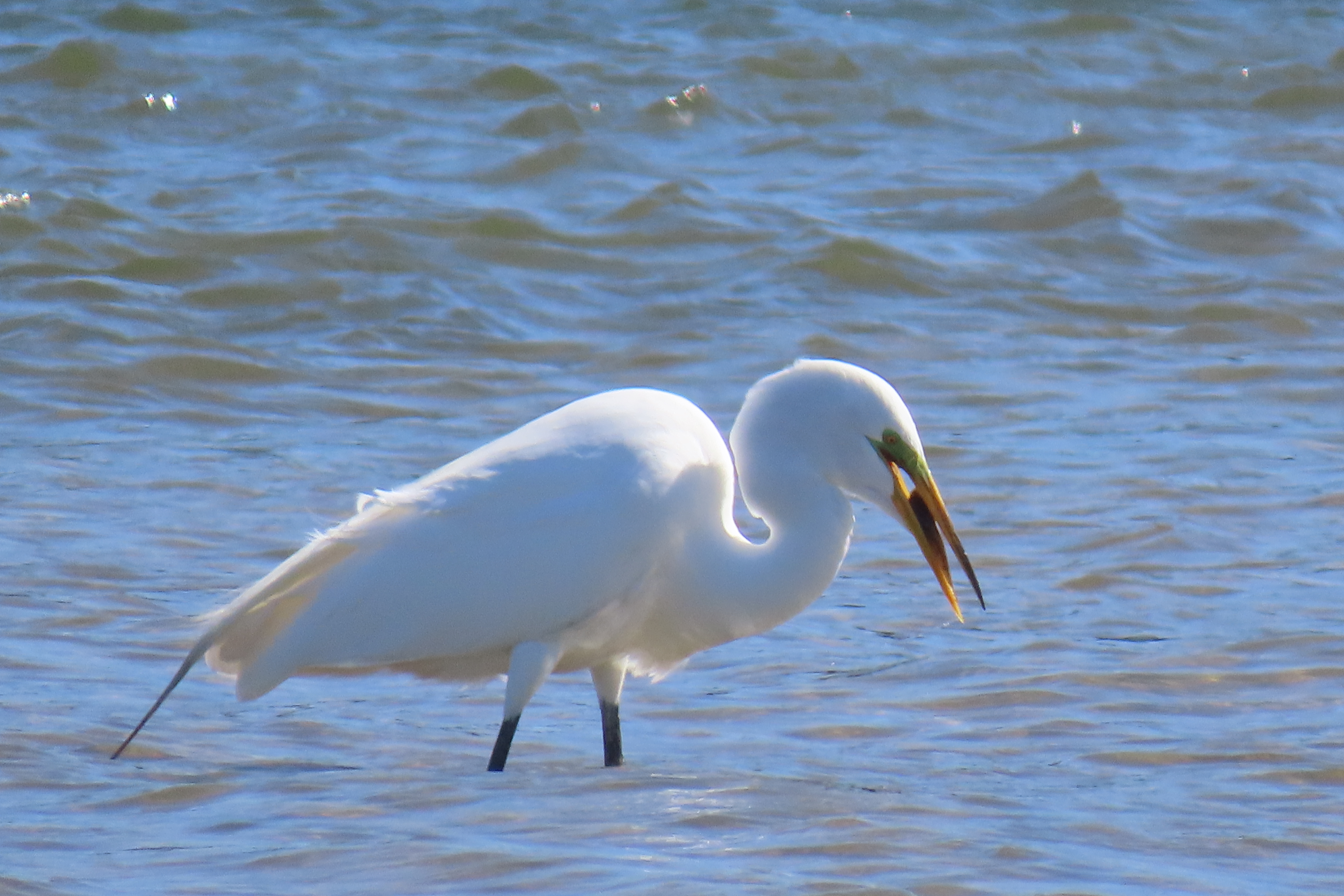
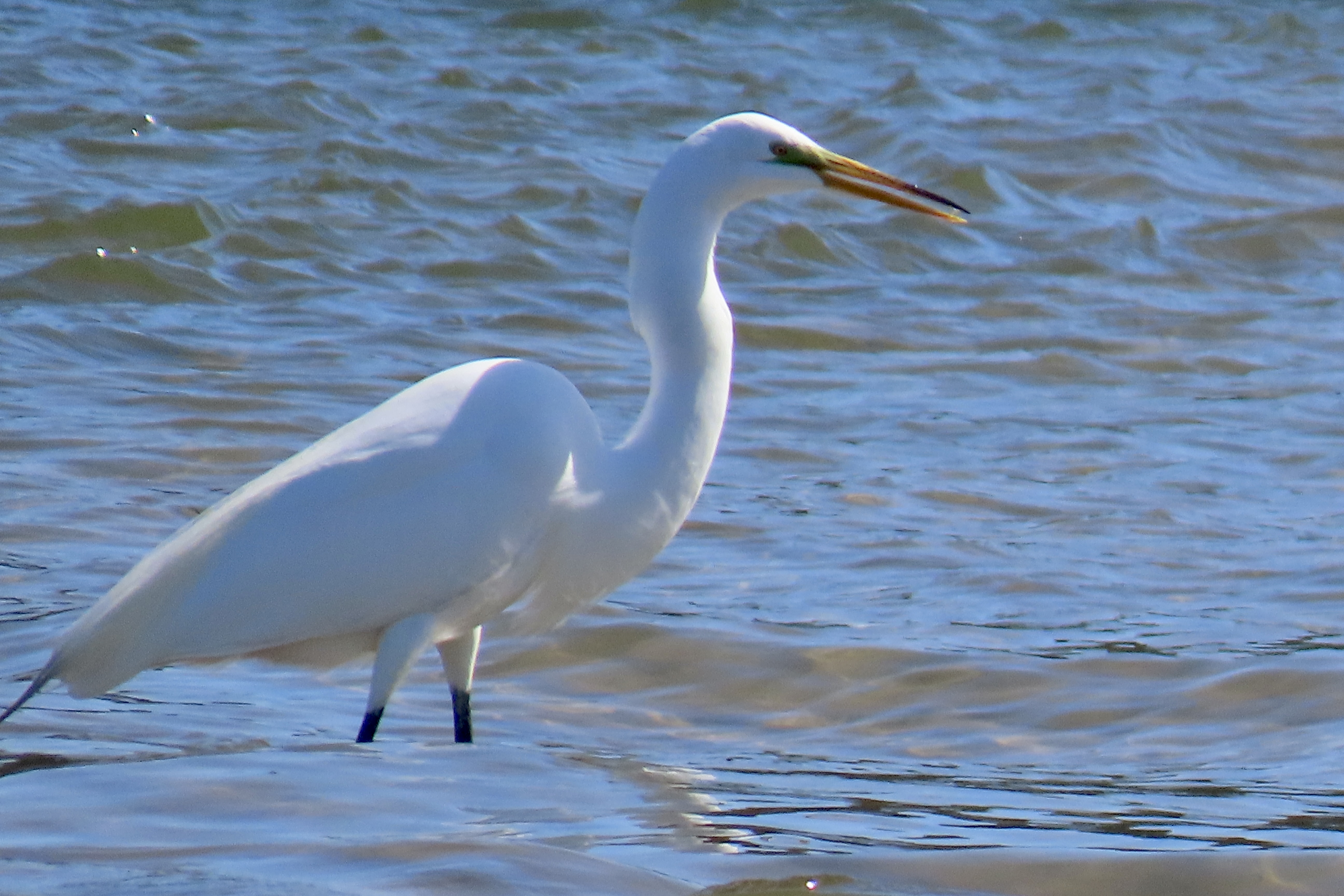
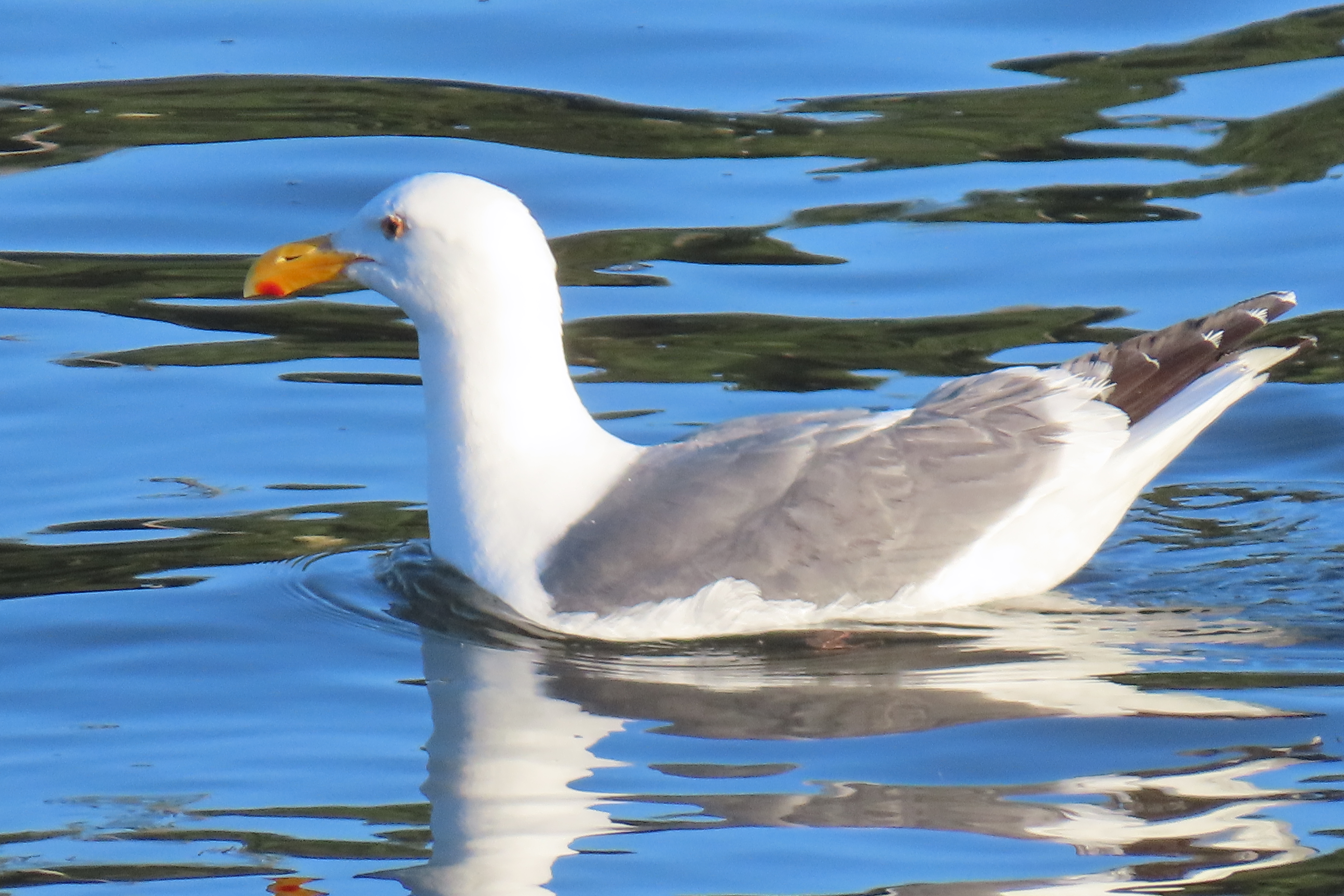
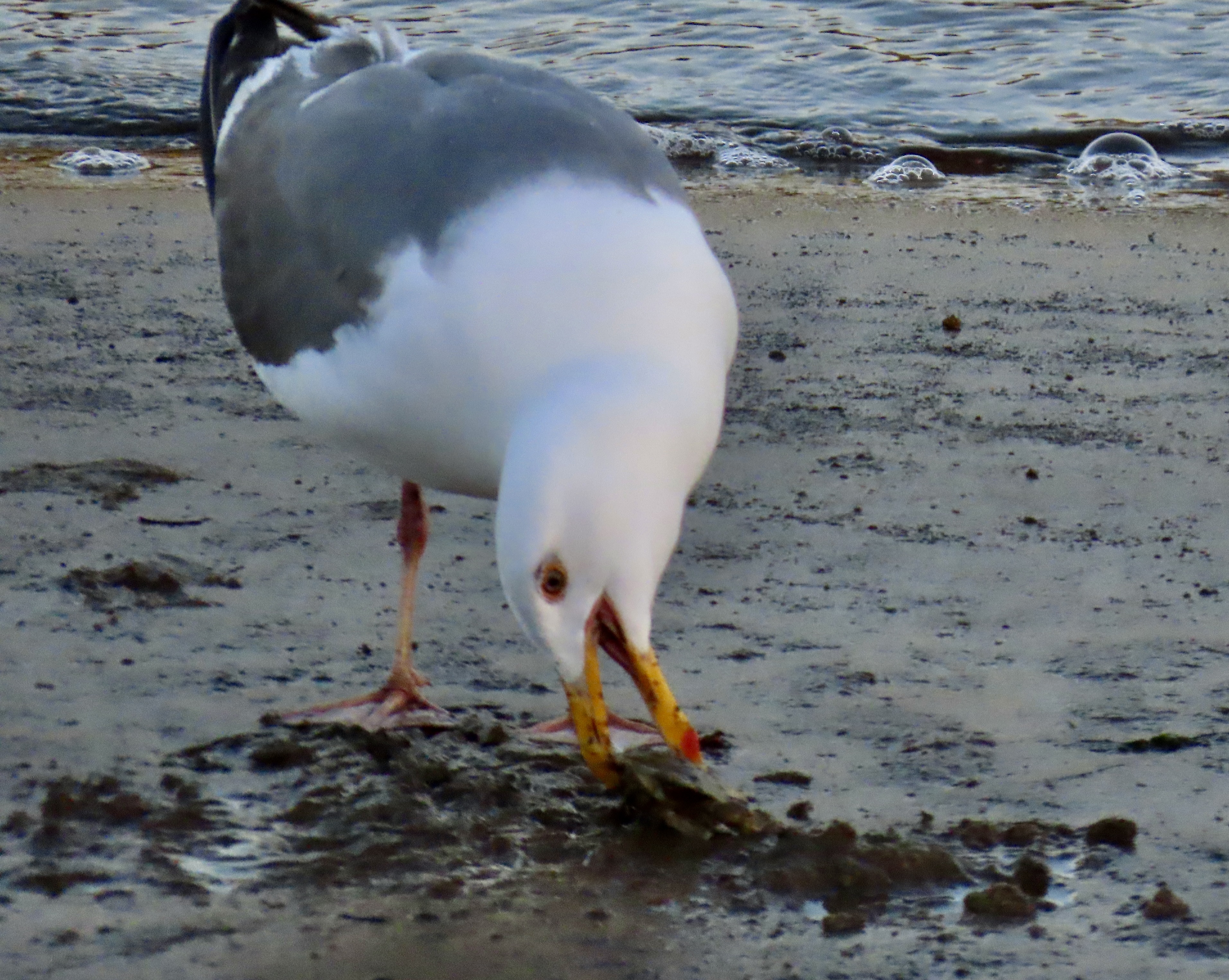
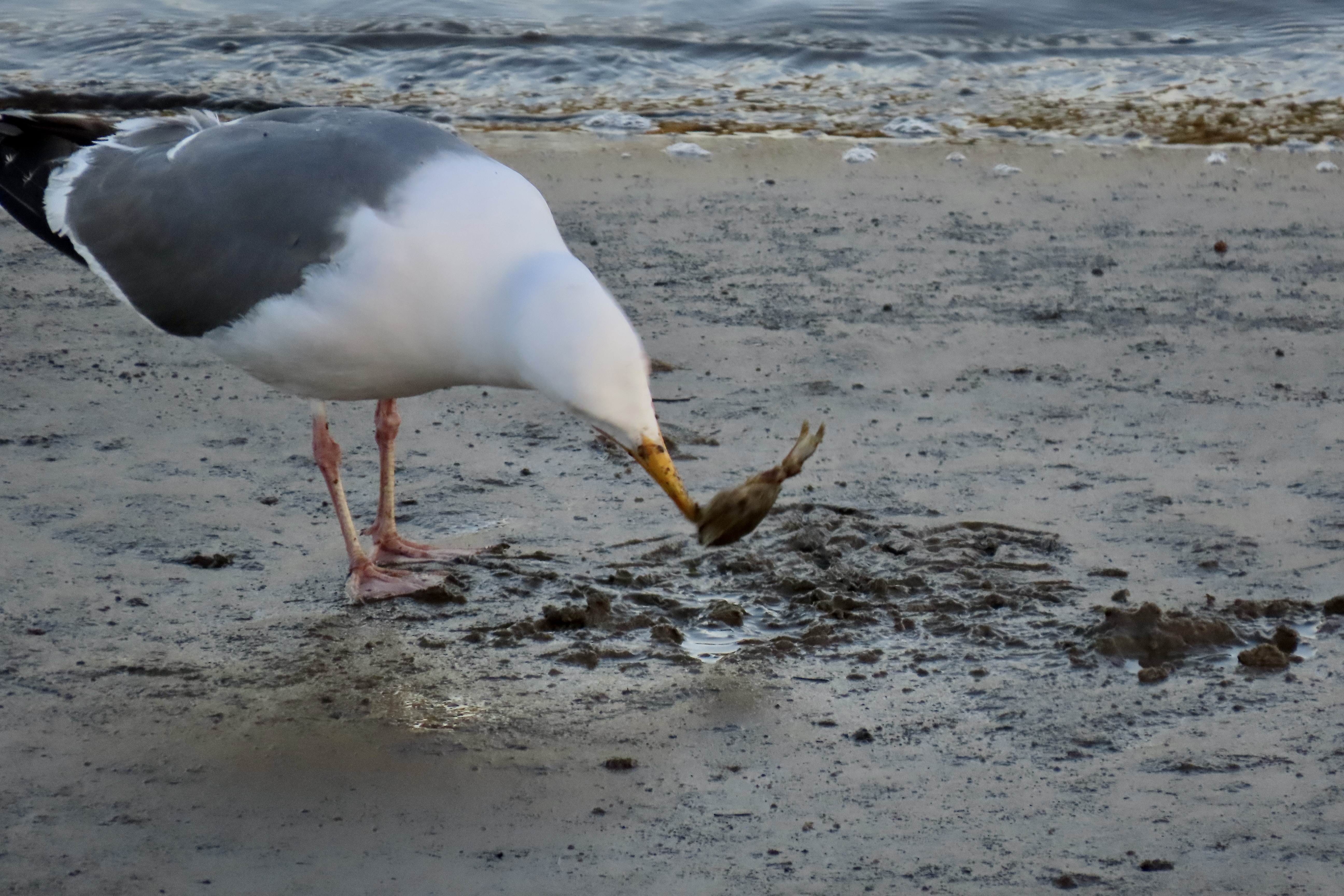
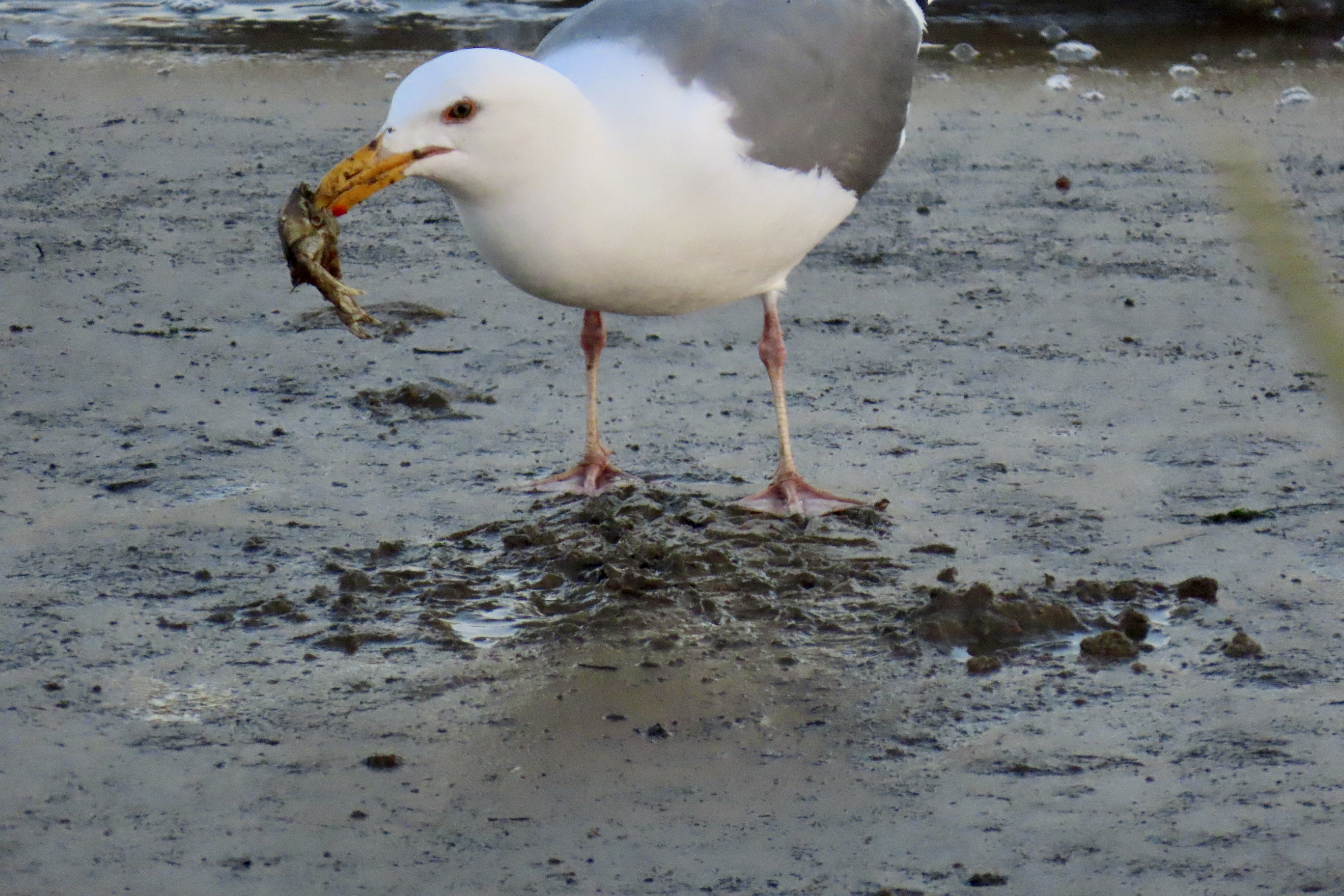
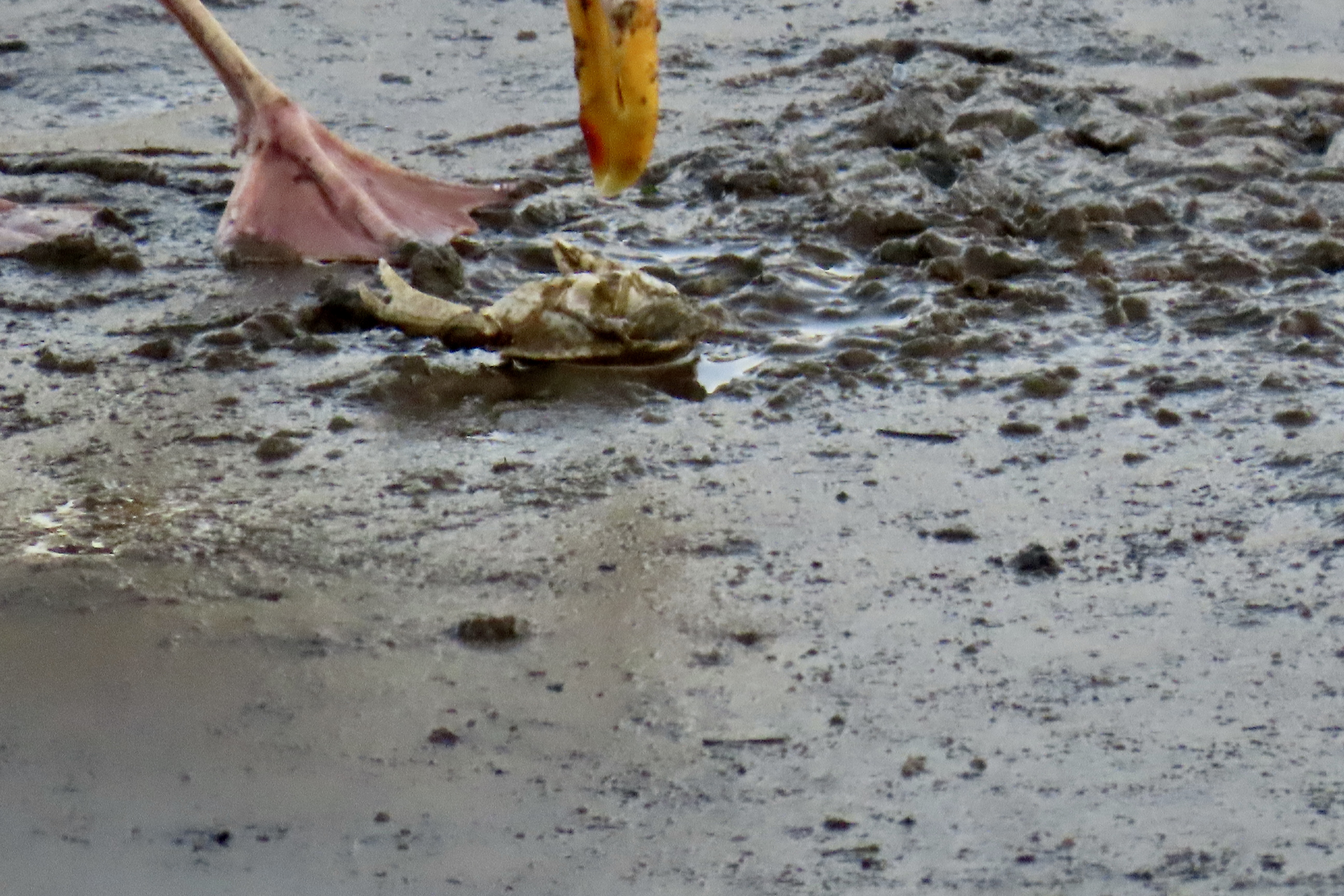
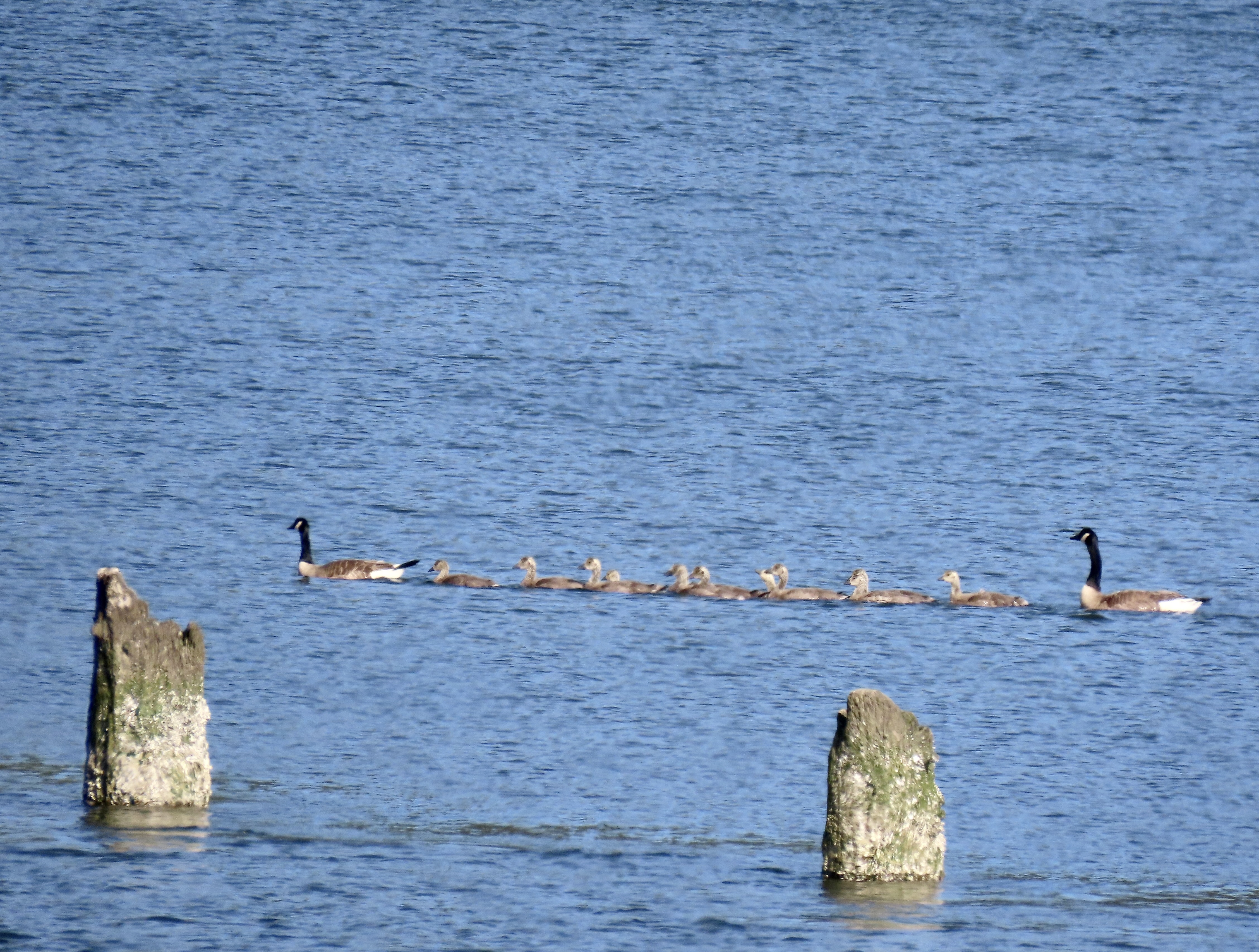
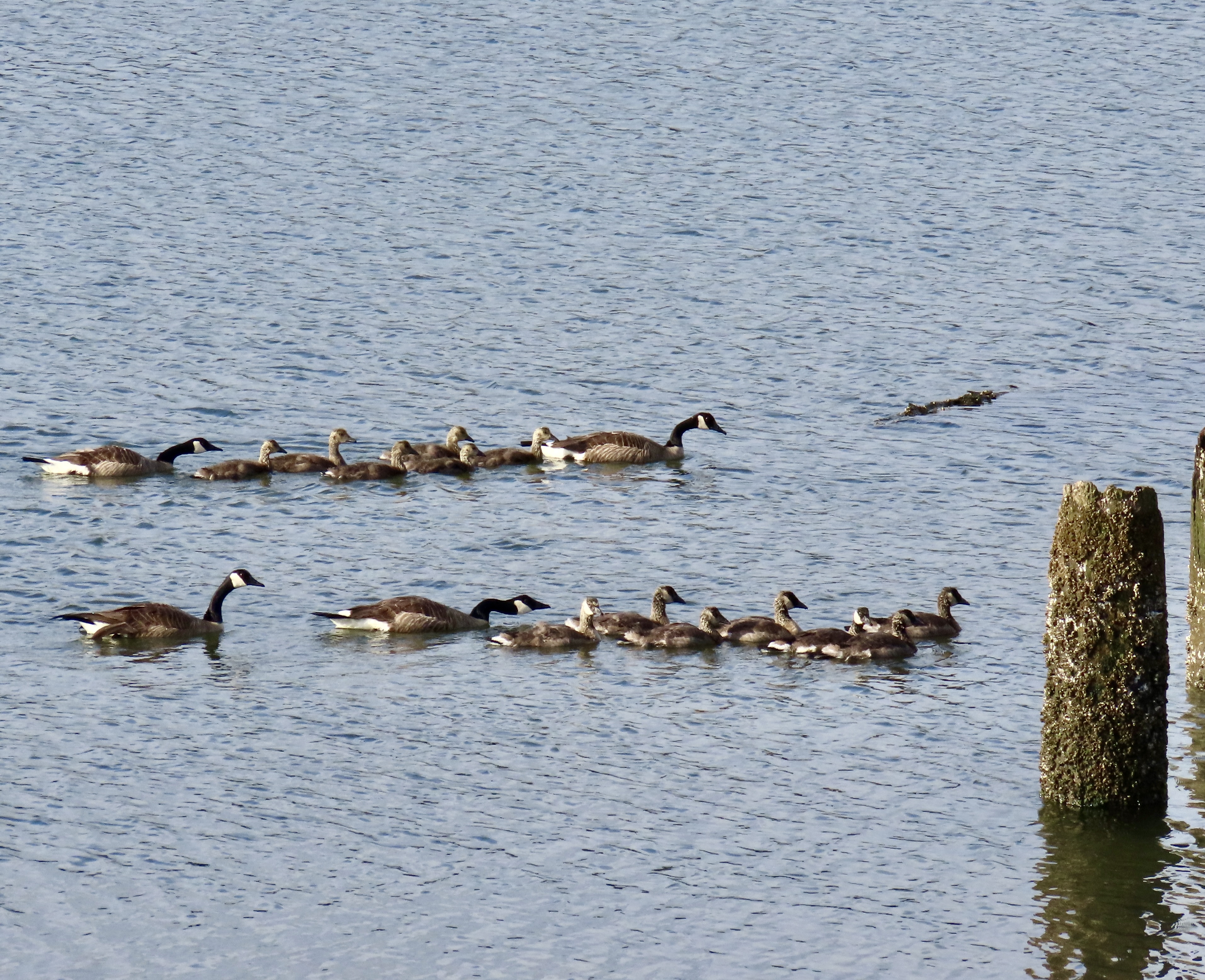
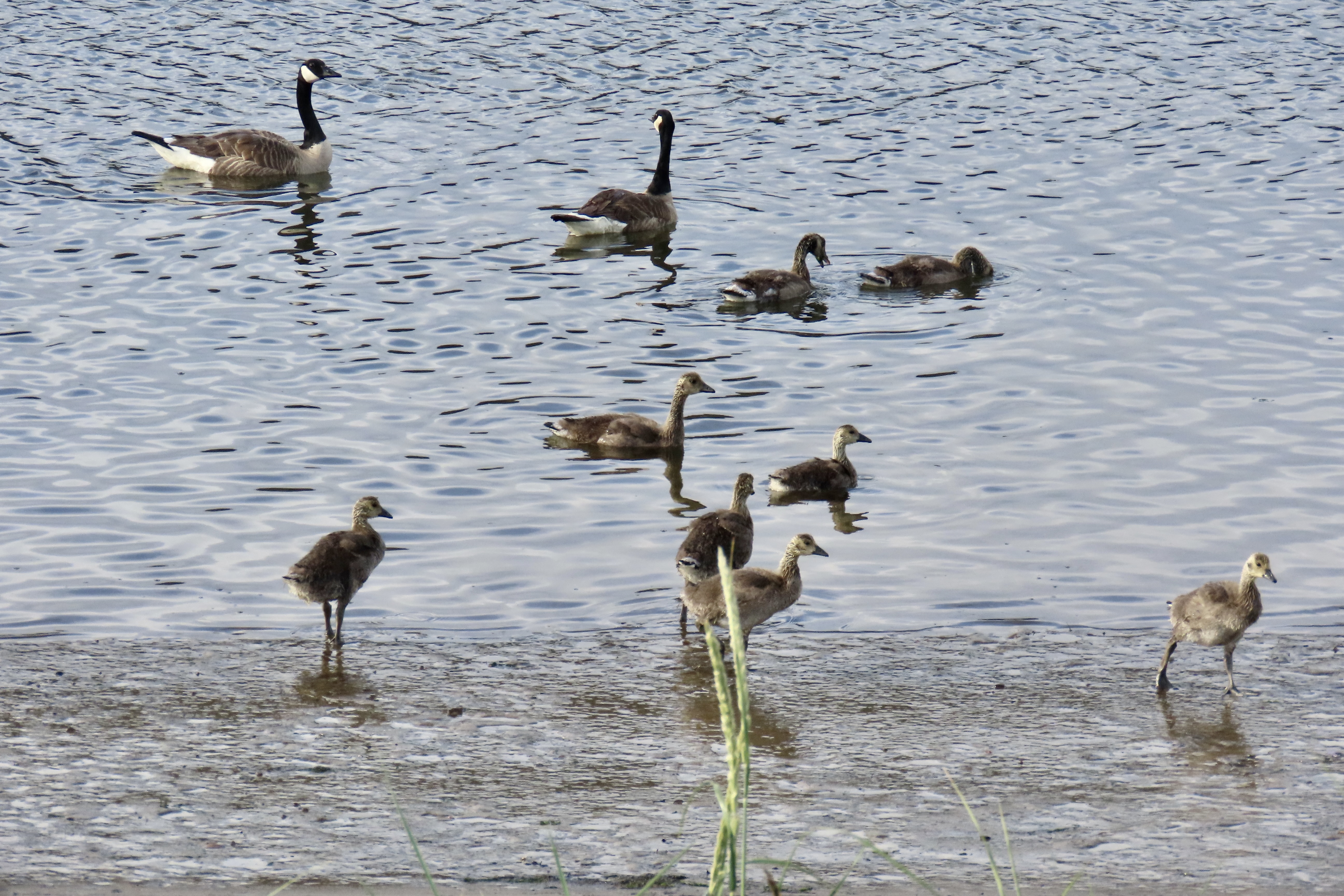
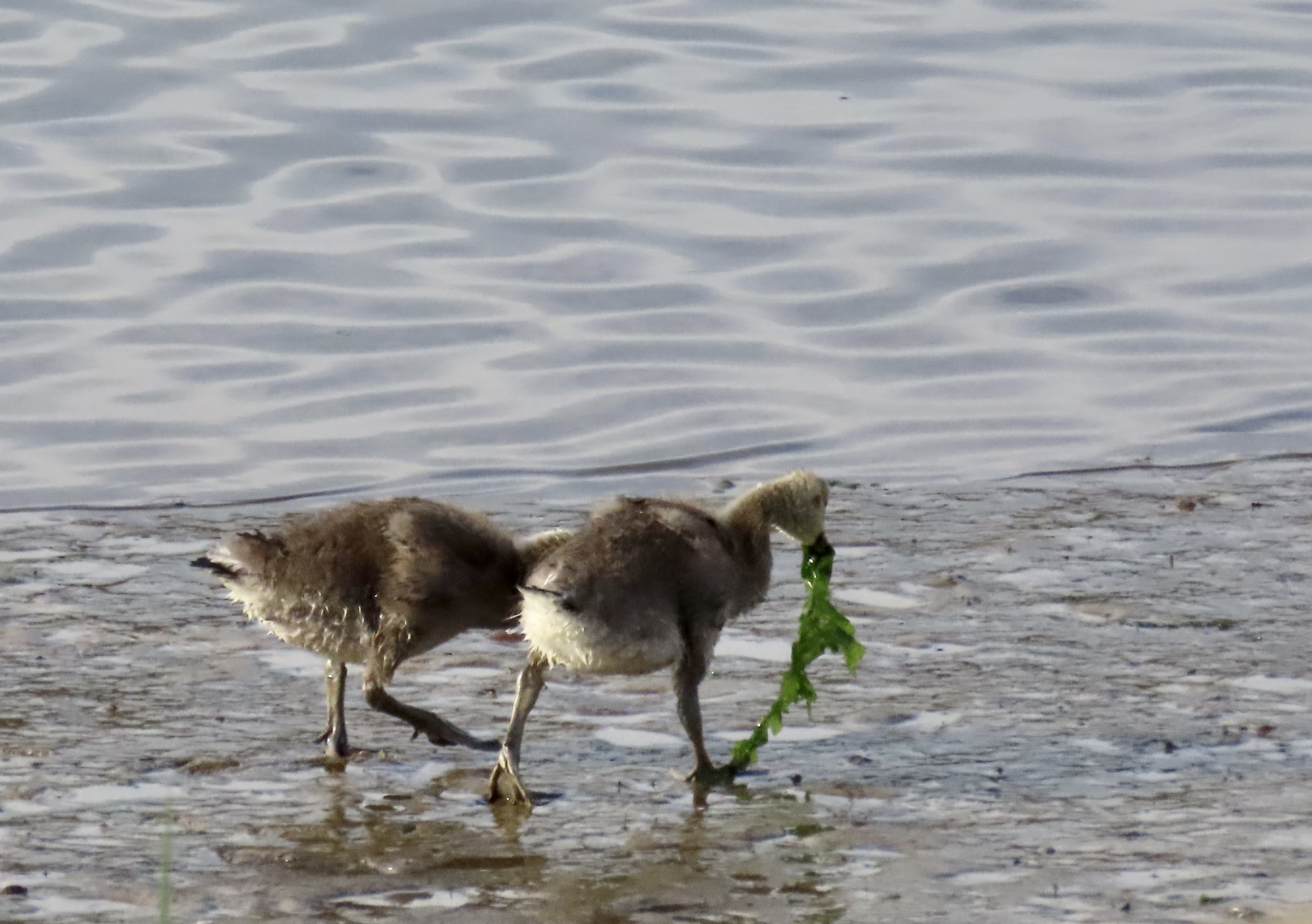
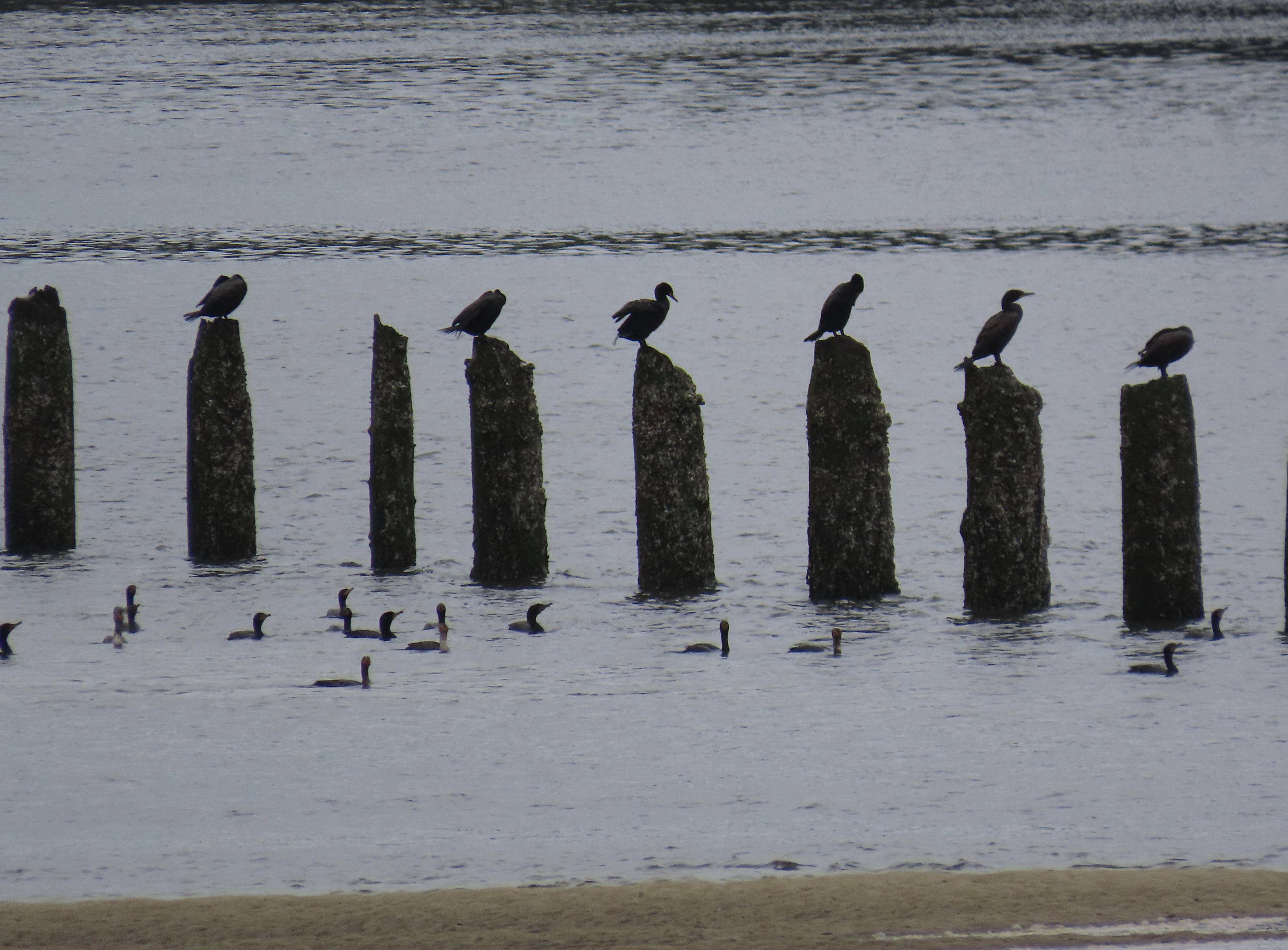
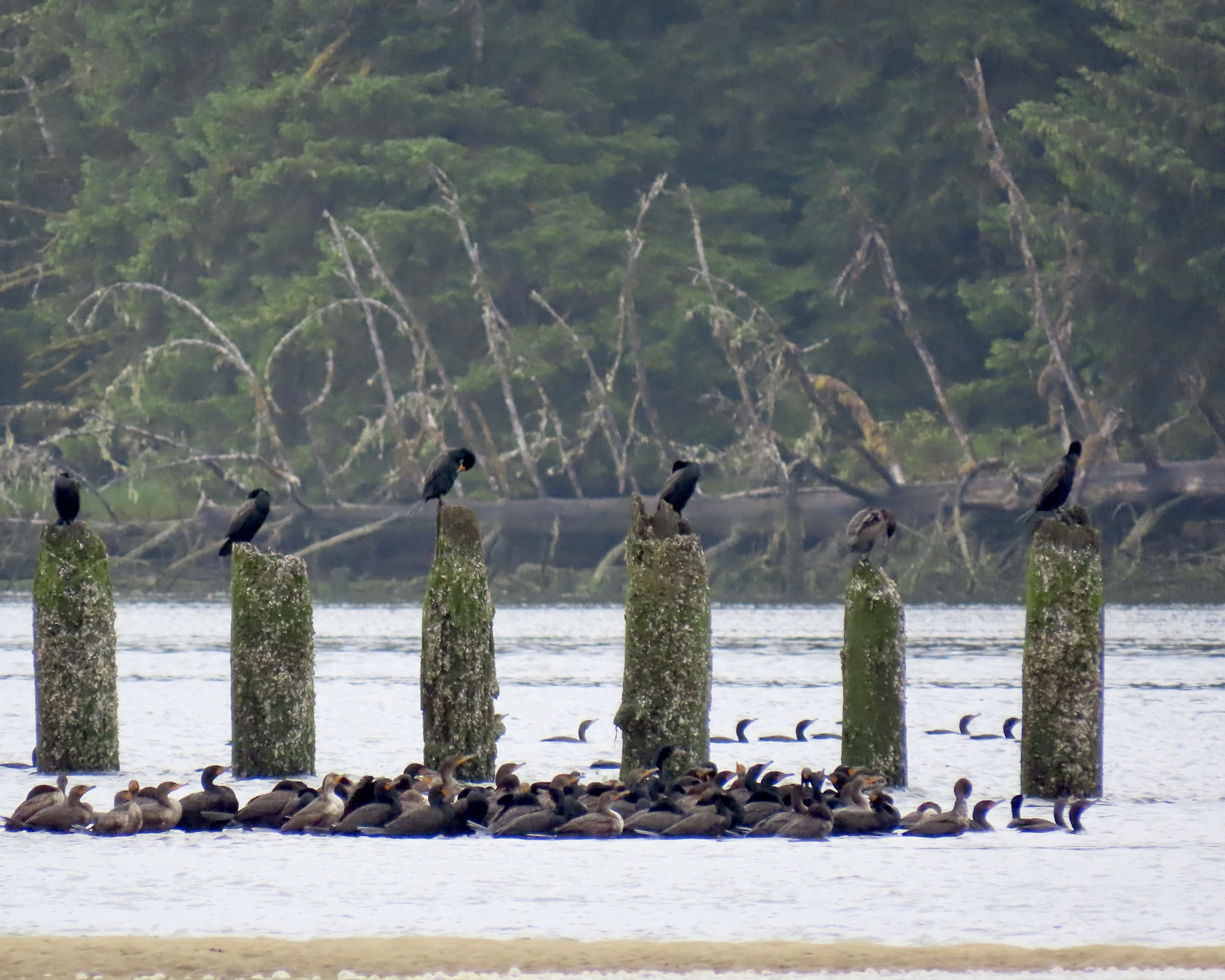
An evening view from our backyard on the Siuslaw River. The old pylons out in the river speak to how busy it was in the past. Once, they held up various structures; now have become a primary perching place for birds.Water birds put a lot of effort into preening. It’s their way of preparing for a busy day of work. This great blue Heron demonstrates just how much effort. Check out its neck. Linda Blair from the 1973 movie, The Exorcist, would not have been able to manage this trick.It’s important to dress appropriately for whatever activity you have planned for the day. The heron here plans on spending a lot of time in the water so he is waterproofing his feathers. He stores oil in his uropygial gland at the base of his tail feathers for the job. “His what?” you ask. At least I did. So I looked it up and learned it’s a bilobed sebaceous gland. Consider yourself informed.Having gathered oil, in his beak, the heron proceeds to oil his feathers. Preening involves more, however. Cleaning, positioning and interlocking feathers are all involved. Parasites are kept under control as well.In terms of parasites, sometimes a good scratch is in order. (It was getting dark when I took this photo and a couple of the others, so clarity was a little fuzzy.)Having finished preening, “Who’s the pretty bird?”Next up, a great egret demonstrates how to catch and eat a fish.First, you have to get off your perch.You will need to get wet. Step off into the water.You may have to stick your neck out, take a chance.Focus is critical.There will come a moment when it is time to strike. A second’s hesitancy may cost dinner. (I hesitated for a second and missed the photo.)Success. Next up, you eat what you catch. This isn’t catch and release. Good news, you don’t have to clean or cook the fish. This is sushi at its wiggly rawest.You do have to position the fish so you can swallow it. It is unlikely someone will be around to perform a Heimlich maneuver. Down the hatch. Gulp.One of the more serene photos of California gulls we have ever taken. Notice how clean it is, how pristine. That is about to change.Our serene friend caught a crab on the shore just behind our trailer. Pieces of the crab were broken off to eat.It was down and dirty work!There is no doubt that Canada Geese have perfected the art of taking their kids from place to place. Peggy caught the young geese traveling in a neat line between their mother and father.While the babies are easy to keep in line, the teenagers require a few more directions. Grin. Check out the extended necks of the adults. It isn’t hard to imagine a bit of scolding.Maybe mom and dad were urging them to do some independent foraging.One of the youngsters found some tasty seaweed that a sibling was eager to share. I’m pretty sure that the message was “Go get your own.”Peggy noticed a gathering of cormorants up the river from our backyard and we tried to figure out what they were up to. It seemed that the adults were up on the pylons while the younger and smaller cormorants were swimming beneath them.Soon a large flock of cormorants had gathered. Again, the majority of the flock in the water were immature birds based on their light color. I thought the dead tree in the background made a nice backdrop.
I learned an interesting fact about cormorant intelligence when I was trying to figure out why they were gathering. The can count to seven: “Chinese cormorants on the Li River are allowed to keep every eighth fish they catch. Otherwise they “stubbornly refuse to move again until their neck ring is loosened.”
And now for a few miscellaneous photos.
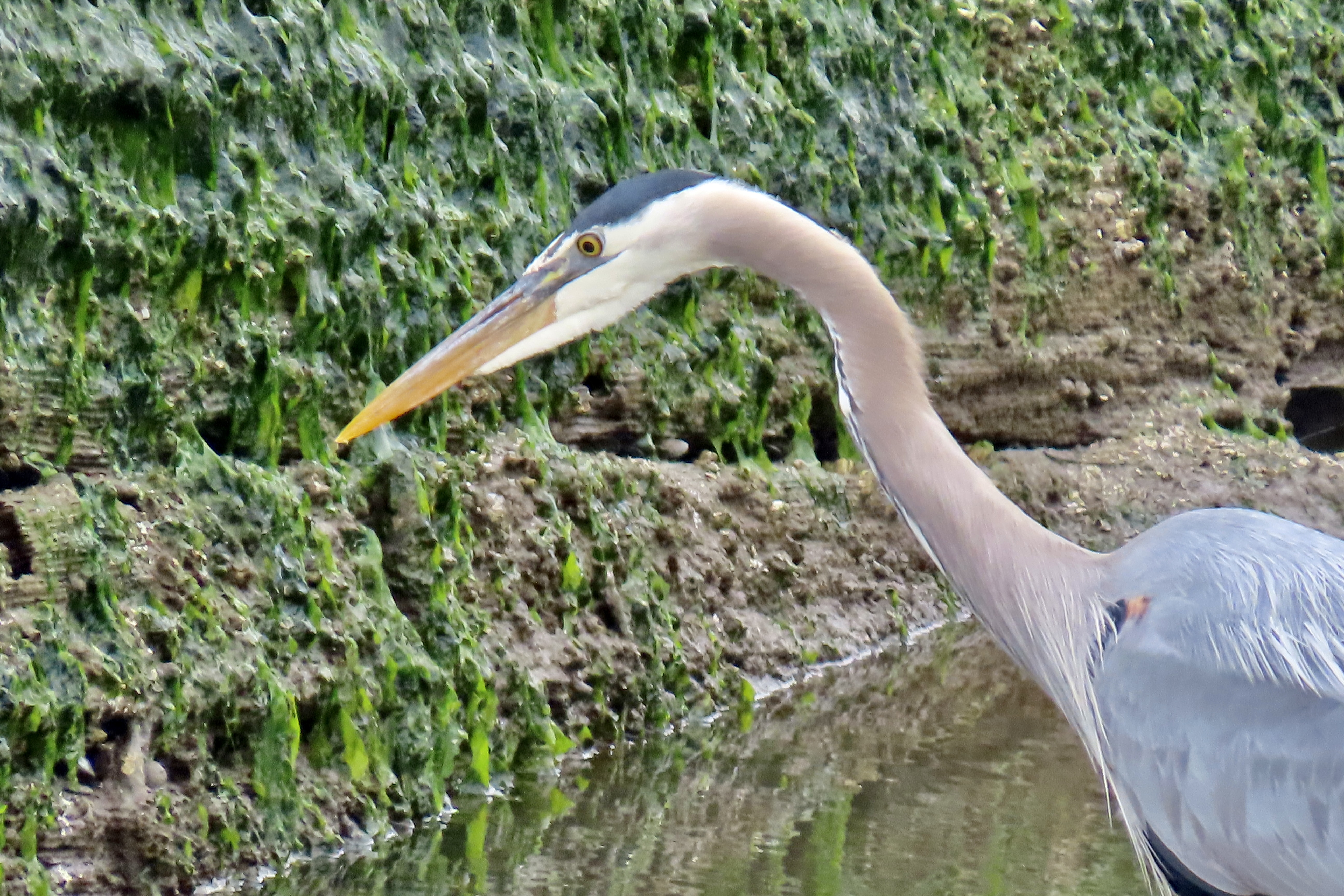
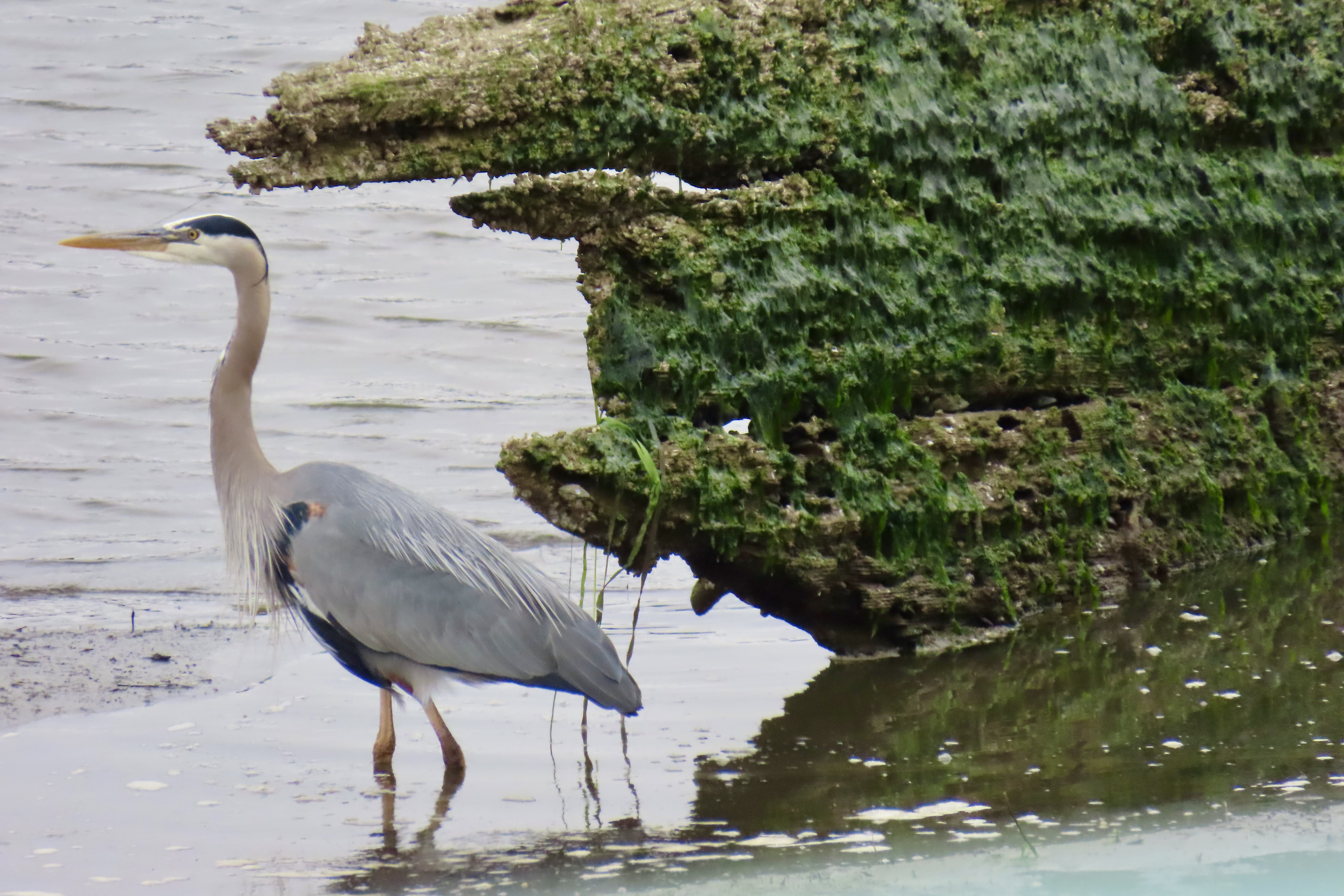
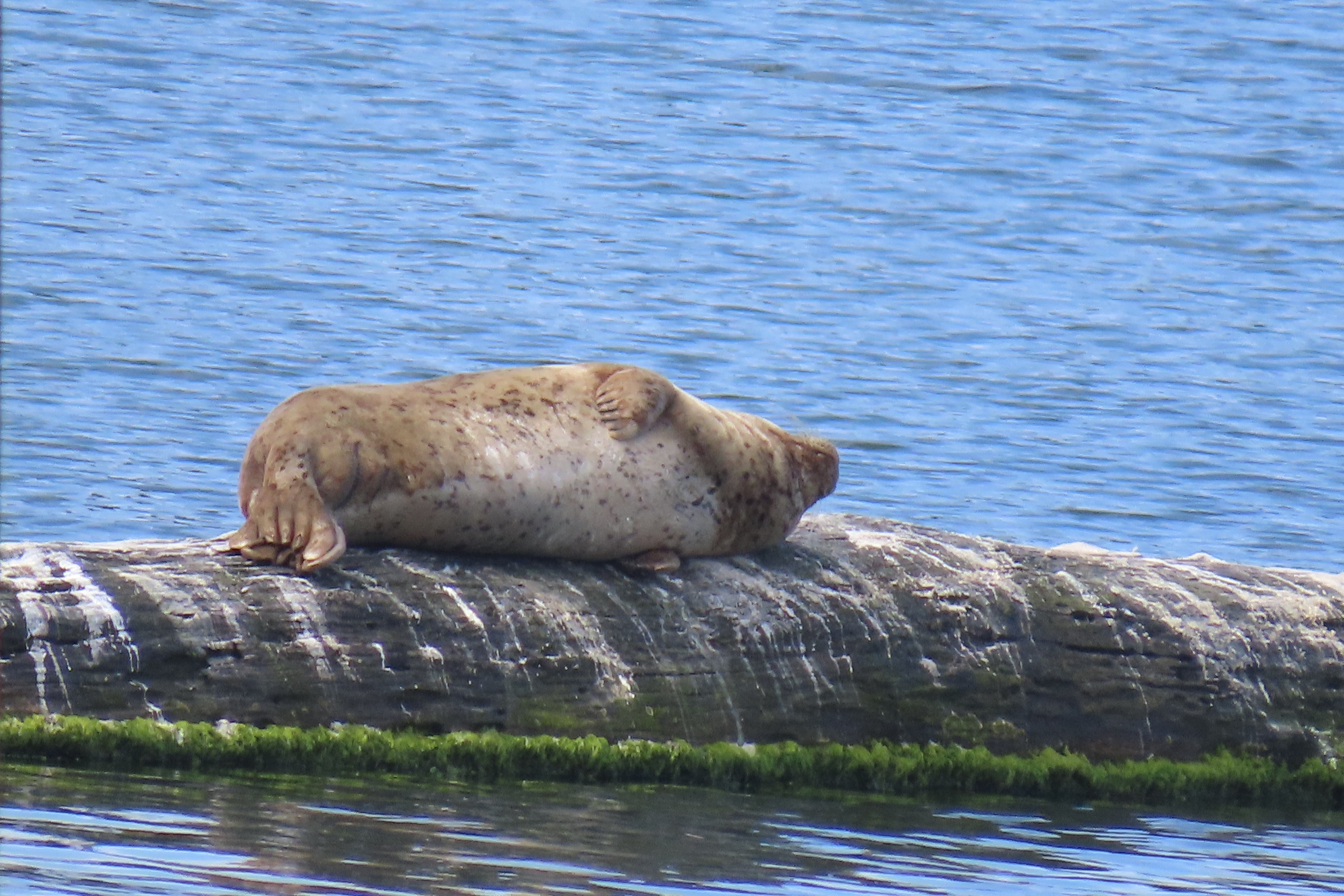
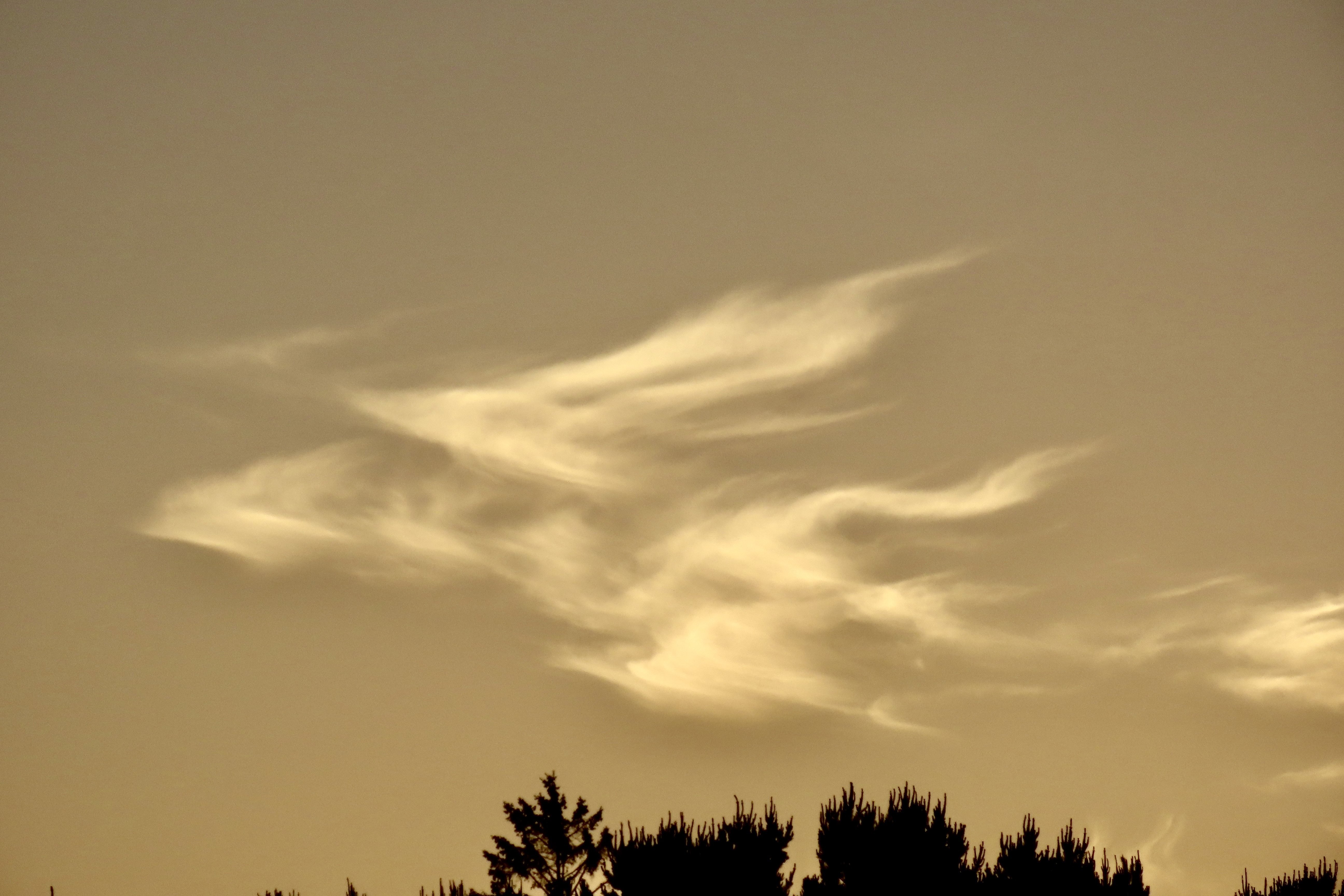
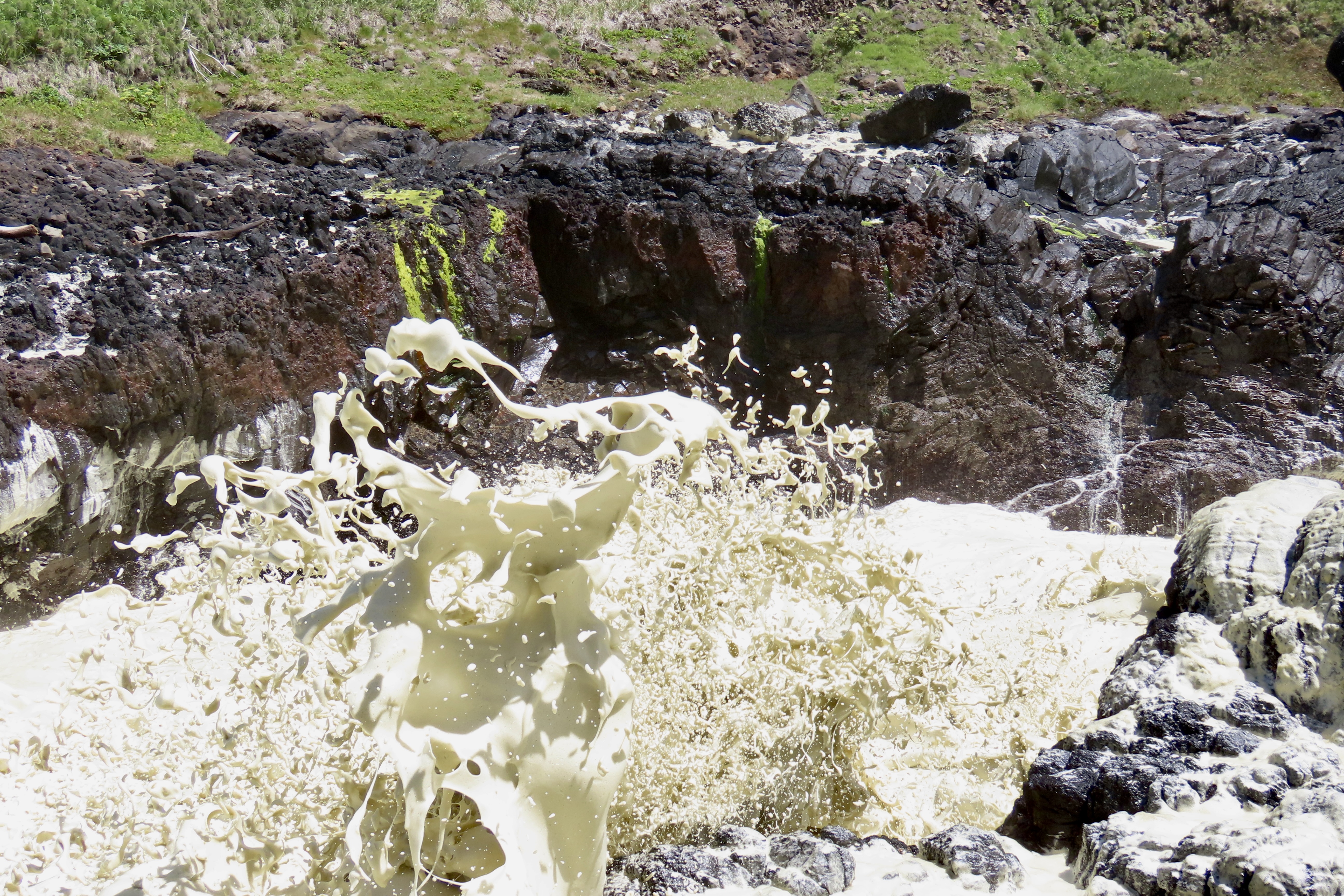
This great blue heron was fishing.We liked the way it was outlined by an old wooden structure.Most days a lone seal would rest on what may have been a cross beam to a pier at one time.Looking west from our campsite, we noticed this interesting cloud formation one evening. Peggy identified it as a flock of flying dragons.Another evening we watched a sunset out to the west, which will wrap up today’s post. Next we will take you out to the Devil’s Churn near Yachats, Oregon where the pounding ocean turns foam into a thick, brown froth with the texture of whipped cream.
The boys are now hanging out together. A situation that will change as their interest in the girls makes a quantum leap in the next couple of months. This buck’s antlers were still covered in velvet and growing when we left on our road trip in June. Now they are ready to do battle to win true love, or at least a quickie.
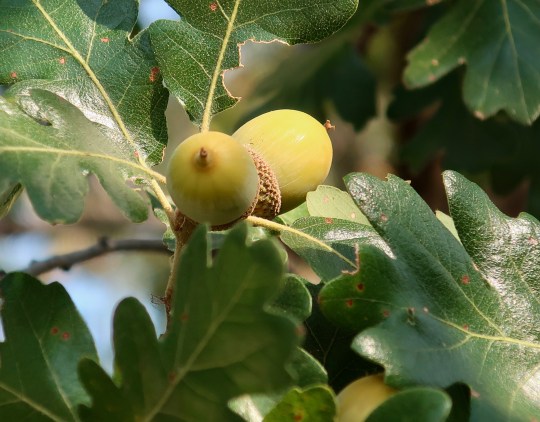
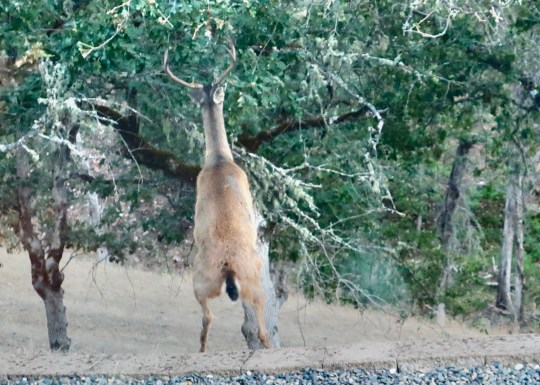
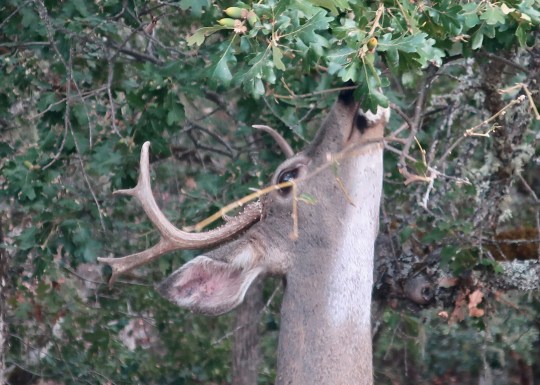
Since I am still working on my next post on the 1908 Great Race, I decided to throw in a quick update on life here on Oregon’s Upper Applegate River. First, fall has arrived. Leaves are beginning to turn and the white oaks have produced a bumper acorn crop— a fact that has the deer all but climbing the trees.
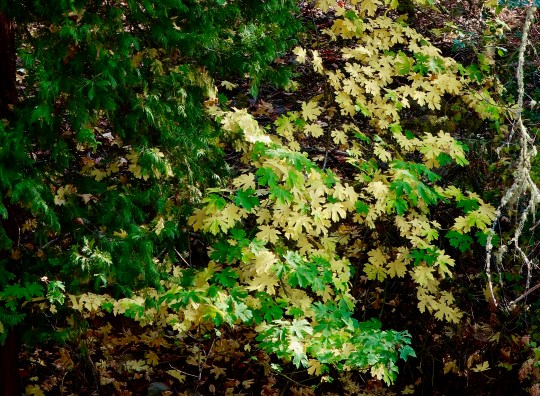
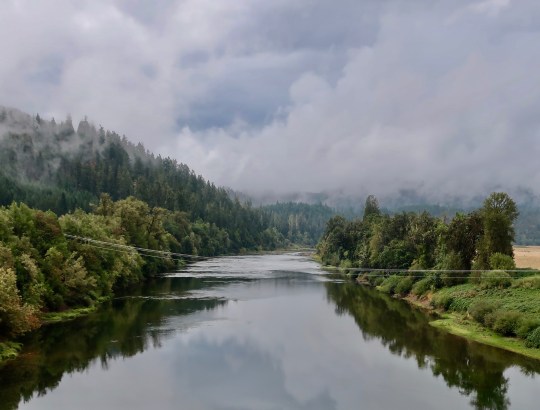
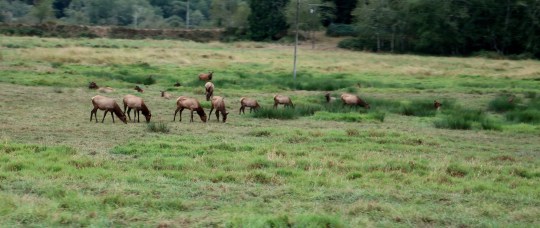
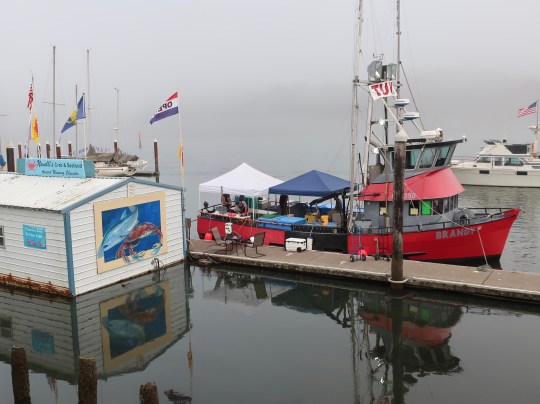
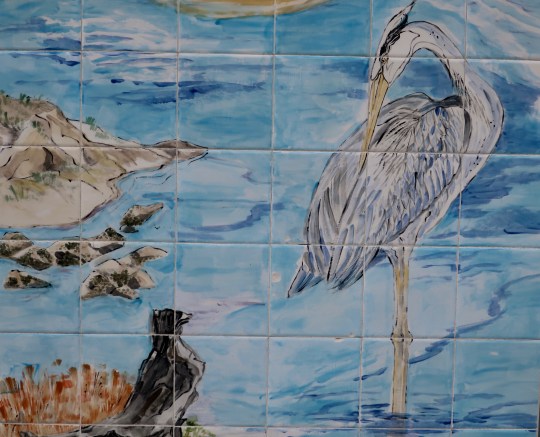
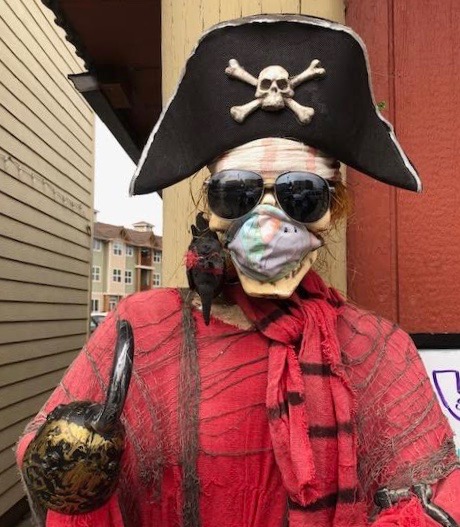
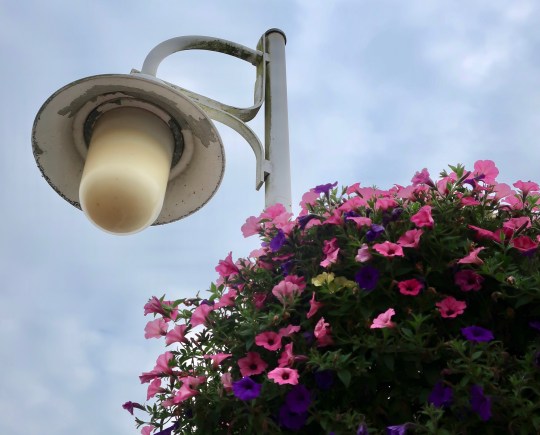
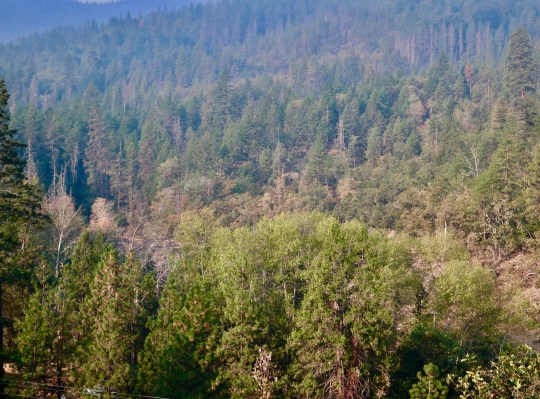
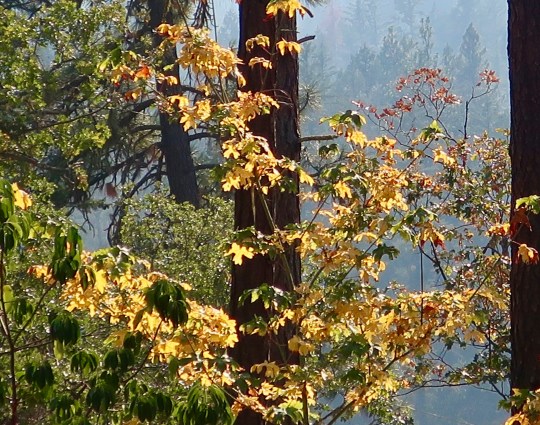
The big leaf maple trees growing down in our canyon are adding a splash of yellow.The plump, white oak acorns here are delicious this year according to squirrels, deer, turkeys, woodpeckers and bears.The deer start with the acorns that are easy to reach…And then up they go, standing on their hind legs…It’s quite a reach.Meanwhile, the kids have been growing up. The spots are just about gone. This one is all legs.The birdbath continues to serve as the local watering hole. It’s time to refill!The bird feeder continues to attack the attention of various and assundry animals. It still hasn’t totally recovered from the time in June when the huge black bear used it for tether ball practice. BTW, we haven’t seen him since our neighbor threw firecrackers at him. He left us some scat, however. BIG scat. But what the heck is this animal? Is that a large mouth?Turns out it was the hind foot on this fellow!The forest fires continue to have a major impact on our area. The towns of Phoenix and Talent, which lost approximately 2500 home and businesses, were totally devastated and are still under evacuation orders. While our home was never under a direct threat, the air pollution has been some of the worst in the world. This is what it was like a week ago looking down toward the Applegate River in front of our property, a couple of hundred yards away. Rather than poison our lungs, we decided to escape to Florence on the Oregon coast.The closer we got, the cleaner the air became. This is the Umqua River. My dad lived near here in the 70s. Rain clouds, not smoke! A welcome sight.A creek along the way. Driving to and from the coast is almost as good as being there.Even the elk seemed happy to be breathing clean air. This herd can almost always be found along Highway 38 near Reedsport.Florence is one of our go-to places on the Oregon Coast. We like to stay at the Siuslaw Marina campground because it is an easy walk into its historic town. It was packed with RVs, a sign of the times. This is at the Marina where the Brandy was selling freshly caught tuna off the boat at $3.00 each. Fog was rolling in.There are always seals to amuse us. This one was tracking through the water like an arrow shot from a bow. The old pilings from days gone-by add a touch of mystery.Some of the pilings even came with character. Looks a bit like Wile-e-Coyote.Possibly a giraffe with a furry tail.Here the pilings provide foreground for Florence’s iconic bridge.This one provides a convenient location for a cormorant to dry its wings. A sand dune provides the backdrop. Oregon Dunes National Recreation Area starts just south of Florence.Florence has a considerable amount of art for a small town. Most of it reflects local sea life, like this octopus…This great blue heron…And this seal.Peggy and I were impressed with the fact that most people, and this pirate, were wearing Covid-19 masks. (iPhone photo by Peggy Mekemson.)The Marina has an attractive walkway complete with lamps and hanging baskets leading into the town. After five days of breathing clean air, it was time to head home and see what the smoke and fires were doing.I’m happy to report that the smoke had cleared out. Some. Compare this picture looking down on the cottonwoods growing along the Applegate River to the same photo above.A final view of our big leaf maples turning a fall-ish color. Looking beyond the maple, you can still see the smoke hanging in our valley. We aren’t out of the woods yet, so to speak.
NEXT POST: We will rejoin the Great Automobile Race of 1908 as it makes its way to San Francisco.











 Wandering through Time and Place