A Shoplifter, the Sheriff, and Dynamite… The Sierra Trek Series

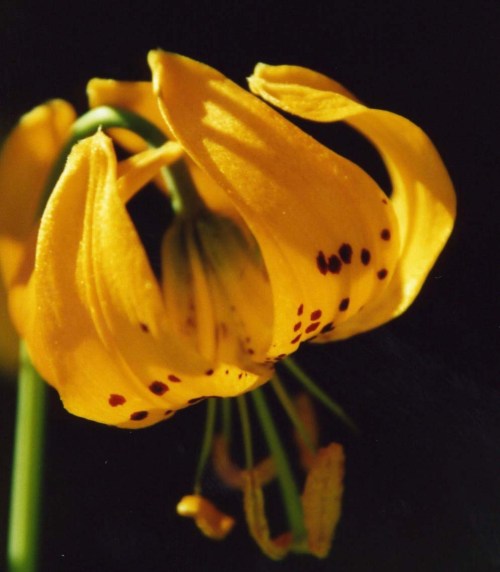
Tiger and Leopard Lilies are among the most beautiful flowers found in the Sierras and other California mountain ranges.


I’d actually had two good days on the Trek and we had put another 25 miles behind us. I was beginning to feel good, allowing myself an optimistic thought, or two. Foolish fellow. But we had passed the halfway mark. We were on our way home!

Today’s photos reflect some of the colorful  flowers that brighten our way as we hike through the Sierra Nevada Mountains.
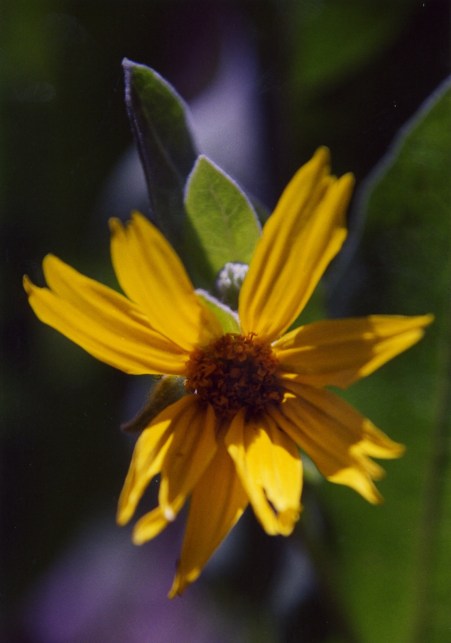
 

Mule Ear flowers can fill dryer slopes.


On day six, we hiked into Foresthill, a small community 20 miles above Auburn. It was a long, hot, dusty, 15-mile hike in and out of steep river canyons with temperatures soaring over 100°F (37.7°C). Along the way we passed through Michigan Bluff, which had once been an important gold rush community. Leland Stanford got his start here, running a grocery store for miners. It was a much surer way of striking it rich than gold panning. For example, eggs cost $3 apiece. Expensive huh? Taking inflation into consideration, the price would shoot up to $80 today.

Stanford continued to prove his smarts. His future included becoming one of the Big Four in building the Transcontinental Railroad, serving as the Governor of California and a US Senator, and giving Stanford University its name.

Monkey Flowers are always a favorite of mine and are usually found near streams. You can enjoy their beauty while refilling your water bottle.

In Foresthill, we had arranged to stay in the little city park that came with a swimming pool. Given the excessive heat of the day, it was something to look forward to. I certainly did. But my plunge into the refreshing water was not to be.

First I had to make sure we could find our way out of town and back onto the trail the next morning. We were now into the territory that Steve and I hadn’t reviewed— me because I was off on Vancouver Island deciding on my future with Jo Ann, and Steve because who knows why. I hiked out of town for a mile or so down the road until I found the trail and then followed it for another half mile. It seemed well-marked, so I said a little prayer to the trail gods and headed back toward camp. It would be Steve’s job to lead the next day. He would have to deal with any surprises.

Shooting Stars are one of the early flowers, coming up soon after snow has melted. They are all over our property now.

Back in camp, the situation quickly made me wish I had just kept hiking. Charlie made a beeline for me. My always dependable backup, ex ice hockey player, ex-bomb de-fuser and IRS dodger looked like he was about to break down and cry.

“Someone stole my Grandfather’s watch,” he blurted out.

It was a valuable family heirloom, precious to him. I did what I could to console Charlie and headed over to the pool to ask around. None of my Trekkers had seen anything suspicious or had even seen Charlie’s watch. I had a hard time imagining any of them stealing it. He had done everything possible to help them down the trail. There were other folks at the pool, however. Fortunately, as I recall, Charlie found the watch at his campsite, where he had left it.
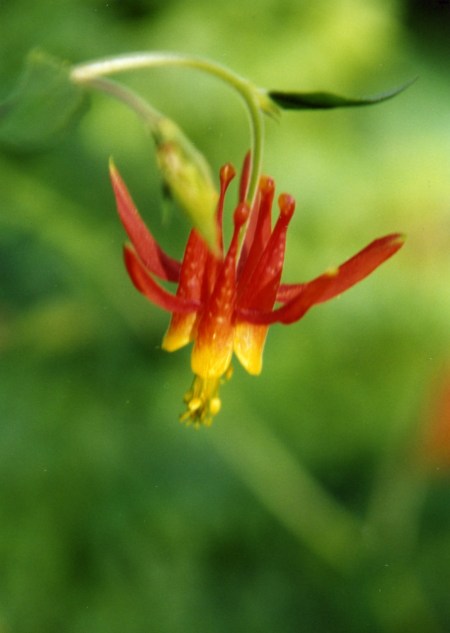
Columbine with its unique shape.

My next challenge was Lose Yourself Dick, the forty something school teacher who had wandered off on his own. He had tackled his ample supply of snake bite medicine and was feeling no pain. In fact, he was challenging all of the teenage boys to wrestle him or at least jump on his stomach. I was sorely tempted to join the latter activity. He had also discovered a flagpole he insisted on climbing. I reasoned with him as best I could, but even when he was sober persuading Dick not to do something was close to impossible. I had just completed my highly ineffective effort when a Sheriff’s car came cruising in to camp. I walked over. One of our Trekkers was sitting in the back seat.

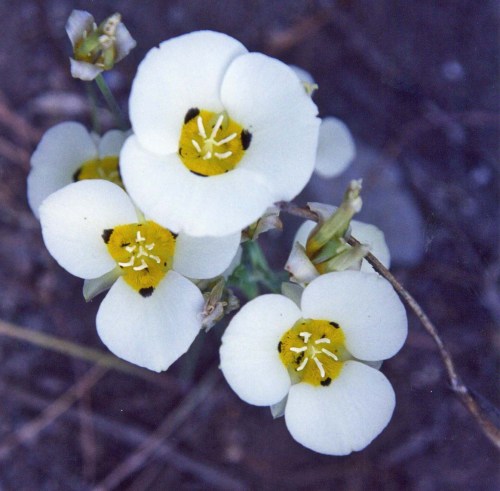
The Mariposa Lily is another member of the lily family. Its bulb was eaten by Native Americans and early pioneers.

“Can I help you?” I asked politely.

“Yes,” the Deputy Sheriff had responded, “I need to talk with the person in charge.”

I had another of those gut-wrenching feelings. Just three more days, I thought. Just get me through three more days. I desperately wanted to tell the deputy that the man in charge had checked out and gone home or was still on the trail.

“You’ve found him,” I said, putting on a brave smile.

“We just caught this young woman shoplifting,” the deputy reported in his official lawman voice.

“Shit!” I thought. But I said, “Okay, what do I need to do about it?” My unhappiness and resignation must have shown.

“Nothing this time,” he replied. “Because she is raising money for the American Lung Association, we are going to let her off with a warning.”

And me as well, I read into his statement. “I am sorry, Curt,” she had apologized and I had just sighed.
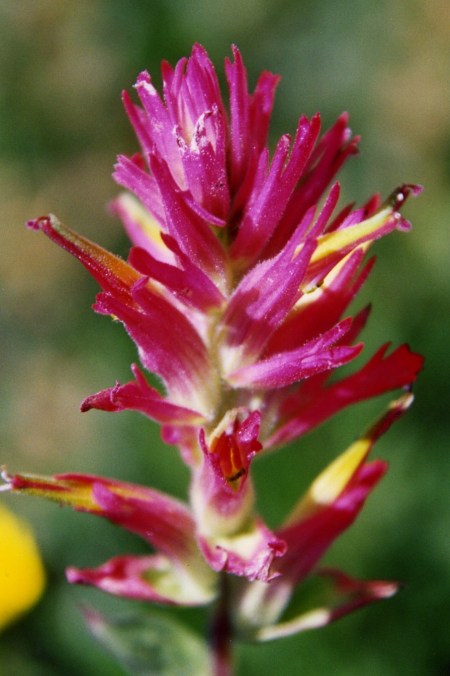
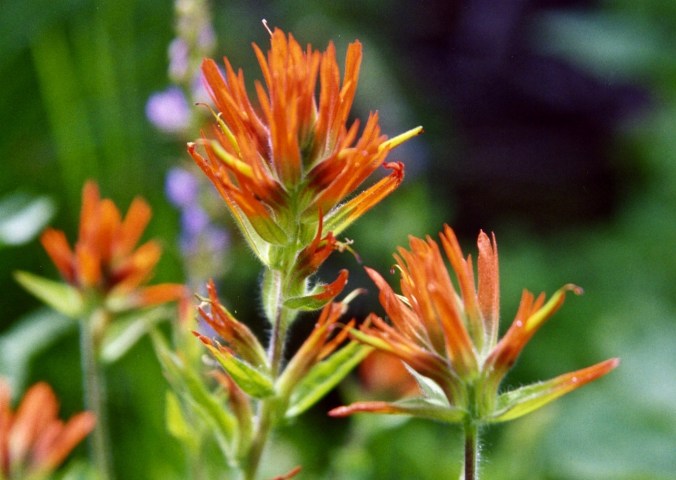
Indian Paintbrush is a colorful and common flower of the West.

Could anything else go wrong? Of course it could and likely would. I escaped by leaving camp when Steve came in and wandered off to a restaurant in town where I wasn’t likely to find any Trekkers. I drowned my sorrows in a large steak and a couple of well-earned beers. I seriously considered drinking more but I let my commitment to getting the Trekkers back to Sacramento in one piece over-rule my temporary insanity, which was demanding a six-pack.
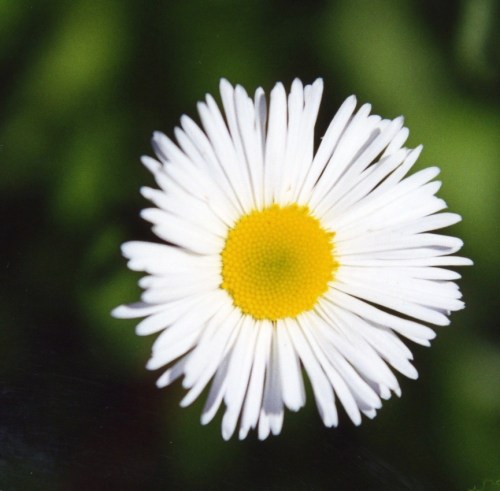
Fleabane is the unusual name for this many petaled flower.

We rolled our Trekkers out of Foresthill early the next morning. I breathed a sigh of relief as I followed the last one past the city limits. Once again, Steve was leading and I was playing rear guard.

Fortunately, we had a short day. I had quickly discovered that being trail leader was a lot more fun than being rear guard. For one thing, you tended to get into camp a couple of hours earlier. For another, you weren’t constantly being bombarded by the question, “How much farther?” I had begun to respond with a stock answer, “Oh, it’s about twenty miles,” and had found that Trekkers stopped asking. If they persisted, my next response was, “It’s all up hill.”

Steve told me he had been moving some of the slowest Trekkers down the trail by telling them rattlesnake and bear stories and then walking on ahead. He said people made a real effort to keep up. Years later I would use the same technique in Alaska  with grizzlies. I suspect that neither of us would have qualified for the Boy Scout Leader Seal of Approval. Or even the Sierra Club’s.
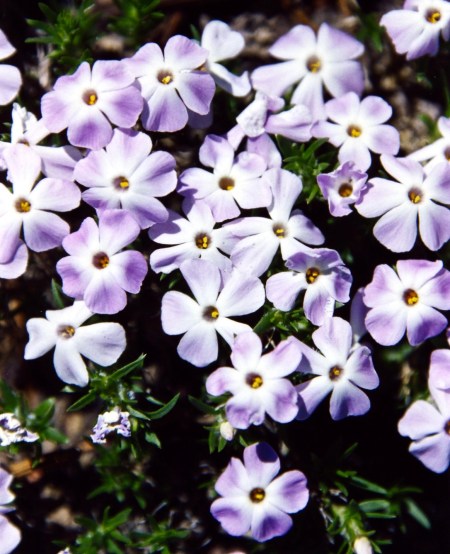
Phlox hug the ground and add a real splash of color.

Around three, I came on Steve and our Trekkers milling about a closed gate. A vehicle was parked behind the gate and two official looking people were leaning against the vehicle. I was about to learn that we were paying the price for not reviewing the final section of the trail.

“What’s up Steve?” I asked, wondering if we had managed to do something else to bring officialdom down on our heads.

“No problem,” Steve said, “they are just blasting with dynamite in the canyon.”

His words were punctuated by a rumbling sound. The guards were blocking the road so big rocks wouldn’t come rolling down on people using the canyon trails. It sounded like a good idea. In 1974, plans were underway for building the Auburn Dam and flooding another section of the beautiful American River. Land speculators were greedily selling property along the future edge of the lake. Later, building or not building the dam became one of the most contentious environmental issues in Northern California. The dam still isn’t built, and will likely never be.

“Um, how long do they plan on continuing to blast?” I asked. I pictured our Trek coming to an abrupt end. It wasn’t a totally unpleasant thought.

“We are in luck,” Steve reported. “They are just closing down their operations and won’t resume until Monday.”

Since it was Friday afternoon and we would be out of the canyon by Sunday, I had to agree. It was refreshing to see luck lean our way, although it made me nervous. That night we celebrated the winding down of our adventure by feeding our Trekkers steak and fresh salad. The feast went off without a hitch except it was amusing to see the Trekkers eat steaks out of bowls with spoons. (Forks, knives and plates normally get left behind when backpacking.) Fingers became the primary eating utensil. It wasn’t pretty, but no one seemed to mind. Civilization had definitely taken several steps backward. Everyone went to bed happy, including me.

The Sierra Thistle can be a little prickly.
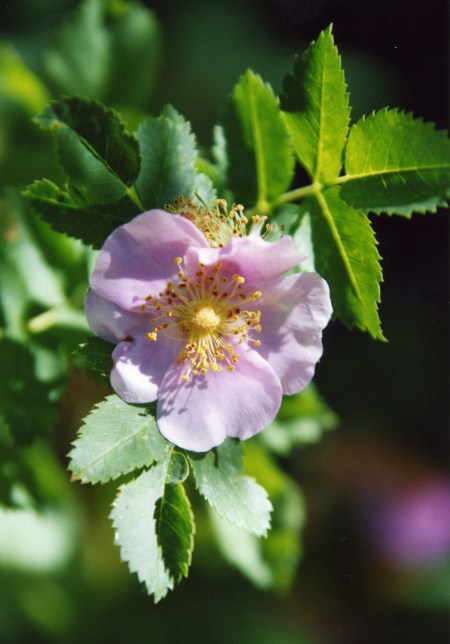
I’ll close today with a wild rose.

NEXT BLOGS:

Friday: You are in for a treat. Lots and lots of fun and unique Burning Man sculptures.

Monday: Still thinking about it.

Wednesday: The final Sierra Trek blog.

It’s 4 AM and a Bear Is Standing on Top of Me… A Sierra Trek Tale

Oregon Black Bear

Black Bears are much smaller than either brown or grizzly bears, but this doesn’t mean they aren’t scary. This one was cruising our neighborhood in Oregon and  tipped over the heavy Webber Grill on our porch. Our daughter, Tasha, was sleeping in the bedroom next to the grill. “Curtis!” she screamed. Later, our neighbor captured the bear’s photo on a surveillance camera.


I’ve been re-blogging older posts while my laptop is at the doctors with memory problems. Today it’s time for another Sierra Trek Tale. Next week, I’ll get back to the first Sierra Trek but today we are jumping ahead five years to the first trek I led into the back country of Yosemite where bears rule.


Bears like me, or at least they haven’t eaten me. They’ve had numerous opportunities over the years. It goes with the territory of backpacking throughout North America for over four decades. My scariest encounters, as it turns out, were also my first.

By the fifth year of the Sierra Trek, I had worked my way southward from Lake Tahoe into Yosemite National Park. Since we were utilizing a new route from Yosemite to Kennedy Meadows, I had to preview it. (Plus it was another excuse to head out into the wilderness and be paid for it.)

My friends Ken Lake and Tom Lovering joined me on the first three days from the Yosemite Valley floor to Tuolumne Meadows. Day one found us climbing several thousand feet out of the Valley and camping above the Little Yosemite Valley. The bears dropped by for a visit on our first night in the Park.

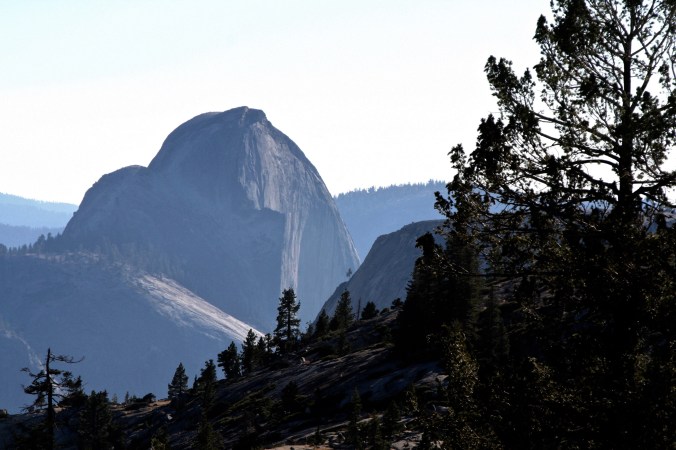
Half Dome, Yosemite. Little Yosemite Valley is on the other side.

Half Dome, Yosemite. Little Yosemite Valley is on the other side.

After carefully hanging our food bags from a cable provided by the park service and burying the left over fake freeze-dried raspberry cobbler (it was made from apples), we trundled ourselves off to our sleeping bags. The problem was we buried the food a little too close to Lake. I think Tom may have been up to his usual mischief.

The next morning, a very excited Ken asked if we had seen the bears in our camp the previous night. Neither of us had and we attributed his sighting to an overactive imagination. Believe me, if a bear had been digging up food next to my head, my two companions would have known about it, immediately.

Day two was tough. What I hadn’t counted on was the amount of snow still left on the ground. We spent most of out time slipping, sliding and slogging through it. By three in the afternoon, Tom was ready to set up camp right in the middle of a snowfield. Ken and I threatened to leave him with the bears and he committed to another hour. Fortunately, that night was bear free. They would have found little resistance from the three of us.

Eventually, we made it into Tuolumne Meadows where I was faced with another challenge: hiking over 70 miles of snow-covered trails by myself while Ken and Tom returned to Sacramento and work. The journey was fraught with opportunities for breaking a leg, or losing the trail, or being washed away when crossing streams raging with water from melting snow. None of the above was a desirable outcome for someone hiking alone.

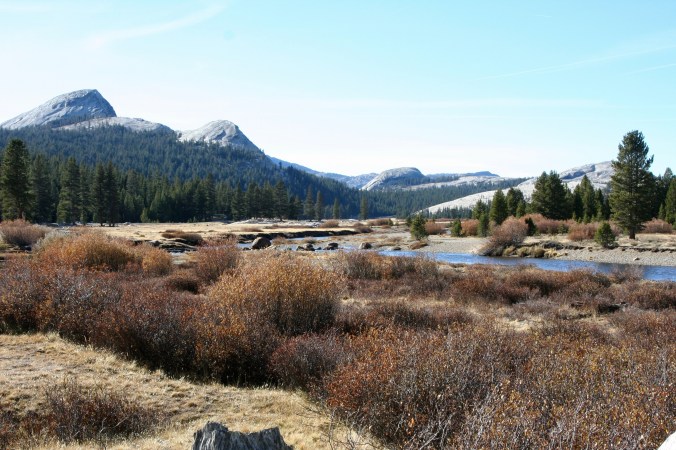
Tuolumne Meadows in the summer.

Tuolumne Meadows in the summer.

My other option was to return to Sacramento with Ken and Tom, which was not acceptable. I had a week off to wander in the woods and I was going to wander in the woods for a week. I compromised by heading back over the mountains toward Yosemite Valley. My fractured logic concluded that it was better to break a leg and get lost where I had been than where I was going. I also promised myself to be really careful. This included keeping my food from bears.

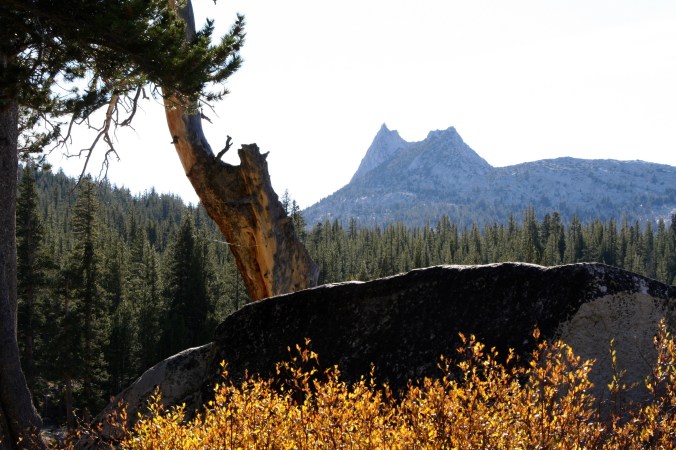
Hiking out of Tuolumne Meadows took me back around Cathedral Peaks shown here.

Hiking out of Tuolumne Meadows took me back around Cathedral Peaks shown here.

The first day was non eventful and the second idyllic. I was exploring new country, doing what I most love to do. As evening approached, I found a delightful campsite on the Cathedral Fork of Echo Creek. Amenities included a babbling brook to put me to sleep, a flat space for my sleeping bag and a great food-hanging tree with the perfectly placed limb. A hot dinner topped off by tea spiced up with a shot of 151-proof rum and I was ready for sleep.

I carefully hung my food bags at the recommended 12 feet off the ground and 9 feet away from the tree trunk and then snuggled down in my sleeping bag. As was my habit at the time, I slept out in the open, only using my tent when rain threatened.

It was somewhere around 4 am and very dark when I awoke with a pressure on my chest. I couldn’t see very far but I didn’t have to. Approximately five inches away from my face was a long black snout sniffing at me. It was filled with grinning teeth and topped off by a pair of beady eyes that were staring at me with a hungry look.

I let out a blood-curdling scream and vacated the premises.

As I flew in one direction, the equally surprised young bear that had been standing on me flew in the other. I don’t even remember getting out of the bag. The next thing I knew I was standing up, yelling and shining my flashlight into the woods where not one, but two pairs of orange eyes were staring back at me. I lost it. Never have so many rocks been hurled with so much vigor in such a short period of time. The bears wisely decided to head off over the mountain.

But the damage was already done. My camp was a disaster area. My carefully hung food was scattered all over the ground with literally every meal torn open and sampled. All I had left was a chunk of cheese and it had one large bear bite out of it. I hid the cheese under a heavy rock.

As a further insult, one of the bears had chomped down on my plastic rum bottle and all of the rum was gone. I couldn’t even drink. With that option eliminated, I policed the area, crawled back in my bag and went back to sleep. When I awoke in the morning it was obvious that the bears had come back into camp to clean up anything they had missed. Once again the previous night’s trash decorated my campsite. At least the bears let me sleep this time. And they had missed my cheese.

So I ate it for breakfast, cleaned the area again, packed up my gear and hiked 18 miles into the Yosemite Valley to resupply. But my week wasn’t over; neither were my bear experiences. And the summer had only begun. (I’ll get back to these stories in the future after I am finished with my series on the first Sierra Trek. You won’t want to miss the time a bear grabbed me by the head.)

NEXT BLOG: A return to my photo series on Burning Man.


What Do Burning Down a Bank and the Sierra Trek Have in Common? … The Sierra Trek: Part 2

Waterfall and pool on Five Lakes Creek in the Granite Chief Wilderness area behind Squaw Valley, California.

The Granite Chief Wilderness behind Squaw Valley, home of the 1960 Winter Olympics, is an area of rugged terrain and natural beauty. This pool on Five Lakes Creek was an open invitation for a dip on a hot summer day. (Photo by Peggy Mekemson.)


The vision part of being a visionary is always the easy part, as any visionary will tell you. It is the execution of the idea that separates the mouse from the moose. In my first blog on the Sierra Trek, I told how Steve Crowle and I had come up with the crazy idea of raising money for the non-profit I was executive director of by running a 9-day, 100-mile backpack trip in the Sierra Nevada Mountains of California. I had six weeks to plan and run the event. It would have been a major undertaking even if I had six months!

A note on photos: I didn’t take any pictures during the first Sierra Trek. It was before I became interested in photography, plus I had my hands full shepherding 63 people across the mountains— as you will learn. The photos in this blog and in the rest of the series were taken on later Treks and on personal trips in the Sierra’s and other California mountain ranges where we trekked. They will give you an idea of why I fell in love with backpacking and the Sierras. 


My first challenge on the trek was selling it to Board of Directors. Running a backpack trip as a fundraiser was a huge leap from sending out Christmas seals. At 29, I was close to the youngest Lung Association Executive Director in the nation in 1974 and I had already ruffled some feathers. A research doctor from UC Davis was foaming at the mouth because I wanted our organization to focus on prevention programs as opposed to medical research. What would he think of me running off to the woods on a backpack trip?

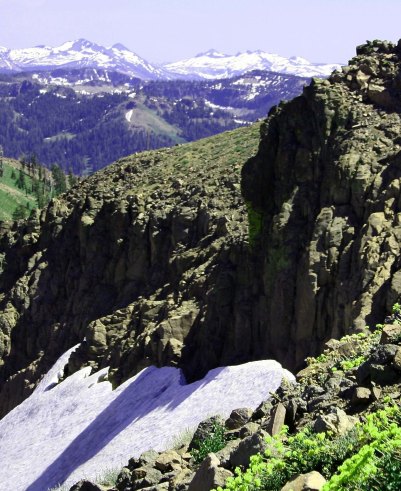
Leading a group of people through rugged terrain for long distances was a bit more scary than sending out Christmas Seals. Here we are looking south from the Granite Chief Wilderness to the Desolation Wilderness, a route we followed several times on the Sierra Trek.

Leading a group of people through rugged terrain for long distances was a bit more scary than sending out Christmas Seals. Here we are looking south from the Granite Chief Wilderness to the Desolation Wilderness, a route we followed several times on the Sierra Trek. Snow would often be a challenge on our adventures.

“You want to do what?” with a decided emphasis on the first and fifth words is the best way I can describe the Board’s reaction to my proposal. It was easy to translate: “Why would a 29-year-old executive director with less than a year of experience under his belt, want to risk his career on such a harebrained idea?”

I echoed wild Steve, “Why not?”

Actually I had a great Board. Once the members were convinced that this was something I really, really wanted to do, their final response was “OK, go for it!” I called Steve immediately. I had a wide range of responsibilities ranging from administration to program to fundraising. I would have a limited amount of time to devote to the project and I didn’t know anyone else who was crazy enough to take on the challenge.

I had originally talked Steve into replacing me as Executive Director of Sacramento’s Ecology Information Center with a sales pitch that included, “Look, I have this great job where you work 60 hour weeks, have a Board that likes to scream at each other, and has a starting salary of $200 per month. Are you interested?” Minus a screaming Board of Directors, organizing the Trek wouldn’t be all that different.

Steve had a bright, curious mind and was knowledgeable on environmental issues. He also seemed to have unlimited energy and was built like a bear. It had served his well as Executive Director of EIC. In addition to overseeing the Center’s ongoing projects, he had immediately set out to develop a community garden downtown. Initially known as the terra firma Garden and later as the Ron Mandela Garden, it would provide inner city residents with a touch of nature for over 30 years— all the way until the State of California decided to grow buildings on the site.

The downside about Steve was that he existed on the edge. I later learned that one of his friends who he recruited to volunteer on the Trek frequently flew to Columbia and returned with his cargo holds filled with pot. Steve was a ‘person of interest’ to the FBI.

A year after the Trek, Steve called me and told me that the FBI had showed up on his doorstep. My immediate thought was that they had tied Steve to the Colombia operation or that some of the terra firma/Mandela gardeners were growing marijuana. Steve’s concern was that his radical youth was catching up with him. He had been a little too close to the fire when the Bank of America had been burned down in Santa Barbara in 1970 as a protest against the Vietnam War. “And what were you doing with those matches?” Mr. Crowle. (Steve told me the Santa Barbara story a few years ago before he passed away.)

Actually, the FBI had bigger fish to fry. Apparently one of his gardeners had gone from farming her plot to plotting an assassination. Young Lynette Fromme grew up in Southern California where she was a star performer in a children’s dance group, performing at such venues as the Lawrence Welk Show and the Whitehouse.

At 19, a strong disagreement with her dad sent her scurrying off to Venice Beach where she found comfort from an older man, Charles Manson. She soon found herself one of Manson’s clan, taking care of an aging George Spahn at his ranch where the ‘family’ hung out. It was Spahn who gave Lynette her nickname “Squeaky,” because, as legend has it, she squeaked each time he tried to grope her.

Squeaky missed out on the murderous rampage the family undertook in 1969 killing Sharon Tate among others, but she remained intensely loyal to Charles, defending him to the press and anyone else who would listen. After Manson’s conviction and sentence to a lifetime in prison, she moved to Stockton where two of the people she was living with, James and Lauren Willett, mysteriously ended up dead.

Abandoning Stockton, Squeaky moved to Sacramento and rented an apartment with another Manson groupie, Sandra Good. The two of them adopted a new life style and persona as ‘nuns’ in Manson’s latest crusade, saving the earth. Manson even gave them new names with Squeaky becoming ‘Red’ and Sandra becoming ‘Blue.’ It was with her new name, persona, and purpose that Squeaky took up gardening at the Mandela Garden. Steve knew her, of course (she liked his intense eyes), but knew nothing about her background.

It was with her new purpose of ‘saving the earth’ that she left her apartment on the fateful morning of September 5, 1975 and strolled over to Capitol Park where she got within a few steps of the visiting President Gerald Ford before pointing her Colt 45 at him, creating immediate pandemonium. She later claimed she was “just trying to get the President’s attention.” She did. Three months later she found herself convicted of an attempted assassination and in prison.

As for Steve, he informed the FBI that he didn’t have a clue as to who Fromme was or what she was up to other than being a gardener. Like Pangloss, he went back to cultivating his garden.

But all of this was in the future. My phone call to Steve went something like the following:

“How would you like to go backpacking and get paid for it?” I asked.

“Give me a hard question,” Steve responded.

“Are you willing to work for two dollars an hour?” I casually threw in as fine print.

“That,” he replied, “is the question.”

I went on to explain that while the Board members had approved of the concept, they weren’t particularly enthusiastic about spending large sums of money to see if it worked. I could just barely squeeze out the minimum wage of the day for two months to see if we could pull it off. Steve, after ample groaning, allowed that it would supplement what he was earning at the Center and took the job.

My next responsibility was to come up with a name. While thinking of backpacking 100 miles in nine days the word trek popped in to my mind. So I looked it up in the dictionary. “A long, arduous journey” was the definition. That seemed appropriate, and since we were doing our long, arduous journey through the Sierra Nevada Mountain range, I decided to call it the Sierra Trek.

Where to go posed a more serious challenge. I came up with three criteria: one, it had to be 100 miles long; two, it needed be in our territory; and three, the trail should be easy to follow. The hundred miles was a given, and ‘being in our territory’ seemed feasible since several of ALASET’s (the American Lung Association of Sacramento-Emigrant Trails) nine counties encompassed a significant portion of the Northern Sierra.

The clinker in our selection process was the ‘easy to follow.’ I had nightmares of having Sierra Trekkers lost all over the mountains with Steve and me scrambling to find them. We’d be lucky if we could avoid becoming lost. Serendipity stepped in and helped out. I was reading the Sacramento Bee when I came across our solution.

The horse people were planning their annual 100-mile horse race across the Sierra Nevada, the Tevis Cup Race. The event started in Squaw Valley and ended in Auburn. Horses had to follow substantial trails, I reasoned. Squaw Valley had been the sight of the 1960 Winter Olympics and would provide an internationally known resort to kick off our event.

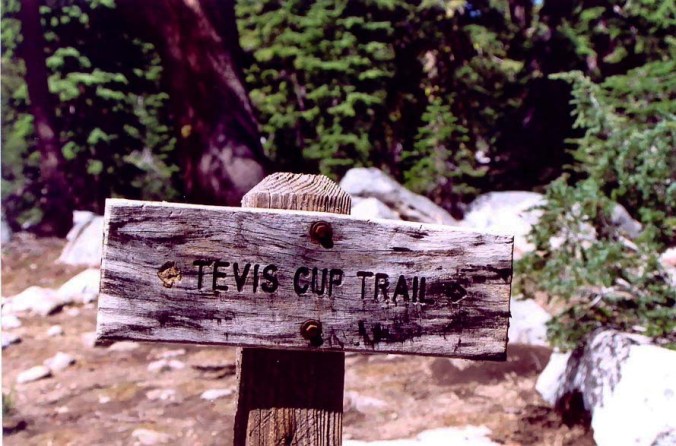
A trail sign for the Tevis Cup Trail behind Squaw Valley, California.

A trail sign marking the Tevis Cup horse race. The same route is now used for a 100-mile ultra marathon run across the mountains.

Auburn was one of the main foothill communities in the Association’s territory and would make an ideal ending place. The trail had the added advantage of being an early trail used by pioneers. We could use the historical angle and tie in with our name. My major concern was following a trail filled with horse poop.

Steve made contact with the woman in Auburn who was organizing the Tevis Cup Race. “Yes, the trail is easy to follow.” They marked it with yellow ribbons and the ribbons would still be up for our Trek. As for my concern about horse manure, “There should be plenty of time between the race and your trek for the manure to dry out.”

“Fine,” I said to Steve when he reported back, “our Trekkers will be shuffling down trails in dry horse shit up to there ankles.” On the other hand, I thought, we can tell them to follow the horse droppings if the ribbons run out. The important thing was we had a route and could begin publicizing the event. Steve and I agreed to preview the route in advance of the Trek to pin down campsites and reduce the possibility of nasty surprises.

So now, we had a route and a name. It was time to recruit participants, obtain food, and preview the route— all of which I will include in my next blog, where I will also learn a very valuable lesson from a 70-year old.

The Granite Chief Wilderness in the Sierra Nevada Mountains north of Lake Tahoe.

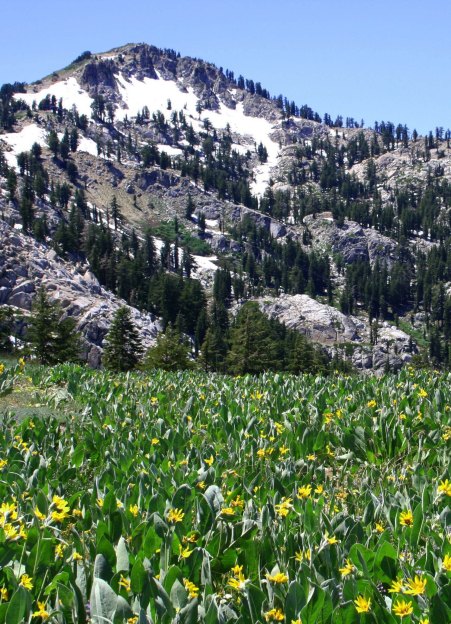
One of my favorite Granite Chief Wilderness views. Lake Tahoe, Squaw Valley, and Alpine Meadows are on the other side of the mountain. The flowers are called Mule Ears. (Photo by Peggy Mekemson.)

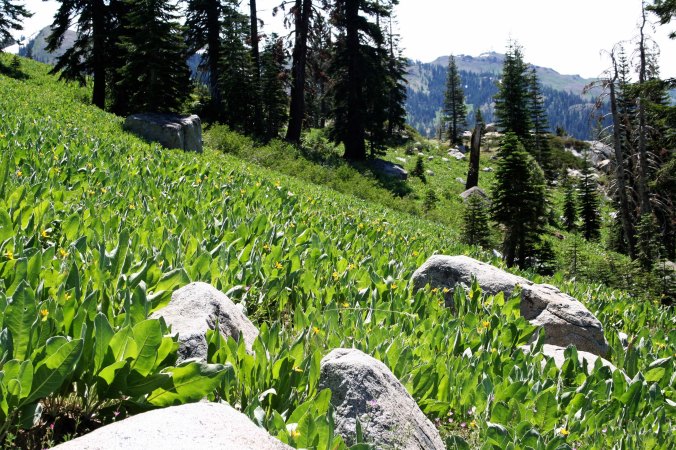
Another field of mule ears in Granite Chief.

Another field of mule ears in Granite Chief. The trail wound its way through here.

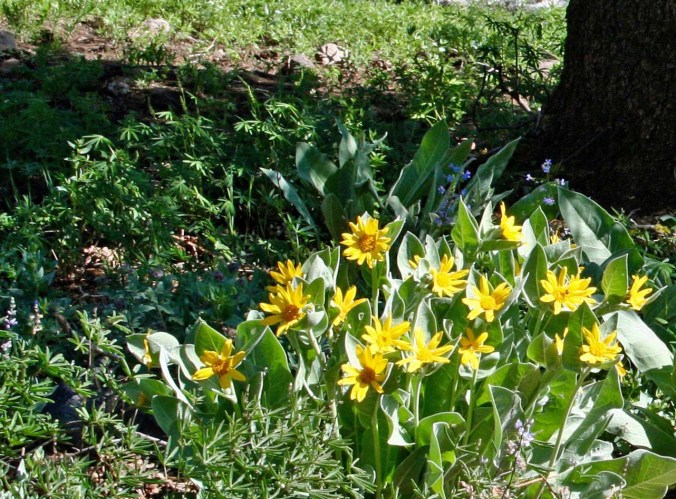
A close up of the Mule Ears blooming. There are few places in the Sierra's that can match the display of flowers in the Granite Chief Wilderness,

A close up of the Mule Ears blooming. There are few places in the Sierra’s that can match the display of flowers in the Granite Chief Wilderness.

Washington Lilies found in the Granite Chief Wilderness area behind Squaw Valley.

These Washington Lilies are found on the trail as it makes its way through the Granite Chief Wilderness down toward Five Lakes Creek.

Mariposa Lilies found in dry areas behind Squaw Valley.

As are these Mariposa Lilies…

And Tiger Lilies.

Tiger Lilies.

Indian Paint Brush found in Granite Chief Wilderness behind Squaw Valley, California.

And Indian Paint Brush.

Lichens add color along the trail as well.

Lichens add color along the trail as well.

Snag found in the Granite Chief Wilderness north west of Lake Tahoe, California.

This old snag provided a different type of photo-op…

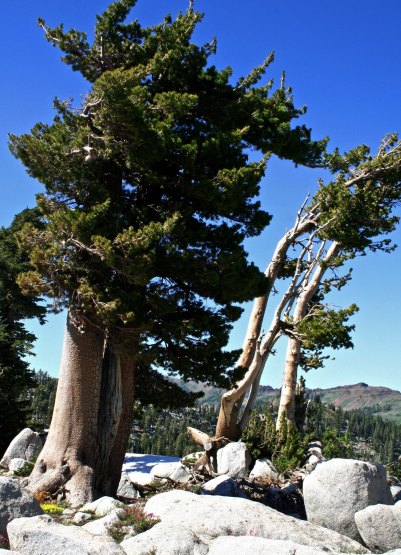
Lodge Pole Pines found in the Granite Chief Wilderness of the Sierra Nevada Mountains.

As did these weathered Lodge Pole Pines.

Little Needle Lake in the Granite Chief Wilderness.

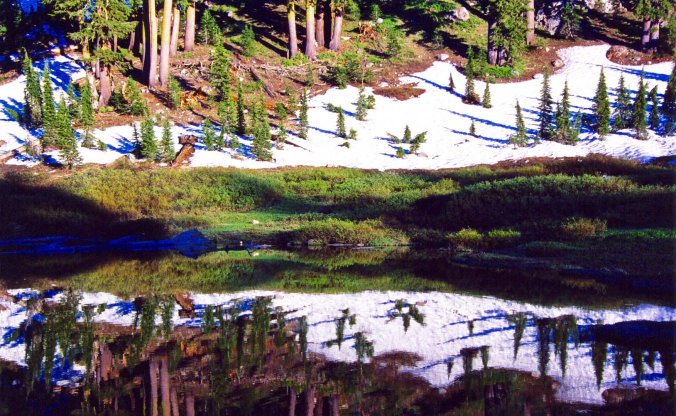
Little Needle Lake is a short three-mile hike from the top of Squaw Valley. I enjoyed the reflection here. At night there is an amazing chorus of frogs. I’ve often camped beside the lake.

Five Lakes Creek in the Granite Chief Wilderness area behind Alpine Meadows ski area.

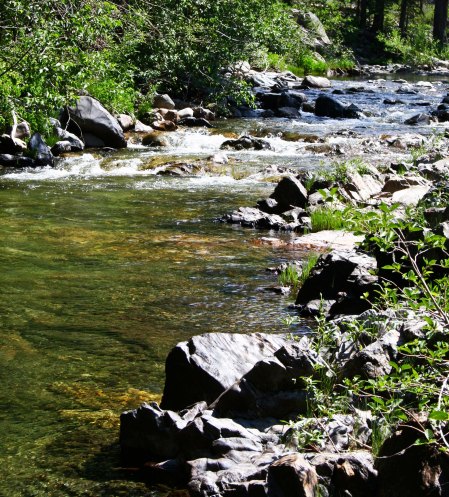
Five Lakes Creek flows along quietly here and provides and invitation to cool off in the middle of summer. Earlier it can be roaring with snow melt and icy water.

Peggy provides an example of how the creek should be enjoyed on a hot August afternoon.

Peggy provides an example of how the creek should be enjoyed on a hot August afternoon.

Canny on Five Lakes Creek near Diamond Crossing in the Granite Chief Wilderness.

The final photo of the day. Five Lakes Creek drops into a canyon a few miles below where Peggy enjoyed her cooling off. The top photo on this post provide a closeup. I often camped Treks at Diamond Crossing near here. (Photo by Peggy Mekemson.)


The Story of How Bone Was Found… Reblog

While Peggy and I are at Burning Man, I am reposting the story of how Bone was found. This is the first of the series. I will respond to comments when I return from Burning Man.

Backpacking in the Desolation Wilderness… Or, How to Forget You Are Being Divorced

It was the summer of 1977 and my wife JoAnn was divorcing me. Apparently I lacked in stability or at least in the desire to pursue the Great American Dream. She was right of course. I had absolutely zero desire to tie myself to an eight-hour a day job and a large house in the suburbs. None of this made the divorce easy. I was prepared to spend my life as a happily married man.

To keep my mind occupied, I was working on the route for the Fourth Annual Sierra Trek, a challenging nine-day 100-mile backpack trip in the Sierra Nevada Mountains that I had created as a pledge-based fund-raiser for the American Lung Association in Sacramento.

“So what’s your problem?” my friend Tom Lovering asked over a beer at the Fox and Goose Restaurant. He’d been-there-done-that with divorce and dated a number of women since. Tom owned Alpine West, an outdoor/wilderness store in Sacramento, and sponsored the Sierra Trek.

I had persuaded him to go backpacking with me for six days to preview part of the new route. Our plan was to start near Meek’s Bay, Lake Tahoe and work our way southward 70 miles following the Tahoe-Yosemite Trail.

Tom had invited his girlfriend, Lynn, and Lynn was bringing along her friend Terry. Terry was nice, not my type.

“I have a friend named April who wants to go backpacking,” Tom offered. “Why don’t I invite her to go as well? Maybe you two will hit if off.”

The implication was that this would help me get over my wife.  Actually, I had already met the woman who was going to help me recover but I humored Tom.

A friend drove the five of us up to Meeks Bay. April was gorgeous and Tom was right. I followed her long legs and short shorts up the trail. My gloomy focus on the Soon-to-Be-Ex faded like a teenager’s blue jeans.

Hot feet and screaming fat cells were even more potent in forcing me to live, or at least suffer, in the moment. As usual I’d done nothing to physically prepare for the first backpack trip of the year and I was paying the price.

We climbed a thousand feet and traveled six miles to reach our first night’s destination at Stony Ridge Lake. I crashed while Tom broke out some exotic concoction of potent alcohol.

After consuming enough of his ‘medicine’ to persuade my fat cells they had found Nirvana, I fired up my trusty Svea stove and started cooking our freeze-dried dinner. It wasn’t hard. Boil water, throw in noodles, add a packet of mystery ingredients, stir for ten minutes and pray that whatever you have created is edible. That night it didn’t matter.

Afterwards, we headed for our beds. The next day would be long. I slid into my down filled mummy bag and looked up at what seemed like a million stars. There were no city lights or pollution to block my view and the moon had yet to appear.

I traced an imaginary line from the Big Dipper and found the North Star. It seemed far too faint for its illustrious history. A shooting star briefly captured my attention. Thoughts of divorce, short shorts, the next day’s route, a rock digging into my butt, and sore feet jostled around in my mind for attention.

Sleep finally crept into the bag and captured me.

Next: A pounding heart and a sprained ankle.