The Schönbrunn: Vienna’s Ornate Palace of the Habsburgs…The Great River Series: Danube #2

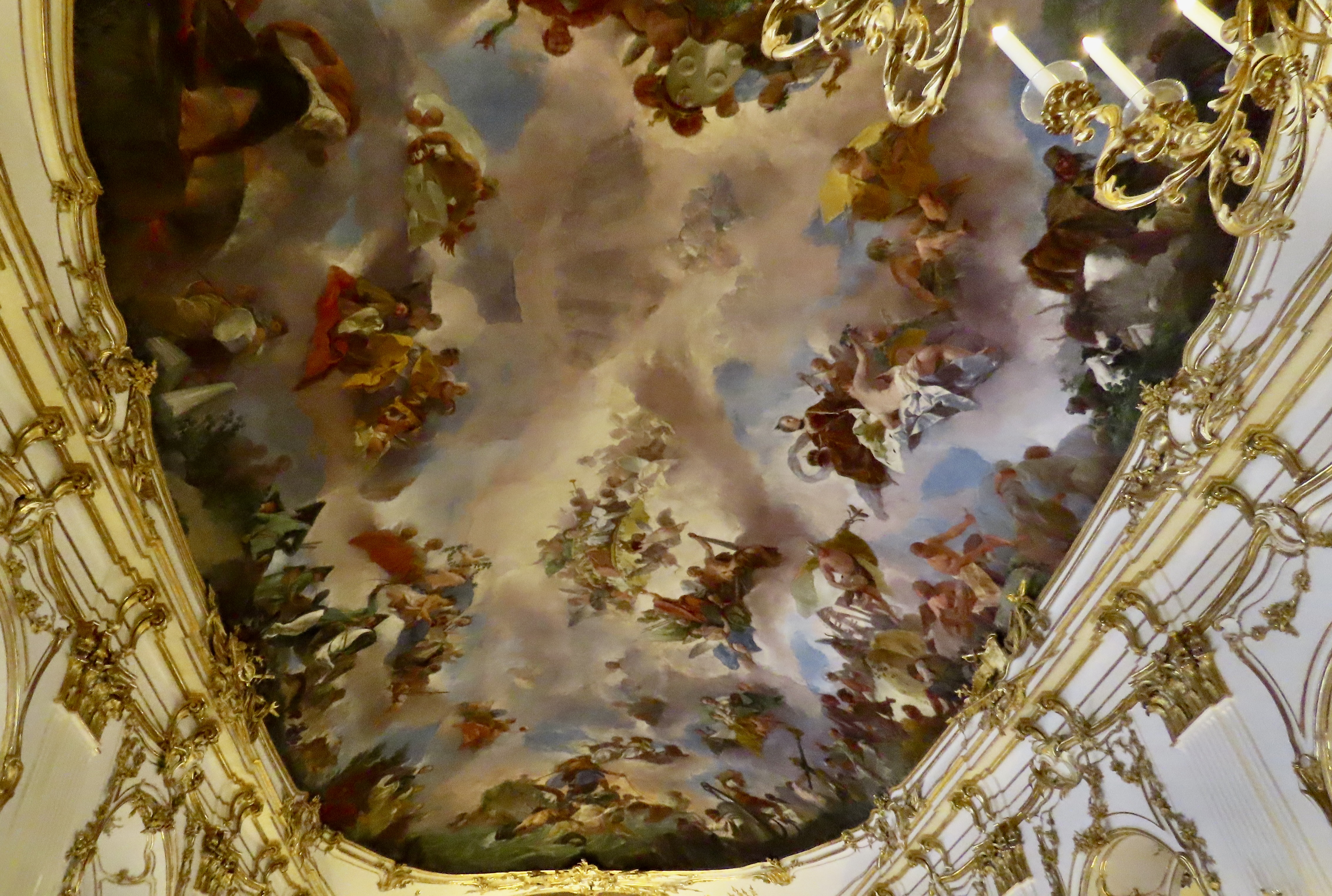
Imagine living in a place with ceilings painted like this. Baroque art doesn’t get any more baroque than it does in the Schönbrunn Palace. Angels float through the air in sky boats while humans fill in the sides with activities ranging from war to farming: It’s a world of fantasy with the barest of holds on reality.
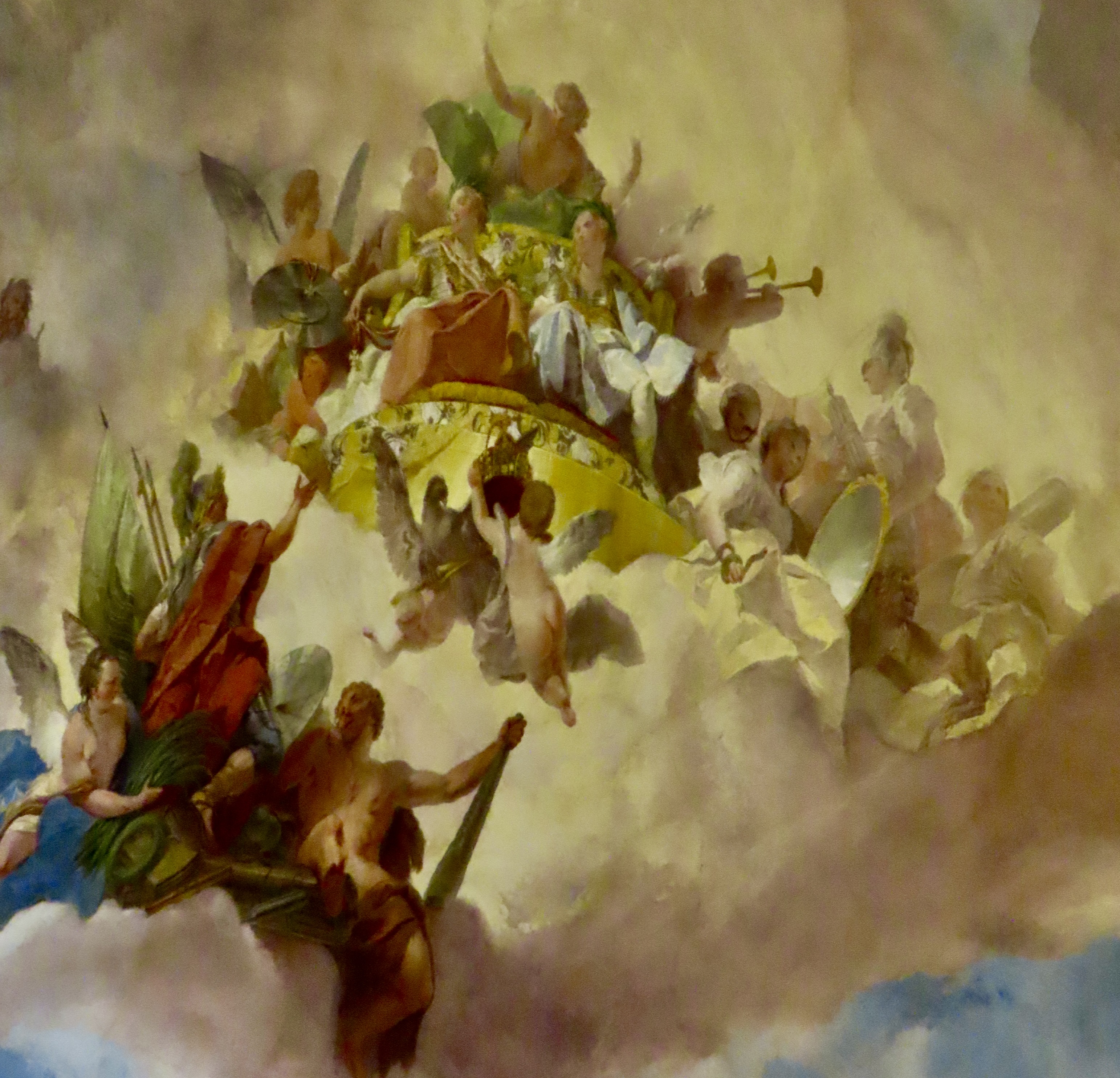
A sky boat floats through the clouds, probably carrying Habsburg royalty along with angels. Geese fly through the air. What about the trumpets? Are they announcing Royal and Divine presence or serving as horns clearing a path? Make way!
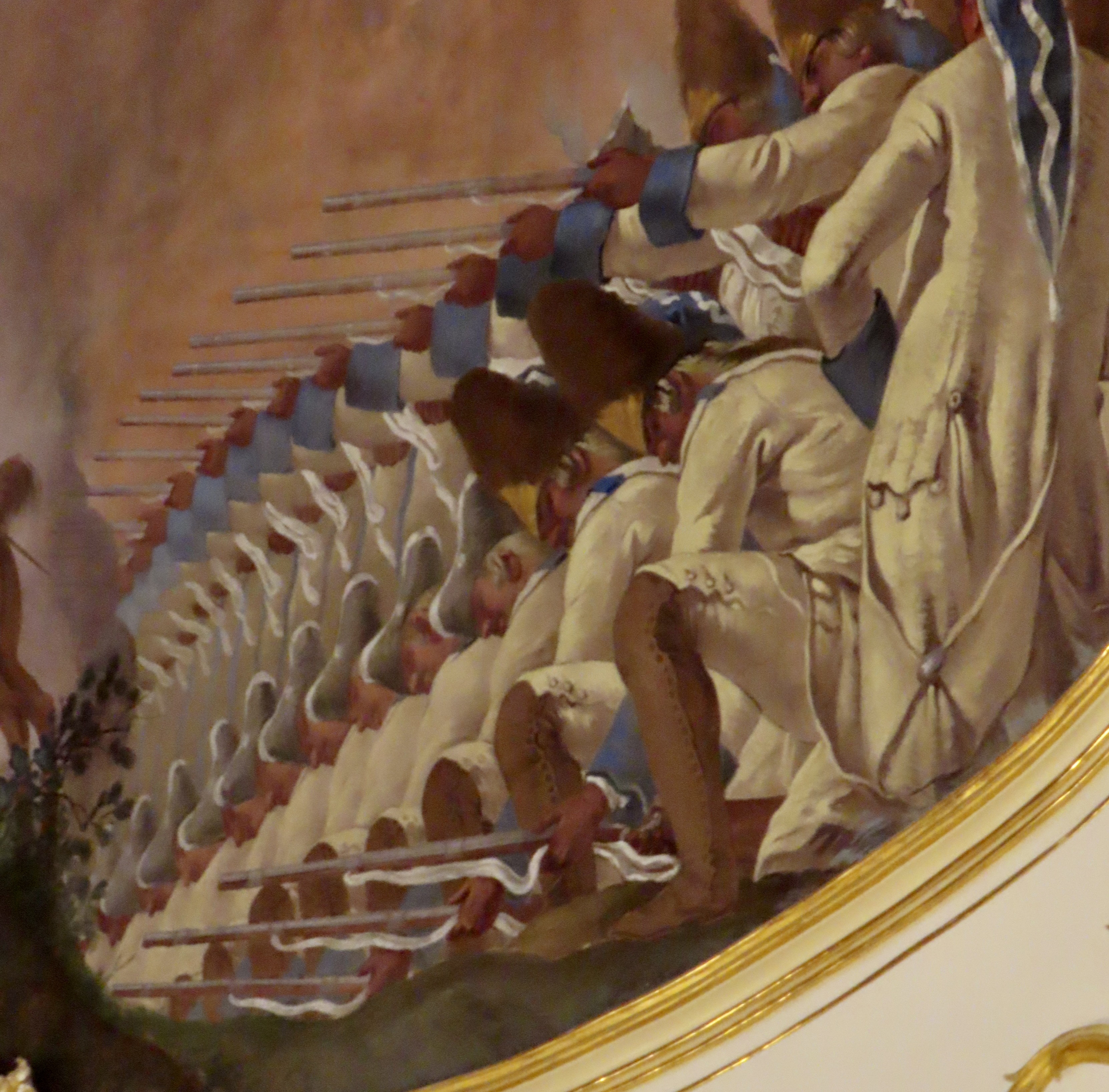
A scary, more real ceiling painting shows soldiers lined up to fight. While one group was firing, the other was kneeling in front, reloading their muskets.
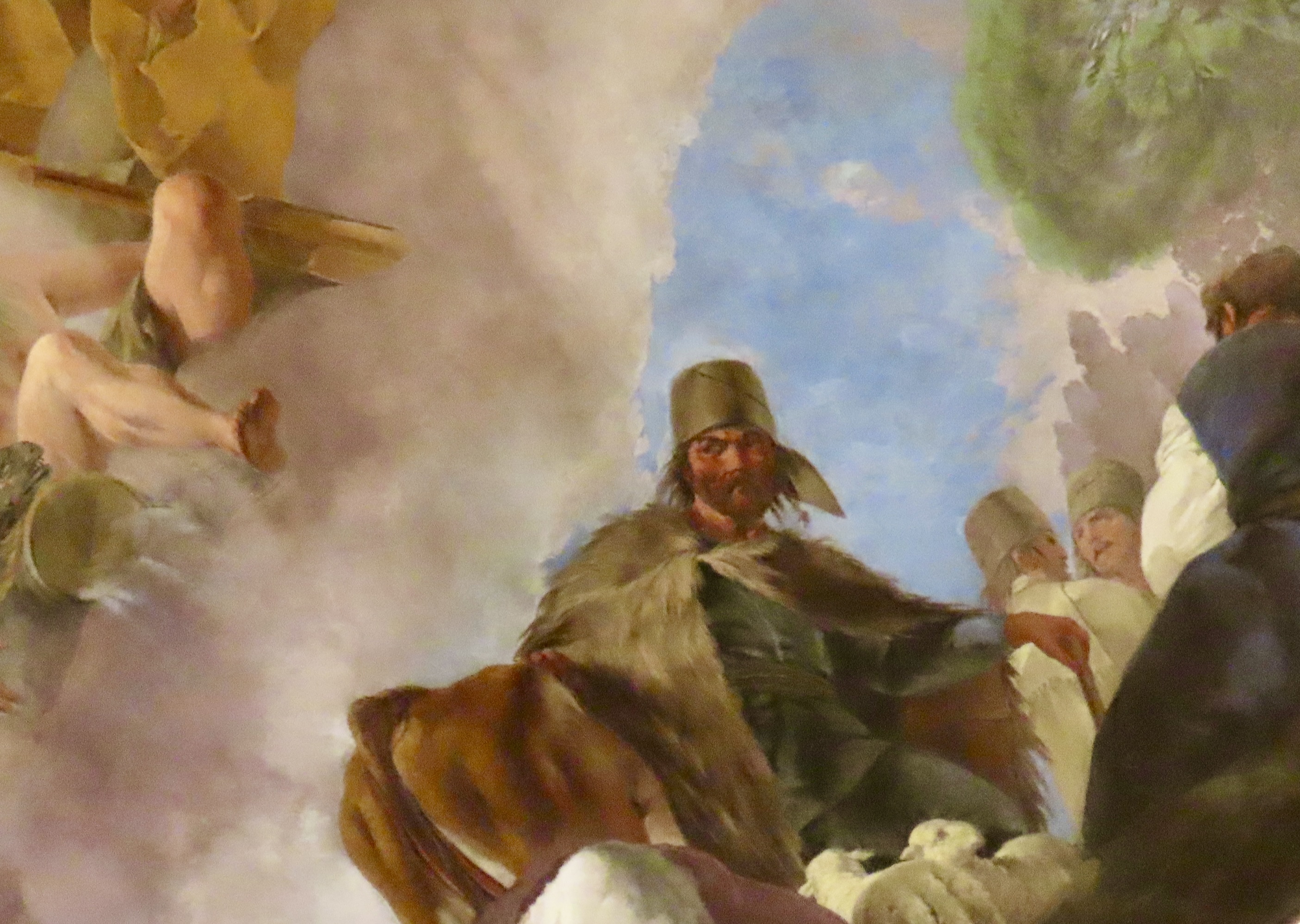
Here, a stern looking shepherd tends his flock of sheep. I’d look stern as well if a guy was about to jump out of the sky and land on top of me— or my sheep.
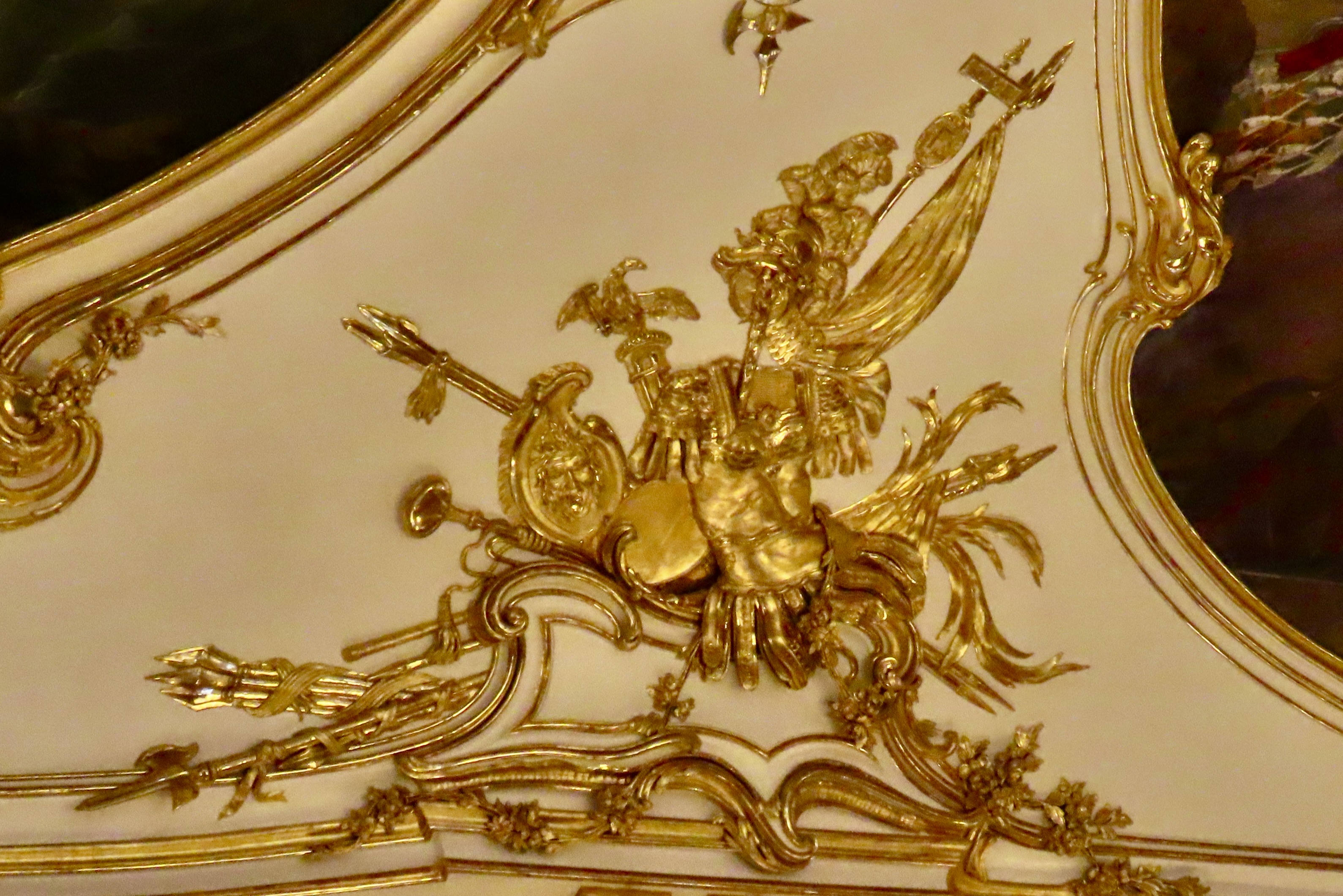
Ornate chandeliers matched the ornate ceilings. Check out the walls.
What does your imagination suggest here?
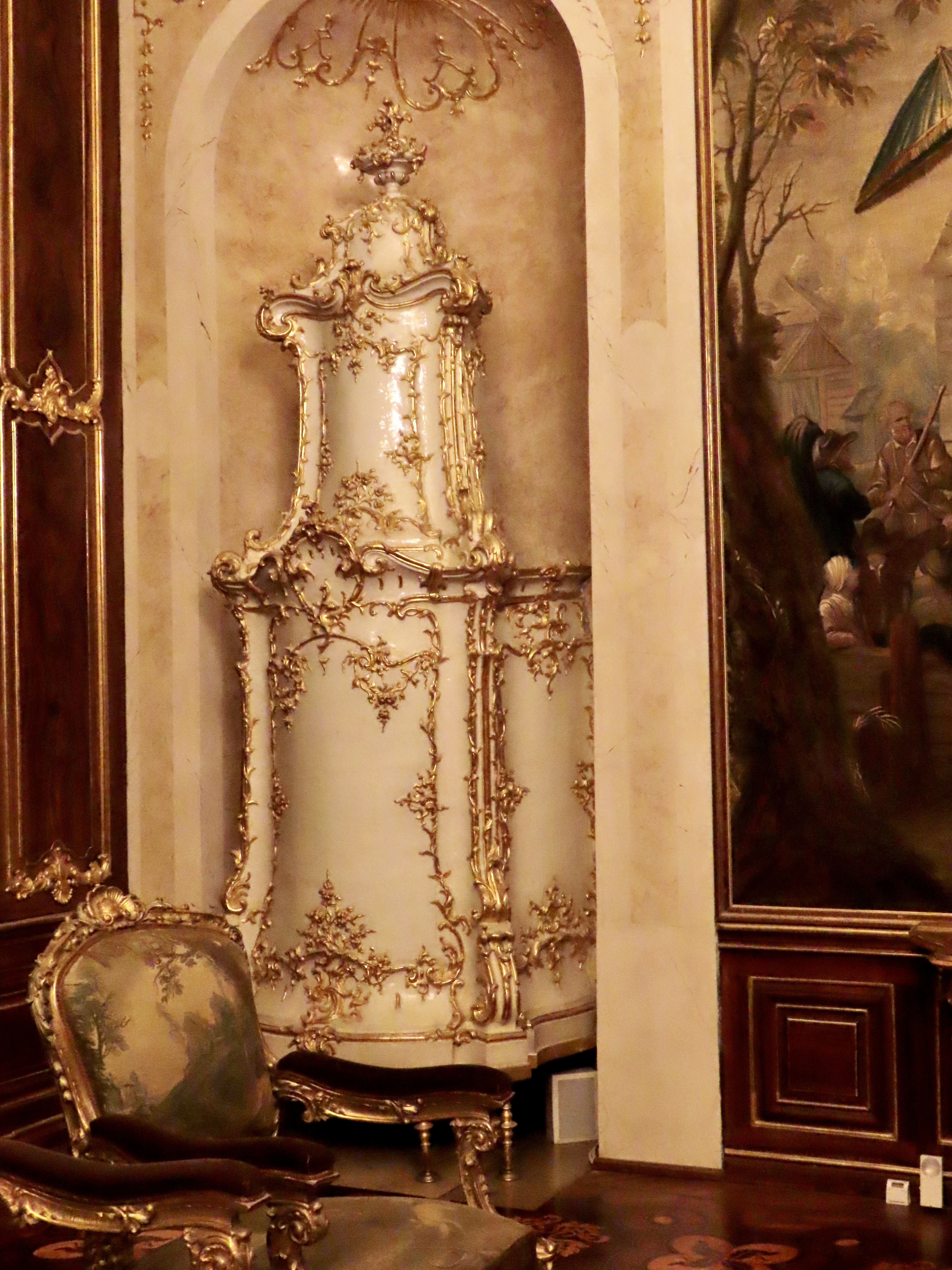
While the Schönbrunn Palace has some 1,441 rooms, we visited maybe 15. One of the things that caught our attention in the rooms were beautiful stoves like this one. Imagine keeping them all burning. It would have required an army of servants. Non obtrusive side doors entered the rooms from hidden servant corridors to allow servants to do their work. Numerous paintings like the one on the right were found in the rooms we saw. They ranged from everyday people doing everyday things to portraits of Habsburg rulers.
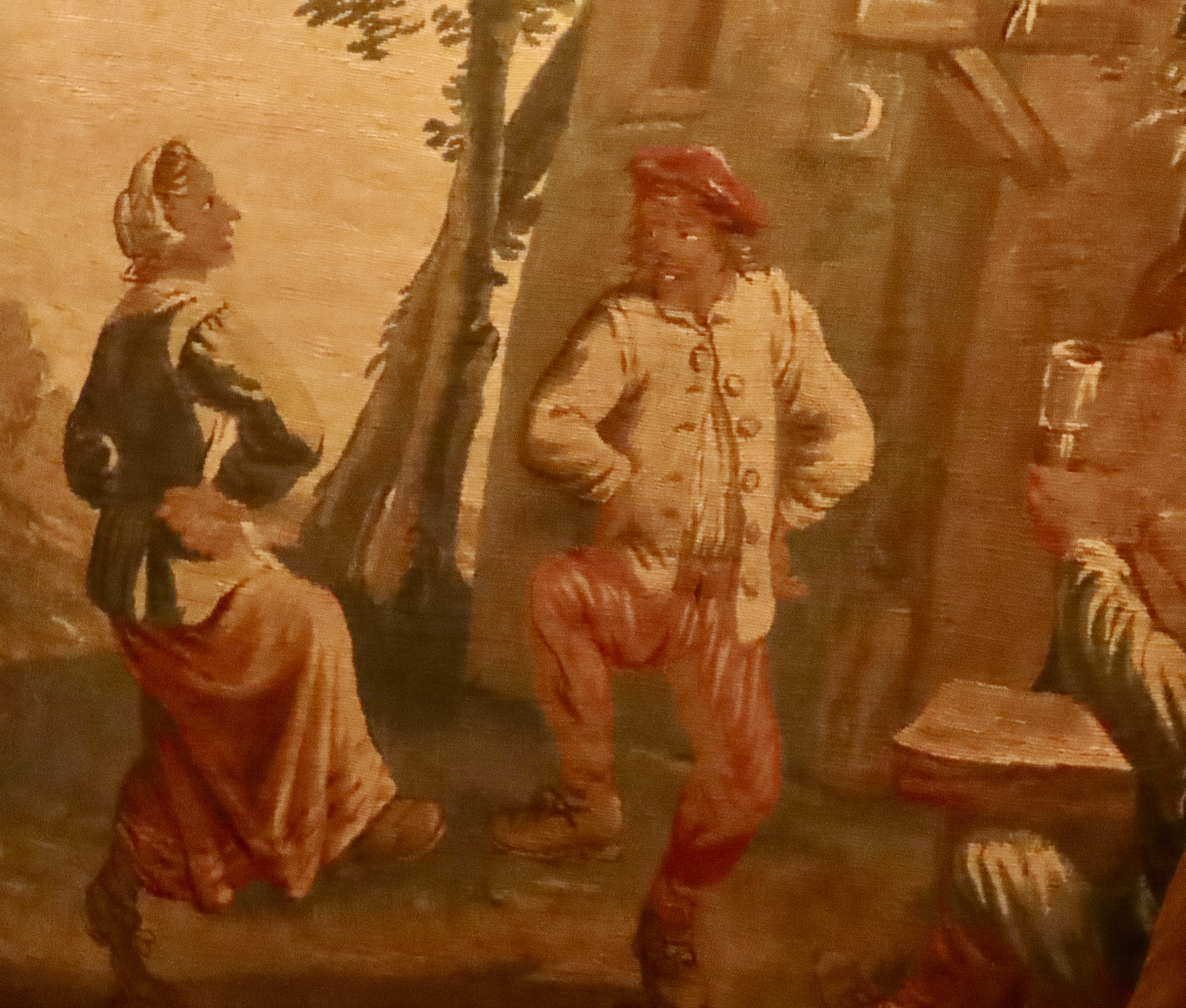
This peasant couple looks a little fuzzy, but hey, they were dancing fast and having fun. A guy on the right toasts them. And does the half moon on the building behind them show an outhouse? Probably not. More likely, it was a sign for the tavern where the revelers were getting their liquid refreshments.
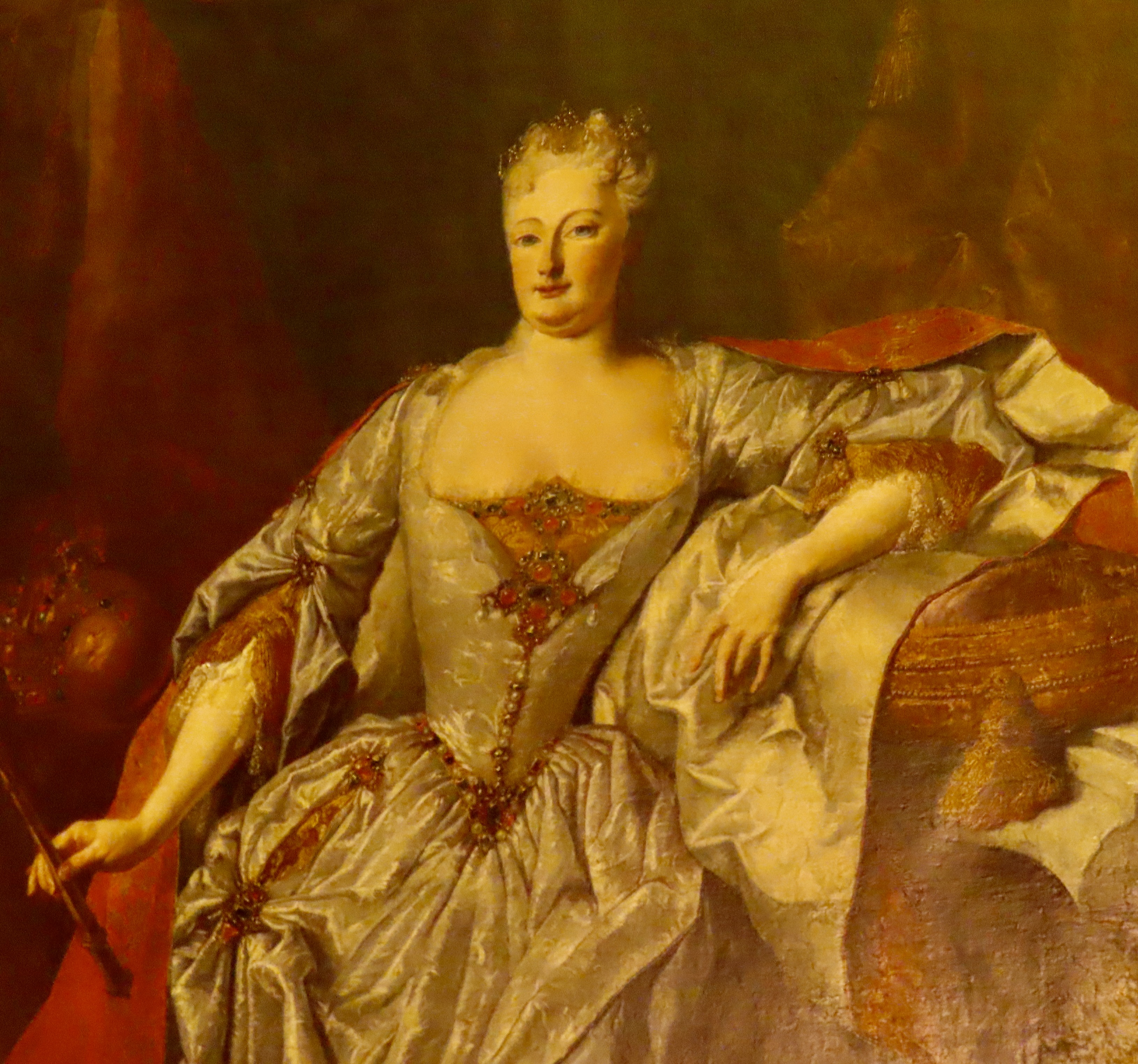
No fuzziness here. Royalty required more attention in their paintings. They wore clothes, jewels and symbols of power that needed to be shown off— along with bosoms. This is Maria Theresa, who ruled the Habsburg Empire for forty years (1740-1780), and managed to have 16 children along the way, most of whom were married off to cement political alliances throughout Europe. One was Marie Antoinette of France, known for her profligate spending and supposedly saying, “Let them eat cake,” when the poor were rioting in the streets of Paris from starvation. Not a very thoughtful statement, considering. She lost her head over it.
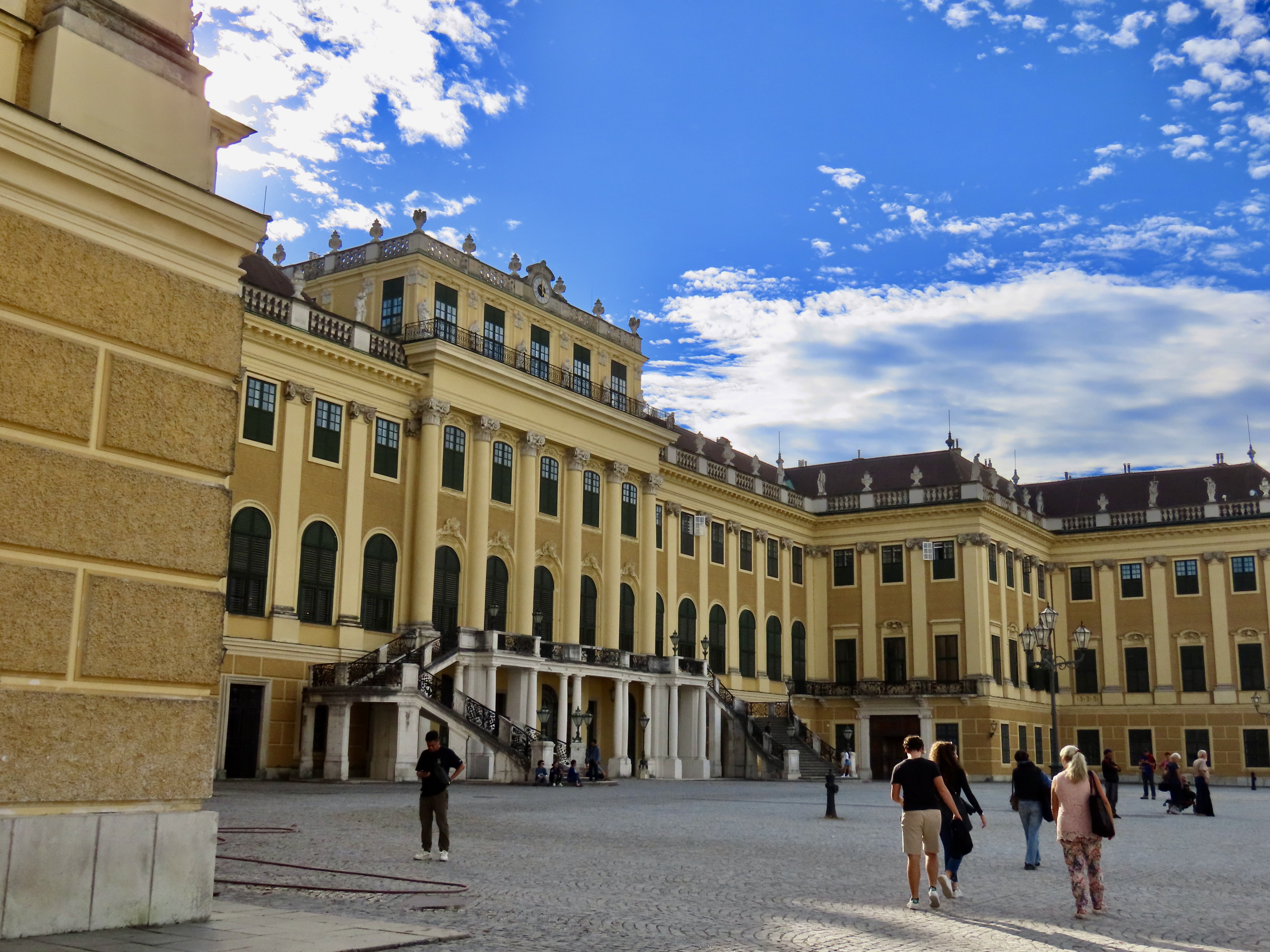
While there was much of interest inside the Palace, Peggy and I actually spent an equal amount of time wandering around outside on our own. The Schönbrunn Palace is more popularly known as the Summer Palace. The Habsburgs like to spend their summers here. This is a section of the front. I provided a complete view at the end of my last post.
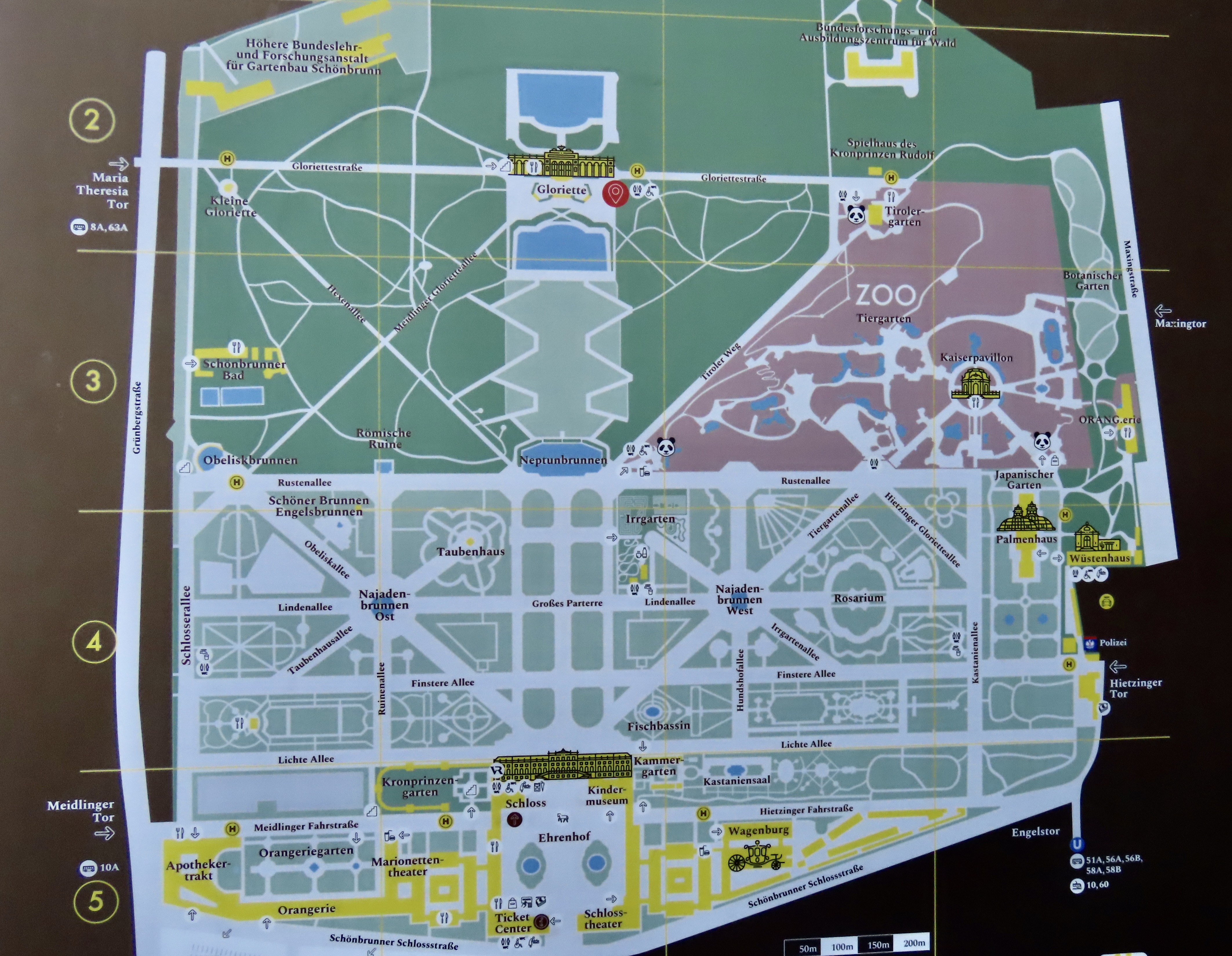
This map provides a view of the Castle and the grounds that featured beautiful gardens and interesting sculptures. We hiked from the Palace up to the ‘Gloriette’ at the top of the map on top of a steep hill. Note the large zoo on the right. Started in 1752, it is the world’s oldest zoo still in operation.
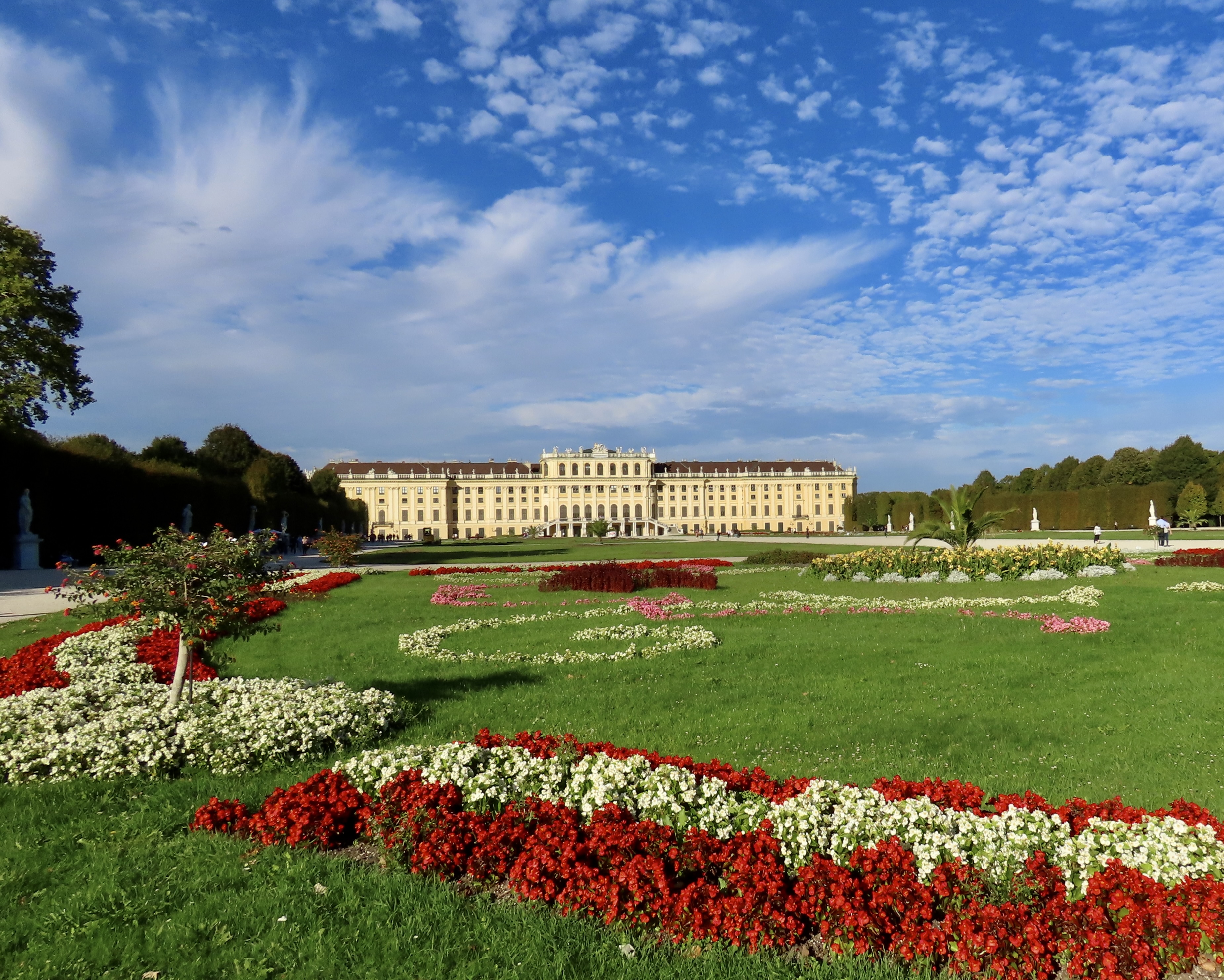
While we were at the end of flower season for Vienna, the gardens were still impressive. This provides a back view of the Summer Palace.
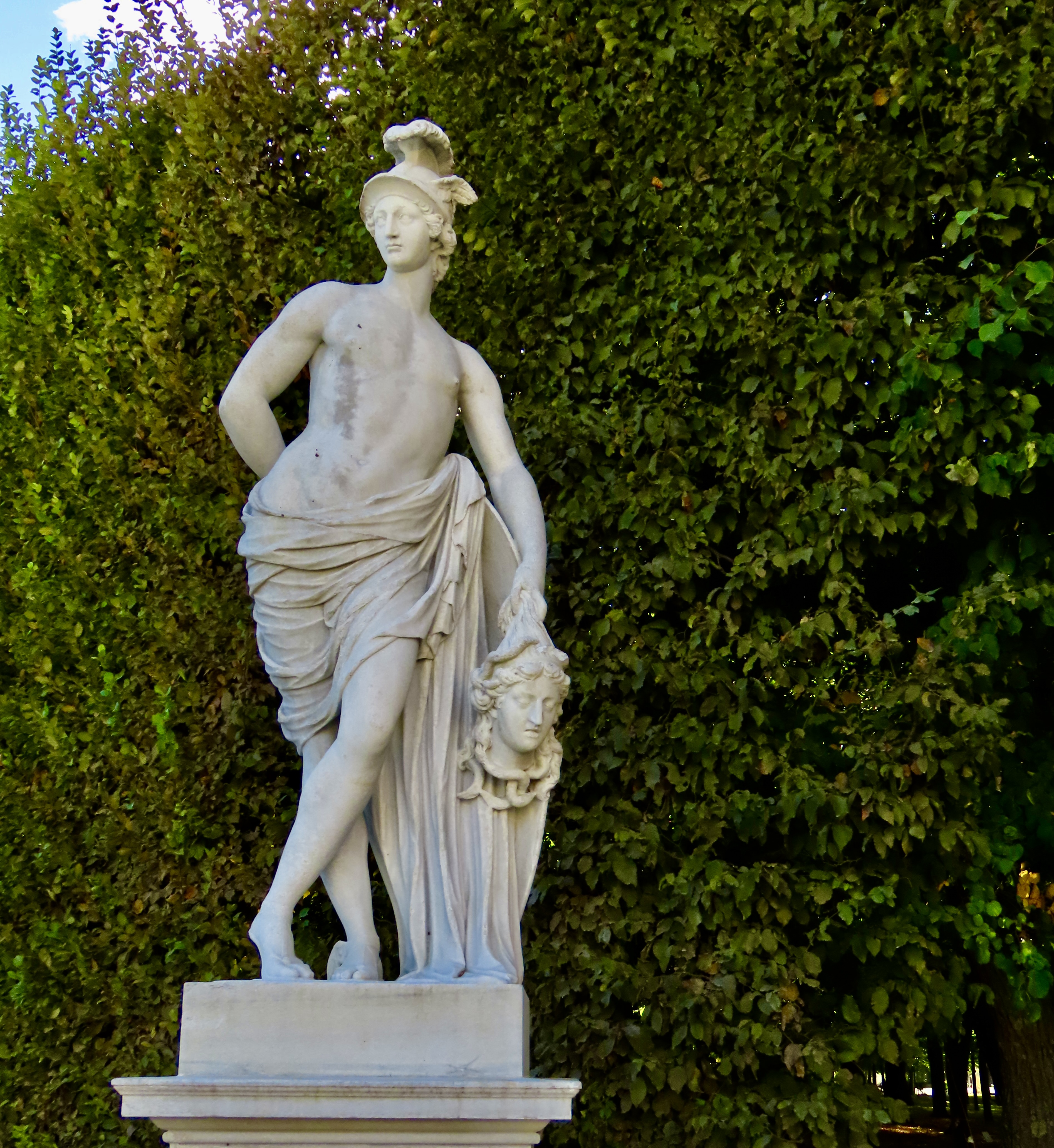
The walkways along the edge of the gardens were filled with 32 life-plus size mythical deities and historical figures. This is Perseus, who the popular Percy Jackson books and movies were based on. Here, he borrowed Hermes’ winged hat and shoes and flew off to Medusa whose look could turn you to stone. Perseus is carefully looking the other way. Judging from his present status, however, he may have been little late.
Our goal was to visit Neptune’s statue and the Gloriette above it.
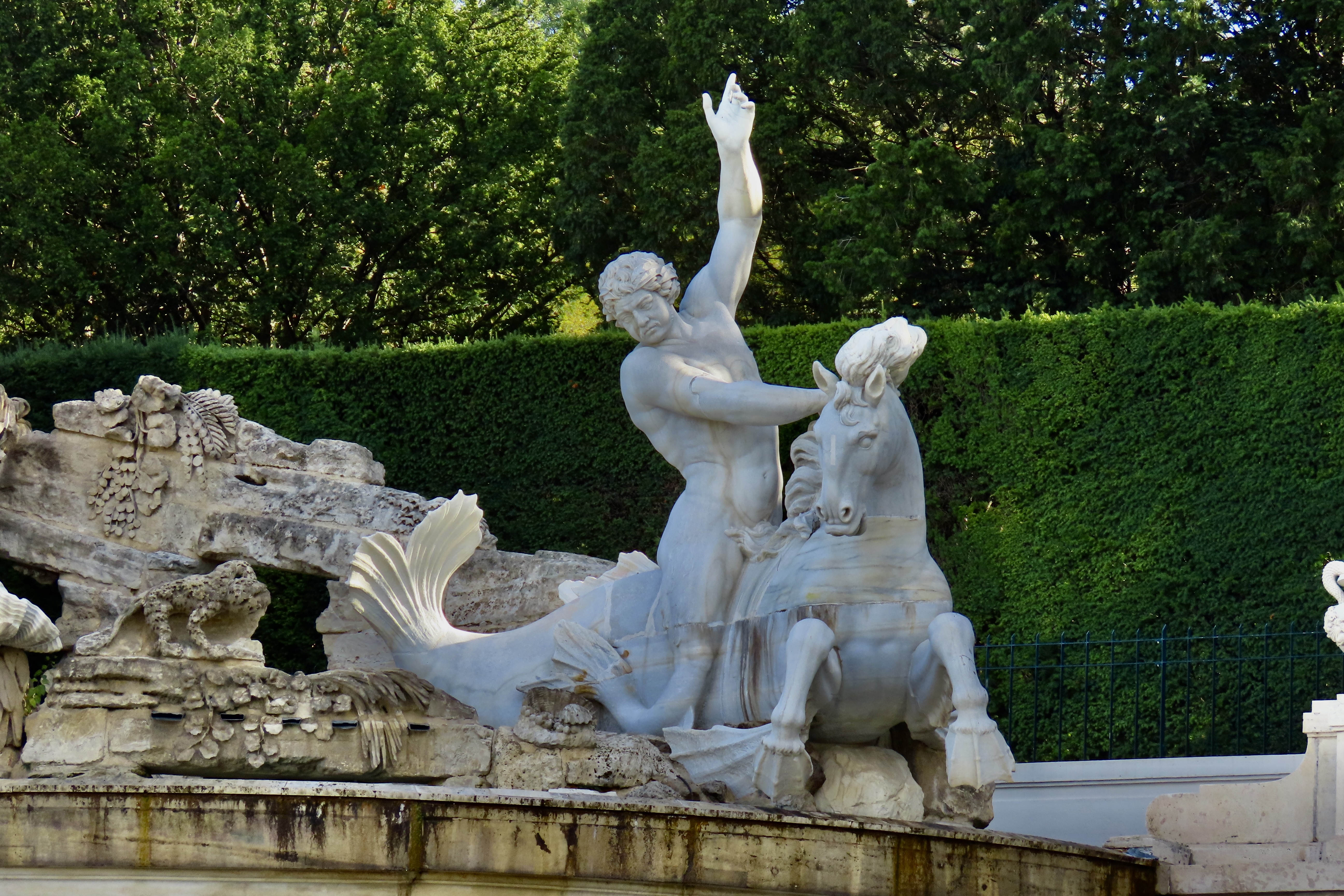
Ride ‘em Cowboy. Neptune’s home above a small lake included a number of other mythological creatures besides the trident carrying god of the ocean. What you have here is a merman (part man, part fish) going for a joy-ride on a hippocampus (part horse, part fish).
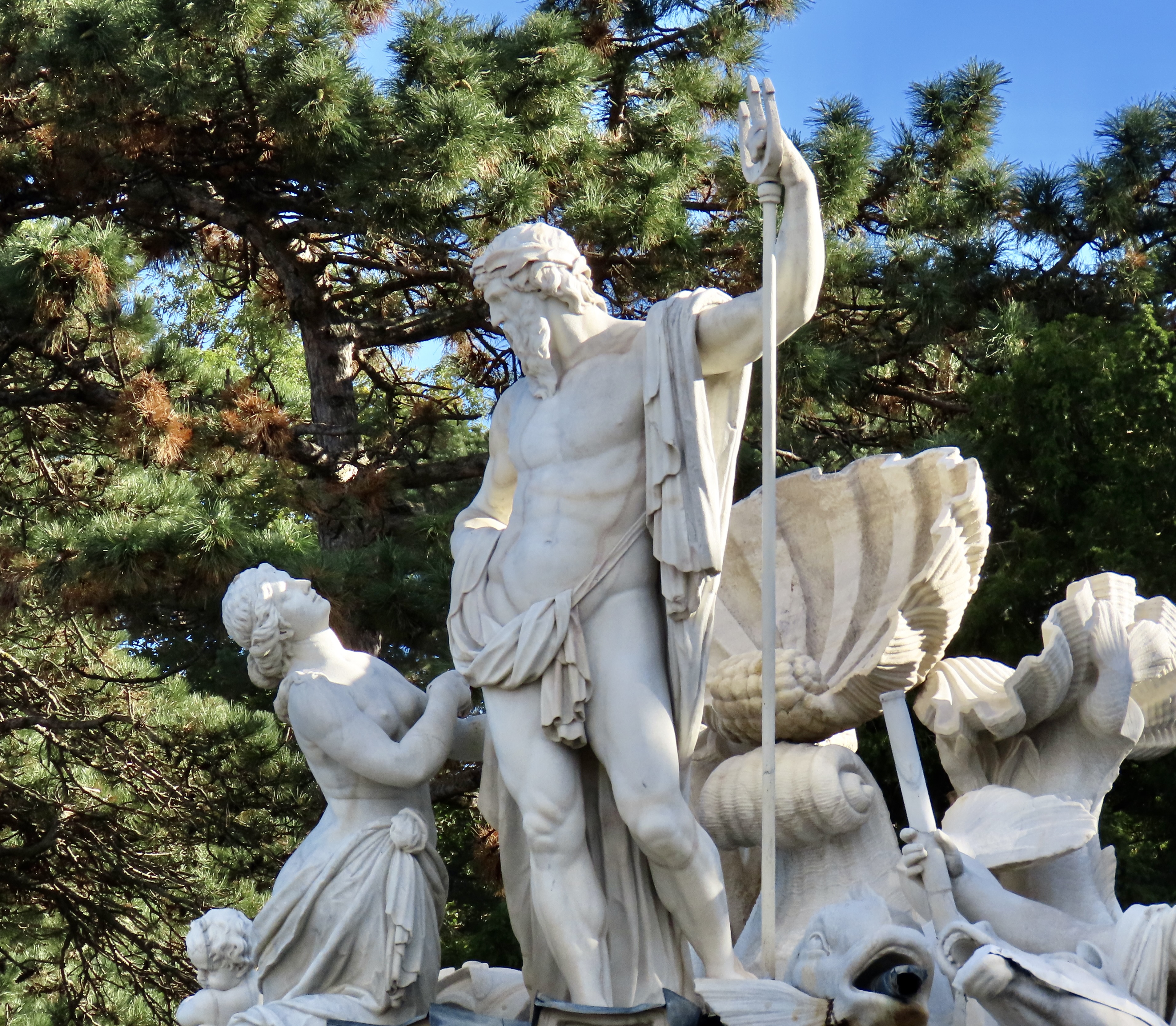
And here’s Neptune. Not sure whether the woman is a mermaid but I don’t think I have ever seen a picture of a mermaid wearing a dress. It appears she has his attention.
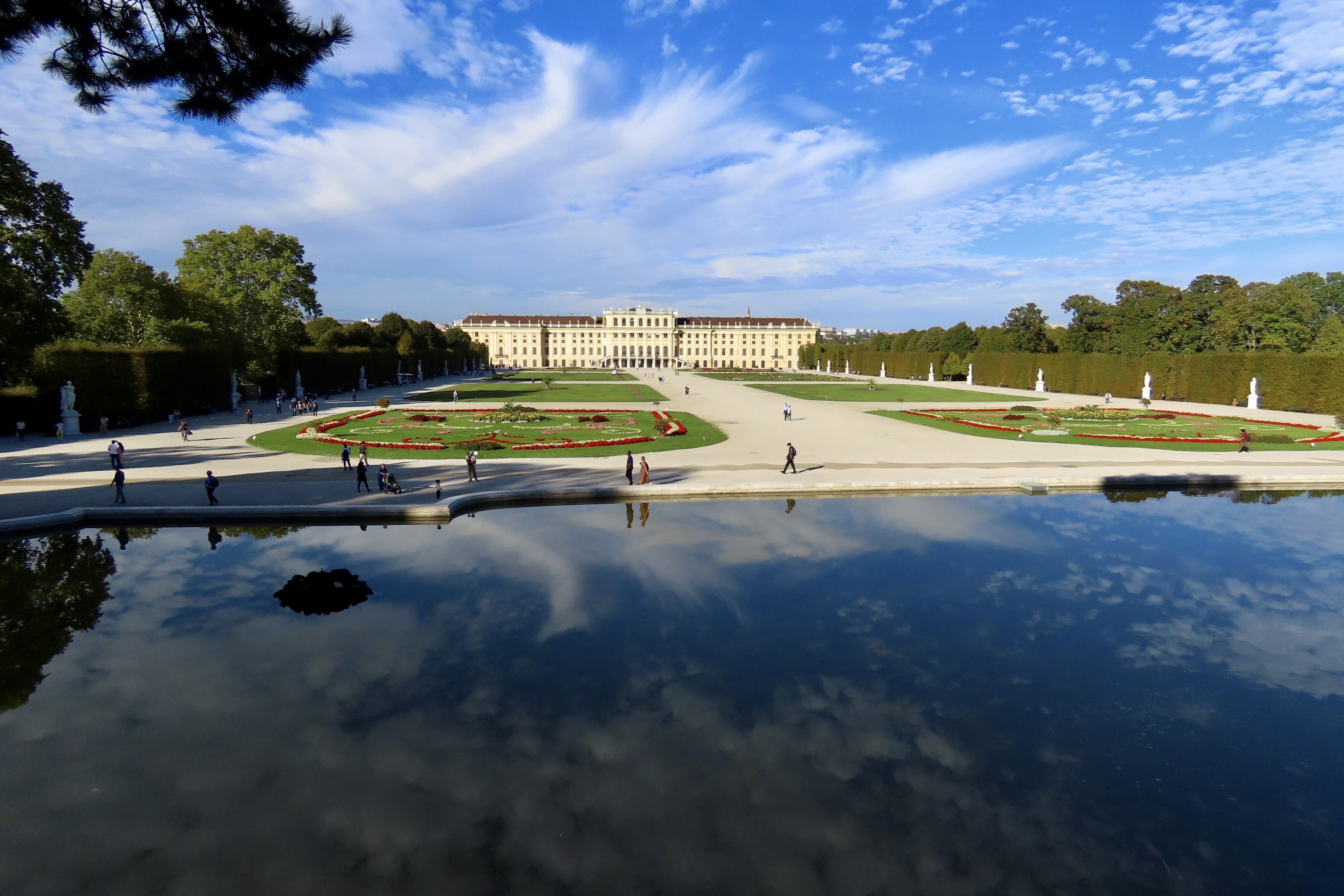
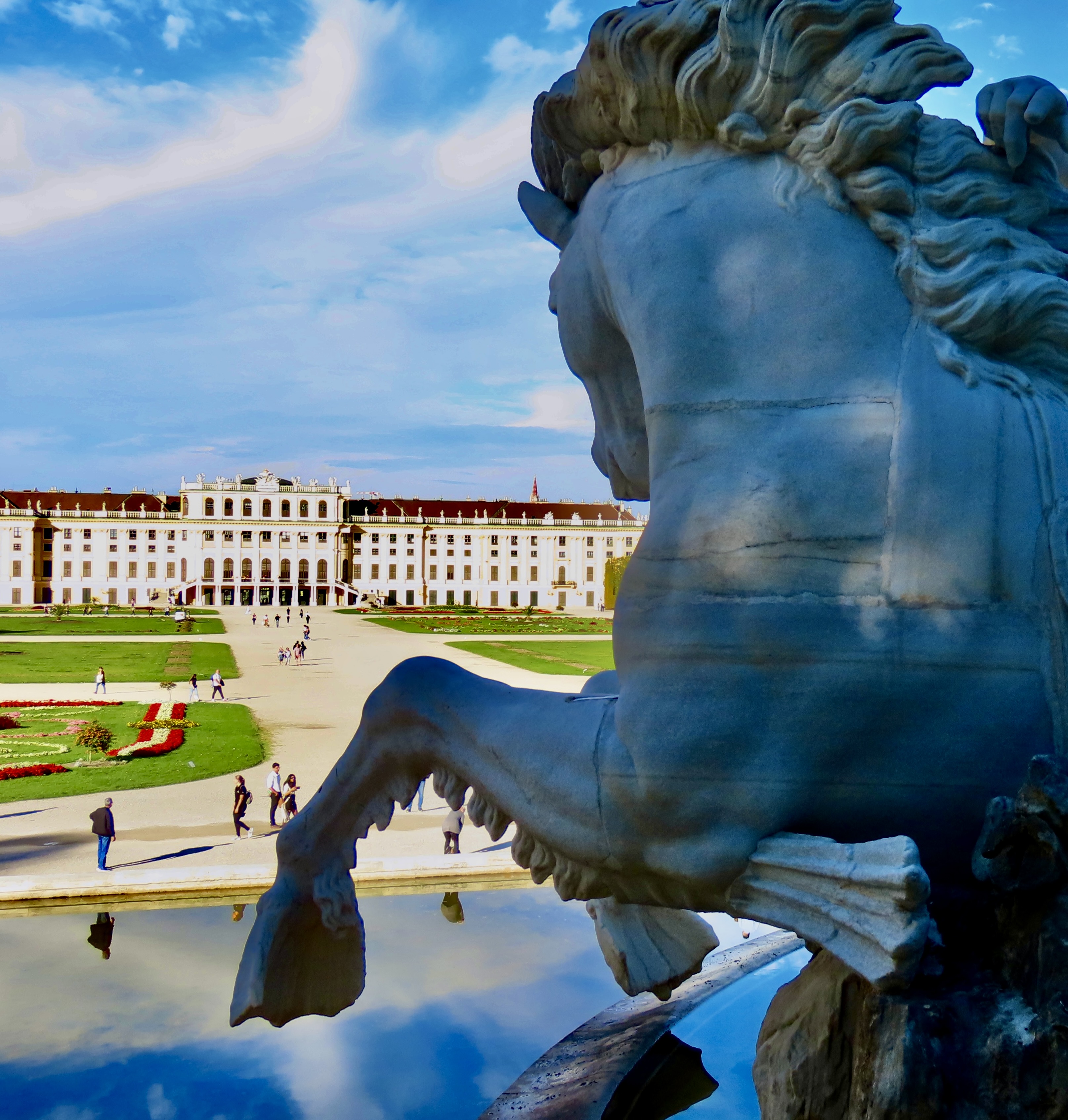
Neptune’s statue provided great views of the Summer Palace.
The Palace from the perspective of a Hippocampus.
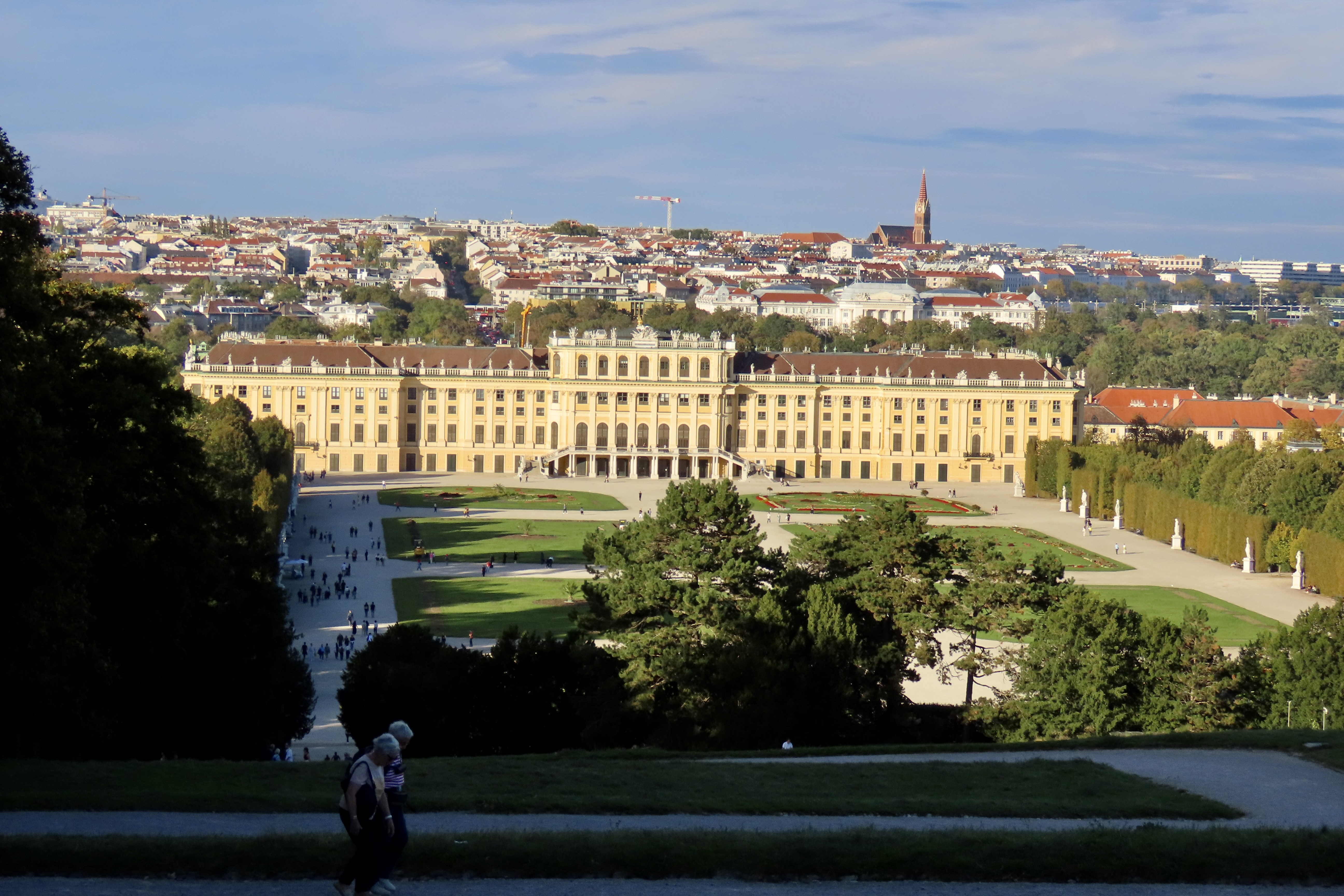
Remember how I said St. Stephan’s Cathedral dominates the skyline above Vienna. We took this photo above the Neptune statue on our way up to the Glorietta. The church is on the right. Its only competition was a crane.
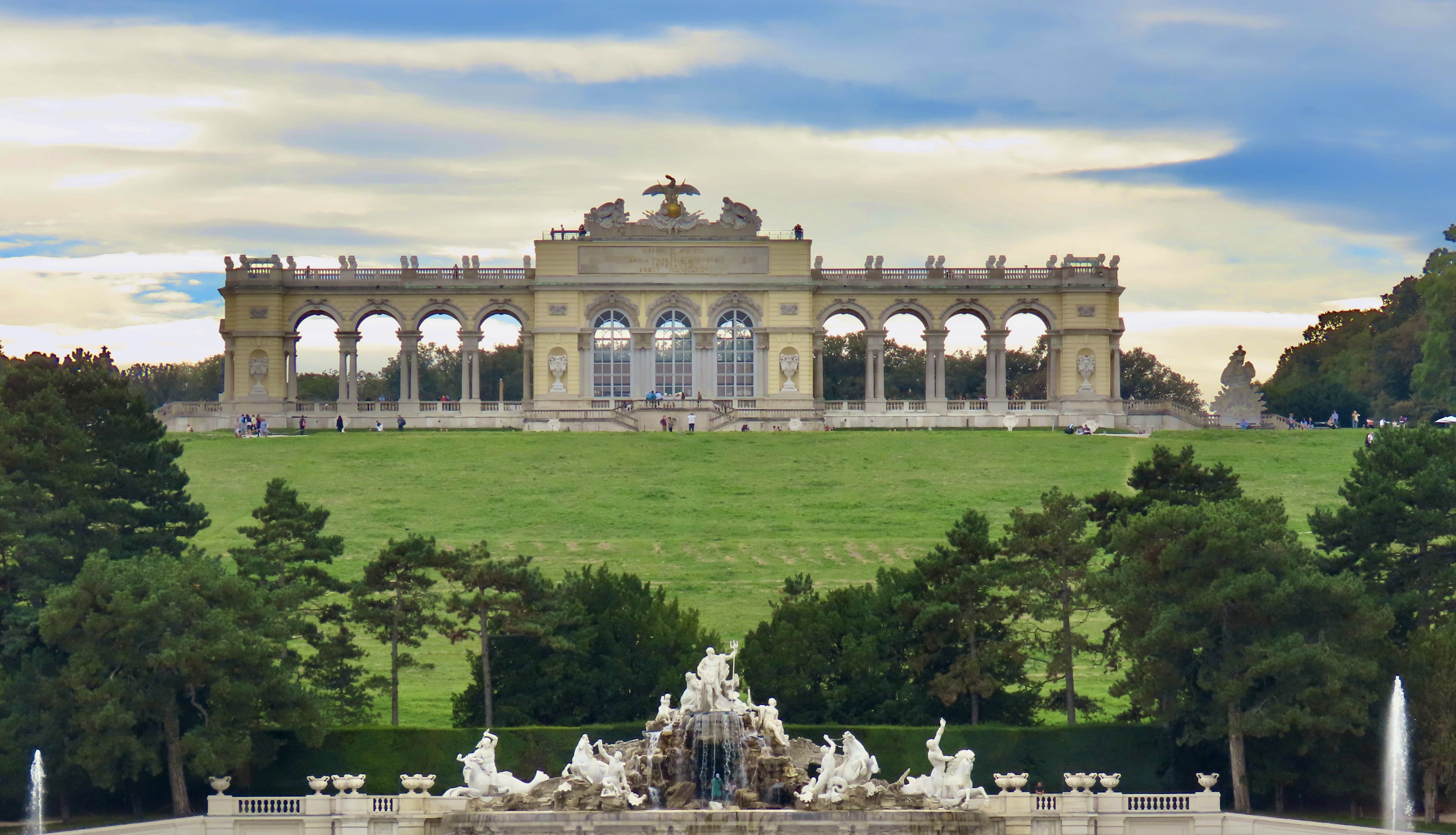
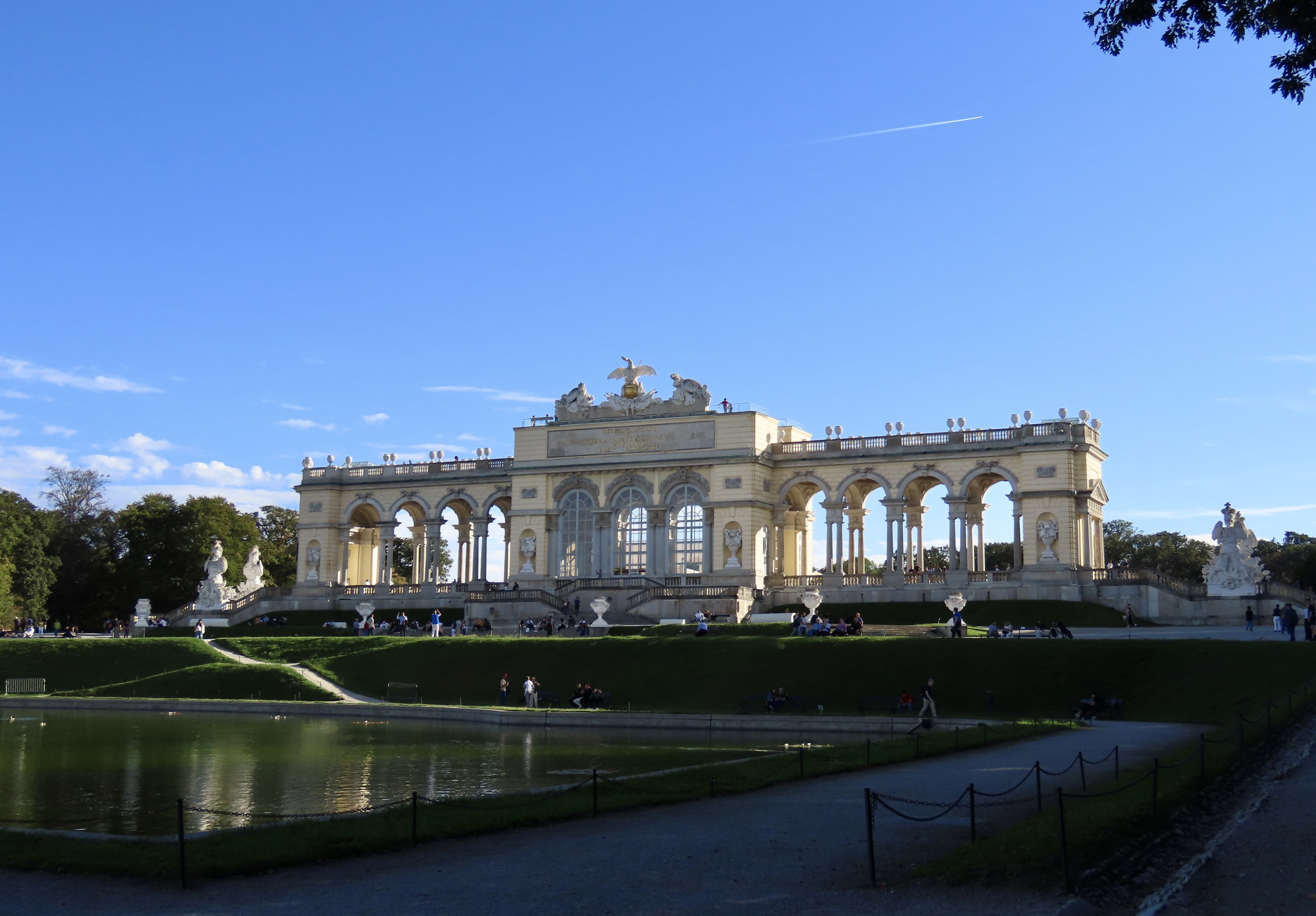
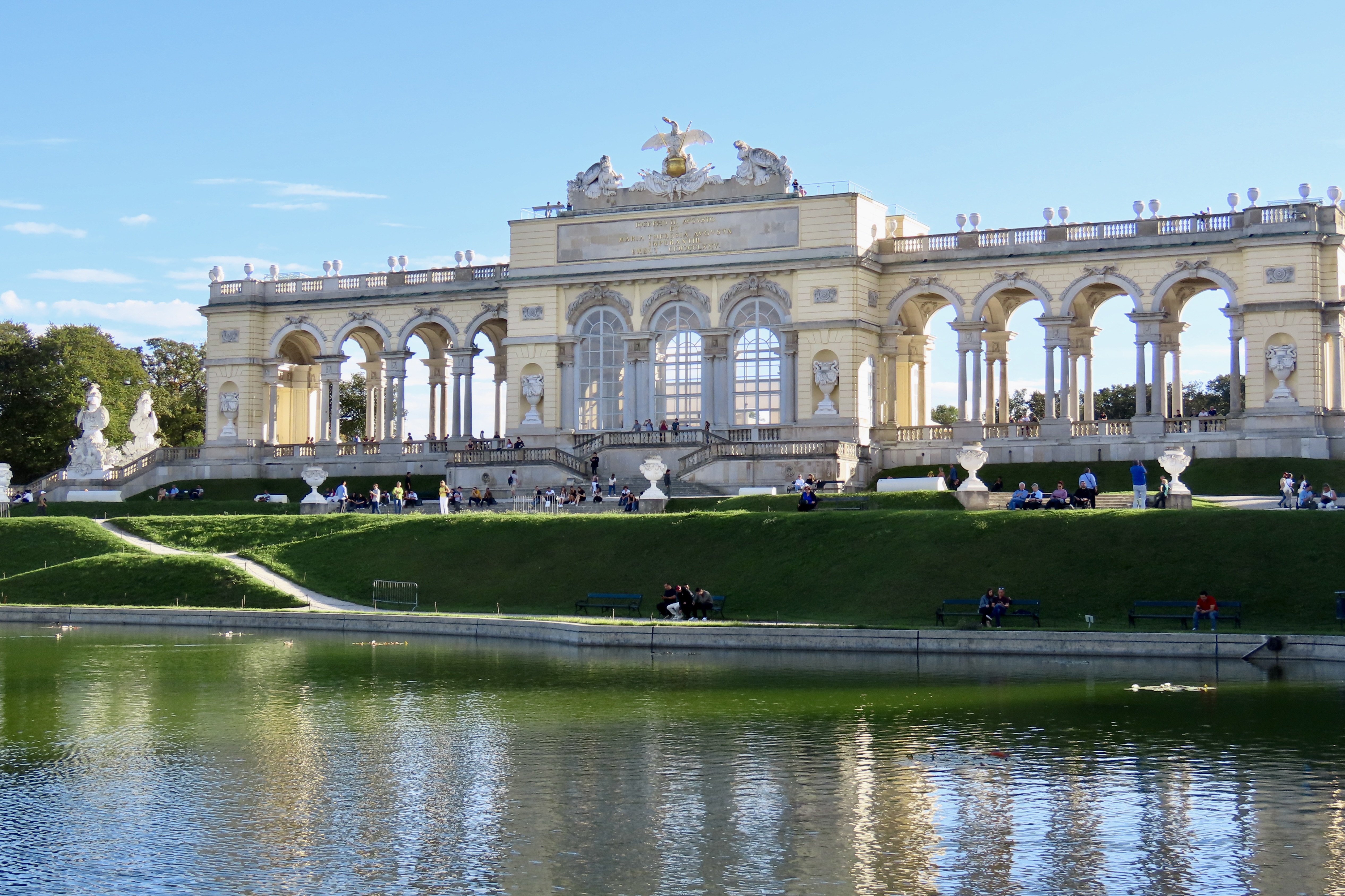
And finally, the Gloriette. A gloriette is defined as “a building in a garden erected on a site that is elevated with respect to the surroundings.” This one was built as a ‘Temple of Glory’ in 1775 and served a a great viewpoint and ballroom. It was Vienna, after all, where umpteen top Viennese composers were busy writing waltzes and other dance music.
A closer view. The glassed in middle section served as the ballroom.
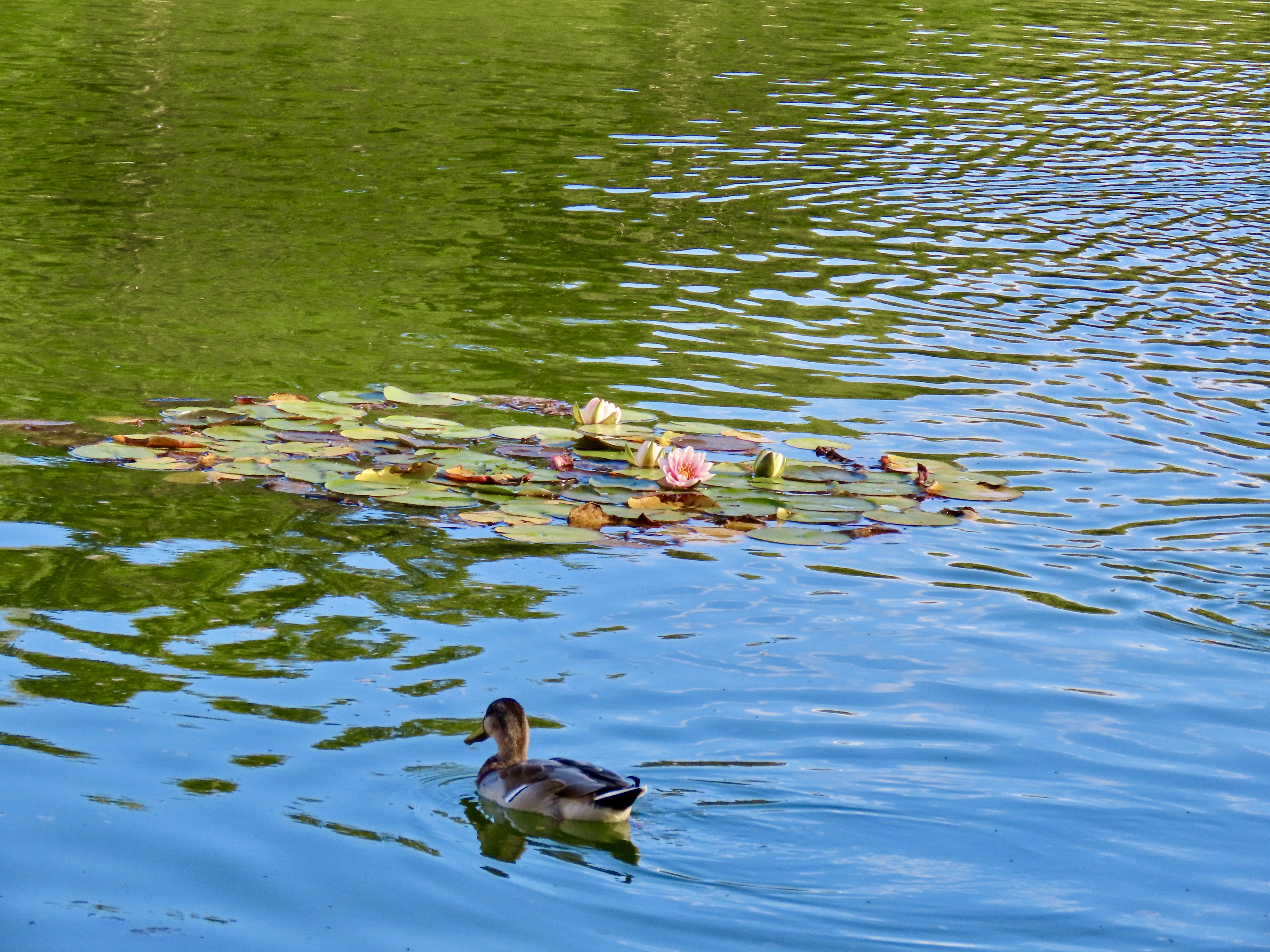
This mallard happily made use of the pond in front of the Gloriette.
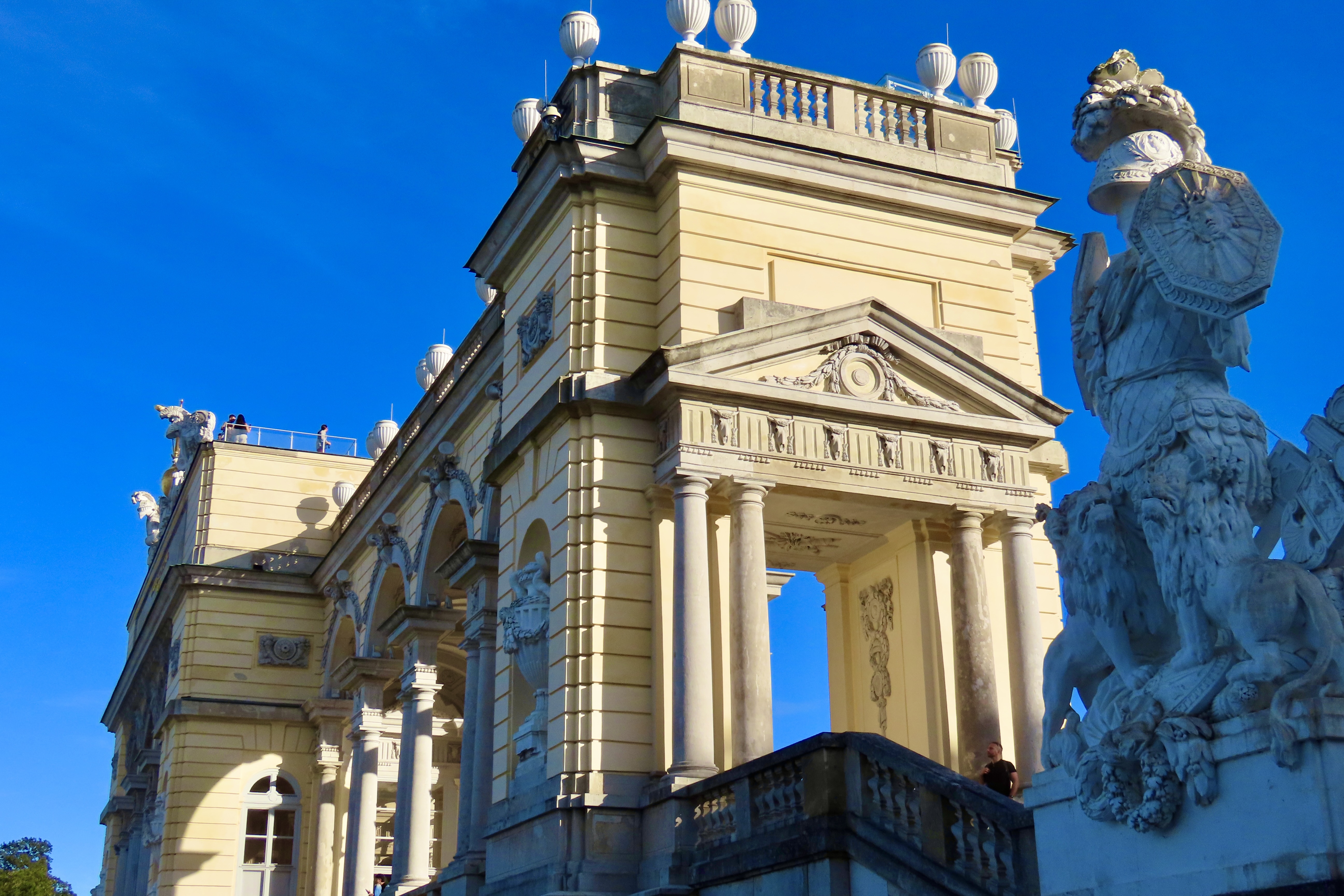
We’ll wrap up today’s visit to the Summer Palace with a side view of the Gloriette. Next we will return to the historic downtown of Vienna and visit the Winter Palace as well as other sites.
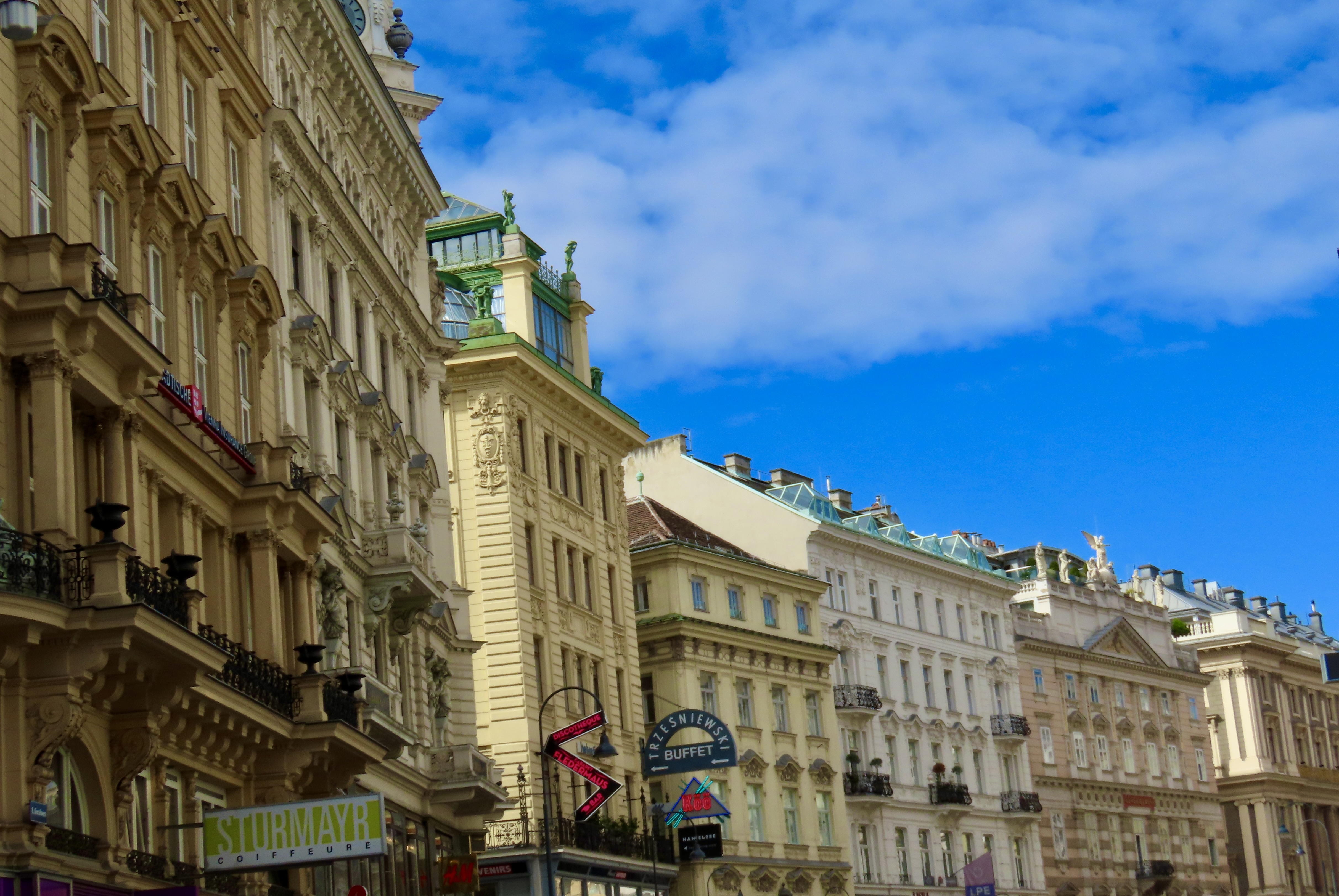
A downtown view.