Painted Rock Petroglyph Site… Voices from the Ancient Past: Part I

The rocks at Painted Rock Petroglyph Site in Southern Arizona are covered with petroglyphs as shown in this photo with Peggy.

The rocks at Painted Rock Petroglyph Site in Southern Arizona are covered with hundreds of petroglyphs, as shown in this photo with Peggy. Some my be several thousand years old.

Peggy and I had just been through one of those checkpoints that make Arizona so endearing to visitors: armed men with guns and dogs and x-ray machines had slowed us to a crawl as men stared, dogs sniffed and x-rays probed. It was for our own good. Yeah, right.

Having survived yet another checkpoint on our way to Organ Pipe Cactus National Monument, I stepped on the gas and almost missed it. A small brown BLM sign on Interstate 8 announced we were passing the Painted Rock Petroglyph Site. At 70 plus miles per hour all that registered in my mind was petroglyph. “Whoa Quivera,” I said to our van who has little humor about stopping quickly at 20, much less 70.

Peggy and I are big petroglyph fans, having visited and blogged about several sites in the Southwestern US. This one was new to us– and now it was fading into the distance. America’s freeway system has little forgiveness for missed turns. Should we go on? No, the answer came easily. We decided that Organ Pipe could wait.

We soon found a place to turn around. After driving a few miles off the freeway, we arrived at the site. And were greeted by a large pile of rocks, flat ground, and a lonely saguaro. So much for this detour I thought– until Peggy pointed out that the rocks were covered from top to bottom with petroglyphs. A command decision was made. We would spend the night at the BLM campground.

We arrived at Painted Rock Petroglyph Site in southern Arizona and found a large pile of volcanic rocks stacked up on the flat desert floor. Only when we got closer did we realize that the rocks were covered with Petroglyphs.

We arrived at Painted Rock Petroglyph Site in southern Arizona and found a large pile of volcanic rocks stacked up on the flat desert floor. Only when we got closer did we realize that the rocks were covered with Petroglyphs.

Painted Rock Petroglyph Site in Southern Arizona

The closer we got to the rocks, the more petroglyphs we could see.

Rock covered with petroglyphs at Painted Rock Petroglyph Site in southern Arizona.

Some, such as this rock Peggy is standing next to, were totally covered. Internet sites claim there are around 900 petroglyphs at Painted Rock. I would argue there must be more judging from this rock.

A sign nearby informed us that Native Americans had occupied the region for over 9000 years. (How much more native can you get?) Hunting and gathering peoples had lived in the area from approximately 7500 BC up until around 1 AD. A group, known as the Hohokam, had come afterwards and occupied the region up until the 1400s. Both cultures were represented by petroglyphs found at the site. We could almost hear their voices from the ancient past whispering to us.
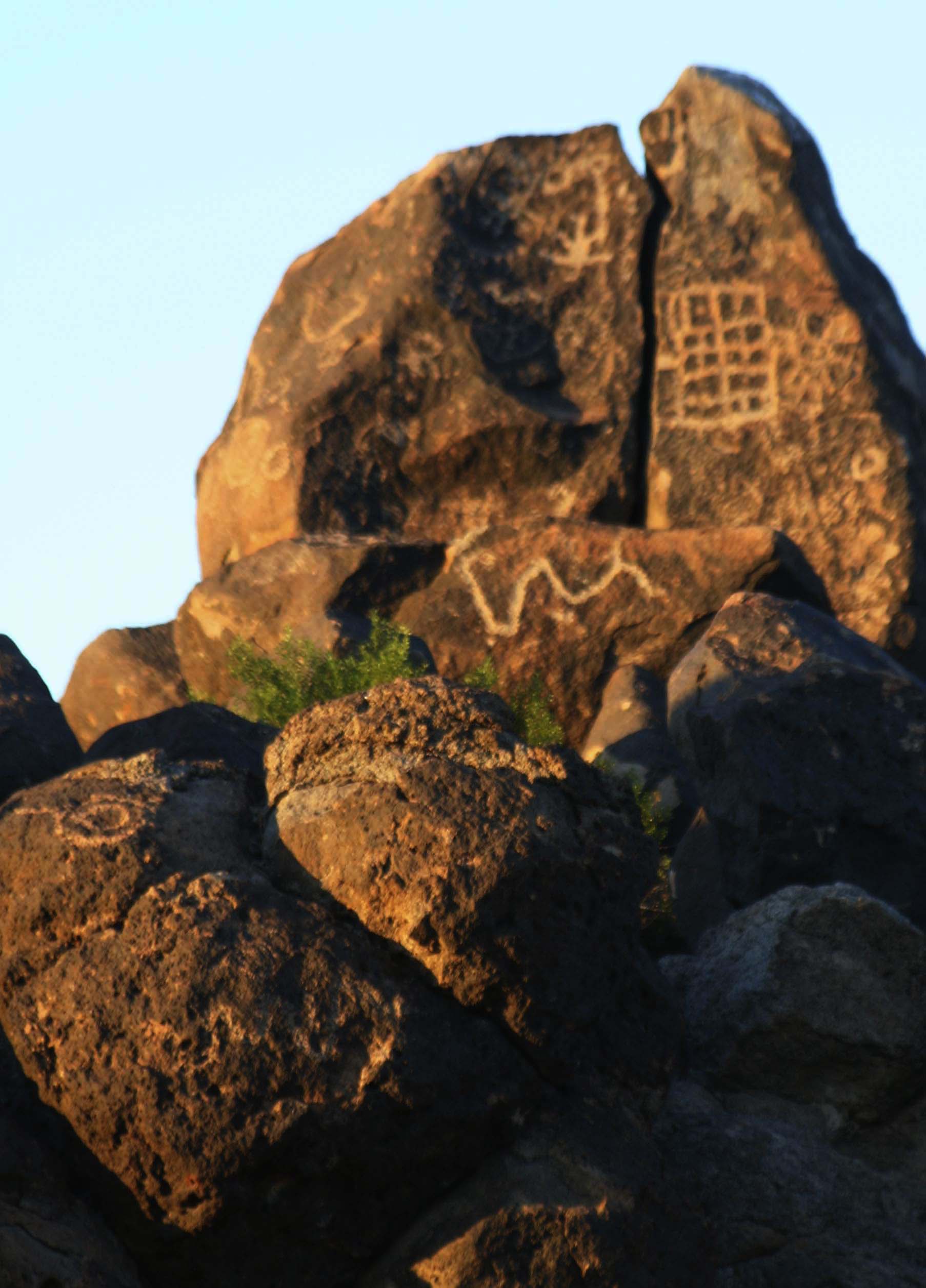
Staying over night allowed us to capture the petroglyphs in different light.

Staying over night allowed us to capture the petroglyphs in different light.

Petroglyphs at Painted Rock Petroglyph Site.

In my next blog I’ll feature individual petroglyphs and discuss what we (assume) to know about their meanings. Meanwhile, I’ll finish today’s post off with photos of the saguaro cactus that dominated the site.

Saguaro cactus found at Painted Rock Petroglyph Site in Southern Arizona.

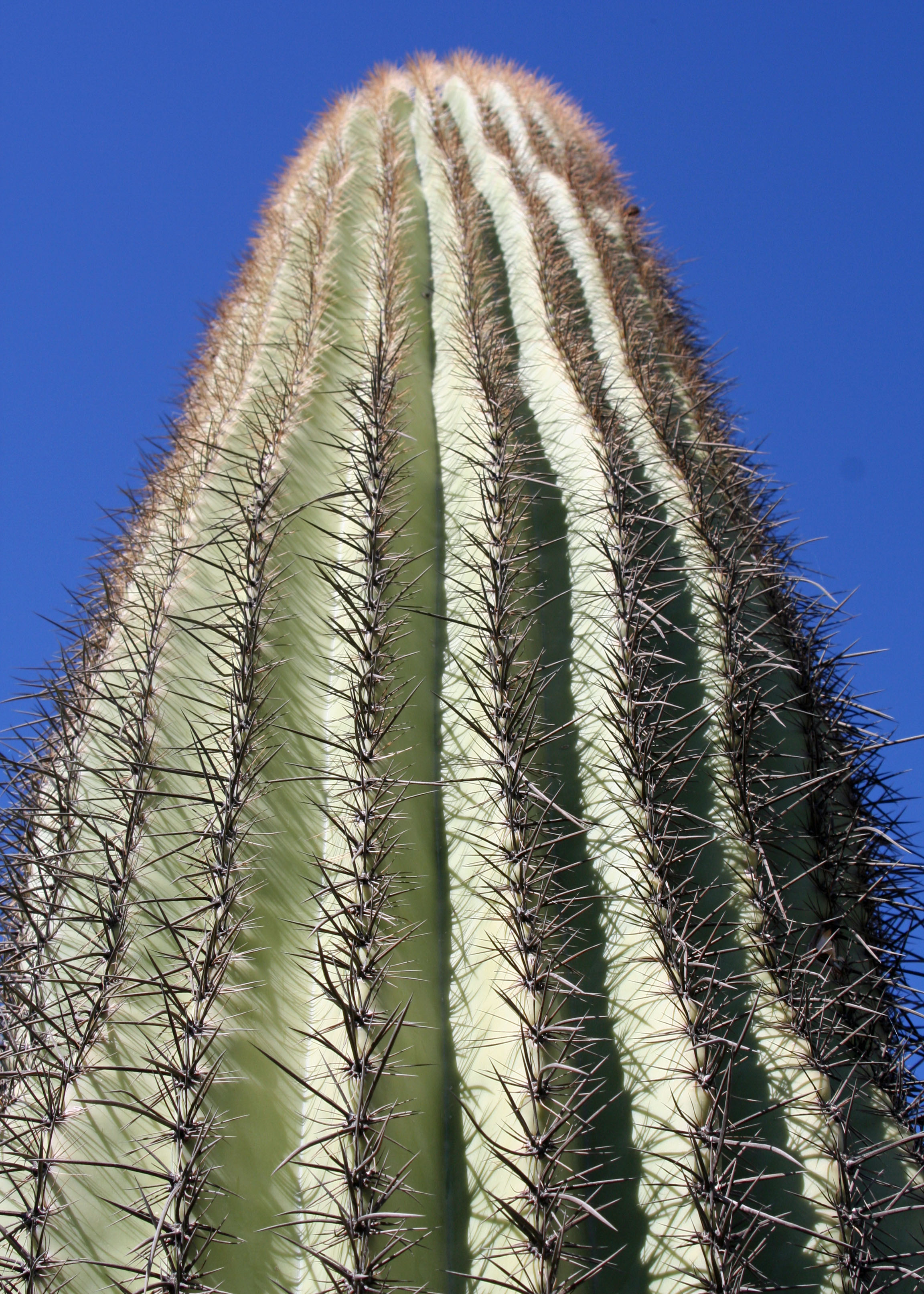
This saguaro may be a youngster since it had yet to grown any arms. Youngster is relative meaning 50-75 years old. Check out the spines…
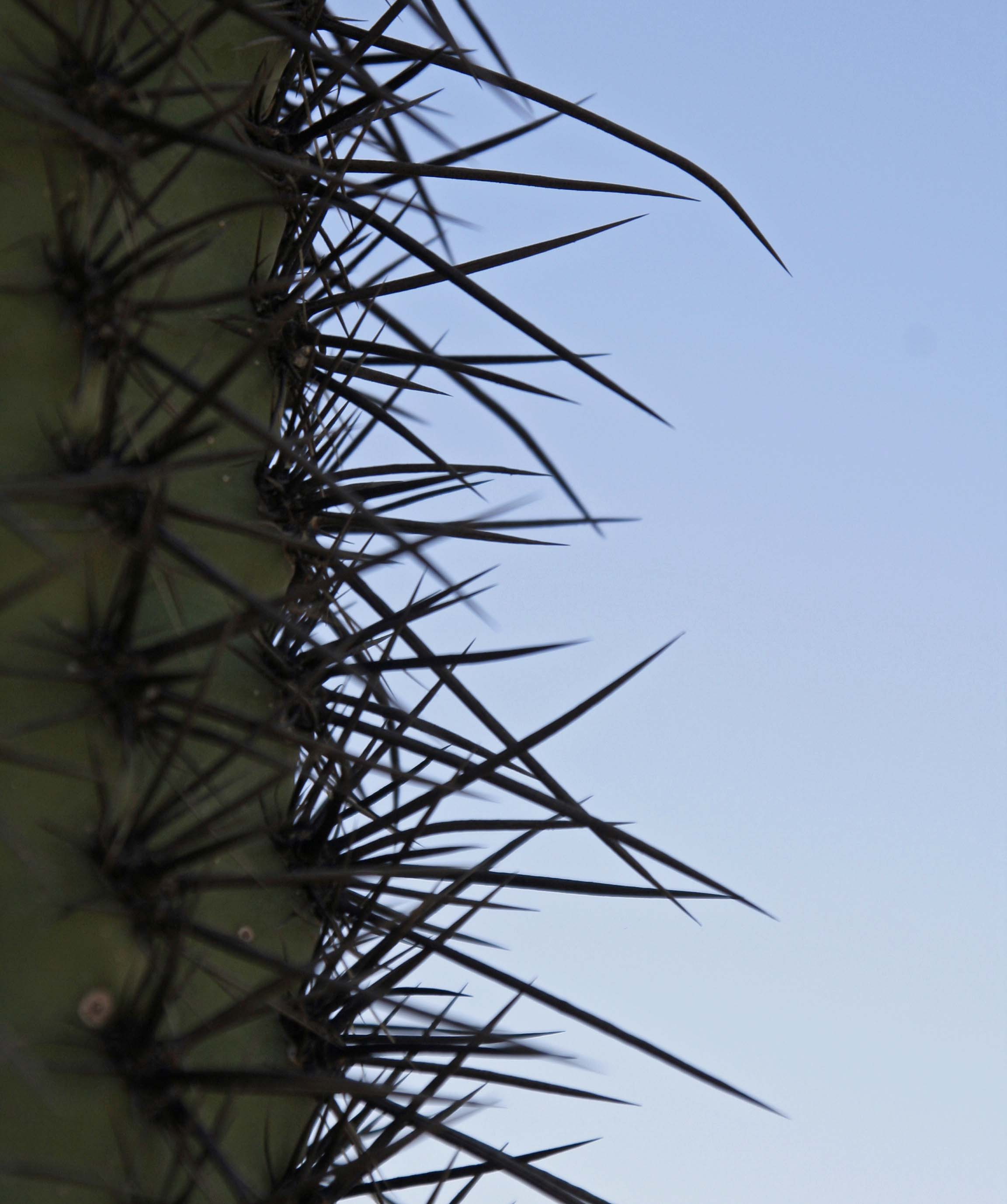
Here's a close up.

Here’s a close up of why snuggling up to a saguaro is a bad idea.

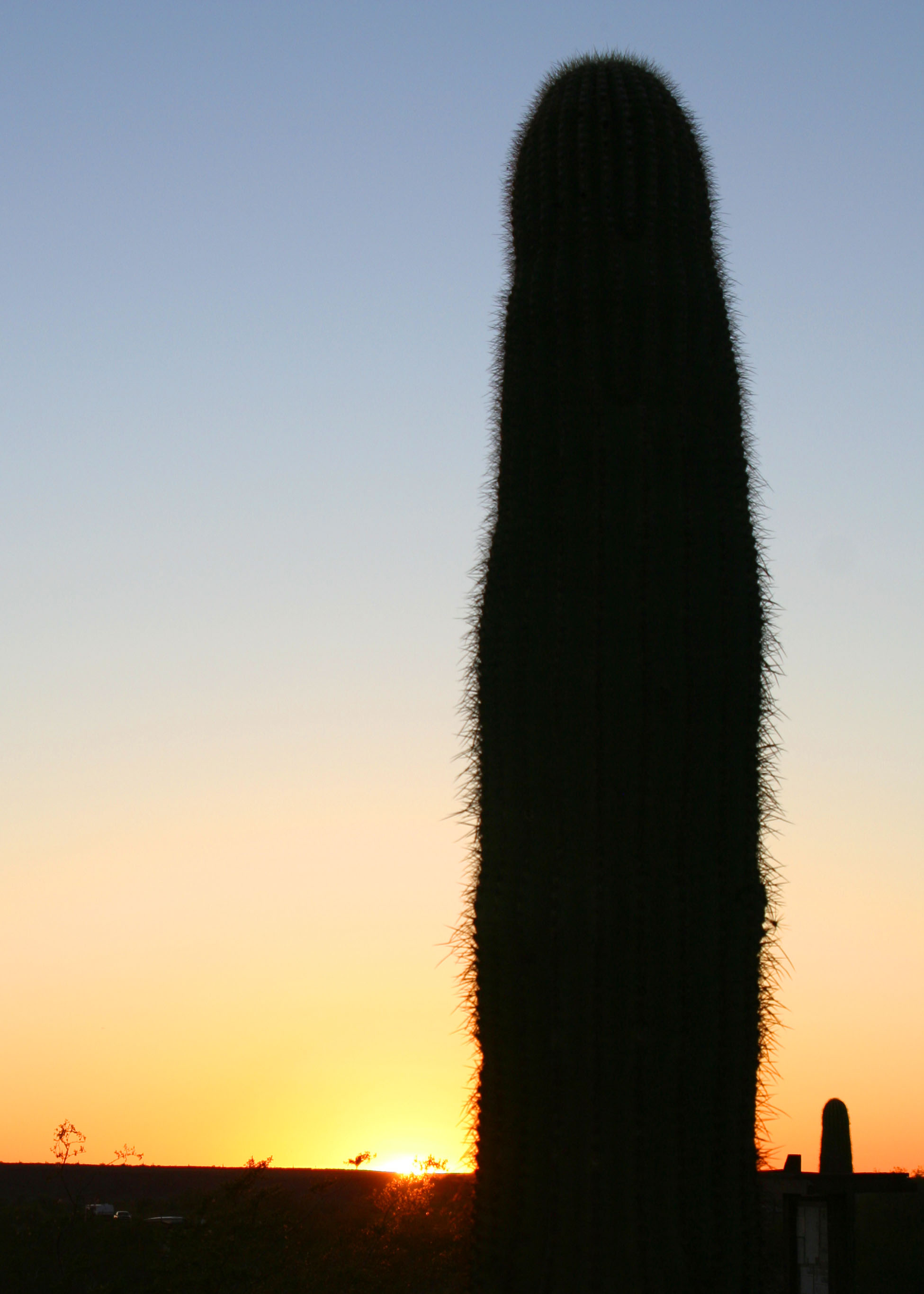
Setting sun outlines Saguaro Cactus at Painted Rock Petroglyph Site in southern Arizona. Photo by Curtis Mekemson.

The setting sun outlined the Saguaro.
 

An Alaskan Poet and a Saguaro… Organ Pipe Cactus National Monument

An “armless” saguaro at Organ Pipe National Monument is outlined by the sun’s setting rays.

David McElroy and his wife Edith Barrowclough came down from Alaska recently to visit Peggy and me at our home in Southern Oregon. Edith went to high school with Peggy in Port Clinton, Ohio. David is an Alaskan Bush Pilot and a published poet, which makes for an interesting combination.

In addition to the high school connection, our son Tony now flies helicopters for the Coast Guard out of Kodiak, Alaska and I once lived in Alaska. We also share a love of wandering. We told stories, visited a local winery, and ate Thai food in Jacksonville. Edith and Dave are good folks; we enjoyed the visit.

David left us a special present. He downloaded several unpublished poems from his computer to my MacBook. One, about a desert walk, reminded me of similar walks that Peggy and I have taken at Organ Pipe Cactus National Monument and other locations throughout the Southwest.

I decided to post David’s poem today (with his permission) and illustrate it with our photos from Organ Pipe. The National Monument is located in Southern Arizona on the border with Mexico. (My pardon for the skipped lines… I fought for two hours trying to turn off Microsoft’s paragraph function. Grrrr. Maybe one of  my readers can give me the solution. I am sure somebody will say, “It’s simple Curt…”

Desert Walk

Armless saguaro too young to wave

much less salute but old enough

for sex open their white flowers

to night and pollinating bats

that might, that must, come by.


Except for grasses, Mesquite

and most plants here hang seedpods,

a rich feed ripening for two kinds of doves,

these little rats along the trail,

cottontails, and ducks in the creek.


And so the need for hanging hawks,

owls that burrow, coyotes wafting

like dust through creosote brush,

and in the heat among cactus thorns

snakes sewing the needles of themselves.


Lush rock in low sun, green cattails,

the beat up tin of water over gravel,

hopeful saguaro ruler straight–

over a hill, around a bend,

the land composes a scene of itself.


And the woman on whom nothing is lost

aims her camera with one hand,

and with the other in complete confidence

passes the cup she’s been holding

over her shoulder to the hand


in the desert behind her which is mine.

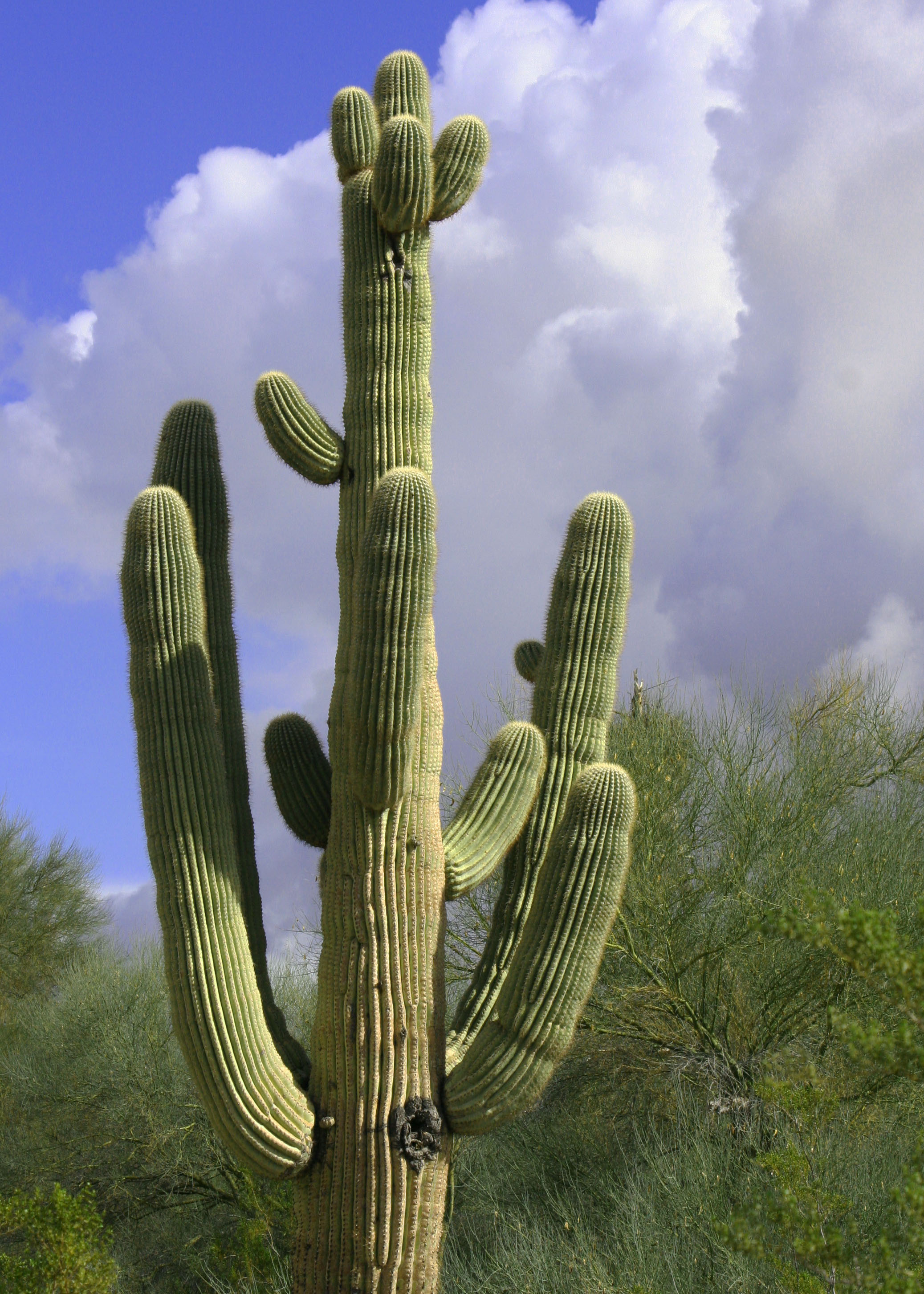
A saguaro “ruler straight.” Note the thorny protection. Peggy and I, and I am sure David and Edith, are quite careful when walking among cacti.

I prefer my saguaros with arms. It gives them more personality.

Check out the wild ‘gesture’ of the saguaro to the right and behind. The power lines are running to the headquarters of Organ Pipe National Monument.

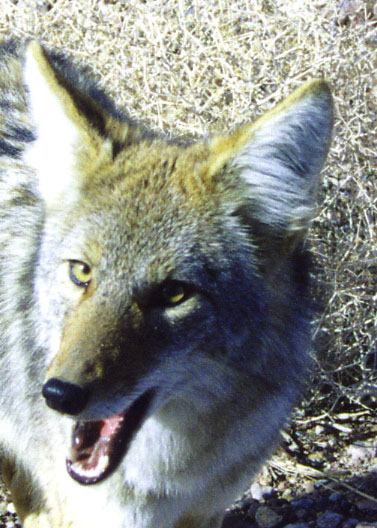
A coyote went “wafting like dust through creosote brush.” I took this photo at Death Valley National Park.

The desert Bighorn Sheep is another inhabitant of Organ Pipe National Monument, although rarely seen. I caught this big fellow hanging out near Lake Mead.

An organ pipe cactus is on the left in this scene from Organ Pipe National Monument. The cactus in front is a cholla. The cactus behind it is a barrel cactus.

A view across Organ Pipe National Monument showing the desert and rugged mountains. Peggy and I were out on an early morning walk.

One concern from anyone traveling to the National Monument is its location on the Mexican Border and the drug issue. I pulled this photo of the border fence at Organ Pipe off of the web. There has to be a better solution than building fences between nations. It reminds me of the Berlin Wall.

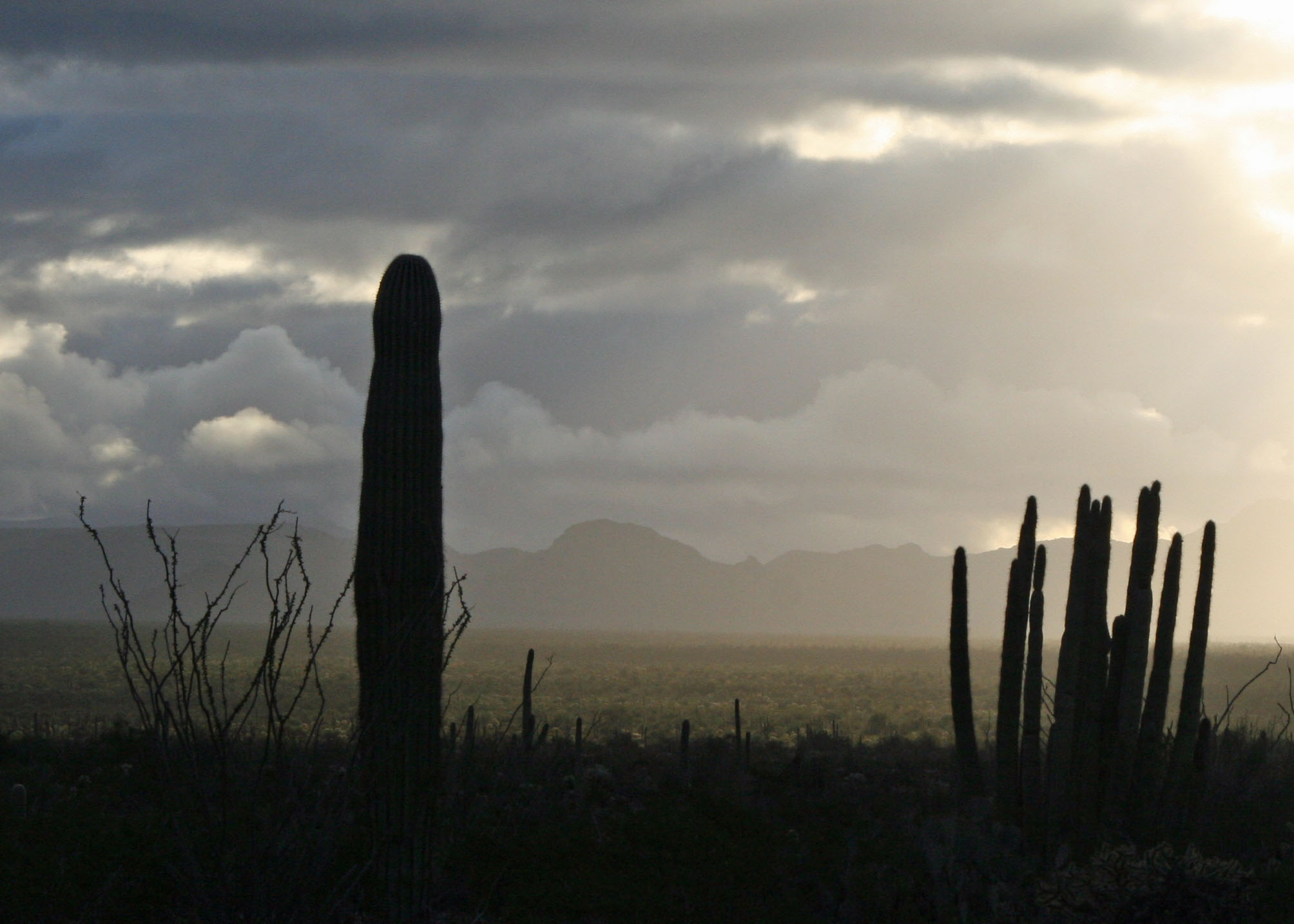
On a happier note, I’ll conclude with another photo from our early morning desert walk featuring saguaro and organ pipe cacti. The cactus on the left with the skinny (and spiked) limbs is an ocotillo.