UT-OH Chapter 21: A Raging Forest Fire, Evel Knievel, a Rocket Scientist, and a Big Dog Date… Part 2

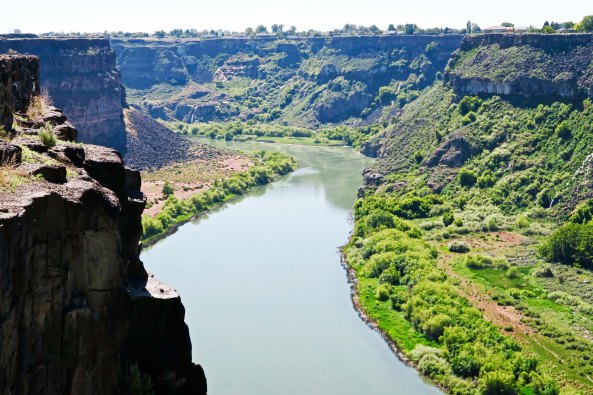
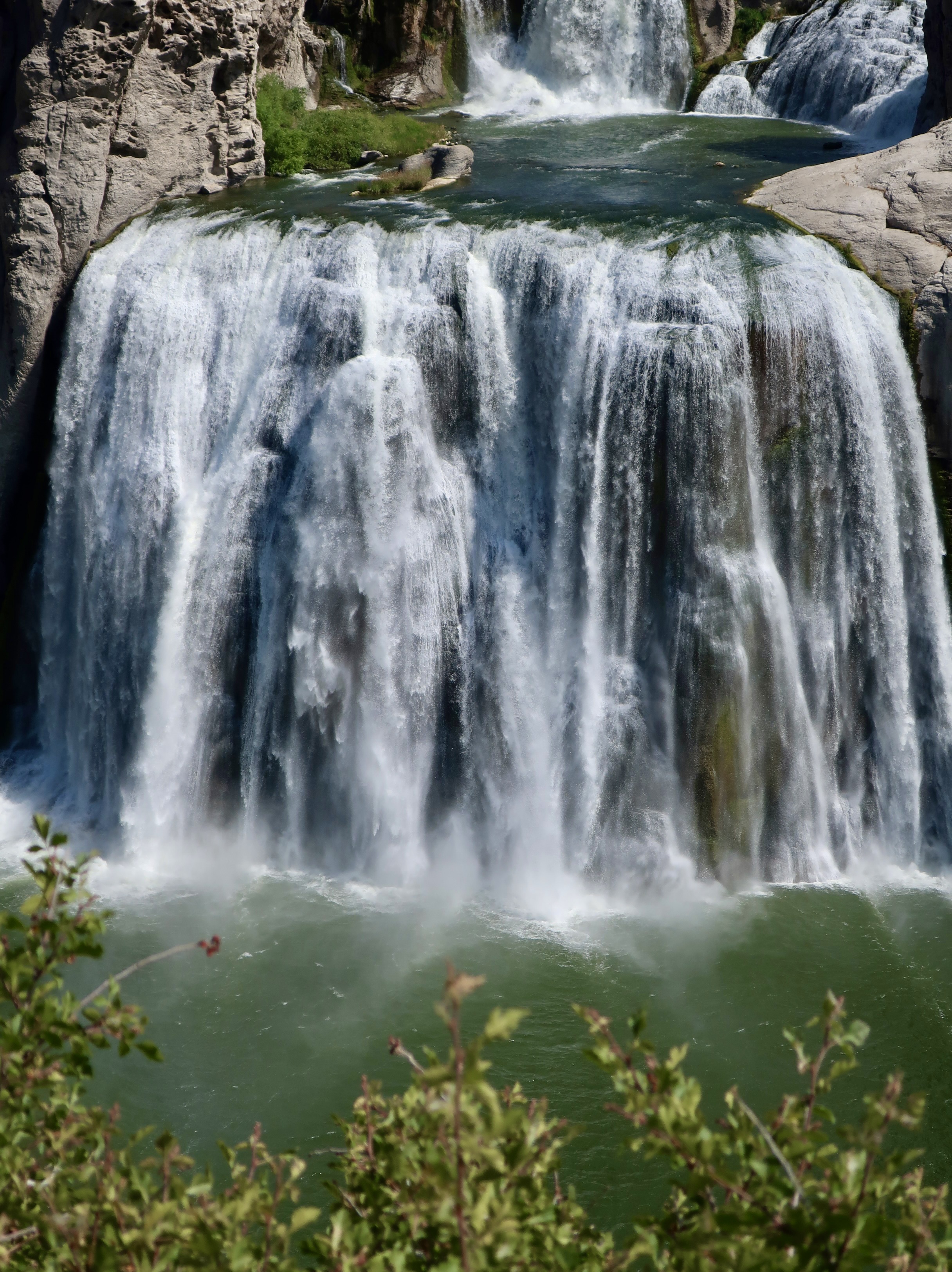
Idaho Falls on the Snake River is known for its beautiful falls. There are several. Thus the city’s name.
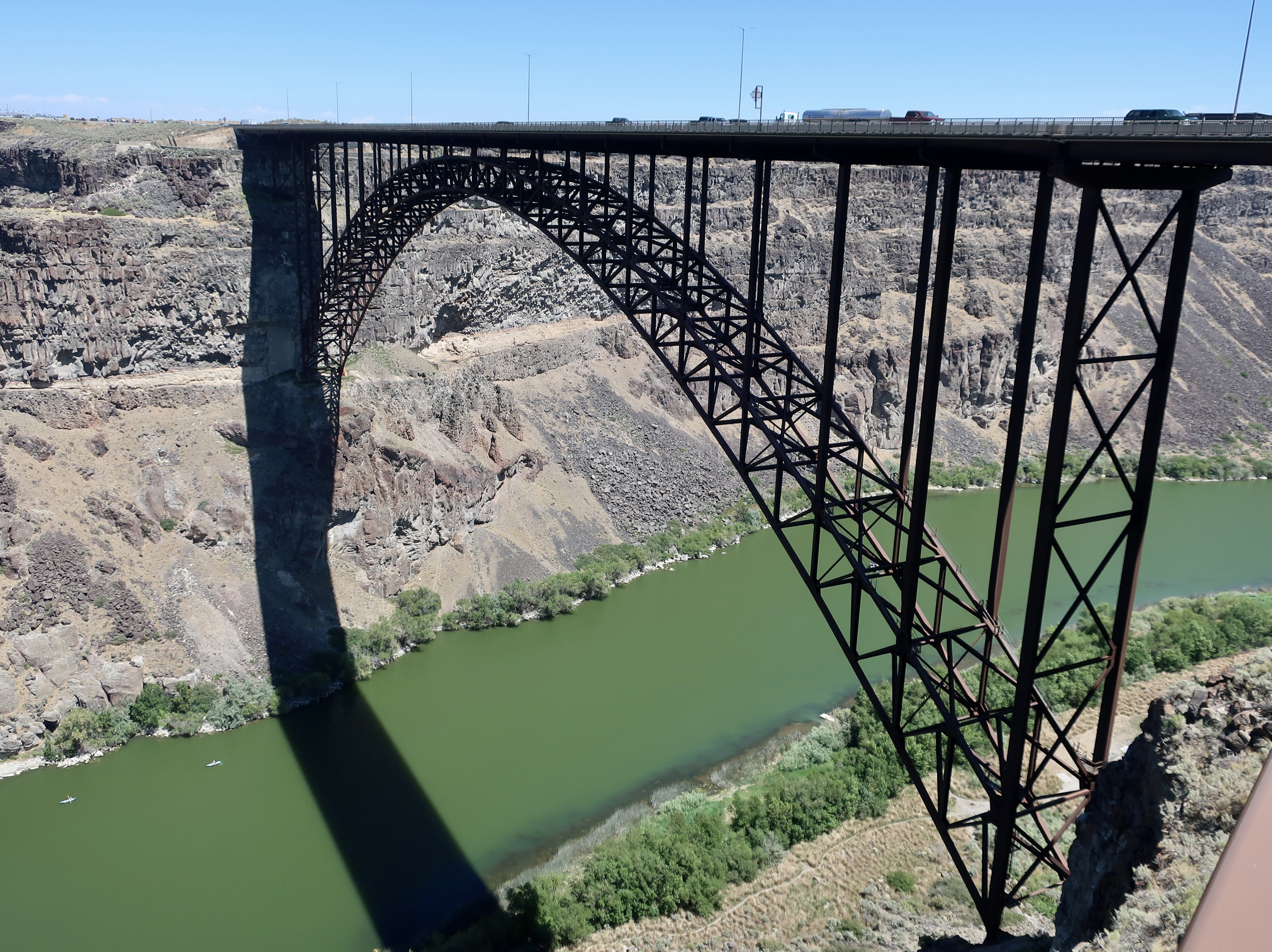
The easiest way to get across the Snake River is on this bridge.
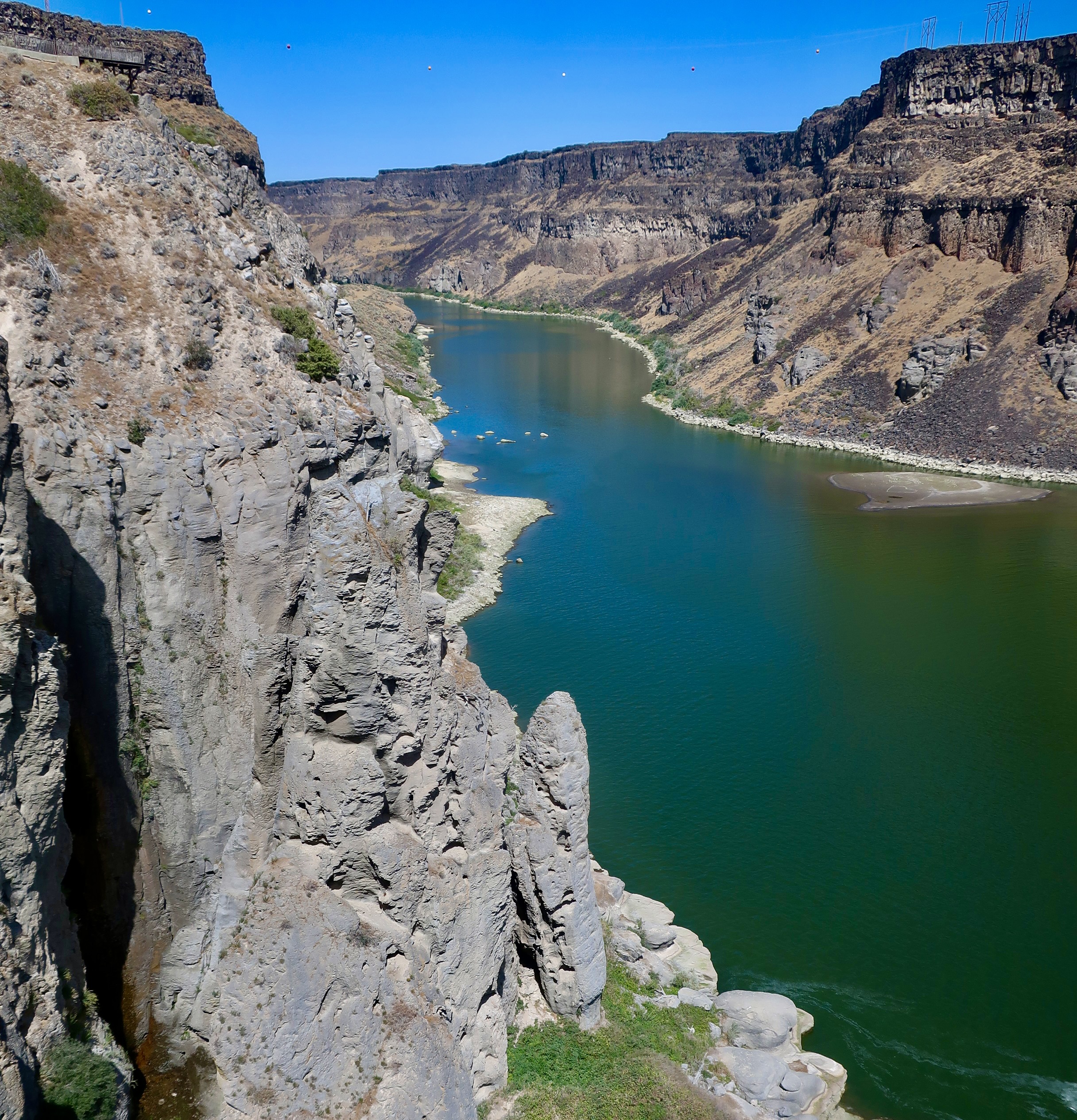
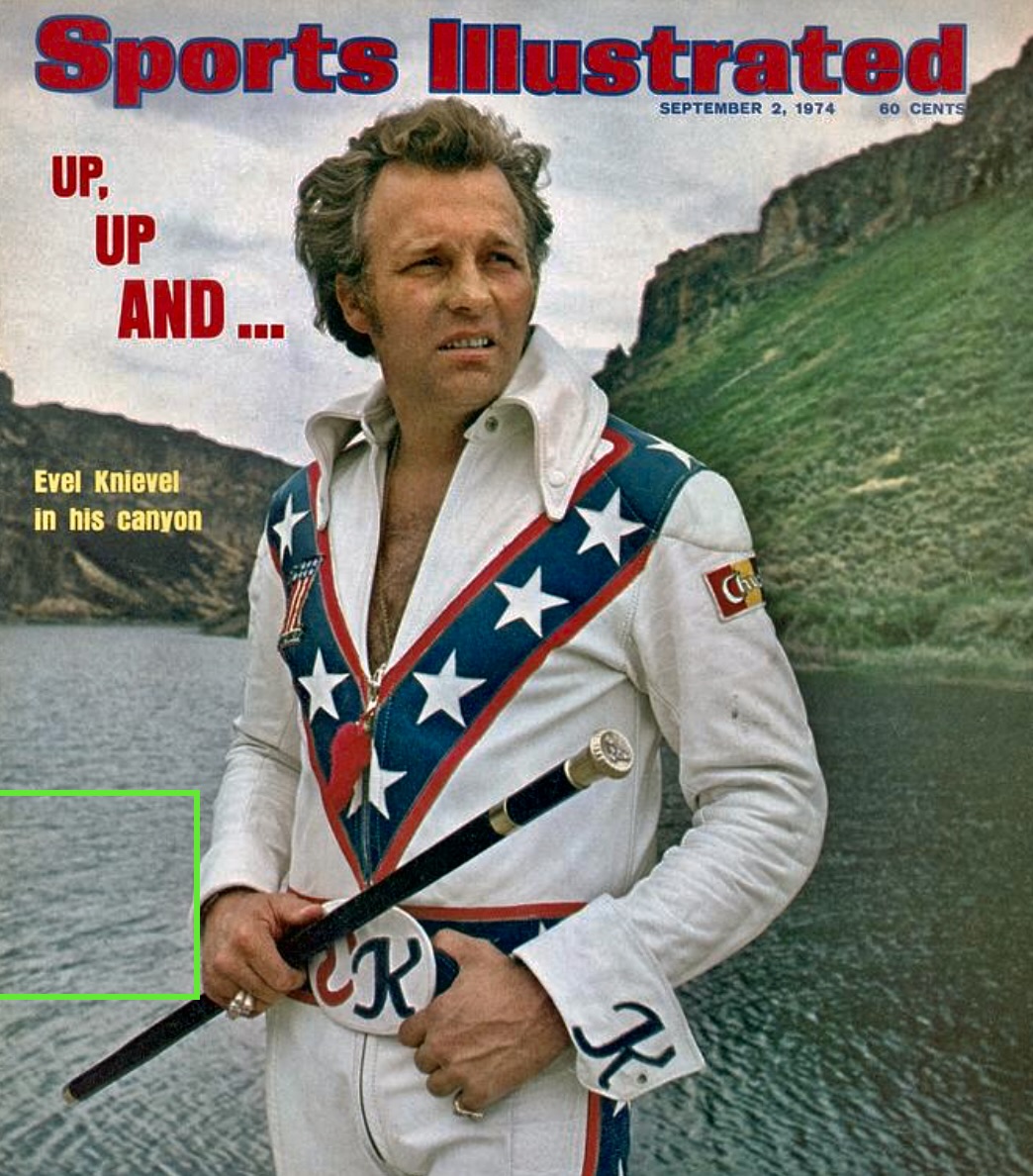
Daredevil Evel Knievel opted to jump across it in a modified motor/rocket cycle built by rocket scientist Robert Truax.
A Sports Illustrated cover that featured Knievel in the Snake River canyon.

Summer 1961: In my last post, I got up the nerve to ask a rocket scientist’s daughter for a Saturday night date to the California State Fair, spent a long week waiting, worked in a pear orchard for 9 hours on Friday, joined friends for a night of chugging beer that evening, and then left the party at midnight to fight a raging forest fire— all before the date. I am continuing the story today as I tell the tale of the longest weekend in my life...

One hour later I was in a mustering hall in Placerville filled with men being divided up into fire-fighting teams. By 2 a.m. I was clinging to the side of a steep canyon with one hand desperately holding onto a manzanita bush while my free hand wielded the short, heavy mattock. Our team had been assigned the responsibility of clearing a firebreak along the canyon rim. The whole sky was lit up in front of us by an inferno that was relentlessly marching toward our location. It encouraged fast chopping. Full speed ahead and damn the blisters.

It was not our night to play toast, however. The wind switched direction and we completed our firebreak. Somewhere around five a.m., a very welcome soul had shown up with water to refill our empty canteens. At seven we were told to take a break for breakfast. We returned to the staging area where men and machines competed for space, and the earlier night’s chaos had been whipped into a semblance of order. More importantly, a highly efficient cooking crew was turning out mountains of mouth-watering food. Starvation would not be a problem. 

After breakfast, our next assignment was dealing with small spot fires left behind by the main conflagration that was now trying to burn itself out. We marched through the mini-Armageddon with back pumps spraying anything that smoked. A change in wind direction might fan these dying embers into flames and a new outbreak. It was hot, dirty work, but lacked the intensity of the night before. 

A late lunch came and went. Afterwards our crew chief made us an offer I couldn’t refuse. The worst danger appeared to be over. Only mop-up work remained to be done. While our services were still needed, we could be relieved if we had other pressing responsibilities. I decided that Kathy was a ‘pressing responsibility.’ It was 2 p.m. and I had been fighting fire for 12 hours. There was just time to get home, beautify, and make it to Kathy’s home in Cameron Park by 5.

I won’t say the date was anticlimactic, because it wasn’t. Kathy was as charming as I expected and going to fairs has always been one of my favorite activities. Among the things that attract me are pigs and goats. I’m fascinated by pig behavior, especially at feeding time. I love to watch them squeal, snort, shove, and snap their way to the food pan. I particularly enjoy the ones that place both front feet solidly in the middle of the common food dish and glare defiantly around at fellow pigs. It’s so human. As for goats, I like their friendly curiosity and the way they come over to be scratched and nibble at your shirt.
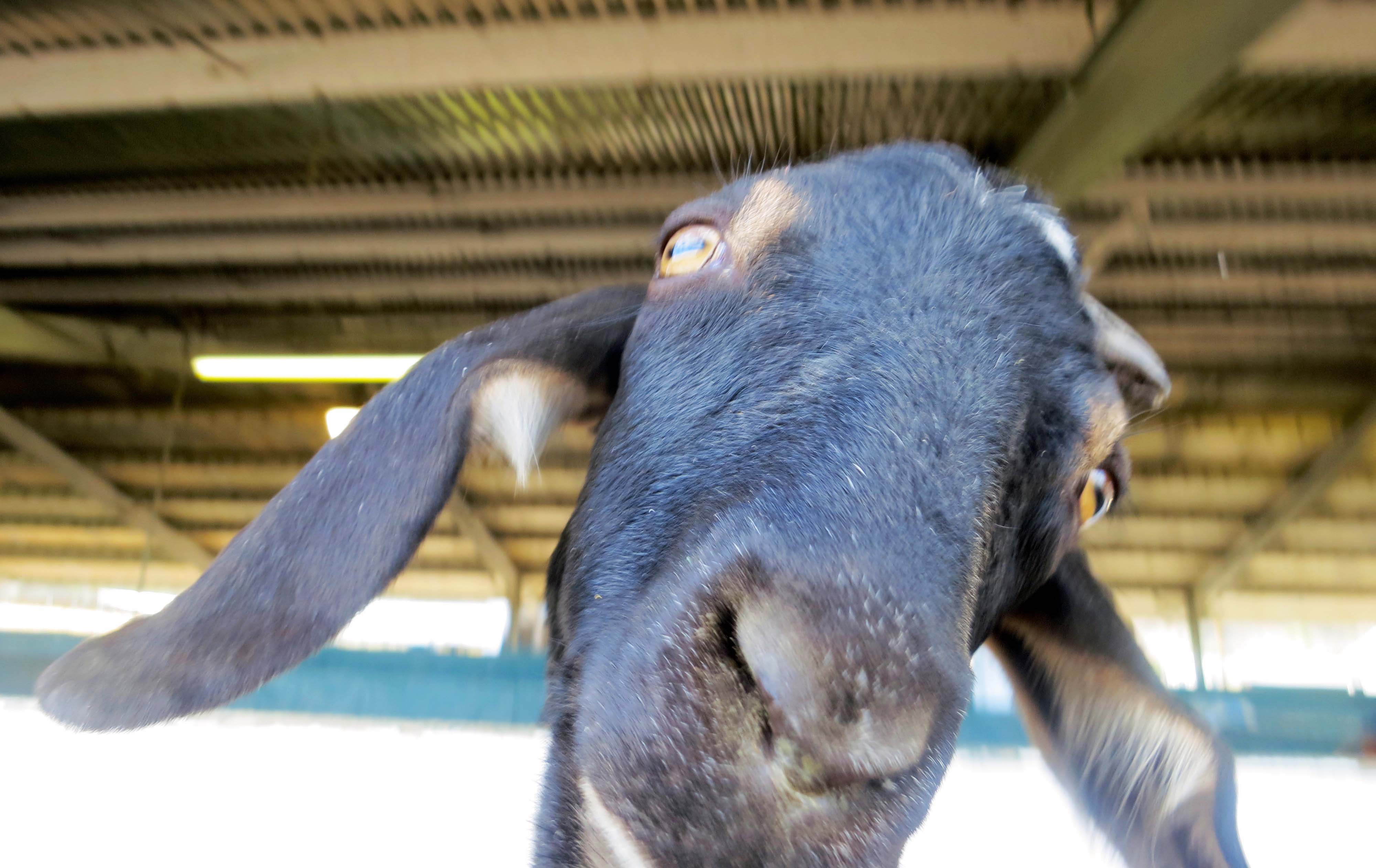
Goats have always been one of my top reasons for visiting fairs. This fellow was very curious about my camera. Shortly afterwards, he tried to nibble on my shirt.

I took Kathy to the animal barn. It’s a must-do on fair dates. Wiser heads might counsel this is not the way to impress a new woman friend, but I’ve always figured if my friend didn’t have a sense of humor about the animals, it was unlikely she would have a sense of humor about me.

A highlight of the evening was winning Kathy a car-filling stuffed dog. As a ten-year old kid, I once spent a couple weeks before the El Dorado County Fair practicing the game of toss a dime in a dish and win a prize. Each night I would religiously get out my plates and two dollars’ worth of dimes and toss away. I learned a little back flip trick that actually allowed the dime to stay in the dish. When the Fair came, I was loaded for bear, or at least stuffed bear. I picked out the booth that featured the animals I liked and bought a dollar’s worth of dimes. My very first dime managed to stick. 

“Even little kids win here,” the carnie shouted as he tossed me a bear. He wasn’t nearly as excited when I won the second bear. On the third, he banned me from the booth. It was one of my prouder moments. I sold the bears to the older brother of one of my friends for $10. He wanted to give one to his girlfriend but couldn’t win one. I had all the makings of becoming a great capitalist.

Unfortunately, I had lost the knack of dime toss by the time of my date with Kathy and the dishes had shrunk considerably. A tiny plate in the middle, slightly larger than a dime, was reserved for the bigger animals you were required to win to impress a girl. 

I decided I would have better luck at a ball toss where all the prizes were large. This is the game where you have to fit large softballs into small, numbered squares. You win if the numbers add up to more or less than specified high and low numbers. Naturally, it is almost impossible to do on skill given the size of the squares and the bounciness of the balls. It is also close to impossible to win on luck. So I did the next best thing, I cheated. I helped the ball behave by leaning over the barrier when the carnie was otherwise occupied. The crowd, seeing what I was up to, participated by distracting him.

“We have a winner,” the carnie shouted as he paraded around his booth with the large stuffed animal. “Everyone’s a winner at my booth.”  Sure. I’d bet a hundred bucks no one else had won one that day. We walked away laughing. 

Eventually the evening came to an end. I loaded Kathy and her large stuffed dog into my 56 Chevy and headed back up Highway 50. I delivered her home ten minutes early. We chatted away happily until midnight. Then the lights started blinking. 

“What?” I asked Kathy. 

“Oh, it’s just Mother,” Kathy explained somewhat embarrassed. “She always starts blinking the lights after I return from a date.” That was a first for me. I reluctantly said goodnight to Kathy as she and her large stuffed dog went inside, and I started my drive back to Diamond.

It was a successful conclusion to a day that had started 42 hours earlier and included 9 hours of working in the orchard, 5 hours of partying, 12 hours of firefighting, 7 hours of mundane activities, and the 7 hour date with Kathy. I was one tired puppy and just managed to make it home without passing out. 

We had one more date that summer, a day trip into the foothills above Diamond. It was my territory, so to speak, the boonies, far away from the world of rockets. Or so I thought. It turned out that her grandmother lived up near Pleasant Valley, on the edge of the same canyon where Caldor had once run its logging trains. Her father occasionally used the property for his hobby, shooting off rockets he had built. His dream was to create inexpensive rockets that would make space more affordable and could be retrieved for use again. And it was this dream that would eventually team him up with Evel Knievel, a man whose name was synonymous with daredevil.

During his life, Knievel made some 275 motorcycle jumps over cars, busses, and trucks. Fifteen of the jumps involved spectacular accidents. He suffered numerous concussions and shattered his pelvis three times. Overall, he broke 35 bones. Maybe he should have pursued a much tamer sport, such as playing NFL football.

But regardless of the injuries, he was always on the lookout for new ways to upgrade his act, obtain more publicity, and increase his income. Mainly this involved adding more vehicles to leap (for a number of years, he held the world record of 19 cars), but he also had a dream of jumping the Grand Canyon. The National Park Service wasn’t enthusiastic about the idea, however, which eventually led him to Idaho’s Snake River in 1974— and to Robert Truax. Knievel’s Harley wasn’t up for 1700-foot jump across the river. Truax offered to build him a rocket-cycle he could sit on that would. The jump failed after the parachute deployed prematurely, but Knievel survived with minor injuries.

That, however, was far into the future. Kathy and I enjoyed the date, returned home, and began to prepare for heading off to college.
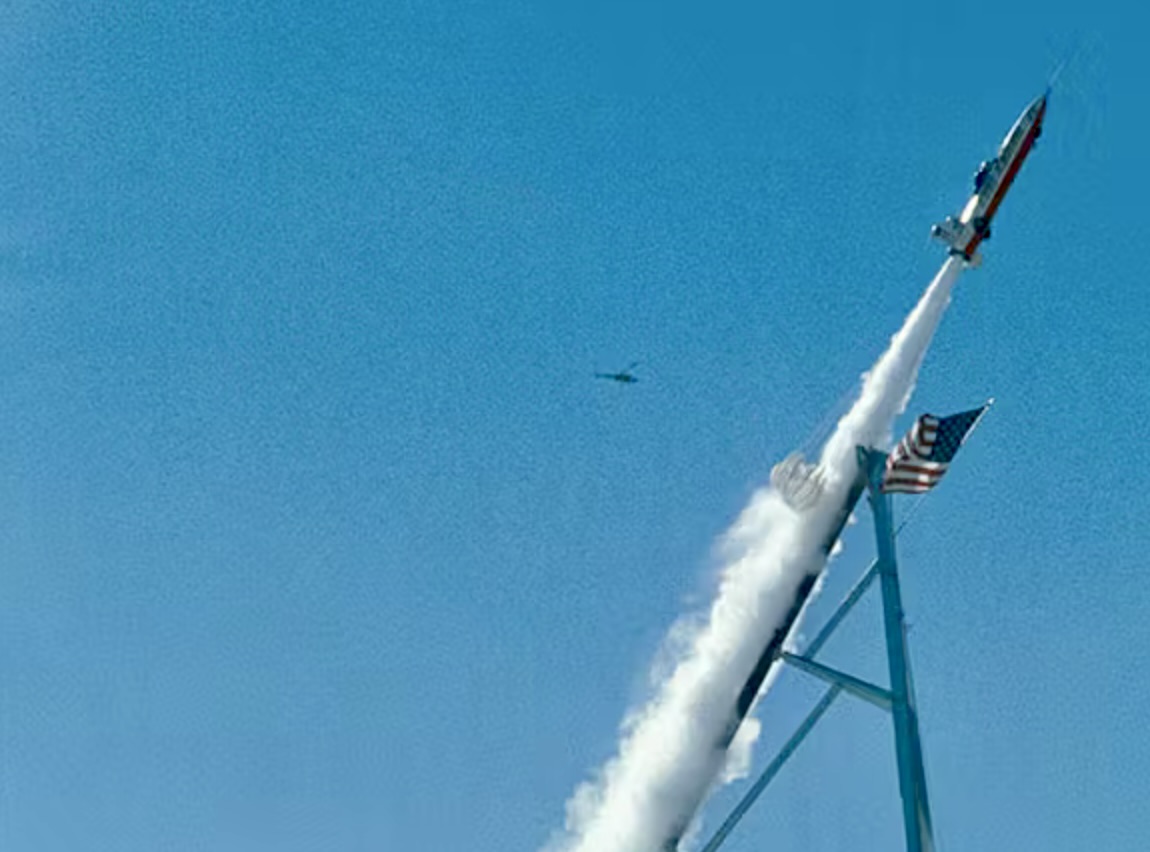
The blast off of Evel’s attempted jump across the Snake River. It may be the only rocket ship ever that came with wheels.

Friday’s Post: The revenge of the EX.
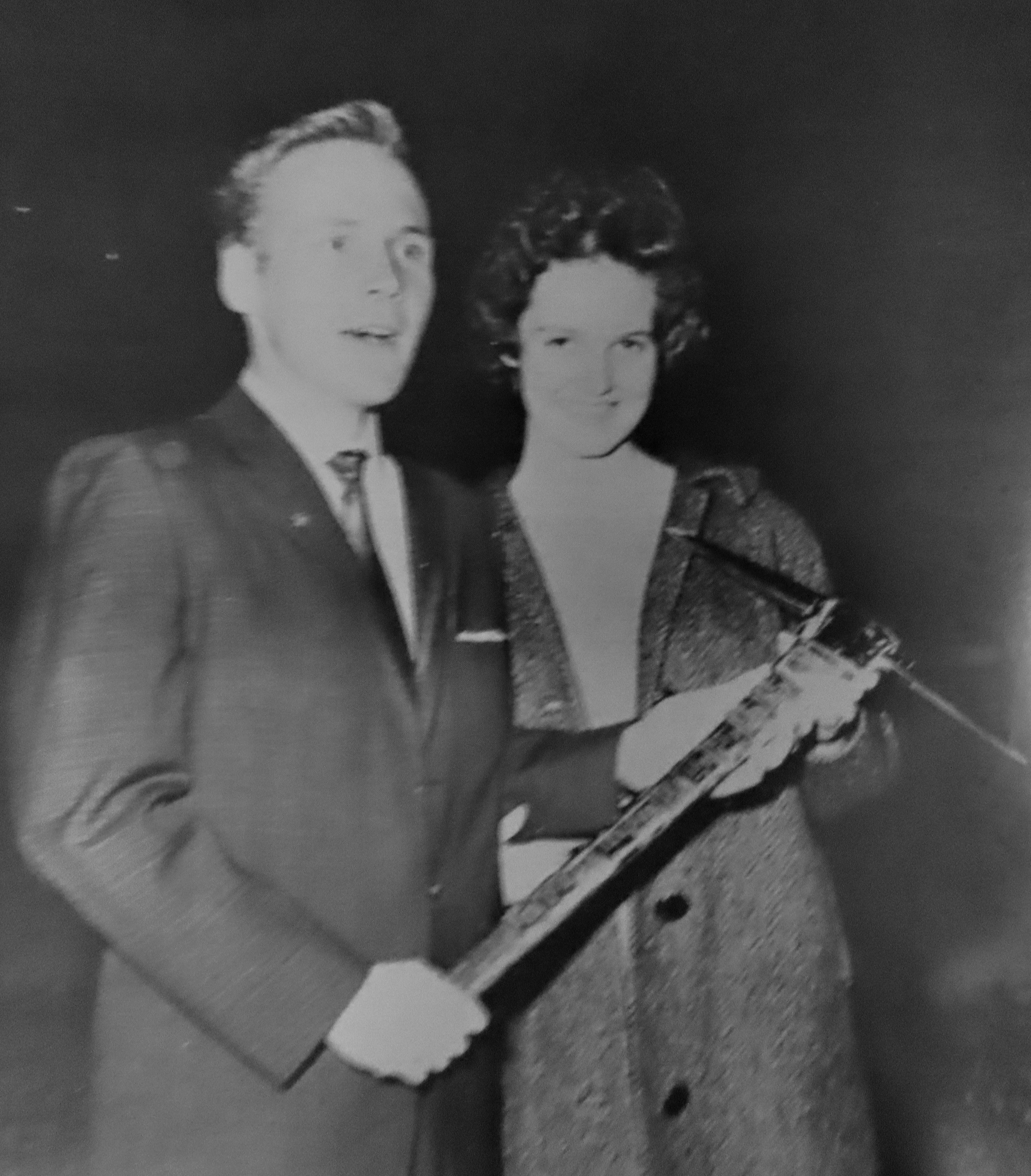
In this aging photo from my 1962 Sierra College Annual, Student Body President Ray Hjertager and his date, Mary Carol Nelson, hold the coveted Pick-ax, symbol of Sierra’s football victory over crosstown rival, American River College. Ray has to keep a tight hold on it. There is a long-standing tradition that whoever loses the Pick-ax at the year’s Big Game will try to steal it back. Keeping it was my responsibility the following year when I was Student Body President. A fiendish plot by my ex-girlfriend from high school was hatched to steal it from me…

UT-OH Chapter 20: Young Love, a Forest Fire, Evel Knievel and a World-Famous Rocket Scientist… Part 1

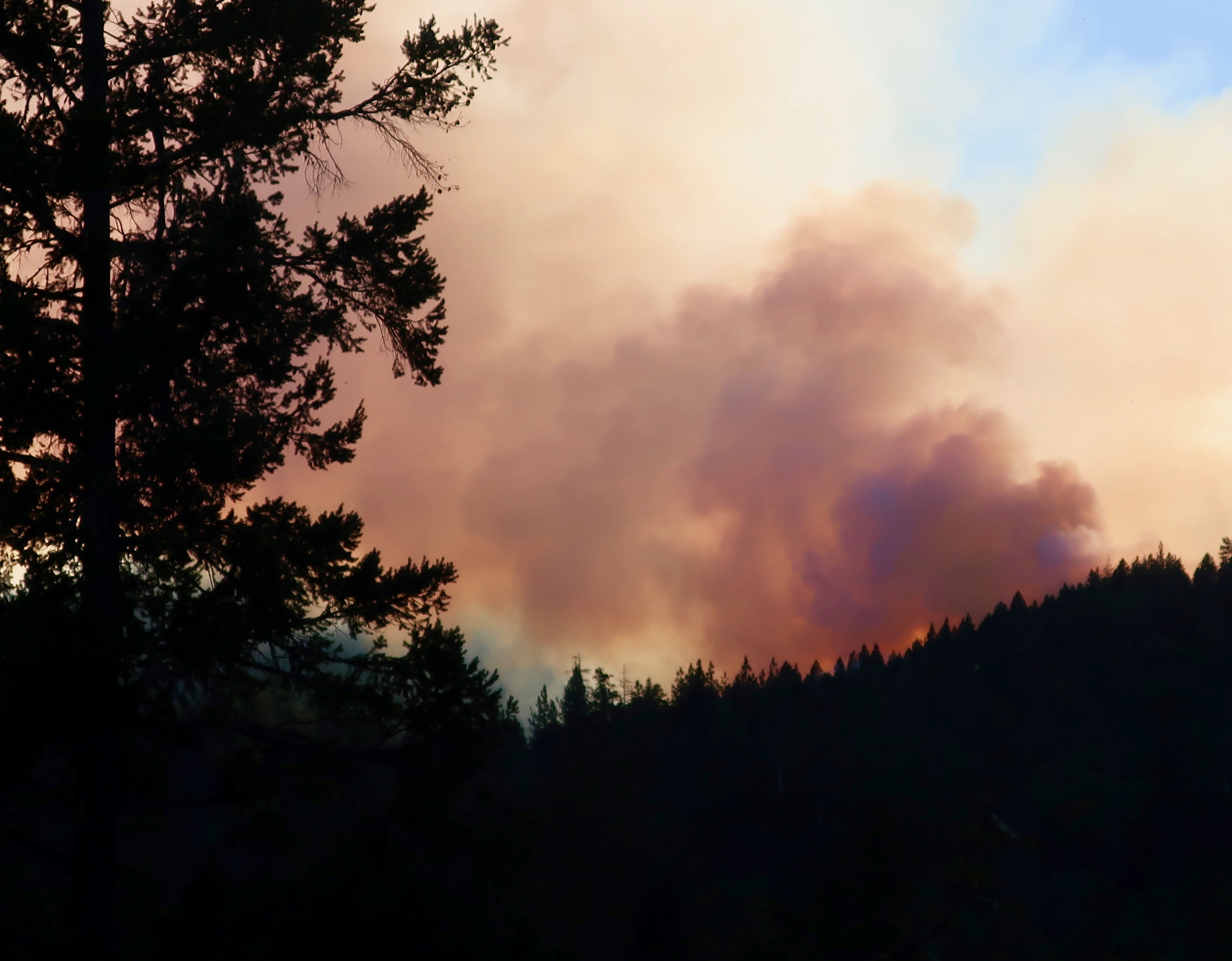
Living in the forests of the Western United States is subject to a constant threat of forest fires in the summer. This is a photo from our deck when we lived in Oregon. Fires raged throughout the area a number of times while we were there, and once we had to evacuate when the one came within a mile of our home. The forest fire I fought as an 18-year old near Georgetown, California would have looked much like this.

I was a senior before “love” hit me: That starry eyed, loop de loop feeling which has little to do with rational thought and one hell of a lot to do with hormones and ancient instincts that go all the way back to the beginning of life. It had all of the subtlety of a sledge hammer. Nature has a myriad of ways to assure we pass on our genes. A mere sniff works for some. For humans it’s more complicated. We are expected to hang out and help raise kids, a process that takes 18 years, or longer— at a minimum. That takes a lot of incentive.

Falling ‘head over heels in love,’ is just the beginning.

I met D in speech class. She was blond, bright, sexy and interested in me— an irresistible combination. Somehow, she ended up sitting in my lap as a joke when the teacher was a few minutes late. And bam! I was in love. We started dating and decided to ‘go steady.’ I even gave her my class ring. We became an item in the lingo of the day, a couple to be invited out together, a future with a question mark. We even had matching shirts, the ultimate in commitment.

But my question mark was bigger than D’s, or at least it came to fruition sooner. I was graduating from high school while she had another year. There was a big world waiting out there and I wasn’t ready to limit its horizons. So, with a degree of sadness, I ended the relationship. D was not happy. She had our future planned, even down to naming the babies. 

That summer, being a ‘free man,’ several young women attracted my attention, one was Kathy Truax. She had large brown eyes that consumed and a sharp mind that challenged. She seemed sophisticated, almost exotic to me, and came from a very different world. 

Her father, Robert Truax, was one of America’s premier, pioneer rocket engineers. He had kicked off his career prior to World War II when a childhood interest in Robert Goddard led him to build rockets at his home in Alameda, California. He had then gone on to work with the Navy on rocket development during World War II, and later helped build both the Thor and Polaris missiles. By 1959 he had left the military and was heading up Aerojet-General’s advanced rocket development division in Sacramento, California.

Kathy had transferred to El Dorado County High School as a senior when her dad had gone to work at Aerojet. She was on her way to Occidental College in Los Angeles in the fall and I was on my way to the local community college. They were a long way apart, and miles weren’t the only measure. Still, I thought a date would be fun.

The only drawback was I had to pick up the phone and call. There was a very real chance that Kathy would say no, and I am lousy at rejection. So I practiced something I am good at, procrastination. When I finally worked up the nerve to call, she picked up the phone on the first ring. “Oh, hi Curt,” she answered cheerfully. No, she wasn’t totally tied up in getting ready for Occidental and, yes, it would be fun to go out. So much for all of the time I’d spent anguishing. Our date would be a visit the California State Fair in Sacramento the following Saturday evening. I hung up with a loud ‘YES’ to myself.  The rest should be easy.

Except it wasn’t. When is it ever. Time slowed down to thwart me. Weeks later, Friday finally arrived. Fortunately, pear season was at its height, and I had a busy nine hours swamping out 50-pound boxes of pears from the orchard and bench pressing them onto a fruit truck. That night, my friend Hunt Warner was hosting a beer party that killed several more hours not to mention brain cells.  Midnight and Saturday were thirty minutes away when the phone rang.

“Hey Curt, it’s your mom,” Hunt announced over the din.

I had a sinking feeling that there was a family emergency.  And yes, it was, just not family.  The forest around Georgetown, a small community in the Sierra foothills, was burning down. The United States Forest Service had called seeking a few good men but was willing to accept anything that walked on two legs and could swing a mattock (a heavy tool with a pick on one side and a hoe on the other). 

I had signed up to fight fires at the beginning of summer and had gone through a one-day training, which apparently qualified me to go out and risk my life. It was one of those things you do on a lark and later wonder why. I was definitely at the wondering stage when my mother gave me the phone number I was supposed to call. Normally, my better judgment would have kicked in.  The date was looming, and a good party was roaring. But I was eighteen and had three (or more?) beers down my gullet. Fighting a fire seemed exciting. It was an adventure not to be missed, an Ut-Oh moment for sure… Stay tuned: Part II of today’s post will be next Wednesday.

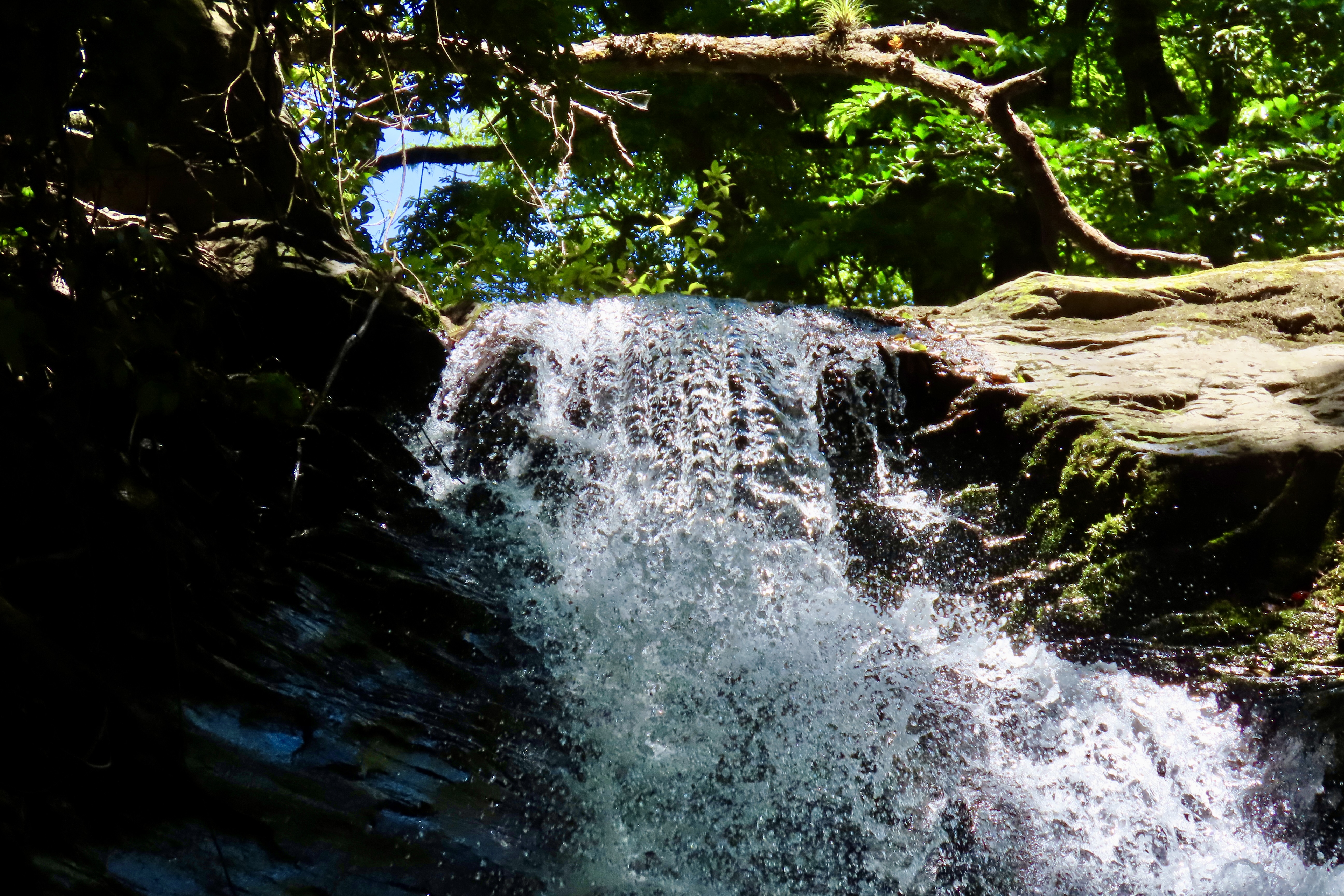
Monday’s Travel Post: Scenes from Costa Rica.

Jumping into and across the Snake River Canyon of Idaho… The 10,000-Mile Bike Trek

When Peggy and I arrived at the bridge across the Snake River, a man was hanging by his fingers on the edge of the bridge, 500 feet above the water.

When Peggy and I arrived at the Perrine Bridge across the Snake River, a man was hanging by his fingers on the edge, 500 feet above the water.

I biked out of Bozeman, Montana facing another climb across the Rockies. It turned out to be surprisingly easy. And beautiful. Highway 191 follows the scenic Gallatin River with its rushing waters up into the northwestern corner of Yellowstone National Park in Wyoming. Snowmelt during June turns this branch of the Missouri River into a seething whitewater-fantasy trip for rafters. Beyond its beauty and rapids, the river is also known for its world-class fly-fishing.

Snow melt turns the Gallatin River of Montana into a river runner's dream.

Snow melt turns the Gallatin River of Montana into a river runner’s dream.

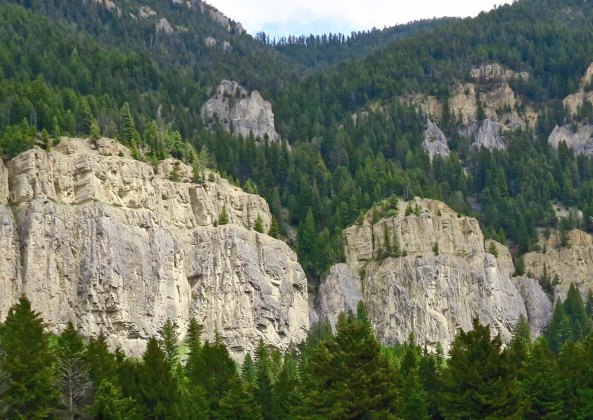
Cliffs along the Gallatin River on Montana's Highway 191 add to the areas scenic beauty.

Cliffs along the Gallatin River on Montana’s Highway 191 add to the area’s scenic beauty.

Trees along the Gallatin River on Montana's Highway 191.

As does the forest.

Fly fisherman try their luck in the upper waters of the Gallatin River in Wyoming's Yellowstone Park.

Fly fishermen try their luck in the upper waters of the Gallatin River in Wyoming’s Yellowstone Park.

By the time I had biked the route in August of 1989, the river had ceased its mighty roar but held onto its scenic beauty. Things were still roaring when Peggy and I drove up it in June as we re-traced my route. We stopped to admire the rapids and watch rafters. In the town of West Yellowstone, Peggy relived her youth by trying to find a bar she had once visited with a fake driver’s license in the early 70s.

She had obtained a summer job as a waitress in Yellowstone Park between her freshman and sophomore year at Mary Baldwin College in Virginia. (Mary Baldwin, once a finishing college for Southern Belles, was trying to make its way into the 20th Century. Peggy, a Northerner from Ohio, was much more interested in obtaining an education than becoming a ‘lady,’ and had only lasted for two years before transferring to the University of Tennessee in Knoxville. UT included certification for working with the hearing impaired as part of its curricula, which was where she wanted to focus.)

In the meantime, Yellowstone had provided a welcome reprieve from Mary Baldwin— plus first love. Between waitressing at the park’s lodge and watching Old Faithful shoot towering plumes of water skyward, Peggy had discovered Bill, who definitely wanted to show her a good time. Part of this had included the trip into West Yellowstone and barhopping with a fake driver’s license.

My bike route followed Highway 20 out of West Yellowstone up and over the Continental Divide at the 7072-foot Targhee Pass, which also served as the border of Idaho. From here on, rivers would be flowing into the Pacific Ocean. I continued on Highway 20 down to Rexburg following Henry’s Fork of the Snake River and then made my way west on Highways 33 and 93 to the Craters of the Moon National Monument.

Henry's Fork flows into the Snake River, which flows into the Colombia River and then into the Pacific Ocean. I had left the great Mississippi-Missouri River drainage system behind.

Henry’s Fork flows into the Snake River, which flows into the Colombia River and then into the Pacific Ocean. I had left the great Mississippi-Missouri River drainage system behind.

The mountains of central Idaho loomed in the distance above what was probably a potato farm near Rexburg.

The mountains of central Idaho loomed in the distance above what was probably a potato farm near Rexburg.

Idaho's Highway 33 seemingly stretches on forever as so many roads did during my 10,000 mile bike trek around North America.

Idaho’s Highway 33 seemingly stretches on forever as so many roads did during my 10,000 mile bike trek around North America.

Pickle's Place is one of many delightfully unique restaurants I found along the road. Located in Arco, Idaho (once known as Root Hog) it features the Atomic Burger in honor of the fact that Arco was the first place in the world to be lit with atomic power.

Pickle’s Place is one of many delightfully unique restaurants I found along the road. Located in Arco, Idaho (once known as Root Hog), it features the Atomic Burger in honor of the fact that Arco was the first place in the world to be lit with atomic power.

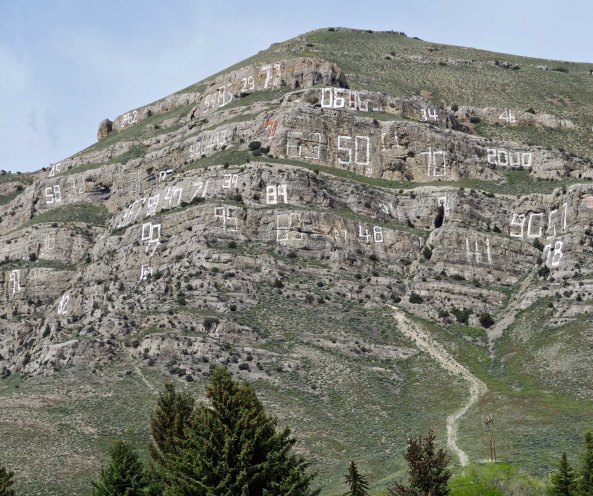
This mountain next to Arco features the local high school's graduating classes going back to the early 1900s.

This mountain next to Arco features the local high school’s graduating classes going back to the early 1900s.

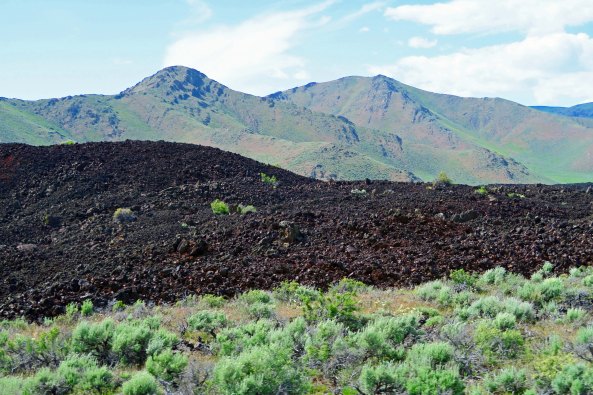
The Craters of the Moon National Monument encompasses a wonderfully weird lava flow on the Snake River Plain that covers 618 square miles and was formed between 15,000 and 2,000 years ago. Early astronauts, including Alan Shepard and Edgar Mitchell, had arrived here on August 29, 1969 to practice future landings on the moon— one month after Neil Armstrong had already taken his “one small step for man; one giant leap for mankind.”

Idaho's Highway 93 winding its way through the northern part of Craters of the Moon National Monument, seemingly disappears here.

Idaho’s Highway 93, winding its way through the northern part of Craters of the Moon National Monument, seemingly disappears here.

Nature, in her marvelous way, is gradually reclaiming the volcanic landscape.

Nature, in her marvelous way, is gradually reclaiming the volcanic landscape. Sagebrush is the most obvious plant in the area.

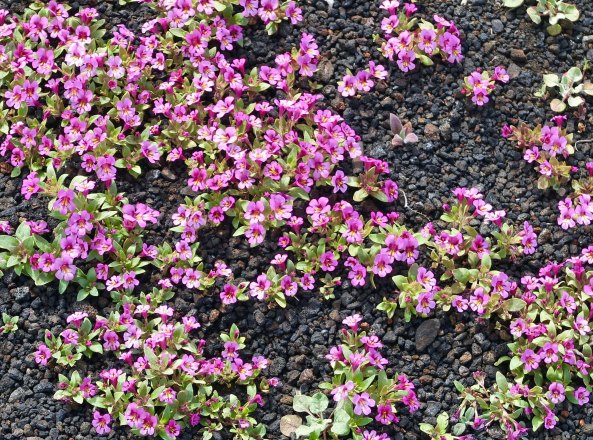
Flowers at Craters of the Moon National Monument in Idaho.

But Peggy and I also found these flowers.

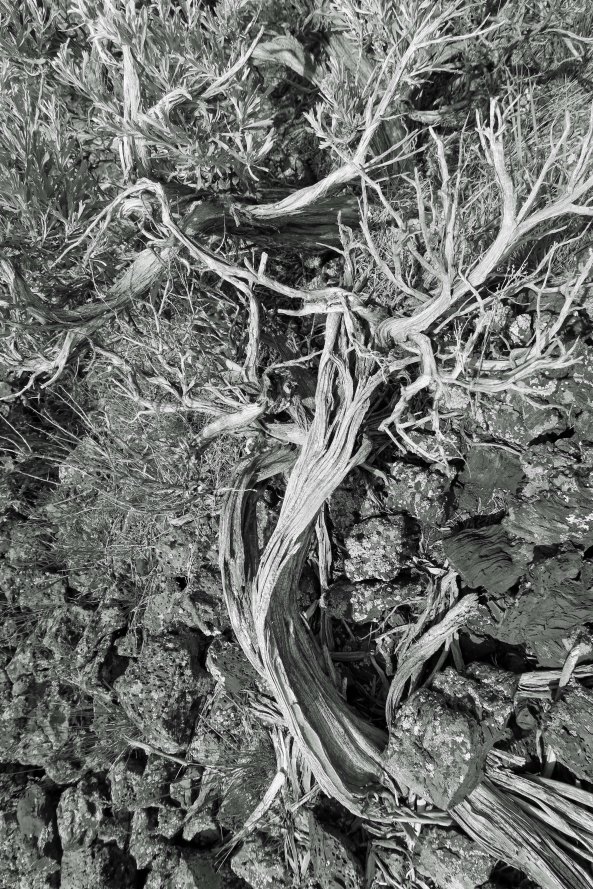
Dead sagebrush at Craters of the Moon National Monument in Idaho.

As well as this stark but beautiful reminder of how difficult it is to reclaim lava.

Art in the Park sculpture in Craters of the moon National Monument in Idaho.

This sculpture added a colorful touch to the monument.

Sculpture in Craters of the Moon National Monument in Idaho.

I also liked this perspective, which seemed to capture the strangeness of the monument. A small-explorer’s foot can be seen on the right.

From Craters of the Moon, it was a short 80-mile ride to the Snake River and Twin Falls over relatively flat country. The river features a dramatic 500 feet deep canyon, which was created by cascading water from melting glaciers. When Peggy and I arrived, a man was dangling on the edge of the Perrine Bridge by his fingers, ready to leap into the canyon (featured at top of this post). Fortunately he had a parachute on. Still, he plummeted for 200 feet or so before engaging it. Scary stuff.

Perrine Bridge across the Snake River near Twin Falls, Idaho.

See the shadow on the river. It’s made by the parachute, the small triangle located center-left above the shadow.

Snake River looking west from the Perrine Bridge overlook.

This view of the Snake River is looking west from the overlook next to the Perrine Bridge. Boats have created the wakes.

When I crossed the bridge on my bike in 1989, I was thinking of another leap across/into the canyon— that of Evel Knievel in 1974. Evel, at the time, was synonymous with the word daredevil. During his life he made some 275 motorcycle jumps over cars, busses, and trucks. Fifteen of the jumps involved spectacular accidents. He suffered numerous concussions and shattered his pelvis three times. Overall, he broke 35 bones. Maybe he should have pursued a much tamer sport, such as playing NFL football.

Knievel was always on the lookout for new ways to upgrade his act, obtain more publicity, and increase his income. Mainly this involved adding more vehicles to leap (for a number of years, he held the world record of 19 cars), but he also had a dream of jumping the Grand Canyon. Concerns with National Park regulations, however, eventually led him to the Snake River. The 1700-foot jump was a bit long for his Harley, though, and this is where Robert Truax came into the picture.

Truax was one of America’s premier, pioneer rocket engineers, beginning his career prior to World War II when a childhood interest in Robert Goddard led him to build rockets at his home in Alameda, California. He then went on to work with the Navy on rocket development during World War II and later helped build both the Thor and Polaris missiles. By the late 50s/early 60s, he had left the military and was heading up Aerojet-General’s advanced rocket development division in Sacramento, California. I met the man when I promised him I would have his daughter home by midnight.

Kathleen (Kathy) Truax was a dark-haired beauty with brains to match. She had transferred into El Dorado Unified High School in Placerville during my senior year. After graduation, I had worked up the nerve to ask her out on a date to the California State Fair in Sacramento. Her immediate “yes” had me kicking myself for not asking sooner.

The weekend turned into a marathon. I had worked ten hours on Friday hauling 50-pound boxes of pears out of an orchard and then gone to a party at a friend’s. My mother called at midnight to tell me that the forest service had just phoned wanting me to help fight a raging forest fire that was threatening to engulf the small foothill community of Foresthill. So away I had gone and spent from 2 a.m. until 10 a.m. chopping a fire trail across a steep American River canyon with a heavy pickaxe. The looming inferno encouraged fast work.

After a two-hour nap break and lunch, our crew chief had told us that the fire was burning back on itself and that we could leave if necessary. I’d buzzed home to Diamond Springs, showered, and taken off for Cameron Park where I picked up Kathy in my 54 Chevy, met her dad, and gone on to the State Fair. I returned her home promptly at midnight as promised. We’d had fun and I had won Kathy a large stuffed bear that hardly fit in the back seat.

Later that summer, we had gone on a date up into the Sierra foothills near Pleasant Valley where her grandmother lived. Kathy had told me that her dad shot off rockets in the area that he had built in his garage. His visionary dream was to build inexpensive rockets that would make space travel affordable for everyone. Eventually, 13 years after the summer I had dated Kathy, that dream would lead him to build the Volksrocket (Skycycle X3) designed to carry Evel Knievel across the Snake River Canyon. The rocket had worked fine, but the parachute had malfunctioned, deploying when the rocket took off, which allowed the wind to pull it back into the canyon. Evel had landed on the river’s edge with minimal injuries (for him), and Truax had taken responsibility for the accident.

While Knievel died in 2007 and Truax in 2010, their dream was finally realized on September 16th of this year. Professional Hollywood stuntman Eddie Braun working with Truax’s son Scott used an exact replica of the Skycycle X3 with a well-tested parachute to successfully jump the canyon. Children of both Knievel and Truax were there to witness the event. Had Peggy and I been a couple of months later in our route review, we would have been there as well.

Looking east up the Snake River from the Perrine Bridge toward where Evel Knievel tried his 1974 leap across the river.

Looking east up the Snake River from the Perrine Bridge toward where Evel Knievel tried his 1974 leap across the river.

NEXT BLOG: I bicycle across Nevada and hear voices. Seriously. Were the desert gods trying to tell me it was time to end my journey?