Introduction to the National Park Series… A Quick Review of the Five We Have Visited in 2024

Each national park has its own beauty and uniqueness. We visited the Florida Everglades in February just before we started our trip west.

Peggy and I are great fans of national parks. Each has its own beauty and uniqueness. After all, that’s how they become national parks! In 1999 Peggy and I took a year’s sabbatical from our jobs for an extended trip around North America. One of our goals was to see as many national parks as we could. We ended up visiting 50, which was close to all that America had at the time. We also visited Canadian national parks as we drove the Alaska Highway up and back from Alaska.

We’ve continued to visit parks ever since. Several, we have returned to many times. Our journey up the Pacific Coast that we just concluded included four. I’m going to do a quick review of them today and throw in the Everglades since we were there before we headed west. Then I will move on to the two parks we just visited: North Cascades and Glacier. But there is more—as they always used to say on late night tv ads.

Over the past three years, as Peggy and I zigzagged our way across the US six times, we visited several parks including four that I didn’t have time to blog about: The North Rim of the Grand Canyon, Mesa Verde, Big Bend, and Theodore Roosevelt. That will bring the total in this series to 11 counting today’s review. Let’s get started! Note: All photos in this series were taken by either Peggy or me unless otherwise noted.

THE EVERGLADES

One way to think of the Everglades is as a vast, slow flowing river spread out over 7,000 square miles. According to the National Park Service, the “Everglades are home to frogs, toads, alligators, hundreds of species of birds, 300 different species of fish, Florida panthers (endangered), crocodiles, and snakes, just to name a few!” There are, also, more mangroves than anywhere else in North America.

The bird life was incredible! It ranged from Osprey…
To anhingas…
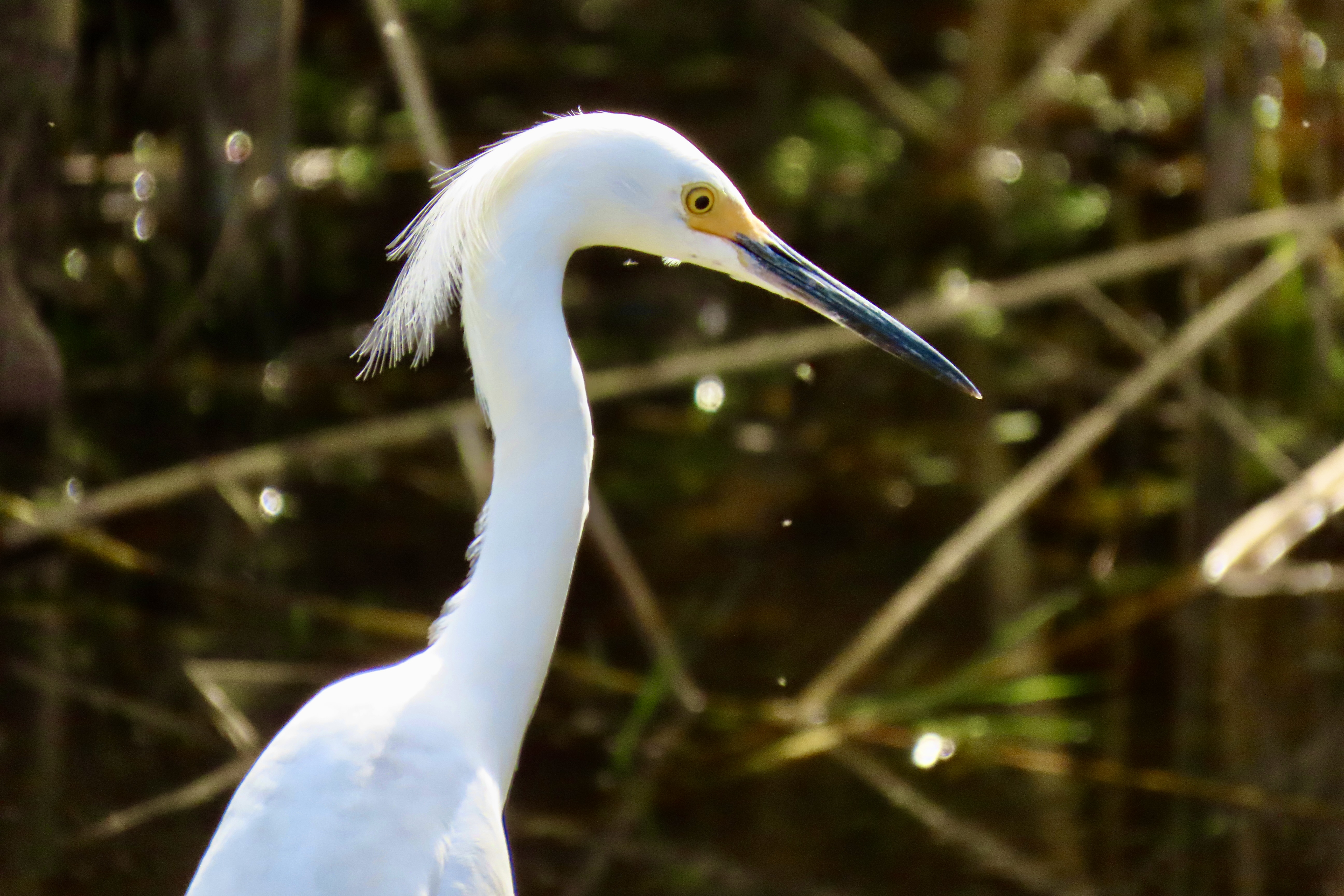
To snowy egrets…
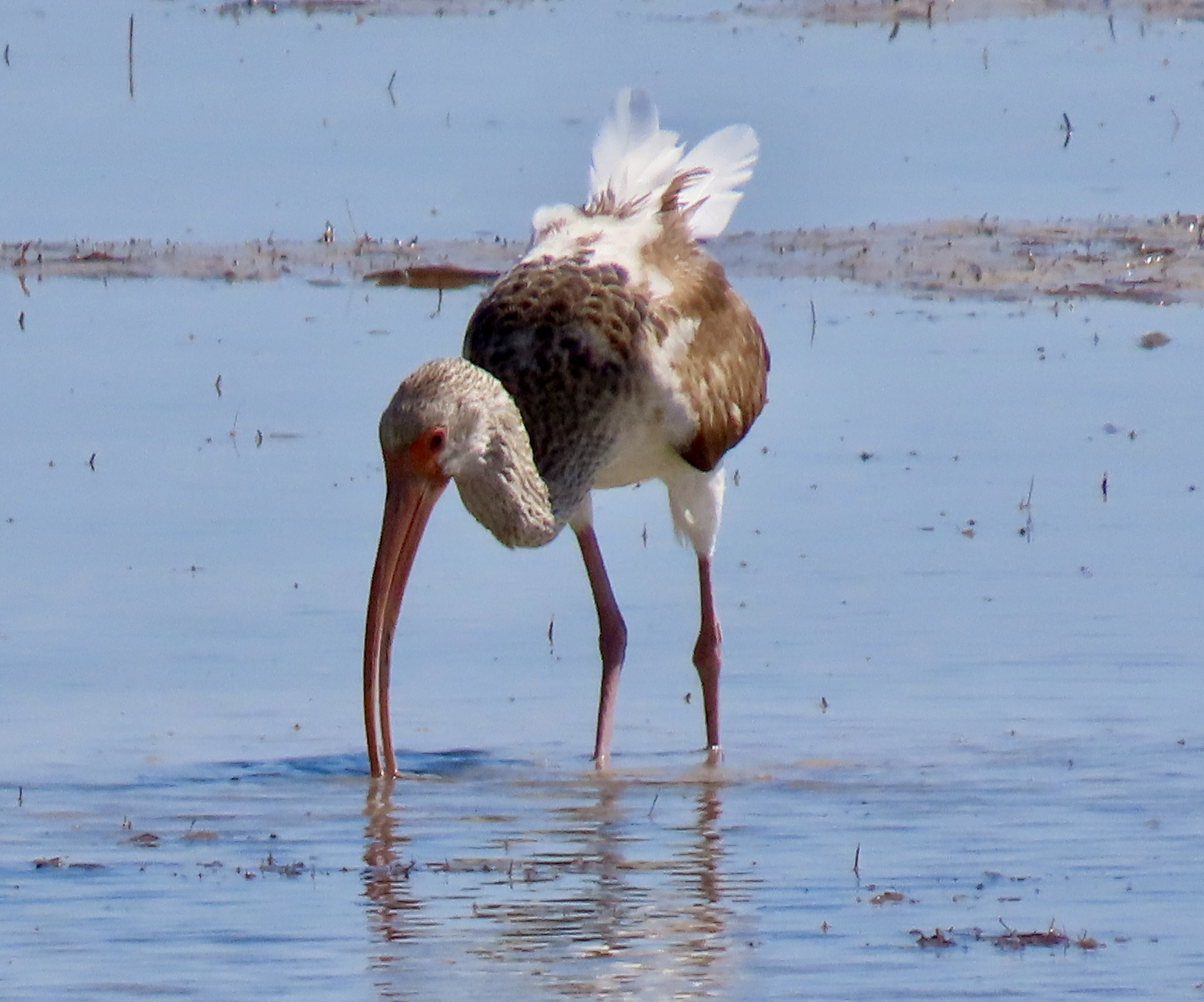
To ibis and many, many other species.
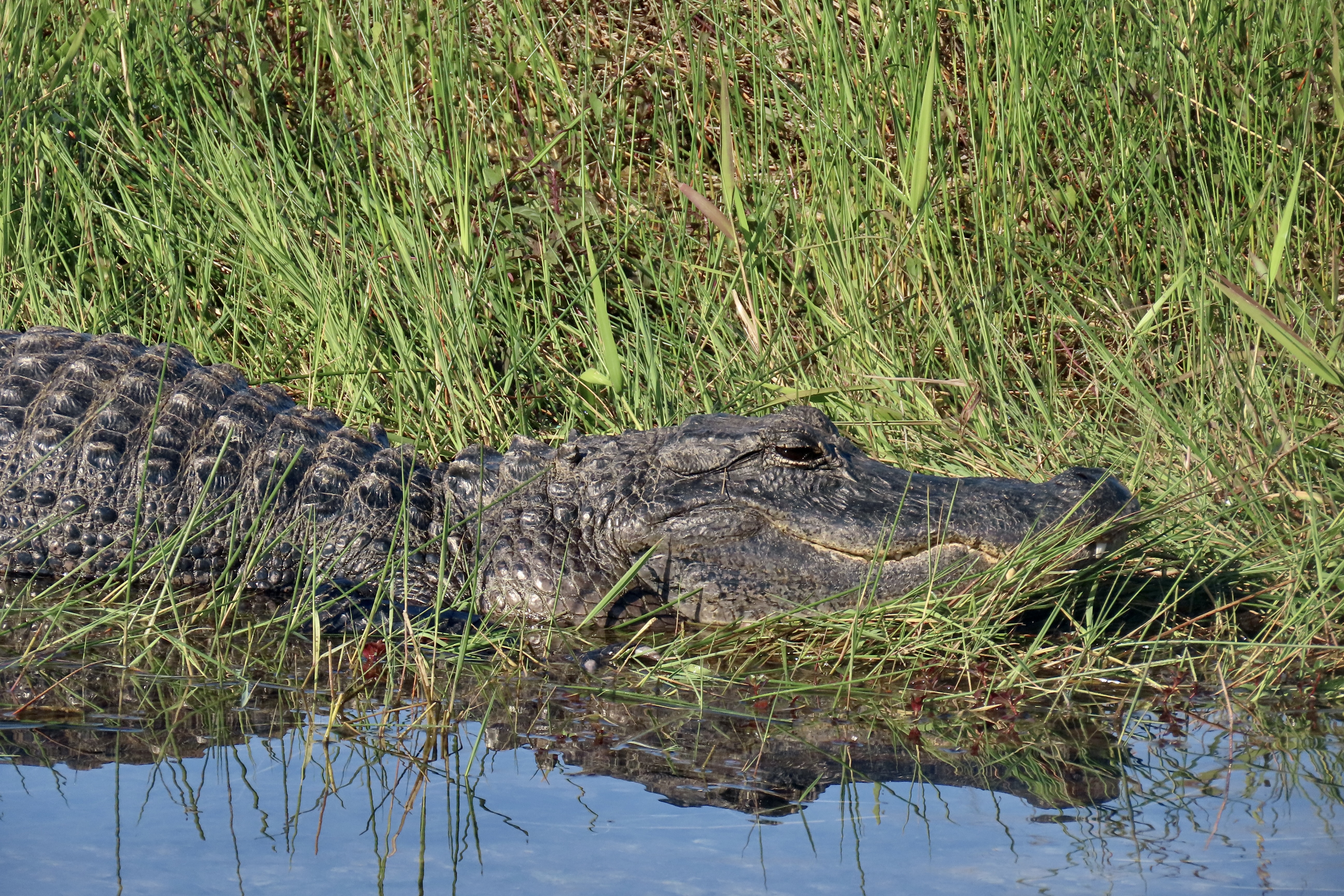
We also saw a number of alligators, and several crocodiles. We liked the reflection on this alligator. The look on its face made us wonder what it had been up to!

THE PINNACLES…

The Pinnacles National Park, located just east of the Salinas Valley in central California, was the first national park we visited on our trip up the coast. Raised to national park status in 2013 by President Obama, it is a recent addition to the system. The park is noted for its monoliths, spires, canyons and the beauty of its spring wildflower display.

Huge monoliths rise up from the ground…
As do impressive spires.
Massive boulders have tumbled down from the ridges creating talus slopes and ‘caves’ people can actually walk through. This small one contained a creek we followed up a canyon.
We were there in April and wildflowers were everywhere. We had never seen a shooting star displaying this many flowers.
A lone oak standing on the crest of a hill caught our attention.

POINT REYES NATIONAL SEASHORE

Technically, Point Reyes National Seashore is not a national park. The primary reason is that the land incorporates a number of dairy ranches that were there before the park was created. But it is a unit in the national park system. And, I might add, a well-justified unit. Located just north of San Francisco, it is renowned for its beauty and wildlife. It also has the interesting geological history of having migrated north from Southern California along the San Andreas Fault. (Pinnacles has a similar history.) I was a regular visitor during the years I lived in Sacramento. It served as my winter go-to break. The summers were for the mountains.
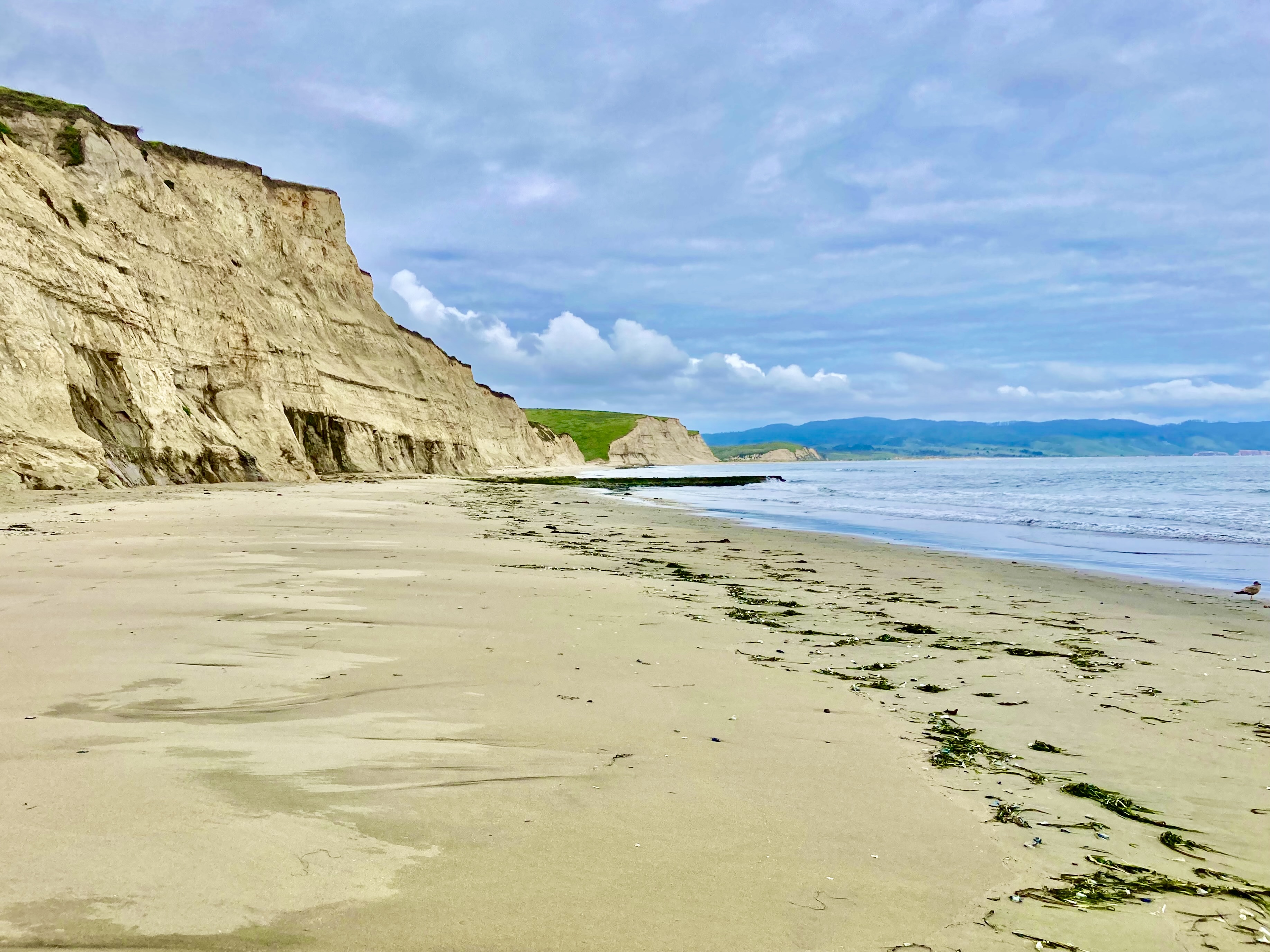
Long Beaches with spectacular cliffs, forested mountains, grass covered hills and valleys, plus abundant wildlife contribute to the appeal of the park. During December through March, this beach will be busy with elephant seals breeding and having pups.
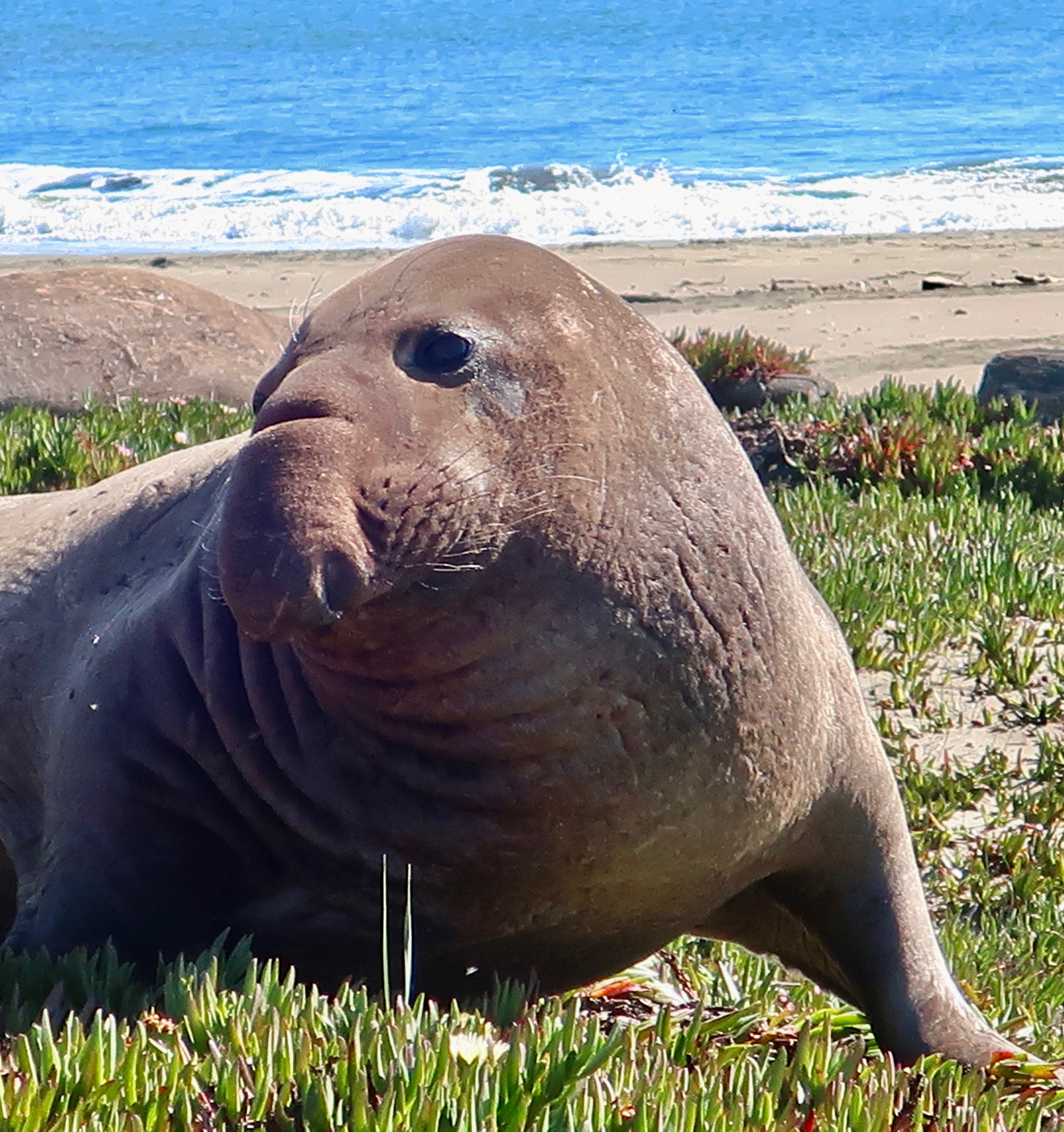
We found this charming fellow and other elephant seals at Drake’s Beach on a previous visit. He’s come ashore looking for love.
This whimbrel was strolling down the shore at Limantour Beach.
A great blue heron made a lightning fast strike to catch a fish at Abbots Lagoon.
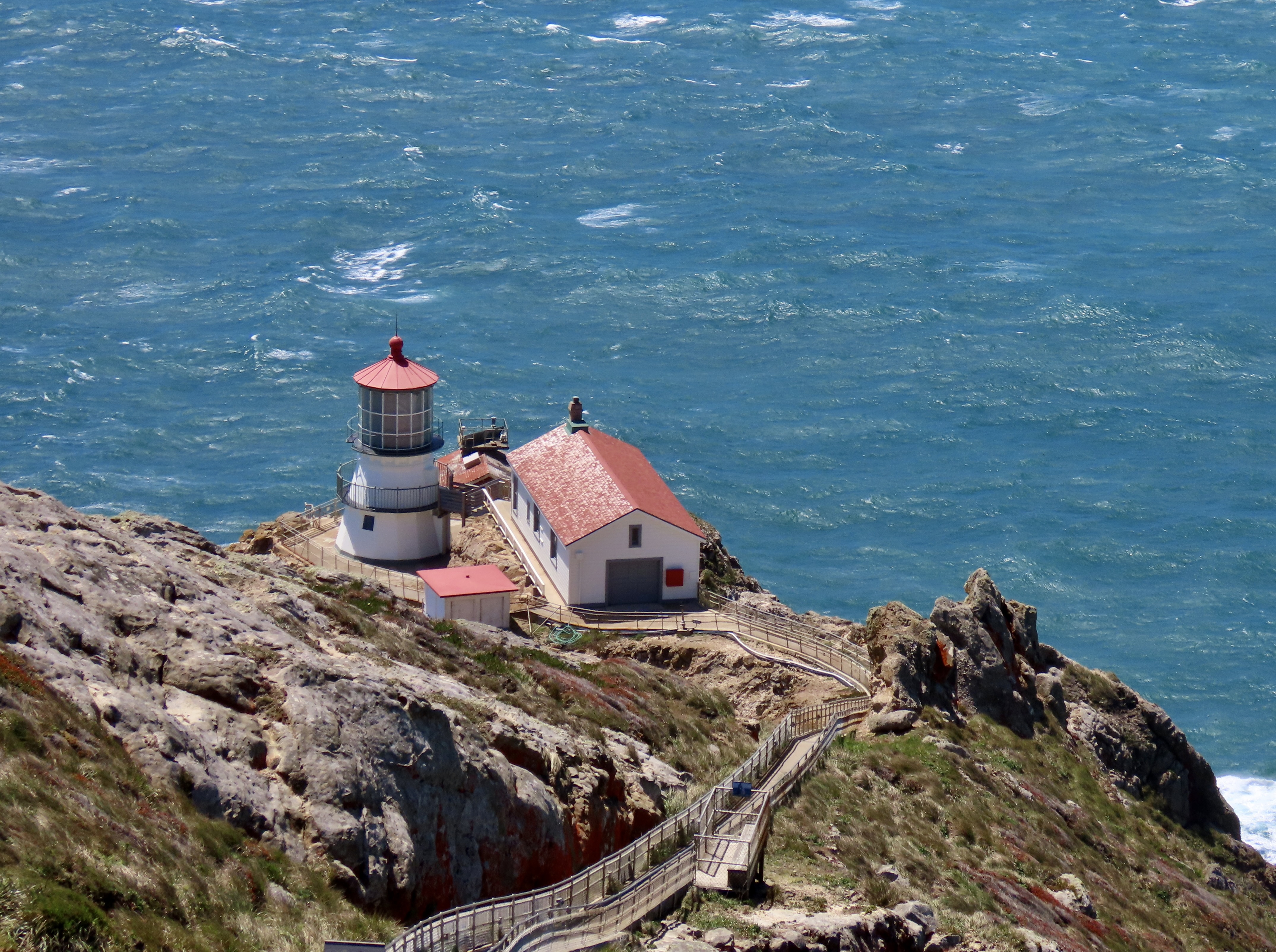
The Point Reyes Lighthouse, always worth a visit.
The Pierce Point Ranch provides an introduction to the historic significance of dairy farming at Point Reyes.
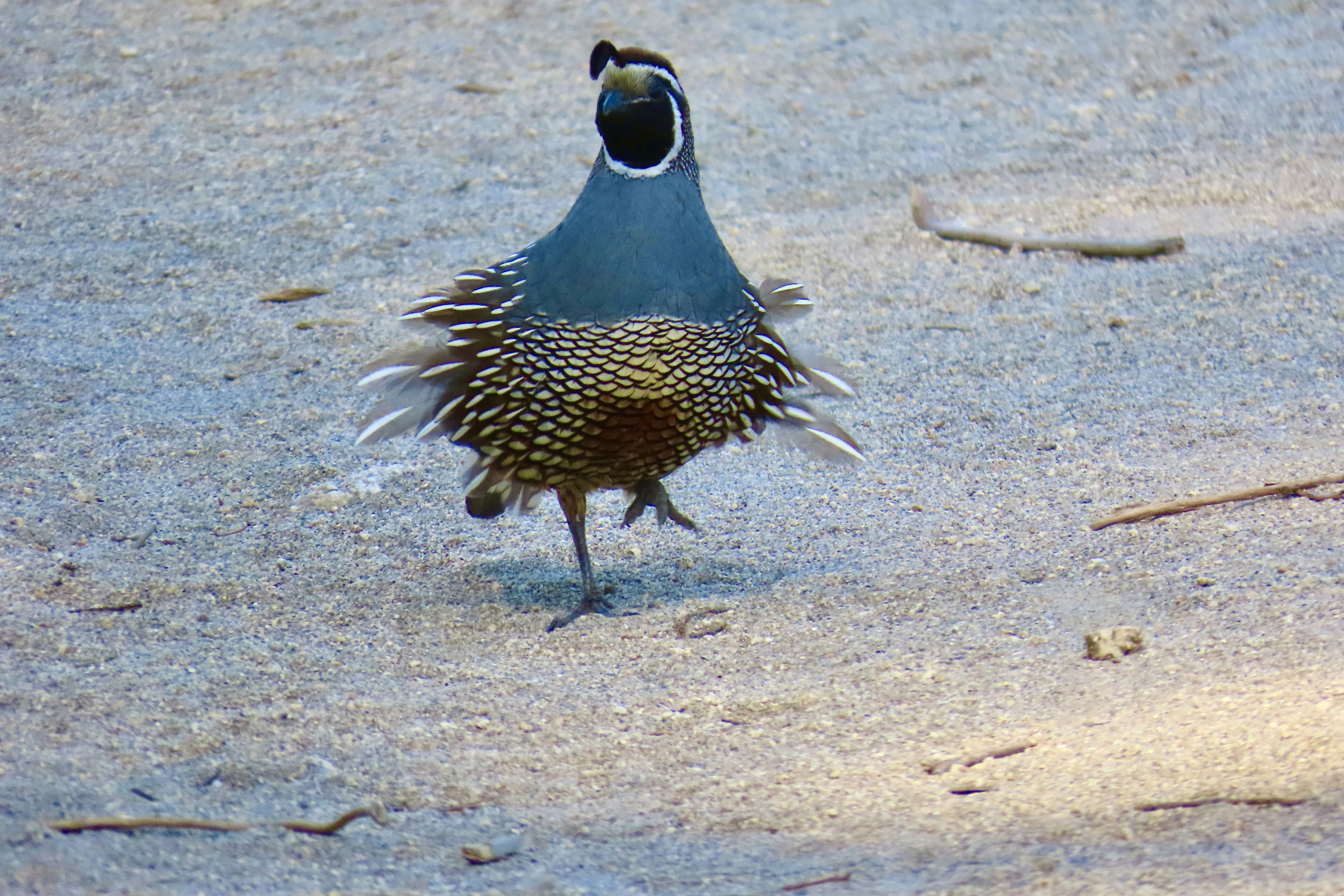
California quail were running around the ranch when we visited. The wind was ruffling this guy’s feathers.
And a large herd of tule elk is usually found nearby.

REDWOODS NATIONAL PARK

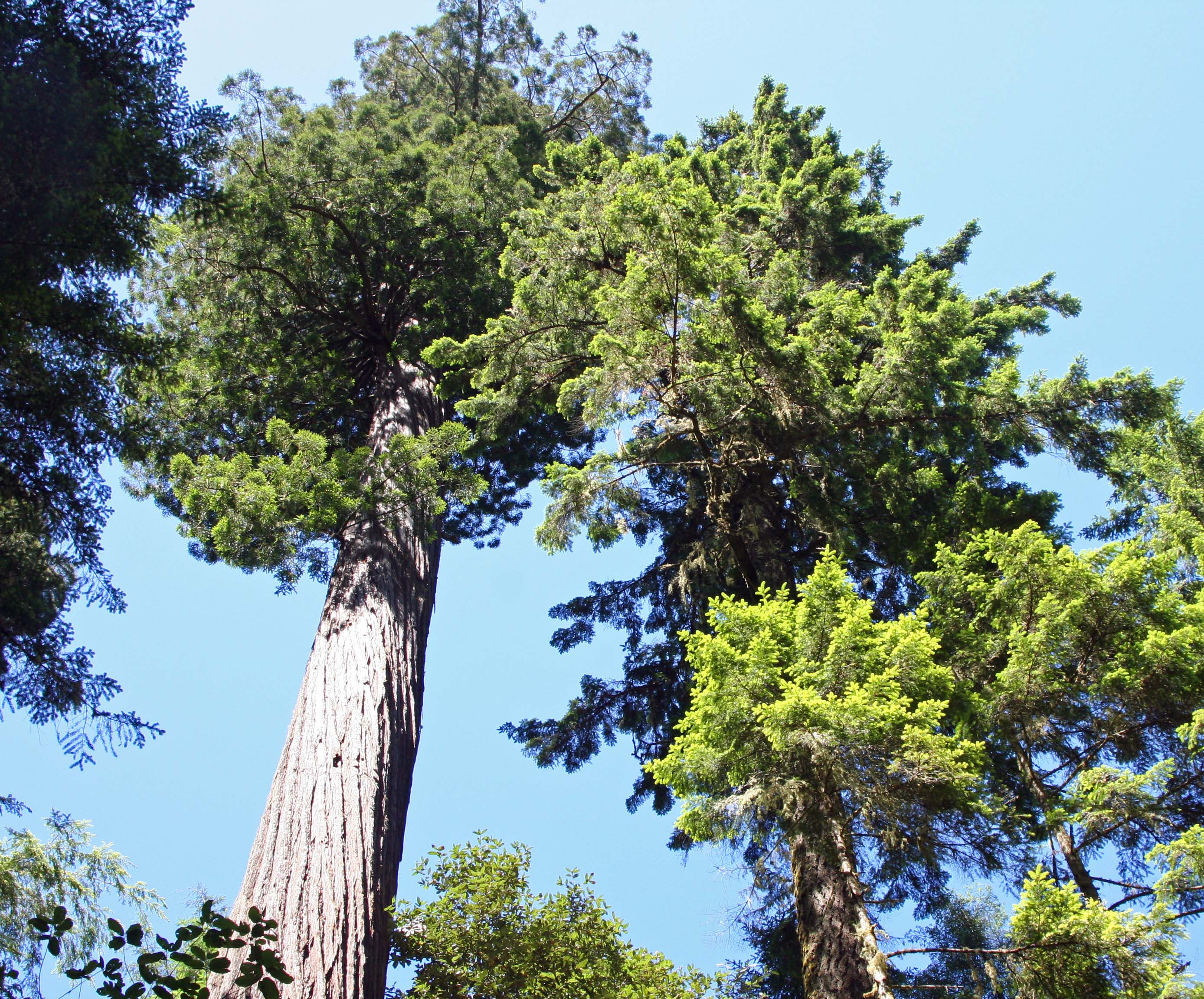
The National Park Service works in close coordination with the California Department of Parks and Recreation to maintain the towering redwoods that grace the coastal area of far northwestern California. It’s all about the trees , some of the oldest and tallest in the world, but its rainforest character, crashing waves and wildlife add to its splendor.

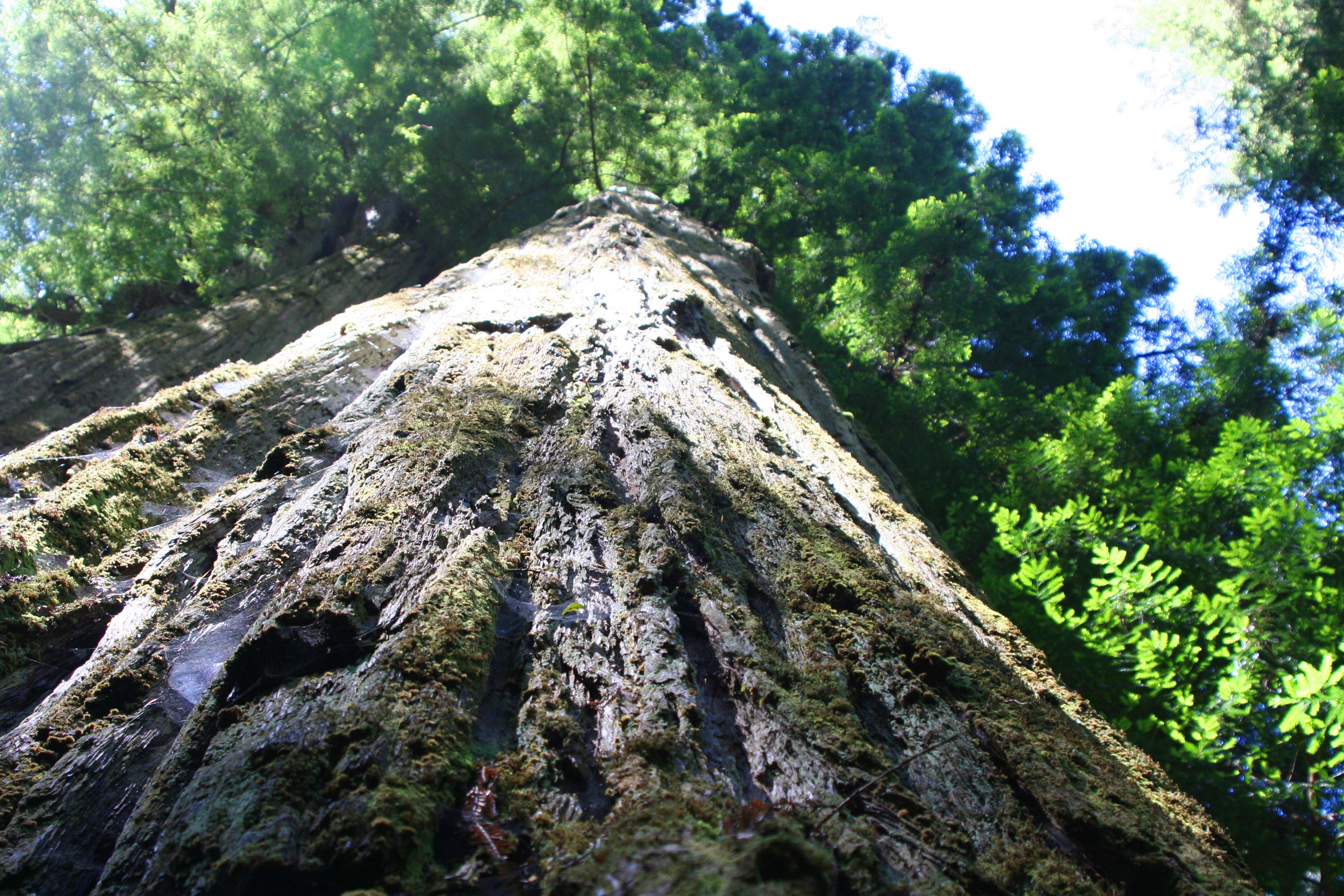
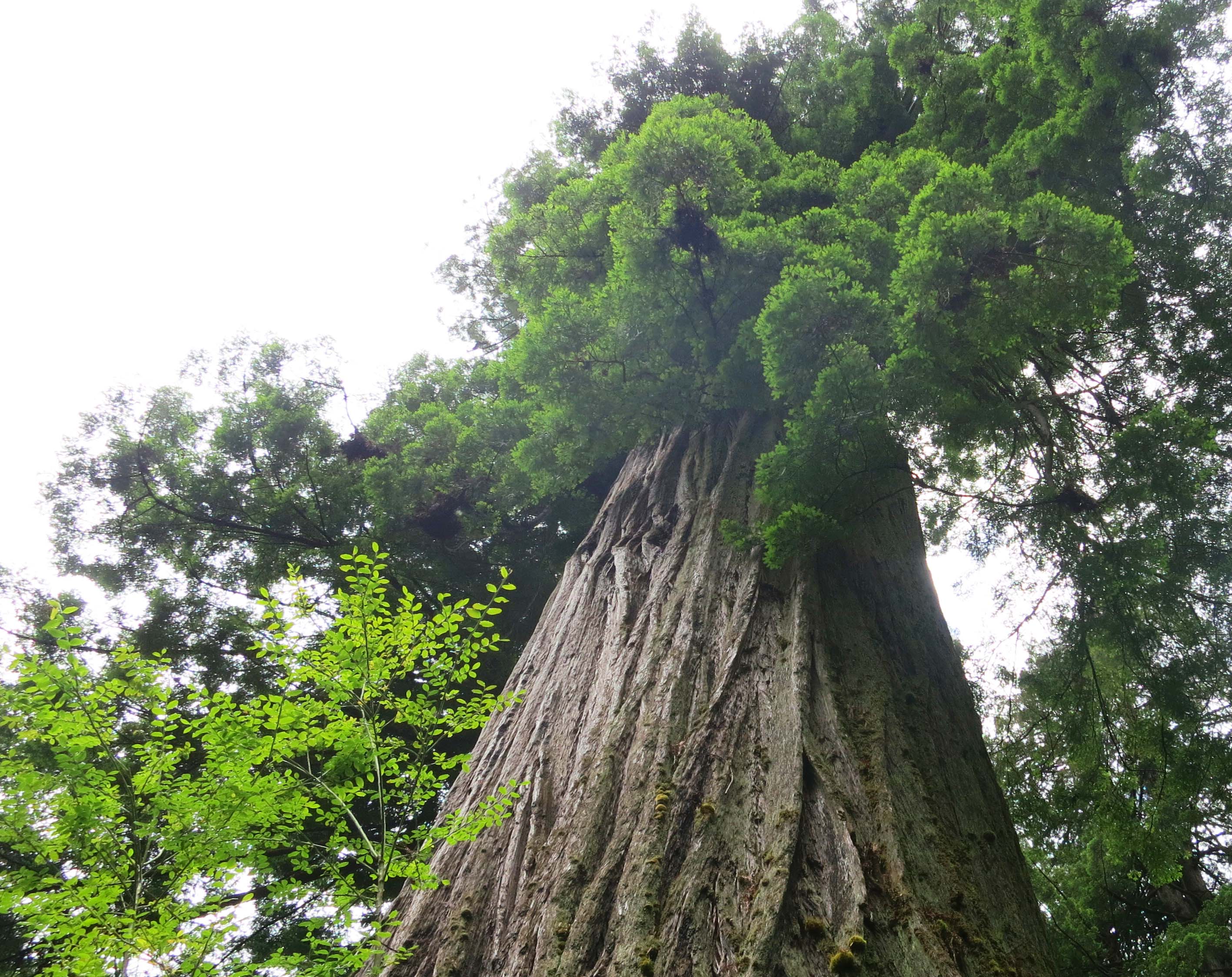
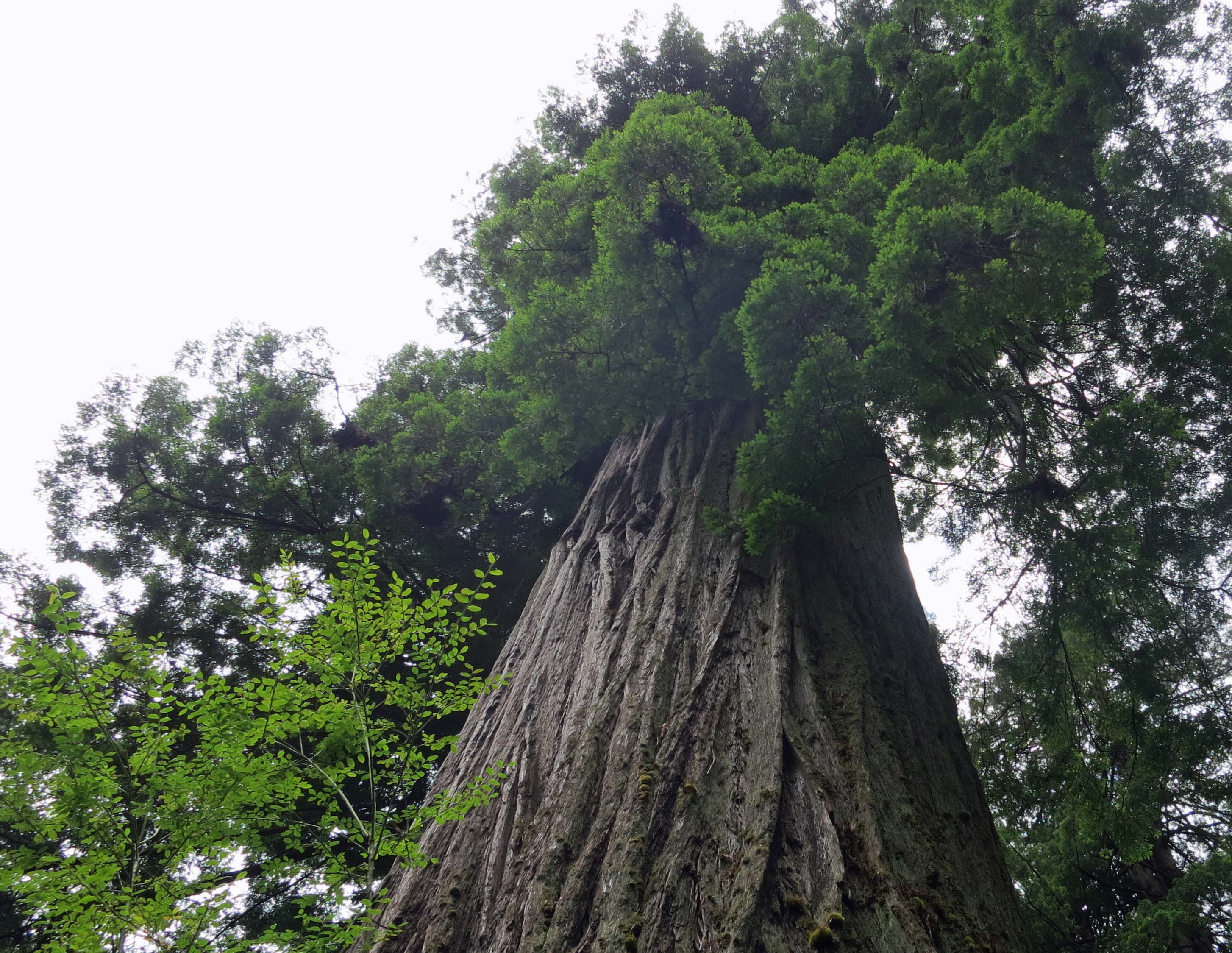
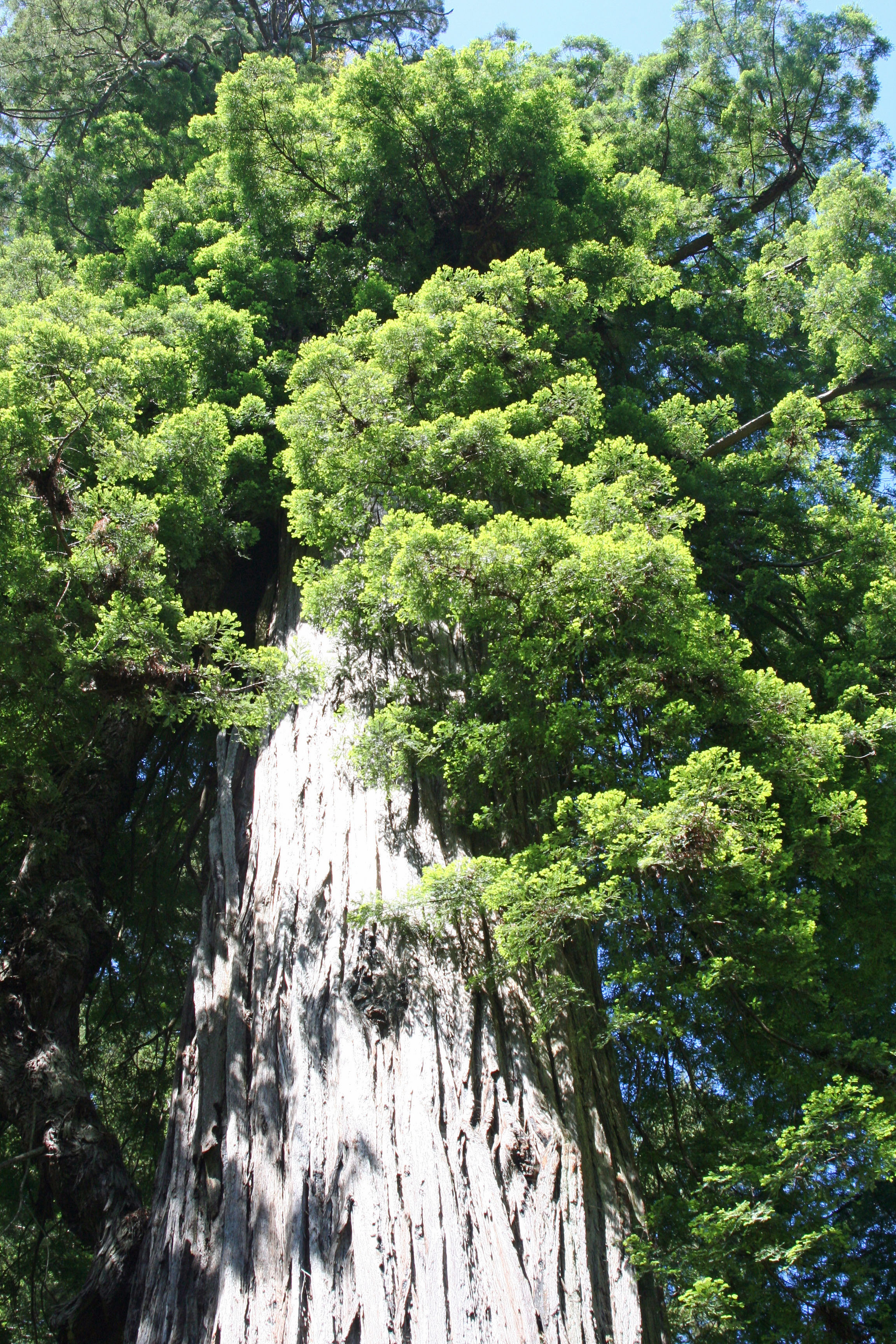
Massive trees reach for the sky…
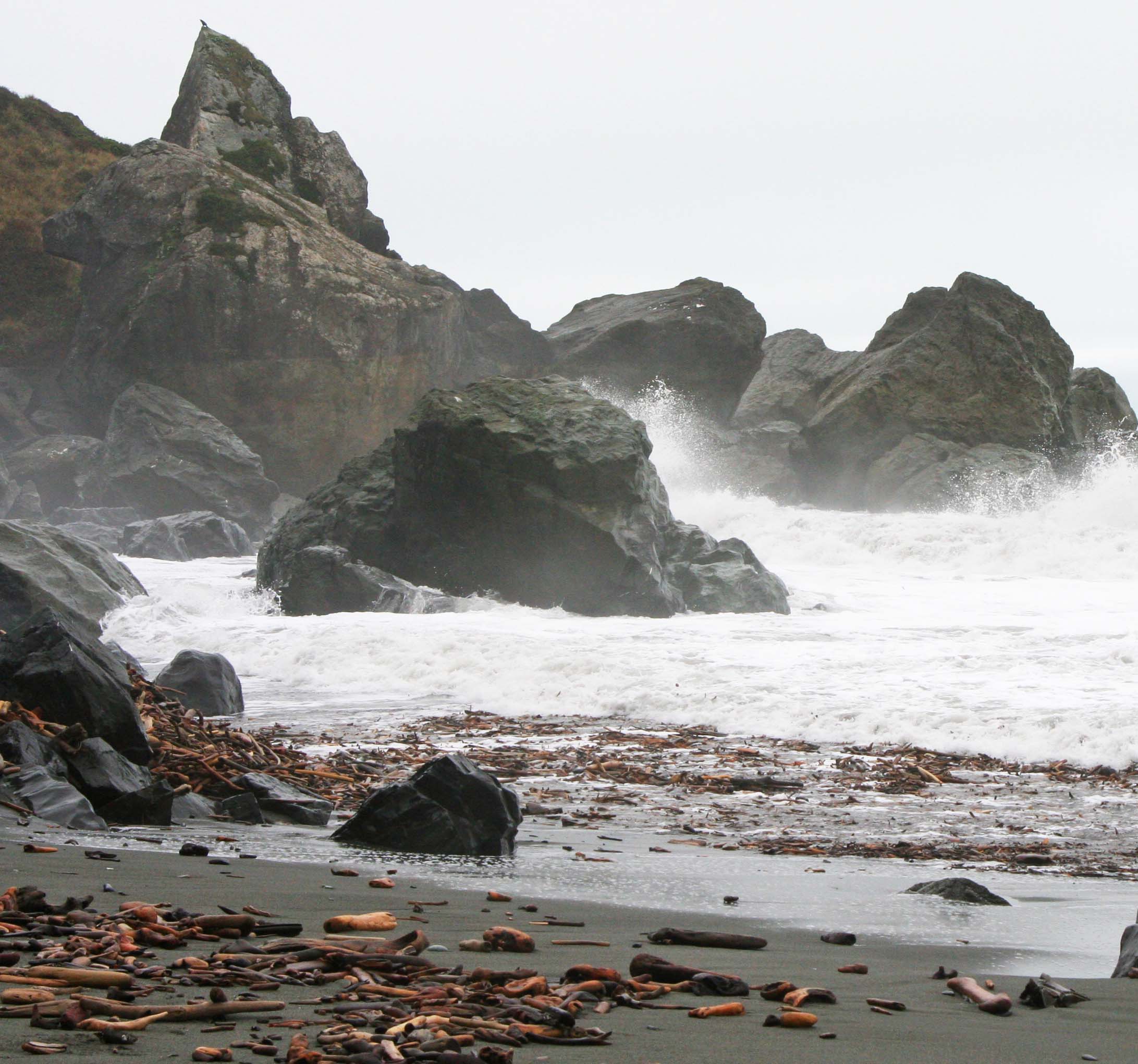
Crashing waves roll ashore…
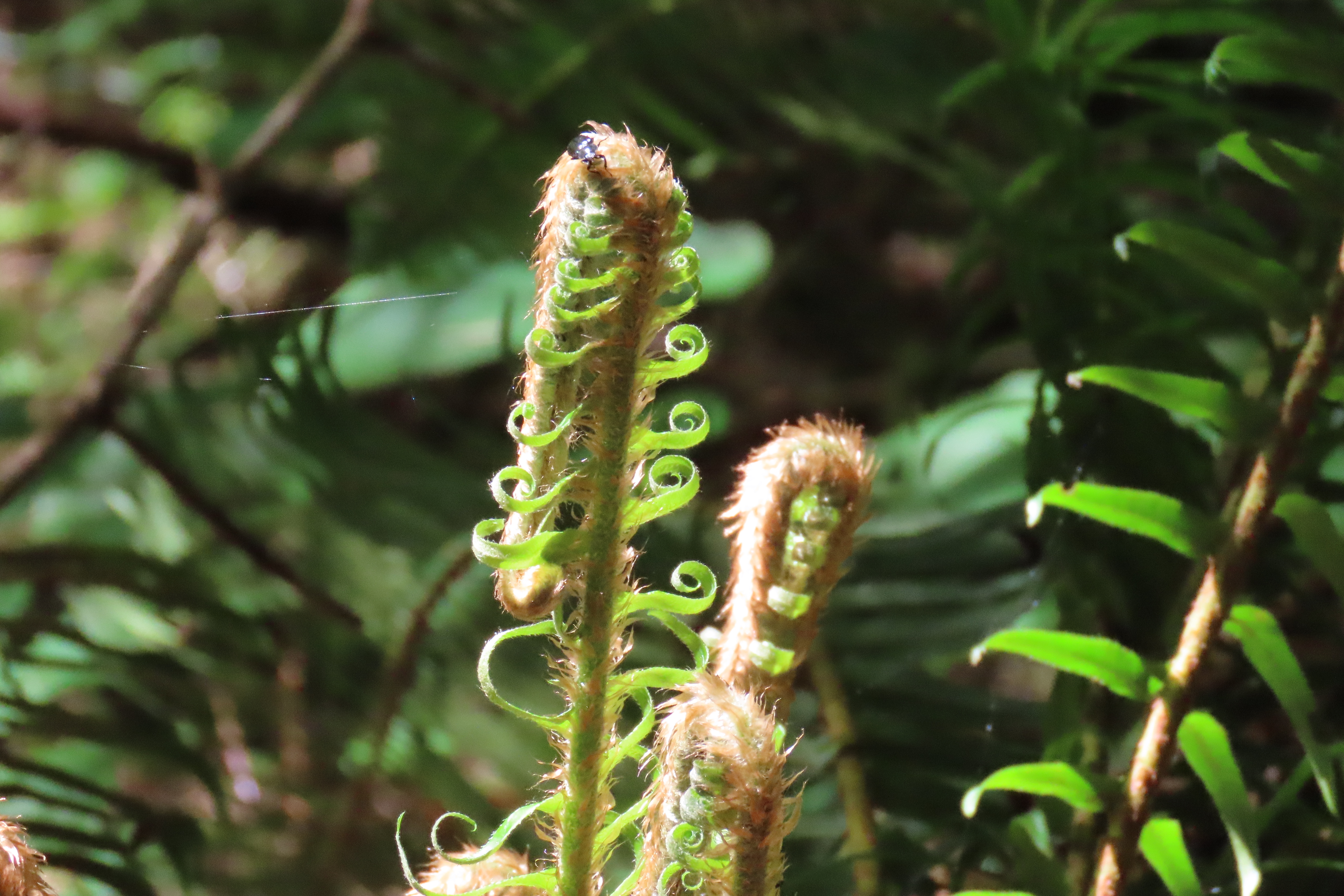
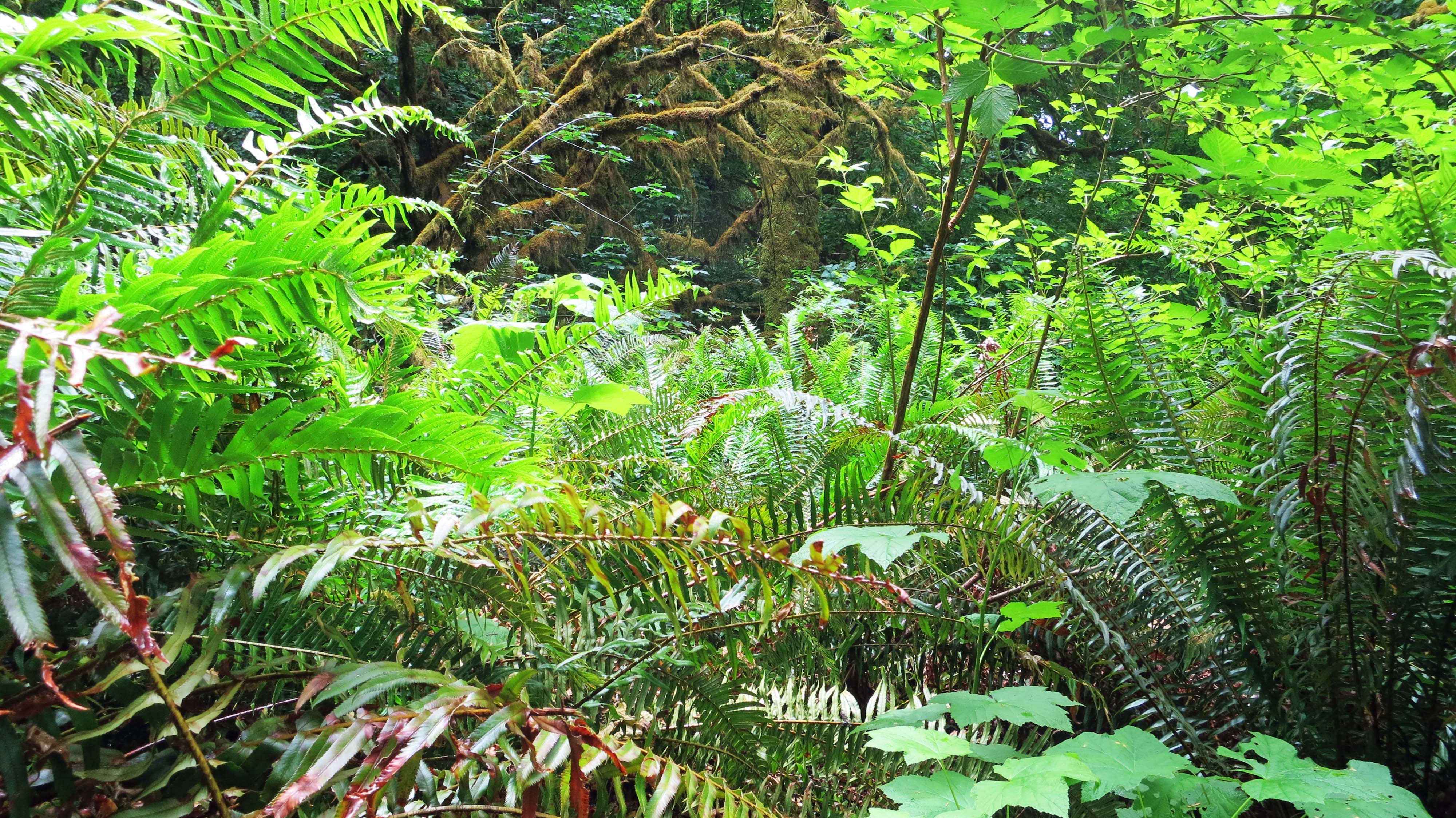
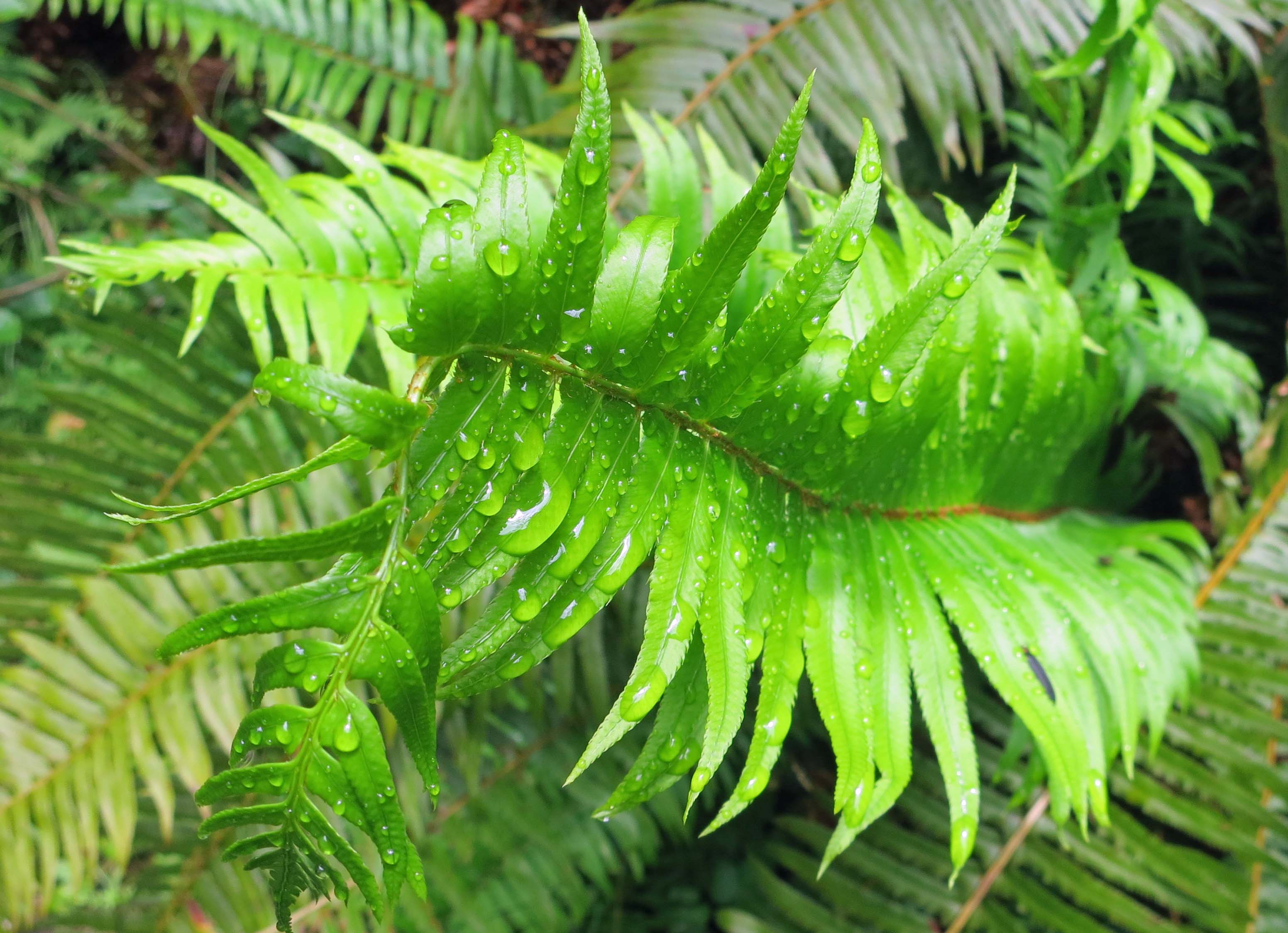
The rainforest harbors ferns whose origins are lost in the mist of time…
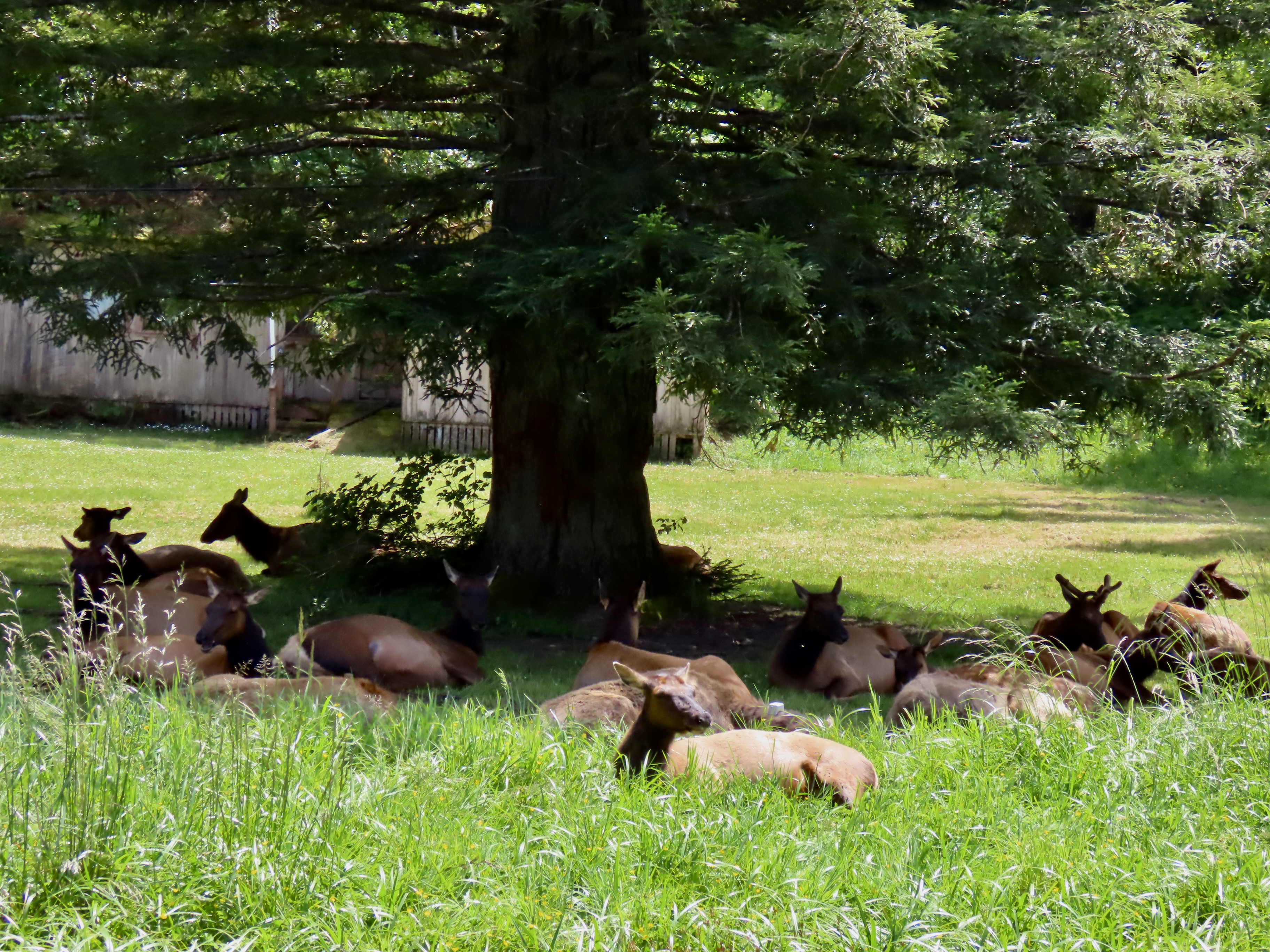
Herds of Roosevelt elk are as likely to be found bedding down in someone’s front yard as they are wandering through the redwoods…
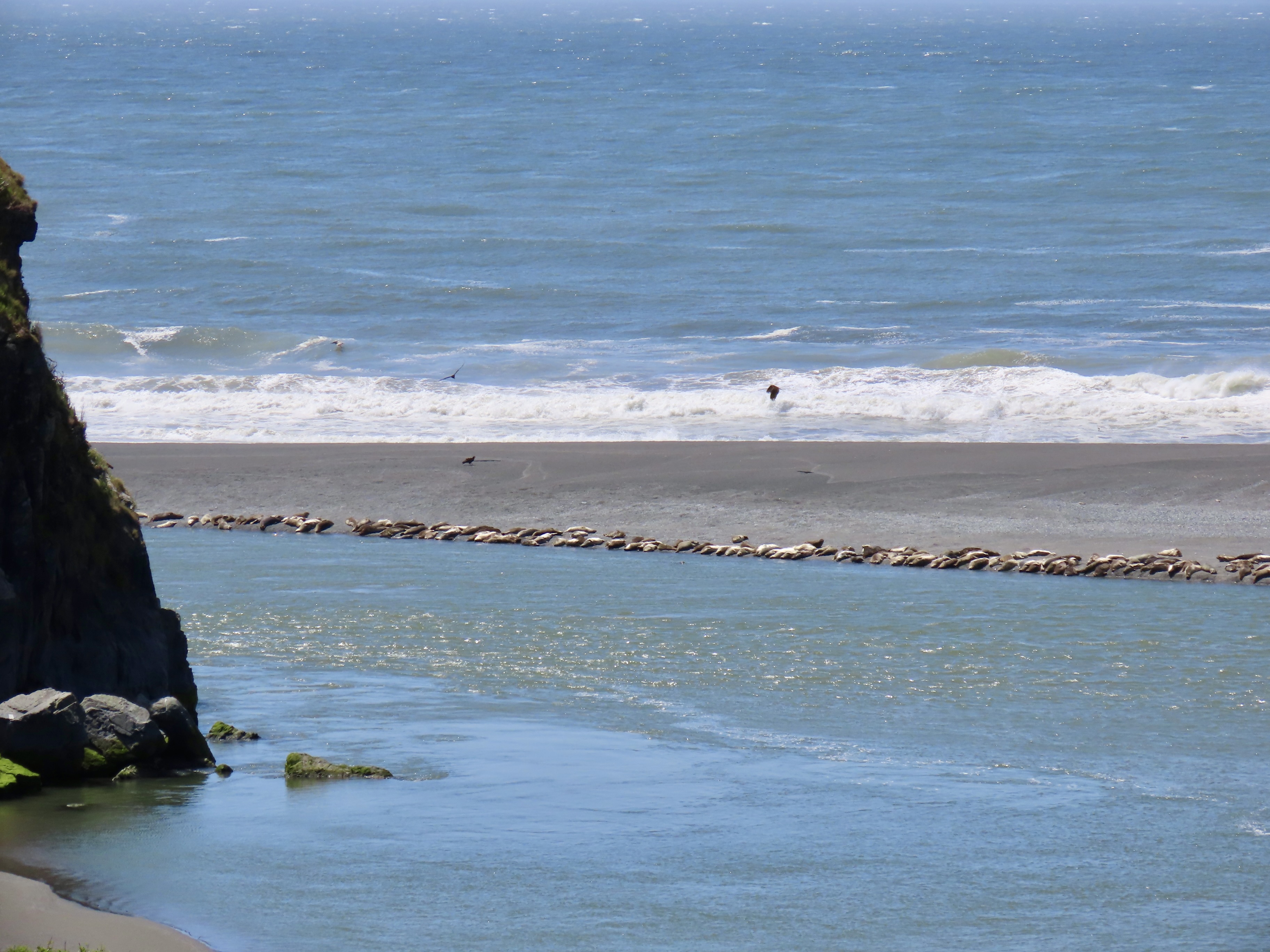
And hundreds of seals pull up on remote shores to rest and bathe in the sun.

OLYMPIC NATIONAL PARK

Olympic National Park serves as an iconic example of a temperate rainforest receiving over 150 inches of rain on its west side while harboring old growth forests on its drier east side. Major rivers come tumbling down from its glacier covered peaks. Its 62 miles of wilderness coastline constitutes the longest undeveloped coastline in the contiguous US. As I noted in my post on Olympic National Park, our visit was limited this year, so I have added a couple of photos from previous trips. The other photos you will probably remember from last week!

The Skokomish River is one of several that flow out of the park fed by the extensive rainfall and high glaciers.
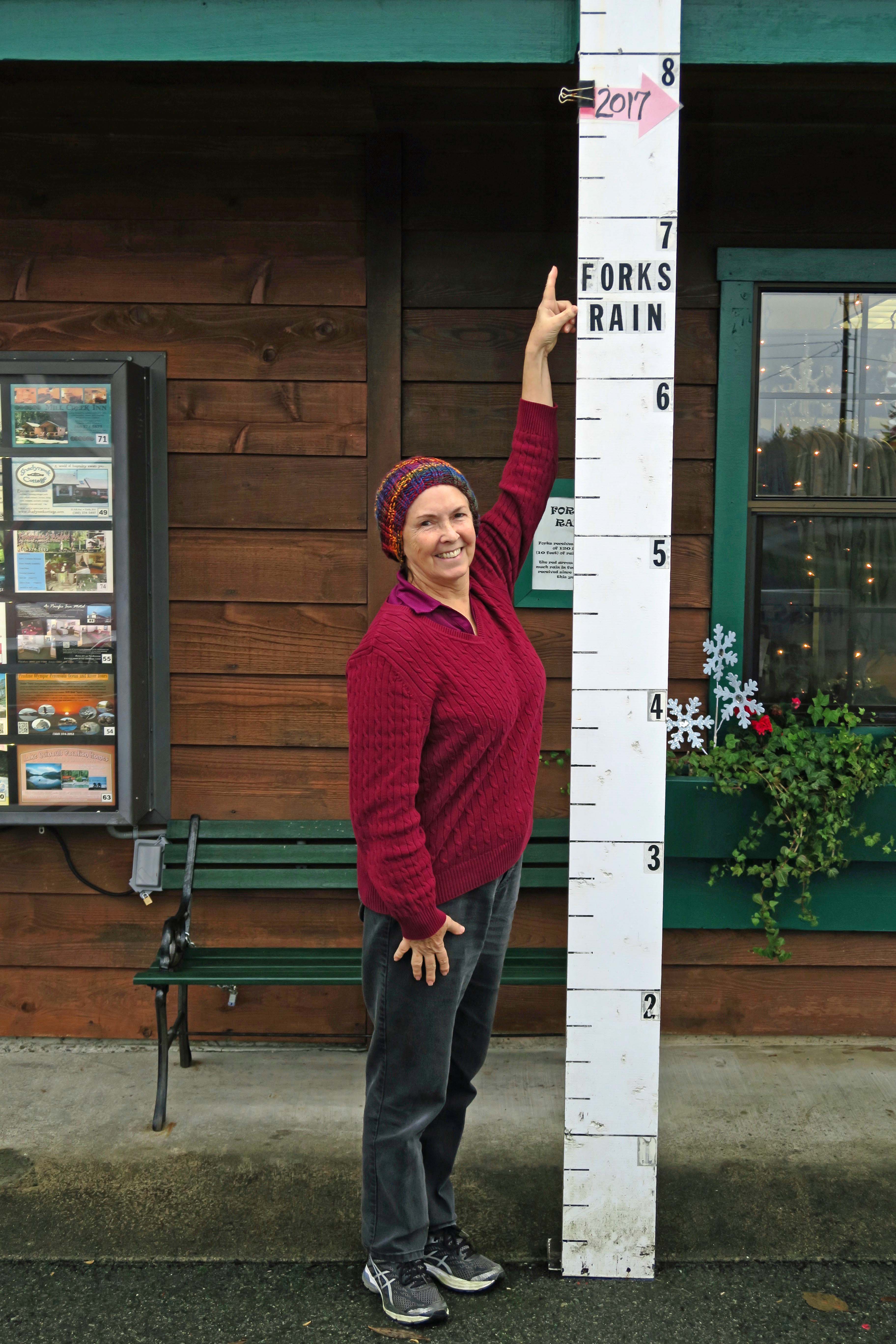
Photo of rainfall at Forks, Wa. by Curtis Mekemson.
In 2017 we stopped in the small town of Forks (home to the Twilight books and movies) on the western side of Olympic National Park. Here Peggy points out how much rain the park had received by November.
On that same trip, we drove over to the wilderness part of the park that runs along the Pacific Coast. Here Peggy is admiring sea stacks. Huge piles of driftwood brought in by Pacific storms stretch up the coast.
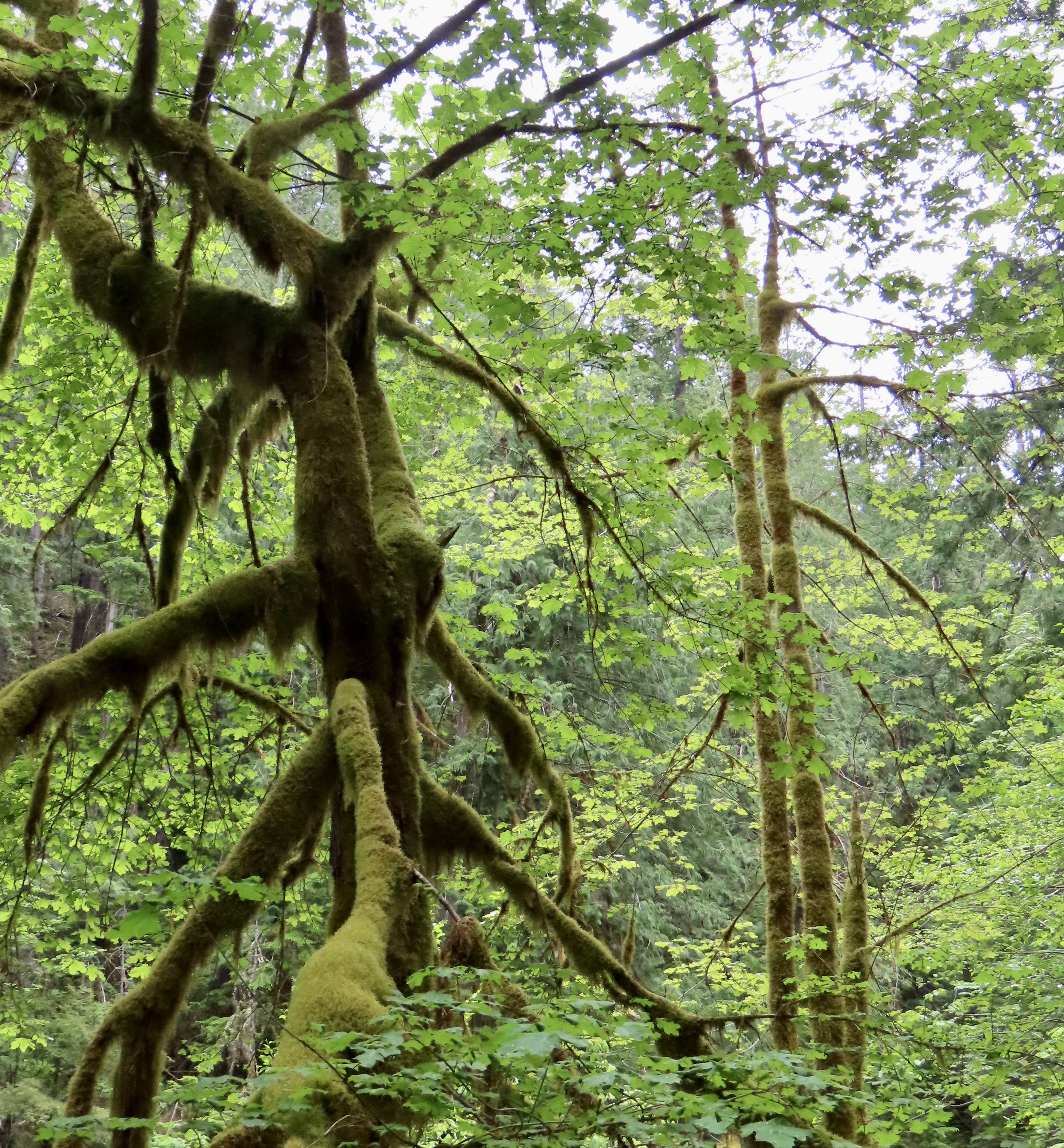
Back on the southeastern portion of the park, we admired the moss covered trees that are typical of temperate climate rainforests.
Our hike up the Staircase Rapids trail along the Skokomish, led to this view we had when crossing a bridge that had been wiped out twice before by the raging river during spring melt.
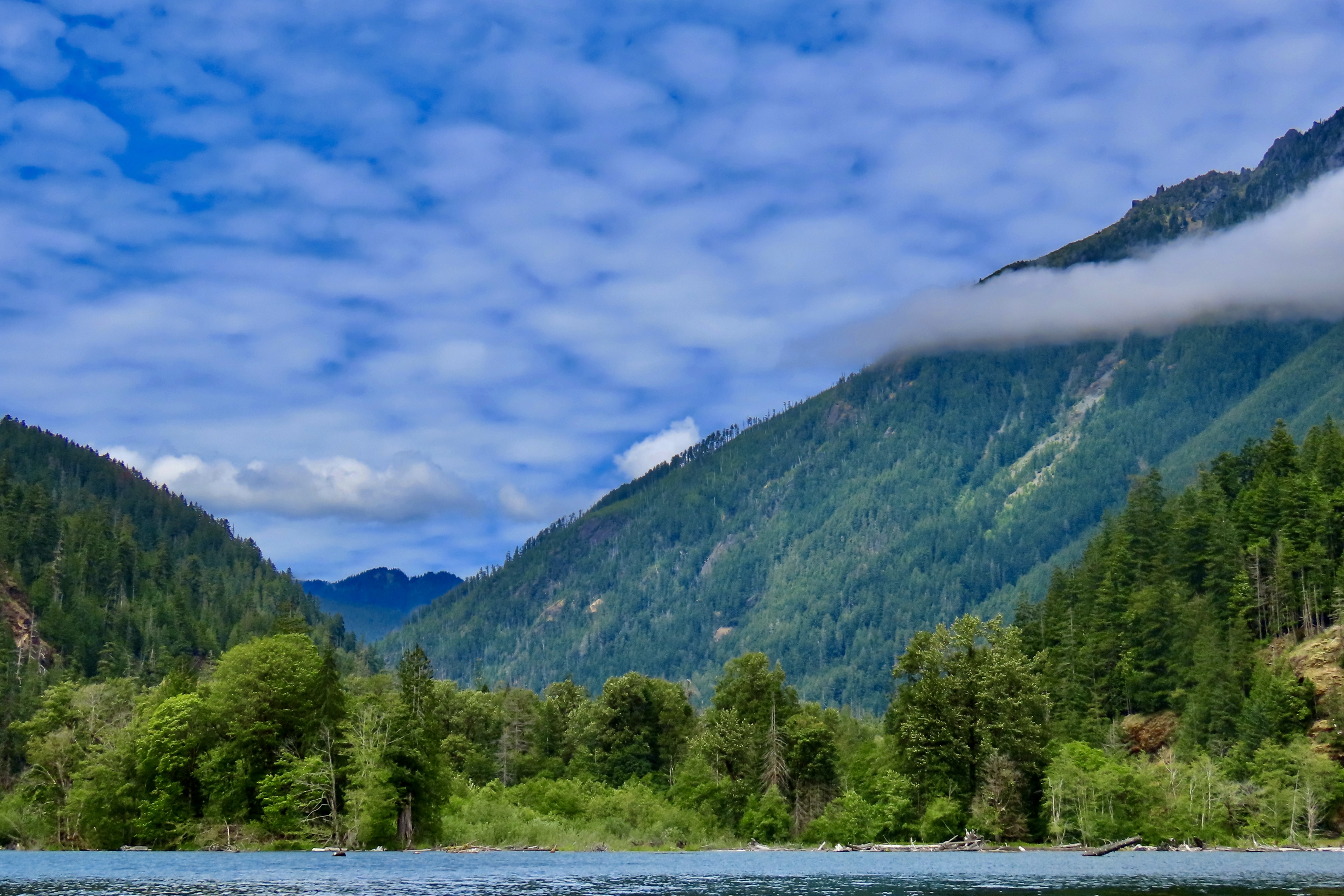
A final photo that provides a view into the park from our kayak trip on upper Cushman Lake. Next, we will explore the impressive mountains of Cascades National Park as we leave our trip up the Pacific Coast and start our journey back to our basecamp/home in Virginia.
Cascades National Park

There’s an Elk! There are 300! …The North Coast Series

This magnificent fellow was probably the bull of the herd, and proud of it!

This magnificent fellow was probably the bull of the herd, and proud of it! He was surrounded by some of his lady friends.


A blog quickie…

Peggy gets excited when she sees elk. So it’s not surprising that she multiplied the number she saw by 10. I can also get quite excitable. Roosevelt Elk are the largest members of six subspecies of elk in North America. Bulls can weigh up to 1100 pounds! Once, they were close to extinct in California. Today, there are seven herds in and around the Redwoods. The largest herd numbers 250. Most are closer to the size we saw. It was conveniently located in someone’s yard. I drove in so Peggy could take photos.

Elk herd near the Redwoods in Northern California.

There were probably 30 elk altogether.

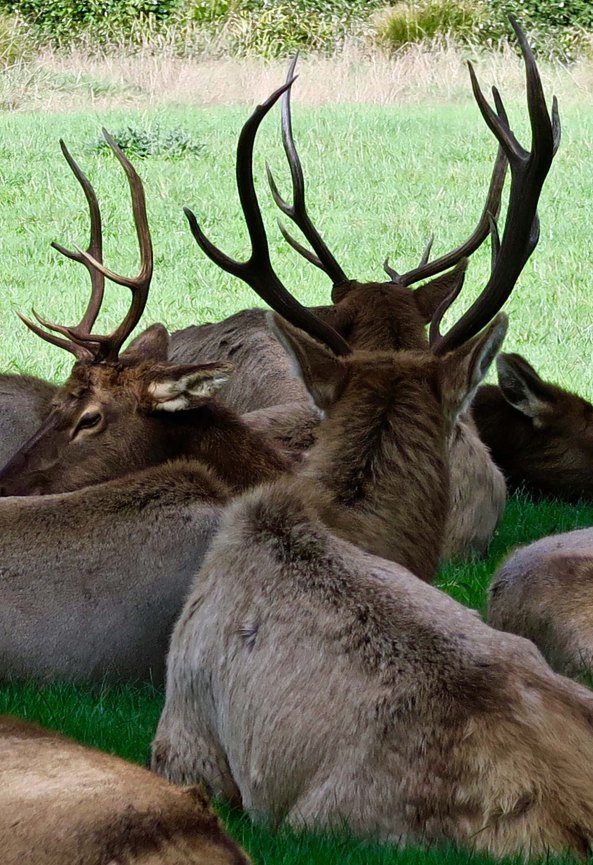
I was impressed by the antlers shown here...

Peggy was impressed by the antlers shown here…

elk with large racks near the Redwoods in Northern California

So she took a close up. Given the season, I figured that Santa could turn to these fellows if his Reindeer refused to fly.

Rudolph the Red Nosed Reindeer on strike. Xmas card by Curtis Mekemson.

Red-nosed reindeer goes on strike. (card by Curt Mekemson.)

The real deal: Alaskan Caribou. (Photo by Peggy Mekemson.)

The real deal: Alaskan Caribou. (Photo by Peggy Mekemson.)

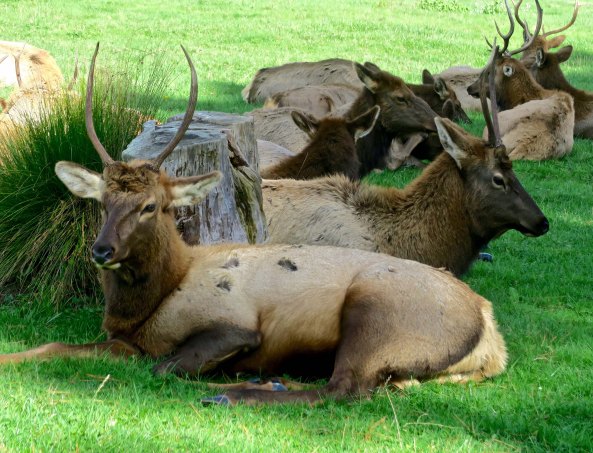
If this guy were a blacktail deer, we would call him a spike. I don't think I would want him mad at me!

If this guy were a black tail deer, we would call him Spike. I don’t think I would want him mad at me! The marks on his back suggest he has been nibbling at itches.

This doe was quite beautiful...

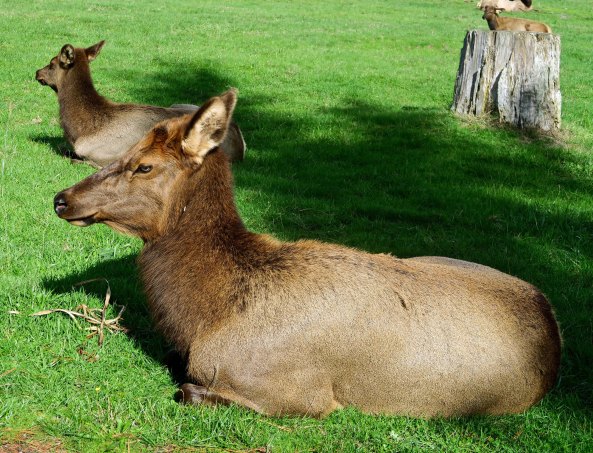
This cow elk was quite beautiful…

So we will end this short post with a close-up.

We will end this short post with a close-up of her. Lovely eyes!

NEXT BLOG: The Christmas lights of Shore Acres State Park

The Redwoods… A Photographic Journey through America’s National Parks

A giant of the forest.

A giant of the forest: “an ambassador from another time.”

“The redwoods, once seen, leave a mark or create a vision that stays with you always. No one has ever successfully painted or photographed a redwood tree. The feeling they produce is not transferable. From them comes silence and awe. It’s not only their unbelievable stature, nor the color which seems to shift and vary under your eyes, no, they are not like any trees we know, they are ambassadors from another time.”

                                                                                                                                                                                                         John Steinbeck

Like John Steinbeck, I am in awe of the Redwoods. These giants of the forest can live for two thousand years and grow to over 300 feet tall. The so-called Big Tree in Redwood National Park, for example, is 304 feet tall, has a circumference of 68 feet and an estimated age of 1500 years.

Our home in Southern Oregon is a short three-hour drive from the coastal redwoods of Northern California so Peggy and I have visited them three times in three years. My first visit to the Redwoods was as a child and it is still a clear memory. Our last two visits we had our grandkids with us. My hope is that their memory of the visit will be like mine– and pull them back, time and again.

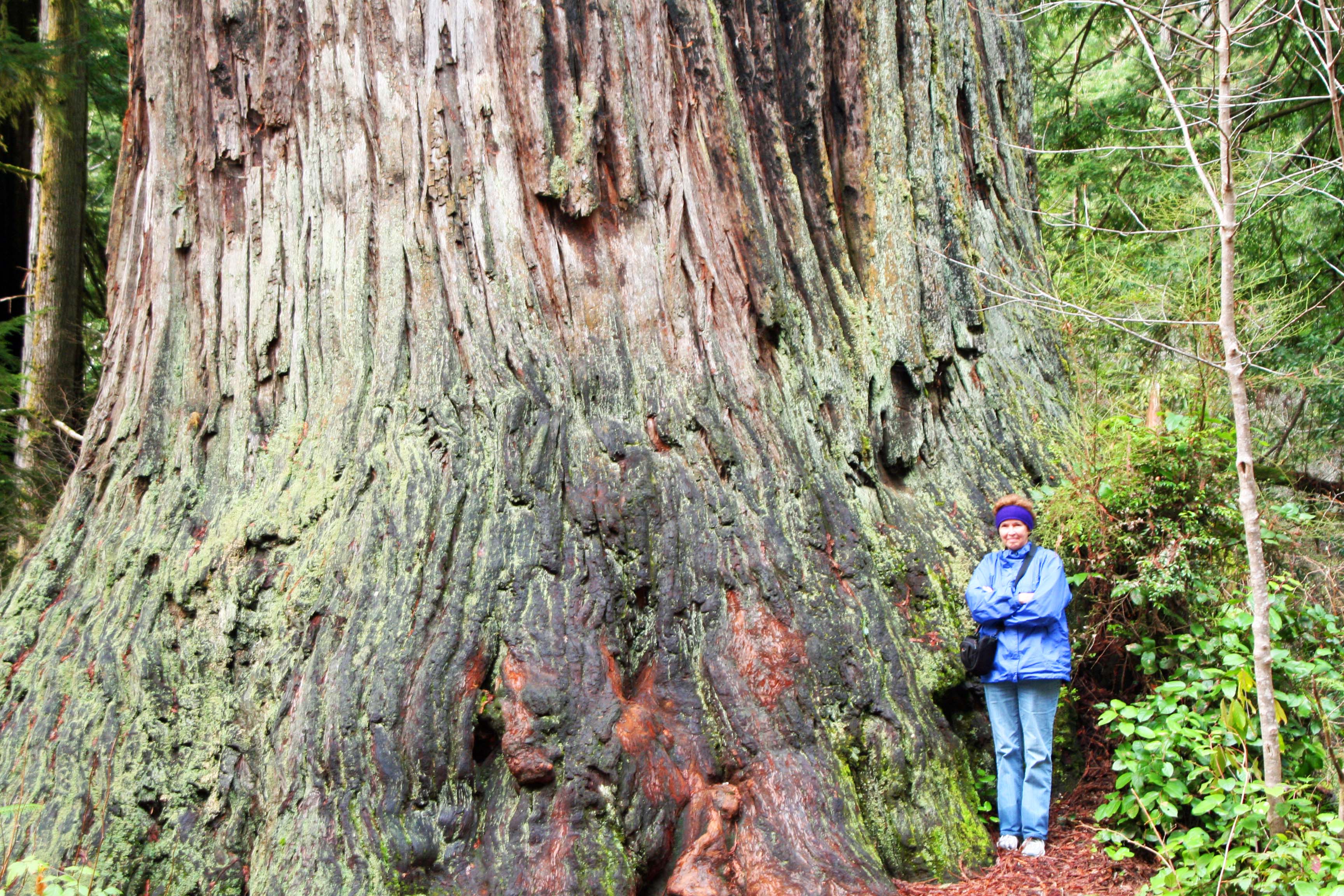
Peggy provides a perspective on the actual size of a giant redwood.

Peggy provides a perspective on the actual size of a giant redwood.

California's rugged North Coast. Photo by Curtis Mekemson.

Redwoods National Park is located along California’s rugged North Coast. Stormy seas had left behind piles of driftwood.

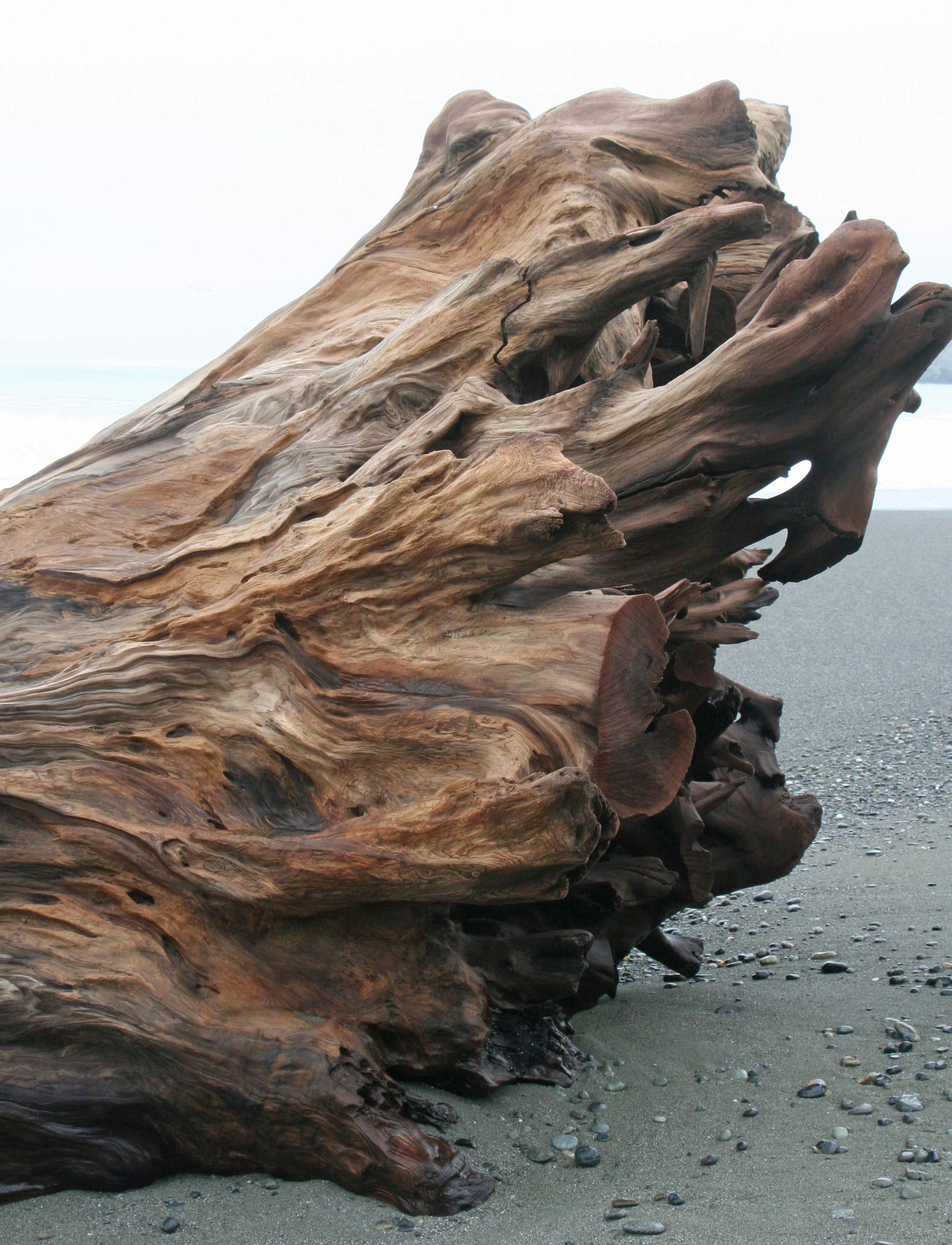
Redwood tree root on Northern California coast. Photo by Curtis Mekemson.

Among the driftwood was this large redwood tree root.

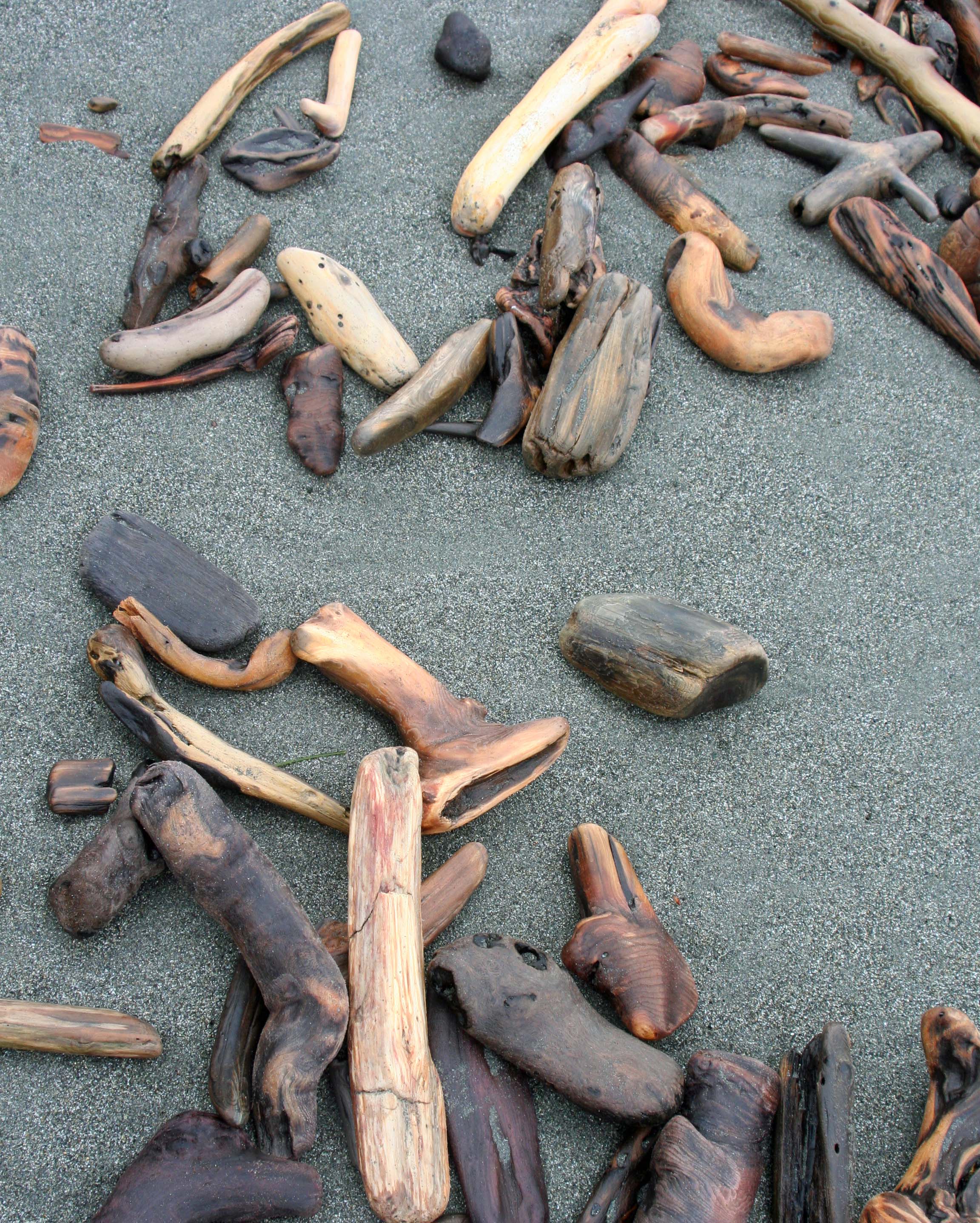
Driftwood at Redwood National Park. Photo by Curtis Mekemson.

Most of the driftwood was small but also quite attractive. It was easy to imagine the various shapes as creatures…

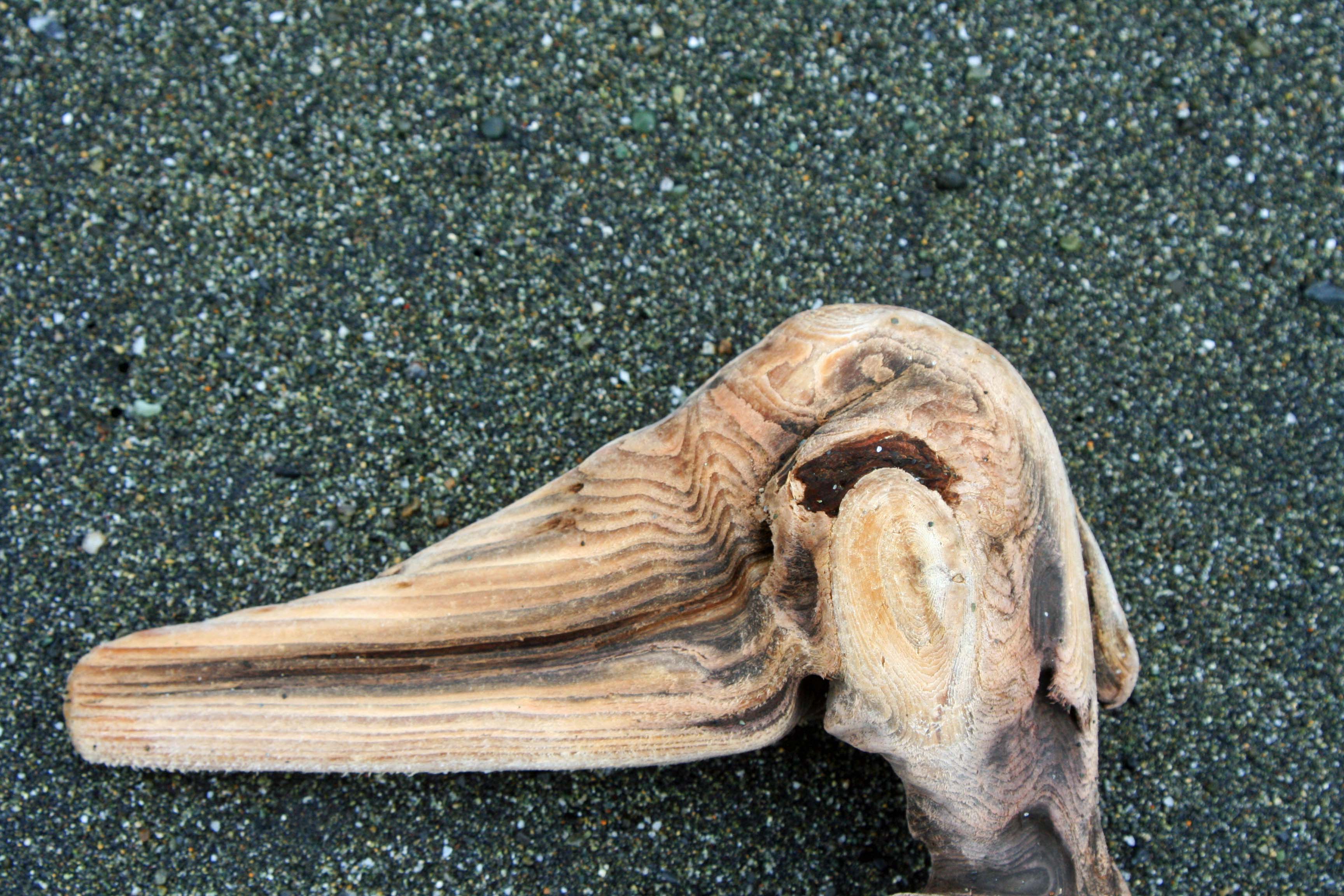
Driftwood shapes at Redwood National Park. Photo by Curtis Mekemson.

I thought of this piece as a wood duck.

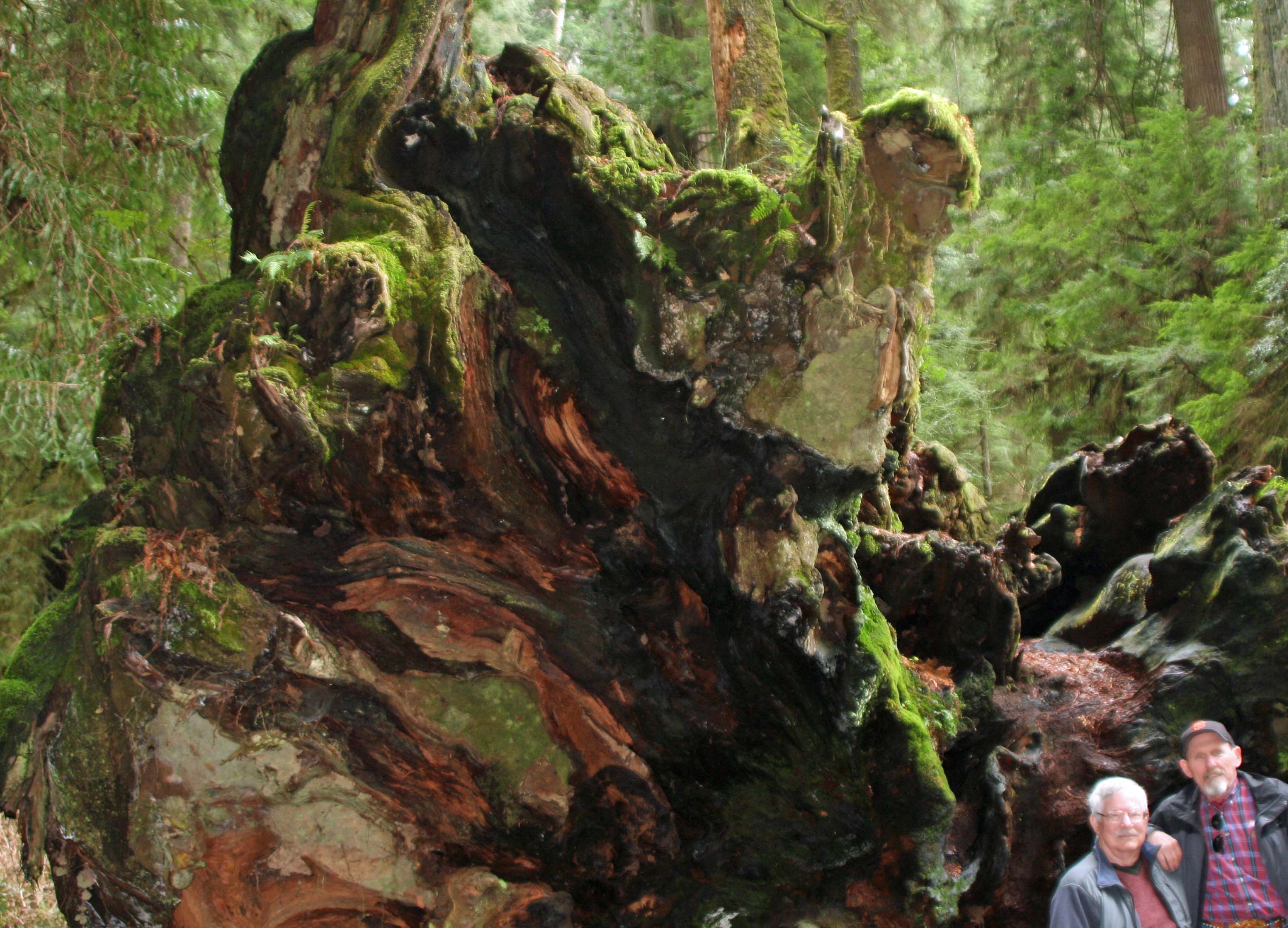
Downed tree root in Redwood National Park.

Back to the forest, my friend Ken Lake and I stand next to another massive root. (Photo by Peggy Mekemson.)

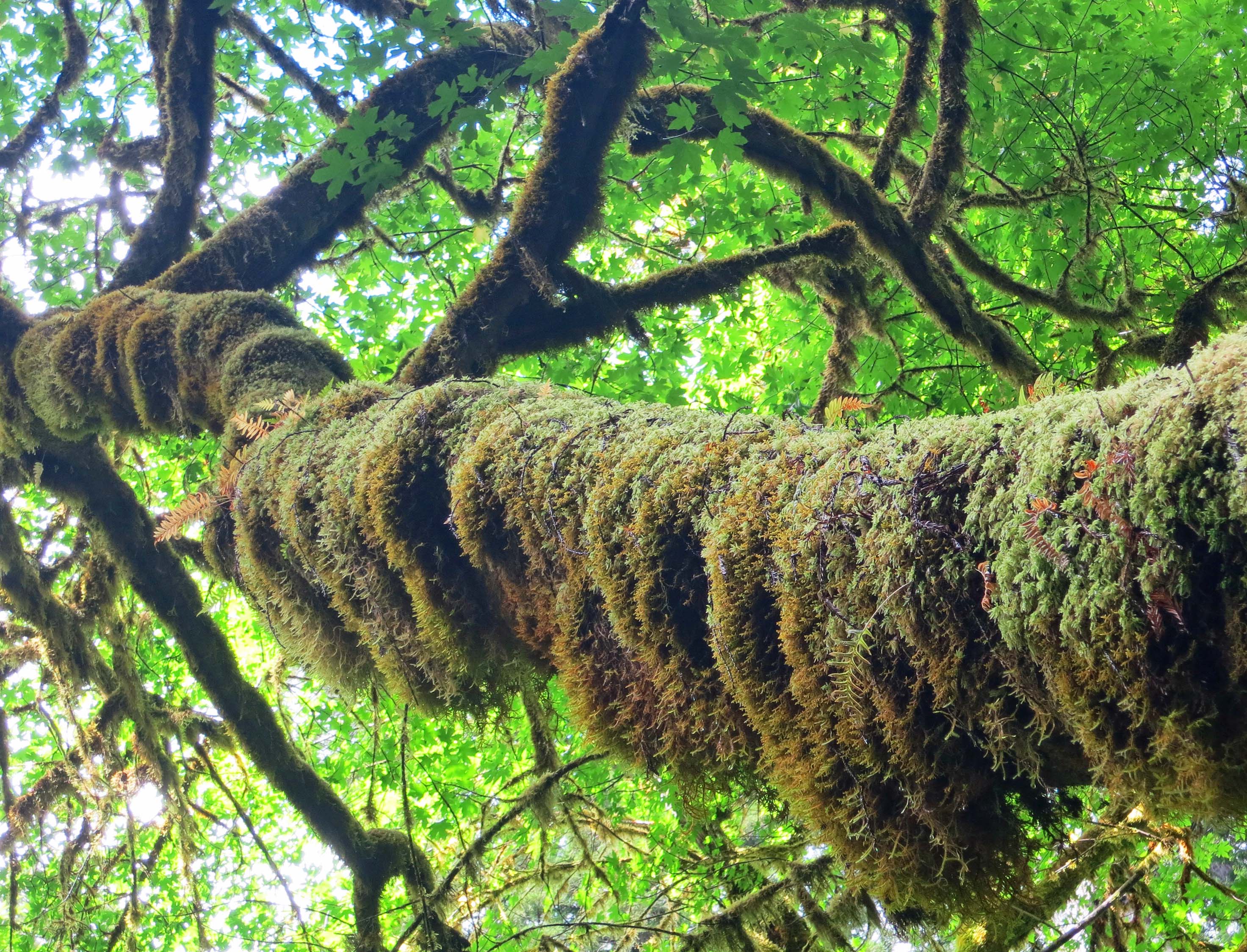
Moss coverend tree at Redwood National Park. Photo by Curtis Mekemson.

The moss growing on this tree is a reminder that Redwood National Park receives 60-80 inches of rain per year, thus making it a rainforest.

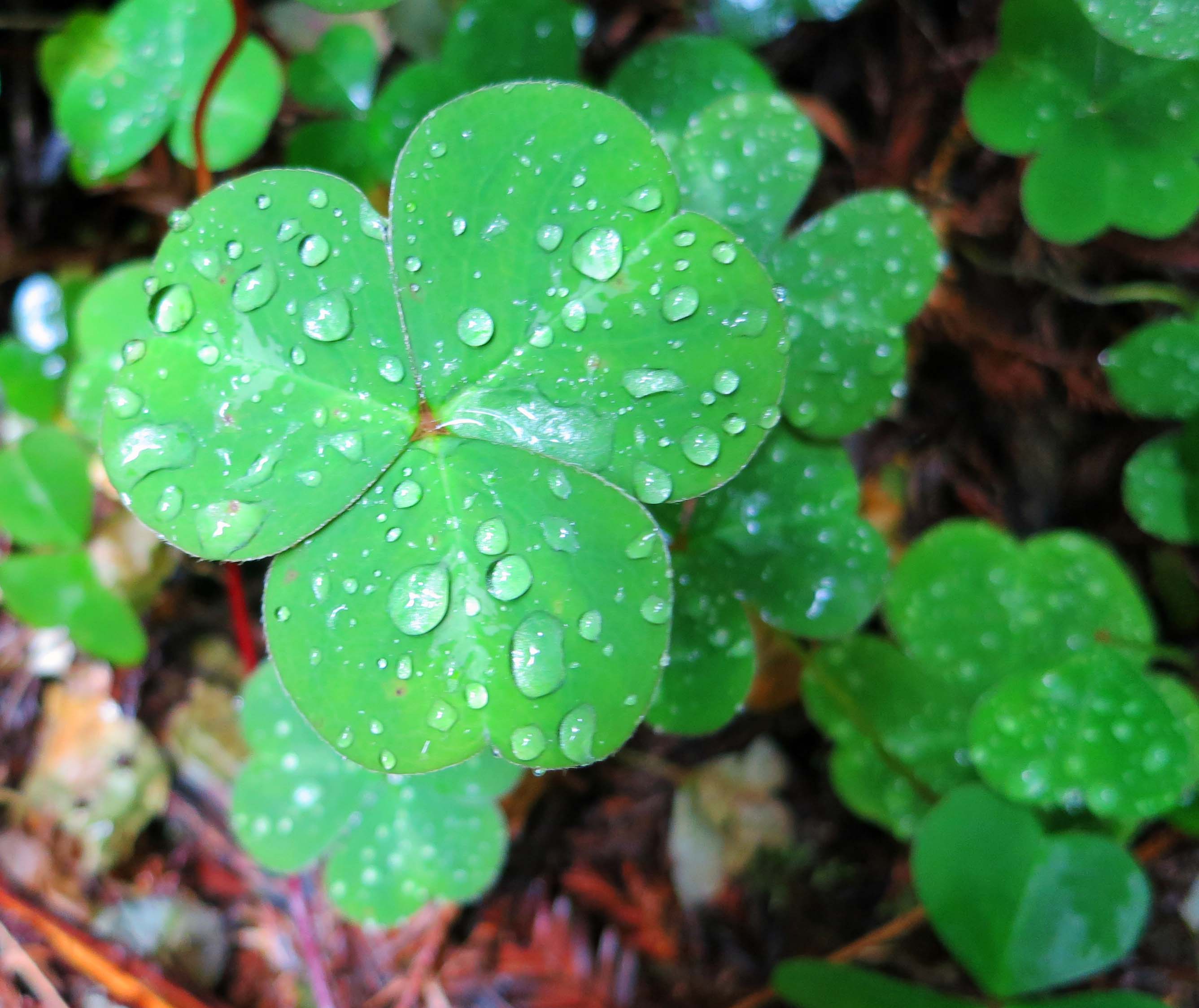
Large clover leaf in Redwood National Park. Photo by Curtis Mekemson.

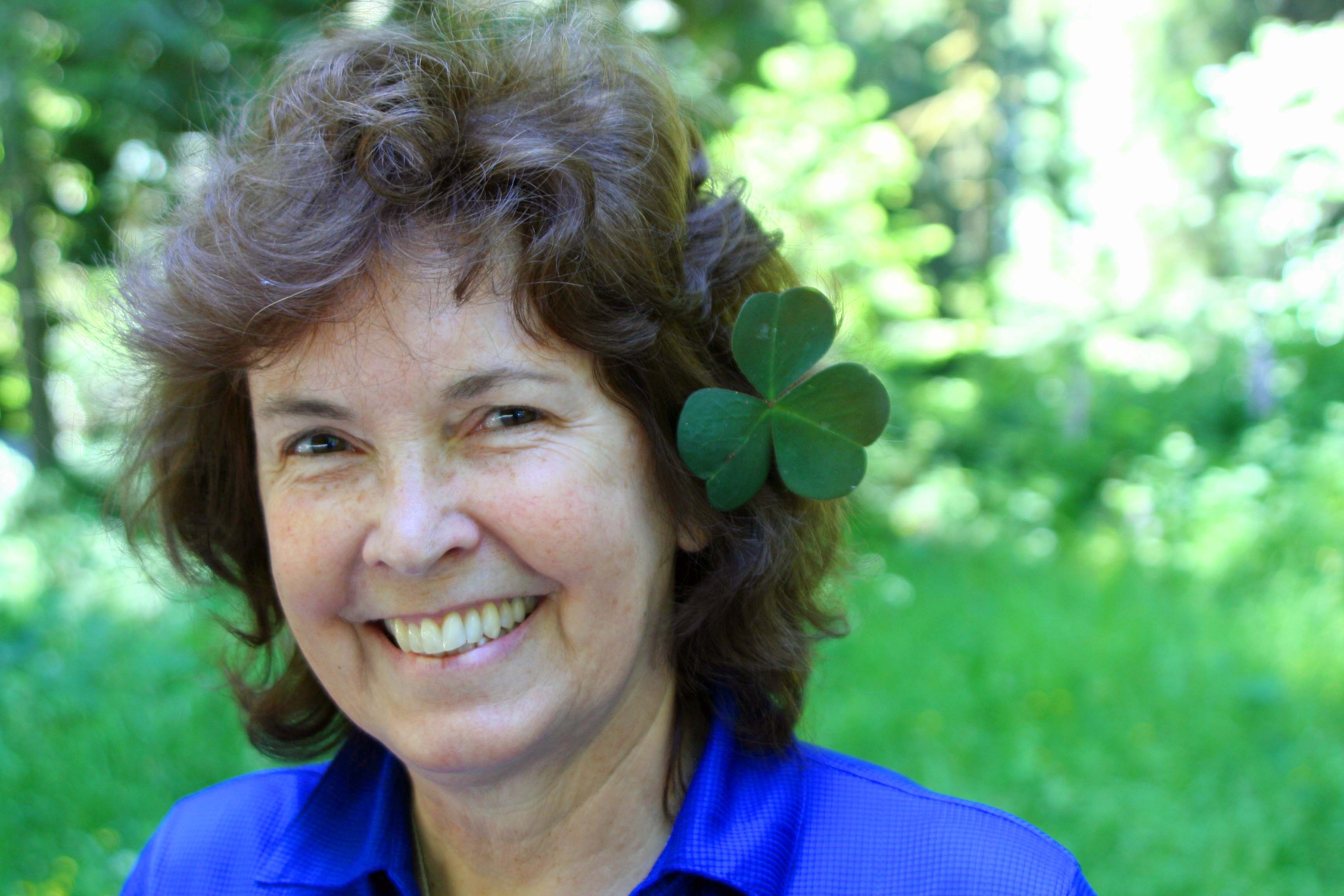
The size of clover is another reminder that things grow big in Redwood National Park– as my favorite model demonstrates below…

Peggy Mekemson wears a Redwood National Park clover in her hair. Photo by Curtis Mekemson.

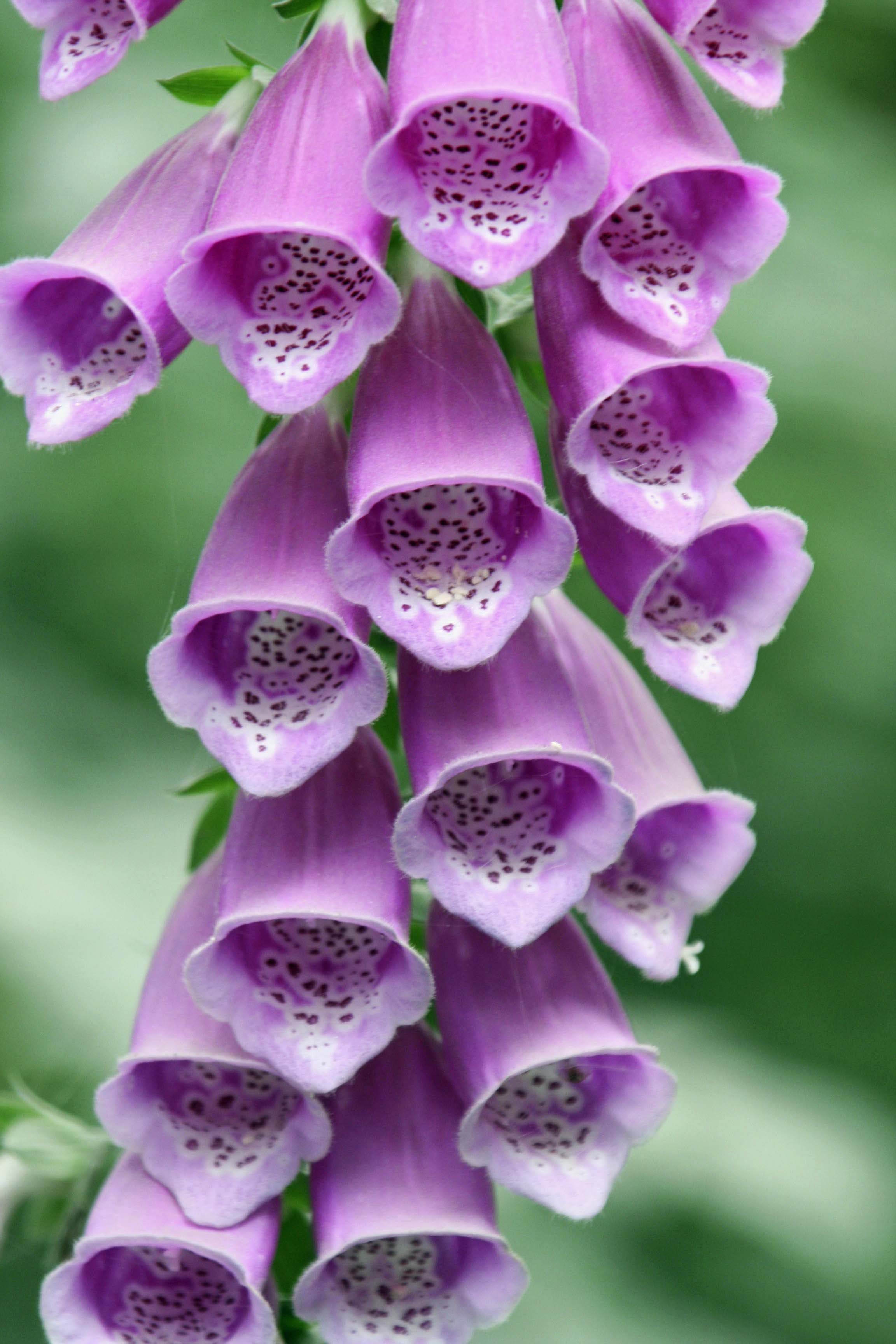
Foxglove growing at Redwoods National Park.

Beautiful Foxglove is also found growing among the redwoods. (Photo by Peggy Mekemson.)

Fern growing in Redwoods National Park. Photo by Curtis Mekemson.

Another perspective on the rainforest look of Redwoods National Park.

Two final views of the magnificent redwoods.

Giant redwood tree at Redwoods National Park. Photo by Curtis Mekemson.

Tops of redwoods at Redwoods National Park. Photo by Curtis Mekemson.


NEXT BLOG: Wrap up of park series (for the present) with photos from several different parks.

A Tall Trees Tale: Shake Down Cruise to the Redwoods… North to Alaska

Moss covered tree in Redwoods National Park.

When we think of the Redwoods, it is usually about the giant Redwoods. But the Redwoods also have an incredible greenness that is long remembered.

A long trip, especially a long trip where services are few and far between, means you prefer not to have breakdowns along the way. I dutifully took Quivera in to the Ford Dealer and spent the usual obscene amount of money to increase my chances she would behave herself on the way to Alaska. The drive to Alaska isn’t as challenging as it once was (I made my first trip in 1986 over frozen dirt), but it is still challenging.

To further increase our chances of a worry-free trip, Peggy and I– along with our daughter and two grandkids, took Quivera on a shake down cruise to the Redwoods National Park in Northern California, about three hours away. We had introduced our son Tony’s kids to the Big Trees last summer and were eager to have Tasha’s children share the experience.

We dutifully took the kids to see the Big Tree. It is 304 feet tall (92.6 mtrs), 21.6 feet in diameter (6.6 mtrs) and 68 feet (20.7 mtrs) in circumference. The estimated age of the tree is 1500 years. Afterwards, Ethan and Cody along with our next-door neighbor’s son, William, went charging off to look for Ewoks and banana slugs. Star Wars was filmed nearby.

Big Tree in Redwoods National Park.

The eight year old Ethan on the left, our nine-year old next door neighbor William, and the five-year old Cody pose in front of the Big Tree in Redwoods National Park.

Big Tree at Redwoods National Park.

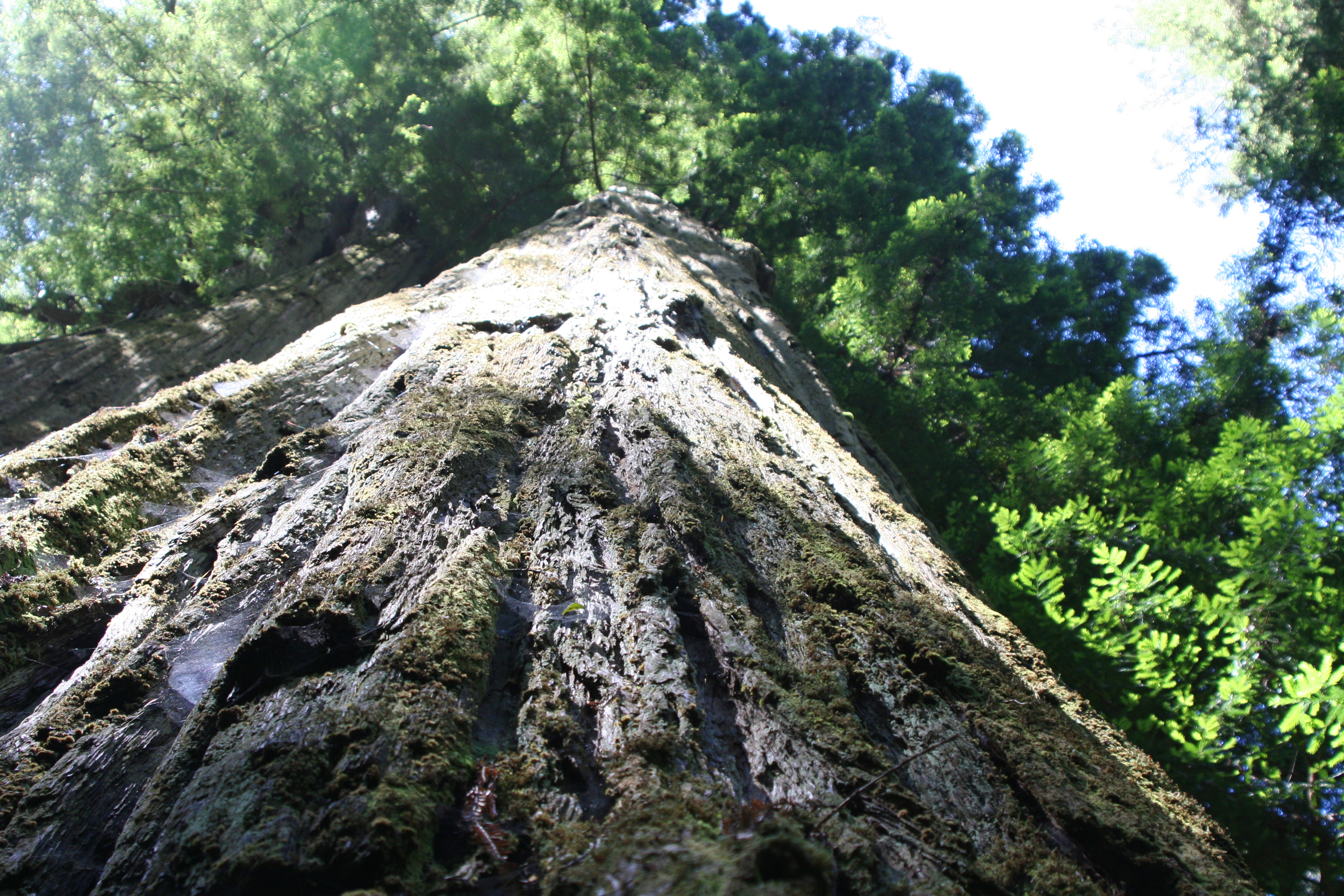
Looking up at the Big Tree. It is impossible not to feel awe.

A pair of giant trees in Redwoods National Park.

Of course Big Tree is just one out of hundreds of the giants found in Redwoods National Park.

Firn with rain drops in Redwoods National Park.

It had rained just before we started our visit and this fern was still holding rain drops.

Banana Slug at Redwoods National Park.

A bright yellow Banana Slug makes its way along the forest floor. The Banana Slug, BTW, is the school mascot for the University of California, Santa Cruz.

Redwoods National Park

Another view of how green it is at Redwoods National Park. I told the boys to look out for Ewoks. The boys are avid Star Wars fans. “You know Ewoks are make believe,” the five-year old Cody primly informed me. Darn. I thought they were real.

Redwoods National Park

The light grey clouds against the dark tees provided an interesting view looking up.

Leaves at Redwoods National Park.

I also liked this shot looking up at leaves.

Pacific Ocean

We also camped out on the Pacific Ocean. This is our daughter Natasha. The tracks you see were made by the boys, running back and forth between the ocean and their driftwood forts.

Harris State Beach Park

We spent our last night at Harris Beach State Park in Brookings, Oregon

Fog rolls in at Harris State Beach  near Brookings, Oregon.

The fog was rolling in when we packed up to leave. Quivera was ready to head north to Alaska.

NEXT BLOG: You’ll meet our traveling companions, Bob and Linda Bray. Bob and I have been hanging out together and causing mischief since the First Grade… a long time ago on a far and distant planet.

It’s National Park Week 2013… April 20-28

Bryce Canyon

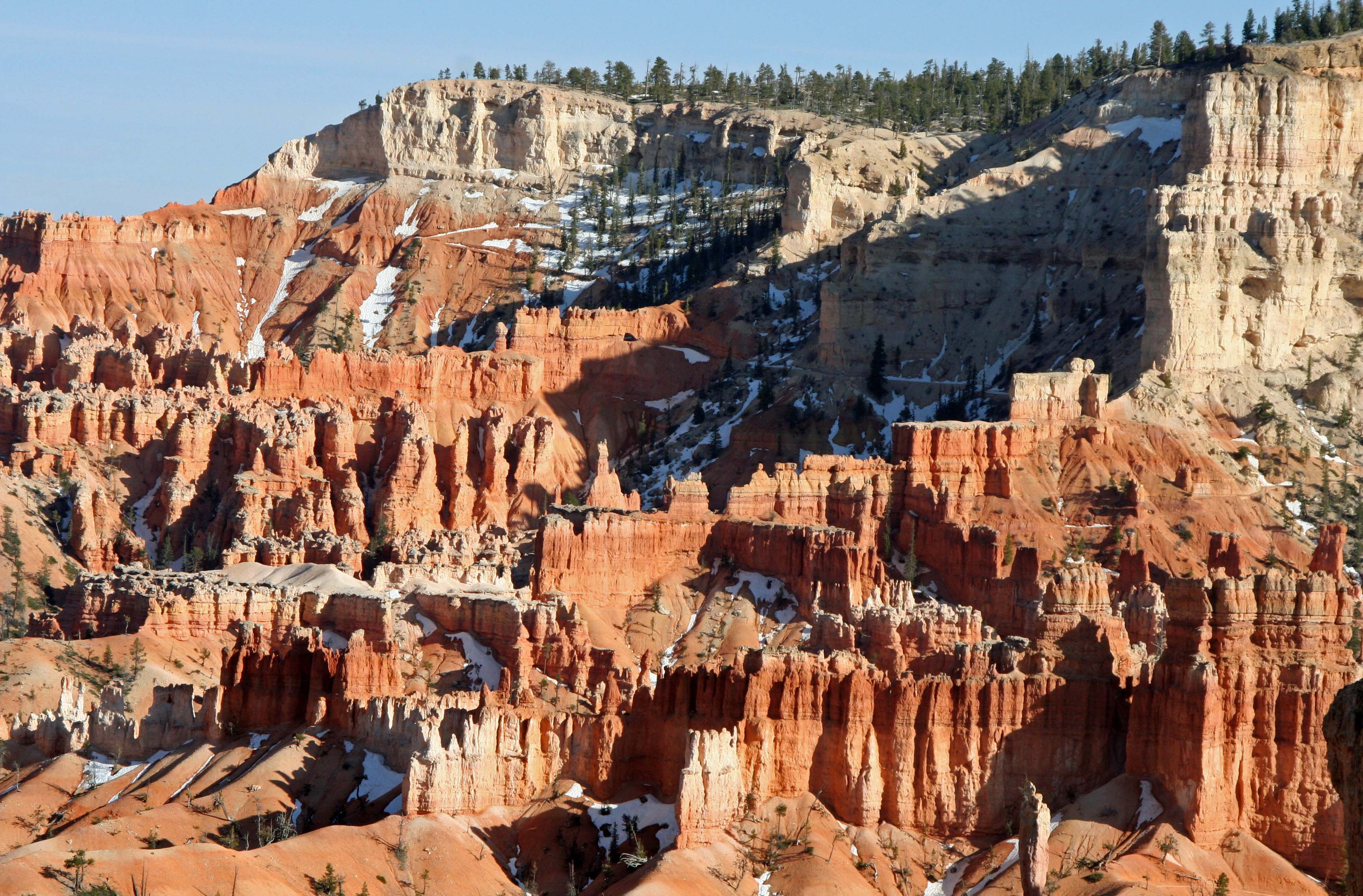
Bryce Canyon National Park, Utah

It’s National Park Week. One of my blogging friends reminded me. Somehow I lost track of time and became so wrapped up in the minutia of life that the week had arrived before I realized it was happening. Shame on me.

The United States and many other nations around the world have done a magnificent job of setting aside national parks. We owe it to ourselves to go out and explore these treasures. And, we owe it to our great, great, great, great-grandchildren to protect these sites of rare natural beauty for future generations.

It won’t be easy. There will always be people who believe financial gain outweighs any other consideration. Why save thousand-year-old redwood trees when they can be turned into highly profitable redwood decks?

Redwood

This 1500 year old redwood is located in Redwoods National Park on the northern coast of California.

Several years ago, Peggy and I set a goal to visit all of America’s National Parks. With the exception of Kobuk Valley and Lake Clark in Alaska, we’ve succeeded. It has been an incredible journey. Our travels have taken us from Denali National Park in Alaska to the Dry Tortugas National Park off the Florida Keys.

In addition to driving through and hiking in these parks, I have also backpacked in 13, biked through five, and kayaked or rafted in three. Once I even organized a winter ski trek into Denali National Park where we slept out in minus 30-degree weather and listened to wolves howl. That was a learning experience…

Since I couldn’t escape to a national park this week, I did the next best thing; I went through photos of parks Peggy and I have taken. All I could think of was wow– what incredible beauty!

Rocky National Park in Colorado.

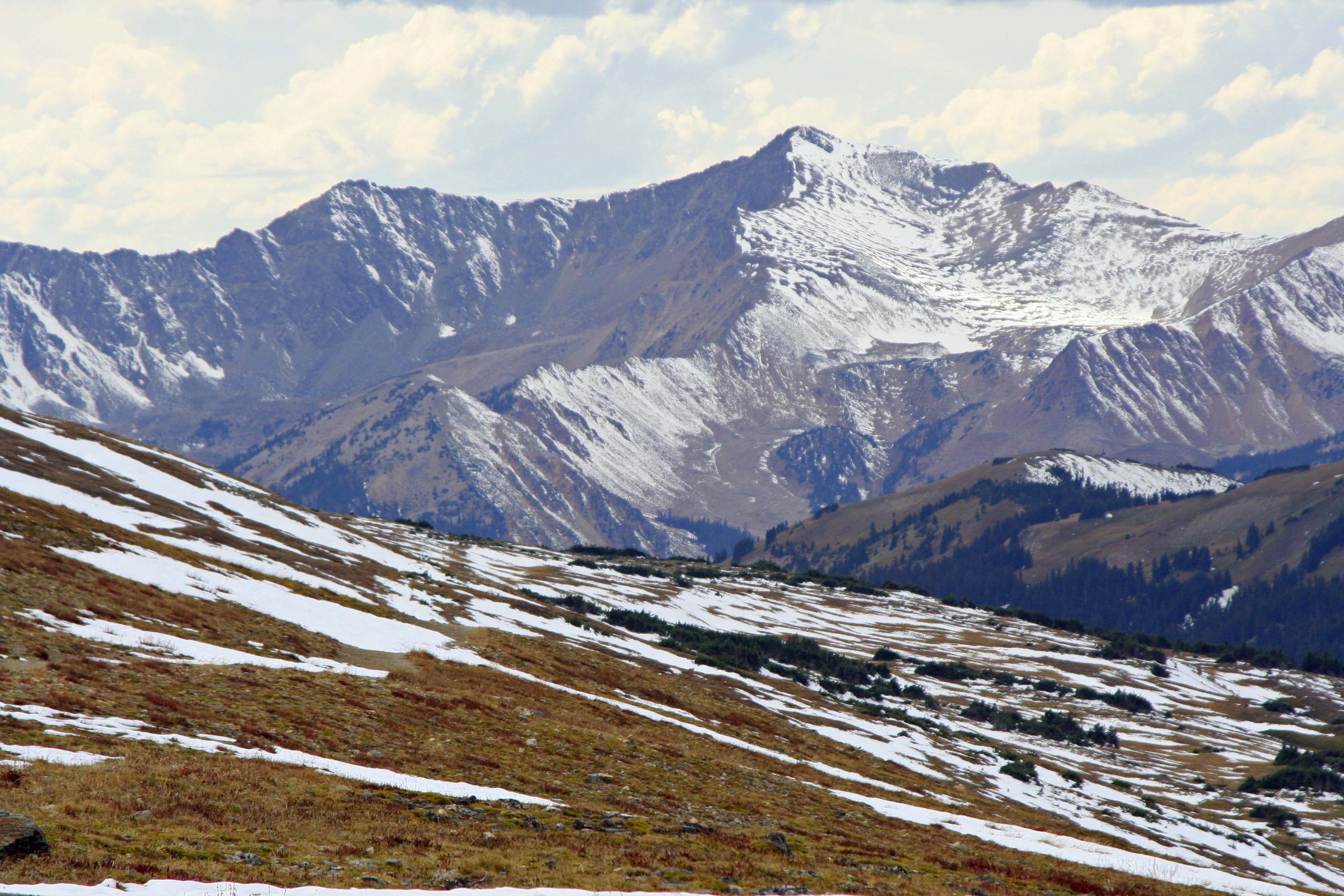
Rocky Mountain National Park in Colorado.

Hawaii Volcanos National Park.

An active volcano in Hawaii Volcanos National Park on the Island of Hawaii.

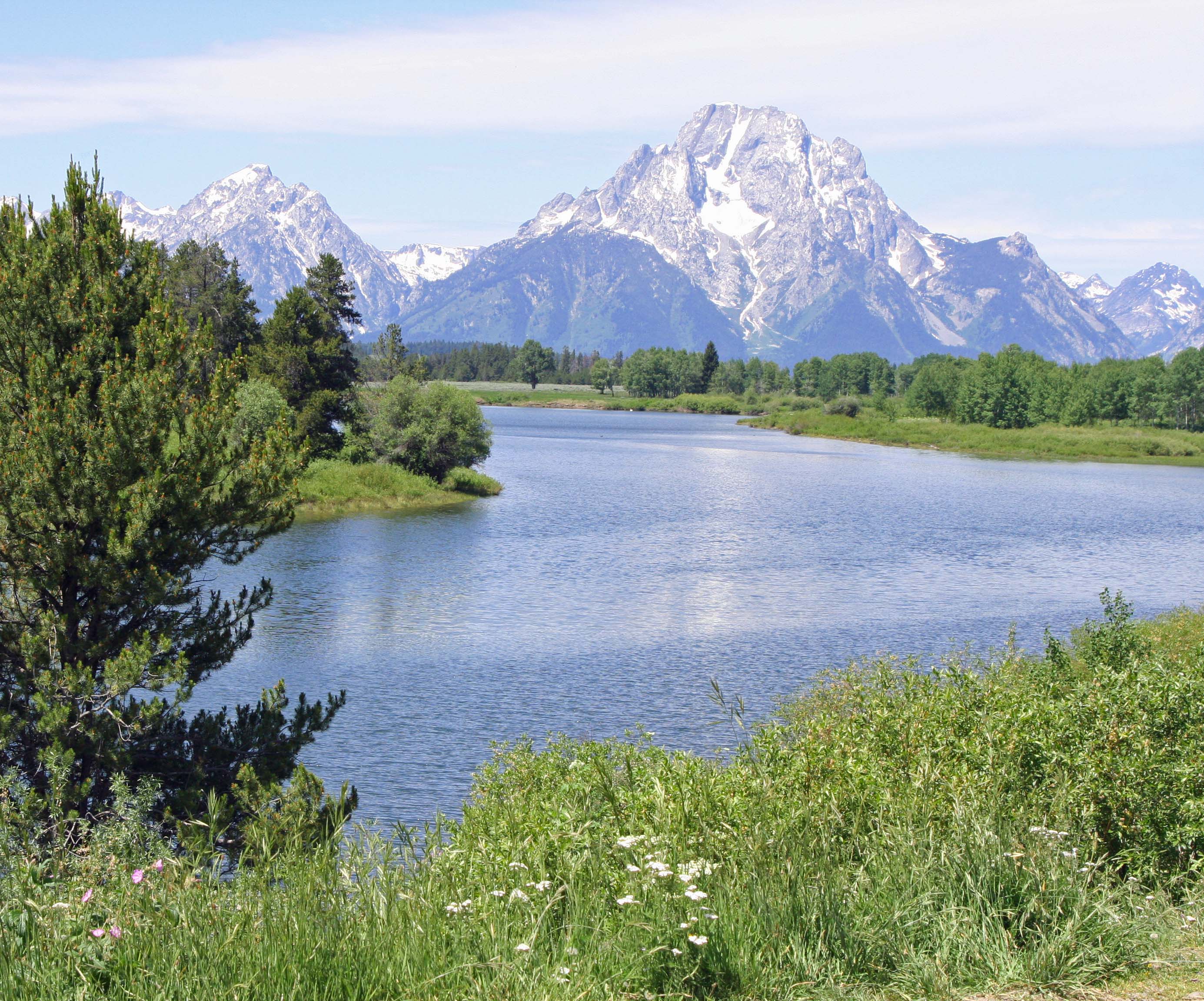
Grand Tetons National Park in Wyoming.

Grand Tetons National Park in Wyoming. A sign warned us to look out for an active grizzly bear.

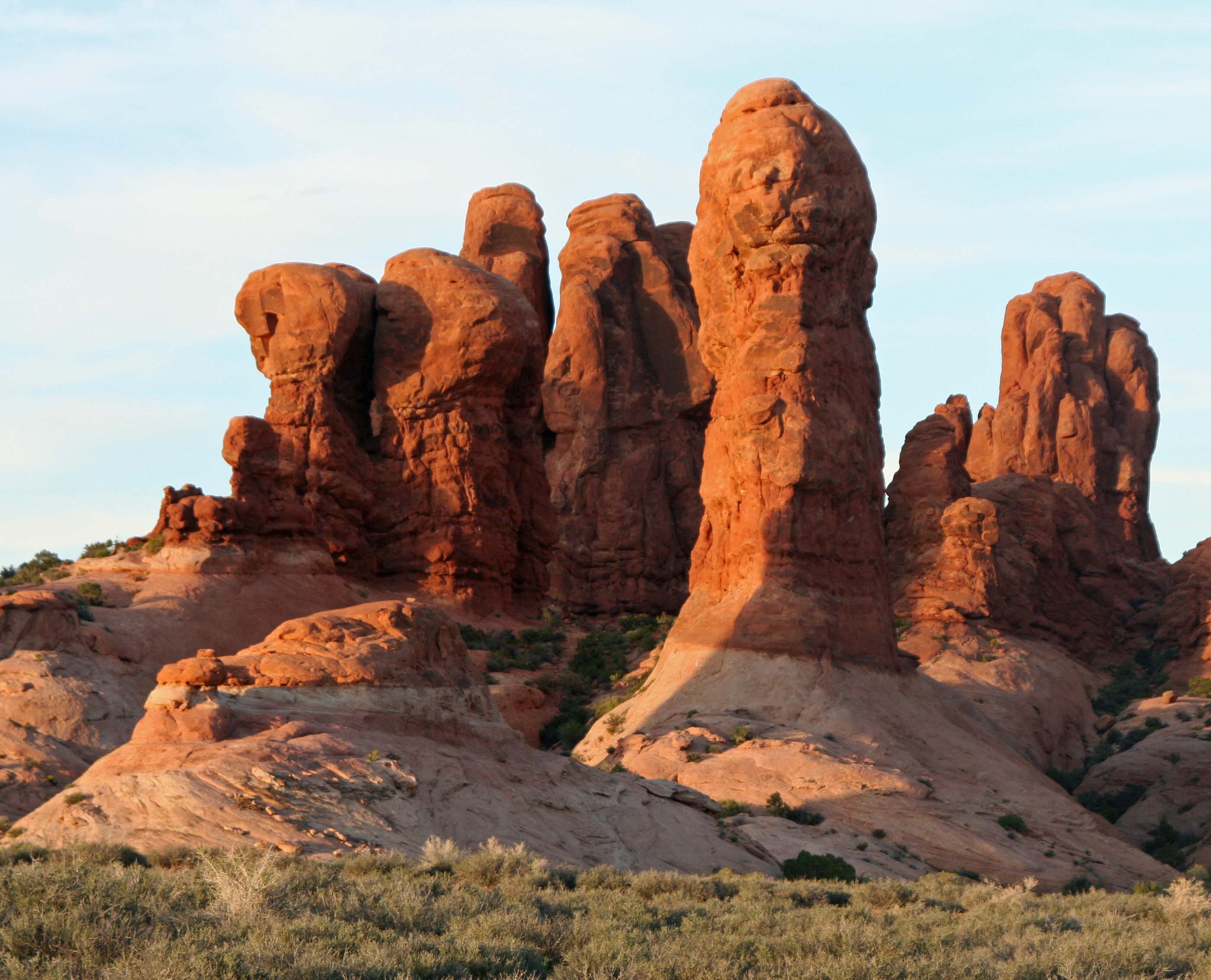
Arches National Park, Utah

Arches National Park, Utah

Tuolumne Meadows, Yosemite National Park, California

Tuolumne Meadows, Yosemite National Park, California. I once woke up near here with a bear standing on top of me.

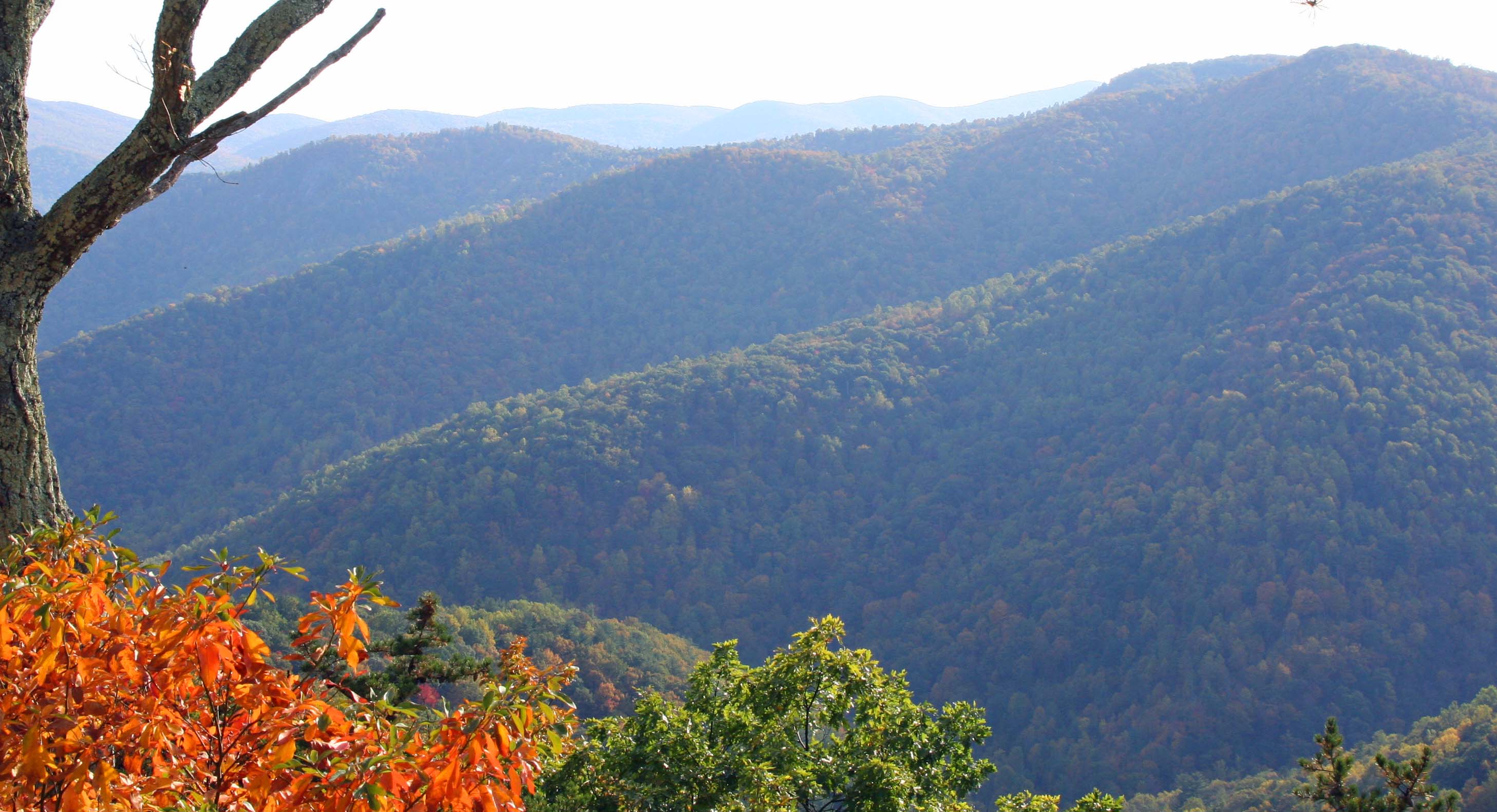
Fall colors of Shenandoah National Park in Virginia

Fall colors of Shenandoah National Park in Virginia.

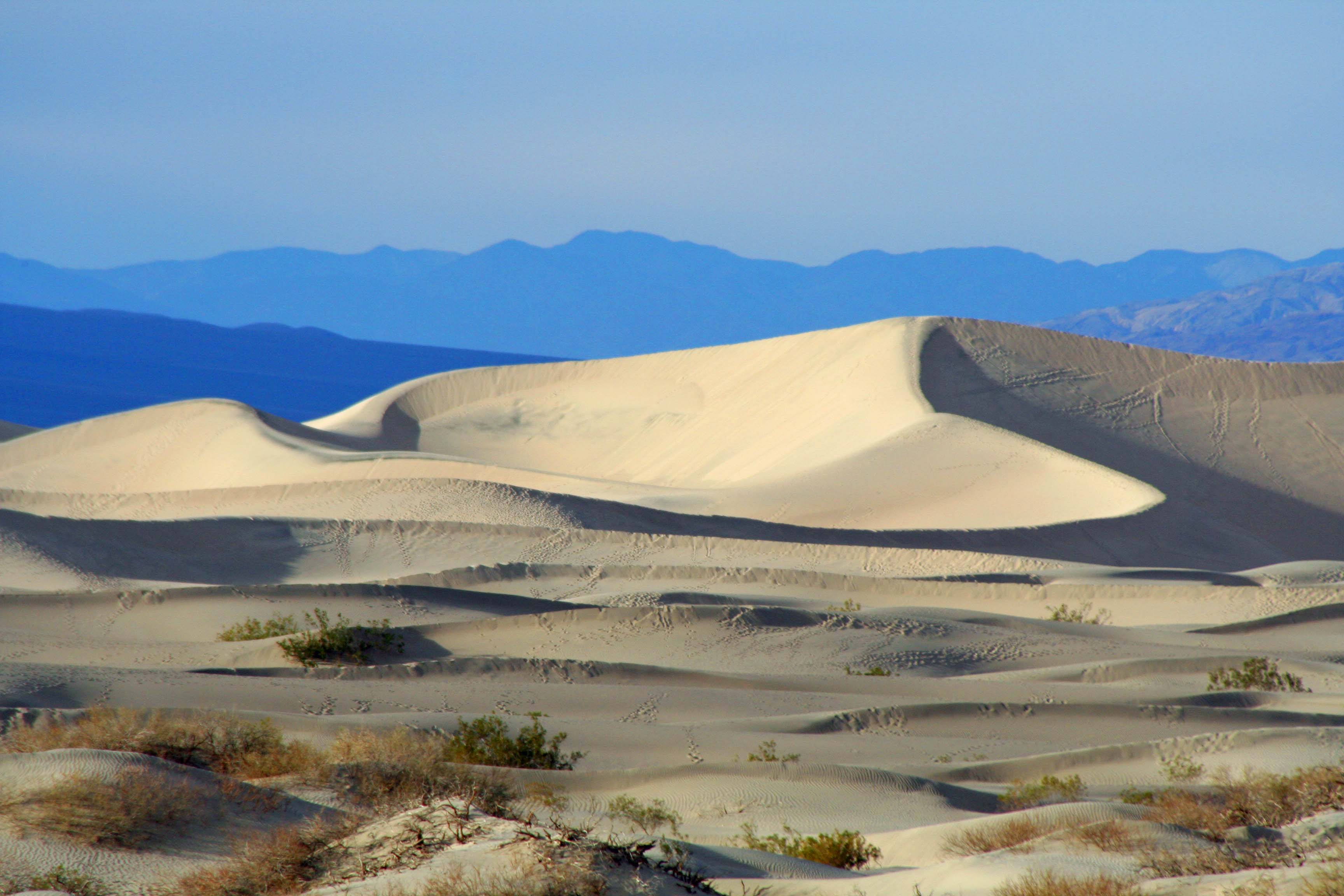
Sand Dunes in Death Valley National Park.

Sand dunes in Death Valley National Park.

The green of Olympic National Park in Washington.

The green of Olympic National Park in Washington.

Lesser known National Parks such as Great Basin in Nevada also hold great charm and beauty. This photo features the van Peggy  and I travelled in for four years as we travelled around North America.

Lesser known national parks such as Great Basin in Nevada also hold great charm and beauty. This photo features the van Peggy and I travelled in for four years as we wandered around North America.

Spectacular scenery is only part of the national park story. Wildlife, birds, insects, reptiles, flowers and history add to the experience.

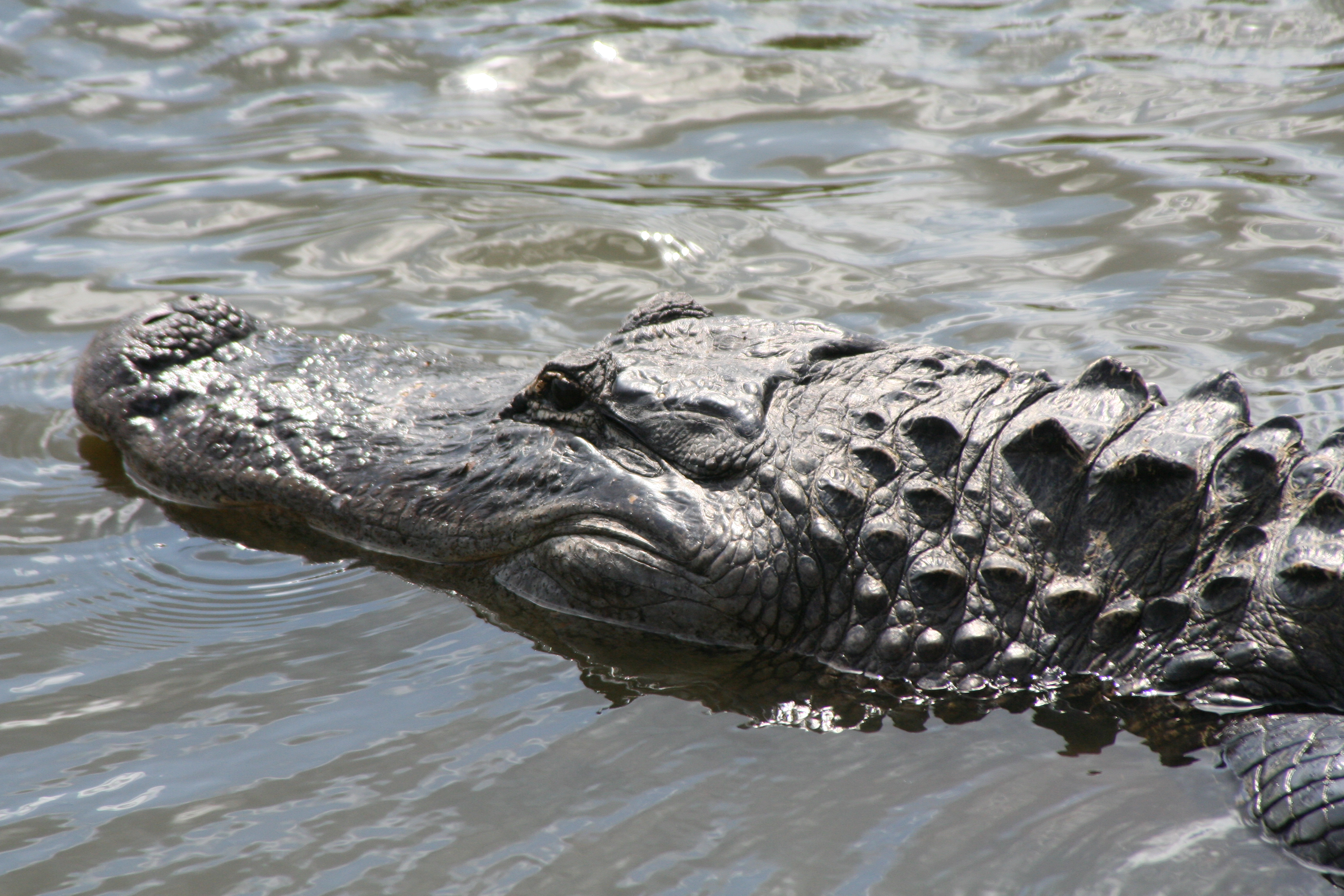
Peggy and I found this beauty swimming through the water at Everglades National Park in Florida.

Peggy and I found this beauty swimming through the water at Everglades National Park in Florida.

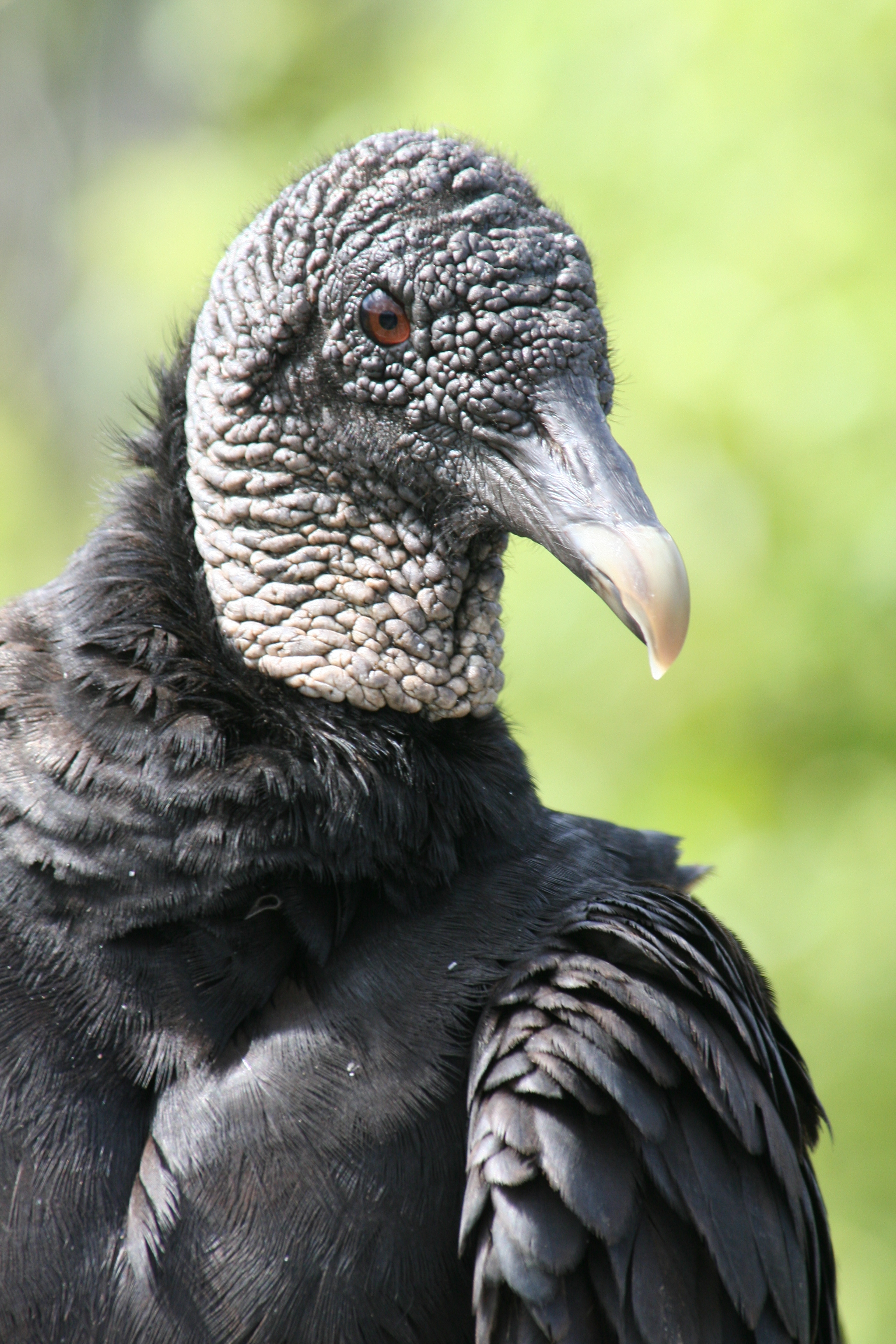
And this striking Black Buzzard was another Everglades resident.

And this striking Black Buzzard was another Everglades resident.

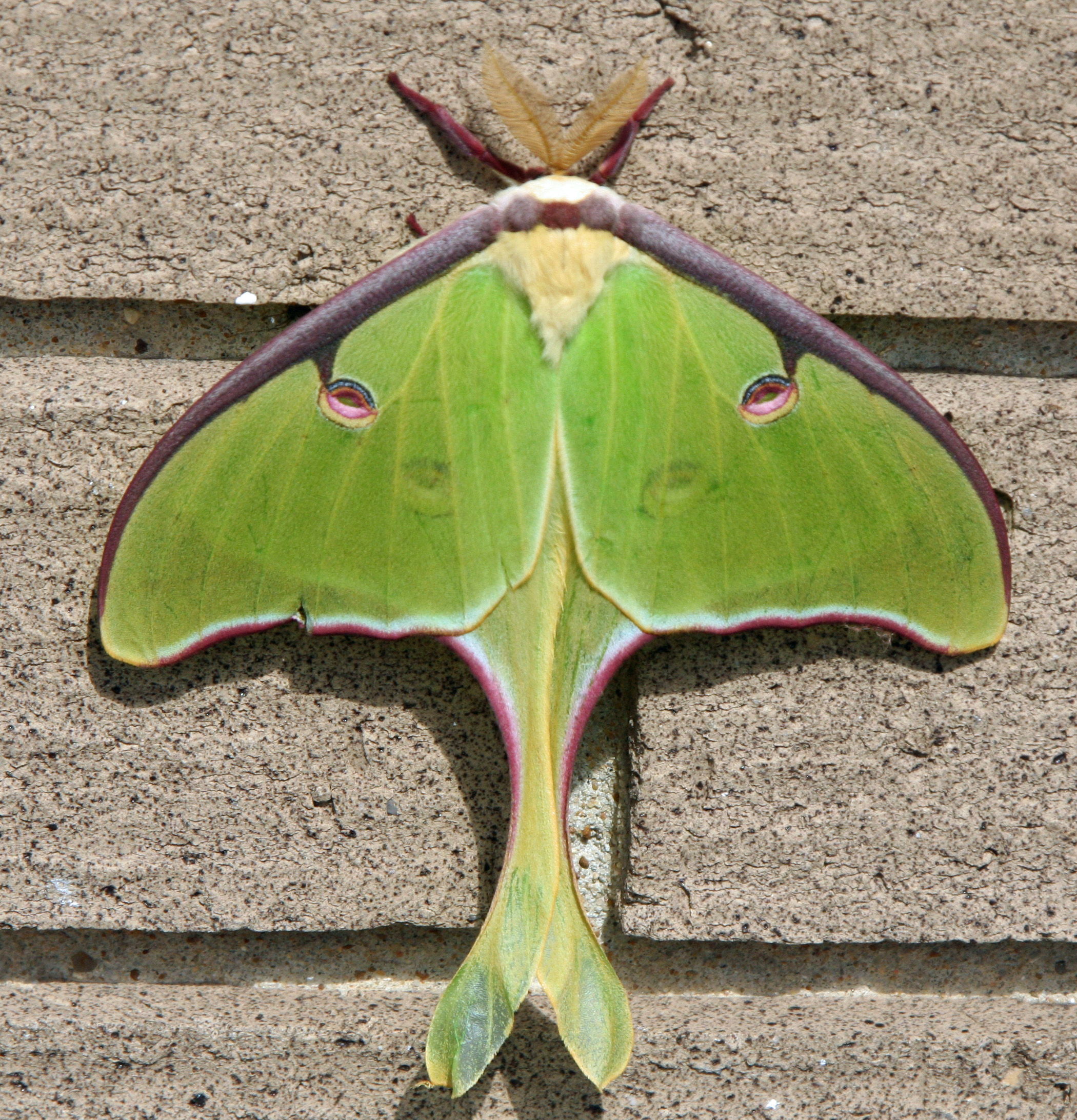
We found this Luna Moth on the Natchez National Parkway.

We found this Luna Moth on the Natchez Trace National Parkway.

Brown Pelicans are a common visitor at Pt. Reyes National Seashore.

Brown Pelicans are common visitors at Pt. Reyes National Seashore.

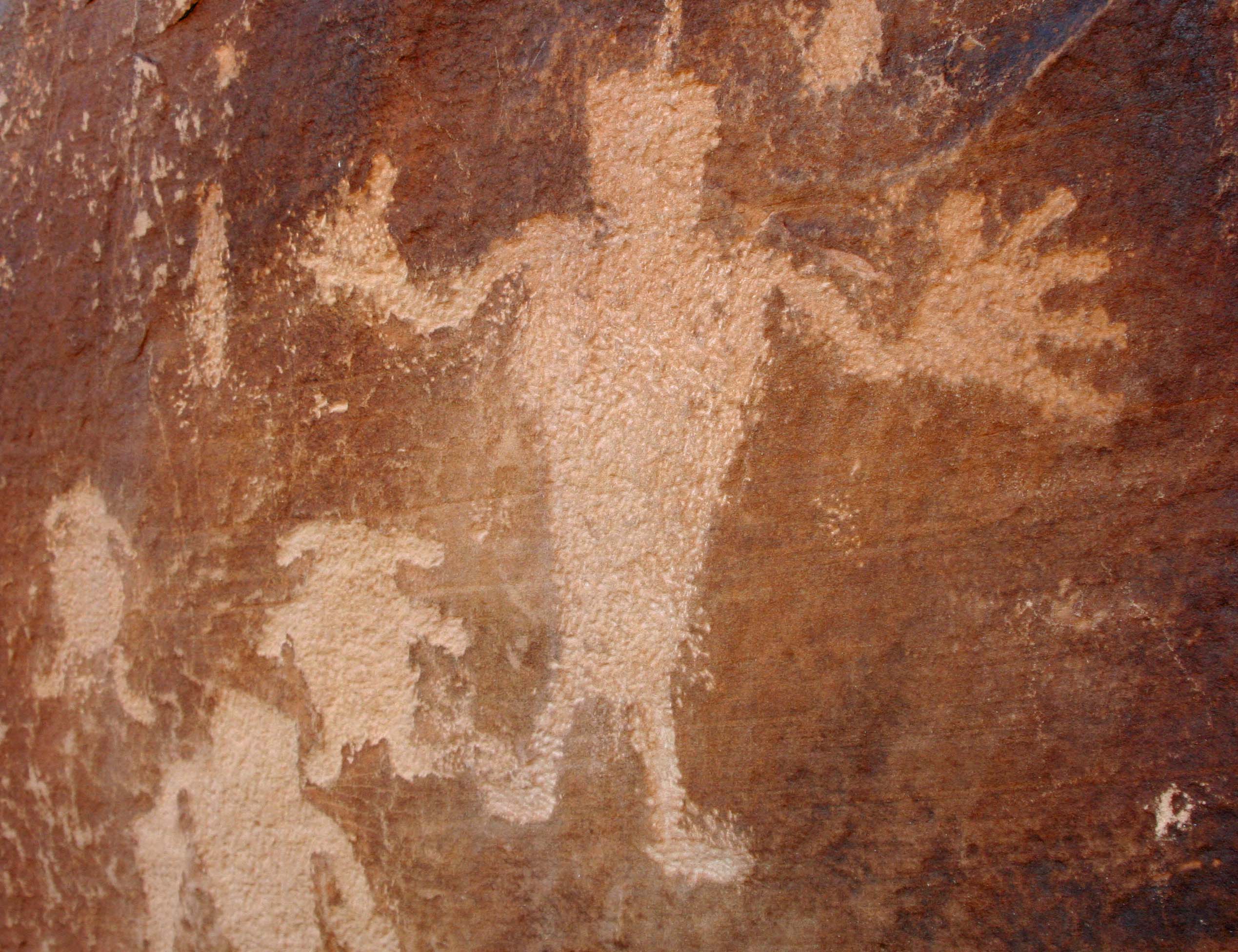
Peggy and I are great fans of Native America rock art, much of which is protected in National Parks and at National Monuments. This man with his big hands and fat little dogs has always been one of my favorites.

Peggy and I are great fans of Native America rock art, much of which is protected in national parks and at national monuments. We have several thousand photos from different sites. This one from Dinosaur National Monument in Colorado/Utah has always been a favorite because of the big hands and fat little dogs.

It never hurts to complete a blog with a pretty flower. We found this Foxglove growing in Olympic National Park.

It never hurts to complete a blog with a pretty flower, even if it goes on and on. (grin) We found this Foxglove growing in Olympic National Park.

NEXT BLOG: I hope you have enjoyed my two diversions over the past week because of Earth Day and National Park Week. On Monday I will return to Europe and Rome’s historic Colosseum.

On the Banks of the Klamath… Redwood National Park

We found this beautiful redwood stump with its twisted roots on the beach near where the Klamath River flows into the Pacific Ocean.

In my last blog, I wrote about experiencing the Redwoods through the eyes of our two and four-year old grandkids. There is still some question about whether they were more impressed by the big trees or the yellow banana slug.

“Can we eat it,” the four-year old asked? Peel away boy.

Two years ago, Peggy and I visited the same area along with our friends Ken and Leslie Lake out of Sacramento. We camped next to the Klamath River near where it flows into the Pacific. I have a special affinity for the Klamath. I was conceived on its banks.

At least that’s the story my parents told me. They were living in the small town of Copco, which is located just south of the Oregon border and east of Interstate 5. My mother always claimed she had the flu and it was a weak moment. It’s good to know where you stand with your mom.

After Ken, Leslie Peggy and I had explored our campground we headed for the ocean. We walked through a Yurok ceremonial site to reach the shore. The Yuroks have lived in the area for numerous generations and today constitute the largest tribe of Native Americans still living in California. The site includes several structures made of fallen redwood including a traditional sweathouse.

The Yurok ceremonial site on the edge of the Klamath River and next to Redwoods National Park includes this traditional sweathouse.

The Yuroks considered the giant redwoods sacred living beings. A comment from Zantippy on my last blog about Redwood National Park came close to capturing how the Yuroks must have felt.

“Oh man, these photos are gorgeous!!! How could Mr. Reagan have not felt these trees spirits? When I was ten, we went there, and my dad parked the car and we were going to walk the trail, but I wanted to stay by myself near the car, and just BE with the forest. It was one of the most amazing things I’ve ever experienced. Then I felt bad because my mother was worried about them walking too far away from the car where I was all alone, so they didn’t get to really explore. I think I told them to just stay still and listen. It is silent voices.”

It is easy for me to understand how the Yurok regarded the redwoods as sacred beings.

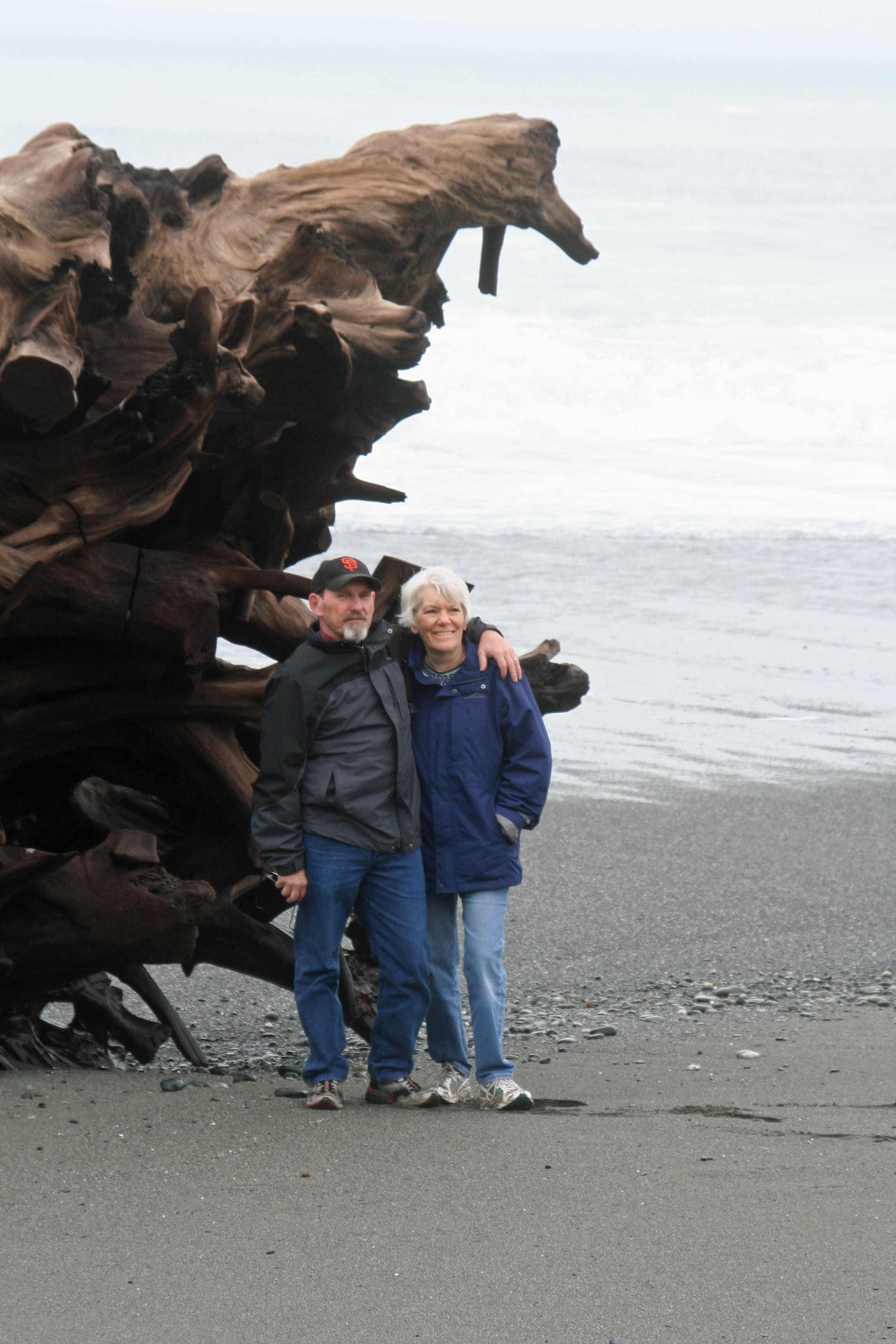
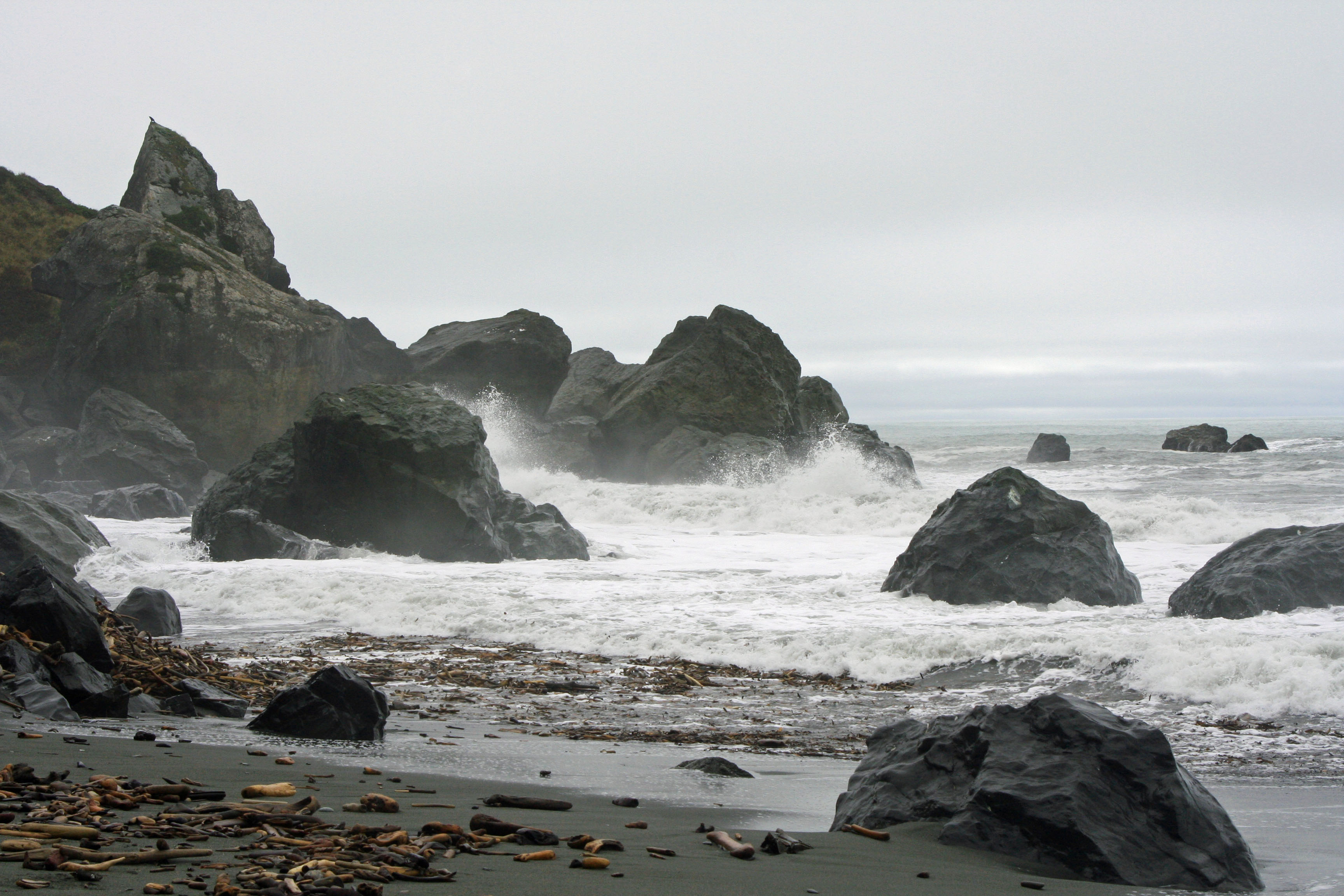
A recent storm had deposited driftwood on the beach including a large redwood stump and roots. Smaller pieces of driftwood displayed unique personalities. Waves crashed against the shore. Mist touched the ocean and the trees.  A bald eagle watched us from the distance.

Our friends Ken and Leslie Lake stand next to the redwood stump we found washed up on the beach.

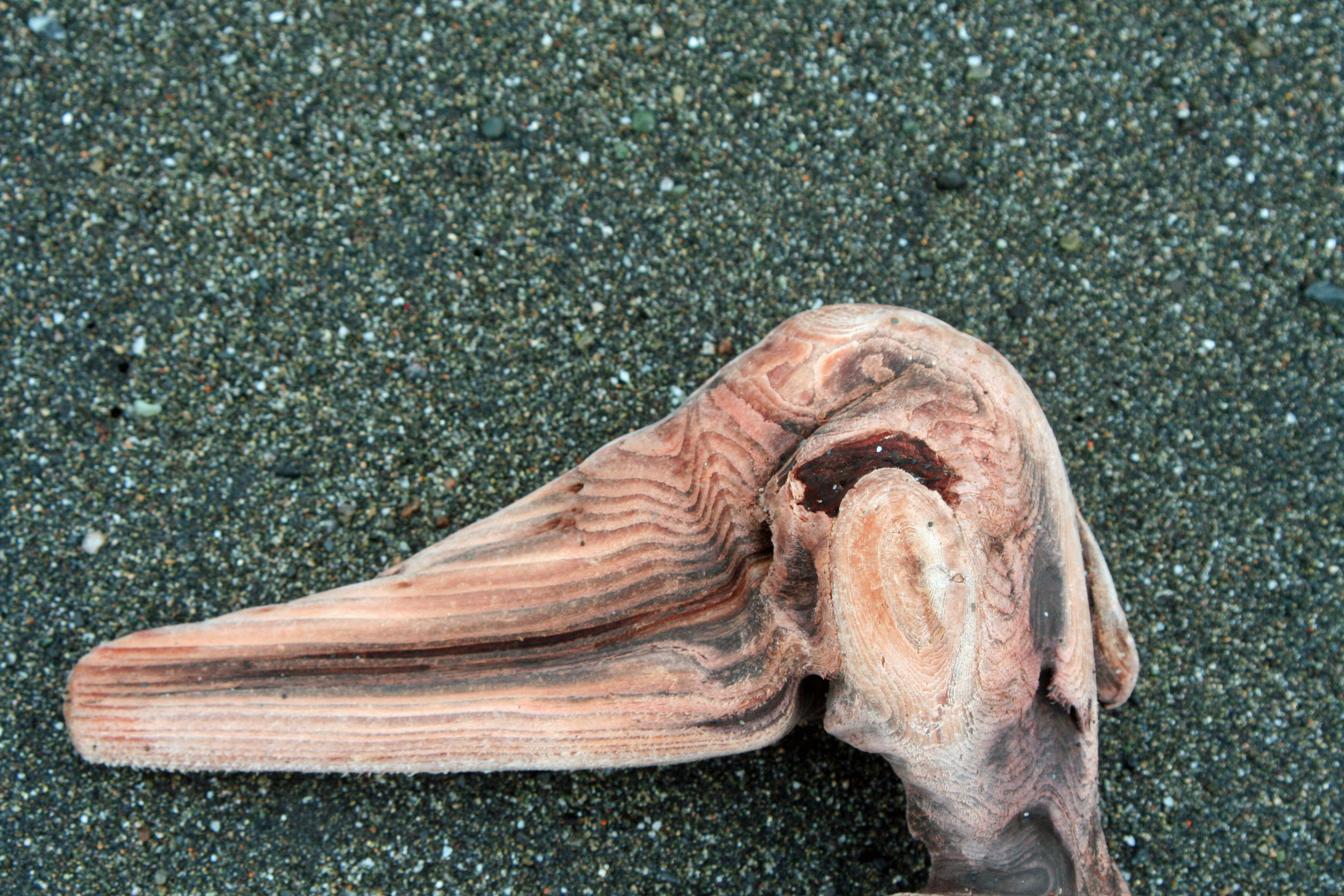
Driftwood can inspire the imagination. I saw a wood duck in this piece.

Waves crashing against the rocks, mist and driftwood are typical of California’s North Coast in Redwood National Park.

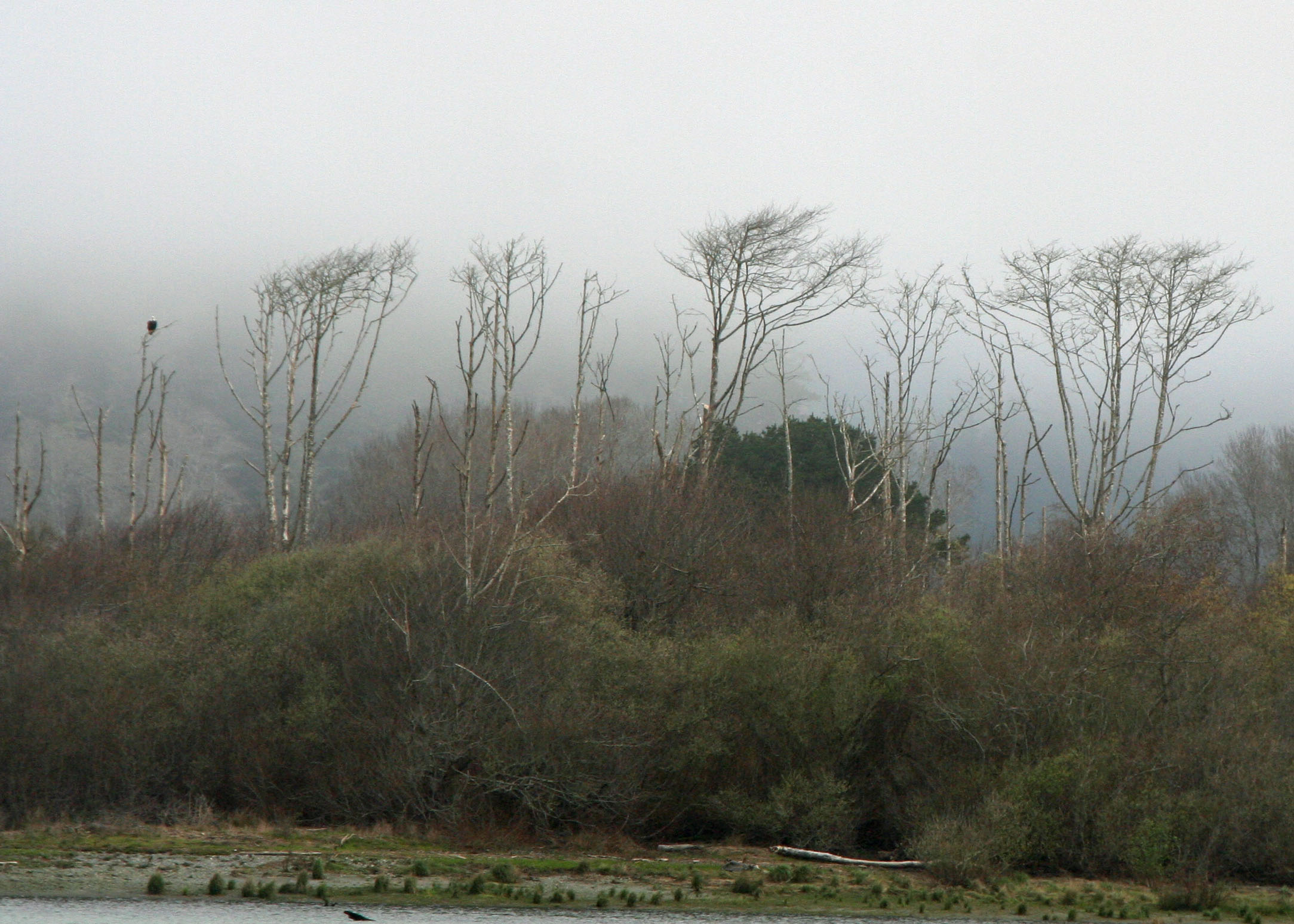
A lone bald eagle in the trees on the left watched as we wandered along the beach.

Just up the narrow, winding Coastal Road, we came on another interesting site. It looked like an old farm. Appearances can be deceiving. It had been disguised to look like a farm. Once upon a time it housed an early radar warning system and two 50 caliber anti-aircraft machine guns. Its purpose was to guard against invasion from Japan following the bombing of Pearl Harbor during World War II.

This seemingly innocent farm building found in the North Coast Redwoods overlooking the Pacific once harbored an early warning radar system and two 50 caliber anti-aircraft submachine guns to guar against invasion from Japan during World War II.

Continuing on, we visited the big trees of Prairie Creek Redwoods State Park. I kept expecting to meet up with Ewoks. But there are scarier creatures about. Scenes from Jurassic Park were also filmed in the area.

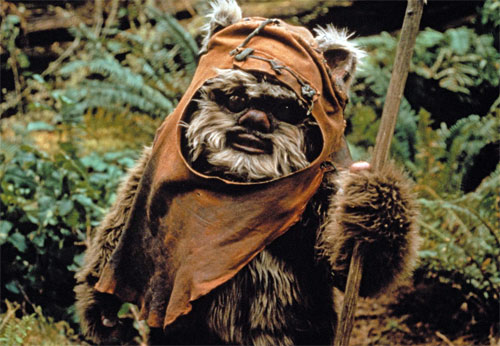
I kept expecting to meet up with an Ewok. George Lucas used North Coast Redwoods to film his Ewok scenes. Portions of Jurassic Park were also filmed in the area. (Photo from Google images.)

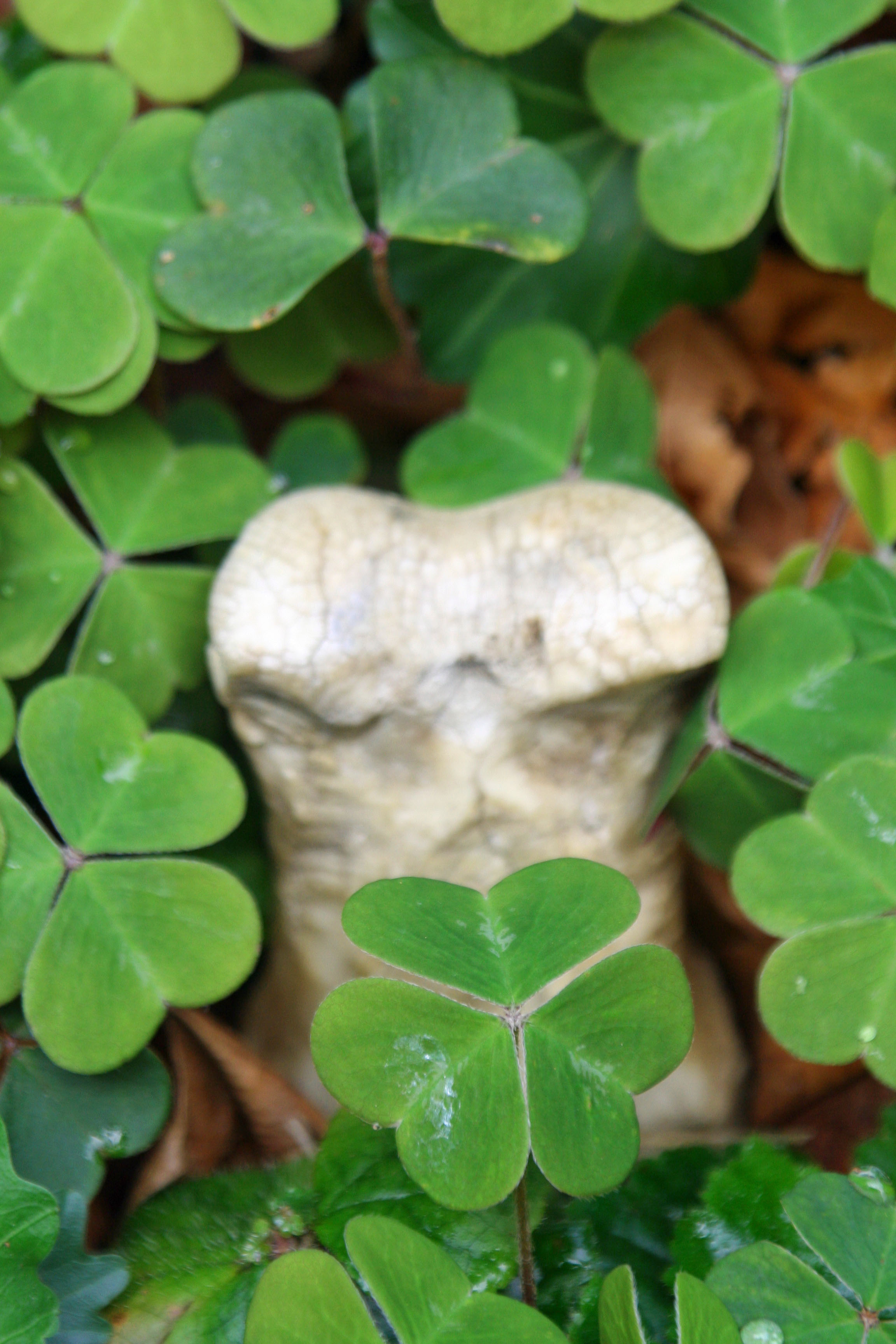
The only strange creature I found was the Peripatetic Bone who insisted on having his picture take with one of the Big Trees. He considered it a humbling experience. Can you spot him?

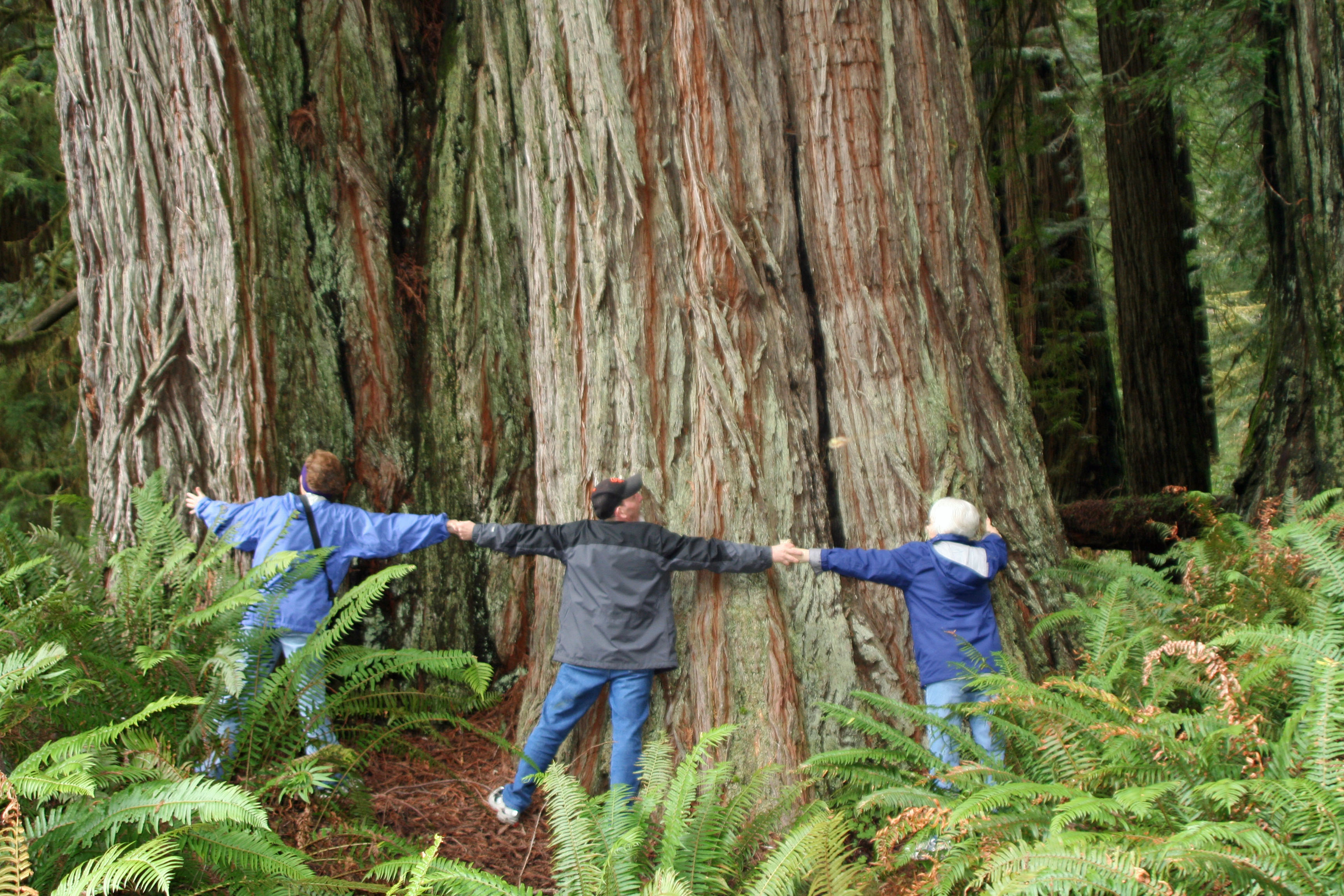
Even my favorite Tree Huggers… Peggy, Ken and Leslie, were made to feel small.

Reaching for the Sky: California’s Redwoods… The National Park Series

A magnificent redwood on California’s North Coast reaches for the sky.

Ronald Reagan once commented about the Redwoods, “There is nothing beautiful about them. They are just a little taller than other trees.” He was serious. Why save a tree that has been around since 500 AD, stands 305 feet tall, and has a circumference of 61 feet when it can be used to build decks that will last for 30 years?

A view of the Redwoods canopy.

My wife Peggy provides perspective on the size of a giant redwood tree.

Reagan’s statement about the Redwoods is totally beyond my comprehension. Fortunately, thanks to groups like the Save the Redwoods League, we can still visit the rugged coast of Northern California and see these magnificent trees reaching for the sky.

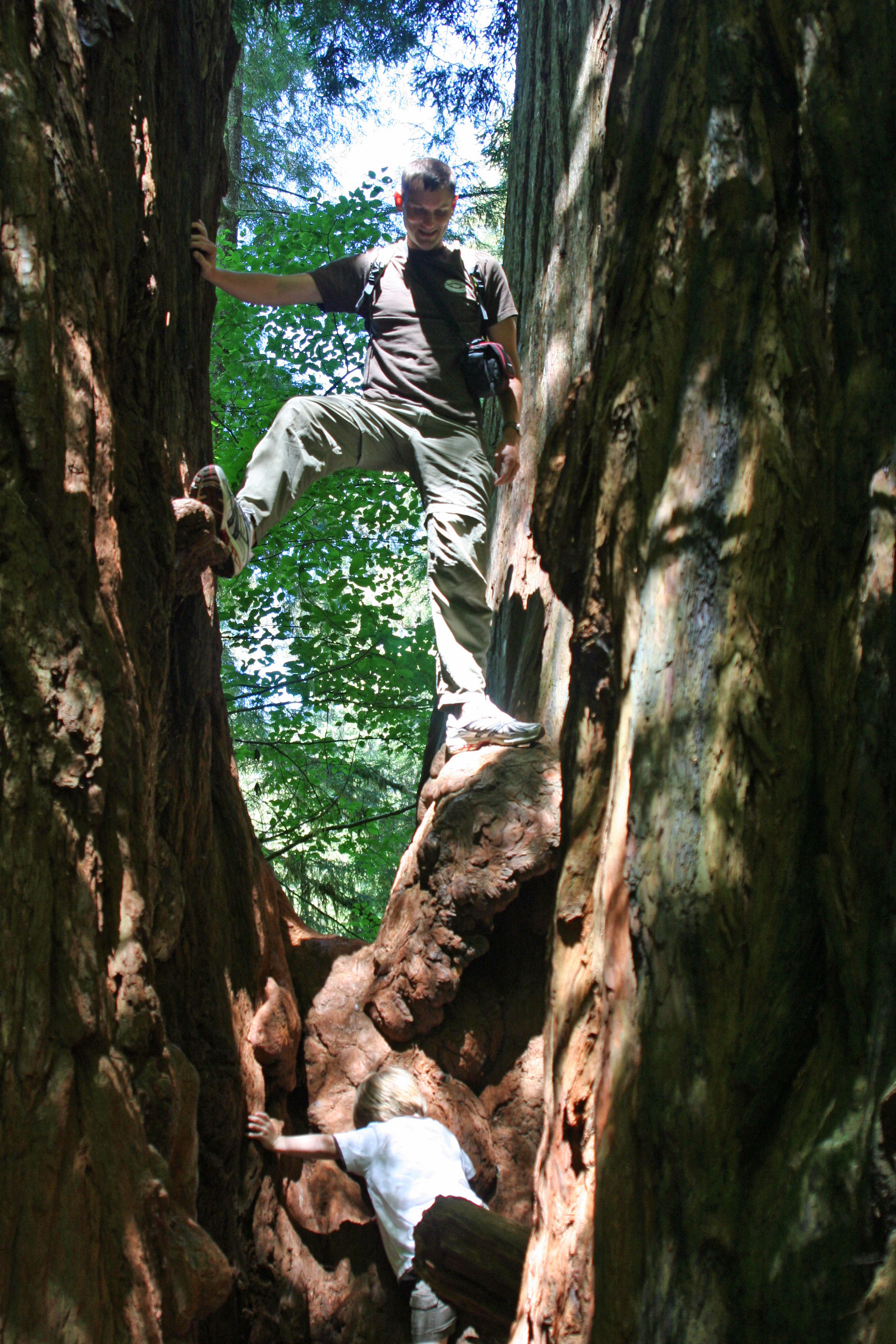
Peggy and I were there last week along with our son Tony and his family. We scrambled to keep up with the grandkids as they rushed down the trails at the Big Tree Wayside. A yellow banana slug, school mascot to UC Santa Cruz, caught their attention and gave us a rest. Hollowed out trees served as perfect caves that demanded exploration. Other redwoods were obviously made for climbing.

The four-year old Connor demonstrates his tree climbing ability as he works his way up a redwood in pursuit of his dad Tony.

The two-year old Christopher is caught up by his mom Cammie for a photo-op while exploring a hollowed out redwood cave.

We were camping at Prairie Creek Redwoods State Park, which is one of several areas set aside as state and National Parks by California and the US Government to protect the forest giants. The area is famous for it’s Elk herds as well as the Redwoods and the scenic California North Coast.

At two and four, Chris and Connor may be a little young to remember the experience. But they will have photos. More importantly, they will be able to come back. Hopefully their children and grandchildren will as well.

The Peripatetic Bone hides out in the clover at Redwoods National Park.

Peggy shows just how large the clover in the Redwoods can grow.

A final view of the 1500 year old rightfully named ‘Big Tree’ in Prairie Creek Redwoods State Park.