













I was wrapping up my day at the Lung Association in Sacramento when the building started moving shortly after 5 p.m. on October 17th, 1989. Peggy and I were at the very beginning of our relationship. You might say, it was off to a shaky start. “Is this the big one?” leapt into my mind as I ran outside. But buildings weren’t falling or people screaming. “Not this time,” we thought, relieved.
Had you been one of 62,000 baseball fans crammed into Candlestick Park for the World Series, or worse, commuting home from work in the Bay Area, your perspective would have been substantially different. A major 6.9 earthquake had ripped into the Santa Cruz Mountains along the San Andreas Fault south of the stadium. Nearby freeways collapsed including a section of the Bay Bridge, numerous buildings were destroyed or damaged, 63 people were killed and 3,757 injured by what became known as the Loma Prieta Earthquake.

Eighty-three years before the Loma Prieta earthquake, an even greater one shook the Bay Area. Blame plate tectonics. The San Andreas Fault, marks a distinct boundary as the Pacific Plate grinds its way north past the North American Plate, building pressure until an earthquake erupts. At 7.9 on the Richter Scale, the energy released from the 1906 San Francisco Earthquake equaled blowing up an estimated 6,270,000 tons of TNT!
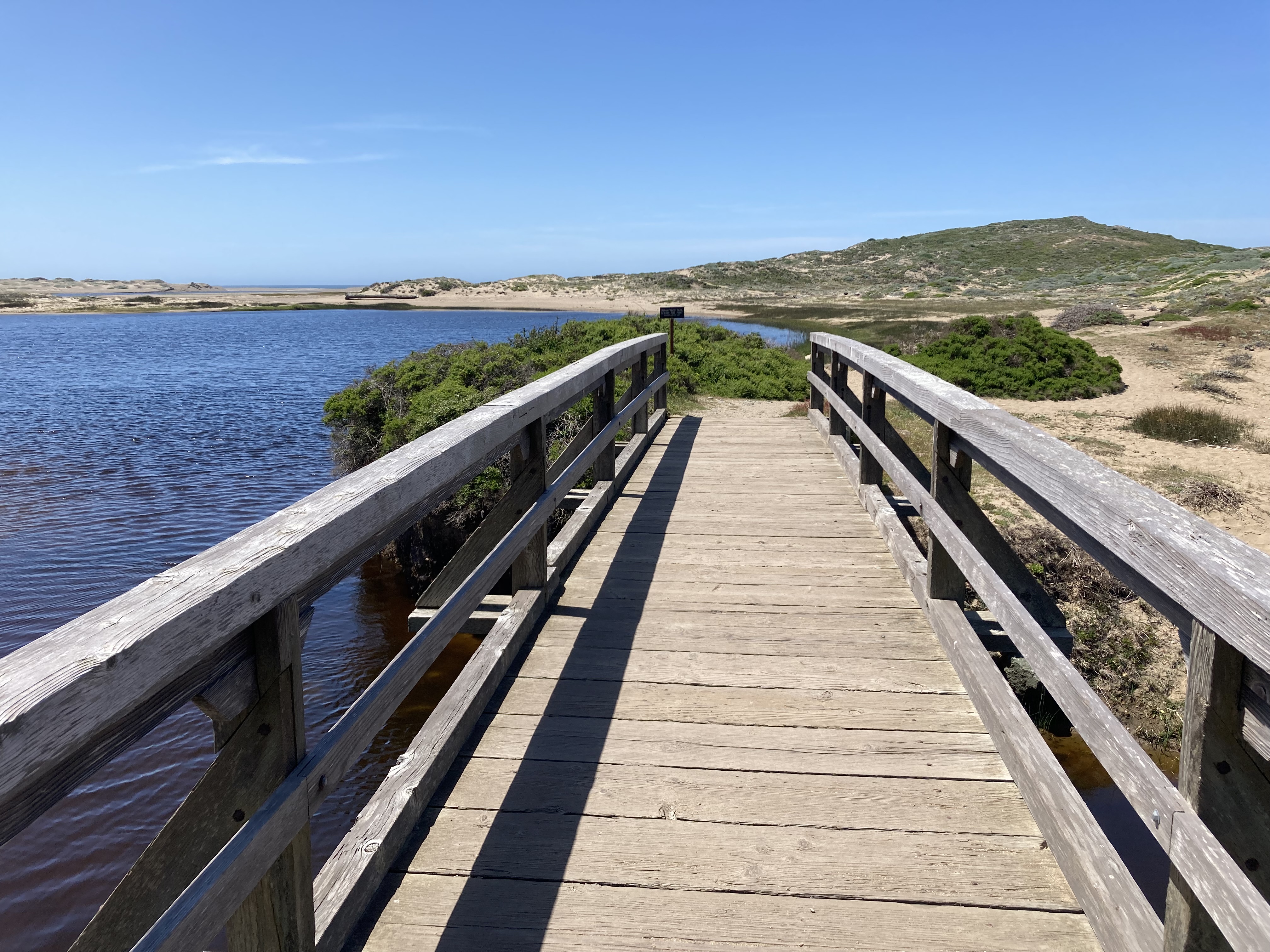
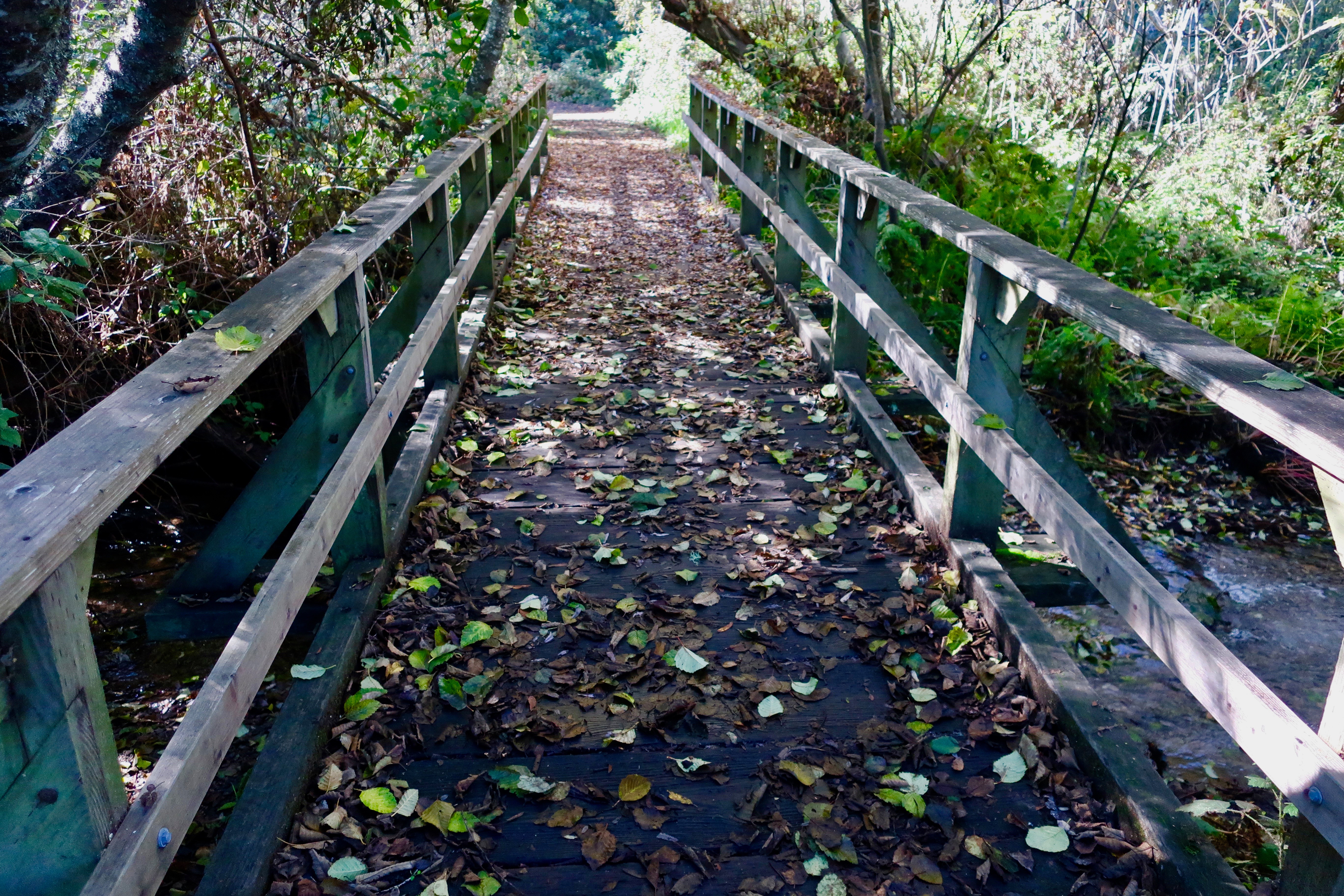
Earthquake Trail, found next to the Visitors’ Center at Pt. Reyes National Seashore, commemorates the event. Peggy and I were there last week and went for a walk along the trail. Like San Francisco, Pt. Reyes felt the full fury of the earthquake as portions of the land moved north as much as 20 feet.

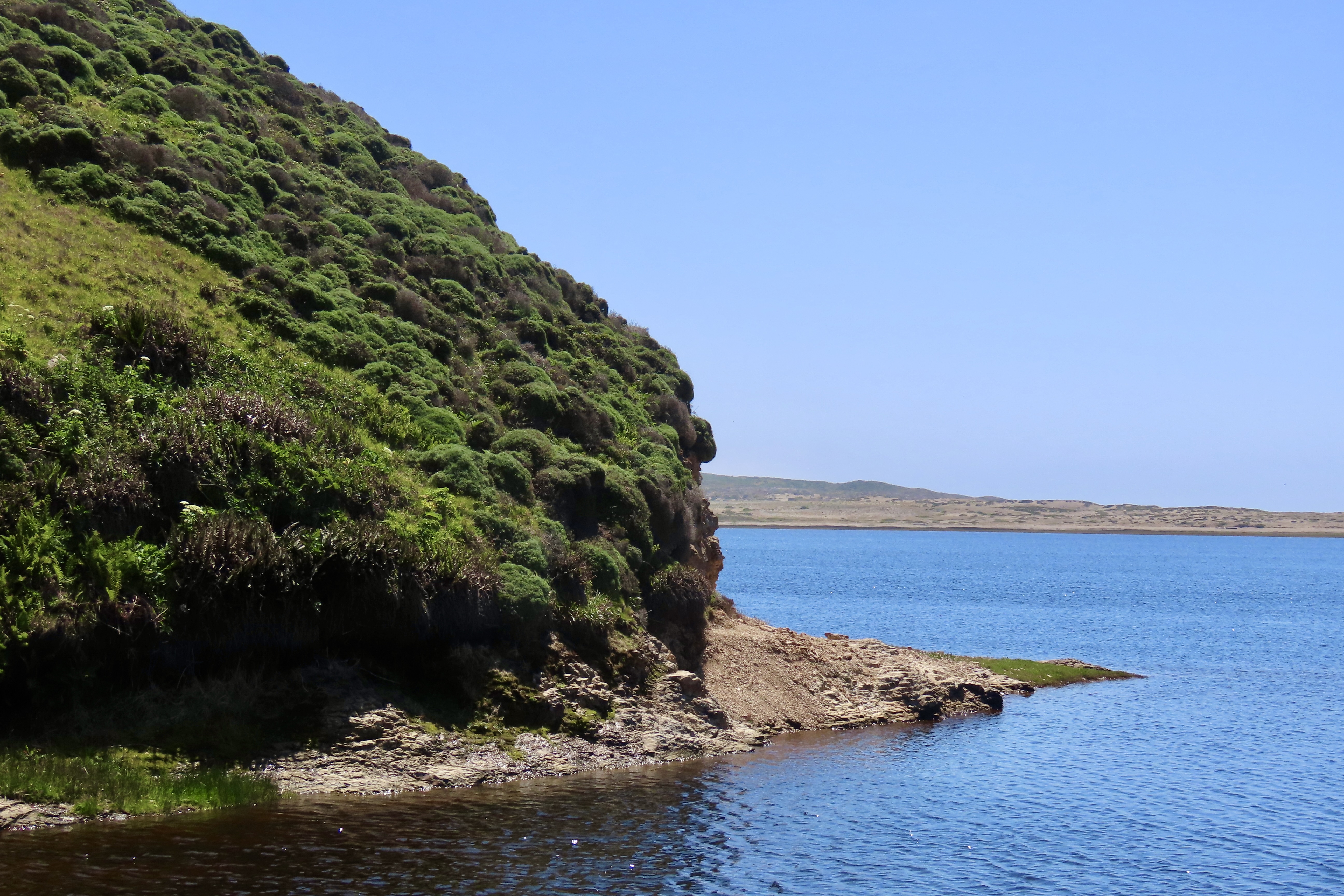
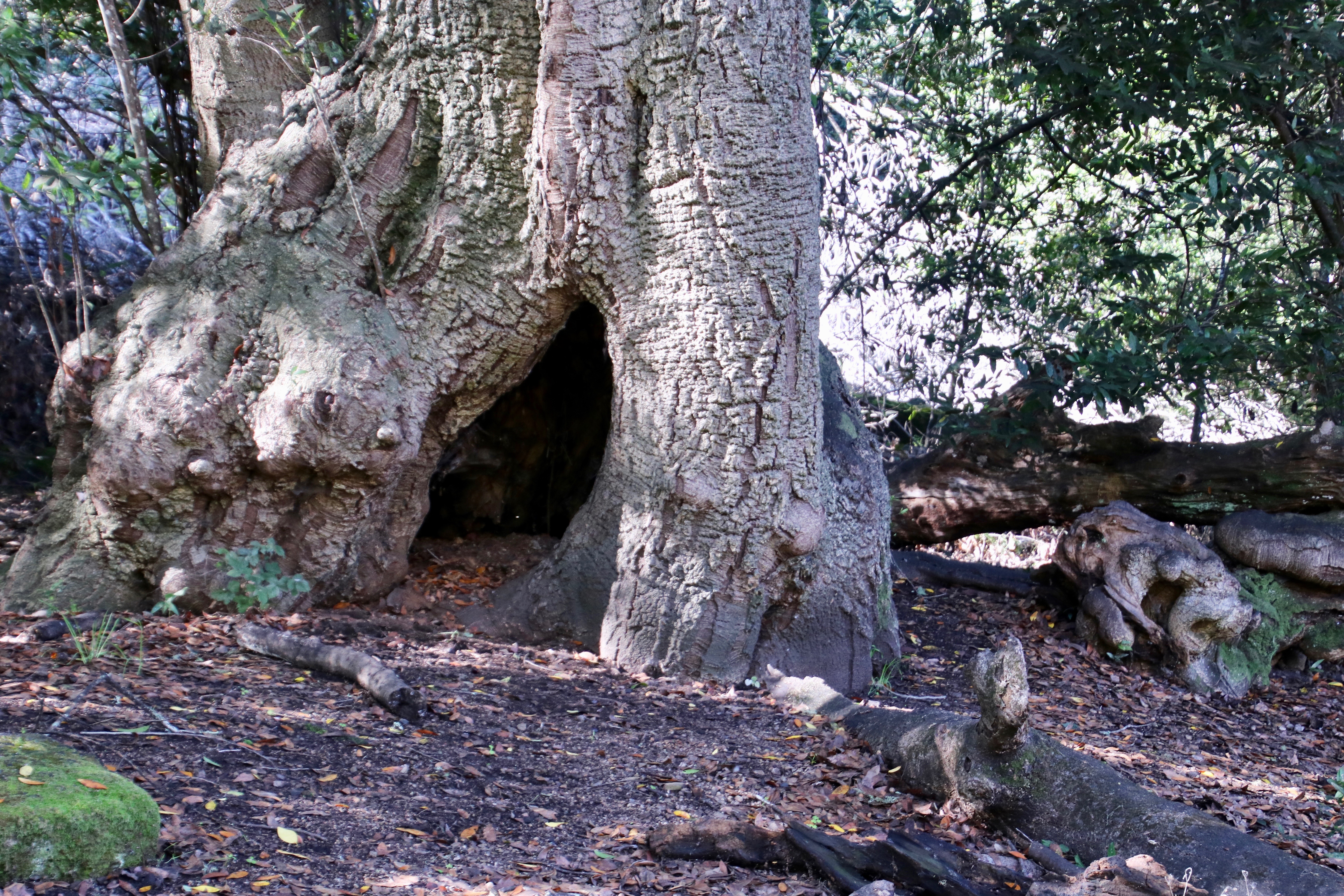
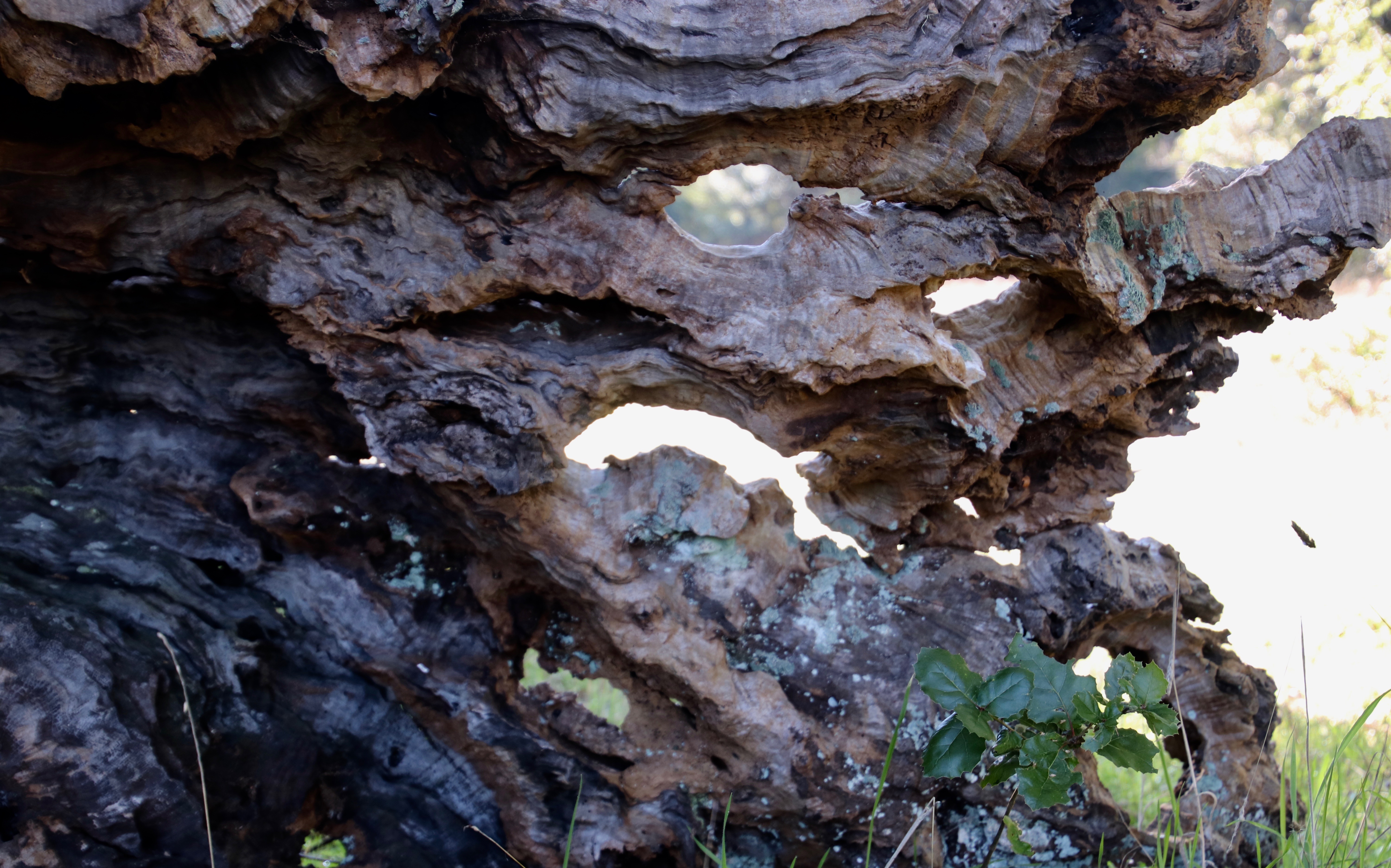
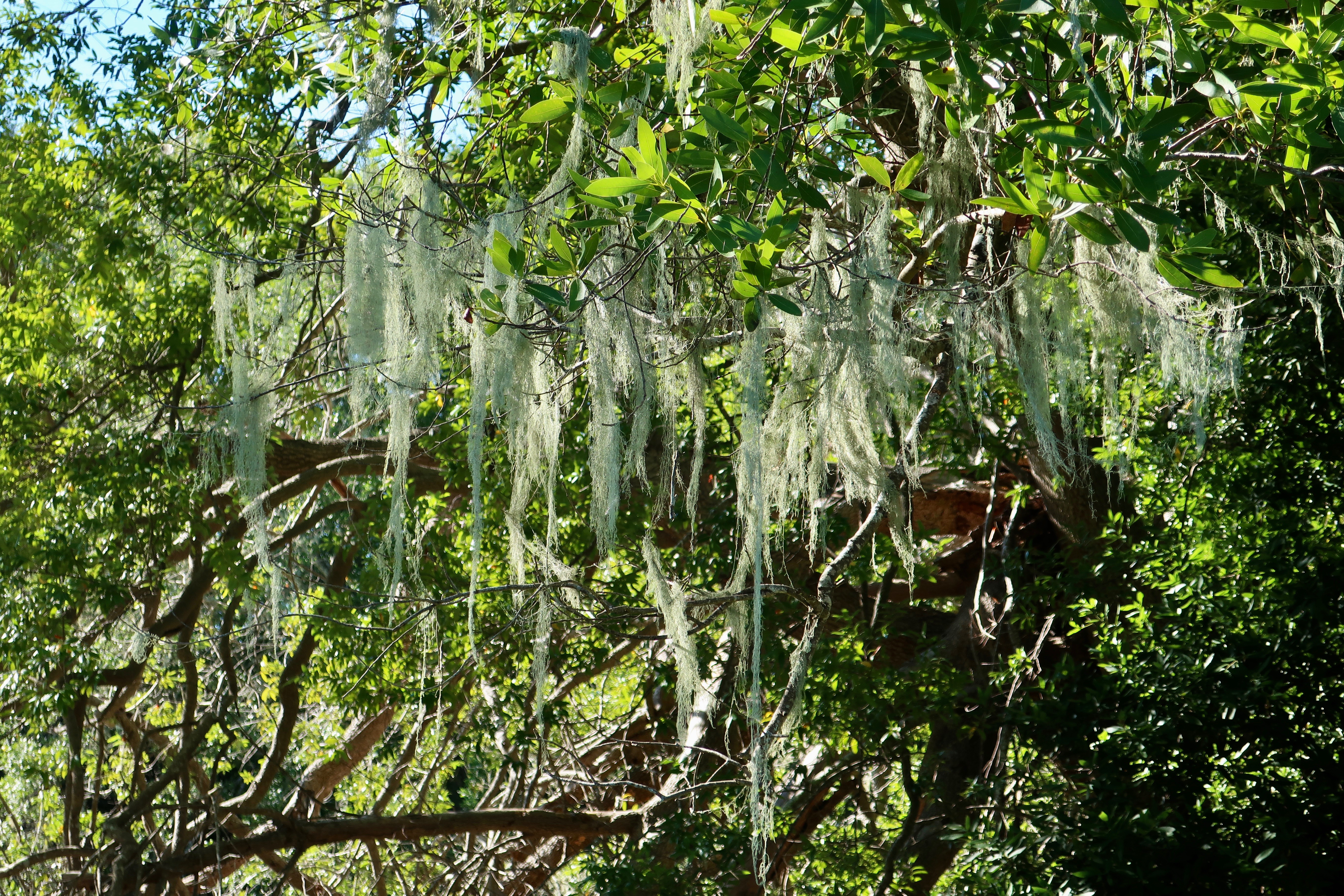
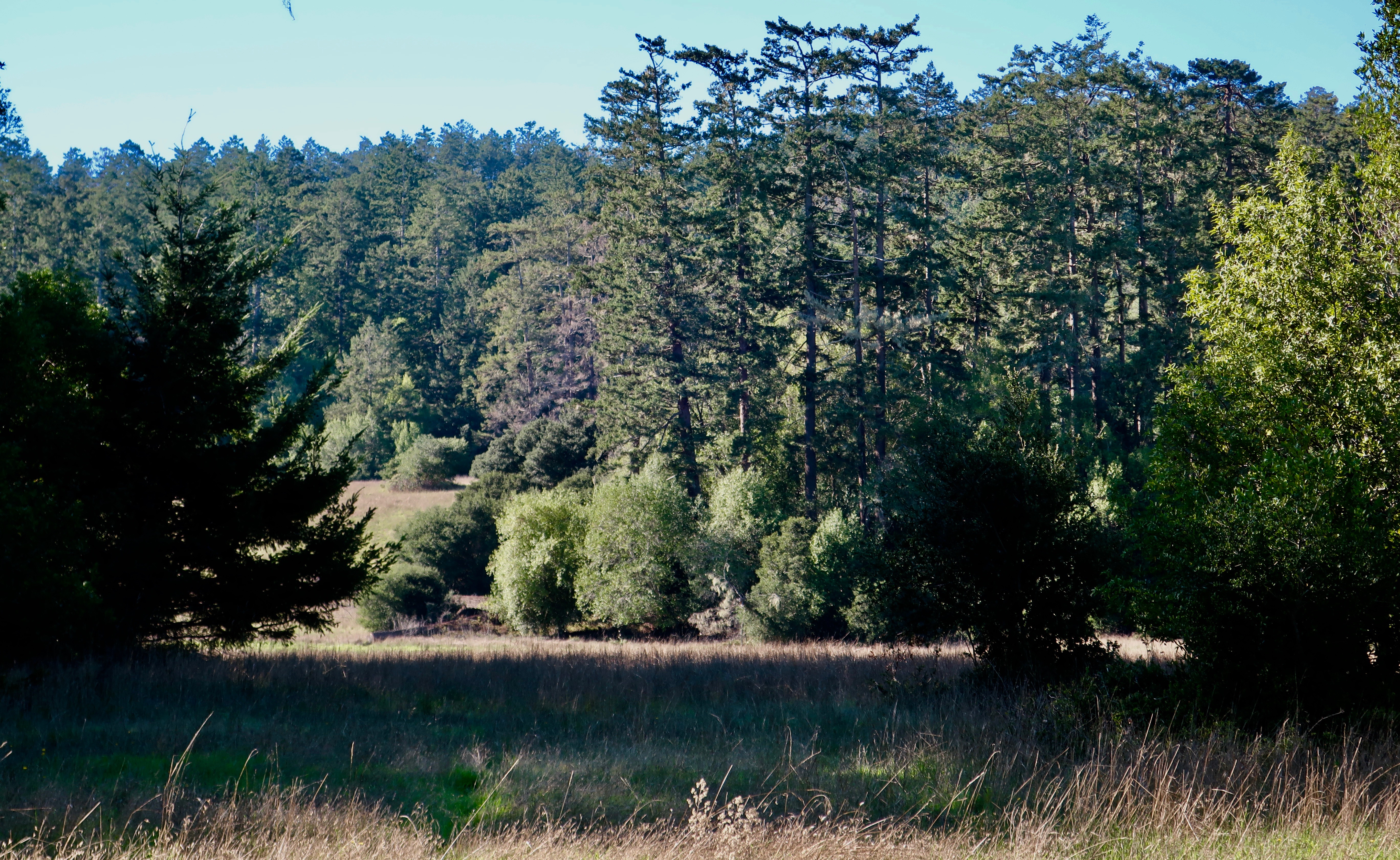
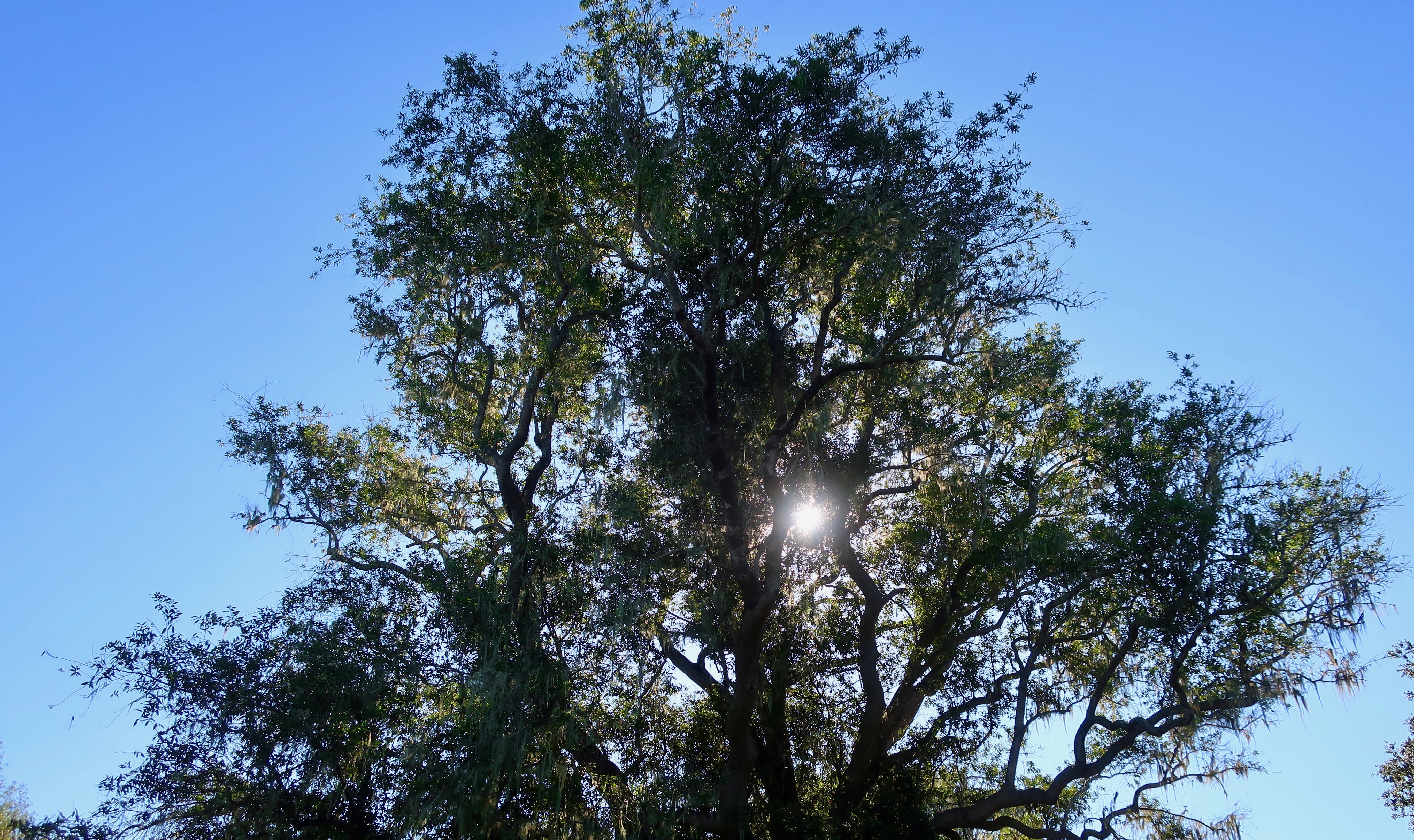
The trail is easy to hike and is well marked with information signs. Its bucolic, serene beauty makes the damage done by the 1906 earthquake hard to imagine, however.



NEXT POST: More photos from around Pt. Reyes National Seashore and our maiden three week voyage with Iorek the Truck and Serafina the trailer.

It’s a wrap on my Pt. Reyes series today. Peggy and I will take you for a hike out to Abbot’s Lagoon and a visit to Pt. Reyes Station, a favorite town of mine.
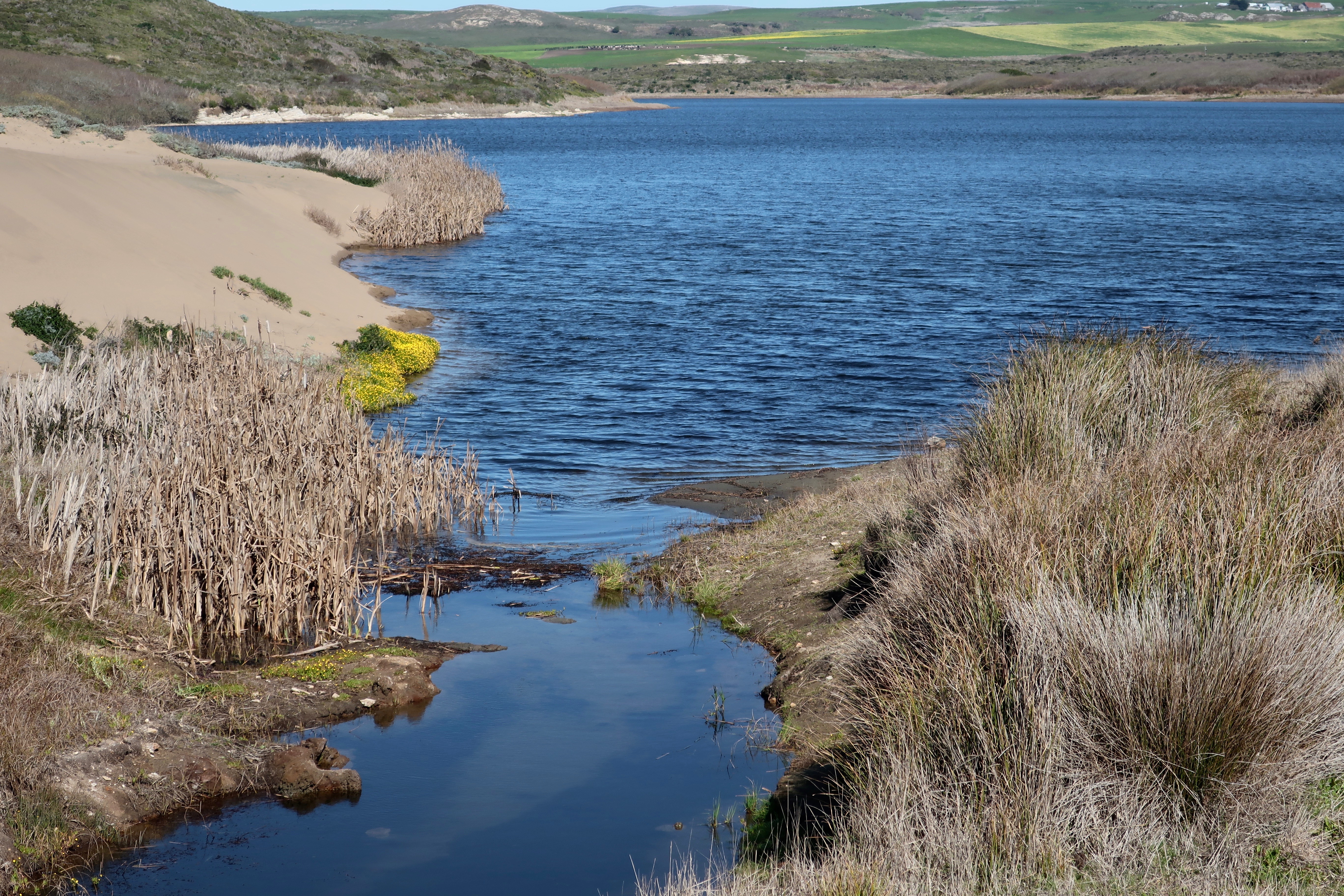
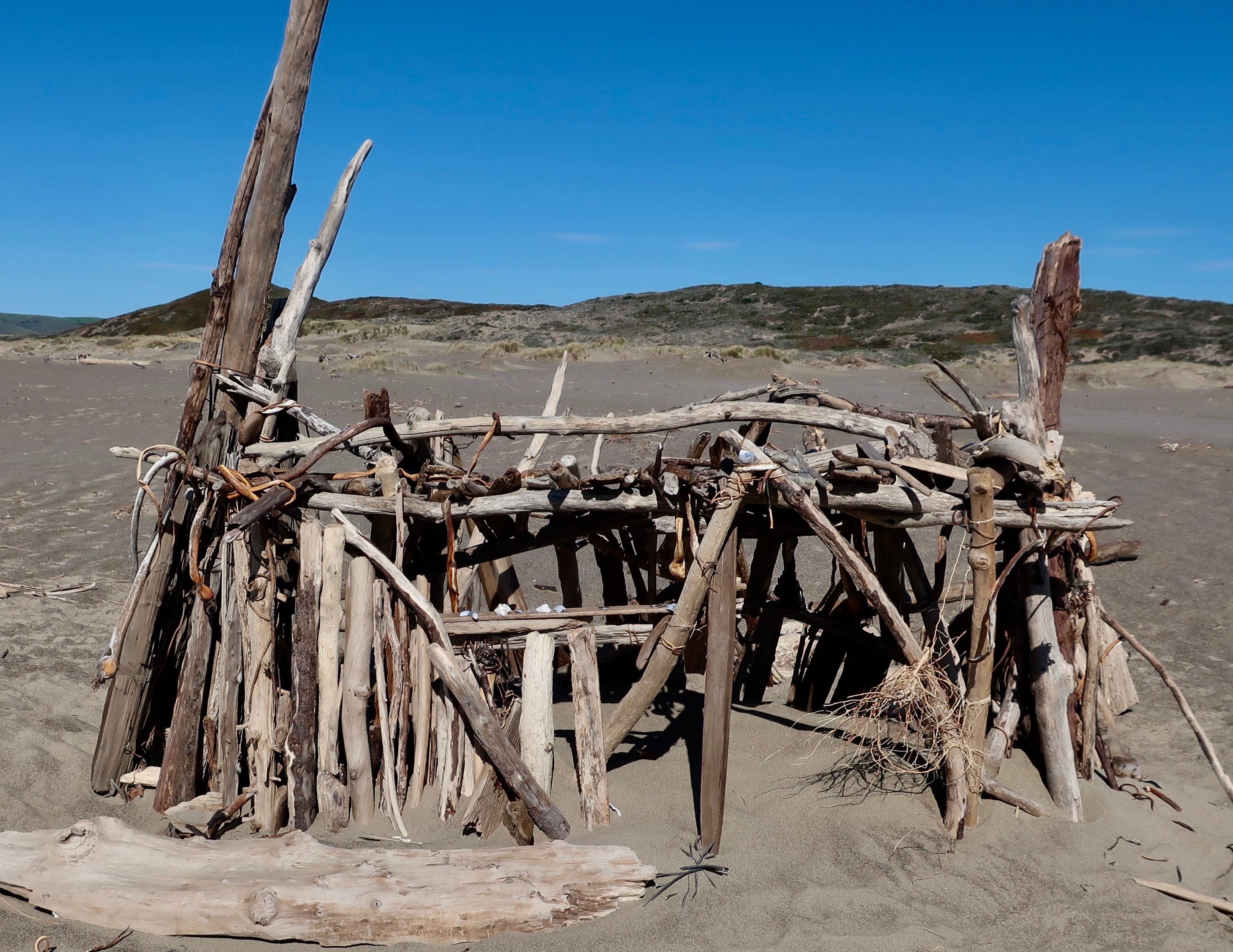
The hike is suitable for almost anyone. We even watched a mom and dad pushing their baby along in a stroller. How much easier can it get? The baby seemed quite happy as did the parents. Visitors can turn around whenever they want, hike out to the Lagoon, or go on a leisurely stroll all the way to the ocean. We chose the latter.


The North Pacific Coast Railroad had arrived in the area 146 years earlier in 1875 and let passengers off in a cow pasture to make their way to nearby Olema and dairy ranches out on the peninsula. The cow pasture soon added a hotel and the town of Pt. Reyes station was born. It’s a story told over and over in the West. The railroad arrives and a community springs up, making land barons/developers happy and rich. This time it was a dentist in San Francisco. The railroad was making its way north to retrieve redwoods that were being cut down to build the city. Many a giant redwood gave its life to the cause.
I first arrived at Pt. Reyes Station in the late 1960s and I’ve returned again and again. The town has become somewhat yuppified and more expensive since then due to its close vicinity to San Francisco, but it still retains much of its charm. The following photos reflect some of what makes it charming.

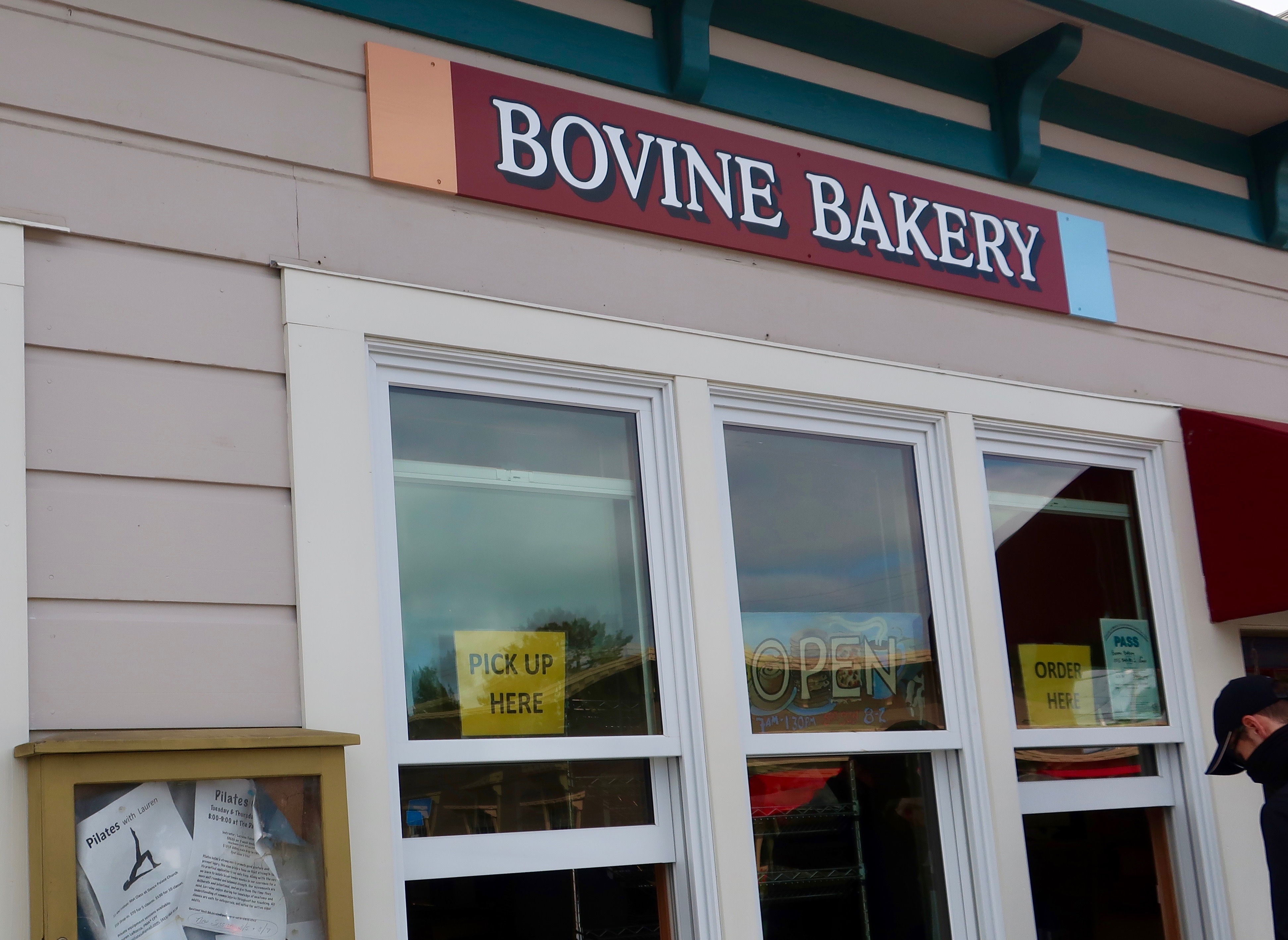

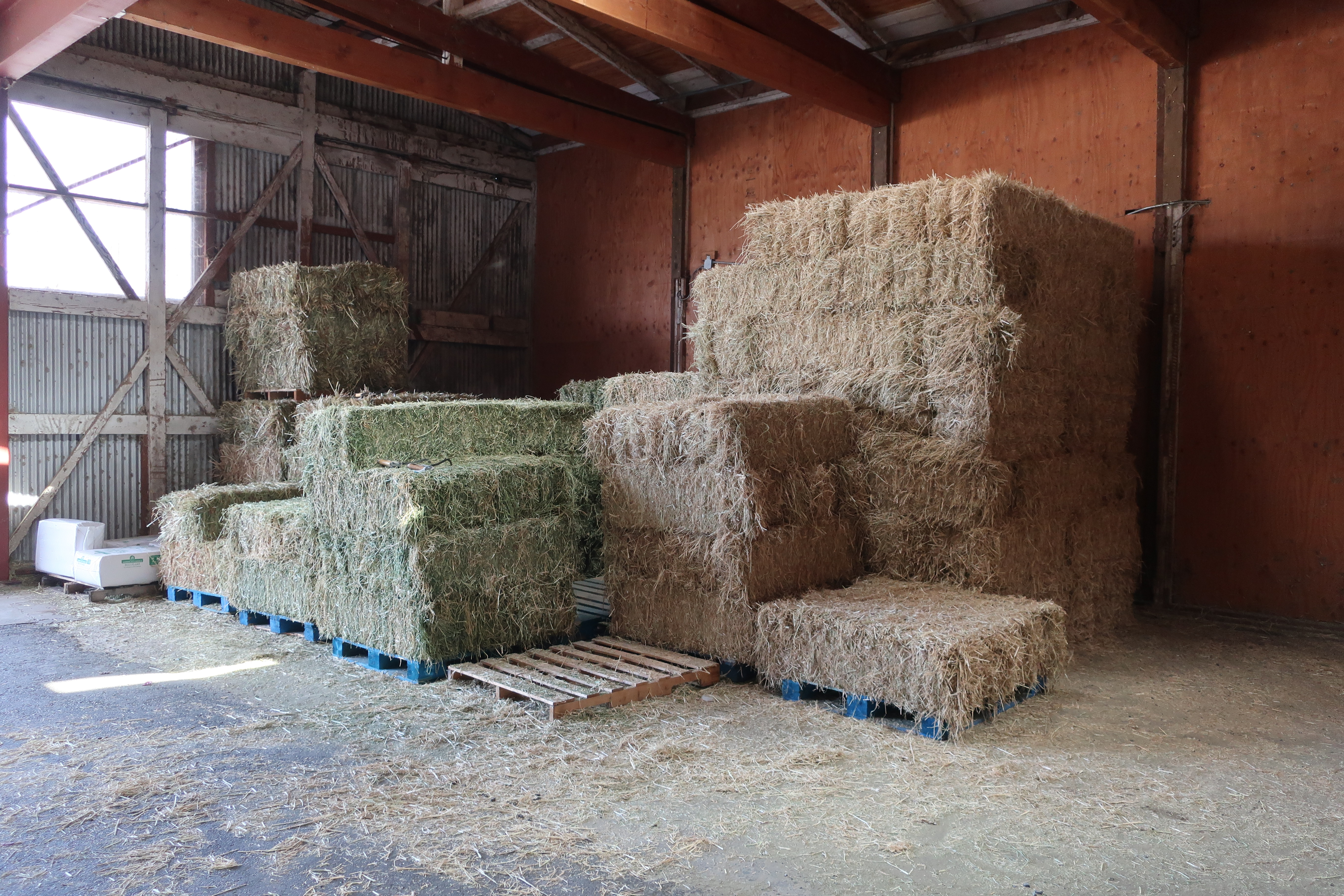

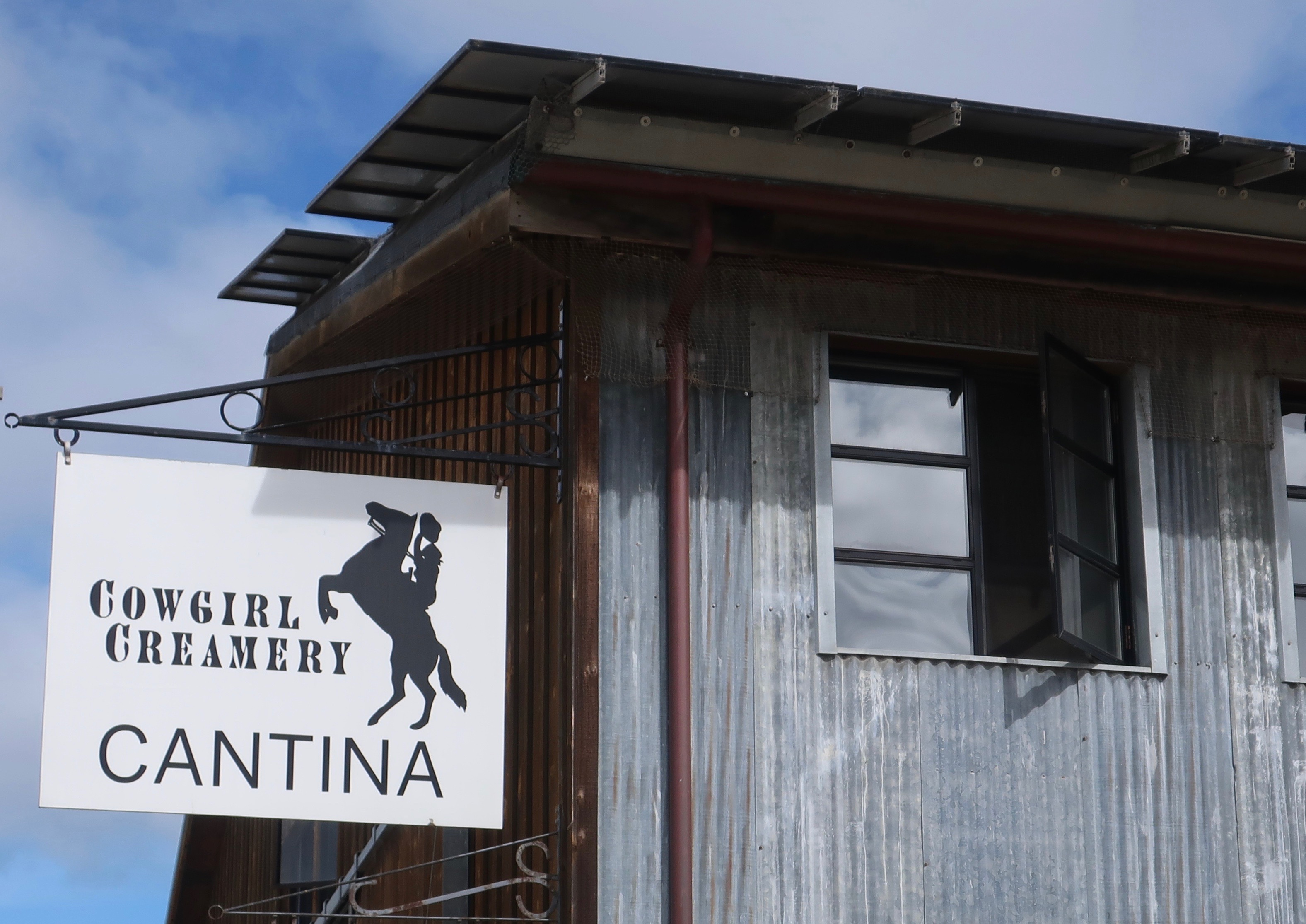
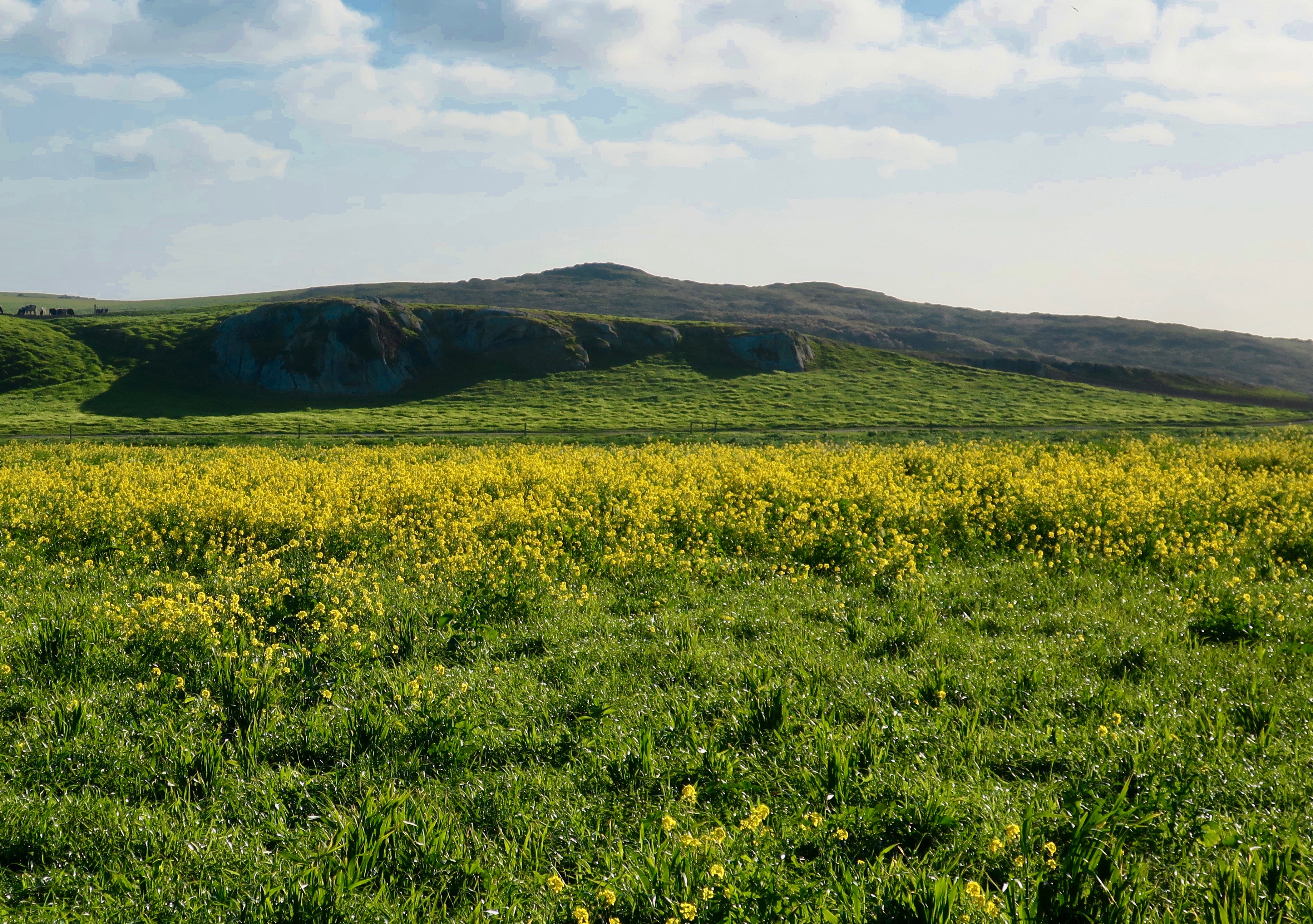


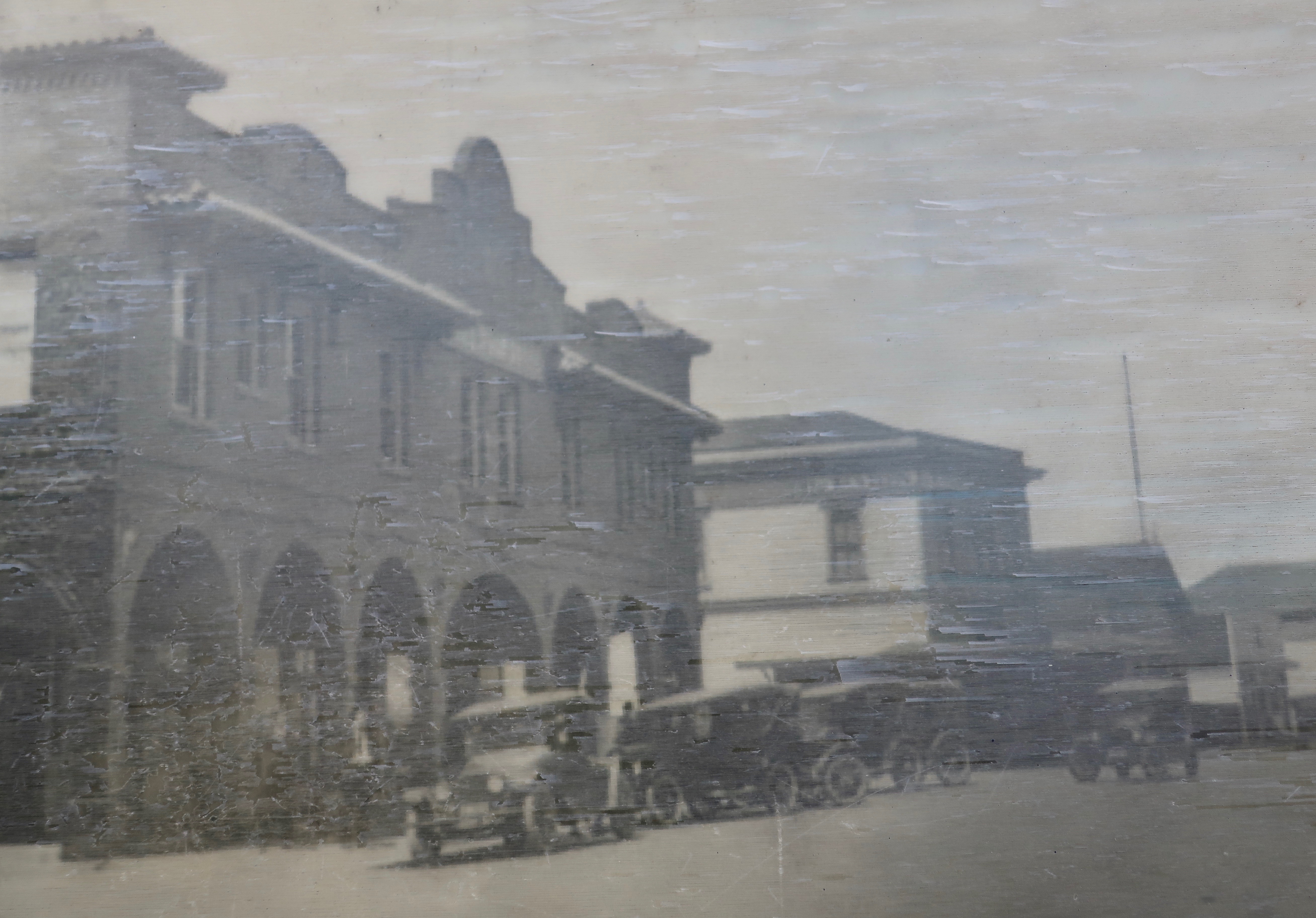


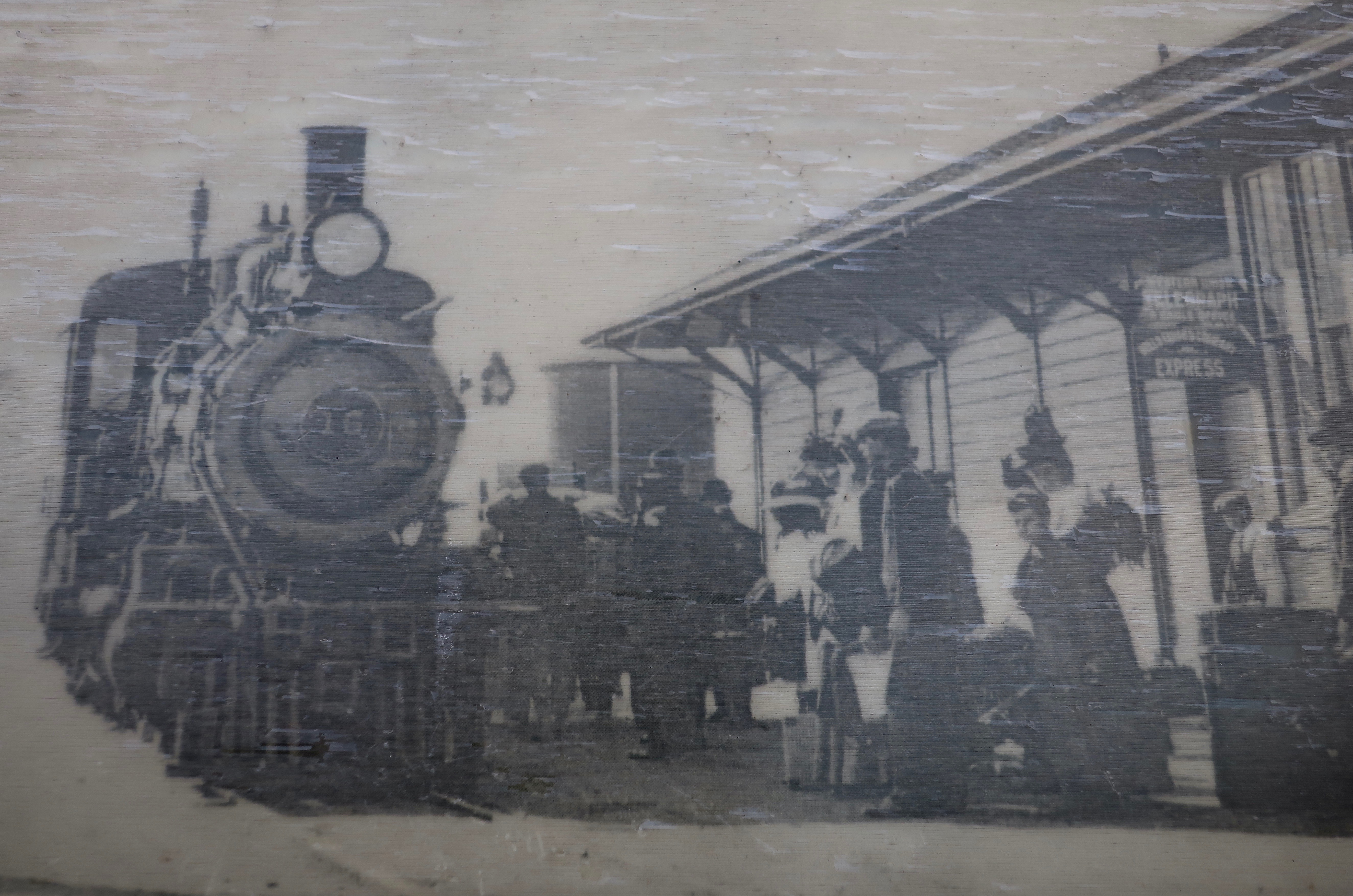
MONDAY’s BLOG-A-BOOK POST from Its 4 AM and a Bear Is Standing on Top of Me: I decide that doing an inventory of the local skunk population is ever so much better than being conked on the head by a Little League hardball. But have you ever faced a skunk standing on its front legs with its tail pointed toward you— ready to spray?
“Point Reyes is the windiest place on the Pacific Coast and the second foggiest place on the North American continent. Weeks of fog, especially during the summer months, frequently reduce visibility to hundreds of feet. The Point Reyes Headlands, which jut 10 miles out to sea, pose a threat to each ship entering or leaving San Francisco Bay. The historic Point Reyes Lighthouse warned mariners of danger for more than a hundred years.” From the Pt. Reyes National Seashore website.
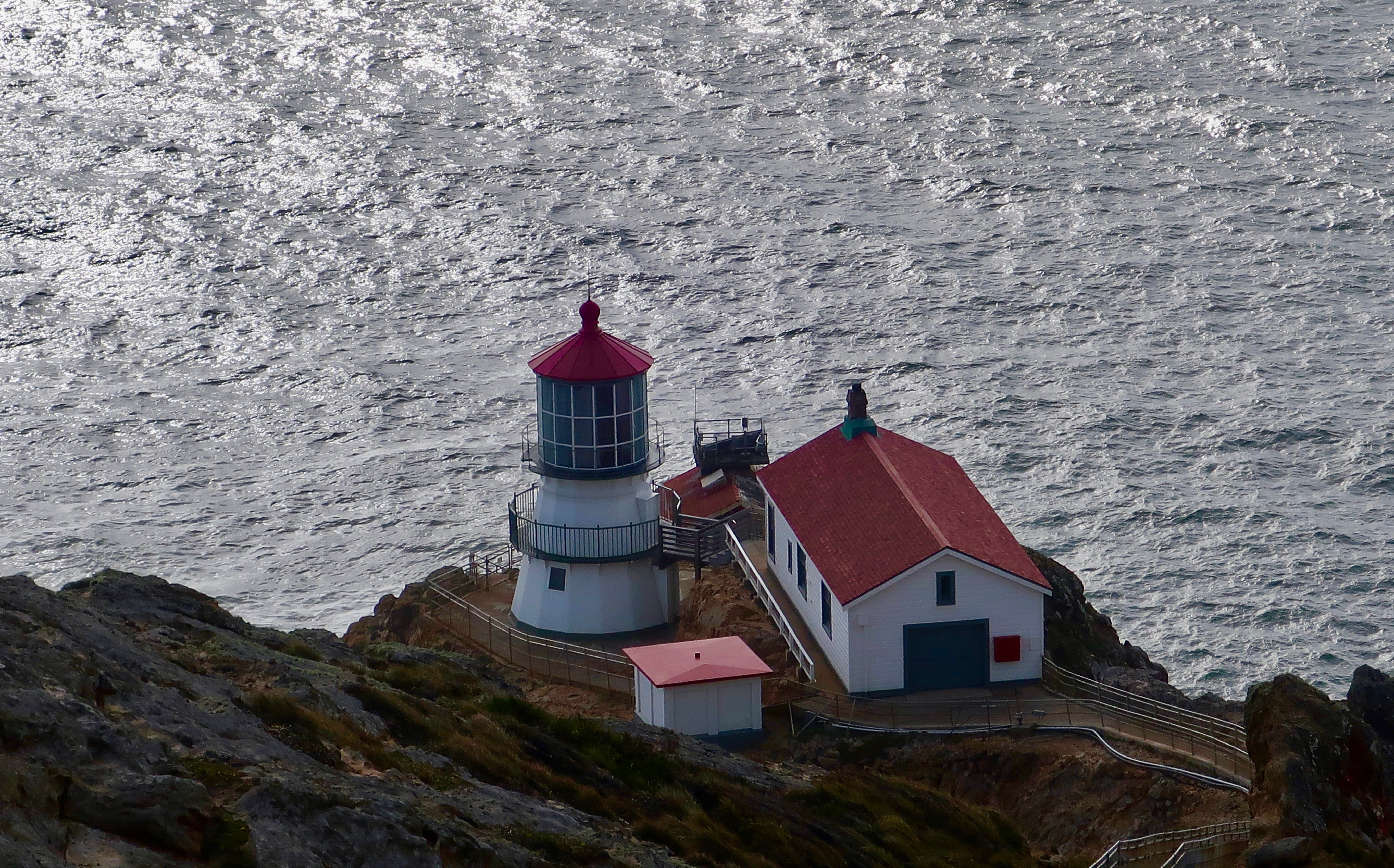
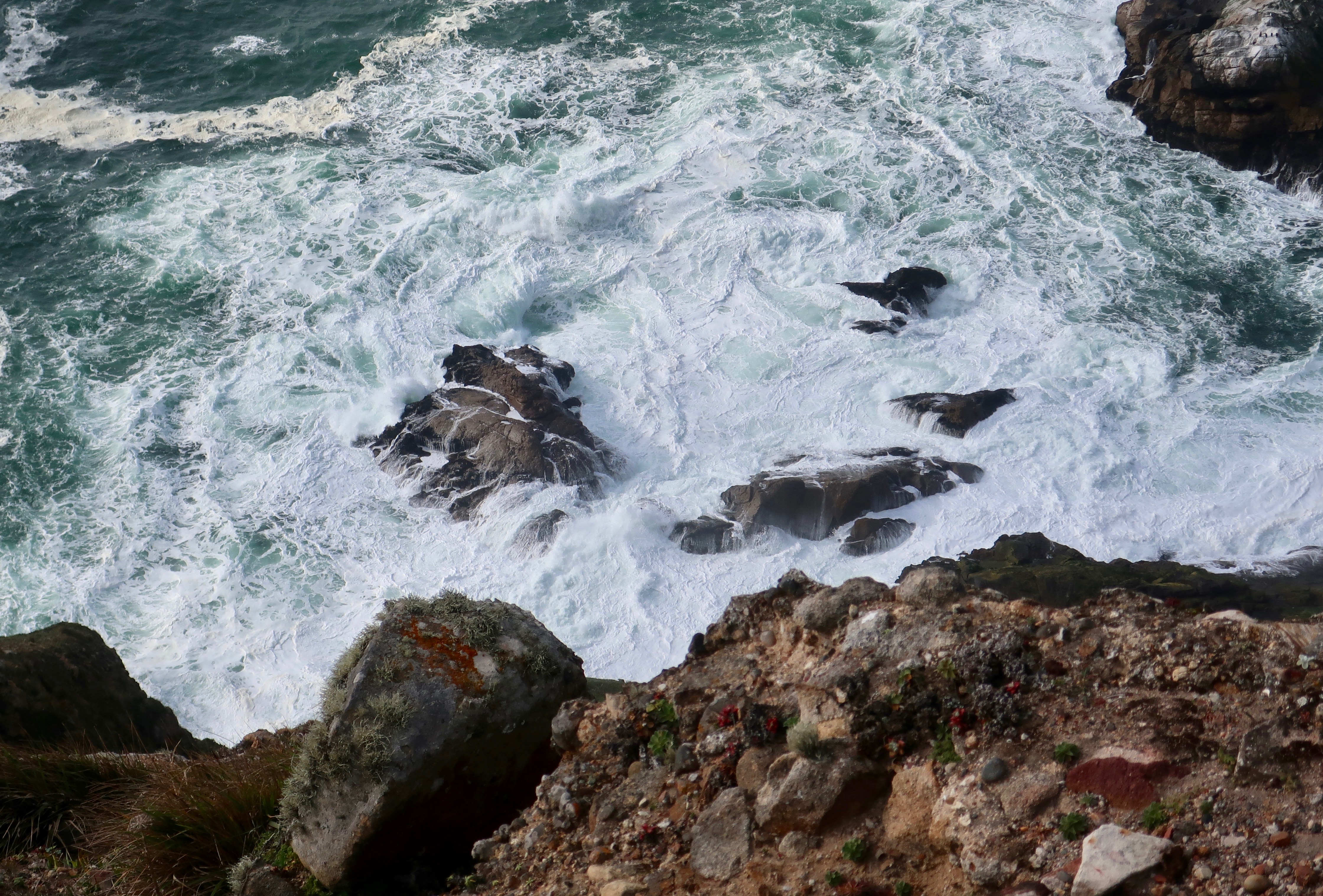
For as much as I enjoy Pt. Reyes National Seashore, I studiously avoid it in the summer. One reason is the fog. That’s true for much of the Pacific Coast. The other is tourists, gazillions of them. Traffic slows to a turtle’s pace along Highway 1, campgrounds are full, and popular sites such as the lighthouse are packed. I have a limited sense of humor about any of the above, especially given that I can visit during the late fall, winter, and early spring when few tourists are out and about and days are often crystal clear. Or, if I am particularly lucky, a raging storm will send huge waves crashing ashore producing spectacular views. I love both.
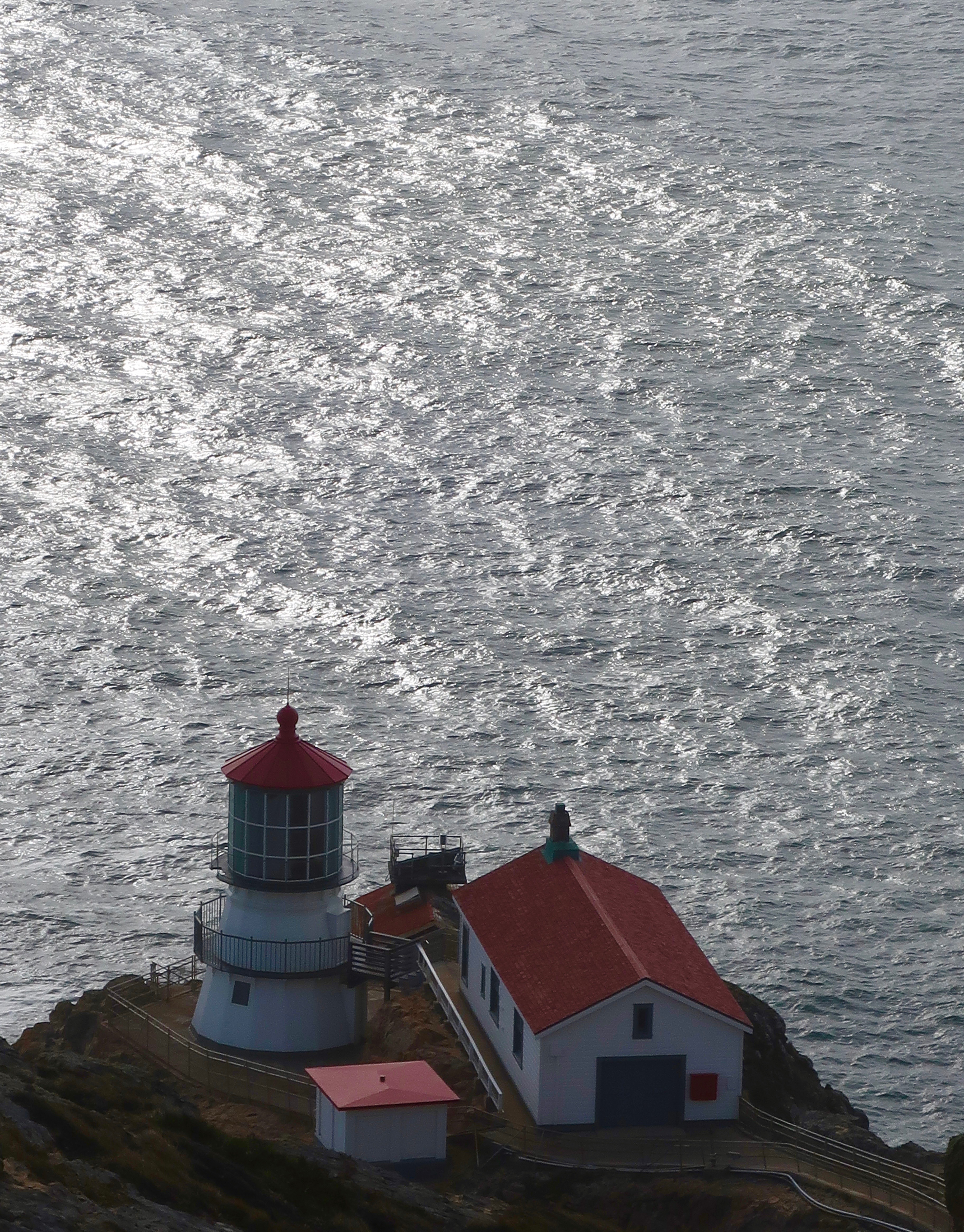
It was mainly sunshine when Peggy and I visited the National Seashore in early March to celebrate my birthday. The lighthouse was closed due to Covid, but I have visited it before. This time, we admired it from above.

The lighthouse served its purpose for over 100 years, finally shutting down in 1975 when the US Coast Guard replaced it with an automated light found just below the historic lighthouse. Up until then it was tended by a lighthouse keeper whose responsibility was to keep the light burning. In addition to warning mariners off of the treacherous rocks, the lighthouse served as a navigational aid. Each lighthouse along the coast has a different frequency of light that ship pilots recognize. At Pt. Reyes, the light flashed once every five seconds.

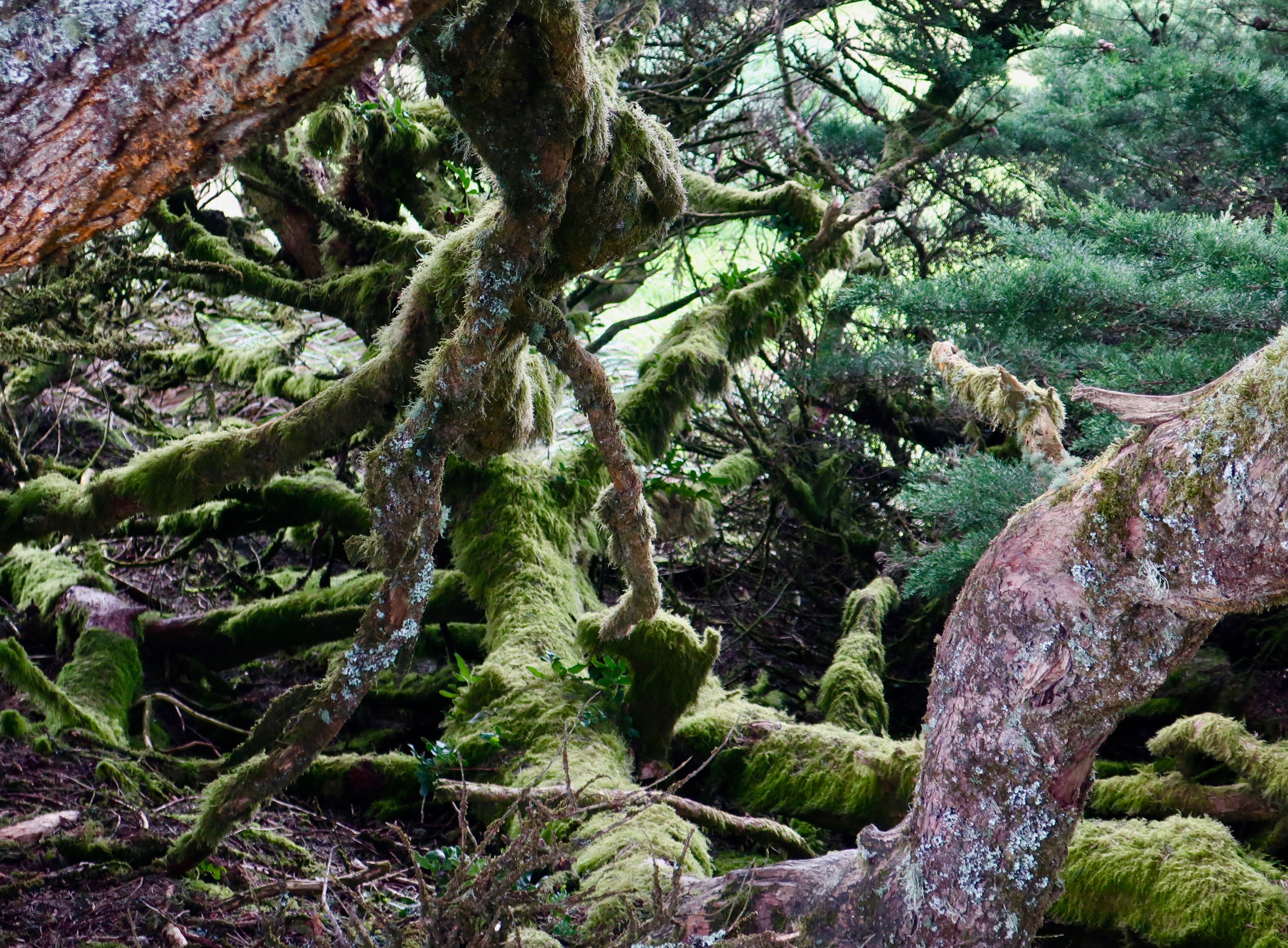
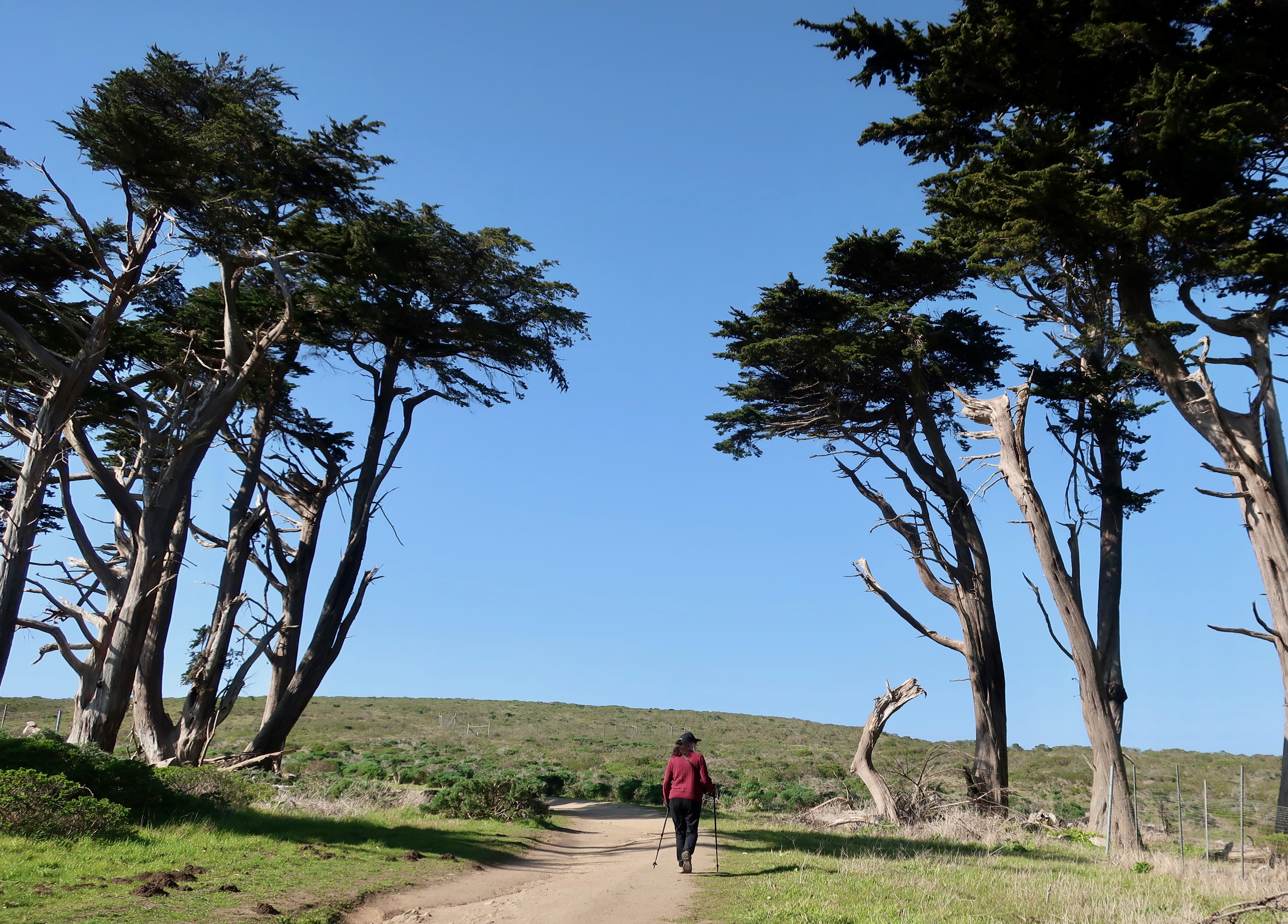
Peggy and I parked Quivera and followed the trail that led out to the lighthouse. Along the way, we found trees that showed the effects of the high winds that frequent the headlands.

NEXT FRIDAY’S TRAVEL BLOG: I’ll wrap up my Pt. Reyes series with a pleasant walk out to Abbot’s Lagoon and a visit to the colorful town of Pt. Reyes Station.
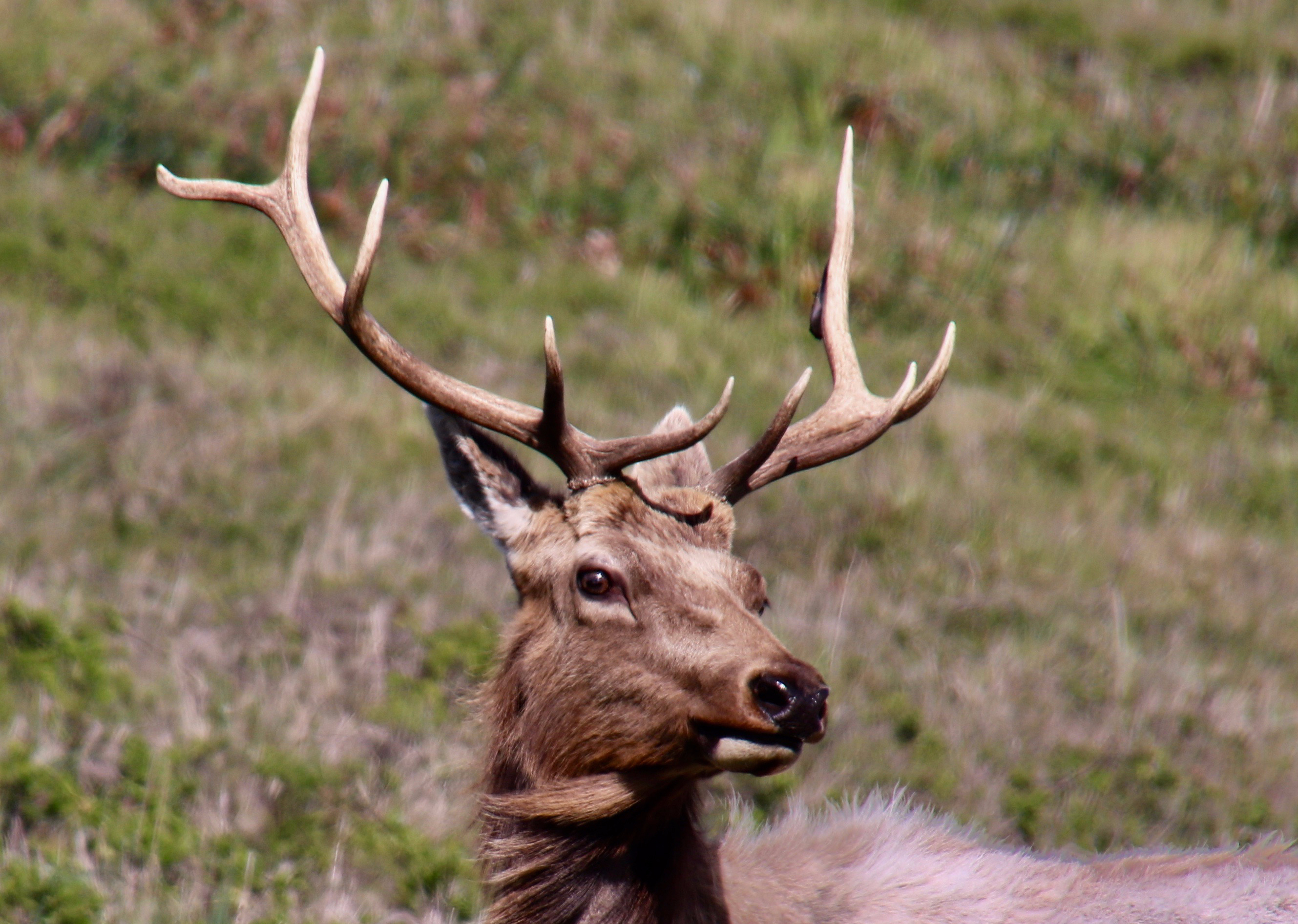
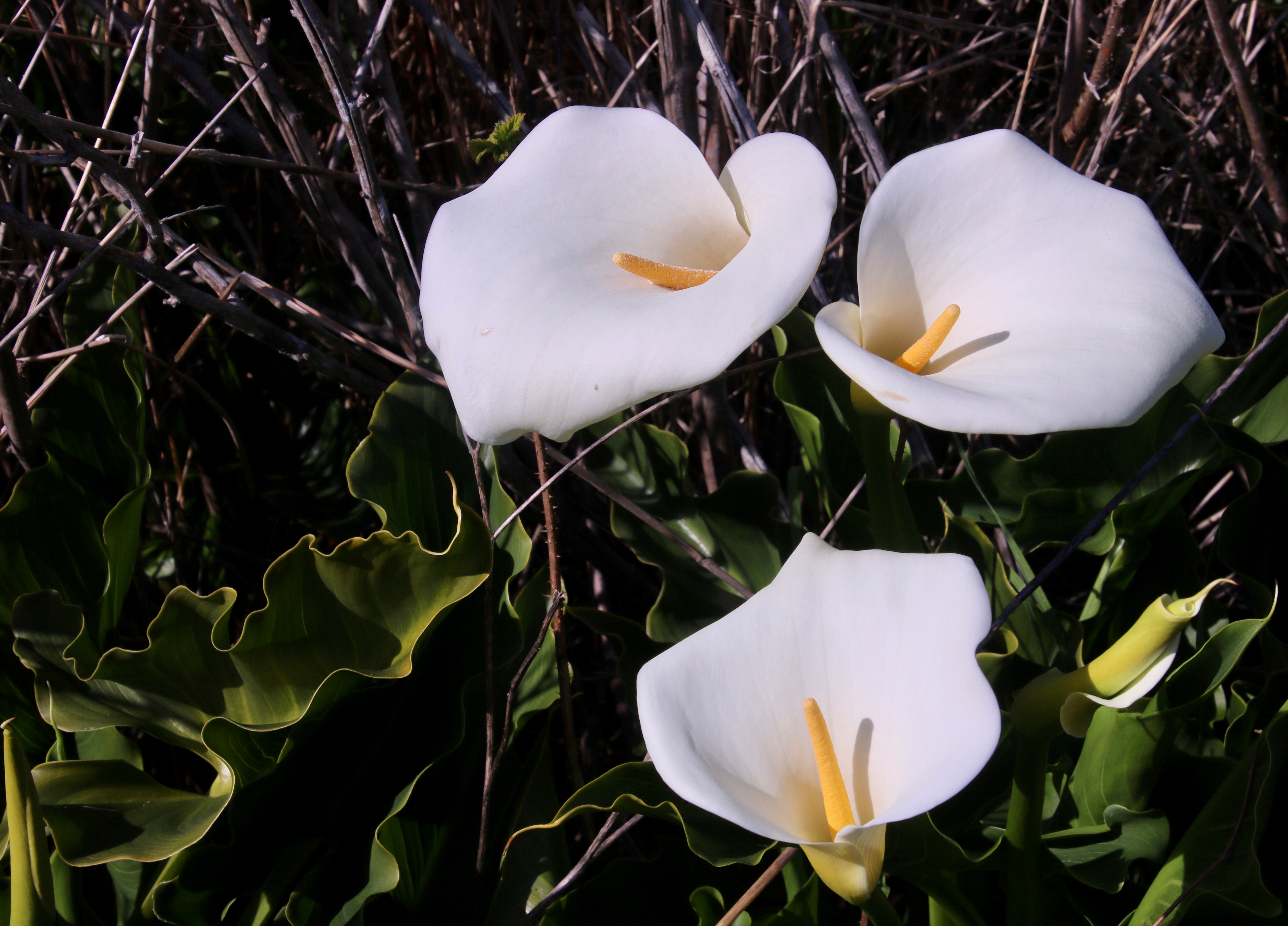
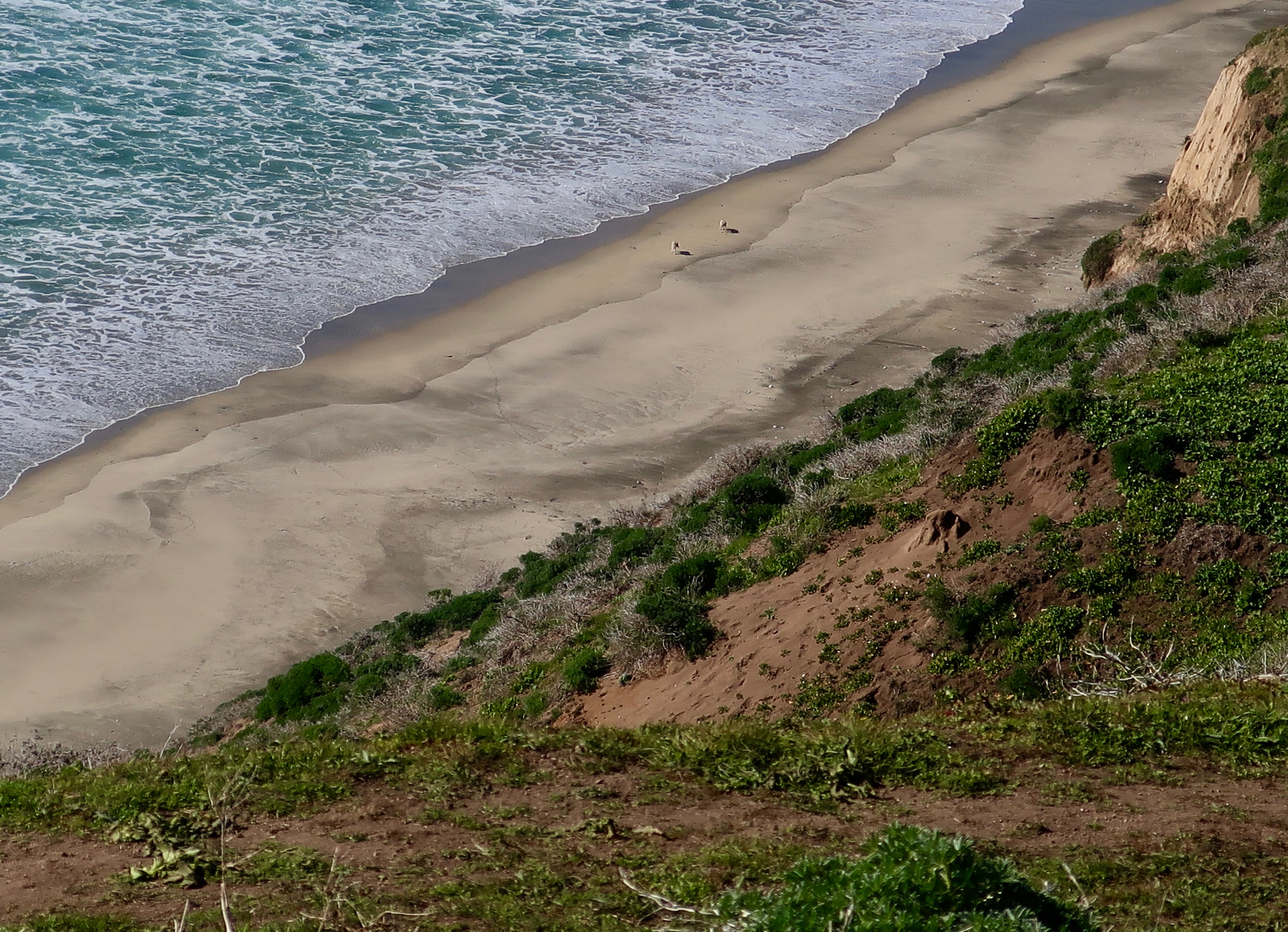
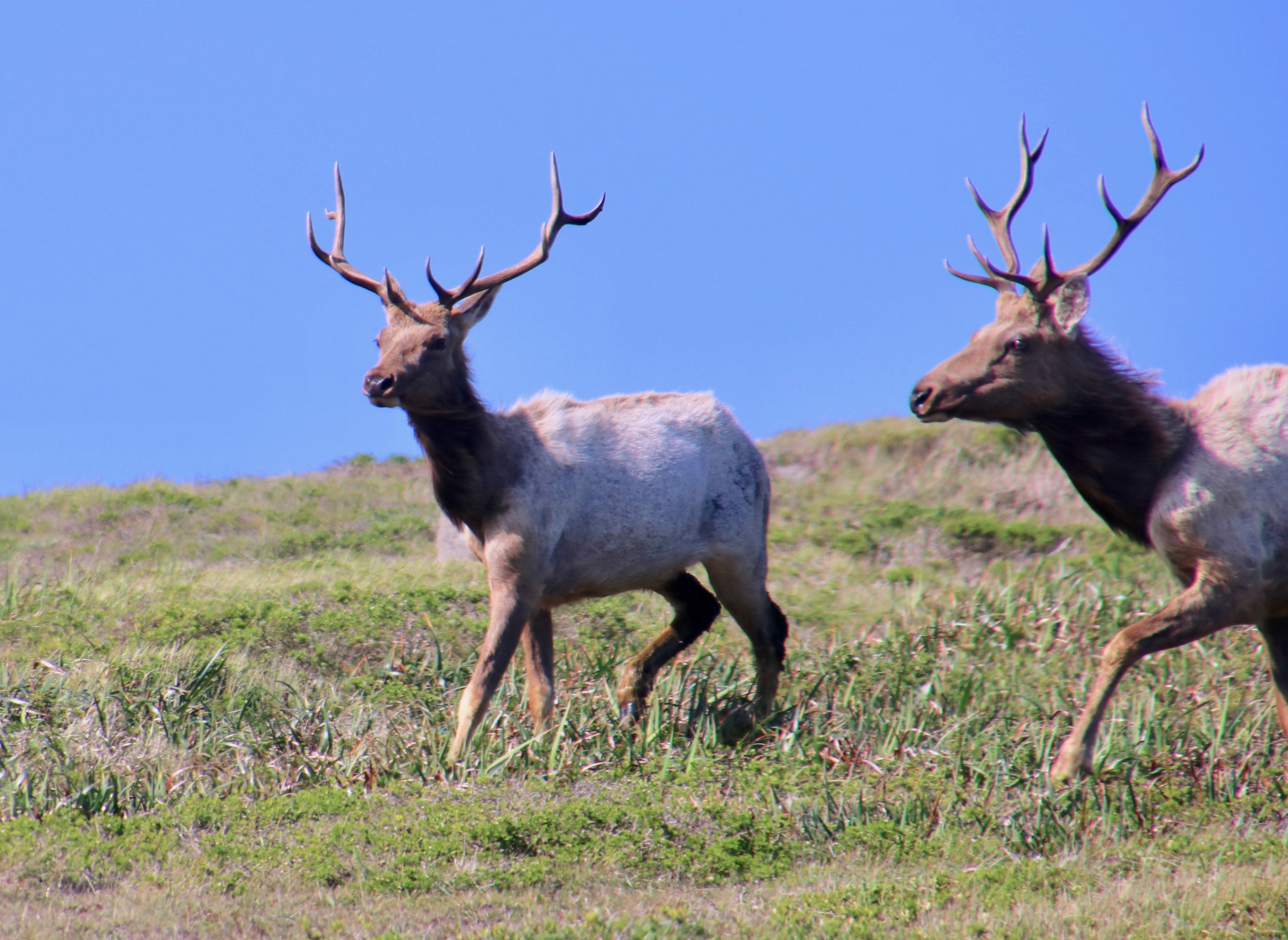
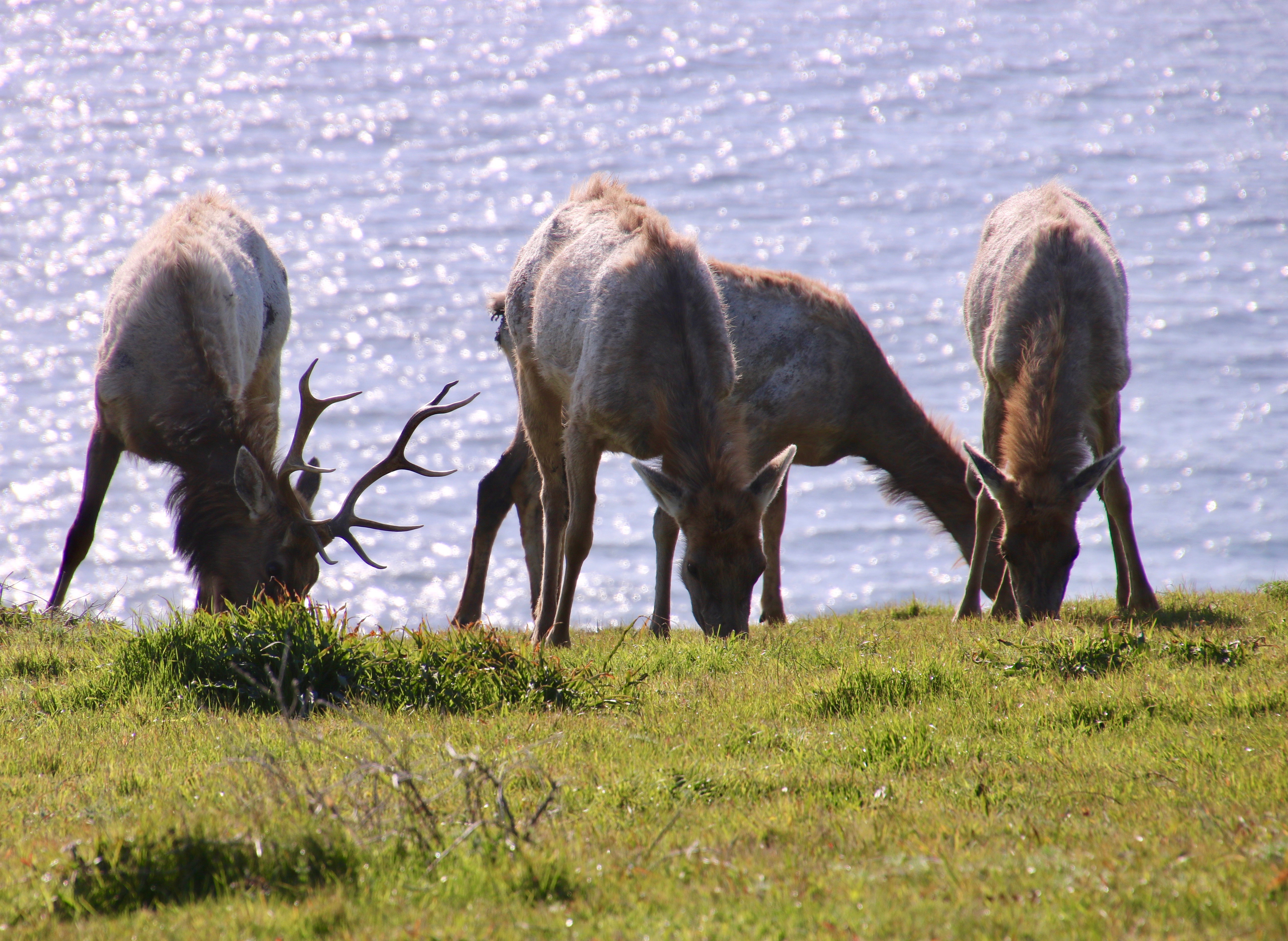
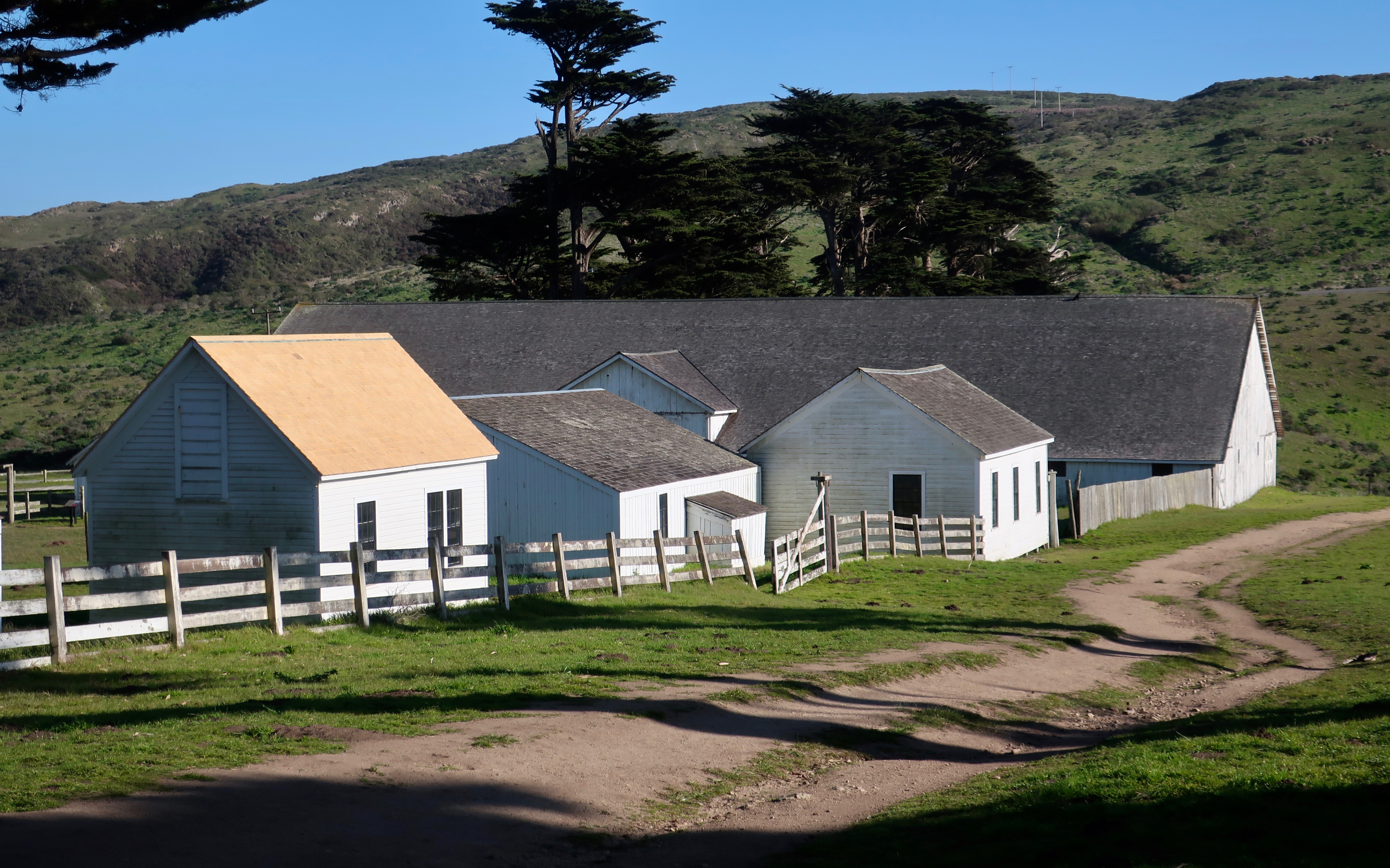
Any trip to Pt. Reyes National Seashore should include a drive out to the historic Pierce Pt. Ranch and Tule Elk Reserve. The ranch will introduce you to an important piece of Pt. Reyes history. A hike out the Tomales Pt. Trail from the ranch will take you through some impressive scenery and likely give you a view of tule elk and other wildlife. Ever since the elk were reintroduced to the area in 1978, the herd has thrived. Our photos today start with our hike and end back at the ranch.








NEXT POST:
Monday’s Blog-A-Book from It’s 4 AM and a Bear Is Standing on Top of Me: I leave the Graveyard behind and journey off to the Pond where bullfrogs and catfish rule and pirates lurk.
Wednesday’s Blog-A-Book from my lead-up to joining the Peace Corps: I help corral a police car at Berkeley and the rallying cry of ‘Never trust anyone over the age of 30‘ is born.
I’m returning to Pt. Reyes National Seashore and the surrounding area today. As you may recall, Peggy and I drove down to this beautiful park north of San Francisco in early March to celebrate my birthday. At the time, I did a post on the big nosed elephant seals that have adopted the park as a great place to breed and have babies as their population increases.
Like whales, they had been hunted close to extinction for the oil their body produces. Fortunately, enough people had become concerned in the early 20th Century to stop the slaughter and save the species. My elephant seal post would have been perfect for yesterday: Earth Day. The message about these unique animals is that If we care enough, we can make a difference. Working together, we can help save the earth and its bio-diversity. Nature has wonderfully recuperative powers— given a chance. The planet will work with us, if we stop working against it. But enough on the that for now. Today’s post is about cows and a short walk in the Golden Gate National Recreation Area.
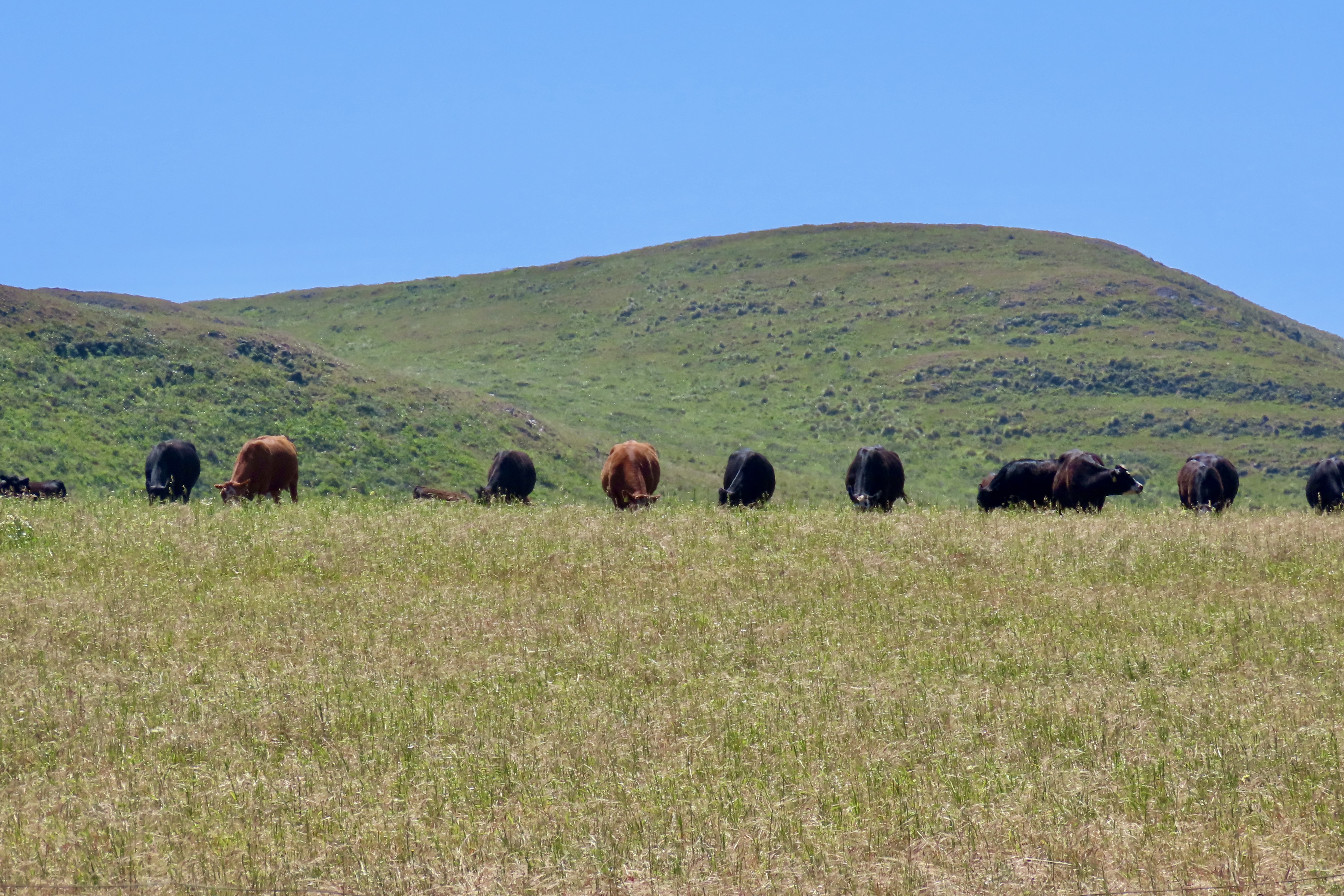
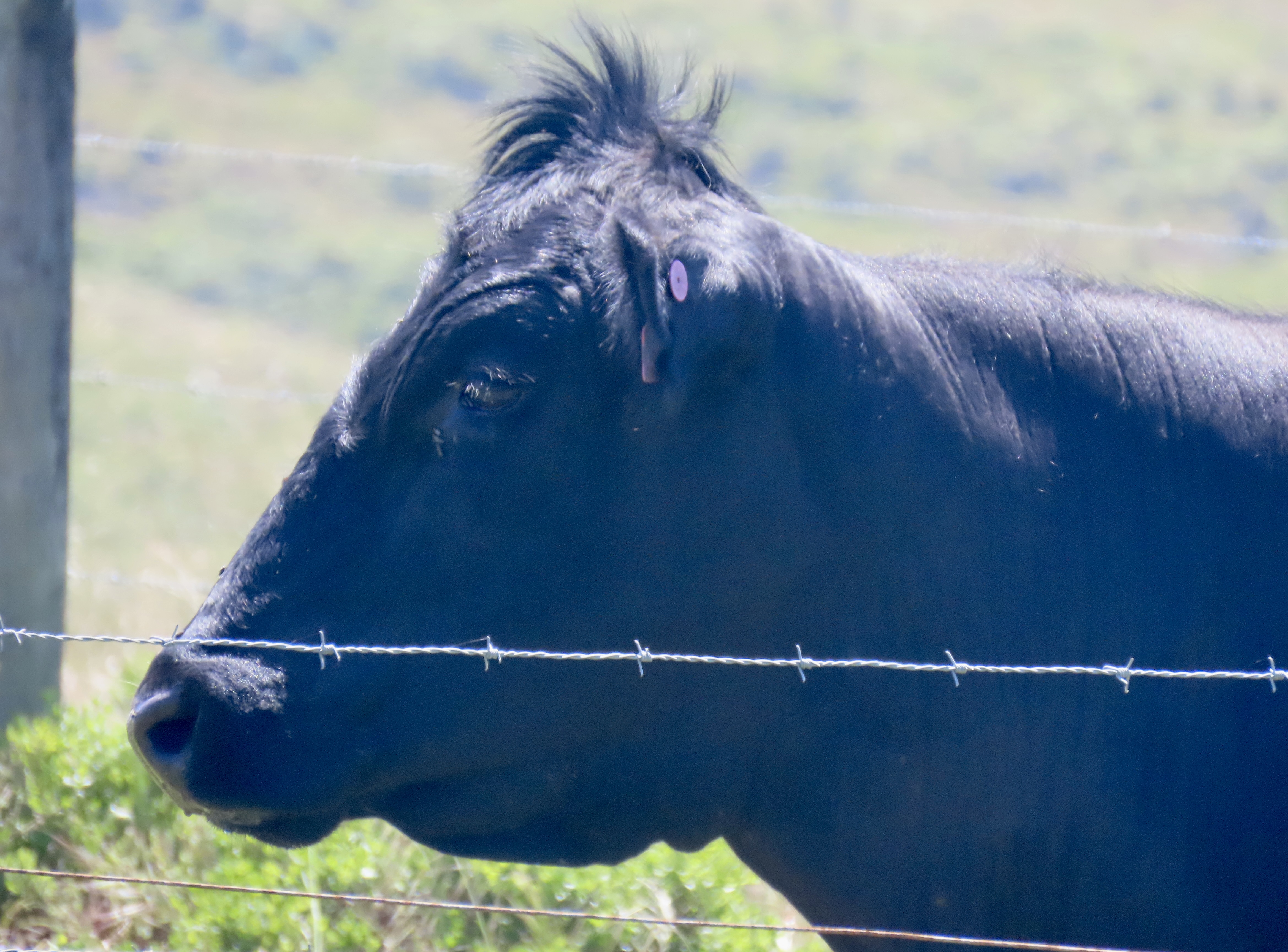
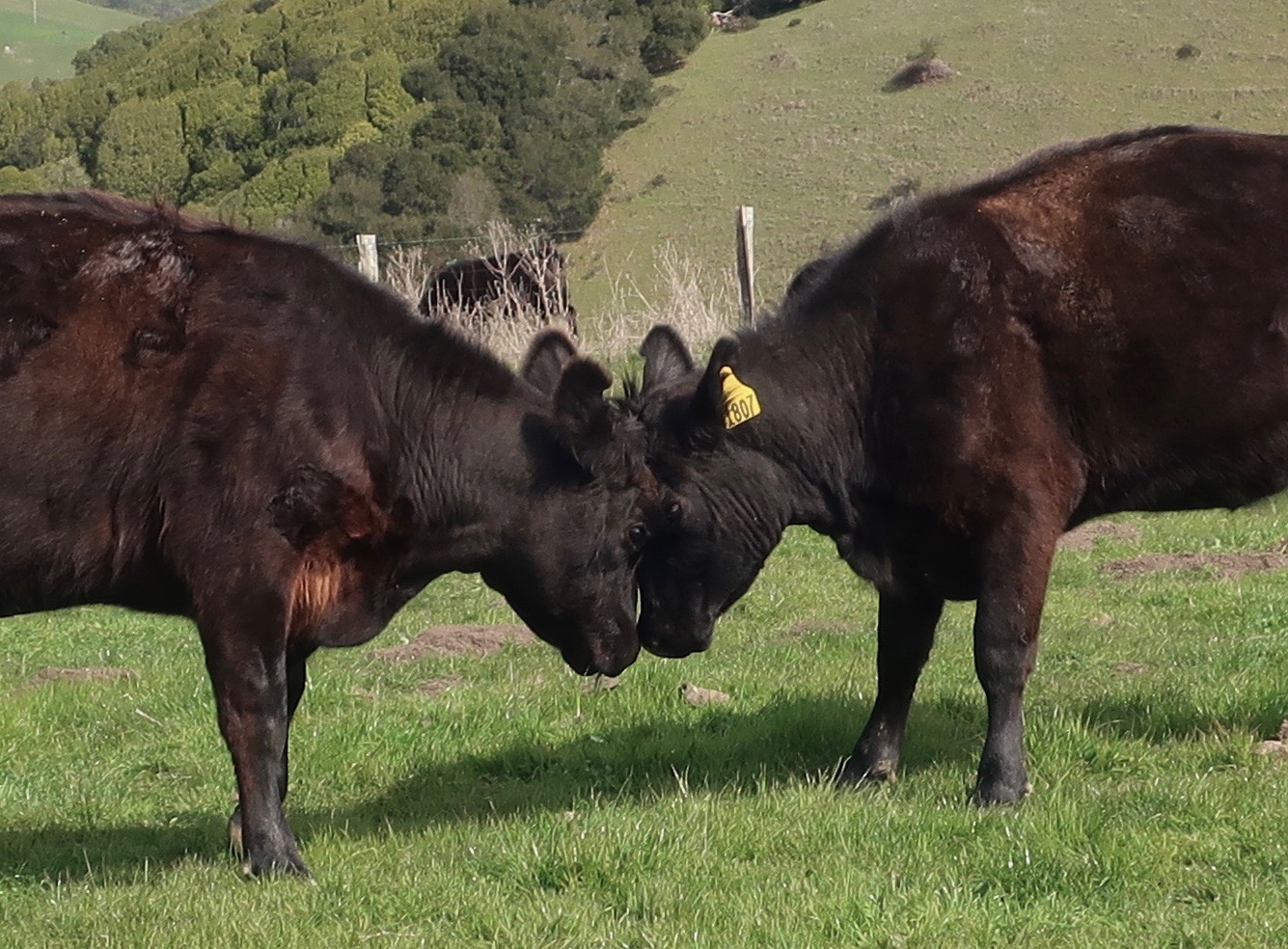
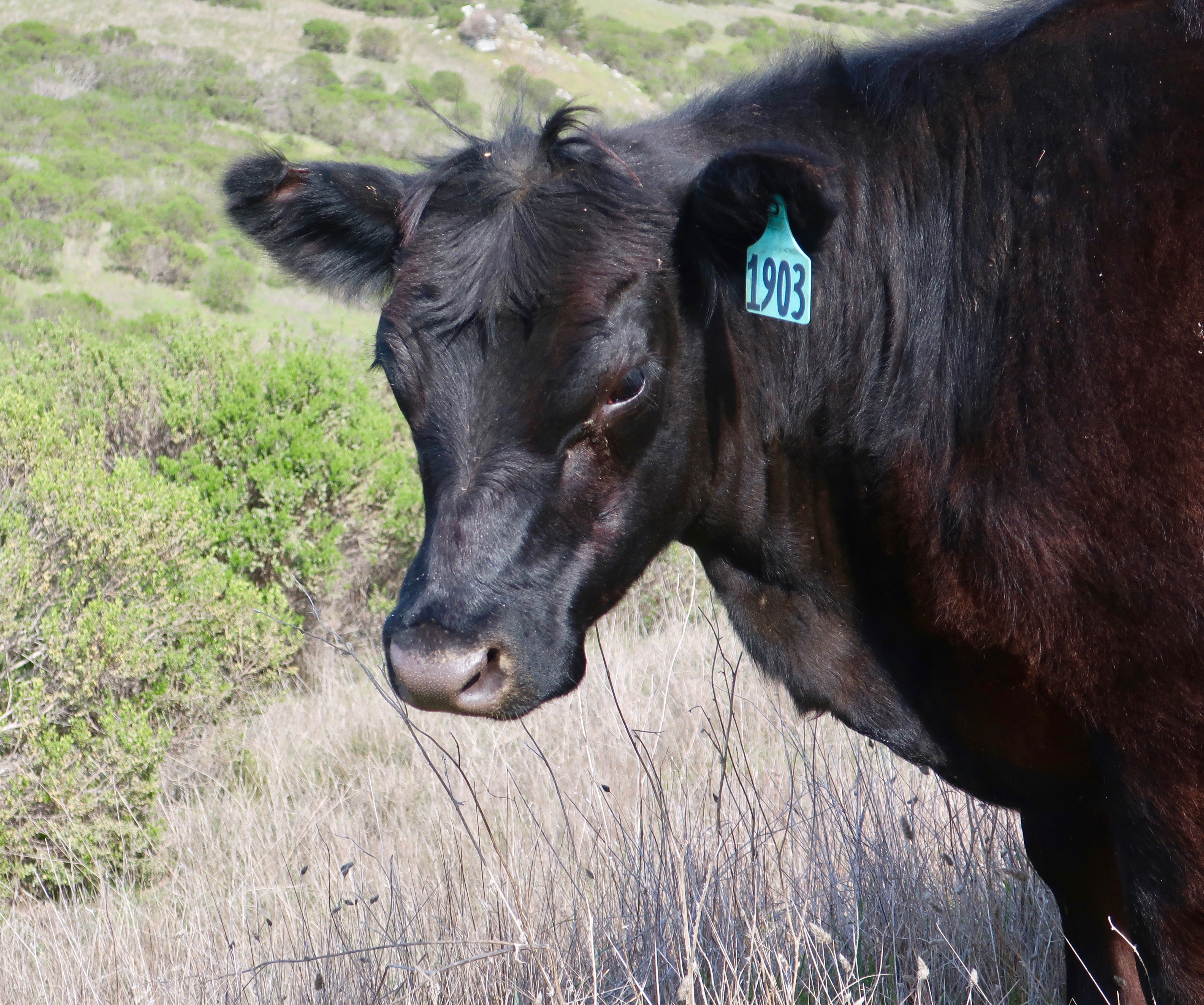
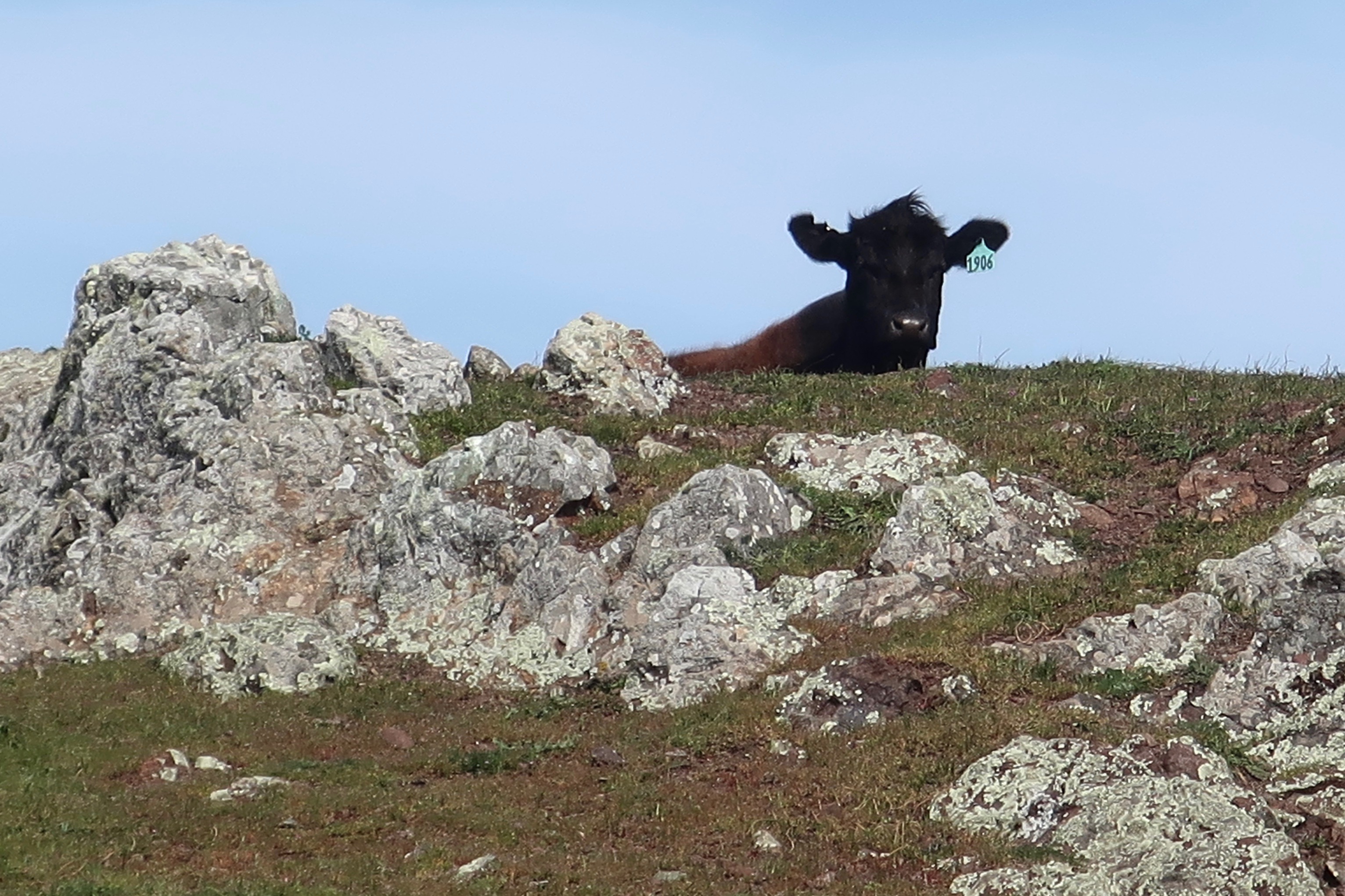
There is no danger of cows going extinct. They have the advantage/disadvantage of being useful to us. As of 2021 there are over a billion on earth. The Pt. Reyes area has its share. It was recognized as ideal for raising dairy cattle in the 1850s as the burgeoning population of San Francisco provided a ready market for dairy products. When the National Seashore was created in the 1970s and 80s, the ranches were grandfathered into the land that was set aside and are an integral part of today’s Pt. Reyes’ experience.
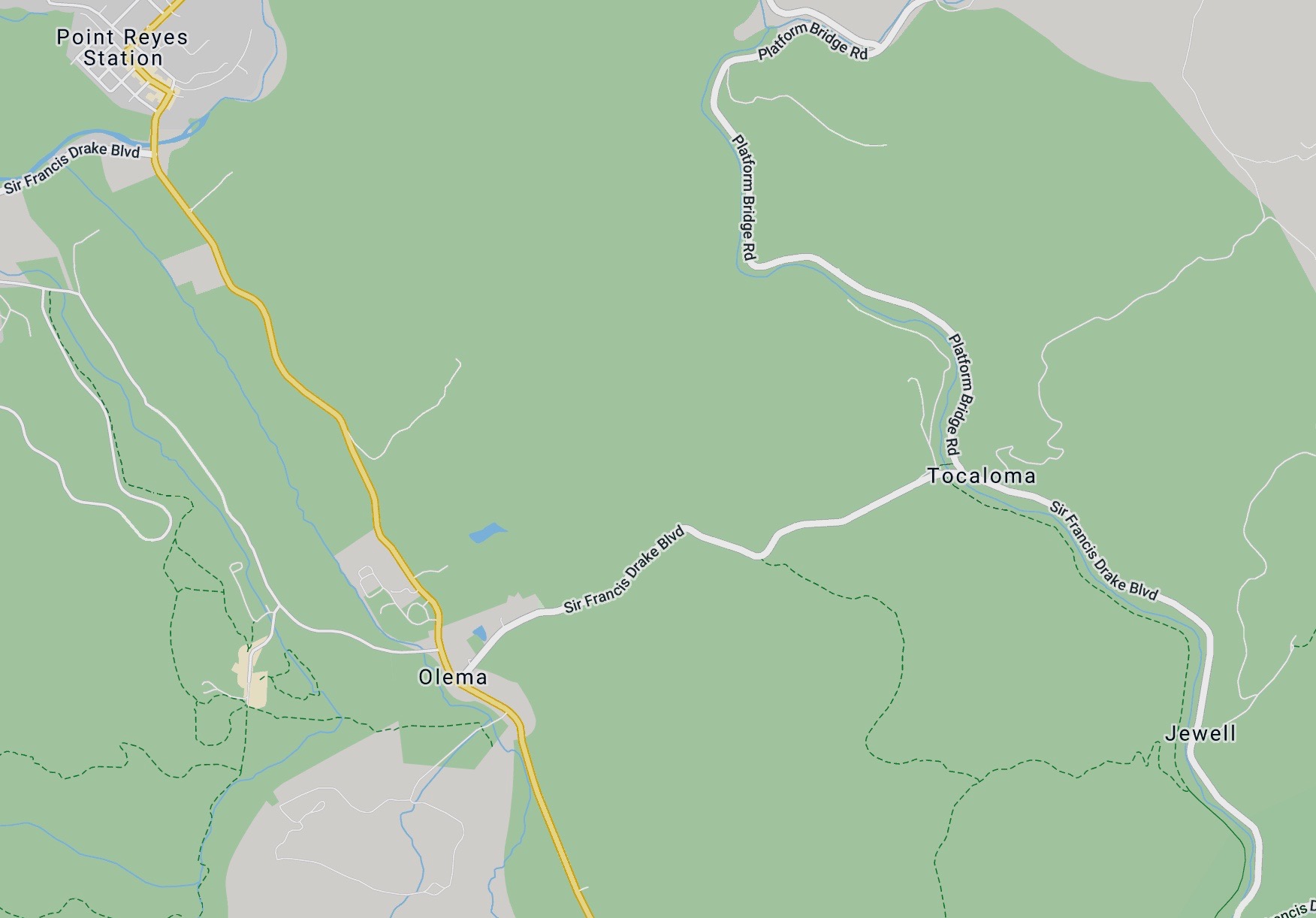
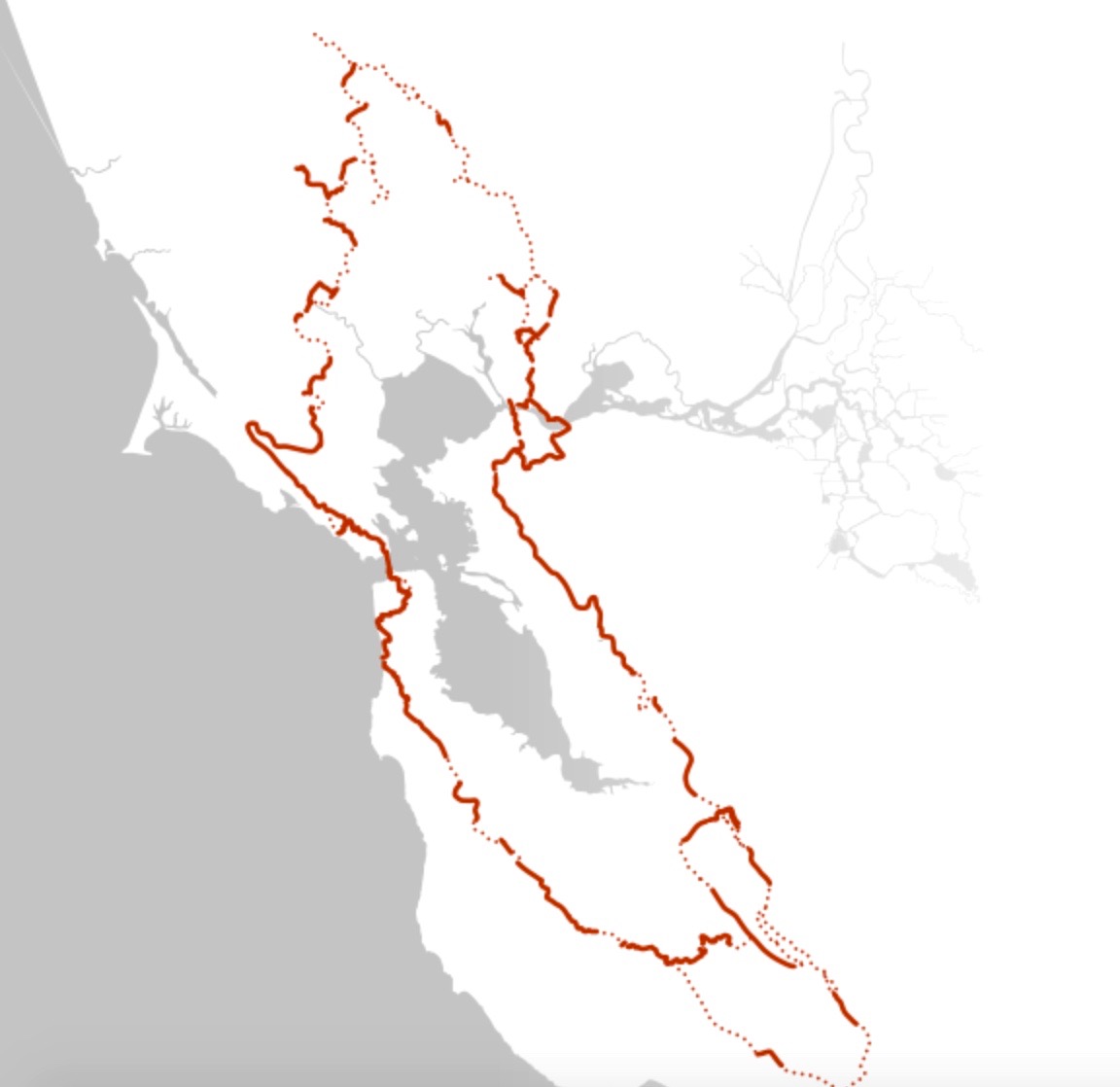
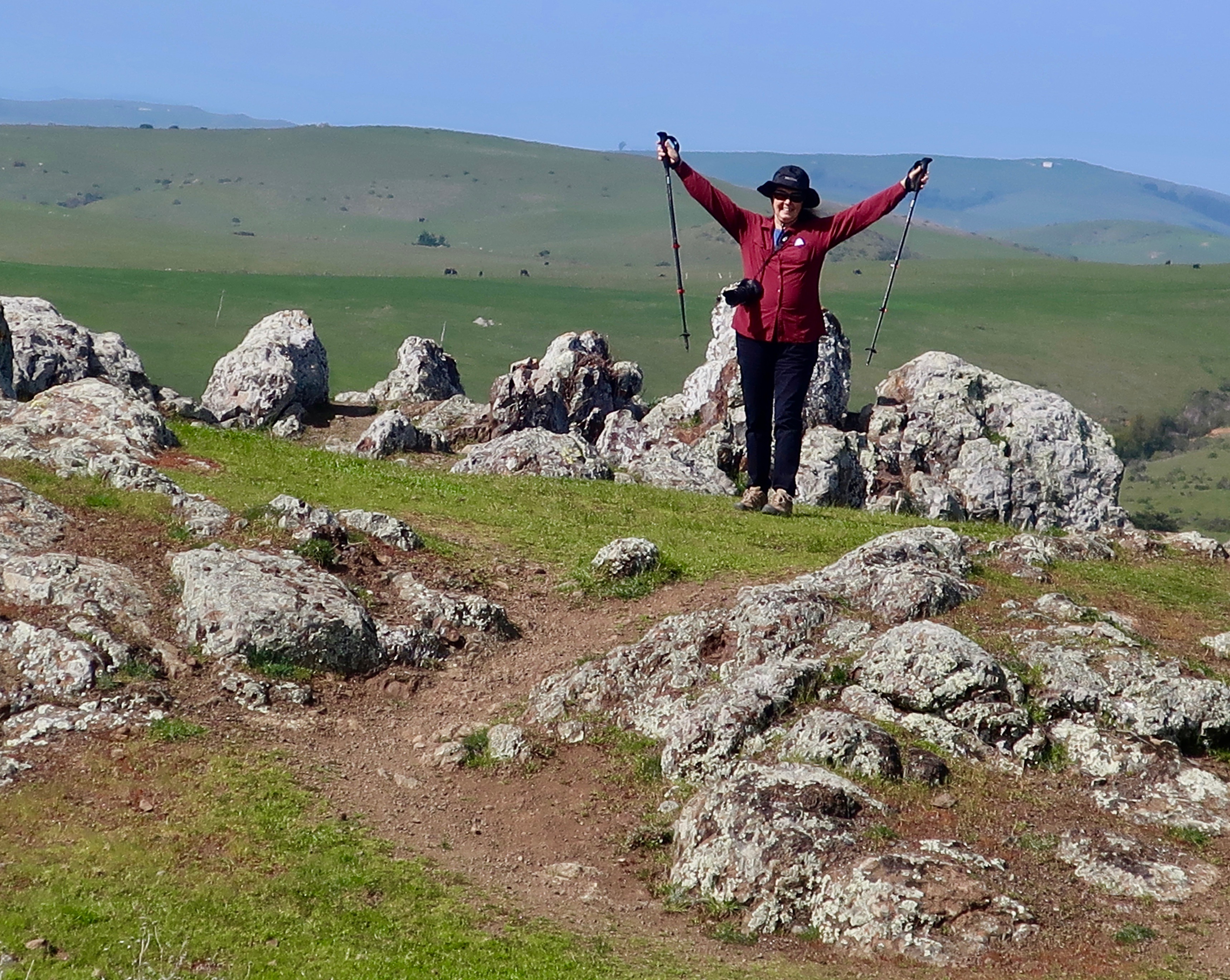
I didn’t set out to do a post on cows when Peggy and I decided to incorporate a short walk along the Bolinas Ridge Trail. It’s actually a part of the Golden Gate National Recreation Area but is administered by Pt. Reyes NS. As you can see by the maps below, it is just east of the small town of Olema which includes the campground I have been staying at forever, or at least back to the 1970s. The trail is part of a system being developed that will eventually allow hikers to do a 500 mile hike around the complete Bay Area. We did four. Two out and two back.

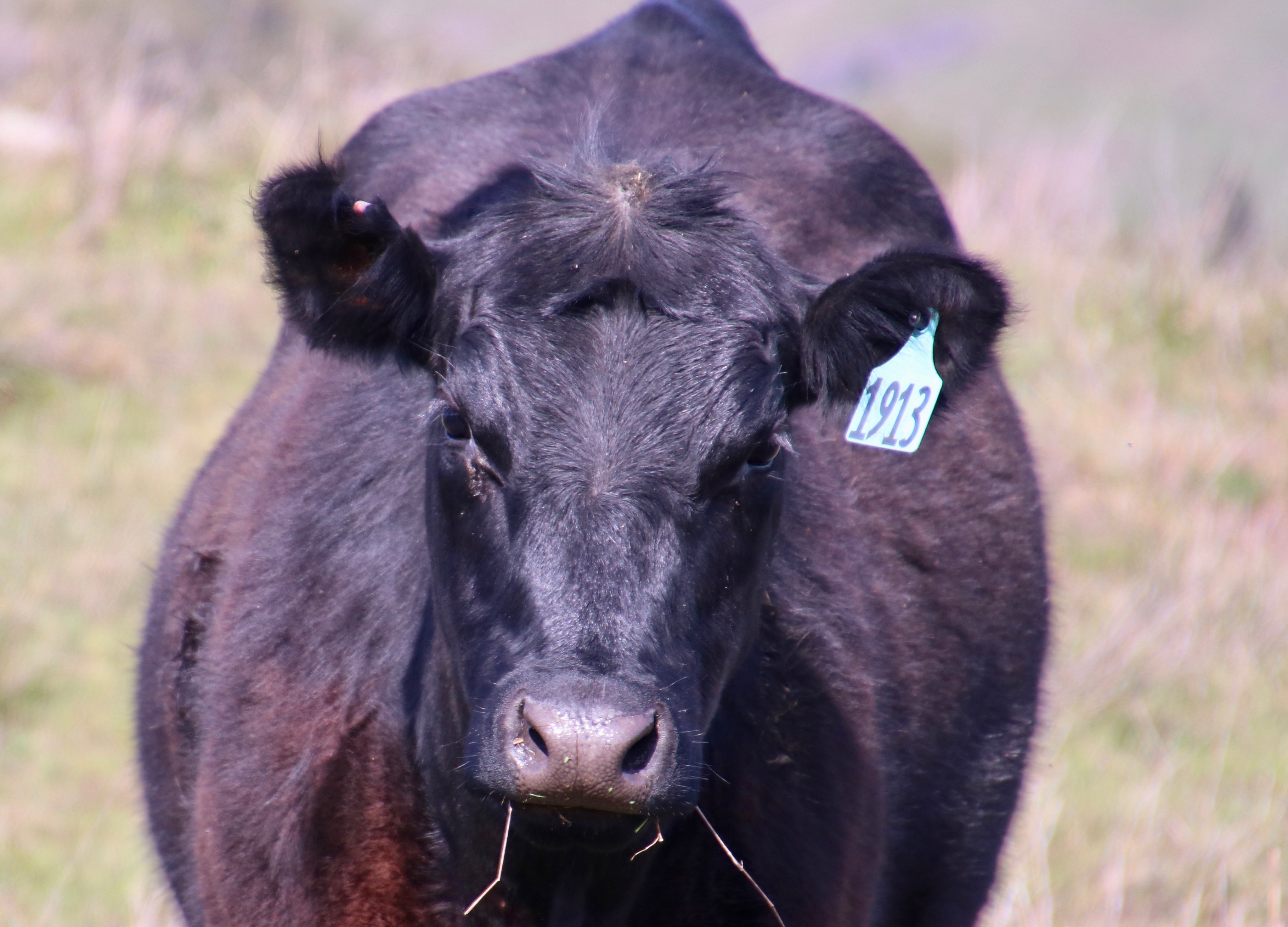
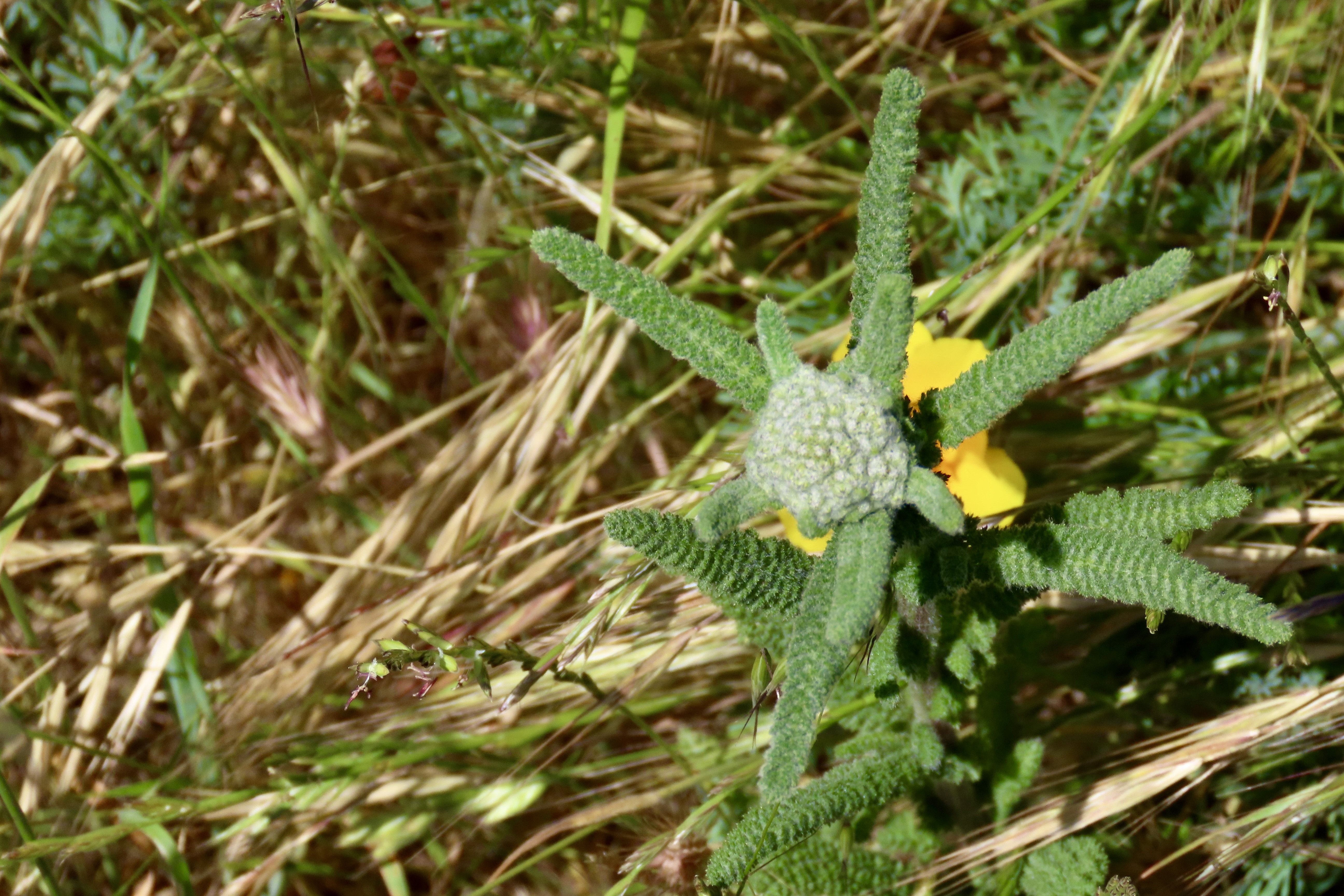
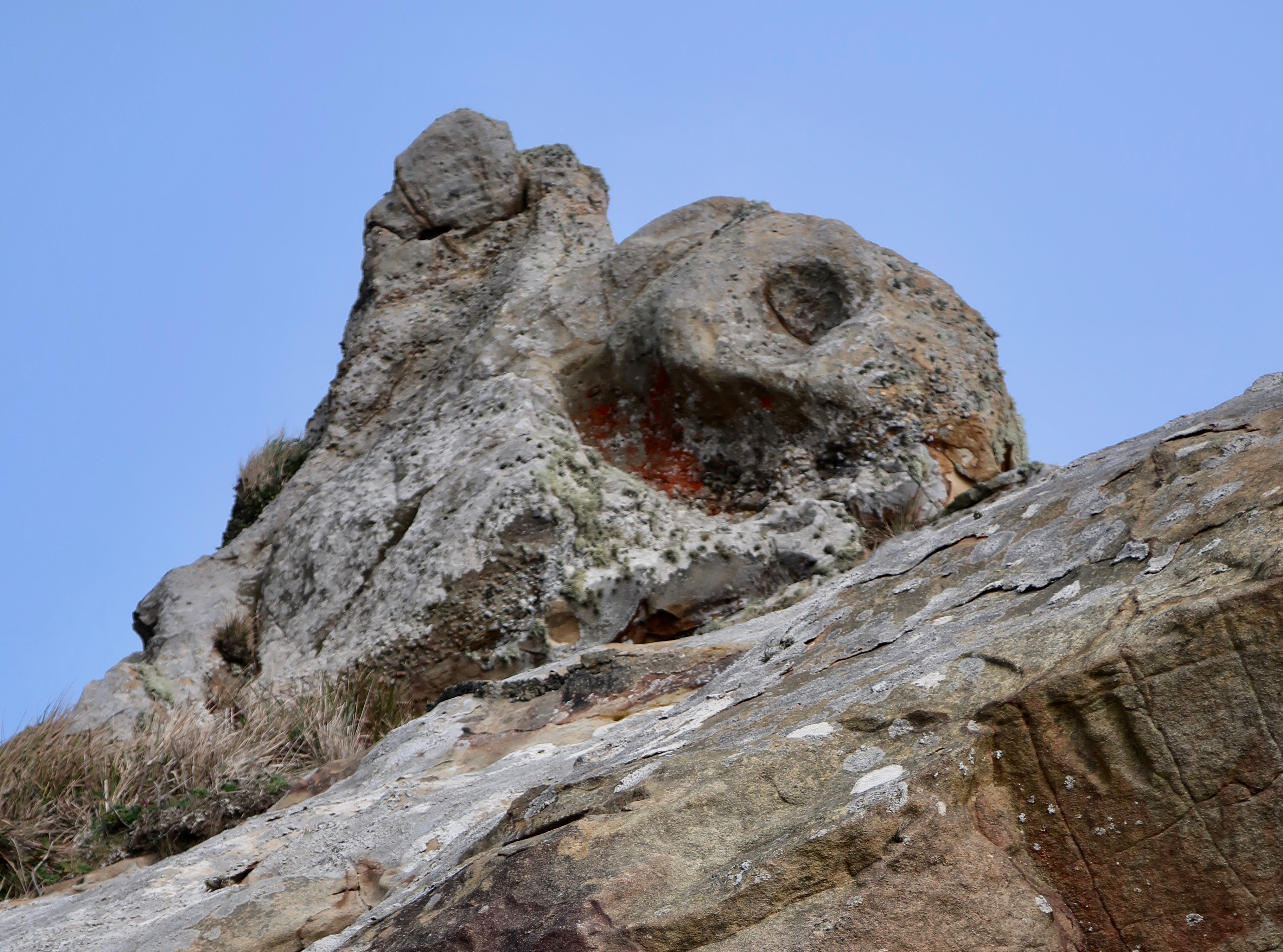
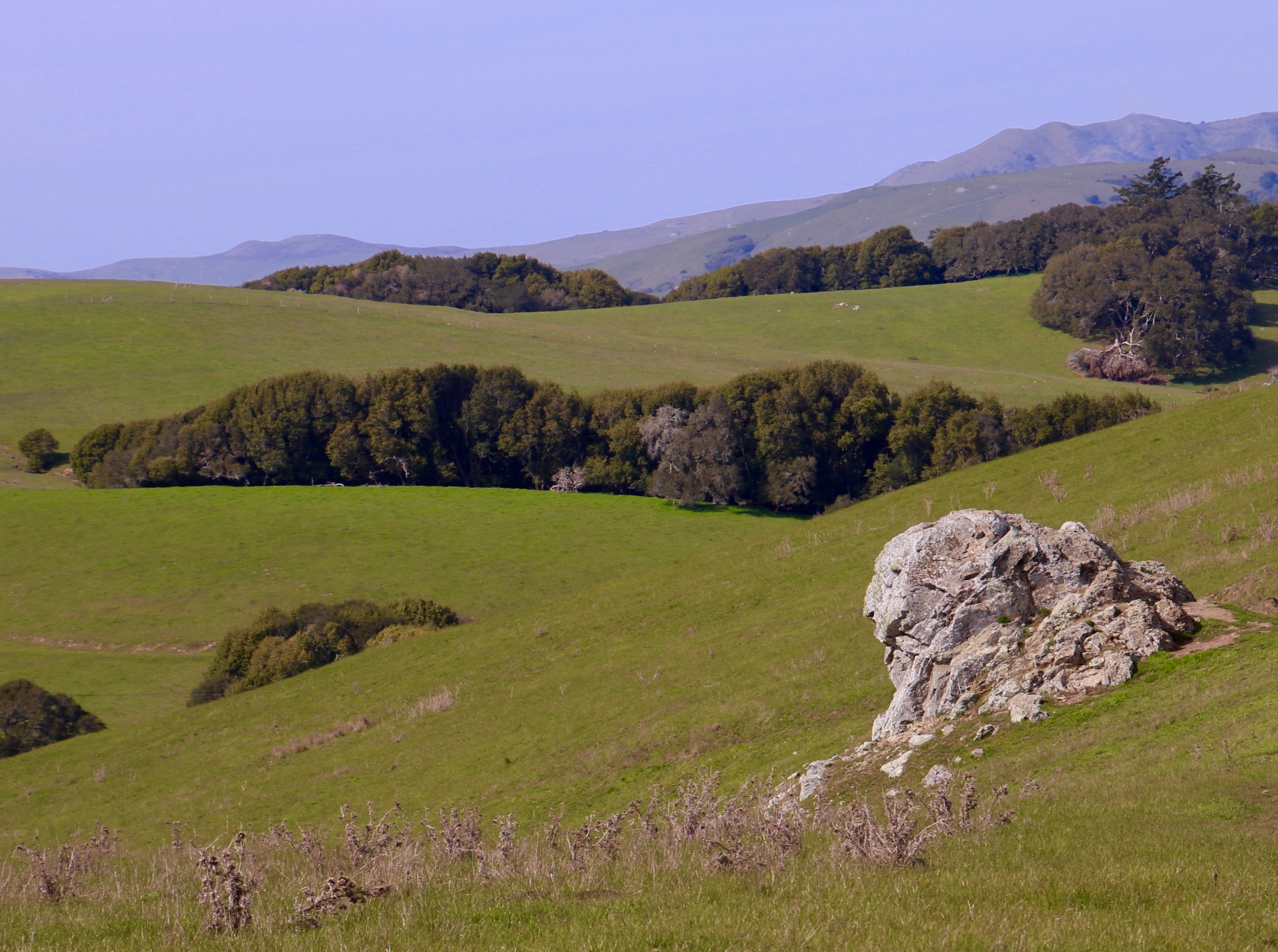
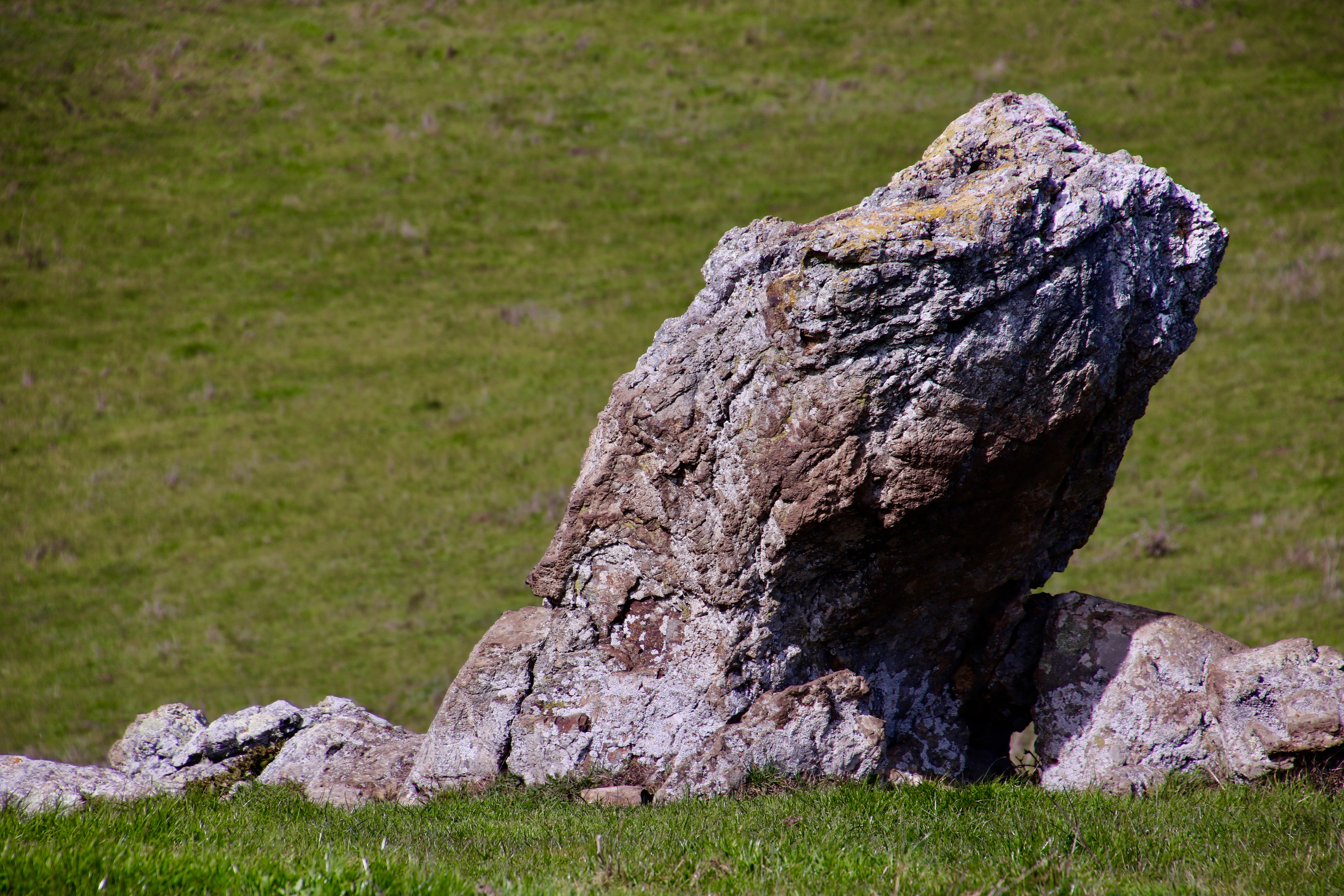
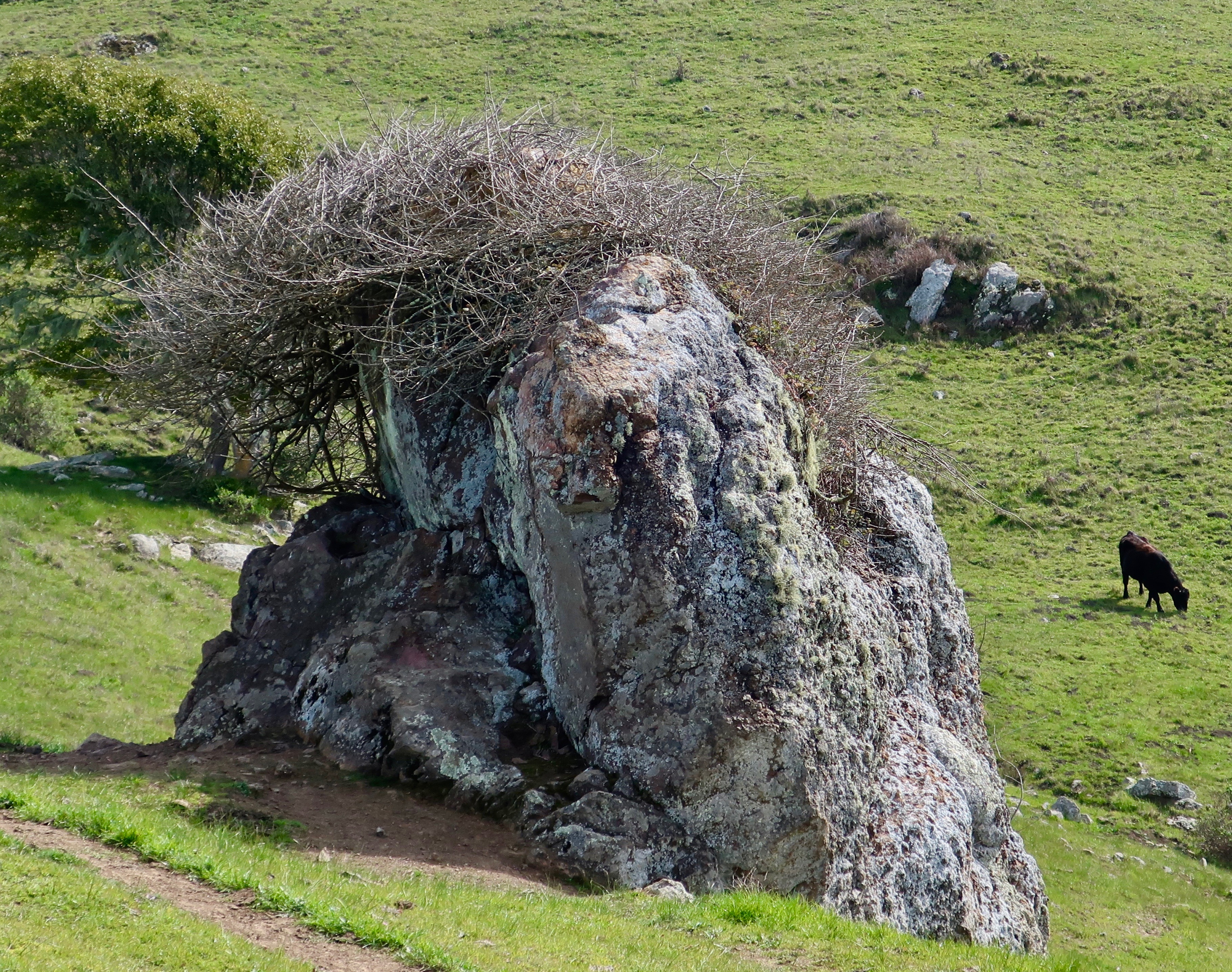
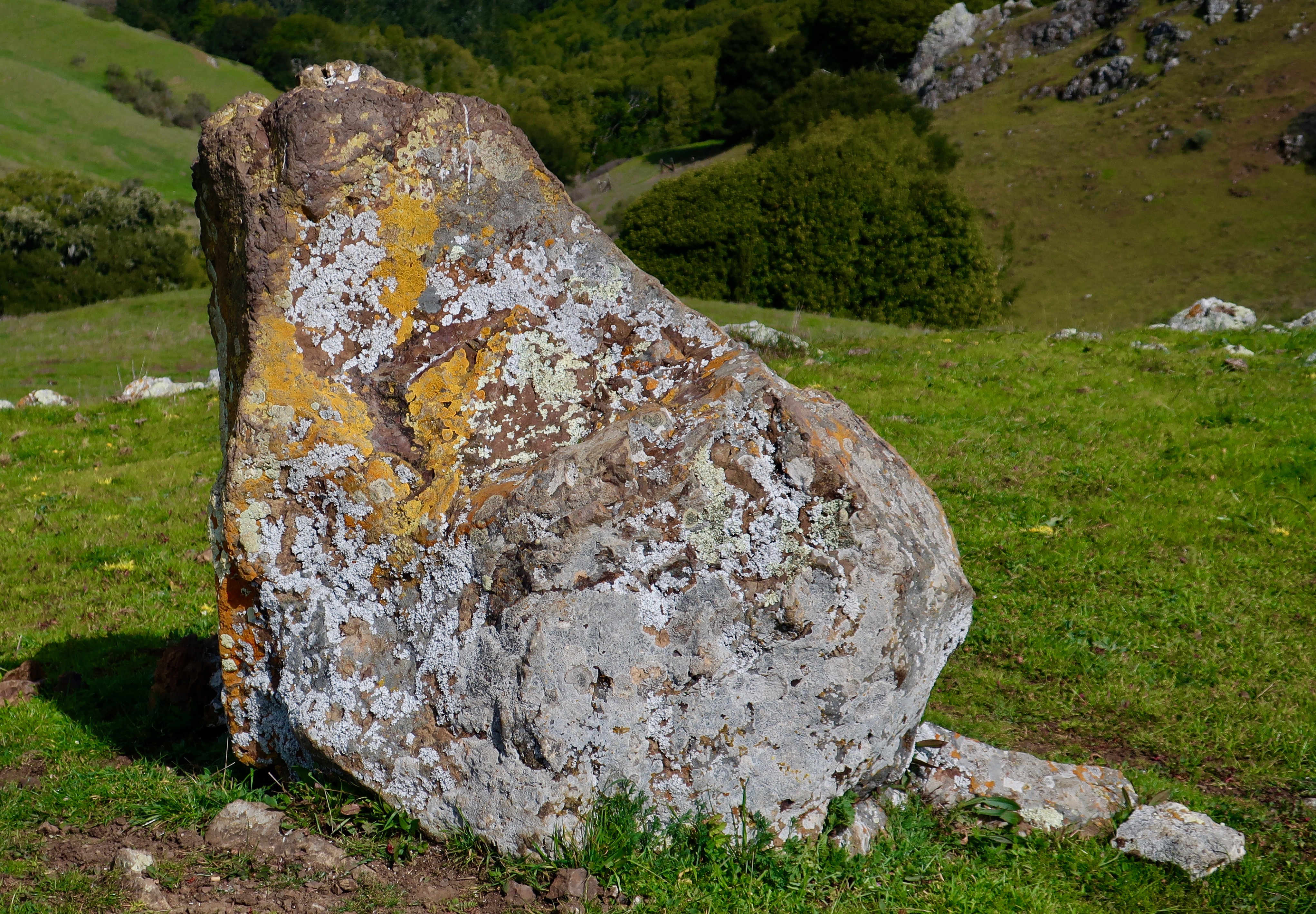
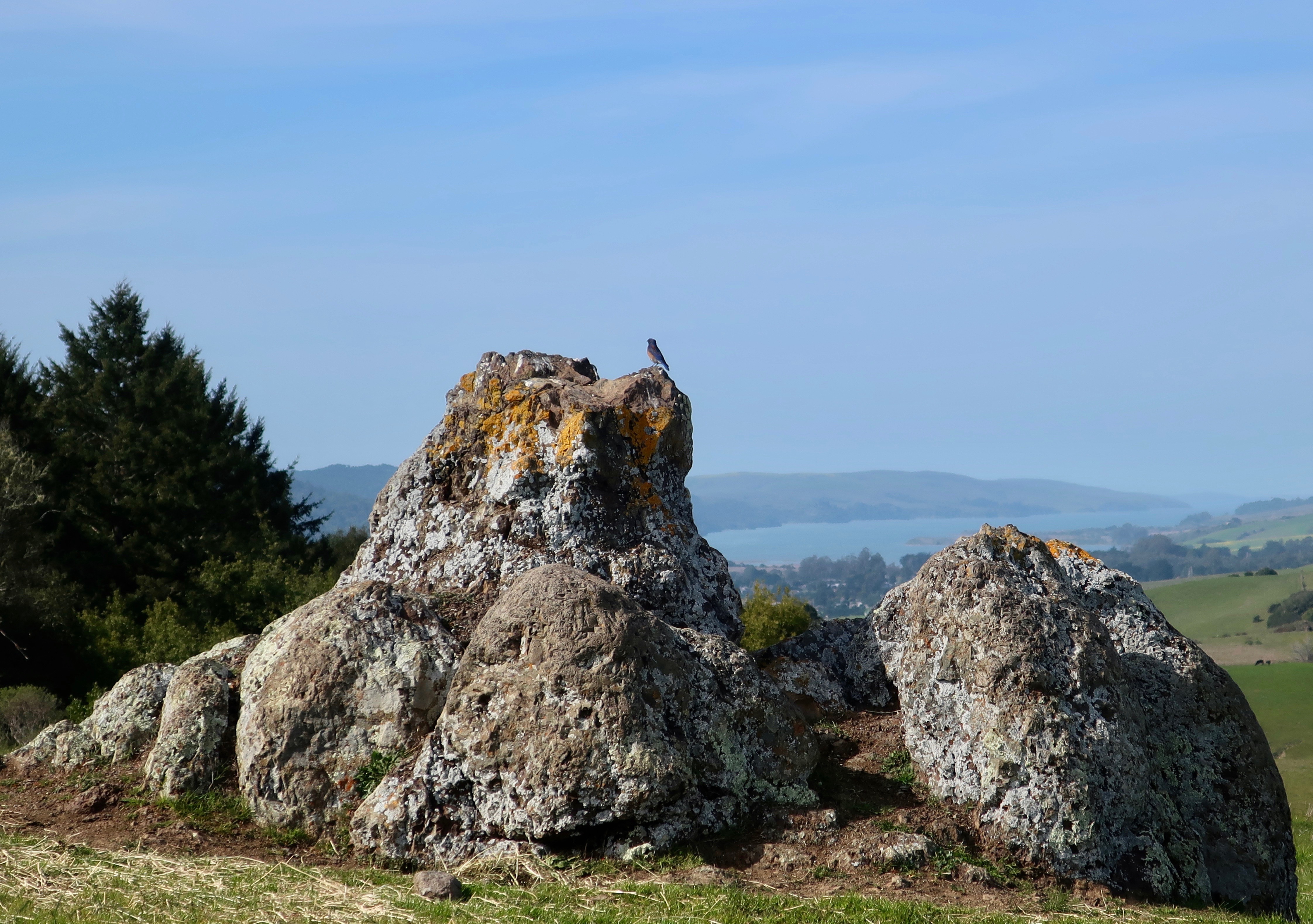
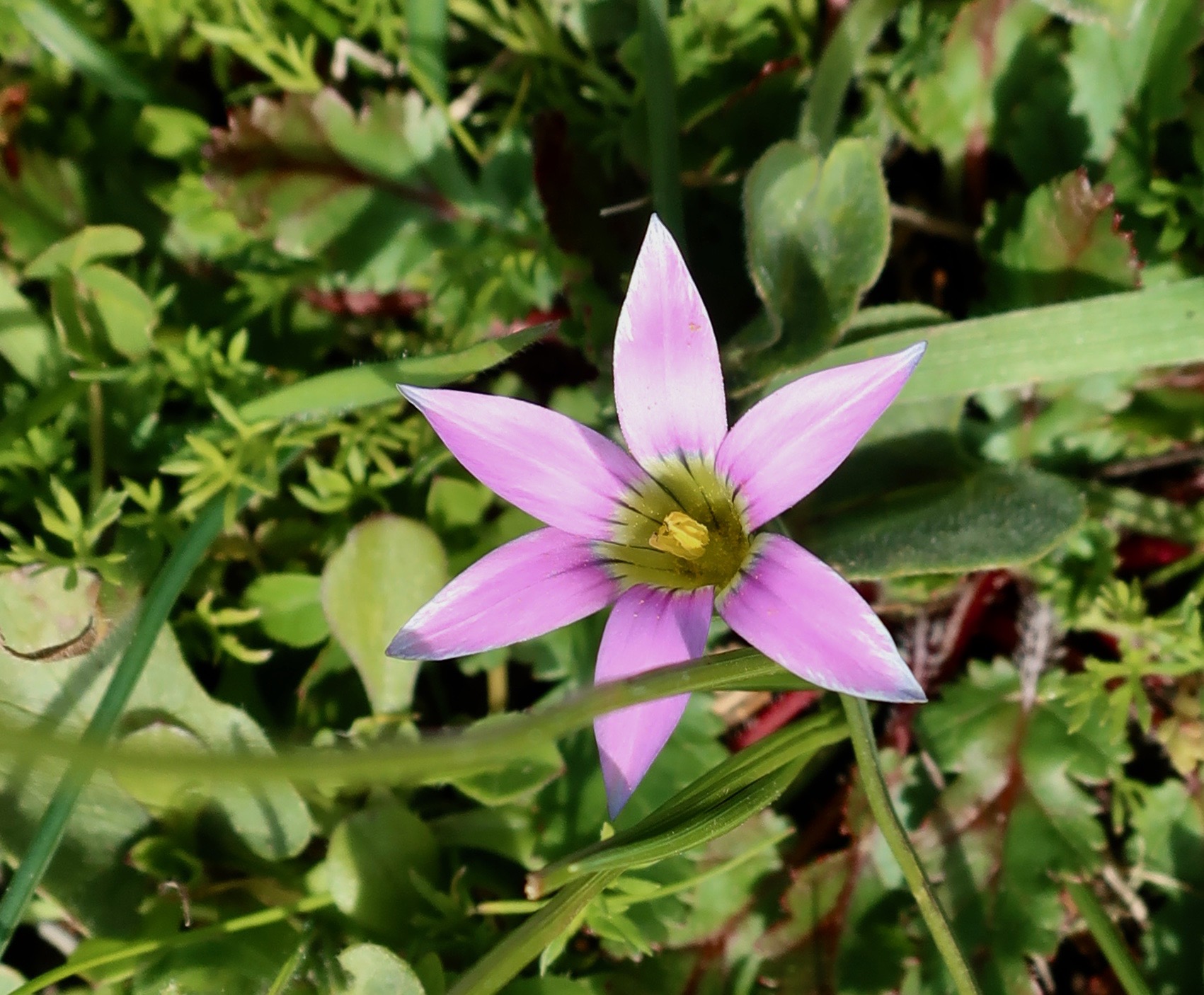
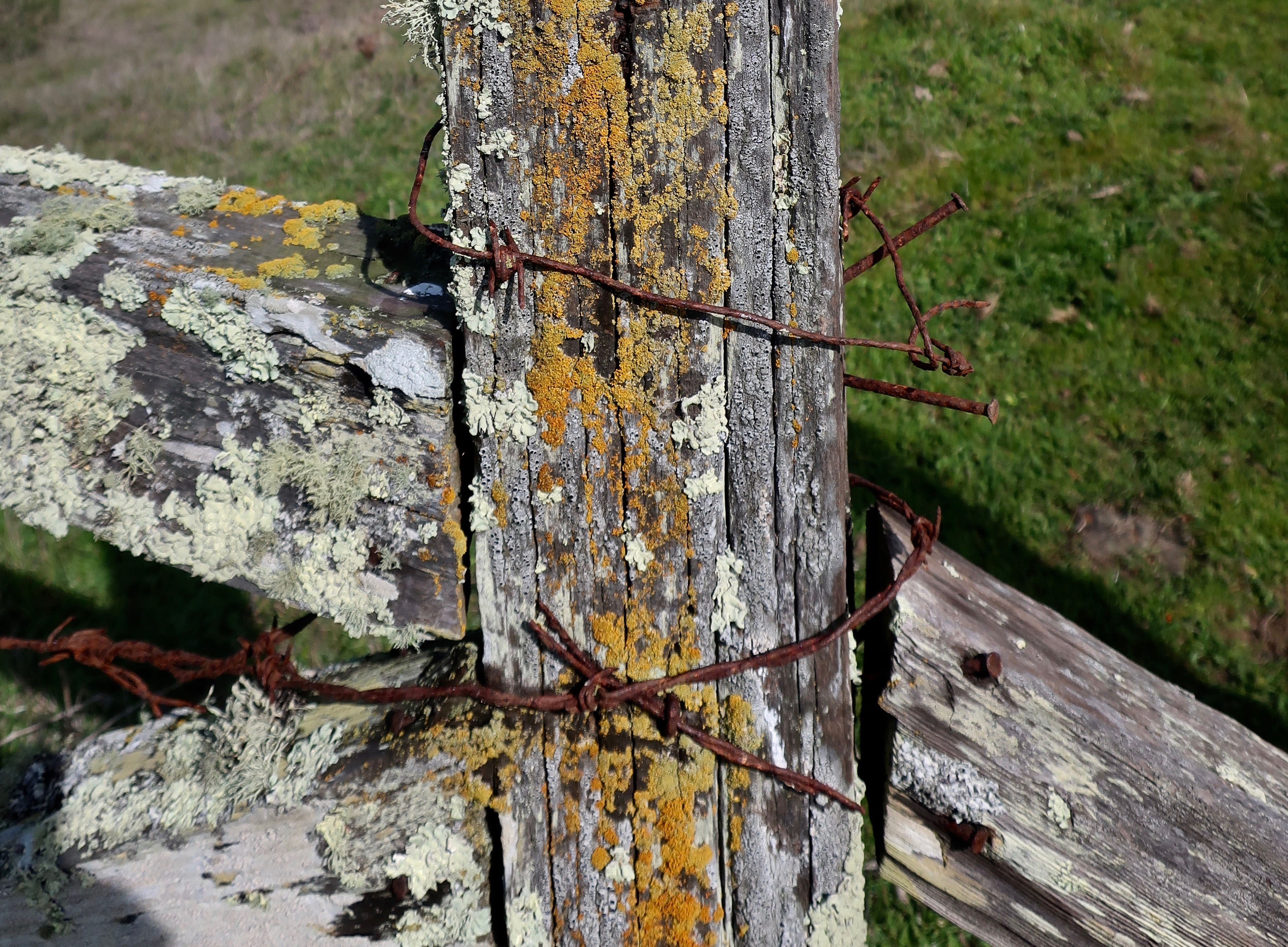
Let it be known, there was much more to the walk than cattle. The beautiful green of the Coastal Range was offset by dark forests. Spring flowers were beginning to pop up. Individual rocks with definite personalities stood proudly along the way and demanded to be photographed.






NEXT POST:
Monday’s Blog-A-Book Post from It’s 4 AM and a Bear is Standing on Top of Me: Have you ever raced to the top of a 70-foot tree? In the middle of a graveyard? It was an important part of our entertainment when we were growing up. Join me on Monday as I race to the top and my brother tries to build a treehouse 60 feet up…
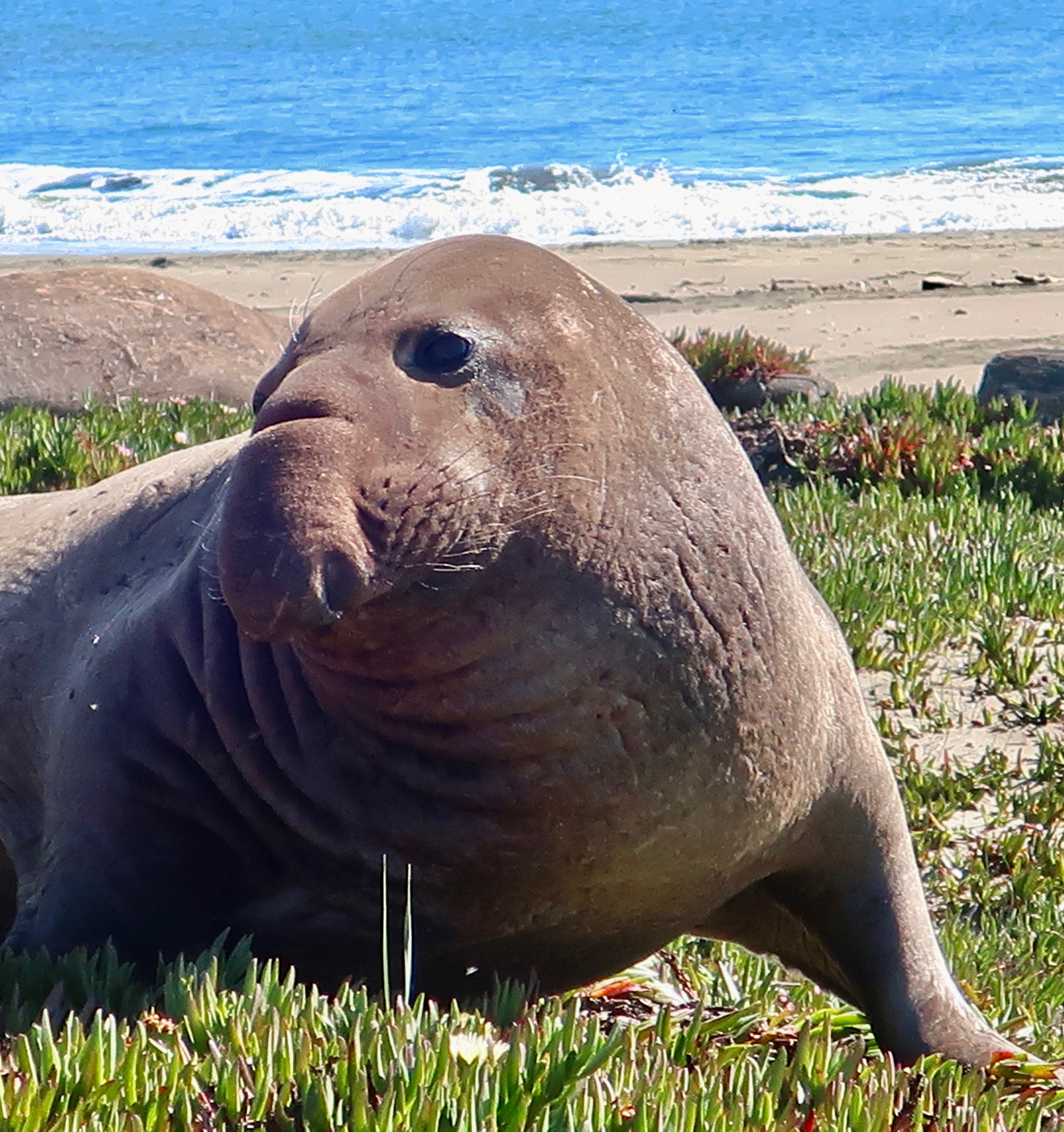
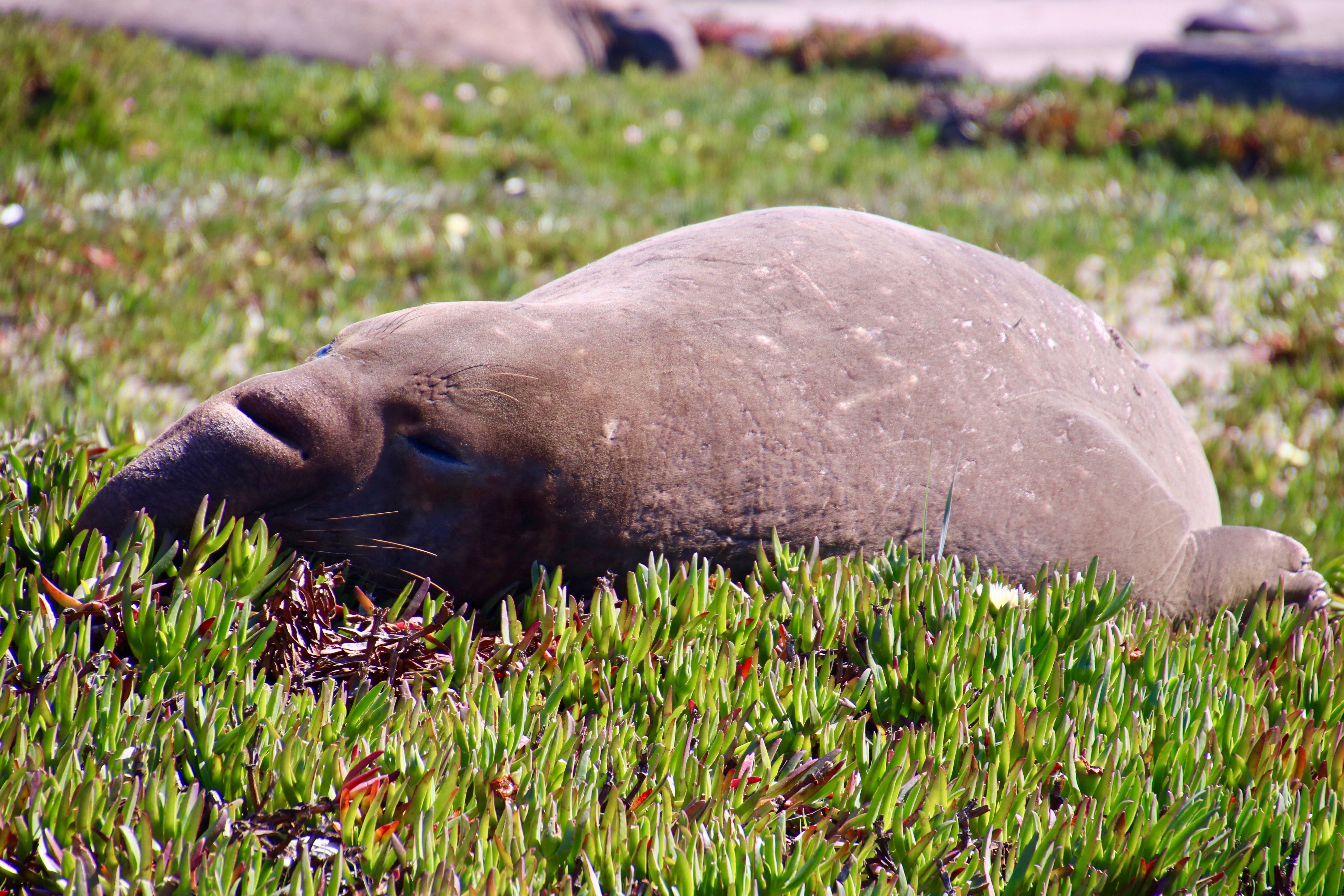
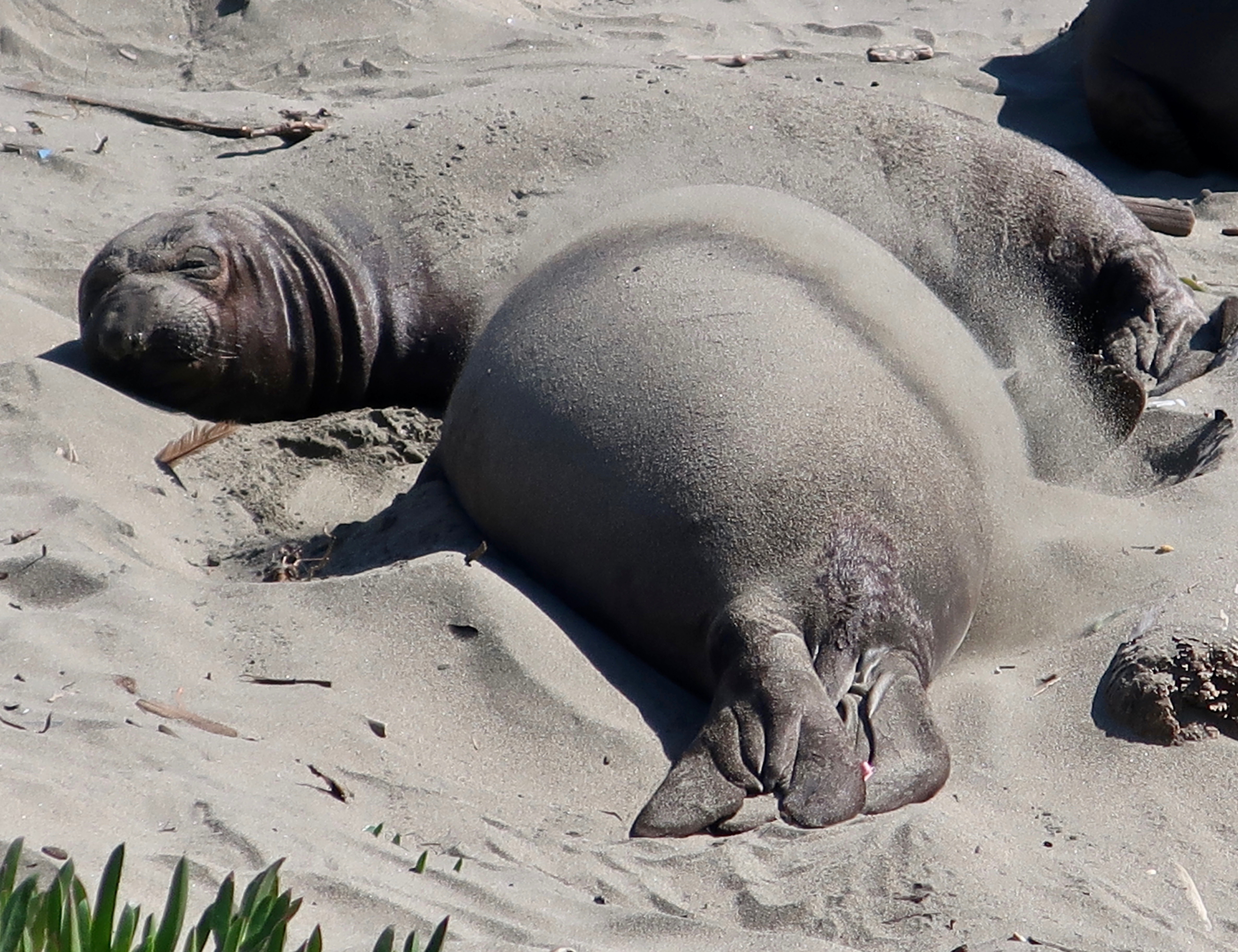
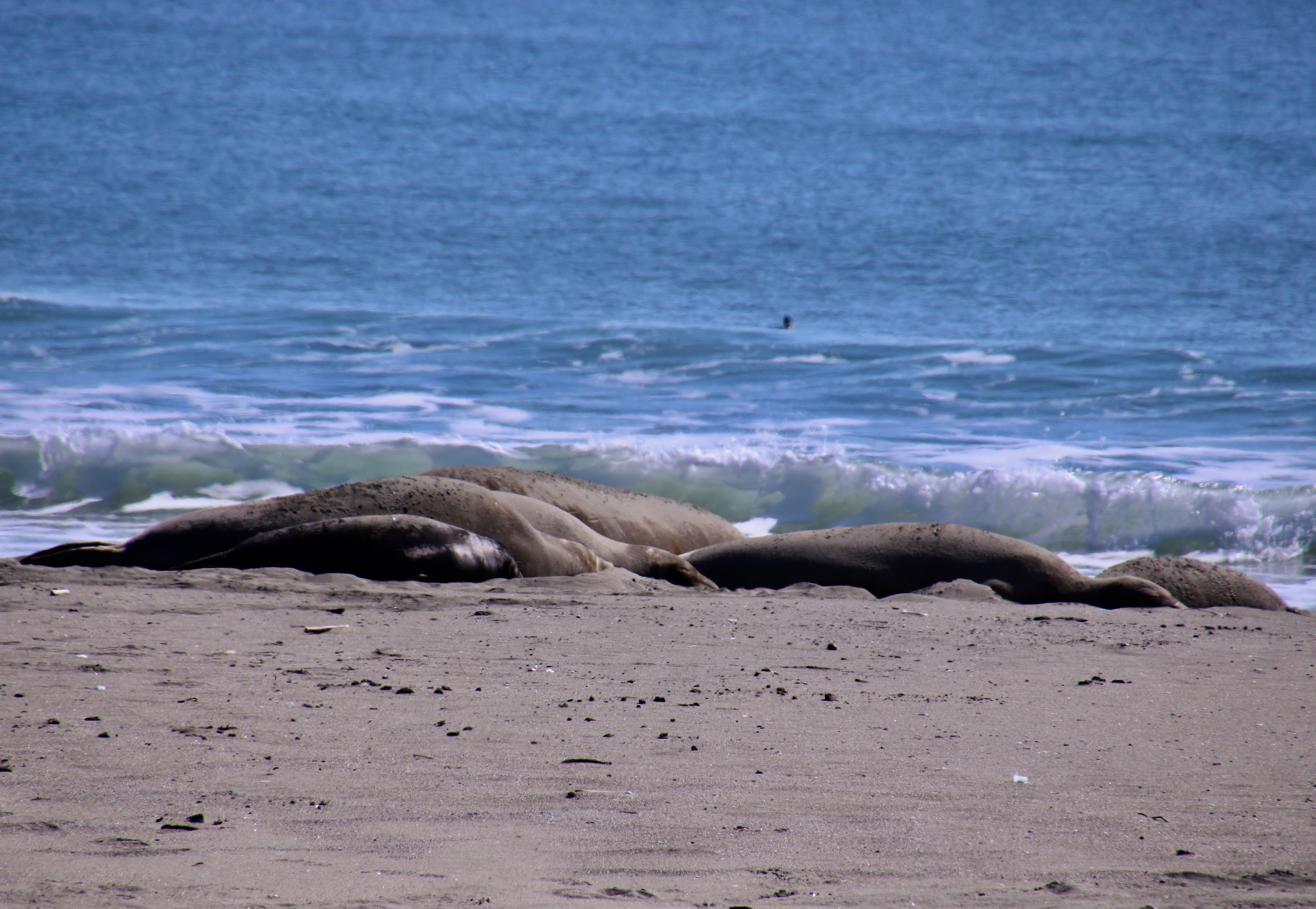
Pt. Reyes National Seashore is located some 30 miles north of San Francisco. Peggy and I went there last week to celebrate my birthday. It’s been a go-to place for me since the 60s. In addition to spectacular scenery, great hikes, yummy food, and one of the best small bookstores I’ve ever been in, we were entertained by the wildlife: tule elk, a pair of sushi eating coyotes, and elephant seals (plus some cows). Today, I want to do a teaser on our trip by featuring the elephant seals. I’ll get back to the rest after I finish my Harris Beach series.
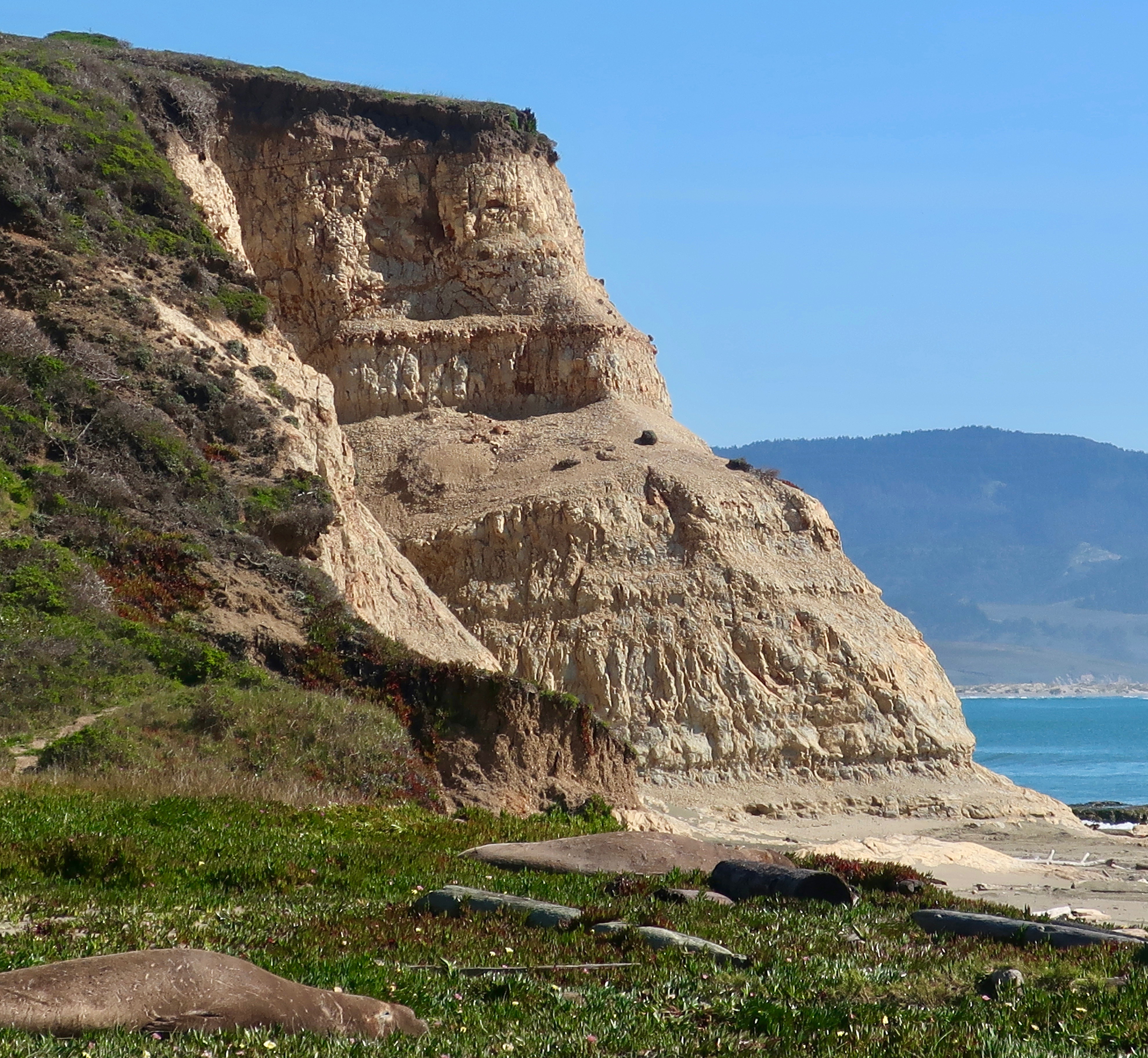
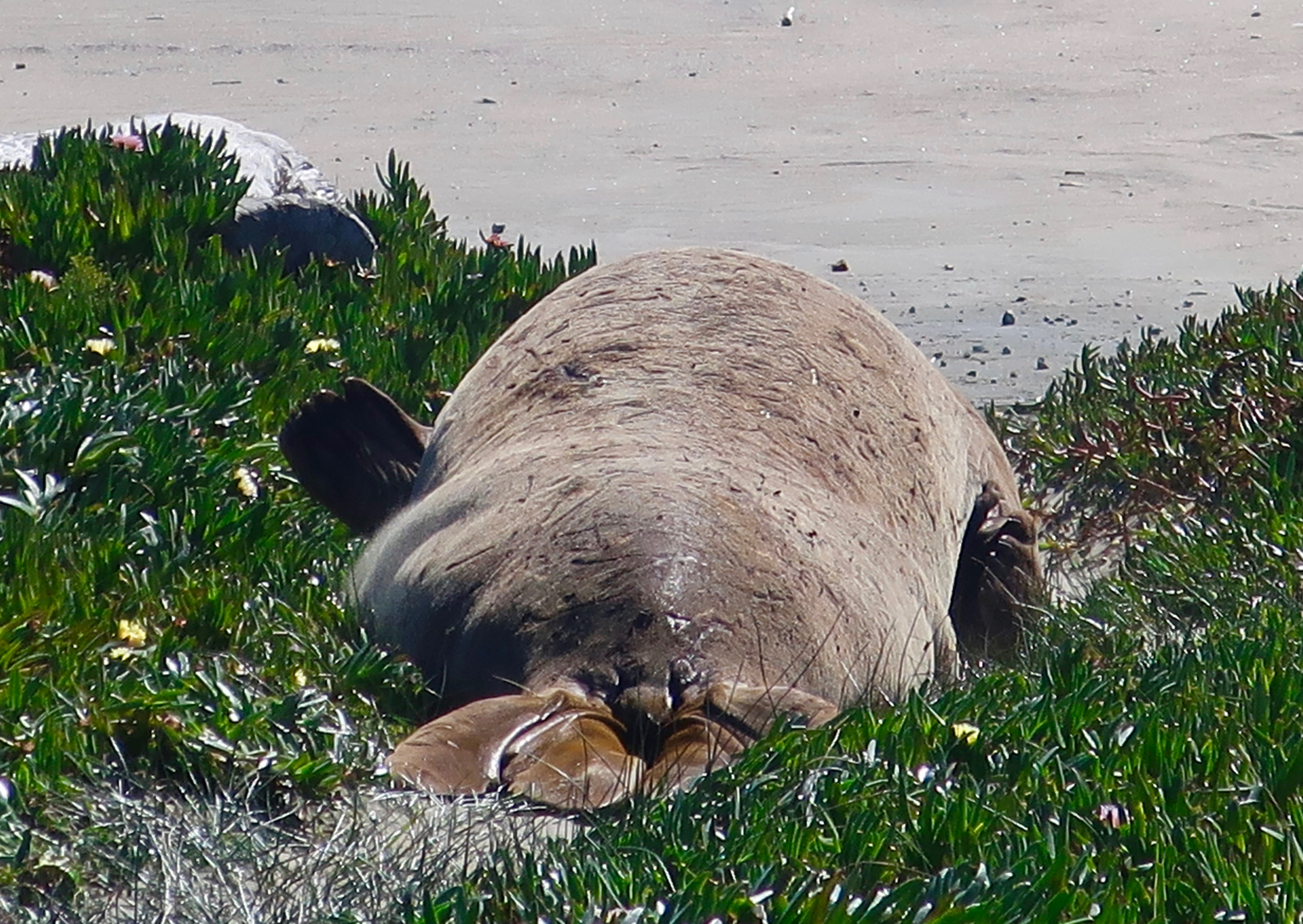
Elephant seals are amazing creatures that spend up to 80% of their lives at sea— 90 % of it underwater! If that doesn’t seem remarkable enough, consider this: their normal dives for food range between 1000 and 2000 feet deep (305 to 610 meters). They can dive for up to an hour and a half before returning to the surface for three to five minutes of breathing. Semi-annual feeding binges take the males on a 13,000-mile roundtrip journey to the Aleutian Islands and females on a 11,000-mile roundtrip into the North Pacific.
They were absent from Pt. Reyes for 150 years. In fact, they were close to absent forever. Like whales, they came close to being hunted to extinction for their oil. Processing the blubber from one bull can produce up to 25 gallons. They were saved because the Mexico and the US banned hunting them in the 1920s. Gradually, they have returned to their old breeding grounds. When I first started visiting Pt. Reyes in the 60s, they were unheard of in the area. Today there are over 3000 that return annually to breed.
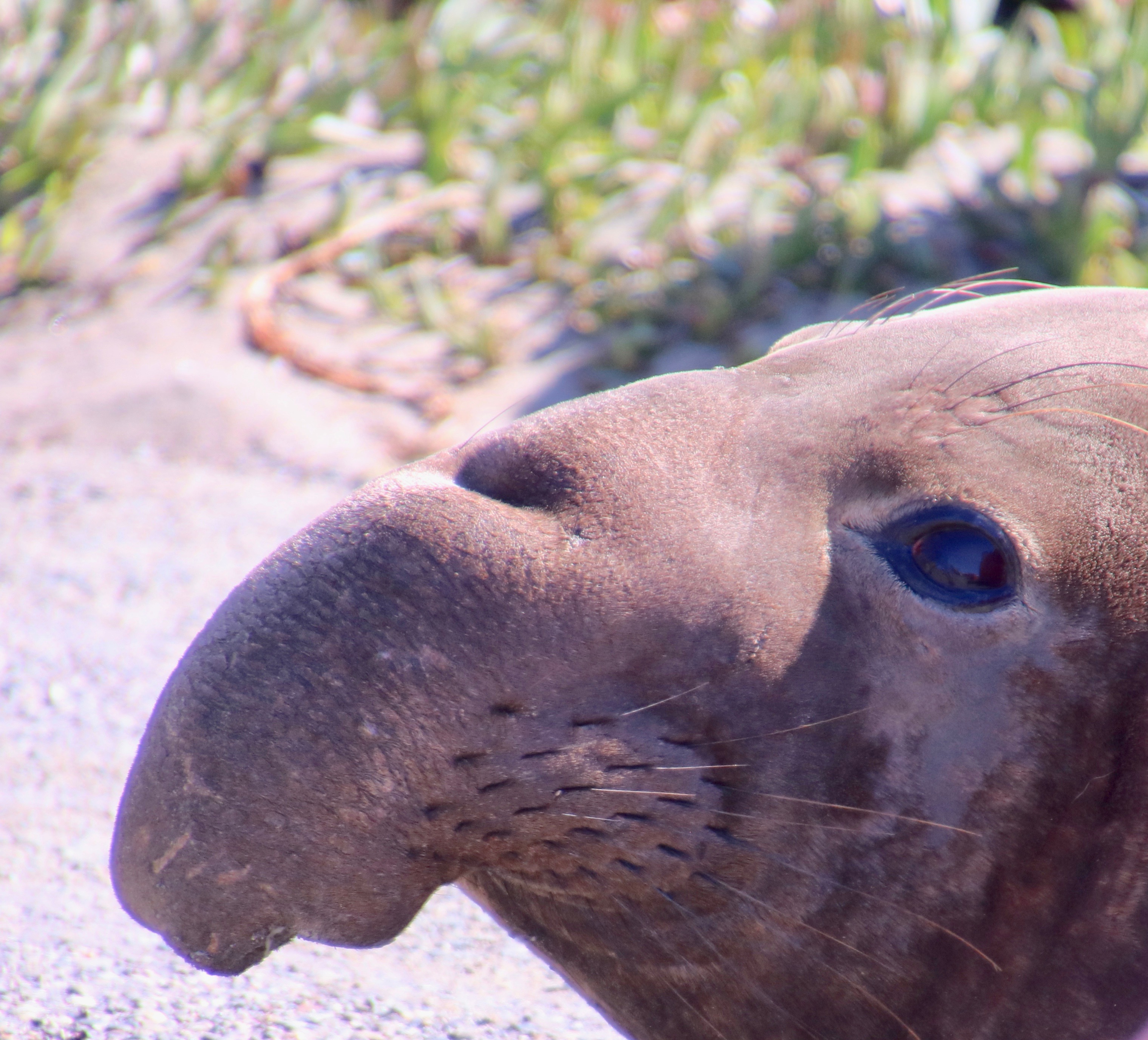
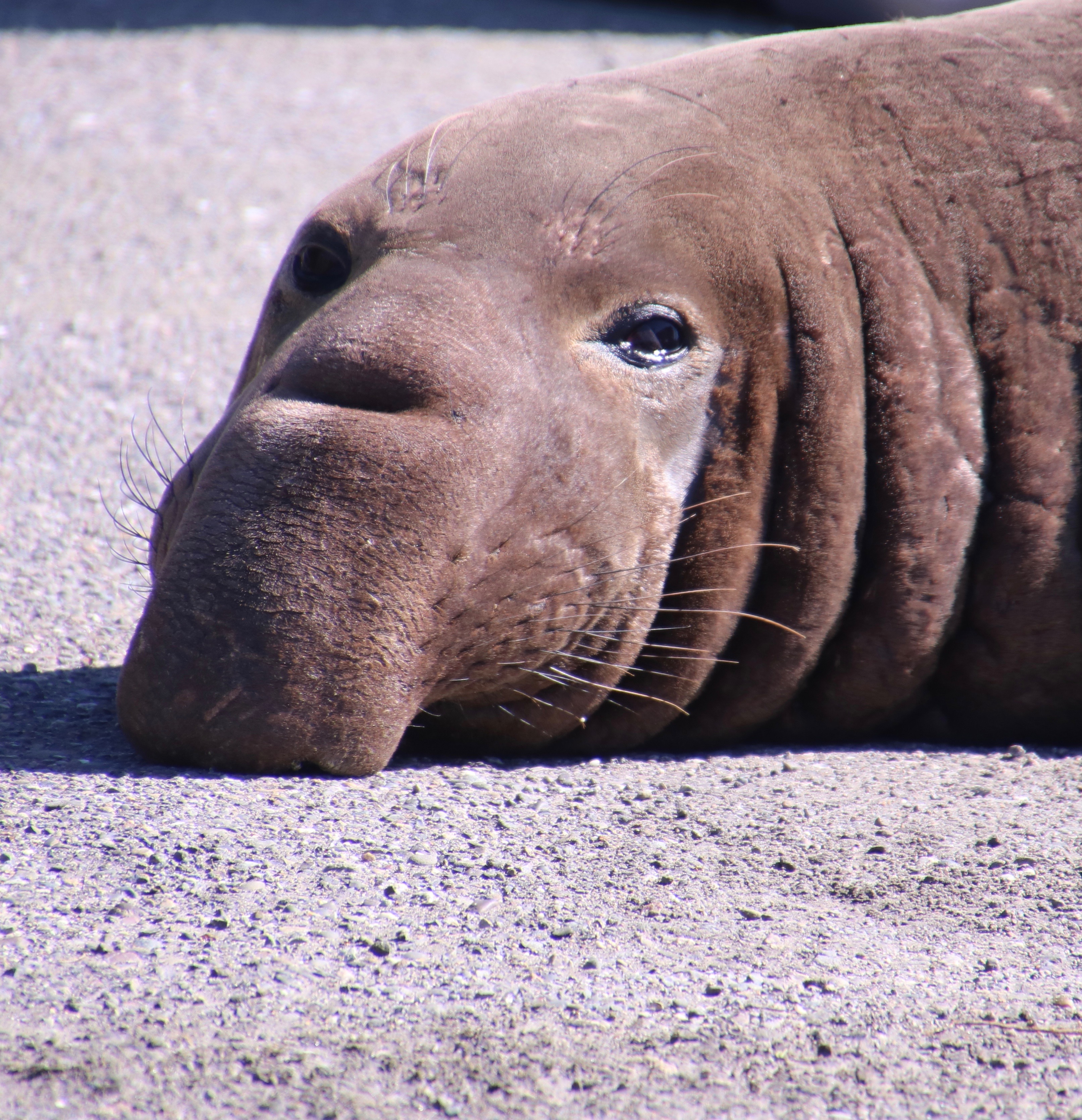
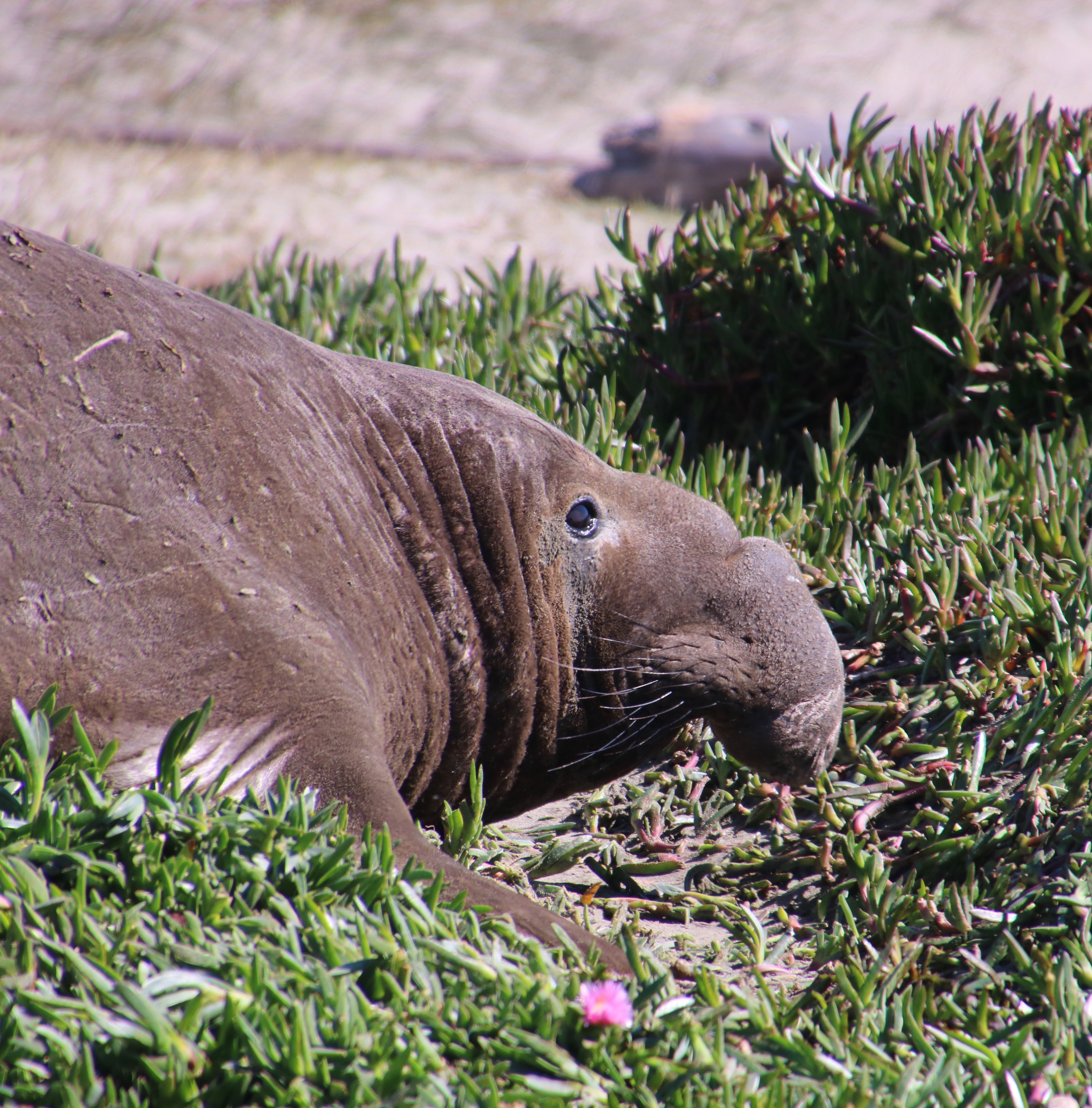
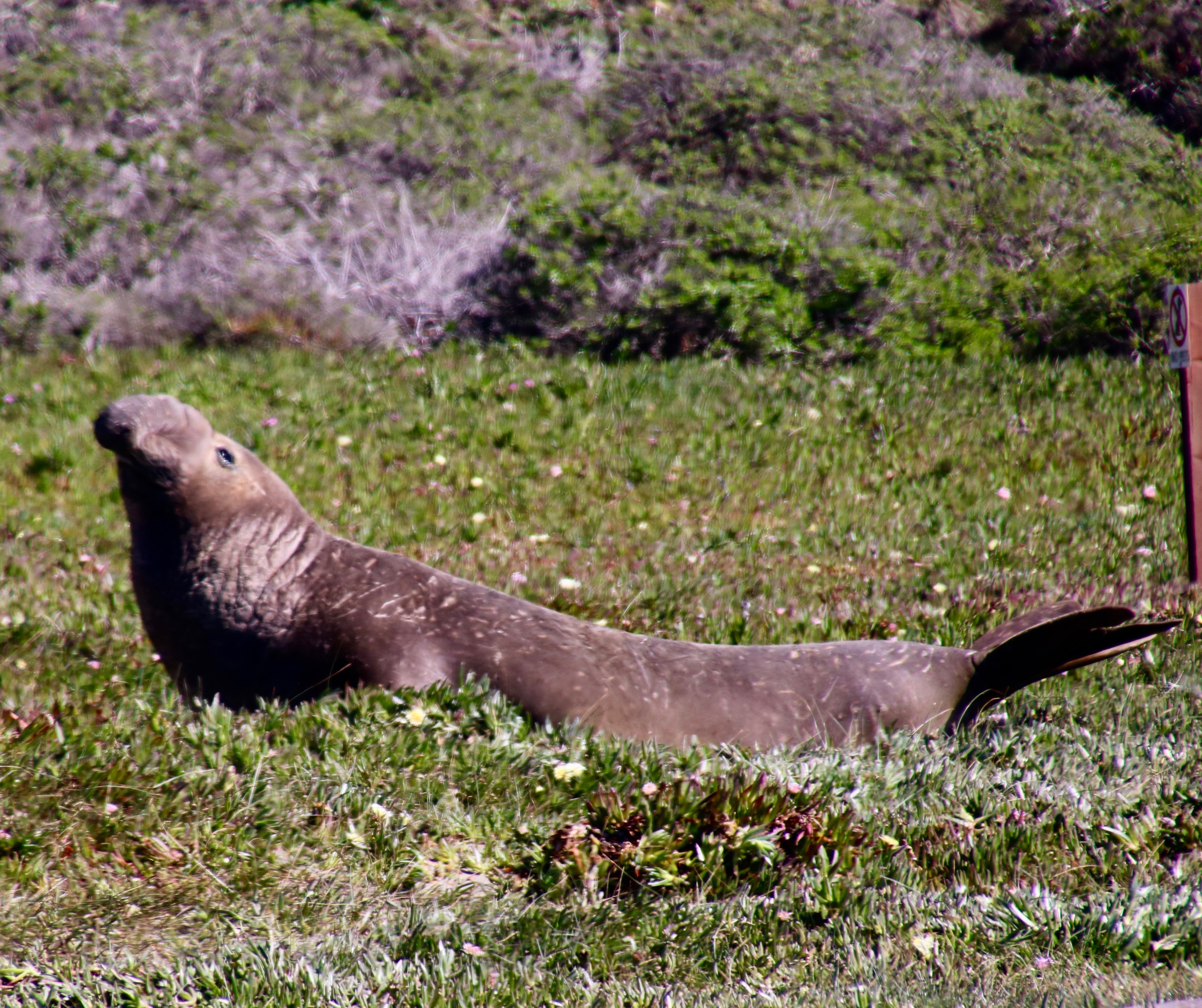
The Park Service had set up a barrier to separate the seals from the people who had come to admire them at Drake’s Beach. Those closest to the barrier were bulls. You can tell by their size and uniquely shaped noses. One had crossed the barrier and was worrying the rangers. “He’s escaping from the other bulls,” a ranger explained. Maybe.
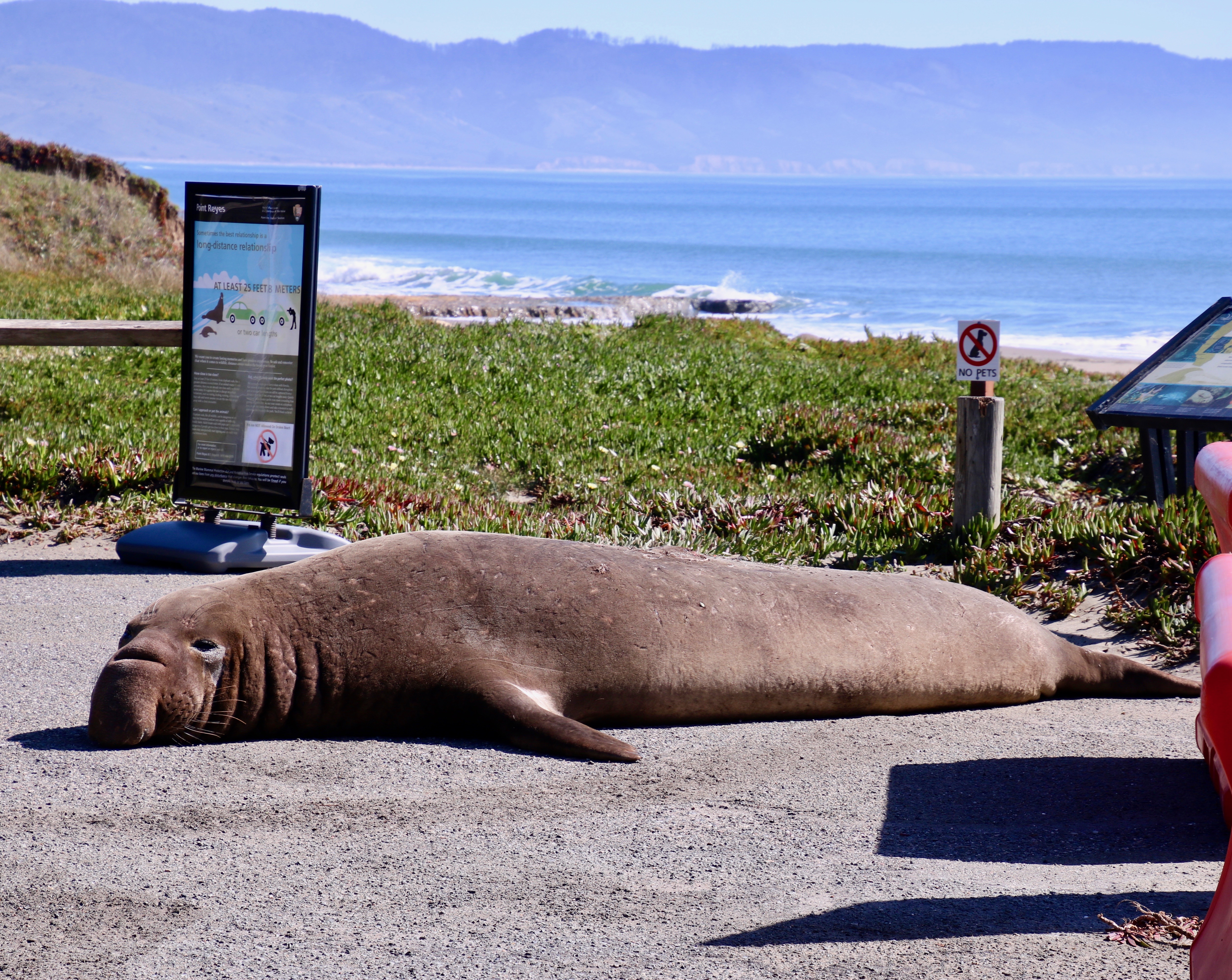
A little girl next to me exclaimed, “I think he is heading to the snack bar to get fish sticks!”
“I’d bet on ice cream,” I responded. “Look at how big he is.” The girl looked at me dubiously. “Fish sticks” she insisted.
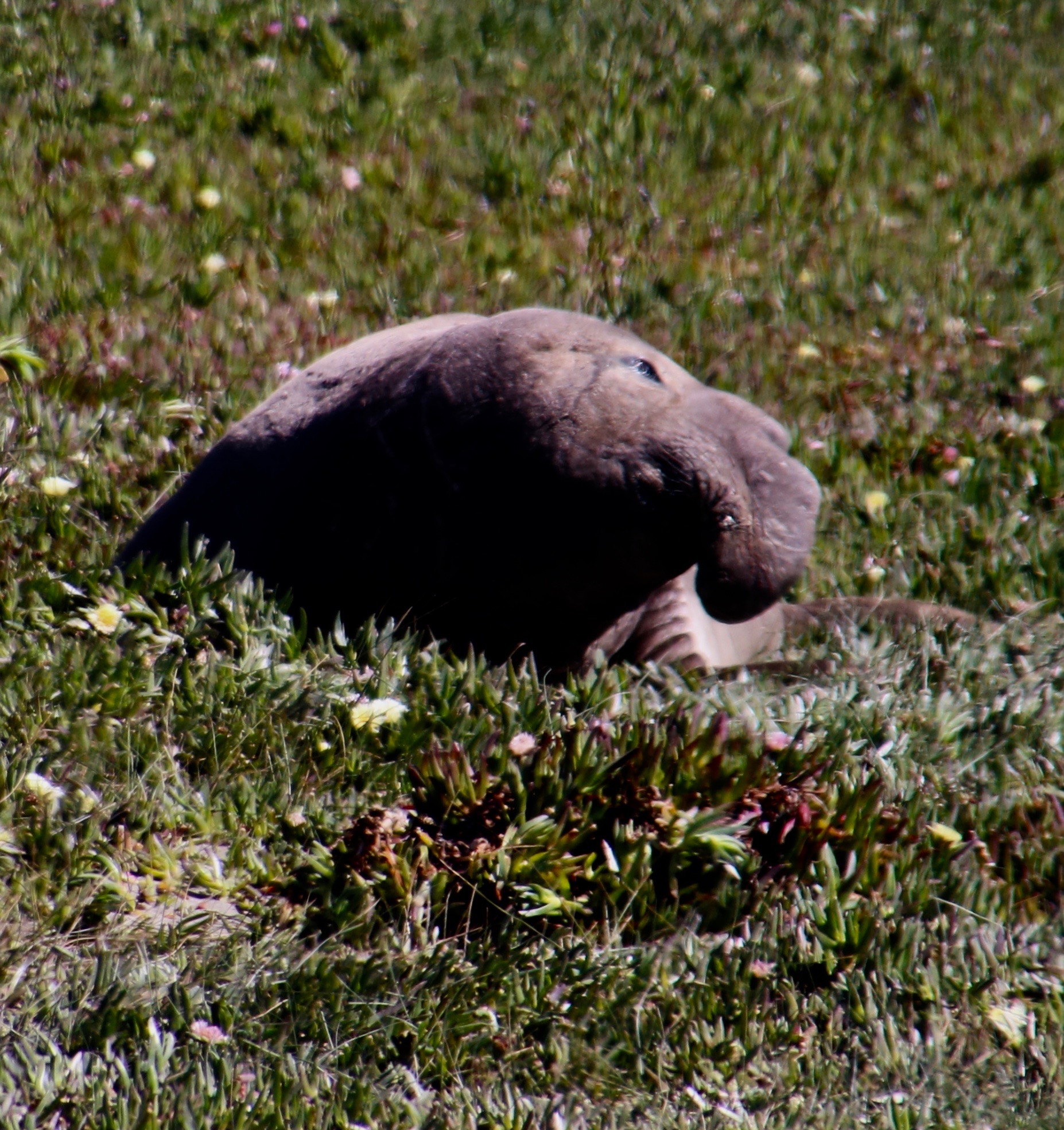
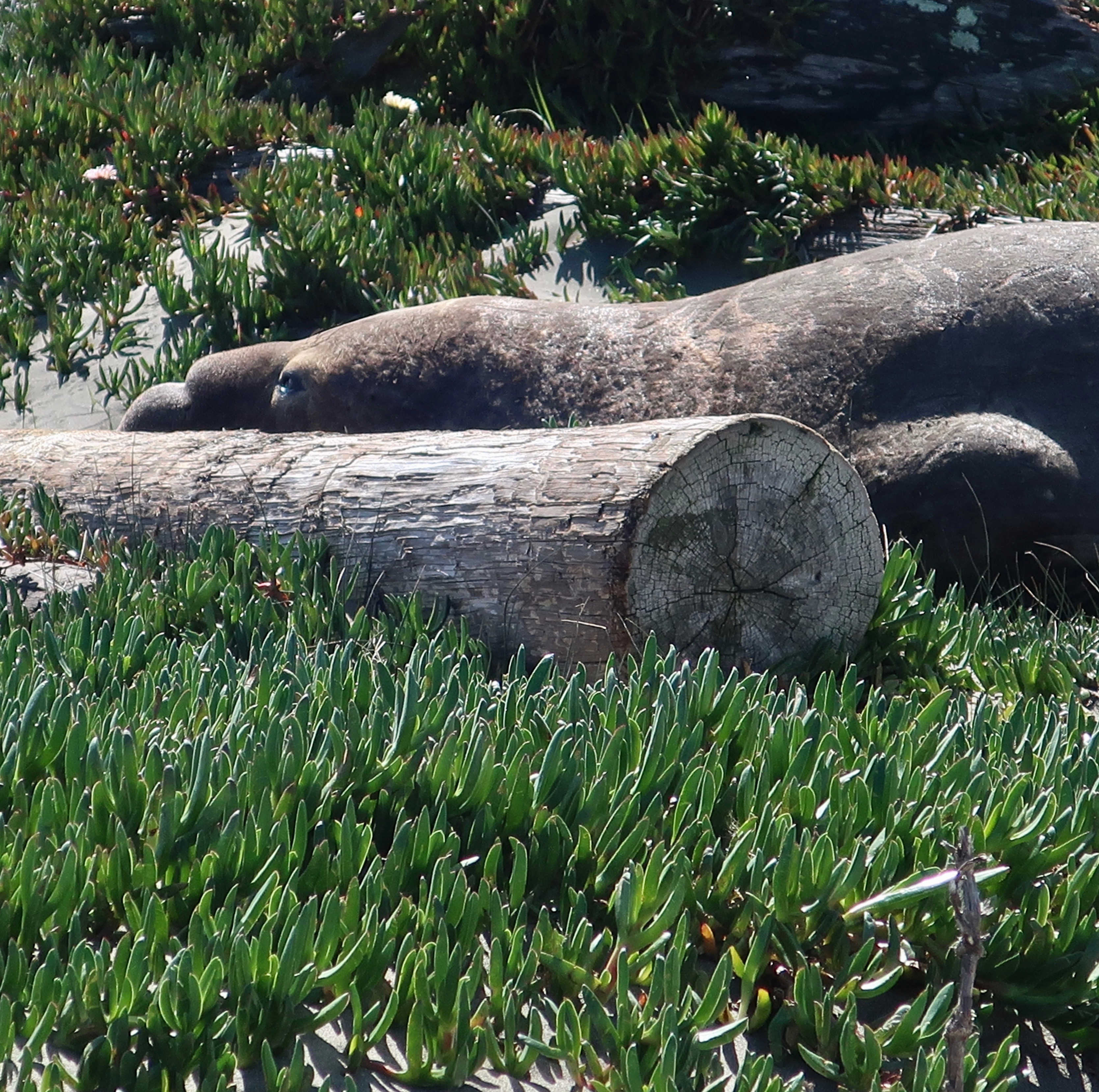
Peggy and I spent an hour watching these wonderful creations of nature who are so competent at sea and ungainly on land. They move like an inchworm, using their dorsal flippers to pull their front half forward and then using their rear flippers to push the rest of their body along like a rolling wave. Imagine moving several tons of fat. The ones we watched would make two or three of these moves and then collapse to rest.
Given their trunk-like noses and appealing eyes, Peggy and I were particularly attracted to the looks on their faces.
NEXT POSTS:
Monday’s Blog-a-Book… “It’s 4 AM and a Bear Is Standing on Top of Me”: I move outside in the summer to enjoy nature but hire the family’s dogs and cats to protect me from the ghosts.
Wednesday’s Blog-a-Book… “The Bush Devil Ate Sam”: Held at gunpoint, I consider the odds of running over the gunman versus getting shot.

A mural depicting how Bolinas would have looked in the 50s. Not much has changed. The artist added a touch of humor with the blue surfboard the man in the brown sports coat is carrying.
Marin County had a problem. Its highway department would put up a sign on Highway 1 pointing west toward the town of Bolinas and the residents of the small coastal community would tear it down. Again and again. Located 30 miles north of San Francisco and just south of Pt. Reyes National Seashore, the town didn’t want anyone to know where it was; the town was a recluse.
Finally, out of frustration, Marin County held a vote: Did or did not the townspeople want the signs? They voted no. Today, nothing points toward the community. But a map or GPS will get you there.
I first made my way to Bolinas in the early 70s. Surfers, hippies, commune members, artists, writers and other alternative types called it home. I was running an environmental center in Sacramento at the time. Being ex-Berkeley and ex-Peace Corps, I more or less fit in. “I could live here,” I thought to myself.
The town was also known for its nude beach. I won’t incriminate myself other than to note that there are some places on the body it’s best not to get sunburned.
Ken, Leslie, Peggy and I made our way to Bolinas after we left Pierce Ranch. Other than a new park in the middle of town, I was happy to find that the community had changed little. The park, I was proudly informed by a shop owner, had been donated by one of the town’s billionaires. Big money had found its way to this small community, which is pretty much the story of Marin County. Extreme wealth and a laid back lifestyle go hand in hand. In Bolinas, VW Vans and BMW’s seemed to happily co-exist.
We wandered through town poking our heads in various shops and looking for a bookstore. It’s become a tradition whenever we travel. We love books and we like to support local bookstores. We found one on the edge of town next to the post office. It was quite unique; the owner was elsewhere and shoppers were invited to price their own selections. Seven suggested categories ranged from “unbelievably really great” for $20 to “ordinary” for a buck. It was possible (though not likely) that Peggy’s really great might be my ordinary. A small, metal box with a slot on top was set up for payment. A statue of the Virgin Mary fronted the box. I wasn’t sure whether she was there to say thank you or to haunt our conscience if we paid five bucks for a book we believed was worth ten.

A sign with suggested prices for books in Bolinas, California that depended on your assessment of the book.

Ken deposits $5 for a “great book” in the Virgin Mary box while Peggy, reflected in a mirror, looks on.

I assume this was the missing owner’s office. I believe he painted the pictures.
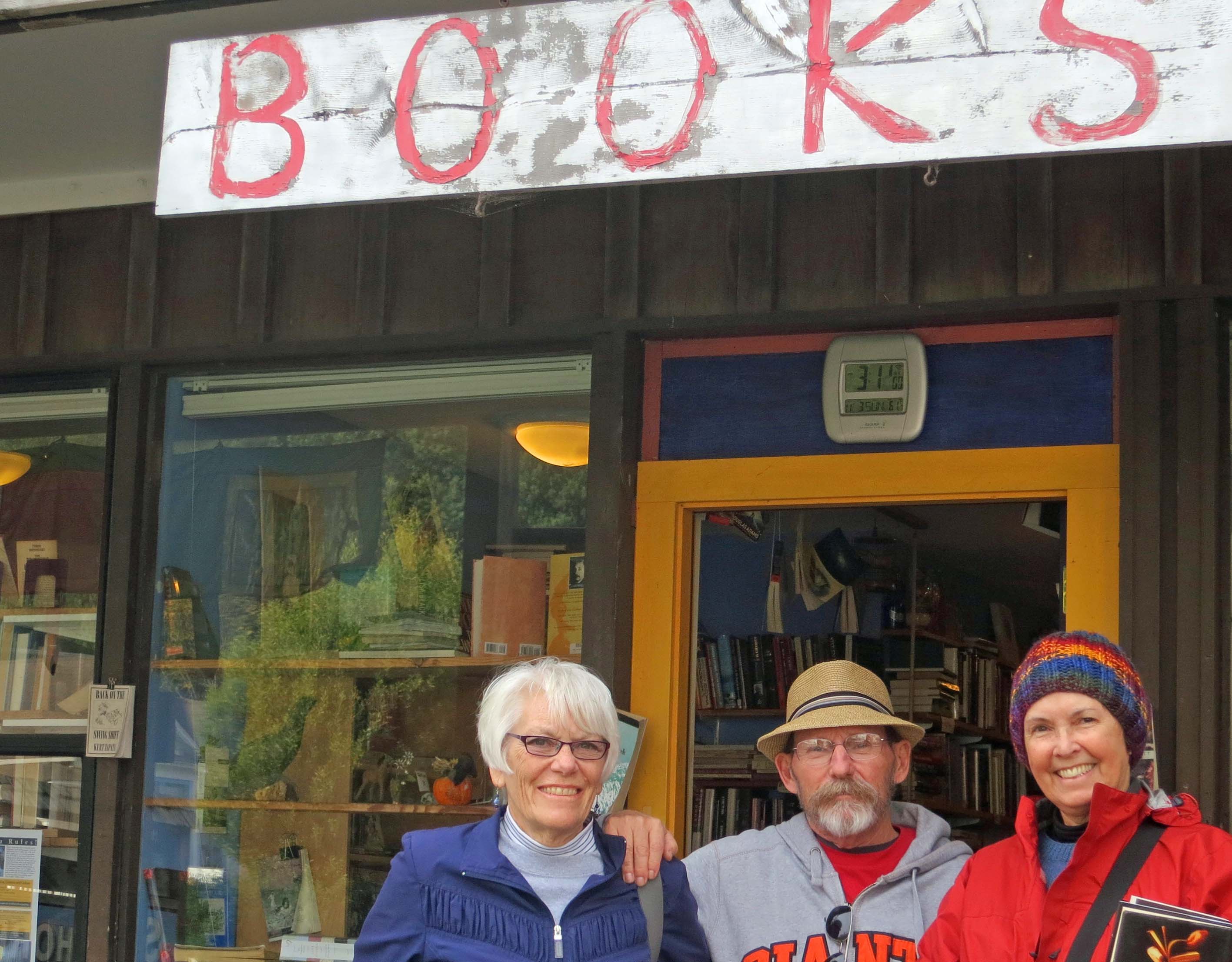
Leslie, Ken and Peggy stand in front of the Bolinas Bookstore named Books.
Our visit also included stopping off at a stuffed-to-the-ceiling antique store, admiring quaint houses that had been around since day one, taking photos of murals and visiting a small shop featuring incense, eastern music, and a Humpty-Dumpty Buddha.
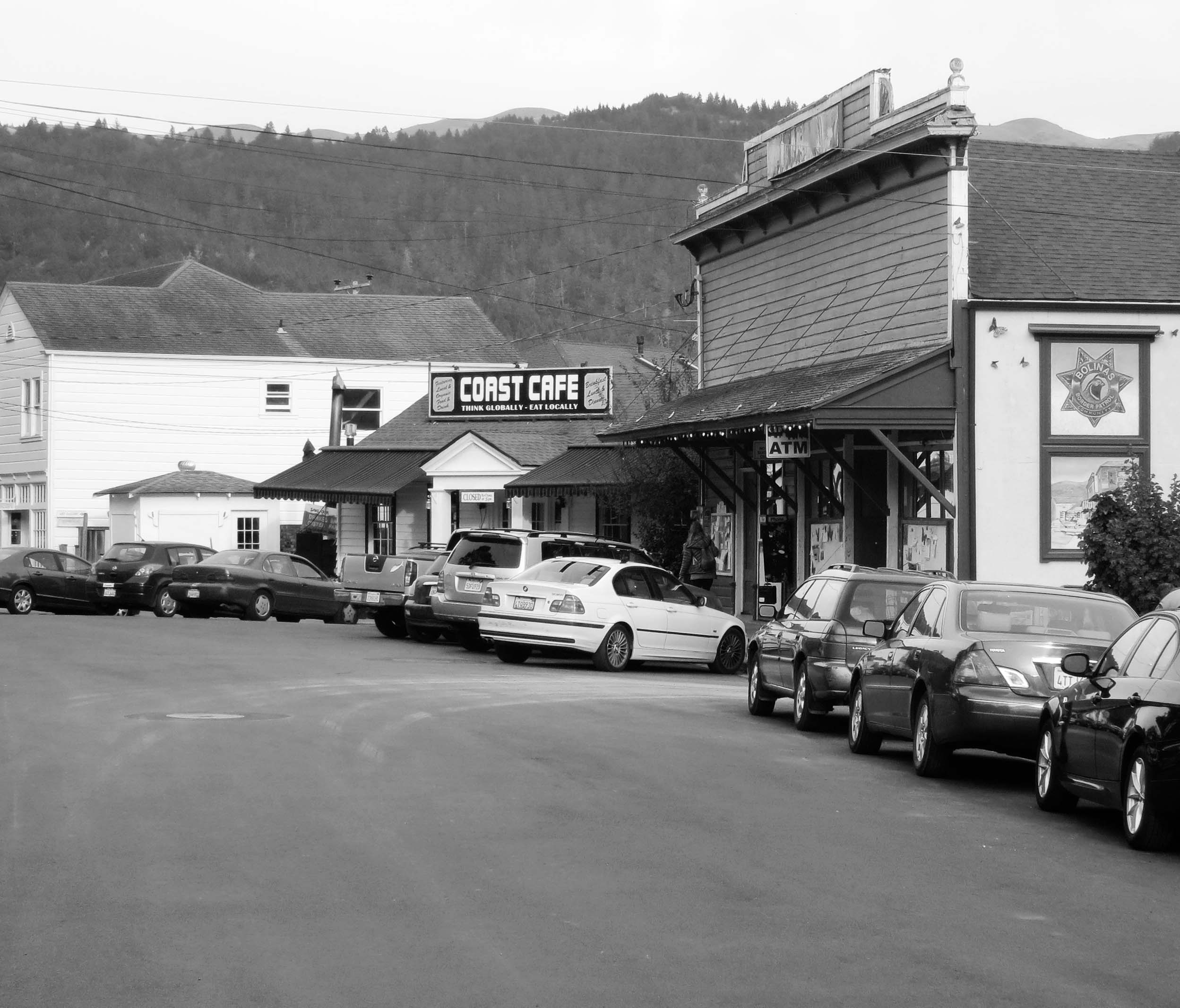
Bolinas today, which I did in black and white to give it a 70’s feeling. Take away the cars and the billboard building and you’ll find the Bolinas featured in the mural at the top of the post.
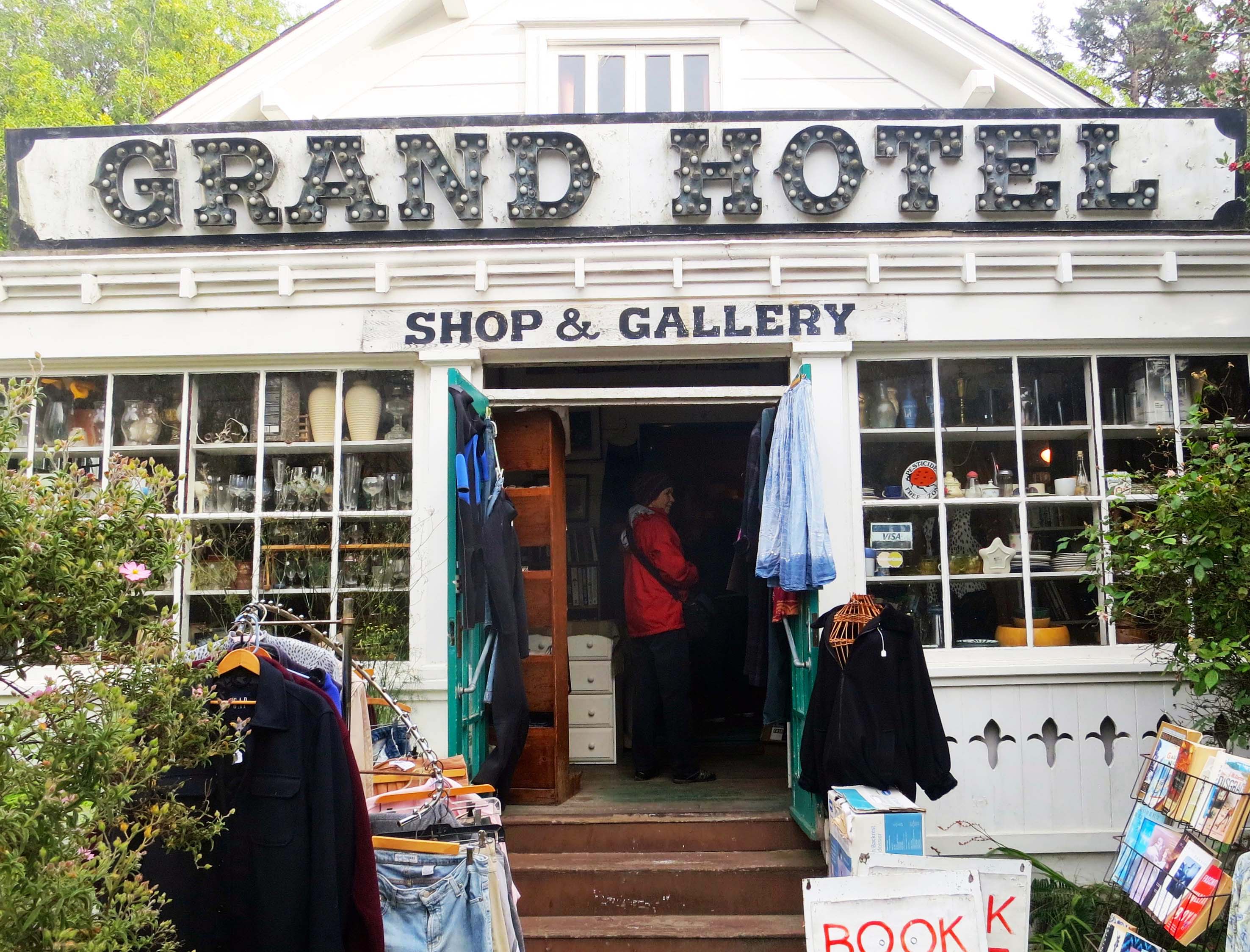
The Grand Hotel Shop and Gallery was stuffed top to bottom with antiques.
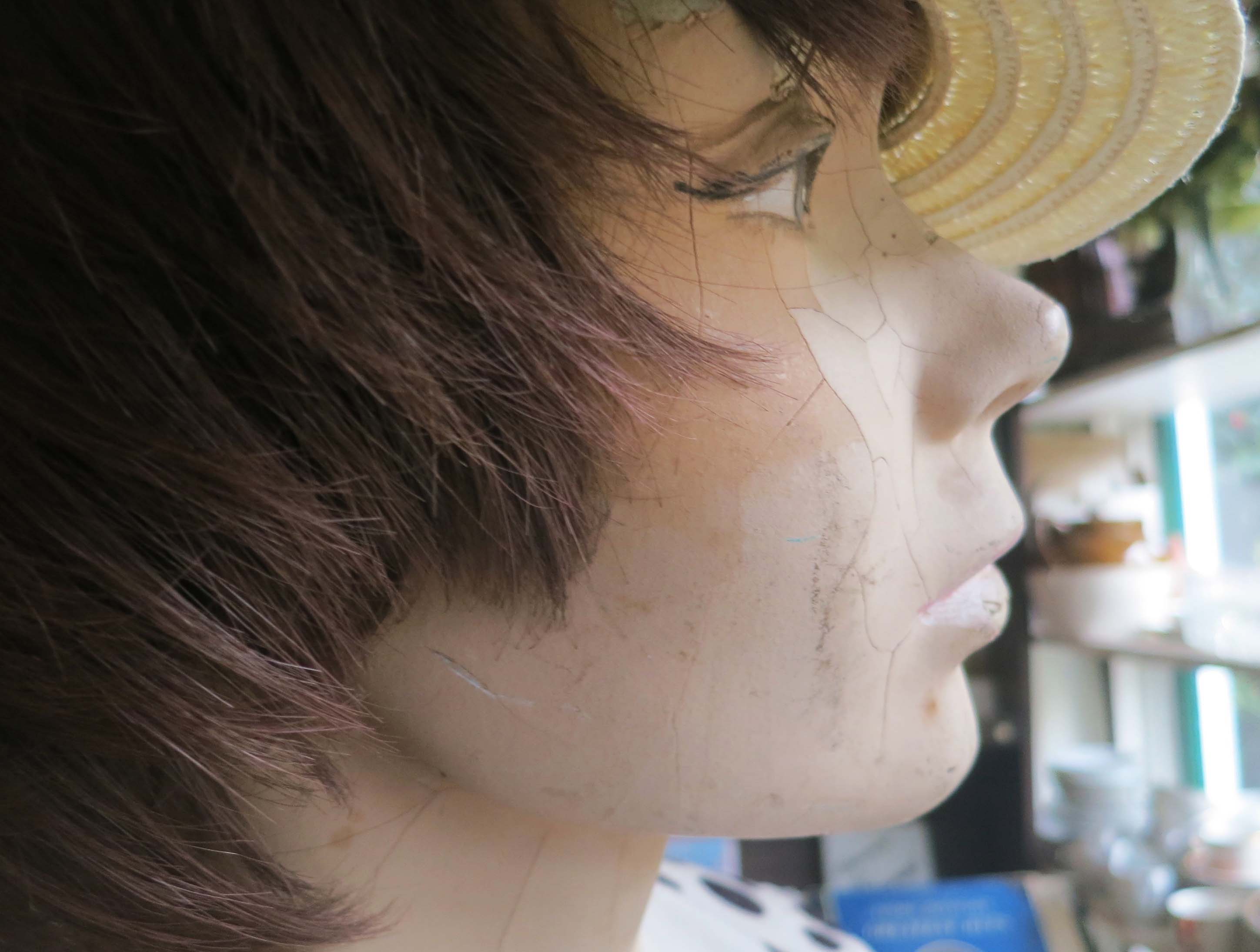
I was intrigued with this aging mannequin I found looking out the window of the shop.
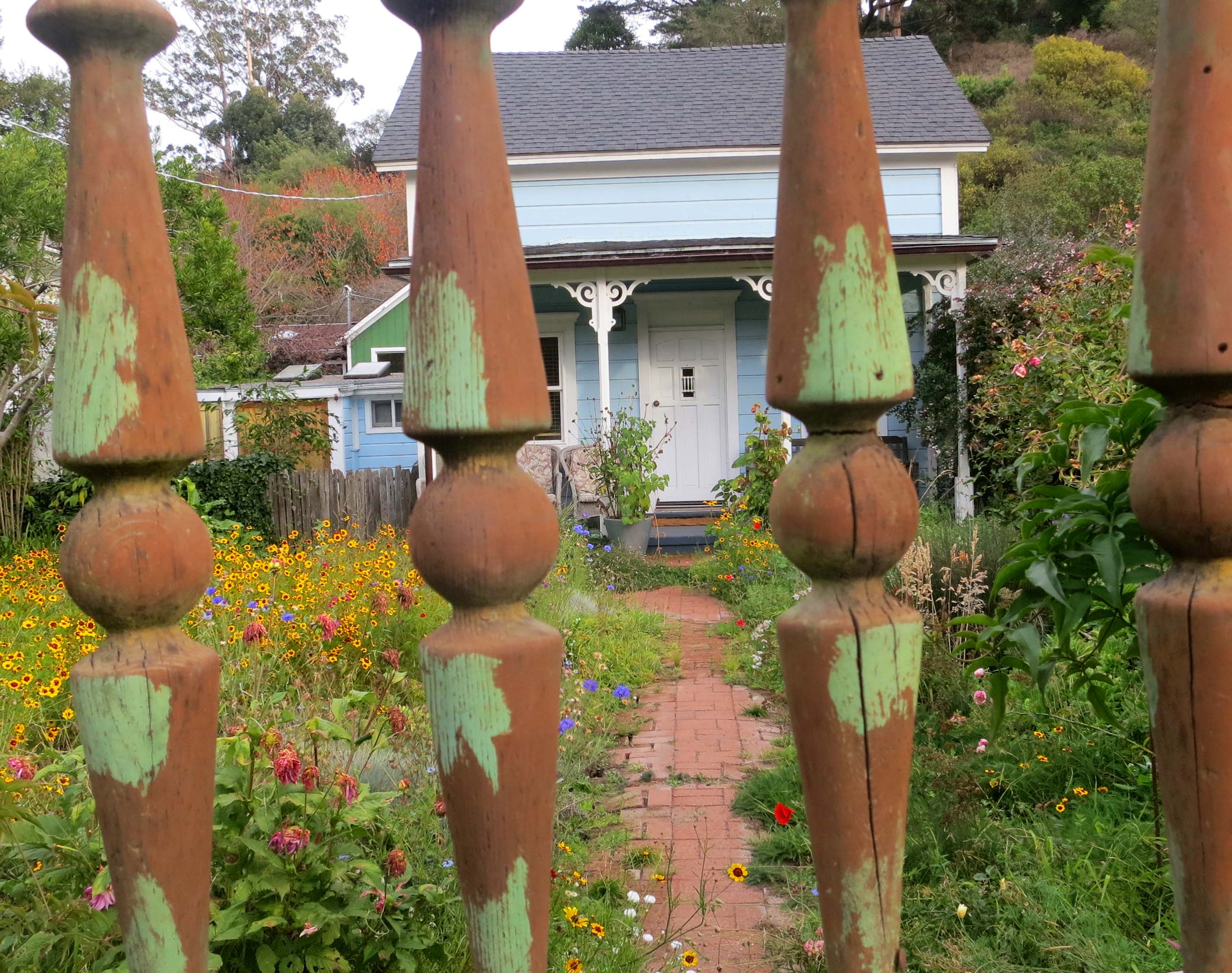
The old homes in town have aged well.

Incense, Eastern music, and this sign pulled us into a shop.

The laughing Buddha face on the upper left shelf made me think of Humpty Dumpty. The items in the shop were, um, eclectic…
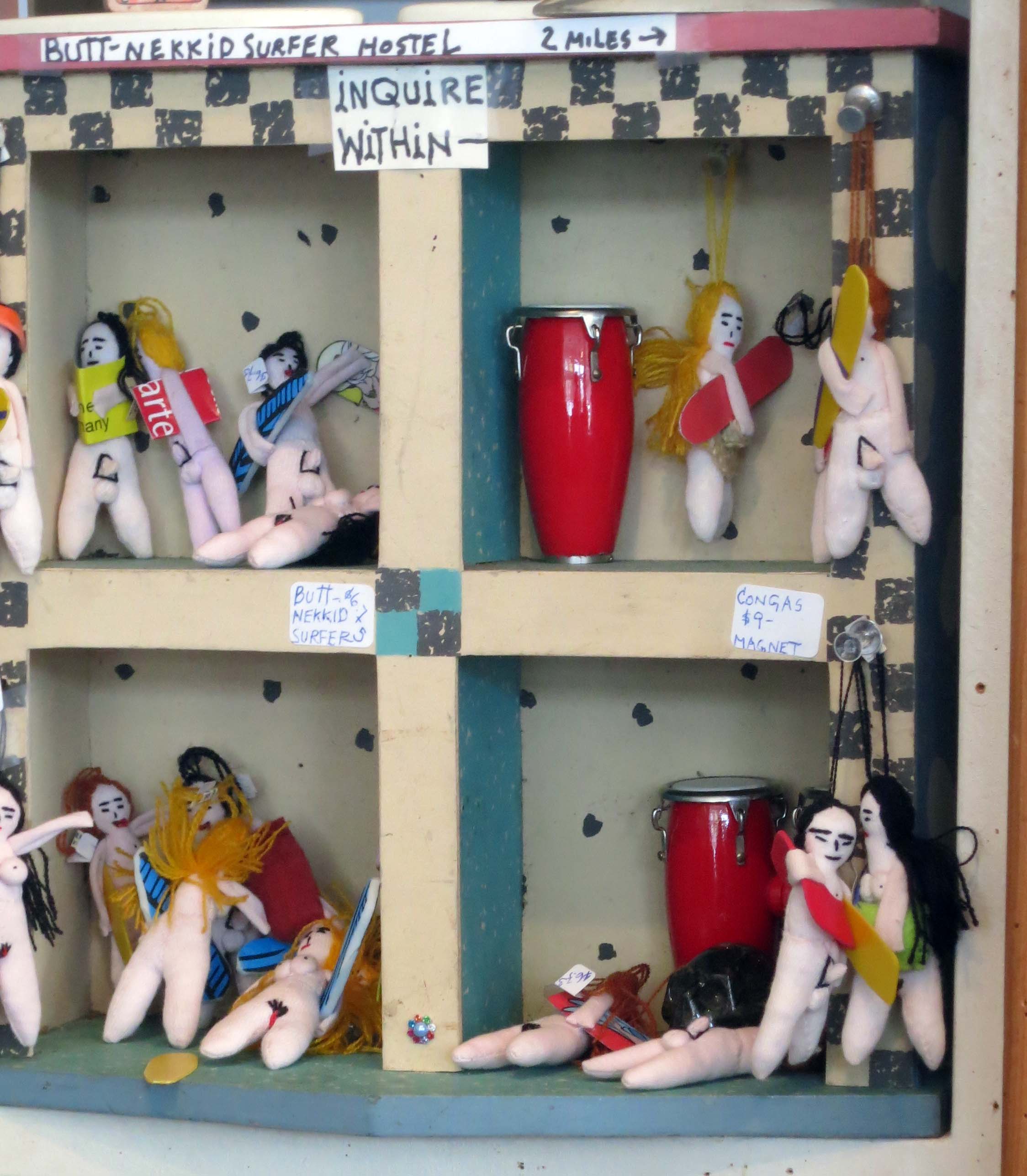
Very eclectic.

We found a shrine next door that the community had put up after 9/11.

A Bolinas surf shop advertised using broken surf boards featuring Native American/First Nation art.

This pumpkin reminded me that Halloween had just passed…

And this sign reminded me that we would be buying our gas elsewhere. This station matched what I was paying in the Yukon territory this summer.
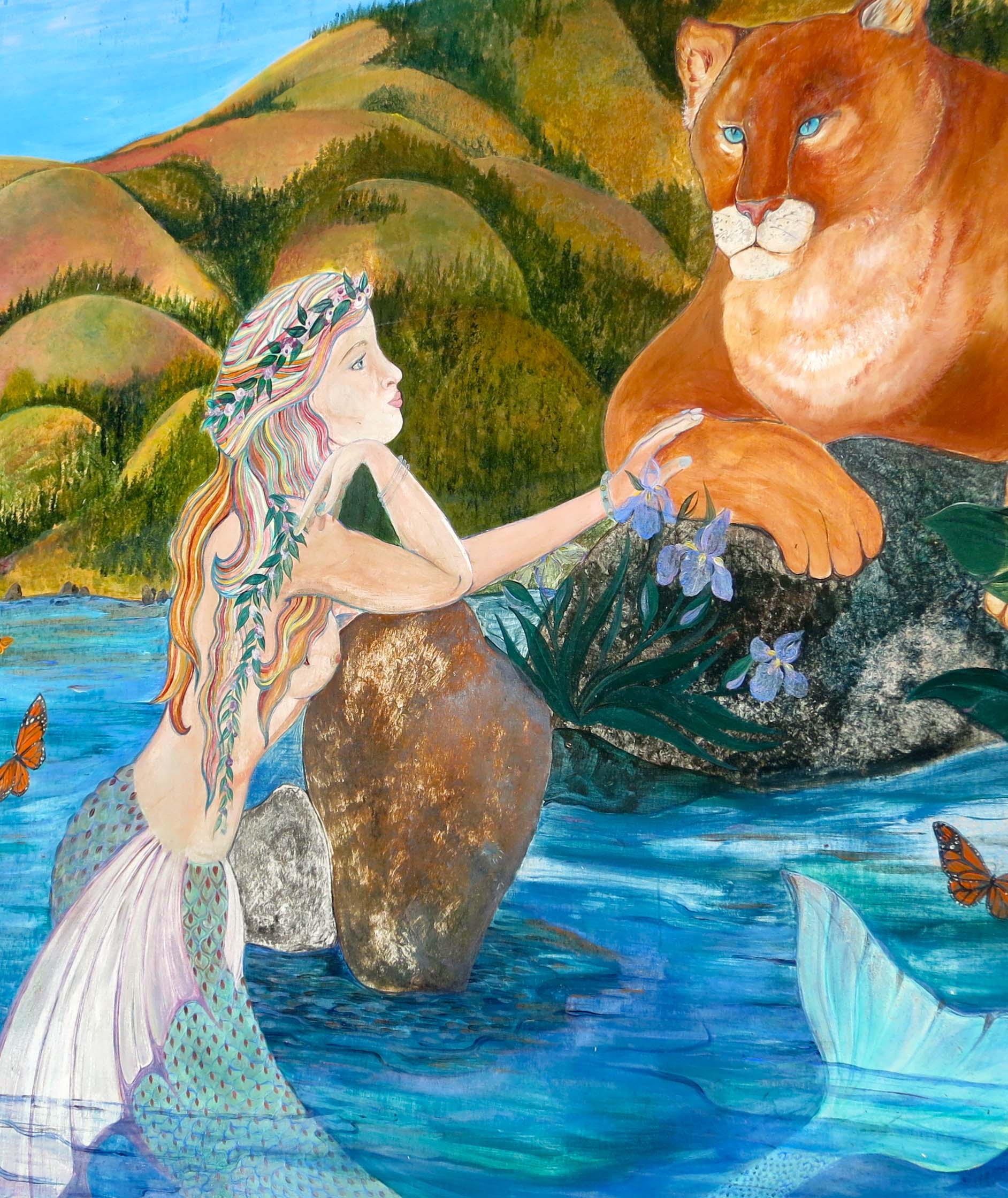
NEXT POST: Peggy and I heading off to Mexico for three weeks. To fill in, I’ve decided to put up photos that Peggy and I have taken in America’s National Parks. We’ve made a point of visiting close to all of them. I’ll close out my Pt. Reyes’ series with a Bolinas mural that I think reflects the area: ocean, wilderness, and a touch of magic.

Socrates the Basset Hound fell in love with digging opportunities at South Beach, Pt. Reyes National Seashore.
Peggy and I didn’t make it out to North and South Beach this time. Three days were not nearly enough to visit all of my favorite Pt. Reyes sites. I have a few photos from my pre-blogging days, however, so I decided to do a quick post.
These two beaches are actually one. If you enjoy crashing waves and long, lonely beach walks, this is the place to go. I still remember my first hike along the shoreline. My companion at the time was a long-eared, short-legged basset hound named Socrates. It was before leash laws were established so the dog ran free over the sand. Sort of– Basset hounds aren’t noted for their long, graceful gaits.
For example, Soc loved to chase jackrabbits. The only time I ever saw him catch one was when the rabbit was rolling on the ground and laughing so hard he couldn’t escape. (Kidding.)
But there was another reason for our slow progress down the beach. Soc had a passion for digging. He could move more dirt in an hour than a bulldozer could in a day. (Slight exaggeration.) Given what he could do with dirt, you can imagine what he did with the sand. I was hoping for a high tide to hide his destruction.
When I urged the Soc to stop hassling whatever poor creature he was after, he whined and start digging harder. I was in danger of being buried under an avalanche of sand. The dog had Zen-like focus; it didn’t matter that he never caught anything. I’d get him away from one hole and he would start another 50 feet down the beach. Our slow progress made for a long walk but it was totally worth it for the joy the dog found in digging holes and the pleasure I took in watching him and, of course, the beautiful Pacific Ocean.

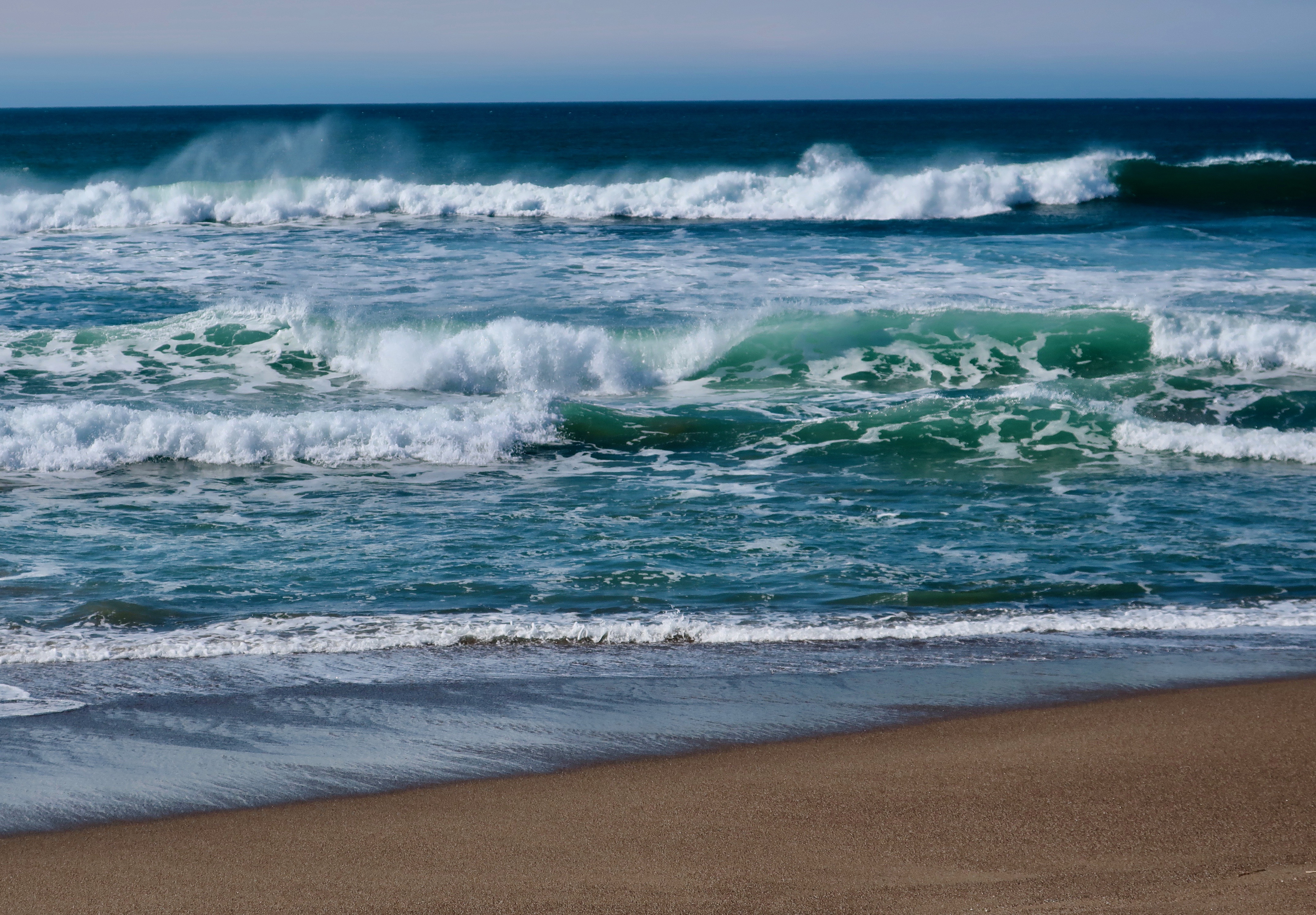
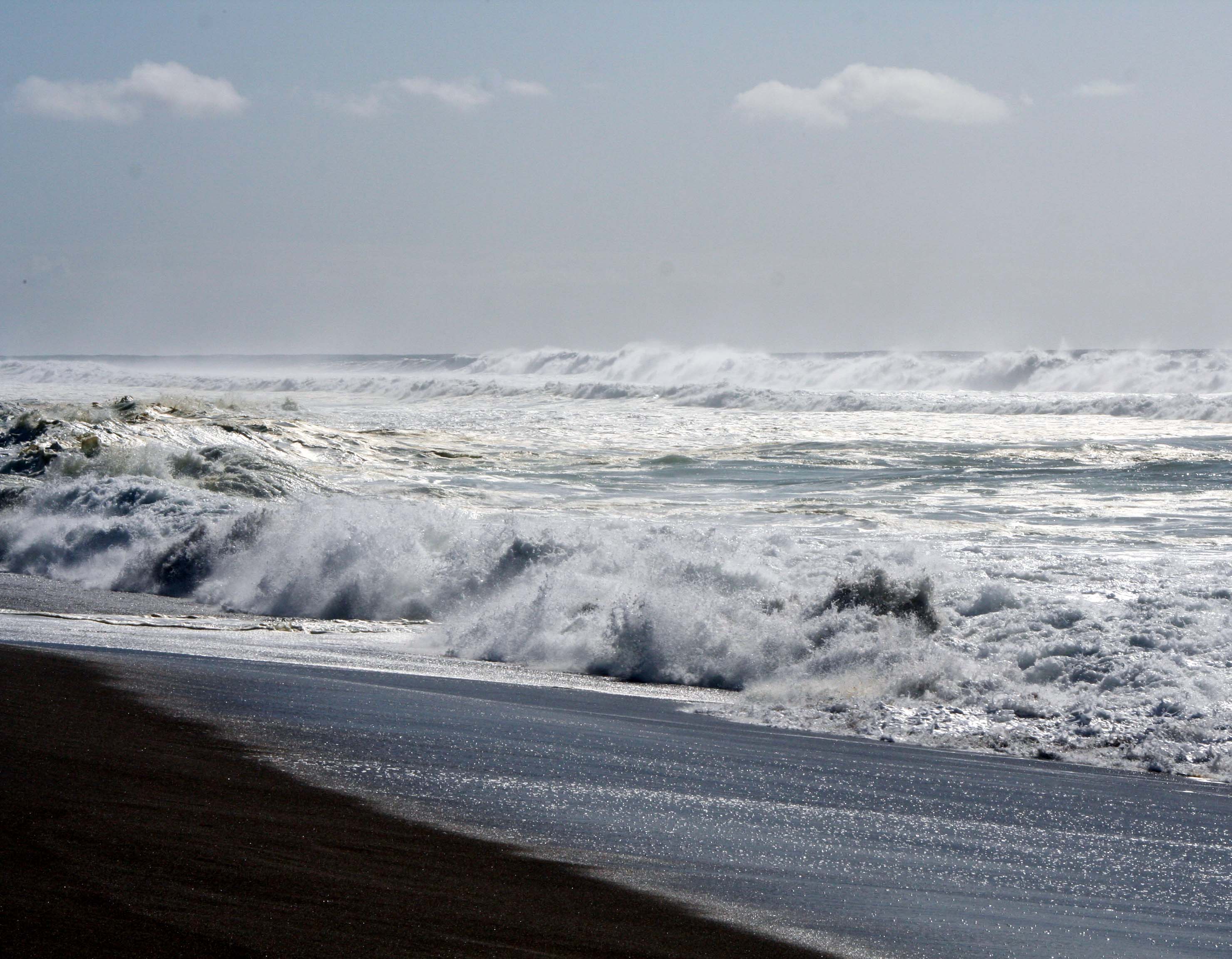
Waves come crashing in at South Beach.
Years later I discovered that North Beach was a great place for writing. I would park facing the ocean, get out my laptop, and start typing. The rolling ocean, an occasional whale, diving pelicans and raucous gulls served as my muses.

Another thunderous wave.
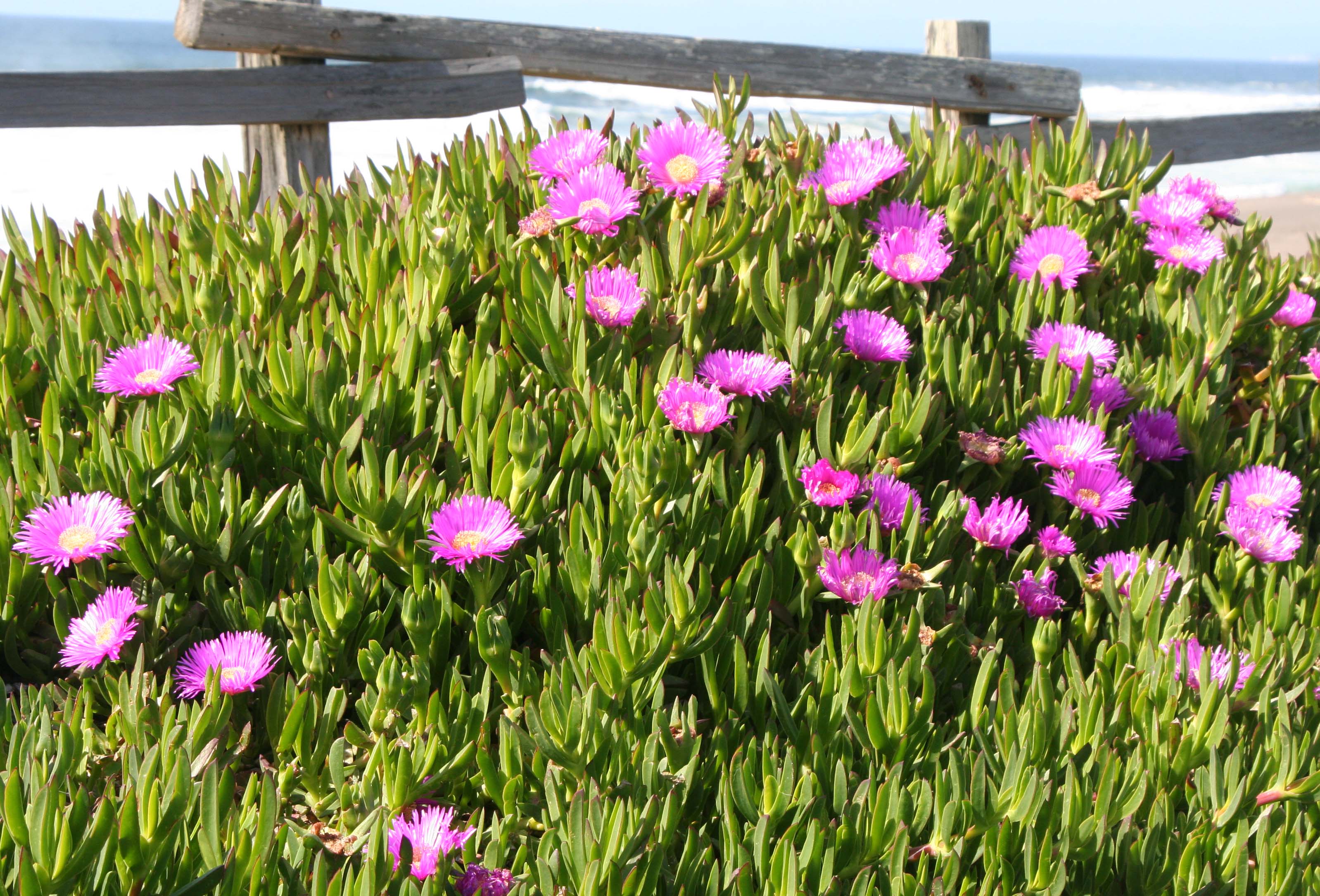
This ice plant formed the border between the parking lot and the beach.
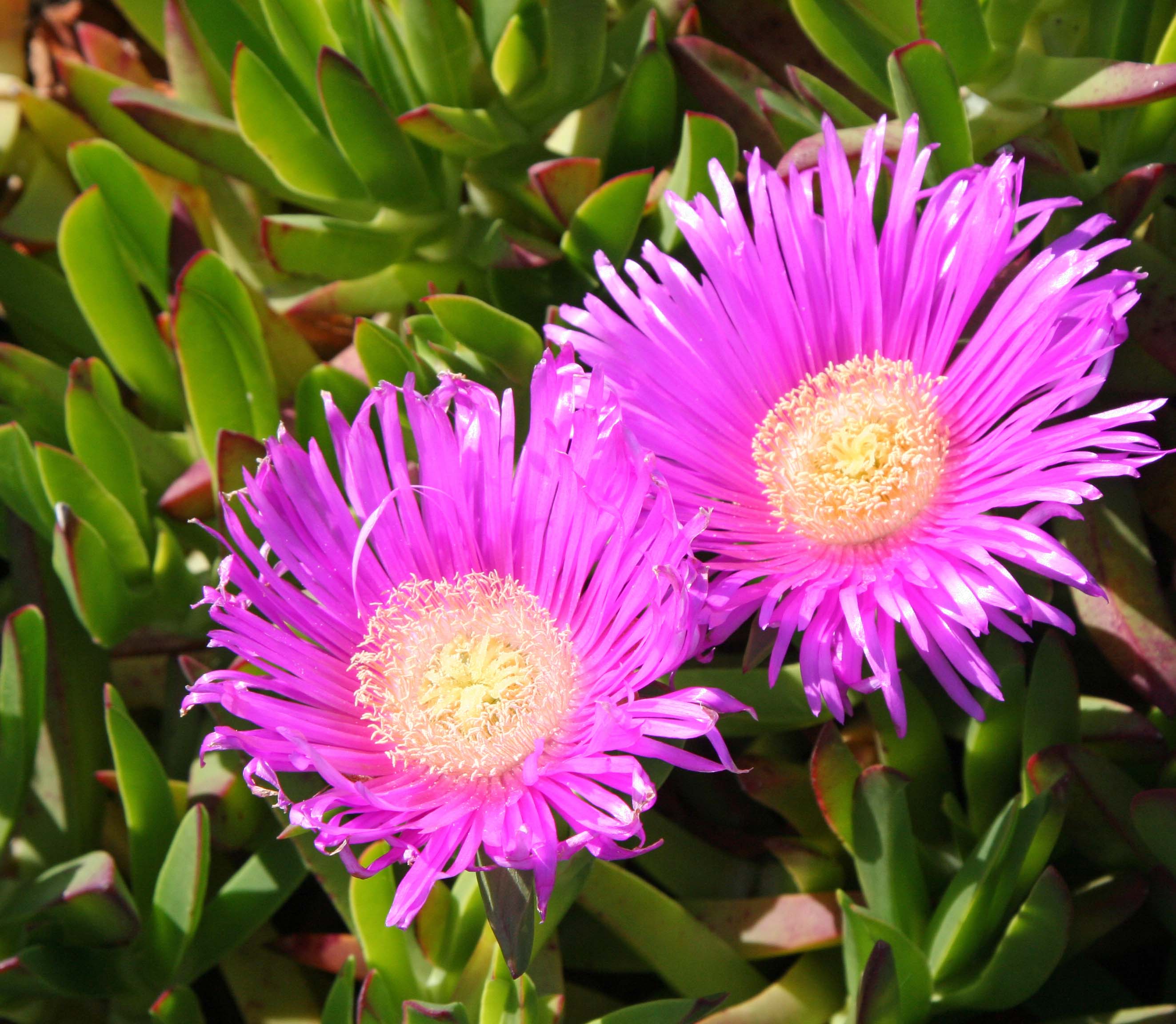
It demanded I take a close up.
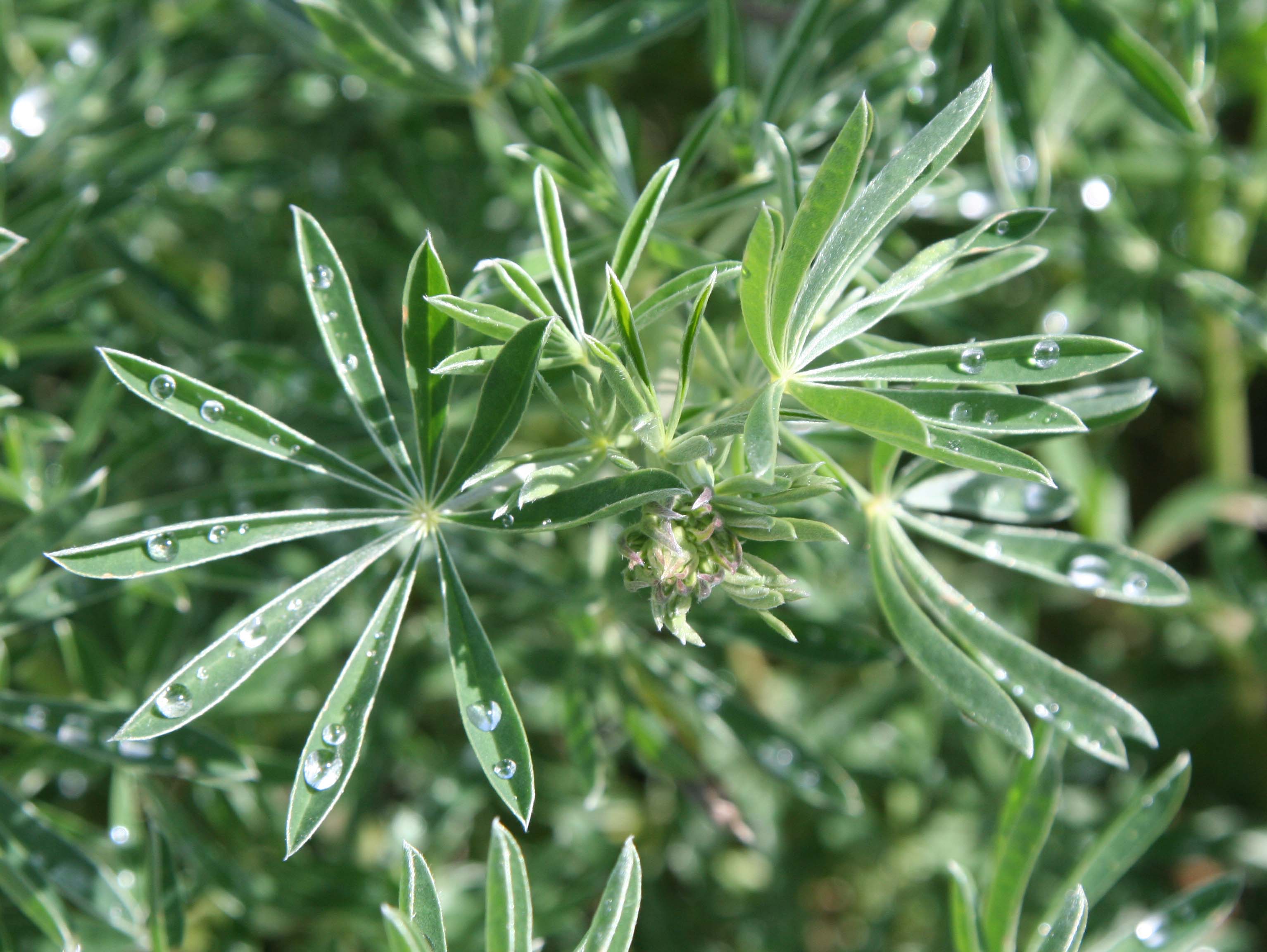
These lupine leaves displayed captured rain drops.

I also found this iris quite attractive.

The winds at North and South beach provide excellent wind for kite flying. I enjoyed this dragon but it distracted me from my writing. I wonder what the gulls thought about it?
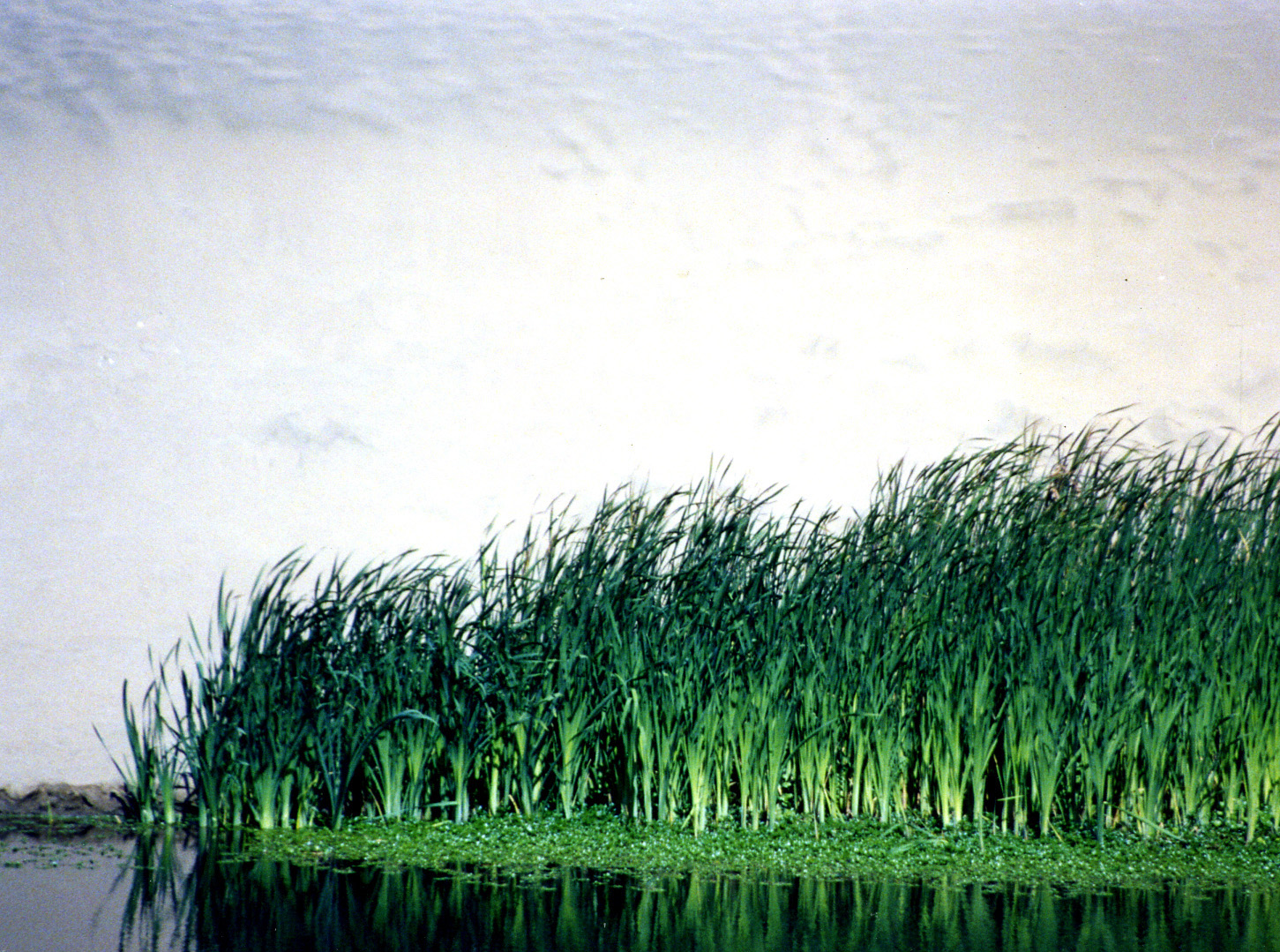
I discovered these tules on Bull Point trail near North Beach. Miwok Indians used these plants in making baskets.
NEXT BLOG: The hippie town that tries to hide: Bolinas. Here’s a final photo of South Beach.
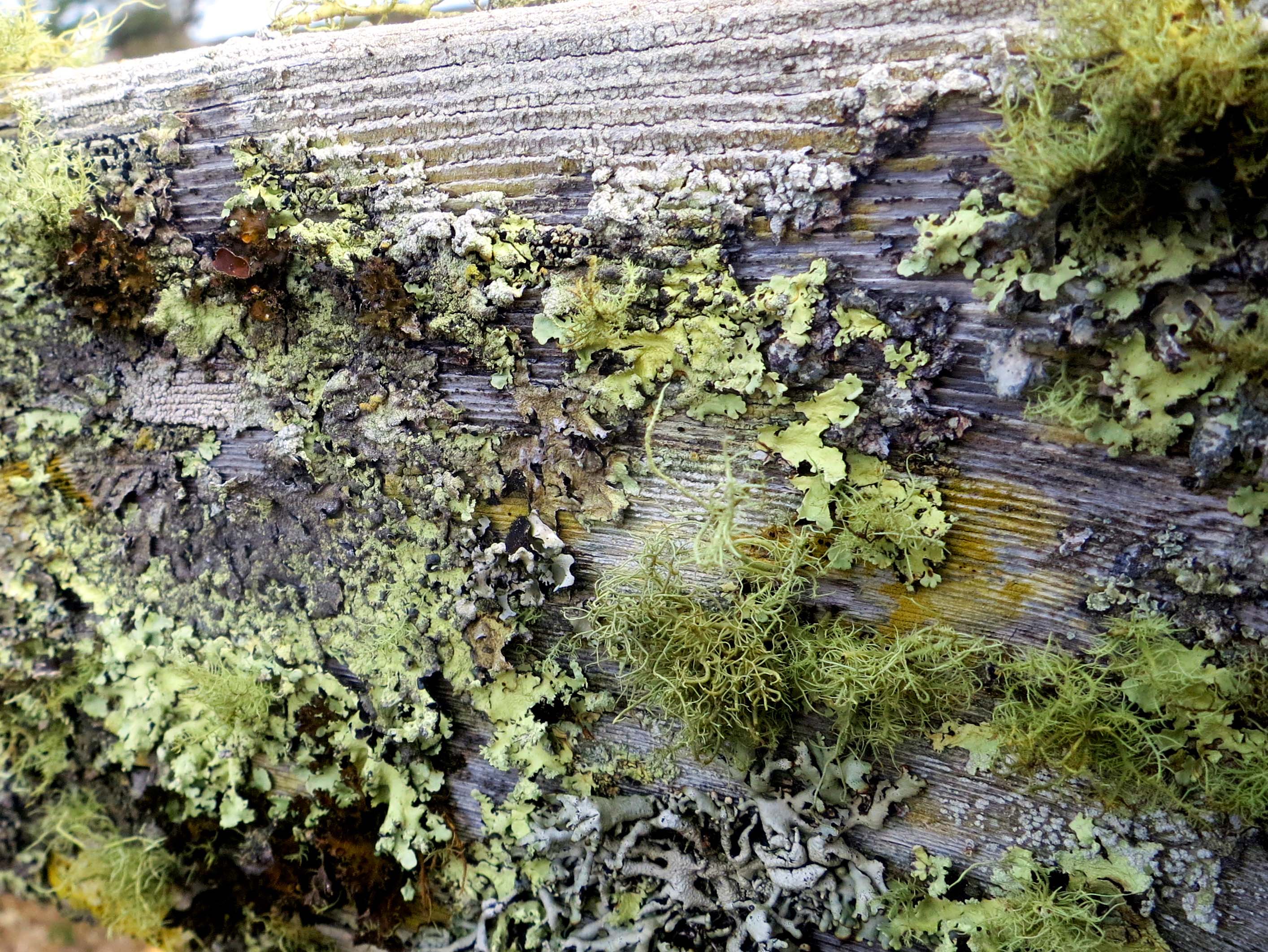
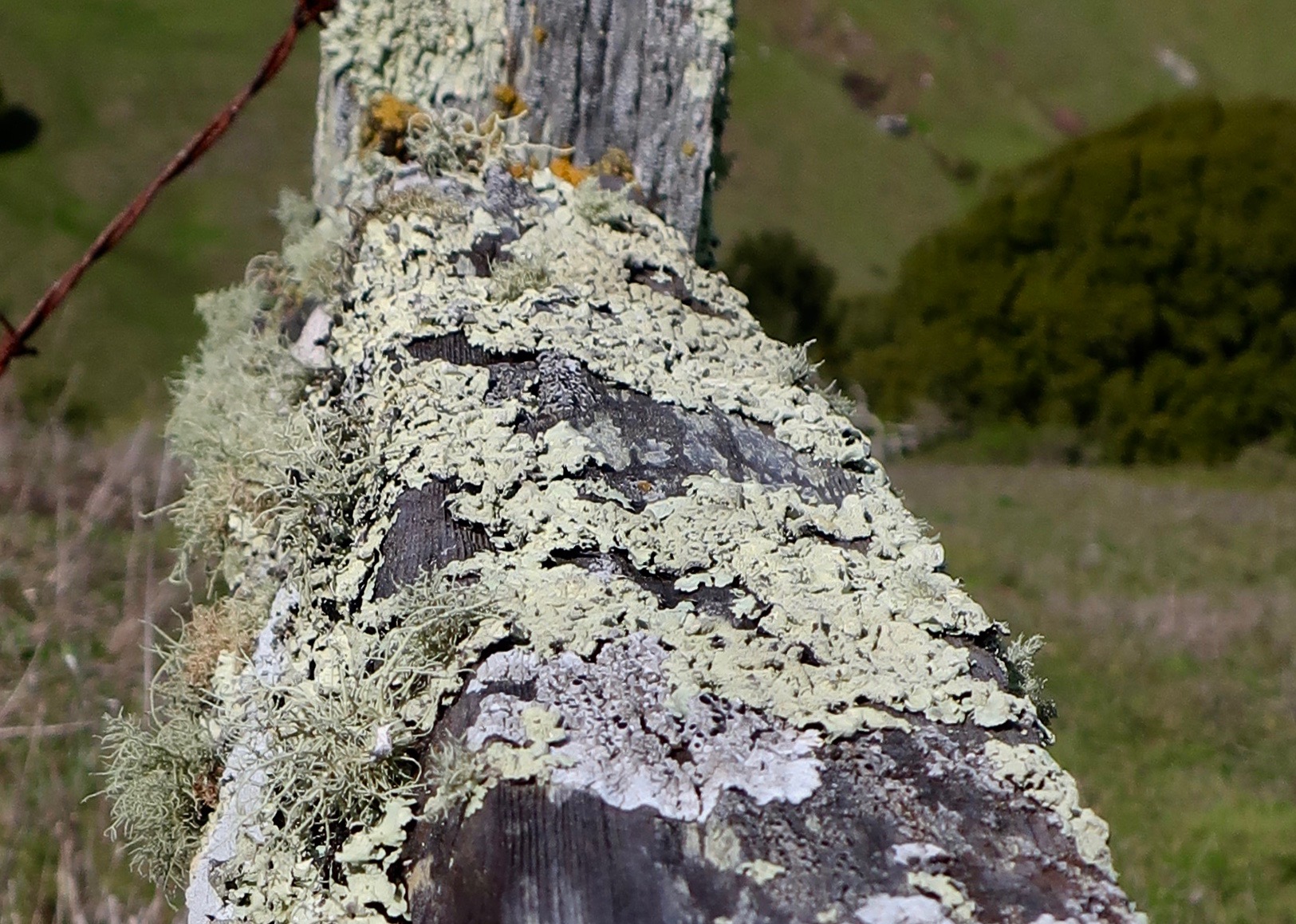
Lichens, adorning a fence on the historic Pierce Ranch at Pt. Reyes National Seashore, remind visitors that it has been 46 years since the last cow mooed.
Marin County land speculators, real estate firms, and local governments had a dream in the 1950’s. They were going to turn Pt. Reyes into one vast housing tract. Mouth-watering profits were to be made. Local tax dollars would increase proportionately. Everyone would gain.
Well, not quite.
Local ranchers saw a life style they had loved for over a century disappearing. The Sierra Club saw one of the world’s richest natural environments falling under the blades of bulldozers. The National Park Service saw it’s dream of opening the beautiful coast and forests of the area to the public being replaced by a forest of no trespassing signs.
An alliance was formed. Environmentalists and ranchers joined together with visionary local and national leaders to devise a plan that would protect the environment, allow ranchers to continue ranching, and give the National Park Service the opportunity to create one of America’s premier parks, a gift to America and the world that would last for generations. In 1962, John Kennedy signed the legislation that would create the Pt. Reyes National Seashore.
The Pierce Ranch, located out on Tomales Point, ceased operation in 1973. Three years later it became part of the park as a historic representative of the dairy ranches at Pt. Reyes that had been milking cows and shipping butter to the Bay Area since 1866.
In 1978 a herd of Tule Elk was reintroduced to the area as part of the Tomales Point Tule Elk Reserve. Native to California, Tule Elk had once roamed throughout the state in substantial numbers. By 1900 they were close to extinction. Saved by a Bakersfield rancher, over 20 protected herds are now located in California.

Another photo of the lichen covered fence. It’s like a strange forest.

Possibly the mother of all cypress tree windbreaks stands above Pierce Ranch.
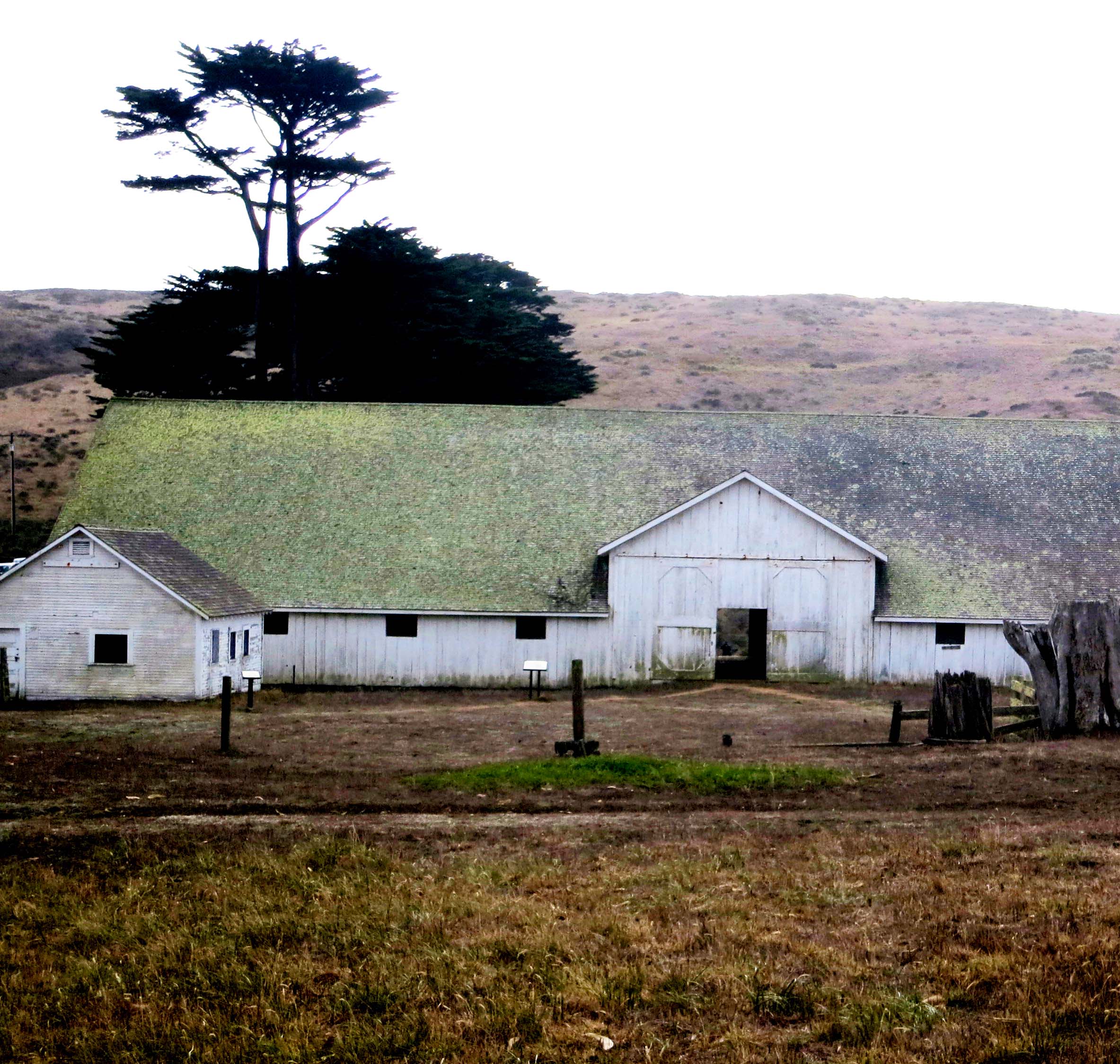
A number of buildings make up the ranch, including this old barn.
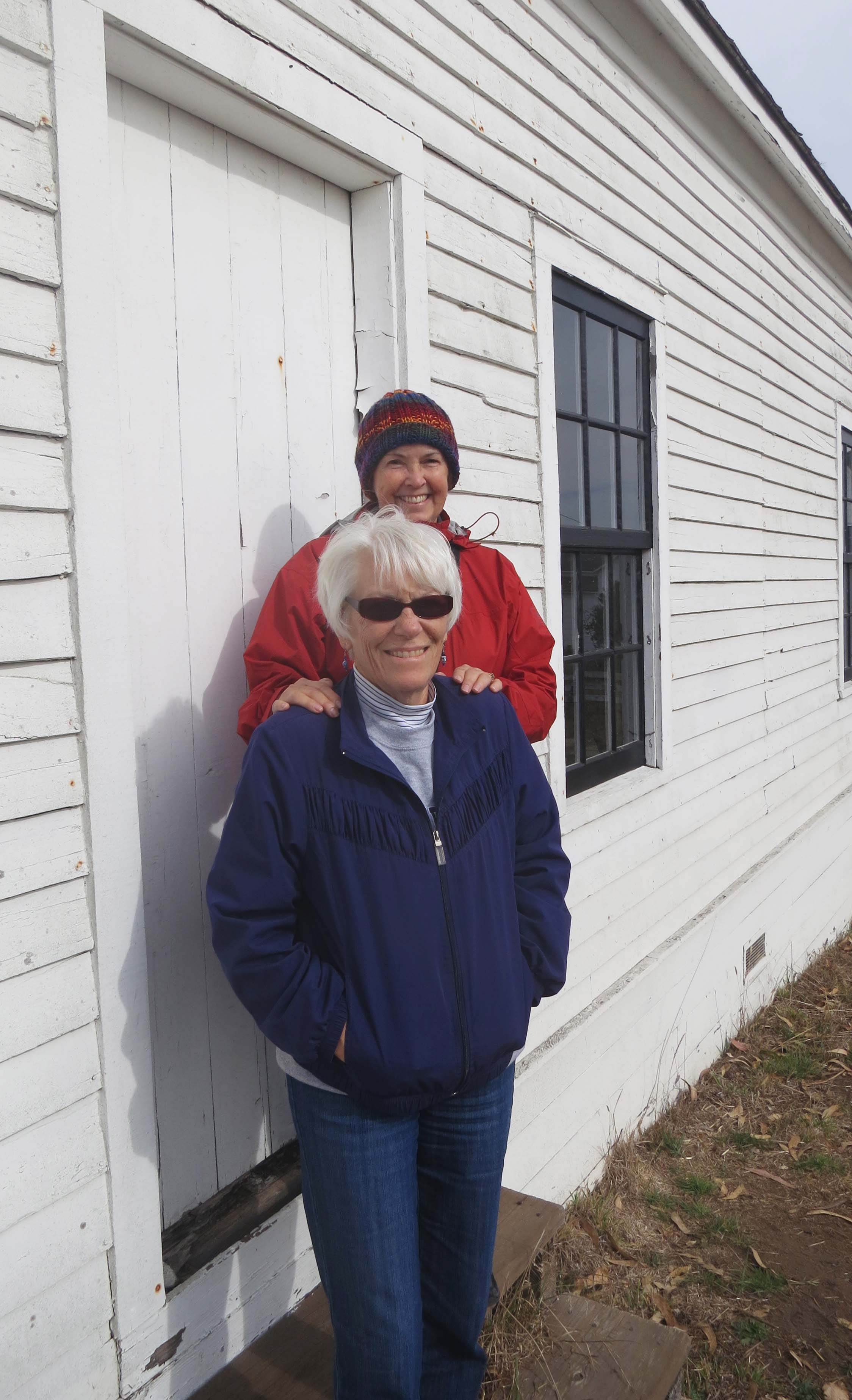
Isolated out on Tomales Point, Pierce Ranch formed a small community that included a store and this school-house. Since our friend Leslie Lake spent many years as a third grade teacher and Peggy worked as an elementary school principal, I’ve included them in the photo.

Once filled with laughing children learning their abc’s, the school is now vacant and the windows are covered with cobwebs– ghostly reminders of the past.
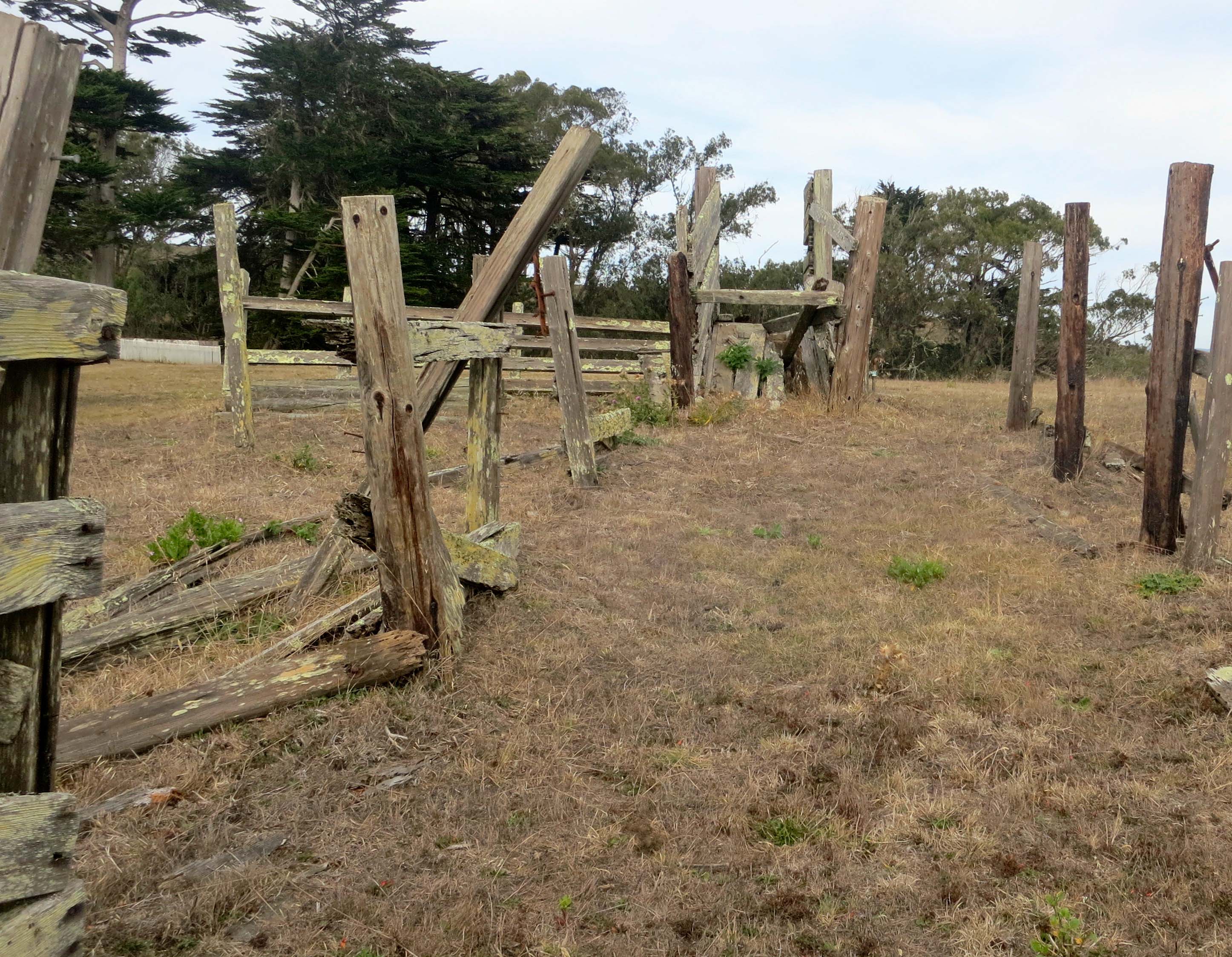
Once upon a time cattle would have been penned up within these fences, ready to be loaded on to trucks using the blocked ramp at the top of the photo.

A close up of the fence.
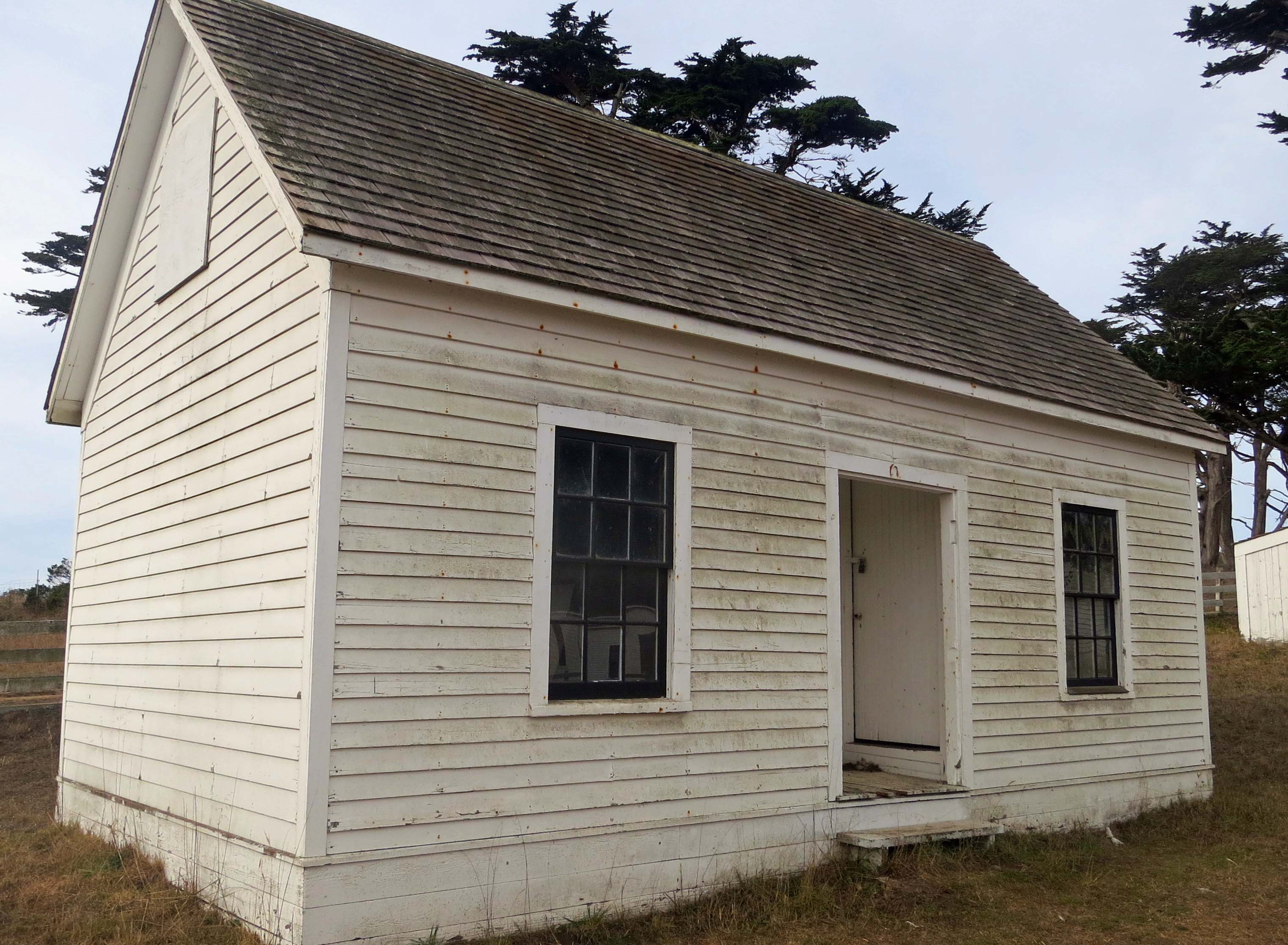
This small bunk house would have accommodated ranch hands. Up to 20 were employed at the height of milking season.
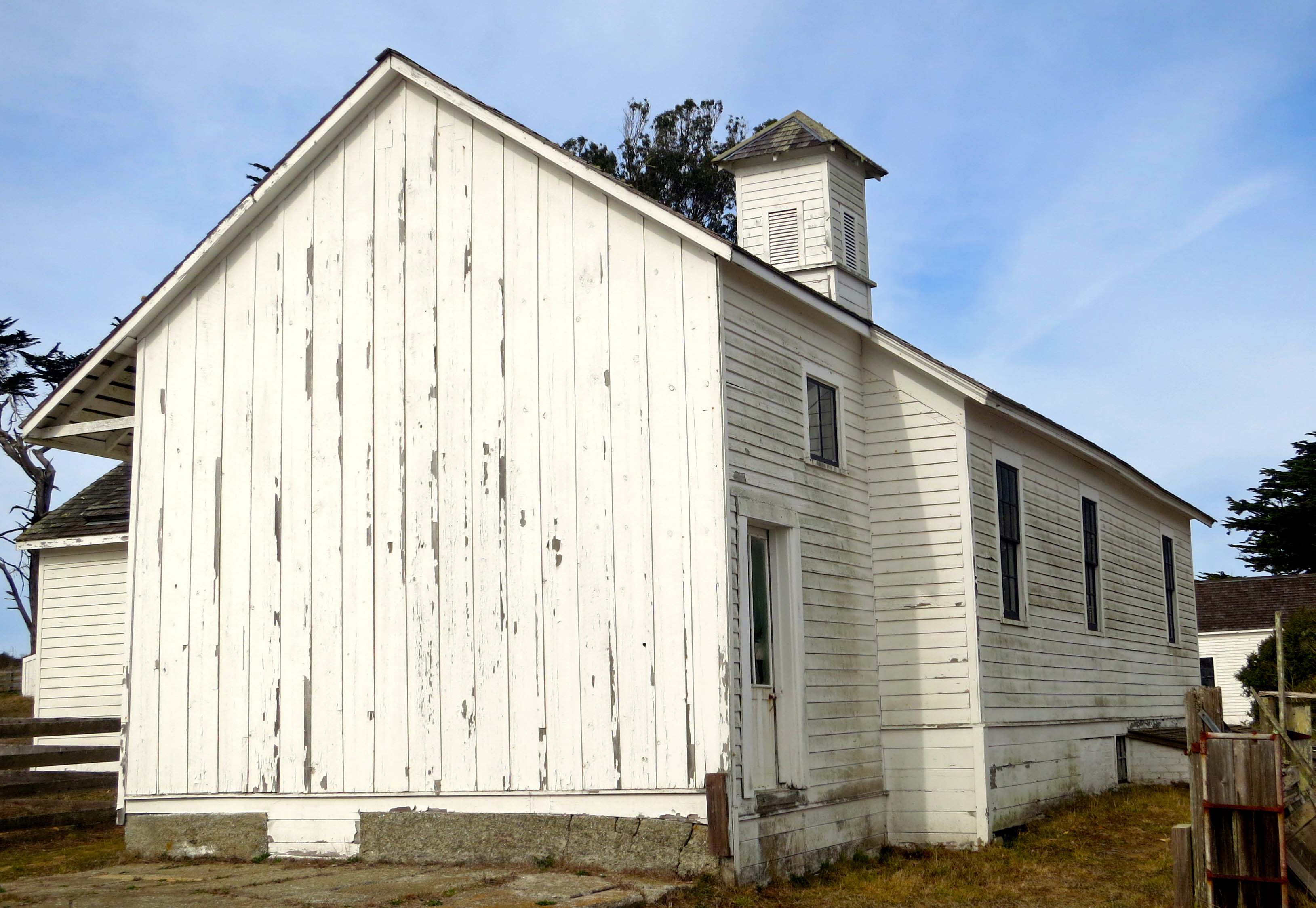
This dairy house was where butter was prepared to be shipped off to San Francisco in large kegs. Butter from Pt. Reyes was considered to be very high quality and was sold in gourmet shops and used in the best restaurants.

What’s a farm without equipment? This piece had morphed into a planter.
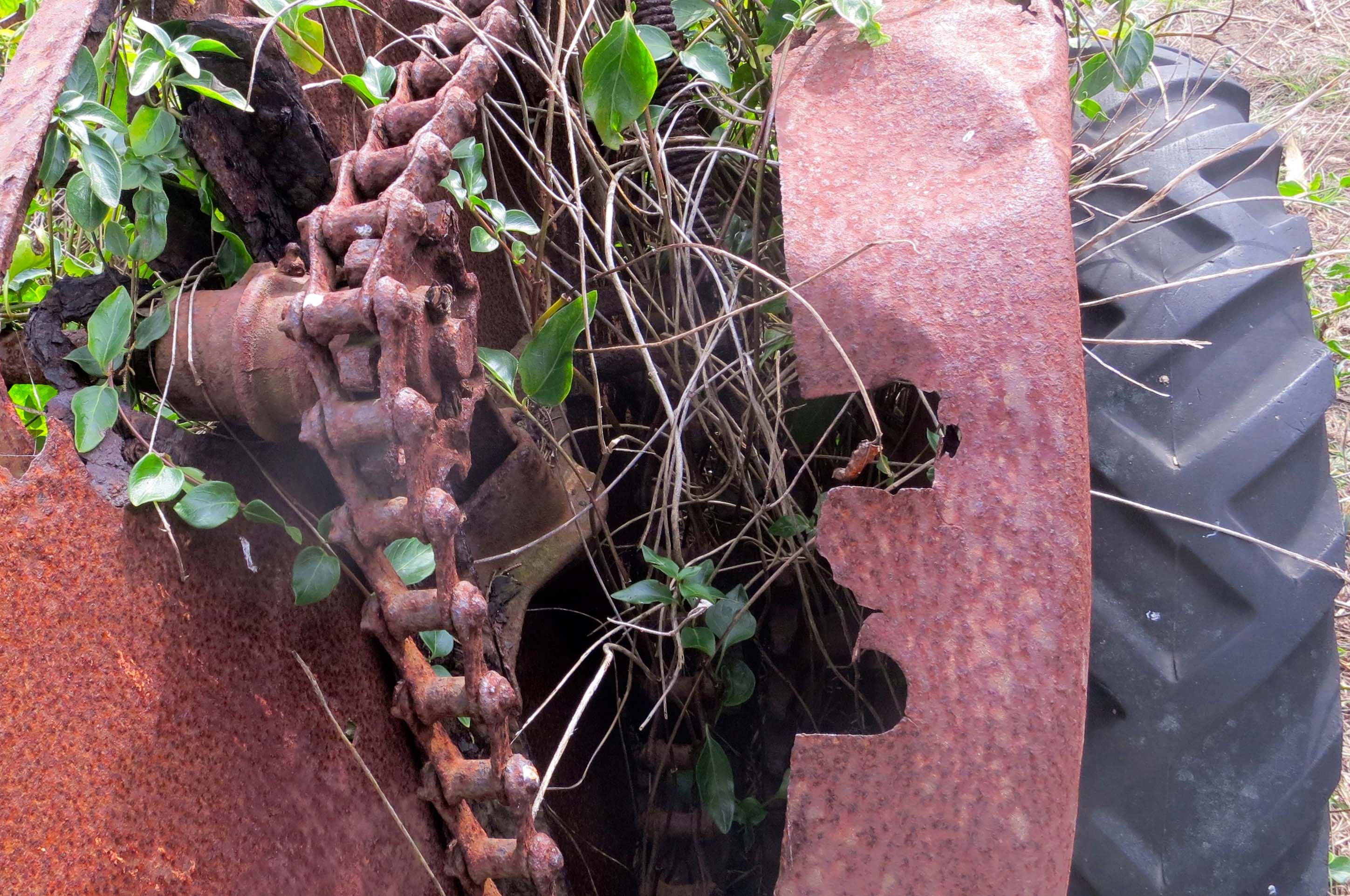
A close up.

This tiller also caught my attention.

Rusted gear teeth and chain on tiller.

Having toured Pierce Ranch we climbed the hill next to the ranch in search of Tule Elk. We found them a long ways off. (Photo by Peggy Mekemson.)
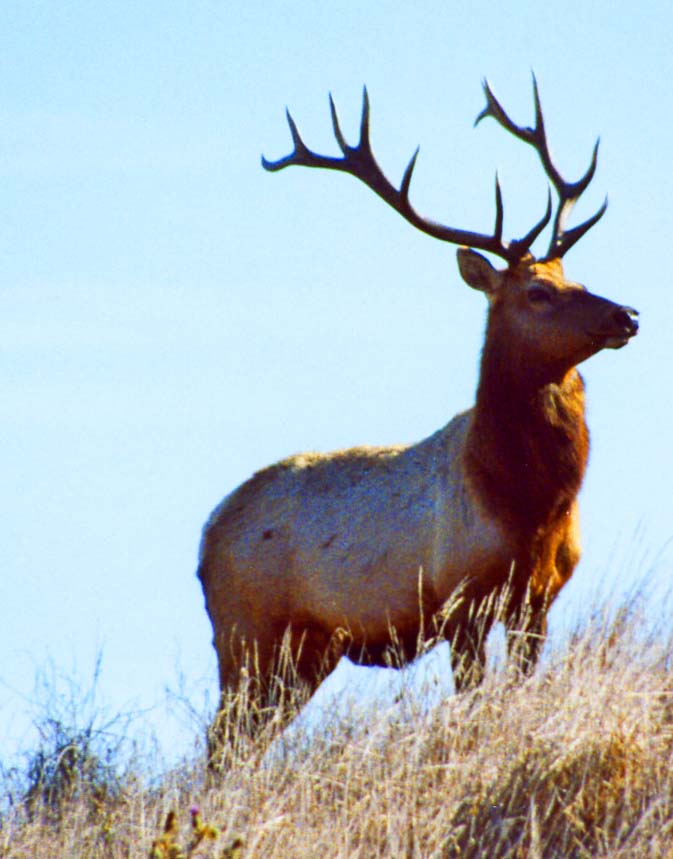
Here’s how one looked a little closer.
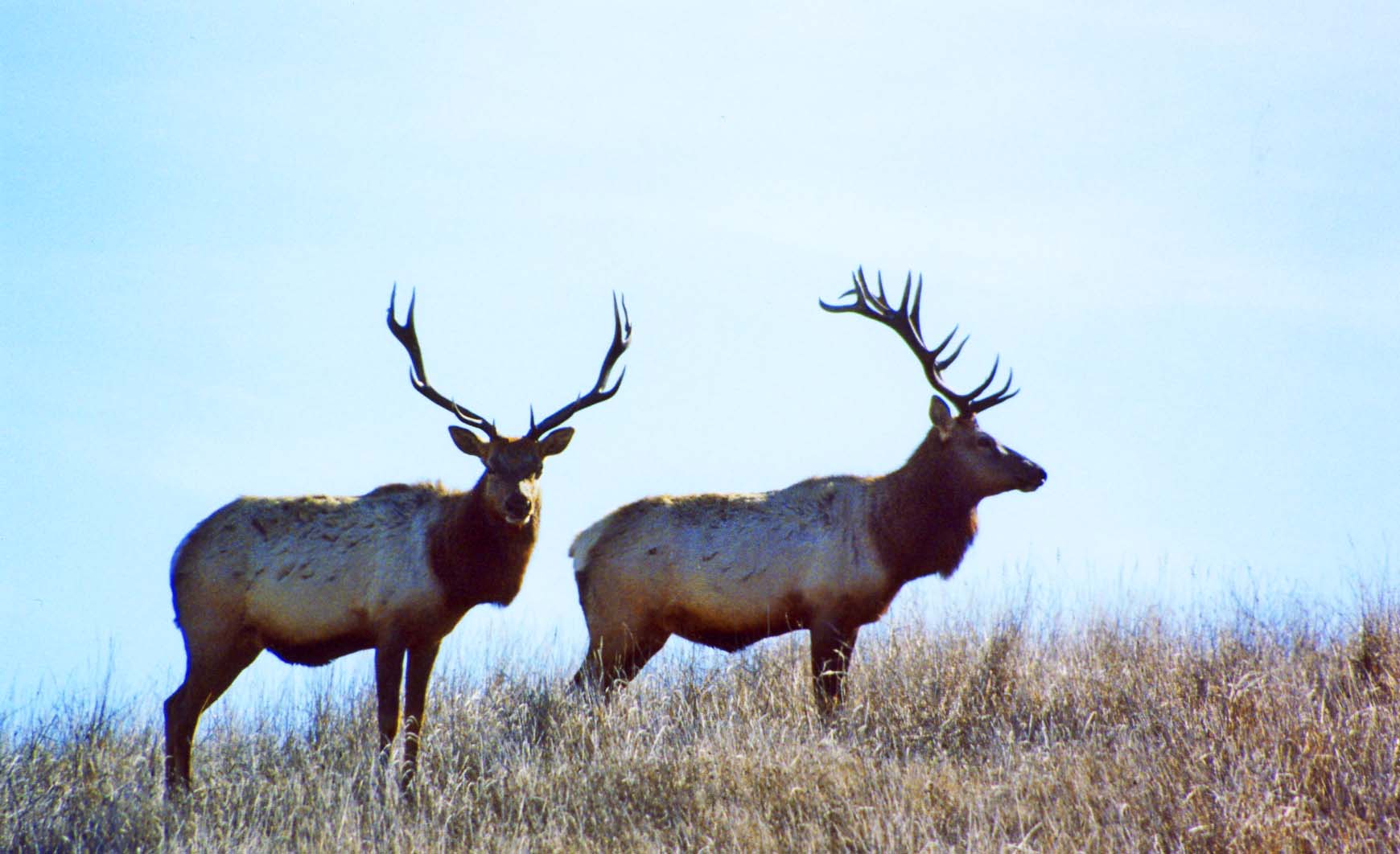
NEXT BLOG: North and South Beach where the Pacific Ocean crashes ashore. Here’s a final shot of the Tule Elk. One of the big guys had obviously taken an interest in me. I was hoping it wasn’t personal. –Curt
 Wandering through Time and Place