Message in a ‘Bottle,’ Drakes Beach, Sand Dollars, Tom Lovering, and Limantour: Pt. Reyes NS… The Pacific Coast Series 5

Have you ever found a message in a bottle or a tin washed up on a seashore? Or dreamed of finding one? We did last week on Drakes Beach at Pt. Reyes National Seashore.

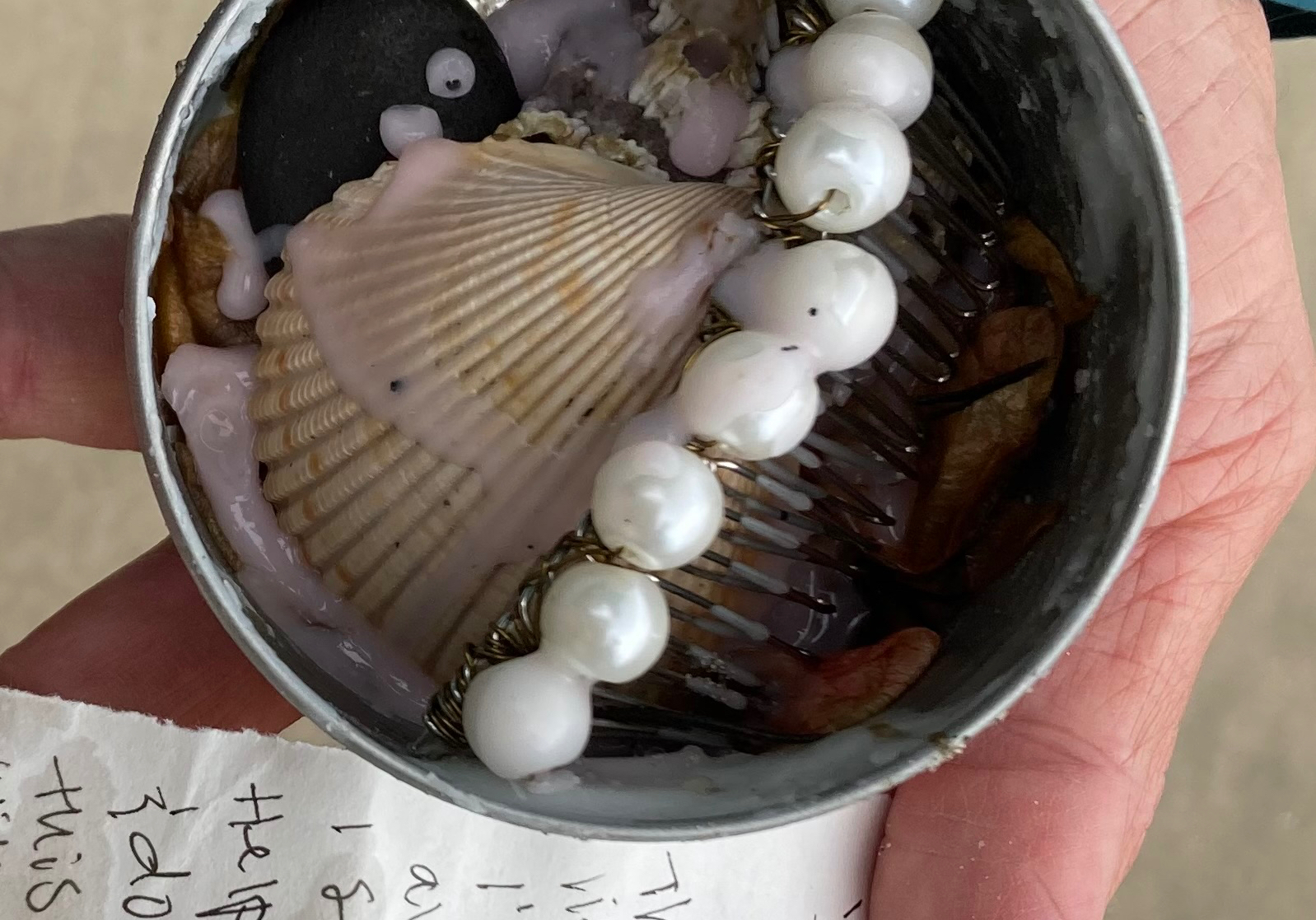
I was walking along Drakes Beach with my friend Tom Lovering when he spotted a tin with a top on it in the sand. Peggy and Tom’s partner Lita were walking behind us. “Open it up, Tom,” we urged. He was already worrying the lid. There was a treasure inside. Someone’s comb with artificial pearl beads and seashells all held in by candle wax. And a letter! It had been brought in on the day’s high tide. Had it come from afar after weeks/months/years of travel. Or had a person thrown it into the ocean that morning with hopes that it would wash out to sea? There wasn’t a clue.
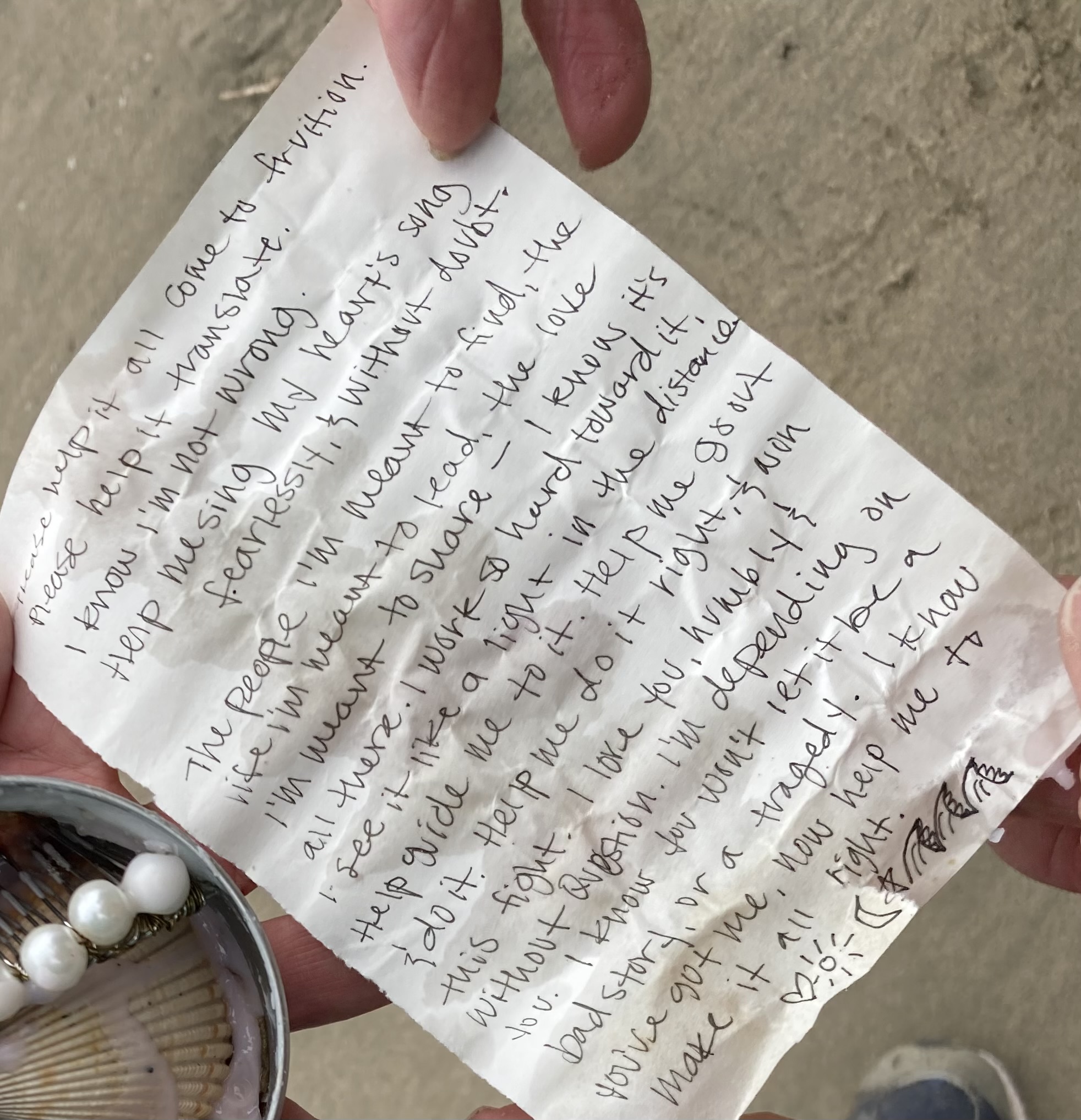
The letter. It was slightly damp and wrinkled but still easy to read. I’ve repeated the words below.

“Please help it all come to fruition. Please help it to translate. I know I am not wrong. Help me sing my heart’s song fearlessly and without doubt. The people I am meant to find, the life I am meant to live, the love I am meant to share— I know it’s all there. I work so hard toward it. I see it like a light in the distance. Help guide me to it. Help me go out and do it. Help me do it right and win this fight. I love you, humbly and without question. I’m depending on you. I know you won’t let it be a sad story, or a tragedy. Now help me to make it all right.”

One can only speculate on the sender, but I imagine a young woman (given the comb) asking for help. She is bright, and possibly troubled, but has faith and hope that her future will turn out right. Thoughts? Tom put the message back in the tin with the lid on it and left it on the beach for some other person to discover. We listened to Jim Croce’s Time in a Bottle when we got back to camp.

These towering cliffs are the same ones that Sir Francis Drake would have seen on his 1579 voyage around the world. They reminded him of England’s Cliffs of Dover. With his ship in serious need of repair, he had pulled into the bay. The belief that this is where he landed for repairs led to the bay being named Drakes Bay and the beach, Drakes Beach.
This is Tom. We go way back. “Fifty years” he reminded me. We met in 1974.
He had a bit more hair when this was taken in the late 70s.

He had even more in 1974 when I had walked into Alpine West, a popular outdoor gear store in Sacramento at the time. I was seeking a sponsor for the Sierra Trek, a hundred mile backpack trek across the Sierra Nevada Mountains that I had dreamed up to raise funds for the Sacramento Lung Association and future Breathe California. A hippie-looking 20-something was standing behind the counter. I walked over and asked him if I could speak to the owner or manager. “I am the owner,” Tom had told me rather stiffly. Oops! I introduced myself as the Executive Director of the Lung Association and explained what I wanted to do. “You’re crazy,” he had told me. “People may survive it but they will hate you and the Lung Association afterwards.” It wasn’t exactly what I was hoping to hear from one of Sacramento’s leading outdoor experts. But then he offered to sponsor the event… I left a little confused. If they hated the Lung Association, wouldn’t they hate Alpine West as well? We’ve been having adventures together ever since 1974. He’s been though several successful careers over the years. I’ll introduce his latest in my next post: creating a powerful, battery-operated blender. He couldn’t stop talking about it. But for now, back to Drakes Beach and another popular beach on Drakes Bay: Limantour.
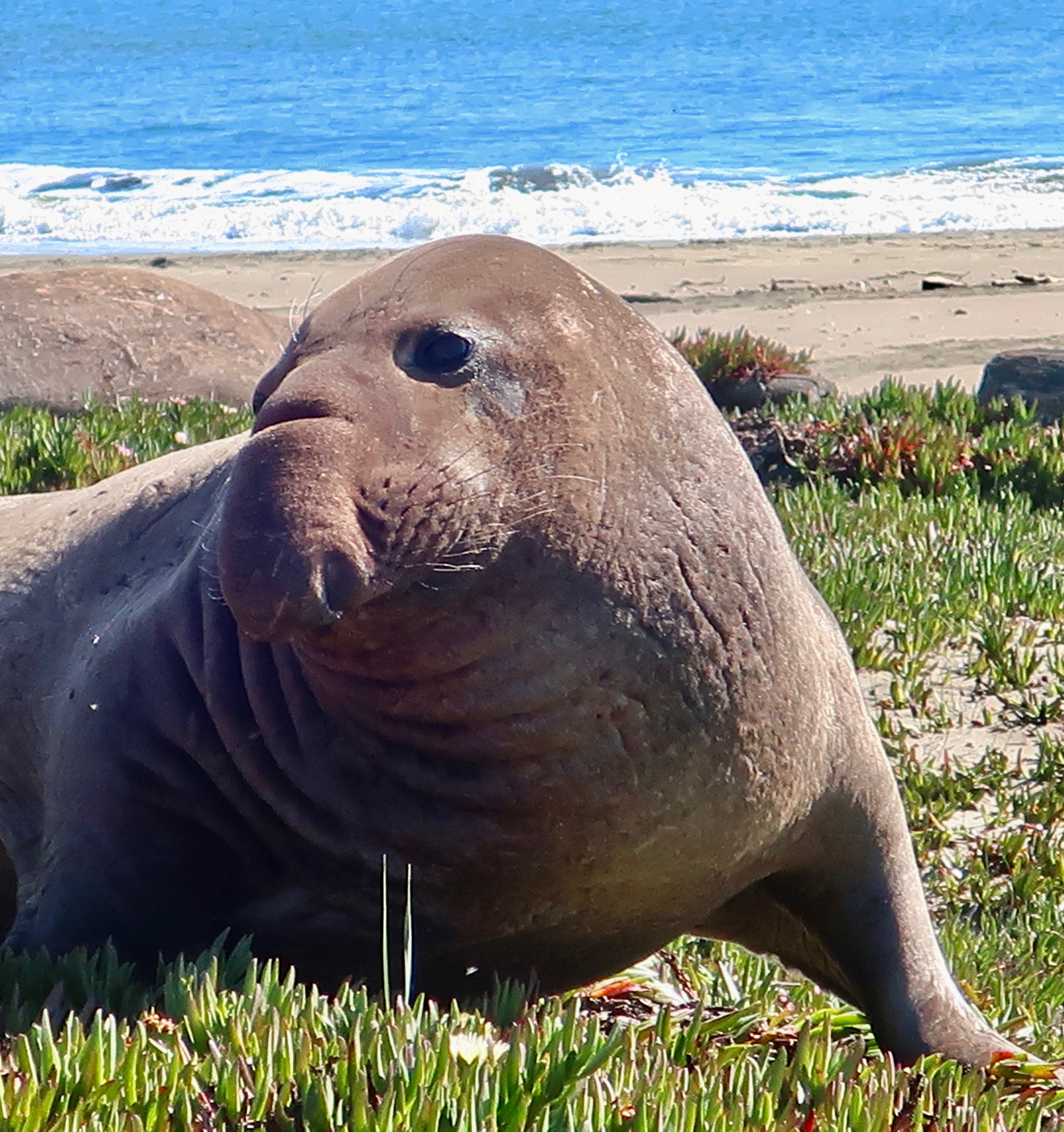
We have been to Drake’s Beach many times over the years. The last time the beach was filled with elephant seals. Not so this time. But that meant we could actually go for a walk on the beach.
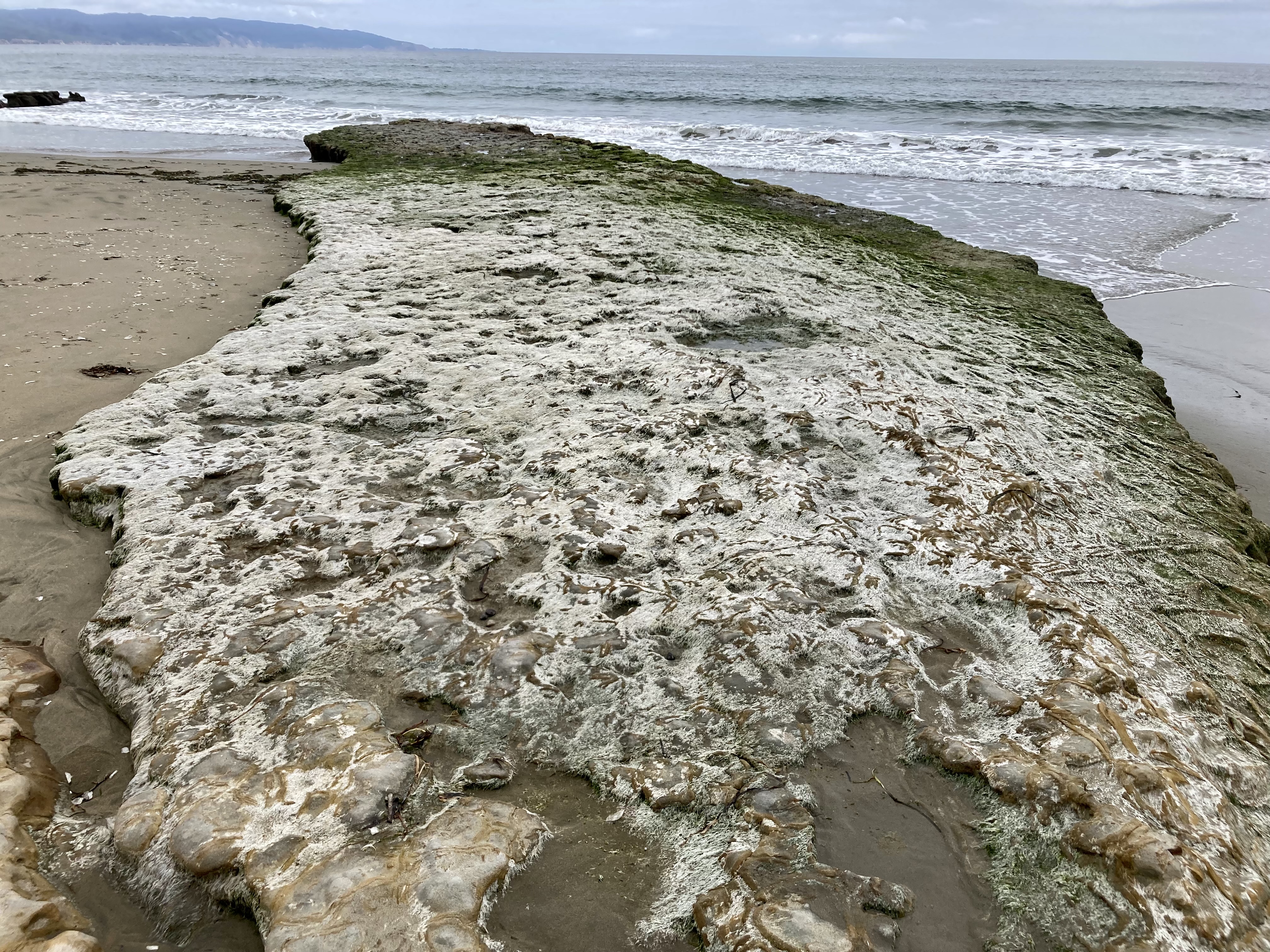
Several harder rocks had been more resistant to the ocean’s relentless waves. This one was heading out to sea.
It had a unique look…
And small depressions that caught seawater at low tide making mini-tide pools.
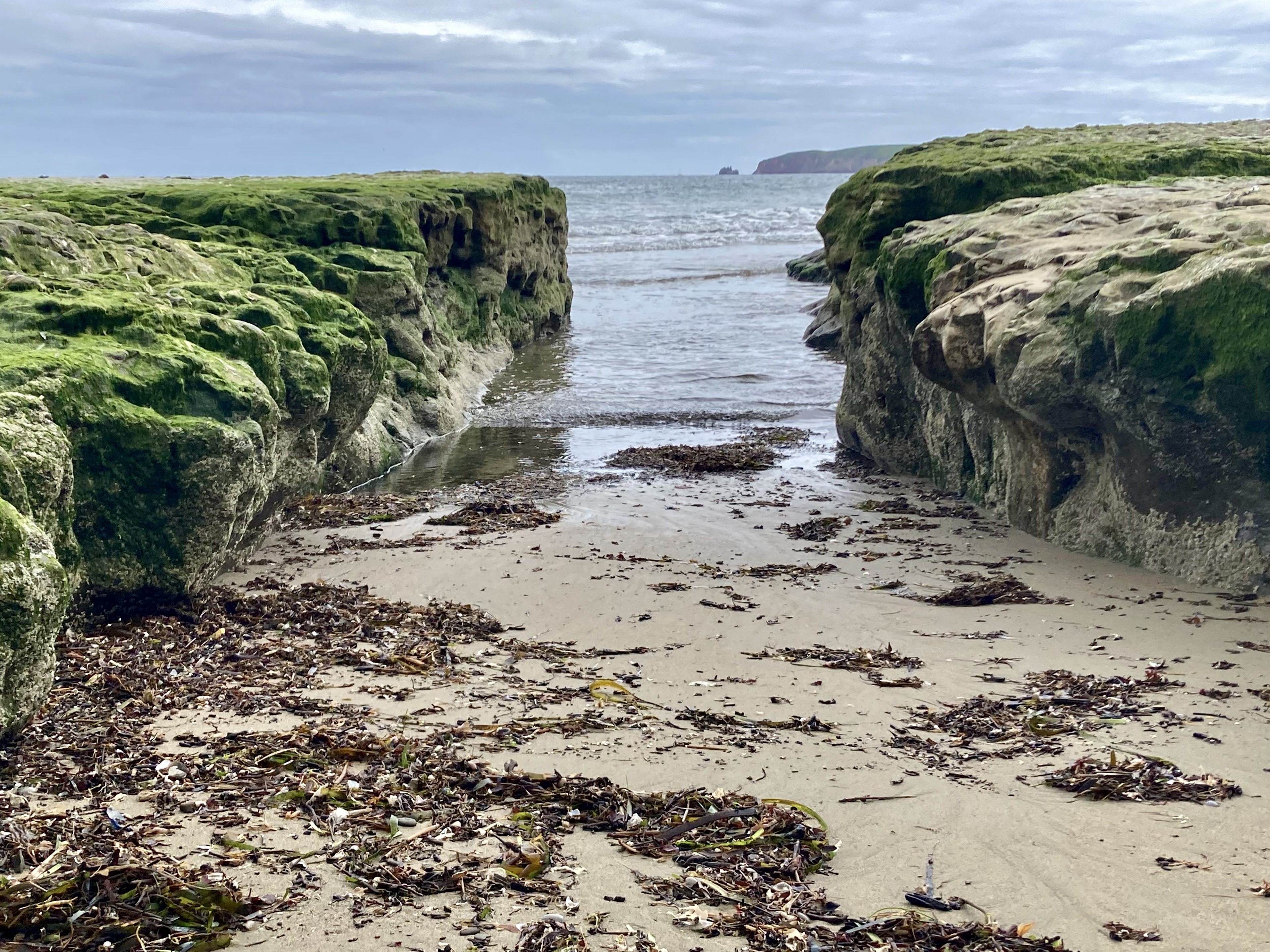
Two of the rocks provided a window to the ocean. Chimney Rock can be seen in the distance.
Peggy gathered seashells while I explored. Tom snapped our photo.
We stopped to admire a Velella (By the Sea Sailor), a type of jellyfish, that had just sailed in on high tide and was in much better shape than the ones we had seen at Point Lobos.
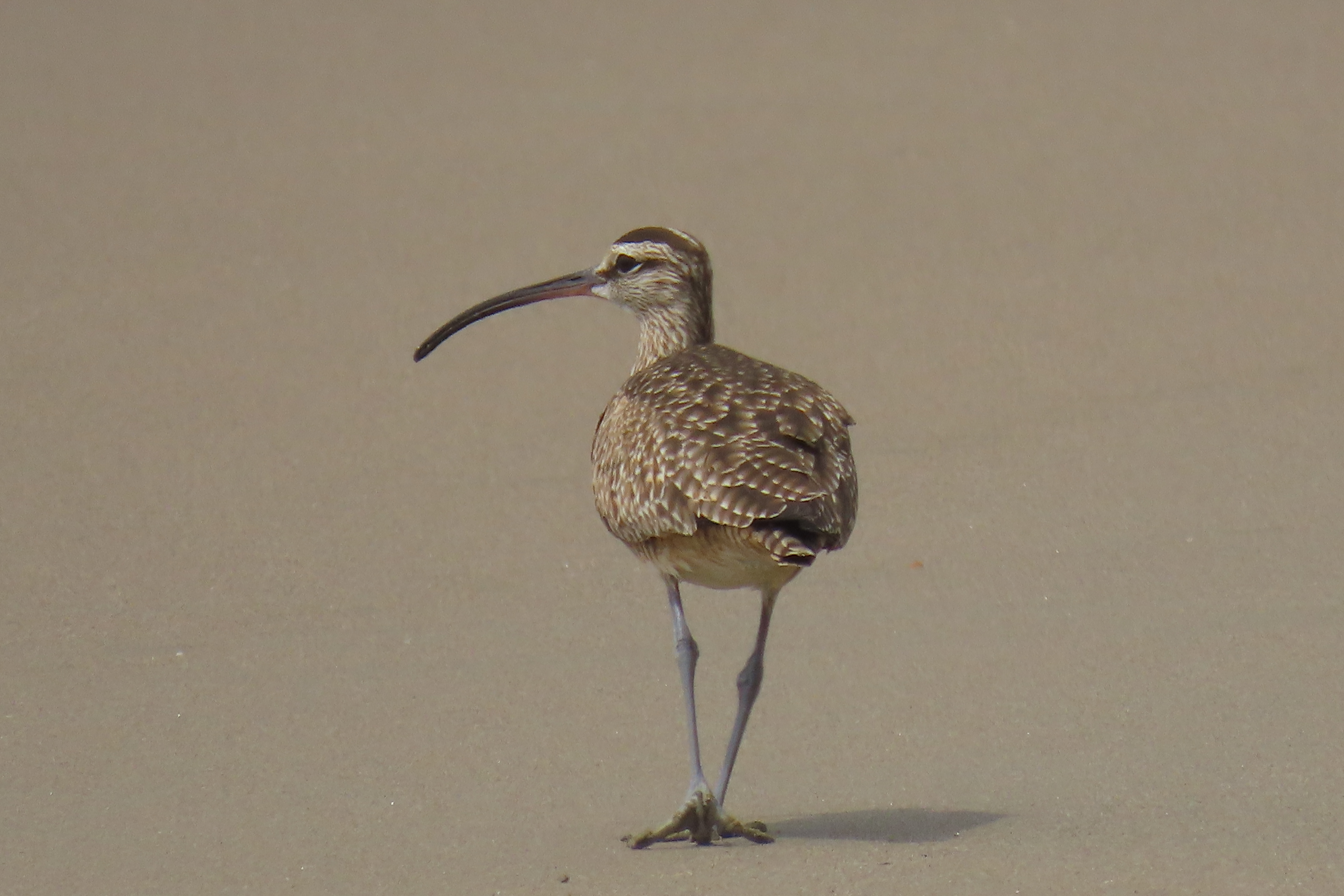
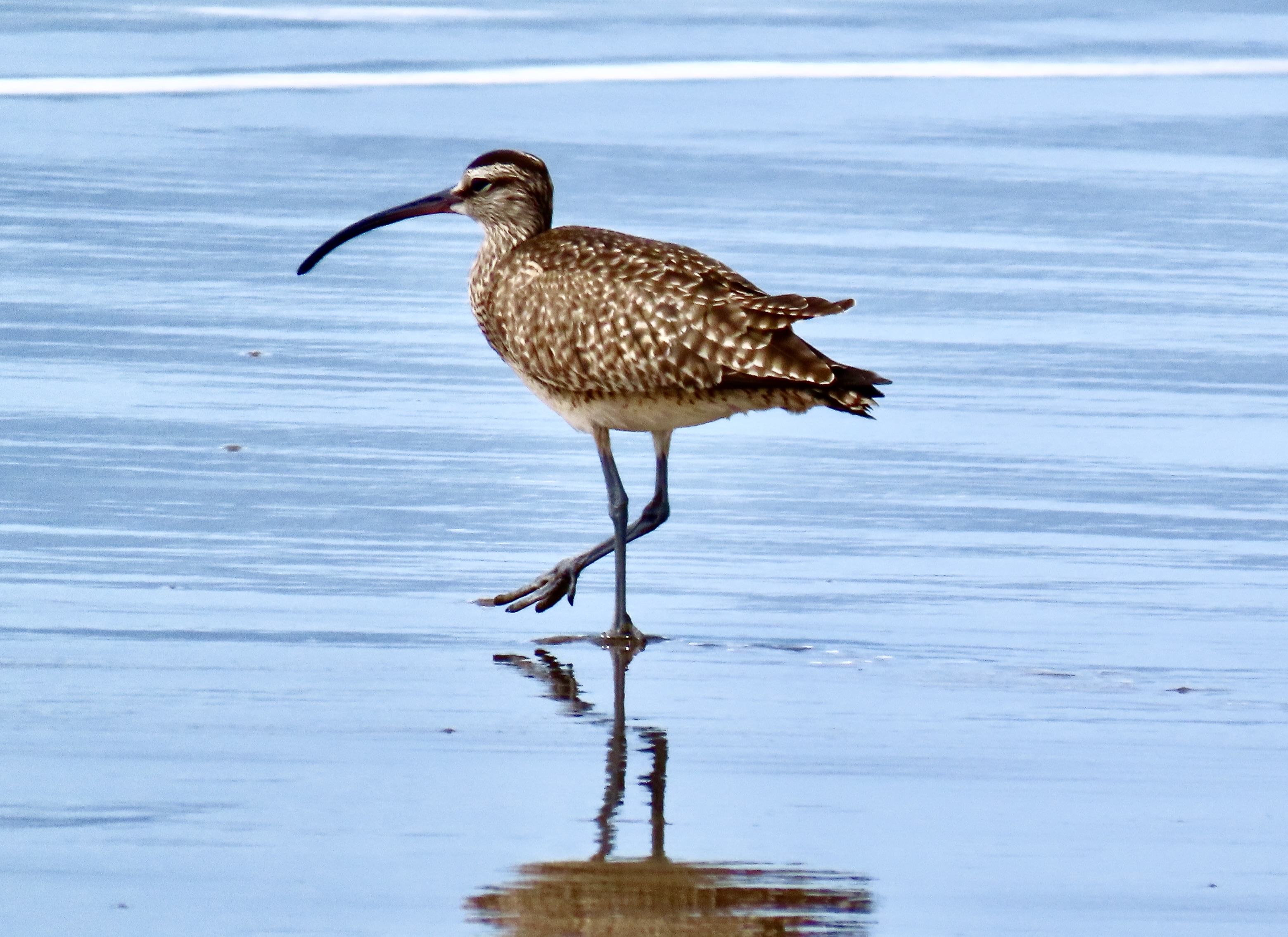
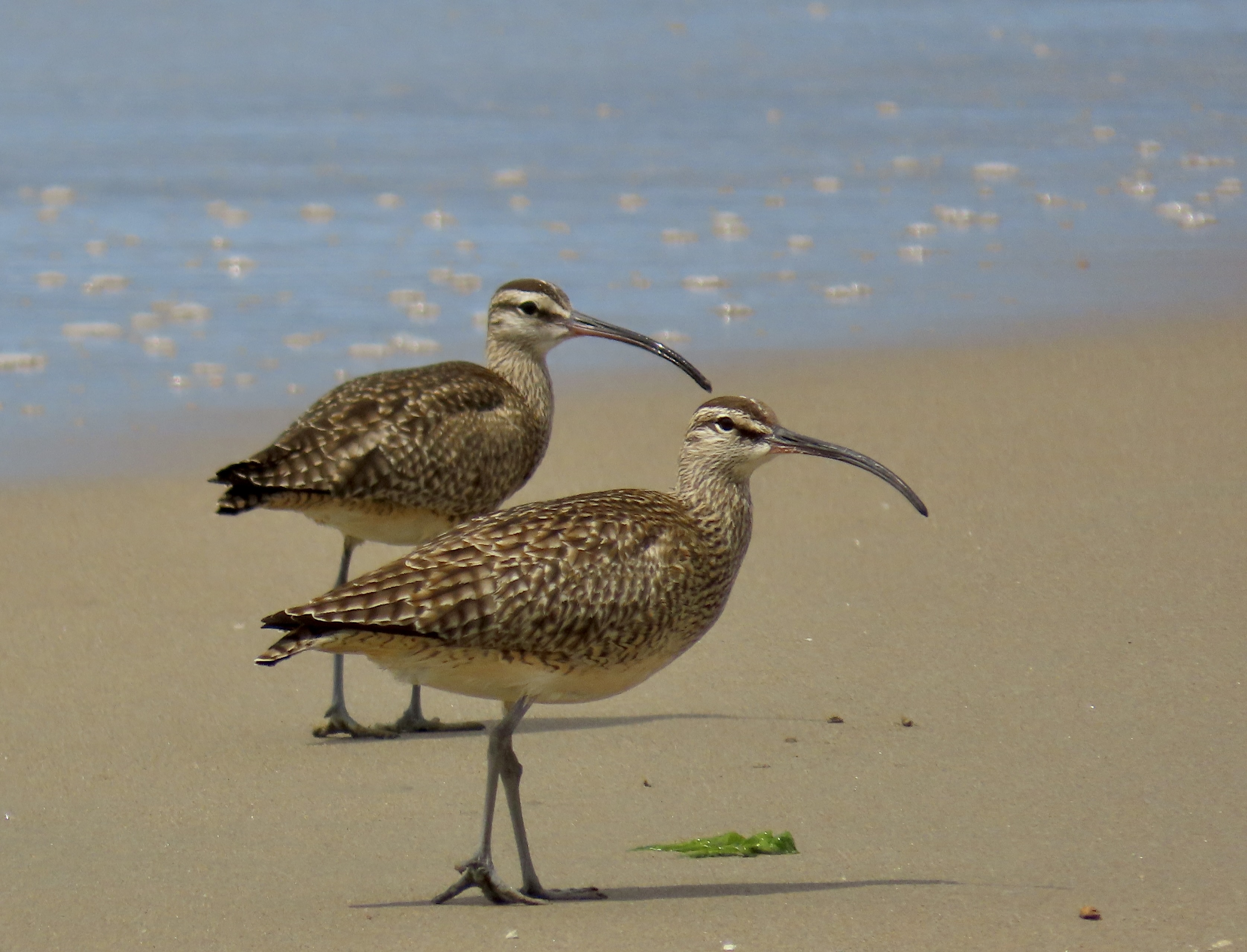
Limantour Beach and Spit is just south of Drakes Beach and also on Drakes Bay. Peggy and I explored it after Tom and Lita returned to Sacramento. Whimbrels, dunlins and brown pelicans amused us. This is a whimbrel.
We found them quite attractive.
Several of them were working the beach together.
On a stroll.
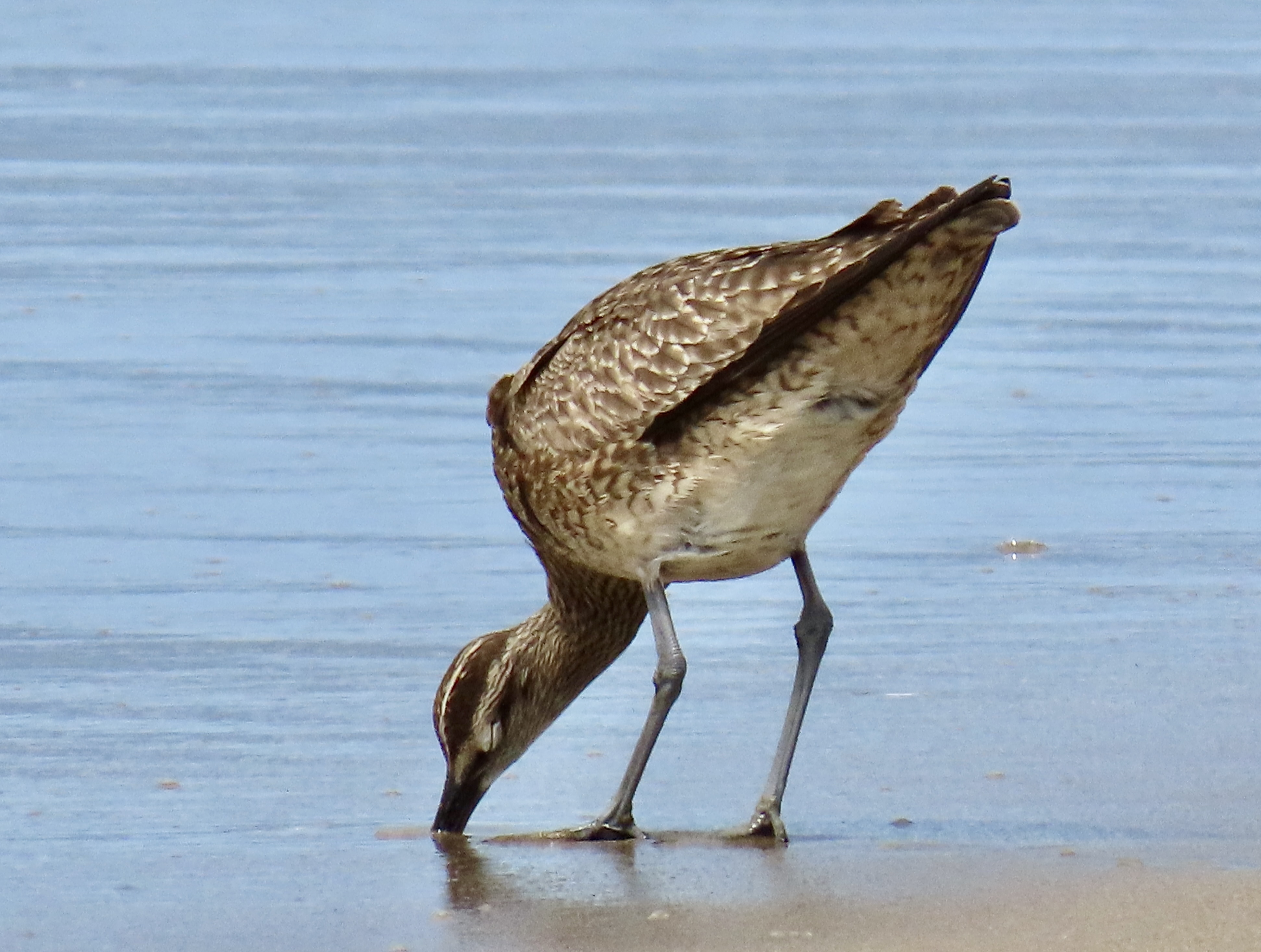
A small bubble suggests that dinner might be lurking down in the sand.
Whimbrels use their curved beaks to probe for small crabs and other sea life buried in the sand.
A little ocean water did not get in the way of finding a tasty tidbit.
A flock of dunlins and a sanderling join the whimbrels in their search for food.
Apparently, their search was successful.
Meanwhile, brown pelicans were skimming the waves further out at sea in search of fish. Amazing birds! Check the wing span.
A shot across Drakes Bay showed the cliffs above Drakes Beach.
Peggy took this shot across Drakes Bay to the Chimney Rock and the Pt. Reyes Headlands at the northern end of the Bay. The Point Reyes Lighthouse is on the opposite side of the Headlands. We will feature it in a later post.
Peggy posed for me as I took a photo south to catch the rest of the Bay. This is one long beach!
She continued her search for perfect sand dollars.
And goofed around! That’s it for the day!
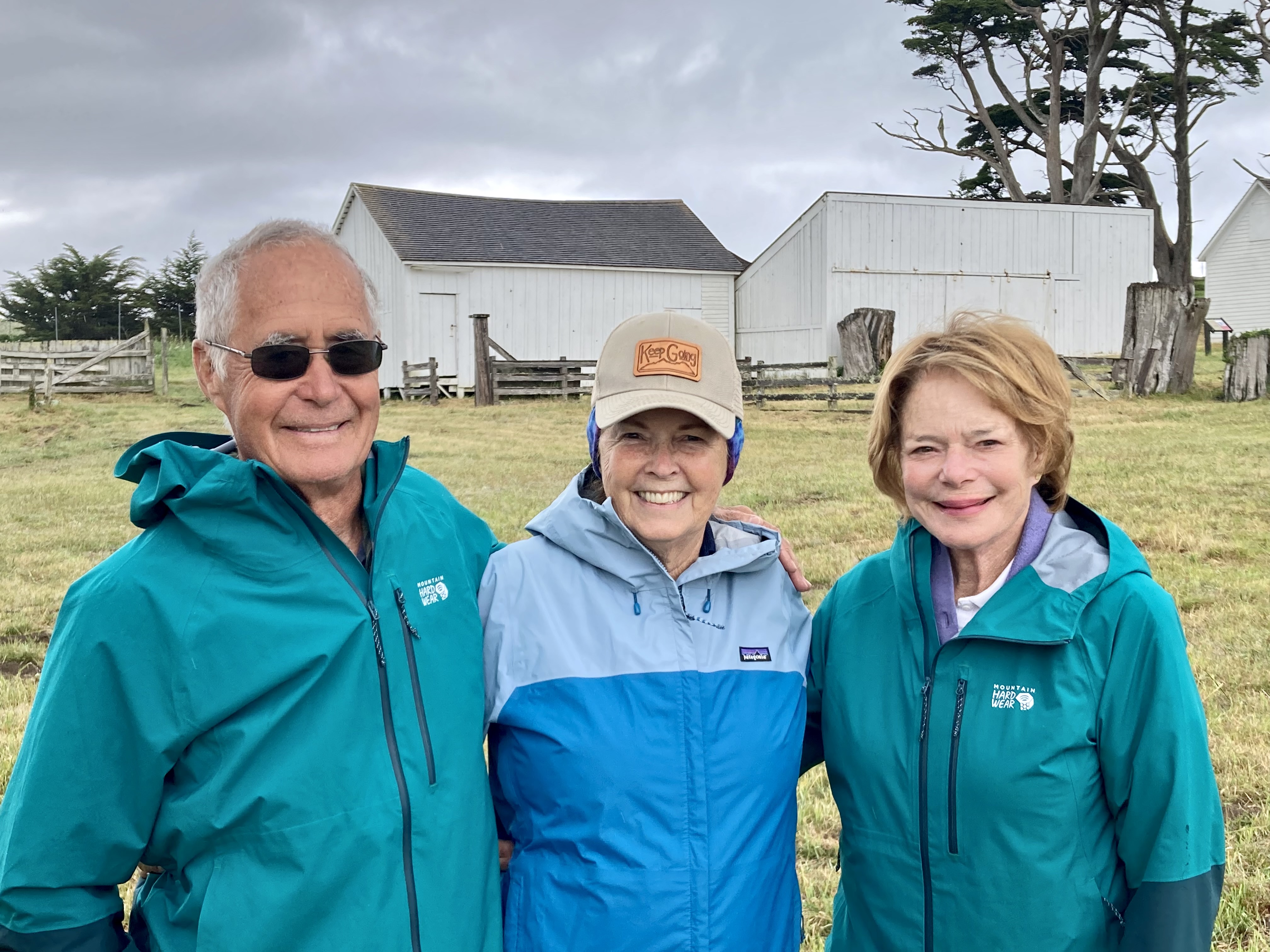
Our next post will feature the historic Pierce Point Ranch and Abbots Lagoon. Tom, Peggy and Lita stand in front of three of the outbuildings.

It’s National Park Week 2013… April 20-28

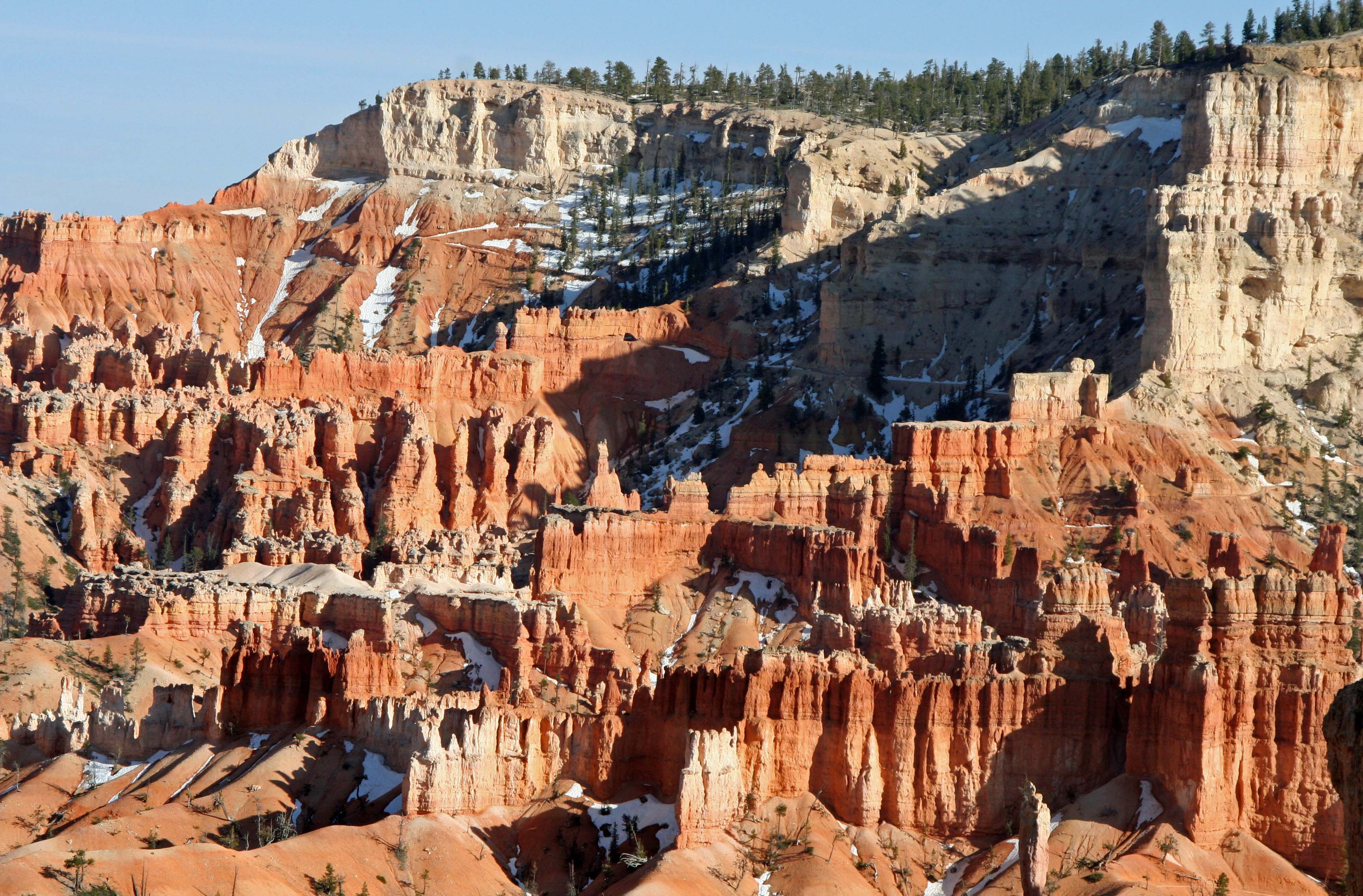
Bryce Canyon

Bryce Canyon National Park, Utah

It’s National Park Week. One of my blogging friends reminded me. Somehow I lost track of time and became so wrapped up in the minutia of life that the week had arrived before I realized it was happening. Shame on me.

The United States and many other nations around the world have done a magnificent job of setting aside national parks. We owe it to ourselves to go out and explore these treasures. And, we owe it to our great, great, great, great-grandchildren to protect these sites of rare natural beauty for future generations.

It won’t be easy. There will always be people who believe financial gain outweighs any other consideration. Why save thousand-year-old redwood trees when they can be turned into highly profitable redwood decks?

Redwood

This 1500 year old redwood is located in Redwoods National Park on the northern coast of California.

Several years ago, Peggy and I set a goal to visit all of America’s National Parks. With the exception of Kobuk Valley and Lake Clark in Alaska, we’ve succeeded. It has been an incredible journey. Our travels have taken us from Denali National Park in Alaska to the Dry Tortugas National Park off the Florida Keys.

In addition to driving through and hiking in these parks, I have also backpacked in 13, biked through five, and kayaked or rafted in three. Once I even organized a winter ski trek into Denali National Park where we slept out in minus 30-degree weather and listened to wolves howl. That was a learning experience…

Since I couldn’t escape to a national park this week, I did the next best thing; I went through photos of parks Peggy and I have taken. All I could think of was wow– what incredible beauty!

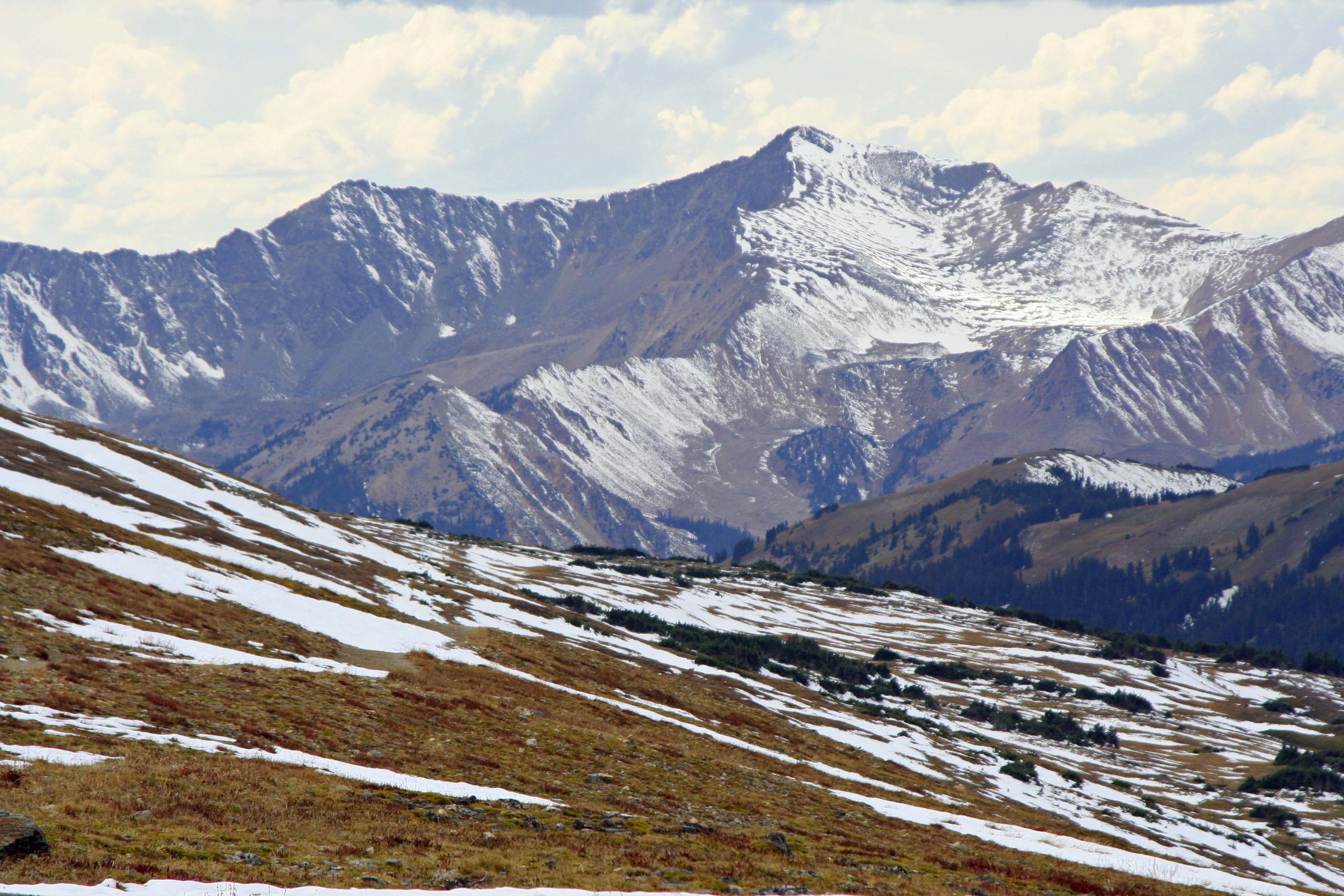
Rocky National Park in Colorado.

Rocky Mountain National Park in Colorado.

Hawaii Volcanos National Park.

An active volcano in Hawaii Volcanos National Park on the Island of Hawaii.

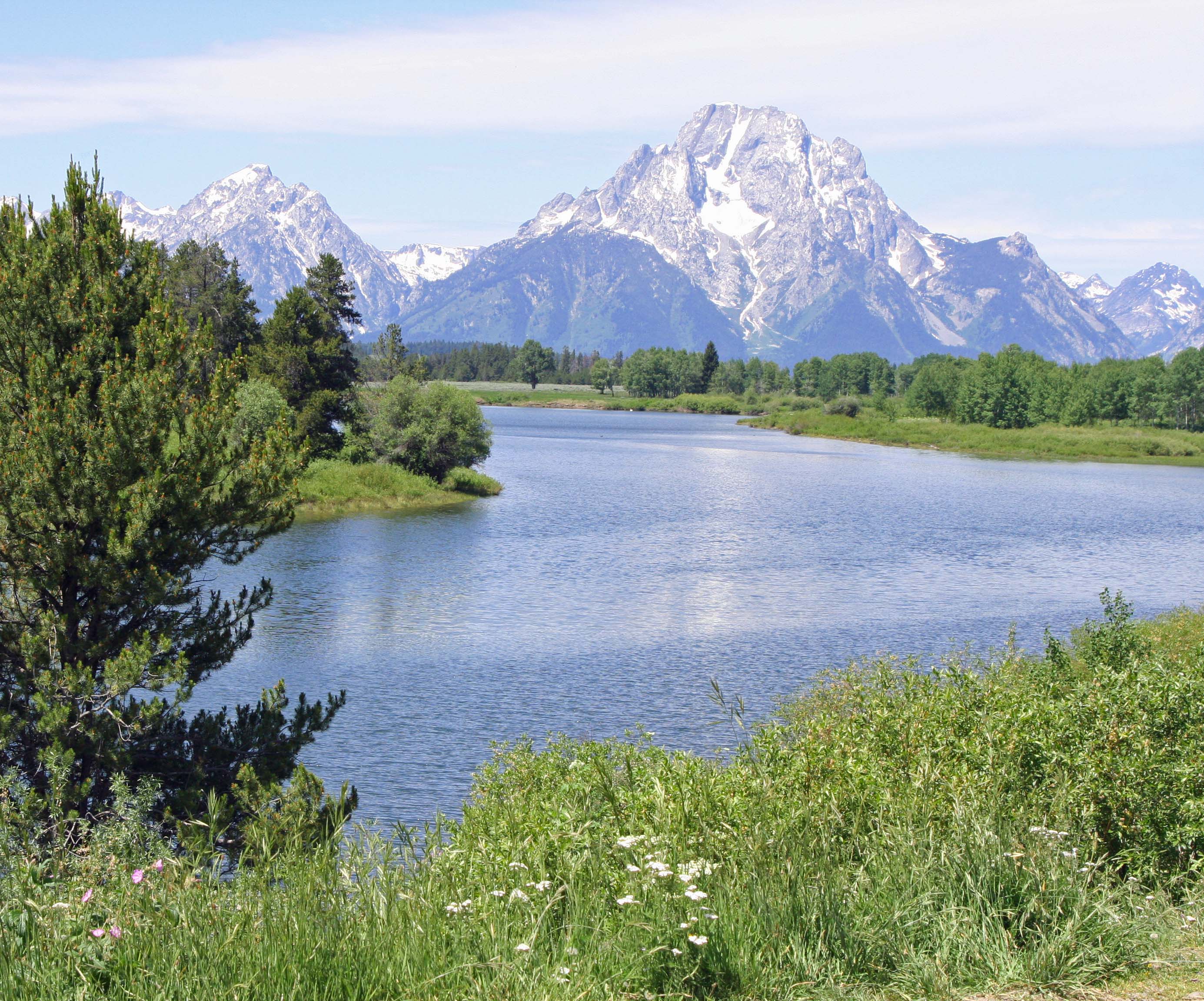
Grand Tetons National Park in Wyoming.

Grand Tetons National Park in Wyoming. A sign warned us to look out for an active grizzly bear.

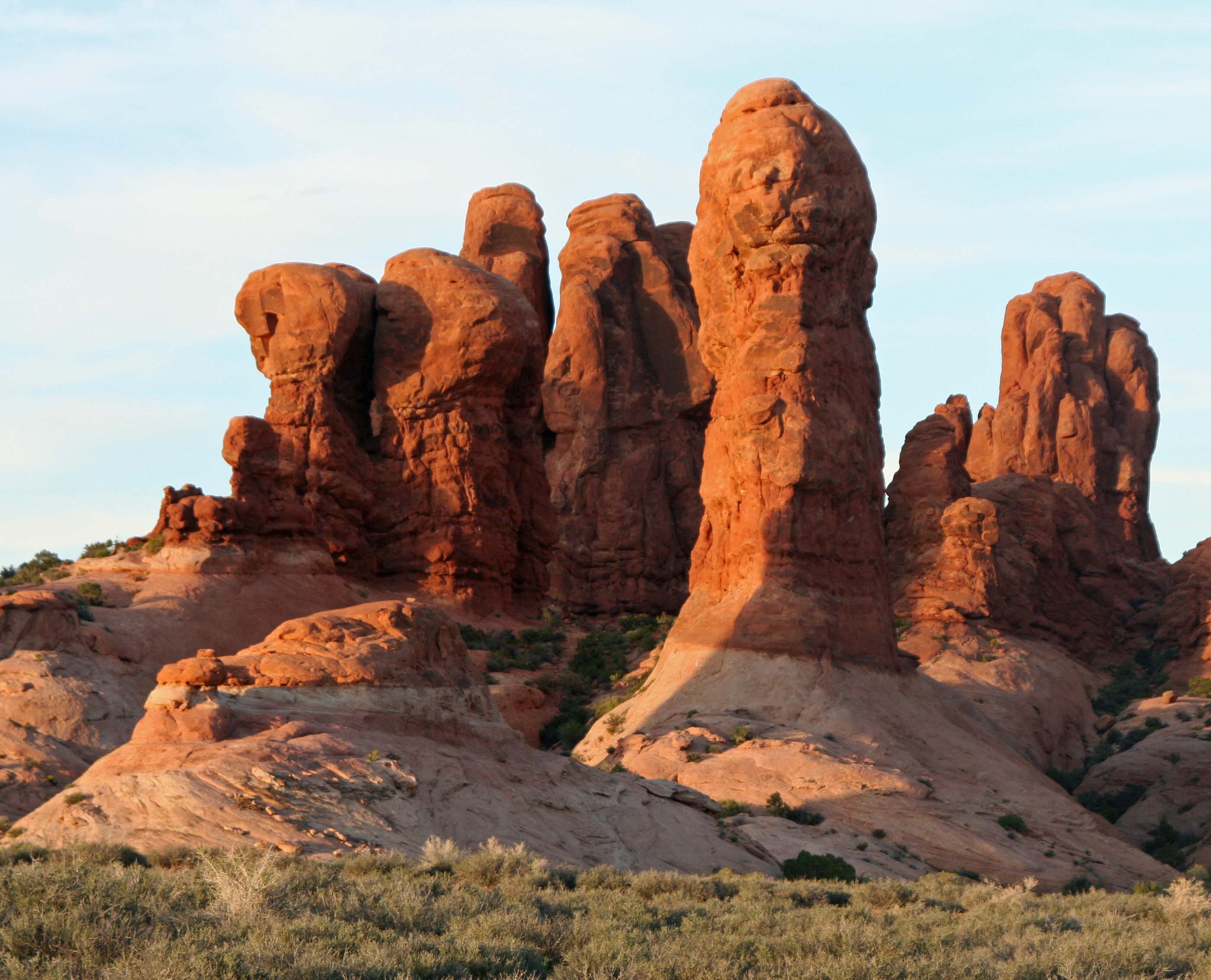
Arches National Park, Utah

Arches National Park, Utah

Tuolumne Meadows, Yosemite National Park, California

Tuolumne Meadows, Yosemite National Park, California. I once woke up near here with a bear standing on top of me.

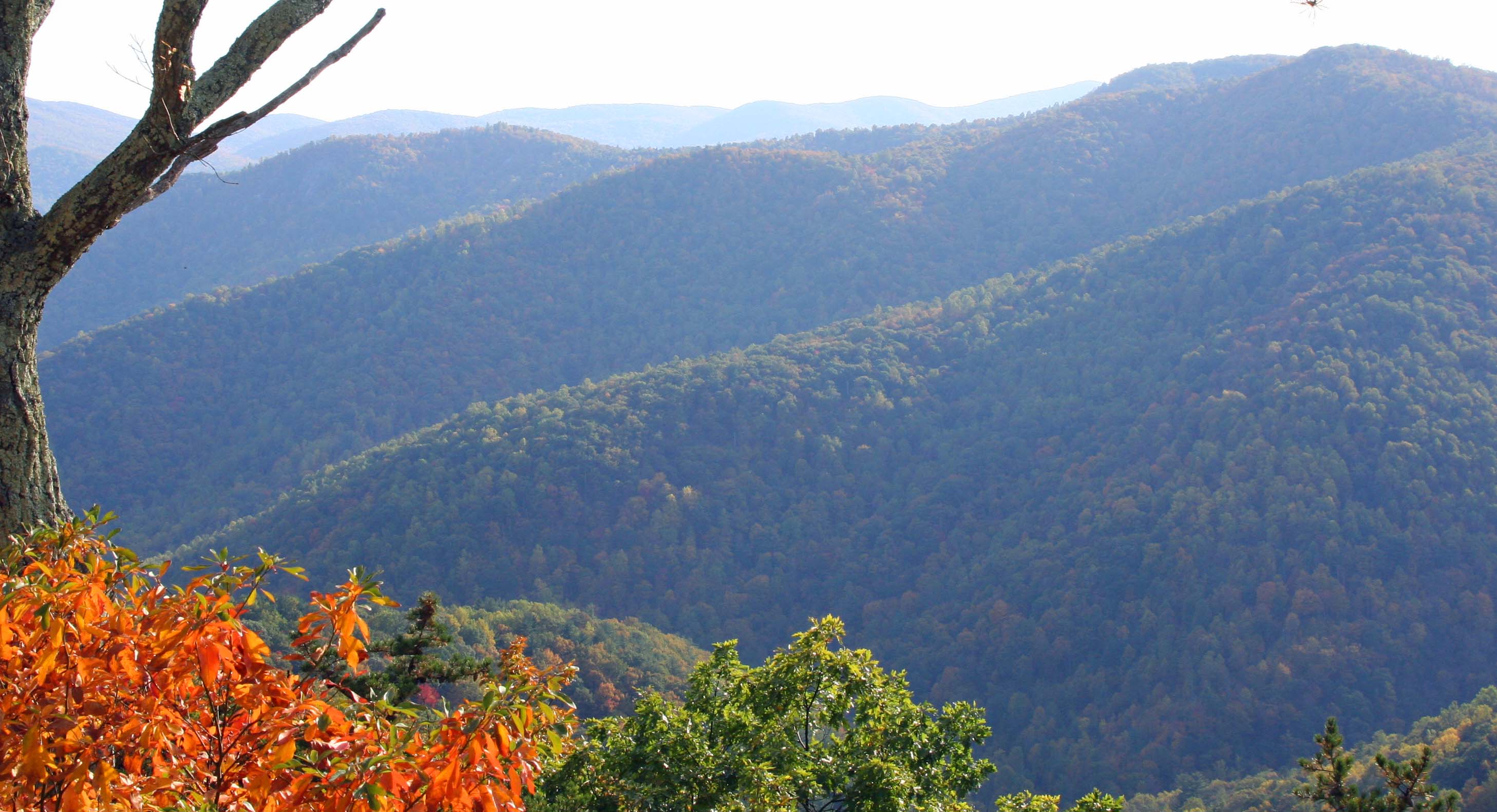
Fall colors of Shenandoah National Park in Virginia

Fall colors of Shenandoah National Park in Virginia.

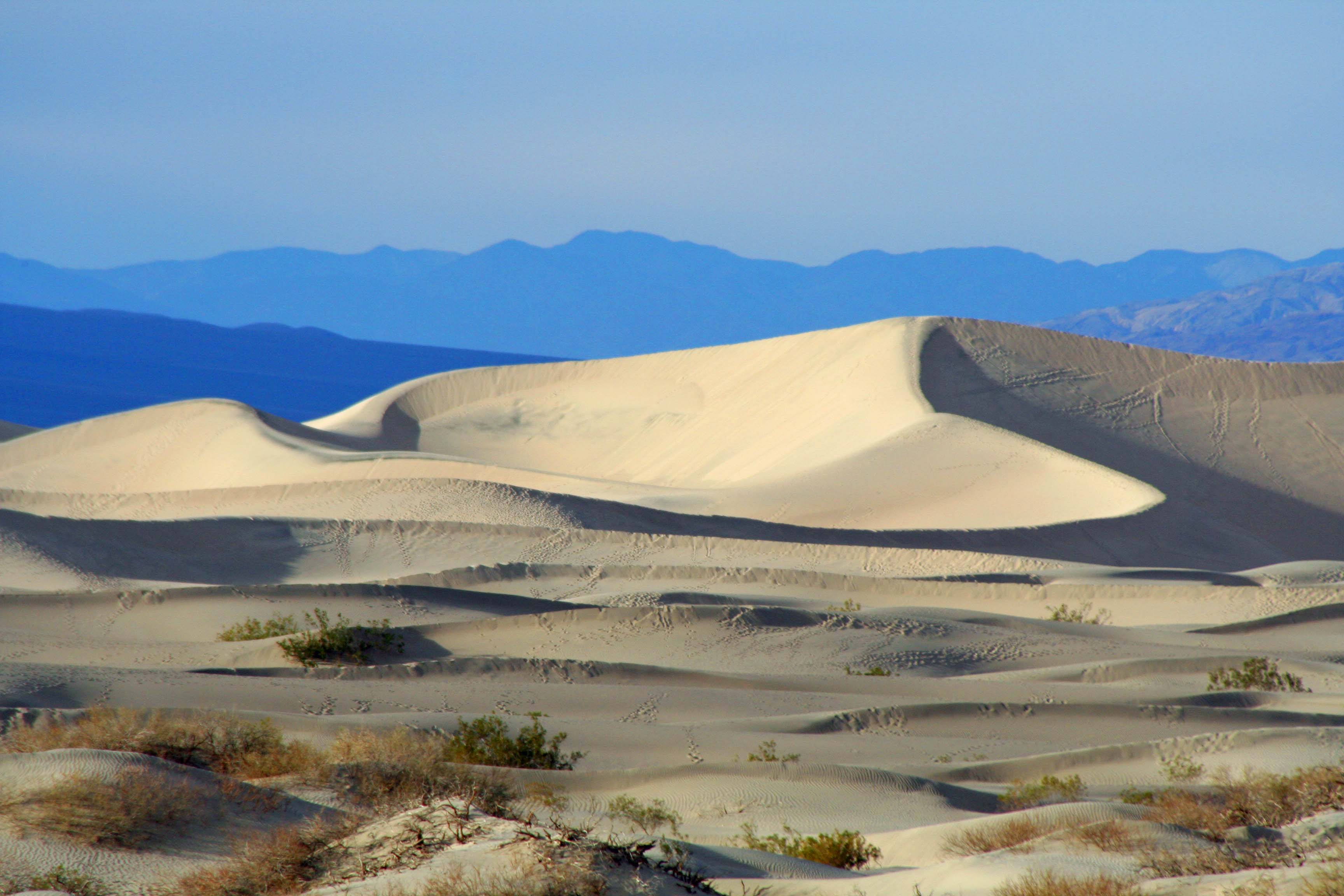
Sand Dunes in Death Valley National Park.

Sand dunes in Death Valley National Park.

The green of Olympic National Park in Washington.

The green of Olympic National Park in Washington.

Lesser known National Parks such as Great Basin in Nevada also hold great charm and beauty. This photo features the van Peggy  and I travelled in for four years as we travelled around North America.

Lesser known national parks such as Great Basin in Nevada also hold great charm and beauty. This photo features the van Peggy and I travelled in for four years as we wandered around North America.

Spectacular scenery is only part of the national park story. Wildlife, birds, insects, reptiles, flowers and history add to the experience.

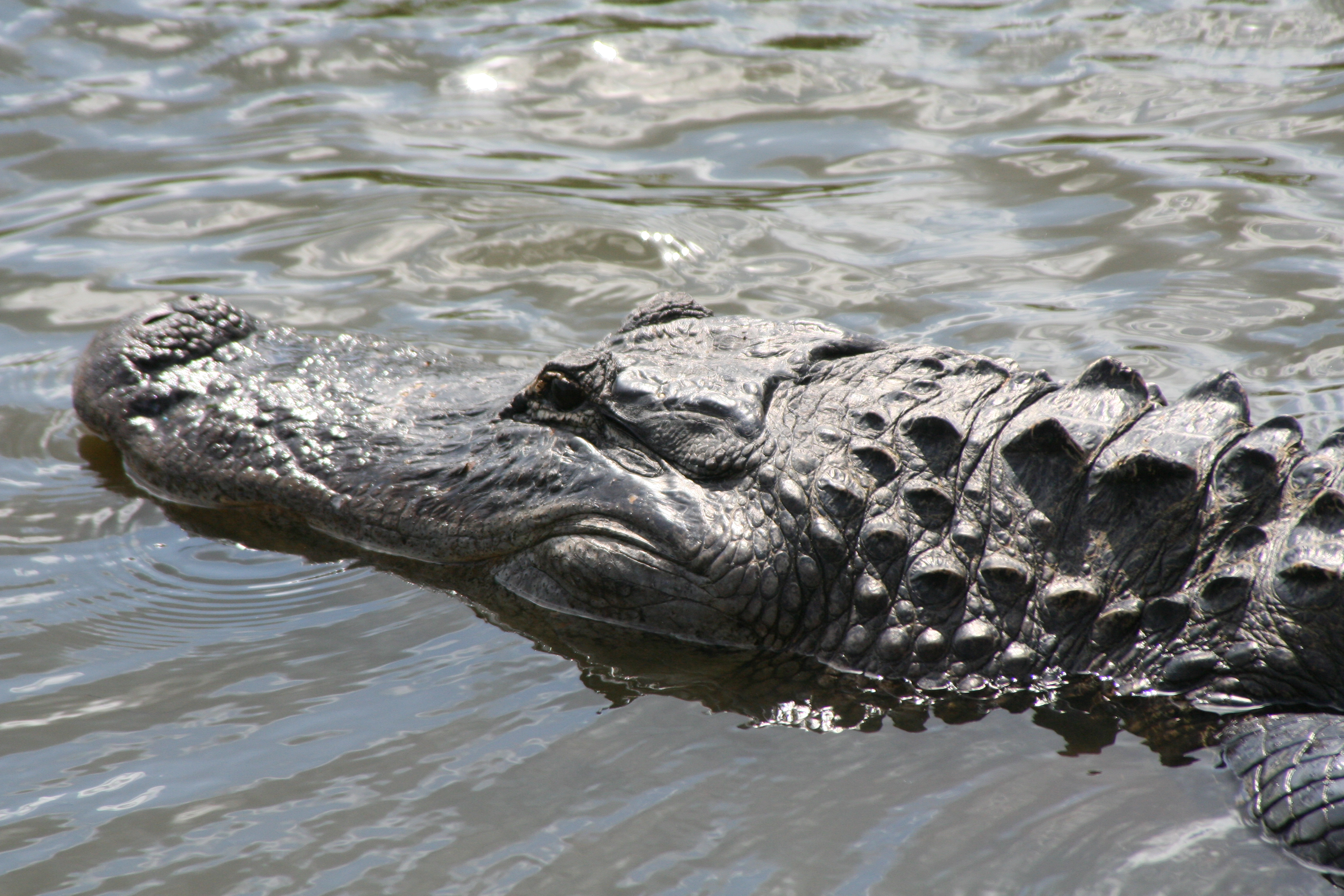
Peggy and I found this beauty swimming through the water at Everglades National Park in Florida.

Peggy and I found this beauty swimming through the water at Everglades National Park in Florida.

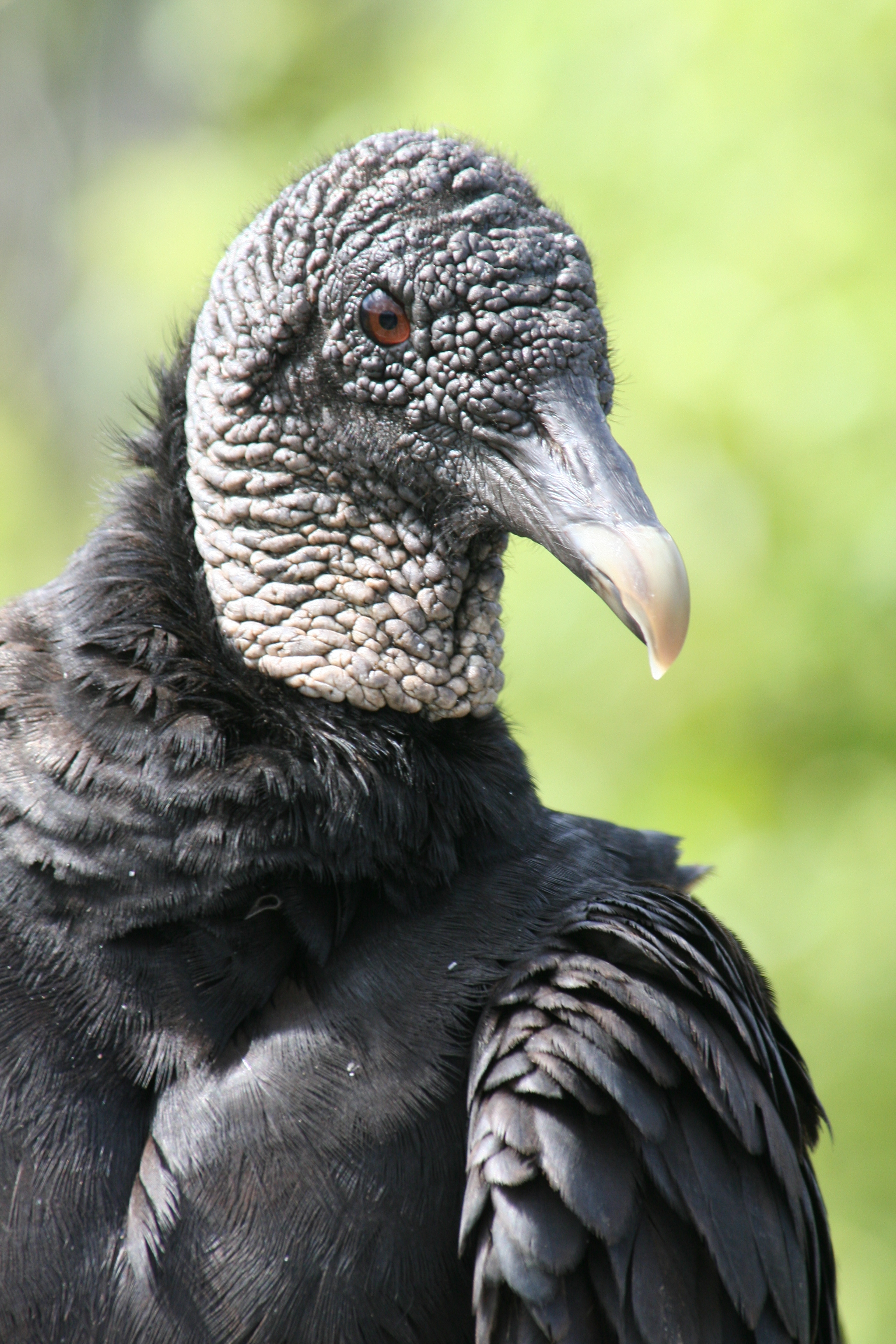
And this striking Black Buzzard was another Everglades resident.

And this striking Black Buzzard was another Everglades resident.

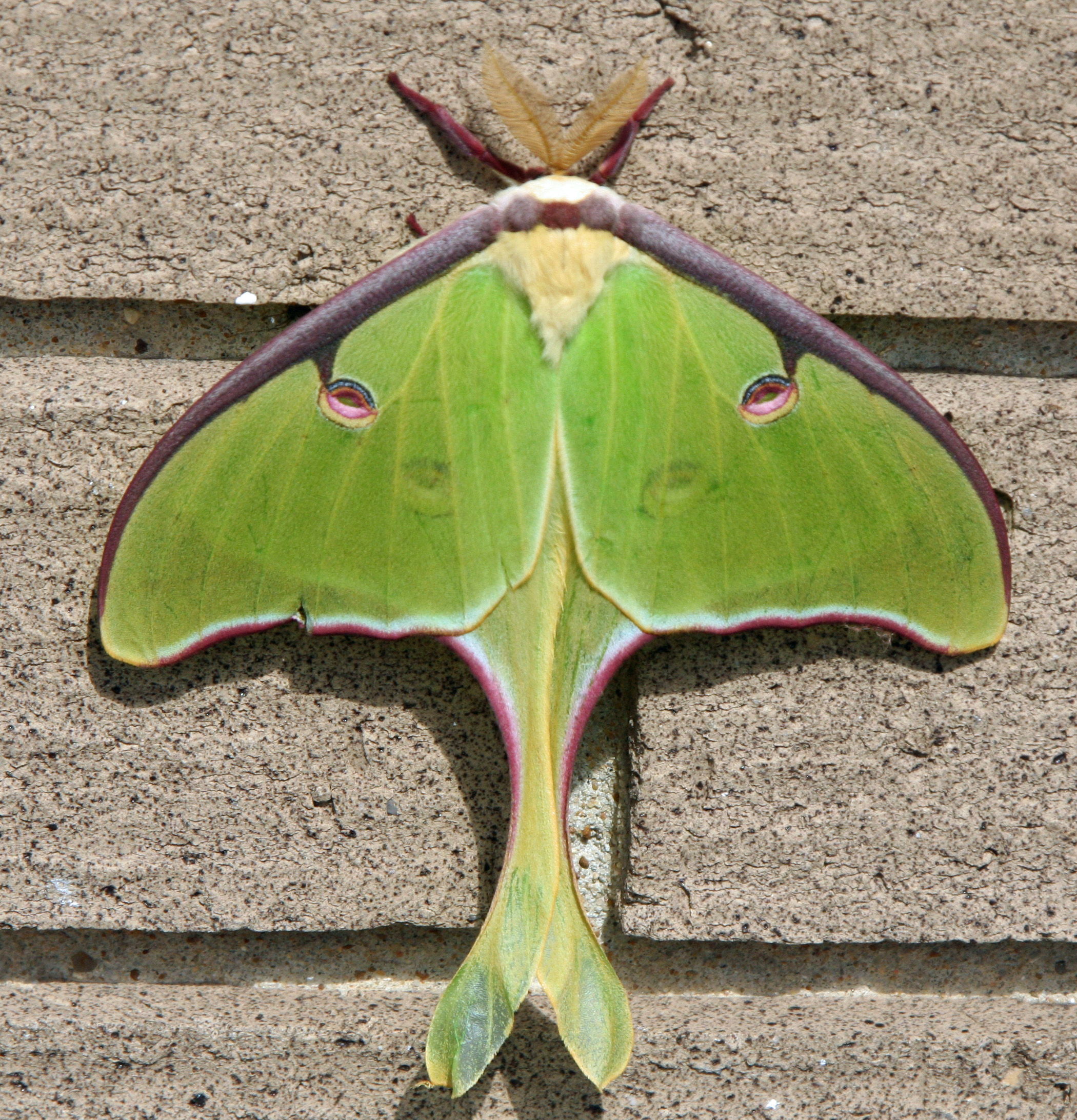
We found this Luna Moth on the Natchez National Parkway.

We found this Luna Moth on the Natchez Trace National Parkway.

Brown Pelicans are a common visitor at Pt. Reyes National Seashore.

Brown Pelicans are common visitors at Pt. Reyes National Seashore.

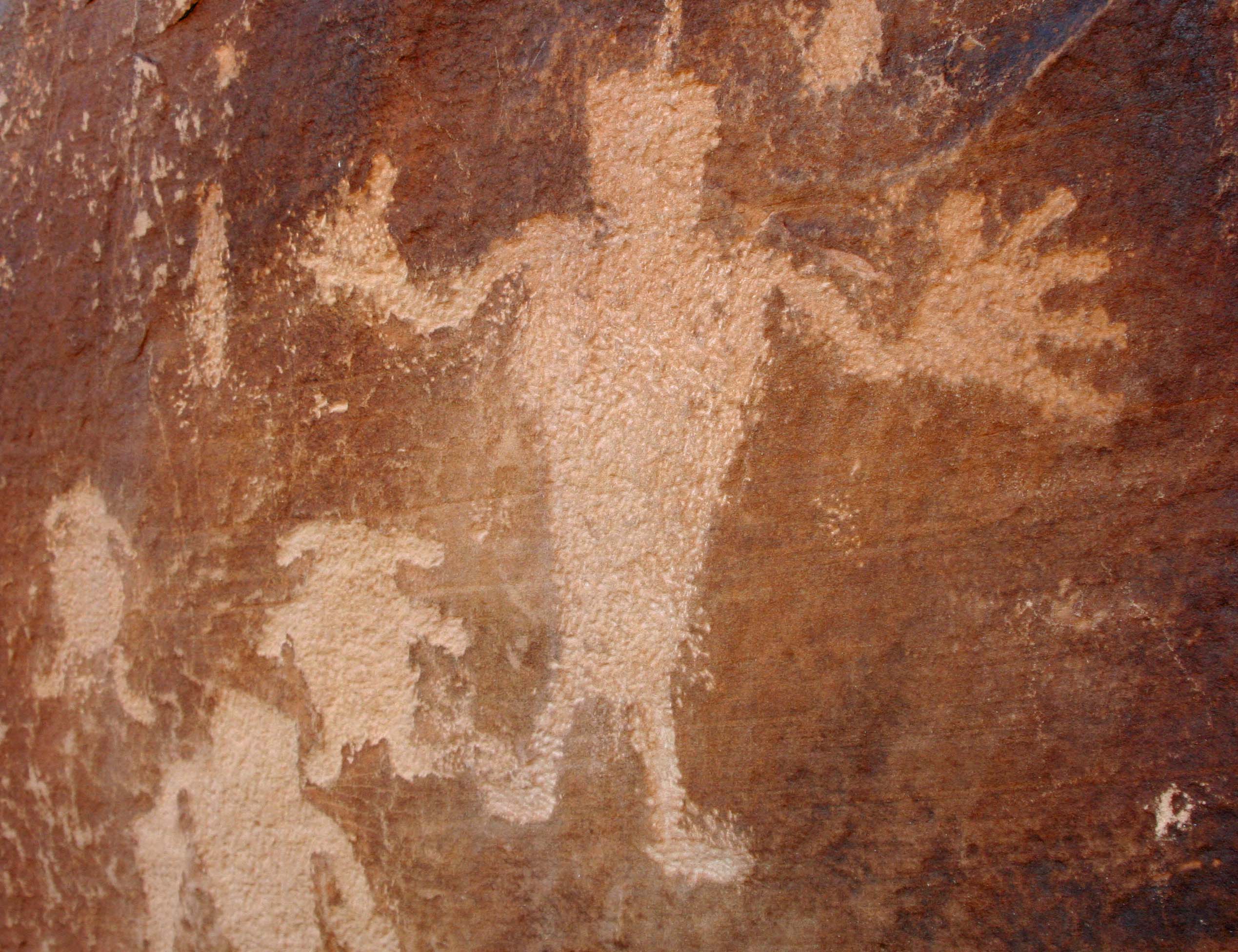
Peggy and I are great fans of Native America rock art, much of which is protected in National Parks and at National Monuments. This man with his big hands and fat little dogs has always been one of my favorites.

Peggy and I are great fans of Native America rock art, much of which is protected in national parks and at national monuments. We have several thousand photos from different sites. This one from Dinosaur National Monument in Colorado/Utah has always been a favorite because of the big hands and fat little dogs.

It never hurts to complete a blog with a pretty flower. We found this Foxglove growing in Olympic National Park.

It never hurts to complete a blog with a pretty flower, even if it goes on and on. (grin) We found this Foxglove growing in Olympic National Park.

NEXT BLOG: I hope you have enjoyed my two diversions over the past week because of Earth Day and National Park Week. On Monday I will return to Europe and Rome’s historic Colosseum.