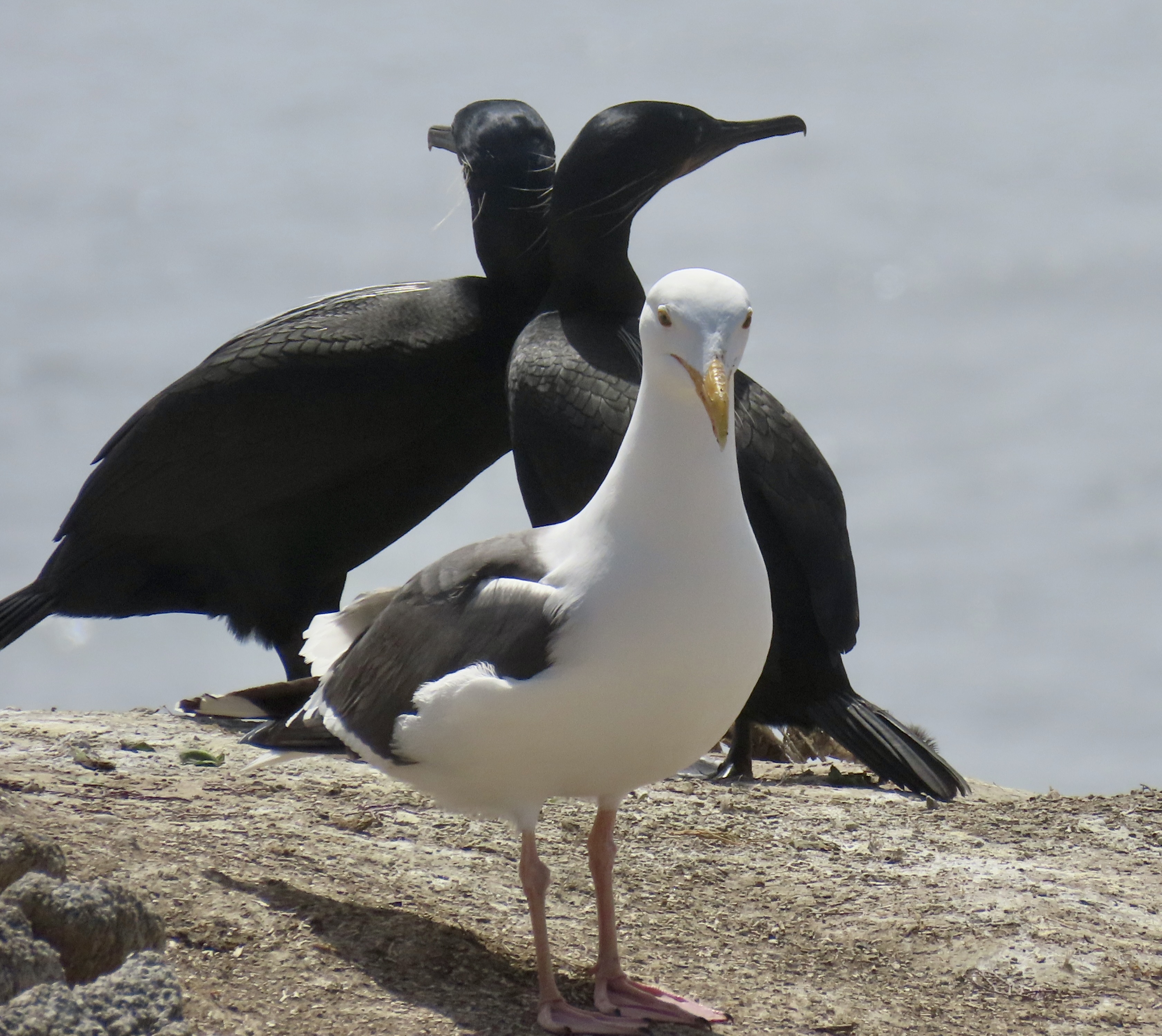
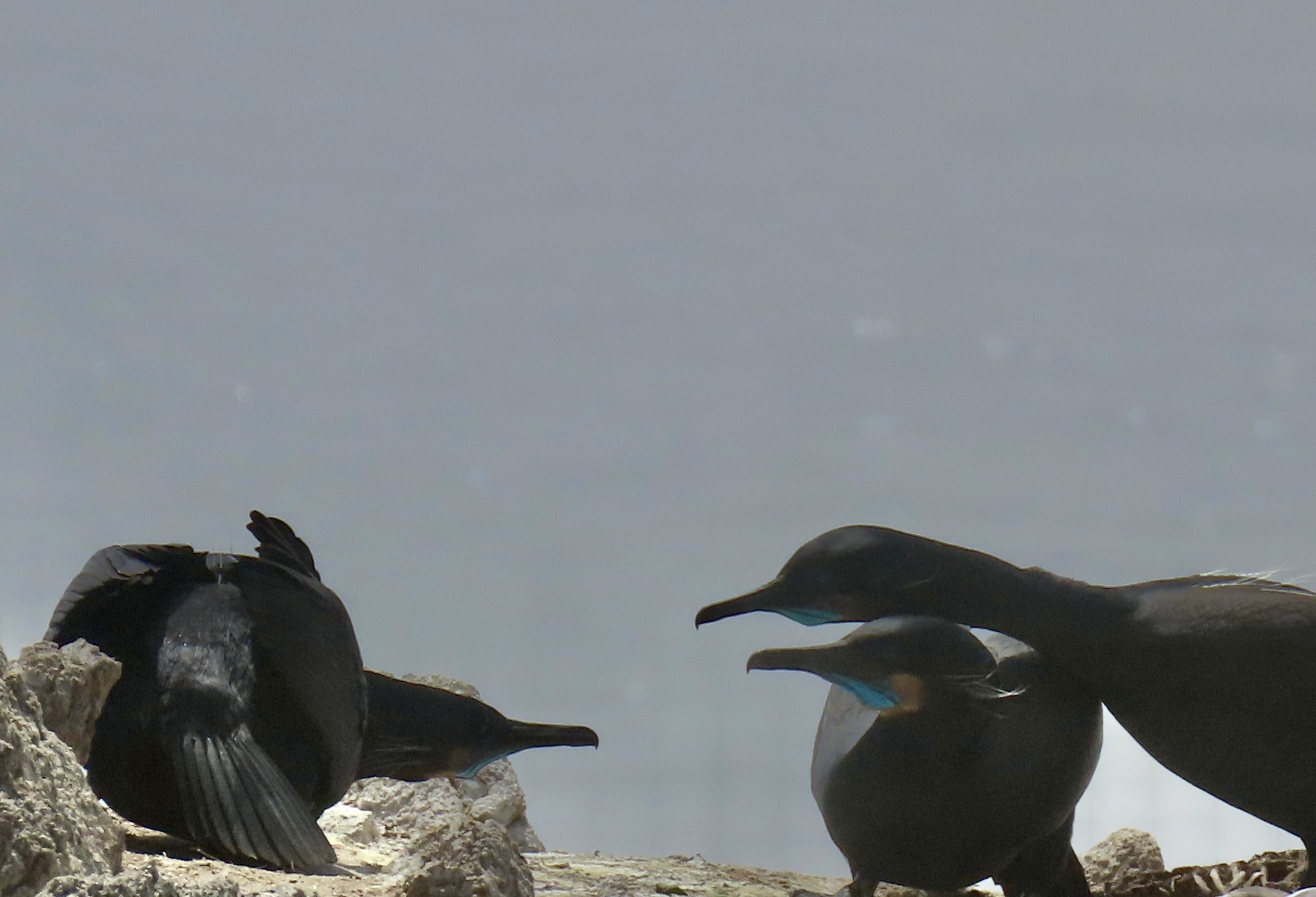
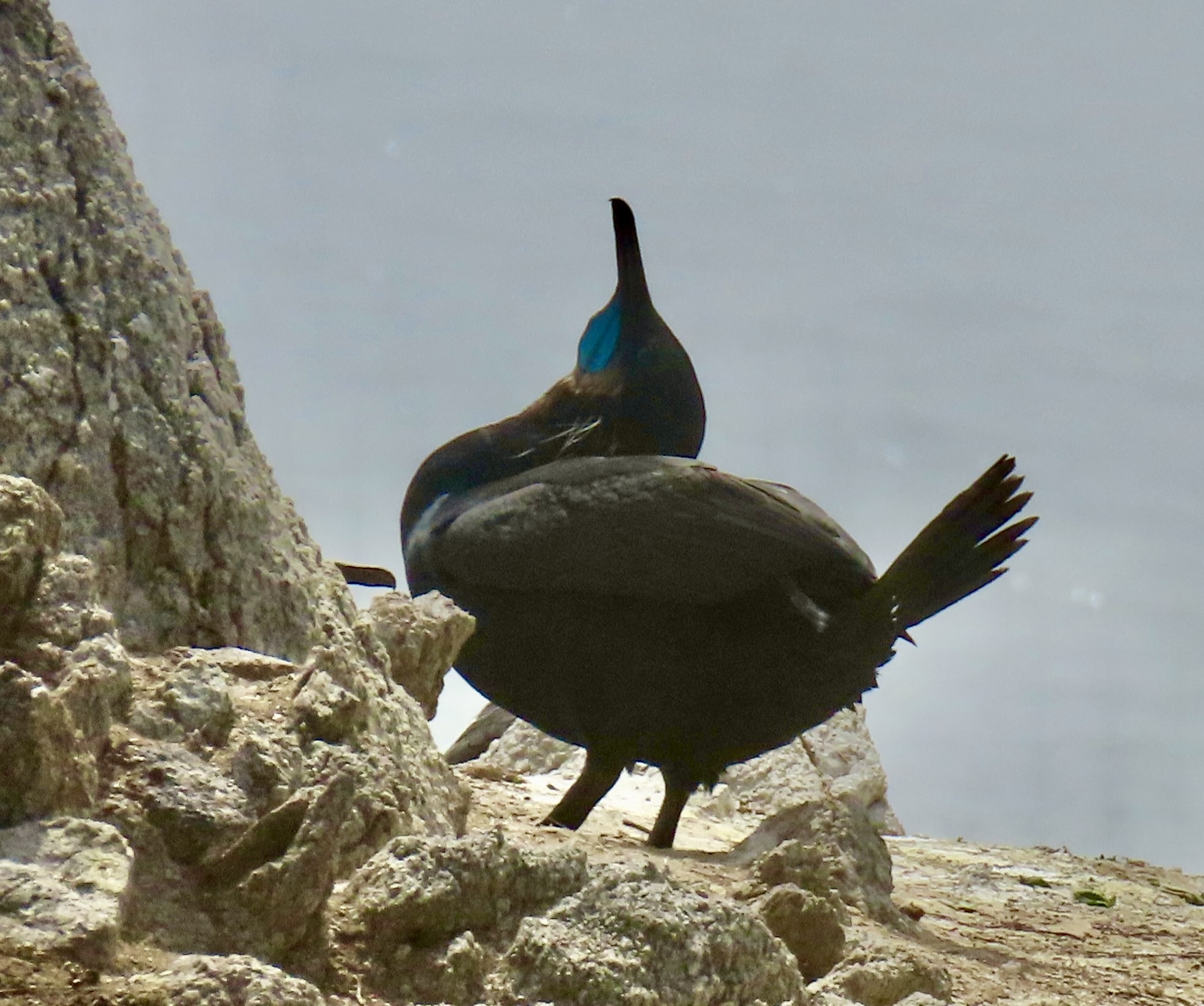
Peggy and I watched this pair of Brandt cormorants at the Point Lobos Reserve near Carmel, California as they shared a quiet snuggle. We had watched the two interacting for 10 minutes and we couldn’t help but think how human they seemed to be. The cobalt blue neck pouch and the white whisker-like feathers are both signs of mating season.
This is the second half of our series on Point Lobos. In my last post, we visited the northern part of the park and emphasized the natural beauty of the area. Today, we are going to explore the southern part of Point Lobos where we will feature the cormorants and seals. We had the opportunity— I might even say privilege— of watching cormorants as they went about the serious (and sometimes humorous) process of attracting and interacting with mates and mother seals as they watched over their babies. We will continue to explore the beauty of the park as well. How could we not? It’s Earth Day.
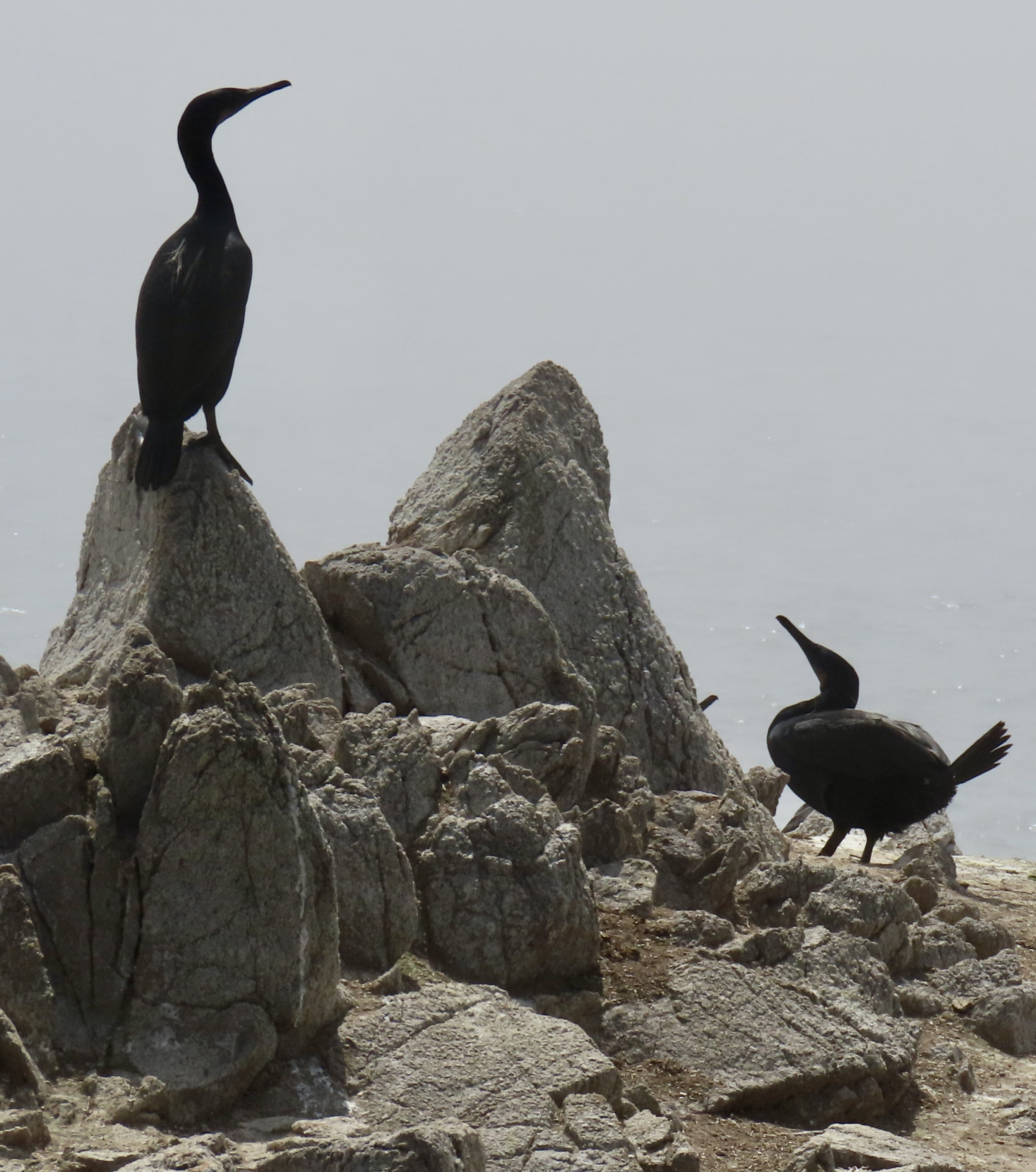
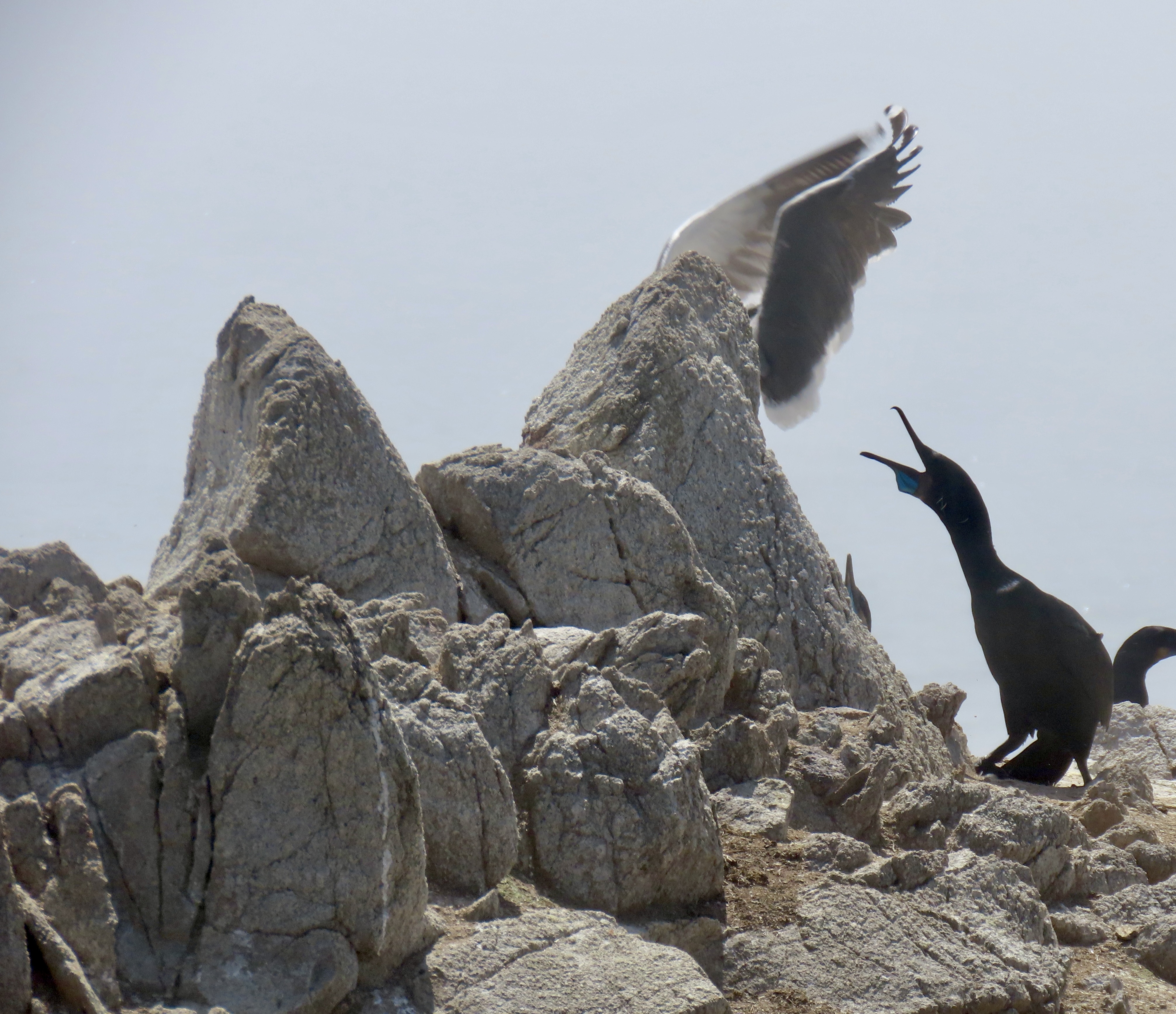
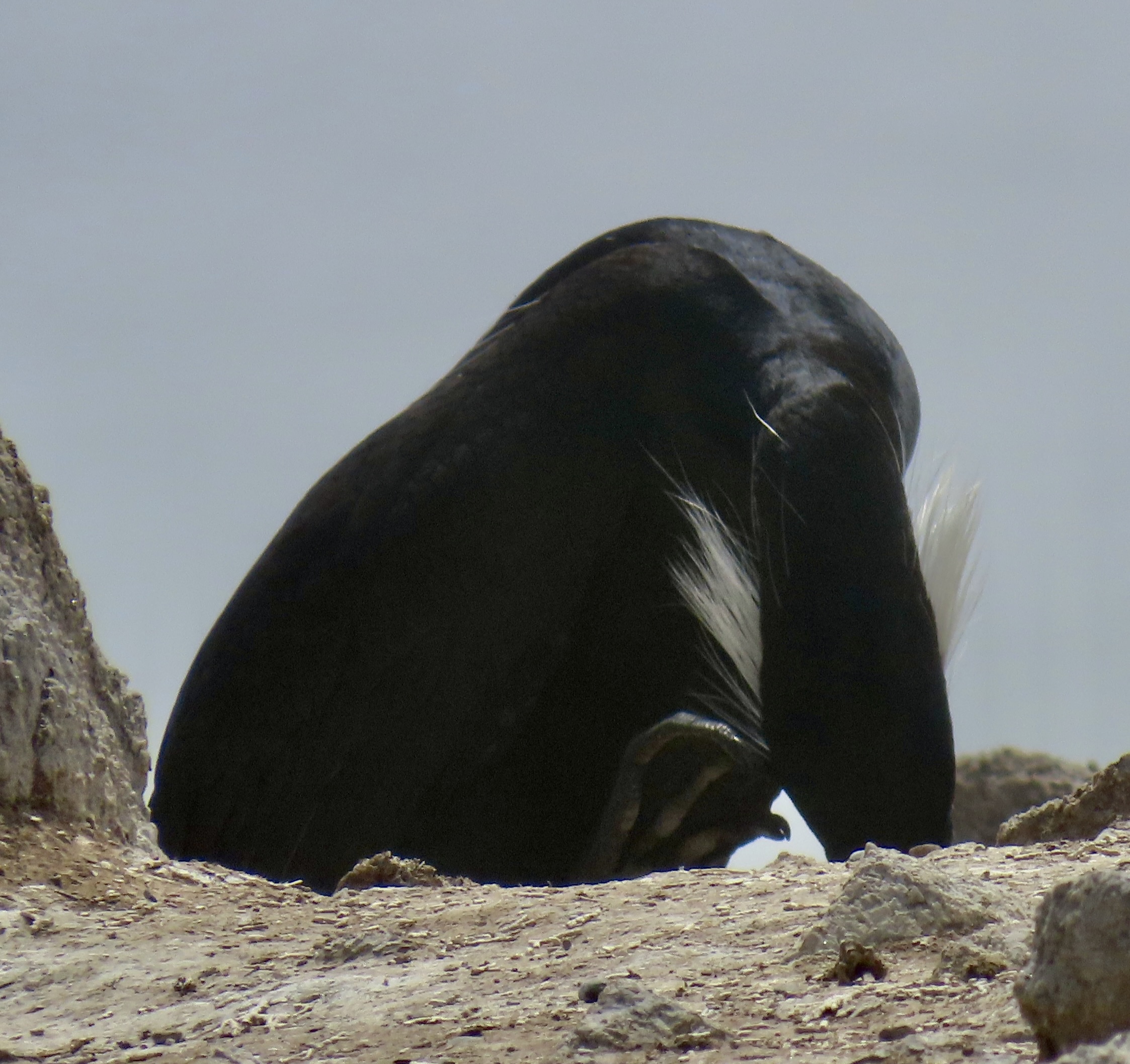
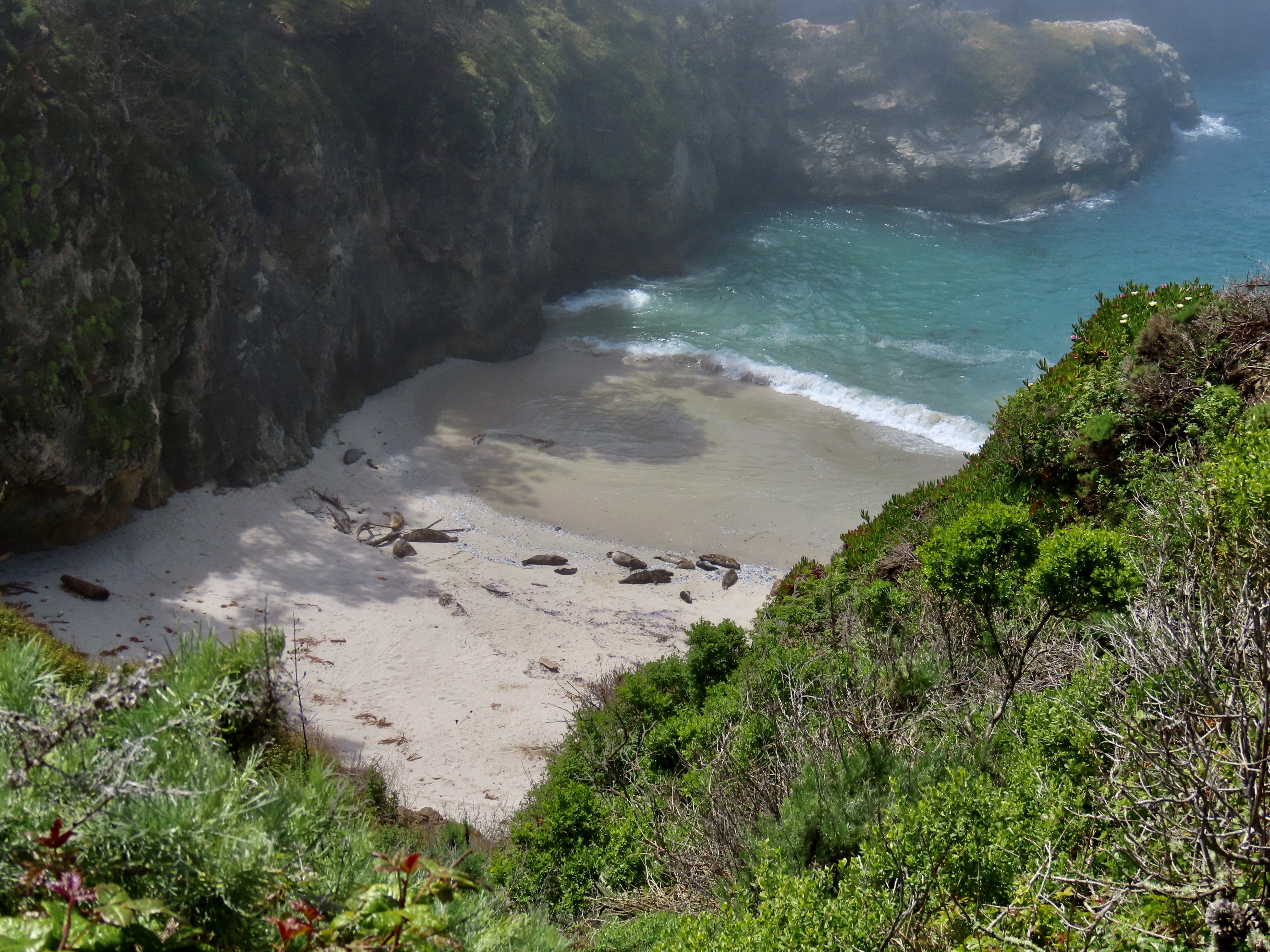
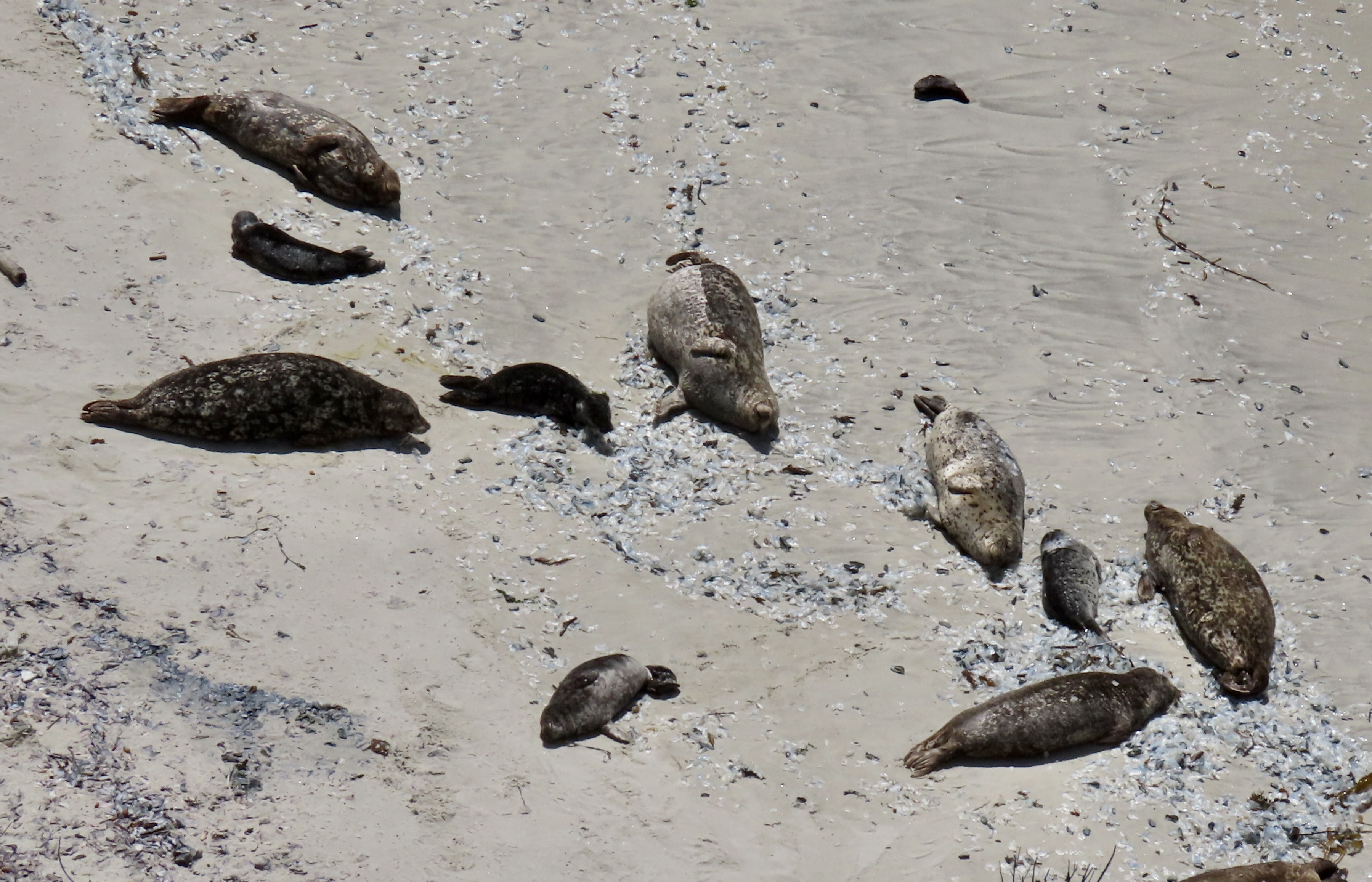
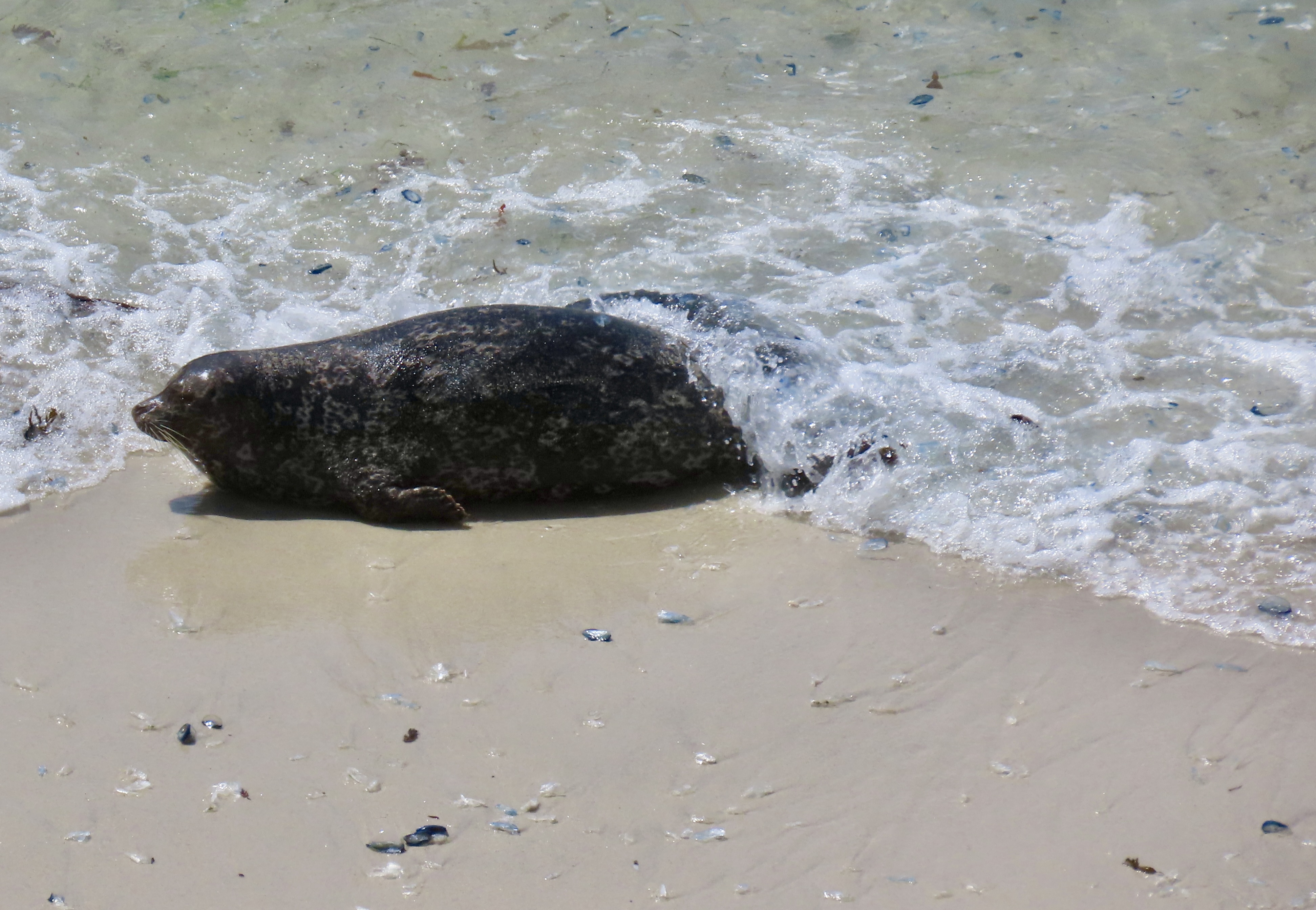
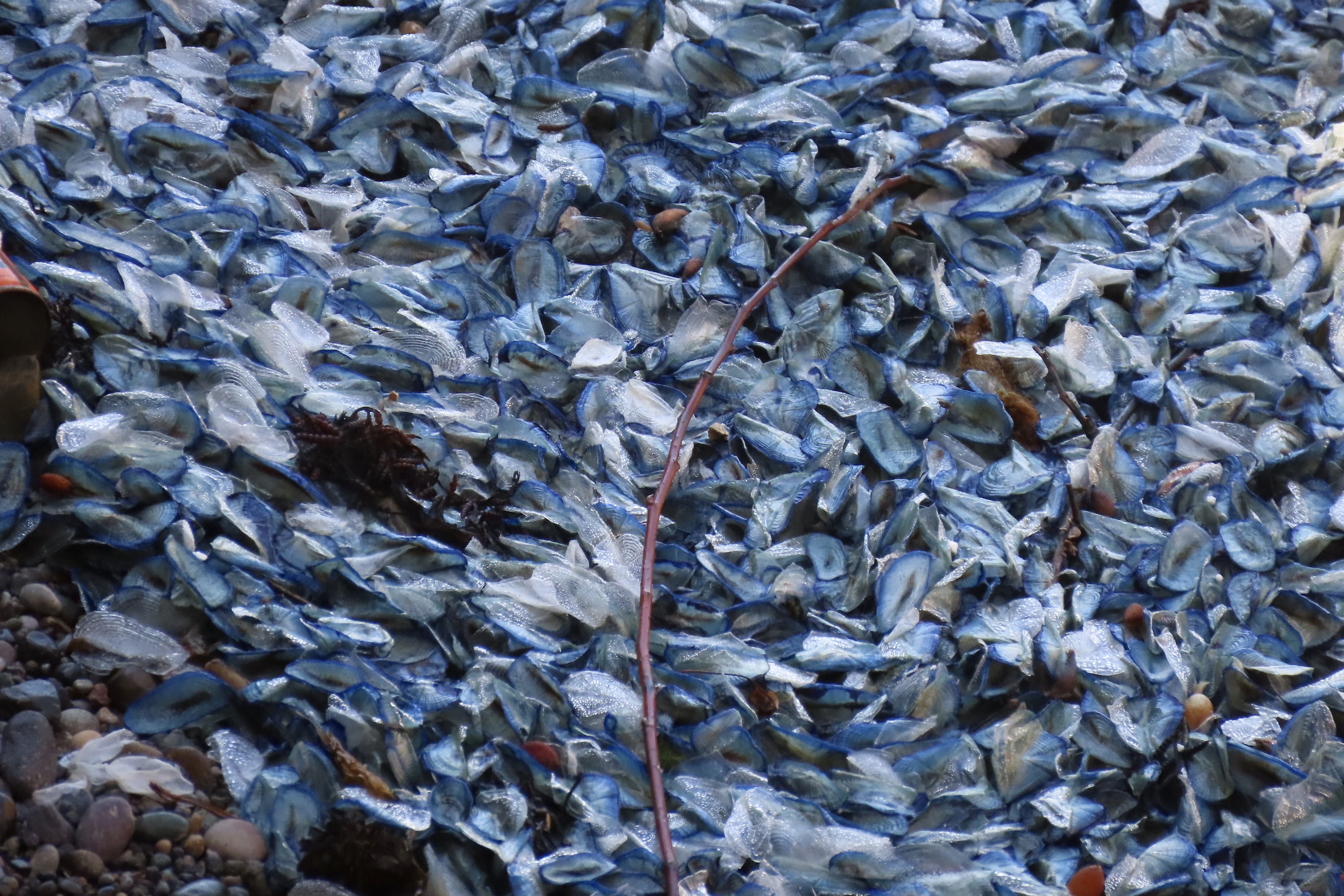
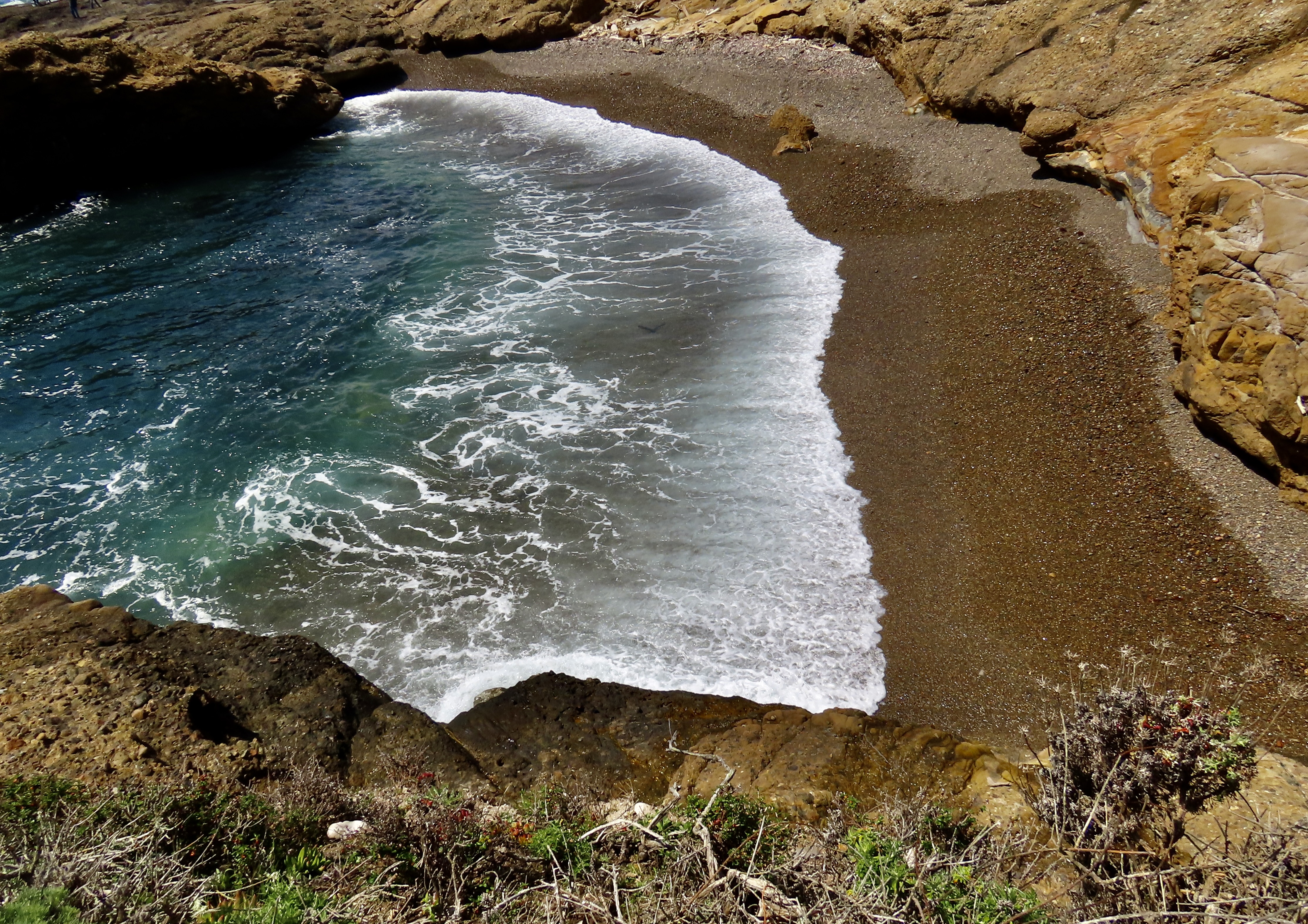
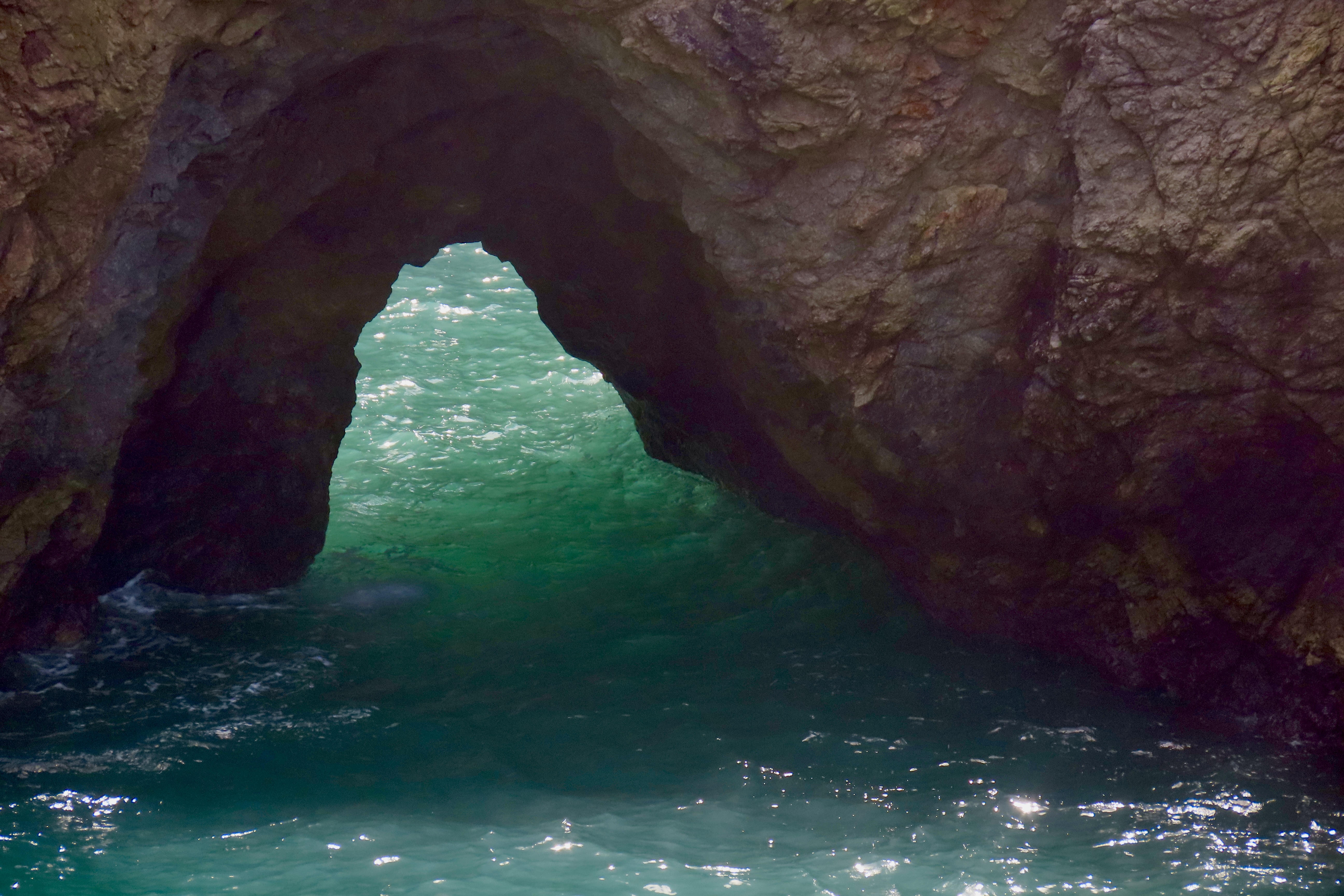
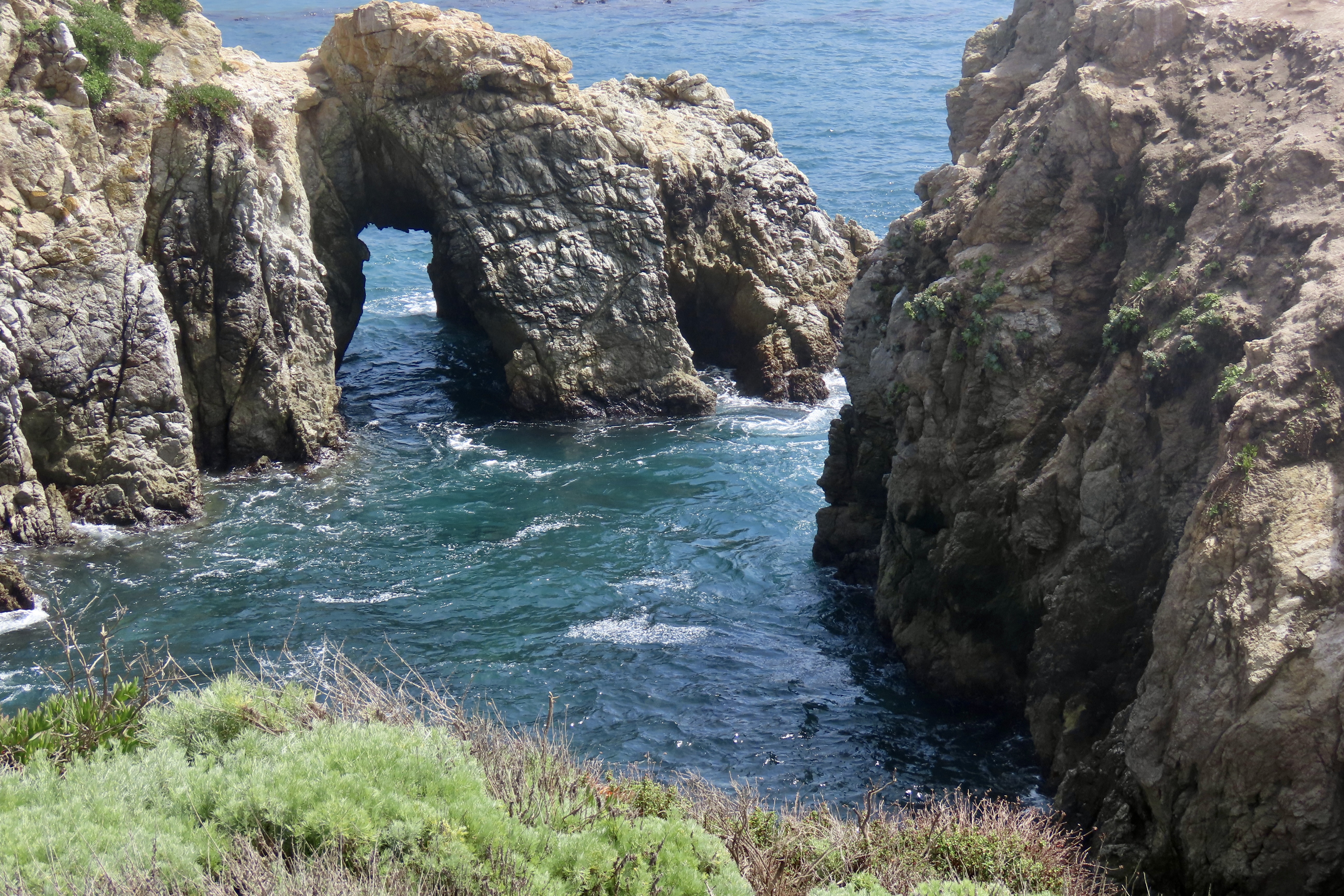
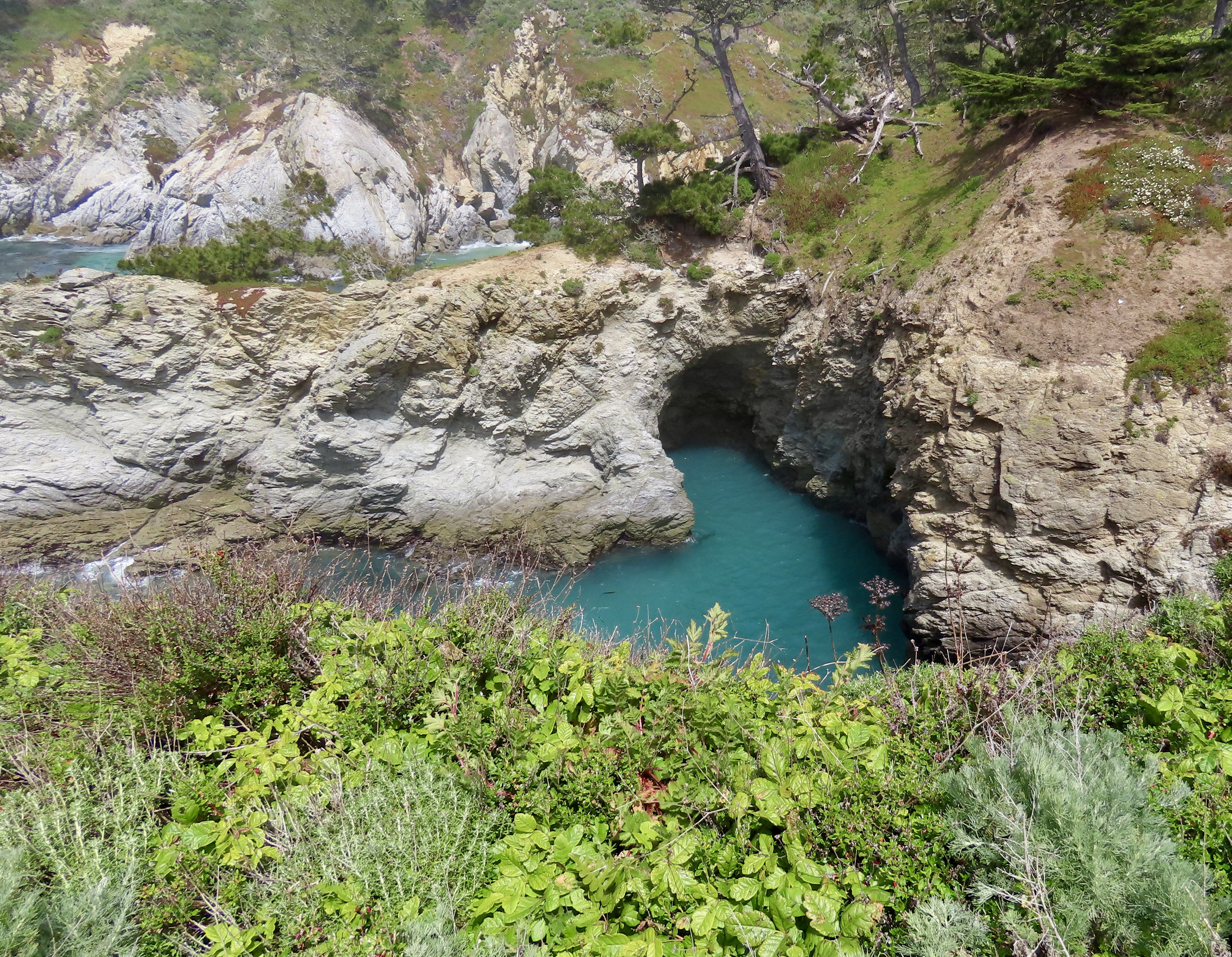
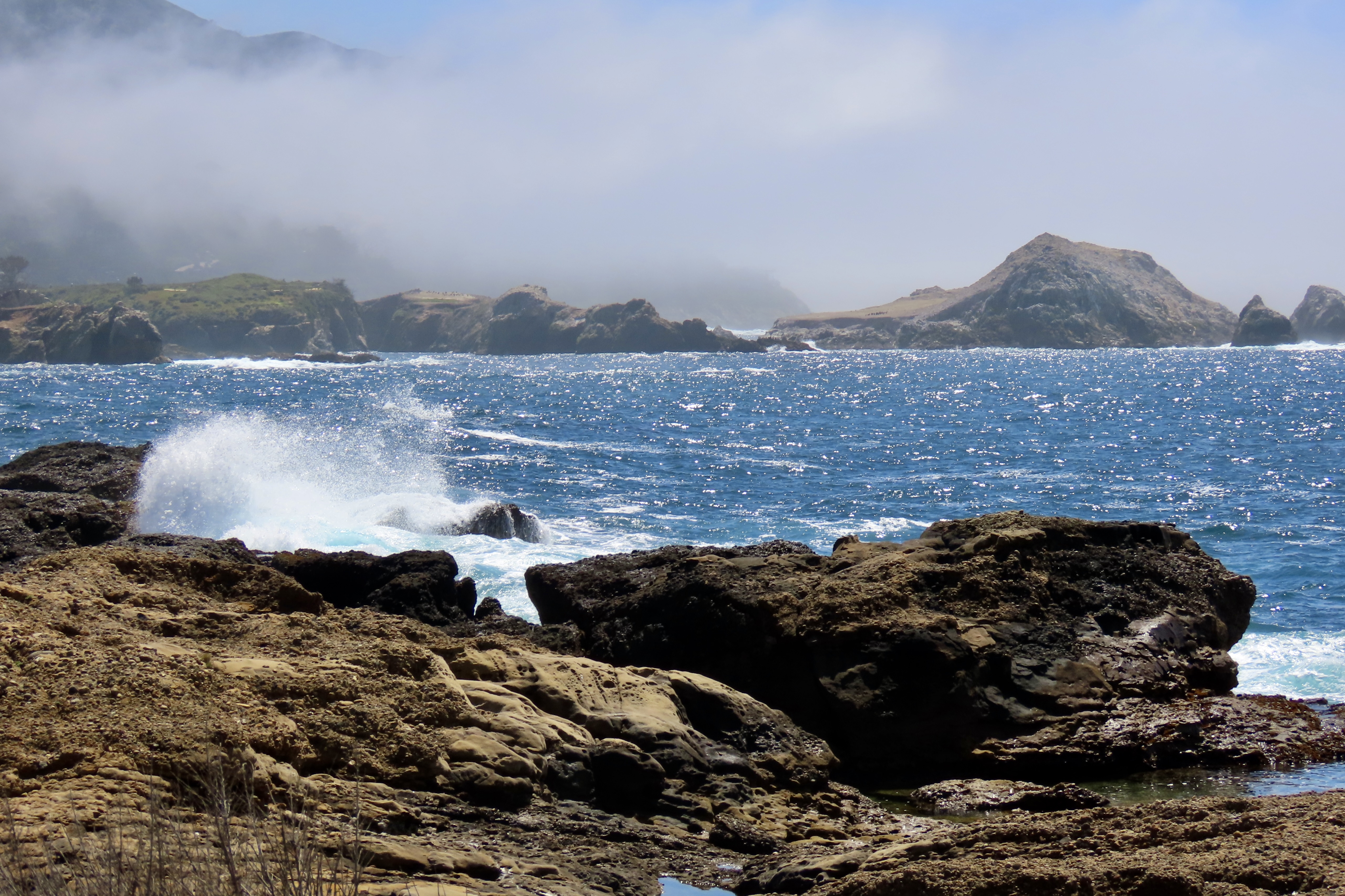
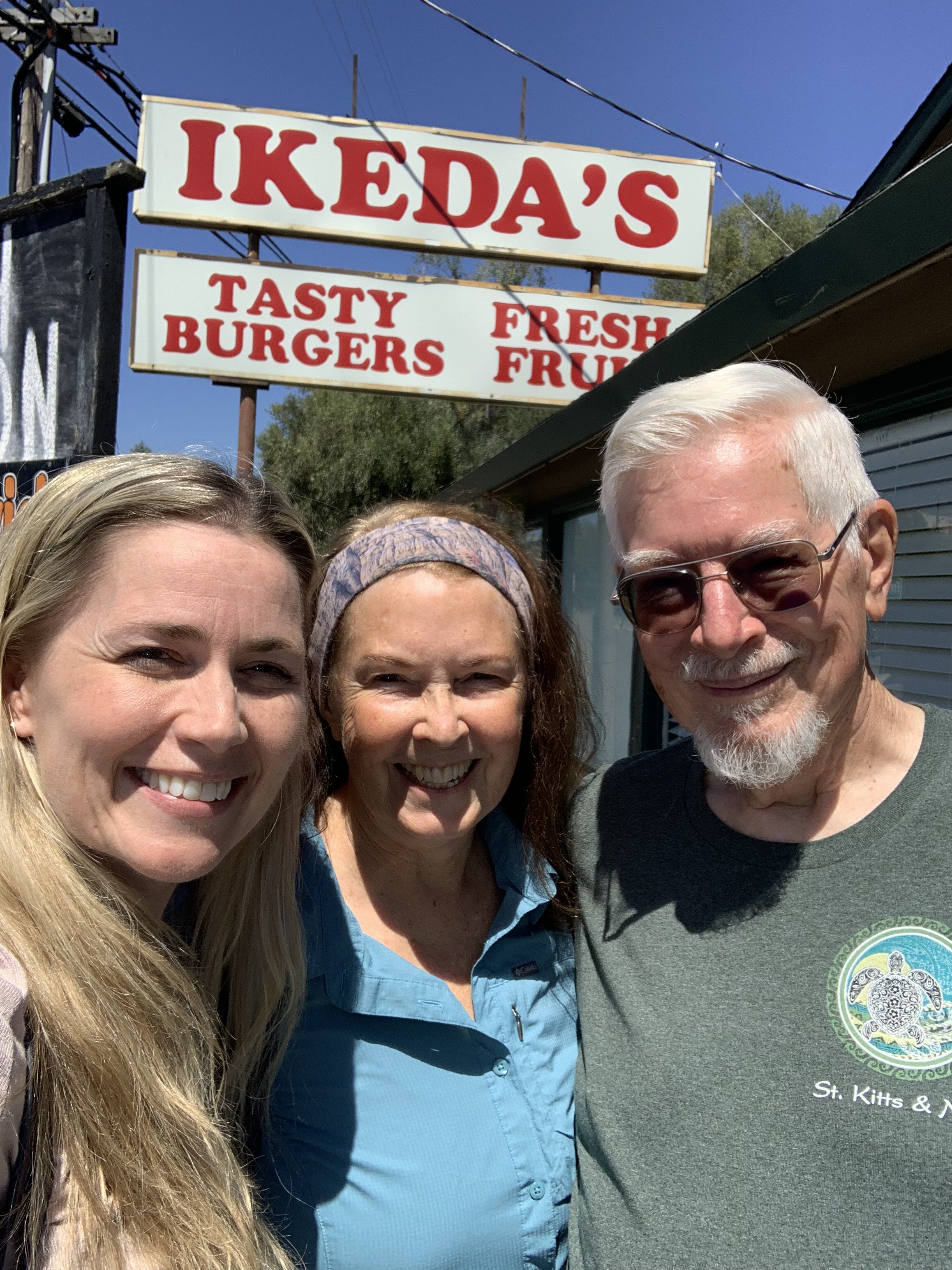
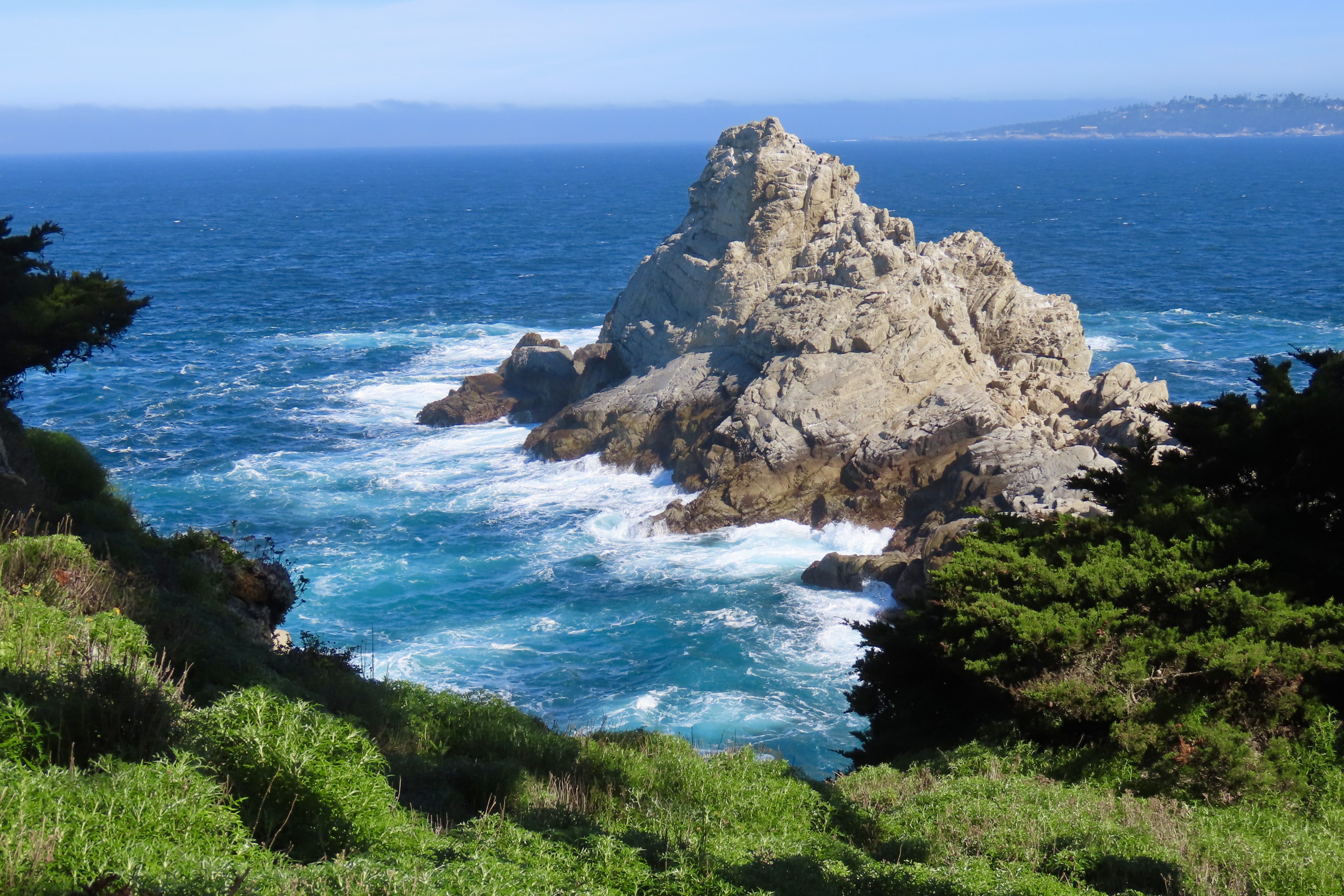
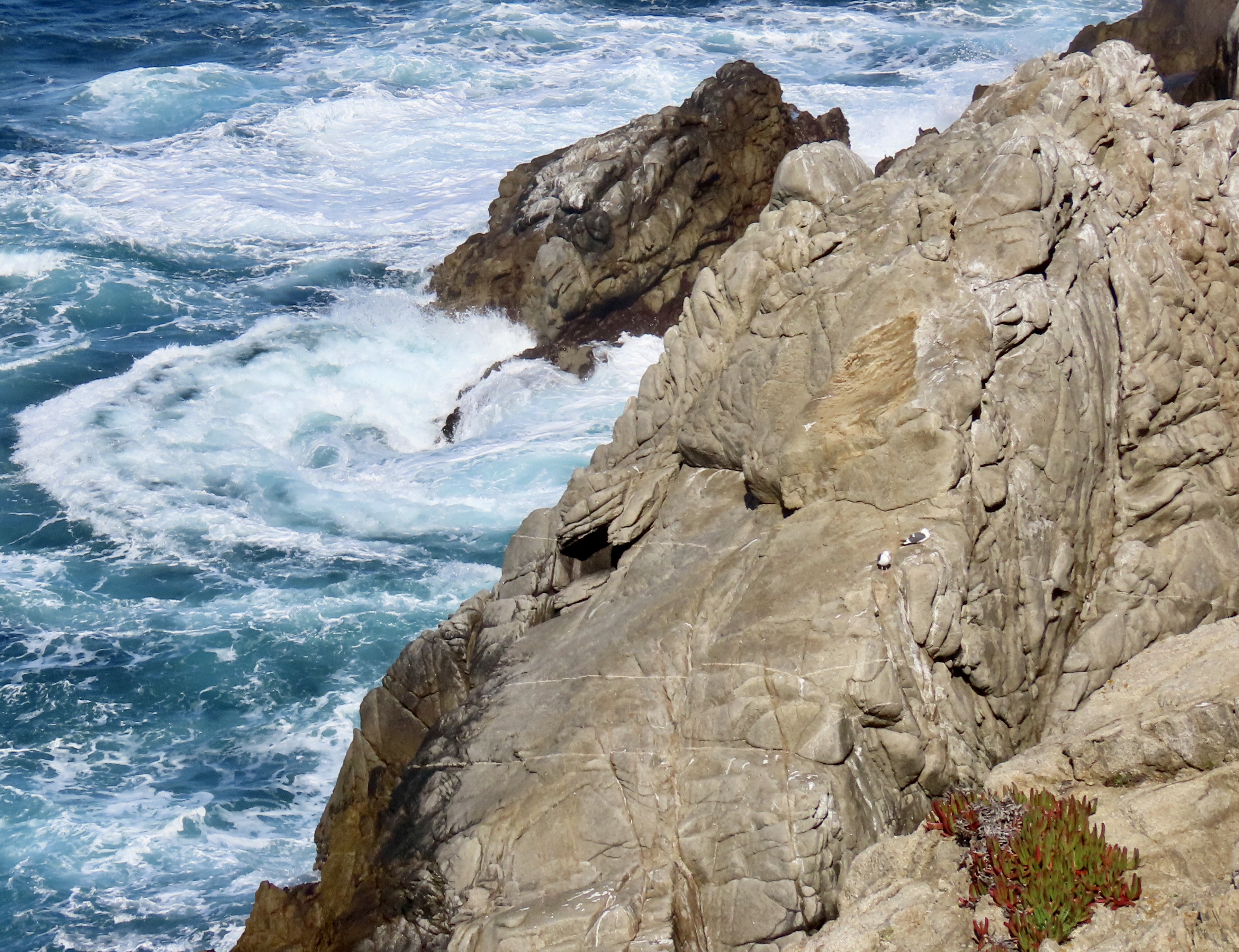
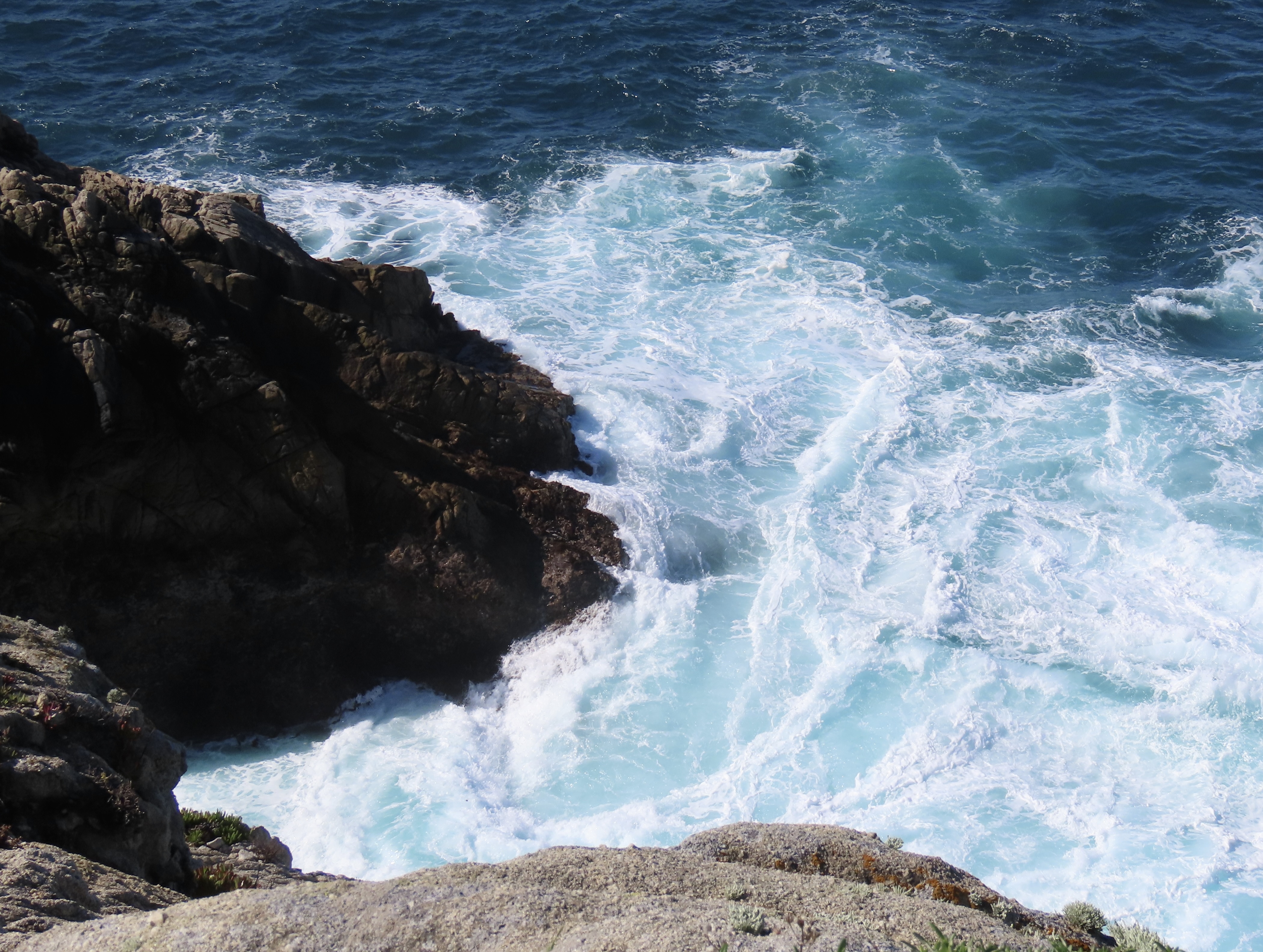
A California sea gull insisted on being in our first photos of the two cormorants shown above. The cormorants divided their attention between communicating with each other and checking their surroundings. Or maybe they were necking.They totally ignored the seagull. Is this a cormorant kiss?The gull decided to vacate the premises. It had gathered something in his beak that might have been nesting materials. It’s that time of the year. On the left, you can see another cormorant that apparently had something to say to the couple.In my imagination, she was seeking advice.Just before, the female had been eyeing a male on the rock above that seemed to be totally ignoring her. I imagined her asking, “How do I get his attention?”“You have to strut your stuff.”“We mean really strut your stuff.” Right about then, a pelican flew over and scared away her potential mate. She was not happy. Peggy caught the action.Meanwhile this pair went on with their discussion. Possibly they were discussing nest building. It’s the male’s responsibility. “You need to get busy, dear.” Was she egging him on?Actually, an important part of the mating ritual is for the male to build a nest with the hope of attracting a female to use it. We watched another male advertise his services. It appeared that the the nest was a little too makeshift. The female did not seem impressed. Maybe it was the fact that she had just watched him steal the materials from another cormorant! You can see the beak of the crime victim in the upper left hand corner about to deliver a peck.I liked this photo because it displayed the white whisker-feathers a Brandt cormorant grows during mating season. It also showed one of the big feet it uses for swimming. The cormorant is an excellent swimmer and can dive as deep as 200 feet in pursuit of fish.A final portrait of cormorants doing their thing.A seal birthing area was located right next to Bird Island where we watched the cormorants.This photo shows the steep cliffs that serve to protect the seals and their babies. It also shows the advantage of having a good telephoto lens to get close. Peggy and I happily snapped away.A mom and her baby had settled next to another seal that looked pregnant. The baby worked its way around to the other side of its mom. Was it looking for a hug?You may have wondered why we thought the other seal was pregnant. Well…There were several seals and pups in the area. I used this photo in my last post.We watched a mother seal swim in with her baby. A wave had washed the baby up against the mother.Peggy caught this shot of the mom checking up on her baby. Are you curious about all of the blue/grey/white stuff the seals are lying in?They are Velella, a small jelly fish that comes with a sail on its back. It normally lives offshore and uses the wind to move about in large numbers. Occasionally a strong Westerly will blow thousands of them ashore, however, where they die. And stink. I’ve seen and smelled them several times over the years. Apparently the odor does not bother the seals.Moving on from smelly jellies, here’s an Indian Paint Brush…And crashing waves…Lots of them…More…What they looked like close up. I don’t know which of us took this photo. It may have been a mistake, but I found it very interesting when I was looking through our photos for this post. Having expended its energy, a wave gently retreats back to the ocean.Neither Peggy nor I can ever resist stones that require little imagination to turn into creatures. We were sort of thinking Easter Island.Nor can we resist a flower garden framed like this?A series of sea caves were also quite photogenic. The water had a translucent quality.This rock offered two caves. Eventually the caves will cut all of the way through and create a sea stack. Of course the ‘eventually’ could mean a few hundred thousand or million years. Why hurry.The color of the water caught our attention here.These islands mark the southern boundary of Point Lobos.A final photo to wrap up our two posts on Point Lobos and another reminder of how beautiful and precious the world we live in is. And how important it is that we protect it. Next up: We go inland to Pinnacles National Park. One of the latest created in America’s great system.Peggy and I are in Sacramento now, heading out to our next Pacific Coast location: Pt. Reyes National Seashore. We came to town to visit with family and friends, which we always do when in the area. This time we had another special treat: Meeting with Jenny Collins, a fellow blogger on Word Press whose blog is Bulldog Travels/Photos by Jenny. Jenny and I started following each other 9 or 10 years ago. We have a lot in common. She loves traveling, nature, and photography, as many of us do. We also come from the same area, however, which adds another layer. This time we met at a restaurant in Auburn which Peggy and I used to frequent 30 years ago. It was the first time we met Jenny and we had a delightful time. I was reminded of just how valuable the friendships we make on WordPress are. Jenny’s last post was a gorgeous photo essay on Yosemite National Park. I recommend that you check it out at bulldog travels.com.
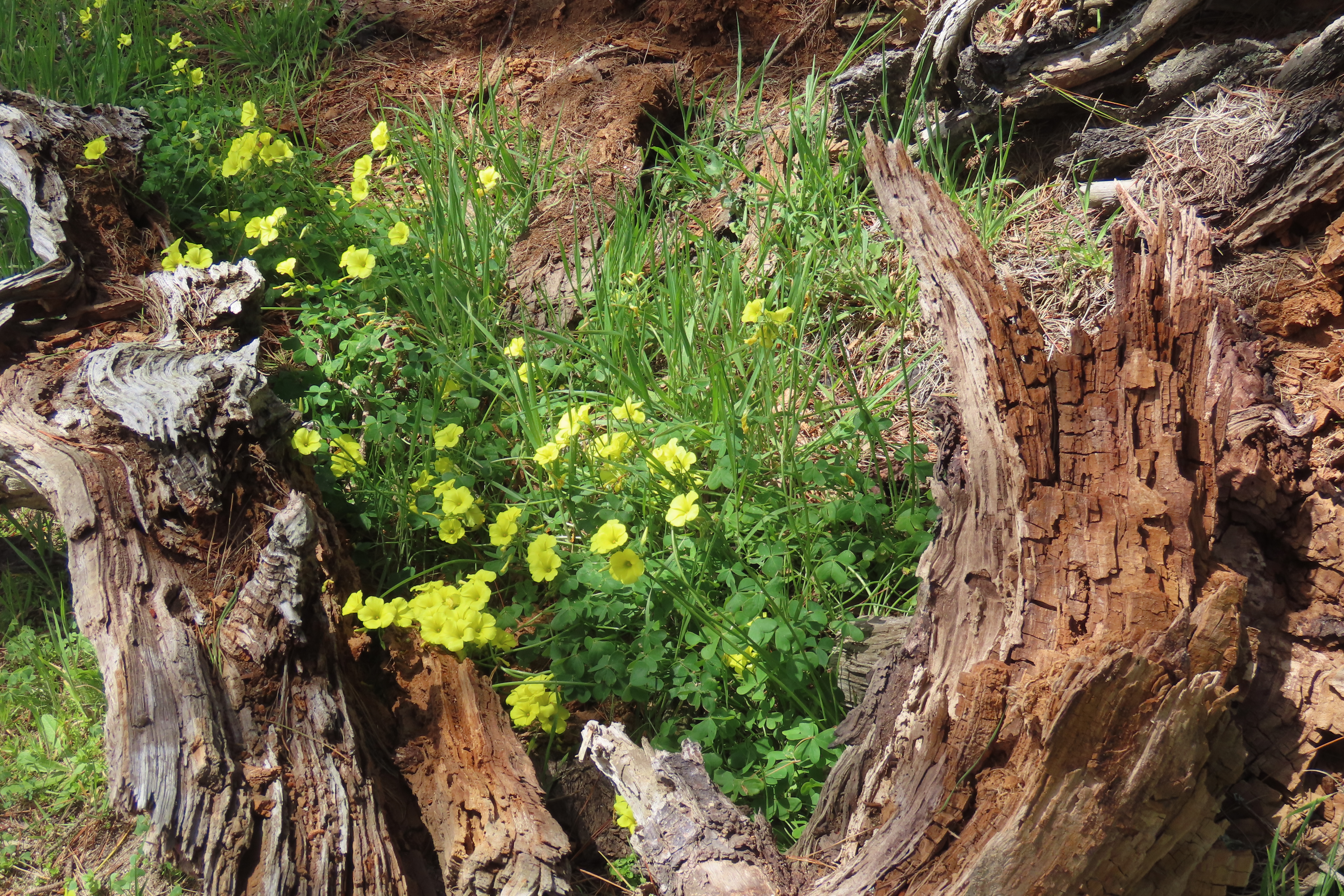
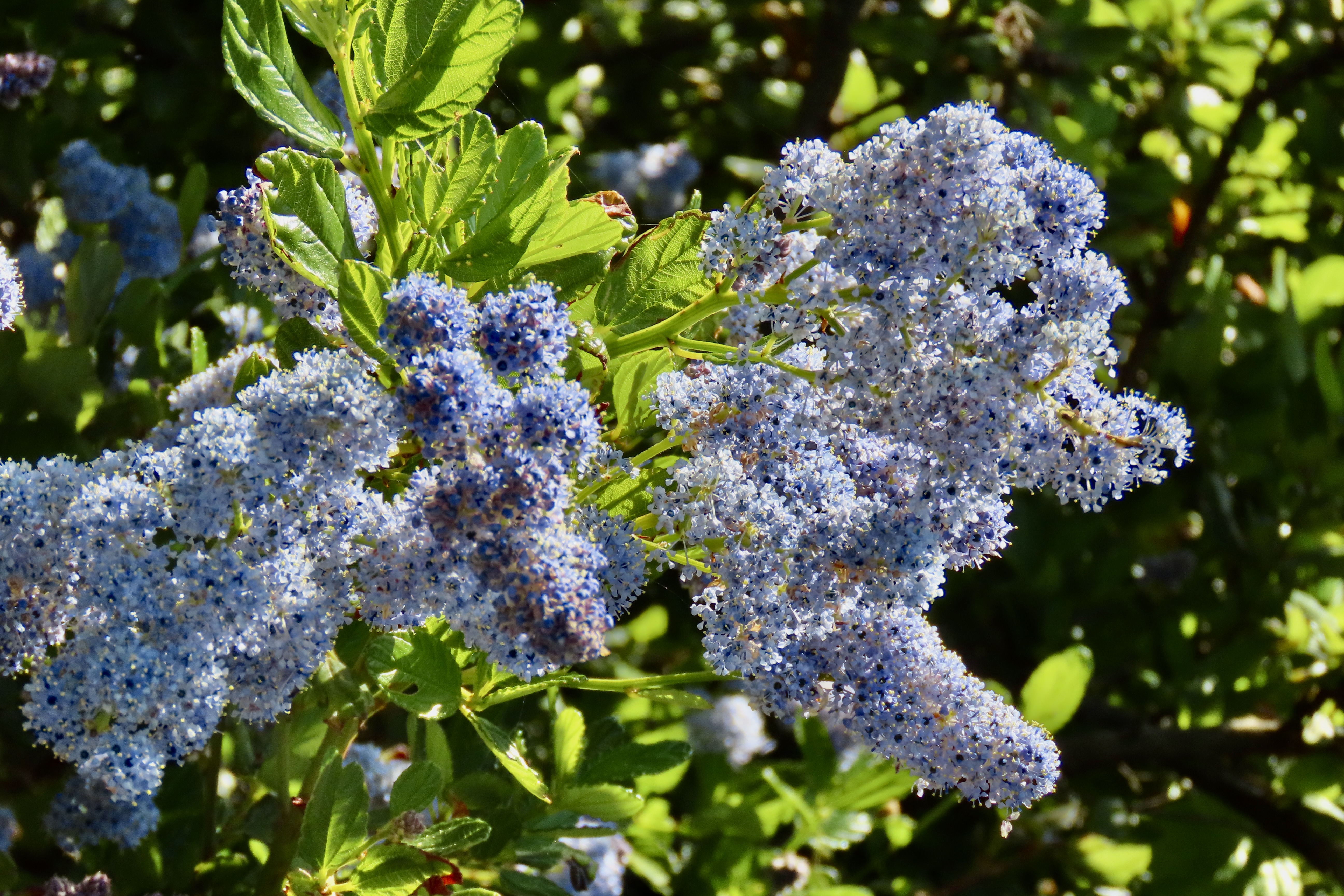
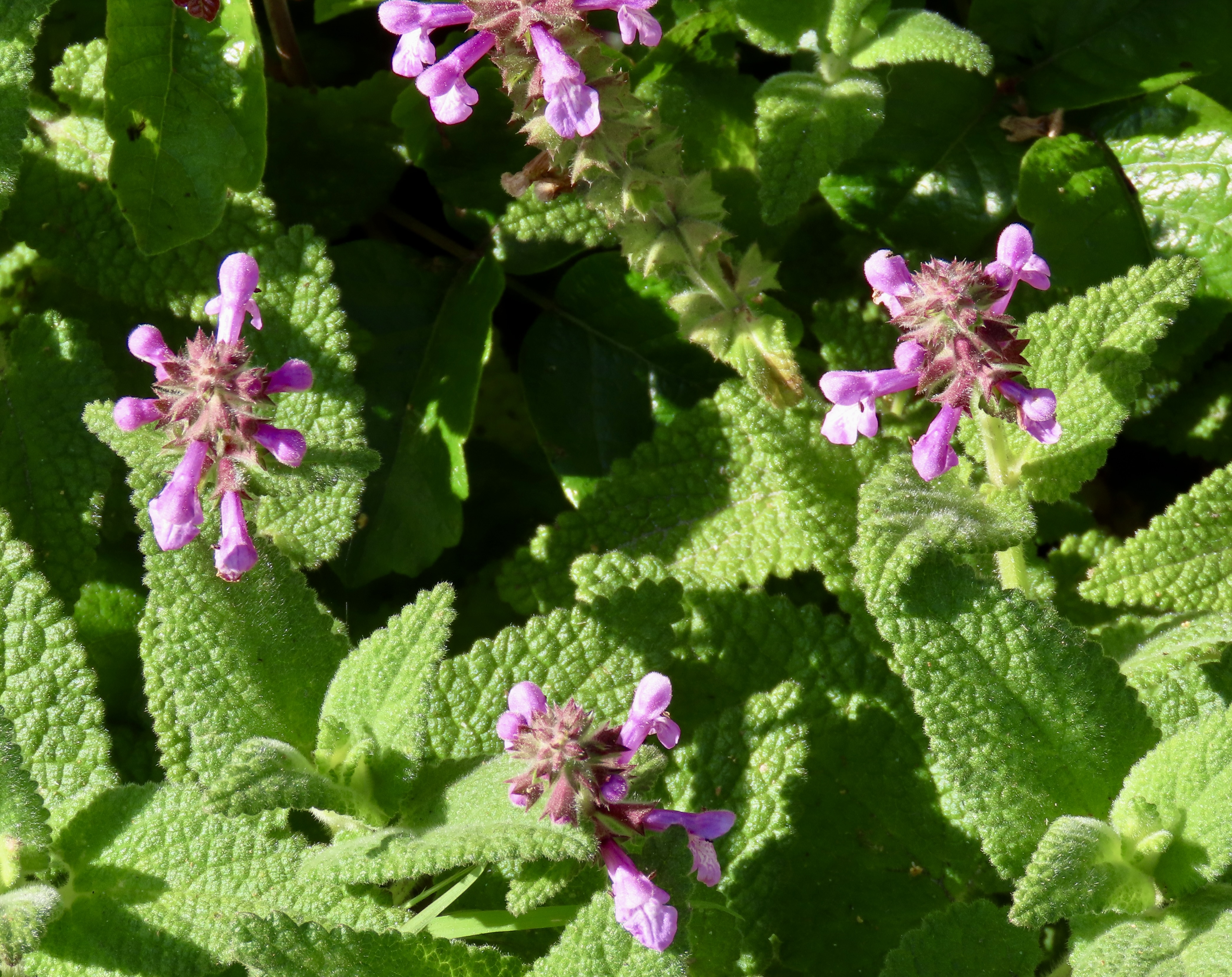
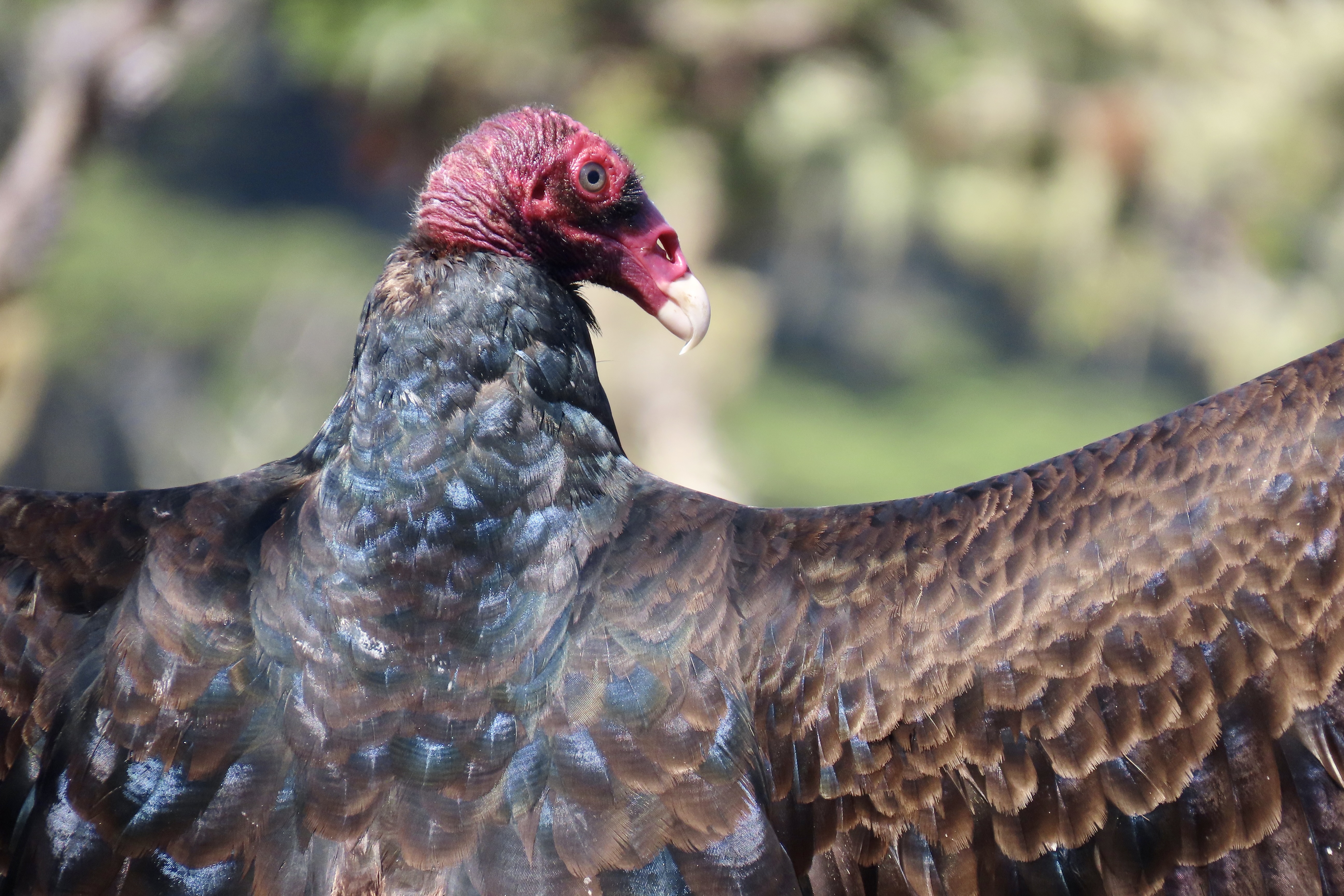
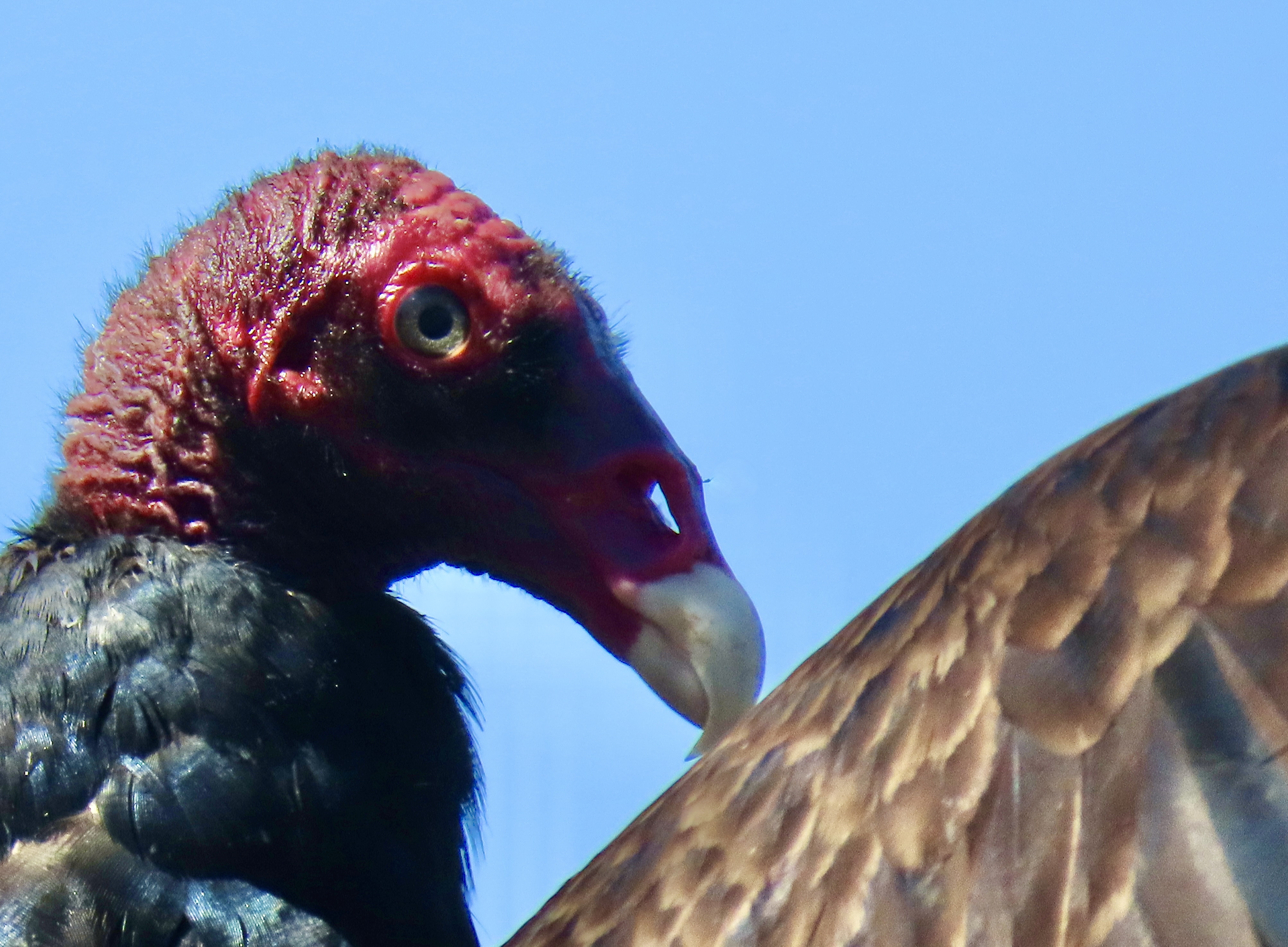
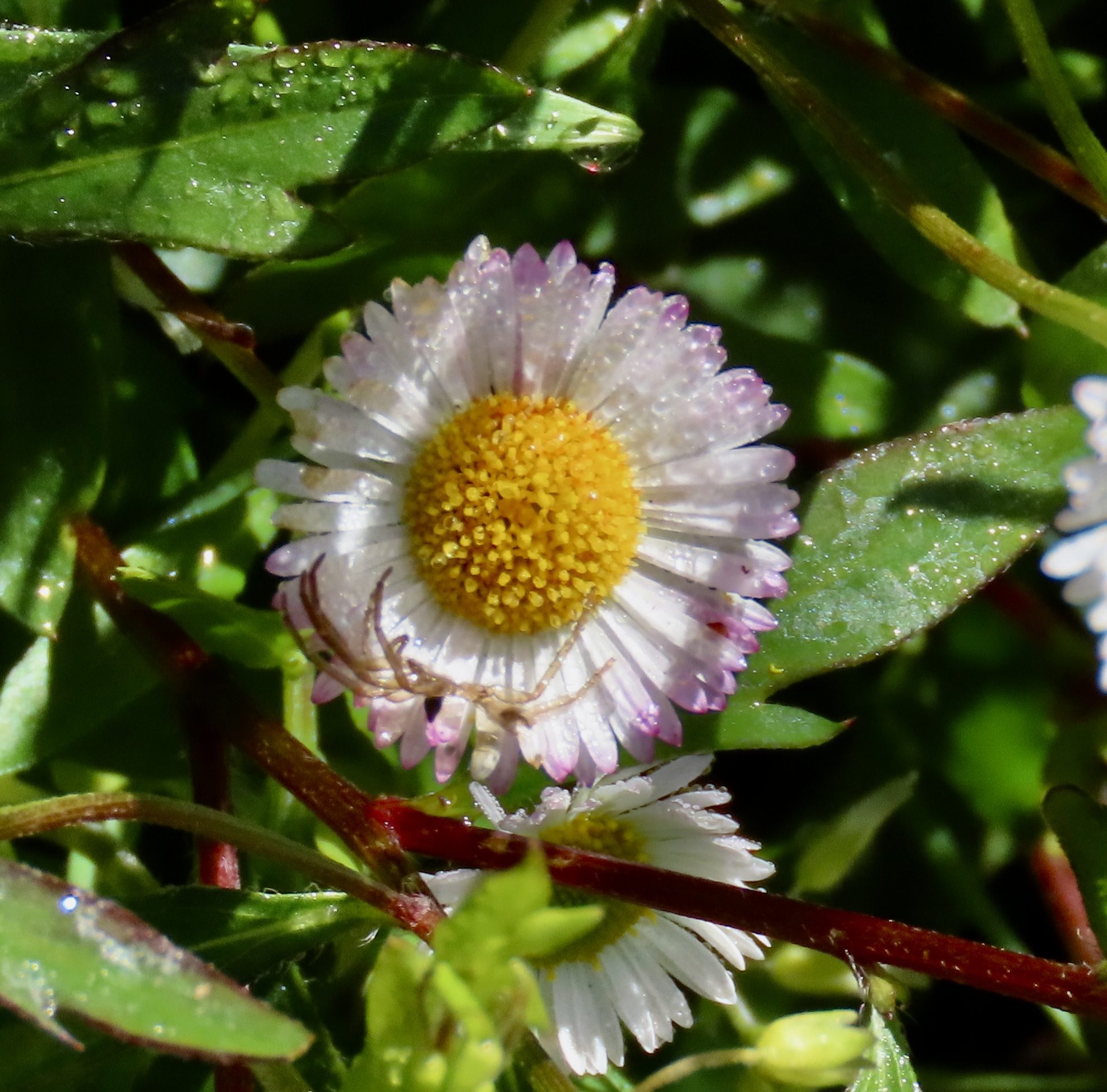
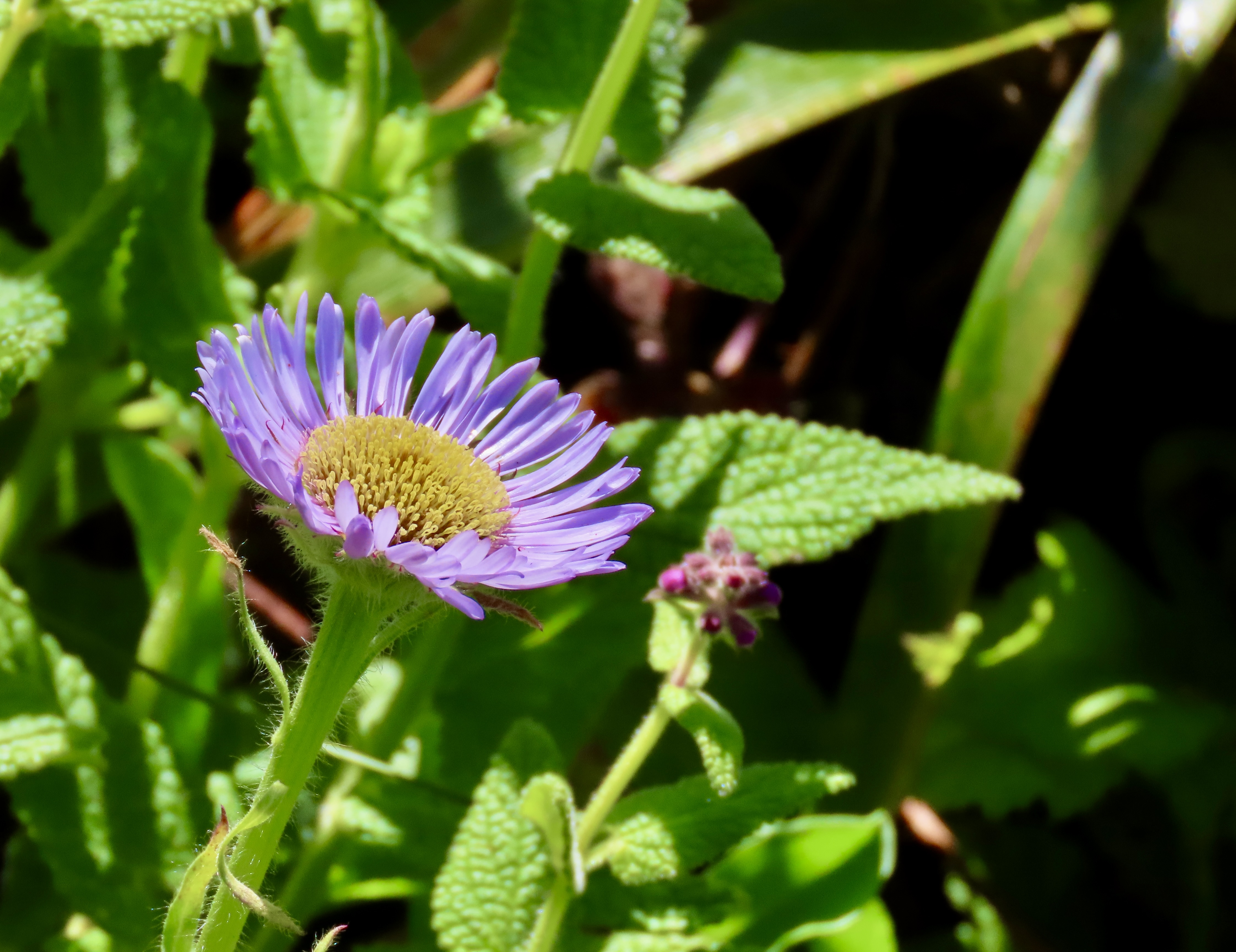
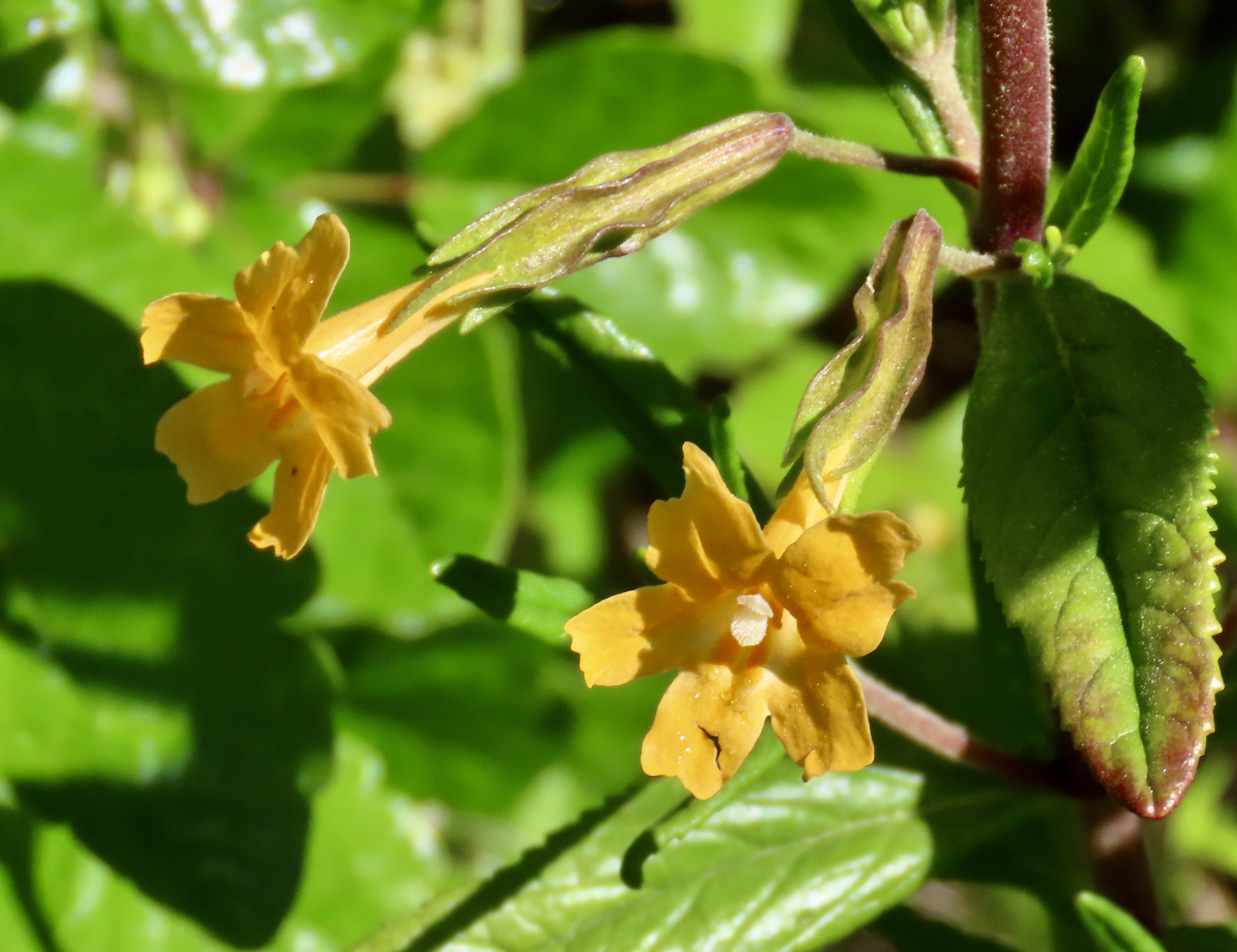
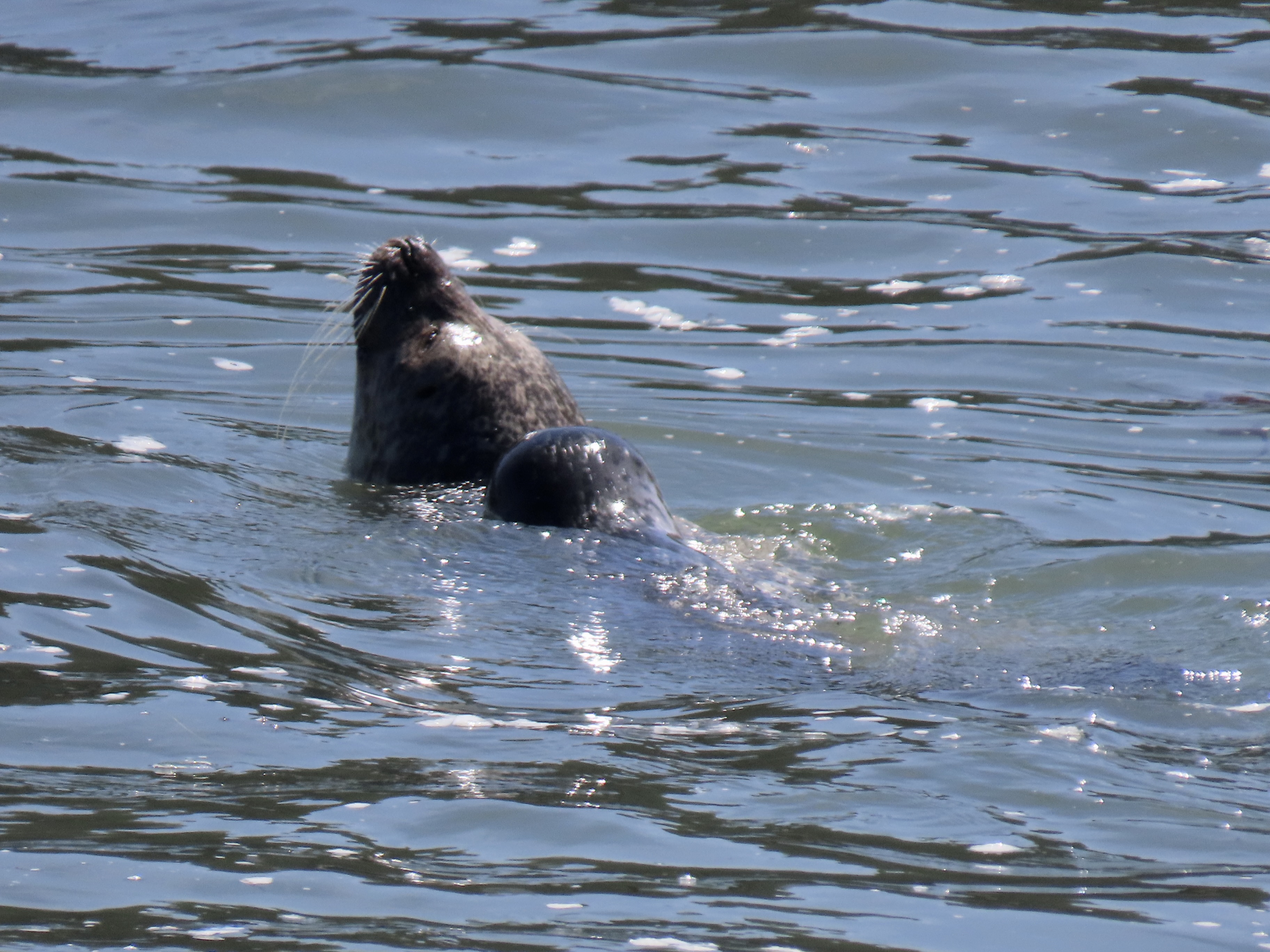
Point Lobos is considered one of California’s most beautiful state parks. The world renowned photographers Ansel Adams and Edward Weston would agree. They spent years returning to the park again and again to capture its beauty. it is located just south of Carmel along highway 1. Hiking out the Cypress Grove Trail, Peggy and I came upon this sea stack known at the Pinnacle.Peggy found unique ways of framing it, including the twisted limb on the upper right.She was having great fun with her new camera! See the black dots on peak…Like many sea stacks up and down the Pacific Coast, it had its own flock of cormorants.Another perspective. Following are other views along Cypress Grove Trail.Both sides of the peninsula leading out to the Pinnacle provided different views of Pacific Ocean waves rolling in.I am ever fascinated by the patterns in water created by the waves and tides— infinite works of art.A view from the south side of the Cypress Grove Trail.And another.A close up.As might be expected, we found some very impressive cypress trees growing along the Cypress Grove Trail.Ansel Adams and Edward Weston both loved the gnarly cypress trees. I rendered this one in black and white to honor them.Flowers are also abundant in the Reserve. I stopped to capture this iris. Peggy had beaten me to it.Invasive but striking, Oxalis or Bermuda buttercup, is another native of South Africa.Does a flower get any more yellow?Wild lilacs greeted us at the beginning of the Cypress Grove Trail.As did this nettle, coastal hedge. You can look, but best not touch.I had my nose in a flower when Peggy said, “Curt, check out this buzzard.” She had photographed it with its wings spread. We were on the Whaler’s Cove Knoll trail on our way to Whaler’s Cove.It had ignored Peggy but it started to give me the eye with a hungry look. Or was I imagining things?Hmmm. I wasn’t sure about being eyed by the buzzard, but I admired its beautiful feathers.This may the occasion for one of those “You know you are old when a buzzard thinks of you as a potential dinner,” jokes.The daisy I ‘had my nose in.’ I totally missed the spider!Another daisy of a different color. Our flower app identified it as a seaside daisy.An old friend: Bush, monkey flowers.A small museum housed in an old whaler’s cabin at Whaler’s Cove provided a bit of history. I should not have been surprised to learn where Monterey Jack Cheese came from. Jack made it. Grin. Actually, it was originally known as Jack’s Cheese. The Monterey was added later. A number of industries were located at Point Lobos. In addition cattle ranching, cheese making, and whale hunting, they included the largest abalone factory on the West Coast.One reason I wanted to hike over to the Cove was because the last time I was at Point lobos, I saw a seal nursing its baby there. We missed that, but we did see a mother with its baby swimming along behind. We had to travel down to the southern part of the park to find more mother seals and their pups. We will be featuring them, along with cormorants, and more great scenery in our next post.Next time: There will be close ups!
























 Wandering through Time and Place