One Dives Weird for Dinner, the Other Herds It: Brown and White Pelicans… The Focus Series

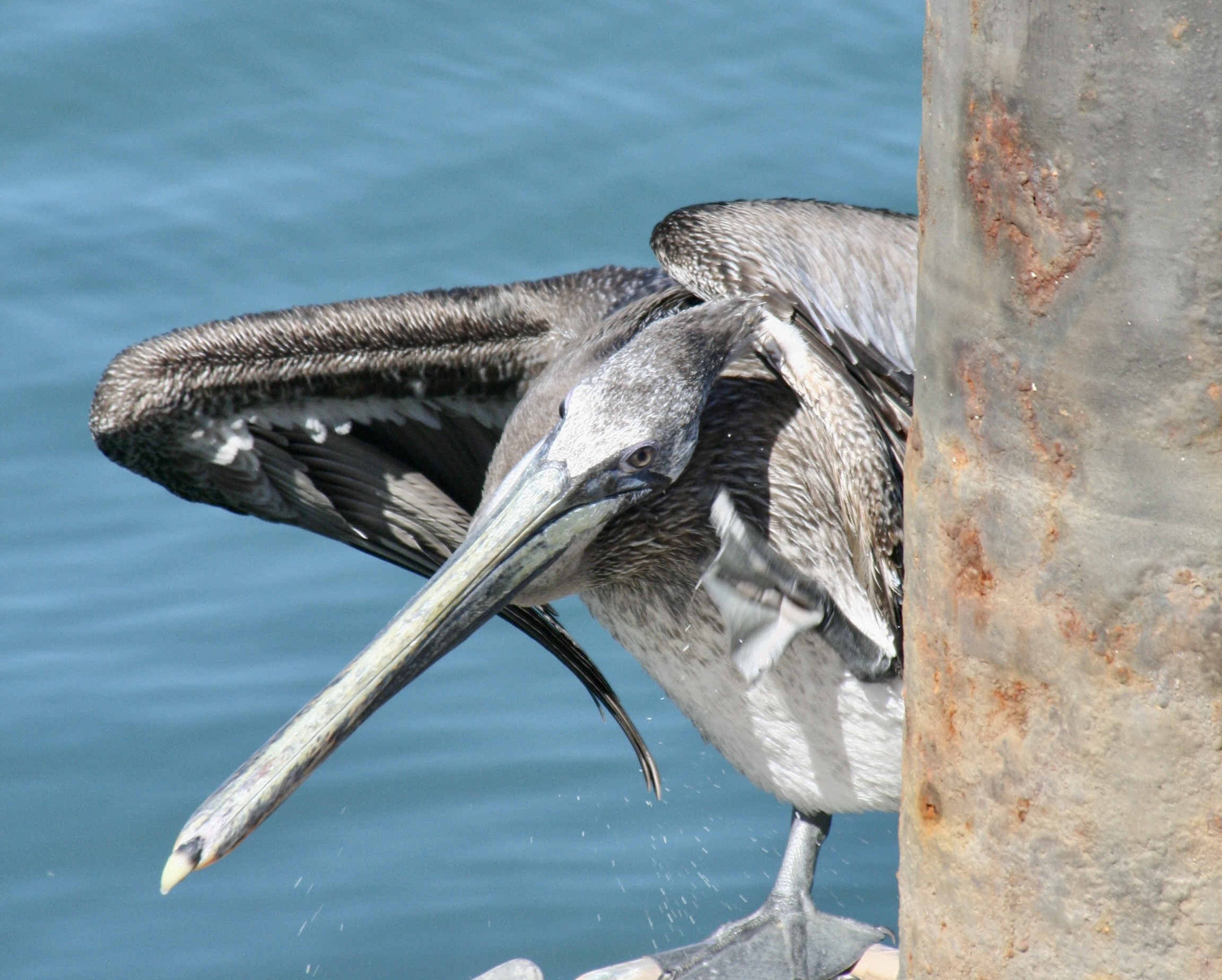
If you have been following this blog for a while, you know that Peggy and I love pelicans. They can appear and act a bit strange. It’s what makes them so attractive to us. We like weird. It wasn’t clear what this one was up to. Scratching an itch? Waving to us? Practicing a crash landing? Whatever, we were lucky to catch it in mid-acton. At the time we were visiting Cabo San Lucas on the the tip of the Baja Peninsula.
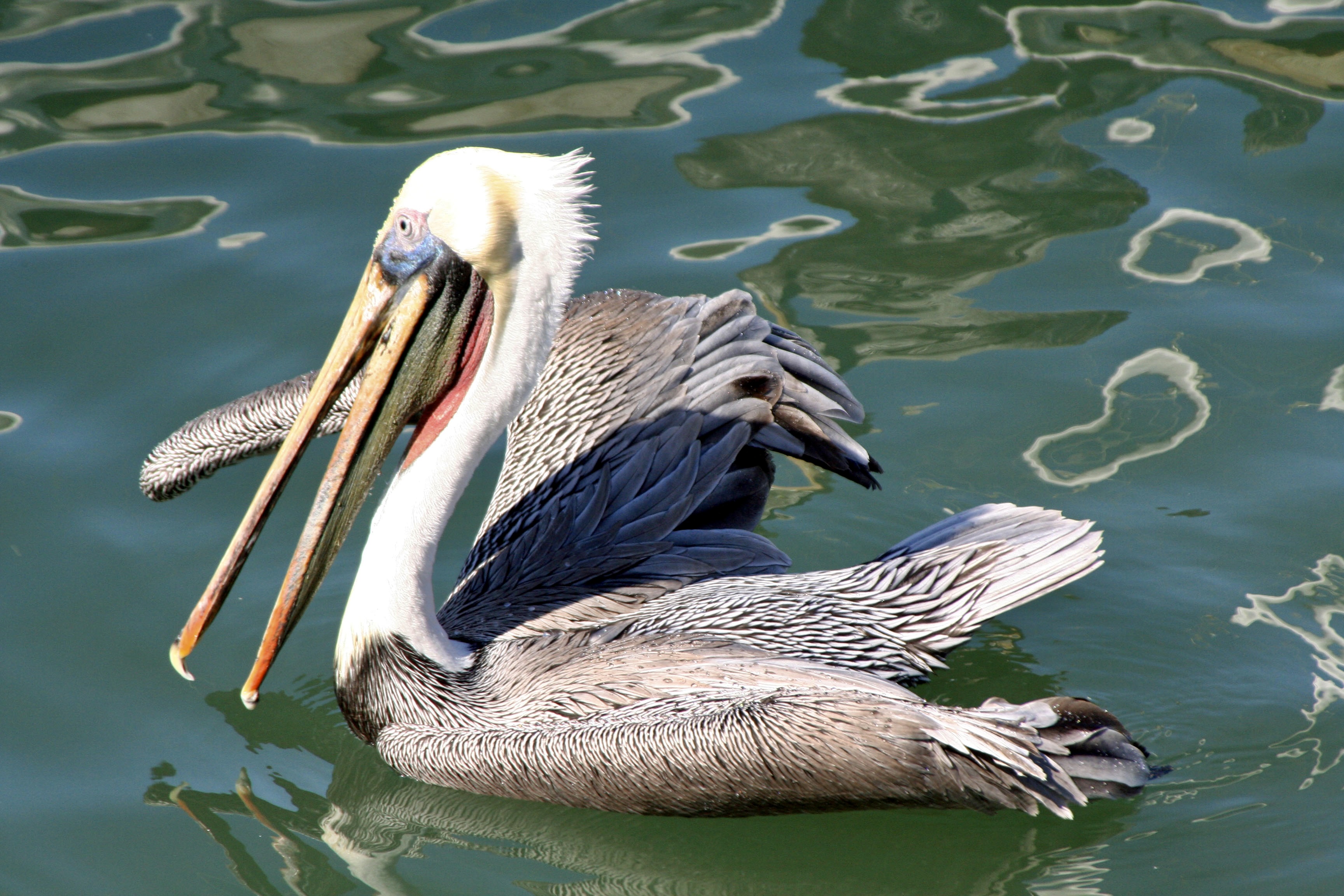
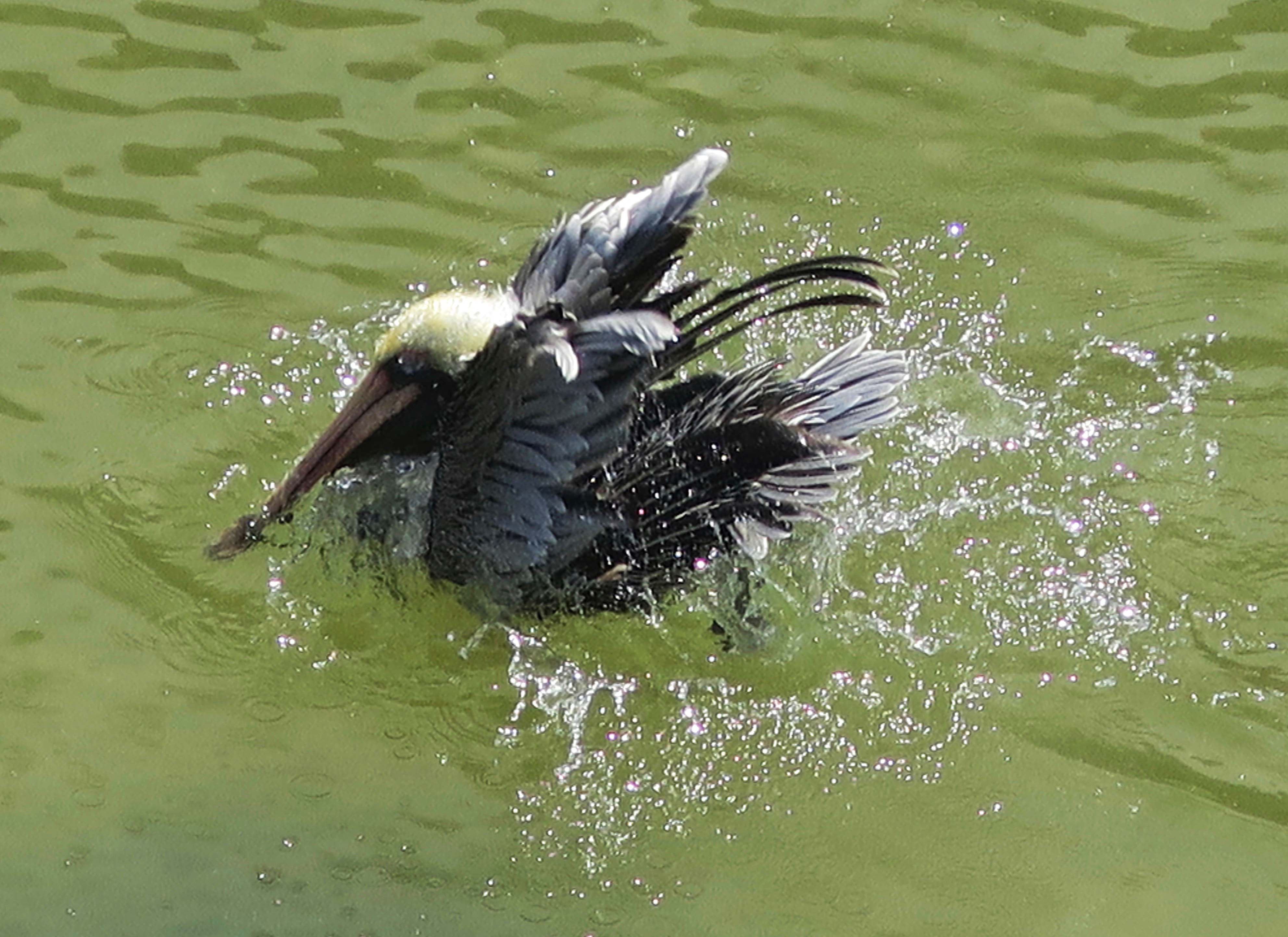
This one was swimming around in the water nearby. The sharp tip on the end of its bill is called a nail, as in nailed it, to help in catching fish and assuring that they don’t escape from the pouch.
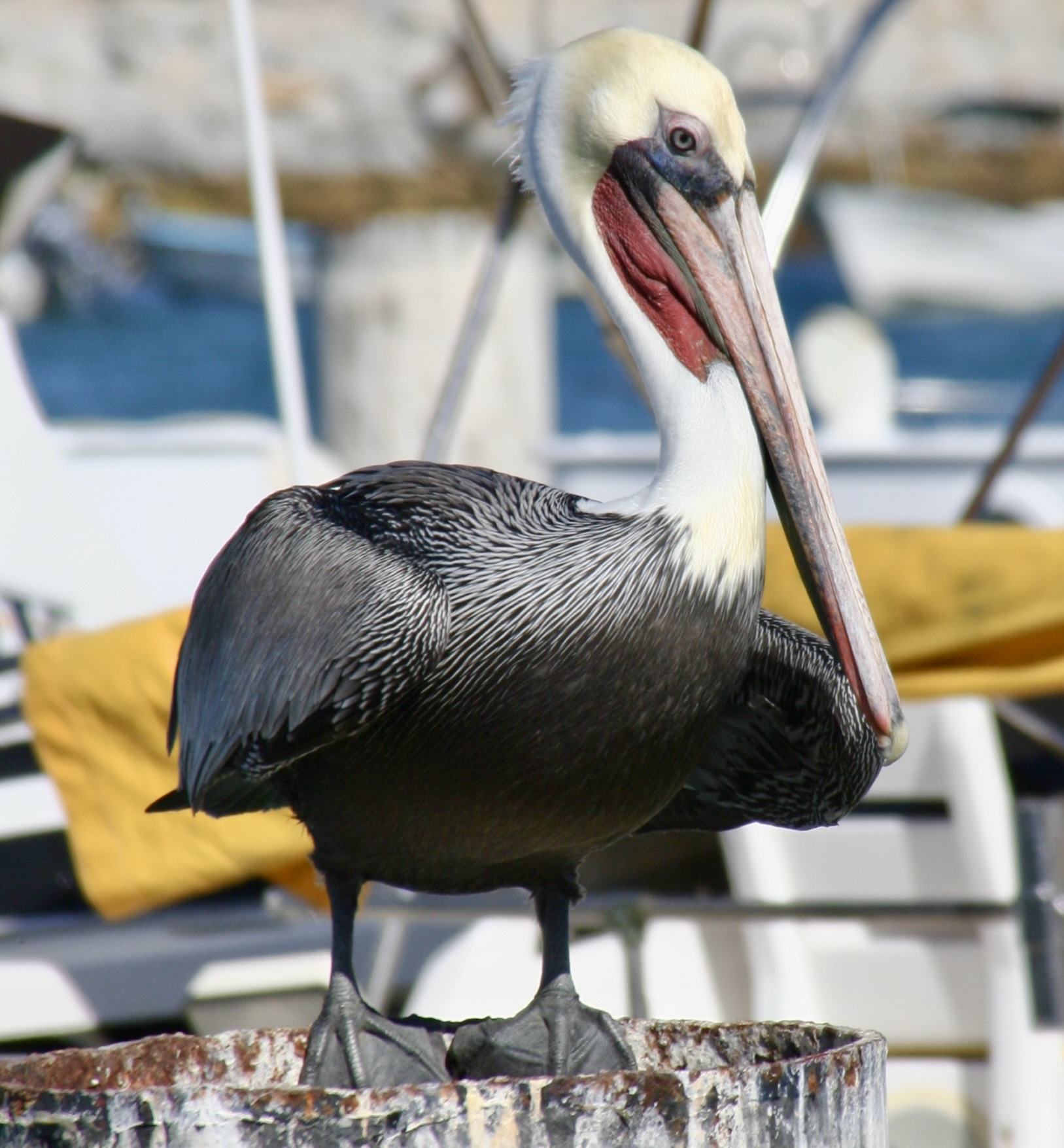
A handsome fellow— in pelican terms— was watching the action. Note the big feet. Brown Pelicans use them to incubate their eggs, placing them on top of the egg instead of using their warm feathers and body heat like every other bird we can think of. Mom and Pop actually make good parents. The male brings in nesting material; the female builds the nest. Both participate in incubating the eggs, and both help in feeding the nestlings, i.e. they spew regurgitated fish into the nest. It’s a potluck.
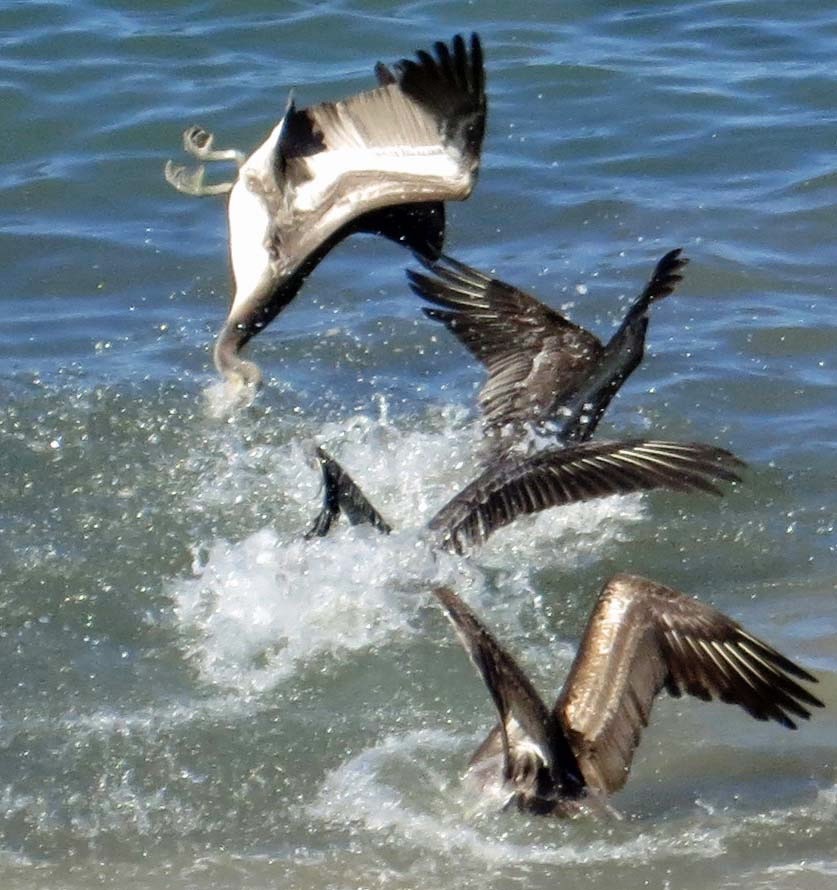
Graceful, huh. Brown pelicans dive into the water to catch dinner. Style is not required. They start their dive from as high as 60 feet up in the air and plummet straight down, turning their neck just before hitting the water to avoid injury. Peggy and I were watching a feeding frenzy of around 50 pelicans on the Bahía de Banderas, the bay off of Puerto Vallarta, Mexico when we took this photo and the next one.
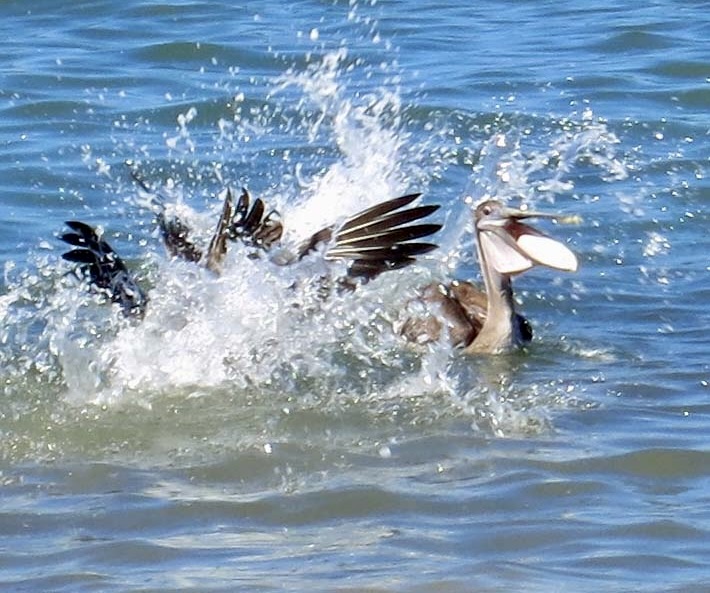
It was insane. The large pouch of a pelican can hold up to two gallons of water. As soon as the water drains, it swallows whatever it has caught. A two part stomach system then processes the fish to make them palatable. We couldn’t help but think that this pelican was celebrating— not only because it had caught a fish, but also because it was out of the melee. Woohoo!
We watched a youngster on the Rio Cuale in Puerto Vallarta. Its body had a ways to go to catch up with the size of its bill. I think it was trying to scare up a meal. Or take a bath.
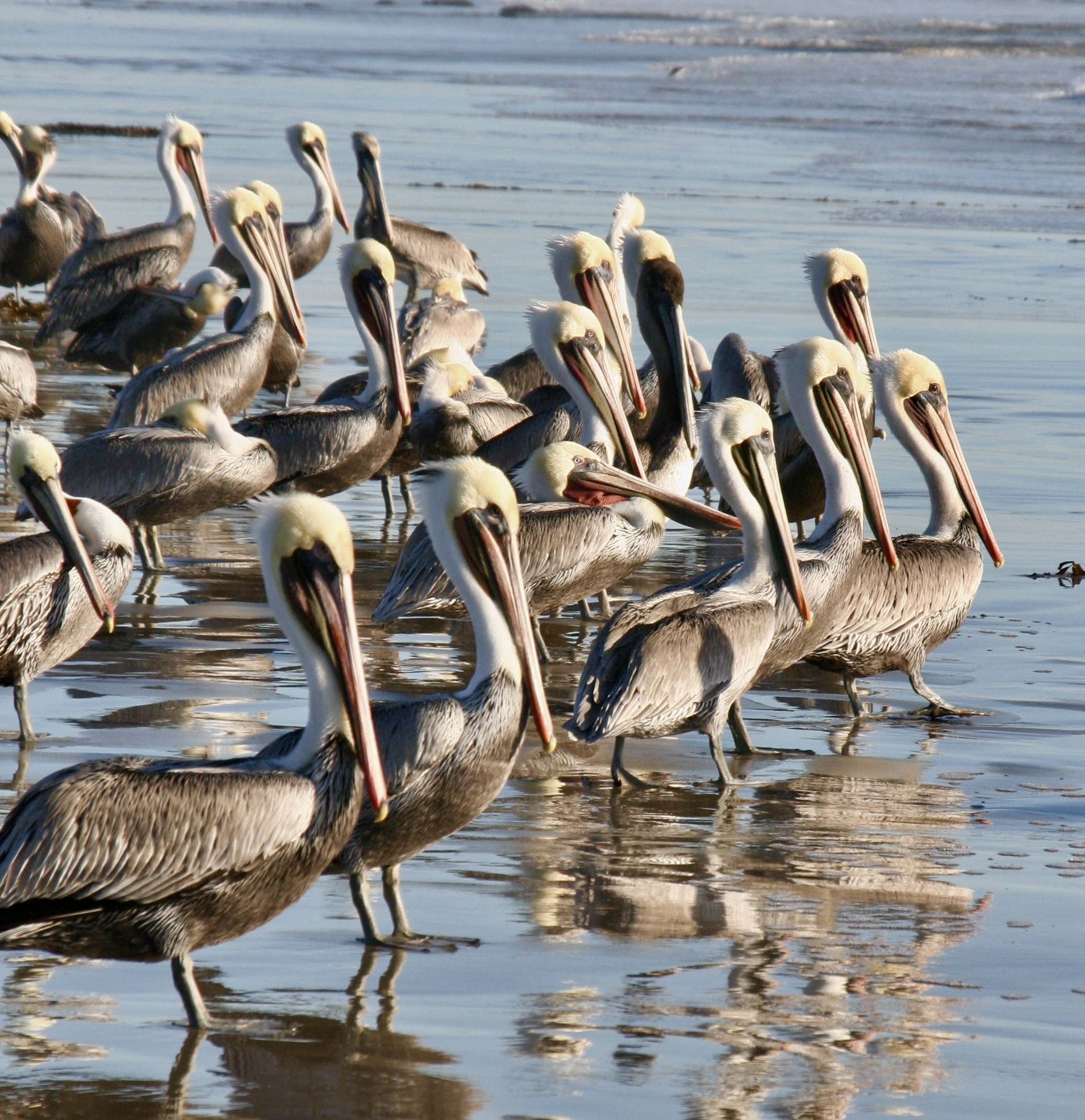
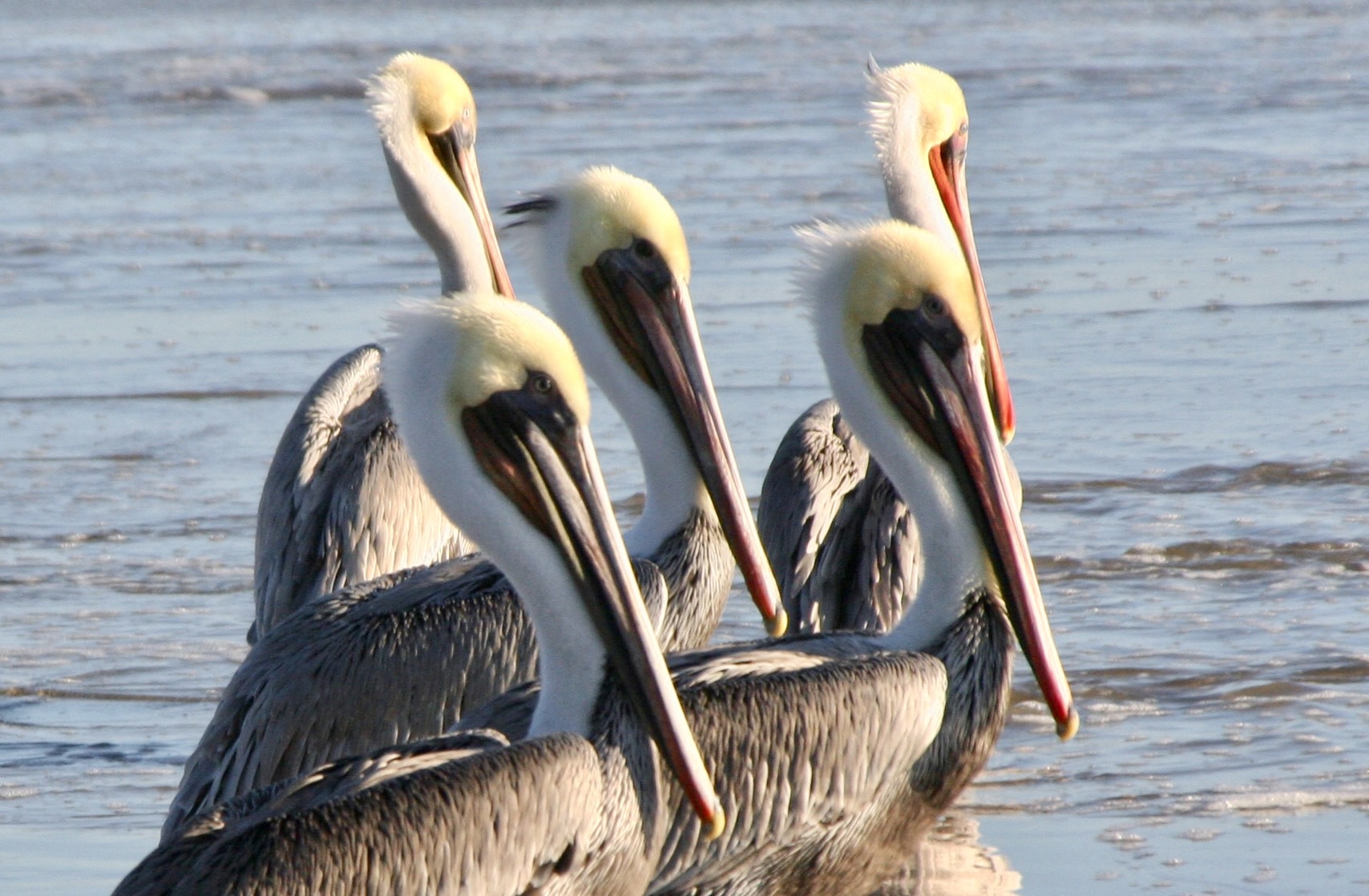
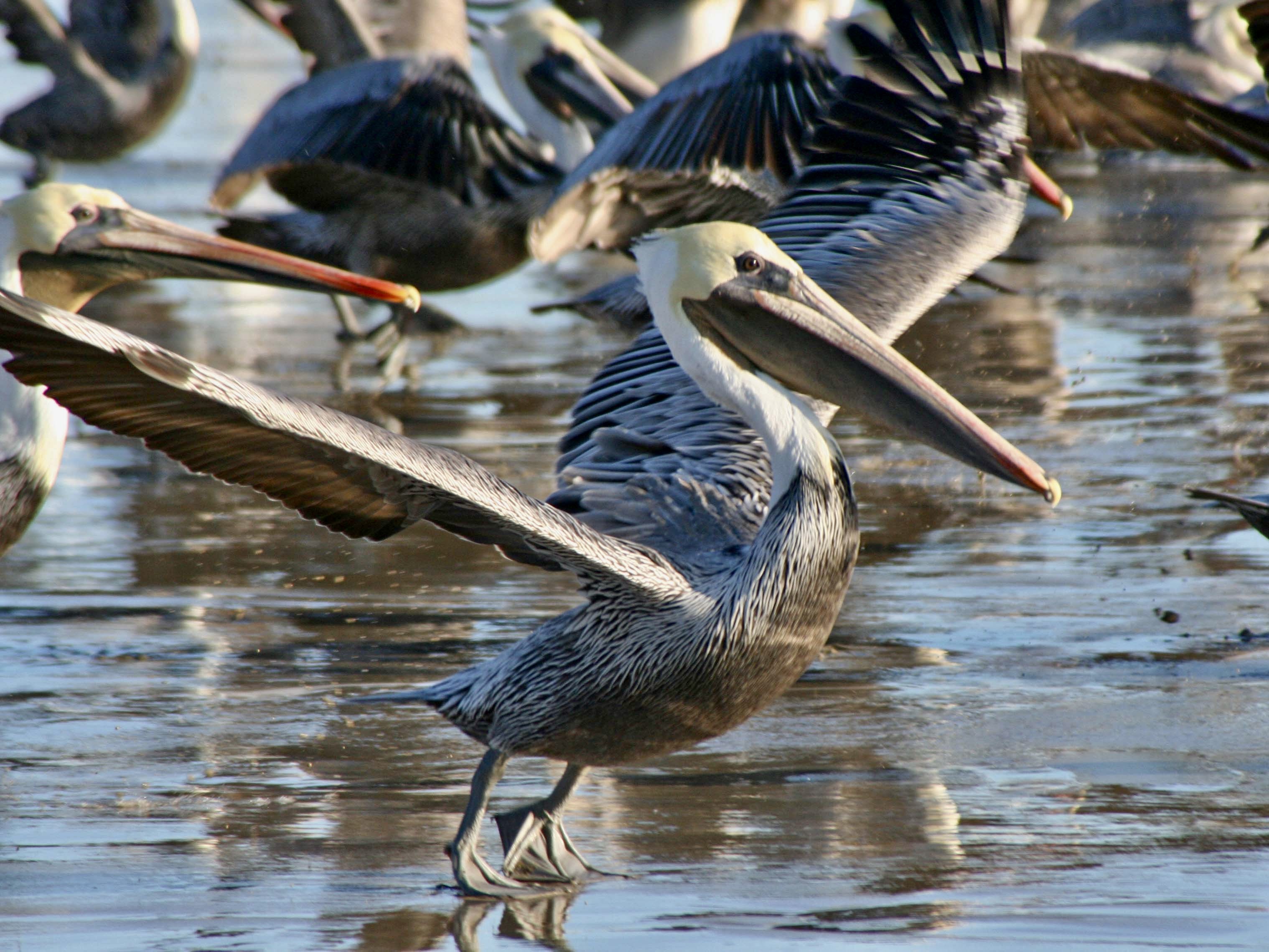
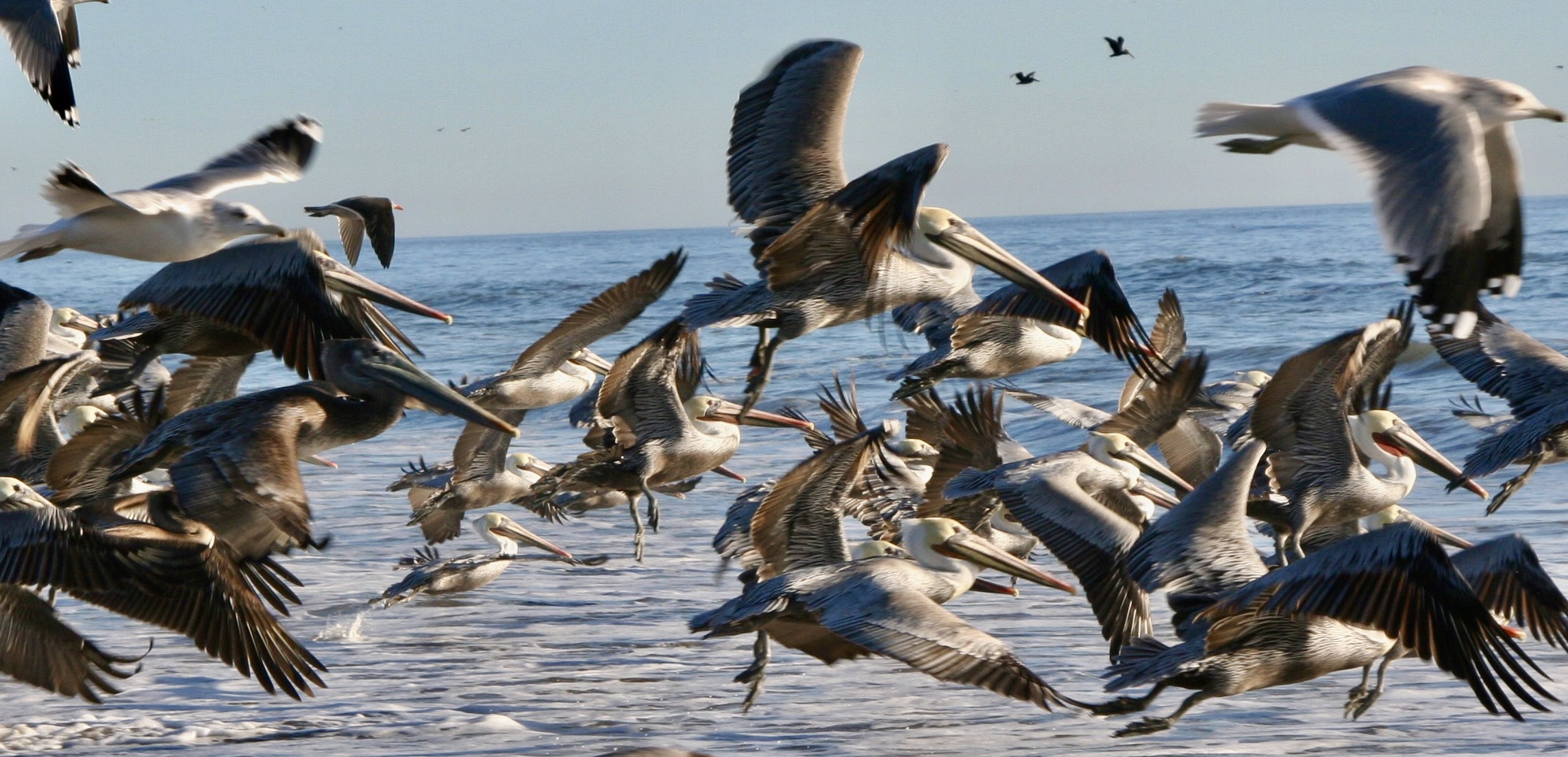
The west coast of California, Oregon and Washington also provides numerous opportunities for watching brown pelicans. At one time these magnificent birds were almost extinct because of the poison DDT used widely by farmers to protect their crops from insects. With the banning of the poison, the birds are now off of the endangered species list and number over 600,000 worldwide. This, and the next three photos were taken on the Carpinteria Beach south of Santa Barbara, California.
Looking dignified. A committee perhaps? Or maybe a board of directors. Note how three in front have placed their bills to the right.
Takeoff on runway 1.
You have probably seen brown pelicans in a neat line as they gracefully fly over waves. That wasn’t the case here. We were thinking, ‘Where’s the air traffic controller?’
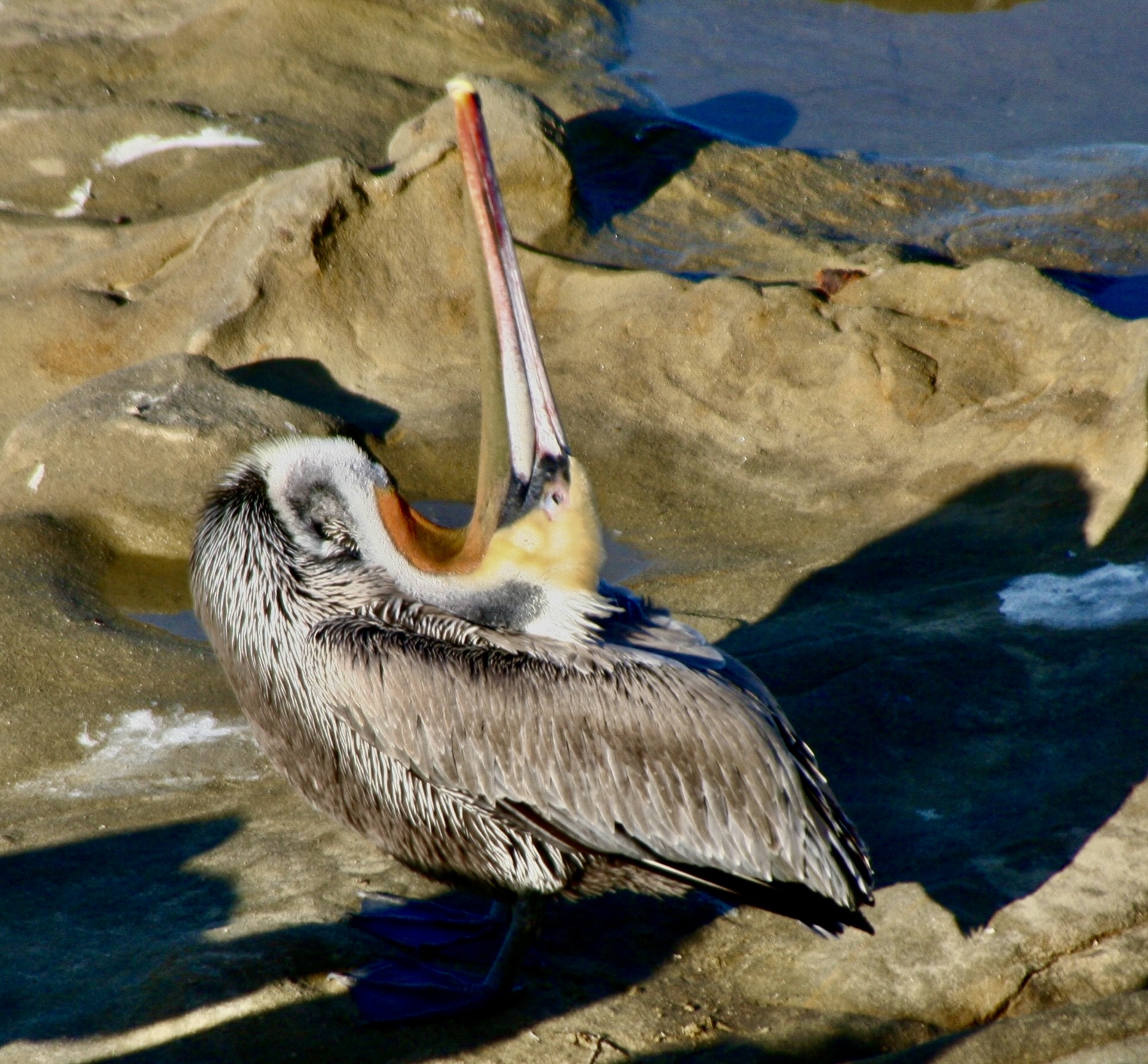
This is another one of those, “What the…” photos. Napping perhaps while resting its heavy head on its back? Catching a few rays on his pouch? We took this photo on a San Diego beach 17 years ago.
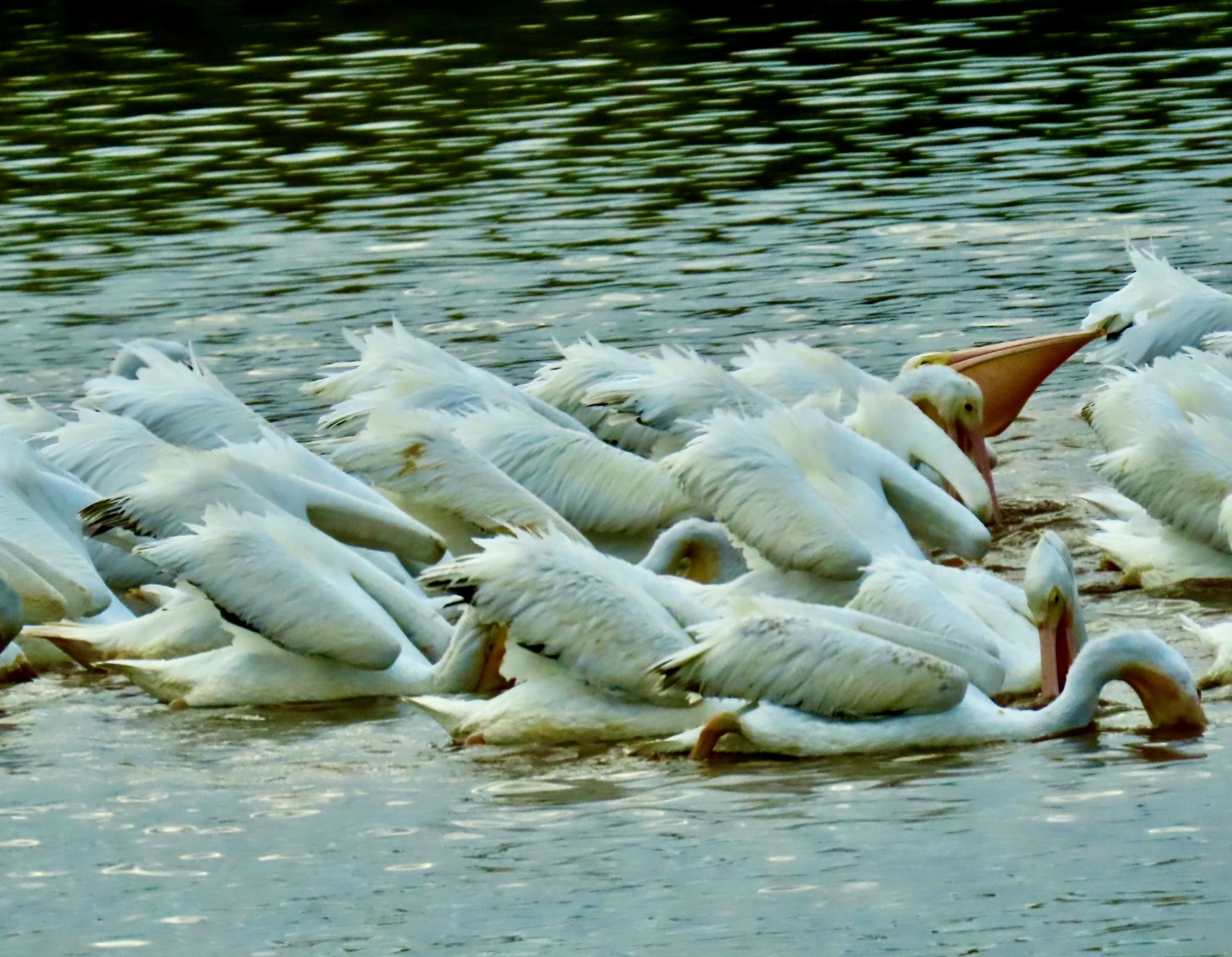
Peggy and I were driving by a small pond in the Florida Everglades National Park last year when we spotted close to two hundred white pelicans stretched out in a long line, several pelicans deep. While brown pelicans dive for their fish dinners, white pelicans work together in a coordinated effort to herd fish into groups that makes them easier to catch. Most of these are peering into the water, watching and waiting. When a fish swims within reach, they strike using their broad pouches as a trap. It’s kind of like catching a butterfly with a butterfly net. The pelican on the top right has succeeded. Its pouch is still full of water.
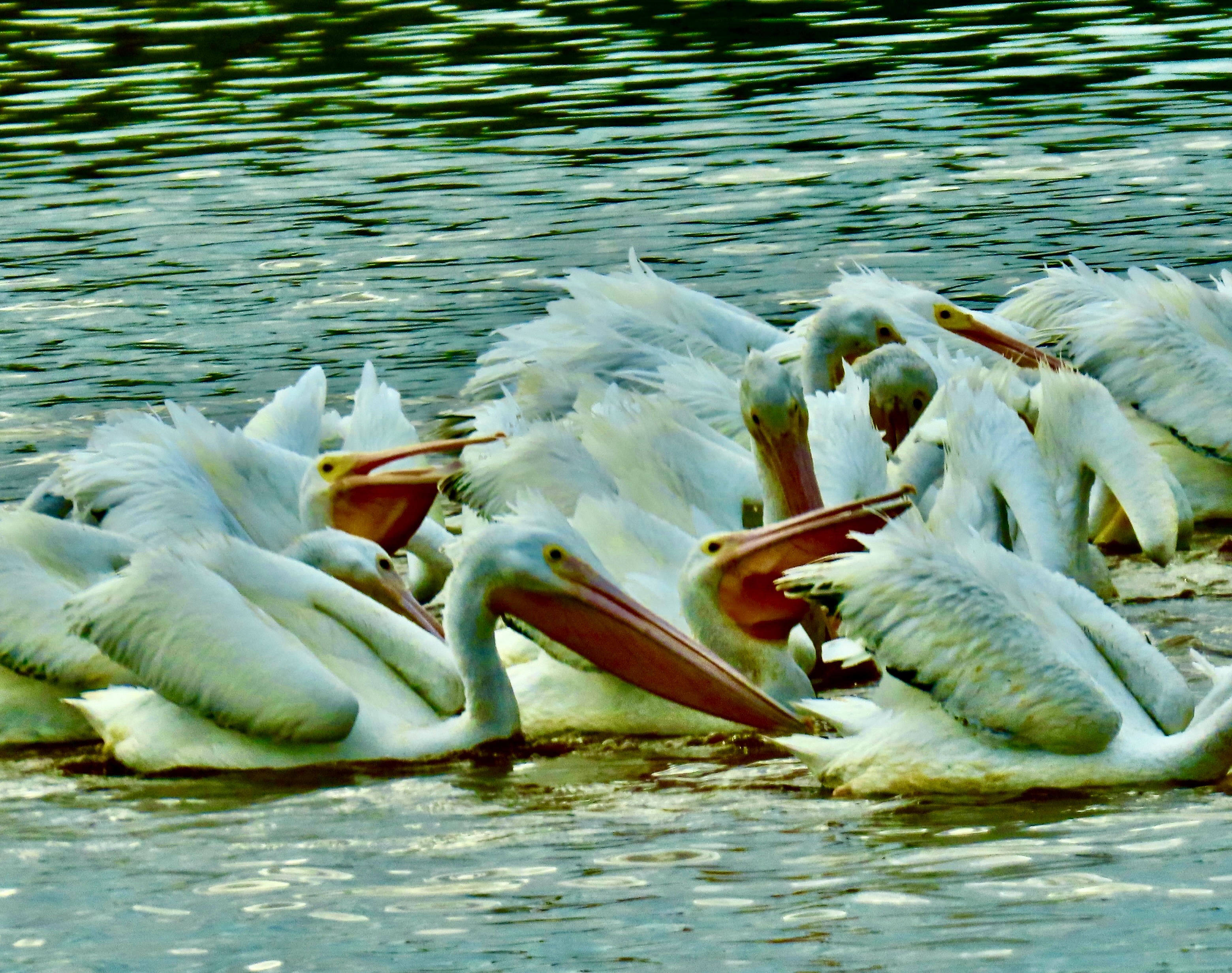
Success. Several pelicans are in various phases of swallowing their catch here. The roundup was apparently a success. The white pelican is one of the largest birds in North America with a wing span of up to 9 feet. While brown pelicans primarily catch their fish out of coastal waters, white pelicans can be found on lakes far inland. Shallow water where they can herd fish more easily is preferred.
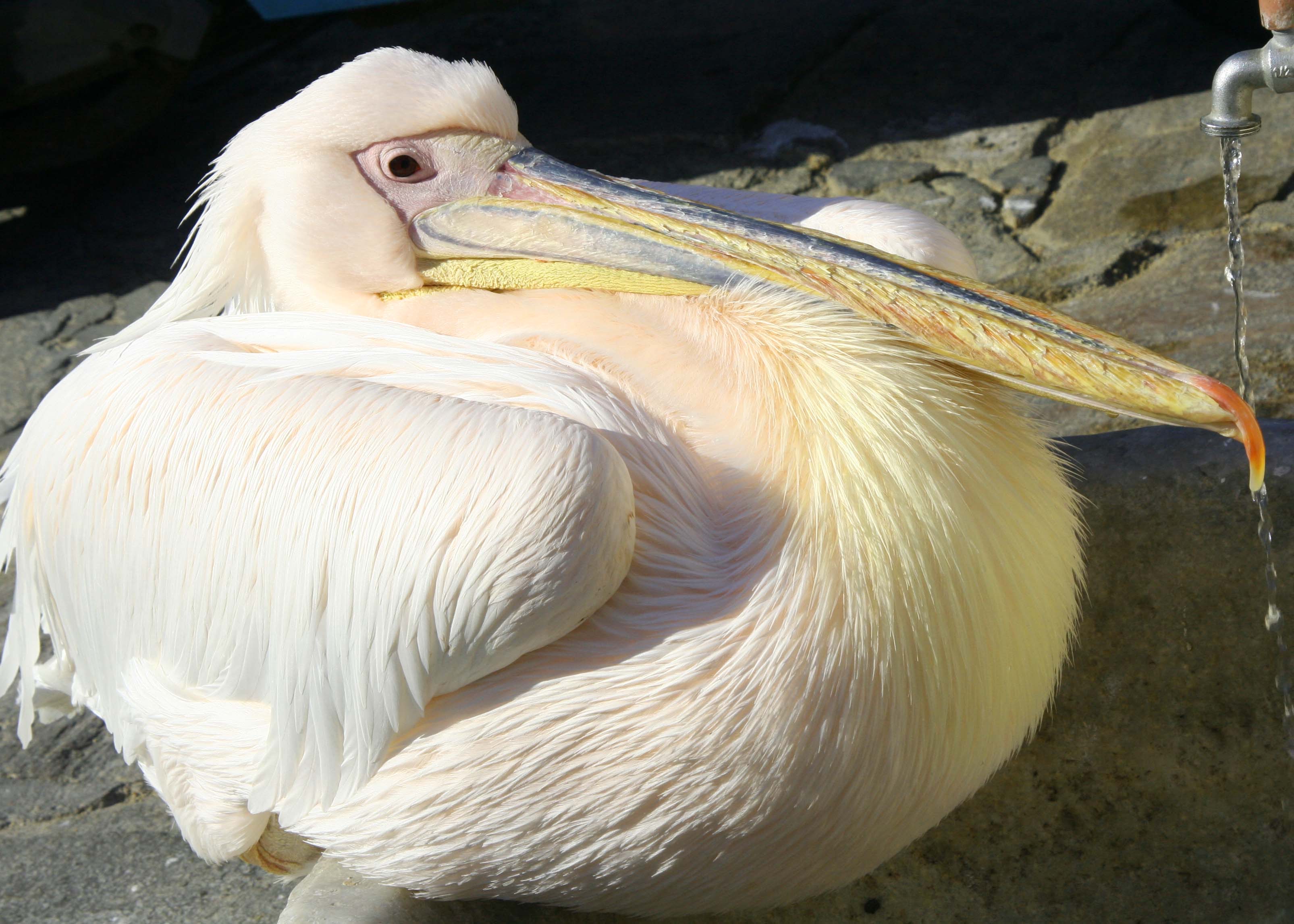
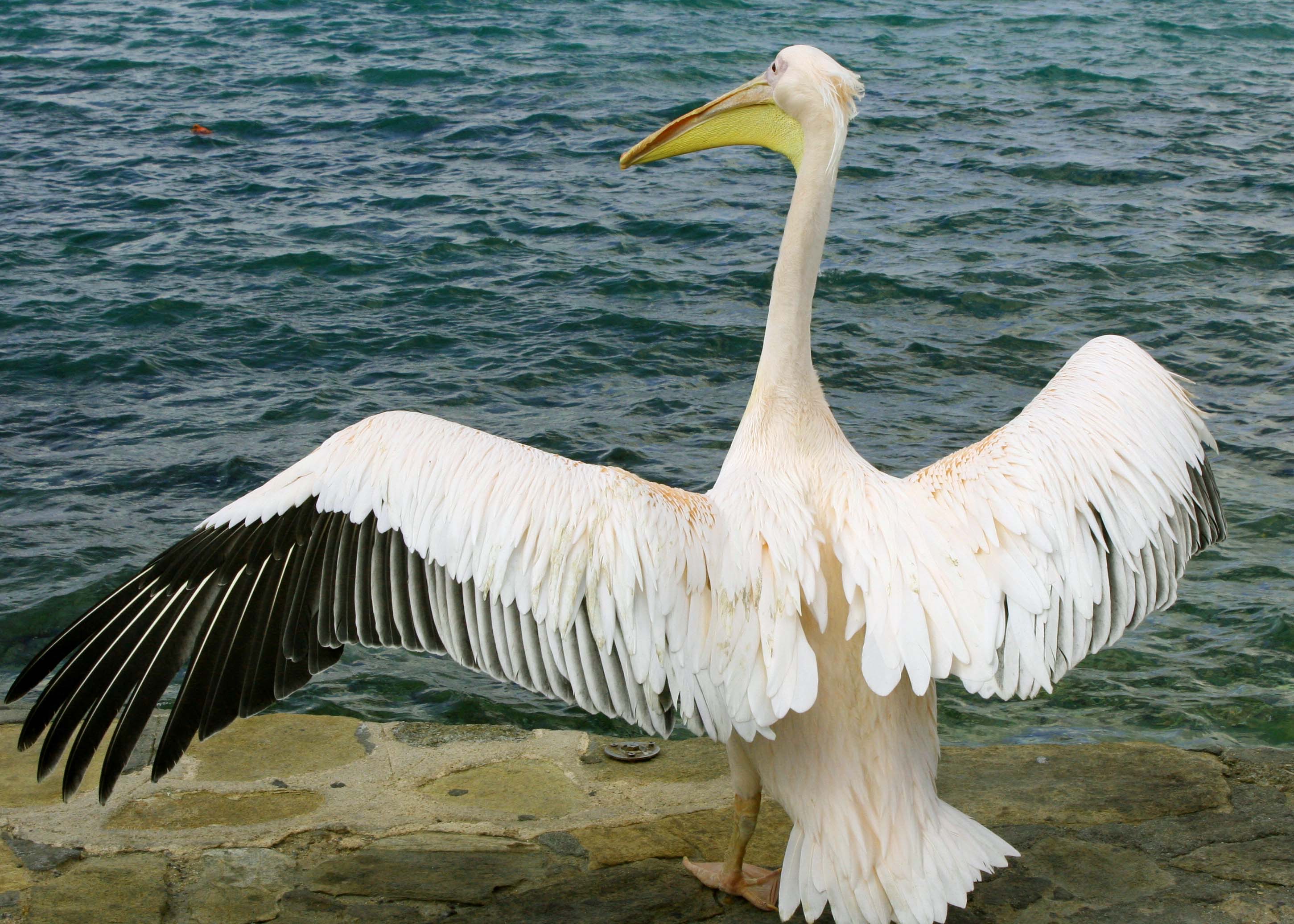
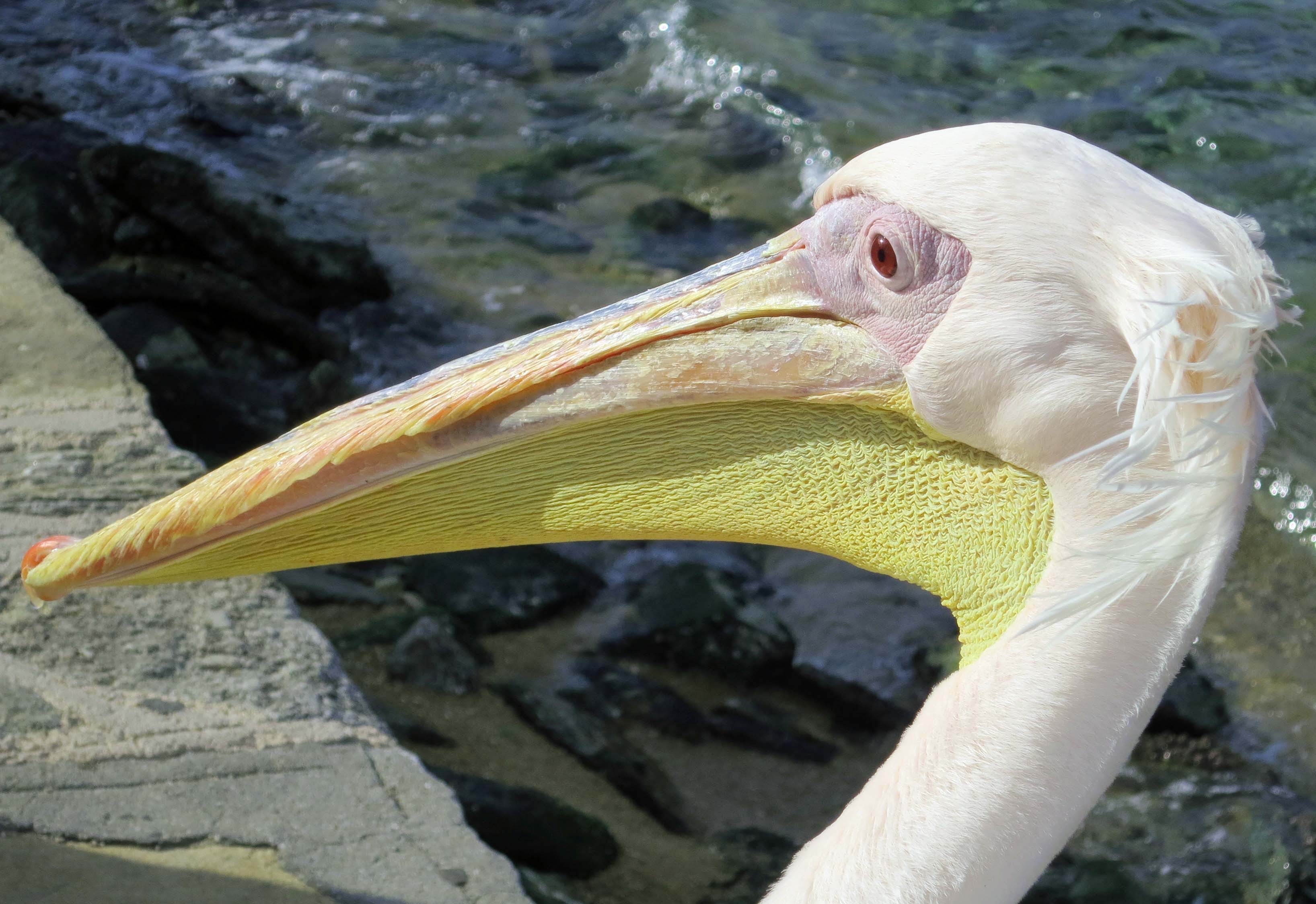
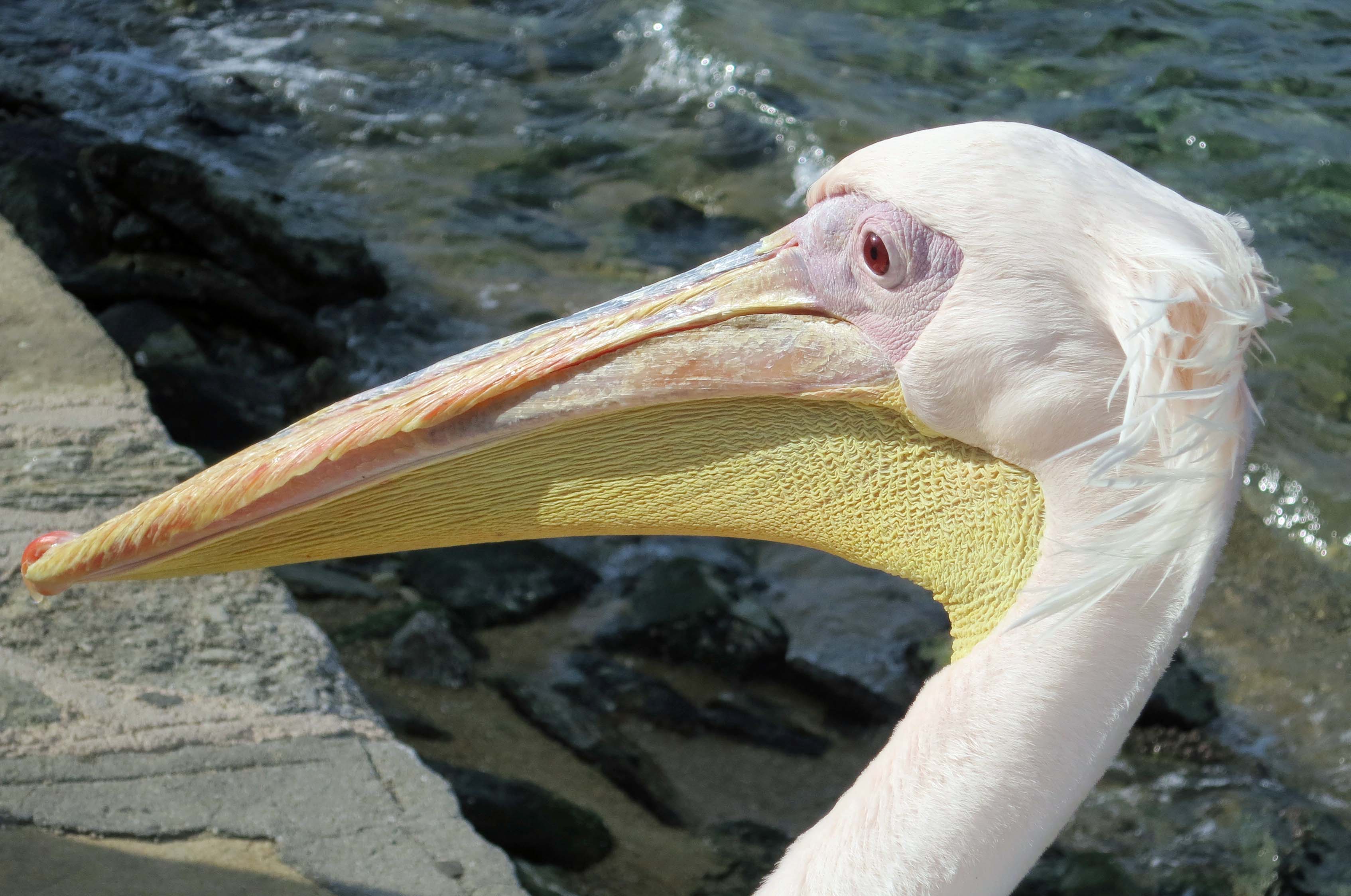
Our favorite pelican of all times was Petros, the well-loved white pelican of the Greek Island of Mykonos. We were wandering around the Mediterranean Sea several years ago with Peggy’s brother John, his wife Frances and friends when we met him. The original Petros passed on in 1986 but he has been replaced by at least a couple since. One was donated by Jackie Kennedy-Onassis.
Petros and his successors have been living on Mykonos for 70 years, capturing the hearts of locals and visitors alike.
I’ll conclude today’s post with my favorite photo of Petros. With the end of 2025 rapidly approaching, we will use our next three posts to focus on our three major trips of 2025: Hawaii, the Southwest, and New England.

PRESENTING: Petros the Magnificent… A Pelican Of Mykonos

I really like this shot of Petros.

I laugh every time I see this shot of Petros. Somehow I think ghost, or maybe preacher. “Shall we gather at the beach, brothers and sisters?” What do you think?

It’s time for another blog quickie! In fact there will be several short posts over the next few weeks. Peggy and I are heading back East to visit with our children and grandchildren in Connecticut and North Carolina for Christmas. I doubt that our five grandsons will allow much time for blogging. 🙂 Besides, you can probably use a break from my thousand word essays!

I blogged about Petros once when I was out wandering around the Mediterranean and met him on the Greek Island of Mykonos. You can go here for the full story. But the bird is so magnificent that he deserves a second post. If you’ve ever been to the island, the odds are he may have hit you up for a fish. Or ignored you. He sees lots of tourists.

Actually this is Petros II. Number one showed up in the 50s in really bad shape. The good folks of Mykonos nursed him back to health. Rather than fly away and work for a living, he decided to hang around and live the good life. Jackie Kennedy even found him a mate. Unfortunately, Petros I met his demise under a truck.

Speaking of the good life, he even has his own little fountain to hang out in.

Speaking of the good life, Petros even has his own little fountain to hang out in.

The bird was quickly replaced. Not only was he well-loved, he was a great tourist draw. One time another island even stole him, hoping to cash in on his popularity. There was almost a war.

That’s it for today… As you read this, Peggy and I are winging our way to Boston.
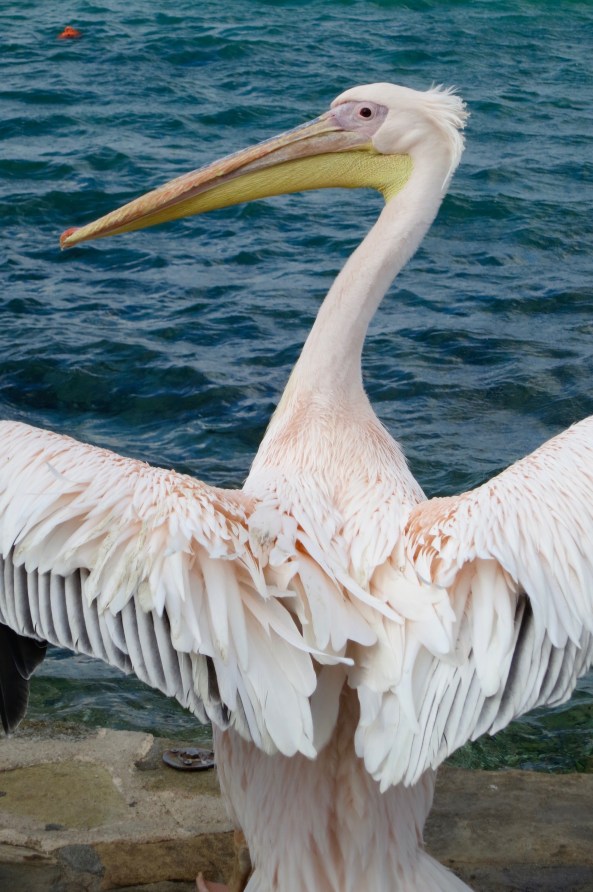
The look. Aren't I pretty!

The look. “I’m so pretty.” Or, “What are you looking at?”
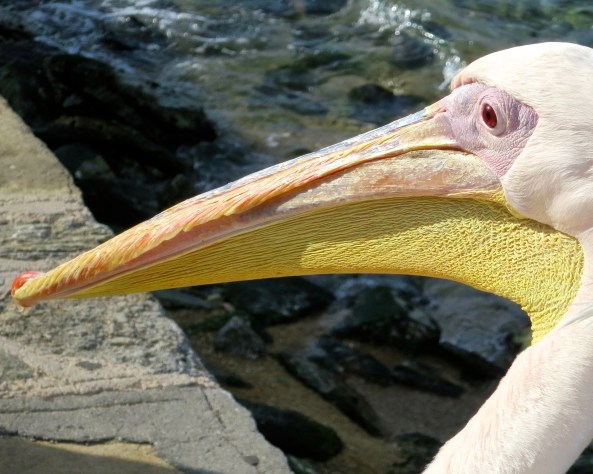
My favorite.

My favorite. Petros looking pensive.

NEXT BLOG: The picturesque town of Mendocino on California’s rugged northern coast.
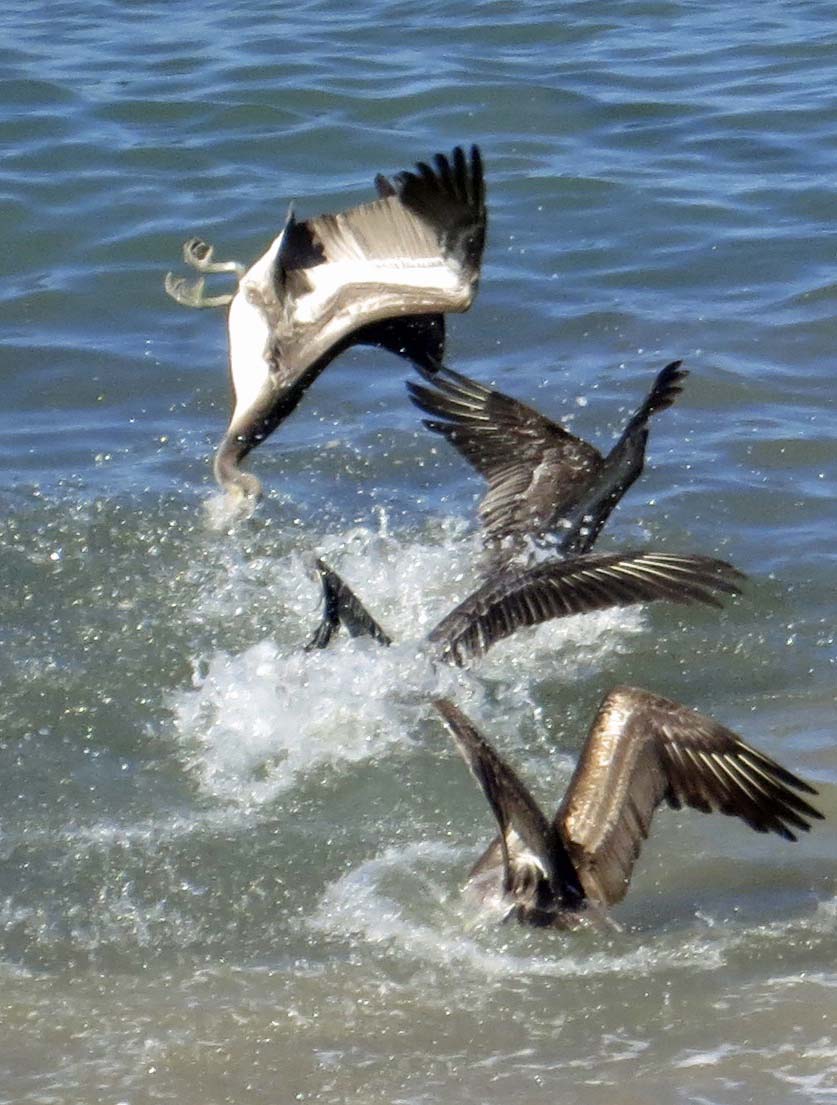
What a Wonderful Bird Is the Pelican… A Puerto Vallarta Feeding Frenzy

Pelican hist water upside down in Puerto Vallarta. Photo by Curtis Mekemson.

A Brown Pelican executes an amazing upside down dive to catch fish in Puerto Vallarta as three other pelicans join in the feeding frenzy.

 “What a wonderful bird is the pelican, whose bill will hold more than his belican.” Dixon Merritt

I am enamored with pelicans. These large, gregarious birds that appear to have been created by a committee, skim over the ocean in graceful lines, fly in V formations to distant locations, and crash into the ocean with abandon to catch fish.  Most of my pelican viewing has taken place on the coast of California and Oregon but I have also enjoyed their antics in Florida and the Mediterranean.
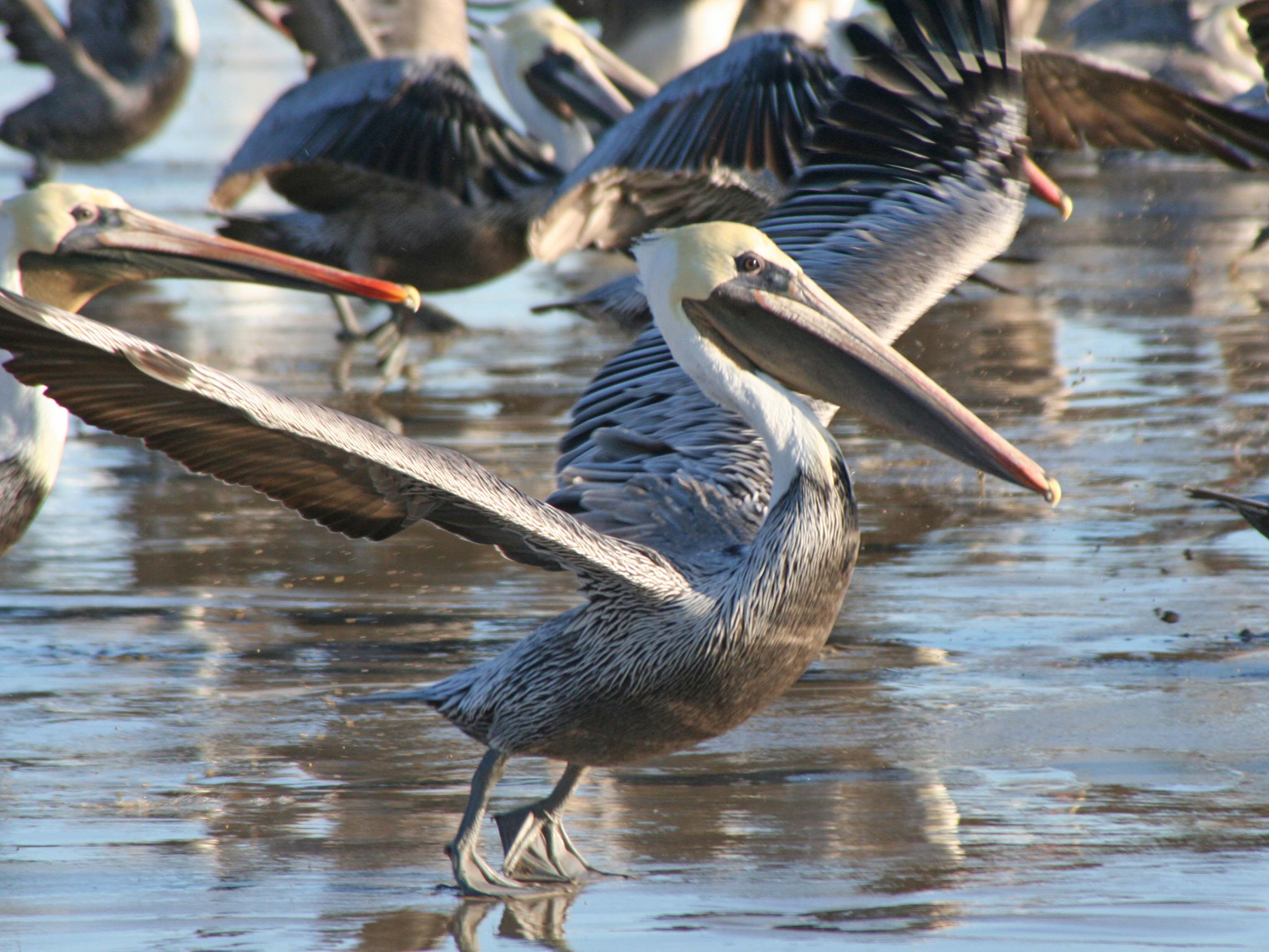
California Brown Pelican posed for flight. Photo by Curtis Mekemson.

A Brown Pelican stands on its toes and prepares for flight in California. I called this photo flight-line.
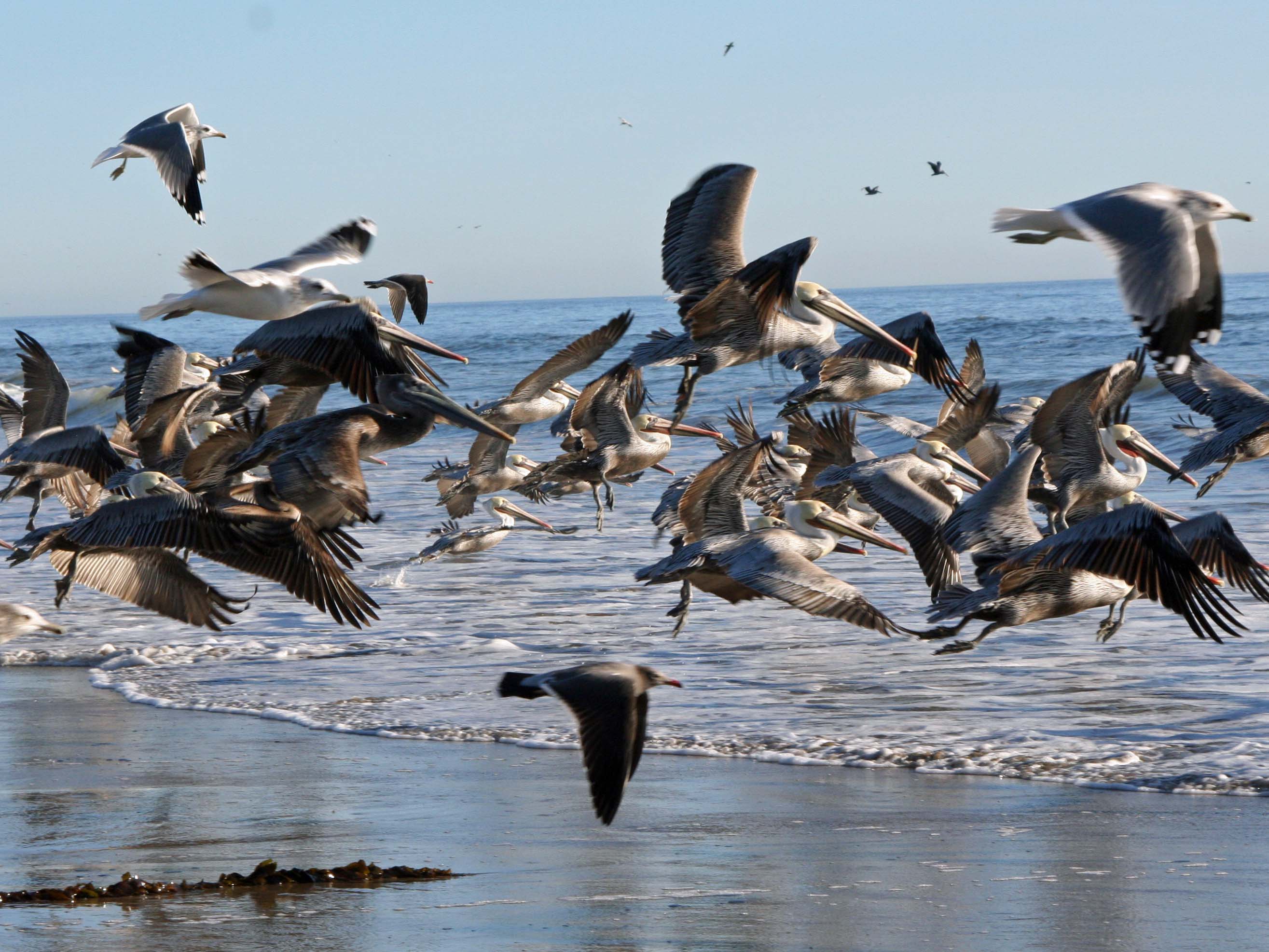
California Brown Pelicans in flight. Photo by Curtis Mekemson.

Shortly afterwards, I caught this photo of the pelicans, along with seagulls in flight.
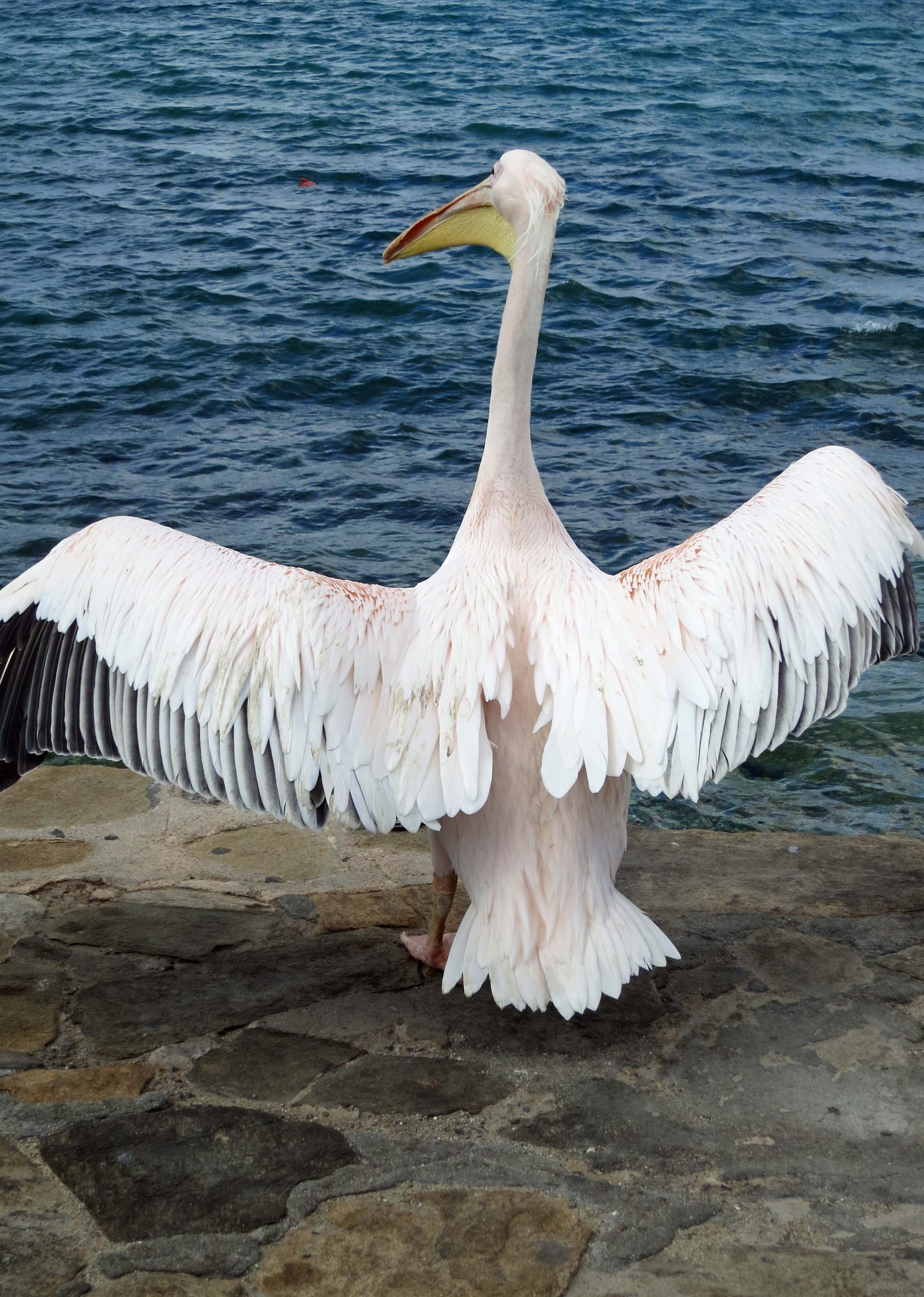
Petra the pelican of Mykonos. Photo by Curtis Mekemson.

We found this Great White Pelican named Petros holding court on the Greek Island of Mykonos last year on our trip through the Mediterranean.
Petra the Pelican of Mykonos. Photo by Curtis Mekemson.

Petros the Pelican of Mykonos gives me the eye. “You wouldn’t happen to have a fish would you?”

Over the past three weeks I have been enjoying pelicans in Mexico. Peggy and I were particularly lucky to find a large flock of them involved in a feeding frenzy right next to Puerto Vallarta’s boardwalk, the Malecon. I’ve often watched pelicans make their unique dives from a distance; this was up close and personal– as I hope our photos demonstrate. I was also able to videotape them and captured 15 plus dives in a few seconds. The action was wild!
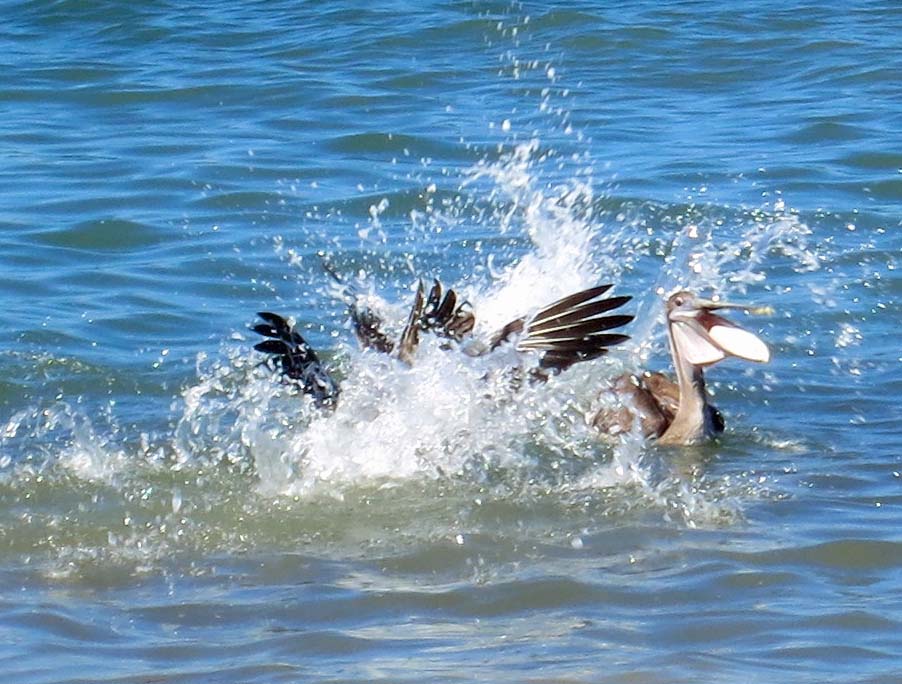
Pelican drains water from bill in Puerto Vallarta. Photo by Curtis Mekemson.

One pelican seems to float in open-billed-amazement as two other pelicans crash into the ocean. Actually pelicans have to drain the water out of their mouths before swallowing their catch, which is what this fellow is doing.
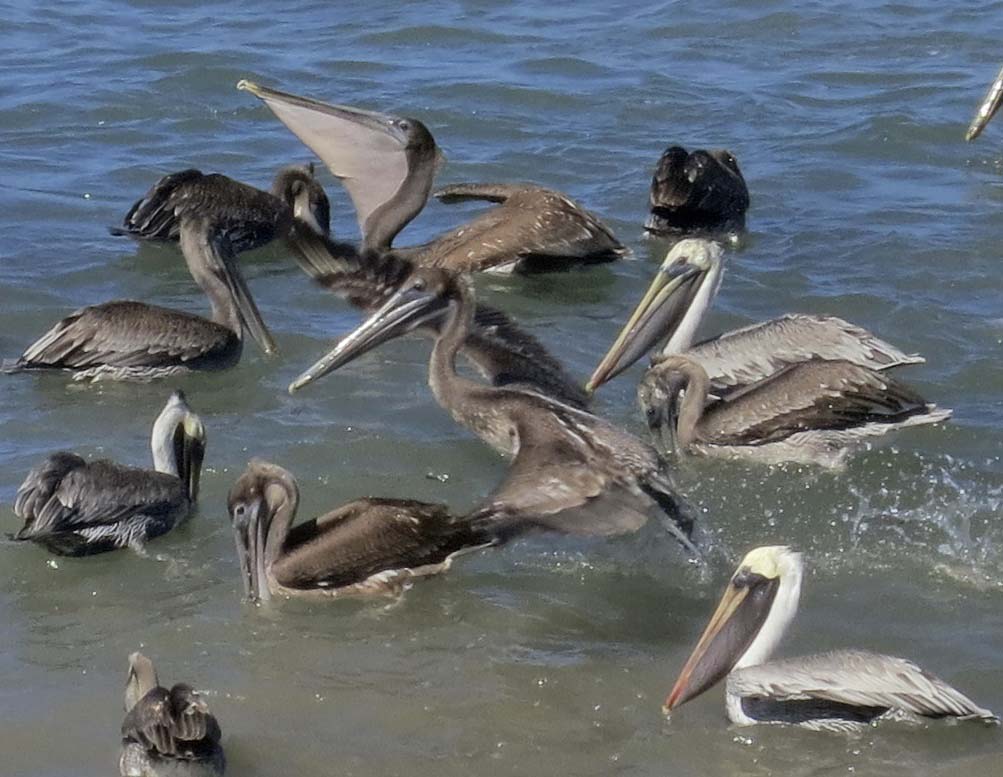
Pelican shows throat pouch in Puerto Vallarta. Photo by Curtis Mekemson.

Check out the size of the Brown Pelican throat pouch here.

Pelicans prepare to dive in Puerto Vallarta, Mexico.

Hovering in flight, pelicans prepare to dive. (Photo by Peggy Mekemson.) The terns, BTW, are hoping to participate in the feast and will happily steal fish from the pelicans.
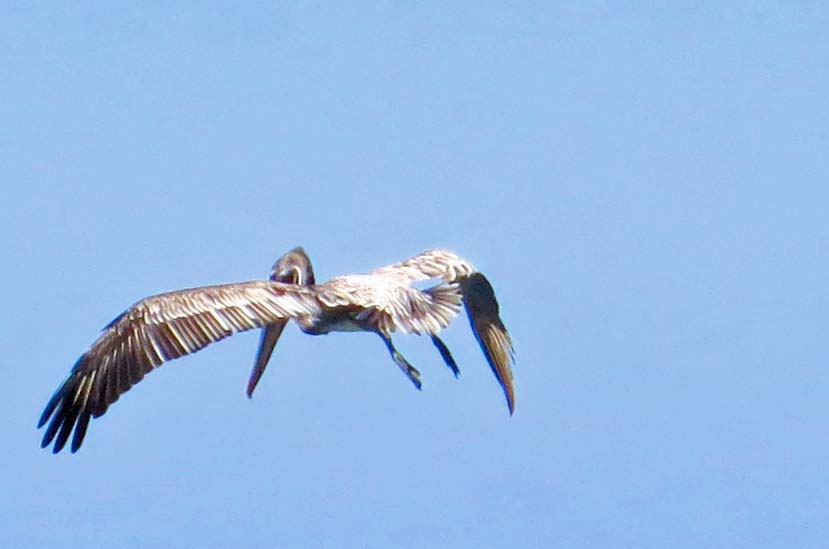
Brown Pelican in Puerto Vallarta hovers above the water in search of fish. Photo by Curtis Mekemson.

Preparing for a high dive…

Brown Pelican takes flight off of Banderas Bay in Puerto Vallarta. Photo by Curtis Mekemson.

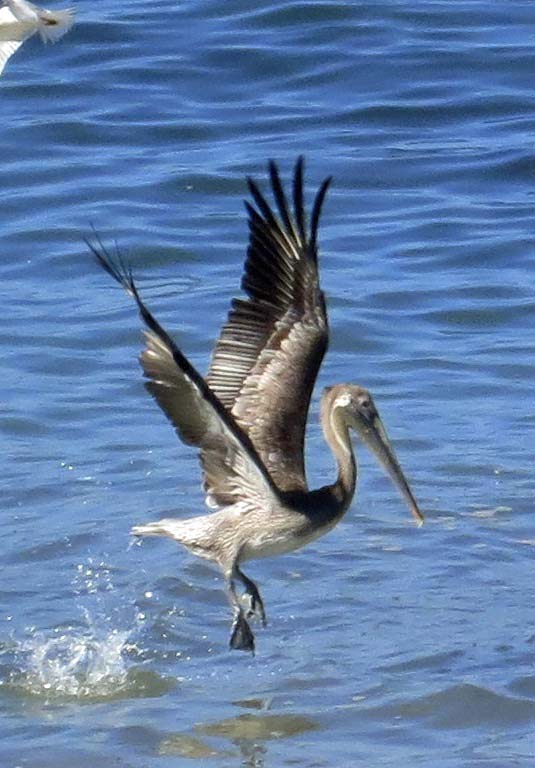
Brown Pelican takes off from water.

Brown Pelican appears to walk on water in Puerto Vallarta.

And this guy appears to be walking on water. (Photo by Peggy Mekemson.)
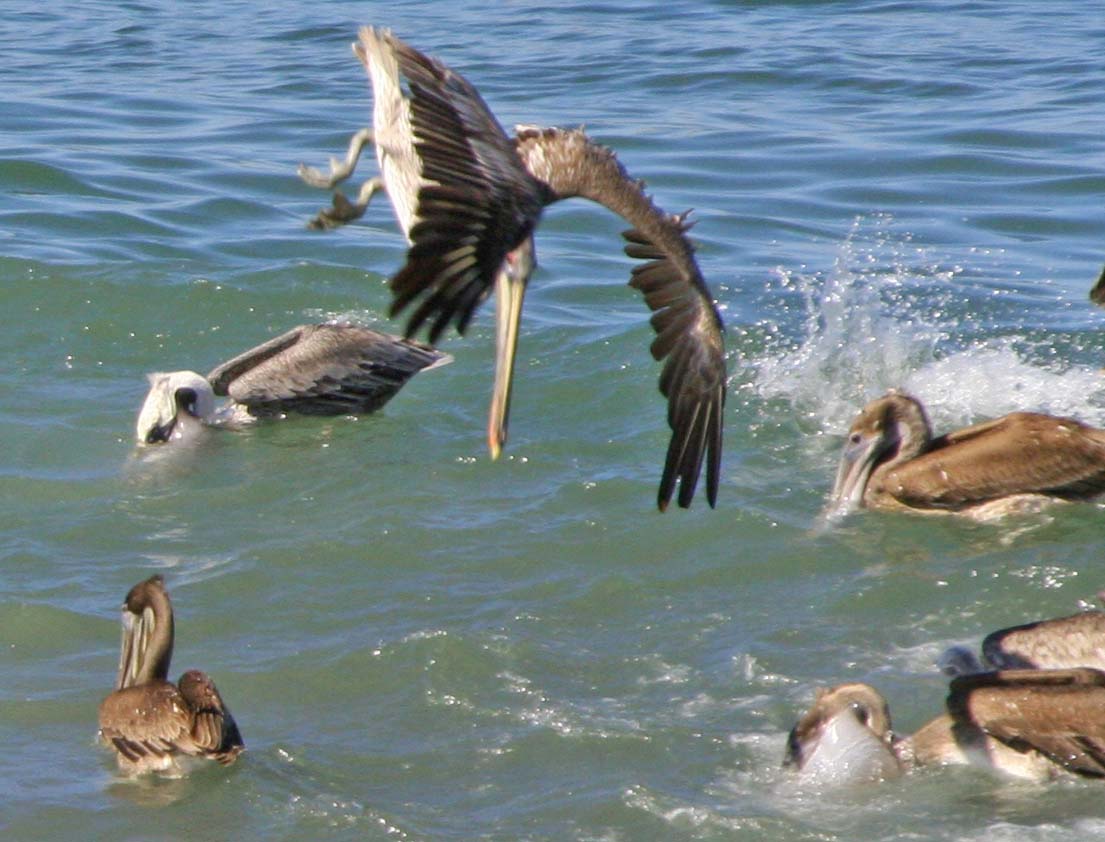
Brown Pelican dives toward the water of Banderas Bay in Puerto Vallarta.

A Brown Pelican plunges toward the water. (Photo by Peggy Mekemson.) Note the pouch filled with water on the lower right.
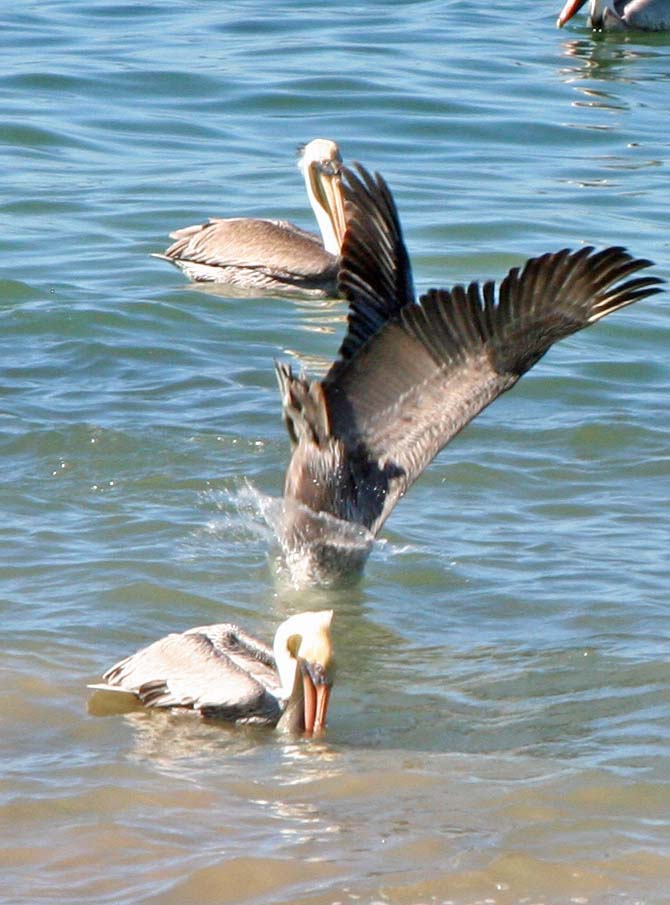
Pelican diving for fish in Puerto Vallarta, Mexico.

Plunging into the water. (Photo by Peggy Mekemson.)

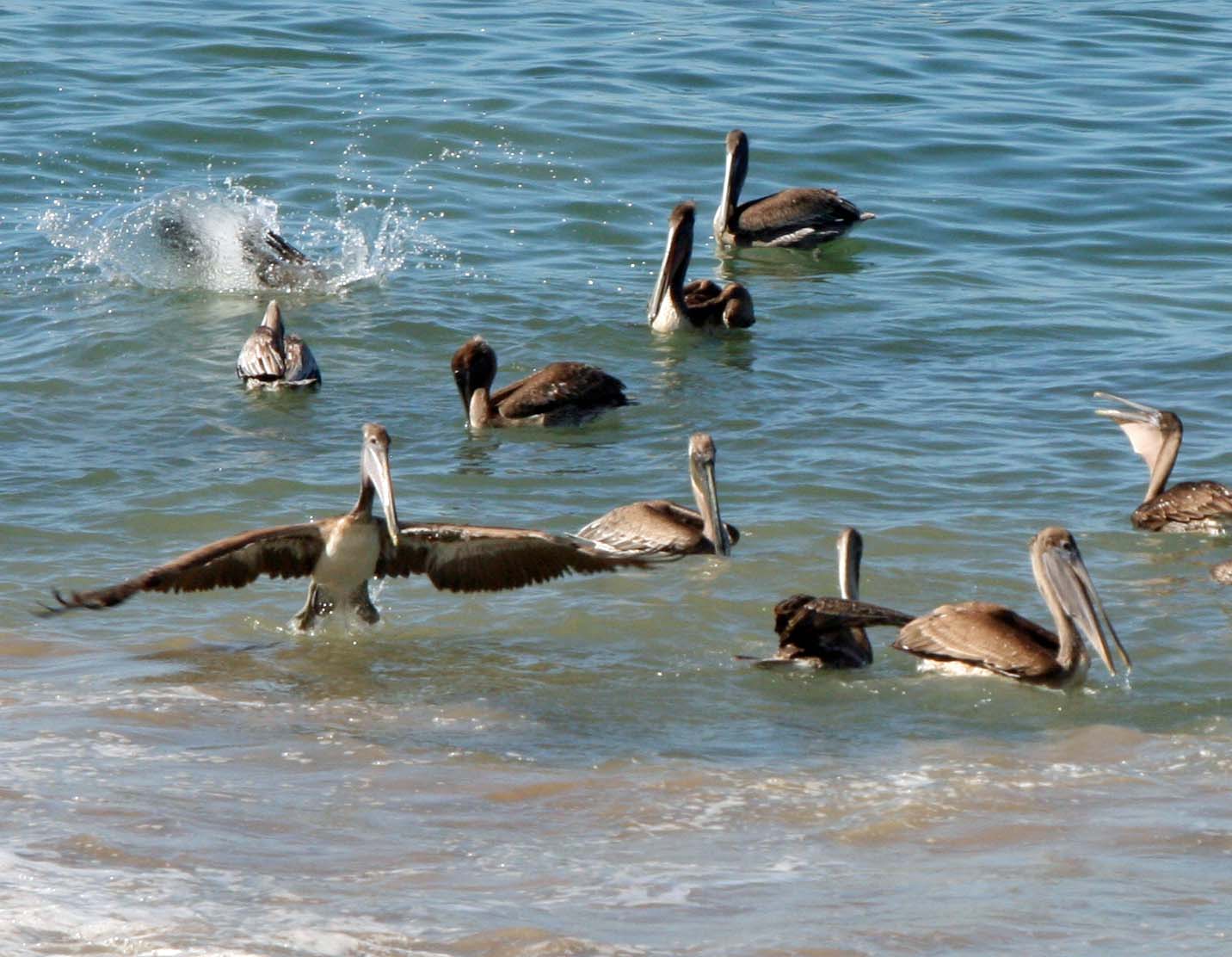
Brown Pelicans demonstrate different aspects of fishing in Banderas Bay, Puerto Vallarta. Photo by Curtis Mekemson.

A small portion of the flock, some 17 pelicans, demonstrate various aspects of fishing.
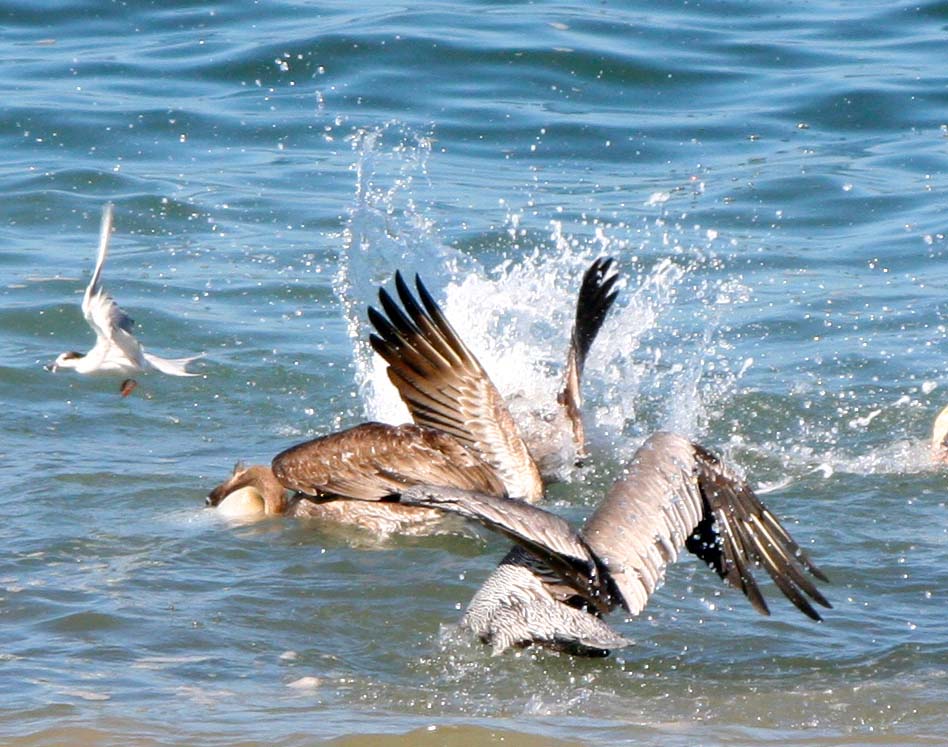
Pelican feeding frenzy in Puerto Vallarta.

Hard to tell who is doing what, here. (Photo by Peggy Mekemson.) Liked the graceful tern on the left.
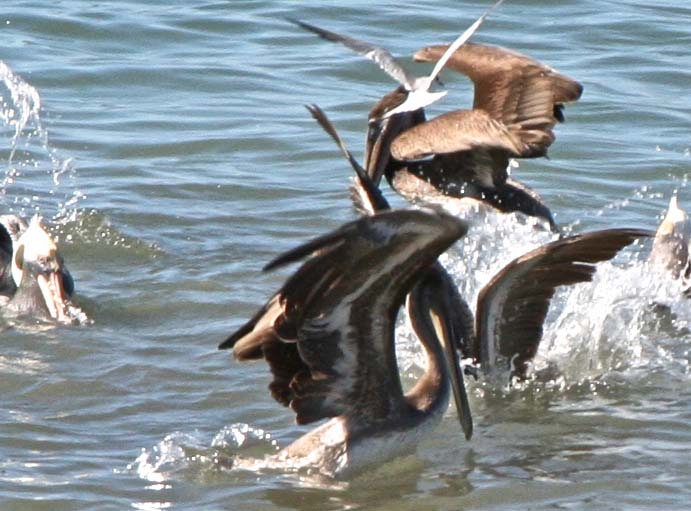
Pelicans feeding in Banderas Bay, Puerto Vallarta Mexico.

Or here. But I really liked the wing action. (Photo by Peggy Mekemson.)

Now it is time to put all of the action together in a brief video…
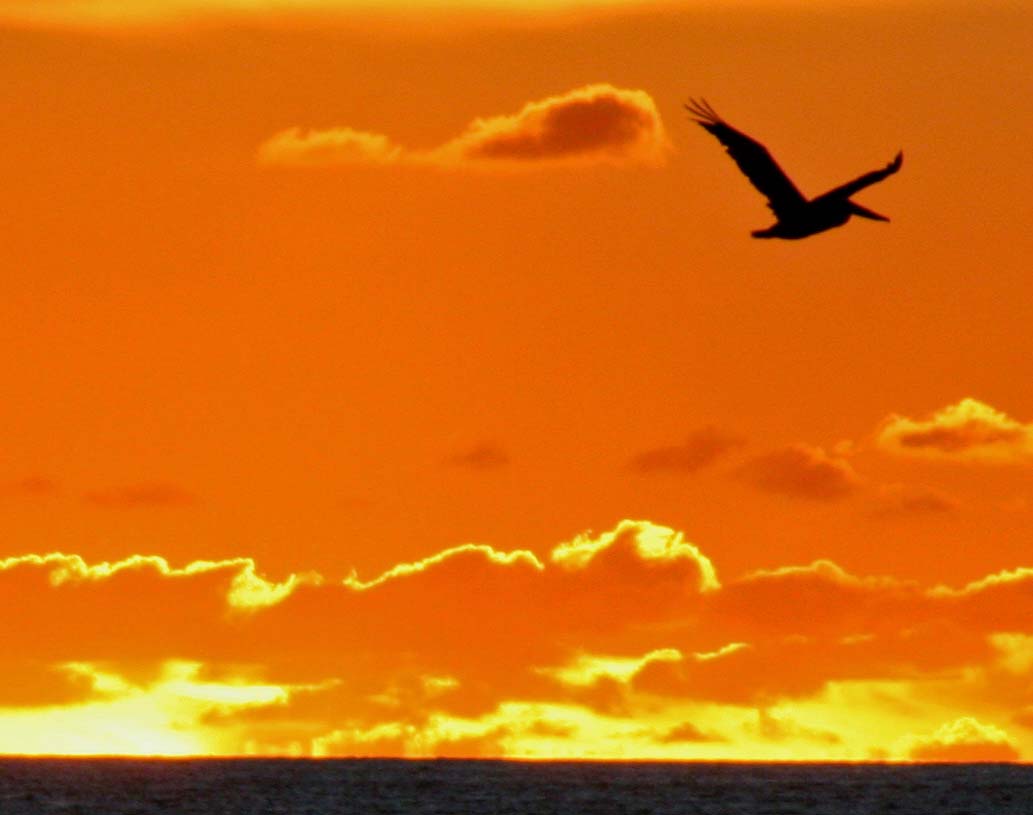
Pelican caught in sunset glow at Puerto Vallarta, Mexico. Photo by Curtis Mekemson.

A pelican flies toward its nest at the end of the day.

NEXT BLOG: Having featured the Brown Pelicans of Puerto Vallarta, I’ll move on to feature the Green Iguanas.