Chapter 2: The FBI is Told I Run Communist Cell Meetings… Peace Corps Tales

Welcome to “The Dead Chicken Dance and Other Peace Corps Tales.” I am presently on a two month tour of the Mediterranean and other areas so I thought I would fill my blog space with one of the greatest adventures I have ever undertaken: a two-year tour as a Peace Corps Volunteer in Liberia, West Africa. Every two days I will post a new story in book format.

When I have finished, I will publish the book digitally and in print.
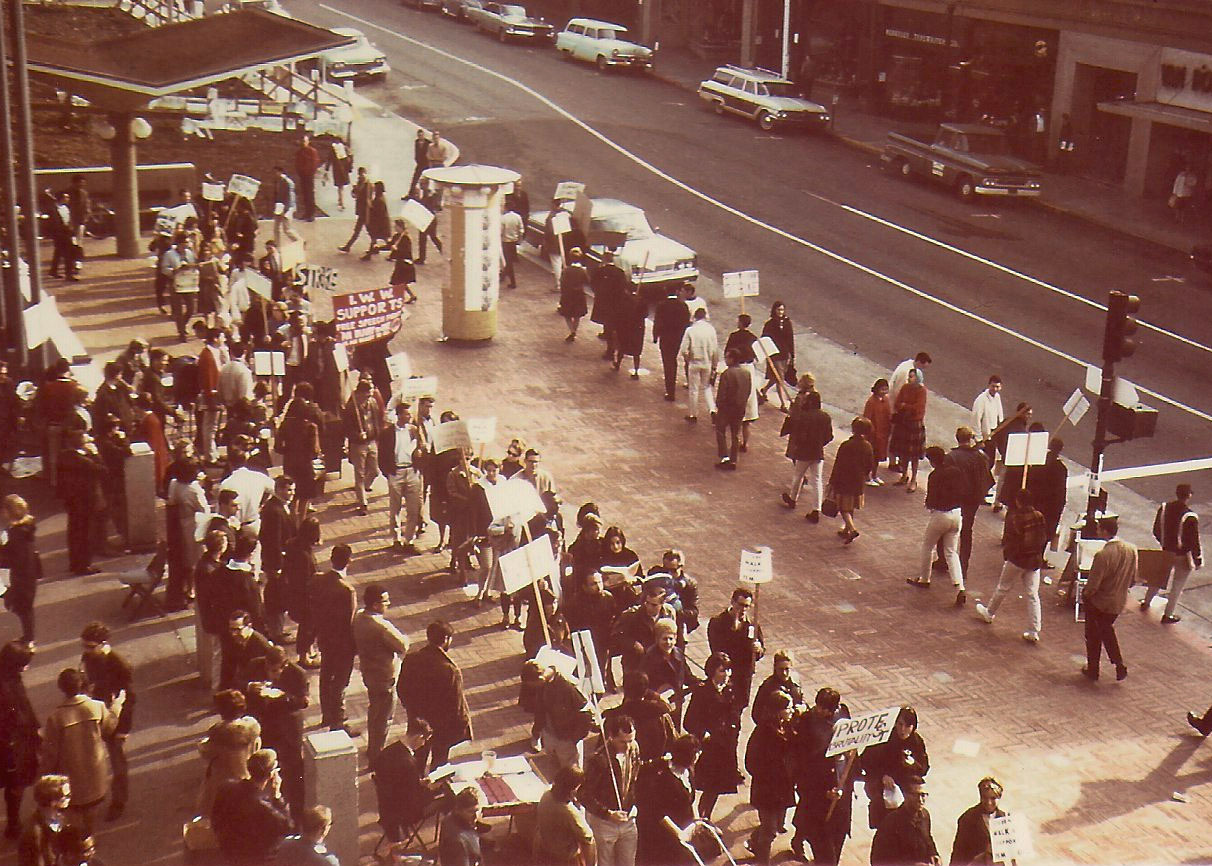
The mid-60s were a time of turmoil at UC Berkeley when the University blocked on-campus support for the Civil Right’s Movement. Here, I am one of many protesters opposing Administration policy by picketing at Bancroft Way and Telegraph Avenue.

In the last post, my first wife, Jo Ann, and I applied for the Peace Corps when we were students at UC Berkeley in 1965. We were tentatively accepted as teachers in Liberia, West Africa.

There were still hurdles. They were tied to the illusive if. We could go if we could get through the background security check, if we weren’t deselected during training, and if we could pass the physical. Training wasn’t a worry. We had enough confidence in ourselves to assume we would float through. How hard could it be after Berkeley?

The Security Check was something else. Jo Ann was squeaky clean but I had been up to mischief at Berkeley, hung out with the wrong people, been seen in a few places where law-abiding people weren’t supposed to be, and had my name on a number of petitions.

“And where were you Mr. Mekemson the night the students took over the Administration Building?”

Maybe there was even a file somewhere; maybe it was labeled Radical. J. Edgar Hoover saw Red when he looked at Berkeley.

Soon I started hearing from friends. The man with the badge had been by to see them. The background security check was underway. One day I came home to the apartment and found my roommate Jerry there. He was pale and agitated. His eyes bounced around the room.

“I have to talk to you Curtis,” he blurted out. “The FBI was by today doing your Peace Corps background check and I told them you had been holding communist cell meetings in our apartment.”

Jerry was deadly serious; Jerry was dead.

“What in the hell are you talking about?” I yelled, seeing all of our hopes dashed and me rotting in jail. I knew that Jerry disagreed with me over my involvement in Berkeley’s Free Speech Movement (FSM) and probably disagreed with me over the Vietnam War, but I hadn’t a clue on how deep that disagreement went. Or what he based his information on.

My degree in International Relations had included a close look at Communism. I found nothing attractive about repressive totalitarian states.

The closest I came to joining a leftist group had been the Free Student Union. Yes I had held committee meetings at our apartment but I had also severed my relationship with the organization. The folks behind the Union apparently believed that confrontation with authority was a good thing in and of itself. Getting bashed on the head with a nightstick made students angry. FSU wanted to radicalize the student body, not serve it.

I was not happy with Jerry that night or for some time after. I assumed the Peace Corps option was out and begin thinking of alternatives. They were bleak.

As it turned out, we received final notification from the Peace Corps a few weeks later. We were accepted. Jerry could live. The people who said good things about me must have outweighed the people who said bad things. Either that or Jo looked so good they didn’t want to throw the babe out with the bath water.

Or possibly the majority of other students who signed up for the Peace Corps from Berkeley in 1965 had rap sheets similar to mine.

There was one final hitch. I was to report to the Army Induction Center in Oakland for my physical. It was an experience not worth repeating. I lined up with a bunch of naked men to be poked and prodded.

“Turn your head and cough. Now, bend over.”

I took it like a man and escaped as soon as the opportunity presented itself. A couple of days later I came back from class and there was a scribbled note from my other roommate, Cliff, who was also going into the Peace Corps.

“The Induction Center called,” he wrote, “and there is a problem with your urinalysis.” I was to call them.

“Damn,” I thought. “Why is this so difficult?” So I called the Center and resigned myself to peeing in another jar. With really good luck, I might avoid the naked-man line.

I got a very cooperative secretary who quickly bounced me to a very cooperative nurse who quickly bounced me to a very cooperative technician who quickly bounced me to a very cooperative doctor… and none of them could find any record of my errant urinalysis.

They didn’t see any problems and they didn’t know who had called. They suggested I call back later and be bounced around again. More than a little worried, I rushed off to my next class.

That evening I reported my lack of success to Cliff. He got this strange little smile on his face and asked me what day it was.

“April 1st,” I replied as recognition of having been seriously screwed dawned in my mind. “You little ass!” I screamed, as Cliff shot for the door with me in fast pursuit. He made it to Telegraph Avenue before I caught him. The damage wasn’t all that bad, considering.

Chapter 1: An Ugly War Encourages Me to Join the Peace Corps

Welcome to “The Dead Chicken Dance and Other Peace Corps Tales.” I am presently on a two month tour of the Mediterranean and other areas so I thought I would fill my blog space with one of the greatest adventures I have ever undertaken: a two-year tour as a Peace Corps Volunteer in Liberia, West Africa. Every two days I will post a new story in book format.

When I have finished, I will publish the book digitally and in print.

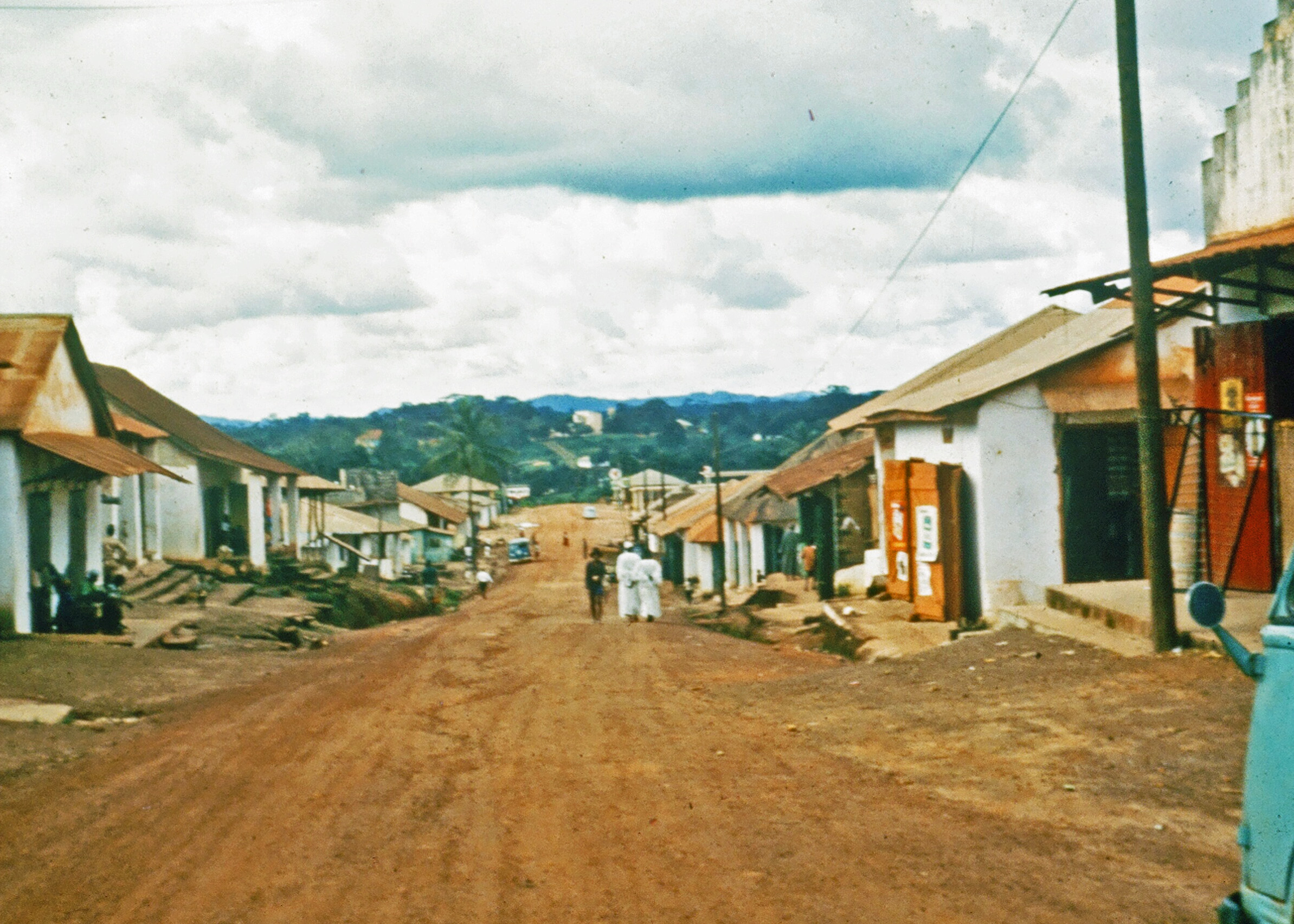
The main street of Gbarnga Liberia in 1965 where I was serving as a Peace Corps Volunteer.

Tears tracked across Jo Ann’s cheeks and I struggled to be sympathetic. It wasn’t easy.

We had just left her parents in San Francisco and boarded a United Airlines jet bound for New York City. Except for the time I surrendered five hard-earned dollars for a helicopter ride at the El Dorado County Fair, it was my first flight ever.

The jet taxied out on to the runway, climbed above the bay, and banked toward the east. We were leaving family, friends and life in the US behind. While Jo wrestled with the past, my thoughts were on the future.

Africa, teaching and adventure beckoned.

For seven hours we would be winging across America and gazing down on cotton clouds, mountain ranges, deserts, plains, cities, towns, farms and forests.

We waved goodbye to California as the plane flew over the Sierra-Nevada Mountains. The towering granite of the Crystal Range gave way to the deep blue of Lake Tahoe. My mind turned to our new status as Peace Corps Volunteers. Six months earlier we had serious doubts this day would arrive.

It was the spring of 1965 and Uncle Sam was looking for recruits. He’d bought a used colonial war from the French and needed soldiers to fight. Being a 22-year-old male about to graduate from college, I was a prime but reluctant candidate.

The conflict in Vietnam dated back to 1946. It was born ugly. France had lost her colonial empire in Indochina to the Japanese during World War II and Charles de Gaulle wanted it back. The Vietnamese Marxist Ho Chi Minh wanted independence. War was the result. Russia sided with the North Vietnamese in hopes of expanding her influence. NATO and the US jumped in to thwart Russia and support France in her colonial ambitions.

By 1955 France had abandoned the fight as a costly, no-win disaster that had sucked up more and more of the nation’s human and financial resources. Now, it was our turn. We would provide ‘military advisors’ and financial aid to the politically corrupt but anti-communist regime of Ngo Dinh Diem in South Vietnam. Over the next ten years our support continued to grow.

By the time I was ready to graduate, the US was ready to send in the troops.

The Cold War was raging. America’s leaders saw Vietnam as a critical step in stopping the spread of communism and communism was seen as an anti-capitalist, anti-Christian, and anti-democratic evil extending its cancerous tentacles throughout the world. Lose Vietnam, the Domino Theory argued, and all of Southeast Asia would follow.

My political science professors in International Relations at UC Berkeley had a different perspective. Communism was changing. It was no longer monolithic in nature but had taken on a nationalist flavor. Communism in Russia was different from communism in China. The Russians were as fearful of Chinese massing on their border as they were of the US’s nuclear weapons.

One day I arrived at my class on Comparative Communism and learned my professor had been invited to Washington to provide advice on Vietnam. The message he carried was that Ho Chi Minh was a nationalist first and a Marxist second. He was seeking independence for his nation. He was no more interested in being dominated by Russia than he had been in being dominated by France.

Becoming involved in a full-scale war was not in the best interest of the United States and might prove to be a costly mistake.

Washington refused to listen. America’s leaders had grown up on a steady diet of Cold War rhetoric. Not even the insanity of McCarthyism had shaken their faith. Being ‘soft on communism’ was political suicide. When Khrushchev banged his shoe on his desk at the United Nations and said he would bury us, we banged back.

But I was convinced there was more to the fight in Vietnam than a communist grab for power. My International Relations major was focused on Africa and the news out of Africa in 1965 was on the struggle for independence from colonial powers.  I felt Ho Chi Minh was involved in a similar fight.

I decided Vietnam was not for me. Fighting in a war I didn’t believe in and killing people I didn’t want to kill was at the very bottom of my bucket list. And there was more. I am allergic to taking orders and can’t stand being yelled at. I’d make a lousy soldier.

I saw a court-martial in my future.

If drafted, I would go, however. I couldn’t imagine burning my draft card, running off to Canada or hiding out in the National Guard. I actually believe we owe our country service. Luckily, a temporary solution popped up. Peace Corps Recruiters were coming to Berkeley.

John Kennedy proposed this idealistic organization to a crowd of 5,000 students during a campaign speech at he University of Michigan on October 14, 1960. He was running four hours late and it was two in the morning. The response was overwhelming. One of his first acts as President was to create the agency.

Peace Corps service would not eliminate my military obligation but it might buy time for the Vietnam War to end. Of more importance, I felt the Peace Corps provided a unique opportunity to travel, represent the US in a positive way, and hopefully, do some good.

I talked the idea over with my fiancé. “Let’s do it!” Jo Ann responded. She and I would go together as a husband and wife team. When the Peace Corps recruiters opened their booth in front of the Berkeley Student Union, we were there to greet them.

“Sign us up,” we urged.

“Fill these out,” the recruiter responded, handing us two umpteen page blue applications. “You will also have to pass a language aptitude test in Kurdish and provide letters of recommendation.” I had my doubts about the Kurdish.

Apparently we looked good on paper. In a few weeks the Peace Corps informed us that we had been tentatively selected to serve as teachers in Liberia, West Africa. My brain did a jig. The age-old question of what you do when you graduate from school and enter the real world had been answered, or at least postponed.

Uncle Sam with his growing hunger for bodies to fight the Vietnam War would have to wait.

Next blog: My roommate at Cal tells the FBI and Peace Corps I am running Communist Cell Block meetings in our apartment.

At Home in the Woods of Southern Oregon


This view from our patio features the first snow of the year. You are looking south at the Red Buttes, which are part of the Siskiyou Mountains that form the border between California and Oregon.

Two years ago Peggy and I decided to ‘settle down’ in Southern Oregon after travelling around North America for three years in our small RV. It was a good decision. We ended up purchasing five acres of property. The beautiful Applegate River flows in front of our house. Our back property line is the gateway to over a million acres of National Forest land.

The Applegate River, in front of our property, displays fall colors.

Walking out the back door and up our road leads to over a million acres of National Forest Land.

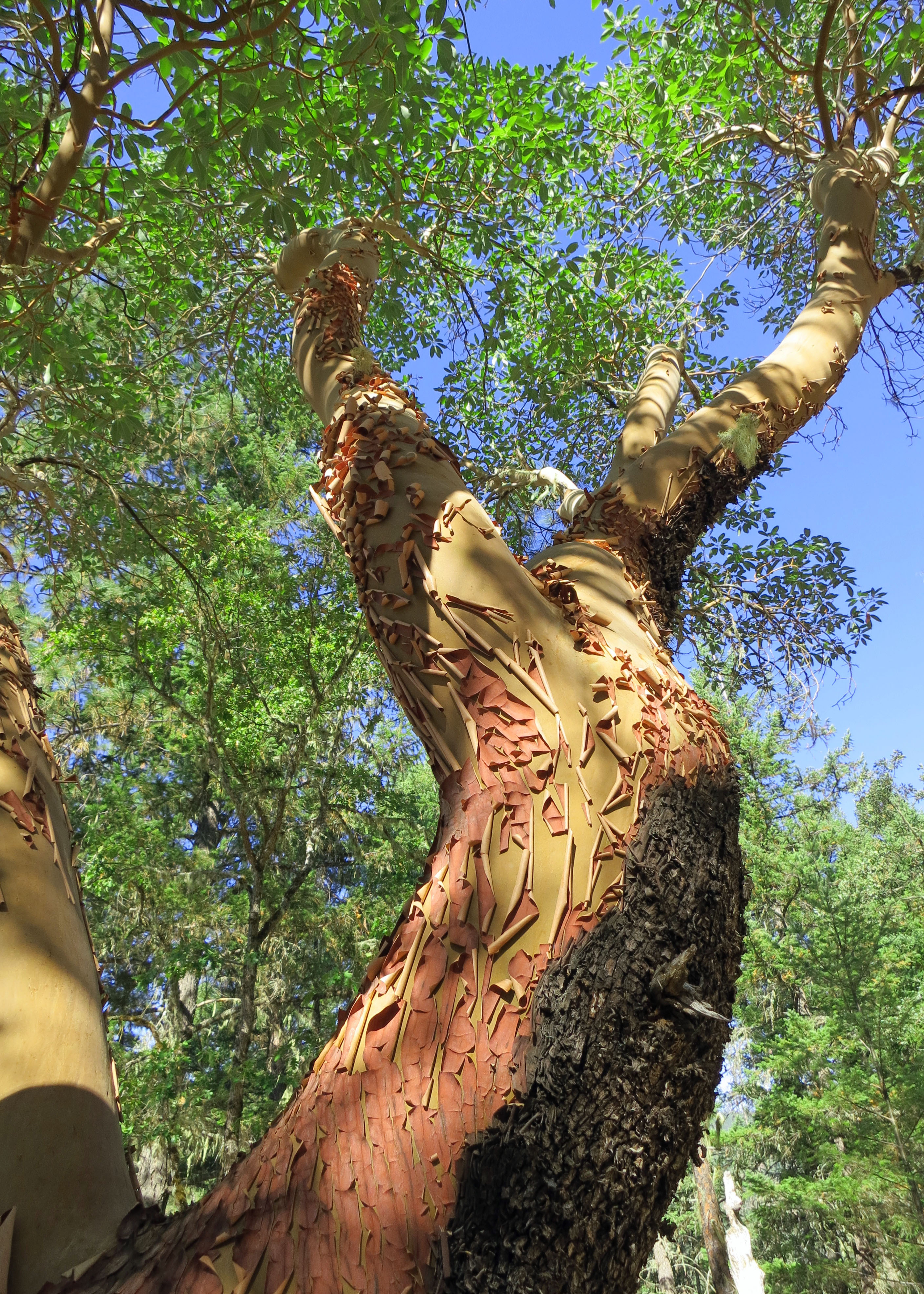
This graceful Madrone with its strange, pealing bark, provides shade for our home. It is one of numerous trees on our property. Other trees include Douglas Fir, Ponderosa Pine, White Oak and Red Cedar.

Morning mist outlines one of the Douglas Firs.

The same Douglas Fir, this time set off by the evening sky.

Peggy loves rivers and I love wilderness. It is a perfect match. Every morning we wake up with smiles on our faces.

Deer, bear, squirrels, foxes and numerous species of birds consider our property as part of their territory or at least a convenient stop off place. Last year a bear tipped over our bar-b-que. A couple of weeks ago a skunk let go under our house. This summer Peggy waged an unceasing war against ground squirrels that discovered her garden.

It all comes with country living. Mainly, we are amused by the antics of our furred and feathered friends.

Which way is the garden?

Is it here on your back porch? ( Junior has a better idea about where to find food.)

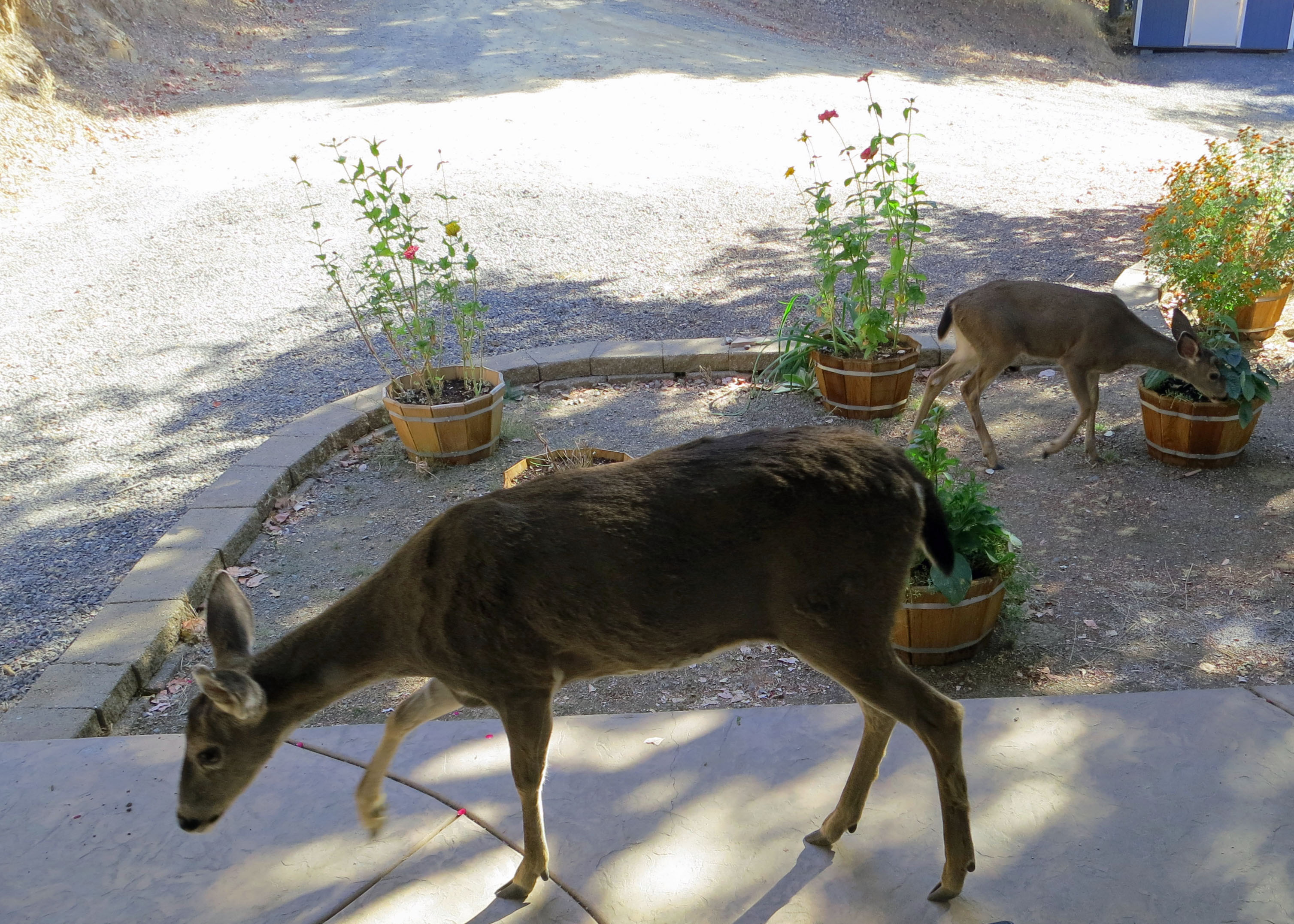
Surely you can’t resist feeding me? “Our” deer herd has trails running all over the property. Every day we get to see bucks, does, fawns and teenagers go about their lives.

At 2000 feet, we don’t get much snow… just enough to create a beautiful white wonderland. The deer, BTW, are Black Tail Deer. (Note the far deer.)

I used a Have-a-Heart trap to catch the ground squirrels and founded a new colony down the road and across the river on BLM land. The little buggers always went for the zucchini bait. I told them Peggy would be much less merciful. She was starting to practice with her pellet pistol.

We have been enjoying a beautiful fall and feel a slight tinge of regret that we are leaving to travel. I suspect the cruise of the Mediterranean with its extensive stop offs will make up for any regrets. Peggy and I do love to wander.

Gorgeous fall colors keep me running outside with my camera. I am admiring this beautiful Oregon Maple out the window as I type this post.

Another view from my writing chair. With fall arriving and temperatures dropping to freezing, this Geranium is one of Peggy’s last flowers of the season.

I thought about blogging while in Europe but I want to spend my time exploring.

So I’ve decided to focus my blog, Wandering in Time and Place, on my experience as a Peace Corps Volunteer in Liberia, West Africa. The stories are already written. Every other day I will post a new one chronologically in chapter format. When I get back in two months, I intend to publish the tales both digitally and in print as a book.

In the stories you will meet Boy the Bad Dog who ends up as guest of honor at a village feast, learn how to wage war against Army Ants, attend the hot machete trial of the Woman Who Wore No Underpants, and discover why the Liberian government felt the second grade reader I wrote was a dangerous revolutionary document. And that’s only the beginning…

I hope you will join me on the adventure.

The main street of Gbarnga, Liberia in West Africa where I served as a Peace Corps Volunteer.

The Dark Side of African Tribal Beliefs… The Peace Corps Series

This week marks the beginning of a new blog about my experiences as a Peace Corps Volunteer in Liberia West Africa from 1965-67. I am using a WordPress theme designed to look and read like a book. Each week I will post a new chapter. When I have completed the book, I will publish it both digitally and in print. Visit me at http://liberiapeacecorps.com/ to read the first and subsequent chapters.

This week I will post three different short stories about Liberia on this blog, “Wandering in Time and Place,” to give my readers a sample of what to expect on the new blog and in the book. Today’s story: The Dark Side of African Tribal Beliefs. (I have posted this story before under Lightning Man.)

Late one evening during a tropical downpour, a very wet and frightened candidate for student body president, Mamadee Wattee, knocked on our door. The opposition had purchased ‘medicine’ from a Ju Ju Man (witch doctor in Tarzanese) to make Mamadee sick.

It was serious business; people were known to die in similar circumstances.

Had the opposition slandered Mamadee or stuffed the ballot box, I could have helped. But countering black magic was way out of my league. I took the issue to the High School Principal and he dealt with it. Mamadee stayed well and won the election.

Later, he unintentionally introduced us to another tribal phenomenon, the Lightning Man.

I had left Mamadee with $50 to buy us a drum of kerosene while my wife and I were on vacation in East Africa. When we returned home, Mamadee was sitting on our doorstep. Someone had stolen the money and he was obviously upset. Fifty dollars represented a small fortune to most tribal Liberians. (Given that we were paid $120 dollars a month for teaching, it was hardly spare change to us.)

Mamadee’s father, a chief of the Kpelle tribe, was even more upset and wanted to assure us that his son had nothing to do with the missing money. It was a matter of honor. He offered to hire a Lightning Man to prove Mamadee’s innocence.

The Lightning Man had a unique power; he could make lighting strike whoever was guilty of a crime. If someone stole your cow or your spouse, ZAP! Since we were in the tropics, there was lots of lightning. Whenever anyone was struck, people would shake their heads knowingly. One more bad guy had been cooked; justice had been served.

We didn’t believe Mamadee had taken the money and even if he had we certainly didn’t want him fried, or even singed. We passed on the offer.

Another Liberian Peace Corps Volunteer chose a different path. Here’s how the story was told to us. Tom had just purchased a $70 radio so he could listen to the BBC and keep up with the news. He enjoyed his new toy for a few days and it disappeared.

“I am going to get my radio back,” he announced and then hiked into the village where he quickly lined up some students to take him to the Lightning Man. Off they went, winding through the rainforest to the Lighting Man’s hut.

“I want you to make lighting strike whoever stole my radio,” Tom said, and then paid five dollars for the service. (Lightning Men have to eat too.)

Tom and his entourage then returned home. By this time, everyone in the village knew about the trip, including undoubtedly, the person who had stolen the radio.

That night, there was a tremendous thunder and lightning storm. Ignoring for the moment that it was in the middle of the rainy season and there were always tremendous thunder and lightning storms, put your self in the shoes of the thief who believed in the Lightning Man’s power. Each clap of thunder would have been shouting his name.

The next morning Tom got up, had breakfast and went out on his porch. There was the radio.

(Note: Mamadee would go on to become an elementary school principal in New Jersey.)

My Name Is Captain Die and This Is My Dog Rover… The Peace Corps Series

This week marks the beginning of a new blog about my experiences as a Peace Corps Volunteer in Liberia West Africa from 1965-67. I am using a WordPress theme designed to look and read like a book. Each week I will post a new chapter. When I have completed the book, I will publish it both digitally and in print. Visit me at http://liberiapeacecorps.com/ to read the first and subsequent chapters.

This week I will post three different short stories about Liberia on this blog, “Wandering in Time and Place,” to give my readers a sample of what to expect on the new blog and in the book. Today’s story: My Name Is Captain Die and This is My Dog Rover.

In our two years of living in Liberia as Peace Corps Volunteers, Peace Corps we would have many unusual experiences. One of our more unusual took place within our first week of living in Gbarnga, the town where we were assigned. It involved meeting Captain Die and his dog Rover.

Captain Die was a well digger who was reported to have spent too much time in dark holes. Our well was one of his jobs. He had dug it for our predecessors, two female Volunteers. Afterwards, he began stopping by to visit the women and bum cigarettes.

Therefore, it wasn’t surprising when he appeared on our doorstep shortly after we moved in. His introduction was unique.

“Hello, my name is Captain Die. My name is Captain Die because I am going to die someday. This is my dog, Rover. Roll over Rover. Give me a cigarette.” Rover, who was a big ugly dog of indeterminate parenthood, dutifully rolled over.

It made quite an impression.

We explained to Captain Die that neither of us smoked but invited him in to share some ice tea we had just brewed. We gave the Captain a glass and he took a huge swallow. I have no idea what he thought he was getting but it wasn’t Lipton’s. He thought we were trying to poison him.

A look of terror crossed his face and he spit the ice tea out in a forceful spray that covered half the kitchen and us. Dripping wet, we found ourselves caught between concern, laughter and dismay. The Captain marched out of our house in disgust with Rover close behind.

In addition to having found our predecessors an excellent supply of tobacco, Captain Die had been quite taken with one of them.  The story was told to us how he appeared at the door when Maryanne’s parents were visiting from the States. Captain Die was a man on a mission.  He was going to request Maryanne’s hand in marriage.

I’ve always imagined the scene as follows.

Maryanne’s parents are sitting in the living room on folding chairs making a game attempt at hiding their culture shock when this big black man and his ugly dog appear at the screen door.

Maryanne jumps up and says, “Oh Mom and Dad, I would like you to meet my friend, Captain Die.” Mom and Dad, brainwashed by Emily Post and wishing to appear nonchalant, quickly stand up with strained smiles on their faces.

Captain Die grabs Dad’s hand and tries to snap his finger at the same time proclaiming, “Hello, my name is Captain Die. My name is Captain Die because I am going to die some day. This is my dog Rover. Roll over Rover. Give me your daughter.”

No one told me how Maryanne’s parents responded to the good Captain’s offer so I will leave the ending up to the reader’s imagination. I can report that Maryanne was not whisked out of the country by her mom and dad.

While Captain Die’s visit had a purpose, there were a lot of folks who were just plain curious about how we lived. One little girl would have put a cat to shame. I never could figure out where she came from.

She would stand on our porch with her nose pressed against the screen door and stare at us for what seemed like hours. After a while it would become disconcerting and I’d suggest she go home. She would disappear but then I’d look up and there she’d be again, little nose pressed flat.

Finally, deciding more drastic measures were called for, I picked up my favorite folding chair and plopped it down a foot from the door. Then I sat down and initiated a stare back campaign. I lowered my head and moved forward until I was even with her head and about five inches away. The little nose slowly moved backward, suddenly turned around and took off at a fast gallop.

After that she watched the weird people from across the street.

A Short Lesson on Cats and Guacamole… The Peace Corps Series

This week marks the beginning of a new blog about my experiences as a Peace Corps Volunteer in Liberia West Africa from 1965-67. I am using a WordPress theme designed to look and read like a book. Each week I will post a new chapter. When I have completed the book, I will publish it both digitally and in print. Visit me at http://liberiapeacecorps.com/ to read the first and subsequent chapters.

This week I will post three different short stories about Liberia on this blog, “Wandering in Time and Place,” to give my readers a sample of what to expect on the new blog and in the book. Today’s story: A Short Lesson on Cats and Guacamole.

The cultural anthropologist James Gibbs was living in Gbarnga while he was studying the Kpelle people. Sam, our houseboy, worked for him as an informant on tribal customs.

One evening James and his wife Jewelle invited my wife Jo Ann and me over for dinner. It was our first invitation out as Peace Corps Volunteers.  I should also note we were still at the point of being recent college graduates and somewhat awed by academicians.

We dressed up in our best clothes and walked a mile down the dirt road past Massaquoi Elementary School to where they lived.

The Gibbs had an impressive house for upcountry Liberia. They were sophisticated, nice folks who quickly put us at ease. Among the hors d’oeuvres they were serving was a concoction of mashed avocado, tomatoes and hot peppers that Jo and I found quite tasteful. We made the mistake of asking what it was.

“Why it’s guacamole of course,” Dr. Gibbs declared. We must have looked blank because he went on, “Surely anyone from California knows what guacamole is.”

Surely we didn’t. I felt like Barbara Streisand in Funny Girl when she learned that pate was mashed chicken liver. It was 1965 and Mexican food had yet to storm Northern California. Yes, we’d graduated from UC Berkeley but dining out on our survival budget meant beer and pizza at La Val’s or a greasy hamburger at Kip’s.

To change the subject I called attention to their cat.

“Nice cat,” I noted.

Mrs. Gibbs gushed. “Oh, that’s Suzy. She’s in love.”

Dr. Gibbs jumped in, obviously glad to leave the subject of guacamole. “The boys are coming by every night to visit. We hear them yowl their affection up on the roof.”

Suzie looked quite proud of her accomplishments. Having been properly introduced, she strolled over and rubbed up against my legs. I reached down and scratched her head, which served as an invitation to climb into my lap. While arranging herself, Suzie provided me with a tails-eye view. Staring back at me was the anatomy of the most impressive tomcat I’ve ever seen. Suzie had the balls of a goat!

I could hardly contain myself. “Um, Suzie isn’t Suzie,” I managed to get out while struggling to maintain a straight face.

“What do you mean Suzie isn’t Suzie?” Dr. Gibbs asked in a voice meant to put impertinent grad students in their place. Rather than respond verbally, I turned the cat around and aimed his tail at Dr. Gibbs. Understanding flitted across his face.

“We never thought to look,” he mumbled lamely. We were even. While the kids from the hills might not know their guacamole from mashed avocados, they did know basic anatomy.

(Note… I may have Suzie’s name wrong after all of these years but the cat definitely had a female name.)

The Case of the Errant Urinalysis… From Free Speech to the Peace Corps


In addition to whatever mischief I had been up to during the Free Speech Movement at UC Berkeley, the Peace Corps wanted to know about my health.

I was directed to show up at the Army Induction Center in Oakland for a physical. I lined up with a bunch of semi-naked men to be poked and prodded. It was an experience not worth repeating.

“Turn your head and cough.”

I took it like a man and escaped as soon as the opportunity presented itself. A couple of days later I came back from class and there was a note from my other roommate, Cliff, who was also going into the Peace Corps.

“The Induction Center called,” he wrote, “and there is a problem with your urinalysis.” I was to call them.

“Darn it,” I thought. “Why is this so difficult?” So I called the Induction Center and resigned myself to having to pee in another jar. With really good luck I might avoid the naked-man-line.

I got a very cooperative secretary who quickly bounced me to a very cooperative nurse who quickly bounced me to a very cooperative technician who quickly bounced me to a very cooperative doctor… none of whom could find any record of my errant urinalysis.

They didn’t see any problems and they didn’t know who had called. They suggested I call back later and be bounced around again. More than a little worried, I rushed off to my next class.

That evening I reported my lack of success to Cliff. He got this strange little smile on his face and asked me what day it was.

“April 1st,” I replied as recognition of having been seriously screwed dawned in my mind. “You little twerp!” I screamed, as Cliff shot for the door with me in fast pursuit. It took me four blocks to catch him. The damage wasn’t all that bad, considering.

The FBI Hears I Run a Communist Cell Block…

Next on my to-do list for joining the Peace Corps was the dreaded FBI security check.

I had been up to mischief at Berkeley, hung out with the wrong people, been seen in a few places where law-abiding people weren’t supposed to be, and had my name on a number of petitions.

“And where were you Mr. Mekemson the night the students took over the Administration Building?”

Maybe there was even a file somewhere; maybe it was labeled ‘Radical!’ J. Edgar Hoover saw Red whenever he looked at Berkeley.

Soon I started hearing from friends. The man with the badge had been by to see them. The background security check was underway. One day I came home to the apartment and found my roommate Jerry there, looking very nervous.

“I have to talk to you Curtis,” he blurted out. “The FBI was by today doing your Peace Corps background check and I told them you had been holding communist cell block meetings in our apartment.”

Jerry wasn’t joking; Jerry was deadly serious; Jerry was dead.

“What in the hell are you talking about?” I had yelled, seeing all of my hopes dashed. I knew that Jerry disagreed with me over my involvement in Berkeley’s Free Speech Movement and probably disagreed with me over the Vietnam War, but I didn’t have a clue on how deep the disagreement went. Or what he based his information on.

My degree in International Relations had included a close look at Communism. I found nothing attractive about the system.

The closest I had come to joining a leftist group had been the Free Student Union. Yes I had held a committee meeting at our apartment but I had also severed my relationship with the organization. The folks behind the Union were more interested in radicalizing the student body than serving it. That was not my interest.

I was not happy with Jerry that night or for some time after. I assumed the Peace Corps option was out and begin thinking of alternatives. They were bleak.

As it turned out, a few weeks later we received final notification from the Peace Corps. We were accepted. The people who said good things about me must have outweighed the people who said bad things. Either that or Jo Ann looked so good they didn’t want to throw the babe out with the bath water.

Or possibly the majority of other students signing up for the Peace Corps from Berkeley in 1965 had rap sheets similar to mine. I suspect that was the case.

Next Blog: If this is the Peace Corps, what am I doing in the naked man line at the Army Induction Center?

An Offer to Teach in Africa: From Free Speech to Peace Corps

In the spring of 1965 Uncle Sam pointed his finger at me. He wanted warm bodies to fight a colonial war in Southeast Asia the French had already lost. Being a 22-year-old male about to graduate from college, I was a prime candidate.

If drafted, I would go.

I couldn’t imagine burning my draft card, running off to Canada or joining the Texas Air National Guard. I actually believe some type of mandatory two-year national service ranging from the military to the Peace Corps would be good for young men and women and good for America.

But fighting in a war I didn’t believe in and killing people I didn’t want to kill was at the very bottom of my bucket list. And there’s more. I am allergic to taking orders and can’t stand being yelled at. I’d make a lousy soldier. I saw a court martial in my future.

Luckily, a temporary solution popped up. Peace Corps Recruiters were coming to UC Berkeley.

John Kennedy had first proposed this idealistic organization to a crowd of 5,000 students during a campaign speech at he University of Michigan on October 14, 1960. He was running four hours late and it was two in the morning but the response was overwhelming. One of his first acts as President was to create the agency.

Peace Corps service would not eliminate my military obligation but it might buy time for the Vietnam War to sort itself out. Of more importance, I felt the Peace Corps provided a unique opportunity to travel and possibly do some good. I also believed I would be serving my country.

My fiancé and I sat down and talked it out. Jo Ann was excited. We would go together as a husband and wife team. When the Peace Corps recruiters opened their booth in front of the Student Union at Berkeley, we were there to greet them, all dewy-eyed and innocent.

“Sign us up,” we urged.

Of course there were a few formalities: small things like filling out the umpteen page blue application and taking a language aptitude test, in Kurdish. We also needed letters of recommendation.

Apparently we looked good on paper. In a few weeks, the Peace Corps informed us that we had been tentatively selected to serve as teachers in Liberia, West Africa. We were thrilled. The age-old question of what you do when you graduate from school and enter the real world had been answered, or at least postponed.

Uncle Sam with his growing hunger for bodies to fight the Vietnam War would have wait.

Next Blog: My roommate tells the FBI I am running a Communist Cell Block.

The Tragedy of Liberia

Bob and Gerry Branch invited us to stay at their apartment in Monrovia while JoAnn and I were ‘trained.’ In this photo, Bob watches a funeral parade outside his window while Jo looks at the camera.

(At the end of the last blog, my ex-wife and I found ourselves stranded in New York City because we had mistakenly flown to JFK one day late and missed our flight to Africa. In this blog, we reach our destination.)

We made it to the right terminal on the right day and at the right time. In fact, absolute paranoia insisted we be three hours early. We watched lots of planes take off and land.

Finally, we found ourselves flying across a rough Atlantic. To quote Snoopy, “it was a dark and stormy night.” Lighting danced between the clouds as we struggled to deplete the airplane’s complimentary booze supply. We toasted the fact we had made it, we toasted Liberia, we toasted Jo’s mom for her hundred dollars and we toasted toasting.

I finally managed to fall asleep and only awakened when the pilot announced good morning. Jo and I scrambled to look down and were met by a vast sea of green broken occasionally by small clearings filled with round huts. Tropical Africa!

There was brief stopover in Dakar where French-speaking Senegalese served warm coke and ginger snaps for breakfast. It’s the type of meal you really should forget but never do.

An hour later we were dropping in to Robert’s Field, Liberia’s International Airport. A stewardess wrenched open the door admitting a sudden blast of heat and humidity. Luckily, roaming the streets of New York City in August had prepared us. What we weren’t prepared for was the view.

Striding across the tarmac to greet us was my old friend Morris Carpenter from community college days in California. He had joined the Peace Corps the year before and been assigned to Liberia. By some quirk of fate we had been assigned to the same country and would end up living closer together than we had in California.

All grins, we tumbled into each other. I couldn’t resist saying, “Dr. Livingston, I presume.”

Morris, as he put it, had been camped out on the Peace Corp’s Director’s desk in Monrovia for a month seeking a change in assignment when our arrival was announced. He quickly volunteered to pick us up. The Director, recognizing the opportunity for Morris-free time, had agreed even faster.

On our way into Monrovia, Morris filled us in on life in the Peace Corps as ‘it really was.’ One year of living in Liberia had coated his youthful idealism with a thin veneer of cynicism. There were good reasons.

Liberia was a country that had been born and nurtured in paranoia. Its origins dated back to the early 1800’s when slaves were being freed in the New England and there was a growing concern about the expanding population of free black people. While most Northerners accepted that slavery was wrong, few were willing to accept their freed slaves as equals.

In the South, where slaves outnumbered their owners, fear replaced concern. Insurrection was a real possibility. Henry Clay, Andrew Jackson, Daniel Webster and a number of other prominent Americans proposed a solution: ship freed African-Americans back to Africa. The American Colonization Society was founded and a portion of the west coast of Africa purchased. Approximately 11,000 freed slaves eventually shipped out.

Life was bleak and dangerous at first. The natives weren’t overly happy at seeing their long-lost cousins appropriate tribal lands and the Americo-Liberians (ALs) constituted a very small percentage of the total population.

The ALs had learned their US lessons well though and soon established themselves as the ruling elite. They took control of the government, education, and military. The natives were regarded as second-class citizens.

Power and privilege were the results but it was power and privilege accompanied by an underlying fear that the majority native population would rise up in revolt. This in turn led to a siege mentality and paranoia somewhat similar in nature to that felt by the white minorities in the Southern United States prior to the Civil War. I would see and experience several examples of this paranoia during my stay.

Close economic and political ties were maintained with the US over the years. Starting in 1926 Firestone entered the country and eventually cut down vast swathes of rainforest to plant rubber trees. As we drove by a rubber tree plantation on our way to Monrovia, Morris explained that the industry was now suffering from labor problems that the military had been called in to quash. Apparently workers were striking to earn twenty-five cents an hour.

On an outward level, there were a number of similarities between the United States and Liberia. English was the national language, the currency of the country was well-used American Dollars, and the flag was red white and blue complete with eleven stripes and one star. Upon arrival we even learned that the commanding general of the Liberian army was named George Washington. Not surprisingly, the government and the judiciary system were patterned after the American system.

In reality the government was a one party state controlled by the Americo-Liberians and whatever justice existed was heavily weighted toward keeping them in power. While change was underway when we arrived, it was too little and too late.

The failure to educate and bring large numbers of tribal Liberians into the economic and political system from the beginning was one of the major factors leading to the tragedy that Liberia would suffer over the next three decades. Americo-Liberians, tribal Liberians and the country would suffer terribly due to this negligence.

Morris dutifully dropped us of at Peace Corps headquarters to begin our orientation and take care of miscellaneous bureaucratic chores. While we had been playing at the World’s Fair, our fellow volunteers had been sweltering through hours of meetings. Now it was our turn.

Another married couple from Group VI, Bob and Gerry Branch, generously agreed to host our stay. They lived in a second floor apartment that overlooked one of Monrovia’s main streets. It provided a birds-eye view of life in the city.

Monrovia was overflowing with impoverished young people living in crowded tin shacks.

Monrovia was bursting at the seams with impoverished young people escaping from rural areas. Tin shacks fought for space as extended families struggled to find shelter from tropical downpours. Taxi and money-bus drivers, using their horns for brakes, filled the air with unceasing noise while the barking and growling of mangy dogs filled in around the edges. Evening air was tainted with the unique smell of cooked palm oil, smoke and moldering garbage.

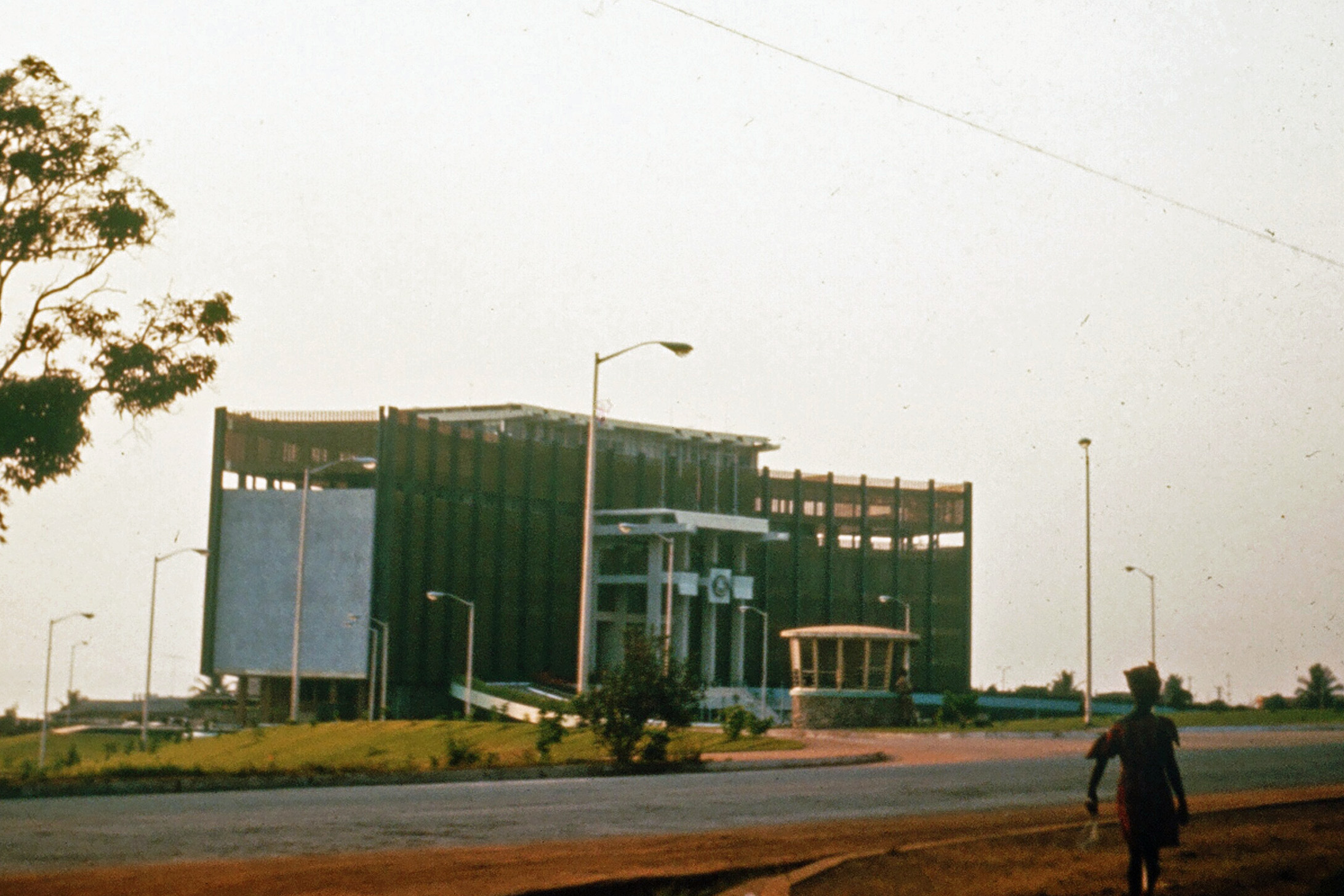
Of course it wasn’t all bleak, assuming one had money. Monrovia had several good restaurants, a modern movie theater, an air-conditioned supermarket and a large paperback bookstore, all of which we came to appreciate over the next two years. Most Americo-Liberians did quite well. President Tubman lived in an impressive mansion on the outskirts of the city.

President Tubmans Mansion in 1966.

For our part, we were quite relieved to learn that our assignment wasn’t in Monrovia. Originally, we had been assigned to an elementary school down the coast in Buchanan. It was supposed to be a plum assignment so naturally another couple grabbed it when we failed to turn up.

We were left with their jobs; Jo would teach first grade and I would teach second in the upcountry town of Gbarnga. (Upcountry was anywhere inland.) Apparently this was our punishment for partying too long in Auburn. So be it…

(Note… in my March 3 blog I reported on how Phil Weisberg was arrested for holding up a sign criticizing Mrs. Tubman. Phil has since responded that he wasn’t arrested but was seized by security agents and later released.)