The Scenic and Seismic Northern Highlands of Costa Rica… Lake Arenal

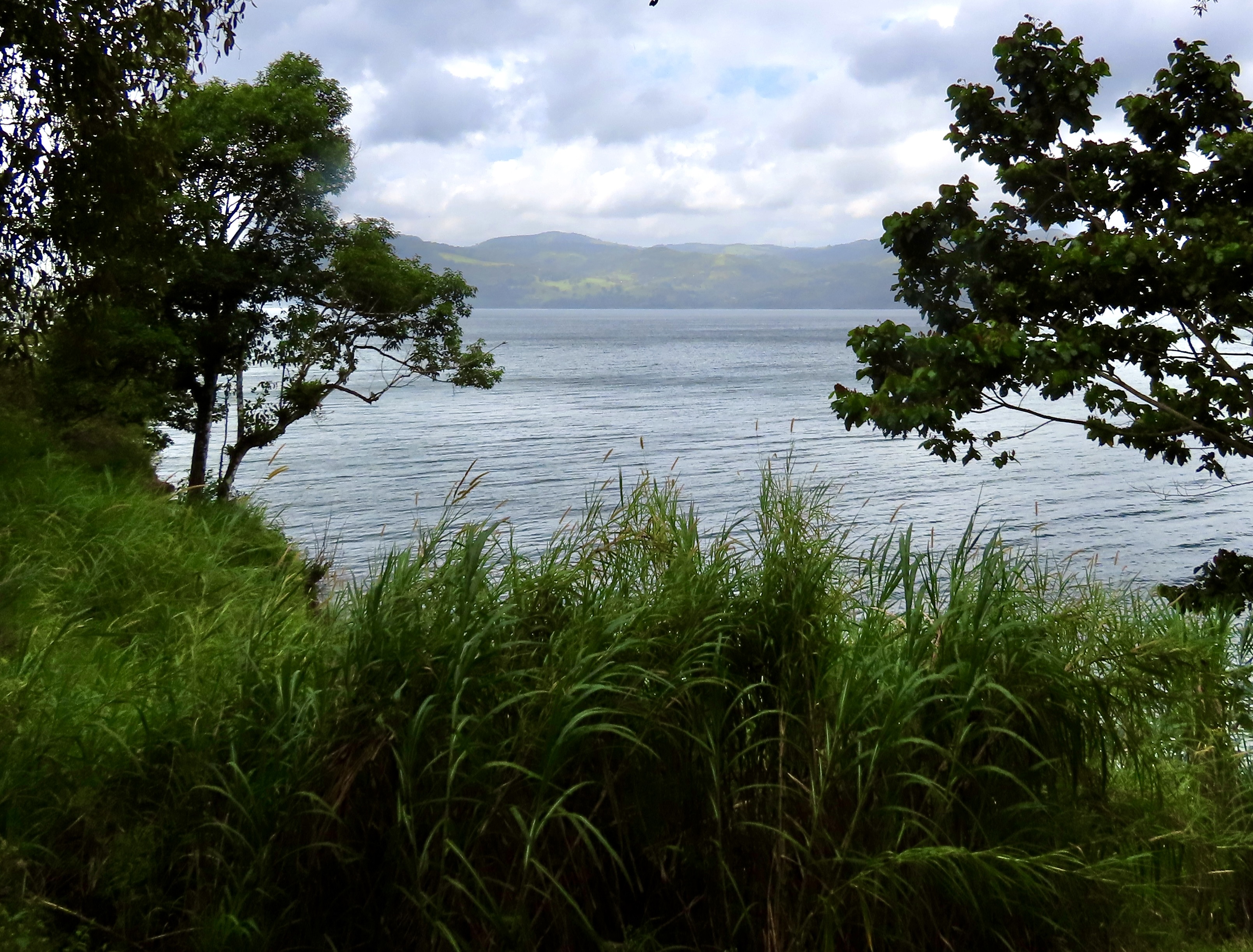
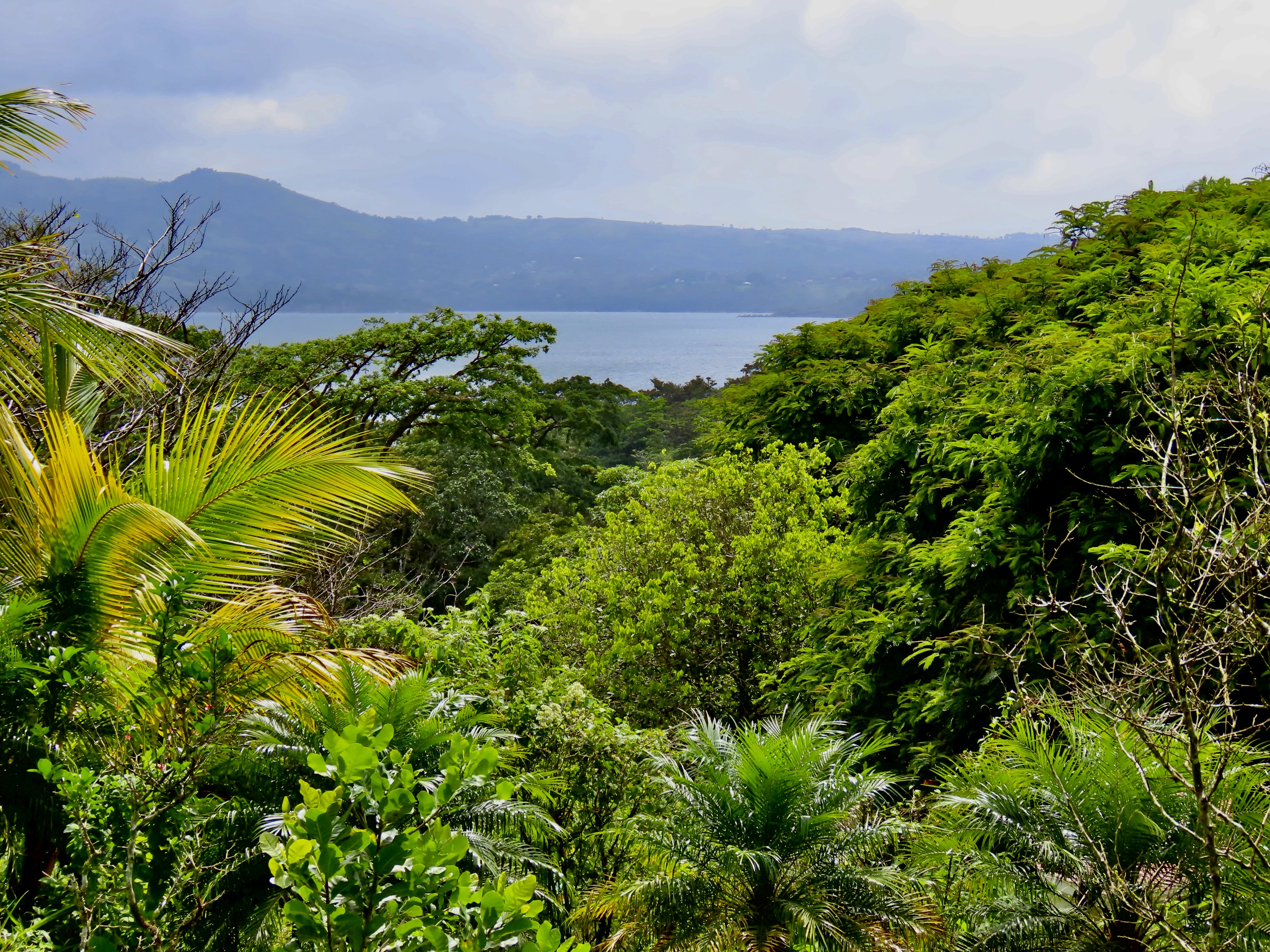
Lakeview Gardens, the VRBO we stayed at for our first two weeks in Nuevo Arenal, provided this view of Lake Arenal. The photo also provides a look at the jungle-like growth surrounding our villa.

The first place we stayed on our monthlong trip to Costa Rica was in the small town of Nuevo Arenal on the shore of Lake Arenal. It’s called Nuevo (new) because old Arenal, the town of Tronadora, and a huge cattle ranch are now buried deep under water.

In 1979, Costa Rica decided to create a major hydroelectricity project by damming the lake as part of its modernization efforts. Arrangements were made to move the inhabitants of Arenal and Tronadora to new communities. They had new homes, but their farms, ranches, and jobs were left behind. Hacienda la Rosita, the cattle ranch that covered much of the land now occupied by Lake Arenal, was expropriated by the Costa Rican Government, i.e. taken without compensation. I assume that the owner of the property, P. Eckrich & Sons, a subsidiary of the U.S. based Beatrice Foods, at least got a lot of steaks. Or maybe the cattle learned how to swim.

The new dam tripled the size of the lake to 33 square miles (85 square kilometers), making it the largest lake in Costa Rica. Its depth ranges between 98 feet in the dry season to 198 feet in the rainy season (30 and 60 meters). Initially, it was responsible for creating 50%-70% of the country’s electricity. Now it’s closer to 12%-17%, but still significant. 95-98 % of Costa Rica’s electricity comes from renewable sources, making it one of the top countries in the world for clean power. The US is around 24%.

Today, recreational activities ranging from fishing to windsurfing to kayaking and paddle boarding draw tourists from around the world, providing an important source of revenue for the local economy and country. The pages and pages of VRBOs, Air B&Bs, and tour companies listed on Google is an indication of this!
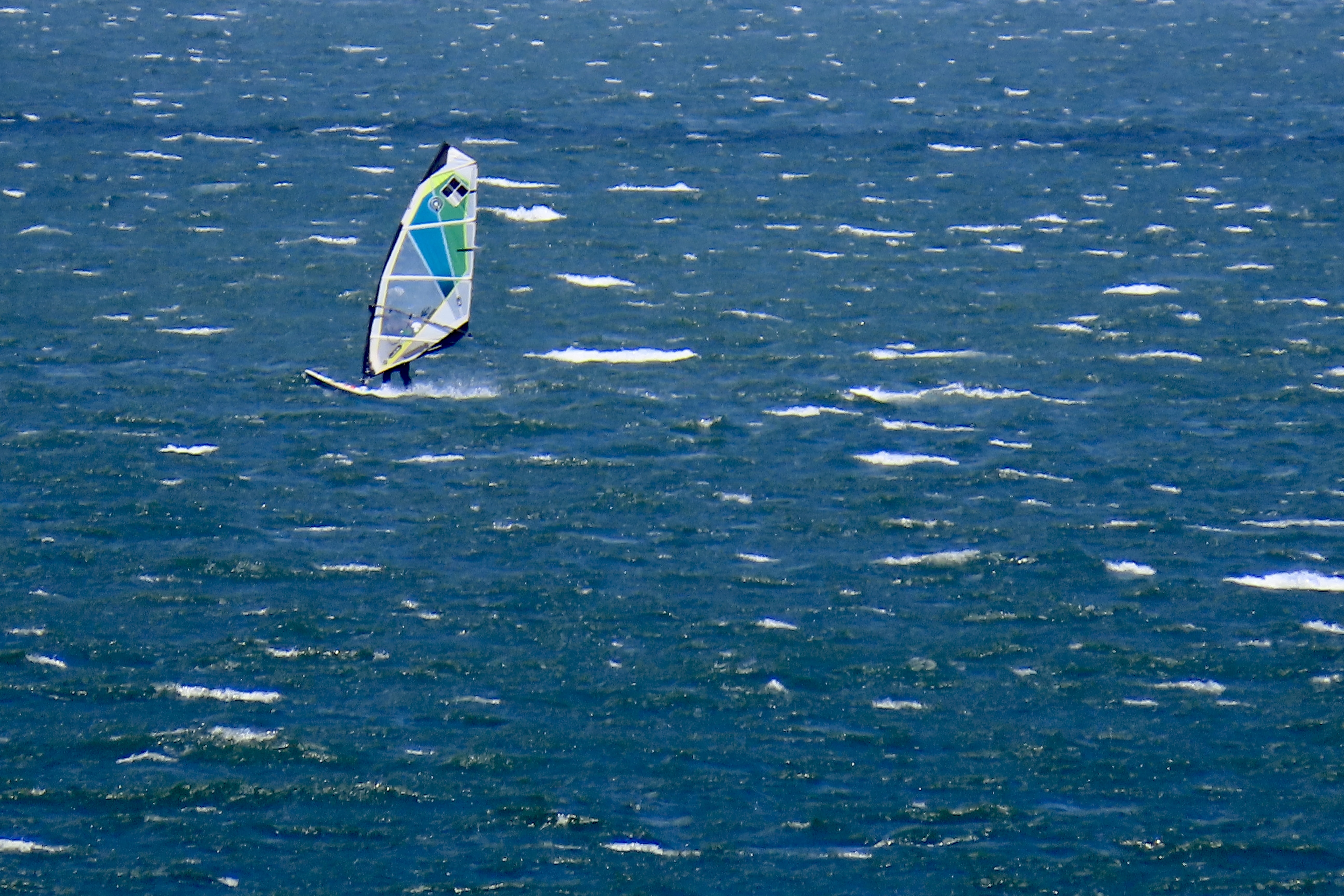
Lake Arenal is known for its windsurfing. A strong wind has this person flying across the lake!

The area is part of the Central America Volcanic Arc created by plate tectonics as portions of the ocean plate dive under Central America. There are several active volcanos in Costa Rica. Mt. Arenal, located a few miles away from the lake, erupted on July 29, 1968 with a major explosion that destroyed the town of Tabacón and killed 87 people. It can seen from Lake Arenal and is still smoking. Hot springs, geothermal power, and a tourist attraction are positive aspects of the volcanic action. Earthquakes and the possibility of Mt. Arenal erupting, again, are on the negative side of the ledger. I wondered how the dam would behave in a major earthquake. The mountain has been quiet since 2010.
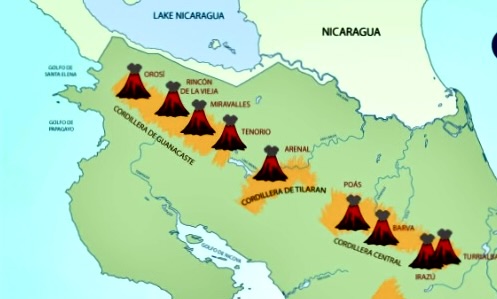
A map of active volcanos in Northern Costa Rica from costarica.org. Arenal is the middle volcano. Lake Arenal is just to the north. This is a great example of the lava created when an oceanic plate scrapes off against a continental plate. The result is the volcanoes seen here.
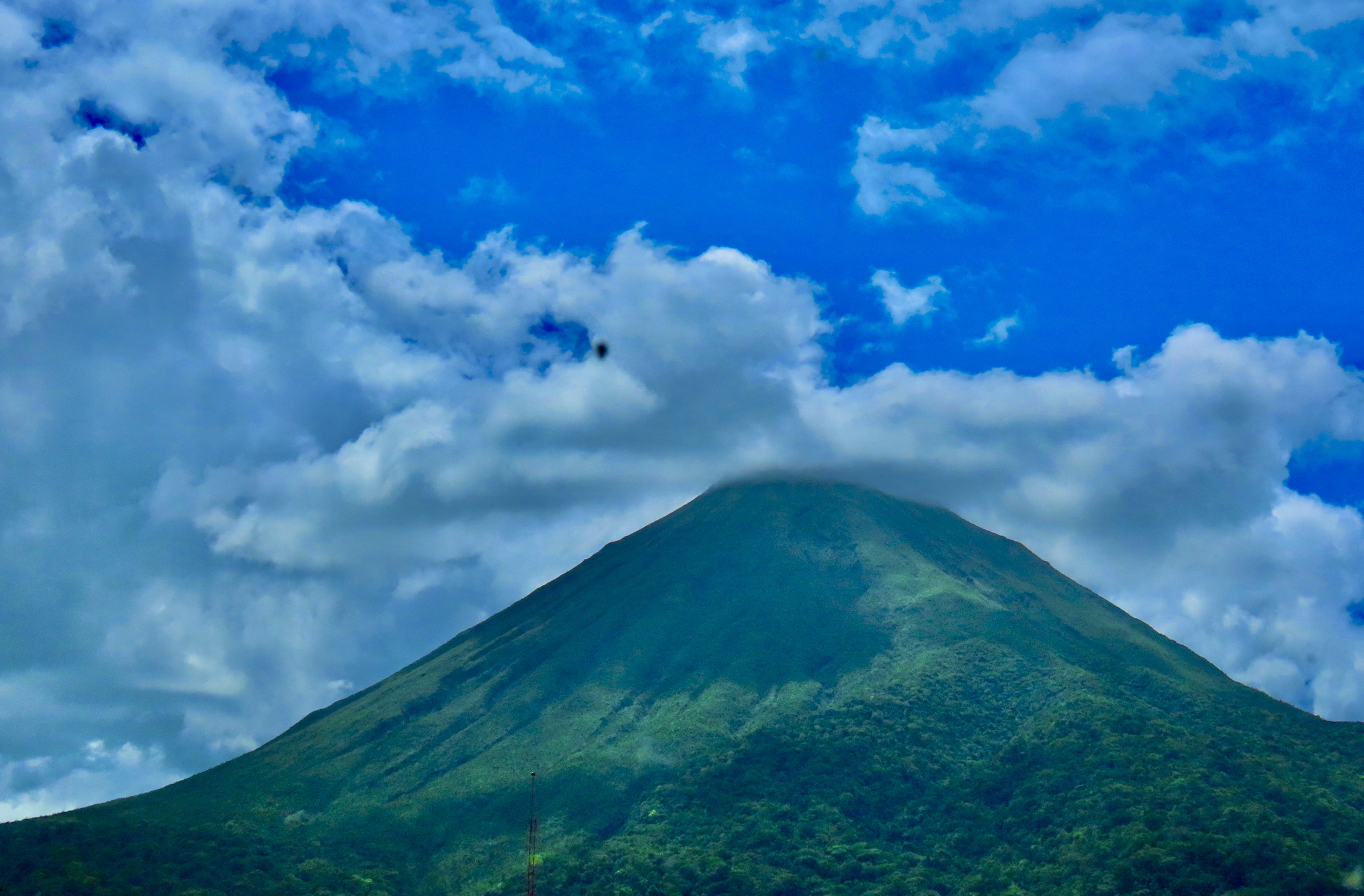
A view of Mt. Arenal. It was cloudy the day we drove to the town of Fortuna at its base, so we couldn’t see the smoke coming out of the top.

Next… photos of Lake Arenal that Peggy and I took.
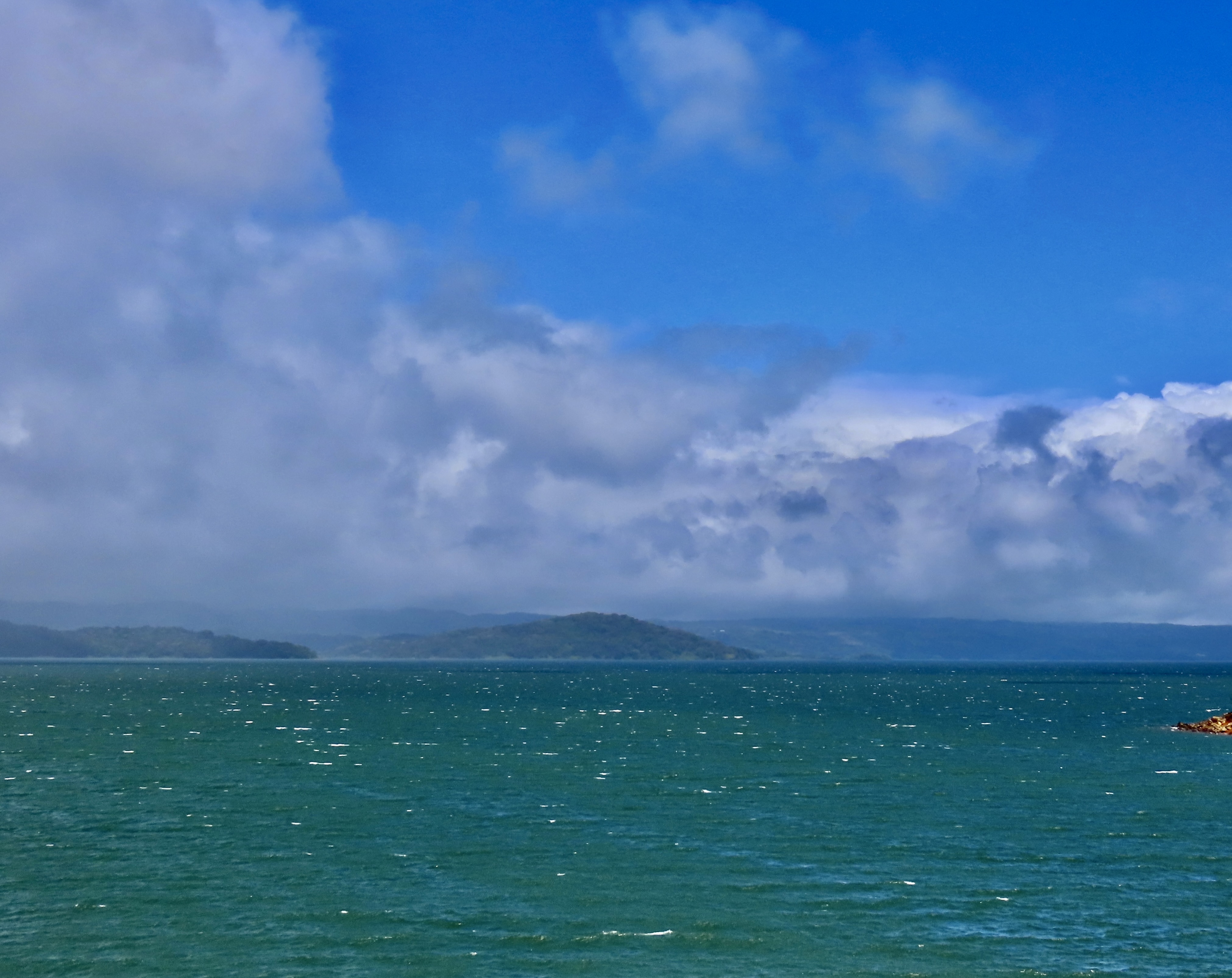
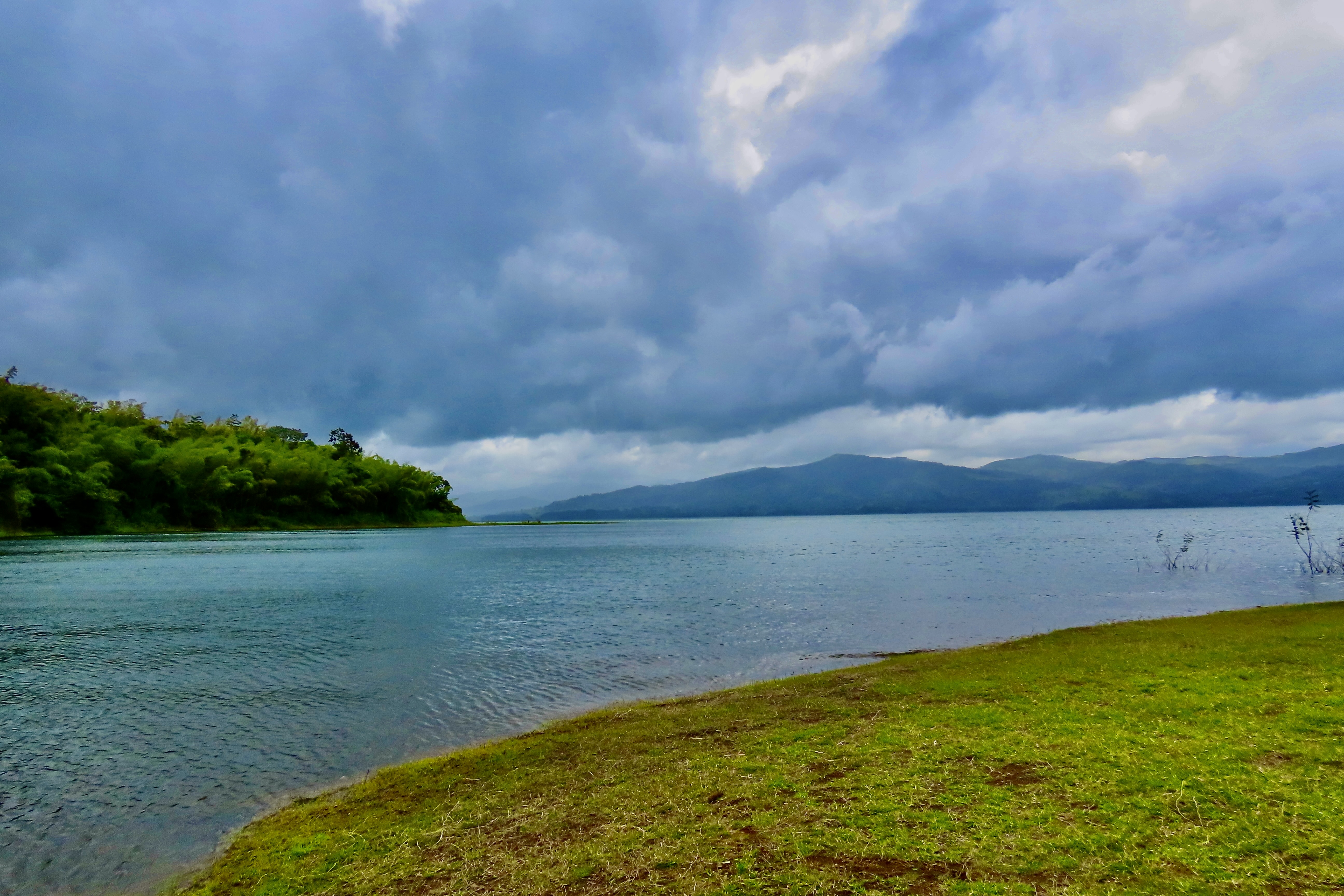
It was cloudy on the day we went for a hike along the lake’s shore at a park on the edge of Nuevo Arenal. We thought the clouds added to the beauty of the lake.
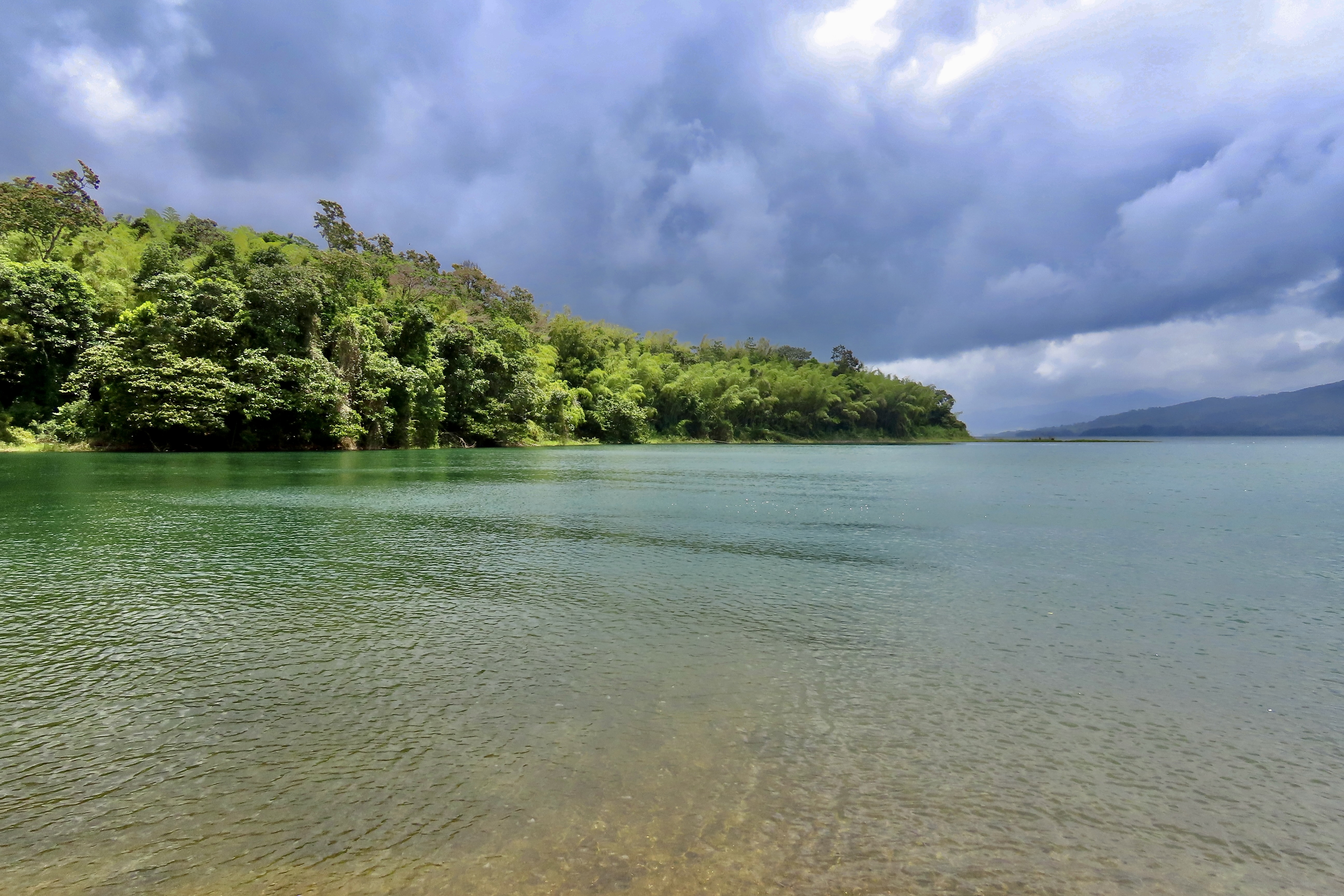
A peninsula jutted out into the lake.
The sun breaking through provided an interesting contrast to the dark skies.
The trail led us out onto the peninsula.
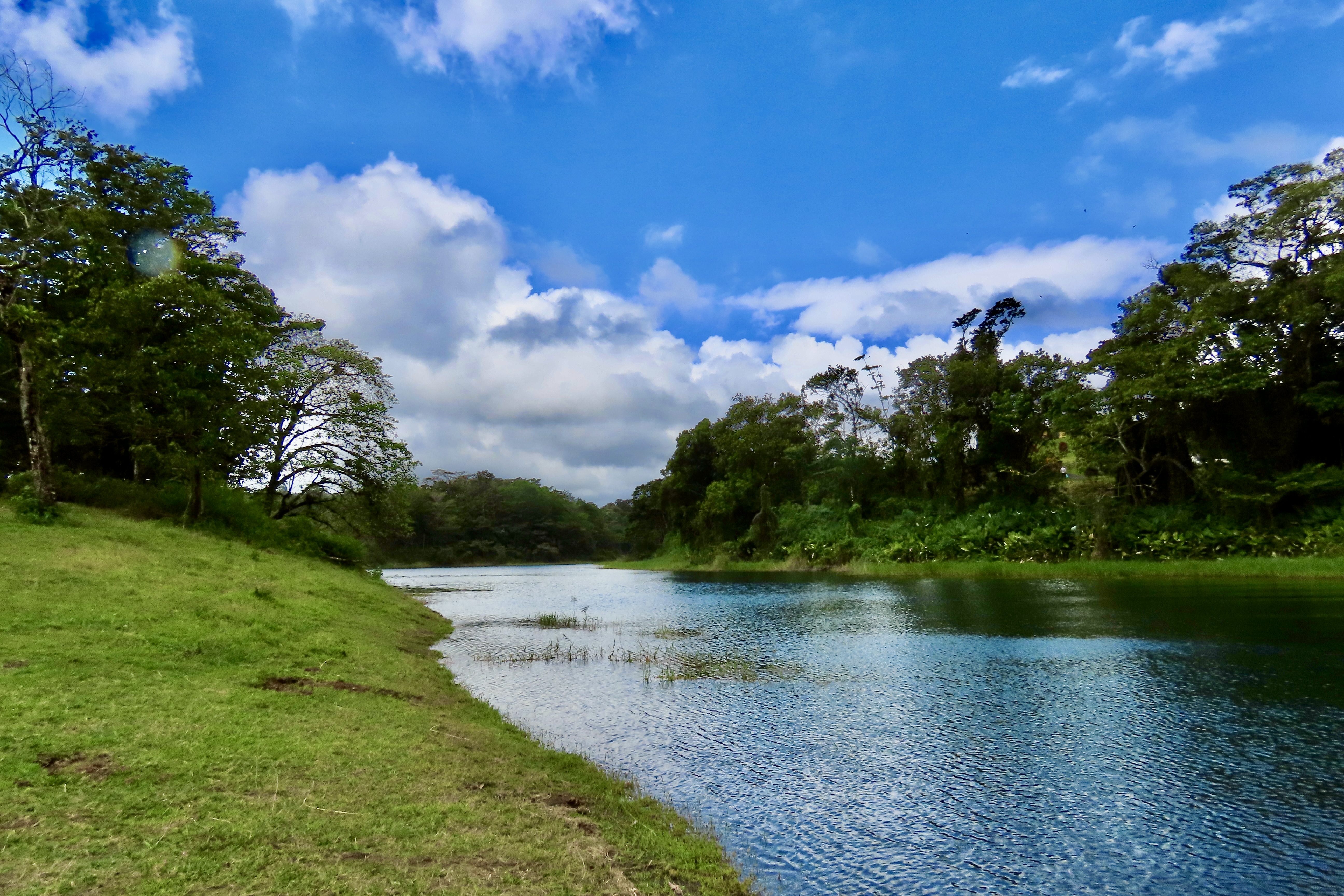
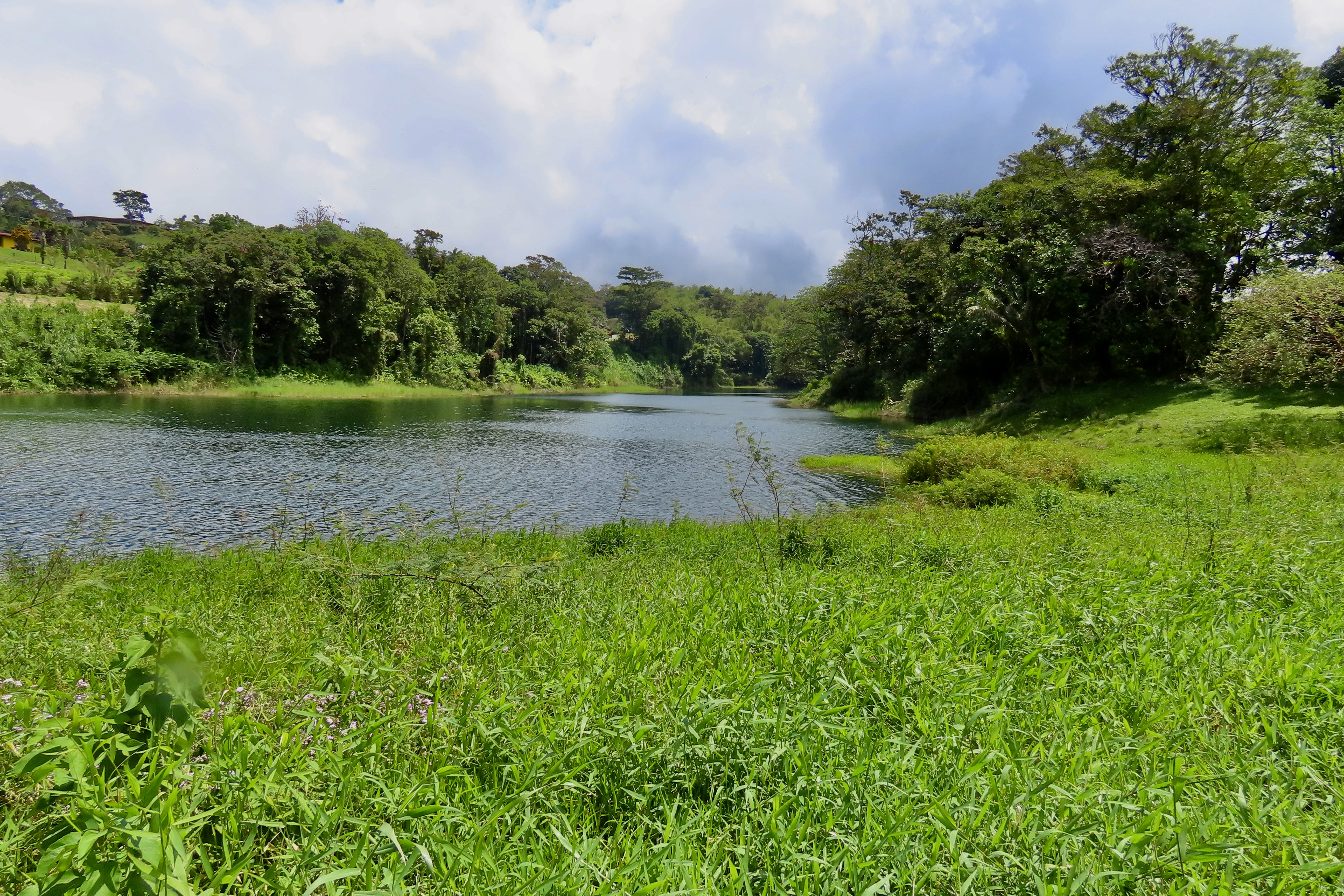
An inlet leading back toward our VRBO was on the opposite side of the peninsula.
Another perspective. The attractive inlet with its calm water had us wishing we had our kayaks along. The white caps and the wind out on the open lake: Not so much.
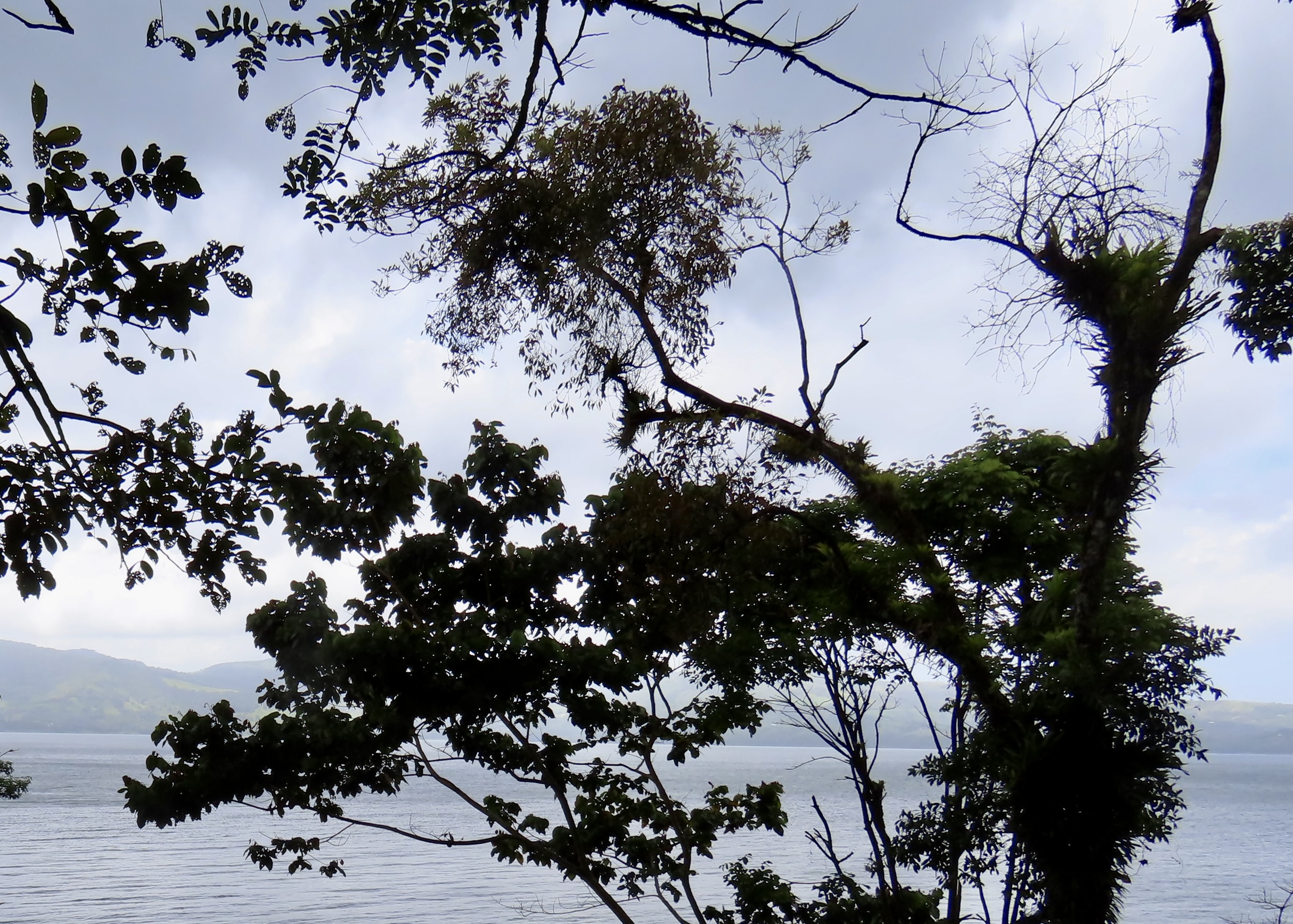
Shooting toward the sun gave trees a shadowy look.
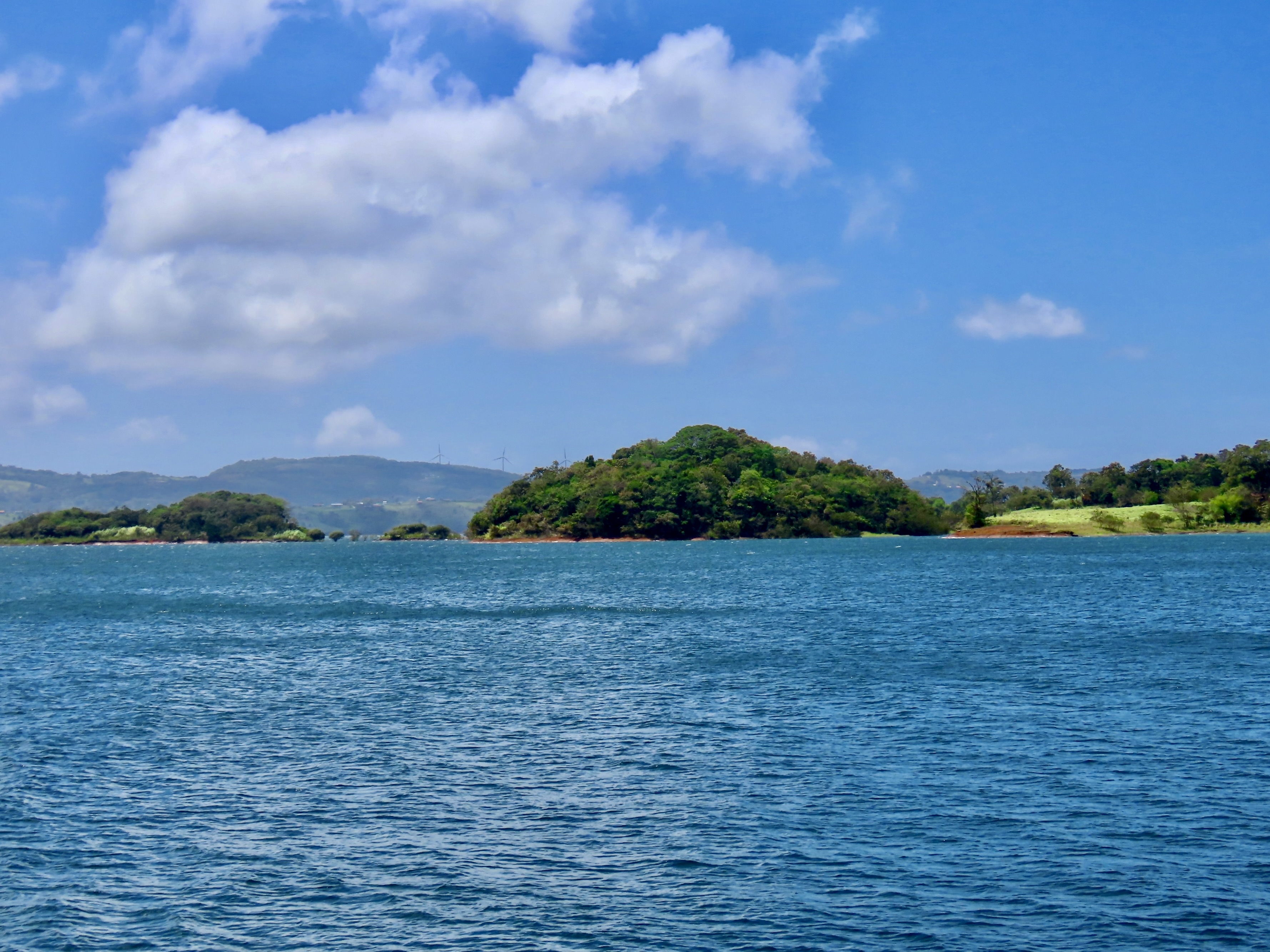
Another peninsula and several small islands were visible looking down the lake. Tinajas Restaurant is located just over the hill on the right and provides a great view of the lake.
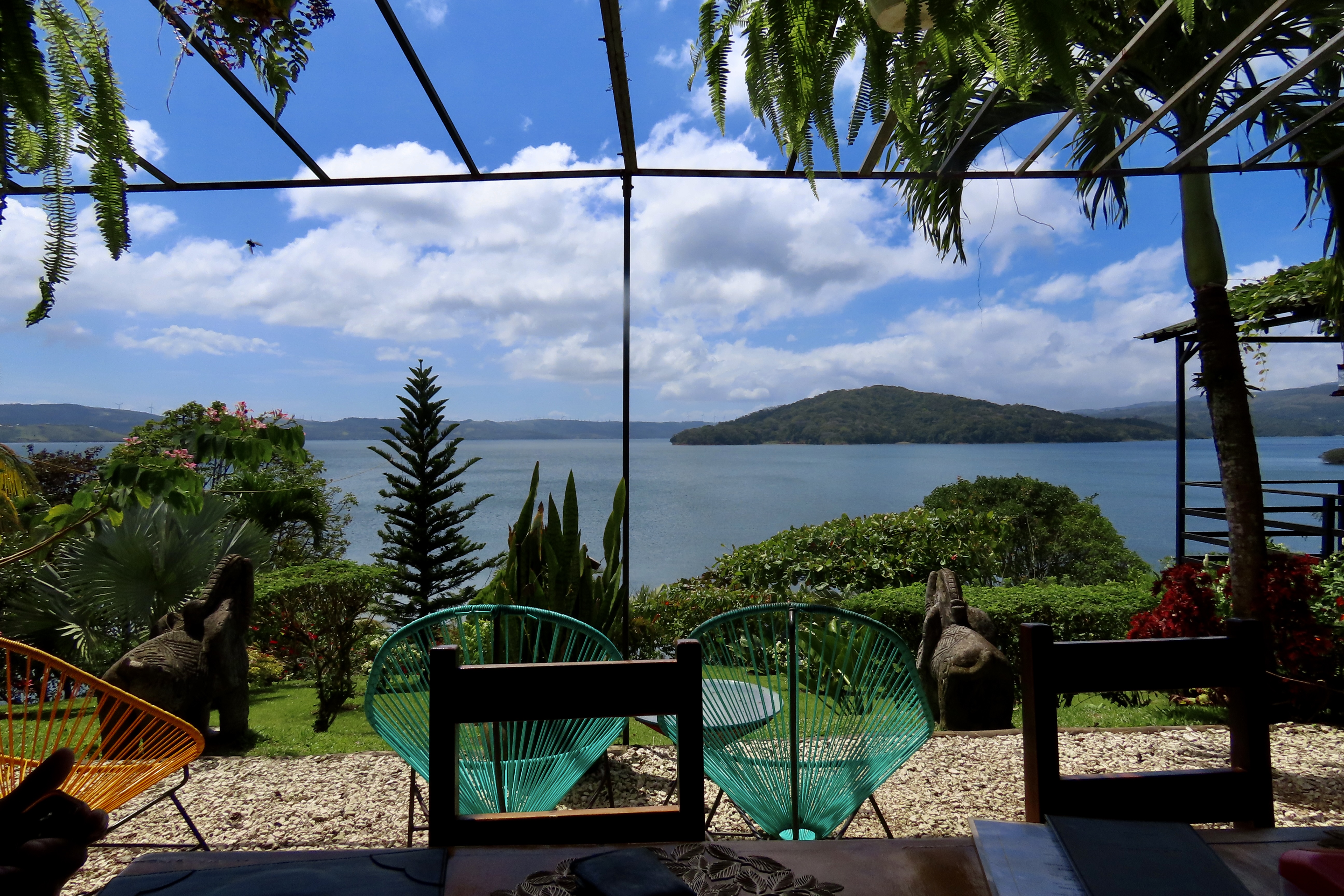
This is the view out from the Tinajas Restaurant. We went there with our next door VRBO neighbors, Paul and Gabe, who were from Canada. Paul had managed a steel mill before his retirement. Gabe still ran an online school teaching Spanish speakers English. They were a delight. See the speck on the upper left. It wasn’t a bird. It was a spider building a web.
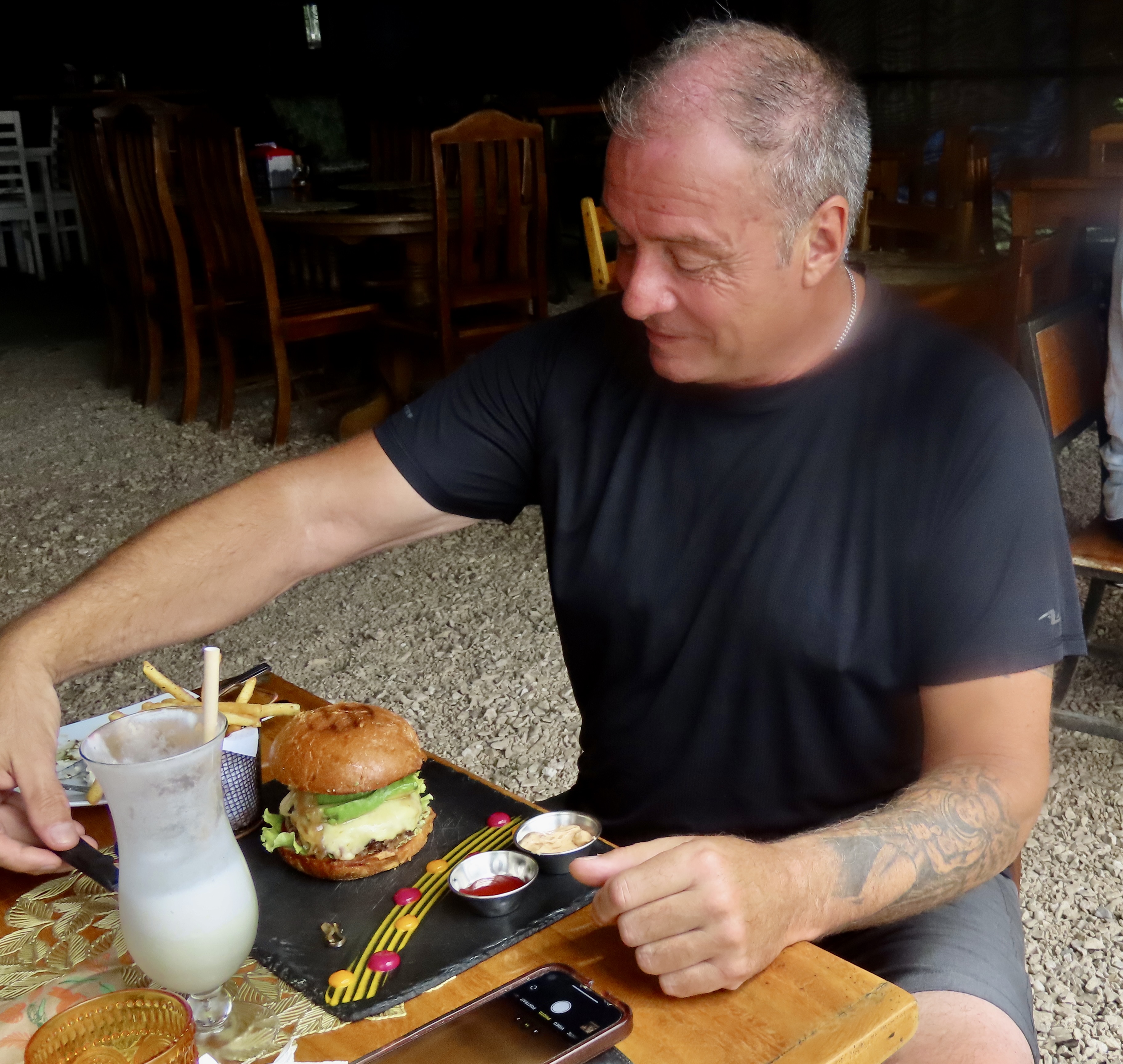
Paul ordered a hamburger. It was humongous. I wondered if it had been donated by one of the ancestors of the cattle that once roamed through the valley below. Even more, I wondered how Paul could possible get it in his mouth.
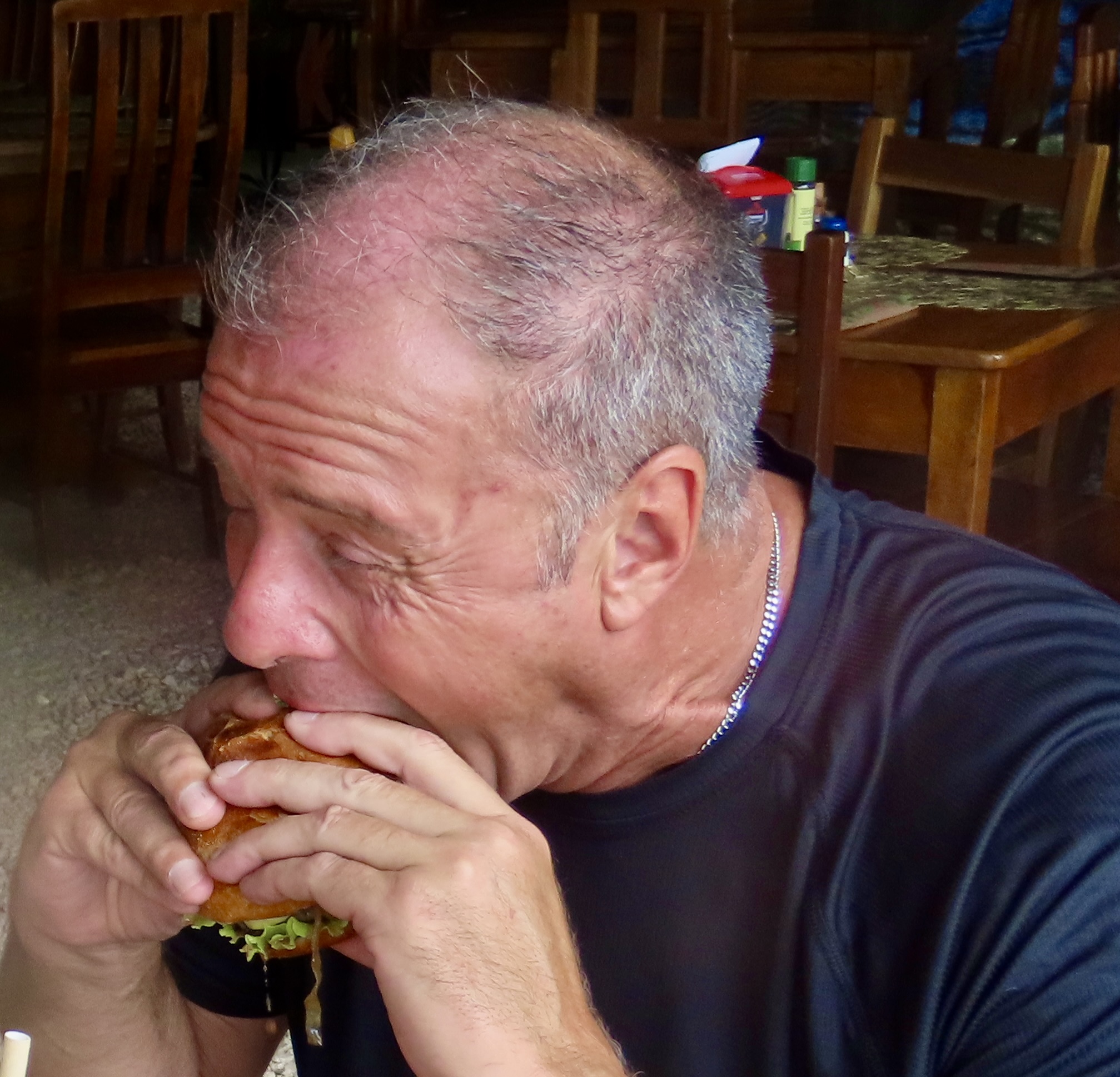
He demonstrated! And looked quite happy doing so. That’s it for today. Join us on Wednesday as I continue with my blog-a-book tales and…
Win a large stuffed dog to impress a date at the California State Fair. By cheating. 😳 (Thanks AI for the photo.)

Crested Guams and Chachalacas: Here’s Looking at you… The Birds of Costa Rica

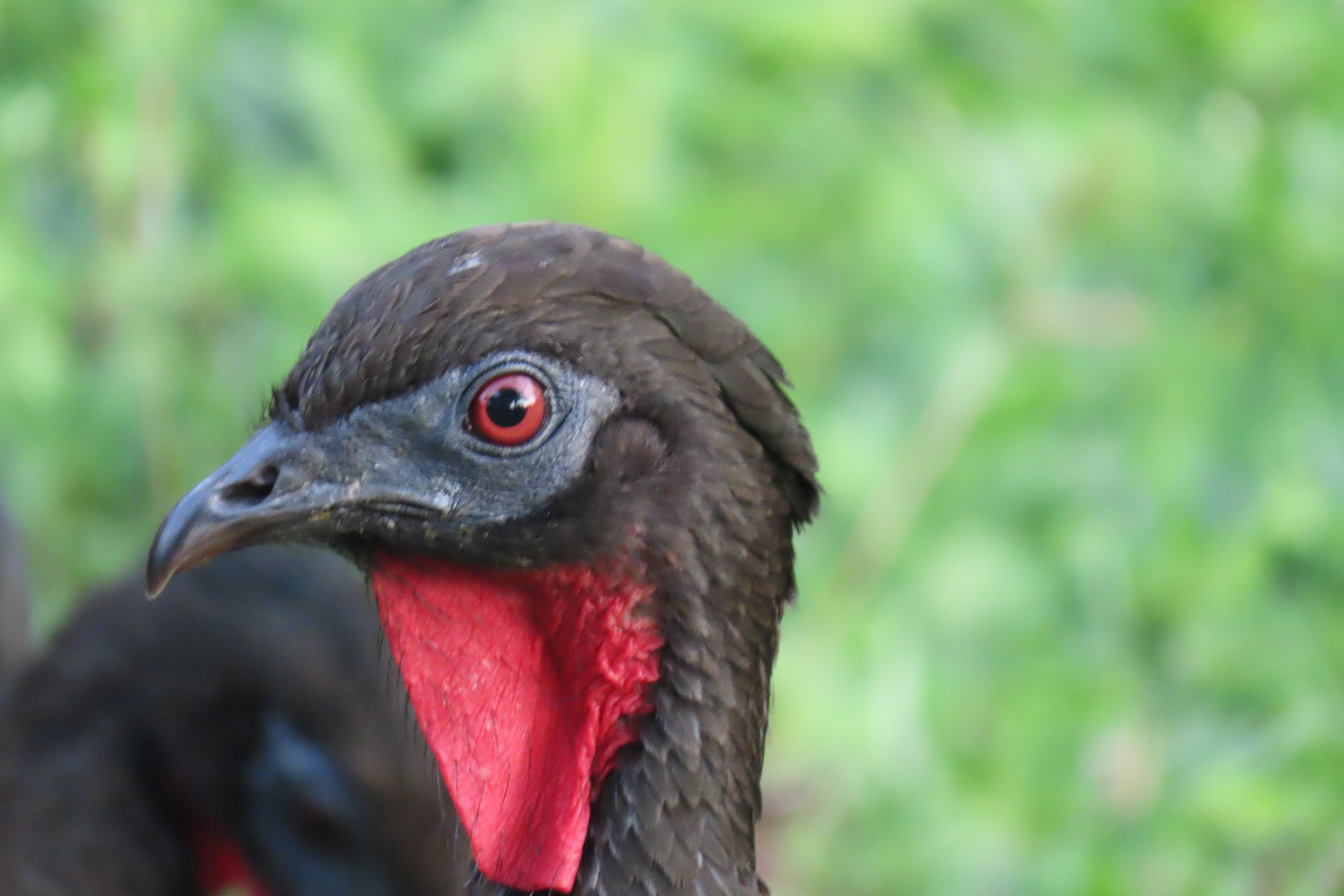
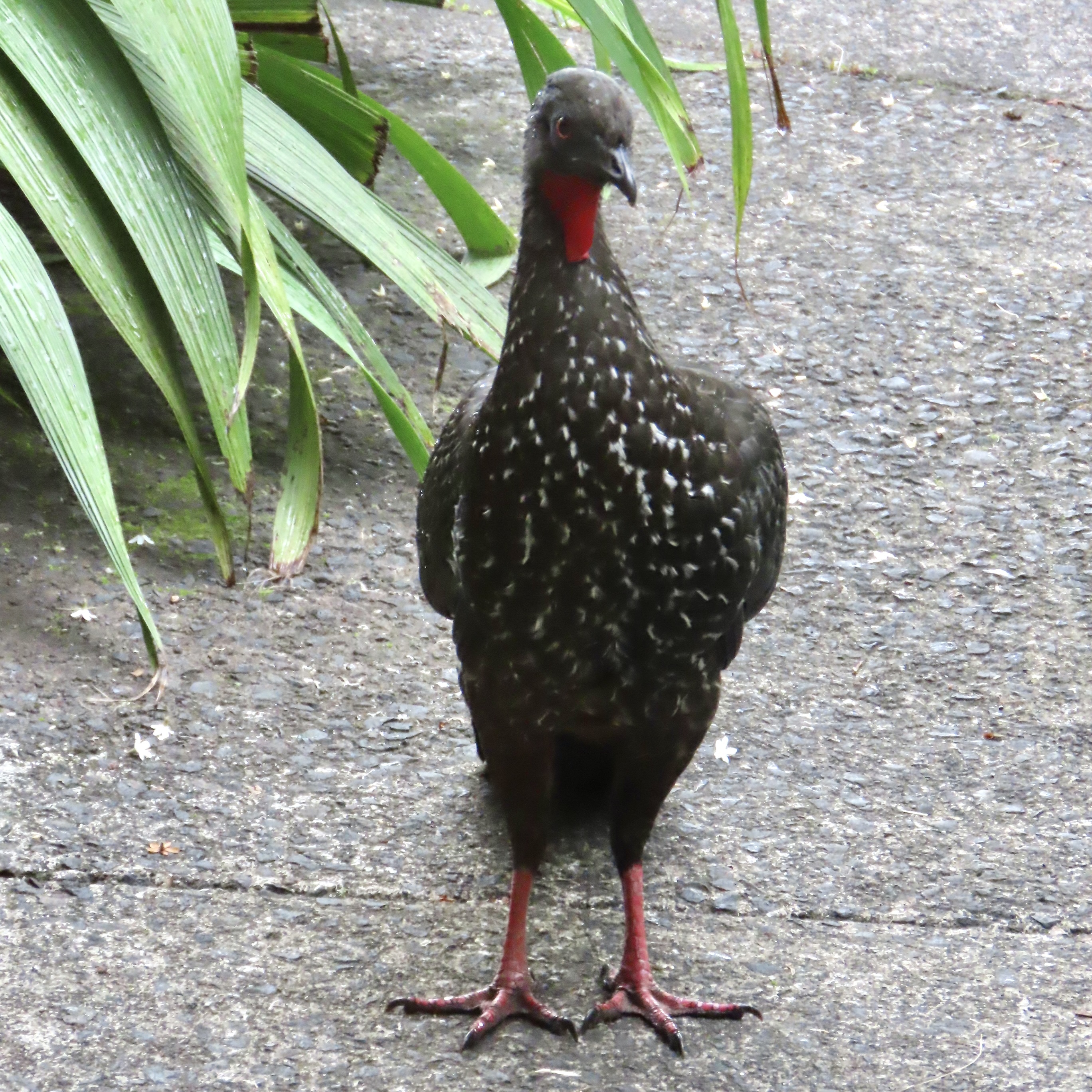
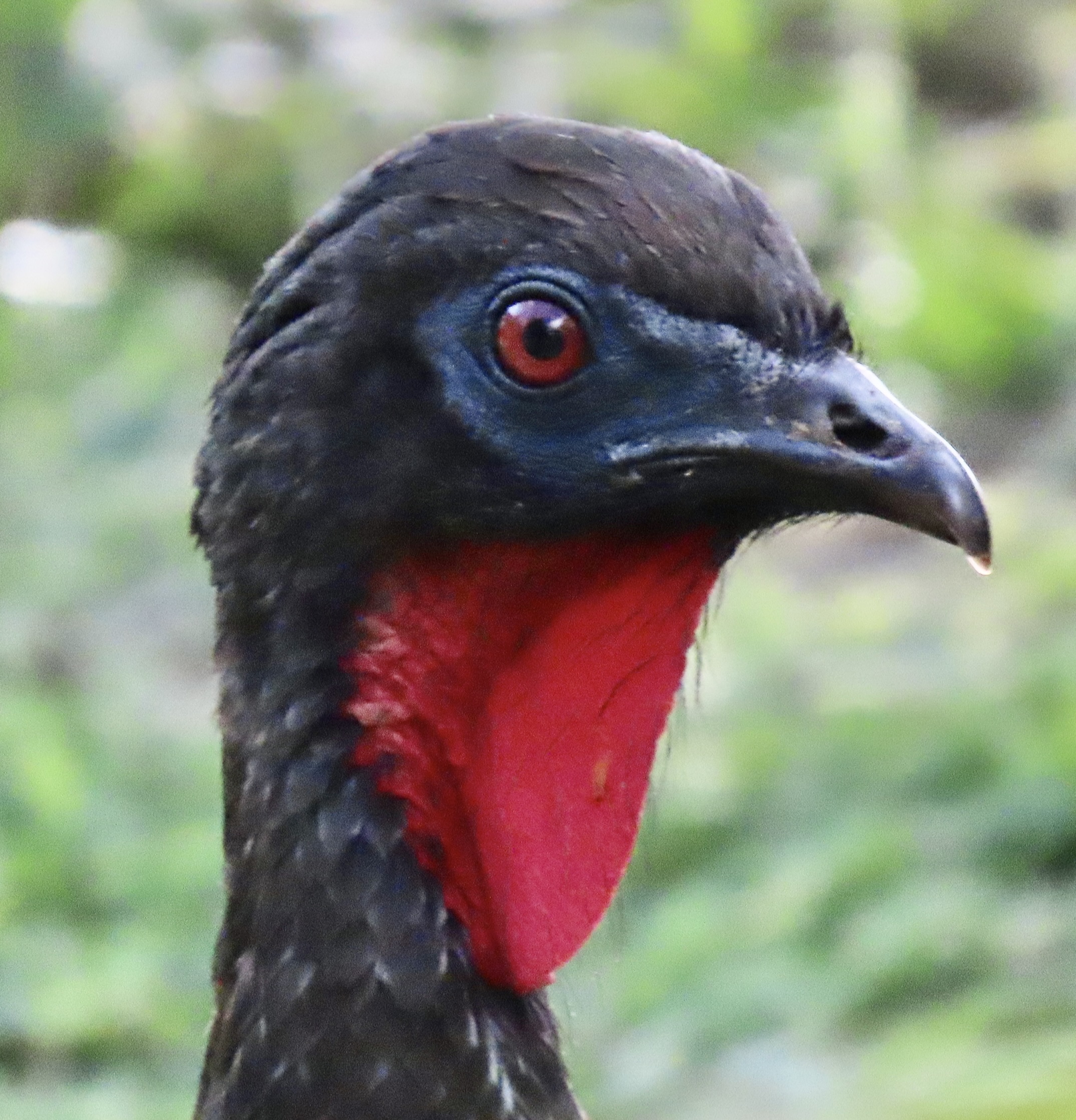
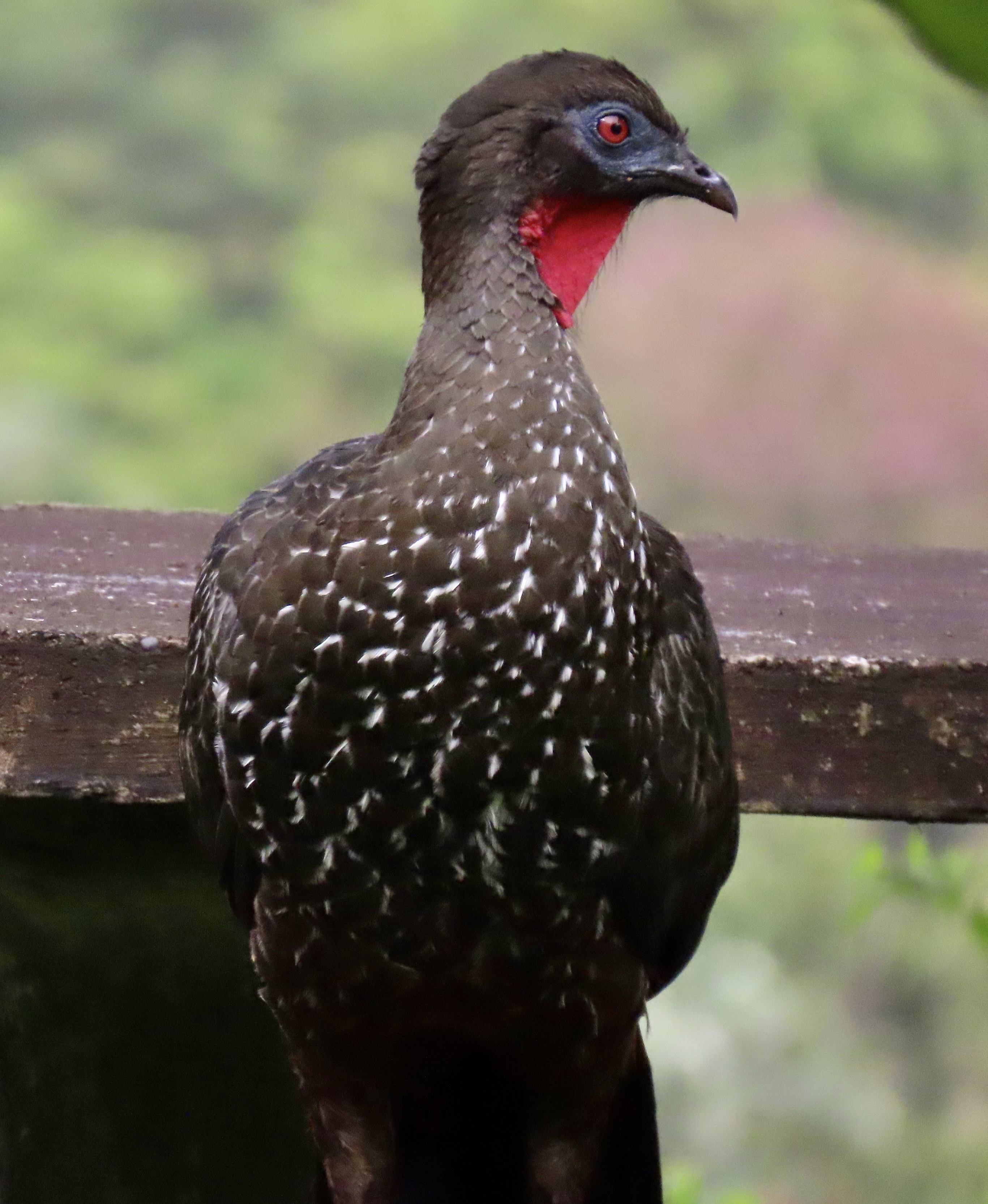
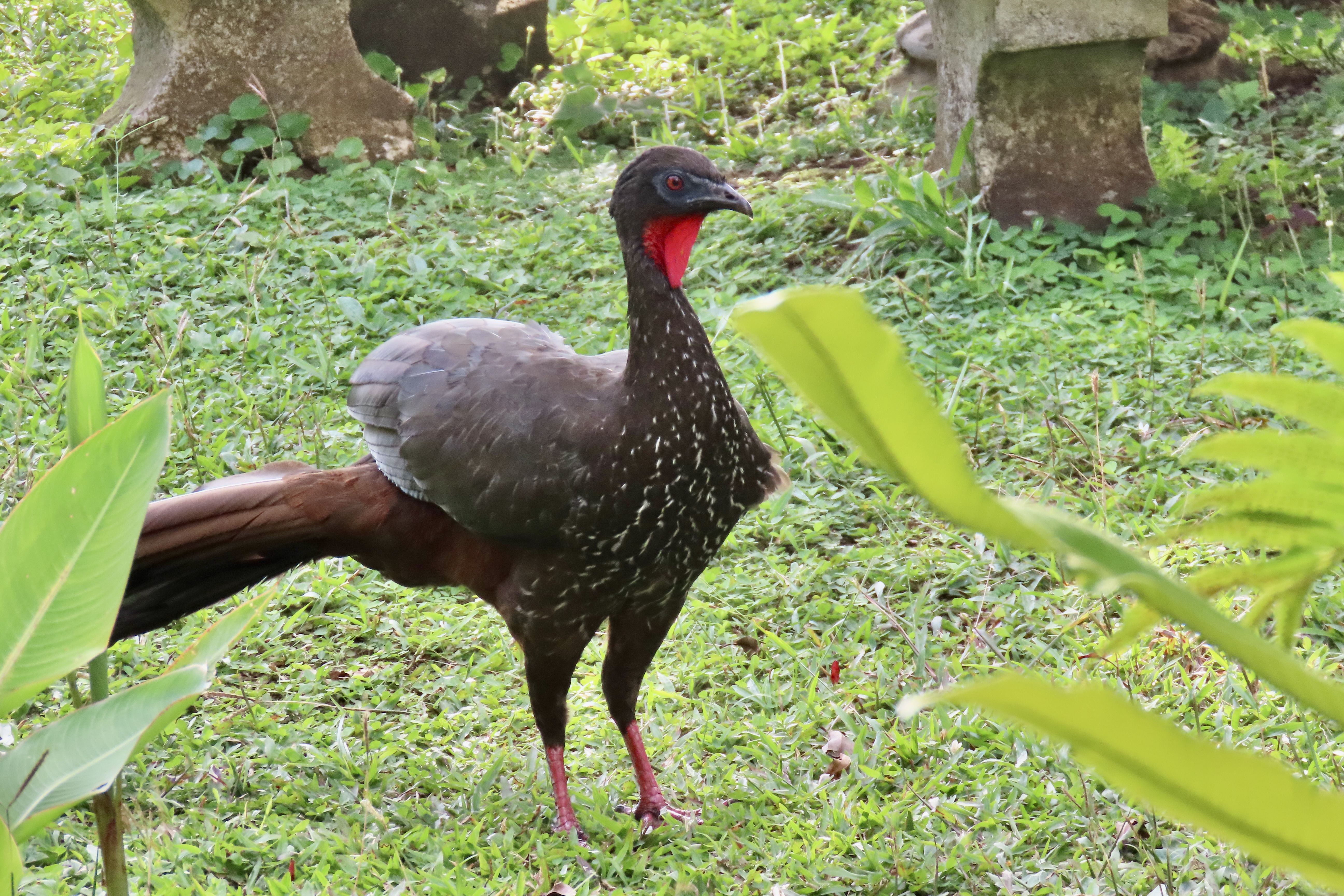
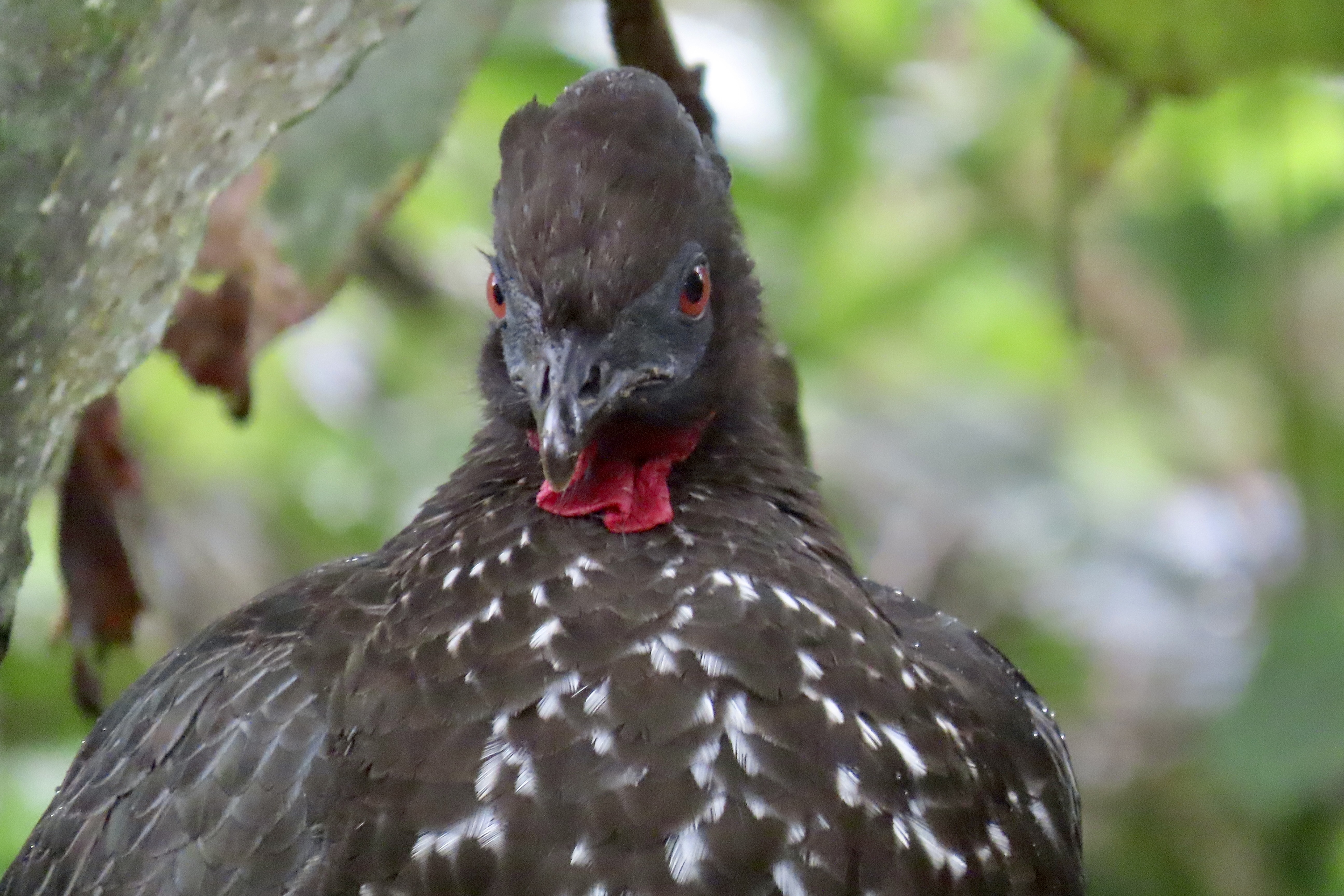
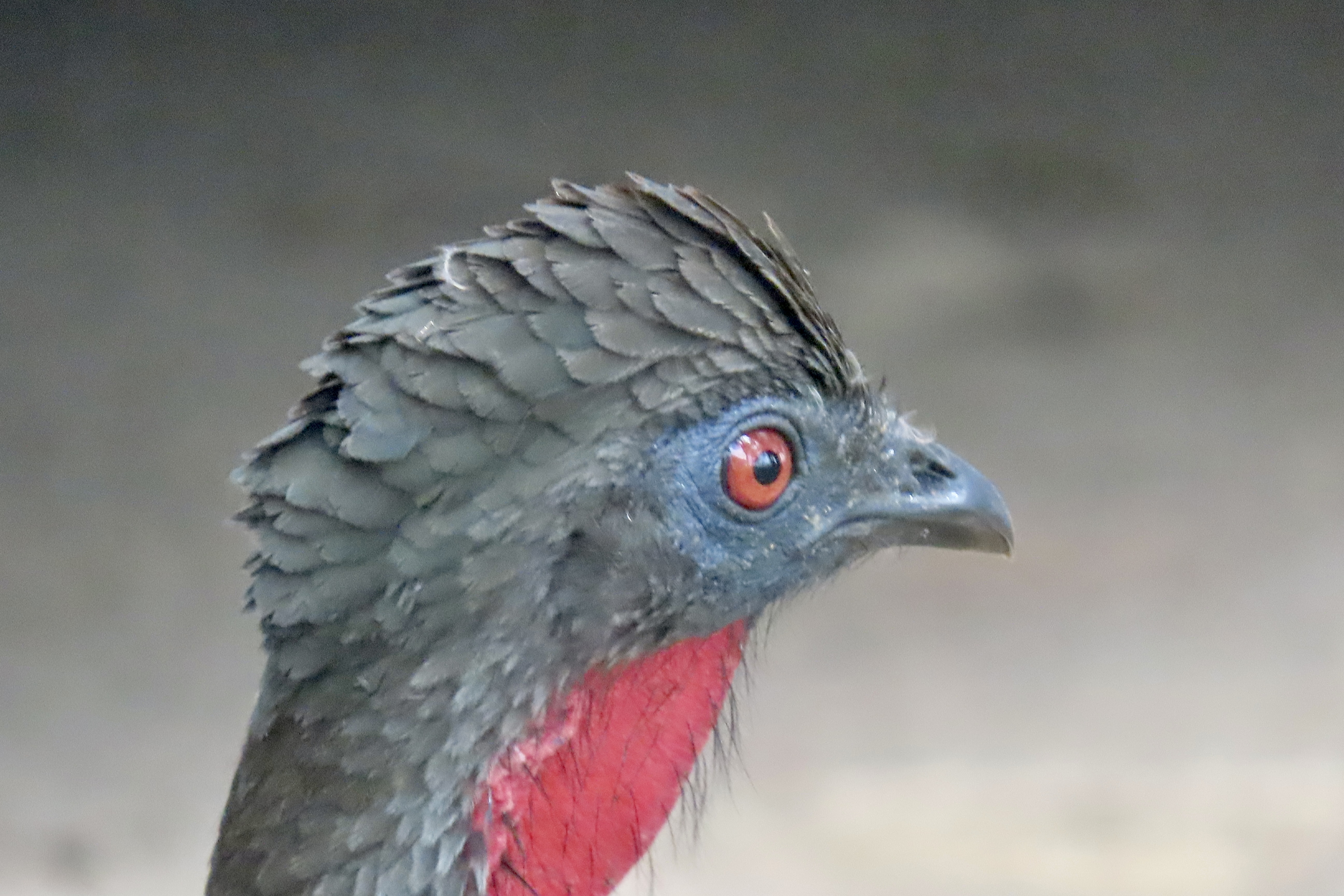
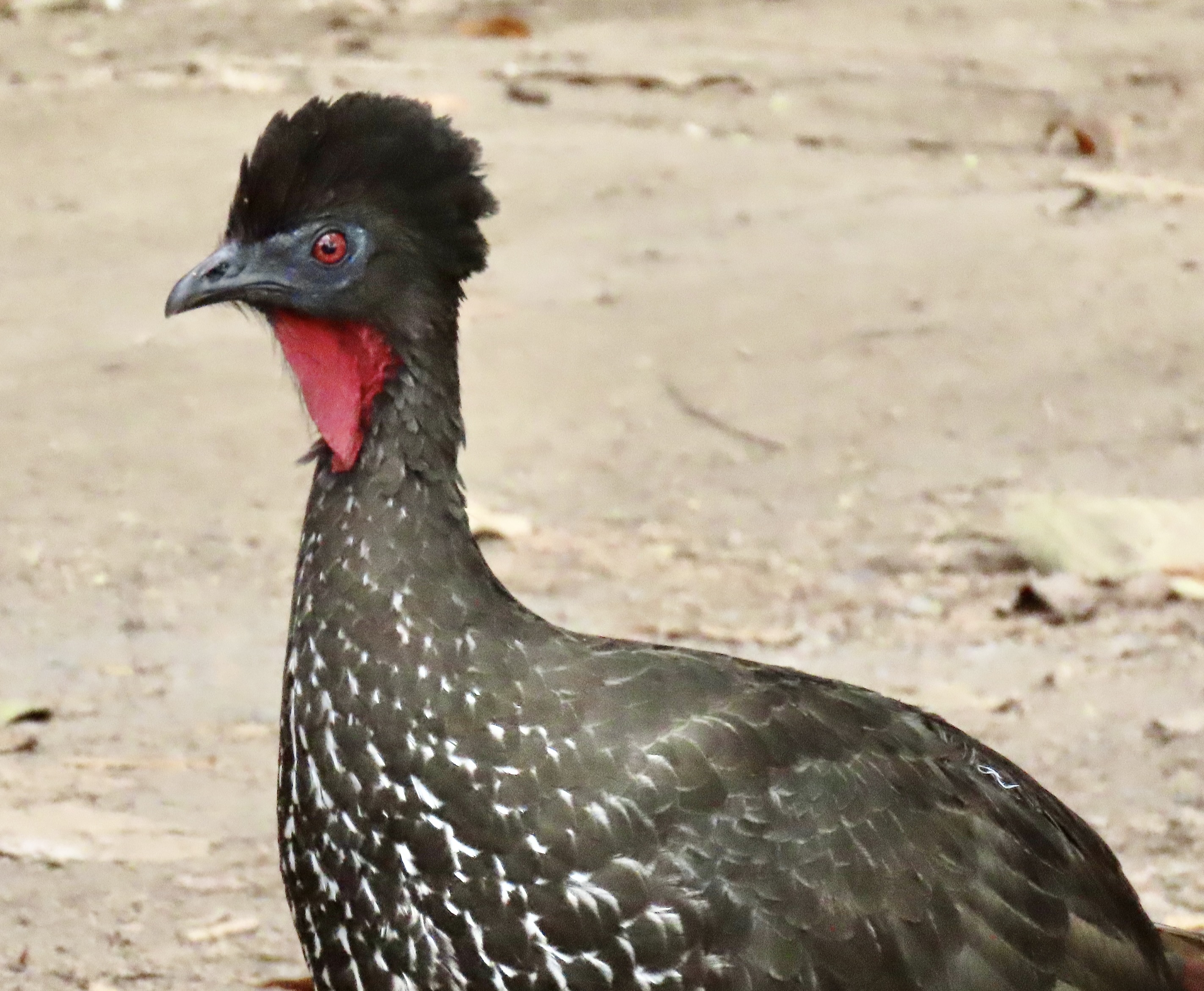
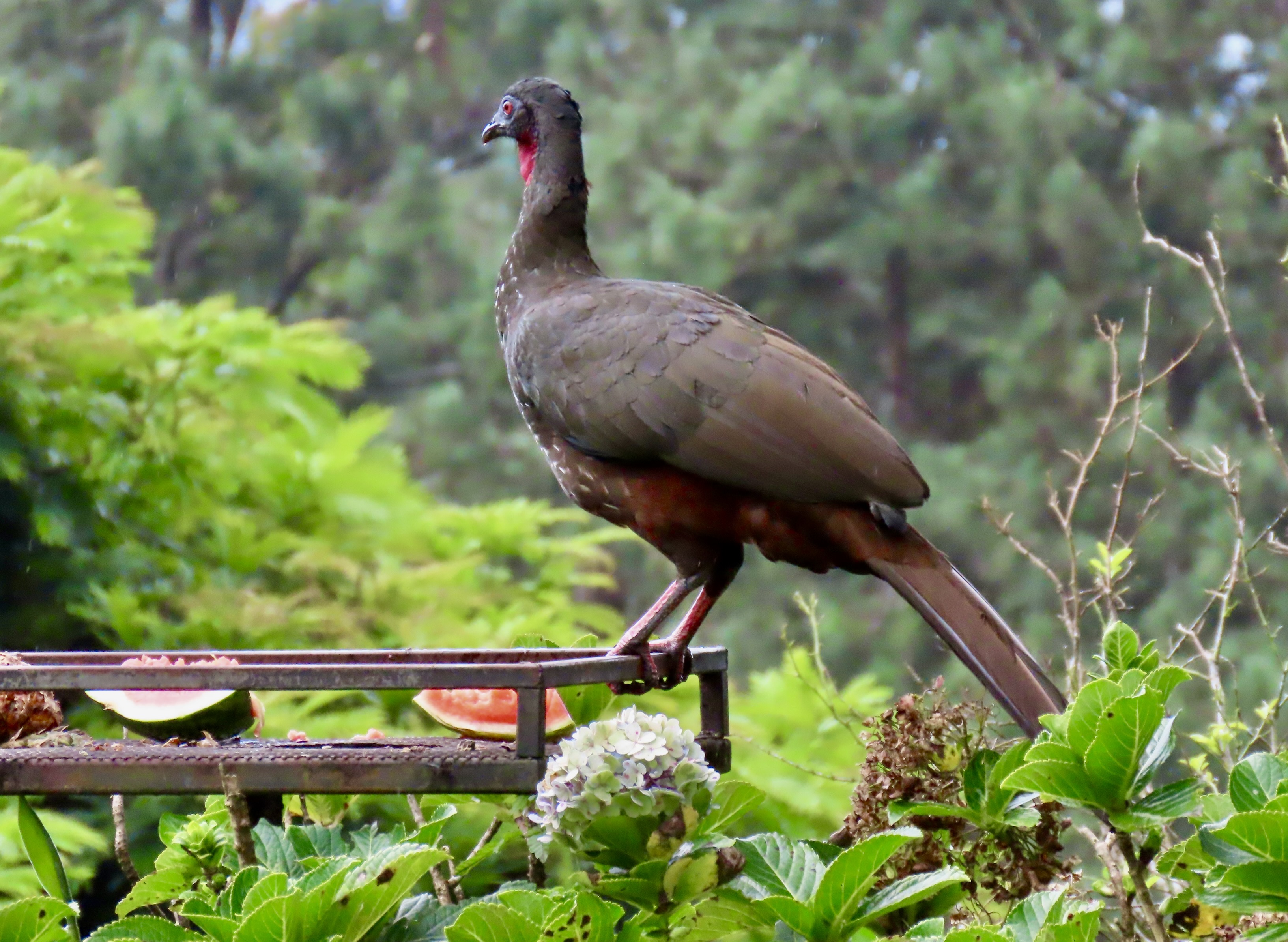
When Peggy opened the drapes on our first morning in Nuevo Arenal, Costa Rica a few weeks ago, this is what greeted her: A hungry Crested Guam demanding an apple, an orange, or a pineapple. We immediately noticed the Guam’s bright red wattle, eyes and long tails. The ‘laidback’ feathers on its head can stand straight up when the Guam is excited. Thus the description ‘crested.’
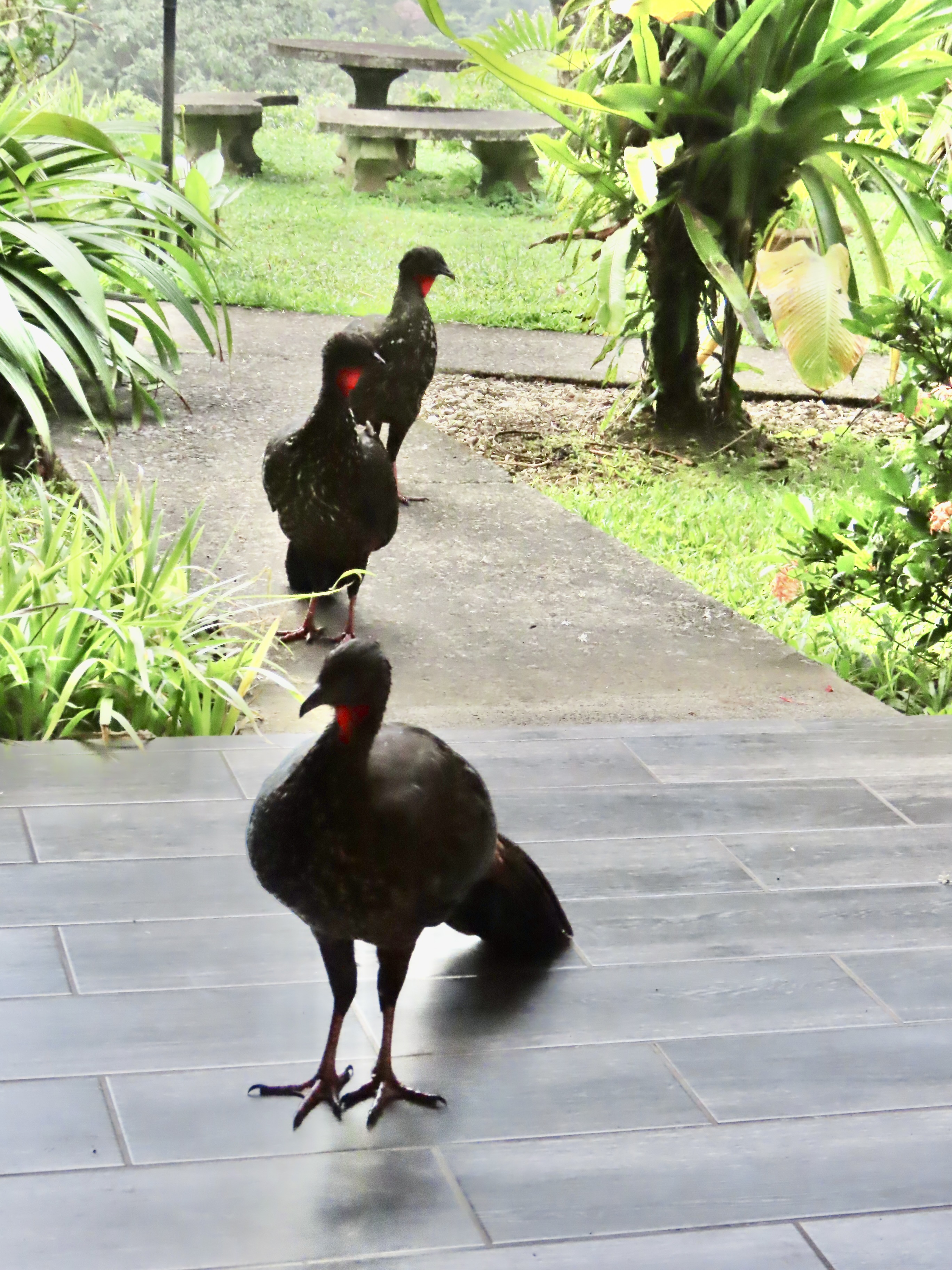
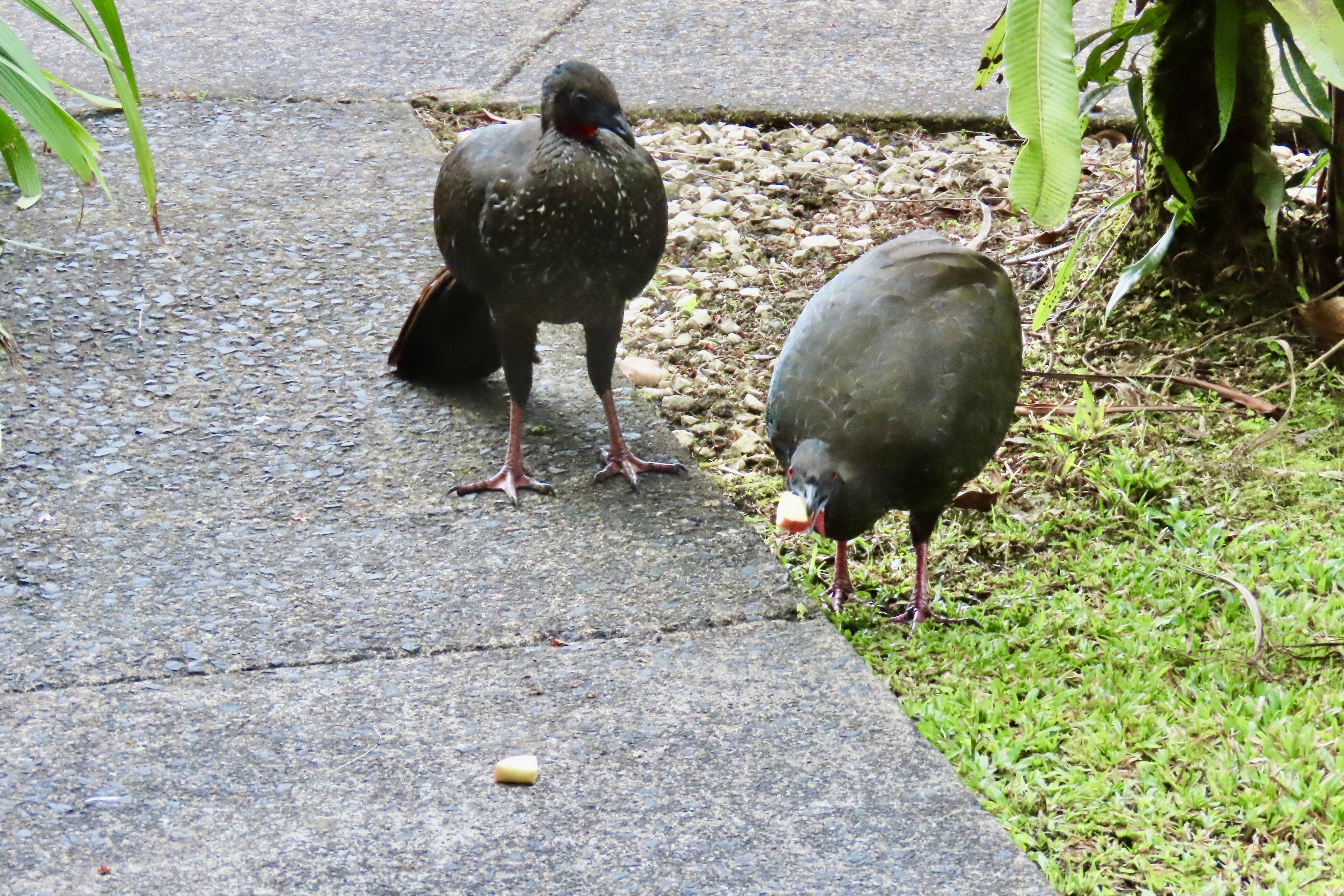
Actually, there were three of them. (They hung out together the whole time we were in Nuevo Arena.) Peggy immediately grabbed her camera and caught this photo of them backlit by the sun.
I must say, they were quite polite, just standing there, staring at us.
But we couldn’t escape the hungry look. It’s sort of like ‘Feed me or else…’
We were soon sharing apples, pineapple, oranges…
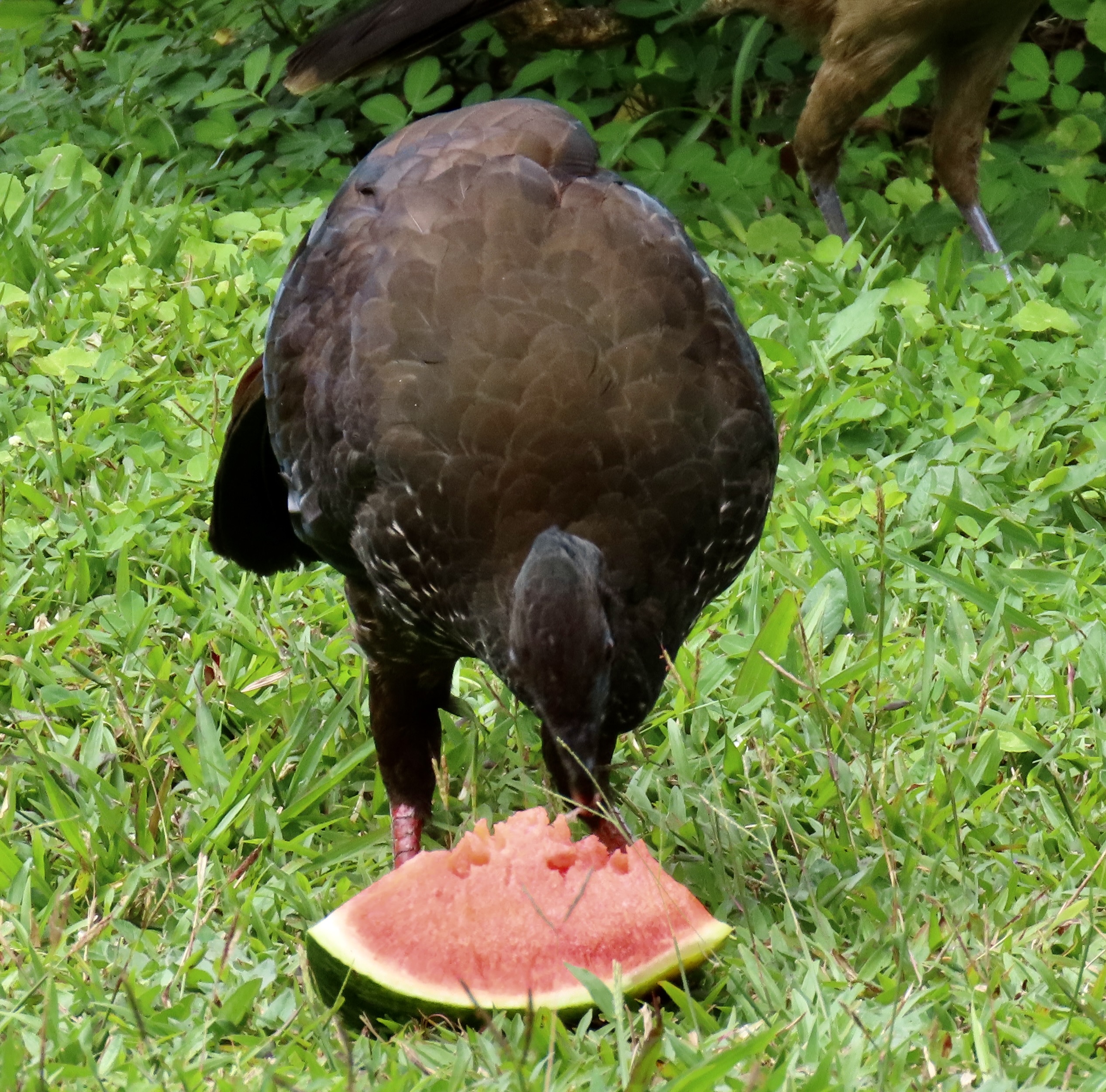
And even watermelon with our new ‘companions.’
Even when they weren’t on our walkway, the Guams monitored our behavior from the lawn and picnic table in front of our Villa.
From the lawn. Note its raised wings. I think it was about to chase a Grey-headed Chachalaca that was chowing down on a bite of pineapple the Guam considered its lunch. (See the two videos at the end of today’s post.)
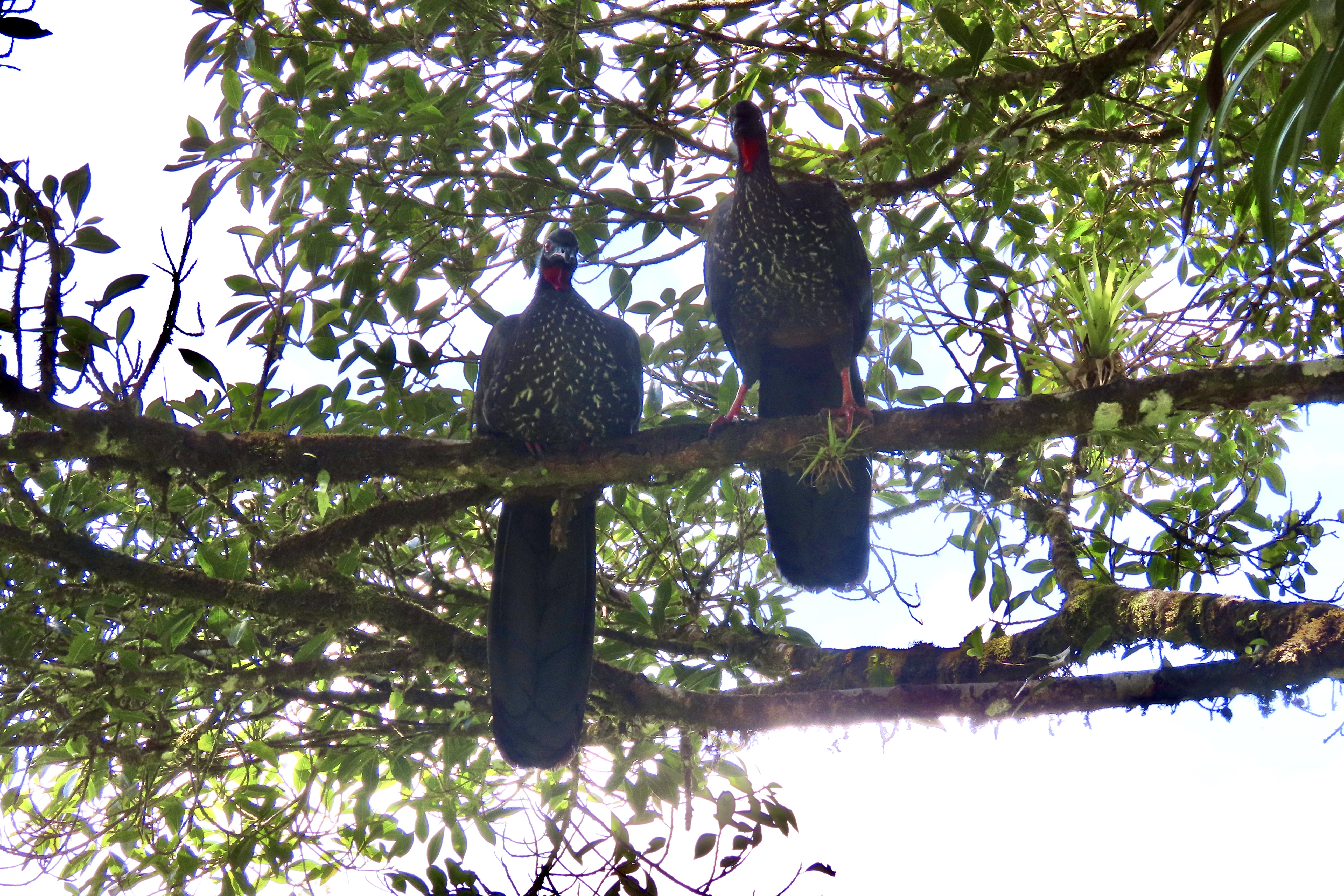
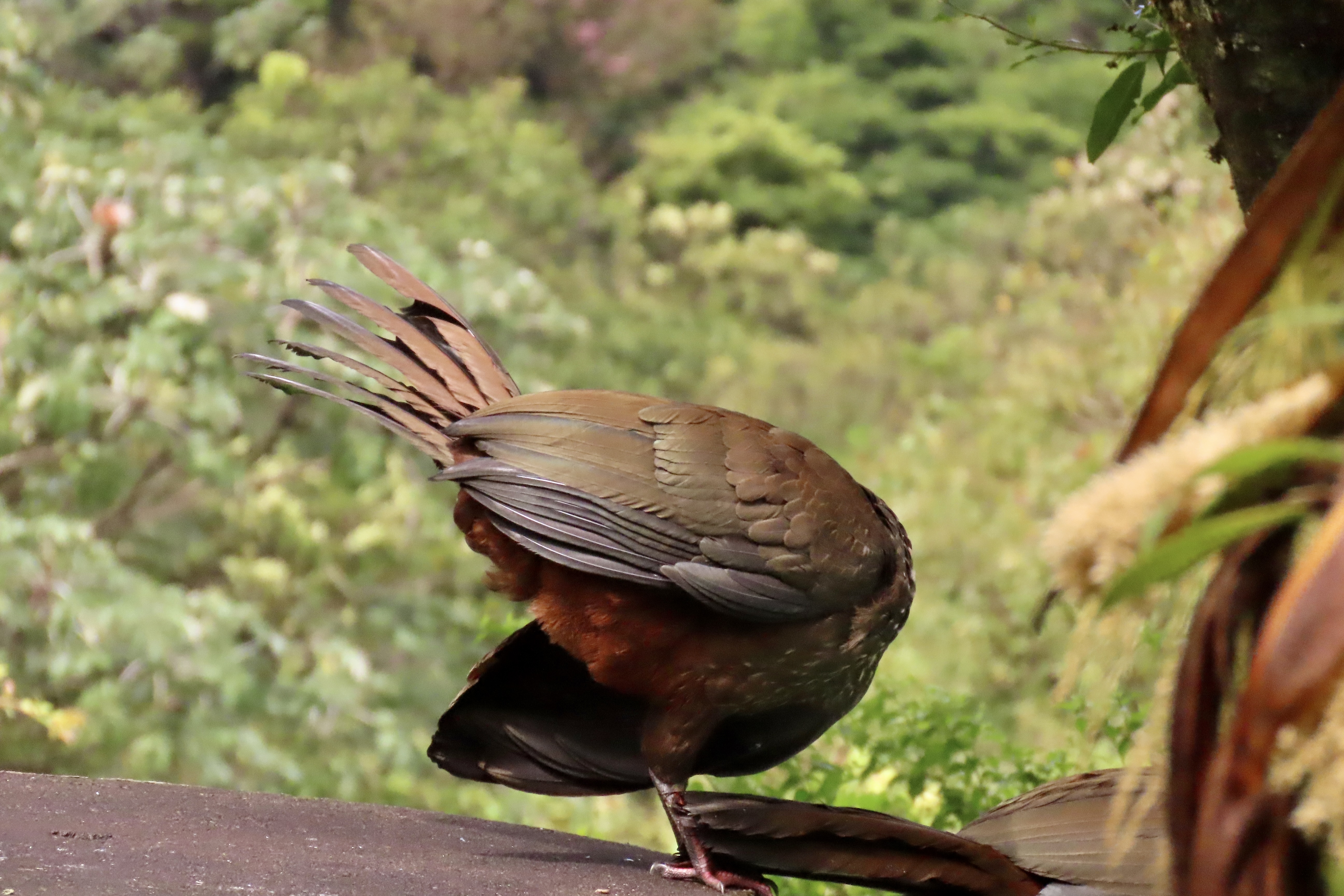
They also watched us from the trees behind the villa. Note the long tails.
They could see in our back window…
A close up.
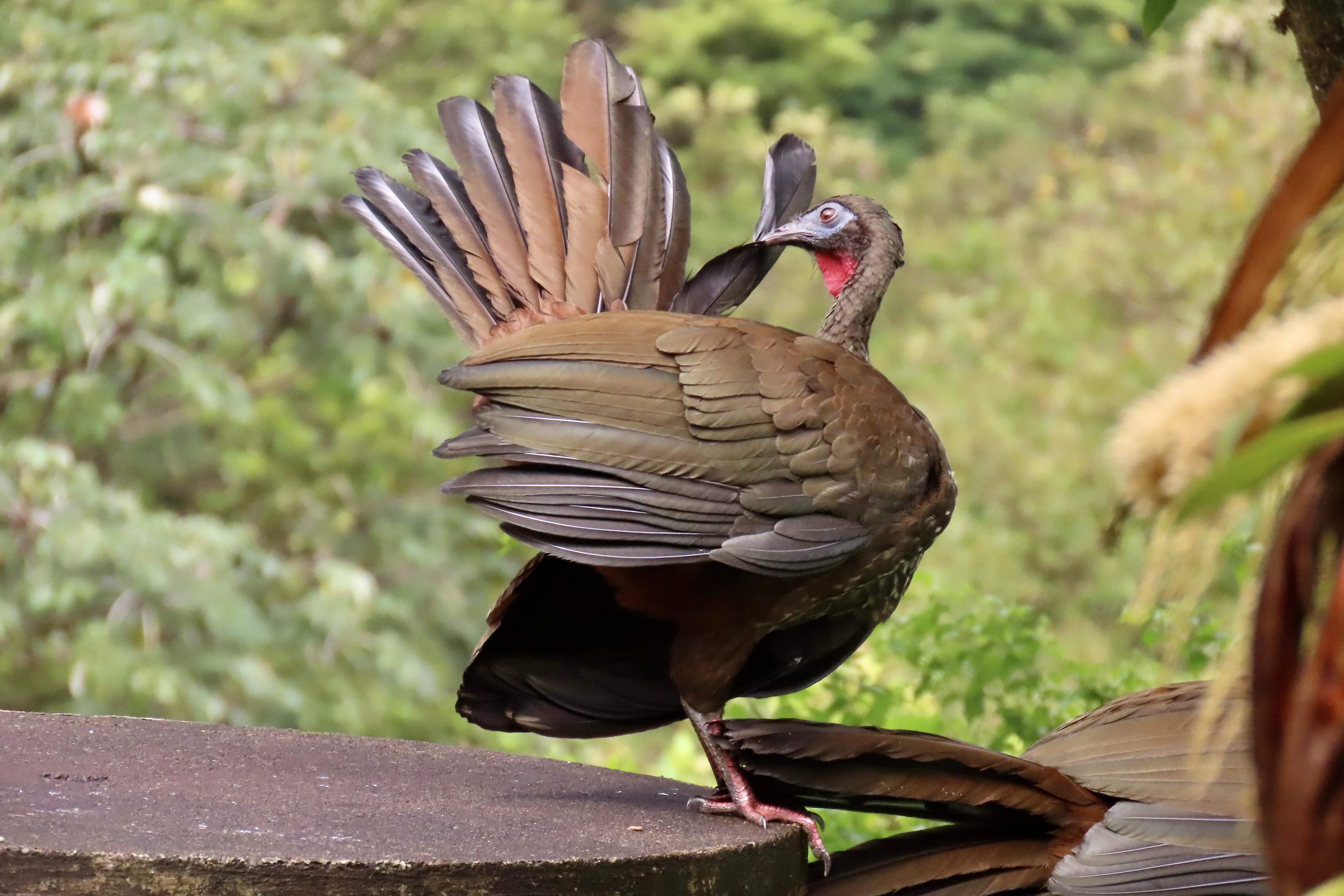
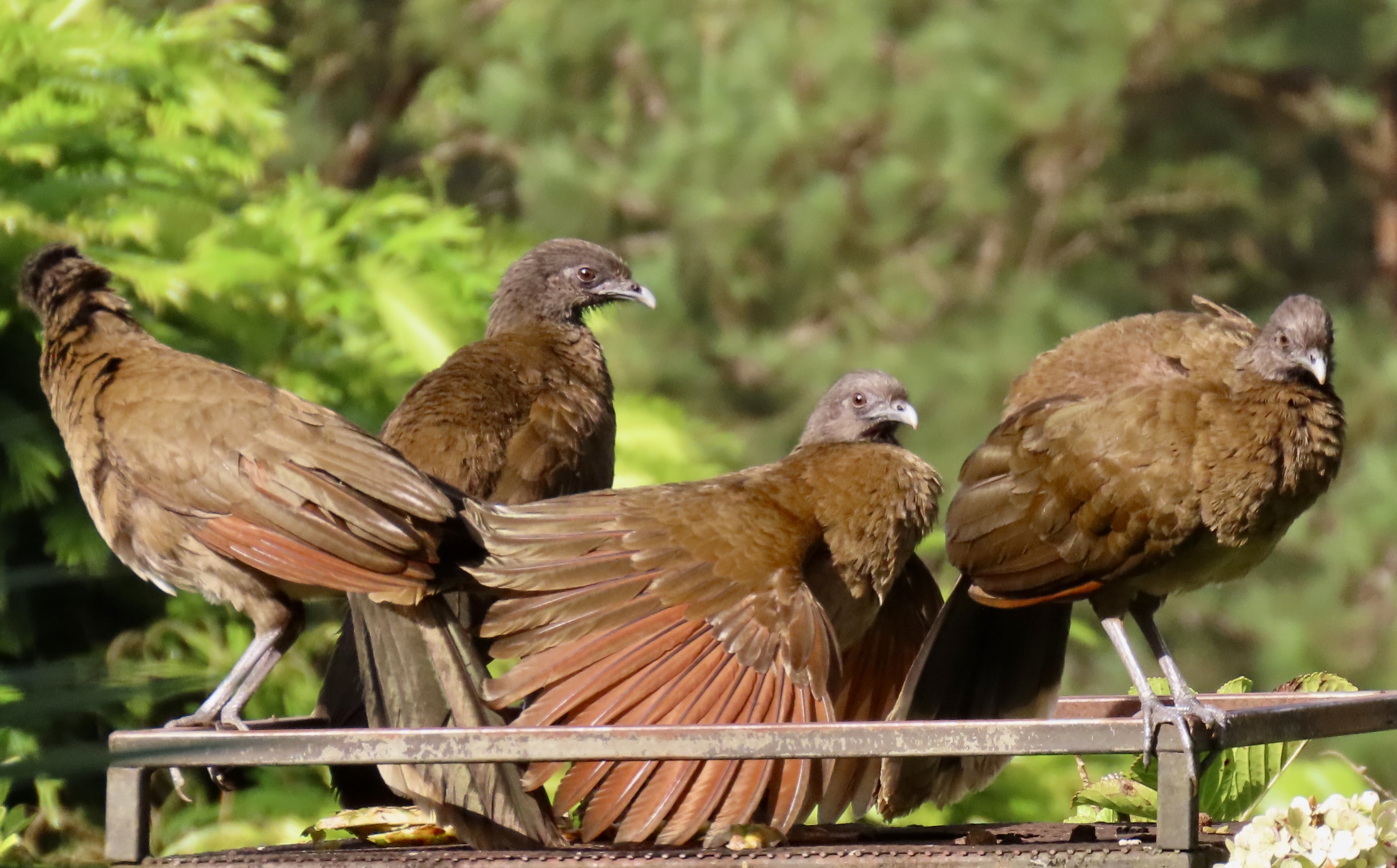
We met this Guam on a hike by Lake Arenal. It was preparing to show off its crest.
In full display! “Aren’t I beautiful/handsome.”
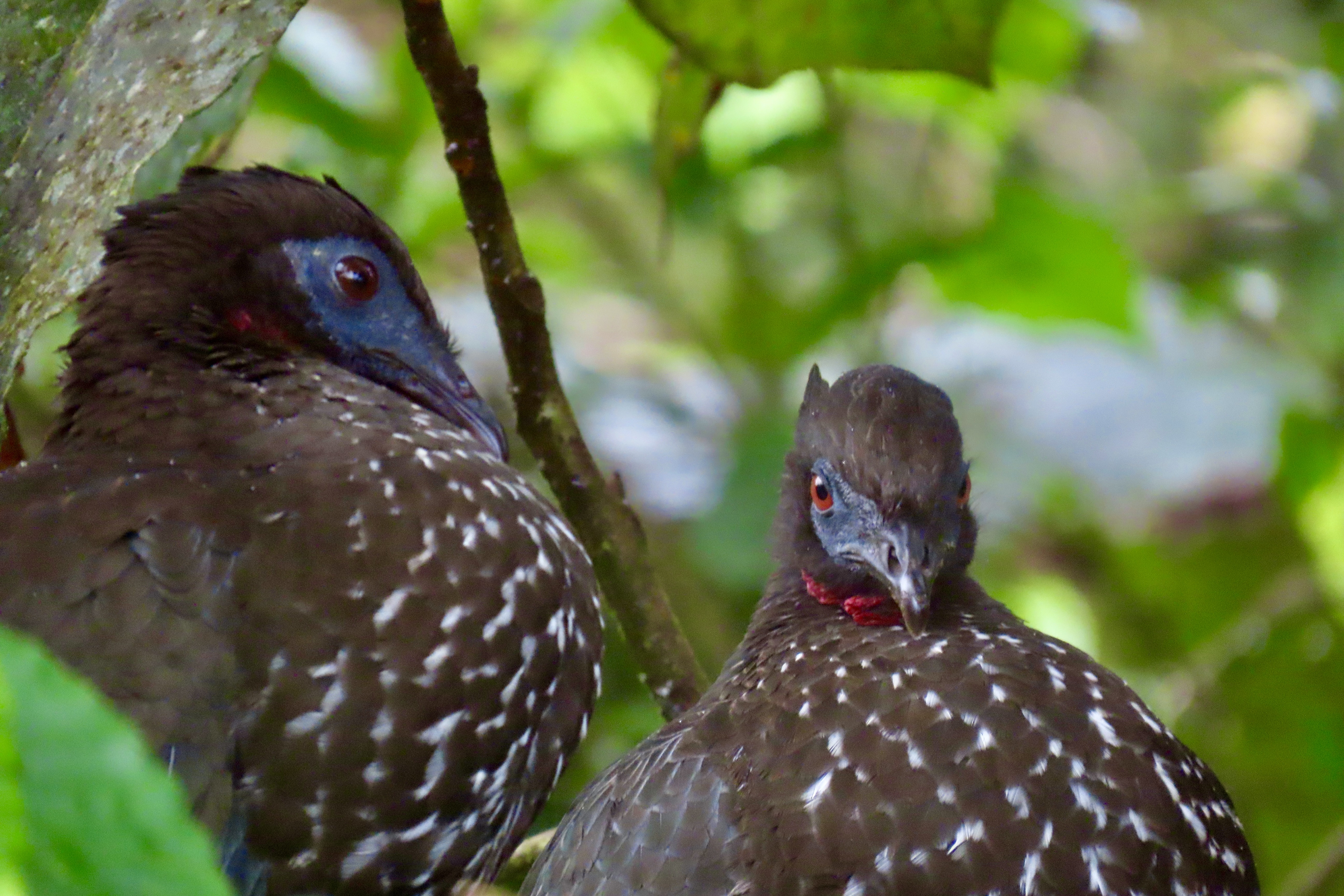
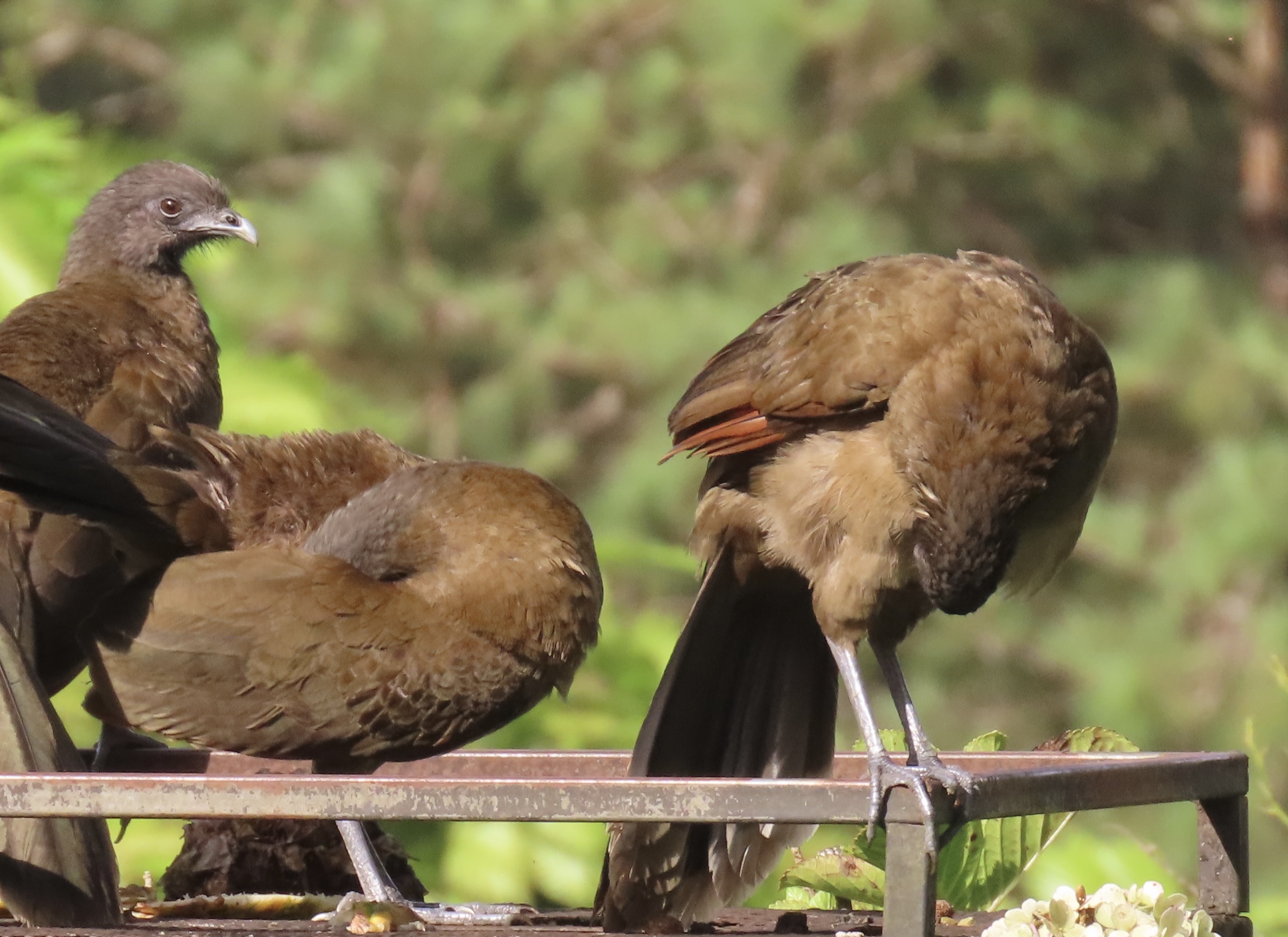
Some grooming is required. For birds, it’s called primping and is used for feather maintenance.
Even down to keeping them oiled! Is the other Guam massaging its legs with its tail feathers? It’s obvious that these big birds like each other, in fact they are monogamous. But I doubt that includes tail-feather leg massages. (Any Guam experts out there that would know?)
The primary dining room for the Guams and all of the other fruit eating birds in our neighborhood was a bird feeding table that we and our neighbors kept supplied. Fortunately, it was right in front of our villa. We could sit inside or on our porch and take bird photos all day if we wanted to. You’ll be seeing a few…

Normally, the crested Guams (Penelope purpurascens) are not as tame as the ones that have found an endless supply of food at the Lakeview Villas where we were staying. Nor are they ground dwellers, preferring to live high up in the forest canopy and feed off of fruit they find up there, like the figs from the ficus trees we featured in our post last Monday. Similar to the Gray-headed Chachalacas (Ortalis cinereiceps) that you will meet next, they are members of the long-tailed family, Cracidae. Above them on the animal classification system they are also related to chickens, turkeys and other Galliformes, which is hardly surprising, given their body shape. They range from Mexico in the north to Ecuador and Venezuela in the south. 

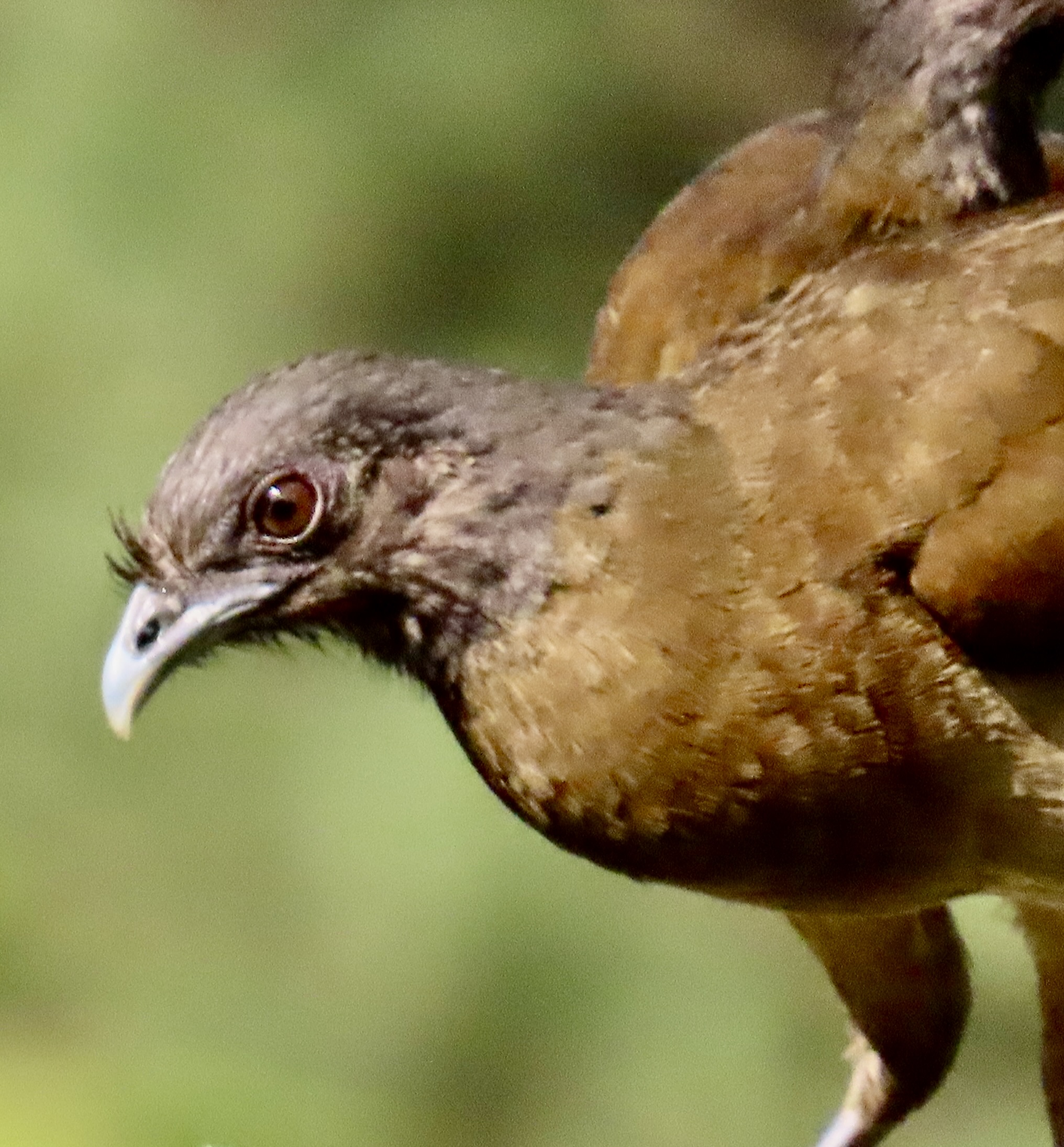
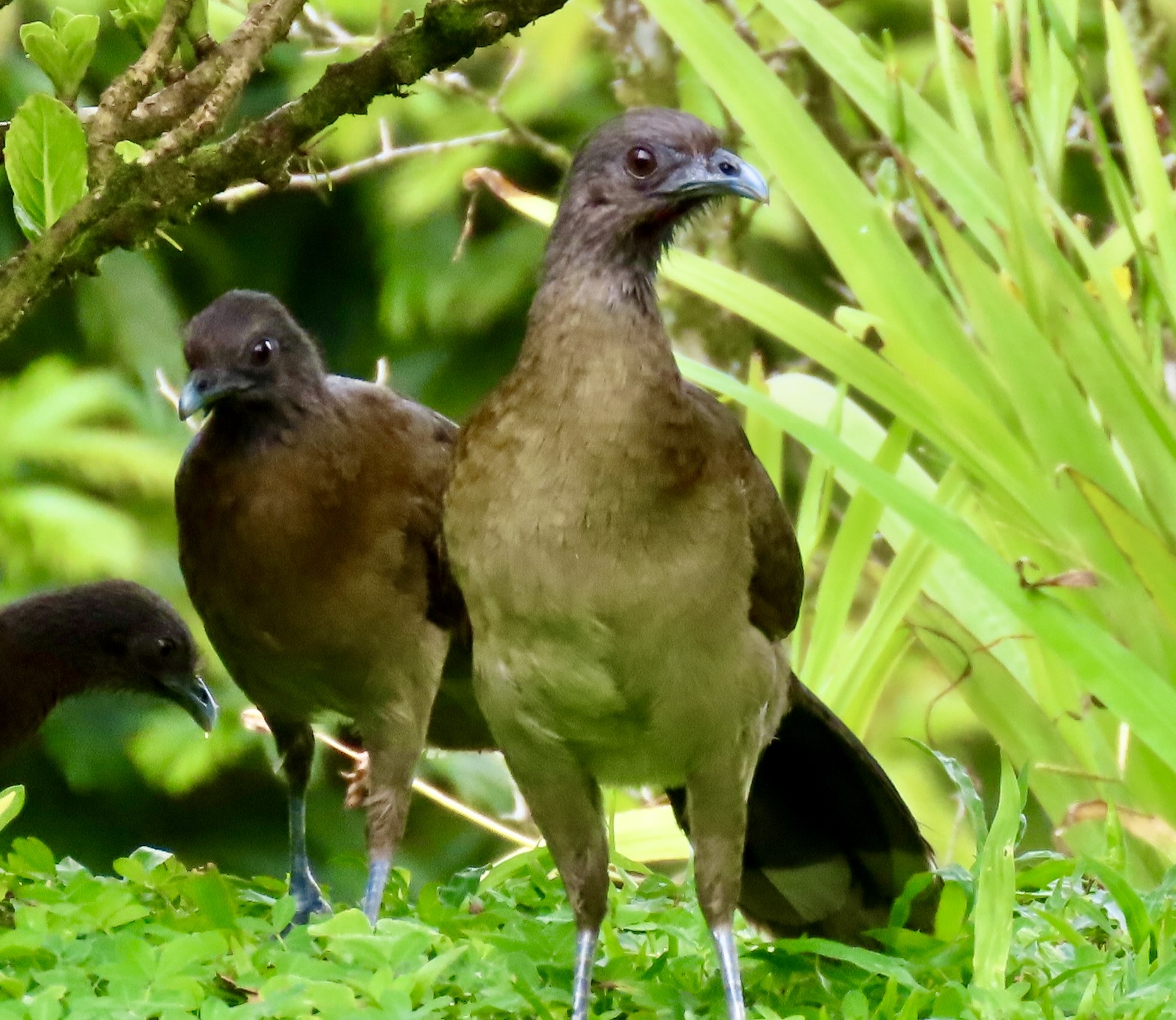
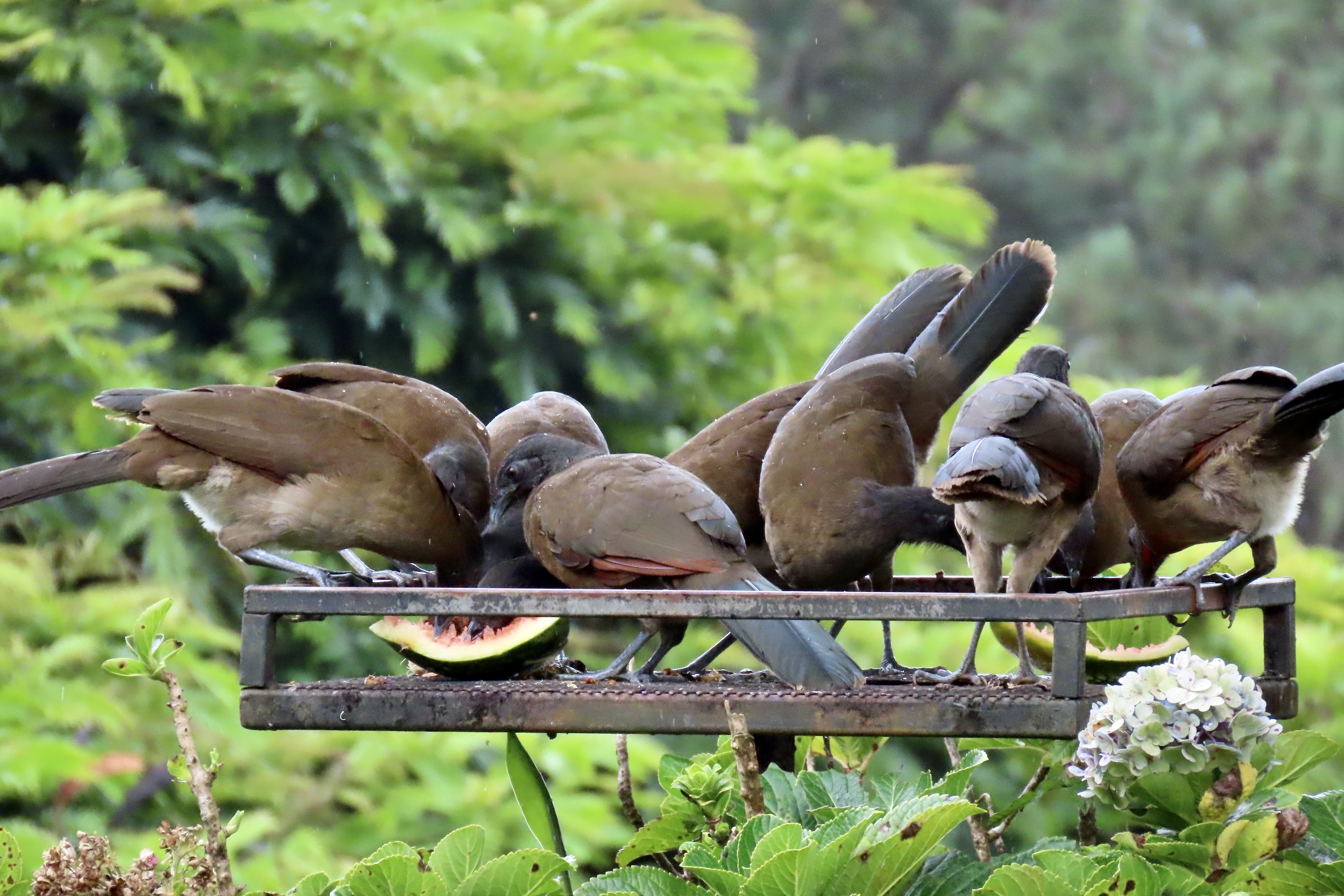
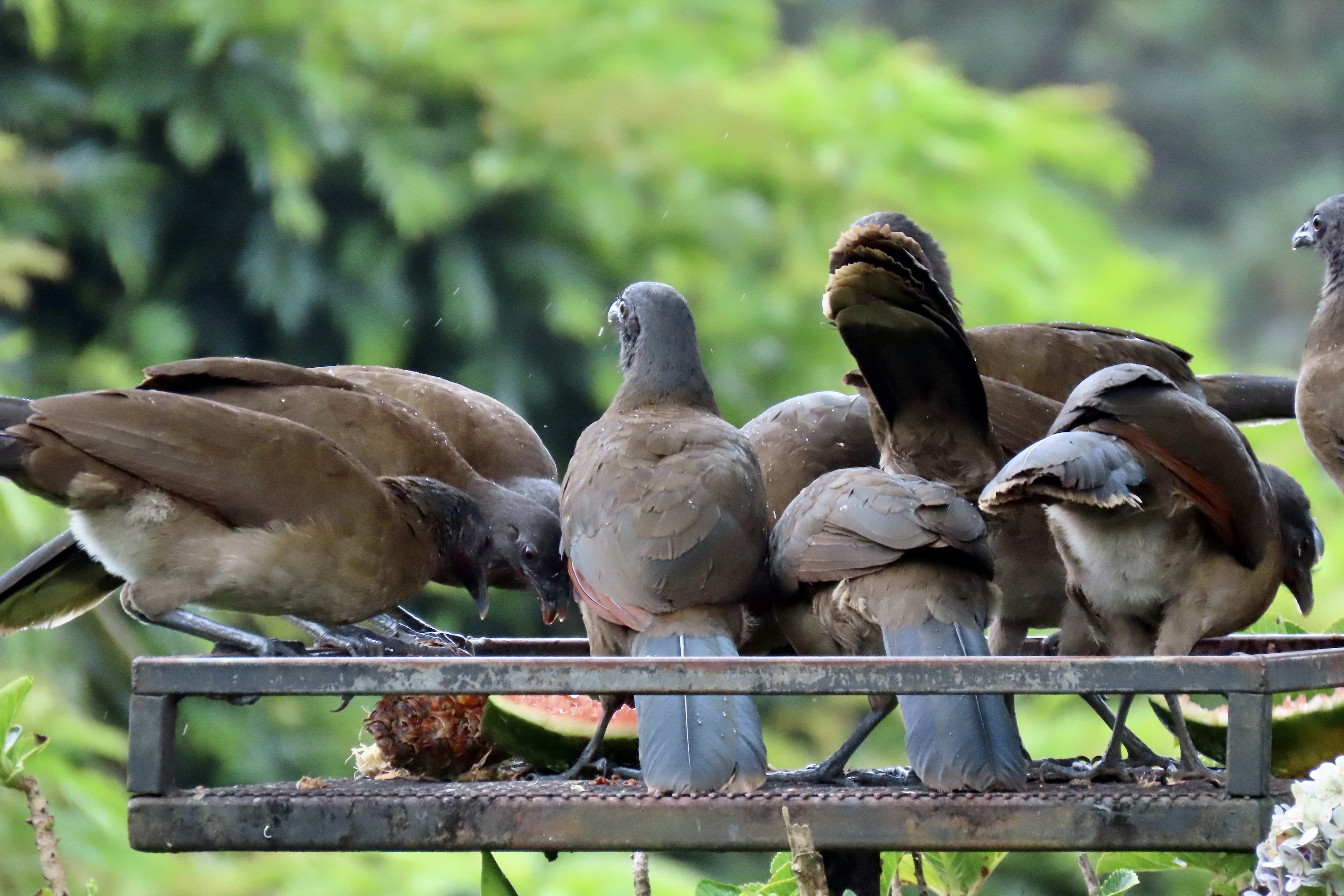
The smaller Chachalacas look a lot like the Guams minus the wattles and crests. At first we thought they might be their kids, especially given their obvious love of fruit. Closer inspection and a little research quickly defined them as a different species. Beyond looks, another defining characteristic is that they travel in groups ranging in size from 6 all the way up to 20. Ours was around 12. When these large birds make their way through trees, they sound like a herd of marauding elephants (slight exaggeration, but they are noisy.) It’s said that their name, Chachalacas, is derived from a sound they make early in the morning and late in the evening. We didn’t hear it in Nuevo Arenal, but I did one evening in Monteverde. I love the name.

The ‘here’s looking at you’ pose of a Chachalaca. Impressive nose hairs.
Another perspective.
They would arrive at the food station en masse. Any fruit was quickly disposed of…
Tails down and looking around, at half mast and breaking fast, fully up and having sup. (A little humor for my poet friends who follow this blog.)
Grooming/primping Chachalaca style. Were they getting ready for a group photo?
Maybe. Grin. You may wonder what the Crested Guams felt about the Chachalacas showing up and gulping down all of the fruit. The following videos will give you an idea. The first demonstrates the greed of the Chachalacas at the food table and the Guams’ response. The second shows what Peggy and I found to be a rather hilarious chase scene where the Guam kept losing track of the Chachalaca it was supposed to be chasing! (Click on the photos.)

BTW: Wednesday’s UT-OH! Post is on “first dates and squashed skunks!”

As you might have expected the Guams had little tolerance for the Chachalacas scarfing down the fruit!