Diablo Lake is known for its beautiful teal-green waters and surrounding scenery. The water’s color is the result of tiny rock particles suspended in the water refracting light. The particles are created by the surrounding mountain glaciers grinding rock into what is called glacier flour. The ‘flour’ is then washed down to the lake by glacial streams. Having lived in Alaska for three years, I was quite familiar with the process. Here, Peggy is kayaking up the Thunder Arm of the lake toward Thunder Creek.
Peggy and my first trip through the Northern Cascades National Park was in 1999 as we marathoned north to join our friends Ken and Leslie Lake for backpacking and kayaking in Alaska. They were flying into Anchorage and we had promised we would be there to pick them up. A long trip up the Alaska Highway was ahead, so there was no time to tarry. We spent a night camping in the park where we were entertained by a banana slug and the beautiful surroundings.
A bright yellow banana slug makes its way along the forest floor. Some interesting facts about this unique creature are that they can grow up to 10 inches in length, which makes them the second largest slug in the world. They can zip along the ground at the amazing speed of 6 1/2 inches per minute. They are covered in slime which is an anesthetic. You can discover this yourself if you lick one. They breathe through their skin and their eyes are located on the ends of retractable antenna. The guy/girl above is looking around. Yes, guy/girl. They come equipped with both male and female parts and can mate with themselves. They prefer to mate with others, however, and that’s when their procreation activities get really weird. Enough said.
What we remembered most about the park— other than the banana slug— was Diablo Lake. Located in the heart of the park, its dramatic setting combined with the milky-teal color of the water is guaranteed to make a life-long impression. We vowed to return someday and kayak on the lake. A quarter of a century later, this summer, we finally accomplished our goal.
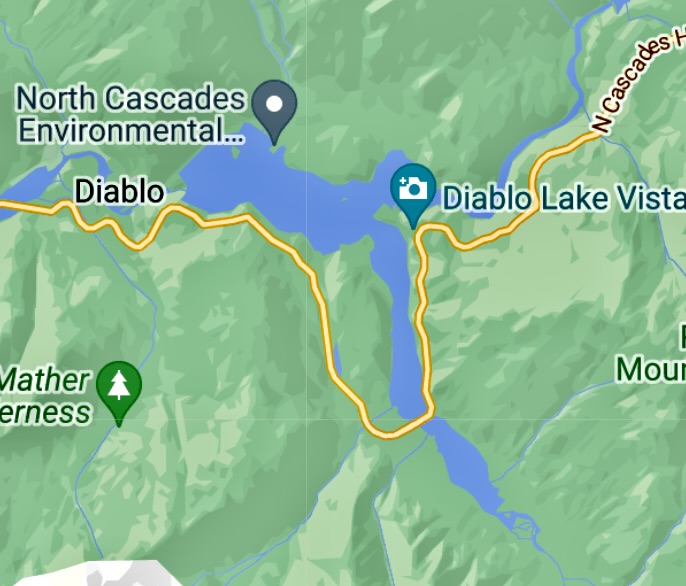
Diablo Lake is one of three reservoirs built by the power company, Seattle City Lights, to create the Skagit River Hydroelectric Project in the 1920s and 30s to provide electricity to Seattle. The lakes are Ross, Diablo and Gorge, shown on the map below. When it was completed in 1930, Diablo Dam at 389 feet (119 meters) was the highest dam in the world. (The highest dam today is the Jinping-I Dam in China at 1001 feet (305 meters)). Today, Seattle receives approximately 90% of its electricity from hydroelectric power. 20 % of it is provided by the Skagit River Hydroelectric Project.
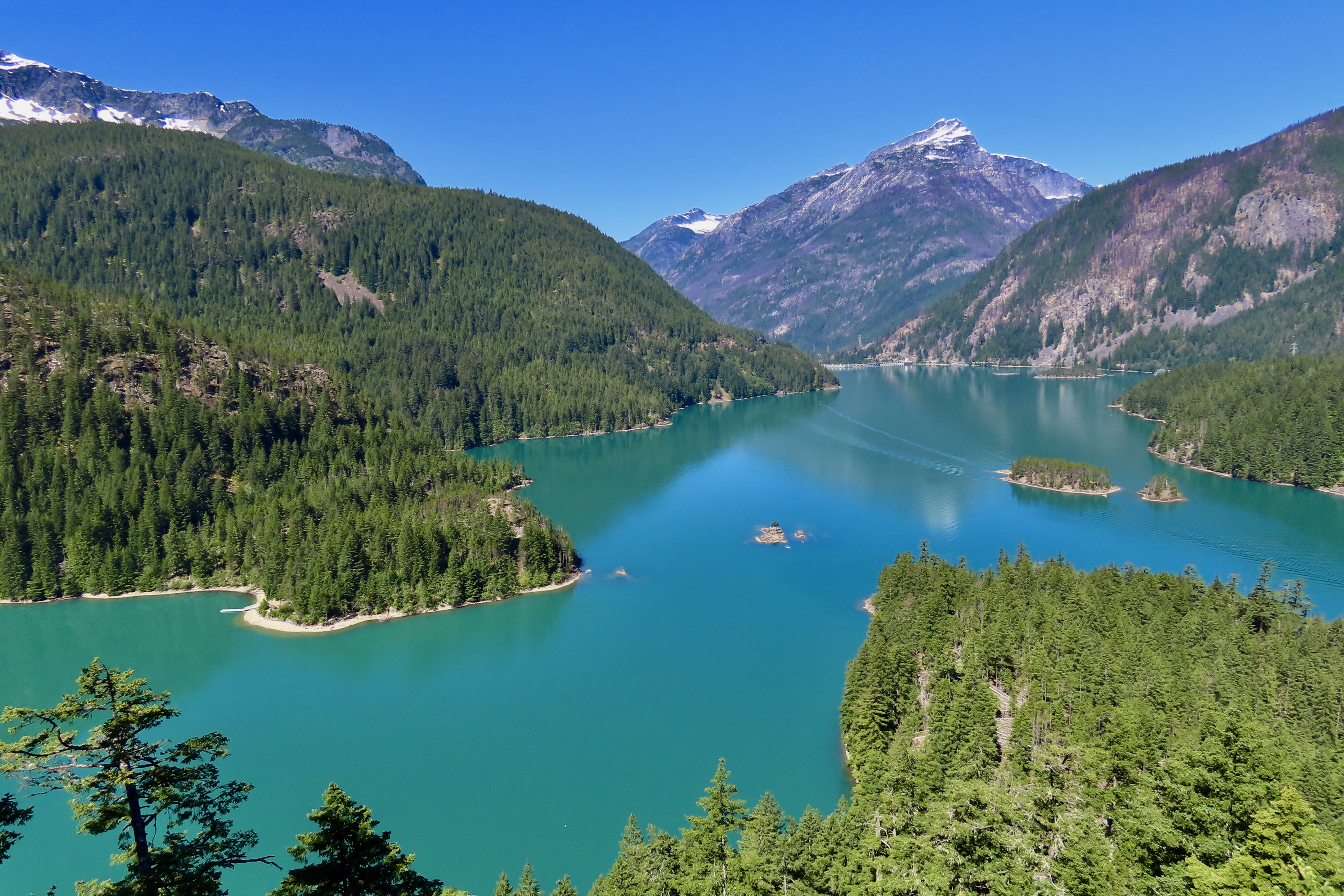
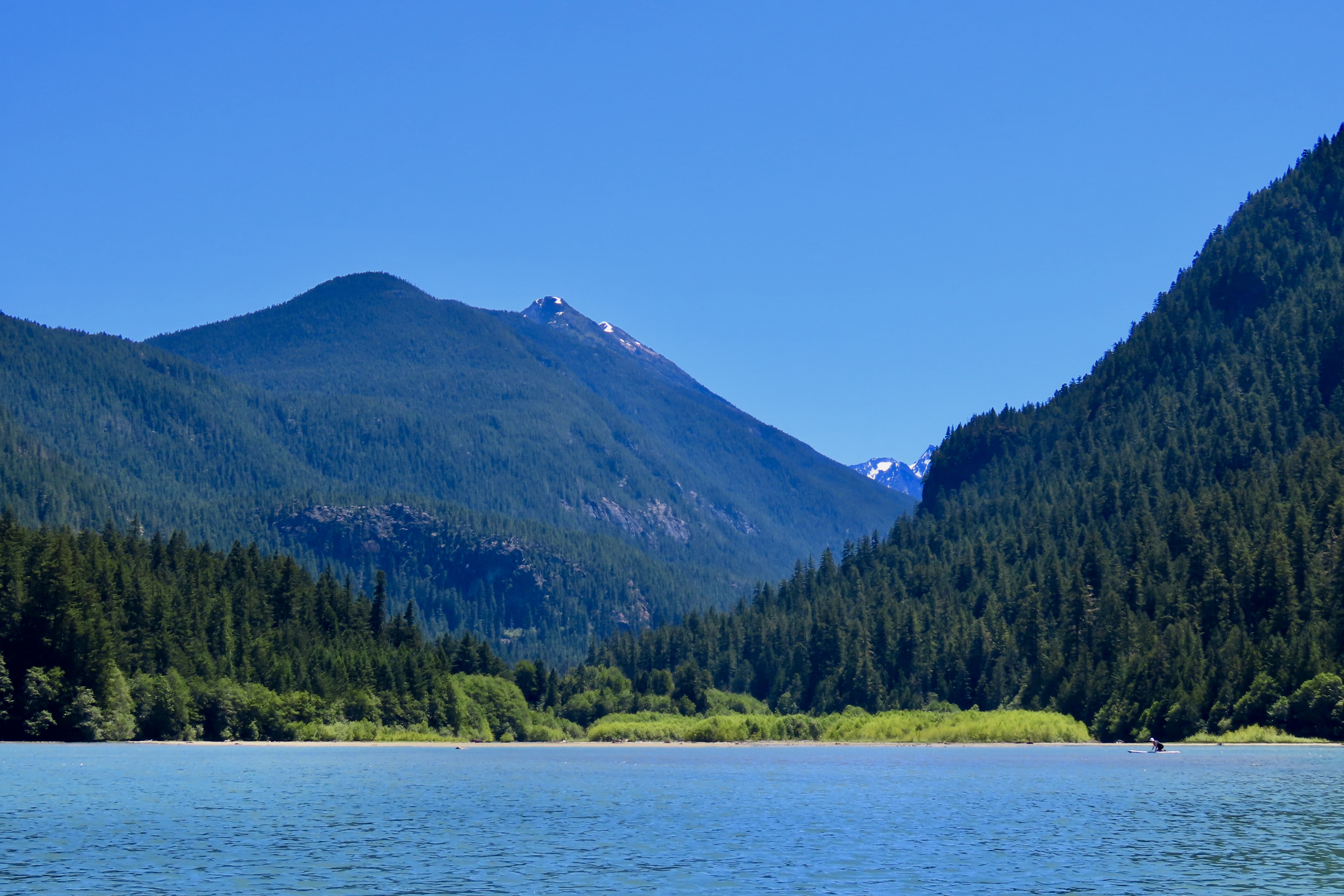
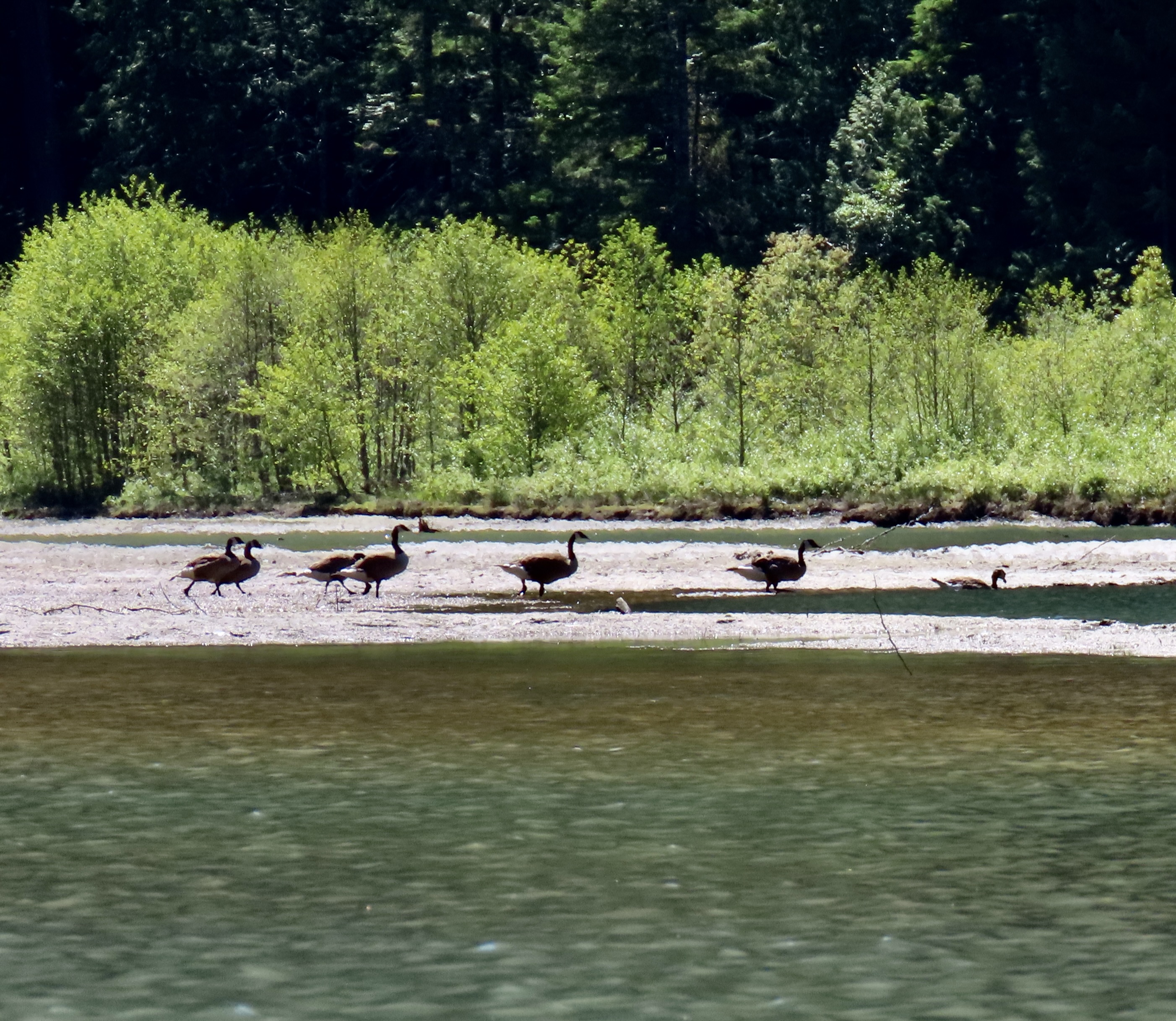
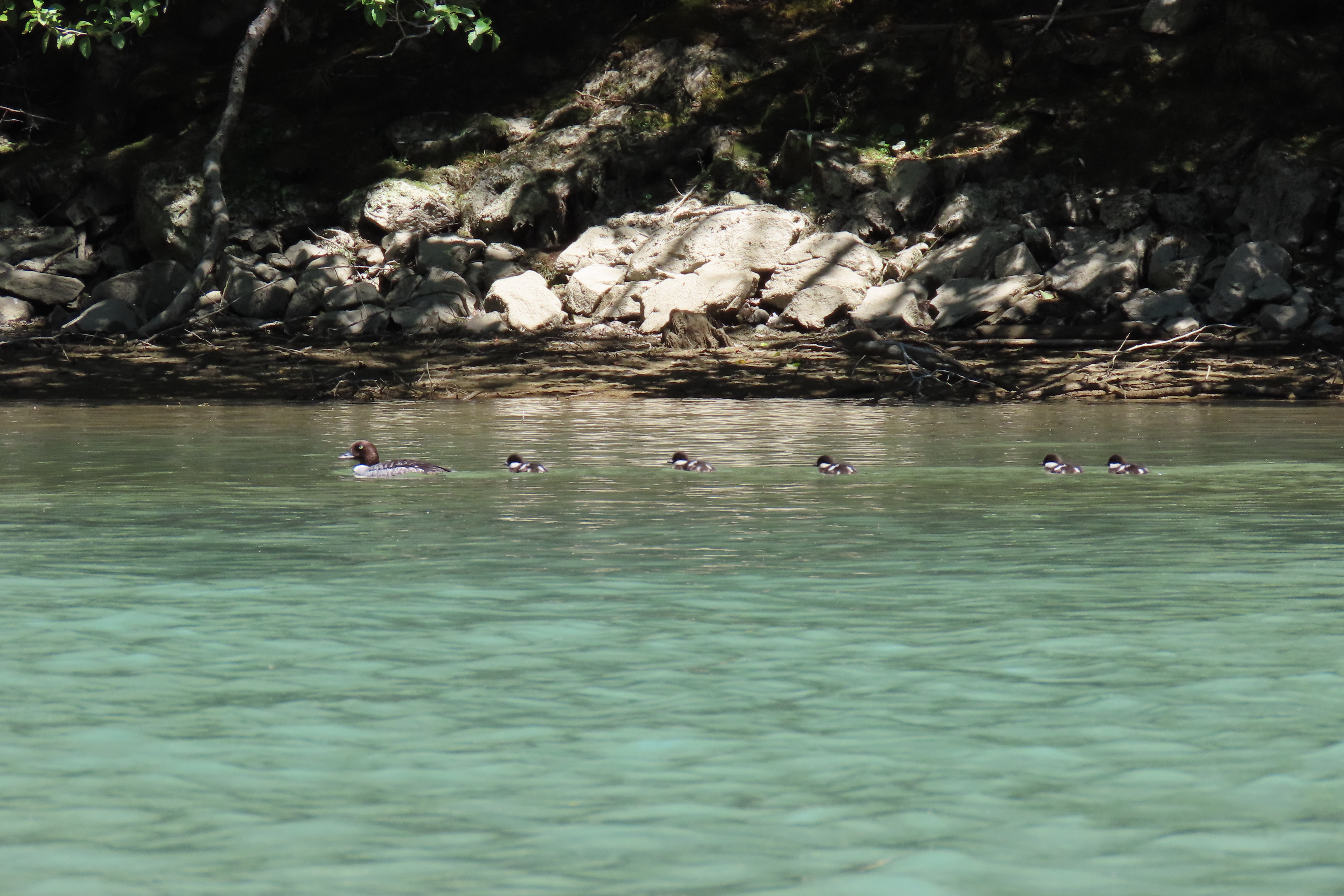
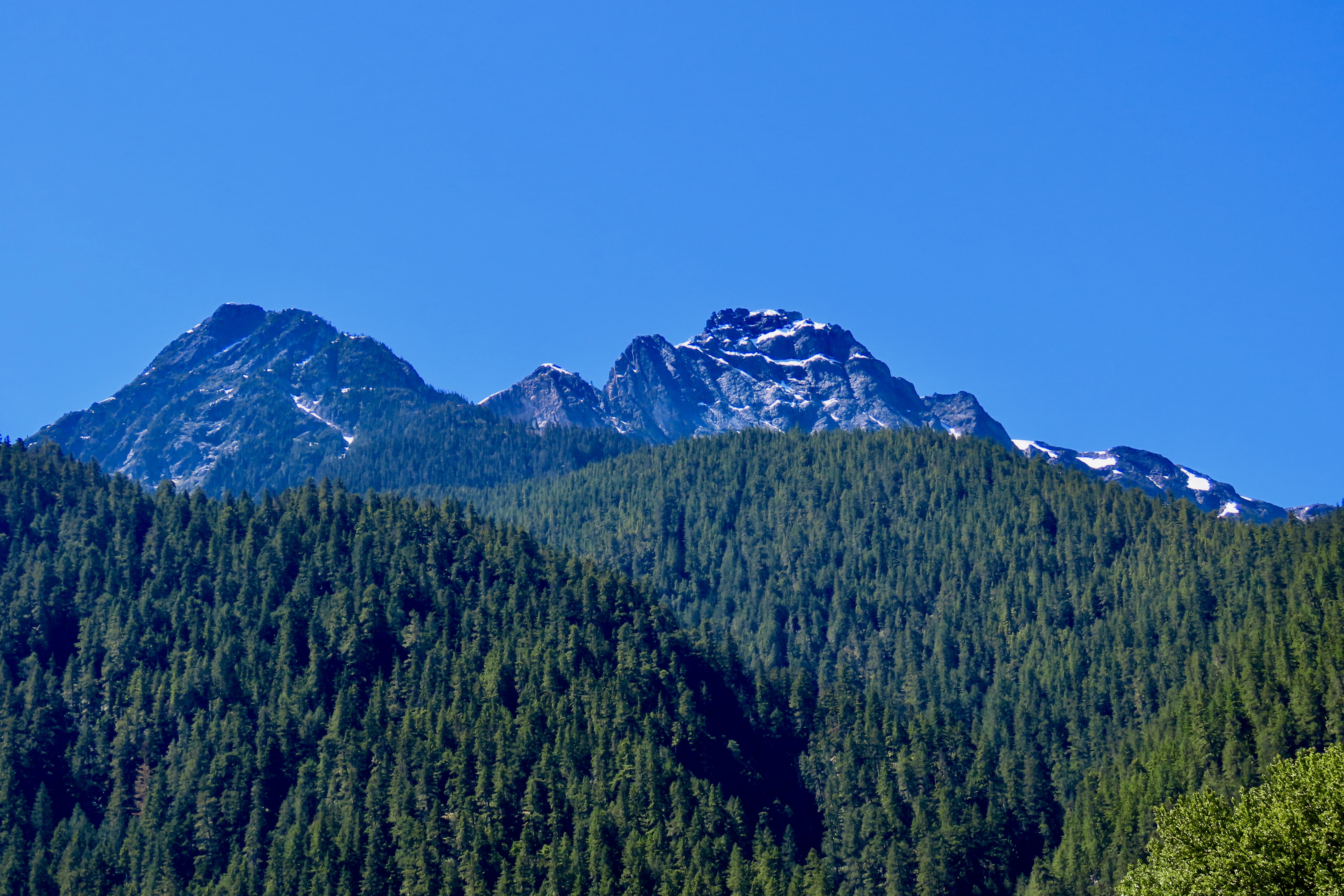
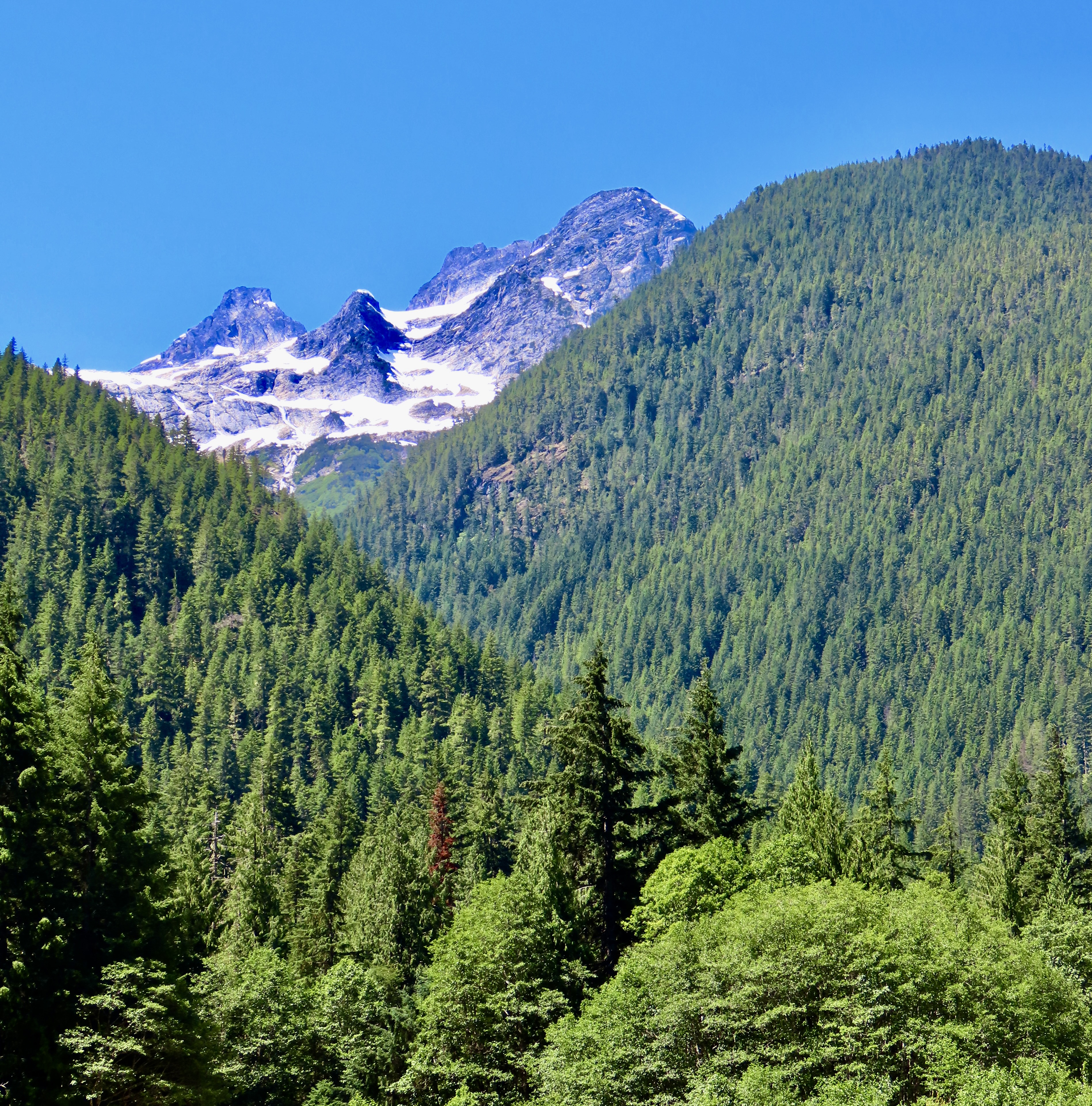
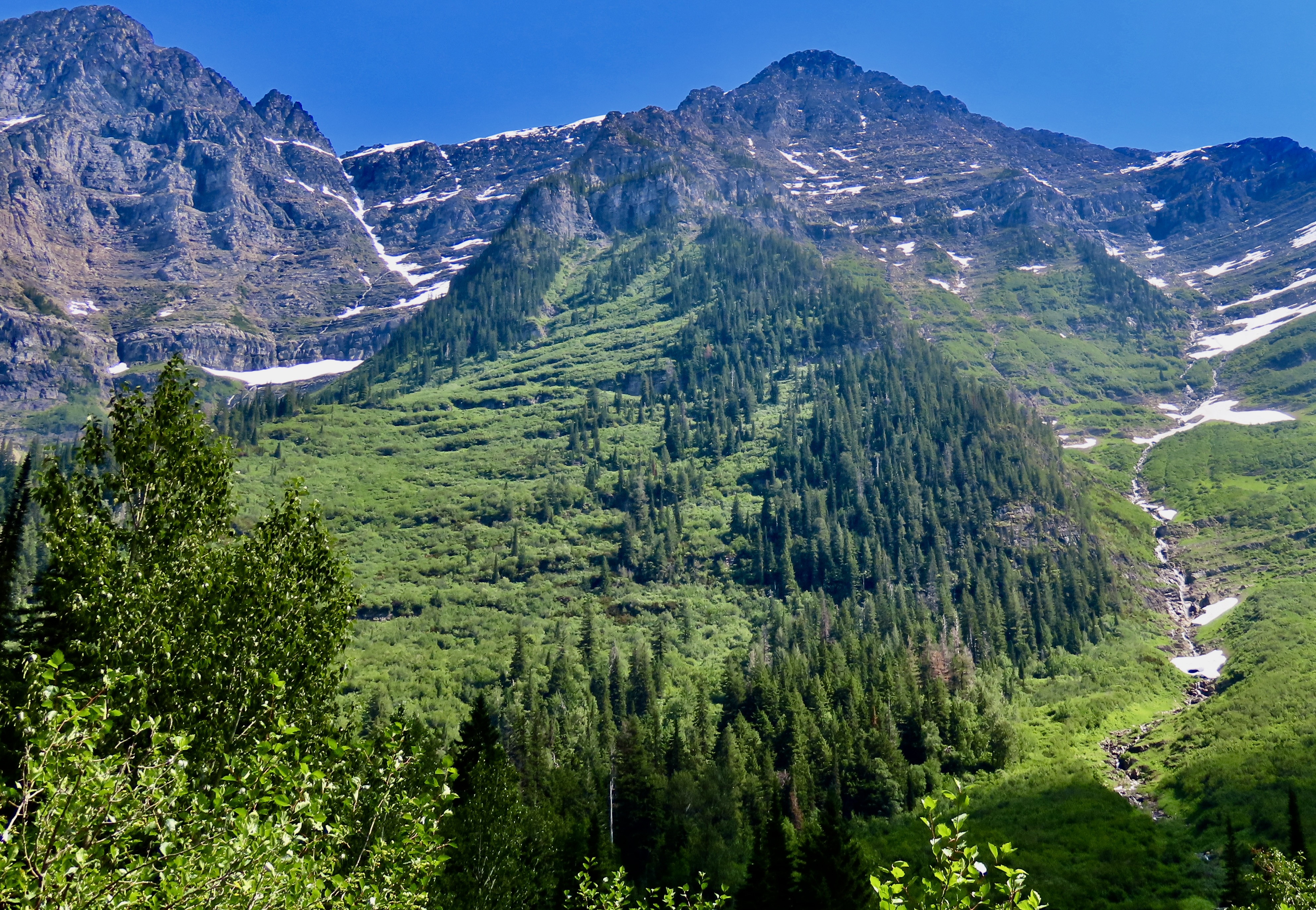
This map from an information board shows the three lakes included in the Skagit River Hydroelectric Project. Diablo is in the middle. The tannish line shows the route past the lakes with its multitude of great views. Map showing Diablo Lake. The camera is where we shot the photos looking down at the lake. We kayaked south from the bridge down the lake’s Thunder Arm to Thunder Creek.This view of the lake and the next one led us to our vow that we would be back. In the distance you can see Diablo Lake Dam. Note the small island in the middle. There were kayakers exploring it.This view provides a look at some of the surrounding mountains hanging above the Thunder Arm of the lake. We were kayaking off to the left. A slight reflection of the mountains and surrounding hills can be seen in the lake.This is the island with kayakers I mentioned above. We didn’t have time to explore Thunder Arm plus paddle out to the island. Maybe on our next visit. If I wait another 25 years I’ll be 106.We found the upper end of the Thunder Arm particularly attractive with its contrasting colors of green and looming mountains. If I appear a little laid back, that’s because I am.Another perspective. More distant mountains can be seen up the valley. Slightly hazy skies dimmed our views of the mountains.Canada geese greeted us at the head of the lake.And grazed along the shore. A teenage goose is behind this one.A goldeneye appeared to give us a the ‘look.’And another one scurried away with her chicks. I caught up with them, however.And mom had a fit, flapping her wings, screaming at her chicks to hide, and squawking at me with a very clear message. It’s probably a good thing I couldn’t understand what she was saying. I left mom and her ducklings to go about their business. Kayaking back, we had more views of the surrounding mountains.Our final photo. Next post: We will travel on to Glacier National Park in Montana.
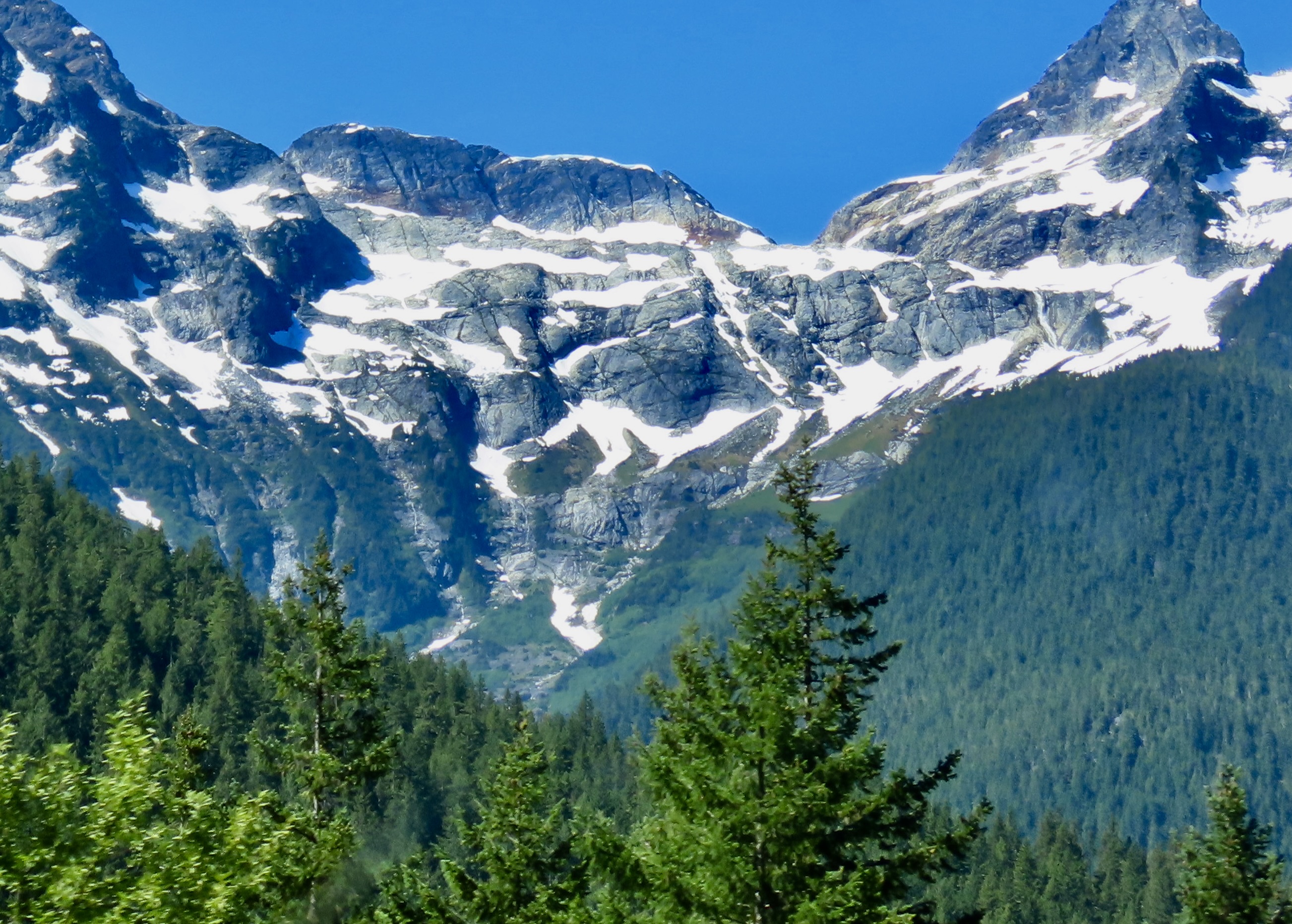
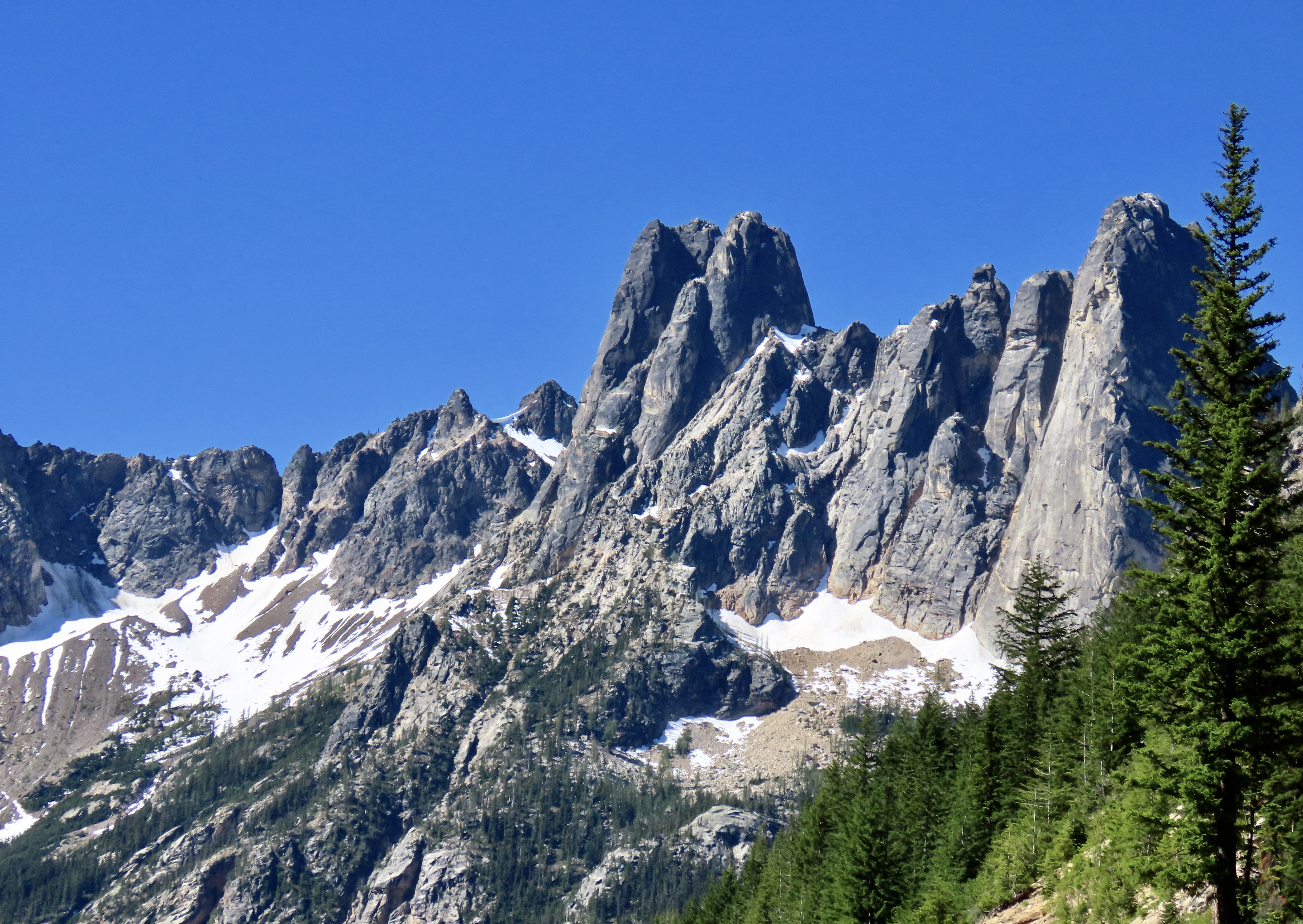
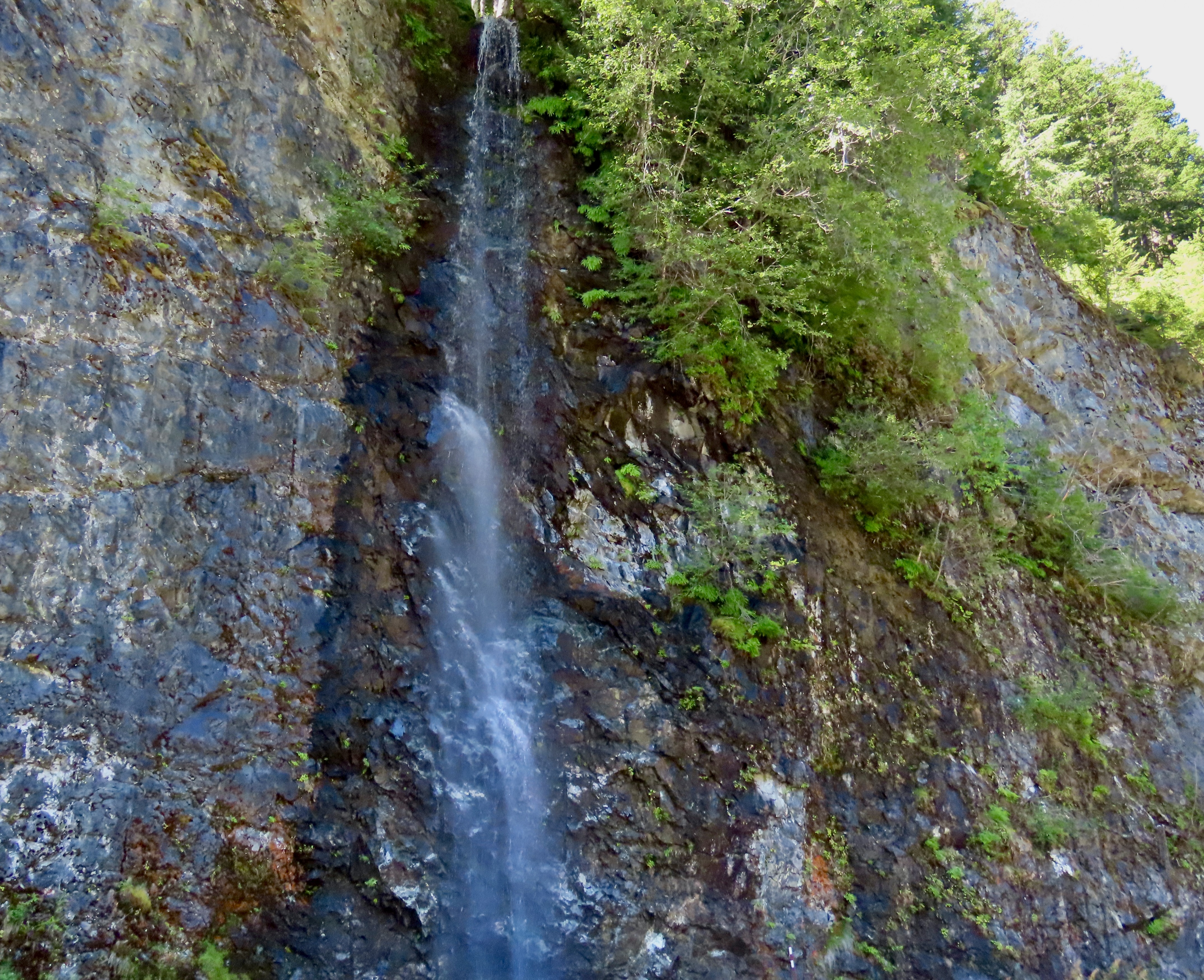
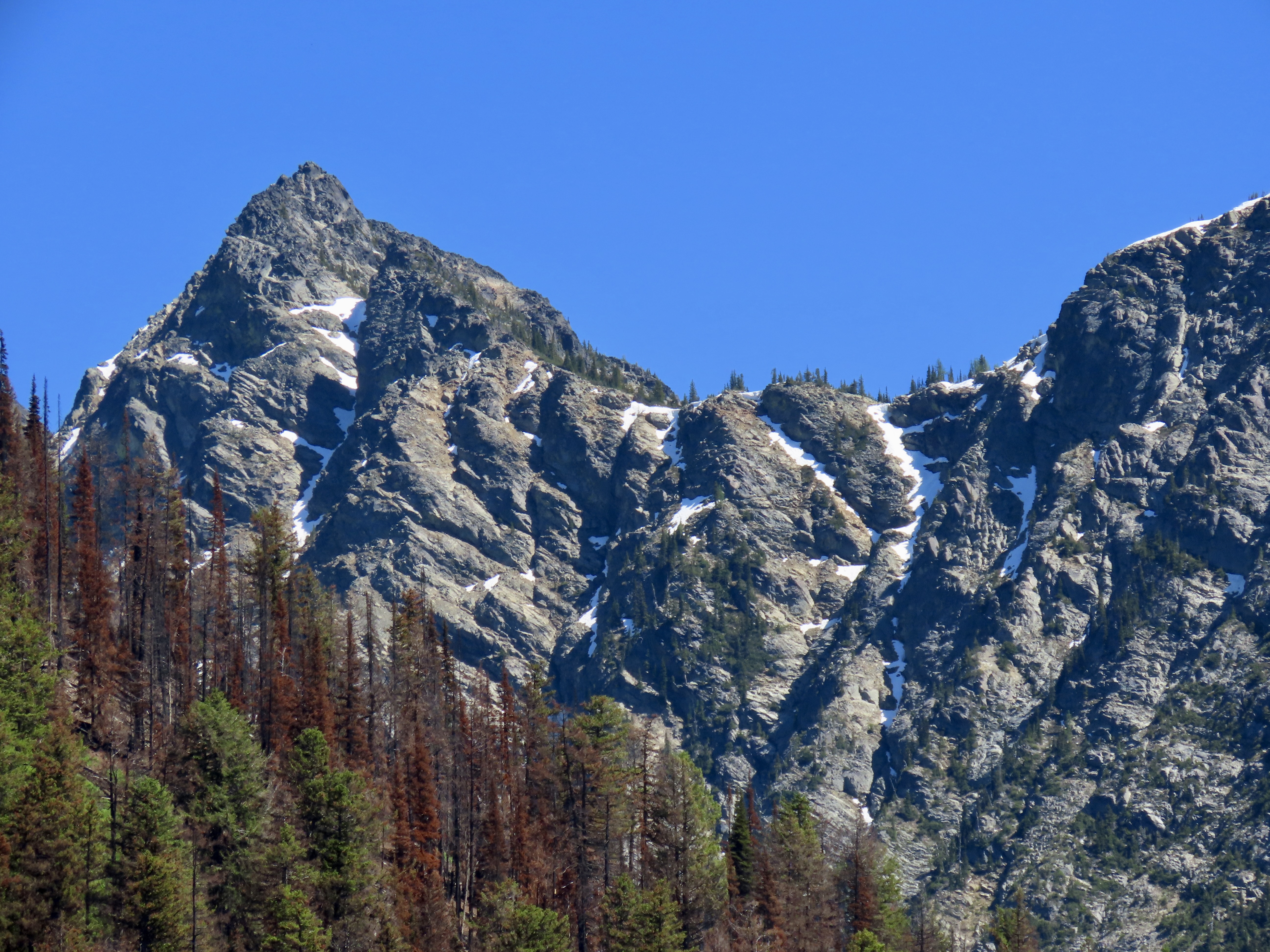
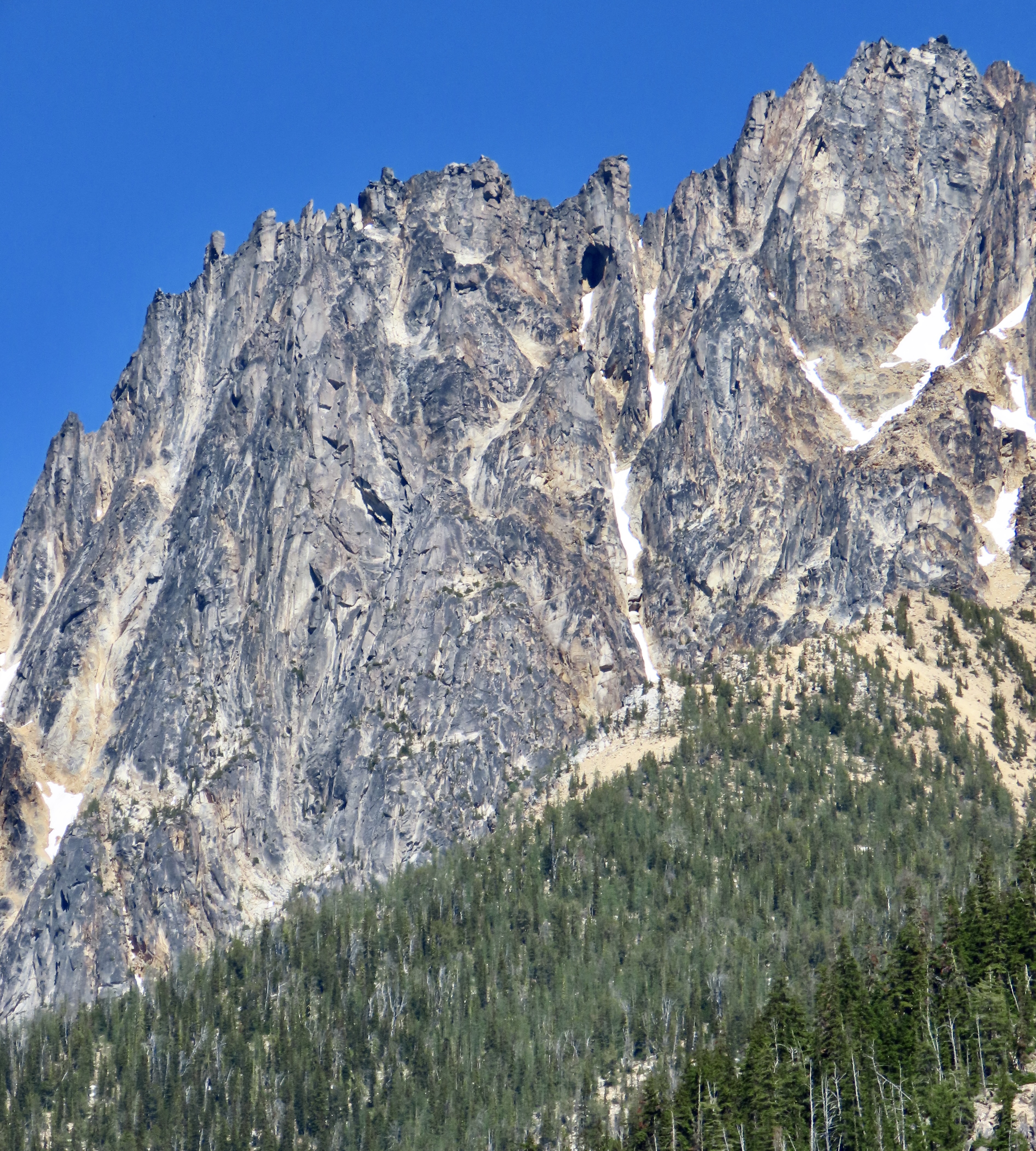
It’s no surprise that the North Cascades National Park is often referred to as America’s Alps. The Park is noted for its mountains, glaciers, turquoise lakes and rugged beauty. Located in northwestern Washington on Canada’s border, it comes with 93 named mountains and over 300 glaciers. It has the most extensive glacial system in the US outside of Alaska.One would think that the park’s beauty and relatively close proximity to Seattle, would make it one of America’s most popular parks. Not so. It had just over 40,000 visitors last year. In comparison, Olympic National Park, which we visited just prior to North Cascades had 2.94 million, and Glacier National Park, where we just were, had 2.93 million. It’s not the least visited, however. That honor goes to the Gates of the Arctic NP in a remote section of Alaska that had 11,000 visitors in 2023. That park has neither roads or trails. I once took a group backpacking there. It was the ultimate wilderness adventure. BTW, the most popular national park in the US is Great Smokey Mountains NP with 13.3 million annual visitors.We drove into the park from our campground in the small town of Twisp on the east side. The views were spectacular. The RV on the highway provides an interesting perspective.The mountains seem to spring into the air. Mountain climbing is a favorite sport in North Cascades, as you might imagine from this photo. I admire people who can scale peaks like these, but no thanks. It has never been a bucket list item of mine, nor Peggy’s.The park’s altitude ranges from 605 feet to 9,206 feet.Another spectacular view from Highway 20 traveling from east to west. Both grey wolves and grizzlies wander through the park along with cougars and black bears.There are numerous waterfalls in the park. We found this small but colorful one along the highway. It was cascading waterfalls that led Meriwether Lewis and William Clark to name the mountain range the Cascades on their journey to the Northwest 1806. The range runs from Mt. Lassen in California to the North Cascades. While the mountain range has a complicated geological history, it is best known for its imposing volcanoes.The goal for our trip into North Cascades National Park was to go kayaking on Diablo Lake, shown here. Which we did. But that’s the subject for our next blog. We will finish today’s post with photos we took returning to our campground in Twisp on the eastern side of the park.The most significant difference between the west side and east side of Cascades National Park is the amount of rainfall. The west is drenched by storms rolling in from the Pacific and receives an average of 110 inches per year. By the time the clouds reach the east, they have been drained of much of their moisture. The east only receives an average of 35 inches. This is known as a rain shadow effect. Both the mountains and the forest above reflect this.A close up.The trees next to the mountain here are impacted by drought. We saw a lot of this in Oregon when we lived there. Peggy and I had 50 dead trees removed from our property for fire protection.Peggy spotted an ogre in the outcrop above. It took me a while. Grin.It was the huge cave here that caught her attention.We took a close up. That’s it for today. Next, we meet some devilish birds while kayaking on Diablo Lake in the heart of the park.
















 Wandering through Time and Place