The Murals of Burning Man 2015… From Dali to Pigs that Fly

Destined to last a week, Burning Man murals provide mural artists with and opportunity to display their work, and for Burners to enjoy the murals.

Destined to last a week, Burning Man murals provide mural artists with an opportunity to display their work, and for Burners to enjoy the murals.

Somewhere around 30,000 BC, a group of guys and possibly gals, decided to try their hand at creating murals deep in the caves of southern France. Apparently folks liked what they saw. The art form caught on. The ancient Egyptians placed murals in their tombs; they were found in Pompeii before Mt. Vesuvius blew her top; and Michelangelo undoubtedly got a kink in his neck from daubing away at the ceiling of the Sistine Chapel. Peggy and I have even found some very interesting UFO-like murals left behind by early Native Americans.

We found this Roman mural in a museum in Naples.

We found this Roman mural in a museum in Naples.

Today murals have become ubiquitous, if I may use that two-bit word, i.e. they are everywhere. Small towns use them to attract visitors and relate their history. Urban areas have found them great for freshening up blighted areas. And the best of graffiti artists are now paid big bucks to wield spray cans they once used for free— two steps ahead of the police.

Murals have a way of slipping into my blogs when I come across them. I appreciate the efforts of both major cities and small towns to support artists. I recently featured murals I found in Puerto Vallarta. Two other examples include one from the small coastal town of Bolinas and one featuring People’s Park in Berkeley.

Mural Peggy and I found in Puerto Vallarta. We enjoyed its sent of humor.

Mural Peggy and I found in Puerto Vallarta. We enjoyed its sense of humor.

Mural of early Bolinas, California. Photo taken by Curtis Mekemson.

A mural depicting how Bolinas would have looked in the 50s. Not much has changed. As for the guy in a brown suit carrying a blue surfboard… artistic license?

Murals have been used to reflect local history and political protest.

Murals have often been used to reflect local history and political protest.

Alien looking forms in an early Native American mural (pictograph) from Sego Canyon in eastern Utah north of I-70.

Alien looking forms in an early Native American mural (pictograph) from Sego Canyon in eastern Utah north of I-70. I am going with UFO visitors.

Given the creative bent of Burning Man, it isn’t at all surprising to find that mural art thrives there. Each year, the Burning Man Organization, BMO, makes a long fence around the back side of the Center Camp Café available to artists. Other murals can be found throughout Black Rock City. I make a point of including works that strike my fancy in my annual Burning Man blogs. This year my choices ranged from Salvador Dali to pigs that fly— and other strange stuff. (Grin) Pigs that fly, BTW, have been a favorite of mine ever since I memorized this poem from Lewis Carol as an impressionable teenager:

“The time has come,” the Walrus said,
”To talk of many things:
 Of shoes, and ships, and sealing-wax–
Of cabbages and kings–
And why the sea is boiling hot–
And whether pigs have wings.”

Peggy’s mom, who is a retired high school English teacher and is now 95, doesn’t remember much, but she remembers this verse. We often recite it together.
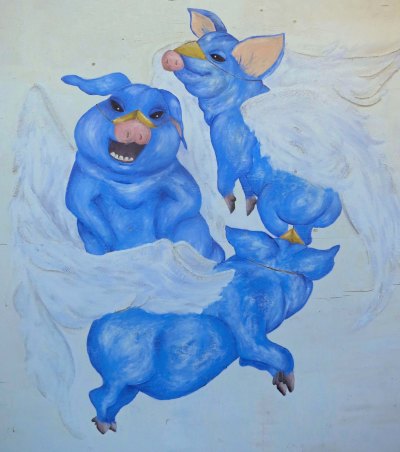
Three angelic flying pigs.

Three angelic flying pigs. I think the nose masks are there to deal with the dust storms of Burning Man.
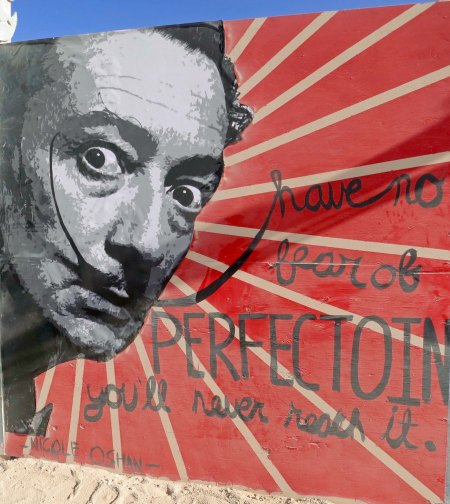
A not so angelic Salvador Dali.

A not so angelic Salvador Dali and his message.

Arriving early at Burning Man in 2015, I was able to watch a number of mural artists at work.

Arriving early at Burning Man in 2015, I was able to watch a number of mural artists at work.

Note the number of paints.

Colorful mural, colorful clothes.

A view of one of the walls featuring a number of artists.

A view of one of the walls featuring a number of artists.

These clowns fit into the Burning Man theme of Carnival.
These clowns fit into the Burning Man theme of Carnival.

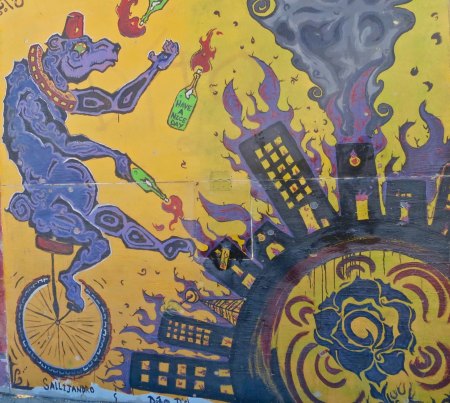
A bear riding a unicycle while juggling flaming bottles— another carnival theme.

A bear riding a unicycle while juggling flaming bottles— another carnival theme. Apparently the world burns as well, while the middle bottle urges people to have a nice day.

Want strange, this one qualifies.

Want strange, this ‘BMO insider’ mural qualifies. Check out the statue of Bliss dancing with Homer Simpson on the hat. El Pulpo Mechanico lurks in the background.

Handsome bugs. Number 4, not seen, BTW, was a mirror.

Handsome bugs. Fig 4, not seen here, was a mirror. Burners were invited to join the collection.

Let's have a party.

Let’s have a party. The two in front are playing their noses like flutes. And then there is the nose harp…

Unfinished but interesting.

Unfinished but interesting.

A study in black and white. Check out the details.

A study in black and white. Check out the details.

Incentive?

Incentive or trap?

The peaceable kingdom? Or not?

I’ll conclude with this version of what I view as the peaceable kingdom. Whether the artist saw it that way…

NEXT BLOG: A strange cathedral, Susan Sarandon, and the ashes of Timothy Leary.
The Murals that Saved Chemainus… The Vancouver Island Adventure

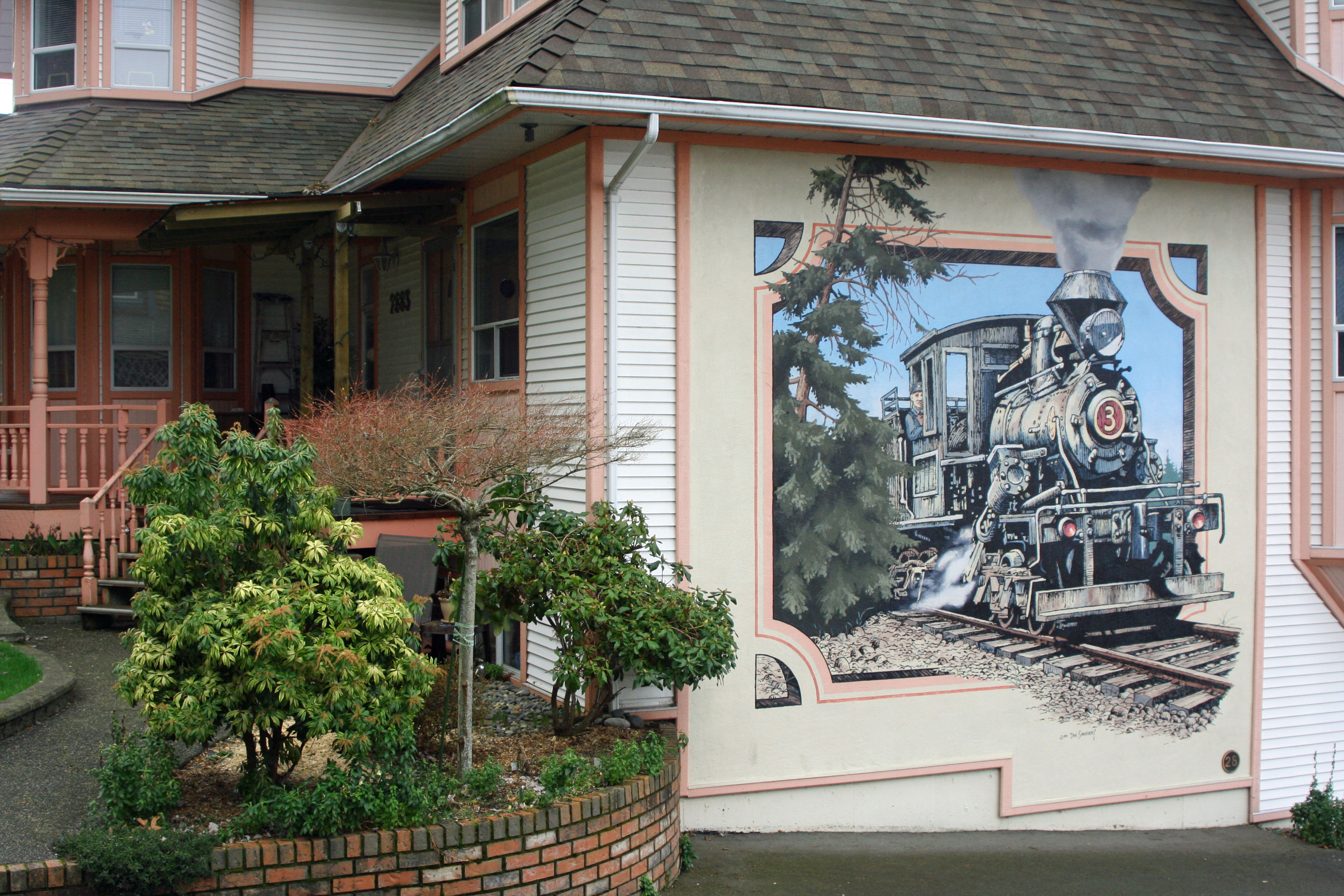
Homeowner and muralist Dan Sawatzky painted this 3D steam engine chugging out of his house/studio in Chemainus on Vancouver Island, British Columbia. The Number 3 engine was used for hauling logs and is symbolic of the town’s historic lumber industry.

This is another reposting of an earlier Vancouver Island blog. Again, Peggy and I still involved in our kayak trip among the Orcas. I know many of my followers enjoy murals and Chemainus has some great ones. I’ll catch up on comments when Peggy and I get back home– before we zip off to Burning Man. –Curt

“You have to visit Chemainus and see its murals,” the woman from Qualicum Beach urged. We were on the Black Ball Ferry between Port Angeles, Washington and Victoria, British Columbia. While I hunkered down and read, Peggy made new friends. Fortunately, one of us is much more social than the other.

Qualicum Beach is next to Parksville, which was our destination. A thirty-minute conversation generated a long list of restaurants to visit and places to see. I was yanked out of my book to take notes.

Chemainus is an excellent recommendation. This thriving community is located in the Chemainus Valley on the east coast of Vancouver Island about an hour north of Victoria. In 1983 it came close to dying. The primary place of employment, a lumber mill, shut down. 700 of the town’s 4000 residents were thrown out of work.

This is the point where most communities give up. Business and political leaders spend their energy assigning blame instead of seeking solutions. Not so with Chemainus.

“Let’s cover the walls of our town with historic murals,” Karl Schultz urged. It would capture the community’s history, develop local pride, and hopefully encourage tourism. As always, there were naysayers, but Karl’s enthusiasm won out. Today Chemainus is world-famous for its murals and tens of thousands of tourists visit the town annually.

Since it was on our way and we had the time, Peggy and I decided to stop. Good decision. First, I love the story of the small community that has adopted the motto of  “The Little Town that Did.” Second, I really like murals. Following are some our favorites out of the 39 (and increasing). For a complete tour visit www.chemainus.com/arts/murals/Chemainusmurals.htm.

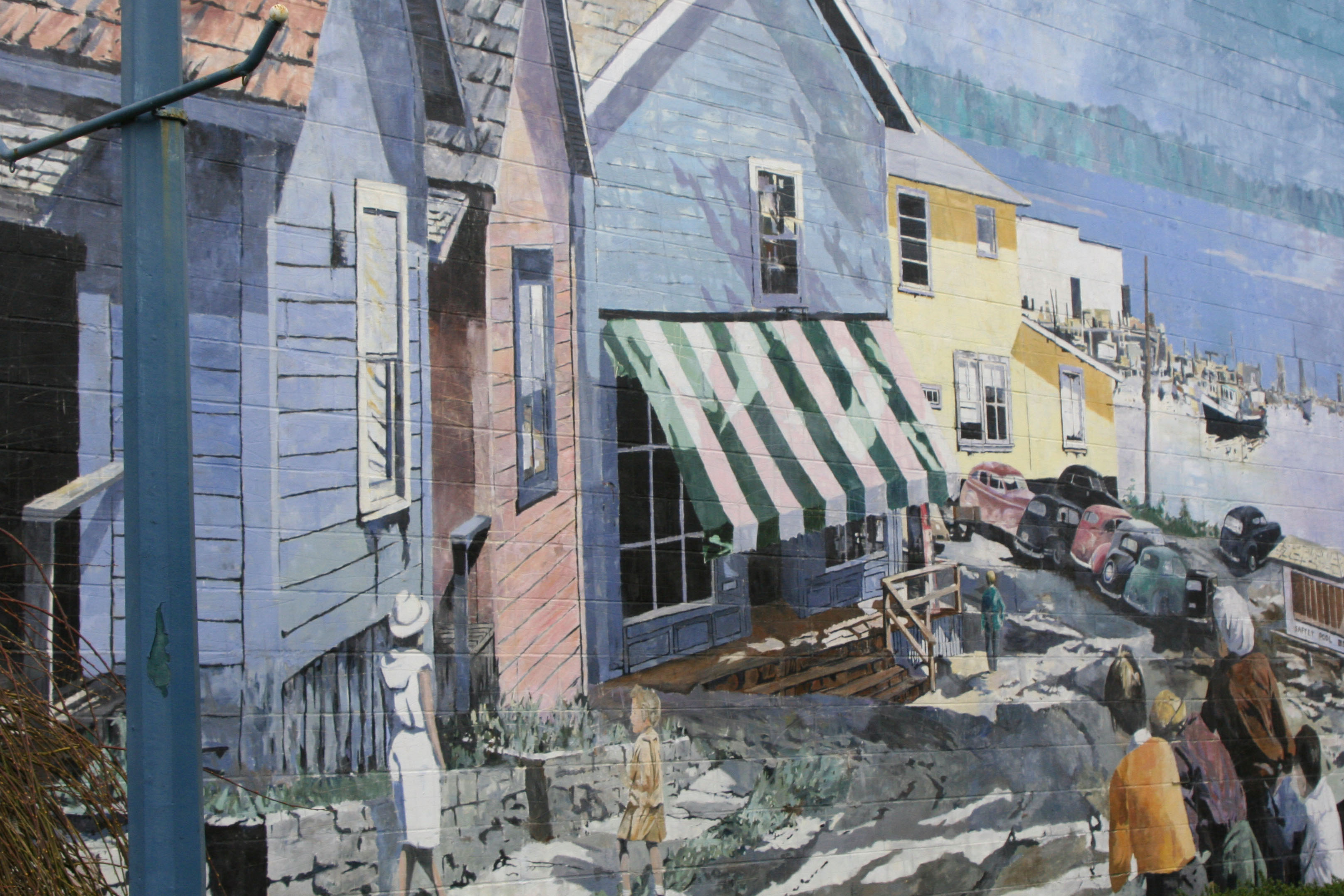
A colorful 1948 view of Chemainus looking down Mill Street toward the bay.

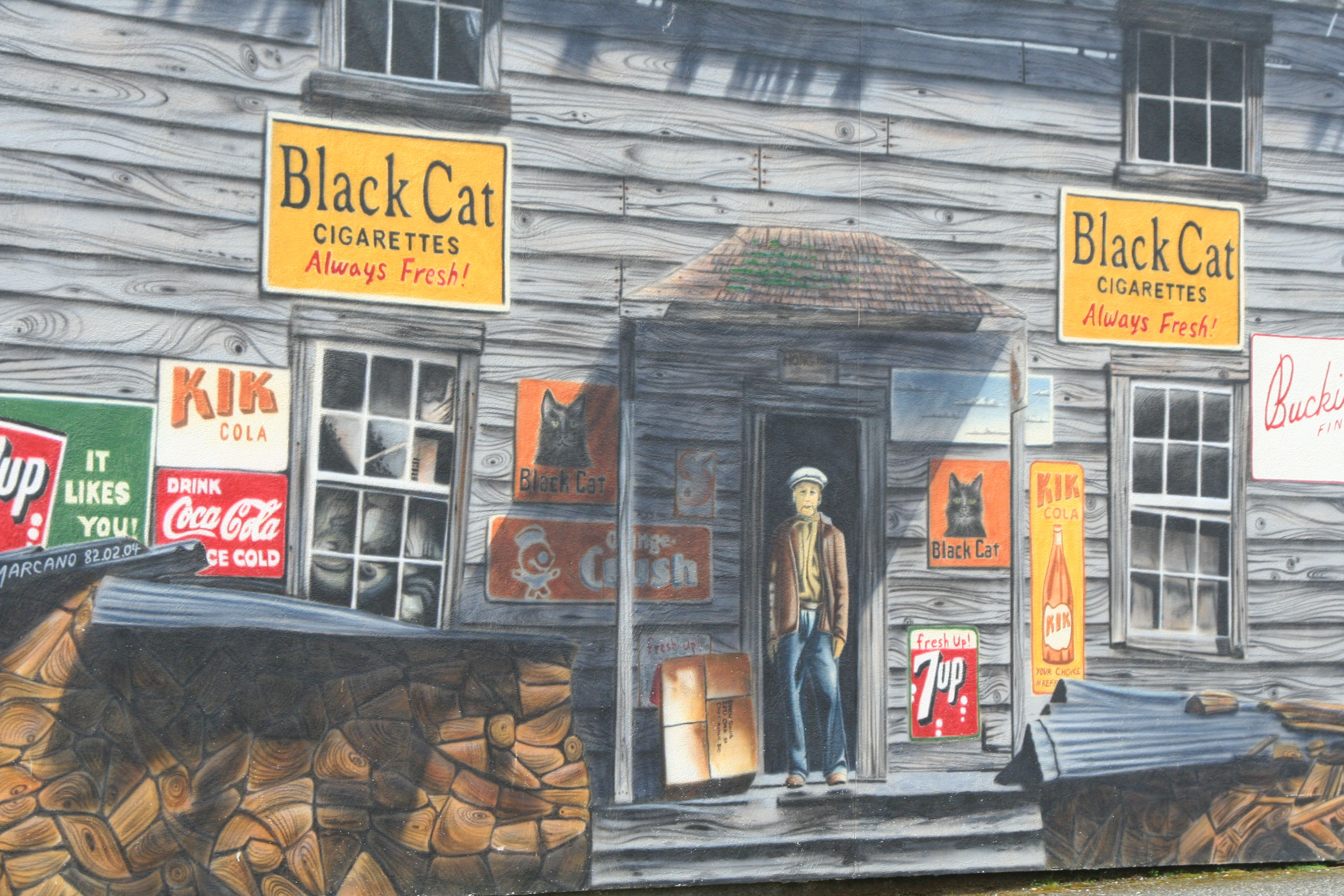
Hong Hing arrived in Chemainus in 1915 and opened his waterfront store. Over time his store would serve as a laundry, grocery store, second-hand store, bootlegging establishment and gambling den. Declining business led him to close his store in 1950 and return to China where he married a younger woman and produced an heir. Black Cat, by the way, is an extinct brand of British/Canadian tobacco.

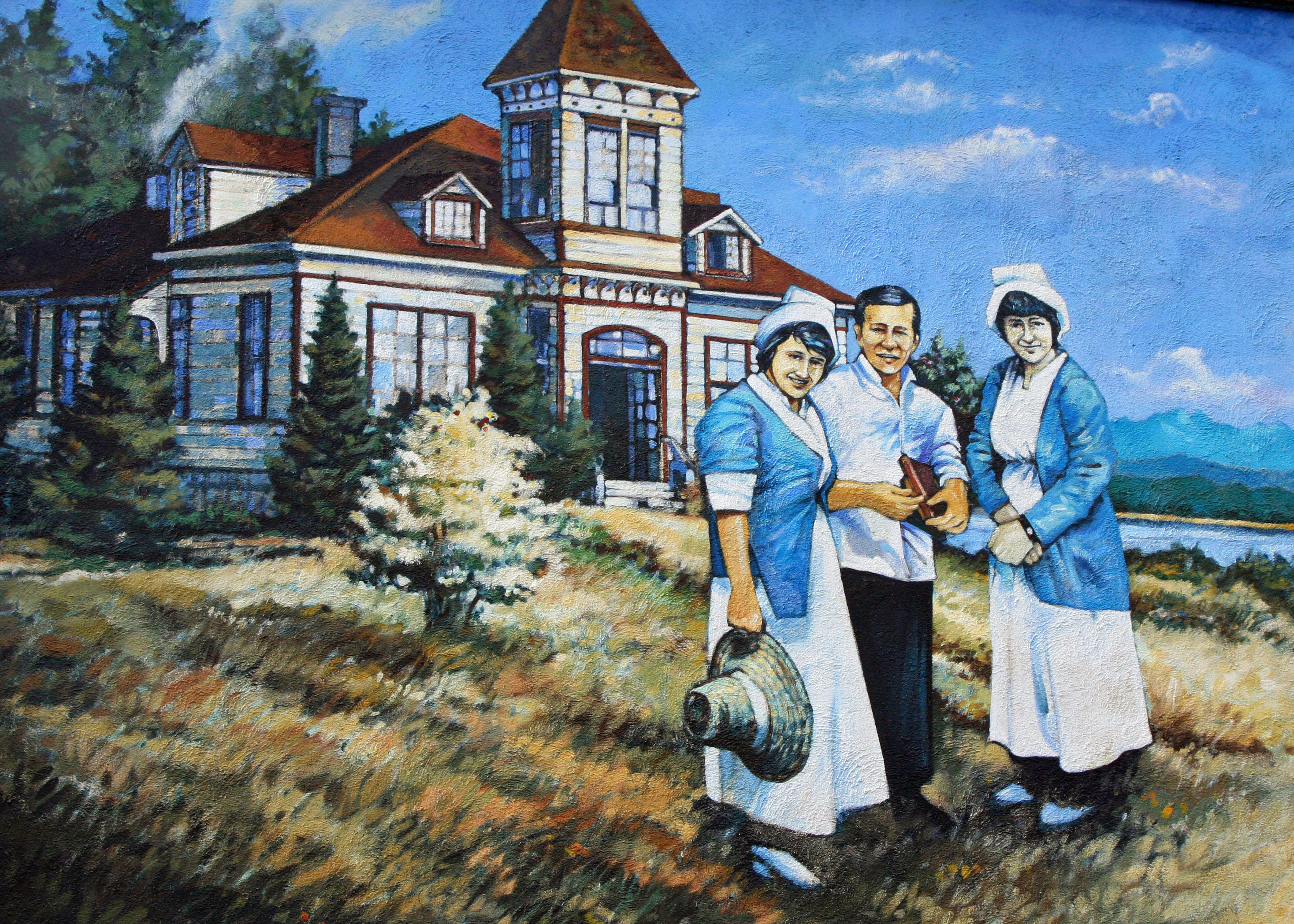
This mural captures the Chemainus Hospital in 1904 along with two nurses and the hospital cook.

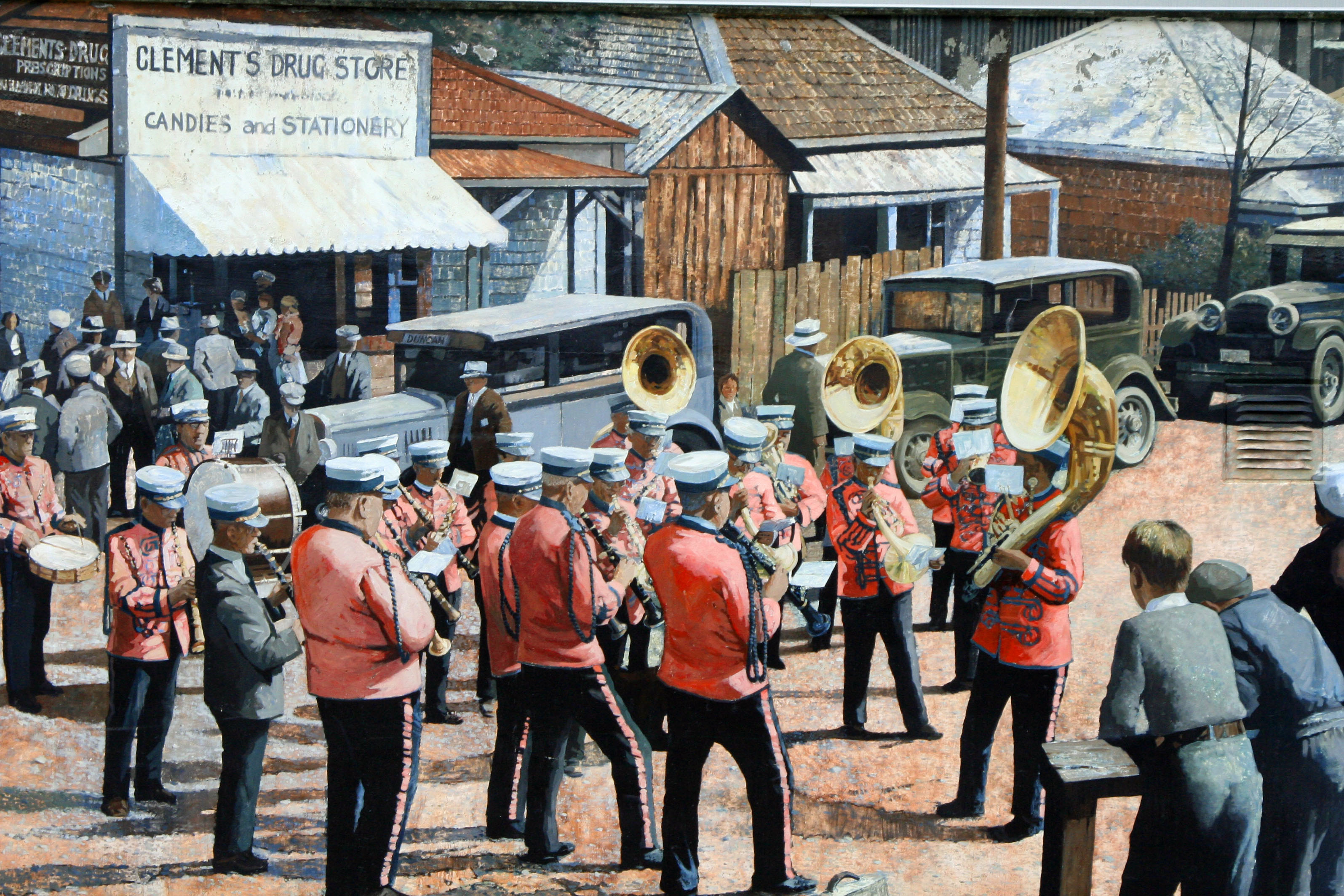
What’s not to love about a band concert?

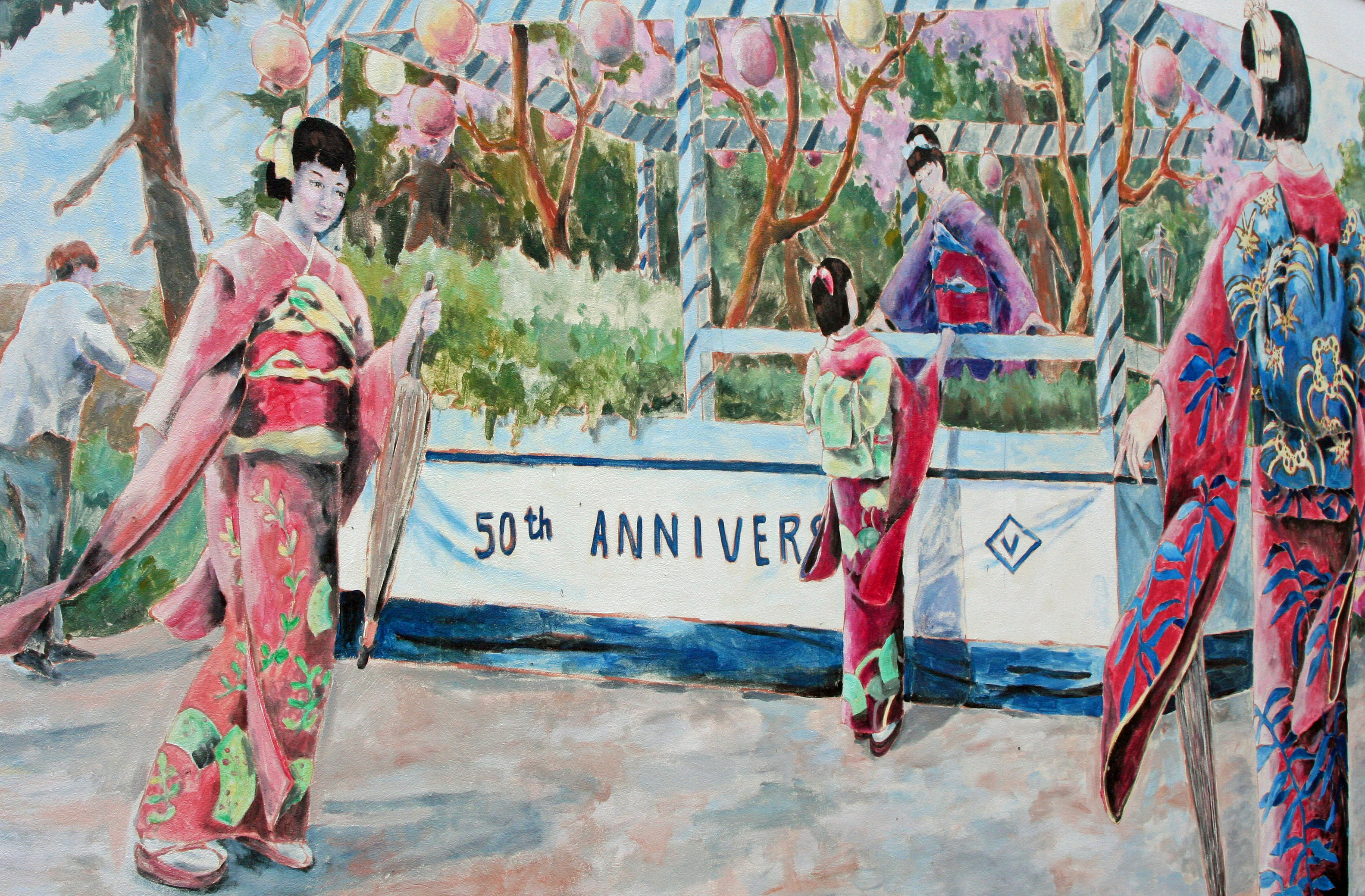
I’ve included this mural because of its history. In 1939 Chemainus celebrated its 50th anniversary. The float entered by the local Japanese-Canadian Community won first prize. By 1942 all of the community’s Japanese had been removed to Internment Camps. It is one of the darker pages of Canadian (and US) history.

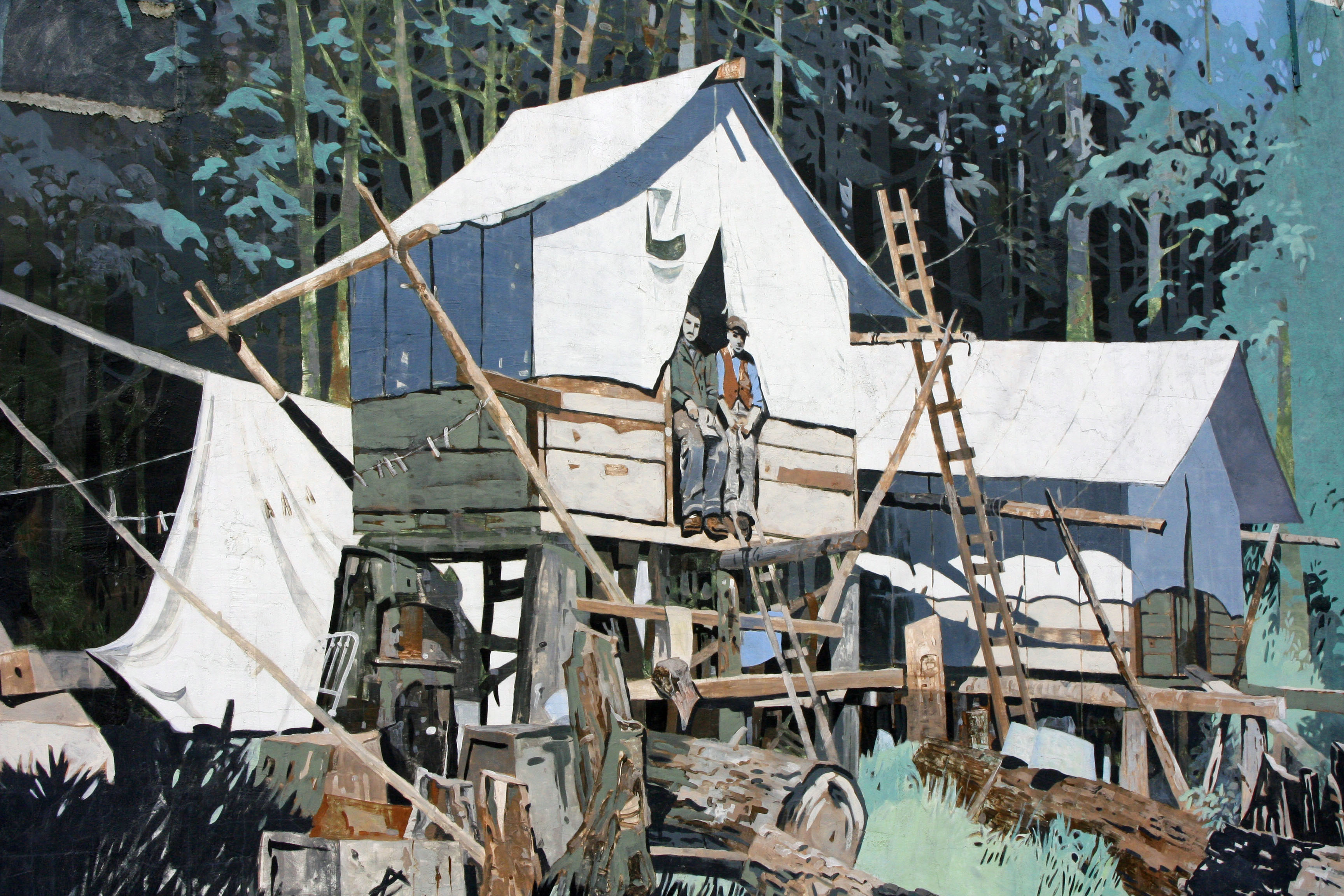
Tent houses provided quick, inexpensive housing for the early loggers, fishermen and miners of Chemainus. When I was growing up in Diamond Springs California, one of my mother’s friends lived in a tent house. As a seven-year old, I was jealous.

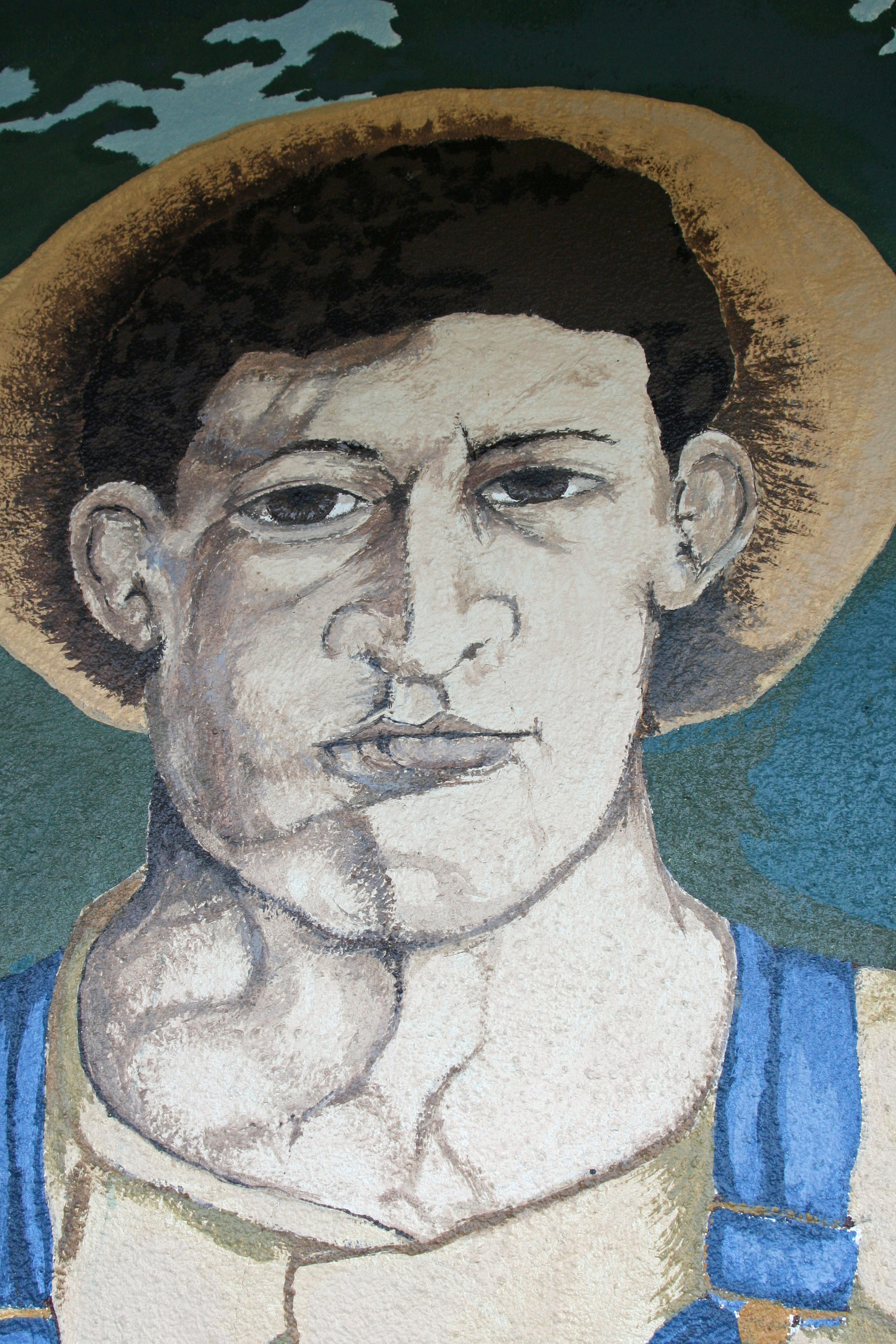
This big guy’s face captures both the simplicity and the power of the mural art in Chemainus.

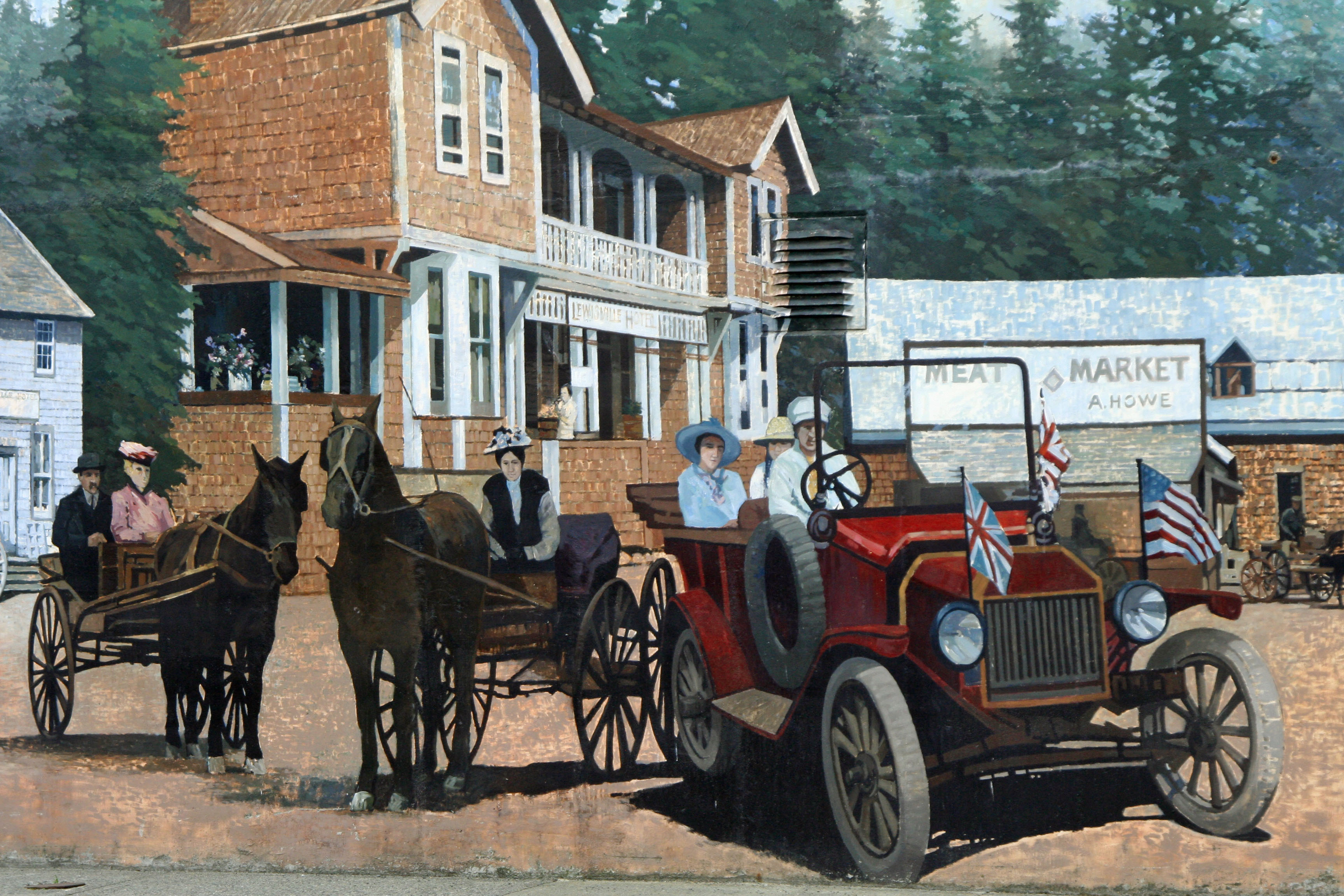
Dressed in their Sunday best, these early residents of Chemainus reflect a time when horses competed with ‘horseless’ carriages as the primary mode of transportation.

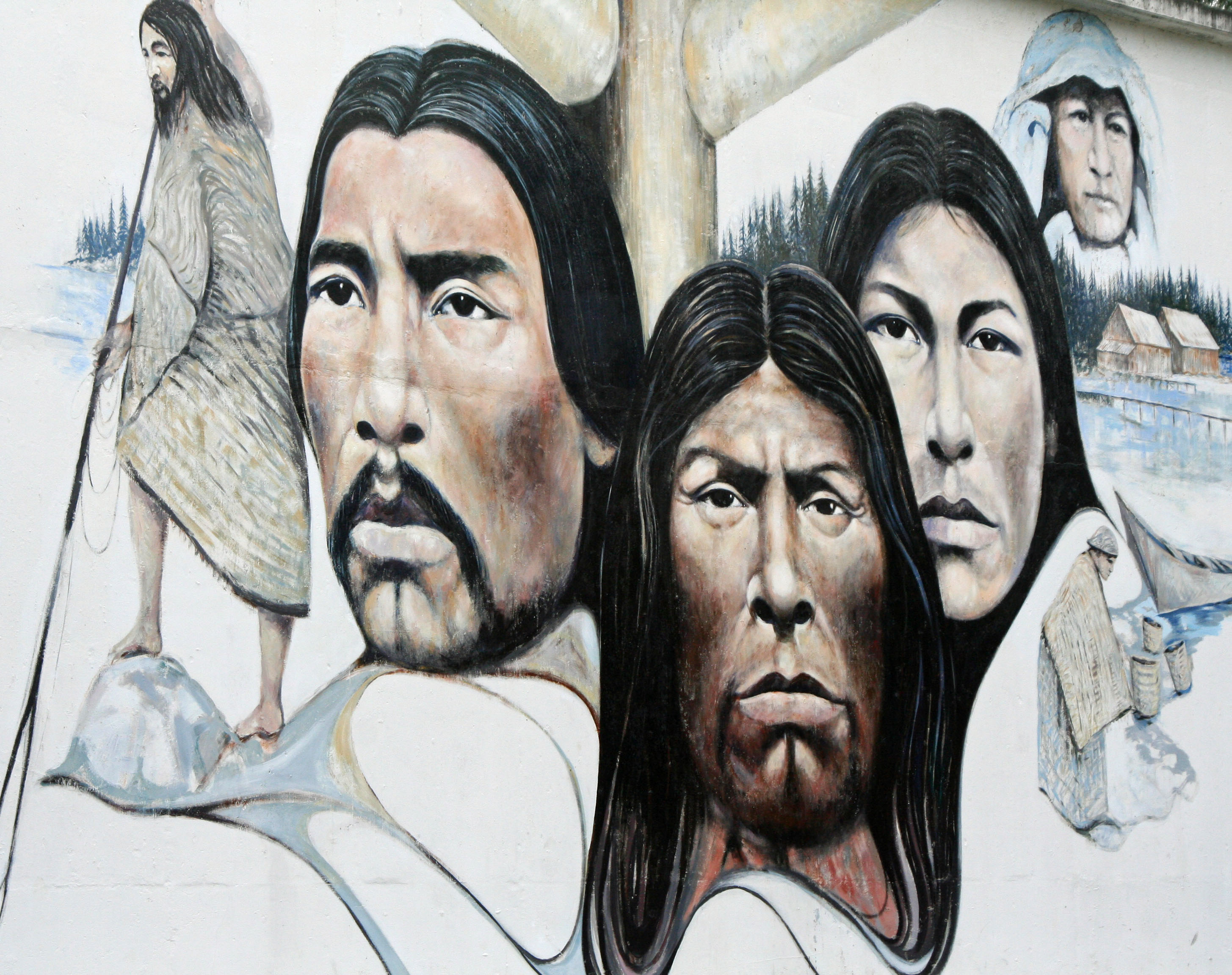
This Chemainus mural of First Nation people captures both the original inhabitants of Vancouver Island and their renaissance today. Peggy and I were both impressed and moved by the quality and quantity of First Nation Art during our visit to British Columbia.