Learning About Cross-Cultural Relations as a Second Grader… The MisAdventure Series

Caldor train

Caldor Lumber Company was one of two major places of employment in Diamond Springs. My dad worked as an electrician for the company. Logs were brought into Caldor by train on a narrow gauge railway up until the early 50s. Note the size of the logs! (Photo from newspaper archives.)


I was fortunate early in life to have close Mexican-American friends and experience some of the richness of cross-cultural experiences. The strength of America has always been in the diversity of the people who have come here from all over the world with dreams of improving their lives. That they retain a bit of their ‘home-country’ is a strength, whether that home country is Ireland, or Mexico, or China, or Nigeria. The mixing of cultures has almost always been the dynamism that drives humanity’s great leaps leap forward, that leads us to question old ways, and helps us find new solutions to seemingly intractable problems. 


My entry into the world of education also introduced me to a whole new set of friends. Up until that point in time, the kids I had hung out with had consisted of my brother and his buddies. We had roamed the country doing little boy things with me as a tag along. Mainly we got into mischief. I could look forward to a life of crime, or at least to becoming a world-class juvenile delinquent. I’m not sure that much changed during my first grade, but I started to make new friends. In the second grade, I became particularly close to Rudy (Raul) and Robert Rangel, a pair of Mexican-American brothers who lived in a small house in East Diamond Springs.
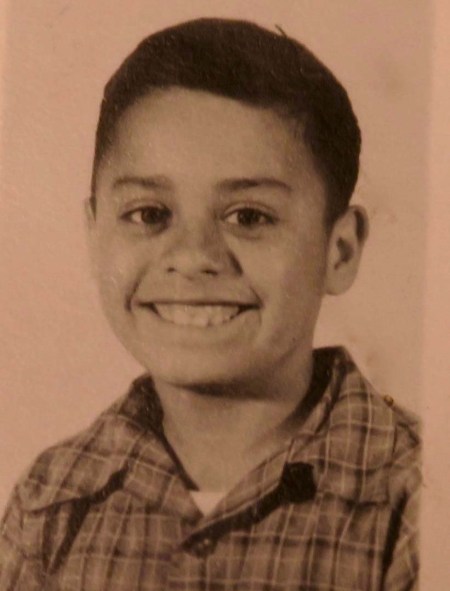
Raul Rangel

Rudy.

Robert Rangel

Robert.

We hit it off immediately and on a Saturday toward the end of the school year, the boys and their parents had invited me up to their house to spend the night. It was my first official play date and my first ever sleep-over. I was nervous. My mother took me up and dropped me off to a royal greeting by the boys, their parents and their siblings.

“Quick, “the boys had urged,” We have to go stand by the railroad tracks.” We could hear the train’s whistle a mile or so out of town.

The tracks were part of a narrow-gauge railway used by Caldor Lumber Company to bring logs from its forest operation 30 miles up in the mountains to its lumber mill in Diamond Springs. The company had been established in the early 1900s and at first used mules for hauling the logs. It had then switched to oxen followed by a giant steam tractor. The tractor made so much noise that the company was required to use outriders a quarter of a mile in front and behind to warn people so their horses wouldn’t be spooked.

Understandably, the company soon switched to a narrow-gauge railway. The trains had recently been converted to diesel engines, a task my father had helped with as one of Caldor’s two electricians. Soon the railroad would lose out to logging trucks but, for the time being, little kids still had the joy of watching these massive engines and their long line of rail cars carrying large logs out of the forest. More to the point, the engineers on the train carried an ample supply of candies that they would distribute to the boys and girls standing along the track.

The train was near; we could now hear it chugging along. Rudy and Robert, their siblings and I sprinted the hundred or so yards over the tracks. I leaned over and put my ear to the track, a trick I had learned from the Lone Ranger and his side-kick, Tonto. You can actually hear the vibrations and supposedly judge how far away the train is. It was an important skill for early train robbers. I needn’t have bothered since the train came into view when my head was on the track. I’m sure the engineers saw me. I jumped back at the urging of my buddies and we started waving madly. One of the engineers dutifully leaned out of the cab and tossed us candy, lots of it. We scrambled around picking it up.

Since dinner was an hour or so off, I suggested that we head out to the woods behind Rudy and Robert’s house and ride trees. Who needed horses? My brother, Alan, Lee and I had learned that we could climb up to the top of young, skinny pines and make them sway back and forth by leaning way out. It offered a free carnival-like ride 10-15 feet up in the air. If the tree was skinny enough, we could actually make it bend all of the way down to the ground, where we would drop off and allow it to snap back up. I suspect the trees didn’t enjoy the experience nearly as much as we did.

“It’s dinner time!” came the call so we rushed back to the house and made use of an outside water faucet to semi-wash the pitch off our hands. It can be quite stubborn.

“You have to try this,” Rudy enthused, dashing into the house and coming out with a red pepper. I should have been suspicious when the rest of the family followed him outside. But what does a second grader know? I gamely bit into the pepper and was introduced to habanero-hot. The whole family roared as I made a mad sprint for the faucet and glued my mouth to it, becoming a major part of the evening’s entertainment. The Mexican food that followed more than made up for the joke, however. I’ve been a fan ever since. The hot pepper became a dim memory when it became time to go to bed.

All of the boys slept on the same one. The family didn’t have a lot of money and space was limited. Admittedly it was much bigger than my small single at home. And, as you may recall, I had a number of animal companions that slept with me outside to scare the ghosts away. But I had never slept in a bed with another person, much less 3 or 4, or maybe it was 10. That’s what it felt like. I was mortified, but I tried. I really did. Ten came and there I was, eyes wide open, staring at the ceiling, body frozen in place— and midnight, and two, and four. At 5:30, I gently nudged Robert.

“I can’t sleep. I haven’t slept all night,” I confessed. “I have to go home.”

“Ummm,” the half-awake Robert had moaned. I got up, dressed, and slipped out of the house, careful not to wake anyone else. It was close to dark, with only a dim light announcing the morning. Home wasn’t that far away, maybe a mile, but I still remember the journey as long and spooky. Halfway there, I passed Murphy’s grocery store. Sodas were stacked in wood boxes in front. I looked around furtively— nobody was around. I was totally alone. So, I helped myself to a Coke. I carefully hid it outside when I arrived home. It wouldn’t do to have overly inquisitive parents discover it and ask questions. I happily enjoyed it later in the day, feeling much less guilty about stealing  the soda than I did about abandoning my friends.
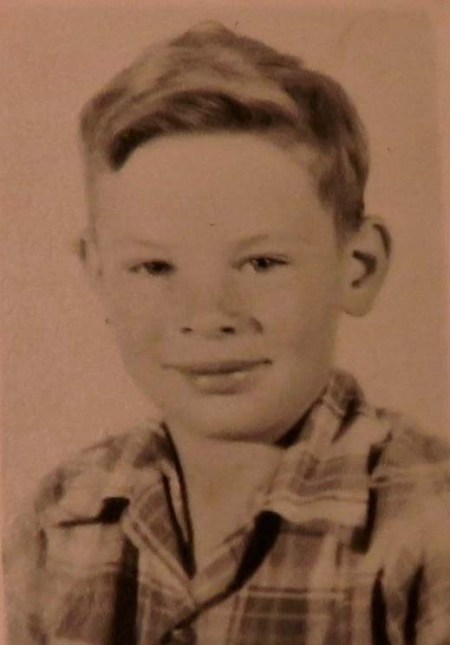
Curt

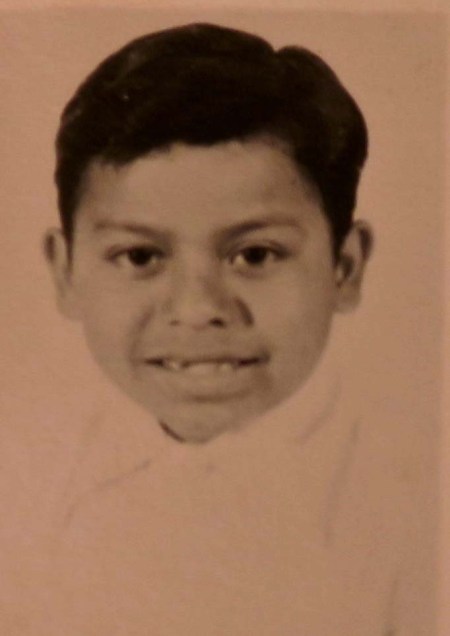
My second grade photo.


MONDAY’S POST: The Grand Canyon trip begins. I help paddle the raft to keep it floating downriver.  The headwinds were insisting that we go in the opposite direction.

WEDNESDAY’S POST: Part 1 of a new photo essay on driving the Alaska Highway.

FRIDAY’S POST: My cocker spaniel, Tickle, teaches me how to swim and other tales of the magical Pond.
SaveSave

SaveSave

SaveSaveSaveSave

The Great Tree Race… Blogging My Book on “MisAdventures”

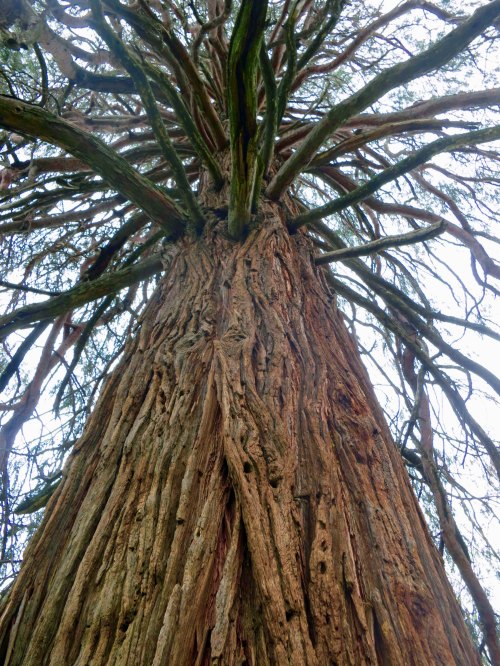
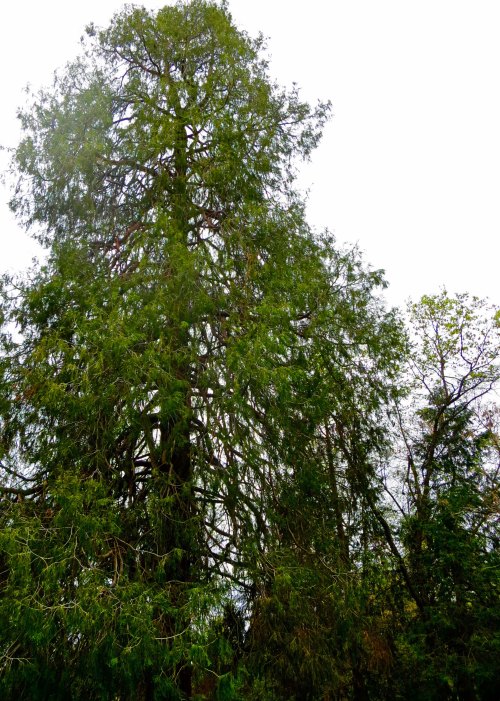
Incense cedar tree in Diamond Springs graveyard

A view of the tall incense cedar in the Graveyard today.


Two incense cedars dominated the Graveyard. From an under five-foot perspective, they were gigantic, stretching some 75-feet skyward. The limbs of the largest tree started 20 feet up and provided scant hope for climbing. As usual, my brother Marshall found a risky way around the problem.

Several of the lower limbs came tantalizingly close to the ground at their tips. One could be reached by standing on a convenient flat tombstone. But only Marshall could reach it; I was frustratingly short by several inches. Marsh would make a leap, grasp the limb and shimmy up it hanging butt down until it became large enough for him to work his way around to the top. Then he would crawl up to the tree trunk, five Curtis lengths off the ground. After that, he would climb to wonderfully mysterious heights I could only dream about.

Eventually I grew tall enough to make my first triumphant journey up the limb. Then, very carefully, I climbed to the heart-stopping top, limb by limb. All of Diamond Springs spread out before me. I could see our school, and Caldor (the lumber mill where my father worked), and the woods, and the hill with a Cross where I had shivered my way through an Easter Sunrise Service. I could see my whole world. Except for a slight wind that made the tree top sway and stirred my imagination about the far away ground, I figured I was as close to Heaven as I would ever get.

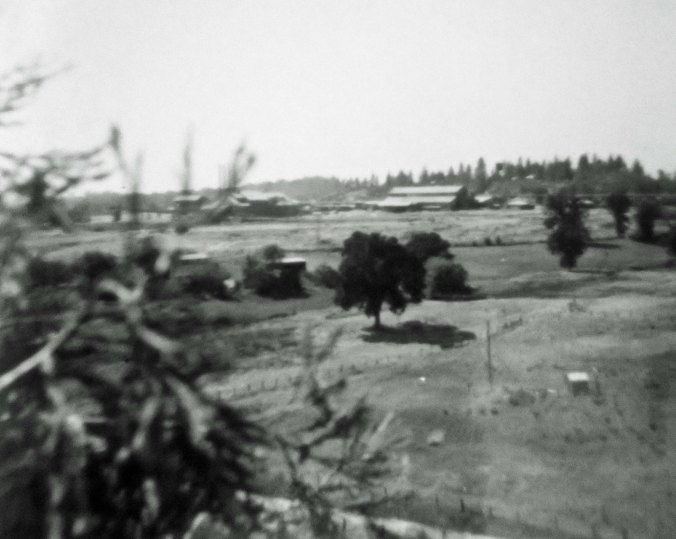
View of Caldor Lumber company circa 1958

The view from the top of the incense cedar tree in the Graveyard looking toward Caldor Lumber Company circa 1958. The mill had already closed down by this time.

By the time I finally made it to the top, Marshall had more grandiose plans for the tree. We would build a tree house in the upper branches. Off we went to Caldor to liberate some two by fours. Then we raided Pop’s tool shed for a hammer, nails, and rope. My job was to be the ground man while Marshall climbed up to the top. He would then lower the rope and I would tie on a board that he would hoist up and nail in. It was a good plan, or so we thought.

Along about the third board, Pop showed up. It wasn’t so much that we wanted to build a tree fort in the Graveyard that bothered him, or that we had borrowed his tools without asking. He even seemed to ignore the liberated lumber. His concern was that we were building our fort too close to the top of the tree on thin limbs that would easily break with nails that barely reached through the boards. After he graphically described the potential results, even Marshall had second thoughts. Pop had a solution though. He would build us a proper tree house on the large limbs that were only 20 feet off the ground. He would also add a ladder so we could avoid our tombstone-shimmy-up-the-limb route.

And he did. It was a magnificent open tree house of Swiss Family Robinson proportions that easily accommodated our buddies and us with room to spare. Hidden in the tree and hidden in the middle of the Graveyard, it became our special hangout where we could escape everything except the call to dinner. It became my center for daydreaming and Marshall’s center for mischief planning. He, along with our friends Allen and Lee, would plan our forays into Diamond designed to terrorize the local populace.

Cedar tree in Great Tree Race, Diamond Springs, CA

Looking up from the base of the tree today. The aging fellow is 65 years older from the days when I mastered climbing it. Pop’s tree house was built on the lower left limbs.

It also became the starting point for the Great Tree Race. We would scramble to the top and back down in one on one competition as quickly as we could. Slips were a common hazard. Unfortunately, the other boys always beat me; they were two to three years older and I was the one most susceptible to slipping. My steady diet of Tarzan comic books sustained me though and I refused to give up.  Eventually, several years later, I would triumph.

Marshall was taking a teenage time-out with Mother’s parents who had moved to Watsonville, down on the Central Coast of California. Each day I went to the Graveyard and took several practice-runs up the tree. I became half monkey. Each limb was memorized and an optimum route chosen. Tree climbing muscles bulged; my grip became iron and my nerves steel. Finally, the big day arrived and Marshall came home. He was every bit the big brother who had had been away at high school while little brother stayed at home and finished grade school. He talked of cars and girls and wild parties and of his friend Dwight who could knock people out with one punch. I casually mentioned the possibility of a race to the top of the Tree. What a set up. Two pack-a-day, sixteen-year old, cigarette smokers aren’t into tree climbing, but how can you resist a challenge from your little brother.

Off we went. Marsh didn’t stand a chance. It was payback time for years of big brother hassles. I flew up and down the tree. I hardly touched the limbs. Slip? So what, I would catch the next limb. Marsh was about half way up the tree when I passed him on my way down. I showed no mercy and greeted him with a grin when he arrived, huffing and puffing, back at the tree house. His sense of humor was minimal. He challenged me to a wrestling match and I pinned him to the ground. It was the end of the Great Tree Race, the end of big brother domination, and a fitting end to my years of associating with dead people.

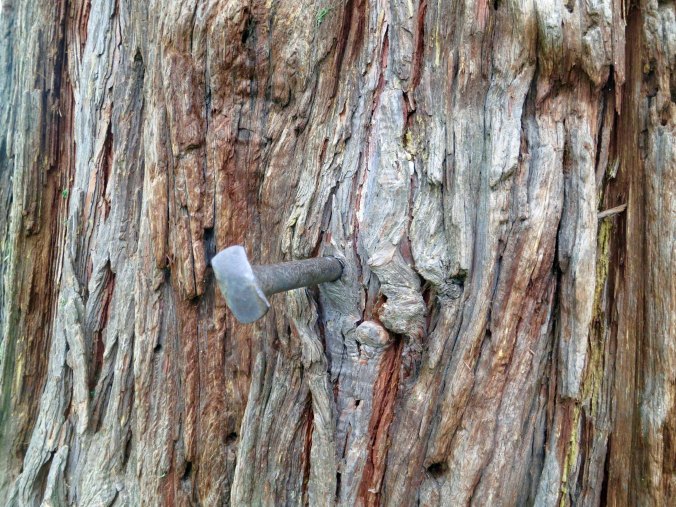
Cedar tree spike in Diamond Springs Ca

This spike is all that remains of our treehouse dreams. As I recall, Marshall drove it into the tree with thoughts of several more to provide a way up the tree.

Cut down incense cedar tree in Diamond Springs graveyard

The jungle of Heavenly Trees that once covered the Graveyard has long since been tamed. Imagine my dismay during my last visit to Diamond Springs when I found that the cedar tree’s twin in the Graveyard had been cut down.  Could our tree be far behind?


MONDAY’S Travel Blog POST: A continuation of the trip through the Grand Canyon. How did we end up there? It’s an interesting tale.

WEDNESDAY’S Photo Essay POST: We’ll visit the ancient city of Pompeii in Italy that was buried by Mt. Vesuvius in 79 CE.

FRIDAY’S Blog-a-Book POST: There’s some catching up on the education front. I’m allowed back in school and try to take over the first grade.

SaveSave

SaveSave

Hiring the Family Pets to Scare Away the Ghosts…

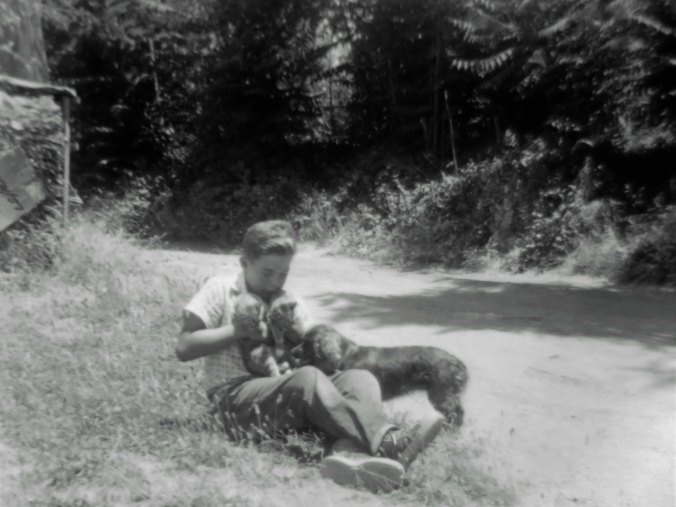
Curt Mekemson and pets

The Graveyard was just across the alley from our house. As usual, I am occupied with some of the our family pets.


Each summer I slept in our back yard. I would move out as soon as school was over and stay until school started, or longer if parents and weather permitted. At first I slept on the ground in a cheap cotton sleeping bag. The ground was hard, the nights cool, and the mosquitoes persistent, but these were minor drawbacks. I was free. If I had to pee, I’d climb out of bed and find the nearest bush. If I woke up thirsty, a convenient garden hose provided water. I would go to sleep watching the stars and listening to a giant bullfrog croak away in the ditch in front of our house. I would wake to cool morning air and chirping robins.

Life was good. And then it got better. The grandparents bought me a real bed— a wood framed, steel spring army cot complete with mattress.

Graveyard ghost

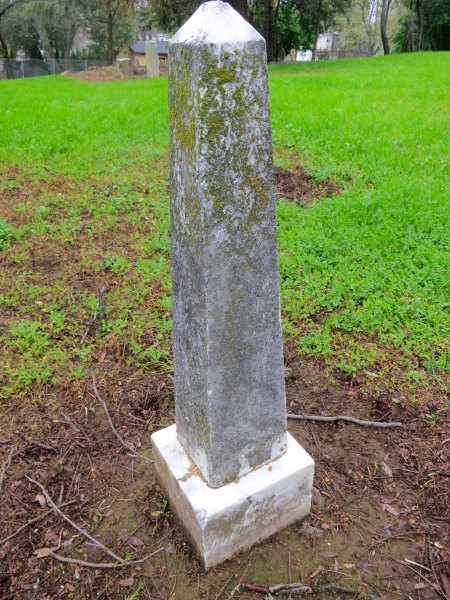
The thing about graveyards is that dead people are buried there. This seemingly innocent tombstone was once hidden among the heavenly trees that turned the Graveyard into a jungle. Except it wasn’t totally hidden. I could see it from our backyard at night. It was, um, ghostly.

My paradise was marred by one thing, the Graveyard. It was always there on the edge of my sight.  White tombstones glared at me. As hard as I would pretend, the cemetery and its frightful inhabitants would not go away. So, I developed an elaborate set of defenses. The simplest was to sleep facing the opposite direction or to hide under the covers, ostrich like. A more sophisticated approach was to locate the bed where I couldn’t see the Graveyard.  Our seasoned cars worked in a pinch, but they weren’t large enough. Bits and pieces of the Graveyard would creep around their sides, peek over their tops and slink under their bottoms. A trellis built by my father was much better. Its luxurious growth of honeysuckle created the perfect Graveyard screen. I set up a permanent residence behind it.

House next to graveyard

These were more tombstones I could see from our house, whose roof can be seen in the back of the photo.

But even the trellis wasn’t enough to calm my imagination. I decided to hire protection. It came in the form of various family pets. Their job was to chase the ghosts away. Payment was made by allowing them to sleep on my bed. Apparently, the scheme worked. At least no ghosts attacked me during the years I slept outside.

The downside was I didn’t have much room. Two dogs, three cats, and me on a one-person army cot constituted a menagerie, or a zoo, if you counted the fleas. It was difficult to move. At first, I was very careful not to disturb my sleeping companions. I became a circus contortionist frozen in place with body parts pointed in every direction. If this meant a restless night, so be it. It was a small price to pay for keeping the ghosts at bay.

Gradually, my attitude changed. I grew larger, the bed space shrank, and animals started sleeping on top of me. Meanwhile, the ghosts, who tend to hassle little people more than they do big people, became less a threat. Therefore, I needed less protection. Neither of these factors led to the final banning of the animal kingdom, however. It was the shameless shenanigans of Demon and Pat.

Demon, the alpha family cat, was as black as the darkest night. As such, she was appropriately named and attired for graveyard duty. In fact, she spent a good deal of her life there stalking mice, lizards, birds and anything else she could get her claws into with impunity. Captured prey would then be brought home for approval. My job was to dispose of the half-eaten carcasses. Depopulating the Graveyard was not Demon’s claim to fame, however; motherhood was. She had kittens often and everywhere. I suspect that half of the cats living in El Dorado County today can trace their lineage back to her.

Two instances of kitten production bring back vivid memories. The first took place on the living room floor. Demon was a young cat at that time and a neophyte at motherhood. Her impending delivery was quite apparent from her large belly and ceaseless exploration of clothes hampers, cupboards and other dark places.

With high hopes of avoiding a misplaced litter of kittens, Mother arranged her bedroom closet as a maternity ward. Several times each day it was my duty to show Demon her new home. I would carefully pick up the very pregnant cat, carry her to the closet, and deposit her in a box filled with well-used clothes. Demon didn’t buy the program.  It seems my bedside manner was faulty. She would climb out of the box, give me a glare, and stalk out of the bedroom.

When the joyous day finally arrived, I was home alone.  Demon was practicing her would-be mother waddle walk across the living room when she suddenly stopped, squawked and squatted. Neither she nor I was ready for what followed. After all, how prepared can a young kid and a first-time mother be for birth? In a massive surprise to both of us, a tiny black bundle of fur emerged from Demon’s undercarriage. Surging emotions paralyzed my seven-year old mind. One thought stood out, the closet! If Demon hadn’t memorized her delivery lessons, I had.

I jumped across the room, grabbed Demon by the nape of the neck, and raced for Mother’s bedroom. As fast as I ran, it wasn’t fast enough. In the middle of the kitchen the new arrival completed its journey and was heading for a crash landing. Somewhere, somehow between Demon and the floor, I caught a warm, wet ball of fur in my free hand. After that, the memory fades. I know the three of us made it to the closet. Demon accepted her new home and four more kittens followed the first, although in a less dramatic way. The population explosion was underway.

We have to fast-forward several years to Demon’s next memorable delivery. This one was outside and led to the bed-pet-ban. But first I need to relay how Pat the Greyhound set the stage. She joined our family as a stray. For weeks, Mother had watched this large, starving dog wander the countryside and survive by catching rabbits and squirrels. One day she stopped the car, opened the door and invited Pat home for a meal.

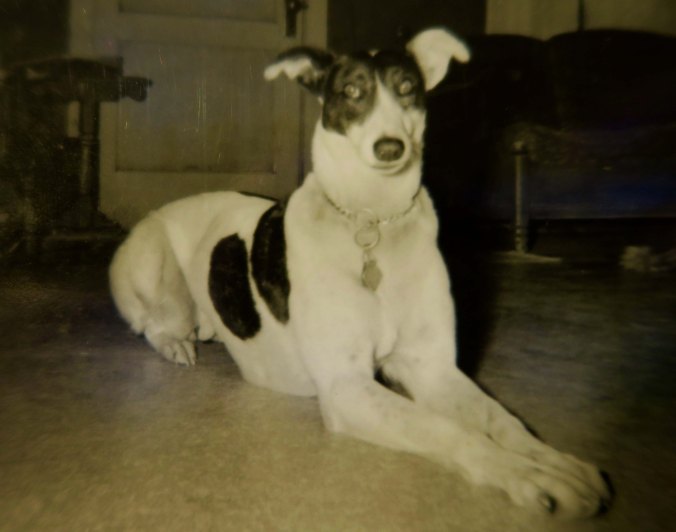
Pat the Greyhound

Pat looking regal.

“Oh, it is just until she gains a little weight,” Mother explained to one very disgruntled Pop. Later it became, “Oh, but it would break Curt’s heart if we had to give her away.” Mother was a master at manipulation. Pat, who I named after the local Greyhound bus driver, had found a home. Like all of our pets, she lived outside. It was Pop’s rule; pets were limited to daytime visitation rights only. The pregnant Demon had been an exception imposed by Mother. Since there were no leash laws, Pat was free to come and go as she pleased. Mainly she chose to hang around with her food dish in sight. For a dog that had lived out in the wild, she had impeccable manners. Thus I was surprised when she joined Demon in abusing her bed rights, but that’s a tale for next Friday’s post…

MONDAY’S POST: It’s back to the central coast of Washington where global warming makes a point

WEDNESDAY’S POST: A photographic essay on Scotland

FRIDAY’S POST: The animal kingdom is banned from my bed

SaveSave

First Grade Flunkee… Blogging the MisAdventures Book


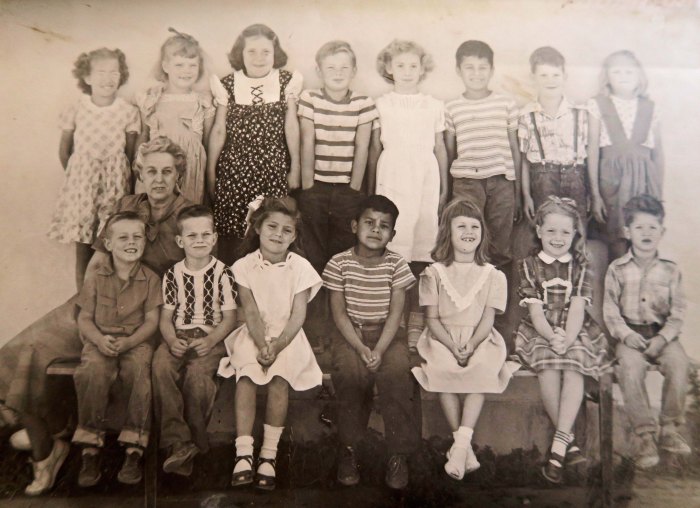
After being kicked out of the first grade for a year, I was given a second chance. This is my class photo. I am fourth from the left in the top row with my hands in my pocket. Don’t I look sweet and innocent?


This begins a series of tales that may or may not make it into my book on MisAdventures. My goal is to post one tale on each Friday until the book is concluded. For the most part, these stories stand alone. They are in the early stages of editing. Several of these tales will have been included in earlier posts. I apologize in advance for the language, but I had an extensive vocabulary of swear words as a youth.


I can still hear the clanking treads and feel the bite of the blade as my D-8 dug into the side of the steep hill. Dirt and rocks tumbled over the edge, crashing into the canyon below. I was working alone, cutting a logging road across mountainous terrain. The hot September summer sun was beating down; my body was drenched in sweat and covered in dirt. And then it happened. A portion of the cliff gave away— and the bulldozer went tumbling off the edge.

“Oh, fuck!” I had yelled.

It was a wonderful word, one that I had learned from my seven-year old brother. I didn’t have a clue what it meant, but it was deliciously bad and had an amazing effect on adults. At five years of age, I was too young to be operating a bulldozer by myself out in our backyard, even if it was only five-inches long and the road I was cutting was along the edge of our compost pit. But my mother wasn’t the hovering type; she drank a lot. Empty wine bottles had a way of mysteriously appearing under her bed and in the clothes’ hamper that hid out in the closet.

I wasn’t totally alone. Coaly, our black Cocker Spaniel, was assigned babysitting duty.  At “fuck!” she wagged her tail and barked into our compost pit where the toy had fallen.

“Go get the bulldozer, girl” I urged. She gave me a ‘go get it yourself’ look. She wasn’t the ideal little-boy companion. The gray hair around her nose and aching joints spoke to her advanced years.  She had little tolerance for my youthful pranks. Healing scars on my foot reflected how little. It was my job to feed the pets. I’d open a can of Bonnie dog food on both ends, push it out with one of the lids, and then use the lid to divide it up. The smell still lingers in my brain. Coaly got half, and each of our cats— the black Demon and the white MC— got a quarter.

That summer I had discovered that Coaly growled ferociously if I messed with her share. I fed the animals outside on paper towel plates.  I always went barefoot in the summer and it was easy to reach over with my big toe and slide their food away. I quickly learned to leave the cats with their lightning fast claws alone. But Coaly was all growls and no bite. At least she was until she sank her teeth into my foot. I ended up in the ER with a tetanus shot, stitches and zero sympathy. Coaly ended up gobbling her dinners in peace.

At the time of the bulldozer incident, I had been granted a reprieve from school, or, to put it bluntly, I had been kicked out of the first grade— for a year. My mother was not happy. She had been eager to get me out of the house. Make that desperate. The evidence is irrefutable. California had a rule then that five-year-olds could go to the first grade if they turned six on or before March 1 of the following year. There was no such thing as kindergarten, at least in Diamond Springs. Since my birthday was on March 3, I missed the deadline by two days. Darn. Mother’s reaction was more colorful. She made a command decision. Forty-eight hours were not going to stand in the way of her little boy’s education, or her freedom. So, she changed my birth certificate.  March 3 was erased and March 1 entered. I was bathed, dressed and shipped out, not the least bit aware that I had matured by two days. I think I recall hearing music and dancing as I left for school.

Things weren’t so rosy at school. The other kids were all older, bigger, and more coordinated. For example, one of the boys could draw a great horse. It came with four legs, a tail, a head and a flowing mane. Mine came with unrecognizable squiggles. It was hard to tell whether my objective was to draw a tarantula or a snake with legs, but the world’s wildest imagination on the world’s most potent drug wouldn’t have classified the picture as a horse. It was not refrigerator art. The whole exercise created big-time trauma.

This negative experience was compounded by the exercise of learning to print within lines. Forget that. If my letter came anywhere close to resembling a letter, any letter, I was happy. The teacher was more critical.

“Curtis, I asked you to make Bs, and here you are printing Zs.”

“So what’s your point?” was not an acceptable response. Mrs. Young was suspicious and that suspicion increased each day I was in school. She was a tough old coot who had been teaching first grade for decades. She knew first graders and I wasn’t one. As for the birth certificate, Mother’s forgery was in no danger of winning a blue ribbon at the county fair. I still have the original for proof. After a few weeks, Mrs. Young sent off to Oregon for a copy. I remember her calling me up to her desk on the day it arrived. (You don’t forget things like this, or at least I don’t.)

“Curtis” she explained, “you have a choice. You can either go home now or you can go home after lunch. But either way, you are going home and can’t come back until next year.”

Just like that I was a reject, a first grade flunkee.

Mrs. Young couldn’t have made it any clearer; Mother was going to get her little boomerang back. This was okay by me, if not by her. Playing out in the backyard was infinitely more fun than competing in ‘Scribble the Horse.’ I did decide to stay the day. Mrs. Young was reading about Goldilocks to us after lunch and I wanted to learn if the bears ate her.

It would have been interesting to listen in on the conversation that took place between Mother and Mrs. Young, or even more so between my mother and father, or Pop, as he was known to us. I’ve often wondered if he participated in the forgery or even knew about the March 1 rule. I doubt it. He was not the parent frantic to get me out of the house during the day.  (Had it been in the evening, the jury might still be out.) But I wasn’t privy to those high-level discussions. My job, which I took quite seriously, was to enjoy the reprieve. I was about to begin my wandering ways. Mother’s alcoholism was my freedom. The Graveyard was waiting.

SaveSave

SaveSave

SaveSave

SaveSave