The Ancient World of Indian Rock Art… On the Road

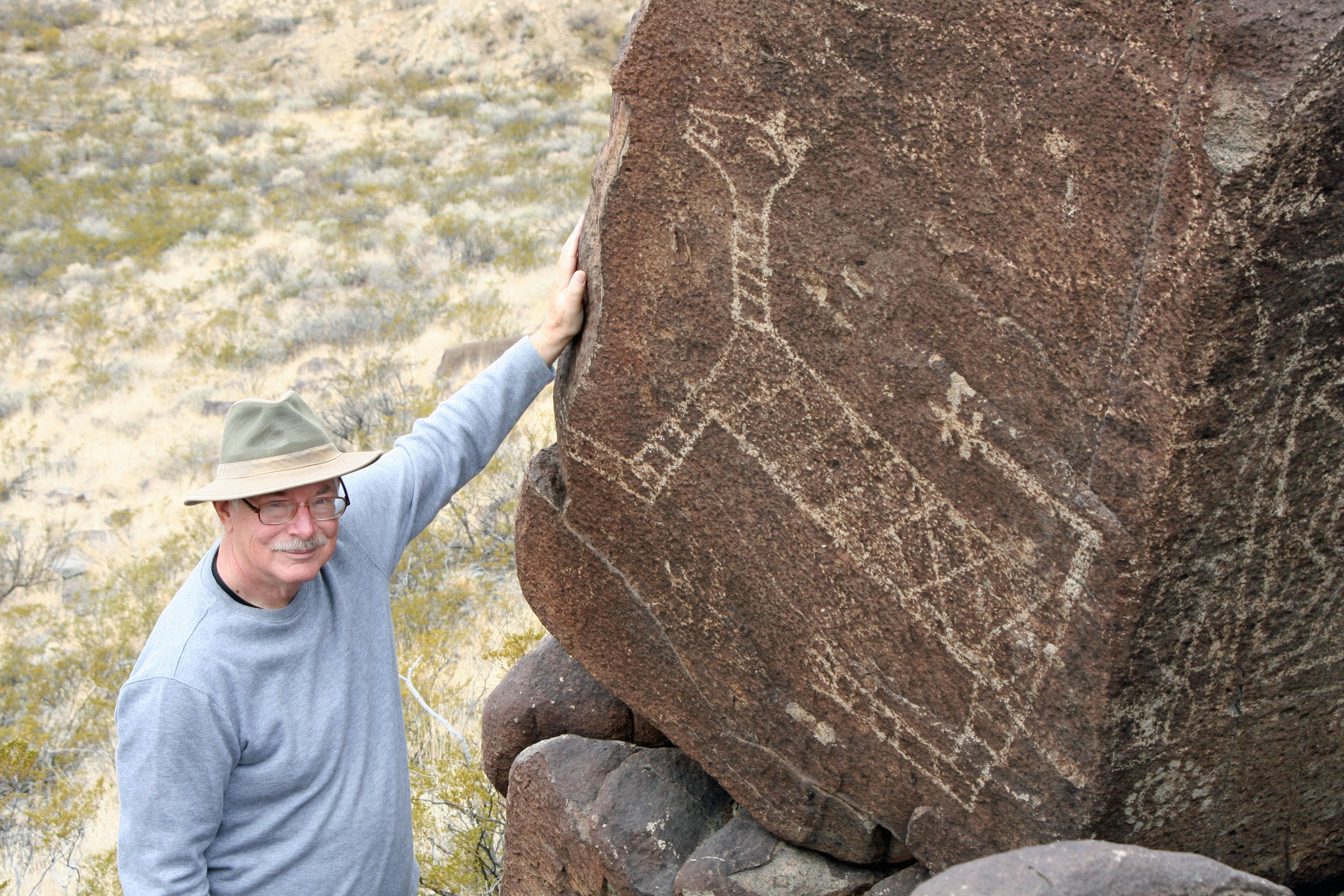
My wife Peggy and I have travelled throughout the western United States visiting and photographing Native American rock-art. We found this petroglyph of a cougar in the Three Rivers Petroglyph National Recreation Site of southern new Mexico.

I grew up in the town of Diamond Springs, California located in the foothills of the Sierra Nevada Mountains.

Once upon a time Diamond had been known as Mo-lok’epakan, or, Morning Star’s Spring. It was a very holy place to the Maidu Indians. They came from miles around bearing their dead on litters for cremation.

Apparently the Maidu had been living in the area for a thousand years. It is a sad commentary on both our education system and how we treated the Indians that I grew up never hearing the name Morning Star’s Spring much less Mo-lok’epakan.

Our only connection with the Maidu’s lost heritage was finding an occasional arrowhead or Indian bead.

The thrill of finding arrowheads, however, led to a lifelong fascination with the culture of Native Americans. Over the past ten years that fascination has led me to an interest in Indian rock-art or petroglyphs and pictographs. Petroglyphs are pecked or scraped from dark, rock varnish exposing a lighter color underneath. Pictographs are painted on rocks.
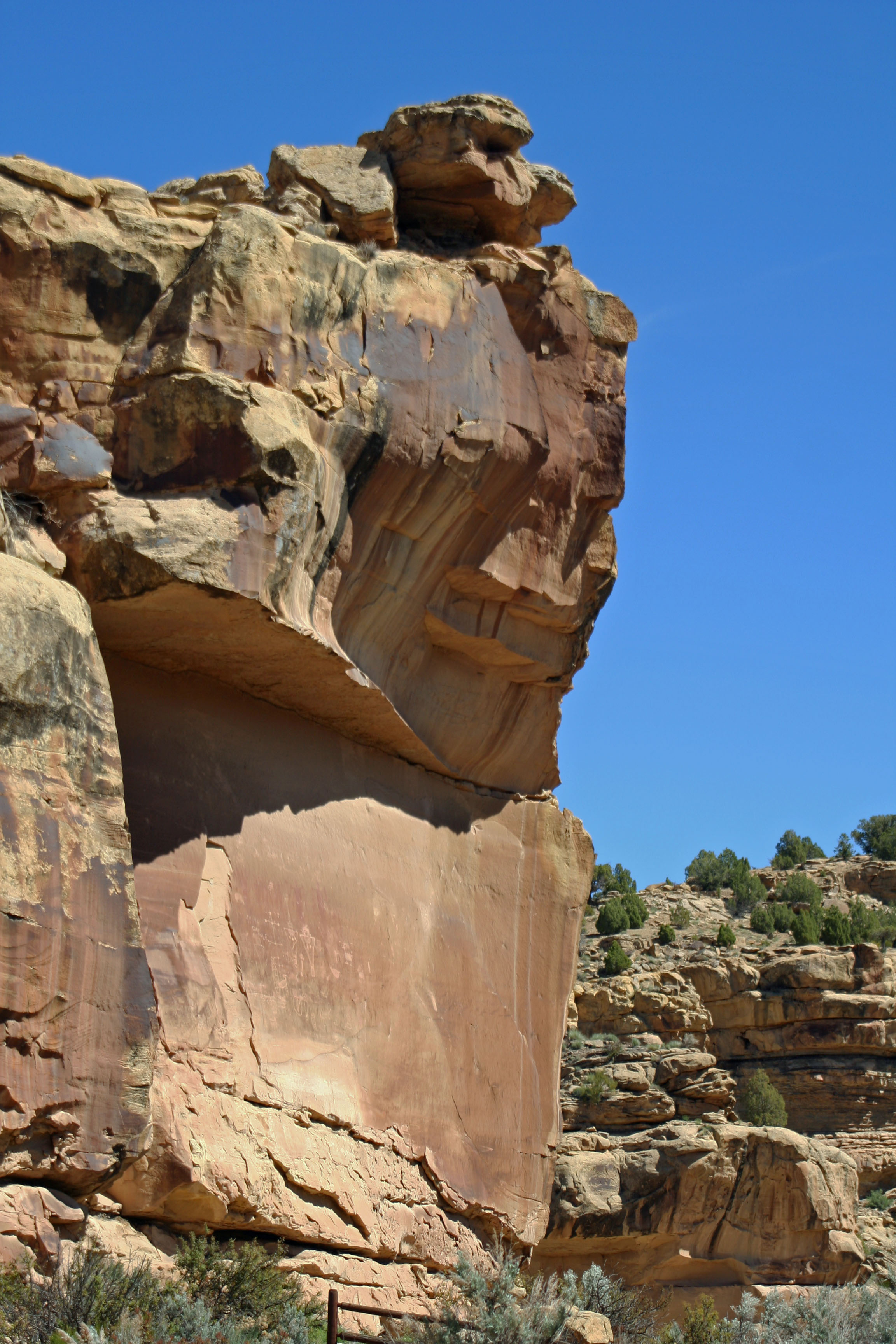
Indian rock-art is found at thousands of locations throughout the Western United States often near water or unique landmarks. Searching for rock-art is often like a treasure hunt. Here you can spot a group of petroglyphs on the left about a third of the way up the rock.

Peggy and I have explored and photographed major rock-art sites throughout the western US. Today I will introduce Sego Canyon located in eastern Utah off of I-70 near the small town of Thompson. Later I will blog about other sites such as the Three Rivers Petroglyph National Recreation Site of New Mexico.

What captured me about Sego Canyon is the unique, almost ethereal rock-art of the archaic peoples, and the fact that the rock-art represents three distinctive Native American cultures ranging over 8000 years.

The pictographs featured below were made by archaic hunter-gatherer nomads who wandered across western North America between 6000 and 100 BC. Rock art is classified according to various styles and this particular style is known as Barrier Canyon. Its attributes include life-size, man-like creatures with hollow eyes, missing arms, antennae, and lots of snakes. The theory is that the figures may have represented shamanistic journeys to the underworld. I am voting for encounters with aliens… just kidding.

This rock-art, which is found in Sego Canyon, Utah, was created sometime between 6000 and 100 AD. It is classified as the Barrier Canon style. Note the hollow eye sockets, antennae, horns and snakes.
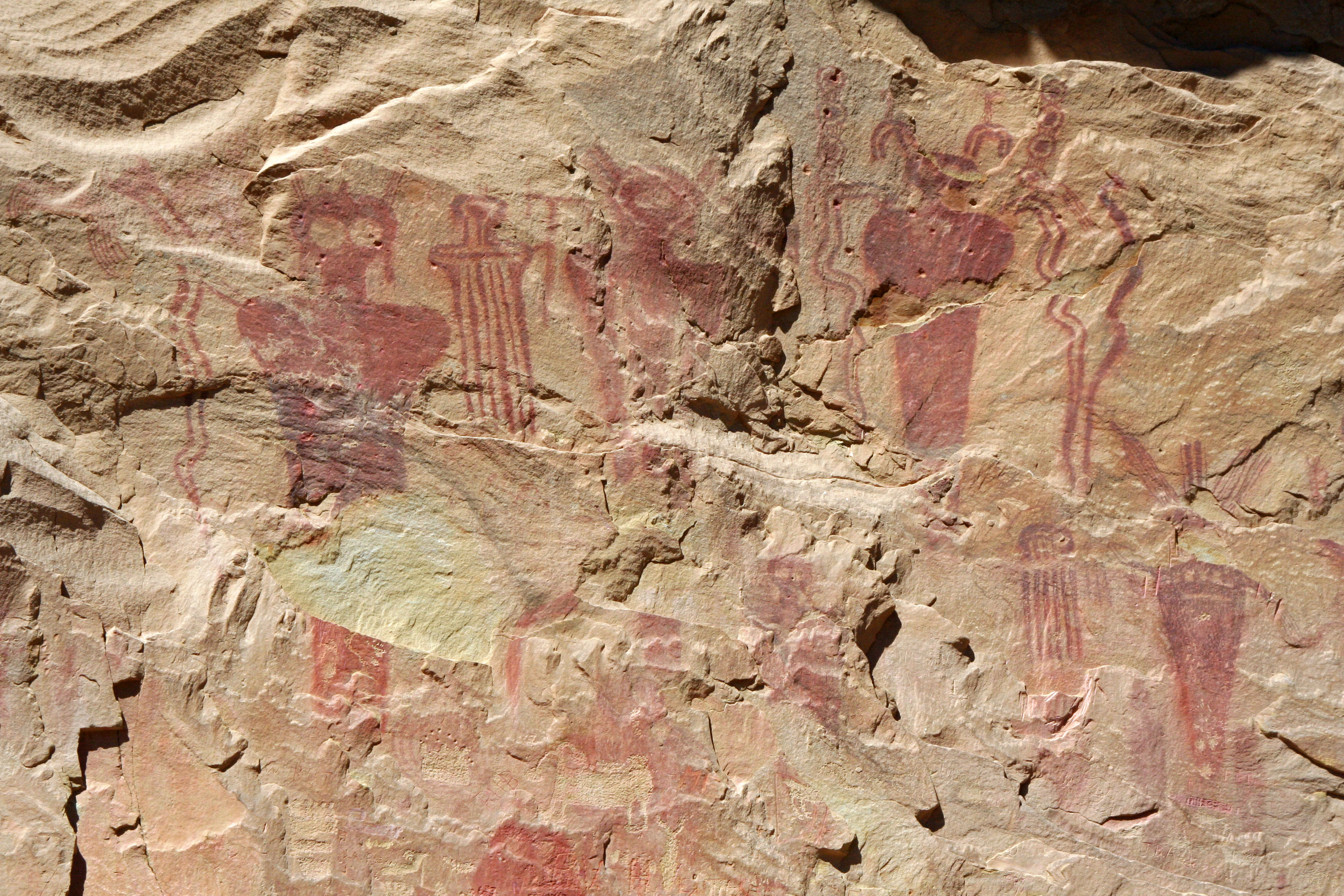
This is a close up showing images from the above photo. There is some thought that these figures reflect shamanistic visits to the underworld but one can understand why UFO fans might think they represent encounters with aliens.
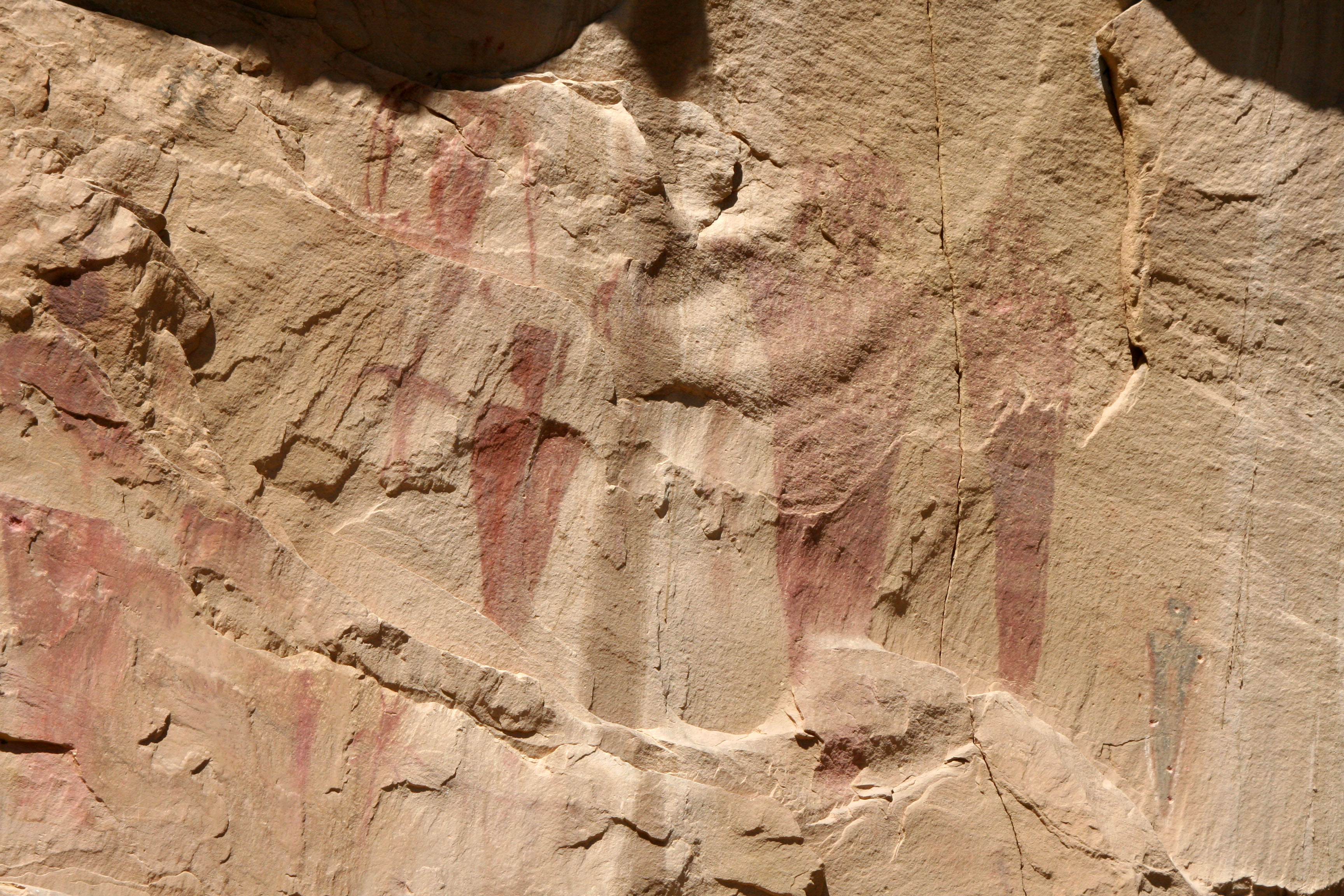
These figures from the Barrier Canyon style seem wraith-like… red ghosts arising from the rock.

The Fremont Culture existed between 600 and 1200 AD and represented a more settled lifestyle. The rock-art of the Fremont Indians featured rectangular bodies with small heads. Both deer and mountain sheep are also found in the rock art below. Note the Indian shooting the mountain sheep with a large bow and arrow.
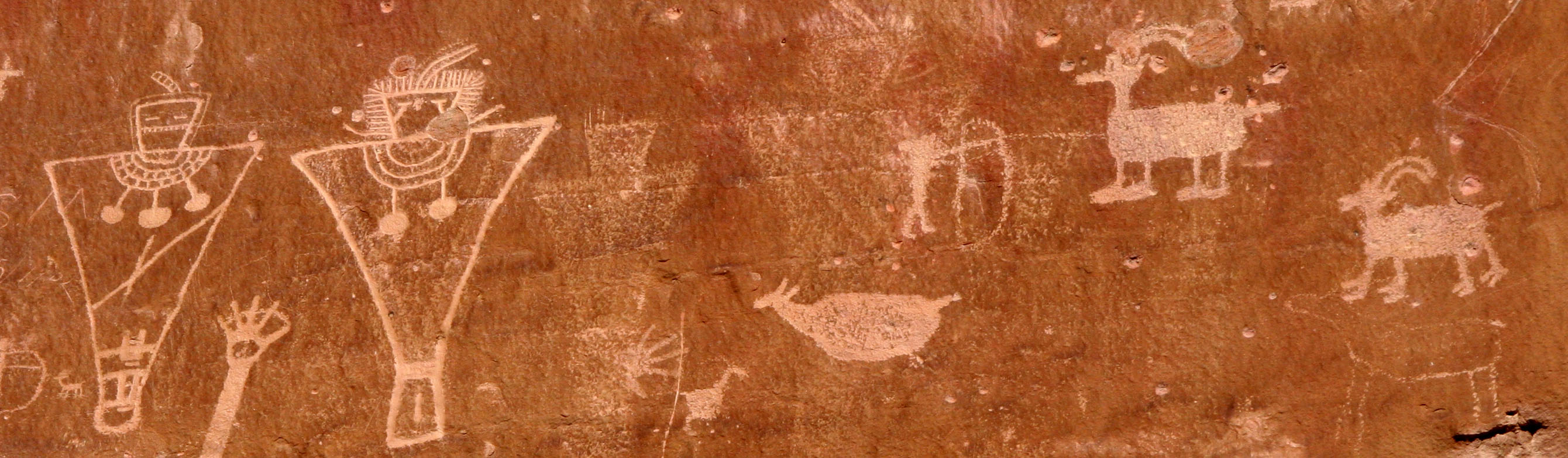
This rock-art found in Sego Canyon is done in the so-called Fremont style where rectangular figures with elaborate jewelry were common.

Mountain sheep are the most common animals found in Native America rock-art.

The final culture represented in Sego Canyon is that of the Ute Indians who lived in the area from 1300 AD up to 1880 when they were forced off the land to live on reservations. One indicator of more ‘modern’ rock-art is the presence of horses that didn’t exist in North America until the Spanish introduced them in the 1500s. Note the red leggings on the central figure. I also like the little red guy riding the horse. Yahoo! The round figure on the right is thought to represent a shield.
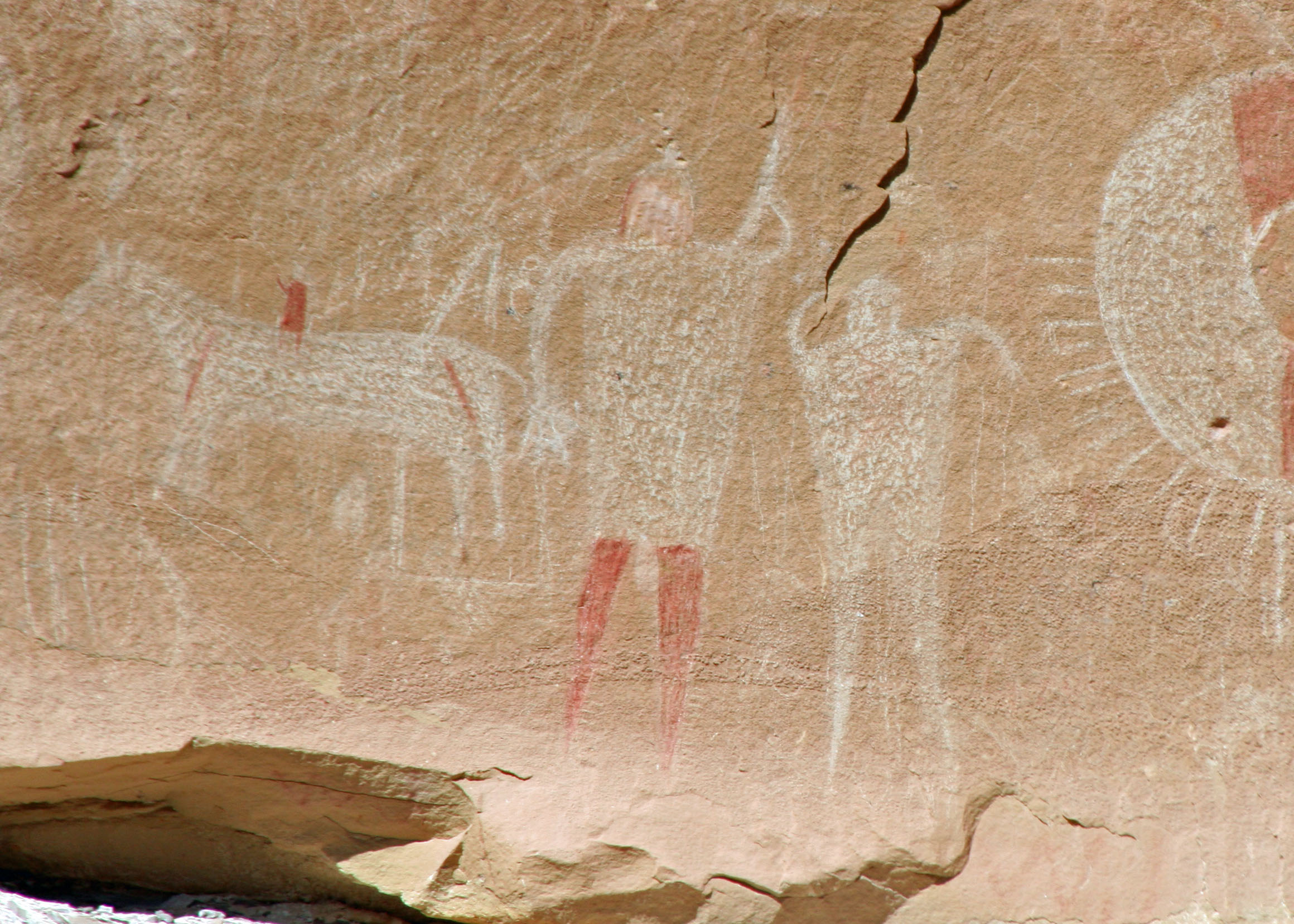
Identifying the age of petroglyphs is a difficult process. The appearance of horses shows that the petroglyphs were created after the 16th Century when the Spanish introduced horses to North America.
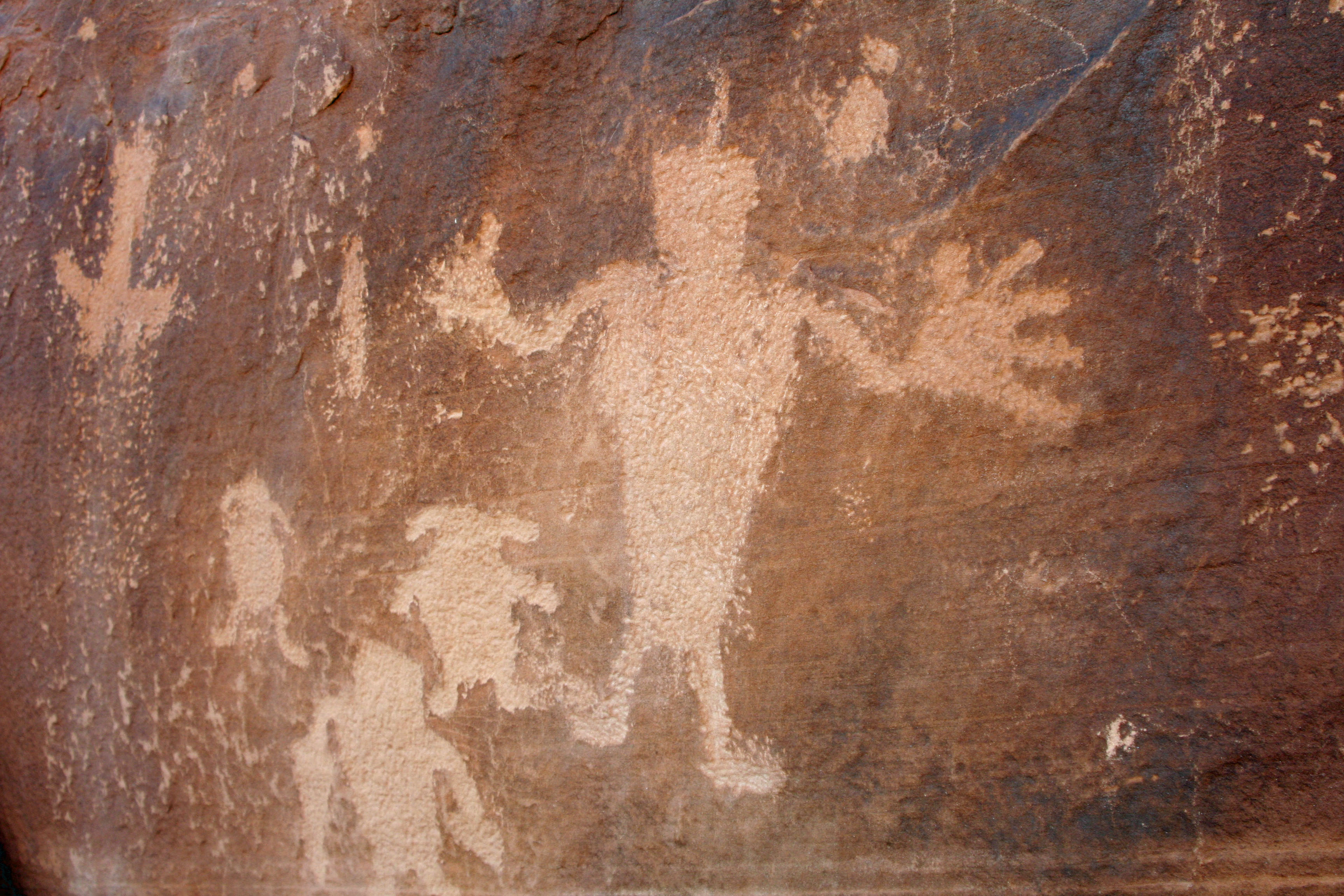
In my next post I will travel to Dinosaur National Monument, which also has some very unique Indian rock-art such as this one featuring what I assume is a woman with big hands and some very fat dogs.

Diamond Springs, California: From Gold Rush to Sleepy… The 50th EUHS Reunion

The message arrived by mail. My 50th High School Reunion was coming up. Once again the mighty Cougars of Placerville, California’s El Dorado Union High School would roar.

Or at least meow.

Teenage angst, hormonal overload and dreams of glory had long since been dimmed by the realities of life and aging bones. My classmates and I have reached the point where looking back is easier than looking forward.

A Memory Book was being created. What had happened to us since that warm June day in 1961? It was time to sum up our lives in 400 words or less. Should I lie?

Naah. I dutifully begin to put the words down on paper. I found, however, that my mind kept wandering back to what had happened prior to our graduation, during the formative years of our lives. Always on the lookout for blog material, I decided to post a few stories from those years. First up:

Many things influence whom we become. DNA, parents, friends, teachers… it’s a long list. Where we are raised also has to be included. It doesn’t matter where we go in life; our hometown remains our hometown. And this takes me back to Diamond Springs, a small town outside of Placerville.

Sleepy is too lively a word for describing where I lived from 1945 to 1961.

In Old West terminology, Diamond was a two-horse town. There were two grocery stores, two gas stations, two restaurants, two bars, two graveyards and two major places of employment: the Diamond Lime Company and the Caldor Lumber Company.

On the one horse side of the equation there was one church, a barbershop, a hardware store and a grammar school. High school was in far off Placerville, three miles away.

It hadn’t always been quiet. Located in the foothills of the Sierra Nevada Mountain Range, Diamond was once a major gathering spot for the Maidu Indians and later became a bustling Gold Rush town.

To the Maidu it was Mo-lok’epakan, or, Morning Star’s Spring and a very holy place.  Indians came from miles around bearing their dead on litters for cremation. Souls were sent wafting on their way to where ever deceased Maidu went.

Apparently they had been living in the area for a thousand years. It is a sad commentary on both our education system and how we treated the Indians that I grew up in Diamond never hearing the name Morning Star’s Spring much less Mo-lok’epakan. Our only connection with the Maidu’s lost heritage was finding an occasional arrowhead or Indian bead.

Then, in 1848, John Marshall found some shiny yellow baubles in the American River at Sutter’s Mill, 13 miles away. The worlds of the Maidu, California, and Morning Star’s Spring were about to be shattered. “Gold!” went out the cry to Sacramento, across the nation and around the world. Instant wealth was to be had in California and the 49ers were on their way.

They came by boat, wagon, horse and foot… whatever it took. And they came in the thousands from Maine to Georgia, Yankee and Southerner alike. They came from England and Germany and France and China, pouring in from all points of the compass. They left behind their wives, children, mothers, fathers, and half-plowed fields. The chance of ‘striking it rich’ was not to be denied.

Soon the once quiet foothills were alive with the sound of the miners’ picks and shovels punctuated by an occasional gunshot. Towns grew up overnight: Hangtown (Placerville), Sonora, Volcano, Fiddletown, Angels Camp, Grass Valley, Rough and Ready and other legendary communities of the Motherlode.

In 1850 a party of 200 Missourians stopped off at Morning Star’s Spring and decided to stay. Timber was plentiful, the grazing good and a 25-pound nugget of gold was found nearby. Soon there were 18 hotels, stables, a school, churches, doctors, a newspaper, lawyers, vineyards, a blacksmith, some 8000 miners and undoubtedly several unrecorded whorehouses.

Morning’s Star Spring took on a new name, Diamond Springs. The Wells Fargo Stage Company opened an office and the Pony Express made it a stop on its two-year ride to glory.

The town burned down in 1856, 1859 and again in the 1870s. By this time most of the gold had been found and the residents were forced to find other means of gainful employment.

The timber industry came to the rescue in the early 1900s when the California Door Company out of Oakland set up shop in Diamond to handle the timber it was pulling out of the Sierra Nevada Mountains. Starting with oxen and then moving to steam tractors, the company finally settled on a narrow gauge railway for retrieving rough-cut lumber and logs from its forest operations. By the 50s, it had moved on to logging trucks.

A couple of decades after Caldor was established, Diamond Lime set up business by opening a quarry two miles east of Diamond and a processing plant on the edge of town. The lime was so pure that a block of it was used in the Washington Monument.

This was pretty much how things were when the Mekemsons arrived at the end of World War II. Next blog… the Mekemson/Bray gang terrorizes Diamond Springs.