
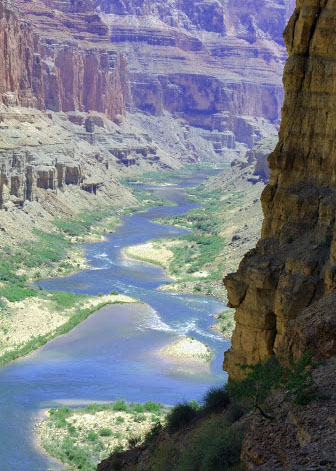
Beautiful views like this along the Colorado River would have been lost if efforts in the 50s and 60s to dam the Grand Canyon had succeeded.
In our journey down the Colorado River today, we visit an ancient Native American granary that is located high up on the cliffs above the water, and stop off to play in the Little Colorado River.
Steve Van Dore and Jamie Wilson serve as our boatmen for the two days we are on the river travelling from our camp at Redbud Alcove (mile 39) to our camp at Upper Rattlesnake (mile 74). Jamie is a delight. First of all, he is funny and positive. Second, whenever a chore needs to be done, he is first in line. Finally, he is incredibly strong, which is a valuable asset when you get in a tight spot on the river. Jamie has his own business as a contractor in the Woodland/Davis area of California.

Jamie Wilson

Peggy and I hitch a ride on Steve’s Cat. Not too many Colorado River boatmen are outfitted with sun umbrellas!
Steve, I’ve already introduced. Like Tom, he is an experienced Colorado River boatman and loves the Canyon. He is also a specialist. His catamaran is outfitted with groovers: large ammo cans that have been modified to serve as portable potties. Before toilet seats were added as a convenience, you sat on the rim of the can. It left grooves in your behind— hence the name.
We are all given training in setting up, taking down, and using the groovers. One of the first chores in arriving camp is to find the perfect place for the port-a-pot: a secluded location with a view. One time I found myself sitting on the pot and waving at rafters as they went by. The site received an A for the view and a C for the seclusion.
Steve is very knowledgeable about the Grand Canyon and readily shares his knowledge. Almost immediately he points out a site that was once proposed for a dam that would have covered much of the upper Canyon’s beautiful scenery, geological wonders and archeological treasures with water.
A similar effort was planned for downstream. Fortunately, the Sierra Club was able to stop the dam from being built. Otherwise, one of the world’s greatest natural wonders would have been lost.
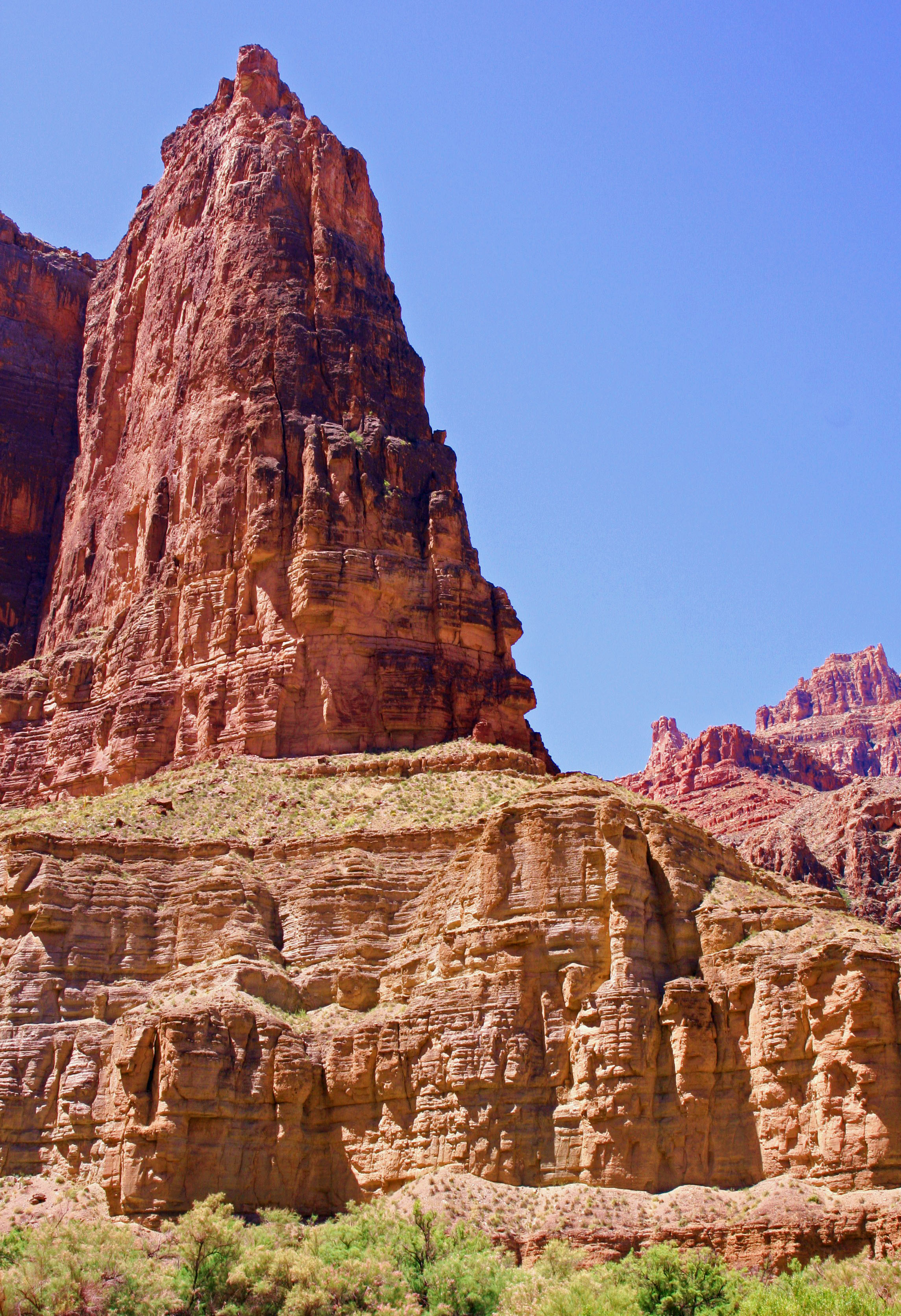
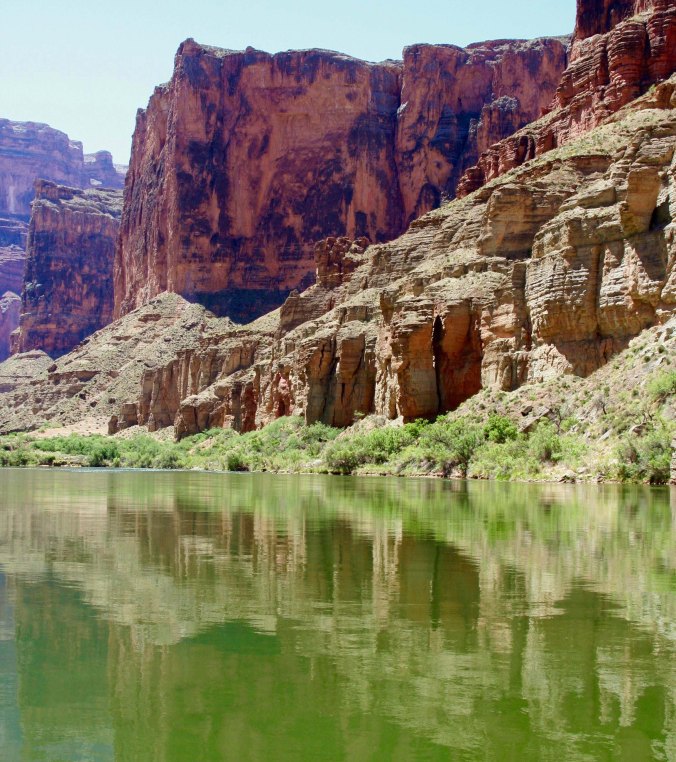
Views of the Grand Canyon along the Colorado River between Redbud Alcove and the Little Colorado.


When we arrived at Nankoweap (mile 53), Steve pointed out the granaries used by the Anasazi Indians somewhere between 1000 and 1150 CE (Common Era) or AD, if you prefer. The granaries are located high up on the cliff for protection from animals and insects. Tom had scheduled a hike up and I willingly went along. I was curious about the granaries and thought that there would be spectacular views from the cliff.
The climb was definitely worth it. Unfortunately, I sprained my knee on the way back down.

Our intrepid group hikes up the steep trail to the Granaries at Nankoweap in the Grand Canyon.
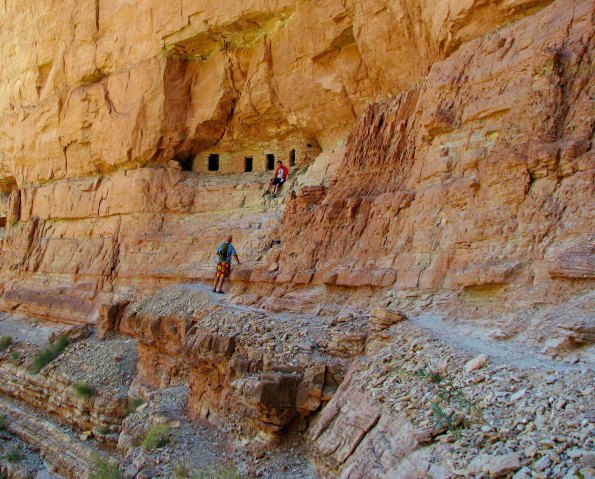
The granaries are located high up on the cliff.

They were built by the Anasazi Indians between 1000 and 1150 CE.

Tom, Eggin and I next to the granary.

Looking down the Colorado River from the Nankoweap Granaries.
Jamie Wilson was our boatman on the fifth day. When we arrived at the Little Colorado River, it was time to play. The Little Colorado has two colors. First is a muddy reddish-brown. The River drains over 25,000 square miles. When it rains upriver, it carries tons of red topsoil. The second color is a beautiful turquoise blue. When it doesn’t rain, much of the water comes from springs and is loaded with minerals that provide the color and very interesting deposits. We were fortunate to experience it without rain.
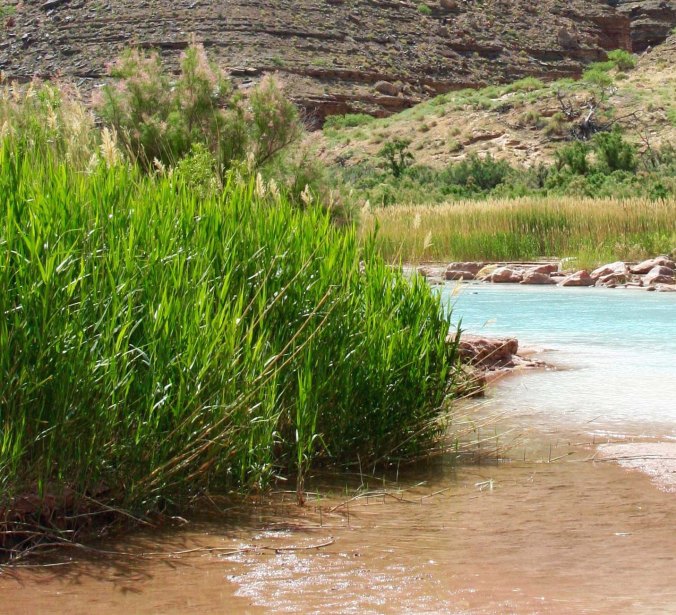
The entrance to the Little Colorado River.
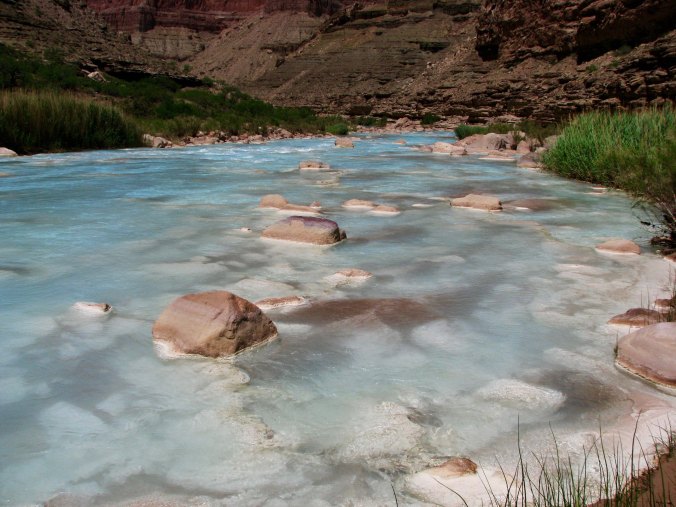
Its almost surreal look. (Photo by Don Green.)
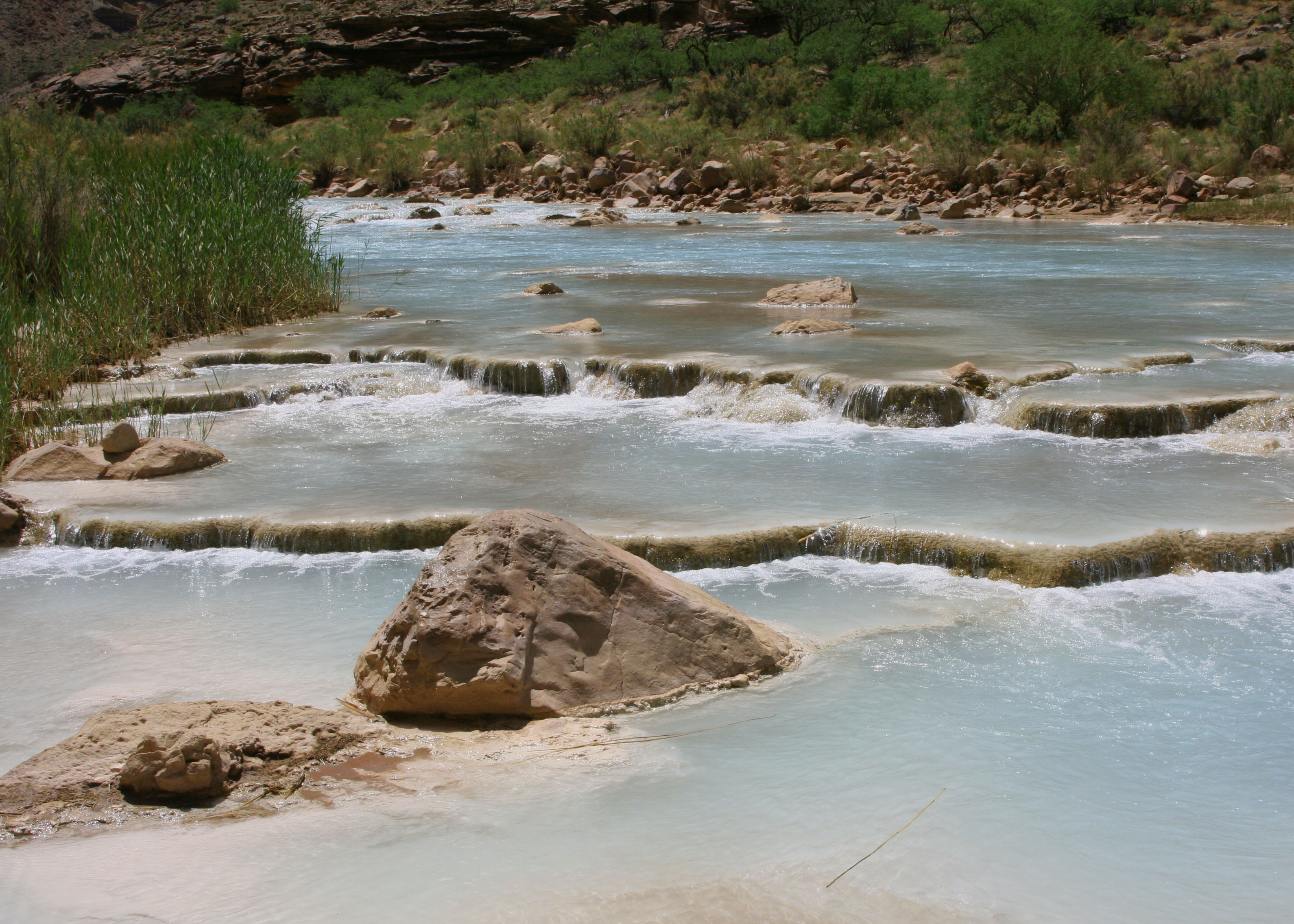
Looking up the Little Colorado River just above where if flows into the Colorado River. Note the mineral deposits.
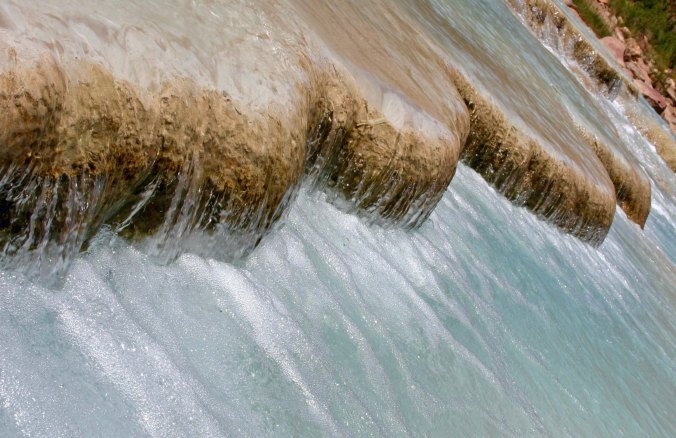
A close up.
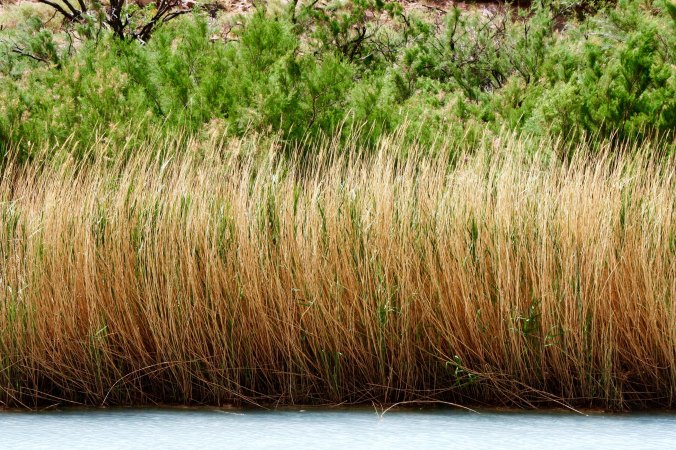
Vegetation on the Little Colorado.

A biologist was doing a study of the fish population in the Little Colorado and showed us this fellow.
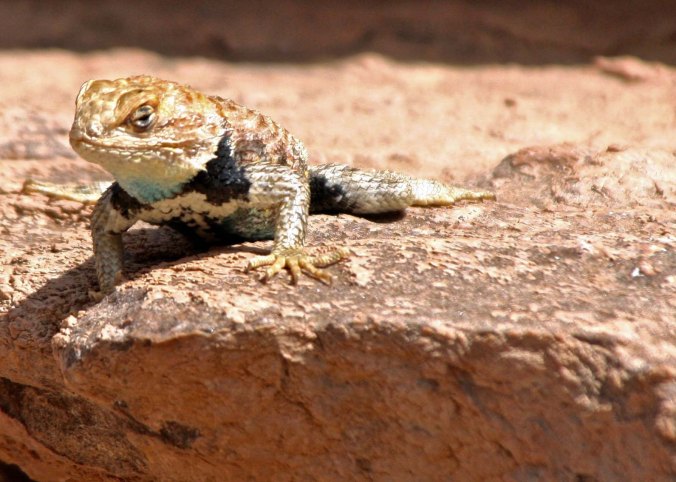
We also found a lizard as we were walking up the river. It looked smug.
When we reached our destination, we donned our life vests upside down over our legs. It looked like we had put on huge diapers. We were to float down the river feet first. After carrying out my photographer responsibilities, I too donned my diaper and jumped in. Just as I went over a small waterfall my life vest slipped down to my feet. My feet floated fine but my head bobbed along under the water. Breathing was not an option!
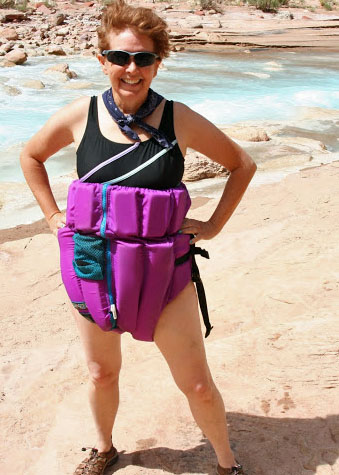
Peggy models the life vest diaper look. The latest in fashion statements.
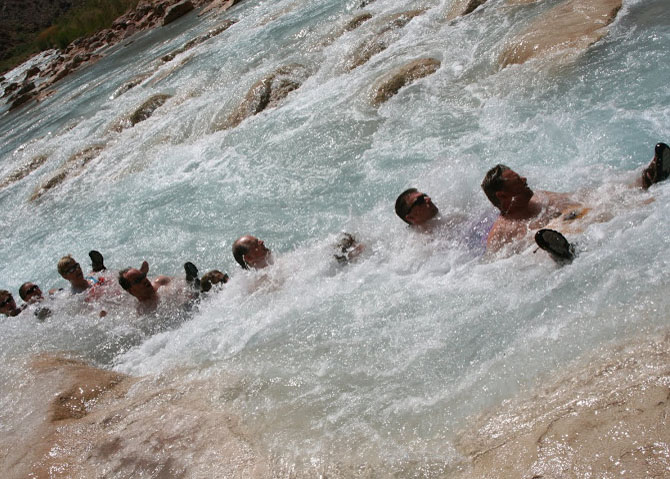
Hanging on to each other, the group formed a Conga Line—Little Colorado River style— and made its way through the rapids.

Tim Spann calmly floated over a small waterfall.

Peggy looked a little less in control…

And I looked totally out of control (actually I was), as my life vest slipped up around my feet and my head dipped under the water.
According to their mythology, the Hopi Indians came into this world through a cave, which is located just up the Little Colorado from where we were playing in the water. The legend states that this is the fourth world they have occupied. People had become bad in the previous three by doing things like being disobedient and having too much sex. The good were saved and moved up to the next world while the bad were left behind, or destroyed. Maybe their diapers slipped and they drowned.
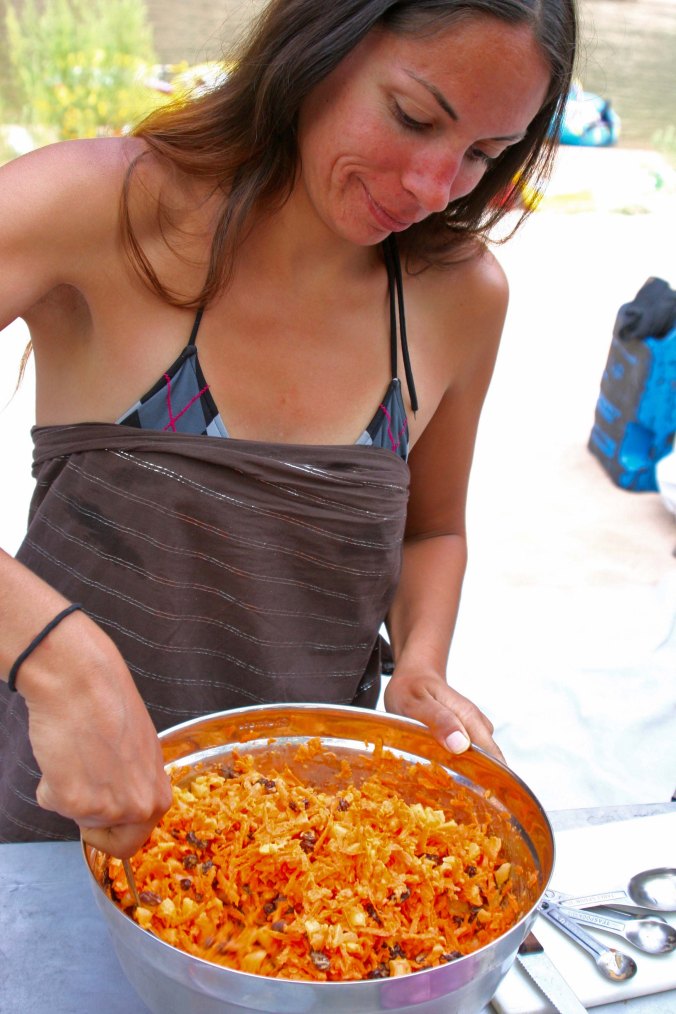
That night Theresa Mulder whipped up a delicious carrot and raisin salad. As I’ve noted, Tom had planned out an excellent menu for the trip and we ate very well. I also noted that Tom was something of a tyrant in the kitchen…
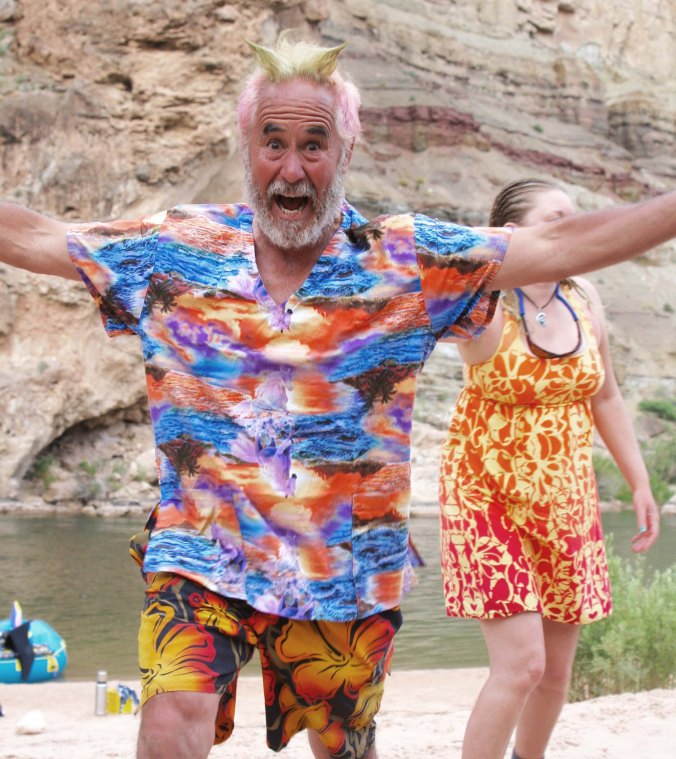
This is what you could expect if you didn’t cut the lettuce right. (grin) I decided to appoint myself to permanent groover duty and stay out of Tom’s kitchen.

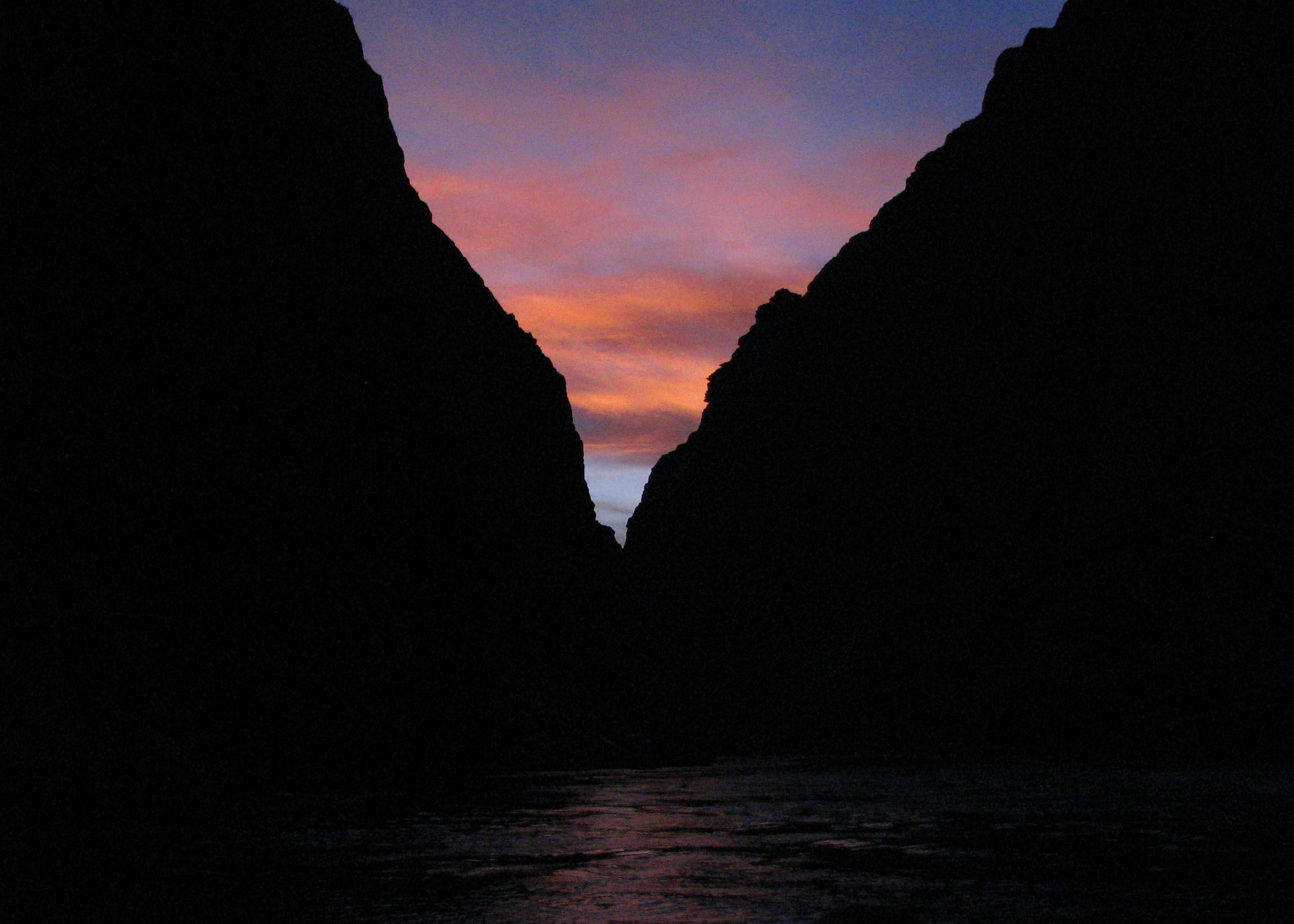
I’ll close today’s post with some views of the sun setting from camp.

A different perspective…

Another view. Next Monday we will continue to make our way down the Colorado through the Grand Canyon.
Also TODAY: The photographic essay trip up the Alaska Highway continues.
FRIDAY’S POST: A chapter from book on my Peace Corps experience, The Bush Devil Ate Sam. How Rasputin the Cat beat out his sisters to become our cat.

 Wandering through Time and Place