Kudus, Water Bucks, Impalas, and More: African Antelope… On Safari 22

We saw only a handful of the numerous species of antelope found in Africa but the ones we saw were magnificent, such as this handsome male kudu that came in for water at the Iganyana Tent Camp where we were staying next to Hwange National Park in Zimbabwe.
And brought his family of five with him including this mom and her baby.
He watched over them as they drank.
His spiral horns will continue to grow until they have made 2 1/2 twists. Note his large, and I think, beautiful ears. Their large size enables them to hear approaching predators. The horns of mature male kudus are used in traditional cultures as musical instruments.
His female companion with her large brown eyes was as beautiful as he was handsome.
A final family shot. Here’s a fun wrap-up fact: The sport of Kudu dung-spitting is practiced in southern Africa. (Think of watermelon seed spitting contests.) The winner is the person who is able to spit one of the antelope’s small, hard pellets the furthest. Our guides demonstrated for us. None of us volunteered to join them. I read that the world record is 51 feet. That person must have had one heck of a tailwind.
Waterbuck: “Imagine sitting down on a freshly painted toilet seat,” our guide told us. Waterbucks are easily identifiable by the prominent ring around their tail as this female shows.
A male waterbuck along the Chobe River displays his ring.
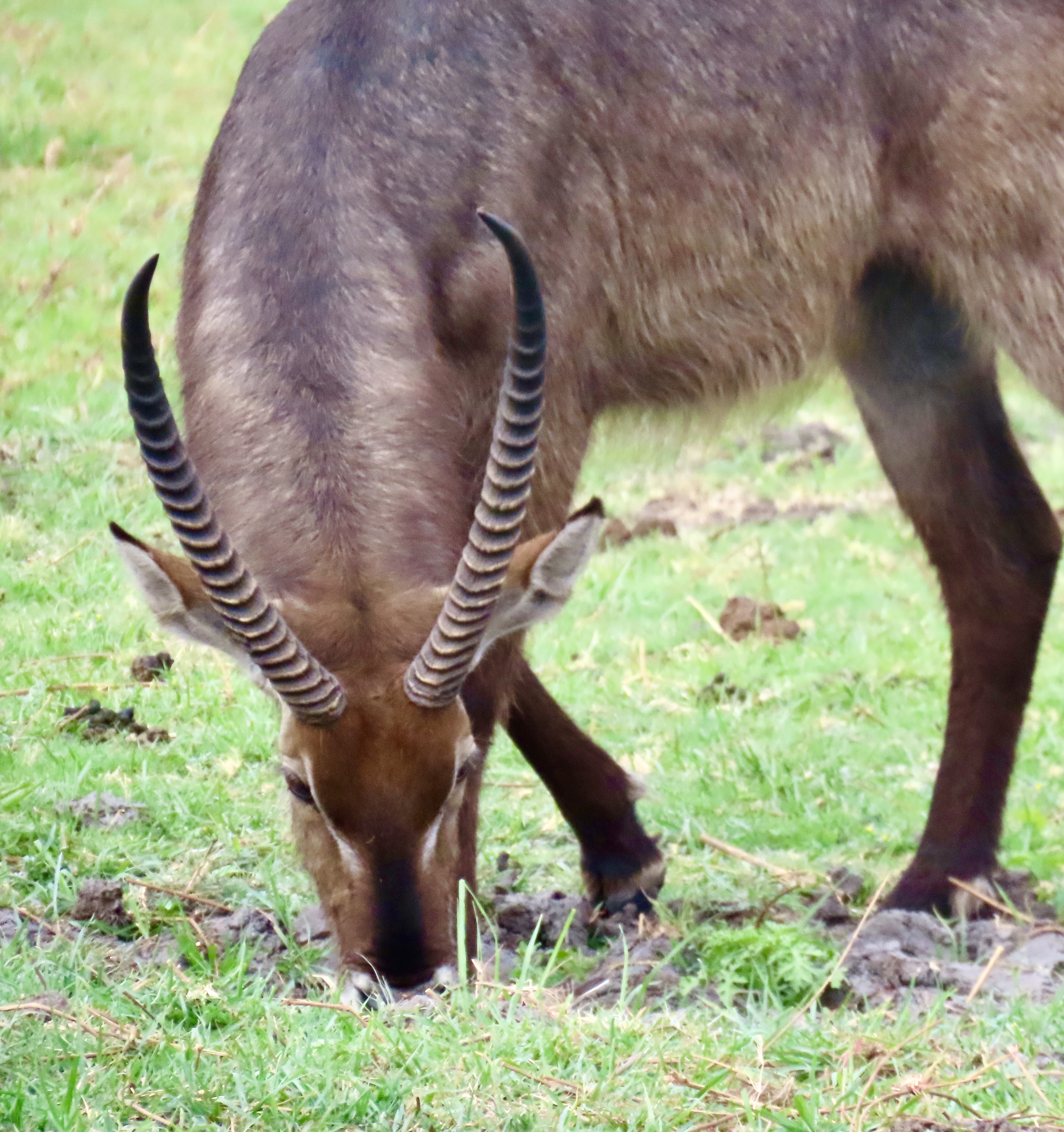
This photo shows his impressive horns and rather attractive fur. When excited, the skin of a waterbuck secretes a greasy substance called “greasy kob”. It stinks so much it serves to discourage predators but it also serves as waterproofing when the waterbuck jumps into water as an escape route.
Impala: The impala is another African antelope with a beautiful set of horns. We saw more of them than any other antelope.
We found these elegant animals in fairly large herds. The buck behind was chewing on something.
We came on this herd when we were out for an evening drive in Hwange National Park. Something had obviously alerted them. If they had spotted a predator, they would have been out of there at speeds reaching 50 miles per hour with prodigious leaps of over 30 feet in length and 10 feet in height. We were privileged to watch them leaping and running away from us at Lake Kariba. It was poetry in motion.
Wildebeest: Wildebeest travel in large herds. We only saw one. Africans like to say that the wildebeest was the last antelope God created and he had run out of parts. So he took the leftovers from other animals including the stripes of zebras, bodies of hyenas and heads of buffalo and created the blue wildebeest. We found this fellow when we were on a safari hike in Hwange National Park.
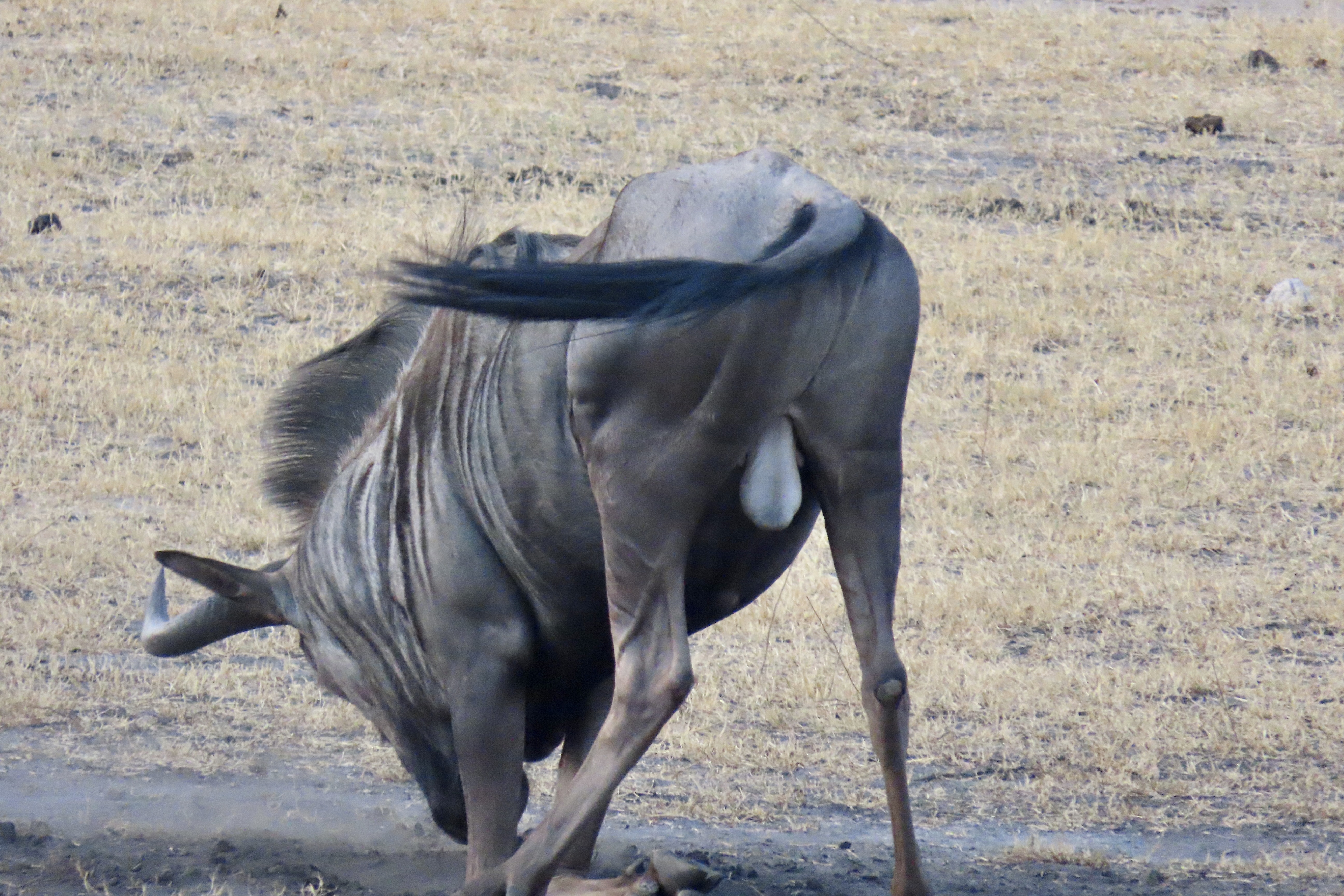
Later that evening we found him digging in the dirt to create a dust bath. I couldn’t help but wonder about where his spare parts came from here.
He became a blur as he took his ‘bath.’ He certainly seemed to be enjoying it!
Tsessebe: This was another strange looking dude. The straw in his mouth reminded me of a stereotypical country bumpkin. Tsessebe are nothing bumpkin-like when it comes to running however. They’ve been clocked at 60 mph(100k).
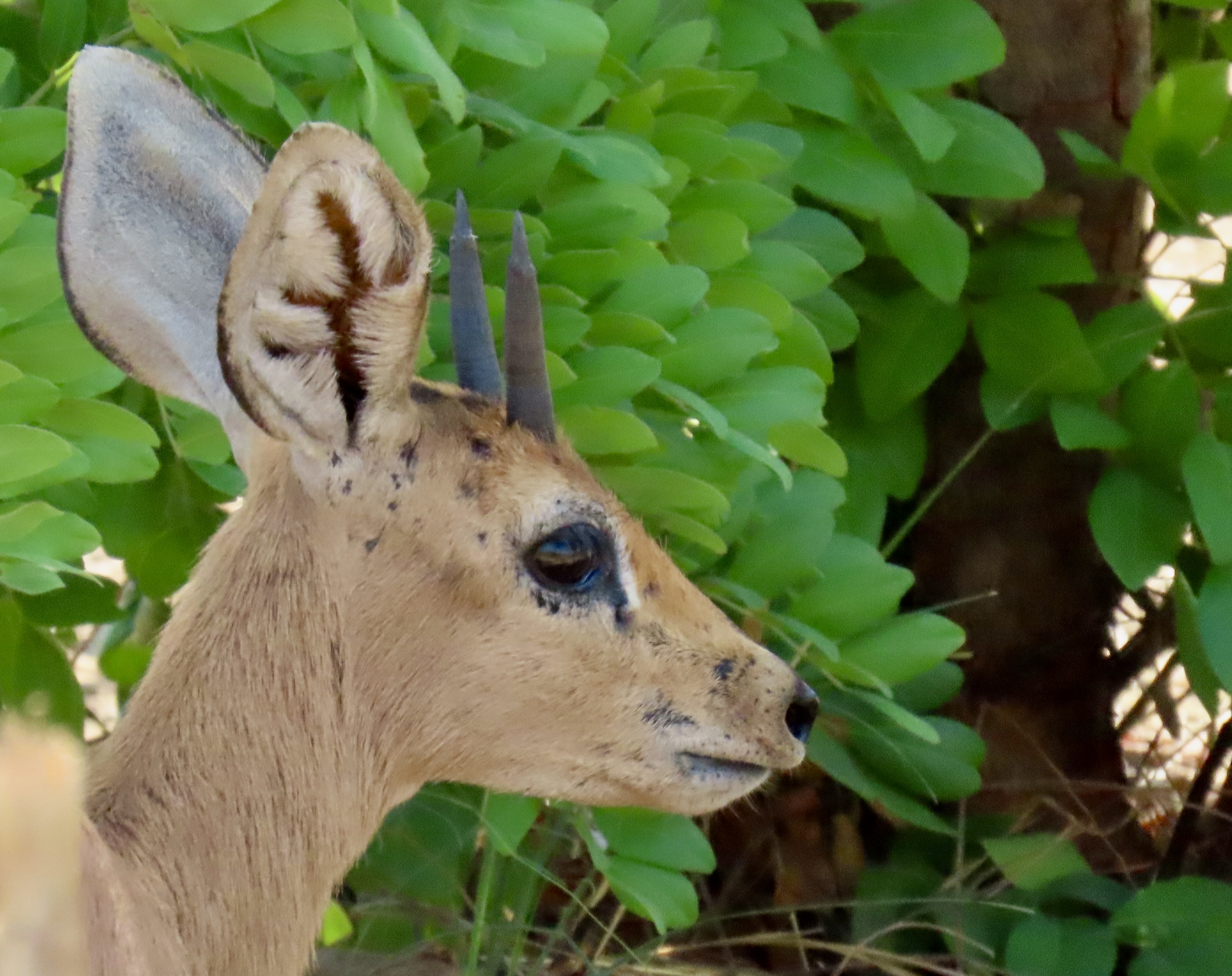
Steenbok: And the final antelope we saw. It’s southern Africa’s smallest antelope, standing about 20 inches tall at its shoulder. It is a common but solitary animal. We found this cutie hidden alongside the road in Hwange National Park.
Another view. Note the small horns and large ears. We weren’t sure what created the small scars. Our next post will be a wrap-up on our safari featuring the varied scenery, places we stayed, and the people met.
Victoria Falls