Houseboats, Hippies and Haight-Ashbury… Olompali Part IV

Don McCoy would create one of the first modern houseboat communities in Sausalito California in the years before he created the Chosen Family commune at Olompali. A large, thriving community of houseboats still exists in Sausalito.

Don McCoy would create one of the first modern houseboat communities in Sausalito, California in the years before he created the Chosen Family commune at Olompali. A large, thriving community of houseboats still exists in Sausalito.

“I felt we were chosen for something. I thought we were going to create a new society. I thought we were going to change the world, or create a new way of life, a new way of doing things, a new way of living together, getting along in a peaceful world.” —Don McCoy, founder of the Chosen Family. It would be hard to find a statement that better summarizes the hope surrounding ‘The Age of Aquarius’ that seemed so tantalizingly close in the 60s, but was ever so far away.

“The failure to curb personal indulgence was a major collective error. Our journeys down the path (of extensive drug use)… disordered our senses, senselessly wasted young lives, and often sabotaged what we labored so diligently to construct. … It is the artist’s responsibility to manifest sanity and health—something we did not fully understand.” Peter Coyote— Co-founder of the Digger Movement in San Francisco, and friend of Paula McCoy. He would go on to become chair of the California Art’s Council under Jerry Brown, a popular actor (think ET), and a Zen advocate.

“I was definitely exposed to different ways of thought, to people who had yearning for peaceful ways of living, collectively with others. It gave me a more liberal and progressive outlook on life in general, introduced me to organic foods, to eastern religion, to farming, to alternative theater.  Maybe today that sounds almost mainstream, but we were really counterculture then.” Maura McCoy, daughter of Paula and Don, who is presently finishing up a documentary on The Chosen Family that Peter Coyote will narrate.


“What I remember about Thanksgiving dinners at Uncle Bud’s was that they were always loud— boisterous in a positive, friendly way,” my brother-in-law Jim told me, as his mind reached back to his childhood in the 40s and early 50s. Jim is married to Peggy’s sister, Jane. Bud Carrington was Jim’s uncle and Paula McCoy’s father, so Paula was his cousin. Maura is her daughter. Paula would have been part of the boisterous Thanksgiving holidays.

What Jane and Jim recall of the 60s and 70s hippie culture in San Francisco was the darkness of the drug scene that Peter Coyote referred to. It would lead to Paula’s early death. Understandably, they see the Chosen Family, the Diggers, and the Summer of Love in the light of Paula’s shortened life.

My own perspective of the time is somewhat different. My stint at Berkeley was from 1963 to 65, when the Bay Area rock music scene was in its formative stages. Herb Caen had yet to make the word ‘hippies’ part of our every day vocabulary. The Free Speech Movement, Peace Corps, graduation, and marriage dominated my thinking. My awareness of ‘hip’ hadn’t travelled beyond the Beatniks. (I was curious enough about the Beats, however, to make a pilgrimage across the Bay to Lawrence Ferlinghetti’s City Lights Bookstore.)

I was in the final months of my Peace Corps assignment in Liberia in July of 1967 when I first became aware of the Summer of Love. A new group of Volunteers hosted a party in Tapeta. A large sign claiming Haight-Asbury Africa greeted us on the edge of town. There wasn’t any LSD (at least that I was aware of), but Liberia’s Club Beer ran freely. And the Bush Devil was there. He seemed to fit right in. Any of the 60’s rock groups would have been delighted to have him shuffle across their stage. (If you want to learn more about the Bush Devil, check out my book, The Bush Devil Ate Sam, on Amazon.)

By the summer of 1968, I was Director of Peace Corps Recruiting and Public Affairs for Northern California and Northern Nevada. While my territory didn’t cover San Francisco, I travelled into the city on a monthly basis for staff meetings. Out of curiosity I wandered over to Haight-Asbury, which had already lost its luster. I also spent much of my time on college campuses, and some, especially Sonoma State— just up Highway 101 from Olompali, closely reflected what was happening in the more open society of the times. I was drawn to the sense of exploration and freedom the lifestyle offered. My feelings could have easily carried me in that direction, but I got caught up in the world of environmental action instead. “Tune in, Turn on, Drop out” never became part of my vocabulary. But, back to the McCoys.

In 1961, Don and Paula McCoy moved from Southern California to Marin County and Don started an investment property and construction company with his brother Douglas. Within two years they were busily developing Sausalito’s first modern houseboat community at the Sausalito heliport on Richardson Bay. Houseboat living, apparently, had great appeal to artists and musicians. A young Bill Cosby rented a space at the development and Otis Reading used one of Don’s houseboats as an escape from San Francisco. Otis used his stay as inspiration for the hit songSitting on the Dock of the Bay.” A warehouse that Don owned at the Heliport also became a popular rehearsal space for local bands including the Grateful Dead, Country Joe and the Fish, and Quicksilver. Chicago apparently practiced there as well.

At some point, Don and Paula bought a house in San Francisco at 715 Ashbury Street. The Grateful Dead lived directly across the road at 710 Ashbury Street. A constant stream of people moved back and forth between the two Victorian houses.

Paula and Don divorced in September of 1977. I couldn’t find the reason, but given the couple’s close association with rock bands, drugs, and the era of free love, it isn’t hard to imagine. Whatever the reason, Don got the kids and within a couple of months he would be creating his commune at Olompali. Paula stayed at the house on Ashbury Street.

While this blog series is focused on Olompali, I broadened my research when I learned about the relationship between my brother-in-law and Paula. Her life in San Francisco was equally interesting to Don’s at the commune. 215 Ashbury became one of the focal points of Haight-Ashbury and the Summer of Love. Janis Joplin was so close by that she could stand out on her balcony and yell out to her neighbors at 215 and 210. Peter Coyote describes an incident where he was upstairs at Paula’s when Neal Cassady came out of the Dead’s house. Peter lobbed apples at him from the window and Cassady came over to visit and get high. Ken Kesey reportedly used the house to stop his car when he lost his brakes. Several people with close connections to the Dead actually lived at Paula’s. This included Stanley Mouse and Alton Kelly, who would earn fame for their psychedelic Grateful Dead poster art and album covers.
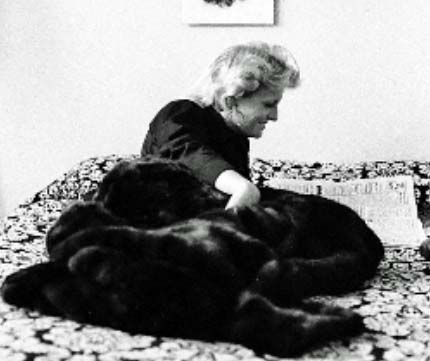
A photo of Paula McCoy wearing her fur coat taken by Peter Coyote.

A photo of Paula McCoy wearing her fur coat taken by Peter Coyote.

715 Asbury Street also became a gathering point for the Hell’s Angels and Diggers. The Angels had developed an early relationship with the Pranksters during the acid tests and this relationship extended to the Dead. Two Angels, Frisco Pete Knell, president of the San Francisco Chapter of the Hells Angels, and Billy “Sweet William” Fritsch, even accompanied the Grateful Dead, Paula, Ken Kesey, and Peter Coyote on a mission to London to meet with the Beatles in 1968. The Dead were concerned about whether the Beatles had a social conscience and were ‘socially adventurous.’ While the Dead found the Beatles more focused on making money than making change, the Beatles found the Dead scary, which is no surprise, considering Knell smashed one of their staff in the nose because Christmas dinner was late. Lennon was present to witness this episode and Coyote had to use his diplomatic skills to calm John down.

Paula and Coyote were invited on the journey because of their close connection with the Dead and with the anarchic Diggers, who were major players in San Francisco and Haight-Ashbury’s 1967 Summer of Love. Coyote, who went by his birth name at the time, Peter Cohon, was one of the founders of the Diggers, along with Emmett Grogan and Peter Berg. Free is the word that best describes what the Diggers did during the summer of 1967 when up to 100,000 young people (hippies/flower children) descended on Haight-Ashbury with little more than the clothes on their backs. The Diggers operated a free store and health clinic, provided free crash pads, gave away free bread in Golden Gate Park (much of which was baked at Olompali), and performed free, radical theater events on the streets and in the parks of the city. (Both Coyote and Berg had been members of the San Francisco Mime Troupe.)

The Diggers would distribute thousands of loaves of bread, baked in a coffee can like this.

The Diggers would distribute thousands of loaves of bread, baked in a coffee can like this.

The Diggers were always welcome at 215 Ashbury. Coyote referred to Paula as the doyen of the Diggers and Vanity Fair described her as the group’s patron. Either way, she played an important role in the Diggers’ loose knit organization, the Summer of Love, and what came afterwards. (Imagine being able to say, “Oh, I went off with the Grateful Dead to meet with the Beatles and discuss their social conscience.”) Paula also became part of the dark side of the 60s counter-culture, the use of hard drugs. Coyote blames Emmett Grogan for introducing Paula to heroin. A woman commenting in the March 15, 2003 Digger Archives confirms this observation:

“Emmett was a junkie. Every woman he got involved with, perhaps his last wife being the exception, ended up strung out right along with him, big time. He left a wake and it amazed me some of the women that gave in. Not all of them lived through it. Paula McCoy being a prime example. She was the most intelligent high-toned woman in the scene. God was she smart and politically hip. I never in a million years could have seen those two together.”

But give in she did, and in 1976 the addiction plus ‘a drug deal gone bad’ would lead to her death in San Rafael. As Coyote would note “The Sixties turned into the Seventies and the hard-life changed a lot of things. A lot of friends died: Tracy, Marcus, Bill Lyndon, Billy Batman, Pete Knell, and Paula McCoy. The list is longer than I have the heart to type.”

Emmett Grogan died of an overdose in 1978.

NEXT BLOG: Olompali… the final chapter.

From Miwoks to Ewoks— Plus the Bear Flag Revolt… Olompali: Part II

I found this ancient fence at Olompali State Park. It was likely built by the Black/Burdell Families who owned the property between 1852 and 1940.

I found this ancient fence at Olompali State Park north of San Francisco. It was likely built by the Black/Burdell Families who owned the property between 1852 and 1940.

After 3000 years of relative stability under the Miwoks, the fate of Olompali entered a period of rapid change in the 1800s. Mexican Independence in 1821 signaled the beginning of the end for the mission system in California. By 1834, the Mexican government had decreed that the missions would be secularized. The priests would no longer control vast estates.

It was the intention of the Mexican government to give the mission land to the Native Americans, but this intention was quickly subverted. Californios, California born people of Spanish/Mexican descent, either bamboozled the Indians out of their land or seized it outright for their own use, and then initiated a campaign of terror, stealing whatever the Indians had left— including, on occasion, their freedom.

An interesting exception to the mistreatment of the Miwoks took place at Olompali where, in 1843, the Miwok chief, Camilo Ynitia, was awarded a Mexican land grant. (Ynitia was the only Native American in California to receive one.) His father had built the first adobe house north of San Francisco. Portions of the house, along with Camilo’s, still stand at the park.

Remnants of Camilo's adobe house, and that of his father, still stand at Olompali State Park.

Remnants of Camilo Ynitia’s  adobe house, and that of his father, still stand at Olompali State Park.

Ynitia’s Rancho would soon play a role in the Bear Flag Revolt. With encouragement from John C. Fremont, the explorer and future US presidential candidate, a small band of American settlers in Northern California revolted against Mexican rule in 1846. The revolt was short-lived and only one person was killed, which is hard to imagine in any revolution. The point here is that the person was killed at Olompali in a clash between the settlers and Californios.

With bloodless coups in San Francisco and Monterey, Fremont and his followers soon afterwards declared California a republic. A quick flag was created featuring a grizzly bear, a star, and the word Republic. The fledgling country lasted three weeks; the Mexican-American War made it irrelevant. All that is left of the revolution today is the flag. It still flies over California even though there is no republic— or grizzly bear for that matter. The last known grizzly in California was killed in 1922.

The California flag, adopted during the three week existence of the Bear Flag Revolt.

The flag from the three-week republic still flies over California as the California state flag. The hump back of the bear is a defining characteristic of the grizzly bear. I once had a guy like this stalk me in Alaska. It was sneaking through the brush when I spotted its hump.

In 1852 Ynitia sold most of his land to James Black, who was on his way to becoming one of the largest landowners in Marin County. Legend is that robbers killed Ynitia for the money he received, or that he buried the money on the Olompali property, or that members of his own tribe did him in the old-fashioned way, with an arrow. Whatever happened, our history of Olompali now leaves the Miwoks and Californios, and moves into modern times.

Before leaving the Miwoks, I did want to pass on one more bit of trivia I picked up doing research. George Lucas’s Skywalker Ranch is located in Marin County, not far from Olompali. Nearby redwood forests were used for some of the Star Wars scenes for the forest moon of Endor, where the Ewoks lived. Lucas reportedly used the Miwok name as inspiration for the Ewok name.

Sky Walker Ranch is appropriately located on Lucas Valley Road. (The road was there before George Lucas built his ranch there, however. Maybe the road inspired Lucas's choice.)

Skywalker Ranch is appropriately located on Lucas Valley Road. (The road was there before George Lucas built his ranch, however. Maybe the road inspired his choice.)

Black, and his family, through various convolutions, would own the land up to the 1940s. Black gave the land to his daughter Mary as a wedding present when she married Galen Burdell, a dentist. But when Black’s wife died in Burdell’s dentist chair, he reneged on the gift and took Mary and Galen out of his will. When Mary first saw the will after Black’s death, she allegedly ripped her dad’s signature off  with her teeth and ate it. Tough woman. She then hired a bevy of top lawyers and managed to obtain Olompali.

A barn built by the Burdells and other ranch structures still stand at Olompali Park. And I have a weakness for old barns. (grin)

A barn, built by the Burdells, still stands at Olompali Park.  I think the massive stump on the left  is from a eucalyptus tree. Old barns demand being photographed; I couldn’t resist…


A corner shot of the barn looking up for a different perspective.

A corner shot of the barn looking up for a different perspective.

This old, boarded up window on the barn had personality plus. Animals must have chewed away at the right side.

This old, boarded-up window on the barn had personality plus. Animals must have chewed away at the right side.

Reflections caught in one the barn's windows.

A reflection, caught in one the barn’s windows, showed the ‘salt block’ house next door.

This salt block house

Salt block houses like this with their steep and sloped roofs were commonly built throughout Northern California in the 1850s. With the exception of the adobe houses, this may be the oldest structure at Olompali.

Remnants of an extensive fruit orchard planted by the Burdells still remain. It was said that their oranges matched anything coming out of Southern California. Bananas— not so good.

Remnants of an extensive fruit orchard planted by the Burdells still remain. It was said that their oranges matched anything coming out of Southern California. Bananas— not so good.

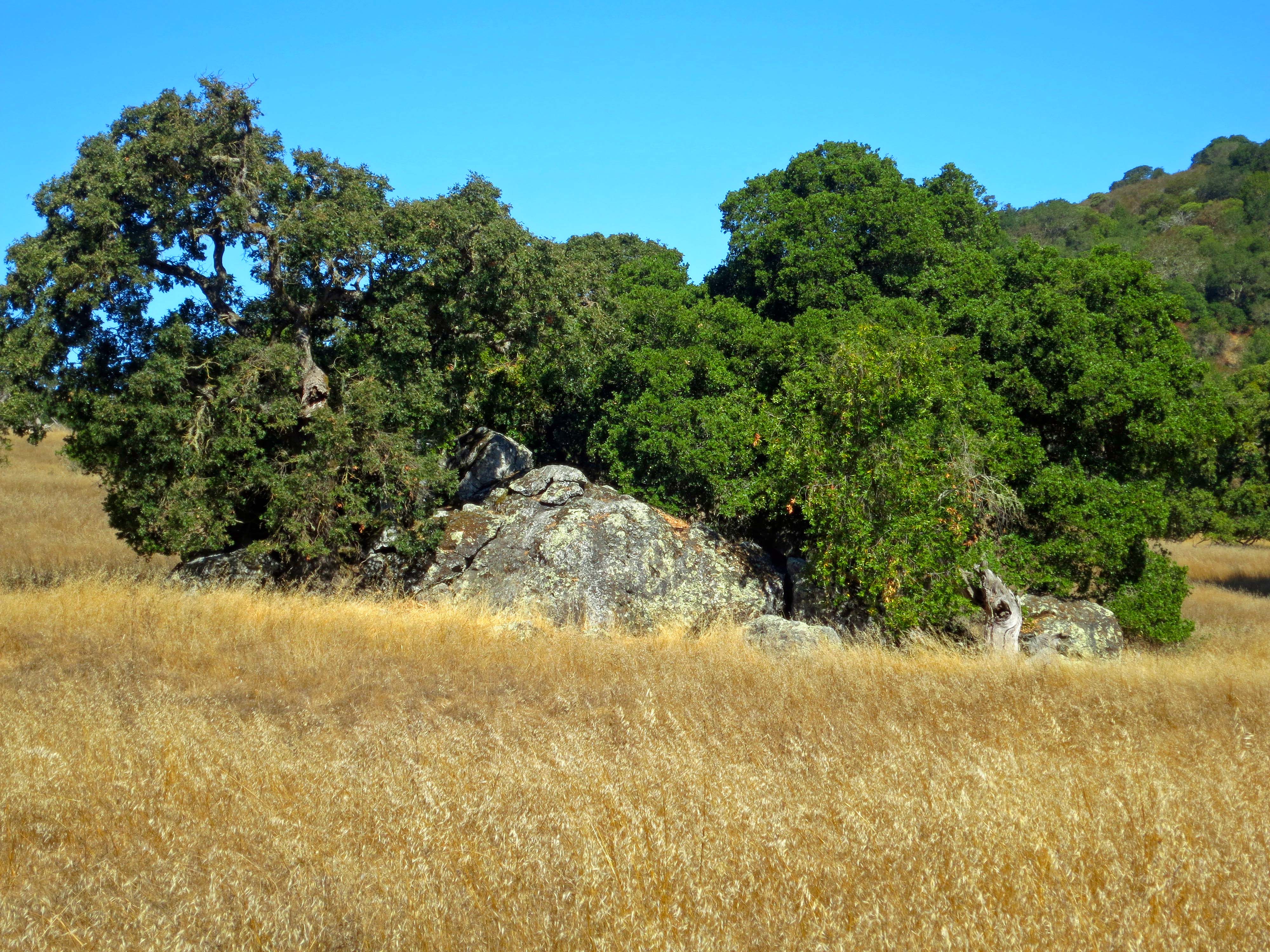
This large rock with its gorgeous backdrop above the barn caught my attention.

This large rock with its gorgeous backdrop was above the barn.

Camilo Ynitia, Miwok chief, received Olompali as a Mexican Land grant and in turn sold it to James Black.

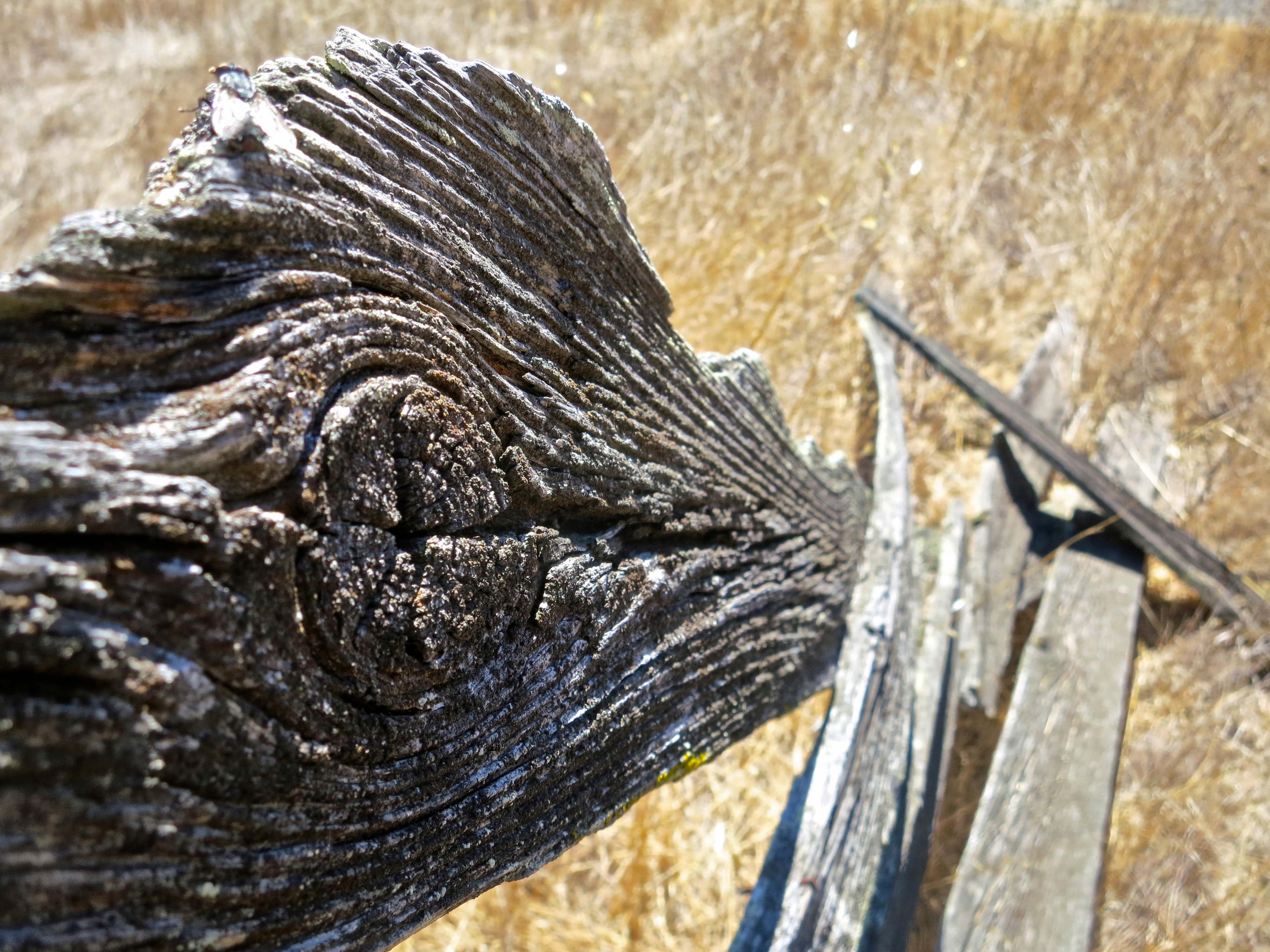
I thought I would conclude with this close up of the fence I featured at the top of my post…

And this aptly named Fence Lizard I found sunning itself on the fence.

…And this aptly named Western fence lizard sunning itself on the fence.

NEXT BLOG: By the late 40s/early 50s, the University of San Francisco had obtained Olompali with plans to turn the ranch into a retreat for Jesuits. The effort failed. Maybe the Jesuits didn’t go along with the plan. It was this lack of success, however, that eventually led Olompali to become a footnote in the history of the Grateful Dead, as well as a famous/infamous hippie commune: The Chosen Family. But that is a story for my next blog.


1964— The Free Speech Movement at UC Berkeley… A Student Revolution: Part I

Wrinkled and showing signs of age, this is the original sign I carried in December of 1964 when the police occupied UC Berkeley and participants in the Sproul Hall Sit-in were arrested.

Wrinkled and showing signs of age, this is the original sign I carried in December of 1964 when the police occupied UC Berkeley and participants in the Sproul Hall Sit-in were arrested.

A large celebration is taking place at the University of California, Berkeley on October 4th to mark the 50th anniversary of the Free Speech Movement, one of the world’s most important student revolutions. From 1963-65 I was a student at Berkeley and had a front row seat. Unfortunately, I can’t attend the celebration this weekend due to prior commitments. To honor the event and share my perspective, however, I will use earlier writings I have done on the Free Speech Movement to post three blogs over the next three days.

In the fall of 1963, I transferred from Sierra College, a small community college in the Sacramento Valley of California, to the University of California at Berkeley. Sierra was like driving down a country road on a lazy summer day; Berkeley was like being caught on a six-lane Los Angeles freeway during rush hour.

Telegraph Avenue became my mecca. Exotic smells emanated from a dozen different ethnic restaurants while numerous languages assaulted my ears. I quickly discovered the Café Mediterraneum. In an era before Starbucks made coffee houses safe for middle-class America, Café Med was an original. It was a microcosm of the Berkeley I would come to love, filled with offbeat characters, esoteric discussions and great coffee. I became addicted to both the cappuccino and atmosphere. I would grab my coffee and climb the narrow wooden stairs in back for a coveted balcony seat where I would watch the ebb and flow of the city’s unique flotsam.

A quick jaunt across Telegraph produced another treasure, Cody’s bookstore. Started on a shoestring by the Cody family in the 50s, it had become one of America’s premier bookstores by the mid-sixties. I saved my explorations for Saturdays when there was time to indulge my passion for books. I would disappear inside and become lost to everything except the next title.

I was equally fascinated by the ever-changing kaleidoscope of soapbox oratory provided at the south entrance to the campus on the corner of Bancroft and Telegraph. During any given hour, a dozen speakers could be found there espousing as many causes. I considered it high entertainment and would sit on the steps of the Student Union and listen during breaks from my studies. Over one lunch period, I reported in a letter home, I listened to a student who had spent her summer working in the South registering voters, a black South African talking about apartheid, a socialist railing against the evils of capitalism, a capitalist railing against the evils of socialism, and a Bible thumper detailing out the many paths Berkeley students were following to hell.

Many of the speakers urged that there was more to college life than studies, football and parties. Change was in the wind and we should be part of it. Work for fair housing in Berkeley; oppose the unfair hiring practices at Safeway; sign up to help on a political campaign. Join CORE, SNCC, SLATE, SDS, YAF or a world of other acronyms. I struggled to take it all in, absorb it through my pores. It certainly wasn’t Kansas, Dorothy, nor was it Sierra College or the small Sierra foothill town of Diamond Springs where I was raised. I attended classes at Berkeley that had more students than the total population of Diamond and were close in size to matching Sierra’s full student body.

To simplify my first year I opted to live in a college dorm. I would have a room, a bed and regular meals. The University assigned me to Priestly Hall, which was ideally located a block away from campus and a block away from Telegraph Avenue. As for life at Berkeley, I wanted it all. There were student politics to jump into, classes to master, a love life to support, bookstores to explore, cappuccino to consume, and a thousand causes to sort out. Moderation was not an option.

It was easy to be overwhelmed. I was assigned 15 books in one class and actually thought I was expected to buy and read each one in detail. I was a fast reader but not that fast, nor that wealthy. It would take a year to master the art of skimming, buying old books, using commercially prepared notes and pursuing all of the other tricks of the trade that getting a higher education entailed. For all of that, there was an excitement to the classes. I might be sharing my professor with a thousand other students but he or she might also be a person who was a confidante of Presidents.

I had been student body president at Sierra and gamely jumped into student politics at Berkeley. The dormitories were new, so the residents were new. They hadn’t had time to get to know each other. The fact that I was a community college transfer made little difference. Within a week of my arrival, I was president of Priestly Hall.

Student politics seemed dull and almost frivolous compared to the real thing, though. What truly fascinated me about Berkeley was the palpable sense of being involved in the events of the day. I was drawn toward these issues and the call to action tweaked my interest. Limiting the future of a person because of his or her skin color, sex, or religion went beyond being counterproductive. It was stupid; we all lost. But I wasn’t ready to take up a picket sign. This was my first year at Berkeley and my hands were full with studying.

I did strike one tiny tap hammer blow against Berkeley’s depersonalized approach to undergraduate education, however. Our dorm was expected to participate in the annual Ugly Man Contest. Its purpose was to raise money for charity by having someone or thing really ugly as the dorm’s representative in competition with other dorms, fraternities and sororities. People would vote by donating money (normally pennies) to their favorite ugly man. In addition to being pure fun, it was on the top of the Dean’s list as an acceptable student activity.

I proposed that our ‘Ugly Man’ be an unfortunate Joe College Student whose computer card had been lost by the Administration. Consequently, he no longer existed. Early computers used punched cards to contain data and had become ubiquitous in our lives. They came with the warning “do not fold, spindle or mutilate.”

We made up a casket and wandered about campus in search of poor Joe. It was a small thing but it reflected a growing unease I had about the alienation that happens when numbers became more important than individuals. Apparently the student body wasn’t ready for the message. A popular bartender, selected by a fraternity as its ugly man candidate, walked away with the prize.

While my concerns about assembly line education were evolving, the administration was monitoring off-campus student activism with growing concern. The University perceived its primary objectives as carrying out research and preparing young people to become productive members of American society. There was little room in this view for students seeking social and political change— in Mississippi, in Oakland or on campus.

But the world was changing. A young President in Washington was calling on the youth of America to become involved and had created the Peace Corps to encourage involvement. Racial equality seemed attainable in the United States, and people the world over were yearning for and demanding freedom. It was easy for idealistic young Americans to believe we were at the dawning of a new age and natural to want to be involved in the transformation.

Had the students restricted their political efforts in the early and mid sixties to the far off South, the eruption of conflict on the Berkeley Campus may not have taken place. But they chose local targets as well. When the students marched off campus to picket the Oakland Tribune, Sheraton Hotel, United Airways and Safeway over discriminatory hiring practices, they were challenging locally established businesses with considerable power. Not surprisingly, these businesses felt threatened and fought back. Rather than deal with the existing discrimination, they demanded that the University, local authorities, the state government and even the federal government do whatever was necessary to reign in the protesters.

Their arguments for the crackdown were typical of the times. A few radical off-campus agitators with Communist connections were working in conjunction with left leaning professors to stir up trouble. The participating students lacked mature judgment and were naively being led astray. The vast majority of students were good law-abiding kids who just wanted to get an education, party, and get a paycheck.

The University was caught between the proverbial rock and a very hard place. The off-campus political activism was creating unwanted attention. Public dollars could be lost and reputations tarnished. There was a justifiable fear of reprisal from the right. The ugliness of McCarthyism was still alive and well in America. Only a few years before the House of Un-American Activities Committee (HUAC) had held hearings in San Francisco in its ceaseless search for Commies. UC had been a target.

HUAC created a deep paranoia and distrust within society and may indeed have constituted the most un-American type of activity ever perpetrated on the American public. Clark Kerr and others had worked hard to protect and restore the academic freedom on campus that loyalty oaths and other McCarthy-like activities had threatened. Student activism might refocus right-wing attention on the Berkeley Campus.

My greatest insight into the mindset of the Administration was when the Dean of Students called student leaders together to discuss the growing unrest on campus. Our gathering included members of the student government and presidents of the resident halls, fraternities and sororities. Noticeable in their absence were student representatives from off campus organizations such as CORE, SNCC, Young Democrats, Young Republicans and other activist groups. We sat in a large room in a huge square; there must have been at least 40 of us. I was eager to participate and imagined an open discussion of the issues.

The Dean welcomed us, thanked us for agreeing to participate, and then laid the foundation for our discussion. A small group of radical students was disrupting the campus and organizing off-campus activities such as picketing and sit-ins that were illegal in nature. While the issues being addressed were important, there were other, more appropriate means available for solving them that did not involve Berkeley. The Administration had been extremely tolerant so far but was approaching a point where it might have to crack down for the overall good of the University.

The Administration wanted our feedback as student leaders. What did we think was happening, how would our constituencies react to a crack down, and how could we help defuse the situation? We were to go around the room with each student leader expressing his or her view. I expected a major reaction— hopefully a protest or at least a warning to move cautiously, to involve all parties in seeking some type of amenable agreement.

The first student leader stood up. “The radical students are making me extremely angry,” he reported. “I resent that a small group of people can ruin everything for the rest of us. The vast majority of the students do not support off-campus political action. I believe the student body would support a crackdown by the Administration. You have my support in whatever you do.”

I could not believe what I was hearing. Was the guy a plant, preprogrammed by the Administration to repeat the party line and set the tone for everyone else? If so, he was successful. The next person and the next person parroted what he had said. I began to doubt myself. Normally, I am quite good at reading political trends and sensing when a group leans toward supporting or opposing an issue. My read on what was happening at Bancroft and Telegraph was that the majority of the students were empathic with and supportive of the causes the so-called radical students were advocating.

The Martin Luther Kings of the world were heroes, not bad guys, and their tactics of nonviolent civil disobedience were empowering the powerless. Sure, the majority of the students were primarily concerned with getting through college. To many, an all night kegger and getting laid might seem infinitely more appealing than a sit-in. But this did not imply a lack of shared concern. Or so I believed. Apparently, very few of the other participants shared in my belief. Concerns were raised but no one stopped and said, “Damn it, we have a problem!”

As my turn approached I felt myself chickening out. I was the new kid on the block, wet behind the ears. What did I know? Acceptance in this crowd was to stand up and say, “Yes, everything you are talking about is true. Let’s clamp down on the rabble rousers and get on with the important life of being students.” And I wanted to be accepted, to be a part of the establishment. I stood up with shaking legs.

“Hi, my name is Curt Mekemson and I am the president of Priestly Hall,” I announced in a voice which was matching my legs, shake for shake. This was not the impression I wanted to make. As others had spoken, I had scribbled some notes on what I wanted to say. “I believe we have a very serious problem here, that the issues are legitimate, and that most students are sympathetic. I don’t think we should be cracking down but should be working together to find solutions. Now is not the time to further alienate the activists and create more of a crisis than we presently have. I believe it is a serious mistake to not have representatives from the groups involved in organizing off campus activities here today.”

I was met with deadly silence. A few heads nodded in agreement, but mainly there were glares. “Next,” the Dean said. No yea, no nay, no discussion. I was a bringer of bad tidings, a storm crow. But it wasn’t ‘kill the messenger.’ It was more like ‘ignore the messenger,’ like I had farted in public and people were embarrassed.

After that, my enthusiasm for student government waned. I should have fought back, fought for what I believed in, fought for what I knew deep down to be right. But I didn’t. I was still trying to figure out what to do with 15 books in Poly Sci 1. I had a relationship to maintain on campus and a mother fighting cancer at home. The dark, heavy veil of depression rolled over my mind like the fog rolling in from the Bay. Finally I decided that something had to go and that the only thing expendable was my role as President of the dorm. So I turned over the reins of power to my VP and headed back to Bancroft Library. Politics could wait.

Without student government concerns, Berkeley became more doable and even fun. I disappeared into the library for long hours whipping out term papers, devouring books and becoming a serious student. The end of my first semester approached. Christmas vacation was coming. There would be a break in the endless studies and a time for long walks in the woods. Maybe I could get my head around what was happening on campus and where I fit into the scheme of things.

One crisp fall day in November I came blinking out of the library to a brilliant sun and a hushed silence. Students and faculty were emptying out of classes; a young woman with long dark hair was standing on the library steps, tears streaming down her face.

“What’s wrong?” I asked.

“They’ve shot the President in Dallas,” she replied as her voice broke.

John F. Kennedy was dead. It was November 23, 1963. The young president who was standing up against racism in the South, the man who had created the Peace Corps, who called for international justice and inflamed people’s hopes worldwide, had been shot down in the streets of Dallas. And with his death, some of the hope he had created died with him; it died on the Berkeley Campus that day and it died in me. Each of us lost something of the dream that things could be better, that we as individuals could be better. School stopped and we headed for the nearest TVs, newspapers and radio stations. Time and again we watched the car speeding away with the wounded President, watched Walter Cronkite announce that the President was dead and watched as Lyndon Johnson was sworn in. It was a day etched into the collective memory of our generation.

Thanksgiving arrived and Christmas followed. The battle between the Administration and the student activists continued during the spring semester while I focused on studies. On March 3, 1964, I turned 21 and became, according to law, an adult. Soon I would have to decide what I was going to do with my adult life.

NEXT BLOG: 1964: On the edge of radicalism