The Ancient (Big) and Modern (Small) Cats of Greece

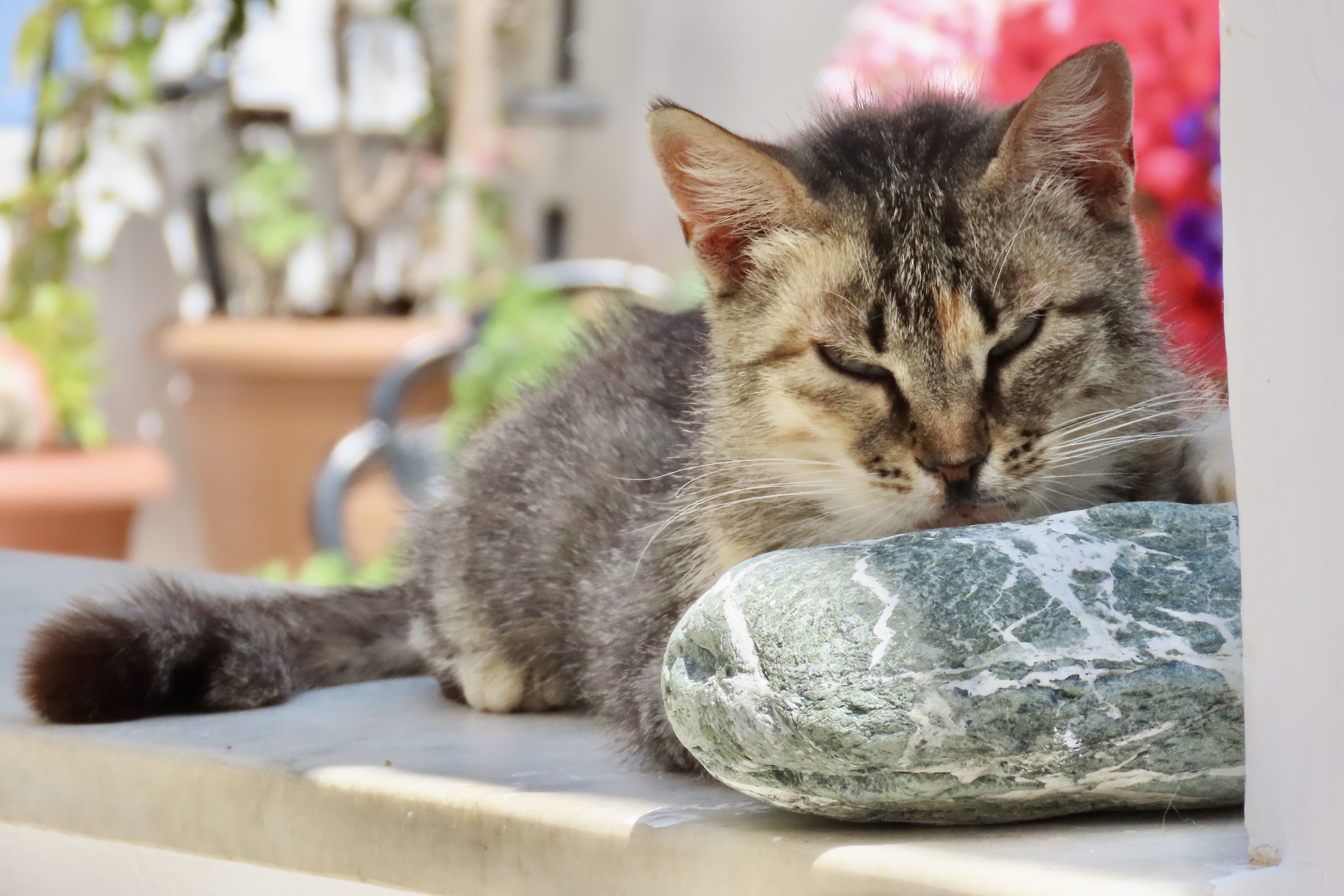
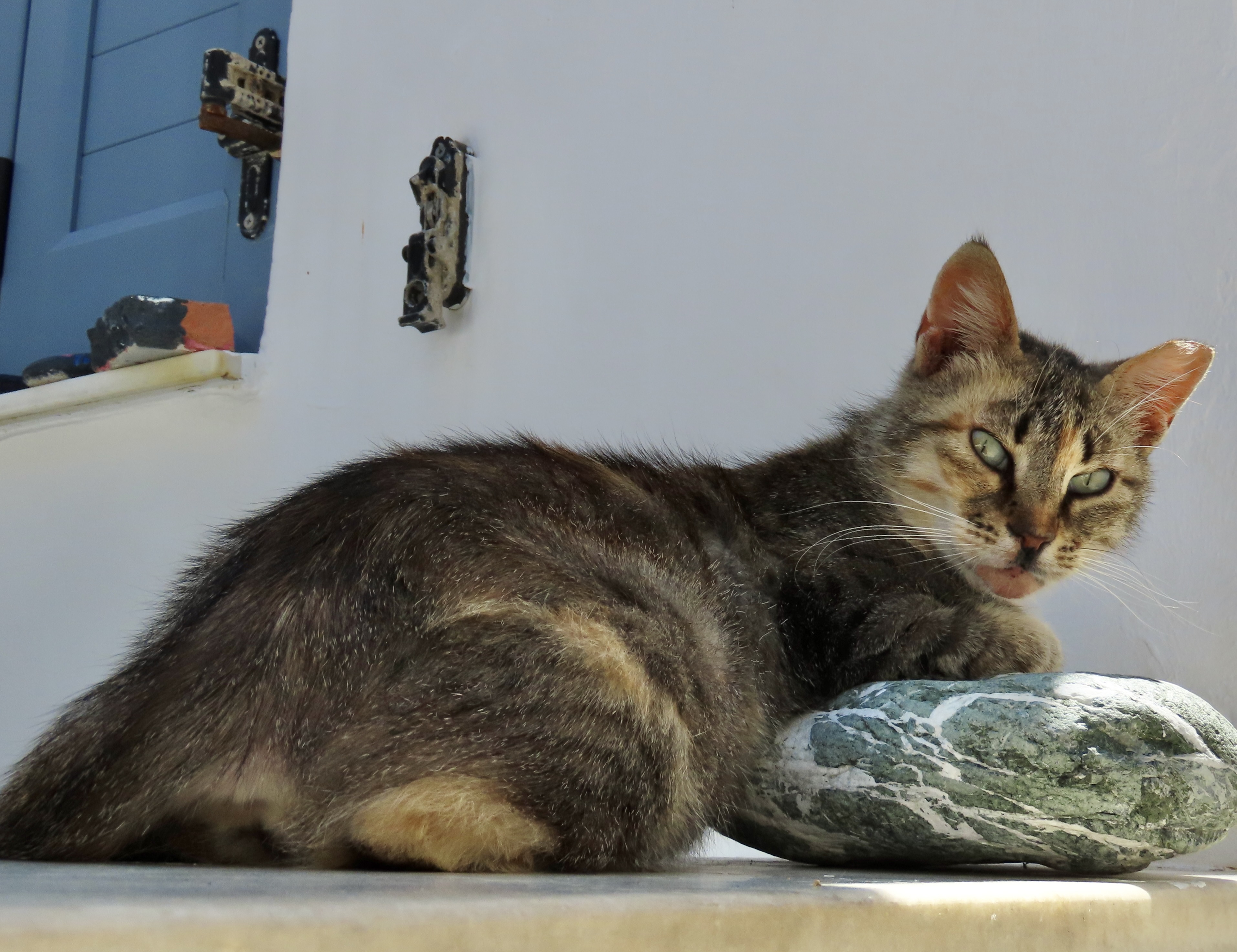
We found this fellow in Pyrgos on the Greek island of Tinos. It was giving us the look. “Why are you interrupting my nap time?” Cats, as everyone knows, enjoy their naps— 12-16 hours a day, or even up to 20.

Unlike Ancient Egypt, where people had a cat god and mummified their pets, domestic cats weren’t around in Ancient Greece. Now it’s different. We found them everywhere we travelled this past month: Athens, the island of Tinos, Nafplio, Olympia, and Delphi. We even had temps, cats that volunteered to be our pets, to hang around and meow at us— assuming that we kept the food coming.

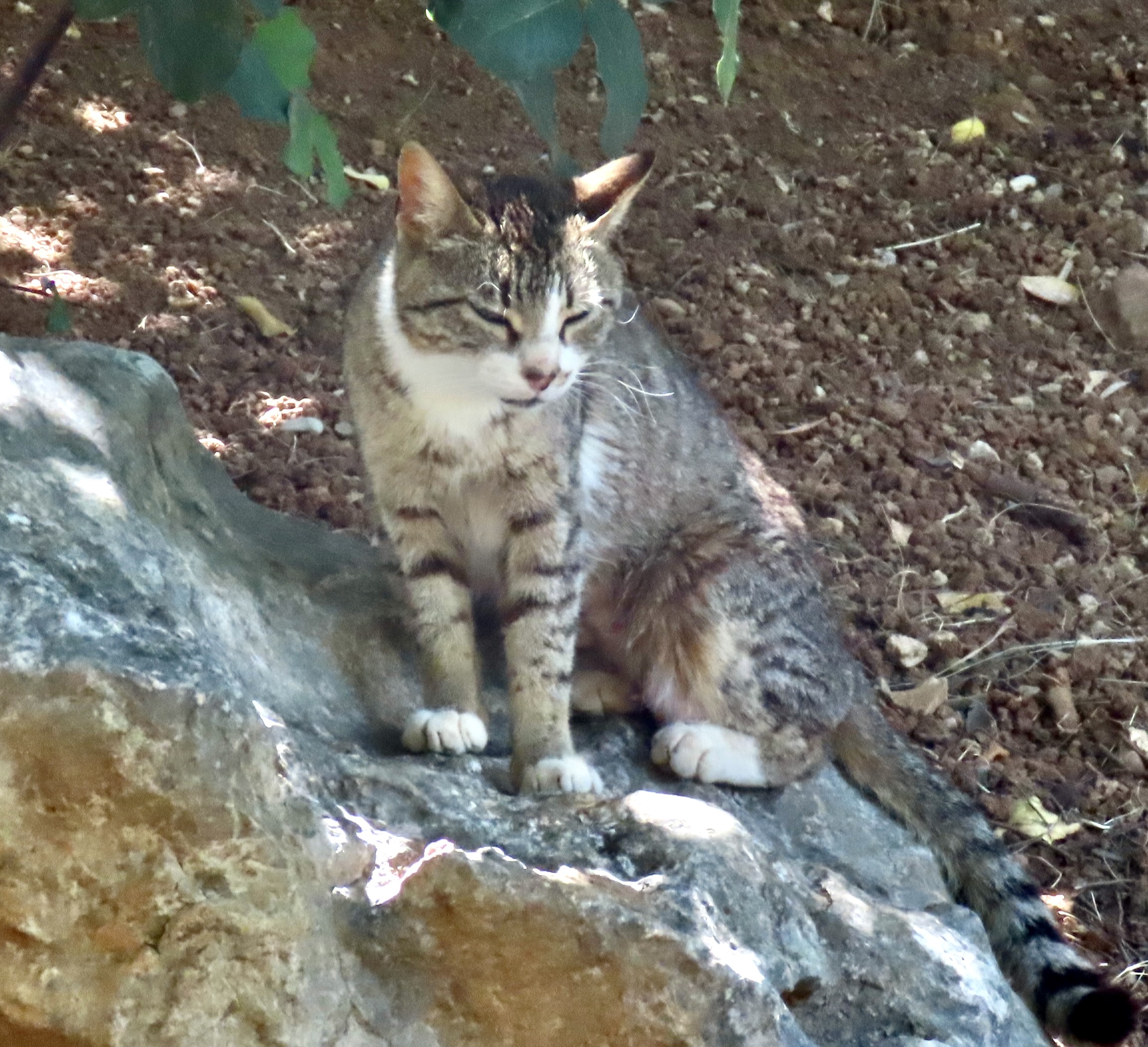
This skinny female didn’t mind us waking her up. She had adopted us at our Vrbo on Tinos and persuaded me to feed her while we were there for a few days. Our appearance meant the it was time to jump down and start rubbing against my leg.

From research on past posts I’ve done that included cats, I learned that the leg rubbing business is the way a cat marks you with its scent to claim ownership. Other cats need not apply. I also learned about the kneading business where the cat sinks its claws into your leg or stomach while purring. That apparently comes from when they were kittens and kneaded their mother’s teats to encourage milk flow. Even grouchy old toms seem to take comfort from this activity.

There was no leg rubbing from the cat in Pyros however. The message was “Go bother another cat. Preferably a big one.”
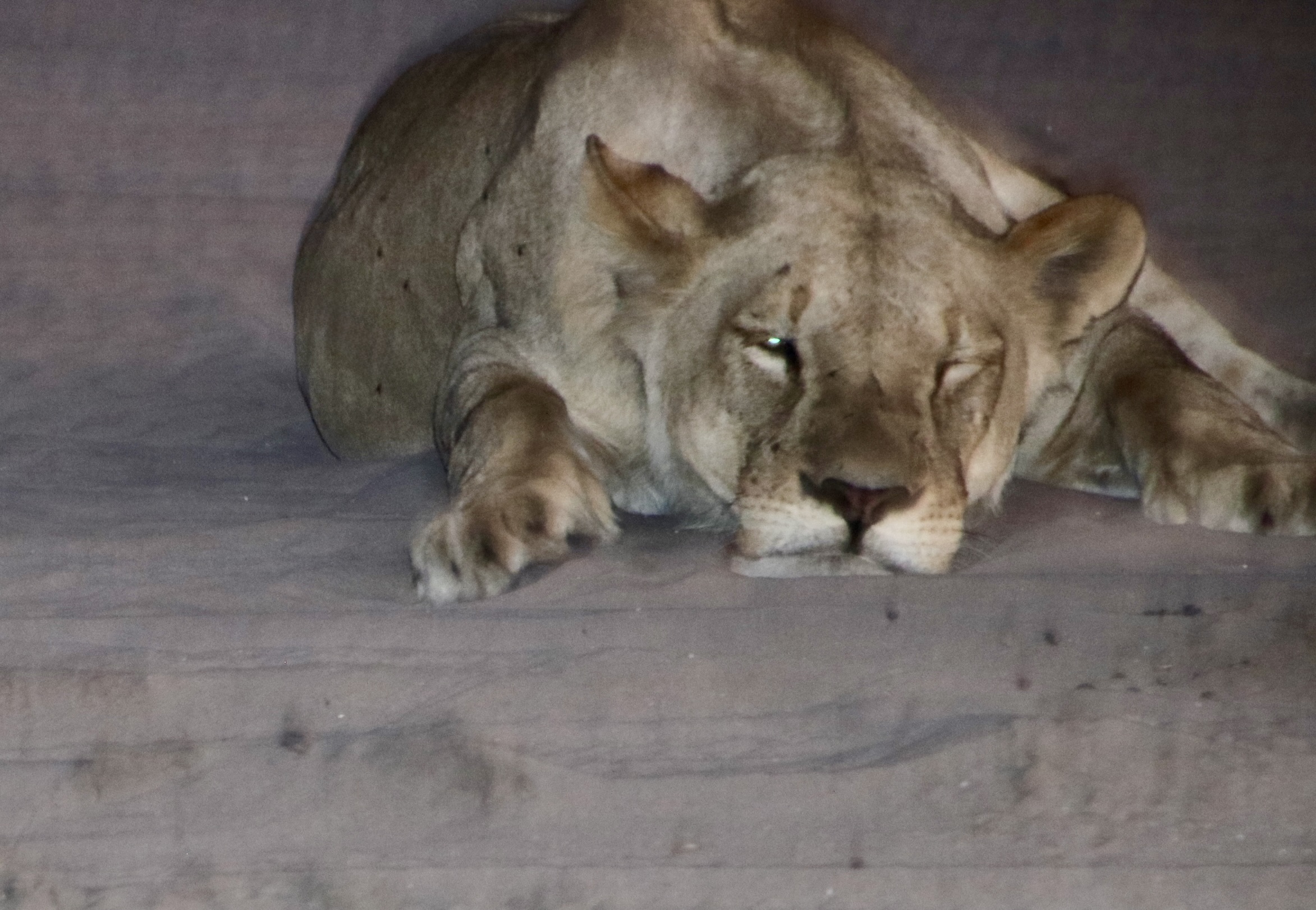
Uh, I think we’ll let that kitty sleep. (Photo from our Southern Africa safari.)
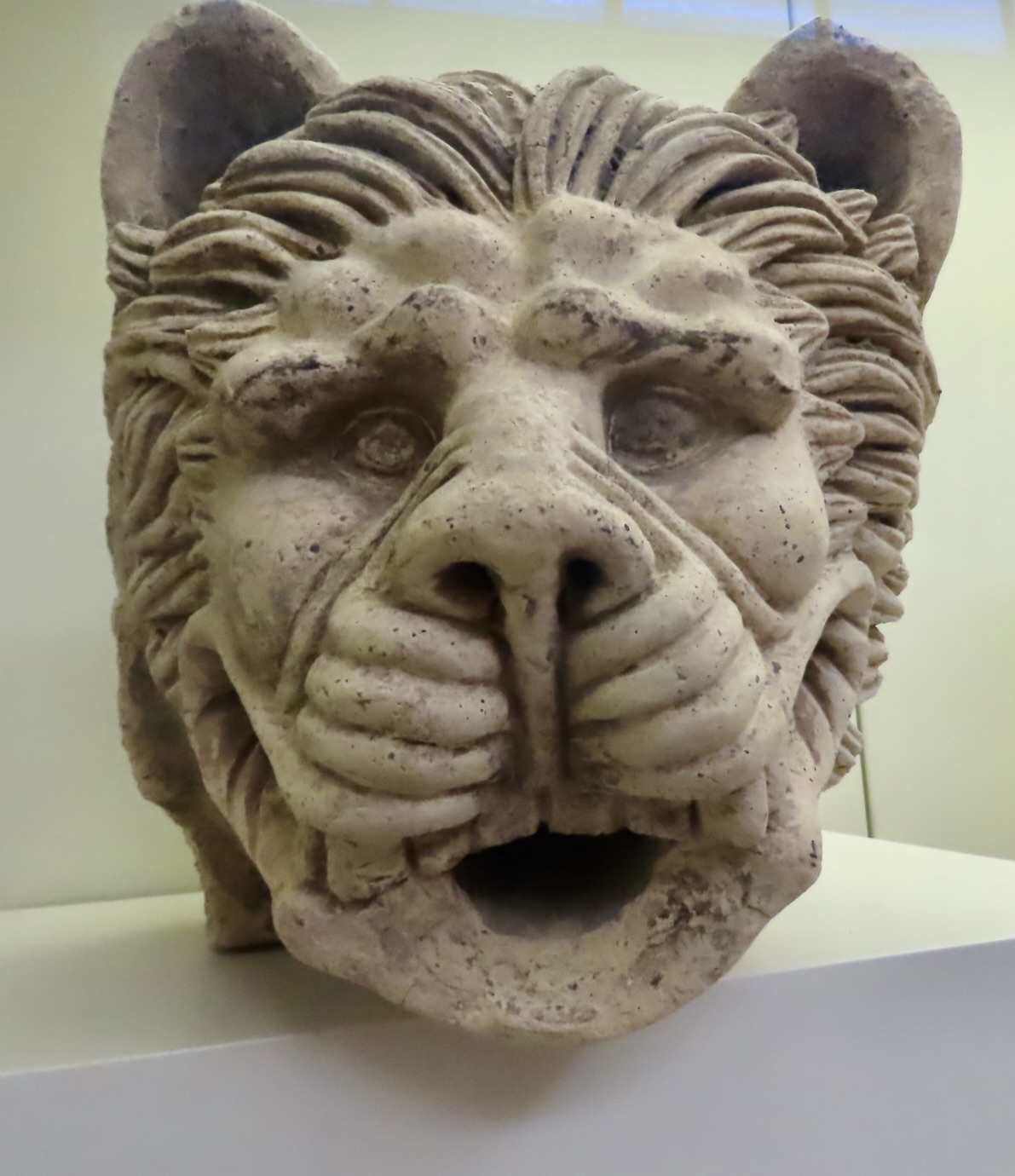
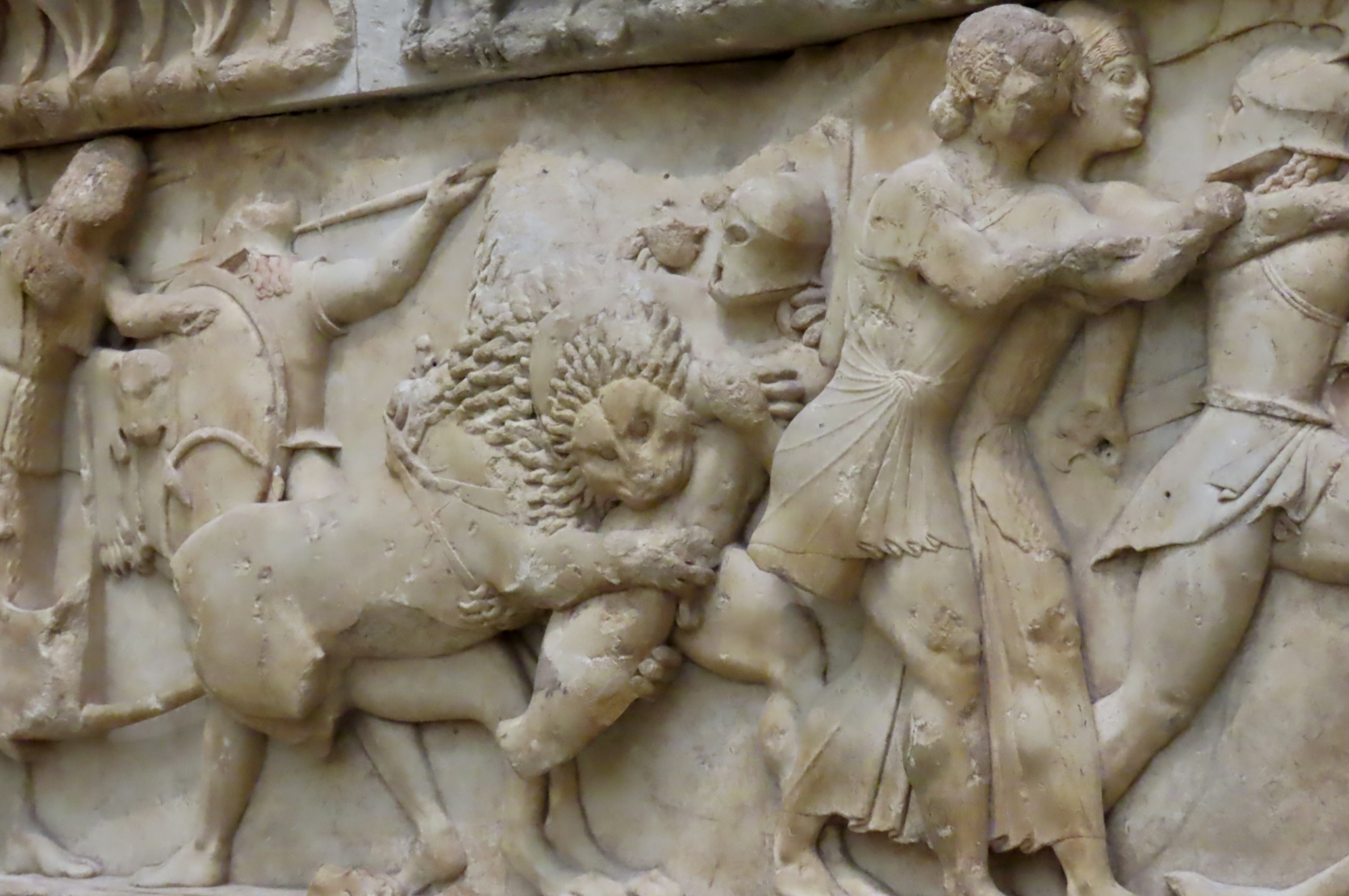
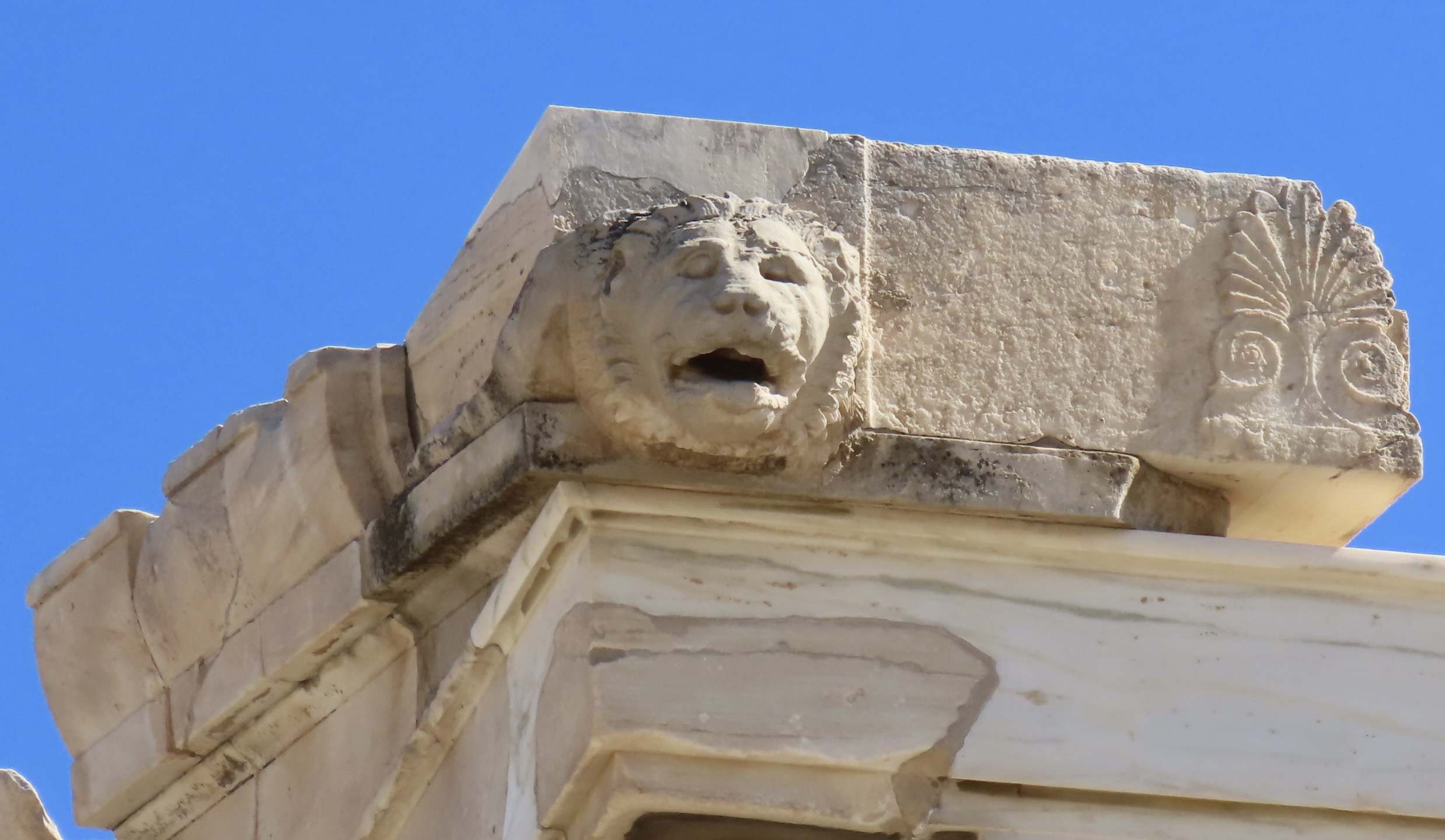
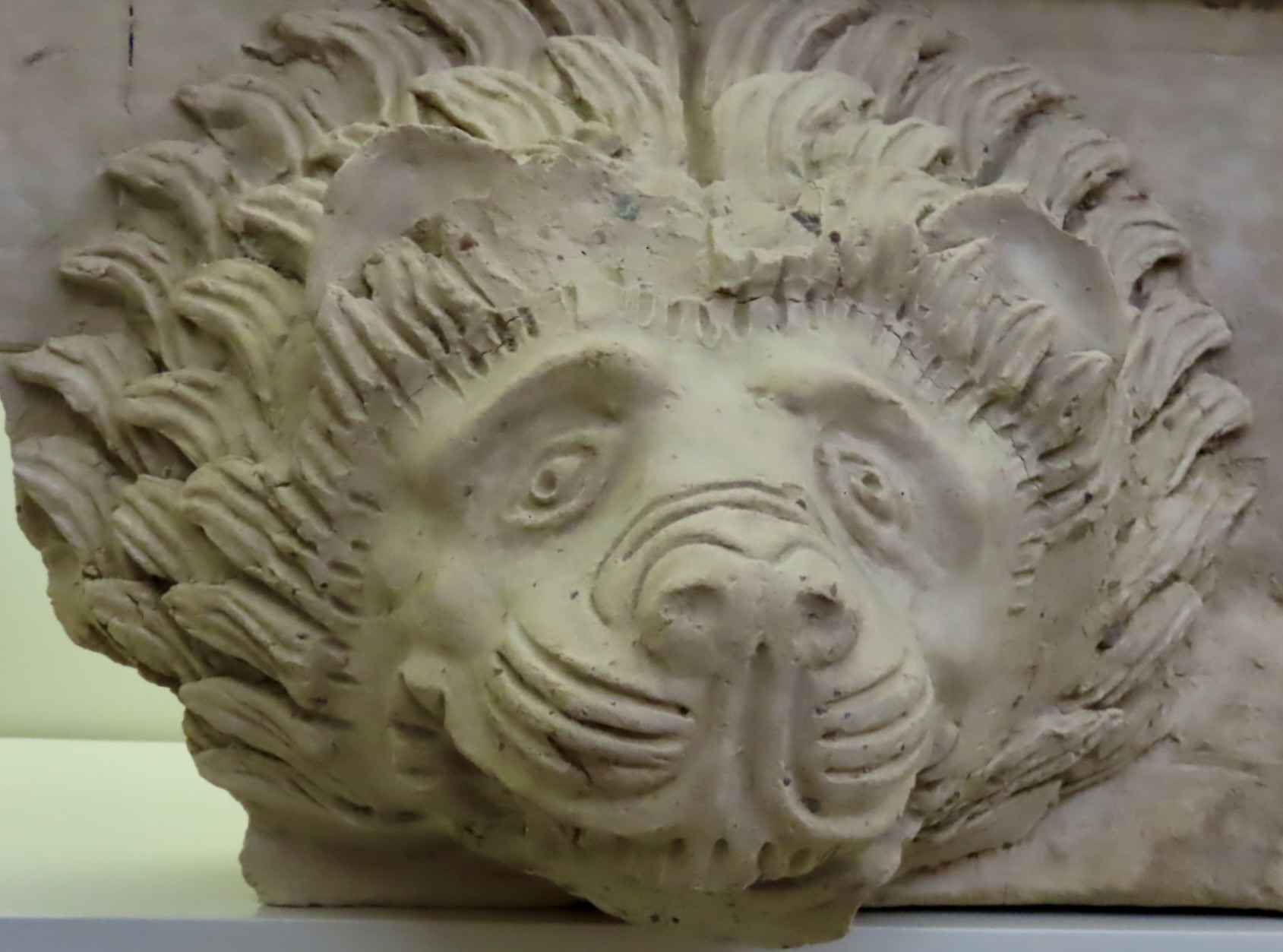
Actually, lions once roamed throughout Greece and the surrounding area with the last being recorded in Macedonia in the first century CE. I think every Greek ruin we visited had at least one sculpture of the large, scary animals. A few were chomping down on something… or someone.
Ouch.
Scary didn’t involve chomping in most of the sculptures, however. Looks were enough.
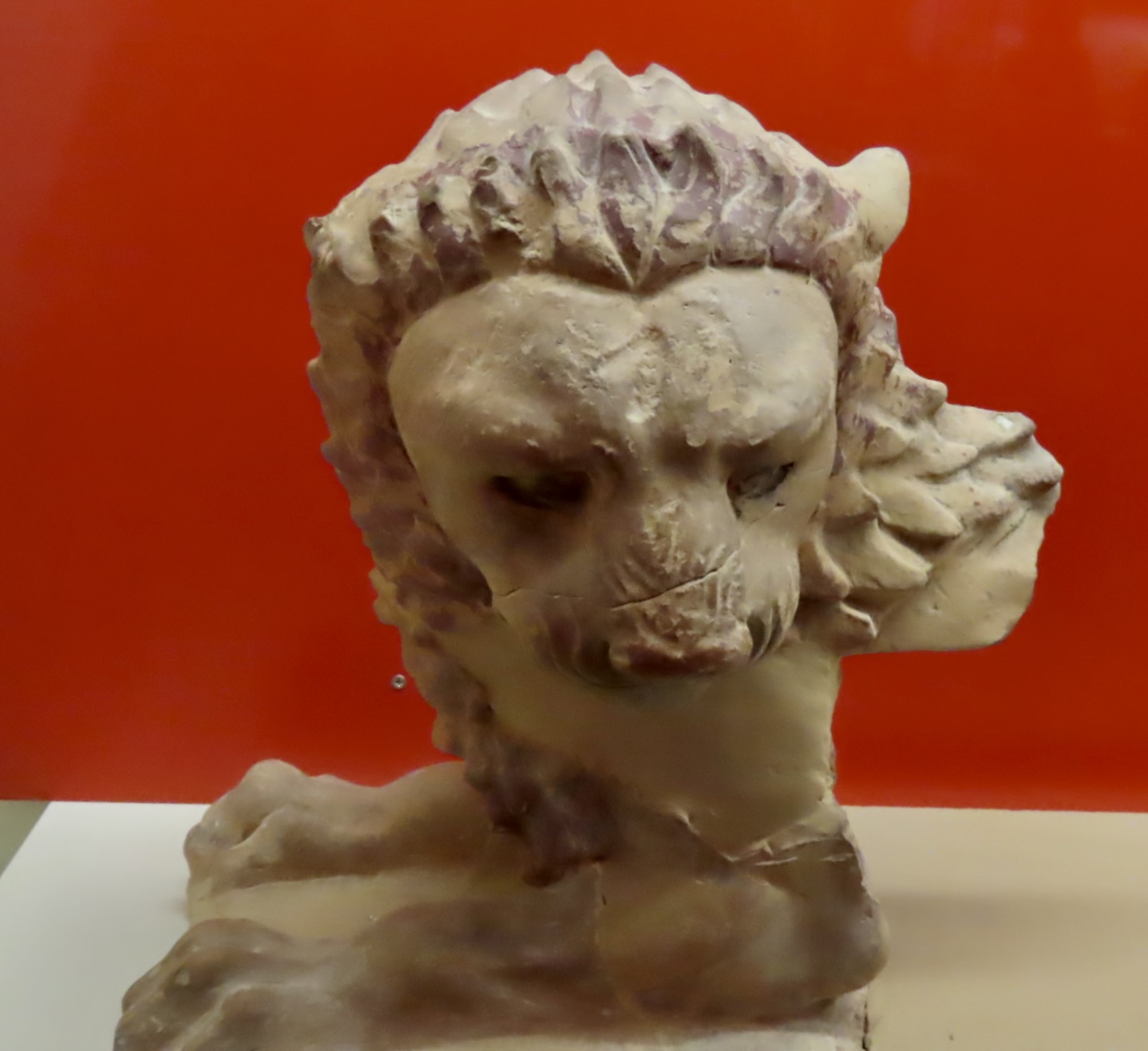
This lion was having a hard time keeping it together. No wonder it was angry. “Where did my body go?”
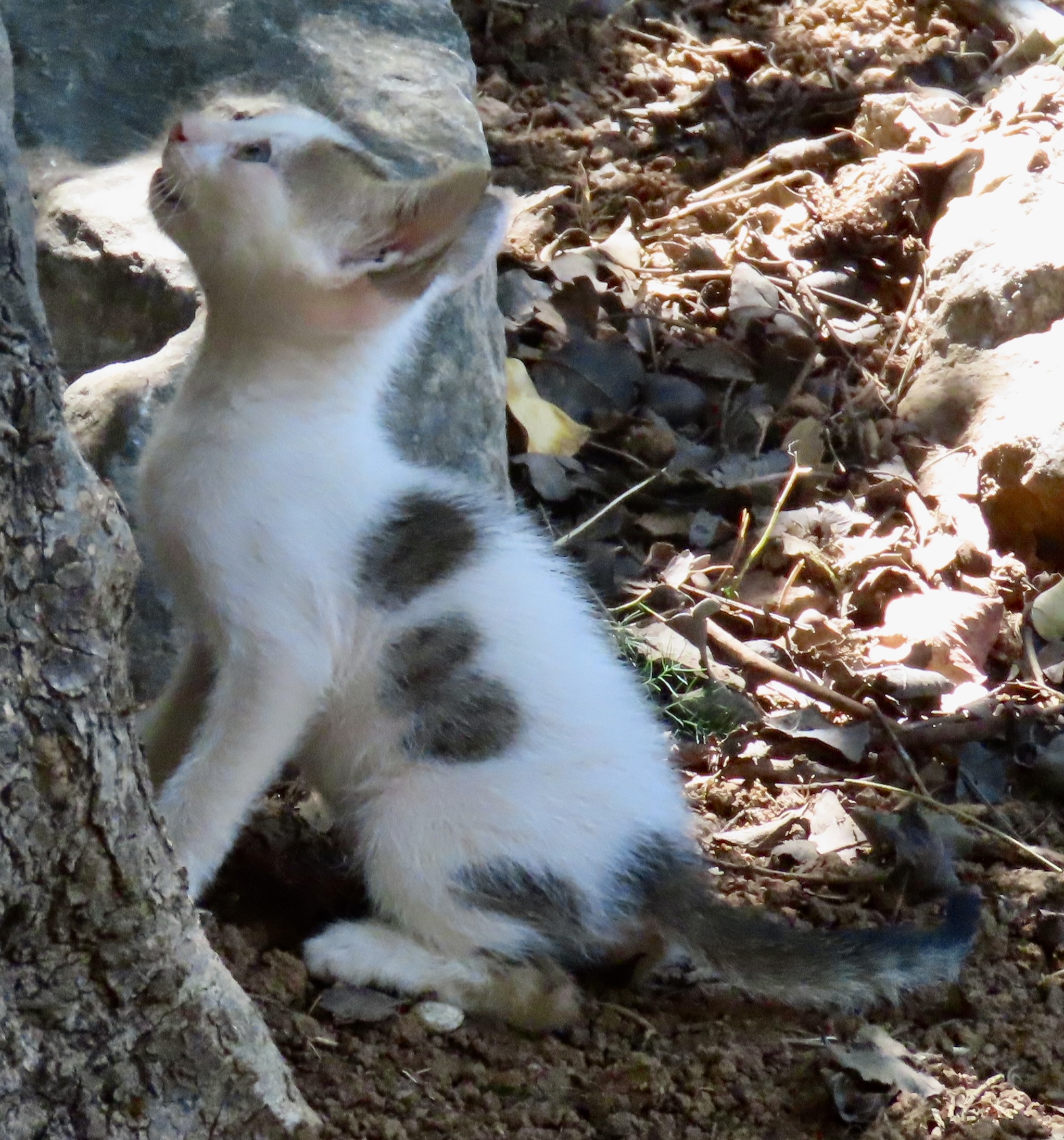
I introduced this kitten in my last post. She was fascinated with a bird up in the tree. We were down on the Peloponnesian Peninsula at Mycenae, which includes one the world’s most famous lion carvings.
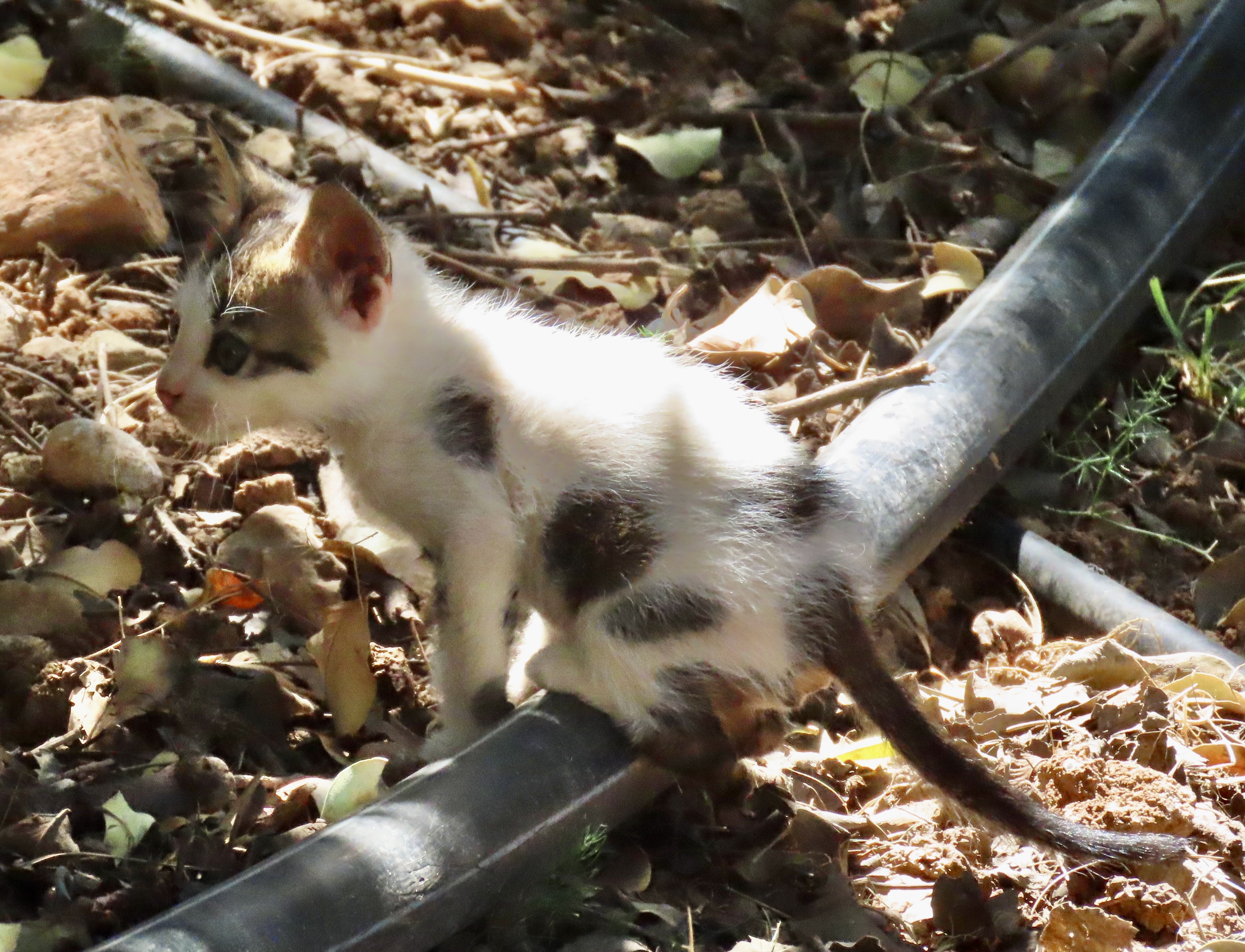
Her brother appeared to be off on an adventure. I imagined it saying, “Can I see the Lion Gate again, Mom? Please, please, please.”
“If you are a good kitty,” Mom admonished.
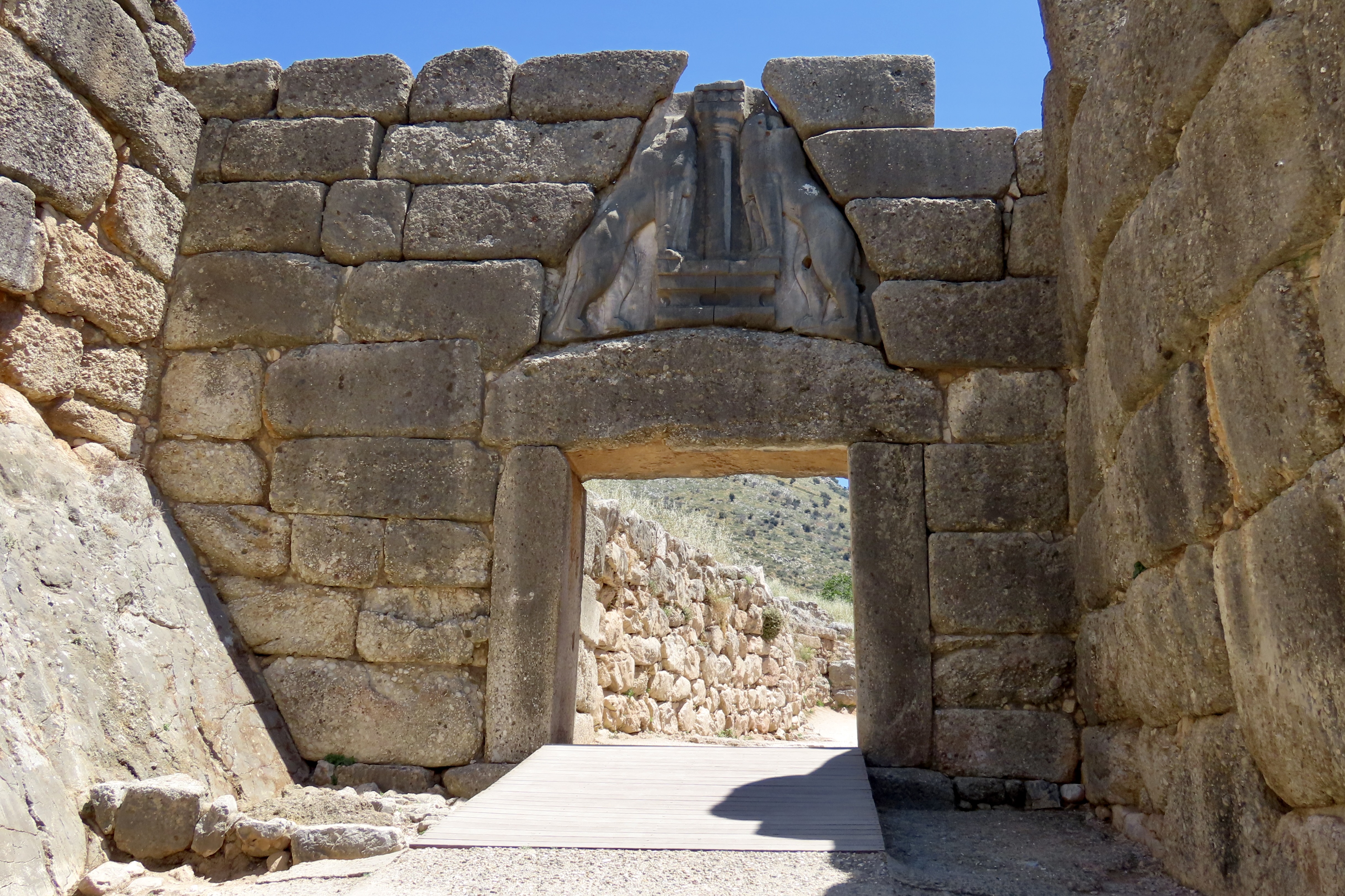
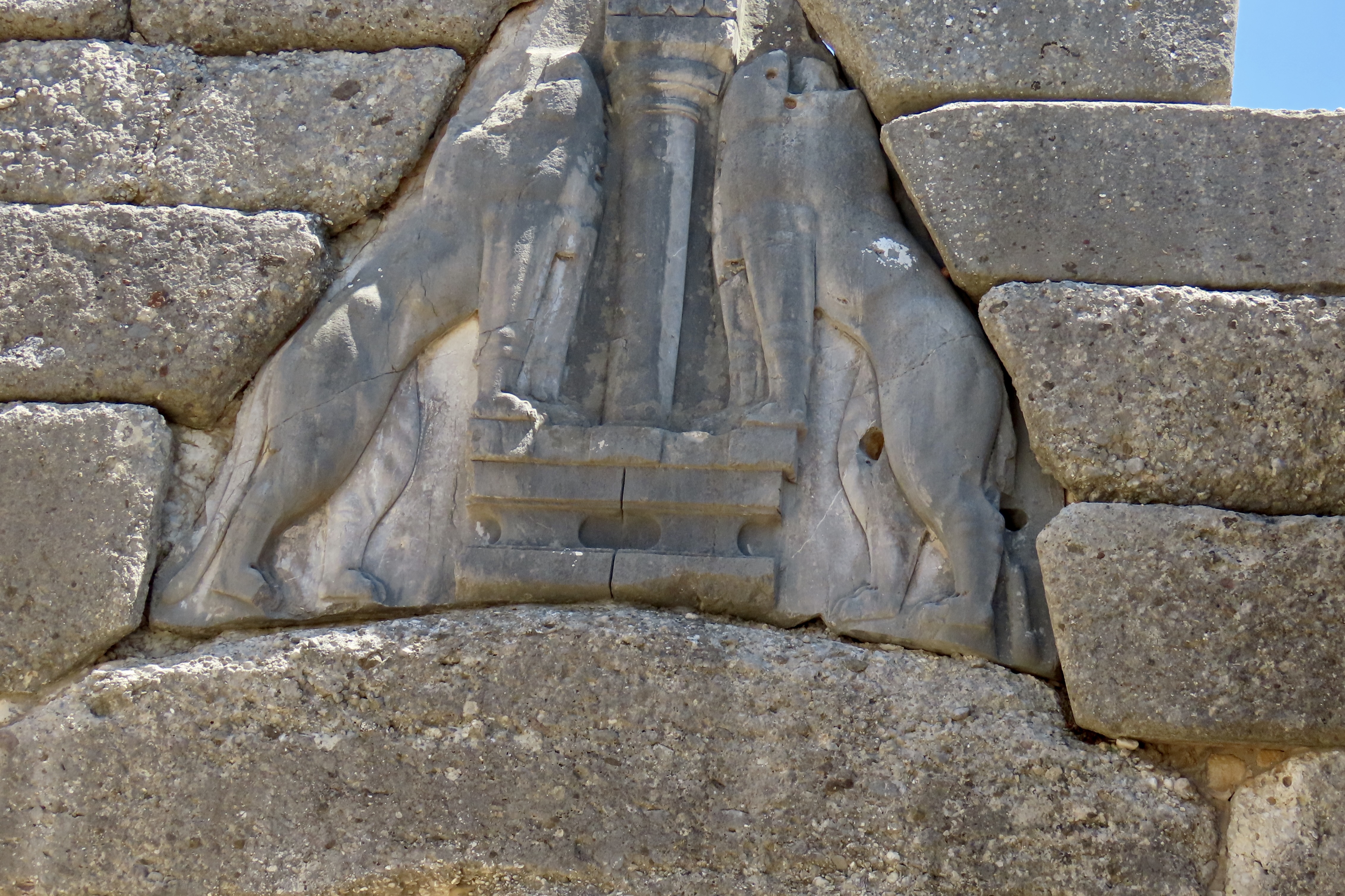
Kitty wasn’t alone in his desire to see the Lion Gate. I also promised to be good. Mycenae had been the center of Greek civilization between 1600 and 1100 BCE. I had been waiting to see it ever since I took World History in High School. While that wasn’t 3000 years ago, it was awhile. The Gate features two lionesses flanking a central pillar.
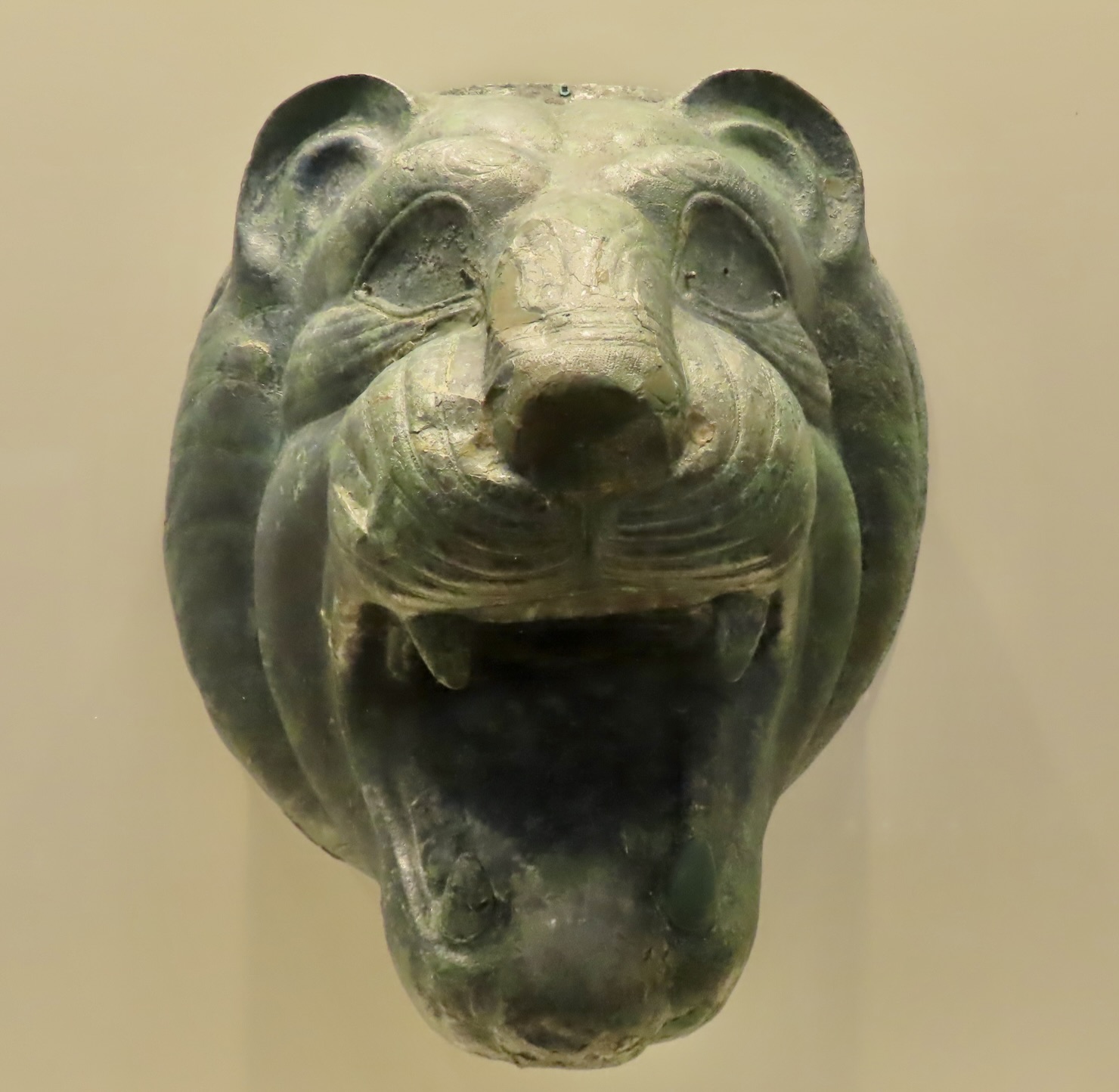
A close up. The lionesses are missing their heads. It is thought that they may have been made out of metal and been facing outward to warn any potential invaders.
This lioness that Peggy and I took photos of in Southern Africa would have served as a great model for the missing heads. Invaders wouldn’t have to had known that the lion was simply yawning.
This lioness would have worked.
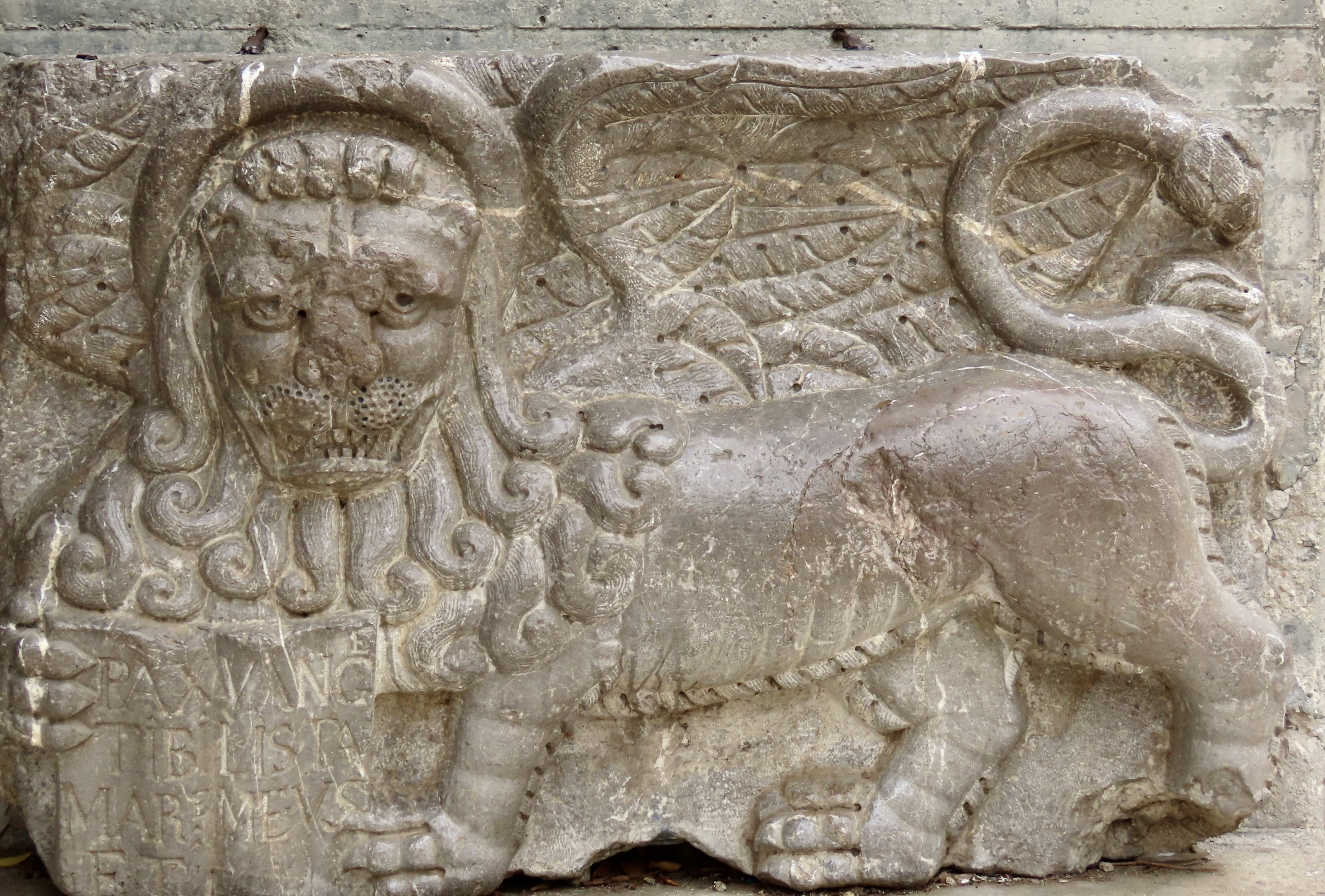
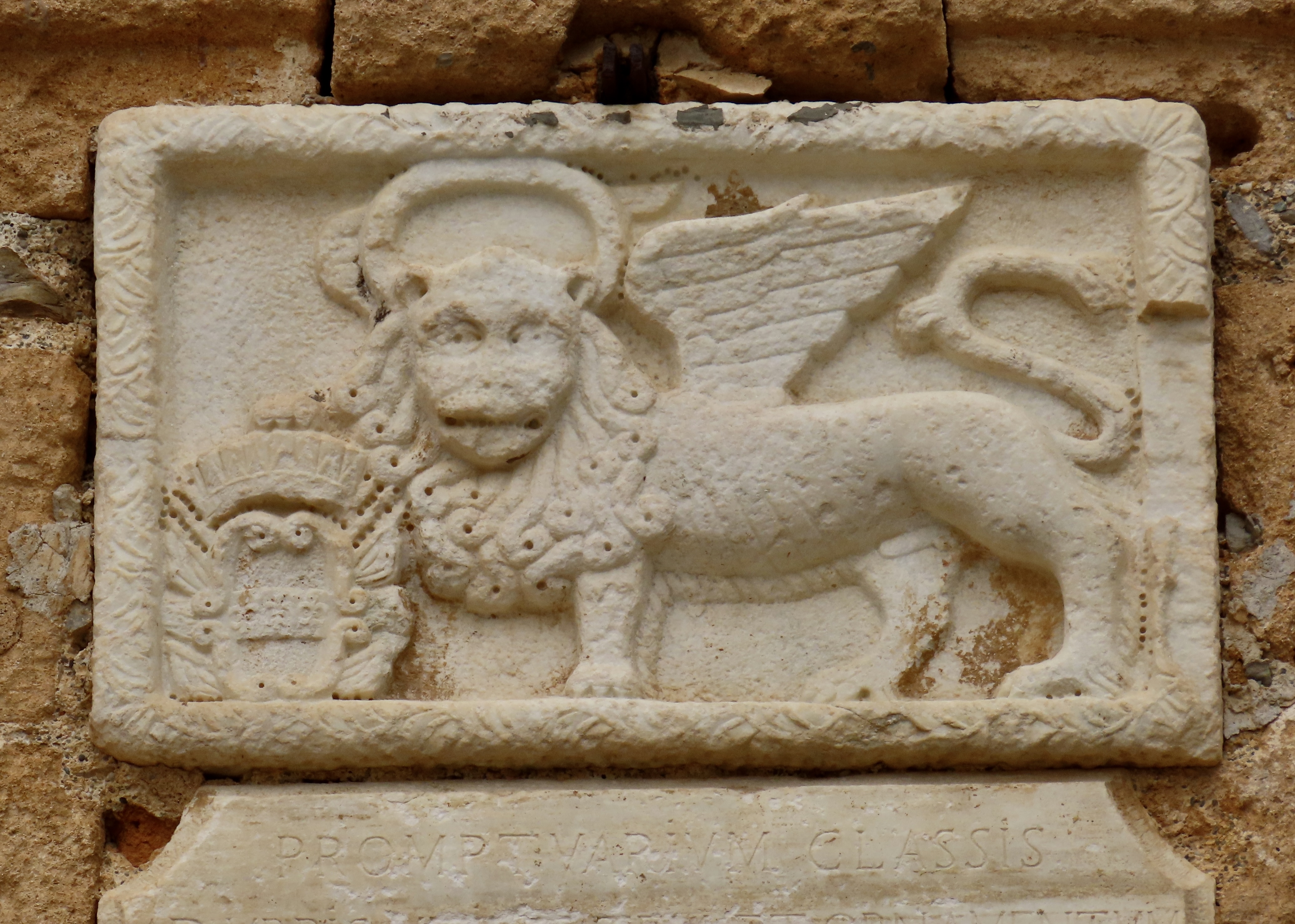
Shortly after leaving Mycenae, we came to the town of Nafplio where we stayed for a week. The lion sculptures there had wings! We had seen them before. In Venice. Their presence in Nafplio was due to the fact that Venice had once occupied the city. The winged lion is the symbol for Saint Mark the Evangelist, who was the patron saint of Venice.
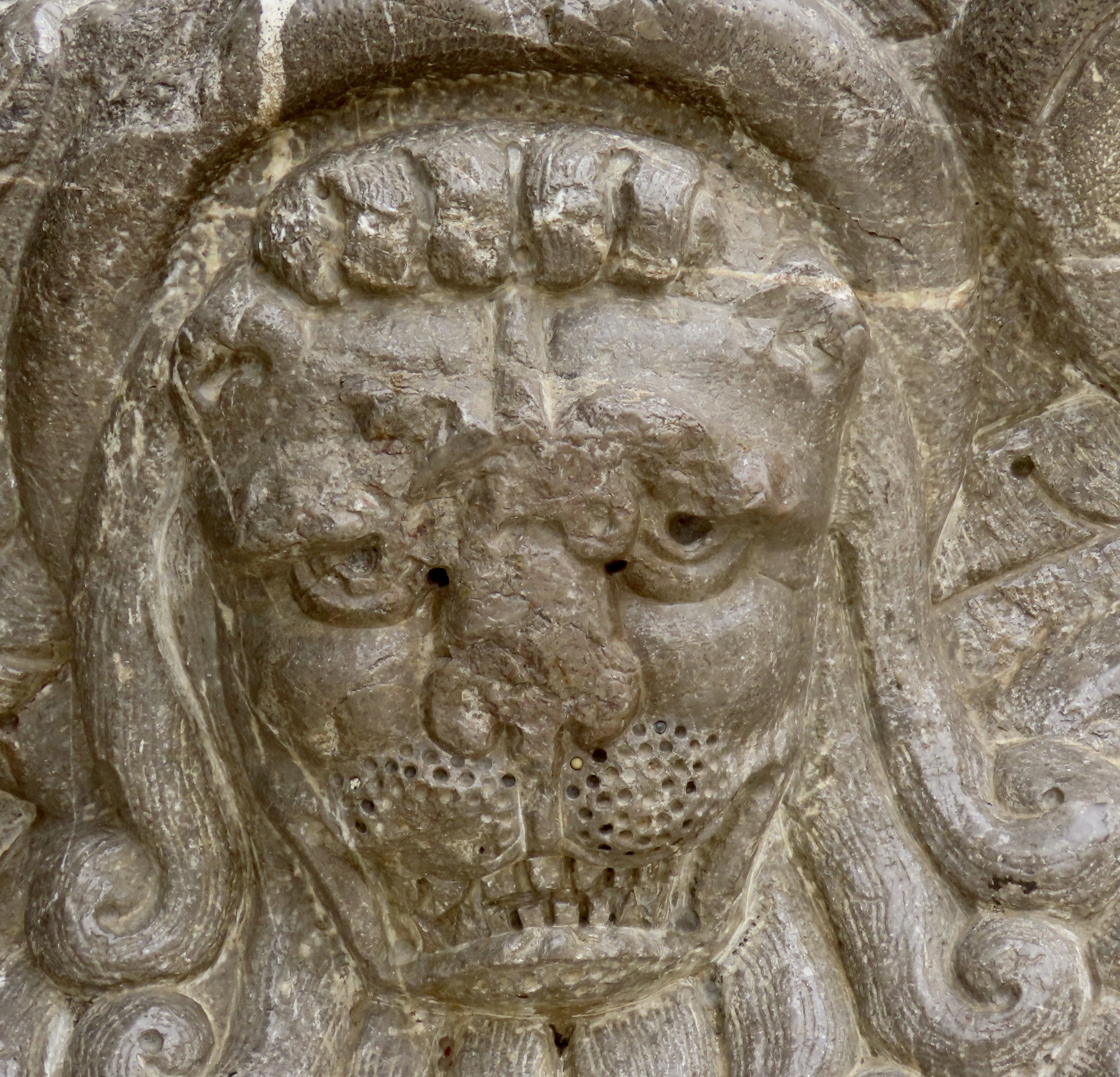
A close up.
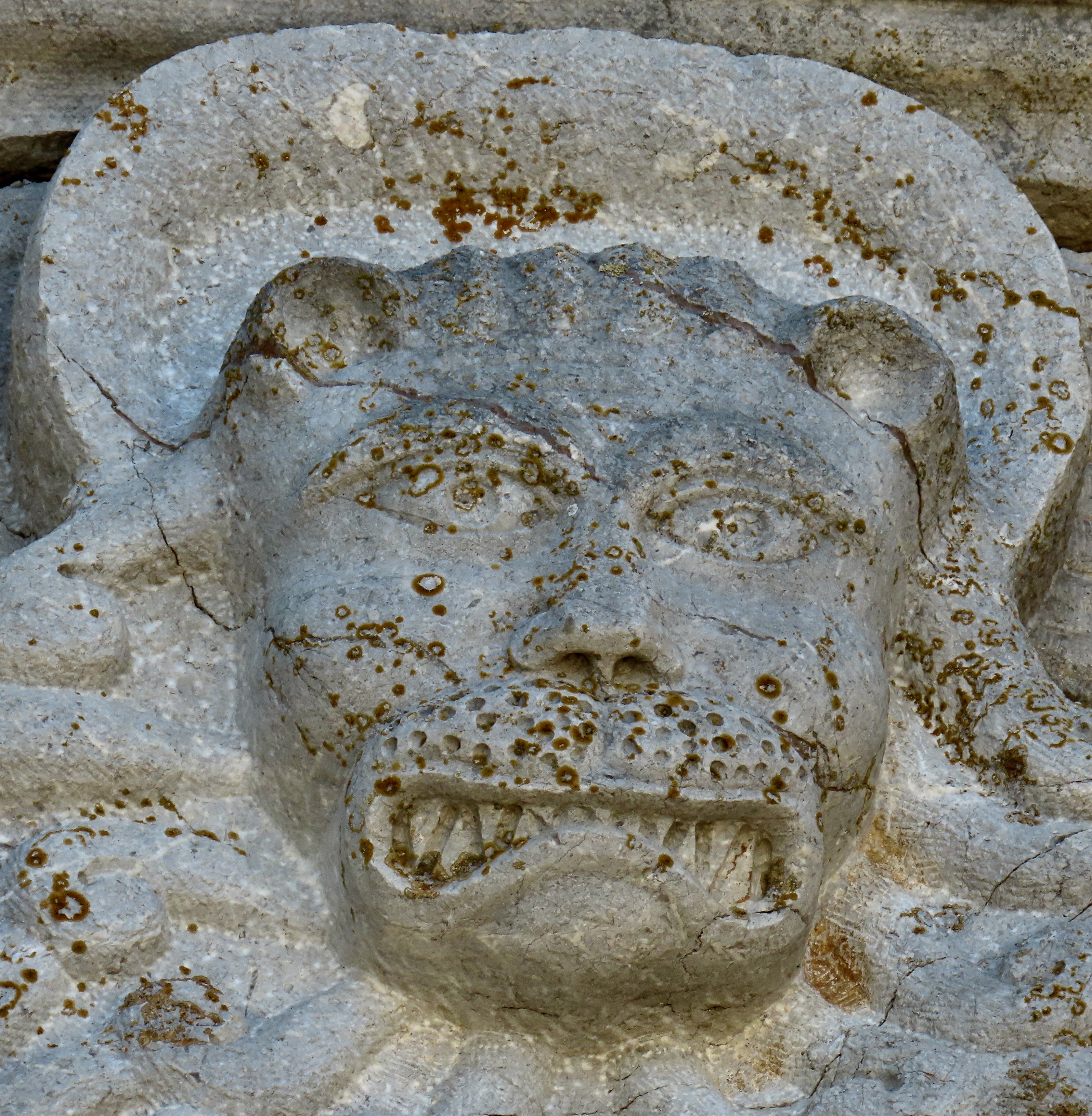
Another example of a Venetian winged lion in Nafplio. In case you are wondering about the round things around the lions’ heads, they represent halos, a required accouterment of saints. (“Don’t forget to put on your halo, honey.”)
The halo is solid here. Judging from the looks on the lion’s face, he was not having a good day. Is pissed a good word here? Sort of how one might look if you had spent your day being dragged through the streets of Alexandria, which is how St. Mark met his maker and gained his wings. But, now, back to kitties.
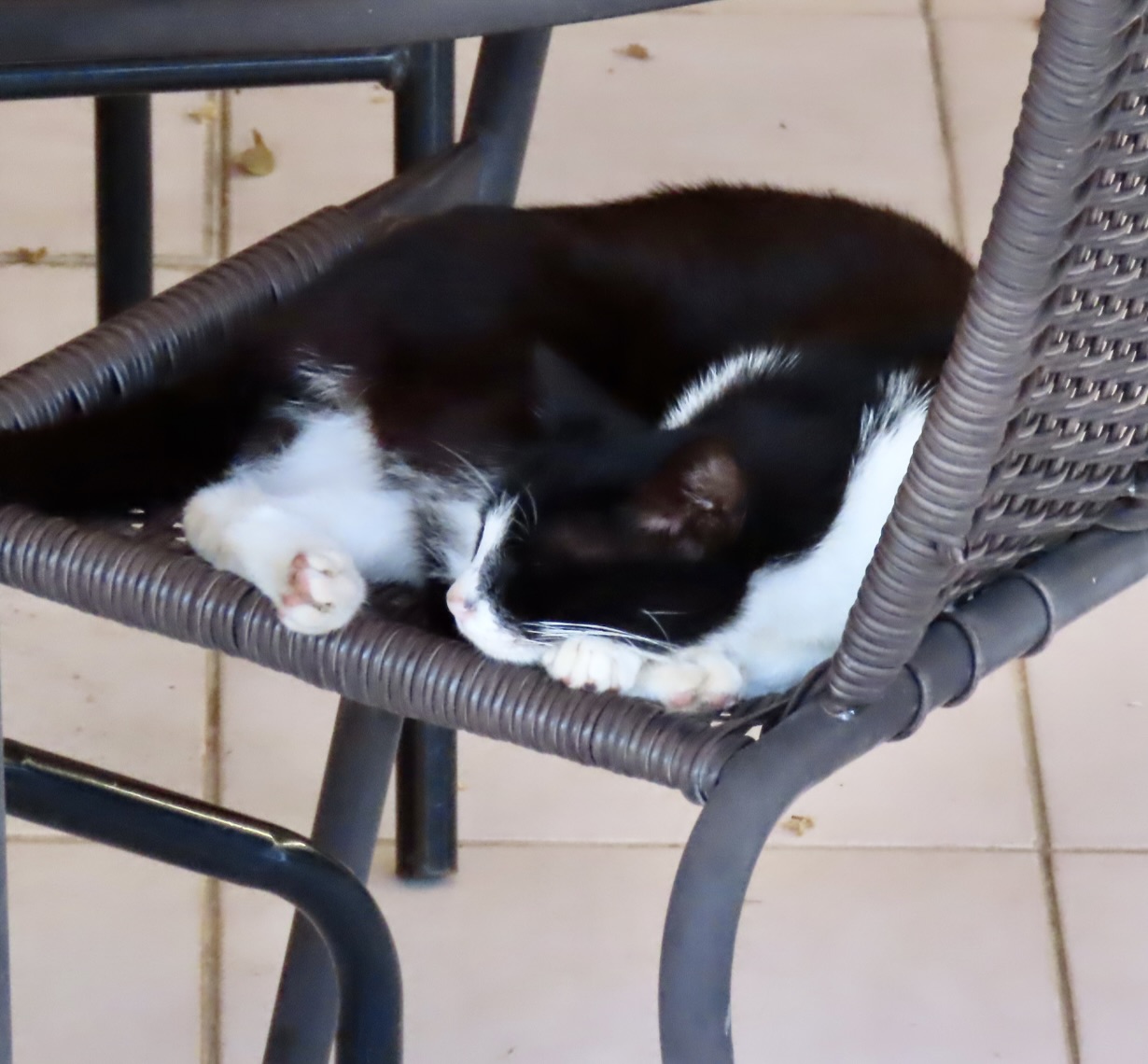
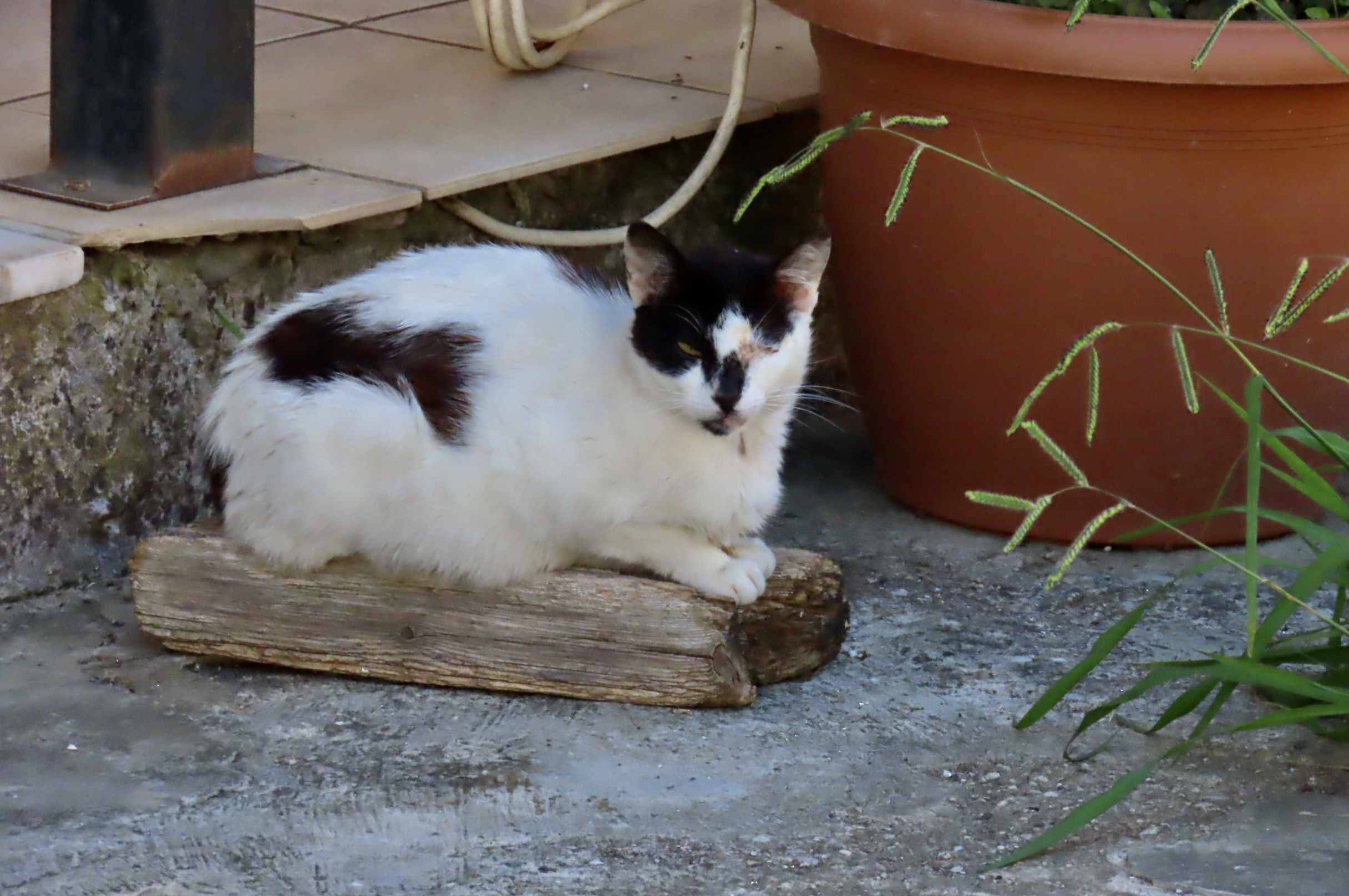
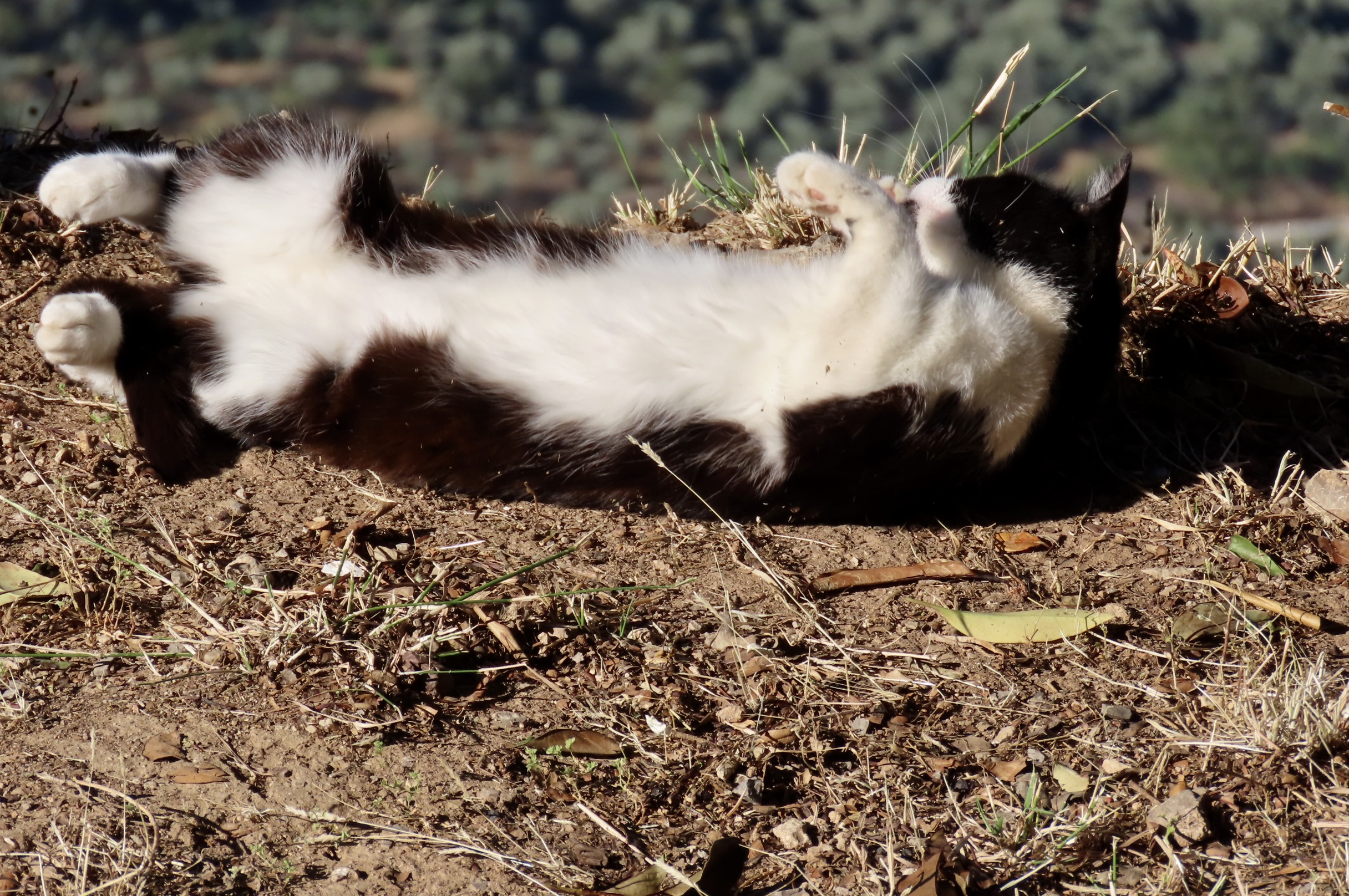
We found this cat ensconced on its chunk of wood in Ancient Pisa, a small community about two miles away from Olympia, Greece where the Olympics were founded. To us it symbolized the fact that cats can sleep almost anywhere. Chairs are quite common in Europe but we have also found cats on the backs of motorcycles, tombstones, all sorts of stone ruins and even on the ground, if nothing else is available.
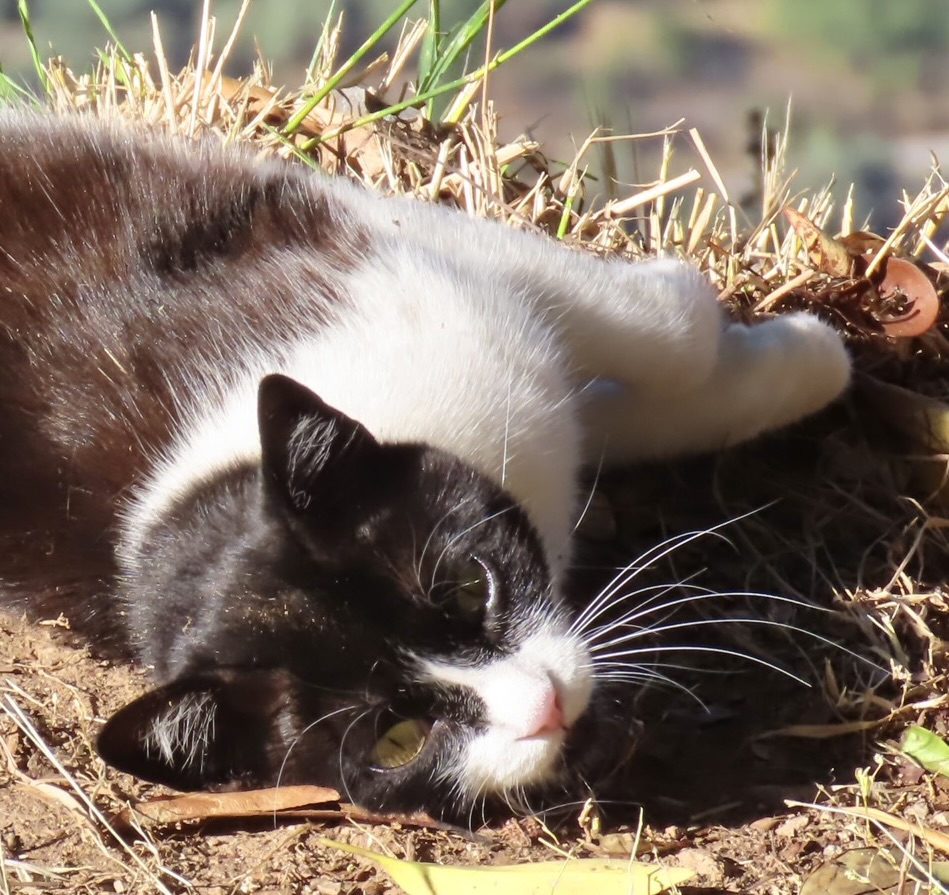
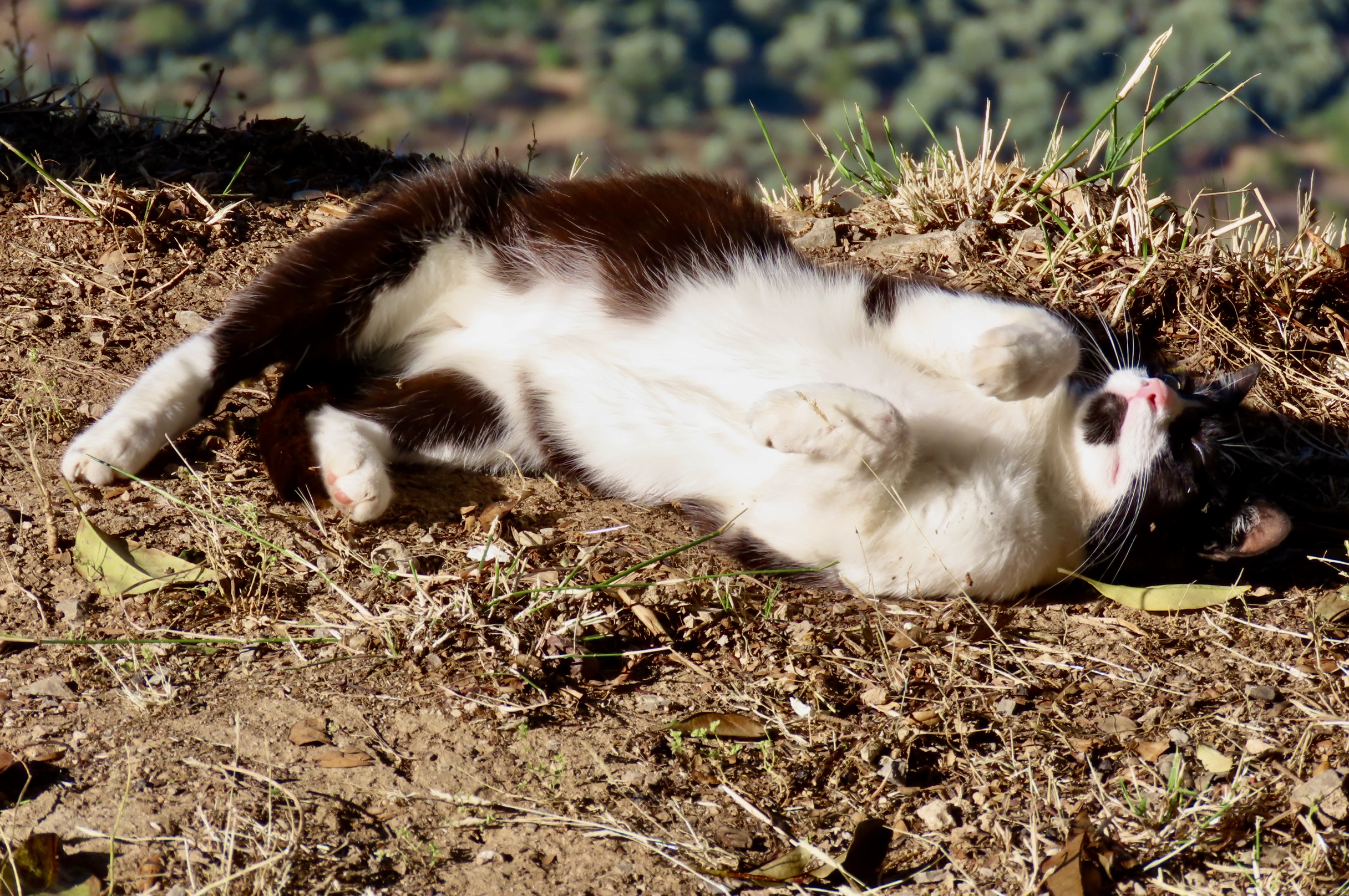
The ground seemed okay to this cat outside our Vrbo in Delphi, Greece…
The challenge was getting comfortable…
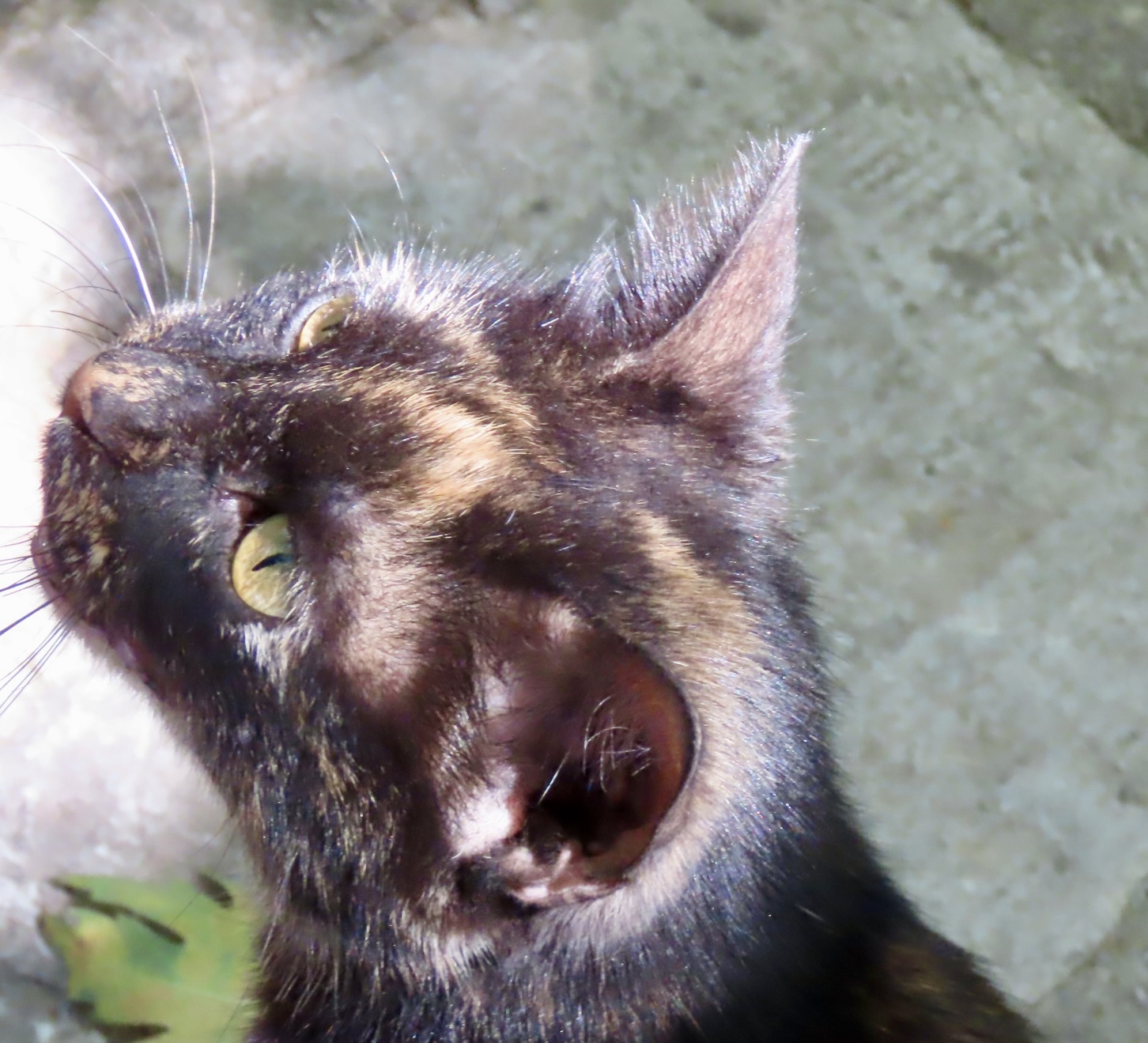
Here’s a hint if you are looking for a little kitty companionship in Greece. Sit down at any of the innumerable outdoor tables you find throughout the country. The odds are a cat will be by to visit in minutes, if not immediately. It’s how they make their living and seems to be universally acceptable to restaurant owners. A bite of whatever you are eating, followed up by another and another will guarantee you have a companion for the whole meal. Unless someone makes a better offer. This pretty little calico had just issued an inquiring meow. It was joined by two other cats while we all had lunch.
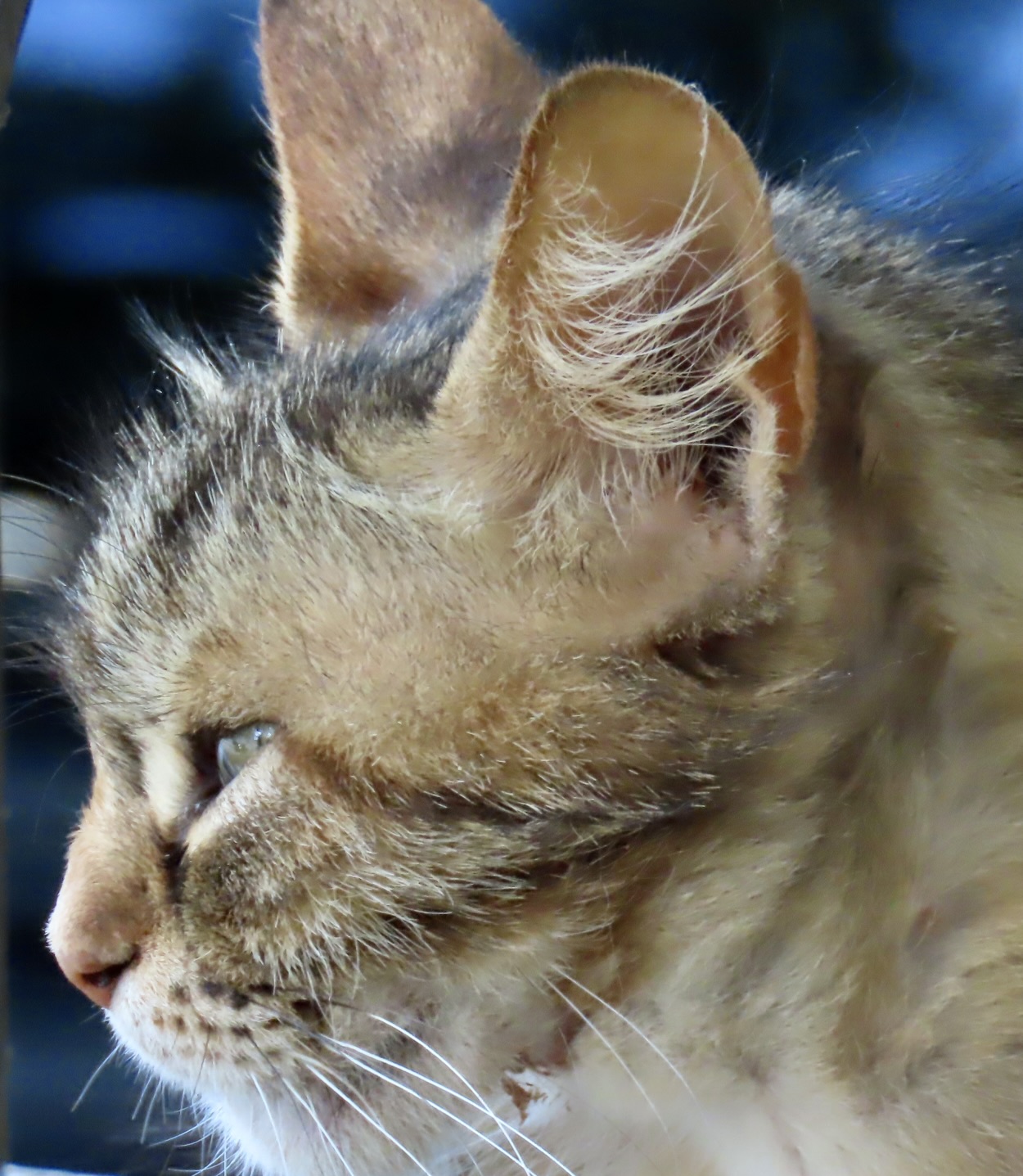
Including this handsome fellow.
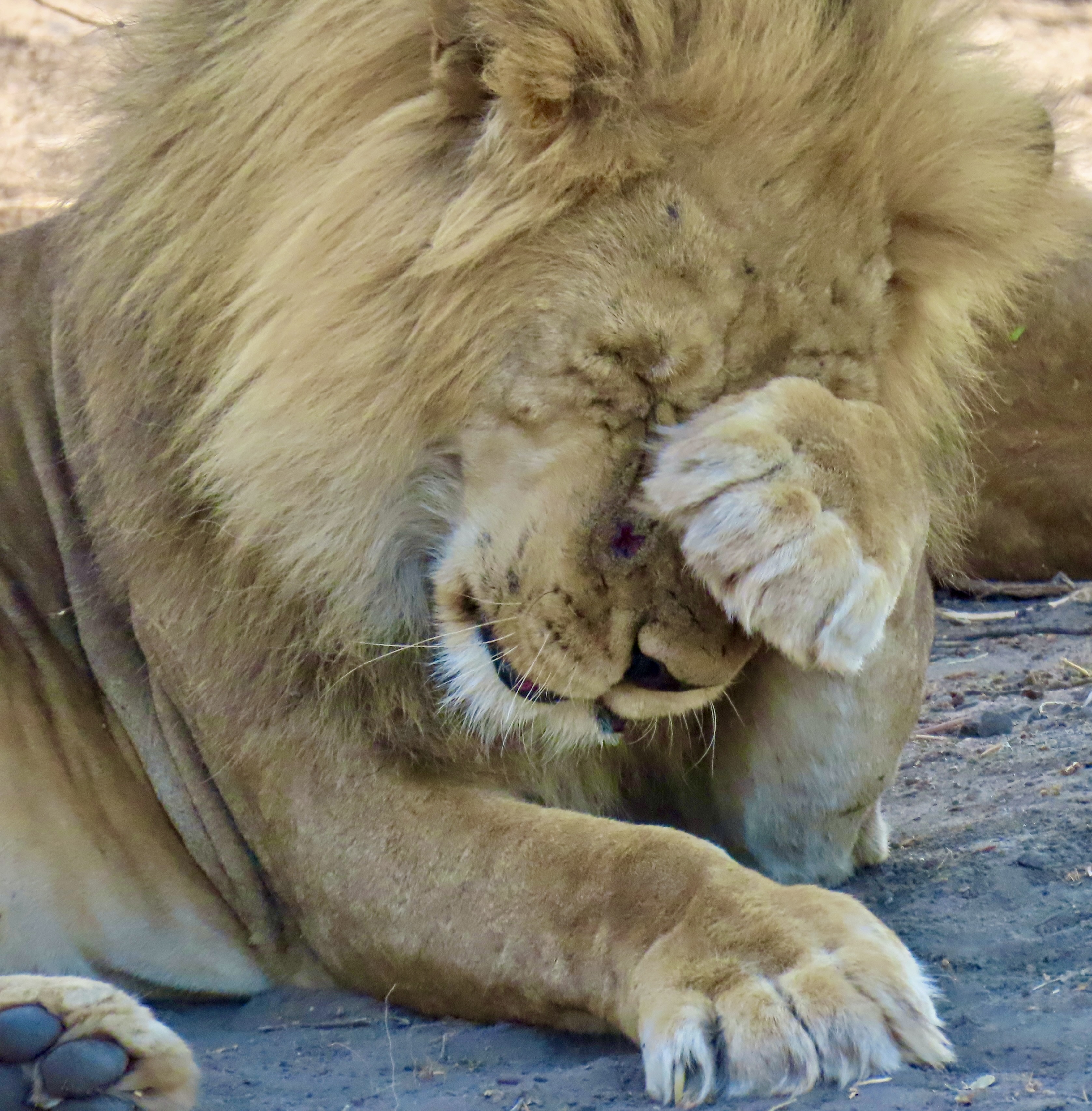
I’ll conclude today with one final lion sculpture. My question is does having a bad hair day make you look scary? Or does it just make you look silly?
That’s embarrassing. (Photo from Peggy’s and my trip through southern Africa.)

Peggy and I have been back in Virginia for a few days, but tomorrow we head out again, this time for the Scottish Highlands and Northern Ireland. Once again, I be choosing tales from UT-OH to fill in while we are traveling.

Alaskan Brown Bear
First up: I’m going to start with bear tales from the years I lived in Alaska. This is large grizzly that was self-entertaining with the bone of a moose that it kept throwing up into the air. “Come a little closer, you will get a much better look.” Yeah, right.

Athens… The Cradle of Democracy and Unrest… The Mediterranean Cruise

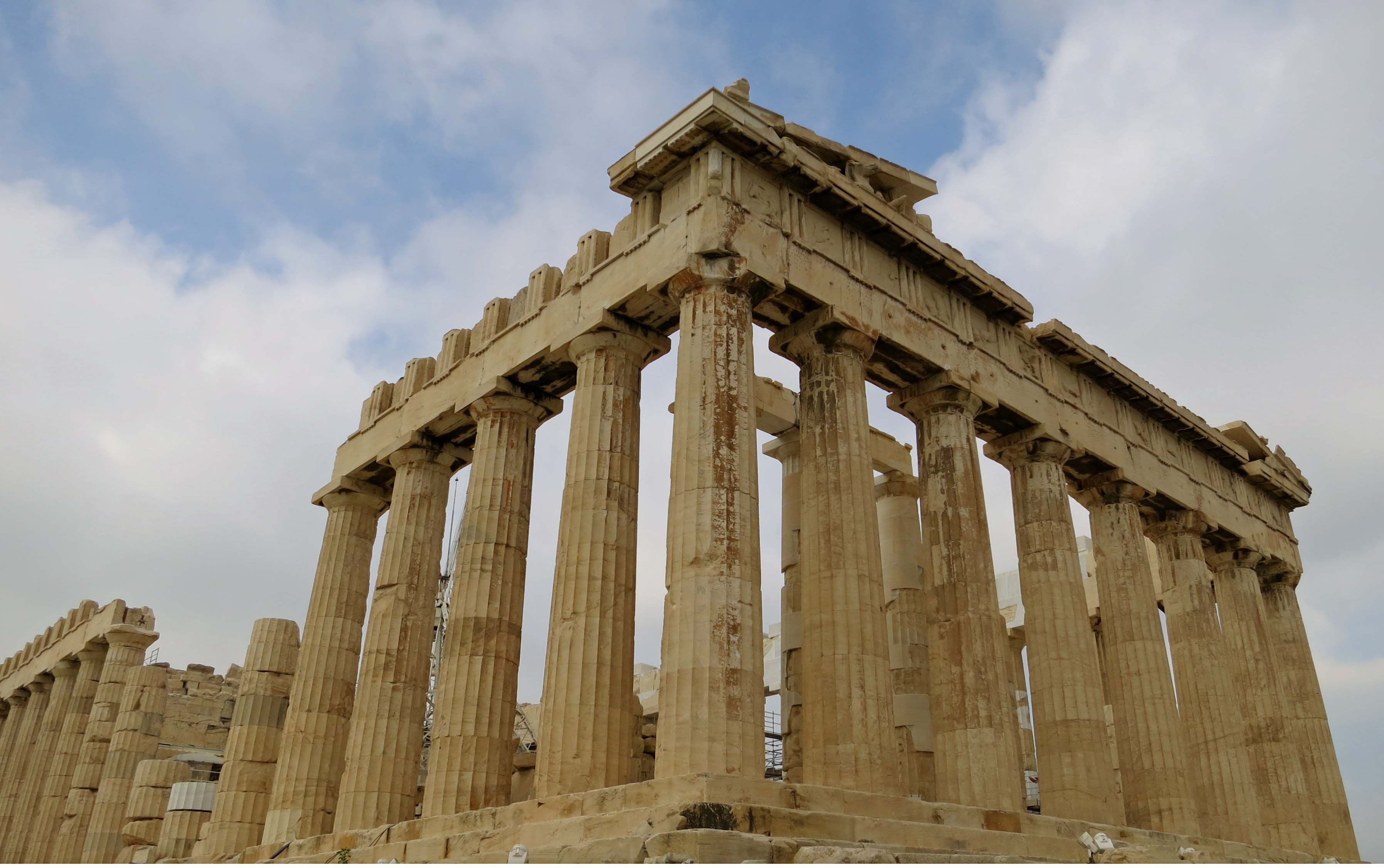
The Acropolis with its graceful Parthenon shown above is probably the wold's most famous historic site.

The Parthenon, standing proudly on the Acropolis in Athens, Greece, is probably the wold’s best known historic site.

Athens was grumpy. Several years of extravagant spending by the Greek government and its citizens had come home to roost with the worldwide financial crisis of 2009. The European Union had required steep austerity measures in Greece as the price of a pulling the nation back from the brink of fiscal chaos. Nothing was sacred from spending cuts including social services, wages and pensions. A massive influx of impoverished immigrants and a nascent neo-Nazi movement added to the country’s woes. Everyone was expected to make sacrifices to help solve the crisis.

Since sacrifices are best made by someone else, there had been massive strikes and violence in the country.
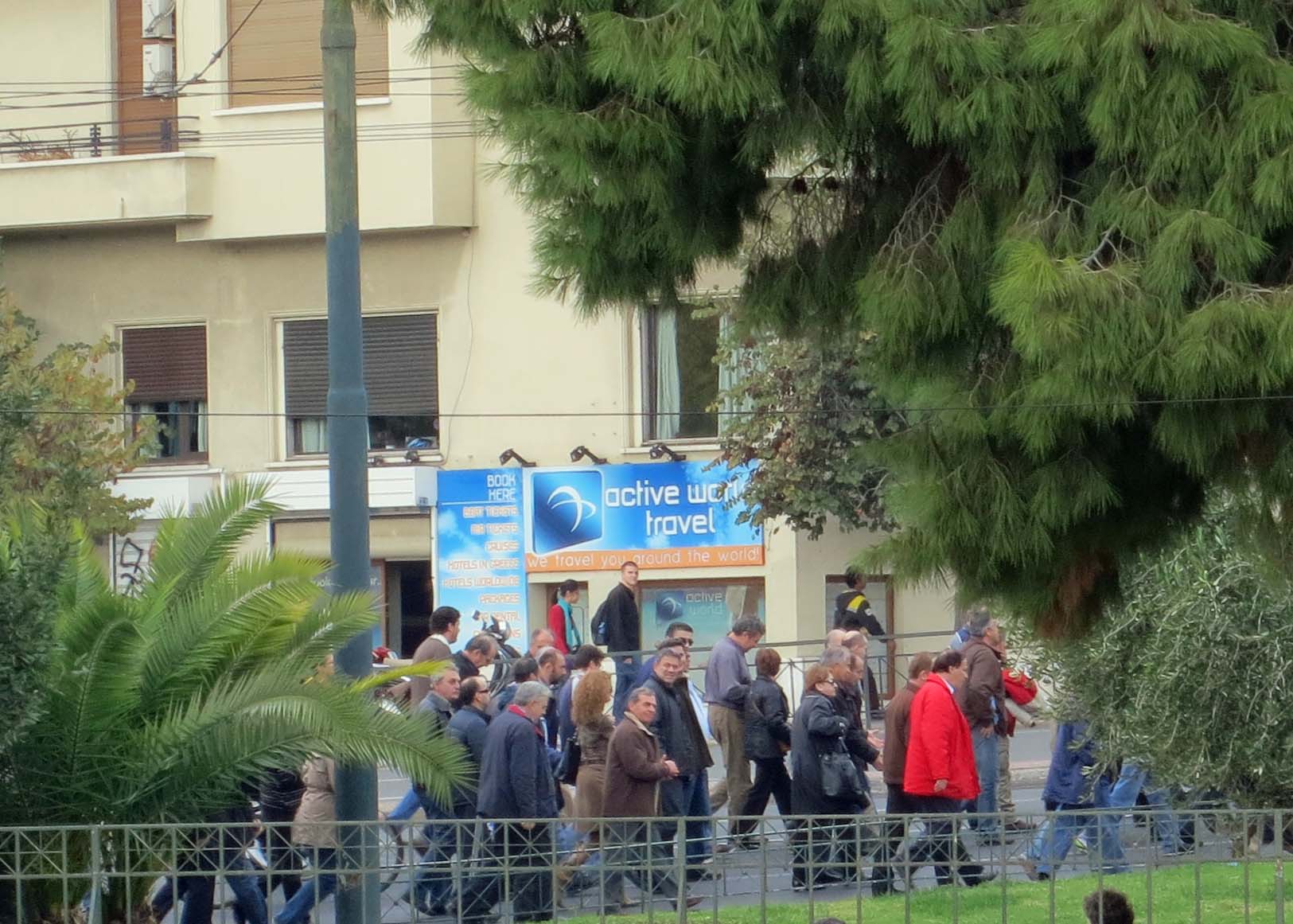
Standing near the Temple of Zeus, we watched as yet another group of protestors hit the streets of Athens.

Standing near the Temple of Zeus, we watched as yet another group of protestors hit the streets of Athens.

We didn’t know what to expect but had decided to see Athens on our own. Tours offered by the cruise line were very expensive. It helps assure a healthy profit margin. There is neither encouragement nor support for independent exploration. No handy-dandy sheets are handed out saying this is what you should do if you want to see such and such on your own.

Normally our self-guided tours worked great but Athens proved to be challenging.

From the moment we stepped off the ship, taxi drivers offering tours inundated us. Tourism had dropped with the fiscal crisis and was dropping even farther with the end of the tourist season. The air of desperation turned to rudeness when it was discovered we were planning to use public transit. Finding the right bus stop and the right bus turned out difficult, however. When we finally did find the bus it was pulling out of the bus stop. Out of frustration I turned to a taxi driver. We were able to hire two taxis for an all day tour for the six of us that was substantially less than the cruise tours.

Was it worth all the hassle? Absolutely.

Much of who we are in the West evolved from what happened in the City State of Athens between 500 and 350 BC. We visited the cradle of democracy and walked where Socrates, Plato and Aristotle had walked. We climbed up the Acropolis and admired the Parthenon and other buildings that have been a major inspiration for Western architecture for 2000 years. We watched the changing of the guard at the Prime Minister’s residence, visited the site of the Athens 2004 summer Olympics and concluded out tour with an expensive but excellent Greek meal.

If you are a history buff, as I am, having your photo taken with the Parthenon as a backdrop is a true privilege.

If you are a history buff, as I am, having your photo taken with the Parthenon as a backdrop is a true privilege. (Photo by Peggy Mekemson)
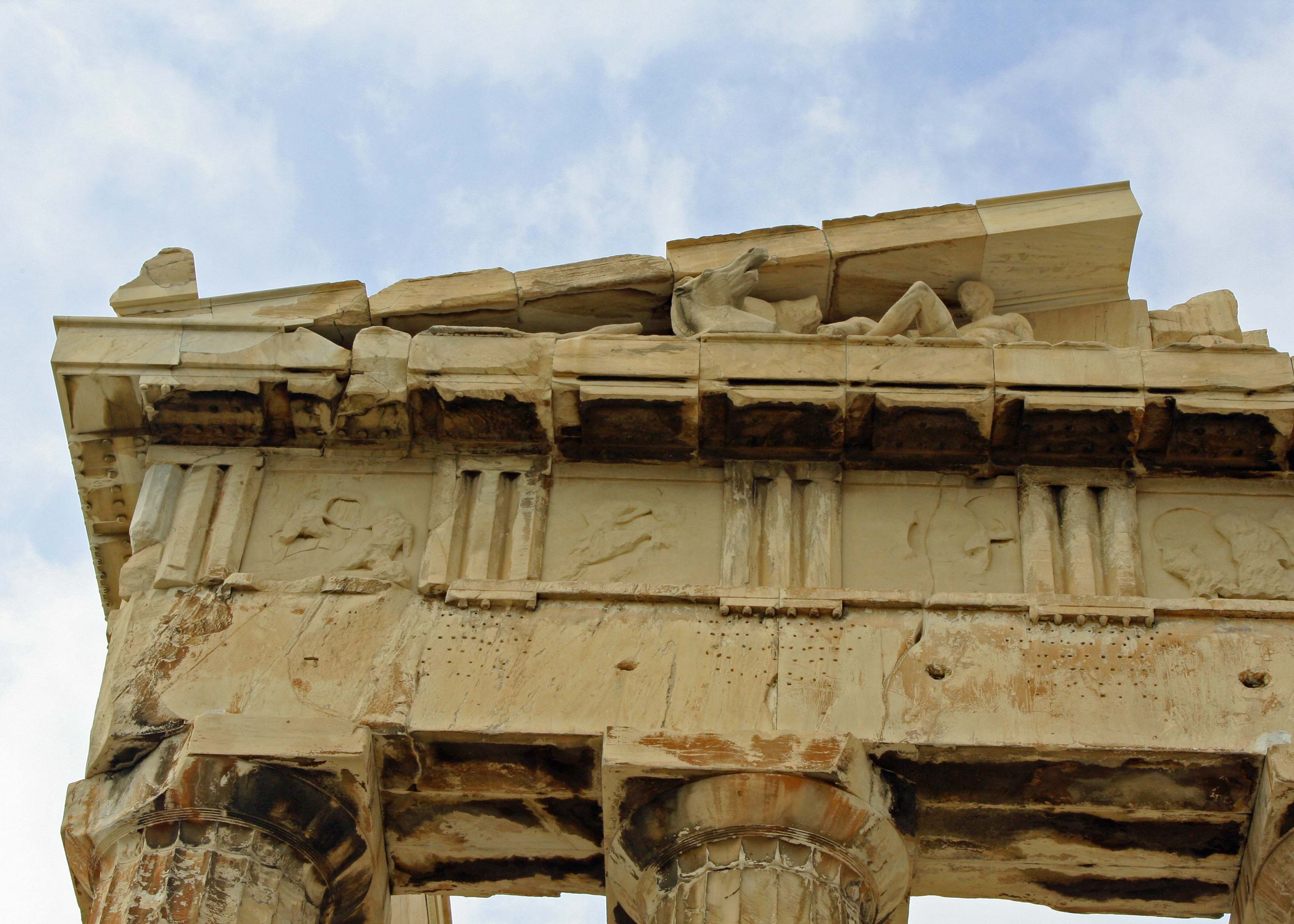
This corner shot shows one of the few statues that remain of many that once decorated the Parthenon. (Many can be found in the British Museum.)

A close up of the corner  shown behind me above features one of the few statues that remain of many that once decorated the Parthenon. (Many can be found in the British Museum.)

Extensive renovation work is being done on the Parthenon, as well as other buildings on the Acropolis. ( Photo by Peggy Mekemson)

Extensive renovation work is being done on the Parthenon, as well as other buildings on the Acropolis. ( Photo by Peggy Mekemson)

A full-scale replica of the Parthenon as it would have looked like originally can be found in Nashville, Tennessee. We stopped by to check it out after our Mediterranean tour while visiting with our daughter and her family.

A full-scale replica of the Parthenon as it would have looked like originally can be found in Nashville, Tennessee. We stopped by to check it out after our Mediterranean tour while visiting with our daughter Natasha and her family.
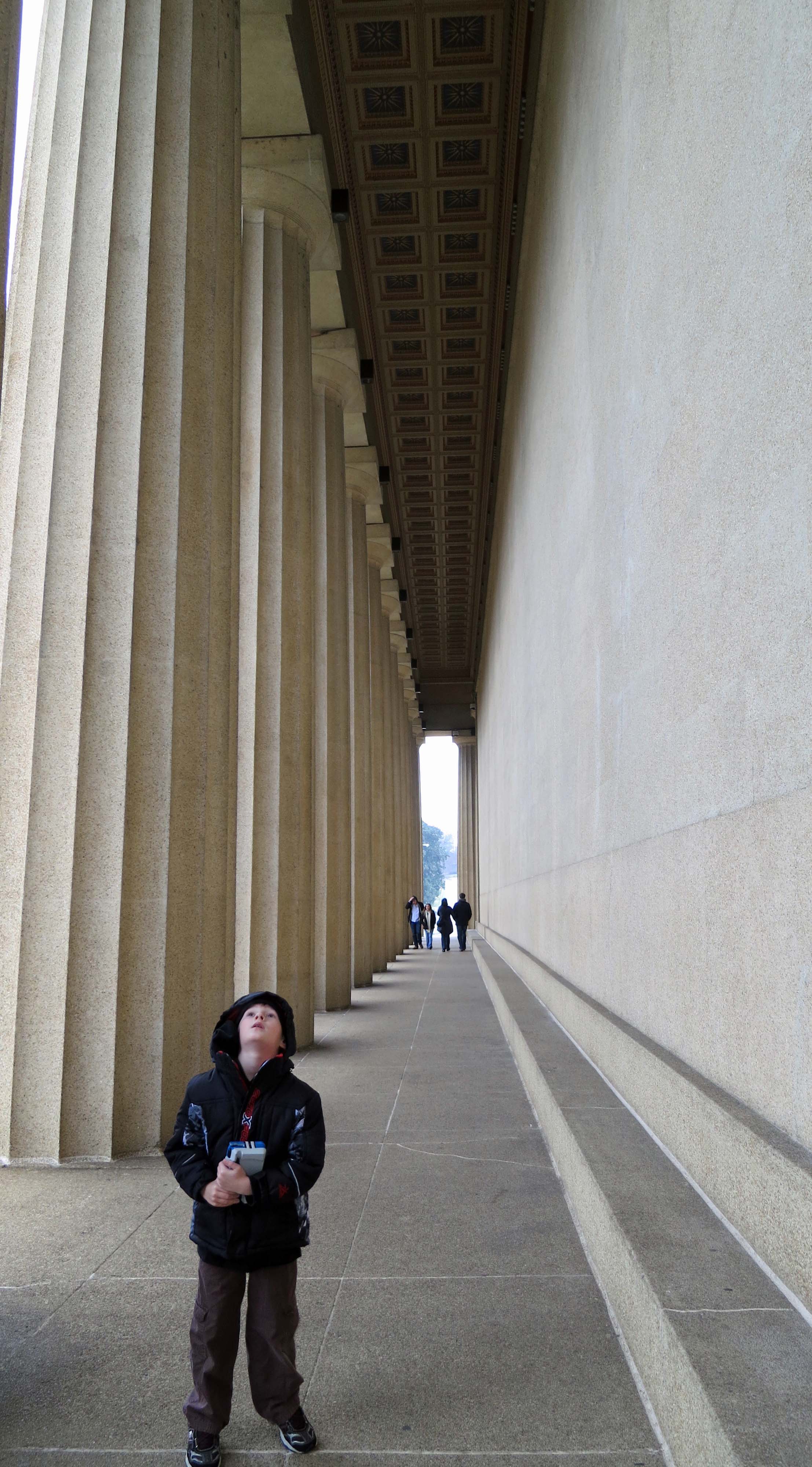
My grandson Ethan provides an interesting perspective in this Nashville photo on the original size of the Parthenon.

My grandson Ethan provides an interesting perspective in this Nashville photo on the original size of the Parthenon.

Another impressive building on the Acropolis is the Erechtheion. An olive tree decorates the front of the building.
Another impressive building on the Acropolis is the Erechtheion. An olive tree decorates the front of the building.

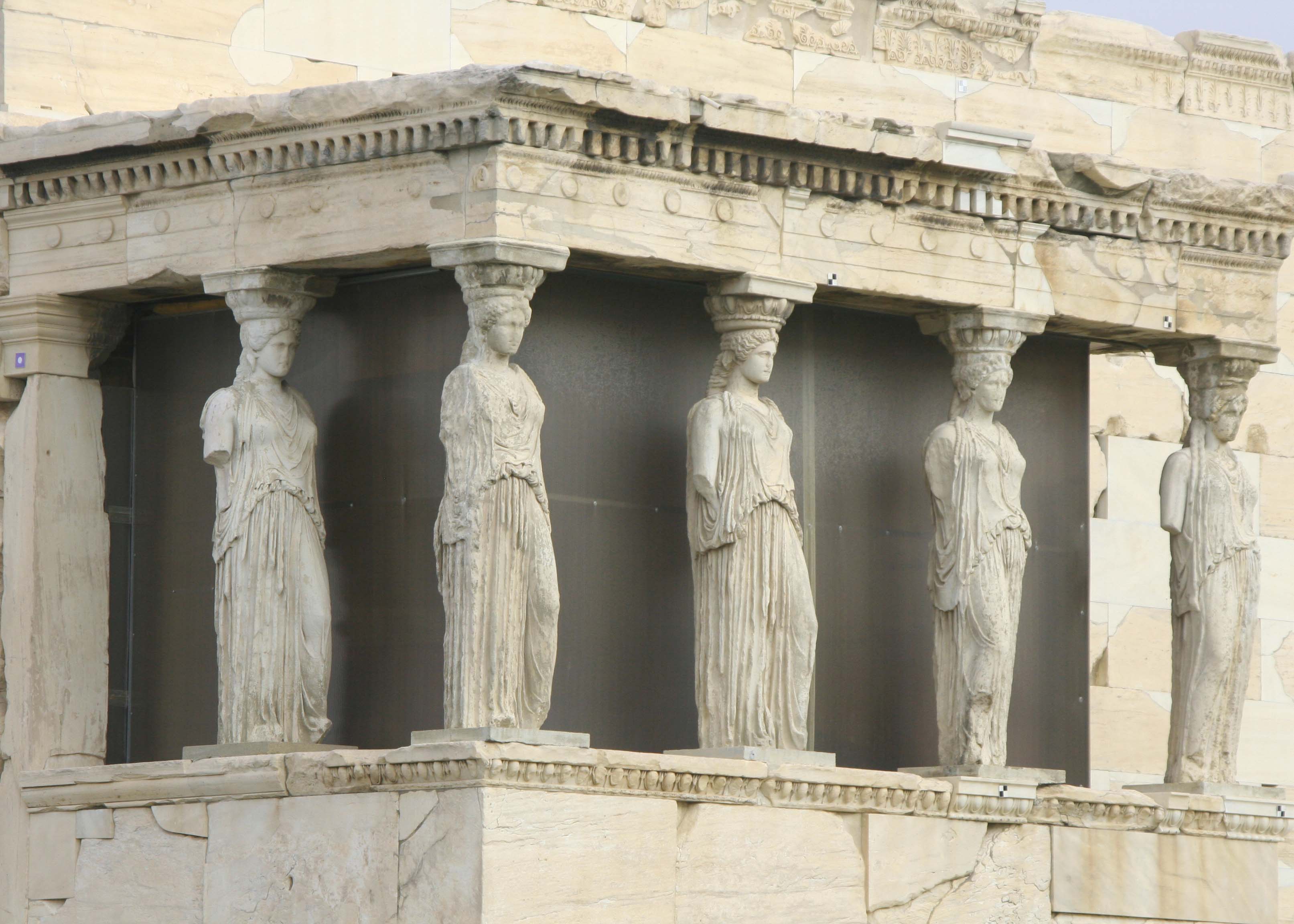
Another important building on the Acropolis is the Erechtheion, which includes the Porch of the Caryatids, lovely Greek maidens who have been turned into graceful columns.

the Erechtheion  includes the Porch of the Caryatids, lovely Greek maidens who have been turned into graceful columns. (Photo by Peggy Mekemson)

A close up of the Elechtheion, windows, and an olive tree representing Athena's gift to Athens.

A close up of the Erechtheion, windows, and an olive tree representing Athena’s gift to Athens.

This is a shot looking upward at the end of the Erechtheon opposite the Porch of the Caryatids.

This is a shot looking upward at the end of the Erechtheion opposite the Porch of the Caryatids.

Looking upward at the Temple of Nike on the Acropolis.

A final view: The Temple of Nike on the Acropolis.

NEXT BLOG: We continue our exploration of Athens with a visit to the huge temple of Zeus, see the site of the 1904 Olympics, watch guards do the kick step and eat fish and moussaka for lunch. Note, in order to make more time for other writing projects, I will be blogging on our Mediterranean Cruise Adventure on Monday, Wednesday and Friday.