A Ton of Food and Homeland Security… Rafting the Grand Canyon

Preparation for our 18-day raft trip down the Colorado River through the Grand Canyon quickly taught me that eating was going to be a central part of our adventure. This is the back of my 22-foot travel van after a trip to Safeway in Flagstaff, Arizona.

Great adventures start with the mundane. For example, did you cancel the paper? Common sense (and probably your mother) admonish that devious burglars have nothing better to do than to cruise the streets looking for rolled newspapers in front of your home.

More importantly, what about the cat?

Once upon a time Peggy and I had a cat named Effie. Vacations meant I would carefully measure out twice as much food and water as she could possibly eat or drink and four times the kitty litter she might use. The likelihood of her pooping all over the house was much greater that the likelihood of her starving. As a reward for my thoughtfulness, she would shed enough fur in our absence to fill a dump truck.

Now we have food to worry about. Lots of it. Tom Lovering, the trip leader, his wife Beth and their friend Jamie Wilson arrived in Flagstaff three days in advance of our Colorado River trip. Their car was packed to the brim with empty ammo cans and other watertight boxes waiting to be filled with food and the miscellaneous paraphernalia of river trips.

The Department of Homeland Security delayed their journey at Hoover Dam. The Agency is paranoid about mad bombers. Its normally low sense of humor dropped to zero when the agents saw all the ammo cans. The whole car had to be unpacked.

Tom Lovering, our trip leader, has been running rivers since the 70s. I first met him in 1974 when I persuaded him that his outdoor/wilderness store, Alpine West, should sponsor a hundred mile backpack trip I was organizing for the American Lung Association in Sacramento.

Tom is even more paranoid about food than DHS is about terrorists. In addition to being a highly experienced rafter and trip leader, he’s an old restaurateur who had spent months planning the menu.  Each dish has been tested several times and quantities have been measured down to the teaspoon. Recipes are spelled out in minute detail. We will eat gourmet on the trip… or die. The options are clear.

Beth, Peggy and I are dispatched to Sam’s Club with marching orders. We fill seven large shopping carts with food. Think of it this way. There are 16 people going on an 18-day trip and eating three meals a day. This equals 864 individual meals.

When we arrive back at the motel, Tom and Jamie have set up a staging area. Food needs to be organized by meal and day and then stuffed in the appropriate containers. The containers will then be assigned to rafts. It’s important that we know where to find the beer.

We have yet to shop for perishables and more food is coming from Sacramento. Our room, we discover, is to be the recipient of most food. There is barely space to sleep.
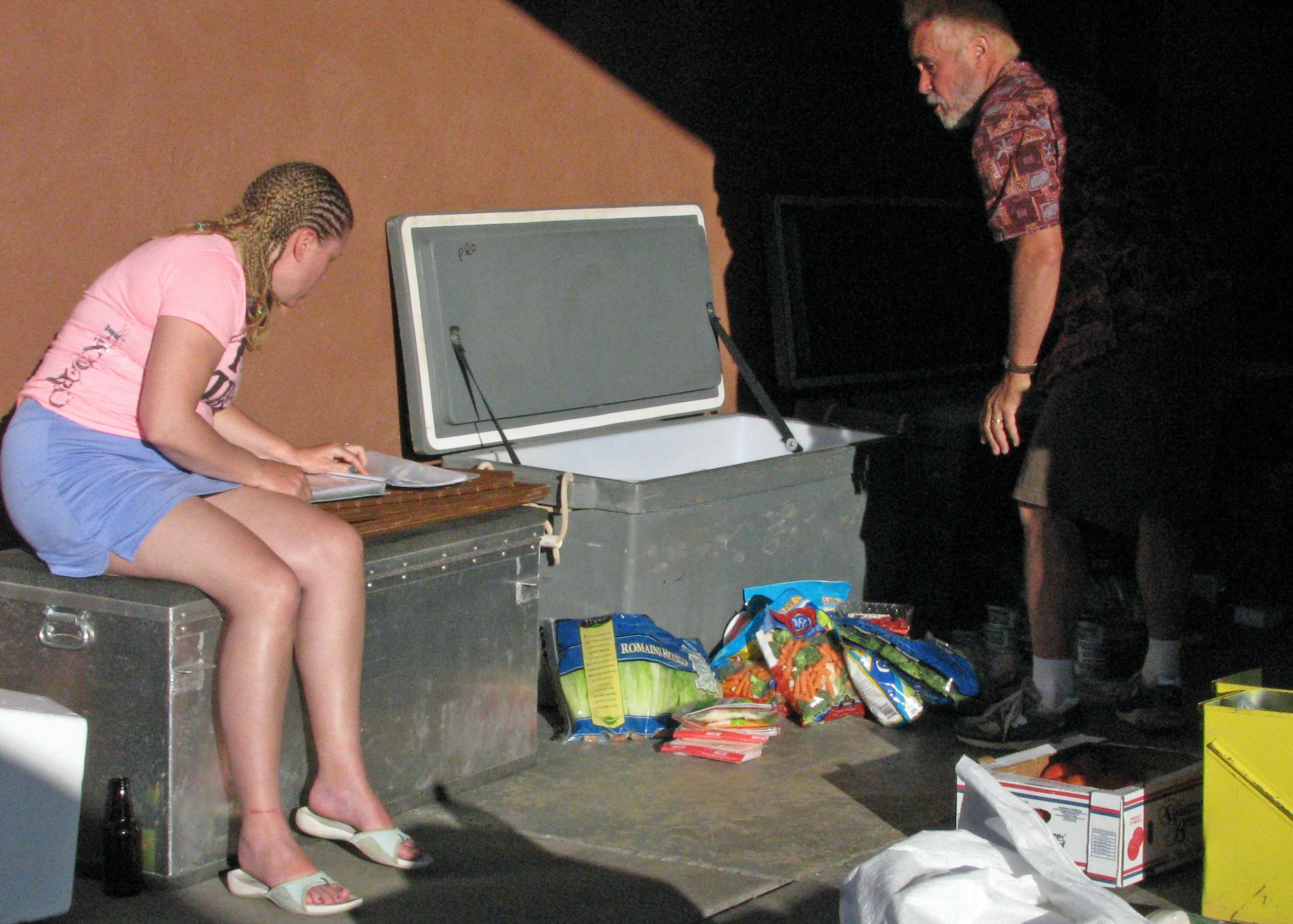
Food purchase and storage for an 18-day river adventure depends upon numerous lists. First you have to plan out menus and quantities. Next the food needs to be purchased. Finally it has to be carefully stored so you will find the right food on the right day. Tom’s wife, Beth, was in charge of the lists. (Photo by Don Green)

One of our participants obviously felt that tequila and oranges needed to be stored together.
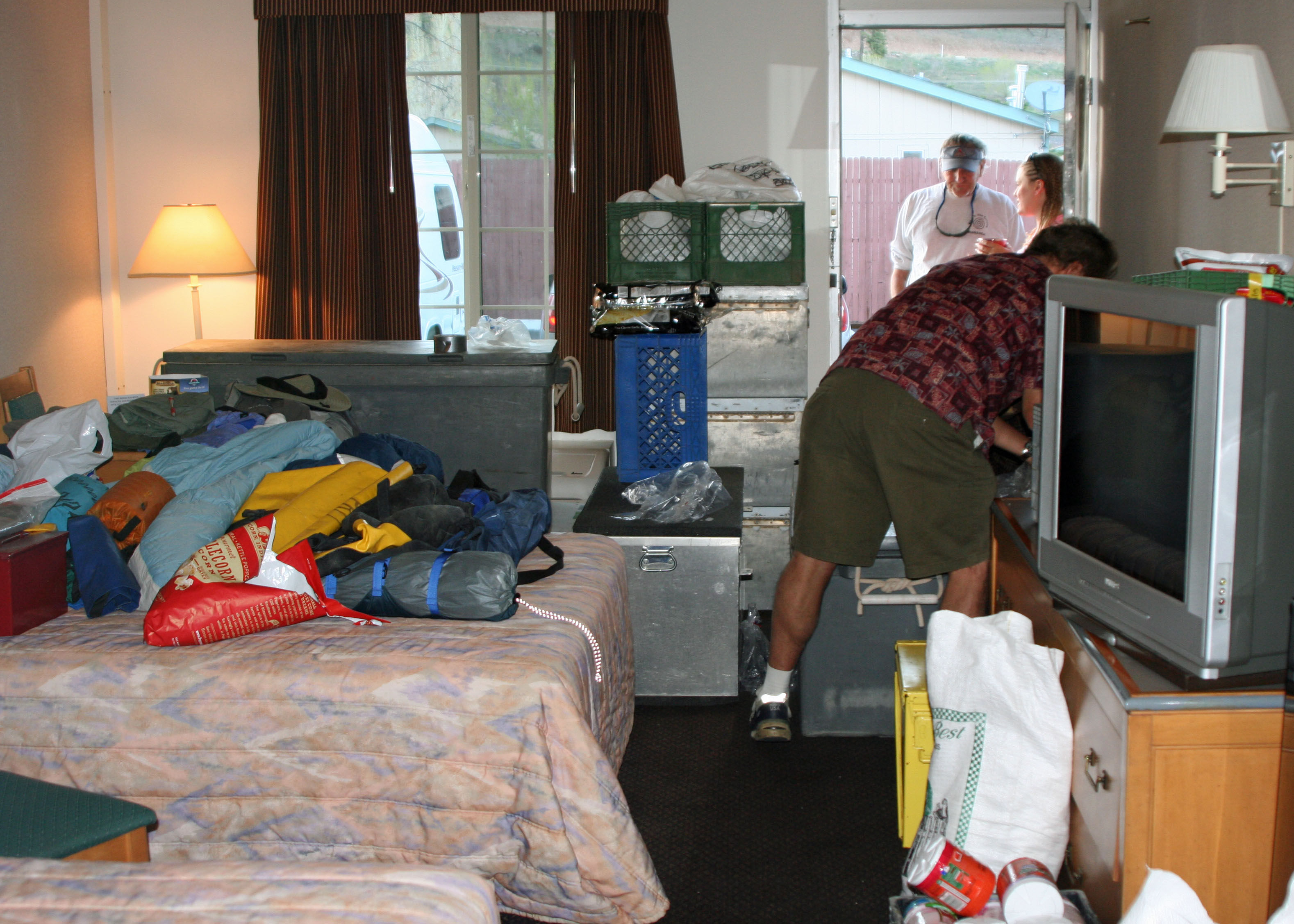
Our bedroom was packed with food. Personal gear is on the bed.

Food organization took place outside of our motel rooms.

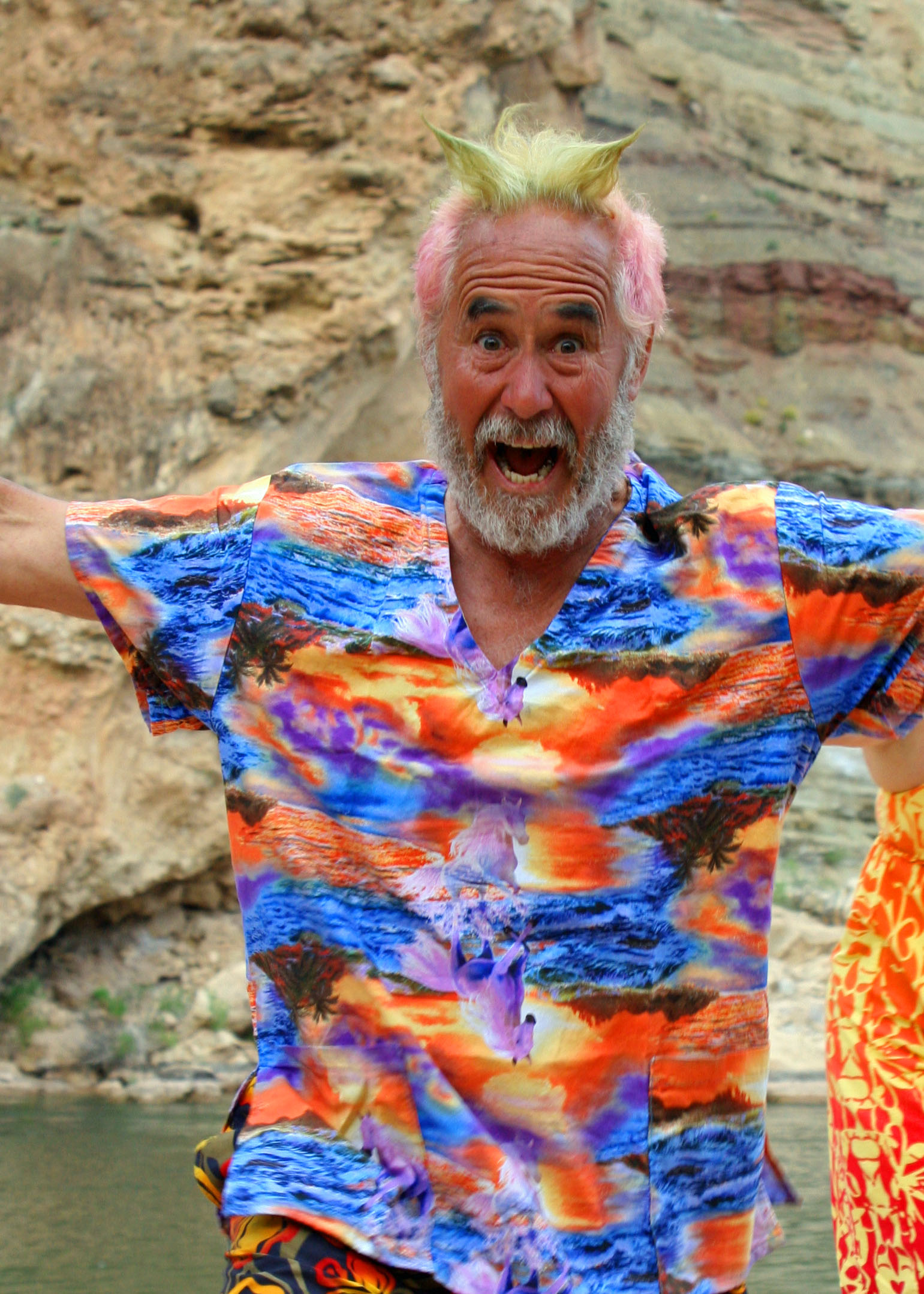
The next day is more relaxed. Other trip members begin to arrive and Peggy and I assume airport shuttle duty. Tom takes time for a makeover into something resembling an English Punk Rocker from the 70s with green and purple hair. Homeland Security was right to be suspicious.
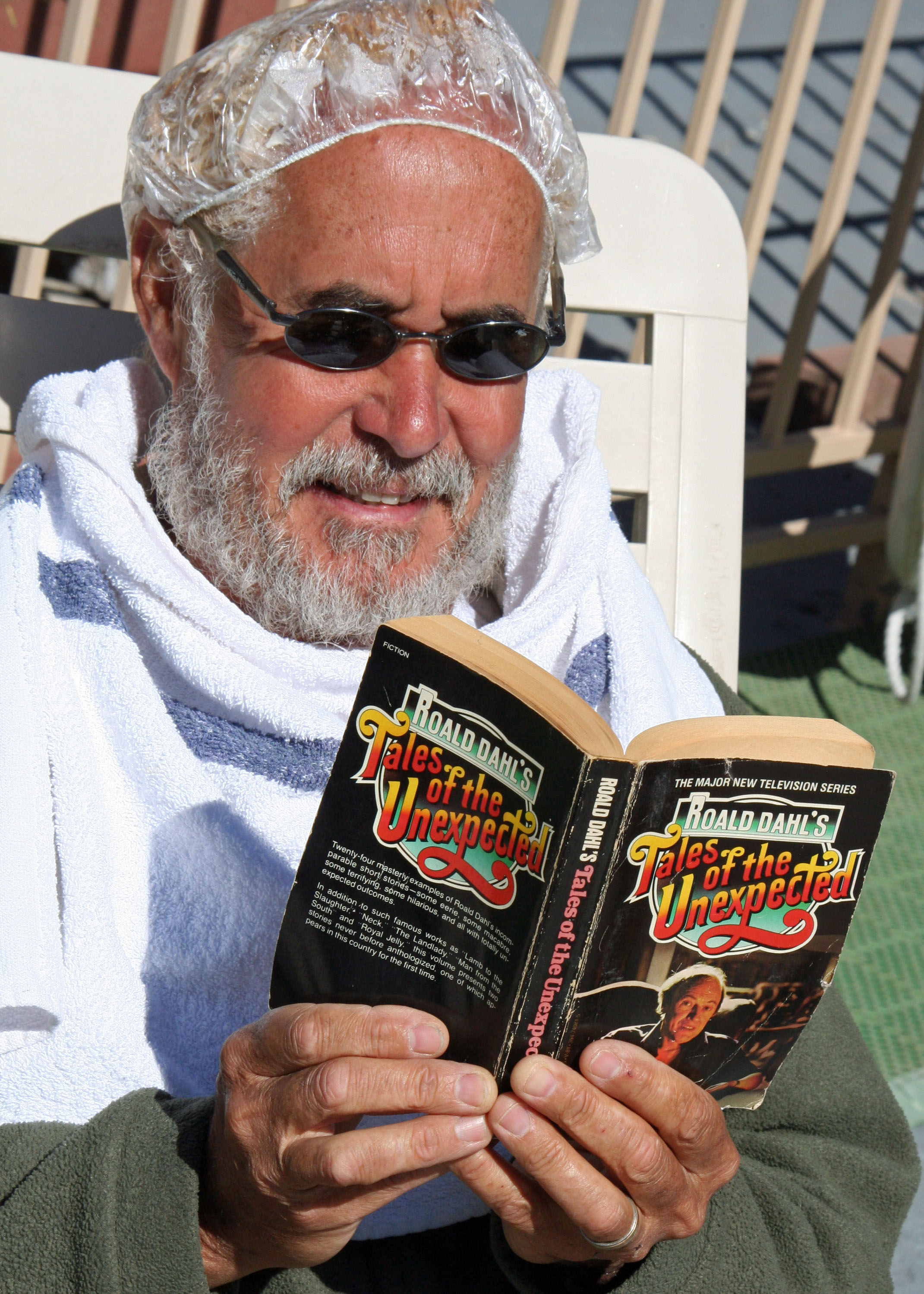
Tom is 50% businessman, 30% adventurer, and 20% character. Or maybe I have the percentages reversed. Here he is having his hair bleached for the trip. You will see the results in future posts.

Next blog: Three days and 39 miles: The Journey Begins.
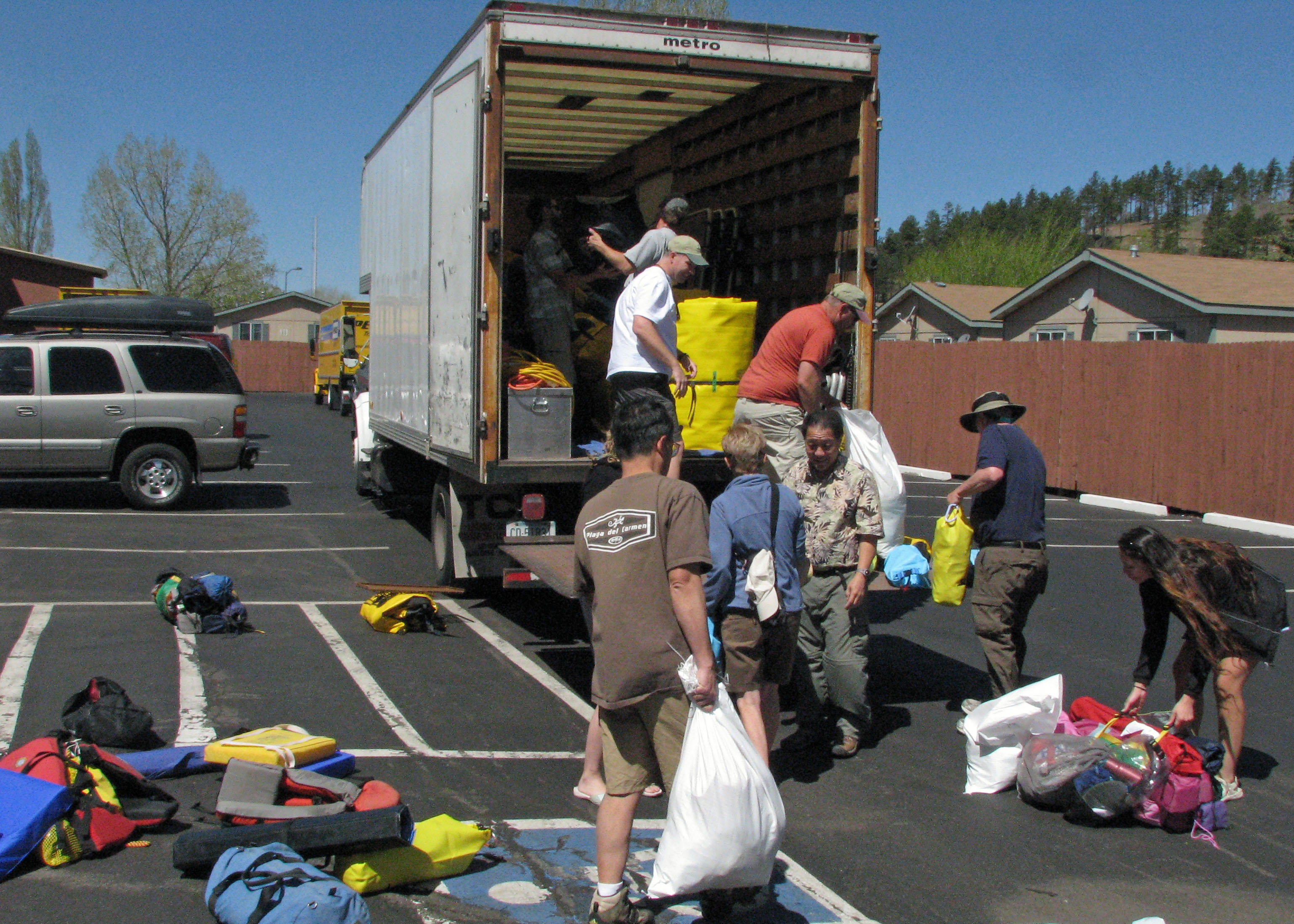
The morning of the adventure has arrived. Everything we have packed… our food, personal gear and rafts are stuffed into this truck in preparation for our drive to the takeoff point, Lee’s Ferry.

Flagstaff, Arizona: Countdown to Exploring the Grand Canyon by Raft

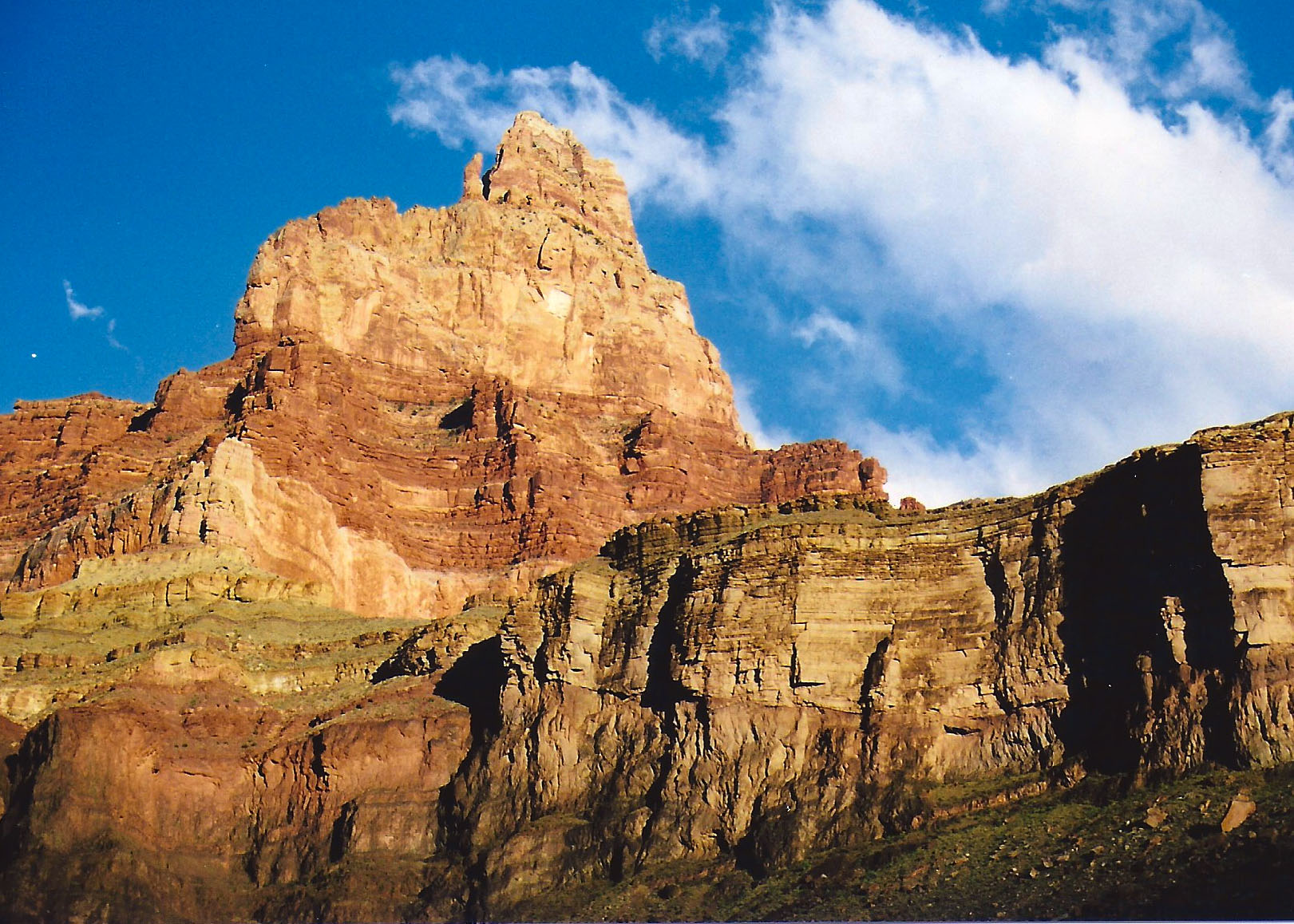
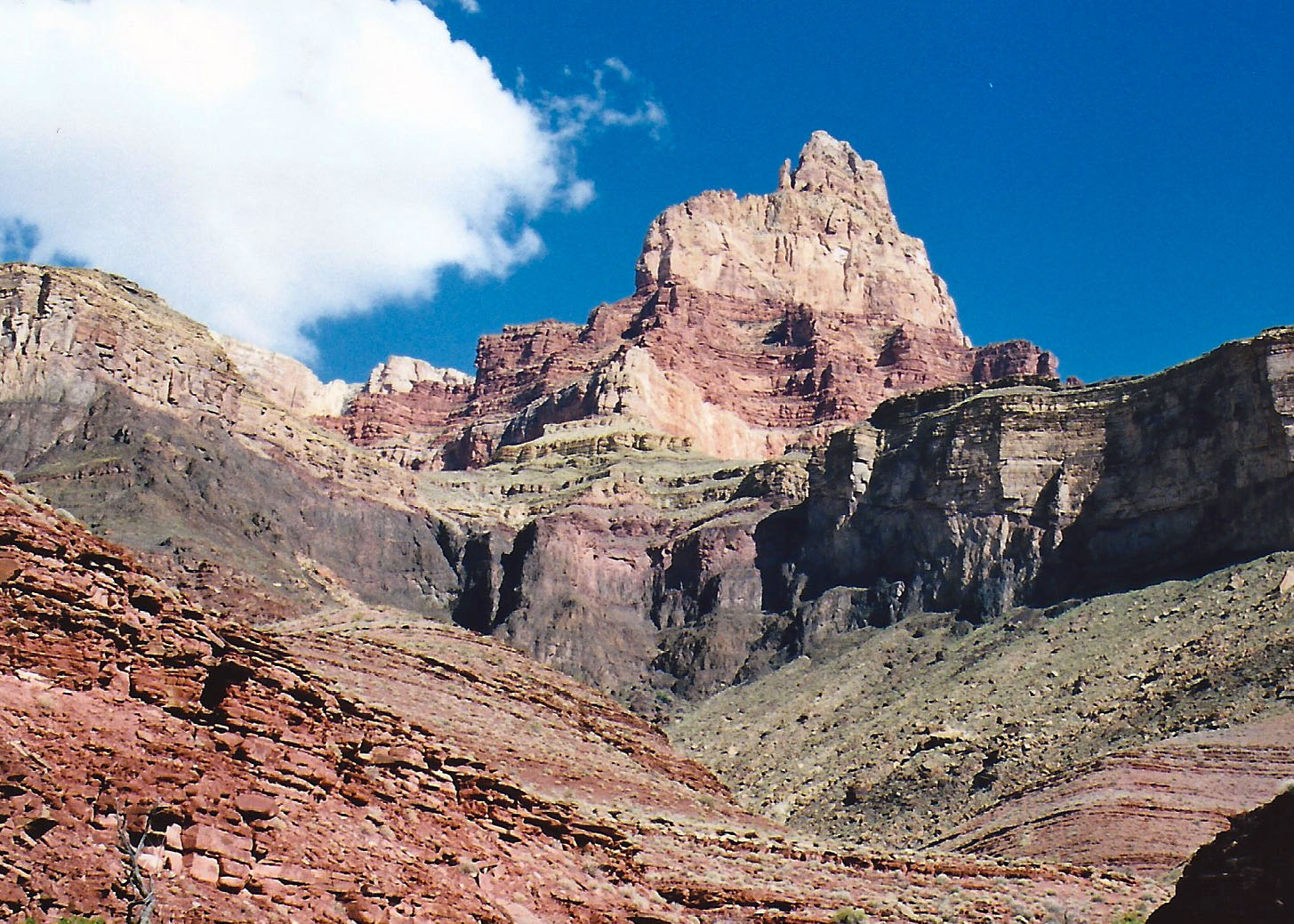
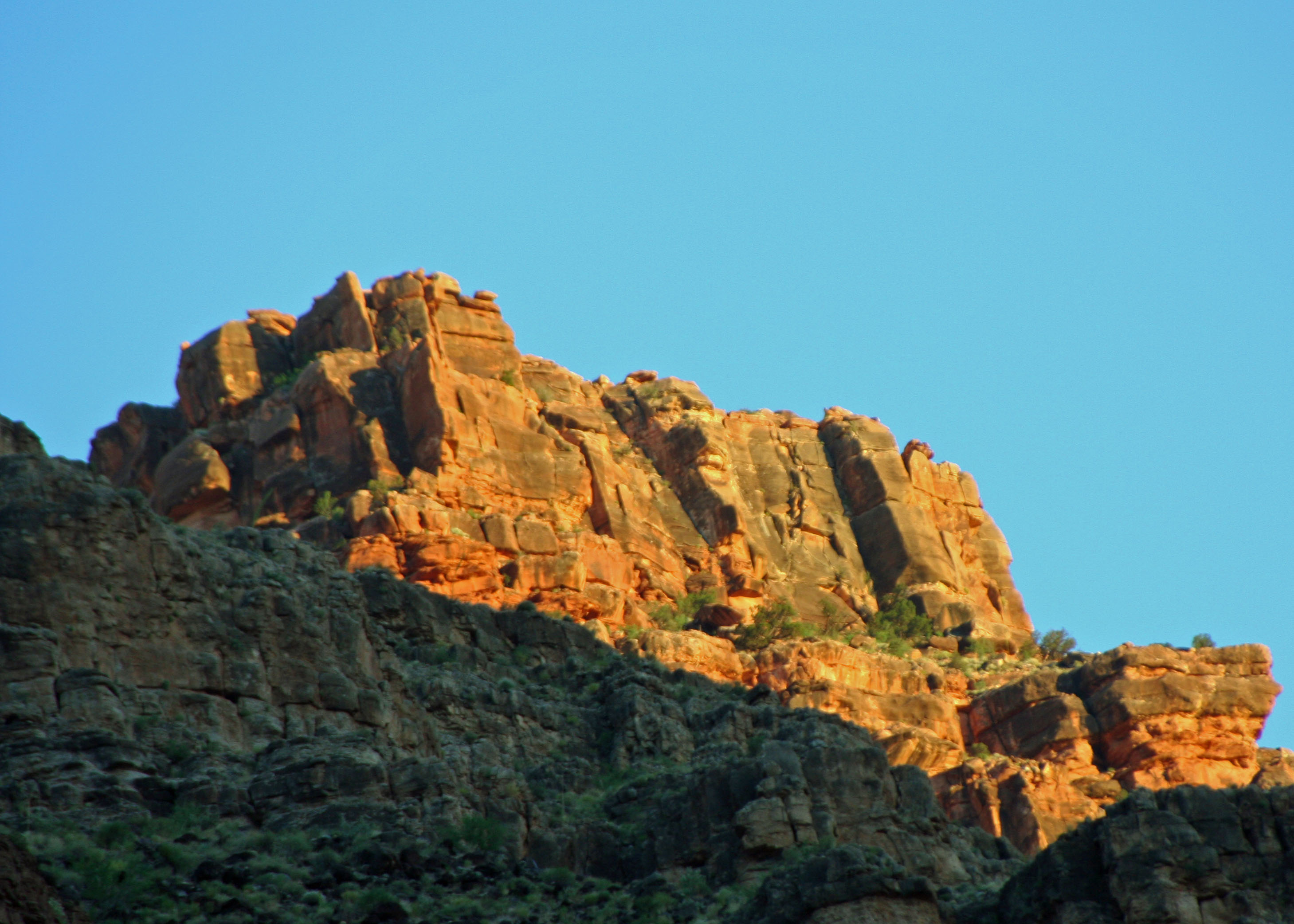
I have often wondered what part, if any, the strange rock formations in the Grand Canyon played in the development of the Hopi belief about Kachina deities.

Five squirrels with long tufted ears just went charging past our van… in a row. I think it must be love and Peggy agrees. We speculate a female is leading the boys on a glorious romp. “Catch me if you can!” she giggles. The Albert Squirrels are excited to make babies and perpetuate the race, or species, if you want to be biologically correct. Lust is in their hearts. Or maybe it’s just the guys working out territorial differences.

We are located at a KOA in Flagstaff, Arizona as we prepare for our raft trip down the Colorado River. It’s a big campground. Everywhere we look men and women wearing yellow shirts are busily preparing for the onslaught of summer tourists. It feels like a beehive, or squirrel’s nest. The camp cook tells us 28 people work here. Jobs are highly specialized. The man who straightens out misplaced rocks stopped by to chat with us this morning.

Yesterday we watched two employees struggle for an hour on laying out the base of Teepee. It had all the flavor of an old Laurel and Hardy film. They kept measuring and remeasuring the angles, first one way and then the other. I expected one to leap up and start chasing the other around camp with a 2×4.

We wonder what the Kachina deities who live in the San Francisco Mountains overlooking our campground think about the squirrelly activity taking place beneath them. There are bunches of them up there, over 300 according to Hopi lore, and each one has a lesson to teach, wisdom to disperse. They come down from their perch in the winter to share their knowledge. I suspect they would have made quick work of the Teepee project.

Peggy and I hike up the mountain following Fat Man’s trail. Of course there is no irony here as we desperately try to beat our bodies into shape for the Canyon trip. The trail’s name suggests this is a gentle start. Instead it takes us straight up into a snowstorm. The Kachinas are rumored to mislead people under such circumstances.

Once they had the mountain to themselves but now they have competition. Technology has arrived. Tower after tower bristling with arrays of tracking, listening and sending devices look out over the sacred lands of the Hopi, Navaho and other Native Americans.

It’s hard not to think Big Brother is watching. Or not be disturbed by the towers’ visual intrusion. But their presence means we can get cell phone coverage and climb on the Internet. We are addicted to these modern forms of communication so it is hypocritical to whine, at least too much.

But back to the squirrel theme, Peggy and I are a little squirrely ourselves as we go through our gear and get ready for our grand adventure. I am nervous. This is my first multi-day river trip. What have we gotten ourselves into? Do we have the equipment we need? Will we survive the rapids? What will the people who are joining us be like? What challenges will we face that we are ill prepared for? There are many questions and few answers.

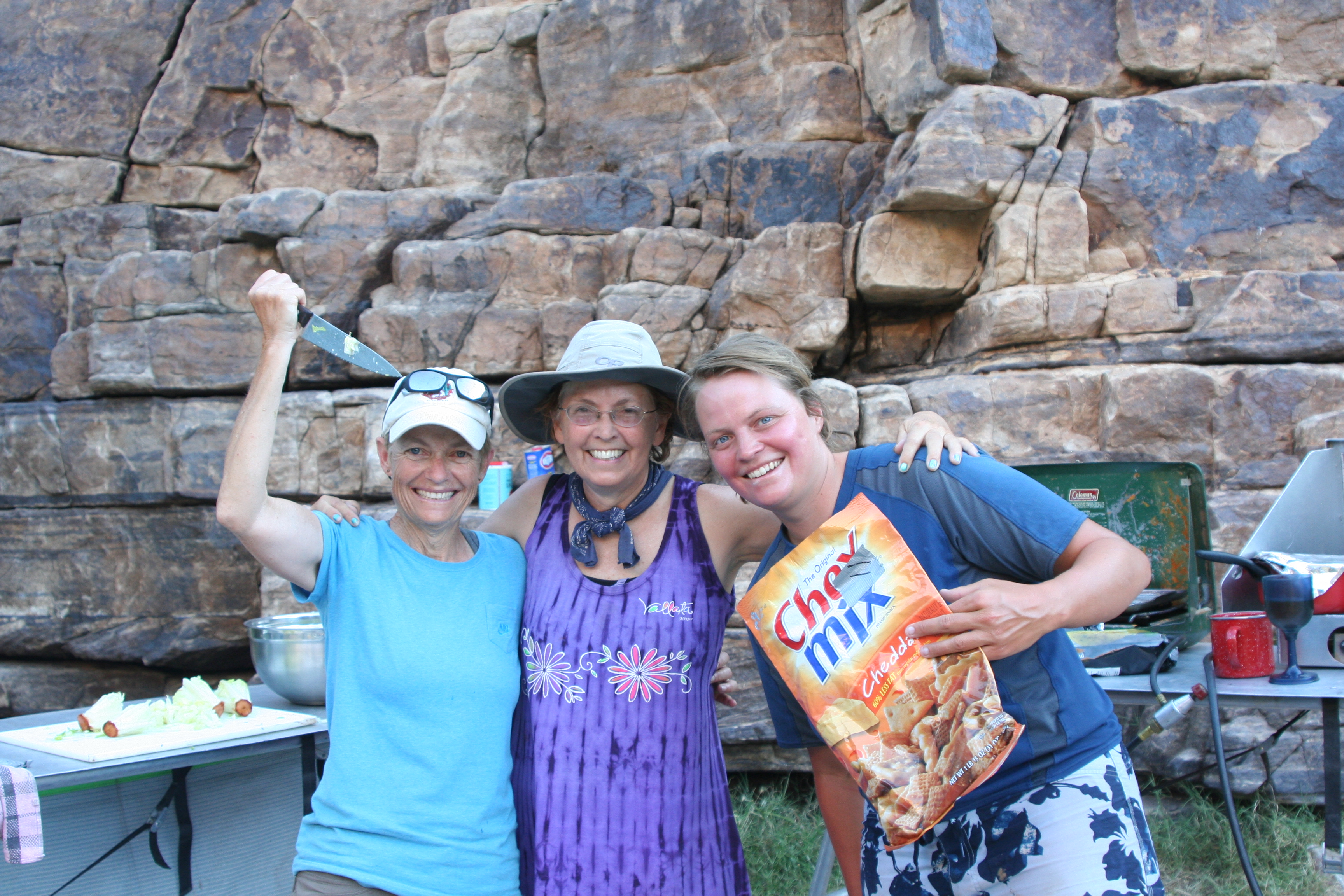
Would pirates and bones wearing life vests be part of our trip? Would my every move be recorded on camera?

Would people who should not be let near knives suddenly be wielding them?

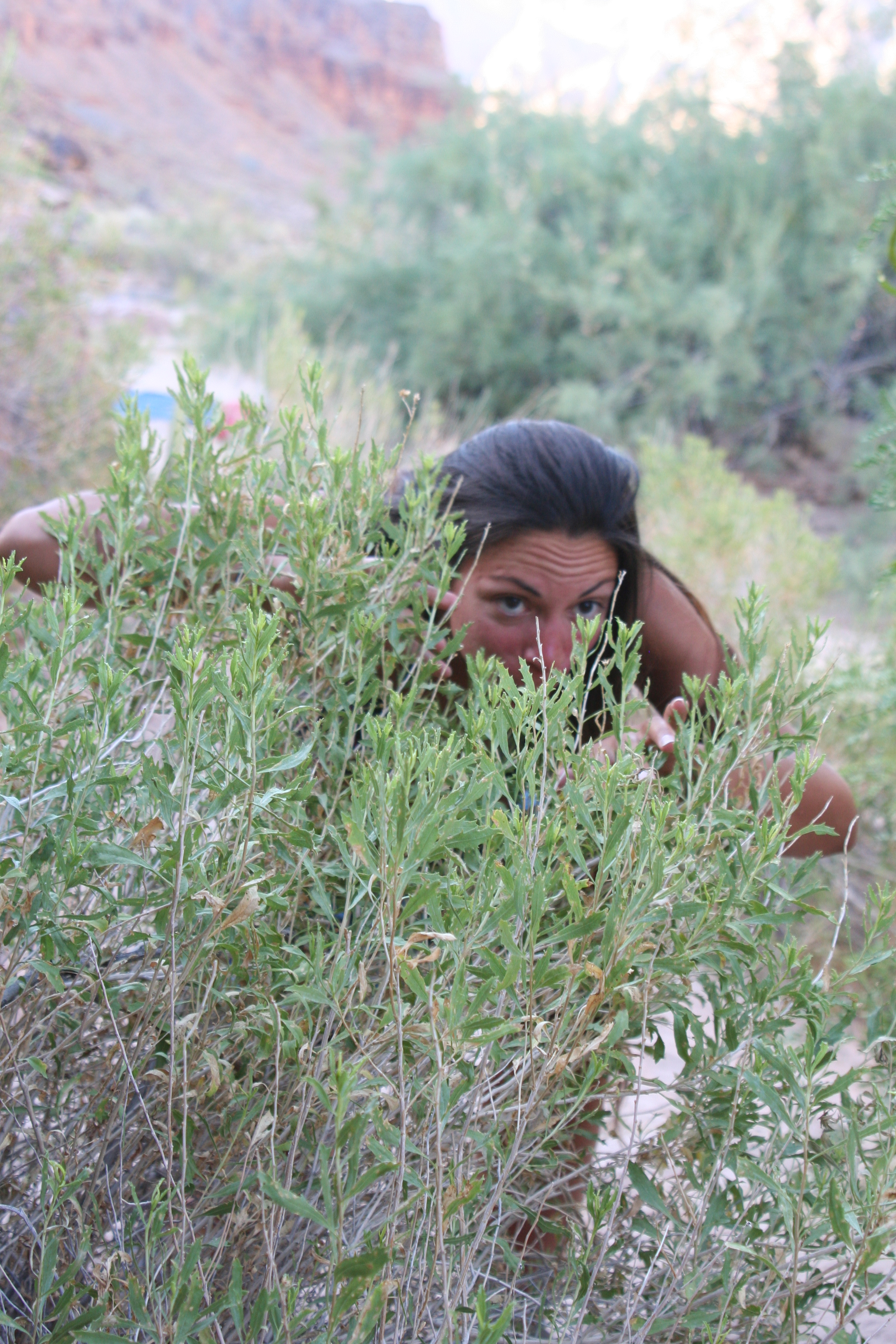
Would we be stalked by threatening spirits of the Canyon?

And, horror of horrors, would I be required to paint my toenails to keep rafts from flipping in the canyon? The answer to one of these four questions will be revealed in my next post.

Surreal Bats and Pink Rattlers… Backpacking the Grand Canyon

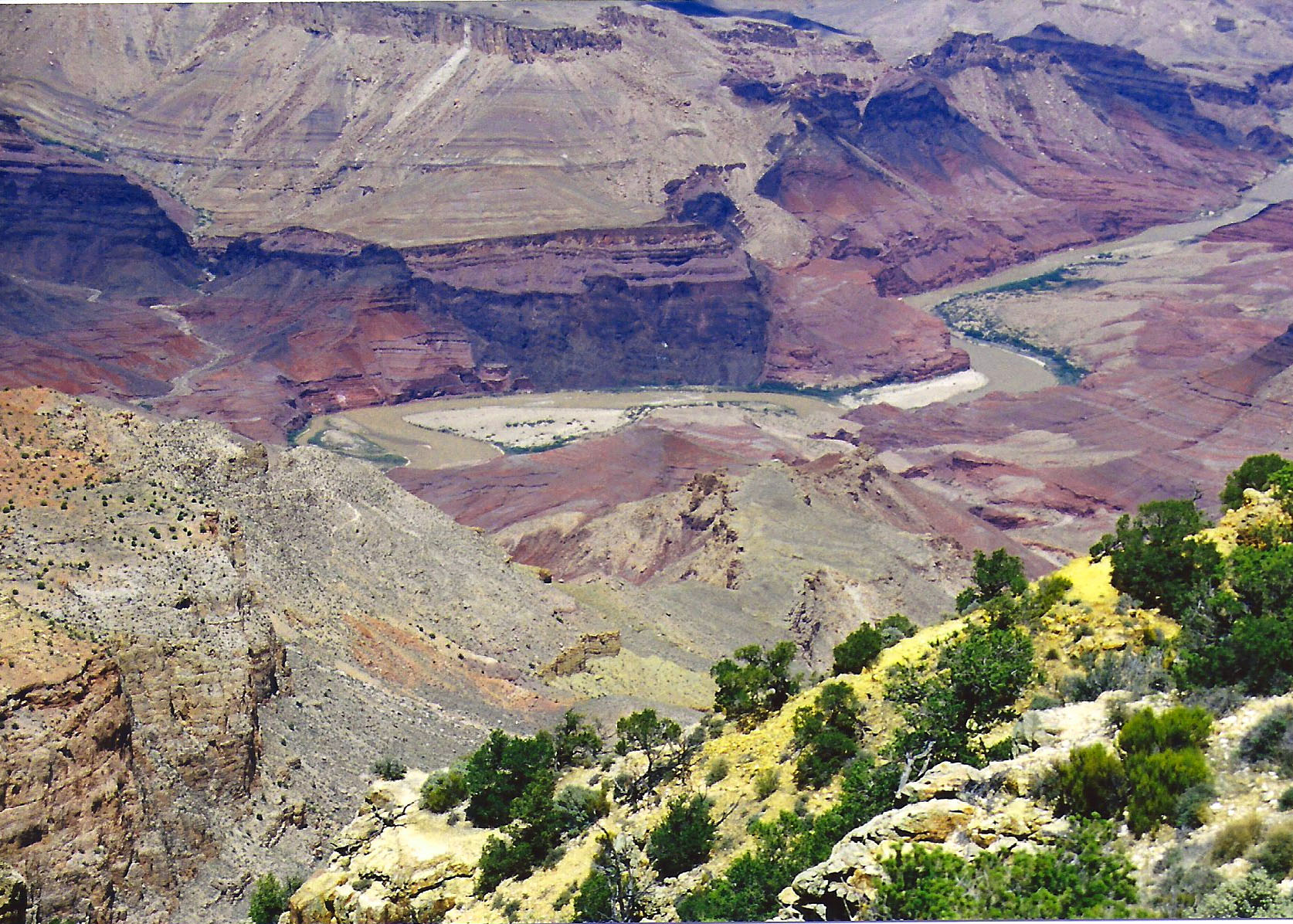
I finished my last blog with a picture of this view across the Colorado River from my camp near Tanner Rapids. This and the photo below demonstrate how much color depends on the time of day.

Close to the same shot midday, and the reason why you want to visit the Grand Canyon early in the morning and late in the afternoon.

After my close encounter with the Mouse’s tail, I was ready for breakfast. (See my last post below.)

I visited a bush, fired up my MSR white gas stove and soon had a cup of coffee in my hand and hot morning gruel (oatmeal) in my tummy. I dutifully downed my daily ration of five dried apricots. With breakfast out of the way and a second cup of coffee to enjoy, it was time to get out my topographic map and contemplate the adventure of the day.

My intention was to work my way up the Colorado River following the Beamer Trail to where it was joined by the Little Colorado. It was one of the least traveled trails in the Canyon and chances were I would have it to myself.

The trail was named after a prospector who had searched the area for gold in the 1800s, but it also incorporated ancient sections of trail the Hopi Indians had used to reach their sacred salt mines. Hopi legend claims their ancestors emerged into this world from a cave in the bottom of the Little Colorado River Canyon.

I found the combination of history, mythology, isolation and scenery quite attractive and was eager to get underway. Unfortunately, my body had other plans. It was going on strike.

On the edge of my campsite was a 20-foot section of small boulders I needed to negotiate to rejoin the trail. Normally I would sail through such an obstacle, stepping on and between rocks as the situation called for. My first step on top of a rock sent me crashing down.

I had absolutely zero balance. My muscles were refusing to function. While I didn’t reach the insane cackle level of the day before, I did find myself giggling. Dorothy’s Scarecrow was a paragon of grace in comparison to me. I made it a whole hundred yards before declaring that the day was over.

An overhanging rock provided shade, protection from the elements, and a view of the Tanner Canyon Rapids. I spent the day napping, snacking and watching rafters maneuver through the rapids. I also read a book on the Grand Canyon by Joseph Wood Krutch. The most energy I expended was to go to the river and retrieve a bucket of water. There was plenty of time to let the mud settle.

I made it as far as an overhanging rock a hundred yards from my campsite. Thirteen years later I pointed out my hideaway to Peggy. It may hold the record for the shortest backpacking trip in history.
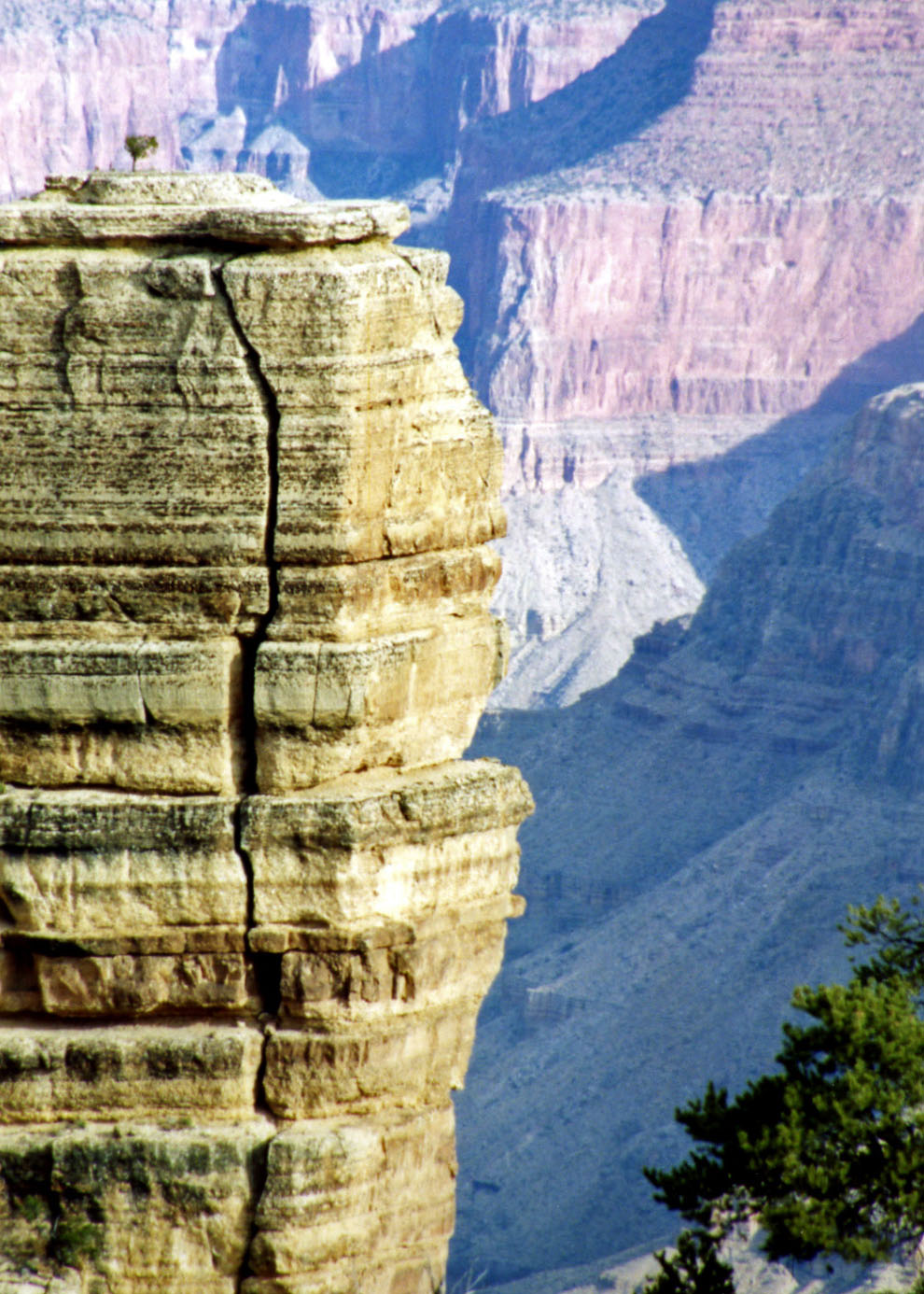
I could watch and hear the Tanner Rapids from my hideaway. It was not a bad way to spend the day.
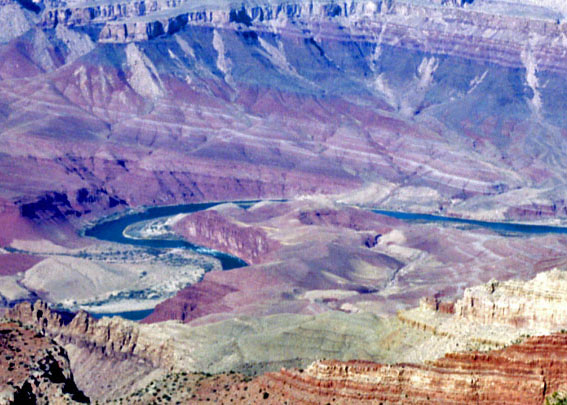
That evening I sipped a cup tea laced with 151-proof rum and watched bats fly through my ‘cave’ picking off mosquitoes. They were close enough I could have touched them. It was like I was invisible, as I had apparently been to the mouse and the night stalker. Strange, unsettling thoughts of nonexistence went zipping through my mind. Being alone in the wilderness is conducive to such thinking. The Canyon adds another layer.

Peggy tried out my seat where I sat and read all day and watched bats come though in the evening.

Day three arrived and it was time to explore my surroundings and whip my protesting muscles into shape. I still wasn’t ready for backpacking so I took a day hike back up Tanner Creek Canyon. Whatever creek had existed was waiting for future rain but the erosive power of water was plainly evident. This was flash flood country where a dry wash can turn into a raging torrent in minutes. Dark clouds demand a hasty retreat to higher ground.

I had nothing but blue skies, however, so I hiked up as far as I could go. The canyon narrowed down to a few feet and traveling any further called for rock climbing skills I didn’t possess. I sat for a while enjoying the silence and soaring walls. The isolation seemed so complete it was palpable. I was alone but not lonely. Nature was my companion. Reluctantly, I turned back toward my camp.

I spent the next two days hiking along the River. I backpacked up toward Lava Canyon the first day and then worked my way back down past Tanner Creek to Unkar Creek the second. My general rule was that if the trail appeared ready to make a major climb up the canyon walls, it was going without me.

Here I am hiking up river toward the Little Colorado following a route that ancient Hopi Indians may have used.

At one point when Peggy and I were backpacking up the Beamer Trail, we came to a fork in the trail and went left. (Yes, we did find the fork.)

This was the result. (grin)

The only real excitement came toward the end of the second day when I discovered my left foot poised five inches above a Grand Canyon Rattle Snake that lay stretched across the trail, hidden in the shadows. He was a granddaddy of a fellow, both long and thick. And pink. My right leg performed an unbidden hop that placed me several feet down the trail. There is a part of the brain that screams snake. No thinking is required.

As soon as I could get my heart under control, I picked up a long stick and gently urged Mr. Pink off the trail. He wasn’t into urging. Instead, he coiled up, rattled his multitude of rattles and stuck out his long, forked tongue at me. He really did want to sink his fangs into my leg. I prodded more enthusiastically and he crawled off, albeit reluctantly. I memorized the location so he wouldn’t surprise me on the return journey.

My leg’s miraculous leap did suggest that my body was beginning to tune up. There would be no more malingering and feeling sorry for itself. The next day I camped at Tanner Creek again and the following day out I hiked out. The trip took me three hours less than it had taken to hike in.  I was tempted to go find the Sierra Club fellow but opted out for a well-earned hamburger and cold beer instead. My post-pudgy body demanded compensation.

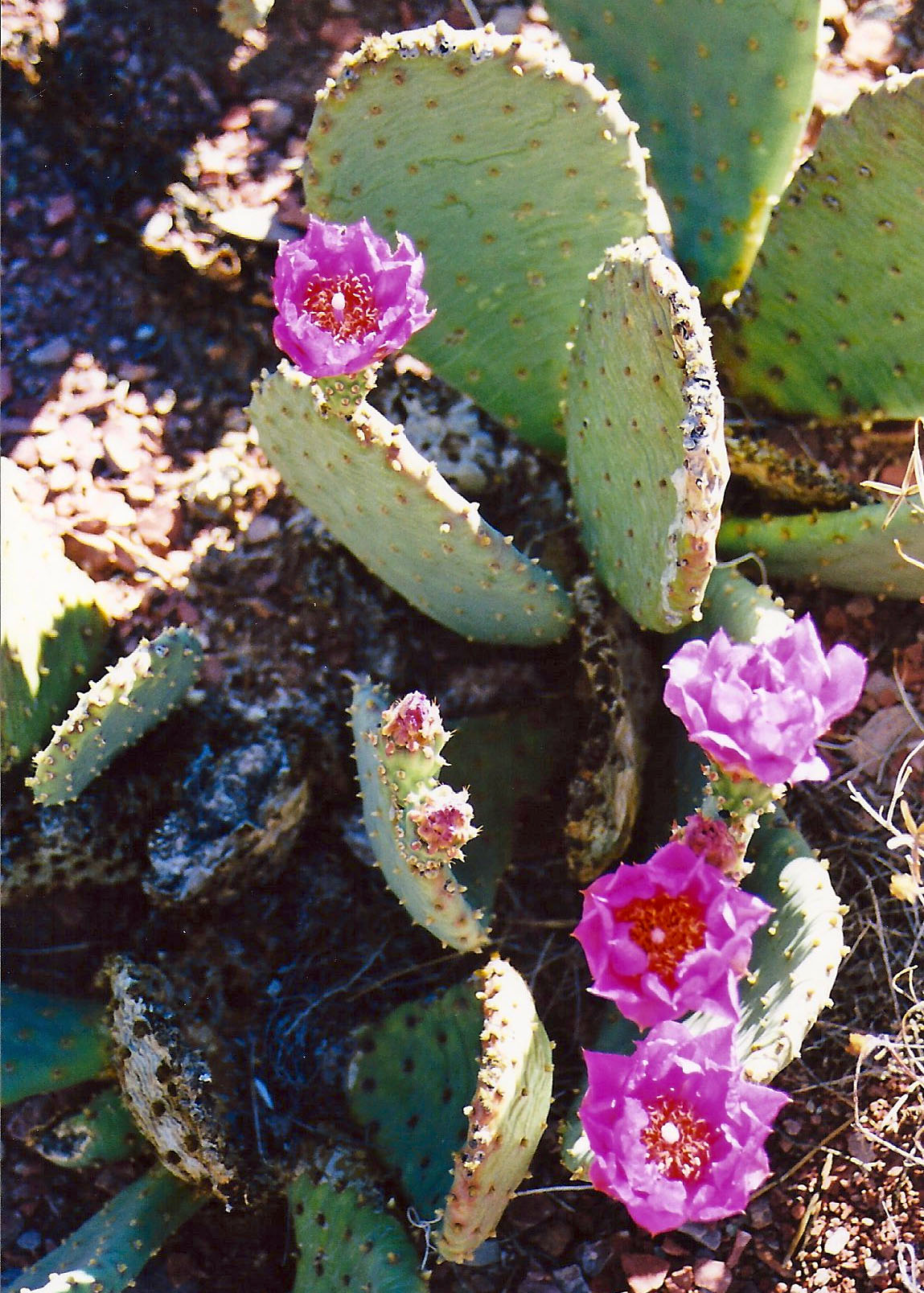
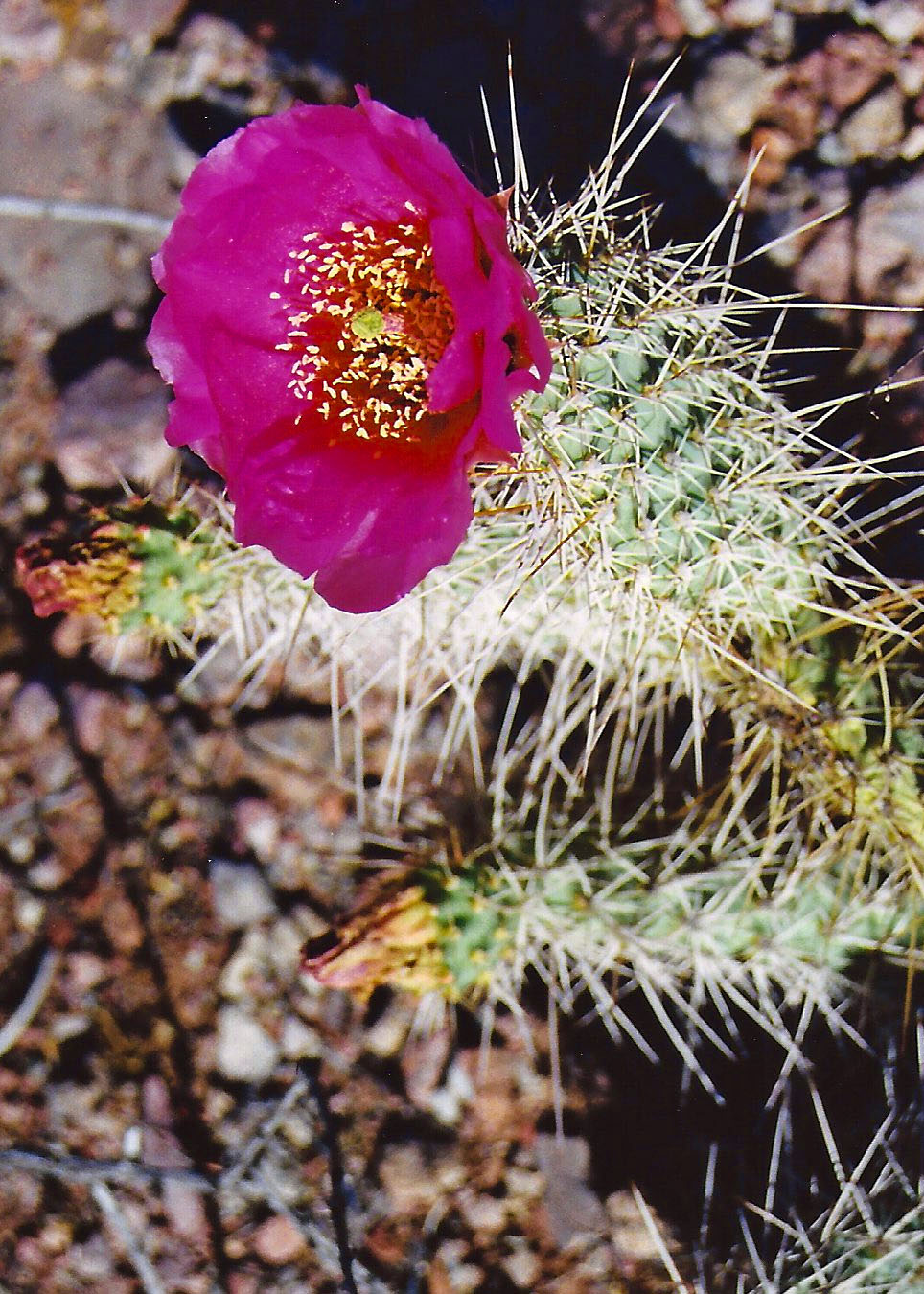
I smiled at the Prickly Pear Flowers on my way out of the Canyon that I had growled at coming in.

A final view of where I had backpacked. You can see the Tanner Trail winds down the ridge on the left.

A Tale of a Tail… Backpacking into the Grand Canyon

Looking down from Lipan Point at the start of the Tanner Trail. The sharp bend in the Colorado River… far away, is where I am heading. (The photos of the trail down I actually took several years later when I backpacked in with Peggy.)

The steep trail seemed to disappear under my feet as I began my journey and descended through millions of years of earth history. About a half of mile down it disappeared for real, having been washed away by winter rains. “I told you so,” my body whispered loudly as I mentally hugged the side of the canyon and tentatively made my way around the washout.

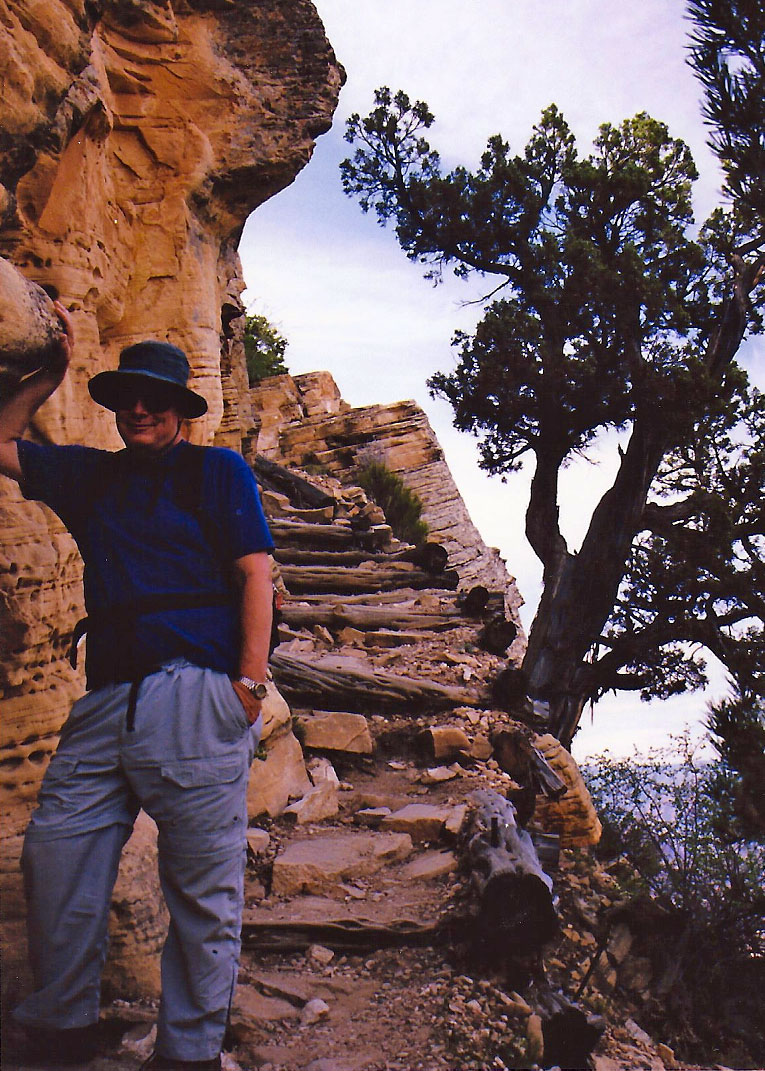
Steep drop offs are a common factor in all trails leading into the Grand Canyon. The first trails were created by Native Americans. Later miners, rustlers, and entrepreneurs interested in promoting tourism would enhance the original trails and create new ones.

I am not sure when my legs started shaking. Given the stair-step nature of the trail and the extra weight of the pack, my downhill muscles weren’t having a lot of fun. Fortunately, Mother Nature provided a reprieve.

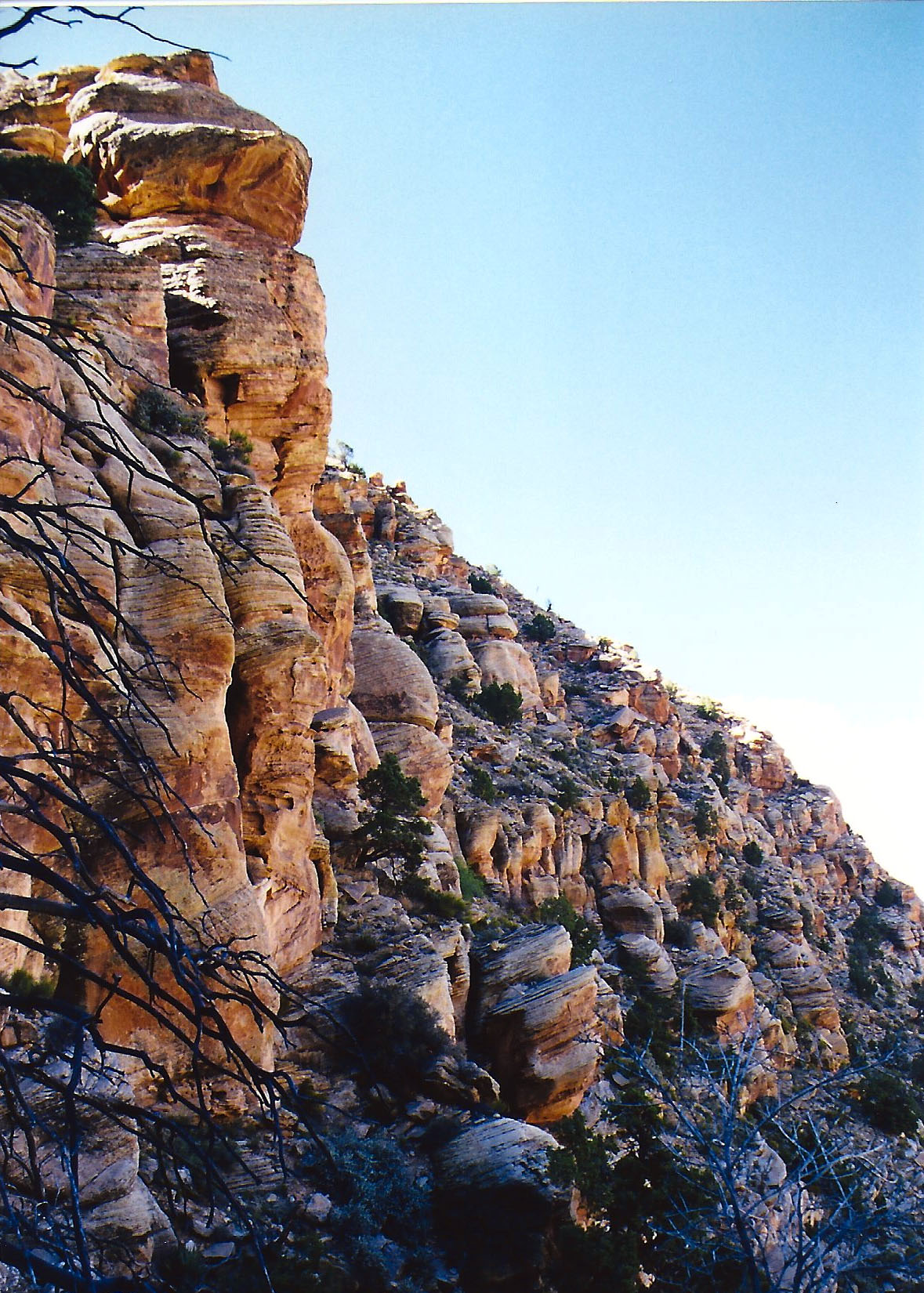
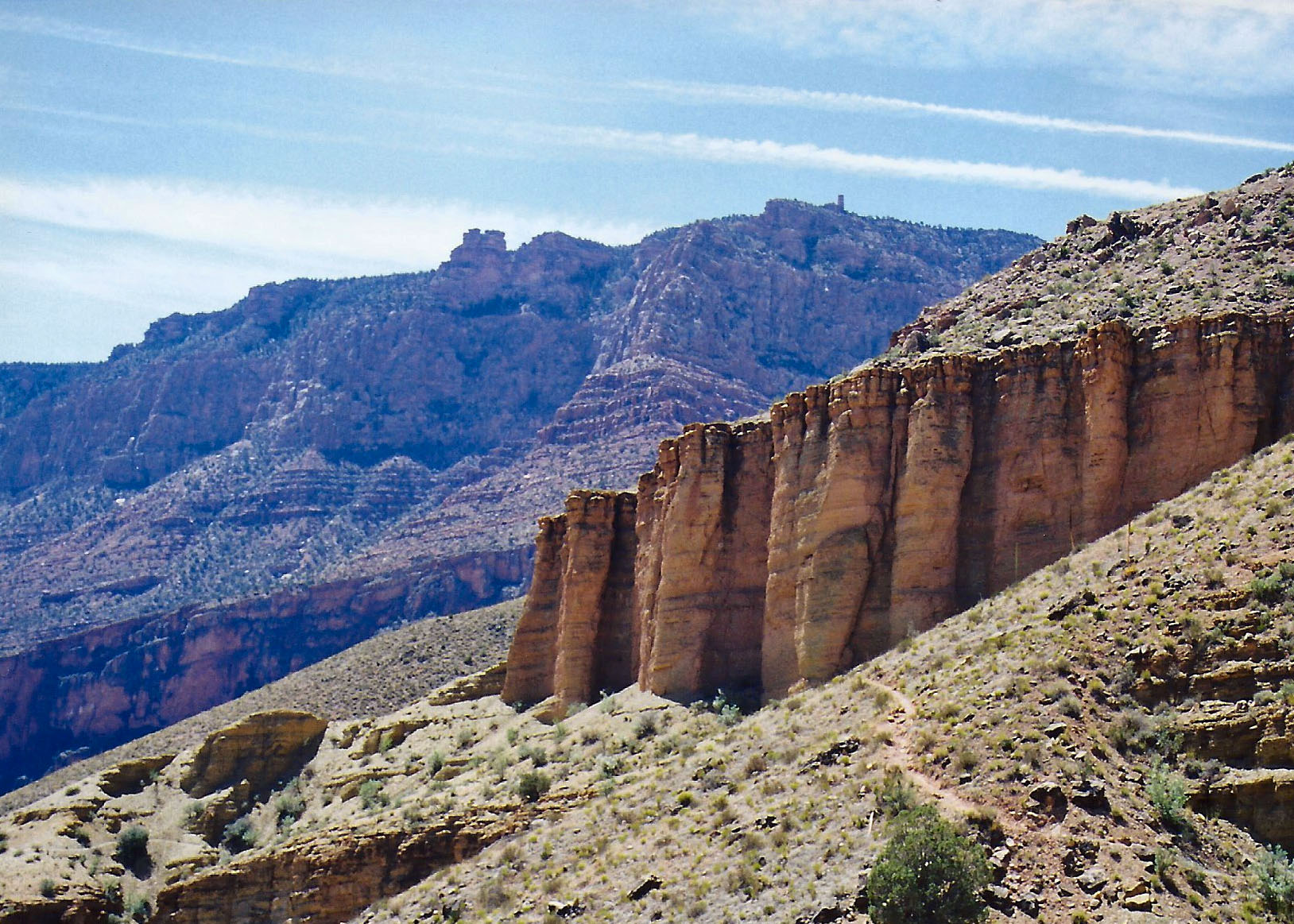
The erosive forces of wind and water that have sculpted the mesas and canyon lands of the Southwest are more challenged by some types of rocks than others.  Somewhere between two and three miles down I came upon the gentle lower slopes of the Escalante and Cardenas Buttes, which allowed me to lollygag along and enjoy the scenery.

I escaped from the sun beneath the shadow of a large rock to drink some of my precious water, nibble on trail food and take a brief nap. It would have made a good place to camp, others had obviously taken advantage of shade and flat surface, but the Colorado River was calling.

In this photo, on my later trip, Peggy takes advantage of the shade on the Cardenas Butte.

Ignoring the ever-increasing screams of my disgruntled body parts, I headed on. At mile five or so my idyllic stroll came to a dramatic halt as the trail dropped out of sight down what is known as the Red Wall. (It received this imaginative name because it is red and looks like a wall. The red comes from iron dissolved in water that runs down from the rocks above. Think rust.) Some fifty million years, or 625,000 Curtis life spans, of shallow seas had patiently worked to deposit the lime that makes up its 500-foot sheer cliff.  It is one of the most distinctive features of the Grand Canyon.

The Red Wall, seen here snaking off to the right, is one of the most distinctive features of Grand Canyon National Park.

My trail guide recommended I store water before heading down so I could retrieve it when I was dying of thirst on the way out. I could see where people had scratched out exposed campsites as a place to stop for the night. The accommodations weren’t much but the view was spectacular.

The rest of the five-mile/five month journey was something of a blur. (It was closer to five hours but time was moving very slowly.) I do remember a blooming prickly pear cactus. I grumbled at it for looking so cheerful.

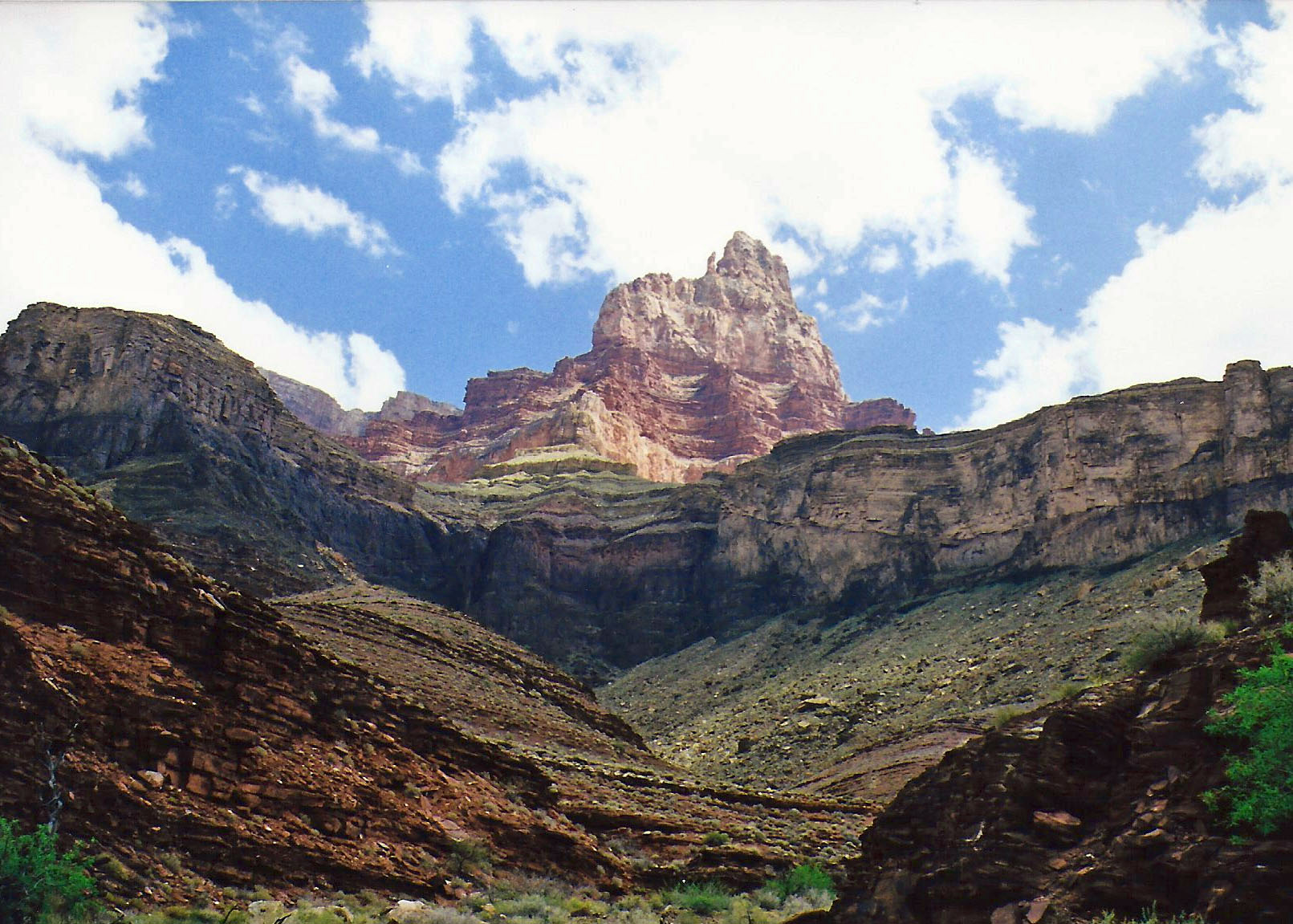
I was too tired to fully appreciate the beauty of the inner Canyon.

My lack of appreciation included a cheerful cactus flower.

Looking back up the trail provided a perspective on how far I had come. The small, needle-like structure on the rim is Desert View Tower.

I also remember a long, gravelly slope toward the bottom. My downhill muscles had totally given out and the only way I could get down was to sidestep. I cackled insanely when I finally reached the bottom. I was ever so glad the Sierra Club guy wasn’t around to see me.

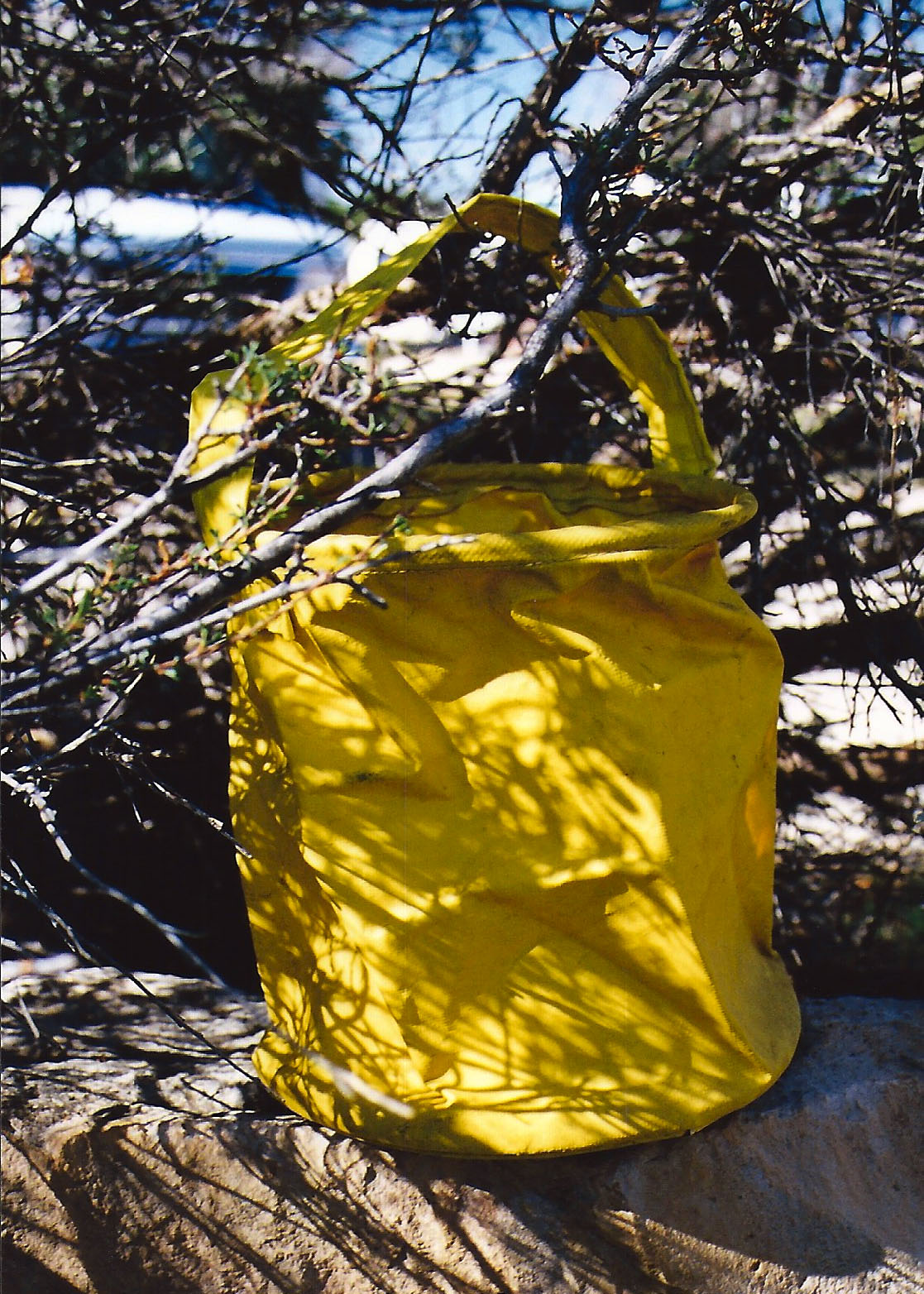
Setting up camp that night was simple. I threw out my ground cloth, Thermarest mattress, and sleeping bag on a sandy beach. Then I stumbled down to the river’s edge and retrieved a bucket of reddish-brown Colorado River water, which appeared to be two parts liquid and one part mud. I should have waited for the mud to settle. Instead I used up a year of my water filter’s life to provide a quart of potable water.

Sitting beside the muddy Colorado River.

My old yellow bucket, a veteran of dozens of backpacking adventures.

All I had left to do was take care of my food. Since people camped here frequently, the local critters would see me as a huge neon billboard that blinked ‘Eat at Curt’s.’ Not seeing a convenient limb within three feet, I buried my food bag in the sand next to me. Theoretically, anything digging it up would wake me. Just the top was peeking out so I could find it in the morning.

As the sun went down, so did I. Faster than I could fall asleep, I heard myself snoring. I was brought back to full consciousness by the pitter-patter of tiny feet crossing over the top of me. A mouse was worrying the top of my food bag and going for the peanuts I had placed there to cover my more serious food.

“Hey Mousy,” I yelled, “Get away from my food!”  My small companion of the night dashed back over me as if I were no more than a noisy obstacle between dinner and home. I was drifting off again when I once more felt the little feet. “The heck with it,” I thought in my semi-comatose state. How many peanuts could the mouse eat anyway?

The river water I had consumed the night before pulled me from my sleep. Predawn light bathed the Canyon in a gentle glow. I lay in my sleeping bag for several minutes and admired the vastness and beauty of my temporary home.  The Canyon rim, my truck and the hordes of tourists were far away, existing in another world.

My thoughts turned to my visitor of the previous evening. Out of curiosity, I reached over for my food and extracted the bag of peanuts. A neat little hole had been chewed through the plastic but it appeared that most of my peanuts were present and accounted for. The small contribution had been well worth my solid sleep.

I then looked over to the right to see if I could spot where the mouse had carried its treasure. Something on the edge of my ground cloth caught my eye. It was three inches long, grey, round and fuzzy.

It was Mousy’s tail!

Something had sat on the edge of my sleeping bag during the night and dined on peanut stuffed mouse. Thoughts of a coyote, or worse, using my ground cloth as a dinner table jolted the primitive parts of my brain. Had I had hackles, they would have been standing at attention ready for action.

I ate a peanut in honor of Mousy’s memory and tossed a few over near his house in case he had left behind a family to feed. I also figured that the peanuts would serve as an offering to whatever Canyon spirits had sent the night predator on its way.

Next blog: I recover and then explore the Canyon. A large, pink rattlesnake and I tangle.

The view from camp looking across the Colorado River and up.

A Trifle Overweight? Backpacking into the Grand Canyon Part I

Early morning and late evening sun add an interesting contrast between light and shadow… not to mention color. When I arrived late at the Grand Canyon for my backpacking trip, I hurried over to the Rim to enjoy the sun’s last rays.

This is the second part of my series on a celebration of the Grand Canyon National Park, which will eventually focus on Peggy and my 18-day raft trip down the Colorado River. Over the next three blogs I will describe a backpack trip into the Canyon where I was… let’s say, a trifle overweight.

In 1986 when I left Alaska I decided to take six-months and backpack into some of the more remote corners of the West. I stopped by for a brief visit with friends and family in California and then headed out for my first stop: the Grand Canyon.

I followed Highway 50 east out of Sacramento, cut off at Pollock Pines and picked up the Mormon Emigrant Trail. Soon I was on Highway 88 climbing up and over Carson Pass. Newly dressed aspens, snow-covered mountains and frothy creeks reminded me that summer was still two months away.

Frothy creeks reminded me that summer was still two months away.

By evening I had driven down the east side of the Sierras and made my way into Death Valley. I was setting up my tent under a convenient Mesquite tree when the sun sank behind the Panamint Range. Coyotes howling in the distance lulled me to sleep.

Every trip I made to the Grand Canyon from California included a visit to Death Valley National Park.

By ten thirty the next morning I was in another world, investing quarters in a video poker machine at Circus Circus on the Las Vegas Strip. Luck was with me. Two hours later found me crossing over Hoover Dam with an extra hundred dollars in my wallet. It represented two weeks of backpacking food. I zipped across the desert, picked up Interstate 40 at Kingman and cut off toward the Grand Canyon at Williams.

I wasted little time checking in at Mather Campground. The Canyon was waiting. An unoccupied rock off the trail near Yavapai Point provided a convenient spot for dangling my legs over the edge. Nothing but vacant space existed beneath my hiking shoes.

My musings were interrupted when a fat Golden-Mantled Ground Squirrel poked his furry head up next to me and demanded payment for my front row seat. I recited the Park’s rule on feeding animals and told him to go eat grass. He flipped his tail at me and squeaked an obscenity as he scrambled off in search of more gullible victims.

Twilight was painting the Canyon with a purplish tinge but I could still make out the distinctive colors and shapes of the rocks. While my right-brain admired the beauty, my left-brain was busy considering eons upon eons of earth history. The dark, tortured walls of the inner canyon, now obscured by evening shadows, reached back over a billion years to the very beginnings of life on earth when our ancient ancestors had frolicked in even more ancient seas.

Erosion had given these Precambrian rocks a flat top, shaving off some 500 million years of earth’s history and creating what is known as the Great Unconformity.  Since then vast seas, Saharan size deserts, lakes and rivers had patiently supplanted one another as they marched through Paleozoic time depositing layer upon layer of the canyons walls.

My present perch was made of Kaibab limestone created by an inland sea some 250 million years ago. Dusk slipped into dark and my thoughts turned to my impending backpack trip.

I had backpacked into the Canyon several times. My objective this time was to explore the Tanner Trail on the eastern end of the South Rim road.

The next day was devoted to careful preparation. Seventeen years of backpacking in all kinds of terrain and climate had taught me that there was no such thing as being too careful. I approach compulsive when it comes to backpacking alone. Had I resupplied my first aid kit? Was my stove still working? Did I have adequate fuel? Did I have my flashlight, signaling mirror, whistle, compass and maps? Did I have enough but not too much food, water, reading material, etc. etc. etc?

Safety, comfort and even entertainment are important but weight is always an issue.

Having satisfied myself that I could survive seven to nine days in the Canyon, I headed off to the backcountry permit office. The more environmentally inclined within the Park Service are seriously into minimizing impact and promoting safety. Requiring wilderness use permits is their primary tool in achieving these goals.

I patiently waited behind six other would-be canyon explorers and had memorized the minimum impact lecture by the time my turn was up. The ranger frowned when I mentioned the Tanner Trail.

“The trail is poorly maintained, rarely used, 10-12 miles long and arduous,” she cautioned strongly.

“And that,” I replied, “is exactly what I want.”  I was especially enamored with the ‘rarely used’ part.  I had no desire to share my experience with dozens of other people, much less armies of cantankerous mules that leave lakes of fowl smelling pee on the trail. If I had to face a particularly tough physical challenge and be extra careful to avoid a tumble into the Canyon, it was a price I was happily willing to pay.

I was leaving the office when a skinny guy wearing a short-sleeved khaki shirt, blue shorts and hiking boots stopped me.

“Excuse me,” he announced, “I am with the Sierra Club and I couldn’t help but hear you are headed down the Tanner Trail. Given your condition, I would strongly advise against it. You should hike down the Bright Angel Trail. It’s a lot easier and there are lots of other people hiking it in case you get in trouble.”

Now I confess that having just emerged from nine months of hibernating in Alaska I was pasty white and pudgy. I will also allow that the guy was operating under good intentions.

But his arrogance, especially in announcing his Sierra Club membership as somehow making him a wilderness expert, irritated me. Over the years I had known and worked with lots of Sierra Club folks. I am a strong supporter of their efforts to protect the wilderness. I have even run into some who have had more wilderness experience than I. John Muir, the Sierra Club founder, is one of my all time heroes.

Had my unofficial advisor started off with something like, “I have been up and down the Tanner Trail several times, would you like some suggestions?” I would have been quite willing, even eager, to hear what he had to say. But his uneducated assumptions about my lack of knowledge absolutely turned me off. It was everything I could do to maintain a civil tone of voice as I thanked him for his advice and politely told him to screw off.

At 8:30 the next morning my pasty white pudgy body was having an animated discussion with my mind over why I hadn’t listened more carefully to the Sierra Club ‘expert’ the day before. I had started my day by splurging for breakfast at the elegant El Tovar Hotel and then driven out to Lipan Point.

I was now poised to begin my descent into the Canyon. It looked like a long way down. I gritted my teeth and banned any insidious second thoughts.

They came rushing back as I struggled to hoist my 60 plus pound pack. It was filled with seven days of food, extra water and all of my equipment. I had cursed the day before as I struggled to find room for everything. Now I was cursing I hadn’t left half of it behind.

Next up: The journey down.

The prominent landmark at the eastern end of the South Rim road at the Grand Canyon is the Desert View Watch Tower. It is near where I started my hike down into the Canyon and provided a view of where I would be traveling. It also provided a  landmark as I descended into the depths.

Visiting Grand Canyon National Park by Car, Mule and Helicopter

Grand Canyon National Park is one of the world’s greatest natural wonders.

“Golly, what a gully,” President William Howard Taft was heard to mutter when he first saw the Grand Canyon.

Teddy Roosevelt was more profound: “Leave it as it is. You cannot improve on it. The ages have been at work on it, and man can only mar it.”

Both of these thoughts are rumbling through my brain as I think about the 18 days Peggy and I are about to spend rafting 280 miles down the Colorado River.

Few people come away from the Grand Canyon untouched and we are no exception. Its vastness, beauty, and geology have pulled us back time and again, as have its natural and cultural history.

There are many ways to explore the Canyon. For the vast majority of people, some five million a year, this involves a drive up to the South Rim and a quick tour of the most popular overlooks. If that is all the time you have, it’s worth the journey, believe me.

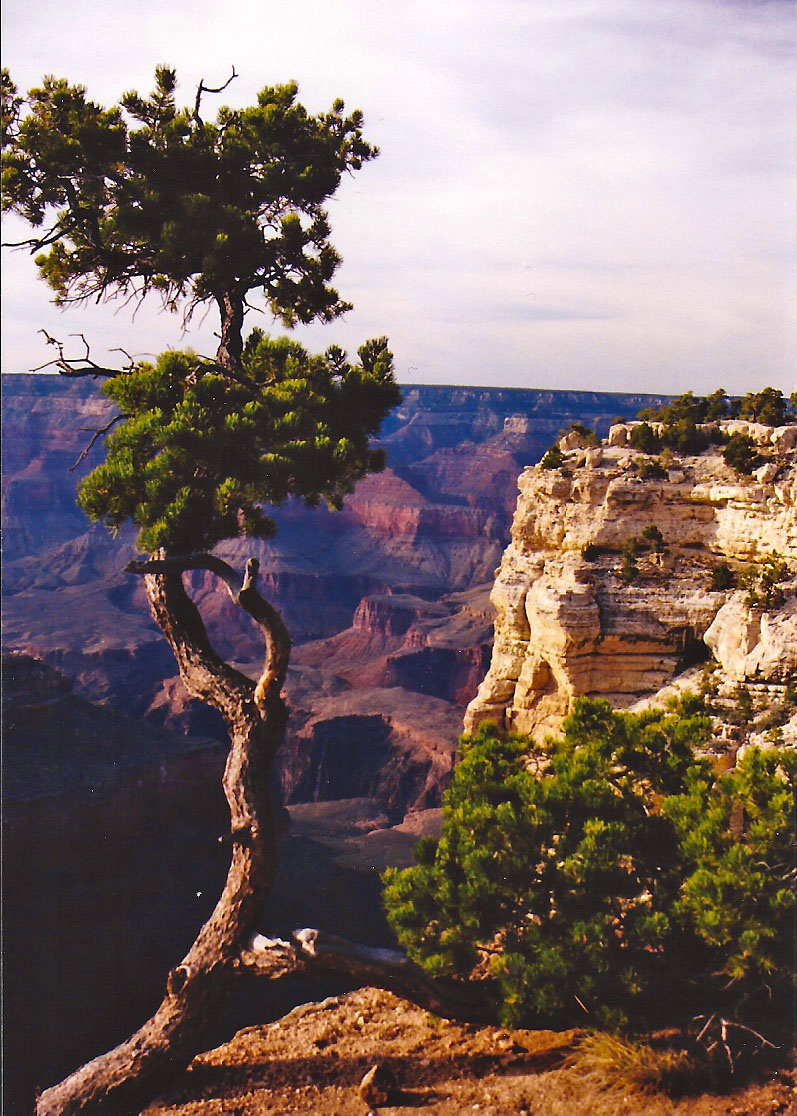
Numerous overlooks along the South Rim provide breathtaking views into the Canyon. This a view up Bright Angel Canyon. North Rim, also worth a journey, is at the top. You can hike from South Rim to North Rim, which I have.

Sitting on the edge for an hour or two enhances the experience several times over. Hanging out on the rim for a few days while roughing it at a campground or luxuriating in one of the lodges, is even better.

I once spent a pleasant night in the El Tovar Lodge courtesy of Nancy Reagan. Snow forced her and her large entourage to cancel a visit there in November 2001. Peggy, the kids, and I were camping out in a large tent at the Park’s Mather Campground. The foot of snow on our tent and 18 degrees F temperature had provided us with more than enough “roughing it.” We gladly took advantage of Nancy’s misfortune and the discounted vacant rooms.

For those wanting for a bird’s eye view, a helicopter trip is a tempting option. After three tours of duty in Iraq flying helicopters for the Marines and being shot at, our son Tony decided to try his hand at flying tourists over the Grand Canyon. He took Peggy and me on a thrilling ride into Havasupai Canyon… to the music from Star Wars, if I recall correctly. (Tony now flies helicopters for the Coast Guard out of Kodiak, Alaska.)

Beyond these sedentary approaches to the Canyon lie more challenging adventures. Even a half hour hike down one of the more popular trails provides a trip through millions of years of history, incredible views and the heart-pounding thought that only a few feet separate you from a thousand foot tumble.

There are several trails down into the Canyon with Bright Angel and Kaibab being the most popular and the ones recommended by the Park Service. I prefer less travelled, mule free trails. But it also means the trails are less maintained.

Longer hikes and especially backpacking trips provide a perspective that only a small percentage of Canyon visitors ever have.

If you want to visit the inner canyon but fear you’re lifetime warranty will expire hiking out, check out the sure-footed mules that carry tourists in and out of the Canyon. It’s an experience your rear will remember for years. Mine did.

Don’t you dare climb on my back.

Charlie, that was the mule’s name, did not like me. There was a 200-pound weight limit and I was at 195. I wore light tennis shoes and clothes to the weigh-in and hit 199. I wore my backpacking shoes on the trip; it pushed me over the limit.

Charlie knew I was cheating. He immediately whipped his head around and tried to bite me. Failing that, he walked as close to the edge as he could and provided me with a front-row seat of my ultimate demise. Only my knowledge that mules don’t commit suicide kept me in the saddle.

My most challenging journeys have been six backpack trips into the Canyon, including a week alone. I will feature that particular misadventure in my next blog. But, in the mean time, here are more photos from the Rim.

I rolled my window down to photo this Mule Deer and she tried to stick her nose in my window. There are reasons for all of the signs that urge “Don’t Feed the Wildlife.”

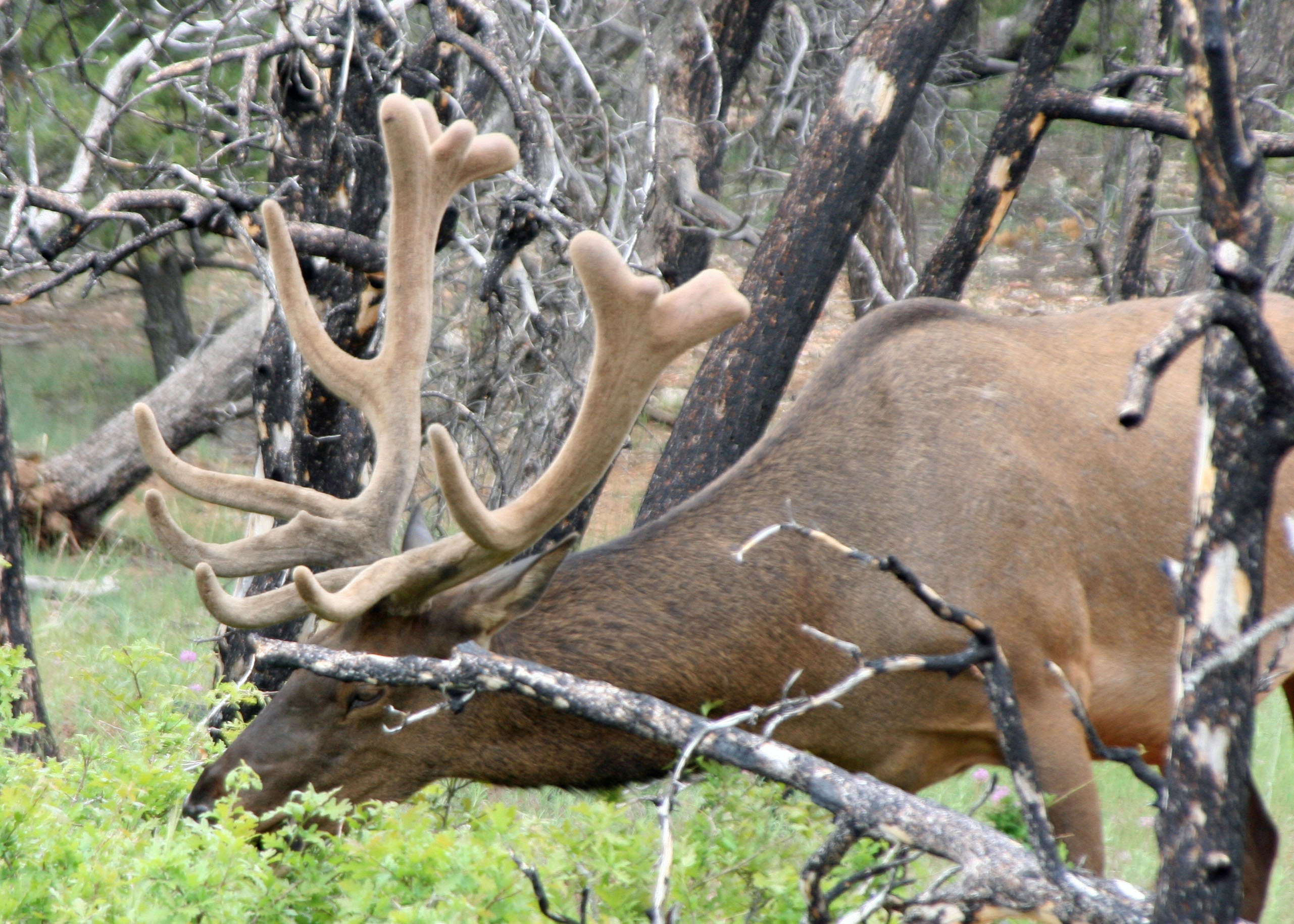
This elk was a magnificent fellow but he wouldn’t come out in the open for me.

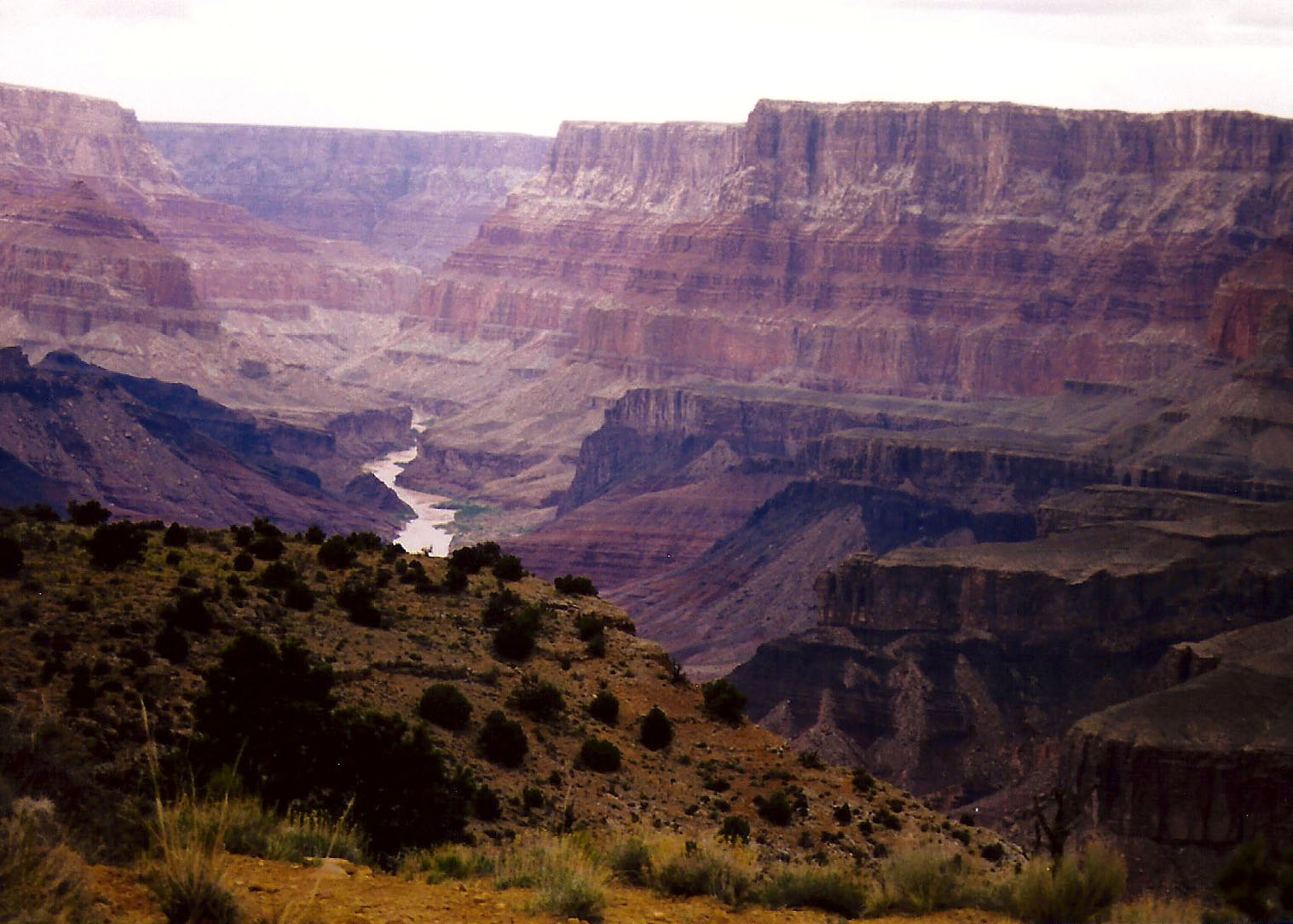
More views to encourage a visit to the Grand Canyon.

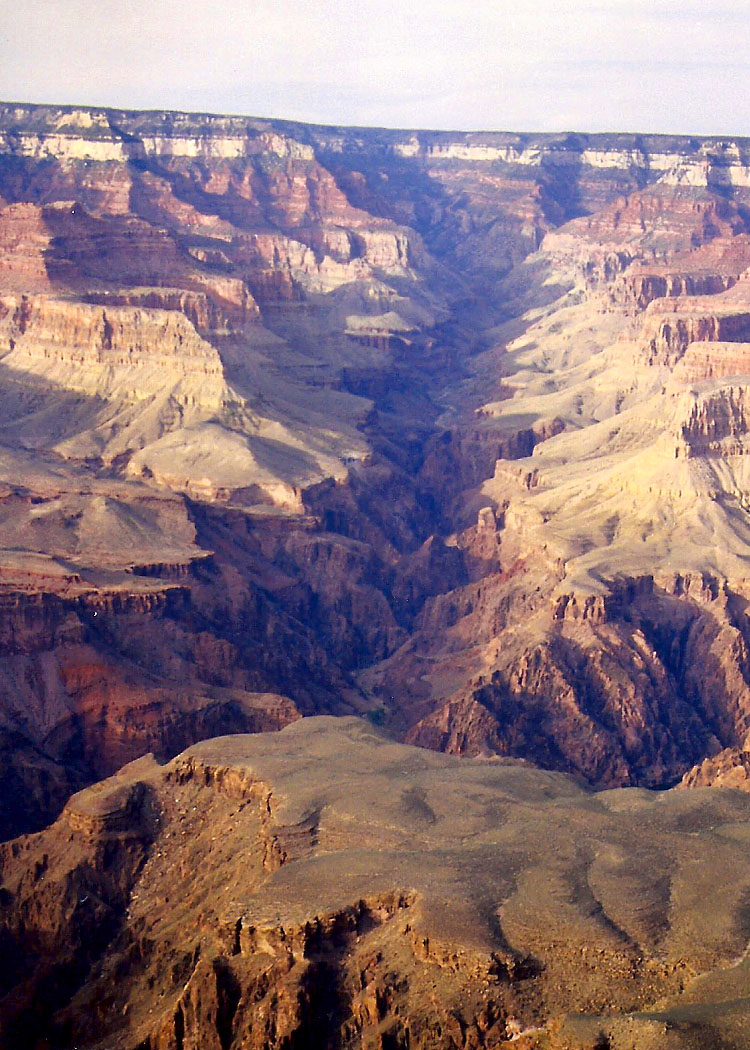
Early morning and late afternoon sun provide the best colors. Time your visit to include both if you can.

Another view looking down that demonstrates the rich colors.

I’ll be backpacking into the heart of the Grand Canyon down the Tanner Trail in my next blog. A  Sierra Club member insisted I hike an easier, well maintained trail.

A Grand Adventure… Exploring the Grand Canyon by Raft

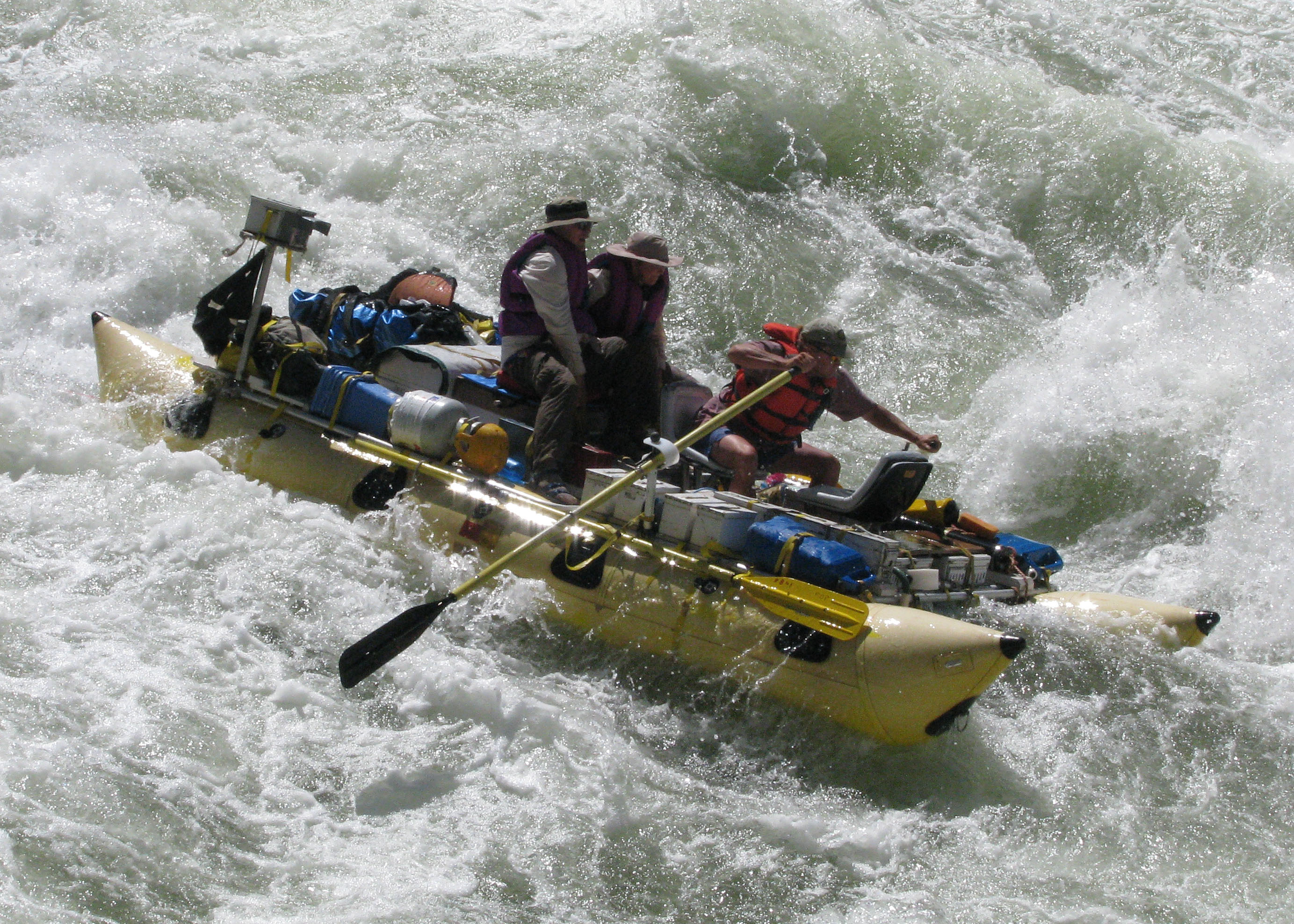
With Steve at the oars, Peggy and I enter the infamous Lava Rapids on the Colorado River, a perfect ten… that’s 10 as in rapids don’t get any more serious. A few seconds later we disappear under the water. (Photo by Don Green)

Today I begin my series on rafting the Colorado River through the Grand Canyon. Since it happened a couple of years ago, I am traveling back in time. In fact I kicked off this blog with the trip, some 181 posts ago.

I never finished the series. Other things happened: like having grandbabies born, going to Burning Man, looking for long dead people (otherwise known as ancestors), etc. So I will start with reposting my early stories so everyone can begin, so to speak, on the same page. (Grin)

This series will encompass more than my trip down the river, however. It is meant to be a celebration of the Grand Canyon, possibly the greatest natural wonder in the world. I have been back to the Canyon repeatedly in a time span that dates back over forty years.

Peggy takes a photo looking down into the Grand Canyon. Three feet forward and she will have a thousand feet to learn to fly.

I have wandered the South and North Rim, camped in all of the Rim campgrounds, and stayed at the magnificent El Tovar Hotel. Once I spent Christmas week at Bright Angel Lodge with a view overlooking the Canyon. I’ve been into the Canyon by mule, on foot and helicopter… as well as raft.

Several times I have explored the inner Canyon on weeklong backpack trips. I will feature one in this series.

Our Grand Canyon river adventure started with a phone call. Tom Lovering left an urgent message. I had to immediately stop whatever I was doing (Peggy and my three-year road trip around North America) and climb on-line to sign up for the Grand Canyon Colorado River permit lottery.

Apparently the permits are hard to obtain, somewhat harder than walking out of a casino with a million dollars.

I am immune to Tom’s last minute schemes but the charming Peggy who loves water, loves rivers, and loves sunshine immediately jumped on-line and did the necessary clicking. Early the next morning we received an Email from the National Park Service saying we had won. It took me a lot longer to persuade Tom than it did for the NPS people to inform us.

I am not, by nature, a white water man. I put running rapids right up there with dangling on rock cliffs, playing Kamikaze on ski slopes, and riding the latest death-defying roller coaster at Four Flags.  My approach to outdoor adventure is more in the nature of planned risk taking than thrill seeking. Consequently, I had only been on two real white water rafting trips.

The first was with Tom on the Mokelumne River in California in the 70s. Within five minutes he had dumped us into something known as Dead Man’s Hole. “Paddle!” he screamed. River rats love to give their favorite rapids scary names such as Satan’s Pool and Suicide Bend. They can wax eloquently for hours over the qualities of these death-dealing anomalies. Our detour “was a learning experience,” Tom explained as we emptied the water out of the raft and lungs. “Next time you’ll paddle harder.” Yeah, yeah.

My second white water trip was on the Middle Fork of the American River. This time I was travelling with Mark Dubois, his wife Sharon Negri and a friend, Bonnie Holmes.

Mark, sometimes known as the Gentle Giant, once chained himself to a rock in the bottom of the Stanislaus River to stop the Army Corps of Engineers from flooding the canyon with water. He also co-founded Friends of the River, an organization dedicated to saving the wild rivers of the west.

Our trip was rather mellow up until we came to a large rapid. Mark was having us do such things as close our eyes and lean backwards out of the raft with our hair touching the water so we could ‘listen’ to the river. He’s a spiritual type guy, one with nature. Apparently Nature had rejected me.

“Now, Curt,” he directed as we approached the rapid known as Guaranteed to Drown or some other similar name, “I want you to climb out of the raft and float down it.”

“I know, I know,” I groused as I rolled out of the raft into the icy waters. “It’s a learning experience.”

And that’s how I classify our trip down the Colorado, a learning experience. But I know it will be more. Every time I have visited the Grand Canyon over the years, I have come away with a feeling of awe and reverence. How could a trip through the Canyon’s inner core be any different?

So please join my friends and me over the next few weeks. I think you’ll enjoy the ride.

Here I am. They actually let me row. It had something to do with the lack of any nearby rapids.

This is how Jamie, one of our experienced boatmen, handled that section of the river.

Here are some of the folks that travelled with us on our 18 day trip down the Canyon. In this photo they have reversed their life preservers to look like giant diapers and are floating down the beautiful little Colorado River, one of many scenic stops along the way. They are about ten feet away from going over a waterfall.

You will meet some interesting characters on the trip, such as Steve…

And our fearless leader Tom Lovering. Are you brave enough to spend 21 days on the river with this man?

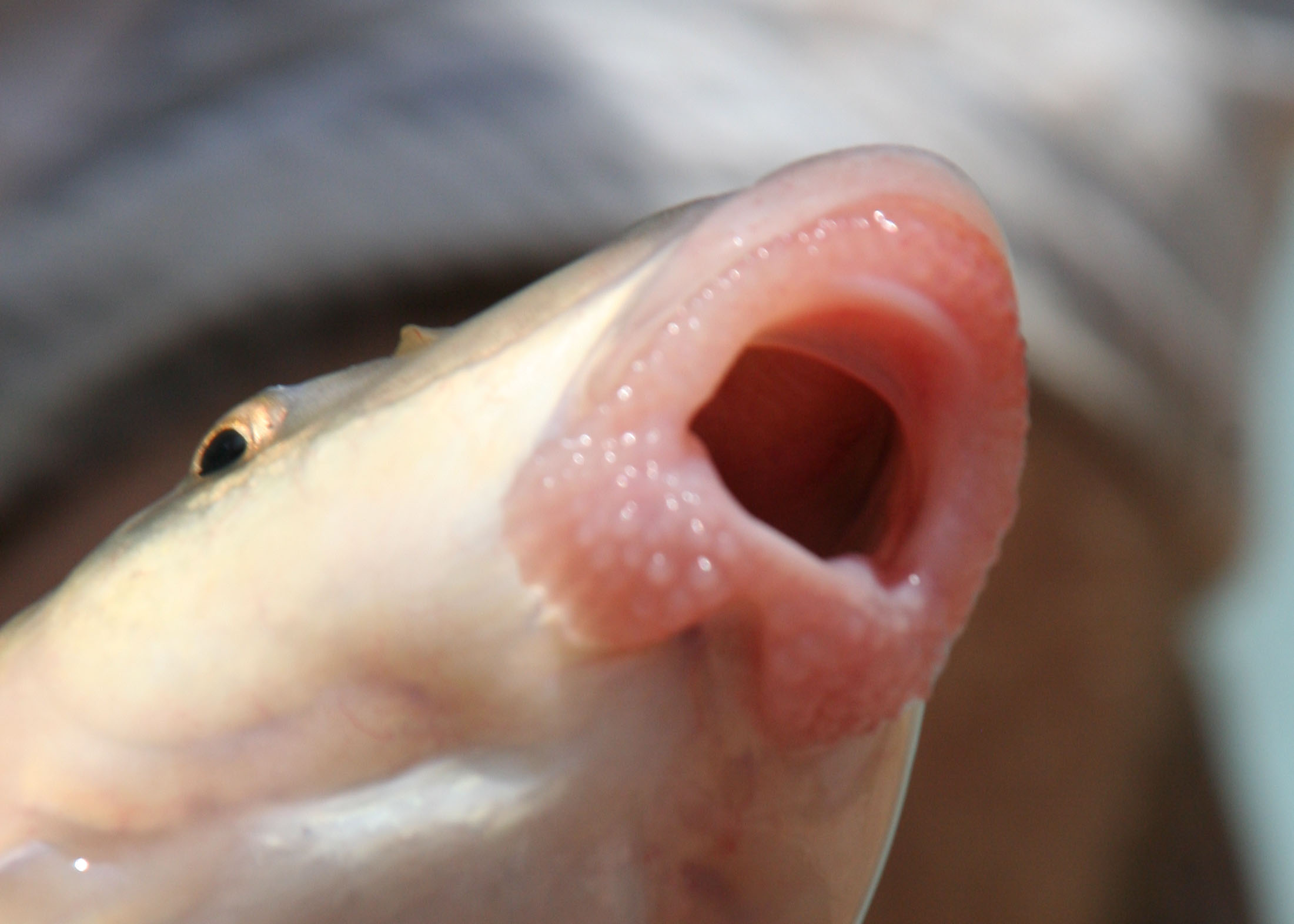
Even this Grand Canyon fish was amazed by our choice of leader.

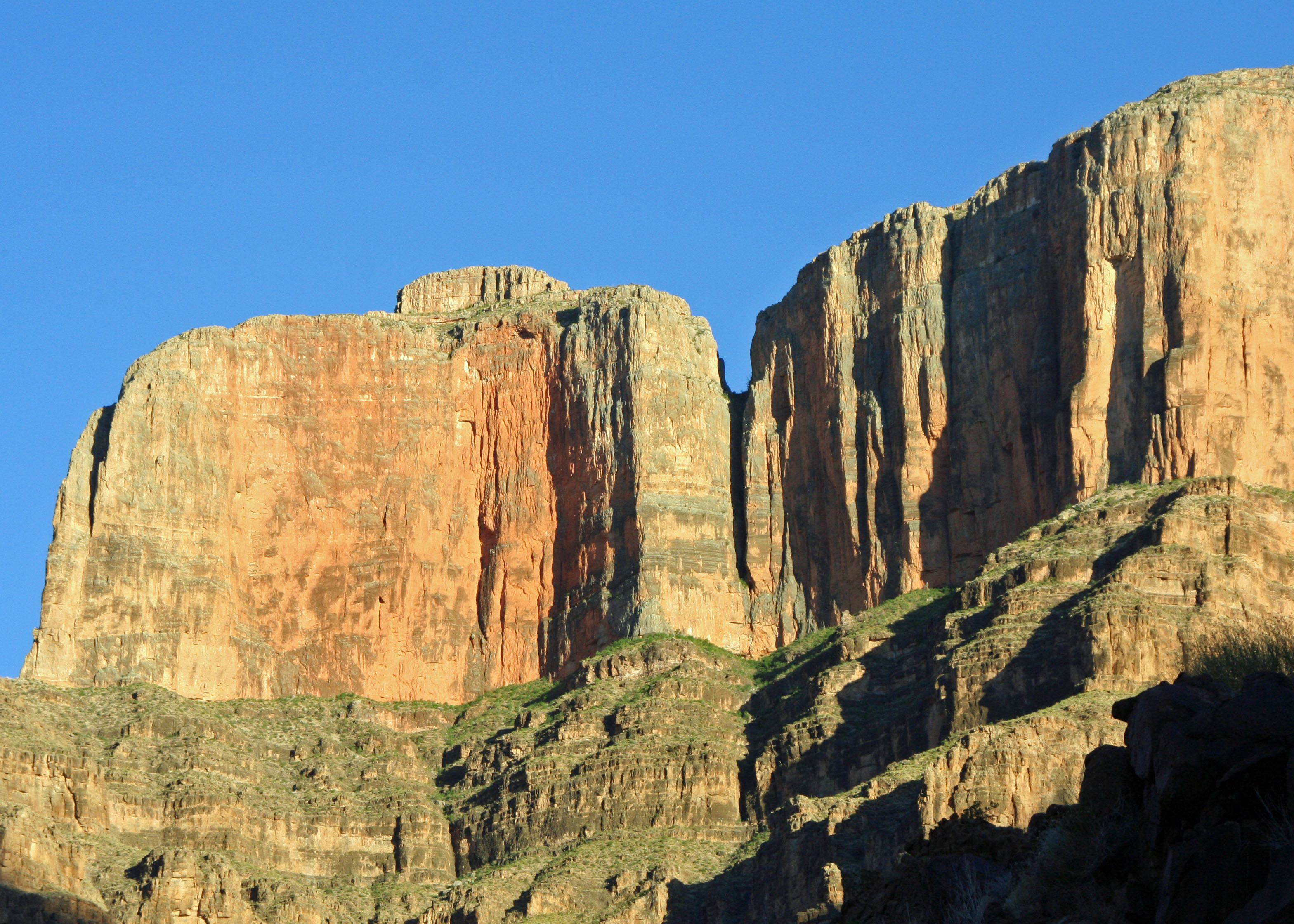
We had 21 days on the Colorado River and 21 days of incredible scenery. Views such as…

Scenes along the River…

Magnificent cliffs…

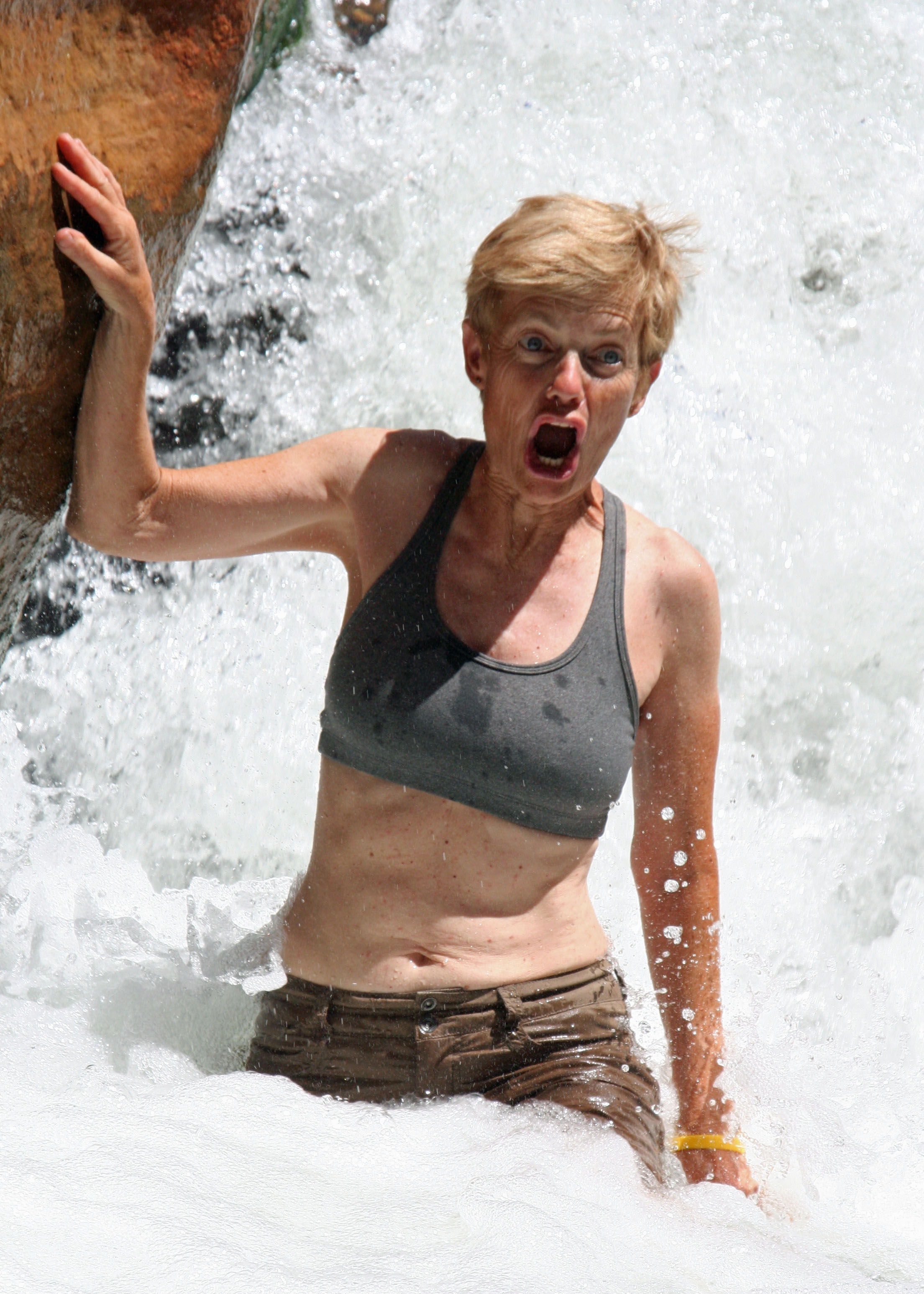
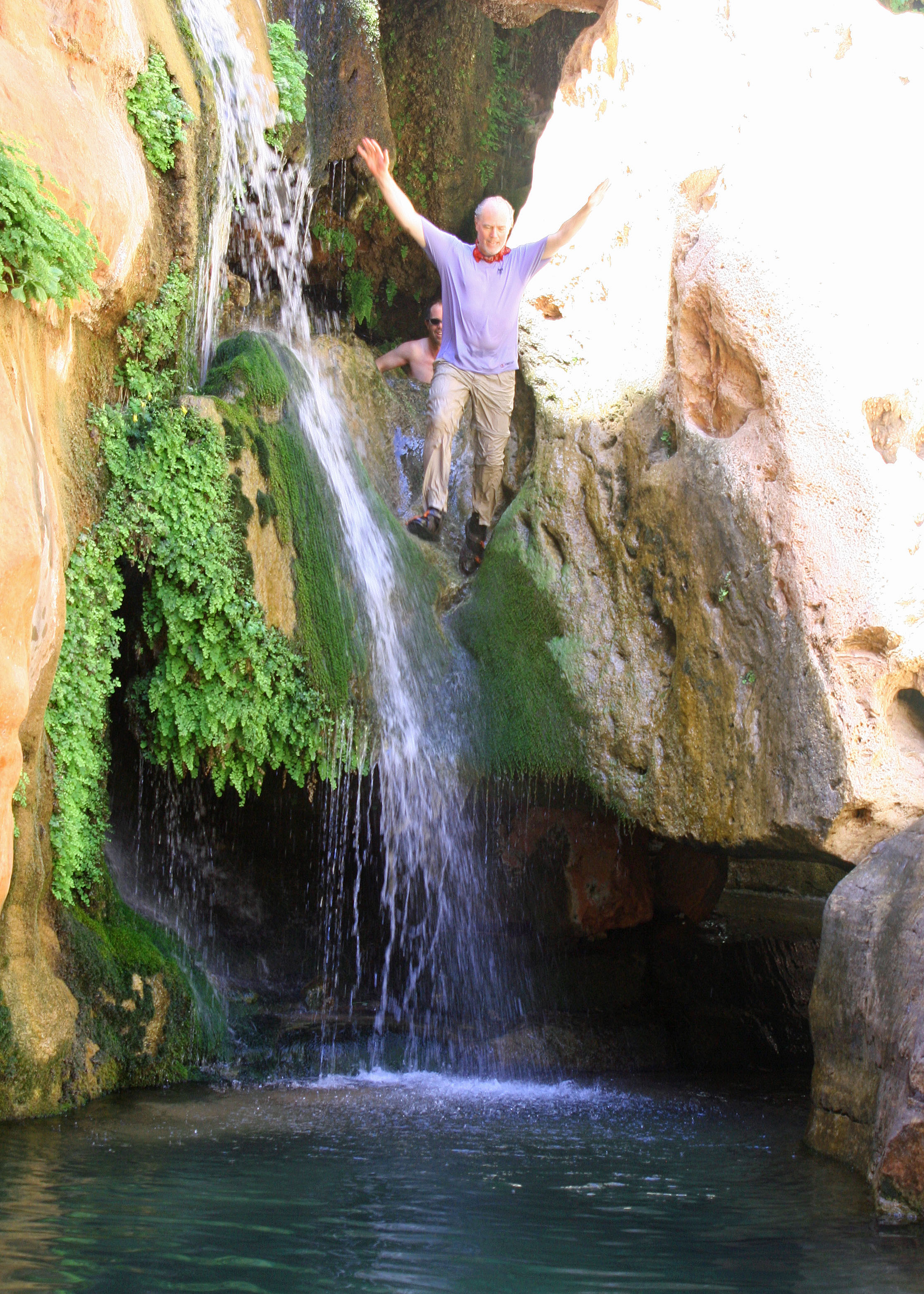
Plunging waterfalls…

And beautiful wild flowers.

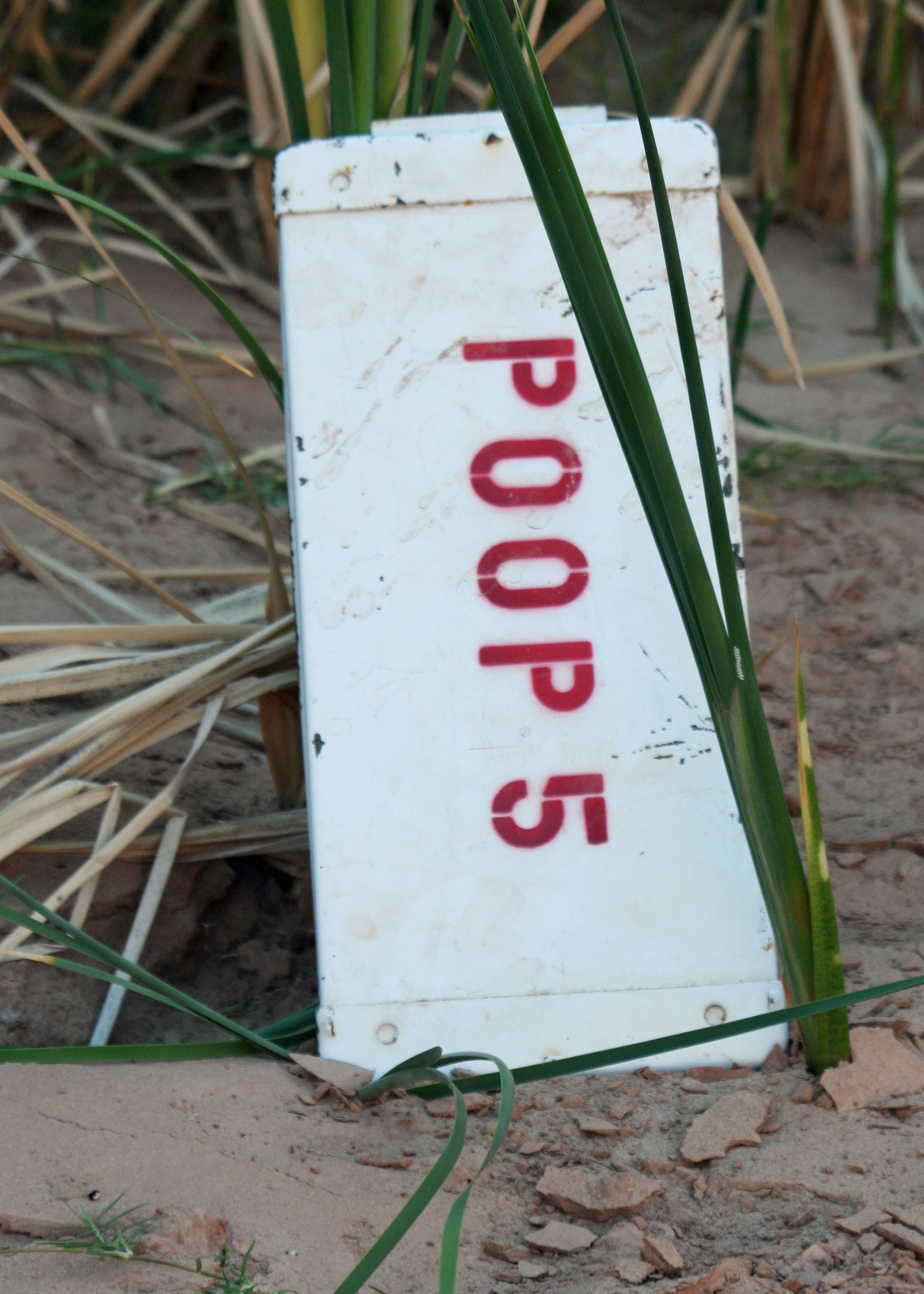
You will learn how to poop in the woods…

Dance in a line with too much wine…

Take refreshing baths…

And leap from high places.

Join us.

The Bhagwan Shree Rajneesh and Robert Burton: Gurus of a Different Ilk

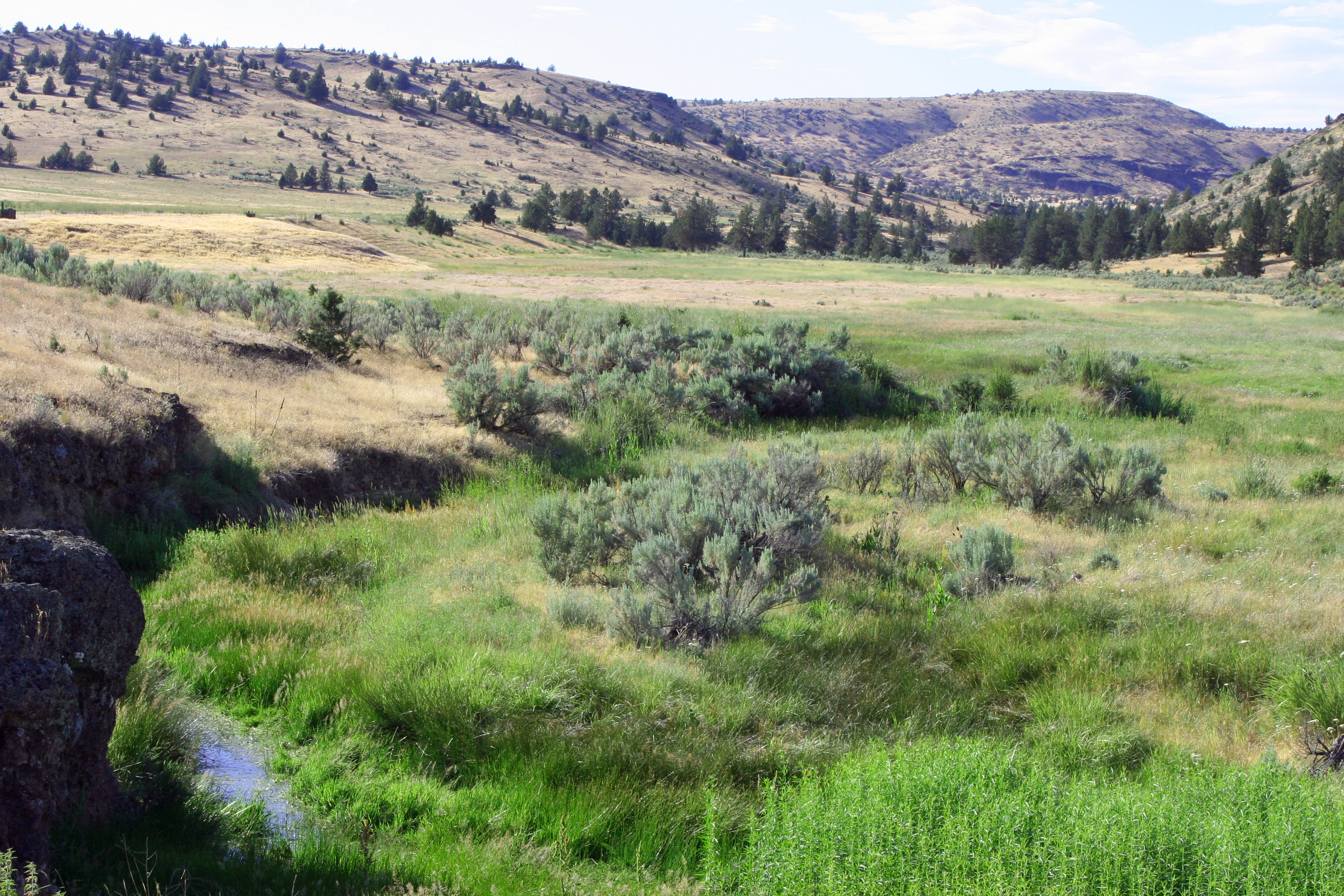
The country surrounding Antelope Oregon is as beautiful as it is remote.

We stopped in the Oregon community of Antelope last week and my thoughts turned to the Bhagwan Shree Rajneesh. The town is located in a remote region of eastern Oregon. It’s a cowboy and sagebrush kind of place. Belonging means you display an American Flag out front and a horse out back.

It's a cowboy and sagebrush type of place where water in precious.

The small community is not where you would expect to find people wearing saffron-colored robes and practicing meditation at the feet of a guru from India who specialized in owning Rolls Royce cars and dispensing enlightenment.

But that is exactly what happened in the early 80s when the Bhagwan appeared with his legion of devotees and bought the sprawling 60,000-acre Big Muddy Ranch, soon to be renamed Rajneeshpuram. As might be expected, the two dramatically different cultures immediately clashed with each other.

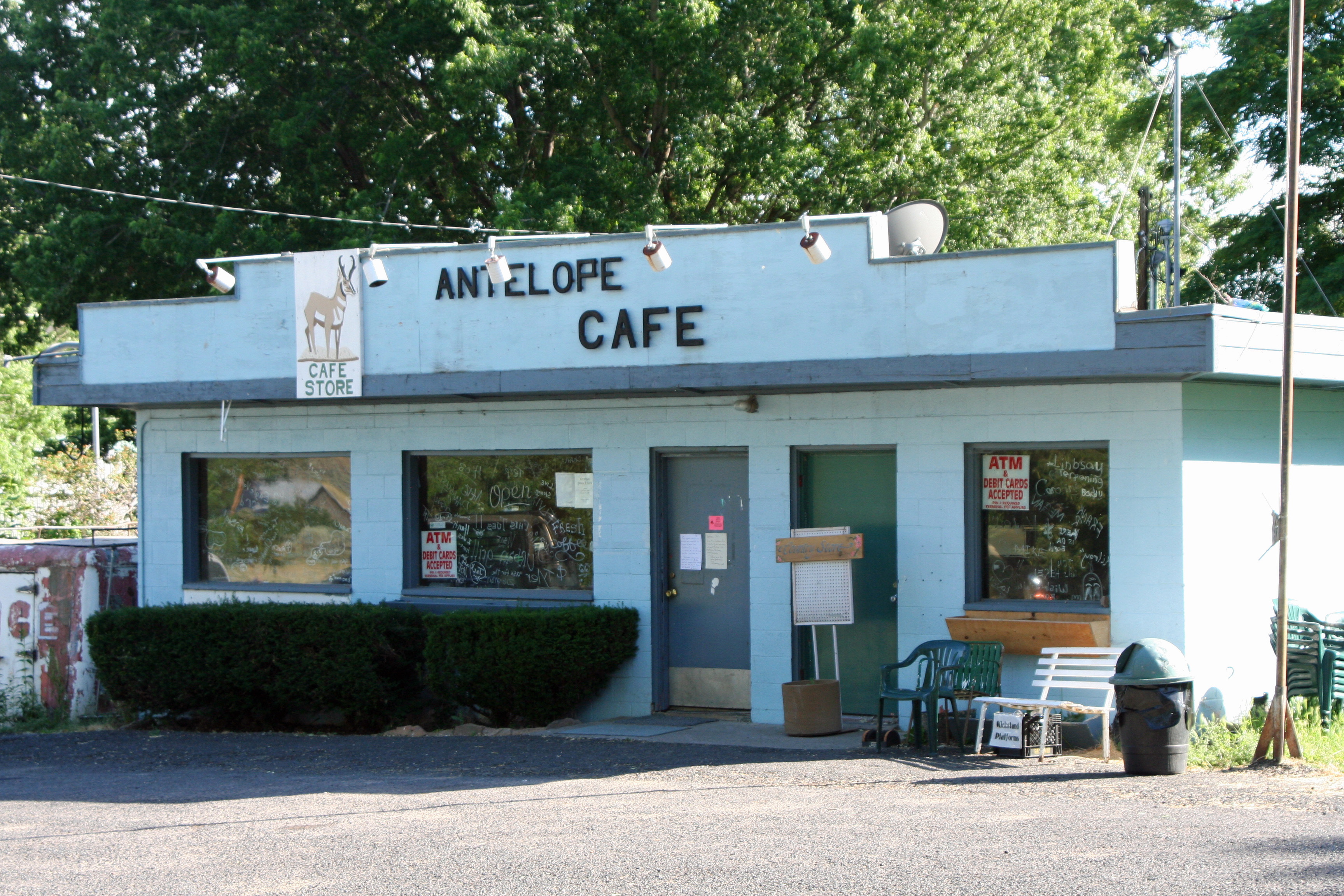
Not surprisingly, the rural nature of the small community of Antelope as represented by the town's only Cafe and the culture represented by the saffron robed members of the Bhagwan's commune were bound to clash.

The utopian dream of the Rajneeshans ended abruptly in 1985 with the arrest of the Bhagwan, the sale of Rajneeshpuram and the scattering of the flock. Bad things had happened including food poisoning attempts at local restaurants and internal wiretapping of commune residents.

Regardless of the scandals, many of the people who came to Rajneeshpuram to find enlightenment still swear by their experience 25 years later. The dark side of what happened is blamed on overzealous staff, not the Bhagwan.

I have a friend who went off to Rajneeshpuram in the 80s and still retains her commune name and connections today. Her mother and father were initially distraught by their daughter’s decision and shared their anguish with me.  They had pursued their own radical paths as young people, however, and eventually came to accept their daughter’s decision.

Having your own Guru in the 70s and 80s was an in-thing that the rich and famous, young people, and mystically inclined signed up for in droves. Another friend of mind tried to recruit me to the secret world of George Gurdjieff and Peter Ouspensky.

I took her backpacking down into the Grand Canyon once and was eager to share the beauty and isolation of the numerous side canyons. We took a short hike and soon found ourselves in the midst of towering, awe-inspiring cliffs.

M’s reaction was much different than I expected. Dangerous spirits inhabited the area and we were disturbing them. We needed to leave quickly.

On one level, I could understand her unease. In our twenties, we had both been influenced by Carlos Castaneda’s journeys through the Sonoran Desert. Don Juan had taught his young apprentice that mysterious and powerful beings from different realms inhabit remote regions. Some of these beings were really bad dudes, prepared to pounce on the unwary.

Given my African introduction to pantheism, it wasn’t hard to populate the Canyon with spirits. But I had spent years wandering in isolated wilderness areas and had yet to meet a spirit that had caused me any damage, or for that matter, even stopped to chat.

It wasn't hard to imagine the beautiful and remote canyons of the Grand Canyon being inhabited by ancient spirits.

I shared my perspective and was met with a rather cool response. Apparently I lacked the necessary perception to understand the danger. I had the irreverent thought of ‘out of sight, out of mind’ but kept it to myself.

M was serious. After her bout with Castaneda, she had moved from Iowa to Texas where she was introduced to the work of George Gurdjieff and his pupil, Peter Ouspensky.

Gurdjieff was an early 20th Century mystic who taught that the vast majority of humanity is asleep, little more than robots. Given proper training, however, individuals can awaken and reach higher levels of consciousness. I assumed that it was at these higher levels that one became aware of the malevolent spirits.

Gurdjieff called his training the Fourth Way. He, Ouspensky, and other followers set up esoteric schools to teach people the path to awakening.

One such follower was Robert Burton. Burton was working as an elementary school teacher in the San Francisco Bay Area during the 60s when he became captivated by Gurdjieff and Ouspensky. In 1970 he persuaded a number of his acquaintances that he was a person of higher conscious, the stuff that gurus are made of.

By 1973 he and his group had purchased property near the small town of Oregon House in the Sierra Nevada Foothills and were clearing land to establish a Fellowship to propagate Gurdjieff’s teaching and grow wine grapes. M and her husband moved from Texas to California to join Burton in his efforts.

By the time I met M in the late 70s, she had left her husband and Oregon House but was still an avid follower of Gurdjieff and Ouspensky. I suspect she was continuing to financially support and participate in the Fellowship. When she learned of my fascination with Castaneda, she gave me a couple of books on the Fourth Way and suggested that there was a local discussion group I might enjoy joining.

In some ways, I was a good candidate for what Burton was offering. Eastern traditions, especially Zen Buddhism, had a strong appeal. Meditation gave me the same sense of wholeness and connection that wandering in the woods did.

I wanted to believe that humans were capable of reaching higher levels of consciousness, of becoming more civilized in the broadest sense of the word. Self-actualization, to utilize Maslow’s term, seemed like a highly desirable goal and I always had myself on some self-improvement plan or the other. I need lots.

Burton had drawn a number of bright, well-educated and accomplished individuals around him. In ways, his success at recruiting followers was quite similar to that of the Bhagwan. Both had strong appeal to individuals who were seeking meaning in life that they weren’t finding in post Vietnam, post Watergate, super-materialistic America. The acceptance of a Teacher or Guru for help in finding the way was a legitimate and time-honored tradition in many Eastern oriented practices.

Ultimately, I lack the capacity of becoming a true believer, however. Regardless of the appeal, I am not willing to commit the trust required to place myself in another person’s hands. This means I can never quite understand the value that people derive from joining someone like Burton or the Bhagwan.

You have to go there to get it and I won’t make the trip.

Anyone interested in gaining significant control over my mind frightens me, regardless of his or her motivation or whatever benefits will supposedly accrue. The best of folks, from my personal experience and historical reading, have flaws.

Giving someone god-like status hides these flaws… both from the giver and the getter. Rational justification of action is not required. God or Whatever wills it. A multitude of bad things can hide out under this umbrella. Every day brings new examples.

So I had passed on M’s original suggestion to join a discussion group on Gurdjieff and Ouspensky and now found myself unable to recognize dangerous spirits from another realm. I honored M’s concerns, though, and we returned to camp. We spent our afternoon painting watercolors of the Canyon and hiked out the next day.

No bad spirits captured my soul, at least as far as I know.

Exploring the Grand Canyon by Car, Mule, Foot, Helicopter and Boat

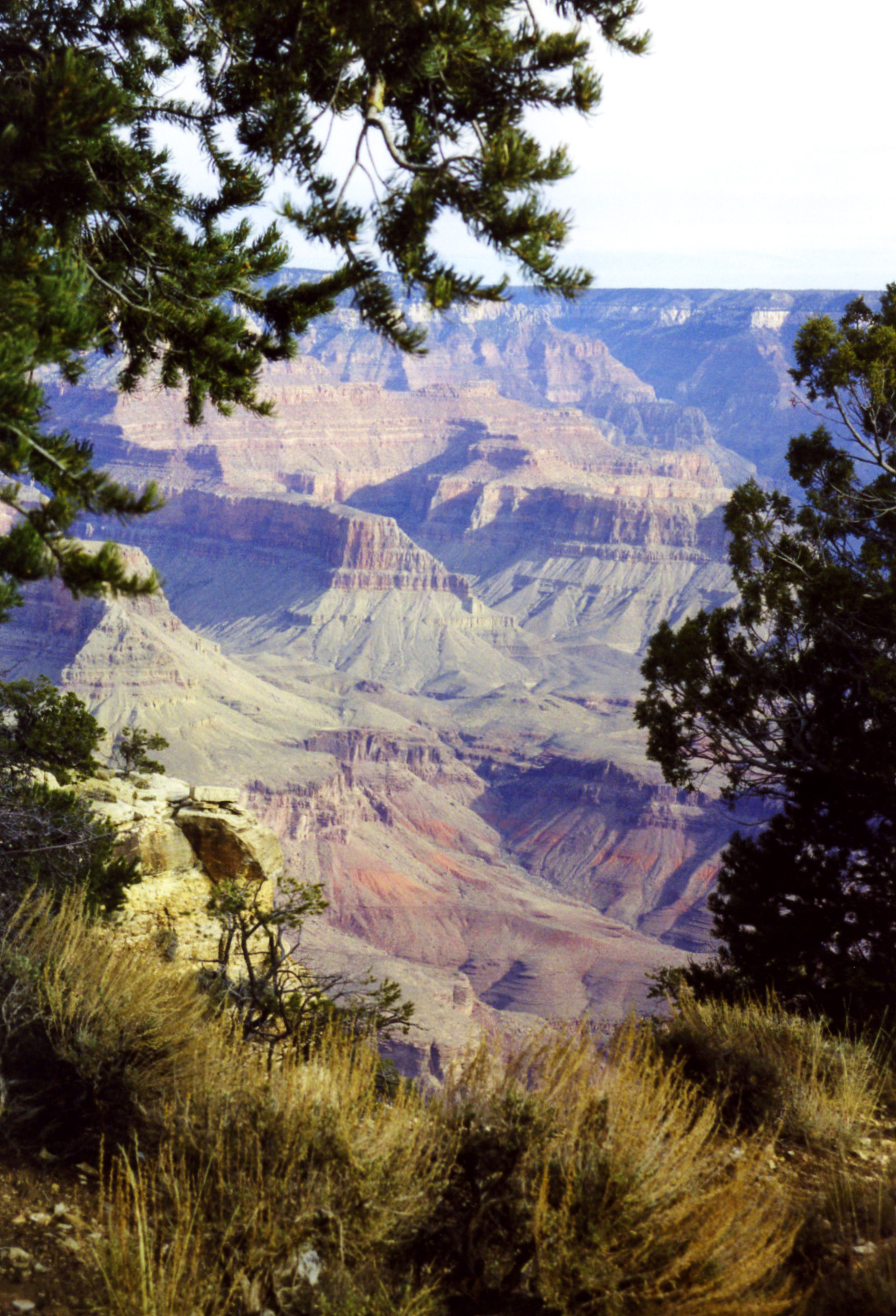
The Grand Canyon provides a vast panorama of ever changing color and seemingly endless space.

“Golly, what a gully,” President William Howard Taft was heard to mutter when he first saw the Grand Canyon.

Teddy Roosevelt was more profound: “Leave it as it is. You cannot improve on it. The ages have been at work on it, and man can only mar it.”

Each point along the Grand Canyon rim provides a unique and rewarding view.

Both of these thoughts are rumbling through my brain as I think about the 18 days Peggy and I are about to spend rafting 280 miles down the Colorado River.

Few people come away from the Grand Canyon untouched and we are no exception.Its vastness, beauty, and geology have pulled us back time and again, as have its natural and cultural history.

There are many ways to explore the Canyon. For the vast majority of people, some 5 million a year, this involves a drive up to the South Rim and a quick tour of the most popular overlooks.

Sitting on the edge for an hour or two enhances the experience several times over. Hanging out on the rim for a few days while roughing it at a campground or luxuriating in one of the lodges, is even better.

For those wanting for a bird’s eye view, a helicopter trip is a tempting option. (National Park rules limit the obtrusiveness that helicopters and airplanes flying in the Canyon would otherwise create. Specific routes and altitudes are mandated.)

Beyond these more sedentary approaches to the Canyon lies adventure. Even a half hour hike down one of the more popular trails provides a trip through millions of years of history, incredible views and the heart-pounding thought that only a few feet separate you from a thousand foot tumble.

Longer hikes and especially backpacking trips provide a perspective that only a small percentage of Canyon visitors ever have.

"Don't even think about climbing on my back," this Grand Canyon mule seems to say.

If you want to visit the inner canyon but fear you’re lifetime warranty will expire hiking out, check out the sure-footed mules that carry tourists in and out of the Canyon. It’s an outing your rear will remember for years.

At some point or the other in my life, starting with a Rim drive in 1968, I have experienced all of these approaches to visiting the Grand Canyon including trips by mule and helicopter. (Our son Tony provided the latter while he was working for Papillon.)

My most challenging journeys have been six backpack trips into the Canyon, including a week alone. Read about the latter misadventure in “The Tale of a Tail” under Stories on the sidebar.

I view our 18 day raft trip down the river as an exclamation point to my explorations of the inner canyon.  Even here there are options. For example, commercial companies offer trips on large, motorized pontoon boats. These tours are quicker and definitely less work… but my sense is they lack the same level of intimacy and adventure as a private trip.