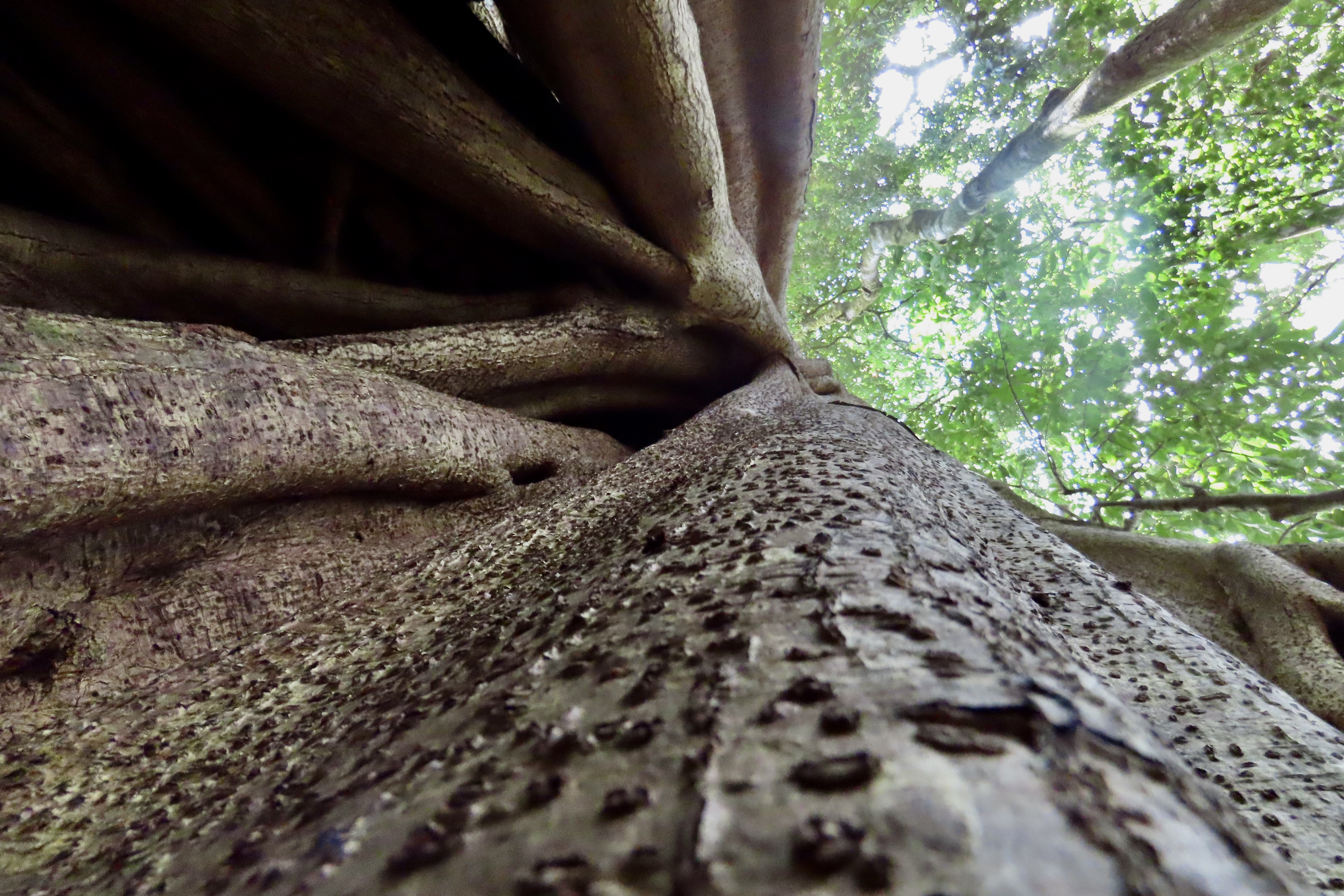
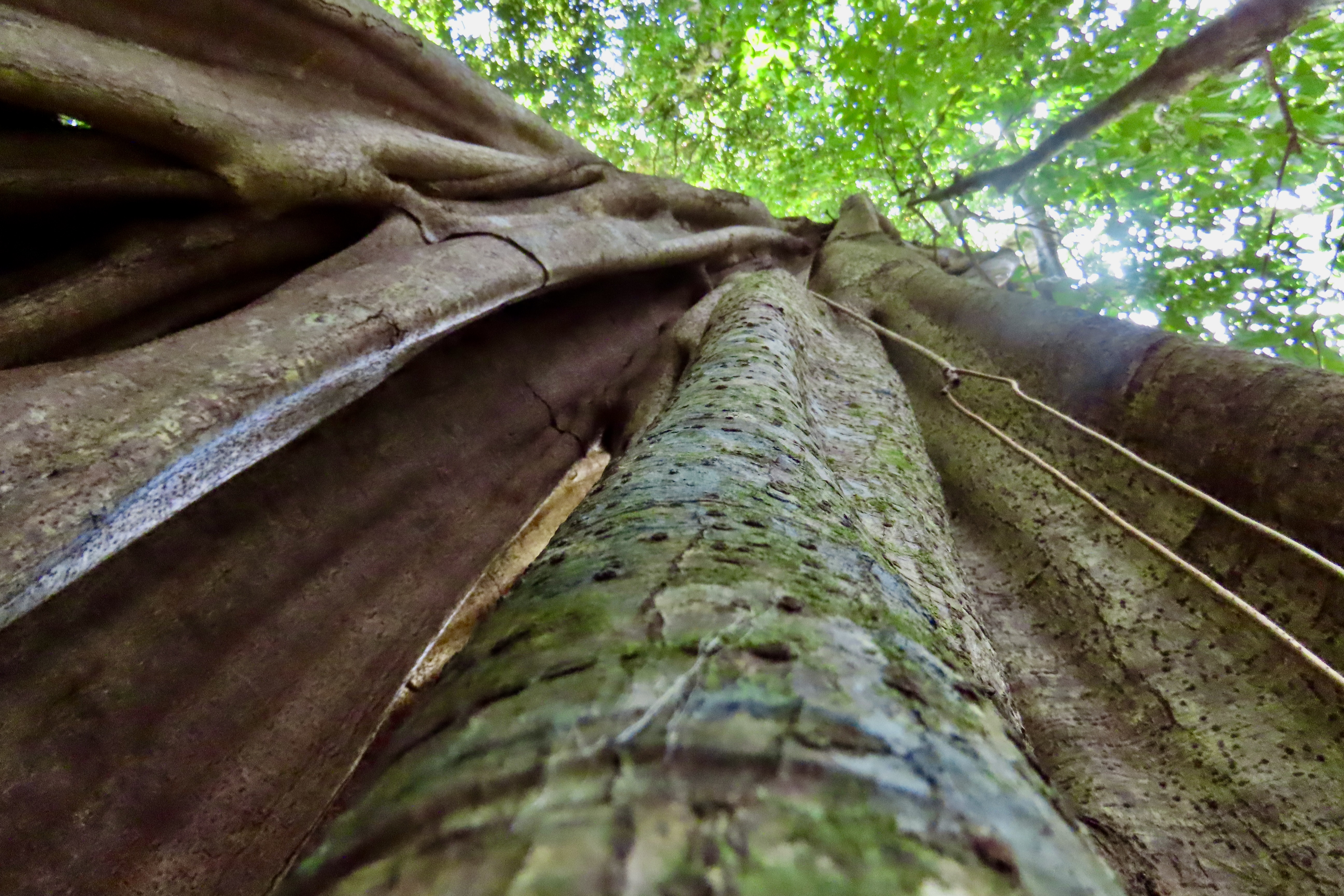
The view looking up into a Ficus Tree. These are all roots!
So, here’s the question: Do you like figs? Me, not so much— unless they are located in a Fig Newton. I carried them on backpack trips for years. They were yummy. The birds and monkeys and other animals of Costa Rica don’t have my finickiness when it comes to downing fresh figs; they devour them with relish. And then they poop out the seeds. No surprise there, of course, since they can’t digest them. It a relatively common way that seeds/plants are distributed.
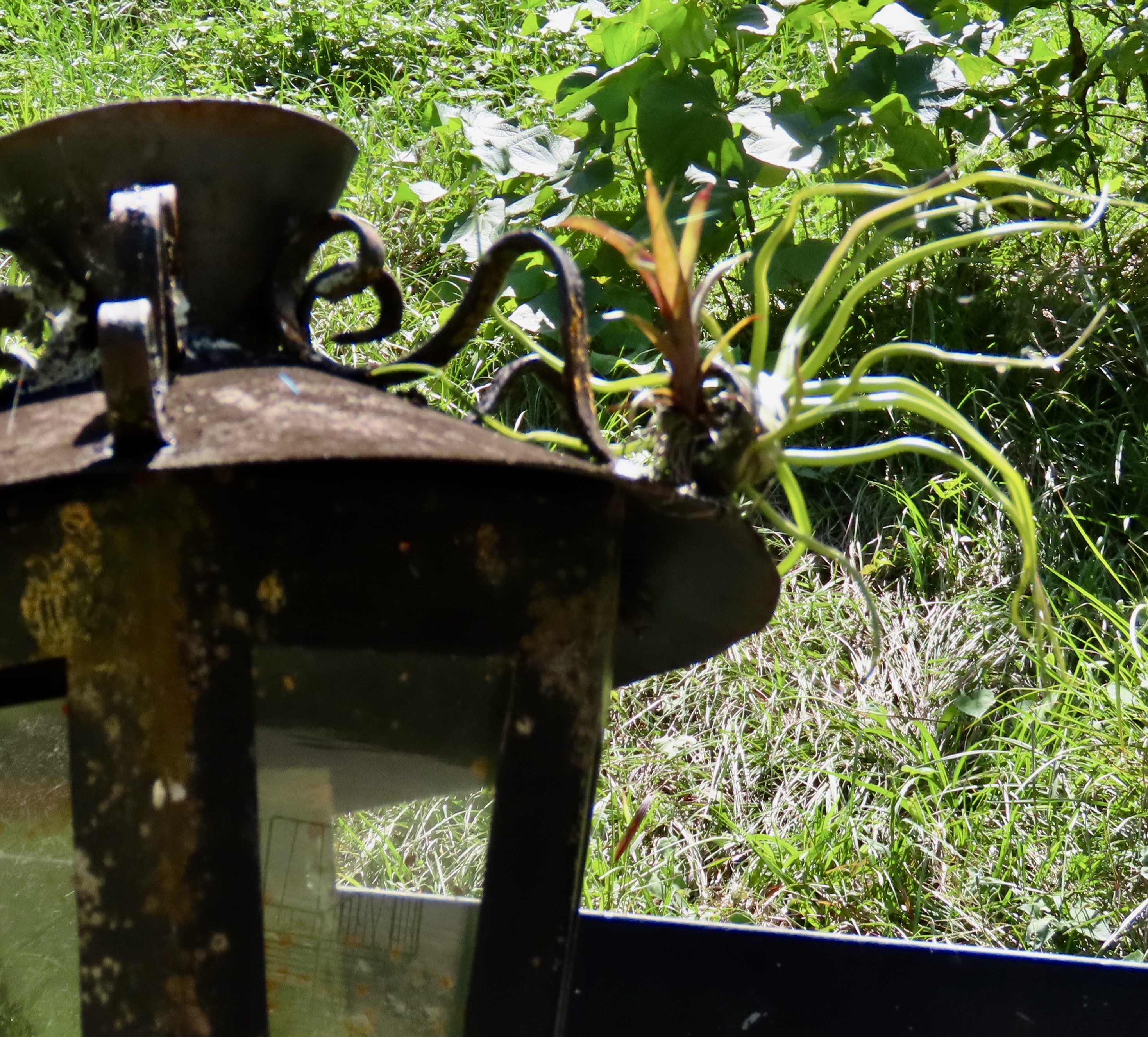
But here is where it gets interesting in terms of Ficus costaricana, the strangler fig of Costa Rica. The bathroom for birds, bats, monkeys and other arboreal animals that eat figs is often up in the tree tops, the canopies, which is where the seeds sprout and turn into an epiphyte. For those of you who may not be up on botany, an epiphyte is a plant that grows on a tree or other plant without harming the tree by obtaining its nutrients from the surrounding air, water and debris instead of the tree. We even saw one thriving on a metal lamp post.
This epiphyte seemed quite happy growing on a lamp post in Nuevo Arenal, Costa Rica.
The ficus is something of an exception to the no-harm rule, however. It sends roots out that eventually reach the ground and start to feed the ficus directly. The roots grow in size, surround the tree, and dig deep into the ground. At the same time, the limbs shoot up to provide sunlight for the figs leaves. Between the roots stealing water, and the leaves stealing sunlight, the fig eventually kills its host. Not nice. The process isn’t actually strangulation, but the result is the same. Dead is dead. Eventually, the dead tree rots out, leaving the Ficus with a hollow core.
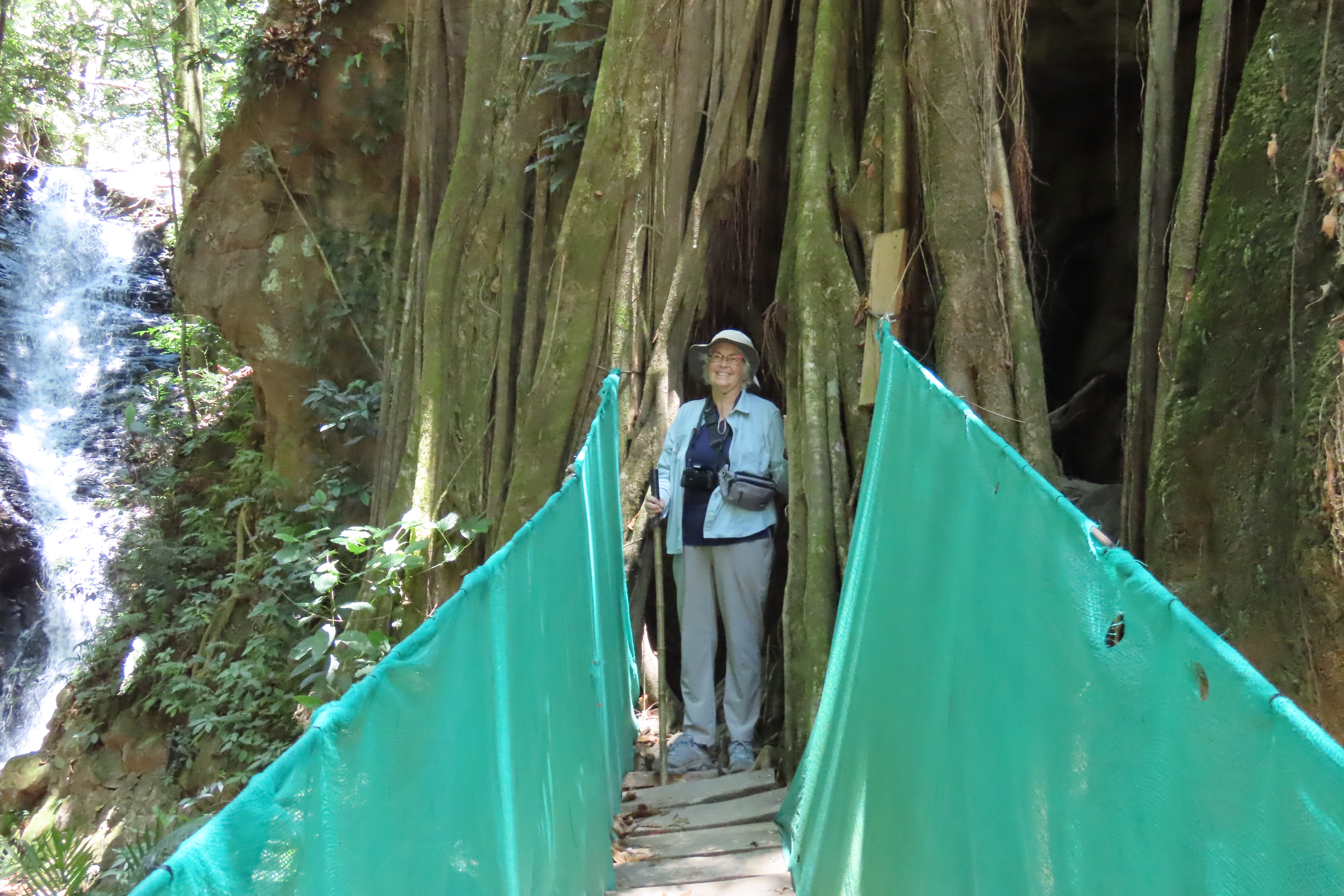
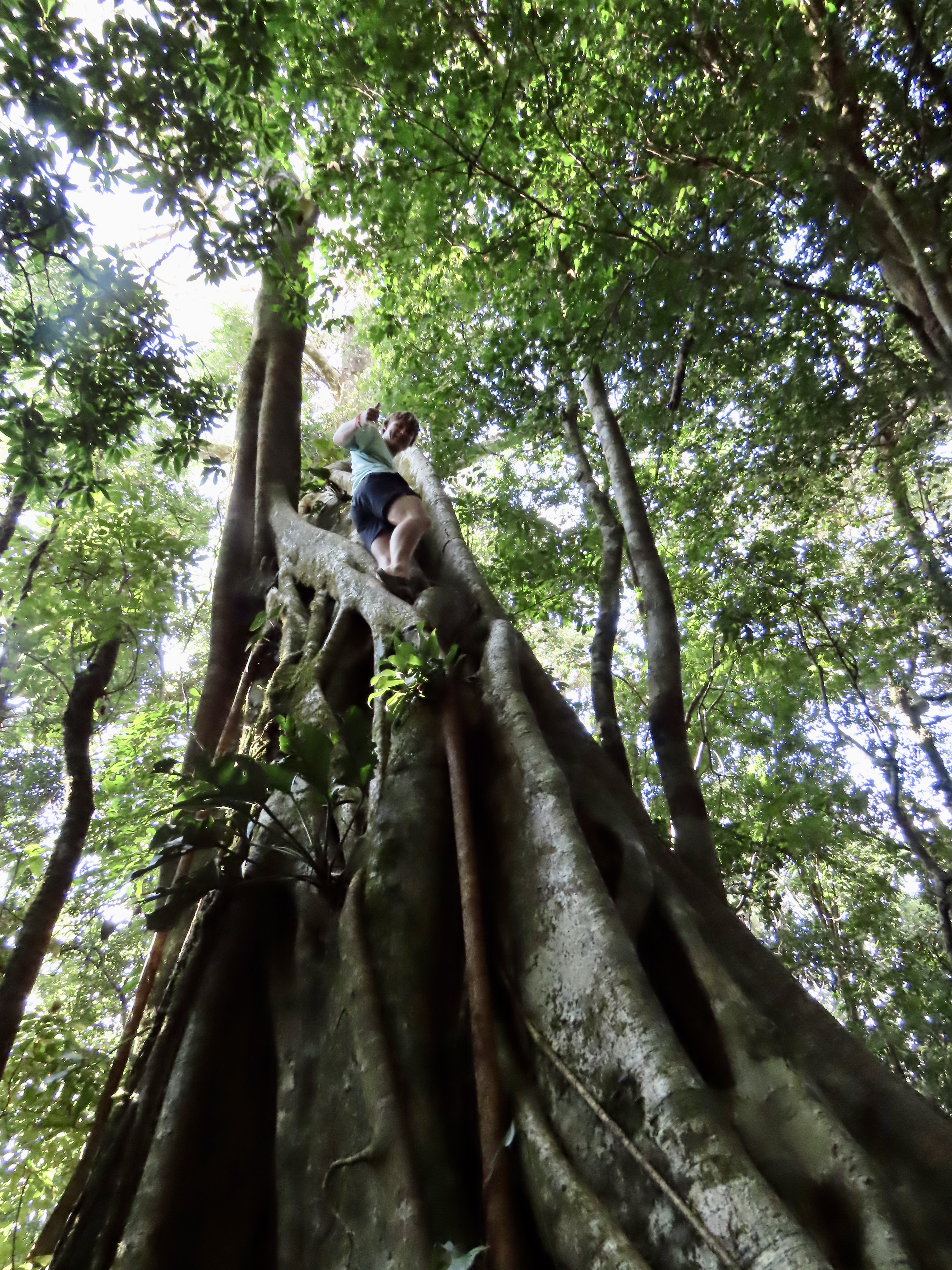
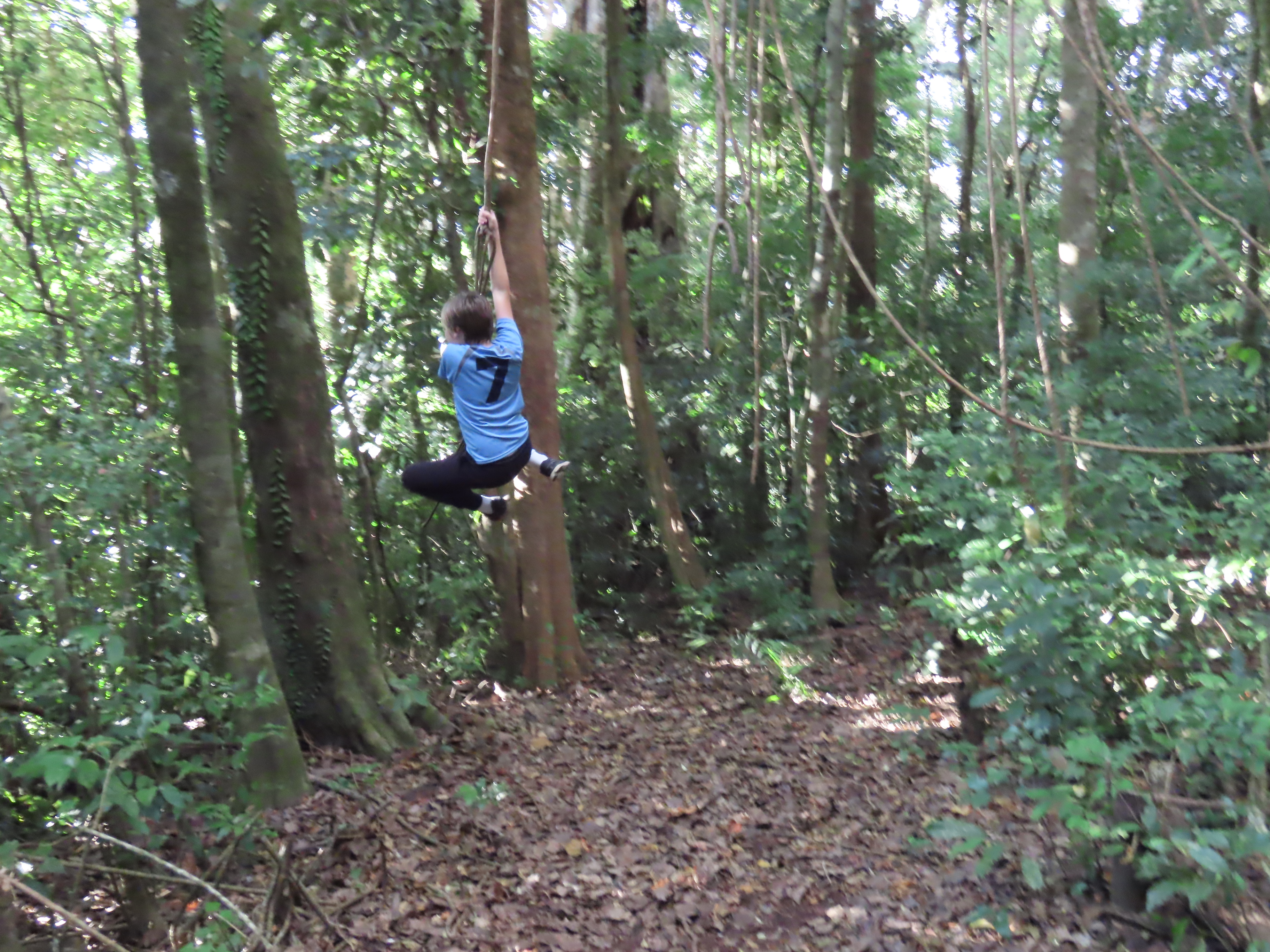
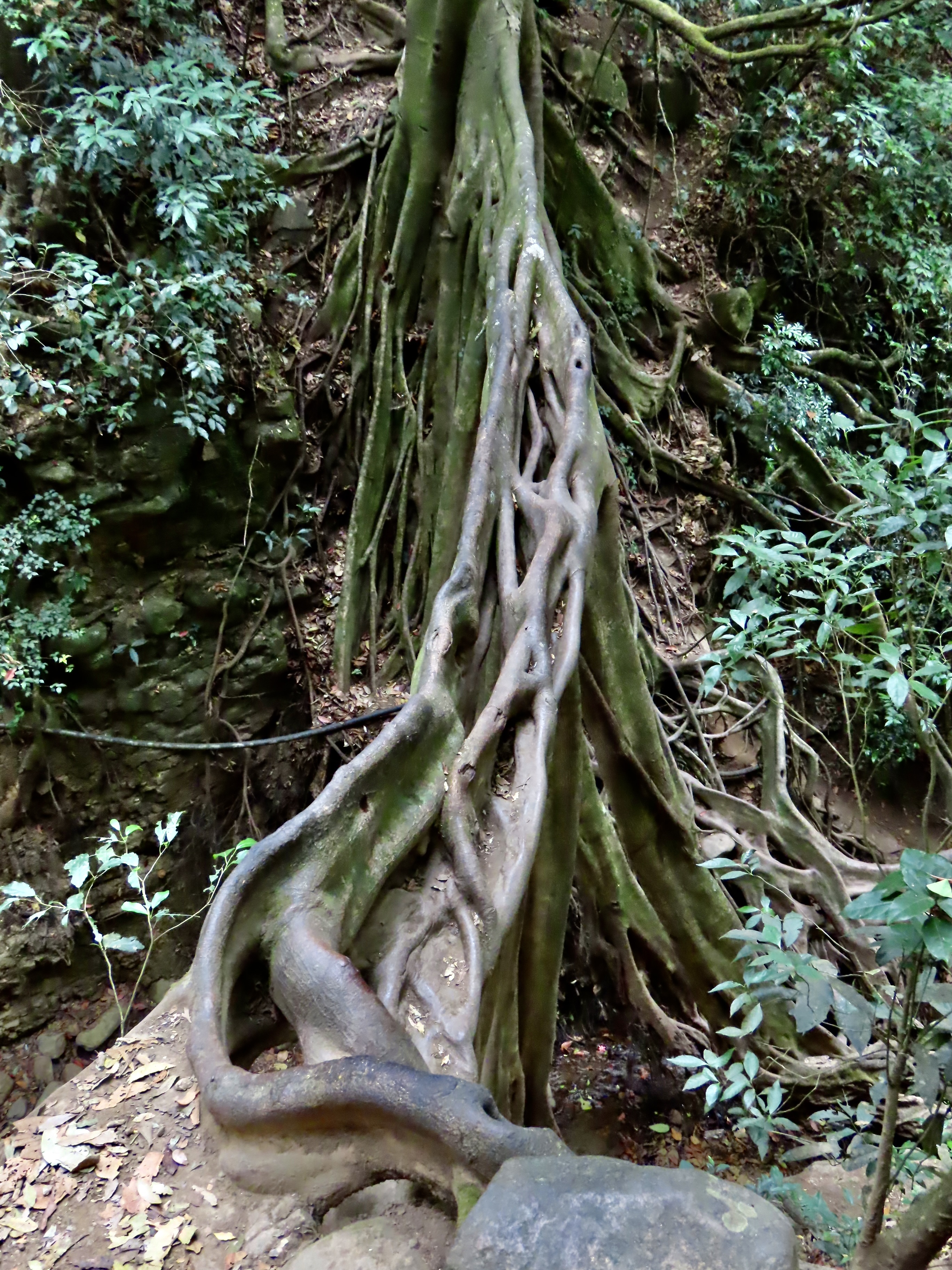
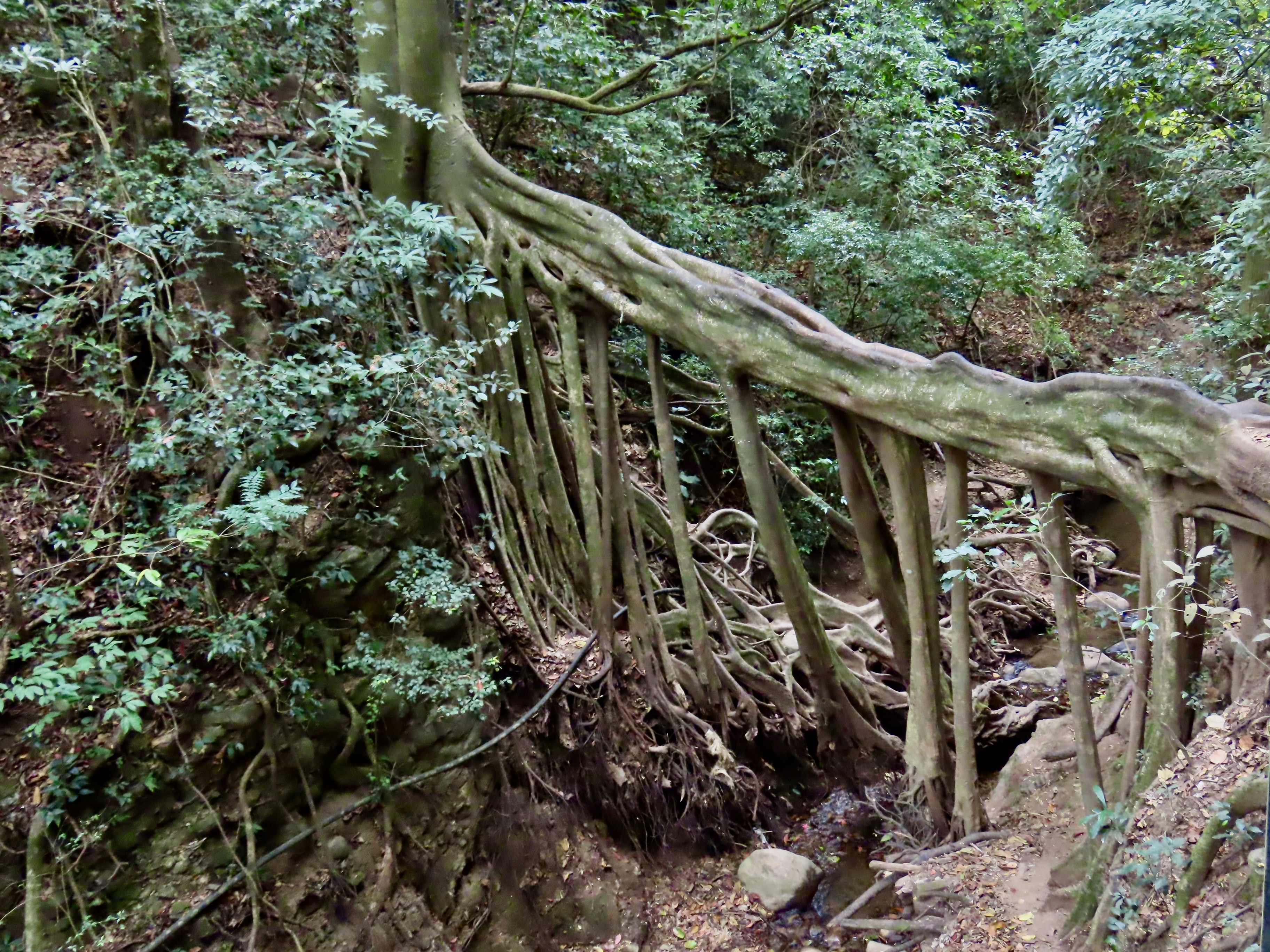
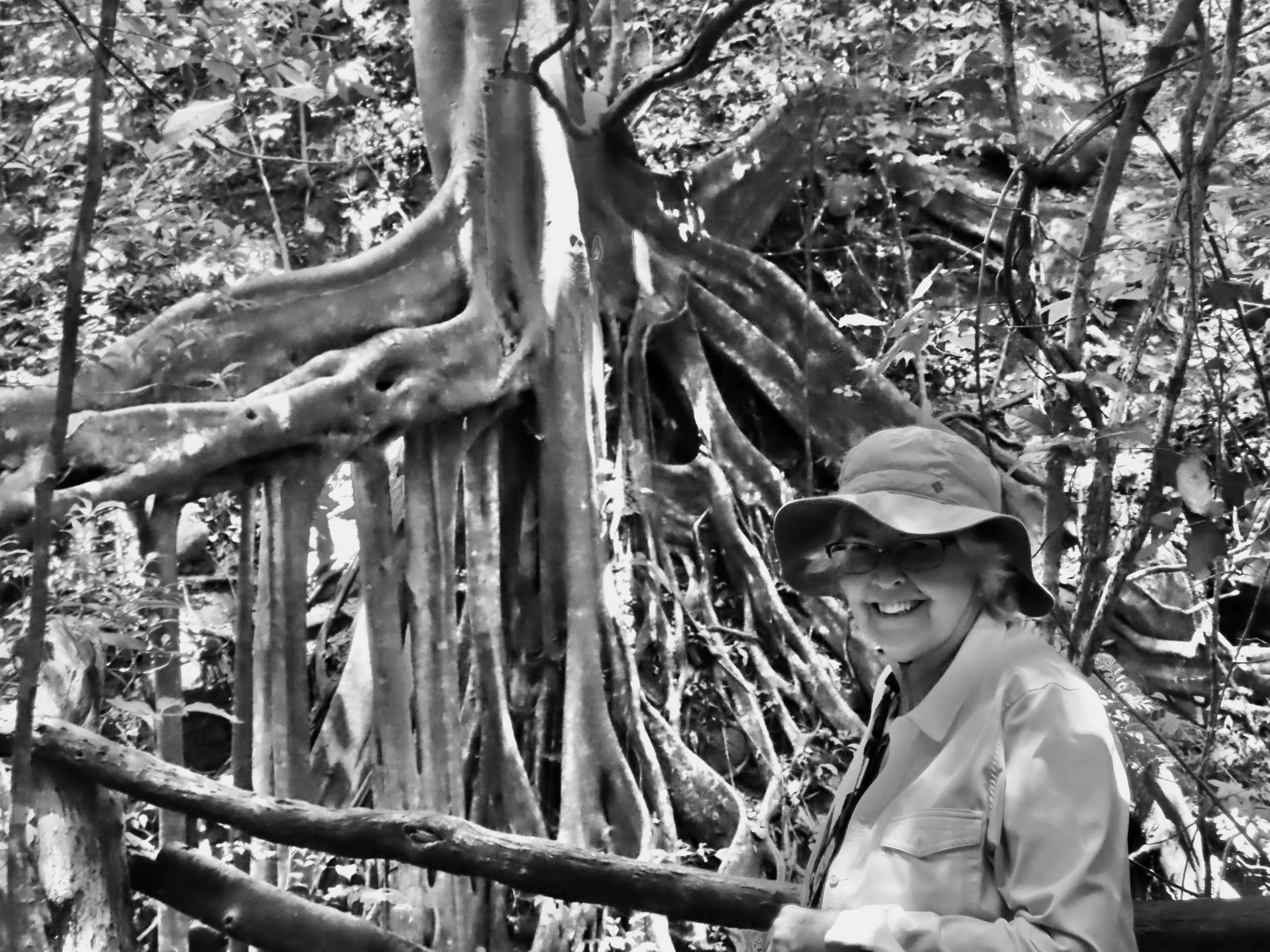
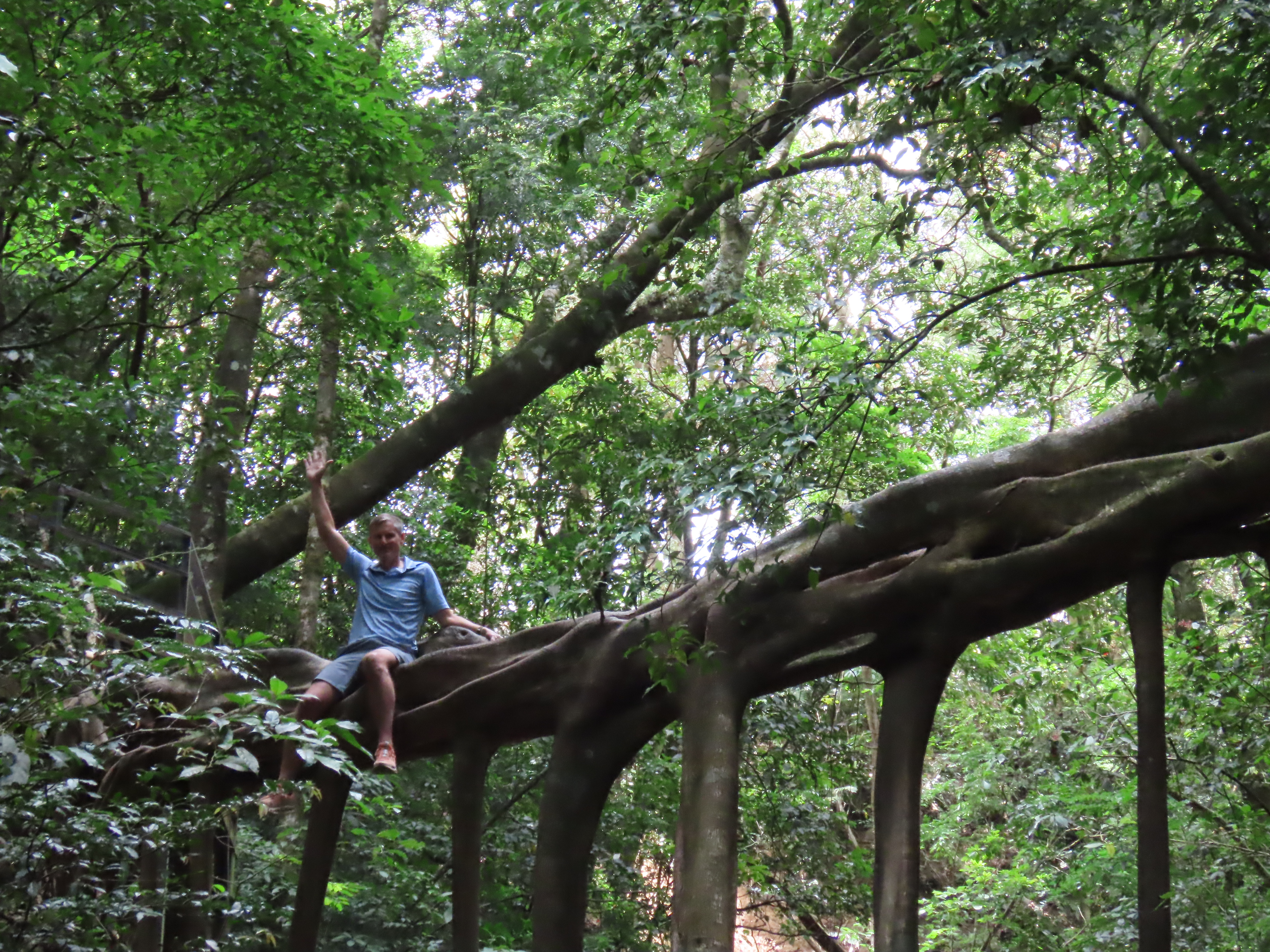
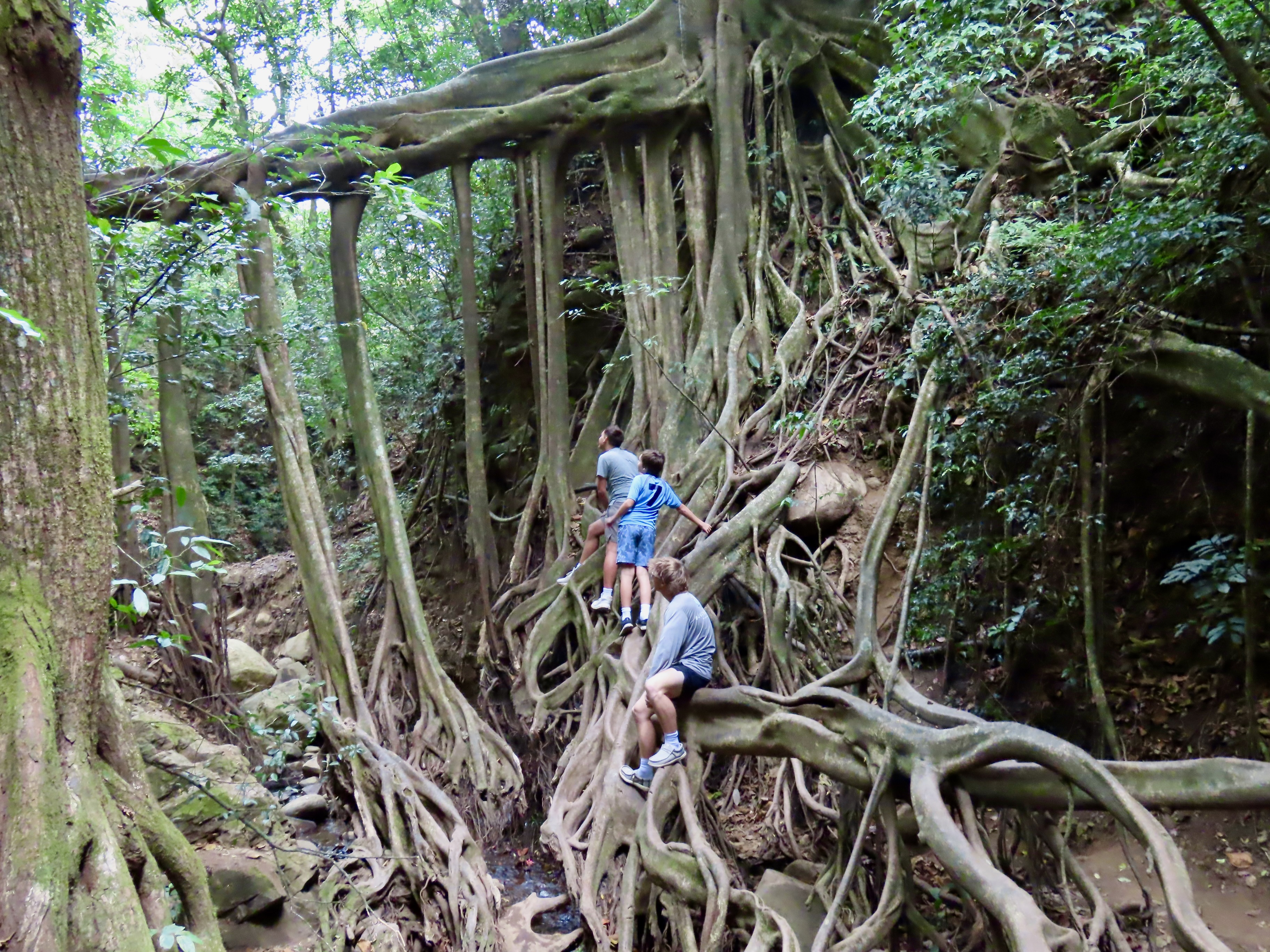
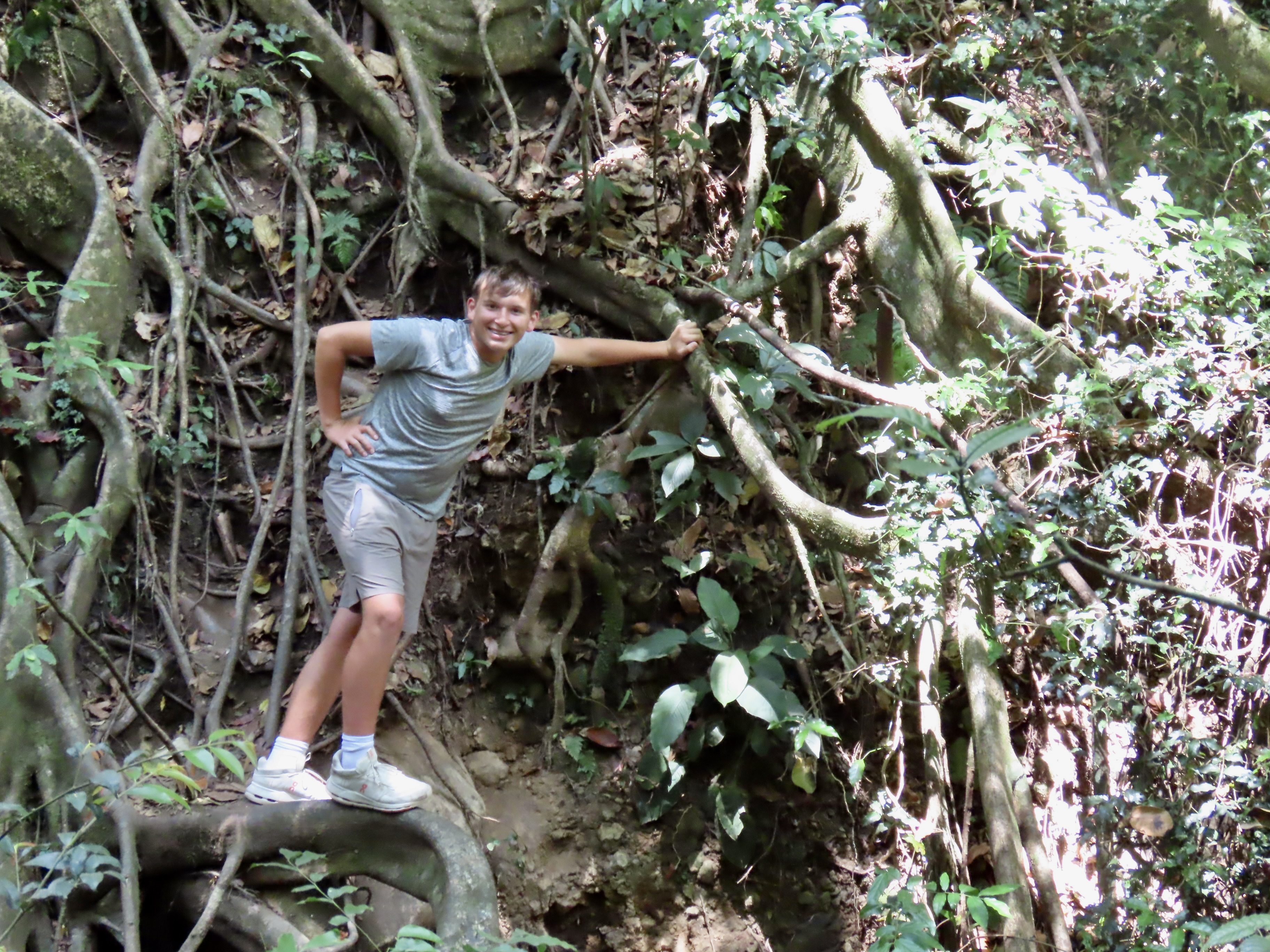
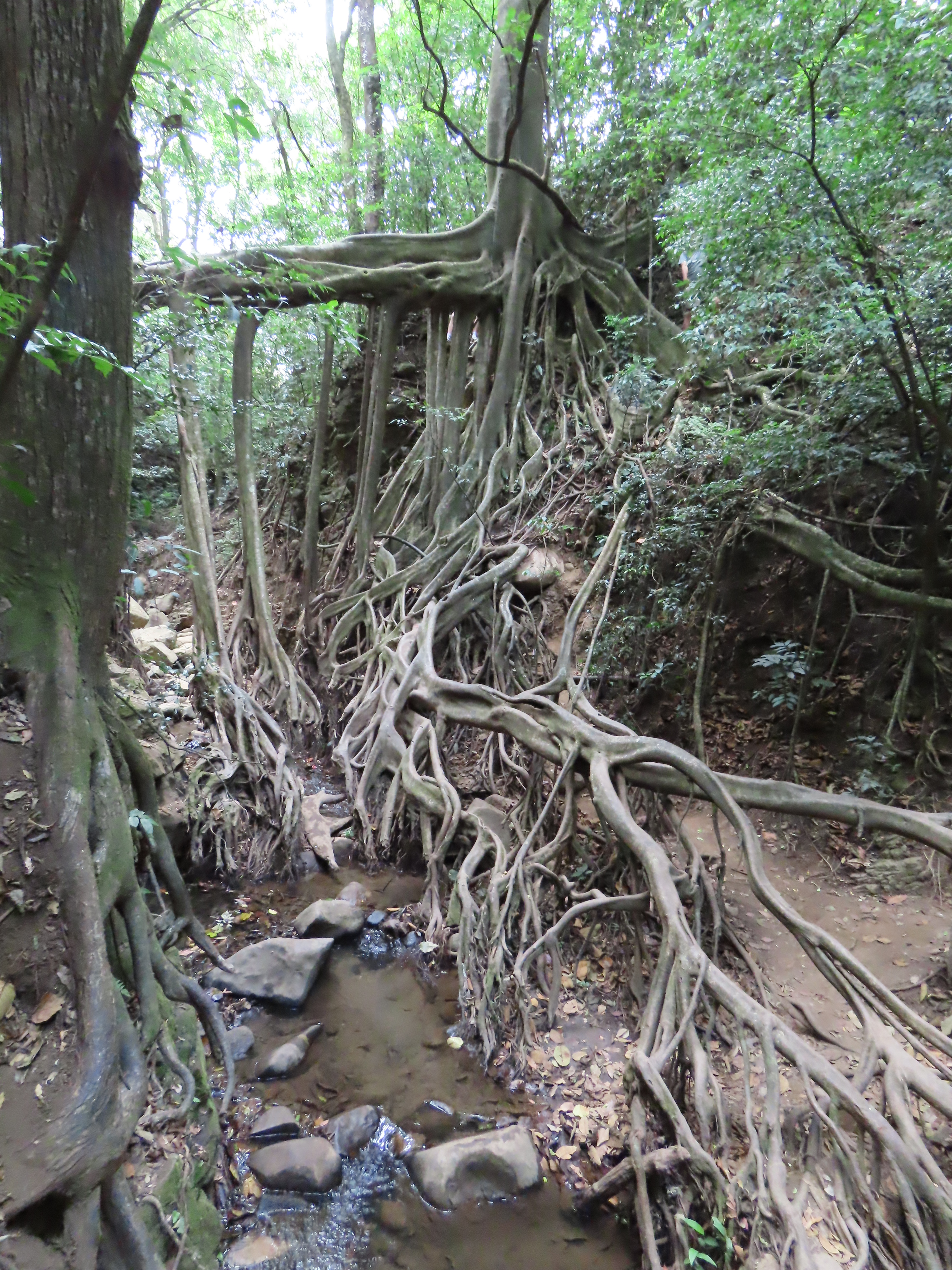
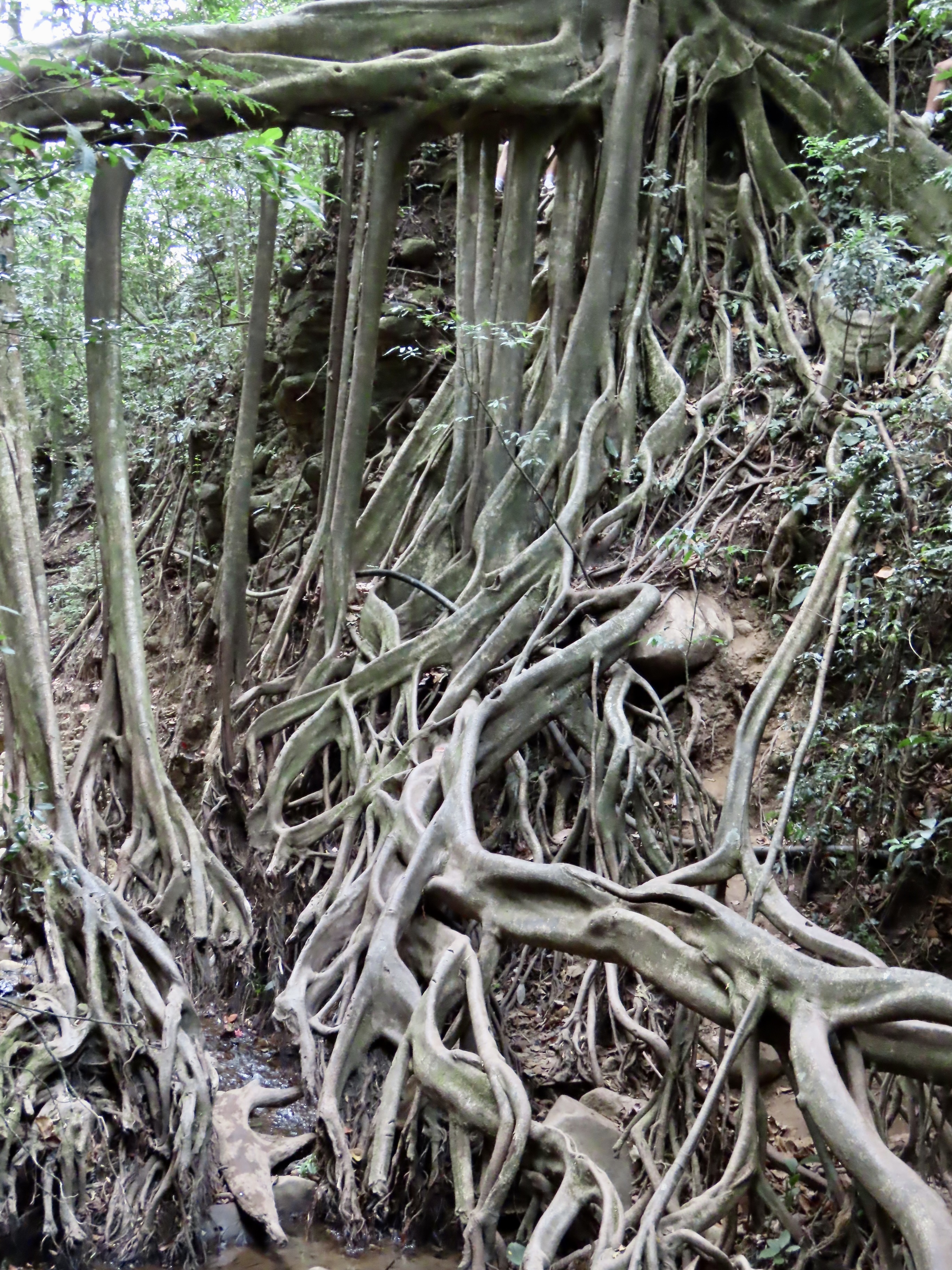
We were on our way to a waterfall when a hollow ficus tree became part of the trail . We had just crossed a rickety Indiana Jones type bridge. Peggy provides perspective. The waterfall is off to the left and will be featured in a future post.Another advantage of the hollow ficuses are that they provide great opportunities for tree climbers. Proving the point, our grandson, Connor perches about 15 feet up.One of the hanging roots that hadn’t yet reached the ground, provided a monkey-style swinging vine for our youngest grandson, Cooper. Had he hung on with one hand and pounded his chest, he could have been Tarzan!Another view looking up into the ficus tree. This giant was about a hundred yards away from where we were staying in Monteverde. The owner of the VRBO, Tobi, had taken us over to the tree and demonstrated swinging on the vine!And finally, our most unusual view of Ficus tree. The owners of this property called it simply La Raiz, the Root, and charged us $2 each to visit. The ‘root’ was well worth the price.It spanned a small creek and formed a bridge.A side view.Peggy on the other side of the bridge. I thought the roots made good candidates for rendering in black and white.Our son Tony thought the bridge provided a great place to sit. I’m pretty sure the boys would have made their way across the bridge, but parents (and grandparents) vetoed the option.Instead, they were all over the roots. A close up of our grandson Chris among the roots. His interest in bio-tech meant he spent much of his time in the jungle checking out the various plants. His bedroom resembles a greenhouse.The extent of the roots was impressive. These would have originally been under the ground but the creek had exposed them. It’s easy to see how the roots could have out-competed the host tree for water.Peggy and I preferred photographing them to crawling on them, wisely so, I suspect.
My next post: UT-OH Chapter 14: Surviving Baseball Bats and Dynamite Caps

 Wandering through Time and Place