Canyon de Chelly (pronounced shay) is famous for its spectacular canyon views and ancient history. Today, the national monument is jointly operated by the Navajo Nation (who owns the land) and the US Government.
Peggy and I have visited Canyon de Chelly twice, first in 2019 in October and then this year in June. In 2019 we drove the South and North Rim roads and then explored the inner canyon. The two roads are open for anyone to drive. The tour of the inner canyon requires that visitors have a Navajo Guide along. Our friends Tom and Lita from Sacramento joined us in June where we did the inner canyon tour but, unfortunately, didn’t have time for the rim drives. I’ve opted to use photos from both visits.
We are going to feature the scenic side of the canyon today. Next week, we will look at the canyon’s ancient history in terms of pueblos that the Ancestral Puebloans built in the canyon and petroglyphs and pictographs from both the Puebloan and Navajo time periods. I also want to discuss the Long Walk where Navajo were forced to abandon their homelands to settlers pouring in from the eastern US. It’s the type of story that President Trump is now trying to ban from national parks and monuments because it detracts from his concept of a great America.
But first, the beauty.
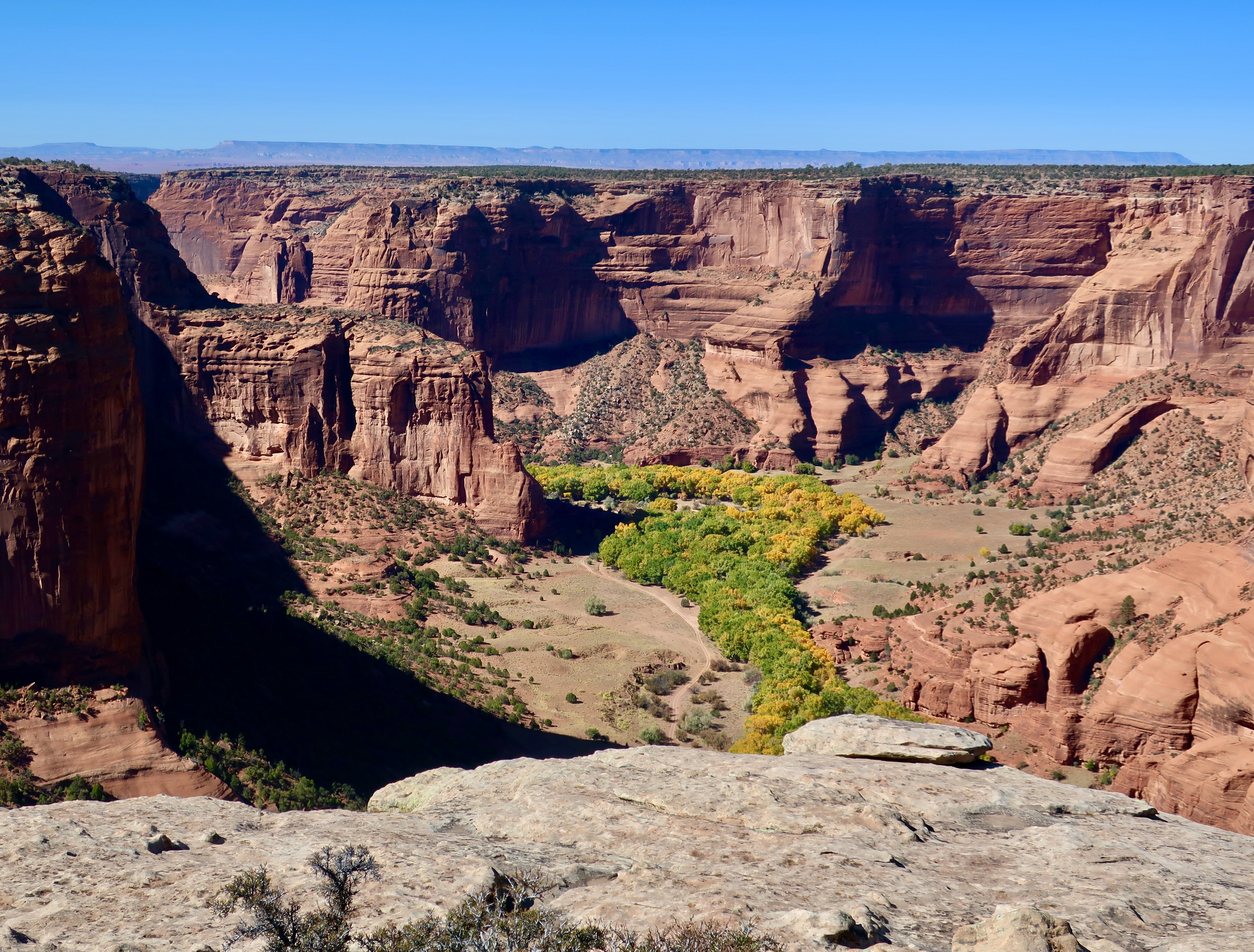
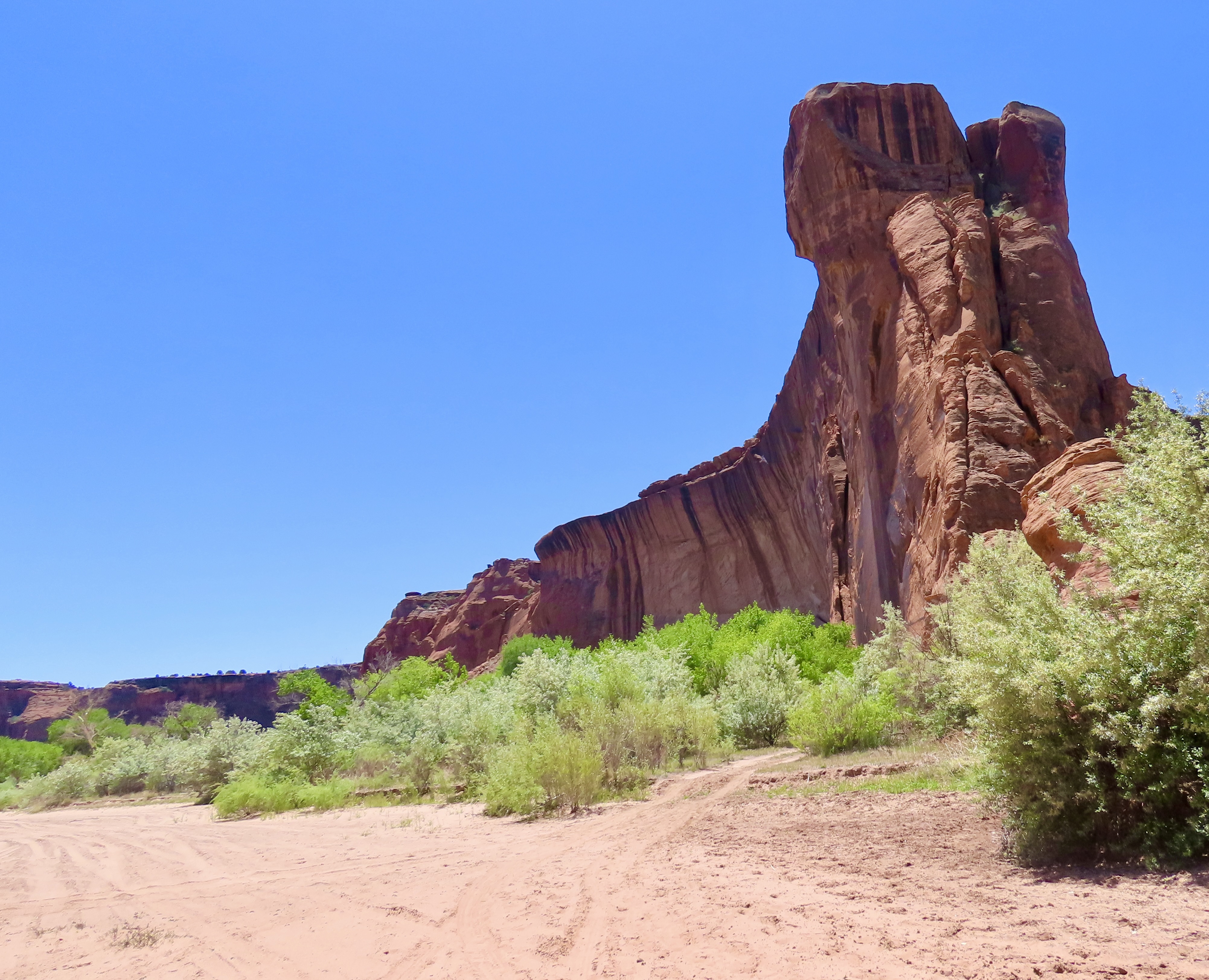
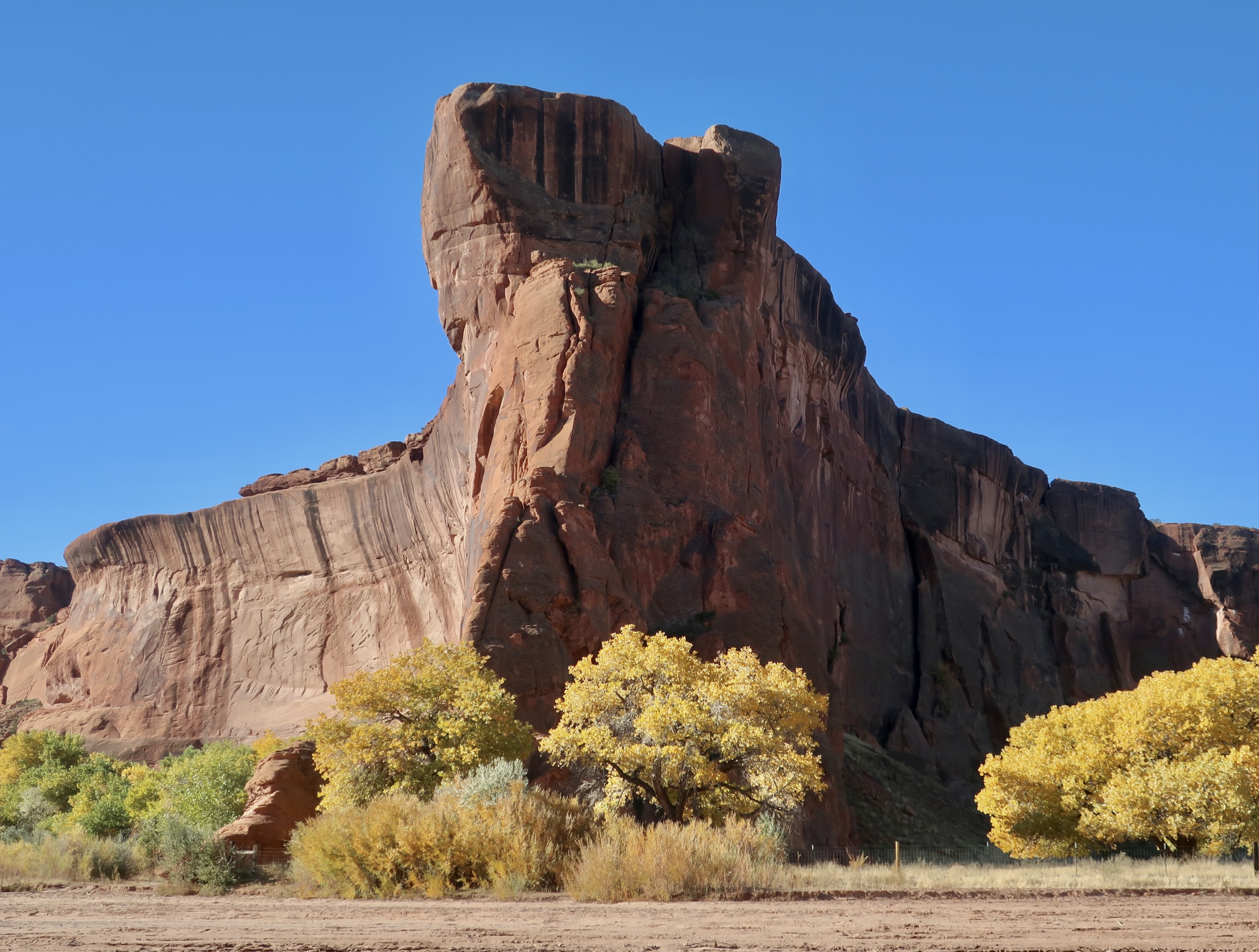
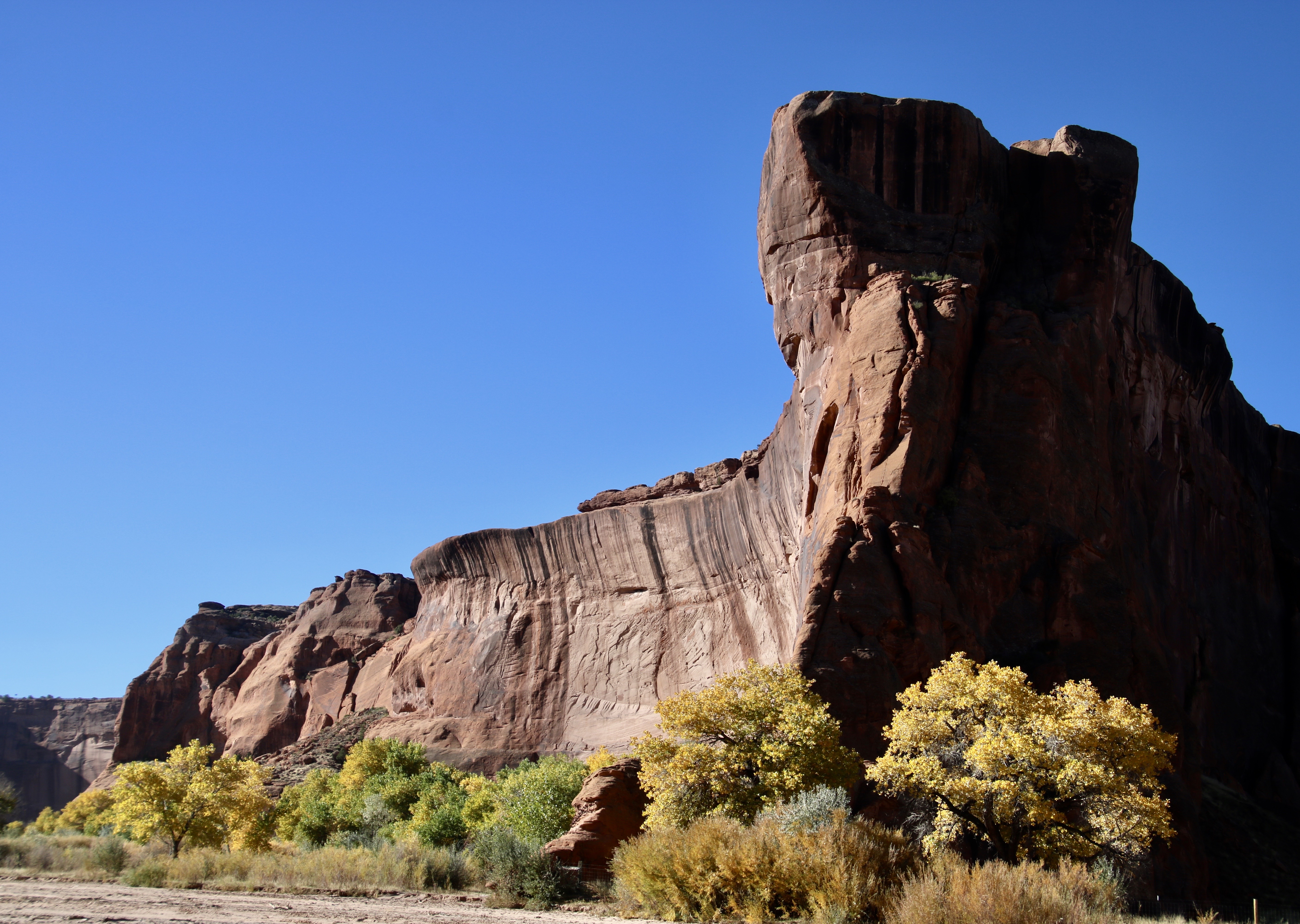
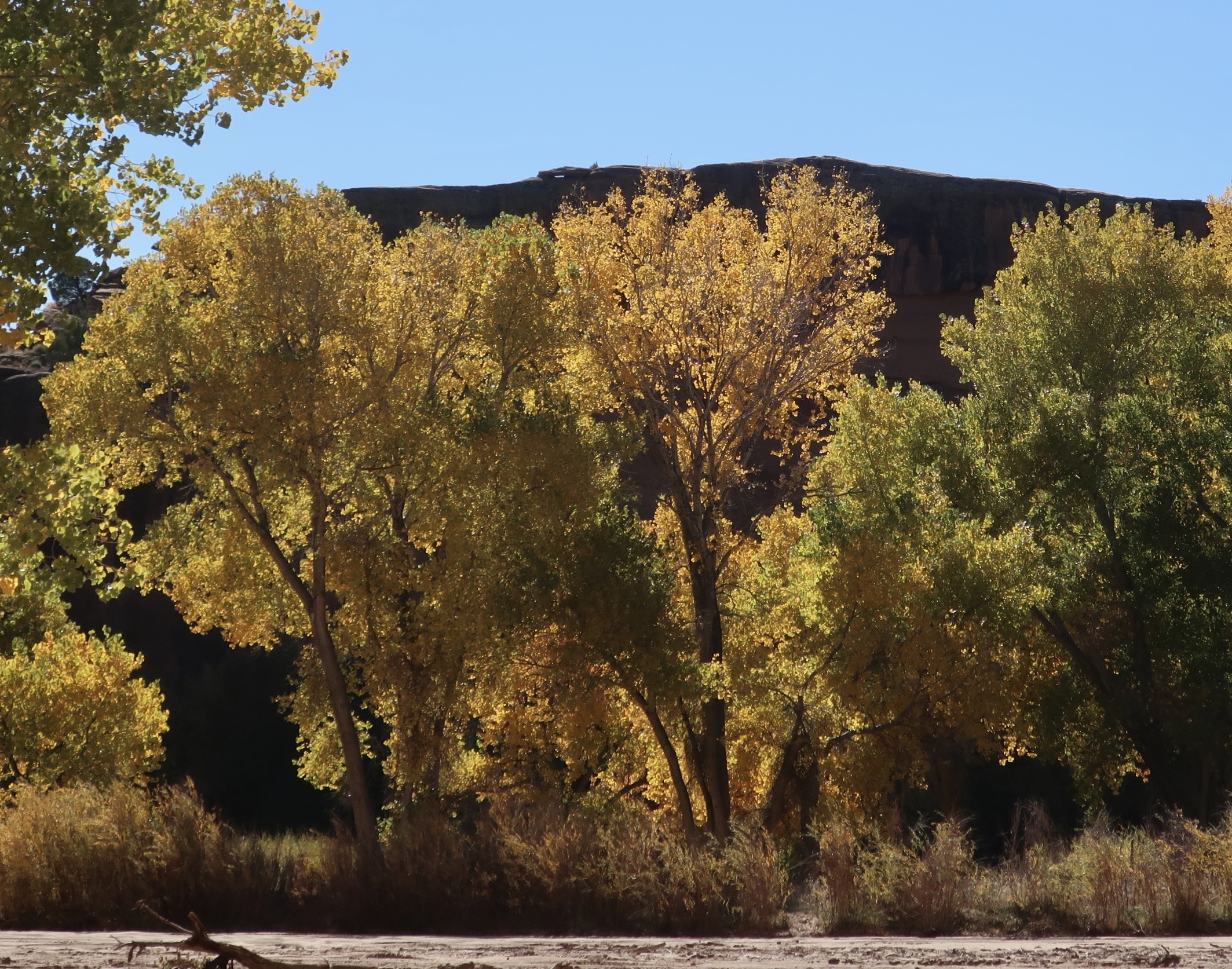
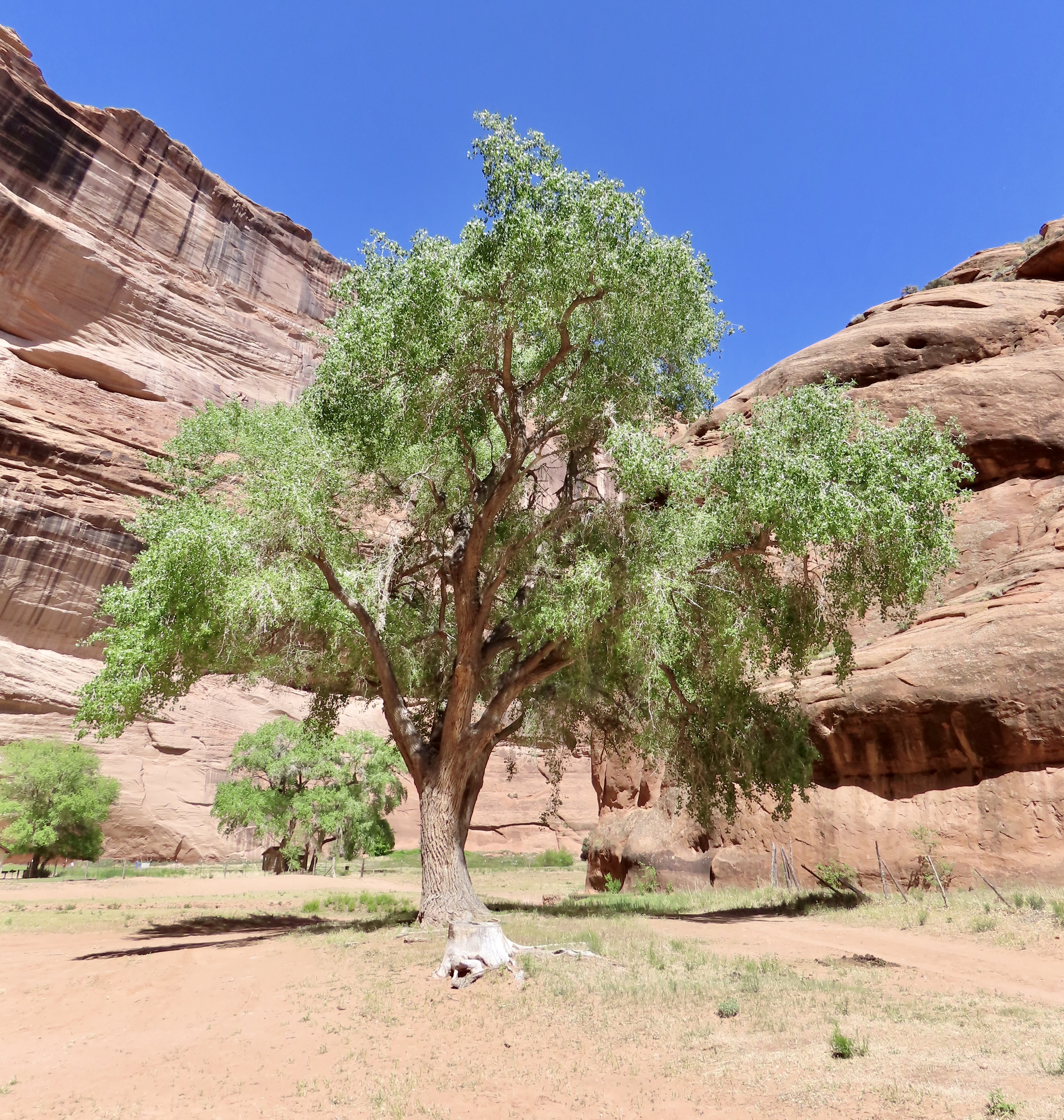
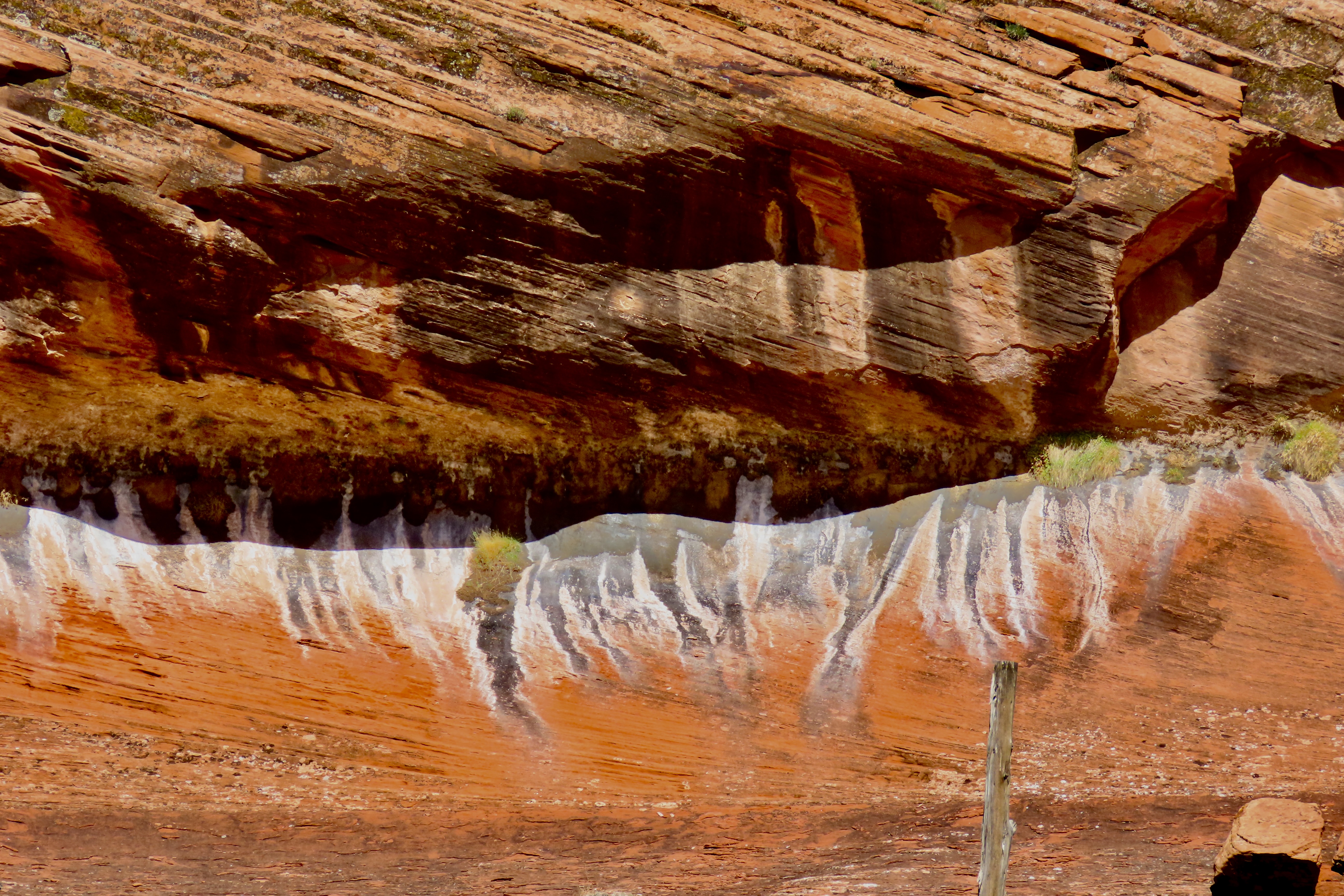
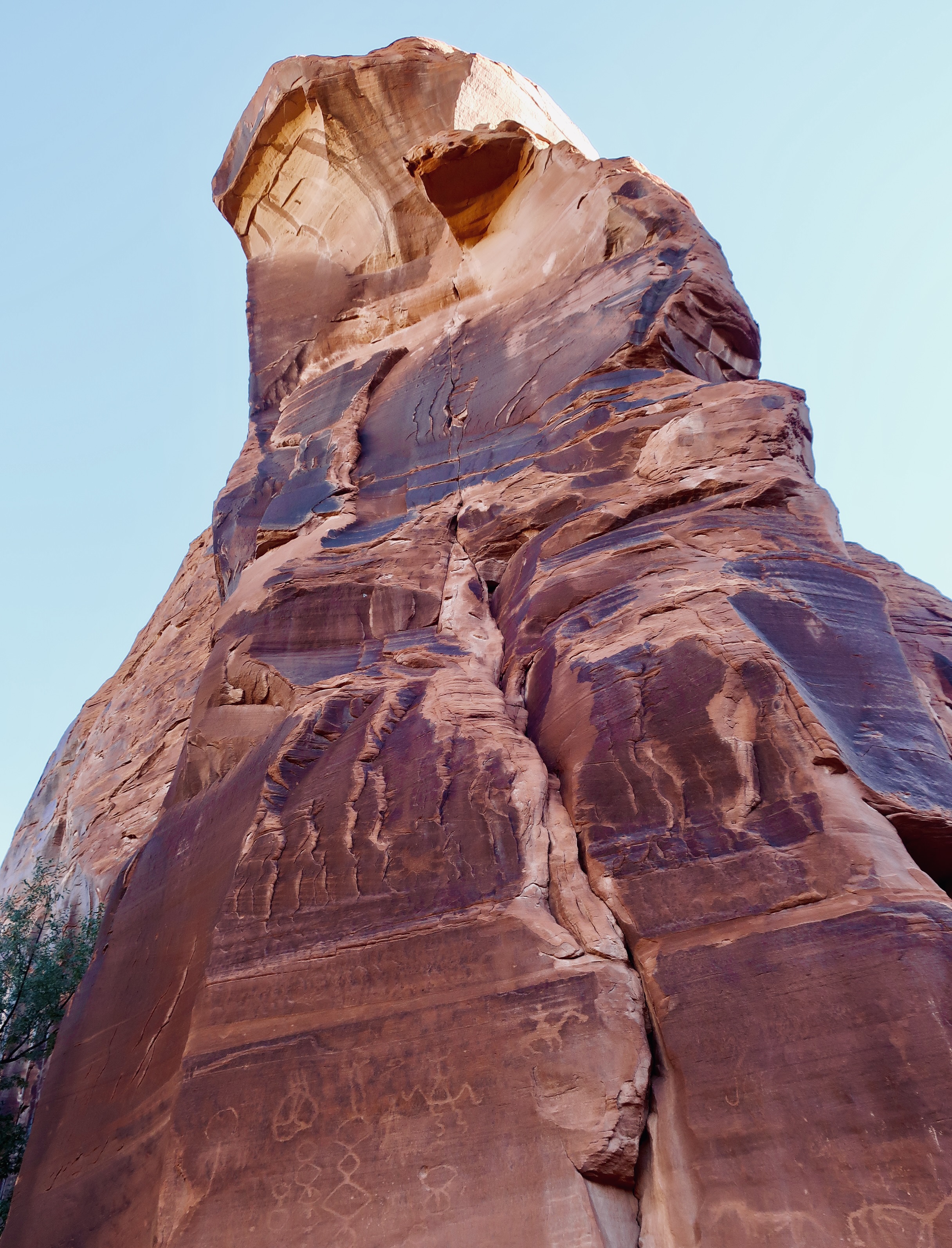
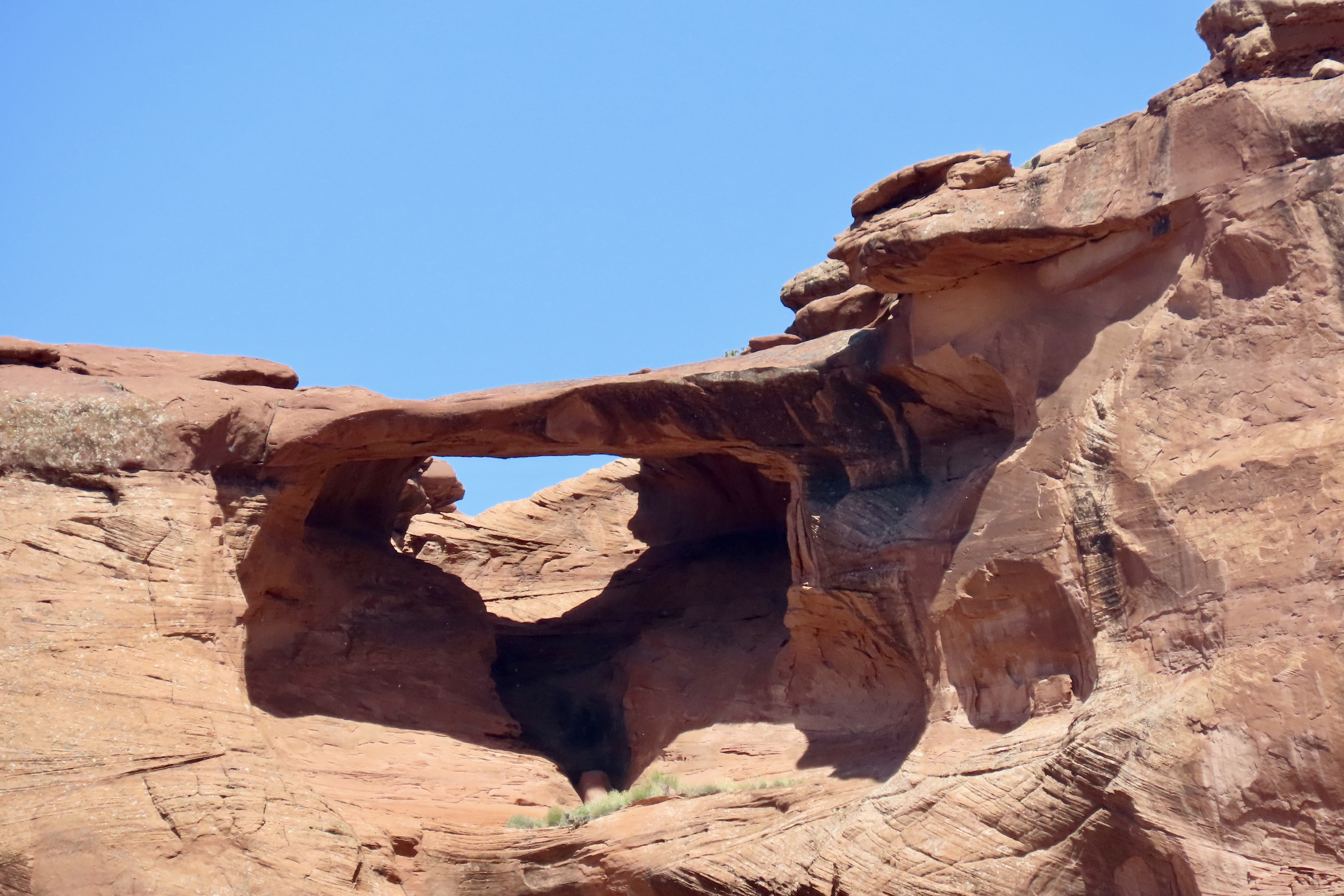
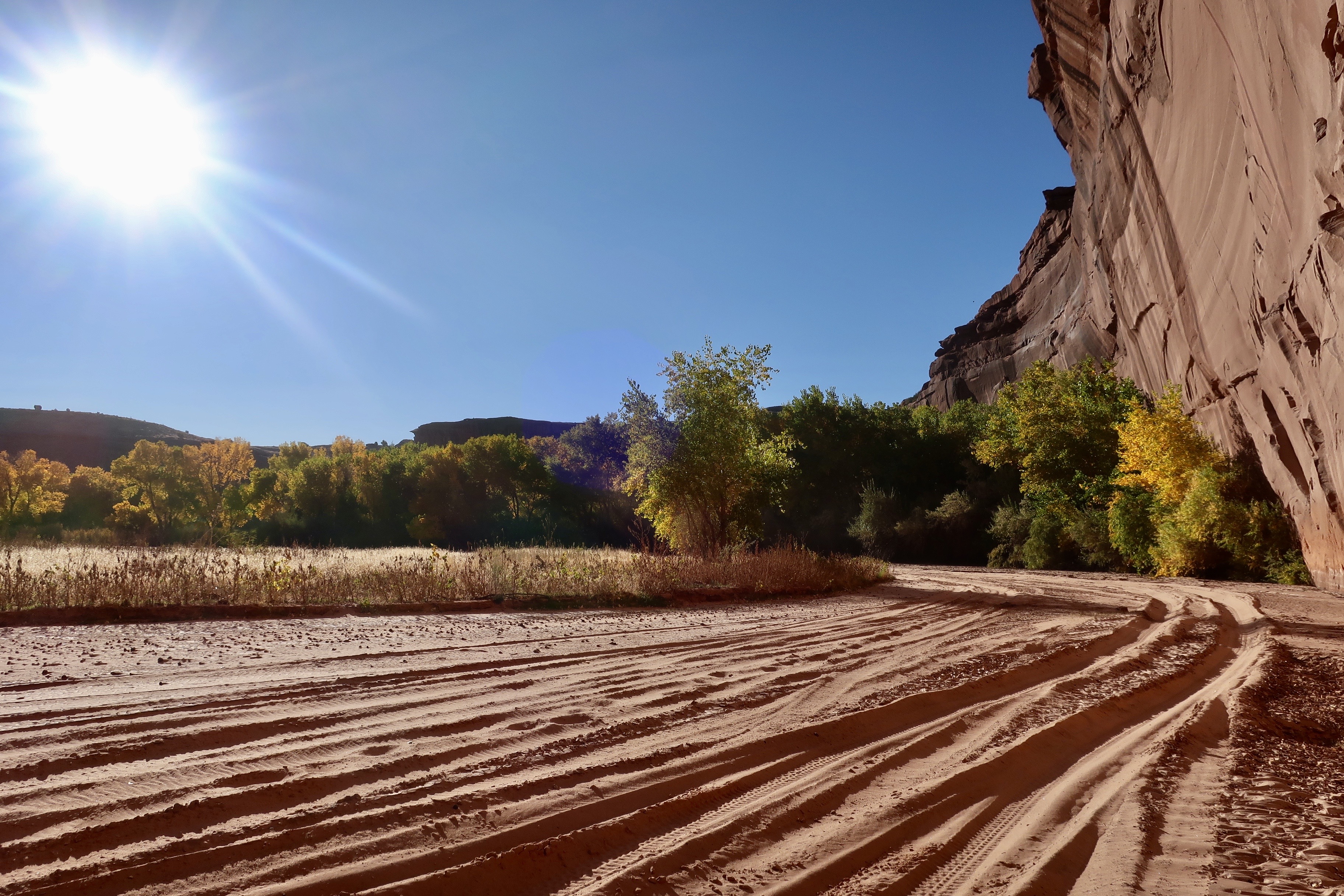
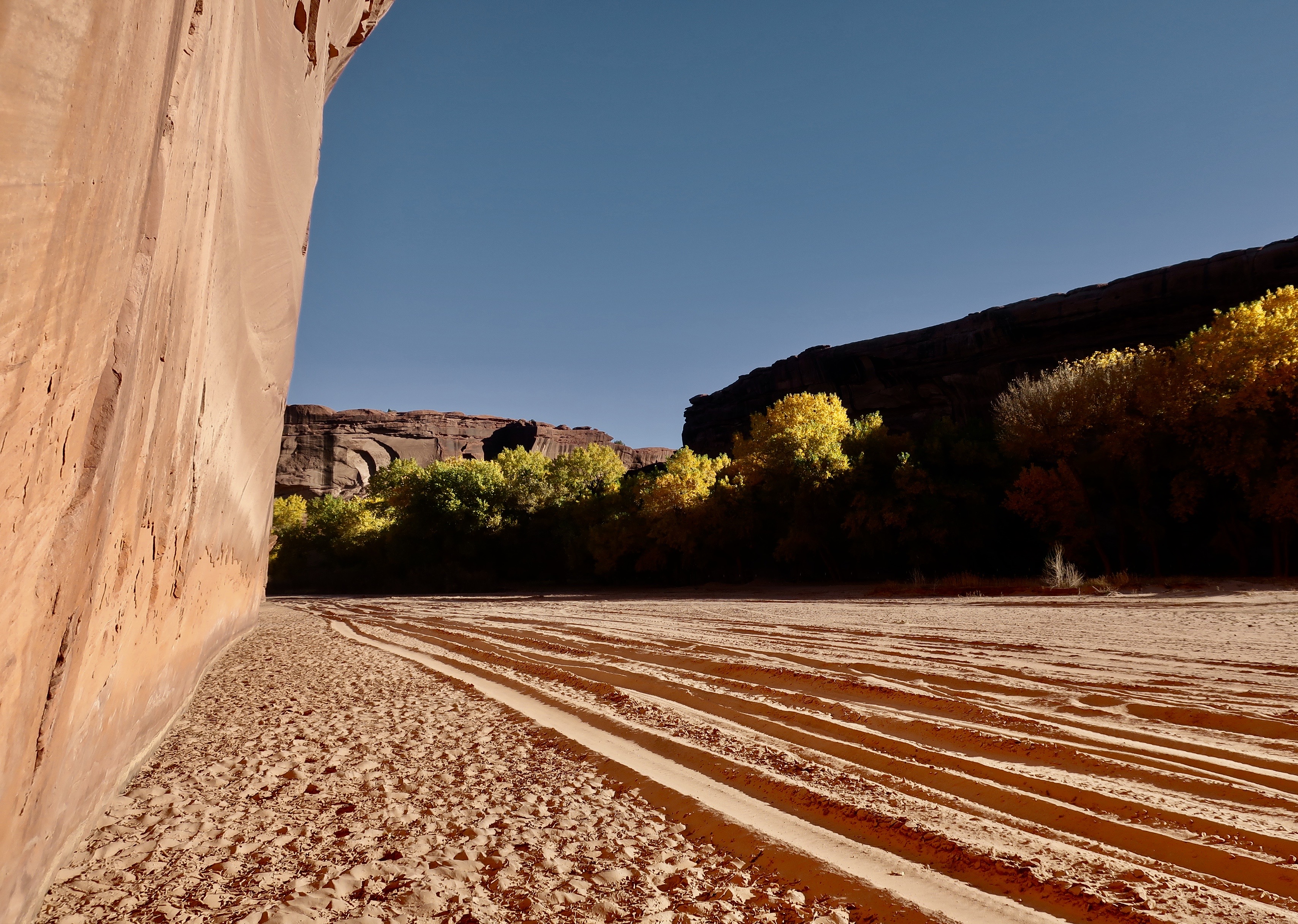
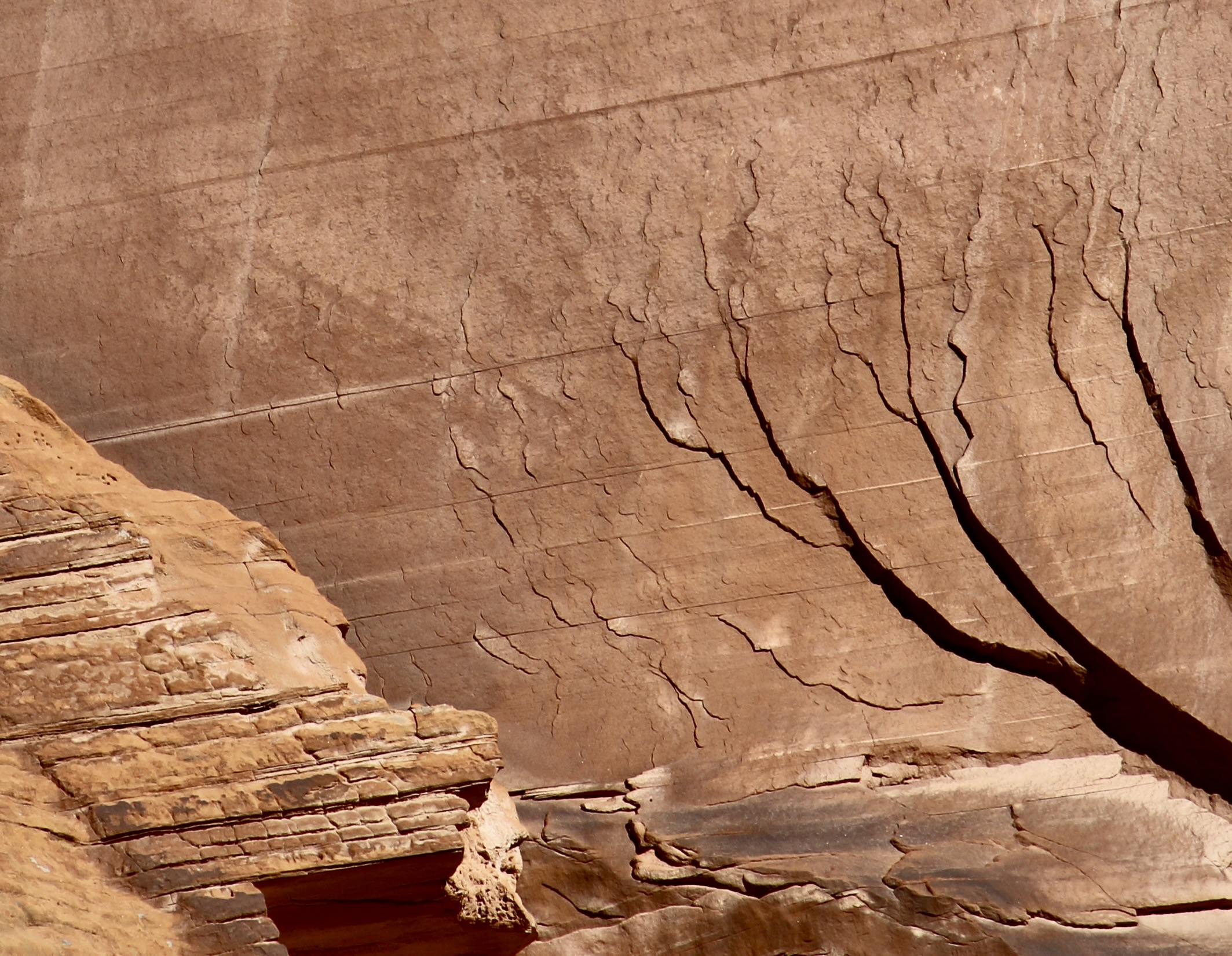
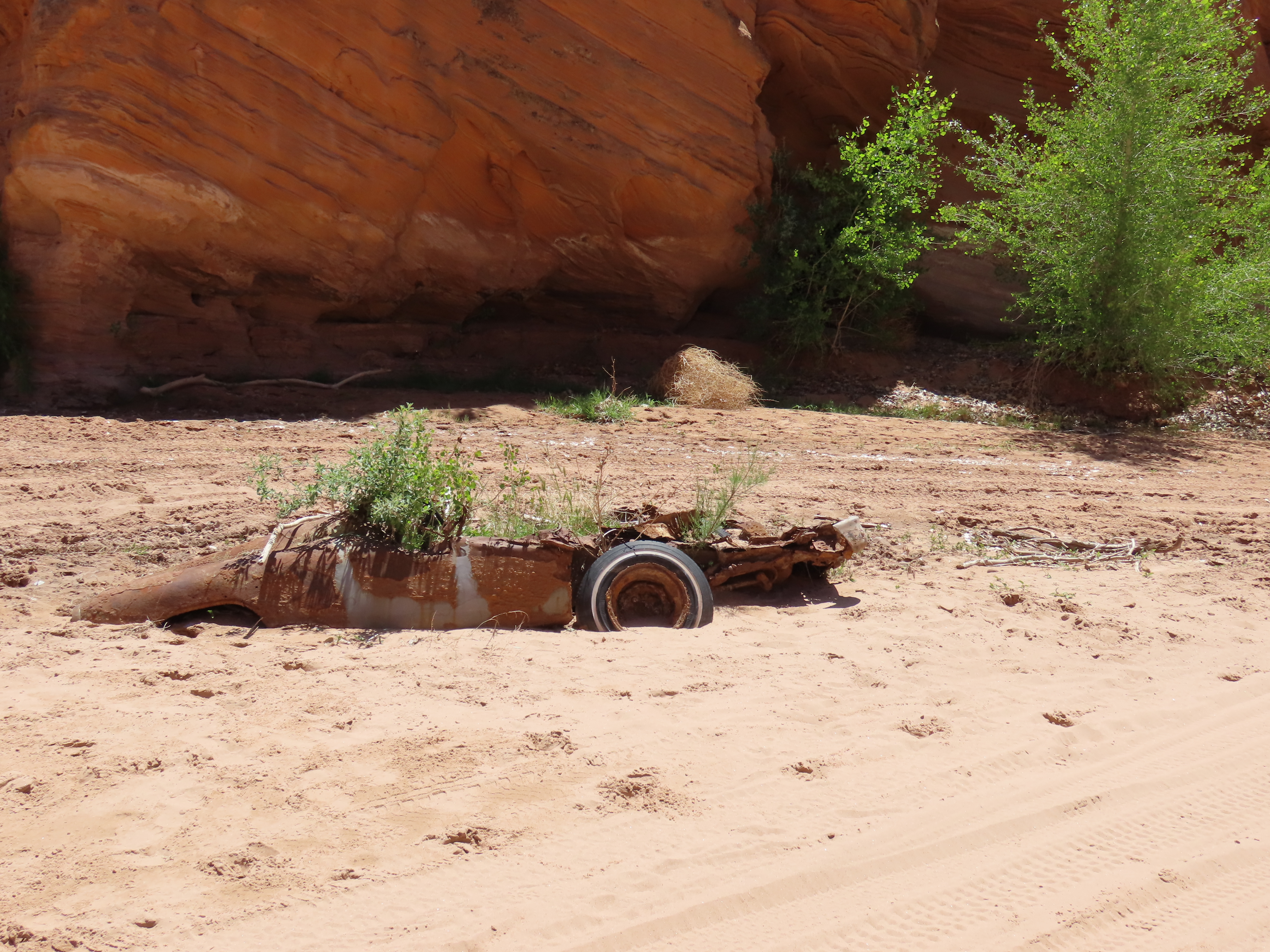
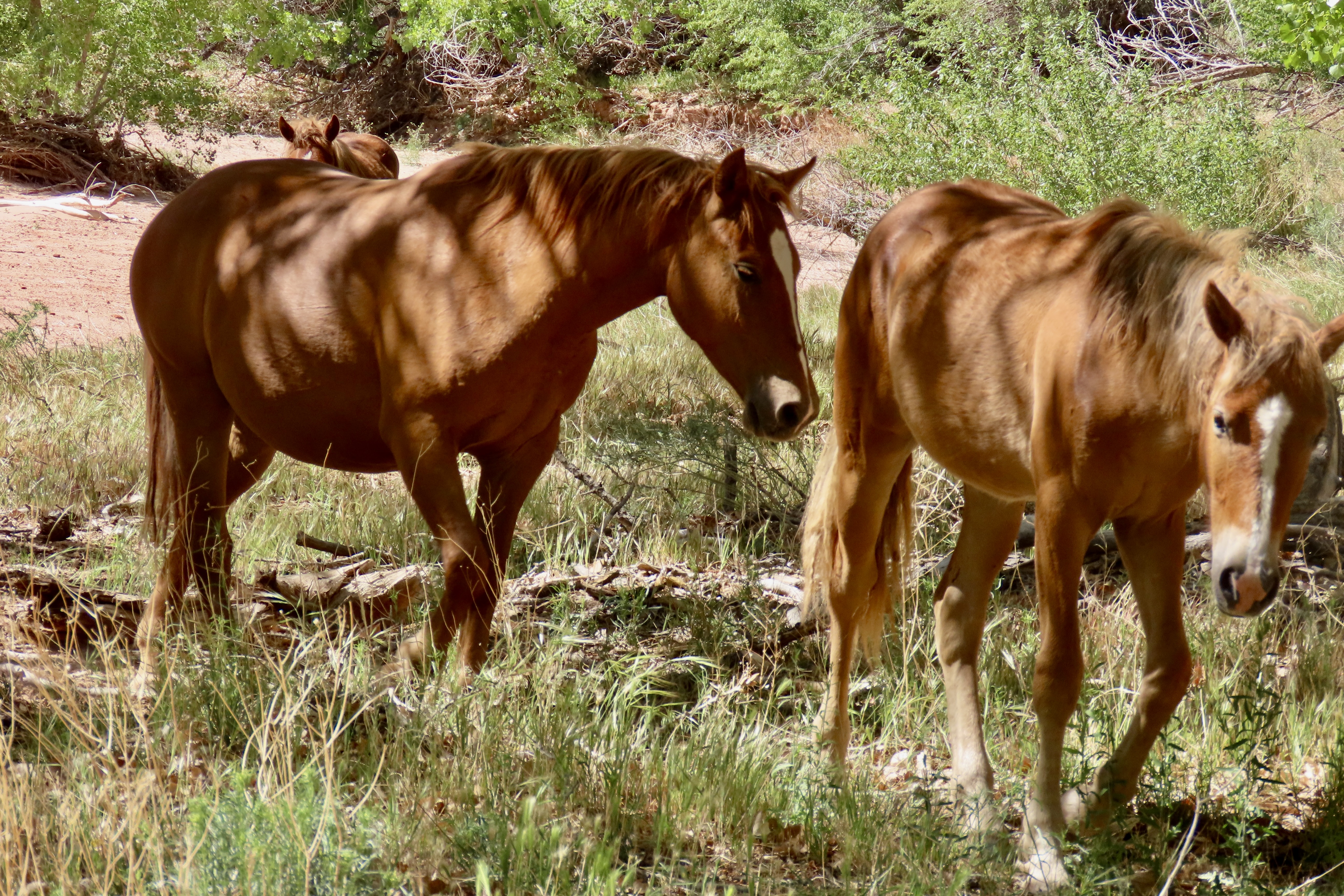
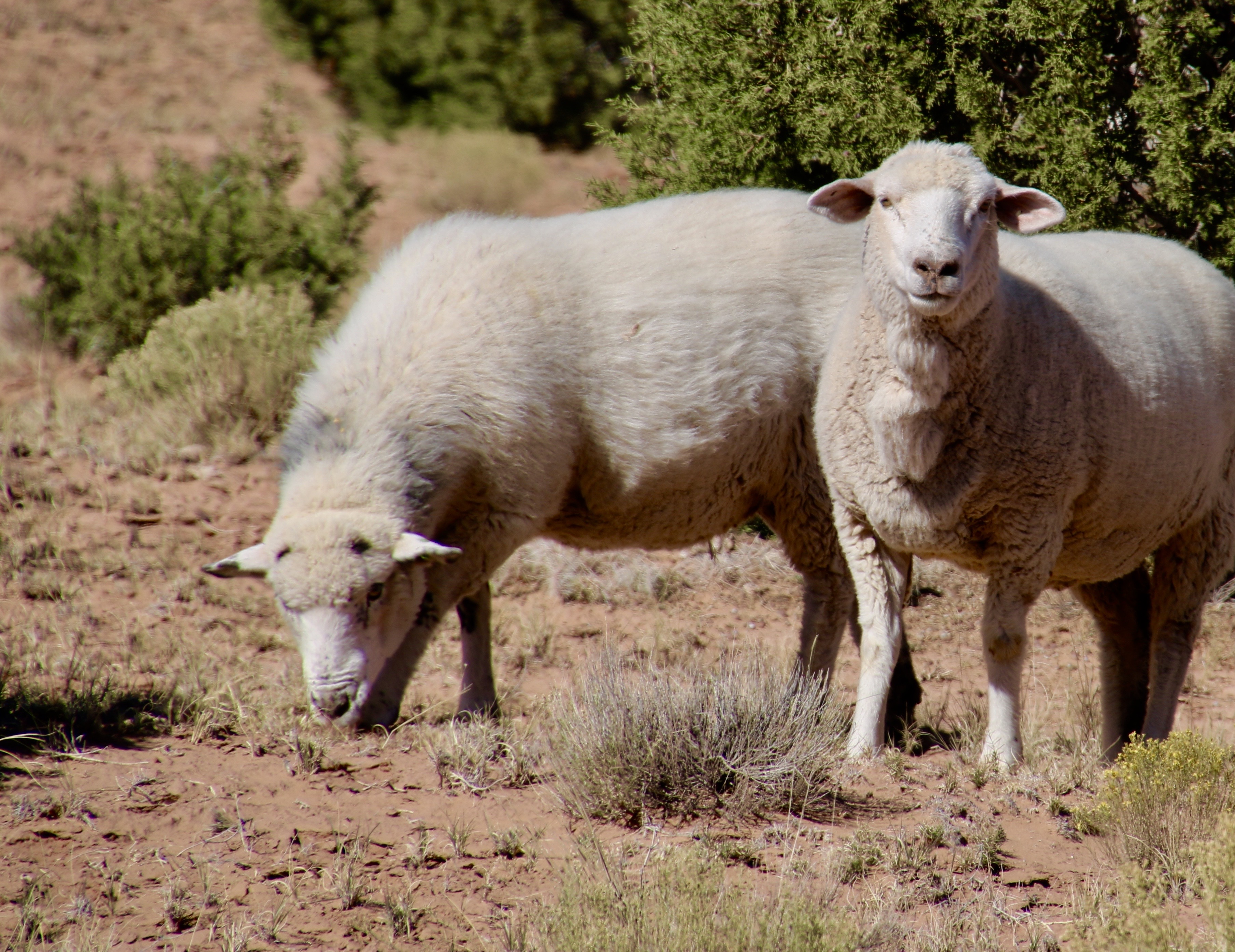
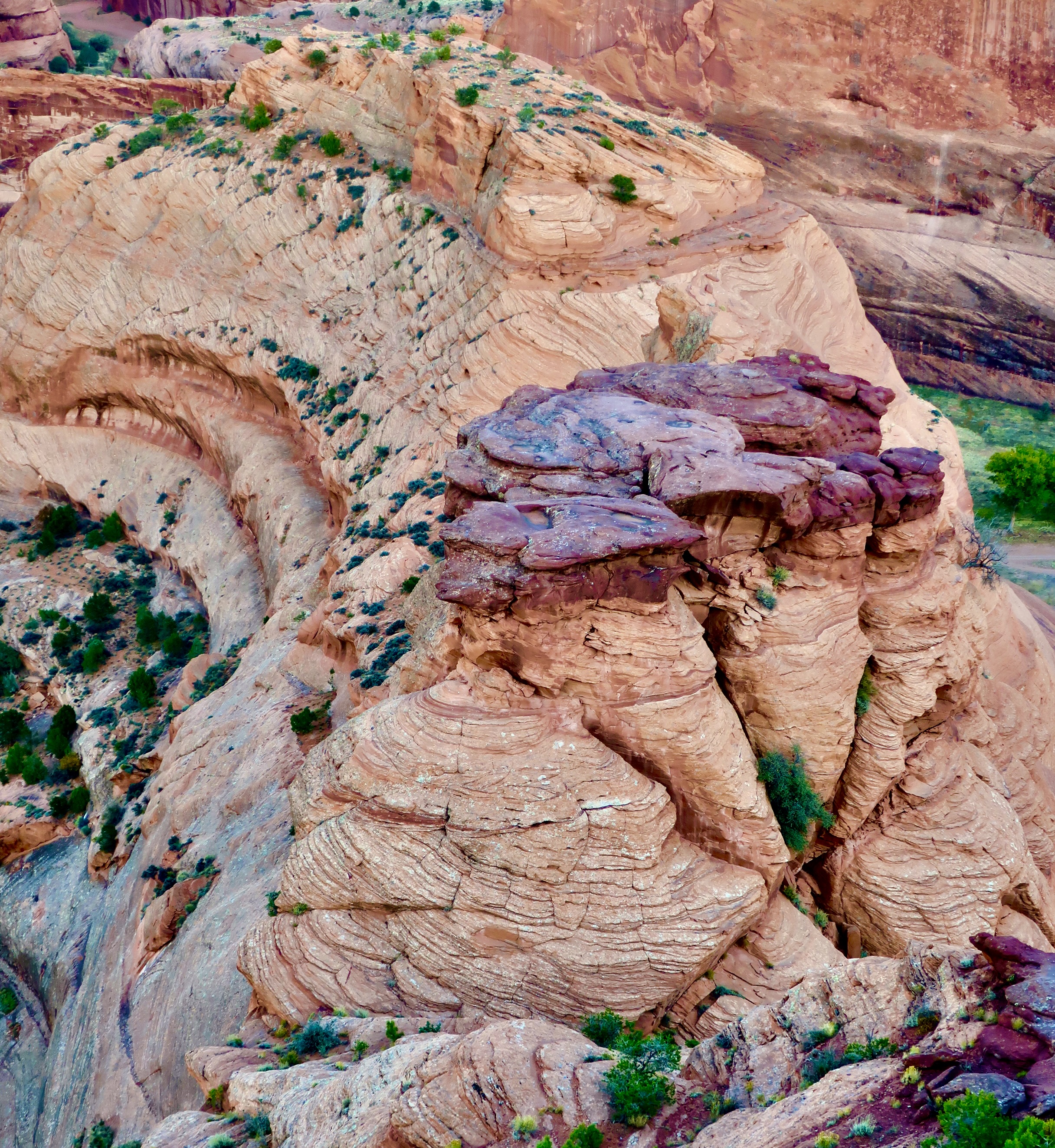
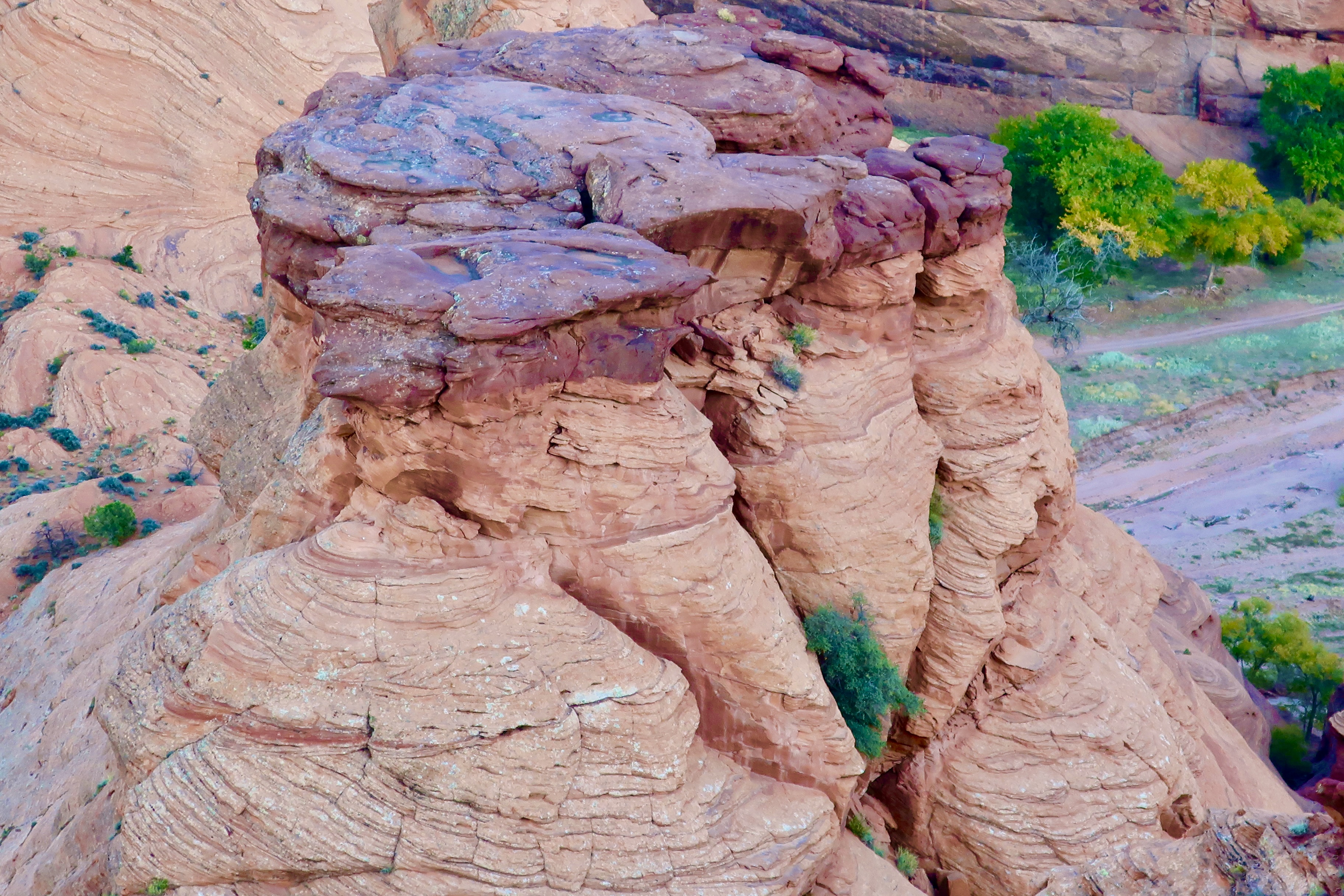
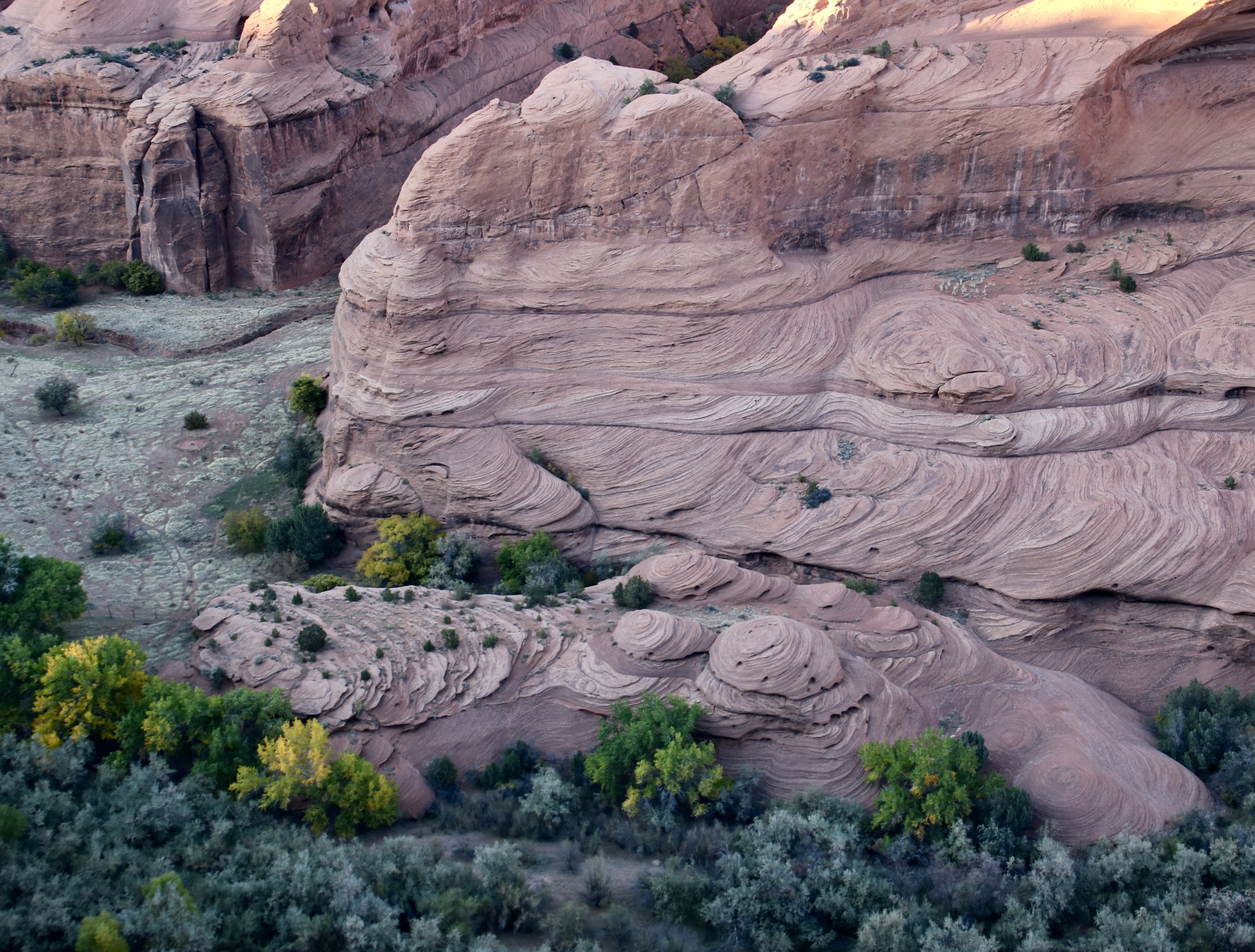
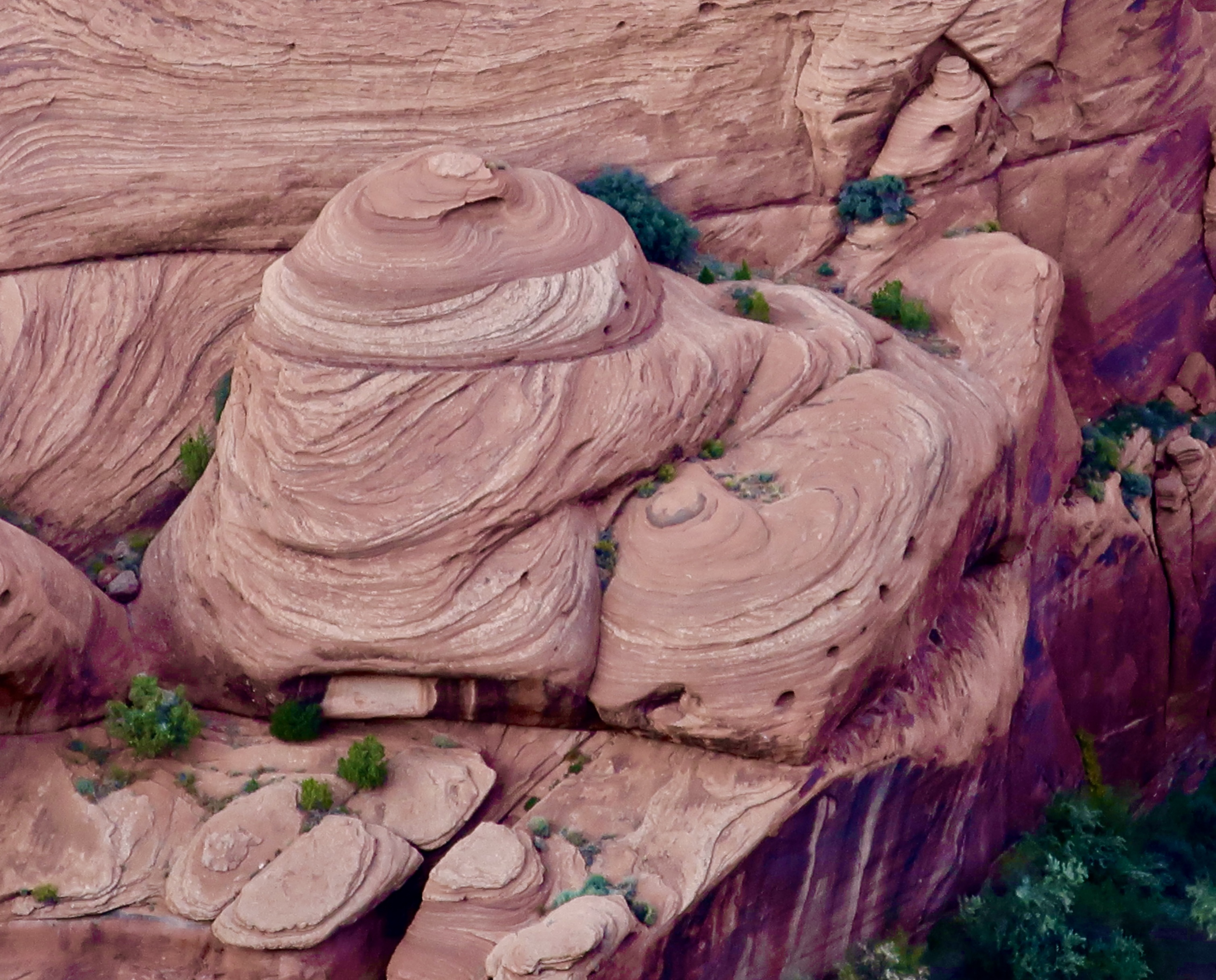
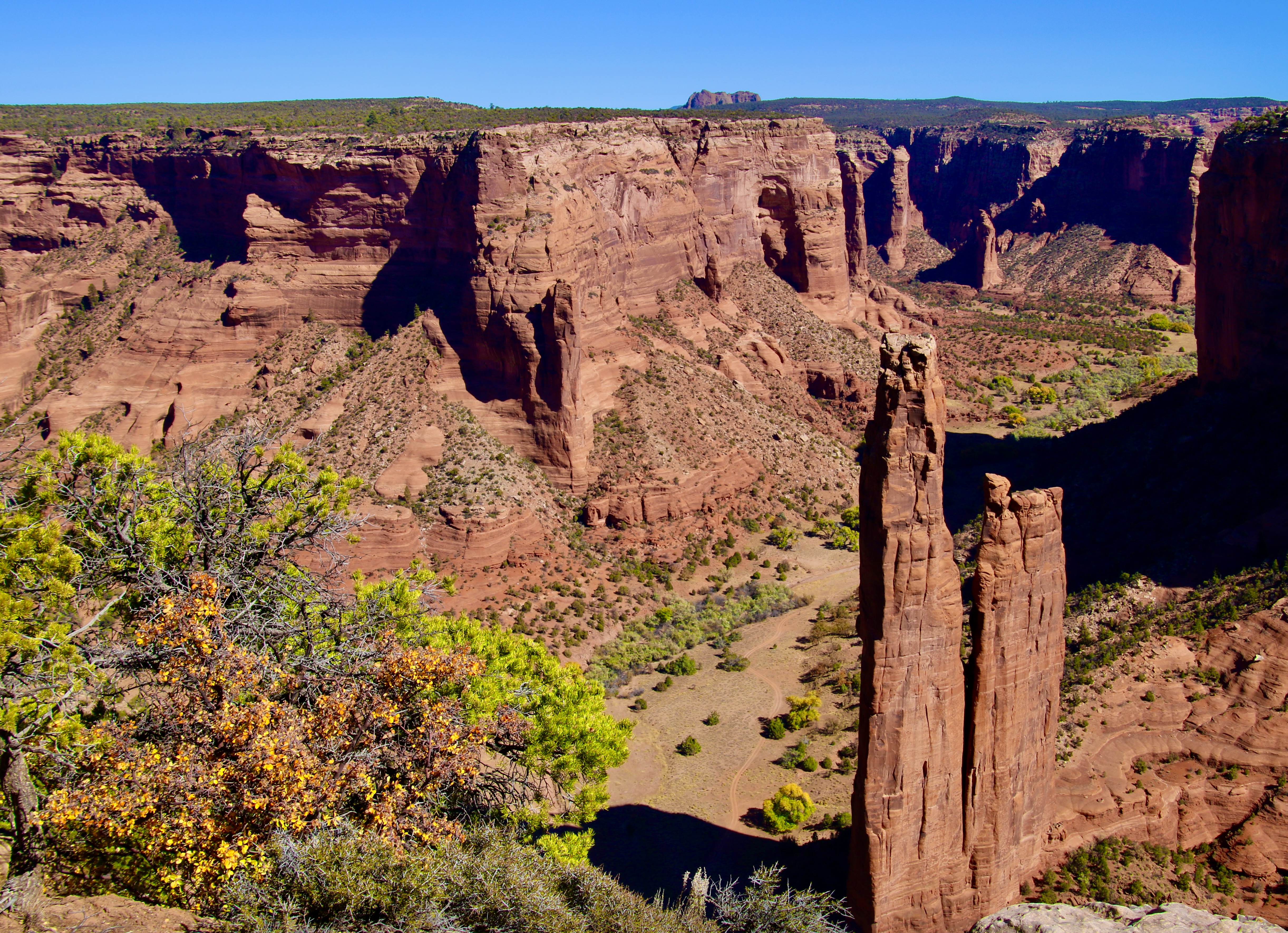
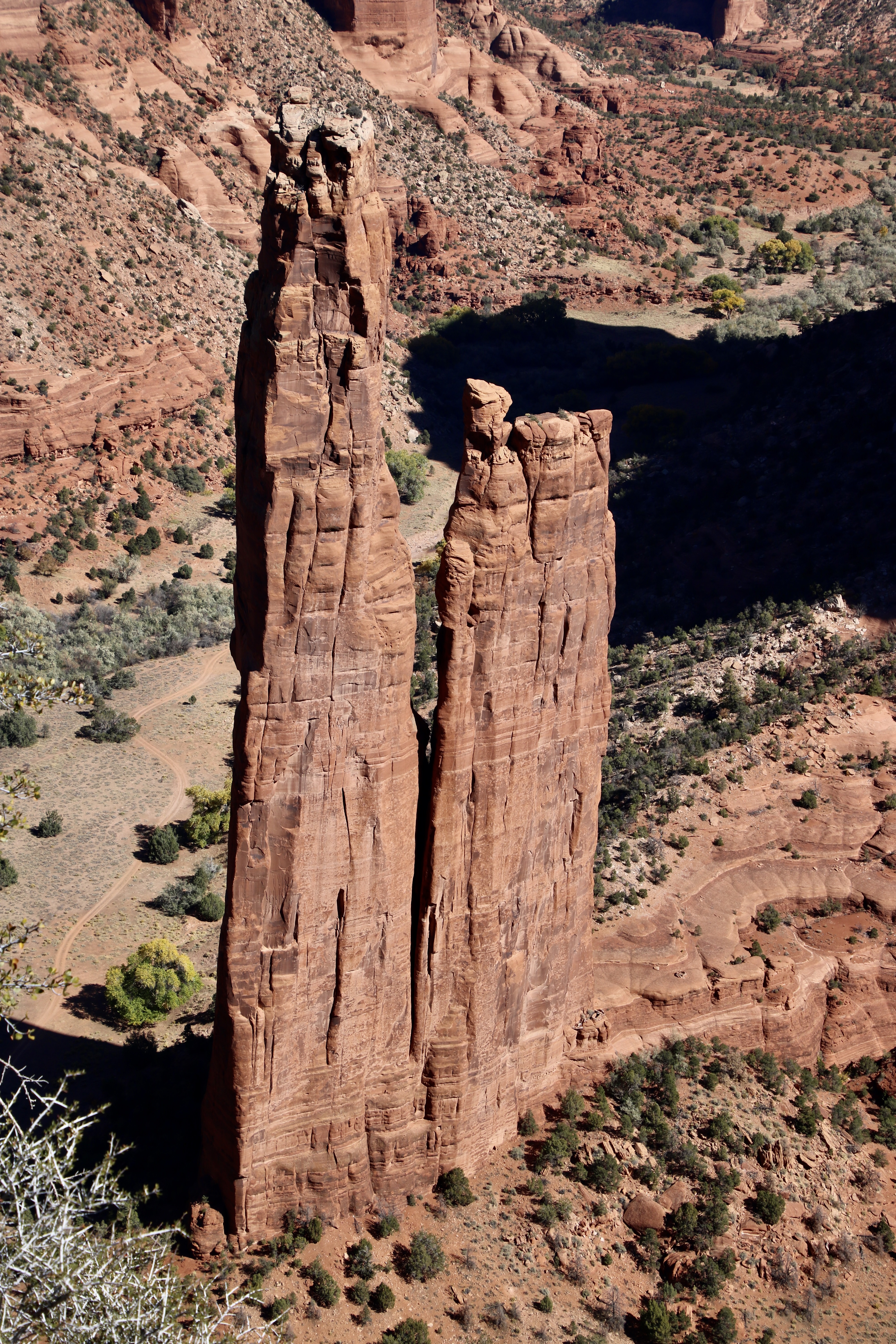
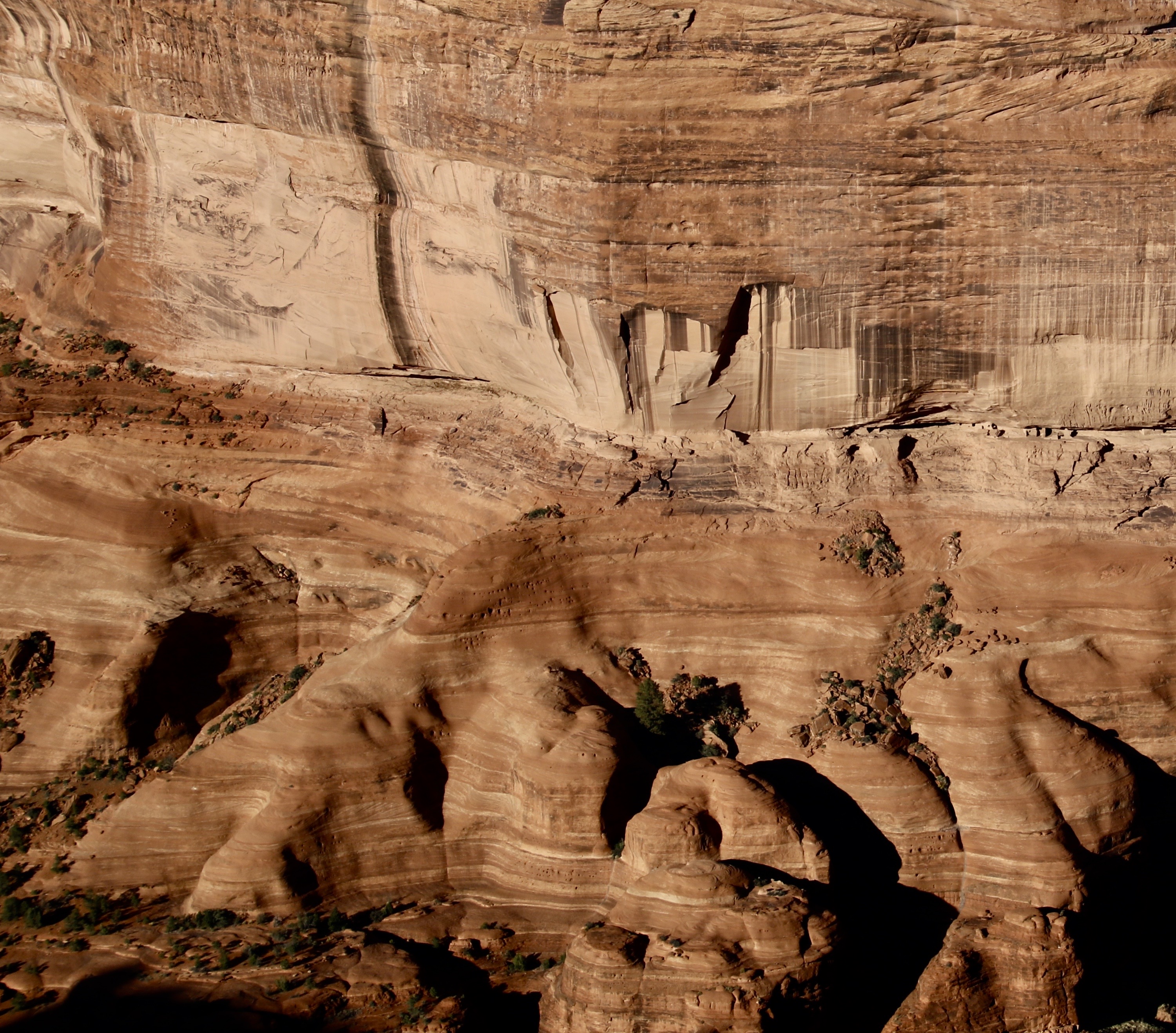
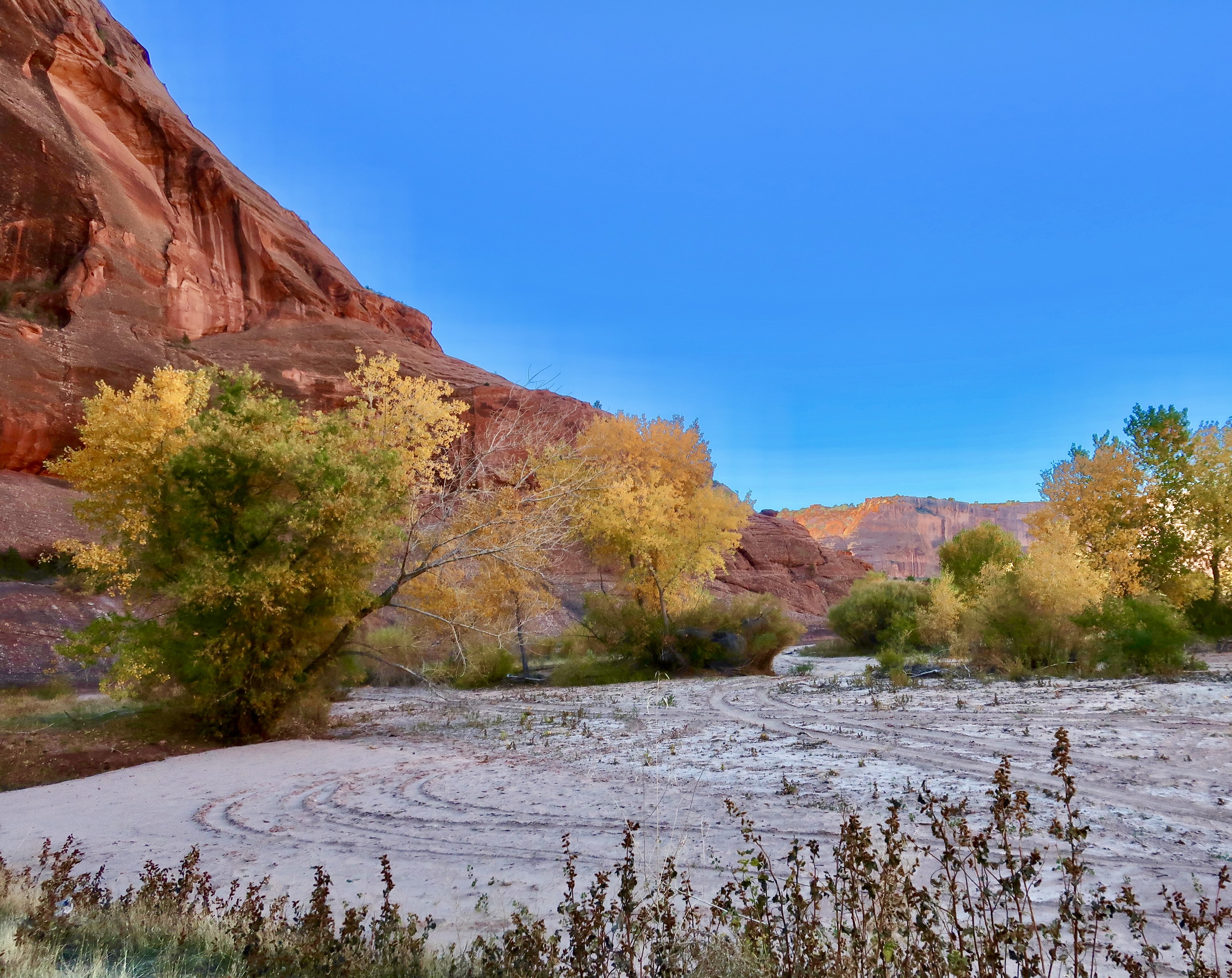
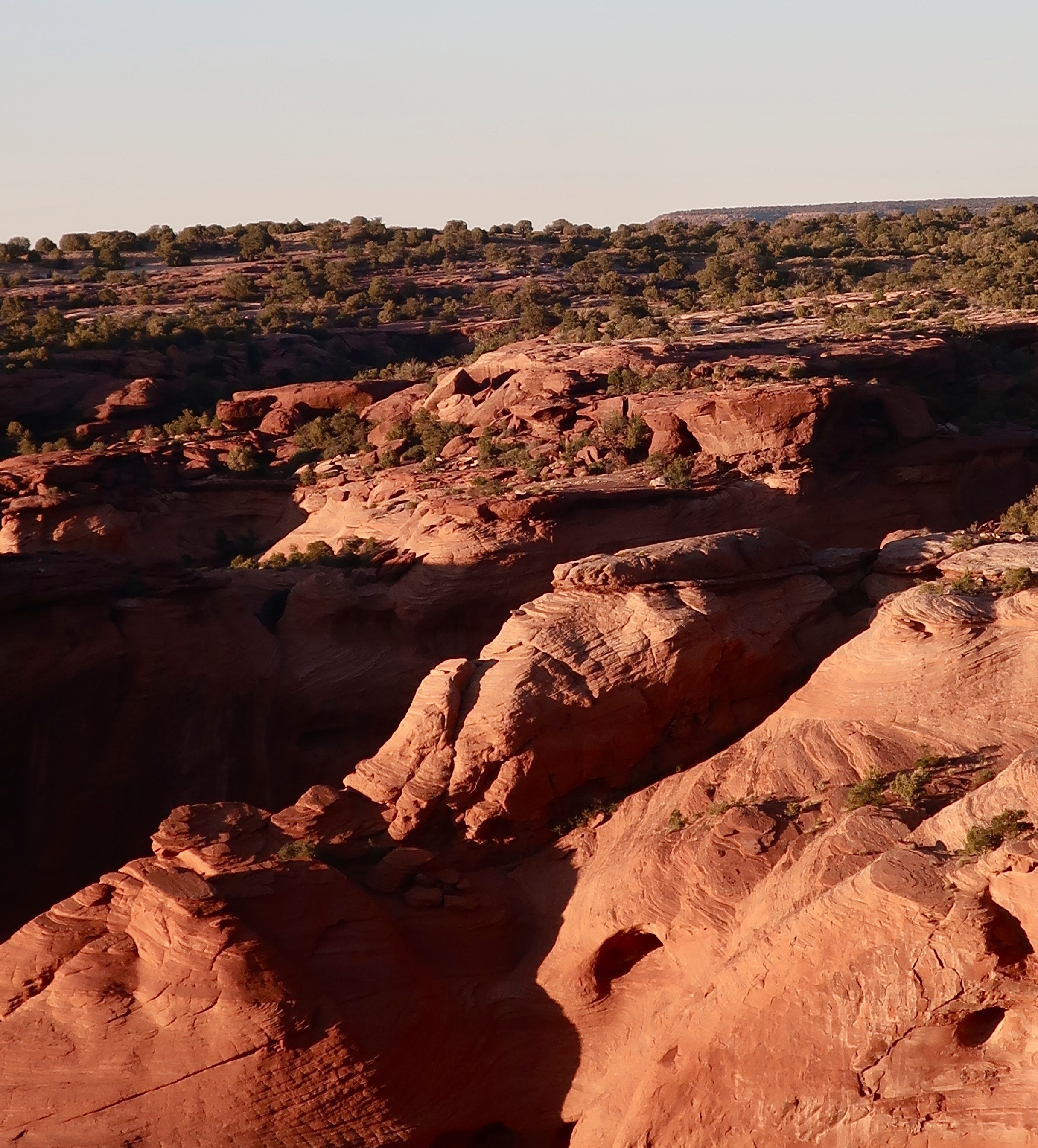
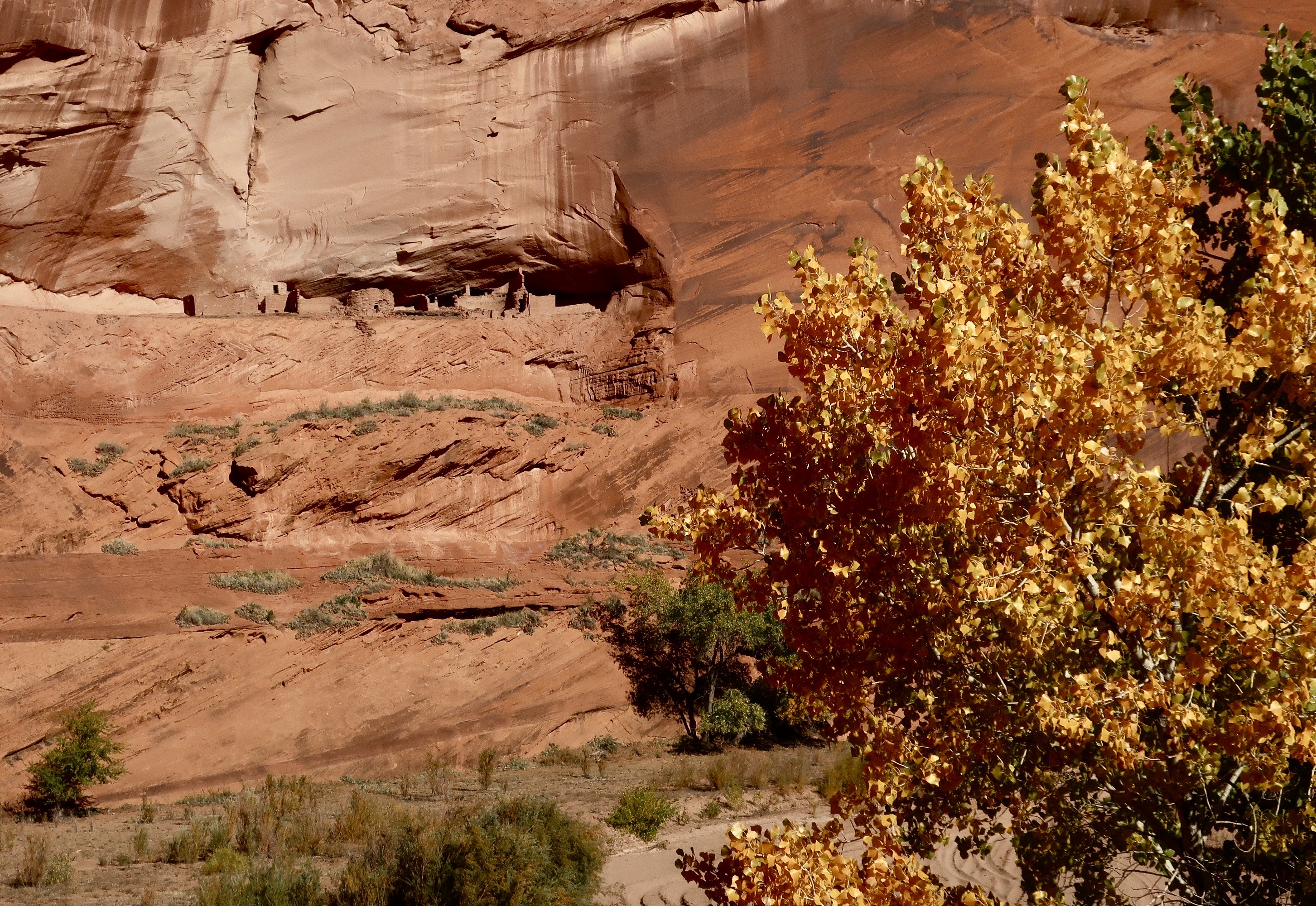
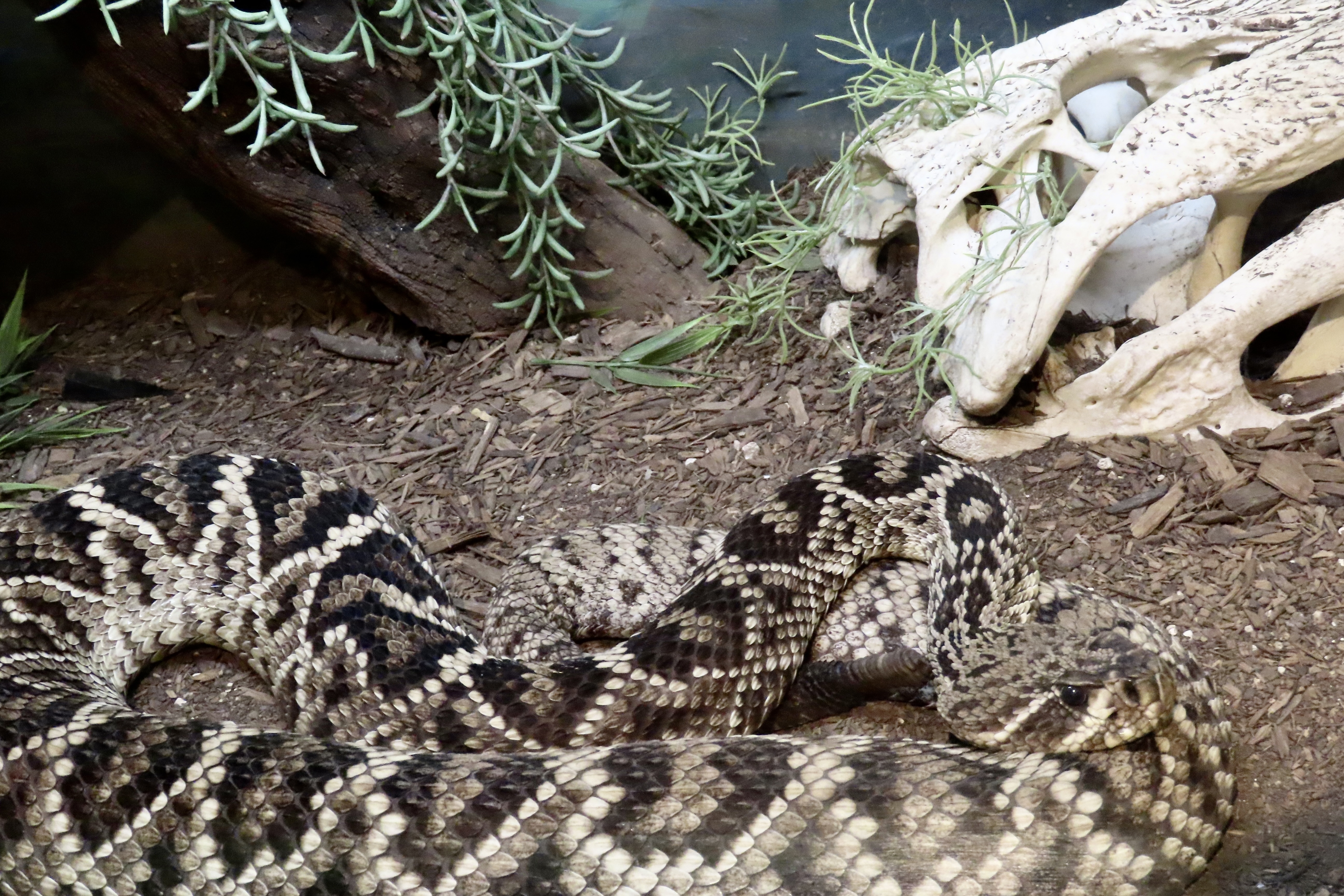
We admired this prominent landmark from inside the canyon in both the summer and fall. First summer…The long view. Not bad, huh.And now for fall.Both summer and fall were beautiful. Do you have a preference? I confess to being taken more by the contrast created by the fall foliage, but it’s close.Fall doesn’t get much more colorful than this.I thought green fit this tree well, however. The stripes on the wall are created by minerals left behind by flowing water.Here, they ‘painted’ an unusual picture worthy of a modern art gallery.This was one of many rock monuments found in the canyon. Note the petroglyphs on the bottom. It is no surprise that the Navajos and Ancestral Puebloans selected this dramatic rock as a canvas. Looking up provided this view of an arch.At first, I felt that the tracks left by all of the visitors took away from the beauty. There were bunches. But then I found the shadows created by the sun made them photogenic. Four wheel drive was essential.Another example.Rocks breaking off the walls add to the beauty and mystique of the canyon. It takes little imagine to turn these into a tree.Speaking of imagination, mine turned this old car into an alligator disguised as a flower box lurking in wait for a tourist dinner. ( Admittedly, my imagination can be a bit wild at times.)Navajos live and farm in the canyon. Some offer horse rides. Our guide on the fall trip raised horses and rented them out for Western’s. He had also performed in some of the movies.The Navajo raise sheep up on the rim of the canyon.Driving the south and north rim roads of Canyon de Chelly provides a totally different perspective on the canyon and its amazing rock formations.Close up.There was no end to the variety of patterns in the rock.Sometimes it looked as if the rock was melting.The most recognizable monument in Canyon de Chelly is Spider Rock, a 750 foot (230 m) spire that is said to be the home of Spider Woman, an important figure to several different Native American tribes. To the Navajo, she is a helper and protector. It’s also said that they tell their children that she will catch them in her web and eat them if they are bad. Way to go Spider Woman. Grin. You can see one of the canyon’s roads working its way up the canyon. A close up of Spider rock.More of the canyons interesting rocks lit up by the late afternoon sun.A last view of the inner canyon in fall.We’ll wrap this post up with a photo of sunset from the canyon rim. Our next post will be on the pueblos and petroglyphs of Canyon de Chelly. I may, however slip in a quick post on one of my favorite subjects: Rattlesnakes.

 Wandering through Time and Place