We are continuing our focus series today with a look at cats. Our travels provide us with lots of opportunities to watch and photograph our feline companions. In their own enigmatic way, they are quite photogenic. Most of today’s entries are from around the Mediterranean Sea— or from my personal experiences of being owned by three cats: Demon, Rasputin and FE.
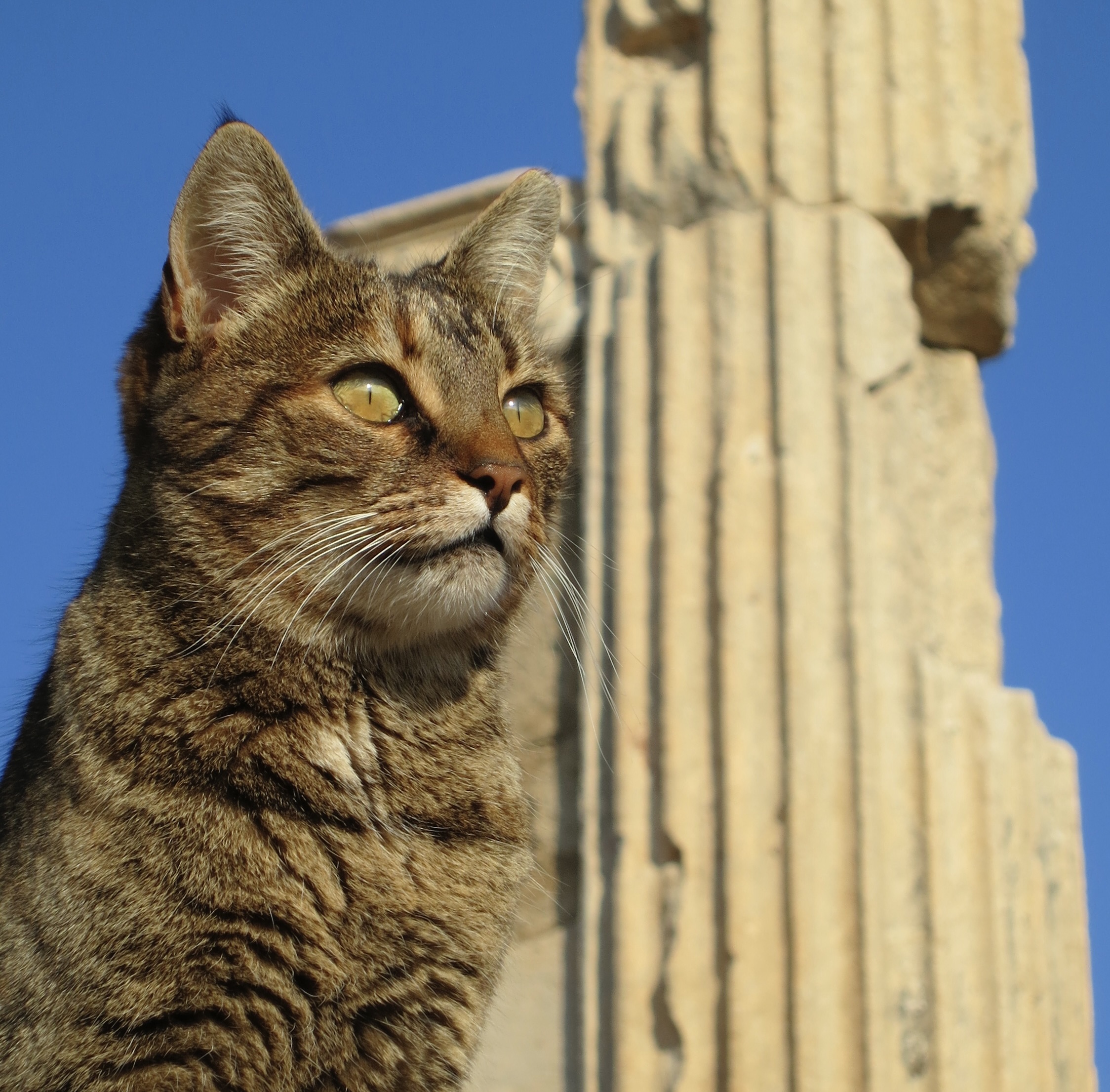
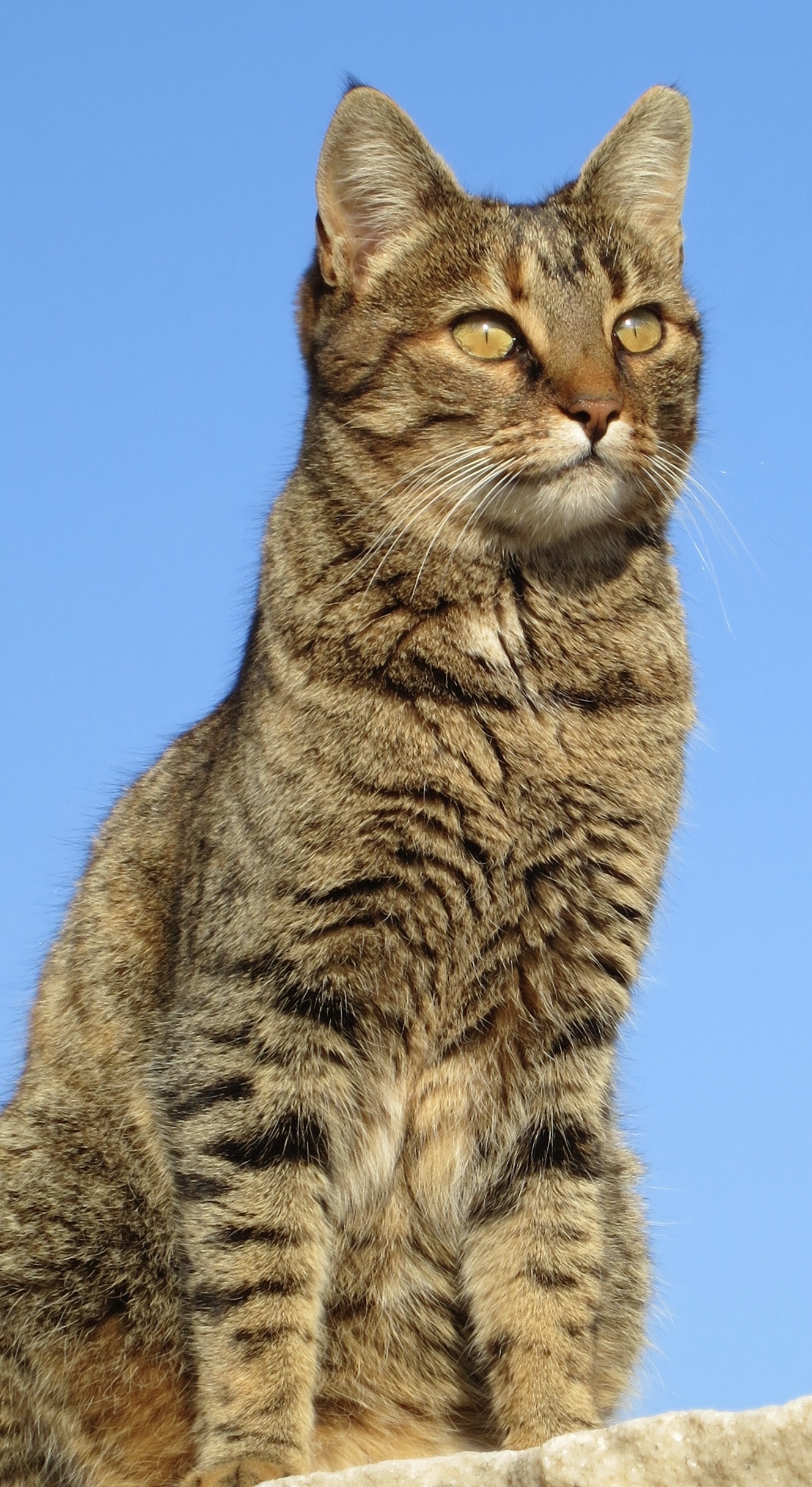
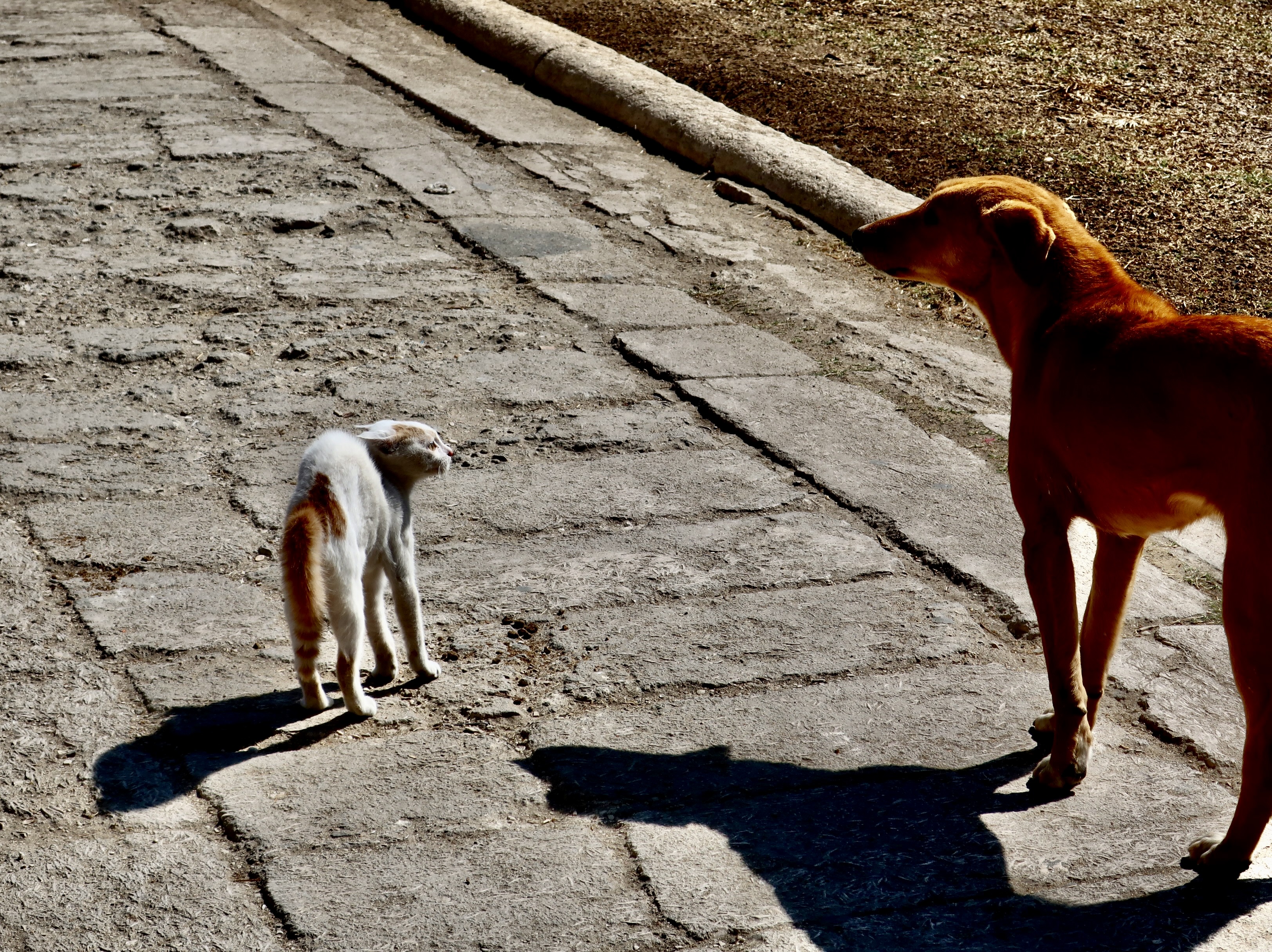
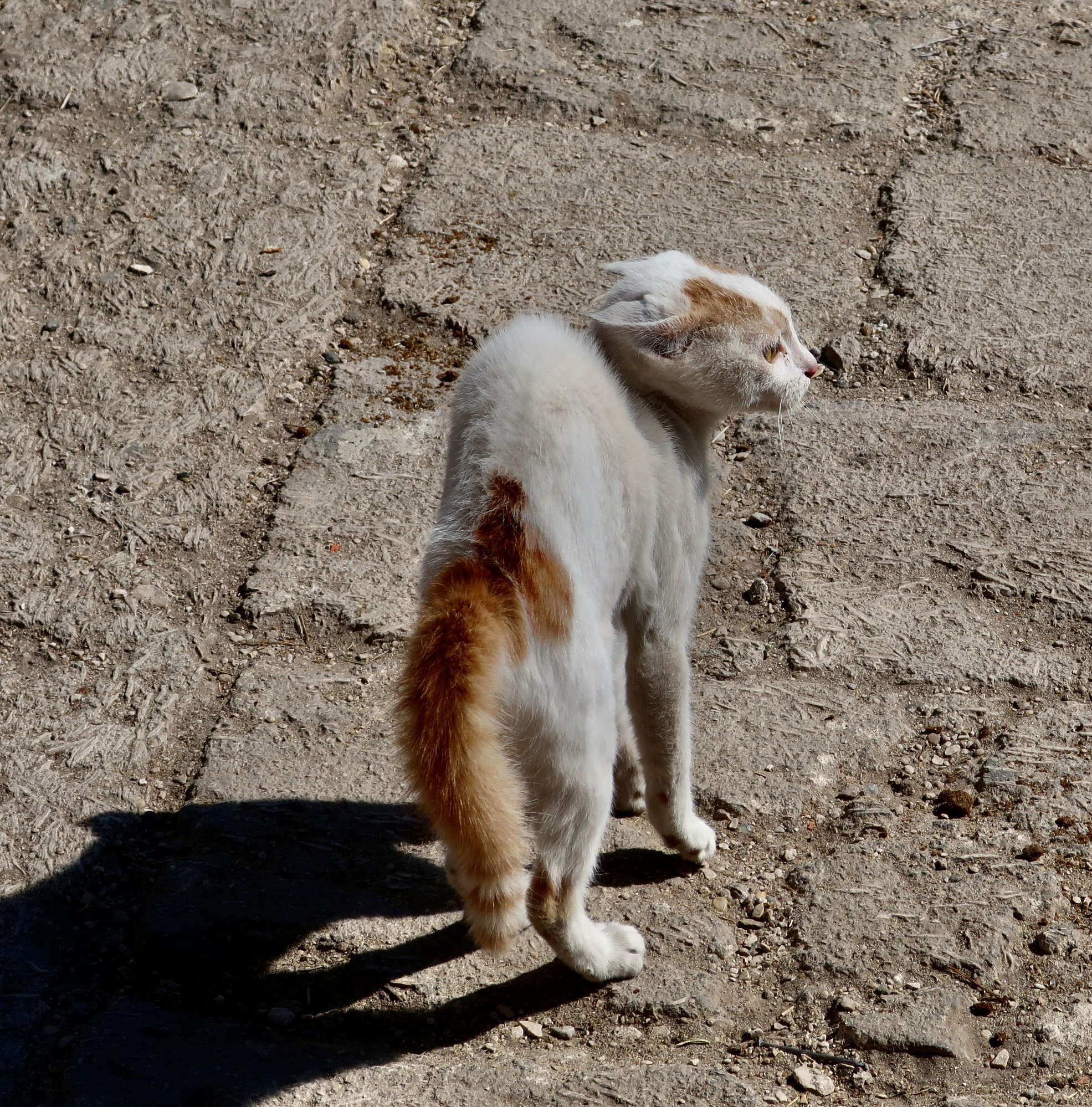
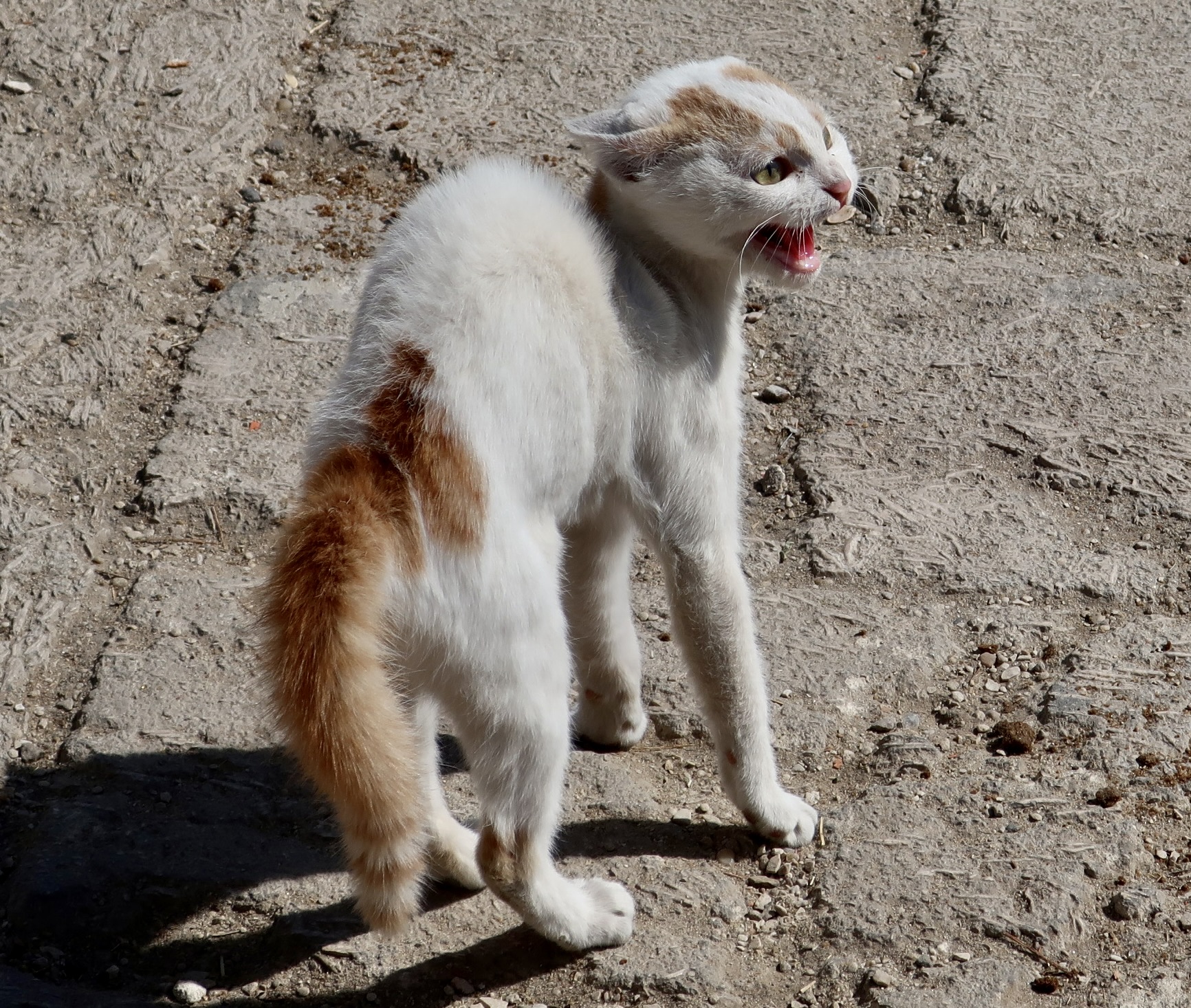
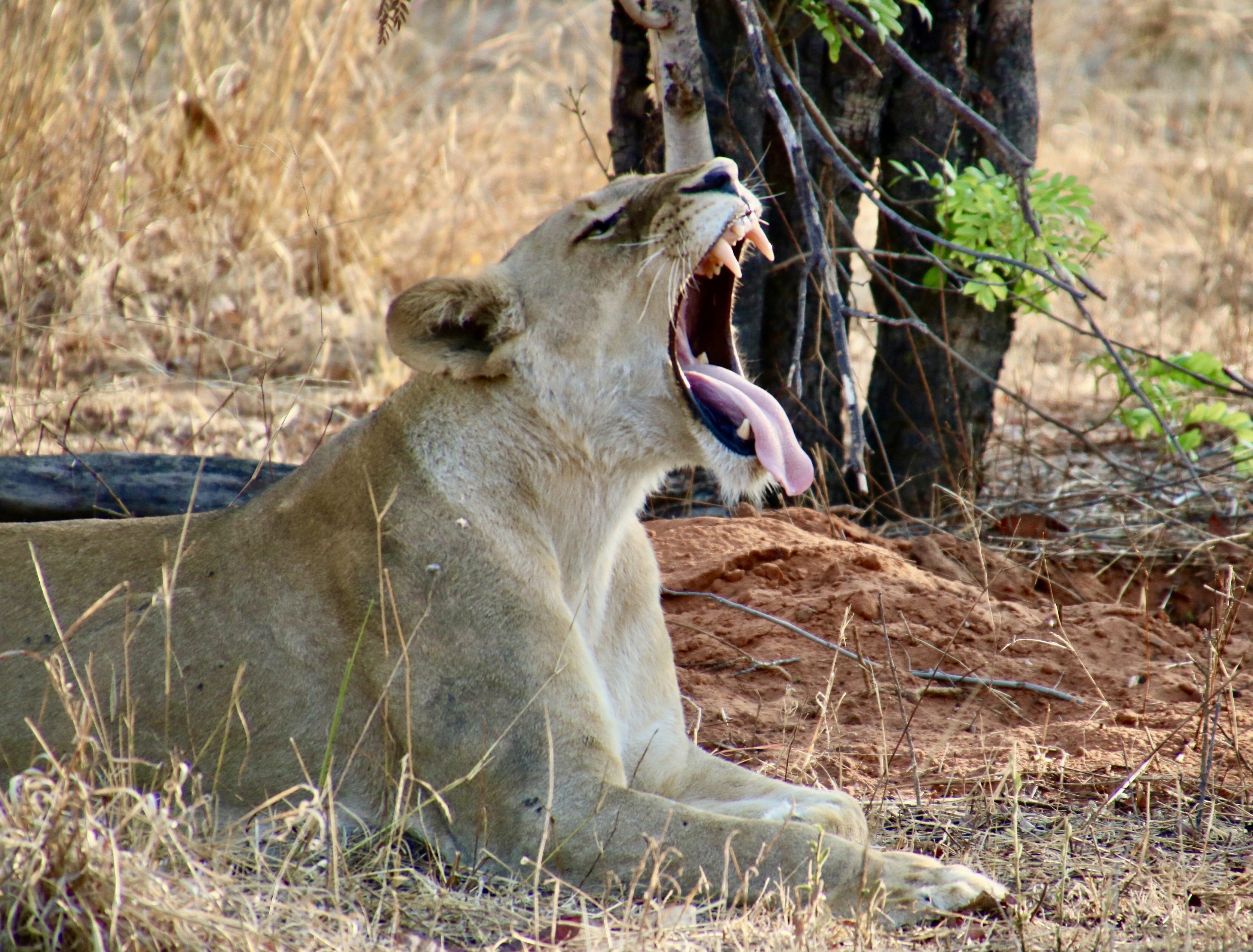
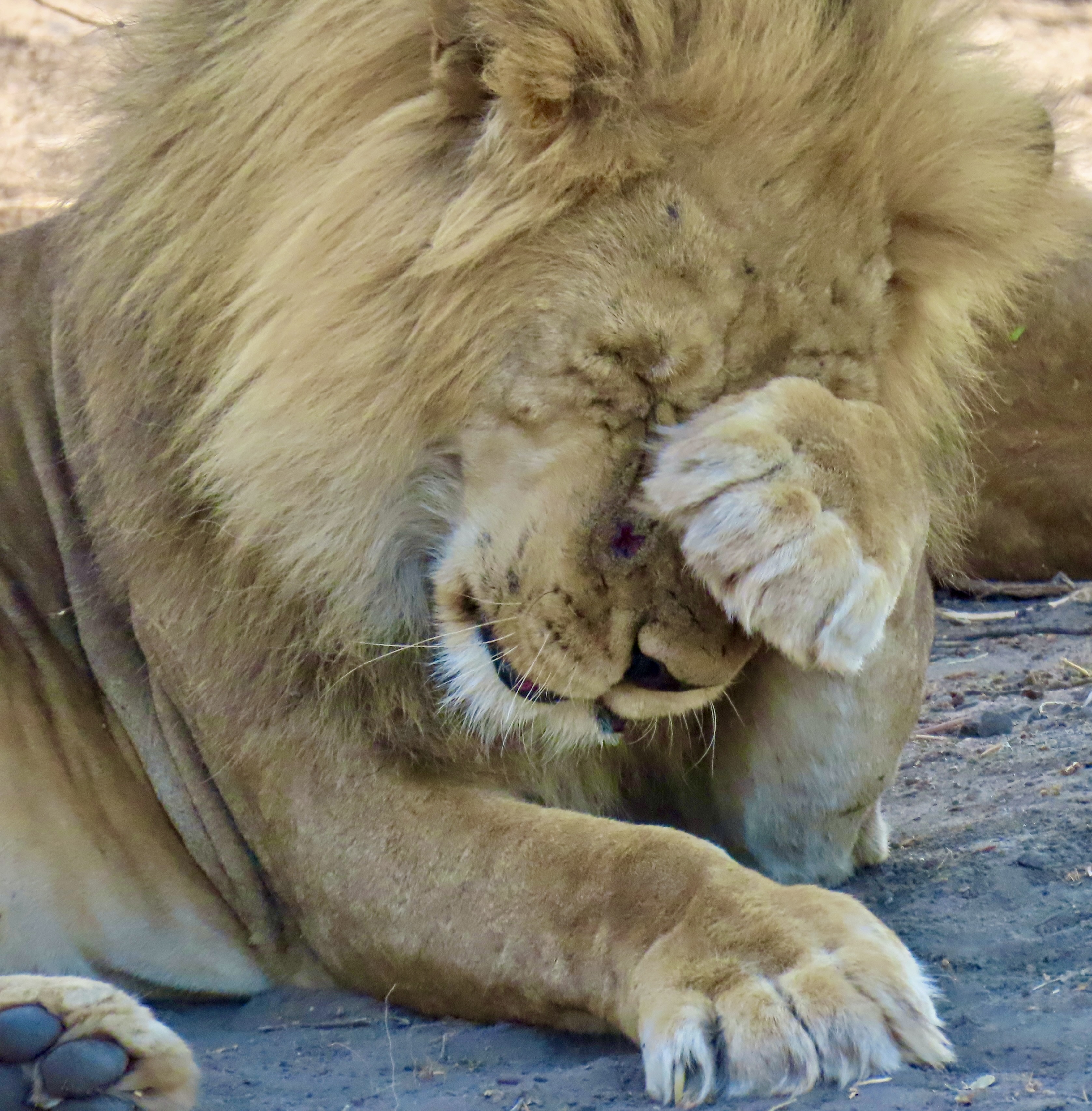
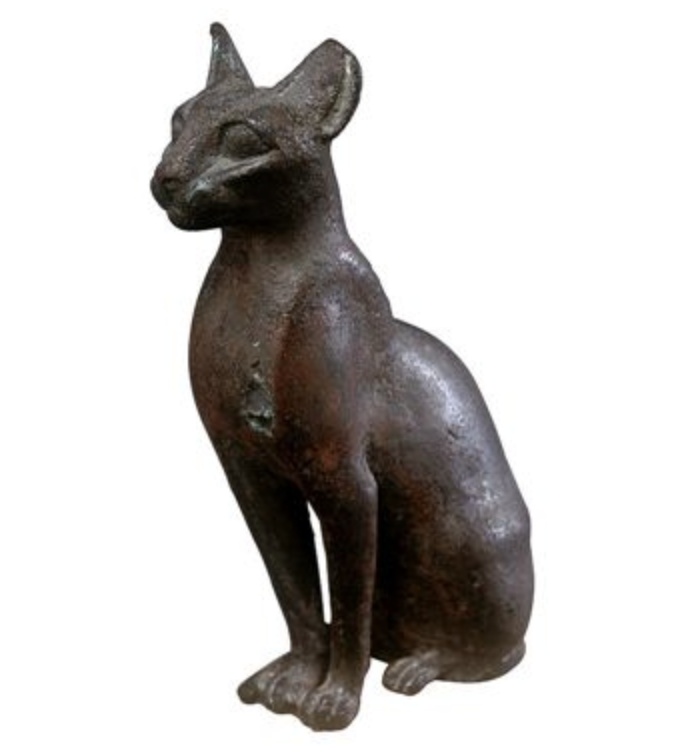
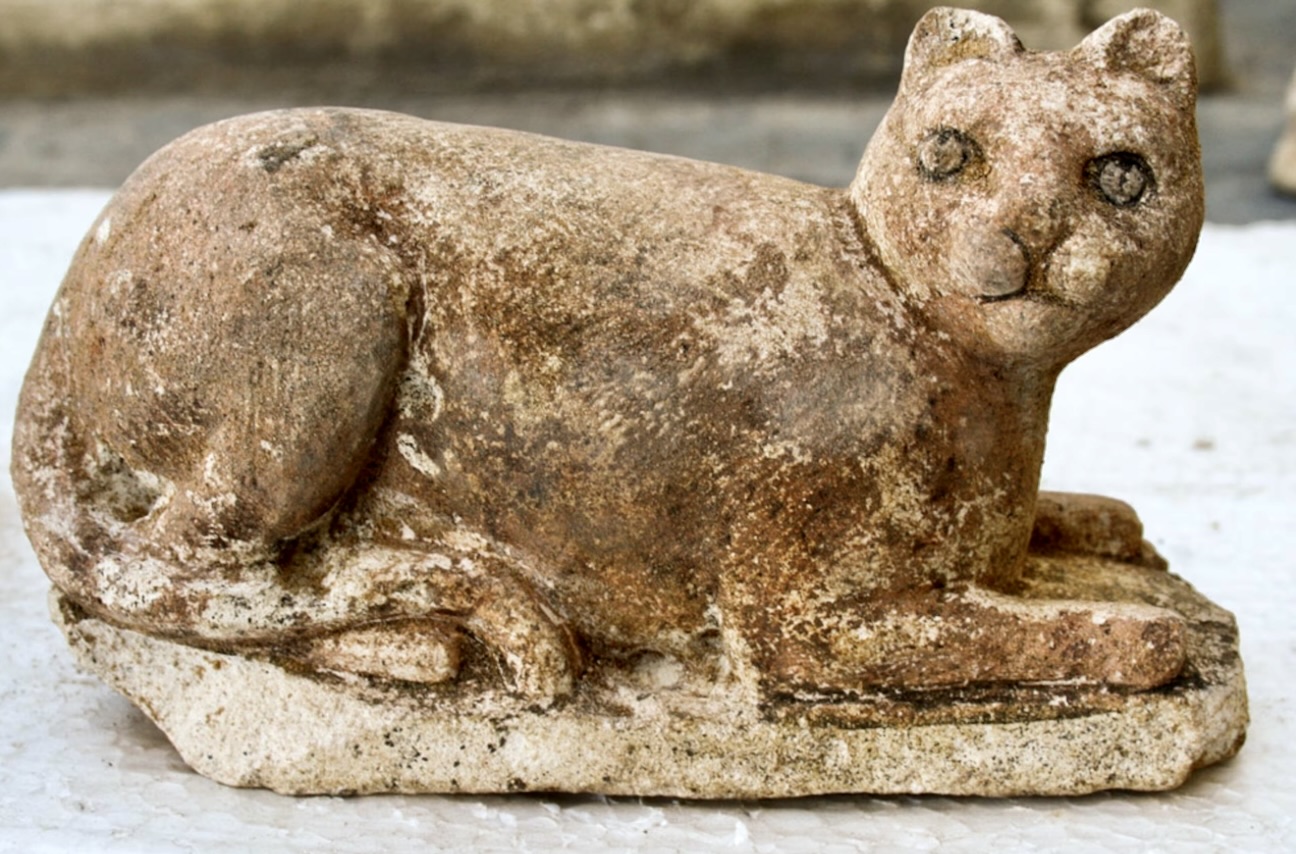
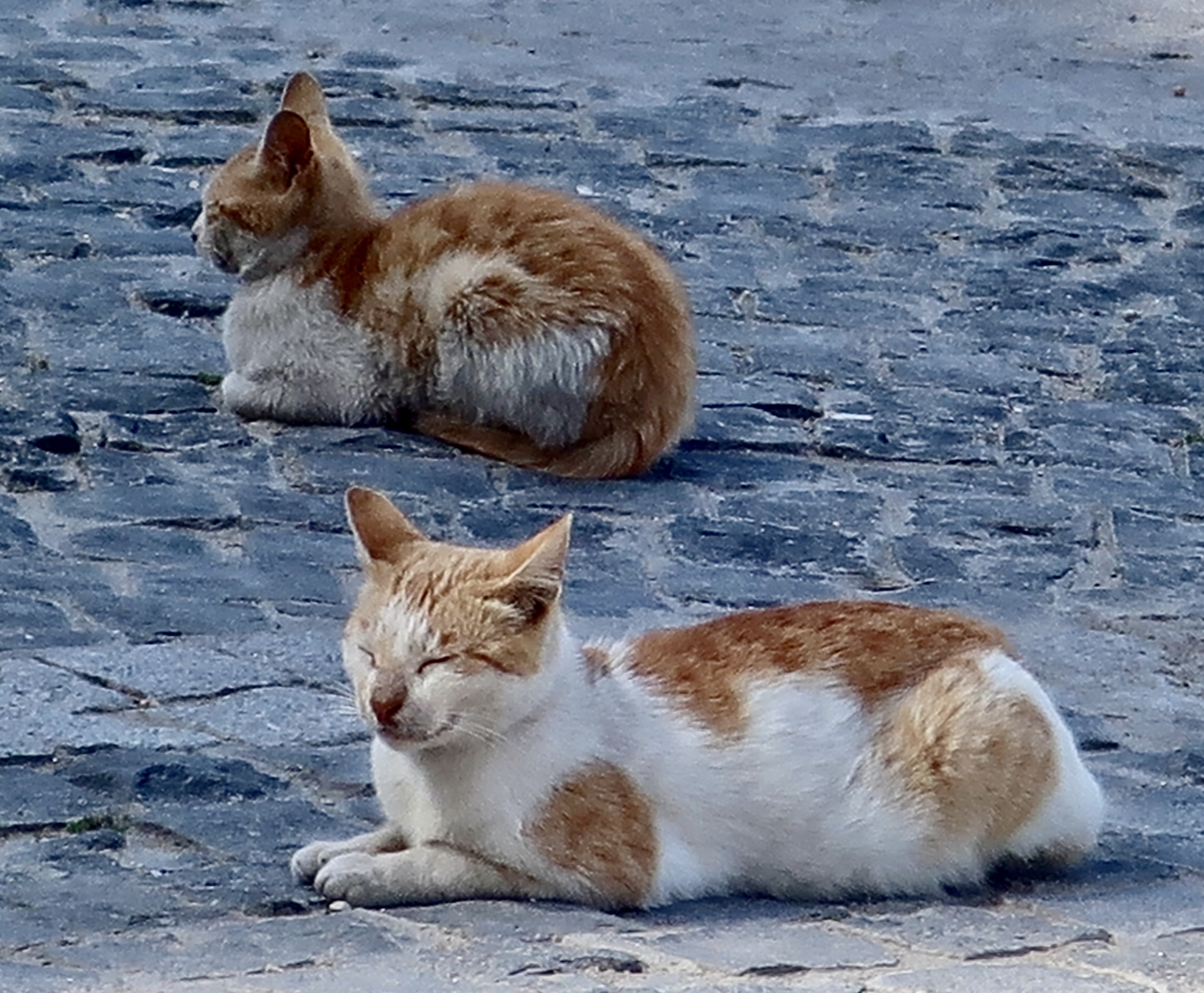
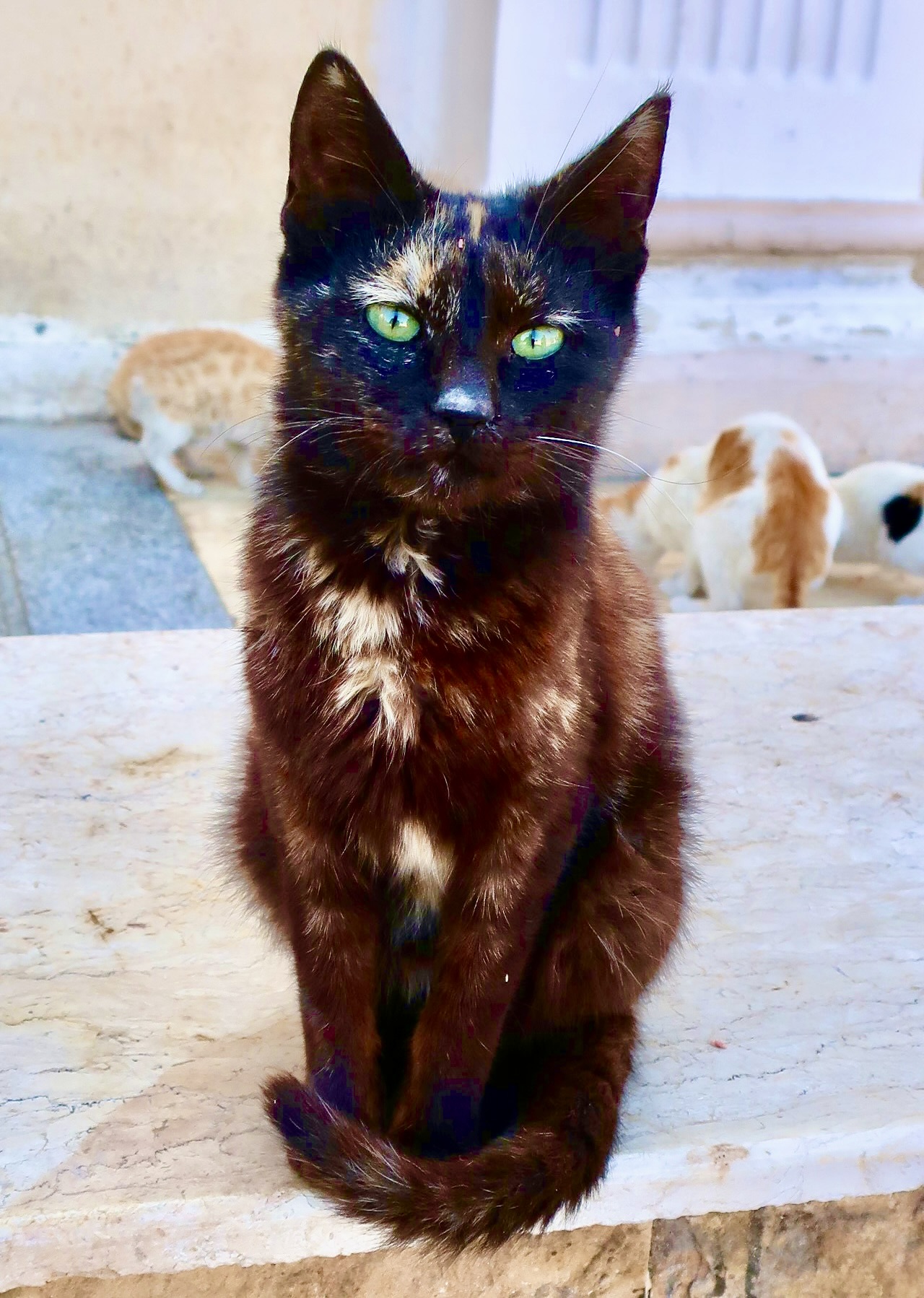
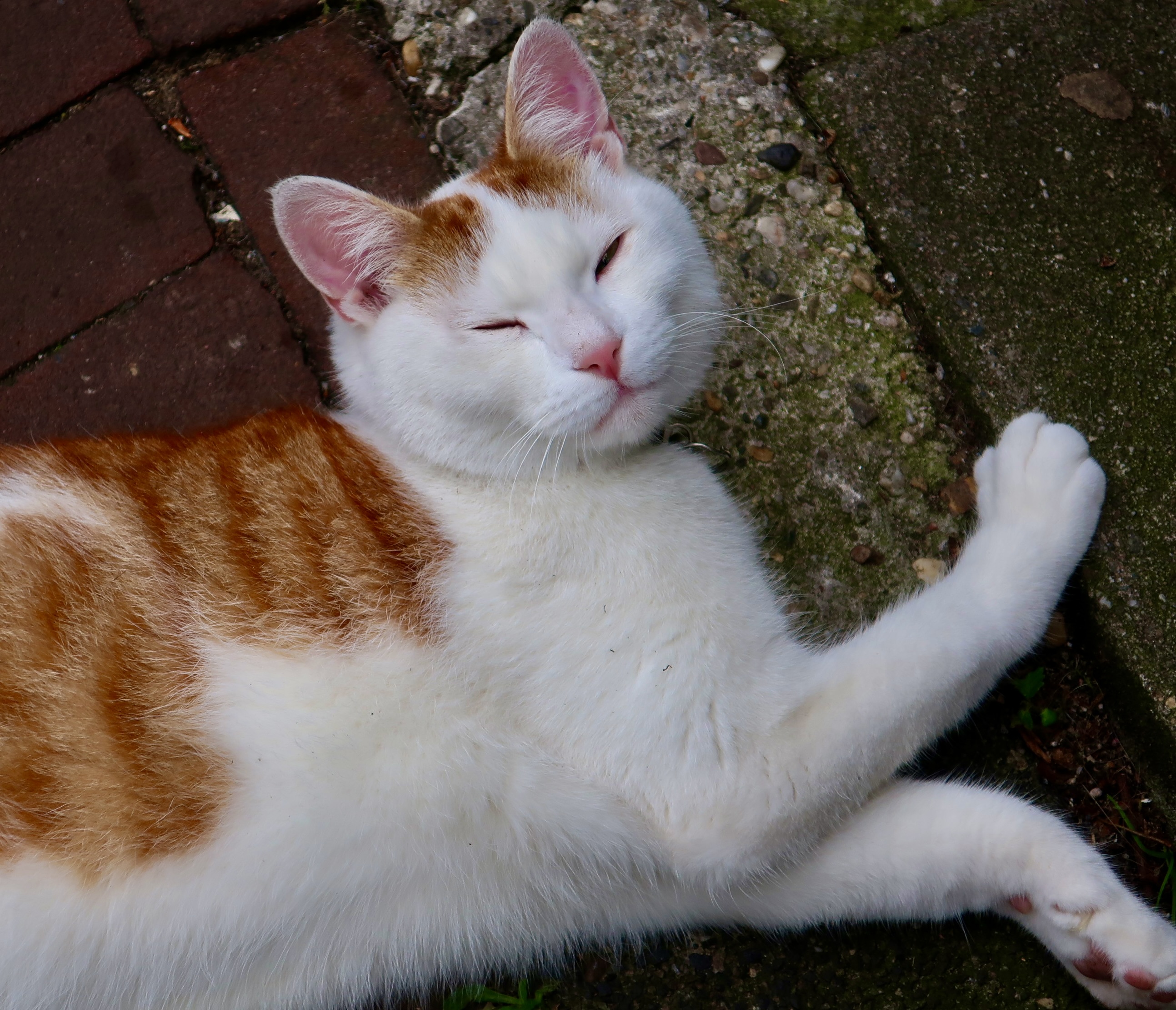
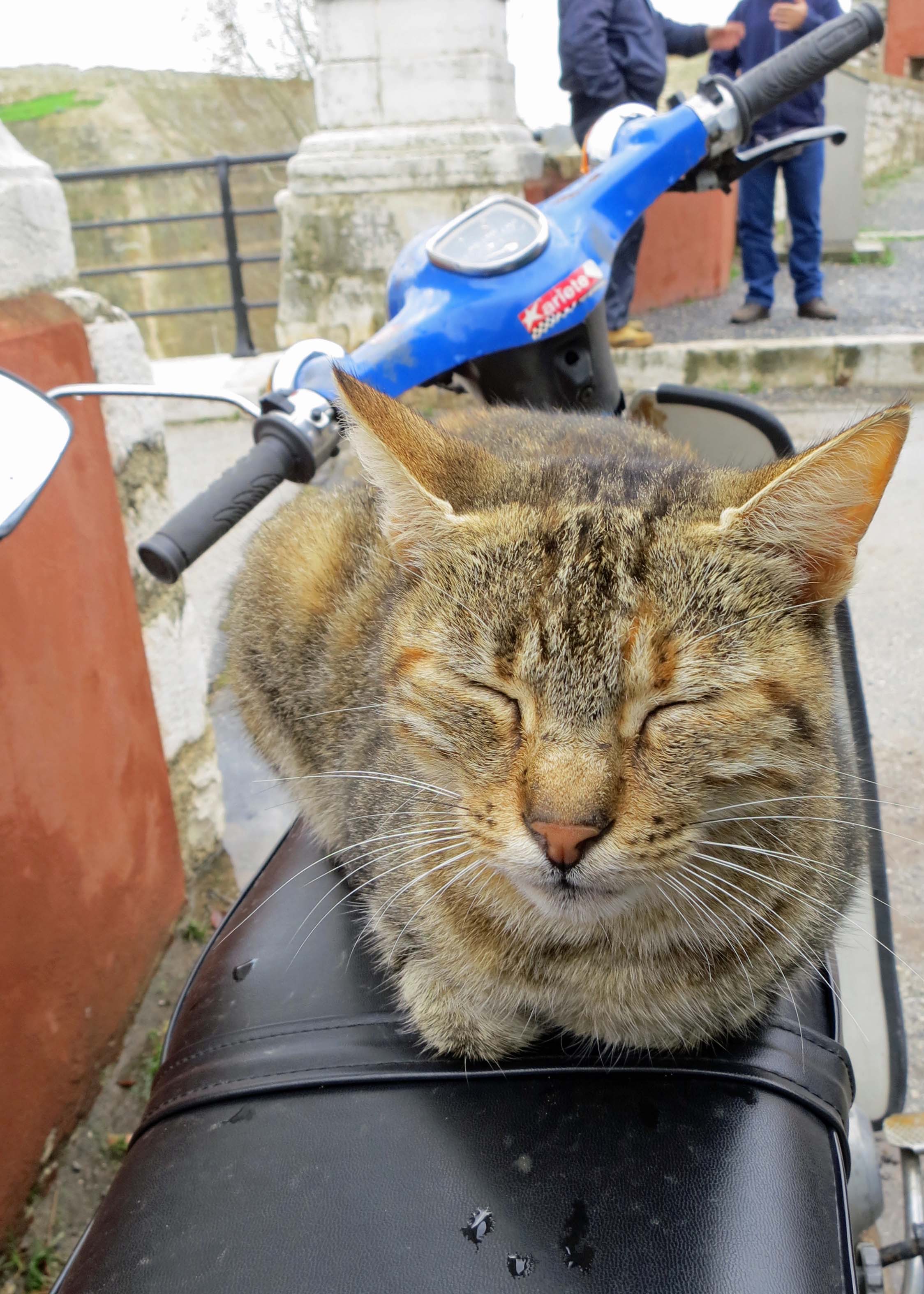
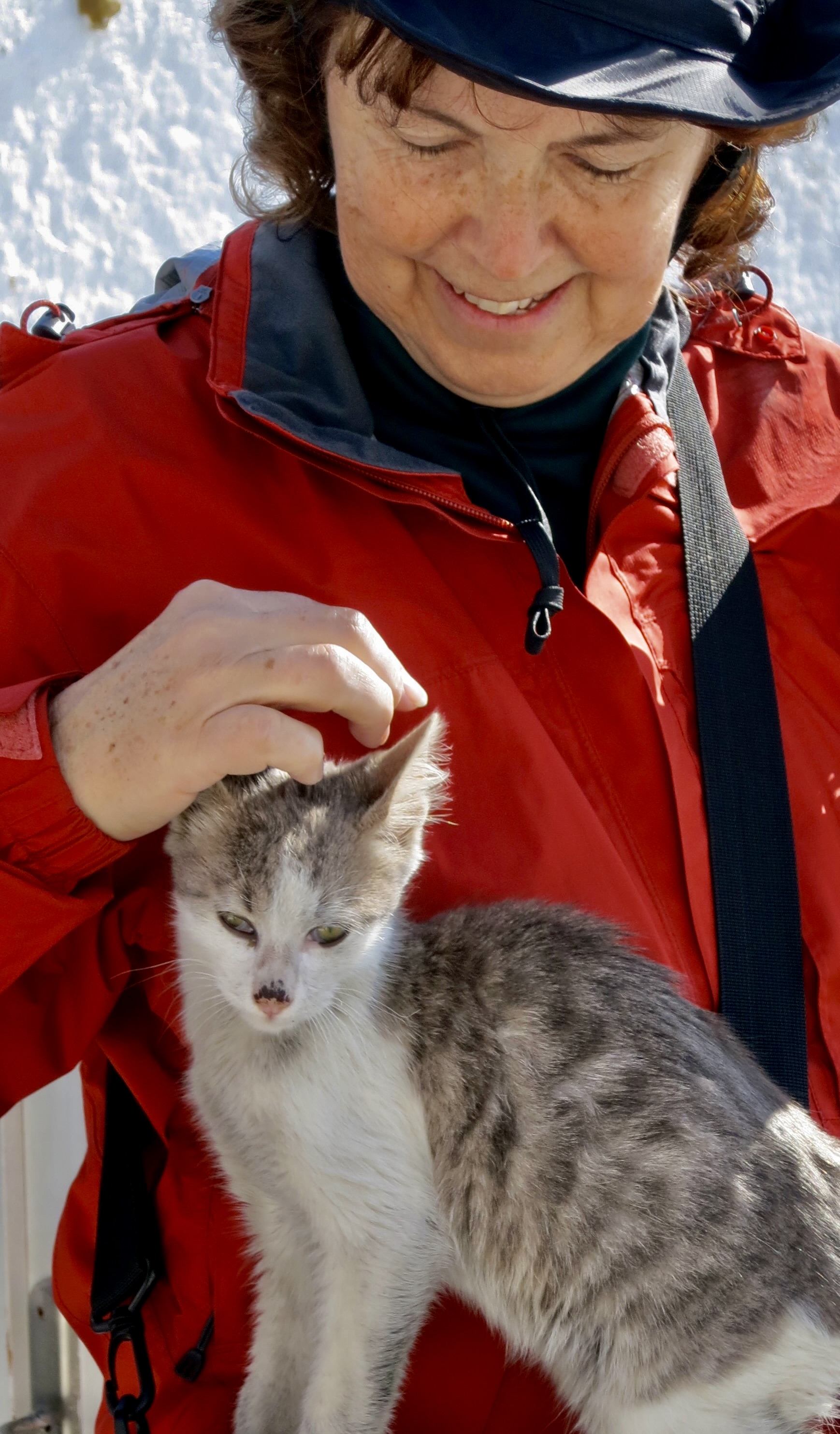
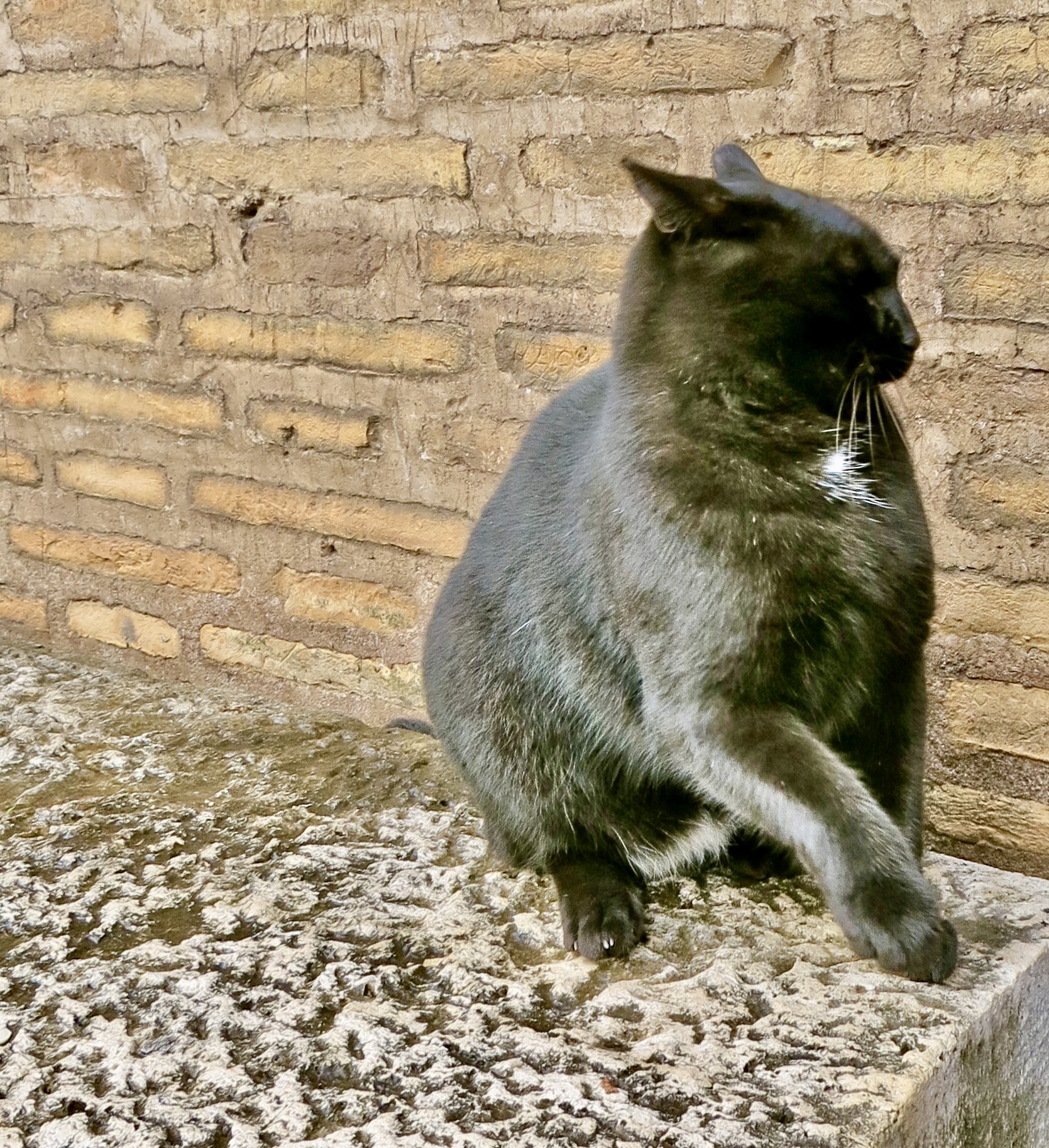
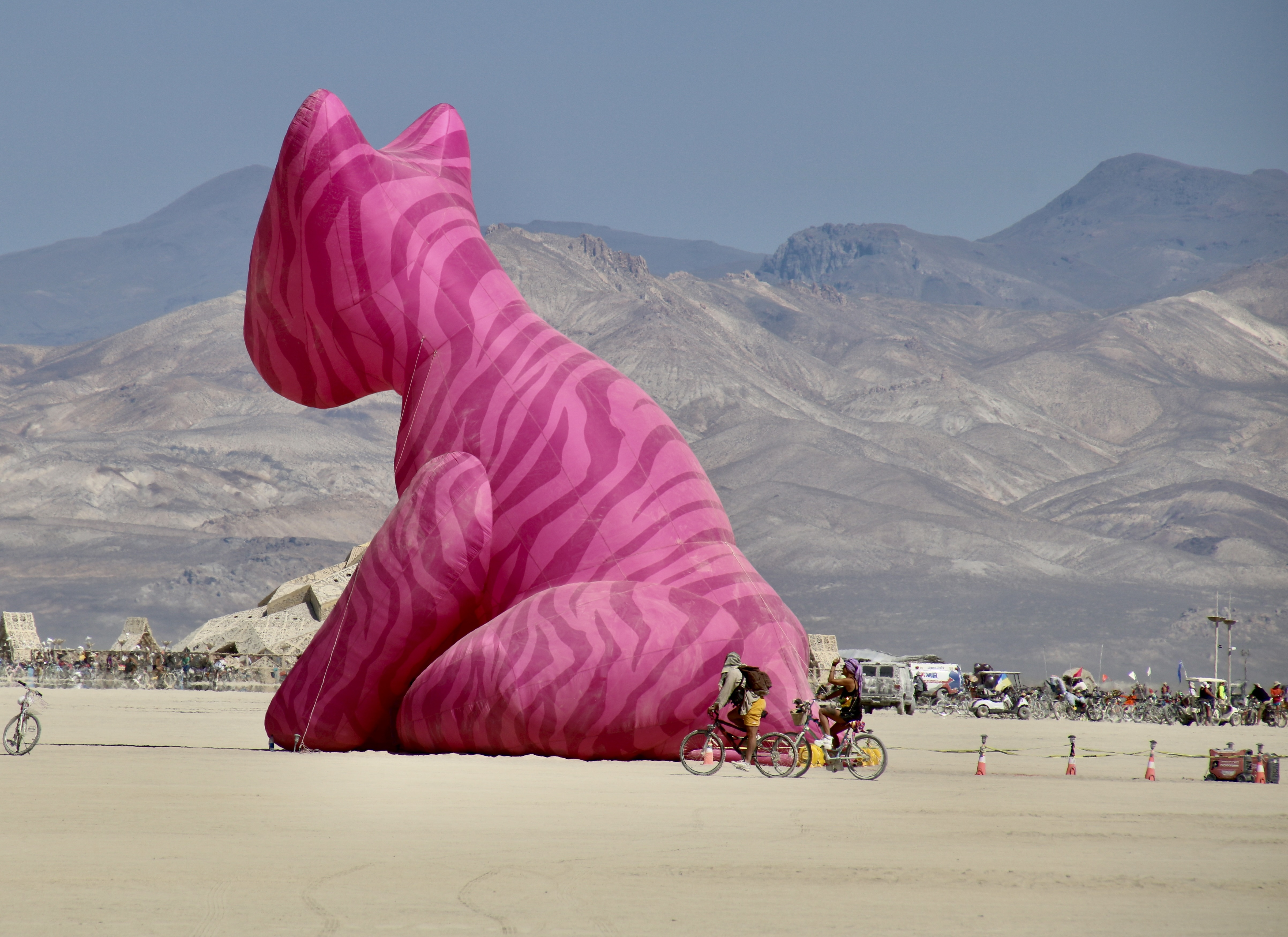
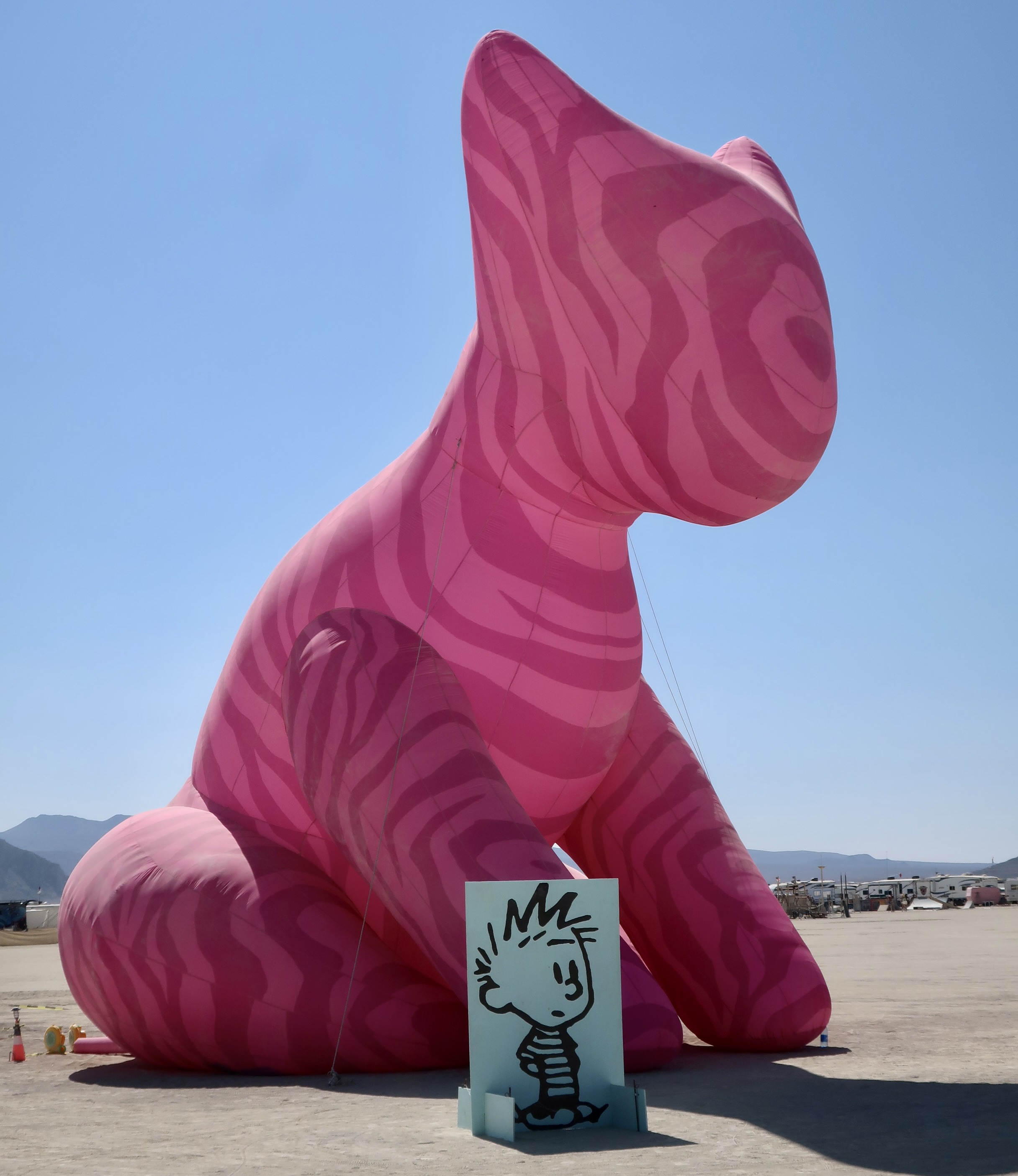
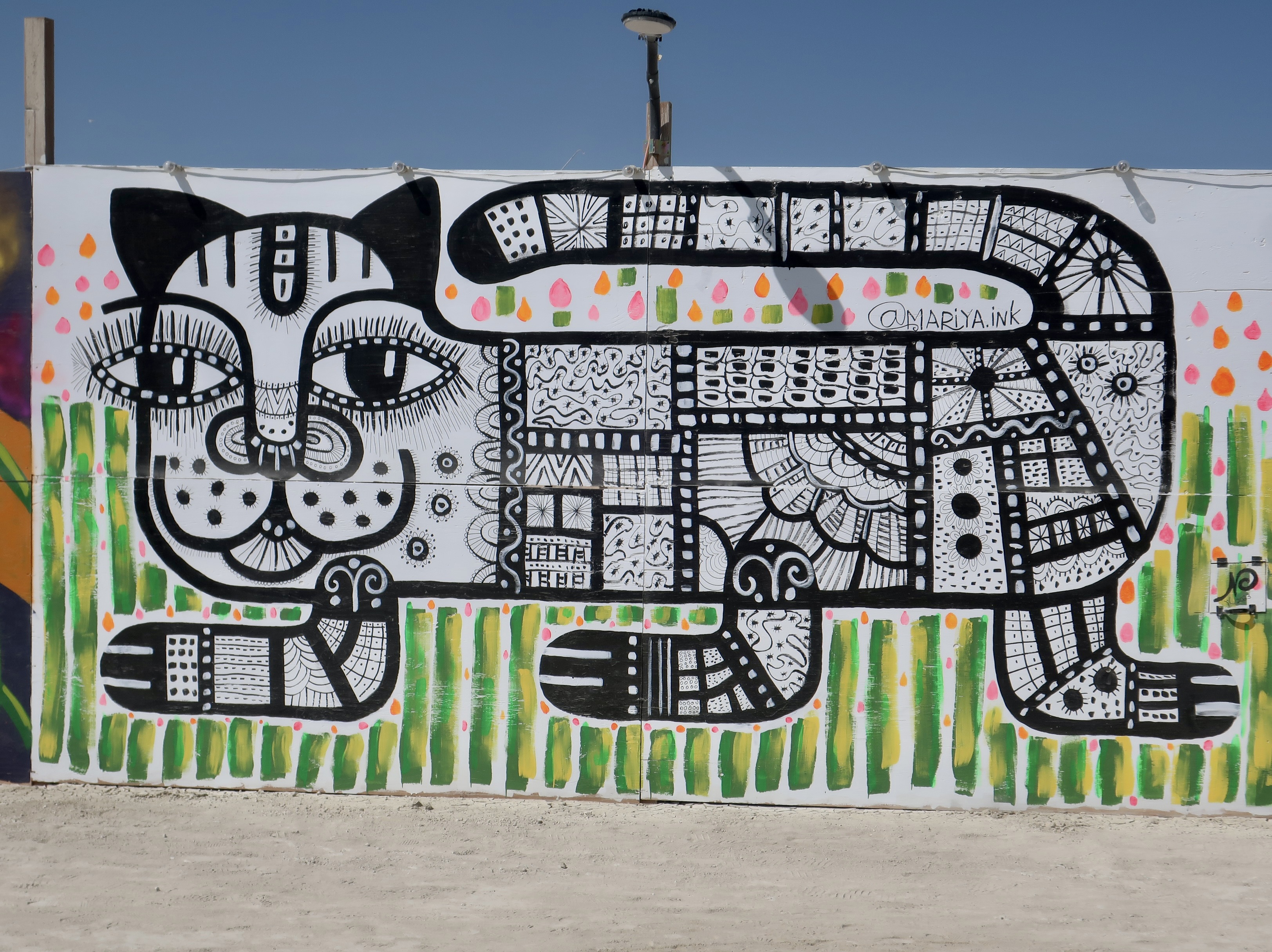
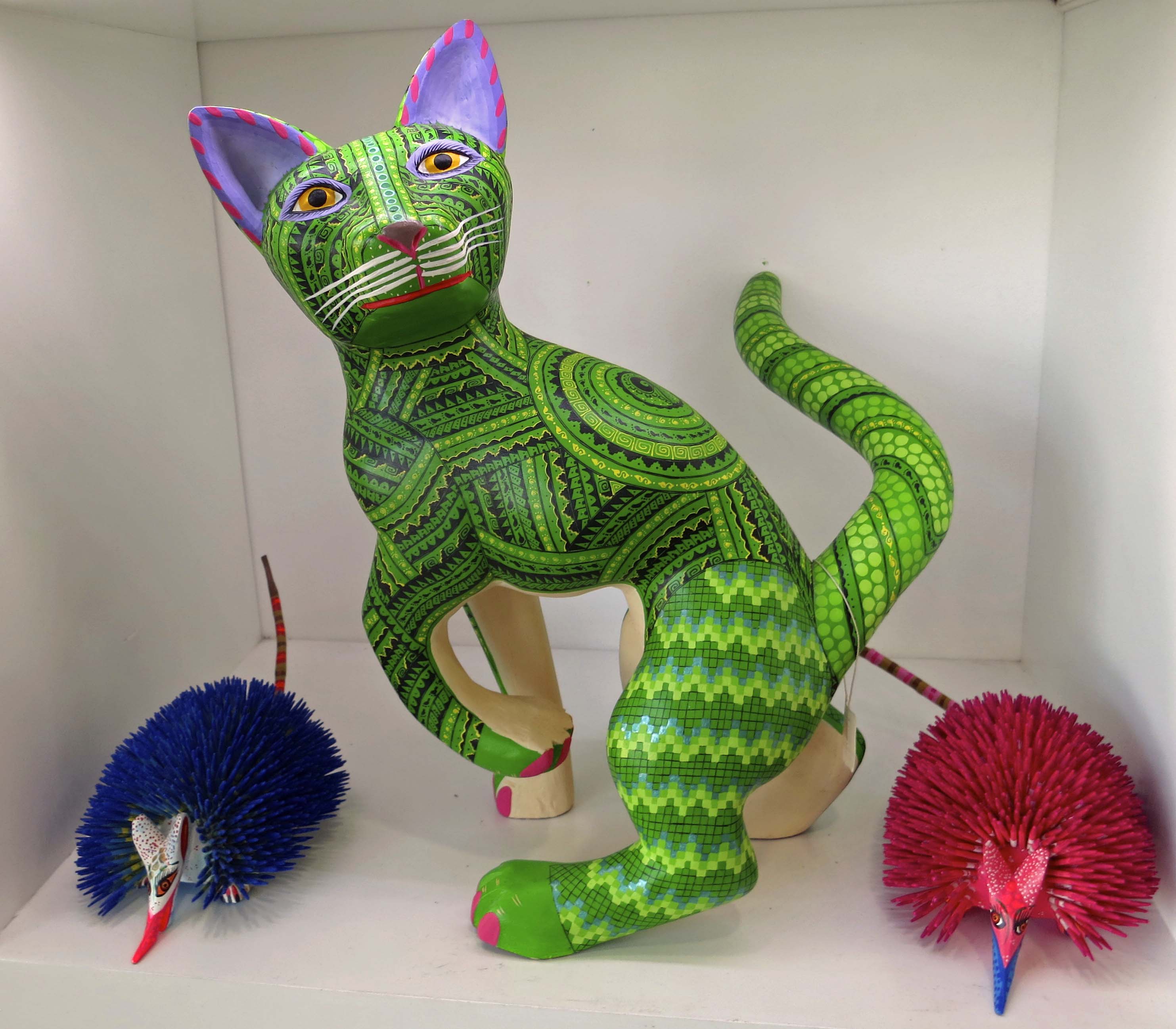
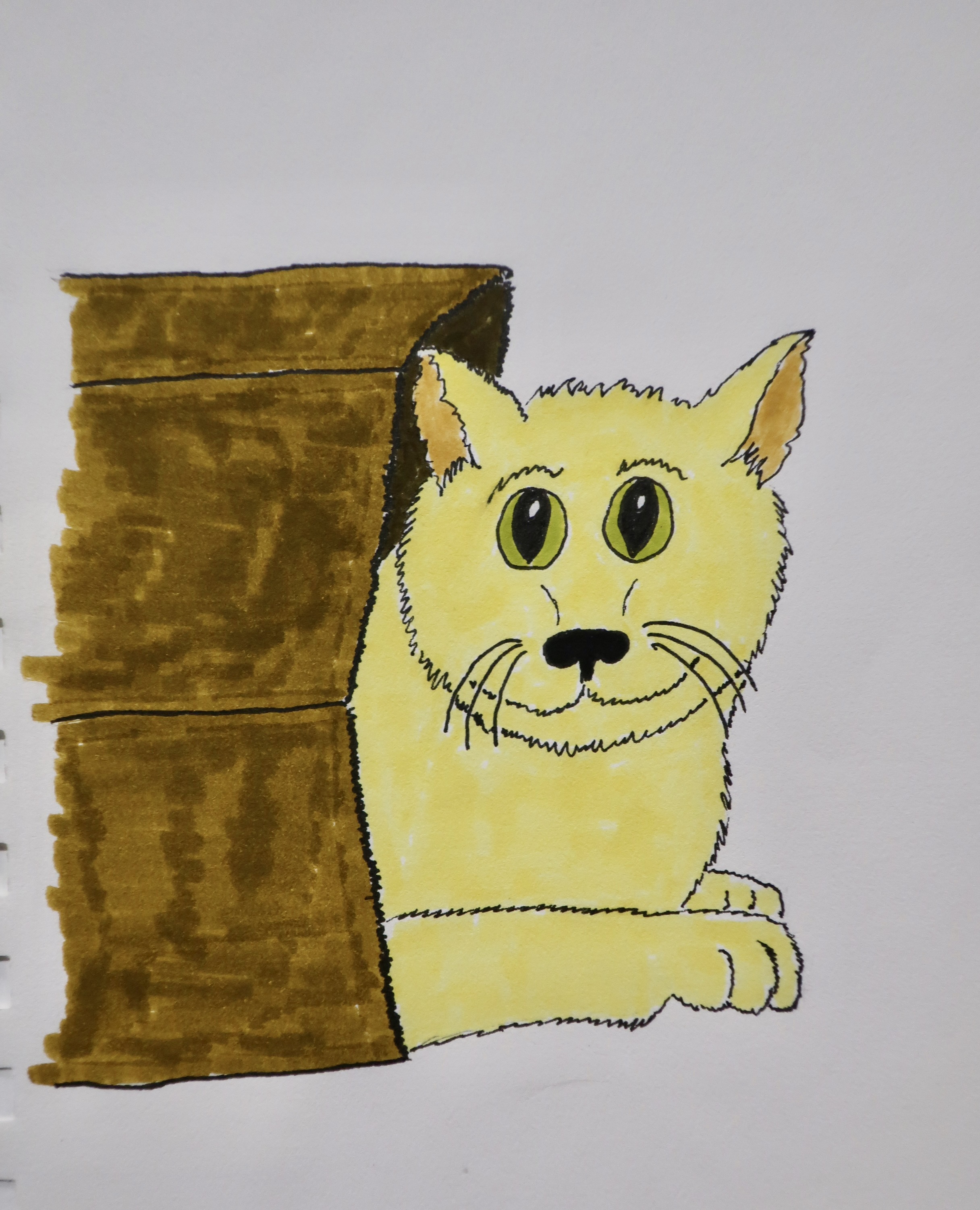
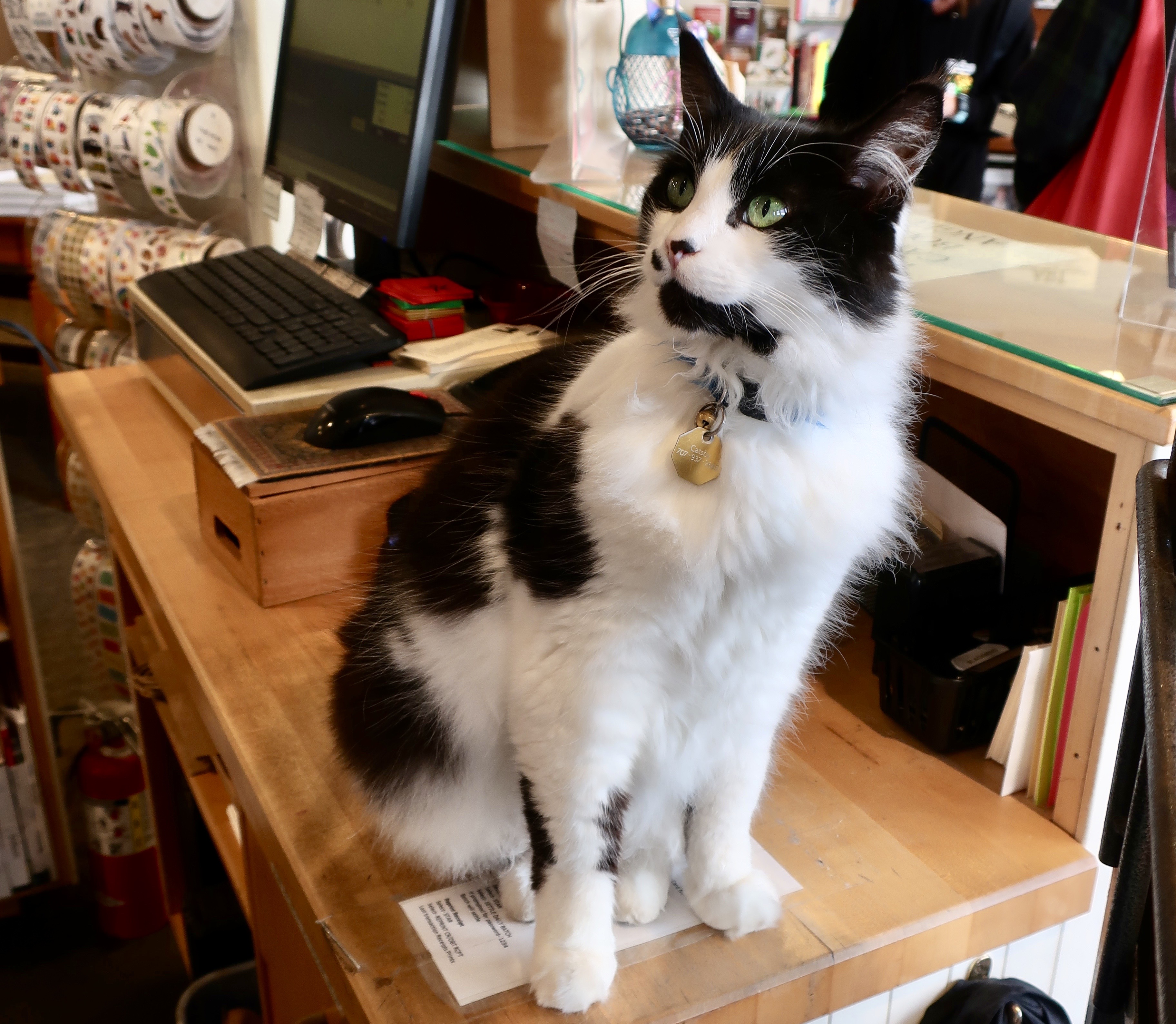
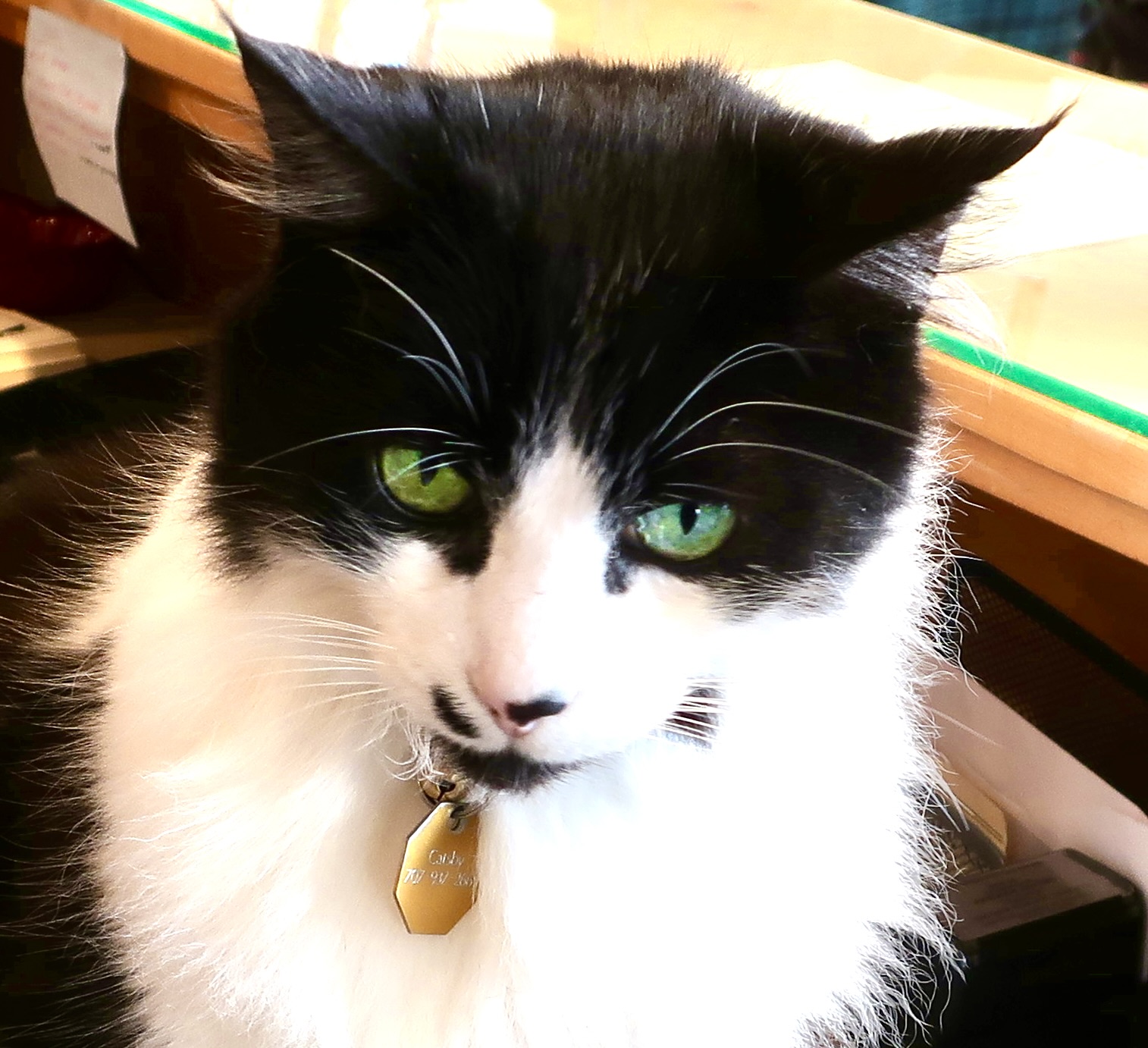
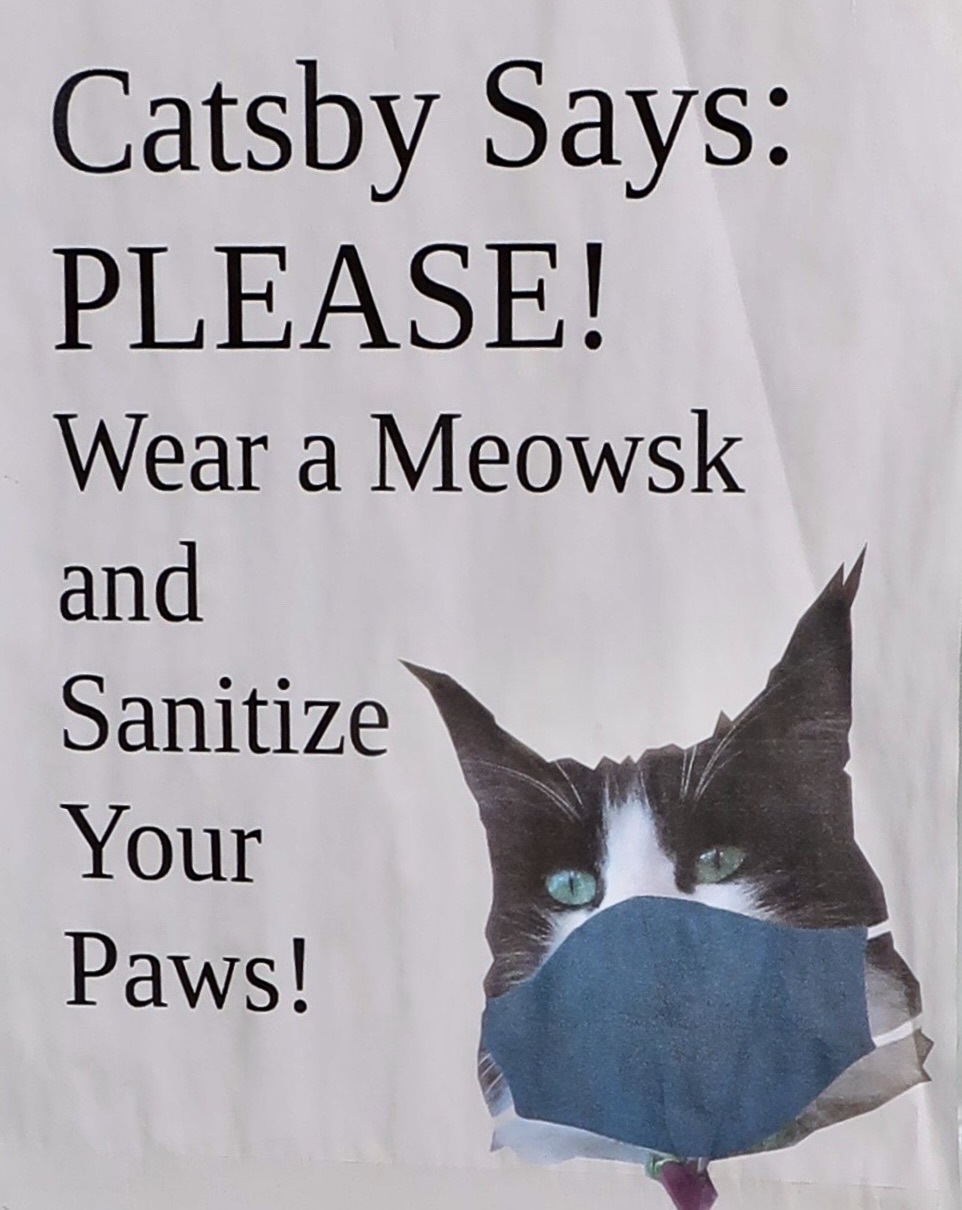
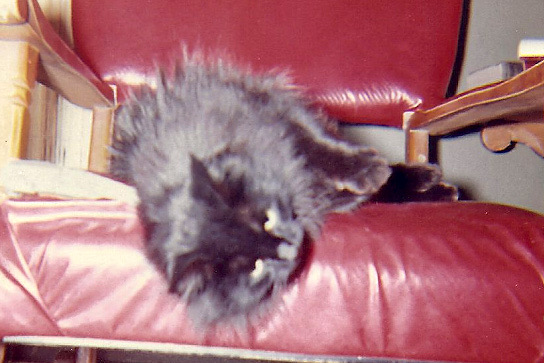
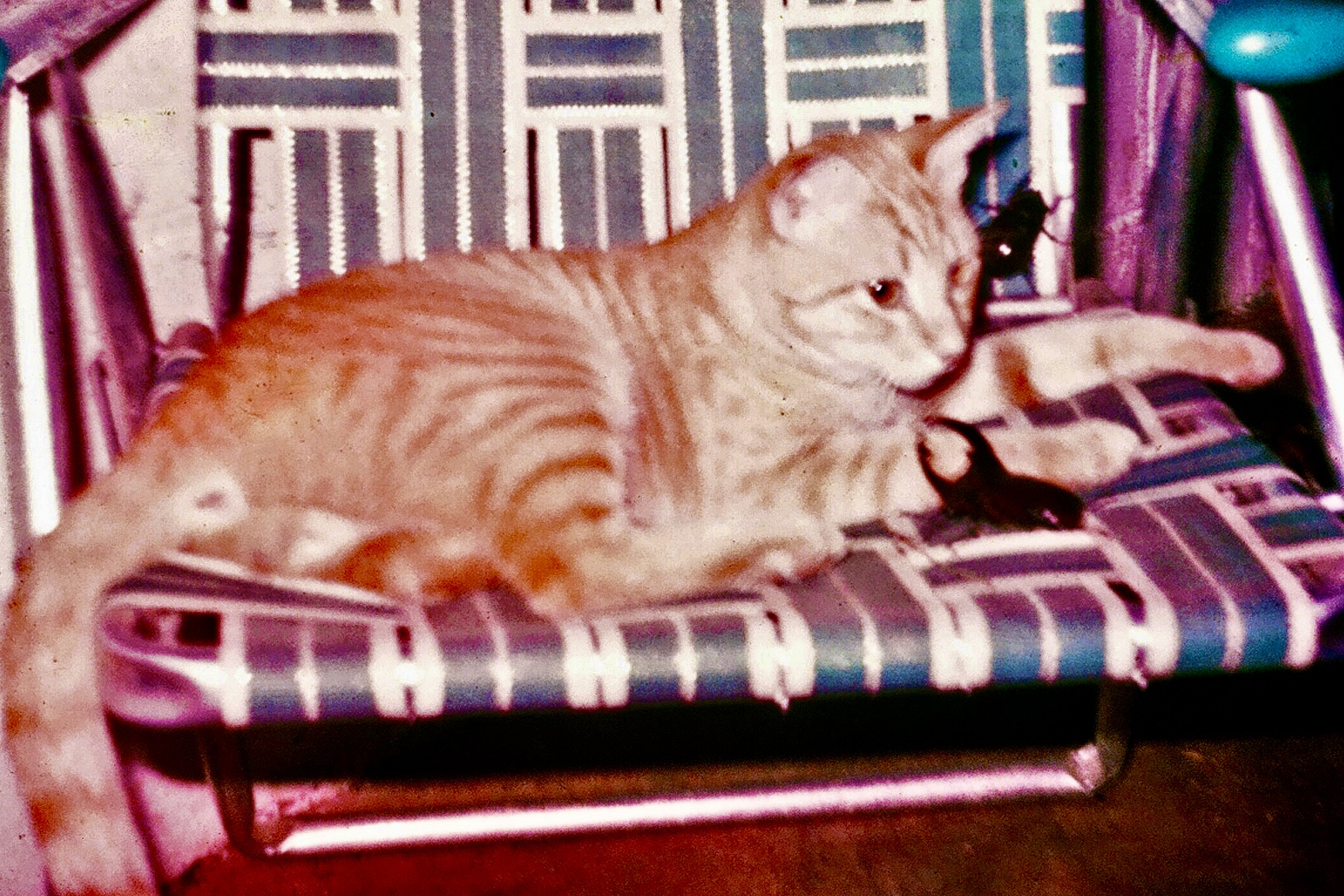
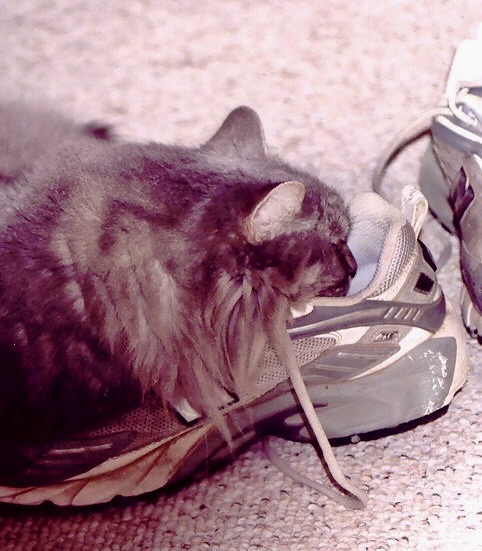
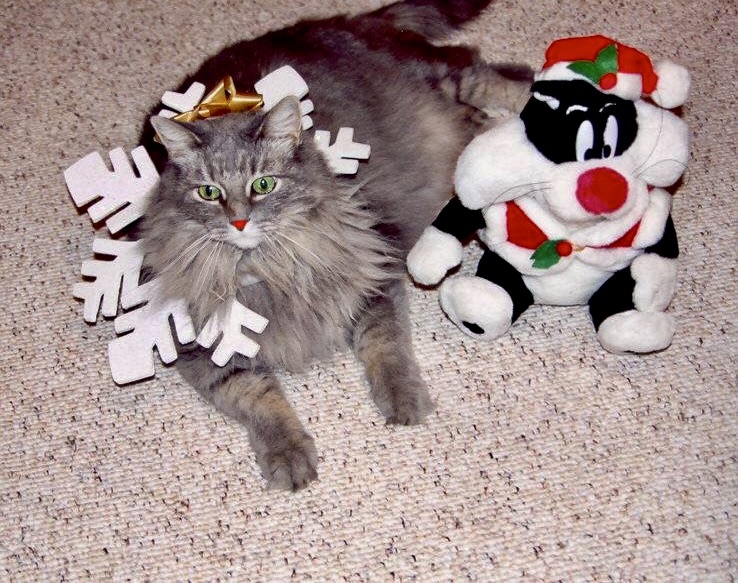
Cats, we have discovered, like to hang out in ruins. Maybe there are more mice there. This one had placed itself on a pedestal (no surprise there, cats like high places) in the Ancient Greek city of Ephesus in Turkey. Check out its gorgeous whiskers. Other than being handsome, they are an important part of a cat’s navigation system, helping them slip though tight spaces and avoid objects in the dark. The whiskers are so sensitive, they can even measure changes in the air flow, such as that caused by a mouse running by. Din,din!It looked quite regal. As the author Terry Pratchett wrote, “In ancient times cats were worshipped as gods; they have not forgotten this.” To explore their early godhood, we need to travel to Egypt where the cat goddess Bastet reigned. We found this cat near the beautiful Alabaster Mosque in Cairo. Ears laid back and body arched, she was letting a dog know to stay away from some small chunks of cat food located nearby.She was quite insistent.Our favorite photo. Hisssss. The goddess Bastet went through several changes evolving down through the ages from being like a ferocious lioness initially to much closer to our domestic cats by 1500 BCE or so. We thought this one was definitely representing her lioness phase.“Need help with that dog, sister? We cats have to stick together.” (Photo from our African safari two years ago.)“Damn, why does she have to do that when I’m having my nap!” It’s no secret that cats like their naps— up to 70% of the time. In fact, the lioness above wasn’t roaring ferociously, she was yawning. (Photograph from our photo safari.)Originally Bastet was represented as a woman with the head of a lion. Eventually, she assumed the look of a woman with a cat’s head, or simply a cat like this representation of Bastet in the Egyptian Museum in Cairo. During the 22nd Dynasty, the city of Bubastis, located in the eastern part of the Nile Delta (the modern city with the interesting name of Zagazig), became the cult center of Bastet. A granite temple there was dedicated to Bastet and thousands of mummified cats were buried in a nearby cat cemetery. An annual festival, best described as a drinking party, drew thousands to celebrate Bastet. As the Greek historian Herodotus noted: ‘More wine grapes were consumed at the Festival than the whole rest of the year together.’A temple to Bastet built around 230 BC was found beneath the streets of Alexander, Egypt in 2010. Included in this important archeological find were 600 statues of cats such as this one.We found a number of their ‘descendants’ still hanging out in the city at the tall Pompey column, including the above two catnapping in the sun.A calico cat posed prettily for us while her brothers and sisters were busy eating behind her. I’d bet on her being female because male calico cats are extremely rare and sterile. It’s all about genes.Speaking of poses…James Herriot once said that “Cats are connoisseurs of comfort.” This fellow proves the point. What could be more comfortable than a soft, black, motor scooter seat absorbing the sun after a rainstorm. I’d say the look on the kittie’s face is pure bliss. The Cat’s Meow, perhaps? (You might have to Travel back to the 1920s for this reference. Or at least Google.) We took this photo on the island of Corfu in the Ionian Sea.This young cat on the Greek Island of Santorini also proved Herriot’s point. It would probably still be sitting there enjoying a head rub by Peggy if we hadn’t of had a boat to catch.Not so this guy. I’d moved to rub behind his ears and he had responded by trying to take my hand off. It wasn’t too surprising due to the fact that we were in Rome’s Colosseum where his ancient relatives once dined on reluctant Christians. He had a reputation to maintain. Now, to cross the ocean and return to Burning Man…On our first journey out to the Playa in 2023 we discovered this huge pink cat dominating the desert. Curiosity drove us to ride our bikes around to the front. What did we discover???It was Hobbes, as Calvin made plain! But why pink? The simple answer: It was Burning Man where being different is an art form. It’s close to a rule.Calvin and Hobbes is my all-time favorite comic strip. I’m fortunate that my digital newspaper does reruns. I jumped into the comic section on Friday when I was putting this post together. This was the daily strip. How can anyone not love these two characters?I included a Burning Man mural featuring a cat in my blog last week promoting today’s post on cats. This is another cat mural from BM 2023.Traveling south to Mexico, we found an imaginative green cat in a box in Puerto Vallarta (along with what I assume were two armadillos). The cat came from the state of Oaxaca in southern Mexico, which is renowned for its wood carvings. If you have ever had a cat, you know they love to play in boxes and paper bags.This is one of the cat cartoons I’ve created. It’s titled, ‘Who let the cat out of the bag?’Here’s another one of my cat cartoons. I titled this “Old Tom cleverly disguises himself by hiding out in the cattails.” I think he was tying to catch the ‘blue bird of happiness.’ He’d heard it was a Happy Meal.Peggy and I are strong supporters of Independent bookstores and firmly believe that each of them should have a cat. We’ve discovered over the years that some of the best do. This is Catsby at the Gallery Bookstore in Mendocino, California.A closeup of Catsby.Peggy and I have visited the Gallery Bookstore several times over the years. Once it was during Covid. Catsby’s poster was next to the front door. And now it is time to wrap up this post with a visit to the the three cats I have been closest to over the years.I grew up with cats and dogs. This was Demon, named after her black cat persona, piercing eyes, and all of the time she spent in the Graveyard next door. My first memory of her was when I was six and she was one very pregnant cat. My mother had prepared a box filled with old clothes as a nursery. I was home alone one day when Demon was walking across the living room and suddenly stopped, squawked and squatted. Much to my surprise, and hers as a first time mother, a little black head appeared out of her undercarriage. Not knowing what else to do, I jumped up, grabbed her by the nape of the neck, and dashed for her closet nursery. Not fast enough. I was charging through the kitchen when the little black kitten completed its journey out of mom and was heading for a crash landing on the floor. Somehow I caught the little bundle and delivered Demon and her newborn to the box. Demon and I were bonded forever after that experience. I tell more Demon stories in my blog-a-book series, UT-OH.This is a photo of Rasputin, my cat when I was a Peace Corp Volunteer in Liberia from 1965 to 1967. He’s sharing his chair with a pair of Rhinoceros Beetles. I took this photo with the Brownie camera I brought with me to Africa. It isn’t the best of photos, but it is what I have. I wish I had more. He was quite the character and kept us entertained for the year and a half he lived with us. I included several tales about him in The Bush Devil Ate Sam, my memoir about my Peace Corps experience. I’d like to share one today because it illustrates the ability of a cat to jump high into the air, up to five feet. Liberian cats, like all Liberians share a belief that all snakes are deadly poisonous to be avoided at all costs. One night, probably after drinking a few Club Beers, I decided to try an experiment that would test both the Liberian fear of snakes and a cat’s ability to jump. We had an old fashion screen door with a long, round spring on it. In a moment of inspiration I unhooked the spring and rolled it across the floor toward Rasputin. The answer is yes, yes. Yes Liberian Cats are deathly afraid of snakes and ,yes, cats can jump high. I’m pretty sure it was over five feet. Not only did he leap high into the air but he managed to land on his stool, safely above the floor.And finally there is FE, the sweetest cat I have ever known. Peggy had got her for our daughter Tasha, but when Tasha moved away to go to college, FE adopted me. And showed it by choosing my shoes as her sleeping quarters. And by rubbing her face on my clothes frequently. That’s one way cats claim you as their territory, and cat’s are quite territorial. It beats the heck out of how tom cats claim their territory by backing up against things and peeing on them.I dressed Effie up for a photo with Felix the Cat and photoshopped a red nose on her. Peggy and I featured them in our annual Christmas letter. It speaks to how gentle she was by the way she tolerated her snowflake neckless. Rasputin would have torn it to shreds.
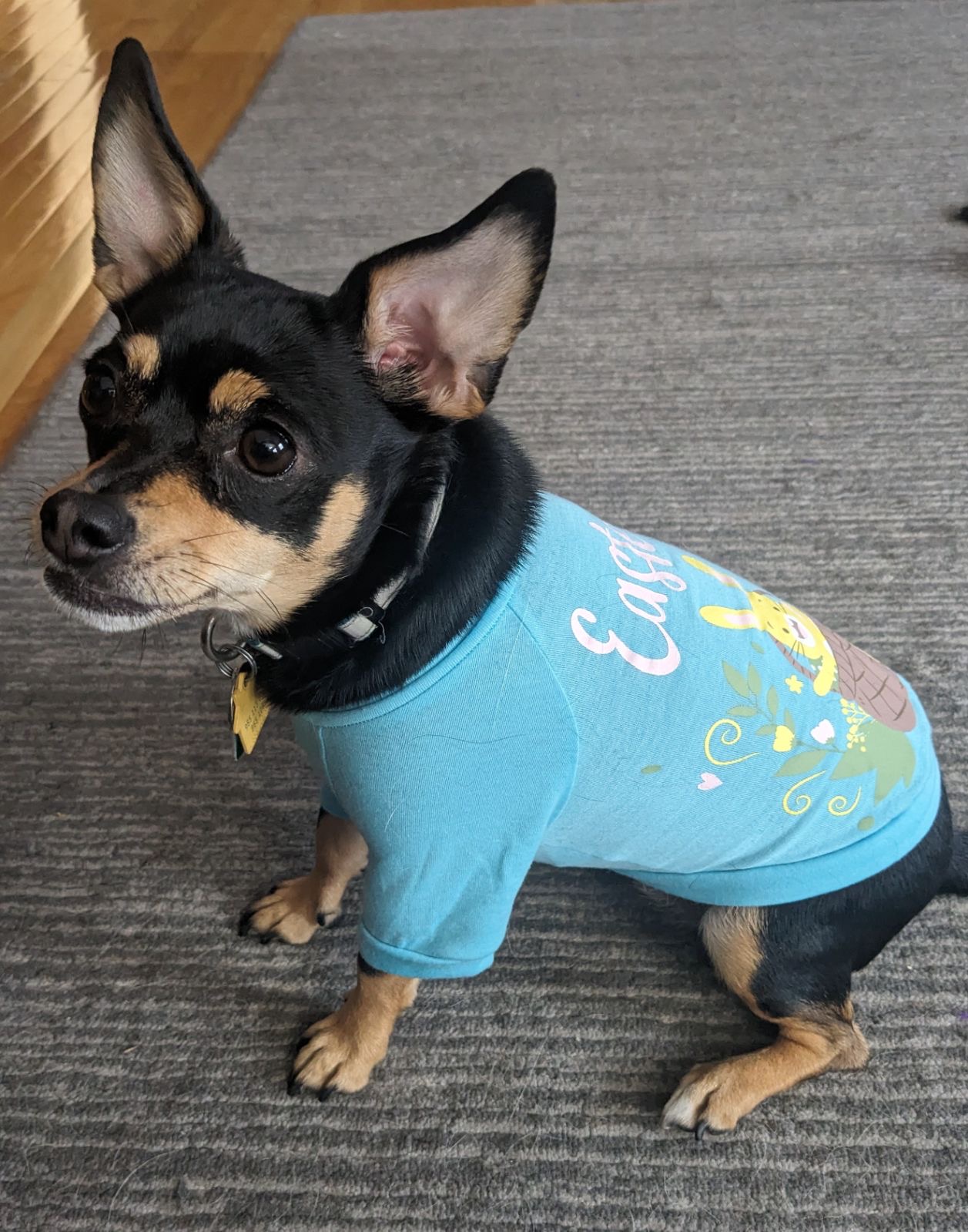
An endearing habit FE had was playing fetch with me. I’d roll up a small sheet of paper and toss it across the floor. Off she would go to retrieve it, bring it back to me, and drop it on the floor. Over and over. I never had the heart to tell her she was behaving like a dog. I’ll end this cat post with a quote from Einstein: There are two means of refuge from the misery of life: music and cats. I’d have to add dogs. They will be featured in our focus series to be posted a week from today.Our daughter’s dog, Rio, dressed up for Easter.
On Thursday, join me as I get kicked out of the first grade for a year! It’s the first chapter in UT-OH!
I am adding to my armchair travel series today as Peggy and I continue to shelter at home hiding out from Covid-19. For today’s post I went traveling back in time through my blog archives and landed in the ancient Graeco-Roman of Ephesus, Turkey. It is located across the Aegean Sea from Athens. Peggy and I traveled there in 2013 along with her brother John Dallen, his wife Frances, and their/our friends Lee and Kathy Saage.
The Greek Goddess Nike, with wings all aflutter, hands over the wreath of Victory to Rome, which is appropriate since Rome took over Greek Ephesus and turned it into the second largest city in the Roman Empire. Note the muscular arms. Not even iron-pumping Arnold Schwarzenegger would mess with this woman.
Artemis, The Greek Goddess of the hunt, chastity, virginity and fertility was big in Ephesus. (Somehow, being the Goddess of chastity and virginity— while also being the Goddess of Fertility— doesn’t compute.) Her temple, built in the sixth century BC, was considered one of the Seven Wonders of the Ancient World. Each May, the local Greeks would honor her with a Festival of Roses, which brings Mother’s Day to mind. As part of the festival they would sacrifice a number of bulls to encourage fertility. Modern time Mother’s Day has dropped this part of the ceremony.
Artemis is looking rather weird, to say the least. She looks like she is offering a hug. If so, I pass.
Artemis is only a part of the Ephesus’ family of powerful women. Before the Greek Goddess Artemis became top female in the area, the Hittite mother-goddess Kubaba and the Anatolian goddess Cybele had reigned supreme. Amazons, the large warrior women who thought of men mainly as a source for making baby girls, were also known to frequent the region.
Following Artemis, the Virgin Mary was reputed to have spent her last days in Ephesus. A German mystic dreamed it and there is some historical support. Various modern Catholic Popes have backed up the supposition and Pope John Paul II declared the site where she supposedly died to be a shrine for Christian pilgrimages. Muslims, who call her Mother Mary, also make pilgrimages to the area. It stands on a hill above Ephesus.
Ephesus is located on the western coast of modern-day Turkey. We took a tour bus out to the site with a very talkative tour guide who shared with us that Santa Claus originated in Turkey, as well as a number of facts about Ephesus. The city had been an important part of Ionian Greece and included such luminaries as the Greek philosopher Heraclitus. In case you’ve forgotten your philosophers, Heraclitus, whose nickname was the Obscure, claimed that only change is permanent. “You never step in the same river twice,” he said.
This was certainly true of the Meander River. Ephesus was located on its banks and the curvy waterway kept moving to new locations, forcing Ephesus to move. And yes, the Meander River happens to be where our word meander comes from. I am rather fond of meandering.
It was the Romans who brought Ephesus to its height around 100 AD with a population of over 250,000, making Ephesus the second largest city in the Roman Empire. Most of the ruins featured below came from that period.
The iconic Ionic Greek column with its simple scroll like top is said to have originated in Ephesus.
This handsome, regal-looking Ephesus cat conveniently posed for me in front of another Ionic column.
Greek and Roman columns, BTW, did not come in one long section. They came in chunks like this column and were then put together.
The most impressive use of columns among the existing ruins of Ephesus is in the beautiful Library of Celsus, which happened to be the third largest library in the ancient world and contained over 12,000 books. People provide perspective on size.
I took this photo while standing in front of the Library of Celsus and shooting upward. The column on the left is 40 feet tall.
The Library of Celsus used ‘leafy’ Corinthian columns shown here as opposed to the Ionic columns shown above.
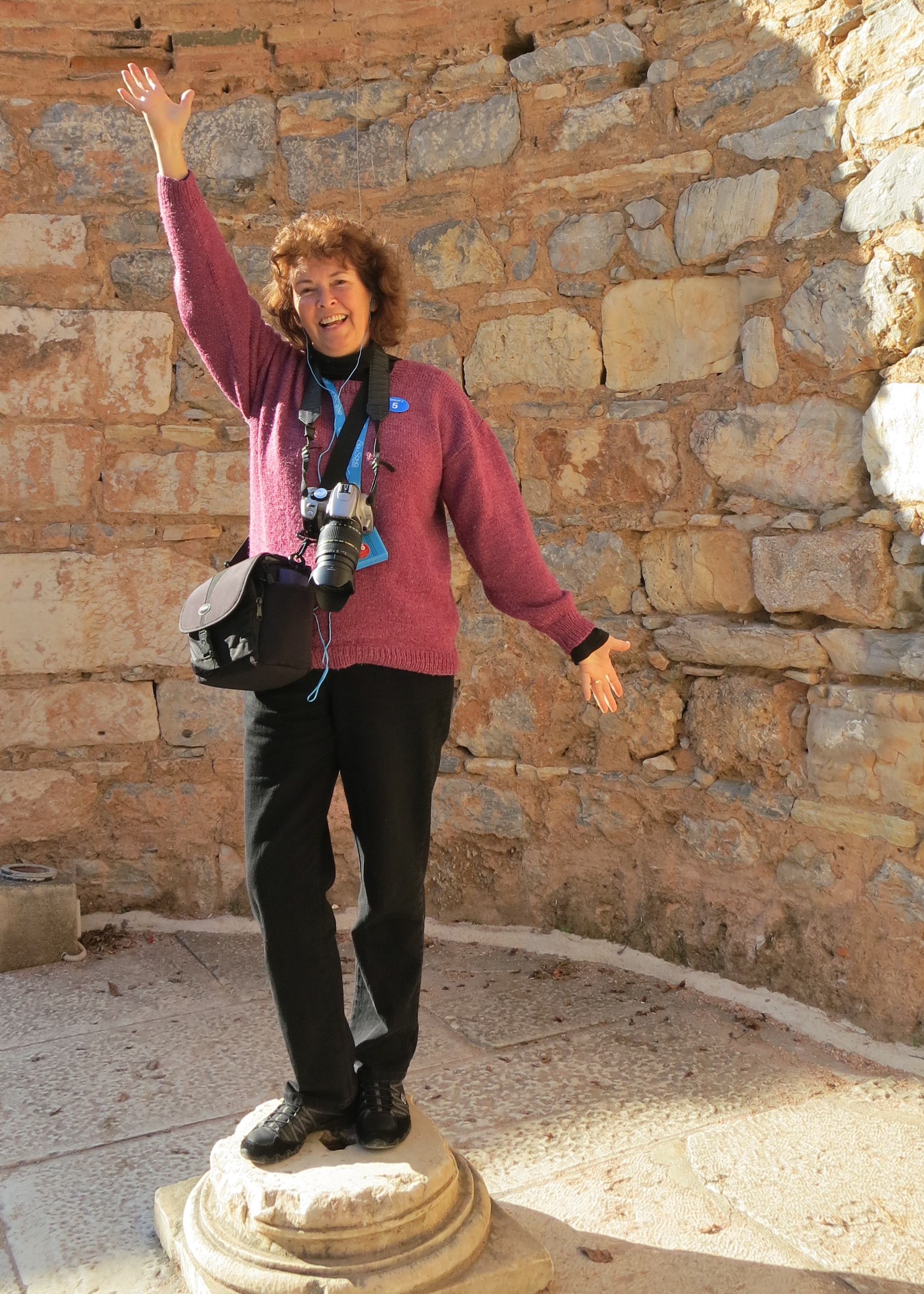
Peggy, another powerful woman, poses on a pedestal inside the Library of Celsus that may have once accommodated the Greek goddess Athena. I didn’t tell Peggy she was dancing on the grave of Celsus.
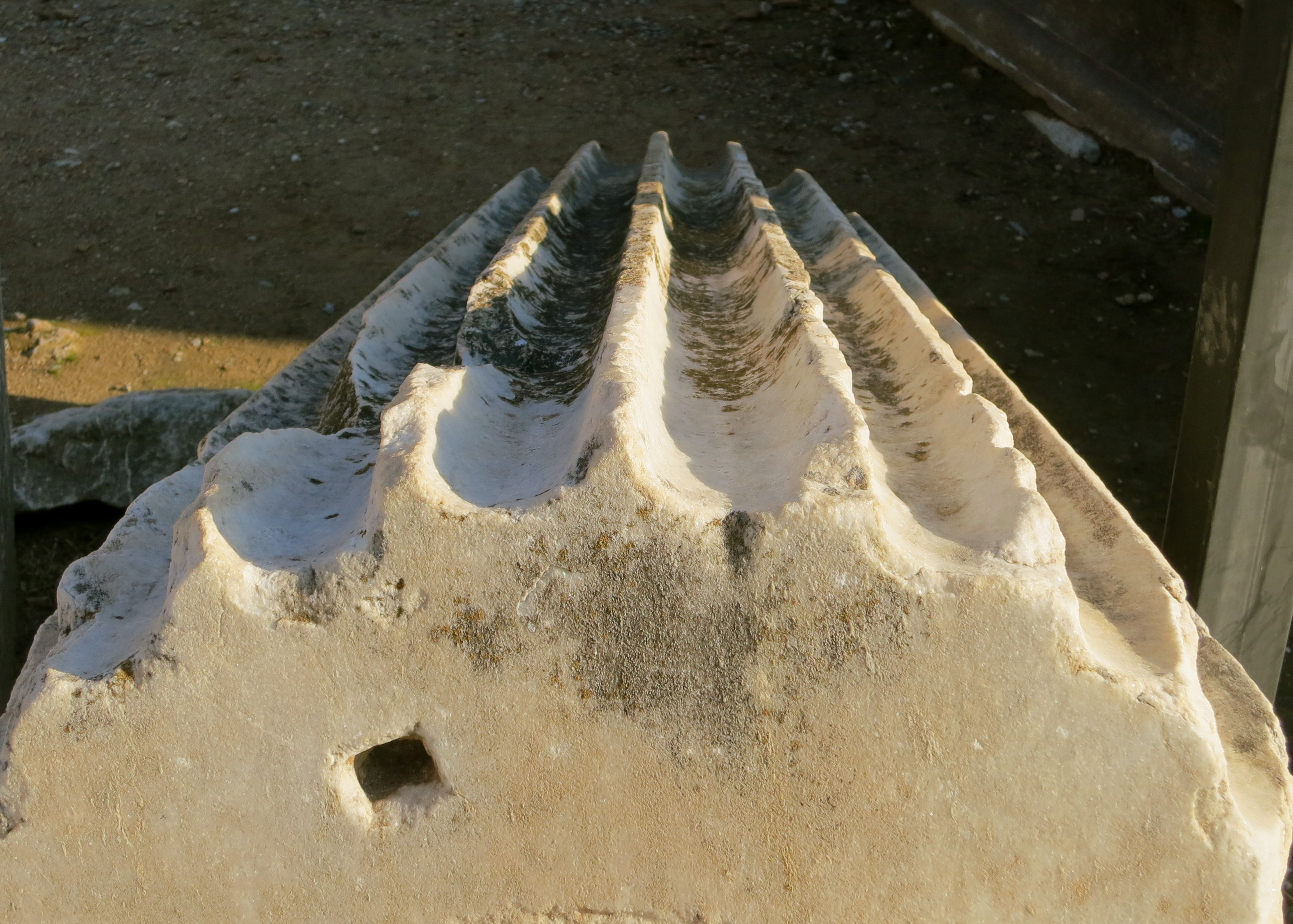
Unless you were wealthy in Ephesus, you used the common toilets shown here where you could line up with your buddies and discuss the day’s news while taking care of business. The men’s toilet house could accommodate up to 40 people at once. Water flowed constantly under the toilets to remove wastes and deposit them in the Meander River.
Speaking of plumbing, these clay pipes ran underneath the city of Ephesus and provided a sophisticated means of supplying water as well as removing wastes.
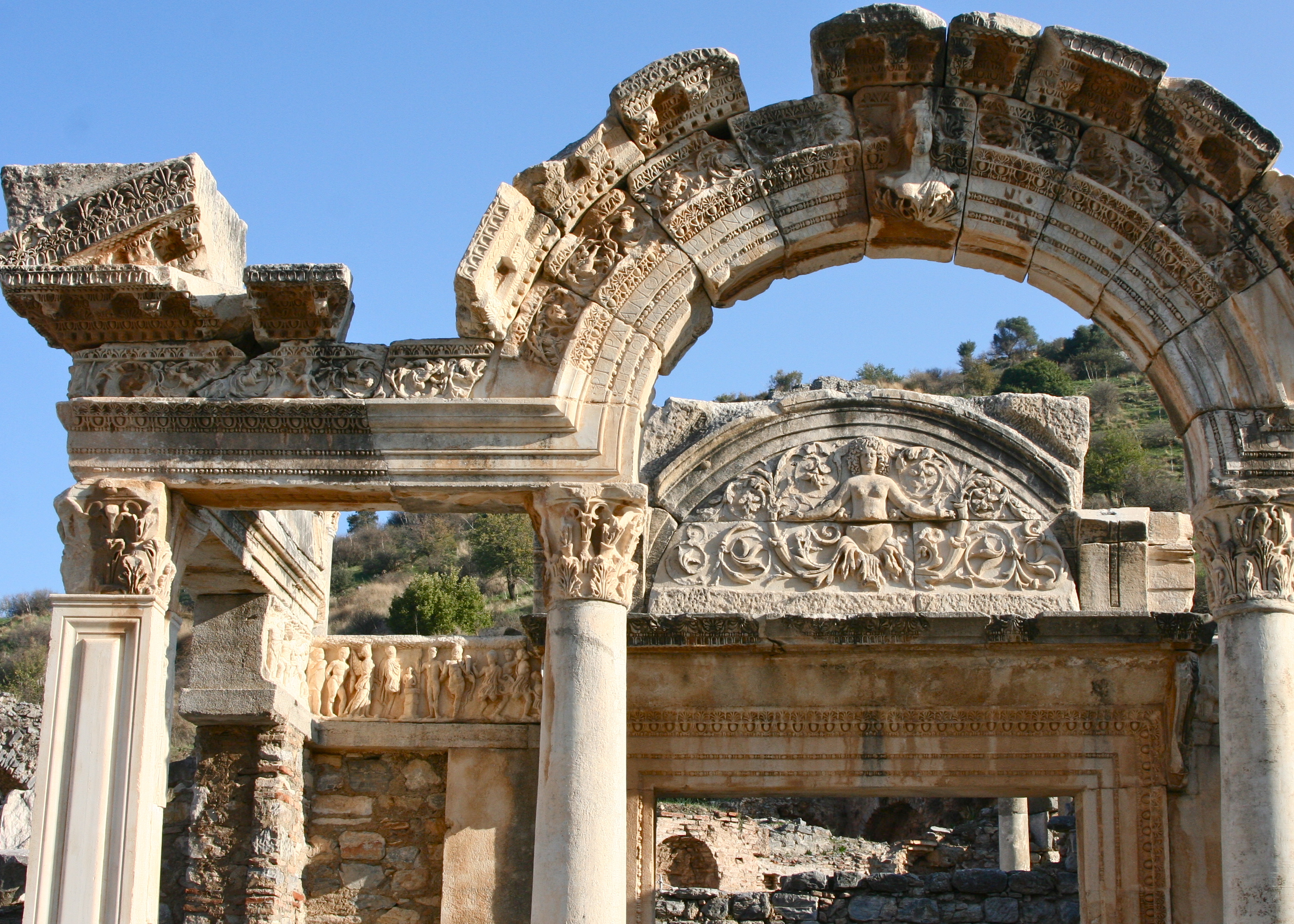
This is Hadrian’s Temple. Hadrian (76-138 AD), one of the greatest of Roman emperors, was known for his building projects, the most famous being Hadrian’s Wall in England. Hadrian loved everything Greek— including the young man, Antinous. The woman shown on the second arch was likely Medusa, whose hair was made of writhing snakes and whose mere glance could turn a man to stone. How much more powerful can you get? (Photo by Peggy Mekemson)
Sailors arrived in Ephesus from all over the Mediterranean and not many could read or write. Our guide told us this was a visual aid for finding the local brothel. Walk this way.
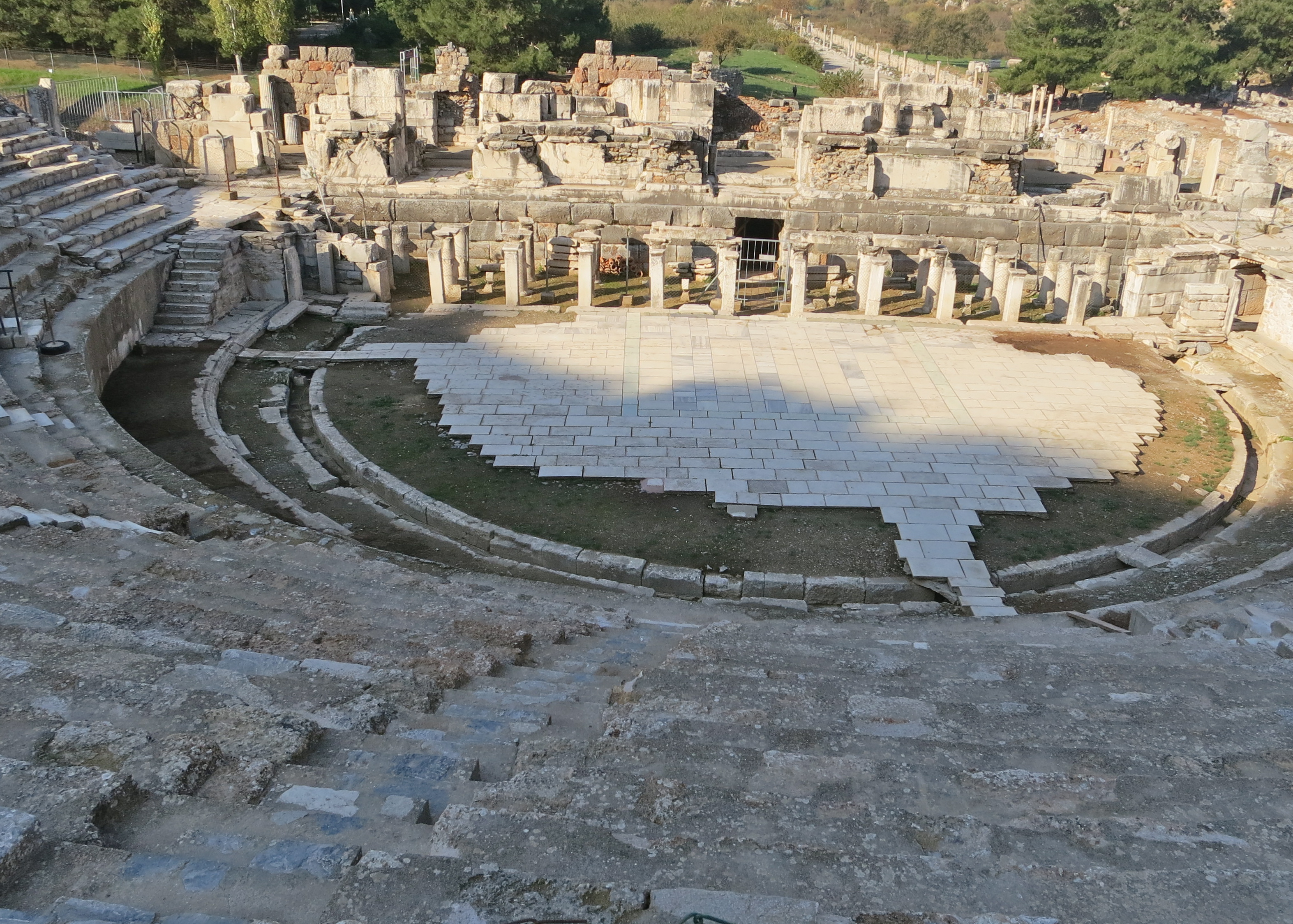
The Great Theater of Ephesus provided seating for 25,000 people. Acoustics are excellent. Modern performers have included Sting and Diana Ross. Ancient performers included St. Paul, who apparently caused a riot.
It’s showtime! Peggy and I, John and Francis Dallen and Lee Saage are ready. Bring on the gladiators. (Photo by Kathy Saage.)
NEXT BLOG: Since we are in Turkey, my next post will explore the city of Kusadasi, where Peggy lusts after a Turkish rug and her brother buys two.










 Wandering through Time and Place