Walking the Streets of Dubrovnik… Seaports of the Mediterranean

The Stradun, Dubrovnik's main thoroughfare, lit up by sun after a rain storm.

The Stradun, Dubrovnik’s main thoroughfare, wet after a rain storm.

Luck was with us… the rain held off while we were on the walls of Dubrovnik and waited for us to descend to the Stradun, the city’s main thoroughfare. Lunch and pizza occupied most of the downpour. Afterwards we were treated to shiny, wet streets.

Our pizza, Croatian style.

Our pizza, Croatian style.

In its first life the Stradun had been a winding canal separating Dubrovnik’s Roman and Slav populations. The canal was filled in during the Eleventh Century and brought the two populations together. A devastating earthquake took out most of the town in 1667 and Dubrovnik rebuilt the road to its present straight alignment.

Narrow pedestrian ways shoot off in both directions from the Stradun and invite exploration. Plazas anchor both ends of the street. Since we arrived in December, Dubrovnik was preparing for the holidays. Two Christmas trees competed for our attention in Luza Square. I found one outlined by a window in the old Customs House to be particularly dramatic.
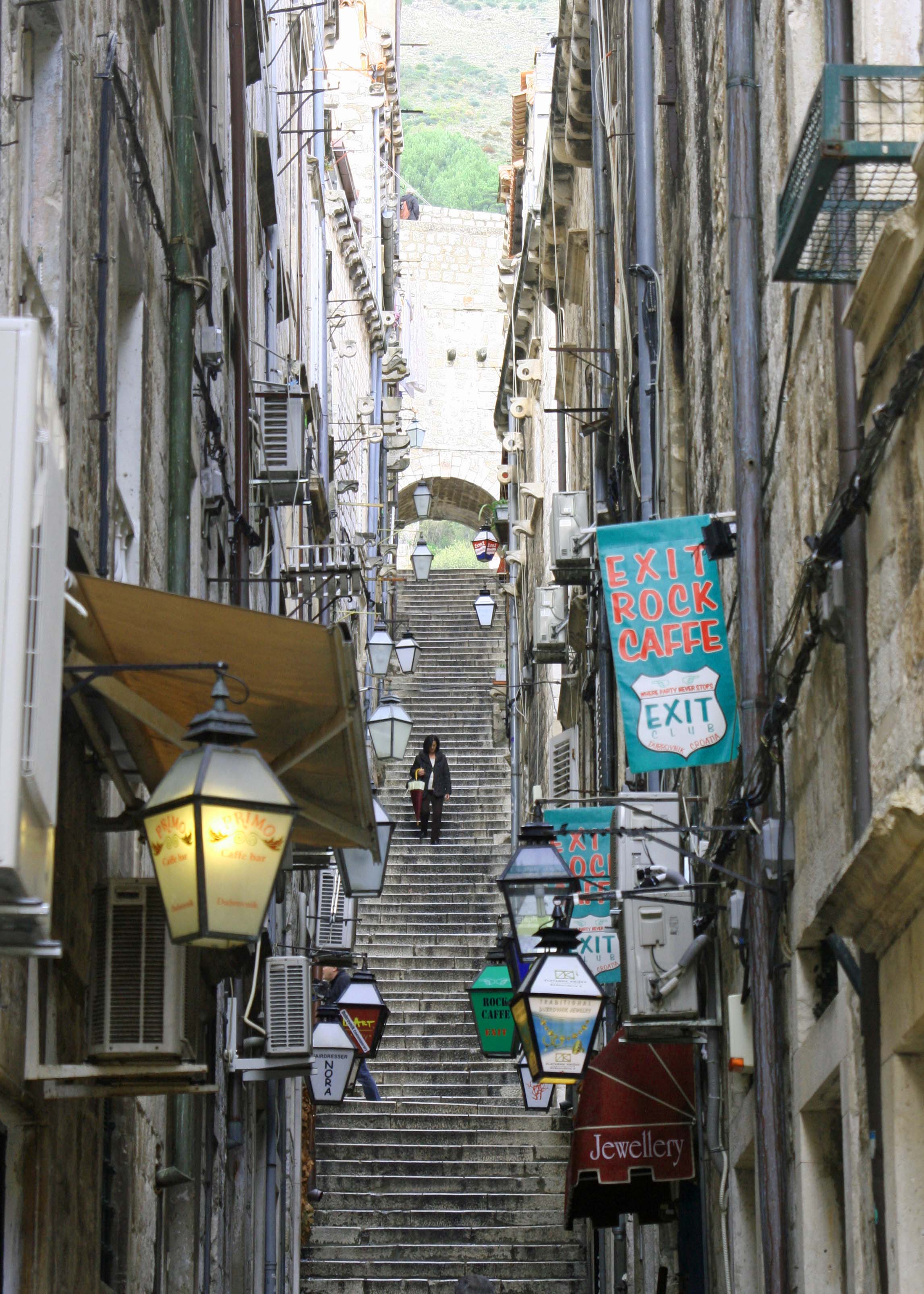
Walkways such as this and the one below branch off from the Stradun in Dubrovnik, Croatia and invite exploration.
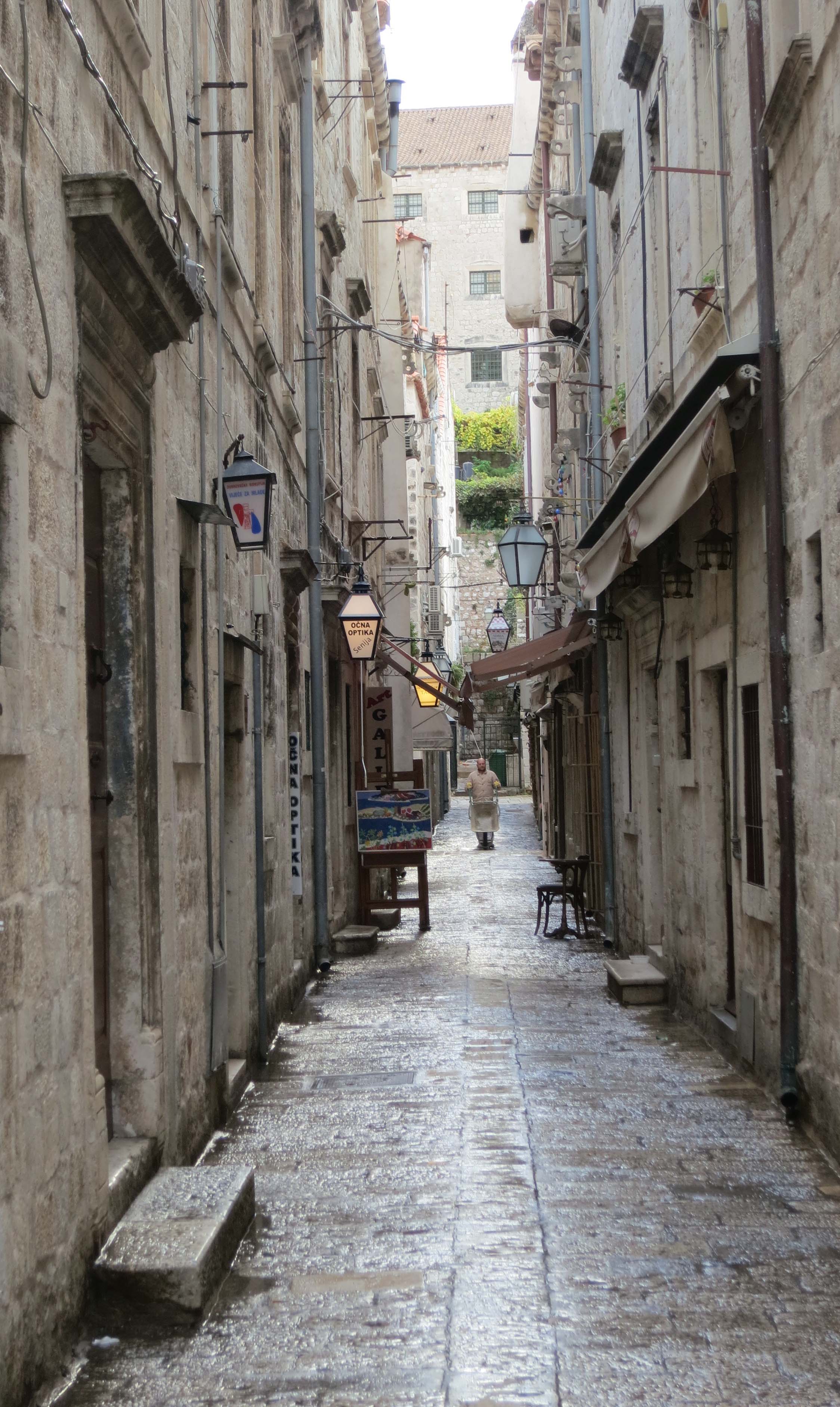
Walkways such as this and the one below branch off from the Stradun in Dubrovnik, Croatia and invite exploration.

Dubrovnik walkway.

Dubrovnik walkway.

We visited Dubrovnik in December and found the city preparing for the holidays. In this picture,a Christmas tree is gracefully outlined by a window in Sponza Palace, the old custom house.

We visited Dubrovnik in December and found the city preparing for the holidays. In this picture,a Christmas tree is gracefully outlined by a window in Sponza Palace, the old custom-house.

Another photo of Sponza Palace, the Christmas Tree and Dubrovnik's clock tower.

Another photo of Sponza Palace, the Christmas Tree and Dubrovnik’s clock tower.

The town’s bell tower and clock, St. Blaise’s Church and Orlando’s Column and are also prominent features of Luza Square. Both St. Blaise and Orlando symbolize Dubrovnik’s fierce sense of independence.
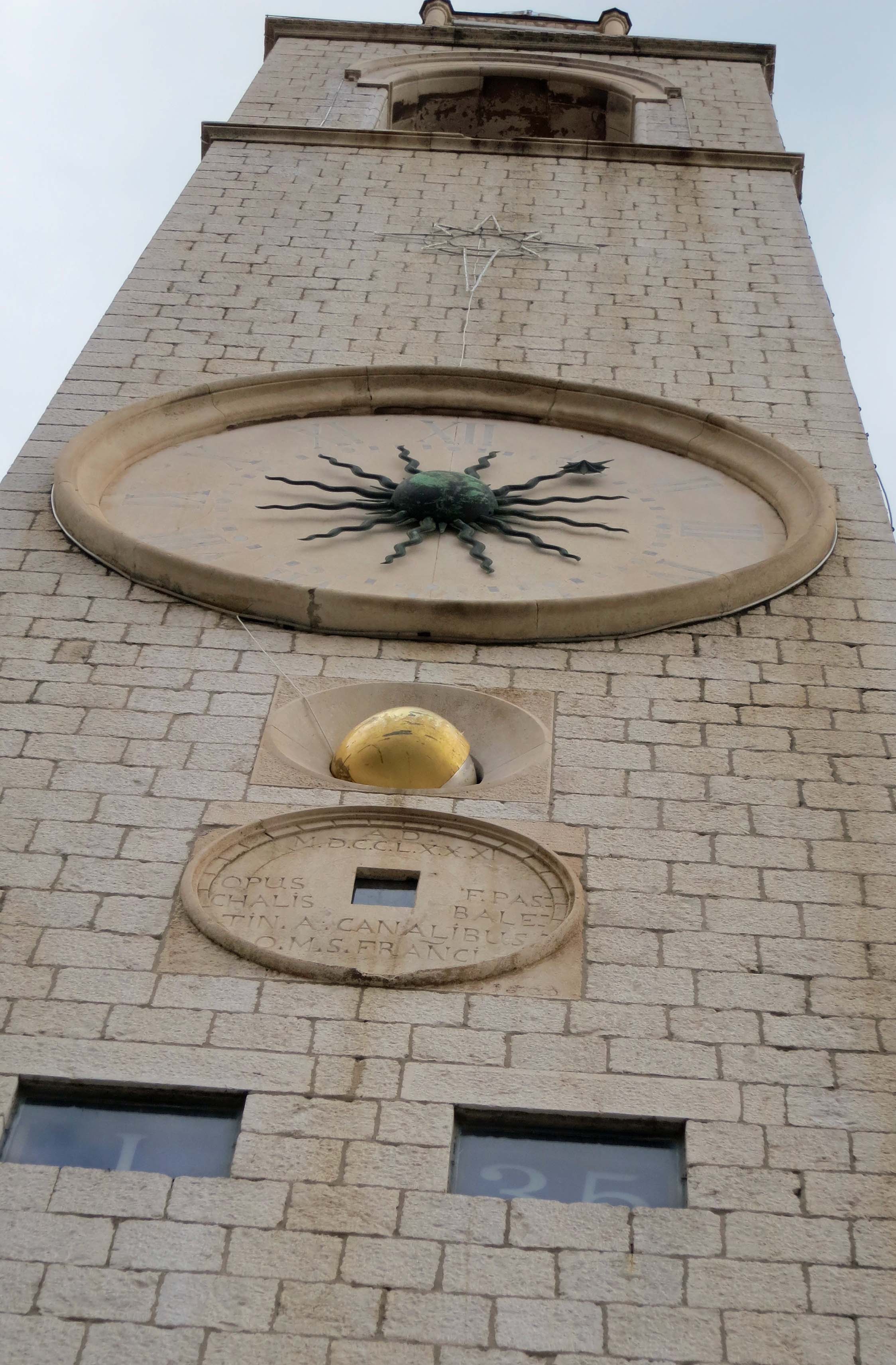
A close up of the Dubrovnik clock tower.

A close up of the Dubrovnik clock tower. A digital clock at the bottom adds a touch of modernization.

St. Blaise was an early third century Christian Martyr from Armenia who was so holy that wild animals were said to drop by his cave for a blessing. The Romans used steel combs to flay off his skin and then beheaded him. Since the combs resembled those used for carding wool, Blaise became the Patron Saint of the wool trade. Go figure.

He earned the everlasting gratitude of Dubrovnik by appearing in a vision to a local priest to warn of an imminent invasion by the Venetians in 971. Ever since, the locals have loved St. Blaise and disliked Venice. They celebrate his birthday by parading various parts of his body through the city on February 3.
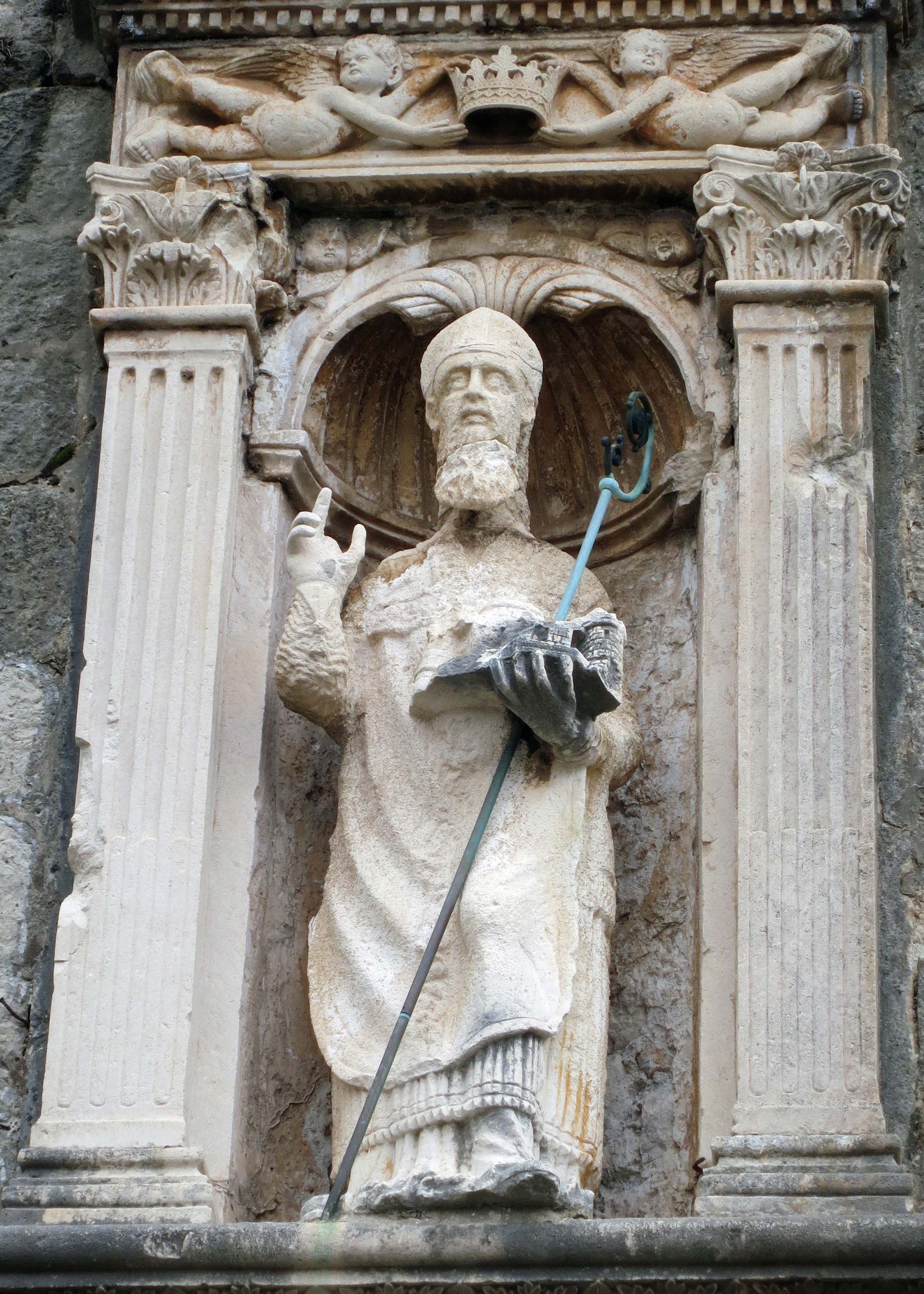
St. Blaise, the Patron Saint of Dubrovnik, holds a model of the city in his hand. This particular statue is found in the Pile Gate at one of the city's main entrances. (Photo by Peggy Mekemson)

St. Blaise, the Patron Saint of Dubrovnik, holds a model of the city in his hand. This particular statue is found in the Pile Gate at one of the city’s main entrances. (Photo by Peggy Mekemson)

Orlando is known as the legendary knight Roland in Northern Europe. The story is that he rescued Dubrovnik from a siege by the Saracens in the Eighth Century. The fact that the dates of Roland’s life don’t match those of Orlando doesn’t seem to matter. He wasn’t from Venice. Also of note… his arm was used as the standard measure of cloth in Dubrovnik.

The Orlando column in Luza Square. (Photo by Peggy Mekemson.)

The Orlando column in Luza Square. (Photo by Peggy Mekemson.)

The Pile Gate, Franciscan Monastery, and Onofrio’s Fountain are located at the other end of the Stradun. The fountain is a subject of my next blog. The Monastery houses a peaceful cloister and a small but interesting museum that features a pharmacy that opened in 1317 and St. Luke’s finger.

The Franciscan Monastery in Dubrovnik.

The Franciscan Monastery in Dubrovnik caught in the sunlight.

In 1337 the Franciscans opened one of the first phamacies in Europe as part of their commitment to provide medical care.

In 1317 the Franciscans opened one of the first pharmacies in Europe as part of their commitment to provide medical care.

NEXT BLOG: I look at Gargoyles, St. Luke’s finger and other oddities of Dubrovnik.

The Fabulous Walls of Dubrovnik… The Mediterranean Cruise

The walled city of Dubrovnik is known as the Pearl of the Adriatic. The walls around the city are listed as a World Heritage Site.

The walled city of Dubrovnik is known as the Pearl of the Adriatic. The walls around the city (seen on the right) are listed as a World Heritage Site. The Adriatic Sea is at the top of the photo.

OK, I’m in love. This walled city of Croatia on the Adriatic Sea is gorgeous.  Once upon a time Dubrovnik was a major sea power in the Mediterranean Sea. At another time it was the first nation in the world to provide official recognition for the fledgling United States of America fighting for independence.

As recently as 1991 it was under a devastating siege by Yugoslavian forces that laid waste to much of the city’s renowned beauty.  Today it has rebuilt most of what was destroyed and is once again a major draw for visitors from around the world. It’s easy to see why.

This is one of four blogs I am going to write about Dubrovnik. First up is a look at magnificent medieval wall that surrounds the city and provides visitors with outstanding views of the Adriatic Sea and surrounding country. Second I will turn inward and look down from the walls on the city and its colorful tiled roofs. Third we will visit the city from street level. Finally, I want to feature some intriguing gargoyles we found in Dubrovnik. (Have I used enough superlatives?)

Any visit to Dubrovnik should include a walk around the mile plus (6,360 feet) wall that surrounds and protects the city. Considered to be one of the great fortification systems of the Middle Ages, the walls were named a World Heritage site in 1979. Reaching a maximum height of 82 feet, the walls were never breached during the 12th through the 17th century… providing five hundred years of peace and prosperity for the residents of Dubrovnik.

A fast walker can easily do the walk in an hour or so but plan on a more leisurely 2-3 hour stroll. You’ll need the extra time for photography, or just staring in awe.

This photo of the walls was taken from Minceta Tower, the highest spot on the walls.

This photo of the walls was taken from Minceta Tower, the highest spot on the walls. (Photo by Peggy Mekemson)

This photo provides a great perspective on why enemies would have thought twice... or maybe a dozen times, before attacking Dubrovnik.

This photo provides a great perspective on why enemies would have thought twice… or maybe a dozen times, before attacking Dubrovnik.

If the walls weren't enough to discourage an invasion of Dubrovnik, the Fort of St. Lawrence stood on an opposite peninsula. (Photo by Peggy Mekemson)

If the walls weren’t enough to discourage an invasion of Dubrovnik, the Fort of St. Lawrence stood on the opposite peninsula. BTW, is it just my imagination (admittedly wild) or does the fort look like it is resting on the back of a turtle? (Photo by Peggy Mekemson)

Another view of the Fort of St. Lawrence in Dubrovnik. It was a stormy day as shown by the waves from the Adriatic Sea breaking on the rocks.

Another view of the Fort of St. Lawrence in Dubrovnik. It was a stormy day as shown by the waves from the Adriatic Sea breaking on the rocks.

This photo looks up toward Minceta Tower, the highest point on the walls of Dubrovnik.

This photo looks up toward Minceta Tower, the highest point on the walls of Dubrovnik. The flag of Croatia is seen on the left.

Another perspective on the wall protecting Dubrovnik.

Another perspective on the wall protecting Dubrovnik.

A cannon's perspective looking out from the walls of Dubrovnik.

A cannon’s perspective looking out from the walls of Dubrovnik.

I liked this photo by Peggy with its dark sky, grey wall and red roof.

I liked this photo by Peggy with its dark sky, grey wall and red roof.

A statue of St. Blaise, the Patron Saint of Dubrovnik, looks out on the Adriatic Sea under a watch tower protecting the city from harm. (Photo by Peggy Mekemson)

A statue of St. Blaise, the Patron Saint of Dubrovnik, looks out on the Adriatic Sea and protects the city from harm. (Photo by Peggy Mekemson)

A final view of Dubrovnik wall. (Photo by Peggy Mekemson)

A final view of Dubrovnik wall. (Photo by Peggy Mekemson)


NEXT BLOG: A journey around the walls of Dubrovnik looking down into the city.