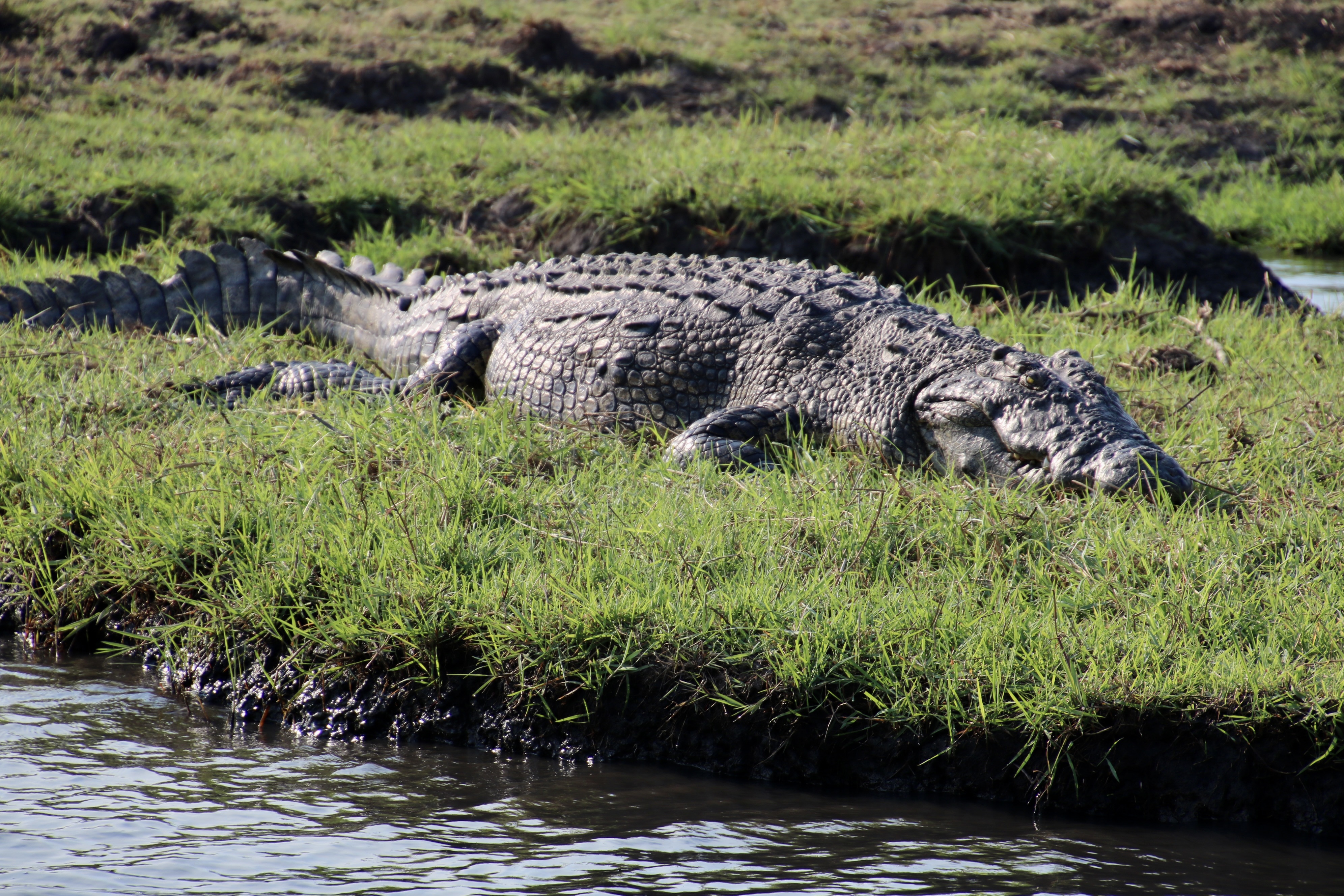
It would have been glad to have one of us for dinner. Crocodiles eat hundreds of people in Africa every year. But we were safely ensconced on our boat. This was the first of several crocodiles we would see on our African safari through Botswana and Zimbabwe, including a monster.
Nile Crocodiles are fascinating, fierce predators. You don’t want to mess with them. We were able to see them lying on the shores of rivers, lakes and ponds, slipping through the water, and even fighting. There is nothing endangered about them; they are quite common throughout sub-Saharan Africa. Large males can reach a length of 14 feet and weigh up to 1700 pounds. Females up to 12 feet and 550 pounds.
By the way, have you ever used or heard the expression ‘shedding crocodile tears?’ It means you are being insincere. The derivative? Crocodiles shed tears when they are eating whatever they have captured for dinner.
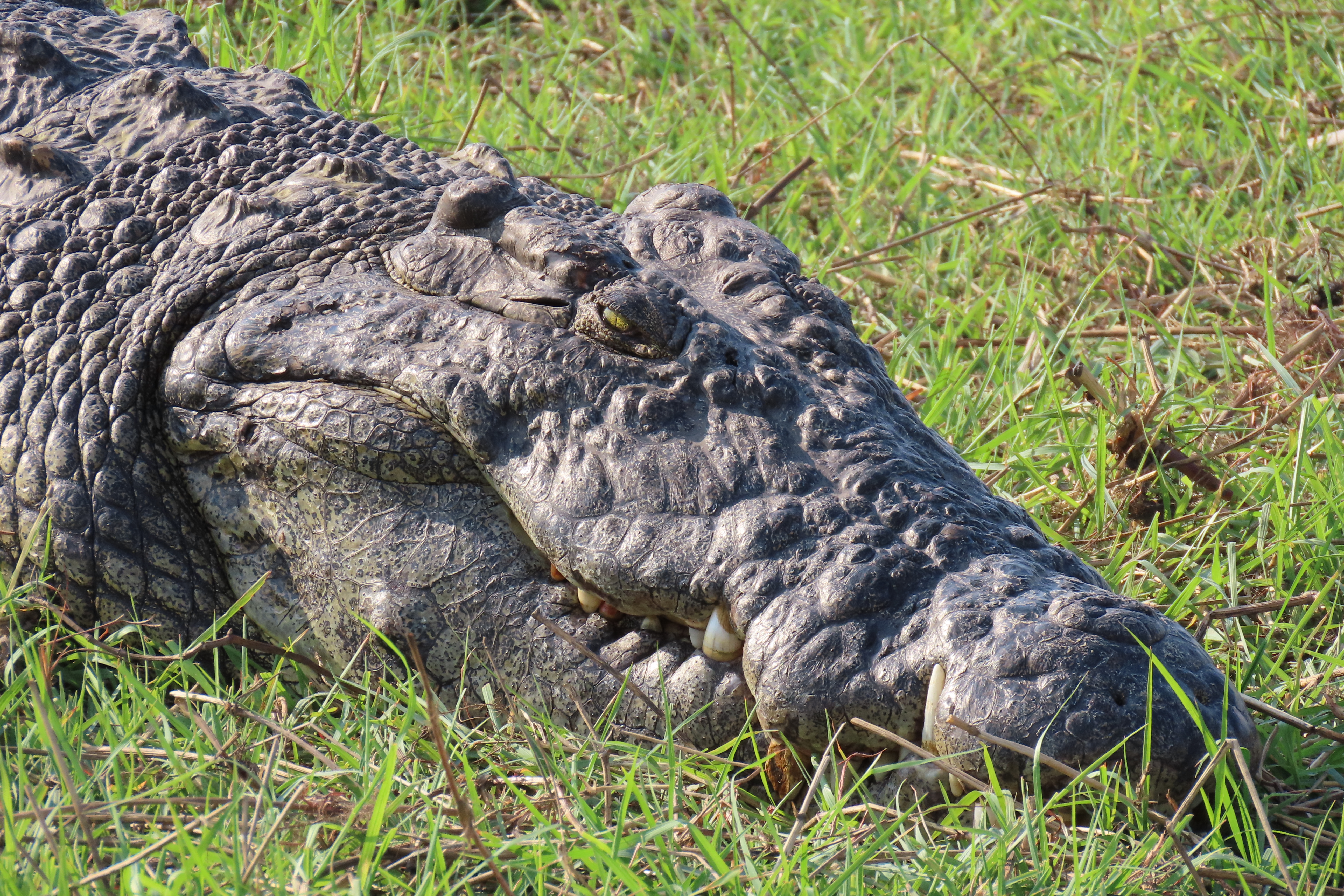
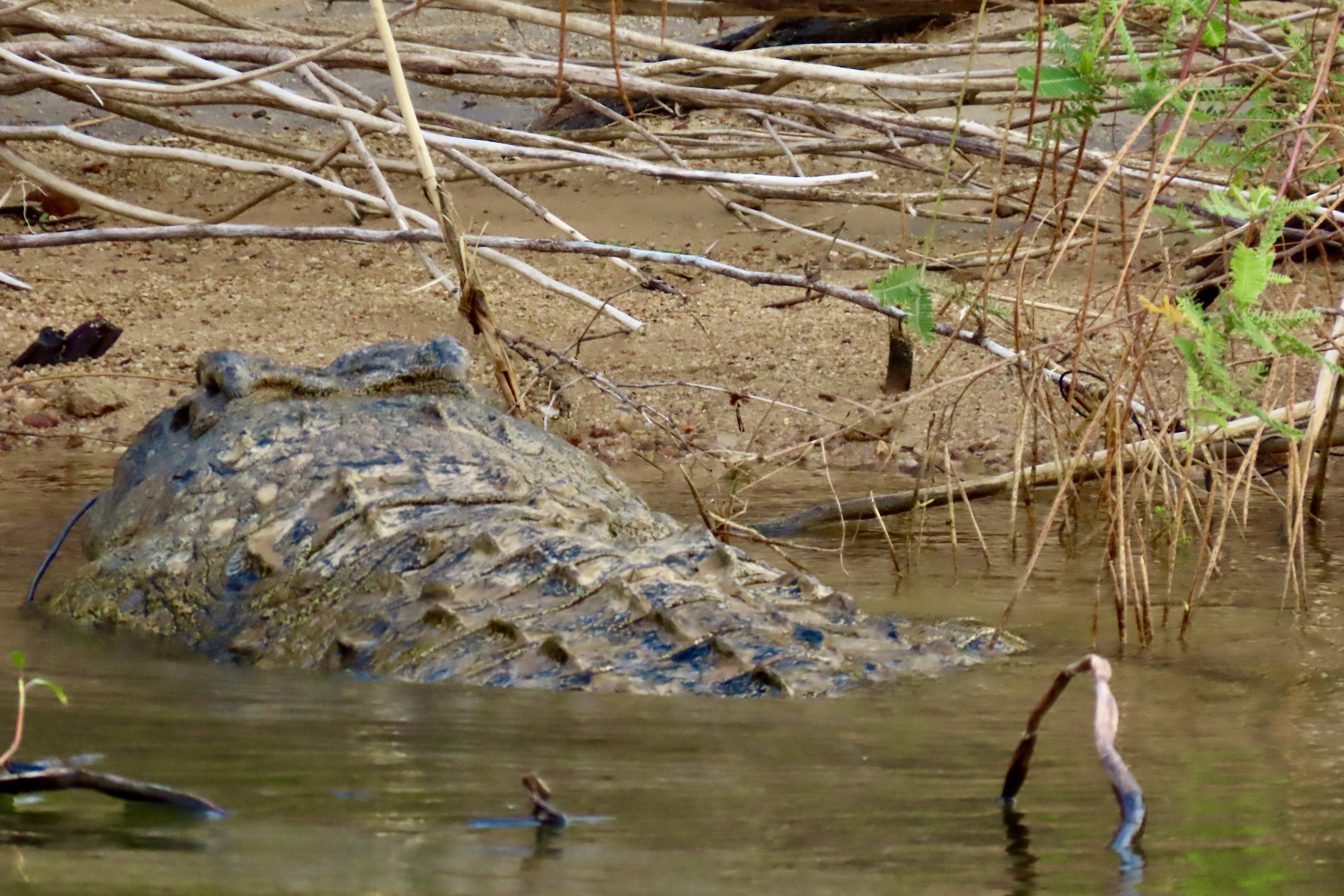
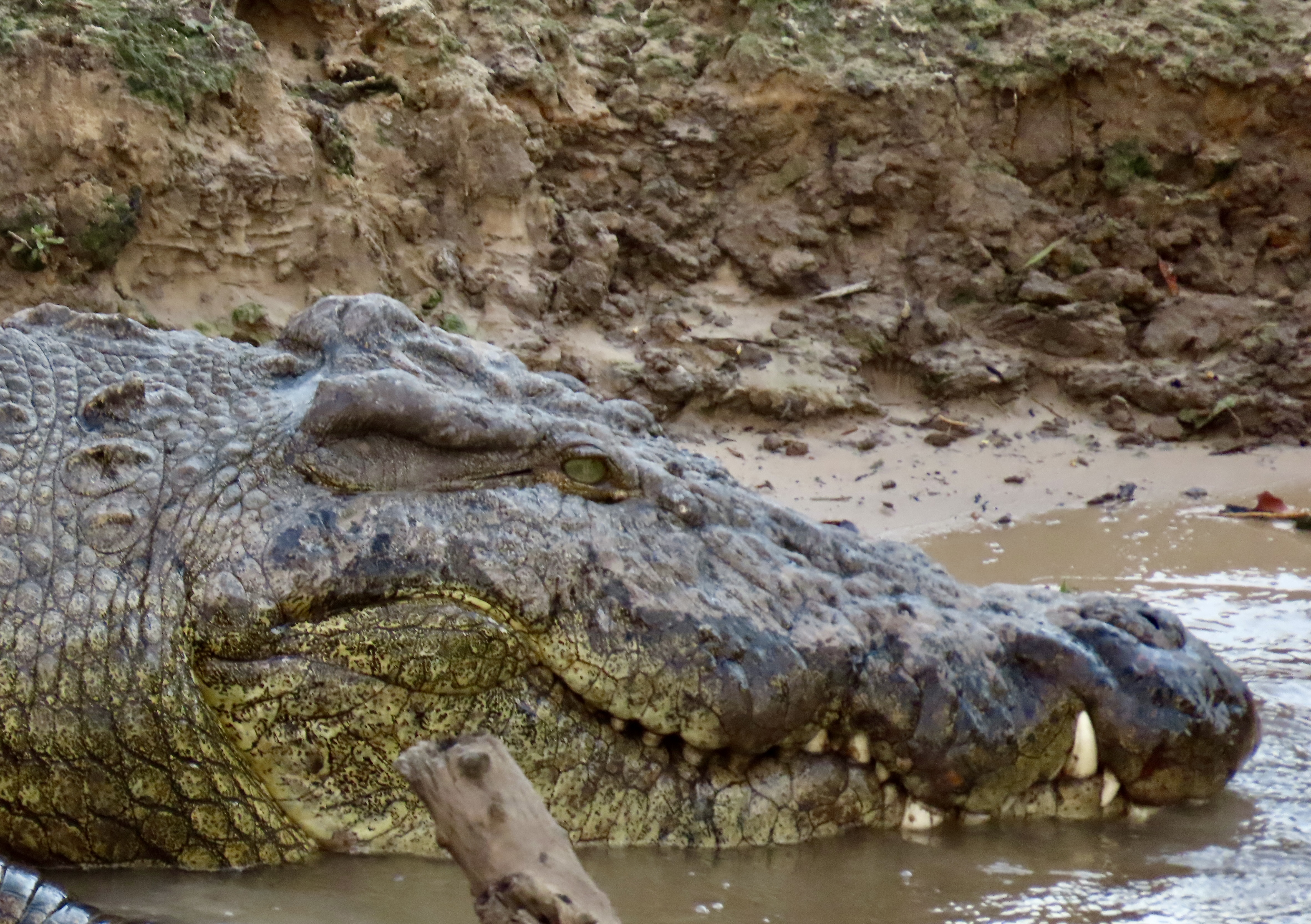
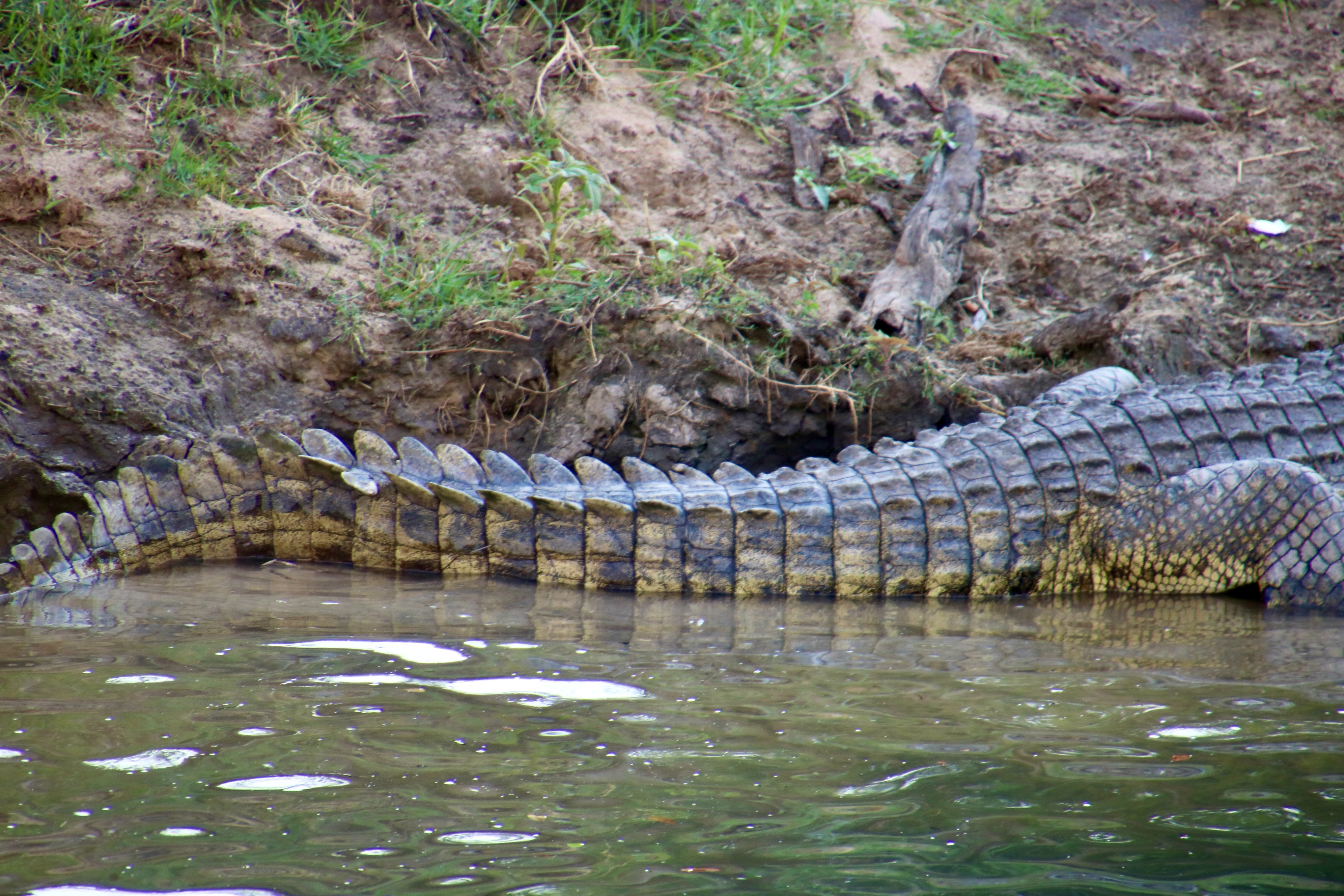
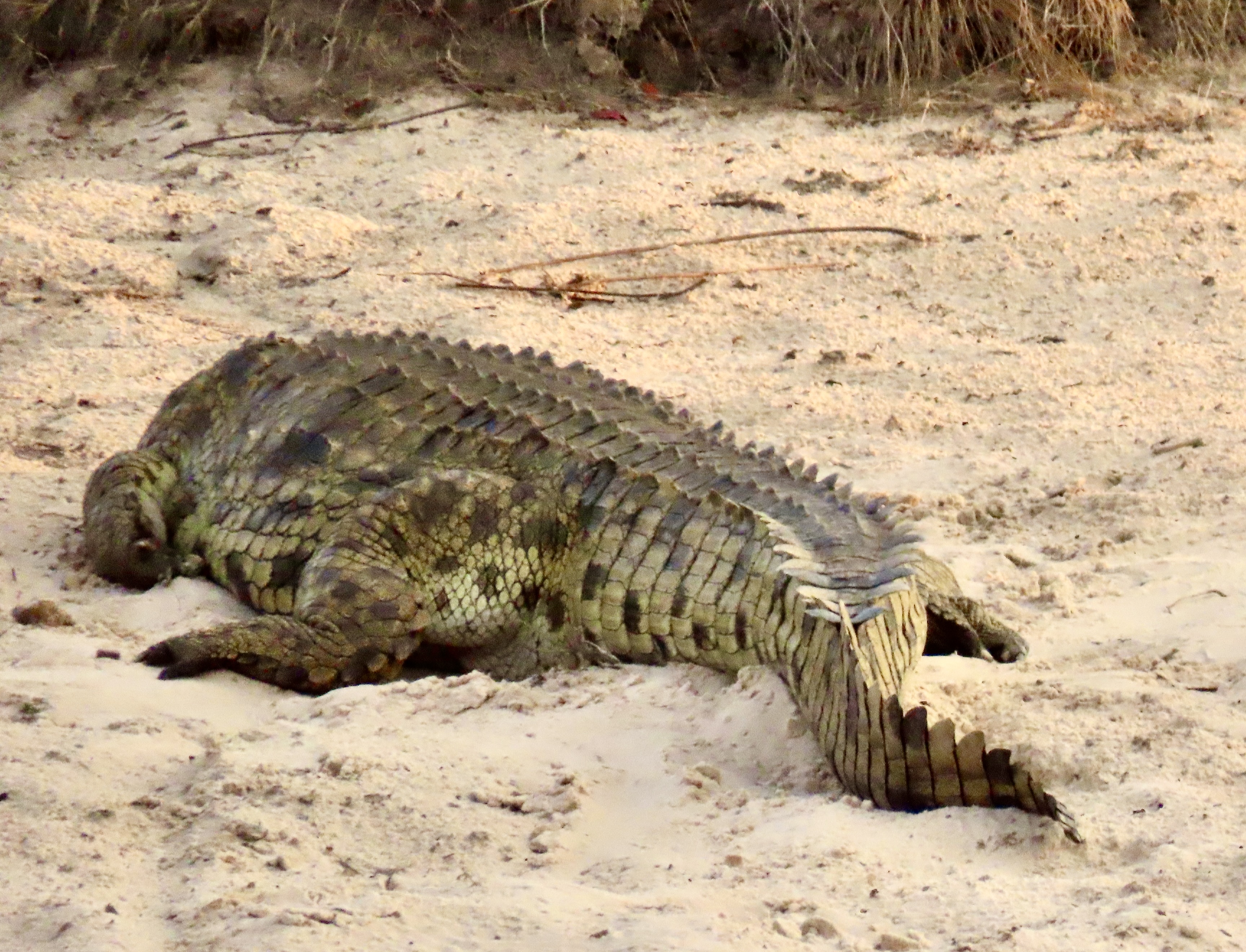
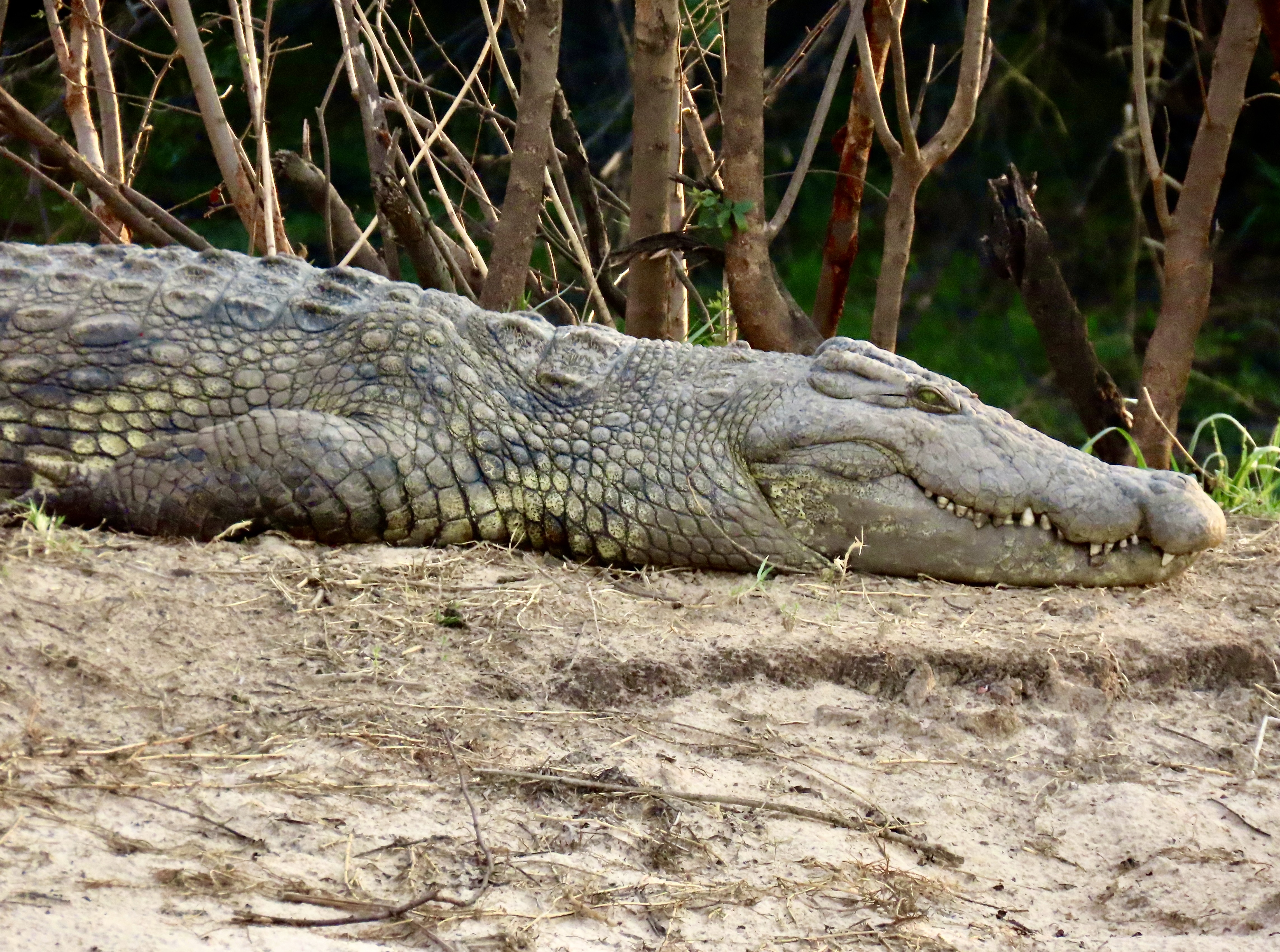
This is the crocodile I featured above, enjoying the sun on the banks of the Chobe River. A dead Cape buffalo that it may have been helping devour was behind it. (Not in the photo.)Not quite what I would classify as a toothy grin. Here’s an interesting fact. Crocodiles can go through 4000 teeth in a lifetime. They are able to replace each of their 80 teeth up to 50 times.This youngster from Chobe National Park that I featured before shows just how many teeth a crocodile has in its mouth. The purpose wasn’t to show us its teeth, however, its mouth was open to help it cool down. It’s called mouth gaping.We found this monster in Lake Kariba in Zimbabwe. It was probably guarding a clutch of 25-80 eggs. The female digs a hole in the sand and buries the eggs where they will incubate for 80-90 days. She can actually hear them peep when they are ready to hatch. She then digs them up and rolls them around in her mouth to help them hatch. The male may help in this process. They then carry them down to the water where they continue to guard them, ferociously, if necessary.Swimming in Lake Kariba is highly discouraged. A possible confrontation was about to take place here in the lake. Males are very territorial. I thought the water level perspective on the two crocodiles was interesting.We were at a small watering hole in Hwange National Park admiring giraffes when the water in the pond suddenly erupted. It was impossible to tell what was making all of the ruckus.And then it became obvious. Two crocodiles were biting it out! “One of the crocodiles took down a Kudu earlier today,” our guide explained to us. “It is protecting its kill.”We saw a number of crocodiles on an evening trip up the Zambezi River near Victoria Falls, including this one. Peggy thought it was quite colorful. And toothy. Another interesting fact about crocodiles is they have very weak jaw muscles for opening their mouths. You could hold this fellow’s mouth closed with one hand. Closing is something else. A crocodile has one of the strongest bites of any creature in the world and is capable of exerting up to 5000 pounds of pressure per square inch! I’m thinking that this is something one might want to consider when deciding to experiment with holding its mouth closed.The colorful tail of the crocodile above. A crocodile uses its tail to propel itself through the water at up to 22 miles per hour. The feet serve as rudders.Another tail shot of a different crocodile on the Zambezi River.We thought this was a fun shot of a crocodile sleeping on the banks of the river.I’ll conclude with this final head shot. You won’t want to miss Monday’s post on the ostriches and penguins of South Africa.





 Wandering through Time and Place