Heceta Head Lighthouse, a Classic Bridge, Kayaking, and Dunes… Pacific Coast Series #21

Like a moth to a porch light, I’ve always been attracted to lighthouses. There is something about their remote, often scenic, location that I find incredibly romantic. The Heceta Head Lighthouse is one of many located along the Oregon Coast, and is among the most beautiful. At one time or the other, I’ve been to all of them.
It’s hard to beat the lighthouse’s front row seat on the Pacific Ocean. Imagine watching the giant waves crashing ashore from here during a major storm. Or being here when the sun was casting the nearby islands and lighthouse in a warm glow, as it did during our visit.
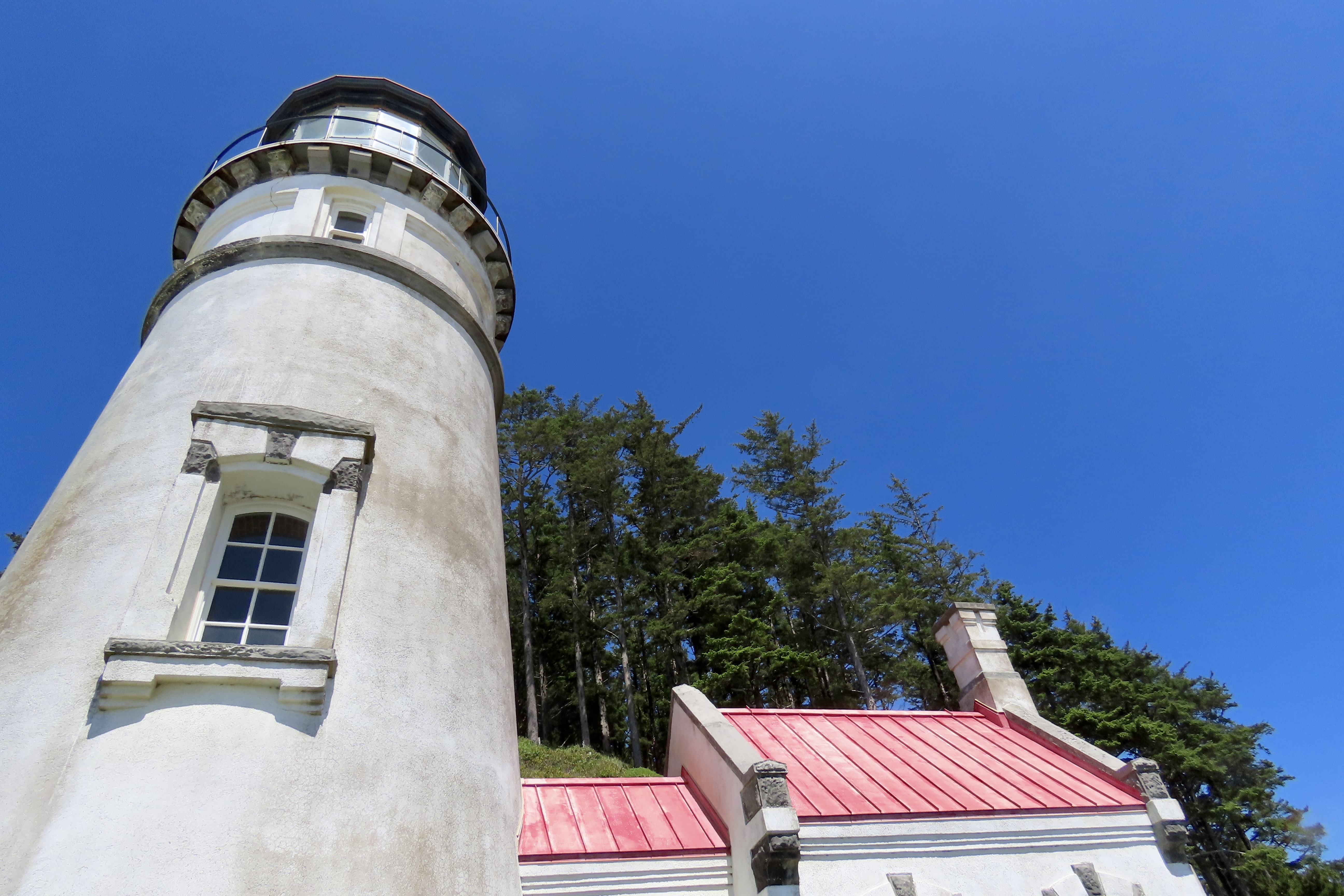
Naturally, we had to photograph the lighthouse from a number of different perspectives. (Peggy was taking the photo featured on top.)
Heceta Head Lighthouse was built in 1894 and placed on the National Register of Historic Places in 1978.
The two islands located next to Heceta Head added to the scenery. The top of the islands hosted nesting cormorants, murres and California sea gulls. We were surprised (and pleased) with how the camera depicted the ocean behind the islands.
A closer look.
The scenery changed to crashing waves at the bottom of the islands.
That left behind hundreds of cascading waterfalls.
This was the head lighthouse keeper’s home. Not bad. It now serves as a B&B.
Calla lilies cascaded down the hillside off to the right of the house. We have found them in every location we have camped at along the coast on our journey north.

Just above the picket fence there was a small gift shop. I’m not sure Peggy has ever found one she didn’t want to visit. Besides, she was on a mission: Looking for octopuses. She’s been searching for them ever since she read a book on their intelligence. She found one and named it Octo.
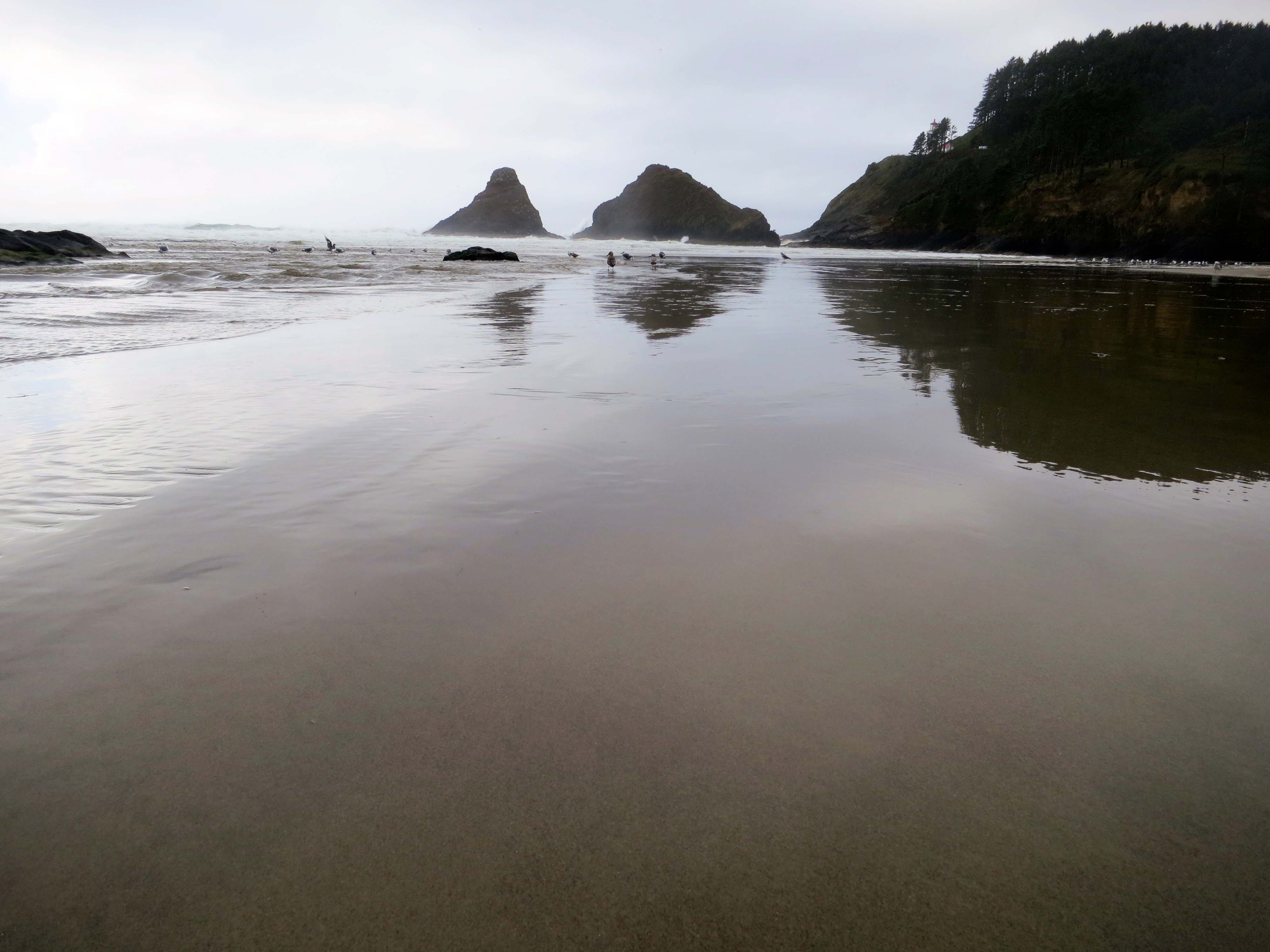
Leaving Heceta Head we took two more photos. One a beach level photo of the two islands…
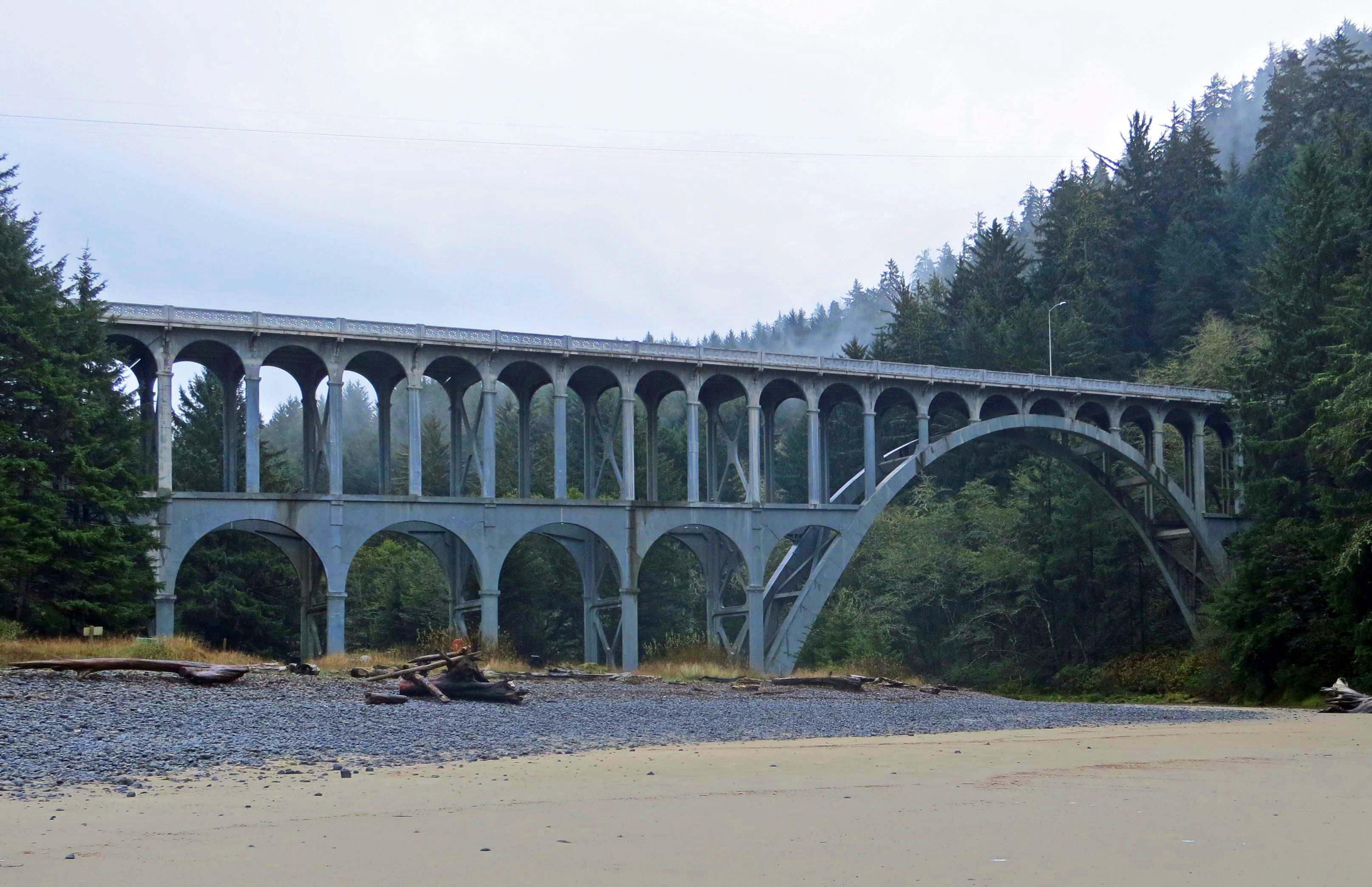
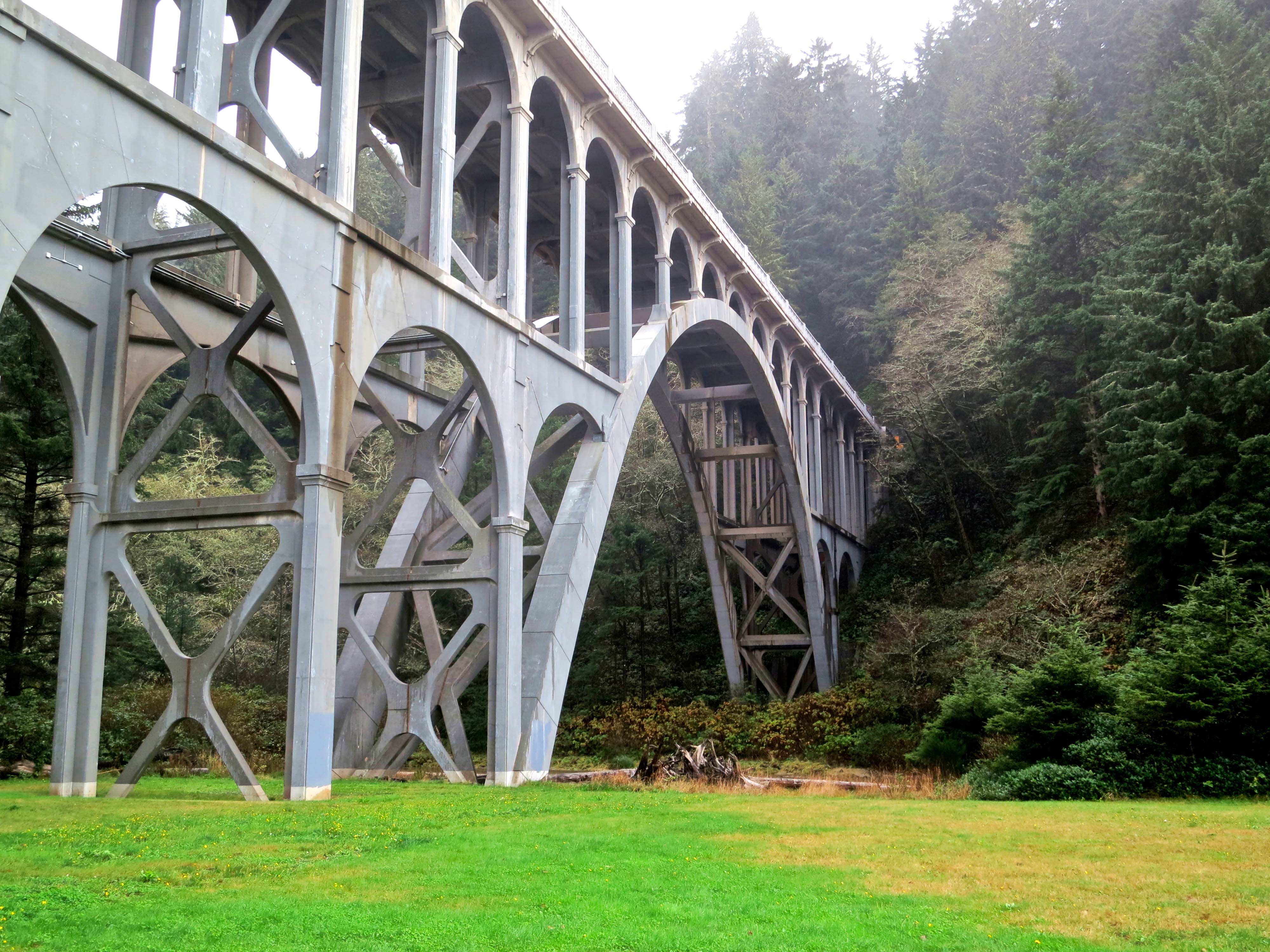
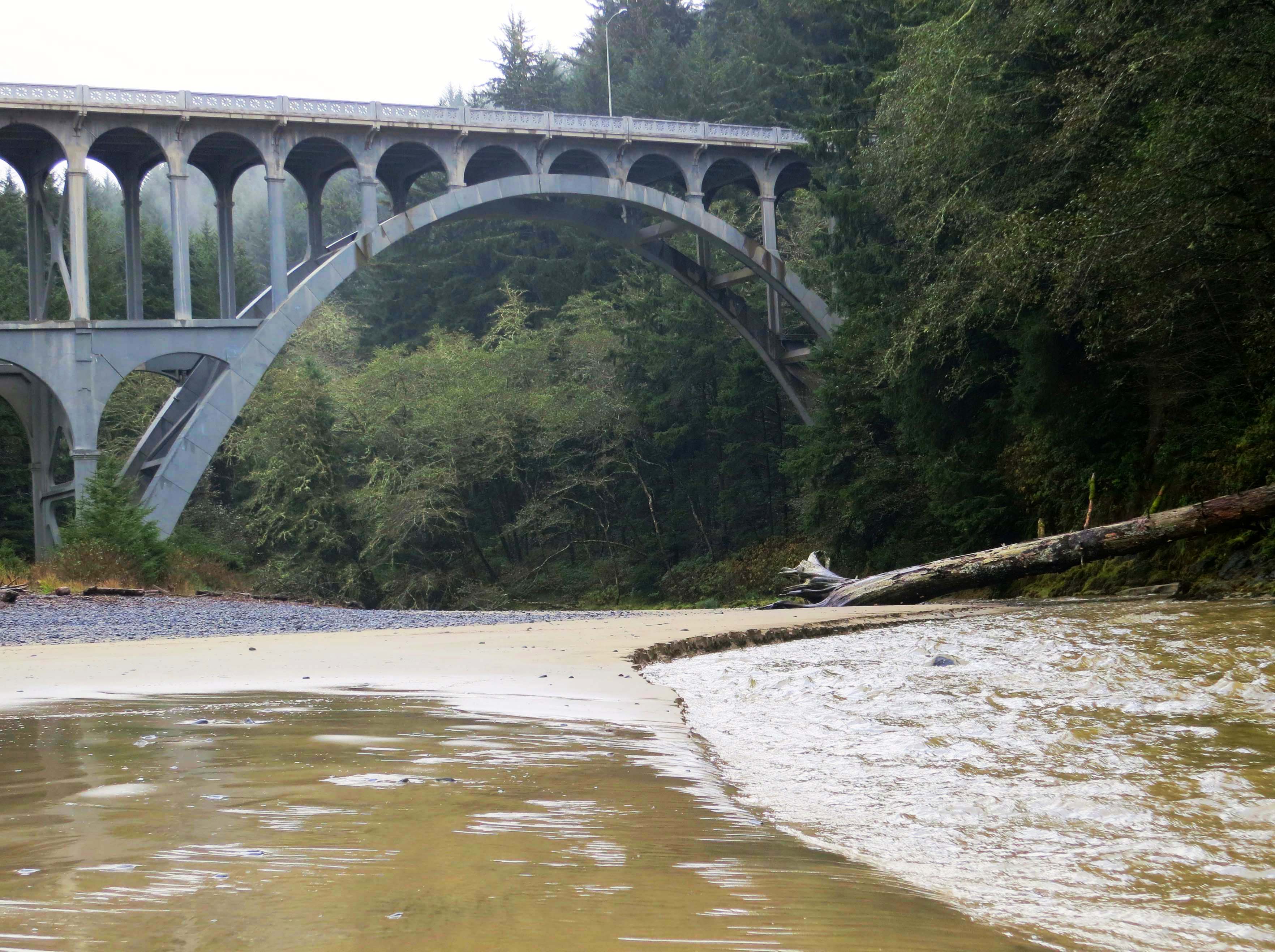
And two, this iconic Oregon bridge built over Cape Creek, which flows into the small bay just beneath the lighthouse. The bridge opened in 1932. It was designed by Conde McCullough who was also responsible for designing a number of other classic bridges found along Highway 101 in Oregon.
Back at camp, things got a little strange. Octo immediately climbed up on Bone as a convenient perch for keeping track of what was happening inside and outside of our tiny trailer/house. We thought Bone would go crazy and toss the presuming octopus into the nearest ocean…
But Bone, being Bone, merely thought of Octo as a rather unique new hat he could wear on formal occasions.
While Eeyore, the donkey, moderated a discussion between Bone and Octo about their new living arrangements, Peggy and I prepared to try out our new boats, a pair of Aquaglide, Deschutes 130 inflatable kayaks. I was bit nervous. It wasn’t about the kayaking. We had owned a pair of Innova inflatable kayaks for 25 years and kayaked in such diverse waters as Alaska and the Florida Everglades, the Boundary Waters of Minnesota and the Gulf of California off of Baja. My concern was how our new kayaks would handle. Plus it would be our first time setting them up.
We chose to head out to Cleawox Lake at Honeyman State Park, which is just south of Florence. We had kayaked there before in our Innovas. Setting our new kayaks up turned out to be relatively easy and they handled beautifully.
Here, Peggy is checking out some water lilies. Knowing how much I always enjoy them, she called me over with my camera.
Having got my water lily fix, we kayaked toward one of the coastal sand dunes located at the upper end of the lake. The Oregon Dunes are world famous for their extent and for their appeal to the dune-buggy crowd. I don’t think that the dune buggies are allowed here, but the spots you see a third of the way up the dune are people sand boarding, which is also a popular sport.

I learned a fun fact about the dunes when I was getting my haircut in Florence. The barber, who was a sci-fi fan, noticed me reading a sci-fi book. “Did you know that Frank Herbert was inspired to write Dune by a visit he made to the Oregon Dunes in the late 50s researching a magazine article he was writing about how people were trying to control the flow of the sand over roads and trails in Florence.” Researching the story when I got back to camp, I found several articles that confirmed the fact.

That’s a wrap for today. For our next post we will be in Tillamook, Oregon which is the home of Tillamook ice cream and Tillamook cheese. We will take you to the factory where it is produced. Plus.
This large cow photo, which must be at least 20 feet tall, stands above the entry to the Tillamook Creamery.

Oregon’s Coastal Bridges… Where Engineering, Environment, and Art Meet

Cape Creek Bridge north of Florence, Oregon was designed by Conde McCollough and built during the early 1930s.

Combining form and function, Cape Creek Bridge in Oregon is an example of how highway bridges can move vehicles, provide beauty, and fit into the natural environment.

With Earth Day 2015 coming up on Wednesday, I stopped to think about the battles we fought during the 70s to protect the environment. One of the toughest was against the highway lobby—bankrolled primarily by the oil industry. “Build more highways!” it and its allies screamed. Buried under a burgeoning population of automobiles, local and state transportation agencies usually agreed. Moving cars and trucks, not people and goods, was the objective. Most traffic engineers believed that their sole task was to move vehicles from point a to b as quickly and efficiently as possible. And they did their job extremely well. Nothing got in the way, including established communities, farmlands and valuable natural habitats. It was the bulldozer era of ‘pave Paradise and put in a parking lot.’ (Joni Mitchell)

In the mid to late 70s, I was working with a community group called the Modern Transit Society (MTS) that was fighting to bring light rail transit to Sacramento, California. The City Traffic Engineer was adamantly opposed to the idea. More dollars for mass transit meant fewer dollars for highways, and the Engineer, along with his counterpart in the County, had roads and freeways planned everywhere. My role with MTS was to oversee political strategy. At one point, relations became so tense between the traffic engineer and me that he would walk out of a room when I walked in. Eventually we won. Today, Sacramento has light rail lines stretching throughout the city and county.

Bridges built at the time, and also during the 50s and 60s, reflected the mania for moving cars. Function, not form, was what mattered. As a result, large ugly concrete structures with minimal aesthetic appeal often dominated urban and even rural landscapes. Bridge construction hadn’t always been that way.

The coastal bridges of Oregon reflect an earlier era. Many were constructed in the 1920s and 30s when Highway 101 was being built to connect coastal towns. Oregon was extremely fortunate to have Conde McCullough at the helm of the highway department’s bridge division for much of this time. Part civil engineer, part architect, and part artist, he believed that bridges should be built economically, efficiently, and aesthetically. His vision lives on today, as any trip down the Oregon Coast quickly demonstrates.

Conde McCollough served as Oregon's state bridge engineer from 1919 to 1935, following which he spent a couple of years designing bridges along the Pan American Highway in Central America.

Conde McCollough served as Oregon’s state bridge engineer from 1919 to 1935, following which he spent a couple of years designing bridges along the Pan American Highway in Central America. (Photo from information sign on Highway 101.)

Today I am going to feature one of McCullough’s creations, the Cape Creek Bridge located on Highway 101 north of Florence, Oregon, and a small park that lies below the bridge. Later, I will do posts on two of his other bridges plus a modern pedestrian and bike bridge in Redding, California that is breathtaking.
Cape Creek Bridge north of Florence, Oregon on Highway 101.

Another view of the Cape Creek Bridge, this time including Cape Creek. It had been raining hard, as reflected by the creek’s muddy waters.
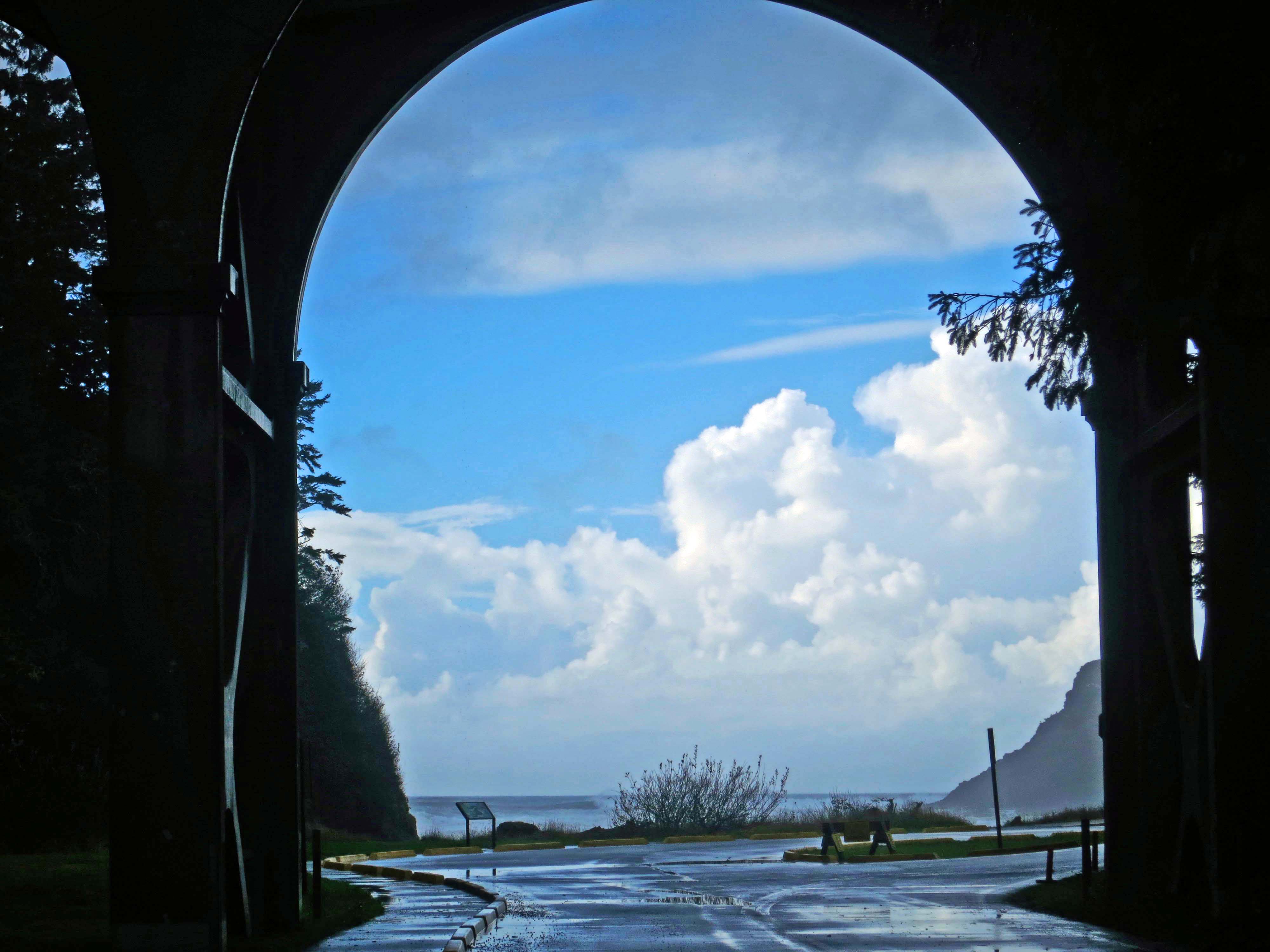
Looking out from a span of the Cape Creek Bridge onto the small ocean cove the creek empties into.
Looking out from a span of the Cape Creek Bridge onto the small ocean cove the creek empties into.

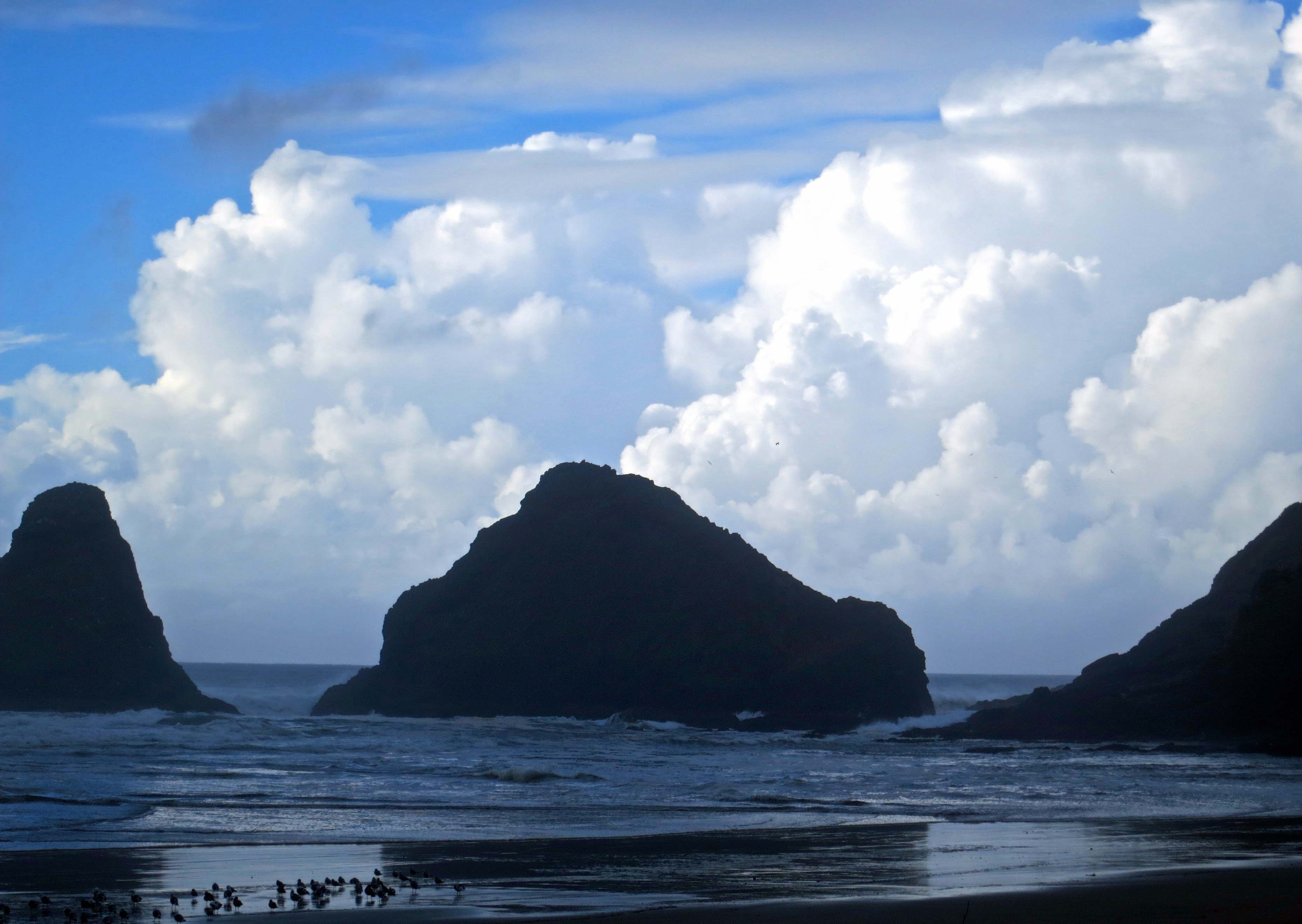
Cumulous clouds outline sea stacks in Cape Cove on the Oregon Coast.

Small islands in Cape Cove outlined by the dramatic sky. Sea gulls are gathered in the lower left corner.

One of the sea gulls takes flight. I was walking along behind it, posed to takes its photo when it flew.

One of the sea gulls takes flight. I was walking along behind it, poised to takes its photo when it flew. There are three things I like about the picture: the wings, the gulls left foot as it runs, and the reflection.

The tide rolls onto shore at Cape Cove on the Oregon Coast near Florence, Oregon.

The tide rolls in to Cape Cove.

Low tide exposes the beach at Cape Cove off of Highway 101 on the Oregon Coast.

And the tide rolls out.

Cape Creek Bridge in Lane County on the Oregon Coast.

A final perspective on the Cape Creek Bridge. The bridge is 619 feet (188.6 meters) long and was designed to look like a Roman aqueduct. NEXT BLOG: Earth Day