William Brown Mekemson Has His Head Chopped Off

I was born to wander; I’m convinced of this. Whatever lies over the next horizon calls to me and pulls me onward. But I am also an escapist, driven as much as drawn. Stability in time resembles a jail I become desperate to escape.

There are consequences to being a wanderer; some are good and some bad. Both have led me to think about what turned me into the person I am. Was nature or nurture the driving force?

Originally I came down on the side of nurture but a close look at my ancestors over the past three years has changed my perspective.

A long line of pioneers and adventurers populate the Mekemson and Marshall family trees. Restless urges sent members of both clans on their way to the New World in the 17th and 18th centuries and kept them moving west in the 19th and 20th.

Puritan Marshalls packed their bags and sailed off for the New World in the 1630s. The Scotch-Irish Mekemsons arrived in Pennsylvania from Ireland the 1750s. They spent the Revolutionary War years in upper Maryland and had moved on to be Kentucky by the 1790s.

The cry of gold sent both Marshalls and Mekemsons scurrying to California in the 1840s and 50s. Great, Great Grandfather George Marshall even left a pregnant wife behind in his hurry to get rich.

It’s a good thing from my perspective; otherwise, I wouldn’t be here. Margaret Marshall was pregnant with my Great Grandfather. On the way home, her husband George was killed, stripped of his gold and thrown into the Pacific.

It was tough and often deadly on the frontier.

Indians, in particular, took their toll on my wandering kin. Samuel Marshall was among the first to pay the price. He was killed in 1675 during the Great Swamp Fight of King Phillip’s War.

His demise was relatively tame in comparison to that of William Brown Mekemson. He ended up on the wrong end of a tomahawk (or several) during the Black Hawk Indian War of 1832. A 1903 book by Frank Stevens describes the event.

The Indians had attacked the night before, stealing a horse. Captain Snyder decided to pursue the Indians the next morning and caught up with them “firmly entrenched in a deep gulch, where, in a sharp hand to hand encounter, all four were killed with the loss of only one man, Private William B. Mekemson, who received two balls (bullets) in the abdomen, inflicting a mortal wound.”

Except it wasn’t immediately mortal. Mekemson was placed on a litter and transported back toward camp. Along the way he pleaded for a drink. A squad was assigned to climb down to the creek and fetch water. At that point the Indians struck again. Some 50 or so “hideously yelling, rushed poor Mekemson and chopped off his head with tomahawks…” and then rolled it down the hill. That was mortal.

Later, ancestors on the Marshall side would barely escape a similar fate in the White River Indian Massacre near early Seattle. None of these encounters were enough to discourage the family from its wandering ways, though.

Before Mother went trolling and landed Pop, he had lived in Nebraska, Washington, Iowa, Oklahoma, Colorado, Oregon and California. I’ve no doubt that lacking an anchor of three kids and a wife he would have kept on going and going, just like the Energizer Bunny. And so it has been.

Even as a little kid I felt the call. At first I explored the jungle-like graveyard next to our house but by seven I had thoroughly investigated everything it had to offer

The problem was there were definite limits on how far I could wander. Fortunately I had lax parents and lived in the pre-gang, pre-drug, pre-kidnapping, pre-almost-anything 50s of rural America. Or, at least that was our assumption.

The house was never locked unless we were going away for a week and I can’t remember my parents ever locking the car doors.

Given this sense of security, Mother could get us out of her hair and feel relatively certain that nothing terrible would happen. We were free to explore the boundaries of our world. At first this meant the Pond and the Woods… (Next blog)

(This blog is an elaboration of an earlier blog I wrote on Searching for Long Dead Mekemsons, Makemsons and Marshalls.)
Looking for Long Dead Mekemsons, Makemsons and Marshalls

Several years ago I became hooked on genealogy. Growing up, my knowledge of ancestors stopped with my grandparents. It remained there until I turned 60. My older brother Marshall inspired me. Describing himself as “a homeless man with a pickup truck and a bank account,” he had wandered America searching out our Mother’s side of the family, the Marshalls.

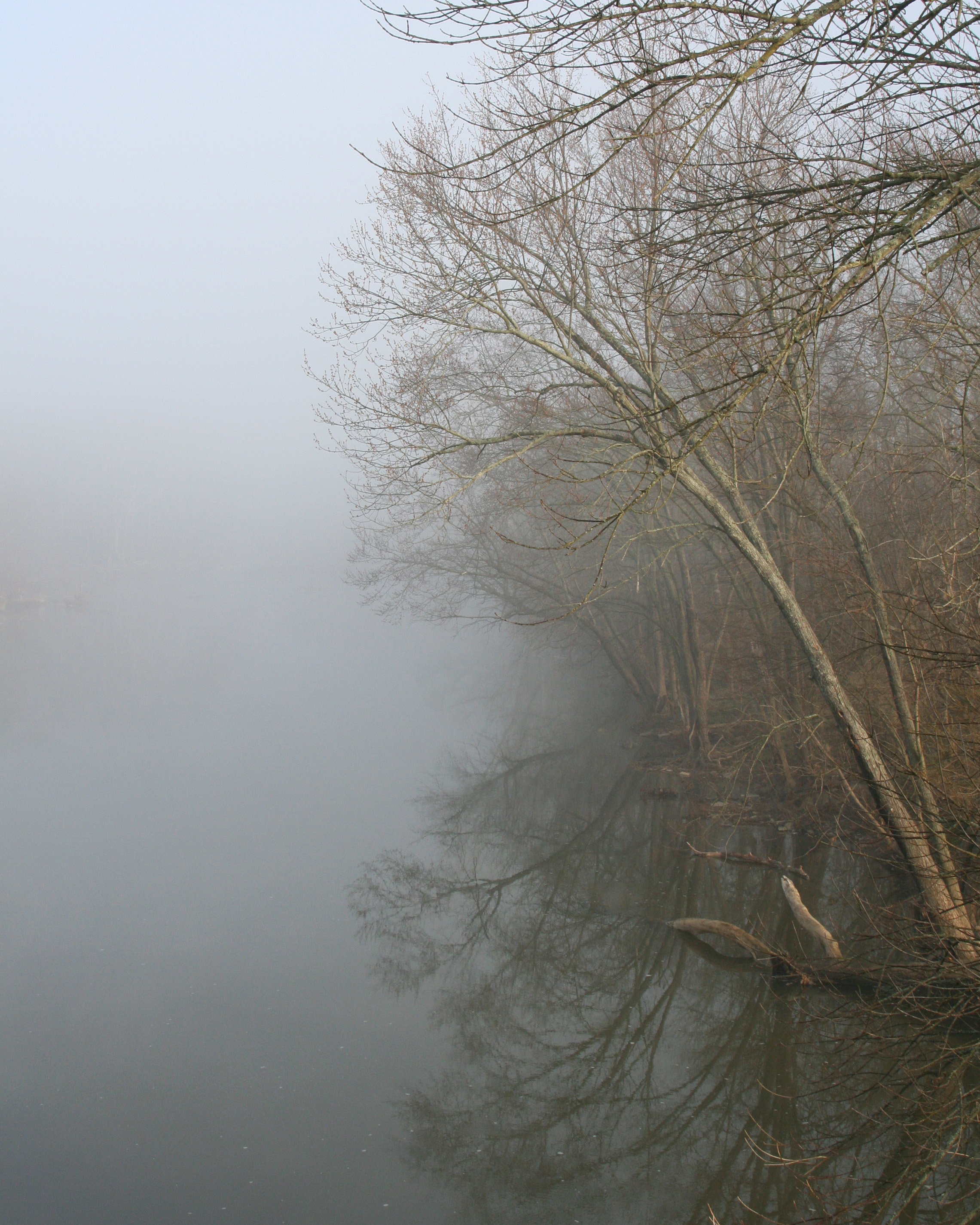
Ancestral Makemson/Mekemson lands hide behind the mist on the Licking River in Pendleton County, Kentucky. To me, the mist serves as a metaphor for the difficulty involved in uncovering family history.

He did it the old-fashioned way (as he likes to remind me): leafing through yellow, aging documents, tramping through almost forgotten graveyards, and spending countless hours in Mormon libraries.

I was skimming through a summary of his findings when I learned that our Great, Great Grandfather, George Loomis Marshall, had abandoned his pregnant wife, family, farm and friends in Will County, Illinois to the siren call of gold in California. He struck it rich but then his luck ran out.  He started home by sea and was killed for his gold.

Had my Great, Great Grandmother, Margaret Paddock, not been pregnant when he left Illinois, I wouldn’t be writing this paragraph. How could I not be intrigued? I became addicted to looking for long dead relatives.

I am not alone. Google lists 107 million sites related to genealogy and these numbers relate a fact; genealogy is no longer a hobby limited to aging elders (which I sort of resemble) rummaging around in musty courthouse basements.

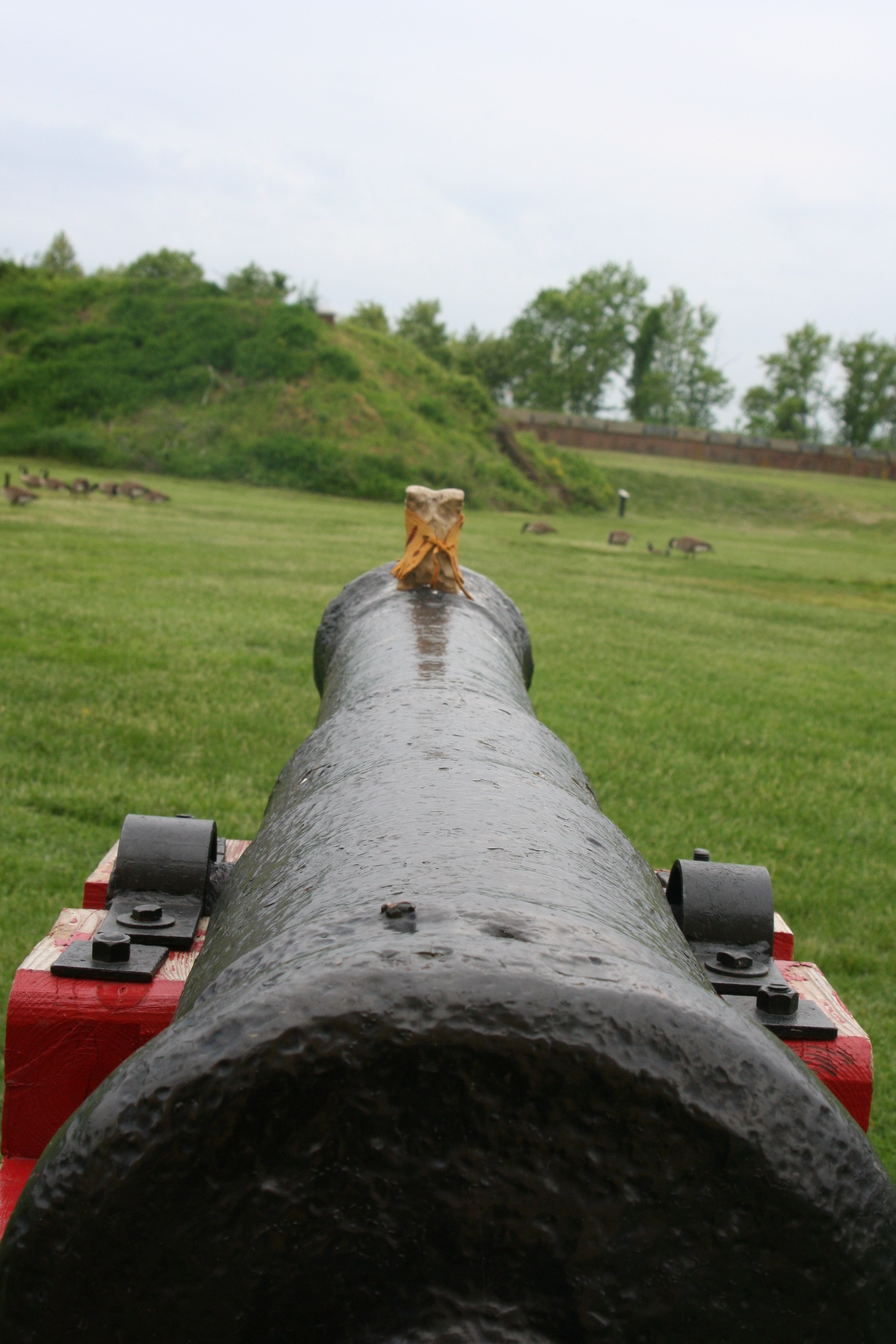
Bone serves as a sight on a cannon at Fort Mifflin just outside of Philadelphia. The Battle of Fort Mifflin was one of the bloodiest battles of the Revolutionary War and bought time for George Washington to escape to Valley Forge. Four Mekemson boys fought in the battle and two heroically gave their lives.

Millions of people today are using the Internet in search of their roots. Ancestral information that once required years of research is now available at the touch of a keystroke. Large Internet databases hold hundreds of millions of genealogy records and thousands more are added daily.

What captures our imagination about genealogy? Is there something about contemplating our future that sends us scurrying for our past? Is searching for our roots a way of seeking immortality in reverse? Or are we seeking fame? Was one of our ancestors a king? Or possibly she was a pirate… Maybe our inspiration is just plain-old-fashioned curiosity.

Whatever the bait that leads us to ask our first question about Great Grandma, it’s the thrill of the hunt that keeps us searching. A blank space on an ancestral chart is a mystery begging to be solved. Hours can be devoted to finding a single answer and that answer inevitably leads to another question, and another blank space.

Over the past 2½ years as Peggy and I have crisscrossed America traveling 65,000 miles in our van Quivera, we’ve added the search for roots to our itinerary of exploring the Country and doing grandparent duty.

Much to my surprise, I have discovered that the Marshalls arrived in America in the 1630s and the Mekemsons/Makemsons in the 1750s. The story of these two families is wrapped up in the story of America.

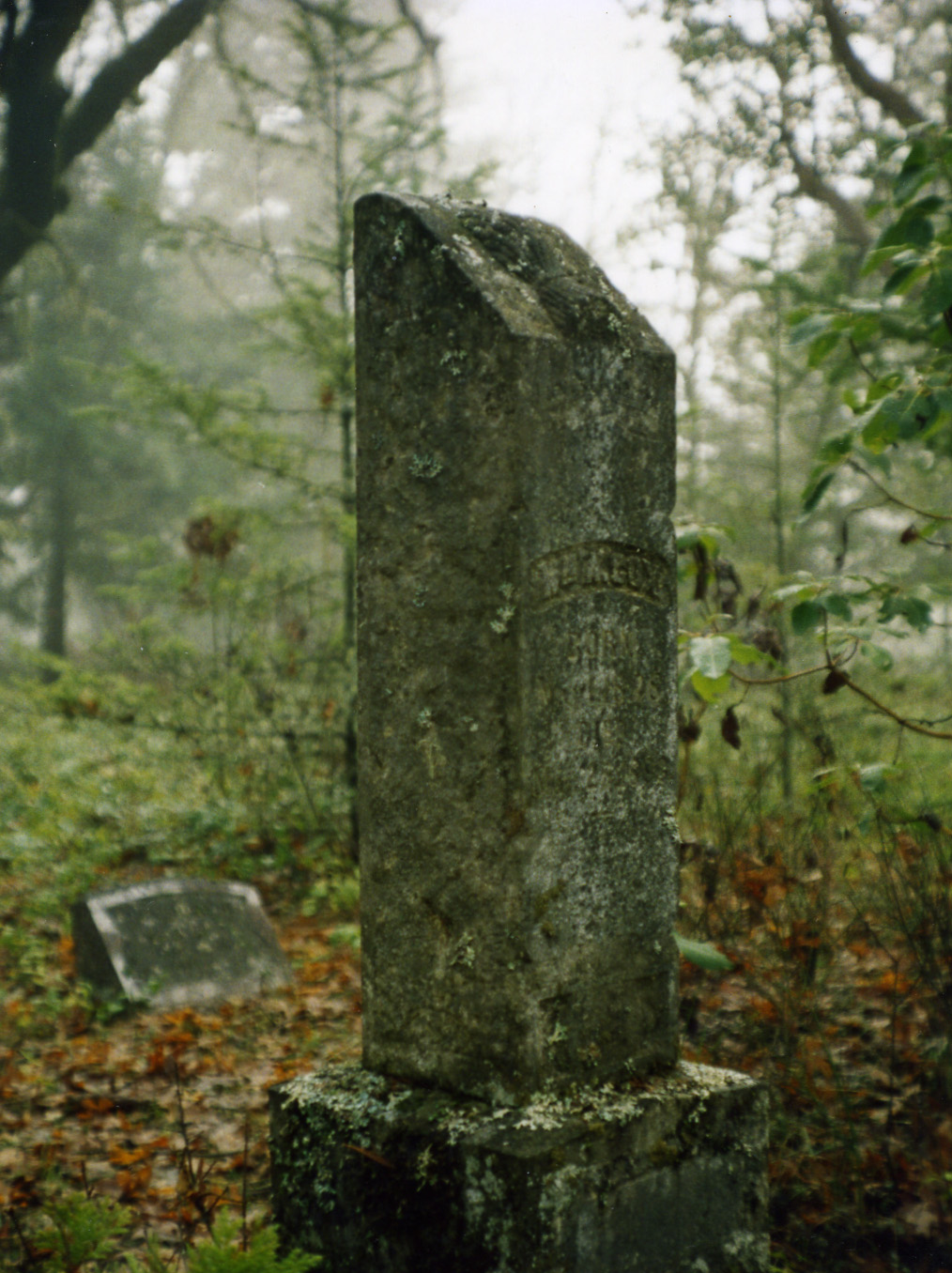
Family tombstones are often hidden in old, overgrown graveyards and difficult to find. This one marks the grave of William Cox, one of my Mother's Great Grandfathers who is buried near the town of Grants Pass, Oregon. William was born in the 1820s in Mississippi and came across America in a covered wagon.

The Marshalls began their American sojourn as stern Puritans in the 1600s. Three hundred years later they were in on the creation of Goofy. Four, and possibly all six sons of Andrew Mekemson (my first Mekemson ancestor to arrive in America) fought in the Revolutionary War.

Two of his sons died in heroic efforts at Fort Mifflin, a battle that allowed George Washington to escape to Valley Forge and possibly save the fledgling nation.

William Brown Mekemson had his head chopped off by tomahawks in the Black Hawk Indian War and rolled down a hill. His great-uncle may have wandered the forests with Daniel Boone. Abe Lincoln argued both for and against Makemsons in his early years as a lawyer. The stories go on and on leading up to modern times.

One of the most rewarding elements of my investigation has been collaborating with distant cousins on research. Early on I was lucky to come in contact with three of the leading Mekemson family genealogists, Ann Nell Baughman out of Kansas and Bill and Jan Makemson out of Florida. In addition to providing valuable information and support, these folks, along with other cousins, have become valued friends.

Ann even makes clothes for Bone.

Since genealogy is about wandering through both time and space, it is a fitting subject for the Peripatetic Bone’s blog. As I come across interesting stories, I will relate them on this site. Bone is particularly enamored with exploring old graveyards. He feels a kinship with the inhabitants.