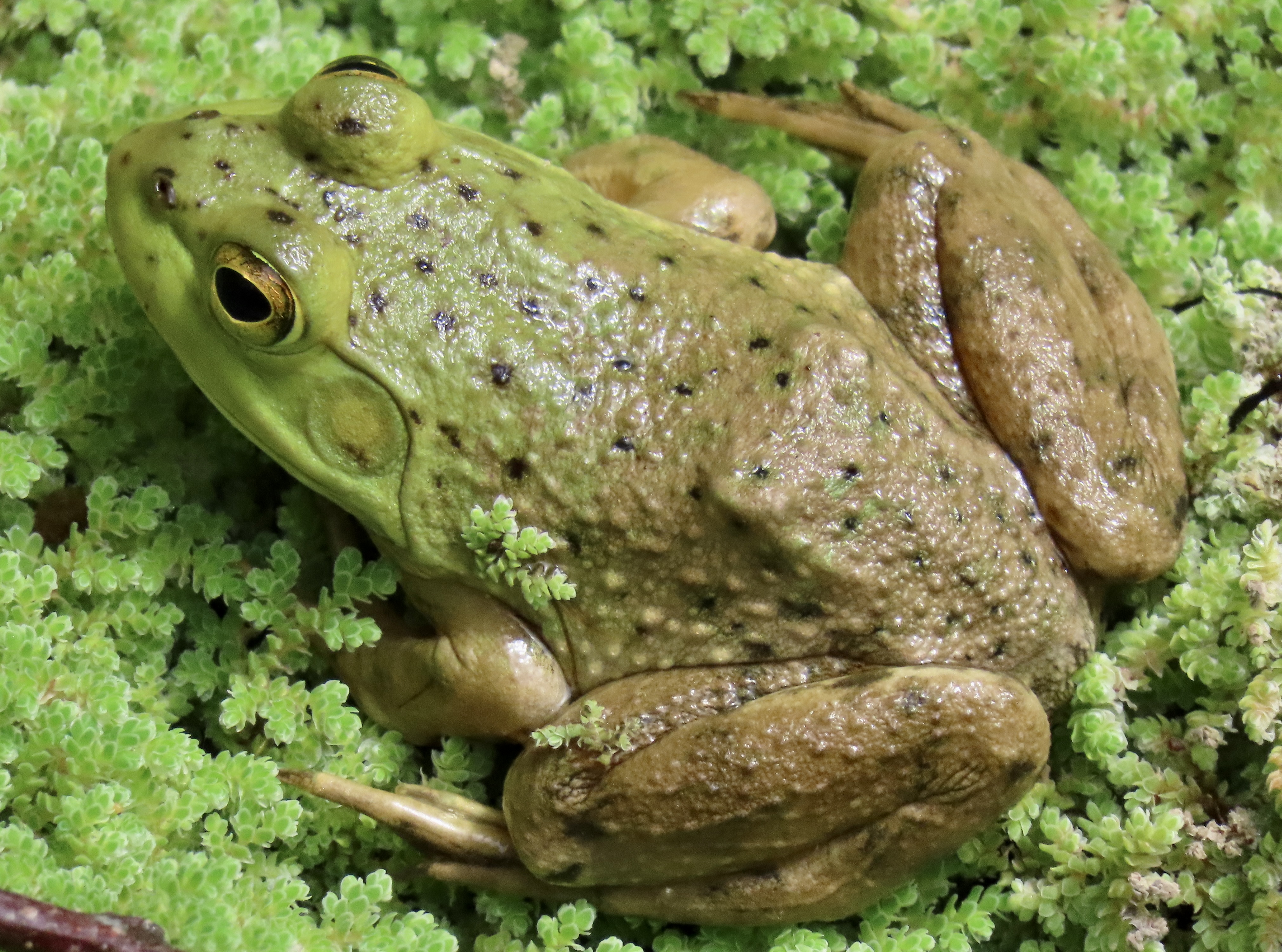
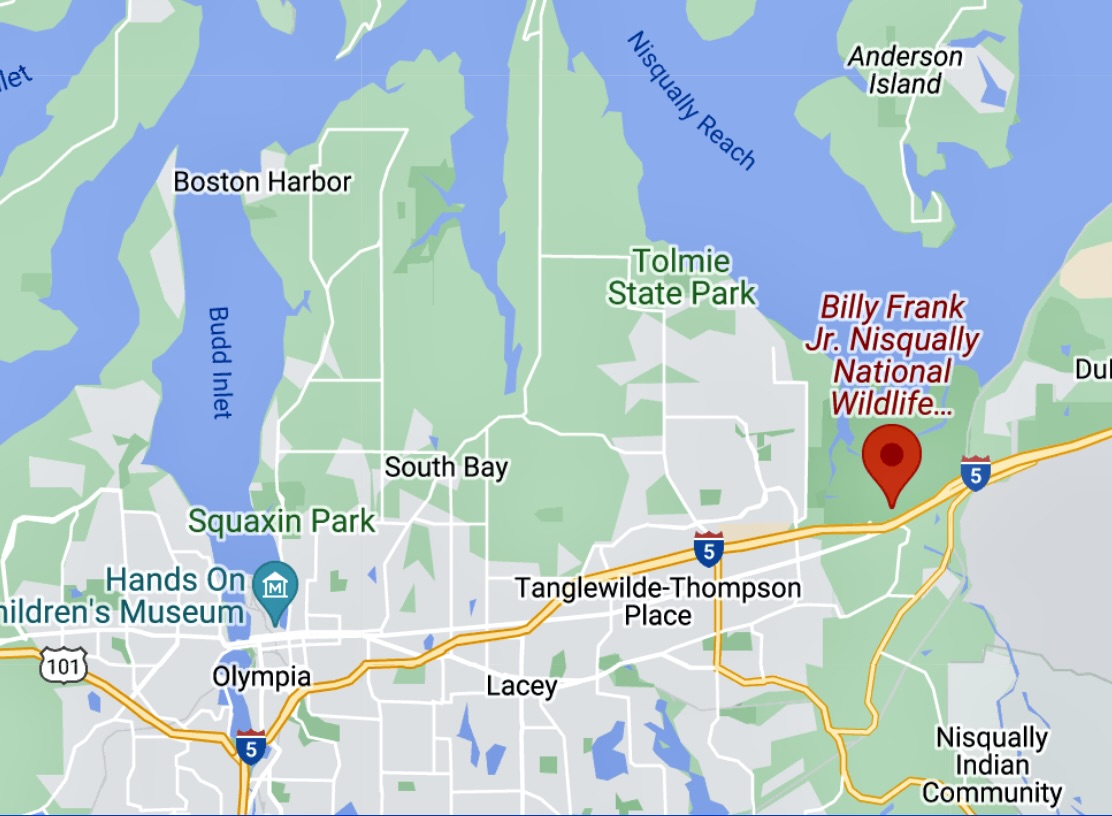
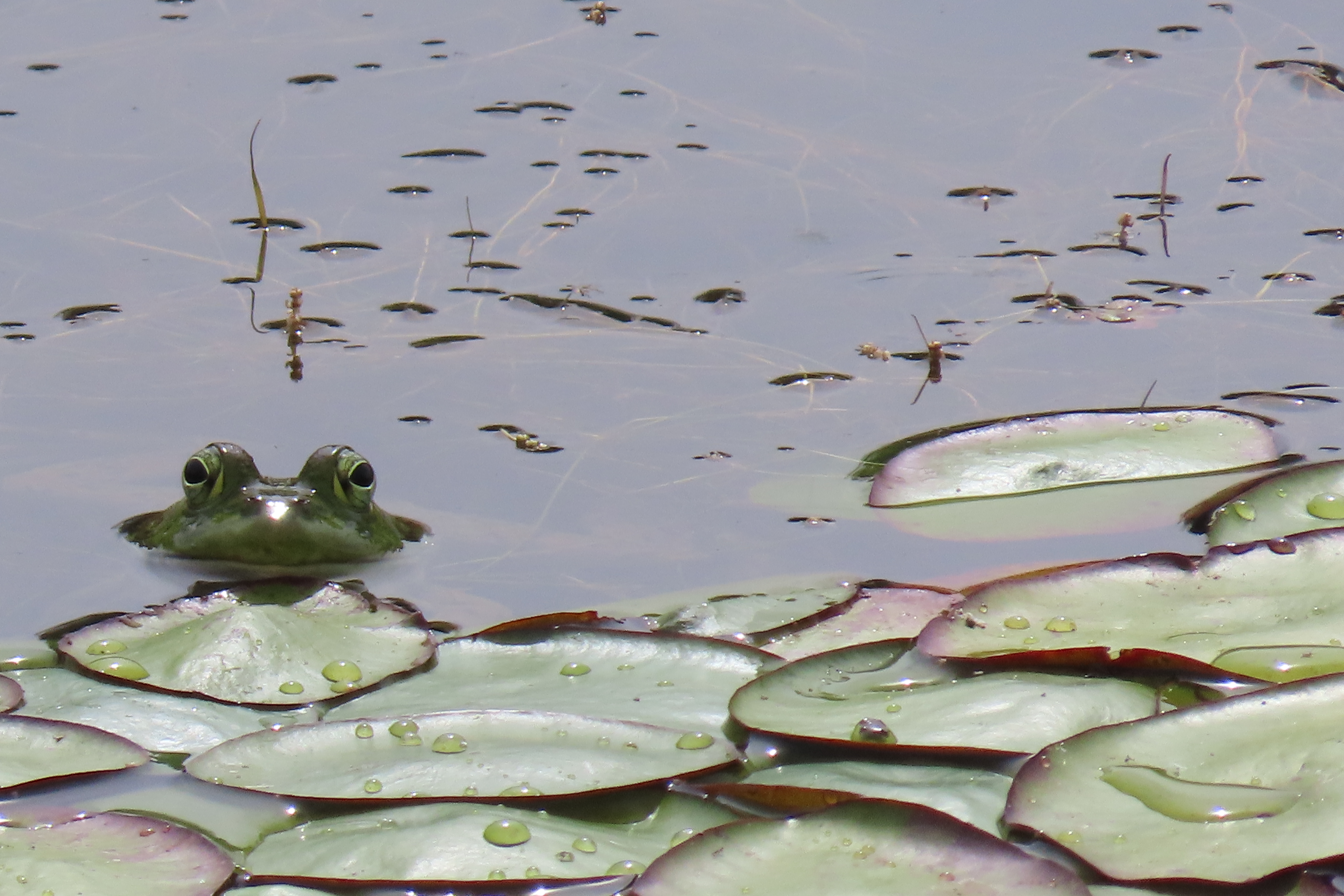
As we walked on a raised boardwalk through the wetlands of Billy Frank Jr. Nisqually National Wildlife Refuge in Olympia, Washington, I kept hearing bullfrogs and wanted to see one. A large one lived in the ditch in front of our house when I was growing up in the foothills of California’s Sierra Nevada Mountains. I had slept outside in the summer and gone to sleep listening to the his deep ‘chug-a-rum, chug-a-rum, chug-a-rum.’ At around three inches, the guy above was far too small. “It’s a red legged frog,” a volunteer told us.
We saw several red legged frogs and possibly an Oregon spotted frog, which is rare in the area and is listed as endangered. Bull frogs, it turns out, are an invasive species at the refuge and a threat to the locals. “Oh, they’re bullies!” the ever clever Peggy proclaimed as I groaned.
When I was reading up on the frogs, I saw a job description for a person who would work ‘nights in a canoe or kayak capturing non-native bullfrogs in areas where federally listed Oregon spotted frogs are found.’ Need work? I couldn’t help but wonder if the captured frogs donated their legs to the local cuisine. My brother Marshall and I hunted bull frogs as kids for the family larder. Marshall also sold the legs to local restaurants. He got 25 cents for a pair. A fortune. We left the big guy out front alone, however. I thought of him as something of a pet. (Plus our parents told us that the ditch water was of ‘questionable character.’ We weren’t supposed to drink it, play in it, or catch frogs in it!)
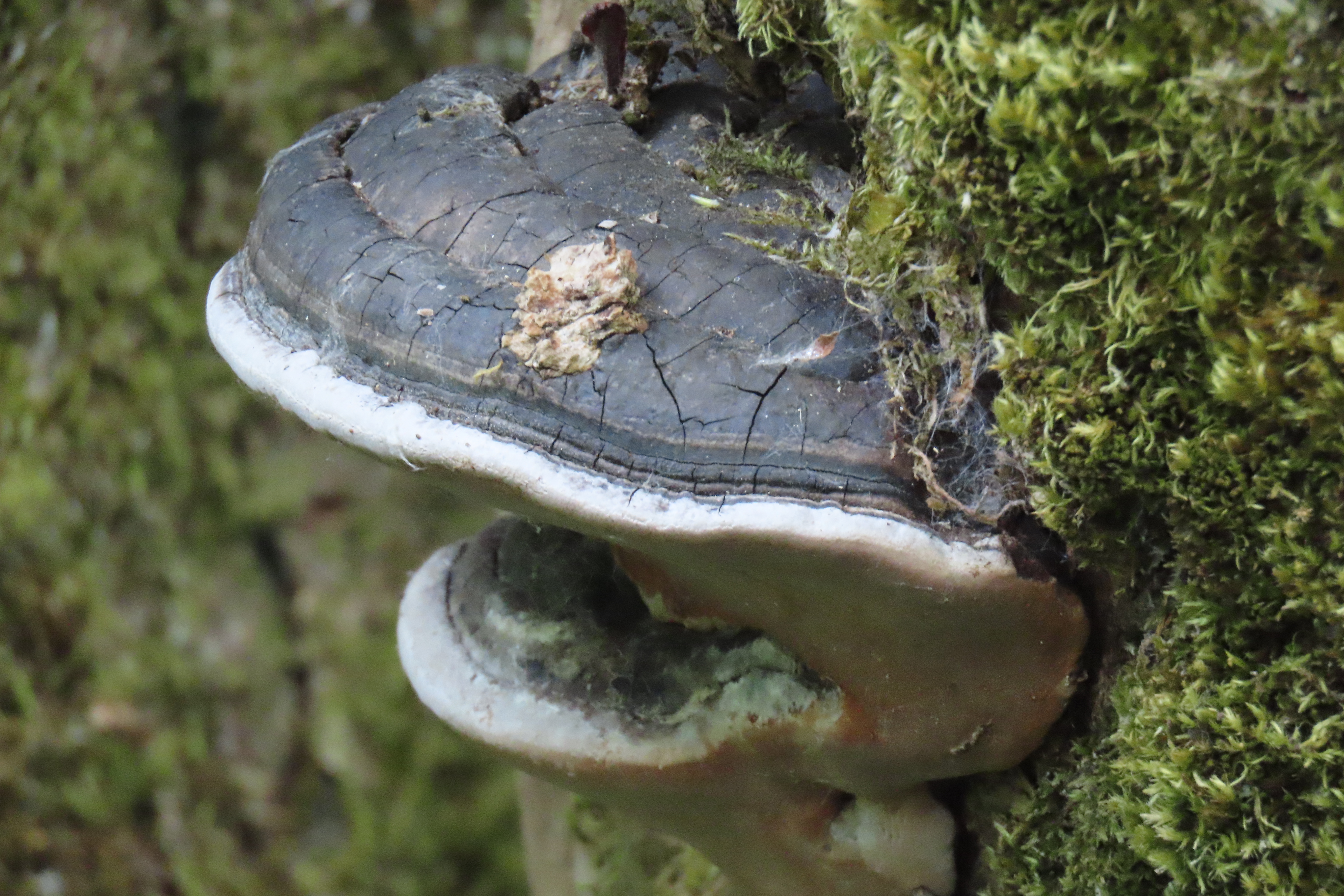
This was the frog the volunteer described as a red-legged frog. The legs didn’t seem red to me, but hey, I’m color-blinded to red. For real. Do they look red to you?I watched this guy/gal make its way through the mud. Maybe it was heading to one of the communal gatherings of Oregon spotted frogs where dozens/hundreds get together and make tadpoles by the light of the moon.The wildlife refuge is located where the freshwater of the Nisqually River flows into Washington’s Puget Sound. The fresh water bog includes a number of habitats that support an incredible diversity of wildlife. Including this great blue heron that also has a taste for frog legs. And the whole frog! “Where’s the frog?” it squawked at us. “Show me froggy!”Was this shelf mushroom saying “Leave the little frogs alone.” We also spotted a turtle in the same area with the frogs. I was reminded of the saying when I was working as a young grassroots organizer in the 70s: “Behold the turtle who only makes progress when it sticks its neck out.” I stuck my neck out a lot.
I was curious about how the wildlife refuge got its name. Who was Billy Frank Jr? It turns out he was a Native American leader of the Nisqually tribe who fought for treaty rights and was an environmental advocate. During the 60s and 70s he had organized a number of fish-ins to assure that the tribe had fishing rights along the Nisqually River, the Nisqually’s home base. He was arrested numerous times during the Fish Wars. He then became a leader in efforts to protect and manage the region’s natural resources. In November of 2015, he was posthumously awarded the Presidential Medal of Freedom by President Barack Obama.
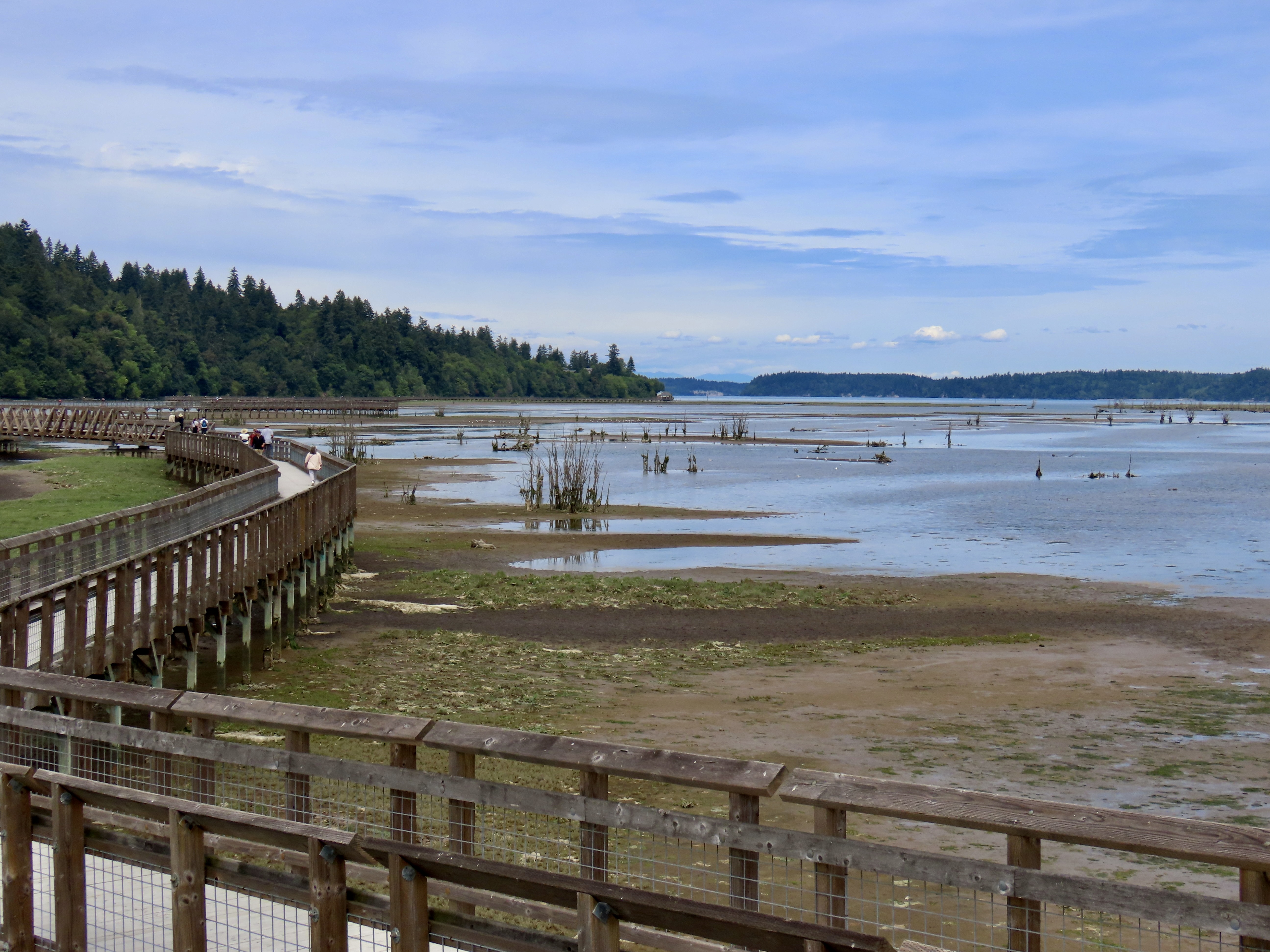
In addition to the fun walk through the wetlands, the wildlife refuge features the Nisqually Estuary Boardwalk Trail that provides an excellent introduction to life on an estuary.I took a photo of Peggy and our niece, Christina, out on the Boardwalk and rendered it in black and white.I’ll conclude today’s post with a final photo of the red legged (or Oregon spotted) frog. This also concludes our trip up the Pacific Coast which was filled with beauty and great adventures. Our journey isn’t over, however. We still have two National Parks to visit: The North Cascades and Glacier. My next post will be a quick review of the five we have already visited during 2024. I’m throwing in Everglades as a bonus since we were there in February before we started west.





 Wandering through Time and Place