
The walls and streets of Pompeii are amazingly well preserved.
The magic of Pompeii is in how well it has been preserved. There are fewer ruins among the ruins. I know that sounds strange. But most ruins require considerable imagination to reconstruct the original site. This isn’t true of Pompeii. Many of the streets, walls and buildings are found in close to the same condition they would have been found in 79 AD before being covered by the eruption of Vesuvius. The preservation of bodies, as shown in my first blog on Pompeii, is even more impressive. Thousands of storage and cooking vessels have also been found along with paintings, mosaics and sculptures giving us a detailed look into early Roman life. While much of what has been found in Pompeii can still be found there, much has also made it into museums around the world.
Today I am going to conclude my visit to Pompeii with a stop at the Basilica, the city’s center of government, and the market area, which has become a temporary repository of storage containers, bodies and other items found in Pompeii. (I will also slip in a few more of my favorite photos Peggy and I took but didn’t find a home on my other blogs.)

Thousands of artifacts have been found in Pompeii. Many, like these storage vessels, have found a temporary home in the area that once was the city’s market area. (Photo by Peggy Mekemson)
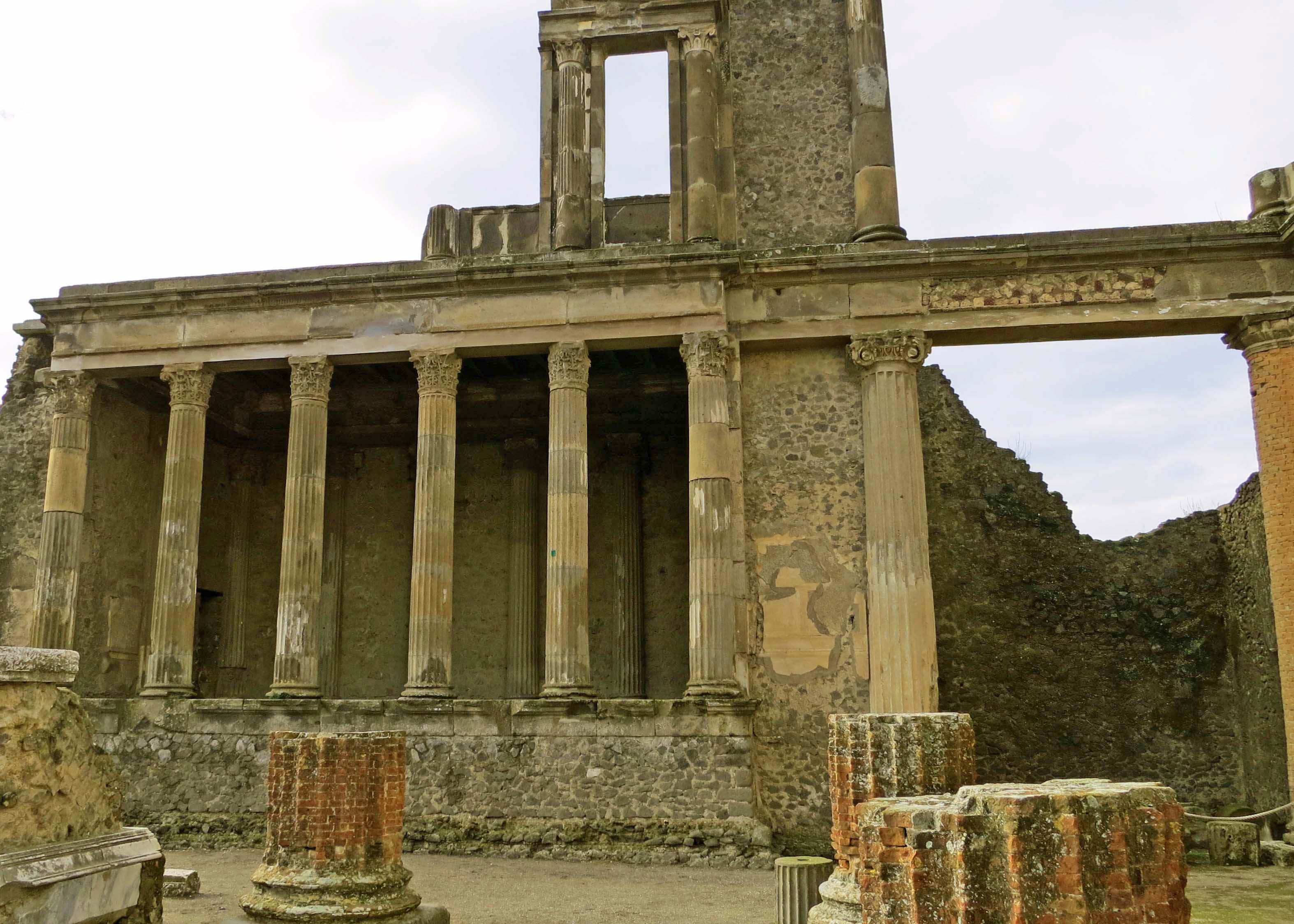
The Basilica in Pompeii was the center of government. It is centrally located next to the market and Jupiter’s Temple.
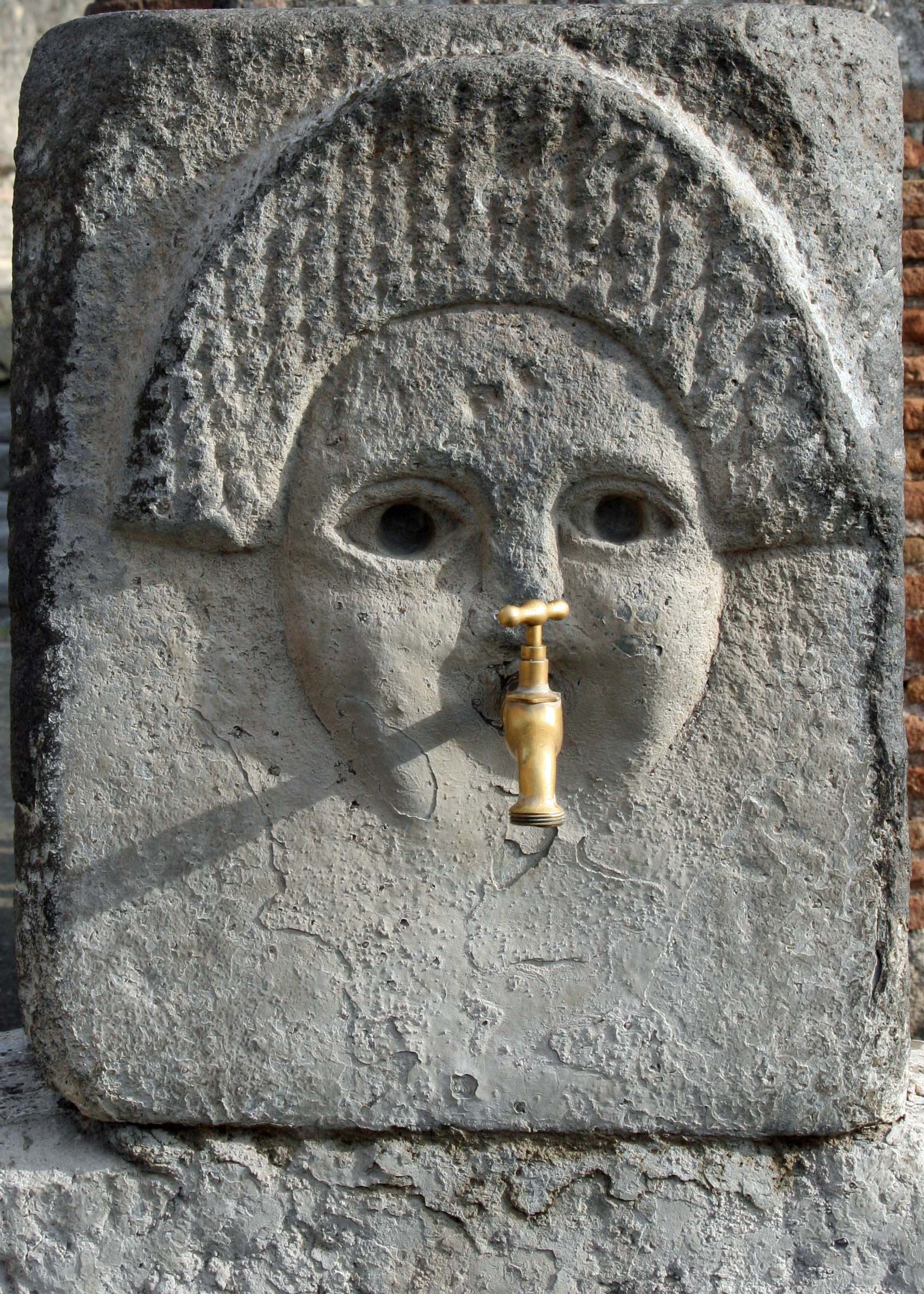
This combination of ancient and modern in one of the fountains found along the street was amusing. (Photo by Peggy Mekemson)
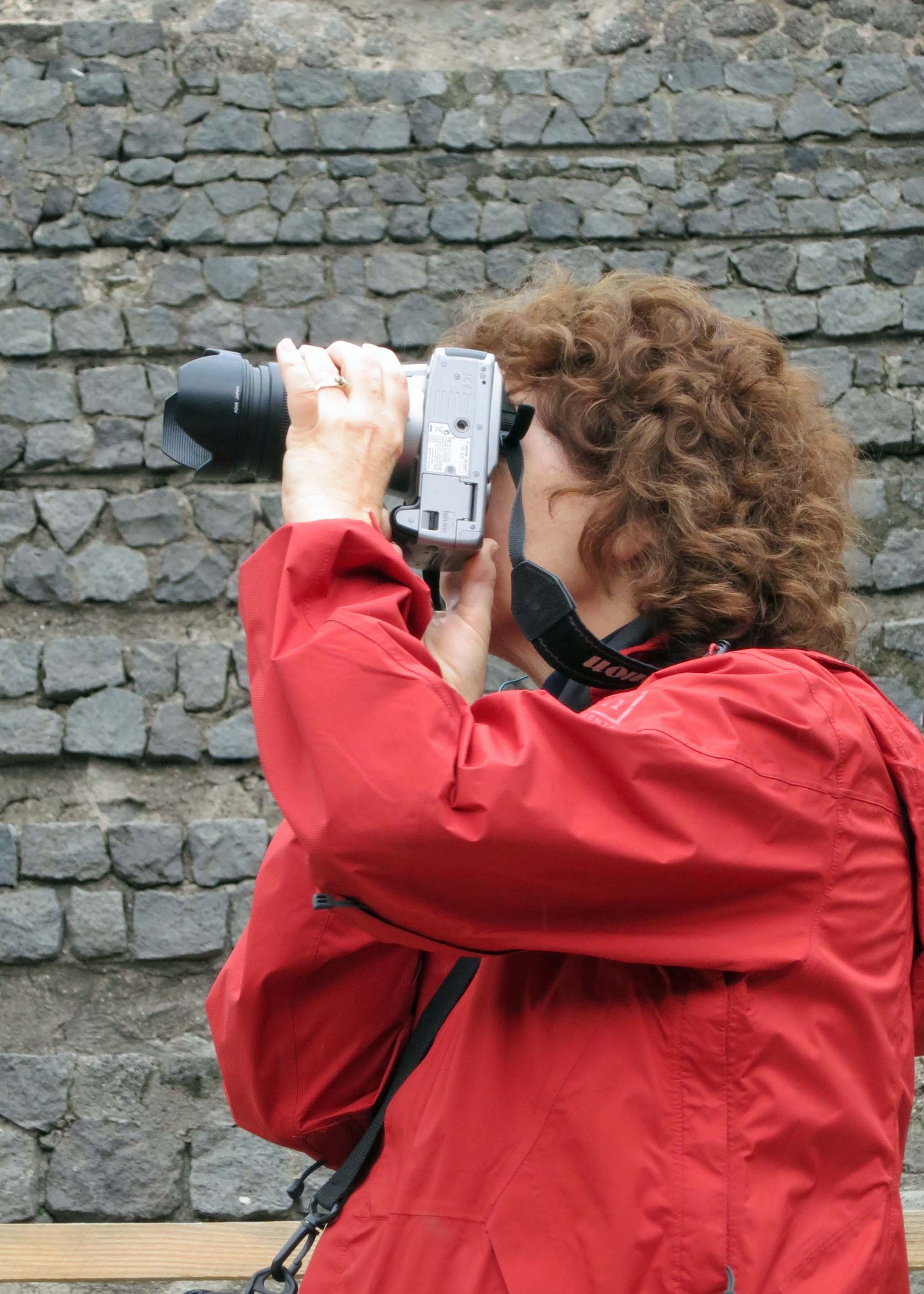
Since I use so many of Peggy’s pictures, occasionally I like to throw in a photo of her taking photos. This was along one of Pompeii’s walls.

I found the detail in this Pompeii wall decoration impressive. It had a plastic cover to protect and preserve it.

I’ll close with this shot of Pompeii ruins looking more like ruins. (grin)
NEXT BLOG: We visit the excellent Archeological Museum of Naples.
 Wandering through Time and Place