An Ancient Forest of Giant Trees—and Bigfoot… The Red Butte Wilderness: Part I

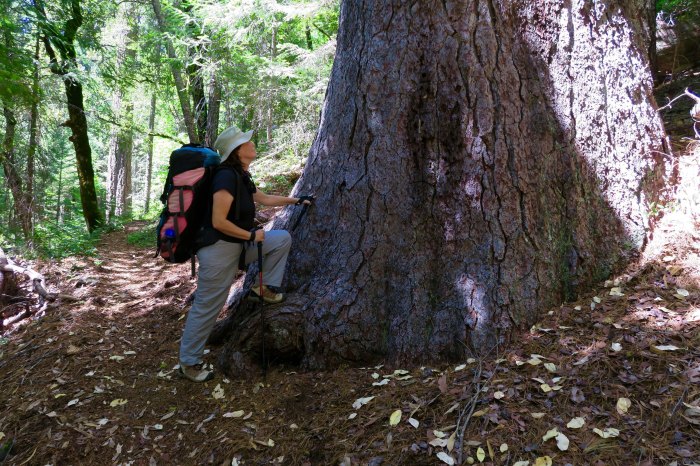
Peggy checks out a large sugar pine along the Butte Fork Creek that runs through the heart of the Red Buttes Wilderness. Eventually the creek empties into the Applegate River that runs by our house.


A friend once asked (with a grin), why I believed in flying saucers. “Because I saw one,” was my tart reply. And I did. A saucer-shaped object flew into a cloud in Sacramento going one direction and then flew out going another. It accelerated rapidly and disappeared in a couple of seconds. It was enough proof for me.

“And what about Bigfoot?” he followed up, his smile widening to Cheshire proportions. My response was different. I smiled back.

“Because the world can use a little magic; and it’s fun.”

I’m not anti-science or scientific proof. Quite the opposite. Of the magazines we subscribe to, Scientific American is the one I read cover to cover. Religiously. Some 70 books on science grace our library shelves. (I just counted them.) They range from Brian Greene’s The Elegant Universe to Richard Feynman’s The Pleasure of Finding Things Out. I’ll confess here, however, that the far-out edge of science looks a lot like magic to me.  Imagine entangled photons mirroring each other’s actions simultaneously over hundreds and even billions of miles. Or how about parallel universes existing side by side on and on to infinity?

Scientifically speaking, however, Bigfoot hardly has a leg to stand on, or a foot, even a big, hairy one. Blurry photos, a few hairs, footprints and little else constitute proof. There’s not even a body or bones. If Bigfoot, or Sasquatch, or Yeti, or any of the other names the species goes by around the world exist, they must have an Einstein-level genius at camouflage, hiding and misdirection.

What exists are numerous sightings, often collaborated by other people. A close relative of mine, who prefers to remain un-named, recently told me that one of the big fellows had run across a logging road in front of him up near Oregon’s McKenzie River in the early 70s. He’d never said anything about the incident. I didn’t get his reticence. Had it been me, I would have been screaming the news from the top of Mt. Hood. But he was working in a conservative industry at the time, and felt they might not appreciate his encounter with the giant. It is such sightings, however, often by responsible, sober-type people, that provide hope for Bigfoot’s existence, the frosting on the magical cake.

The Red Buttes Wilderness, located on the remote, northern edge of California in the Siskiyou Mountains, is prime Bigfoot country. We can see the Buttes from our house in southern Oregon, some 10 miles away as the crow flies. We went backpacking in the area three years ago and decided to go again last week. Giant red cedars, sugar cone pines, white pines and Douglas firs dominate the area. They’re the type of trees that make the logging industry salivate. They would have been cut down decades ago except for the difficulty of getting them out. Now they are protected in one of America’s rare virgin forests. If I were Bigfoot, it’s a place I would certainly want to live.
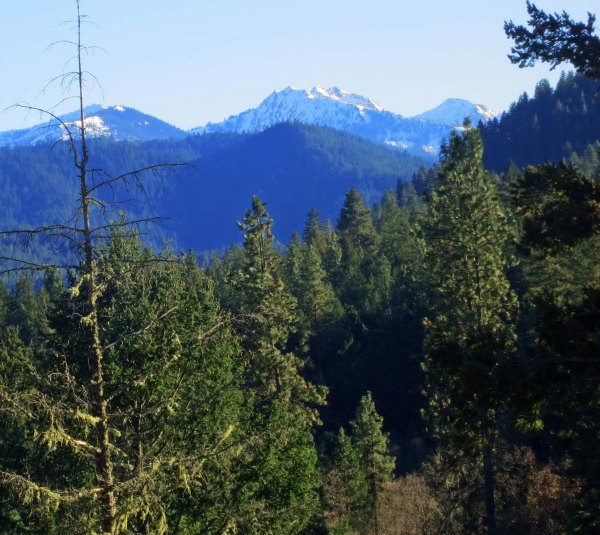
The Red Butte Mountains of Northern California and Southern Oregon.

The Red Butte Mountains as they appear from our patio.

The world’s only Bigfoot trap is located about five miles from where we live. A miner was once hired to build a cabin beneath the trap and given a tranquilizer gun and a pair of large handcuffs to capture the big guy. Only bears were caught. The doors have long since been welded shut. Otherwise they might have trapped some of the teenagers that insist on spray painting the trap with graffiti. 

Peggy and I drove up a pothole-strewn forest service road to the Shoofly Trailhead to begin our adventure. Just beyond a large parking area, the trail dropped quickly for a half mile or so to the Butte Fork of the Applegate River and then followed the creek uphill for 7-8 miles to Azalea Lake, which was our destination.  We made a leisurely trip of it, letting our time-tested bodies adjust to being on the trail again. At about five miles, they decided they’d done enough adjusting and went searching for a campsite. It was a wimpy thing to do, but our minds gave them leeway for being out on the trail at all. Following are some photos of what we took along the way.
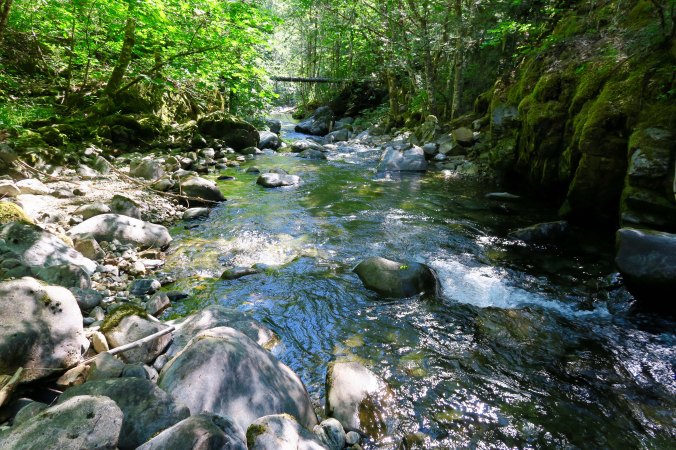
The Butte Fork of the Applegate River is right where the Shoofly Trail meets up with the Butte Forks Trail. It makes for a wonderfully refreshing stop, either going or coming.
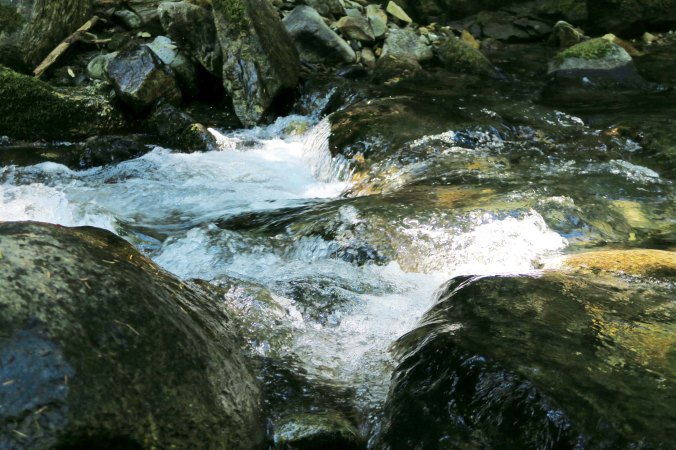
Another photo of Butte Fork Creek.

Portions of the Red Butte Wilderness resemble a rainforest. Other areas are quite dry.
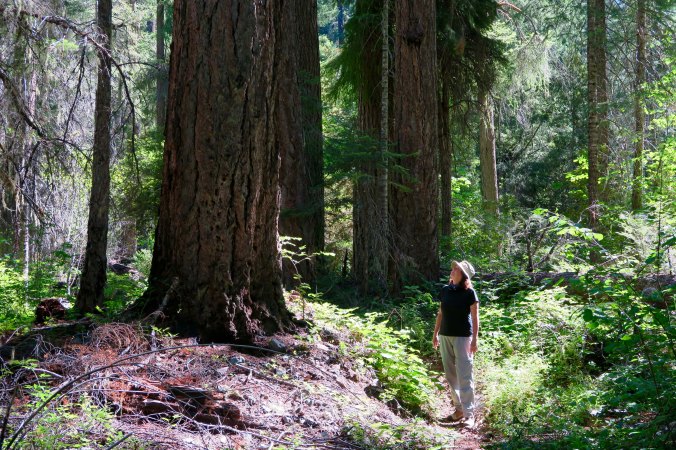
Peggy and some of the large trees that live along Butte Fork Creek.

She holds up a sugar pine cone we found beside the trail.
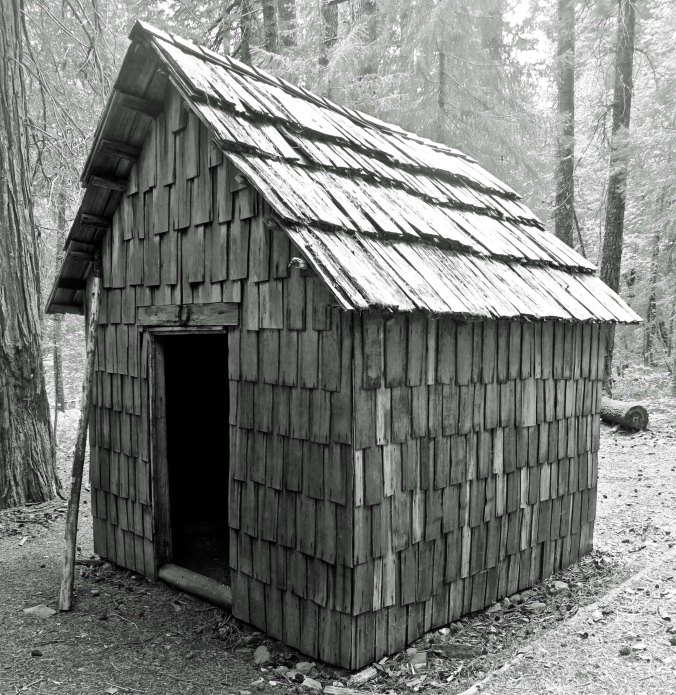
An old cabin built by the Civilian Conservation Corp out of red cedar in the 1930s, still exists along the trail. For a while it was used by the forest service to house a forest fire fighting crew. Given its age, I decided to show it in black and white.

A view of Rattlesnake Mountain and Desolation Peak from the Butte Fork Trail.
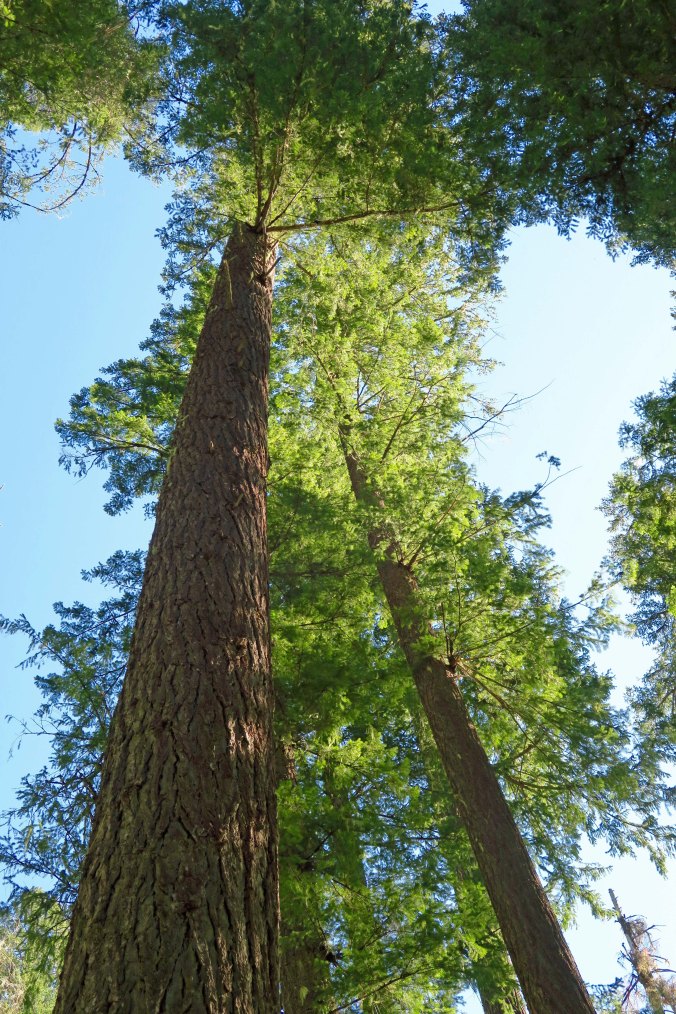
There came a point, just under these trees next to a small stream, that our bodies decided it was time to camp. While I ranged far above and below the trail looking for a suitable campsite, Peggy found one nearby!
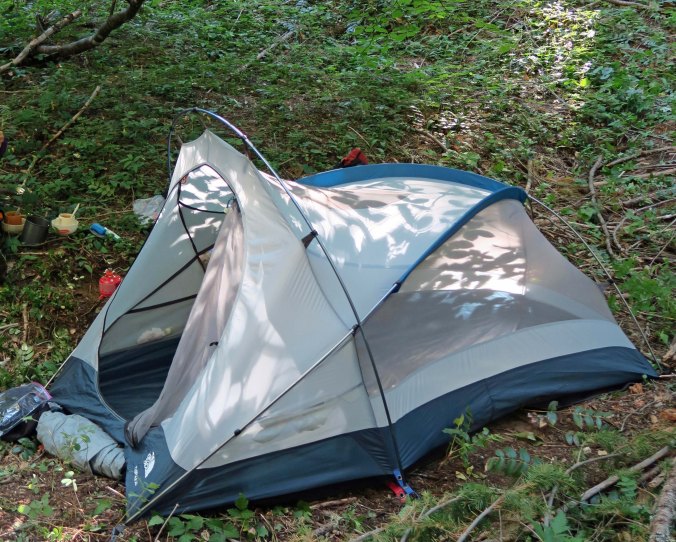
There was just enough space for our small tent.

It came with a bower…

A small reflecting pool with cool water…
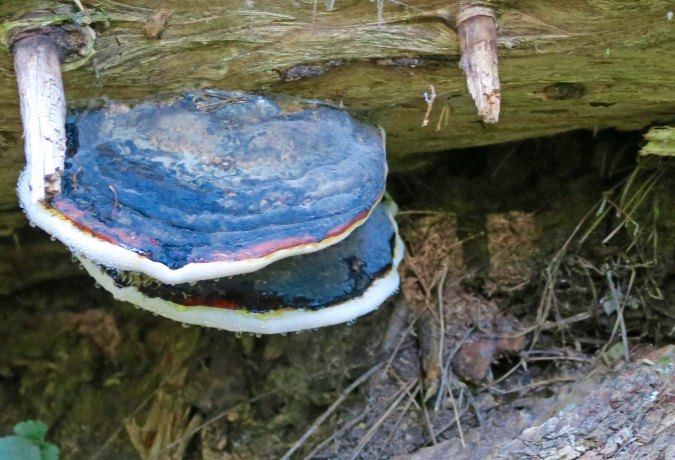
And a pair of shelf fungus that seemed to want to talk.
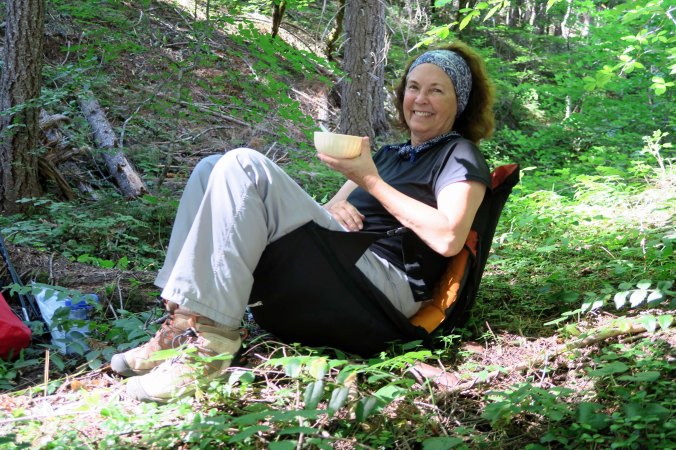
I soon whipped up a quick dinner and we crawled into the tent as soon as the sun had dropped behind the canyon walls.

NEXT POST: We hike on to the pretty Azalea Lake and I (possibly) find proof of Bigfoot’s existence! (Peggy and I are off on another backpacking trip. I’ll respond to comments and check in on blogs when we return.)


Into the Red Butte Wilderness… Backpacking at 71

Old Growth Cedar in Red Buttes Wilderness of Northern California and Southern Oregon.

There is much to be impressed with in the Red Buttes Wilderness, including magnificent old growth trees such as this cedar.

I know a bit about backpacking (mild understatement). A few years back, in 1974 to be exact, I was working as the Executive Director of the American Lung Association in Sacramento. The organization needed a new source of funding; I needed an excuse to play in the woods. So I combined the two. I proposed to my Board of Directors that I lead a nine-day, hundred mile backpack trip across the Sierra Nevada Mountain Range with the participants raising money to fight lung disease.

So what if my longest backpack trip ever had been 30 miles.

“You are crazy,” the board said. “You are crazy,” my friend in the backpacking industry said. It was like I had inherited a parrot.

And they were right. The only point they missed was just how crazy. Sixty-one people aged 11-71 showed up– many who had never worn a backpack in their lives. One immediately claimed she was a witch and would be over to bite me in the middle of the night. And how was I to know that my co-leader had participated in burning down a bank in Santa Barbara, or that my go-to guy in emergencies was a Columbian drug runner, or that the big fellow who got me through the toughest days was an explosive experts on the lam from the IRS. You can’t make these things up, folks! But this is a story for later this summer. It’s one you won’t want to miss.

Lets just say by the time I walked into the foothill town of Auburn, California nine days later on deeply blistered feet in 104-degree weather, I had persuaded myself that the money raised from Christmas Seals was more than adequate to support our organization, forever.

But then a strange thing happened. These people who I had almost killed and who had come close to killing me, started coming up one by one and demanding to know where we were going next year. I heard things ranging from, “This was the greatest experience in my life” to “I have lots of ideas for fundraising.” It took them several months to persuade me…

But persuade me they did. I would go on to add bike treks in Sacramento and eventually take the program nationwide where I became the national trek consultant for the American Lung Association. Millions of dollars were raised to prevent lung disease and thousands of people were introduced to long distant backpacking and bicycling as a result. More importantly, from my perspective, I got to play in the woods. For 30 years, I spent a part of each summer leading wilderness expeditions. And when I wasn’t leading treks, I was off backpacking by myself or with friends.

Founder of the American Lung Association Trek Program, Curtis Mekemson.

A much younger me gracing the front of the American Lung Association’s National Bulletin in my role as founder of ALA’s Trek Program.

Sadly, my last backpacking trip was seven years ago. Life happens, right? Peggy and I bought a small RV and decided to wander North America for three years; our kids started producing grand babies; we bought our property in Oregon and travelled to Europe and Alaska. I took up blogging and decided to write a book.

It was all good, but I missed backpacking– a lot. And there’s this thing. Our home looks out on the beautiful Red Buttes of the Siskiyou Mountains of Southern Oregon and Northern California. The mountains spoke to me, over and over and over. Finally I could no longer ignore their call. Peggy and I decided to hit the trail. So last week, we did.

Red Butte mountains of the Siskiyou Range.

The Red Butte Mountains as they appear from our house in spring through the lens of our camera. How could we not set out to explore them?

We planned a short trip: three days and 14 miles. It was to be something of a test to see how well we would do. After all, we had aged seven years. At 71, I couldn’t expect my body to behave the same way it had at 21, or 31, or 41, or 51, or 61. And even Peggy, a young woman of 64, was nervous.

I immediately pulled out maps and begin planning a route. I was like a little kid on Christmas morning (or Peggy at the chocolate store in Central Point). Had I been a dog, I would have been wagging my tail like my basset hound, Socrates, used to at the sight of a hotdog.

This forest service map shows the location of the Red Buttes Wilderness. The X marks the approximate location of our home.

This forest service map shows the location of the Red Buttes Wilderness. The X marks the approximate location of our home.

I planned out our route on a US Forest Service Topo Map. We followed the Butte Creek Trail to Azalea Lake.

I planned out our route on a US Forest Service Topo Map. We followed the Butte Creek Trail to Azalea Lake. I wrote in the small, circled numbers which I will refer back to.

A close up of the map shows the beginning of our hike. "T" marks the trailhead where we parked the truck. Topo lines reflect the steepness of the trail. The closer together, the steeper!

A close up of the map shows the beginning of our hike. “T” marks the trailhead where we parked the truck. Topo lines reflect the steepness of the trail. The closer together, the steeper! We started by hiking down into the canyon following the well switch backed trail. Down in the beginning, meant up in the ending. (grin)

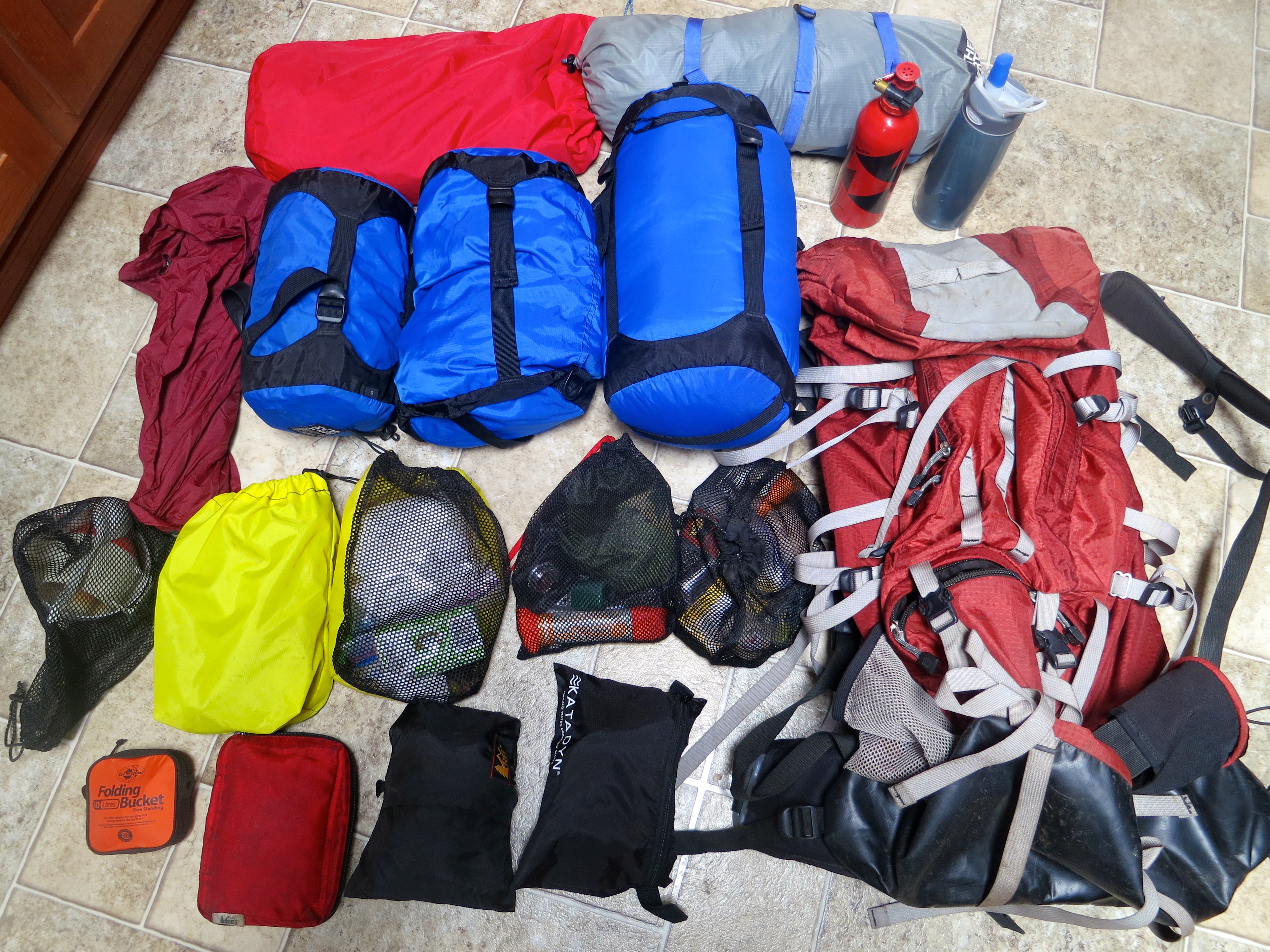
Next came the gear. It was hiding out on shelves, in drawers, and long ago packed boxes. Would my MSR white gas stove still cook? Would the Katadyn Filter still pump safe water? And possibly even more important, would our Therm-A-Rest air mattresses still be filled with air in the morning? When you are disappearing into the backcountry, you can’t be too careful.

Here's my gear and backpack. The larger bags are tent, sleeping bag and pad, food, and clothes. Smaller bags are organized according to function: kitchen, bathroom, first aid, etc.

Here’s my gear and backpack. The larger bags are tent, sleeping bag and pad, food, and clothes. Smaller bags are organized according to function: kitchen, bathroom, first aid, etc. Total weight with food, fuel and water: 35 pounds.

Go light is the mantra of anyone who carries his house on his back. Fortunately, the backpacking industry is constantly developing lighter equipment, such as this fully functional folding bucket.

Go light is the mantra of anyone who carries his house on his back. Fortunately, the backpacking industry is constantly developing lighter equipment, such as this fully functional folding bucket.

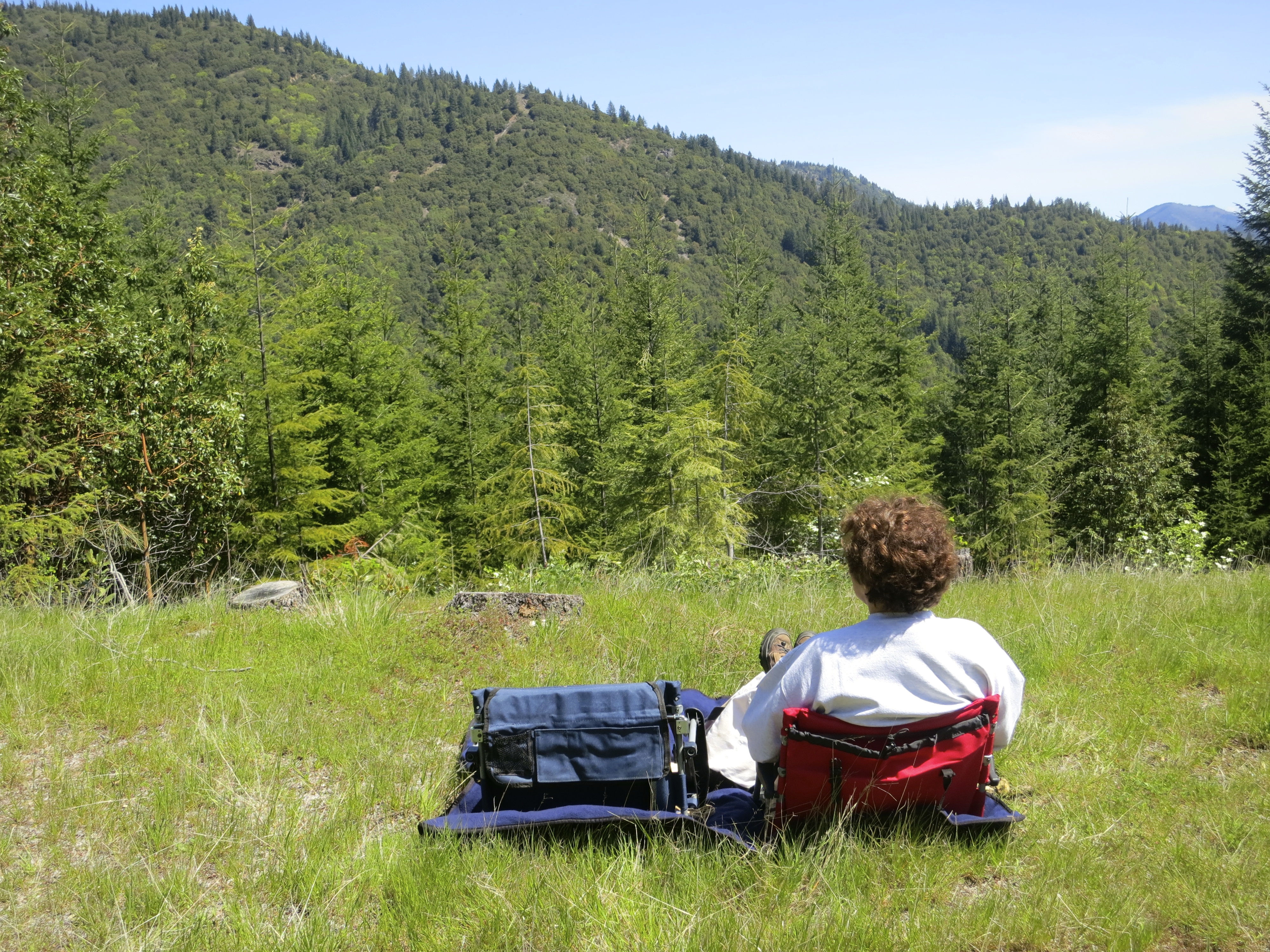
There was the inevitable last-minute trip to REI. And Peggy and I even drove up to check out the trailhead on Mother’s Day. (Now, before all of you moms get excited, she got breakfast in bed first and we took a picnic lunch that we ate on a grassy knoll with a grand view. Peggy even managed to spot a hungry mountain lion disappearing into the forest. Maybe it was coming to join us for lunch. What more could a mom ask for?)

Peggy enjoying her Mother's Day Picnic. We saw the mountain lion a couple of hundred yards down the road on our way out.

Peggy enjoying her Mother’s Day Picnic. We saw the mountain lion a couple of hundred yards down the road on our way out.

And how was the trip? Forget for the moment that it was cold and rained much of the time. Forget that we were dead tired and went to bed at 7:00 PM. Forget that the trail came close to disappearing in the brush and we spent a fair amount of energy crawling over and around downed trees that blocked the trail. And forget about the noise we heard in the middle of the night that sounded like Bigfoot pounding on a tree trunk with a large limb. And why should you forget? I just got out my thesaurus. The trip was wonderful, beautiful, invigorating, marvelous, educational, and stunning. We laughed our way through the whole adventure.

I’ll let our photos tell the story.

Butte Creek trail in the Red Butte Wilderness.

After following switch backs down the dry mountain side, we came upon the verdant canyon of the Butte Fork of the Applegate River with its almost rainforest feel. (This and the following three photos are located near #1 on the map.)

Butte Creek trail in the Red Buttes Wilderness.

In 2012 the Ft. Goff fire had swept through the area. While the forest was relatively unharmed, some large trees had fallen across the trail and since been cleared to make way for hikers.

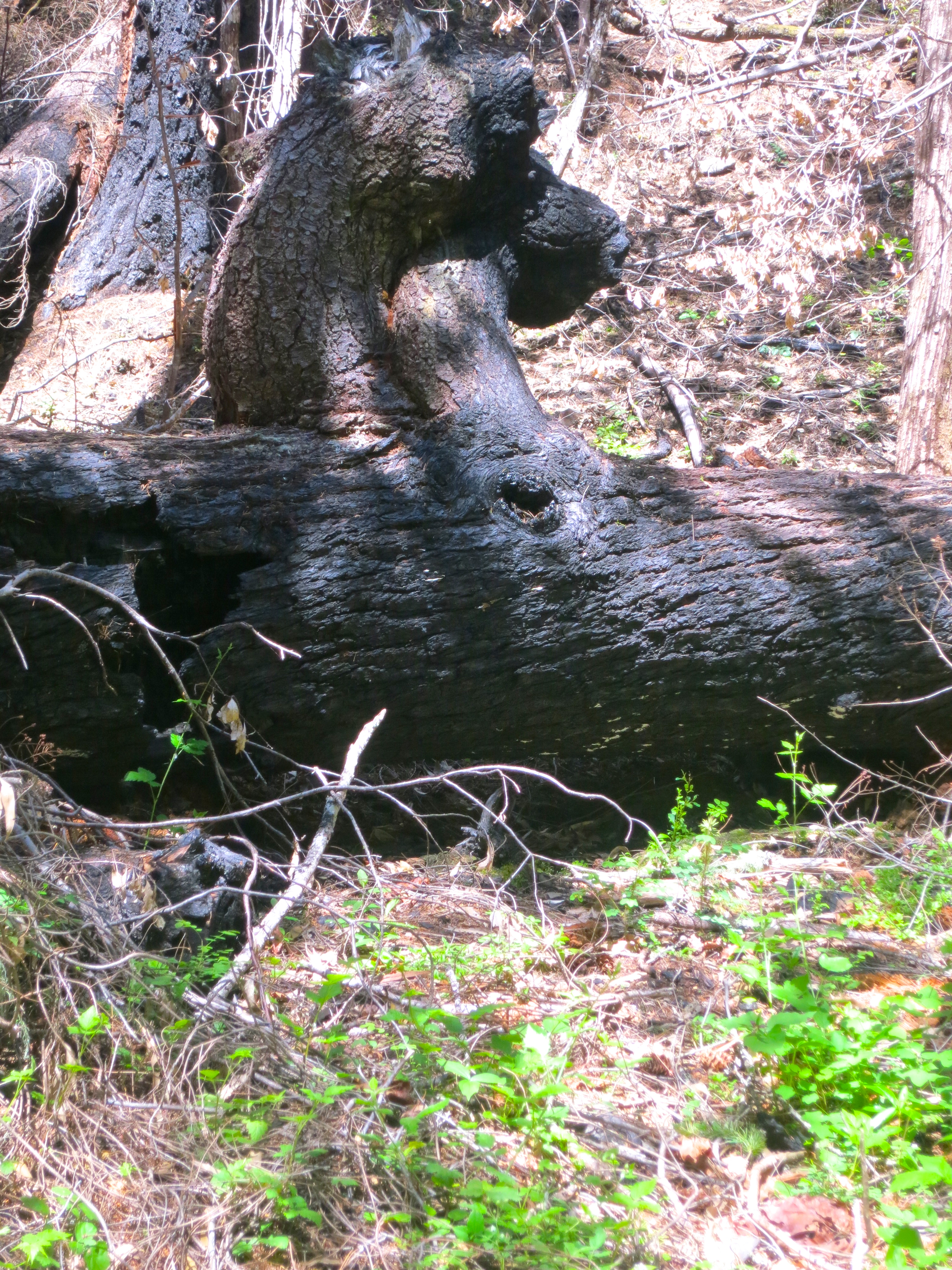
Smokey the Bear tree in the Red Buttes Wilderness.

We loved this tree poking its limb up in the middle of the fire area. Peggy at first saw a unicorn but I saw Smokey the Bear… reminding people to be careful with fire.

Horsetail fern growing in the Red Butte Wilderness.

We found this horse-tail fern growing in the canyon. Pioneers reputedly used this plant for scrubbing out pans.

CCC Cabin in the Red Buttes Wilderness area of Northern California and Southern Oregon.

An old cabin made out of red cedar shakes was built by the Civilian Conservation Corps in the 30s and then used by the forest service for storing fire fighting tools. (Located at #2 on the map.)

Roof of cedar shake cabin in Red Butte Wilderness area.

The hand-hewn cedar shake roof.

Chinquapin forest in Red Butte Wilderness.

Not far above the cabin, we came across a chinquapin forest. I had seen chinquapin bushes but never trees.

Chinquapin nuts, encased in these spine covered shells, are apparently quite tasty.

Chinquapin nuts, encased in these spine covered outer shells, are apparently quite tasty.

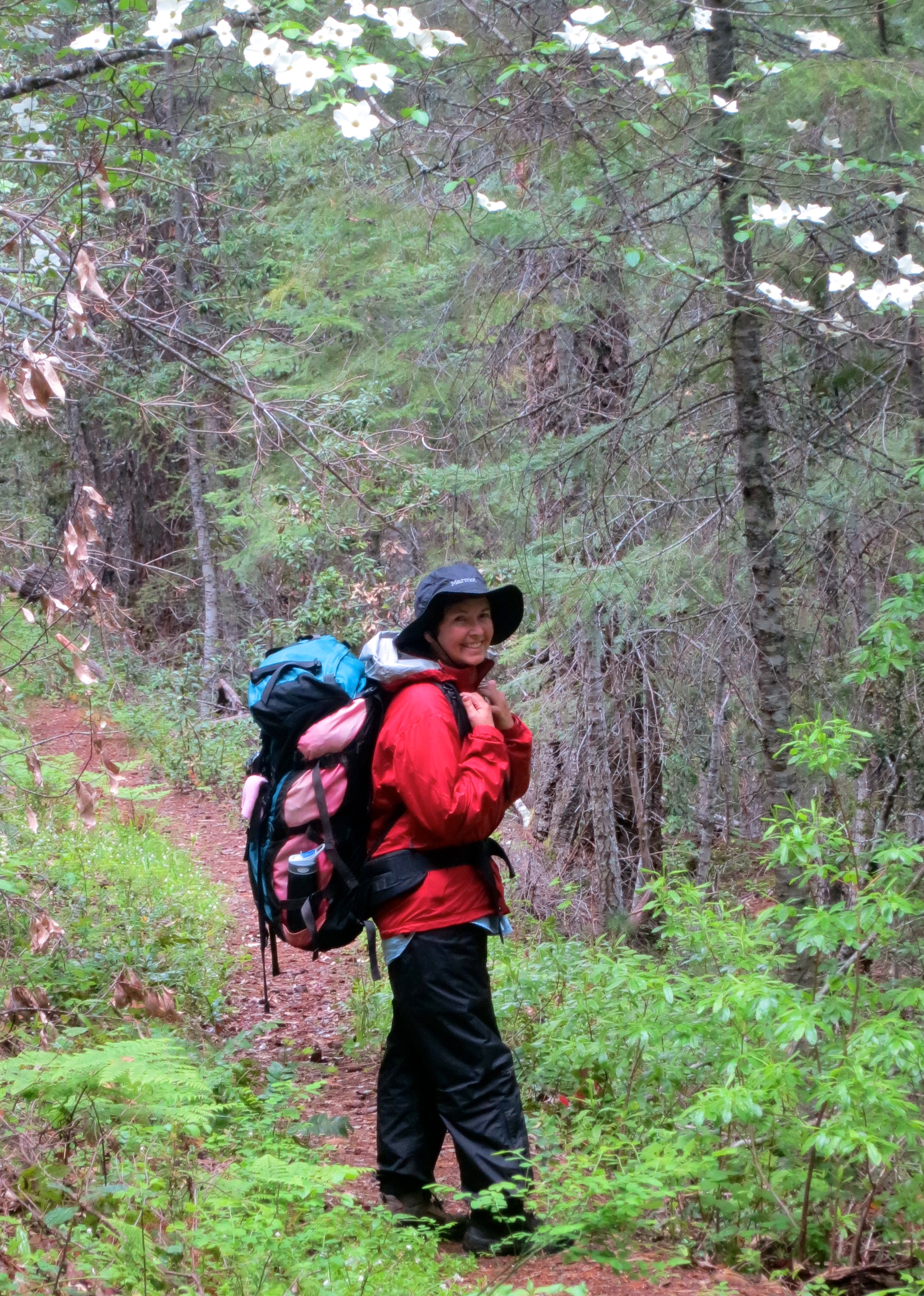
Flowering dogwood in the Red Butte Wilderness.

The trail at this elevation also featured beautiful flowering dogwood.

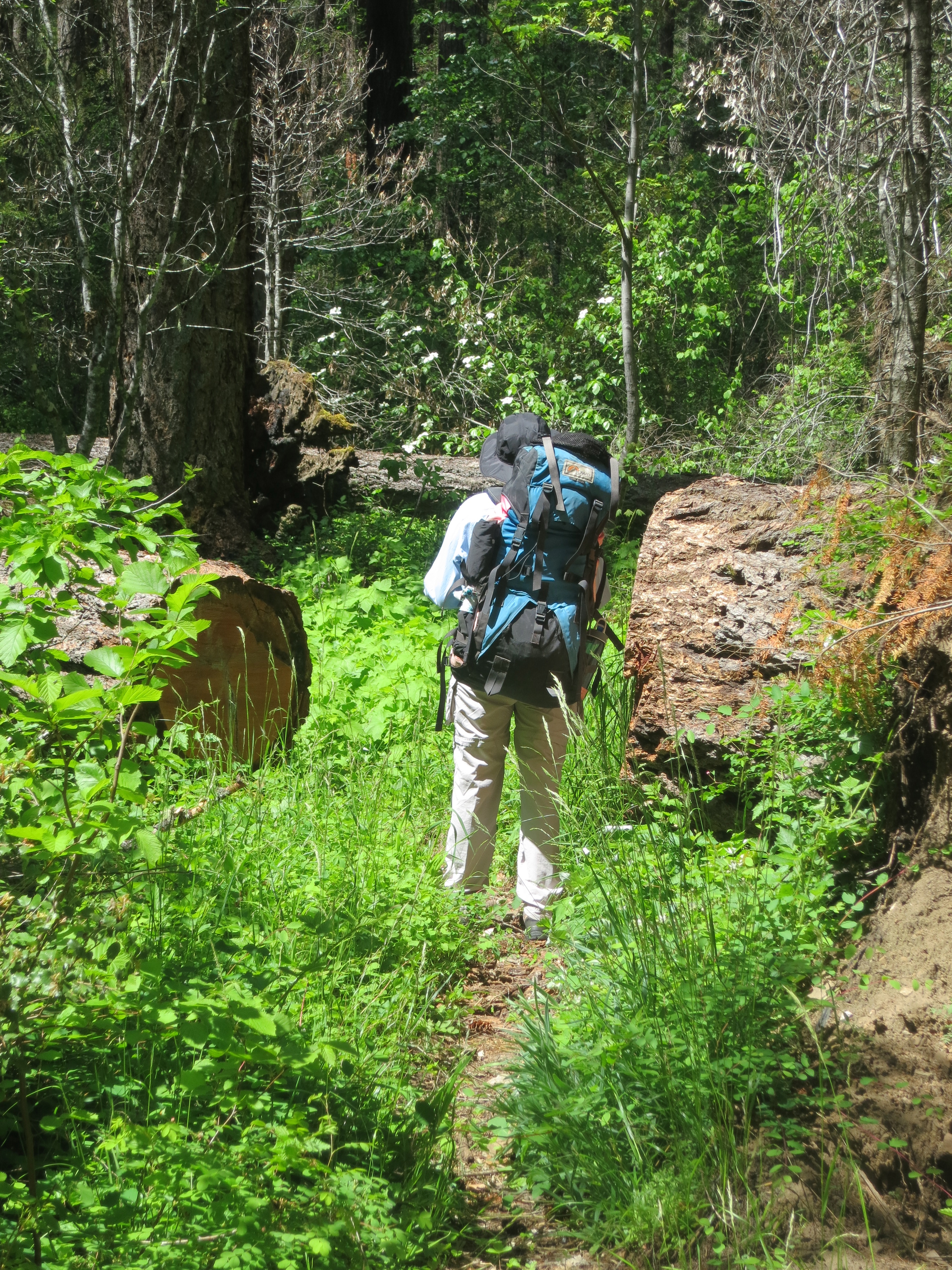
Peggy Mekemson hikes along the Butte Fork Trail through the Red Buttes Wilderness of Northern California.

Here, Peggy poses under a bower of it. I was going to point out that her pack weighed 32.5 pounds. She quickly corrected me. It was 32.8 pounds.

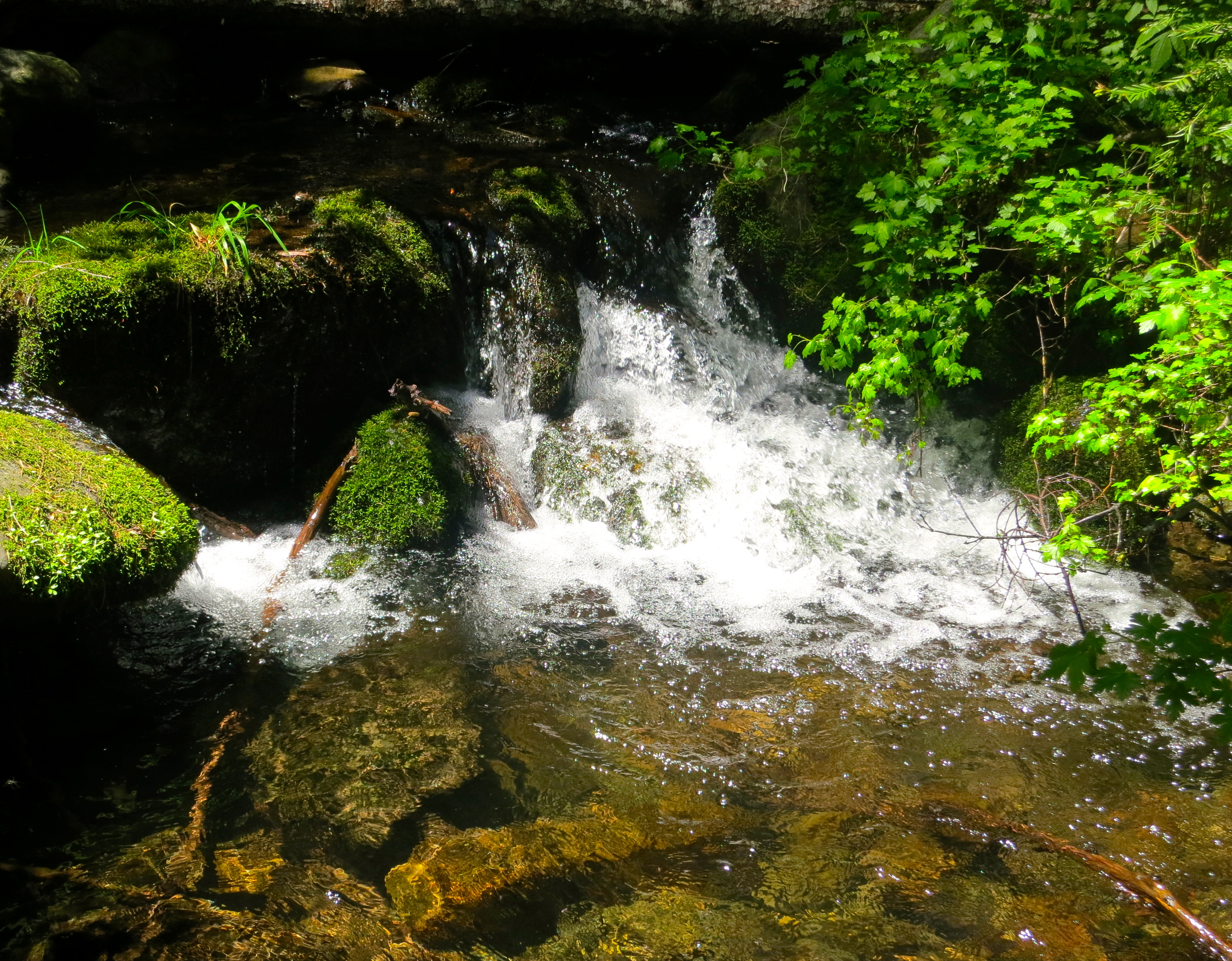
Small creek in Red Butte Wilderness area.

We had been hiking across dry slopes for quite some time. It was getting late, we were tired, and I was beginning to feel a bit of a grump coming on when we heard this creek. “I hear camp,” I told Peggy. (#3 on the map)

Camping out in the Red Buttes Wilderness.

There was barely room for our small North Face tent. But it was home. (Shortly after this photo it started raining.)

Old growth forest in the Red Buttes Wilderness.

This was our view looking up from our campsite. The Red Butte Wilderness includes some of the most impressive old growth forest I have ever seen including pine, fir and cedar trees.

Massive sugar pine tree in the Red Buttes Wilderness.

Peggy caught me standing next to one of the massive sugar pines. (Photo By Peggy Mekemson.)

Gravesite in Red Butte Wilderness.

This beautiful mound of rocks is found on my map at # 4. It’s a grave for three people buried here by family members after their plane crashed on July 28, 1945.

Burial site of airplane crash victims in Red Butte Wilderness.

The grave marker shows that Sylvan Gosliner, Ruby May Gosliner and Alma Virgie Pratt are buried here. Remnants of the plane can still be found in the canyon below.

Tree torn apart for bugs in Red Butte Wilderness.

Someone had a grand time ripping this rotting tree apart for it bugs. Was it a bear? Or how about Bigfoot? We found a large pile of scat (poop) nearby.

Cedar Grove in the Red Buttes Wilderness.

Cedar Grove is aptly named for its magnificent cedars. (Found at #5 on the map.)

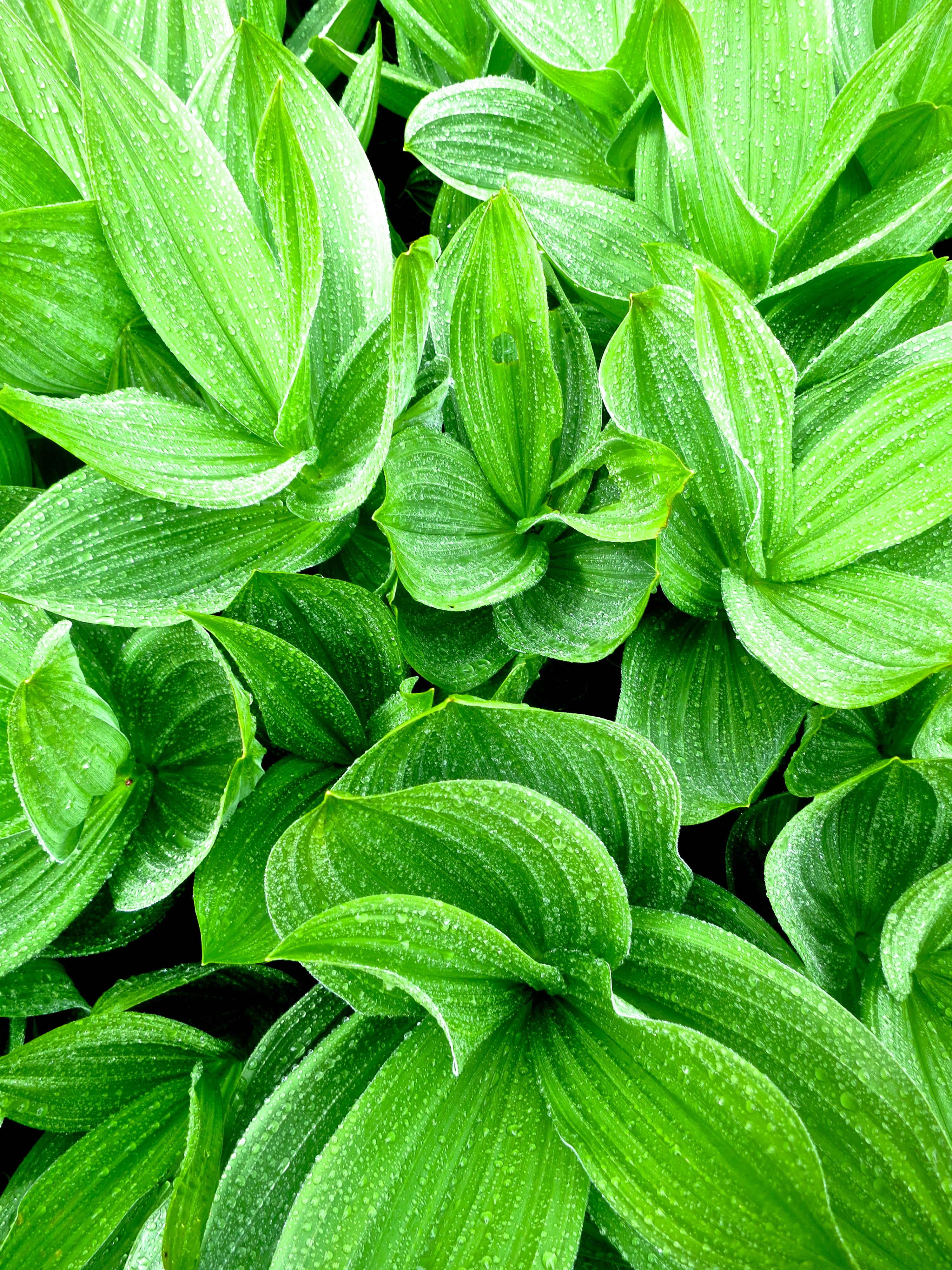
Corn Lilies in red Butte Wilderness.

We also found corn lilies growing nearby in a meadow where the Goff Trail joins the Butte Fork Trail.

Trillium growing in Red Buttes Wilderness.

As we did this trillium.

Tree blaze carved into a cedar tree in the Red Buttes Wilderness.

Ever hear the phrase, “Where in the blazes are we?” Foresters, cowboys and other outdoors people used to mark their trails by cutting out this symbol in a tree, which is known as a blaze. I’ve followed them through forests from Maine to Alaska, often over trails that have long since grown over.

Curt Mekemson backpacking in the Red Butte Wilderness.

It was a tad wet in the cedars, as this photo by Peggy demonstrates.  The bottle on the left is filled with wine, BTW. It helps assure that Peggy will follow me up the mountain. (grin)

Peggy Mekemson stands on trail in Red Buttes Wilderness.

The trail between the cedars and Lake Azalea almost disappeared on one occasion. Peggy is standing on it.

Azalea Lake in Red Buttes Wilderness.

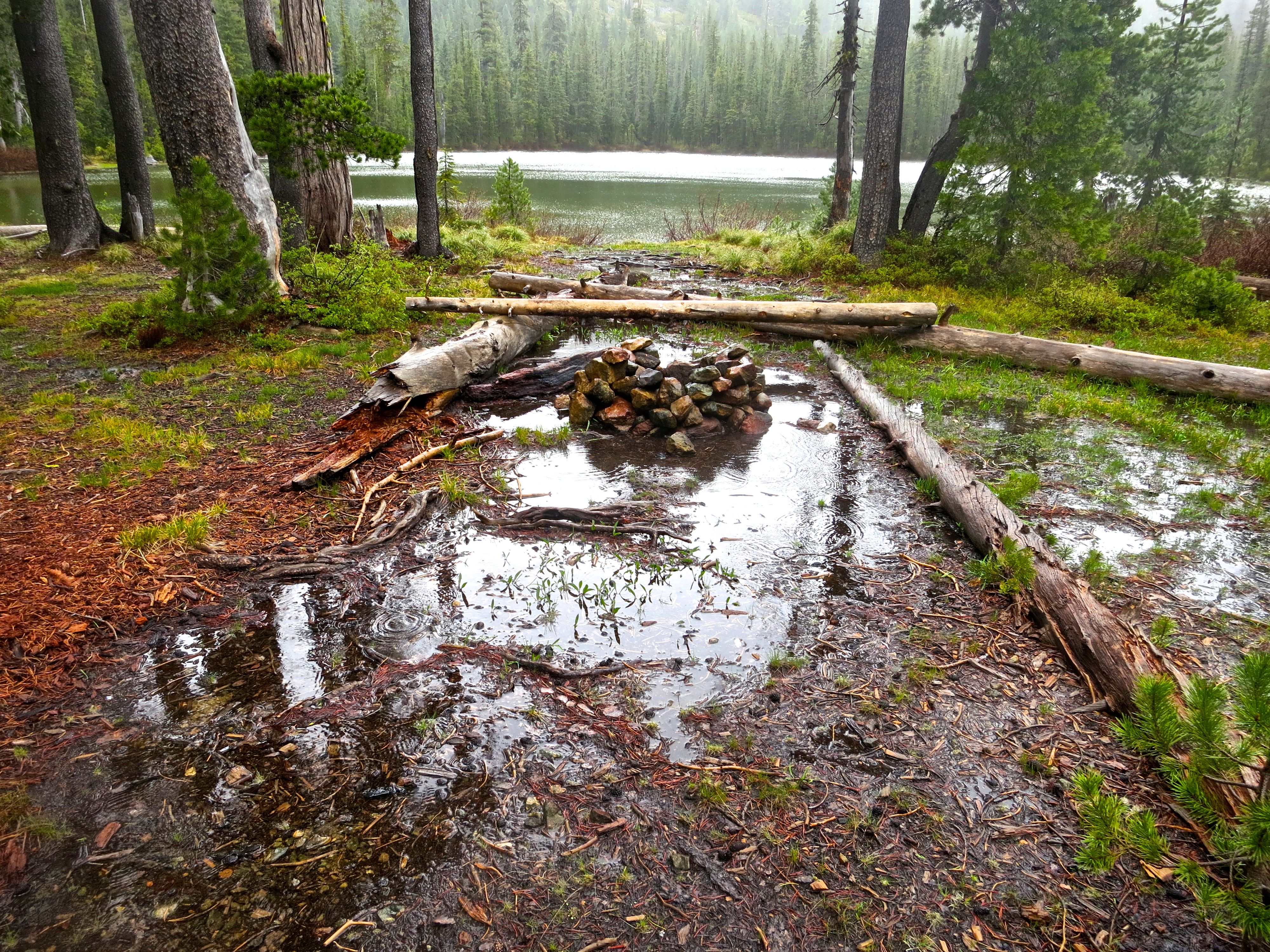
We finally reached Azalea Lake. Have I mentioned it was wet out?

Curtis Mekemson camping in the Red Buttes Wilderness.

We found a drier, more protected camp farther away from the lake and settled in. I’ve carried the coffee cup backpacking for 45 years. Once it spent the winter buried under 20 feet of snow. (Photo by Peggy Mekemson.)

Azalea Lake in the Red Buttes Wilderness.

The sun rewarded our trip the next morning by providing a lovely view of Lake Azalea. It was time to pack up and head back for civilization.

Curtis and Peggy Mekemson in Red Buttes Wilderness.

Selfie of two happy campers at trails end who have seen some beautiful country and proven to themselves that they can still put on backpacks and disappear into the wilderness.