In 1980, the American Lung Association of Washington invited me to help plan a 500 mile bike trek to Mt. St. Helens as a fund raiser. At the time I was serving as the national consultant to the American Lung Association on long distant backpacking and bike treks as fundraisers. I had created the concept and written the how-to manual. I flew up to Seattle and worked with the staff in planning the trek. As often happened with events I helped organize, they invited me to go along. Tempting. The trek covered a lot of beautiful country and looked like great fun, but I was supposed to be in Alaska helping to organize a backpack trek across the Kenai Peninsula around the same time. The rest is history.
On May 18, several weeks before the trek was to take place, Mt. St. Helen’s blew her top. It was fortunate that it hadn’t happened in the middle of the event! ALA Washington quickly arranged another route. This isn’t the end of the story, however. I was flying to Alaska six weeks after the explosion and the pilot flew us over the mountain. The devastation was incredible. It has lived in my mind ever since. In 2013, Peggy and I took another trip up to Alaska, this time driving the Alaska Highway. On the way back we stopped off at Mt. St. Helens. I did a post at the time. In honor of the 40th Anniversary of the eruption, I am reposting it today.
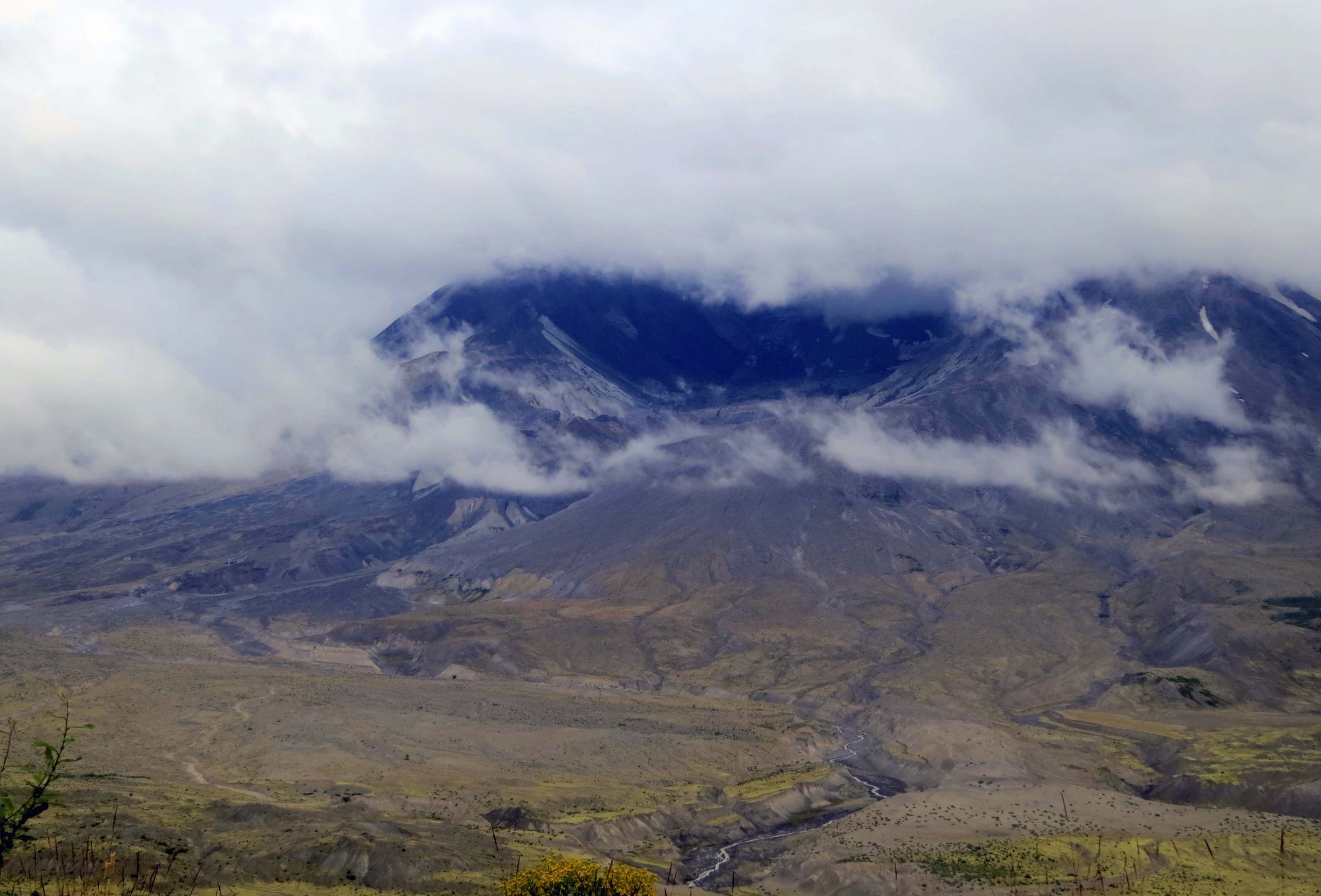
It was in early July 1980 and I was flying north to help plan a hundred-mile fundraising backpack trek in Alaska. The pilot deviated from his route to show us Mt. St. Helens.
It was total devastation, a scene from Dante’s Hell.
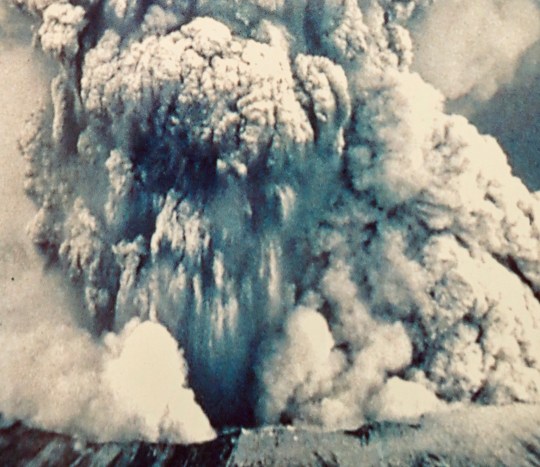
A month and a half earlier, on May 18, Mt. St. Helens had blown her top, literally. On May 17 the mountain had stood 9677 feet tall; on May 19 it stood at 8,364 feet. The mountain had a history of being the most active volcano in the Cascade Range of volcanoes— mountains that dominate the skyline of the northwestern part of the US and are part of the ring of fire that stretches around the edges of the Pacific Ocean.
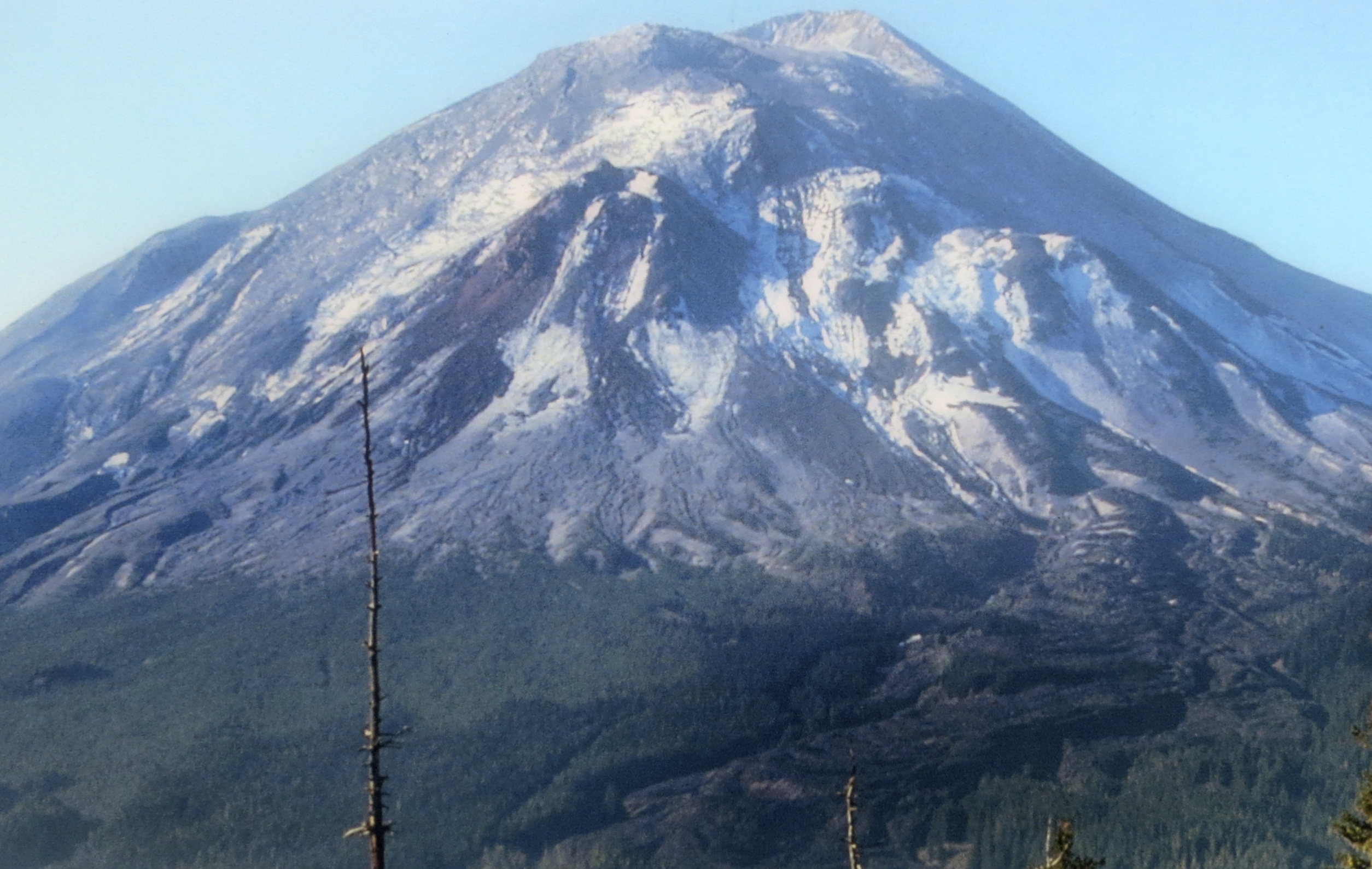

Peggy and I call the Cascade Range home, now. In fact I have climbed two of the mountains, Shasta and Lassen, and we see a third, Mt. McLoughlin, every time we drive the 30 miles into town for groceries. Normally we think of the mountains as dormant and a beautiful addition to our region. But all are capable of awakening. And all are capable of spewing disaster.
Weeks before Mt. St. Helens blew up, she had been showing signs of an imminent explosion. Couched between the two major urban areas of Portland and Seattle, the area had become a mecca for tourists, volcanologists and, of course, the media. Worldwide attention was guaranteed.
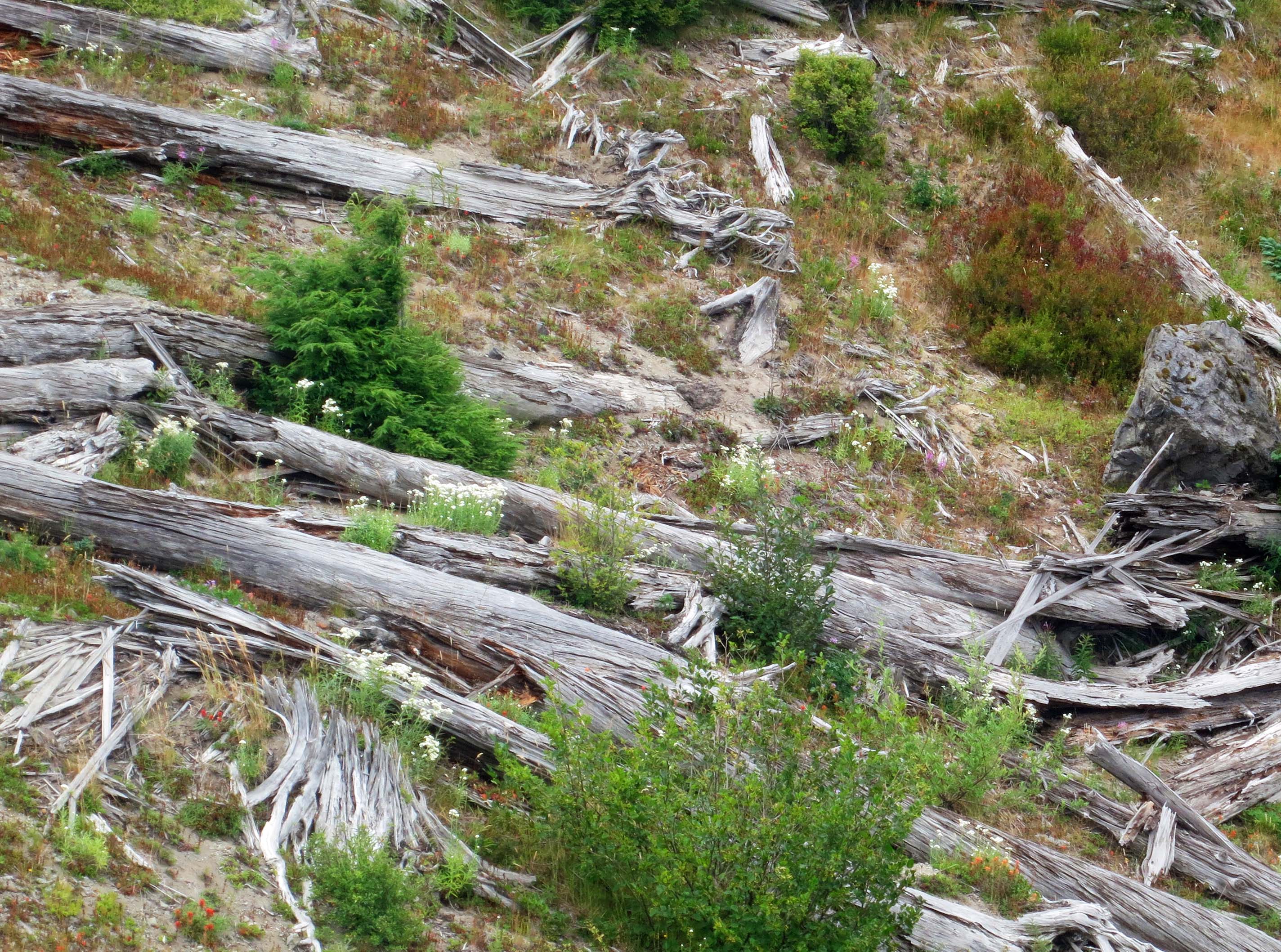
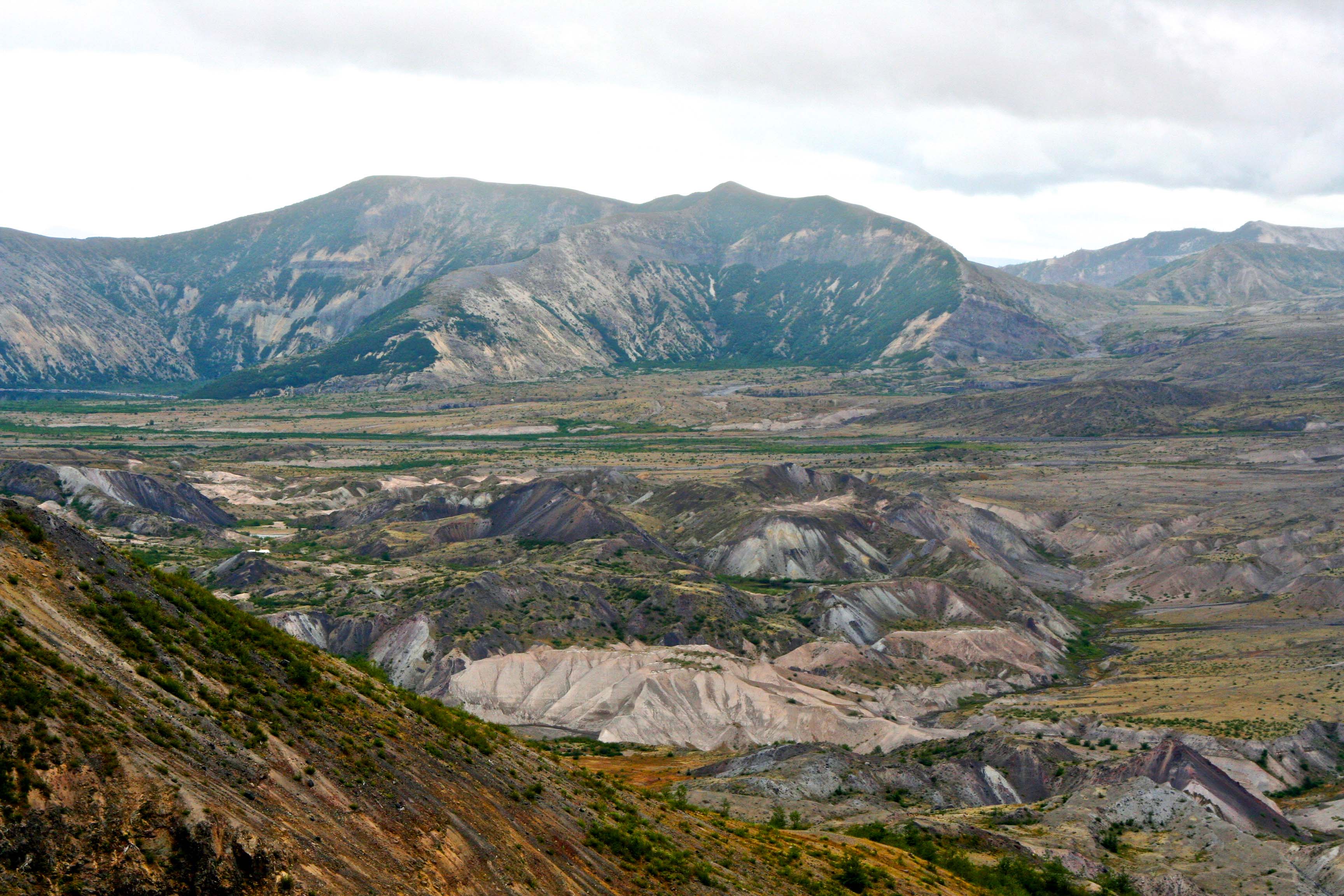
The explosion, when it came, was much more devastating than had been expected. A huge, lateral blast sent a cloud of dense, super hot steam filled with debris rolling down the mountain at 300 miles per hour and devastating an area of 230 square miles. Next to the volcano nothing was left. Starting at about seven miles, thousands of trees were snapped off at their base and laid down pointing outward. Further out, a narrow zone of trees had been left standing but the trees were scorched beyond recovery.
The side of the mountain that was blown away added to the disaster. Crushed rock and melted glacial ice joined with downed trees and rushed into Spirit Lake and down the Toutle River travelling at speeds up to 150 miles per hour. Hummocky deposits between 150 and 620 feet high were left behind.
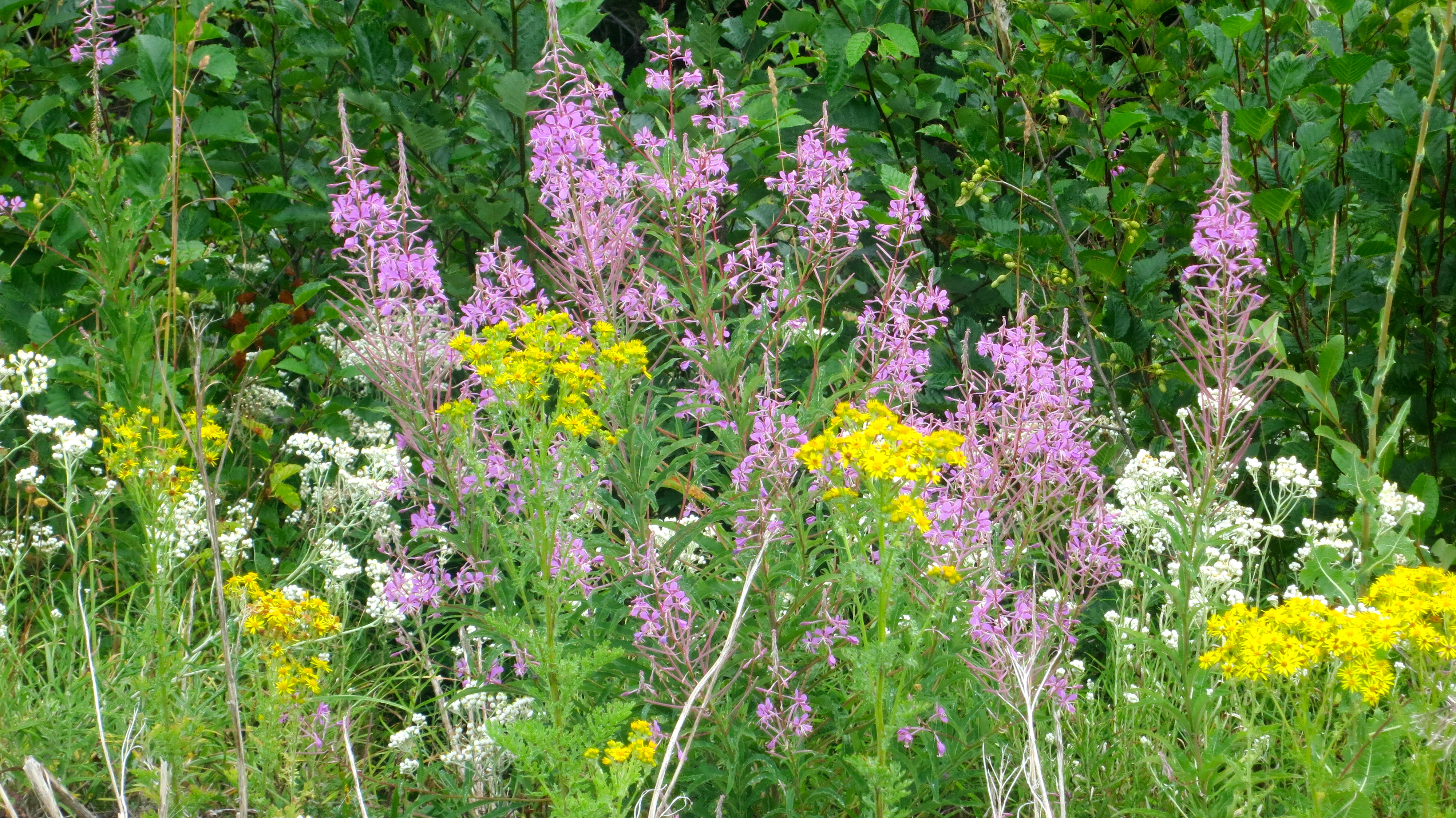
Today, Mt. St. Helens stands as a National Monument to educate people about volcanoes and the recuperative power of nature. Three visitor centers tell the story extremely well. Peggy and I have driven by the area several times and promised ourselves each time that we would visit. Finally, on our trip back from Alaska, we succeeded.





NEXT POST: Tomorrow we return to Venice.
 Wandering through Time and Place