Today, our focus series features ungulates. In case you don’t know what an ungulate is, like I didn’t, the short answer is that they are animals with hooves who walk or run on their toes. Did that help? They are divided into two categories: Odd toed ungulates (Perissodactyl) such as horses with one toe, and even toed ungulates (Artiodactyla) such as cows with two toes. The credit for having hooves goes to evolution. Horses, for example, started out with multiple toes just like us. They had 4 on the front and 3 on the back. Eventually, over millions of years, their claws/toenails expanded, grew together, and covered their toes. The evolutionary advantage being they could run a lot faster across grasslands and escape animals that wanted to eat them. A hoof is composed of keratin, the same fibrous protein that forms our toe and finger nails. It acts as a hard, protective casing that covers the toes and allows for weight-bearing, shock absorption, and traction— just like a good pair of running shoe works for our feet. But enough on the details. Let’s get to the fun part!
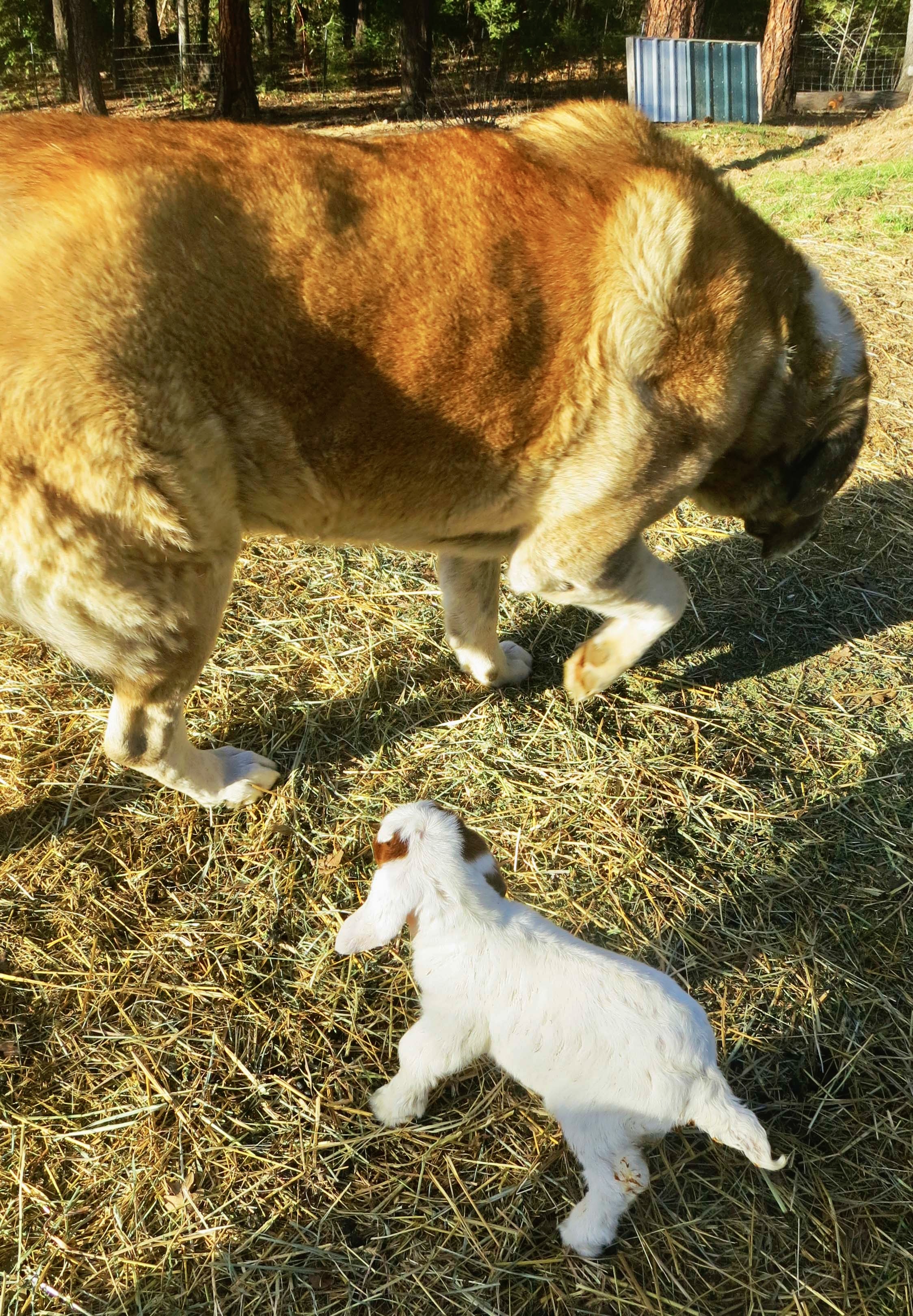
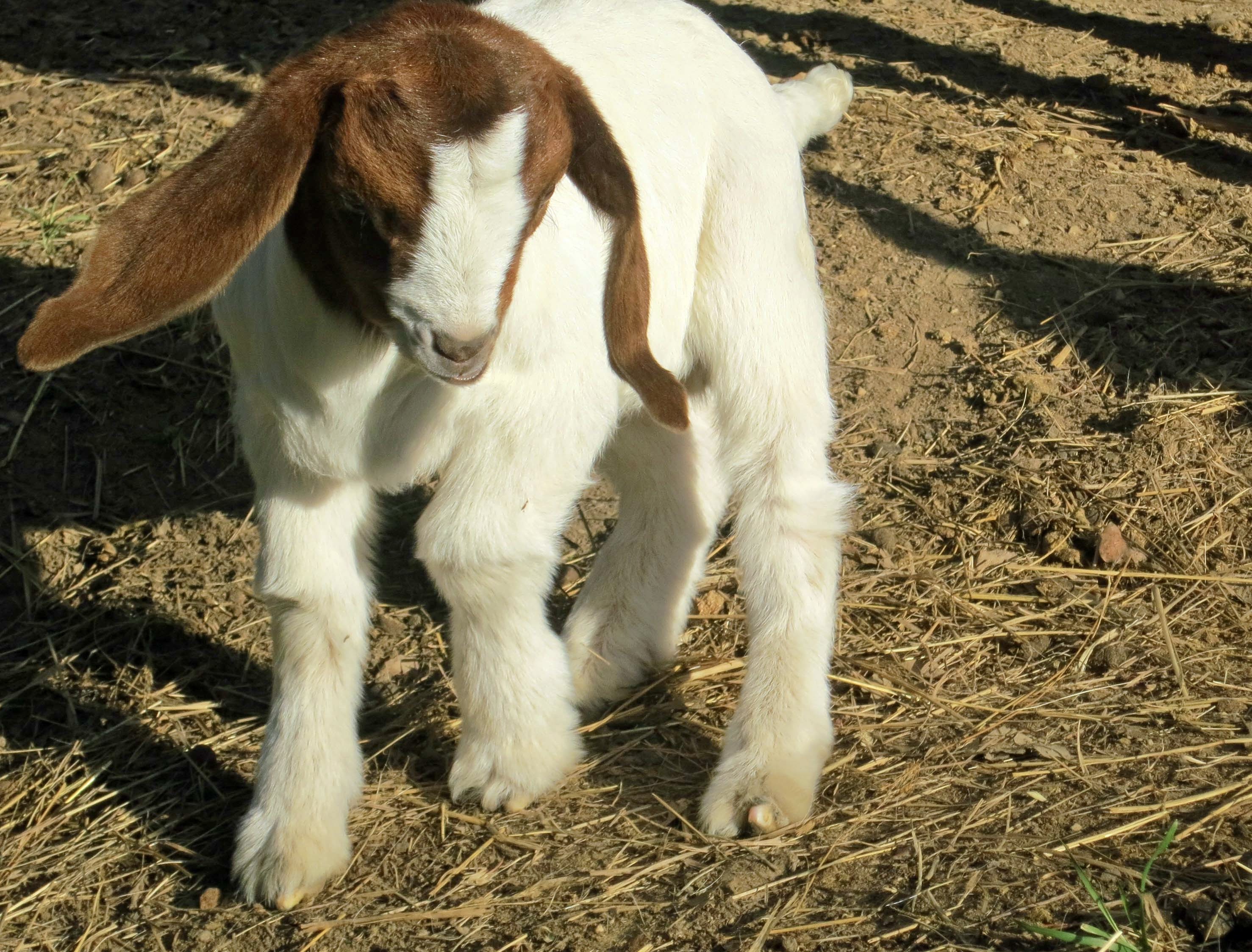
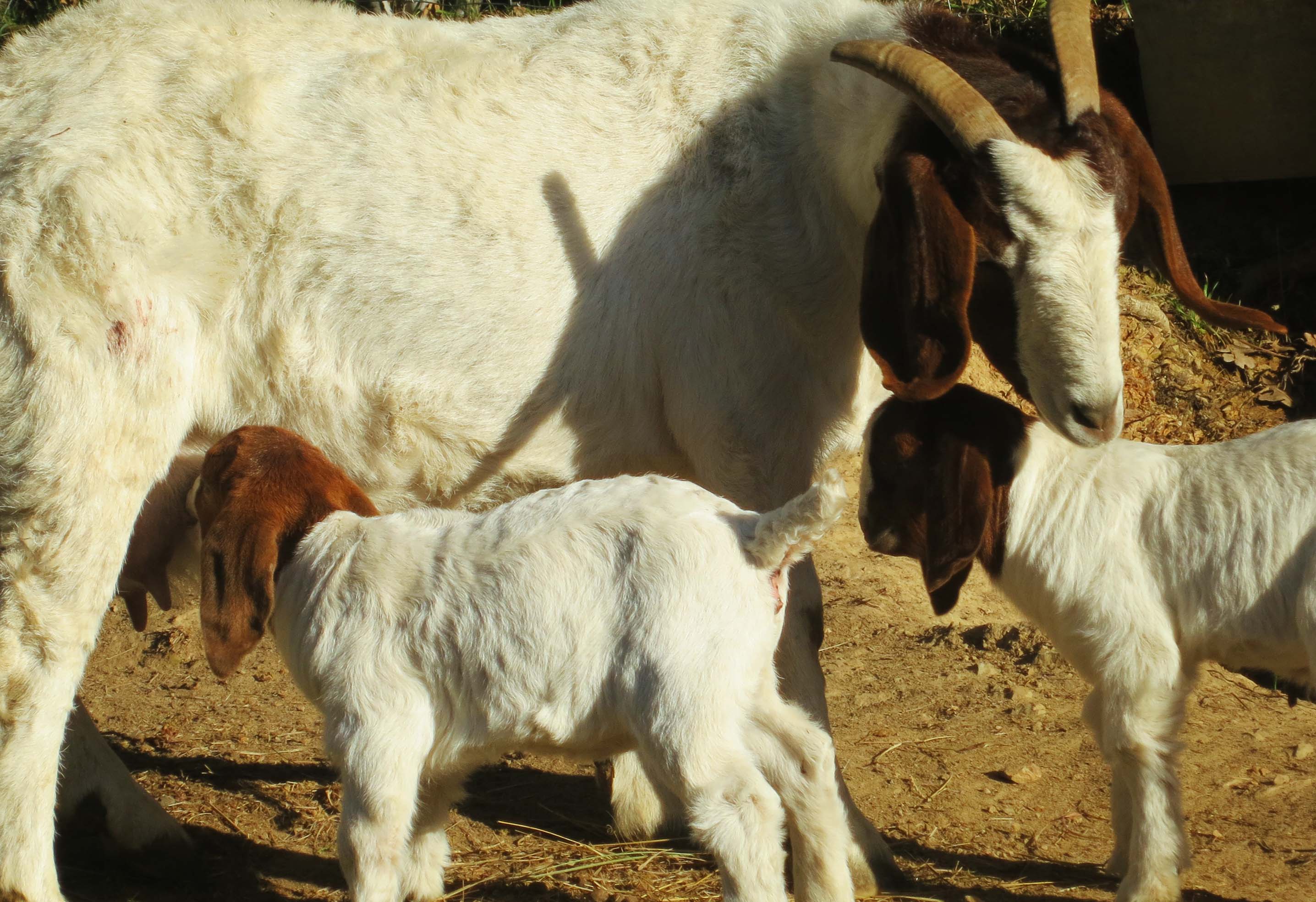
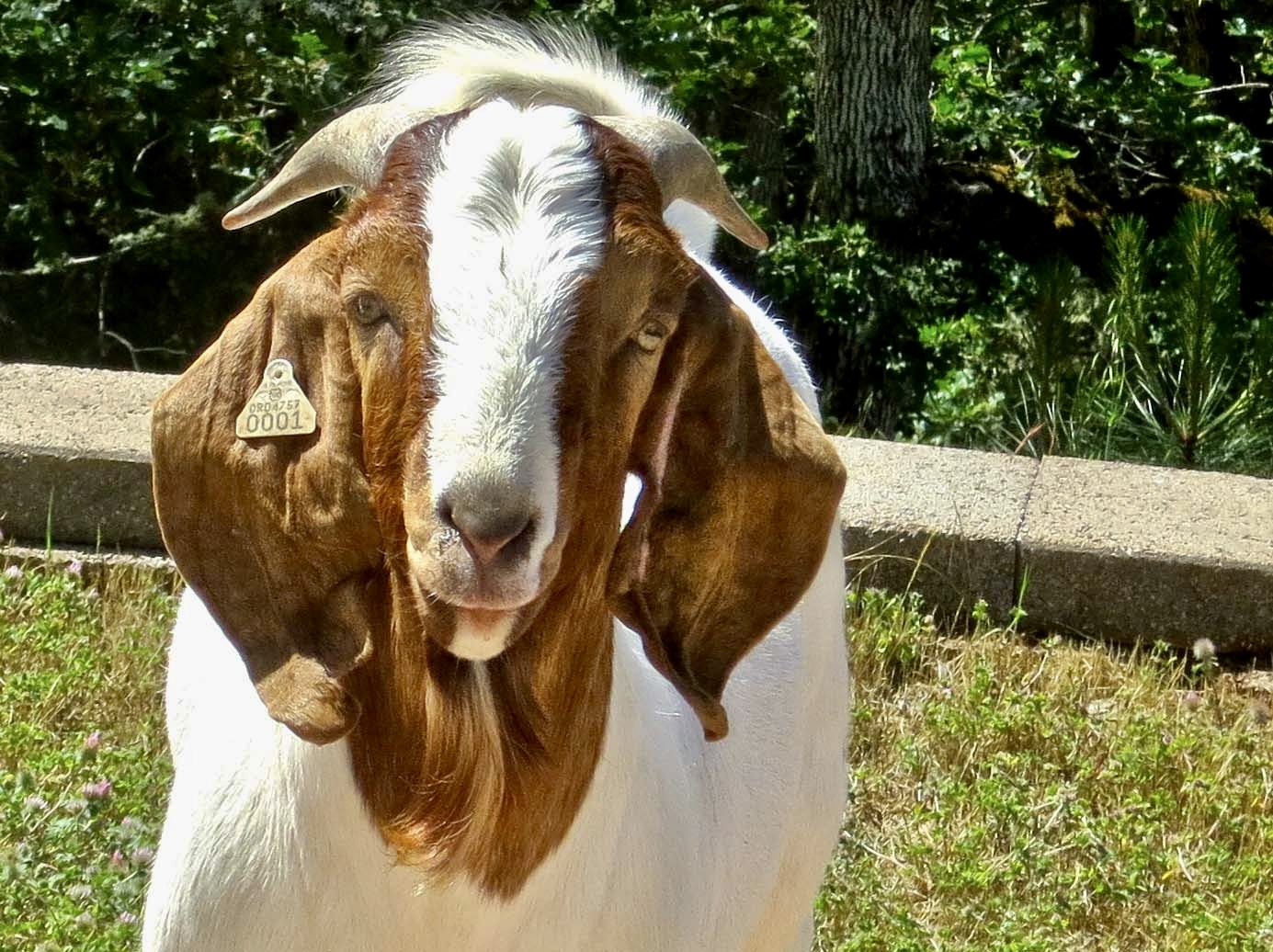
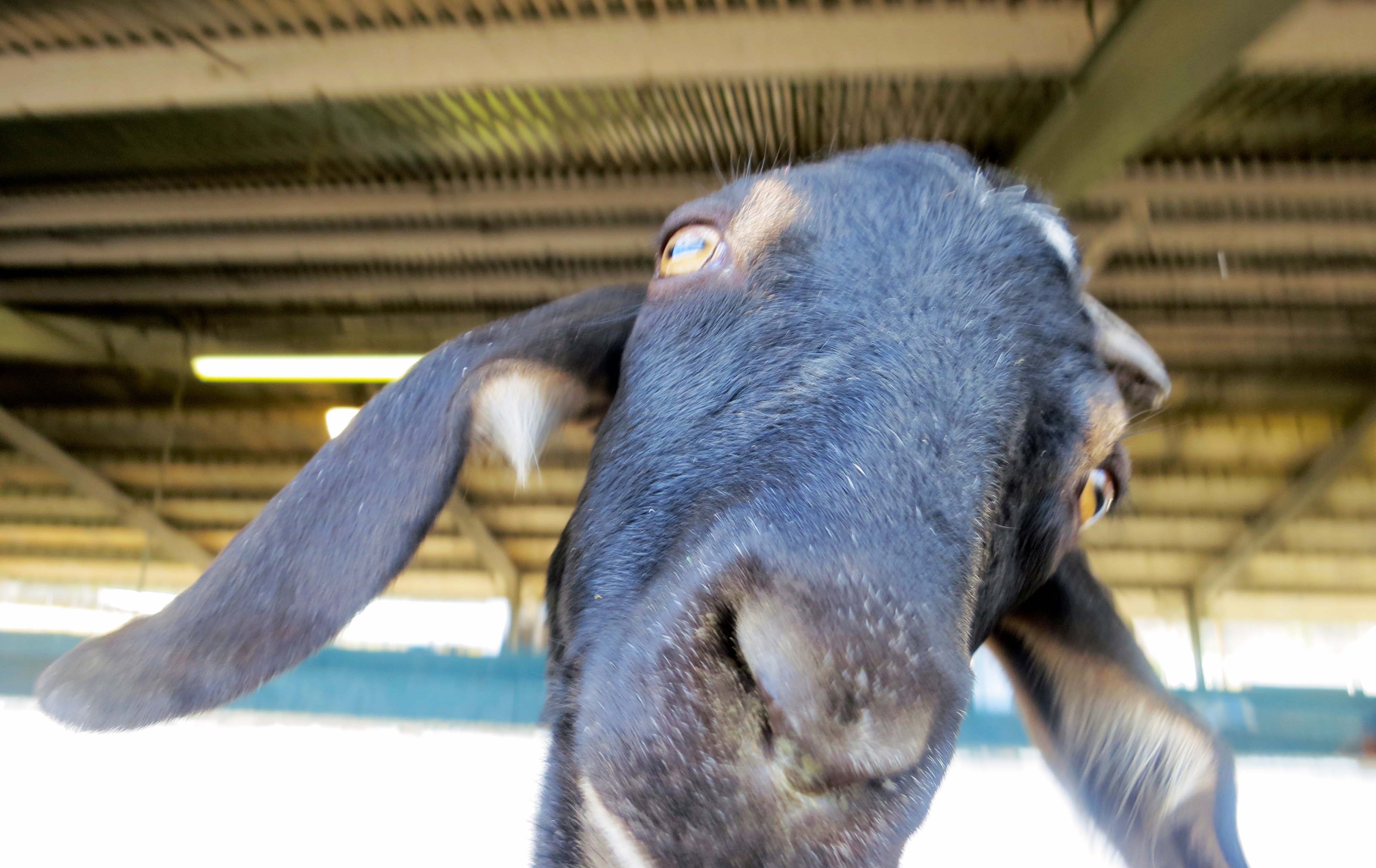
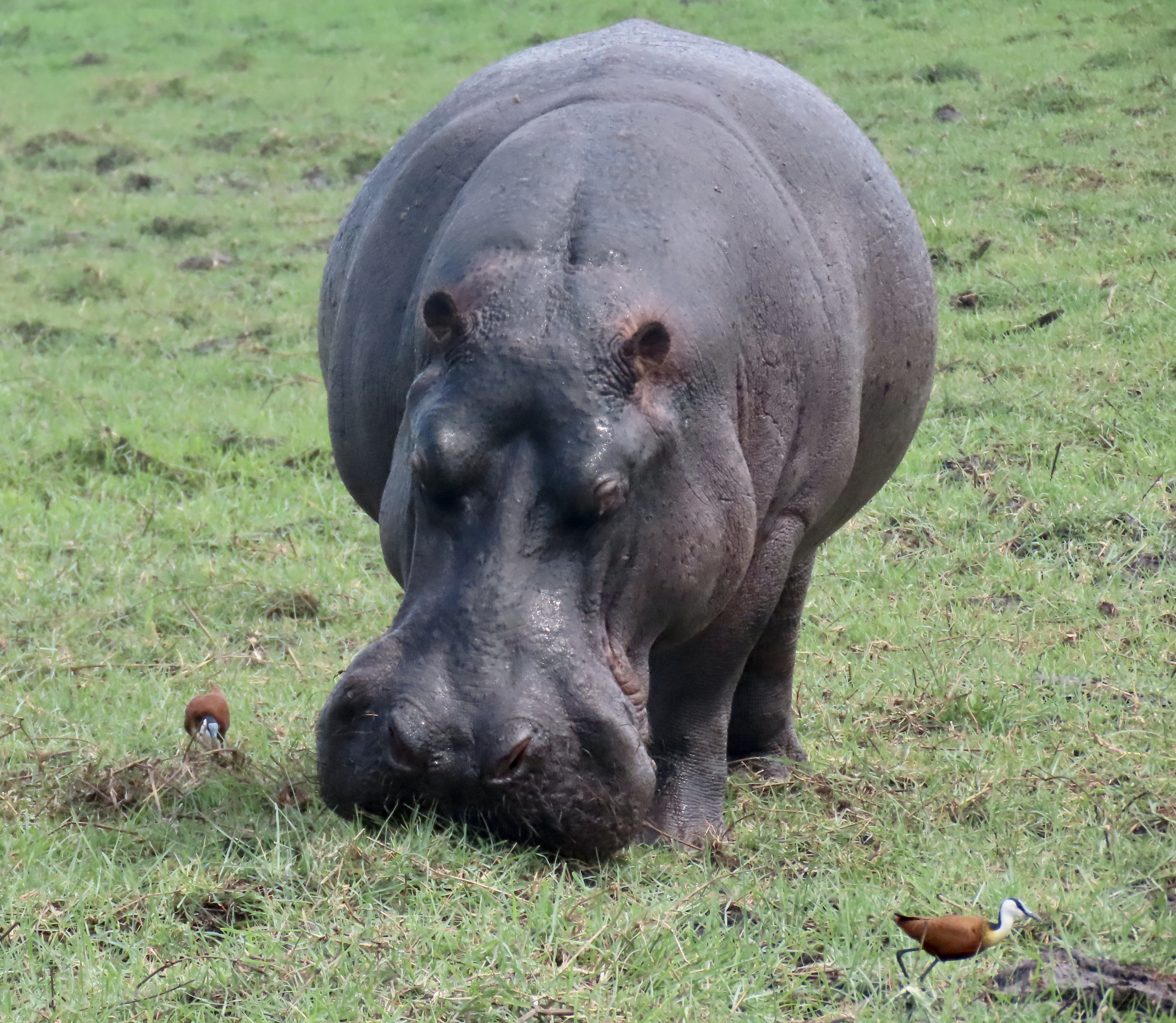
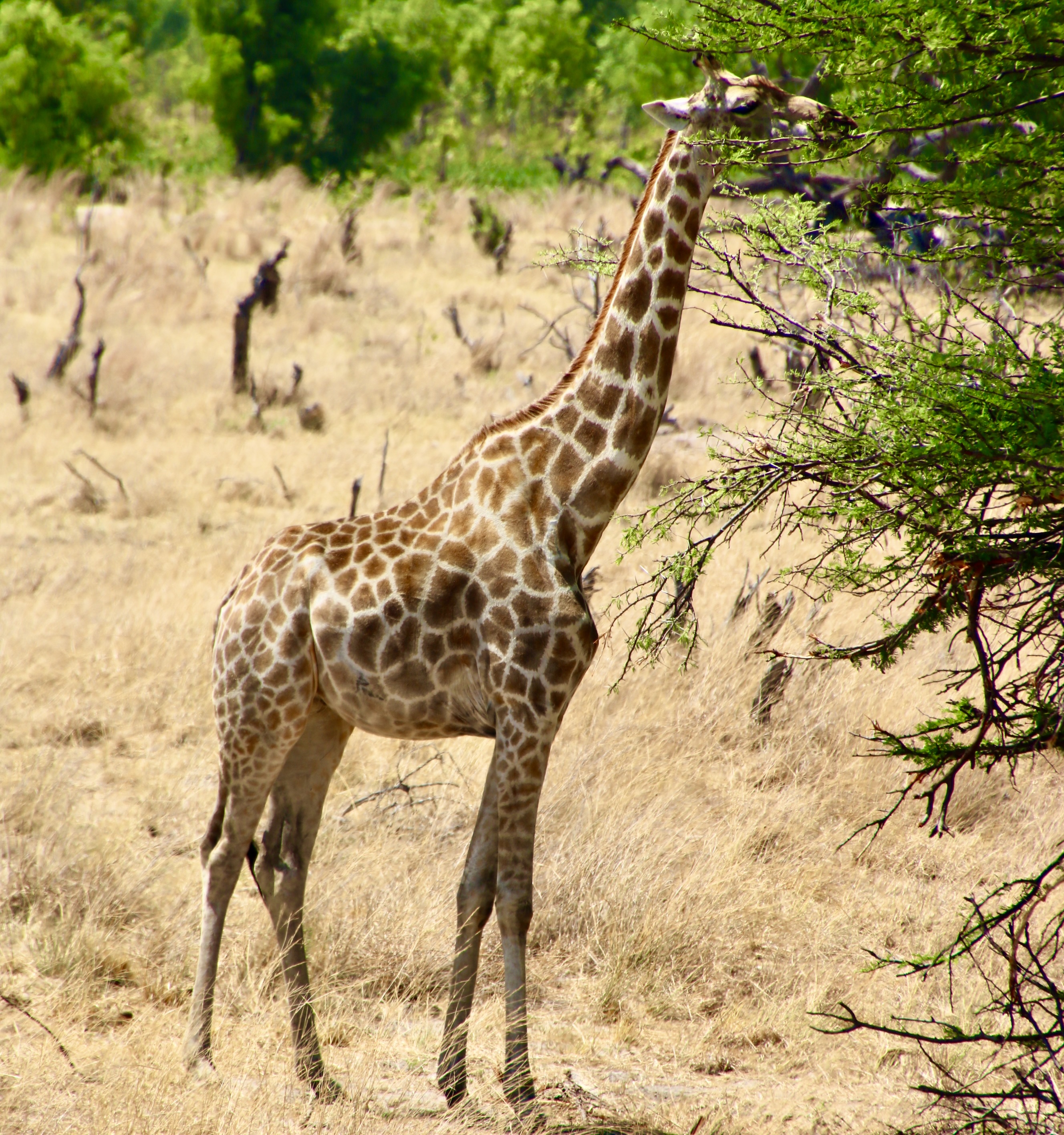
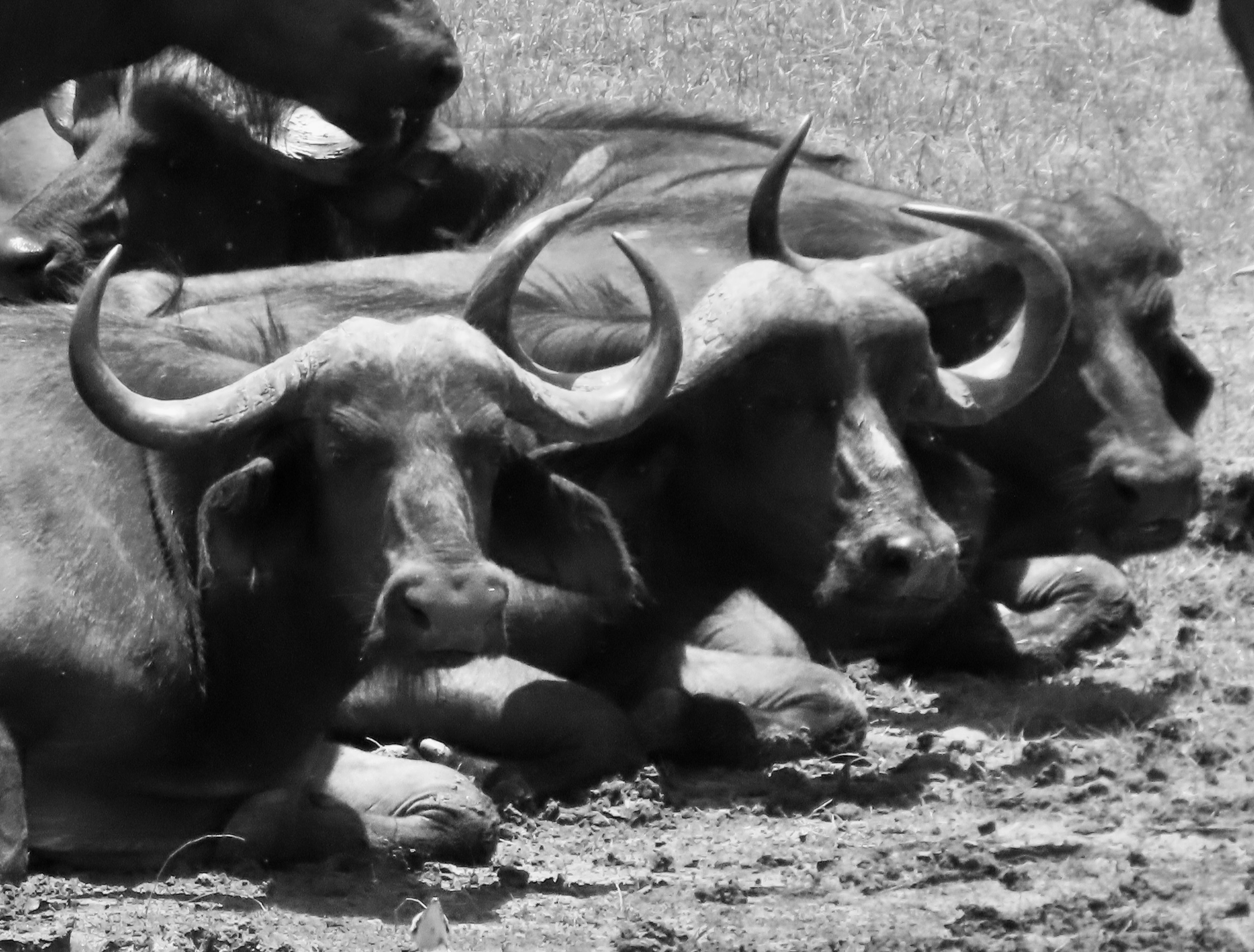
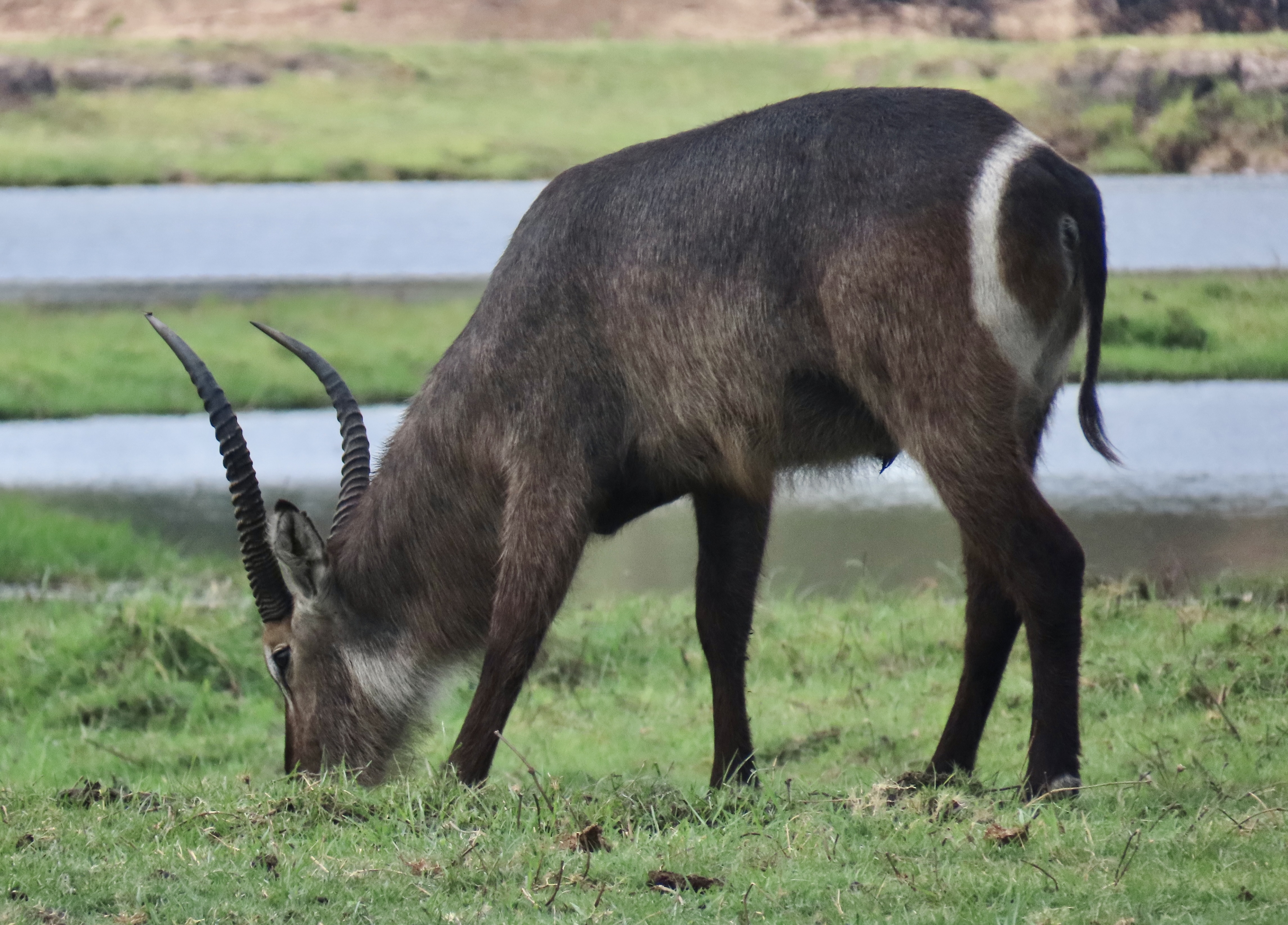
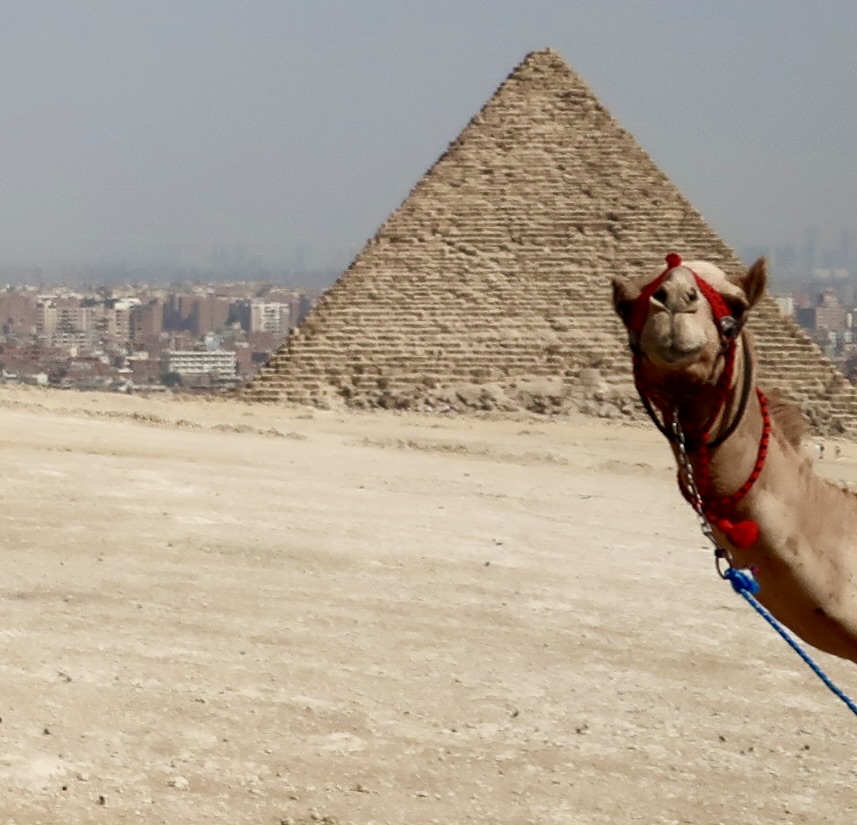
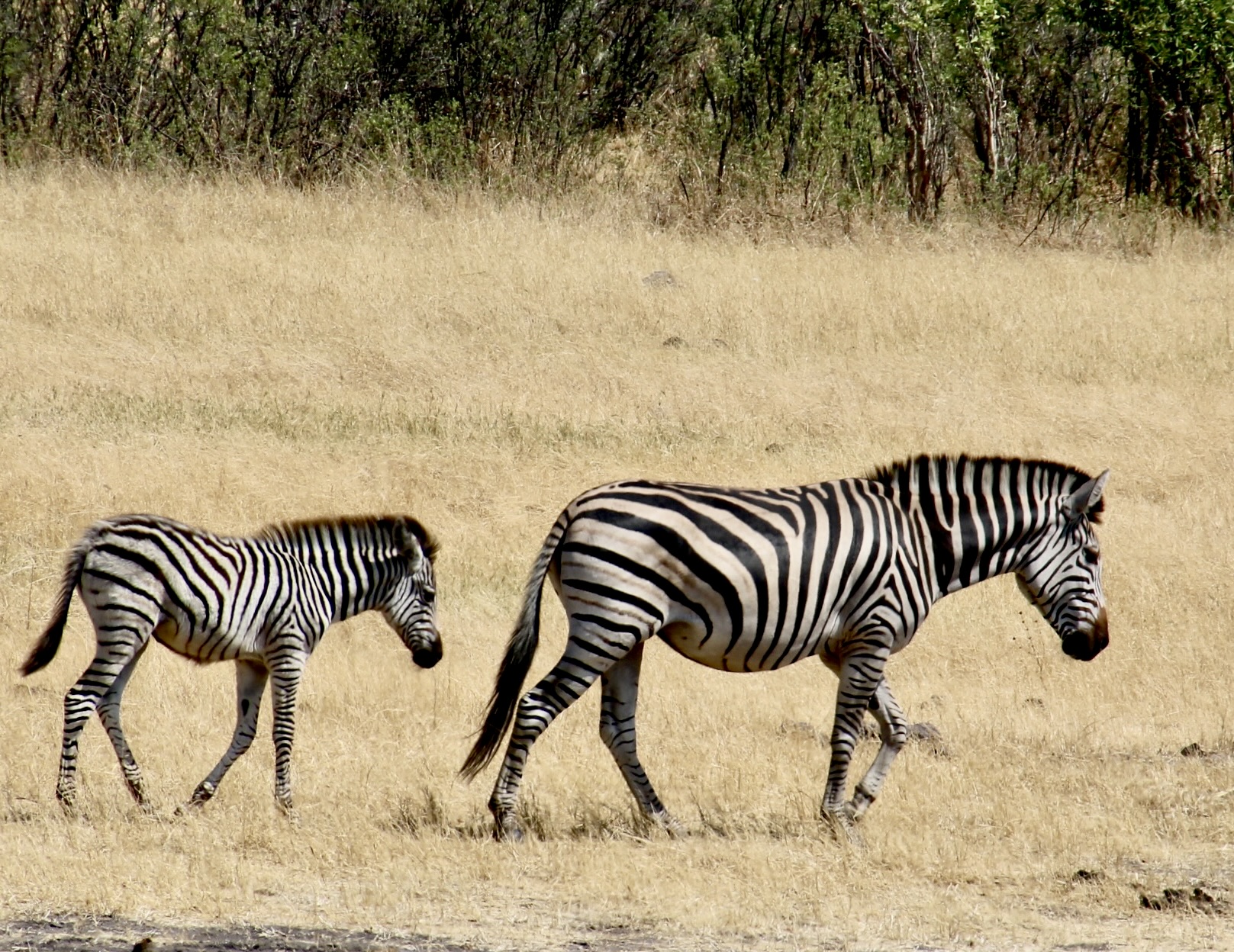
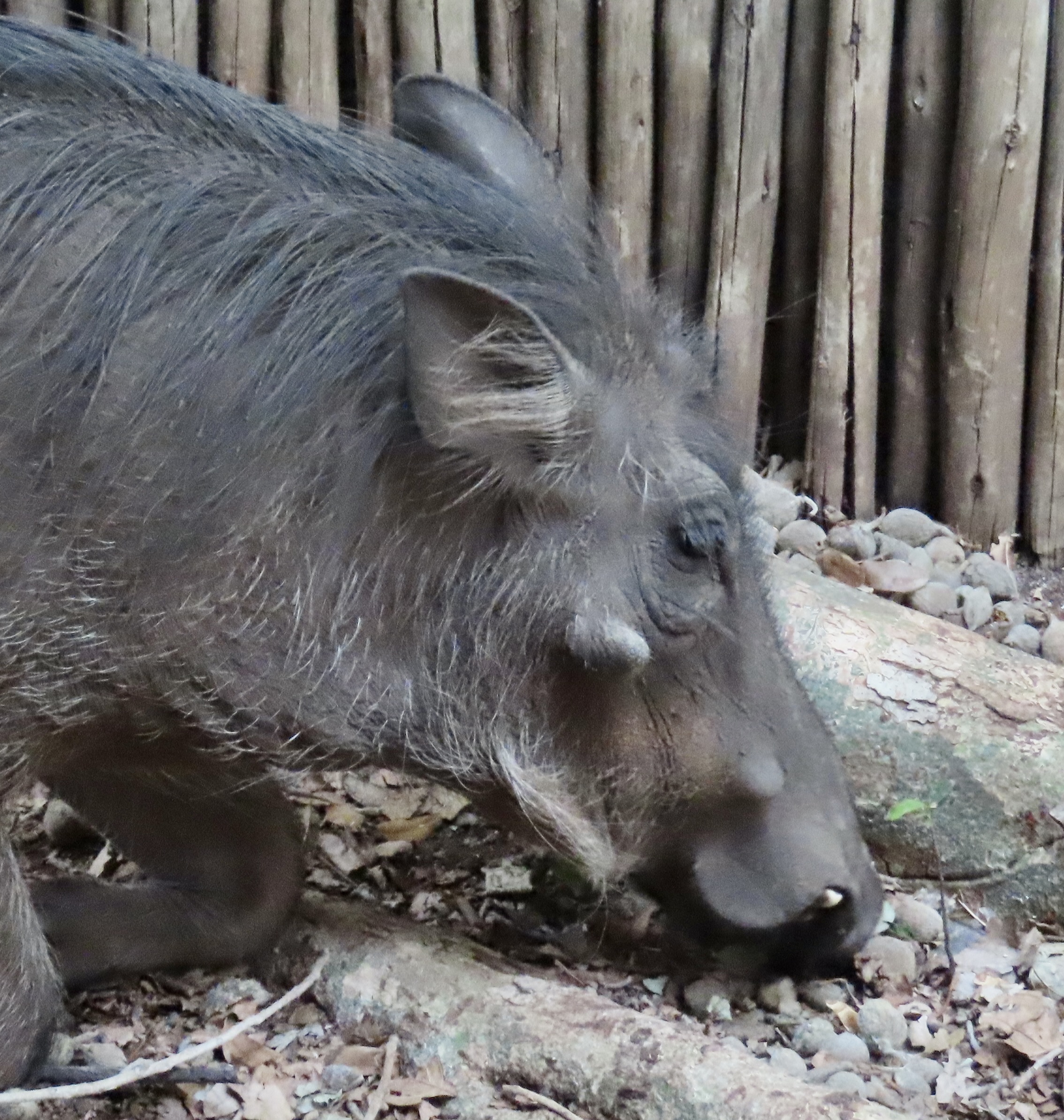
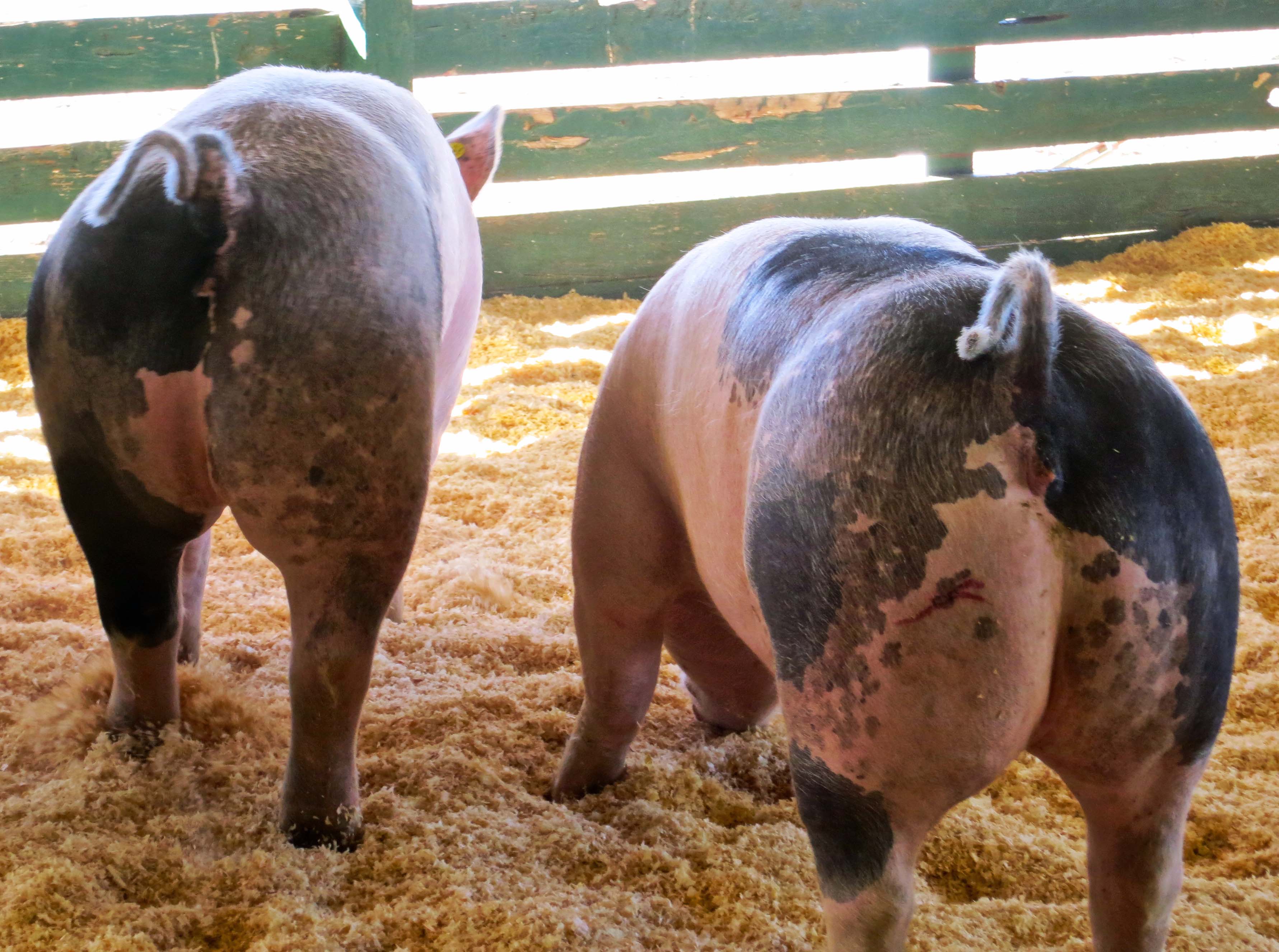
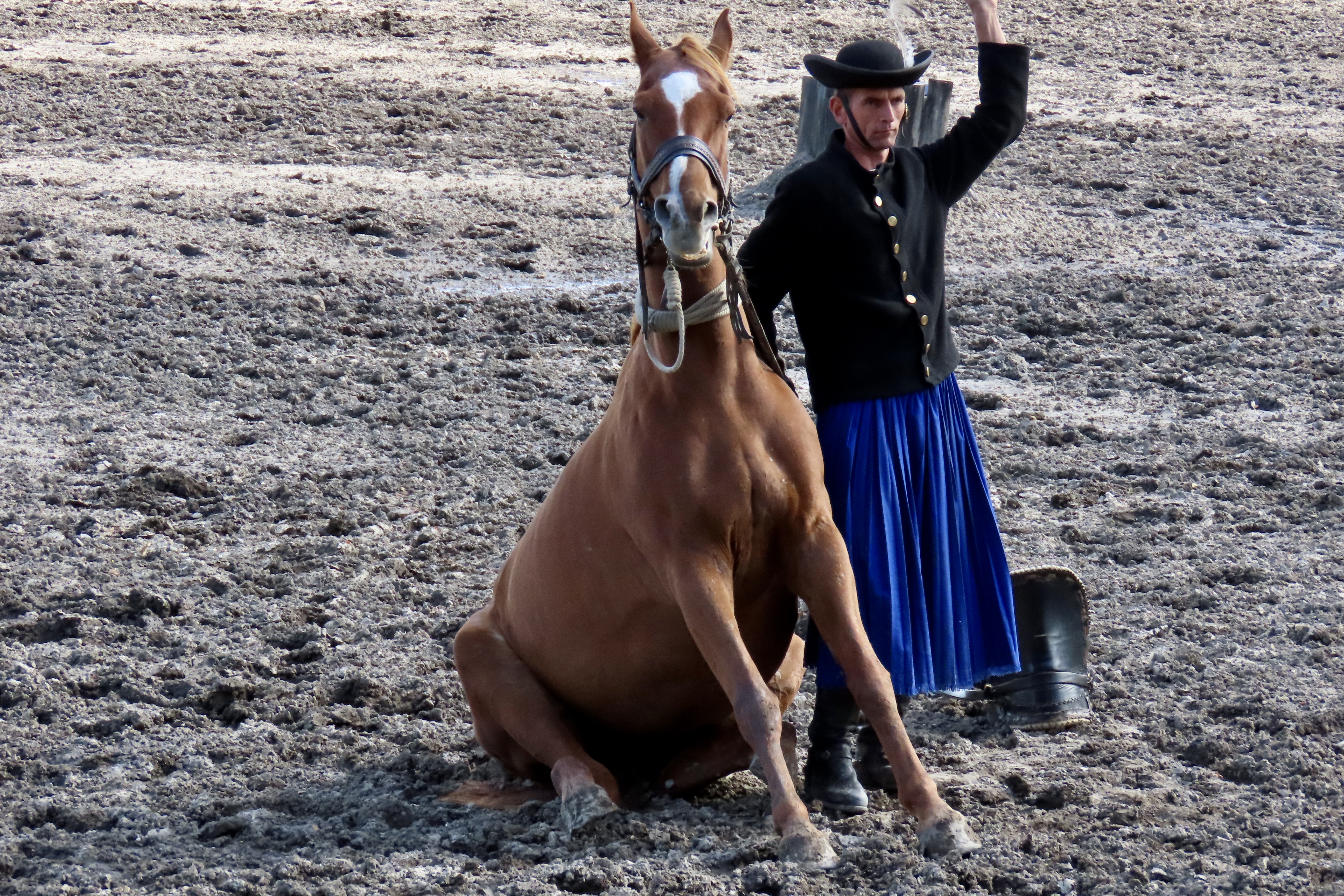
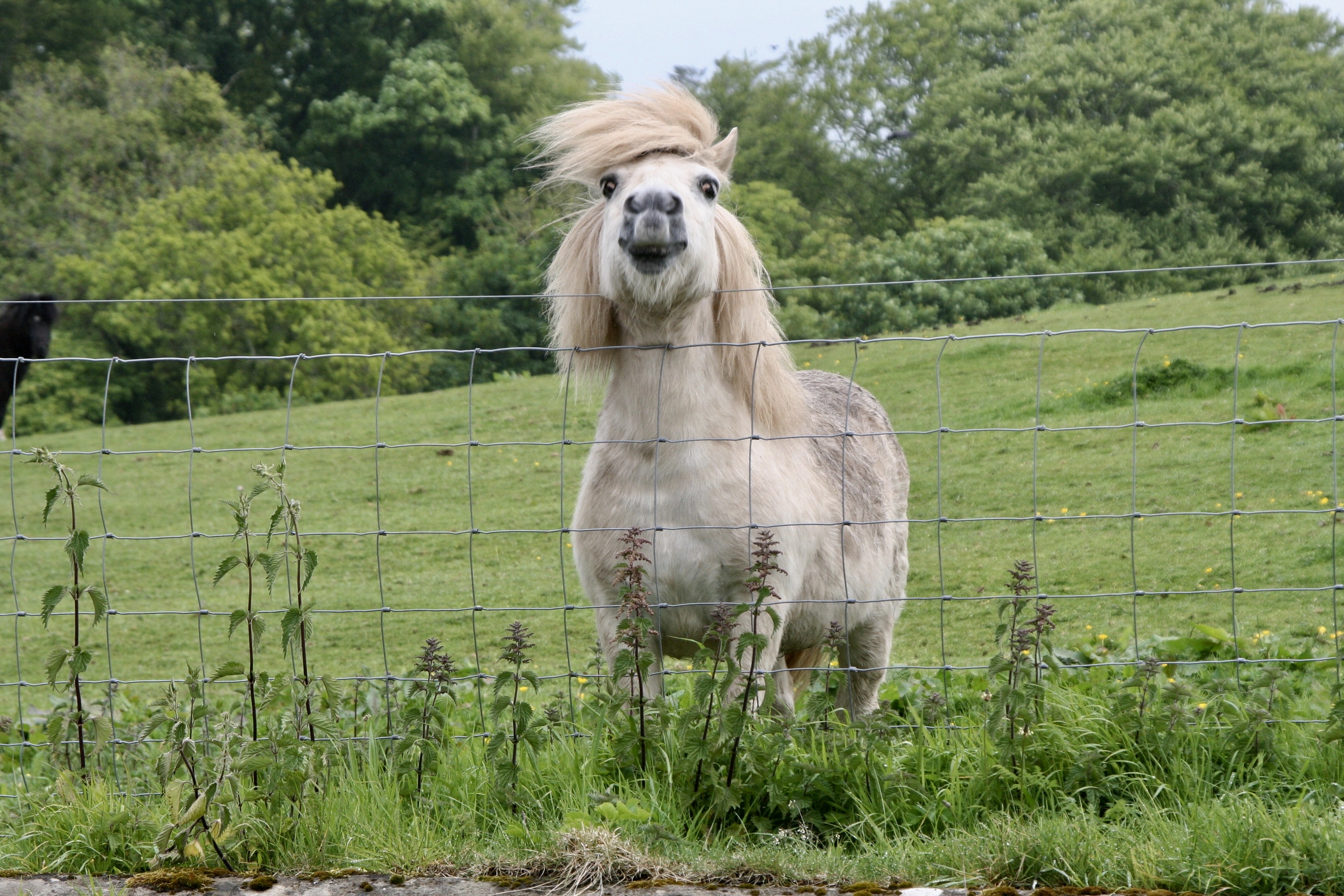
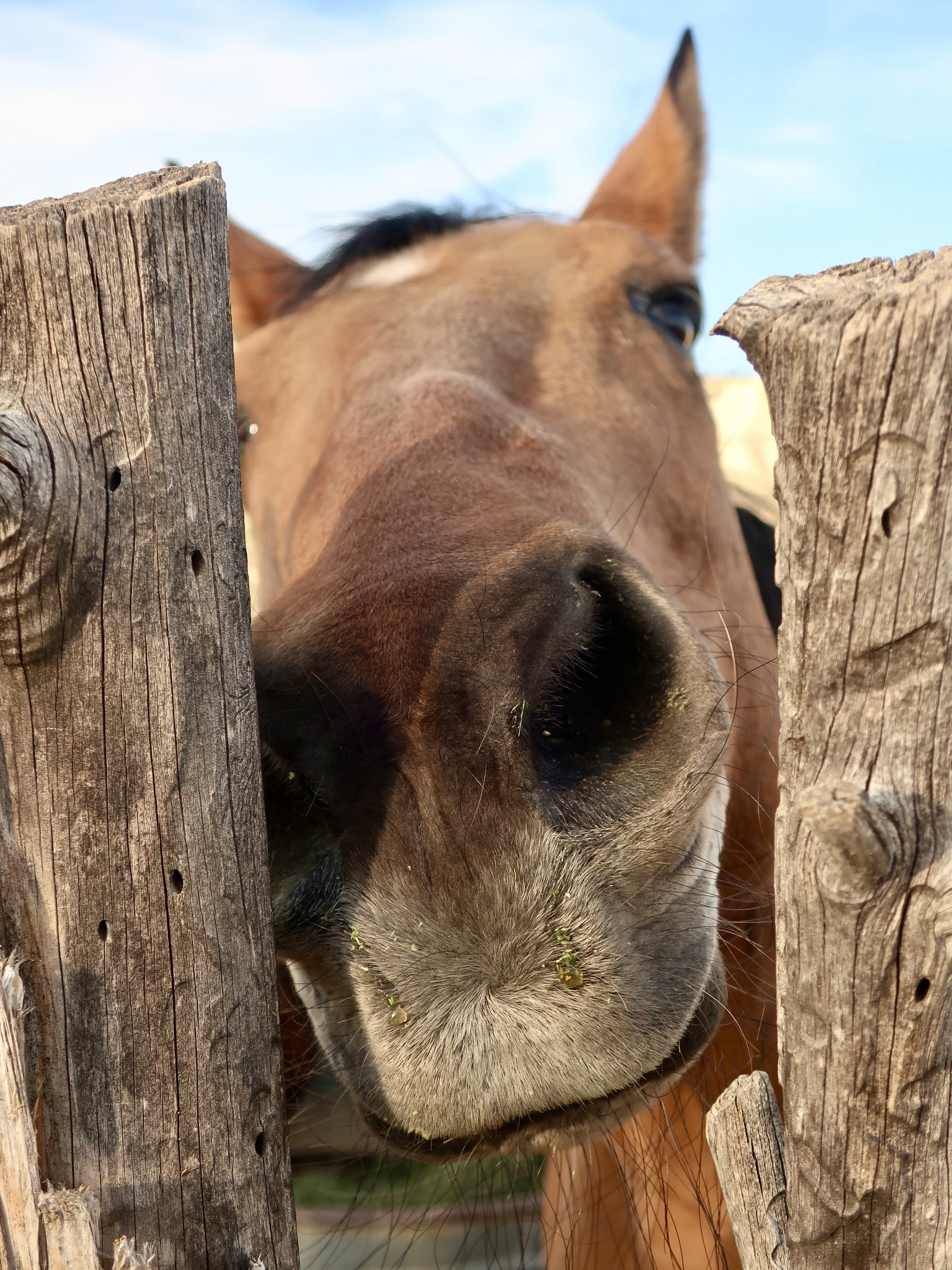
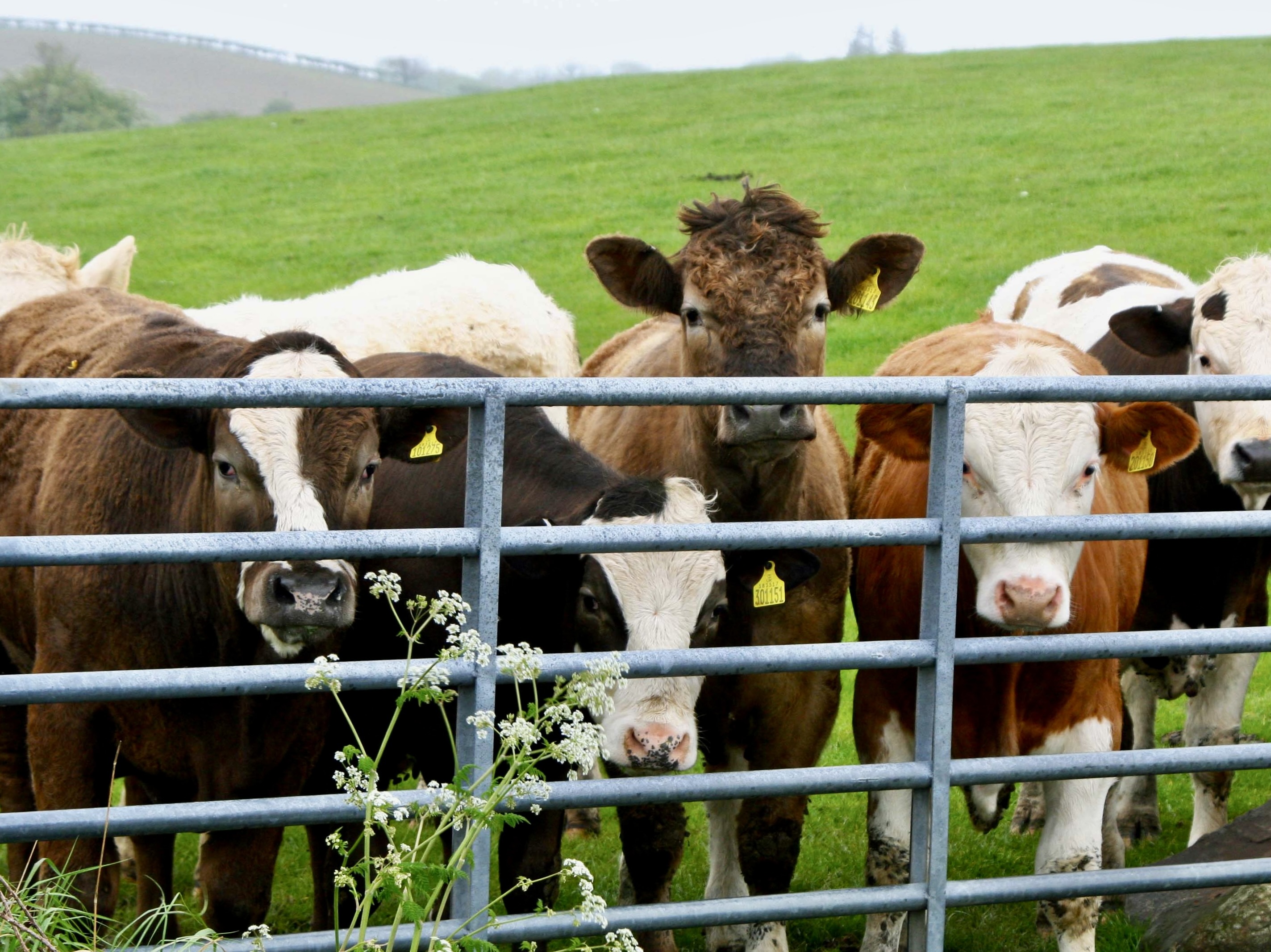
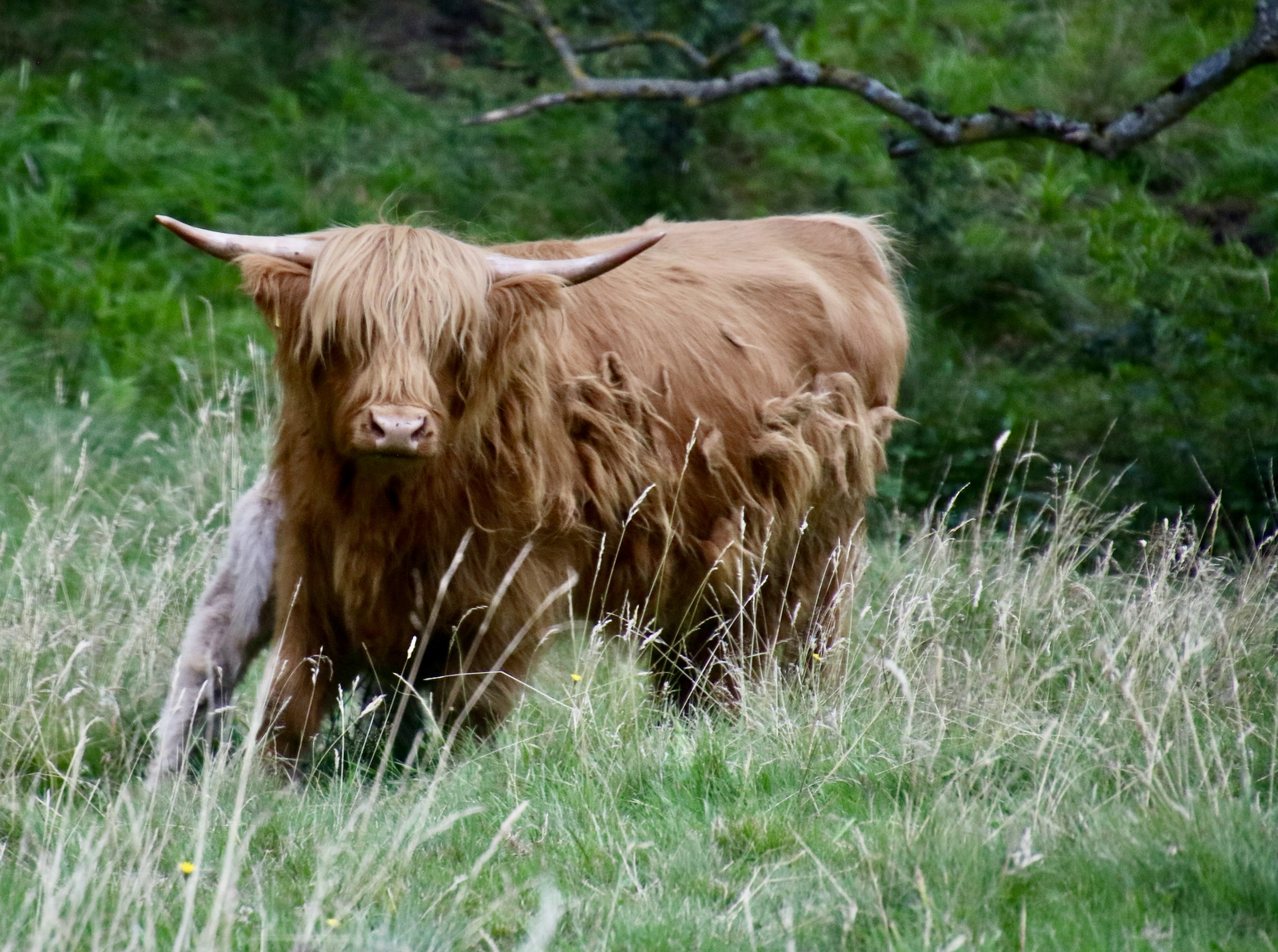
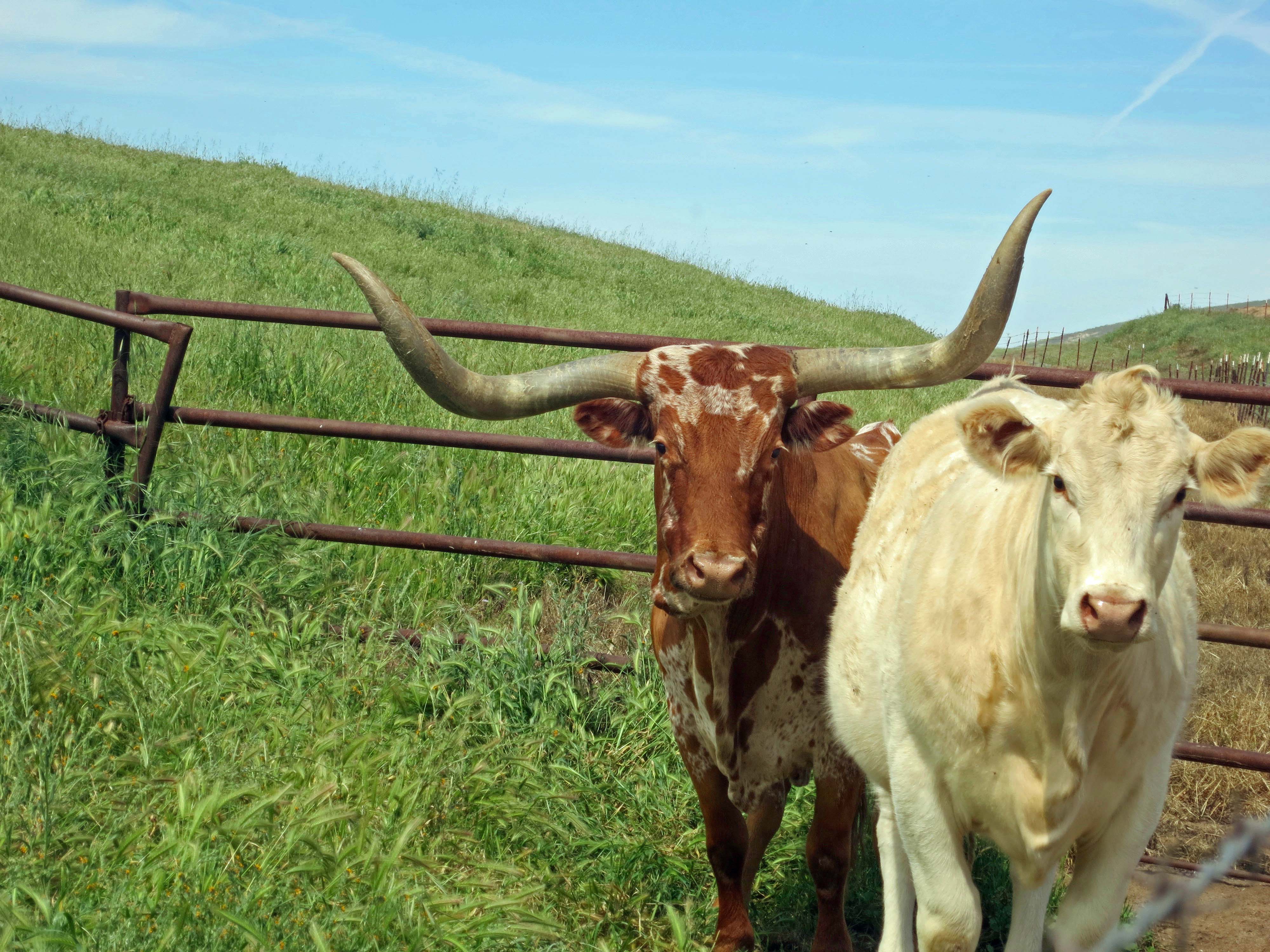
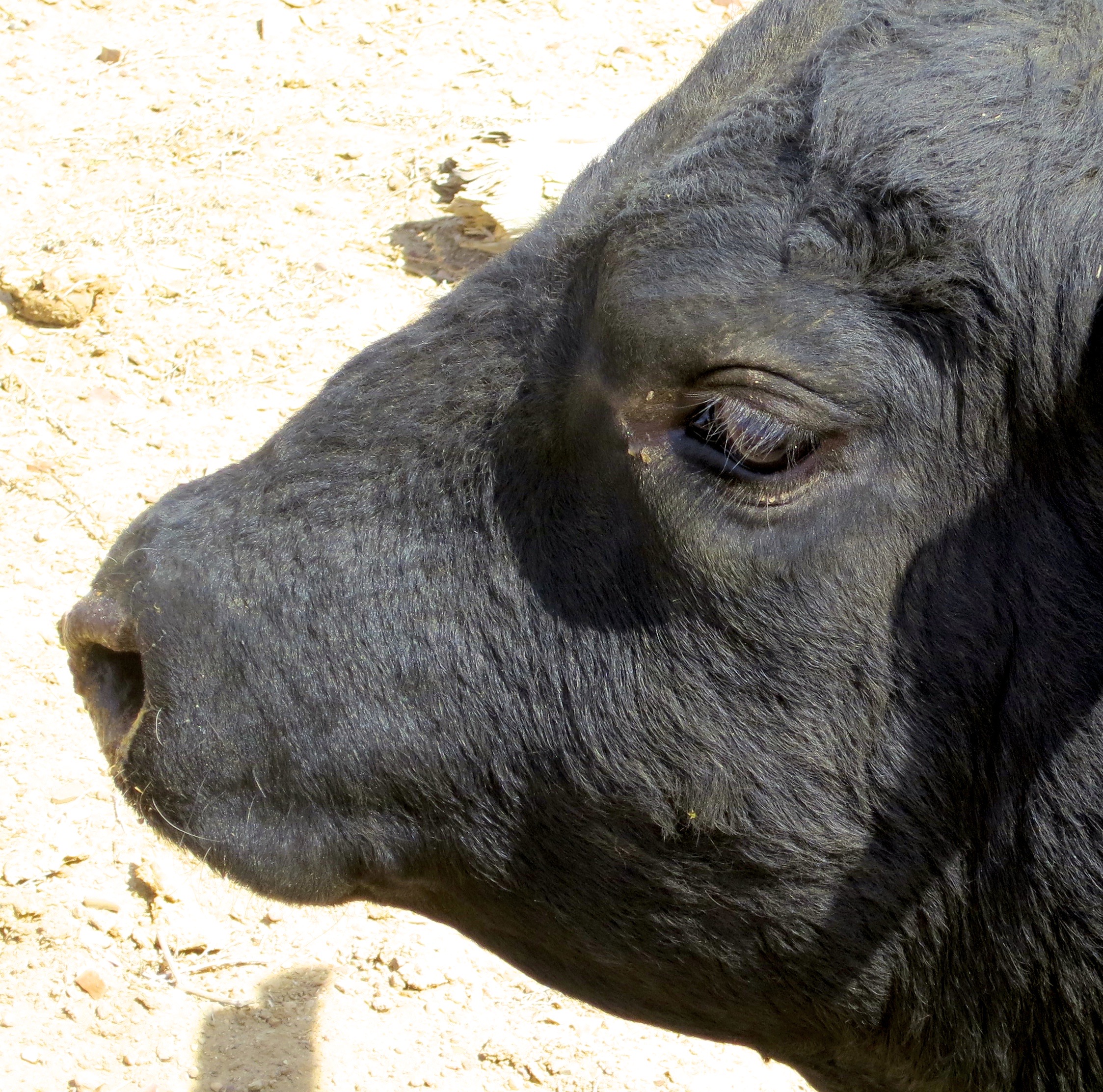
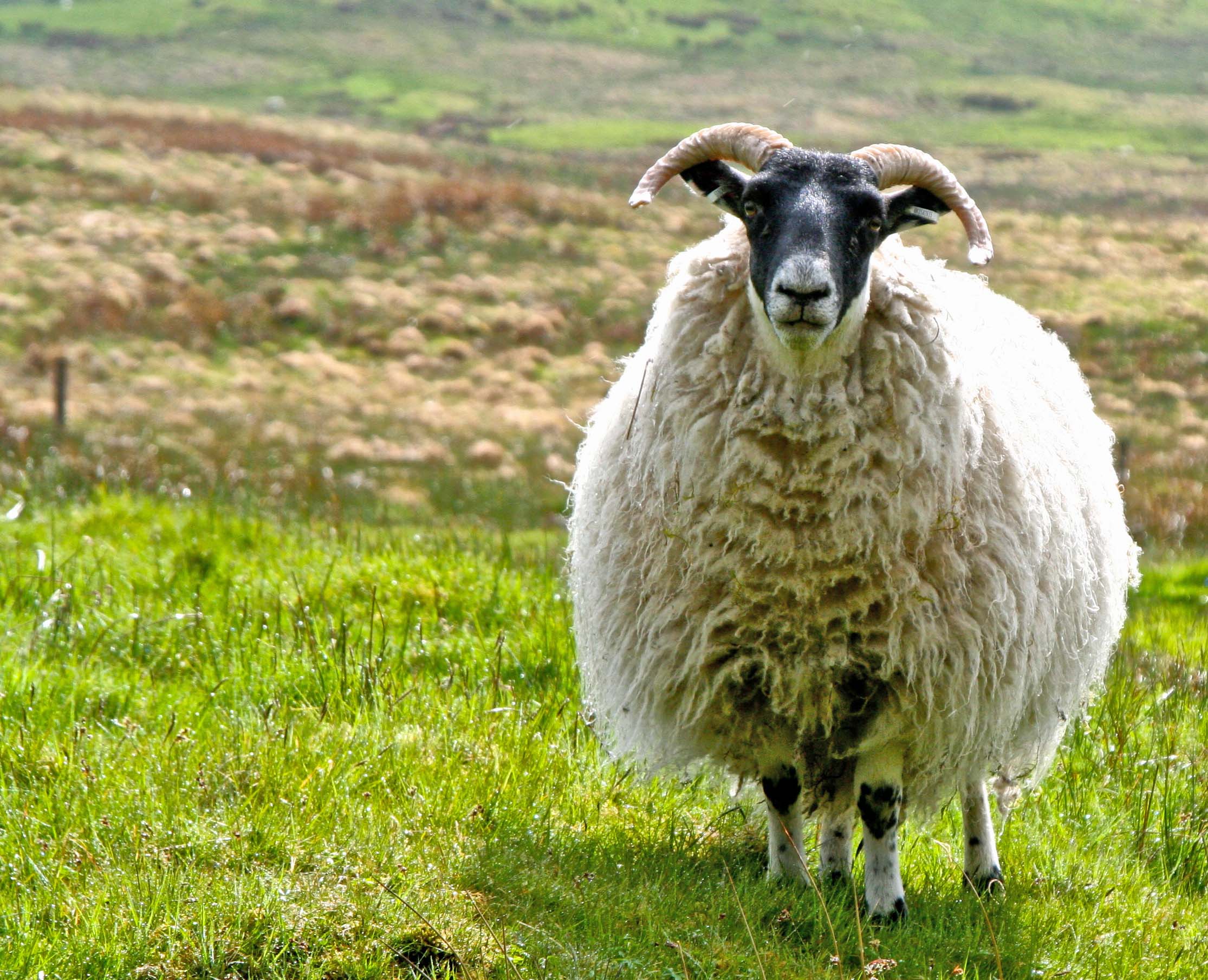
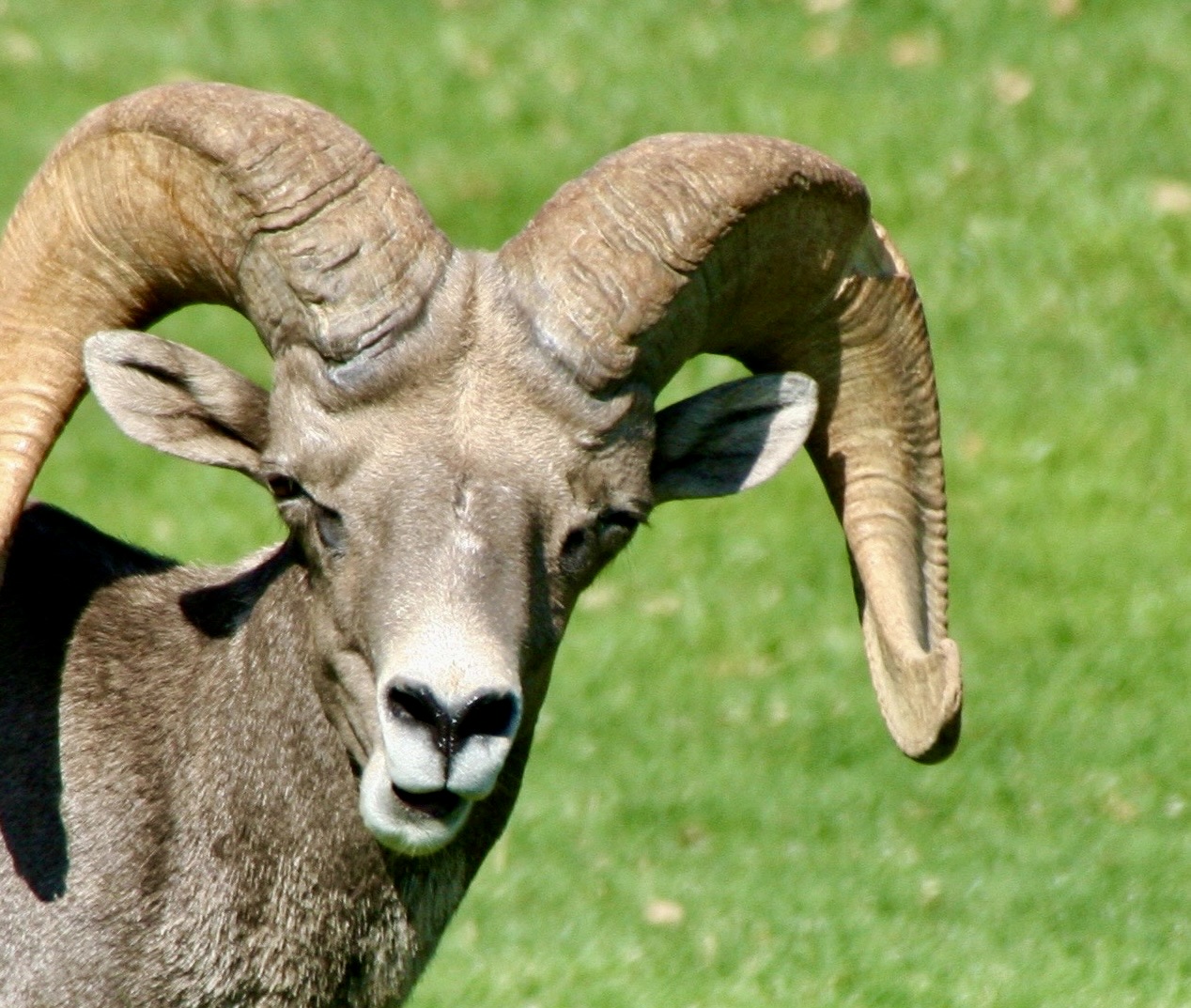
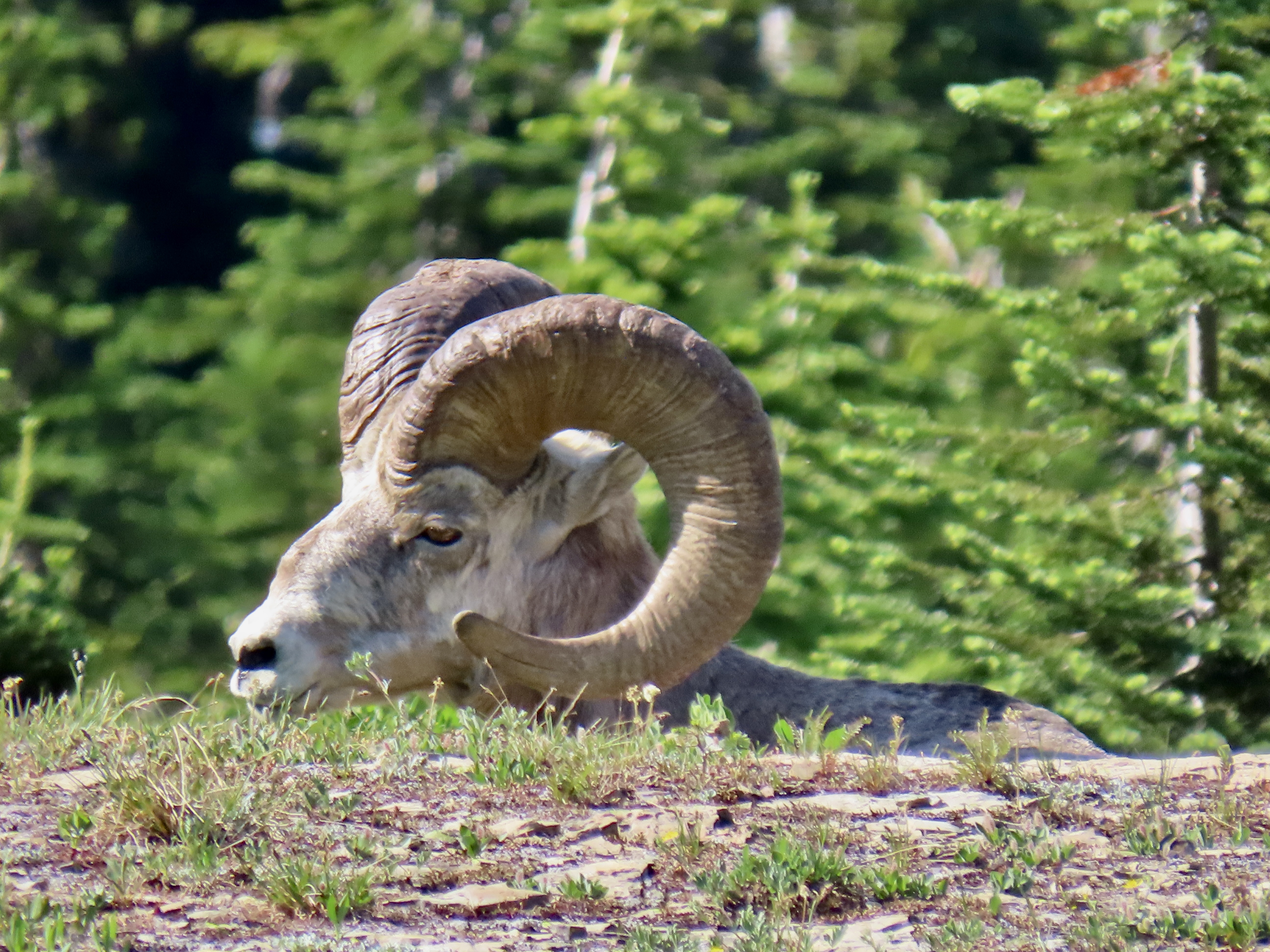
Bad dog! This was one of those occasions I was ever so glad to have a camera along. We had known that we would need one. Our neighbor Jim in Oregon had called and urged Peggy and me to come over and see his recently-born baby goats. Of course we went. Immediately. Who can resist baby goats? Plus, it was a photo op waiting to happen. I just didn’t expect this scenario where one, very small baby goat appeared to be dominating one very large dog. Have you ever seen such dejection? The dog, btw, wasn’t just a large dog; it was one of the largest, most ferocious dogs in the world, a Kangal Dog from Turkey. They are massive animals weighing up to 200 pounds that were originally bred to protect livestock from bears, wolves and other predators. Jim kept his to discourage unwanted intruders, whether four legged like our local bears and cougars, or two legged. I’m not sure what triggered the response above. The big dog had walked over and sniffed his latest charge and then started slinking away. Maybe baby or mom had objected.This is what we expected in terms of cute baby goat photos. Lining up for food cafeteria-style. Daddy. A handsome fellow. He had escaped from Jim’s and come over to visit us. Jim called him Rambo and was very careful not to turn his back on him. He had been butt butted far too many times. Goats are two toed ungulates, which make up the majority of the ungulates.Whenever I go to a county or state fair, my first stop is to visit the goats. I love the way they come over to visit and possibly nibble at your shirt. I found this guy at the Modoc County Fair in California, the same place I found the hogs shown below. In Africa, we met another two toed ungulate. It’s hard to find one more different from the goats. The birds are hanging out nearby because the big fellow stirs up lots of bugs as it shuffles along.While we are on the safari, we might as well check out other African ungulates. The giraffe is by far the tallest.A tree top perspective.The most dangerous of Africa’s two toed ungulates: The water buffalo. This is their “What are you looking at?” pose. I liked how each of them had its knee bent exactly the same. Horns and hooves, like finger nails keep growing for life. Apparently, there is a lack of farriers willing to trim water buffalo hooves.Africa’s numerous antelopes are also two toed. This antelope with a distinctive ring around its hind quarters is a waterbuck. Supposedly, the distinctive marking helps waterbucks follow each other when they are running through the woods. My guess is they would help a lion as well. “Target is in sight.” Horns, like hooves and your fingernails, are made of keratin.“I’d like to interrupt this presentation to announce that I, too, am a two toed ungulate even though Curt and Peggy didn’t find me on the safari. It was on the Nile River trip.Apologies for the interruption. Like the horses, donkeys and mules they resemble, zebras are single toed ungulates.I close my coverage of two toed ungulates in Africa with the warthog. It’s always in competition for one of the ugliest mammals to be found. Or maybe, it’s just cute. Guess who this one is related to?Yep. I found this handsome pair of porkers at the Modoc County Fair in northeastern California when I was on the way to Burning Man. Speaking of Burning Man, this is the time of the year that people sign up to attend the late August event that is held in the remote Black Rock desert of Northern Nevada. I often do a few posts around now to give newbies and curious folks an overview of what to expect. I’ve been going off and on since 2004. My friend Tom is trying to persuade me to join him this year in giving away hundreds of margaritas on the Playa. I’ll probably be rewarded for my work with all of them I can drink. Woohoo!Horses are one toed ungulates. Rarely do you find them sitting on their butt in the mud, however. Why would they? But Hungarian Cowboys, the Csikós, do things differently. We took this photo at the Bakodpuszta Horse Farm in Hungary, on our trip down the Danube River. Something else you wouldn’t find an American cowboy doing.This cutie came dashing up to a fence to see us when we were searching for ancestors of mine in Lowland Scotland near Stranrae. Given its excitement, I wondered if it wasn’t an ancient relative of mine reincarnated as a Shetland pony.I featured this horse in a promo for today’s post. He was hanging out on a ranch near Bryce Canyon National Park in Utah. I think it probably had high hopes for an apple..Cattle are two toed ungulates. We went looking for the unique Scottish Hielan coo (Highland cow) while we were in Lowland Scotland but only found what we normally find wandering around North America. Like the Shetland, they ran over to check us out.We found this Hielan coo in the Black Forest of Germany. Go Figure. This summer we are going to be exploring the Highlands of Scotland instead of the Lowlands. We are expecting to find the coos where they belong. This two toed ungulate with the large horns is immediately recognizable. It’s a Texas longhorn. We found it in the foothills of California.Not so clear in terms of heritage was this strange looking steer. But we found it about a mile from the gate to Area 51 in south eastern Nevada. Could it have been a cleverly disguised visitor from outer space? Hmmm.Sheep are also two toed ungulates. This stout fellow had been blocking a small rural road when we were lost in Scotland. It was being baaad. Had its body been black, I would have cited the old nursery tale to it: Baa, baa, black sheep have you any wool? Yes sir, yes sir, three bags full. BTW, sheep are closely related to goats and on rare occasions even crossbreed. Their offspring is called a geep. And no, I’m not making that up.Among sheep, nothing—from my perspective— is more regal than the wild big horned sheep of the deserts and mountains of Western North America. This magnificent example chewing his cud had bought his herd down to graze at a small county park between Las Vegas and Lake Mead Nevada.
There’s a fun story here. The big ram above had been bringing his flock down to the park from the mountains for years when a new subdivision was built beside the trail. This didn’t seem to bother the big horns and you can imagine what a treat it was for the people. But then, one of the home owners put a shiny aluminum door on his garage next to the trail. The leader looked over and saw his reflection. Except it wasn’t his reflection in his mind. It was another lage male challenging him for the leadership. He reared back and charged at the same time the other big horn did, again and again. Nobody was going to get his nannies. The story the locals told us was that the owner of the garage door had a really hard time convincing his insurance agent how the damage had been caused!
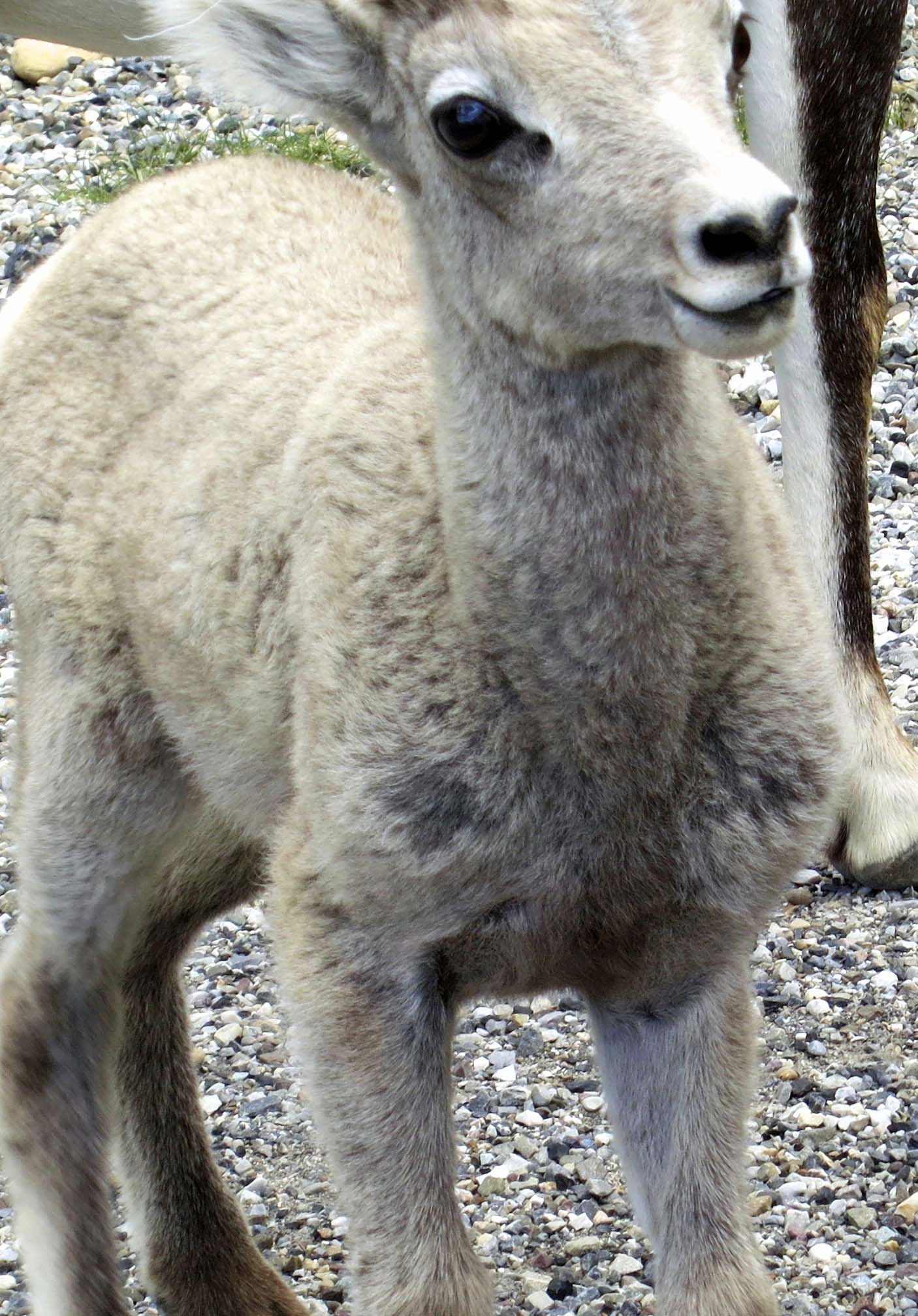
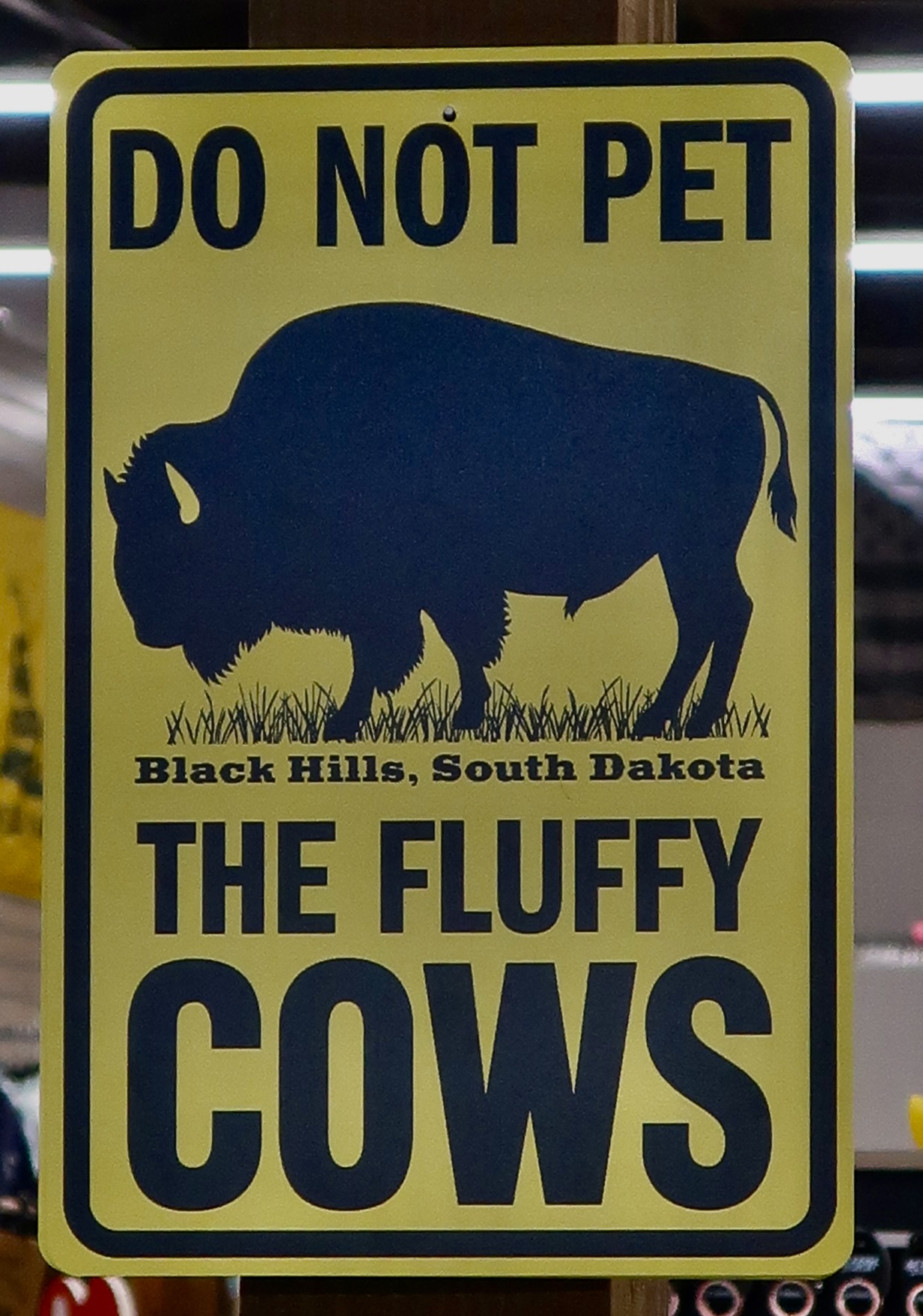
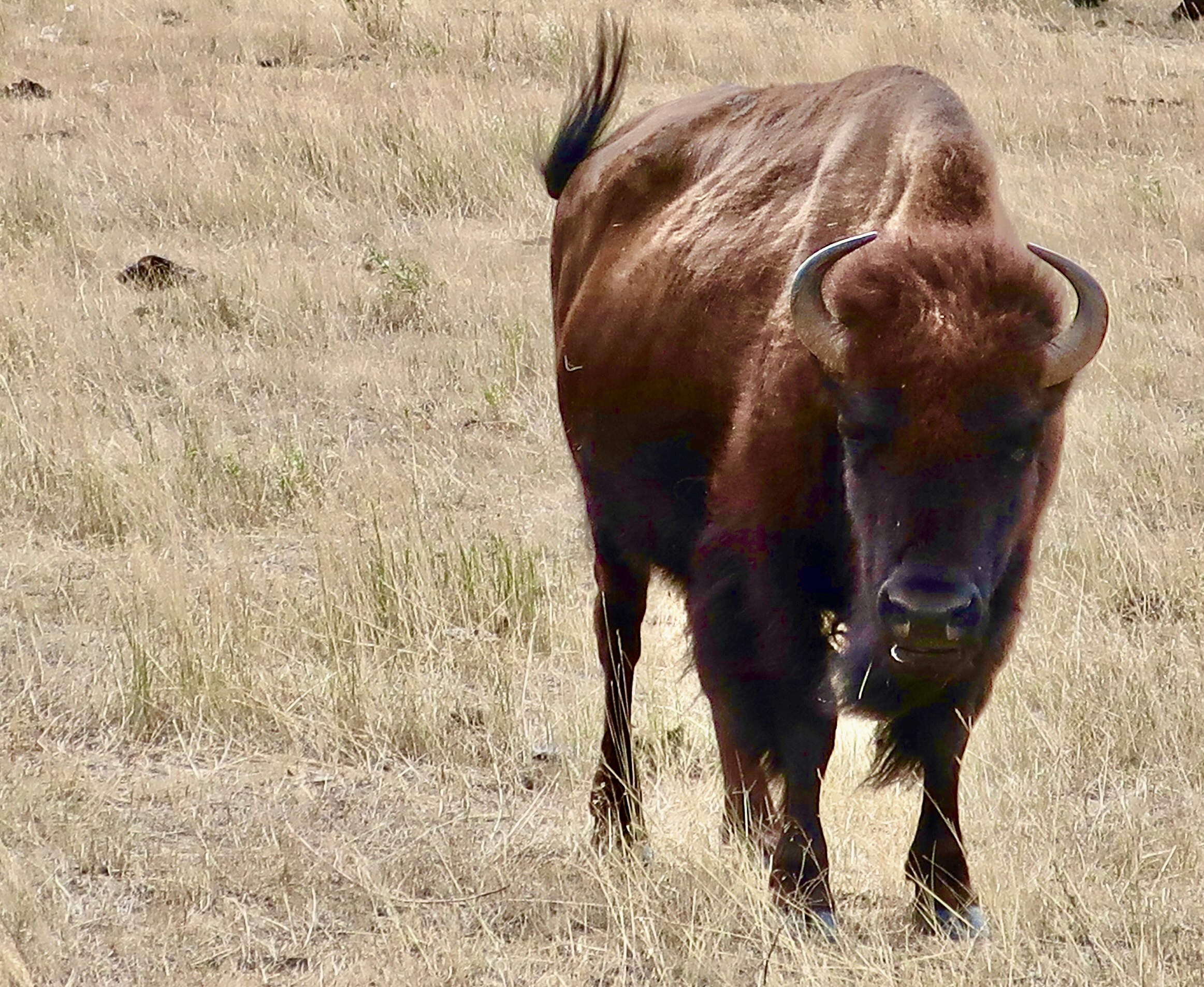
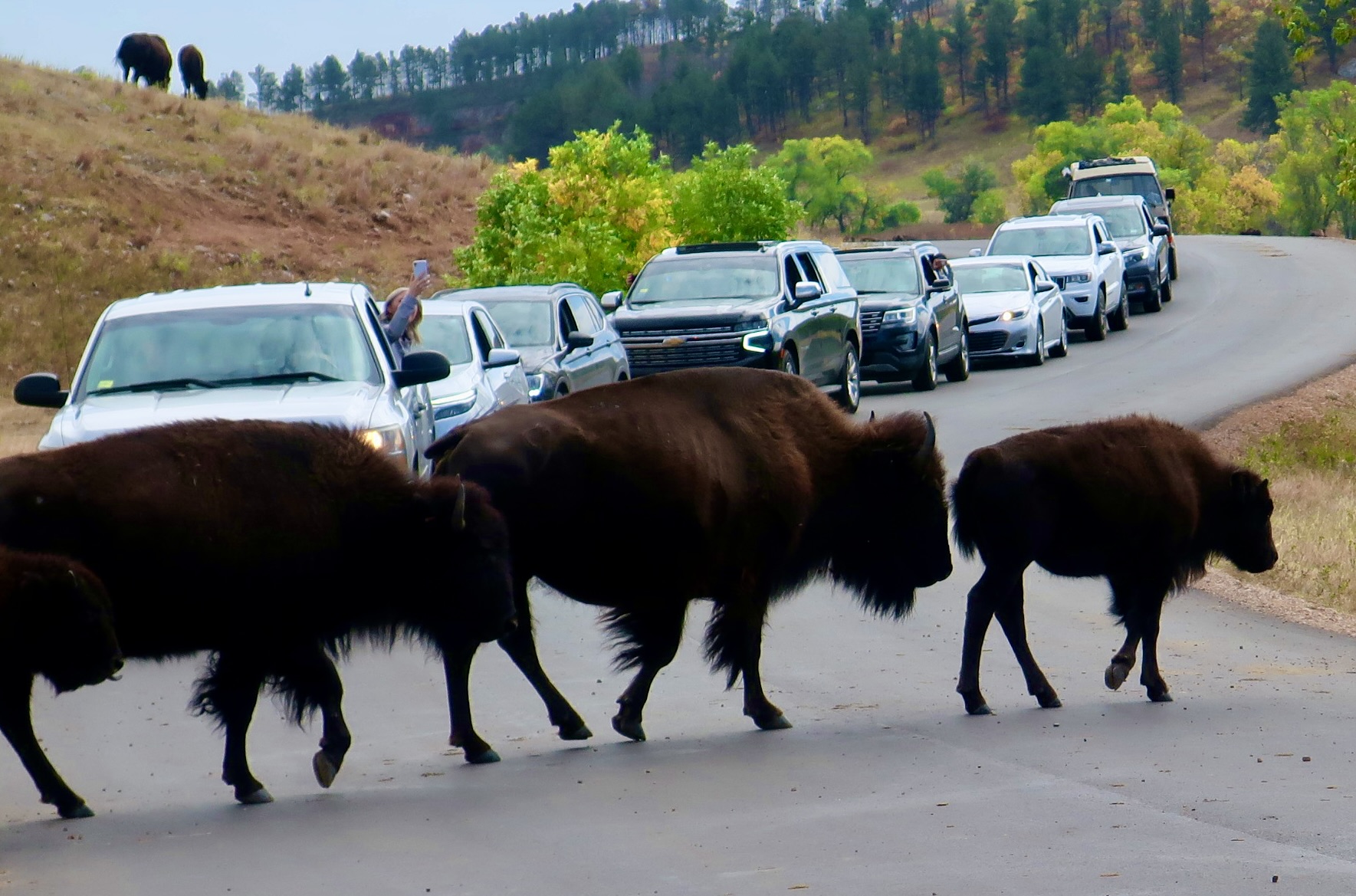
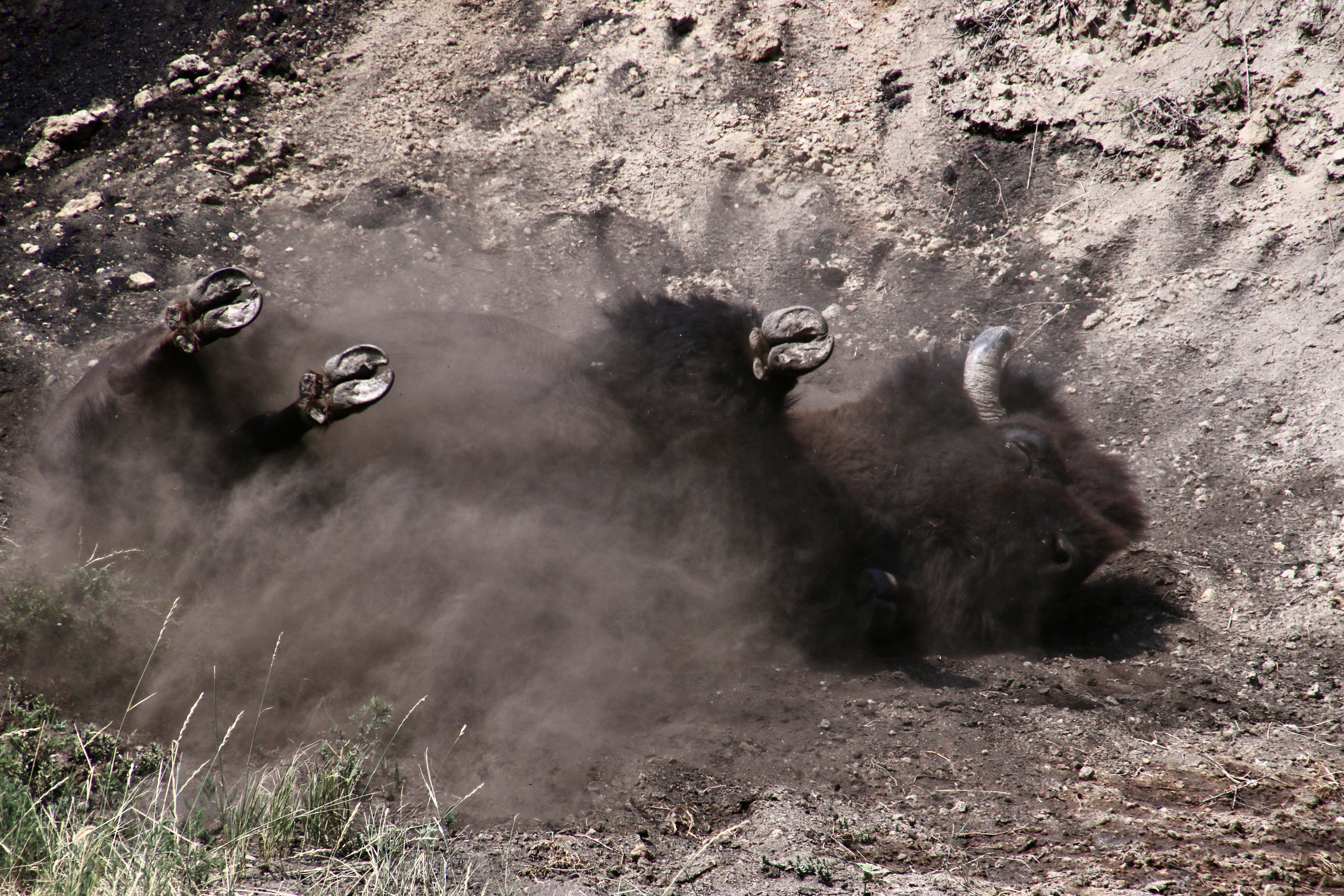
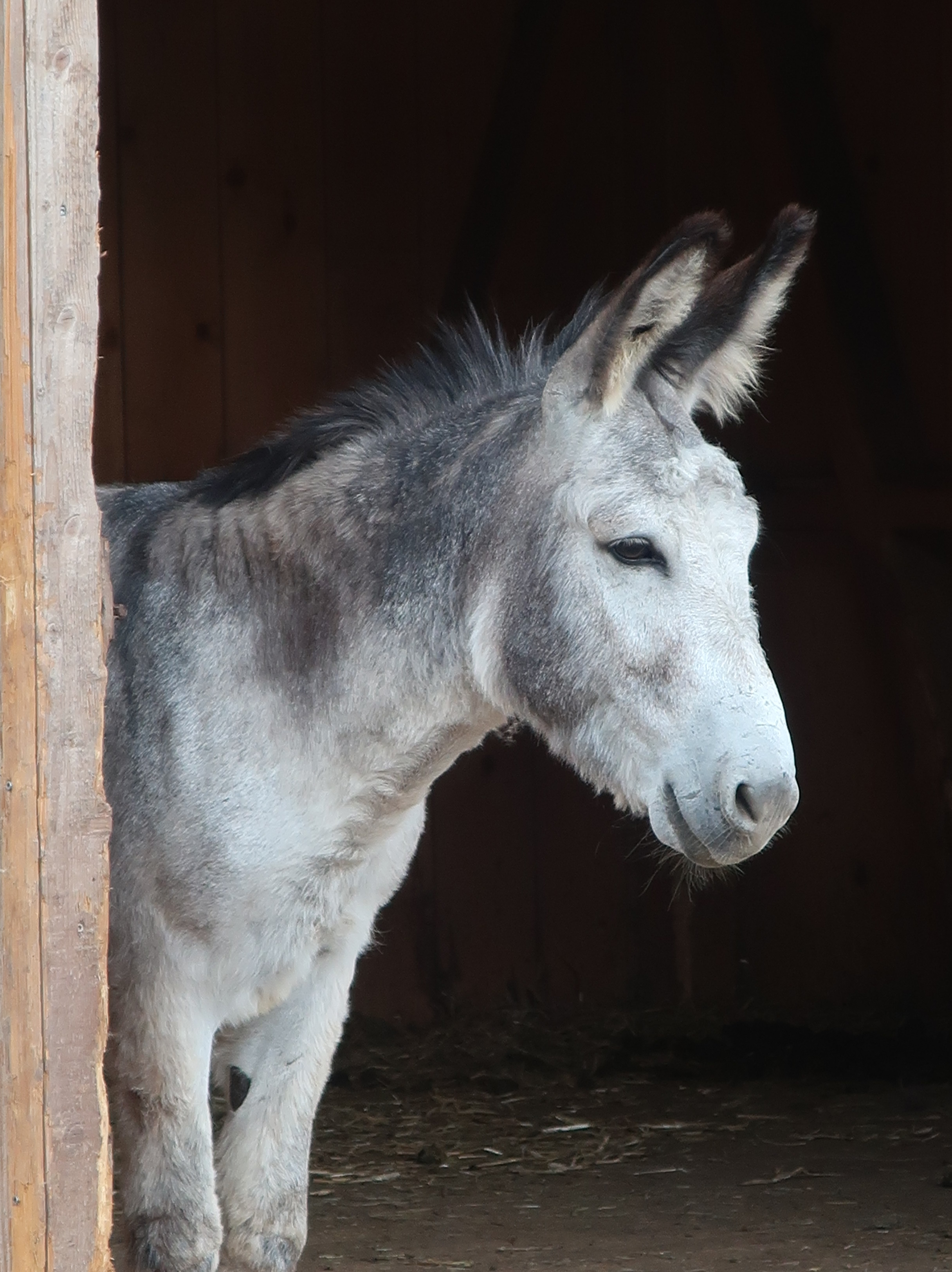
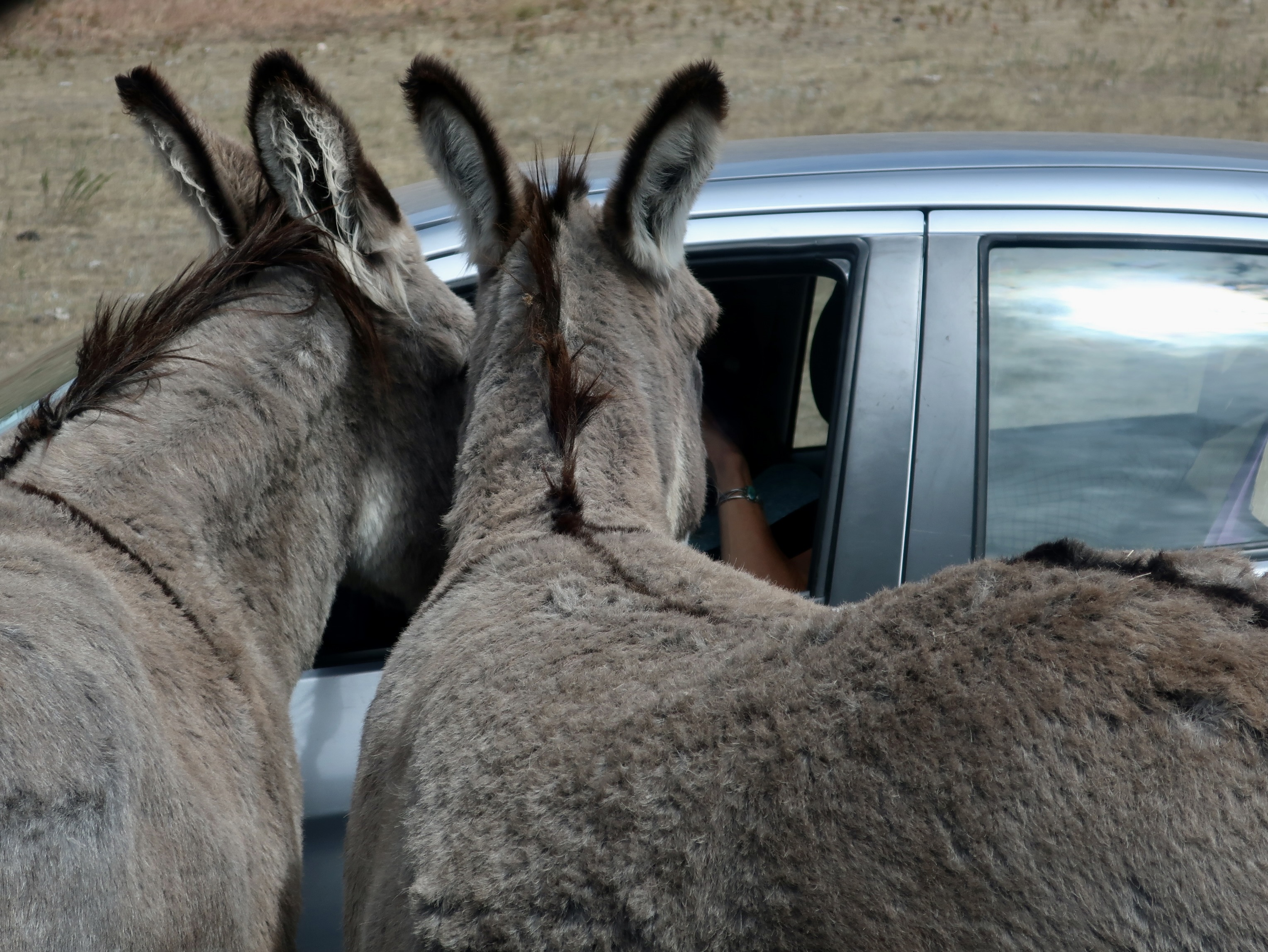
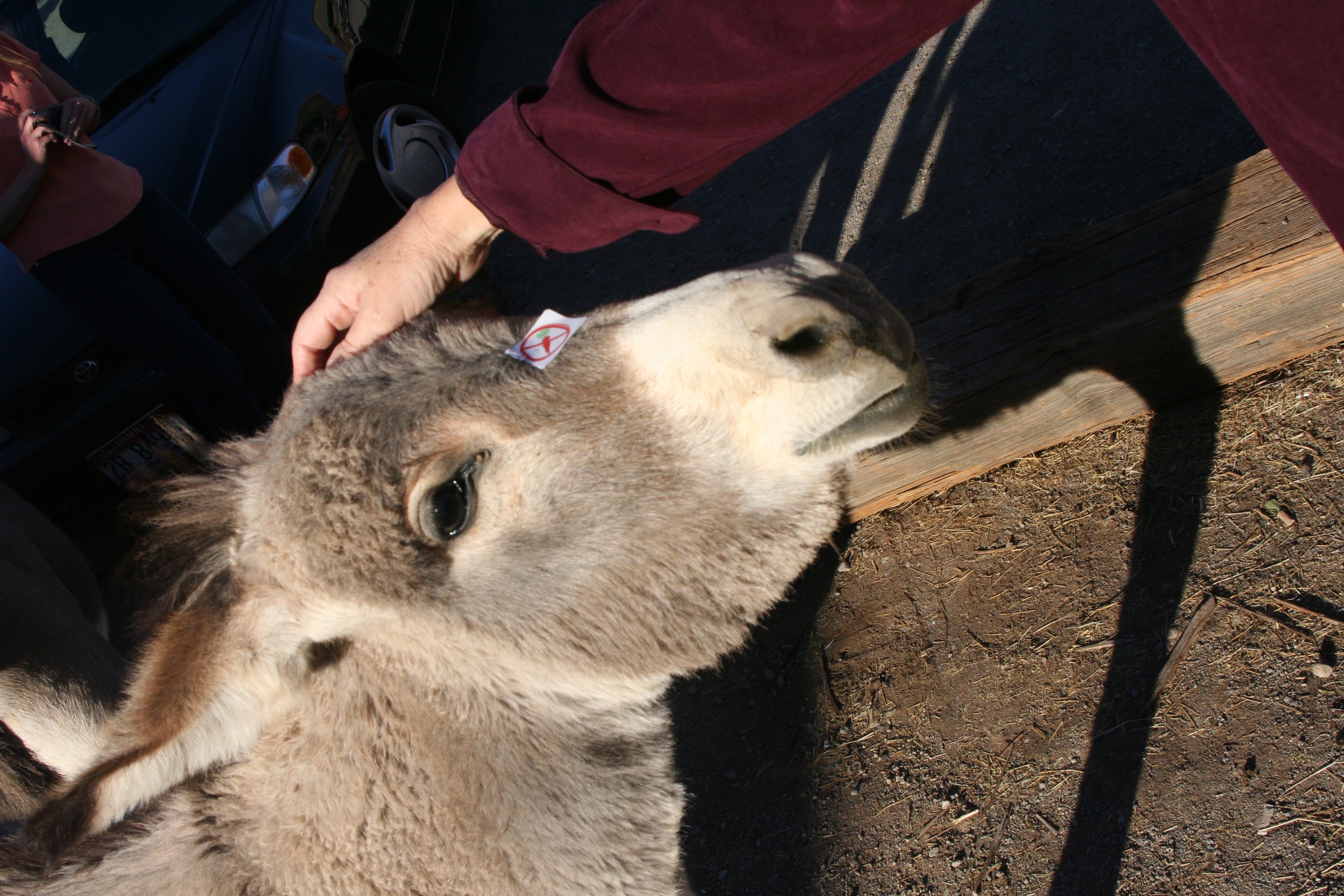
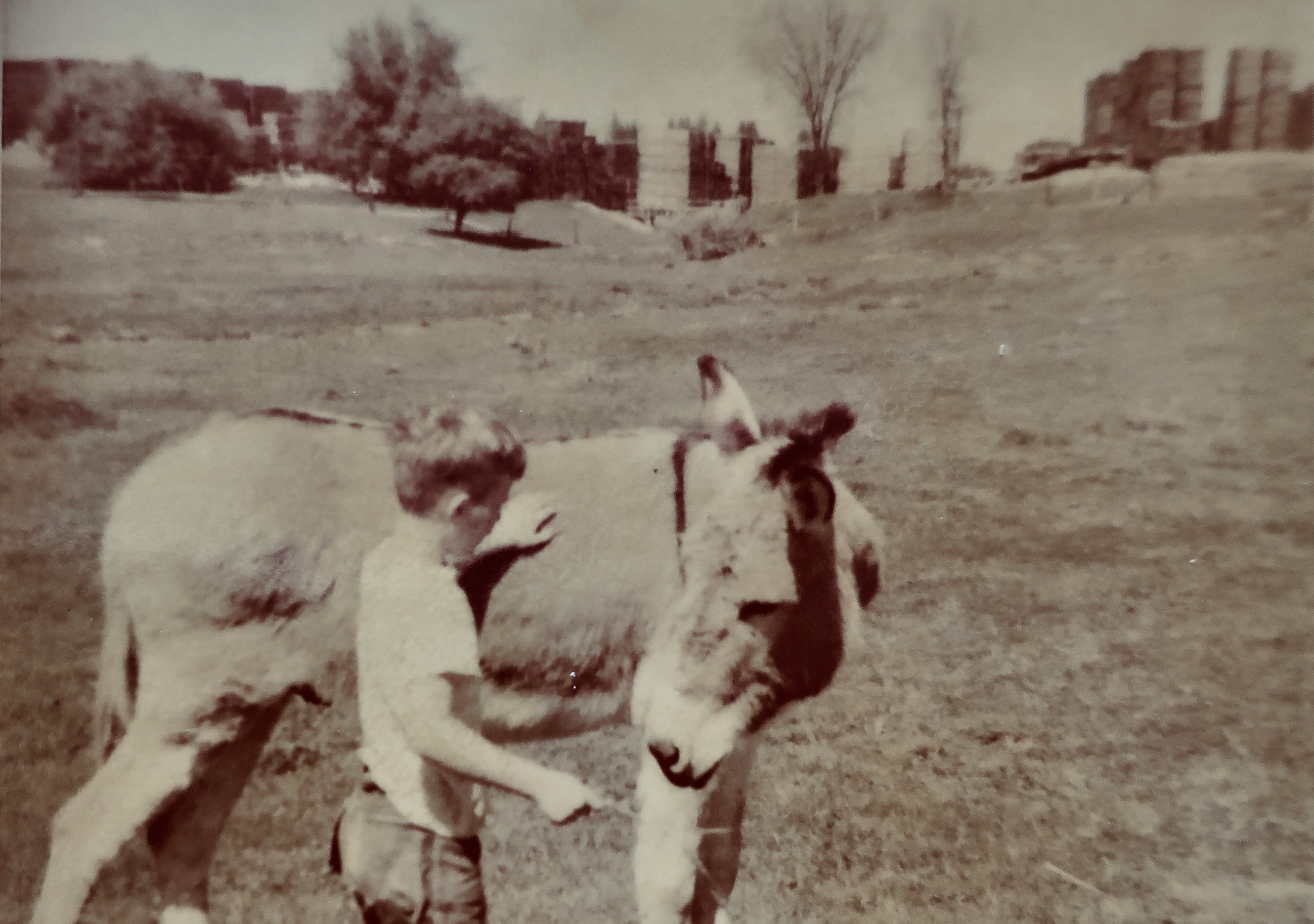
A big horned sheep at Glacier National Park.This young big horn sheep was standing beside the Alaska Highway in Canada’s Yukon Territory.Buffalo are another two toed ungulate. This sign was located in a store in Custer, South Dakota. We were on our way to Custer State Park. It’s good advice.If a buffalo stares at you, raises its tail, paws the ground and grunts, you are too close! It’s best to stay at least 75 yards away. Farther if there are calves around. This youngster was feeling its oats even though I was using my telephoto lens from a safe distance. The family of buffalo was crossing the road in Custer State Park. We waited patiently and took photos from the safety of our truck.Have you ever wondered how buffalo create their buffalo wallows? We caught this one wallowing away and taking a dust bath in Theodore Roosevelt National Park in North Dakota. It provides a good look at a two toed ungulate.I’ll close this post with what are our favorite one toed ungulates: Donkeys. This beauty was standing in a shed in Germany’s Black Forest.There were more than buffalo stopping cars at Custer State Park, South Dakota These two answered the age old question of how many donkeys can stuff their heads in a car’s window at one time.This donkey foal was obviously enjoying having its head scratched in Oatman, Arizona— but not nearly as much as Peggy was enjoying doing the scratching! The sticker on its head was put there to discourage people from feeding the youngsters carrots. They can choke on them.And finally, this is me petting a donkey in a field near my house in the early 50s. The lumber stacks in the background are at Caldor Lumber Company in Diamond Springs, California where my dad worked as an electrician. I may have been holding something to feed the donkey.
Next up on UT-OH, my blog-a-book-memoir, I learn valuable lessons that every first grader should know: It’s not smart to put your head down on a track to judge a train’s distance when it’s a hundred yards away (it makes the engineer nervous), deciding to go on a mile and a half hike by yourself at 5:30 a.m. may be frowned upon, habanero peppers are hot, and why it’s valuable to wear underwear. Getting caught in your zipper and having to have the first grade teacher free you is no joke.
 Wandering through Time and Place