The Story of How Bone Was Found… Reblog

While Peggy and I are at Burning Man, I am reposting the story of how Bone was found. This is the first of the series. I will respond to comments when I return from Burning Man.

Backpacking in the Desolation Wilderness… Or, How to Forget You Are Being Divorced

It was the summer of 1977 and my wife JoAnn was divorcing me. Apparently I lacked in stability or at least in the desire to pursue the Great American Dream. She was right of course. I had absolutely zero desire to tie myself to an eight-hour a day job and a large house in the suburbs. None of this made the divorce easy. I was prepared to spend my life as a happily married man.

To keep my mind occupied, I was working on the route for the Fourth Annual Sierra Trek, a challenging nine-day 100-mile backpack trip in the Sierra Nevada Mountains that I had created as a pledge-based fund-raiser for the American Lung Association in Sacramento.

“So what’s your problem?” my friend Tom Lovering asked over a beer at the Fox and Goose Restaurant. He’d been-there-done-that with divorce and dated a number of women since. Tom owned Alpine West, an outdoor/wilderness store in Sacramento, and sponsored the Sierra Trek.

I had persuaded him to go backpacking with me for six days to preview part of the new route. Our plan was to start near Meek’s Bay, Lake Tahoe and work our way southward 70 miles following the Tahoe-Yosemite Trail.

Tom had invited his girlfriend, Lynn, and Lynn was bringing along her friend Terry. Terry was nice, not my type.

“I have a friend named April who wants to go backpacking,” Tom offered. “Why don’t I invite her to go as well? Maybe you two will hit if off.”

The implication was that this would help me get over my wife.  Actually, I had already met the woman who was going to help me recover but I humored Tom.

A friend drove the five of us up to Meeks Bay. April was gorgeous and Tom was right. I followed her long legs and short shorts up the trail. My gloomy focus on the Soon-to-Be-Ex faded like a teenager’s blue jeans.

Hot feet and screaming fat cells were even more potent in forcing me to live, or at least suffer, in the moment. As usual I’d done nothing to physically prepare for the first backpack trip of the year and I was paying the price.

We climbed a thousand feet and traveled six miles to reach our first night’s destination at Stony Ridge Lake. I crashed while Tom broke out some exotic concoction of potent alcohol.

After consuming enough of his ‘medicine’ to persuade my fat cells they had found Nirvana, I fired up my trusty Svea stove and started cooking our freeze-dried dinner. It wasn’t hard. Boil water, throw in noodles, add a packet of mystery ingredients, stir for ten minutes and pray that whatever you have created is edible. That night it didn’t matter.

Afterwards, we headed for our beds. The next day would be long. I slid into my down filled mummy bag and looked up at what seemed like a million stars. There were no city lights or pollution to block my view and the moon had yet to appear.

I traced an imaginary line from the Big Dipper and found the North Star. It seemed far too faint for its illustrious history. A shooting star briefly captured my attention. Thoughts of divorce, short shorts, the next day’s route, a rock digging into my butt, and sore feet jostled around in my mind for attention.

Sleep finally crept into the bag and captured me.

Next: A pounding heart and a sprained ankle.

From Kayaking the Cool Pacific to Bicycling the Hot Desert of Burning Man

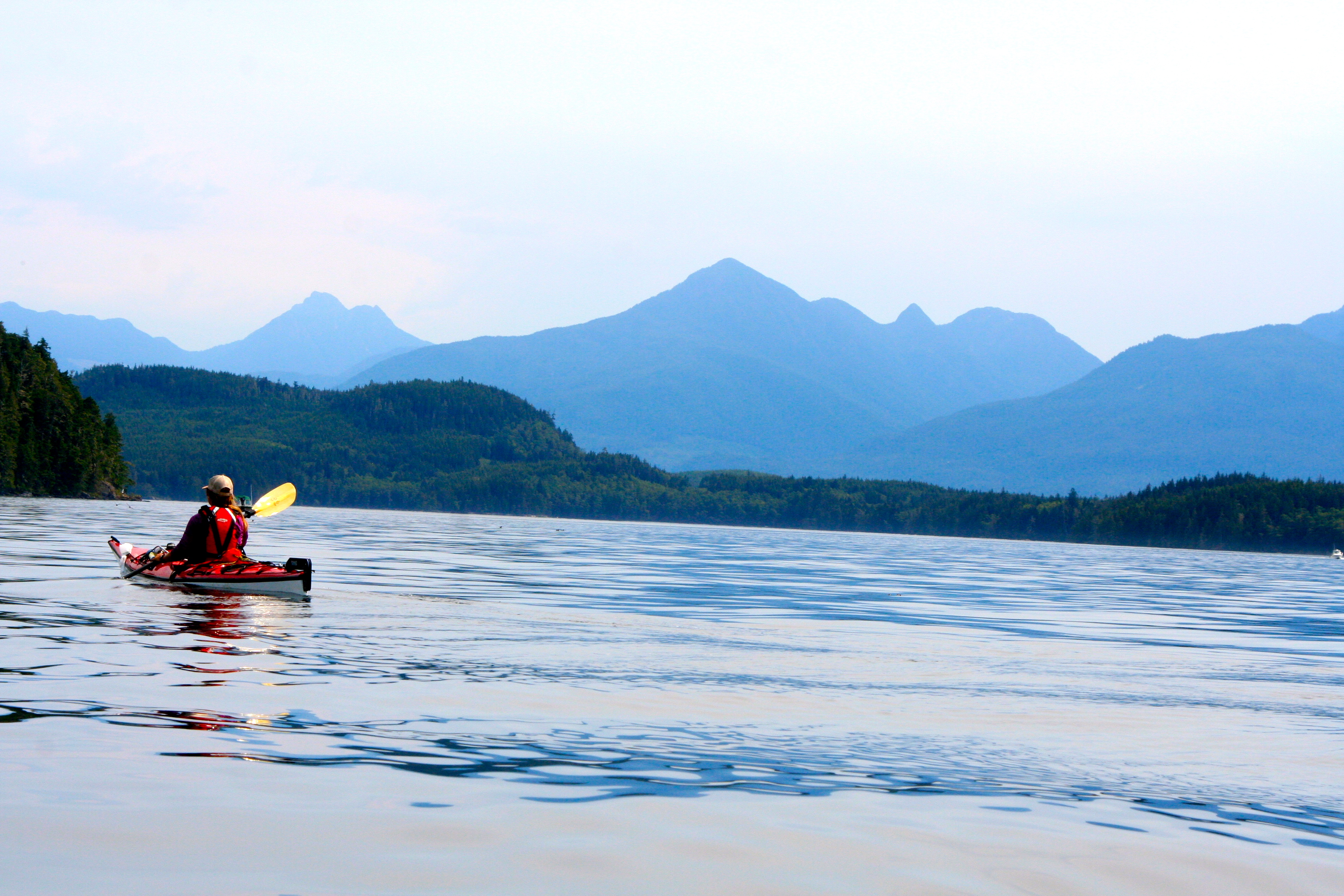
One of our guides leads the way as we make our way between islands off the we make our way off the northwest coast of Vancouver Island, British Columbia.

One of our guides, Julia, leads the way as we make our way between islands off the northwest coast of Vancouver Island, British Columbia. (Photo by Peggy Mekemson.)

Peggy and I just came off our kayaking adventure out of Fort McNeil on northwestern Vancouver Island. It was a great trip, complete with Orca Whales, good folks, and great food. I am sure there will be several blogs on the experience (grin). But now we are madly preparing for Burning Man. We take off today. Imagine jumping from kayaking in the cool waters of the Pacific Ocean to bicycling in the hot desert of Northern Nevada. Woohoo!

The burning of the Man gives Burning Man its name.

The burning of the Man gives Burning Man its name.

The annual event held in the Black Rock Desert of Northern Nevada ranges from wonderfully whacky to….  (Photo by Tom Lovering)

The art at  Burning Man ranges from wonderfully whacky…. (Photo by Tom Lovering)

…to magnificent.

…to magnificent.

To fill in on the missed blogs, I thought I would repost some stories on Bone. He is going with us to Burning Man. I suspect many of you have yet to meet him even though he figured prominently in my early posts.

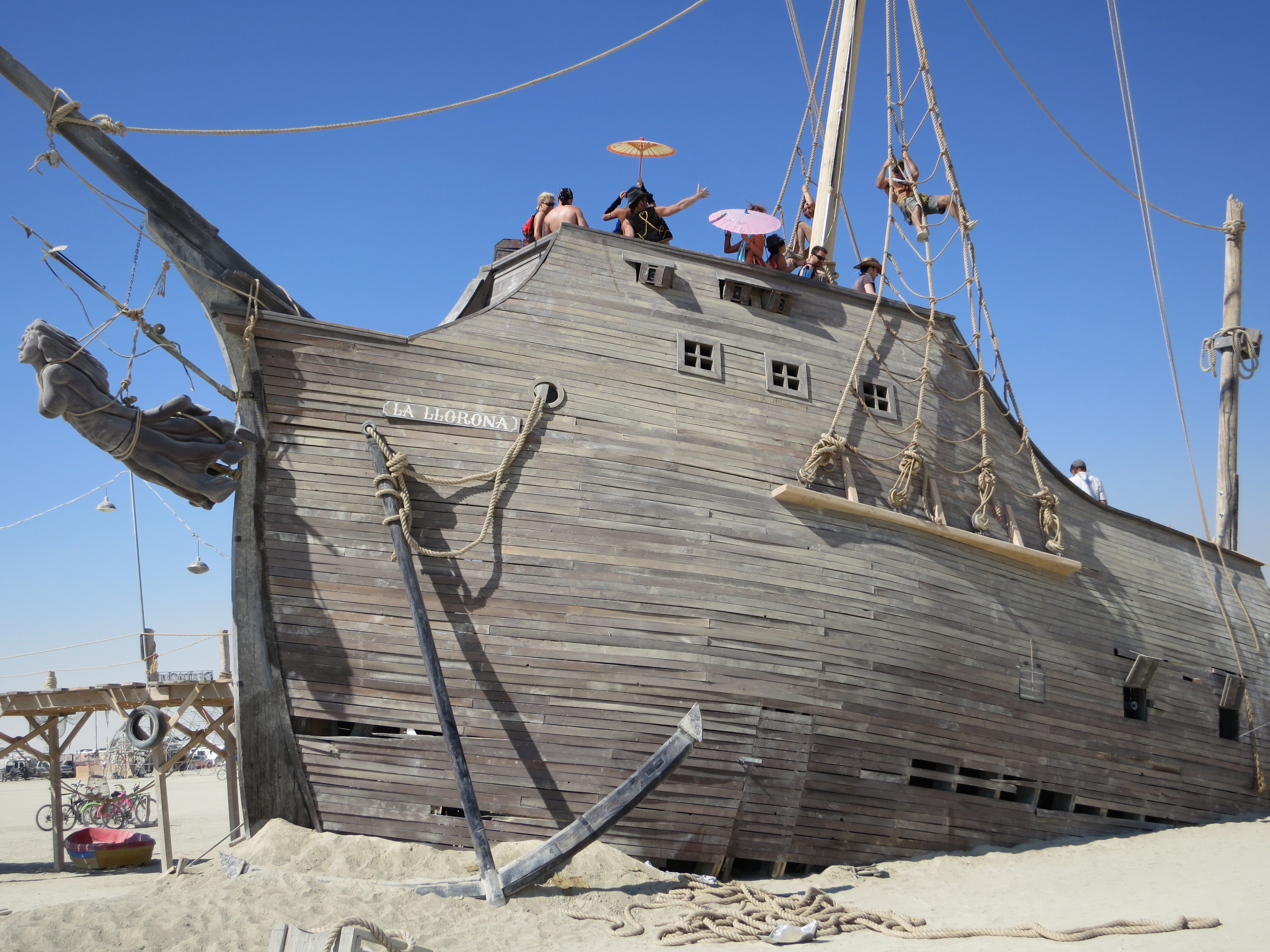
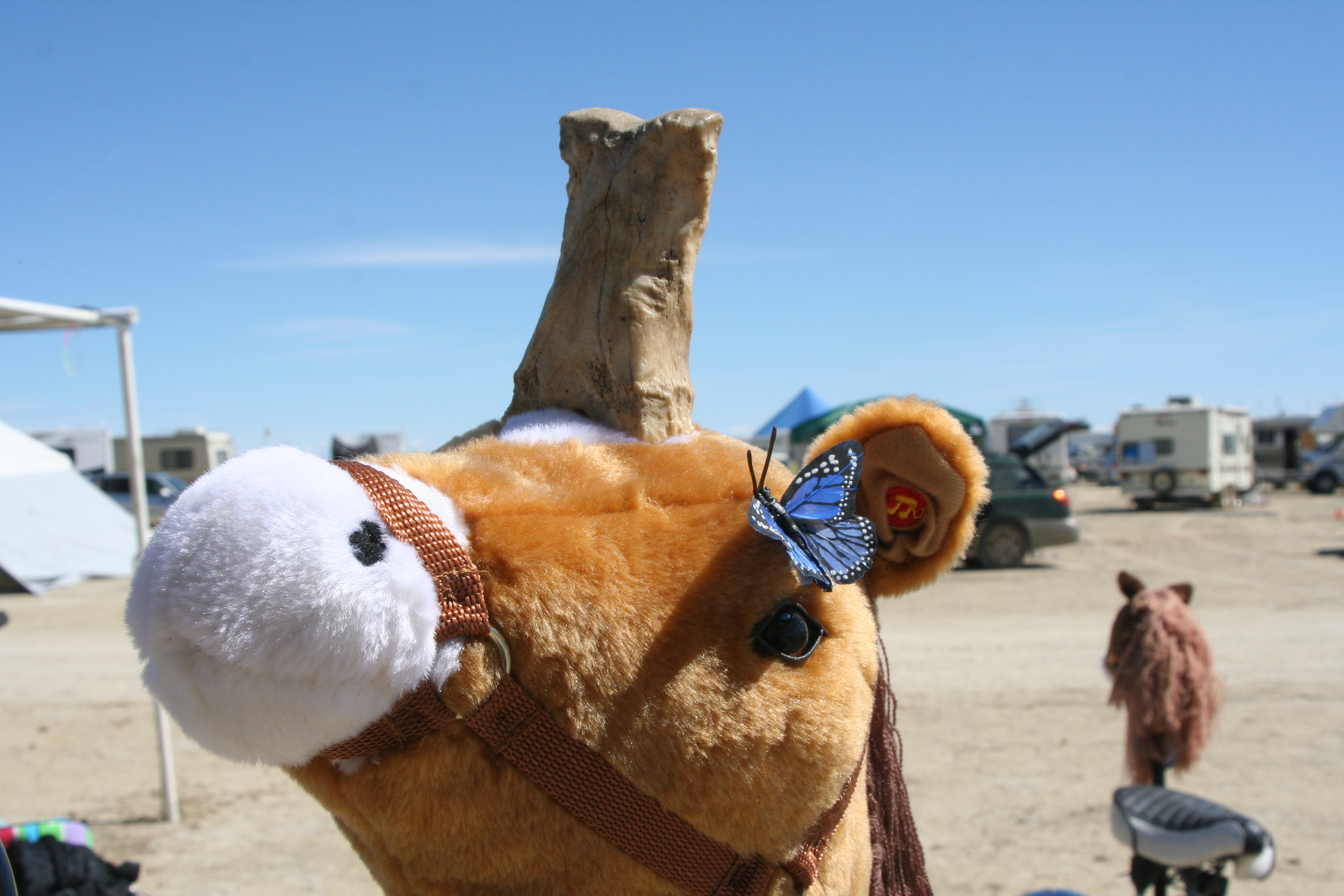
Bone hitches a ride on a willing horse at Burning Man.

Bone hitches a ride on a willing horse at Burning Man.

Bone is a diminutive character four inches high and two inches across. Once he was part of a horse, just above the hoof. Now he is free and has an attitude.

Tom Lovering and I found him lounging in a mountain meadow above Lake Tahoe when we were backpacking the Tahoe-Yosemite Trail in 1977. He has been wandering the world ever since. He began his travels with Tom on a two-year exploration of Asia, Africa and Europe in the early 80s and then joined me on my six month 10,000 mile solo bicycle trip around North America.

And that’s just the beginning.

In 1990 the International Society of the Bone was created in Mazatlan, Mexico and Bone began wandering with others. He traveled with a women’s group to the top of Mt. Kilimanjaro in Africa and the base of Mt. Everest in Nepal, went deep-sea diving in the Pacific and Caribbean, attended a Presidential Press Conference with Bill Clinton (Is that a bone in your pocket?) and was blessed by the Pope in St. Peter’s Square. He had a close encounter with Piranhas on the Amazon, was kidnapped in Mexico and was seized by a custom agent in New Zealand. He has been to Burning Man 9 times.

Bone looks out on Mt. Everest in Nepal.

Bone looks out on Mt. Everest in Nepal.

And poses perilously on the railing of a boat traveling up the Amazon River. I caught him just as he was about to fall into the Piranhnah infested waters.

And poses perilously on the railing of a boat traveling up the Amazon River. I caught him just as he was about to fall into the Piranha infested waters.

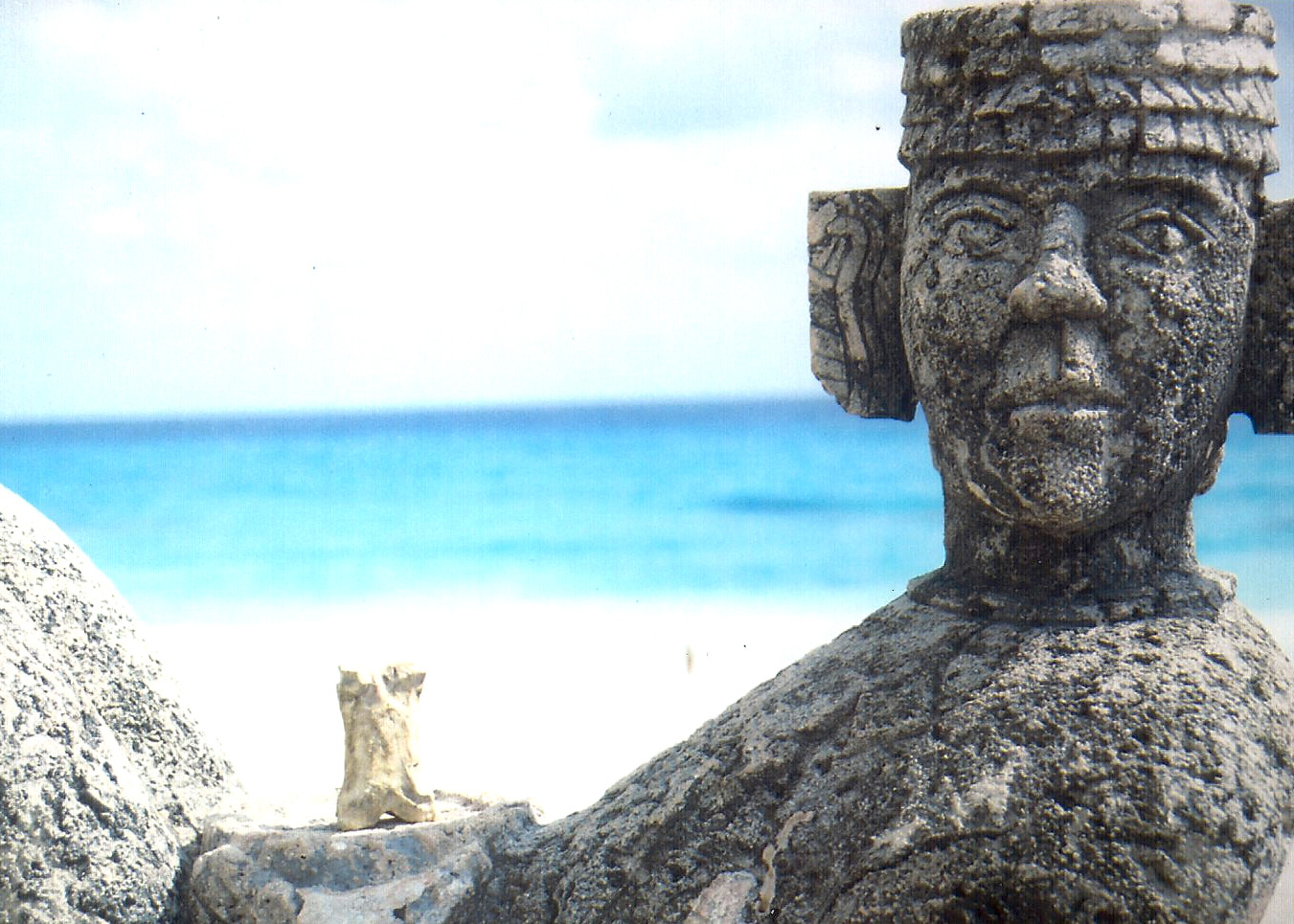
Traveling to Mexico, Bone takes a break by resting on Chacmool, where hearts were once offered up as sacrifices.

Traveling to Mexico, Bone takes a break by resting on Chacmool, where hearts were once offered up as sacrifices.

Checking out the rapids of the Little Colorado River as part of an 18 day trip down the Colorado through the Grand Canyon, Bone wears his life vest for safety.

Checking out the rapids of the Little Colorado River as part of an 18 day trip down the Colorado through the Grand Canyon, Bone wears his life vest for safety.

Tom Lovering goes native and wears Bone in his hair on the Colorado River trip.

Tom Lovering goes native and wears Bone in his hair on the Colorado River trip.

The Bone stories I will blog about this week are about how Tom and I found him. I wasn’t into photography at the time, so sorry, no photos.

The Murals that Saved Chemainus… The Vancouver Island Adventure

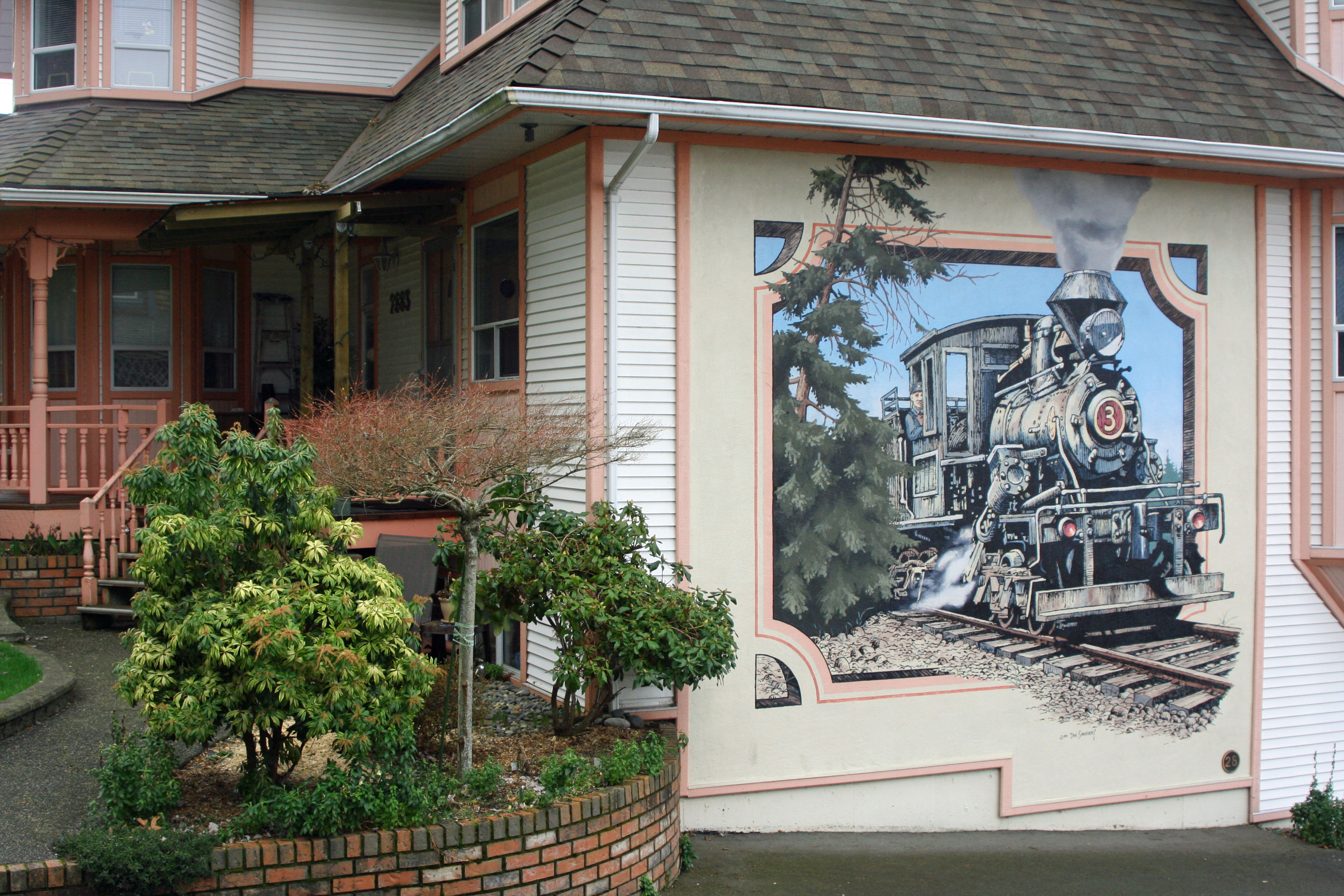
Homeowner and muralist Dan Sawatzky painted this 3D steam engine chugging out of his house/studio in Chemainus on Vancouver Island, British Columbia. The Number 3 engine was used for hauling logs and is symbolic of the town’s historic lumber industry.

This is another reposting of an earlier Vancouver Island blog. Again, Peggy and I still involved in our kayak trip among the Orcas. I know many of my followers enjoy murals and Chemainus has some great ones. I’ll catch up on comments when Peggy and I get back home– before we zip off to Burning Man. –Curt

“You have to visit Chemainus and see its murals,” the woman from Qualicum Beach urged. We were on the Black Ball Ferry between Port Angeles, Washington and Victoria, British Columbia. While I hunkered down and read, Peggy made new friends. Fortunately, one of us is much more social than the other.

Qualicum Beach is next to Parksville, which was our destination. A thirty-minute conversation generated a long list of restaurants to visit and places to see. I was yanked out of my book to take notes.

Chemainus is an excellent recommendation. This thriving community is located in the Chemainus Valley on the east coast of Vancouver Island about an hour north of Victoria. In 1983 it came close to dying. The primary place of employment, a lumber mill, shut down. 700 of the town’s 4000 residents were thrown out of work.

This is the point where most communities give up. Business and political leaders spend their energy assigning blame instead of seeking solutions. Not so with Chemainus.

“Let’s cover the walls of our town with historic murals,” Karl Schultz urged. It would capture the community’s history, develop local pride, and hopefully encourage tourism. As always, there were naysayers, but Karl’s enthusiasm won out. Today Chemainus is world-famous for its murals and tens of thousands of tourists visit the town annually.

Since it was on our way and we had the time, Peggy and I decided to stop. Good decision. First, I love the story of the small community that has adopted the motto of  “The Little Town that Did.” Second, I really like murals. Following are some our favorites out of the 39 (and increasing). For a complete tour visit www.chemainus.com/arts/murals/Chemainusmurals.htm.

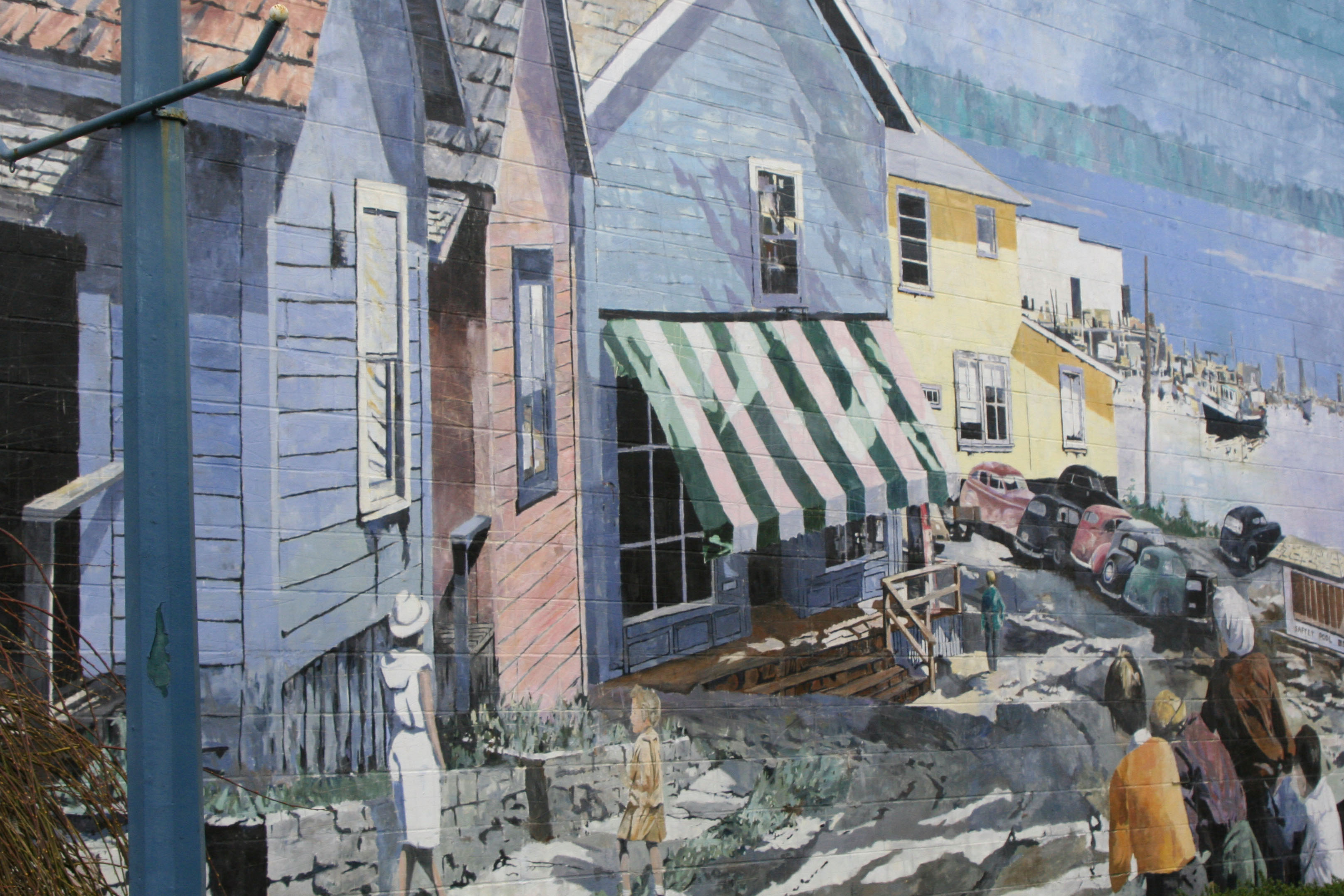
A colorful 1948 view of Chemainus looking down Mill Street toward the bay.

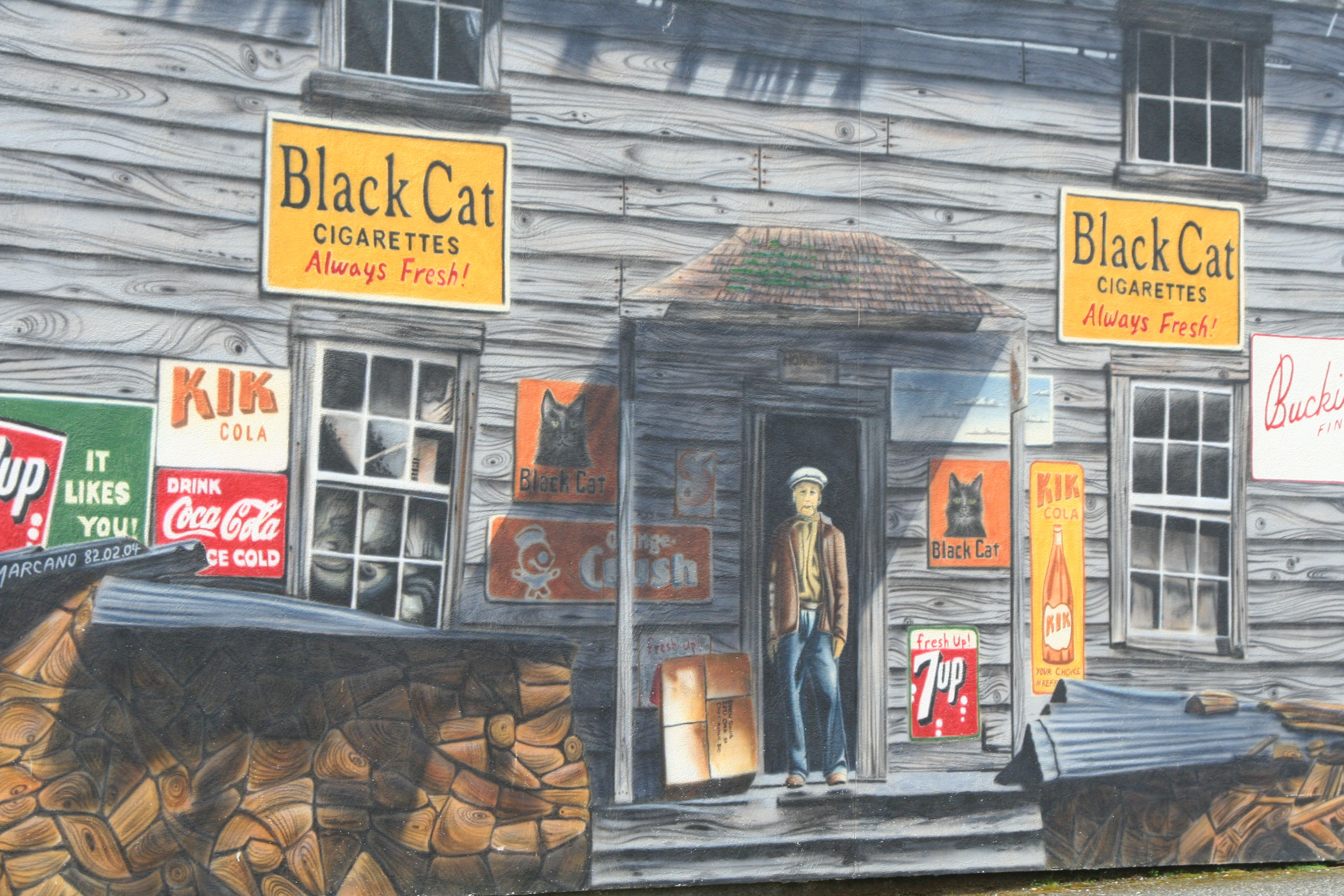
Hong Hing arrived in Chemainus in 1915 and opened his waterfront store. Over time his store would serve as a laundry, grocery store, second-hand store, bootlegging establishment and gambling den. Declining business led him to close his store in 1950 and return to China where he married a younger woman and produced an heir. Black Cat, by the way, is an extinct brand of British/Canadian tobacco.

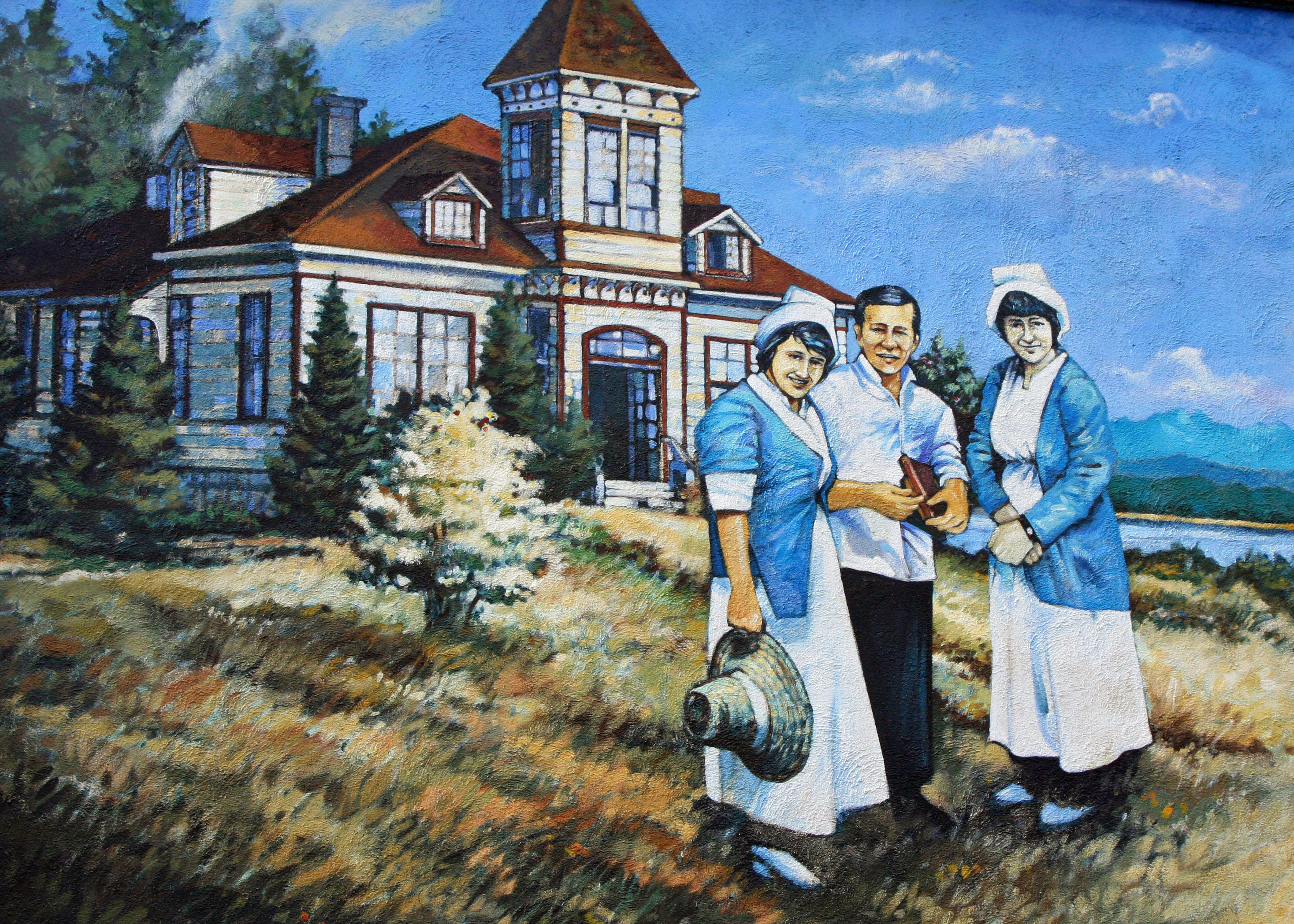
This mural captures the Chemainus Hospital in 1904 along with two nurses and the hospital cook.

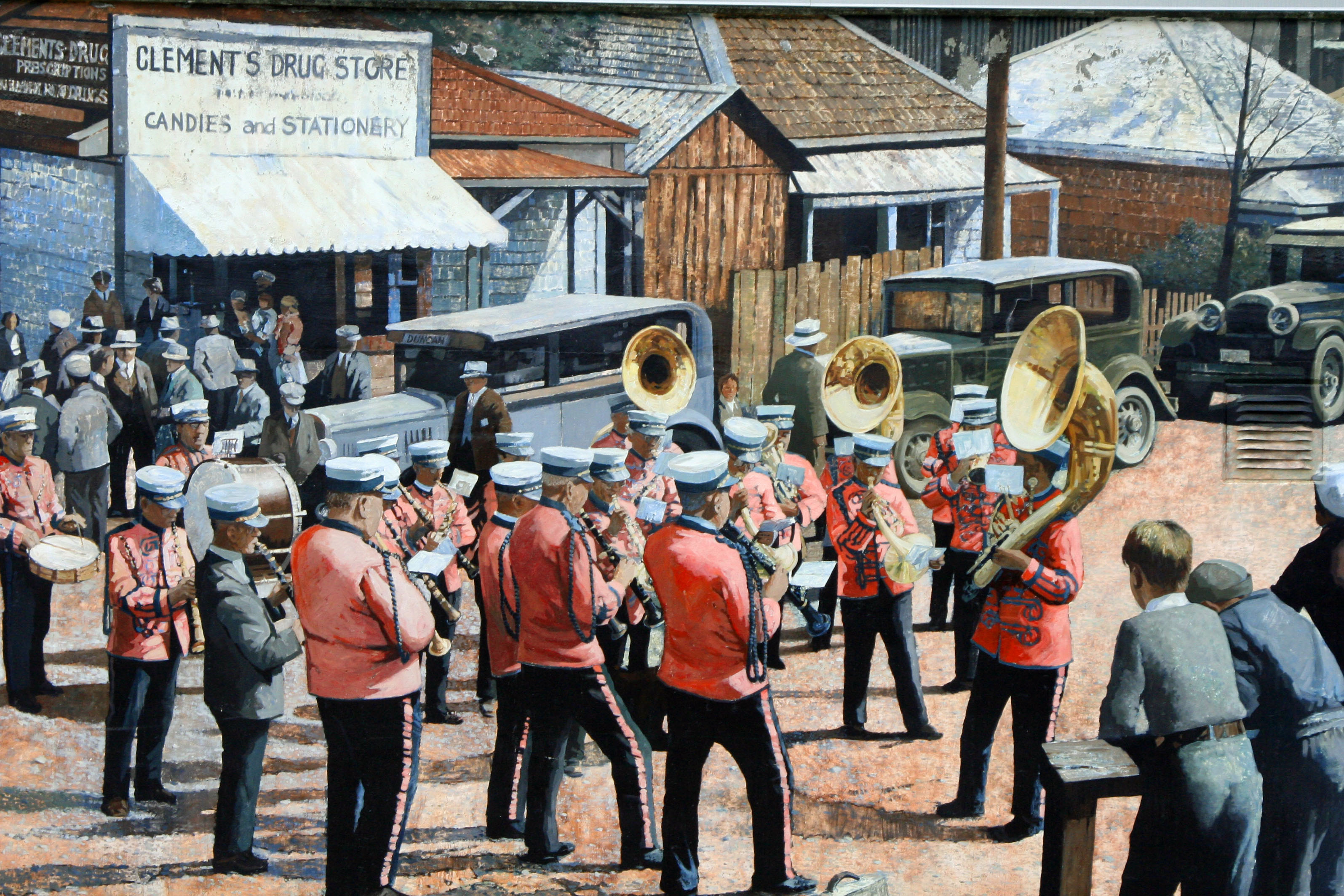
What’s not to love about a band concert?

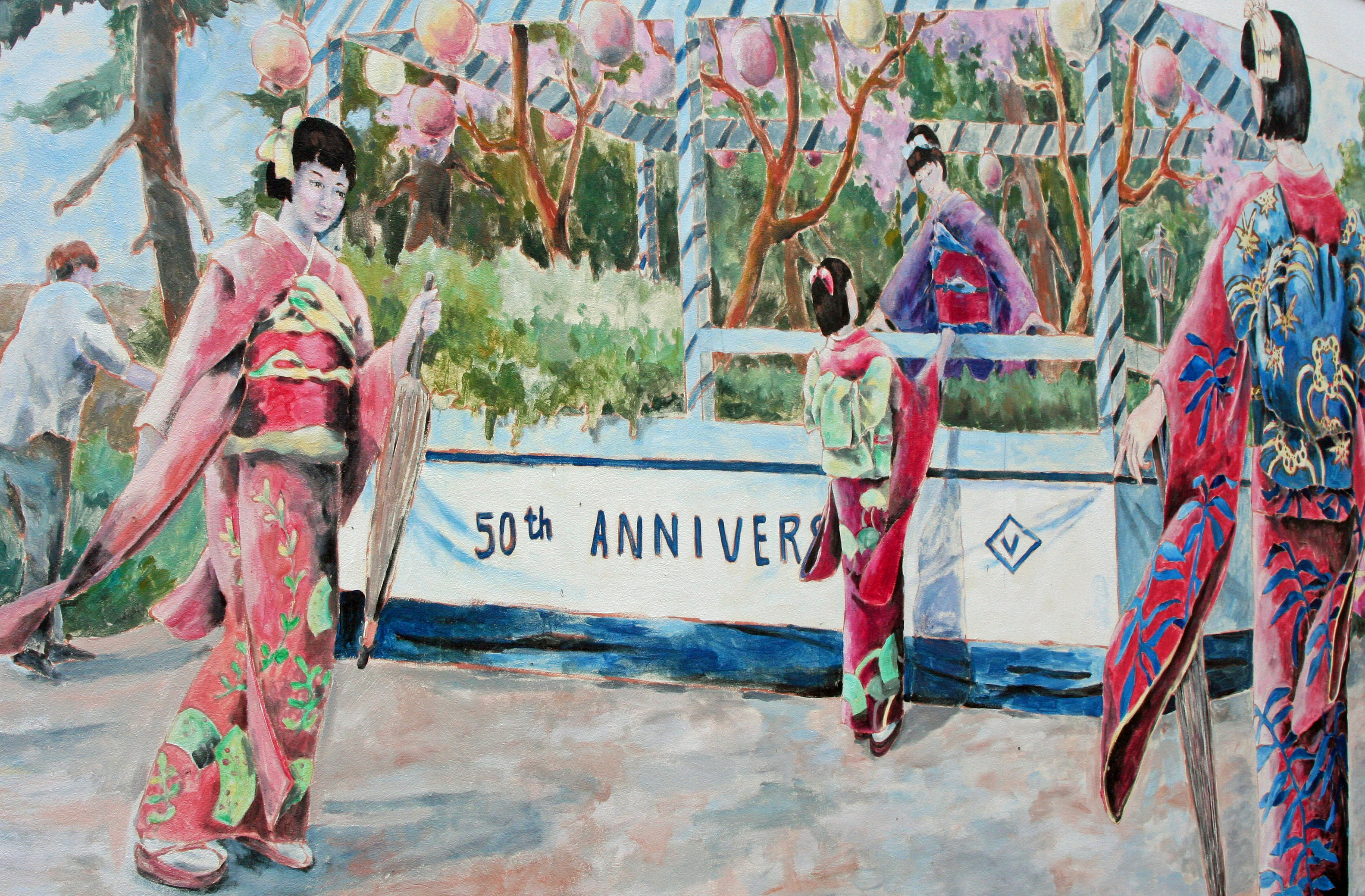
I’ve included this mural because of its history. In 1939 Chemainus celebrated its 50th anniversary. The float entered by the local Japanese-Canadian Community won first prize. By 1942 all of the community’s Japanese had been removed to Internment Camps. It is one of the darker pages of Canadian (and US) history.

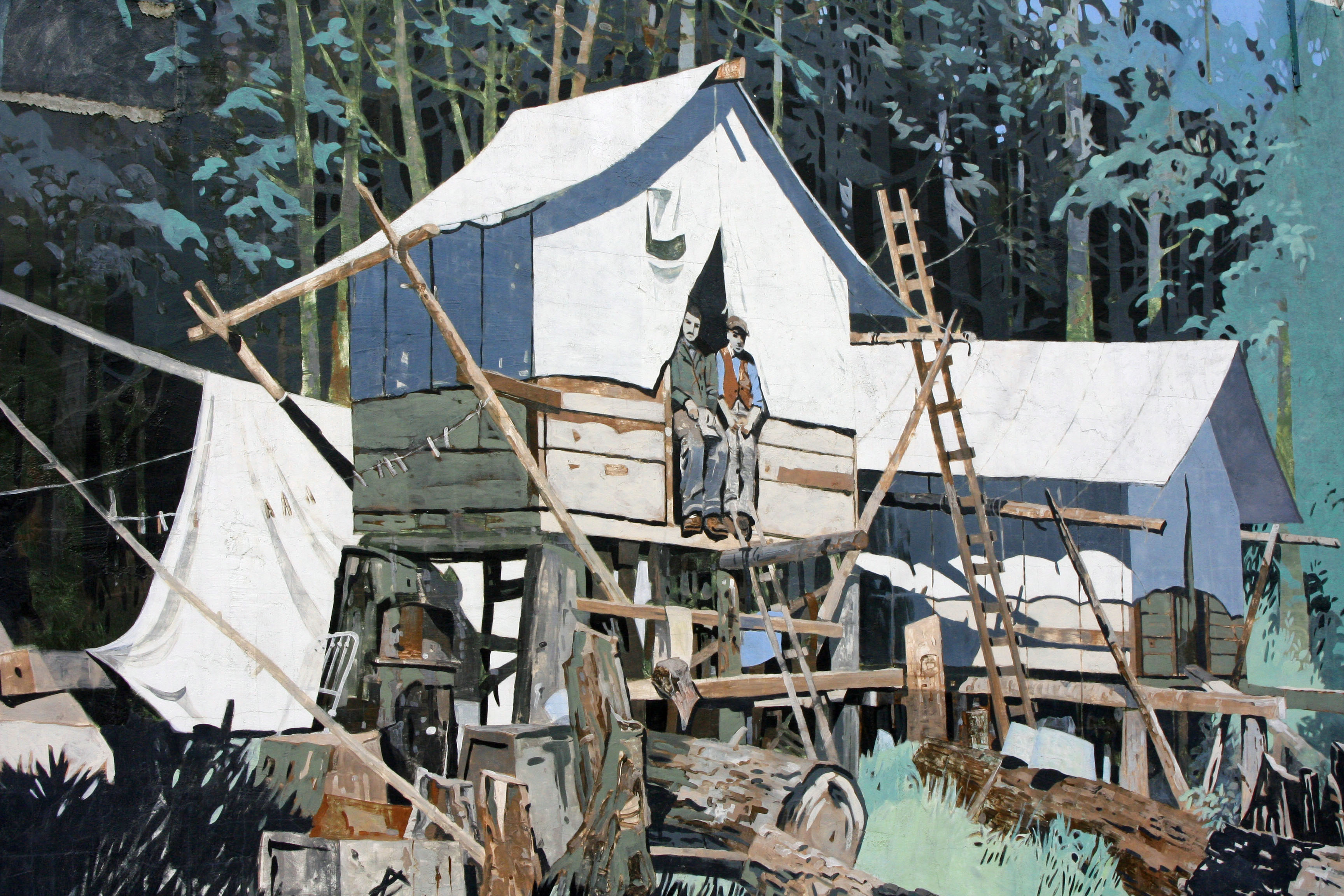
Tent houses provided quick, inexpensive housing for the early loggers, fishermen and miners of Chemainus. When I was growing up in Diamond Springs California, one of my mother’s friends lived in a tent house. As a seven-year old, I was jealous.

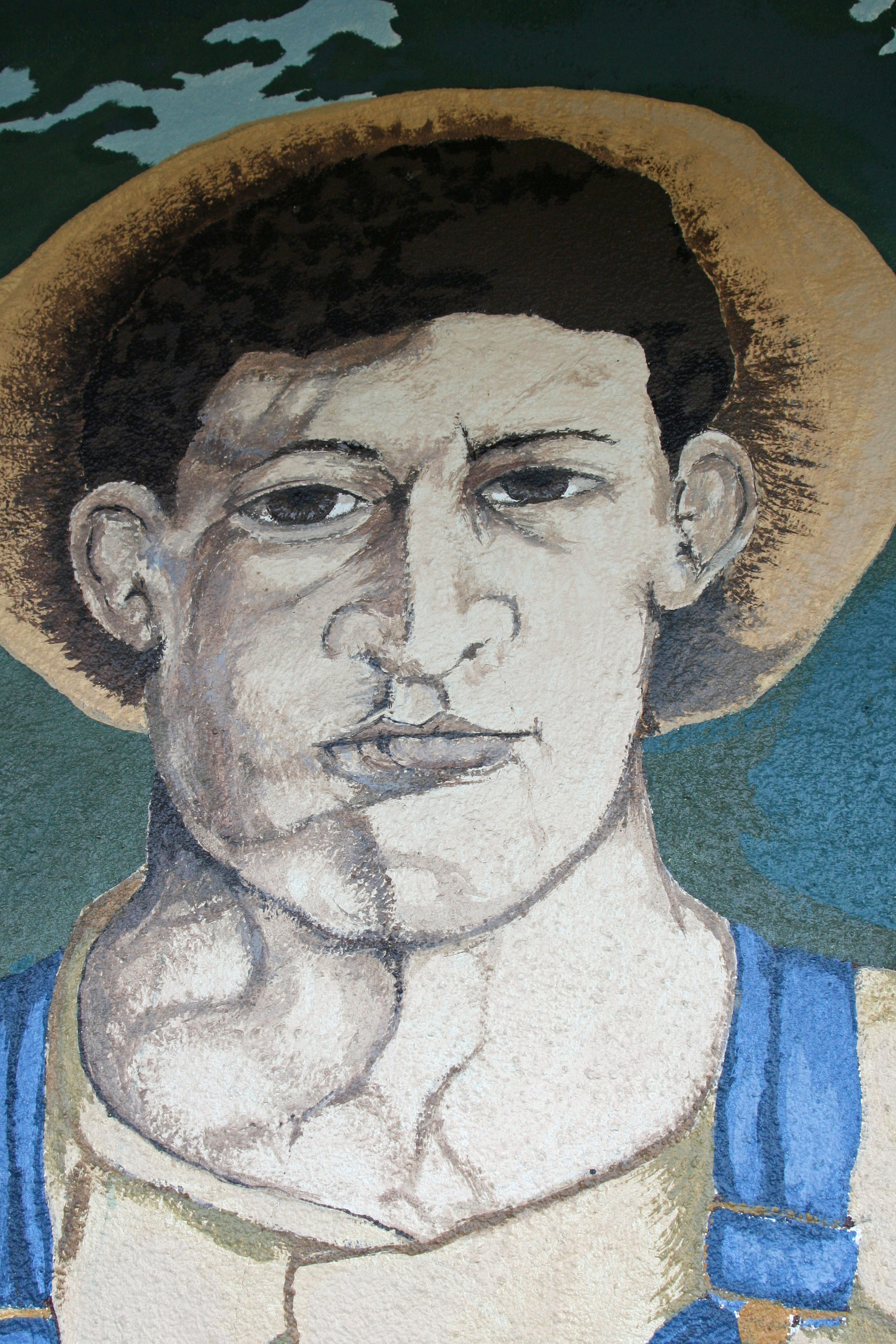
This big guy’s face captures both the simplicity and the power of the mural art in Chemainus.

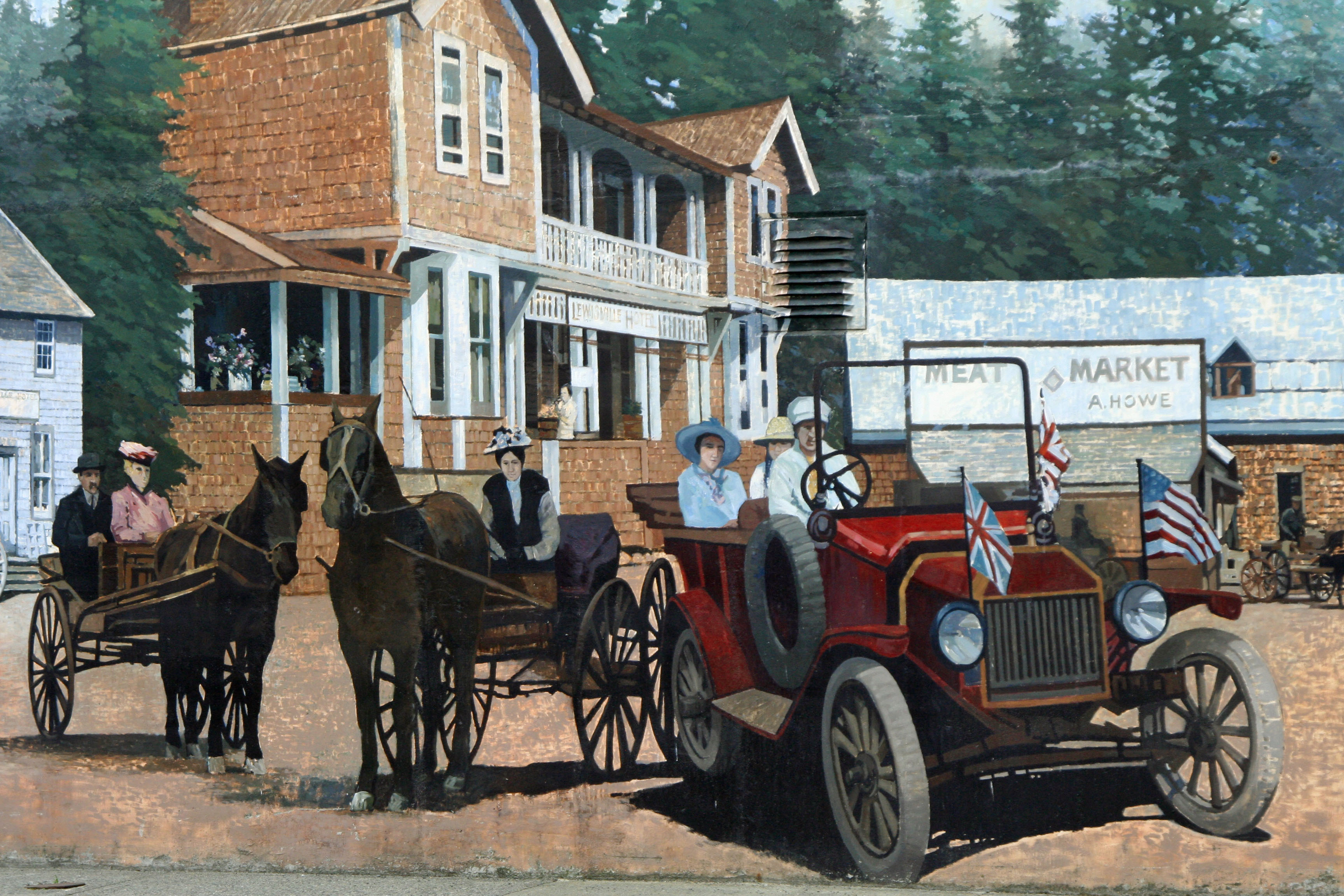
Dressed in their Sunday best, these early residents of Chemainus reflect a time when horses competed with ‘horseless’ carriages as the primary mode of transportation.

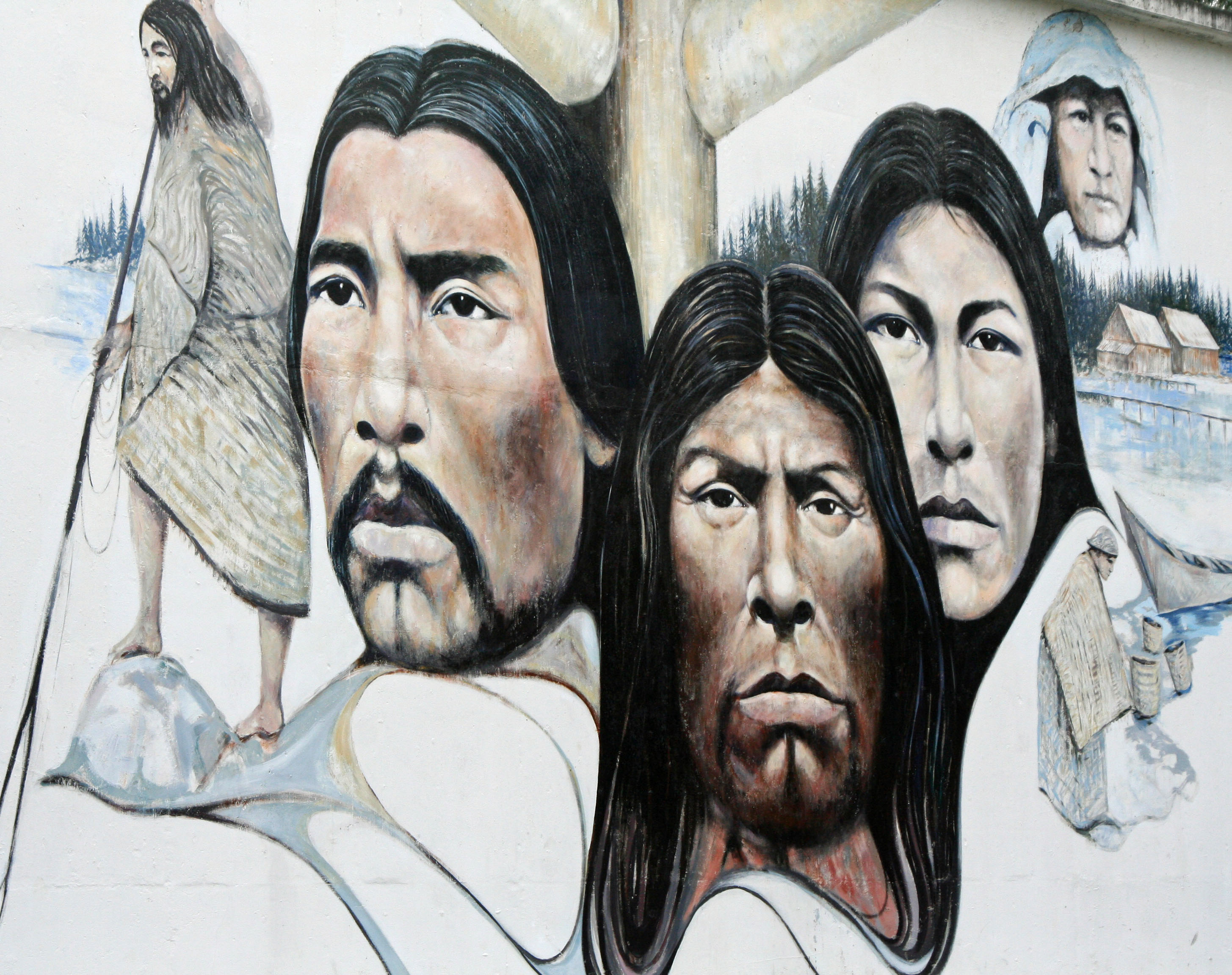
This Chemainus mural of First Nation people captures both the original inhabitants of Vancouver Island and their renaissance today. Peggy and I were both impressed and moved by the quality and quantity of First Nation Art during our visit to British Columbia. 

First Nation Totem Poles… North to Alaska

The totem pole of Thunderbird and the Wild Woman of the Woods found in Duncan, British Columbia on Vancouver Island.

Third times a charm. Right? Peggy and I are out kayaking among the Orca whales up off the northern tip of Vancouver Island as this blog is posted. Or I should say reposted for the second time. It’s appropriate given our trip, however. We are in First Nation country and we once again drove through Duncan. And, as many of you know, I am a big fan of First Nation and Native American art. –Curt

Dzonoqua comes sneaking through the woods, hands outstretched, red lips pursed and whistling, “ooh, ooh” to attract small children who have wandered into the forests. Some stories say she eats the whiny ones. She is also known as the Wild Woman of the Woods or Mrs. Bigfoot. Her large, dangling breasts capture the spirit of Salmon. Thunderbird perches on her shoulders. His wings crash together and make thunder; his eyes shoot out lightning.

Peggy and I, along with our friends Ken and Leslie Lake, visited Duncan BC on Vancouver Island to check out the numerous totem poles carved by First Nation artists and placed throughout the town.

The close relation of First Nation people to Bear, Eagle, Raven, Whale, Owl, Wolf, Beaver, Salmon, Otter and other animals stretches back to ancient times. Families would adopt particular animals as their totems and then carve these animals into totem poles. The poles would serve to both protect and instruct the families. Some families were even known to shape shift into their totem animal. (Jacob, morphing into a wolf in the Twilight series, is a modern example.)

The arrival of whites in the Northwest had a devastating impact on the people and culture of the First Nation tribes. Disease wiped out whole populations. The practice of native religion and the carving of totem poles were prohibited. It wasn’t until the 1930s that the art of totem pole carving was revived.

It thrives today. Native artists continue to carve traditional themes but they have also extended their interpretations and honed their skills. While the totem poles and masks still serve as important mythic symbols to First Nation people, they have also become a source of pride to all who live in BC and the Northwest. I might add they have also become an important attraction for tourist dollars.

Duncan BC and native artists have done an excellent job of displaying totem poles representative of the north coast. Visiting the town, located on the Trans-Canada highway halfway between Victoria and Nanaimo on Vancouver Island, is well worth the stop.

To enhance your visit, I highly recommend stopping by the Visitor’s Center and picking up the book, “The Totem Walk of Duncan” written by Joan Chisholm and illustrated by Crysta Bouchard and R. Howe. For more information go to: http://www.downtownduncan.ca/duncan_totem_tourNEW.html

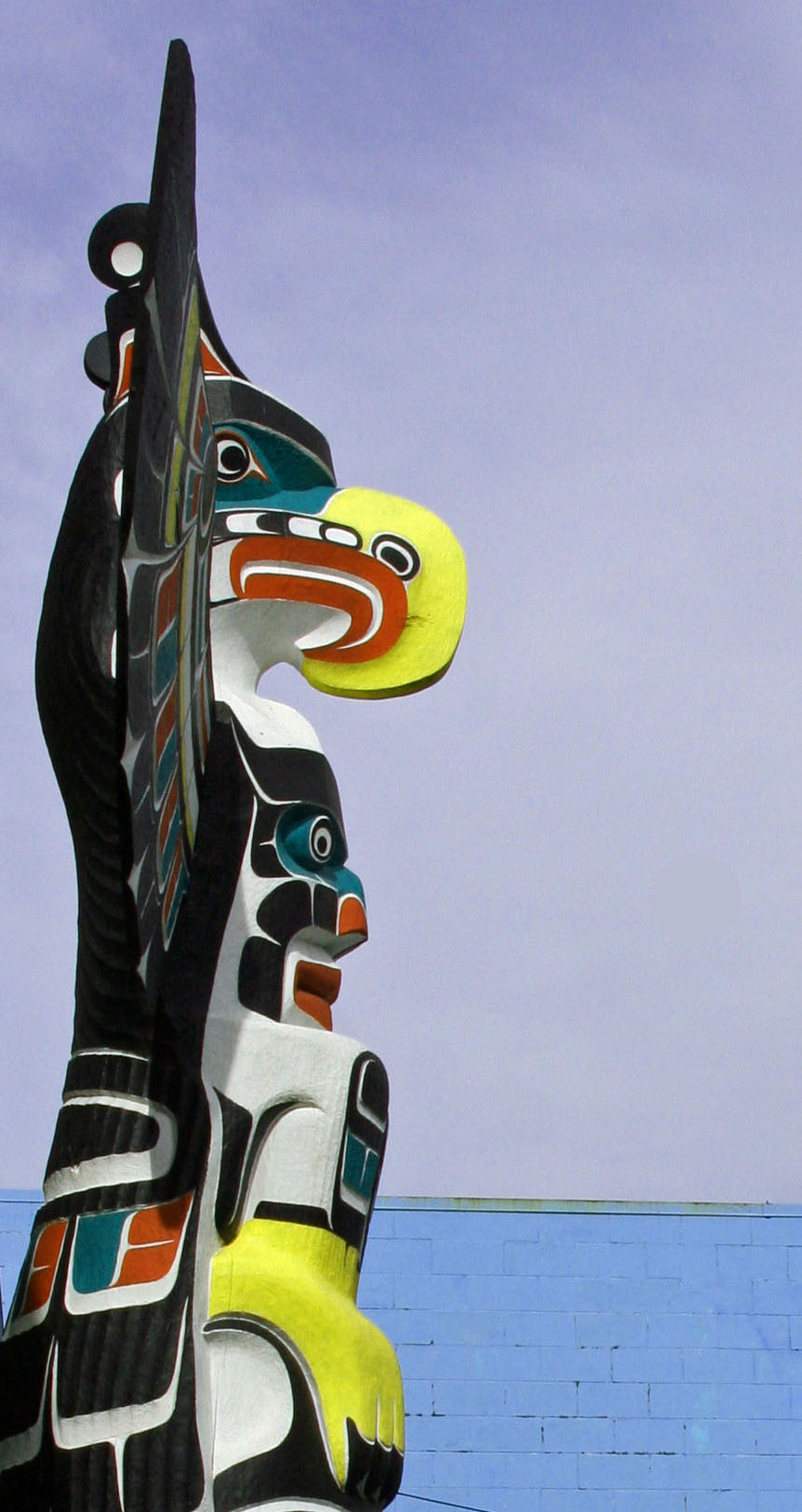
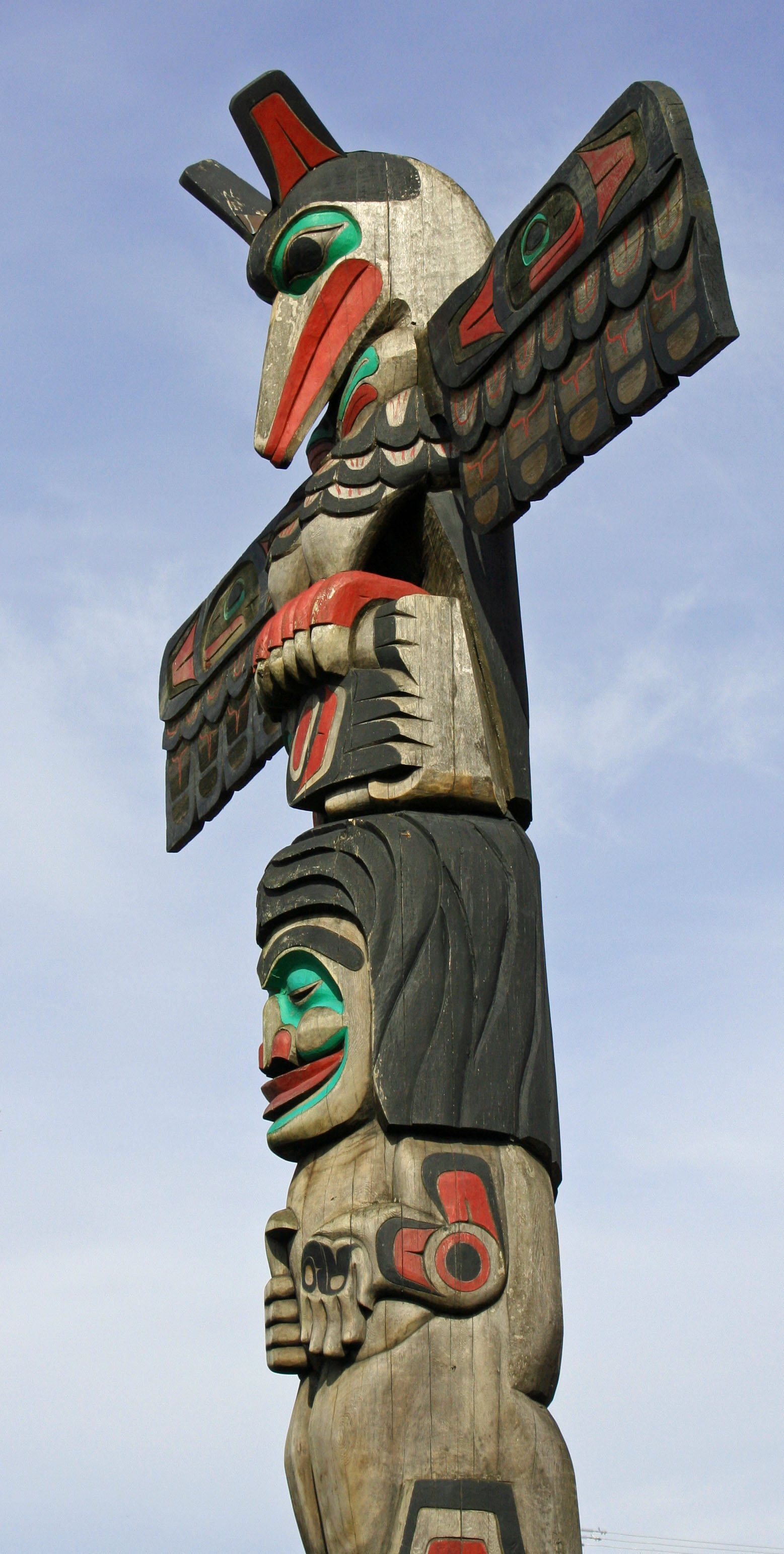
Thunderbird in flight. I loved the bright colors of this totem pole in Duncan BC.

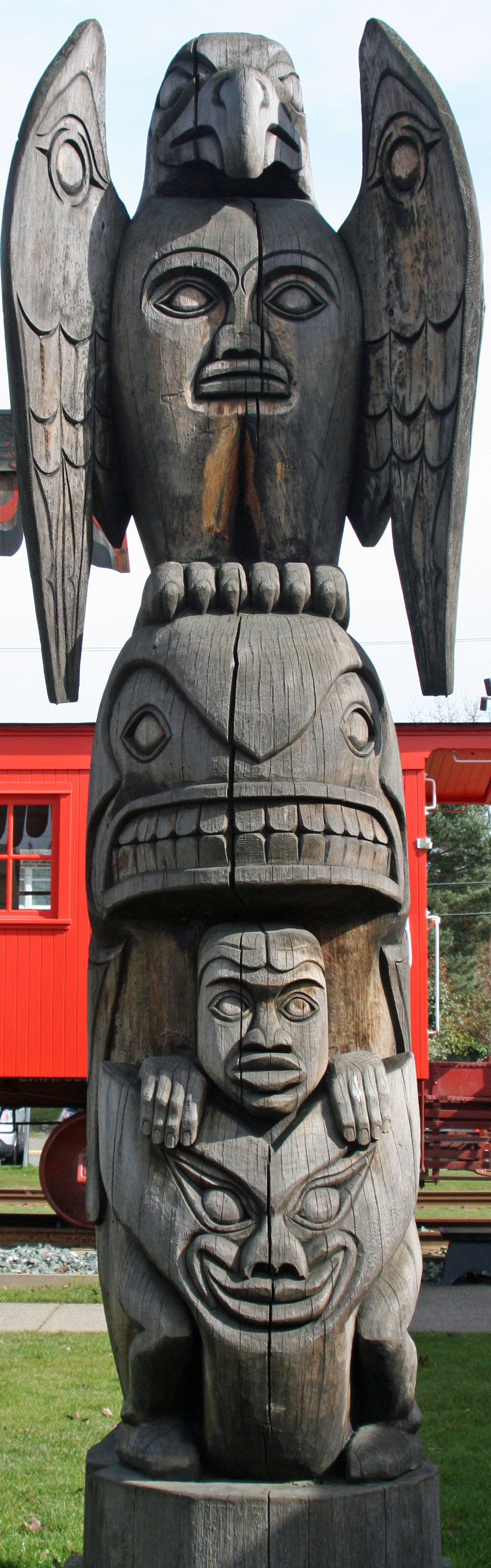
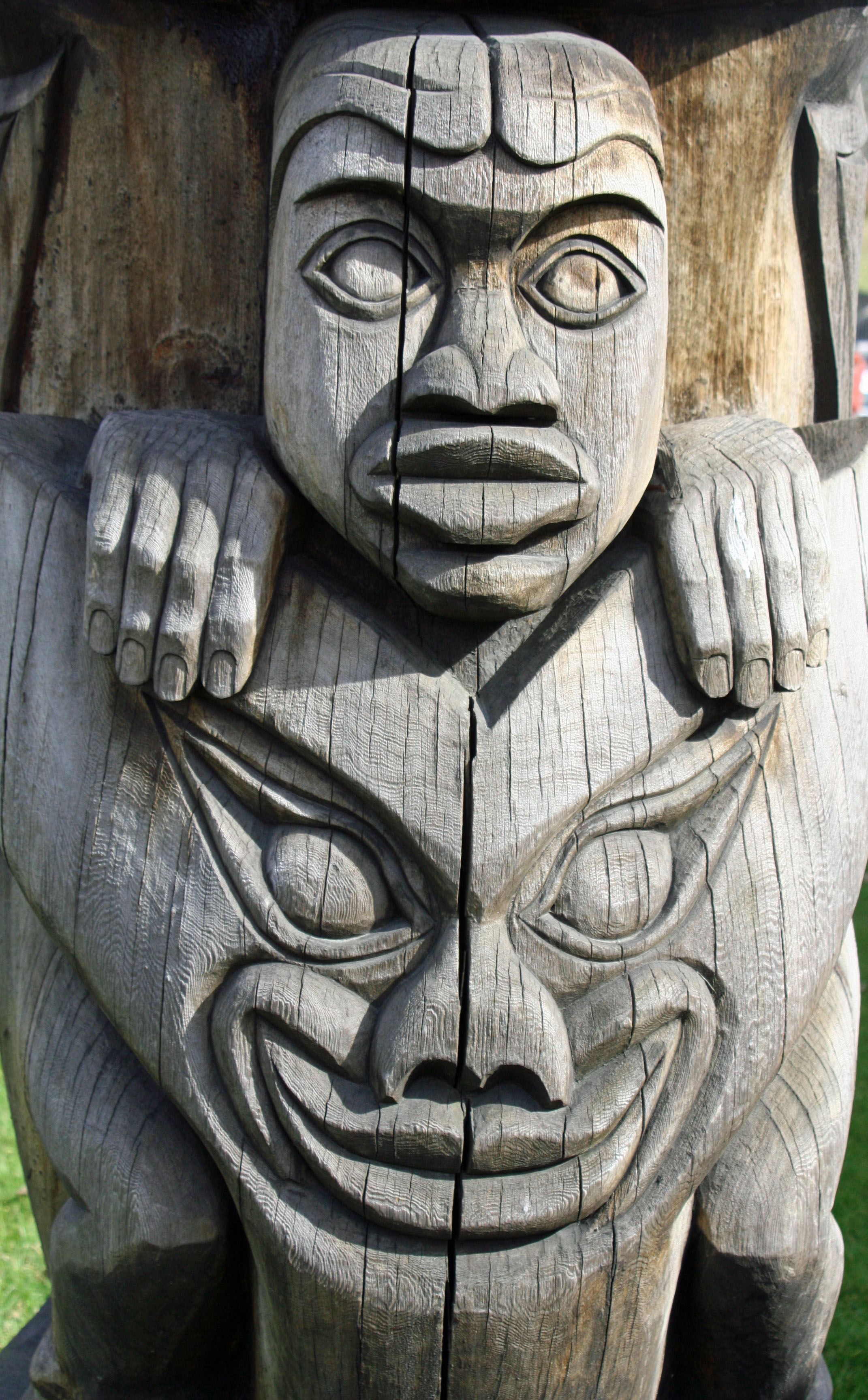
This totem pole in Duncan BC shows the spirit of the First Nation artist in the eagle’s chest. Eagle rests on Whale and has Wolf carved on his flukes. Both Whale and Wolf provide powerful protection for the person resting his hands on the flukes.

This photo provides a detail of the totem pole above. Note the fine detail of the carved fingers.

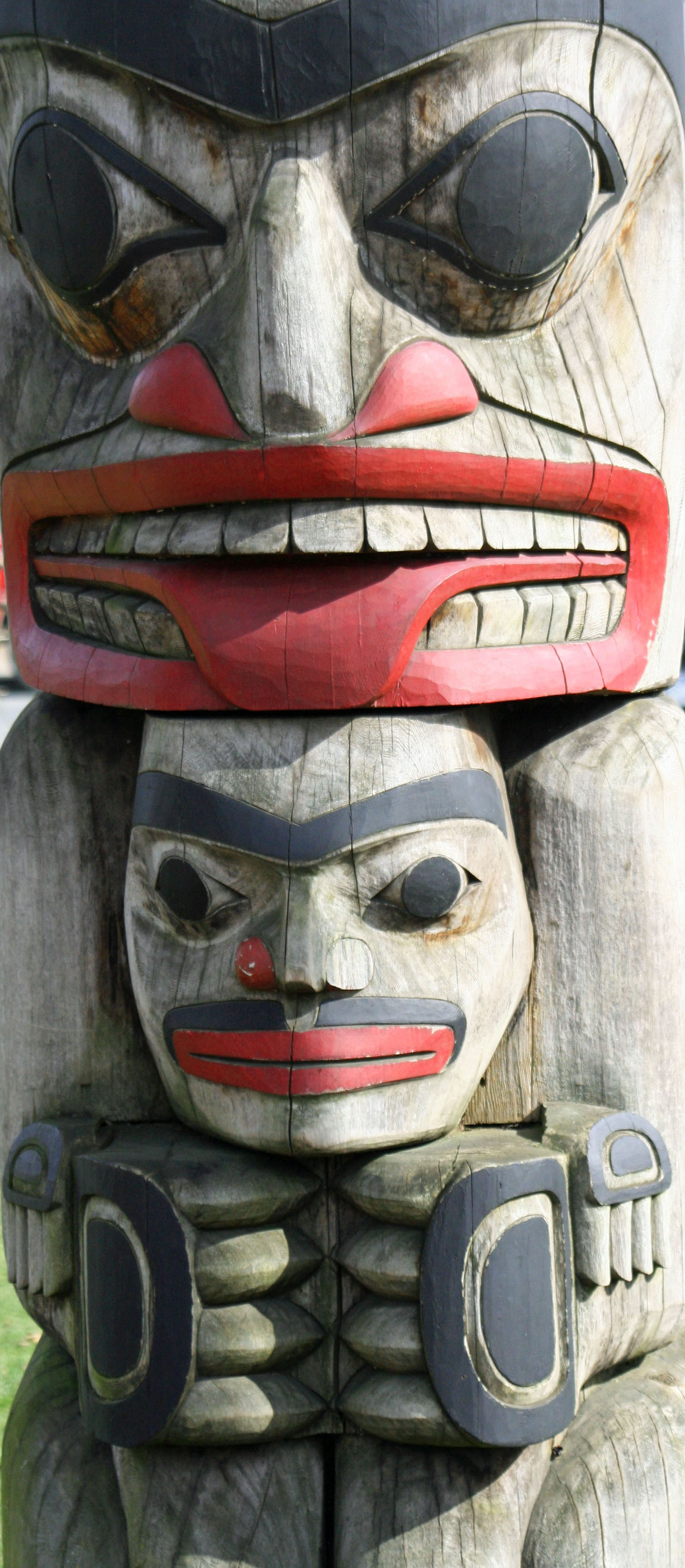
This totem pole was meant as a thank you from one chief to another. Raven perches on top and delivers the pole. Eagle is under Raven and represents the power of the chief, a member of the Eagle Clan. The chief’s son is next. His open hand symbolizes “thank you.” Raven, like Coyote of the Southwest, is a trickster. Both are among my favorite mythological animals.

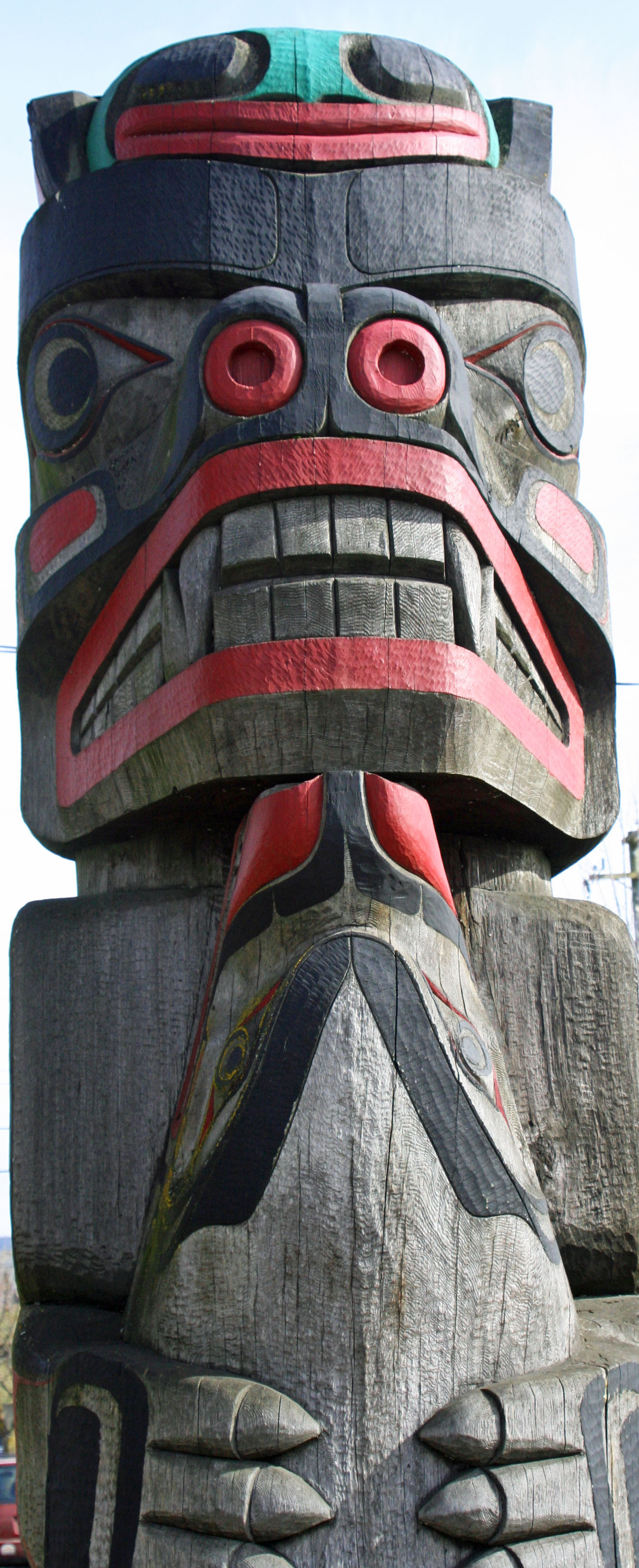
Most totem poles are highly symbolic. This is a heraldic pole. The frog on top represents wisdom, the bear below power and courage, and the seal a spiritual being that can travel easily between spiritual and physical realms. The red and black mean strength and protection. I see it as one pole accomplishes all.

The bear’s tongue and wide grin caught my attention in this Duncan BC totem pole. I thought at first he might be sampling the guy he is holding in his paws. Apparently it means he is about to shape shift.

I am struck by the sheer power captured in some of Duncan BC totem poles. This eagle is an excellent example.

A different perspective on Bear. I enjoyed looking at and photographing the specific faces seen on the Duncan BC totem poles.

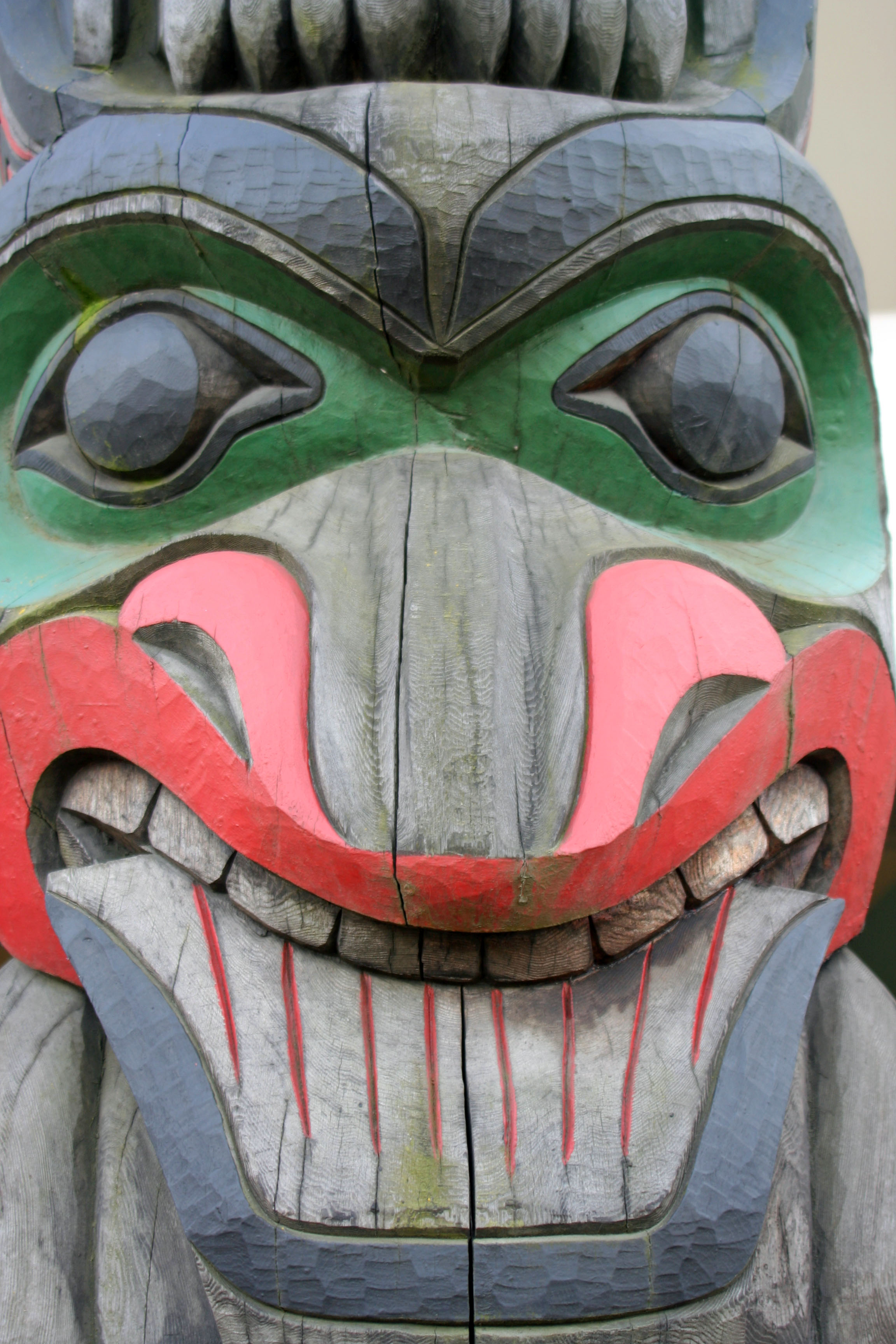
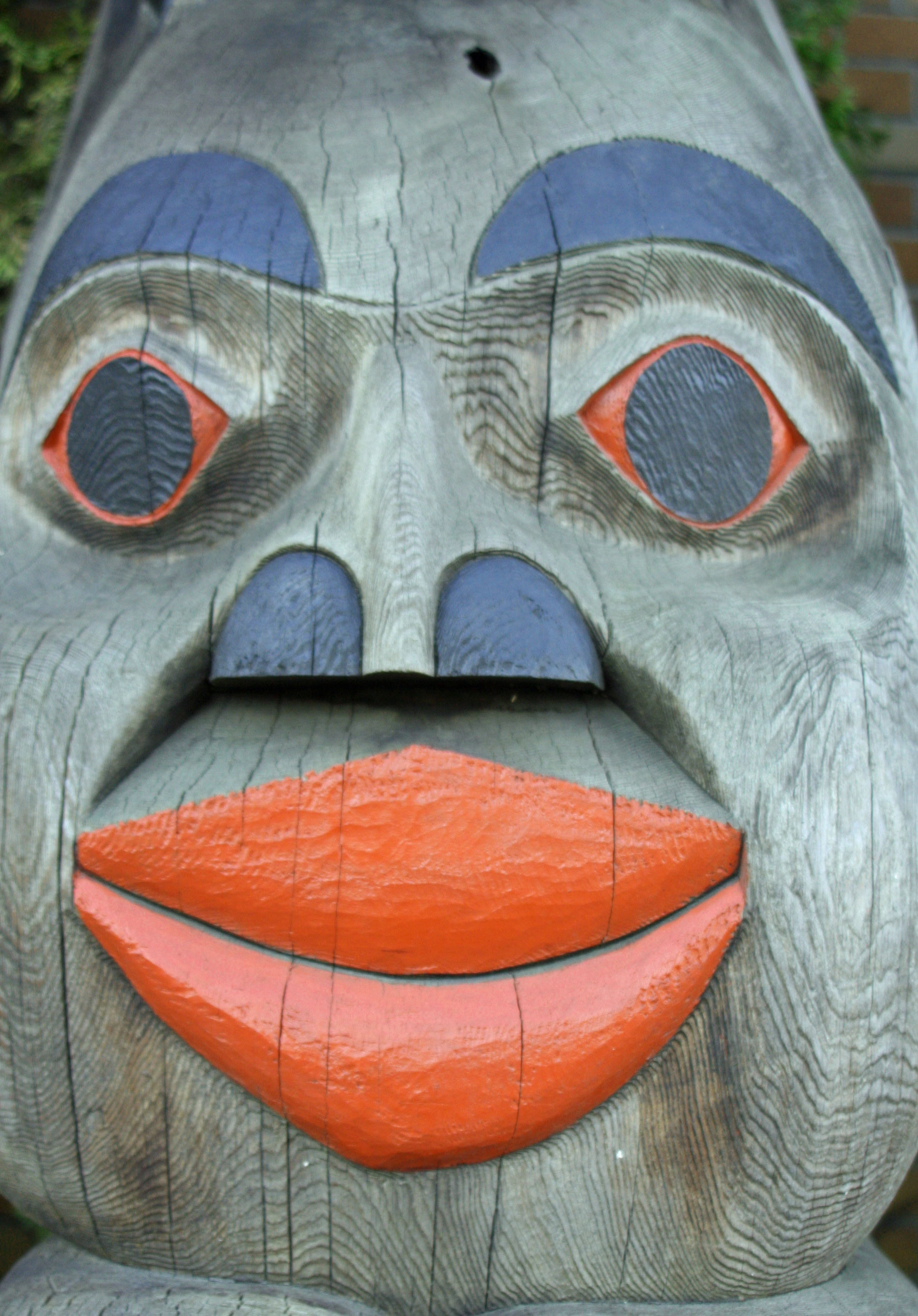
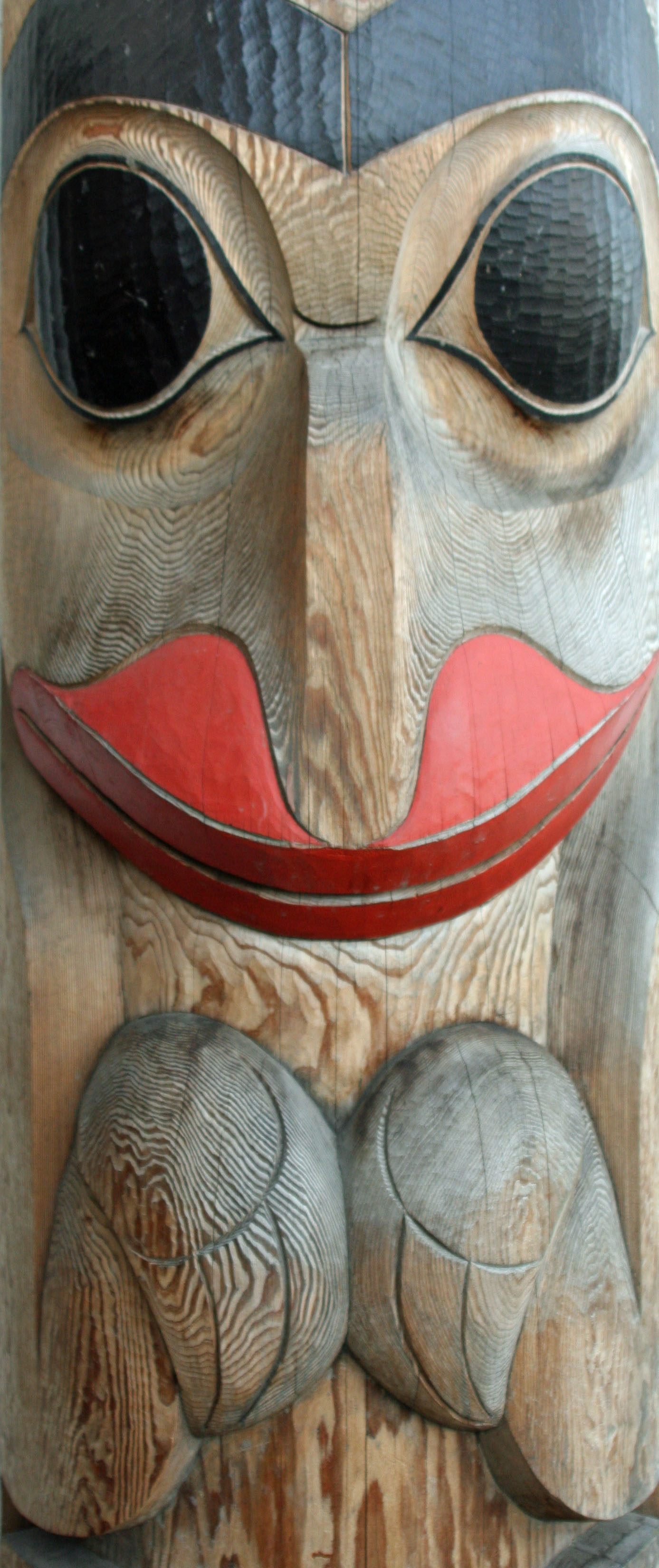
If it weren’t sacrilegious, I’d name this totem pole face smiley.

And finally, a Duncan BC totem pole I simply couldn’t resist. How could anyone say no to a pose and eyes like this?

NEXT BLOG: We cross the border into Canada and are reintroduced to the delicate art of carving with a chainsaw.

The Chicken Whisperer…

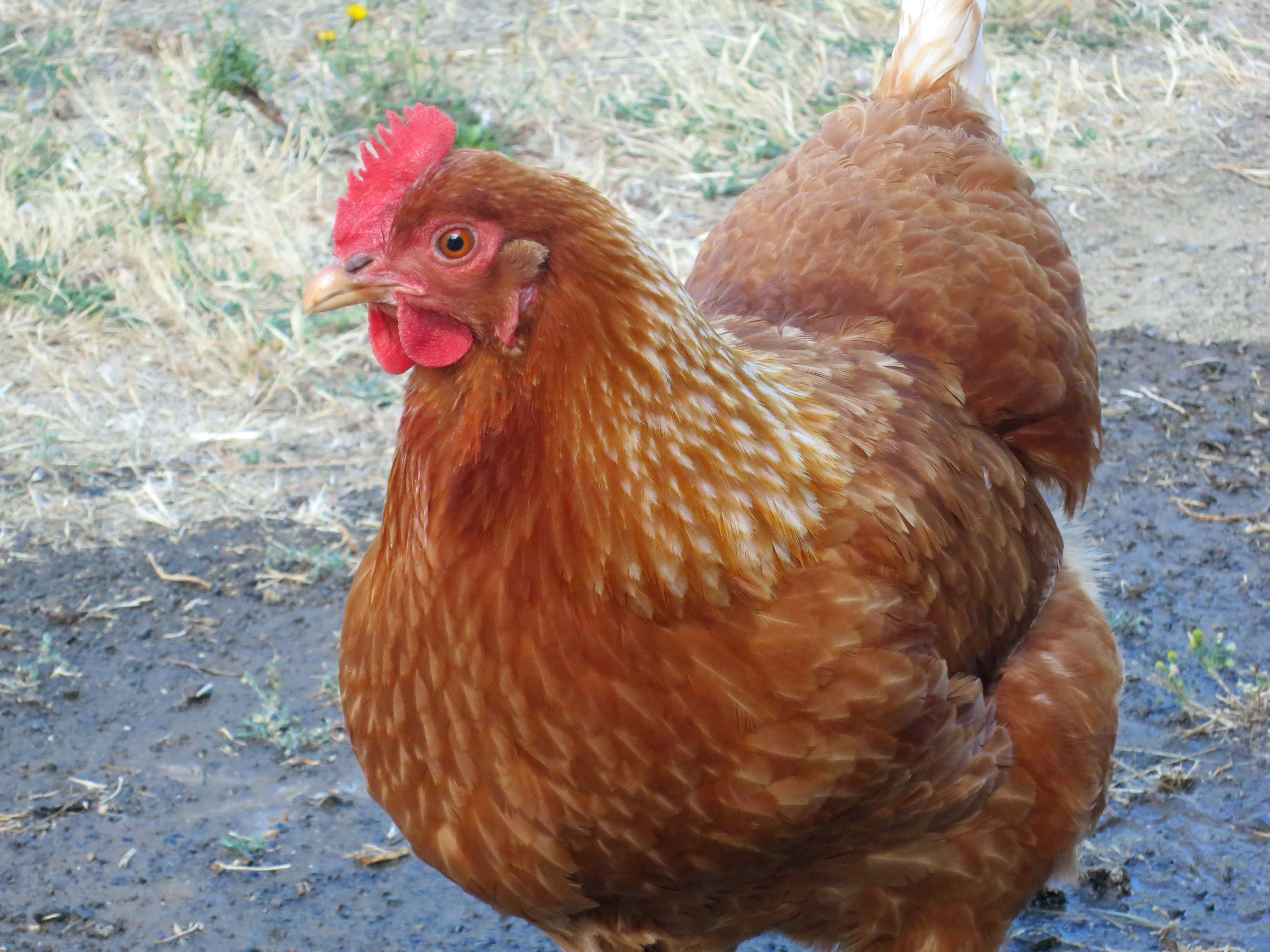
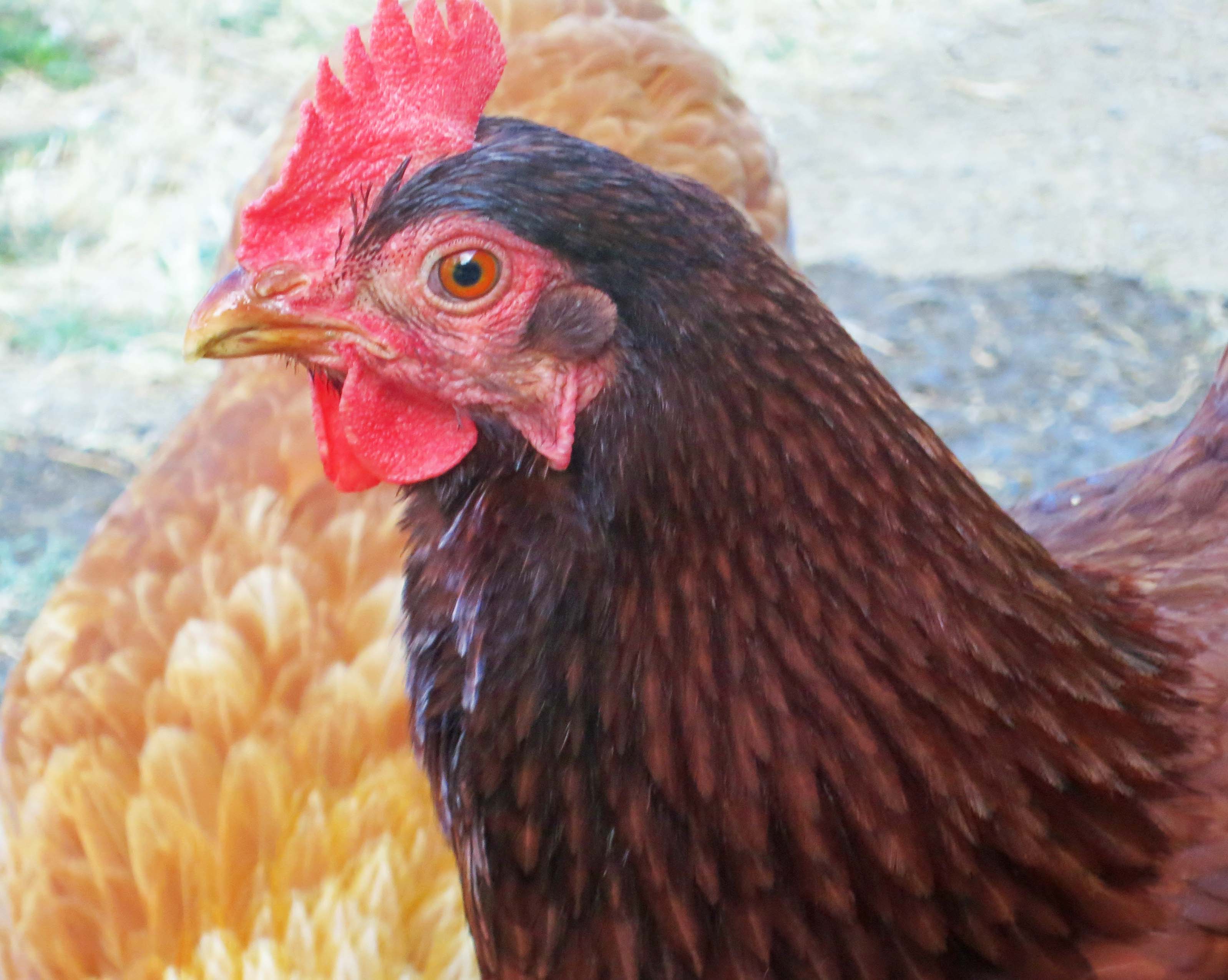
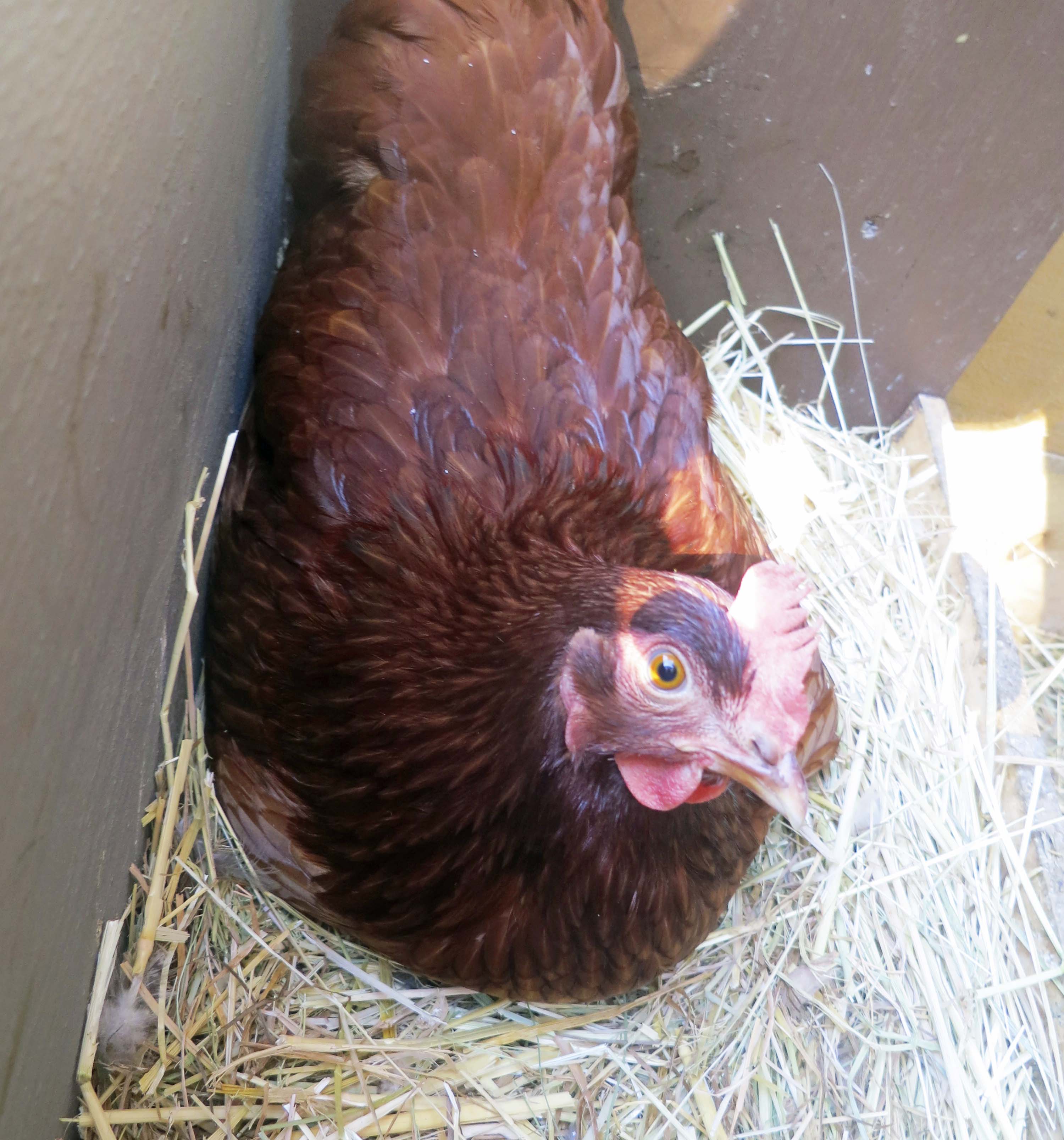
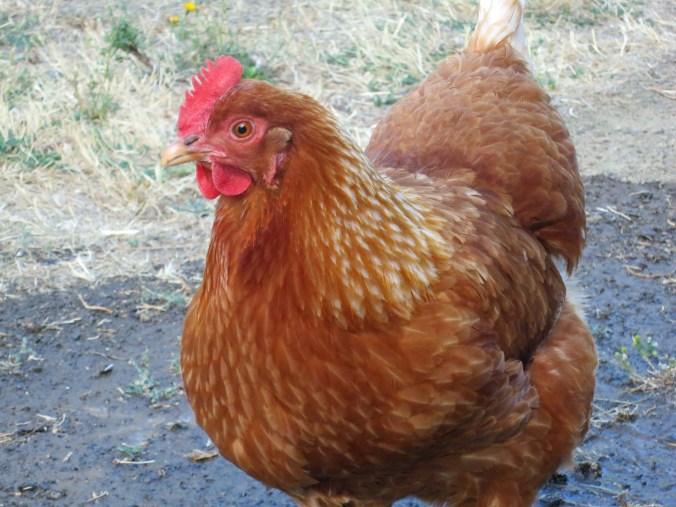
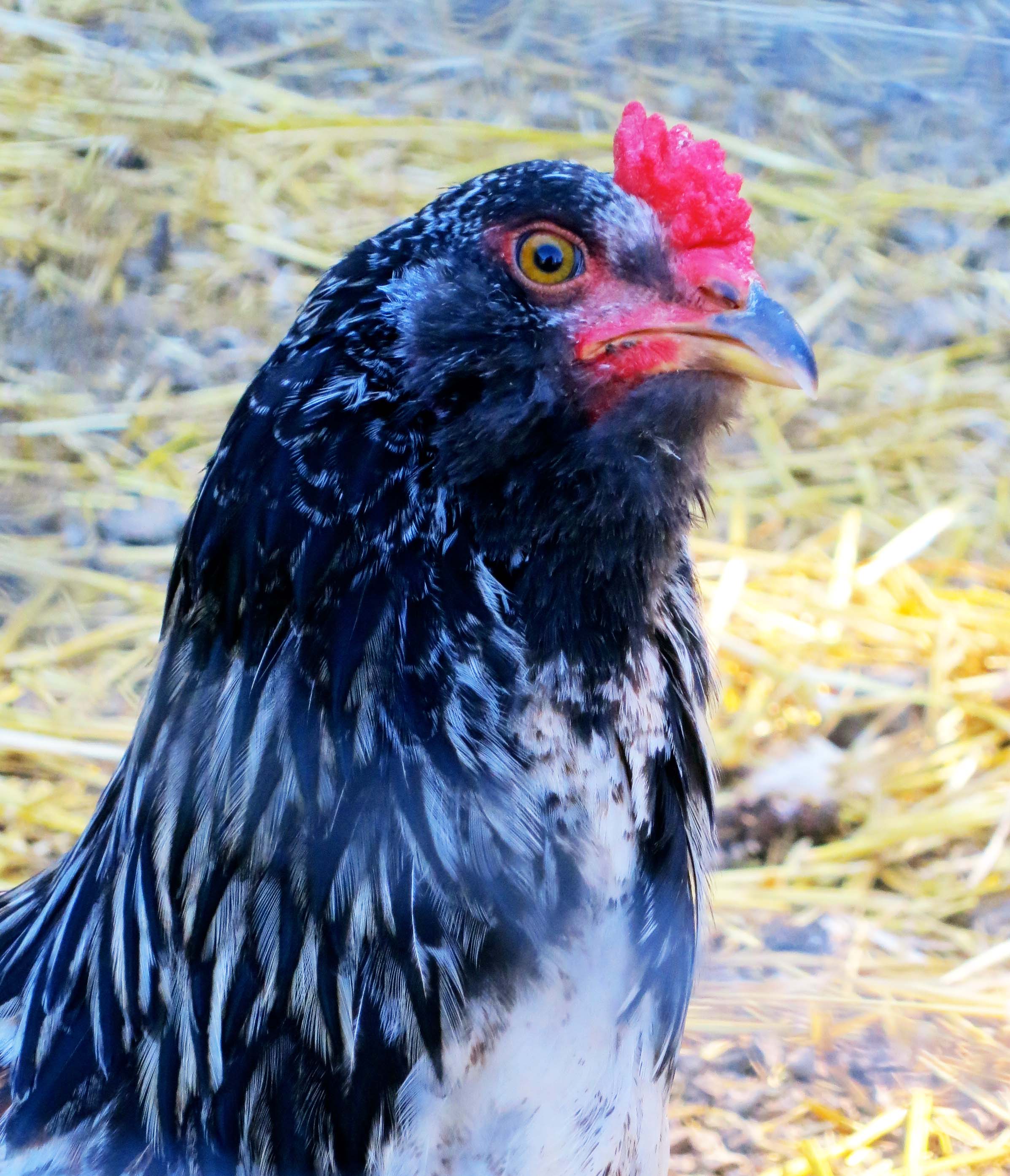
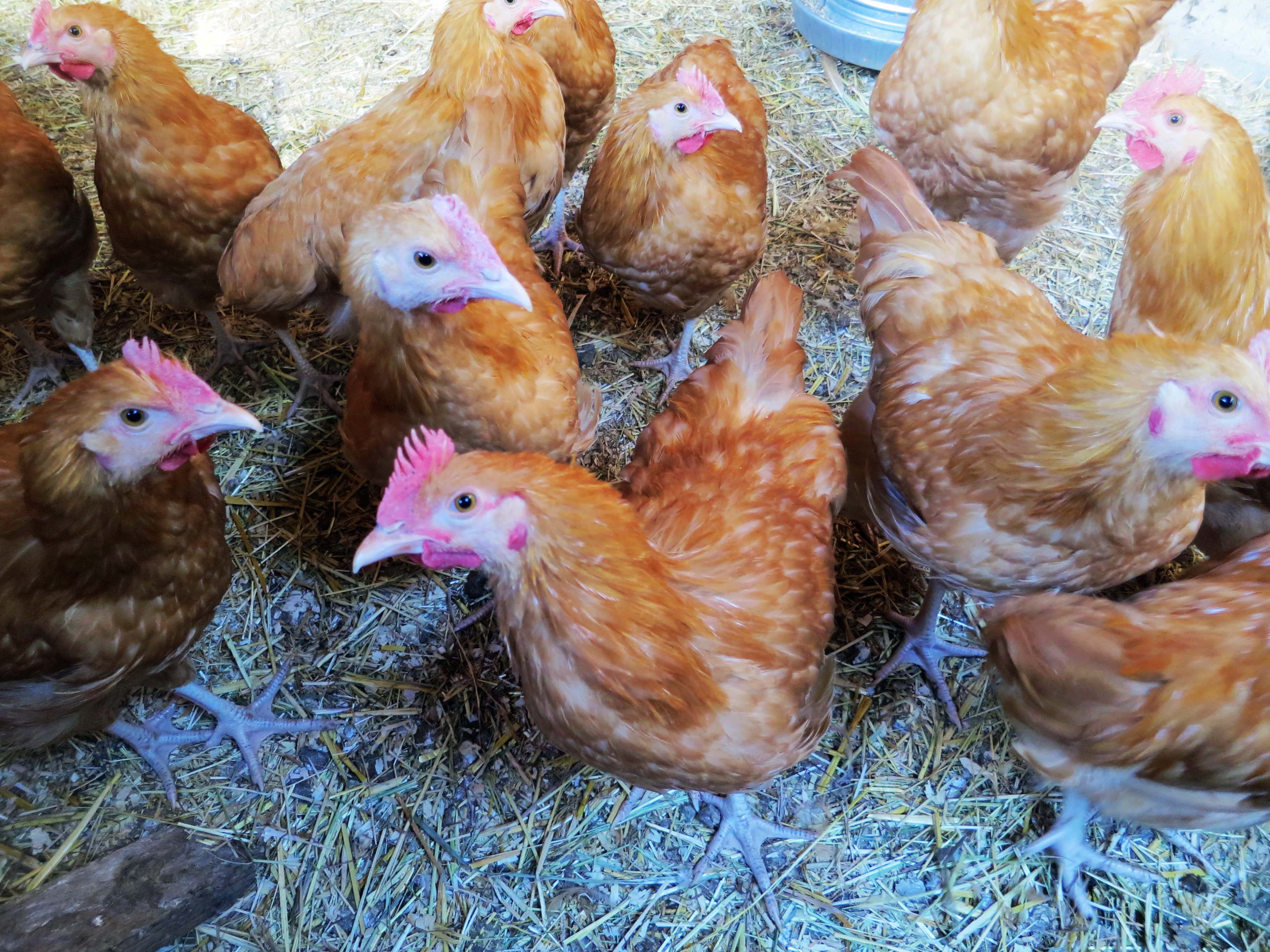
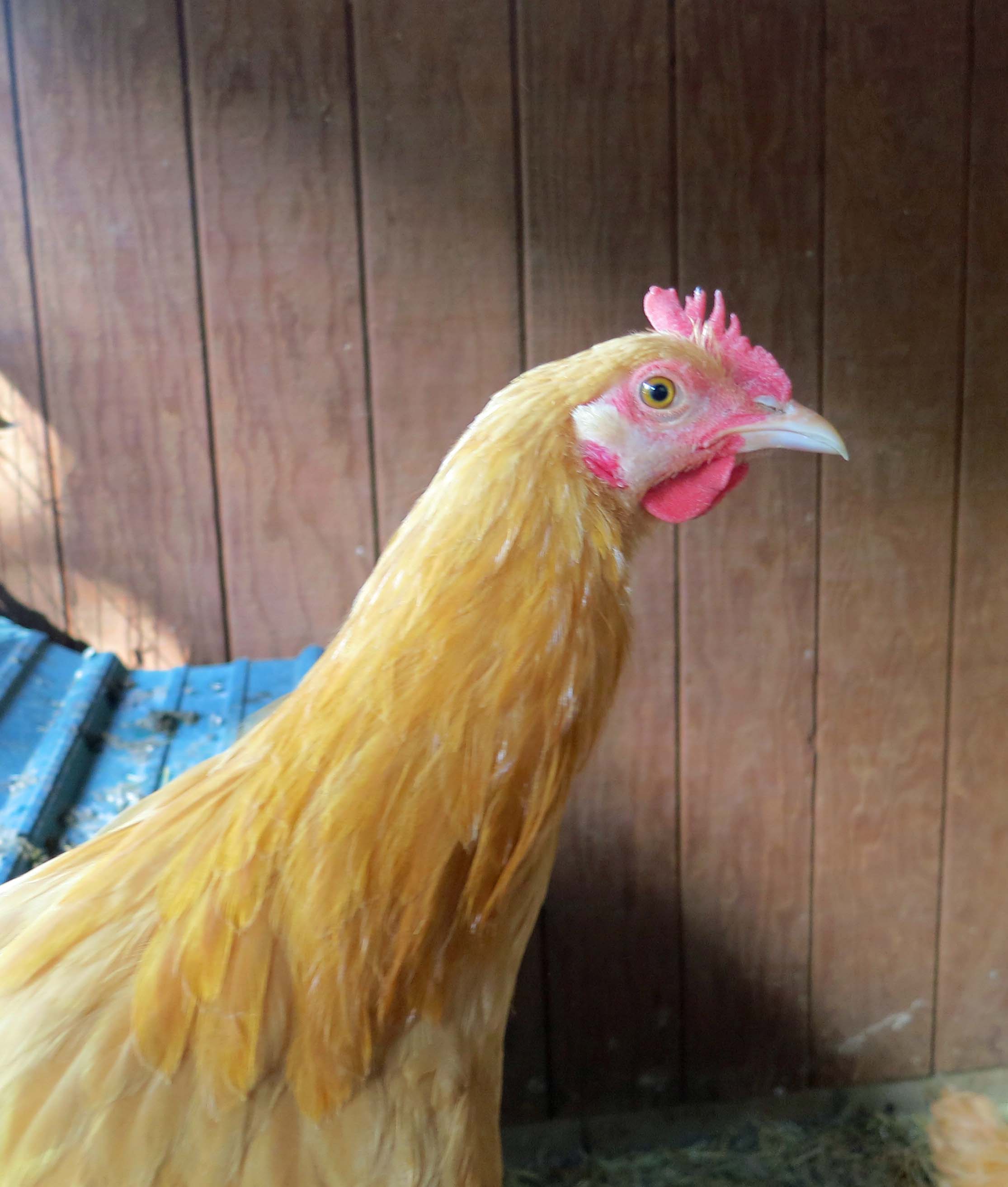
Golden Sex Link Chicken. Photo by Curtis Mekemson.

Boss Hen in all of her feathered glory.

Cluck cluck cluck? Cluck cluck cluck cluck. “Who are you? You are not Bryan,” Boss Hen observed suspiciously. Clearly she was upset. She pecked at my shoe. Cluck cluck! “Take that!” Or maybe it translated “Not edible.” I was still learning Chickenese. Edibility, I discovered, was Boss Hen’s primary criteria for judging everything.

I threw out a handful of chicken scratch (coarsely ground corn), which chickens regard as dessert. I was immediately forgiven for ‘not being Bryan.’ Boss Hen and her three cohorts— the Gang of Four, as I came to know them— begin pecking away at the ground and softly clucking about what a great guy I was.
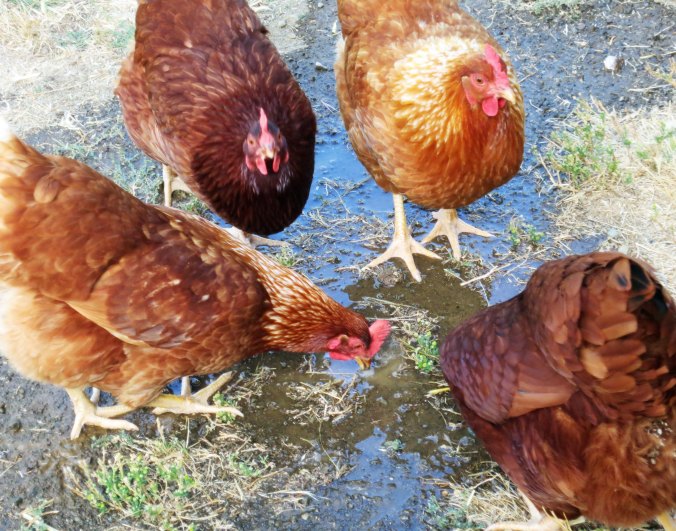
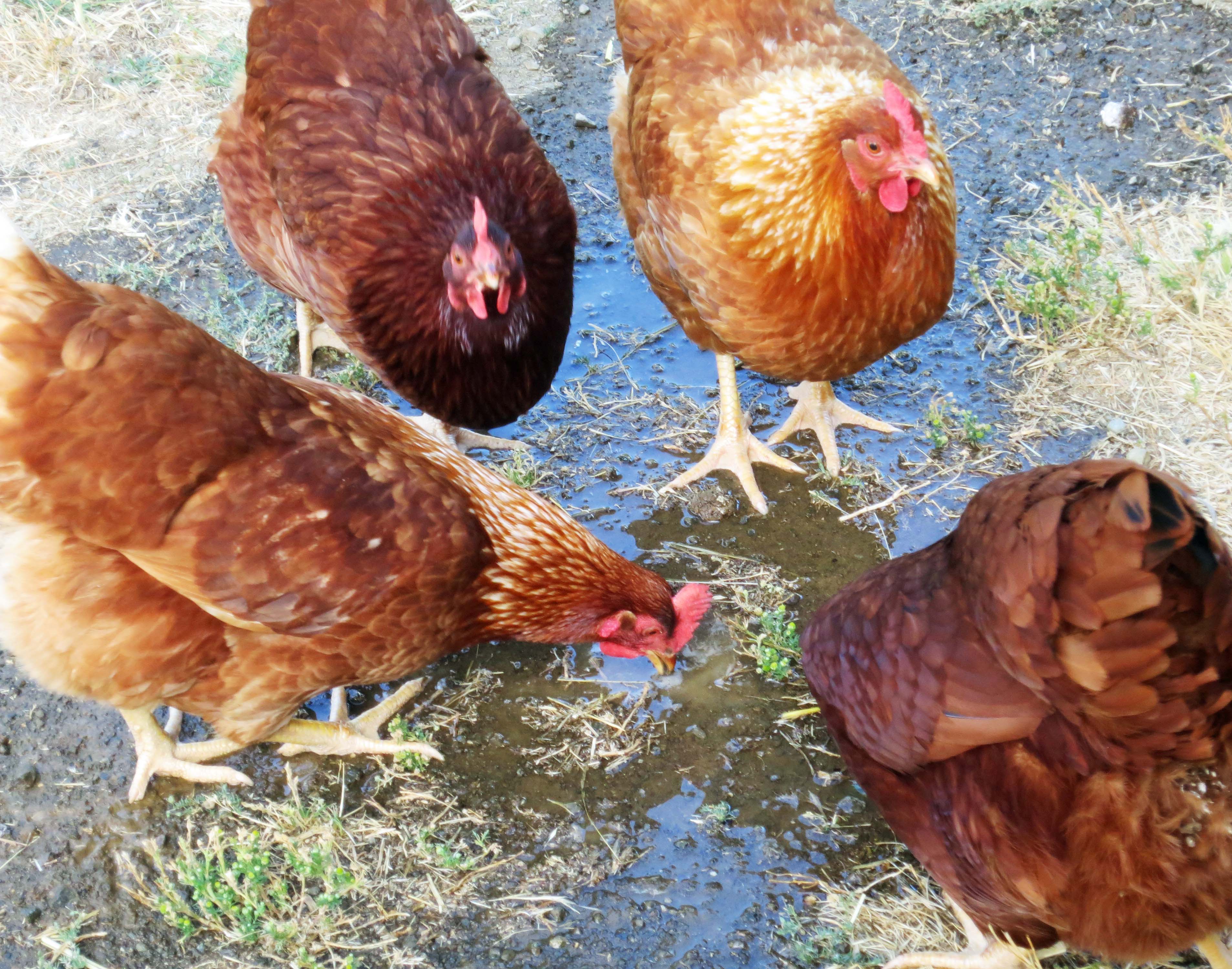
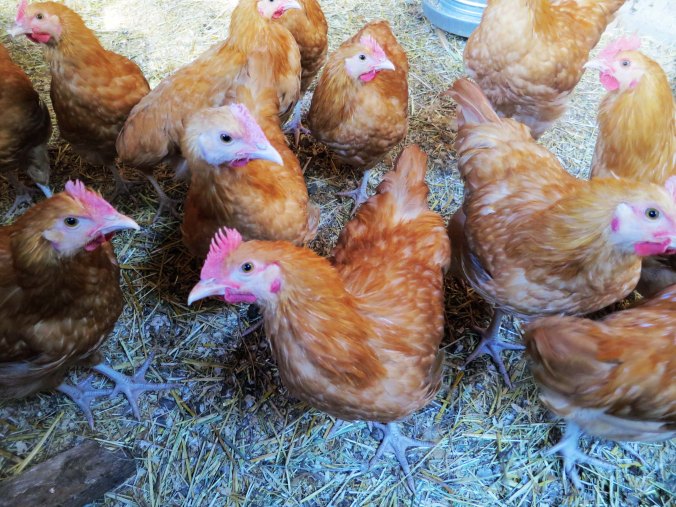
Four golden sex linked chickens.

The Gang of Four, rulers of the roost.
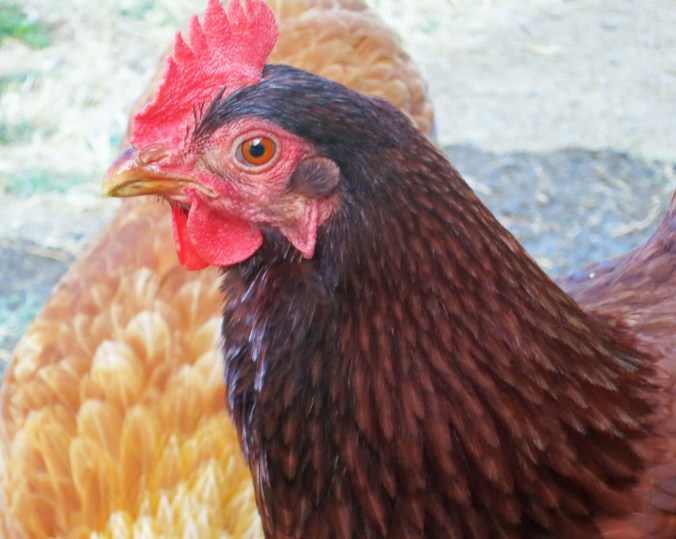
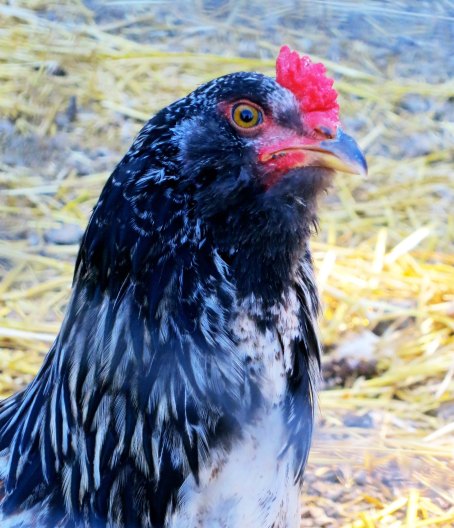
Portrait of a gang member.

Portrait of a gang member.

Our neighbor Brian had requested that I care for his chickens for a week while he and his family went for a vacation on Vancouver Island in western Canada. Of course I said yes, but I had reservations. My knowledge of chickens was limited to brief encounters as a child and as a Peace Corps Volunteer. Would Bryan arrive home and find that his fowl friends had fed the neighborhood fox?

Our family had raised a few chickens for eating. I had a vague memory of the experience, mainly of chopping off heads, sort of what you would expect a seven-year old boy to remember. But I also recall that my sister Nancy refused to eat them. She had given the chickens names and followed them around, turning over rocks so they could catch any lurking bugs. “I will not eat my pets,” she had insisted stubbornly. My perspective had been that chicken and dumplings are chicken and dumplings: mmm, mmm good.

My three Peace Corps chicken memories were more vivid. First, a Peace Corps staff member had shown up during training in California with a crate of live chickens, a hatchet, a large pot, and a box of matches. “Here’s dinner,” he had announced casually. We were left to work out the details. Second, I returned to my home in Gbarnga, Liberia after a trip and discovered a chicken roosting on our stove. It had pooped all over the kitchen. I gladly ate her. Finally, there was the rooster who crowed under our window at 5:00 a.m. each morning and then ran like hell because I kept a bucket of water ready to throw on him. I’ve blogged about these adventures. You can follow the links for the complete stories.

The rooster in Liberia convinced me that chickens are relatively intelligent birds. A February 2014 article in Scientific American confirmed this. The article reported that, “The birds are cunning, devious, and capable of empathy. And they have sophisticated communication skills.” A rooster, for example, will squawk a special warning to hens and chicks if he spots a hawk flying over. The same rooster alone in the chicken yard with a competing rooster doesn’t utter a peep, but takes evasive measures, leaving his unsuspecting competition alone with the plunging hawk. Bye, bye.

My wife Peggy and I went up to Bryan’s for instructions on Chicken Care 101 before he left. He introduced us to his brood. One pen contained the Gang of Four, all egg laying, another six younger hens, and a hormone-driven, teen-age rooster who couldn’t stop crowing about his intentions. The second pen was filled with young roosters destined to being eaten. We were to watch the chickens’ water and food, which wasn’t a problem. Bryan had labeled the food bags. But he also wanted us to let the Gang of Four and their cohorts out each morning to wander about the yard to supplement their diet. Fine, I could handle that, but what about getting them back in the pen at night?

“Not a problem,” he assured us. “The chickens will return to the pen on their own at dusk.”

“And if they don’t?” I insisted. Apparently I was to take his blue plastic bucket, throw in a couple of handfuls of scratch, and then walk into the pen while shaking the bucket. The hens and rooster would follow. I’d be the Pied Piper of Chickendom. Yeah, right. Our instructions in place, Bryan left on vacation. We were left with the chickens, his undying gratitude, and whatever eggs the chickens laid.

I’ve already described my encounter with the Gang of Four on the first morning. The younger hens had made a dash for the cover of a low-limbed Douglas fir where they liked to hang out. The randy teenage rooster took advantage of the moment to pin one of the young hens to the ground— squawk. It was over in five chicken-clucking seconds. The Gang of Four ignored the ruckus. Any time the rooster approached them, they kicked his tail feathers half way across the yard.
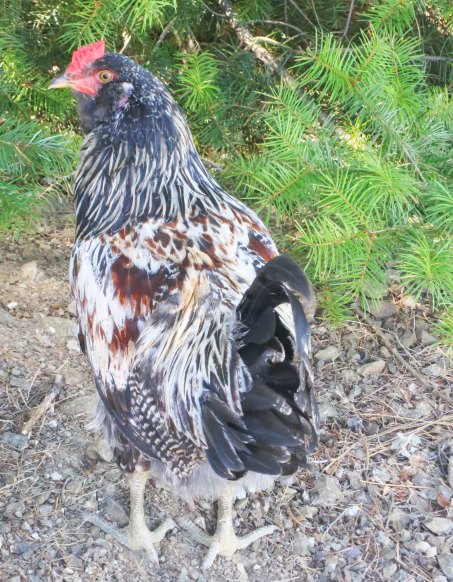
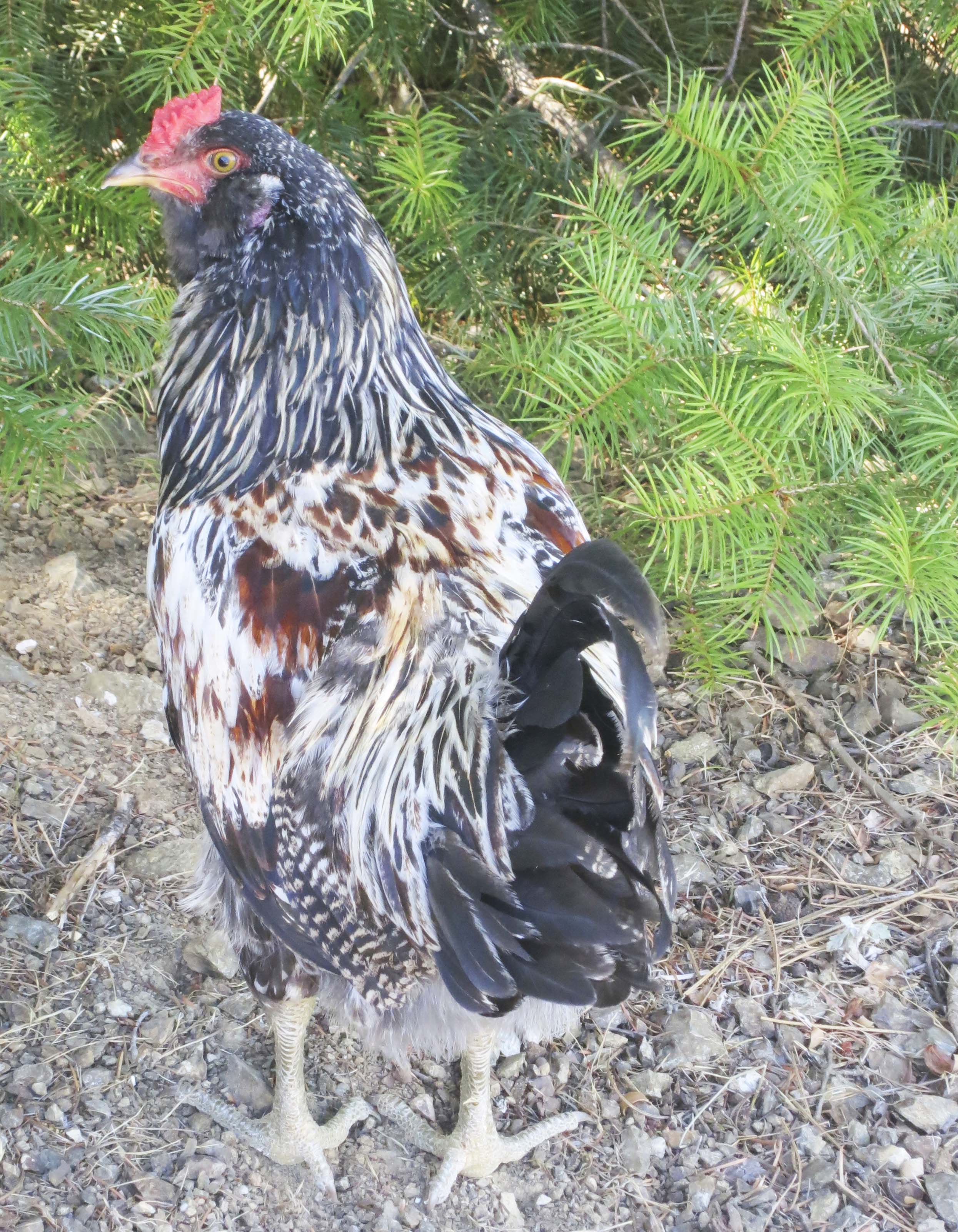
The rooster was quite handsome. And he knew it. Here, he was about to go under the Douglas fir where the young hens were hiding out.
The rooster was quite handsome. And he knew it. Here, he was about to go under the Douglas fir where the young hens were hiding out.

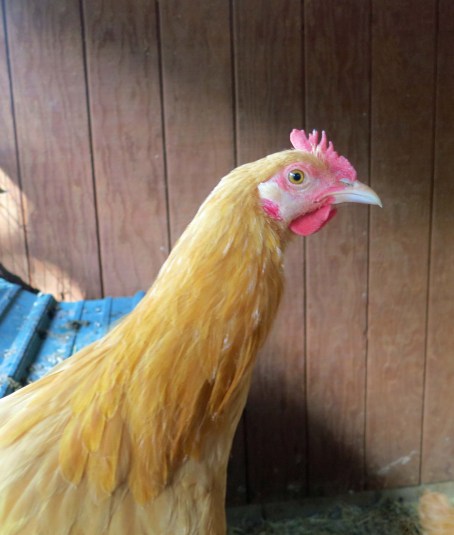
A close up of the rooster dude.

A close up of the cool rooster dude.

Letting the chickens out was a no-brainer; getting them back in lived up to my worst fears. When I arrived that evening, the four older hens were happily pecking away in the chicken pen as advertised. Everyone else was still out and about, taking advantage of unsupervised time. I dutifully went to the garage, put scratch in Bryan’s blue bucket, and started shaking it near where the younger chickens were hanging out. Being teenagers, they ignored me. Not so the Gang of Four. They came rushing out of the pen. Great. Now everyone was milling about outside.

I shook the plastic bucket and headed for the pen. The Gang of Four and three of the younger hens actually followed me. I sent a brief prayer wafting skyward to whatever god the chickens worshipped and threw a handful of scratch on the ground for thanks. More importantly, the scratch would occupy the girls inside while I worked on enticing the hens and rooster still outside.

Squawk squawk squawk squawk! Cluck, cluck, cluck!” “Oh no you don’t! No, no, no!” A skirmish was going on under the Douglas fir. Feathers were flying. Damn, I thought, the fox has arrived. I dropped the bucket and ran for the tree. Three hens burst out from under the limbs, dashed for the pen, flew up the ramp, and disappeared into the coop. Boy were they fast. Their nemesis— the rooster— followed in hot pursuit. So much for my fox theory. I laughed out loud. Lust had corralled the remaining chickens. I threw the gate closed.

Only two chores remained. Bryan had asked that I make sure that the chickens were locked up safely in their coop, not just the pen. The fence that surrounded and covered the pen showed a large dent. Apparently some animal was trying to break in during the night.

I made a shooing motion at the chickens and everyone except the Gang of Four made for the coop. Boss Hen looked up at me expectantly and clucked. She couldn’t be shooed but maybe she could be bribed. I walked over to the coop and threw a handful of scratch in the small door. About half missed and fell on the porch.
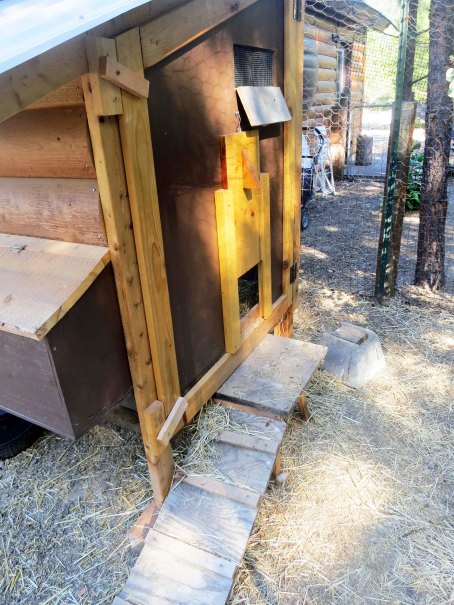
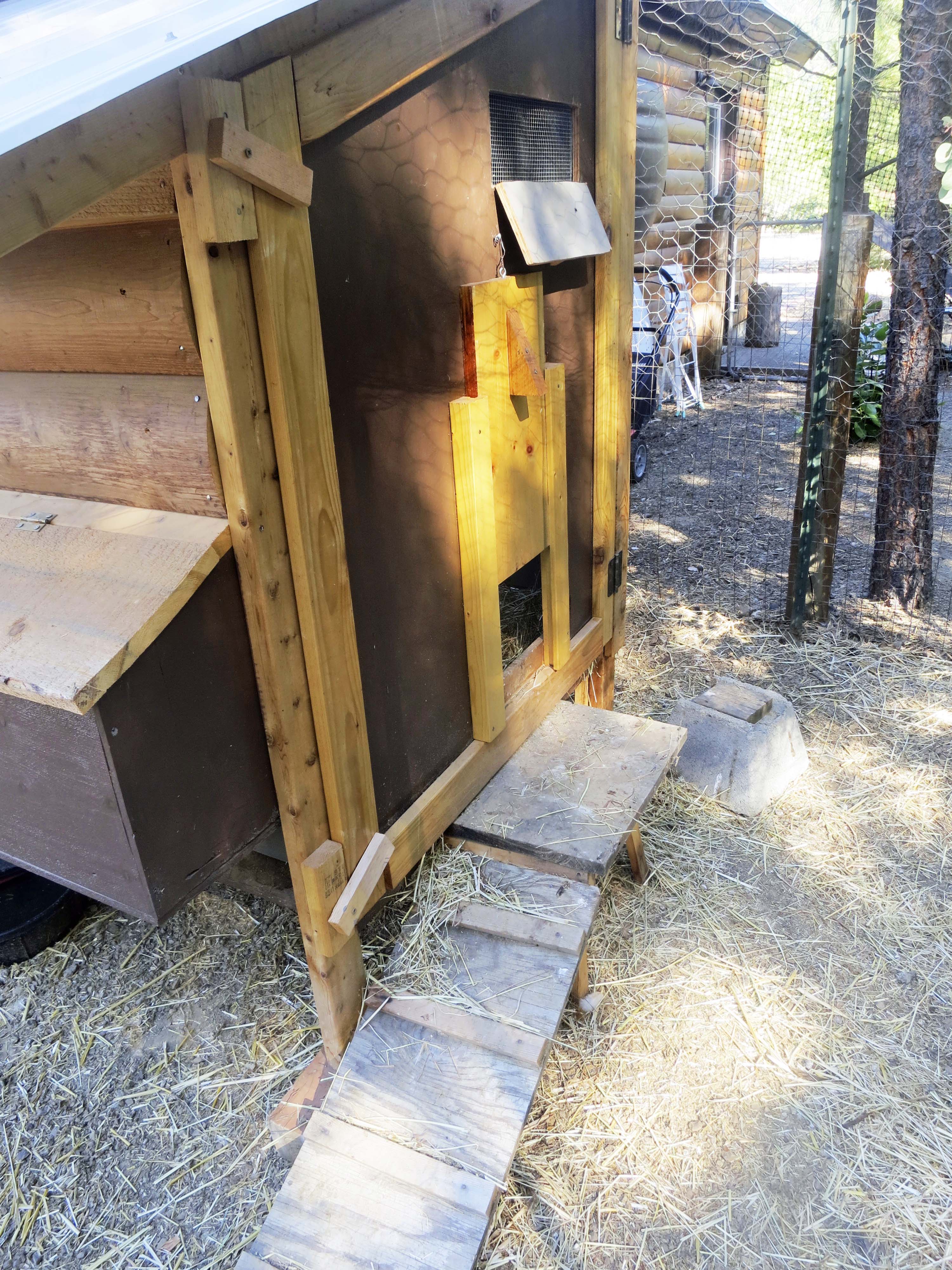
A close up of Bryan's chicken coop. The box on the side is for egg-laying.

A close up of Bryan’s chicken coop. The box on the side is for egg-laying.

The four large hens rushed over and began pecking away. The rhythm sounded familiar: — — .-. . / … -.-. .-. .- – -.-. …. Could it be Morse code? Could the Gang of Four be pecking out “More scratch.”? Nah, I decided, even though the hens looked hopefully at the blue bucket. Finally, they decided that the bucket was empty and rushed into the coop to clean up anything the rooster and hens had missed. I shut the door and breathed a huge sigh of relief.

My final chore was to check in on the roosters next door who were destined for a date with a chopping block in the near future. I opened the door carefully to make sure none escaped. They were a handsome group of youngsters. They looked up at me curiously. Their food and water was fine, so I decided to share a bit of Hobbesian Philosophy.
The young roosters listened carefully to my sage advice.
The young roosters listened carefully to my sage advice.

I warned this young fellow that sticking his neck out might be hazardous to his health.

I warned this young fellow that sticking his neck out might be hazardous to his health.

“Life is nasty, brutish and short, guys,” I told them. I didn’t have the heart to tell them just how short their life would be. “I would advise you to live in the moment, to take advantage of the time you have.”

“So, send in the chicks,” one clucked to unanimous agreement. The guys spent their day watching the hens in the yard and crowing about true love, or at least a quickie. One of the Gang had actually flown up to check them out. I wasn’t sure whether she was interested in a specific rooster or all of them. I told the youngsters I would think about their request and headed home for a well-earned beer.

Thus ended my first day of being a chicken farmer. There would be several more adventures during the week, but by the end the chickens and I had developed a working relationship. As for the Gang of Four, we had become close. Any time I showed up, they came running and clucking, filling me in on the latest news and gossip. I had become more than a source of scratch; I had become their friend— a Chicken Whisperer.
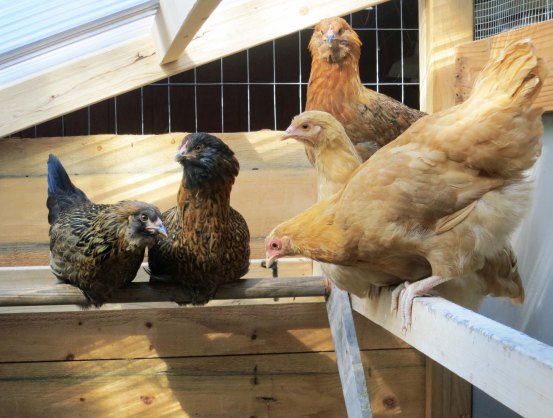
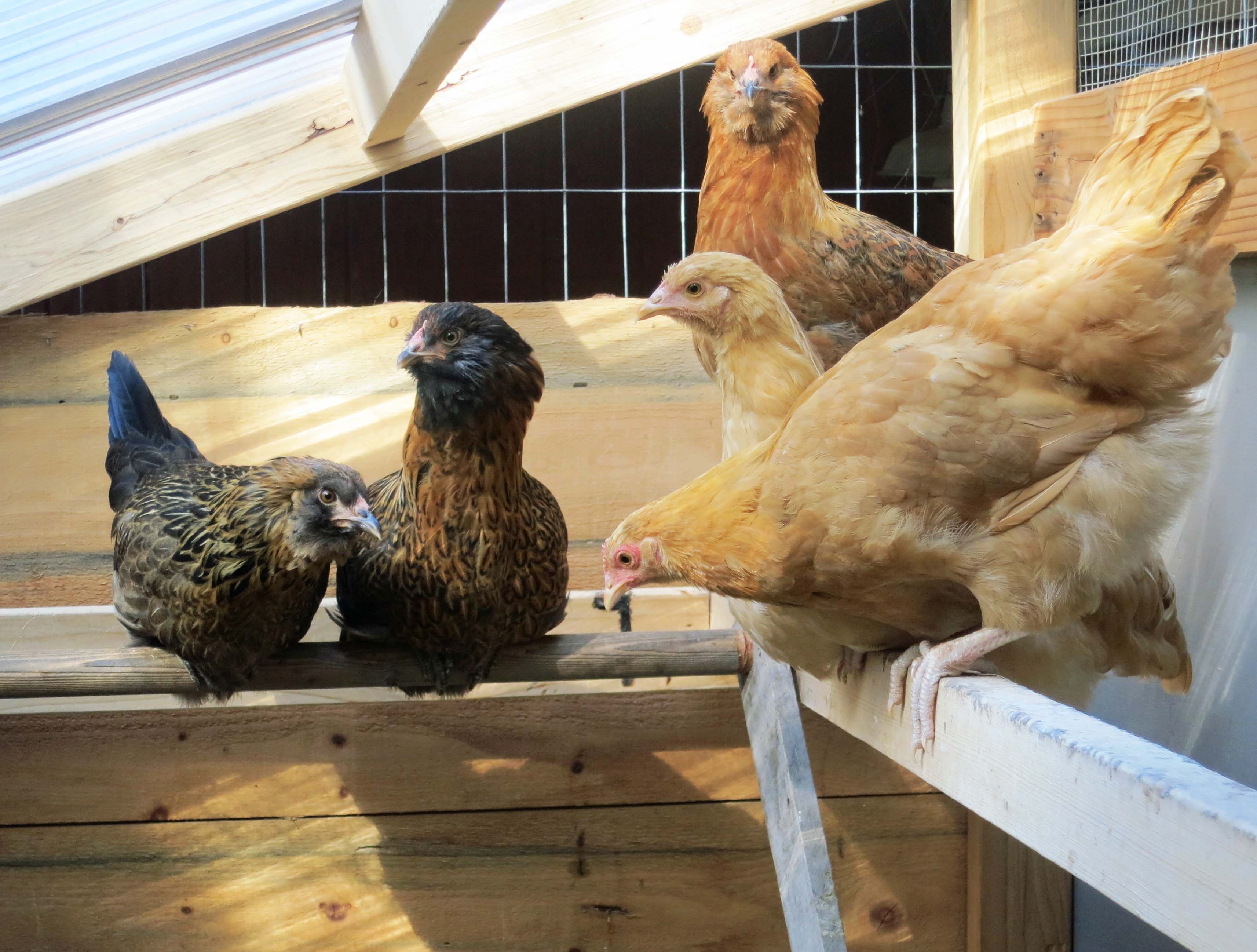
An inside view of Bryan's chicken coop, which he built, BTW. The exotic looking chickens here are supposed to lay blue eggs.
An inside view of Bryan’s chicken coop, which he built, BTW. The exotic looking chickens here are supposed to lay blue eggs.

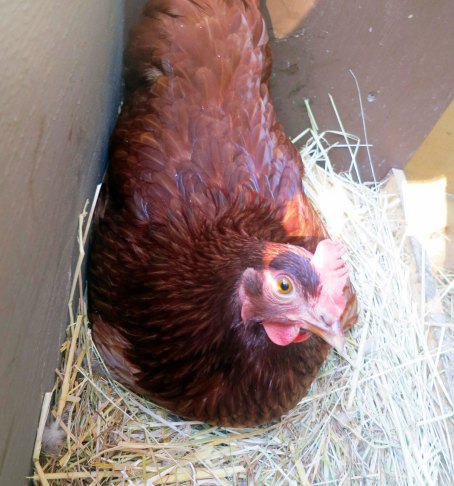
I caught this member of the Gang of Four laying an egg. I don't think she was happy about being photographed.

I caught this member of the Gang of Four laying an egg. I don’t think she was happy about being photographed.

Part of our pay for taking care of the chickens. The Gang laid between three and four eggs a day.
Part of our pay for taking care of the chickens. The Gang laid between three and four eggs a day.

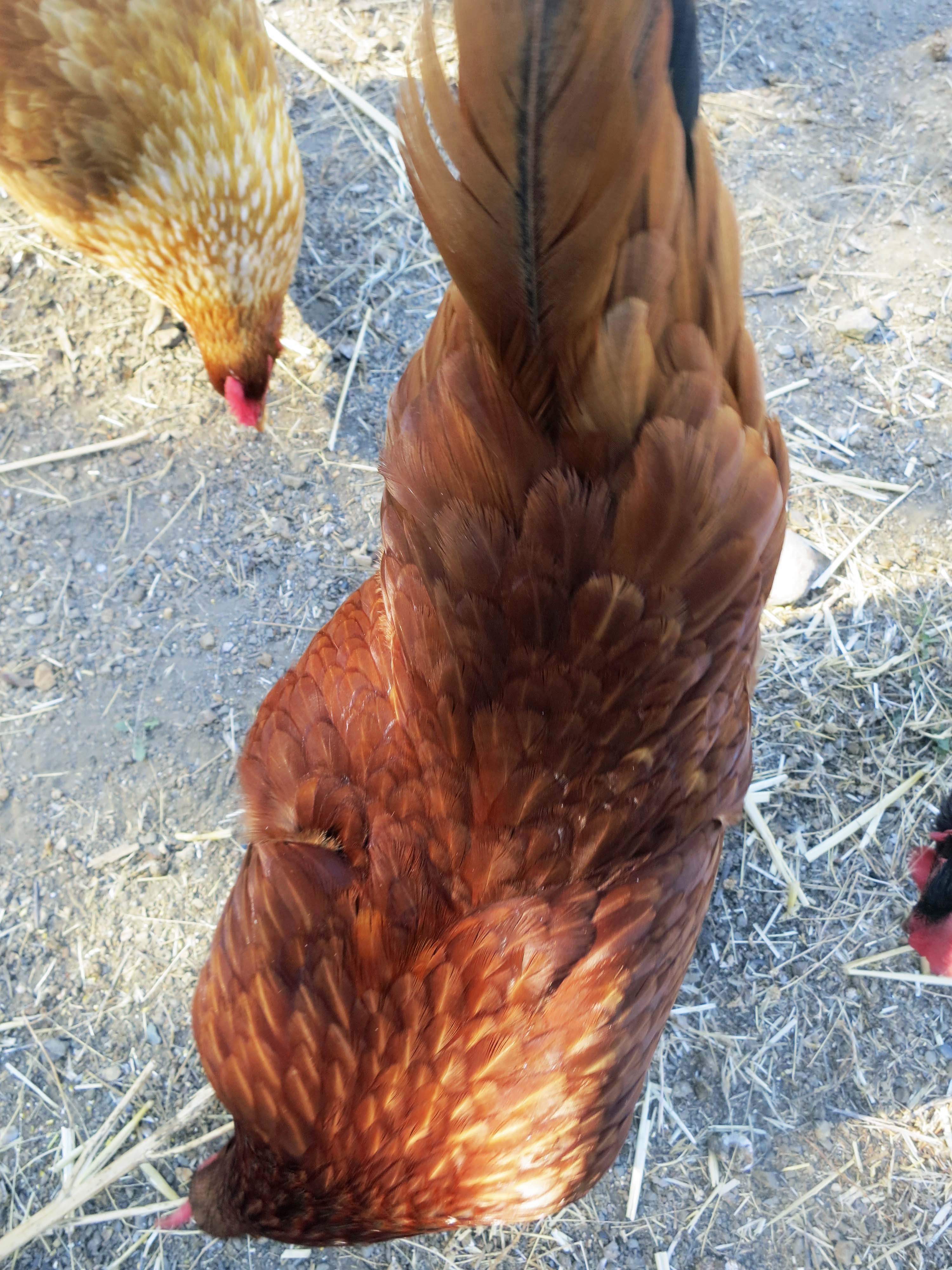
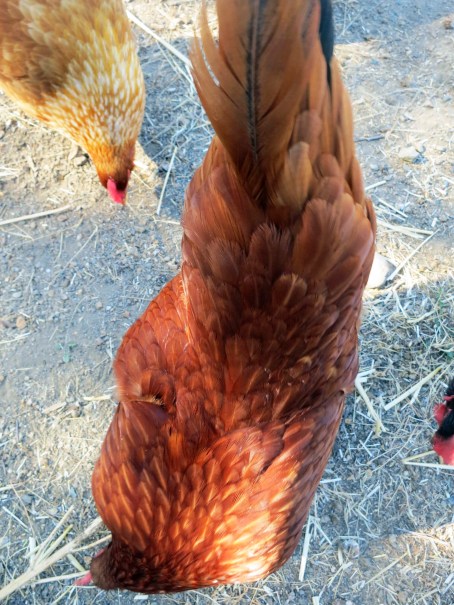
It's only appropriate that I conclude this blog with a bird's eye view of Boss Hen.

It’s only appropriate that I conclude this blog with a bird’s-eye view of Boss Hen in her favorite position of pecking up scratch.

NEXT BLOG: Peggy and I are off again. No surprise there, eh. This time we are heading for Port McNeill on the northern coast of Vancouver Island, British Columbia for a week-long kayak trip out among the Orca Whales. We will then dash home and go to Burning Man. That should provide an interesting contrast— moving from the cool and wet ocean to the hot and dry desert! All this means there will be lots to blog about but no time to blog, not to mention no Internet. I do hope to get one blog up on Mt. Rainier National Park, where we were last week, and another up on some of my favorite Burning Man pictures. Maybe. 🙂 Thanks for stopping by, friends. See you in September if not sooner. –Curt
A Journey Underground… Oregon Caves National Monument

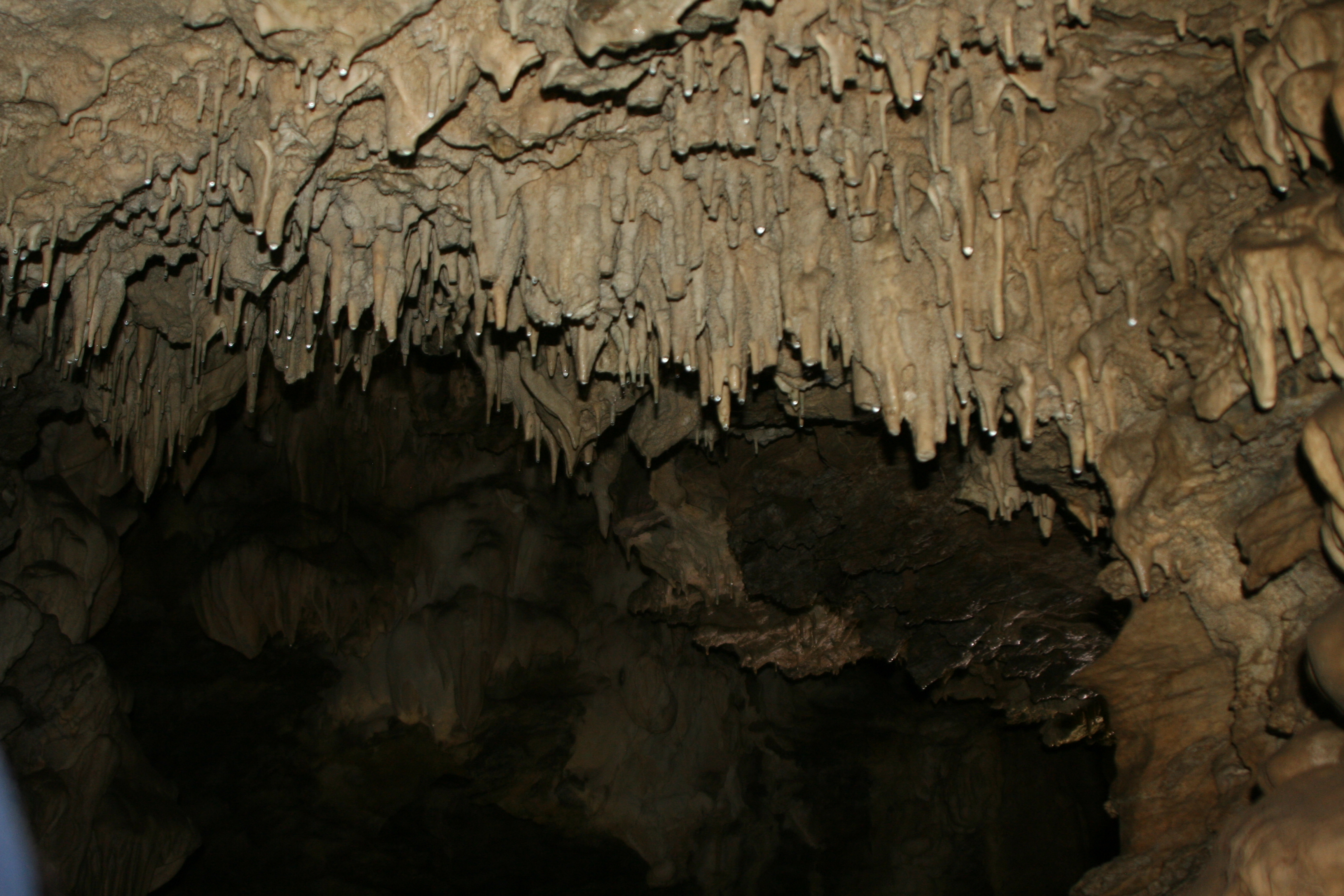
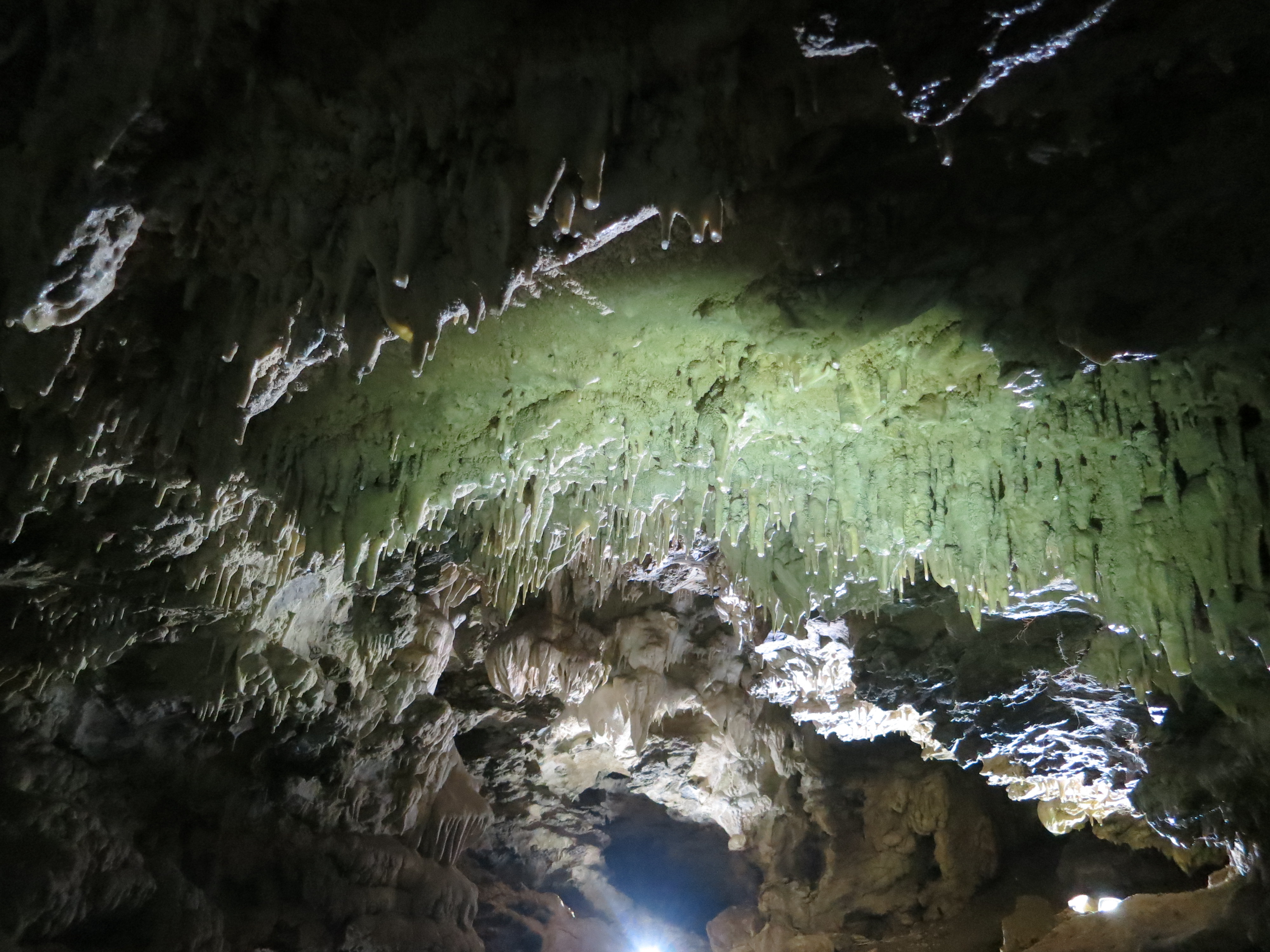
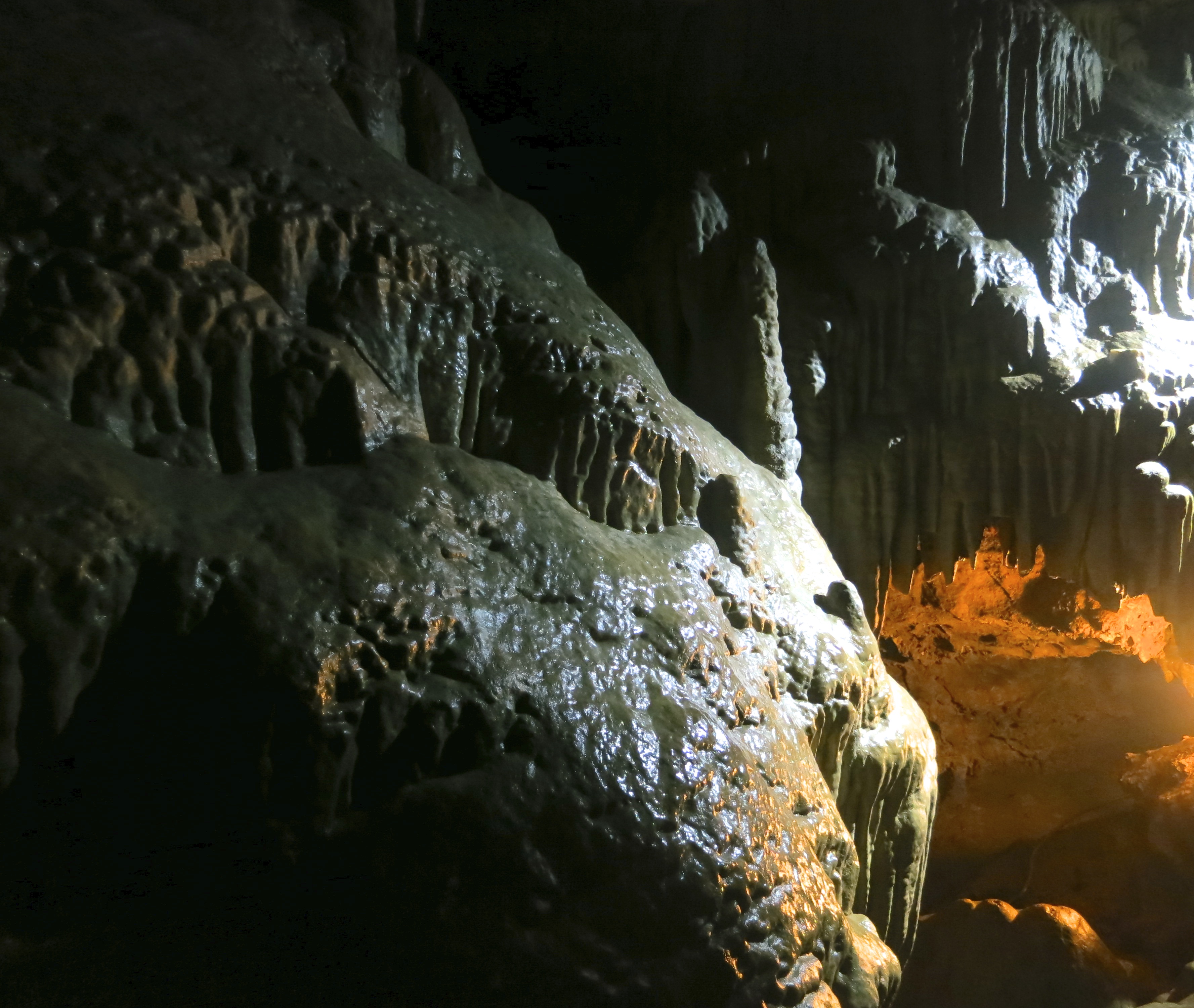
Rock formations in Oregon Caves National Monument.

Unusual rock formations created by minerals from dripping water led the Oregon Caves to be set aside as a national treasure in the early 1900s.

Claustrophobia: A fear of confined places

Acrophobia came up in my blog about Mt. Whitney. No surprise there, thousands of feet are between the hiker and a rather unfortunate landing. Splat! It’s a reasonable fear. Claustrophobia is just as real as fears go, but more irrational. The odds of being squished in a tight space— unless you are Indiana Jones or a misplaced wookie caught in a starship’s garbage disposal unit— are between slim and none. Don’t sweat it, right?

Try telling that to someone who is claustrophobic. I suggest you don’t stand between her and the exit. I get it. I am not particularly fond of enclosed spaces myself, whether they are physical or mental. I don’t like driving through tunnels and I hate freeway construction where imposing cement barriers shrink down to your vehicle’s width and provide a view of what hell is like. And that’s even before the gigantic truck comes barreling down on you and breathes fire up your tail pipe because you insist on driving 45 MPH in a 45 MPH zone. At least I can take my revenge when they put up plastic cones instead of cement barriers, as Peggy might tell you. Crunch. Curt strikes another blow for freedom.
Where does this leave me with caving, or spelunking, as the sophisticates call it? How do I feel about getting down on my belly and crawling through a space my skinny fourteen-year-old body would have gotten stuck in several hundred feet under ground? Not a problem; it’s not on my to-do list. But for some unfathomable reason, the standard well-known cave tours don’t bother me. In fact, I find them fascinating. Stalactites and stalagmites tickle my fancy and stir my imagination.

Photo showing how stalactites grow in Oregon Cave National Monument.

These small stalactites show tiny drops of mineral laden water that come down from a tube in the center of the stalactite. They will add about an inch of growth in a thousand years. (Photo by Peggy Mekemson.)

This photo from Oregon Cave National Monument shows the development of stalactites (coming down) and stalagmites (coming up). Eventually they meet, as demonstrating on the left. (Photo by Peggy Mekemson.)

This photo from Oregon Cave National Monument shows the development of stalactites (coming down) and stalagmites (going up). Eventually they meet, as demonstrated on the left. (Photo by Peggy Mekemson.)

So when Peggy suggested we head off to the Oregon Cave National Monument for her birthday a couple of weeks ago, I readily agreed. We’d been talking about it ever since we moved to Oregon. Except for the last few miles of the road that shot up a mountain and redefined the meaning of curves, the hour and a half drive was quite pleasant.

A ranger greeted us and gave us the bad news. We should expect a two-hour wait. He also wanted to know if we had been in any eastern caves in the last five years. If so— no go. White nose syndrome was wiping out eastern bats. So far their western cousins had lucked out. It had been six years since we had visited Mammoth Cave in Kentucky. We were in by a cat’s whisker.

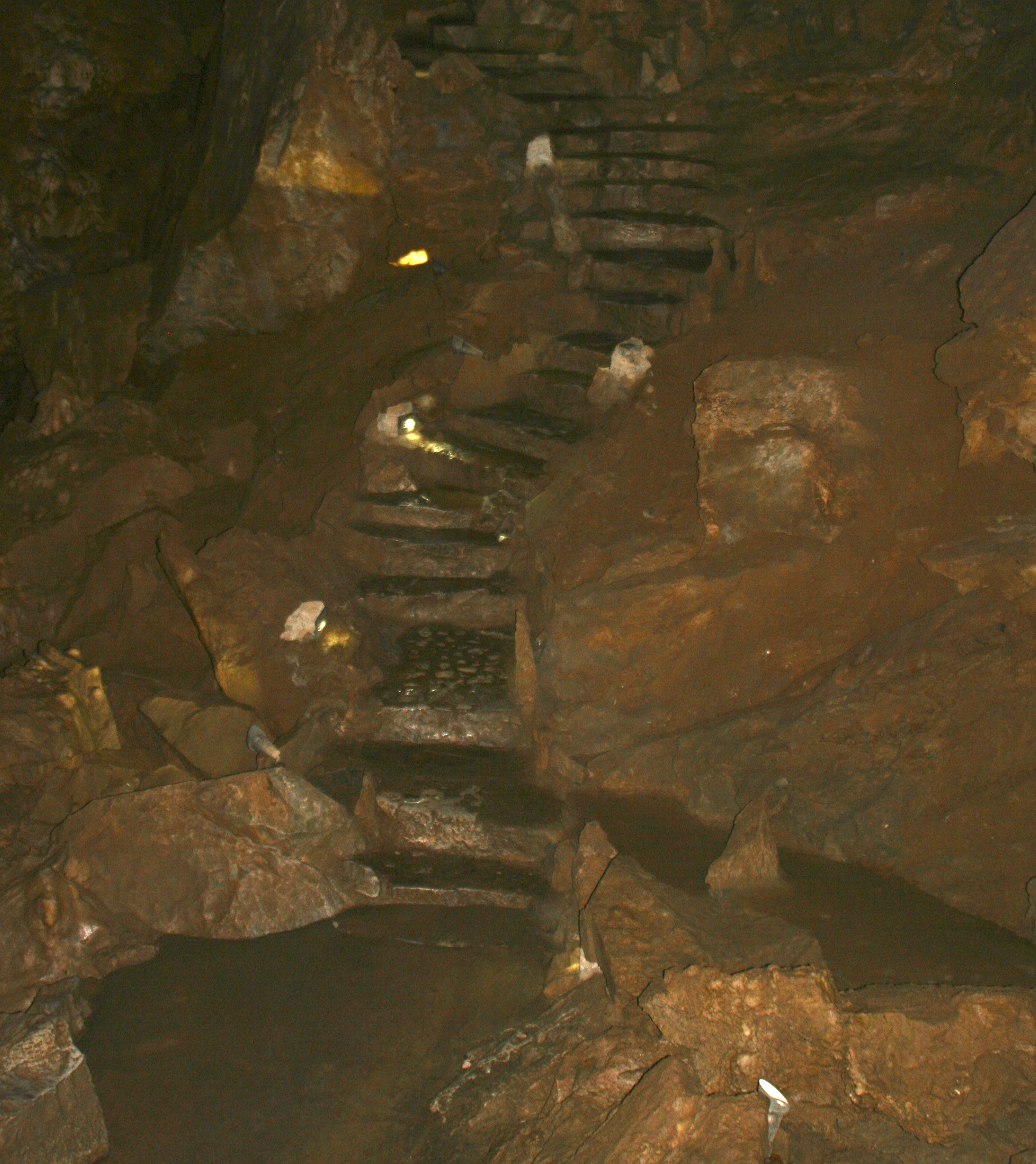
Our wait turned out to be just over an hour. There was barely time for lunch and a look through the visitor’s center before we found ourselves at the cave entrance shivering from a blast of 44˚ F air. “Cave’s breathe,” our guide stated. He also told us about the 500 narrow stairs we would be negotiating and the low ceilings. I would be bent over double with my size 14 shoes balanced precariously on wet slippery rocks. I looked enviously at a small girl who would be standing up straight with her feet resting solidly on the narrow stone steps. She gave me an impish grin.

Stone steps in Oregon Caves National Monument

Dimly lit stone steps make their way up from what is known as Ghost Cave. The narrowest ones were about half the depth of my size 14 shoes. (Photo by Peggy Mekemson.)

The Oregon Caves are somewhat unusual in that they are made out of marble. Once upon a time they were a coral reef far out in the Pacific. Plate tectonics sent the Pacific Plate diving under North America and scraped off portions of the ocean floor some 100 million years ago, adding new land to the continent. The tremendous heat and pressure involved changed the lime into marble. Folding, faulting and water created the caves.

This map shows the location of Oregon Caves National Monument.

This map shows the location of Oregon Caves National Monument. (Center Right)

Lit up stalactites in Oregon Caves National Monument.

Artificial lighting adds to the magic of caves.

Another example of the impact of lighting. The rock on the left had been signed by all of the members of a geology class that had visited in the 1800s. Strict rules are now in place to protect the cave.

Another example of the impact of lighting. The rock on the left had been signed by all of the members of a geology class that had visited in the 1800s. Strict rules are now in place to protect the cave.

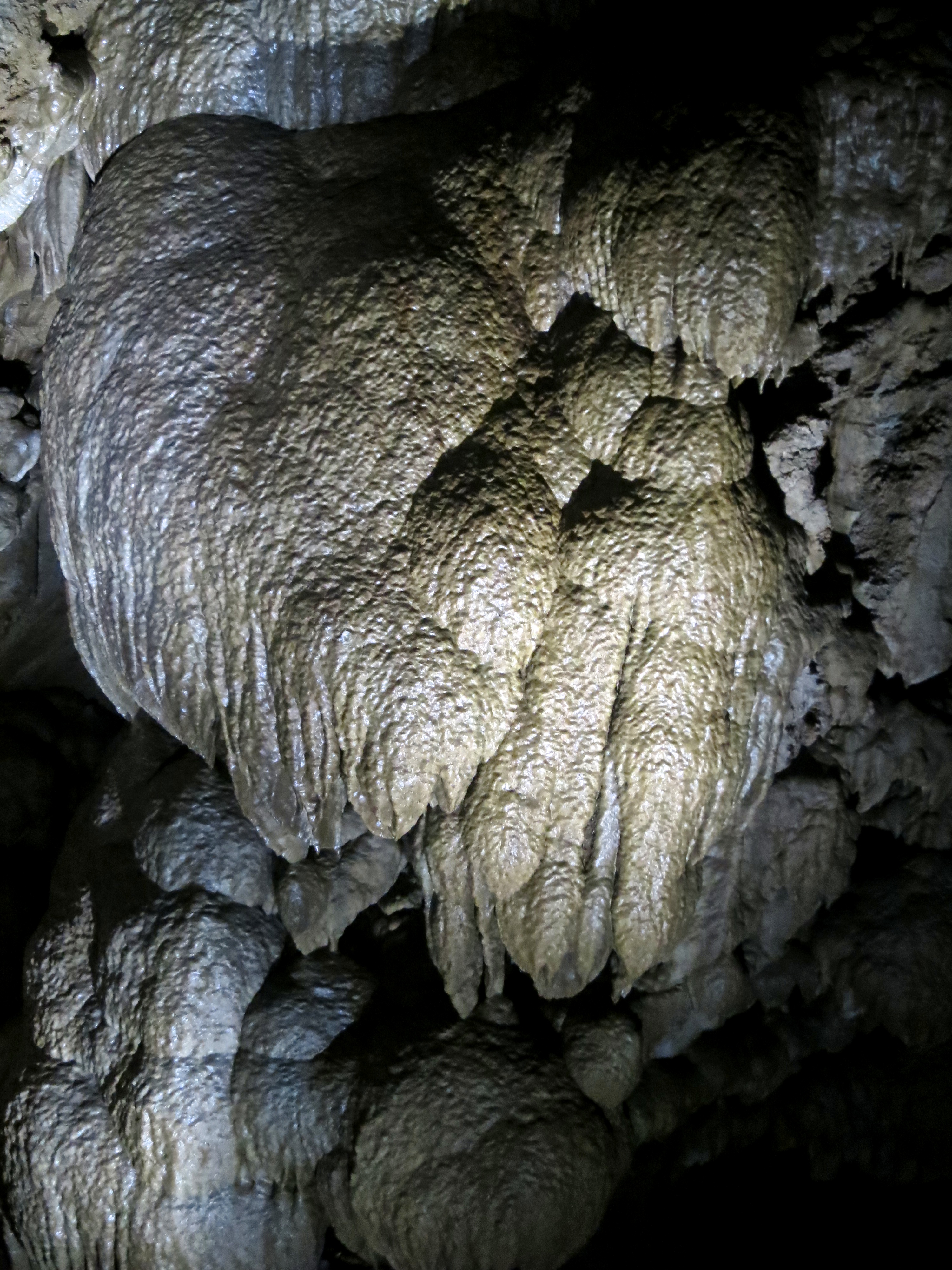
Unusual stone structure in Oregon Caves National Monument.

This unusual structure caught my camera’s attention.

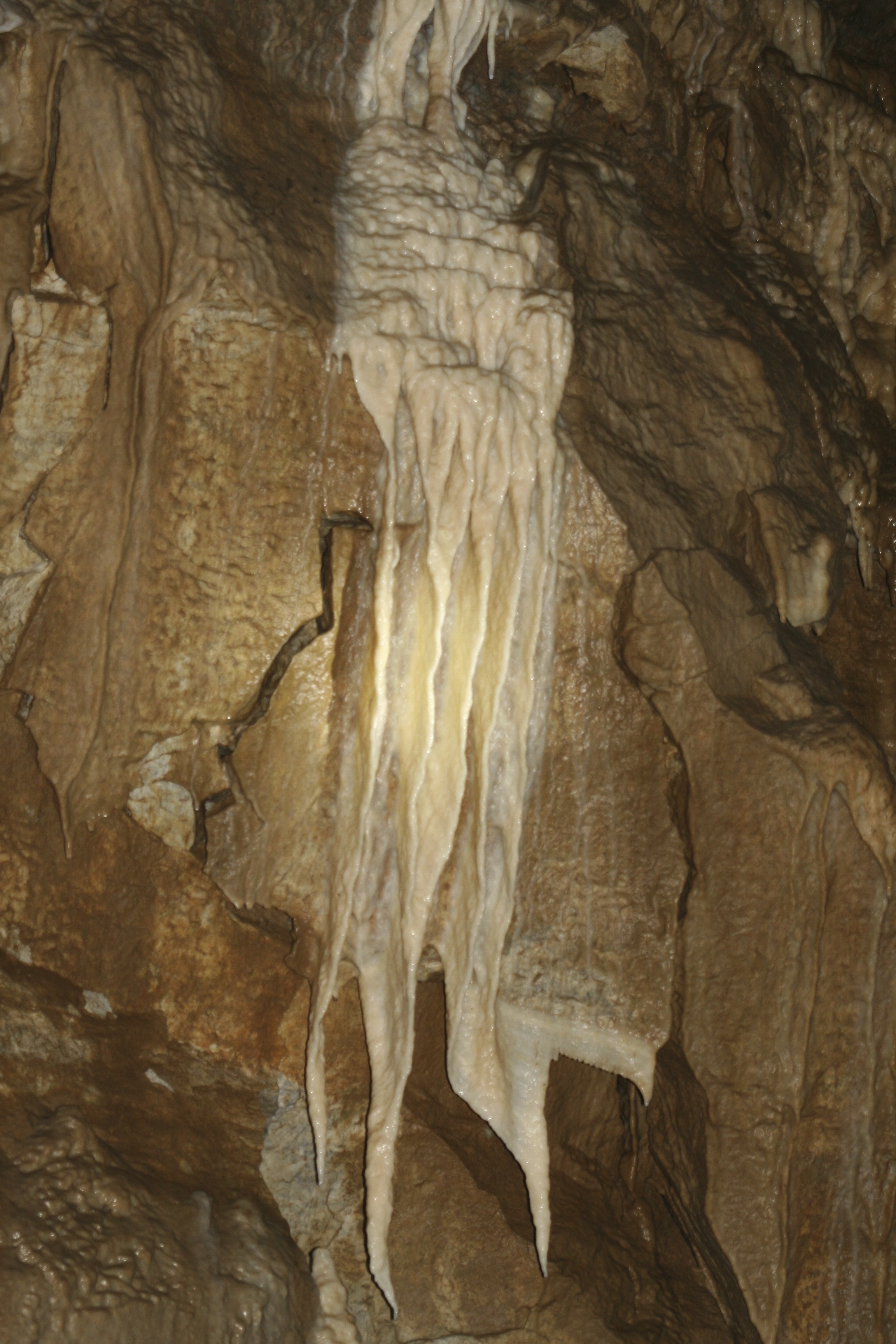
Ghostly rock waterfall at Oregon Caves National Monument.

Peggy captured this ghostly rock waterfall. (Photo by Peggy Mekemson.)

Cave exit at Oregon Caves National Monument.

A view of where we came out from our 90 minute tour.

Standing on top of the mountain that contains Oregon Caves National Monument.

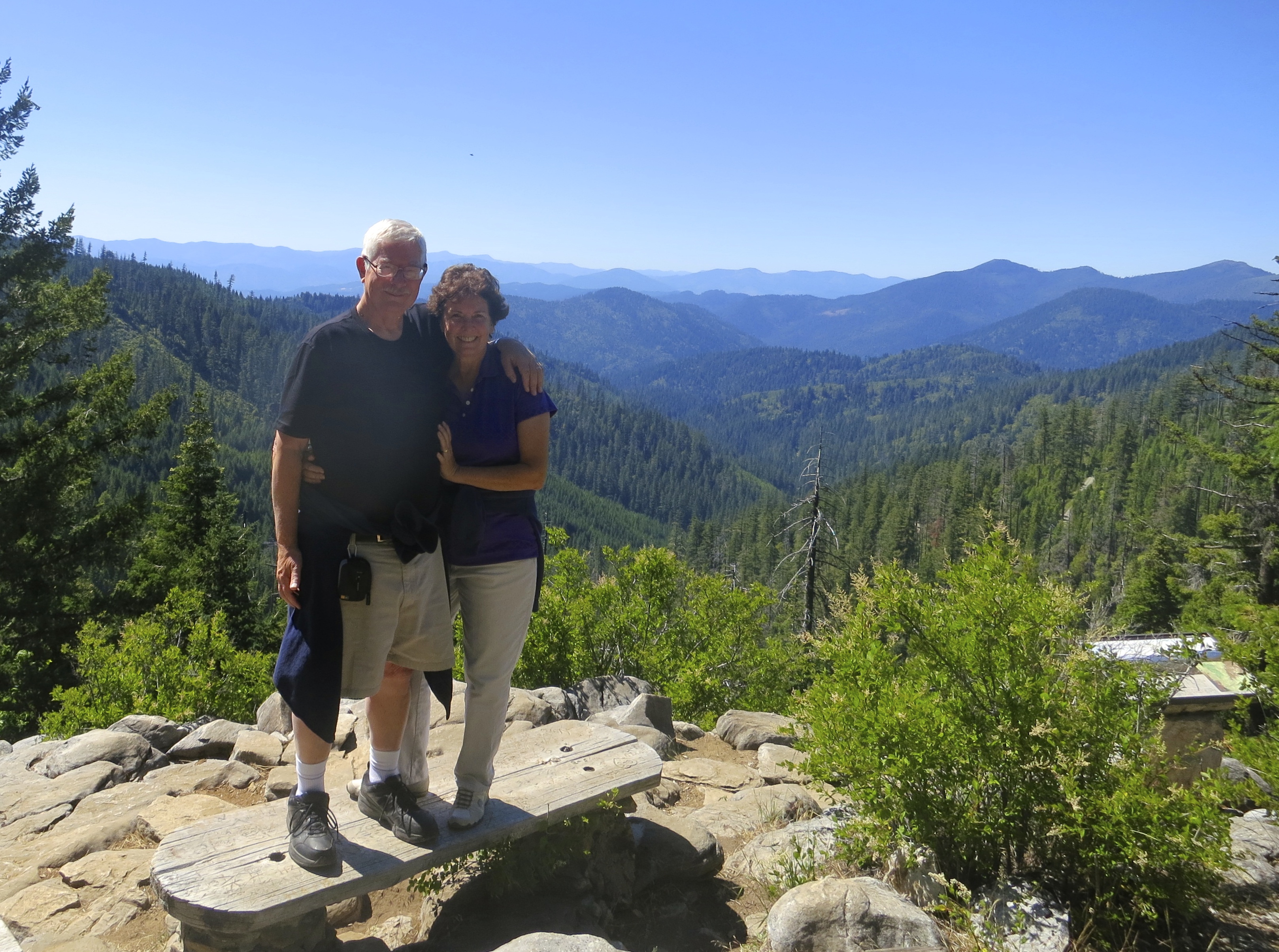
Tour over, Peggy and I stand on top of the mountain that contains the caves. This photo gives a perspective on the surrounding countryside.

NEXT BLOG: Peggy and I are headed off for a brief hiking tour at Mt. Rainier National Park for the next several days so I may be out of computer range. When I come back I will report on my recent experience as a chicken farmer: The Chicken Whisperer.
Mono Lake: Four Trillion Brine Shrimp Call It Home… the Desert Series

Strange towers made of lime, tufa, give Mono Lake its unique personality.

Towers made of lime known as tufa give Mono Lake its unique personality.

To say the least, Mono Lake is a strange place. Some people even call it weird. Once upon a time, back when glaciers stretched across North America, it was part of a series of large lakes that covered much of modern-day Eastern California, Nevada and Utah, a region that is now primarily desert. Left behind as a remnant by retreating glaciers, Mono Lake is at least 760,000 years old and could be as old as three million years, making it one of the oldest lakes in North America.

What flows into Mono Lake, stays. There are no outlets. As a result, the lake is 2-3 times as salty as the ocean. Swimmers don’t have to worry about sinking. In fact the lake contains some 280 million tons of dissolved salts, which makes it even too salty for fish. An effort to introduce trout left them belly up on the surface, like the proverbial dead gold-fish destined for a close encounter with the family toilet.

Algae, brine shrimp, and alkali flies thrive in the water, however. The thumbnail-sized shrimp population is estimated to be somewhere between 4 and 6 trillion in the summer. Historically, the fly pupae served as a major source of food for the Kutzadika’a Indians. In fact, the name for the tribe means fly eater.

Today, both the flies and shrimp provide food for some two million birds that migrate through the area. One visitor, Wilson’s Phalarope, a tiny, fist-sized shorebird, takes advantage of the gourmet flies to double its weight and grow a new set of feathers before journeying 3000 miles to South America— a feat that is accomplished in three days of nonstop flying at speeds of over 40 miles per hour.

It isn’t flies, shrimp, birds, or salt water that Mono Lake is famous for, however. It’s tufa, the fantastical, fairy-like structures that grow in the lake and appeal to photographers from around the world. Calcium-rich water bubbling up from underwater springs combines with the lakes carbonate-rich waters in a chemical reaction to create the lime-based structures.  Towers as high as 30 feet can be built under water through this process in a time span that may involve centuries.

The reason these towers are visible today is due to the unquenchable thirst of millions of people in Los Angeles. This thirst came close to destroying Mono Lake, as it did the Owens River and Owens Valley south of Mono Lake. Starting in 1941 the politically formidable Los Angeles Water and Power Company tapped into the streams flowing into Mono Lake and sent the water on a one-way, 330 mile journey south, reducing water in the lake from 4.3 million acre feet in 1941 to 2.1 million acre feet in 1982.

The United States Navy also posed a threat to Mono Lake by carrying out a series of under water explosion tests during the Cold War. The plaque at the site described these explosions as top-secret seismic tests. Whether the navy was searching for a way to predict earthquakes and tsunamis or cause them is the question. Fortunately, public pressure and concerns for public safety led to the navy abandoning its activities at Mono Lake in the late 50s/early 60s.

It was the growing environmental movement of the 70s and the Mono Lake Organization that eventually forced the Los Angeles Power and Water Company to reduce the amount of water it was exporting from Mono Lake’s tributaries.  Today the lake is on the way to recovering its pre 1941 water levels (assuming it isn’t wiped out by global warming and drought). Mono Lake is found just north of Lee Vining off of Highway 395. Following Highway 120 west out of Lee Vining will take travelers into Yosemite National Park.

The Sierra Nevada Mountains provide a scenic backdrop in the west for Mono Lake. Highway 395 runs slog the base of the foothills. Tufa can be seen emerging from the lake.

The Sierra Nevada Mountains provide a scenic backdrop in the west for Mono Lake. Highway 395 runs along the base of the foothills. Tufa can be seen emerging from the lake.

Following Highway 120 east off of Highway 395 will bring visitors to Mono Lake's South Tufa Trail where the photos in they blog were taken.

Following Highway 120 east off of Highway 395 will bring visitors to Mono Lake’s South Tufa Trail where the photos in this blog were taken. (Photo by Peggy Mekemson.)

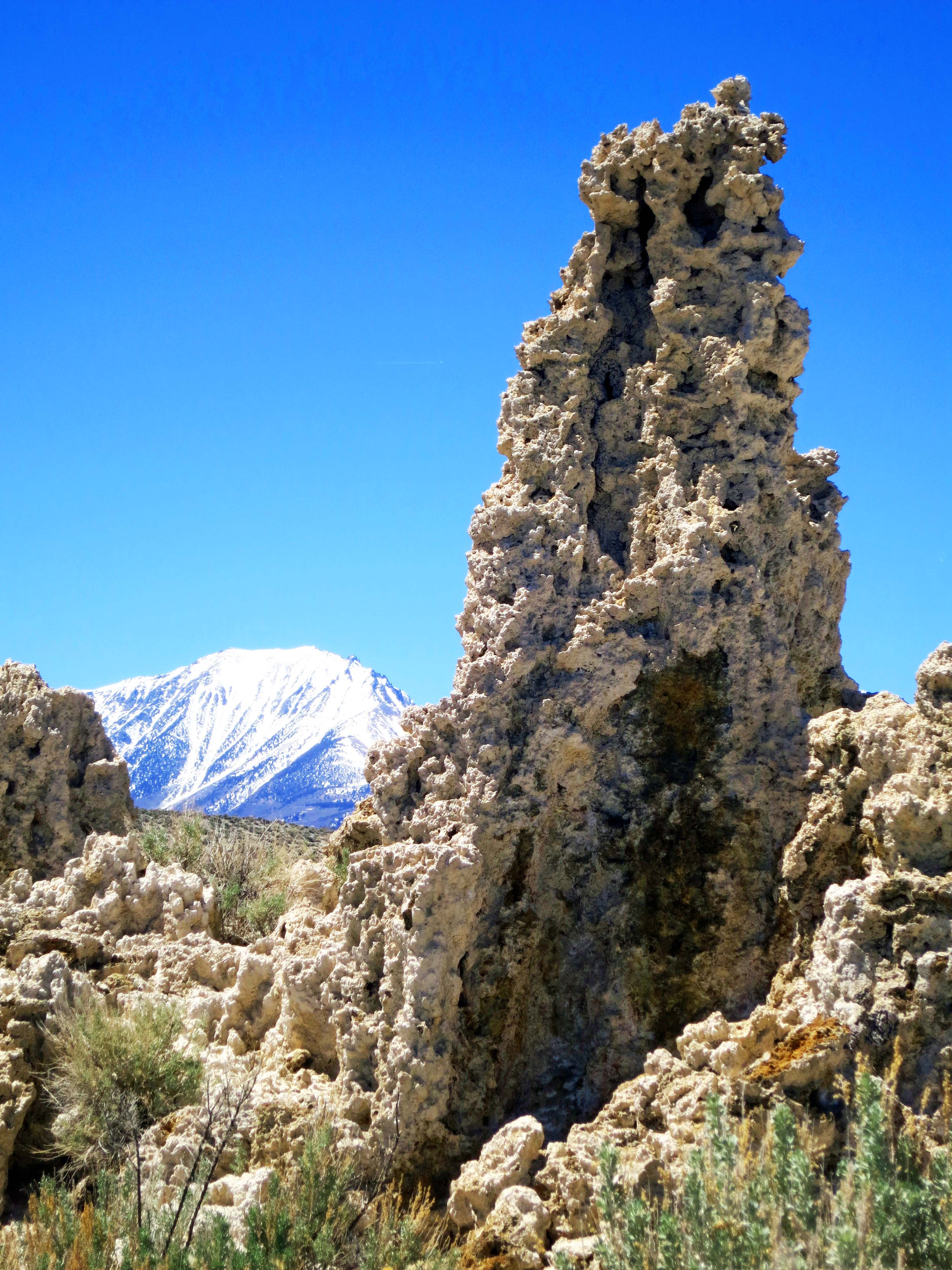
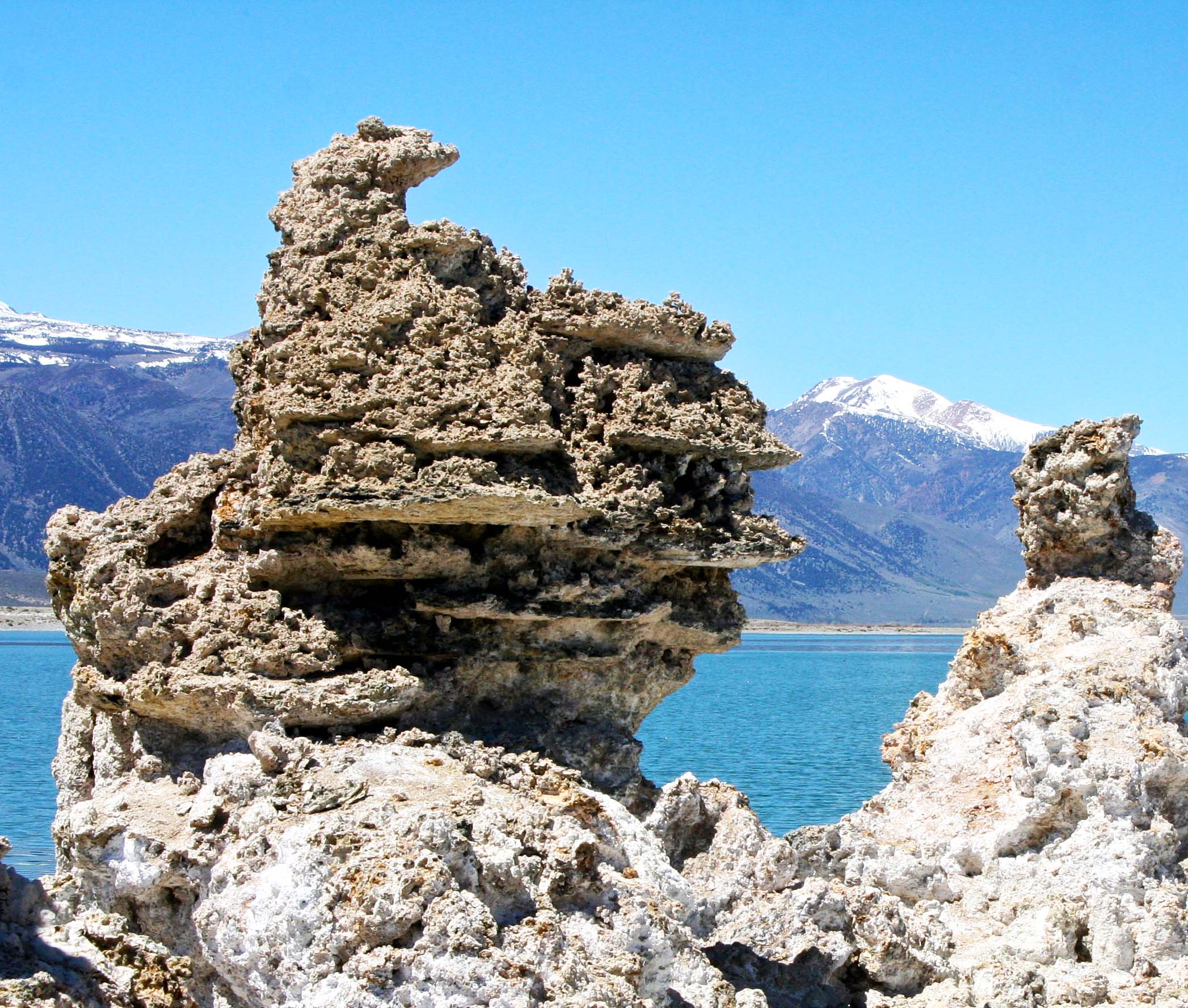
Prior to Los Angeles tapping into the streams that provide water to Mono Lake, this tufa tower would have been underwater.

Prior to Los Angeles tapping into the streams that provide water to Mono Lake, this tufa tower would have been underwater. Now it sits on dry land.

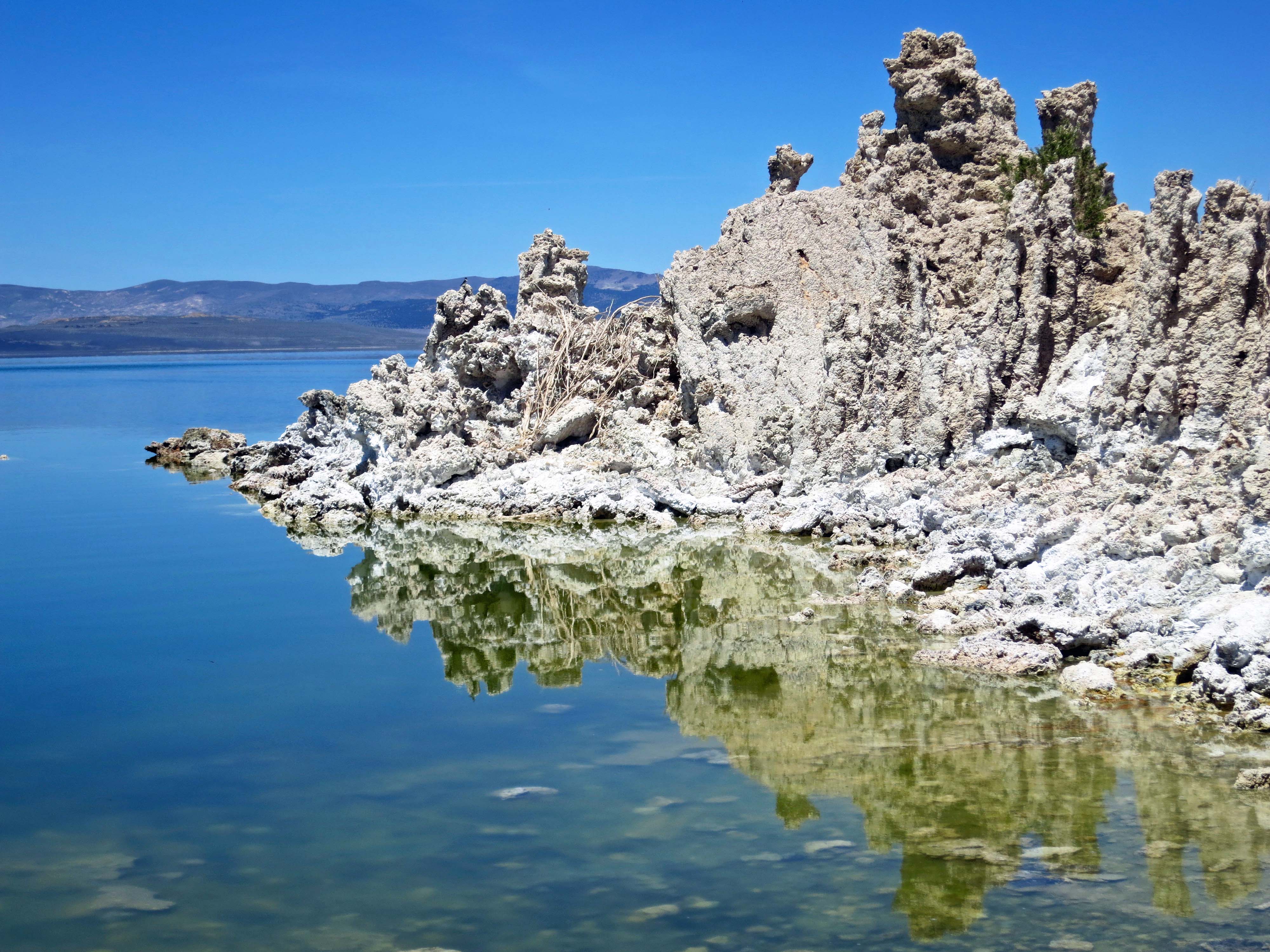
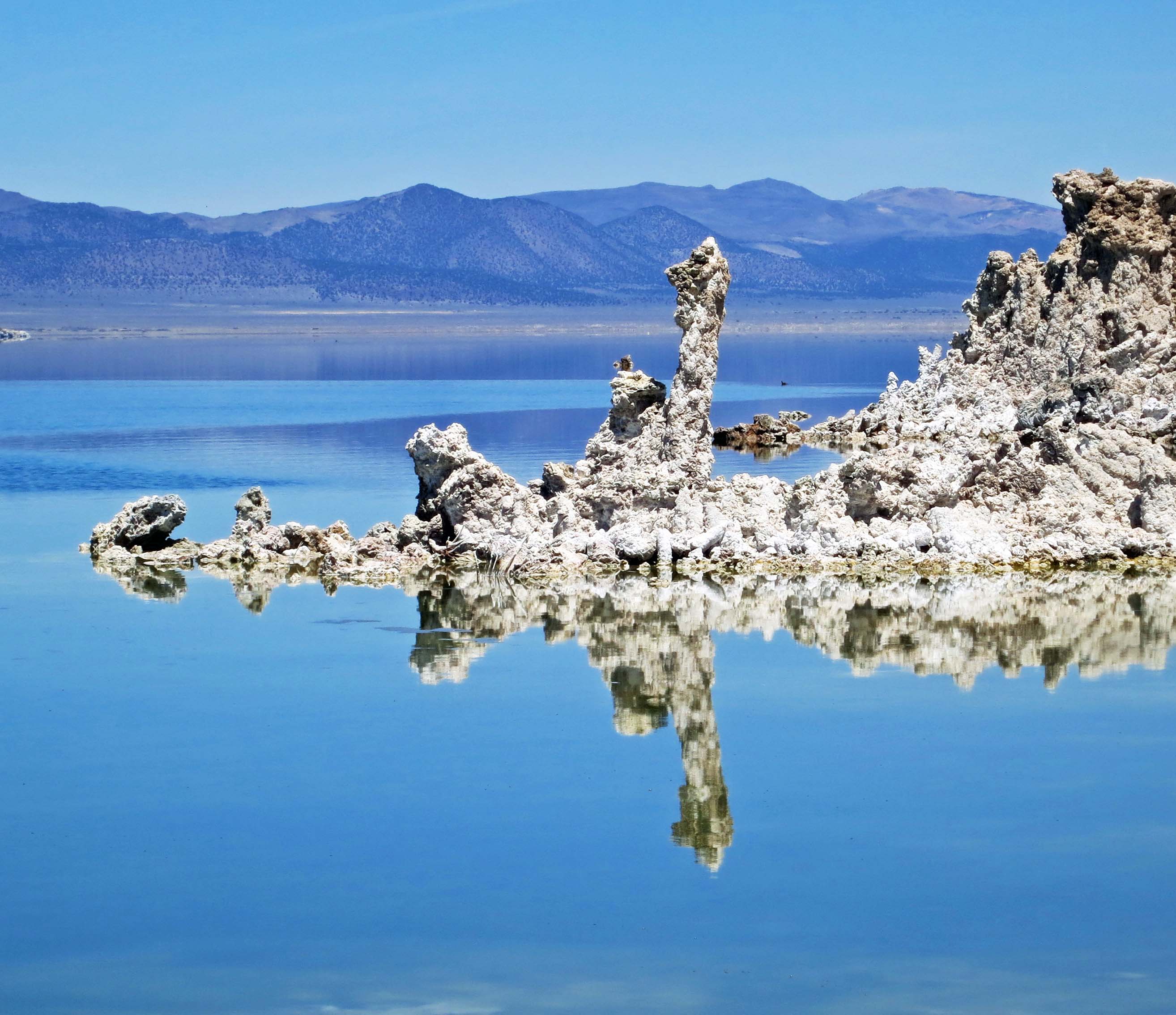
Reflections add extra character to this often photographed tufa island in Mono Lake. (Photo by Peggy Mekemson.)

Reflections add extra character to this often photographed tufa island in Mono Lake— as they do in the next two photos. (Photo by Peggy Mekemson.)

Tufa at Mono Lake near Lee Vining.Tufa reflection in Mono Lake, California near Lee Vining.

Tufa tower at Mono Lake, California.

I thought of this tufa tower as a frog face topped off by a frog hat. (Photo by Peggy Mekemson.)

Tufa towers located at Mono Lake, California near Lee Vining.

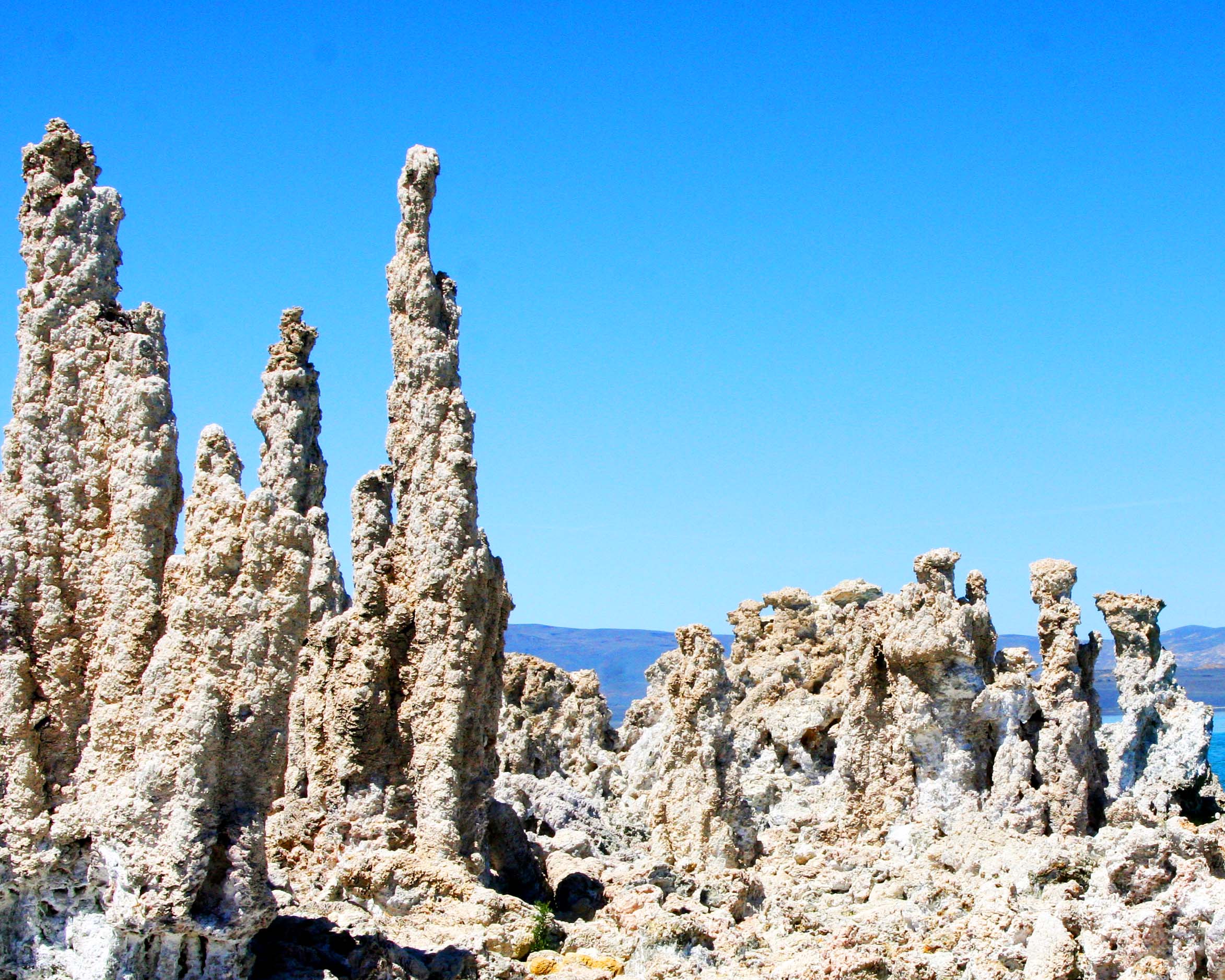
A tufa family? (Photo by Peggy Mekemson.)

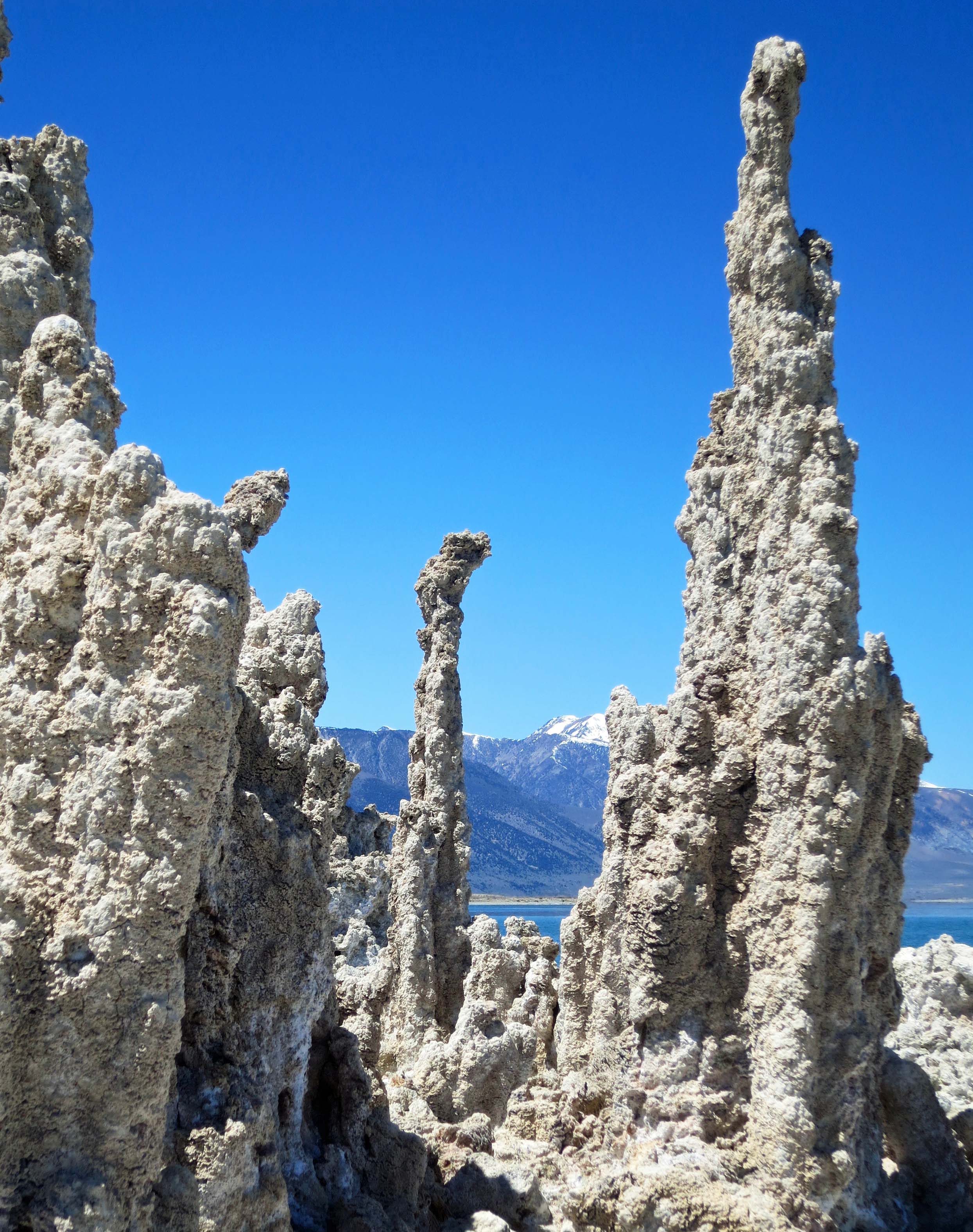
A final view of the Sierra Nevada Mountains framed by tufa towers at Mono Lake.

A final view of the Sierra Nevada Mountains framed by tufa towers at Mono Lake.

NEXT BLOG: Having finished our desert series, Peggy and I return to Oregon and visit Oregon Caves National Monument.


Mt. Whitney: 14,505 feet— Or Is that 14,496.811 Feet… But Who’s Counting?

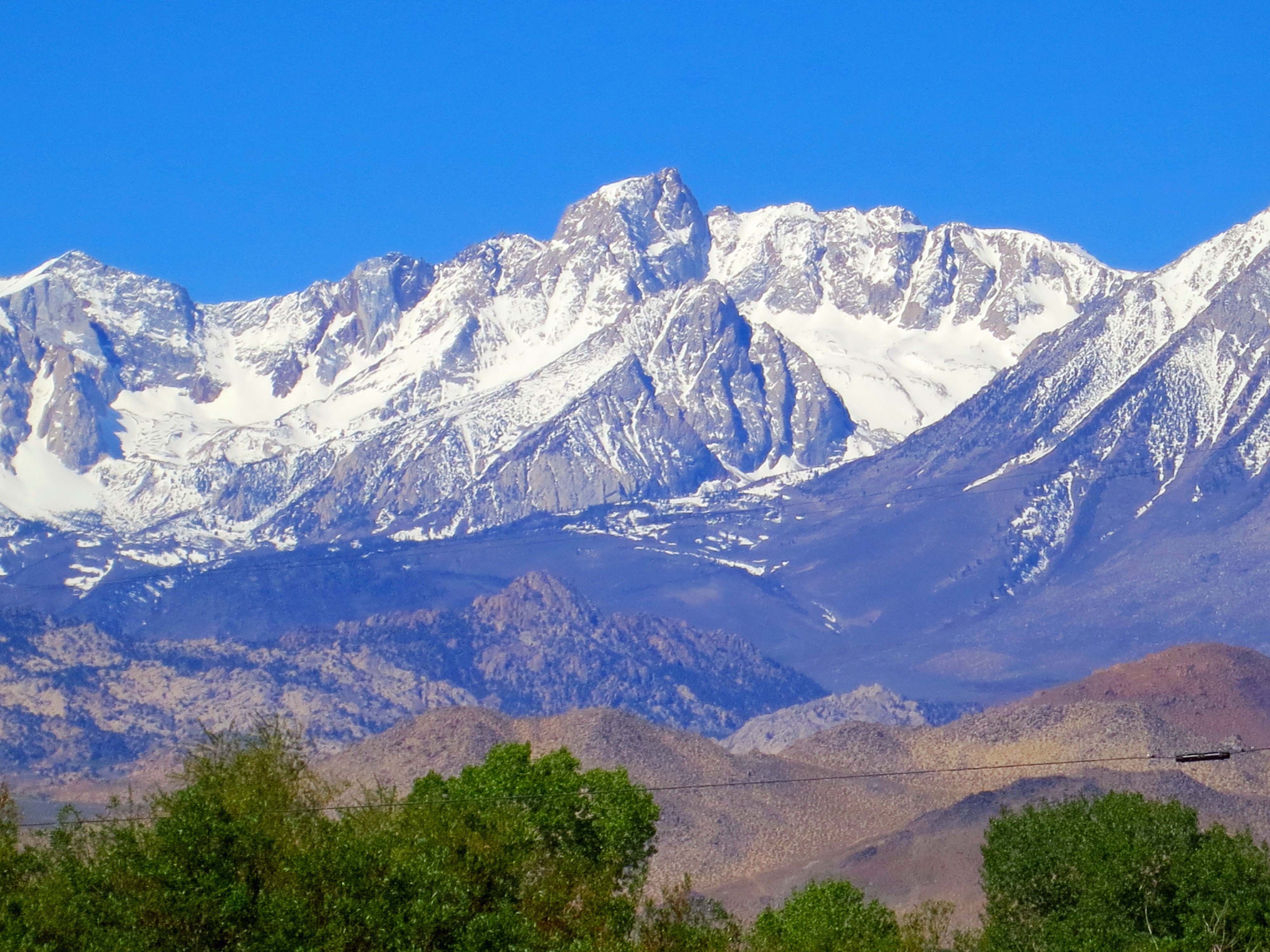
Highway 395 is one of America's most scenic drives. This view looking up at Mt. Whitney, center top, is one of the reasons why.

Highway 395 is one of America’s most scenic drives. This view looking up at Mt. Whitney, center top, is one of the reasons why.

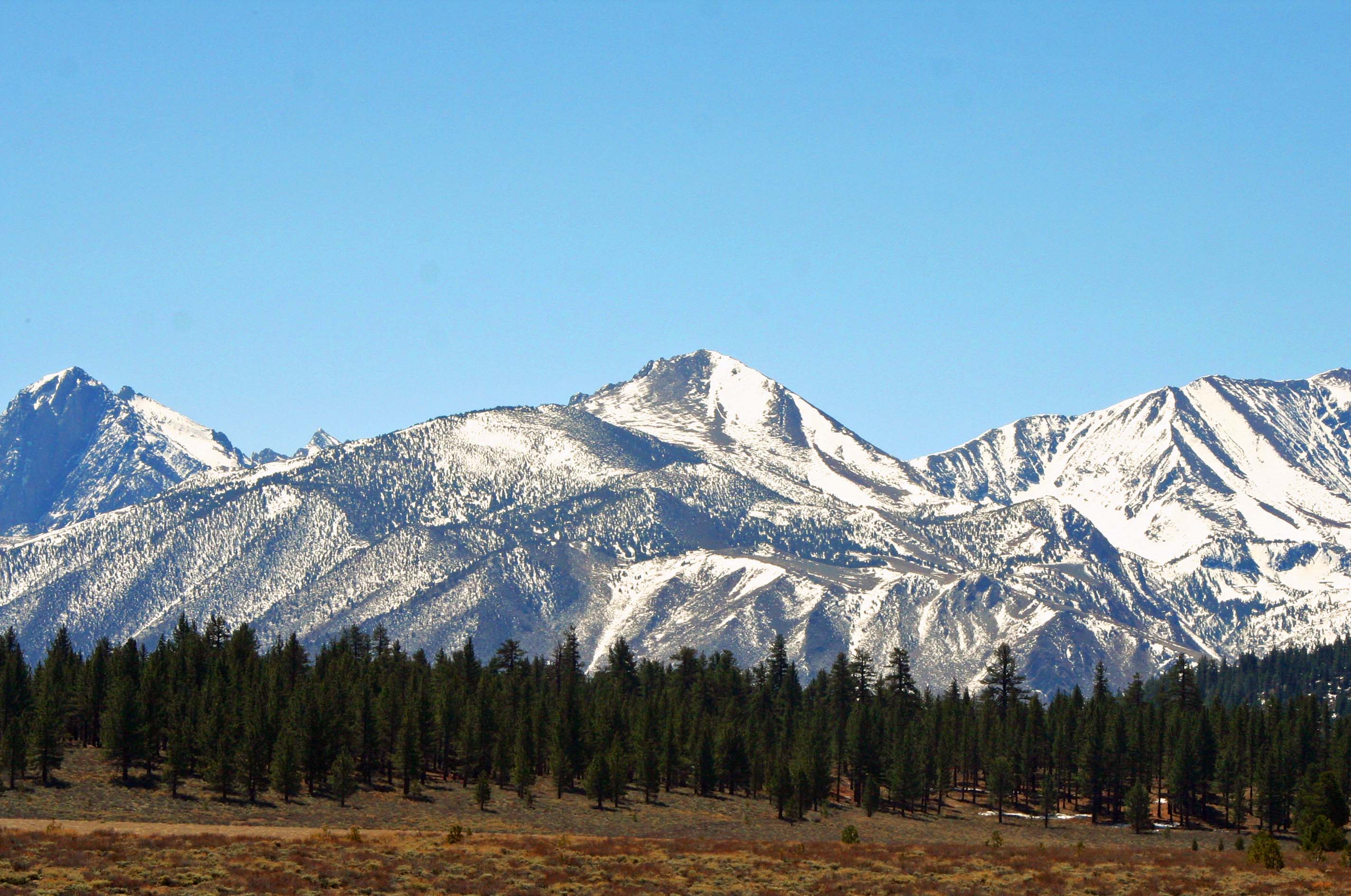
Highway 395, with its panoramic views of the eastern Sierra Nevada Mountains, is one of the most scenic highways in the United States. I will admit to a degree of prejudice, however. John Muir called the High Sierras the Range of Light. I think of them as ‘home.’ I have backpacked up and down the range numerous times. The mountains call to me in a way that no city or town does.

Driving up California's Highway 395 provides and ever changing perspective of the eastern Sierra Nevada Mountains.

Driving up California’s Highway 395 provides an ever-changing perspective of the eastern Sierra Nevada Mountains.

Another view of the Sierra Nevada Mountains along highway 395.

Another view of the Sierra Nevada Mountains along highway 395. This seems to fit Muir’s Range of Light description. (Photo by Peggy Mekemson.)

I celebrated my 60th birthday by backpacking over 300 miles down the spine of the Sierras, I started at Squaw Valley, which is north-west of Lake Tahoe, and ended by climbing up Mt. Whitney. It was my sixth trip up Whitney. I figured it would be a fitting way to kick off my sixth decade.

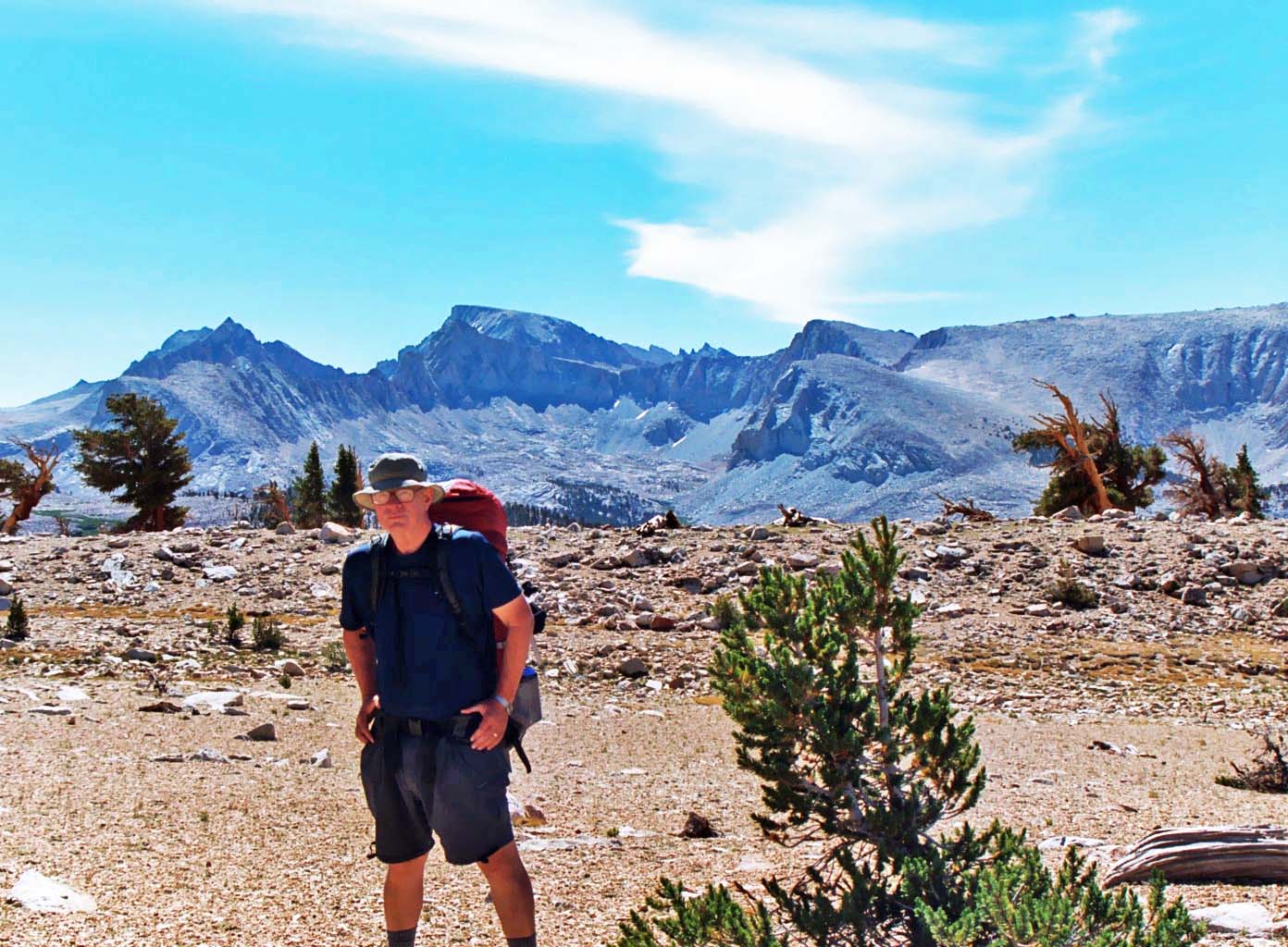
View of Mt. Whitney from the west including Curtis Mekemson.

Wrapping up five weeks of backpacking, my final climb looms in the distance. The curved mountain just to the right of my head is Whitney. I will be sitting on top the next day. The Sierras are fault block mountains, climbing gradually on their western slope and dropping off rapidly in the east. (Photo by Jay Dallen.)

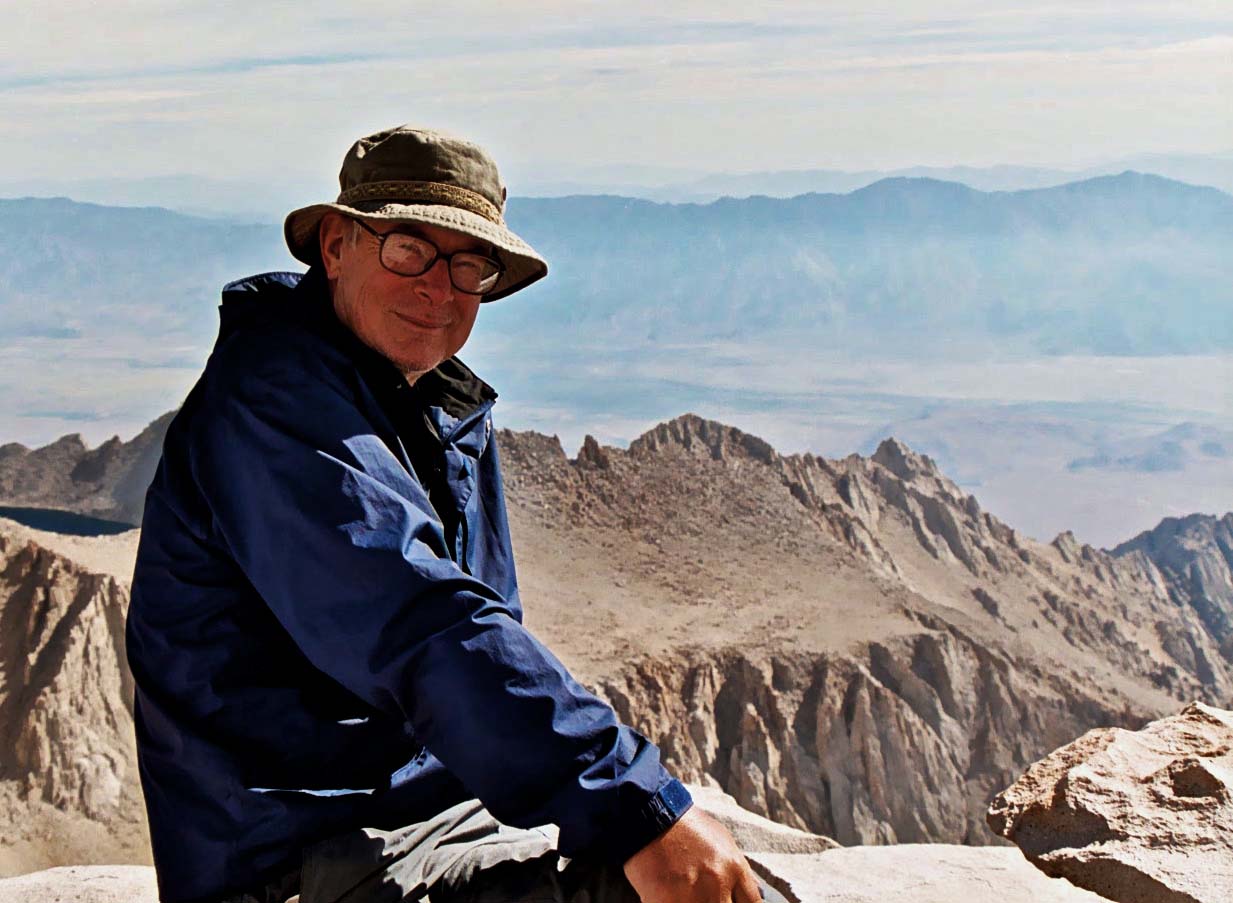
Curtis Mekemson sitting on top of Mt. Whitney.

And here I am on top, complete with a large grin. The Owens Valley and Highway 395 lie some 10,000 feet below. (Photo by Jay Dallen.)

Looking north form Mt. Whitney up the crest of the Sierra Nevada Mountains that I had just hiked through following the Pacific Crest and John Muir Trails.

Looking north from Mt. Whitney up the crest of the Sierra Nevada Mountains where I had just backpacked following the Pacific Crest and John Muir Trails.

View looking down from the top of Mt. Whitney. Photo by Curtis Mekemson.

Another view from the top of Mt. Whitney.

The mountain’s claim to fame is being the highest mountain in the contiguous United States. It stands at 14,505 feet (4,421 meters). My friends in Alaska are quick to point out that Mt. McKinley/Denali is 20,322 feet. Mt. Shasta, where I began this particular series, is 14, 180 feet. And finally, for comparison, Mt. Everest, the world’s highest mountain, tops out at 29,029 feet (8,848 meters).

Mt. Shasta is one of the world's most beautiful mountains. Driving up I-5 through Northern California on a clear day presents this view.

Mt. Shasta.

Once the snow has melted, climbing Whitney does not require any technical climbing skills. A good trail leads to the top. According to the plaque on top, it is the highest trail in the United States. It was started in 1928 and completed in 1930. The plaque used to (and still may) claim that the mountain is 14, 496.811 feet high, which would seem pretty darn accurate, especially given the .811 feet. Apparently modern measuring techniques have added a few feet. Not that it matters, unless you happen to be the person climbing those last nine feet.

Getting to the top requires stamina, lots of it. The eastern route up the mountain starts at Whitney Portal and climbs 6000 feet. That’s a bunch of up, and the higher you climb, the thinner the air becomes. Most people slow way down near the top as their bodies fight to get enough oxygen.

I’ve always started from the west since I am either ending or in the middle of a backpack trip. There are two advantages. Most important, I’ve already spent several days hiking at higher elevations. My body has both toughened up and adjusted to thinner air. Second, by starting at Guitar Lake, the climb is only 4,000 feet. Still that’s 4000 feet up and 6,000 feet down on a 15-mile day carrying a 40-pound pack— hardly a walk in the park. (Grin)

The reason for climbing the mountain, beyond being able to say you have, is the spectacular scenery. I wouldn’t recommend the trip for anyone with acrophobia (fear of heights), however, given that all of the views involve looking down several thousand feet.

Jay Dallen standing on the edge of Mt. Whitney.

My nephew, Jay Dallen, stands on the edge of a thousand foot precipice and looks down. He obviously does not suffer from acrophobia. Different people joined me on each of my five-week segments. Jay was 16 at the time.

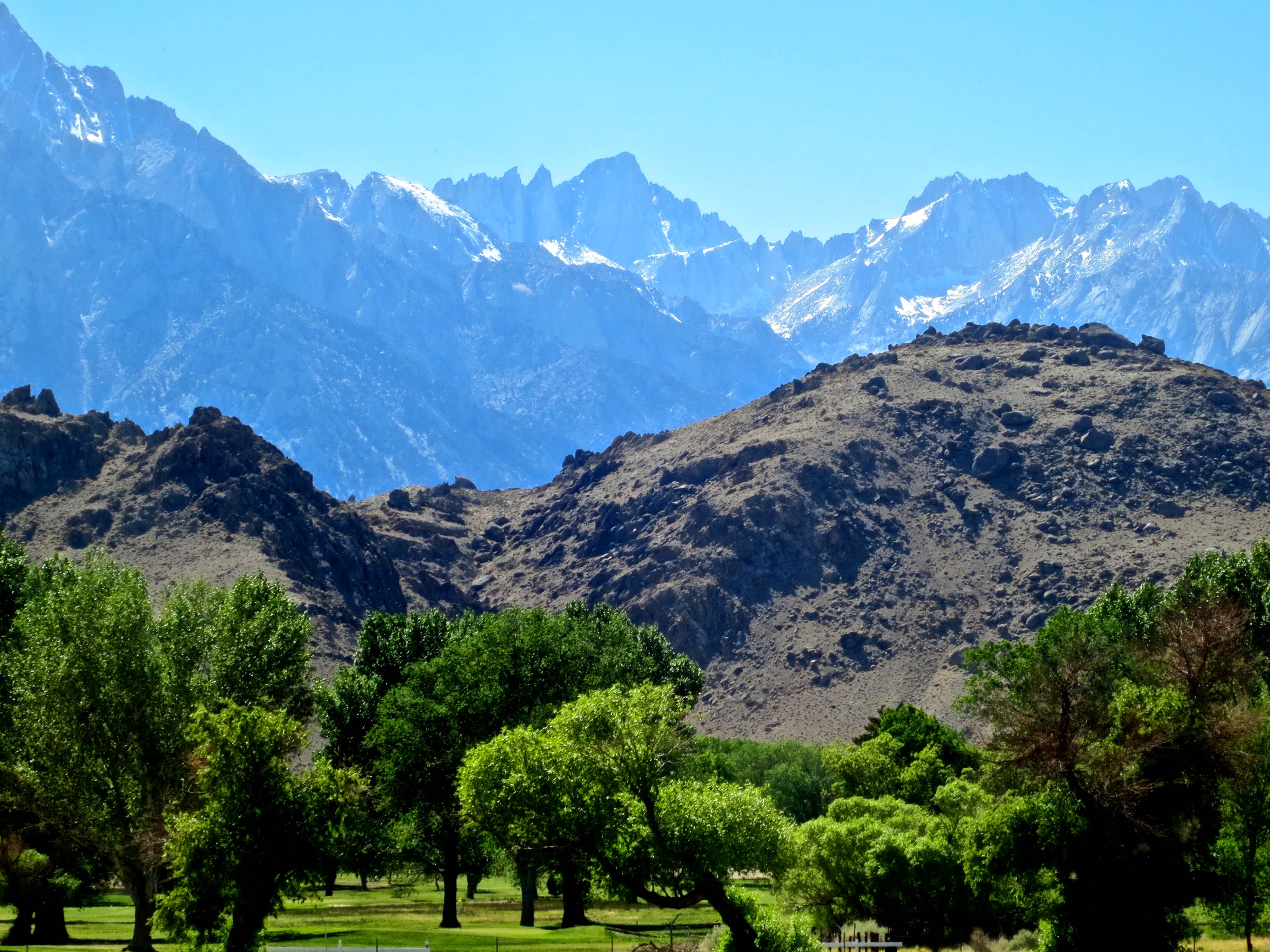
The Alabama Hills, featured in the photo below, are located just outside of Lone Pine at the base of Mt. Whitney. Over 300 movies, mainly Westerns, have been filmed in the area. Almost every major Hollywood cowboy from the 1920s up to the present have made movies there. (Photo by Peggy Mekemson.)

A final view of Mt. Whitney. This one features the Alabama Hills, the site of many early movies featuring the likes of Hop-a-long Cassidy and the Lone Ranger.

A final view of Mt. Whitney. This one features the Alabama Hills, the site of many Western movies featuring everyone from Tom Mix, Hop-along Cassidy and Roy Rogers to John Wayne and Johnny Depp. (Photo by Peggy Mekemson.)

“Goodbye God. I am going to Bodie.” Ghost Towns of the Old West


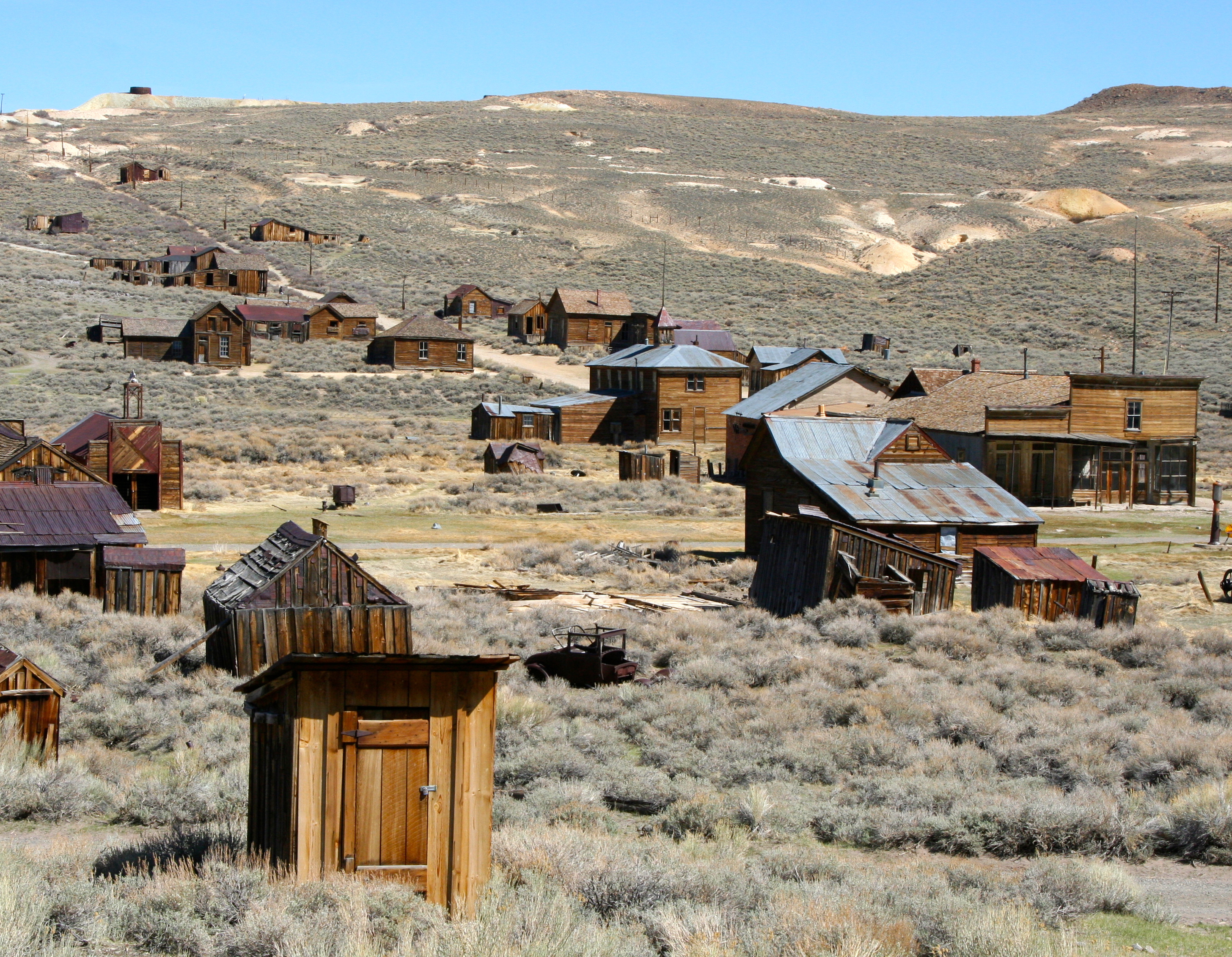
Tattered curtains, a cracked window, and a reflection of weather warn buildings capture the essence of the Old West ghost town of Bodie, California.

Ghostly curtains, a cracked window, and a reflection of weather worn buildings capture the essence of Bodie, California.

Goodbye God, I am going to Bodie,”  was a statement made by a ten-year old in her journal when her family took her to Bodie during its glory days as a gold rush town.

She was right to be concerned. There was plenty of sin to go around as various bad men of the Old West came together with gold seekers and other adventurers in the 1870s. Killings took place almost daily. The fire station would toll the age of the person killed. Robberies, stagecoach holdups and barroom brawls filled in around the edges. It’s “a sea of sin lashed by the tempests of lust and passion,” Reverend F.M. Warrington noted.

And if that weren’t enough, there was the weather to contend with. Winter could bring snows as deep as 20 feet, winds up to 100 miles per hour, and temperatures that dropped to 30˚ F below zero. Freezing to death was on the list of things that might kill you.

Today Bodie is maintained in a state of “arrested decay” as a California State Historical Park. This makes it substantially different from Rhyolite, where things are more or less allowed to fall apart. Most of Bodie’s buildings are still intact– even though some may need a little help. (Grin)

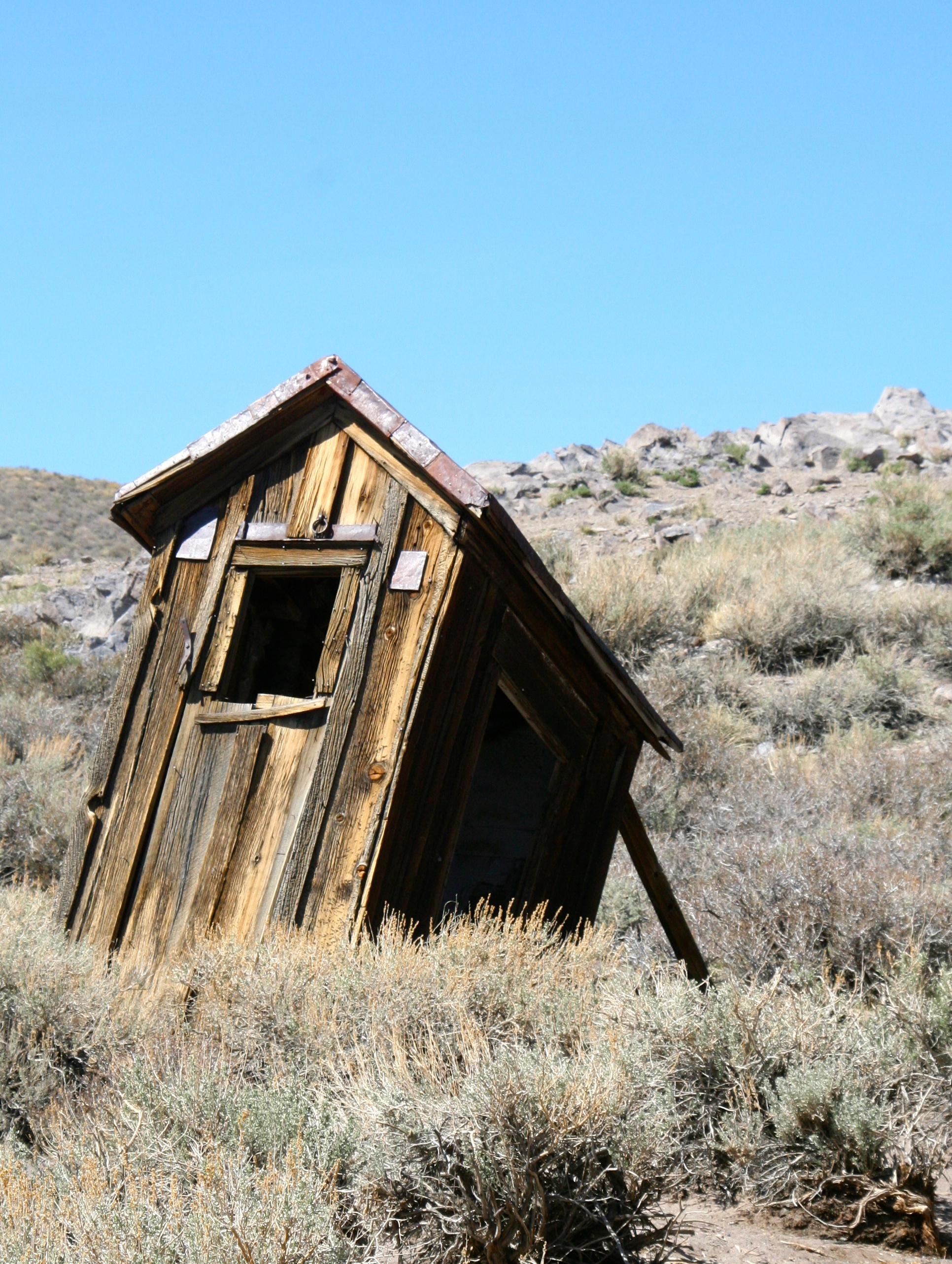
Propped up outhouse in the ghost town of Bodie, California.

Decay doesn’t get much more ‘arrested’ than this propped up outhouse. (Photo by Peggy Mekemson.)

Leaning building in the Bodie State Park ghost town. Photo by Curtis Mekemson.

This building is a little confused about which direction it wants to lean. The support beam it is ‘leaning into’ is on the left.

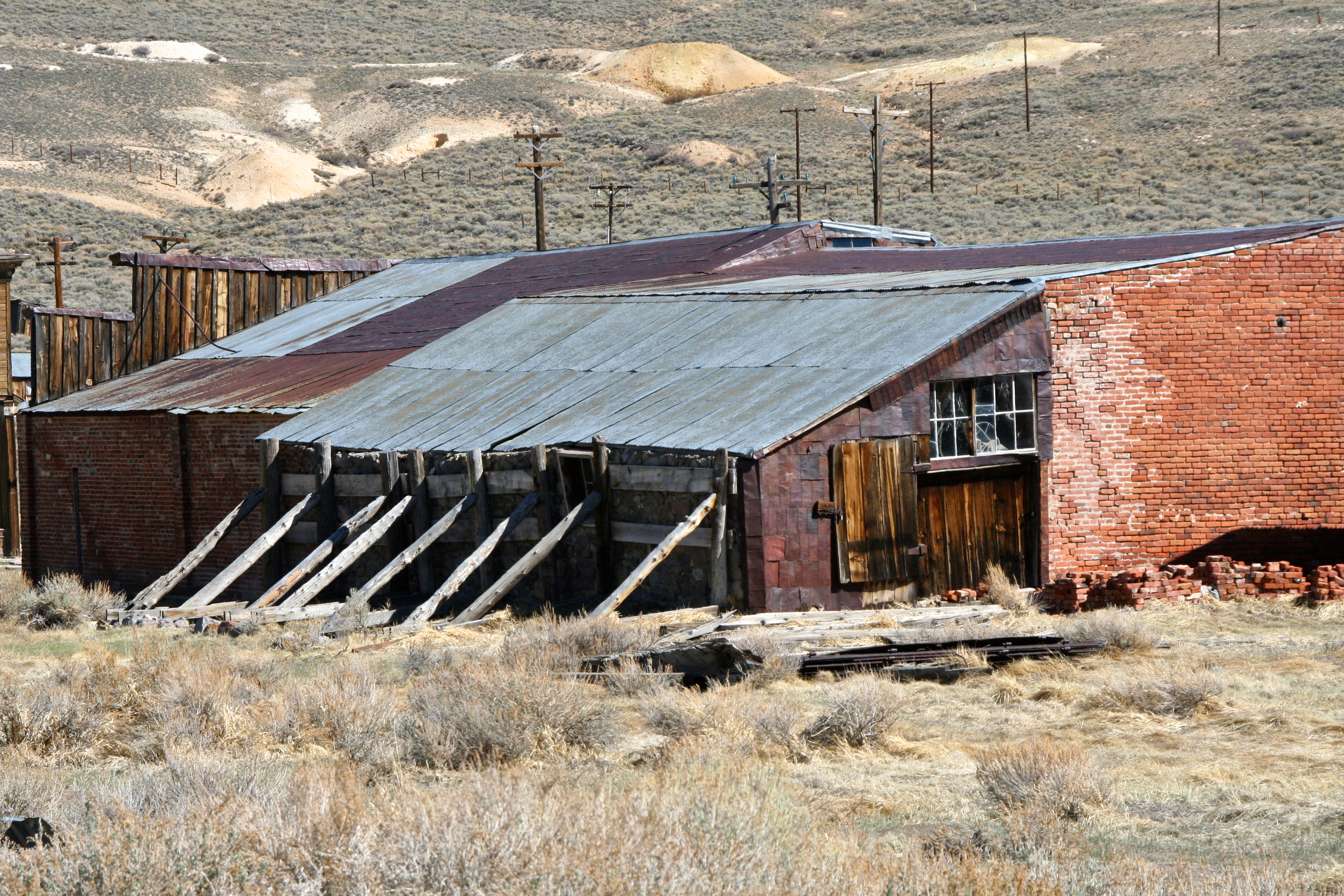
Building held up by support beams at Bodie State Park in California.

A building that apparently needed a lot of help. (Photo by Peggy Mekemson.)

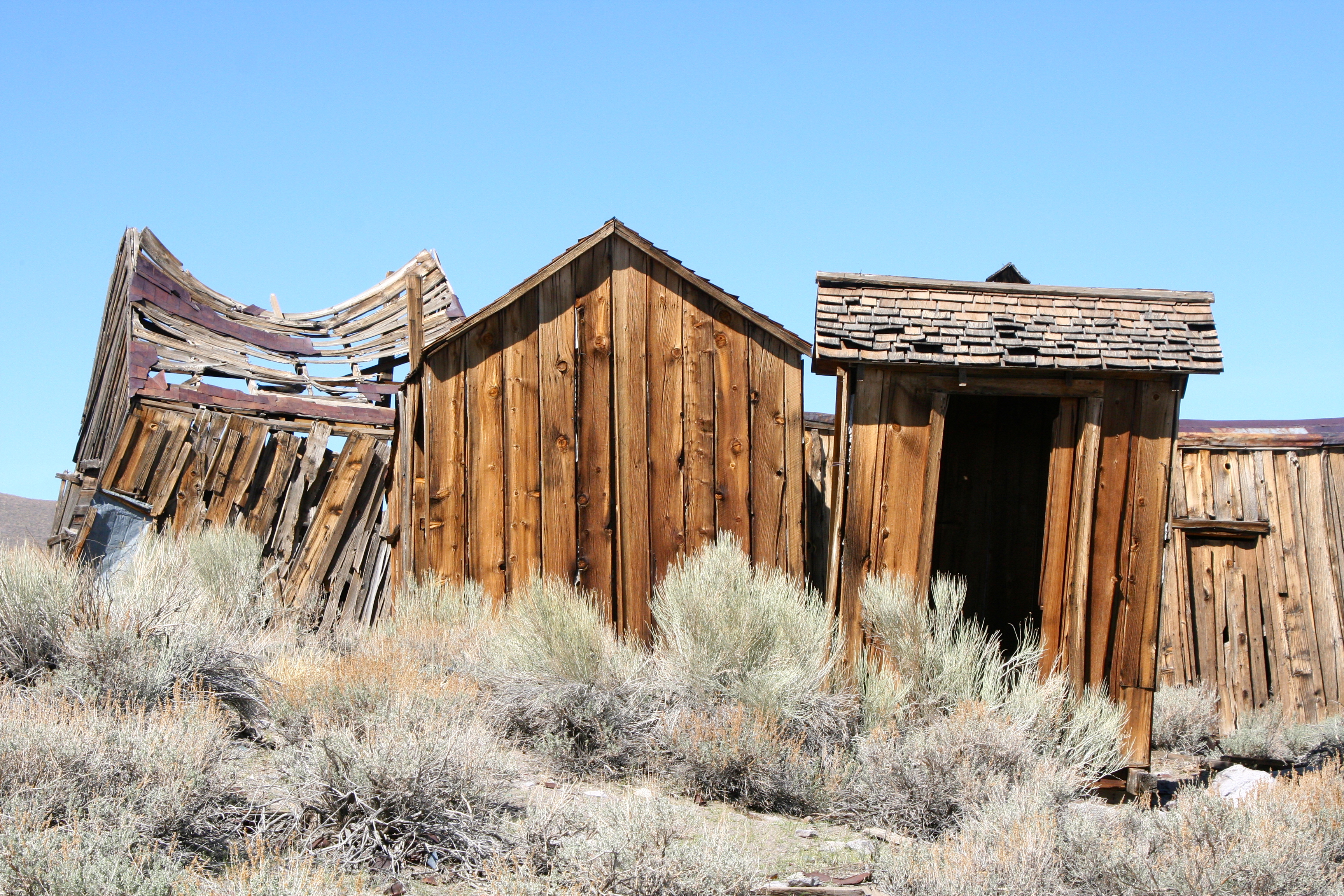
Bones of building at Bodie State Park in California.

Almost beyond help, this building relies on its neighbor for support. (Photo by Peggy Mekemson.)

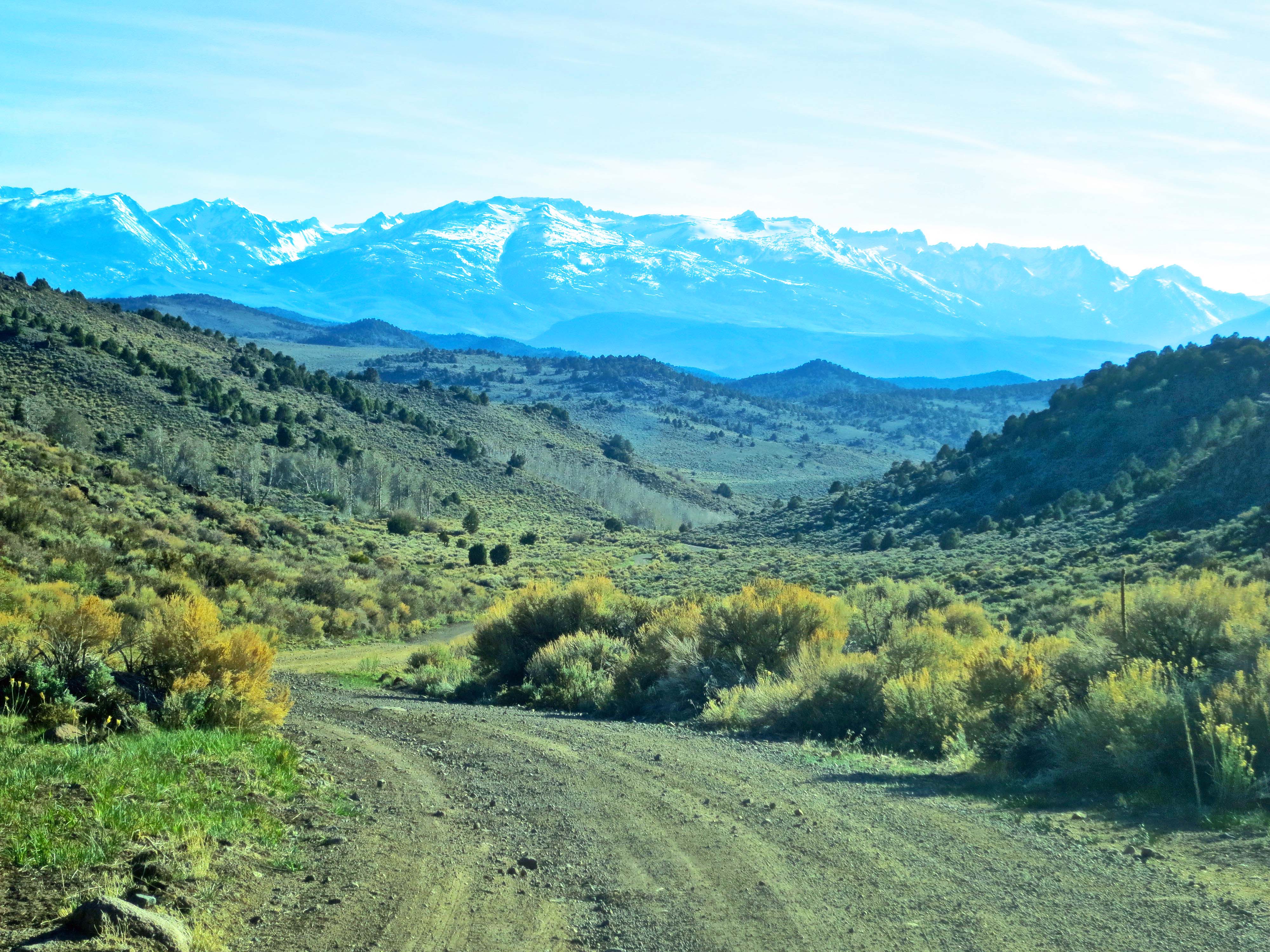
Bodie is located east of the Sierra Nevada Mountains off of Highway 395 near the town of Bridgeport. A paved side road that soon turns to dirt delivers visitors to the ghost town. When we arrived, Mono County was seriously engaged in tearing up the dirt section of the road. Our truck was not happy. (I assume they have put the road back together by now.) Peggy and I got ‘lost’ leaving the town. It is really hard to do. I chalk it up to subconsciously wanting to avoid another personal encounter with the Mono County Highway Department. Anyway, we explored 20 or so miles of dirt road before finding our way back to the highway.

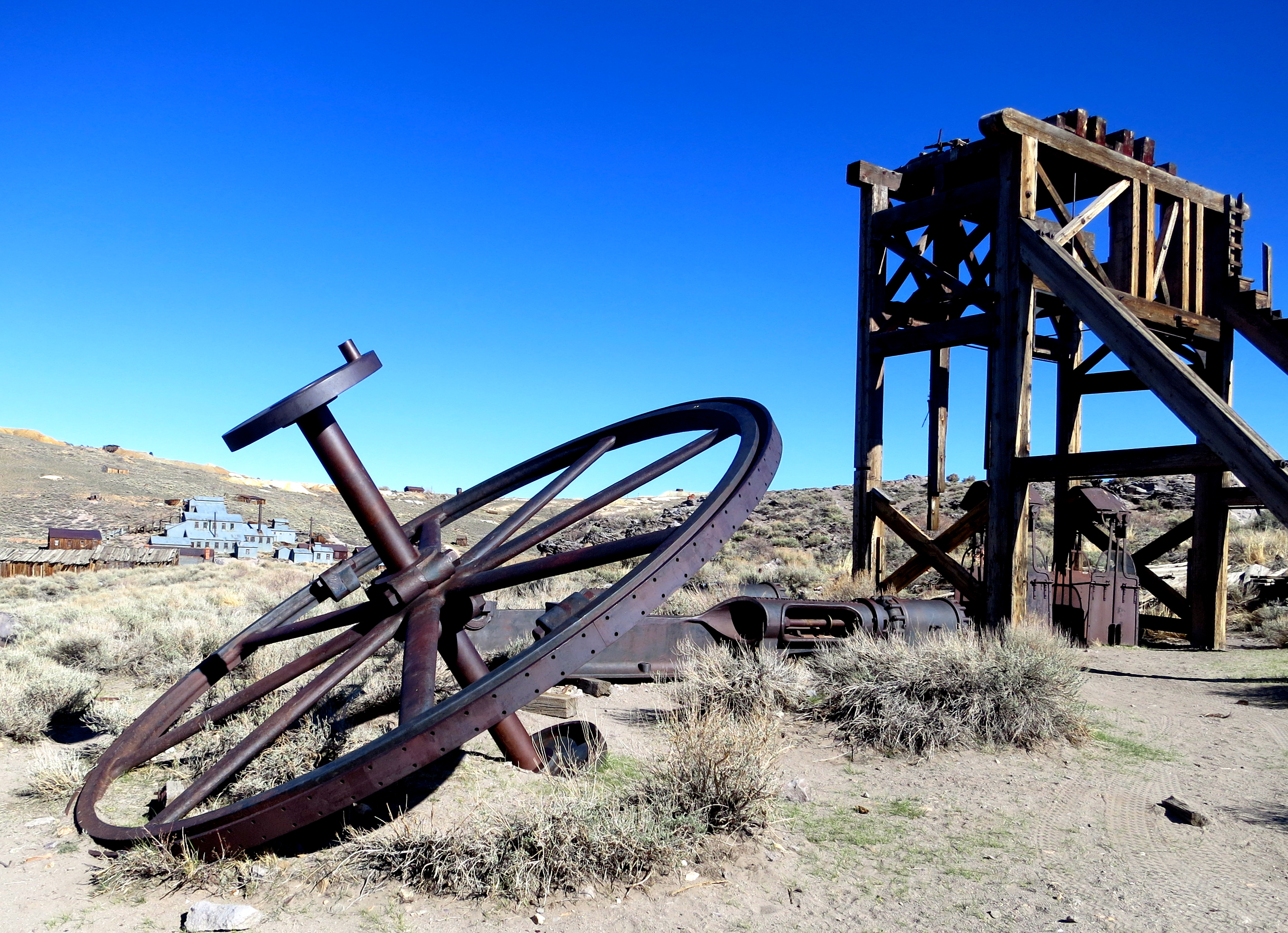
Mining equipment at Bodie State Historical Park in California.

As expected, one place to find old mining equipment is in old mining towns. The cages seen beneath the head frame were used to lift miners into and out of the mines.

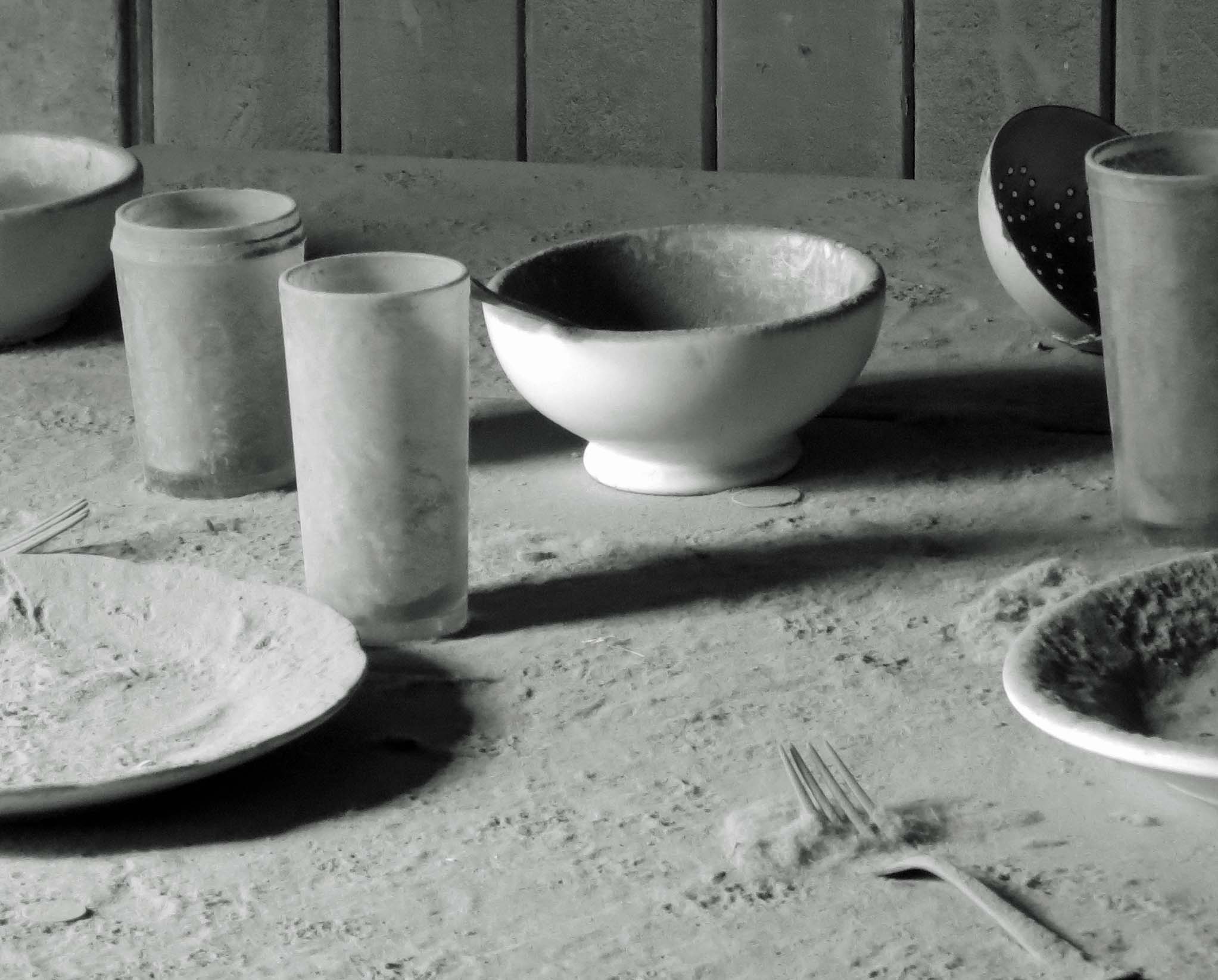
Place setting covered in dust at Bodie State Historical Park.

I’ll classify this as a ‘still life’ photo. Apparently it’s been still for decades. It’s what happens when you are late for dinner.

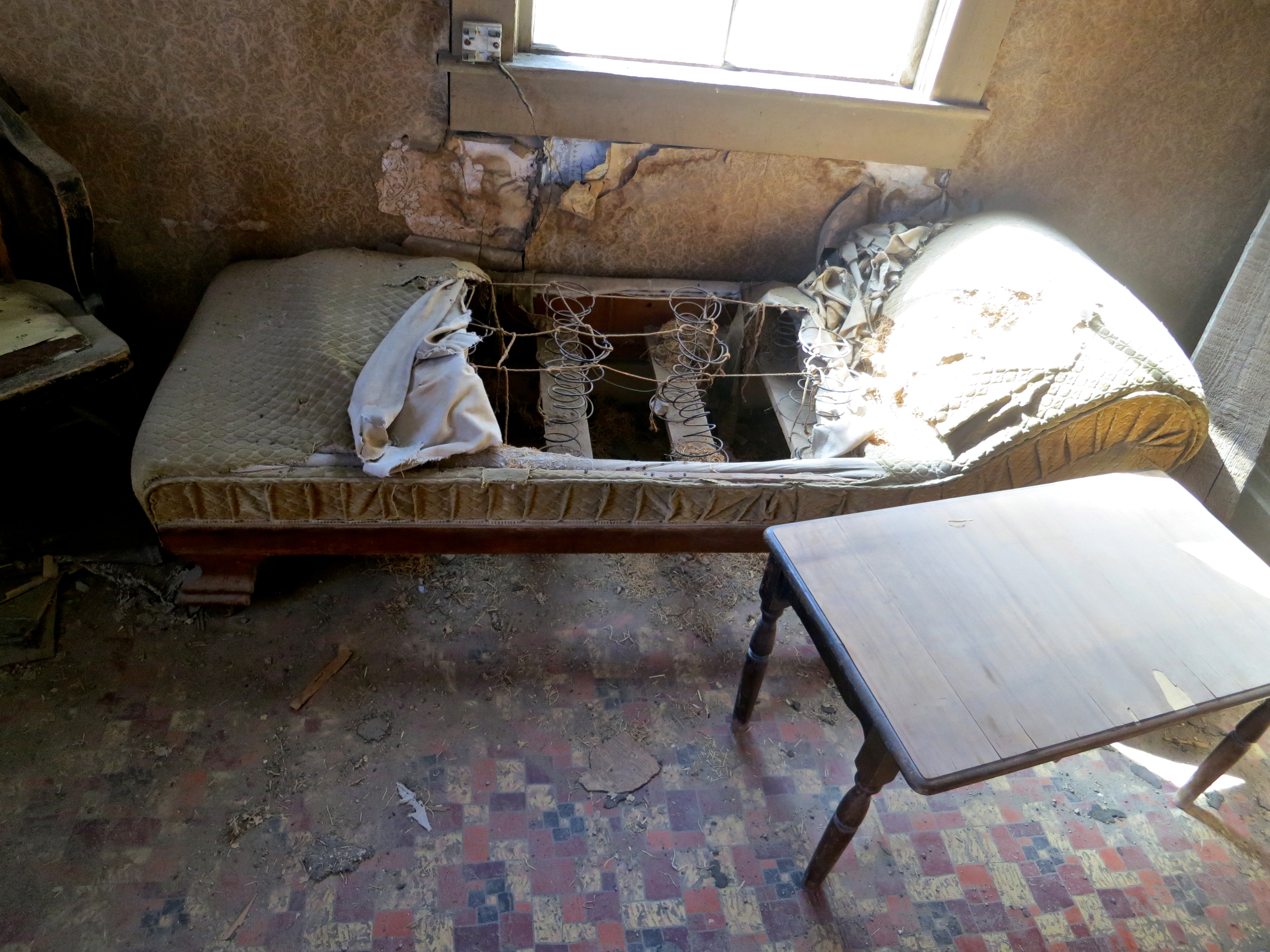
Old bed at Bodie State Historic Park in California.

Why does ‘spring into action’ come to mind?

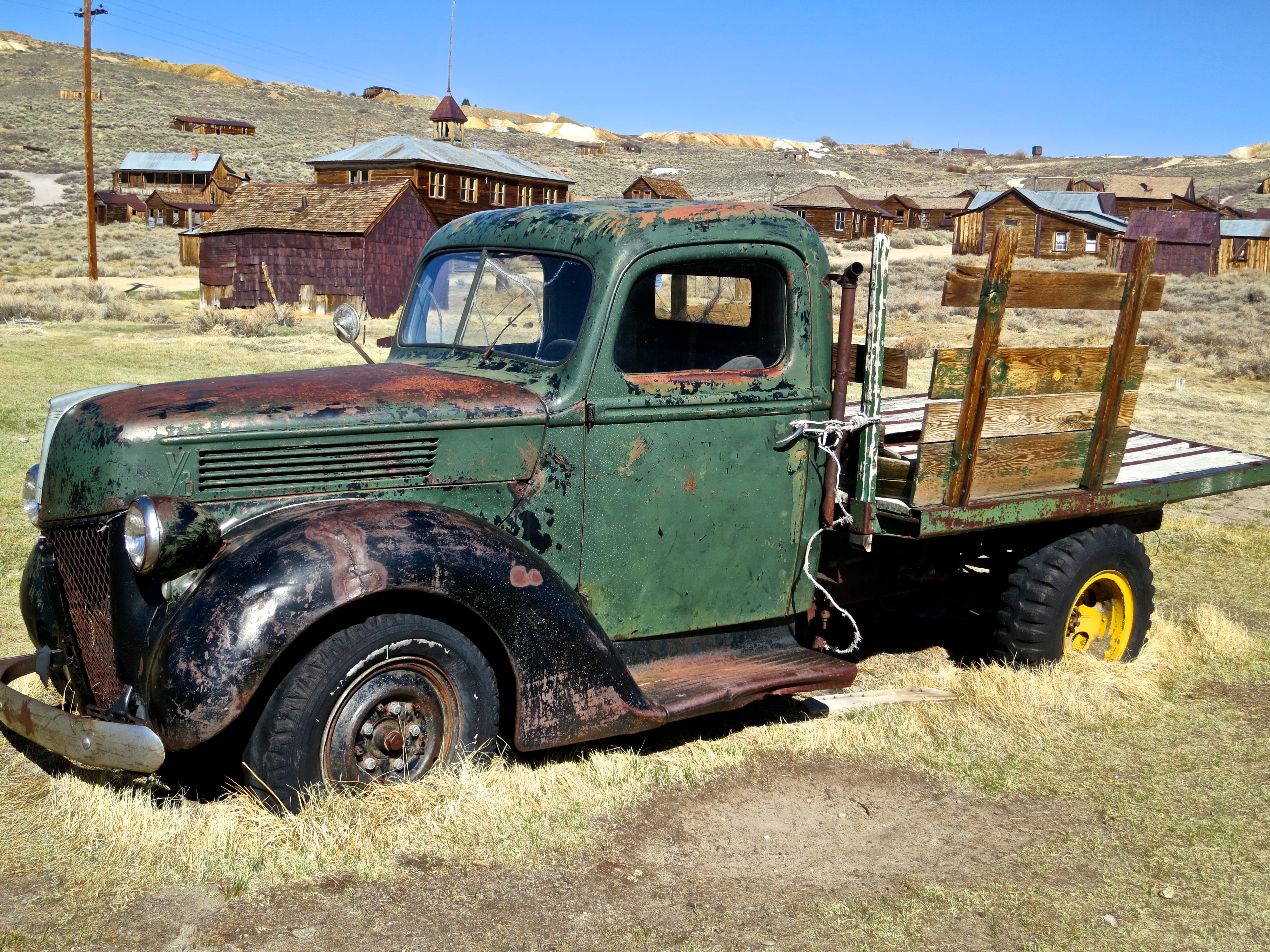
An old truck at Bodie State Historical Park in California.

This truck had character including the yellow rim on the back wheel. I assume the roped door was to keep kids (both small and big) out of the vehicle.

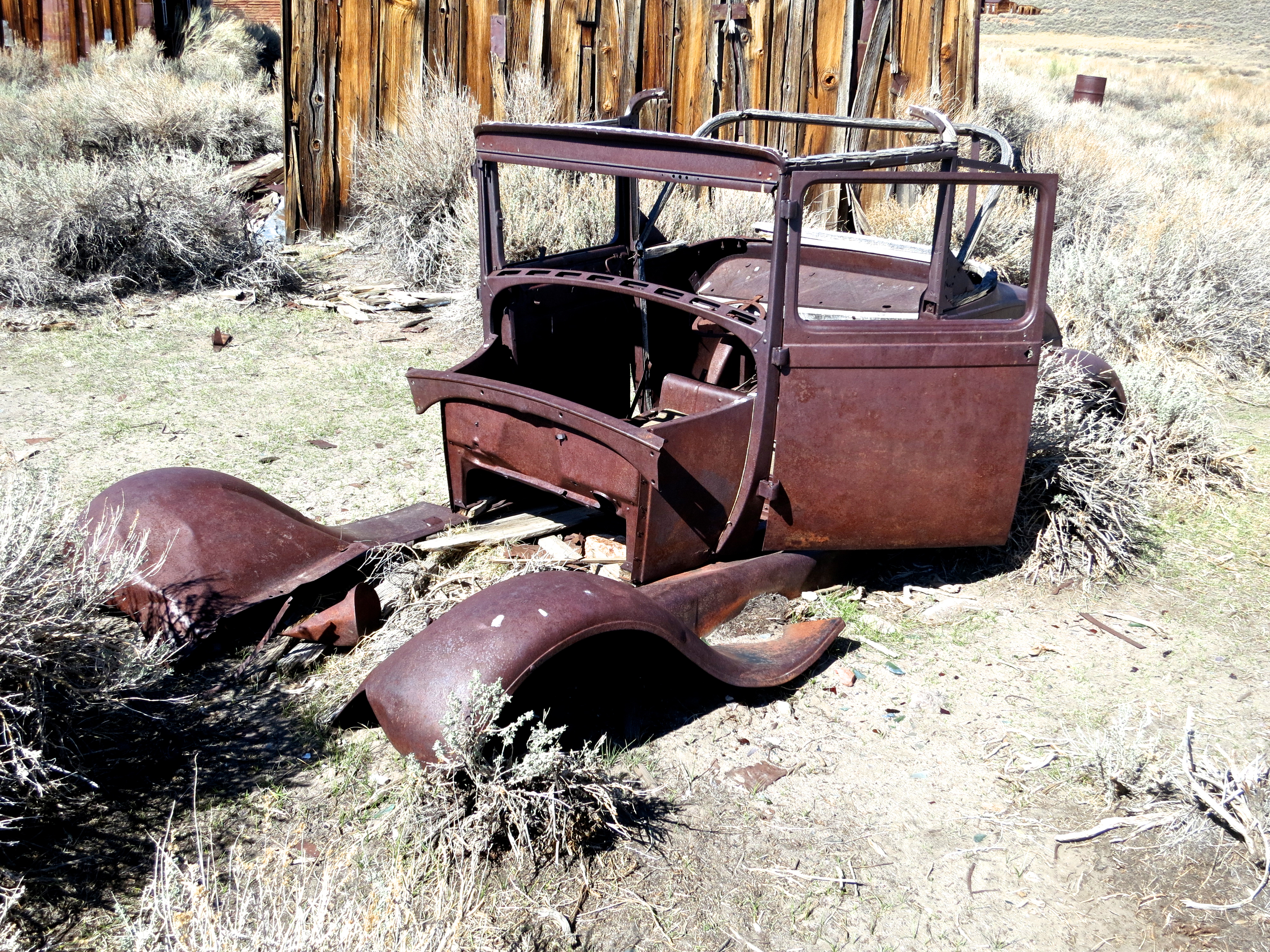
Old car remains at Bodie State Historical Park in California.

This car was more open for inspection.

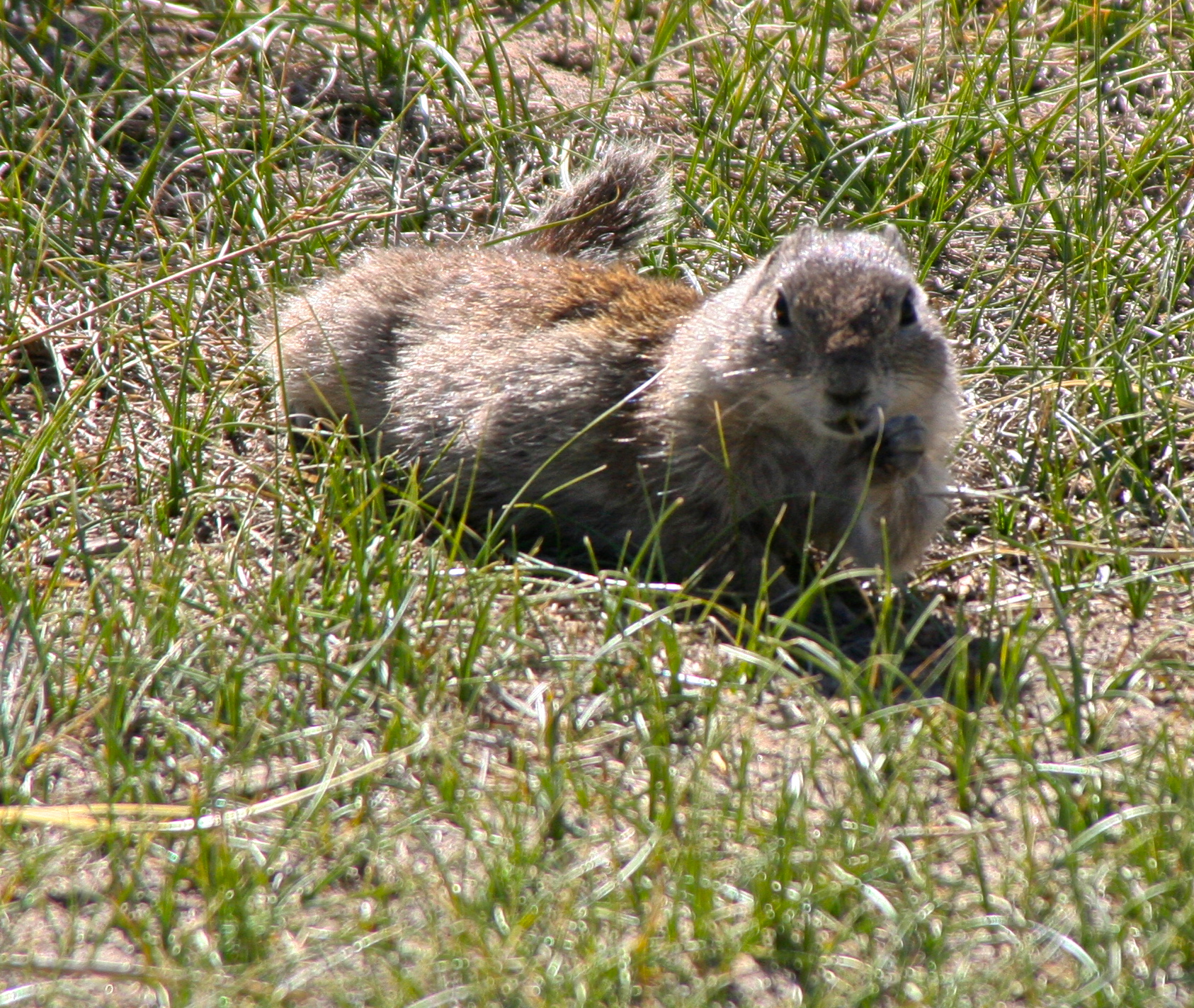
Prairie dog at Bodie State Historical Park in California.

Speaking of inspection, a prairie dog stopped his busy rounds of grass chomping to check us out. (Photo by Peggy Mekemson.)

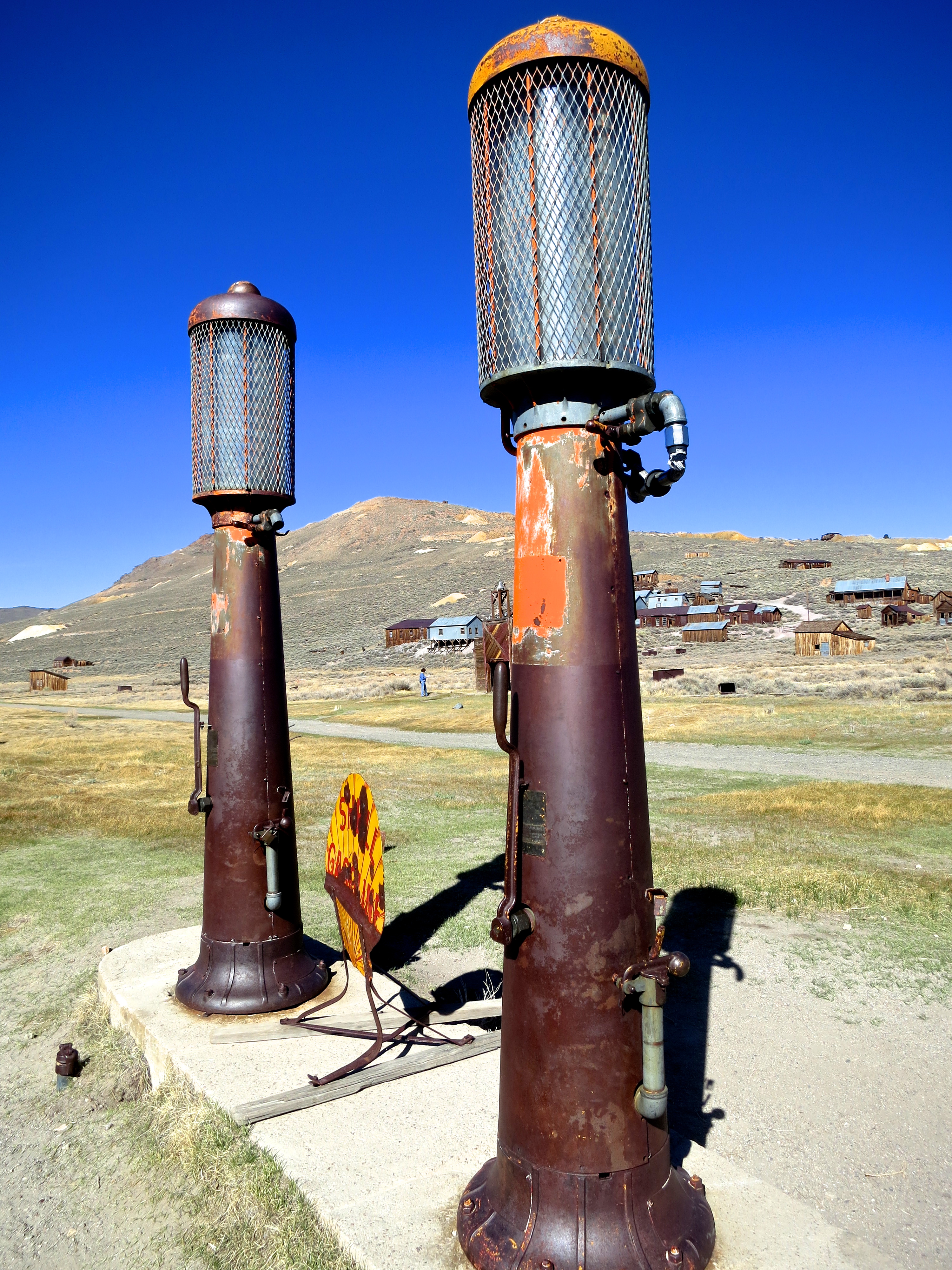
Shell gas station at Bodie State Historical Park in California.

A Shell gas station.

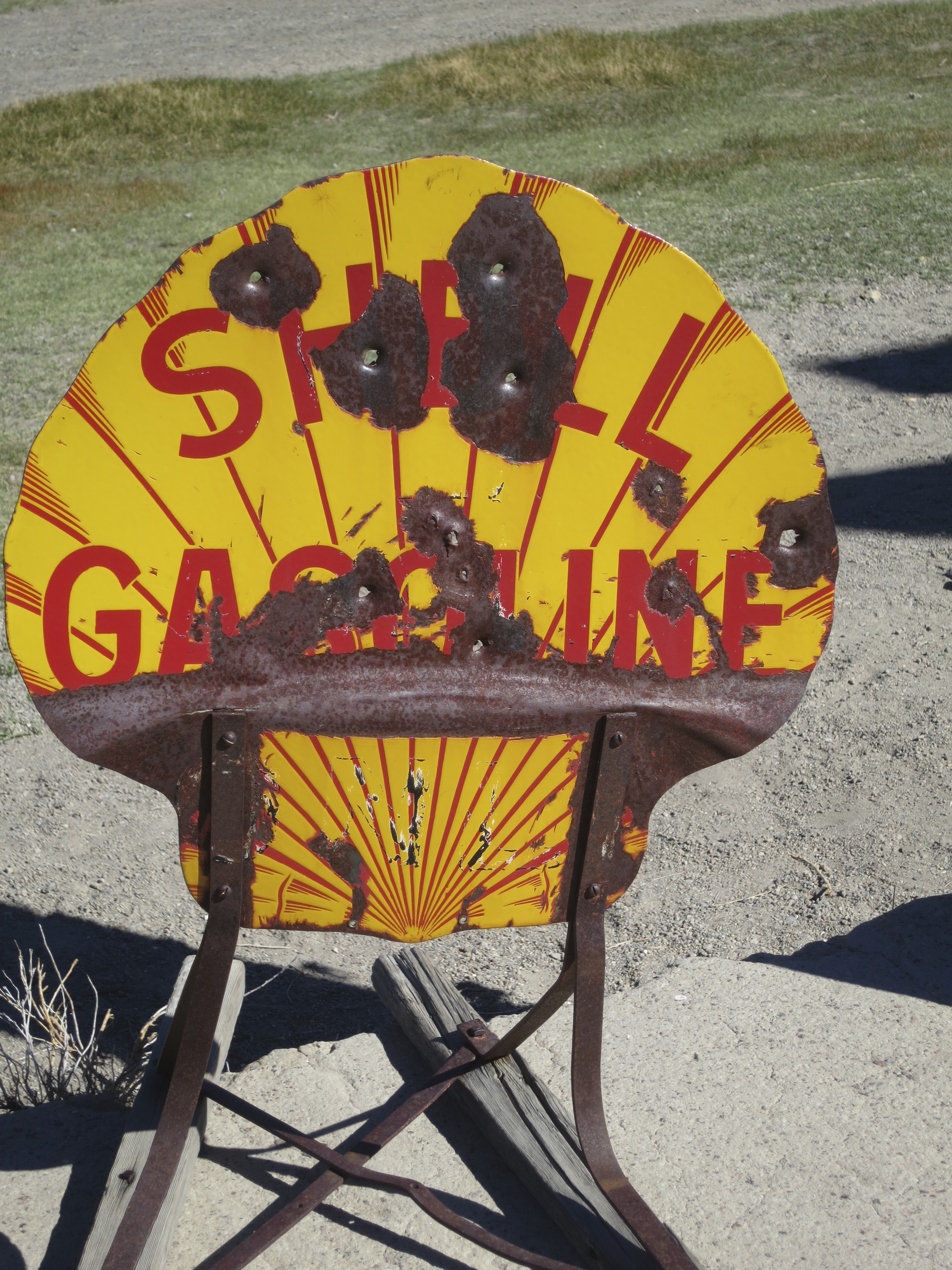
Old Shell gas sign at Bodie Historical Park in California

Apparently someone was upset about the increased cost of gas. Maybe it had jumped from fifteen to sixteen cents a gallon.

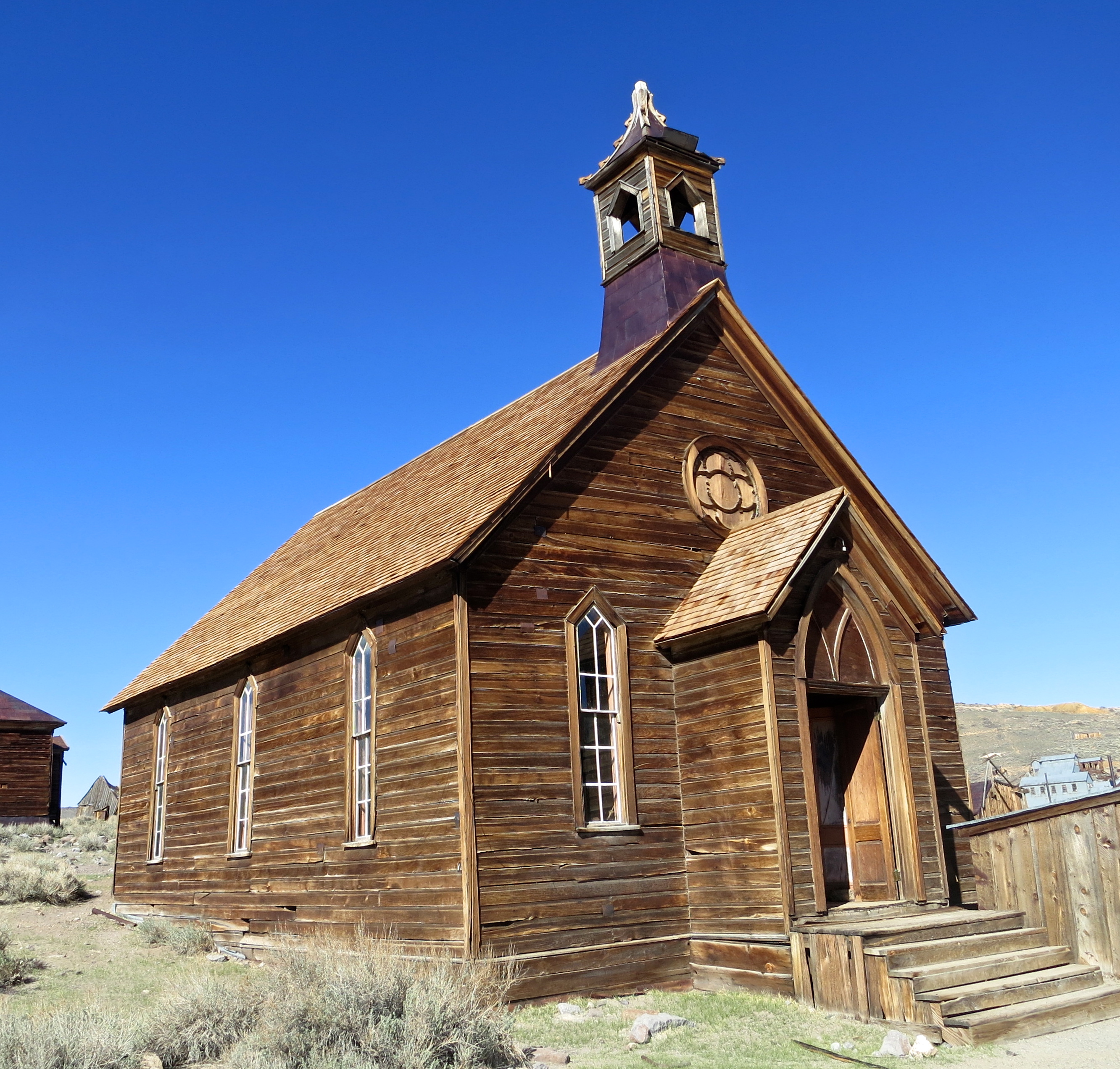
Methodist Church is Bodie State Historical Park in California.

The end of the bad old days in the West was often signified by the building of a church. It appears they weren’t quite over in Bodie however. An oil cloth painting of the Ten Commandants in the Methodist Church that hung behind the altar was stolen. So much for “Thou shalt not steal.”

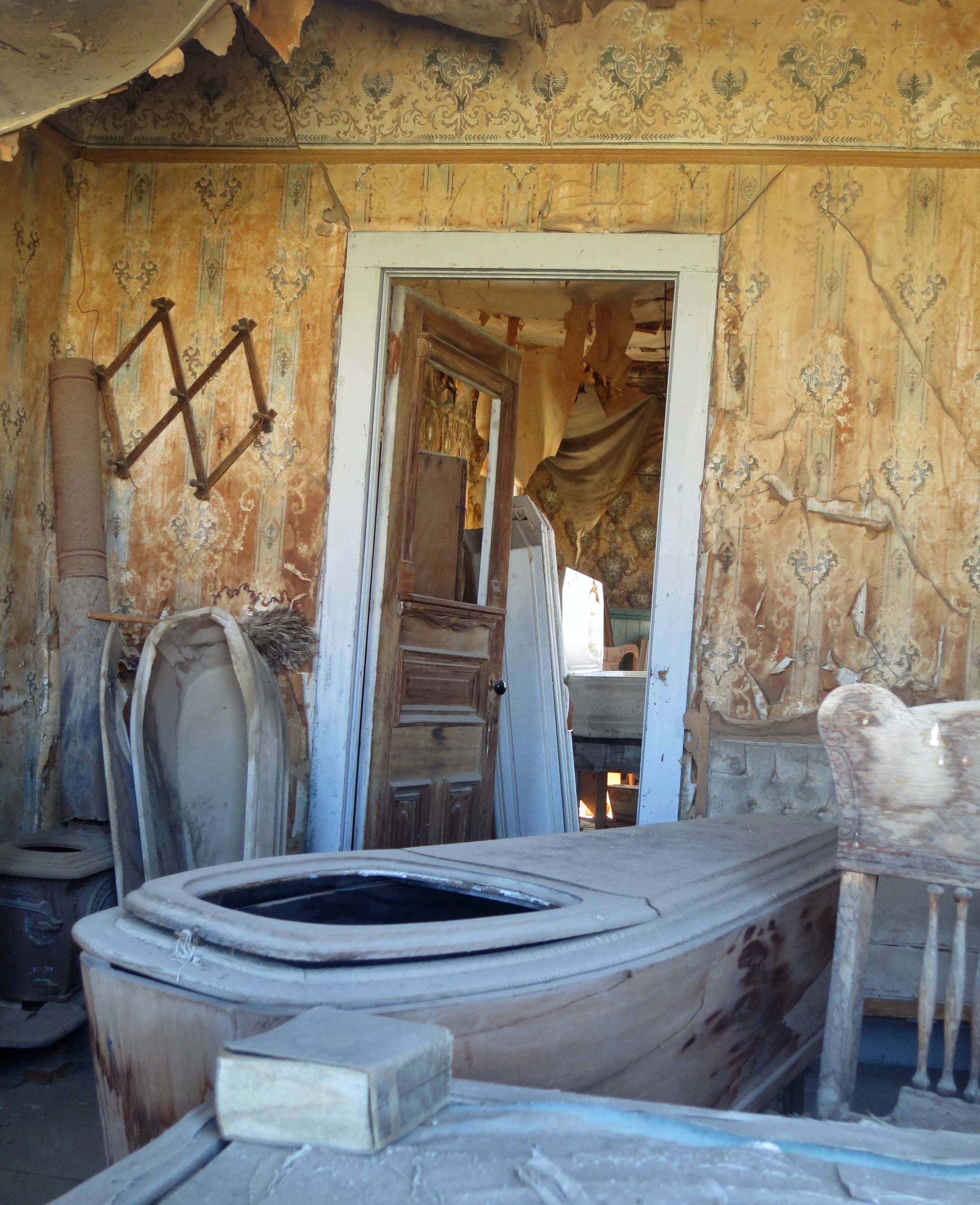
The morgue at Bodie State Historical Park in California.

If there are haunted places in Bodie, the morgue is a prime location. The featured casket provides a window to view the deceased. A Bible rests on the table. Or maybe it is a copy of Mortuary Science for Dummies.

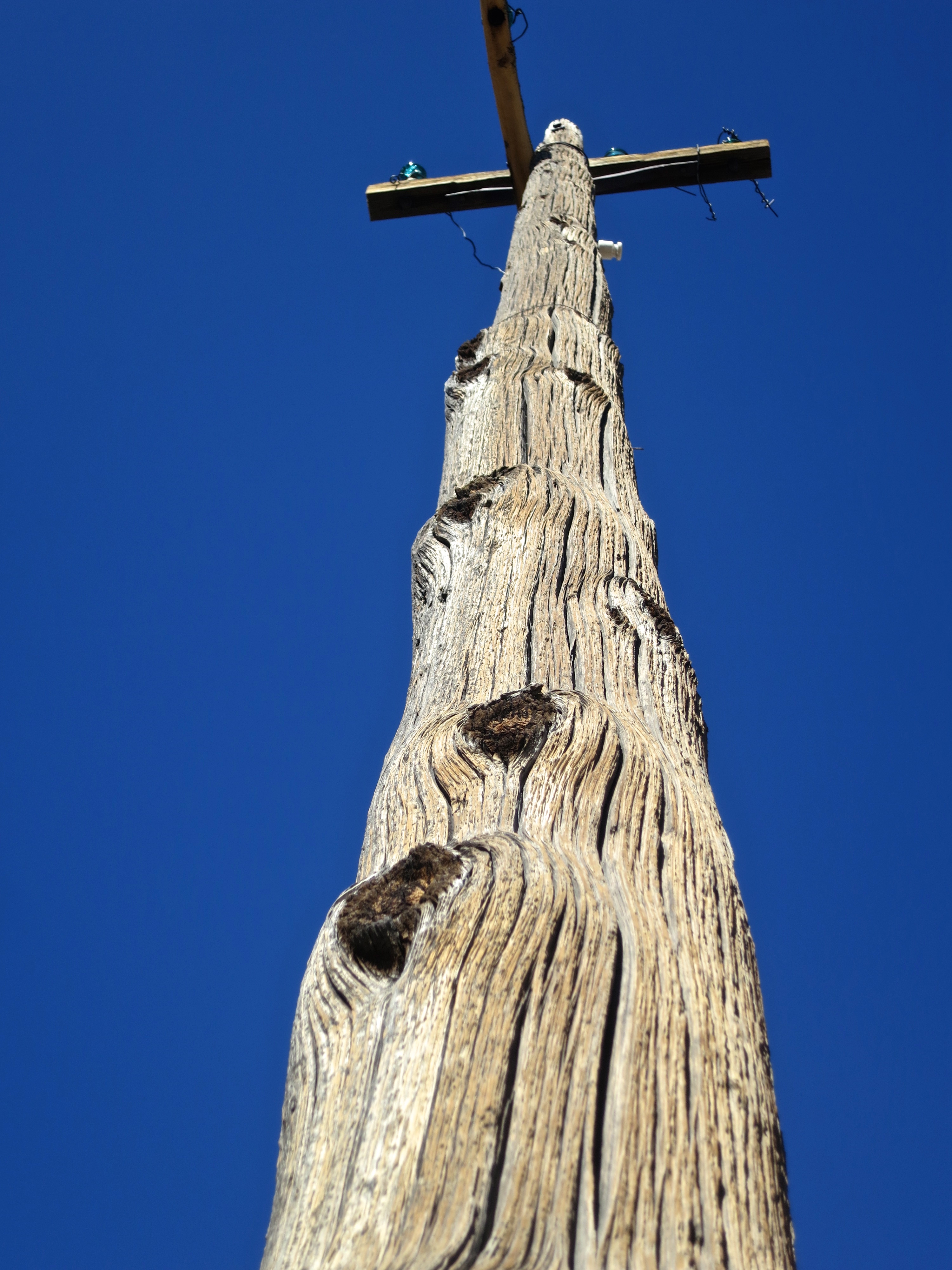
Old power pole in the ghost town of Bodie.

This power pole seemed sufficiently ghostly to reside in a ghost town.

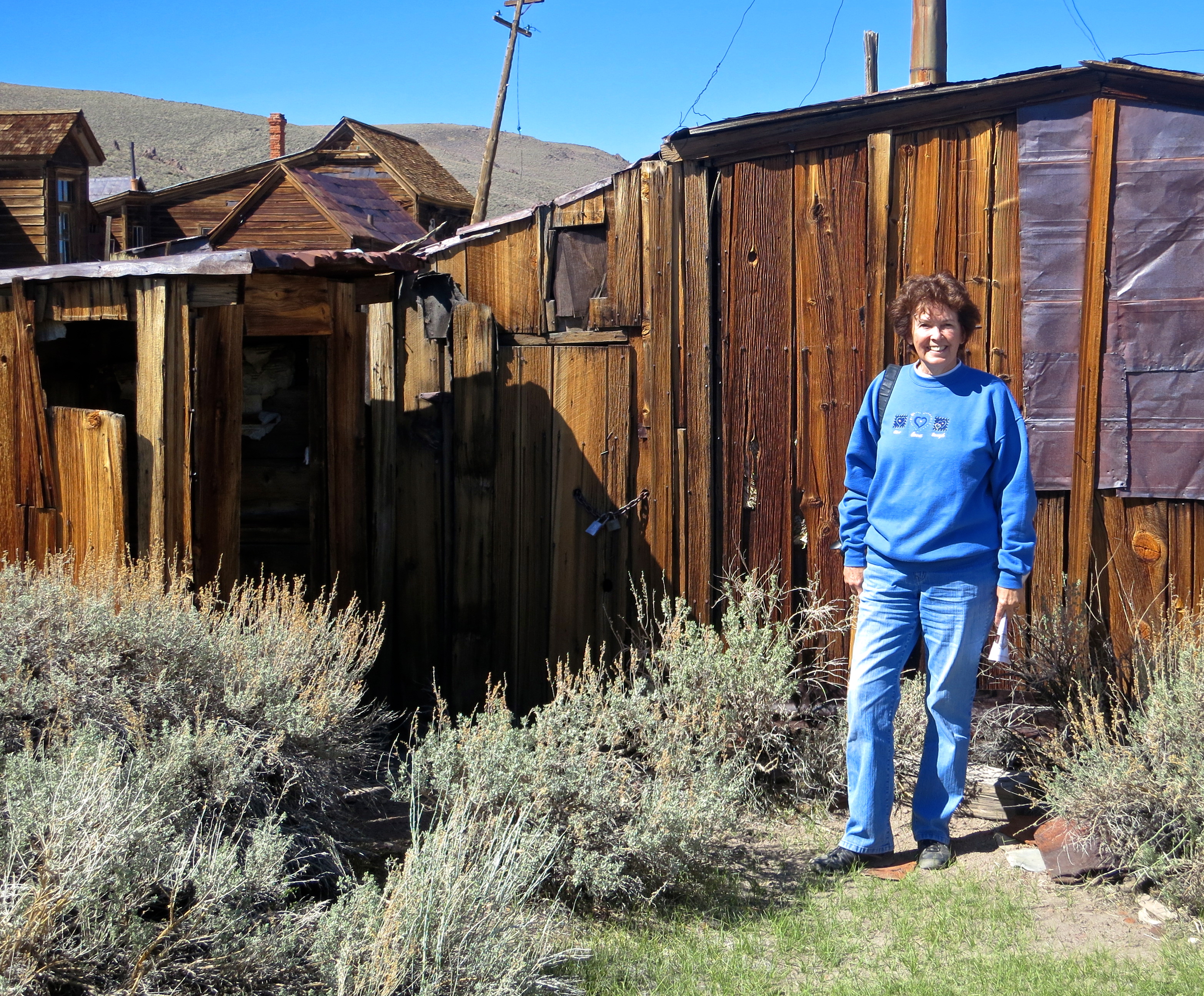
House of mine worker at Bodie ghost town.

Peggy stands in front of one of the shacks where a miner  lived.

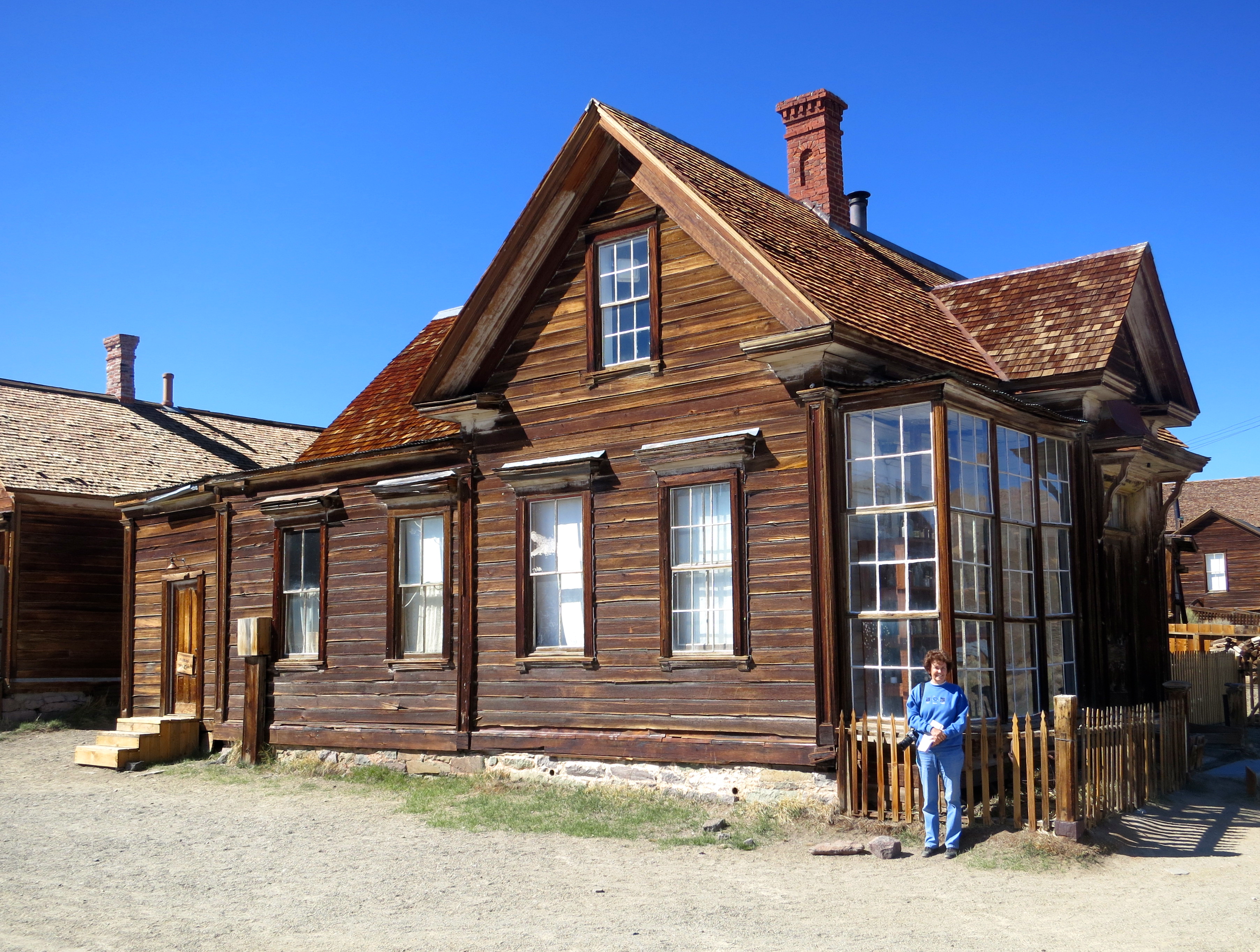
The J.S. Caine residence at Bodie State Historical Park in California.

Here she stands in front of the house of the guy who owned the mine.

IOOF Hall in the ghost town of Bodie.

The International Order of Odd Fellows Hall. I’d almost join for the name alone.

View of the ghost town of Bodie.

A wider view of Bodie. (Photo by Peggy Mekemson.)

Getting lost on the way out of Bodie wasn't bad considering the scenery.

Getting lost on the way out of Bodie wasn’t bad considering the scenery.

We did become a little concerned as evening approached and we were still wandering around on our dirt road.

We did become a little concerned as evening approached and we were still wandering around on our dirt road. But eventually we arrived in Bridgeport and could declare our detour another adventure.

NEXT BLOG: We journey up California’s beautiful Highway 395 and stop to admire Mt. Whitney, the highest mountain in the contiguous United States. And, I might add, a mountain I have climbed six times.


Rhyolite’s Neighbor: The Goldwell Open Air Museum… The Desert Series

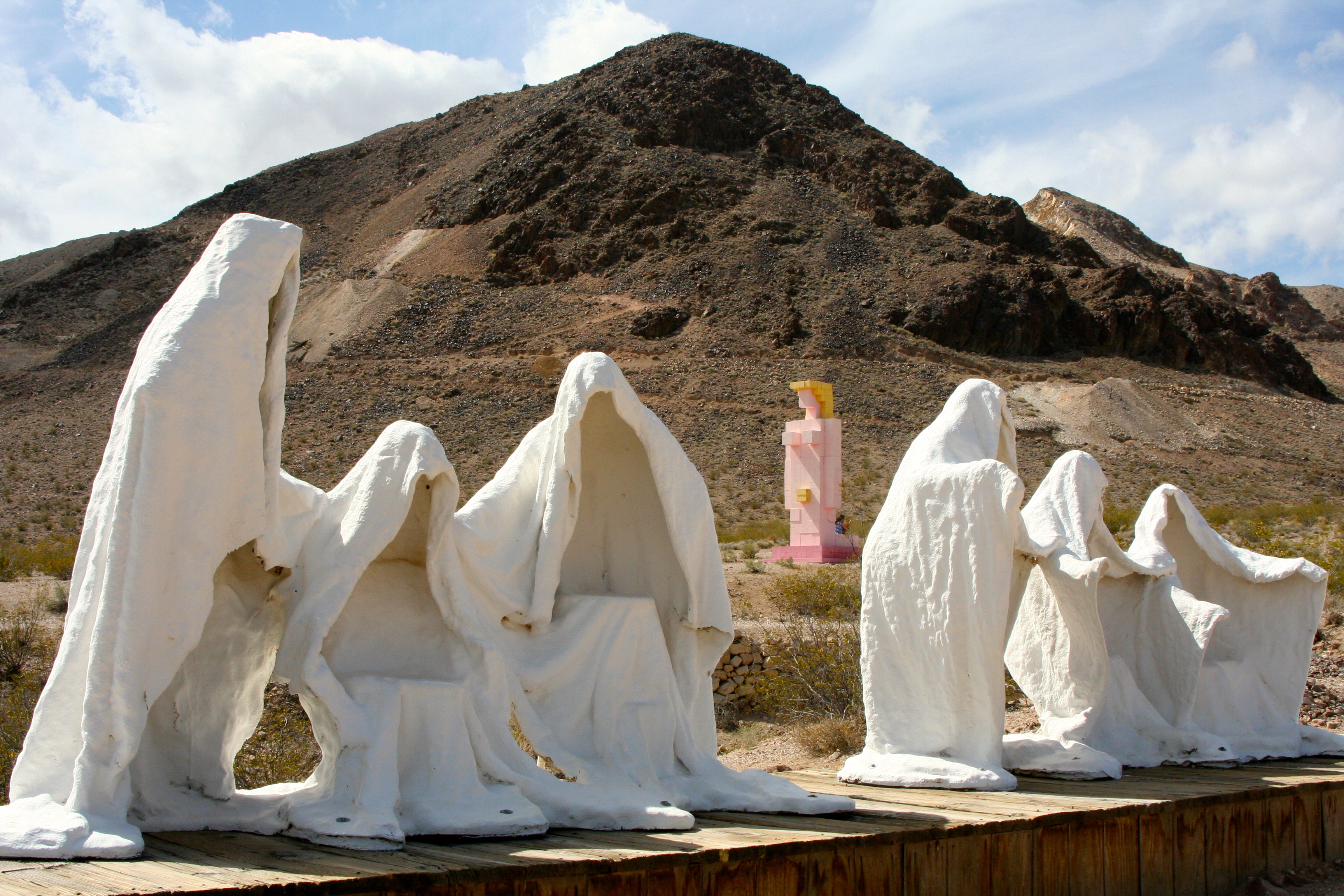
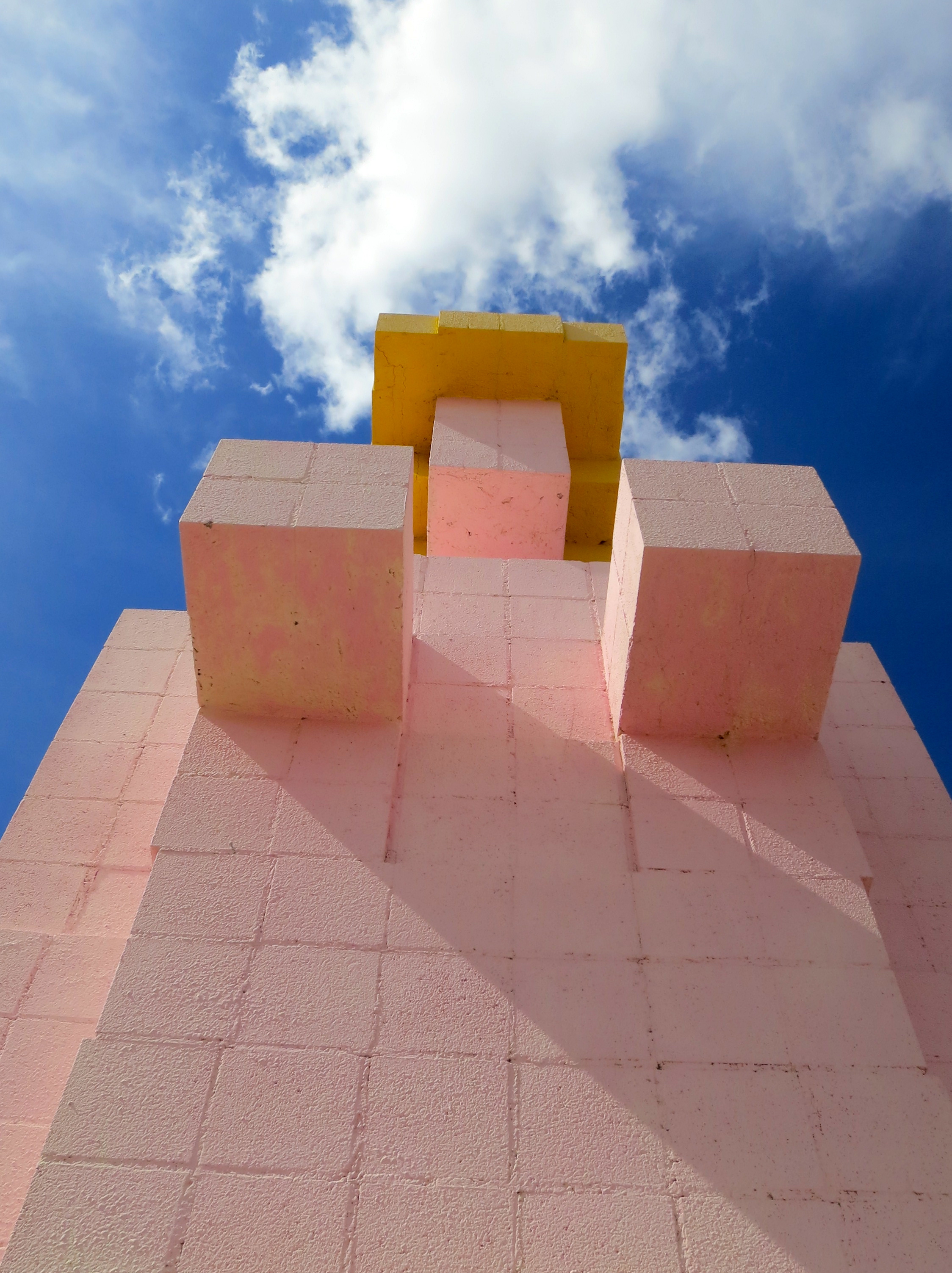
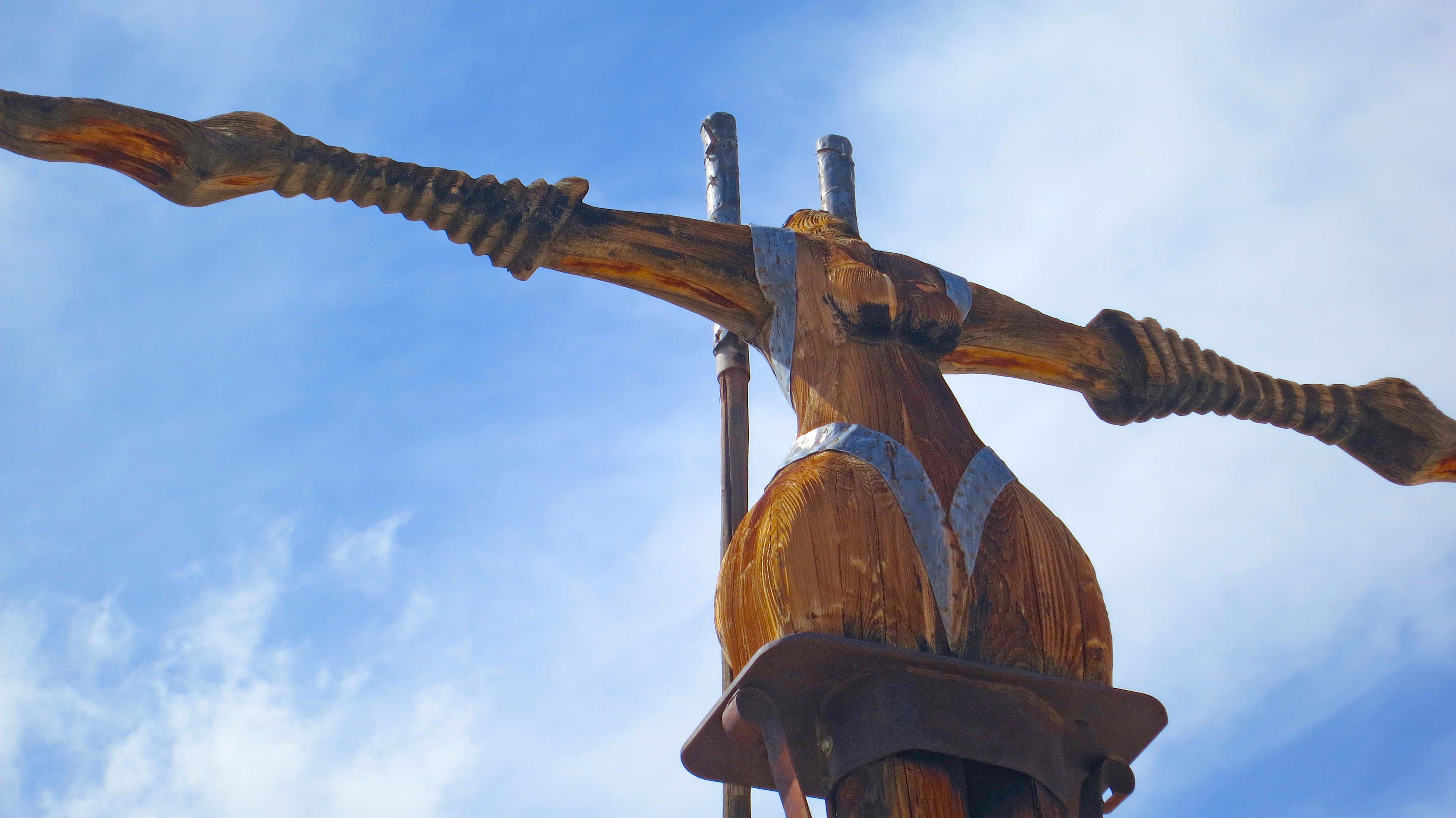
A tall, naked, pink lady is visible from the Nevada ghost town of Rhyolite. Known as the The Venus of Nevada, this 1992 work by Hugo Heyrman is part of the Goldwell Open Air Museum.

A tall, pink lady is visible from the Nevada ghost town of Rhyolite. Known as the Venus of Nevada, this 1992 work by Hugo Heyrman is part of the Goldwell Open Air Museum.

The first time we drove into Rhyolite, I noticed a tall, naked  lady with blond hair next door to the town. And no, I hadn’t consumed any peyote or other hallucinogenic drugs normally found in deserts and used by shamans to enter places that might be inhabited by tall, naked, pink ladies. I was gazing down at the Goldwell Open Air Museum, a truly unique art museum in the world of art museums.

Goldwell was started in 1984 by the Dutch artist Albert Szukalski as a way to display ghostly figures he created by wrapping live models in wet plaster. Soon, other Dutch artists joined him in his efforts to create a sculpture museum in the desert. Today, a Nevada non-profit organization cares for the museum and supports on-site artistic endeavors.

I’ve blogged about the museum before and I will undoubtedly blog about it again. Why? I’ll let the photos tell the story.

Albert Szukalski's work, The Last Supper, was the first sculpture created for the Goldwell Open Air Museum.

Albert Szukalski’s work, The Last Supper, was the first sculpture created for the Goldwell Open Air Museum. The mountains and clouds provide a dramatic backdrop for the sculpture.

Albert Szukalski's Last Supper sculpture at the Goldwell Open Air Museum just east of Death Valley National Park.

Using Davinci’s fresco of the Last Supper as a model, Szukalski wanted a desert setting for his sculpture. Here, the ghostly figures are seen from behind.

Lady Desert and the Last Supper sculptures at the Goldwell Open Air Museum located east of Death Valley.

Lady Desert, the Venus of Nevada, is located behind the Last Supper. (Photo by Peggy Mekemson.)

Looking up at Lady Desert at the Goldwell Open Air Museum in Nevada.

Hugo Heyrman used cinder blocks in his creation of the Venus of Nevada to represent the pixellated, technological world we live in. I found this perspective interesting. Peggy just shook her head.

Ghost Rider Sculpture by Albert Szukalski at the Goldwell Open Air Museum east of Death Valley.

A local resident of the nearby town of Beatty donated his bike and his body for this sculpture by Albert Szukalski. He served as the model by allowing wet, plaster infused burlap to be draped over his body.The sculpture is appropriately named Ghost Rider.

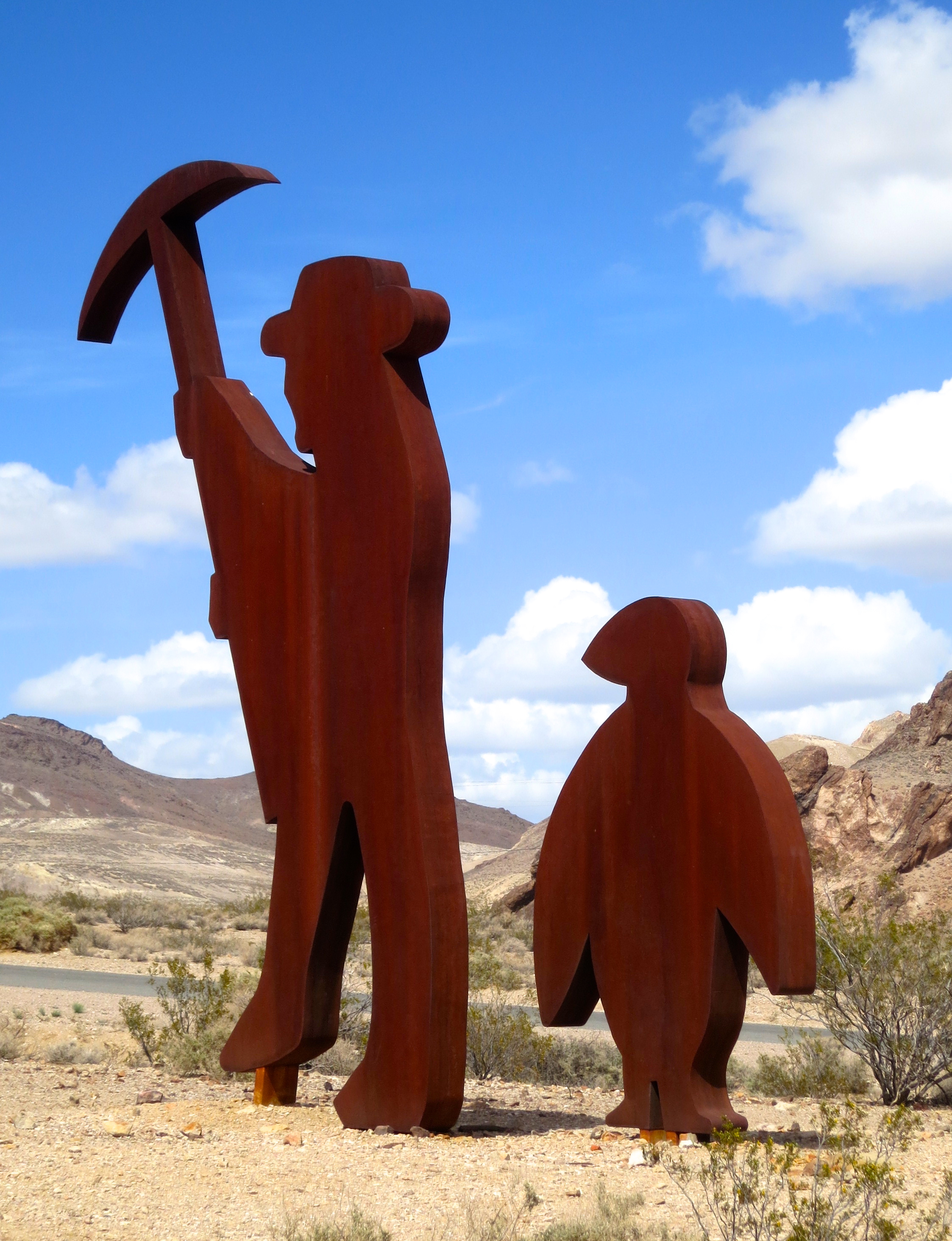
Every lonely desert prospector needs a penguin for company, right? Wait, isn't that a donkey? The artist Fred Bervoets decided on a penguin for his tribute to Shorty Harris at the Goldwell Open Air Museum. And Fred is an artist; he's supposed to see the world in a strange way. As for Shorty, he was a legendary prospector who worked the Rhyolite area.

Every lonely desert prospector needs a penguin for company, right? Wait, isn’t that a donkey? The artist Fred Bervoets decided on a penguin for his tribute to Shorty Harris at the Goldwell Open Air Museum.  Shorty was a legendary prospector who worked the Rhyolite area.

Couch by Sophie Siegmann at the Goldwell Open Air Museum in Nevada.

This couch by Sofie Siegmann is titled “Sit Here.”

the Sit Here couch by Sophie Siegmann at the Goldwell Open Air Museum near Beatty, Nevada.

So Peggy did. The buildings in the background are located in the ghost town of Rhyolite.

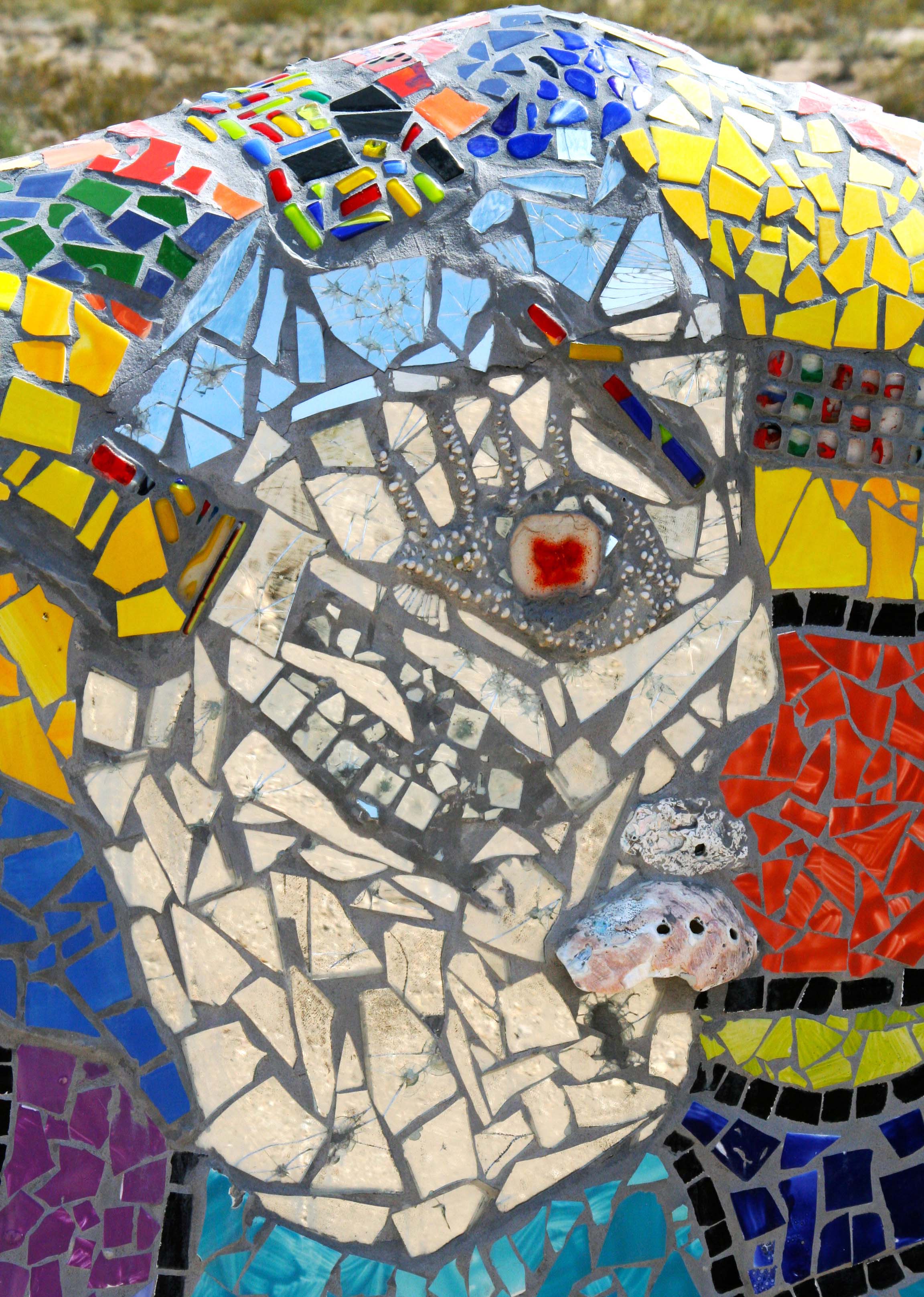
Detail on couch sculpture at Goldwell Open Air Museum.

The back of the couch featured this face. (Photo by Peggy Mekemson.)

Statue of Icara by Dre Peters at the Goldwell Open Air Museum.

Dre Peeters named his hand carved statue Icara, a female equivalent of Icarus, the legendary Greek boy who flew too close to the sun.

Wagon wheel at the Goldwell Open Air Museum near Beatty, Nevada.

An old wagon was located at the base of the Icara, so naturally I had to take a photo of its wheel. It makes a fitting end for this blog about an art museum located next to a ghost town.

NEXT BLOG: Off to the well know California ghost town of Bodie.