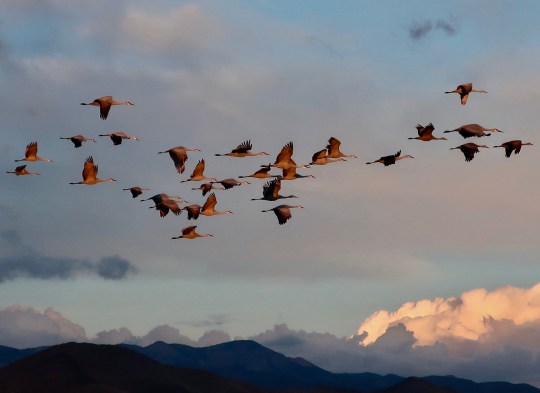
Clickety-Clack 3: 5000 miles on Amtrak… Meeting Strangers Is on the Menu

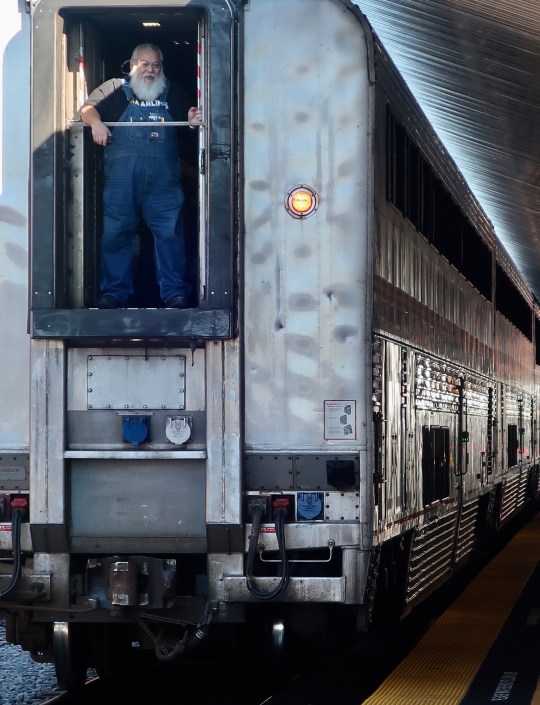
Amtrak Train backing into LA station under the watchful eyes of an engineer.

He was a large man in his 50s with a tattoo covered body, an ex-con who had found the Lord, a smoke jumper with a serious twitch who seemed to have made a few too many jumps. She was a petite, attractive, college graduate going for her PhD in economics with a desire to work for the federal government. It would have been hard to find two more opposite people. They were our dinner companions on Amtrak one evening. Amtrak’s policy is to seat four people to a table. If there are four of you traveling together, fine. If not, you are seated with strangers based on when you arrive. The smoke jumper had arrived first, and then us. The student last. 

She had been seated next to the smoke jumper and eyed him nervously every time he made a serious twitch in her direction. With reason. He told us one of his twitches had caused him to dump a pint of beer on the man sitting next to him at dinner the night before. He liked to talk and we were a captive audience. Not that I objected, he had interesting stories to tell, but Peggy and I did what we could to involve the student in our conversation. She’d manage a few words before he jumped back in. She was just returning from an economic conference in Washington and was on her way home. Turns out she lives in Medford and works during the summer at an up-scale restaurant in Jacksonville, one we like to go to.

Given Amtrak’s policy, we never knew who our meal companions would be. Dinners were more formal and we had to sign up for specific times. There was even a real table cloth! It was paper for breakfast and lunch and you could show up any time during meal hours. The seating policy remained the same, however. Usually, we ended up seated with couples. Once we spent a delightful meal with a lesbian couple. Another time it was with a Russian who owned shoe stores in New York City and was on his way to set one up in LA. “I have too many brothers, sisters, cousins, aunts, uncles and other relatives in New York,” he told us. He was looking to escape. To keep the conversation going during another meal, I started telling stories about my encounters with bears. Soon, all of the surrounding tables and two of the waiters were listening in. 

I have to say the food was quite good. One of the items on the evening menu was a small, tender steak, cooked to perfection. It became my go-to meal. I had steak for every dinner! Since all meals were included for those of us who had sleepers, why not? Had I been paying the $35 Amtrak was charging for the steak, I’d have been down in the less formal café car eating hamburgers and hot dogs along with most of the coach passengers.

While meals took care of our social life, going up to the observation car and staring out the windows at the passing scenery (or sitting in our rooms watching the passing scenery) was our major entertainment. We also read and I got some writing done. I had a horrendous cold on the way back and isolated myself most of the time. I’m glad we were traveling pre-coronavirus; Amtrak might have kicked me off the train or my fellow passengers stoned me. 

The windows on the observation car. (Photo by Peggy Mekemson.)

As for the future of Amtrak; it seems bright. They had their best year ever last year in terms of passengers and revenues. Train travels seems to be on the upswing. No surprise there, given how much fun air travel is. One of the folks I follow in Europe told me that some European trains were going to add sleepers, which they had dropped a couple of decades ago. 

A disturbing trend on Amtrak is that the company may be taking lessons from the airlines. We were served prepackaged airline food on our trip between Chicago and Washington DC. It had the same bland, inedible quality of something you eat to avoid starvation. 

I had a disconcerting conversation with our car attendant on the Coastal Starlight. The train was famous for a club car that came straight out of the glory days of rail travel. People would take the train just to experience it. Amtrak still has the car, but they no longer include it on the Starlight. The attendant told me that Amtrak was trying to standardize the service on its various trains. Apparently, the car was too special. With the airline food in mind, I had replied, “Ah, you mean increasing profits by reducing service.” Were narrower seats and added costs for everything in the future? He hadn’t commented but did get a strange look in his eyes.

Regardless of what Amtrak might do to its service, the relaxing feel of train travel combined with its unique view of the world as it passes by and the fun conversations with strangers will bring me back to experience the clickety-clack of the rails again and again.

Today I will feature photos Peggy and I took on our return trip across the country. The trip took us from Washington DC to Chicago, Chicago the LA, and then LA to Sacramento.

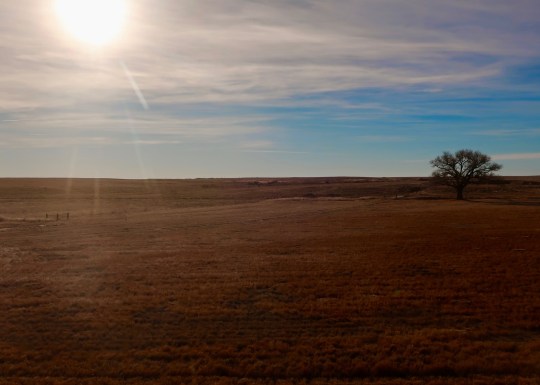
My cold discouraged photography and programmed a coughing fit each time I wanted to take a picture. We were well past Chicago when this silo caught my attention.
The middle of our country features vast flatlands where a single tree can add interest.
Being the western boy I am, I confess that the mountains of New Mexico put my cold on hold.
Trains require lots of switchbacks when crossing over mountains to maintain a relatively flat grade. It’s one of the few times you get to see the train engines.
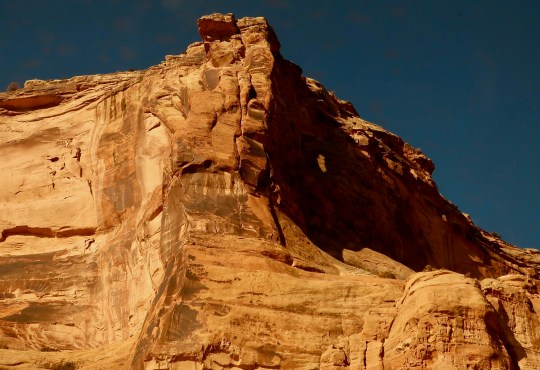
Having returned to the Southwest, we were once again treated to colorful rocks. It got dark after we passed through Albuquerque. We went to sleep…
And woke up making our way across the San Gabriel Mountains approaching the LA basin.
And then dropped into the LA basin.
This photo taken at the LA train station went along with the photo at the top of the post. It provides a perspective on the height of Amtrak’s double decker trains. The added height gave us great views from our roomette.
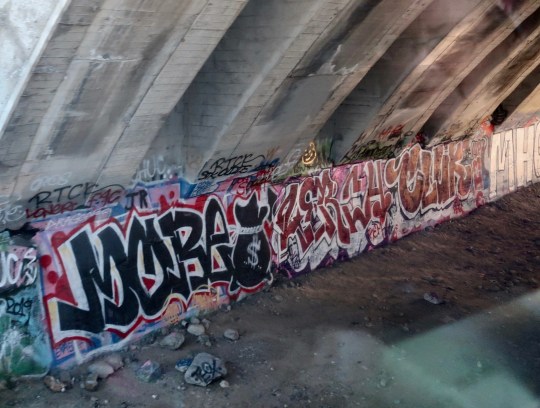
As you might well imagine, there was no lack of graffiti along the tracks as we left LA.
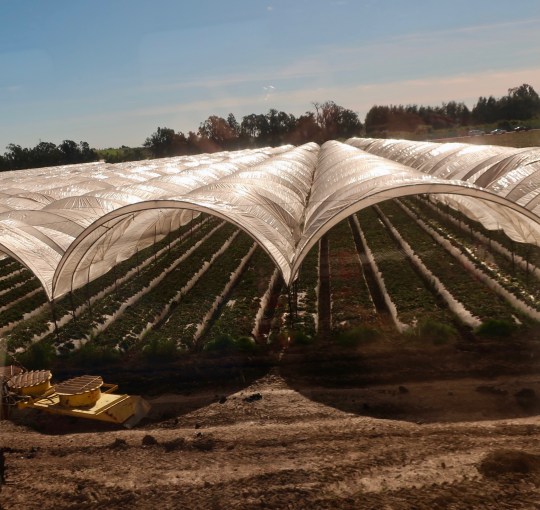
The Coastal Starlight soon had us passing by rich farm lands and nurseries as we cut toward the coast.
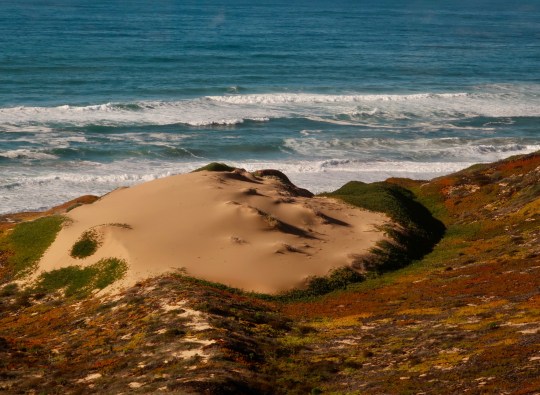
And we were soon looking out on the Pacific Ocean. (Photo by Peggy Mekemson.)
Views of the Pacific Coast near Santa Barbara are one of the highlights of traveling the Coastal Starlight. (Photo by Peggy Mekemson.)
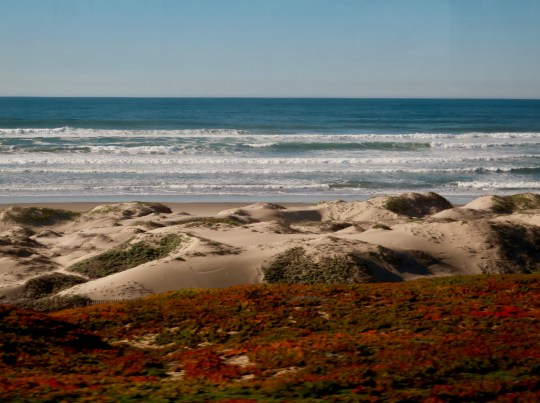
We were impressed during our journey by the photos you can now take with an iPhone. (Photo by Peggy Mekemson.)
A final coastal shot by Peggy. (Photo by Peggy Mekemson.)
As we left Santa Barbara, the Coastal Starlight began to make its way inland through the Coastal foothills.
Eventually bringing us to the incredibly rich farmlands of the Salinas Valley, the land of John Steinbeck. The sun would soon sink into the West. Peggy and I arrived back in Sacramento around midnight, having completed our 5000 mile journey, tired but excited to share our tales of train travel. We hope that you have enjoyed this series.

NEXT POSTS: On Monday I am going to write about our travel plans for this year, which translates into what I will be blogging about. There are fun things like cruising up the Rhine River and going through the Panama Canal. Wednesday’s photo essay will be on the beauty of the American River as it flows through Sacramento. Hiking and biking its many trails are what kept me sane the years I lived in the city.

Photo Essay Wednesday… Costa Rica

This fellow is a JC lizard from Costa Rica. Like Peggy and me, he likes to hang out in interesting places.

Today marks the beginning of a new series for me: Using Wednesdays for photo essays. When you hang out with cameras in lots of interesting and often beautiful places, as Peggy and I do, you end up with a few photos. Right? Our digital collection is approaching 90,000! What in the heck do you do with all of those photos? I have mainly used ours to illustrate blogs. Usually that involves looking at a hundred or so photos and reducing them down to 20 or 30. I’ve decided to use a few more by doing a “Photo Essay Wednesday.” It will be light on writing and heavy on photography. I’ll simply scroll through our photos, pick out an interesting subject, and download the photos onto WordPress. Voila!

It has an added advantage of being quick, which my more writing-focused posts aren’t. Given that I am now well into my next book, It’s 4 AM and a Bear Is Standing on Top of Me, I need to free up all the writing time I can.

My first photo essay is based on a trip Peggy and I made to Costa Rica in 2012. I blogged about it at the time but I am going to assume that most of you weren’t reading my posts then. Grin. Without further ado…

Costa Rica is a beautiful country that includes mountains and seashores on both the Pacific Ocean and Caribbean Sea. Peggy and I spent time in both settings.
Monteverde.
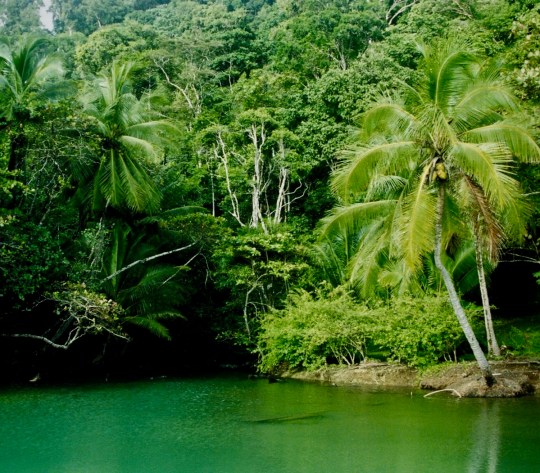
Much of the country is covered in rainforest.
Which includes strangler figs like this. I think Tarzan would be excited.
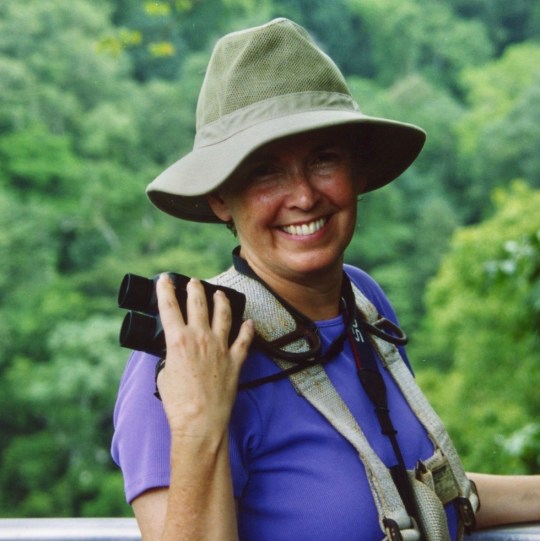
Peggy spent a lot of time with binoculars looking for monkeys. We were up on a high walkway that perched above the rainforest when I took this photo.
This was the view down. We were fascinated with how this light green tree stood out in a jungle of dark trees.
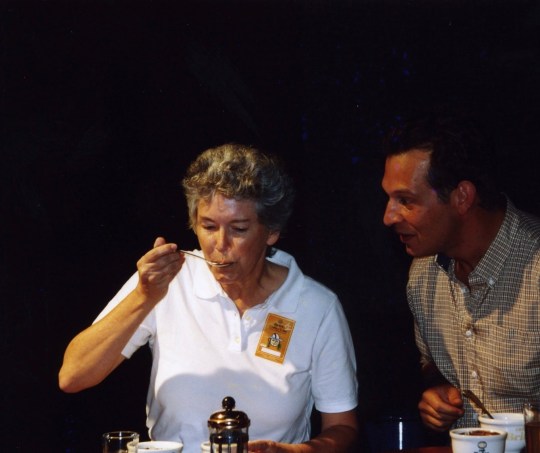
We also visited a coffee plantation where Peggy was invited up to learn how to be a coffee taster. Sip and spit.
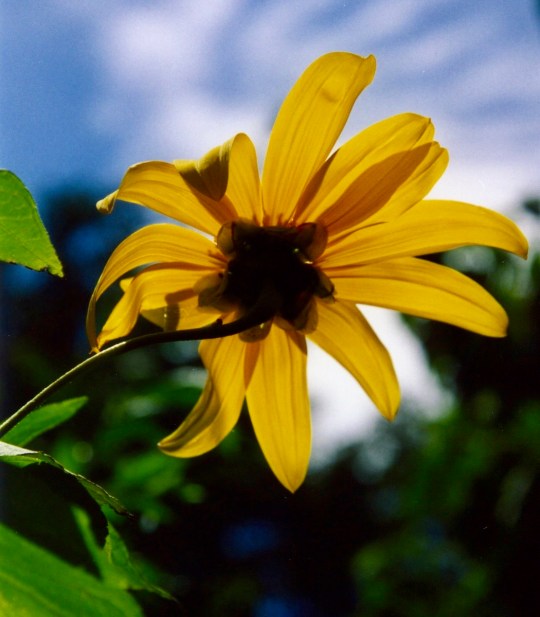
As you might expect in the tropics, plant life was both interesting and impressive, as with this daisy like flower.
Know what this is? It’s the head of an opening fern.
And how about this. It’s a want-to-be bunch of bananas waiting to grow up.
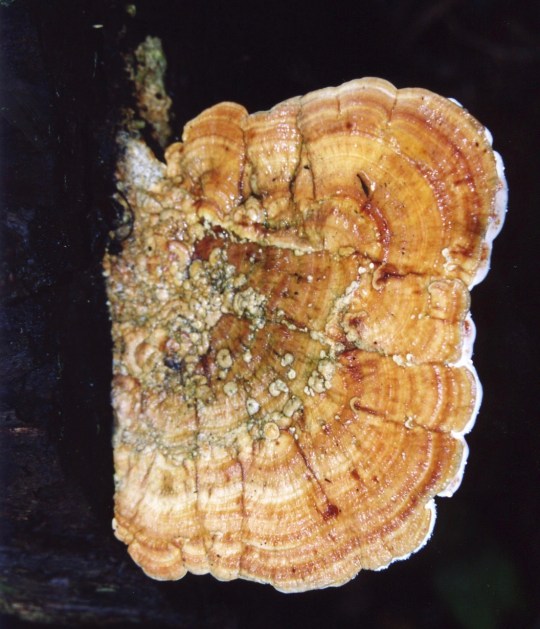
On a jungle night hike we found this colorful fungus…
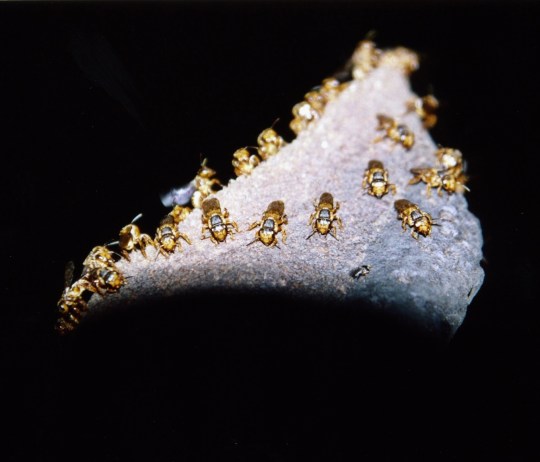
And these strange ants guarding their perch. I was careful to keep my fingers at a distance.
One afternoon, a family of coatis stopped by for a visit. Their tails were quite impressive.
We rented a canoe and paddled into the jungle on the Caribbean coast. Crocodiles lurked in the shadows along the way.
While we enjoyed all of the areas we visited, my favorite was Corcovado.
This was our home.
One day we looked out and saw a boa constrictor slithering across our lawn. Of course it was a photo op we couldn’t pass up. The boa wasn’t very happy with me chasing him down and decided to coil up. 🙂
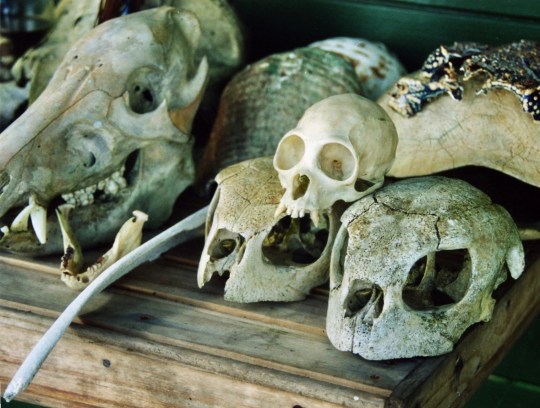
Down on the beach we discovered a treasure trove of skulls some naturalist had gathered.
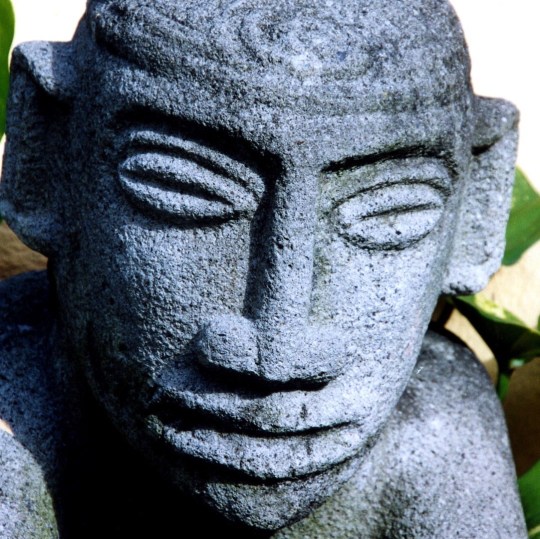
I am always fascinated by carvings and traditional art, so I conclude my first photo essay with three. This guy reminded me of what we found lurking along the Caribbean Coast.
A sufficiently scary mask.
A Mayan sculpture and someone you would not like to meet on a dark night. That does it for my first Wednesday Photo Essay. Who knows where we will be next Wednesday. I don’t.

NEXT POSTS: 1) Clickety Clack 3. We travel home from Washington DC, to Chicago, to LA and back to Sacramento on Amtrak. 2) A preview of Peggy and my travel plans and blogs for 2020.

Clickety-Clack 2: 5000 miles on Amtrak… The ‘Joys’ of Bunk Bed Sleeping

This shows the width of our roomette. My suitcase is perched next to me and against the wall. It had picked up a hitch-hiker: Peggy’s purse. The suitcase had to come down when Peggy climbed up to her bunk bed. Our window is on the other side. (Photo by Peggy Mekemson.)

The last time I slept in a bunk bed I was sharing a one bedroom apartment with two classmates, Cliff and Jerry, at Berkeley in 1964/65. I was on the bottom bunk then, as well. My memory includes one particularly wild night. It was our first weekend back at UC. Cliff had brought home a small wooden barrel of tequila from Mexico where he had spent the summer in a Spanish language immersion program.  For some insane reason, the three of us decided we had a solemn responsibility to drain the barrel to kick off our senior year. It was not our best decision.

Jerry promptly fell asleep and started snoring. Loudly, if I remember correctly. He had the regular bed. I spent 30-minutes staring at myself in the bathroom mirror in a semi-hallucinatory state fascinated by the fact I couldn’t stop drooling. When I returned to bed, Cliff, who had the top bunk, talked unceasingly. He wouldn’t shut up. Since neither Jerry nor I was listening, I assume he was talking to himself. I’d grunt on occasion. Finally, I lifted up my leg and kicked his mattress. Down came Cliff, mattress and all on top of me. After we had untangled ourselves, we laughed until we were hoarse and then put Cliff’s mattress on the floor for the rest of the night. I think he was still talking when I fell asleep. Damn, did we have headaches the next morning!

Fast forward 56 years to now for my second bunk bed experience. This time on Amtrak. Peggy had top honors. Our tiny sleeper was about five feet wide and seven feet long. It started as two comfortable chairs facing each other. Large windows provided great views from our double decker roomette.  There was barely, and I do mean barely, room for our two day packs and two small suitcases. When we were ready for bed, the car attendant came to our room and set it up. Our two chairs became the lower bunk and the top bunk was released from its attachment to the ceiling. The whole process took about three minutes.

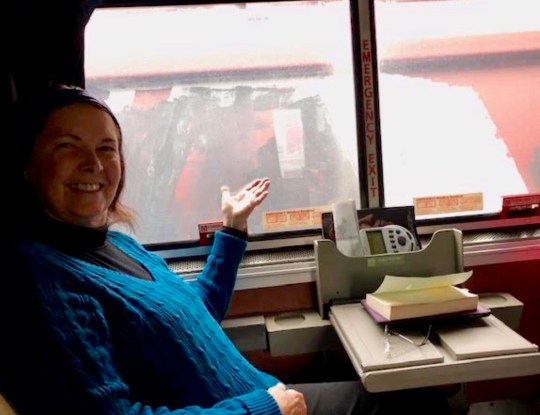
Peggy shows off our windows. Reflecting sunlight distorted the view in this case.
Our roomette bunk beds are set up for us and waiting for us to crawl in. (Photo by Peggy Mekemson.)

The bottom line of all this, of course, is how did we sleep. There were three factors. The first was the comfort of the beds. No problem there. The second was their width. Given all of the times that Peggy and I have slept in small backpacking tents, they felt roomy.  The real challenge was adapting to the moving train. First there was the clickety-clack of the wheels passing over the joints in the rails. It was repetitive, however, and soon disappeared into the background. I thought of it as noisemaker to lure me sleep. 

The train’s swaying was another issue altogether. We didn’t have a problem coming across the Sierras. Trains go slowly when they climb and go down mountains. It’s on the flats that the engineers put the pedal to the metal. It’s where they make up for lost time. I can imagine one engineer boasting to another, “I made it across there in an hour!” with the other responding, “Ha, it only took me 59 minutes.” For the most part, the swaying is like the clickety-clack. You get used to it. But there were instances when I was reminded of being on a ship during a really bad storm or hitting heavy turbulence in a jet. There were three particularly bad situations: when the train was traveling over rough tracks, when it went over a poorly maintained road crossing, and when it went around a corner faster than it should. 

During the day, it wasn’t much of a problem, assuming you had something to grab onto if you were out and about. Sleeping was a different issue, as we learned our first night. The attendant had worked his three-minute magic and we had settled down for a long winter’s sleep across Nevada when the train hit some rough track, traveled over a poorly maintained road crossing, and went around a sharp curve— all at the same time— fast. Wham! Peggy was thrown into the netting designed to keep her from rolling off the bed and I was thrown into the side of the train. “That does it!” I head Peggy mumble loudly as she scooted across the bed, climbed down from her bunk, and slipped into mine. Remember how I said the bunk was roomy. That’s for one person. There was simply no room for the two of us. We had to sleep head to toe. I slept with Peggy’s feet and she slept with mine. I’m not sure which of us got the better deal. 

Traveling between Chicago and Washington DC we were upgraded to a bedroom. It came with a double-sized bed that was comfortable for the two of us, a sink, and its own bathroom! We didn’t have to use the communal facility. While our bedroom wasn’t large by any stretch of the imagination, it felt palatial in comparison to our roomette. A small shower even provided a bath assuming you didn’t mind washing off the toilet at the same time. Recommendation: Choose a time to bathe when the train isn’t swaying.

Our bedroom even came with an extra chair. The wide couch became our double bed. (Photo by Peggy Mekemson.)

We had one other configuration. Amtrak had supposedly upgraded its roomettes with a restroom. We had one returning home on our route between Chicago and LA. The toilet that snuggled up to the bottom bunk, sort of like you might see in a prison cell. It was inches away from my head when I was is bed. That was not okay. To add insult to injury, Amtrak had removed the communal restrooms from the car. We had to go on a three-car hike to find a real bathroom. Our attendant told us that the company had realized the error of its ways and was no longer building the roomette restrooms. What a surprise.

All in all, while I’ve had a bit of fun with this post, we slept in relative comfort, especially if you compare it with trying to sleep on an airplane. Even the coach seats on Amtrak are wide, comfortable, and fold back far enough to create a half-way decent night’s sleep.

My photos of the trip today include our journey from Sacramento to Washington DC, minus, of course, the pictures we took while crossing the Rocky Mountains that I shared in my last post. Enjoy.

It seemed appropriate for our journey to start in Sacramento since it served as the terminus for America’s first Transcontinental Railroad, as shown in this mural in the train station
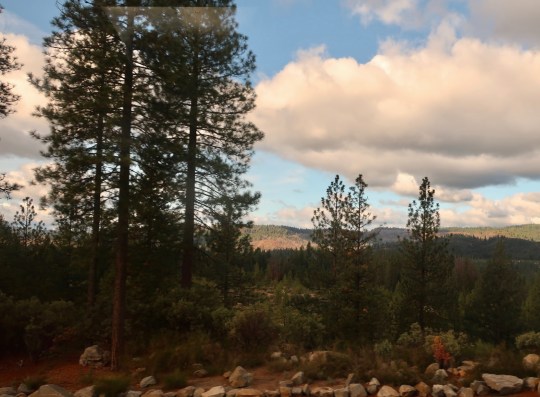
Leaving Sacramento, we began to work our way up and over the Sierra Nevada Mountain Range. These are the foothills near Colfax, about 30 miles away from where I was raised and a thousand feet higher.
Crossing the Sierras provided numerous views of the mountains. The track parallels Interstate 80, our usual route across the mountains. You can see it edging around the side of Red Mountain.
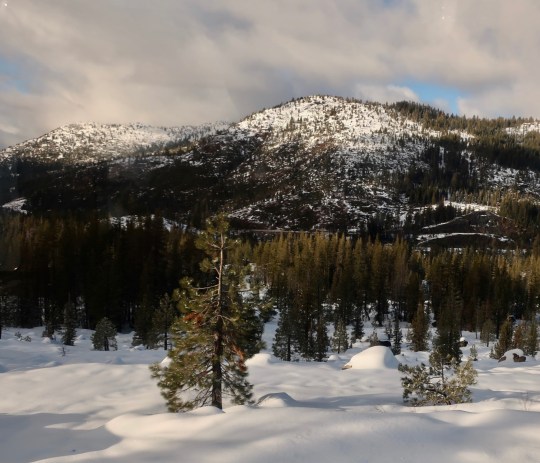
We were also treated to closer looks at the snow. Here it quite beautifully covers rocks. I had been hoping for and expecting more snow. I’d spent several winters sharing a cabin about ten miles from where this photo was taken where the snow was often 10-20 feet deep.
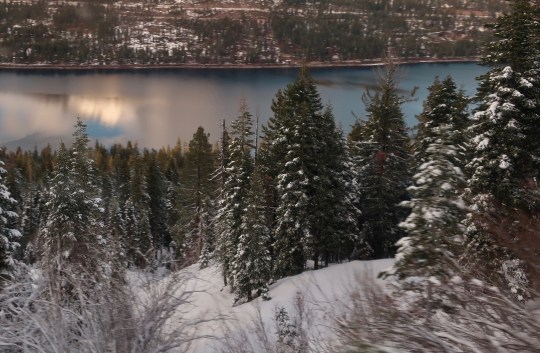
The train comes out of the Sierras at Donner Lake. The Donner Party spent its tragic winter down near the end of the lake. Thus the lake’s name.
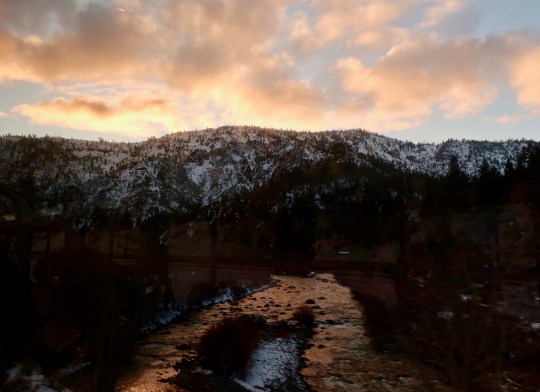
After passing though the small town of Truckee, the tracks follow the Truckee River down to Reno. I took this photo shooting up from the river as the sun was setting.
And this one.
The sun sets on the Truckee River, ending our first day of train travel.
We woke up the next morning to some impressive eastern Utah scenery.
It was the type of country that Peggy and I have come to associate with the southern part of the state.
Crossing into Colorado, I snapped a picture of a farm with its long rows of grapes.
I will feature one photo of our Rocky Mountain crossing taken with our iPhone and not included in my last post. (Photo by Peggy Mekemson.)
Having gone to sleep for our second night after crossing the Rocky Mountains, this was more typical of the views we had when we woke up. My great, great, great grandfather James Mekemson and his wife, Mary, plus lots and lots and lots of Mekemsons are buried in eastern Illinois, a few miles away from this tree.
Chicago’s Union Train Station is truly grand. And since Christmas was coming, it had a grand Christmas tree.
Peggy stands in front of the tree for perspective. In addition to the large Christmas balls and small lights, the tree was appropriately decorated with signs from America’s different railways.
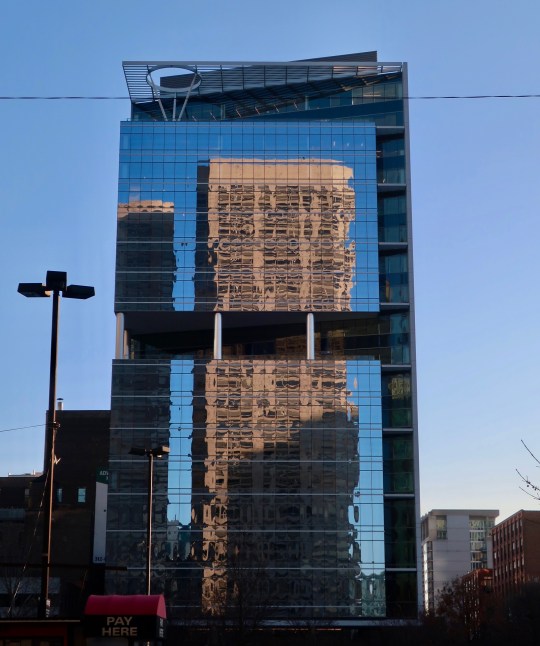
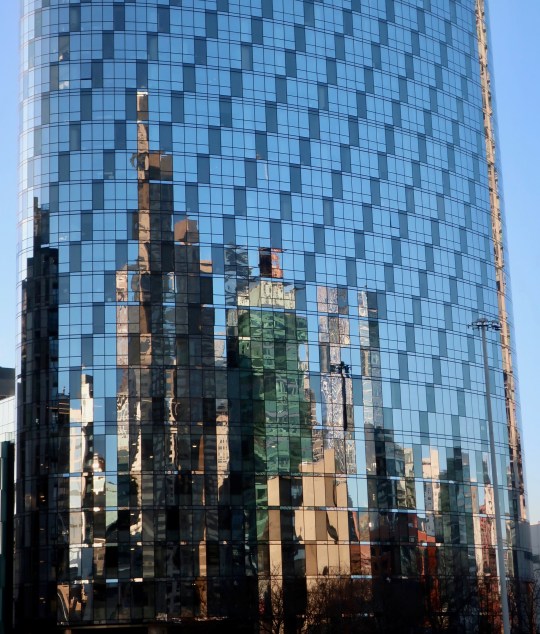
We went for a short walk which was supposed to be longer except for the 8 degree F weather. We entertained ourselves by taking shots of skyscrapers reflected in skyscrapers.
Having gone to sleep again outside of Chicago, we woke up in the Appalachian Mountains.
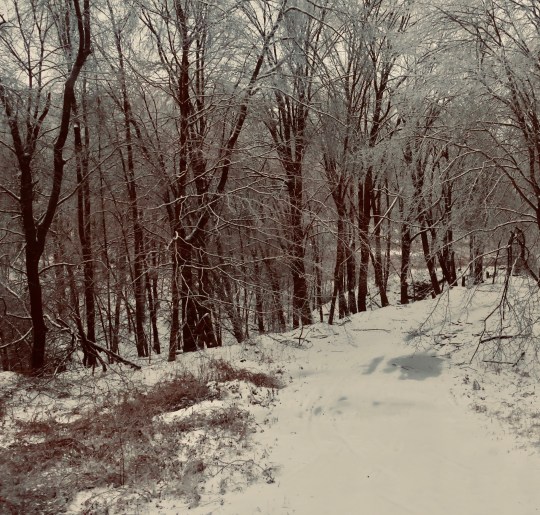
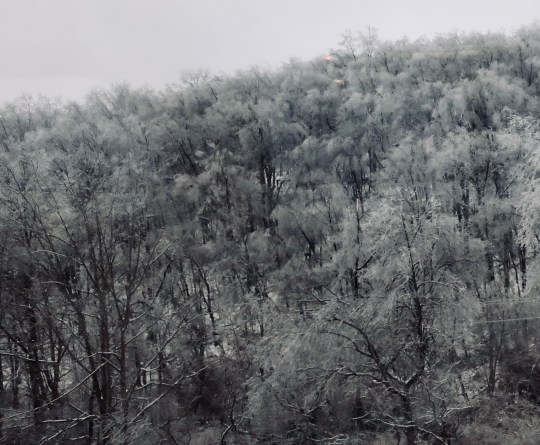
And were treated to views of snow covered trees. We weren’t in the Sierras or Rockies anymore, Dorothy. Grin.
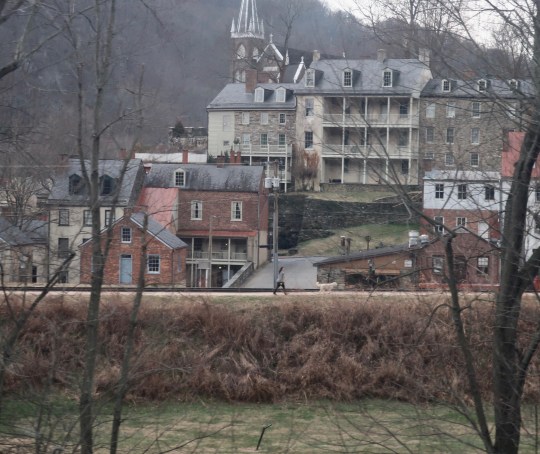
When we passed through Harper’s Ferry we were an hour or so out of Washington. So I’ll end my photos here today.

For my next post, I am going to experiment with a photo essay. (It’s called what do you do with your 80,000 plus photos.) The post after that I’ll feature our Amtrak trip back to the West plus eating on the train, which is all about meeting strangers.

Clickety-clack! 5000 miles from Sacramento to Washington DC on Amtrak— and Back

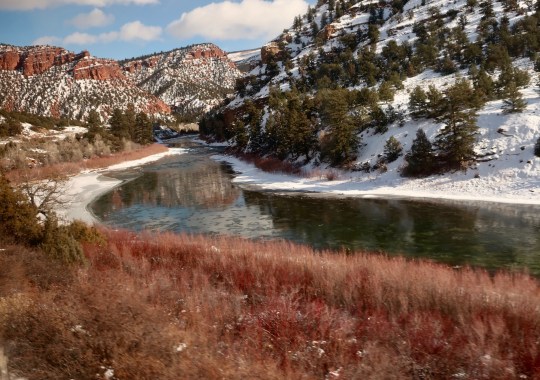
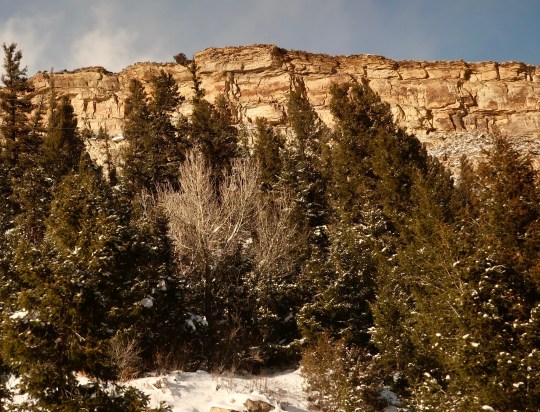
Our journey through the Rocky Mountains followed the Colorado River up toward its source.

Peggy was making travel arrangements to fly back east to spend Christmas and New Year’s with our kids in Virginia and Florida when she emerged from her woman cave like a grumpy bear saying not-nice things about the airlines. Unlike her husband, she never curses (well close to never), but her tone of voice says it all. The industry was practicing its usual Christmas spirit by doubling prices and eliminating perks like earned miles and companion fares. Joy to the world. Isn’t capitalism grand.

I suggested that she check Amtrak. We quickly discovered that we could travel across America by train with our own bedroom and three meals a day for less than the airplane tickets would cost. And the meals would actually be edible. When was the last time you had a delicious, freshly-cooked steak dinner and crab cakes for dinner on an airplane? Since we are retired, time wasn’t a factor. We would see and experience America in a way we never had before! It was a no-brainer. 

Our plans were to drive down to Sacramento from our home in Southern Oregon in mid-December, visit with family and friends, and catch the California Zephyr heading for Chicago. (All Amtrak trains are named.) From there, we would take the Capitol Limited to Washington DC. Returning, we would reverse our journey on the Capitol Limited to Chicago and then take the Southwest Chief to LA. Our final leg would be to ride the Coastal Starlight back to Sacramento. The total trip would take nine days and 8 nights. In between, we would celebrate Christmas and New Year’s with the kids. 

We quickly found that there were three aspects to train travel. The first was the actual experience of riding the train ranging from sleeping arrangements to shared meals. The second was admiring the country the train traveled through. (That’s what got me the most excited.) The third was meeting your fellow travelers. Given Amtrak’s policy of seating you with other people at meals, you meet a lot of strangers. And most of them really seem to enjoy train travel. 

That’s a major difference with modern airplane travel. While first class might still be tolerable, traveling coach is a trial to get through. Narrow seats where leaning back is severely limited (there’s no room), cramped leg room where you pay premium for a few more inches, minimal food service, and the policy of charging you big bucks for anything extra are all factors. Not to mention kids kicking the back of your chair and people sneezing out who knows what diseases at a 100 miles per hour mere-inches away from your head. There is no ‘it’s the journey that counts’ in air travel. It’s all about destination.

People who travel by train have destinations in mind as well, but the journey can also be an important part of the experience— one to be repeated over and over.  Take Paul, for example. We had first met him in the passageway of our car on the trip back from Washington DC to Chicago. He sat down opposite us in the first-class lounge of Chicago’s imposing Union Train Station and struck up a conversation. (You obtain first class status by having a sleeper.) He was a tall, slightly overweight man with a ready smile who was close to our age. 

We soon learned that he was a graduate of Oberlin College who had spent his life working for one of America’s intelligence agencies, a career that had begun with his service in Vietnam. He had enjoyed the work, but his true passion was playing in an informal blues band for fun. The group had been together for over 30 years. Paul and Peggy were soon into a deep discussion over whether her guitar playing and singing should include the blues. He suggested she start with Kate Wolf. I am a fan of Kate’s. In fact, my friend Tom Lovering once hosted a birthday party for her at his outdoor/wilderness store in Sacramento. When she passed away, he had taken her daughter on a river trip.

As usual, the conversation turned to where we were going and what our Amtrak experience had been like. Paul had traveled on Amtrak a number of times, including traveling with his blues band. This time he was heading for Portland by himself, but here’s the fun part. He would arrive in Portland, spend one day at Powell’s Bookstore, and then climb back on the train for his return trip to Washington DC!

Peggy and I understood Paul’s desire to spend a day at Powell’s. It’s the largest independent bookstore in the world and one of America’s premier bookstores. Whenever we are in Portland, we make a point of going there. You can spend hours perusing its shelves. I doubt we have ever left with less than a hundred dollars-worth of books. Traveling four days by train to get there and then turn around and travel four days back to Washington was a tad more difficult to comprehend. You would really have to love train travel. Still, we were really enjoying our trip. We could drive over to Klamath Falls, climb on the Coastal Starlight and be there in a day. Hmmm…

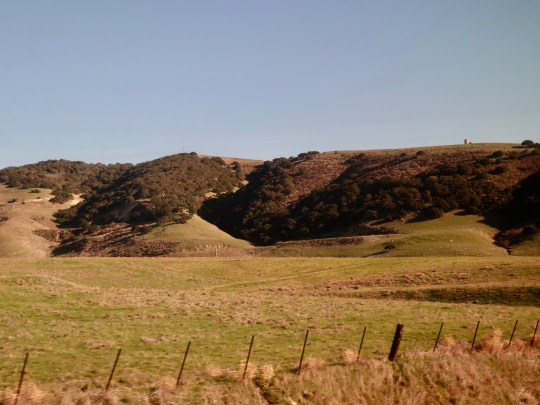
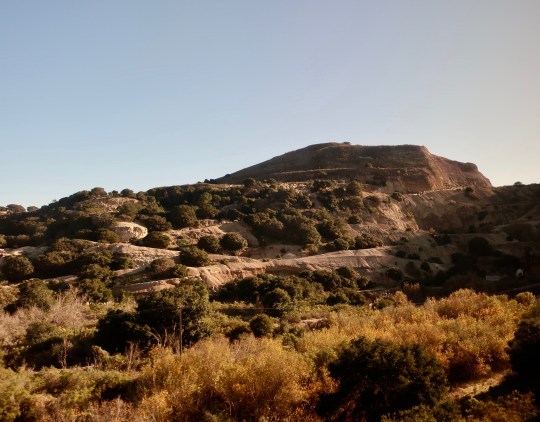
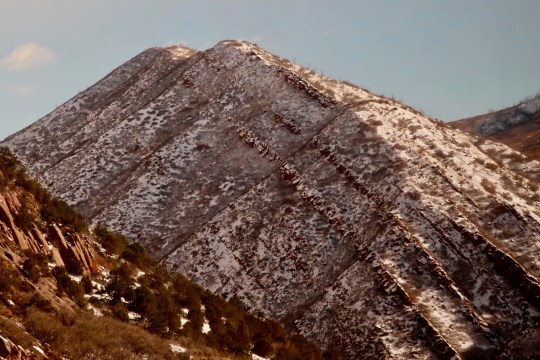
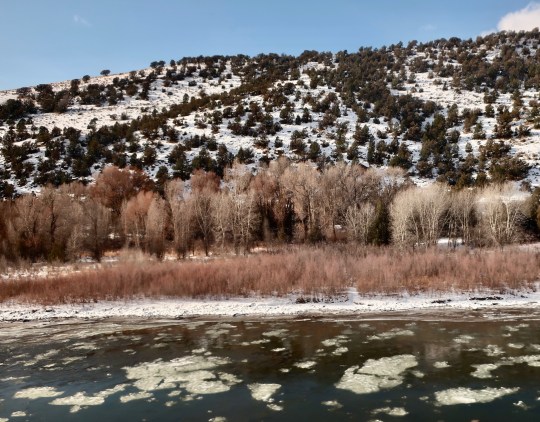
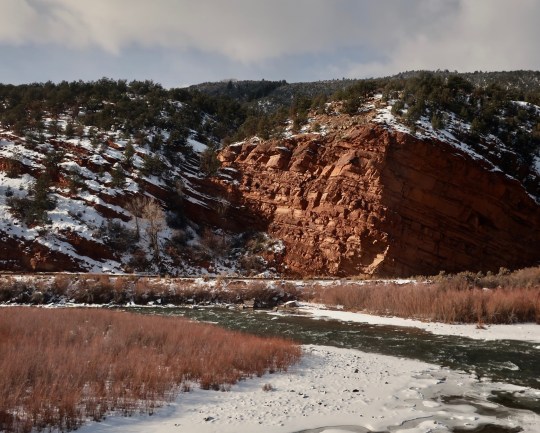
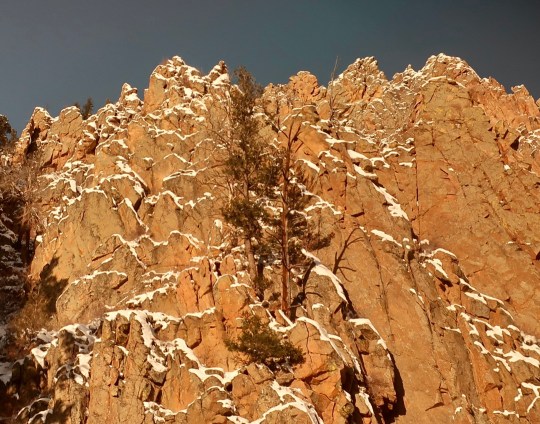
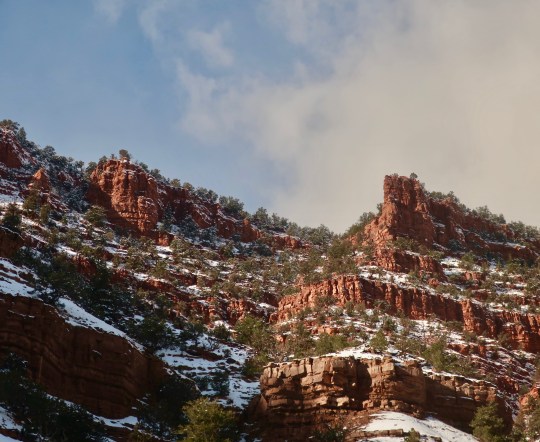
As for my photos today, I want to share one segment of the journey with you: our trip across the Rocky Mountains. It was spectacular including snow, beautiful views of the river and gorgeous red rocks. Starting at Glenwood Springs we followed the Colorado River up toward its source and then dropped down into Denver. The photos speak for themselves. Enjoy.

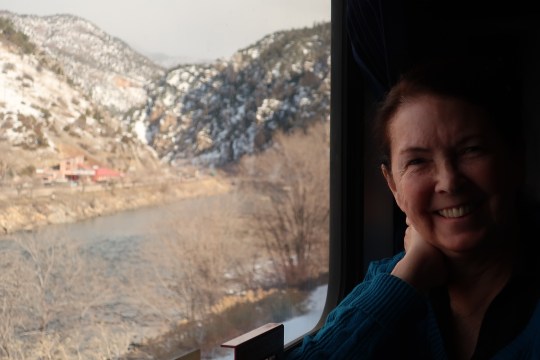
I’ll wrap up our Journey across the Rocky Mountains with a photo of Peggy enjoying the trip.

NEXT POST: I’ll cover what train travel was like for us, introduce you to more passengers and and show more photos of our journey.

When Large Furry Animals with Long Claws and Sharp Teeth Come to Visit

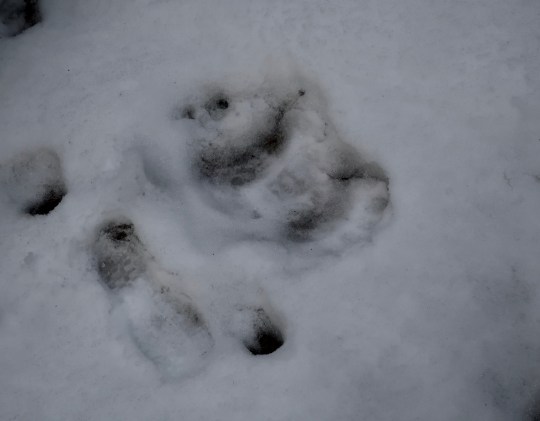
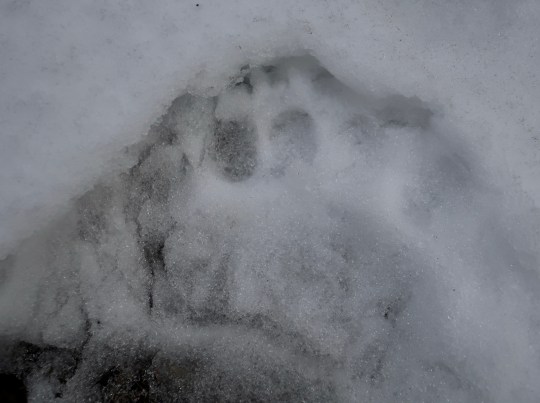
Bear track and Peggy track. One of the animals here is a heck of a lot bigger and much more furry than the other!

I know, I know… I promised to cover our train trip on this post but I got side-tracked (in more ways than one). On Saturday, I was diligently working away in our library writing about the cast of characters who ride the rails when I looked out the window and noticed three deer madly dashing around our yard with their tails straight up signaling “Danger! Danger! Danger!” They charged up the hill, jumped the five-foot fence into the neighbor’s yard, did a 180, flew over the fence again and disappeared into our canyon going all-out. If you’ve ever watched frightened deer running, you know how fast this is. Seconds afterwards they burst out of the canyon and repeated the process. I called Peggy in to watch.

“Something big that likes venison must be visiting and the deer smell it,” I speculated and suggested that the local cougar might be back.

A few minutes later the deer had hightailed it up the mountain. Our property, which is normally busy with deer, squirrels, numerous birds, and other wildlife, had become eerily silent. Even the ever-squawky jays that I depend on to tell me when dangerous predators— like the local cat— are about, were uttering nary a peep. 

Since we needed to do our daily mailbox walk and a fair amount of snow from the storm that I featured in my last post hadn’t melted, I proposed we keep an eye out for cougar tracks. The walk is close to a mile with the mailbox being at the halfway point. We do a round trip, leaving by our back road and returning by our front road. There would ample opportunity to look for tracks. 

We found them near the mailbox! I confess I felt a bit like the deer, ready to raise my tail and dash off. 

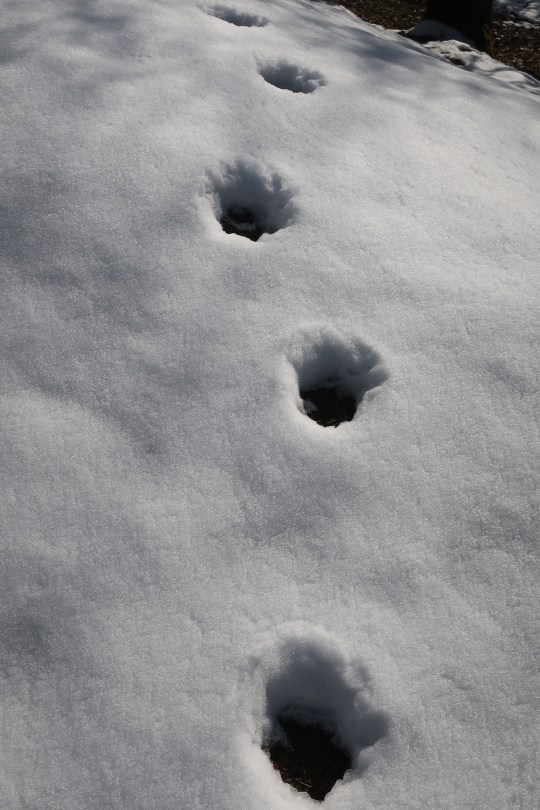
We were on the homestretch, heading up the hill to our home when we saw the next set of tracks. They came out of the canyon and headed straight for our house. That added a bit of excitement (he noted in understatement). Peggy and I quickly checked around the house. Sure enough, the big cougar had wandered around in our backyard the night before and possibly onto the snowless section of our deck. If so, it would have been about six feet away from where we were sleeping. That’s Peggy’s side of the bed. (Grin)

Things were more or less back to normal on Sunday. The deer were back, a bit jumpy, but none-the-less munching away. The bird feeder was a circus with six species contending over who got the sunflower seeds. And three squirrels were busy chasing each other in a row with love on their minds. They shot up, down, and around trees nose to tail, nose to tail.  

Monday, Martin Luther King’s Birthday, had a slight twist.  There was no mail, so we decided to hike up into the forest where we had taken our snow hike. This time, however we would veer off to visit what we call the bear cave. Not that we’ve ever seen a bear; it’s an old gold mining operation. We named it the bear cave to give our grandkids more of a sense of adventure when they visited. I once took our grandson Cody up there when he was five on a bear hunt with our sling shots. He’d been excited to go on an adventure with Grandpa. The closer we had got to the cave the more reluctant he had become. We’d stood back from the cave and lobbed pellets in to scare the bear out. 

This time, my lovely wife was the reluctant one.  She suggested we go for a walk on the road instead. Could it be that the cougar had her spooked?  I laughed and away we went up the mountain. We had made the cutoff when we saw a set of huge tracks heading in the general direction of the cave. Bear tracks. Peggy let me take a couple of photos before she insisted that we beat a hasty retreat.

Following are some photos of the various tracks we came across.

Cougar track in melting snow. Note four paws and a lack of claws. Cats keep there claws retracted.
Dog track for comparison. Note the distinct claw marks.
Tracks across our back yard.
Final shot of the bear print.

NEXT POST: The train trip! Unless, of course, someone else comes to visit. 🙂

Playing Hooky and Enjoying a Winter Wonderland

We woke up this morning without power and several inches of fresh snow. It was the most we’ve seen at our house in 3 years.

I’ve been playing hooky from my blog. Or you might say I was ‘derailed.’ Peggy and I climbed on Amtrak in Mid-December as part of a 5000 mile train trip across America and back. I’ll cover the adventure in my next post.

We went back east to visit with our son and his family in Florida to enjoy Christmas and then went north to visit with our daughter and her family in Virginia to celebrate the new year. All of that would have been ample distraction to pull me away from blogging. A nasty cold I picked up in Florida was the main culprit however. It was one of those bugs that keeps you awake all night coughing your lungs out. (Remember when Calvin of Calvin and Hobbs sneezed his brains out? That’s how I felt.) I had enough energy to enjoy our kids and grandkids and take the train home. That was it.

I thought it would be fun to feature some photos from today when Peggy and I woke up to several inches of gorgeous snow for my return to blogging. As always, it called for a walk in the woods.

Walking outside, we were greeted by our rooster who seemed quite proud of his extended comb. The bright snow created a problem for photography.
A teenage deer was waiting impatiently on our door step and insisted we feed her an apple before moving on. Her favorite foods, other than apples, had been buried under the snow.
Our next chore was to clear a tree trunk that had fallen across our road. It was one of several that had dropped on our property from the weight of the snow. Fortunately, the rest of them chose to fall in the forest. Grin. (Photo by Peggy Mekemson.)
Peggy steps over a log and demonstrates what it felt like to walk through the eight inches of fresh snow. I think she is suggesting two feet! Falling snow gave her a white nose.
Part of the fun of a snow hike is seeing all on the animal tracks that normally aren’t visible. These were left behind by the deer herd that roams our neighborhood.
But mainly, the pleasure is in enjoying the beauty and silence. A robin sitting on top of one of our white oaks decorates this picture. (Photo by Peggy Mekemson.)
The back of our property abuts Rogue River-Siskiyou National Forest where we headed for our hike.
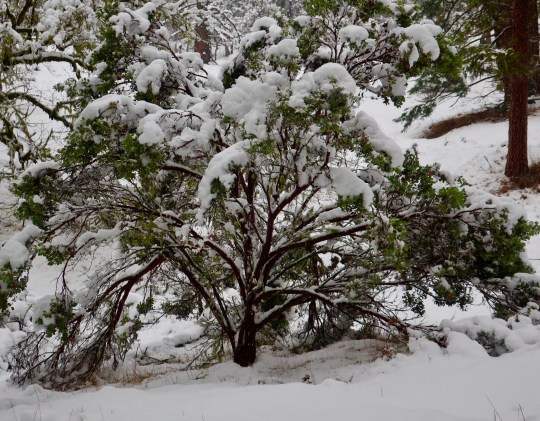
A manzanita bush covered in snow…
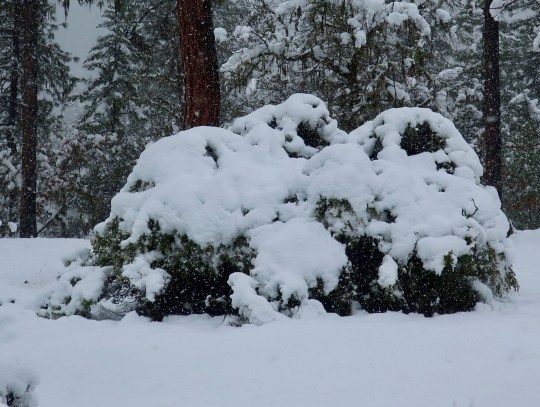
And this one was buried in snow, speaking to how much had fallen.
The trunk of a white oak showed off both white snow and green moss, making a nice contrast.
And a madrone provided a brown contrast with its iconic bare bark.
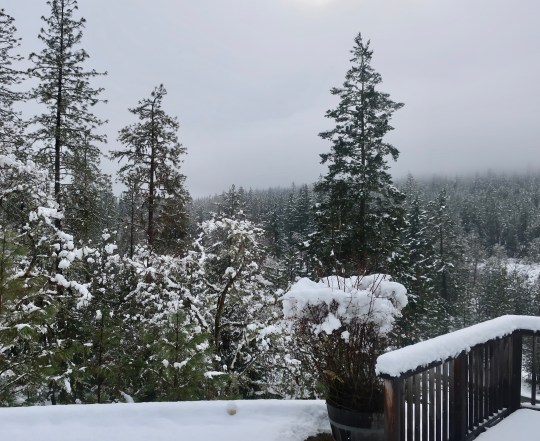
And finally, one of my traditional snow photos from our deck on the Upper Applegate River looking south toward California. Our rosebush has a topknot.

NEXT POST: Clickety-Clack— a 5000 mile train trip across America and back.

Charleston, Oregon and the Marine Life Center… A Delight

I am taking a brief break from the desert Southwest, today. Peggy and I just returned from a three day trip over to the Oregon Coast and explored the interesting town of Charleston near Coos Bay.

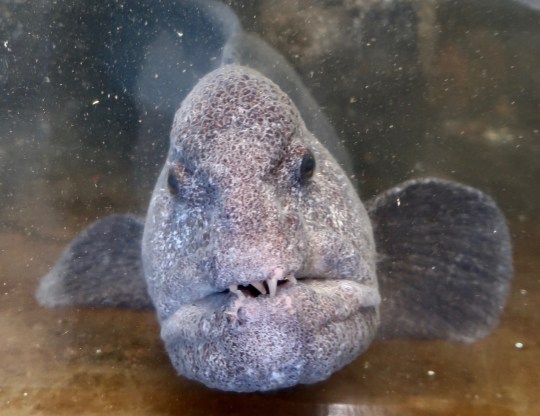
This toothy fellow greeted us at the Marine life Center in Charleston, Oregon. I think this was a smile, assuming moray eels smile. Maybe it was contemplating what I might taste like.

That we ended up in Charleston, Oregon was a complete happenstance. Peggy and I wanted to make a quick trip to Shore Acres State Park on the Oregon coast. The park puts on an annual Christmas display of over 300,000 lights that feature coastal themes focusing on Pacific Ocean wildlife. Normally we take Quivera, our RV, and camp at Sunset Bay State Park, which is just down the hill. This time we were motelling it and I found one named Captain John’s in Charleston. The town is three miles away from Shore Acres. It was just a convenience— until we went for a walk.

The Marina, that serves as both a center for sports fishing and a port for commercial fishing is quite attractive.
A seagull photobombed a picture I was taking of a ramp down to the fishing boats.
Calm waters made for excellent reflection photos.
The harbor was packed with boats.
Huge piles of oyster shells served as a reminder of how important the fishing industry is to Charleston.
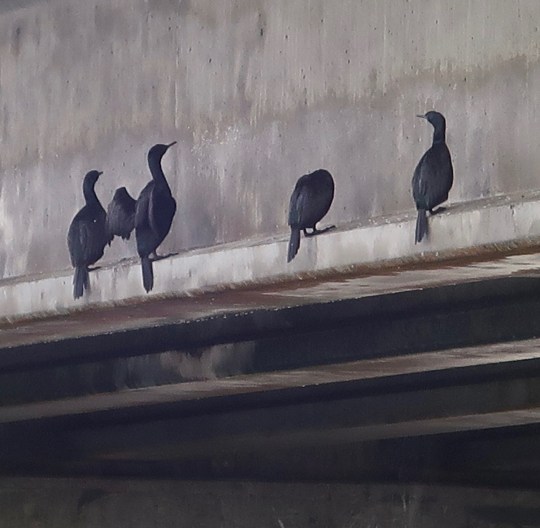
And these cormorants, which were perching on the bridge across the bay, also make their living off of fishing! Peggy and I had watched this flock of excellent divers hard at work while we ate dinner the night before. (I liked the washed out grey backdrop. It creates a water-color effect.)
This mural was featured on a shed next to the Davey Jones Locker restaurant. Humorous, yes, but still a reminder that fishing is a dangerous business.
A powerful memorial to fishermen lost at sea in Charleston looks out toward the ocean.
The many fishermen from Charleston who have lost their lives at sea are listed at the Memorial. “To the sea they turned for life; to the sea they gave their lives.”
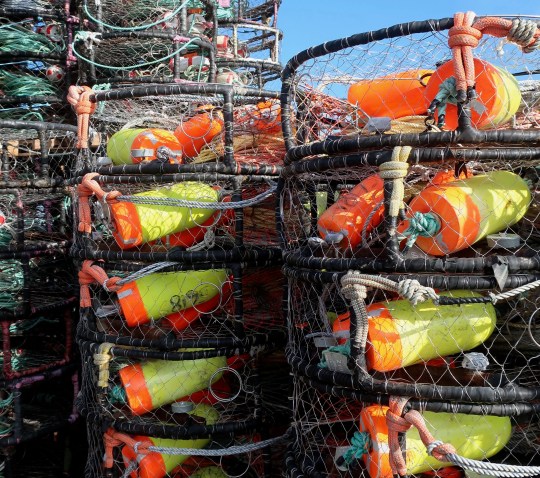
It was the beginning of crab season and the crab pots were lined up and ready.
Peggy shows how high they were stacked.
Crab fishermen have different colored floats to avoid confusion about who owns what.
The jewel of Charleston, however, is the Marine Life Center. It has the good fortune of being located next to and is operated by the Oregon Institute of Marine Biology.
The giant head of a humpback whale resides outside of the Center. Peggy stands in front of a portion of the skull. I couldn’t help but think of Georgia O’Keeffe and her love of bones. She would be jealous.
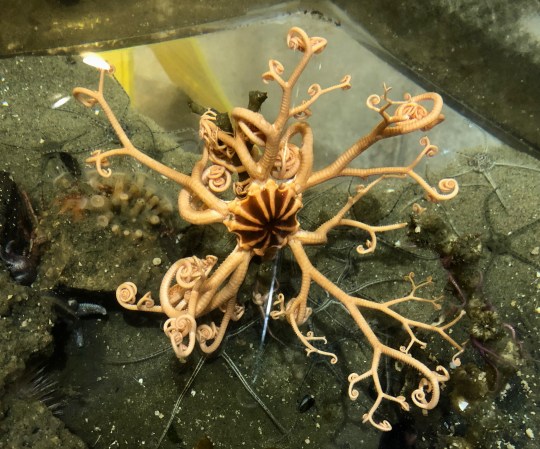
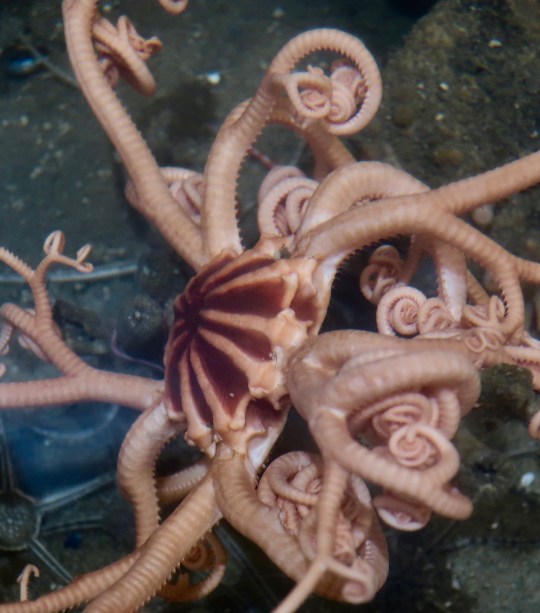
A number of interesting sea creatures were living in salt water tanks inside, including this unique starfish. (Peggy took this photo with her iPhone.)
Another perspective.
A great volunteer was manning the desk at the Center. She loaned Peggy a magnifying glass that attached to her iPhone and Peggy dashed around taking weird photos such as the butt of a sea cucumber. So, here’s a fun question. Do you know what this is? And no, it isn’t the butt. We asked our grandkids the same question. I’ll provide the answer in my next post.
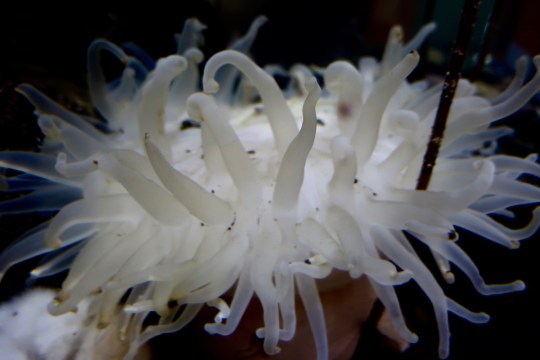
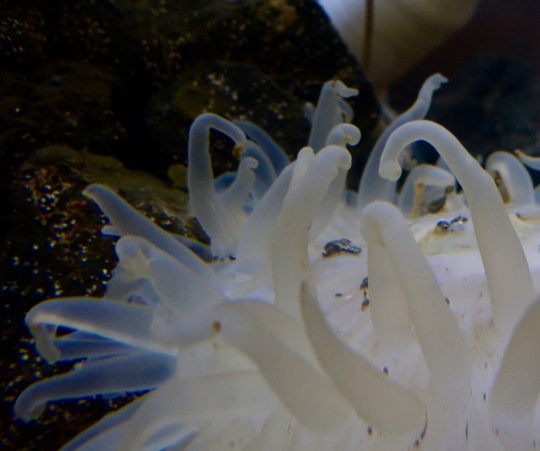
A sea anemone.
And a closeup.
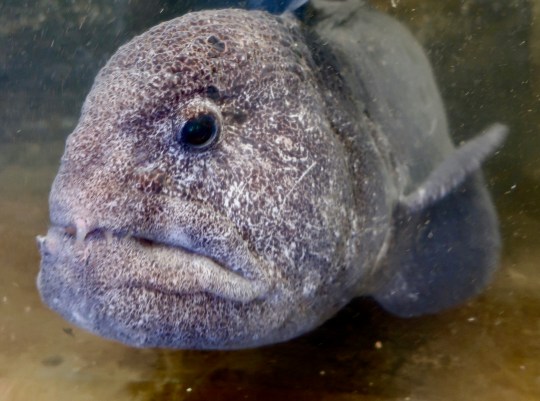
I was fascinated by the eyes on this fish.
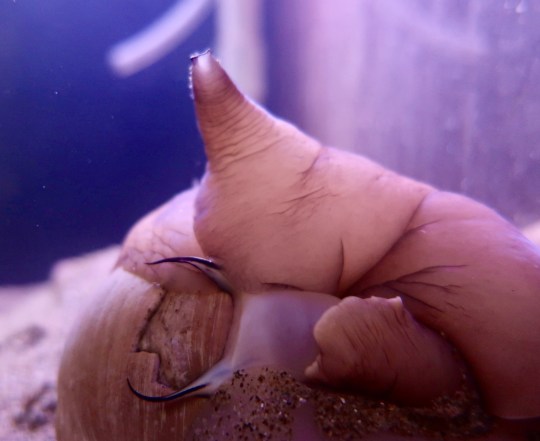
How’s this for weird? You are looking at a snail.
A beauty here. Why am I thinking ermine?
A pair of sea cucumbers share a moment.
Check out the camouflage of this rock fish.
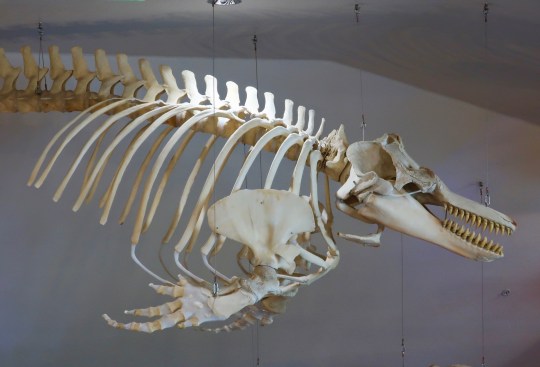
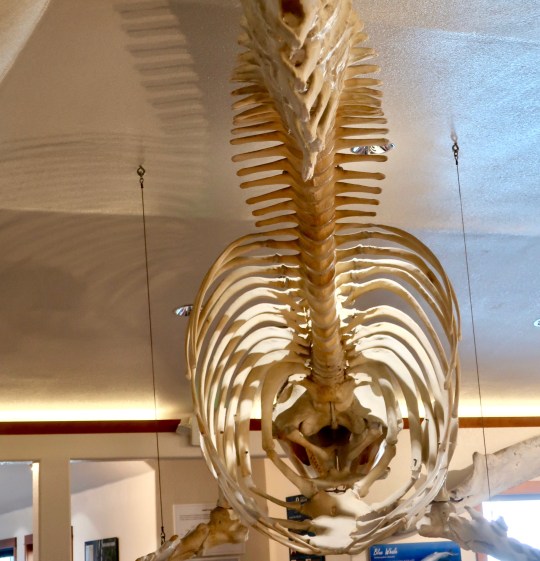
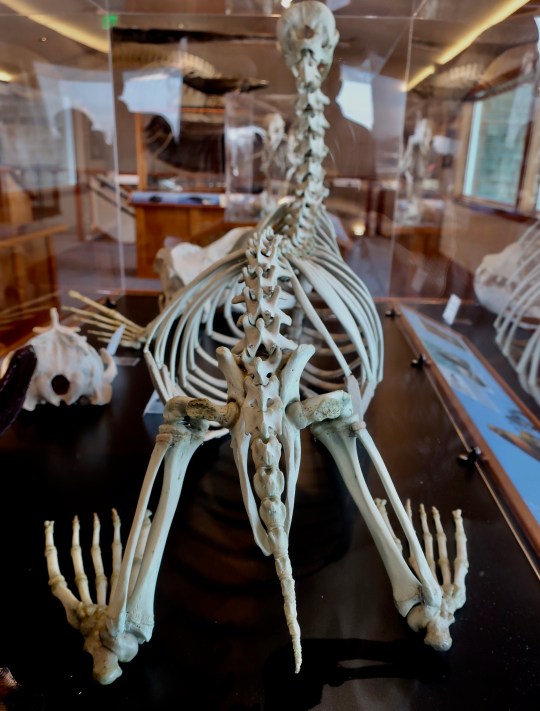
And now for some serious bones. You can see why most sea creatures give orcas a wide berth.
Just look at those choppers.
A “belly of the whale” look.
And here’s another toothy fellow. This time a dolphin.
But when it comes to teeth, nobody can beat a shark!
One of my favorites. I love the feet on this seal!
And on this turtle.
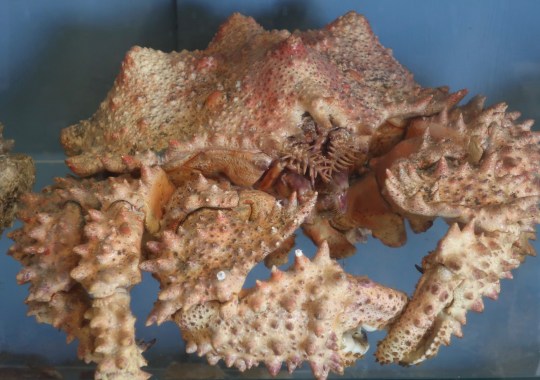
This guy was crabby.
And this fish was scary. I had a nightmare that featured a guy pounding on my door that had a similar look. Most dogs would find the fellow exciting, however. If you have ever cleaned up your dog after it has rolled in dead fish, you know what I mean.
I’ll conclude with another photo of the smiling fellow I started the post with. Looks like a trip to an orthodontist might be in order.

NEXT POST: Back to Georgia O’Keeffe at Ghost Ranch and Abiquiu in New Mexico.

Georgia O’Keeffe, Mable Luhan and the Taos Pueblo… O’Keeffe Country: Part II

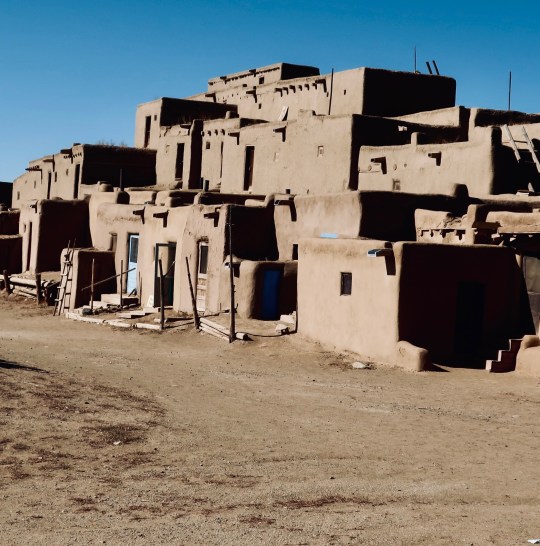
With over 1,000 years behind it, the Taos Pueblo is the oldest continuously inhabited community in America. The Pueblo had already existed for 500 years when Columbus sailed for the New World in 1492. When Spanish explorers arrived in 1540, they thought they had found one of the seven golden cities of Cibola. (Photo by Peggy Mekemson.)

Mable Evans Dodge Sterne Luhan, whose long name represented her husbands, lived a soap opera kind of life. A wealthy socialite born in Buffalo, New York, she devoted her time to supporting art and bringing together the artists and intellectuals of her time: Gertrude Stein, Alice B. Toklas, Andre Gide, Lincoln Steffens, Walter Lippmann, Pablo Picasso, Arthur Rubenstein, D.H. Lawrence, Ansel Adams, Willa Cather, Aldous Huxley, Greta Garbo and Georgia O’Keeffe to name a few. 

Her efforts at creating artistic gatherings began in Florence, Italy where she and husband number two, Edwin Dodge, lived in a villa that had been built for the Medici. In 1912 she moved on to New York City and established a salon hosting both artists and leading radicals who espoused causes ranging from free love, to Freud, to anarchism. When she heard about the beauty of New Mexico, she sent husband number three, Maurice Sterne, west in 1917 to explore the possibilities of moving there. He wrote back, “Dearest Girl–Do you want an objective in life? Save the Indians, their art and culture. Reveal it to the world!” That was enough for Mable. She was on her way.

One of the first Indians she met in Taos was Tony Lujan, a member of Taos Pueblo. Tony persuaded Mable to buy several acres of meadow land and then helped her plan and build a four-room adobe house that continued to expand until it reached 21 rooms. The story is told, and it may be apocryphal, that Tony set up a tent in her front yard and drummed away in the night to win her love. Maurice bought a shotgun. Whether it was to eliminate the competition or do away with the infernal nighttime drumming and get a decent night’s sleep, I can only speculate.

Anyway, Mable sent Sterne packing and married Tony, her fourth and final husband. With a large house and a Native American husband, she could now focus on her plan to bring artists, writers and movie stars to promote Taos and help save the Indians and their culture. One of her major successes at recruitment was D.H. Lawrence of Lady Chatterley’s Lover fame. Another was Georgia O’Keeffe. 

A young Mable Dodge Luhan looking like the weathy socialite she was.
The Luhan House/Hotel in Taos as it looks now. Dennis Hopper stayed here when he was filming “Easy Rider” and proceeded to buy it in 1970. For seven years it was more or less a “hippie hangout.” It is now operated by a non-profit as an historic hotel and conference center. Visitors can rent the room that Georgia O’Keeffe stayed in if they wish.
A large rooster with his chest puffed out perches on top of the house and serves as a weather vane. Apparently, there was a south wind blowing when we visited.
This fellow ruled a lower perch and was one of several brightly colored ceramic roosters that decorate the house.
Smaller members of the bird kingdom live here as well. Lots of them. They had all flown south for the winter, however.
They likely perch in the magnificent cottonwoods that tower over their homes when they are in town. I can easily imagine O’Keeffe painting the trees.
Peggy and I found this interesting stairway at the back of the house…
And a sculpture by Ted Egri out front.

Luhan met O’Keeffe in New York City through Georgia’s husband, Alfred Stieglitz, and immediately initiated a campaign to persuade her to visit Taos. Stieglitz, a leading photographer of the time, was instrumental in persuading the art world that photography could be art. Among his projects was photographing Georgia nude and hanging the photos in his famous modern art gallery at 291 5th Avenue. The exhibit was quite controversial. He also hung original art from Matisse, Picasso, Rousseau, Rodin, and Cezanne— introducing Americans to avant-garde European artists. He produced show after show of O’Keeffe’s paintings, adding to her credence as a world-class artist, not to mention selling her paintings for hefty sums. 

In the summer of 1929, O’Keeffe finally took Luhan up on her offer and journeyed to New Mexico, partially because Stieglitz was having an affair with the young wife of an heir to the Sears and Roebuck fortune some 40 years his junior. But the bottom line was that O’Keeffe was introduced to Taos and fell in love with New Mexico. She brought her friend Rebecca ‘Beck’ Strand with her. Beck’s husband was Paul Strand another top photographer and, like Georgia, a protégé of Steiglitz. During a visit at Luhan’s in 1930, he met Ansel Adams and persuaded him to pursue a career in photography. Adams had been trained as a concert pianist.

Today, I will focus our remaining photos on the Pueblo, Taos and the surrounding country.

Georgia O’Keeffe’s painting of the Taos Pueblo
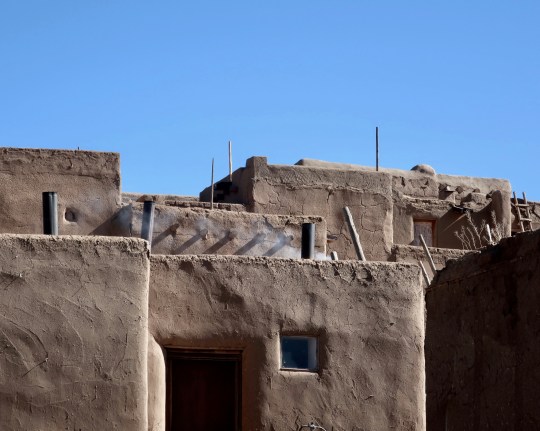
A photo I took of the Pueblo shows how little it has changed in the 90 years since O’Keeffe painted it. The round structures in front are ovens. Peggy and I ate some pie cooked in one. Quite tasty.
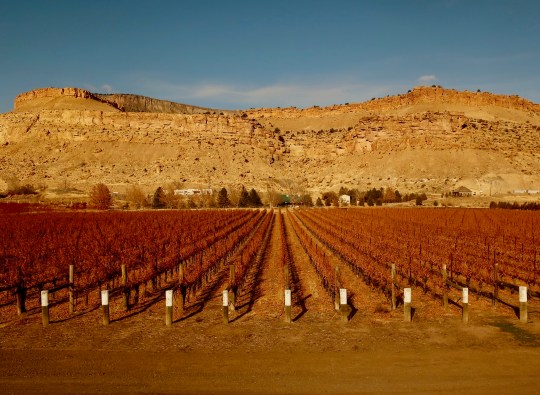
Here’s a close up of one of the ovens. (Photo by Peggy Mekemson.)
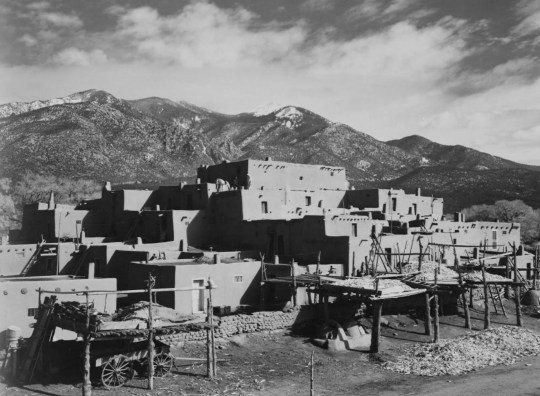
A photo by Ansel Adams of the Pueblo. Note the Taos Mountains towering in the background. They are part of the Sangro de Christo Range, or as translated, the Blood of Christ Range. It seems like a strange name for mountains.
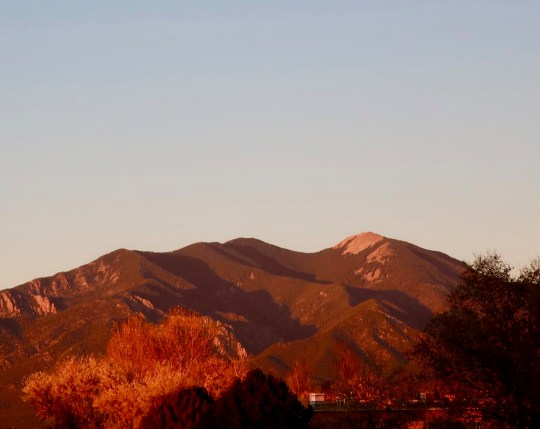
Possibly the early Spaniards noticed the mountains in a fall sunset like I did from our campsite.
Georgia O’Keeffe’s painting of Taos Mountain.
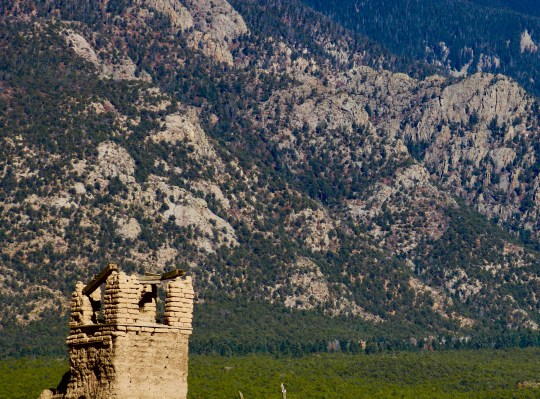
Our guide told us that the early Indians would post a lookout on the granite outcrop to the right overlooking the Pueblo and could see enemies approaching from miles away. The ruins of the San Geronimo Church, destroyed in 1846 by American forces can be seen on the left.  (Photo by Peggy Mekemson.)
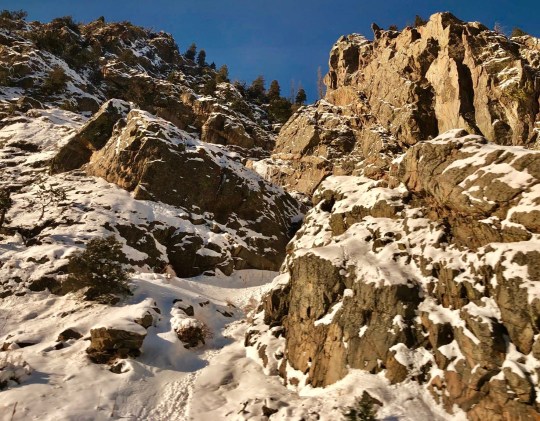
The ruins of the church overlook the Pueblo’s graveyard. (Photo by Peggy Mekemson.)
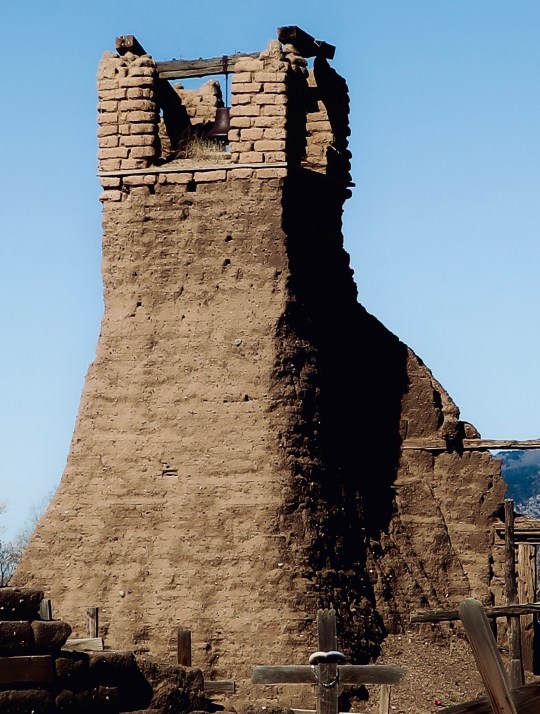
A close up of the ruins.
The Rio de Taos Pueblo flows through the center of the Pueblo, separating the North House we have been looking at from the South House. The creek was looking a bit cold when I photographed it. Our guide told us we were not to swim in it. No problem.
Peggy took this photo of the South House with its colorful doors and still melting snow.
I don’t know if the inhabitants regard the numerous ladders used to negotiate between floors as photo-worthy, but we did. (Photo by Peggy Mekemson.)
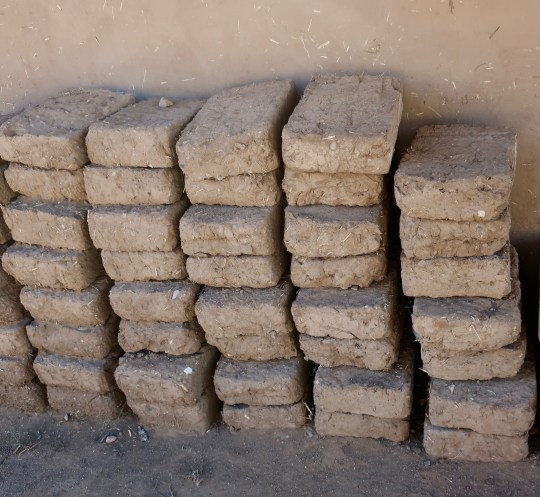
Peggy and I learned about adobe maintenance and repair when we visited the Pueblo. The adobe structures need to be recoated annually with a mud and straw mixture. More serious repair work requires these mud and straw bricks. I lifted one. It must have weighed close to 50 pounds.
As I thought of all the work involved in maintaining these structures, I came to appreciate that we only have to paint our house every ten years or so and replace the roof once every 20 years. (Not that I ever lived anywhere long enough to replace a roof.)
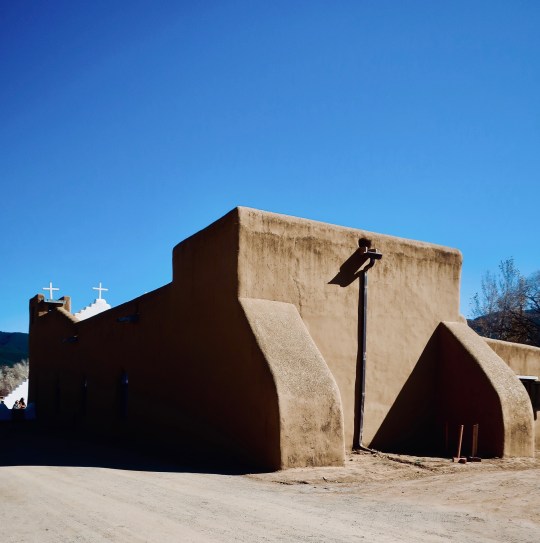
The Catholic Church at the Pueblo reminded me of the San Francisco de Assi Church.
Here is a front view of the church that I rendered in black and white.
Heading downtown for lunch after visiting the Pueblo, we were treated to a colorful Native American dance…
And lots of interesting art such as this sculpture. Taos is still a haven for artists and writers.
I conclude today’s post with another perspective on the Pueblo. This is close to the angle that Ansel Adams photographed it.

NEXT POST: We will explore Abiquiu and Ghost Ranch, New Mexico where Georgia O’Keeffe lived and painted.

The Rancho de Taos and Georgia O’Keeffe… Part 1 of O’Keeffe Country

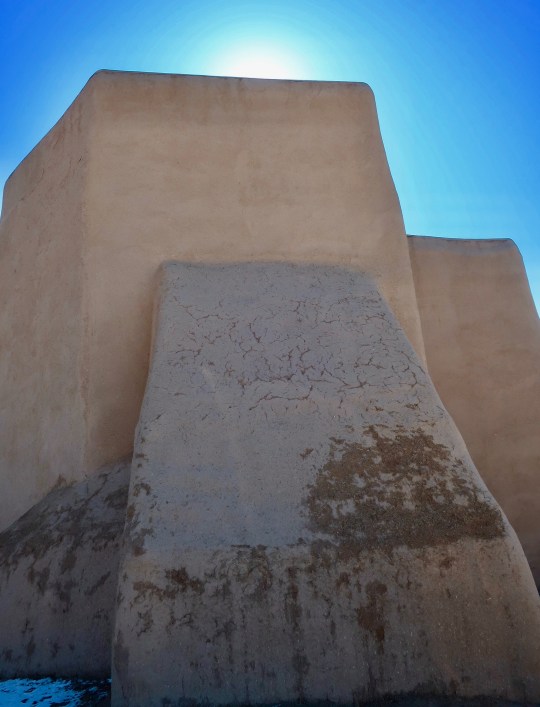
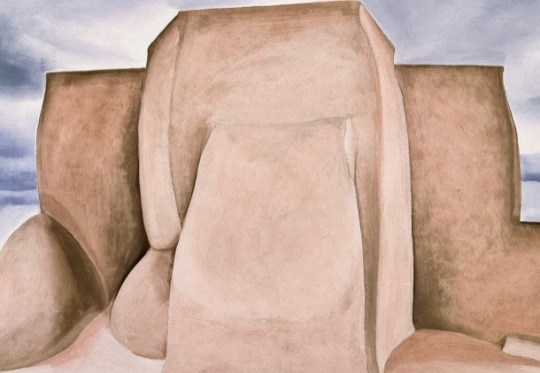
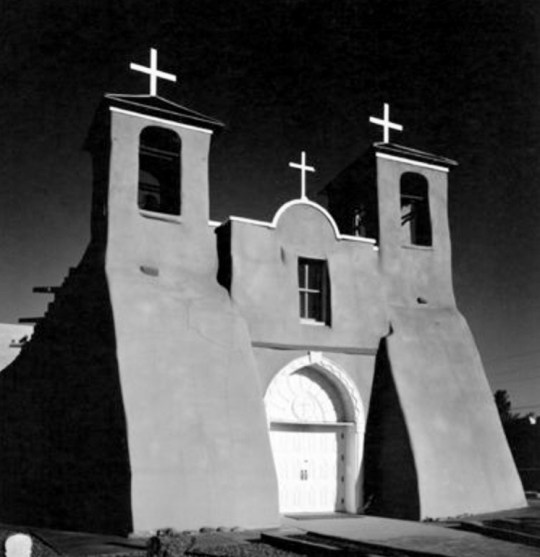
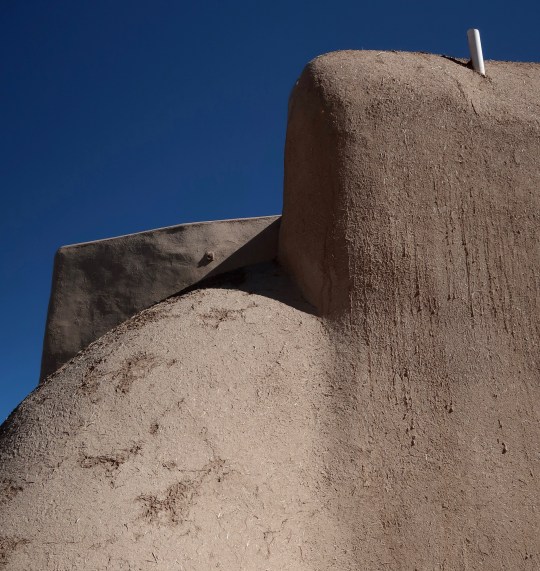
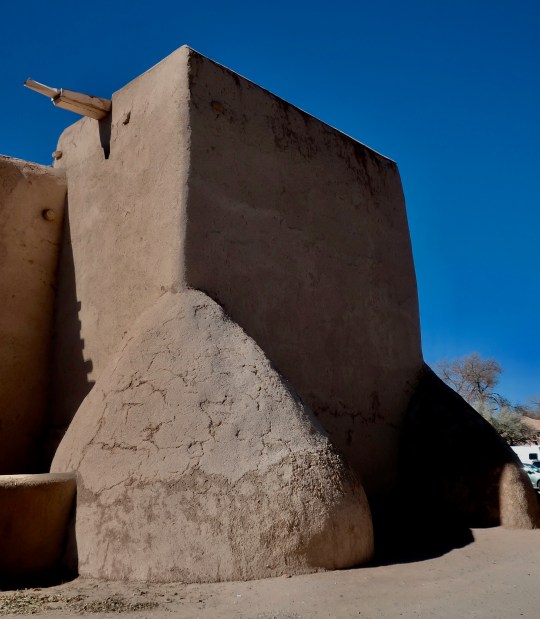
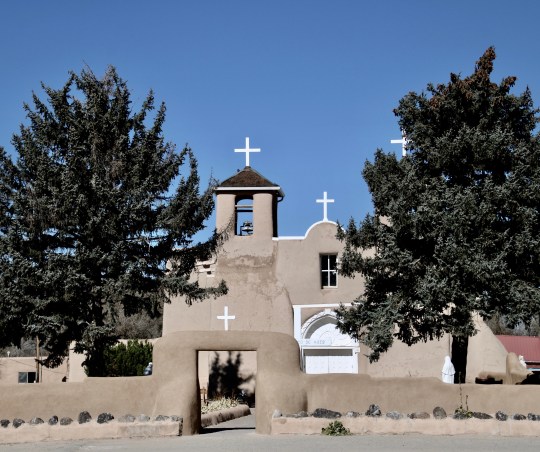
The Rancho de Taos Church of San Francisco de Asis was painted by Georgia O’Keeffe and photographed by her friend of 50 years, Ansel Adams. This is a photo I took of the church from the back.

It was in the fall of 1915 that I first had the idea that what I had been taught was of little value to me except for the use of my (art) materials as a language… I had been taught to work like others and after careful thinking I decided I wasn’t going to spend my life doing what was already done. –Georgia O’Keeffe in her autobiographical book on her art.

Georgia is on my mind. I had stopped off in Reno to check out the city’s River Walk on my road trip down Highway 395 this past summer when I saw a poster that the Nevada Museum of Art was featuring an exhibit on Georgia O’Keeffe titled Living Modern. There was no question in my mind. I had to go. O’Keeffe had been a favorite artist of mine ever since the 60s when I had been a student at Berkeley and first encountered her paintings of flowers. The exhibit in Reno was excellent, including several of her well-known works, but it also looked at her life, right down to her unique style of dress and the camping gear she carried when she made her painting expeditions into the remote parts of New Mexico.

Georgia O'Keefe's Jimson weed painting used for curt Mekemson blogs on Georgia O'Keefe
Georgia O’Keeffe’s paintings of wildflowers are recognizable world-wide. This 1932 painting by her of Jimson Weed was bought in 2014 for 44 million dollars by Alice Walton, the heiress of the Walmart fortune. The painting had hung in George Bush’s dining room at the White House. Funds generated are being used by the Georgia O’Keeffe museum in Santa Fe.
To supplement a painting by Georgia O'Keefe
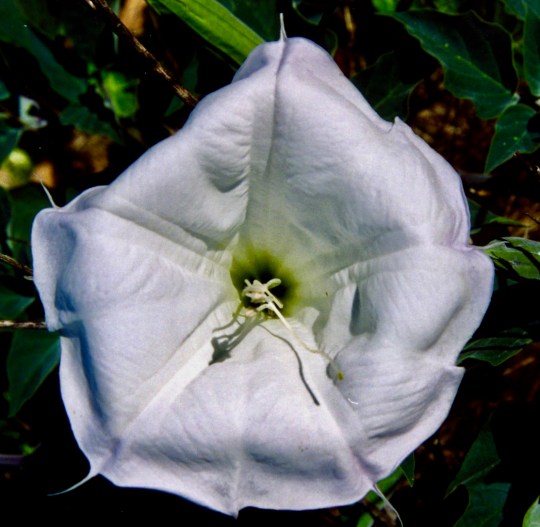
Like Georgia O’Keeffe I have found Jimson weed, or Datura, to be a beautiful plant. I took numerous photos along the American River Parkway in Sacramento. Besides its beauty, Jimson weed is a highly toxic hallucinogenic plant that was used by the the shamans to aid their journeys to other worlds. (More on this when I do my posts on petroglyphs.)
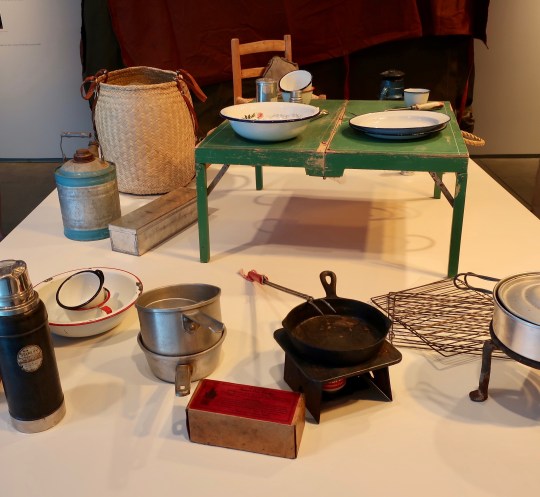
This is some of her original camping gear. Beyond my white gas Coleman stove, it doesn’t look much different that what I used on hunting and camping trips in the early 70s.
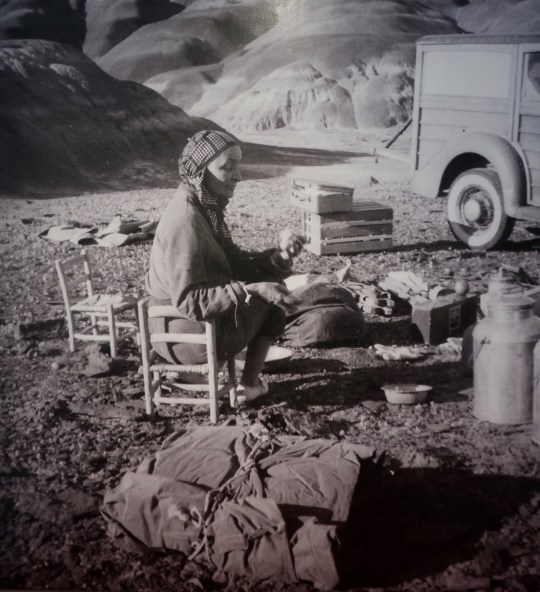
Here’s a picture of O’Keeffe on one of her many photographic expeditions in the backcountry of New Mexico. She called this the “Black Place” because of the color of the rocks and did several paintings of the area.
A painting by O’Keeffe of the Black Place that was featured at the Nevada Museum of Art.

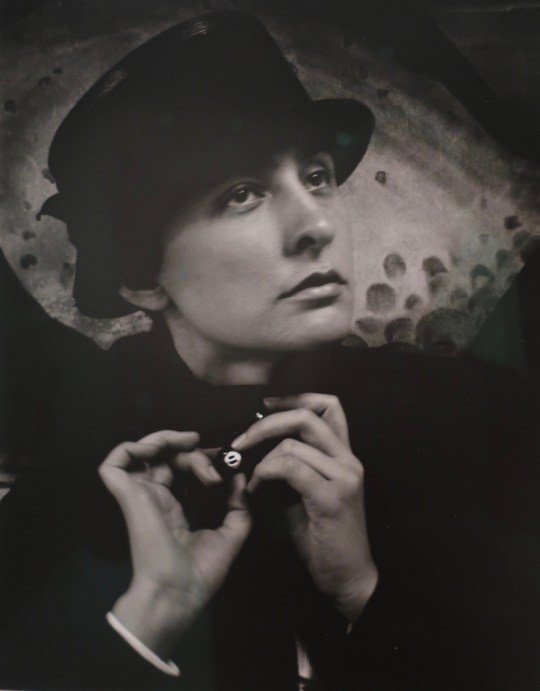
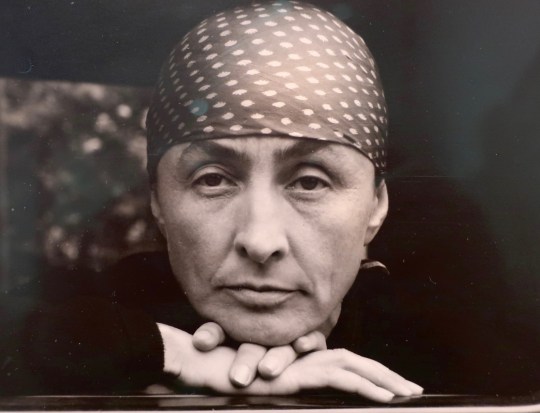
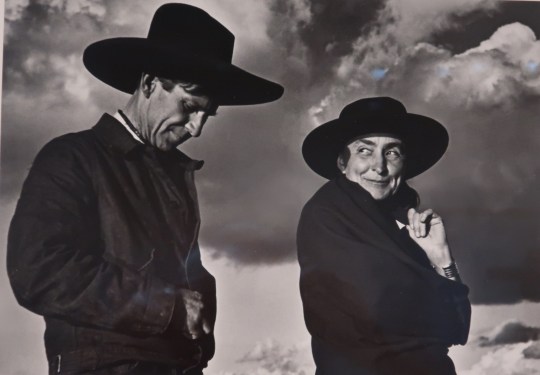
One thing that surprised me at the museum was the number of photos of O’ Keeffe. Starting with her husband, Alfred Stieglitz, and including her friend, Ansel Adams, a number of world class photographers were enticed by her unique looks. It might be argued that she was the world’s first super model.

Alfrd Steiglitz met Georgia O’Keeffe in 1916 and was immediately taken by her art— and her. Steiglitz who was 24 years older than O’Keeffe was already famous for his photography and for his support of modern art. He would eventually marry Georgia and would continue to photograph her for the rest of his life.
This is another photo by Steiglitz that is a favorite of mine.
Arguably the most famous photo of Georgia, this was taken by Ansel Adams.
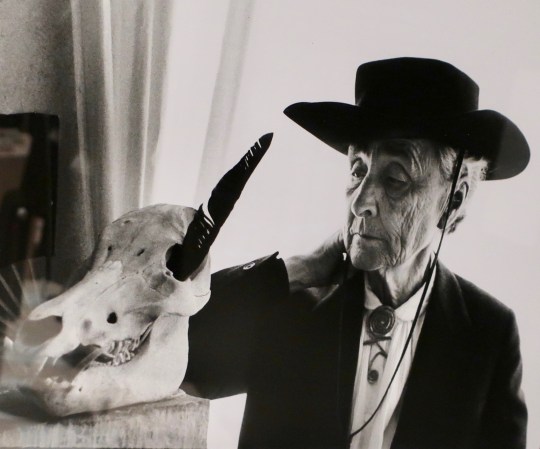
The 80-year-old O”Keeffe continued to attract renowned photographers as she aged. The English photographer Cecil Beaton captured her with a skull, contemplating it like philosophers of old. Or maybe she was contemplating the feather she had stuck in its eye. Her necklace, BTW, was made for her by Alexander Calder.
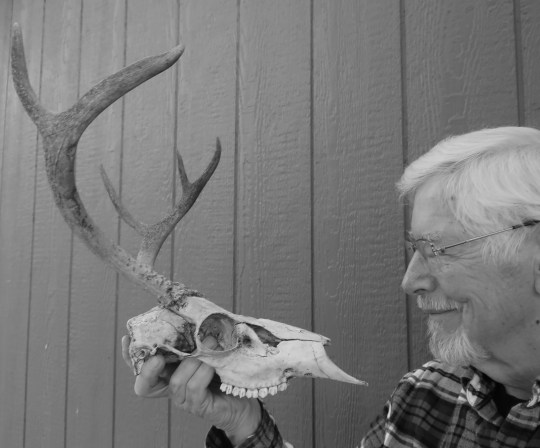
Photo of Curt Mekemson contemplating skull used to compare with Georgia O'Keefe contemplating skull.
Alas, poor Bucky, I knew him well. (Apologies to Shakespeare.) Seeing Georgia’s photo, I couldn’t help myself. Bucky once hung out in our neighborhood until he met his unfortunate demise down on the road. Peggy wanted me to go cut off his head. Being reluctant (I wonder why), she bribed our neighbor, Jim the hunter, with a can of beer to do the job. The skull now guards our garden, warning deer of their possible fate if they eat our plants. (Photo by Peggy Mekemson.)

My visit to the Nevada Museum of Art started me thinking about our planned visit to the Southwest this fall. We would be traveling through O’Keeffe Country, as they call it in New Mexico. I —along with Peggy’s enthusiastic support— decided to make where she lived and what she painted one of the focuses of our trip, which we did. We stopped by the O’Keeffe Museum in Santa Fe, went to Taos where she was first introduced to New Mexico by Mable Dodge Luhan, and then visited her homes in Abiquiu and Ghost Ranch. Today, I am going to start at Taos with a post on the Rancho de Taos and the Church of San Francisco de Asis. Its considered a must stop for photographers and painters who visit the town.

Like most photographers and painters who make the pilgrimage to Taos, O’Keeffe painted the historic and beautiful adobe church of St. Francisco de Asis. This perspective is from the back.
Ansel Adams photographed the church from the back.
And from the front..

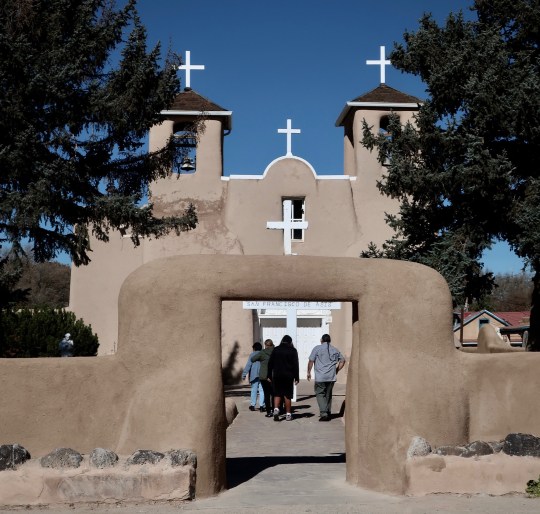
Naturally, Peggy and I had to wander around Rancho de Taos and take our own photos. I included one of mine at the top of the post. Here are a few more.

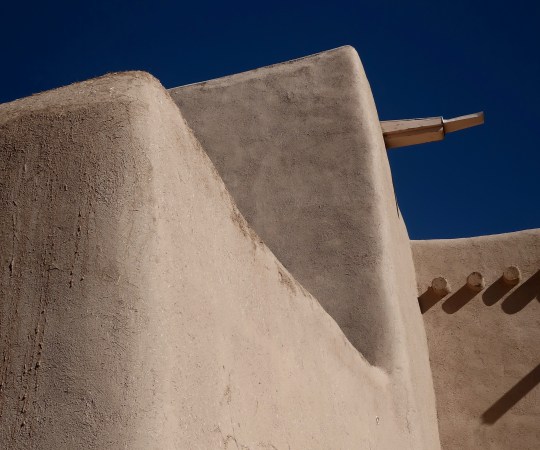
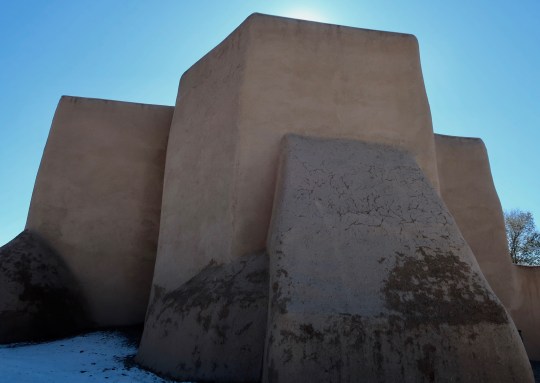
I was fascinated by the soft angles of the church.
Here is another example.
If a church could be said to have feet, the Rancho de Taos church seems to. Big guys!
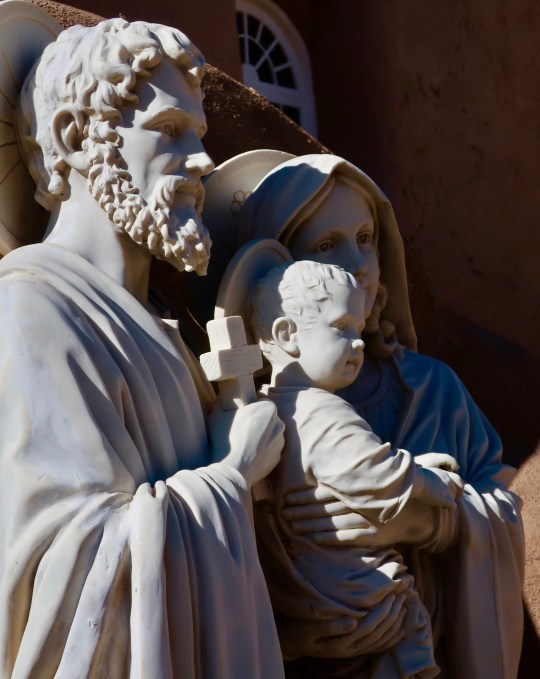
Walking around the church, I came on an interesting sculpture of Joseph, Jesus and Mary.
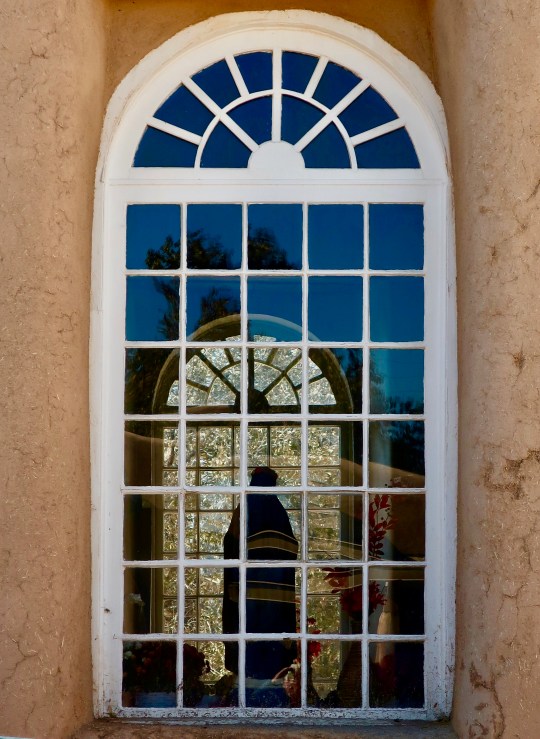
And peeked in a window.
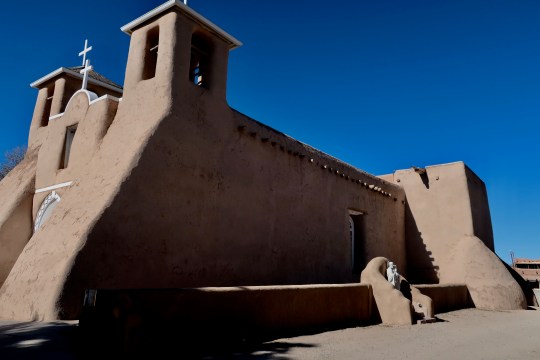
A sideview of San Francisco de Asis including the sculpture and window.
While I was working my way around the church, Peggy focused on the front. (Photo by Peggy Mekemson.)
Playing with Peggy’s photo, I gave it more of an Ansel Adams look.
Peggy also stood back beyond the arched entrance way and took a photo focusing on the left side of the church. (Photo by Peggy Mekemson.)
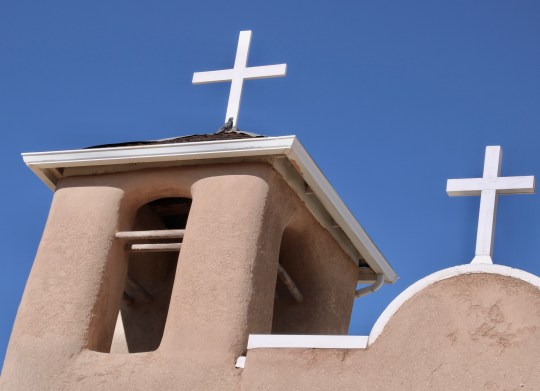
Shooting up, she caught this shot of the belfry… (Photo by Peggy Mekemson.)
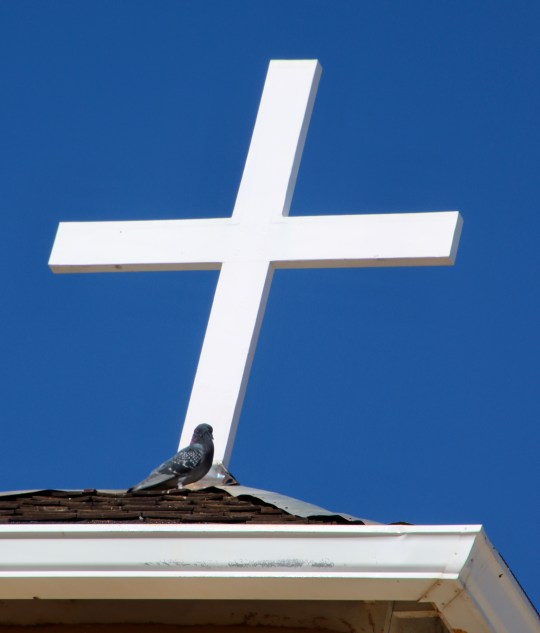
And noticed a pigeon, which I thought made an interesting photo considering the backdrop. (Photo by Peggy Mekemson.)
I took a shot lining up the front of the church and its crosses with the archway.
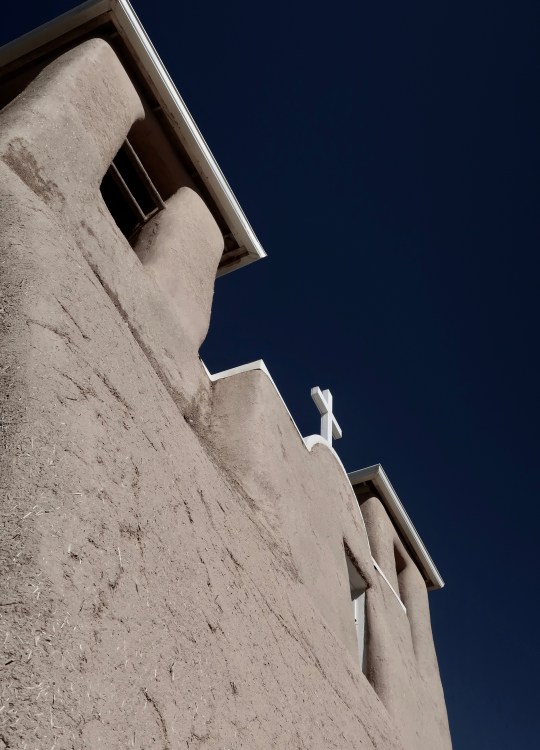
And two photos looking up at the front of the church.
I also caught a photo of people walking into the church for a Saturday service, a reminder that San Francisco de Asis is still a very active church.
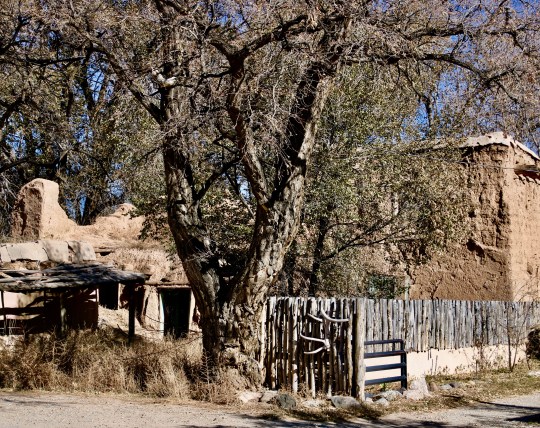
Peggy took this photo of an adobe ruin on the square surrounding the church. (Photo by Peggy Mekemson.)
And this very red building. It’s for sale in case you are interested! (Photo by Peggy Mekemson.
I’ll conclude my post on Rancho de Taos with a final photo I took of the back of the San Francisco de Asis church.

Next Post: I’ll write about the unusual patron of the arts, Mable Dodge Luhan, who brought the likes of Georgia O’Keeffe and D.H. Lawrence to Taos. Peggy and I will visit the Taos Pueblo that was also painted by O’Keeffe and photographed by Ansel Adams.

The Bosque Del Apache NWR… Bird Haven, or Is that Heaven?

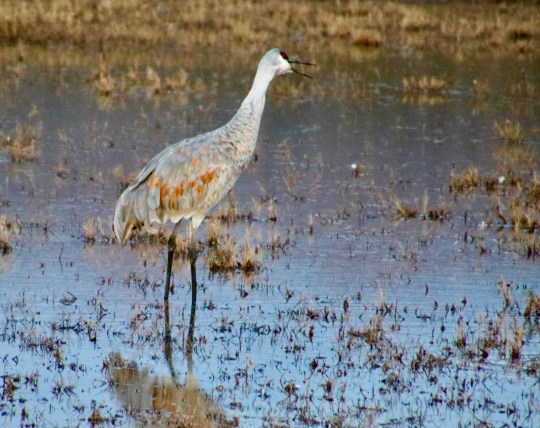
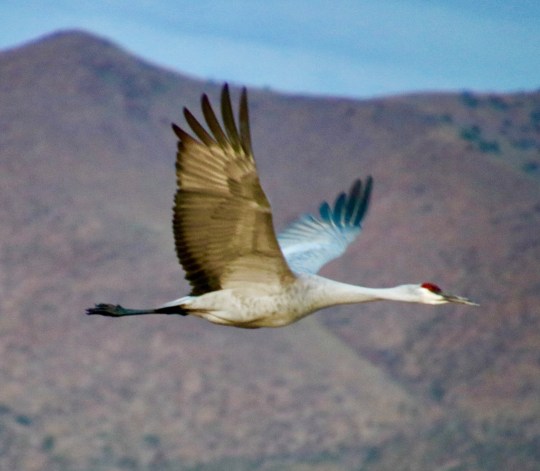
A sandhill crane catches early morning sun on its wings at the Bosque Del Apache NWR. (Photo by Peggy Mekemson.)

Necks straight out with feet trailing, hundreds of sandhill cranes took to the sky as they began their early morning launch in search of food in the middle Rio Grande Valley of New Mexico. Later in November, their numbers will be climbing to the thousands at the Bosque Del Apache National Wildlife Reserve just south of Socorro. We had watched long lines of the cranes flying back to the reserve the night before, burbling away in long lines, and were eager to witness the phenomena.

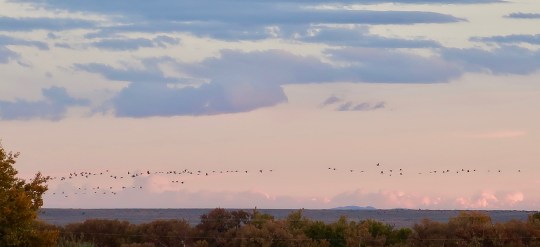
The night before, we had watched long lines of sandhill cranes flying into the reserve after a day of feeding along the Rio Grande. Enlarging this photo, I counted close to a hundred cranes in this picture alone.
Even when the sky seemed empty, we could hear the burbling, almost magical call of the cranes.
In addition to the wildlife, we were attracted to the beauty of the area. This windmill caught my attention.
As did this tree outlined by the setting sun.
The nearby Rio Grande River decorated by fall colors. (Photo by Peggy Mekemson.)

The owner of the RV campground that sits on the edge of the reserve told us we should be at the observation point about a mile from our campground by 6:30 a.m. to witness the early morning action. Peggy and I made it, barely, and jumped out of the RV into the icy air without coats, hats, or gloves to witness one of nature’s greatest shows. Numerous much smaller Ross’s geese joined the party while shoveler ducks ignored all of the hullaballoo and went about their business of eating breakfast.

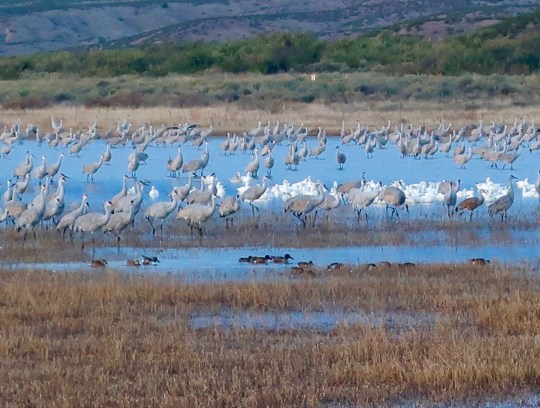
We were greeted by shoveler ducks, sandhill cranes, Ross and snow geese, and more sandhill cranes. While my camera lacks the close-up capabilities of Peggy’s telephoto lens, it was capable of showing quantity!
Peggy provide a much closer perspective on the sandhill cranes. Note how most of them are facing forward, which is the direction they will soon be flying. (Photo by Peggy Mekemson.)
The light changed rapidly from 6:30 to 7:00. The cranes are all moving forward, long legs stretched out. (Photo by Peggy Mekemson.)
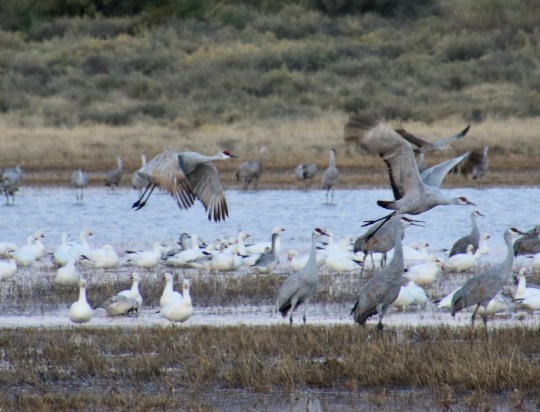
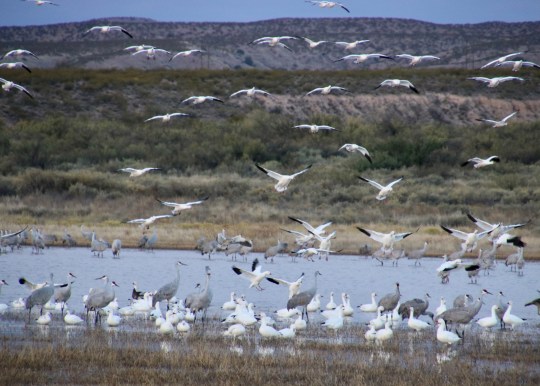
We watched as the cranes took flight, using their powerful wings to thrust them into the air. The geese seem to have decided to let the cranes clear out first. (Photo by Peggy Mekemson.)
In fact, the geese didn’t quite get the program and were landing instead of taking off. They would soon join the cranes in flying off, however. (Photo by Peggy Mekemson.)
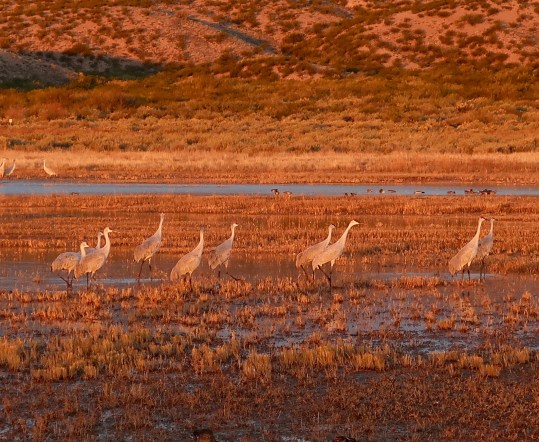
I caught this photo just as the sun hit the reserve, turning the remaining cranes gold.
A wider perspective of the reserve caught in the early morning light.
Peggy thought that this cottonwood was a nice addition to the scenery. (Photo by Peggy Mekemson.)
Looking down the length of the preserve.
This fellow seems to be saying, “Hey, where did everyone go? Was it something I said?” (Photo by Peggy Mekemson.)
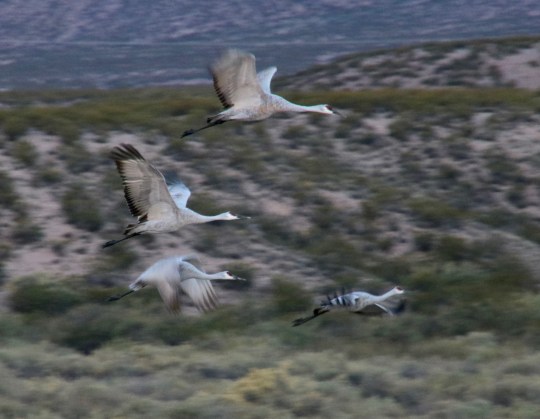
The true thrill of the morning was catching the birds in flight. Again Peggy’s telephoto lens was best suited for this. The following photos are taken by her.
The one in front is chatting.
Even my Canon Powershot could catch the silhouettes!
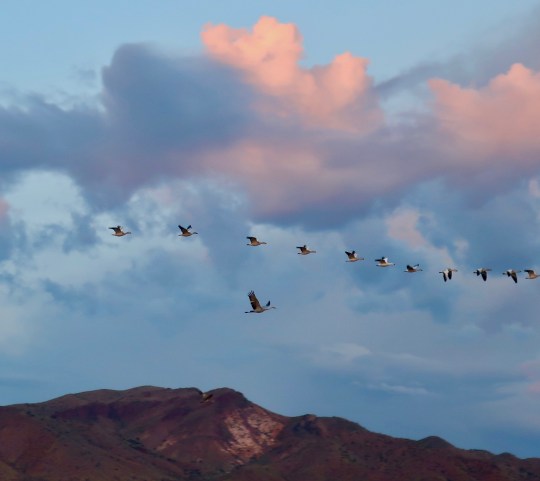
And I was pleased with how I caught this sandhill crane with a line of Ross’s geese above the mountain.
And this flock of sandhill cranes caught in the sunlight.
Peggy was fascinated with how the sandhill cranes bunched up, apparently working out leadership issues. (grin)
I’ll conclude with this shot of geese flying out at sunrise. (Photo by Peggy Mekemson.)

NEXT POST: Peggy and I will visit Taos where Georgia O’Keefe began her long association with New Mexico.